EP3729873B1 - Radio communications - Google Patents
Radio communications Download PDFInfo
- Publication number
- EP3729873B1 EP3729873B1 EP18822378.8A EP18822378A EP3729873B1 EP 3729873 B1 EP3729873 B1 EP 3729873B1 EP 18822378 A EP18822378 A EP 18822378A EP 3729873 B1 EP3729873 B1 EP 3729873B1
- Authority
- EP
- European Patent Office
- Prior art keywords
- radio
- cellular communication
- hardware resources
- lte
- navigation satellite
- Prior art date
- Legal status (The legal status is an assumption and is not a legal conclusion. Google has not performed a legal analysis and makes no representation as to the accuracy of the status listed.)
- Active
Links
Images


Classifications
-
- H—ELECTRICITY
- H04—ELECTRIC COMMUNICATION TECHNIQUE
- H04W—WIRELESS COMMUNICATION NETWORKS
- H04W52/00—Power management, e.g. Transmission Power Control [TPC] or power classes
- H04W52/02—Power saving arrangements
- H04W52/0209—Power saving arrangements in terminal devices
- H04W52/0251—Power saving arrangements in terminal devices using monitoring of local events, e.g. events related to user activity
- H04W52/0254—Power saving arrangements in terminal devices using monitoring of local events, e.g. events related to user activity detecting a user operation or a tactile contact or a motion of the device
-
- G—PHYSICS
- G01—MEASURING; TESTING
- G01S—RADIO DIRECTION-FINDING; RADIO NAVIGATION; DETERMINING DISTANCE OR VELOCITY BY USE OF RADIO WAVES; LOCATING OR PRESENCE-DETECTING BY USE OF THE REFLECTION OR RERADIATION OF RADIO WAVES; ANALOGOUS ARRANGEMENTS USING OTHER WAVES
- G01S19/00—Satellite radio beacon positioning systems; Determining position, velocity or attitude using signals transmitted by such systems
- G01S19/01—Satellite radio beacon positioning systems transmitting time-stamped messages, e.g. GPS [Global Positioning System], GLONASS [Global Orbiting Navigation Satellite System] or GALILEO
- G01S19/13—Receivers
- G01S19/34—Power consumption
-
- G—PHYSICS
- G01—MEASURING; TESTING
- G01S—RADIO DIRECTION-FINDING; RADIO NAVIGATION; DETERMINING DISTANCE OR VELOCITY BY USE OF RADIO WAVES; LOCATING OR PRESENCE-DETECTING BY USE OF THE REFLECTION OR RERADIATION OF RADIO WAVES; ANALOGOUS ARRANGEMENTS USING OTHER WAVES
- G01S19/00—Satellite radio beacon positioning systems; Determining position, velocity or attitude using signals transmitted by such systems
- G01S19/01—Satellite radio beacon positioning systems transmitting time-stamped messages, e.g. GPS [Global Positioning System], GLONASS [Global Orbiting Navigation Satellite System] or GALILEO
- G01S19/13—Receivers
- G01S19/35—Constructional details or hardware or software details of the signal processing chain
- G01S19/36—Constructional details or hardware or software details of the signal processing chain relating to the receiver frond end
-
- H—ELECTRICITY
- H04—ELECTRIC COMMUNICATION TECHNIQUE
- H04W—WIRELESS COMMUNICATION NETWORKS
- H04W4/00—Services specially adapted for wireless communication networks; Facilities therefor
- H04W4/70—Services for machine-to-machine communication [M2M] or machine type communication [MTC]
-
- H—ELECTRICITY
- H04—ELECTRIC COMMUNICATION TECHNIQUE
- H04W—WIRELESS COMMUNICATION NETWORKS
- H04W52/00—Power management, e.g. Transmission Power Control [TPC] or power classes
- H04W52/02—Power saving arrangements
- H04W52/0209—Power saving arrangements in terminal devices
- H04W52/0212—Power saving arrangements in terminal devices managed by the network, e.g. network or access point is leader and terminal is follower
- H04W52/0216—Power saving arrangements in terminal devices managed by the network, e.g. network or access point is leader and terminal is follower using a pre-established activity schedule, e.g. traffic indication frame
-
- H—ELECTRICITY
- H04—ELECTRIC COMMUNICATION TECHNIQUE
- H04W—WIRELESS COMMUNICATION NETWORKS
- H04W52/00—Power management, e.g. Transmission Power Control [TPC] or power classes
- H04W52/02—Power saving arrangements
- H04W52/0209—Power saving arrangements in terminal devices
- H04W52/0225—Power saving arrangements in terminal devices using monitoring of external events, e.g. the presence of a signal
- H04W52/0241—Power saving arrangements in terminal devices using monitoring of external events, e.g. the presence of a signal where no transmission is received, e.g. out of range of the transmitter
-
- H—ELECTRICITY
- H04—ELECTRIC COMMUNICATION TECHNIQUE
- H04W—WIRELESS COMMUNICATION NETWORKS
- H04W64/00—Locating users or terminals or network equipment for network management purposes, e.g. mobility management
-
- H—ELECTRICITY
- H04—ELECTRIC COMMUNICATION TECHNIQUE
- H04W—WIRELESS COMMUNICATION NETWORKS
- H04W52/00—Power management, e.g. Transmission Power Control [TPC] or power classes
- H04W52/02—Power saving arrangements
- H04W52/0209—Power saving arrangements in terminal devices
- H04W52/0225—Power saving arrangements in terminal devices using monitoring of external events, e.g. the presence of a signal
- H04W52/0229—Power saving arrangements in terminal devices using monitoring of external events, e.g. the presence of a signal where the received signal is a wanted signal
-
- H—ELECTRICITY
- H04—ELECTRIC COMMUNICATION TECHNIQUE
- H04W—WIRELESS COMMUNICATION NETWORKS
- H04W52/00—Power management, e.g. Transmission Power Control [TPC] or power classes
- H04W52/02—Power saving arrangements
- H04W52/0209—Power saving arrangements in terminal devices
- H04W52/0225—Power saving arrangements in terminal devices using monitoring of external events, e.g. the presence of a signal
- H04W52/0229—Power saving arrangements in terminal devices using monitoring of external events, e.g. the presence of a signal where the received signal is a wanted signal
- H04W52/0235—Power saving arrangements in terminal devices using monitoring of external events, e.g. the presence of a signal where the received signal is a wanted signal where the received signal is a power saving command
-
- H—ELECTRICITY
- H04—ELECTRIC COMMUNICATION TECHNIQUE
- H04W—WIRELESS COMMUNICATION NETWORKS
- H04W88/00—Devices specially adapted for wireless communication networks, e.g. terminals, base stations or access point devices
- H04W88/02—Terminal devices
- H04W88/06—Terminal devices adapted for operation in multiple networks or having at least two operational modes, e.g. multi-mode terminals
-
- Y—GENERAL TAGGING OF NEW TECHNOLOGICAL DEVELOPMENTS; GENERAL TAGGING OF CROSS-SECTIONAL TECHNOLOGIES SPANNING OVER SEVERAL SECTIONS OF THE IPC; TECHNICAL SUBJECTS COVERED BY FORMER USPC CROSS-REFERENCE ART COLLECTIONS [XRACs] AND DIGESTS
- Y02—TECHNOLOGIES OR APPLICATIONS FOR MITIGATION OR ADAPTATION AGAINST CLIMATE CHANGE
- Y02D—CLIMATE CHANGE MITIGATION TECHNOLOGIES IN INFORMATION AND COMMUNICATION TECHNOLOGIES [ICT], I.E. INFORMATION AND COMMUNICATION TECHNOLOGIES AIMING AT THE REDUCTION OF THEIR OWN ENERGY USE
- Y02D30/00—Reducing energy consumption in communication networks
- Y02D30/70—Reducing energy consumption in communication networks in wireless communication networks
Definitions
- GSM Global System for Mobile Communications
- GPRS General Packet Radio Services
- EDGE Enhanced Data rates for GSM Evolution
- UMTS Universal Mobile Telecommunications System
- LTE Long Term Evolution
- 4G fourth generation
- 3GPP 3 rd Generation Partnership Project
- EPS Evolved Packet System
- IP Internet Protocol
- E-UTRA Evolved UMTS Terrestrial Radio Access
- LTE Internet of Things
- smart devices providing physical objects that may not have been connected to any network in the past with the ability to communicate with other physical and/or virtual objects.
- Such smart devices include: vehicles; buildings; household appliances, lighting, and heating (e.g. for home automation); and medical devices.
- Such smart devices are typically real-world objects with embedded electronics, software, sensors, actuators, and network connectivity, thus allowing them to collect, share, and act upon data.
- user devices e.g. interfacing with a user's smartphone
- smart devices thus providing "machine-to-machine” (or “machine type”) communication.
- machine-to-machine or “machine type”
- a device provided with both LTE and GNSS capabilities will have dedicated hardware for each of these.
- a non-exhaustive list of the hardware that each of these radios is provided with includes: processors, memory, peripherals, algorithmic hardware accelerators, and radio frequency components.
- This first aspect of the invention extends to a method of operating a radio transceiver as claimed in claim 7.
- embodiments of the present invention provide a mechanism for sharing hardware resources between both cellular and GNSS radio systems.
- priority is given to the cellular communication radio and the GNSS radio gets access to the shared hardware resources only when the cellular communication radio does not need them.
- the Applicant has appreciated that, while this may impose a limit on the accuracy with which the GNSS radio can acquire the radio transceiver's location, sharing hardware resources between the radios in this way may result in considerable savings in power consumption, together with a reduced bill-of-materials by virtue of using less physical hardware to implement the radio transceiver.
- the hardware resources that are shared may, by way of example only, include LTE Layer 1 (Physical Layer) resources such as processors and/or hardware accelerators.
- LTE Layer 1 Physical Layer
- the hardware resources may also include an antenna, RF front-end clock, and/or clock sources or crystal oscillators.
- the radio transceiver is arranged to use the cellular communication radio to assist the global navigation satellite systems radio in acquiring a location fix.
- assisted GNSS or A-GNSS
- assisted GNSS is an advantageous arrangement in which the cellular communication radio is used to obtain information about the orbit of one or more navigation satellites and then provide that information to the GNSS radio so that it can acquire a fix.
- the orbit information or 'assistance data' may be stored in memory that is shared between the cellular and global navigation satellite systems radios.
- the cellular communication radio is arranged to communicate using LTE and the cellular communication signals comprise LTE signals.
- LTE refers to all variants that are specified by 3GPP, including but not limited to "classic" LTE, NB-loT and eMTC.
- the LTE radio will typically have a number of idle periods in which the GNSS radio could have access to the shared hardware resources.
- idle periods in LTE are the discontinuous reception (DRX), extended DRX (eDRX), and power saving mode (PSM) modes of operation. These idle periods may provide gaps of milliseconds to days in which the LTE radio is not in use.
- DRX discontinuous reception
- eDRX extended DRX
- PSM power saving mode
- the UE typically checks the physical downlink control channel (PDCCH) frequently for paging messages (paging radio network temporary identifier or "P-RNTI" messages), however when operated in the DRX mode, the UE may instead check the PDCCH for P-RNTI messages less frequently. This may, subject to any further needs of the LTE radio, provide a gap in which the LTE radio is inactive and the GNSS radio could make use of the shared resources.
- PDCCH physical downlink control channel
- P-RNTI paging radio network temporary identifier
- DRX there are two types of DRX: Idle mode DRX and Connected mode DRX (C-DRX).
- the P-RNTI messages referred to above are typically monitored only in the radio resource control (RRC) idle state, with a typical period between 320 ms to 2.56 s.
- RRC radio resource control
- an eMTC loT device would monitor the MTC physical downlink control channel (MPDCCH) while under NB-IoT operation, an NB-loT device would monitor the narrowband physical downlink control channel (NPDCCH).
- MPDCCH physical downlink control channel
- NPDCCH narrowband physical downlink control channel
- the eDRX scheme introduced by eMTC allows a UE to tell the network that it would like to be inactive (i.e. idle) for a number of "hyper-frames", where each hyper-frame is 10.24 s long (i.e. 1024 sub-frames), where the maximum number of hyper-frames that the UE can request is set by the network. In general, the maximum number of hyper-frames that the UE can request should equate to at least 40 minutes of idle time. This may also provide the GNSS radio with an opportunity to make use of the shared hardware resources. Thus in eDRX, the P-RNTI messages may be monitored with a period between 10.24 s and approximately 40 minutes.
- an eMTC UE may monitor for cell radio network temporary identifier (C-RNTI) messages every 1-10 ms in the non-DRX mode; every 2-640 ms in connected mode DRX; and up to every 10.24 s in connected mode eDRX.
- C-RNTI cell radio network temporary identifier
- the PSM scheme specified by 3GPP allows a UE to inform the network that it intends to become inactive for an indefinite period of time.
- the UE may wake up intermittently (e.g. to transmit data), after which it may provide a short reception window (e.g. for 4 frames) in which it can be reached by the network before returning to the inactive state.
- a short reception window e.g. for 4 frames
- the GNSS radio could potentially have relatively long periods of time in which it could access the shared hardware resources and obtain a fix.
- the radio transceiver comprises a memory arranged to store instructions for carrying out communications and a memory management module, wherein the memory management module is arranged to store simultaneously instructions for carrying out cellular communication and for carrying out global navigation satellite systems communication.
- the radio transceiver increases the local program memory requirements of the radio transceiver (in order to store both sets of instructions at the same time), but may advantageously increase the response time when switching between communication types because the memory does not need reloading.
- the processor 12 is typically the host control processor of the LTE and GNSS modems that is typically arranged to run general housekeeping functions for the system and to run at least part of the radio protocols (usually the higher layers).
- the lower layers of the protocol e.g. the Physical Layer or 'Layer 1'
- This processor 12 may be provided with information regarding the status of the LTE operations such as the timing of idle or sleep states and use this information for the allocation of shared resources.
- the local memory of the processor 12 may be loaded with both the LTE software and the GNSS software simultaneously, such that it can switch between carrying out LTE operations and GNSS operations on-the-fly.
- processor and memory resource limitations may determine whether both the LTE and GNSS software can both be loaded into the processor 12 at the same time or whether alternation is required.
- the LTE radio 20 is performing a transmission/reception (or "tx/rx") operation 24a and so has sole access to the RF transceiver 6 (and by extension, the antenna 4) processor 12, memory 10, and peripherals 14.
- the LTE radio 20 uses these resources to send and/or receive data over the LTE network.
- the LTE radio 20 continues to make use of these resources until t 1 , at which point the LTE radio 20 ceases performing tx/rx operations.
- the LTE radio 20 then enters an idle period 26a, during which time the resources are made available to the GNSS radio 22, which had otherwise been in an idle period 30a of its own while the LTE radio 20 required the resources for its tx/rx operation 24a.
- the GNSS radio 22 While the GNSS radio 22 does not immediately initiate a receive (or "rx") operation at t1, the resources are available to it from t 1 . However, at t 2 , the GNSS radio 22 begins an rx operation 28a, i.e. during the idle period 26a of the LTE radio 20. During this time, the GNSS radio is provided with an opportunity for the GNSS radio to obtain a location fix, using either hot acquisition, warm acquisition, cold acquisition, or using continuous tracking techniques. At time t 3 the GNSS radio 22 ceases its rx operation 28a and enters another idle period 30b.
- rx receive
- the LTE radio 20 initiates a new tx/rx operation 24b, once again blocking the GNSS radio 22 from accessing the shared hardware resources.
- This tx/rx operation 24b continues until all scheduled transmissions and/or receptions are complete at t 5 , at which time the LTE radio 20 enters another idle period 26b in which the GNSS radio 22 is again able to access the shared hardware resources.
- the GNSS radio 22 begins a further rx operation 28b at t6, during the idle period 26b of the LTE radio 20.
- Fig. 3 is a flowchart that shows the operation of the multi-radio device of Fig. 1 when the GNSS radio 22 is provided with a schedule of when it may access the shared hardware resources.
- both the LTE and GNSS software is loaded from the memory 10.
- the process shown in the flowchart of Fig. 3 is initiated at step 44 and the GNSS radio 22 is provided with a schedule of the tx/rx timings of the LTE radio 20 at step 46.
- the GNSS radio 22 waits 52 until a tx/rx operation 24a, 24b is no longer scheduled.
- the amount of time the GNSS radio 22 waits 52 is based on the schedule provided 46.
- the GNSS radio 22 waits 42 for a period of time before checking 36 again whether the LTE radio 20 still requires access to the shared hardware resources.
- the amount of time the GNSS radio 22 waits 42 may be based on a predetermined wait time (e.g. a certain number of clock cycles of a timer peripheral), or it may be informed by the LTE radio 20 (e.g. a master such as a modem host control processor) as to how long it should wait before attempting to perform an rx operation 28a, 28b.
- the LTE radio 20 is provided with means to take over control from the GNSS radio 22 (e.g. immediately) if it requires use of the shared hardware resources while such resources are allocated to the GNSS radio 22 - i.e. the LTE radio 20 is given higher priority than the GNSS radio 22.
- the two systems could carry out a negotiation-based sequence. This may, by way of example only, provide the GNSS radio 22 with a certain amount of 'guard time', or by pre-warning the GNSS radio 22 that the LTE radio 20 intends to take over.
- Fig. 5 is a flowchart that shows the operation of the multi-radio device of Fig. 1 where the radio software loaded from memory is alternated. Similarly to the operation described with reference to Fig. 3 , the flowchart of Fig. 5 shows the operation of the multi-radio device of Fig. 1 when the GNSS radio 22 is provided with a schedule of when it may access the shared hardware resources, where like reference numerals indicate like elements. However, unlike the operation described with reference to Fig. 3 , the processor 12 (and/or any additional baseband processors as outlined previously) is only provided with the software for one of the radios 20, 22 at a time.
- the GNSS radio 22 software is loaded from memory 10 at step 49 such that the processor 12 can carry out GNSS functions.
- the LTE radio 20 software is loaded from memory 10 at step 51 such that the processor 12 (and/or any additional baseband processors as outlined previously) can resume carrying out LTE functions at its next designated tx/rx slot.
- embodiments of the present invention provide a mechanism for sharing hardware resources between a cellular radio (e.g. an LTE radio) and a GNSS radio collocated within a radio transceiver, reducing the overall power consumption and bill-of-materials associated with the radio transceiver.
- a cellular radio e.g. an LTE radio
- GNSS radio collocated within a radio transceiver
Landscapes
- Engineering & Computer Science (AREA)
- Computer Networks & Wireless Communication (AREA)
- Signal Processing (AREA)
- Radar, Positioning & Navigation (AREA)
- Remote Sensing (AREA)
- Physics & Mathematics (AREA)
- General Physics & Mathematics (AREA)
- Mobile Radio Communication Systems (AREA)
Description
- The present invention relates to sharing hardware resources between cellular communication radio systems such as Long Term Evolution (LTE) and global navigation satellite systems (GNSS).
- Throughout the course of the past few decades, the extent and technical capabilities of cellular-based radio communication systems have expanded dramatically. A number of different cellular-based networks have been developed over the years, including the Global System for Mobile Communications (GSM), General Packet Radio Services (GPRS), Enhanced Data rates for GSM Evolution (EDGE), and Universal Mobile Telecommunications System (UMTS), where GSM, GPRS, and EDGE are often referred to as second generation (or "2G") networks and UMTS is referred to as a third generation (or "3G") network.
- More recently, the Long Term Evolution (LTE) network, a fourth generation (or "4G") network standard specified by the 3rd Generation Partnership Project (3GPP), has gained popularity due to its relatively high uplink and downlink speeds and larger network capacity compared to earlier 2G and 3G networks. More accurately, LTE is the access part of the Evolved Packet System (EPS), a purely Internet Protocol (IP) based communication technology in which both real-time services (e.g. voice) and data services are carried by the IP protocol. The air interface of LTE is often referred to as Evolved UMTS Terrestrial Radio Access (or "E-UTRA").
- However, while "classic" LTE connections are becoming increasingly prevalent in the telecommunications industry, further developments to the communication standard are being made in order to facilitate the so-called "Internet of Things" (loT), a common name for the inter-networking of physical devices, sometimes called "smart devices", providing physical objects that may not have been connected to any network in the past with the ability to communicate with other physical and/or virtual objects. Such smart devices include: vehicles; buildings; household appliances, lighting, and heating (e.g. for home automation); and medical devices. Such smart devices are typically real-world objects with embedded electronics, software, sensors, actuators, and network connectivity, thus allowing them to collect, share, and act upon data. These devices may communicate with user devices (e.g. interfacing with a user's smartphone) and/or with other smart devices, thus providing "machine-to-machine" (or "machine type") communication. However, the development of the LTE standards makes it more practical for them to connect directly to the cellular network.
- 3GPP have specified two versions of LTE for such purposes in
Release 13 of the LTE standard. The first of these is called "NarrowBand loT" (NB-IoT), sometimes referred to as "LTE Cat NB1", and the second is called "enhanced Machine Type Communication" (eMTC), sometimes referred to as "LTE Cat M1". It is envisaged that the number of devices that utilise at least one of these standards for IoT purposes will grow dramatically in the near future. - From a communications perspective, LTE standards (including NB-loT and eMTC) use orthogonal frequency division multiple access (OFDMA) as the basis for allocating network resources. This allows the available bandwidth between to be shared between user equipment (UE) that accesses the network in a given cell, provided by a base station, referred to in LTE as an "enhanced node B", "eNodeB", or simply "eNB". OFDMA is a multi-user variant of orthogonal division multiplexing (OFDM), a multiplexing scheme in which the total bandwidth is divided into a number of non-overlapping sub-bands, each having its own sub-carrier frequency. In OFDM, unlike other frequency division multiplexing (FDM) schemes, each of these sub-carriers are orthogonal to one another such that cross-talk between sub-bands is ideally eliminated and removing the need for inter-carrier guard bands.
- It is also desirable for loT devices that employ NB-loT or eMTC to be equipped with global navigation satellite systems (GNSS) functionality in order to use location services. GNSS services may be used by the device to determine its current location which may, for example, then be reported to an external server or may be used internally by the device.
- Typically, a device provided with both LTE and GNSS capabilities will have dedicated hardware for each of these. A non-exhaustive list of the hardware that each of these radios is provided with includes: processors, memory, peripherals, algorithmic hardware accelerators, and radio frequency components.
-
US 2009/0322597 A1 describes a location method for locating a portable device from a server configured to communicate with the portable device. -
US 8,054,221 B1 describes a portable user device that may provide GPS services and that may include a GPS receiver. The GPS receiver may provide accurate information about the current location of the device. - When viewed from a first aspect, the present invention provides a radio transceiver as claimed in claim 1.
- This first aspect of the invention extends to a method of operating a radio transceiver as claimed in claim 7.
- Thus it will be appreciated by those skilled in the art that embodiments of the present invention provide a mechanism for sharing hardware resources between both cellular and GNSS radio systems. In particular, priority is given to the cellular communication radio and the GNSS radio gets access to the shared hardware resources only when the cellular communication radio does not need them. The Applicant has appreciated that, while this may impose a limit on the accuracy with which the GNSS radio can acquire the radio transceiver's location, sharing hardware resources between the radios in this way may result in considerable savings in power consumption, together with a reduced bill-of-materials by virtue of using less physical hardware to implement the radio transceiver. The hardware resources that are shared may, by way of example only, include LTE Layer 1 (Physical Layer) resources such as processors and/or hardware accelerators. The hardware resources may also include an antenna, RF front-end clock, and/or clock sources or crystal oscillators.
- Allocation of the shared hardware resources may, by way of example, be carried out by a modem host control processor, which is provided with information regarding the status of the cellular radio system such as the timing of idle or sleep states. Such an approach is advantageous because it is flexible and provides the opportunity for the underlying firmware to be upgraded, e.g. using over-the-air (OTA) updates.
- Any idle periods in which the cellular radio is inactive provide an opportunity for the GNSS radio to obtain a location fix, using either hot acquisition (using a last calculated position and the known satellites that were in view at the time together with an almanac and the current time to obtain a fix using prior knowledge), warm acquisition (similar to hot acquisition but without knowledge of which satellites were in view at the time of the last calculated position), cold acquisition (acquiring a fix with no almanac and no prior knowledge of location, satellite location, etc.), or using continuous tracking techniques. It will of course be appreciated that the GNSS radio may not necessarily make use the entire duration of each idle period afforded to it by the cellular radio, and it may not necessarily make use of every idle period that arises (i.e. there may be times when neither radio is accessing the shared hardware resources), however, in accordance with the invention, these idle periods may be the only times in which the GNSS radio may access the shared hardware resources.
- In some embodiments, the radio transceiver is arranged to use the cellular communication radio to assist the global navigation satellite systems radio in acquiring a location fix. Those skilled in the art will appreciate that assisted GNSS (or A-GNSS) is an advantageous arrangement in which the cellular communication radio is used to obtain information about the orbit of one or more navigation satellites and then provide that information to the GNSS radio so that it can acquire a fix. The orbit information or 'assistance data' may be stored in memory that is shared between the cellular and global navigation satellite systems radios.
- While it will be appreciated that the present invention could be applied to a variety of cellular communication networks, in preferred embodiments the cellular communication radio is arranged to communicate using LTE and the cellular communication signals comprise LTE signals. It will be understood by those skilled in the art that the term "LTE" as used herein in relation to the various embodiments of the invention refers to all variants that are specified by 3GPP, including but not limited to "classic" LTE, NB-loT and eMTC. In such embodiments, the LTE radio will typically have a number of idle periods in which the GNSS radio could have access to the shared hardware resources.
- Examples of such idle periods in LTE are the discontinuous reception (DRX), extended DRX (eDRX), and power saving mode (PSM) modes of operation. These idle periods may provide gaps of milliseconds to days in which the LTE radio is not in use.
- For example, under normal 'classic' LTE operation or MTC operation, the UE typically checks the physical downlink control channel (PDCCH) frequently for paging messages (paging radio network temporary identifier or "P-RNTI" messages), however when operated in the DRX mode, the UE may instead check the PDCCH for P-RNTI messages less frequently. This may, subject to any further needs of the LTE radio, provide a gap in which the LTE radio is inactive and the GNSS radio could make use of the shared resources.
- Those skilled in the art will appreciate that there are two types of DRX: Idle mode DRX and Connected mode DRX (C-DRX). The P-RNTI messages referred to above are typically monitored only in the radio resource control (RRC) idle state, with a typical period between 320 ms to 2.56 s.
- Under eMTC operation, an eMTC loT device would monitor the MTC physical downlink control channel (MPDCCH) while under NB-IoT operation, an NB-loT device would monitor the narrowband physical downlink control channel (NPDCCH). The eDRX scheme introduced by eMTC allows a UE to tell the network that it would like to be inactive (i.e. idle) for a number of "hyper-frames", where each hyper-frame is 10.24 s long (i.e. 1024 sub-frames), where the maximum number of hyper-frames that the UE can request is set by the network. In general, the maximum number of hyper-frames that the UE can request should equate to at least 40 minutes of idle time. This may also provide the GNSS radio with an opportunity to make use of the shared hardware resources. Thus in eDRX, the P-RNTI messages may be monitored with a period between 10.24 s and approximately 40 minutes.
- In the RRC connected state, an eMTC UE may monitor for cell radio network temporary identifier (C-RNTI) messages every 1-10 ms in the non-DRX mode; every 2-640 ms in connected mode DRX; and up to every 10.24 s in connected mode eDRX.
- Further to this, the PSM scheme specified by 3GPP allows a UE to inform the network that it intends to become inactive for an indefinite period of time. The UE may wake up intermittently (e.g. to transmit data), after which it may provide a short reception window (e.g. for 4 frames) in which it can be reached by the network before returning to the inactive state. Depending on how often the UE wakes up from PSM, the GNSS radio could potentially have relatively long periods of time in which it could access the shared hardware resources and obtain a fix.
- In some embodiments, the cellular communication radio is arranged to switch between the active and inactive modes periodically. It will be appreciated that, in accordance with such embodiments, the radio transceiver is subject to a duty cycled operation, where there is a periodic schedule with a particular duty cycled that dictates one or more slots in every period in which the GNSS radio may have access to the shared hardware resources. For example, if the GNSS radio is arranged to make use of the gaps between receptions in the DRX mode of the LTE radio as explained above, the UE may wake up to check the PDCCH periodically at a predetermined frequency and so the times that the GNSS has the shared hardware resources available to it are also periodic.
- Additionally or alternatively, in some embodiments the cellular communication radio is arranged to switch between the active and inactive modes at scheduled times. The schedule followed by the cellular radio may, in some embodiments, be known by a processor within the radio transceiver. In such embodiments, the processor may have prior knowledge of scheduled transmission and reception timings. This may also be applied in some cases where the GNSS is arranged to use the hardware resources while the LTE radio is operating in PSM - if the LTE radio is only going to wake up on an ad hoc basis, the times that it will need the hardware resources may be known in advance (even if they are not periodic) and the GNSS radio can be provided with access to the shared hardware resources between these wake ups as required. This may advantageously allow the GNSS module to operate more efficiently as it knows in advance when it will be allowed access to the shared hardware resources rather than making attempts (that might be denied) on an ad hoc basis.
- In some embodiments, the radio transceiver comprises a memory arranged to store instructions for carrying out communications and a memory management module, wherein the memory management module is arranged to:
- store instructions for carrying out cellular communication when the cellular communication radio is in the active mode; and
- store instructions for carrying out global navigation satellite systems communication when the cellular communication radio is in the inactive mode. The instructions stored in this memory may be accessed and executed by a processor, where the same processor may be used for performing both cellular and GNSS operations. This processor may, by way of example only, be an LTE Layer 1 processor. In some such embodiments, the memory management module is arranged to store the instructions for carrying out global navigation satellite systems communication only when the global navigation satellite systems radio requires access to the one or more hardware resources.
- However, in some alternative embodiments, the radio transceiver comprises a memory arranged to store instructions for carrying out communications and a memory management module, wherein the memory management module is arranged to store simultaneously instructions for carrying out cellular communication and for carrying out global navigation satellite systems communication. Those skilled in the art will appreciate that this increases the local program memory requirements of the radio transceiver (in order to store both sets of instructions at the same time), but may advantageously increase the response time when switching between communication types because the memory does not need reloading.
- Certain embodiments of the invention will now be described with reference to the accompanying drawings in which:
-
Fig. 1 is a block diagram of a multi-radio device in accordance with an embodiment of the present invention; -
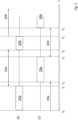
Fig. 2 is a timing diagram the typical operation of the multi-radio device ofFig. 1 ; -
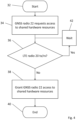
Fig. 3 is a flowchart that shows the operation of the multi-radio device ofFig. 1 when the GNSS radio requests access to the shared hardware resources; -
Fig. 4 is a flowchart that shows the operation of the multi-radio device ofFig. 1 when the GNSS radio requests is provided with a schedule of when it may access the shared hardware resources; and -
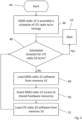
Fig. 5 is a flowchart that shows the operation of the multi-radio device ofFig. 1 where the radio software loaded from memory is alternated. -
Fig. 1 is a block diagram of a multi-radio transceiver device 2 in accordance with an embodiment of the present invention. The multi-radio transceiver device 2 which, for example, may be located within a smartphone, a tablet, or an loT device, is connected to anantenna 4, where theantenna 4 is used for the transmission and reception of RF signals. The multi-radio device 2 is arranged to implement both cellular communication radio and GNSS radio functionality. In this particular embodiment, the cellular radio is an LTE radio. - The LTE/GNSS multi-radio device 2 comprises: a radio frequency (RF)
transceiver 6; abaseband processing module 8; andmain memory 10. Thebaseband processing module 8 comprises acontrol processor 12 and one ormore peripherals 14. Theseperipherals 14 typically include timers, radio hardware accelerators, and general purpose input/output (GPIO) interfaces. - The
RF transceiver 6 is connected to theantenna 4 via an RF front-end 5 and is arranged to exchange receivedata 16 and transmitdata 18 with thebaseband processing module 8 during reception and transmission windows respectively. This transmitdata 18 will typically be data for LTE transmissions while the receivedata 16 may be either incoming LTE data or GNSS signals, depending on which mode the radio 2 is in. - The
processor 12 is typically the host control processor of the LTE and GNSS modems that is typically arranged to run general housekeeping functions for the system and to run at least part of the radio protocols (usually the higher layers). The lower layers of the protocol (e.g. the Physical Layer or 'Layer 1') may typically be run on baseband hardware which may or may not include one or more further processors (not shown). Thisprocessor 12 may be provided with information regarding the status of the LTE operations such as the timing of idle or sleep states and use this information for the allocation of shared resources. - The
processor 12 is arranged to carry out either LTE operations or GNSS operations at any given moment in time, depending on which mode the radio 2 is currently being operated in, as will described in further detail below with reference toFig. 2 . Theprocessor 12 may be loaded with software programs for each of the radios, i.e. it can execute software functions related to LTE or GNSS as appropriate. The software is stored in thememory 10 and accessed by theprocessor 12. Theprocessor 12 includes acontroller module 13 that is arranged, among other functions typical of such a controller, to arbitrate requests, control timings, and load software. It will, of course, be appreciated that thiscontroller module 13 may be a software function or task running on theprocessor 12 rather than a dedicated hardware module itself. - In some arrangements, the local memory of the
processor 12 may be loaded with both the LTE software and the GNSS software simultaneously, such that it can switch between carrying out LTE operations and GNSS operations on-the-fly. - However, in other arrangements, the local memory of the processor 12 (and/or any further processors in the baseband hardware as discussed above) may be loaded only with one of the LTE software or the GNSS software. In such arrangements, the
processor 12 may load the appropriate software frommemory 10 for each operation. For example, in an LTE idle period, theprocessor 12 may load the GNSS software from memory in order to carry out one or more GNSS operations, before re-loading the LTE software frommemory 10 in order to resume LTE operations. This process will be described in further detail below with reference toFig. 2 . - It will be appreciated that processor and memory resource limitations may determine whether both the LTE and GNSS software can both be loaded into the
processor 12 at the same time or whether alternation is required. -
Fig. 2 is a timing diagram the typical operation of the device ofFig. 1 . The timing diagram shows the transmission and reception operations of theLTE radio 20 and the reception operations of theGNSS radio 22. - As can be seen in
Fig. 2 , theLTE radio 20 and theGNSS radio 22 are arranged such that their respective operations never take place at the same time, i.e. the multi-radio device 2 utilises time-division multiplexing in order to allocate timeslots to each of the radios, where priority is given to theLTE radio 20. - Initially, at time t0, the
LTE radio 20 is performing a transmission/reception (or "tx/rx")operation 24a and so has sole access to the RF transceiver 6 (and by extension, the antenna 4)processor 12,memory 10, andperipherals 14. TheLTE radio 20 uses these resources to send and/or receive data over the LTE network. - The
LTE radio 20 continues to make use of these resources until t1, at which point theLTE radio 20 ceases performing tx/rx operations. TheLTE radio 20 then enters anidle period 26a, during which time the resources are made available to theGNSS radio 22, which had otherwise been in anidle period 30a of its own while theLTE radio 20 required the resources for its tx/rx operation 24a. - While the
GNSS radio 22 does not immediately initiate a receive (or "rx") operation at t1, the resources are available to it from t1. However, at t2, theGNSS radio 22 begins anrx operation 28a, i.e. during theidle period 26a of theLTE radio 20. During this time, the GNSS radio is provided with an opportunity for the GNSS radio to obtain a location fix, using either hot acquisition, warm acquisition, cold acquisition, or using continuous tracking techniques. At time t3 theGNSS radio 22 ceases itsrx operation 28a and enters anotheridle period 30b. - At t4, the
LTE radio 20 initiates a new tx/rx operation 24b, once again blocking theGNSS radio 22 from accessing the shared hardware resources. This tx/rx operation 24b continues until all scheduled transmissions and/or receptions are complete at t5, at which time theLTE radio 20 enters anotheridle period 26b in which theGNSS radio 22 is again able to access the shared hardware resources. TheGNSS radio 22 begins afurther rx operation 28b at t6, during theidle period 26b of theLTE radio 20. -
Fig. 3 is a flowchart that shows the operation of the multi-radio device ofFig. 1 when theGNSS radio 22 is provided with a schedule of when it may access the shared hardware resources. In this exemplary embodiment, both the LTE and GNSS software is loaded from thememory 10. The process shown in the flowchart ofFig. 3 is initiated atstep 44 and theGNSS radio 22 is provided with a schedule of the tx/rx timings of theLTE radio 20 atstep 46. - At
step 48, a check is made to determine whether or not theLTE radio 20 has a tx/rx operation LTE radio 20 will be in idle mode. If no tx/rx operation LTE radio 20 is scheduled, theGNSS radio 22 is granted access to the shared hardware resources atstep 50, allowing theGNSS radio 22 to perform itsrx operations LTE radio 20 has a tx/rx operation - However, if the
LTE radio 20 does have a tx/rx operation GNSS radio 22 waits 52 until a tx/rx operation GNSS radio 22 waits 52 is based on the schedule provided 46. -
Fig. 4 is a flowchart that shows the operation of the multi-radio device 2 ofFig. 1 when theGNSS radio 22 requests access to the shared hardware resources. In this exemplary embodiment, both the LTE and GNSS software is loaded from thememory 10. The process shown in the flowchart ofFig. 3 is initiated atstep 32 and theGNSS radio 22 requests access to the shared hardware resources atstep 34. - At
step 36, a check is made to determine whether or not theLTE radio 20 is currently performing a tx/rx operation LTE radio 20 is not performing a tx/rx operation GNSS radio 22 is granted access to the shared hardware resources atstep 36, allowing theGNSS radio 22 to perform itsrx operations - However, if the
LTE radio 20 is performing a tx/rx operation GNSS radio 22 waits 42 for a period of time before checking 36 again whether theLTE radio 20 still requires access to the shared hardware resources. The amount of time theGNSS radio 22 waits 42 may be based on a predetermined wait time (e.g. a certain number of clock cycles of a timer peripheral), or it may be informed by the LTE radio 20 (e.g. a master such as a modem host control processor) as to how long it should wait before attempting to perform anrx operation - In some embodiments, the
LTE radio 20 is provided with means to take over control from the GNSS radio 22 (e.g. immediately) if it requires use of the shared hardware resources while such resources are allocated to the GNSS radio 22 - i.e. theLTE radio 20 is given higher priority than theGNSS radio 22. In other arrangements the two systems could carry out a negotiation-based sequence. This may, by way of example only, provide theGNSS radio 22 with a certain amount of 'guard time', or by pre-warning theGNSS radio 22 that theLTE radio 20 intends to take over. -
Fig. 5 is a flowchart that shows the operation of the multi-radio device ofFig. 1 where the radio software loaded from memory is alternated. Similarly to the operation described with reference toFig. 3 , the flowchart ofFig. 5 shows the operation of the multi-radio device ofFig. 1 when theGNSS radio 22 is provided with a schedule of when it may access the shared hardware resources, where like reference numerals indicate like elements. However, unlike the operation described with reference toFig. 3 , the processor 12 (and/or any additional baseband processors as outlined previously) is only provided with the software for one of theradios - In this case, prior to the
step 50 of granting theGNSS radio 50 access to the shared hardware resources, theGNSS radio 22 software is loaded frommemory 10 atstep 49 such that theprocessor 12 can carry out GNSS functions. - Once the time allocated to the
GNSS radio 22 for accessing the shared hardware resources ends, theLTE radio 20 software is loaded frommemory 10 atstep 51 such that the processor 12 (and/or any additional baseband processors as outlined previously) can resume carrying out LTE functions at its next designated tx/rx slot. - Thus it will be appreciated by those skilled in the art that embodiments of the present invention provide a mechanism for sharing hardware resources between a cellular radio (e.g. an LTE radio) and a GNSS radio collocated within a radio transceiver, reducing the overall power consumption and bill-of-materials associated with the radio transceiver. Those skilled in the art will appreciate that the specific embodiments described herein are merely exemplary and that many variants within the scope of the claims are envisaged.
Claims (12)
- A radio transceiver (2) comprising:a radio frequency component (4, 6); andone or more hardware resources, wherein the one or more hardware resources comprises at least one from the group comprising: a processor (12); memory (10); a peripheral device (14); an algorithmic hardware accelerator; and the radio frequency component (4, 6);a cellular communication radio (20), operable in an active mode (24a, 24b) wherein the cellular communication radio (20) has access to the one or more hardware resources for transmitting and/or receiving cellular communication signals, and an inactive mode (26a, 26b) wherein the cellular communication radio (20) does not access the one or more hardware resources;a global navigation satellite systems radio (22), arranged to access the one or more hardware resources only when the cellular communication radio (20) is operated in the inactive mode (26a, 26b), wherein the global navigation satellite systems radio (22) is arranged to use the one or more hardware resources to receive positioning signals (28a, 28b);a memory (10) arranged to store instructions for carrying out communications; anda memory management module;wherein the memory management module is arranged to:store instructions for carrying out cellular communication when the cellular communication radio (20) is in the active mode (24a, 24b); andstore instructions for carrying out global navigation satellite systems communication when the cellular communication radio (20) is in the inactive mode (26a, 26b).
- The radio transceiver (2) as claimed in claim 1, further arranged to use the cellular communication radio (20) to assist the global navigation satellite systems radio (22) in acquiring a location fix.
- The radio transceiver (2) as claimed in claim 1 or 2, wherein the cellular communication radio (20) is arranged to communicate using LTE and the cellular communication signals comprise LTE signals.
- The radio transceiver (2) as claimed in any preceding claim, wherein the cellular communication radio (20) is arranged to switch between the active and inactive modes periodically.
- The radio transceiver (2) as claimed in any preceding claim, wherein the cellular communication radio (20) is arranged to switch between the active and inactive modes at scheduled times.
- The radio transceiver (2) as claimed in any preceding claim, wherein the memory management module is arranged to store the instructions for carrying out global navigation satellite systems communication only when the global navigation satellite systems radio (22) requires access to the one or more hardware resources.
- A method of operating a radio transceiver (2) comprising:a radio frequency component (4, 6); andone or more hardware resources, wherein the one or more hardware resources comprises at least one from the group comprising: a processor (12); memory (10); a peripheral device (14); an algorithmic hardware accelerator; and the radio frequency component (4, 6);a cellular communication radio (20), operable in an active mode (24a, 24b) wherein the cellular communication radio (20) has access to the one or more hardware resources for transmitting and/or receiving cellular communication signals, and an inactive mode (26a, 26b) wherein the cellular communication radio (20) does not access the one or more hardware resources;a global navigation satellite systems radio circuit portion (22);a memory (10) arranged to store instructions for carrying out communications; anda memory management module;wherein the method comprises:selectably providing the global navigation satellite systems radio (22) with access to the one or more hardware resources only when the cellular communication radio (20) is in the inactive mode (26a, 26b);storing in the memory management module instructions for carrying out cellular communication when the cellular communication radio (20) is in the active mode (26a, 26b); andstoring in the memory management module instructions for carrying out global navigation satellite systems communication when the cellular communication radio (20) is in the inactive mode (26a, 26b).
- The method as claimed in claim 7, further comprising using the cellular communication radio (20) to assist the global navigation satellite systems radio (22) in acquiring a location fix.
- The method as claimed in claim 7 or 8, wherein the cellular communication radio (20) is arranged to communicate using LTE and the cellular communication signals comprise LTE signals.
- The method as claimed in any of claims 7 to 9, further comprising switching between the active and inactive modes periodically.
- The method as claimed in any of claims 7 to 10, further comprising switching between the active and inactive modes at scheduled times.
- The method as claimed in any of claims 7 to 11, further comprising storing in the memory management module instructions for carrying out global navigation satellite systems communication only when the global navigation satellite systems radio (22) requires access to the one or more hardware resources.
Applications Claiming Priority (2)
| Application Number | Priority Date | Filing Date | Title |
|---|---|---|---|
| GBGB1721436.2A GB201721436D0 (en) | 2017-12-20 | 2017-12-20 | Radio communications |
| PCT/EP2018/086377 WO2019122231A1 (en) | 2017-12-20 | 2018-12-20 | Radio communications |
Publications (2)
| Publication Number | Publication Date |
|---|---|
| EP3729873A1 EP3729873A1 (en) | 2020-10-28 |
| EP3729873B1 true EP3729873B1 (en) | 2025-03-26 |
Family
ID=61009117
Family Applications (1)
| Application Number | Title | Priority Date | Filing Date |
|---|---|---|---|
| EP18822378.8A Active EP3729873B1 (en) | 2017-12-20 | 2018-12-20 | Radio communications |
Country Status (5)
| Country | Link |
|---|---|
| US (1) | US11234195B2 (en) |
| EP (1) | EP3729873B1 (en) |
| CN (1) | CN111615851B (en) |
| GB (1) | GB201721436D0 (en) |
| WO (1) | WO2019122231A1 (en) |
Families Citing this family (6)
| Publication number | Priority date | Publication date | Assignee | Title |
|---|---|---|---|---|
| GB201810548D0 (en) | 2018-06-27 | 2018-08-15 | Nordic Semiconductor Asa | OFDM channel estimation |
| GB201810547D0 (en) * | 2018-06-27 | 2018-08-15 | Nordic Semiconductor Asa | OFDM channel estimation |
| KR102751536B1 (en) | 2019-06-07 | 2025-01-07 | 삼성전자주식회사 | Electronic device and system for the same |
| CN112612040B (en) * | 2020-12-11 | 2022-12-09 | 紫光展锐(重庆)科技有限公司 | GNSS starting method and device of global navigation satellite system |
| WO2022152412A1 (en) | 2021-01-14 | 2022-07-21 | Nokia Technologies Oy | Positioning time gap scheduling for non-terrestrial communication |
| US12402160B2 (en) * | 2021-08-31 | 2025-08-26 | Apple Inc. | Accessing a satellite communication system and a land based wireless communication system |
Family Cites Families (26)
| Publication number | Priority date | Publication date | Assignee | Title |
|---|---|---|---|---|
| JP3488144B2 (en) | 1999-08-24 | 2004-01-19 | 松下電器産業株式会社 | Location notification device |
| US20030054775A1 (en) | 2001-09-18 | 2003-03-20 | Eaves Neil Scott | Diplexer |
| US6816711B2 (en) | 2001-11-27 | 2004-11-09 | Qualcomm Incorporated | GPS equipped mobile phone with single shared antenna |
| CN102353933A (en) * | 2004-10-21 | 2012-02-15 | 诺基亚公司 | Satellite-based positioning |
| US7593711B2 (en) * | 2005-05-18 | 2009-09-22 | Lojack Operating Company, Lp | Vehicle locating unit with improved power management method |
| CN1988706A (en) * | 2005-12-21 | 2007-06-27 | 美国博通公司 | Multimode communication system and method for transmitting information in multimode communication system |
| ES2360769B1 (en) | 2007-04-30 | 2012-05-08 | Navento Technologies, S.L | PROCEDURE AND SYSTEM OF LOCALIZATION AND DEVICE PORT�? TIL LOCALIZABLE. |
| JP2010530664A (en) * | 2007-06-08 | 2010-09-09 | リサーチ イン モーション リミテッド | Method and apparatus for handling disconnected emergency calls and other communications with mobile communication devices and remote monitoring of mobile communication devices |
| US8219157B2 (en) | 2009-03-26 | 2012-07-10 | Apple Inc. | Electronic device with shared multiband antenna and antenna diversity circuitry |
| CN102762998B (en) * | 2010-02-22 | 2015-03-25 | 诺基亚公司 | Accurate gnss time handling in dual/multi-sim terminals |
| CN102770779B (en) * | 2010-02-23 | 2014-07-16 | 诺基亚公司 | Efficient use of assistance data services in dual/multi-SIM terminals |
| US8054221B1 (en) * | 2010-11-15 | 2011-11-08 | Apple Inc. | Methods for testing satellite navigation system receivers in wireless electronic devices |
| US9494692B2 (en) * | 2010-12-10 | 2016-11-15 | Maxlinear, Inc. | Method and system for power optimization for a global navigation satellite system |
| CN102394667B (en) | 2011-08-09 | 2013-12-18 | 惠州Tcl移动通信有限公司 | Mobile terminal and GPS and 3G single-antenna realizing device |
| SG190483A1 (en) * | 2011-12-01 | 2013-06-28 | Addvalue Technologies Ltd | A communication device and network, and method of communication |
| US8818329B2 (en) * | 2012-06-29 | 2014-08-26 | Time Warner Cable Enterprises Llc | System and method for capturing network usage data |
| KR101966704B1 (en) * | 2012-11-13 | 2019-04-08 | 삼성전자 주식회사 | Method and apparatus for controlling operation state of base sation in wirelss communication system |
| US9793616B2 (en) | 2012-11-19 | 2017-10-17 | Apple Inc. | Shared antenna structures for near-field communications and non-near-field communications circuitry |
| US20140226502A1 (en) * | 2013-02-13 | 2014-08-14 | Qualcomm Incorporated | Coexistence of cellular and connectivity networks with global navigation satellite systems |
| US9176233B2 (en) | 2013-03-12 | 2015-11-03 | Qualcomm Incorporated | Method and apparatus for receiving navigation satellite signals from two bands |
| US9179428B2 (en) * | 2013-06-26 | 2015-11-03 | Broadcom Corporation | Communications device with direct cellular-to-collocated device communication channel interface |
| US8990009B2 (en) * | 2013-07-24 | 2015-03-24 | Samsung Electronics Co., Ltd | System, method, and apparatus for minimizing power consumption in a portable device capable of receiving satellite navigational system signals |
| CN103987111B (en) * | 2014-05-30 | 2018-02-09 | 云朵网络有限公司 | A kind of location equipment and wearable equipment |
| PT3189698T (en) * | 2014-09-01 | 2019-09-30 | Ericsson Telefon Ab L M | Conditional uplink radio resource utilization in a cellular network |
| ITMI20141970A1 (en) * | 2014-11-14 | 2016-05-14 | Telecom Italia Spa | METHOD AND SYSTEM FOR ALLOCATION OF RADIO RESOURCES IN UPLINK |
| CN118473593A (en) * | 2018-03-30 | 2024-08-09 | 英特尔公司 | Multi-access management service packet recovery mechanism |
-
2017
- 2017-12-20 GB GBGB1721436.2A patent/GB201721436D0/en not_active Ceased
-
2018
- 2018-12-20 US US16/955,687 patent/US11234195B2/en active Active
- 2018-12-20 CN CN201880086904.7A patent/CN111615851B/en active Active
- 2018-12-20 EP EP18822378.8A patent/EP3729873B1/en active Active
- 2018-12-20 WO PCT/EP2018/086377 patent/WO2019122231A1/en not_active Ceased
Also Published As
| Publication number | Publication date |
|---|---|
| CN111615851B (en) | 2025-10-28 |
| EP3729873A1 (en) | 2020-10-28 |
| GB201721436D0 (en) | 2018-01-31 |
| WO2019122231A1 (en) | 2019-06-27 |
| CN111615851A (en) | 2020-09-01 |
| US11234195B2 (en) | 2022-01-25 |
| US20200322891A1 (en) | 2020-10-08 |
Similar Documents
| Publication | Publication Date | Title |
|---|---|---|
| JP7706517B2 (en) | Monitoring method and device | |
| US11234195B2 (en) | Radio communications | |
| TWI821368B (en) | Discontinuous transmission methods and equipment | |
| US20200260489A1 (en) | Multi-carrier listen before talk | |
| CN108370556B (en) | paging wireless devices | |
| EP3809778B1 (en) | Method and apparatus for monitoring signal | |
| CN113260089B (en) | Determination of activity time using multiple discrete receive groups | |
| AU2019468569B2 (en) | Signal reception method and terminal device | |
| KR20220065007A (en) | Connected Discontinuous Receive for Carrier Aggregation | |
| US20160044541A1 (en) | Relaxed performance requirements for offloading measurements | |
| CN115150909B (en) | Positioning method, terminal and network side equipment | |
| CN116248241A (en) | A communication method and device | |
| KR20200043989A (en) | Communication method, terminal device and network device | |
| CN114270917A (en) | DRX configuration method and device, terminal equipment and network equipment | |
| CN113647126A (en) | A method, electronic device and storage medium for discontinuous reception | |
| US20230171781A1 (en) | Processing method, device, terminal and apparatus for partial bandwidth deactivation timer | |
| CN115087081A (en) | Transmission processing method and related equipment | |
| CN120153715A (en) | Lower power wake-up signal operation with discontinuous reception configuration | |
| EP4213558B1 (en) | Data transmission method and related apparatus | |
| WO2016177137A1 (en) | Data transmission method and device | |
| CN118355635A (en) | Enhanced uplink synchronization scheme | |
| WO2023177335A1 (en) | A method for mmw inter-frequency measurement synchronization, a computer program product, a control unit, and a wireless device therefor | |
| CN120935716A (en) | Awakening method and device | |
| CN120416987A (en) | Communication method and device | |
| CN113905458A (en) | A method, electronic device and storage medium for discontinuous reception |
Legal Events
| Date | Code | Title | Description |
|---|---|---|---|
| STAA | Information on the status of an ep patent application or granted ep patent |
Free format text: STATUS: UNKNOWN |
|
| STAA | Information on the status of an ep patent application or granted ep patent |
Free format text: STATUS: THE INTERNATIONAL PUBLICATION HAS BEEN MADE |
|
| PUAI | Public reference made under article 153(3) epc to a published international application that has entered the european phase |
Free format text: ORIGINAL CODE: 0009012 |
|
| STAA | Information on the status of an ep patent application or granted ep patent |
Free format text: STATUS: REQUEST FOR EXAMINATION WAS MADE |
|
| 17P | Request for examination filed |
Effective date: 20200717 |
|
| AK | Designated contracting states |
Kind code of ref document: A1 Designated state(s): AL AT BE BG CH CY CZ DE DK EE ES FI FR GB GR HR HU IE IS IT LI LT LU LV MC MK MT NL NO PL PT RO RS SE SI SK SM TR |
|
| AX | Request for extension of the european patent |
Extension state: BA ME |
|
| DAV | Request for validation of the european patent (deleted) | ||
| DAX | Request for extension of the european patent (deleted) | ||
| STAA | Information on the status of an ep patent application or granted ep patent |
Free format text: STATUS: EXAMINATION IS IN PROGRESS |
|
| 17Q | First examination report despatched |
Effective date: 20210503 |
|
| GRAP | Despatch of communication of intention to grant a patent |
Free format text: ORIGINAL CODE: EPIDOSNIGR1 |
|
| STAA | Information on the status of an ep patent application or granted ep patent |
Free format text: STATUS: GRANT OF PATENT IS INTENDED |
|
| RIC1 | Information provided on ipc code assigned before grant |
Ipc: H04W 88/06 20090101ALN20240716BHEP Ipc: H04W 4/70 20180101ALI20240716BHEP Ipc: H04W 64/00 20090101ALI20240716BHEP Ipc: G01S 19/36 20100101ALI20240716BHEP Ipc: H04W 52/02 20090101AFI20240716BHEP |
|
| INTG | Intention to grant announced |
Effective date: 20240724 |
|
| GRAJ | Information related to disapproval of communication of intention to grant by the applicant or resumption of examination proceedings by the epo deleted |
Free format text: ORIGINAL CODE: EPIDOSDIGR1 |
|
| STAA | Information on the status of an ep patent application or granted ep patent |
Free format text: STATUS: EXAMINATION IS IN PROGRESS |
|
| GRAP | Despatch of communication of intention to grant a patent |
Free format text: ORIGINAL CODE: EPIDOSNIGR1 |
|
| STAA | Information on the status of an ep patent application or granted ep patent |
Free format text: STATUS: GRANT OF PATENT IS INTENDED |
|
| INTG | Intention to grant announced |
Effective date: 20241111 |
|
| RIC1 | Information provided on ipc code assigned before grant |
Ipc: H04W 88/06 20090101ALN20241101BHEP Ipc: H04W 4/70 20180101ALI20241101BHEP Ipc: H04W 64/00 20090101ALI20241101BHEP Ipc: G01S 19/36 20100101ALI20241101BHEP Ipc: H04W 52/02 20090101AFI20241101BHEP |
|
| GRAS | Grant fee paid |
Free format text: ORIGINAL CODE: EPIDOSNIGR3 |
|
| GRAA | (expected) grant |
Free format text: ORIGINAL CODE: 0009210 |
|
| STAA | Information on the status of an ep patent application or granted ep patent |
Free format text: STATUS: THE PATENT HAS BEEN GRANTED |
|
| AK | Designated contracting states |
Kind code of ref document: B1 Designated state(s): AL AT BE BG CH CY CZ DE DK EE ES FI FR GB GR HR HU IE IS IT LI LT LU LV MC MK MT NL NO PL PT RO RS SE SI SK SM TR |
|
| REG | Reference to a national code |
Ref country code: GB Ref legal event code: FG4D |
|
| REG | Reference to a national code |
Ref country code: CH Ref legal event code: EP |
|
| REG | Reference to a national code |
Ref country code: DE Ref legal event code: R096 Ref document number: 602018080522 Country of ref document: DE |
|
| REG | Reference to a national code |
Ref country code: IE Ref legal event code: FG4D |
|
| PG25 | Lapsed in a contracting state [announced via postgrant information from national office to epo] |
Ref country code: RS Free format text: LAPSE BECAUSE OF FAILURE TO SUBMIT A TRANSLATION OF THE DESCRIPTION OR TO PAY THE FEE WITHIN THE PRESCRIBED TIME-LIMIT Effective date: 20250626 |
|
| PG25 | Lapsed in a contracting state [announced via postgrant information from national office to epo] |
Ref country code: FI Free format text: LAPSE BECAUSE OF FAILURE TO SUBMIT A TRANSLATION OF THE DESCRIPTION OR TO PAY THE FEE WITHIN THE PRESCRIBED TIME-LIMIT Effective date: 20250326 |
|
| REG | Reference to a national code |
Ref country code: LT Ref legal event code: MG9D |
|
| PG25 | Lapsed in a contracting state [announced via postgrant information from national office to epo] |
Ref country code: NO Free format text: LAPSE BECAUSE OF FAILURE TO SUBMIT A TRANSLATION OF THE DESCRIPTION OR TO PAY THE FEE WITHIN THE PRESCRIBED TIME-LIMIT Effective date: 20250626 |
|
| PG25 | Lapsed in a contracting state [announced via postgrant information from national office to epo] |
Ref country code: HR Free format text: LAPSE BECAUSE OF FAILURE TO SUBMIT A TRANSLATION OF THE DESCRIPTION OR TO PAY THE FEE WITHIN THE PRESCRIBED TIME-LIMIT Effective date: 20250326 |
|
| PG25 | Lapsed in a contracting state [announced via postgrant information from national office to epo] |
Ref country code: LV Free format text: LAPSE BECAUSE OF FAILURE TO SUBMIT A TRANSLATION OF THE DESCRIPTION OR TO PAY THE FEE WITHIN THE PRESCRIBED TIME-LIMIT Effective date: 20250326 |
|
| PG25 | Lapsed in a contracting state [announced via postgrant information from national office to epo] |
Ref country code: BG Free format text: LAPSE BECAUSE OF FAILURE TO SUBMIT A TRANSLATION OF THE DESCRIPTION OR TO PAY THE FEE WITHIN THE PRESCRIBED TIME-LIMIT Effective date: 20250326 Ref country code: GR Free format text: LAPSE BECAUSE OF FAILURE TO SUBMIT A TRANSLATION OF THE DESCRIPTION OR TO PAY THE FEE WITHIN THE PRESCRIBED TIME-LIMIT Effective date: 20250627 |
|
| REG | Reference to a national code |
Ref country code: NL Ref legal event code: MP Effective date: 20250326 |
|
| PG25 | Lapsed in a contracting state [announced via postgrant information from national office to epo] |
Ref country code: NL Free format text: LAPSE BECAUSE OF FAILURE TO SUBMIT A TRANSLATION OF THE DESCRIPTION OR TO PAY THE FEE WITHIN THE PRESCRIBED TIME-LIMIT Effective date: 20250326 |
|
| PG25 | Lapsed in a contracting state [announced via postgrant information from national office to epo] |
Ref country code: SE Free format text: LAPSE BECAUSE OF FAILURE TO SUBMIT A TRANSLATION OF THE DESCRIPTION OR TO PAY THE FEE WITHIN THE PRESCRIBED TIME-LIMIT Effective date: 20250326 |
|
| REG | Reference to a national code |
Ref country code: AT Ref legal event code: MK05 Ref document number: 1780244 Country of ref document: AT Kind code of ref document: T Effective date: 20250326 |
|
| PG25 | Lapsed in a contracting state [announced via postgrant information from national office to epo] |
Ref country code: SM Free format text: LAPSE BECAUSE OF FAILURE TO SUBMIT A TRANSLATION OF THE DESCRIPTION OR TO PAY THE FEE WITHIN THE PRESCRIBED TIME-LIMIT Effective date: 20250326 |
|
| PG25 | Lapsed in a contracting state [announced via postgrant information from national office to epo] |
Ref country code: ES Free format text: LAPSE BECAUSE OF FAILURE TO SUBMIT A TRANSLATION OF THE DESCRIPTION OR TO PAY THE FEE WITHIN THE PRESCRIBED TIME-LIMIT Effective date: 20250326 Ref country code: PT Free format text: LAPSE BECAUSE OF FAILURE TO SUBMIT A TRANSLATION OF THE DESCRIPTION OR TO PAY THE FEE WITHIN THE PRESCRIBED TIME-LIMIT Effective date: 20250728 |
|
| PG25 | Lapsed in a contracting state [announced via postgrant information from national office to epo] |
Ref country code: IT Free format text: LAPSE BECAUSE OF FAILURE TO SUBMIT A TRANSLATION OF THE DESCRIPTION OR TO PAY THE FEE WITHIN THE PRESCRIBED TIME-LIMIT Effective date: 20250326 Ref country code: PL Free format text: LAPSE BECAUSE OF FAILURE TO SUBMIT A TRANSLATION OF THE DESCRIPTION OR TO PAY THE FEE WITHIN THE PRESCRIBED TIME-LIMIT Effective date: 20250326 |
|
| PG25 | Lapsed in a contracting state [announced via postgrant information from national office to epo] |
Ref country code: AT Free format text: LAPSE BECAUSE OF FAILURE TO SUBMIT A TRANSLATION OF THE DESCRIPTION OR TO PAY THE FEE WITHIN THE PRESCRIBED TIME-LIMIT Effective date: 20250326 |
|
| PG25 | Lapsed in a contracting state [announced via postgrant information from national office to epo] |
Ref country code: EE Free format text: LAPSE BECAUSE OF FAILURE TO SUBMIT A TRANSLATION OF THE DESCRIPTION OR TO PAY THE FEE WITHIN THE PRESCRIBED TIME-LIMIT Effective date: 20250326 |
|
| PG25 | Lapsed in a contracting state [announced via postgrant information from national office to epo] |
Ref country code: RO Free format text: LAPSE BECAUSE OF FAILURE TO SUBMIT A TRANSLATION OF THE DESCRIPTION OR TO PAY THE FEE WITHIN THE PRESCRIBED TIME-LIMIT Effective date: 20250326 |
|
| PG25 | Lapsed in a contracting state [announced via postgrant information from national office to epo] |
Ref country code: SK Free format text: LAPSE BECAUSE OF FAILURE TO SUBMIT A TRANSLATION OF THE DESCRIPTION OR TO PAY THE FEE WITHIN THE PRESCRIBED TIME-LIMIT Effective date: 20250326 |
|
| PG25 | Lapsed in a contracting state [announced via postgrant information from national office to epo] |
Ref country code: IS Free format text: LAPSE BECAUSE OF FAILURE TO SUBMIT A TRANSLATION OF THE DESCRIPTION OR TO PAY THE FEE WITHIN THE PRESCRIBED TIME-LIMIT Effective date: 20250726 |
|
| REG | Reference to a national code |
Ref country code: DE Ref legal event code: R097 Ref document number: 602018080522 Country of ref document: DE |
|
| PGFP | Annual fee paid to national office [announced via postgrant information from national office to epo] |
Ref country code: DE Payment date: 20251126 Year of fee payment: 8 |
|
| PGFP | Annual fee paid to national office [announced via postgrant information from national office to epo] |
Ref country code: GB Payment date: 20251120 Year of fee payment: 8 |
|
| PG25 | Lapsed in a contracting state [announced via postgrant information from national office to epo] |
Ref country code: DK Free format text: LAPSE BECAUSE OF FAILURE TO SUBMIT A TRANSLATION OF THE DESCRIPTION OR TO PAY THE FEE WITHIN THE PRESCRIBED TIME-LIMIT Effective date: 20250326 |
|
| PGFP | Annual fee paid to national office [announced via postgrant information from national office to epo] |
Ref country code: FR Payment date: 20251119 Year of fee payment: 8 |
|
| PG25 | Lapsed in a contracting state [announced via postgrant information from national office to epo] |
Ref country code: CZ Free format text: LAPSE BECAUSE OF FAILURE TO SUBMIT A TRANSLATION OF THE DESCRIPTION OR TO PAY THE FEE WITHIN THE PRESCRIBED TIME-LIMIT Effective date: 20250326 |
|
| PLBE | No opposition filed within time limit |
Free format text: ORIGINAL CODE: 0009261 |
|
| STAA | Information on the status of an ep patent application or granted ep patent |
Free format text: STATUS: NO OPPOSITION FILED WITHIN TIME LIMIT |
|
| REG | Reference to a national code |
Ref country code: CH Ref legal event code: L10 Free format text: ST27 STATUS EVENT CODE: U-0-0-L10-L00 (AS PROVIDED BY THE NATIONAL OFFICE) Effective date: 20260211 |
|
| 26N | No opposition filed |
Effective date: 20260105 |