EP3727922B1 - Integrated body control and weight sensing system - Google Patents
Integrated body control and weight sensing system Download PDFInfo
- Publication number
- EP3727922B1 EP3727922B1 EP19703872.2A EP19703872A EP3727922B1 EP 3727922 B1 EP3727922 B1 EP 3727922B1 EP 19703872 A EP19703872 A EP 19703872A EP 3727922 B1 EP3727922 B1 EP 3727922B1
- Authority
- EP
- European Patent Office
- Prior art keywords
- weight
- vehicle
- user interface
- indication
- recreational vehicle
- Prior art date
- Legal status (The legal status is an assumption and is not a legal conclusion. Google has not performed a legal analysis and makes no representation as to the accuracy of the status listed.)
- Active
Links
Images



Classifications
-
- B—PERFORMING OPERATIONS; TRANSPORTING
- B60—VEHICLES IN GENERAL
- B60W—CONJOINT CONTROL OF VEHICLE SUB-UNITS OF DIFFERENT TYPE OR DIFFERENT FUNCTION; CONTROL SYSTEMS SPECIALLY ADAPTED FOR HYBRID VEHICLES; ROAD VEHICLE DRIVE CONTROL SYSTEMS FOR PURPOSES NOT RELATED TO THE CONTROL OF A PARTICULAR SUB-UNIT
- B60W40/00—Estimation or calculation of non-directly measurable driving parameters for road vehicle drive control systems not related to the control of a particular sub unit, e.g. by using mathematical models
- B60W40/12—Estimation or calculation of non-directly measurable driving parameters for road vehicle drive control systems not related to the control of a particular sub unit, e.g. by using mathematical models related to parameters of the vehicle itself, e.g. tyre models
- B60W40/13—Load or weight
-
- B—PERFORMING OPERATIONS; TRANSPORTING
- B60—VEHICLES IN GENERAL
- B60K—ARRANGEMENT OR MOUNTING OF PROPULSION UNITS OR OF TRANSMISSIONS IN VEHICLES; ARRANGEMENT OR MOUNTING OF PLURAL DIVERSE PRIME-MOVERS IN VEHICLES; AUXILIARY DRIVES FOR VEHICLES; INSTRUMENTATION OR DASHBOARDS FOR VEHICLES; ARRANGEMENTS IN CONNECTION WITH COOLING, AIR INTAKE, GAS EXHAUST OR FUEL SUPPLY OF PROPULSION UNITS IN VEHICLES
- B60K35/00—Instruments specially adapted for vehicles; Arrangement of instruments in or on vehicles
- B60K35/10—Input arrangements, i.e. from user to vehicle, associated with vehicle functions or specially adapted therefor
-
- B—PERFORMING OPERATIONS; TRANSPORTING
- B60—VEHICLES IN GENERAL
- B60K—ARRANGEMENT OR MOUNTING OF PROPULSION UNITS OR OF TRANSMISSIONS IN VEHICLES; ARRANGEMENT OR MOUNTING OF PLURAL DIVERSE PRIME-MOVERS IN VEHICLES; AUXILIARY DRIVES FOR VEHICLES; INSTRUMENTATION OR DASHBOARDS FOR VEHICLES; ARRANGEMENTS IN CONNECTION WITH COOLING, AIR INTAKE, GAS EXHAUST OR FUEL SUPPLY OF PROPULSION UNITS IN VEHICLES
- B60K35/00—Instruments specially adapted for vehicles; Arrangement of instruments in or on vehicles
- B60K35/20—Output arrangements, i.e. from vehicle to user, associated with vehicle functions or specially adapted therefor
- B60K35/21—Output arrangements, i.e. from vehicle to user, associated with vehicle functions or specially adapted therefor using visual output, e.g. blinking lights or matrix displays
- B60K35/22—Display screens
-
- B—PERFORMING OPERATIONS; TRANSPORTING
- B60—VEHICLES IN GENERAL
- B60K—ARRANGEMENT OR MOUNTING OF PROPULSION UNITS OR OF TRANSMISSIONS IN VEHICLES; ARRANGEMENT OR MOUNTING OF PLURAL DIVERSE PRIME-MOVERS IN VEHICLES; AUXILIARY DRIVES FOR VEHICLES; INSTRUMENTATION OR DASHBOARDS FOR VEHICLES; ARRANGEMENTS IN CONNECTION WITH COOLING, AIR INTAKE, GAS EXHAUST OR FUEL SUPPLY OF PROPULSION UNITS IN VEHICLES
- B60K35/00—Instruments specially adapted for vehicles; Arrangement of instruments in or on vehicles
- B60K35/20—Output arrangements, i.e. from vehicle to user, associated with vehicle functions or specially adapted therefor
- B60K35/28—Output arrangements, i.e. from vehicle to user, associated with vehicle functions or specially adapted therefor characterised by the type of the output information, e.g. video entertainment or vehicle dynamics information; characterised by the purpose of the output information, e.g. for attracting the attention of the driver
-
- B—PERFORMING OPERATIONS; TRANSPORTING
- B60—VEHICLES IN GENERAL
- B60K—ARRANGEMENT OR MOUNTING OF PROPULSION UNITS OR OF TRANSMISSIONS IN VEHICLES; ARRANGEMENT OR MOUNTING OF PLURAL DIVERSE PRIME-MOVERS IN VEHICLES; AUXILIARY DRIVES FOR VEHICLES; INSTRUMENTATION OR DASHBOARDS FOR VEHICLES; ARRANGEMENTS IN CONNECTION WITH COOLING, AIR INTAKE, GAS EXHAUST OR FUEL SUPPLY OF PROPULSION UNITS IN VEHICLES
- B60K35/00—Instruments specially adapted for vehicles; Arrangement of instruments in or on vehicles
- B60K35/90—Calibration of instruments, e.g. setting initial or reference parameters; Testing of instruments, e.g. detecting malfunction
-
- B—PERFORMING OPERATIONS; TRANSPORTING
- B60—VEHICLES IN GENERAL
- B60P—VEHICLES ADAPTED FOR LOAD TRANSPORTATION OR TO TRANSPORT, TO CARRY, OR TO COMPRISE SPECIAL LOADS OR OBJECTS
- B60P3/00—Vehicles adapted to transport, to carry or to comprise special loads or objects
- B60P3/32—Vehicles adapted to transport, to carry or to comprise special loads or objects comprising living accommodation for people, e.g. caravans, camping, or like vehicles
- B60P3/36—Auxiliary arrangements; Arrangements of living accommodation; Details
-
- B—PERFORMING OPERATIONS; TRANSPORTING
- B62—LAND VEHICLES FOR TRAVELLING OTHERWISE THAN ON RAILS
- B62D—MOTOR VEHICLES; TRAILERS
- B62D63/00—Motor vehicles or trailers not otherwise provided for
- B62D63/06—Trailers
- B62D63/062—Trailers with one axle or two wheels
-
- B—PERFORMING OPERATIONS; TRANSPORTING
- B62—LAND VEHICLES FOR TRAVELLING OTHERWISE THAN ON RAILS
- B62D—MOTOR VEHICLES; TRAILERS
- B62D63/00—Motor vehicles or trailers not otherwise provided for
- B62D63/06—Trailers
- B62D63/08—Component parts or accessories
-
- G—PHYSICS
- G01—MEASURING; TESTING
- G01G—WEIGHING
- G01G19/00—Weighing apparatus or methods adapted for special purposes not provided for in the preceding groups
- G01G19/08—Weighing apparatus or methods adapted for special purposes not provided for in the preceding groups for incorporation in vehicles
-
- G—PHYSICS
- G01—MEASURING; TESTING
- G01G—WEIGHING
- G01G23/00—Auxiliary devices for weighing apparatus
- G01G23/18—Indicating devices, e.g. for remote indication; Recording devices; Scales, e.g. graduated
-
- B—PERFORMING OPERATIONS; TRANSPORTING
- B60—VEHICLES IN GENERAL
- B60K—ARRANGEMENT OR MOUNTING OF PROPULSION UNITS OR OF TRANSMISSIONS IN VEHICLES; ARRANGEMENT OR MOUNTING OF PLURAL DIVERSE PRIME-MOVERS IN VEHICLES; AUXILIARY DRIVES FOR VEHICLES; INSTRUMENTATION OR DASHBOARDS FOR VEHICLES; ARRANGEMENTS IN CONNECTION WITH COOLING, AIR INTAKE, GAS EXHAUST OR FUEL SUPPLY OF PROPULSION UNITS IN VEHICLES
- B60K2360/00—Indexing scheme associated with groups B60K35/00 or B60K37/00 relating to details of instruments or dashboards
- B60K2360/11—Instrument graphical user interfaces or menu aspects
- B60K2360/111—Instrument graphical user interfaces or menu aspects for controlling multiple devices
-
- B—PERFORMING OPERATIONS; TRANSPORTING
- B60—VEHICLES IN GENERAL
- B60K—ARRANGEMENT OR MOUNTING OF PROPULSION UNITS OR OF TRANSMISSIONS IN VEHICLES; ARRANGEMENT OR MOUNTING OF PLURAL DIVERSE PRIME-MOVERS IN VEHICLES; AUXILIARY DRIVES FOR VEHICLES; INSTRUMENTATION OR DASHBOARDS FOR VEHICLES; ARRANGEMENTS IN CONNECTION WITH COOLING, AIR INTAKE, GAS EXHAUST OR FUEL SUPPLY OF PROPULSION UNITS IN VEHICLES
- B60K2360/00—Indexing scheme associated with groups B60K35/00 or B60K37/00 relating to details of instruments or dashboards
- B60K2360/11—Instrument graphical user interfaces or menu aspects
- B60K2360/119—Icons
-
- B—PERFORMING OPERATIONS; TRANSPORTING
- B60—VEHICLES IN GENERAL
- B60K—ARRANGEMENT OR MOUNTING OF PROPULSION UNITS OR OF TRANSMISSIONS IN VEHICLES; ARRANGEMENT OR MOUNTING OF PLURAL DIVERSE PRIME-MOVERS IN VEHICLES; AUXILIARY DRIVES FOR VEHICLES; INSTRUMENTATION OR DASHBOARDS FOR VEHICLES; ARRANGEMENTS IN CONNECTION WITH COOLING, AIR INTAKE, GAS EXHAUST OR FUEL SUPPLY OF PROPULSION UNITS IN VEHICLES
- B60K2360/00—Indexing scheme associated with groups B60K35/00 or B60K37/00 relating to details of instruments or dashboards
- B60K2360/143—Touch sensitive instrument input devices
- B60K2360/1438—Touch screens
-
- B—PERFORMING OPERATIONS; TRANSPORTING
- B60—VEHICLES IN GENERAL
- B60K—ARRANGEMENT OR MOUNTING OF PROPULSION UNITS OR OF TRANSMISSIONS IN VEHICLES; ARRANGEMENT OR MOUNTING OF PLURAL DIVERSE PRIME-MOVERS IN VEHICLES; AUXILIARY DRIVES FOR VEHICLES; INSTRUMENTATION OR DASHBOARDS FOR VEHICLES; ARRANGEMENTS IN CONNECTION WITH COOLING, AIR INTAKE, GAS EXHAUST OR FUEL SUPPLY OF PROPULSION UNITS IN VEHICLES
- B60K2360/00—Indexing scheme associated with groups B60K35/00 or B60K37/00 relating to details of instruments or dashboards
- B60K2360/143—Touch sensitive instrument input devices
- B60K2360/1438—Touch screens
- B60K2360/1442—Emulation of input devices
-
- B—PERFORMING OPERATIONS; TRANSPORTING
- B60—VEHICLES IN GENERAL
- B60K—ARRANGEMENT OR MOUNTING OF PROPULSION UNITS OR OF TRANSMISSIONS IN VEHICLES; ARRANGEMENT OR MOUNTING OF PLURAL DIVERSE PRIME-MOVERS IN VEHICLES; AUXILIARY DRIVES FOR VEHICLES; INSTRUMENTATION OR DASHBOARDS FOR VEHICLES; ARRANGEMENTS IN CONNECTION WITH COOLING, AIR INTAKE, GAS EXHAUST OR FUEL SUPPLY OF PROPULSION UNITS IN VEHICLES
- B60K2360/00—Indexing scheme associated with groups B60K35/00 or B60K37/00 relating to details of instruments or dashboards
- B60K2360/16—Type of output information
-
- B—PERFORMING OPERATIONS; TRANSPORTING
- B60—VEHICLES IN GENERAL
- B60K—ARRANGEMENT OR MOUNTING OF PROPULSION UNITS OR OF TRANSMISSIONS IN VEHICLES; ARRANGEMENT OR MOUNTING OF PLURAL DIVERSE PRIME-MOVERS IN VEHICLES; AUXILIARY DRIVES FOR VEHICLES; INSTRUMENTATION OR DASHBOARDS FOR VEHICLES; ARRANGEMENTS IN CONNECTION WITH COOLING, AIR INTAKE, GAS EXHAUST OR FUEL SUPPLY OF PROPULSION UNITS IN VEHICLES
- B60K2360/00—Indexing scheme associated with groups B60K35/00 or B60K37/00 relating to details of instruments or dashboards
- B60K2360/16—Type of output information
- B60K2360/168—Target or limit values
-
- B—PERFORMING OPERATIONS; TRANSPORTING
- B60—VEHICLES IN GENERAL
- B60K—ARRANGEMENT OR MOUNTING OF PROPULSION UNITS OR OF TRANSMISSIONS IN VEHICLES; ARRANGEMENT OR MOUNTING OF PLURAL DIVERSE PRIME-MOVERS IN VEHICLES; AUXILIARY DRIVES FOR VEHICLES; INSTRUMENTATION OR DASHBOARDS FOR VEHICLES; ARRANGEMENTS IN CONNECTION WITH COOLING, AIR INTAKE, GAS EXHAUST OR FUEL SUPPLY OF PROPULSION UNITS IN VEHICLES
- B60K2360/00—Indexing scheme associated with groups B60K35/00 or B60K37/00 relating to details of instruments or dashboards
- B60K2360/16—Type of output information
- B60K2360/178—Warnings
-
- G—PHYSICS
- G06—COMPUTING OR CALCULATING; COUNTING
- G06F—ELECTRIC DIGITAL DATA PROCESSING
- G06F3/00—Input arrangements for transferring data to be processed into a form capable of being handled by the computer; Output arrangements for transferring data from processing unit to output unit, e.g. interface arrangements
- G06F3/01—Input arrangements or combined input and output arrangements for interaction between user and computer
- G06F3/048—Interaction techniques based on graphical user interfaces [GUI]
- G06F3/0481—Interaction techniques based on graphical user interfaces [GUI] based on specific properties of the displayed interaction object or a metaphor-based environment, e.g. interaction with desktop elements like windows or icons, or assisted by a cursor's changing behaviour or appearance
- G06F3/04817—Interaction techniques based on graphical user interfaces [GUI] based on specific properties of the displayed interaction object or a metaphor-based environment, e.g. interaction with desktop elements like windows or icons, or assisted by a cursor's changing behaviour or appearance using icons
Definitions
- the present invention relates to recreational vehicles, utility trailers, and other similar trailed vehicles. More particularly, the present invention relates to recreational vehicles and utility trailers where it may be advantageous to monitor the loaded weight of the trailed vehicle.
- Recreational vehicles encompassed by the present invention include trailer-type recreational vehicles, which include fifth wheel trailers and other types of towable campers, toy haulers, etc.
- Recreational vehicles encompassed by the present invention also include motored recreational vehicles, like motor homes and other vehicles with their own motor and drive train.
- Utility trailers encompassed by the present invention include single or double-axle enclosed or open utility trailers that are designed to be hauled using a personal automobile or truck.
- US 8 767 379 B2 discloses a recreational vehicle comprising a plurality of operational components, a body control module and an interface device, wherein the user interface comprises associative operational component prompts representing operational components to be associated with the recreational vehicle.
- a vehicle weight sensing system is known from US 2014/000696 A1 , US2015/019165 A1 , and DE 78 15 093 U .
- recreational vehicles or utility trailers are provided with a body control module and a weight processing module that are integrated with a user interface to provide a convenient and effective on-board weighing system for the vehicle.
- Stand-alone body control and weight-sensing systems for recreational vehicles or utility trailers are also contemplated.
- the user interface and on-board weighing system can be accessed by technicians for set-up, configuration, and maintenance purposes, or by the operator of the recreational vehicle (RV), and is designed such that the on-board weighing system can be readily configurable for a variety of different trailers and operating conditions.
- RV recreational vehicle
- an operator of the RV may be granted full access rights to the functionality of the user interface, it is more likely that operator access rights will be limited in some respects, but will be expansive enough to ensure optimum enjoyment of the RV experience or to otherwise enhance the functionality of the RV.
- the aforementioned technicians and operators are collectively referred to herein as "users" of the disclosed RV and its various systems and components.
- the present invention is a recreational vehicle or utility trailer with the features of claim 1 comprising a plurality of operational components, at least one weight-sensing component, a body control module configured to control or monitor the operational components and communicatively coupled to the operational components, a weight processing module configured to determine a weight of the recreational vehicle and communicatively coupled to the weight-sensing component, and an interface device comprising memory, a hardware processor coupled to the memory, a user interface and a display.
- the interface device is communicatively coupled to the body control module and the weight processing module.
- the user interface comprises user prompts for (i) associating particular operational components with the recreational vehicle and (ii) associating a particular weight-related parameter with the recreational vehicle.
- the weight processing module, the weight-sensing component, and the user interface are structured to generate an indication of vehicle weight at the user interface. The indication of vehicle weight is at least partially dependent upon the particular weight-related parameter associated with the recreational vehicle at the user interface.
- an integrated body control and weight-sensing system for a recreational vehicle or utility trailer comprises a body control module control that is configured to control or monitor the operational components and which is communicatively coupled to the operational components of the vehicle, a weight processing module that is configured to determine a weight of the recreational vehicle and communicatively coupled to a weight-sensing component, and an interface device comprising memory, a hardware processor coupled to the memory, a user interface, and a display.
- the interface device is communicatively coupled to the body control module and the weight processing module.
- the user interface comprises user prompts for (i) associating particular operational components with the recreational vehicle and (ii) associating a vehicular weight-related parameter with the recreational vehicle.
- the weight processing module, the weight-sensing component, and the user interface are structured to generate an indication of vehicle weight at the user interface.
- the vehicular weight-related parameter to be associated with the vehicle at the user interface comprises a factor or variable that affects the manner in which the weight processing module, the weight-sensing component, and the user interface generate the indication of vehicle weight at the user interface.
- the indication of vehicle weight is at least partially dependent upon the vehicular weight-related parameter associated with the recreational vehicle at the user interface.
- the system further comprises a mobile device that is configured to facilitate an association of the operational components and the weight-related parameter with the trailed vehicle from the mobile device, and the user interface, the weight processing module, the body control module, or a combination thereof, is configured to communicate with the mobile device.
- a mobile device that is configured to facilitate an association of the operational components and the weight-related parameter with the trailed vehicle from the mobile device, and the user interface, the weight processing module, the body control module, or a combination thereof, is configured to communicate with the mobile device.
- a recreational vehicle or utility trailer comprising a vehicle body supported by at least one axle assembly, a plurality of operational components, at least one weight-sensing component, a body control module configured to control or monitor the operational components and communicatively coupled to the operational components, a weight processing module configured to determine a weight of the recreational vehicle and communicatively coupled to the weight-sensing component, and an interface device comprising memory, a hardware processor coupled to the memory, a user interface, and a display. The interface device is communicatively coupled to the body control module and the weight processing module.
- the user interface comprises user prompts for associating a particular weight-related parameter representing a configuration metric of the weight-sensing component with the recreational vehicle.
- the weight processing module is configured such that an indication of vehicle weight generated by the weight processing module, the weight-sensing component, and the user interface is at least partially dependent upon (i) the particular weight-related parameter associated with the recreational vehicle at the user interface and (ii) one or more of the particular operational components associated with the recreational vehicle at the user interface.
- the weight processing module, the weight-sensing components, and the user interface are further structured to (i) regenerate the indication of vehicle weight at the user interface if there is a change to the weight-related parameter associated with the recreational vehicle at the user interface and (ii) regenerate the indication of vehicle weight at the user interface if there is a change to a particular operational component upon which the indication of vehicle weight is dependent at the user interface.
- a recreational vehicle or trailed vehicle comprising a vehicle body supported by at least one axle assembly, a plurality of operational components, at least one weight-sensing component, a body control module configured to control or monitor the operational components and communicatively coupled to the operational components, a weight processing module configured to determine a weight of the recreational vehicle and communicatively coupled to the weight-sensing component and an interface device comprising memory, a hardware processor coupled to the memory, a user interface, and a display.
- the interface device is communicatively coupled to the body control module and the weight processing module.
- the user interface comprises associative operational component prompts representing operational components to be associated with the recreational vehicle or the trailer.
- the user interface comprises a weight-related parameter prompt representing a vehicular weight-related parameter to be associated with the recreational vehicle or the trailer.
- the weight processing module, the weight-sensing component, and the user interface are structured to generate an indication of vehicle weight at the user interface.
- the vehicular weight-related parameter to be associated with the recreational vehicle or the trailer at the user interface comprises a factor or variable that affects the manner in which the weight processing module, the weight-sensing component, and the user interface generate the indication of vehicle weight at the user interface.
- the indication of vehicle weight is at least partially dependent upon the vehicular weight-related parameter associated with the recreational vehicle or the trailer at the user interface.
- the weight-sensing component generates one or more raw vehicle weight signals
- the weight processing module transforms the raw vehicle weight signal into the indication of vehicle weight at the user interface in a manner that is at least partially dependent upon the weight-related parameter associated with the recreational vehicle at the user interface
- at least one user prompt at the user interface prompts a user to designate data representing the unsprung weight of the recreational vehicle
- at least a portion of the transformation of the raw vehicle weight signal comprises an additive operation where the unsprung weight of the recreational vehicle is added to a sensed vehicle weight to provide the indication of vehicle weight at the user interface.
- a recreational vehicle comprising a vehicle body supported by at least one axle assembly, a plurality of operational components, at least one weight-sensing component, a body control module in communication with the operational components, a weight processing module in communication with the weight-sensing component and a user interface.
- the user interface is in communication with the body control module and the weight processing module, the user interface comprises associative operational component prompts representing operational components to be associated with the recreational vehicle and the user interface comprises a weight-related parameter prompt representing a vehicular weight-related parameter to be associated with the recreational vehicle.
- the weight processing module, the weight-sensing component, and the user interface are structured to generate an indication of vehicle weight at the user interface.
- the vehicular weight-related parameter to be associated with the recreational vehicle at the user interface comprises a factor or variable that affects the manner in which the weight processing module, the weight-sensing component, and the user interface generate the indication of vehicle weight at the user interface.
- the indication of vehicle weight is at least partially dependent upon the vehicular weight-related parameter associated with the recreational vehicle at the user interface.
- the user interface comprises user prompts for accessing and uploading data representing the operational components and the vehicular weight-related parameter via an external data link.
- the external data link is provided at the user interface.
- the weight processing module, the weight-sensing component, and the user interface are structured to regenerate the indication of vehicle weight at the user interface if there is a change to the weight-related parameter associated with the recreational vehicle, the change to the weight-related parameter originating from use of the user prompts at the user interface.
- the indication of vehicle weight is further dependent upon one or more of the operational components associated with the recreational vehicle at the user interface.
- the weight processing module, the weight-sensing component, and the user interface are structured to regenerate the indication of vehicle weight at the user interface if there is a change to the weight-related parameter associated with the recreational vehicle, the change to the weight-related parameter originating from use of the user prompts at the user interface, and regenerate the indication of vehicle weight at the user interface if there is a change to a operational component upon which the indication of vehicle weight is dependent, the change to the operational component originating from use of the user prompts at the user interface.
- the weight-sensing component generates one or more raw vehicle weight signals
- the weight processing module transforms the raw vehicle weight signal into the indication of vehicle weight at the user interface in a manner that is at least partially dependent upon the weight-related parameter associated with the recreational vehicle at the user interface.
- At least one user prompt at the user interface prompts a user to designate data representing the unsprung weight of the recreational vehicle, and at least a portion of the transformation of the raw vehicle weight signal comprises an additive operation where the unsprung weight of the recreational vehicle is added to a sensed vehicle weight to provide the indication of vehicle weight at the user interface.
- At least one user prompt at the user interface prompts a user to designate data representing a configuration metric of the weight-sensing component, and at least a portion of the transformation of the raw vehicle weight signal comprises a transformative operation where the raw vehicle weight signal is converted into the indication of vehicle weight by accounting for the configuration metric.
- the indication of vehicle weight is further dependent upon a predetermined Gross Vehicle Weight Rating (GVWR) designated at the user interface, and the indication of vehicle weight comprises a GVWR indicator representing whether the vehicle weight has exceeded the predetermined GVWR.
- GVWR Gross Vehicle Weight Rating
- the indication of vehicle weight is further dependent upon a predetermined GVWR designated at the user interface, and the weight processing module, the weight-sensing component, and the user interface are structured to regenerate the indication of vehicle weight at the user interface if there is a change to the predetermined GVWR.
- the weight processing module is structured to calculate a GVWR associated with the recreational vehicle based upon one or more of the operational components associated with the recreational vehicle at the user interface, and the indication of vehicle weight comprises a calculated weight value associated with the recreational vehicle or a GVWR indicator representing whether the vehicle weight has exceeded the predetermined GVWR.
- the weight processing module and the user interface operate to generate the indication of vehicle weight by accounting for automated adjustments to the predetermined GVWR by the weight processing module as a function of data designated at the user interface.
- the weight processing module and the user interface operate to generate the indication of vehicle weight by accounting for manual adjustments to the predetermined GVWR at the user interface.
- the weight-related parameter upon which the indication of vehicle weight is dependent is selected from a configuration metric of the weight-sensing component of the recreational vehicle.
- the configuration metric of the weight-sensing component represents a type or count variable associated with the weight-sensing component.
- the weight-related parameter upon which the indication of vehicle weight is dependent comprises a GVWR associated with the recreational vehicle.
- the weight-related parameter upon which the indication of vehicle weight is dependent comprises a hitch assembly descriptor, a suspension component descriptor, a body component descriptor, or a combination thereof.
- the weight-related parameter upon which the indication of vehicle weight is dependent comprises a type variable or count variable associated with the axle, tires, or wheels of the recreational vehicle, or a combination thereof.
- the body control module is configured for controlling or monitoring the operational components of the recreational vehicle using the user prompts of the user interface.
- the operational components represented by the user prompts of the user interface comprise motorized components selected from electric or hydraulic slide rooms, awnings, stabilizer jacks, hydraulic landing gear, electric hitches, and combinations thereof.
- the operational components represented by the user prompts of the user interface comprise safety-related components selected from travel lockouts, door alarms, smoke detectors, propane detectors, carbon monoxide detectors, and combinations thereof.
- the operational components represented by the user prompts of the user interface comprise lighting system components, HVAC components, appliances, generators, latch controls, tank heaters, locks, and battery monitors, tank level monitors, and combinations thereof.
- the user interface, the weight processing module, the body control module, or a combination thereof is configured to communicate with a mobile device to facilitate the association of the operational components and the vehicular weight-related parameter with the recreational vehicle from the mobile device.
- he user interface comprises calibration prompts for calibrating the manner in which the indication of vehicle weight is generated at the user interface
- the calibration prompts comprise prompts for measuring and recording actual vehicle weight
- the weight processing module, the weight-sensing component, and the user interface are structured to generate a calibrated indication of vehicle weight at the user interface after calibration.
- an integrated body control and weight-sensing system comprising at least one weight-sensing component configured to provide a signal representing the weight of the recreational vehicle, a body control module configured to communicate with operational components of a recreational vehicle, a weight processing module in communication with the weight-sensing component, and a user interface.
- the user interface is in communication with the body control module and the weight processing module.
- the user interface comprises associative operational component prompts representing operational components to be associated with the recreational vehicle.
- the user interface comprises a weight-related parameter prompt representing a vehicular weight-related parameter to be associated with the recreational vehicle.
- the weight processing module, the weight-sensing component, and the user interface are structured to generate an indication of vehicle weight at the user interface.
- the vehicular weight-related parameter to be associated with the recreational vehicle at the user interface comprises a factor or variable that affects the manner in which the weight processing module, the weight-sensing component, and the user interface generate the indication of vehicle weight at the user interface, and the indication of vehicle weight is at least partially dependent upon the vehicular weight-related parameter associated with the recreational vehicle at the user interface.
- the system further comprises a mobile device that is configured to facilitate the association of the operational components and the weight-related parameter with the recreational vehicle from the mobile device, and the user interface, the weight processing module, the body control module, or a combination thereof, is configured to communicate with the mobile device.
- a mobile device that is configured to facilitate the association of the operational components and the weight-related parameter with the recreational vehicle from the mobile device, and the user interface, the weight processing module, the body control module, or a combination thereof, is configured to communicate with the mobile device.
- a recreational vehicle comprising a vehicle body supported by at least one axle assembly, a plurality of operational components, at least one weight-sensing component, a body control module in communication with the operational components, a weight processing module in communication with the weight-sensing component, and a user interface.
- the user interface is in communication with the body control module and the weight processing module.
- the user interface comprises associative operational component prompts representing operational components to be associated with the recreational vehicle.
- the user interface comprises a weight-related parameter prompt representing a vehicular weight-related parameter to be associated with the recreational vehicle.
- the weight processing module, the weight-sensing component, and the user interface are structured to generate an indication of vehicle weight at the user interface.
- the vehicular weight-related parameter to be associated with the recreational vehicle at the user interface comprises a factor or variable that affects the manner in which the weight processing module, the weight-sensing component, and the user interface generate the indication of vehicle weight at the user interface, and the indication of vehicle weight is at least partially dependent upon the vehicular weight-related parameter associated with the recreational vehicle at the user interface.
- the weight-sensing component generates one or more raw vehicle weight signals
- the weight processing module transforms the raw vehicle weight signal into the indication of vehicle weight at the user interface in a manner that is at least partially dependent upon the weight-related parameter associated with the recreational vehicle at the user interface
- at least one user prompt at the user interface prompts a user to designate data representing the unsprung weight of the recreational vehicle
- at least a portion of the transformation of the raw vehicle weight signal comprises an additive operation where the unsprung weight of the recreational vehicle is added to a sensed vehicle weight to provide the indication of vehicle weight at the user interface.
- the weight-sensing component generates one or more raw vehicle weight signals
- the weight processing module transforms the raw vehicle weight signal into the indication of vehicle weight at the user interface in a manner that is at least partially dependent upon the vehicular weight-related parameter associated with the recreational vehicle at the user interface
- at least one user prompt at the user interface prompts a user to designate data representing a configuration metric of the weight-sensing component
- at least a portion of the transformation of the raw vehicle weight signal comprises a transformative operation where the raw vehicle weight signal is converted into the indication of vehicle weight by accounting for the configuration metric.
- Fig. 1 illustrates a recreational vehicle (RV) 10 according to the present invention, presented in the non-limiting context of a single-axle, trailer-type RV.
- the RV 10 comprises a vehicle body 12 supported by at least one axle assembly 14, a plurality of operational components O1, O2, O3 and weight-sensing components S1, S2, a body control module M1, a weight processing module M2, and an interface device 20 comprising a user interface 21.
- the body control module M1 is in communication with the operational components O1, O2, O3.
- the weight processing module M2 is in communication with the weight-sensing components S1, S2.
- Fig. 1 illustrates a recreational vehicle (RV) 10 according to the present invention, presented in the non-limiting context of a single-axle, trailer-type RV.
- the RV 10 comprises a vehicle body 12 supported by at least one axle assembly 14, a plurality of operational components O1, O2, O3 and weight-sensing components S1, S2, a body control module M1,
- both the body control module M1 and the weight processing module M2 are directly in communication with the user interface 21.
- the body control module M1 may be in direct communication with the user interface 21, while the weight processing module M2 communicates with the user interface 21 indirectly via the body control module M1.
- the weight processing module M2 may be in direct communication with the user interface 21, while the body control module M1 communicates with the user interface 21 indirectly via the weight processing module M2.
- the interface device 20 may further comprise memory, a hardware processor coupled to the memory, and a display 23.
- the memory and processor are described in further detail below with reference to Fig. 7 .
- the display 23 may be any device capable of displaying the user interface 21.
- the user interface 21 comprises user prompts for associating particular operational components O1, O2, O3 and particular weight-related parameters W1, W2, W3 with the recreational vehicle 10.
- the weight processing module M2, the weight-sensing components S1, S2, and the user interface 21 are structured to generate an indication of vehicle weight at the user interface 21. This indication of vehicle weight is primarily dependent upon the particular weight-related parameters W1, W2, ... Wn associated with the recreational vehicle 10 at the user interface 21.
- weight-related parameters W1, W2, ... Wn are factors or variables that affect the manner in which a sensed weight is calculated, reported, or otherwise used to provide an operator of the RV with useful information regarding the weight of the vehicle.
- Weight-related parameters W1, W2, ... Wn may include configuration metrics associated with the particular type of weight-sensing components S1, S2, ... Sn in use with the recreational vehicle. More specifically, these configuration metrics may be used to establish the type, number, or operating parameters of the particular weight-sensing components S1, S2, ... Sn in use so that the weight-sensing module M2 may utilize the signals therefrom to calculate vehicle weight in an accurate and reliable manner.
- the weight-related parameters W1, W2, ... Wn may include the load-bearing axle count of the RV, the type or number of axles, tires or wheels of the RV, hitch assembly descriptors, suspension component descriptors, body component descriptors, or any other factor that would affect the manner in which the weight processing module M2, the weight-sensing components S1, S2, ... Sn, and the user interface generate the indication of vehicle weight at the user interface.
- the aforementioned indication of vehicle weight may be further dependent upon one or more of the particular operational components O1, O2, O3 associated with the recreational vehicle 10 at the user interface 21. This feature would be beneficial if the presence or absence of a particular operational component would affect the manner in which vehicle weight is calculated or the manner in which vehicle weight is indicated at the user interface.
- Fig. 2 is a schematic illustration of a first user interface page including user prompts, illustrated as touch screen icons, for associating particular operational components O1, O2, ... On with a recreational vehicle.
- an "operational component” is a component of the vehicle that operates to change, control, or monitor operational components and/or a condition of the recreational vehicle.
- operational components O1, O2, ... On can include (i) motorized components like electric or hydraulic slide rooms, awnings, stabilizer jacks, hydraulic landing gear, electric hitches, etc., or (ii) safety-related components like travel lockouts (see US 9,679,735 ), door alarms, and smoke, propane, and carbon monoxide detectors.
- Other common operational components O1, O2, ... On include, but are not limited to, lighting system components, HVAC components, appliances, generators, latch controls, tank heaters, locks, and subsystem monitors, like battery or tank level monitors.
- the user interface may be conveniently positioned inside of the recreational vehicle.
- the body control module M1 can be configured to control, monitor, or otherwise communicate with the operational components O1, O2, ... On of the recreational vehicle 10 using the user prompts of the user interface 21.
- a "module,” as utilized herein, can be a stand-alone programmable controller or a component of a programmable controller that integrates the functionality of the module with other functionality.
- the body control module M1 can be any type of RV controller that can be configured to control, monitor, or otherwise communicate with the various operational components of the RV in which it is installed.
- the body control module M1 can be configured in a variety of ways including, for example, through the use of user prompts at the user interface 21, or by directly uploading configuration settings to the body control module M1 via a suitable data link 22, which is illustrated in Fig. 1 as part of the user interface 21 and may, for example, be a serial data port.
- the data link 22 may be configured for communication via a wide area network, a local area network, a personal area network, a cellular network, a satellite network, etc. Suitable local area networks may include wired Ethernet and/or wireless technologies such as, for example, wireless fidelity (Wi-Fi) or MiFi.
- Wi-Fi wireless fidelity
- MiFi wireless fidelity
- Suitable personal area networks may include wireless technologies such as, for example, IrDA, Bluetooth, Wireless USB, Z-Wave, ZigBee, and/or other near field communication protocols. Suitable personal area networks may similarly include wired computer buses such as, for example, USB and FireWire. Suitable cellular networks include, but are not limited to, technologies such as LTE, WiMAX, UMTS, CDMA, and GSM. In addition to the data link 22, the foregoing may apply to an external data link, which may be utilized to provide connectivity to anything outside of the recreational vehicle 10, such as servers, clients, other vehicles, etc.
- the user prompts of the user interface 21 need not be the sole or primary mechanism for associating particular operational components, particular weight-related parameters, and other data with the recreational vehicle 10.
- the present invention also encompasses the use of user prompts at the user interface 21 to designate data by accessing and uploading particular data via the aforementioned data link 22 to facilitate the aforementioned association of designated data with the recreational vehicle.
- a library of vehicle-specific floor plans may be uploaded via the user interface by accessing the library from the user interface via the data link 22, to permit the user to select a floor plan that matches the actual floor plan of the vehicle.
- respective libraries of potentially matching operational components O1, O2, ... On, weight-related parameters W1, W2, ... Wn, and Gross Vehicle Weight Ratings (GVWR) may also be made available for association with the recreational vehicle 10. In some cases, this type of functionality may be restricted to use by configuring technicians, as opposed to operators of the recreational vehicle.
- the user interface 21 may also include user prompts that allow users to select or create particular floor plans. More specifically, the user interface 21 may include user prompts that invite a technician or operator of the RV 10 to enter, select, upload, or otherwise designate particular floor plans, floor plan elements, accessories, and/or operational components with the RV 10 such that the commands and information available at the user interface 21 correspond accurately with the particular RV in which the user interface is installed.
- the iN-Command ® control system offered by ASA Electronics is one example of a readily available RV controller that can be configured to embody the aforementioned functionality and provide the user with real time information concerning an RV and the status of the various operational components of the RV.
- RV controller technologies include the Total Coach TM HMS365 system available from SilverLeaf Electronics, Inc., and the Firefly System available from Firefly Integrations, LLC.
- the user interface may provide an indication of vehicle weight or the remaining cargo weight available, the latter of which would be based on a difference between the GVWR and the calculated vehicle weight.
- the user interface 21, the body control module M1, the weight-processing module M2, the operational components O1, O2, O3, and the weight-sensing components S1, S2 of the recreational vehicle 10 may communicate with each other via the data link 22 which, as discussed above, may be configured for WiFi, MiFi, Bluetooth ® , or another wireless technology, via a CAN bus or other hard wired connection network, or via any other conventional or yet-to-be developed technology that allows microcontrollers and devices to communicate with each other in applications with or without a host computer.
- the data link 22 which, as discussed above, may be configured for WiFi, MiFi, Bluetooth ® , or another wireless technology, via a CAN bus or other hard wired connection network, or via any other conventional or yet-to-be developed technology that allows microcontrollers and devices to communicate with each other in applications with or without a host computer.
- the data link 22 can be communicatively coupled to any device capable of transmitting and/or receiving data via the data link 22, such as operational components O1, O2, O3, weight-sensing components S1, S2, body control module M1, weight processing module M2, and interface devices 20.
- operational components O1, O2, O3, weight-sensing components S1, S2, body control module M1, weight processing module M2, and interface devices 20 such as operational components O1, O2, O3, weight-sensing components S1, S2, body control module M1, weight processing module M2, and interface devices 20.
- an RV controller is provided that incorporates the functionality of the body control module M1 and the weight processing module M2 in a single processing unit, although embodiments including multiple independent processing units are also considered part of the present invention. Because the body control module M1 and the weight processing module M2 are in communication with the operational components O1, O2, O3 and the weight-sensing components S1, S2, respectively, the operation of one these system elements can affect the functionality of another. For example, where the operational component O comprises an electric or hydraulic slide out mechanism for a slide room, the body control module M1 can be used to control the slide out mechanism.
- the operational component O comprises a smoke detector, tank level monitor, or some other type of sensor
- the component O can send data to the module M1 for use by the module M1, and/or the module M1 can send commands or other types of control signals to the sensor.
- the aforementioned communication between the modules M1, M2 and the operational components O1, O2, O3 can be either one-way or two-way communications.
- the user interface 21, the weight processing module M2, the body control module M1, or a combination thereof can be configured to communicate with a mobile device 30 to facilitate the association of particular operational components O1, O2, ... On and particular weight-related parameters W1, W2, ... Wn with the recreational vehicle 10 from the mobile device 30.
- the user interface 21 and the body control and weight processing modules M1, M2 may communicate with a dedicated app resident on a smart phone, tablet, or other mobile device to facilitate the aforementioned monitoring and control from the mobile device 30, which may include, for example, touch screen controls for monitoring or controlling vehicle lighting and appliances, or alarms, such as, smoke detection, propane detection, carbon monoxide detection, and open-door alarms.
- Fig. 3 is a schematic illustration of a second user interface page including user prompts for associating particular weight-related parameters W1, W2, ... Wn with a recreational vehicle.
- the weight-related parameters W1, W2, ... Wn are factors or variables that affect the manner in which a sensed weight is calculated, reported, or otherwise used to provide an operator of the RV with useful information regarding the weight of the vehicle.
- weight-related parameters W1, W2, ... Wn may include configuration metrics associated with the particular type of weight-sensing components S1, S2, ... Sn in use with the recreational vehicle. More specifically, these configuration metrics may be used to establish the type, number, or operating parameters of the particular weight-sensing components S1, S2, ...
- weight-sensing module M2 may utilize the signals therefrom to calculate vehicle weight in an accurate and reliable manner.
- a "calculated" weight value may involve the use of a suitable calculation algorithm, or may be entirely dependent upon the use of a data lookup table.
- the weight-sensing components S1, S2, ... Sn will generate raw vehicle weight signals that are used to calculate vehicle weight Wv.
- the weight processing module M2 is programmed to transform the raw vehicle weight signals into an indication of vehicle weight at the user interface 21. This transformation may be at least partially dependent upon the particular weight-related parameters W1, W2, ... Wn that are associated with the recreational vehicle 10 at the user interface 21.
- the aforementioned transformation of the raw vehicle weight signal comprises an additive operation that accounts for the "unsprung" weight of the RV, that is, the weight of the suspension, wheels, and other components directly connected to them, rather than the components supported by the suspension. This is particularly useful for sensor configurations that do not account for the weight of the suspension, wheels, and other components directly connected to them.
- At least one user prompt at the user interface 21 prompts a user to designate data representing the unsprung weight of the RV. This can be accomplished by prompting the user to upload, select, and/or enter particular information at the user interface 21. In this manner, the unsprung weight of the recreational vehicle can be added to the sensed weight of the RV to generate the indication of vehicle weight at the user interface.
- a user prompt at the user interface 21 prompts a user to designate data representing a configuration metric of the weight-sensing components S1, S2, ... Sn.
- possible configuration metrics include, but are not limited to, the type, number, or operating parameters of the particular weight-sensing components S1, S2, ... Sn in use.
- the raw vehicle weight signal can be converted into the indication of vehicle weight by accounting for the configuration metric.
- contemplated weight-sensing components S1, S2, ... Sn include, but are not limited to load-bearing component strain gauges, displacement gauges, pressure gauges, or combinations thereof.
- the present invention encompasses: the use of strain gauges on the axles and/or fifth wheel hitch-mounts of a trailer, as described in US 2007/0181350 , US 5,880,409 , US 5,811,738 , and US 5,327,791 ; vehicle load measuring systems that measure an amount of a load based on the distortion of an axle, as disclosed in US 6,590,168 ; weight measurement systems that use load sensors to calculate the stress on a load bearing member coupled between the load and the wheels of a vehicle, as disclosed in US 6,118,083 , or load cells, strain gauges, or displacement transducers on the leaf spring, coil spring, or other suspension component of a vehicle; the use of pressure sensors configured to measure force applied to suspension cylinders coupled to the wheels of a vehicle, as disclosed in US 5,391,843 ; and the adaptation of a vehicle's air suspension to serve as a weight sensor, as disclosed in US 5,780,782 and US 7,572,988 .
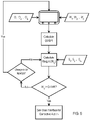
- Fig. 4 which illustrates the operational components O1, O2, ... On and the weight-related parameters W1, W2, ... Wn as data that may be entered, selected, uploaded, or otherwise designated at the user interface
- the indication of vehicle weight may be further dependent upon a GVWR that is designated at the user interface 21 - such as by a configuring technician who uses prompts at the user interface 21 to enter, select, upload, or otherwise designate the data, as opposed to an operator of the RV.
- the weight processing module M2 Given this additional designation of data, and a calculation of vehicle weight Wv, the weight processing module M2, the weight-sensing components S1, S2, ...
- the user interface 21 can be structured to indicate whether the vehicle weight Wv has exceeded the predetermined GVWR. If so, a GVWR indicator, or some other prompt for corrective action, can be displayed at the user interface 21. If not, the weight processing module M2, the weight-sensing components S1, S2, ... Sn, and the user interface 21 can continuously calculate vehicle weight Wv as the signals from the weight-sensing components S1, S2, ... Sn change.
- Fig. 4 also illustrates that the weight processing module M2, the weight-sensing components S1, S2, ... Sn, and the user interface 21 can be structured to regenerate the calculation and indication of vehicle weight Vw at the user interface 21 in response to changes in data previously designated at the user interface 21. For example, if the vehicle weight calculation relies on a particular configuration metric associated with the weight-sensing components S1, S2, ... Sn, and that configuration metric is changed by the configuring technician at the user interface 21, the vehicle weight Wv will be calculated based on the new configuration metric.
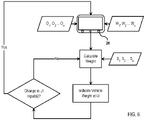
- the flow chart of Fig. 5 illustrates an embodiment where the weight processing module M2 is structured to calculate the GVWR associated with a recreational vehicle by referring to the particular operational components O1, O2, ... On associated with the recreational vehicle at the user interface 21 in addition to the particular weight-related parameters W1, W2, ... Wn.
- access to the user interface 21 would be limited to a configuring technician, as opposed to the operator of the RV, and the indication of vehicle weight may comprise the calculated weight value Wv or a GVWR indicator representing whether the vehicle weight Wv has exceeded the calculated GVWR
- the weight processing module M2 the weight-sensing components S1, S2, ... Sn, and the user interface 21 can be structured to regenerate the indication of vehicle weight at the user interface 21 if there is a change to the weight-related parameters W1, W2, ... Wn associated with the recreational vehicle. More specifically, if the technician changes the weight-related parameters W1, W2, ...
- the changes can be used to regenerate the indication of vehicle weight at the user interface 21.
- This "Change in UI Inputs?" decision block can also be used to regenerate the indication of vehicle weight at the user interface 21 if there is a change to a particular operational component O1, O2, ... On upon which the indication of vehicle weight is dependent.
- the user interface 21 may comprise calibration prompts for calibrating the manner in which the indication of vehicle weight is generated. These calibration prompts may be presented in a variety of forms but should, in any form, provide a clear, user-friendly, protocol for measuring and recording actual vehicle weight.
- the actual vehicle weight can then be used to generate a calibrated indication of vehicle weight at the user interface. For example, in one embodiment, a user is prompted to start a calibration routine by moving an unloaded vehicle to a scale for determining actual vehicle weight. The actual vehicle weight can then be used by the weight processing module M2 as a calibration input to correct for errors in the manner in which vehicle weight is determined.
- This correction may, for example, involve the incorporation of an offset value, correction factor, or scaling factor in the weight calculation routine that is employed by the weight processing module M2.
- Recalibration prompts may be generated automatically at the user interface 21 on a periodic basis, based on a time or mileage metric, for example.
- the user interface 21 may comprise prompts for initiating a calibration protocol manually. Regardless of how or when the calibration protocol is initiated, it can be advantageously designed to correct for errors in the calculation of vehicle weight, which errors may manifest themselves as a gradual drift in a calculated vehicle weight, or as abrupt changes in calculated vehicle weight.
- a block diagram illustrates an example of a computing device 700 through which embodiments of the invention can be implemented, such as in the interface device 20, the body control module, the weight processing module, etc.
- most of the memory and computing power for computing adjustment factors, loading predetermined factors, processing vehicular weight-related parameters, calculating vehicle weight, etc. is provided by the interface device 20.
- a computing device 700 may include, but need not be limited to, a desktop, laptop, server, client, tablet, smartphone, or any other type of device that can compress data.
- the computing device 700 includes at least one processor 702 and memory (non-volatile memory 708 and/or volatile memory 710).
- the computing device 700 can include one or more displays and/or output devices 704 such as monitors, speakers, headphones, projectors, wearable-displays, holographic displays, and/or printers, for example.
- the computing device 700 may further include one or more input devices 706 which can include, by way of example, any type of mouse, keyboard, disk/media drive, memory stick/thumb-drive, memory card, pen, touch-input device, biometric scanner, voice/auditory input device, motion-detector, camera, scale, etc.
- the computing device 700 may include non-volatile memory 708 (ROM, flash memory, etc.), volatile memory 710 (RAM, etc.), or a combination thereof.
- a network interface 712 can facilitate communications over a network 714 via wires, via a wide area network, via a local area network, via a personal area network, via a cellular network, via a satellite network, etc.
- Suitable local area networks may include wired Ethernet and/or wireless technologies such as, for example, wireless fidelity (Wi-Fi).
- Suitable personal area networks may include wireless technologies such as, for example, IrDA, Bluetooth, Wireless USB, Z-Wave, ZigBee, and/or other near field communication protocols.
- Suitable personal area networks may similarly include wired computer buses such as, for example, USB and FireWire.
- Suitable cellular networks include, but are not limited to, technologies such as LTE, WiMAX, UMTS, CDMA, and GSM.
- Network interface 712 can be communicatively coupled to any device capable of transmitting and/or receiving data via the network 714.
- a network interface 712 may also be referred to as a data link interface.
- a network interface 712 may also be described as a data link interface, as these terms may be used interchangeably.
- a network 714 may also be described as a data link, as these terms may be used interchangeably.
- the hardware of the network interface 712 can include a communication transceiver for sending and/or receiving any wired or wireless communication.
- Various components such as the aforementioned operational components, body control module, weight-sensing component, and/or weight processing module may utilize data link interfaces to communicate via the data link.
- the network interface hardware may include an antenna, a modem, LAN port, Wi-Fi card, WiMax card, mobile communications hardware, near-field communication hardware, satellite communication hardware and/or any wired or wireless hardware for communicating with other networks and/or devices.
- a computer readable storage medium 716 may comprise a plurality of computer readable mediums, each of which may be either a computer readable storage medium or a computer readable signal medium.
- a computer readable storage medium 716 may reside, for example, within an input device 706, non-volatile memory 708, volatile memory 710, or any combination thereof.
- a computer readable storage medium can include tangible media that is able to store instructions associated with, or used by, a device or system.
- a computer readable storage medium includes, by way of non-limiting examples: RAM, ROM, cache, fiber optics, EPROM/Flash memory, CD/DVD/BD-ROM, hard disk drives, solid-state storage, optical or magnetic storage devices, diskettes, electrical connections having a wire, or any combination thereof.
- a computer readable storage medium may also include, for example, a system or device that is of a magnetic, optical, semiconductor, or electronic type.
- Computer readable storage media and computer readable signal media are mutually exclusive.
- a computer readable signal medium can include any type of computer readable medium that is not a computer readable storage medium and may include, for example, propagated signals taking any number of forms such as optical, electromagnetic, or a combination thereof.
- a computer readable signal medium may include propagated data signals containing computer readable code, for example, within a carrier wave.
- Computer readable storage media and computer readable signal media are mutually exclusive.
- the computing device 700 may include one or more network interfaces 712 to facilitate communication with one or more remote devices, which may include, for example, client and/or server devices.
Landscapes
- Engineering & Computer Science (AREA)
- Transportation (AREA)
- Mechanical Engineering (AREA)
- Chemical & Material Sciences (AREA)
- Combustion & Propulsion (AREA)
- Physics & Mathematics (AREA)
- General Physics & Mathematics (AREA)
- Health & Medical Sciences (AREA)
- Public Health (AREA)
- Automation & Control Theory (AREA)
- Mathematical Physics (AREA)
- Vehicle Body Suspensions (AREA)
Description
- The present invention relates to recreational vehicles, utility trailers, and other similar trailed vehicles. More particularly, the present invention relates to recreational vehicles and utility trailers where it may be advantageous to monitor the loaded weight of the trailed vehicle. Recreational vehicles encompassed by the present invention include trailer-type recreational vehicles, which include fifth wheel trailers and other types of towable campers, toy haulers, etc. Recreational vehicles encompassed by the present invention also include motored recreational vehicles, like motor homes and other vehicles with their own motor and drive train. Utility trailers encompassed by the present invention include single or double-axle enclosed or open utility trailers that are designed to be hauled using a personal automobile or truck.
-
US 8 767 379 B2 discloses a recreational vehicle comprising a plurality of operational components, a body control module and an interface device, wherein the user interface comprises associative operational component prompts representing operational components to be associated with the recreational vehicle. A vehicle weight sensing system is known fromUS 2014/000696 A1 ,US2015/019165 A1 , andDE 78 15 093 U . - According to the subject matter of the present invention, recreational vehicles or utility trailers are provided with a body control module and a weight processing module that are integrated with a user interface to provide a convenient and effective on-board weighing system for the vehicle. Stand-alone body control and weight-sensing systems for recreational vehicles or utility trailers are also contemplated.
- The user interface and on-board weighing system can be accessed by technicians for set-up, configuration, and maintenance purposes, or by the operator of the recreational vehicle (RV), and is designed such that the on-board weighing system can be readily configurable for a variety of different trailers and operating conditions. Although an operator of the RV may be granted full access rights to the functionality of the user interface, it is more likely that operator access rights will be limited in some respects, but will be expansive enough to ensure optimum enjoyment of the RV experience or to otherwise enhance the functionality of the RV. In any case, it is noted that the aforementioned technicians and operators are collectively referred to herein as "users" of the disclosed RV and its various systems and components.
- The present invention is a recreational vehicle or utility trailer with the features of
claim 1 comprising a plurality of operational components, at least one weight-sensing component, a body control module configured to control or monitor the operational components and communicatively coupled to the operational components, a weight processing module configured to determine a weight of the recreational vehicle and communicatively coupled to the weight-sensing component, and an interface device comprising memory, a hardware processor coupled to the memory, a user interface and a display. The interface device is communicatively coupled to the body control module and the weight processing module. The user interface comprises user prompts for (i) associating particular operational components with the recreational vehicle and (ii) associating a particular weight-related parameter with the recreational vehicle. The weight processing module, the weight-sensing component, and the user interface are structured to generate an indication of vehicle weight at the user interface. The indication of vehicle weight is at least partially dependent upon the particular weight-related parameter associated with the recreational vehicle at the user interface. - In accordance with another embodiment of the present invention, an integrated body control and weight-sensing system for a recreational vehicle or utility trailer is provided. The system comprises a body control module control that is configured to control or monitor the operational components and which is communicatively coupled to the operational components of the vehicle, a weight processing module that is configured to determine a weight of the recreational vehicle and communicatively coupled to a weight-sensing component, and an interface device comprising memory, a hardware processor coupled to the memory, a user interface, and a display. The interface device is communicatively coupled to the body control module and the weight processing module. The user interface comprises user prompts for (i) associating particular operational components with the recreational vehicle and (ii) associating a vehicular weight-related parameter with the recreational vehicle. The weight processing module, the weight-sensing component, and the user interface are structured to generate an indication of vehicle weight at the user interface. The vehicular weight-related parameter to be associated with the vehicle at the user interface comprises a factor or variable that affects the manner in which the weight processing module, the weight-sensing component, and the user interface generate the indication of vehicle weight at the user interface. The indication of vehicle weight is at least partially dependent upon the vehicular weight-related parameter associated with the recreational vehicle at the user interface.
- Preferably, the system further comprises a mobile device that is configured to facilitate an association of the operational components and the weight-related parameter with the trailed vehicle from the mobile device, and the user interface, the weight processing module, the body control module, or a combination thereof, is configured to communicate with the mobile device.
- In accordance with yet another embodiment of the present invention, a recreational vehicle or utility trailer is provided comprising a vehicle body supported by at least one axle assembly, a plurality of operational components, at least one weight-sensing component, a body control module configured to control or monitor the operational components and communicatively coupled to the operational components, a weight processing module configured to determine a weight of the recreational vehicle and communicatively coupled to the weight-sensing component, and an interface device comprising memory, a hardware processor coupled to the memory, a user interface, and a display. The interface device is communicatively coupled to the body control module and the weight processing module. The user interface comprises user prompts for associating a particular weight-related parameter representing a configuration metric of the weight-sensing component with the recreational vehicle. The weight processing module is configured such that an indication of vehicle weight generated by the weight processing module, the weight-sensing component, and the user interface is at least partially dependent upon (i) the particular weight-related parameter associated with the recreational vehicle at the user interface and (ii) one or more of the particular operational components associated with the recreational vehicle at the user interface. The weight processing module, the weight-sensing components, and the user interface are further structured to (i) regenerate the indication of vehicle weight at the user interface if there is a change to the weight-related parameter associated with the recreational vehicle at the user interface and (ii) regenerate the indication of vehicle weight at the user interface if there is a change to a particular operational component upon which the indication of vehicle weight is dependent at the user interface.
- In accordance with yet another embodiment of the present invention, a recreational vehicle or trailed vehicle is provided comprising a vehicle body supported by at least one axle assembly, a plurality of operational components, at least one weight-sensing component, a body control module configured to control or monitor the operational components and communicatively coupled to the operational components, a weight processing module configured to determine a weight of the recreational vehicle and communicatively coupled to the weight-sensing component and an interface device comprising memory, a hardware processor coupled to the memory, a user interface, and a display. The interface device is communicatively coupled to the body control module and the weight processing module. The user interface comprises associative operational component prompts representing operational components to be associated with the recreational vehicle or the trailer. The user interface comprises a weight-related parameter prompt representing a vehicular weight-related parameter to be associated with the recreational vehicle or the trailer. The weight processing module, the weight-sensing component, and the user interface are structured to generate an indication of vehicle weight at the user interface. The vehicular weight-related parameter to be associated with the recreational vehicle or the trailer at the user interface comprises a factor or variable that affects the manner in which the weight processing module, the weight-sensing component, and the user interface generate the indication of vehicle weight at the user interface. The indication of vehicle weight is at least partially dependent upon the vehicular weight-related parameter associated with the recreational vehicle or the trailer at the user interface.
- Preferably, the weight-sensing component generates one or more raw vehicle weight signals, the weight processing module transforms the raw vehicle weight signal into the indication of vehicle weight at the user interface in a manner that is at least partially dependent upon the weight-related parameter associated with the recreational vehicle at the user interface, at least one user prompt at the user interface prompts a user to designate data representing the unsprung weight of the recreational vehicle, and at least a portion of the transformation of the raw vehicle weight signal comprises an additive operation where the unsprung weight of the recreational vehicle is added to a sensed vehicle weight to provide the indication of vehicle weight at the user interface.
- In accordance with yet another embodiment, a recreational vehicle is provided comprising a vehicle body supported by at least one axle assembly, a plurality of operational components, at least one weight-sensing component, a body control module in communication with the operational components, a weight processing module in communication with the weight-sensing component and a user interface. The user interface is in communication with the body control module and the weight processing module, the user interface comprises associative operational component prompts representing operational components to be associated with the recreational vehicle and the user interface comprises a weight-related parameter prompt representing a vehicular weight-related parameter to be associated with the recreational vehicle. The weight processing module, the weight-sensing component, and the user interface are structured to generate an indication of vehicle weight at the user interface. The vehicular weight-related parameter to be associated with the recreational vehicle at the user interface comprises a factor or variable that affects the manner in which the weight processing module, the weight-sensing component, and the user interface generate the indication of vehicle weight at the user interface. The indication of vehicle weight is at least partially dependent upon the vehicular weight-related parameter associated with the recreational vehicle at the user interface.
- Preferably, the user interface comprises user prompts for accessing and uploading data representing the operational components and the vehicular weight-related parameter via an external data link.
- Preferably, the external data link is provided at the user interface.
- Preferably, the weight processing module, the weight-sensing component, and the user interface are structured to regenerate the indication of vehicle weight at the user interface if there is a change to the weight-related parameter associated with the recreational vehicle, the change to the weight-related parameter originating from use of the user prompts at the user interface.
- Preferably, the indication of vehicle weight is further dependent upon one or more of the operational components associated with the recreational vehicle at the user interface.
- According to the invention, the weight processing module, the weight-sensing component, and the user interface are structured to regenerate the indication of vehicle weight at the user interface if there is a change to the weight-related parameter associated with the recreational vehicle, the change to the weight-related parameter originating from use of the user prompts at the user interface, and regenerate the indication of vehicle weight at the user interface if there is a change to a operational component upon which the indication of vehicle weight is dependent, the change to the operational component originating from use of the user prompts at the user interface.
- Preferably, the weight-sensing component generates one or more raw vehicle weight signals, and the weight processing module transforms the raw vehicle weight signal into the indication of vehicle weight at the user interface in a manner that is at least partially dependent upon the weight-related parameter associated with the recreational vehicle at the user interface.
- Preferably, at least one user prompt at the user interface prompts a user to designate data representing the unsprung weight of the recreational vehicle, and at least a portion of the transformation of the raw vehicle weight signal comprises an additive operation where the unsprung weight of the recreational vehicle is added to a sensed vehicle weight to provide the indication of vehicle weight at the user interface.
- Preferably, at least one user prompt at the user interface prompts a user to designate data representing a configuration metric of the weight-sensing component, and at least a portion of the transformation of the raw vehicle weight signal comprises a transformative operation where the raw vehicle weight signal is converted into the indication of vehicle weight by accounting for the configuration metric.
- Preferably, the indication of vehicle weight is further dependent upon a predetermined Gross Vehicle Weight Rating (GVWR) designated at the user interface, and the indication of vehicle weight comprises a GVWR indicator representing whether the vehicle weight has exceeded the predetermined GVWR.
- Preferably, the indication of vehicle weight is further dependent upon a predetermined GVWR designated at the user interface, and the weight processing module, the weight-sensing component, and the user interface are structured to regenerate the indication of vehicle weight at the user interface if there is a change to the predetermined GVWR.
- Preferably, the weight processing module is structured to calculate a GVWR associated with the recreational vehicle based upon one or more of the operational components associated with the recreational vehicle at the user interface, and the indication of vehicle weight comprises a calculated weight value associated with the recreational vehicle or a GVWR indicator representing whether the vehicle weight has exceeded the predetermined GVWR.
- Preferably, the weight processing module and the user interface operate to generate the indication of vehicle weight by accounting for automated adjustments to the predetermined GVWR by the weight processing module as a function of data designated at the user interface.
- Preferably, the weight processing module and the user interface operate to generate the indication of vehicle weight by accounting for manual adjustments to the predetermined GVWR at the user interface.
- Preferably, the weight-related parameter upon which the indication of vehicle weight is dependent is selected from a configuration metric of the weight-sensing component of the recreational vehicle.
- Preferably, the configuration metric of the weight-sensing component represents a type or count variable associated with the weight-sensing component.
- Preferably, the weight-related parameter upon which the indication of vehicle weight is dependent comprises a GVWR associated with the recreational vehicle.
- Preferably, the weight-related parameter upon which the indication of vehicle weight is dependent comprises a hitch assembly descriptor, a suspension component descriptor, a body component descriptor, or a combination thereof.
- Preferably, the weight-related parameter upon which the indication of vehicle weight is dependent comprises a type variable or count variable associated with the axle, tires, or wheels of the recreational vehicle, or a combination thereof.
- Preferably, the body control module is configured for controlling or monitoring the operational components of the recreational vehicle using the user prompts of the user interface.
- Preferably, the operational components represented by the user prompts of the user interface comprise motorized components selected from electric or hydraulic slide rooms, awnings, stabilizer jacks, hydraulic landing gear, electric hitches, and combinations thereof.
- Preferably, the operational components represented by the user prompts of the user interface comprise safety-related components selected from travel lockouts, door alarms, smoke detectors, propane detectors, carbon monoxide detectors, and combinations thereof.
- Preferably, the operational components represented by the user prompts of the user interface comprise lighting system components, HVAC components, appliances, generators, latch controls, tank heaters, locks, and battery monitors, tank level monitors, and combinations thereof.
- Preferably, the user interface, the weight processing module, the body control module, or a combination thereof, is configured to communicate with a mobile device to facilitate the association of the operational components and the vehicular weight-related parameter with the recreational vehicle from the mobile device.
- Preferably, he user interface comprises calibration prompts for calibrating the manner in which the indication of vehicle weight is generated at the user interface, the calibration prompts comprise prompts for measuring and recording actual vehicle weight, and the weight processing module, the weight-sensing component, and the user interface are structured to generate a calibrated indication of vehicle weight at the user interface after calibration.
- In accordance with yet another embodiment, an integrated body control and weight-sensing system is provided comprising at least one weight-sensing component configured to provide a signal representing the weight of the recreational vehicle, a body control module configured to communicate with operational components of a recreational vehicle, a weight processing module in communication with the weight-sensing component, and a user interface. The user interface is in communication with the body control module and the weight processing module. The user interface comprises associative operational component prompts representing operational components to be associated with the recreational vehicle. The user interface comprises a weight-related parameter prompt representing a vehicular weight-related parameter to be associated with the recreational vehicle. The weight processing module, the weight-sensing component, and the user interface are structured to generate an indication of vehicle weight at the user interface. The vehicular weight-related parameter to be associated with the recreational vehicle at the user interface comprises a factor or variable that affects the manner in which the weight processing module, the weight-sensing component, and the user interface generate the indication of vehicle weight at the user interface, and the indication of vehicle weight is at least partially dependent upon the vehicular weight-related parameter associated with the recreational vehicle at the user interface.
- Preferably, the system further comprises a mobile device that is configured to facilitate the association of the operational components and the weight-related parameter with the recreational vehicle from the mobile device, and the user interface, the weight processing module, the body control module, or a combination thereof, is configured to communicate with the mobile device.
- In accordance with yet another embodiment, a recreational vehicle is provided comprising a vehicle body supported by at least one axle assembly, a plurality of operational components, at least one weight-sensing component, a body control module in communication with the operational components, a weight processing module in communication with the weight-sensing component, and a user interface. The user interface is in communication with the body control module and the weight processing module. The user interface comprises associative operational component prompts representing operational components to be associated with the recreational vehicle. The user interface comprises a weight-related parameter prompt representing a vehicular weight-related parameter to be associated with the recreational vehicle. The weight processing module, the weight-sensing component, and the user interface are structured to generate an indication of vehicle weight at the user interface. The vehicular weight-related parameter to be associated with the recreational vehicle at the user interface comprises a factor or variable that affects the manner in which the weight processing module, the weight-sensing component, and the user interface generate the indication of vehicle weight at the user interface, and the indication of vehicle weight is at least partially dependent upon the vehicular weight-related parameter associated with the recreational vehicle at the user interface.
- Preferably, the weight-sensing component generates one or more raw vehicle weight signals, the weight processing module transforms the raw vehicle weight signal into the indication of vehicle weight at the user interface in a manner that is at least partially dependent upon the weight-related parameter associated with the recreational vehicle at the user interface, at least one user prompt at the user interface prompts a user to designate data representing the unsprung weight of the recreational vehicle, and at least a portion of the transformation of the raw vehicle weight signal comprises an additive operation where the unsprung weight of the recreational vehicle is added to a sensed vehicle weight to provide the indication of vehicle weight at the user interface.
- Preferably, the weight-sensing component generates one or more raw vehicle weight signals, the weight processing module transforms the raw vehicle weight signal into the indication of vehicle weight at the user interface in a manner that is at least partially dependent upon the vehicular weight-related parameter associated with the recreational vehicle at the user interface, at least one user prompt at the user interface prompts a user to designate data representing a configuration metric of the weight-sensing component, and at least a portion of the transformation of the raw vehicle weight signal comprises a transformative operation where the raw vehicle weight signal is converted into the indication of vehicle weight by accounting for the configuration metric.
-
-
Fig. 1 is a schematic illustration of a recreational vehicle according to the present invention, presented in the non-limiting context of a single-axle, trailer-type, recreational vehicle; -
Fig. 2 is a schematic illustration of a user interface page including user prompts for associating particular operational components with a recreational vehicle, presented in the non-limiting context of a tablet-type computing device with specific, non-limiting, touch screen icons and graphics; -
Fig. 3 is a schematic illustration of a user interface page including user prompts for associating a particular weight-related parameter with a recreational vehicle, presented in the non-limiting context of a tablet-type computing device with specific, non-limiting, touch screen icons and graphics; -
Figs. 4-6 are flow charts illustrating various ways in which a weight processing module, weight-sensing components, and user interface of a recreational vehicle may be structured to generate an indication of vehicle weight at the user interface of the recreational vehicle; and -
Fig. 7 is a block diagram illustrating an example of a computing device through which embodiments of the invention can be implemented. -
Fig. 1 illustrates a recreational vehicle (RV) 10 according to the present invention, presented in the non-limiting context of a single-axle, trailer-type RV. TheRV 10 comprises avehicle body 12 supported by at least oneaxle assembly 14, a plurality of operational components O1, O2, O3 and weight-sensing components S1, S2, a body control module M1, a weight processing module M2, and aninterface device 20 comprising auser interface 21. As is illustrated inFig. 1 , the body control module M1 is in communication with the operational components O1, O2, O3. The weight processing module M2 is in communication with the weight-sensing components S1, S2. For example, in the embodiment illustrated inFig. 1 , both the body control module M1 and the weight processing module M2 are directly in communication with theuser interface 21. Alternatively, the body control module M1 may be in direct communication with theuser interface 21, while the weight processing module M2 communicates with theuser interface 21 indirectly via the body control module M1. In other embodiments encompassed by the present invention, the weight processing module M2 may be in direct communication with theuser interface 21, while the body control module M1 communicates with theuser interface 21 indirectly via the weight processing module M2. - Along with the
user interface 21, theinterface device 20 may further comprise memory, a hardware processor coupled to the memory, and adisplay 23. The memory and processor are described in further detail below with reference toFig. 7 . Thedisplay 23 may be any device capable of displaying theuser interface 21. Theuser interface 21 comprises user prompts for associating particular operational components O1, O2, O3 and particular weight-related parameters W1, W2, W3 with therecreational vehicle 10. The weight processing module M2, the weight-sensing components S1, S2, and theuser interface 21 are structured to generate an indication of vehicle weight at theuser interface 21. This indication of vehicle weight is primarily dependent upon the particular weight-related parameters W1, W2, ... Wn associated with therecreational vehicle 10 at theuser interface 21. For the purposes of the present invention, it is noted that weight-related parameters W1, W2, ... Wn are factors or variables that affect the manner in which a sensed weight is calculated, reported, or otherwise used to provide an operator of the RV with useful information regarding the weight of the vehicle. Weight-related parameters W1, W2, ... Wn may include configuration metrics associated with the particular type of weight-sensing components S1, S2, ... Sn in use with the recreational vehicle. More specifically, these configuration metrics may be used to establish the type, number, or operating parameters of the particular weight-sensing components S1, S2, ... Sn in use so that the weight-sensing module M2 may utilize the signals therefrom to calculate vehicle weight in an accurate and reliable manner. For example, and not by way of limitation, the weight-related parameters W1, W2, ... Wn may include the load-bearing axle count of the RV, the type or number of axles, tires or wheels of the RV, hitch assembly descriptors, suspension component descriptors, body component descriptors, or any other factor that would affect the manner in which the weight processing module M2, the weight-sensing components S1, S2, ... Sn, and the user interface generate the indication of vehicle weight at the user interface. - The aforementioned indication of vehicle weight may be further dependent upon one or more of the particular operational components O1, O2, O3 associated with the
recreational vehicle 10 at theuser interface 21. This feature would be beneficial if the presence or absence of a particular operational component would affect the manner in which vehicle weight is calculated or the manner in which vehicle weight is indicated at the user interface. -
Fig. 2 is a schematic illustration of a first user interface page including user prompts, illustrated as touch screen icons, for associating particular operational components O1, O2, ... On with a recreational vehicle. For the purposes of the present invention, it is noted that an "operational component" is a component of the vehicle that operates to change, control, or monitor operational components and/or a condition of the recreational vehicle. For example, and not by way of limitation, operational components O1, O2, ... On can include (i) motorized components like electric or hydraulic slide rooms, awnings, stabilizer jacks, hydraulic landing gear, electric hitches, etc., or (ii) safety-related components like travel lockouts (seeUS 9,679,735 Fig. 1 , it is noted that the body control module M1 can be configured to control, monitor, or otherwise communicate with the operational components O1, O2, ... On of therecreational vehicle 10 using the user prompts of theuser interface 21. A "module," as utilized herein, can be a stand-alone programmable controller or a component of a programmable controller that integrates the functionality of the module with other functionality. In either case, the body control module M1 can be any type of RV controller that can be configured to control, monitor, or otherwise communicate with the various operational components of the RV in which it is installed. The body control module M1 can be configured in a variety of ways including, for example, through the use of user prompts at theuser interface 21, or by directly uploading configuration settings to the body control module M1 via asuitable data link 22, which is illustrated inFig. 1 as part of theuser interface 21 and may, for example, be a serial data port. Although theuser interface 21 is one convenient place to provide thedata link 22 because of its accessibility within therecreational vehicle 10, the present invention encompasses configurations where thedata link 22 is provided in alternative locations such as at one or both of the modules M1, M2, or as a stand-alone unit that communicates with theuser interface 21, or one or both of the modules M1, M2, wirelessly, or otherwise. The data link 22 may be configured for communication via a wide area network, a local area network, a personal area network, a cellular network, a satellite network, etc. Suitable local area networks may include wired Ethernet and/or wireless technologies such as, for example, wireless fidelity (Wi-Fi) or MiFi. Suitable personal area networks may include wireless technologies such as, for example, IrDA, Bluetooth, Wireless USB, Z-Wave, ZigBee, and/or other near field communication protocols. Suitable personal area networks may similarly include wired computer buses such as, for example, USB and FireWire. Suitable cellular networks include, but are not limited to, technologies such as LTE, WiMAX, UMTS, CDMA, and GSM. In addition to thedata link 22, the foregoing may apply to an external data link, which may be utilized to provide connectivity to anything outside of therecreational vehicle 10, such as servers, clients, other vehicles, etc. - It is noted that the user prompts of the
user interface 21 need not be the sole or primary mechanism for associating particular operational components, particular weight-related parameters, and other data with therecreational vehicle 10. In particular embodiments, the present invention also encompasses the use of user prompts at theuser interface 21 to designate data by accessing and uploading particular data via theaforementioned data link 22 to facilitate the aforementioned association of designated data with the recreational vehicle. For example, in one embodiment, a library of vehicle-specific floor plans may be uploaded via the user interface by accessing the library from the user interface via thedata link 22, to permit the user to select a floor plan that matches the actual floor plan of the vehicle. In other embodiments, respective libraries of potentially matching operational components O1, O2, ... On, weight-related parameters W1, W2, ... Wn, and Gross Vehicle Weight Ratings (GVWR) may also be made available for association with therecreational vehicle 10. In some cases, this type of functionality may be restricted to use by configuring technicians, as opposed to operators of the recreational vehicle. - The
user interface 21 may also include user prompts that allow users to select or create particular floor plans. More specifically, theuser interface 21 may include user prompts that invite a technician or operator of theRV 10 to enter, select, upload, or otherwise designate particular floor plans, floor plan elements, accessories, and/or operational components with theRV 10 such that the commands and information available at theuser interface 21 correspond accurately with the particular RV in which the user interface is installed. The iN-Command® control system offered by ASA Electronics is one example of a readily available RV controller that can be configured to embody the aforementioned functionality and provide the user with real time information concerning an RV and the status of the various operational components of the RV. Additional examples of commercially available RV controller technologies, all of which implicitly utilize one or more memory components and one or more hardware processors coupled to the memory components, include the Total Coach™ HMS365 system available from SilverLeaf Electronics, Inc., and the Firefly System available from Firefly Integrations, LLC. - In one embodiment, it is contemplated that the user interface may provide an indication of vehicle weight or the remaining cargo weight available, the latter of which would be based on a difference between the GVWR and the calculated vehicle weight.
- As is illustrated schematically in
Fig. 1 , theuser interface 21, the body control module M1, the weight-processing module M2, the operational components O1, O2, O3, and the weight-sensing components S1, S2 of therecreational vehicle 10 may communicate with each other via thedata link 22 which, as discussed above, may be configured for WiFi, MiFi, Bluetooth®, or another wireless technology, via a CAN bus or other hard wired connection network, or via any other conventional or yet-to-be developed technology that allows microcontrollers and devices to communicate with each other in applications with or without a host computer. The data link 22 can be communicatively coupled to any device capable of transmitting and/or receiving data via thedata link 22, such as operational components O1, O2, O3, weight-sensing components S1, S2, body control module M1, weight processing module M2, andinterface devices 20. - In one embodiment of the present invention, an RV controller is provided that incorporates the functionality of the body control module M1 and the weight processing module M2 in a single processing unit, although embodiments including multiple independent processing units are also considered part of the present invention. Because the body control module M1 and the weight processing module M2 are in communication with the operational components O1, O2, O3 and the weight-sensing components S1, S2, respectively, the operation of one these system elements can affect the functionality of another. For example, where the operational component O comprises an electric or hydraulic slide out mechanism for a slide room, the body control module M1 can be used to control the slide out mechanism. Where the operational component O comprises a smoke detector, tank level monitor, or some other type of sensor, the component O can send data to the module M1 for use by the module M1, and/or the module M1 can send commands or other types of control signals to the sensor. Thus, it is contemplated that the aforementioned communication between the modules M1, M2 and the operational components O1, O2, O3 can be either one-way or two-way communications.
- As is further illustrated in
Fig. 1 , theuser interface 21, the weight processing module M2, the body control module M1, or a combination thereof, can be configured to communicate with amobile device 30 to facilitate the association of particular operational components O1, O2, ... On and particular weight-related parameters W1, W2, ... Wn with therecreational vehicle 10 from themobile device 30. In this manner, theuser interface 21 and the body control and weight processing modules M1, M2 may communicate with a dedicated app resident on a smart phone, tablet, or other mobile device to facilitate the aforementioned monitoring and control from themobile device 30, which may include, for example, touch screen controls for monitoring or controlling vehicle lighting and appliances, or alarms, such as, smoke detection, propane detection, carbon monoxide detection, and open-door alarms. -
Fig. 3 is a schematic illustration of a second user interface page including user prompts for associating particular weight-related parameters W1, W2, ... Wn with a recreational vehicle. As is noted above, the weight-related parameters W1, W2, ... Wn are factors or variables that affect the manner in which a sensed weight is calculated, reported, or otherwise used to provide an operator of the RV with useful information regarding the weight of the vehicle. For example, and not by way of limitation, weight-related parameters W1, W2, ... Wn may include configuration metrics associated with the particular type of weight-sensing components S1, S2, ... Sn in use with the recreational vehicle. More specifically, these configuration metrics may be used to establish the type, number, or operating parameters of the particular weight-sensing components S1, S2, ... Sn in use so that the weight-sensing module M2 may utilize the signals therefrom to calculate vehicle weight in an accurate and reliable manner. For the purposes of the present invention, it is noted that a "calculated" weight value may involve the use of a suitable calculation algorithm, or may be entirely dependent upon the use of a data lookup table. - Referring collectively to
Figs. 1 ,3 and4 , in many embodiments, the weight-sensing components S1, S2, ... Sn will generate raw vehicle weight signals that are used to calculate vehicle weight Wv. In this case, the weight processing module M2 is programmed to transform the raw vehicle weight signals into an indication of vehicle weight at theuser interface 21. This transformation may be at least partially dependent upon the particular weight-related parameters W1, W2, ... Wn that are associated with therecreational vehicle 10 at theuser interface 21. - In one embodiment, the aforementioned transformation of the raw vehicle weight signal comprises an additive operation that accounts for the "unsprung" weight of the RV, that is, the weight of the suspension, wheels, and other components directly connected to them, rather than the components supported by the suspension. This is particularly useful for sensor configurations that do not account for the weight of the suspension, wheels, and other components directly connected to them. At least one user prompt at the
user interface 21 prompts a user to designate data representing the unsprung weight of the RV. This can be accomplished by prompting the user to upload, select, and/or enter particular information at theuser interface 21. In this manner, the unsprung weight of the recreational vehicle can be added to the sensed weight of the RV to generate the indication of vehicle weight at the user interface. - In another embodiment, a user prompt at the
user interface 21 prompts a user to designate data representing a configuration metric of the weight-sensing components S1, S2, ... Sn. As is noted above, possible configuration metrics include, but are not limited to, the type, number, or operating parameters of the particular weight-sensing components S1, S2, ... Sn in use. Regardless of the type or number of configurations metrics used, the raw vehicle weight signal can be converted into the indication of vehicle weight by accounting for the configuration metric. By providing for the designation of the configuration metric at theuser interface 21, or elsewhere in the system of the present invention, the weight processing module M2 is able to function with a variety of weight-sensing components S1, S2, ... Sn to generate the indication of vehicle weight at theuser interface 21. For example, and not by way of limitation, contemplated weight-sensing components S1, S2, ... Sn include, but are not limited to load-bearing component strain gauges, displacement gauges, pressure gauges, or combinations thereof. More particularly, and not by way of limitation, the present invention encompasses: the use of strain gauges on the axles and/or fifth wheel hitch-mounts of a trailer, as described inUS 2007/0181350 ,US 5,880,409 ,US 5,811,738 , andUS 5,327,791 ; vehicle load measuring systems that measure an amount of a load based on the distortion of an axle, as disclosed inUS 6,590,168 ; weight measurement systems that use load sensors to calculate the stress on a load bearing member coupled between the load and the wheels of a vehicle, as disclosed inUS 6,118,083 , or load cells, strain gauges, or displacement transducers on the leaf spring, coil spring, or other suspension component of a vehicle; the use of pressure sensors configured to measure force applied to suspension cylinders coupled to the wheels of a vehicle, as disclosed inUS 5,391,843 ; and the adaptation of a vehicle's air suspension to serve as a weight sensor, as disclosed inUS 5,780,782 andUS 7,572,988 . - Referring further to the flow chart of
Fig. 4 , which illustrates the operational components O1, O2, ... On and the weight-related parameters W1, W2, ... Wn as data that may be entered, selected, uploaded, or otherwise designated at the user interface, it is noted that the indication of vehicle weight may be further dependent upon a GVWR that is designated at the user interface 21 - such as by a configuring technician who uses prompts at theuser interface 21 to enter, select, upload, or otherwise designate the data, as opposed to an operator of the RV. Given this additional designation of data, and a calculation of vehicle weight Wv, the weight processing module M2, the weight-sensing components S1, S2, ... Sn, and theuser interface 21 can be structured to indicate whether the vehicle weight Wv has exceeded the predetermined GVWR. If so, a GVWR indicator, or some other prompt for corrective action, can be displayed at theuser interface 21. If not, the weight processing module M2, the weight-sensing components S1, S2, ... Sn, and theuser interface 21 can continuously calculate vehicle weight Wv as the signals from the weight-sensing components S1, S2, ... Sn change. -
Fig. 4 also illustrates that the weight processing module M2, the weight-sensing components S1, S2, ... Sn, and theuser interface 21 can be structured to regenerate the calculation and indication of vehicle weight Vw at theuser interface 21 in response to changes in data previously designated at theuser interface 21. For example, if the vehicle weight calculation relies on a particular configuration metric associated with the weight-sensing components S1, S2, ... Sn, and that configuration metric is changed by the configuring technician at theuser interface 21, the vehicle weight Wv will be calculated based on the new configuration metric. - The flow chart of
Fig. 5 illustrates an embodiment where the weight processing module M2 is structured to calculate the GVWR associated with a recreational vehicle by referring to the particular operational components O1, O2, ... On associated with the recreational vehicle at theuser interface 21 in addition to the particular weight-related parameters W1, W2, ... Wn. In this embodiment, access to theuser interface 21 would be limited to a configuring technician, as opposed to the operator of the RV, and the indication of vehicle weight may comprise the calculated weight value Wv or a GVWR indicator representing whether the vehicle weight Wv has exceeded the calculated GVWR - In some embodiments, it may be preferable to give a configuring technician the ability to change one or more of the weight-related parameters W1, W2, ... Wn associated with the recreational vehicle. For example, turning to the flow chart of
Fig. 6 and, more particularly, the "Change in UI Inputs?" decision block of the flow chart, in particular embodiments, the weight processing module M2, the weight-sensing components S1, S2, ... Sn, and theuser interface 21 can be structured to regenerate the indication of vehicle weight at theuser interface 21 if there is a change to the weight-related parameters W1, W2, ... Wn associated with the recreational vehicle. More specifically, if the technician changes the weight-related parameters W1, W2, ... Wn by using suitable user prompts at theuser interface 21, and these changes are significant, the changes can be used to regenerate the indication of vehicle weight at theuser interface 21. This "Change in UI Inputs?" decision block can also be used to regenerate the indication of vehicle weight at theuser interface 21 if there is a change to a particular operational component O1, O2, ... On upon which the indication of vehicle weight is dependent. - In other embodiments, it may be preferable to provide a calibration protocol for the aforementioned indication of vehicle weight. More specifically, in some embodiments, the
user interface 21 may comprise calibration prompts for calibrating the manner in which the indication of vehicle weight is generated. These calibration prompts may be presented in a variety of forms but should, in any form, provide a clear, user-friendly, protocol for measuring and recording actual vehicle weight. The actual vehicle weight can then be used to generate a calibrated indication of vehicle weight at the user interface. For example, in one embodiment, a user is prompted to start a calibration routine by moving an unloaded vehicle to a scale for determining actual vehicle weight. The actual vehicle weight can then be used by the weight processing module M2 as a calibration input to correct for errors in the manner in which vehicle weight is determined. This correction may, for example, involve the incorporation of an offset value, correction factor, or scaling factor in the weight calculation routine that is employed by the weight processing module M2. Recalibration prompts may be generated automatically at theuser interface 21 on a periodic basis, based on a time or mileage metric, for example. Alternatively, or additionally, theuser interface 21 may comprise prompts for initiating a calibration protocol manually. Regardless of how or when the calibration protocol is initiated, it can be advantageously designed to correct for errors in the calculation of vehicle weight, which errors may manifest themselves as a gradual drift in a calculated vehicle weight, or as abrupt changes in calculated vehicle weight. - Turning to
Fig. 7 , a block diagram illustrates an example of acomputing device 700 through which embodiments of the invention can be implemented, such as in theinterface device 20, the body control module, the weight processing module, etc. In one contemplated embodiment, most of the memory and computing power for computing adjustment factors, loading predetermined factors, processing vehicular weight-related parameters, calculating vehicle weight, etc., is provided by theinterface device 20. - The
computing device 700 described herein is but one example of a suitable computing device and does not suggest any limitation on the scope of any embodiments presented. Nothing illustrated or described with respect to thecomputing device 700 should be interpreted as being required or as creating any type of dependency with respect to any element or plurality of elements. In various embodiments, acomputing device 700 may include, but need not be limited to, a desktop, laptop, server, client, tablet, smartphone, or any other type of device that can compress data. In an embodiment, thecomputing device 700 includes at least oneprocessor 702 and memory (non-volatile memory 708 and/or volatile memory 710). Thecomputing device 700 can include one or more displays and/oroutput devices 704 such as monitors, speakers, headphones, projectors, wearable-displays, holographic displays, and/or printers, for example. Thecomputing device 700 may further include one ormore input devices 706 which can include, by way of example, any type of mouse, keyboard, disk/media drive, memory stick/thumb-drive, memory card, pen, touch-input device, biometric scanner, voice/auditory input device, motion-detector, camera, scale, etc. - The
computing device 700 may include non-volatile memory 708 (ROM, flash memory, etc.), volatile memory 710 (RAM, etc.), or a combination thereof. Anetwork interface 712 can facilitate communications over anetwork 714 via wires, via a wide area network, via a local area network, via a personal area network, via a cellular network, via a satellite network, etc. Suitable local area networks may include wired Ethernet and/or wireless technologies such as, for example, wireless fidelity (Wi-Fi). Suitable personal area networks may include wireless technologies such as, for example, IrDA, Bluetooth, Wireless USB, Z-Wave, ZigBee, and/or other near field communication protocols. Suitable personal area networks may similarly include wired computer buses such as, for example, USB and FireWire. Suitable cellular networks include, but are not limited to, technologies such as LTE, WiMAX, UMTS, CDMA, and GSM.Network interface 712 can be communicatively coupled to any device capable of transmitting and/or receiving data via thenetwork 714. Anetwork interface 712 may also be referred to as a data link interface. Anetwork interface 712 may also be described as a data link interface, as these terms may be used interchangeably. - A
network 714 may also be described as a data link, as these terms may be used interchangeably. Accordingly, the hardware of thenetwork interface 712 can include a communication transceiver for sending and/or receiving any wired or wireless communication. Various components, such as the aforementioned operational components, body control module, weight-sensing component, and/or weight processing module may utilize data link interfaces to communicate via the data link. For example, the network interface hardware may include an antenna, a modem, LAN port, Wi-Fi card, WiMax card, mobile communications hardware, near-field communication hardware, satellite communication hardware and/or any wired or wireless hardware for communicating with other networks and/or devices. - A computer
readable storage medium 716 may comprise a plurality of computer readable mediums, each of which may be either a computer readable storage medium or a computer readable signal medium. A computerreadable storage medium 716 may reside, for example, within aninput device 706,non-volatile memory 708,volatile memory 710, or any combination thereof. A computer readable storage medium can include tangible media that is able to store instructions associated with, or used by, a device or system. A computer readable storage medium includes, by way of non-limiting examples: RAM, ROM, cache, fiber optics, EPROM/Flash memory, CD/DVD/BD-ROM, hard disk drives, solid-state storage, optical or magnetic storage devices, diskettes, electrical connections having a wire, or any combination thereof. A computer readable storage medium may also include, for example, a system or device that is of a magnetic, optical, semiconductor, or electronic type. Computer readable storage media and computer readable signal media are mutually exclusive. - A computer readable signal medium can include any type of computer readable medium that is not a computer readable storage medium and may include, for example, propagated signals taking any number of forms such as optical, electromagnetic, or a combination thereof. A computer readable signal medium may include propagated data signals containing computer readable code, for example, within a carrier wave. Computer readable storage media and computer readable signal media are mutually exclusive.
- The
computing device 700 may include one ormore network interfaces 712 to facilitate communication with one or more remote devices, which may include, for example, client and/or server devices.
Claims (14)
- A recreational vehicle (10) comprising:a plurality of operational components (O1-On);at least one weight-sensing component (S1-Sn);a body control module (M1) configured to control or monitor the operational components (O1-On) and communicatively coupled to the operational components (O1-On);a weight processing module (M2) configured to determine a weight of the recreational vehicle (10) and communicatively coupled to the weight-sensing component (S1-Sn); andan interface device (20) comprising memory, a hardware processor coupled to the memory, a user interface (21), and a display (23), whereinthe indication of vehicle weight is at least partially dependent upon the vehicular weight-related parameter (W1-Wn) associated with the recreational vehicle (10) at the user interface (21).the interface device (20) is communicatively coupled to the body control module (M1) and the weight processing module (M2),the user interface (21) comprises associative operational component prompts representing operational components (O1-On) to be associated with the recreational vehicle (10),the user interface (21) comprises a weight-related parameter prompt representing a vehicular weight-related parameter (W1-Wn) to be associated with the recreational vehicle (10),the weight processing module (M2), the weight-sensing component (S1-Sn), and the user interface (21) are structured to generate an indication of vehicle weight at the user interface (21),the weight processing module (M2), the weight-sensing component (S1-Sn), and the user interface (21) are structured to regenerate the indication of vehicle weight at the user interface (21) if there is a change to the weight-related parameter (W1-Wn) associated with the recreational vehicle (10), the change to the weight-related parameter (W1-Wn) originating from use of user prompts at the user interface (21),the vehicular weight-related parameter (W1-Wn) to be associated with the recreational vehicle (10) at the user interface (21) comprises a factor or variable that affects the manner in which the weight processing module (M2), the weight-sensing component (S1-Sn), and the user interface (21) generate the indication of vehicle weight at the user interface (21),
- The recreational vehicle (10) as claimed in claim 1 wherein:the indication of vehicle weight is further dependent upon one or more of the operational components (O1-On) associated with the recreational vehicle (10) at the user interface (21); andthe weight processing module (M2), the weight-sensing component (S1-Sn), and the user interface (21) are structured to (i) regenerate the indication of vehicle weight at the user interface (21) if there is a change to the weight-related parameter (W1-Wn) associated with the recreational vehicle (10), the change to the weight-related parameter (W1-Wn) originating from use of the user prompts at the user interface (21) and (ii) regenerate the indication of vehicle weight at the user interface (21) if there is a change to a operational component (O1-On) upon which the indication of vehicle weight is dependent, the change to the operational component (O1-On) originating from use of the user prompts at the user interface (21).
- The recreational vehicle (10) as claimed in claim 1 wherein:the weight-sensing component (S1-Sn) generates one or more raw vehicle weight signals; andthe weight processing module (M2) transforms the raw vehicle weight signal into the indication of vehicle weight at the user interface (21) in a manner that is at least partially dependent upon the weight-related parameter (W1-Wn) associated with the recreational vehicle (10) at the user interface (21), wherein preferably at least one user prompt at the user interface (21) prompts a user to designate data representing the unsprung weight of the recreational vehicle (10), andat least a portion of the transformation of the raw vehicle weight signal comprises an additive operation where the unsprung weight of the recreational vehicle (10) is added to a sensed vehicle weight to provide the indication of vehicle weight at the user interface (21); and/ orpreferably at least one user prompt at the user interface (21) prompts a user to designate data representing a configuration metric of the weight-sensing component (S1-Sn), andat least a portion of the transformation of the raw vehicle weight signal comprises a transformative operation where the raw vehicle weight signal is converted into the indication of vehicle weight by accounting for the configuration metric.
- The recreational vehicle (10) of any of claims 1 through 3 wherein:the indication of vehicle weight is further dependent upon a predetermined Gross Vehicle Weight Rating (GVWR) designated at the user interface (21); andthe indication of vehicle weight comprises a GVWR indicator representing whether the vehicle weight has exceeded the predetermined GVWR.
- The recreational vehicle (10) of any of claims 1 through 3 wherein:the indication of vehicle weight is further dependent upon a predetermined GVWR designated at the user interface (21); andthe weight processing module (M2), the weight-sensing component (S1-Sn), and the user interface (21) are structured to regenerate the indication of vehicle weight at the user interface (21) if there is a change to the predetermined GVWR.
- The recreational vehicle (10) of any of claims 1 through 3 wherein:the weight processing module (M2) is structured to calculate a GVWR associated with the recreational vehicle (10) based upon one or more of the operational components (O1-On) associated with the recreational vehicle (10) at the user interface (21); andthe indication of vehicle weight comprises a calculated weight value associated with the recreational vehicle (10) or a GVWR indicator representing whether the vehicle weight has exceeded the predetermined GVWR.
- The recreational vehicle (10) of any of claims 1 through 3 wherein the weight processing module (M2) and the user interface (21) operate to generate the indication of vehicle weight by:accounting for automated adjustments to the predetermined GVWR by the weight processing module (M2) as a function of data designated at the user interface (21); oraccounting for manual adjustments to the predetermined GVWR at the user interface (21).
- The recreational vehicle (10) of any of claims 1 through 3 wherein the weight-related parameter (W1-Wn) upon which the indication of vehicle weight is dependent is selected from a configuration metric of the weight-sensing component (S1-Sn) of the recreational vehicle (10).
- The recreational vehicle (10) as claimed in claim 8 wherein the configuration metric of the weight-sensing component (S1-Sn) represents a type or count variable associated with the weight-sensing component (S1-Sn).
- The recreational vehicle (10) of any of claims 1 through 3 wherein the weight-related parameter (W1-Wn) upon which the indication of vehicle weight is dependent comprises a GVWR associated with the recreational vehicle (10).
- The recreational vehicle (10) of any of claims 1 through 3 wherein the weight-related parameter (W1-Wn) upon which the indication of vehicle weight is dependent comprises a hitch assembly descriptor, a suspension component descriptor, a body component descriptor, or a combination thereof,
and/ or preferably the weight-related parameter (W1-Wn) upon which the indication of vehicle weight is dependent comprises a type variable or count variable associated with an axle, tires, or wheels of the recreational vehicle, or a combination thereof. - The recreational vehicle (10) of any of claims 1 through 3 wherein the operational components (O1-On) represented by the user prompts of the user interface (21) comprise:motorized components selected from electric or hydraulic slide rooms, awnings, stabilizer jacks, hydraulic landing gear, electric hitches, and combinations thereof;safety-related components selected from travel lockouts, door alarms, smoke detectors, propane detectors, carbon monoxide detectors, and combinations thereof; orlighting system components, HVAC components, appliances, generators, latch controls, tank heaters, locks, and battery monitors, tank level monitors, and combinations thereof.
- The recreational vehicle (10) of any of claims 1 through 3 wherein the user interface (21), the weight processing module (M2), the body control module (M1), or a combination thereof, is configured to communicate with a mobile device to facilitate an association of the operational components (O1-On) and the vehicular weight-related parameter (W1-Wn) with the recreational vehicle (10) from the mobile device.
- The recreational vehicle (10) of any of claims 1 through 3 wherein:the user interface (21) comprises calibration prompts for calibrating the manner in which the indication of vehicle weight is generated at the user interface (21);the calibration prompts comprise prompts for measuring and recording actual vehicle weight; andthe weight processing module (M1), the weight-sensing component (S1-Sn), and the user interface (21) are structured to generate a calibrated indication of vehicle weight at the user interface (21) after calibration.
Applications Claiming Priority (3)
| Application Number | Priority Date | Filing Date | Title |
|---|---|---|---|
| US15/875,037 US10173689B1 (en) | 2018-01-19 | 2018-01-19 | Recreational vehicle and integrated body control and weight sensing system |
| US16/206,074 US10486711B2 (en) | 2018-01-19 | 2018-11-30 | Integrated body control and weight sensing system |
| PCT/US2019/013911 WO2019143756A1 (en) | 2018-01-19 | 2019-01-17 | Integrated body control and weight sensing system |
Publications (2)
| Publication Number | Publication Date |
|---|---|
| EP3727922A1 EP3727922A1 (en) | 2020-10-28 |
| EP3727922B1 true EP3727922B1 (en) | 2022-11-23 |
Family
ID=65324619
Family Applications (1)
| Application Number | Title | Priority Date | Filing Date |
|---|---|---|---|
| EP19703872.2A Active EP3727922B1 (en) | 2018-01-19 | 2019-01-17 | Integrated body control and weight sensing system |
Country Status (4)
| Country | Link |
|---|---|
| US (1) | US10486711B2 (en) |
| EP (1) | EP3727922B1 (en) |
| CA (1) | CA3088800A1 (en) |
| WO (1) | WO2019143756A1 (en) |
Families Citing this family (6)
| Publication number | Priority date | Publication date | Assignee | Title |
|---|---|---|---|---|
| US11066081B2 (en) * | 2018-05-01 | 2021-07-20 | Ford Global Technologies, Llc | Methods and apparatus to modify vehicle function based on loading conditions |
| US11440556B2 (en) | 2019-12-12 | 2022-09-13 | Thor Tech, Inc. | Trailed vehicles, mobile devices, and weight sensing system user interfaces comprised therein |
| USD961611S1 (en) | 2020-06-30 | 2022-08-23 | Thor Tech, Inc. | Electronic device with graphical user interface |
| JP1689499S (en) * | 2020-11-17 | 2021-07-12 | ||
| DE102021133763A1 (en) * | 2021-12-17 | 2023-06-22 | Zf Cv Systems Global Gmbh | Method for monitoring the load of a vehicle combination |
| CN114485879B (en) * | 2022-02-14 | 2024-11-19 | 中国第一汽车股份有限公司 | Vehicle weight estimation method and system |
Family Cites Families (31)
| Publication number | Priority date | Publication date | Assignee | Title |
|---|---|---|---|---|
| US3780817A (en) | 1969-02-28 | 1973-12-25 | J Videon | Weighing devices |
| US3650340A (en) | 1969-07-02 | 1972-03-21 | Art S Way Mfg Co Inc | Strain gage weighing device |
| US3878908A (en) | 1974-03-05 | 1975-04-22 | Asea Ab | Means for measuring the axle load in vehicles |
| DE7815093U1 (en) | 1978-05-19 | 1978-10-05 | Hagus C. Luchtenberg Gmbh & Co Kg, 5650 Solingen | vehicle |
| GB8315346D0 (en) | 1983-06-03 | 1983-07-06 | Trw Probe Electronics Co Ltd | Strain gauge assemblies |
| US4666003A (en) | 1985-09-17 | 1987-05-19 | Stress-Tek, Inc. | On-board load cell |
| US4852674A (en) | 1987-07-30 | 1989-08-01 | Caterpillar Inc. | Method for displaying load distribution by monitoring a work vehicle suspension |
| US5076375A (en) | 1987-11-30 | 1991-12-31 | Mettler-Toledo, Inc. | Load cell |
| JP2686843B2 (en) | 1990-05-07 | 1997-12-08 | 株式会社小松製作所 | Vehicle loading weight measurement device |
| US5327791A (en) | 1992-01-16 | 1994-07-12 | Walker Robert R | Vehicle beam load measuring system |
| US5230392A (en) | 1992-04-16 | 1993-07-27 | Remy Tremblay | Load weighing apparatus |
| US5410109A (en) | 1993-04-22 | 1995-04-25 | Tarter; Ralph E. | Vehicle on-board weighing system and method |
| US5780782A (en) | 1995-02-15 | 1998-07-14 | Hi-Tech Transport Electronics, Inc. | On-board scale with remote sensor processing |
| US6118083A (en) | 1996-11-08 | 2000-09-12 | Creative Microsystems | Weight measurement apparatus for vehicles |
| US5811738A (en) | 1996-11-08 | 1998-09-22 | Larry D. Santi | Trunnion-mounted weight measurement apparatus |
| US5880409A (en) | 1996-11-20 | 1999-03-09 | Weighst Systems, Inc. | Onboard weighing system for truck having single point suspension |
| US6025563A (en) | 1997-10-01 | 2000-02-15 | Vehicle Enhancement Systems, Inc. | Apparatus and method for indicating load weight of a vehicle |
| NL1012571C2 (en) | 1999-07-12 | 2001-01-15 | Ravas Europ B V | Pallet truck. |
| JP2001296175A (en) | 2000-02-13 | 2001-10-26 | Yazaki Corp | Vehicle load measuring device |
| US6449582B1 (en) | 2000-05-09 | 2002-09-10 | The University Of British Columbia | Vehicle weight and cargo load determination using tire pressure |
| DE10249440A1 (en) * | 2002-10-24 | 2004-05-06 | Daimlerchrysler Ag | Method for monitoring a weight-sensing system |
| US20070181350A1 (en) | 2006-02-09 | 2007-08-09 | Stemco Lp | On-board truck scale |
| US7398668B2 (en) * | 2006-06-27 | 2008-07-15 | Bfs Diversified Products, Llc | Weight sensing system and method for vehicles with non-fluid springs |
| US7478001B2 (en) | 2007-04-19 | 2009-01-13 | Hi-Tech Transport Electronics, Inc. | Systems and methods for temperature-compensated measuring of a load |
| US7572988B1 (en) | 2008-07-10 | 2009-08-11 | Morton Gregory D | Method for onboard vehicle weight measurement |
| US20140000969A1 (en) | 2009-05-29 | 2014-01-02 | David Carruthers | Vehicle load sensing system |
| US8570183B2 (en) | 2010-04-09 | 2013-10-29 | Bae Systems Information And Electronic Systems Integration Inc. | Method for detecting gross vehicle weight overload |
| US8767379B2 (en) | 2013-02-11 | 2014-07-01 | Connecticut Electric, Inc. | Recreational vehicle user interface system and method |
| US20150019165A1 (en) | 2013-07-12 | 2015-01-15 | Infineon Technologies Ag | Weight detection by tire pressure sensing |
| US10026581B2 (en) | 2015-03-06 | 2018-07-17 | Asa Electronics, Llc | Switch override system for recreation vehicle controls |
| US10173689B1 (en) * | 2018-01-19 | 2019-01-08 | Thor Tech, Inc. | Recreational vehicle and integrated body control and weight sensing system |
-
2018
- 2018-11-30 US US16/206,074 patent/US10486711B2/en active Active
-
2019
- 2019-01-17 CA CA3088800A patent/CA3088800A1/en active Pending
- 2019-01-17 EP EP19703872.2A patent/EP3727922B1/en active Active
- 2019-01-17 WO PCT/US2019/013911 patent/WO2019143756A1/en not_active Ceased
Also Published As
| Publication number | Publication date |
|---|---|
| WO2019143756A1 (en) | 2019-07-25 |
| CA3088800A1 (en) | 2019-07-25 |
| US20190225230A1 (en) | 2019-07-25 |
| US10486711B2 (en) | 2019-11-26 |
| EP3727922A1 (en) | 2020-10-28 |
Similar Documents
| Publication | Publication Date | Title |
|---|---|---|
| US10486711B2 (en) | Integrated body control and weight sensing system | |
| US10173689B1 (en) | Recreational vehicle and integrated body control and weight sensing system | |
| US20200276909A1 (en) | Communications systems and methods for hydrogen fueling and electric charging | |
| CN104275994A (en) | Weight detection by tire pressure sensing | |
| US20130338848A1 (en) | Method and Apparatus for Leveling Recreational Vehicles | |
| US20150088337A1 (en) | Method and system for vehicle personalization | |
| US10543725B2 (en) | System for determining towing equipment compatibility | |
| US20150161830A1 (en) | Device for monitoring a sensor of a vehicle | |
| US10895492B2 (en) | Monitoring system for determining a vehicle safety setting based on weight | |
| US11440556B2 (en) | Trailed vehicles, mobile devices, and weight sensing system user interfaces comprised therein | |
| DE102014001031A1 (en) | Method and device for assisted loading of a motor vehicle | |
| EP2722204B1 (en) | Portable electronic device for changing trailer height using the pneumatic suspension | |
| MX2008010211A (en) | On-board truck scale. | |
| US10173691B2 (en) | Vehicle sensor calibration using wireless network-connected sensors | |
| US20190035174A1 (en) | Vehicle calibration based upon performance product detection | |
| EP3971661A1 (en) | System and method for controlling at least one function of a vehicle | |
| US20140121937A1 (en) | Digital signal to analog signal gauge adapter | |
| WO2023039006A1 (en) | Automatic weight distribution system and method with continuous monitoring | |
| AU2024204420A1 (en) | Odometer system for a recreational vehicle | |
| CN113865682B (en) | Truck tire load determination method, device and storage medium | |
| KR101074355B1 (en) | System for detecting vehicle status using wireless sensor module | |
| EP2719556A1 (en) | Portable electronic device for changing trailer height using the pneumatic suspension | |
| CN114616110B (en) | Air spring control system, air spring system, vehicle having the air spring system, and method for the vehicle | |
| US20240140153A1 (en) | System and method for tongue weight sensing and trailer brake gain | |
| CN115574907A (en) | System for monitoring payload of vehicle and vehicle comprising same |
Legal Events
| Date | Code | Title | Description |
|---|---|---|---|
| STAA | Information on the status of an ep patent application or granted ep patent |
Free format text: STATUS: UNKNOWN |
|
| STAA | Information on the status of an ep patent application or granted ep patent |
Free format text: STATUS: THE INTERNATIONAL PUBLICATION HAS BEEN MADE |
|
| PUAI | Public reference made under article 153(3) epc to a published international application that has entered the european phase |
Free format text: ORIGINAL CODE: 0009012 |
|
| STAA | Information on the status of an ep patent application or granted ep patent |
Free format text: STATUS: REQUEST FOR EXAMINATION WAS MADE |
|
| 17P | Request for examination filed |
Effective date: 20200721 |
|
| AK | Designated contracting states |
Kind code of ref document: A1 Designated state(s): AL AT BE BG CH CY CZ DE DK EE ES FI FR GB GR HR HU IE IS IT LI LT LU LV MC MK MT NL NO PL PT RO RS SE SI SK SM TR |
|
| AX | Request for extension of the european patent |
Extension state: BA ME |
|
| DAV | Request for validation of the european patent (deleted) | ||
| DAX | Request for extension of the european patent (deleted) | ||
| STAA | Information on the status of an ep patent application or granted ep patent |
Free format text: STATUS: EXAMINATION IS IN PROGRESS |
|
| 17Q | First examination report despatched |
Effective date: 20210920 |
|
| GRAP | Despatch of communication of intention to grant a patent |
Free format text: ORIGINAL CODE: EPIDOSNIGR1 |
|
| STAA | Information on the status of an ep patent application or granted ep patent |
Free format text: STATUS: GRANT OF PATENT IS INTENDED |
|
| INTG | Intention to grant announced |
Effective date: 20220630 |
|
| GRAS | Grant fee paid |
Free format text: ORIGINAL CODE: EPIDOSNIGR3 |
|
| GRAA | (expected) grant |
Free format text: ORIGINAL CODE: 0009210 |
|
| STAA | Information on the status of an ep patent application or granted ep patent |
Free format text: STATUS: THE PATENT HAS BEEN GRANTED |
|
| AK | Designated contracting states |
Kind code of ref document: B1 Designated state(s): AL AT BE BG CH CY CZ DE DK EE ES FI FR GB GR HR HU IE IS IT LI LT LU LV MC MK MT NL NO PL PT RO RS SE SI SK SM TR |
|
| REG | Reference to a national code |
Ref country code: GB Ref legal event code: FG4D |
|
| REG | Reference to a national code |
Ref country code: CH Ref legal event code: EP |
|
| REG | Reference to a national code |
Ref country code: AT Ref legal event code: REF Ref document number: 1532935 Country of ref document: AT Kind code of ref document: T Effective date: 20221215 Ref country code: DE Ref legal event code: R096 Ref document number: 602019022197 Country of ref document: DE |
|
| REG | Reference to a national code |
Ref country code: IE Ref legal event code: FG4D |
|
| REG | Reference to a national code |
Ref country code: LT Ref legal event code: MG9D |
|
| REG | Reference to a national code |
Ref country code: NL Ref legal event code: MP Effective date: 20221123 |
|
| REG | Reference to a national code |
Ref country code: AT Ref legal event code: MK05 Ref document number: 1532935 Country of ref document: AT Kind code of ref document: T Effective date: 20221123 |
|
| PG25 | Lapsed in a contracting state [announced via postgrant information from national office to epo] |
Ref country code: SE Free format text: LAPSE BECAUSE OF FAILURE TO SUBMIT A TRANSLATION OF THE DESCRIPTION OR TO PAY THE FEE WITHIN THE PRESCRIBED TIME-LIMIT Effective date: 20221123 Ref country code: PT Free format text: LAPSE BECAUSE OF FAILURE TO SUBMIT A TRANSLATION OF THE DESCRIPTION OR TO PAY THE FEE WITHIN THE PRESCRIBED TIME-LIMIT Effective date: 20230323 Ref country code: NO Free format text: LAPSE BECAUSE OF FAILURE TO SUBMIT A TRANSLATION OF THE DESCRIPTION OR TO PAY THE FEE WITHIN THE PRESCRIBED TIME-LIMIT Effective date: 20230223 Ref country code: LT Free format text: LAPSE BECAUSE OF FAILURE TO SUBMIT A TRANSLATION OF THE DESCRIPTION OR TO PAY THE FEE WITHIN THE PRESCRIBED TIME-LIMIT Effective date: 20221123 Ref country code: FI Free format text: LAPSE BECAUSE OF FAILURE TO SUBMIT A TRANSLATION OF THE DESCRIPTION OR TO PAY THE FEE WITHIN THE PRESCRIBED TIME-LIMIT Effective date: 20221123 Ref country code: ES Free format text: LAPSE BECAUSE OF FAILURE TO SUBMIT A TRANSLATION OF THE DESCRIPTION OR TO PAY THE FEE WITHIN THE PRESCRIBED TIME-LIMIT Effective date: 20221123 Ref country code: AT Free format text: LAPSE BECAUSE OF FAILURE TO SUBMIT A TRANSLATION OF THE DESCRIPTION OR TO PAY THE FEE WITHIN THE PRESCRIBED TIME-LIMIT Effective date: 20221123 |
|
| PG25 | Lapsed in a contracting state [announced via postgrant information from national office to epo] |
Ref country code: RS Free format text: LAPSE BECAUSE OF FAILURE TO SUBMIT A TRANSLATION OF THE DESCRIPTION OR TO PAY THE FEE WITHIN THE PRESCRIBED TIME-LIMIT Effective date: 20221123 Ref country code: PL Free format text: LAPSE BECAUSE OF FAILURE TO SUBMIT A TRANSLATION OF THE DESCRIPTION OR TO PAY THE FEE WITHIN THE PRESCRIBED TIME-LIMIT Effective date: 20221123 Ref country code: LV Free format text: LAPSE BECAUSE OF FAILURE TO SUBMIT A TRANSLATION OF THE DESCRIPTION OR TO PAY THE FEE WITHIN THE PRESCRIBED TIME-LIMIT Effective date: 20221123 Ref country code: IS Free format text: LAPSE BECAUSE OF FAILURE TO SUBMIT A TRANSLATION OF THE DESCRIPTION OR TO PAY THE FEE WITHIN THE PRESCRIBED TIME-LIMIT Effective date: 20230323 Ref country code: HR Free format text: LAPSE BECAUSE OF FAILURE TO SUBMIT A TRANSLATION OF THE DESCRIPTION OR TO PAY THE FEE WITHIN THE PRESCRIBED TIME-LIMIT Effective date: 20221123 Ref country code: GR Free format text: LAPSE BECAUSE OF FAILURE TO SUBMIT A TRANSLATION OF THE DESCRIPTION OR TO PAY THE FEE WITHIN THE PRESCRIBED TIME-LIMIT Effective date: 20230224 |
|
| PG25 | Lapsed in a contracting state [announced via postgrant information from national office to epo] |
Ref country code: NL Free format text: LAPSE BECAUSE OF FAILURE TO SUBMIT A TRANSLATION OF THE DESCRIPTION OR TO PAY THE FEE WITHIN THE PRESCRIBED TIME-LIMIT Effective date: 20221123 |
|
| PG25 | Lapsed in a contracting state [announced via postgrant information from national office to epo] |
Ref country code: SM Free format text: LAPSE BECAUSE OF FAILURE TO SUBMIT A TRANSLATION OF THE DESCRIPTION OR TO PAY THE FEE WITHIN THE PRESCRIBED TIME-LIMIT Effective date: 20221123 Ref country code: RO Free format text: LAPSE BECAUSE OF FAILURE TO SUBMIT A TRANSLATION OF THE DESCRIPTION OR TO PAY THE FEE WITHIN THE PRESCRIBED TIME-LIMIT Effective date: 20221123 Ref country code: EE Free format text: LAPSE BECAUSE OF FAILURE TO SUBMIT A TRANSLATION OF THE DESCRIPTION OR TO PAY THE FEE WITHIN THE PRESCRIBED TIME-LIMIT Effective date: 20221123 Ref country code: DK Free format text: LAPSE BECAUSE OF FAILURE TO SUBMIT A TRANSLATION OF THE DESCRIPTION OR TO PAY THE FEE WITHIN THE PRESCRIBED TIME-LIMIT Effective date: 20221123 Ref country code: CZ Free format text: LAPSE BECAUSE OF FAILURE TO SUBMIT A TRANSLATION OF THE DESCRIPTION OR TO PAY THE FEE WITHIN THE PRESCRIBED TIME-LIMIT Effective date: 20221123 |
|
| REG | Reference to a national code |
Ref country code: DE Ref legal event code: R097 Ref document number: 602019022197 Country of ref document: DE |
|
| PG25 | Lapsed in a contracting state [announced via postgrant information from national office to epo] |
Ref country code: SK Free format text: LAPSE BECAUSE OF FAILURE TO SUBMIT A TRANSLATION OF THE DESCRIPTION OR TO PAY THE FEE WITHIN THE PRESCRIBED TIME-LIMIT Effective date: 20221123 Ref country code: AL Free format text: LAPSE BECAUSE OF FAILURE TO SUBMIT A TRANSLATION OF THE DESCRIPTION OR TO PAY THE FEE WITHIN THE PRESCRIBED TIME-LIMIT Effective date: 20221123 |
|
| REG | Reference to a national code |
Ref country code: CH Ref legal event code: PL |
|
| PG25 | Lapsed in a contracting state [announced via postgrant information from national office to epo] |
Ref country code: LU Free format text: LAPSE BECAUSE OF NON-PAYMENT OF DUE FEES Effective date: 20230117 |
|
| PLBE | No opposition filed within time limit |
Free format text: ORIGINAL CODE: 0009261 |
|
| STAA | Information on the status of an ep patent application or granted ep patent |
Free format text: STATUS: NO OPPOSITION FILED WITHIN TIME LIMIT |
|
| REG | Reference to a national code |
Ref country code: BE Ref legal event code: MM Effective date: 20230131 |
|
| PG25 | Lapsed in a contracting state [announced via postgrant information from national office to epo] |
Ref country code: LI Free format text: LAPSE BECAUSE OF NON-PAYMENT OF DUE FEES Effective date: 20230131 Ref country code: CH Free format text: LAPSE BECAUSE OF NON-PAYMENT OF DUE FEES Effective date: 20230131 |
|
| 26N | No opposition filed |
Effective date: 20230824 |
|
| PG25 | Lapsed in a contracting state [announced via postgrant information from national office to epo] |
Ref country code: SI Free format text: LAPSE BECAUSE OF FAILURE TO SUBMIT A TRANSLATION OF THE DESCRIPTION OR TO PAY THE FEE WITHIN THE PRESCRIBED TIME-LIMIT Effective date: 20221123 Ref country code: BE Free format text: LAPSE BECAUSE OF NON-PAYMENT OF DUE FEES Effective date: 20230131 |
|
| PG25 | Lapsed in a contracting state [announced via postgrant information from national office to epo] |
Ref country code: IE Free format text: LAPSE BECAUSE OF NON-PAYMENT OF DUE FEES Effective date: 20230117 |
|
| PG25 | Lapsed in a contracting state [announced via postgrant information from national office to epo] |
Ref country code: IT Free format text: LAPSE BECAUSE OF FAILURE TO SUBMIT A TRANSLATION OF THE DESCRIPTION OR TO PAY THE FEE WITHIN THE PRESCRIBED TIME-LIMIT Effective date: 20221123 |
|
| PG25 | Lapsed in a contracting state [announced via postgrant information from national office to epo] |
Ref country code: MC Free format text: LAPSE BECAUSE OF FAILURE TO SUBMIT A TRANSLATION OF THE DESCRIPTION OR TO PAY THE FEE WITHIN THE PRESCRIBED TIME-LIMIT Effective date: 20221123 |
|
| PG25 | Lapsed in a contracting state [announced via postgrant information from national office to epo] |
Ref country code: MC Free format text: LAPSE BECAUSE OF FAILURE TO SUBMIT A TRANSLATION OF THE DESCRIPTION OR TO PAY THE FEE WITHIN THE PRESCRIBED TIME-LIMIT Effective date: 20221123 |
|
| PG25 | Lapsed in a contracting state [announced via postgrant information from national office to epo] |
Ref country code: BG Free format text: LAPSE BECAUSE OF FAILURE TO SUBMIT A TRANSLATION OF THE DESCRIPTION OR TO PAY THE FEE WITHIN THE PRESCRIBED TIME-LIMIT Effective date: 20221123 |
|
| PG25 | Lapsed in a contracting state [announced via postgrant information from national office to epo] |
Ref country code: BG Free format text: LAPSE BECAUSE OF FAILURE TO SUBMIT A TRANSLATION OF THE DESCRIPTION OR TO PAY THE FEE WITHIN THE PRESCRIBED TIME-LIMIT Effective date: 20221123 |
|
| PGFP | Annual fee paid to national office [announced via postgrant information from national office to epo] |
Ref country code: GB Payment date: 20241205 Year of fee payment: 7 |
|
| PGFP | Annual fee paid to national office [announced via postgrant information from national office to epo] |
Ref country code: FR Payment date: 20241209 Year of fee payment: 7 |
|
| PG25 | Lapsed in a contracting state [announced via postgrant information from national office to epo] |
Ref country code: CY Free format text: LAPSE BECAUSE OF FAILURE TO SUBMIT A TRANSLATION OF THE DESCRIPTION OR TO PAY THE FEE WITHIN THE PRESCRIBED TIME-LIMIT; INVALID AB INITIO Effective date: 20190117 |
|
| PG25 | Lapsed in a contracting state [announced via postgrant information from national office to epo] |
Ref country code: HU Free format text: LAPSE BECAUSE OF FAILURE TO SUBMIT A TRANSLATION OF THE DESCRIPTION OR TO PAY THE FEE WITHIN THE PRESCRIBED TIME-LIMIT; INVALID AB INITIO Effective date: 20190117 |
|
| PG25 | Lapsed in a contracting state [announced via postgrant information from national office to epo] |
Ref country code: TR Free format text: LAPSE BECAUSE OF FAILURE TO SUBMIT A TRANSLATION OF THE DESCRIPTION OR TO PAY THE FEE WITHIN THE PRESCRIBED TIME-LIMIT Effective date: 20221123 |
|
| PGFP | Annual fee paid to national office [announced via postgrant information from national office to epo] |
Ref country code: DE Payment date: 20251203 Year of fee payment: 8 |