EP3727729B1 - Verfahren zur herstellung eines schneidabschnittes für eine bohrkrone - Google Patents
Verfahren zur herstellung eines schneidabschnittes für eine bohrkrone Download PDFInfo
- Publication number
- EP3727729B1 EP3727729B1 EP18811880.6A EP18811880A EP3727729B1 EP 3727729 B1 EP3727729 B1 EP 3727729B1 EP 18811880 A EP18811880 A EP 18811880A EP 3727729 B1 EP3727729 B1 EP 3727729B1
- Authority
- EP
- European Patent Office
- Prior art keywords
- pipe element
- tubular element
- cutting section
- open
- slot
- Prior art date
- Legal status (The legal status is an assumption and is not a legal conclusion. Google has not performed a legal analysis and makes no representation as to the accuracy of the status listed.)
- Active
Links
Images


Classifications
-
- B—PERFORMING OPERATIONS; TRANSPORTING
- B23—MACHINE TOOLS; METAL-WORKING NOT OTHERWISE PROVIDED FOR
- B23P—METAL-WORKING NOT OTHERWISE PROVIDED FOR; COMBINED OPERATIONS; UNIVERSAL MACHINE TOOLS
- B23P15/00—Making specific metal objects by operations not covered by a single other subclass or a group in this subclass
- B23P15/28—Making specific metal objects by operations not covered by a single other subclass or a group in this subclass cutting tools
-
- B—PERFORMING OPERATIONS; TRANSPORTING
- B23—MACHINE TOOLS; METAL-WORKING NOT OTHERWISE PROVIDED FOR
- B23B—TURNING; BORING
- B23B51/00—Tools for drilling machines
- B23B51/04—Drills for trepanning
- B23B51/0461—Drills for trepanning with exchangeable cutting heads or crowns
-
- B—PERFORMING OPERATIONS; TRANSPORTING
- B23—MACHINE TOOLS; METAL-WORKING NOT OTHERWISE PROVIDED FOR
- B23B—TURNING; BORING
- B23B51/00—Tools for drilling machines
- B23B51/04—Drills for trepanning
- B23B51/0467—Details of the tubular body sidewall
-
- B—PERFORMING OPERATIONS; TRANSPORTING
- B28—WORKING CEMENT, CLAY, OR STONE
- B28D—WORKING STONE OR STONE-LIKE MATERIALS
- B28D1/00—Working stone or stone-like materials, e.g. brick, concrete or glass, not provided for elsewhere; Machines, devices, tools therefor
- B28D1/02—Working stone or stone-like materials, e.g. brick, concrete or glass, not provided for elsewhere; Machines, devices, tools therefor by sawing
- B28D1/04—Working stone or stone-like materials, e.g. brick, concrete or glass, not provided for elsewhere; Machines, devices, tools therefor by sawing with circular or cylindrical saw-blades or saw-discs
- B28D1/041—Working stone or stone-like materials, e.g. brick, concrete or glass, not provided for elsewhere; Machines, devices, tools therefor by sawing with circular or cylindrical saw-blades or saw-discs with cylinder saws, e.g. trepanning; saw cylinders, e.g. having their cutting rim equipped with abrasive particles
Definitions
- the present invention relates to a method for producing a cutting section for a drill bit according to the preamble of claim 1.
- WO 2014/096359 A1 discloses a cutting section for a drill bit, which can be connected to a drill shaft section of the drill bit via a detachable connection device.
- the detachable connection device is designed as a combined plug-and-turn connection.
- a "plug-and-turn connection" refers to detachable connections between a first and second connecting element, which form a plug connection in one direction and are additionally connected via a rotary connection.
- the cutting section comprises one or more drill segments, a ring section, an outer plug element and an annular stop shoulder at the transition from the ring section to the outer plug element.
- Cutting sections that can be connected with a combined plug-turn connection are sold under the product name "Hilti DD X-CM".
- the "Hilti DD X-CM” cutting sections comprise several drilling segments, a ring section and an outer plug element, with a ring-shaped stop shoulder for force transmission at the transition from the ring section to the outer plug element. The torque is transmitted using pin elements that interact with slot-shaped recesses in the outer plug element.
- the "Hilti DD X-CM” cutting sections are made from a closed tubular element. The ring-shaped stop shoulder is produced by turning and the slot-shaped recesses are produced by milling.
- GB 1 583 860 A discloses a method for producing a drill shaft for a drill bit, wherein the drill shaft is made from one or more sheet metal parts.
- the idea of GB 1 583 860 A consists in producing the wall thickness of the drill shaft, which also increases with increasing diameter, from several thin sheet metal parts or several sheet metal layers of a sheet metal part.
- the drill shaft can be made from a first sheet metal part and a second sheet metal part, which are formed into a first open tube element and a second open tube element. When the second open tube element has the desired diameter, the first open tube element is connected to the second open tube element in the region of its ends and the second open tube element is connected to the first open tube element in the region of its ends.
- the object of the present invention is to provide a process for producing the WO 2014/096359 A1 known cutting section for a core bit, the manufacturing effort in producing the cutting section can be reduced.
- the functionality of the cutting section when drilling with the core bit should be improved with regard to power transmission, torque transmission and/or tensile loads when removing a jammed core bit.
- the cutting section for a drill bit produced by the method according to the invention can be connected to a drill shaft section of the drill bit via a detachable connecting device.
- the second open pipe element is connected to a second closed pipe element at second abutting edges and at least one slot-shaped recess is created in the second closed pipe element, wherein the at least one slot-shaped recess has a transverse slot and a connecting slot and the connecting slot connects the transverse slot to the second upper end face of the second closed pipe element.
- the cutting section which is produced using the method according to the invention, comprises a first open pipe element, a second closed pipe element and at least one drilling segment.
- the first open pipe element is designed in the form of a first hollow cylinder and comprises a first outer surface, a first inner surface, a first lower end face and a first upper end face.
- the second closed pipe element is designed in the form of a second hollow cylinder and comprises a second outer surface, a second inner surface, a second lower end face and a second upper end face.
- the first open pipe element and the second closed pipe element are inserted into one another and the one or more drilling segments are connected to the first open pipe element and to the second closed pipe element.
- the drilling segments are connected to the first open pipe element and the second closed pipe element.
- the drilling segments can be welded, soldered, screwed or connected to the first open pipe element and the second closed pipe element using another suitable fastening method.
- the cutting section is designed so that the force is transmitted from a drill shaft section via the first open pipe element to the drill segments and the torque is transmitted from the drill shaft section via the second closed pipe element to the drill segments.
- the first upper end face of the first open pipe element forms an annular stop shoulder that is used for force transmission.
- the drill shaft section transmits the force to the annular stop shoulder by means of an annular end face.
- the torque is transmitted, for example, via pin elements of the drill shaft section, which interact with slot-shaped recesses in the second closed pipe element.
- the at least one slot-shaped recess is part of the detachable connection device that connects the cutting section to a drill shaft section of the drill bit.
- the slot-shaped recess is T-shaped or L-shaped and allows a relative movement between the cutting section and the drill shaft section when the drill bit is connected. The relative movement between the cutting section and the drill shaft section allows a jammed cutting section to be released from the substrate.
- the first open pipe element and the second closed pipe element are designed as hollow cylinders with circular cross-sections and have constant material thicknesses.
- the first open pipe element can be made from a first flat sheet metal part that is formed into the first open pipe element.
- the second closed pipe element can be made from a second flat sheet metal part that is formed into a second open pipe element and is connected at second abutting edges in a material-locking or form-locking manner.
- the first open pipe element has the advantage that the first outer surface of the first open pipe element is in contact with the second inner surface of the second open pipe element.
- the drilling segments can be connected to the first open pipe element and the second closed pipe element with a weld seam.
- first lower end face of the first open pipe element and the second lower end face of the second closed pipe element are aligned flush.
- the flush alignment of the first lower end face and the second lower end face has the advantage that a wide connection surface is created for the drilling segments, at which the drilling segments can be connected to the first open pipe element and the second closed pipe element.
- the one or more drilling segments are connected to the first lower end face and the second lower end face.
- the flush alignment of the first lower end face and the second lower end face creates a wide connection surface for the drilling segments. If the drilling segments are connected to the first lower end face and the second lower end face, the first open pipe element and the second closed pipe element can be connected to one another at the same time. If the drilling segments are connected to the first open pipe element and the second closed pipe element at the same time, the manufacturing effort can be reduced. Depending on the material thicknesses used, it may be necessary for the first open pipe element and the second closed pipe element to be additionally connected to one another. If higher section moduli are required, the first open pipe element and the second closed pipe element can be additionally connected to one another.
- At least one transverse groove is created in the second inner surface, the at least one transverse groove being arranged at the level of the connecting slot of the slot-shaped recess.
- the at least one transverse groove is part of the detachable connecting device that connects the cutting section to a drill shaft section of the drill bit.
- the width of the transverse groove is greater than or equal to the width of the transverse slot of the slot-shaped recess.
- a matching transverse nose of a drill shaft section engages in the transverse groove of the cutting section.
- the transverse groove and transverse nose form an additional positive connection that prevents the plug-and-turn connection from being opened inadvertently when a jammed drill bit is released and the drill shaft section from being removed from the substrate without the cutting section.
- At least one inner recess is created in the first inner surface, which extends over the first hollow cylinder height.
- the at least one inner recess in the first inner surface can form a transport channel for a cooling and rinsing liquid and enables the formation of cutting sections with small internal projections of the drilling segments on the inside of the cutting section.
- the width, depth, shape and/or number of the inner recesses are adapted to the required liquid quantity of the cooling and rinsing liquid.
- the first open tube element is made of a first material and the second closed tube element is made of a second material.
- the cutting section produced using the method according to the invention is designed in such a way that the force is transmitted to the cutting section via the first open tube element and the torque is transmitted to the cutting section via the second closed tube element.
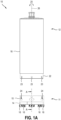
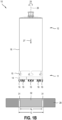
- FIG. 1A , B show a drill bit 10 which comprises a cutting section 11 and a drill shaft section 12 , wherein the cutting section 11 and the drill shaft section 12 can be connected via a detachable connecting device 13 .
- FIG.1A the cutting section 11 and drilling shaft section 12 in an unconnected state of the drill bit and
- FIG.1B shows the cutting section 11 and drilling shaft section 12 in a connected state of the drill bit.
- the cutting section 11 comprises a first open tube element 14, a second closed tube element 15 and a plurality of drilling segments 16 which are connected to the first open tube element 14 and the second closed tube element 15.
- the cutting section 11 is produced by means of the method according to the invention for producing a cutting section from the first open tube element 14, the second closed Pipe element 15 and the drilling segments 16.
- the drilling segments 16 are connected to the first open pipe element 14 and the second closed pipe element 15. If necessary, the first open pipe element 14 and the second closed pipe element 15 can also be connected to one another.
- the drilling segments 16 are arranged in a ring shape and form a drilling ring with intermediate spaces. Instead of several drilling segments 16, the cutting section 11 can also have a single drilling segment that is designed in the form of a closed drilling ring.
- the drilling segments 16 can be welded, soldered, screwed or attached to the first open pipe element 14 and the second closed pipe element 15 in another suitable manner.
- the drilling shaft section 12 comprises a tubular drilling shaft 17, a cover 18 and an insertion end 19, via which the core bit 10 is attached in a tool holder of a core drilling device.
- the detachable connection device 13 is designed in the form of a combined plug-and-turn connection, as shown in WO 2014/096359 A1 is disclosed.
- the detachable connection device 13 comprises a first plug element 21, which is integrated into the cutting section 11, and a second plug element 22, which is integrated into the drill shaft section 12.
- the first and second plug elements 21, 22 form a plug connection and are additionally secured via a rotary connection.
- the rotary connection comprises several pin elements 23, which are inserted into slot-shaped recesses 24.
- the pin elements 23 are fastened to an outer side of the second plug element 22 and the slot-shaped recesses 24 are provided in the first plug element 21.
- the cutting section 11 can be connected to the drill shaft section 12 quickly and easily by the operator. For this purpose, the cutting section 11 with the first plug element 21 is plugged onto the second plug element 22 of the drill shaft section 12 in such a way that the pin elements 23 are arranged in the slot-shaped recesses 24.
- the core bit 10 is driven by a core drilling device in a direction of rotation 25 about an axis of rotation 26 , wherein the axis of rotation 26 coincides with a longitudinal axis of the tubular drill shaft 17.
- the core bit 10 is moved along a feed direction 27 into a workpiece 28 , wherein the feed direction 27 runs parallel to the axis of rotation 26.
- the core bit 10 creates a borehole 31 with a borehole diameter d L and a drill core 32 with a core diameter d K in the workpiece 28.
- the drill segments 16 form a drill ring with an outer diameter that corresponds to the borehole diameter d L and an inner diameter that corresponds to the core diameter d K.
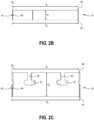
- FIGS. 2A-C show the cutting section 11 of the FIG.1 with the first open pipe element 14, the second closed pipe element 15 and the drilling segments 16 in a longitudinal section along the section line AA in FIG.1A .
- FIG.2B shows the first open pipe element 14 and FIG.2C the second closed pipe element 15 of the cutting section 11.
- the cutting section 11 is made from the first open pipe element 14, the second closed pipe element 15 and the drilling segments 16.
- the drilling segments 16 are connected to the first open pipe element 14 and the second closed pipe element 15.
- the drilling segments 16 can be welded, soldered, screwed or fastened to the first open pipe element 14 and the second closed pipe element 15 in another suitable manner.
- the first open pipe element 14 is designed in the form of a first hollow cylinder with a first circular cross-sectional area.
- the first open pipe element 14 comprises a first outer surface 41, a first inner surface 42, a first lower end face 43 and a first upper end face 44.
- the dimensions of the first open pipe element 14 are defined by a first hollow cylinder height H 1 , a first inner diameter d 1 and a first outer diameter D 1 .
- the width of the first open pipe element 14 is half the difference between the first outer diameter D 1 and the first inner diameter d 1 and is referred to as the first width B 1 .
- the second closed pipe element 15 is designed in the form of a second hollow cylinder with a second circular cross-sectional area.
- the second closed pipe element 15 comprises a second outer surface 45, a second inner surface 46, a second lower end surface 47 and a second upper end surface 48.
- the dimensions of the second closed pipe element 15 are defined by a second hollow cylinder height H 2 , a second inner diameter d 2 and a second outer diameter D 2 .
- the width of the second closed pipe element 15 is half the difference between the second outer diameter D 2 and the second inner diameter d 2 and is referred to as the second width B 2 .
- the first lower end face 43 of the first open pipe element 14 and the second lower end face 47 of the second closed pipe element 15 are aligned flush.
- the flush alignment of the first lower end face 43 and the second lower end face 47 has the advantage that a wide connection surface is created for the drilling segments 16, at which the drilling segments 16 can be connected to the first open pipe element 14 and the second closed pipe element 15.
- the drilling segments 16 are connected to the first lower end face 43 and the second lower end face 47, the first open pipe element 14 and the second closed pipe element 15 simultaneously connected to the drilling segments 16.
- the cutting section 11 is constructed in such a way that the force is transmitted from the drill shaft section 12 via the first open tube element 14 to the drill segments 16 and the torque is transmitted from the drill shaft section 12 via the second closed tube element 15 to the drill segments 16.
- the first upper end face 44 of the first open tube element 14 forms an annular stop shoulder 49 on the inside of the cutting section 11 for the force transmission from a connected drill shaft section.
- the torque is transmitted from the drill shaft section 12 to the cutting section 11 via the pin elements 23 and the slot-shaped recesses 24.
- the second closed tube element 15 of the cutting section 11 has a plurality of slot-shaped recesses 24 on the second upper end face 48.
- the slot-shaped recesses 24 each comprise a transverse slot 51 and a connecting slot 52, wherein the connecting slot 52 connects the transverse slot 51 to the second upper end face 48.
- the first open pipe element 14 can be made from a first material and the second closed pipe element 15 from a second material. By separating the cutting section 11 into the first open pipe element 14 and the second closed pipe element 15, the selection of the first material can be adapted to the requirements of the first open pipe element 14 and the selection of the second material can be adapted to the different requirements of the second closed pipe element 15.
- FIG.3 shows the production of the first open pipe element 14 from a first sheet metal part 61, which is formed into the first open pipe element 14.
- the first sheet metal part 61 is designed as a flat sheet metal part of the first sheet thickness b 1 , which has a first height h 1 between first end faces 63, 64 and a first length l 1 between first abutting edges 65, 66 .
- FIG. 4A , B show the manufacture of the second closed pipe element 15 from a second sheet metal part 71 ( FIG.4A ), which is formed into a second open tube element 72 ( FIG.4B ).
- the second open pipe element 72 is connected to the second closed pipe element 15.
- the second sheet metal part 71 is designed as a flat sheet metal part of the second sheet thickness b 2 , which has a second height h 2 between second end faces 73, 74 and a second length l 2 between second abutting edges 75, 76.
- the second open pipe element 72 is connected to the second abutting edges 75, 76 to form the second closed pipe element 15.
- the second closed pipe element 15 differs from the second open pipe element 72 in that the second abutting edges 75, 76 are connected to one another.
- Any material-locking or form-fitting connection is suitable for the second abutting edges 75, 76.
Landscapes
- Engineering & Computer Science (AREA)
- Mechanical Engineering (AREA)
- Mining & Mineral Resources (AREA)
- Processing Of Stones Or Stones Resemblance Materials (AREA)
Description
- Die vorliegende Erfindung betrifft ein Verfahren zur Herstellung eines Schneidabschnittes für eine Bohrkrone gemäß dem Oberbegriff des Anspruchs 1.
-
WO 2014/096359 A1 offenbart einen Schneidabschnitt für eine Bohrkrone, der mit einem Bohrschaftabschnitt der Bohrkrone über eine lösbare Verbindungseinrichtung verbindbar ist. Dabei ist die lösbare Verbindungseinrichtung als kombinierte Steck-Dreh-Verbindung ausgebildet. Als "Steck-Dreh-Verbindung" werden lösbare Verbindungen zwischen einem ersten und zweiten Verbindungselement bezeichnet, die in einer Richtung eine Steckverbindung bilden und zusätzlich über eine Drehverbindung verbunden werden. Der Schneidabschnitt umfasst eine oder mehrere Bohrsegmente, einen Ringabschnitt, ein äusseres Steckelement und eine ringförmige Anschlagschulter am Übergang vom Ringabschnitt zum äusseren Steckelement. - Schneidabschnitte, die mit einer kombinierten Steck-Dreh-Verbindung verbindbar sind, werden unter dem Produktnamen "Hilti DD X-CM" vertrieben. Die Schneidabschnitte "Hilti DD X-CM" umfassen mehrere Bohrsegmente, einen Ringabschnitt und ein äusseres Steckelement, wobei sich am Übergang vom Ringabschnitt zum äusseren Steckelement eine ringförmige Anschlagschulter für die Kraftübertragung befindet. Die Drehmomentübertragung erfolgt mithilfe von Stiftelementen, die mit schlitzförmigen Ausnehmungen im äusseren Steckelement zusammenwirken. Die Schneidabschnitte "Hilti DD X-CM" werden aus einem geschlossenen Rohrelement gefertigt. Dabei wird die ringförmige Anschlagschulter durch Drehbearbeitung erzeugt und die schlitzförmigen Ausnehmungen werden durch Fräsbearbeitung erzeugt.
- Nachteilig am Aufbau der bekannten Schneidabschnitte "Hilti DD X-CM" sind der hohe Fertigungsaufwand durch die Drehbearbeitung der ringförmigen Anschlagschulter und die Fräsbearbeitung der schlitzförmigen Ausnehmungen. Außerdem ist die Materialauswahl für den Ringabschnitt und das äussere Steckelement eingeschränkt. Da die Schneidabschnitte "Hilti DD X-CM" aus einem geschlossenen Rohrelement gefertigt werden, muss hinsichtlich der Anforderungen an den Schneidabschnitt bezüglich Kraftübertragung, Drehmomentübertragung und Zugbelastungen beim Entfernen einer verklemmten Bohrkrone ein Kompromiss bei der Materialauswahl getroffen werden.
-
GB 1 583 860 A GB 1 583 860 A - Die Aufgabe der vorliegenden Erfindung besteht darin, ein Verfahren zur Herstellung des aus der
WO 2014/096359 A1 bekannten Schneidabschnittes für eine Bohrkrone zu entwickeln, der Fertigungsaufwand bei der Herstellung des Schneidabschnittes reduziert werden kann. Außerdem soll die Funktionalität des Schneidabschnittes beim Bohren mit der Bohrkrone im Hinblick auf Kraftübertragung, Drehmomentübertragung und/oder Zugbelastungen beim Entfernen einer verklemmten Bohrkrone verbessert werden. - Diese Aufgabe wird bei dem eingangs genannten Verfahren zur Herstellung eines Schneidabschnittes für eine Bohrkrone erfindungsgemäß durch die Merkmale des unabhängigen Anspruchs 1 gelöst. Vorteilhafte Weiterbildungen sind in den abhängigen Ansprüchen angegeben.
- Der mit dem erfindungsgemäßen Verfahren hergestellte Schneidabschnitt für eine Bohrkrone kann mit einem Bohrschaftabschnitt der Bohrkrone über eine lösbare Verbindungseinrichtung verbunden werden.
- Das Verfahren zur Herstellung eines Schneidabschnittes für eine Bohrkrone umfasst die Verfahrensschritte:
- ▪ ein erstes offenes Rohrelement wird in Form eines ersten Hohlzylinders mit einer ersten äusseren Mantelfläche, einer ersten inneren Mantelfläche, einer ersten unteren Stirnfläche und einer ersten oberen Stirnfläche ausgebildet und weist eine erste Hohlzylinderhöhe, einen ersten Innendurchmesser und einen ersten Aussendurchmesser auf,
- ▪ ein zweites offenes Rohrelement wird in Form eines zweiten Hohlzylinders mit einer zweiten äusseren Mantelfläche, einer zweiten inneren Mantelfläche, einer zweiten unteren Stirnfläche und einer zweiten oberen Stirnfläche ausgebildet und weist eine zweite Hohlzylinderhöhe, einen zweiten Innendurchmesser und einen zweiten Aussendurchmesser auf,
- ▪ das erste offene Rohrelement wird in das zweite offene Rohrelement gesteckt und
- ▪ ein oder mehrere Bohrsegmente werden mit dem ersten offenen Rohrelement und dem zweiten Rohrelement verbunden.
- Erfindungsgemäß ist vorgesehen, dass das zweite offene Rohrelement an zweiten Stosskanten zu einem zweiten geschlossenen Rohrelement verbunden wird und im zweiten geschlossenen Rohrelement mindestens eine schlitzförmige Ausnehmung erstellt wird, wobei die mindestens eine schlitzförmige Ausnehmung einen Querschlitz und einen Verbindungsschlitz aufweist und der Verbindungsschlitz den Querschlitz mit der zweiten oberen Stirnfläche des zweiten geschlossenen Rohrelementes verbindet.
- Der Schneidabschnitt, der mithilfe des erfindungsgemäßen Verfahrens hergestellt wird, umfasst ein erstes offenes Rohrelement, ein zweites geschlossenes Rohrelement und mindestens ein Bohrsegment. Das erste offene Rohrelement ist in Form eines ersten Hohlzylinders ausgebildet und umfasst eine erste äussere Mantelfläche, eine erste innere Mantelfläche, eine erste untere Stirnfläche und eine erste obere Stirnfläche. Das zweite geschlossene Rohrelement ist in Form eines zweiten Hohlzylinders ausgebildet und umfasst eine zweite äussere Mantelfläche, eine zweite innere Mantelfläche, eine zweite untere Stirnfläche und eine zweite obere Stirnfläche. Um den Schneidabschnitt fertigzustellen, werden das erste offene Rohrelement und das zweite geschlossene Rohrelement ineinandergesteckt und das eine oder die mehreren Bohrsegmente werden mit dem ersten offenen Rohrelement und mit dem zweiten geschlossenen Rohrelement verbunden. Im Hinblick auf die Stabilität des Schneidabschnittes ist es vorteilhaft, wenn die Bohrsegmente mit dem ersten offenen Rohrelement und dem zweiten geschlossenen Rohrelement verbunden sind. Dabei können die Bohrsegmente mit dem ersten offenen Rohrelement und dem zweiten geschlossenen Rohrelement verschweißt, verlötet, verschraubt oder in einer anderen geeigneten Befestigungsart verbunden werden.
- Der Schneidabschnitt ist so aufgebaut, dass die Kraftübertragung von einem Bohrschaftabschnitt über das erste offene Rohrelement auf die Bohrsegmente und die Drehmomentübertragung vom Bohrschaftabschnitt über das zweite geschlossene Rohrelement auf die Bohrsegmente erfolgt. Die erste obere Stirnfläche des ersten offenen Rohrelementes bildet eine ringförmige Anschlagschulter, die zur Kraftübertragung verwendet wird. Der Bohrschaftabschnitt überträgt die Kraft mittels einer ringförmigen Stirnfläche auf die ringförmige Anschlagschulter. Die Drehmomentübertragung erfolgt beispielsweise über Stiftelemente des Bohrschaftabschnittes, die mit schlitzförmigen Ausnehmungen im zweiten geschlossenen Rohrelement zusammenwirken. Durch die Trennung des Schneidabschnittes in das erste offene Rohrelement und das zweite geschlossene Rohrelement können die unterschiedlichen Anforderungen an den Schneidabschnitt im Hinblick auf die Kraftübertragung und Drehmomentübertragung berücksichtigt werden.
- Die mindestens eine schlitzförmige Ausnehmung ist Teil der lösbaren Verbindungseinrichtung, die den Schneidabschnitt mit einem Bohrschaftabschnitt der Bohrkrone verbindet. Die schlitzförmige Ausnehmung ist in T-Form oder L-Form ausgebildet und ermöglicht im verbundenen Zustand der Bohrkrone eine Relativbewegung zwischen dem Schneidabschnitt und dem Bohrschaftabschnitt. Durch die Relativbewegung zwischen dem Schneidabschnitt und dem Bohrschaftabschnitt kann ein verklemmter Schneidabschnitt aus dem Untergrund gelöst werden.
- Durch die Trennung des Schneidabschnittes in das erste offene Rohrelement und das zweite geschlossene Rohrelement kann außerdem der Fertigungsaufwand für die Herstellung des Schneidabschnittes reduziert werden. Die erste obere Stirnfläche bildet die ringförmige Anschlagschulter für die Kraftübertragung, so dass eine Drehbearbeitung entfällt. Das erste offene Rohrelement und das zweite geschlossene Rohrelement sind als Hohlzylinder mit kreisringförmigen Querschnitten ausgebildet und weisen konstante Materialstärken auf. Das erste offene Rohrelement kann aus einem ersten ebenen Blechteil hergestellt werden, das zum ersten offenen Rohrelement umgeformt wird. Das zweite geschlossene Rohrelement kann aus einem zweiten ebenen Blechteil hergestellt werden, das zu einem zweiten offenen Rohrelement umgeformt wird und an zweiten Stosskanten stoffschlüssig oder formschlüssig verbunden wird.
- Das erste offene Rohrelement hat den Vorteil, dass die erste äussere Mantelfläche des ersten offenen Rohrelementes mit der zweiten inneren Mantelfläche des zweiten offenen Rohrelementes in Kontakt steht. Wenn die erste äussere Mantelfläche und die zweite innere Mantelfläche in Kontakt sind, können die Bohrsegmente mit einer Schweißnaht mit dem ersten offenen Rohrelement und dem zweiten geschlossenen Rohrelement verbunden werden.
- Bevorzugt werden die erste untere Stirnfläche des ersten offenen Rohrelementes und die zweite untere Stirnfläche des zweiten geschlossenen Rohrelementes bündig ausgerichtet. Die bündige Ausrichtung der ersten unteren Stirnfläche und der zweiten unteren Stirnfläche hat den Vorteil, dass eine breite Anbindungsfläche für die Bohrsegmente entsteht, an der die Bohrsegmente mit dem ersten offenen Rohrelement und dem zweiten geschlossenen Rohrelement verbunden werden können.
- Besonders bevorzugt werden das eine oder die mehreren Bohrsegmente mit der ersten unteren Stirnfläche und der zweiten unteren Stirnfläche verbunden. Durch die bündige Ausrichtung der ersten unteren Stirnfläche und der zweiten unteren Stirnfläche entsteht eine breite Anbindungsfläche für die Bohrsegmente. Wenn die Bohrsegmente mit der ersten unteren Stirnfläche und der zweiten unteren Stirnfläche verbunden werden, können das erste offene Rohrelement und das zweite geschlossene Rohrelement gleichzeitig miteinander verbunden werden. Wenn die Bohrsegmente gleichzeitig mit dem ersten offenen Rohrelement und dem zweiten geschlossenen Rohrelement verbunden werden, kann der Fertigungsaufwand reduziert werden. Abhängig von den verwendeten Materialstärken kann es erforderlich sein, dass das erste offene Rohrelement und das zweite geschlossene Rohrelement zusätzlich miteinander verbunden werden. Sollten höhere Widerstandsmomente erforderlich sein, können das erste offene Rohrelement und das zweite geschlossene Rohrelement zusätzlich miteinander verbunden werden.
- Besonders bevorzugt wird in der zweiten inneren Mantelfläche mindestens eine Quernut erstellt, wobei die mindestens eine Quernut in Höhe des Verbindungsschlitzes der schlitzförmigen Ausnehmung angeordnet wird. Die mindestens eine Quernut ist Teil der lösbaren Verbindungseinrichtung, die den Schneidabschnitt mit einem Bohrschaftabschnitt der Bohrkrone verbindet. Die Breite der Quernut ist grösser oder gleich der Breite des Querschlitzes der schlitzförmigen Ausnehmung. In die Quernut des Schneidabschnittes greift eine passende Quernase eines Bohrschaftabschnittes ein. Die Quernut und Quernase bilden eine zusätzliche formschlüssige Verbindung, die verhindert, dass die Steck-Dreh-Verbindung beim Lösen einer verklemmten Bohrkrone unbeabsichtigt geöffnet wird und der Bohrschaftabschnitt ohne Schneidabschnitt aus dem Untergrund entfernt wird.
- Bevorzugt wird in der ersten inneren Mantelfläche mindestens eine Innenvertiefung erstellt, die sich über die erste Hohlzylinderhöhe erstreckt. Die mindestens eine Innenvertiefung in der ersten inneren Mantelfläche kann einen Transportkanal für eine Kühl- und Spülflüssigkeit bilden und ermöglicht die Ausbildung von Schneidabschnitten mit geringen Innenüberständen der Bohrsegmente auf der Innenseite des Schneidabschnittes. Die Breite, Tiefe, Form und/oder Anzahl der Innenvertiefung werden an die benötigte Flüssigkeitsmenge der Kühl- und Spülflüssigkeit angepasst.
- In einer bevorzugten Weiterentwicklung wird das erste offene Rohrelement aus einem ersten Material und das zweite geschlossene Rohrelement aus einem zweiten Material hergestellt. Der mit dem erfindungsgemäßen Verfahren hergestellte Schneidabschnitt ist so aufgebaut, dass die Kraftübertragung auf den Schneidabschnitt über das erste offene Rohrelement und die Drehmomentübertragung auf den Schneidabschnitt über das zweite geschlossene Rohrelement erfolgt. Durch die Trennung des Schneidabschnittes in das erste offene Rohrelement und das zweite geschlossene Rohrelement kann die Auswahl des ersten Materials für das erste offene Rohrelement und des zweiten Materials für das zweite geschlossene Rohrelement an die unterschiedlichen Anforderungen an den Schneidabschnitt im Hinblick auf die Kraftübertragung und Drehmomentübertragung angepasst werden. Außerdem kann das zweite Material im Hinblick auf Zugbelastungen beim Entfernen einer verklemmten Bohrkrone angepasst werden.
- Ausführungsbeispiele der Erfindung werden nachfolgend anhand der Zeichnung beschrieben. Diese soll die Ausführungsbeispiele nicht notwendigerweise maßstäblich darstellen, vielmehr ist die Zeichnung, wo zur Erläuterung dienlich, in schematischer und/oder leicht verzerrter Form ausgeführt.
- Der Einfachheit halber sind nachfolgend für identische oder ähnliche Teile oder Teile mit identischer oder ähnlicher Funktion gleiche Bezugszeichen verwendet. Es zeigen:
- FIGN. 1A,
- B eine Bohrkrone mit einem Schneidabschnitt und einem Bohrschaftabschnitt, die über eine lösbare Verbindungseinrichtung verbindbar sind, in einem unverbundenen Zustand der Bohrkrone (
FIG. 1A ) und in einem verbundenen Zustand der Bohrkrone (FIG. 1B ); - FIGN. 2A-C
- den Schneidabschnitt der
FIG. 1 bestehend aus einem ersten offenen Rohrelement, einem zweiten geschlossenen Rohrelement und mehreren Bohrsegmenten in einem Längsschnitt entlang der Schnittlinie A-A inFIG. 1A ; - FIG. 3
- die Herstellung des ersten offenen Rohrelementes aus einem ersten Blechteil; und
- FIGN. 4A, B
- die Herstellung des zweiten Rohrelementes aus einem zweiten Blechteil (
FIG. 4A ), das zu einem zweiten offenen Rohrelement umgeformt wird (FIG. 4B ). -
FIGN. 1A , B zeigen eine Bohrkrone 10, die einen Schneidabschnitt 11 und einen Bohrschaftabschnitt 12 umfasst, wobei der Schneidabschnitt 11 und der Bohrschaftabschnitt 12 über eine lösbare Verbindungseinrichtung 13 verbindbar sind. Dabei zeigtFIG. 1A den Schneidabschnitt 11 und Bohrschaftabschnitt 12 in einem unverbundenen Zustand der Bohrkrone undFIG. 1B zeigt den Schneidabschnitt 11 und Bohrschaftabschnitt 12 in einem verbundenen Zustand der Bohrkrone. - Der Schneidabschnitt 11 umfasst ein erstes offenes Rohrelement 14, ein zweites geschlossenes Rohrelement 15 und mehrere Bohrsegmente 16, die mit dem ersten offenen Rohrelement 14 und dem zweiten geschlossenen Rohrelement 15 verbunden sind. Der Schneidabschnitt 11 wird mithilfe des erfindungsgemäßen Verfahrens zur Herstellung eines Schneidabschnittes aus dem ersten offenen Rohrelement 14, dem zweiten geschlossenen Rohrelement 15 und den Bohrsegmenten 16 hergestellt. Die Bohrsegmente 16 sind mit dem ersten offenen Rohrelement 14 und dem zweiten geschlossenen Rohrelement 15 verbunden. Bei Bedarf können das erste offene Rohrelement 14 und das zweite geschlossene Rohrelement 15 noch zusätzlich miteinander verbunden sein.
- Die Bohrsegmente 16 sind ringförmig angeordnet und bilden einen Bohrring mit Zwischenräumen. Der Schneidabschnitt 11 kann anstatt mehrerer Bohrsegmente 16 auch ein einzelnes Bohrsegment aufweisen, das in Form eines geschlossenen Bohrringes ausgebildet ist. Die Bohrsegmente 16 können mit dem ersten offenen Rohrelement 14 und dem zweiten geschlossenen Rohrelement 15 verschweißt, verlötet, verschraubt oder in einer anderen geeigneten Befestigungsart am ersten offenen Rohrelement 14 und am zweiten geschlossenen Rohrelement 15 befestigt sein. Der Bohrschaftabschnitt 12 umfasst einen rohrförmigen Bohrschaft 17, einen Deckel 18 und ein Einsteckende 19, über das die Bohrkrone 10 in einer Werkzeugaufnahme eines Kernbohrgerätes befestigt wird.
- Die lösbare Verbindungseinrichtung 13 ist in Form einer kombinierten Steck-Dreh-Verbindung ausgebildet, wie sie in
WO 2014/096359 A1 offenbart ist. Die lösbare Verbindungseinrichtung 13 umfasst ein erstes Steckelement 21, das in den Schneidabschnitt 11 integriert ist, und ein zweites Steckelement 22, das in den Bohrschaftabschnitt 12 integriert ist. Das erste und zweite Steckelement 21, 22 bilden eine Steckverbindung und werden zusätzlich über eine Drehverbindung gesichert. Die Drehverbindung umfasst mehrere Stiftelemente 23, die in schlitzförmige Ausnehmungen 24 eingeführt werden. Die Stiftelemente 23 sind an einer Außenseite des zweiten Steckelementes 22 befestigt und die schlitzförmigen Ausnehmungen 24 sind im ersten Steckelement 21 vorgesehen. Der Schneidabschnitt 11 lässt sich vom Bediener einfach und schnell mit dem Bohrschaftabschnitt 12 verbinden. Dazu wird der Schneidabschnitt 11 mit dem ersten Steckelement 21 so auf das zweite Steckelement 22 des Bohrschaftabschnittes 12 gesteckt, dass die Stiftelemente 23 in den schlitzförmigen Ausnehmungen 24 angeordnet sind. - Im Bohrbetrieb wird die Bohrkrone 10 von einem Kernbohrgerät in einer Drehrichtung 25 um eine Drehachse 26 angetrieben, wobei die Drehachse 26 mit einer Längsachse des rohrförmigen Bohrschaftes 17 zusammenfällt. Während der Drehung der Bohrkrone 10 um die Drehachse 26 wird die Bohrkrone 10 entlang einer Vorschubrichtung 27 in ein Werkstück 28 bewegt, wobei die Vorschubrichtung 27 parallel zur Drehachse 26 verläuft. Die Bohrkrone 10 erzeugt im Werkstück 28 ein Bohrloch 31 mit einem Bohrlochdurchmesser d L und einen Bohrkern 32 mit einem Kerndurchmesser dK. Die Bohrsegmente 16 bilden einen Bohrring mit einem Außendurchmesser, der dem Bohrlochdurchmesser dL entspricht, und einem Innendurchmesser, der dem Kerndurchmesser dK entspricht.
-
FIGN. 2A-C zeigen den Schneidabschnitt 11 derFIG. 1 mit dem ersten offenen Rohrelement 14, dem zweiten geschlossenen Rohrelement 15 und den Bohrsegmenten 16 in einem Längsschnitt entlang der Schnittlinie A-A inFIG. 1A .FIG. 2B zeigt das erste offene Rohrelement 14 undFIG. 2C das zweite geschlossene Rohrelement 15 des Schneidabschnittes 11. - Der Schneidabschnitt 11 wird aus dem ersten offenen Rohrelement 14, dem zweiten geschlossenen Rohrelement 15 und den Bohrsegmenten 16 hergestellt. Die Bohrsegmente 16 werden mit dem ersten offenen Rohrelement 14 und dem zweiten geschlossenen Rohrelement 15 verbunden. Dabei können die Bohrsegmente 16 mit dem ersten offenen Rohrelement 14 und dem zweiten geschlossenen Rohrelement 15 verschweißt, verlötet, verschraubt oder in einer anderen geeigneten Befestigungsart befestigt werden.
- Das erste offene Rohrelement 14 ist in Form eines ersten Hohlzylinders mit einer ersten kreisringförmigen Querschnittsfläche ausgebildet. Das erste offene Rohrelement 14 umfasst eine erste äussere Mantelfläche 41, eine erste innere Mantelfläche 42, eine erste untere Stirnfläche 43 und eine erste obere Stirnfläche 44. Die Abmessungen des ersten offenen Rohrelementes 14 sind durch eine erste Hohlzylinderhöhe H1 , einen ersten Innendurchmesser d1 und einen ersten Aussendurchmesser D1 definiert. Die Breite des ersten offenen Rohrelementes 14 ergibt sich als halbe Differenz des ersten Aussendurchmessers D1 und des ersten Innendurchmessers d1 und wird als erste Breite B 1 bezeichnet.
- Das zweite geschlossene Rohrelement 15 ist in Form eines zweiten Hohlzylinders mit einer zweiten kreisringförmigen Querschnittsfläche ausgebildet. Das zweite geschlossene Rohrelement 15 umfasst eine zweite äussere Mantelfläche 45, eine zweite innere Mantelfläche 46, eine zweite untere Stirnfläche 47 und eine zweite obere Stirnfläche 48. Die Abmessungen des zweiten geschlossenen Rohrelementes 15 sind durch eine zweite Hohlzylinderhöhe H2 , einen zweiten Innendurchmesser d2 und einen zweiten Aussendurchmesser D2 definiert. Die Breite des zweiten geschlossenen Rohrelementes 15 ergibt sich als halbe Differenz des zweiten Aussendurchmessers D2 und des zweiten Innendurchmessers d2 und wird als zweite Breite B2 bezeichnet.
- Die erste untere Stirnfläche 43 des ersten offenen Rohrelementes 14 und die zweite untere Stirnfläche 47 des zweiten geschlossenen Rohrelementes 15 werden bündig ausgerichtet. Die bündige Ausrichtung der ersten unteren Stirnfläche 43 und der zweiten unteren Stirnfläche 47 hat den Vorteil, dass eine breite Anbindungsfläche für die Bohrsegmente 16 entsteht, an der die Bohrsegmente 16 mit dem ersten offenen Rohrelement 14 und dem zweiten geschlossenen Rohrelement 15 verbunden werden können. Wenn die Bohrsegmente 16 mit der ersten unteren Stirnfläche 43 und der zweiten unteren Stirnfläche 47 verbunden werden, können das erste offene Rohrelement 14 und das zweite geschlossene Rohrelement 15 gleichzeitig mit den Bohrsegmenten 16 verbunden werden. Abhängig von den verwendeten Materialstärken kann es erforderlich sein, dass das erste offene Rohrelement 14 und das zweite geschlossene Rohrelement 15 zusätzlich miteinander verbunden werden.
- Der Schneidabschnitt 11 ist so aufgebaut, dass die Kraftübertragung vom Bohrschaftabschnitt 12 über das erste offene Rohrelement 14 auf die Bohrsegmente 16 erfolgt und die Drehmomentübertragung vom Bohrschaftabschnitt 12 über das zweite geschlossene Rohrelement 15 auf die Bohrsegmente 16 erfolgt. Die erste obere Stirnfläche 44 des ersten offenen Rohrelementes 14 bildet an der Innenseite des Schneidabschnittes 11 eine ringförmige Anschlagschulter 49 für die Kraftübertragung von einem verbundenen Bohrschaftabschnitt. Die Drehmomentübertragung vom Bohrschaftabschnitt 12 auf den Schneidabschnitt 11 erfolgt über die Stiftelemente 23 und die schlitzförmigen Ausnehmungen 24. Das zweite geschlossene Rohrelement 15 des Schneidabschnittes 11 weist an der zweiten oberen Stirnfläche 48 mehrere schlitzförmige Ausnehmungen 24 auf. Die schlitzförmigen Ausnehmungen 24 umfassen jeweils einen Querschlitz 51 und einen Verbindungsschlitz 52, wobei der Verbindungsschlitz 52 den Querschlitz 51 mit der zweiten oberen Stirnfläche 48 verbindet.
- Das erste offene Rohrelement 14 kann aus einem ersten Material und das zweite geschlossene Rohrelement 15 aus einem zweiten Material hergestellt werden. Durch die Trennung des Schneidabschnittes 11 in das erste offene Rohrelement 14 und das zweite geschlossene Rohrelement 15 kann die Auswahl des ersten Materials an die Anforderungen des ersten offenen Rohrelementes 14 und die Auswahl des zweiten Materials an die unterschiedlichen Anforderungen des zweiten geschlossenen Rohrelementes 15 angepasst werden.
FIG. 3 zeigt die Herstellung des ersten offenen Rohrelementes 14 aus einem ersten Blechteil 61, das zum ersten offenen Rohrelement 14 umgeformt wird. Das erste Blechteil 61 ist als ebenes Blechteil der ersten Blechdicke b1 ausgebildet, das eine erste Höhe h1 zwischen ersten Stirnflächen 63, 64 und eine erste Länge l1 zwischen ersten Stosskanten 65, 66 aufweist. -
FIGN. 4A , B zeigen die Herstellung des zweiten geschlossenen Rohrelementes 15 aus einem zweiten Blechteil 71 (FIG. 4A ), das zu einem zweiten offenen Rohrelement 72 umgeformt wird (FIG. 4B ). Das zweite offene Rohrelement 72 wird zum zweiten geschlossenen Rohrelement 15 verbunden. - Das zweite Blechteil 71 ist als ebenes Blechteil der zweiten Blechdicke b2 ausgebildet, das eine zweite Höhe h2 zwischen zweiten Stirnflächen 73, 74 und eine zweite Länge l2 zwischen zweiten Stosskanten 75, 76 aufweist. Das zweite offene Rohrelement 72 wird an den zweiten Stosskanten 75, 76 zum zweiten geschlossenen Rohrelement 15 verbunden. Das zweite geschlossene Rohrelement 15 unterscheidet sich von dem zweiten offenen Rohrelement 72 dadurch, dass die zweiten Stosskanten 75, 76 miteinander verbunden sind. Für die Verbindung der zweiten Stosskanten 75, 76 eignet sich jede stoffschlüssige oder formschlüssige Verbindung.
Claims (6)
- Verfahren zur Herstellung eines Schneidabschnittes (11) für eine Bohrkrone (10), wobei der Schneidabschnitt (11) über eine lösbare Verbindungseinrichtung (13) mit einem Bohrschaftabschnitt (12) der Bohrkrone (10) verbunden werden kann, mit den Verfahrensschritten:▪ ein erstes offenes Rohrelement (14) wird in Form eines ersten Hohlzylinders mit einer ersten äusseren Mantelfläche (41), einer ersten inneren Mantelfläche (42), einer ersten unteren Stirnfläche (43) und einer ersten oberen Stirnfläche (44) ausgebildet und weist eine erste Hohlzylinderhöhe (H1), einen ersten Innendurchmesser (d1) und einen ersten Aussendurchmesser (D1) auf,▪ ein zweites offenes Rohrelement (72) wird in Form eines zweiten Hohlzylinders mit einer zweiten äusseren Mantelfläche (45), einer zweiten inneren Mantelfläche (46), einer zweiten unteren Stirnfläche (47) und einer zweiten oberen Stirnfläche (48) ausgebildet und weist eine zweite Hohlzylinderhöhe (H2), einen zweiten Innendurchmesser (d2) und einen zweiten Aussendurchmesser (D2) auf,▪ das erste offene Rohrelement (14) wird in das zweite offene Rohrelement (72) gesteckt,▪ ein oder mehrere Bohrsegmente (16) werden mit dem ersten offenen Rohrelement (14) und dem zweiten Rohrelement (15) verbundendadurch gekennzeichnet, dass das zweite offene Rohrelement (72) an zweiten Stosskanten (75, 76) zu einem zweiten geschlossenen Rohrelement (15) verbunden wird und im zweiten geschlossenen Rohrelement (15) mindestens eine schlitzförmige Ausnehmung (24) erstellt wird, wobei die mindestens eine schlitzförmige Ausnehmung (24) einen Querschlitz (51) und einen Verbindungsschlitz (52) aufweist und der Verbindungsschlitz (52) den Querschlitz (51) mit der zweiten oberen Stirnfläche (48) des zweiten geschlossenen Rohrelementes (15) verbindet.
- Verfahren nach Anspruch 1, dadurch gekennzeichnet, dass die erste untere Stirnfläche (43) und die zweite untere Stirnfläche (47) bündig ausgerichtet werden.
- Verfahren nach Anspruch 2, dadurch gekennzeichnet, dass das eine oder die mehreren Bohrsegmente (16) mit der ersten unteren Stirnfläche (43) und der zweiten unteren Stirnfläche (47) verbunden werden.
- Verfahren nach Anspruch 1, dadurch gekennzeichnet, dass in der zweiten inneren Mantelfläche (46) mindestens eine Quernut (53) erstellt wird, wobei die mindestens eine Quernut (53) in Höhe des Verbindungsschlitzes (52) angeordnet wird.
- Verfahren nach einem der Ansprüche 1 bis 4, dadurch gekennzeichnet, dass in der ersten inneren Mantelfläche (42) mindestens eine Innenvertiefung erstellt wird, die sich über die erste Hohlzylinderhöhe (H1) erstreckt.
- Verfahren nach einem der Ansprüche 1 bis 5, dadurch gekennzeichnet, dass das erste offene Rohrelement (14) aus einem ersten Material und das zweite geschlossene Rohrelement (15) aus einem zweiten Material hergestellt wird.
Applications Claiming Priority (2)
| Application Number | Priority Date | Filing Date | Title |
|---|---|---|---|
| EP17209437.7A EP3501708A1 (de) | 2017-12-21 | 2017-12-21 | Verfahren zur herstellung eines schneidabschnitt für eine bohrkrone |
| PCT/EP2018/084287 WO2019121139A1 (de) | 2017-12-21 | 2018-12-11 | Verfahren zur herstellung eines schneidabschnittes für eine bohrkrone |
Publications (2)
| Publication Number | Publication Date |
|---|---|
| EP3727729A1 EP3727729A1 (de) | 2020-10-28 |
| EP3727729B1 true EP3727729B1 (de) | 2024-07-31 |
Family
ID=60781842
Family Applications (2)
| Application Number | Title | Priority Date | Filing Date |
|---|---|---|---|
| EP17209437.7A Withdrawn EP3501708A1 (de) | 2017-12-21 | 2017-12-21 | Verfahren zur herstellung eines schneidabschnitt für eine bohrkrone |
| EP18811880.6A Active EP3727729B1 (de) | 2017-12-21 | 2018-12-11 | Verfahren zur herstellung eines schneidabschnittes für eine bohrkrone |
Family Applications Before (1)
| Application Number | Title | Priority Date | Filing Date |
|---|---|---|---|
| EP17209437.7A Withdrawn EP3501708A1 (de) | 2017-12-21 | 2017-12-21 | Verfahren zur herstellung eines schneidabschnitt für eine bohrkrone |
Country Status (2)
| Country | Link |
|---|---|
| EP (2) | EP3501708A1 (de) |
| WO (2) | WO2019120886A1 (de) |
Cited By (1)
| Publication number | Priority date | Publication date | Assignee | Title |
|---|---|---|---|---|
| US20240000464A1 (en) * | 2020-11-20 | 2024-01-04 | Adeor Medical AG | Perforator |
Family Cites Families (5)
| Publication number | Priority date | Publication date | Assignee | Title |
|---|---|---|---|---|
| GB1583860A (en) * | 1976-08-20 | 1981-02-04 | Moppes & Sons Ltd L Van | Core drills |
| SU914193A1 (ru) * | 1980-01-24 | 1982-03-23 | Valerij S Belovol | Способ кольцевого сверления отверстий и сверло для его осуществления 1 |
| DE4031755A1 (de) * | 1990-10-06 | 1992-04-09 | Bosch Gmbh Robert | Hohlbohrwerkzeug |
| EP2745966A1 (de) * | 2012-12-21 | 2014-06-25 | HILTI Aktiengesellschaft | Bohrkrone mit einem austauschbaren Schneidabschnitt |
| EP2745964A1 (de) | 2012-12-21 | 2014-06-25 | HILTI Aktiengesellschaft | Schneidabschnitt |
-
2017
- 2017-12-21 EP EP17209437.7A patent/EP3501708A1/de not_active Withdrawn
-
2018
- 2018-11-26 WO PCT/EP2018/082477 patent/WO2019120886A1/de not_active Ceased
- 2018-12-11 EP EP18811880.6A patent/EP3727729B1/de active Active
- 2018-12-11 WO PCT/EP2018/084287 patent/WO2019121139A1/de not_active Ceased
Cited By (2)
| Publication number | Priority date | Publication date | Assignee | Title |
|---|---|---|---|---|
| US20240000464A1 (en) * | 2020-11-20 | 2024-01-04 | Adeor Medical AG | Perforator |
| US12575838B2 (en) * | 2020-11-20 | 2026-03-17 | Adeor Medical AG | Perforator |
Also Published As
| Publication number | Publication date |
|---|---|
| EP3727729A1 (de) | 2020-10-28 |
| WO2019121139A1 (de) | 2019-06-27 |
| WO2019120886A1 (de) | 2019-06-27 |
| EP3501708A1 (de) | 2019-06-26 |
Similar Documents
| Publication | Publication Date | Title |
|---|---|---|
| EP2745964A1 (de) | Schneidabschnitt | |
| EP3727730B1 (de) | Verfahren zur herstellung eines schneidabschnittes für eine bohrkrone | |
| EP3727729B1 (de) | Verfahren zur herstellung eines schneidabschnittes für eine bohrkrone | |
| EP3727732B1 (de) | Schneidabschnitt für eine bohrkrone | |
| DE202013012454U1 (de) | Zerspanungswerkzeug, insbesondere Bohrstange | |
| EP1896207A1 (de) | Schnittstelle eines werkzeugsystems | |
| EP3727728B1 (de) | Schneidabschnitt für eine bohrkrone | |
| EP3727731B1 (de) | Schneidabschitt für eine bohrkrone | |
| EP3727776B1 (de) | Schneidabschnitt für eine bohrkrone | |
| EP3727775B1 (de) | Schneidabschnitt für eine bohrkrone | |
| EP3501711A1 (de) | Verfahren zur herstellung eines schneidabschnitt für eine bohrkrone | |
| EP3501704A1 (de) | Verfahren zur herstellung eines schneidabschnittes für eine bohrkrone | |
| DE2533704A1 (de) | Kupplung | |
| EP3501705A1 (de) | Verfahren zur herstellung eines schneidabschnittes für eine bohrkrone | |
| EP3501703A1 (de) | Verfahren zur herstellung eines schneidabschnitt für eine bohrkrone | |
| EP3501707A1 (de) | Schneidabschnitt für eine bohrkrone | |
| EP3501706A1 (de) | Verfahren zur herstellung eines schneidabschnittes für eine bohrkrone | |
| EP3501712A1 (de) | Verfahren zur herstellung eines schneidabschnitt für eine bohrkrone | |
| EP4015120A1 (de) | Verfahren zum austauschen der bohrsegmente einer bohrkrone und schneidabschnitt für eine bohrkrone | |
| DE102011006880A1 (de) | Werkzeugsystem |
Legal Events
| Date | Code | Title | Description |
|---|---|---|---|
| STAA | Information on the status of an ep patent application or granted ep patent |
Free format text: STATUS: UNKNOWN |
|
| STAA | Information on the status of an ep patent application or granted ep patent |
Free format text: STATUS: THE INTERNATIONAL PUBLICATION HAS BEEN MADE |
|
| PUAI | Public reference made under article 153(3) epc to a published international application that has entered the european phase |
Free format text: ORIGINAL CODE: 0009012 |
|
| STAA | Information on the status of an ep patent application or granted ep patent |
Free format text: STATUS: REQUEST FOR EXAMINATION WAS MADE |
|
| 17P | Request for examination filed |
Effective date: 20200721 |
|
| AK | Designated contracting states |
Kind code of ref document: A1 Designated state(s): AL AT BE BG CH CY CZ DE DK EE ES FI FR GB GR HR HU IE IS IT LI LT LU LV MC MK MT NL NO PL PT RO RS SE SI SK SM TR |
|
| AX | Request for extension of the european patent |
Extension state: BA ME |
|
| DAV | Request for validation of the european patent (deleted) | ||
| DAX | Request for extension of the european patent (deleted) | ||
| RIC1 | Information provided on ipc code assigned before grant |
Ipc: B23P 15/28 20060101ALI20240223BHEP Ipc: B23D 65/00 20060101ALI20240223BHEP Ipc: B28D 1/04 20060101ALI20240223BHEP Ipc: B23B 51/04 20060101AFI20240223BHEP |
|
| GRAP | Despatch of communication of intention to grant a patent |
Free format text: ORIGINAL CODE: EPIDOSNIGR1 |
|
| STAA | Information on the status of an ep patent application or granted ep patent |
Free format text: STATUS: GRANT OF PATENT IS INTENDED |
|
| INTG | Intention to grant announced |
Effective date: 20240409 |
|
| GRAS | Grant fee paid |
Free format text: ORIGINAL CODE: EPIDOSNIGR3 |
|
| GRAA | (expected) grant |
Free format text: ORIGINAL CODE: 0009210 |
|
| STAA | Information on the status of an ep patent application or granted ep patent |
Free format text: STATUS: THE PATENT HAS BEEN GRANTED |
|
| AK | Designated contracting states |
Kind code of ref document: B1 Designated state(s): AL AT BE BG CH CY CZ DE DK EE ES FI FR GB GR HR HU IE IS IT LI LT LU LV MC MK MT NL NO PL PT RO RS SE SI SK SM TR |
|
| REG | Reference to a national code |
Ref country code: CH Ref legal event code: EP Ref country code: GB Ref legal event code: FG4D Free format text: NOT ENGLISH |
|
| REG | Reference to a national code |
Ref country code: DE Ref legal event code: R096 Ref document number: 502018014959 Country of ref document: DE |
|
| REG | Reference to a national code |
Ref country code: IE Ref legal event code: FG4D Free format text: LANGUAGE OF EP DOCUMENT: GERMAN |
|
| REG | Reference to a national code |
Ref country code: LT Ref legal event code: MG9D |
|
| REG | Reference to a national code |
Ref country code: NL Ref legal event code: MP Effective date: 20240731 |
|
| PG25 | Lapsed in a contracting state [announced via postgrant information from national office to epo] |
Ref country code: PT Free format text: LAPSE BECAUSE OF FAILURE TO SUBMIT A TRANSLATION OF THE DESCRIPTION OR TO PAY THE FEE WITHIN THE PRESCRIBED TIME-LIMIT Effective date: 20241202 |
|
| PG25 | Lapsed in a contracting state [announced via postgrant information from national office to epo] |
Ref country code: PT Free format text: LAPSE BECAUSE OF FAILURE TO SUBMIT A TRANSLATION OF THE DESCRIPTION OR TO PAY THE FEE WITHIN THE PRESCRIBED TIME-LIMIT Effective date: 20241202 |
|
| PG25 | Lapsed in a contracting state [announced via postgrant information from national office to epo] |
Ref country code: NO Free format text: LAPSE BECAUSE OF FAILURE TO SUBMIT A TRANSLATION OF THE DESCRIPTION OR TO PAY THE FEE WITHIN THE PRESCRIBED TIME-LIMIT Effective date: 20241031 |
|
| PG25 | Lapsed in a contracting state [announced via postgrant information from national office to epo] |
Ref country code: FI Free format text: LAPSE BECAUSE OF FAILURE TO SUBMIT A TRANSLATION OF THE DESCRIPTION OR TO PAY THE FEE WITHIN THE PRESCRIBED TIME-LIMIT Effective date: 20240731 Ref country code: NL Free format text: LAPSE BECAUSE OF FAILURE TO SUBMIT A TRANSLATION OF THE DESCRIPTION OR TO PAY THE FEE WITHIN THE PRESCRIBED TIME-LIMIT Effective date: 20240731 Ref country code: PL Free format text: LAPSE BECAUSE OF FAILURE TO SUBMIT A TRANSLATION OF THE DESCRIPTION OR TO PAY THE FEE WITHIN THE PRESCRIBED TIME-LIMIT Effective date: 20240731 Ref country code: GR Free format text: LAPSE BECAUSE OF FAILURE TO SUBMIT A TRANSLATION OF THE DESCRIPTION OR TO PAY THE FEE WITHIN THE PRESCRIBED TIME-LIMIT Effective date: 20241101 |
|
| PG25 | Lapsed in a contracting state [announced via postgrant information from national office to epo] |
Ref country code: BG Free format text: LAPSE BECAUSE OF FAILURE TO SUBMIT A TRANSLATION OF THE DESCRIPTION OR TO PAY THE FEE WITHIN THE PRESCRIBED TIME-LIMIT Effective date: 20240731 |
|
| PG25 | Lapsed in a contracting state [announced via postgrant information from national office to epo] |
Ref country code: LV Free format text: LAPSE BECAUSE OF FAILURE TO SUBMIT A TRANSLATION OF THE DESCRIPTION OR TO PAY THE FEE WITHIN THE PRESCRIBED TIME-LIMIT Effective date: 20240731 |
|
| PG25 | Lapsed in a contracting state [announced via postgrant information from national office to epo] |
Ref country code: IS Free format text: LAPSE BECAUSE OF FAILURE TO SUBMIT A TRANSLATION OF THE DESCRIPTION OR TO PAY THE FEE WITHIN THE PRESCRIBED TIME-LIMIT Effective date: 20241130 |
|
| PG25 | Lapsed in a contracting state [announced via postgrant information from national office to epo] |
Ref country code: HR Free format text: LAPSE BECAUSE OF FAILURE TO SUBMIT A TRANSLATION OF THE DESCRIPTION OR TO PAY THE FEE WITHIN THE PRESCRIBED TIME-LIMIT Effective date: 20240731 |
|
| PG25 | Lapsed in a contracting state [announced via postgrant information from national office to epo] |
Ref country code: RS Free format text: LAPSE BECAUSE OF FAILURE TO SUBMIT A TRANSLATION OF THE DESCRIPTION OR TO PAY THE FEE WITHIN THE PRESCRIBED TIME-LIMIT Effective date: 20241031 Ref country code: ES Free format text: LAPSE BECAUSE OF FAILURE TO SUBMIT A TRANSLATION OF THE DESCRIPTION OR TO PAY THE FEE WITHIN THE PRESCRIBED TIME-LIMIT Effective date: 20240731 |
|
| PG25 | Lapsed in a contracting state [announced via postgrant information from national office to epo] |
Ref country code: RS Free format text: LAPSE BECAUSE OF FAILURE TO SUBMIT A TRANSLATION OF THE DESCRIPTION OR TO PAY THE FEE WITHIN THE PRESCRIBED TIME-LIMIT Effective date: 20241031 Ref country code: PL Free format text: LAPSE BECAUSE OF FAILURE TO SUBMIT A TRANSLATION OF THE DESCRIPTION OR TO PAY THE FEE WITHIN THE PRESCRIBED TIME-LIMIT Effective date: 20240731 Ref country code: NO Free format text: LAPSE BECAUSE OF FAILURE TO SUBMIT A TRANSLATION OF THE DESCRIPTION OR TO PAY THE FEE WITHIN THE PRESCRIBED TIME-LIMIT Effective date: 20241031 Ref country code: NL Free format text: LAPSE BECAUSE OF FAILURE TO SUBMIT A TRANSLATION OF THE DESCRIPTION OR TO PAY THE FEE WITHIN THE PRESCRIBED TIME-LIMIT Effective date: 20240731 Ref country code: LV Free format text: LAPSE BECAUSE OF FAILURE TO SUBMIT A TRANSLATION OF THE DESCRIPTION OR TO PAY THE FEE WITHIN THE PRESCRIBED TIME-LIMIT Effective date: 20240731 Ref country code: IS Free format text: LAPSE BECAUSE OF FAILURE TO SUBMIT A TRANSLATION OF THE DESCRIPTION OR TO PAY THE FEE WITHIN THE PRESCRIBED TIME-LIMIT Effective date: 20241130 Ref country code: HR Free format text: LAPSE BECAUSE OF FAILURE TO SUBMIT A TRANSLATION OF THE DESCRIPTION OR TO PAY THE FEE WITHIN THE PRESCRIBED TIME-LIMIT Effective date: 20240731 Ref country code: GR Free format text: LAPSE BECAUSE OF FAILURE TO SUBMIT A TRANSLATION OF THE DESCRIPTION OR TO PAY THE FEE WITHIN THE PRESCRIBED TIME-LIMIT Effective date: 20241101 Ref country code: FI Free format text: LAPSE BECAUSE OF FAILURE TO SUBMIT A TRANSLATION OF THE DESCRIPTION OR TO PAY THE FEE WITHIN THE PRESCRIBED TIME-LIMIT Effective date: 20240731 Ref country code: ES Free format text: LAPSE BECAUSE OF FAILURE TO SUBMIT A TRANSLATION OF THE DESCRIPTION OR TO PAY THE FEE WITHIN THE PRESCRIBED TIME-LIMIT Effective date: 20240731 Ref country code: BG Free format text: LAPSE BECAUSE OF FAILURE TO SUBMIT A TRANSLATION OF THE DESCRIPTION OR TO PAY THE FEE WITHIN THE PRESCRIBED TIME-LIMIT Effective date: 20240731 |
|
| PG25 | Lapsed in a contracting state [announced via postgrant information from national office to epo] |
Ref country code: RO Free format text: LAPSE BECAUSE OF FAILURE TO SUBMIT A TRANSLATION OF THE DESCRIPTION OR TO PAY THE FEE WITHIN THE PRESCRIBED TIME-LIMIT Effective date: 20240731 Ref country code: SM Free format text: LAPSE BECAUSE OF FAILURE TO SUBMIT A TRANSLATION OF THE DESCRIPTION OR TO PAY THE FEE WITHIN THE PRESCRIBED TIME-LIMIT Effective date: 20240731 Ref country code: DK Free format text: LAPSE BECAUSE OF FAILURE TO SUBMIT A TRANSLATION OF THE DESCRIPTION OR TO PAY THE FEE WITHIN THE PRESCRIBED TIME-LIMIT Effective date: 20240731 |
|
| PG25 | Lapsed in a contracting state [announced via postgrant information from national office to epo] |
Ref country code: EE Free format text: LAPSE BECAUSE OF FAILURE TO SUBMIT A TRANSLATION OF THE DESCRIPTION OR TO PAY THE FEE WITHIN THE PRESCRIBED TIME-LIMIT Effective date: 20240731 |
|
| PGFP | Annual fee paid to national office [announced via postgrant information from national office to epo] |
Ref country code: CH Payment date: 20250101 Year of fee payment: 7 |
|
| PG25 | Lapsed in a contracting state [announced via postgrant information from national office to epo] |
Ref country code: CZ Free format text: LAPSE BECAUSE OF FAILURE TO SUBMIT A TRANSLATION OF THE DESCRIPTION OR TO PAY THE FEE WITHIN THE PRESCRIBED TIME-LIMIT Effective date: 20240731 |
|
| PG25 | Lapsed in a contracting state [announced via postgrant information from national office to epo] |
Ref country code: SK Free format text: LAPSE BECAUSE OF FAILURE TO SUBMIT A TRANSLATION OF THE DESCRIPTION OR TO PAY THE FEE WITHIN THE PRESCRIBED TIME-LIMIT Effective date: 20240731 |
|
| REG | Reference to a national code |
Ref country code: DE Ref legal event code: R097 Ref document number: 502018014959 Country of ref document: DE |
|
| PLBE | No opposition filed within time limit |
Free format text: ORIGINAL CODE: 0009261 |
|
| STAA | Information on the status of an ep patent application or granted ep patent |
Free format text: STATUS: NO OPPOSITION FILED WITHIN TIME LIMIT |
|
| PG25 | Lapsed in a contracting state [announced via postgrant information from national office to epo] |
Ref country code: MC Free format text: LAPSE BECAUSE OF FAILURE TO SUBMIT A TRANSLATION OF THE DESCRIPTION OR TO PAY THE FEE WITHIN THE PRESCRIBED TIME-LIMIT Effective date: 20240731 |
|
| 26N | No opposition filed |
Effective date: 20250501 |
|
| PG25 | Lapsed in a contracting state [announced via postgrant information from national office to epo] |
Ref country code: LU Free format text: LAPSE BECAUSE OF NON-PAYMENT OF DUE FEES Effective date: 20241211 |
|
| PG25 | Lapsed in a contracting state [announced via postgrant information from national office to epo] |
Ref country code: SE Free format text: LAPSE BECAUSE OF FAILURE TO SUBMIT A TRANSLATION OF THE DESCRIPTION OR TO PAY THE FEE WITHIN THE PRESCRIBED TIME-LIMIT Effective date: 20240731 |
|
| REG | Reference to a national code |
Ref country code: BE Ref legal event code: MM Effective date: 20241231 |
|
| PG25 | Lapsed in a contracting state [announced via postgrant information from national office to epo] |
Ref country code: BE Free format text: LAPSE BECAUSE OF NON-PAYMENT OF DUE FEES Effective date: 20241231 |
|
| PG25 | Lapsed in a contracting state [announced via postgrant information from national office to epo] |
Ref country code: IE Free format text: LAPSE BECAUSE OF NON-PAYMENT OF DUE FEES Effective date: 20241211 |
|
| REG | Reference to a national code |
Ref country code: CH Ref legal event code: U11 Free format text: ST27 STATUS EVENT CODE: U-0-0-U10-U11 (AS PROVIDED BY THE NATIONAL OFFICE) Effective date: 20260101 |
|
| PGFP | Annual fee paid to national office [announced via postgrant information from national office to epo] |
Ref country code: DE Payment date: 20251211 Year of fee payment: 8 |
|
| PGFP | Annual fee paid to national office [announced via postgrant information from national office to epo] |
Ref country code: GB Payment date: 20251219 Year of fee payment: 8 |
|
| PGFP | Annual fee paid to national office [announced via postgrant information from national office to epo] |
Ref country code: AT Payment date: 20251222 Year of fee payment: 8 |
|
| PGFP | Annual fee paid to national office [announced via postgrant information from national office to epo] |
Ref country code: IT Payment date: 20251223 Year of fee payment: 8 |
|
| PGFP | Annual fee paid to national office [announced via postgrant information from national office to epo] |
Ref country code: FR Payment date: 20251229 Year of fee payment: 8 |