EP3727448B1 - Method for manufacturing mesoporous silica nanoparticles with encapsulated superparamagnetic clusters - Google Patents
Method for manufacturing mesoporous silica nanoparticles with encapsulated superparamagnetic clusters Download PDFInfo
- Publication number
- EP3727448B1 EP3727448B1 EP18825693.7A EP18825693A EP3727448B1 EP 3727448 B1 EP3727448 B1 EP 3727448B1 EP 18825693 A EP18825693 A EP 18825693A EP 3727448 B1 EP3727448 B1 EP 3727448B1
- Authority
- EP
- European Patent Office
- Prior art keywords
- mesoporous silica
- superparamagnetic
- nanoparticles
- cationic surfactant
- encapsulated
- Prior art date
- Legal status (The legal status is an assumption and is not a legal conclusion. Google has not performed a legal analysis and makes no representation as to the accuracy of the status listed.)
- Active
Links
Images
Classifications
-
- A—HUMAN NECESSITIES
- A61—MEDICAL OR VETERINARY SCIENCE; HYGIENE
- A61K—PREPARATIONS FOR MEDICAL, DENTAL OR TOILETRY PURPOSES
- A61K41/00—Medicinal preparations obtained by treating materials with wave energy or particle radiation ; Therapies using these preparations
- A61K41/0052—Thermotherapy; Hyperthermia; Magnetic induction; Induction heating therapy
-
- A—HUMAN NECESSITIES
- A61—MEDICAL OR VETERINARY SCIENCE; HYGIENE
- A61K—PREPARATIONS FOR MEDICAL, DENTAL OR TOILETRY PURPOSES
- A61K9/00—Medicinal preparations characterised by special physical form
- A61K9/48—Preparations in capsules, e.g. of gelatin, of chocolate
- A61K9/50—Microcapsules having a gas, liquid or semi-solid filling; Solid microparticles or pellets surrounded by a distinct coating layer, e.g. coated microspheres, coated drug crystals
- A61K9/51—Nanocapsules; Nanoparticles
- A61K9/5107—Excipients; Inactive ingredients
- A61K9/5115—Inorganic compounds
-
- A—HUMAN NECESSITIES
- A61—MEDICAL OR VETERINARY SCIENCE; HYGIENE
- A61K—PREPARATIONS FOR MEDICAL, DENTAL OR TOILETRY PURPOSES
- A61K9/00—Medicinal preparations characterised by special physical form
- A61K9/48—Preparations in capsules, e.g. of gelatin, of chocolate
- A61K9/50—Microcapsules having a gas, liquid or semi-solid filling; Solid microparticles or pellets surrounded by a distinct coating layer, e.g. coated microspheres, coated drug crystals
- A61K9/51—Nanocapsules; Nanoparticles
- A61K9/5192—Processes
-
- A—HUMAN NECESSITIES
- A61—MEDICAL OR VETERINARY SCIENCE; HYGIENE
- A61P—SPECIFIC THERAPEUTIC ACTIVITY OF CHEMICAL COMPOUNDS OR MEDICINAL PREPARATIONS
- A61P35/00—Antineoplastic agents
Definitions
- the invention is directed to the field of mesoporous silica nanoparticles encapsulating superparamagnetic clusters.
- the method of manufacturing those nanoparticles is exemplified as well as their use in the release of active moieties, in particular fluorescent agents.
- Mesoporous silica nanoparticles are used in several biomedical applications, such as drug administration, therapeutic imaging and diagnostic.
- magnetic hyperthermia which is used in the treatment of cancer, uses magnetic nanoparticles to increase the tumor temperature once subjected to an external high-frequency electromagnetic field.
- the external high-frequency electromagnetic filed is used to trigger the drug delivery.
- the Stöber process ( Stöber W. et al., J. Coll. Interf. Sci., 1968, 26, 62-69 ) concerns a system of chemical reactions that permits the controlled growth of spherical silica particles of uniform size by means of hydrolysis of alkyl silicates and subsequent condensation of silicic acid in alcoholic solution, using ammonia as a morphological catalyst.
- Lu Y. et al. (Nano Lett., 2002, 2; 183-186 ) describe a sol-gel approach for the coating of superparamagnetic iron oxide nanoparticles with uniform shells of amorphous silica.
- the thickness of the silica coating has been controlled by changing the concentration of the sol-gel solution.
- Fluorescent dyes have been incorporated.
- a mixture of two types of iron oxide particles have been demonstrated: there is coexistence of maghemite and magnetite.
- nanoparticles comprising only one magnetic core have been obtained.
- Egodawatte S. et al. have loaded an anticancer drug into magnetic iron oxide/mesoporous silica nanocomposites with and without aminopropyl functionalization using three different solvents. They have used a surfactant template (hexadecyltrimethyl-ammonium bromide) to generate the micelles, which then trapped the iron oxide nanoparticles. Upon addition of tetraethoxysilane, the mesoporous silica shell is formed, resulting in several iron oxide nanoparticles inside a mesoporous silica shell. No control of the number of iron oxide nanoparticles is performed. As a result, the nanocomposites obtained formed a heterogeneous mixture. Some of the nanocomposites have an agglomerate of iron oxide nanoparticles within their shells, while others have only one or two nanoparticles.
- a surfactant template hexadecyltrimethyl-ammonium bromide
- the invention has for technical problem to alleviate at least one of the drawbacks present in the prior art. More particularly, the invention has for technical problem to provide a method of synthesis of silica nanoparticles with efficient encapsulation superparamagnetic cluster whose the number can be controlled.
- the first object of the invention is directed to a method for manufacturing mesoporous silica nanoparticles with encapsulated superparamagnetic clusters, said method comprising the following steps:
- Said method for manufacturing mesoporous silica nanoparticles with encapsulated superparamagnetic clusters is remarkable in that a second cationic surfactant is added between said steps (j) and (k).
- said superparamagnetic nanoparticles are superparamagnetic nanoparticles of metal oxide, preferentially of Fe 3 O 4 , CoFe 2 O 4 , MnFe 2 O 4 , or Zn 0.4 Co 0.6 Fe 2 O 4 .
- said hydrophobic layer is a layer of fatty acid, preferentially of oleic acid.
- said organic apolar solvent is selected from the group of pentane, hexane, cyclohexane, heptane or toluene.
- said first cationic surfactant and said second cationic surfactant are identical or different.
- said first cationic surfactant and/or said second cationic surfactant is a quaternary ammonium based surfactant, preferentially selected from the group comprising cetyltrimethylammonium chloride, cetrimonium bromide, or 1,2-dioleoyl-3-trimethylammonium-propane.
- said aqueous solution comprises milliQ water.
- said basic compound is triethanolamine, sodium hydroxide, or ammonia.
- said steps (e) and/or (g) are performed by ultrasonication and/or by stirring.
- said silicate precursor is ethoxysilane, methoxysilane, or tetraethyl orthosilicate, preferably tetraethyl orthosilicate.
- said temperature of said steps (h) and/or (j) is comprised between 60°C and 80°C.
- the number of equivalent of the total amount of said first and second cationic surfactant is comprised between 15 and 25 equivalents of said superparamagnetic nanoparticles, preferentially is equal to 18.
- the first cationic surfactant is comprised between 5% and 15% of the total amount of said first and second cationic surfactant, said first cationic surfactant being preferentially equivalent to 10% of the total amount of said first and second cationic surfactant.
- the first cationic surfactant is comprised between 16% and 22% of the total amount of said first and second cationic surfactant, said first cationic surfactant being preferentially equivalent to 19% of the total amount of said first and second cationic surfactant.
- the first cationic surfactant is comprised between 25% and 99% of the total amount of said first and second cationic surfactant, said first cationic surfactant being preferentially equivalent to 29% of the total amount of said first and second cationic surfactant.
- the second object of the invention is directed to a method for manufacturing a negatively charged supported lipid bilayer surrounding a mesoporous silica nanoparticles with encapsulated superparamagnetic clusters, said method comprising the method in accordance with the first object of the invention and the steps of
- the number of equivalent of cholesterol relative to one equivalent of DOPS is comprised between 2.30 and 2.70, preferentially between 2.40 and 2.60, more preferentially the number of equivalent of cholesterol relative to one equivalent of DOPS is 2.50.
- said at least one lipid different from DOPS and cholesterol is 1,2-dipalmitoyl-sn-glycero-3-phosphocholine alias DPPC.
- the third object of the invention is directed to a method for manufacturing a layer of alginate on negatively charged supported lipid bilayer surrounding a mesoporous silica nanoparticles with encapsulated superparamagnetic clusters, said method comprising the method for manufacturing a negatively charged supported lipid bilayer surrounding a mesoporous silica nanoparticles with encapsulated superparamagnetic clusters in accordance with the second object of the invention, and the steps of
- said at least one lipid different from DOTAP and cholesterol is 1,2-dipalmitoyl-sn-glycero-3-phosphocholine alias DPPC.
- the fourth object of the invention is directed to mesoporous silica nanoparticle comprising at least one encapsulated superparamagnetic cluster.
- Said mesoporous silica nanoparticle is remarkable in that said at least one encapsulated superparamagnetic cluster is centred inside said mesoporous silica nanoparticles.
- said mesoporous silica nanoparticle comprises three or five encapsulated superparamagnetic clusters.
- said encapsulated superparamagnetic clusters are aligned.
- said encapsulated superparamagnetic clusters are superparamagnetic clusters of metal oxide, preferentially of Fe 3 O 4 , CoFe 2 O 4 , MnFe 2 O 4 , or Zn 0.4 Co 0.6 Fe 2 O 4 .
- the fifth object of the present invention is directed to mesoporous silica nanoparticle with a negatively charged supported lipid bilayer, said mesoporous silica nanoparticle comprising at least one encapsulated superparamagnetic cluster.
- Said mesoporous silica nanoparticle is remarkable in that said at least one encapsulated superparamagnetic clusters is encapsulated metal oxide, preferentially superparamagnetic nanoparticles of Fe 3 O 4 , CoFe 2 O 4 , MnFe 2 O 4 , or Zn 0.4 Co 0.6 Fe 2 O 4 .
- said nanoparticle comprises one, three or five encapsulated superparamagnetic clusters.
- said negatively charged supported lipid bilayer comprises cholesterol, 1,2-dioleoyl-sn-glycero-3-phospho-L-serine alias DOPS, and at least one lipid different from DOPS and cholesterol.
- said at least one lipid different from DOPS and cholesterol is 1,2-dipalmitoyl-sn-glycero-3-phosphocholine alias DPPC.
- said mesoporous silica nanoparticle with a negatively charged supported lipid bilayer in accordance with the fifth object of the invention further comprises an outer layer of alginate.
- the sixth object of the invention is directed to mesoporous silica nanoparticles with a negatively charged supported lipid bilayer in accordance with the fifth objection of the invention for use in magnetic hyperthermia treatment, or in post-treatment of cancerous tumour.
- the seventh object of the invention is directed to mesoporous silica nanoparticles with a negatively charged supported lipid bilayer in accordance with the fifth object of the invention further comprising an outer layer of alginate for use in loco-regional and/or topical administration as a cosmetic agent and/or a dermatological agent.
- the eighth object of the invention is directed to mesoporous silica nanoparticle with a negatively charged supported lipid bilayer in accordance with the fourth object of the invention, the fifth object of the invention and/or the fifth object of the invention further comprising an outer layer of alginate for use in magnetic resonance imaging.
- the ninth object of the invention is directed to mesoporous silica nanoparticle with a negatively charged supported lipid bilayer in accordance with the fourth object of the invention, fifth object of the invention and/or the fifth object of the invention further comprising an outer layer of alginate for simultaneous use in magnetic resonance imaging and fluorescence imaging.
- the invention is particularly interesting in that the method for manufacturing the mesoporous silica nanoparticles with the encapsulated magnetic clusters allows for the control of the number of cores of metal oxide within the silica porous matrix.
- Such cores are also centred into the mesoporous silica nanoparticles, allowing for enhanced properties in magnetic hyperthermia treatment.
- the superparamagnetic cores or clusters when present in a number superior to 1, are also aligned inside the mesoporous silica nanoparticle. This confers a shape anisotropy which increases the heating efficiency in the use of the nanoparticles of the present invention in magnetic hyperthermia treatment.
- the method of the present invention is a one-pot method, not requiring any purification steps.
- the yield of the mesoporous silica nanoparticles is significantly high, since the control of the number of magnetic cores within the silica nanoparticles allows for obtaining homogeneous nanoparticles. Every nanoparticle has its own magnetic cores.
- the synthesis of the mesoporous silica nanoparticles with a controlled amount of encapsulated superparamagnetic cluster is performed in two main steps.
- the first main step concerns the nucleation of the superparamagnetic particles and the second main steps concerns the condensation of silica in order to wrap those superparamagnetic particles.
- the nucleation of the superparamagnetic particles (namely, the first main step of the synthesis) is conducted as following:
- the superparamagnetic particles of metal oxide are first coated with a hydrophobic layer.
- the hydrophobic layer can be a layer of fatty acid, for example oleic acid.
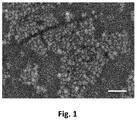
- Figure 1 shows an image obtained by scanning electron microscopy (SEM) of superparamagnetic particles covered with oleic acid. It forms nanoemulsions that cannot be subsequently dispersed into water. However, it can be and it is dispersed into an organic apolar solvent, which can be for instance hexane. Pentane, heptane, cyclohexane or toluene can also be used.
- the superparamagnetic particles of metal oxide are advantageously superparamagnetic particles of iron (II, III) oxide (Fe 3 O 4 ), CoFe 2 O 4 , MnFe 2 O 4 , or Zn 0.4 Co 0.6 Fe 2 O 4 , more preferentially Fe 3 O 4 .
- the organic apolar solvent is evaporated under vacuum in order to add the dispersed superparamagnetic particles into an aqueous solution, preferentially comprising milliQ water and a first cationic surfactant.
- a fatty nanoemulsion is obtained.
- This fatty phase (due to the presence of oleic acid) is in fact stabilized by the cationic surfactant.
- the first cationic surfactant is advantageously cetyltrimethylammonium chloride (CTACI).
- CTACI cetyltrimethylammonium chloride
- CTACI Cetrimonium bromide
- DOTAP 1,2-dioleoyl-3-trimethylammonium-propane
- any other quaternary ammonium-based surfactant can be employed.
- the amount of cationic surfactant present into the solution it is possible to control the number of magnetic cores/clusters that will be present at the end of the synthesis, within the mesoporous silica nanoparticles.
- a basic compound and a polar organic solvent are added in the homogenized mixture.
- the basic compound is advantageously triethanolamine. Triethylamine, ammonia or sodium hydroxide can also been employed.
- the polar organic solvent is advantageously ethanol. Methanol or isopropanol can also been employed.
- the solution that is thus obtained is then stirred and heated to at least 60°C.
- a temperature comprised between 60°C and 80°C is generally set up.
- the silica precursor is added at this temperature.
- the silica precursor is advantageously tetraethyl orthosilicate, ethoxysilane, methoxysilane. Any other alkoxysilanes, halogenosilane, silatranes, oligomers or monomers of alkoxysilanes, of halogenosilanes or of silatranes can be used.
- a second cationic surfactant is then added to stabilize the fatty phase is added. It acts as a porogen agent that is helpful for the growth of the mesoporous silica shell.
- the second cationic surfactant can be identical or different to the first cationic surfactant.
- the second cationic surfactant is advantageously cetyltrimethylammonium chloride (CTACI). Cetrimonium bromide (CTAB), 1,2-dioleoyl-3-trimethylammonium-propane (DOTAP) or any other quaternary ammonium-based surfactant can be employed.
- the solution is stirred at a temperature of at least 60°C, in order to carry out the condensation of the silica around the super-paramagnetic core.
- a temperature comprised between 60°C and 80°C is generally set up.
- the main idea of this above described process is that the total amount of the first and the second cationic surfactant is added in two parts: a first portion is required to emulsify the fatty phase (wax) and a second portion is required to participate to the condensation of the silica precursors; in this case the first and second cationic surfactant are identical.
- the first surfactant is required to emulsify the fatty phase (wax) and the second surfactant (different from the first one) is required to participate to the condensation of the silica precursors.
- the second surfactant is cetyltrimethylammonium chloride (CTACI) since it performs better in the condensation of the silica precursors.
- CTACI cetyltrimethylammonium chloride
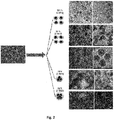
- the total amount of cationic surfactant with regard to the number of magnetic cores/clusters encapsulated in the final nanoparticles is indicated. This is shown in figure 2 , which further depicts SEM images. In this case (shown on figure 2 ), the first and second cationic surfactant are therefore identical, cetyltrimethylammonium chloride (CTACI) having been used.
- CTACI cetyltrimethylammonium chloride
- the total amount of cetyltrimethylammonium chloride is 10.4 mL (7.8 mmol). That means that the number of equivalent of CTACI compared to the one equivalent of metal oxide is equal to 18. Generally speaking the total number of equivalent of the cationic surfactant must be comprised between 15 and 25.
- cetyltrimethylammonium chloride When the first portion of cetyltrimethylammonium chloride is above 25% (for instance 29% or in the case where the total amount is added in the first portion) of the total amount, then only one superparamagnetic core is included in the mesoporous silica shell.
- Superparamagnetic nanoparticles of iron oxide have been covered with an hydrophobic layer of oleic acid. After dispersion in hexane, a wax has been generated by evaporating the solvent.
- the addition of the first cationic surfactant (CATCI) allows for the control of the number of superparamagnetic clusters in the nanoparticules. After homogeneisation by ultrasonication and addition of triethanolamine, the mixture has been heated up to at least 60°C. Tetraethyl orthosilicate has been added followed by the second cationic surfactant which is in this case identical to the first cationic surfactant.
- CATCI first cationic surfactant
- the mesoporous silica nanoparticles must be rendered cationic. This is done by adding a layer of (3-aminopropyl)triethoxysilane (APTES).
- APTES (3-aminopropyl)triethoxysilane
- APTES APTES
- the reaction mixture is stirred for 2 hours at 60 °C under argon.
- the molar ratio of this synthesis can be for example the following: TEOS / CTACI / TEA / H 2 O / EtOH / APTES : 1 / 0.26 / 2 / 117.35/5.88/0.10.
- This formulation is composed of DOPS, cholesterol and a third lipid, preferentially DPPC.
- the number of equivalents of cholesterol relative to one equivalent of DOPS is comprised between 2.35 and 2.65, preferentially between 2.40 and 2.60, more preferentially between 2.45 and 2.55.
- the formulation of lipids has been prepared in a solvent that has been evaporated before mixing with the mesoporous silica nanoparticles.
- An ultra-sonication step preferentially carried out at room temperature, under argon, and during 20 minutes, is carried out.
- the mesoporous silica nanoparticles with encapsulated superparamagnetic clusters and with a negatively charged supported lipid bilayer are obtained.
- This kind of mesoporous silica nanoparticles with encapsulated superparamagnetic clusters and with a negatively charged supported lipid bilayer are employed in magnetic hyperthermia treatment. There are also employed in post-treatment of cancerous tumour.
- an outer alginate layer is further provide to the mesoporous silica nanoparticles with encapsulated superparamagnetic clusters of the present invention.
- the outer alginate layer is designed over the negatively charged supported lipid bilayer.
- liposomes comprising 1,2-dioleoyl-3-trimethylammonium-propane (DOTAP), cholesterol and a third lipid (preferentially DPPC) are added on the nanoparticles bearing the negatively charged supported lipid bilayer.
- DOTAP 1,2-dioleoyl-3-trimethylammonium-propane
- cholesterol cholesterol
- a third lipid preferentially DPPC
- the concentration of DOTAP in the formulation is comprised between 50% and 150% of the concentration of said at least one phospholipid, preferentially in a concentration amounting to 100% of the concentration of said at least one phospholipid.
- the suspension is then mixed under mechanical stirring with 2% by weight of sodium alginate (aqueous solution).
- the concentration of sodium alginate in said aqueous solution is advantageously comprised between 1% (wt%) and 5% (wt%), preferentially is equal to 2% (wt%).
- the mixing with sodium alginate is performed in a buffer solution, said buffer solution being based on 4-(2-hydroxyethyl)-1 piperazineethanesulfonic acid, alias HEPES, or on phosphate-buffered saline, alias PBS.
- the cross-linking sodium alginate is performed by mixing an aqueous solution of divalent cation, preferentially calcium-based cation or barium-based cation, at a concentration comprised between 40 mM and 60 mM, preferentially at a concentration of 50 mM.
- the excess of un-adsorbed alginate can be removed by centrifugation at 45000 rpm for 20 min.
- rhodamine B fluorescent agents have been used such as rhodamine B.
- rhodamine B For the adsorption of rhodamine B in the matrix of silica, 1 mg of rhodamine B is incorporated directly into the aqueous solution of silica (2 mg silica nanoparticles). Rhodamine B was incorporated into the silica matrix by adsorption in milliQ water by incubating overnight. The maximum absorbance of rhodamine B is 556 nm.
- Calcein is another fluorescent dye that can be incorporated into the nanoparticles with superparamagnetic clusters.
- An alternating magnetic field with a frequency of 28.4 kHz and a radial magnetic field amplitude of 3010 A/m for a duration of two hours is provided onto said nanoparticles with superparamagnetic clusters and with rhodamine B.
- an increase of fluorescence is observed after centrifugation, demonstrating the release of the fluorescent dye from the mesoporous silica nanoparticles (see figure 4 , right vial).
- the heat provided by the excitation of the superparamagnetic cluster increases the fluidity of the supported lipid bilayer and provokes the release of the rhodamine B.
- the centrifugation allows for the rhodamine B to be dispersed into the solution.
- the mesoporous silica nanoparticles with a negatively charged supported lipid bilayer have found a use in magnetic hyperthermia treatment, or in post-treatment of cancerous tumour. Special attention has been provided to the magnetic hyperthermia treatment of glioblastoma.
- the mesoporous silica nanoparticles with a negatively charged supported lipid bilayer and an outer layer of alginate have found a use in loco-regional and/or topical administration as a cosmetic agent and/or a dermatological agent.
- compositions comprising contrasting agents, therapeutic molecules, pharmaceutical agents, cosmetic agents, dermatological agents (wound-healing agents), anticancerous agents, nutraceutical agents, cosmeceutical agents, hormonal products, growth factors and/or compounds adapted for loco-regional therapies (bone implants and/or cardiac implants), for intraocular administration and/or for intratumoral agent, can be thus easily derivatized.
- MRI magnetic resonance imaging
- bimodal imaging which is a combination of MRI and fluorescence imaging
- the major advantage is to be able to perform a (medical) treatment while performing a (medical) imaging at the same time.
- the release of the drug or the active moiety is indeed achieved while imaging.
- those nanoparticles comprising encapsulated superparamagnetic clusters are used with or without negatively charged supported lipid bilayer. When the bilayer is used, an outer layer of alginate can still enhance the biocompatibility of those nanocapsules.
Landscapes
- Health & Medical Sciences (AREA)
- Chemical & Material Sciences (AREA)
- Life Sciences & Earth Sciences (AREA)
- Engineering & Computer Science (AREA)
- Bioinformatics & Cheminformatics (AREA)
- Veterinary Medicine (AREA)
- Public Health (AREA)
- General Health & Medical Sciences (AREA)
- Medicinal Chemistry (AREA)
- Pharmacology & Pharmacy (AREA)
- Animal Behavior & Ethology (AREA)
- Epidemiology (AREA)
- Physics & Mathematics (AREA)
- Optics & Photonics (AREA)
- Nanotechnology (AREA)
- Biomedical Technology (AREA)
- Chemical Kinetics & Catalysis (AREA)
- General Chemical & Material Sciences (AREA)
- Nuclear Medicine, Radiotherapy & Molecular Imaging (AREA)
- Organic Chemistry (AREA)
- Inorganic Chemistry (AREA)
- Medicinal Preparation (AREA)
- Manufacturing Of Micro-Capsules (AREA)
Description
- The invention is directed to the field of mesoporous silica nanoparticles encapsulating superparamagnetic clusters. The method of manufacturing those nanoparticles is exemplified as well as their use in the release of active moieties, in particular fluorescent agents.
- Mesoporous silica nanoparticles are used in several biomedical applications, such as drug administration, therapeutic imaging and diagnostic.
- When such nanoparticles are coated with a negatively charged supported lipid bilayer, it has been demonstrated that drug delivery is considerably enhanced. Hemocompatibility and biocompatibility in general are the key factors that have been put forward with this kind of coating.
- On the other hand, magnetic hyperthermia, which is used in the treatment of cancer, uses magnetic nanoparticles to increase the tumor temperature once subjected to an external high-frequency electromagnetic field. In fact, the external high-frequency electromagnetic filed is used to trigger the drug delivery.
- The loading of magnetic core within a mesoporous silica nanoparticles has already been achieved but it has been difficult to control the number of magnetic core within the nanoparticles.
- The Stöber process (Stöber W. et al., J. Coll. Interf. Sci., 1968, 26, 62-69) concerns a system of chemical reactions that permits the controlled growth of spherical silica particles of uniform size by means of hydrolysis of alkyl silicates and subsequent condensation of silicic acid in alcoholic solution, using ammonia as a morphological catalyst.
- Lu Y. et al. (Nano Lett., 2002, 2; 183-186) describe a sol-gel approach for the coating of superparamagnetic iron oxide nanoparticles with uniform shells of amorphous silica. The thickness of the silica coating has been controlled by changing the concentration of the sol-gel solution. Fluorescent dyes have been incorporated. However, a mixture of two types of iron oxide particles have been demonstrated: there is coexistence of maghemite and magnetite. Moreover, nanoparticles comprising only one magnetic core have been obtained.
- Cruz P. et al. (Micro. Meso. Mat., 2017, 240, 227-235) have presented a synthesis of mesoporous silica coated Fe3O4 core-shell nanoparticles or magnetic mesoporous silica nanoparticles via a surfactant templated sol-gel method using magnetite nanoparticles stabilized with tartrate as nucleation seeds. 1 to 3 magnetic cores have been randomly encapsulated in one nanoparticle.
- Egodawatte S. et al. (Micro. Meso. Mat., 2017, 237, 108-116) have loaded an anticancer drug into magnetic iron oxide/mesoporous silica nanocomposites with and without aminopropyl functionalization using three different solvents. They have used a surfactant template (hexadecyltrimethyl-ammonium bromide) to generate the micelles, which then trapped the iron oxide nanoparticles. Upon addition of tetraethoxysilane, the mesoporous silica shell is formed, resulting in several iron oxide nanoparticles inside a mesoporous silica shell. No control of the number of iron oxide nanoparticles is performed. As a result, the nanocomposites obtained formed a heterogeneous mixture. Some of the nanocomposites have an agglomerate of iron oxide nanoparticles within their shells, while others have only one or two nanoparticles.
- All these disparities within the known nanocomposite lead to inhomogeneous release of active compounds (drugs, imaging reagents..) inside a living body.
- The invention has for technical problem to alleviate at least one of the drawbacks present in the prior art. More particularly, the invention has for technical problem to provide a method of synthesis of silica nanoparticles with efficient encapsulation superparamagnetic cluster whose the number can be controlled.
- The first object of the invention is directed to a method for manufacturing mesoporous silica nanoparticles with encapsulated superparamagnetic clusters, said method comprising the following steps:
- a. coating superparamagnetic nanoparticles with an hydrophobic layer,
- b. dispersing said superparamagnetic nanoparticles in an organic apolar solvent,
- c. evaporating said organic apolar solvent under vacuum, so as to obtain a wax constituted of superparamagnetic nanoparticles coated with an hydrophobic layer,
- d. emulsifying said wax with a first cationic surfactant dispersed in an aqueous solution,
- e. performing a first homogenisation of said solution,
- f. adding a basic compound and a polar organic solvent in said solution,
- g. performing a second homogenisation of said solution,
- h. heating said solution to a temperature of at least 60°C,
- i. adding a silicate precursor in said solution,
- j. stirring said solution at a temperature of at least 60°C, and
- k. performing a centrifugation in order to yield mesoporous silica nanoparticles with encapsulated superparamagnetic clusters.
- Said method for manufacturing mesoporous silica nanoparticles with encapsulated superparamagnetic clusters is remarkable in that a second cationic surfactant is added between said steps (j) and (k).
- According to a preferred embodiment, said superparamagnetic nanoparticles are superparamagnetic nanoparticles of metal oxide, preferentially of Fe3O4, CoFe2O4, MnFe2O4, or Zn0.4Co0.6Fe2O4.
- According to a preferred embodiment, said hydrophobic layer is a layer of fatty acid, preferentially of oleic acid.
- According to a preferred embodiment, said organic apolar solvent is selected from the group of pentane, hexane, cyclohexane, heptane or toluene.
- According to a preferred embodiment, said first cationic surfactant and said second cationic surfactant are identical or different.
- According to a preferred embodiment, said first cationic surfactant and/or said second cationic surfactant is a quaternary ammonium based surfactant, preferentially selected from the group comprising cetyltrimethylammonium chloride, cetrimonium bromide, or 1,2-dioleoyl-3-trimethylammonium-propane.
- According to a preferred embodiment, said aqueous solution comprises milliQ water.
- According to a preferred embodiment, said basic compound is triethanolamine, sodium hydroxide, or ammonia.
- According to a preferred embodiment, said steps (e) and/or (g) are performed by ultrasonication and/or by stirring.
- According to a preferred embodiment, said silicate precursor is ethoxysilane, methoxysilane, or tetraethyl orthosilicate, preferably tetraethyl orthosilicate.
- According to a preferred embodiment, said temperature of said steps (h) and/or (j) is comprised between 60°C and 80°C.
- According to a preferred embodiment, the number of equivalent of the total amount of said first and second cationic surfactant is comprised between 15 and 25 equivalents of said superparamagnetic nanoparticles, preferentially is equal to 18.
- According to a preferred embodiment, the first cationic surfactant is comprised between 5% and 15% of the total amount of said first and second cationic surfactant, said first cationic surfactant being preferentially equivalent to 10% of the total amount of said first and second cationic surfactant.
- According to a preferred embodiment, the first cationic surfactant is comprised between 16% and 22% of the total amount of said first and second cationic surfactant, said first cationic surfactant being preferentially equivalent to 19% of the total amount of said first and second cationic surfactant.
- According to a preferred embodiment, the first cationic surfactant is comprised between 25% and 99% of the total amount of said first and second cationic surfactant, said first cationic surfactant being preferentially equivalent to 29% of the total amount of said first and second cationic surfactant.
- The second object of the invention is directed to a method for manufacturing a negatively charged supported lipid bilayer surrounding a mesoporous silica nanoparticles with encapsulated superparamagnetic clusters, said method comprising the method in accordance with the first object of the invention and the steps of
- a. adding (3-aminopropyl)triethoxysilane, alias APTES,
- b. carrying out a purification,
- c. adding a formulation of lipids, said lipids being 1,2-dioleoyl-sn-glycero-3-phospho-L-serine alias DOPS, cholesterol and at least one lipid different from DOPS and cholesterol,
- d. performing an ultrasonication, and
- e. performing a centrifugation.
- According to a preferred embodiment, the number of equivalent of cholesterol relative to one equivalent of DOPS is comprised between 2.30 and 2.70, preferentially between 2.40 and 2.60, more preferentially the number of equivalent of cholesterol relative to one equivalent of DOPS is 2.50.
- According to a preferred embodiment, said at least one lipid different from DOPS and cholesterol is 1,2-dipalmitoyl-sn-glycero-3-phosphocholine alias DPPC.
- The third object of the invention is directed to a method for manufacturing a layer of alginate on negatively charged supported lipid bilayer surrounding a mesoporous silica nanoparticles with encapsulated superparamagnetic clusters, said method comprising the method for manufacturing a negatively charged supported lipid bilayer surrounding a mesoporous silica nanoparticles with encapsulated superparamagnetic clusters in accordance with the second object of the invention, and the steps of
- a. providing a negatively charged supported lipid bilayer surrounding a mesoporous silica nanoparticle with encapsulated superparamagnetic clusters, wherein said negatively charged supported lipid bilayer comprises at least one phospholipid,
- b. adding a formulation of lipid, said lipids being preferentially 1,2-dioleoyl-3-trimethylammonium-propane alias DOTAP, cholesterol and at least one lipid different from DOTAP and cholesterol,
- c. performing an ultra-sonication,
- d. adding an aqueous solution of sodium alginate, and
- e. cross-linking said sodium alginate.
- According to a preferred embodiment, said at least one lipid different from DOTAP and cholesterol is 1,2-dipalmitoyl-sn-glycero-3-phosphocholine alias DPPC.
- The fourth object of the invention is directed to mesoporous silica nanoparticle comprising at least one encapsulated superparamagnetic cluster. Said mesoporous silica nanoparticle is remarkable in that said at least one encapsulated superparamagnetic cluster is centred inside said mesoporous silica nanoparticles.
- According to a preferred embodiment, said mesoporous silica nanoparticle comprises three or five encapsulated superparamagnetic clusters.
- According to a preferred embodiment, said encapsulated superparamagnetic clusters are aligned.
- According to a preferred embodiment, said encapsulated superparamagnetic clusters are superparamagnetic clusters of metal oxide, preferentially of Fe3O4, CoFe2O4, MnFe2O4, or Zn0.4Co0.6Fe2O4.
- The fifth object of the present invention is directed to mesoporous silica nanoparticle with a negatively charged supported lipid bilayer, said mesoporous silica nanoparticle comprising at least one encapsulated superparamagnetic cluster. Said mesoporous silica nanoparticle is remarkable in that said at least one encapsulated superparamagnetic clusters is encapsulated metal oxide, preferentially superparamagnetic nanoparticles of Fe3O4, CoFe2O4, MnFe2O4, or Zn0.4Co0.6Fe2O4.
- According to a preferred embodiment, said nanoparticle comprises one, three or five encapsulated superparamagnetic clusters.
- According to a preferred embodiment, said negatively charged supported lipid bilayer comprises cholesterol, 1,2-dioleoyl-sn-glycero-3-phospho-L-serine alias DOPS, and at least one lipid different from DOPS and cholesterol.
- According to a preferred embodiment, said at least one lipid different from DOPS and cholesterol is 1,2-dipalmitoyl-sn-glycero-3-phosphocholine alias DPPC.
- According to a preferred embodiment, said mesoporous silica nanoparticle with a negatively charged supported lipid bilayer in accordance with the fifth object of the invention further comprises an outer layer of alginate.
- The sixth object of the invention is directed to mesoporous silica nanoparticles with a negatively charged supported lipid bilayer in accordance with the fifth objection of the invention for use in magnetic hyperthermia treatment, or in post-treatment of cancerous tumour.
- The seventh object of the invention is directed to mesoporous silica nanoparticles with a negatively charged supported lipid bilayer in accordance with the fifth object of the invention further comprising an outer layer of alginate for use in loco-regional and/or topical administration as a cosmetic agent and/or a dermatological agent.
- The eighth object of the invention is directed to mesoporous silica nanoparticle with a negatively charged supported lipid bilayer in accordance with the fourth object of the invention, the fifth object of the invention and/or the fifth object of the invention further comprising an outer layer of alginate for use in magnetic resonance imaging.
- The ninth object of the invention is directed to mesoporous silica nanoparticle with a negatively charged supported lipid bilayer in accordance with the fourth object of the invention, fifth object of the invention and/or the fifth object of the invention further comprising an outer layer of alginate for simultaneous use in magnetic resonance imaging and fluorescence imaging.
- The invention is particularly interesting in that the method for manufacturing the mesoporous silica nanoparticles with the encapsulated magnetic clusters allows for the control of the number of cores of metal oxide within the silica porous matrix.
- Such cores are also centred into the mesoporous silica nanoparticles, allowing for enhanced properties in magnetic hyperthermia treatment.
- The superparamagnetic cores or clusters, when present in a number superior to 1, are also aligned inside the mesoporous silica nanoparticle. This confers a shape anisotropy which increases the heating efficiency in the use of the nanoparticles of the present invention in magnetic hyperthermia treatment.
- The method of the present invention is a one-pot method, not requiring any purification steps.
- The yield of the mesoporous silica nanoparticles is significantly high, since the control of the number of magnetic cores within the silica nanoparticles allows for obtaining homogeneous nanoparticles. Every nanoparticle has its own magnetic cores.
-
-
Figure 1 : Scanning Electron Microscopy (SEM) image of nanoparticles of Fe3O4 covered with oleic acid. -
Figure 2 : Scanning Electron Microscopy (SEM) images of the synthesis of the mesoporous silica nanoparticles with encapsulated superparamagnetic clusters in accordance with the amount of cationic surfactant. -
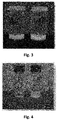
Figure 3 : Vial with a mesoporous silica nanoparticle with a supported lipid bilayer with rhodamine B incorporated and without encapsulated superparamagnetic clusters (on the left) and vial with a mesoporous silica nanoparticle with a supported lipid bilayer with rhodamine B incorporated and with encapsulated superparamagnetic clusters (on the right) before centrifugation. -
Figure 4 : Vial with a mesoporous silica nanoparticle with a supported lipid bilayer with rhodamine B incorporated and without encapsulated superparamagnetic clusters (on the left) and vial with a mesoporous silica nanoparticle with a supported lipid bilayer with rhodamine B incorporated and with encapsulated superparamagnetic clusters (on the right) after centrifugation. - The synthesis of the mesoporous silica nanoparticles with a controlled amount of encapsulated superparamagnetic cluster is performed in two main steps. The first main step concerns the nucleation of the superparamagnetic particles and the second main steps concerns the condensation of silica in order to wrap those superparamagnetic particles.
- The nucleation of the superparamagnetic particles (namely, the first main step of the synthesis) is conducted as following:
- The superparamagnetic particles of metal oxide are first coated with a hydrophobic layer. The hydrophobic layer can be a layer of fatty acid, for example oleic acid.
Figure 1 shows an image obtained by scanning electron microscopy (SEM) of superparamagnetic particles covered with oleic acid. It forms nanoemulsions that cannot be subsequently dispersed into water. However, it can be and it is dispersed into an organic apolar solvent, which can be for instance hexane. Pentane, heptane, cyclohexane or toluene can also be used. - The superparamagnetic particles of metal oxide are advantageously superparamagnetic particles of iron (II, III) oxide (Fe3O4), CoFe2O4, MnFe2O4, or Zn0.4Co0.6Fe2O4, more preferentially Fe3O4.
- Once dispersed, the organic apolar solvent is evaporated under vacuum in order to add the dispersed superparamagnetic particles into an aqueous solution, preferentially comprising milliQ water and a first cationic surfactant.
- Then, by emulsifying the obtained wax, a fatty nanoemulsion is obtained. This fatty phase (due to the presence of oleic acid) is in fact stabilized by the cationic surfactant.
- The first cationic surfactant is advantageously cetyltrimethylammonium chloride (CTACI). Cetrimonium bromide (CTAB), 1,2-dioleoyl-3-trimethylammonium-propane (DOTAP) or any other quaternary ammonium-based surfactant can be employed.
- According to the amount of cationic surfactant present into the solution, it is possible to control the number of magnetic cores/clusters that will be present at the end of the synthesis, within the mesoporous silica nanoparticles.
- The condensation of silica (namely, the second main steps of the synthesis) is then conducted as following:
- A basic compound and a polar organic solvent are added in the homogenized mixture.
- The basic compound is advantageously triethanolamine. Triethylamine, ammonia or sodium hydroxide can also been employed.
- The polar organic solvent is advantageously ethanol. Methanol or isopropanol can also been employed.
- The solution that is thus obtained is then stirred and heated to at least 60°C. A temperature comprised between 60°C and 80°C is generally set up.
- The silica precursor is added at this temperature.
- The silica precursor is advantageously tetraethyl orthosilicate, ethoxysilane, methoxysilane. Any other alkoxysilanes, halogenosilane, silatranes, oligomers or monomers of alkoxysilanes, of halogenosilanes or of silatranes can be used.
- A second cationic surfactant is then added to stabilize the fatty phase is added. It acts as a porogen agent that is helpful for the growth of the mesoporous silica shell.
- The second cationic surfactant can be identical or different to the first cationic surfactant. The second cationic surfactant is advantageously cetyltrimethylammonium chloride (CTACI). Cetrimonium bromide (CTAB), 1,2-dioleoyl-3-trimethylammonium-propane (DOTAP) or any other quaternary ammonium-based surfactant can be employed.
- The solution is stirred at a temperature of at least 60°C, in order to carry out the condensation of the silica around the super-paramagnetic core. A temperature comprised between 60°C and 80°C is generally set up.
- Finally, after a centrifugation step, the mesoporous silica nanoparticles are obtained.
- The main idea of this above described process is that the total amount of the first and the second cationic surfactant is added in two parts: a first portion is required to emulsify the fatty phase (wax) and a second portion is required to participate to the condensation of the silica precursors; in this case the first and second cationic surfactant are identical. In the case where the first and second surfactant are different, the first surfactant is required to emulsify the fatty phase (wax) and the second surfactant (different from the first one) is required to participate to the condensation of the silica precursors. There is a preference for the second surfactant to be cetyltrimethylammonium chloride (CTACI) since it performs better in the condensation of the silica precursors.
- In the following, the total amount of cationic surfactant with regard to the number of magnetic cores/clusters encapsulated in the final nanoparticles is indicated. This is shown in
figure 2 , which further depicts SEM images. In this case (shown onfigure 2 ), the first and second cationic surfactant are therefore identical, cetyltrimethylammonium chloride (CTACI) having been used. - For 100 mg of iron (II, III) oxide (Fe3O4) nanoparticles covered with oleic acid, the total amount of cetyltrimethylammonium chloride is 10.4 mL (7.8 mmol). That means that the number of equivalent of CTACI compared to the one equivalent of metal oxide is equal to 18. Generally speaking the total number of equivalent of the cationic surfactant must be comprised between 15 and 25.
- When the first portion of cetyltrimethylammonium chloride amounts to 10% of the total amount, then five superparamagnetic cores are included in the mesoporous silica shell. This result can be also obtained when the amount is comprised between 5% and 15% of the total amount of CTACI.
- When the first portion of cetyltrimethylammonium chloride amounts to 19% of the total amount, then three superparamagnetic cores are included in the mesoporous silica shell. This result can be also obtained when the amount is comprised between 16% and 22% of the total amount of CTACI.
- When the first portion of cetyltrimethylammonium chloride is above 25% (for instance 29% or in the case where the total amount is added in the first portion) of the total amount, then only one superparamagnetic core is included in the mesoporous silica shell.
- When the number of superparamagnetic clusters is greater than 1, for example three or five as in the above examples, it has been observed that the clusters are centred within the mesoporous silica nanoparticles. There are also aligned, forming thus a nanochain of superparamagnetic clusters. It has been demonstrated that chain-like structures can give rise to an increase in the heating efficiency of the nanoparticles, notably in the magnetic hyperthermia treatment of cancers. This is due to uniaxial anisotropy phenomenon, which leads to hysteretic losses that can improve the heat power dissipation process (Abenojar E. C. et al., Prog. Nat. Sci. Mater. Intern., 2016, 26, 440-448). The development of a method of manufacturing in controlled and regulated manner those mesoporous silica nanoparticles with encapsulated superparamagnetic clusters is therefore significantly valuable in the field of magnetic hyperthermia.
- Different implementations of the mesoporous silica nanoparticles with encapsulated superparamagnetic clusters have been developed.
- For instance, in order to increase the biocompatibility of the mesoporous silica nanoparticles, negatively charged supported lipid bilayer surrounding the nanoparticles have been developed. The goal is to facilitate the incorporation of those nanoparticles in a living system and to use them as a nanovector for the encapsulation and the delivery of (active) materials.
- Superparamagnetic nanoparticles of iron oxide have been covered with an hydrophobic layer of oleic acid. After dispersion in hexane, a wax has been generated by evaporating the solvent. The addition of the first cationic surfactant (CATCI) allows for the control of the number of superparamagnetic clusters in the nanoparticules. After homogeneisation by ultrasonication and addition of triethanolamine, the mixture has been heated up to at least 60°C. Tetraethyl orthosilicate has been added followed by the second cationic surfactant which is in this case identical to the first cationic surfactant.
- In order to add the negatively charged supported lipid bilayer, the mesoporous silica nanoparticles must be rendered cationic. This is done by adding a layer of (3-aminopropyl)triethoxysilane (APTES).
- After 20 minutes of reaction, 150 µL of APTES (0.64 mmol) are added to the reaction volume. The reaction mixture is stirred for 2 hours at 60 °C under argon. The molar ratio of this synthesis can be for example the following: TEOS / CTACI / TEA / H2O / EtOH / APTES : 1 / 0.26 / 2 / 117.35/5.88/0.10.
- Then a purification step is carried out, in order to remove the CTACI.
- Then, a formulation of lipids is added. This formulation is composed of DOPS, cholesterol and a third lipid, preferentially DPPC.
- The number of equivalents of cholesterol relative to one equivalent of DOPS is comprised between 2.35 and 2.65, preferentially between 2.40 and 2.60, more preferentially between 2.45 and 2.55.
- The formulation of lipids has been prepared in a solvent that has been evaporated before mixing with the mesoporous silica nanoparticles.
- An ultra-sonication step, preferentially carried out at room temperature, under argon, and during 20 minutes, is carried out.
- After a centrifugation, the mesoporous silica nanoparticles with encapsulated superparamagnetic clusters and with a negatively charged supported lipid bilayer are obtained.
- This kind of mesoporous silica nanoparticles with encapsulated superparamagnetic clusters and with a negatively charged supported lipid bilayer are employed in magnetic hyperthermia treatment. There are also employed in post-treatment of cancerous tumour.
- In order to enhance the biocompatibility of the nanoparticle, namely to provide a biocompatible nanocapsule with an outer layer that is sufficiently resistant to prevent leakage of the materials (and/or any active moieties), and to be sufficiently biodegradable at the same time to favour the slow and control release of said materials, an outer alginate layer is further provide to the mesoporous silica nanoparticles with encapsulated superparamagnetic clusters of the present invention. The outer alginate layer is designed over the negatively charged supported lipid bilayer.
- To adsorb sodium alginate, liposomes comprising 1,2-dioleoyl-3-trimethylammonium-propane (DOTAP), cholesterol and a third lipid (preferentially DPPC) are added on the nanoparticles bearing the negatively charged supported lipid bilayer.
- The concentration of DOTAP in the formulation is comprised between 50% and 150% of the concentration of said at least one phospholipid, preferentially in a concentration amounting to 100% of the concentration of said at least one phospholipid.
- After ultra-sonication, preferentially performed at a temperature comprised between 40°C and 60°C, the suspension is then mixed under mechanical stirring with 2% by weight of sodium alginate (aqueous solution).
- The concentration of sodium alginate in said aqueous solution is advantageously comprised between 1% (wt%) and 5% (wt%), preferentially is equal to 2% (wt%).
- The mixing with sodium alginate is performed in a buffer solution, said buffer solution being based on 4-(2-hydroxyethyl)-1 piperazineethanesulfonic acid, alias HEPES, or on phosphate-buffered saline, alias PBS.
- The cross-linking sodium alginate is performed by mixing an aqueous solution of divalent cation, preferentially calcium-based cation or barium-based cation, at a concentration comprised between 40 mM and 60 mM, preferentially at a concentration of 50 mM.
- The excess of un-adsorbed alginate can be removed by centrifugation at 45000 rpm for 20 min.
- The implementation in hyperthermia magnetic treatment has been carried out.
- To quantify the encapsulation of active agents and their release, fluorescent agents have been used such as rhodamine B. For the adsorption of rhodamine B in the matrix of silica, 1 mg of rhodamine B is incorporated directly into the aqueous solution of silica (2 mg silica nanoparticles). Rhodamine B was incorporated into the silica matrix by adsorption in milliQ water by incubating overnight. The maximum absorbance of rhodamine B is 556 nm.
- Calcein is another fluorescent dye that can be incorporated into the nanoparticles with superparamagnetic clusters.
- An alternating magnetic field with a frequency of 28.4 kHz and a radial magnetic field amplitude of 3010 A/m for a duration of two hours is provided onto said nanoparticles with superparamagnetic clusters and with rhodamine B. Once the magnetic field has been provided, an increase of fluorescence is observed after centrifugation, demonstrating the release of the fluorescent dye from the mesoporous silica nanoparticles (see
figure 4 , right vial). In fact, the heat provided by the excitation of the superparamagnetic cluster increases the fluidity of the supported lipid bilayer and provokes the release of the rhodamine B. - In comparison with mesoporous silica nanoparticles without superparamagnetic cluster, after centrifugation, no fluorescence has been observed (as in
figure 3 , left and right vials, where no centrifugation has been performed). - The centrifugation allows for the rhodamine B to be dispersed into the solution.
- The mesoporous silica nanoparticles with a negatively charged supported lipid bilayer have found a use in magnetic hyperthermia treatment, or in post-treatment of cancerous tumour. Special attention has been provided to the magnetic hyperthermia treatment of glioblastoma.
- The mesoporous silica nanoparticles with a negatively charged supported lipid bilayer and an outer layer of alginate have found a use in loco-regional and/or topical administration as a cosmetic agent and/or a dermatological agent.
- The implementations of such mesoporous silica nanoparticles with the protective outer layer of cross-linked sodium alginate are various. It forms indeed nanocapsules in which several kinds of compositions can be incorporated. Compositions comprising contrasting agents, therapeutic molecules, pharmaceutical agents, cosmetic agents, dermatological agents (wound-healing agents), anticancerous agents, nutraceutical agents, cosmeceutical agents, hormonal products, growth factors and/or compounds adapted for loco-regional therapies (bone implants and/or cardiac implants), for intraocular administration and/or for intratumoral agent, can be thus easily derivatized.
- Moreover, applications of the mesoporous silica nanoparticle comprising encapsulated superparamagnetic cluster in magnetic resonance imaging (MRI) and in bimodal imaging (which is a combination of MRI and fluorescence imaging) are envisioned, especially since the number of superparamagnetic clusters can be controlled by the method of the present invention. The major advantage is to be able to perform a (medical) treatment while performing a (medical) imaging at the same time. The release of the drug or the active moiety is indeed achieved while imaging. According to the specific application, those nanoparticles comprising encapsulated superparamagnetic clusters are used with or without negatively charged supported lipid bilayer. When the bilayer is used, an outer layer of alginate can still enhance the biocompatibility of those nanocapsules.
Claims (15)
- Method for manufacturing mesoporous silica nanoparticles with encapsulated superparamagnetic clusters, said method comprising the following steps:a) coating superparamagnetic nanoparticles with an hydrophobic layer,b) dispersing said superparamagnetic nanoparticles in an organic apolar solvent,c) evaporating said organic apolar solvent under vacuum, so as to obtain a wax constituted of superparamagnetic nanoparticles coated with an hydrophobic layer,d) emulsifying said wax with a first cationic surfactant dispersed in an aqueous solution,e) performing a first homogenisation of said solution,f) adding a basic compound and a polar organic solvent in said solution,g) performing a second homogenisation of said solution,h) heating said solution to a temperature of at least 60°C,i) adding a silicate precursor in said solution,j) stirring said solution at a temperature of at least 60°C, andk) performing a centrifugation in order to yield mesoporous silica nanoparticles with encapsulated superparamagnetic clusters;characterized in that
a second cationic surfactant is added between said steps (j) and (k). - Method according to claim 1, characterized in that said superparamagnetic nanoparticles are superparamagnetic nanoparticles of metal oxide, preferentially of Fe3O4, CoFe2O4, MnFe2O4, or Zn0.4Co0.6Fe2O4.
- Method according to claim 1 or 2, characterized in that said first cationic surfactant and/or said second cationic surfactant is a quaternary ammonium based surfactant, preferentially selected from the group comprising cetyltrimethylammonium chloride, cetrimonium bromide, or 1,2-dioleoyl-3-trimethylammonium-propane.
- Method according to any one of claims 1-3, characterized in that the number of equivalent of the total amount of said first and second cationic surfactant is comprised between 15 and 25 equivalents of said superparamagnetic nanoparticles, preferentially is equal to 18.
- Method according to any one of claims 1-4, characterized in that the first cationic surfactant is comprised between 5% and 15% of the total amount of said first and second cationic surfactant, said first cationic surfactant being preferentially equivalent to 10% of the total amount of said first and second cationic surfactant.
- Method for manufacturing a negatively charged supported lipid bilayer surrounding a mesoporous silica nanoparticles with encapsulated superparamagnetic clusters, said method comprising the method for manufacturing mesoporous silica nanoparticles with encapsulated superparamagnetic clusters in accordance with any one of claims 1-5 and the steps ofa) adding (3-aminopropyl)triethoxysilane, alias APTES,b) carrying out a purification,c) adding a formulation of lipids, said lipids being 1,2-dioleoyl-sn-glycero-3-phospho-L-serine alias DOPS, cholesterol and at least one lipid different from DOPS and cholesterol,d) performing an ultrasonication, ande) performing a centrifugation.
- Method according to claim 6, wherein the number of equivalent of cholesterol relative to one equivalent of DOPS is comprised between 2.30 and 2.70, preferentially between 2.40 and 2.60, more preferentially the number of equivalent of cholesterol relative to one equivalent of DOPS is 2.50.
- Method for manufacturing a layer of alginate on negatively charged supported lipid bilayer surrounding a mesoporous silica nanoparticles with encapsulated superparamagnetic clusters, said method comprising the method for manufacturing a negatively charged supported lipid bilayer surrounding a mesoporous silica nanoparticles with encapsulated superparamagnetic clusters in accordance with any one of claims 6-7, and the steps ofa) providing a negatively charged supported lipid bilayer surrounding a mesoporous silica nanoparticle with encapsulated superparamagnetic clusters, wherein said negatively charged supported lipid bilayer comprises at least one phospholipid,b) adding a formulation of lipid, said lipids being preferentially 1,2-dioleoyl-3-trimethylammonium-propane alias DOTAP, cholesterol and at least one lipid different from DOTAP and cholesterol,c) performing an ultra-sonication,d) adding an aqueous solution of sodium alginate, ande) cross-linking said sodium alginate.
- Method according to claim 8, characterized in that said at least one lipid different from DOTAP and cholesterol is 1,2-dipalmitoyl-sn-glycero-3-phosphocholine alias DPPC.
- Mesoporous silica nanoparticle comprising at least one encapsulated superparamagnetic cluster, characterized in that said at least one encapsulated superparamagnetic cluster is centred inside said mesoporous silica nanoparticle, and said mesoporous silica nanoparticle comprising three or five aligned encapsulated superparamagnetic clusters.
- Mesoporous silica nanoparticle according to claim 10, characterized in that said encapsulated superparamagnetic cluster are one superparamagnetic cluster of metal oxide, preferentially of Fe3O4, CoFe2O4, MnFe2O4, or Zn0.4Co0.6Fe2O4.
- Mesoporous silica nanoparticle according claim 10 or 11, characterized in that said mesoporous nanoparticle comprises a negatively charged supported lipid bilayer and further comprising an outer layer of alginate.
- Mesoporous silica nanoparticle according to claim 12, for use in magnetic hyperthermia treatment or in post-treatment of cancerous tumour.
- Mesoporous silica nanoparticle in accordance with claim 12, for use in loco-regional and/or topical administration as a cosmetic agent and/or a dermatological agent.
- Mesoporous silica nanoparticle in accordance with any one of claims 10-14, for use in magnetic resonance imaging or for simultaneous use in magnetic resonance imaging and fluorescence imaging.
Applications Claiming Priority (2)
| Application Number | Priority Date | Filing Date | Title |
|---|---|---|---|
| LU100581A LU100581B1 (en) | 2017-12-20 | 2017-12-20 | Method for manufacturing mesoporous silica nanoparticles with encapsulated superparamagnetic clusters |
| PCT/EP2018/086189 WO2019122124A1 (en) | 2017-12-20 | 2018-12-20 | Method for manufacturing mesoporous silica nanoparticles with encapsulated superparamagnetic clusters |
Publications (2)
| Publication Number | Publication Date |
|---|---|
| EP3727448A1 EP3727448A1 (en) | 2020-10-28 |
| EP3727448B1 true EP3727448B1 (en) | 2021-07-14 |
Family
ID=60943083
Family Applications (1)
| Application Number | Title | Priority Date | Filing Date |
|---|---|---|---|
| EP18825693.7A Active EP3727448B1 (en) | 2017-12-20 | 2018-12-20 | Method for manufacturing mesoporous silica nanoparticles with encapsulated superparamagnetic clusters |
Country Status (3)
| Country | Link |
|---|---|
| EP (1) | EP3727448B1 (en) |
| LU (1) | LU100581B1 (en) |
| WO (1) | WO2019122124A1 (en) |
Families Citing this family (2)
| Publication number | Priority date | Publication date | Assignee | Title |
|---|---|---|---|---|
| US11779652B2 (en) | 2021-06-18 | 2023-10-10 | Imam Abdulrahman Bin Faisal University | Porous silicate/magnetic ferrite nanocarrier for combination anti-cancer therapeutic and antioxidant delivery |
| CN116374973B (en) * | 2023-02-08 | 2024-09-20 | 浙江大学 | A method for preparing hydroxyapatite uniformly dispersed in water phase by double-layer oleic acid method |
Family Cites Families (2)
| Publication number | Priority date | Publication date | Assignee | Title |
|---|---|---|---|---|
| WO2008140624A2 (en) * | 2006-12-22 | 2008-11-20 | The Board Of Regents Of The University Of Texas System | Methods and compositions related to hybird nanoparticles |
| LU92784B1 (en) * | 2015-07-22 | 2017-01-31 | Luxembourg Inst Of Science And Tech (List) | Negatively charged self-assembling supported lipid bilayer on mesoporous silica nanoparticles, method of synthesis and use as a nanovector |
-
2017
- 2017-12-20 LU LU100581A patent/LU100581B1/en active IP Right Grant
-
2018
- 2018-12-20 WO PCT/EP2018/086189 patent/WO2019122124A1/en not_active Ceased
- 2018-12-20 EP EP18825693.7A patent/EP3727448B1/en active Active
Also Published As
| Publication number | Publication date |
|---|---|
| EP3727448A1 (en) | 2020-10-28 |
| WO2019122124A1 (en) | 2019-06-27 |
| LU100581B1 (en) | 2019-06-28 |
Similar Documents
| Publication | Publication Date | Title |
|---|---|---|
| Teng et al. | Mesoporous organosilica hollow nanoparticles: synthesis and applications | |
| Peng et al. | A new and facile method to prepare uniform hollow MnO/functionalized mSiO2 core/shell nanocomposites | |
| Hartono et al. | Synthesis of multi-functional large pore mesoporous silica nanoparticles as gene carriers | |
| Wang et al. | Shape-controlled magnetic mesoporous silica nanoparticles for magnetically-mediated suicide gene therapy of hepatocellular carcinoma | |
| Avedian et al. | pH-sensitive biocompatible mesoporous magnetic nanoparticles labeled with folic acid as an efficient carrier for controlled anticancer drug delivery | |
| Gao et al. | Monodispersed mesoporous silica nanoparticles with very large pores for enhanced adsorption and release of DNA | |
| Hayashi et al. | High-frequency, magnetic-field-responsive drug release from magnetic nanoparticle/organic hybrid based on hyperthermic effect | |
| Wu et al. | A salt-assisted acid etching strategy for hollow mesoporous silica/organosilica for pH-responsive drug and gene co-delivery | |
| US10561747B1 (en) | Multifunctional cancer targeting nanoparticles | |
| Payamifar et al. | Magnetic mesoporous silica nanoparticles as advanced polymeric scaffolds for efficient cancer chemotherapy: recent progress and challenges | |
| Eurov et al. | Core–shell monodisperse spherical mSiO2/Gd2O3: Eu3+@ mSiO2 particles as potential multifunctional theranostic agents | |
| Kang et al. | Magnetic nanochain-based smart drug delivery system with remote tunable drug release by a magnetic field | |
| Sadighian | A facile synthesis of Fe3O4@ SiO2@ zno for curcumin delivery | |
| Wang et al. | Photo-responsive magnetic mesoporous silica nanocomposites for magnetic targeted cancer therapy | |
| US10493098B2 (en) | Mesoporous silica-coated nanoparticles | |
| Mahmoodi et al. | Co‐condensation synthesis of well‐defined mesoporous silica nanoparticles: effect of surface chemical modification on plasmid DNA condensation and transfection | |
| WO2019122124A1 (en) | Method for manufacturing mesoporous silica nanoparticles with encapsulated superparamagnetic clusters | |
| Wang et al. | A flexible bowl-shaped magnetic assembly for multifunctional gene delivery systems | |
| Bao et al. | Development of magnetic nanoparticles with double silica shells of different porosities for efficient siRNA delivery to breast cancer cells | |
| Wang et al. | Polyetherimide‐and folic acid‐modified Fe3O4 nanospheres for enhanced magnetic hyperthermia performance | |
| Liu et al. | One-pot self-assembly of multifunctional mesoporous nanoprobes with magnetic nanoparticles and hydrophobic upconversion nanocrystals | |
| Neha et al. | Synthesis of surface grafted mesoporous magnetic nanoparticles for cancer therapy | |
| Li et al. | Multiple gold nanorods@ hierarchically porous silica nanospheres for efficient multi-drug delivery and photothermal therapy | |
| CN103074066B (en) | Preparation method of multifunctional mesoporous directly-cladded fluorescence nano-bioprobe | |
| Cui et al. | A multifunctional biomimetic hybrid nanocarrier for the controlled delivery of chemotherapy drugs by near-infrared light |
Legal Events
| Date | Code | Title | Description |
|---|---|---|---|
| STAA | Information on the status of an ep patent application or granted ep patent |
Free format text: STATUS: UNKNOWN |
|
| STAA | Information on the status of an ep patent application or granted ep patent |
Free format text: STATUS: THE INTERNATIONAL PUBLICATION HAS BEEN MADE |
|
| PUAI | Public reference made under article 153(3) epc to a published international application that has entered the european phase |
Free format text: ORIGINAL CODE: 0009012 |
|
| STAA | Information on the status of an ep patent application or granted ep patent |
Free format text: STATUS: REQUEST FOR EXAMINATION WAS MADE |
|
| 17P | Request for examination filed |
Effective date: 20200612 |
|
| AK | Designated contracting states |
Kind code of ref document: A1 Designated state(s): AL AT BE BG CH CY CZ DE DK EE ES FI FR GB GR HR HU IE IS IT LI LT LU LV MC MK MT NL NO PL PT RO RS SE SI SK SM TR |
|
| AX | Request for extension of the european patent |
Extension state: BA ME |
|
| GRAP | Despatch of communication of intention to grant a patent |
Free format text: ORIGINAL CODE: EPIDOSNIGR1 |
|
| STAA | Information on the status of an ep patent application or granted ep patent |
Free format text: STATUS: GRANT OF PATENT IS INTENDED |
|
| DAV | Request for validation of the european patent (deleted) | ||
| DAX | Request for extension of the european patent (deleted) | ||
| INTG | Intention to grant announced |
Effective date: 20210218 |
|
| GRAS | Grant fee paid |
Free format text: ORIGINAL CODE: EPIDOSNIGR3 |
|
| GRAA | (expected) grant |
Free format text: ORIGINAL CODE: 0009210 |
|
| STAA | Information on the status of an ep patent application or granted ep patent |
Free format text: STATUS: THE PATENT HAS BEEN GRANTED |
|
| AK | Designated contracting states |
Kind code of ref document: B1 Designated state(s): AL AT BE BG CH CY CZ DE DK EE ES FI FR GB GR HR HU IE IS IT LI LT LU LV MC MK MT NL NO PL PT RO RS SE SI SK SM TR |
|
| REG | Reference to a national code |
Ref country code: GB Ref legal event code: FG4D |
|
| REG | Reference to a national code |
Ref country code: IE Ref legal event code: FG4D |
|
| REG | Reference to a national code |
Ref country code: DE Ref legal event code: R096 Ref document number: 602018020233 Country of ref document: DE |
|
| REG | Reference to a national code |
Ref country code: AT Ref legal event code: REF Ref document number: 1410148 Country of ref document: AT Kind code of ref document: T Effective date: 20210815 |
|
| REG | Reference to a national code |
Ref country code: NL Ref legal event code: FP |
|
| REG | Reference to a national code |
Ref country code: LT Ref legal event code: MG9D |
|
| REG | Reference to a national code |
Ref country code: AT Ref legal event code: MK05 Ref document number: 1410148 Country of ref document: AT Kind code of ref document: T Effective date: 20210714 |
|
| PG25 | Lapsed in a contracting state [announced via postgrant information from national office to epo] |
Ref country code: SE Free format text: LAPSE BECAUSE OF FAILURE TO SUBMIT A TRANSLATION OF THE DESCRIPTION OR TO PAY THE FEE WITHIN THE PRESCRIBED TIME-LIMIT Effective date: 20210714 Ref country code: RS Free format text: LAPSE BECAUSE OF FAILURE TO SUBMIT A TRANSLATION OF THE DESCRIPTION OR TO PAY THE FEE WITHIN THE PRESCRIBED TIME-LIMIT Effective date: 20210714 Ref country code: FI Free format text: LAPSE BECAUSE OF FAILURE TO SUBMIT A TRANSLATION OF THE DESCRIPTION OR TO PAY THE FEE WITHIN THE PRESCRIBED TIME-LIMIT Effective date: 20210714 Ref country code: ES Free format text: LAPSE BECAUSE OF FAILURE TO SUBMIT A TRANSLATION OF THE DESCRIPTION OR TO PAY THE FEE WITHIN THE PRESCRIBED TIME-LIMIT Effective date: 20210714 Ref country code: BG Free format text: LAPSE BECAUSE OF FAILURE TO SUBMIT A TRANSLATION OF THE DESCRIPTION OR TO PAY THE FEE WITHIN THE PRESCRIBED TIME-LIMIT Effective date: 20211014 Ref country code: AT Free format text: LAPSE BECAUSE OF FAILURE TO SUBMIT A TRANSLATION OF THE DESCRIPTION OR TO PAY THE FEE WITHIN THE PRESCRIBED TIME-LIMIT Effective date: 20210714 Ref country code: LT Free format text: LAPSE BECAUSE OF FAILURE TO SUBMIT A TRANSLATION OF THE DESCRIPTION OR TO PAY THE FEE WITHIN THE PRESCRIBED TIME-LIMIT Effective date: 20210714 Ref country code: PT Free format text: LAPSE BECAUSE OF FAILURE TO SUBMIT A TRANSLATION OF THE DESCRIPTION OR TO PAY THE FEE WITHIN THE PRESCRIBED TIME-LIMIT Effective date: 20211115 Ref country code: NO Free format text: LAPSE BECAUSE OF FAILURE TO SUBMIT A TRANSLATION OF THE DESCRIPTION OR TO PAY THE FEE WITHIN THE PRESCRIBED TIME-LIMIT Effective date: 20211014 Ref country code: HR Free format text: LAPSE BECAUSE OF FAILURE TO SUBMIT A TRANSLATION OF THE DESCRIPTION OR TO PAY THE FEE WITHIN THE PRESCRIBED TIME-LIMIT Effective date: 20210714 |
|
| PG25 | Lapsed in a contracting state [announced via postgrant information from national office to epo] |
Ref country code: PL Free format text: LAPSE BECAUSE OF FAILURE TO SUBMIT A TRANSLATION OF THE DESCRIPTION OR TO PAY THE FEE WITHIN THE PRESCRIBED TIME-LIMIT Effective date: 20210714 Ref country code: LV Free format text: LAPSE BECAUSE OF FAILURE TO SUBMIT A TRANSLATION OF THE DESCRIPTION OR TO PAY THE FEE WITHIN THE PRESCRIBED TIME-LIMIT Effective date: 20210714 Ref country code: GR Free format text: LAPSE BECAUSE OF FAILURE TO SUBMIT A TRANSLATION OF THE DESCRIPTION OR TO PAY THE FEE WITHIN THE PRESCRIBED TIME-LIMIT Effective date: 20211015 |
|
| REG | Reference to a national code |
Ref country code: DE Ref legal event code: R097 Ref document number: 602018020233 Country of ref document: DE |
|
| PG25 | Lapsed in a contracting state [announced via postgrant information from national office to epo] |
Ref country code: DK Free format text: LAPSE BECAUSE OF FAILURE TO SUBMIT A TRANSLATION OF THE DESCRIPTION OR TO PAY THE FEE WITHIN THE PRESCRIBED TIME-LIMIT Effective date: 20210714 |
|
| PLBE | No opposition filed within time limit |
Free format text: ORIGINAL CODE: 0009261 |
|
| STAA | Information on the status of an ep patent application or granted ep patent |
Free format text: STATUS: NO OPPOSITION FILED WITHIN TIME LIMIT |
|
| PG25 | Lapsed in a contracting state [announced via postgrant information from national office to epo] |
Ref country code: SM Free format text: LAPSE BECAUSE OF FAILURE TO SUBMIT A TRANSLATION OF THE DESCRIPTION OR TO PAY THE FEE WITHIN THE PRESCRIBED TIME-LIMIT Effective date: 20210714 Ref country code: SK Free format text: LAPSE BECAUSE OF FAILURE TO SUBMIT A TRANSLATION OF THE DESCRIPTION OR TO PAY THE FEE WITHIN THE PRESCRIBED TIME-LIMIT Effective date: 20210714 Ref country code: RO Free format text: LAPSE BECAUSE OF FAILURE TO SUBMIT A TRANSLATION OF THE DESCRIPTION OR TO PAY THE FEE WITHIN THE PRESCRIBED TIME-LIMIT Effective date: 20210714 Ref country code: EE Free format text: LAPSE BECAUSE OF FAILURE TO SUBMIT A TRANSLATION OF THE DESCRIPTION OR TO PAY THE FEE WITHIN THE PRESCRIBED TIME-LIMIT Effective date: 20210714 Ref country code: CZ Free format text: LAPSE BECAUSE OF FAILURE TO SUBMIT A TRANSLATION OF THE DESCRIPTION OR TO PAY THE FEE WITHIN THE PRESCRIBED TIME-LIMIT Effective date: 20210714 Ref country code: AL Free format text: LAPSE BECAUSE OF FAILURE TO SUBMIT A TRANSLATION OF THE DESCRIPTION OR TO PAY THE FEE WITHIN THE PRESCRIBED TIME-LIMIT Effective date: 20210714 |
|
| 26N | No opposition filed |
Effective date: 20220419 |
|
| PG25 | Lapsed in a contracting state [announced via postgrant information from national office to epo] |
Ref country code: MC Free format text: LAPSE BECAUSE OF FAILURE TO SUBMIT A TRANSLATION OF THE DESCRIPTION OR TO PAY THE FEE WITHIN THE PRESCRIBED TIME-LIMIT Effective date: 20210714 Ref country code: IT Free format text: LAPSE BECAUSE OF FAILURE TO SUBMIT A TRANSLATION OF THE DESCRIPTION OR TO PAY THE FEE WITHIN THE PRESCRIBED TIME-LIMIT Effective date: 20210714 |
|
| PG25 | Lapsed in a contracting state [announced via postgrant information from national office to epo] |
Ref country code: CY Free format text: LAPSE BECAUSE OF FAILURE TO SUBMIT A TRANSLATION OF THE DESCRIPTION OR TO PAY THE FEE WITHIN THE PRESCRIBED TIME-LIMIT Effective date: 20210714 |
|
| PG25 | Lapsed in a contracting state [announced via postgrant information from national office to epo] |
Ref country code: HU Free format text: LAPSE BECAUSE OF FAILURE TO SUBMIT A TRANSLATION OF THE DESCRIPTION OR TO PAY THE FEE WITHIN THE PRESCRIBED TIME-LIMIT; INVALID AB INITIO Effective date: 20181220 |
|
| PGFP | Annual fee paid to national office [announced via postgrant information from national office to epo] |
Ref country code: GB Payment date: 20231201 Year of fee payment: 6 |
|
| PGFP | Annual fee paid to national office [announced via postgrant information from national office to epo] |
Ref country code: NL Payment date: 20231227 Year of fee payment: 6 Ref country code: LU Payment date: 20231206 Year of fee payment: 6 Ref country code: IE Payment date: 20231201 Year of fee payment: 6 Ref country code: FR Payment date: 20231208 Year of fee payment: 6 |
|
| PGFP | Annual fee paid to national office [announced via postgrant information from national office to epo] |
Ref country code: BE Payment date: 20231208 Year of fee payment: 6 |
|
| PG25 | Lapsed in a contracting state [announced via postgrant information from national office to epo] |
Ref country code: MK Free format text: LAPSE BECAUSE OF FAILURE TO SUBMIT A TRANSLATION OF THE DESCRIPTION OR TO PAY THE FEE WITHIN THE PRESCRIBED TIME-LIMIT Effective date: 20210714 |
|
| PGFP | Annual fee paid to national office [announced via postgrant information from national office to epo] |
Ref country code: DE Payment date: 20231221 Year of fee payment: 6 Ref country code: CH Payment date: 20240104 Year of fee payment: 6 |
|
| PG25 | Lapsed in a contracting state [announced via postgrant information from national office to epo] |
Ref country code: MT Free format text: LAPSE BECAUSE OF FAILURE TO SUBMIT A TRANSLATION OF THE DESCRIPTION OR TO PAY THE FEE WITHIN THE PRESCRIBED TIME-LIMIT Effective date: 20210714 |
|
| REG | Reference to a national code |
Ref country code: DE Ref legal event code: R119 Ref document number: 602018020233 Country of ref document: DE |
|
| REG | Reference to a national code |
Ref country code: CH Ref legal event code: PL |
|
| REG | Reference to a national code |
Ref country code: NL Ref legal event code: MM Effective date: 20250101 |
|
| PG25 | Lapsed in a contracting state [announced via postgrant information from national office to epo] |
Ref country code: LU Free format text: LAPSE BECAUSE OF NON-PAYMENT OF DUE FEES Effective date: 20241220 |
|
| GBPC | Gb: european patent ceased through non-payment of renewal fee |
Effective date: 20241220 |
|
| PG25 | Lapsed in a contracting state [announced via postgrant information from national office to epo] |
Ref country code: NL Free format text: LAPSE BECAUSE OF NON-PAYMENT OF DUE FEES Effective date: 20250101 |
|
| REG | Reference to a national code |
Ref country code: BE Ref legal event code: MM Effective date: 20241231 |
|
| PG25 | Lapsed in a contracting state [announced via postgrant information from national office to epo] |
Ref country code: DE Free format text: LAPSE BECAUSE OF NON-PAYMENT OF DUE FEES Effective date: 20250701 |
|
| PG25 | Lapsed in a contracting state [announced via postgrant information from national office to epo] |
Ref country code: GB Free format text: LAPSE BECAUSE OF NON-PAYMENT OF DUE FEES Effective date: 20241220 Ref country code: BE Free format text: LAPSE BECAUSE OF NON-PAYMENT OF DUE FEES Effective date: 20241231 |
|
| PG25 | Lapsed in a contracting state [announced via postgrant information from national office to epo] |
Ref country code: FR Free format text: LAPSE BECAUSE OF NON-PAYMENT OF DUE FEES Effective date: 20241231 |
|
| PG25 | Lapsed in a contracting state [announced via postgrant information from national office to epo] |
Ref country code: CH Free format text: LAPSE BECAUSE OF NON-PAYMENT OF DUE FEES Effective date: 20241231 |
|
| PG25 | Lapsed in a contracting state [announced via postgrant information from national office to epo] |
Ref country code: IE Free format text: LAPSE BECAUSE OF NON-PAYMENT OF DUE FEES Effective date: 20241220 |
|
| PG25 | Lapsed in a contracting state [announced via postgrant information from national office to epo] |
Ref country code: TR Free format text: LAPSE BECAUSE OF FAILURE TO SUBMIT A TRANSLATION OF THE DESCRIPTION OR TO PAY THE FEE WITHIN THE PRESCRIBED TIME-LIMIT Effective date: 20210714 |