EP3727030B1 - Vertical plug-flow process for bio-conversion of biomass involving enzymes - Google Patents
Vertical plug-flow process for bio-conversion of biomass involving enzymes Download PDFInfo
- Publication number
- EP3727030B1 EP3727030B1 EP18822092.5A EP18822092A EP3727030B1 EP 3727030 B1 EP3727030 B1 EP 3727030B1 EP 18822092 A EP18822092 A EP 18822092A EP 3727030 B1 EP3727030 B1 EP 3727030B1
- Authority
- EP
- European Patent Office
- Prior art keywords
- biomass
- substrate
- product
- bulk density
- seed
- Prior art date
- Legal status (The legal status is an assumption and is not a legal conclusion. Google has not performed a legal analysis and makes no representation as to the accuracy of the status listed.)
- Active
Links
Images

Classifications
-
- A—HUMAN NECESSITIES
- A23—FOODS OR FOODSTUFFS; TREATMENT THEREOF, NOT COVERED BY OTHER CLASSES
- A23J—PROTEIN COMPOSITIONS FOR FOODSTUFFS; WORKING-UP PROTEINS FOR FOODSTUFFS; PHOSPHATIDE COMPOSITIONS FOR FOODSTUFFS
- A23J1/00—Obtaining protein compositions for foodstuffs; Bulk opening of eggs and separation of yolks from whites
- A23J1/14—Obtaining protein compositions for foodstuffs; Bulk opening of eggs and separation of yolks from whites from leguminous or other vegetable seeds; from press-cake or oil-bearing seeds
- A23J1/148—Obtaining protein compositions for foodstuffs; Bulk opening of eggs and separation of yolks from whites from leguminous or other vegetable seeds; from press-cake or oil-bearing seeds by treatment involving enzymes or microorganisms
-
- A—HUMAN NECESSITIES
- A23—FOODS OR FOODSTUFFS; TREATMENT THEREOF, NOT COVERED BY OTHER CLASSES
- A23L—FOODS, FOODSTUFFS OR NON-ALCOHOLIC BEVERAGES, NOT OTHERWISE PROVIDED FOR; PREPARATION OR TREATMENT THEREOF
- A23L11/00—Pulses, i.e. fruits of leguminous plants, for production of food; Products from legumes; Preparation or treatment thereof
- A23L11/30—Removing undesirable substances, e.g. bitter substances
-
- A—HUMAN NECESSITIES
- A23—FOODS OR FOODSTUFFS; TREATMENT THEREOF, NOT COVERED BY OTHER CLASSES
- A23J—PROTEIN COMPOSITIONS FOR FOODSTUFFS; WORKING-UP PROTEINS FOR FOODSTUFFS; PHOSPHATIDE COMPOSITIONS FOR FOODSTUFFS
- A23J1/00—Obtaining protein compositions for foodstuffs; Bulk opening of eggs and separation of yolks from whites
- A23J1/006—Obtaining protein compositions for foodstuffs; Bulk opening of eggs and separation of yolks from whites from vegetable materials
-
- A—HUMAN NECESSITIES
- A23—FOODS OR FOODSTUFFS; TREATMENT THEREOF, NOT COVERED BY OTHER CLASSES
- A23J—PROTEIN COMPOSITIONS FOR FOODSTUFFS; WORKING-UP PROTEINS FOR FOODSTUFFS; PHOSPHATIDE COMPOSITIONS FOR FOODSTUFFS
- A23J1/00—Obtaining protein compositions for foodstuffs; Bulk opening of eggs and separation of yolks from whites
- A23J1/14—Obtaining protein compositions for foodstuffs; Bulk opening of eggs and separation of yolks from whites from leguminous or other vegetable seeds; from press-cake or oil-bearing seeds
-
- A—HUMAN NECESSITIES
- A23—FOODS OR FOODSTUFFS; TREATMENT THEREOF, NOT COVERED BY OTHER CLASSES
- A23J—PROTEIN COMPOSITIONS FOR FOODSTUFFS; WORKING-UP PROTEINS FOR FOODSTUFFS; PHOSPHATIDE COMPOSITIONS FOR FOODSTUFFS
- A23J3/00—Working-up of proteins for foodstuffs
- A23J3/14—Vegetable proteins
-
- A—HUMAN NECESSITIES
- A23—FOODS OR FOODSTUFFS; TREATMENT THEREOF, NOT COVERED BY OTHER CLASSES
- A23J—PROTEIN COMPOSITIONS FOR FOODSTUFFS; WORKING-UP PROTEINS FOR FOODSTUFFS; PHOSPHATIDE COMPOSITIONS FOR FOODSTUFFS
- A23J3/00—Working-up of proteins for foodstuffs
- A23J3/14—Vegetable proteins
- A23J3/16—Vegetable proteins from soybean
-
- A—HUMAN NECESSITIES
- A23—FOODS OR FOODSTUFFS; TREATMENT THEREOF, NOT COVERED BY OTHER CLASSES
- A23K—FODDER
- A23K10/00—Animal feeding-stuffs
- A23K10/10—Animal feeding-stuffs obtained by microbiological or biochemical processes
- A23K10/12—Animal feeding-stuffs obtained by microbiological or biochemical processes by fermentation of natural products, e.g. of vegetable material, animal waste material or biomass
-
- A—HUMAN NECESSITIES
- A23—FOODS OR FOODSTUFFS; TREATMENT THEREOF, NOT COVERED BY OTHER CLASSES
- A23K—FODDER
- A23K10/00—Animal feeding-stuffs
- A23K10/10—Animal feeding-stuffs obtained by microbiological or biochemical processes
- A23K10/14—Pretreatment of feeding-stuffs with enzymes
-
- A—HUMAN NECESSITIES
- A23—FOODS OR FOODSTUFFS; TREATMENT THEREOF, NOT COVERED BY OTHER CLASSES
- A23L—FOODS, FOODSTUFFS OR NON-ALCOHOLIC BEVERAGES, NOT OTHERWISE PROVIDED FOR; PREPARATION OR TREATMENT THEREOF
- A23L11/00—Pulses, i.e. fruits of leguminous plants, for production of food; Products from legumes; Preparation or treatment thereof
- A23L11/30—Removing undesirable substances, e.g. bitter substances
- A23L11/33—Removing undesirable substances, e.g. bitter substances using enzymes; Enzymatic transformation of pulses or legumes
-
- A—HUMAN NECESSITIES
- A23—FOODS OR FOODSTUFFS; TREATMENT THEREOF, NOT COVERED BY OTHER CLASSES
- A23L—FOODS, FOODSTUFFS OR NON-ALCOHOLIC BEVERAGES, NOT OTHERWISE PROVIDED FOR; PREPARATION OR TREATMENT THEREOF
- A23L11/00—Pulses, i.e. fruits of leguminous plants, for production of food; Products from legumes; Preparation or treatment thereof
- A23L11/30—Removing undesirable substances, e.g. bitter substances
- A23L11/37—Removing undesirable substances, e.g. bitter substances using microorganisms
-
- A—HUMAN NECESSITIES
- A23—FOODS OR FOODSTUFFS; TREATMENT THEREOF, NOT COVERED BY OTHER CLASSES
- A23L—FOODS, FOODSTUFFS OR NON-ALCOHOLIC BEVERAGES, NOT OTHERWISE PROVIDED FOR; PREPARATION OR TREATMENT THEREOF
- A23L19/00—Products from fruits or vegetables; Preparation or treatment thereof
-
- A—HUMAN NECESSITIES
- A23—FOODS OR FOODSTUFFS; TREATMENT THEREOF, NOT COVERED BY OTHER CLASSES
- A23L—FOODS, FOODSTUFFS OR NON-ALCOHOLIC BEVERAGES, NOT OTHERWISE PROVIDED FOR; PREPARATION OR TREATMENT THEREOF
- A23L33/00—Modifying nutritive qualities of foods; Dietetic products; Preparation or treatment thereof
- A23L33/10—Modifying nutritive qualities of foods; Dietetic products; Preparation or treatment thereof using additives
- A23L33/17—Amino acids, peptides or proteins
-
- A—HUMAN NECESSITIES
- A23—FOODS OR FOODSTUFFS; TREATMENT THEREOF, NOT COVERED BY OTHER CLASSES
- A23L—FOODS, FOODSTUFFS OR NON-ALCOHOLIC BEVERAGES, NOT OTHERWISE PROVIDED FOR; PREPARATION OR TREATMENT THEREOF
- A23L33/00—Modifying nutritive qualities of foods; Dietetic products; Preparation or treatment thereof
- A23L33/10—Modifying nutritive qualities of foods; Dietetic products; Preparation or treatment thereof using additives
- A23L33/17—Amino acids, peptides or proteins
- A23L33/185—Vegetable proteins
-
- A—HUMAN NECESSITIES
- A61—MEDICAL OR VETERINARY SCIENCE; HYGIENE
- A61K—PREPARATIONS FOR MEDICAL, DENTAL OR TOILETRY PURPOSES
- A61K36/00—Medicinal preparations of undetermined constitution containing material from algae, lichens, fungi or plants, or derivatives thereof, e.g. traditional herbal medicines
- A61K36/18—Magnoliophyta (angiosperms)
- A61K36/185—Magnoliopsida (dicotyledons)
- A61K36/48—Fabaceae or Leguminosae (Pea or Legume family); Caesalpiniaceae; Mimosaceae; Papilionaceae
-
- C—CHEMISTRY; METALLURGY
- C12—BIOCHEMISTRY; BEER; SPIRITS; WINE; VINEGAR; MICROBIOLOGY; ENZYMOLOGY; MUTATION OR GENETIC ENGINEERING
- C12N—MICROORGANISMS OR ENZYMES; COMPOSITIONS THEREOF; PROPAGATING, PRESERVING, OR MAINTAINING MICROORGANISMS; MUTATION OR GENETIC ENGINEERING; CULTURE MEDIA
- C12N9/00—Enzymes; Proenzymes; Compositions thereof; Processes for preparing, activating, inhibiting, separating or purifying enzymes
- C12N9/14—Hydrolases (3)
- C12N9/16—Hydrolases (3) acting on ester bonds (3.1)
-
- C—CHEMISTRY; METALLURGY
- C12—BIOCHEMISTRY; BEER; SPIRITS; WINE; VINEGAR; MICROBIOLOGY; ENZYMOLOGY; MUTATION OR GENETIC ENGINEERING
- C12N—MICROORGANISMS OR ENZYMES; COMPOSITIONS THEREOF; PROPAGATING, PRESERVING, OR MAINTAINING MICROORGANISMS; MUTATION OR GENETIC ENGINEERING; CULTURE MEDIA
- C12N9/00—Enzymes; Proenzymes; Compositions thereof; Processes for preparing, activating, inhibiting, separating or purifying enzymes
- C12N9/14—Hydrolases (3)
- C12N9/24—Hydrolases (3) acting on glycosyl compounds (3.2)
- C12N9/2402—Hydrolases (3) acting on glycosyl compounds (3.2) hydrolysing O- and S- glycosyl compounds (3.2.1)
-
- C—CHEMISTRY; METALLURGY
- C12—BIOCHEMISTRY; BEER; SPIRITS; WINE; VINEGAR; MICROBIOLOGY; ENZYMOLOGY; MUTATION OR GENETIC ENGINEERING
- C12N—MICROORGANISMS OR ENZYMES; COMPOSITIONS THEREOF; PROPAGATING, PRESERVING, OR MAINTAINING MICROORGANISMS; MUTATION OR GENETIC ENGINEERING; CULTURE MEDIA
- C12N9/00—Enzymes; Proenzymes; Compositions thereof; Processes for preparing, activating, inhibiting, separating or purifying enzymes
- C12N9/14—Hydrolases (3)
- C12N9/48—Hydrolases (3) acting on peptide bonds (3.4)
- C12N9/50—Proteinases, e.g. Endopeptidases (3.4.21-3.4.25)
Definitions
- bio-products that primarily can be used as food or feed or as ingredients in food or feed.
- the basic constituents in such products are proteins, fats, and carbohydrates.
- Suitable biomasses for such products are oil bearing crops such as oilseeds, cereals, and legumes.
- Cereals have a protein content up to 15 % e.g. in wheat, and legumes have a protein content of up to 40 % e.g. in soya beans, based on dry matter.
- Soya beans are primarily an industrial crop, cultivated for oil and protein. It has a relatively low oil content of the seed, but still soya beans are a large single source of edible oil.
- the nutritional quality of protein measured by its chemical score as essential amino acid composition, and the palatability of protein products are important and essential parameters for nutritional purposes in feed and food products and nutritional supplements.
- Applications of the protein products in pharma products and cosmetics may sometimes also require high palatability, and/or specific functional properties.
- Proteins from pulses, seeds, cereals, and grasses, including soya bean proteins, such as trypsin inhibitors, allergens and lectins, are known as anti-nutritional factors. They exert specific physiological effects. Trypsin inhibitors impair protein digestion by inactivating trypsin and are considered harmful for the nutritional value of soya bean and are suggested to be responsible for impaired growth in chickens. ⁇ -conglycinin is a soy allergen inducing intestinal inflammation and dysfunction.
- Another object is to provide a method, which can be performed in a large and simple reactor design and thereby at low costs.
- Yet an object is to provide an efficient method for bio-conversion of biomasses, in particular soya bean or rape seed or mixtures thereof, so as to produce bio-products with desirable properties, such as a high protein content, and/or a modified sugar profile, and/or improved nutritional value, and/or reduced anti-nutritional factors, and/or improved palatability, and/or enhanced organoleptic properties, and/or improved functional properties.
- desirable properties such as a high protein content, and/or a modified sugar profile, and/or improved nutritional value, and/or reduced anti-nutritional factors, and/or improved palatability, and/or enhanced organoleptic properties, and/or improved functional properties.
- a final object of the invention is to provide an improved method for the production of bio-products comprising a considerable reduced amount of indigestible carbohydrates, and/or anti-nutritional factors.
- the solution according to the present invention to the problem connected with transportation by gravitational force of the incubation mixture is to make use of a tank as defined in the claims for incubation wherein the flow of material can be kept so high and uniform that plug-flow conditions are achieved and maintained.
- the flow rate is regulated by the inlet and outlet means and by the dimensions (width to height ratio) of the tank.
- the solution according to the invention must secure balancing of the water content in the incubation mixture so that the water activity on the particle surface is sufficient for the reaction process. This is achieved by keeping the ratio wet bulk density to dry bulk density of the substrate low and within certain limits as defined in claim 1.
- the present method is, in particular, efficient if the substrate of biomass has been pretreated before it is mixed with the enzyme preparation or a combination of enzyme preparations, because the pre-treatment improves the access of the enzymes to the components in the biomass which are to be transformed.
- the pre-treatment is typically carried out by chemical or physical pre-treatment, e.g. by means of disintegration, milling, flaking, heat treatment, pressure treatment, ultrasonic treatment, hydrothermal treatment, or acid or alkaline treatment.
- composition comprising a chemical compound may thus comprise additional chemical compounds, etc.
- the reaction mixture flows through e.g. a tubular or polyhedral reactor with limited back mixing.
- the flow is a laminar flow where the composition of the reaction mixture changes along the axial direction of the reactor, or a uniform mass flow.
- the substrate of biomass may be disintegrated by pre-treatment, such as chemical or physical pre-treatment, e.g. by means of disintegration, milling, flaking, heat treatment, pressure treatment, ultrasonic treatment, hydrothermal treatment, or acid or alkaline treatment.
- pre-treatment such as chemical or physical pre-treatment, e.g. by means of disintegration, milling, flaking, heat treatment, pressure treatment, ultrasonic treatment, hydrothermal treatment, or acid or alkaline treatment.
- At least 20 % by weight of the biomass comprises carbohydrates and proteinaceous matter originating from soya bean seeds, seed of rape seed, or mixtures thereof.
- biomass comprising proteinaceous matter may further comprise oligosaccharides, and/or polysaccharides, and/or further comprises oils and fats, e.g. from seeds of oil bearing plants.
- the solid transformation product of the substrate may be a product of the transformation of proteinaceous matter and/or carbohydrates originating from said biomass, such as a transformation product of pulses, such as soya, pea, lupine, sunflower, and/or cereals, such as wheat, or maize, or from seeds of oil bearing plants, e.g. rape seed.
- a transformation product of pulses such as soya, pea, lupine, sunflower, and/or cereals, such as wheat, or maize
- seeds of oil bearing plants e.g. rape seed.
- the mixture may be incubated for 1-240 hours at 20-70 °C.
- the skilled person will know how to optimise the reaction time and the reaction temperature in view of the other reaction conditions, such as the selection of enzyme(s).
- the temperature may vary as e.g. 20-65 °C, 25-60 °C, 30-55 °C, 35-50° C, or 40-45 °C; and the reaction time may be selected as e.g. 1 to 180 hours, such as 2 to 150 hours, 3 to 120 hours, 5 to 90 hours, 8 to 72 hours, or 12 to 48 hours, at each and every one of the here mentioned temperature intervals.
- the non-agitated incubation tank may have insulating matting or a thermal dimple jacket and means to control the temperature inside the incubation tank.
- Biomasses Soya Bean Meal (SBM), Soya Flakes, Rape Seed Meal (RSM) and Sunflower Seed Meal (SSM). Water: Normal tap water
- the outlet amount was adjusted to keep a constant level of filling inside the reactor, and the level of filling was set to yield a total processing time of 16 hour.
- the product was heat treated at 99°C for 15 min followed by air drying.
- the product was heat treated at 100 °C for 15 min followed by air drying and milling.
- Results of the soluble and insoluble NSP as well as the contents of soluble carbohydrates are shown in table 3. Results of the thin layer chromatography are shown in figure 3 .
- This biomass comprises polysaccharides and proteins from pulses
- the product was extracted by means to achieve a uniform residence time for any particle spread on the top of the reactor.
Landscapes
- Life Sciences & Earth Sciences (AREA)
- Chemical & Material Sciences (AREA)
- Engineering & Computer Science (AREA)
- Health & Medical Sciences (AREA)
- Polymers & Plastics (AREA)
- Food Science & Technology (AREA)
- Microbiology (AREA)
- Biochemistry (AREA)
- Biotechnology (AREA)
- Zoology (AREA)
- Nutrition Science (AREA)
- Biomedical Technology (AREA)
- Molecular Biology (AREA)
- Natural Medicines & Medicinal Plants (AREA)
- Botany (AREA)
- Bioinformatics & Cheminformatics (AREA)
- Organic Chemistry (AREA)
- Wood Science & Technology (AREA)
- Genetics & Genomics (AREA)
- Animal Husbandry (AREA)
- Physiology (AREA)
- General Health & Medical Sciences (AREA)
- Agronomy & Crop Science (AREA)
- Medicinal Chemistry (AREA)
- Mycology (AREA)
- General Engineering & Computer Science (AREA)
- Proteomics, Peptides & Aminoacids (AREA)
- Sustainable Development (AREA)
- Animal Behavior & Ethology (AREA)
- Medical Informatics (AREA)
- Pharmacology & Pharmacy (AREA)
- Epidemiology (AREA)
- Alternative & Traditional Medicine (AREA)
- Public Health (AREA)
- Veterinary Medicine (AREA)
- Preparation Of Compounds By Using Micro-Organisms (AREA)
- Enzymes And Modification Thereof (AREA)
- Fodder In General (AREA)
- Micro-Organisms Or Cultivation Processes Thereof (AREA)
- Seeds, Soups, And Other Foods (AREA)
Description
- The present invention relates to a solid substrate, bio-conversion method for the production of a valuable solid transformation product of the substrate wherein the bio-conversion is carried out by the use of one or more suitable enzyme preparations by a continuous plug flow process in a vertical, non-agitated tank where the transport is mediated by gravitational force.
- There is a need for bio-products that primarily can be used as food or feed or as ingredients in food or feed. The basic constituents in such products are proteins, fats, and carbohydrates. Suitable biomasses for such products are oil bearing crops such as oilseeds, cereals, and legumes. Cereals have a protein content up to 15 % e.g. in wheat, and legumes have a protein content of up to 40 % e.g. in soya beans, based on dry matter. Soya beans are primarily an industrial crop, cultivated for oil and protein. It has a relatively low oil content of the seed, but still soya beans are a large single source of edible oil.
- The nutritional quality of protein, measured by its chemical score as essential amino acid composition, and the palatability of protein products are important and essential parameters for nutritional purposes in feed and food products and nutritional supplements. Applications of the protein products in pharma products and cosmetics may sometimes also require high palatability, and/or specific functional properties.
- A general problem especially related to pulses and fruits and seeds from legumes which comprise carbohydrates and proteinaceous matter as sources of bio-product (in particular protein products) are the content of indigestible oligosaccharides, such as stachyose and raffinose, causing flatulence and diarrhoea when fermented in the colon.
- The approximate average chemical composition of soya bean, taken as an example, measured on moisture-free basis, is 40 % protein; 20 % fat, mostly triglycerides and some phospholipids; 35 % carbohydrate in the form of soluble oligosaccharides (sucrose, raffinose, stachyose, verbascose) and insoluble fibre; and 5 % ash comprising the minerals, in particular potassium, calcium and magnesium.
- Proteins from pulses, seeds, cereals, and grasses, including soya bean proteins, such as trypsin inhibitors, allergens and lectins, are known as anti-nutritional factors. They exert specific physiological effects. Trypsin inhibitors impair protein digestion by inactivating trypsin and are considered harmful for the nutritional value of soya bean and are suggested to be responsible for impaired growth in chickens. β-conglycinin is a soy allergen inducing intestinal inflammation and dysfunction.
-
CN 103 875 982 discloses a solid-state anaerobic fermentation of a feed blend comprising soybean meal with protease at a water content of 32 wt%, at 34 °C for 72 hours. - The object of the present invention is to provide a method for the production of a transformation product of a biomass substrate in a vertical, plug flow bio-conversion process carried out in the presence of one or more suitable enzymes.
- Another object is to provide a method, which can be performed in a large and simple reactor design and thereby at low costs.
- Yet an object is to provide an efficient method for bio-conversion of biomasses, in particular soya bean or rape seed or mixtures thereof, so as to produce bio-products with desirable properties, such as a high protein content, and/or a modified sugar profile, and/or improved nutritional value, and/or reduced anti-nutritional factors, and/or improved palatability, and/or enhanced organoleptic properties, and/or improved functional properties.
- A final object of the invention is to provide an improved method for the production of bio-products comprising a considerable reduced amount of indigestible carbohydrates, and/or anti-nutritional factors.
- These objects are fulfilled with the method of the present invention.
- Accordingly, in one aspect of the present invention it relates to a method as defined in
claim 1 for producing a solid transformation product of a substrate. - The present method for treatment of biomass uses gravitational force to transport/move the biomass during bio-conversion. Although the use of gravity for transportation in general is straightforward, it requires careful selection of reaction conditions for the specific purpose, such as in the case of the present plug-flow process.
- Normally, when the water content is increased, an incubation mixture tends to compact, by the reduction of void volume, so that the transportation behaviour is affected negatively. When a certain water content is reached the mixture is compacted to an extent so that the transportation by gravitational force is stopped. The material will stick to the walls of the reactor, and the uniform plug-flow is disrupted resulting in uneven retention time of the biomass.
- The solution according to the present invention to the problem connected with transportation by gravitational force of the incubation mixture is to make use of a tank as defined in the claims for incubation wherein the flow of material can be kept so high and uniform that plug-flow conditions are achieved and maintained. The flow rate is regulated by the inlet and outlet means and by the dimensions (width to height ratio) of the tank.
- Furthermore, the solution according to the invention must secure balancing of the water content in the incubation mixture so that the water activity on the particle surface is sufficient for the reaction process. This is achieved by keeping the ratio wet bulk density to dry bulk density of the substrate low and within certain limits as defined in
claim 1. - More specifically, the present inventors have found that the necessary uniform process can be achieved by using an initial incubation mixture having a water content from 30 % to 70 % by weight, and a ratio of wet bulk density to dry bulk density from 0.60 to 1.45. In combination with the present, vertical design for the plug-flow process it is possible to secure a uniform plug-flow and ensure the same processing time for the incubation mixture. Furthermore, the method of the present invention is conducted without agitation. If the water content exceeds approximately 70 % by weight, the biomass cannot hold the water, and the incubation mixture becomes a slurry having a water phase and a solid phase. These two phases will not flow with the same flow rates, uniform plug flow will not be obtained, and the incubation mixture may stick to the incubator walls. A water content of more than approximately 70 % will result in a ratio of wet bulk density to dry bulk density, exceeding 1.45 that is the upper limit according to the invention.
- The vertical design is less expensive in investment than a horizontal design due to its larger capacity in a single production line. It is also less expensive to maintain due to less mechanical movements. The use of a non-agitated tank further contributes to reduced operational costs.
- The present method is, in particular, efficient if the substrate of biomass has been pretreated before it is mixed with the enzyme preparation or a combination of enzyme preparations, because the pre-treatment improves the access of the enzymes to the components in the biomass which are to be transformed. The pre-treatment is typically carried out by chemical or physical pre-treatment, e.g. by means of disintegration, milling, flaking, heat treatment, pressure treatment, ultrasonic treatment, hydrothermal treatment, or acid or alkaline treatment.
- The method of the invention provides a solid transformation product of the substrate which is a product of the transformation of proteinaceous matter, and/or carbohydrates originating from said biomass.
- Such solid transformation products can be used e.g. in a processed food product or as an ingredient in a food or feed product or as an ingredient of a cosmetic or a pharmaceutical product or a nutritional supplement. The solid transformation of the substrate may e.g. be included in a food, feed, cosmetic or pharmaceutical product or a nutritional supplement containing from 1 % to 99% by weight of a solid transformation product.
- In the context of the current invention, the following terms are meant to comprise the following, unless defined elsewhere in the description.
- The terms "about", "around", "approximately", or "~" are meant to indicate e.g. the measuring uncertainty commonly experienced in the art, which can be in the order of magnitude of e.g. +/- 1, 2, 5, 10, 20, or even 50 %.
- The term "comprising" is to be interpreted as specifying the presence of the stated part(s), step(s), feature(s), composition(s), chemical(s), or component(s), but does not exclude the presence of one or more additional parts, steps, features, compositions, chemicals or components. E.g., a composition comprising a chemical compound may thus comprise additional chemical compounds, etc.
- In this type of continuous process, the reaction mixture flows through e.g. a tubular or polyhedral reactor with limited back mixing. The flow is a laminar flow where the composition of the reaction mixture changes along the axial direction of the reactor, or a uniform mass flow.
- Comprises biological material, as produced by the photosynthesis and that can be used as raw material in industrial production. In this context, biomass refers to plant matter in the form of seeds, cereals, pulses, e.g. beans and peas, etc., and mixtures thereof, and in particular fruits and seeds of legumes. Furthermore, a biomass comprising pulses is specifically applicable due to the protein content and composition.
- The substrate of biomass may be disintegrated by pre-treatment, such as chemical or physical pre-treatment, e.g. by means of disintegration, milling, flaking, heat treatment, pressure treatment, ultrasonic treatment, hydrothermal treatment, or acid or alkaline treatment.
- Is the process to incubate enzymes on a substrate for a specific purpose, e.g. incubating a protease on a protein to produce peptides or single amino acids.
- In the present context, solid transformation product of the substrate refers to a product resulting from incubation of the selected biomass with an enzyme preparation, or combination of enzyme preparations, which can convert matter of the substrate to a desirable product, and optionally processing aids.
- Bulk density is a parameter important for the physical behaviour of a biomass which has the form of powder, granules, and the like. The parameter is defined as weight per volume, and may be measured in, e.g., g/ml. It is not an intrinsic property, but can change depending on handling, and can be used as an index of structural changes. The density of a material is determined by placing a fixed volume of the material in a measuring cup and determining the weight or by determining the weight of a measured volume of a material. By this test the following features can be determined:

- Wet bulk density (also known as total density) = the ratio of the total mass (Ms + MI) to its total volume;
- Ms = mass of solids and MI = mass of liquids.
- Thus, in the context of the present invention, "dry bulk density" is the measured bulk density of the biomass without addition of water, viz. the bulk density/pour density. "Wet bulk density" is the bulk density measured after addition of a certain amount of water. Normally, the bulk density is determined in accordance with International Standards ISO 697 and ISO 60, but due to the nature of the substances this was not applicable in the present context. The individual method used is described in the examples.
- An oligosaccharide is a saccharide polymer containing at least two component monomer sugars. Polysaccharides are saccharide polymers containing many component monomer sugars, also known as complex carbohydrates. Examples include storage polysaccharides such as starch and structural polysaccharides such as cellulose.
- Comprise mono-, di-, oligo- and polysaccharides.
- Comprise organic compounds with a substantial content of proteins made of amino acids arranged in one or more chains. At a chain length of up to approximately 50 amino acids the compound is called a peptide; at higher molecular weight the organic compound is called a polypeptide or a protein.
- Comprise esters between fatty acids and glycerol. One molecule of glycerol can be esterified to one, two and tree fatty acid molecules resulting in a monoglyceride, a diglyceride or a triglyceride respectively. Usually fats consist of mainly triglycerides and minor amounts of lecithins, sterols, etc. If the fat is liquid at room temperature it is normally called oil. With respect to oils, fats, and related products in this context, reference is made to "Physical and Chemical Characteristics of Oils, Fats and Waxes", AOCS, 1996, as well as "
Lipid Glossary 2", F.D. Gunstone, The Oily Press, 2004 - Comprise mono-, di-, and triglycerides.
- Enzyme(s) is a very large class of protein substances with the ability to act as catalysts. Commonly, and according to the Enzyme Nomenclature Committee Recommendations, they are divided in six classes.
- Typical examples in the context of the invention can comprise, but are not limited to, protease(s), peptidase(s), phytase(s), carbohydrase(s), lipase(s), amylase(s), glucosidase(s), amyloglucosidase(s), galactosidase(s), decarboxydase(s), glucanase(s), pectinase(s), cellulase(s), hemicellulase(s), phospholipase(s), transferase(s), and oxidoreductase(s).
- Some of the functional properties that are important in this context are: Antioxidant, antibacterial action, wetting properties and stimulation of enzyme activity.
- The list of plant-based components is huge, but the most important are the following: Rosemary, thyme, oregano, flavonoids, phenolic acids, saponins, and α - and β - acids from hops e.g. α-lupulic acid for the modulation of soluble carbohydrates.
- Furthermore, organic acids e.g. sorbic-, propionic-, lactic-, citric-, and ascorbic acid, and their salts for the adjustment of the pH-value, preservation and chelating properties is part of this group of processing aids.
- Comprise inorganic compositions that can preserve against bacterial attack during processing, e.g. sodium bisulphite, etc.; anticaking agents, and flow improving agents in the final product, e.g. potassium aluminium silicate, etc.
- Comprise inorganic acids e.g. hydrochloric acid or sulphuric acid.
- Comprise dairy products, processed meat products, sweets, desserts, ice cream desserts, canned products, freeze dried meals, dressings, soups, convenience food, bread, cakes, etc.
- Comprise ready-to-use feed for animals such as piglets, calves, poultry, furred animals, sheep, cats, dogs, fish, and crustaceans, etc.
- Comprise products, typically in the form of a tablet or in granulated form, containing one or more biologically active ingredients intended for curing and/or alleviating the symptoms of a disease or a condition. Pharmaceutical products furthermore comprise pharmaceutically acceptable excipients and/or carriers. The solid bio products herein disclosed are very well suited for use as a pharmaceutically acceptable ingredient in a tablet or granulate.
- Comprise products intended for personal hygiene as well as improved appearance such as conditioners and bath preparations.
-
-
Figure 1 shows: in lane 1: Marker; Lane 2: Protease treated sample from example 2; Lane 3: Reference sample for both examples 2 and 3; Lane 4: Protease treated sample from example 3. -
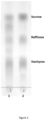
Figure 2 shows composition of soluble sugars and oligosaccharides. Lane 1: Carbohydrase-treated sample; Lane 2: Reference (soya bean meal). -
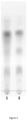
Figure 3 shows thin layer chromatography showing soluble sugars and oligosaccharides. Lane 1: carbohydrase-treated product; lane 2: reference. - At least 20 % by weight of the biomass comprises carbohydrates and proteinaceous matter originating from soya bean seeds, seed of rape seed, or mixtures thereof.
- In a first embodiment of the method of the invention at least 30 % by weight of the biomass, such as at least 40 %, at least 50 %, at least 60 %, at least 70 %, at least 80 %, or at least 90 % by weight, comprises proteinaceous matter originating from optionally defatted soya. The soya may also be dehulled.
- In a second embodiment of the method of the invention at least 30 % by weight of the biomass, such as at least 40 %, at least 50 %, at least 60 %, at least 70 %, at least 80 %, or at least 90 % by weight, comprises proteinaceous matter originating from optionally defatted rape seeds.
- In a third embodiment of the method of the invention the biomass comprises proteinaceous matter originating from defatted soya flakes in an amount of from 5 % to 95 % by weight in mixture with proteinaceous matter originating from optionally defatted rape seed in an amount of from 95 % to 5 % by weight optionally in further mixture with proteinaceous matter originating from fava beans, peas, sunflower seeds and/or cereals in amounts to make up a total amount of the proteinaceous matter of 100 % by weight.
- In any of the embodiments of the invention the biomass comprising proteinaceous matter may further comprise oligosaccharides, and/or polysaccharides, and/or further comprises oils and fats, e.g. from seeds of oil bearing plants.
- In any of the embodiments of the invention the solid transformation product of the substrate may be a product of the transformation of proteinaceous matter and/or carbohydrates originating from said biomass, such as a transformation product of pulses, such as soya, pea, lupine, sunflower, and/or cereals, such as wheat, or maize, or from seeds of oil bearing plants, e.g. rape seed.
- In any of the embodiments of the invention the substrate, or the substrate after mixing with an enzyme preparation or a combination of enzyme preparations and water, may not comprise any live baker's yeast, and/or it may not comprise any live yeast selected among Saccharomyces cerevisiae strains, including spent brewer's yeast and spent distiller's yeast and baker's yeast and spent yeast from wine production, or does not comprise any live yeast; and/or in particular it may not comprise baker's yeast when the enzyme is α-galactosidase.
- In any of the embodiments of the invention the solid transformation product of the substrate may be a product of the transformation of proteinaceous matter and/or carbohydrates originating from said biomass.
- In any of the embodiments of the invention the enzyme preparation or mixture of enzyme preparations comprises one or more enzymes selected from proteases, peptidases, phytases, carbohydrases, such as α-galactosidase, amylase, amyloglucosidase, cellulase, pectinase, and hemi-cellulases, e.g. xylanase, mannanase, or glucanase; and lipase, and oxidoreductase.
- In any of the embodiments of the invention the dry matter ratio of said substrate of biomass to said enzyme preparation, or said combination of enzyme preparations, may be from 2:1 to 100,000,000:1, such as 1,000:1, 10,000:1, 50,000:1, 100,000:1. 500,000:1, 1,000,000:1, 5,000,000:1, 10,000,000:1, 50,000,000:1, or 100,000,000:1. The skilled person will appreciate that the ratio can be selected in dependence of parameters, such as process conditions, the activity of the enzyme, and the desired product, and the skilled person will be able to optimise the ratio in accordance with these parameters.
- In any of the embodiments of the invention water may be added to the substrate in an amount to provide a ratio of wet bulk density to dry bulk density from about 0.60 to 1.45 in the substrate, such as from about 0.65 to about 1.40, e.g. 0.70, 0.75, 0.80, 0.85, 0.90, 0.95, 1.00, 1.10, 1.15, 1.20, 1.25, 1.30, or 1.35.
- In any of the embodiments of the invention at least 40 % by weight of the biomass, such as at least 50 %, at least 60 %, at least 70 %, at least 80 % or at least 90 % by weight, may comprise proteinaceous matter originating from optionally defatted rape seeds, whereas water may be added to the substrate in an amount to provide a ratio of wet bulk density to dry bulk density from about 0.65 to about 1.10, such as 0.75, 0.80, 0.85, 0.90, 0.95, 1.00, or 1.05.
- In any of the embodiments of the invention one or more processing aids selected from enzymes, plant components, and organic and inorganic processing agents may be added to the substrate before or during incubation.
- In any of the embodiments of the invention an α-galactosidase preparation may be added to the substrate of biomass and/or to the initial incubation mixture in an amount of from 0.05 to 50 α-galactosidase units pr. g. dry matter of substrate of biomass, such as from 0.5 to 25 α-galactosidase units pr. g. dry matter of substrate of biomass, e.g. from 1 to 10, from 2 to 8, from 3 to 6, or from 4 to 5 α-galactosidase units pr. g. dry matter of substrate of biomass.
- In any of the embodiments of the invention the filling degree of said incubation tank may be kept constant. This will result in a uniform flow.
- In any of the embodiments of the invention the incubation can be carried out under anaerobic conditions.
- In any of the embodiments of the invention the water content in the incubation mixture may be from 35 % to 70 % by weight, such as 40 %, 45 %, 50 %, 55 %, 60 %, or 65 % by weight.
- Thus, the water content in the initial mixture does not exceed 70 % by weight and it may vary from e.g. from 40 % to 65 %, from 45 % to 60 %, from 48 % to 52 %, or 50 % to 55 %, such as 49, 50, 51, 52, 53, or 54 %.
- In any of the embodiments of the invention the mixture may be incubated for 1-240 hours at 20-70 °C. The skilled person will know how to optimise the reaction time and the reaction temperature in view of the other reaction conditions, such as the selection of enzyme(s). Thus, the temperature may vary as e.g. 20-65 °C, 25-60 °C, 30-55 °C, 35-50° C, or 40-45 °C; and the reaction time may be selected as e.g. 1 to 180 hours, such as 2 to 150 hours, 3 to 120 hours, 5 to 90 hours, 8 to 72 hours, or 12 to 48 hours, at each and every one of the here mentioned temperature intervals.
- In any of the embodiments of the invention the solid transformation product of the substrate may by dried, optionally followed by milling.
- In any of the embodiments of the invention the substrate mixture may be incubated at a time and a temperature sufficient to inactivate the enzyme(s), any anti-nutritional factors, and any processing aids, and if used partly or totally, and if desired.
- In any of the embodiments of the invention the vertical, non-agitated incubation tank may be closed.
- In any of the embodiments of the invention the non-agitated incubation tank can be of a vertical, oblong cylindrical or polyhedral type. The advantage of using this type is that it is space-saving and as it is non-agitated the operating costs and maintenance costs for mixing equipment are avoided.
- In any of the embodiments of the invention the area in the upper part of said non-agitated incubation tank may be less than the area in the lower part i.e. the tank is of conical shape. The advantage of this is that the slip effect is increased so that biomasses with a reduced flowability can be used.
- In any of the embodiments of the invention the non-agitated incubation tank may have insulating matting or a thermal dimple jacket and means to control the temperature inside the incubation tank.
- The solid transformation product of the substrate of the invention may be dried to a water content of not more than 15 %, 13 %, 10 %, 6 %, 4 %, or 2 % by weight and optionally be in milled form.
- The solid product of the invention can be a product of the transformation of proteinaceous matter, oligosaccharides, and/or polysaccharides originating from said biomass. The solid transformation product may have reduced content of anti-nutritional factors, such as trypsin inhibitors, antigens, flatulence-producing oligosaccharides, e.g. stachyose and raffinose; phytic acid, and lectin.
- The solid product of the invention may comprise at least 40 % proteinaceous matter by weight of dry matter originating from soya.
- The solid product of the invention may comprise at least 40 % proteinaceous matter by weight of dry matter originating from rape seed.
- The solid product of the invention may comprise proteins in an amount of 30-65 % by weight on dry matter basis originating from plant parts of soya, rape seed, or sun flower, or mixtures thereof.
- The solid product of the invention may comprise a total amount of raffinose, stachyose, and verbascose of 3 % by weight or less, such as 2 % or less, 1 % or less, 0.5 % or less, or 0.4 % or less.
- Finally, the invention provides a food, feed, cosmetic or pharmaceutical product or a nutritional supplement containing from 1 % to 99 % by weight of a solid transformation product provided according to the invention.
- The soya used was defatted Soya Bean Meal (SBM).
- The maize used was whole maize, ground on a hammer mill through a 3.5 mm sieve.
- The wheat used was whole wheat, ground on a hammer mill through a 3.5 mm sieve.
- The sunflower used was defatted Sunflower Seed Meal (SSM).
- The rapeseed used was defatted Rape Seed Meal (RSM).
- The beans used were whole fava beans.
- The pea protein used was a pea protein concentrate.
- The amount(s) of biomass and water tabulated in the following was mixed for ten minutes followed by fifty minutes of equilibration in a closed container.
- After this the material was poured into a measuring cup of 500 mL and its mass determined by weighing the cup and subtracting the tare of the cup.
- The bulk density was calculated as mass/untapped volume in kg/m3.
- The dry bulk density used was the measured bulk density of the biomass without addition of water.
- The wet bulk density was the bulk density of the biomass with added water.
- The ratio was calculated as wet bulk density divided by the dry bulk density.
- The moisture content of the biomasses was determined by drying to constant weight.
- After addition of water the moisture in the mixture was determined by calculation.
- The results for 100 % soya and 80 % mixtures with soya are tabulated in the following:
Soya Maize Wheat Sunflower Rapeseed Fava bean Pea Water In g Moisture In % Bulk Density kg/m 3 Ratio 1000 g 0 10.9 665 - 1000 g 100 19.0 638 0.96 1000 g 250 28.7 500 0.75 1000 g 450 38.6 476 0.72 1000 g 750 49.1 470 0.71 1000 g 900 53.1 572 0.86 1000 g 1100 57.6 655 0.98 1000 g 1400 62.9 715 1.07 1000 g 1900 69.3 889 1.34 800 g 200 g 0 11.4 703 - 800 g 200 g 450 38.9 617 0.88 800 g 200 g 900 53.4 634 0.90 800 g 200 g 1900 69.4 1008 1.43 800 g 200 g 0 11.7 694 800 g 200 g 450 39.1 580 0.84 800 g 200 g 900 53.5 623 0.90 800 g 200 g 1900 69.5 960 1.38 800 g 200 g 0 10.4 683 - 800 g 200 g 450 38.2 554 0.81 800 g 200 g 900 52.9 598 0.88 800 g 200 g 1900 69.1 926 1.36 800 g 200 g 0 11.3 711 800 g 200 g 100 19.4 576 0.81 800 g 200 g 250 29.0 514 0.72 800 g 200 g 450 38.8 483 0.68 800 g 200 g 750 49.3 490 0.69 800 g 200 g 900 53.3 597 0.84 800 g 200 g 1100 57.8 528 0.74 800 g 200 g 1900 69.4 908 1.28 800 g 200 g 0 11.1 691 - 800 g 200 g 450 38.7 569 0.82 800 g 200 g 900 53.2 605 0.88 800 g 200 g 1900 69.3 941 1.36 800 g 200 g 0 11.2 703 800 g 200 g 450 38.7 488 0.69 800 g 200 g 900 53.2 728 1.04 800 g 200 g 1900 69.4 964 1.37 - The results for 60 % and 40 % of soya mixtures with maize, sunflower and rapeseed as well as 100 % rapeseed are tabulated in the following:
Soya Maize Sunflower Rapeseed Water Moisture Bulk Density Ratio In % kg/m3 600 g 400 g 0 g 11.8 703 - 600 g 400 g 250 g 29.5 651 0.93 600 g 400 g 450 g 39.2 626 0.89 600 g 400 g 750 g 49.6 631 0.90 600 g 400 g 900 g 53.6 666 0.95 600 g 400 g 1100 g 58.0 723 1.03 600 g 400 g 1400 g 63.3 796 1.13 600 g 400 g 0 g 10.0 644 - 600 g 400 g 100 g 18.2 530 0.82 600 g 400 g 250 g 28.0 435 0.68 600 g 400 g 450 g 37.9 433 0.67 600 g 400 g 750 g 48.6 436 0.68 600 g 400 g 900 g 52.6 480 0.75 600 g 400 g 1100 g 57.1 449 0.70 600 g 400 g 1400 g 62.5 616 0.96 600 g 400 g 0 g 11.7 643 - 600 g 400 g 100 g 19.7 560 0.82 600 g 400 g 250 g 29.4 502 0.78 600 g 400 g 450 g 39.1 503 0.78 600 g 400 g 750 g 49.5 492 0.77 600 g 400 g 900 g 53.5 516 0.80 600 g 400 g 1100 g 57.9 545 0.85 600 g 400 g 1400 g 63.2 655 1.02 400 g 600 g 0 g 12.3 718 - 400 g 600 g 250 g 29.9 636 0.89 400 g 600 g 450 g 39.5 638 0.89 400 g 600 g 750 g 49.9 666 0.93 400 g 600 g 900 g 53.8 721 1.00 400 g 600 g 1100 g 58.2 802 1.12 400 g 600 g 1400 g 63.5 988 1.38 400 g 600 g 0 g 9.5 654 - 400 g 600 g 100 g 17.7 535 0.82 400 g 600 g 250 g 27.6 422 0.65 400 g 600 g 450 g 37.6 487 0.74 400 g 600 g 750 g 48.3 491 0.75 400 g 600 g 900 g 52.4 512 0.78 400 g 600 g 1100 g 56.9 585 0.89 400 g 600 g 1400 g 62.3 612 0.94 400 g 600 g 0 g 12.1 658 - 400 g 600 g 100 g 20.1 556 0.84 400 g 600 g 250 g 29.7 471 0.72 400 g 600 g 450 g 39.4 458 0.70 400 g 600 g 750 g 49.8 486 0.74 400 g 600 g 900 g 53.7 486 0.74 400 g 600 g 1100 g 58.1 531 0.81 400 g 600 g 1400 g 63.4 605 0.92 0 g 1000 g 0 g 12.9 616 - 0 g 1000 g 100 g 20.8 484 0.79 0 g 1000 g 250 g 30.3 438 0.71 0 g 1000 g 450 g 39.9 457 0.74 0 g 1000 g 750 g 50.2 507 0.82 0 g 1000 g 900 g 54.1 535 0.87 0 g 1000 g 1100 g 58.5 585 0.95 0 g 1000 g 1400 g 63.7 688 1.12 - Biomasses: Soya Bean Meal (SBM), Soya Flakes, Rape Seed Meal (RSM) and Sunflower Seed Meal (SSM).
Water: Normal tap water -
- Protease: papain from Enzybel; Ronozyme Pro Act from DSM; Acid protease from Suntaq International Ltd;
- α-galactosidase: from Bio-Cat (12,500 U/g);
- Phytase: Natuphos from BASF
- Other carbohydrases: Viscozyme L from Novozymes, Ronozyme VP from Novozymes
- Bio-conversion with protease on SBM and RSM (50:50 ratio)
- The pilot incubator used was an insulated, cylindrical oblong stainless-steel tube with an effective operating volume of 2 m3 and in- and outlets. Furthermore, the incubator was equipped with a temperature probe at the inlet as well as at the outlet.
- In a pilot scale vertical reactor with a total volume of 2.0 m2, a continuous inlet amount of 250 kg/h soya bean meal (SBM), 250 kg/h rapeseed meal (RSM), 967 kg/h water at 25°C, 0.5 kg/h protease (papain from Enzybel), and 0.5 kg/h protease (Ronozyme ProAct from DSM) was applied. The ratio wet bulk density/dry bulk density of the incubation mixture was 1.10.
- The outlet amount was adjusted to keep a constant level of filling inside the reactor, and the level of filling was set to yield a total processing time of 1.0 hour. Immediately after leaving the vertical reactor, the product was heat treated at 99°C for 15 min followed by air drying.
- The enzyme-treated product and its untreated reference, a 50:50 mixture of SBM and RSM, were analysed for soluble peptides by SDS-PAGE using the following method:
5.0 g of product was suspended in water, pH adjusted to 8.5, and adjusted with water to a total weight of 50.0 g. The suspension was heated to 90°C for 15 min followed by centrifugation at 3000 RCF for 15 min. The supernatant was mixed 1+5 with Laemmli sample buffer + 50 mM DTT (Laemmli, 1970) and heated to 90°C for 15 min. 15 µL of each sample was loaded onto a TGX Any kD gel and run following the manufacturer's instructions. The gel was stained with colloid coomassie (Kang et al., 2002). -
- Kang D, Gho YS, Suh M, and Kang C, Bull. Korean Chem. Soc., 2002, Vol. 23, No. 11, pp. 1511-1512.
- Laemmli UK, Nature, 1970, Vol. 227, pp. 680-685.
- Results of the SDS-PAGE are shown in
figure 1 ,lanes - It is clear from the SDS-PAGE that most of the distinct protein bands in the untreated SBM/ RSM mixture (lane 3) have been hydrolysed to peptides by the protease treatment in the vertical reactor used according to the invention (lane 2).
- The pilot incubator used was an insulated, cylindrical oblong stainless-steel tube with an effective operating volume of 2 m3 and in- and outlets. Furthermore, the incubator was equipped with a temperature probe at the inlet as well as at the outlet.
- In a pilot scale vertical reactor with a total volume of 2.0 m2, a continuous inlet amount of 15.6 kg/h soya bean meal (SBM), 15.6 kg/h rapeseed meal (RSM), 24 kg/h water at 40°C, 0.03 kg/h protease (Acid protease from Suntaq International Ltd.), and 0.88 kg/h H2SO4 was applied. The ratio wet bulk density/dry bulk density of the incubation mixture was 0.75.
- The outlet amount was adjusted to keep a constant level of filling inside the reactor, and the level of filling was set to yield a total processing time of 16 hour. Immediately after leaving the vertical reactor, the product was heat treated at 99°C for 15 min followed by air drying.
- The enzyme-treated product and its untreated reference, a 50:50 mixture of SBM and RSM, were analysed for soluble peptides by SDS-PAGE using the following method:
5.0 g of product was suspended in water, pH adjusted to 8.5, and adjusted with water to a total weight of 50.0 g. The suspension was heated to 90°C for 15 min followed by centrifugation at 3000 RCF for 15 min. The supernatant was mixed 1+5 with Laemmli sample buffer + 50 mM DTT (Laemmli, 1970) and heated to 90°C for 15 min. 15 µL of each sample was loaded onto a TGX Any kD gel and run following the manufacturer's instructions. The gel was stained with colloid coomassie (Kang et al., 2002). - Kang D, Gho YS, Suh M, and Kang C, Bull. Korean Chem. Soc., 2002, Vol. 23, No. 11, pp. 1511-1512.
- Laemmli UK, Nature, 1970, Vol. 227, pp. 680-685.
- Results of the SDS-PAGE are shown in
figure 1 ,lanes - It is clear from the SDS-PAGE that almost all of the distinct protein bands in the untreated SBM / RSM mixture (lane 3) have been hydrolysed to peptides by the 16 hour protease treatment in the vertical reactor (lane 4).
- This biomass comprises polysaccharides and proteins from pulses
- The incubator used was an insulated, cylindrical oblong stainless-steel tube with an internal diameter of 1.55 m and a total height of 4.75 m. In the upper part, there was an array of three rotating paddle type level monitors to regulate the inlet and distribution system to a level at 4.25 m. This gives the incubator an effective operating volume of 8 m3. Furthermore, the incubator was equipped with a temperature probe at the inlet as well as at the outlet.
- A mixture of dehulled, defatted and desolventised soya flakes, sulfuric acid, α -galactosidase, and water at 60°C was prepared continuously in amounts to reach a dry matter content of 50 % by weight in the mixture, a pH of 4.7, and an alpha-galactosidase concentration of 1.1 kg/ton soya. The ratio wet bulk density / dry bulk density of the incubation mixture was 0.73.
- The incubator was filled with incubation mixture at a suitable rate per hour. After 16 hours the incubator was filled to operating level and the outlet means were set at a rate to keep the level of filling constant.
- An aliquot volume of approx. 30 liters was taken after 18 hours of the test run and incubated at 100 °C with live steam for 25 min.
- Subsequently, the wet solid transformation product of the biomass was flash dried and milled.
- The overall incubation parameters were the following:
- Incubation time - 16 hours
- Temperature inlet - 45 °C
- Temperature outlet - 45 °C
- The solid transformation product of the biomass had a total crude protein (N x 6.25) content of 52.6 % and a water content of 5.6 % by weight, which corresponds to a protein of dry matter of 55.5 %. Furthermore, stachyose and raffinose in the dried, solid transformation product were significantly reduced as shown in table 1:
Table 1 Soya flakes Product Protein of dry matter 56 % +/-1% 55.5 % Stachyose + raffinose 5-6 % Absent - The solid transformation product is highly nutritious and palatable and thus suitable as an ingredient in a number of food and feed products or nutritional supplements. Furthermore, it can be used as an excipient in pharma products and in cosmetics e.g. bath formulations.
- This biomass comprises polysaccharides and proteins from pulses
- The incubator used was an insulated, cylindrical oblong stainless-steel tube with an internal diameter of 1.55 m and a total height of 4.75 m. In the upper part, there was an array of three rotating paddle type level monitors to regulate the inlet and distribution system to a level at 4.25 m. This gives the incubator an effective operating volume of 8 m3. Furthermore, the incubator was equipped with a temperature probe at the inlet as well as at the outlet.
- A mixture of dehulled, defatted and desolventised soya flakes, thermostable phytase, and water at 95 °C was prepared continuously in amounts to reach a dry matter content of 46 % by weight in the mixture, and a phytase concentration of 250 g/ton soya.
- The ratio wet bulk density/dry bulk density of the incubation mixture was 0.87.
- The incubator was filled with incubation mixture at the rate of 750 liters per hour. After 12 hours the incubator was filled to operating level and the outlet means were set at a rate to keep the level of filling constant.
- An aliquot volume of approx. 30 liters was taken after 14 hours of the test run and incubated at 100 °C with live steam for 25 min.
- Subsequently, the wet solid transformation product of the biomass was flash dried and milled.
- The overall incubation parameters were the following:
- Incubation time - 12 hours
- Temperature inlet - 67 °C
- Temperature outlet - 66 °C
- The solid transformation product of the biomass had a total crude protein (N x 6.25) content of 51.0 % and a water content of 8.0 % by weight, which corresponds to a protein of dry matter of 55.4 %. Furthermore, phytic acid bound phosphor (an anti-nutrient) in the dried, solid transformation product were significantly reduced as shown in table 2:
Table 2 Soya flakes Product Protein of dry matter 55 % +/- 1 % 55.4 % Phytic acid bound phosphor 0.42 % 0.08 % - The solid transformation product is highly nutritious and palatable and thus suitable as an ingredient in a number of food and feed products or nutritional supplements. Furthermore, it can be used as an excipient in pharma products and in cosmetics e.g. bath formulations.
- This biomass comprises polysaccharides and proteins from pulses
- The incubator was a production scale vertical reactor with a total volume of 96 m2.
- A continuous inlet amount of 1800 kg/h soya bean meal, 2800 kg/h water at 60°C, 6.5 kg/h Viscozyme L from Novozymes, and 2.8 kg/h Depol 679 from Biocatalysts was applied. The ratio wet bulk density/dry bulk density of the incubation mixture was 1.1.
- The outlet amount was adjusted to keep a constant level of filling inside the reactor, and the level of filling was set to yield a total processing time of 16 hours. Immediately after leaving the vertical reactor, the product was heat treated at 99°C for 15 min followed by air drying.
- Composition of soluble sugars and oligosaccharides was analysed by thin layer chromatography by extracting a watery suspension slurry of 10% DM for 30 min followed by centrifugation for 10 min at 3,000 x g and applying the supernatant onto TLC silica gel 60 plates (Merck). The different components were quantified by comparison to standards of known concentration (Chaplan and Kennedy, 1986).
- Chaplan MF and Kennedy JF. Carbohydrate analysis - practical approach; I RL Press, Oxford, 1986
- Results of the thin layer chromatography are shown in
figure 2 . It is evident that the carbohydrase treatment (lane 1) liberates some soluble carbohydrates, visualised by the additional spot between sucrose and raffinose on the thin layer chromatography as well as a general smear throughout the lane compared to the reference (lane 2). - This biomass comprises polysaccharides and proteins from pulses.
- The incubator was a laboratory scale plastic container.
- An amount of 60 g soya bean meal, 45 g rapeseed meal, 45 g ground wheat, 180 g water, 3.0 g H2SO4, 0.525 g Viscozyme L from Novozymes, 0.225 g Depol 679 from Biocatalysts, 0.30 g BAN 480 L from Novozymes, and 0.30 g AMG 300 L from Novozymes was mixed and left to incubate at 37 °C for 16 hours. The ratio wet bulk density/dry bulk density of the incubation mixture was 0.90.
- Following incubation, the product was heat treated at 100 °C for 15 min followed by air drying and milling.
- The enzyme-treated product and its untreated reference, 60 g soya bean meal + 45 g rapeseed meal + 45 g ground wheat, milled, were analysed for soluble/insoluble non-starch polysaccharides (NSP) using the method of Englyst et al. 1994. Content of carbohydrate content in watery extract was analysed by the phenol sulphuric acid method and composition of soluble sugars and oligosaccharides was analysed by thin layer chromatography by extracting a watery suspension slurry of 10% DM for 30 min followed by centrifugation for 10 min at 3,000 x g and applying the supernatant onto TLC silica gel 60 plates (Merck). The different components were quantified by comparison to standards of known concentration (Chaplan and Kennedy, 1986).
-
- Chaplan MF and Kennedy JF. Carbohydrate analysis - practical approach; I RL Press, Oxford, 1986
- Englyst HN, Quigley ME, and Hudson GJ; Analyst, 1994, Vol 119, pp. 1497-1509.
- Results of the soluble and insoluble NSP as well as the contents of soluble carbohydrates are shown in table 3. Results of the thin layer chromatography are shown in
figure 3 . - It is evident that the carbohydrase treatment liberates some soluble carbohydrates, visualised by a smear on the thin layer chromatography, and that the carbohydrase treatment changes the amounts of soluble carbohydrates and NSP present in the product compared to the reference.
Table 3: Contents of soluble/insoluble NSP as well as contents of soluble carbohydrates of enzyme-treated product and its untreated reference, respectively. Product Name Fraction Total g/100g SD Example 7, product Soluble NSP 4.0 0.1 Insoluble NSP 8.5 0.1 Total NSP 12.5 0.3 Soluble carbohydrates 28.7 4.8 Example 7, reference Soluble NSP 2.8 0.2 Insoluble NSP 12.0 0.2 Total NSP 14.8 0.5 Soluble carbohydrates 15.0 4.2 - This biomass comprises polysaccharides and proteins from pulses
- The incubator was a pilot scale vertical reactor with a total volume of 2.0 m2.
- A continuous inlet amount of 18.8 kg/h soya bean meal, 12.5 kg/h sunflower meal, 30 kg/h water at 40°C, 0.03 kg/h carbohydrase (Ronozyme VP from Novozymes), and 0.88 kg/h H2SO4 was applied. The ratio wet bulk density/dry bulk density of the incubation mixture was 0.80.
- The outlet amount was adjusted to keep a constant level of filling inside the reactor, and the level of filling was set to yield a total processing time of 16 hour. Immediately after leaving the vertical reactor, the product was heat treated at 99°C for 15 min followed by air drying.
- The enzyme-treated product and its untreated reference, 90 g soya bean meal + 60 g sunflower meal, were analysed for soluble/insoluble non-starch polysaccharides (NSP) using the method of Englyst et al. 1994.
- References: Englyst HN, Quigley ME, and Hudson GJ; Analyst, 1994, Vol 119, pp. 1497-1509.
- The results of the NSP analysis are shown in table 4. It is evident that the processing changes the amounts of the NSP fractions.
Table 4: Contents of soluble/insoluble NSP as well as contents of soluble carbohydrates of enzyme-treated product and its untreated reference, respectively. Product Name Fraction Total g/100g SD Example 8, product Soluble NSP 3.8 1.4 Insoluble NSP 12.6 1.4 Total NSP 16.3 0.2 Example 8, reference Soluble NSP 3.4 1.0 Insoluble NSP 14.8 1.0 Total NSP 18.2 0.1 - The reactor used was a vertical cylinder with an effective height of 7.3 m and a diameter of 4.3 m.
- In the top of the vertical reactor, the feed mixture falls on position near the centre of the reactor. For even distribution, a scraper blade or level arm distributes the inlet feed mixture over the perimeter of reactor.
- In the bottom of the reactor, the product was extracted by means to achieve a uniform residence time for any particle spread on the top of the reactor.
- The inlet and outlet means of the reactor were adjusted to achieve an expected residence time of 12 hours. For proving the uniform distribution time, an inert tracer substance was added to the feed mixture. The feed mixture used in the experiment had a natural content of iron of around 143 mg/kg dry matter (= off-set concentration); therefore, iron sulphate (FeSO4) was used as a tracer in a concentration of 1167 mg FeSO4/kg feed mixture dry matter equal to a total iron content of 572 mg Fe/kg total dry matter. At time 0 hours, FeSO4 was added to the feed mixture dosed to the reactor for a period of 60 minutes. Samples were drawn every 20 minutes, dried, and analysed for content of iron, and it was found that the FeSO4 enriched product leaves the reactor 12-13 hours after dosing FeSO4 to the inlet feed mixture, and a maximum concentration of 355 mg/kg Fe was found at 12.5 hours after start.
Claims (17)
- A method for producing a solid transformation product of a substrate, wherein the solid transformation product is a product of the transformation of proteinaceous matter and/or carbohydrates originating from a biomass, comprising the following steps:• preparing a substrate of biomass comprising carbohydrates and proteinaceous matter that originate from soya bean seed, seed of rape seed, or mixtures thereof, wherein at least 20 % by weight of said biomass comprises carbohydrates and proteinaceous matter originating from soya bean seeds, seed of rape seed, or mixtures thereof, optionally in further mixture with carbohydrates and proteinaceous matter originating from seed of fava beans, seed of peas, seed of sunflower, seed of lupine, and/or seed of cereals;• mixing said substrate with an enzyme preparation or a combination of enzyme preparations and adding water in an amount which provides an initial incubation mixture having a water content from 30 % to 70 % by weight, and a ratio of wet bulk density to dry bulk density from 0.60 to 1.45, wherein the dry bulk density is the measured bulk density (weight/volume) of the biomass without the added water, and the wet bulk density is the measured bulk density (weight/volume) of the biomass with the added amount of water;• incubating said initial incubation mixture for 0.15-240 hours at a temperature of 20-70 °C; and recovering solid transformation product from the incubated mixture;further comprising that the incubating step is performed as a uniform, continuous plug-flow process in a vertical, non-agitated incubation tank with inlet means for said mixture and additives and outlet means for said solid transformation product, wherein transport of the biomass within the vertical, non-agitated incubation tank is mediated by gravitational force.
- Method according to claim 1, further comprising pre-treatment of said substrate of biomass before it is mixed with said enzyme preparation or said combination of enzyme preparations, such as chemical or physical pre-treatment, e.g. by means of disintegration, milling, flaking, heat treatment, pressure treatment, ultrasonic treatment, hydrothermal treatment, or acid or alkaline treatment.
- Method according to any of the claims 1 to 2, wherein at least 30 % by weight of said biomass, such as at least 40 %, at least 50 %, at least 60 %, at least 70 %, at least 80 %, or at least 90 % by weight of said biomass, comprises carbohydrates and proteinaceous matter originating from optionally defatted and/or optionally dehulled soya bean seeds, optionally defatted rape seeds, or mixtures thereof.
- Method according to any of the preceding claims wherein said biomass comprises oligosaccharides, and/or polysaccharides, and optionally further comprises oils and fats, e.g. from seeds of oil bearing plants.
- Method according to any of the preceding claims wherein said substrate of biomass, or said initial incubation mixture, does not comprise any live yeast, such as any live yeast selected among Saccharomyces cerevisiae strains, including spent brewer's yeast and spent distiller's yeast and baker's yeast and spent yeast from wine production.
- Method according to any of the preceding claims wherein said solid transformation product of the substrate of biomass is a product of the transformation of proteinaceous matter, or of the transformation of carbohydrates, or of the transformation of proteinaceous matter and carbohydrates originating from pulses, and/or cereals, and/or seeds of oil bearing plants.
- Method according to any of the preceding claims, wherein said solid transformation product of the substrate of biomass is a product of the transformation of proteinaceous matter, or of the transformation of carbohydrates, or of the transformation of proteinaceous matter and carbohydrates originating from seeds of soya, pea, lupine, sunflower, wheat, maize, or rape seed.
- Method according to any of the preceding claims, wherein said enzyme preparation, or combination of enzyme preparations, comprises one or more enzymes selected from proteases, peptidases, phytases, carbohydrases, lipase, and oxidoreductase, such as one or more carbohydrases selected from α-galactosidase, amylase, amyloglucosidase, pectinase, cellulase, and hemi-cellulases, e.g. xylanase, mannanase, or glucanase.
- Method according to any of the preceeding claims, wherein the dry matter ratio of said substrate of biomass to said enzyme preparation, or said combination of enzyme preparations, is from 2:1 to 100,000,000:1, such as 1,000:1, 10,000:1, 50,000:1, 100,000:1. 500,000:1, 1,000,000:1, 5,000,000:1, 10,000,000:1, 50,000,000:1, or 100,000,000:1.
- Method according to any of the preceeding claims, wherein said initial incubation mixture is incubated for 1 to 180 hours, such as 2 to 150 hours, 3 to 120 hours, 5 to 90 hours, 8 to 72 hours, or 12 to 48 hours.
- Method according to any of the preceding claims, wherein water is added to said substrate of biomass in an amount which provides an initial incubation mixture having a ratio of wet bulk density to dry bulk density from 0.65 to 1.40, such as 0.70, 0.75, 0.80, 0.85, 0.90, 0.95, 1.00, 1.10, 1.15, 1.20, 1.25, 1.30, or 1.35.
- Method according to any of the preceding claims, wherein the water content in said initial incubation mixture is from 35 % to 70 % by weight, such as 40%, 45%, 50 %, 55 %, 60 %, or 65 %.
- Method according to any of the preceding claims, wherein one or more processing aids selected from plant components and organic and inorganic processing agents, such as α-galactosidase, are added to said substrate of biomass and/or to said initial incubation mixture.
- Method according to any of the preceding claims, wherein an α-galactosidase preparation is added to the substrate of biomass and/or to the initial incubation mixture in an amount of from 0.05 to 50 α-galactosidase units pr. g. dry matter of substrate of biomass, such as from 0.5 to 25 α-galactosidase units pr. g. dry matter of substrate of biomass, e.g. from 1 to 10, from 2 to 8, from 3 to 6, or from 4 to 5 α-galactosidase units pr. g. dry matter of substrate of biomass.
- Method according to any of the preceding claims, further comprising that the vertical, non-agitated incubation tank is closed.
- Method according to any of the preceding claims, wherein said non-agitated incubation tank is of a vertical, oblong cylindrical or polyhedral type, optionally wherein the area in the upper part of said non-agitated incubation tank is less than the area in the lower part i.e. the tank is of conical shape.
- Method according to any of the preceding claims, wherein said non-agitated incubation tank has insulating matting or a thermal dimple jacket and means to control the temperature in the tank, optionally wherein the filling degree of said incubation tank is kept constant.
Applications Claiming Priority (2)
| Application Number | Priority Date | Filing Date | Title |
|---|---|---|---|
| EP17210107 | 2017-12-22 | ||
| PCT/EP2018/086306 WO2019122192A1 (en) | 2017-12-22 | 2018-12-20 | Vertical plug-flow process for bio-conversion of biomass involving enzymes |
Publications (2)
| Publication Number | Publication Date |
|---|---|
| EP3727030A1 EP3727030A1 (en) | 2020-10-28 |
| EP3727030B1 true EP3727030B1 (en) | 2025-04-16 |
Family
ID=60782066
Family Applications (1)
| Application Number | Title | Priority Date | Filing Date |
|---|---|---|---|
| EP18822092.5A Active EP3727030B1 (en) | 2017-12-22 | 2018-12-20 | Vertical plug-flow process for bio-conversion of biomass involving enzymes |
Country Status (10)
| Country | Link |
|---|---|
| US (1) | US20230145337A1 (en) |
| EP (1) | EP3727030B1 (en) |
| KR (1) | KR20200101382A (en) |
| CN (1) | CN111479472A (en) |
| AR (1) | AR113383A1 (en) |
| CA (1) | CA3083424A1 (en) |
| DK (1) | DK3727030T3 (en) |
| ES (1) | ES3031000T3 (en) |
| PL (1) | PL3727030T3 (en) |
| WO (1) | WO2019122192A1 (en) |
Families Citing this family (1)
| Publication number | Priority date | Publication date | Assignee | Title |
|---|---|---|---|---|
| EP4169391A1 (en) * | 2021-10-25 | 2023-04-26 | The Green Dairy Sweden Holding AB | Method of preparing a crop-based composition |
Family Cites Families (23)
| Publication number | Priority date | Publication date | Assignee | Title |
|---|---|---|---|---|
| FI972521A7 (en) * | 1997-06-13 | 1998-12-14 | Cultor Oy | Method for preparing a nutritional product and product thus prepared |
| US20020090418A1 (en) * | 1999-01-13 | 2002-07-11 | Prevost John E. | Soy protein products and methods for producing soy protein products |
| SE0000304D0 (en) * | 2000-01-31 | 2000-01-31 | Skaane Moellan Ab | Heat treatment of cereals |
| DE60102677T2 (en) * | 2001-05-31 | 2005-03-24 | Hylsa S.A. De C.V., San Nicolas De Los Garza | Vessel for enabling uniform gravity drainage of bulk material and direct reduction reactor containing the same |
| US7452425B1 (en) * | 2003-03-25 | 2008-11-18 | Langhauser Associates, Inc. | Corn refining process |
| PL1828373T3 (en) * | 2004-11-29 | 2012-01-31 | Inbicon As | Enzymatic hydrolysis of biomasses having a high dry matter (dm) content |
| DE102008030495B4 (en) * | 2008-06-26 | 2011-11-10 | Andreas Freudenberg | Device for transporting substrate |
| US8957254B2 (en) * | 2009-07-06 | 2015-02-17 | Solvay Sa | Process for chemical synthesis from an alkenone made from a halogenated precursor |
| CA2787947A1 (en) * | 2010-02-09 | 2011-08-18 | Syngenta Participations Ag | Systems and processes for producing biofuels from biomass |
| US8709770B2 (en) * | 2010-08-31 | 2014-04-29 | Iogen Energy Corporation | Process for improving the hydrolysis of cellulose in high consistency systems using one or more unmixed and mixed hydrolysis reactors |
| US20130210085A1 (en) * | 2012-01-18 | 2013-08-15 | Edeniq | Methods and Systems for Pretreatment of Biomass Solids |
| WO2013122917A1 (en) * | 2012-02-13 | 2013-08-22 | Bp Corporation North America, Inc. | Methods for detoxifying a lignocellulosic hydrolysate |
| PL2849581T3 (en) * | 2012-05-16 | 2017-01-31 | Hamlet Protein A/S | Method for the manufacture of bio-products with a modified sugar profile |
| BR112015008684A2 (en) * | 2012-10-22 | 2017-07-04 | Abengoa Bioenergy New Tech Llc | methods and apparatus related to the liquefaction of biomass pulp |
| CN104161168A (en) * | 2013-09-11 | 2014-11-26 | 上海新农饲料股份有限公司 | Semi-wet solid mild enzymolysis method for producing vegetable protein small peptides |
| CN103875982B (en) * | 2014-04-01 | 2016-03-30 | 安徽五粮泰生物工程股份有限公司 | A kind of preparation method of anti-constipation fermented feed |
| WO2016094877A2 (en) * | 2014-12-12 | 2016-06-16 | Abengoa Bioenergy New Technologies, Llc | High solids enzymatic hydrolysis and fermentation of pretreated biomass |
| CA2876672C (en) * | 2014-12-23 | 2023-03-28 | Iogen Energy Corporation | Plug flow hydrolysis reactor and process of using same |
| CN104904991A (en) * | 2015-06-30 | 2015-09-16 | 河南双成生物科技有限公司 | Method for producing protein feed raw materials by carrying out enzymolysis and fermentation on soybean meal |
| KR101699391B1 (en) * | 2015-09-25 | 2017-01-24 | 에스케이이노베이션 주식회사 | Segregation type Apparatus for Biomass Saccharification and Method of Saccharifying Biomass Using The Same |
| CN107047928A (en) * | 2016-09-21 | 2017-08-18 | 湖北华扬科技发展有限公司 | A kind of method of the enzyme-linked probiotics of rapeseed meal and solid state fermentation rapeseed meal |
| CN106552560B (en) * | 2016-10-28 | 2019-10-22 | 江南大学 | An airlift reactor with a spiral porous sieve plate |
| PL3727029T3 (en) * | 2017-12-22 | 2025-06-09 | Hamlet Protein A/S | Vertical plug-flow process for bio-conversion employing microorganisms |
-
2018
- 2018-12-20 EP EP18822092.5A patent/EP3727030B1/en active Active
- 2018-12-20 US US16/955,315 patent/US20230145337A1/en not_active Abandoned
- 2018-12-20 CN CN201880080970.3A patent/CN111479472A/en active Pending
- 2018-12-20 PL PL18822092.5T patent/PL3727030T3/en unknown
- 2018-12-20 DK DK18822092.5T patent/DK3727030T3/en active
- 2018-12-20 WO PCT/EP2018/086306 patent/WO2019122192A1/en not_active Ceased
- 2018-12-20 ES ES18822092T patent/ES3031000T3/en active Active
- 2018-12-20 CA CA3083424A patent/CA3083424A1/en active Pending
- 2018-12-20 KR KR1020207019843A patent/KR20200101382A/en not_active Ceased
- 2018-12-21 AR ARP180103838A patent/AR113383A1/en active IP Right Grant
Also Published As
| Publication number | Publication date |
|---|---|
| PL3727030T3 (en) | 2025-08-04 |
| WO2019122192A1 (en) | 2019-06-27 |
| DK3727030T3 (en) | 2025-06-10 |
| AR113383A1 (en) | 2020-04-22 |
| BR112020011037A2 (en) | 2020-11-17 |
| RU2020123072A (en) | 2022-01-24 |
| CA3083424A1 (en) | 2019-06-27 |
| EP3727030A1 (en) | 2020-10-28 |
| KR20200101382A (en) | 2020-08-27 |
| CN111479472A (en) | 2020-07-31 |
| US20230145337A1 (en) | 2023-05-11 |
| ES3031000T3 (en) | 2025-07-03 |
Similar Documents
| Publication | Publication Date | Title |
|---|---|---|
| US11021726B2 (en) | Method for the manufacture of bio-products with a modified sugar profile | |
| US20230145337A1 (en) | Vertical plug-flow process for bio-conversion of biomass involving enzymes | |
| EP3481960B1 (en) | Vertical plug-flow process for simultaneous production of ethanol and a fermented, solid transformation product of the substrate | |
| ES3019569T3 (en) | Vertical plug-flow process for bio-conversion employing microorganisms | |
| RU2817795C2 (en) | Vertical flow process for bioconversion of biomass comprising enzymes | |
| BR112020011037B1 (en) | VERTICAL PISTON FLOW METHOD FOR BIOMASS BIOCONVERSION INVOLVING ENZYMES | |
| CA3028850C (en) | Vertical plug-flow process for simultaneous production of ethanol and a fermented, solid transformation product of the substrate | |
| BR112020012135B1 (en) | METHOD FOR BIOCONVERSION THROUGH VERTICAL PISTON FLOW PROCESS USING MICRO-ORGANISMS | |
| BR112018076362B1 (en) | VERTICAL PISTON FLOW METHOD FOR SIMULTANEOUS PRODUCTION OF ETHANOL AND A SOLID, FERMENTED TRANSFORMATION PRODUCT OF THE SUBSTRATE | |
| HK1207536B (en) | Method for the manufacture of bio-products with a modified sugar profile |
Legal Events
| Date | Code | Title | Description |
|---|---|---|---|
| STAA | Information on the status of an ep patent application or granted ep patent |
Free format text: STATUS: UNKNOWN |
|
| STAA | Information on the status of an ep patent application or granted ep patent |
Free format text: STATUS: THE INTERNATIONAL PUBLICATION HAS BEEN MADE |
|
| PUAI | Public reference made under article 153(3) epc to a published international application that has entered the european phase |
Free format text: ORIGINAL CODE: 0009012 |
|
| STAA | Information on the status of an ep patent application or granted ep patent |
Free format text: STATUS: REQUEST FOR EXAMINATION WAS MADE |
|
| 17P | Request for examination filed |
Effective date: 20200623 |
|
| AK | Designated contracting states |
Kind code of ref document: A1 Designated state(s): AL AT BE BG CH CY CZ DE DK EE ES FI FR GB GR HR HU IE IS IT LI LT LU LV MC MK MT NL NO PL PT RO RS SE SI SK SM TR |
|
| AX | Request for extension of the european patent |
Extension state: BA ME |
|
| DAV | Request for validation of the european patent (deleted) | ||
| DAX | Request for extension of the european patent (deleted) | ||
| P01 | Opt-out of the competence of the unified patent court (upc) registered |
Effective date: 20230525 |
|
| STAA | Information on the status of an ep patent application or granted ep patent |
Free format text: STATUS: EXAMINATION IS IN PROGRESS |
|
| 17Q | First examination report despatched |
Effective date: 20240517 |
|
| GRAP | Despatch of communication of intention to grant a patent |
Free format text: ORIGINAL CODE: EPIDOSNIGR1 |
|
| STAA | Information on the status of an ep patent application or granted ep patent |
Free format text: STATUS: GRANT OF PATENT IS INTENDED |
|
| INTG | Intention to grant announced |
Effective date: 20241212 |
|
| GRAS | Grant fee paid |
Free format text: ORIGINAL CODE: EPIDOSNIGR3 |
|
| GRAA | (expected) grant |
Free format text: ORIGINAL CODE: 0009210 |
|
| STAA | Information on the status of an ep patent application or granted ep patent |
Free format text: STATUS: THE PATENT HAS BEEN GRANTED |
|
| AK | Designated contracting states |
Kind code of ref document: B1 Designated state(s): AL AT BE BG CH CY CZ DE DK EE ES FI FR GB GR HR HU IE IS IT LI LT LU LV MC MK MT NL NO PL PT RO RS SE SI SK SM TR |
|
| REG | Reference to a national code |
Ref country code: GB Ref legal event code: FG4D |
|
| REG | Reference to a national code |
Ref country code: CH Ref legal event code: EP Ref country code: DE Ref legal event code: R096 Ref document number: 602018081165 Country of ref document: DE |
|
| REG | Reference to a national code |
Ref country code: IE Ref legal event code: FG4D |
|
| REG | Reference to a national code |
Ref country code: DK Ref legal event code: T3 Effective date: 20250606 |
|
| REG | Reference to a national code |
Ref country code: NL Ref legal event code: FP |
|
| REG | Reference to a national code |
Ref country code: ES Ref legal event code: FG2A Ref document number: 3031000 Country of ref document: ES Kind code of ref document: T3 Effective date: 20250703 |
|
| REG | Reference to a national code |
Ref country code: AT Ref legal event code: MK05 Ref document number: 1784870 Country of ref document: AT Kind code of ref document: T Effective date: 20250416 |
|
| PG25 | Lapsed in a contracting state [announced via postgrant information from national office to epo] |
Ref country code: PT Free format text: LAPSE BECAUSE OF FAILURE TO SUBMIT A TRANSLATION OF THE DESCRIPTION OR TO PAY THE FEE WITHIN THE PRESCRIBED TIME-LIMIT Effective date: 20250818 Ref country code: FI Free format text: LAPSE BECAUSE OF FAILURE TO SUBMIT A TRANSLATION OF THE DESCRIPTION OR TO PAY THE FEE WITHIN THE PRESCRIBED TIME-LIMIT Effective date: 20250416 |
|
| REG | Reference to a national code |
Ref country code: LT Ref legal event code: MG9D |
|
| PG25 | Lapsed in a contracting state [announced via postgrant information from national office to epo] |
Ref country code: GR Free format text: LAPSE BECAUSE OF FAILURE TO SUBMIT A TRANSLATION OF THE DESCRIPTION OR TO PAY THE FEE WITHIN THE PRESCRIBED TIME-LIMIT Effective date: 20250717 Ref country code: NO Free format text: LAPSE BECAUSE OF FAILURE TO SUBMIT A TRANSLATION OF THE DESCRIPTION OR TO PAY THE FEE WITHIN THE PRESCRIBED TIME-LIMIT Effective date: 20250716 |
|
| PG25 | Lapsed in a contracting state [announced via postgrant information from national office to epo] |
Ref country code: BG Free format text: LAPSE BECAUSE OF FAILURE TO SUBMIT A TRANSLATION OF THE DESCRIPTION OR TO PAY THE FEE WITHIN THE PRESCRIBED TIME-LIMIT Effective date: 20250416 |
|
| PG25 | Lapsed in a contracting state [announced via postgrant information from national office to epo] |
Ref country code: HR Free format text: LAPSE BECAUSE OF FAILURE TO SUBMIT A TRANSLATION OF THE DESCRIPTION OR TO PAY THE FEE WITHIN THE PRESCRIBED TIME-LIMIT Effective date: 20250416 |
|
| PG25 | Lapsed in a contracting state [announced via postgrant information from national office to epo] |
Ref country code: AT Free format text: LAPSE BECAUSE OF FAILURE TO SUBMIT A TRANSLATION OF THE DESCRIPTION OR TO PAY THE FEE WITHIN THE PRESCRIBED TIME-LIMIT Effective date: 20250416 |
|
| PG25 | Lapsed in a contracting state [announced via postgrant information from national office to epo] |
Ref country code: RS Free format text: LAPSE BECAUSE OF FAILURE TO SUBMIT A TRANSLATION OF THE DESCRIPTION OR TO PAY THE FEE WITHIN THE PRESCRIBED TIME-LIMIT Effective date: 20250716 |
|
| PG25 | Lapsed in a contracting state [announced via postgrant information from national office to epo] |
Ref country code: IS Free format text: LAPSE BECAUSE OF FAILURE TO SUBMIT A TRANSLATION OF THE DESCRIPTION OR TO PAY THE FEE WITHIN THE PRESCRIBED TIME-LIMIT Effective date: 20250816 |
|
| PG25 | Lapsed in a contracting state [announced via postgrant information from national office to epo] |
Ref country code: LV Free format text: LAPSE BECAUSE OF FAILURE TO SUBMIT A TRANSLATION OF THE DESCRIPTION OR TO PAY THE FEE WITHIN THE PRESCRIBED TIME-LIMIT Effective date: 20250416 |
|
| PGFP | Annual fee paid to national office [announced via postgrant information from national office to epo] |
Ref country code: NL Payment date: 20251016 Year of fee payment: 8 |
|
| PGFP | Annual fee paid to national office [announced via postgrant information from national office to epo] |
Ref country code: DE Payment date: 20251118 Year of fee payment: 8 |
|
| PG25 | Lapsed in a contracting state [announced via postgrant information from national office to epo] |
Ref country code: SM Free format text: LAPSE BECAUSE OF FAILURE TO SUBMIT A TRANSLATION OF THE DESCRIPTION OR TO PAY THE FEE WITHIN THE PRESCRIBED TIME-LIMIT Effective date: 20250416 |
|
| PGFP | Annual fee paid to national office [announced via postgrant information from national office to epo] |
Ref country code: DK Payment date: 20251014 Year of fee payment: 8 |
|
| REG | Reference to a national code |
Ref country code: DE Ref legal event code: R097 Ref document number: 602018081165 Country of ref document: DE |
|
| PG25 | Lapsed in a contracting state [announced via postgrant information from national office to epo] |
Ref country code: CZ Free format text: LAPSE BECAUSE OF FAILURE TO SUBMIT A TRANSLATION OF THE DESCRIPTION OR TO PAY THE FEE WITHIN THE PRESCRIBED TIME-LIMIT Effective date: 20250416 |
|
| PGFP | Annual fee paid to national office [announced via postgrant information from national office to epo] |
Ref country code: PL Payment date: 20251103 Year of fee payment: 8 |
|
| PG25 | Lapsed in a contracting state [announced via postgrant information from national office to epo] |
Ref country code: EE Free format text: LAPSE BECAUSE OF FAILURE TO SUBMIT A TRANSLATION OF THE DESCRIPTION OR TO PAY THE FEE WITHIN THE PRESCRIBED TIME-LIMIT Effective date: 20250416 |
|
| PG25 | Lapsed in a contracting state [announced via postgrant information from national office to epo] |
Ref country code: RO Free format text: LAPSE BECAUSE OF FAILURE TO SUBMIT A TRANSLATION OF THE DESCRIPTION OR TO PAY THE FEE WITHIN THE PRESCRIBED TIME-LIMIT Effective date: 20250416 Ref country code: SK Free format text: LAPSE BECAUSE OF FAILURE TO SUBMIT A TRANSLATION OF THE DESCRIPTION OR TO PAY THE FEE WITHIN THE PRESCRIBED TIME-LIMIT Effective date: 20250416 |
|
| PG25 | Lapsed in a contracting state [announced via postgrant information from national office to epo] |
Ref country code: IT Free format text: LAPSE BECAUSE OF FAILURE TO SUBMIT A TRANSLATION OF THE DESCRIPTION OR TO PAY THE FEE WITHIN THE PRESCRIBED TIME-LIMIT Effective date: 20250416 |
|
| PLBE | No opposition filed within time limit |
Free format text: ORIGINAL CODE: 0009261 |
|
| STAA | Information on the status of an ep patent application or granted ep patent |
Free format text: STATUS: NO OPPOSITION FILED WITHIN TIME LIMIT |
|
| REG | Reference to a national code |
Ref country code: CH Ref legal event code: L10 Free format text: ST27 STATUS EVENT CODE: U-0-0-L10-L00 (AS PROVIDED BY THE NATIONAL OFFICE) Effective date: 20260225 |
|
| 26N | No opposition filed |
Effective date: 20260119 |
|
| PGFP | Annual fee paid to national office [announced via postgrant information from national office to epo] |
Ref country code: ES Payment date: 20260226 Year of fee payment: 8 |