EP3726881A1 - Notification method for releasing terminal context, network device, and computer storage medium - Google Patents
Notification method for releasing terminal context, network device, and computer storage medium Download PDFInfo
- Publication number
- EP3726881A1 EP3726881A1 EP17936422.9A EP17936422A EP3726881A1 EP 3726881 A1 EP3726881 A1 EP 3726881A1 EP 17936422 A EP17936422 A EP 17936422A EP 3726881 A1 EP3726881 A1 EP 3726881A1
- Authority
- EP
- European Patent Office
- Prior art keywords
- network node
- communication system
- terminal
- network
- notification
- Prior art date
- Legal status (The legal status is an assumption and is not a legal conclusion. Google has not performed a legal analysis and makes no representation as to the accuracy of the status listed.)
- Granted
Links
Images

Classifications
-
- H—ELECTRICITY
- H04—ELECTRIC COMMUNICATION TECHNIQUE
- H04W—WIRELESS COMMUNICATION NETWORKS
- H04W36/00—Hand-off or reselection arrangements
- H04W36/0005—Control or signalling for completing the hand-off
- H04W36/0011—Control or signalling for completing the hand-off for data sessions of end-to-end connection
- H04W36/0033—Control or signalling for completing the hand-off for data sessions of end-to-end connection with transfer of context information
-
- H—ELECTRICITY
- H04—ELECTRIC COMMUNICATION TECHNIQUE
- H04W—WIRELESS COMMUNICATION NETWORKS
- H04W36/00—Hand-off or reselection arrangements
- H04W36/0005—Control or signalling for completing the hand-off
- H04W36/0055—Transmission or use of information for re-establishing the radio link
-
- H—ELECTRICITY
- H04—ELECTRIC COMMUNICATION TECHNIQUE
- H04W—WIRELESS COMMUNICATION NETWORKS
- H04W36/00—Hand-off or reselection arrangements
- H04W36/0005—Control or signalling for completing the hand-off
- H04W36/0083—Determination of parameters used for hand-off, e.g. generation or modification of neighbour cell lists
- H04W36/00837—Determination of triggering parameters for hand-off
-
- H—ELECTRICITY
- H04—ELECTRIC COMMUNICATION TECHNIQUE
- H04W—WIRELESS COMMUNICATION NETWORKS
- H04W36/00—Hand-off or reselection arrangements
- H04W36/24—Reselection being triggered by specific parameters
-
- H—ELECTRICITY
- H04—ELECTRIC COMMUNICATION TECHNIQUE
- H04W—WIRELESS COMMUNICATION NETWORKS
- H04W36/00—Hand-off or reselection arrangements
- H04W36/34—Reselection control
- H04W36/36—Reselection control by user or terminal equipment
- H04W36/362—Conditional handover
-
- H—ELECTRICITY
- H04—ELECTRIC COMMUNICATION TECHNIQUE
- H04W—WIRELESS COMMUNICATION NETWORKS
- H04W36/00—Hand-off or reselection arrangements
- H04W36/08—Reselecting an access point
-
- H—ELECTRICITY
- H04—ELECTRIC COMMUNICATION TECHNIQUE
- H04W—WIRELESS COMMUNICATION NETWORKS
- H04W36/00—Hand-off or reselection arrangements
- H04W36/14—Reselecting a network or an air interface
-
- Y—GENERAL TAGGING OF NEW TECHNOLOGICAL DEVELOPMENTS; GENERAL TAGGING OF CROSS-SECTIONAL TECHNOLOGIES SPANNING OVER SEVERAL SECTIONS OF THE IPC; TECHNICAL SUBJECTS COVERED BY FORMER USPC CROSS-REFERENCE ART COLLECTIONS [XRACs] AND DIGESTS
- Y02—TECHNOLOGIES OR APPLICATIONS FOR MITIGATION OR ADAPTATION AGAINST CLIMATE CHANGE
- Y02D—CLIMATE CHANGE MITIGATION TECHNOLOGIES IN INFORMATION AND COMMUNICATION TECHNOLOGIES [ICT], I.E. INFORMATION AND COMMUNICATION TECHNOLOGIES AIMING AT THE REDUCTION OF THEIR OWN ENERGY USE
- Y02D30/00—Reducing energy consumption in communication networks
- Y02D30/70—Reducing energy consumption in communication networks in wireless communication networks
Definitions
- the present invention relates to the technical field of information processing, in particular to a notification method for releasing a context of a terminal, network nodes and a computer storage medium.
- a terminal After a terminal establishes a connection with a first communication system, if it is for some reason, for example, some services are not supported in the first communication system, the terminal may try to access a second communication system for these services. For some terminals with certain capabilities, they can only communicate in one communication system at the same time. When the terminal accesses the second communication system, a network node of the first communication system does not know that the terminal is no longer in the first communication system, which will cause that the terminal and the network have asymmetric state information of the terminal.
- embodiments of the present invention provide a notification method for releasing a context of a terminal, network nodes and a computer storage medium.
- An embodiment of the present invention provides a notification method for releasing a context of a terminal, applied to a first network node.
- the method includes: when a terminal switches from accessing a second network node to accessing the first network node or when the terminal switches from accessing a second communication system to accessing a first communication system, the first network node sends a first notification to the second network node or the second communication system; wherein, the first notification is at least used for notifying the second communication system or the second network node to release the context of the terminal, when the terminal accesses the second communication system or the second network node, the context of the terminal is stored in the second communication system or the second network node.
- An embodiment of the present invention provides a notification method for releasing a context of a terminal, applied to a second network node.
- the method includes: when a terminal switches from accessing a second communication system to accessing a first communication system or when the terminal switches from accessing the second network node to accessing a first network node, the second network node receives a first notification sent from the first communication system or the first network node, wherein, the first notification is at least used for notifying to release the context of the terminal; when the terminal accesses the second communication system or the second network node, there is a connection between the terminal and the second communication system or the second network node, and the context of the terminal is stored in the second communication system or the second network node.
- An embodiment of the present invention provides a first network node, including: a first processing unit, which, when a terminal switches from accessing a second network node to accessing the first network node or when the terminal switches from accessing a second communication system to accessing a first communication system, controls a first communication unit to send a first notification to the second network node or the second communication system; and the first communication unit, which sends the first notification to the second network node or the second communication system.
- the first notification is at least used for notifying the second communication system or the second network node to release a context of the terminal, when the terminal accesses the second communication system or the second network node, the context of the terminal is stored in the second communication system or the second network node.
- An embodiment of the present invention provides a second network node, including: a second processing unit, which, when a terminal switches from accessing a second communication system to accessing a first communication system or when the terminal switches from accessing the second network node to accessing a first network node, receives a first notification sent from the first communication system or the first network node through a second communication unit; and the second communication unit, which receives the first notification sent from the first communication system or the first network node.
- the first notification is at least used for notifying to release a context of the terminal; when the terminal accesses the second communication system or the second network node, there is a connection between the terminal and the second communication system or the second network node, and the context of the terminal is stored in the second communication system or the second network node.
- An embodiment of the present invention provides a network node including a processor and a memory for storing a computer program that is capable of being run on the processor.
- the processor is configured to, when running the computer program, perform the acts of the above methods.
- An embodiment of the present invention provides a computer storage medium, the computer storage medium stores computer executable instructions, and when the computer executable instructions are executed, acts of the above methods are implemented.
- a first notification may be sent to the network node or communication system originally accessed by the terminal, so that the originally accessed network node or communication system releases a connection or releases a context of the terminal.
- a problem that the originally accessed network or node still maintains the context of the terminal when the terminal has accessed another system is avoided, such that the network nodes or systems adopting the above solutions achieve an effect of symmetrical state information of the terminal.
- An embodiment of the present invention provides a notification method for releasing a context of a terminal, applied to a first network node.
- the method includes: when a terminal switches from accessing a second network node to accessing the first network node or when the terminal switches from accessing a second communication system to accessing a first communication system, the first network node sends a first notification to the second communication node or the second communication system; wherein, the first notification is at least used for notifying the second communication system or the second network node to release the context of the terminal; when the terminal accesses the second communication system or the second network node, there is a connection between the terminal and the second communication system or the second network node, and the context of the terminal is stored in the second communication system or the second network node.
- first network node is located in the first communication system.
- the second network node may be located in the first communication system, or in another communication system, for example, may be located in the second communication system.
- the embodiment of the present invention provides the following two processing scenarios.
- the first network node When a terminal switches from accessing a second network node to accessing a first network node, the first network node sends a first notification to the second network node; wherein, the first notification is at least used for notifying the second network node to release a context of the terminal, when the terminal accesses the second network node, the context of the terminal is stored in the second network node.
- the terminal establishes a connection with the second network node when accessing the second network node.
- a trigger condition for the terminal to switch access may be that the terminal finds the second network node currently serving the terminal cannot meet a requirement of the terminal, thus the terminal switches to the first network node that can meet the usage requirement of the terminal.
- first network node and second network node may belong to the same communication system or belong to different communication systems respectively.
- the first and second network nodes may be core network nodes or access network nodes or the like.
- the method may further include: acquiring identification information of the second network node reported by the terminal.
- the method may further include: acquiring a second notification sent from the terminal, wherein the second notification is used for indicating to send the first notification to the second network node.
- the first notification further includes identification information of the terminal.
- the identification information of the terminal may include IMSI, IMEI or other information as long as the terminal can be uniquely identified.
- the second notification further includes a cause value.
- the cause value is used for indicating a reason for triggering the second communication system or the second network node in the second communication system to send the first notification. That is, the reason for releasing a connection and a context of the terminal is carried in the second notification message, for example, the reason is that the terminal has left the second network node.
- the method of sending the first notification to the second network node may include: sending the first notification to the second network node through an interface with the second network node; or, sending the first notification to the second network node through a third party node.
- the interface between the first network node and the second network node may be a physical interface or a wireless interface, which is not limited here.
- the third party node is a network element connected both with the first communication network and with the second communication network; or, the third party node is a network element connected both with the first network node and with the second network node.
- the third party node may be a core network element or an access network element or an operation and maintenance network element that is connected with the first and second network nodes.
- This scenario may be as shown in FIG. 1 , which includes acts 101 and 102.
- act 101 when a terminal switches from accessing a second network node to accessing a first network node, identification information of the second network node reported by the terminal is acquired, and a second notification sent by the terminal is acquired; the second notification is used for indicating to send a first notification to the second network node.
- the first network node sends the first notification to the second network node.
- a first network node When a terminal switches from accessing a second communication system to accessing a first communication system, a first network node sends a first notification to the second communication system; wherein, the first notification is at least used for notifying the second communication system to release a context of the terminal; when the terminal accesses the second communication system, the context of the terminal is stored in the second communication system.
- the terminal when accessing the second communication system, the terminal establishes a connection with a network node in the second communication system. It should be pointed out that in this scenario, when the connection with the second communication system is established, the connection may be established with a second network node in the second communication system, or the connection may be established with a network node other than the second network node in the second communication system, which is not specifically limited.
- a trigger condition for the terminal to switch an accessed communication system may be that the terminal finds the second communication system currently serving the terminal cannot meet a requirement of the terminal, thus the terminal switches to the first communication system that can meet the usage requirement of the terminal.
- the meeting the requirement of the terminal may be that the terminal may need to access a certain service while the service, such as 4G, is not provided by the existing second communication system, and the terminal will switch to access the first communication system, such as LTE. It may be understood that the foregoing is only a trigger example, and in fact, there may be other ways, which are not exhaustively enumerated in the present embodiment.
- the first communication system and the second communication system support different communication standards and/or support at least partially different service types.
- the first and second communication systems may be 3GPP cellular network systems such as a 5G system or a 4G system, or non-3GPP systems such as WLAN.
- the first and second network nodes may be core network nodes or access network nodes or the like.
- the method may further include acquiring identification information of the second communication system reported by the terminal.
- the reported identification information of the second communication system may be a reported identification of the second communication system, or reported identification information of the second network node, which establishes a connection with the terminal, in the second communication system, as long as the originally accessed second communication system can be represented.
- the method may further include: acquiring a second notification sent from the terminal, and the second notification is used for indicating to send the first notification to the second communication system.
- the first notification further includes identification information of the terminal.
- the identification information of the terminal may include IMSI, IMEI or other information as long as the terminal can be uniquely identified.
- the second notification further includes a cause value.
- the cause value is used for indicating a reason for triggering the second communication system or the second network node in the second communication system to send the first notification. That is, the reason for releasing a connection and a context of the terminal is carried in the second notification message, for example, the reason is that the terminal has left the second network node.
- the method of sending the first notification to the second communication system may include: sending the first notification to the second communication system through an interface with the second communication system; or, sending the first notification to the second communication system through an interface with a network node of the second communication system; wherein, the interface of the network node of the second communication system may be an interface of an edge device via which the second communication system acquires information sent from other devices or other networks; or, sending the first notification to the second network node through a third party node.
- the third party node is a network element connected both with the first communication network and with the second communication network; or, the third party node is a network element connected both with the first network node and with the second network node.
- the third party node may be a core network element or an access network element or an operation and maintenance network element that is connected with the first and second network nodes.
- This scenario may be as shown in FIG. 2 , which includes acts 201 and 202.
- act 201 when a terminal switches from accessing a second communication system to accessing a first communication system, identification information of the second communication system reported by the terminal is acquired and a second notification sent by the terminal is acquired; the second notification is used for indicating to send a first notification to the second communication system.
- the first network node sends the first notification to the second communication system.
- a first notification may be sent to the network node or communication system originally accessed by the terminal, so that the originally accessed network node or communication system releases a connection or releases a context of the terminal.
- a problem that the originally accessed network or node still maintains the context of the terminal when the terminal has connected to another system is avoided, such that the network nodes or systems adopting the above solution achieve an effect of symmetrical state information of the terminal.
- An embodiment of the present invention provides a notification method for releasing a context of a terminal, applied to a second network node.
- the method includes: when a terminal switches from accessing a second communication system to accessing a first communication system or when a terminal switches from accessing a second network node to accessing a first network node, the second network node receives a first notification sent from the first communication system or the first network node; wherein, the first notification is at least used for notifying to release a context of the terminal; when the terminal accesses the second communication system or the second network node, there is a connection between the terminal and the second communication system or the second network node, and the context of the terminal is stored in the second communication system or the second network node.
- first network node is located in the first communication system.
- the second network node may be located in the first communication system, or in another communication system, for example, may be located in the second communication system.
- the first network node when the terminal switches from accessing the second network node to accessing the first network node, the first network node sends the first notification to the second network node.
- the first notification is at least used for notifying the second network node to release the context of the terminal; when the terminal accesses the second network node, the context of the terminal is stored in the second network node.
- the terminal establishes a connection with the second network node when accessing the second network node.
- a trigger condition for the terminal to switch access may be that the terminal finds the second network node currently serving the terminal cannot meet a requirement of the terminal, thus the terminal switches to the first network node that can meet the usage requirement of the terminal.
- first network node and second network node may belong to the same communication system or belong to different communication systems respectively.
- the first network node is a network node of a core network or an access network in the first communication system
- the second network node is a network node of a core network or an access network in the second communication system.
- the second network node may be a node located in the second communication system.
- the second network node may be a node located in the first communication network.
- the first network node may be located in the first communication system or the second communication system.
- the first communication system and the second communication system support different communication standards and/or support at least partially different service types.
- the first and second communication systems may be 3GPP cellular network systems such as a 5G system or a 4G system, or non-3GPP systems such as WLAN.
- the first and second network nodes may be core network nodes or access network nodes or the like.
- receiving the first notification sent from the first communication system or the first network node includes: receiving the first notification through an interface with the first communication system; or, receiving the first notification through an interface connected with the first network node; or, receiving the first notification through a third party node.
- the interface between the first network node and the second network node may be a physical interface or a wireless interface, which is not limited here.
- the method further includes that the second network node notifies a third network node that stores a connection of the terminal or the context of the terminal to release the connection of the terminal or release the context of the terminal.
- the second network node may act as a forwarding node, and control the third network node to release the connection of the terminal or release the context of the terminal based on the first notification.
- the third party node is a network element connected both with the first communication network and with the second communication network; or, the third party node is a network element connected both with the first network node and with the second network node.
- the third party node may be a core network element or an access network element or an operation and maintenance network element that is connected with the first and second network nodes.
- the first network node includes a first processing unit 31, which, when a terminal switches from accessing a second network node to accessing the first network node or when the terminal switches from accessing a second communication system to accessing a first communication system, controls a first communication unit to send a first notification to the second network node or the second communication system; and the first communication unit 32, which sends the first notification to the second network node or the second communication system.
- the first notification is at least used for notifying the second communication system or the second network node to release a context of the terminal.
- the terminal accesses the second communication system or the second network node, there is a connection between the terminal and the second communication system or the second network node, and the context of the terminal is stored in the second communication system or the second network node.
- first network node is located in the first communication system.
- the second network node may be located in the first communication system or in another communication system, for example, may be located in the second communication system.
- the embodiment of the present invention provides the following two processing scenarios.
- the first processing unit 31 sends a first notification to the second network node through the first communication unit 32; wherein the first notification is at least used for notifying the second network node to release a context of the terminal; when the terminal accesses the second network node, the context of the terminal is stored in the second network node.
- the terminal establishes a connection with the second network node when accessing the second network node.
- a trigger condition for the terminal to switch access may be that the terminal finds the second network node currently serving the terminal cannot meet a requirement of the terminal, thus the terminal switches to the first network node that can meet the usage requirement of the terminal.
- first network node and second network node may belong to the same communication system or belong to different communication systems respectively.
- the first and second network nodes may be core network nodes or access network nodes or the like.
- the first processing unit acquires the identification information of the second network node reported by the terminal through the first communication unit 32.
- the first processing unit acquires the second notification sent from the terminal through the first communication unit 32, and the second notification is used for indicating to send the first notification to the second network node.
- the first notification further includes identification information of the terminal.
- the identification information of the terminal may include IMSI, IMEI or other information as long as the terminal can be uniquely identified.
- the second notification further includes a cause value, wherein the cause value is used for indicating a reason for triggering the second communication system or the second network node in the second communication system to send the first notification. That is, the reason for releasing a connection and the context of the terminal is carried in the second notification message, for example, the reason is that the terminal has left the second network node.
- the first communication unit 32 sends the first notification to the second network node through an interface with the second network node; or, sends the first notification to the second network node through a third party node.
- the interface between the first network node and the second network node may be a physical interface or a wireless interface, which is not limited here.
- the third party node is a network element connected both with the first communication network and with the second communication network; or, the third party node is a network element connected both with the first network node and with the second network node.
- the third party node may be a core network element or an access network element or an operation and maintenance network element that is connected with the first and second network nodes.
- the first processing unit When a terminal switches from accessing a second communication system to accessing a first communication system, the first processing unit sends a first notification to the second communication system through the first communication unit.
- the first notification is at least used for notifying the second communication system to release a context of the terminal, and when the terminal accesses the second communication system, the context of the terminal is stored in the second communication system.
- the terminal when accessing the second communication system, the terminal establishes a connection with a network node in the second communication system. It should be pointed out that in this scenario, when the connection with the second communication system is established, the connection may be established with a second network node in the second communication system, or the connection may be established with a network node other than the second network node in the second communication system, which is not specifically limited.
- a trigger condition for the terminal to switch an accessed communication system may be that the terminal finds the second communication system currently serving the terminal cannot meet a requirement of the terminal, thus the terminal switches to the first communication system that can meet the usage requirement of the terminal.
- the meeting the requirement of the terminal here may be that the terminal may need to access a certain service, while the service, such as 4G, is not provided in the existing second communication system, and the terminal will switch to access the first communication system, such as LTE.
- the first communication system and the second communication system support different communication standards and/or support at least partially different service types.
- the first and second communication systems may be 3GPP cellular network systems such as a 5G system or a 4G system, or non-3GPP systems such as WLAN.
- the first and second network nodes may be core network nodes or access network nodes or the like.
- the first processing unit acquires identification information of the second communication system reported by the terminal through the first communication unit.
- the reported identification information of the second communication system may be reported identification of the second communication system or reported identification information of the second network node, which establishes the connection with the terminal, in the second communication system, as long as the originally accessed second communication system can be represented.
- the first processing unit acquires a second notification sent from the terminal through the first communication unit, and the second notification is used for indicating to send the first notification to the second communication system.
- the first notification further includes identification information of the terminal.
- the identification information of the terminal may include IMSI, IMEI or other information as long as the terminal can be uniquely identified.
- the second notification further includes a cause value, wherein the cause value is used for indicating a reason for triggering the second communication system or a second network node in the second communication system to send the first notification. That is, the reason for releasing the connection and the context of the terminal is carried in the second notification message, for example, the reason is that the terminal has left the second network node.
- the method of sending the first notification to the second communication system may include: sending the first notification to the second communication system through an interface with the second communication system; or, sending the first notification to the second communication system through an interface with a network node of the second communication system; wherein, the interface of the network node of the second communication system may be an interface of an edge device via which the second communication system acquires information sent from other devices or other networks; or, sending the first notification to the second network node through a third party node.
- the third party node is a network element connected both with the first communication network and with the second communication network; or, the third party node is a network element connected both with the first network node and with the second network node.
- the third party node may be a core network element or an access network element or an operation and maintenance network element that is connected with the first and second network nodes.
- the second network node includes a second processing unit 41, which, when a terminal switches from accessing a second communication system to accessing a first communication system or when the terminal switches from accessing the second network node to accessing a first network node, receives a first notification sent from the first communication system or the first network node through a second communication unit; and the second communication unit 42, which receives the first notification sent from the first communication system or the first network node.
- a second processing unit 41 which, when a terminal switches from accessing a second communication system to accessing a first communication system or when the terminal switches from accessing the second network node to accessing a first network node, receives a first notification sent from the first communication system or the first network node through a second communication unit
- the second communication unit 42 which receives the first notification sent from the first communication system or the first network node.
- the first notification is at least used for notifying to release a context of the terminal.
- the terminal accesses the second communication system or the second network node, there is a connection between the terminal and the second communication system or the second network node, and the context of the terminal is stored in the second communication system or the second network node.
- first network node is located in the first communication system.
- the second network node may be located in the first communication system or in another communication system, for example, may be located in the second communication system.
- a trigger condition for the terminal to switch access may be that the terminal finds the second network node currently serving the terminal cannot meet a requirement of the terminal, thus the terminal switches to the first network node that can meet the usage requirement of the terminal.
- first network node and second network node may belong to the same communication system or belong to different communication systems respectively.
- the first network node is a network node of a core network or an access network in the first communication system.
- the second network node is a network node of a core network or an access network in the second communication system.
- the second network node may be a node located in the second communication system.
- the second network node may be a node located in the first communication network.
- the first network node may be located in the first communication system or the second communication system.
- the first communication system and the second communication system support different communication standards and/or support at least partially different service types.
- the first and second communication systems may be 3GPP cellular network systems such as a 5G system or a 4G system, or non-3GPP systems such as WLAN.
- the first and second network nodes may be core network nodes or access network nodes or the like.
- the second communication unit 42 receives a first notification through an interface with the first communication system; or, receives the first notification through an interface connected with the first network node; or, receives the first notification through a third party node.
- the interface between the first network node and the second network node may be a physical interface or a wireless interface, which is not limited here.
- the second communication unit 42 After the second network node of the second communication system receives the first notification sent from the first network node of the first communication system, the second communication unit 42 notifies a third network node that stores a connection or the context of the terminal to release the connection of the terminal or release the context of the terminal.
- the second network node may act as a forwarding node, and control the third network node to release the connection of the terminal or release the context of the terminal based on the first notification.
- the third party node is a network element connected both with the first communication network and with the second communication network; or, the third-party node is a network element connected both with the first network node and with the second network node.
- the third party node may be a core network element or an access network element or an operation and maintenance network element that is connected with the first and second network nodes.
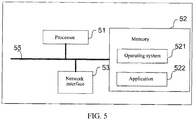
- An embodiment of the present invention further provides an architecture of hardware composition of the first network node or second network node, which includes at least one processor 51, a memory 52, and at least one network interface 53, as shown in FIG. 5 .
- Various components are coupled together by a bus system 54. It may be understood that the bus system 54 is used for implementing connections and communications between these components.
- the bus system 54 includes a power bus, a control bus, and a status signal bus. However, for clarity, all kinds of buses are uniformly referred to as the bus system 54 in the FIG. 5 .
- the memory 52 in the embodiment of the present invention may be a volatile memory or a non-volatile memory, or it may include both volatile and non-volatile memory.
- the memory 52 stores following elements, executable modules or data structures, or subsets thereof, or extended sets thereof: operating system 521 and application 522.
- the processor 51 is configured to be capable of processing acts of the methods in the embodiment one or the embodiment one, and the acts are not described repeatedly here.
- An embodiment of the present invention provides a computer storage medium storing computer executable instructions, and when the computer executable instructions are executed, the acts of the methods in the embodiment one or the embodiment two are implemented.
- the above device in the embodiments of the present invention may also be stored in a computer readable storage medium when it is implemented in the form of a software function module and sold or used as an independent product.
- the technical solutions in the embodiments of the present invention in essence, or the part contributing to the prior art, may be embodied in the form of a software product stored in a storage medium, including several instructions for causing a computer device (which may be a personal computer, a server, or a network device, etc.) to perform all or part of the methods in various embodiments of the present invention.
- the aforementioned storage medium includes a U disk, a mobile hard disk, a read-only memory (ROM), a magnetic disk or an optical disk, and another media capable of storing program codes.
- the embodiments of the present invention are not limited to any specific combination of hardware and software.
- an embodiment of the present invention further provides a computer storage medium in which a computer program is stored, and the computer program is configured to execute the data scheduling method in the embodiments of the present invention.
Landscapes
- Engineering & Computer Science (AREA)
- Computer Networks & Wireless Communication (AREA)
- Signal Processing (AREA)
- Mobile Radio Communication Systems (AREA)
Abstract
Description
- The present invention relates to the technical field of information processing, in particular to a notification method for releasing a context of a terminal, network nodes and a computer storage medium.
- After a terminal establishes a connection with a first communication system, if it is for some reason, for example, some services are not supported in the first communication system, the terminal may try to access a second communication system for these services. For some terminals with certain capabilities, they can only communicate in one communication system at the same time. When the terminal accesses the second communication system, a network node of the first communication system does not know that the terminal is no longer in the first communication system, which will cause that the terminal and the network have asymmetric state information of the terminal.
- To solve the above technical problem, embodiments of the present invention provide a notification method for releasing a context of a terminal, network nodes and a computer storage medium.
- An embodiment of the present invention provides a notification method for releasing a context of a terminal, applied to a first network node. The method includes: when a terminal switches from accessing a second network node to accessing the first network node or when the terminal switches from accessing a second communication system to accessing a first communication system, the first network node sends a first notification to the second network node or the second communication system; wherein, the first notification is at least used for notifying the second communication system or the second network node to release the context of the terminal, when the terminal accesses the second communication system or the second network node, the context of the terminal is stored in the second communication system or the second network node.
- An embodiment of the present invention provides a notification method for releasing a context of a terminal, applied to a second network node. The method includes: when a terminal switches from accessing a second communication system to accessing a first communication system or when the terminal switches from accessing the second network node to accessing a first network node, the second network node receives a first notification sent from the first communication system or the first network node, wherein, the first notification is at least used for notifying to release the context of the terminal; when the terminal accesses the second communication system or the second network node, there is a connection between the terminal and the second communication system or the second network node, and the context of the terminal is stored in the second communication system or the second network node.
- An embodiment of the present invention provides a first network node, including: a first processing unit, which, when a terminal switches from accessing a second network node to accessing the first network node or when the terminal switches from accessing a second communication system to accessing a first communication system, controls a first communication unit to send a first notification to the second network node or the second communication system; and the first communication unit, which sends the first notification to the second network node or the second communication system.
- Herein, the first notification is at least used for notifying the second communication system or the second network node to release a context of the terminal, when the terminal accesses the second communication system or the second network node, the context of the terminal is stored in the second communication system or the second network node.
- An embodiment of the present invention provides a second network node, including: a second processing unit, which, when a terminal switches from accessing a second communication system to accessing a first communication system or when the terminal switches from accessing the second network node to accessing a first network node, receives a first notification sent from the first communication system or the first network node through a second communication unit; and the second communication unit, which receives the first notification sent from the first communication system or the first network node.
- Herein, the first notification is at least used for notifying to release a context of the terminal; when the terminal accesses the second communication system or the second network node, there is a connection between the terminal and the second communication system or the second network node, and the context of the terminal is stored in the second communication system or the second network node.
- An embodiment of the present invention provides a network node including a processor and a memory for storing a computer program that is capable of being run on the processor. Herein, the processor is configured to, when running the computer program, perform the acts of the above methods.
- An embodiment of the present invention provides a computer storage medium, the computer storage medium stores computer executable instructions, and when the computer executable instructions are executed, acts of the above methods are implemented.
- According to technical solutions of embodiments of the present invention, when a terminal switches from one network node or communication system to another network node or communication system, a first notification may be sent to the network node or communication system originally accessed by the terminal, so that the originally accessed network node or communication system releases a connection or releases a context of the terminal. In this way, a problem that the originally accessed network or node still maintains the context of the terminal when the terminal has accessed another system is avoided, such that the network nodes or systems adopting the above solutions achieve an effect of symmetrical state information of the terminal.
-
-
FIG. 1 is a schematic flowchart one of a notification method for releasing a context of a terminal according to an embodiment of the present invention. -
FIG. 2 is a schematic flowchart two of a notification method for releasing a context of a terminal according to an embodiment of the present invention. -
FIG. 3 is a schematic diagram of structure of a first network node according to an embodiment of the present invention. -
FIG. 4 is a schematic diagram of structure of a second network node according to an embodiment of the present invention. -
FIG. 5 is a schematic diagram of a hardware architecture according to an embodiment of the present invention. - To understand features and technical contents of embodiments of the present invention in more detail, implementations of the embodiments of the present invention will be described in detail below with reference to the drawings, which are used for reference only and are not intended to limit the embodiments of the present invention.
- An embodiment of the present invention provides a notification method for releasing a context of a terminal, applied to a first network node. The method includes: when a terminal switches from accessing a second network node to accessing the first network node or when the terminal switches from accessing a second communication system to accessing a first communication system, the first network node sends a first notification to the second communication node or the second communication system; wherein, the first notification is at least used for notifying the second communication system or the second network node to release the context of the terminal; when the terminal accesses the second communication system or the second network node, there is a connection between the terminal and the second communication system or the second network node, and the context of the terminal is stored in the second communication system or the second network node.
- In addition, the first network node is located in the first communication system. The second network node may be located in the first communication system, or in another communication system, for example, may be located in the second communication system.
- Specifically, the embodiment of the present invention provides the following two processing scenarios.
- When a terminal switches from accessing a second network node to accessing a first network node, the first network node sends a first notification to the second network node; wherein, the first notification is at least used for notifying the second network node to release a context of the terminal, when the terminal accesses the second network node, the context of the terminal is stored in the second network node.
- Herein, the terminal establishes a connection with the second network node when accessing the second network node.
- A trigger condition for the terminal to switch access may be that the terminal finds the second network node currently serving the terminal cannot meet a requirement of the terminal, thus the terminal switches to the first network node that can meet the usage requirement of the terminal.
- It should be pointed out that the above first network node and second network node may belong to the same communication system or belong to different communication systems respectively. The first and second network nodes may be core network nodes or access network nodes or the like.
- Further, when the terminal switches from accessing the second network node to accessing the first network node, the method may further include: acquiring identification information of the second network node reported by the terminal.
- In addition, the method may further include: acquiring a second notification sent from the terminal, wherein the second notification is used for indicating to send the first notification to the second network node.
- The first notification further includes identification information of the terminal. Herein, the identification information of the terminal may include IMSI, IMEI or other information as long as the terminal can be uniquely identified.
- The second notification further includes a cause value. Herein, the cause value is used for indicating a reason for triggering the second communication system or the second network node in the second communication system to send the first notification. That is, the reason for releasing a connection and a context of the terminal is carried in the second notification message, for example, the reason is that the terminal has left the second network node.
- Further, the method of sending the first notification to the second network node may include: sending the first notification to the second network node through an interface with the second network node; or, sending the first notification to the second network node through a third party node.
- Herein, the interface between the first network node and the second network node may be a physical interface or a wireless interface, which is not limited here.
- The third party node is a network element connected both with the first communication network and with the second communication network; or, the third party node is a network element connected both with the first network node and with the second network node.
- For example, the third party node may be a core network element or an access network element or an operation and maintenance network element that is connected with the first and second network nodes.
- This scenario may be as shown in
FIG. 1 , which includesacts - In
act 101, when a terminal switches from accessing a second network node to accessing a first network node, identification information of the second network node reported by the terminal is acquired, and a second notification sent by the terminal is acquired; the second notification is used for indicating to send a first notification to the second network node. - In
act 102, the first network node sends the first notification to the second network node. - When a terminal switches from accessing a second communication system to accessing a first communication system, a first network node sends a first notification to the second communication system; wherein, the first notification is at least used for notifying the second communication system to release a context of the terminal; when the terminal accesses the second communication system, the context of the terminal is stored in the second communication system.
- Herein, when accessing the second communication system, the terminal establishes a connection with a network node in the second communication system. It should be pointed out that in this scenario, when the connection with the second communication system is established, the connection may be established with a second network node in the second communication system, or the connection may be established with a network node other than the second network node in the second communication system, which is not specifically limited.
- A trigger condition for the terminal to switch an accessed communication system may be that the terminal finds the second communication system currently serving the terminal cannot meet a requirement of the terminal, thus the terminal switches to the first communication system that can meet the usage requirement of the terminal. Here, the meeting the requirement of the terminal may be that the terminal may need to access a certain service while the service, such as 4G, is not provided by the existing second communication system, and the terminal will switch to access the first communication system, such as LTE. It may be understood that the foregoing is only a trigger example, and in fact, there may be other ways, which are not exhaustively enumerated in the present embodiment.
- It should be pointed out that the first communication system and the second communication system support different communication standards and/or support at least partially different service types. Specifically, the first and second communication systems may be 3GPP cellular network systems such as a 5G system or a 4G system, or non-3GPP systems such as WLAN. The first and second network nodes may be core network nodes or access network nodes or the like.
- Further, when the terminal switches from accessing the second communication system to accessing the first communication system, the method may further include acquiring identification information of the second communication system reported by the terminal.
- Here, the reported identification information of the second communication system may be a reported identification of the second communication system, or reported identification information of the second network node, which establishes a connection with the terminal, in the second communication system, as long as the originally accessed second communication system can be represented.
- In addition, the method may further include: acquiring a second notification sent from the terminal, and the second notification is used for indicating to send the first notification to the second communication system.
- The first notification further includes identification information of the terminal. Herein, the identification information of the terminal may include IMSI, IMEI or other information as long as the terminal can be uniquely identified.
- The second notification further includes a cause value. Herein, the cause value is used for indicating a reason for triggering the second communication system or the second network node in the second communication system to send the first notification. That is, the reason for releasing a connection and a context of the terminal is carried in the second notification message, for example, the reason is that the terminal has left the second network node.
- Further, the method of sending the first notification to the second communication system may include: sending the first notification to the second communication system through an interface with the second communication system; or, sending the first notification to the second communication system through an interface with a network node of the second communication system; wherein, the interface of the network node of the second communication system may be an interface of an edge device via which the second communication system acquires information sent from other devices or other networks; or, sending the first notification to the second network node through a third party node.
- The third party node is a network element connected both with the first communication network and with the second communication network; or, the third party node is a network element connected both with the first network node and with the second network node. For example, the third party node may be a core network element or an access network element or an operation and maintenance network element that is connected with the first and second network nodes.
- This scenario may be as shown in
FIG. 2 , which includesacts - In
act 201, when a terminal switches from accessing a second communication system to accessing a first communication system, identification information of the second communication system reported by the terminal is acquired and a second notification sent by the terminal is acquired; the second notification is used for indicating to send a first notification to the second communication system. - In
act 202, the first network node sends the first notification to the second communication system. - It can be seen that by adopting the above solution, when a terminal switches from one network node or communication system to another network node or communication system, a first notification may be sent to the network node or communication system originally accessed by the terminal, so that the originally accessed network node or communication system releases a connection or releases a context of the terminal. In this way, a problem that the originally accessed network or node still maintains the context of the terminal when the terminal has connected to another system is avoided, such that the network nodes or systems adopting the above solution achieve an effect of symmetrical state information of the terminal.
- An embodiment of the present invention provides a notification method for releasing a context of a terminal, applied to a second network node. The method includes: when a terminal switches from accessing a second communication system to accessing a first communication system or when a terminal switches from accessing a second network node to accessing a first network node, the second network node receives a first notification sent from the first communication system or the first network node; wherein, the first notification is at least used for notifying to release a context of the terminal; when the terminal accesses the second communication system or the second network node, there is a connection between the terminal and the second communication system or the second network node, and the context of the terminal is stored in the second communication system or the second network node.
- In addition, the first network node is located in the first communication system. The second network node may be located in the first communication system, or in another communication system, for example, may be located in the second communication system.
- Specifically, when the terminal switches from accessing the second network node to accessing the first network node, the first network node sends the first notification to the second network node. Herein, the first notification is at least used for notifying the second network node to release the context of the terminal; when the terminal accesses the second network node, the context of the terminal is stored in the second network node.
- Herein, the terminal establishes a connection with the second network node when accessing the second network node.
- A trigger condition for the terminal to switch access may be that the terminal finds the second network node currently serving the terminal cannot meet a requirement of the terminal, thus the terminal switches to the first network node that can meet the usage requirement of the terminal.
- It should be pointed out that the above first network node and second network node may belong to the same communication system or belong to different communication systems respectively.
- The first network node is a network node of a core network or an access network in the first communication system, and the second network node is a network node of a core network or an access network in the second communication system.
- In the present embodiment, the second network node may be a node located in the second communication system. Of course, the second network node may be a node located in the first communication network. Correspondingly, the first network node may be located in the first communication system or the second communication system.
- The first communication system and the second communication system support different communication standards and/or support at least partially different service types. Specifically, the first and second communication systems may be 3GPP cellular network systems such as a 5G system or a 4G system, or non-3GPP systems such as WLAN. The first and second network nodes may be core network nodes or access network nodes or the like.
- Further, receiving the first notification sent from the first communication system or the first network node includes: receiving the first notification through an interface with the first communication system; or, receiving the first notification through an interface connected with the first network node; or, receiving the first notification through a third party node.
- Herein, the interface between the first network node and the second network node may be a physical interface or a wireless interface, which is not limited here.
- Further, after the second network node of the second communication system receives the first notification sent from the first network node of the first communication system, the method further includes that the second network node notifies a third network node that stores a connection of the terminal or the context of the terminal to release the connection of the terminal or release the context of the terminal.
- That is, when the third network node stores the connection of the terminal or the context of the terminal, the second network node may act as a forwarding node, and control the third network node to release the connection of the terminal or release the context of the terminal based on the first notification.
- The third party node is a network element connected both with the first communication network and with the second communication network; or, the third party node is a network element connected both with the first network node and with the second network node. For example, the third party node may be a core network element or an access network element or an operation and maintenance network element that is connected with the first and second network nodes.
- It can be seen that by adopting the above solution, when a terminal switches from one network node or communication system to another network node or communication system, a first notification can be sent to the network node or communication system originally accessed by the terminal, so that the originally accessed network node or communication system releases a connection or releases a context of the terminal. In this way, a problem that the originally accessed network or node still maintains the context of the terminal when the terminal has connected to another system is avoided, such that the network nodes or systems adopting the above solution achieve an effect of symmetrical state information of the terminal.
- An embodiment of the present invention provides a first network node. As shown in
FIG. 3 , the first network node includes afirst processing unit 31, which, when a terminal switches from accessing a second network node to accessing the first network node or when the terminal switches from accessing a second communication system to accessing a first communication system, controls a first communication unit to send a first notification to the second network node or the second communication system; and thefirst communication unit 32, which sends the first notification to the second network node or the second communication system. - Herein, the first notification is at least used for notifying the second communication system or the second network node to release a context of the terminal. When the terminal accesses the second communication system or the second network node, there is a connection between the terminal and the second communication system or the second network node, and the context of the terminal is stored in the second communication system or the second network node.
- In addition, the first network node is located in the first communication system. The second network node may be located in the first communication system or in another communication system, for example, may be located in the second communication system.
- Specifically, the embodiment of the present invention provides the following two processing scenarios.
- When a terminal switches from accessing a second network node to accessing the first network node, the
first processing unit 31 sends a first notification to the second network node through thefirst communication unit 32; wherein the first notification is at least used for notifying the second network node to release a context of the terminal; when the terminal accesses the second network node, the context of the terminal is stored in the second network node. - Herein, the terminal establishes a connection with the second network node when accessing the second network node.
- A trigger condition for the terminal to switch access may be that the terminal finds the second network node currently serving the terminal cannot meet a requirement of the terminal, thus the terminal switches to the first network node that can meet the usage requirement of the terminal.
- It should be pointed out that the above first network node and second network node may belong to the same communication system or belong to different communication systems respectively. The first and second network nodes may be core network nodes or access network nodes or the like.
- Further, when the terminal switches from accessing the second network node to accessing the first network node or when the terminal switches from accessing the second communication system to accessing the first communication system, the first processing unit acquires the identification information of the second network node reported by the terminal through the
first communication unit 32. - In addition, when the terminal switches from accessing the second network node to accessing the first network node or when the terminal switches from accessing the second communication system to accessing the first communication system, the first processing unit acquires the second notification sent from the terminal through the
first communication unit 32, and the second notification is used for indicating to send the first notification to the second network node. - The first notification further includes identification information of the terminal. Herein, the identification information of the terminal may include IMSI, IMEI or other information as long as the terminal can be uniquely identified.
- The second notification further includes a cause value, wherein the cause value is used for indicating a reason for triggering the second communication system or the second network node in the second communication system to send the first notification. That is, the reason for releasing a connection and the context of the terminal is carried in the second notification message, for example, the reason is that the terminal has left the second network node.
- Further, the
first communication unit 32 sends the first notification to the second network node through an interface with the second network node; or, sends the first notification to the second network node through a third party node. - Herein, the interface between the first network node and the second network node may be a physical interface or a wireless interface, which is not limited here.
- The third party node is a network element connected both with the first communication network and with the second communication network; or, the third party node is a network element connected both with the first network node and with the second network node. For example, the third party node may be a core network element or an access network element or an operation and maintenance network element that is connected with the first and second network nodes.
- When a terminal switches from accessing a second communication system to accessing a first communication system, the first processing unit sends a first notification to the second communication system through the first communication unit. Herein, the first notification is at least used for notifying the second communication system to release a context of the terminal, and when the terminal accesses the second communication system, the context of the terminal is stored in the second communication system.
- Herein, when accessing the second communication system, the terminal establishes a connection with a network node in the second communication system. It should be pointed out that in this scenario, when the connection with the second communication system is established, the connection may be established with a second network node in the second communication system, or the connection may be established with a network node other than the second network node in the second communication system, which is not specifically limited.
- A trigger condition for the terminal to switch an accessed communication system may be that the terminal finds the second communication system currently serving the terminal cannot meet a requirement of the terminal, thus the terminal switches to the first communication system that can meet the usage requirement of the terminal. The meeting the requirement of the terminal here may be that the terminal may need to access a certain service, while the service, such as 4G, is not provided in the existing second communication system, and the terminal will switch to access the first communication system, such as LTE. It can be understood that the foregoing is only a trigger example, in fact, there may be other ways, but it is not exhaustively enumerated in the present embodiment.
- It should be pointed out that the first communication system and the second communication system support different communication standards and/or support at least partially different service types. Specifically, the first and second communication systems may be 3GPP cellular network systems such as a 5G system or a 4G system, or non-3GPP systems such as WLAN. The first and second network nodes may be core network nodes or access network nodes or the like.
- Further, when the terminal switches from accessing the second communication system to accessing the first communication system, the first processing unit acquires identification information of the second communication system reported by the terminal through the first communication unit.
- Here, the reported identification information of the second communication system may be reported identification of the second communication system or reported identification information of the second network node, which establishes the connection with the terminal, in the second communication system, as long as the originally accessed second communication system can be represented.
- In addition, when the terminal switches from accessing the second network node to accessing the first network node or when the terminal switches from accessing the second communication system to accessing the first communication system, the first processing unit acquires a second notification sent from the terminal through the first communication unit, and the second notification is used for indicating to send the first notification to the second communication system.
- The first notification further includes identification information of the terminal. Herein, the identification information of the terminal may include IMSI, IMEI or other information as long as the terminal can be uniquely identified.
- The second notification further includes a cause value, wherein the cause value is used for indicating a reason for triggering the second communication system or a second network node in the second communication system to send the first notification. That is, the reason for releasing the connection and the context of the terminal is carried in the second notification message, for example, the reason is that the terminal has left the second network node.
- Further, the method of sending the first notification to the second communication system may include: sending the first notification to the second communication system through an interface with the second communication system; or, sending the first notification to the second communication system through an interface with a network node of the second communication system; wherein, the interface of the network node of the second communication system may be an interface of an edge device via which the second communication system acquires information sent from other devices or other networks; or, sending the first notification to the second network node through a third party node.
- The third party node is a network element connected both with the first communication network and with the second communication network; or, the third party node is a network element connected both with the first network node and with the second network node.
- For example, the third party node may be a core network element or an access network element or an operation and maintenance network element that is connected with the first and second network nodes.
- It can be seen that by adopting the above solution, when a terminal switches from one network node or communication system to another network node or communication system, a first notification can be sent to the network node or communication system originally accessed by the terminal, so that the originally accessed network node or communication system releases a connection or releases a context of the terminal. In this way, a problem that the originally accessed network or node still maintains the context of the terminal when the terminal has connected to another system is avoided, thus the network nodes or systems adopting the above solution achieve an effect of symmetrical state information of the terminal.
- An embodiment of the present invention provides a second network node. As shown in
FIG. 4 , the second network node includes asecond processing unit 41, which, when a terminal switches from accessing a second communication system to accessing a first communication system or when the terminal switches from accessing the second network node to accessing a first network node, receives a first notification sent from the first communication system or the first network node through a second communication unit; and thesecond communication unit 42, which receives the first notification sent from the first communication system or the first network node. - Herein, the first notification is at least used for notifying to release a context of the terminal. When the terminal accesses the second communication system or the second network node, there is a connection between the terminal and the second communication system or the second network node, and the context of the terminal is stored in the second communication system or the second network node.
- In addition, the first network node is located in the first communication system. The second network node may be located in the first communication system or in another communication system, for example, may be located in the second communication system.
- A trigger condition for the terminal to switch access may be that the terminal finds the second network node currently serving the terminal cannot meet a requirement of the terminal, thus the terminal switches to the first network node that can meet the usage requirement of the terminal.
- It should be pointed out that the above first network node and second network node may belong to the same communication system or belong to different communication systems respectively.
- The first network node is a network node of a core network or an access network in the first communication system.
- The second network node is a network node of a core network or an access network in the second communication system.
- In the present embodiment, the second network node may be a node located in the second communication system. Of course, the second network node may be a node located in the first communication network. Correspondingly, the first network node may be located in the first communication system or the second communication system.
- The first communication system and the second communication system support different communication standards and/or support at least partially different service types. Specifically, the first and second communication systems may be 3GPP cellular network systems such as a 5G system or a 4G system, or non-3GPP systems such as WLAN. The first and second network nodes may be core network nodes or access network nodes or the like.
- Further, the
second communication unit 42 receives a first notification through an interface with the first communication system; or, receives the first notification through an interface connected with the first network node; or, receives the first notification through a third party node. - Herein, the interface between the first network node and the second network node may be a physical interface or a wireless interface, which is not limited here.
- Further, after the second network node of the second communication system receives the first notification sent from the first network node of the first communication system, the
second communication unit 42 notifies a third network node that stores a connection or the context of the terminal to release the connection of the terminal or release the context of the terminal. - That is, when the connection of the terminal or the context of the terminal is stored in the third network node, the second network node may act as a forwarding node, and control the third network node to release the connection of the terminal or release the context of the terminal based on the first notification.
- The third party node is a network element connected both with the first communication network and with the second communication network; or, the third-party node is a network element connected both with the first network node and with the second network node.
- For example, the third party node may be a core network element or an access network element or an operation and maintenance network element that is connected with the first and second network nodes.
- It can be seen that by adopting the above solution, when a terminal switches from one network node or communication system to another network node or communication system, a first notification can be sent to the network node or communication system originally accessed by the terminal, so that the originally accessed network node or communication system releases a connection or releases a context of the terminal. In this way, a problem that the originally accessed network or node still maintains the context of the terminal when the terminal has connected to another system is avoided, thus the network nodes or systems adopting the above solution achieve an effect of symmetrical state information of the terminal.
- An embodiment of the present invention further provides an architecture of hardware composition of the first network node or second network node, which includes at least one
processor 51, amemory 52, and at least onenetwork interface 53, as shown inFIG. 5 . Various components are coupled together by a bus system 54. It may be understood that the bus system 54 is used for implementing connections and communications between these components. In addition to a data bus, the bus system 54 includes a power bus, a control bus, and a status signal bus. However, for clarity, all kinds of buses are uniformly referred to as the bus system 54 in theFIG. 5 . - It should be understood that the
memory 52 in the embodiment of the present invention may be a volatile memory or a non-volatile memory, or it may include both volatile and non-volatile memory. - In some implementations, the
memory 52 stores following elements, executable modules or data structures, or subsets thereof, or extended sets thereof: operatingsystem 521 andapplication 522. - Herein, the
processor 51 is configured to be capable of processing acts of the methods in the embodiment one or the embodiment one, and the acts are not described repeatedly here. - An embodiment of the present invention provides a computer storage medium storing computer executable instructions, and when the computer executable instructions are executed, the acts of the methods in the embodiment one or the embodiment two are implemented.
- The above device in the embodiments of the present invention may also be stored in a computer readable storage medium when it is implemented in the form of a software function module and sold or used as an independent product. Based on this understanding, the technical solutions in the embodiments of the present invention, in essence, or the part contributing to the prior art, may be embodied in the form of a software product stored in a storage medium, including several instructions for causing a computer device (which may be a personal computer, a server, or a network device, etc.) to perform all or part of the methods in various embodiments of the present invention. The aforementioned storage medium includes a U disk, a mobile hard disk, a read-only memory (ROM), a magnetic disk or an optical disk, and another media capable of storing program codes. Thus, the embodiments of the present invention are not limited to any specific combination of hardware and software.
- Correspondingly, an embodiment of the present invention further provides a computer storage medium in which a computer program is stored, and the computer program is configured to execute the data scheduling method in the embodiments of the present invention.
- Although the preferable embodiments of the present invention have been disclosed for illustrative purposes, those skilled in the art will recognize that various modifications, additions and substitutions are possible, and therefore, the scope of the present invention should not be limited to the above embodiments.
Claims (32)
- A notification method for releasing a context of a terminal, applied to a first network node, the method comprising:sending, by the first network node, a first notification to a second network node or a second communication system when a terminal switches from accessing the second network node to accessing the first network node or when the terminal switches from accessing the second communication system to accessing a first communication system;wherein the first notification is at least used for notifying the second communication system or the second network node to release the context of the terminal; when the terminal accesses the second communication system or the second network node, the context of the terminal is stored in the second communication system or the second network node.
- The method of claim 1, wherein when the terminal switches from accessing the second network node to accessing the first network node or when the terminal switches from accessing the second communication system to accessing the first communication system, the method further comprises:
acquiring identification information of the second communication system or the second network node reported by the terminal. - The method of claim 2, wherein when the terminal switches from accessing the second network node to accessing the first network node or when the terminal switches from accessing the second communication system to accessing the first communication system, the method further comprises:
acquiring a second notification sent by the terminal; wherein the second notification is used for indicating to send the first notification to the second communication system or the second network node. - The method of claim 1, wherein the first notification further comprises identification information of the terminal.
- The method of claim 3, wherein the second notification further comprises a cause value, wherein the cause value is used for indicating a reason for triggering the second communication system or the second network node in the second communication system to send the first notification.
- The method of claim 3, wherein sending the first notification to the second network node or the second communication system comprises:sending the first notification to the second communication system through an interface with the second communication system; or,sending the first notification to the second communication system through an interface with a network node of the second communication system; or,sending the first notification to the second network node through an interface with the second network node; or,sending the first notification to the second communication system or the second network node through a third party node.
- The method of claim 1, wherein the first communication system and the second communication system support different communication standards, and/or support at least partially different service types.
- The method of claim 1, wherein the first network node is a network node of a core network or an access network in the first communication system, and the second network node is a network node of a core network or an access network in the second communication system.
- The method of claim 6, wherein the third party node is a network element connected both with the first communication network and with the second communication network; or,
the third party node is a network element connected both with the first network node and with the second network node. - A notification method for releasing a context of a terminal, applied to a second network node, the method comprising:receiving, by the second network node, a first notification sent from a first communication system or a first network node when a terminal switches from accessing a second communication system to accessing the first communication system or when the terminal switches from accessing the second network node to accessing the first network node;wherein the first notification is at least used for notifying to release the context of the terminal, when the terminal accesses the second communication system or the second network node, there is a connection between the terminal and the second communication system or the second network node, and the context of the terminal is stored in the second communication system or the second network node.
- The method of claim 10, wherein receiving the first notification sent from the first communication system or the first network node comprises:receiving the first notification through an interface with the first communication system; or,receiving the first notification through an interface connected with the first network node; or,receiving the first notification through a third party node.
- The method of claim 10, wherein the first communication system and the second communication system support different communication standards, and/or support at least partially different service types.
- The method of claim 10, wherein the first network node is a network node of a core network or an access network in the first communication system, and the second network node is a network node of a core network or an access network in the second communication system.
- The method of claim 11, wherein the third party node is a network element connected both with the first communication network and with the second communication network; or, the third party node is a network element connected both with the first network node and with the second network node.
- The method of claim 10, wherein after receiving, by the second network node of the second communication system, the first notification sent from the first network node of the first communication system, the method further comprises:
notifying, by the second network node, a third network node that stores a connection of the terminal or the context of the terminal to release the connection of the terminal or the context of the terminal. - A first network node, comprising:
a first processing unit, which controls a first communication unit to send a first notification to a second network node or a second communication system when a terminal switches from accessing the second network node to accessing the first network node or when the terminal switches from accessing the second communication system to accessing a first communication system; and
the first communication unit, which sends the first notification to the second network node or the second communication system;
wherein the first notification is at least used for notifying the second communication system or the second network node to release a context of the terminal; when the terminal accesses the second communication system or the second network node, the context of the terminal is stored in the second communication system or the second network node. - The first network node of claim 16, wherein
when the terminal switches from accessing the second network node to accessing the first network node or when the terminal switches from accessing the second communication system to accessing the first communication system, the first processing unit acquires identification information of the second communication system or the second network node reported by the terminal through the first communication unit. - The first network node of claim 17, wherein when the terminal switches from accessing the second network node to accessing the first network node or when the terminal switches from accessing the second communication system to accessing the first communication system, the first processing unit acquires a second notification sent from the terminal through the first communication unit, wherein the second notification is used for indicating to send the first notification to the second communication system or the second network node.
- The first network node of claim 16, wherein the first notification further comprises identification information of the terminal.
- The first network node of claim 18, wherein the second notification further comprises a cause value, wherein the cause value is used for indicating a reason for triggering the second communication system or the second network node in the second communication system to send the first notification.
- The first network node of claim 18, wherein the first communication unit sends the first notification to the second communication system through an interface with the second communication system; or,
sends the first notification to the second communication system through an interface with a network node of the second communication system; or,
sends the first notification to the second network node through an interface with the second network node; or,
sends the first notification to the second communication system or the second network node through a third party node. - The first network node of claim 16, wherein the first communication system and the second communication system support different communication standards, and/or support at least partially different service types.
- The first network node of claim 16, wherein the first network node is a network node of a core network or an access network in the first communication system, and the second network node is a network node of a core network or an access network in the second communication system.
- The first network node of claim 21, wherein the third party node is a network element connected both with the first communication network and with the second communication network; or, the third party node is a network element connected both with the first network node and with the second network node.
- A second network node, comprising:a second processing unit, which receives a first notification sent from a first communication system or a first network node through a second communication unit when a terminal switches from accessing a second communication system to accessing the first communication system or when the terminal switches from accessing the second network node to accessing the first network node; andthe second communication unit, which receives the first notification sent from the first communication system or the first network node;wherein the first notification is at least used for notifying to release a context of the terminal; when the terminal accesses the second communication system or the second network node, there is a connection between the terminal and the second communication system or the second network node, and the context of the terminal is stored in the second communication system or the second network node.
- The second network node of claim 25, wherein the second communication unit receives the first notification through an interface with the first communication system; or,
receives the first notification through an interface connected with the first network node; or,
receives the first notification through a third party node. - The second network node of claim 25, wherein the first communication system and the second communication system support different communication standards, and/or support at least partially different service types.
- The second network node of claim 25, wherein the first network node is a network node of a core network or an access network in the first communication system, and the second network node is a network node of a core network or an access network in the second communication system.
- The second network node of claim 26, wherein the third party node is a network element connected both with the first communication network and with the second communication network; or, the third party node is a network element connected both with the first network node and with the second network node.
- The second network node of claim 25, wherein the second communication unit notifies a third network node that stores a connection of the terminal or the context of the terminal to release the connection of the terminal or the context of the terminal.
- A network node, comprising a processor, and a memory for storing a computer program that is capable of being run on the processor;
wherein the processor is configured to, when running the computer program, perform acts of the method according to any one of claims 1-15. - A computer storage medium storing computer executable instructions, wherein when the computer executable instructions are executed, acts of the method according to any one of claims 1-15 are implemented.
Applications Claiming Priority (1)
| Application Number | Priority Date | Filing Date | Title |
|---|---|---|---|
| PCT/CN2017/118292 WO2019126938A1 (en) | 2017-12-25 | 2017-12-25 | Notification method for releasing terminal context, network device, and computer storage medium |
Publications (3)
| Publication Number | Publication Date |
|---|---|
| EP3726881A1 true EP3726881A1 (en) | 2020-10-21 |
| EP3726881A4 EP3726881A4 (en) | 2020-12-23 |
| EP3726881B1 EP3726881B1 (en) | 2023-01-25 |
Family
ID=67064216
Family Applications (1)
| Application Number | Title | Priority Date | Filing Date |
|---|---|---|---|
| EP17936422.9A Active EP3726881B1 (en) | 2017-12-25 | 2017-12-25 | Notification method for releasing terminal context and network device |
Country Status (7)
| Country | Link |
|---|---|
| US (1) | US20200314703A1 (en) |
| EP (1) | EP3726881B1 (en) |
| JP (1) | JP2021514553A (en) |
| KR (1) | KR20200103030A (en) |
| CN (1) | CN111567083B (en) |
| AU (1) | AU2017444350A1 (en) |
| WO (1) | WO2019126938A1 (en) |
Families Citing this family (1)
| Publication number | Priority date | Publication date | Assignee | Title |
|---|---|---|---|---|
| WO2021174388A1 (en) * | 2020-03-02 | 2021-09-10 | Nec Corporation | Method, device and computer storage medium of communication |
Family Cites Families (15)
| Publication number | Priority date | Publication date | Assignee | Title |
|---|---|---|---|---|
| CN102244905B (en) * | 2010-05-14 | 2014-03-19 | 中兴通讯股份有限公司 | Method for rapidly releasing switching source side resources and apparatus thereof |
| CN102281587B (en) * | 2010-06-13 | 2018-07-17 | 中兴通讯股份有限公司 | The method and system of realizing direct interface between access network nodes |
| CN102291805B (en) * | 2010-06-21 | 2016-03-30 | 中兴通讯股份有限公司 | A kind of method and system of optional m igration management entity |
| EP2574133B1 (en) * | 2010-08-20 | 2019-03-13 | Huawei Technologies Co., Ltd. | Method and apparatus for reporting radio bearer loss message |
| CN102892153B (en) * | 2011-07-22 | 2017-08-01 | 中兴通讯股份有限公司 | The method and system of user terminal information is discharged in a kind of via node switching |
| CN103139851A (en) * | 2011-12-02 | 2013-06-05 | 华为技术有限公司 | Control method and access equipment of resource release |
| US9462555B2 (en) * | 2012-09-28 | 2016-10-04 | Intel Corporation | Systems and methods for low power consumption in wireless communication systems |
| US10375606B2 (en) * | 2012-12-28 | 2019-08-06 | Nec Corporation | Radio communication system, radio station, radio terminal, communication control method, and computer-readable medium |
| CN103945537A (en) * | 2013-01-18 | 2014-07-23 | 中兴通讯股份有限公司 | Radio resource management method, device and system |
| CN104812070B (en) * | 2014-01-29 | 2020-03-27 | 北京三星通信技术研究有限公司 | Method and equipment for maintaining and releasing UE (user Equipment) resources |
| EP3186987A4 (en) * | 2014-08-27 | 2017-08-16 | Telefonaktiebolaget LM Ericsson (publ) | Method in a wireless communication network for notifying a communication device that context storing is employed in the network. |
| US9497667B2 (en) * | 2014-09-11 | 2016-11-15 | Telefonaktiebolaget Lm Ericsson (Publ) | Fast WiFi to LTE handover |
| CN105992293B (en) * | 2015-02-09 | 2020-01-07 | 电信科学技术研究院 | Method and equipment for switching between networks |
| CN105517022B (en) * | 2016-01-22 | 2018-11-02 | 上海亮衡信息科技有限公司 | Service restoration method, terminal and system after a kind of failure of establishing initial context |
| US9883430B2 (en) * | 2016-06-02 | 2018-01-30 | Qualcomm Incorporated | Detecting handover failures at an access point |
-
2017
- 2017-12-25 CN CN201780097926.9A patent/CN111567083B/en active Active
- 2017-12-25 EP EP17936422.9A patent/EP3726881B1/en active Active
- 2017-12-25 AU AU2017444350A patent/AU2017444350A1/en not_active Withdrawn
- 2017-12-25 KR KR1020207020320A patent/KR20200103030A/en not_active Withdrawn
- 2017-12-25 WO PCT/CN2017/118292 patent/WO2019126938A1/en not_active Ceased
- 2017-12-25 JP JP2020532961A patent/JP2021514553A/en not_active Withdrawn
-
2020
- 2020-06-12 US US16/900,301 patent/US20200314703A1/en not_active Abandoned
Also Published As
| Publication number | Publication date |
|---|---|
| EP3726881A4 (en) | 2020-12-23 |
| CN111567083A (en) | 2020-08-21 |
| WO2019126938A1 (en) | 2019-07-04 |
| JP2021514553A (en) | 2021-06-10 |
| AU2017444350A1 (en) | 2020-08-06 |
| KR20200103030A (en) | 2020-09-01 |
| US20200314703A1 (en) | 2020-10-01 |
| CN111567083B (en) | 2023-05-26 |
| EP3726881B1 (en) | 2023-01-25 |
Similar Documents
| Publication | Publication Date | Title |
|---|---|---|
| US12425861B2 (en) | Method for determining class information and apparatus | |
| CN107306386B (en) | Method for triggering terminal roaming by access point and access point | |
| US11405965B2 (en) | Signaling processing method and apparatus | |
| US9565635B2 (en) | Activating a mobile terminal from mobile network side | |
| US10512003B2 (en) | Subscription fall-back in a radio communication network | |
| US20230171684A1 (en) | Cross-sim calling using network slice with qos | |
| EP4561126A2 (en) | Sim toolkit scheduling for multiple enabled esim profiles | |
| US20140036778A1 (en) | Gateway relocation control method and control device in mobile communication system | |
| US20200314703A1 (en) | Notification Method for Releasing Terminal Context, Network Device, and Computer Storage Medium | |
| CN109699049A (en) | The determination method and apparatus of user plane protocol stack type | |
| KR20160003266A (en) | Access control method and apparatus | |
| WO2022068771A1 (en) | Communication method and communication apparatus | |
| AU2017443204A1 (en) | Method for paging user equipment, first network device, and user equipment | |
| EP3735031A1 (en) | Handover processing method, network device, terminal device, and computer storage medium | |
| US12177933B2 (en) | Methods and nodes for UE-to-UE event monitoring | |
| US20170180540A1 (en) | Emergency Mode Mobile Call Agent | |
| US9037150B1 (en) | Load management in a wireless communication system | |
| EP3716687B1 (en) | Service-based processing method, terminal device, and network device | |
| KR102276090B1 (en) | Method and apparatus for rearranging traffic data | |
| CN103476012B (en) | A kind of information processing method and equipment | |
| JP2021511738A (en) | Paging process, network equipment, user equipment, and computer storage media | |
| KR20140079097A (en) | Method and apparatus for load controlling of sgsn |
Legal Events
| Date | Code | Title | Description |
|---|---|---|---|
| STAA | Information on the status of an ep patent application or granted ep patent |
Free format text: STATUS: THE INTERNATIONAL PUBLICATION HAS BEEN MADE |
|
| PUAI | Public reference made under article 153(3) epc to a published international application that has entered the european phase |
Free format text: ORIGINAL CODE: 0009012 |
|
| STAA | Information on the status of an ep patent application or granted ep patent |
Free format text: STATUS: REQUEST FOR EXAMINATION WAS MADE |
|
| 17P | Request for examination filed |
Effective date: 20200717 |
|
| AK | Designated contracting states |
Kind code of ref document: A1 Designated state(s): AL AT BE BG CH CY CZ DE DK EE ES FI FR GB GR HR HU IE IS IT LI LT LU LV MC MK MT NL NO PL PT RO RS SE SI SK SM TR |
|
| AX | Request for extension of the european patent |
Extension state: BA ME |
|
| A4 | Supplementary search report drawn up and despatched |
Effective date: 20201124 |
|
| RIC1 | Information provided on ipc code assigned before grant |
Ipc: H04W 36/14 20090101ALN20201118BHEP Ipc: H04W 36/08 20090101AFI20201118BHEP Ipc: H04W 36/24 20090101ALI20201118BHEP Ipc: H04W 36/36 20090101ALN20201118BHEP |
|
| DAV | Request for validation of the european patent (deleted) | ||
| DAX | Request for extension of the european patent (deleted) | ||
| STAA | Information on the status of an ep patent application or granted ep patent |
Free format text: STATUS: EXAMINATION IS IN PROGRESS |
|
| 17Q | First examination report despatched |
Effective date: 20210510 |
|
| REG | Reference to a national code |
Ref country code: DE Ref legal event code: R079 Ref document number: 602017065855 Country of ref document: DE Free format text: PREVIOUS MAIN CLASS: H04W0036000000 Ipc: H04W0036080000 |
|
| RIC1 | Information provided on ipc code assigned before grant |
Ipc: H04W 36/00 20090101ALN20220701BHEP Ipc: H04W 36/36 20090101ALN20220701BHEP Ipc: H04W 36/14 20090101ALN20220701BHEP Ipc: H04W 36/24 20090101ALI20220701BHEP Ipc: H04W 36/08 20090101AFI20220701BHEP |
|
| RIC1 | Information provided on ipc code assigned before grant |
Ipc: H04W 36/00 20090101ALN20220711BHEP Ipc: H04W 36/36 20090101ALN20220711BHEP Ipc: H04W 36/14 20090101ALN20220711BHEP Ipc: H04W 36/24 20090101ALI20220711BHEP Ipc: H04W 36/08 20090101AFI20220711BHEP |
|
| GRAP | Despatch of communication of intention to grant a patent |
Free format text: ORIGINAL CODE: EPIDOSNIGR1 |
|
| STAA | Information on the status of an ep patent application or granted ep patent |
Free format text: STATUS: GRANT OF PATENT IS INTENDED |
|
| INTG | Intention to grant announced |
Effective date: 20220825 |
|
| GRAS | Grant fee paid |
Free format text: ORIGINAL CODE: EPIDOSNIGR3 |
|
| GRAA | (expected) grant |
Free format text: ORIGINAL CODE: 0009210 |
|
| STAA | Information on the status of an ep patent application or granted ep patent |
Free format text: STATUS: THE PATENT HAS BEEN GRANTED |
|
| AK | Designated contracting states |
Kind code of ref document: B1 Designated state(s): AL AT BE BG CH CY CZ DE DK EE ES FI FR GB GR HR HU IE IS IT LI LT LU LV MC MK MT NL NO PL PT RO RS SE SI SK SM TR |
|
| REG | Reference to a national code |
Ref country code: GB Ref legal event code: FG4D |
|
| REG | Reference to a national code |
Ref country code: CH Ref legal event code: EP |
|
| REG | Reference to a national code |
Ref country code: AT Ref legal event code: REF Ref document number: 1546623 Country of ref document: AT Kind code of ref document: T Effective date: 20230215 Ref country code: IE Ref legal event code: FG4D |
|
| REG | Reference to a national code |
Ref country code: DE Ref legal event code: R096 Ref document number: 602017065855 Country of ref document: DE |
|
| REG | Reference to a national code |
Ref country code: LT Ref legal event code: MG9D |
|
| REG | Reference to a national code |
Ref country code: NL Ref legal event code: MP Effective date: 20230125 |
|
| P01 | Opt-out of the competence of the unified patent court (upc) registered |
Effective date: 20230412 |
|
| REG | Reference to a national code |
Ref country code: AT Ref legal event code: MK05 Ref document number: 1546623 Country of ref document: AT Kind code of ref document: T Effective date: 20230125 |
|
| PG25 | Lapsed in a contracting state [announced via postgrant information from national office to epo] |
Ref country code: NL Free format text: LAPSE BECAUSE OF FAILURE TO SUBMIT A TRANSLATION OF THE DESCRIPTION OR TO PAY THE FEE WITHIN THE PRESCRIBED TIME-LIMIT Effective date: 20230125 |
|
| PG25 | Lapsed in a contracting state [announced via postgrant information from national office to epo] |
Ref country code: RS Free format text: LAPSE BECAUSE OF FAILURE TO SUBMIT A TRANSLATION OF THE DESCRIPTION OR TO PAY THE FEE WITHIN THE PRESCRIBED TIME-LIMIT Effective date: 20230125 Ref country code: PT Free format text: LAPSE BECAUSE OF FAILURE TO SUBMIT A TRANSLATION OF THE DESCRIPTION OR TO PAY THE FEE WITHIN THE PRESCRIBED TIME-LIMIT Effective date: 20230525 Ref country code: NO Free format text: LAPSE BECAUSE OF FAILURE TO SUBMIT A TRANSLATION OF THE DESCRIPTION OR TO PAY THE FEE WITHIN THE PRESCRIBED TIME-LIMIT Effective date: 20230425 Ref country code: LV Free format text: LAPSE BECAUSE OF FAILURE TO SUBMIT A TRANSLATION OF THE DESCRIPTION OR TO PAY THE FEE WITHIN THE PRESCRIBED TIME-LIMIT Effective date: 20230125 Ref country code: LT Free format text: LAPSE BECAUSE OF FAILURE TO SUBMIT A TRANSLATION OF THE DESCRIPTION OR TO PAY THE FEE WITHIN THE PRESCRIBED TIME-LIMIT Effective date: 20230125 Ref country code: HR Free format text: LAPSE BECAUSE OF FAILURE TO SUBMIT A TRANSLATION OF THE DESCRIPTION OR TO PAY THE FEE WITHIN THE PRESCRIBED TIME-LIMIT Effective date: 20230125 Ref country code: ES Free format text: LAPSE BECAUSE OF FAILURE TO SUBMIT A TRANSLATION OF THE DESCRIPTION OR TO PAY THE FEE WITHIN THE PRESCRIBED TIME-LIMIT Effective date: 20230125 Ref country code: AT Free format text: LAPSE BECAUSE OF FAILURE TO SUBMIT A TRANSLATION OF THE DESCRIPTION OR TO PAY THE FEE WITHIN THE PRESCRIBED TIME-LIMIT Effective date: 20230125 |
|
| PG25 | Lapsed in a contracting state [announced via postgrant information from national office to epo] |
Ref country code: SE Free format text: LAPSE BECAUSE OF FAILURE TO SUBMIT A TRANSLATION OF THE DESCRIPTION OR TO PAY THE FEE WITHIN THE PRESCRIBED TIME-LIMIT Effective date: 20230125 Ref country code: PL Free format text: LAPSE BECAUSE OF FAILURE TO SUBMIT A TRANSLATION OF THE DESCRIPTION OR TO PAY THE FEE WITHIN THE PRESCRIBED TIME-LIMIT Effective date: 20230125 Ref country code: IS Free format text: LAPSE BECAUSE OF FAILURE TO SUBMIT A TRANSLATION OF THE DESCRIPTION OR TO PAY THE FEE WITHIN THE PRESCRIBED TIME-LIMIT Effective date: 20230525 Ref country code: GR Free format text: LAPSE BECAUSE OF FAILURE TO SUBMIT A TRANSLATION OF THE DESCRIPTION OR TO PAY THE FEE WITHIN THE PRESCRIBED TIME-LIMIT Effective date: 20230426 Ref country code: FI Free format text: LAPSE BECAUSE OF FAILURE TO SUBMIT A TRANSLATION OF THE DESCRIPTION OR TO PAY THE FEE WITHIN THE PRESCRIBED TIME-LIMIT Effective date: 20230125 |
|
| REG | Reference to a national code |
Ref country code: DE Ref legal event code: R097 Ref document number: 602017065855 Country of ref document: DE |
|
| PG25 | Lapsed in a contracting state [announced via postgrant information from national office to epo] |
Ref country code: SM Free format text: LAPSE BECAUSE OF FAILURE TO SUBMIT A TRANSLATION OF THE DESCRIPTION OR TO PAY THE FEE WITHIN THE PRESCRIBED TIME-LIMIT Effective date: 20230125 Ref country code: RO Free format text: LAPSE BECAUSE OF FAILURE TO SUBMIT A TRANSLATION OF THE DESCRIPTION OR TO PAY THE FEE WITHIN THE PRESCRIBED TIME-LIMIT Effective date: 20230125 Ref country code: EE Free format text: LAPSE BECAUSE OF FAILURE TO SUBMIT A TRANSLATION OF THE DESCRIPTION OR TO PAY THE FEE WITHIN THE PRESCRIBED TIME-LIMIT Effective date: 20230125 Ref country code: DK Free format text: LAPSE BECAUSE OF FAILURE TO SUBMIT A TRANSLATION OF THE DESCRIPTION OR TO PAY THE FEE WITHIN THE PRESCRIBED TIME-LIMIT Effective date: 20230125 Ref country code: CZ Free format text: LAPSE BECAUSE OF FAILURE TO SUBMIT A TRANSLATION OF THE DESCRIPTION OR TO PAY THE FEE WITHIN THE PRESCRIBED TIME-LIMIT Effective date: 20230125 |
|
| PG25 | Lapsed in a contracting state [announced via postgrant information from national office to epo] |
Ref country code: SK Free format text: LAPSE BECAUSE OF FAILURE TO SUBMIT A TRANSLATION OF THE DESCRIPTION OR TO PAY THE FEE WITHIN THE PRESCRIBED TIME-LIMIT Effective date: 20230125 |
|
| PLBE | No opposition filed within time limit |
Free format text: ORIGINAL CODE: 0009261 |
|
| STAA | Information on the status of an ep patent application or granted ep patent |
Free format text: STATUS: NO OPPOSITION FILED WITHIN TIME LIMIT |
|
| 26N | No opposition filed |
Effective date: 20231026 |
|
| PG25 | Lapsed in a contracting state [announced via postgrant information from national office to epo] |
Ref country code: SI Free format text: LAPSE BECAUSE OF FAILURE TO SUBMIT A TRANSLATION OF THE DESCRIPTION OR TO PAY THE FEE WITHIN THE PRESCRIBED TIME-LIMIT Effective date: 20230125 |
|
| PG25 | Lapsed in a contracting state [announced via postgrant information from national office to epo] |
Ref country code: IT Free format text: LAPSE BECAUSE OF FAILURE TO SUBMIT A TRANSLATION OF THE DESCRIPTION OR TO PAY THE FEE WITHIN THE PRESCRIBED TIME-LIMIT Effective date: 20230125 |
|
| REG | Reference to a national code |
Ref country code: DE Ref legal event code: R119 Ref document number: 602017065855 Country of ref document: DE |
|
| REG | Reference to a national code |
Ref country code: CH Ref legal event code: PL |
|
| PG25 | Lapsed in a contracting state [announced via postgrant information from national office to epo] |
Ref country code: LU Free format text: LAPSE BECAUSE OF NON-PAYMENT OF DUE FEES Effective date: 20231225 |
|
| PG25 | Lapsed in a contracting state [announced via postgrant information from national office to epo] |
Ref country code: MC Free format text: LAPSE BECAUSE OF FAILURE TO SUBMIT A TRANSLATION OF THE DESCRIPTION OR TO PAY THE FEE WITHIN THE PRESCRIBED TIME-LIMIT Effective date: 20230125 |
|
| GBPC | Gb: european patent ceased through non-payment of renewal fee |
Effective date: 20231225 |
|
| REG | Reference to a national code |
Ref country code: BE Ref legal event code: MM Effective date: 20231231 |
|
| PG25 | Lapsed in a contracting state [announced via postgrant information from national office to epo] |
Ref country code: MC Free format text: LAPSE BECAUSE OF FAILURE TO SUBMIT A TRANSLATION OF THE DESCRIPTION OR TO PAY THE FEE WITHIN THE PRESCRIBED TIME-LIMIT Effective date: 20230125 Ref country code: LU Free format text: LAPSE BECAUSE OF NON-PAYMENT OF DUE FEES Effective date: 20231225 |
|
| REG | Reference to a national code |
Ref country code: IE Ref legal event code: MM4A |
|
| PG25 | Lapsed in a contracting state [announced via postgrant information from national office to epo] |
Ref country code: IE Free format text: LAPSE BECAUSE OF NON-PAYMENT OF DUE FEES Effective date: 20231225 Ref country code: DE Free format text: LAPSE BECAUSE OF NON-PAYMENT OF DUE FEES Effective date: 20240702 |
|
| PG25 | Lapsed in a contracting state [announced via postgrant information from national office to epo] |
Ref country code: GB Free format text: LAPSE BECAUSE OF NON-PAYMENT OF DUE FEES Effective date: 20231225 |
|
| PG25 | Lapsed in a contracting state [announced via postgrant information from national office to epo] |
Ref country code: BE Free format text: LAPSE BECAUSE OF NON-PAYMENT OF DUE FEES Effective date: 20231231 |
|
| PG25 | Lapsed in a contracting state [announced via postgrant information from national office to epo] |
Ref country code: FR Free format text: LAPSE BECAUSE OF NON-PAYMENT OF DUE FEES Effective date: 20231231 |
|
| PG25 | Lapsed in a contracting state [announced via postgrant information from national office to epo] |
Ref country code: CH Free format text: LAPSE BECAUSE OF NON-PAYMENT OF DUE FEES Effective date: 20231231 |
|
| PG25 | Lapsed in a contracting state [announced via postgrant information from national office to epo] |
Ref country code: IE Free format text: LAPSE BECAUSE OF NON-PAYMENT OF DUE FEES Effective date: 20231225 Ref country code: GB Free format text: LAPSE BECAUSE OF NON-PAYMENT OF DUE FEES Effective date: 20231225 Ref country code: FR Free format text: LAPSE BECAUSE OF NON-PAYMENT OF DUE FEES Effective date: 20231231 Ref country code: DE Free format text: LAPSE BECAUSE OF NON-PAYMENT OF DUE FEES Effective date: 20240702 Ref country code: CH Free format text: LAPSE BECAUSE OF NON-PAYMENT OF DUE FEES Effective date: 20231231 Ref country code: BE Free format text: LAPSE BECAUSE OF NON-PAYMENT OF DUE FEES Effective date: 20231231 |
|
| PG25 | Lapsed in a contracting state [announced via postgrant information from national office to epo] |
Ref country code: BG Free format text: LAPSE BECAUSE OF FAILURE TO SUBMIT A TRANSLATION OF THE DESCRIPTION OR TO PAY THE FEE WITHIN THE PRESCRIBED TIME-LIMIT Effective date: 20230125 |
|
| PG25 | Lapsed in a contracting state [announced via postgrant information from national office to epo] |
Ref country code: BG Free format text: LAPSE BECAUSE OF FAILURE TO SUBMIT A TRANSLATION OF THE DESCRIPTION OR TO PAY THE FEE WITHIN THE PRESCRIBED TIME-LIMIT Effective date: 20230125 |
|
| PG25 | Lapsed in a contracting state [announced via postgrant information from national office to epo] |
Ref country code: CY Free format text: LAPSE BECAUSE OF FAILURE TO SUBMIT A TRANSLATION OF THE DESCRIPTION OR TO PAY THE FEE WITHIN THE PRESCRIBED TIME-LIMIT; INVALID AB INITIO Effective date: 20171225 |
|
| PG25 | Lapsed in a contracting state [announced via postgrant information from national office to epo] |
Ref country code: HU Free format text: LAPSE BECAUSE OF FAILURE TO SUBMIT A TRANSLATION OF THE DESCRIPTION OR TO PAY THE FEE WITHIN THE PRESCRIBED TIME-LIMIT; INVALID AB INITIO Effective date: 20171225 |
|
| PG25 | Lapsed in a contracting state [announced via postgrant information from national office to epo] |
Ref country code: TR Free format text: LAPSE BECAUSE OF FAILURE TO SUBMIT A TRANSLATION OF THE DESCRIPTION OR TO PAY THE FEE WITHIN THE PRESCRIBED TIME-LIMIT Effective date: 20230125 |