EP3725786B1 - Crystal form and salt form of tgf-bri inhibitor and preparation method therefor - Google Patents
Crystal form and salt form of tgf-bri inhibitor and preparation method therefor Download PDFInfo
- Publication number
- EP3725786B1 EP3725786B1 EP18888487.8A EP18888487A EP3725786B1 EP 3725786 B1 EP3725786 B1 EP 3725786B1 EP 18888487 A EP18888487 A EP 18888487A EP 3725786 B1 EP3725786 B1 EP 3725786B1
- Authority
- EP
- European Patent Office
- Prior art keywords
- crystal form
- formula
- compound
- tgf
- pattern
- Prior art date
- Legal status (The legal status is an assumption and is not a legal conclusion. Google has not performed a legal analysis and makes no representation as to the accuracy of the status listed.)
- Active
Links
Images

Classifications
-
- C—CHEMISTRY; METALLURGY
- C07—ORGANIC CHEMISTRY
- C07D—HETEROCYCLIC COMPOUNDS
- C07D487/00—Heterocyclic compounds containing nitrogen atoms as the only ring hetero atoms in the condensed system, not provided for by groups C07D451/00 - C07D477/00
- C07D487/02—Heterocyclic compounds containing nitrogen atoms as the only ring hetero atoms in the condensed system, not provided for by groups C07D451/00 - C07D477/00 in which the condensed system contains two hetero rings
- C07D487/04—Ortho-condensed systems
-
- C—CHEMISTRY; METALLURGY
- C07—ORGANIC CHEMISTRY
- C07D—HETEROCYCLIC COMPOUNDS
- C07D519/00—Heterocyclic compounds containing more than one system of two or more relevant hetero rings condensed among themselves or condensed with a common carbocyclic ring system not provided for in groups C07D453/00 or C07D455/00
-
- A—HUMAN NECESSITIES
- A61—MEDICAL OR VETERINARY SCIENCE; HYGIENE
- A61K—PREPARATIONS FOR MEDICAL, DENTAL OR TOILETRY PURPOSES
- A61K31/00—Medicinal preparations containing organic active ingredients
- A61K31/33—Heterocyclic compounds
- A61K31/395—Heterocyclic compounds having nitrogen as a ring hetero atom, e.g. guanethidine or rifamycins
- A61K31/41—Heterocyclic compounds having nitrogen as a ring hetero atom, e.g. guanethidine or rifamycins having five-membered rings with two or more ring hetero atoms, at least one of which being nitrogen, e.g. tetrazole
- A61K31/415—1,2-Diazoles
- A61K31/416—1,2-Diazoles condensed with carbocyclic ring systems, e.g. indazole
-
- A—HUMAN NECESSITIES
- A61—MEDICAL OR VETERINARY SCIENCE; HYGIENE
- A61K—PREPARATIONS FOR MEDICAL, DENTAL OR TOILETRY PURPOSES
- A61K31/00—Medicinal preparations containing organic active ingredients
- A61K31/33—Heterocyclic compounds
- A61K31/395—Heterocyclic compounds having nitrogen as a ring hetero atom, e.g. guanethidine or rifamycins
- A61K31/435—Heterocyclic compounds having nitrogen as a ring hetero atom, e.g. guanethidine or rifamycins having six-membered rings with one nitrogen as the only ring hetero atom
- A61K31/44—Non condensed pyridines; Hydrogenated derivatives thereof
- A61K31/4427—Non condensed pyridines; Hydrogenated derivatives thereof containing further heterocyclic ring systems
- A61K31/4439—Non condensed pyridines; Hydrogenated derivatives thereof containing further heterocyclic ring systems containing a five-membered ring with nitrogen as a ring hetero atom, e.g. omeprazole
-
- A—HUMAN NECESSITIES
- A61—MEDICAL OR VETERINARY SCIENCE; HYGIENE
- A61K—PREPARATIONS FOR MEDICAL, DENTAL OR TOILETRY PURPOSES
- A61K31/00—Medicinal preparations containing organic active ingredients
- A61K31/33—Heterocyclic compounds
- A61K31/395—Heterocyclic compounds having nitrogen as a ring hetero atom, e.g. guanethidine or rifamycins
- A61K31/435—Heterocyclic compounds having nitrogen as a ring hetero atom, e.g. guanethidine or rifamycins having six-membered rings with one nitrogen as the only ring hetero atom
- A61K31/44—Non condensed pyridines; Hydrogenated derivatives thereof
- A61K31/4427—Non condensed pyridines; Hydrogenated derivatives thereof containing further heterocyclic ring systems
- A61K31/444—Non condensed pyridines; Hydrogenated derivatives thereof containing further heterocyclic ring systems containing a six-membered ring with nitrogen as a ring heteroatom, e.g. amrinone
-
- A—HUMAN NECESSITIES
- A61—MEDICAL OR VETERINARY SCIENCE; HYGIENE
- A61P—SPECIFIC THERAPEUTIC ACTIVITY OF CHEMICAL COMPOUNDS OR MEDICINAL PREPARATIONS
- A61P35/00—Antineoplastic agents
-
- C—CHEMISTRY; METALLURGY
- C07—ORGANIC CHEMISTRY
- C07D—HETEROCYCLIC COMPOUNDS
- C07D401/00—Heterocyclic compounds containing two or more hetero rings, having nitrogen atoms as the only ring hetero atoms, at least one ring being a six-membered ring with only one nitrogen atom
- C07D401/14—Heterocyclic compounds containing two or more hetero rings, having nitrogen atoms as the only ring hetero atoms, at least one ring being a six-membered ring with only one nitrogen atom containing three or more hetero rings
-
- C—CHEMISTRY; METALLURGY
- C07—ORGANIC CHEMISTRY
- C07D—HETEROCYCLIC COMPOUNDS
- C07D471/00—Heterocyclic compounds containing nitrogen atoms as the only ring hetero atoms in the condensed system, at least one ring being a six-membered ring with one nitrogen atom, not provided for by groups C07D451/00 - C07D463/00
- C07D471/02—Heterocyclic compounds containing nitrogen atoms as the only ring hetero atoms in the condensed system, at least one ring being a six-membered ring with one nitrogen atom, not provided for by groups C07D451/00 - C07D463/00 in which the condensed system contains two hetero rings
- C07D471/04—Ortho-condensed systems
-
- C—CHEMISTRY; METALLURGY
- C07—ORGANIC CHEMISTRY
- C07B—GENERAL METHODS OF ORGANIC CHEMISTRY; APPARATUS THEREFOR
- C07B2200/00—Indexing scheme relating to specific properties of organic compounds
- C07B2200/13—Crystalline forms, e.g. polymorphs
Definitions
- the present invention relates to a crystal form and salt form of a TGF- ⁇ RI inhibitor, and a preparation method therefor, and further comprises the use of the crystal form and salt form in the preparation of a medicine for treating cancers.
- TGF- ⁇ Transforming growth factor- ⁇
- TGF- ⁇ is a multi-functional growth factor superfamily with a wide range of biological activities, involving in early embryonic development, cartilage and bone formation, synthesis of extracellular matrix, inflammation, interstitial fibrosis, regulation of immune and endocrine functions, and tumor formation and development.
- the TGF- ⁇ superfamily consists of a class of structurally and functionally related polypeptide growth factors, including TGF- ⁇ s (i.e., TGF- ⁇ in a narrow sense), activins, inhibins, and bone morphogenetic proteins (BMP) (i.e., mullerian), wherein the TGF- ⁇ is one of the important members of this family.
- TGF- ⁇ mainly exists in three forms: TGF- ⁇ 1, TGF- ⁇ 2 and TGF- ⁇ 3, which are located on different chromosomes, among which the TGF- ⁇ 1 accounts for the highest proportion (> 90%) in somatic cells, and has the strongest activity, the most functions and the most widespread distribution.
- the newly synthesized TGF- ⁇ appears as an inactive precursor, which consists of three parts: a signal peptide, a latency-associated polypeptide (LAP) and a mature TGF- ⁇ . After enzymatic hydrolysis, an active TGF- ⁇ is formed and then binds to a receptor thereof to exert a biological effect.
- LAP latency-associated polypeptide
- TGF- ⁇ signaling molecules perform signal transduction through a transmembrane receptor complex.
- TGF- ⁇ receptors are transmembrane proteins that exist on the surface of cells. They are divided into type I receptors (TGF- ⁇ RI), type II receptors (TGF- ⁇ RII) and type III receptors (TGF- ⁇ RIII), wherein the TGF- ⁇ RI is also called activin receptor-like kinase 5 (ALK5).
- TGF- ⁇ RIII lacks intrinsic activity, which is mainly related to the storage of the TGF- ⁇ .
- the TGF- ⁇ RI and the TGF- ⁇ RII belong to the serine/threonine kinase family.
- Type II receptors can bind to TGF- ⁇ ligands with higher affinity and form heterologous receptor complexes with type I receptors.
- a region rich in glycine and serine residues of the type I receptors (a GS domain) near the membrane is phosphorylated to initiate intracellular signaling cascade reactions.
- TGF- ⁇ /Smads is an important TGF- ⁇ signal transduction and regulation molecule in the cell, which can directly transduce the TGF- ⁇ signal from the cell membrane into the cell nucleus.
- TGF- ⁇ /Smads signaling pathway plays an important role in the occurrence and development of tumors.
- the activated TGF- ⁇ first binds to TGF- ⁇ RII on the cell membrane surface to form a heterodimeric complex, and TGF- ⁇ RI recognizes and binds to the binary complex.
- the TGF- ⁇ RII phosphorylates the serine/threonine in the GS domain of the TGF- ⁇ RI cytoplasmic region, thereby activating the TGF- ⁇ RI; the activated TGF- ⁇ RI further phosphorylates the R-Smads (Smad2/Smad3) protein which then binds to Co-Smad (Smad4) to form a heterotrimeric complex, wherein the complex enters the nucleus and cooperates with other co-activators and co-inhibitors to regulate the transcription of target genes. Changes in any part of the TGF- ⁇ /Smads signaling pathway will result in abnormalities in the signal transduction pathway.
- the TGF- ⁇ may directly affect the tumor growth (extrinsic effects of the TGF- ⁇ signaling), or may indirectly affect the tumor growth (intrinsic effects of the TGF- ⁇ ) by inducing epithelial-mesenchymal transition, blocking anti-tumor immune responses, increasing tumor-related fibrosis and enhancing vascular regeneration.
- the TGF- ⁇ has a strong fibrosis induction effect and is an activator of fibroblasts associated with tumors. These fibroblasts are the main source of collagen type I and other fibrotic factors. The induced products of fibroblasts and other fibrotic factors may continue to create a microenvironment in which the immune response is reduced, drug resistance is increased and tumor angiogenesis is enhanced.
- TGF- ⁇ affects angiogenesis during individual development and tumor growth.
- TGF- ⁇ RI-deficient mouse embryos showed severe defects in vascular development, proving that the TGF- ⁇ signaling pathway is a key regulator in the development of vascular endothelium and smooth muscle cells.
- WO2016/160881 and WO2004/050659 both relate to small molecule compounds described as TGF-beta inhibitors.
- the LY2157299 is an orphan drug under development, named Galunisertib.
- the Galunisertib can not only inhibit the invasion and metastasis of tumor cells, but also inhibit the infiltration of tumor cells into blood vessels.
- approximately 23% of patients had a decrease in serum alpha-fetoprotein (AFP) levels by at least 20%.
- AFP serum alpha-fetoprotein
- Galunisertib may regulate ENT by inhibiting the TGF- ⁇ signaling pathway, thereby inhibiting liver cancer progression.
- Galunisertib LY2157299
- the present invention provides a crystal form A of a compound of formula (I), characterized in that the X-ray powder diffraction pattern thereof has characteristic diffraction peaks at the following 2 ⁇ angles: 11.894° ⁇ 0.2°, 17.502° ⁇ 0.2°, 19.785° ⁇ 0.2°, 24.072° ⁇ 0.2° and 24.664° ⁇ 0.2°. wherein the X-ray powder diffraction pattern is obtained using Cu-K ⁇ radiation
- the X-ray powder diffraction pattern of the above-mentioned crystal form A has characteristic diffraction peaks at the following 2 ⁇ angles: 9.553° ⁇ 0.2°, 11.894° ⁇ 0.2°, 15.370° ⁇ 0.2°, 17.502° ⁇ 0.2°, 19.785° ⁇ 0.2°, 20.283° ⁇ 0.2°, 24.072° ⁇ 0.2° and 24.664° ⁇ 0.2°; wherein the X-ray powder diffraction pattern is obtained using Cu-K ⁇ radiation.
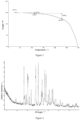
- the X-ray powder diffraction pattern of the above-mentioned crystal form A is as shown in FIG. 1 .
- the XRPD pattern analysis data of the above-mentioned crystal form A is as shown in Table 1.
- Table 1 Serial numbe r 2 ⁇ angle (°) Interplana r spacing ( ⁇ ) Relativ e intensit y (%) Serial numbe r 2 ⁇ angle (°) Interplana r spacing ( ⁇ ) Relativ e intensit y (%) 1 8.799 10.0419 3.6 22 24.07 2 3.6939 22.7 2 9.553 9.2500 12.4 23 24.66 4 3.6066 33.2 3 11.89 4 7.4343 27.4 24 25.55 2 3.4832 1.1 4 12.72 7 6.9499 5.5 25 26.11 9 3.4089 3.2 5 13.12 1 6.7421 8.5 26 26.36 1 3.3781 8.4 6 14.02 4 6.3099 3.2 27 27.75 6 3.2114 7.4 7 15.37 0 5.7600 15.2 28 28.44 7 3.1350 0.5 8 16.15 5 5.4819 1.3 29 28.86 4 3.0907 2.2 9
- the above-mentioned crystal form A may also be characterized by DSC, with an initial temperature of 266.07°C and a peak temperature of 271.79°C.
- the differential scanning calorimetry profile of the above-mentioned crystal form A has an endothermic peak at 271.79°C ⁇ 3°C.
- the differential scanning calorimetry profile pattern of the above-mentioned crystal form A is as shown in FIG. 2 .
- the above-mentioned crystal form A may also be characterized by TGA, wherein the TGA pattern shows that when the crystal form is heated to 110.82°C, the weight is reduced by 0.1075%; when heated to 229.08°C, the weight is further reduced by 0.9974%; there occurs a larger weight loss after 229.08°C.
- thermogravimetric analysis profile of the above-mentioned crystal form A shows 0.1075% of weight loss at 110.82°C ⁇ 3°C and 1.105% of weight loss at 229.08°C ⁇ 3°C.
- thermogravimetric analysis profile pattern of the above-mentioned crystal form A is as shown in FIG. 3 .
- the present invention further provides a compound of formula (II).
- the present invention further provides a crystal form B of the compound of formula (II), characterized in that the X-ray powder diffraction pattern thereof has characteristic diffraction peaks at the following 2 ⁇ angles: 13.349 ⁇ 0.2°, 19.012 ⁇ 0.2°, 20.235 ⁇ 0.2° and 23.370 ⁇ 0.2°; wherein the X-ray powder diffraction pattern is obtained using Cu-K ⁇ radiation.
- the X-ray powder diffraction pattern of the above-mentioned crystal form B has characteristic diffraction peaks at the following 2 ⁇ angles: 13.349 ⁇ 0.2°, 15.066 ⁇ 0.2°, 16.782 ⁇ 0.2°, 19.012 ⁇ 0.2°, 20.235 ⁇ 0.2°, 22.027 ⁇ 0.2°, 23.370 ⁇ 0.2° and 27.253 ⁇ 0.2°; wherein the X-ray powder diffraction pattern is obtained using Cu-K ⁇ radiation.
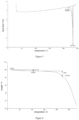
- the X-ray powder diffraction pattern of the above-mentioned crystal form B is as shown in FIG. 4 .
- the XRPD pattern analysis data of the above-mentioned crystal form B is as shown in Table 2.
- Table 2 Serial numbe r 2 ⁇ angle (°) Interplana r spacing ( ⁇ ) Relativ e intensit y (%) Serial numbe r 2 ⁇ angle (°) Interplana r spacing ( ⁇ ) Relativ e intensit y (%) 1 9.469 9.3321 13.6 16 24.98 4 3.5612 22.2 2 13.34 9 6.6271 89.7 17 25.44 2 3.498 34.9 3 13.56 8 6.5209 20.7 18 26.84 3 3.3186 34.5 4 14.21 9 6.2235 21.1 19 27.25 3 3.2696 37.9 5 14.51 2 6.0986 23.2 20 27.90 5 3.1946 12 6 15.06 6 5.8758 71.9 21 28.63 9 3.1144 16.5 7 15.33 9 5.7719 68.9 22 30.74 5 2.9057 14.8 8 16.02 9 5.5247 19.2 23 31.89 5 2.8035 9.
- the above-mentioned crystal form B may also be characterized by DSC, which has an endothermic peak at 234.43°C ⁇ 3°C.
- the differential scanning calorimetry profile of the above-mentioned crystal form B has an endothermic peak at 234.43°C ⁇ 3°C.
- the differential scanning calorimetry profile pattern of the above-mentioned crystal form B is as shown in FIG. 5 .
- the above-mentioned crystal form B may also be characterized by TGA, wherein the TGA pattern shows that when the crystal form is heated to 120°C, the weight is reduced by 0.3043%; when heated to 238.46°C, the weight is further reduced by 1.295%.
- thermogravimetric analysis profile of the above-mentioned crystal form B shows 0.3043% of weight loss at 120°C ⁇ 3°C and 1.599% of weight loss at 238.46°C ⁇ 3°C.
- thermogravimetric analysis profile pattern of the above-mentioned crystal form B is as shown in FIG. 6 .
- the present invention further provides a hydrochloride, sulfate and methanesulfonate of the compound of formula (I).
- the above-mentioned hydrochloride is
- the above-mentioned sulfate is
- the above-mentioned methanesulfonate is N-(2-aminoesulfonate
- the present invention further provides the use of the above-mentioned compounds or crystal forms in the preparation of a medicine for treating cancers.
- the process for preparing the salt form and crystal form provided in the present invention is simple; moreover, the crystal form is stable under the conditions of high temperature and high humidity and is slightly hygroscopic, and the salt form has good solubility in pure water and a biological vehicle and has good prospects for preparation.
- the intermediate compounds of the present invention can be prepared by various synthetic methods well known to a person skilled in the art, including the specific embodiments listed below, the embodiments formed by the combination with other chemical synthesis methods, and equivalent alternative embodiments well known to a person skilled in the art, wherein the preferred embodiments include but are not limited to the examples of the present invention.
- the X-ray powder diffractometer (XRPD) is determined by using the following method:
- the differential scanning calorimeter is determined by using the following method: instrument model: TA Q2000 differential scanning calorimeter.
- Test method place about 1 mg of sample in a DSC aluminum pan for testing; under the condition of 50 mL/min of nitrogen, heat the sample from 30°C (room temperature) to 300°C (or 350°C) at a heating rate of 10°C/min.
- the thermal gravimetric analyzer is determined by using the following method: instrument model: TA Q5000 thermogravimetric analyzer.
- Test method place 2-5 mg of sample in a TGA platinum pan for testing; under the condition of 25 mL/min N 2 , heat the sample from room temperature to 300°C or to 20% of weight loss at a heating rate of 10°C/min.
- the dynamic vapor sorption (DVS) is determined by using the following method: instrument model: SMS DVS Advantage dynamic vapor sorption instrument
- Test condition place 10 - 15 mg of sample in a DVS sample disk for testing.
- the classification of hygroscopicity evaluation is as follows: Classification of hygroscopicity Hygroscopic weight gain* Deliquescence Absorbing enough moisture to form a liquid Extremely hygroscopic ⁇ W% ⁇ 15% Hygroscopic 15% > ⁇ W% ⁇ 2% Slightly hygroscopic 2% > ⁇ W% ⁇ 0.2% Not or almost not hygroscopic ⁇ W% ⁇ 0.2% * Hygroscopic weight gain ( ⁇ W%) at 25°C ⁇ 1°C and 80% ⁇ 2% RH
- Step A Ethyl acetate (291.41 ml, 2.98 mol) was dissolved in toluene (750.00 ml), and then sodium ethoxide(135.06 g, 1.98 mol) was added portionwise at room temperature thereto, and the reaction mixture was stirred at room temperature for 1 hour.
- 1-1 (150.00 g, 992.33 mmol) was added to the above-mentioned reaction solution at 25°C, and then heated to 95°C and stirred for 15 hours.
- the reaction mixture was cooled to about 30°C, adjusted to pH 7 with acetic acid, diluted with water (500 ml), and then extracted with ethyl acetate (500 ml).
- Step B 1-2 (120.00 g, 579.07 mmol) was dissolved in pyridine (300 ml), and then p-toluenesulfonate salt (172.01 g, 631.66 mmol) of 1-aminopyrrolidine-2-one was added thereto.
- the reaction mixture was stirred at 25°C for 16 hours, and then concentrated under reduced pressure to remove the solvent.
- the residue was diluted with water (300 ml), and then extracted with ethyl acetate (300 ml ⁇ 2). The combined organic phase was dried over anhydrous sodium sulfate, filtered and concentrated under reduced pressure to afford 1-3.
- Step C 1-3 (155.00 g, 535.72 mmol) was dissolved in toluene, and then sodium ethoxide (72.91 g, 1.07 mol) was added thereto.
- the reaction mixture was heated to 100°C and stirred for 16 hours, and subsequently cooled to room temperature.
- the combined organic phase was dried over anhydrous sodium sulfate, filtered and concentrated under reduced pressure.
- Step D 1-4 (45.00 g, 184.99 mmol) was dissolved in N,N- dimethylformamide (650.00 ml), and then NBS (49.09 g, 258.99 mmol) was added thereto.
- the combined organic phase was washed once with sodium hydroxide (0.5 mol/L, 800 ml), dried over anhydrous sodium sulfate, filtered and concentrated under reduced pressure.
- Step B In a 500-ml three-necked flask equipped with a thermometer and a nitrogen balloon, 2-diethoxyphosphoryl acetonitrile (3.83 g, 21.61 mmol, 3.48 ml) and tetrahydrofuran (80 ml) were added. The mixture was cooled to 0°C, and then potassium tert-butoxide (2.42 g, 21.61 mmol) was added portionwise thereto. The reaction mixture was stirred at 0°C for 15 minutes, and then added dropwise to another suspension ( 1-8 was dispersed in tetrahydrofuran (120 ml) and cooled to 0°C) through a dropping funnel.
- Step C 1-9 (4.50 g, 15.20 mmol), 1-6 (4.43 g, 18.24 mmol), sodium carbonate (4.83 g, 45.60 mmol), [1,1'-bis(diphenylphosphino)ferrocene]palladium dichloride (556.07 mg, 759.96 ⁇ mol), 2-dicyclohexylphosphino-2',6'-dimethoxybiphenyl (311.98 mg, 759.96 ⁇ mol), and [2-(2-aminophenyl)phenyl]-chloro-palladium-cyclohexyl-[2-(2,6-dimethoxyphenyl)phenyl]phosphine (547.64 mg, 759.96 ⁇ mol) were added to the mixed solvent of dioxane (100 ml) and water (20 ml).
- the mixture was ventilated with nitrogen three times and then heated to 90°C-100°C and stirred for 2 hours.
- the reaction mixture was poured into water (200 ml) and quenched, and extracted with dichloromethane (200 ml ⁇ 2).
- the combined organic phase was washed with brine (200 ml), dried over anhydrous sodium sulfate, filtered and concentrated under reduced pressure.
- Step D 1-10 (5.37 g, 14.62 mmol) was dissolved in the mixed solvent of dichloromethane (20 ml), dimethyl sulfoxide (70 ml) and water (20 ml), and then hydrogen peroxide (8.29 g, 73.10 mmol, 7.02 ml, 30%) and sodium hydroxide (2 mol/L, 14.62 ml) were respectively added thereto. The mixture was stirred at 15°C-20°C for 12 hours. The mixture was poured into water (200 ml) and quenched, and extracted with the mixed solvent of dichloromethane/isopropanol (3/1) (200 ml ⁇ 1).
- TGF- ⁇ RI inhibition activity of the compound of formula (I) is better than that of LY2157299 under the same experimental conditions as described above.
- Crystal form A of the compound of formula (I) was placed in an open clean container at 60°C, and samples were taken on the 30th, 60th and 90th days respectively for testing. Comparing with the initial test results on day 0, the test results are shown in Table 4 below.
- Table 4 Crystallization high-temperature stability test of the compound of formula (I) Sampling time (days) Appearance Content (%) Total impurities (%) Study on crystal form 0 Off-white powder 99.0 0.57 Crystal form A 30 Off-white powder 97.5 0.56 Crystal form A 60 Off-white powder 100.0 0.58 Crystal form A 90 Off-white powder 99.9 0.55 Crystal form A
- Crystal form A of the compound of formula (I) was placed in a open container with constant temperature and humidity for accelerated test, with the conditions of 40°C/75% humidity (open), and samples were taken on the 30th, 60th and 90th days for testing. Comparing with the initial test results on day 0, the test results are shown in Table 5 below: Table 5 Crystallization high-humidity stability test of the compound of formula (I) Test conditions Sampling time (days) Appearance Content (%) Total impurities (%) Study on crystal form 40°C/75% humidity (open) 0 Off-white powder 99.0 0.57 Crystal form A 30 Off-white powder 100.6 0.57 Crystal form A 60 Off-white powder 101.1 0.58 Crystal form A 90 Off-white powder 100.4 0.58 Crystal form A
Landscapes
- Chemical & Material Sciences (AREA)
- Organic Chemistry (AREA)
- Health & Medical Sciences (AREA)
- Veterinary Medicine (AREA)
- General Health & Medical Sciences (AREA)
- Medicinal Chemistry (AREA)
- Public Health (AREA)
- Pharmacology & Pharmacy (AREA)
- Life Sciences & Earth Sciences (AREA)
- Animal Behavior & Ethology (AREA)
- General Chemical & Material Sciences (AREA)
- Nuclear Medicine, Radiotherapy & Molecular Imaging (AREA)
- Chemical Kinetics & Catalysis (AREA)
- Epidemiology (AREA)
- Pharmaceuticals Containing Other Organic And Inorganic Compounds (AREA)
- Nitrogen And Oxygen Or Sulfur-Condensed Heterocyclic Ring Systems (AREA)
- Medicines That Contain Protein Lipid Enzymes And Other Medicines (AREA)
Description
- The present application claims the following right of priority:
-
CN 201711331447.7, date of filing: 13 December, 2017 - The present invention relates to a crystal form and salt form of a TGF-βRI inhibitor, and a preparation method therefor, and further comprises the use of the crystal form and salt form in the preparation of a medicine for treating cancers.
- Transforming growth factor-β (TGF-β) is a multi-functional growth factor superfamily with a wide range of biological activities, involving in early embryonic development, cartilage and bone formation, synthesis of extracellular matrix, inflammation, interstitial fibrosis, regulation of immune and endocrine functions, and tumor formation and development.
- The TGF-β superfamily consists of a class of structurally and functionally related polypeptide growth factors, including TGF-βs (i.e., TGF-β in a narrow sense), activins, inhibins, and bone morphogenetic proteins (BMP) (i.e., mullerian), wherein the TGF-β is one of the important members of this family. In mammals, the TGF-β mainly exists in three forms: TGF-β1, TGF-β2 and TGF-β3, which are located on different chromosomes, among which the TGF-β1 accounts for the highest proportion (> 90%) in somatic cells, and has the strongest activity, the most functions and the most widespread distribution. The newly synthesized TGF-β appears as an inactive precursor, which consists of three parts: a signal peptide, a latency-associated polypeptide (LAP) and a mature TGF-β. After enzymatic hydrolysis, an active TGF-β is formed and then binds to a receptor thereof to exert a biological effect.
- TGF-β signaling molecules perform signal transduction through a transmembrane receptor complex. TGF-β receptors are transmembrane proteins that exist on the surface of cells. They are divided into type I receptors (TGF-βRI), type II receptors (TGF-βRII) and type III receptors (TGF-βRIII), wherein the TGF-βRI is also called activin receptor-like kinase 5 (ALK5). The TGF-βRIII lacks intrinsic activity, which is mainly related to the storage of the TGF-β. The TGF-βRI and the TGF-βRII belong to the serine/threonine kinase family. Type II receptors can bind to TGF-β ligands with higher affinity and form heterologous receptor complexes with type I receptors. A region rich in glycine and serine residues of the type I receptors (a GS domain) near the membrane is phosphorylated to initiate intracellular signaling cascade reactions.
- Smads is an important TGF-β signal transduction and regulation molecule in the cell, which can directly transduce the TGF-β signal from the cell membrane into the cell nucleus. TGF-β/Smads signaling pathway plays an important role in the occurrence and development of tumors. In the TGF-β/Smads signal transduction, the activated TGF-β first binds to TGF-βRII on the cell membrane surface to form a heterodimeric complex, and TGF-βRI recognizes and binds to the binary complex.
- The TGF-βRII phosphorylates the serine/threonine in the GS domain of the TGF-βRI cytoplasmic region, thereby activating the TGF-βRI; the activated TGF-βRI further phosphorylates the R-Smads (Smad2/Smad3) protein which then binds to Co-Smad (Smad4) to form a heterotrimeric complex, wherein the complex enters the nucleus and cooperates with other co-activators and co-inhibitors to regulate the transcription of target genes. Changes in any part of the TGF-β/Smads signaling pathway will result in abnormalities in the signal transduction pathway.
- Current research shows that in tumor cells, the TGF-β may directly affect the tumor growth (extrinsic effects of the TGF-β signaling), or may indirectly affect the tumor growth (intrinsic effects of the TGF-β) by inducing epithelial-mesenchymal transition, blocking anti-tumor immune responses, increasing tumor-related fibrosis and enhancing vascular regeneration. Moreover, the TGF-β has a strong fibrosis induction effect and is an activator of fibroblasts associated with tumors. These fibroblasts are the main source of collagen type I and other fibrotic factors. The induced products of fibroblasts and other fibrotic factors may continue to create a microenvironment in which the immune response is reduced, drug resistance is increased and tumor angiogenesis is enhanced. In addition, the TGF-β affects angiogenesis during individual development and tumor growth. For example, TGF-βRI-deficient mouse embryos showed severe defects in vascular development, proving that the TGF-β signaling pathway is a key regulator in the development of vascular endothelium and smooth muscle cells.
WO2016/160881 andWO2004/050659 both relate to small molecule compounds described as TGF-beta inhibitors. - In 2013, the FDA approved the small-molecule TGF-βRI inhibitor LY2157299 (
WO 2002/094833 ) from Eli Lilly for the treatment of glioma and liver cancer. The LY2157299 is an orphan drug under development, named Galunisertib. The Galunisertib can not only inhibit the invasion and metastasis of tumor cells, but also inhibit the infiltration of tumor cells into blood vessels. In the phase 2 clinical trial for the treatment of liver cancer patients, after treatment with the Galunisertib, approximately 23% of patients had a decrease in serum alpha-fetoprotein (AFP) levels by at least 20%. Compared with patients who did not respond to AFP, these patients had slower tumor progression and longer survival span, and also increased expression of cadherin in epithelial cells, indicating that the Galunisertib may regulate ENT by inhibiting the TGF-β signaling pathway, thereby inhibiting liver cancer progression. - The structure of the Galunisertib (LY2157299) is as shown in formula (III):

- In addition to the therapeutic efficacy, drug developers make attempts to provide suitable forms of active molecules with pharmaceutical properties, wherein the properties involve processing, manufacturing, storage stability, etc. Therefore, it has been found that forms with the desired properties are essential for drug development.
- The present invention provides a crystal form A of a compound of formula (I), characterized in that the X-ray powder diffraction pattern thereof has characteristic diffraction peaks at the following 2θ angles: 11.894° ± 0.2°, 17.502° ± 0.2°, 19.785° ± 0.2°, 24.072° ± 0.2° and 24.664° ± 0.2°.
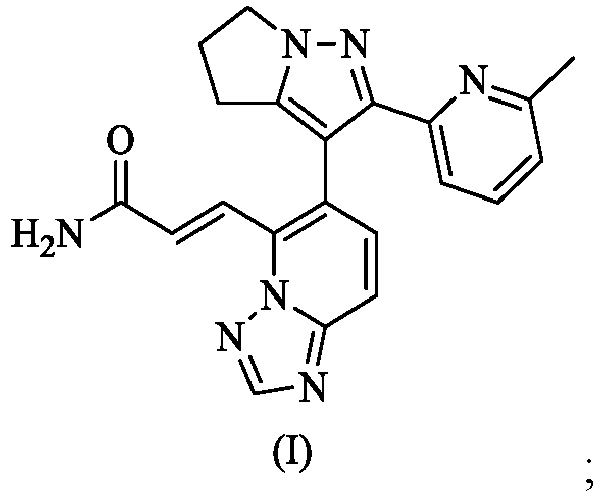
- In some embodiments of the present invention, the X-ray powder diffraction pattern of the above-mentioned crystal form A has characteristic diffraction peaks at the following 2θ angles: 9.553° ± 0.2°, 11.894° ± 0.2°, 15.370° ± 0.2°, 17.502° ± 0.2°, 19.785° ± 0.2°, 20.283° ± 0.2°, 24.072° ± 0.2° and 24.664° ± 0.2°; wherein the X-ray powder diffraction pattern is obtained using Cu-Kα radiation.
- In some embodiments of the present invention, the X-ray powder diffraction pattern of the above-mentioned crystal form A is as shown in
FIG. 1 . - In some embodiments of the present invention, the XRPD pattern analysis data of the above-mentioned crystal form A is as shown in Table 1.
Table 1 Serial numbe r 2θ angle (°) Interplana r spacing (Å) Relativ e intensit y (%) Serial numbe r 2θ angle (°) Interplana r spacing (Å) Relativ e intensit y (%) 1 8.799 10.0419 3.6 22 24.07 2 3.6939 22.7 2 9.553 9.2500 12.4 23 24.66 4 3.6066 33.2 3 11.89 4 7.4343 27.4 24 25.55 2 3.4832 1.1 4 12.72 7 6.9499 5.5 25 26.11 9 3.4089 3.2 5 13.12 1 6.7421 8.5 26 26.36 1 3.3781 8.4 6 14.02 4 6.3099 3.2 27 27.75 6 3.2114 7.4 7 15.37 0 5.7600 15.2 28 28.44 7 3.1350 0.5 8 16.15 5 5.4819 1.3 29 28.86 4 3.0907 2.2 9 16.85 0 5.2573 7.6 30 29.28 5 3.0471 0.8 10 17.50 2 5.0628 59.1 31 30.18 6 2.9582 2.9 11 19.13 2 4.6351 6.7 32 30.44 2 2.9339 1.5 12 19.78 5 4.4837 100 33 31.11 9 2.8716 1.8 13 20.02 7 4.4299 7.3 34 31.56 5 2.8320 5.2 14 20.28 3 4.3746 17.1 35 32.29 8 2.7694 3.4 15 20.74 2 4.2789 0.8 36 33.61 6 2.6638 2 16 20.99 2 4.2285 7.7 37 35.38 2 2.5348 2.5 17 21.36 6 4.1553 1.4 38 36.32 2.4714 3.4 18 22.37 6 3.9700 1.4 39 36.95 2 2.4306 0.9 19 23.09 9 3.8472 3 40 39.14 3 2.2994 1 20 23.43 7 3.7925 7 41 39.48 4 2.2804 1.3 21 23.85 0 3.7278 2.1 - In some embodiments of the present invention, the above-mentioned crystal form A may also be characterized by DSC, with an initial temperature of 266.07°C and a peak temperature of 271.79°C.
- In some embodiments of the present invention, the differential scanning calorimetry profile of the above-mentioned crystal form A has an endothermic peak at 271.79°C ±3°C.
- In some embodiments of the present invention, the differential scanning calorimetry profile pattern of the above-mentioned crystal form A is as shown in
FIG. 2 . - In some embodiments of the present invention, the above-mentioned crystal form A may also be characterized by TGA, wherein the TGA pattern shows that when the crystal form is heated to 110.82°C, the weight is reduced by 0.1075%; when heated to 229.08°C, the weight is further reduced by 0.9974%; there occurs a larger weight loss after 229.08°C.
- In some embodiments of the present invention, the thermogravimetric analysis profile of the above-mentioned crystal form A shows 0.1075% of weight loss at 110.82°C ± 3°C and 1.105% of weight loss at 229.08°C ± 3°C.
- In some embodiments of the present invention, the thermogravimetric analysis profile pattern of the above-mentioned crystal form A is as shown in
FIG. 3 . - The present invention further provides a compound of formula (II).

- The present invention further provides a crystal form B of the compound of formula (II), characterized in that the X-ray powder diffraction pattern thereof has characteristic diffraction peaks at the following 2θ angles: 13.349 ± 0.2°, 19.012 ± 0.2°, 20.235 ± 0.2° and 23.370 ± 0.2°; wherein the X-ray powder diffraction pattern is obtained using Cu-Kα radiation.
- In some embodiments of the present invention, the X-ray powder diffraction pattern of the above-mentioned crystal form B has characteristic diffraction peaks at the following 2θ angles: 13.349 ± 0.2°, 15.066 ± 0.2°, 16.782 ± 0.2°, 19.012 ± 0.2°, 20.235 ± 0.2°, 22.027 ± 0.2°, 23.370 ± 0.2° and 27.253 ± 0.2°; wherein the X-ray powder diffraction pattern is obtained using Cu-Kα radiation.
- In some embodiments of the present invention, the X-ray powder diffraction pattern of the above-mentioned crystal form B is as shown in
FIG. 4 . - In some embodiments of the present invention, the XRPD pattern analysis data of the above-mentioned crystal form B is as shown in Table 2.
Table 2 Serial numbe r 2θ angle (°) Interplana r spacing (Å) Relativ e intensit y (%) Serial numbe r 2θ angle (°) Interplana r spacing (Å) Relativ e intensit y (%) 1 9.469 9.3321 13.6 16 24.98 4 3.5612 22.2 2 13.34 9 6.6271 89.7 17 25.44 2 3.498 34.9 3 13.56 8 6.5209 20.7 18 26.84 3 3.3186 34.5 4 14.21 9 6.2235 21.1 19 27.25 3 3.2696 37.9 5 14.51 2 6.0986 23.2 20 27.90 5 3.1946 12 6 15.06 6 5.8758 71.9 21 28.63 9 3.1144 16.5 7 15.33 9 5.7719 68.9 22 30.74 5 2.9057 14.8 8 16.02 9 5.5247 19.2 23 31.89 5 2.8035 9.1 9 16.78 2 5.2784 37.3 24 33.88 3 2.6434 6.7 10 19.01 2 4.6642 93.6 25 34.37 3 2.6068 5 11 20.23 5 4.3849 100 26 34.83 1 2.5736 7.6 12 21.66 9 4.0978 34 27 36.76 5 2.4426 5.8 13 22.02 7 4.032 58.8 28 37.05 7 2.424 4.2 14 22.22 9 3.9959 28.6 29 38.06 1 2.3623 7.7 15 23.37 0 3.8033 81.3 30 38.57 6 2.332 9.3 - In some embodiments of the present invention, the above-mentioned crystal form B may also be characterized by DSC, which has an endothermic peak at 234.43°C ± 3°C.
- In some embodiments of the present invention, the differential scanning calorimetry profile of the above-mentioned crystal form B has an endothermic peak at 234.43°C ± 3°C.
- In some embodiments of the present invention, the differential scanning calorimetry profile pattern of the above-mentioned crystal form B is as shown in
FIG. 5 . - In some embodiments of the present invention, the above-mentioned crystal form B may also be characterized by TGA, wherein the TGA pattern shows that when the crystal form is heated to 120°C, the weight is reduced by 0.3043%; when heated to 238.46°C, the weight is further reduced by 1.295%.
- In some embodiments of the present invention, the thermogravimetric analysis profile of the above-mentioned crystal form B shows 0.3043% of weight loss at 120°C ± 3°C and 1.599% of weight loss at 238.46°C ± 3°C.
- In some embodiments of the present invention, the thermogravimetric analysis profile pattern of the above-mentioned crystal form B is as shown in
FIG. 6 . - The present invention further provides a hydrochloride, sulfate and methanesulfonate of the compound of formula (I).
- In some embodiments of the present invention, the above-mentioned hydrochloride is

- In some embodiments of the present invention, the above-mentioned sulfate is

- In some embodiments of the present invention, the above-mentioned methanesulfonate is

- The present invention further provides the use of the above-mentioned compounds or crystal forms in the preparation of a medicine for treating cancers.
- The process for preparing the salt form and crystal form provided in the present invention is simple; moreover, the crystal form is stable under the conditions of high temperature and high humidity and is slightly hygroscopic, and the salt form has good solubility in pure water and a biological vehicle and has good prospects for preparation.
- Unless otherwise stated, the following terms and phrases used herein are intended to have the following meanings. A specific phrase or term should not be considered uncertain or unclear unless specifically defined, but should be understood in an ordinary meaning. When a trade name appears herein, it is intended to refer to the corresponding commodity or an active ingredient thereof.
- The intermediate compounds of the present invention can be prepared by various synthetic methods well known to a person skilled in the art, including the specific embodiments listed below, the embodiments formed by the combination with other chemical synthesis methods, and equivalent alternative embodiments well known to a person skilled in the art, wherein the preferred embodiments include but are not limited to the examples of the present invention.
- The chemical reactions described in the specific embodiments of the present invention are completed in a suitable solvent, wherein the solvent must be suitable for the chemical changes of the present invention and the reagents and materials required thereby. In order to obtain the compounds of the present invention, sometimes a person skilled in the art needs to modify or select synthesis steps or reaction schemes based on the existing embodiments.
- The present invention will be specifically described below by way of examples which are not intended to limit the present invention in any way.
- All solvents used in the present invention are commercially available and can be used without further purification.
- The following abbreviations are used in the present invention: r.t. represents room temperature; aq represents aqueous solution; eq represents equivalent; DCM represents dichloromethane; THF represents tetrahydrofuran; DMSO represents dimethyl sulfoxide; DMF represents N,N-dimethylformamide; EtOAc represents ethyl acetate; EtOH represents ethanol; MeOH represents methanol; dioxane represents dioxane; HOAc represents acetic acid; DIPEA represents diisopropylethylamine; TEA or Et3N represents triethylamine; Na2CO3represents sodium carbonate; K2CO3 represents potassium carbonate; NaHCO3 represents sodium bicarbonate; Na2SO4 represents sodium sulfate; NaOH represents sodium hydroxide; LiHMDS represents lithium bis(trimethylsilyl)amine; Pd(dppf)Cl2 represents [1,1'-bis(diphenylphosphino)ferrocene]palladium dichloride; Xphos represents 2-dicyclohexylphosphino-2',4',6'-triisopropylbiphenyl; Xphos-PD-G2 represents chloro(2-dicyclohexylphosphino-2',4',6'-triisopropyl-1,1'-biphenyl) [2-(2'-amino-1,1'-biphenyl)palladium (II); NBS represents N-bromosuccinimide; HCl represents hydrochloric acid; H2SO4 represents sulfuric acid; °C represents degree centigrade.
- Compounds are named by hand or ChemDraw® software, and commercially available compounds named by the supplier catalog names.
- In the present invention, the X-ray powder diffractometer (XRPD) is determined by using the following method:
- instrument model: Bruker D8 advance X-ray diffractometer;
- test method: approximately 10 - 20 mg of sample is used for XRPD detection.
- The detailed XRPD parameters are as follows:
- X-ray tube: Cu, kα, (λ = 1.54056Ǻ);
- tube voltage: 40 kV, tube current: 40 mA;
- divergence slit: 0.60 mm;
- detector slit: 10.50 mm;
- anti-scatter slit: 7.10 mm;
- scanning range: 3-40 deg or 4-40 deg;
- step size: 0.02 deg;
- step length: 0.12 sec;
- sample disk rotating speed: 15 rpm.
- In the present invention, the differential scanning calorimeter (DSC) is determined by using the following method:
instrument model: TA Q2000 differential scanning calorimeter. - Test method: place about 1 mg of sample in a DSC aluminum pan for testing; under the condition of 50 mL/min of nitrogen, heat the sample from 30°C (room temperature) to 300°C (or 350°C) at a heating rate of 10°C/min.
- In the present invention, the thermal gravimetric analyzer (TGA) is determined by using the following method:
instrument model: TA Q5000 thermogravimetric analyzer. - Test method: place 2-5 mg of sample in a TGA platinum pan for testing; under the condition of 25 mL/min N2, heat the sample from room temperature to 300°C or to 20% of weight loss at a heating rate of 10°C/min.
- In the present invention, the dynamic vapor sorption (DVS) is determined by using the following method:
instrument model: SMS DVS Advantage dynamic vapor sorption instrument - Test condition: place 10 - 15 mg of sample in a DVS sample disk for testing.
- The detailed DVS parameters are as follows:
- temperature: 25°C
- balance: dm/dt = 0.01 %/min (minimum: 10 min; maximum: 180 min)
- drying: dry for 120 min at 0% RH
- RH (%) test step: 10%
- RH (%) test step range: 0%-90%-0%
- The classification of hygroscopicity evaluation is as follows:
Classification of hygroscopicity Hygroscopic weight gain* Deliquescence Absorbing enough moisture to form a liquid Extremely hygroscopic ΔW% ≥ 15 % Hygroscopic 15% > ΔW% ≥ 2% Slightly hygroscopic 2% > ΔW% ≥ 0.2% Not or almost not hygroscopic ΔW% < 0.2% * Hygroscopic weight gain (ΔW%) at 25°C ± 1°C and 80% ± 2% RH -
-
Figure 1 is the XRPD pattern of the crystal form A of the compound of formula (I). -
Figure 2 is the DSC pattern of the crystal form A of the compound of formula (I). -
Figure 3 is the TGA pattern of the crystal form A of the compound of formula (I) . -
Figure 4 is the XRPD pattern of the crystal form B of the compound of formula (II). -
Figure 5 is the DSC pattern of the crystal form B of the compound of formula (II) . -
Figure 6 is the TGA pattern of the crystal form B of the compound of formula (II). -
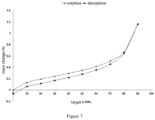
Figure 7 is the DVS pattern of the crystal form B of the compound of formula (II). - In order to better understand the content of the present invention, the following specific examples are used for further description, but the specific embodiments do not limit the content of the present invention.
-

-

- Step A: Ethyl acetate (291.41 ml, 2.98 mol) was dissolved in toluene (750.00 ml), and then sodium ethoxide(135.06 g, 1.98 mol) was added portionwise at room temperature thereto, and the reaction mixture was stirred at room temperature for 1 hour. 1-1 (150.00 g, 992.33 mmol) was added to the above-mentioned reaction solution at 25°C, and then heated to 95°C and stirred for 15 hours. The reaction mixture was cooled to about 30°C, adjusted to pH 7 with acetic acid, diluted with water (500 ml), and then extracted with ethyl acetate (500 ml). The organic phase was dried over anhydrous sodium sulfate, filtered and concentrated under reduced pressure. The residue was purified by a silica gel column (eluent: petroleum ether/ethyl acetate v/v = 50/1) to afford 1-2.
- Step B: 1-2 (120.00 g, 579.07 mmol) was dissolved in pyridine (300 ml), and then p-toluenesulfonate salt (172.01 g, 631.66 mmol) of 1-aminopyrrolidine-2-one was added thereto. The reaction mixture was stirred at 25°C for 16 hours, and then concentrated under reduced pressure to remove the solvent. The residue was diluted with water (300 ml), and then extracted with ethyl acetate (300 ml × 2). The combined organic phase was dried over anhydrous sodium sulfate, filtered and concentrated under reduced pressure to afford 1-3.
- Step C: 1-3 (155.00 g, 535.72 mmol) was dissolved in toluene, and then sodium ethoxide (72.91 g, 1.07 mol) was added thereto. The reaction mixture was heated to 100°C and stirred for 16 hours, and subsequently cooled to room temperature. The reaction mixture was slowly diluted with water (1.5 L), adjusted to pH 4 with concentrated hydrochloric acid, and extracted with dichloromethane/isopropanol (v/v = 10/1, 1 L × 7). The combined organic phase was dried over anhydrous sodium sulfate, filtered and concentrated under reduced pressure. The residue was slurried with petroleum ether/ethyl acetate (v/v = 10/1, 200 ml) and filtered, and the solid was collected. The solid was dried under reduced pressure to afford 1-4.
- Step D: 1-4 (45.00 g, 184.99 mmol) was dissolved in N,N-dimethylformamide (650.00 ml), and then NBS (49.09 g, 258.99 mmol) was added thereto. The reaction mixture was stirred at 30°C-40°C for 60 hours, and then diluted with water (600 ml) and extracted with dichloromethane/isopropanol (v/v = 10/1, 500 ml × 3). The combined organic phase was washed once with sodium hydroxide (0.5 mol/L, 800 ml), dried over anhydrous sodium sulfate, filtered and concentrated under reduced pressure. The resulting solid was slurried with petroleum ether/ethyl acetate (v/v = 10/1, 200 ml) and filtered, and the solid was collected. The solid was dried under reduced pressure to afford 1-5.
- Step E: 1-5 (1.00 g, 3.60 mmol) and triisopropyl borate (1.79 g, 9.54 mmol) were dissolved in tetrahydrofuran (20.00 ml). The reaction mixture was cooled to minus 70°C, and then n-butyl lithium (2.5 M, 3.74 ml) was added dropwise. After the dropwise addition was complete, the reaction mixture was stirred at 25°C for 1 hour, and then adjusted to pH 7 with aqueous hydrochloric acid (0.5 mol/L). Then the reaction mixture was concentrated under reduced pressure to remove tetrahydrofuran, and then cooled to 15°C. The mixture was filtered, and the filter cake was slurried with petroleum ether/ethyl acetate (v/v = 10/1, 5.5 ml) and filtered, and the solid was collected which was dried under reduced pressure to afford 1-6.
-

- Step A: 1-7 (16.00 g, 65.30 mmol) was dissolved in tetrahydrofuran (800.00 ml), and after cooling to minus 60°C-minus 70°C, lithium hexamethyldisilazide (1 mol/L, 130.60 ml, 65.30 mmol) was added dropwise thereto. The reaction mixture was stirred at minus 60°C - minus 70°C for 15 minutes, and N,N-dimethylformamide (14.32 g, 195.90 mmol, 15.07 ml) was added thereto. Then the reaction mixture was stirred continuously at minus 60°C - minus 70°C for 15 minutes, and subsequently quenched with saturated aqueous ammonium chloride solution (500 ml). The reaction mixture was warmed to room temperature, and then extracted with ethyl acetate (500 ml × 2). The combined organic phase was washed with brine (500 ml), dried over anhydrous sodium sulfate, filtered and concentrated under reduced pressure. The residue was purified by a silica gel column (eluent: dichloromethane/ethyl acetate v/v = 10/1) to afford 1-8. 1H NMR (400MHz, DMSO-d6) δ 10.46 (s, 1H), 8.62 (s, 1H), 8.16 (d, J = 9.3 Hz, 1H), 7.88 (d, J = 9.3 Hz, 1H).
- Step B: In a 500-ml three-necked flask equipped with a thermometer and a nitrogen balloon, 2-diethoxyphosphoryl acetonitrile (3.83 g, 21.61 mmol, 3.48 ml) and tetrahydrofuran (80 ml) were added. The mixture was cooled to 0°C, and then potassium tert-butoxide (2.42 g, 21.61 mmol) was added portionwise thereto. The reaction mixture was stirred at 0°C for 15 minutes, and then added dropwise to another suspension (1-8 was dispersed in tetrahydrofuran (120 ml) and cooled to 0°C) through a dropping funnel. The reaction mixture was stirred at 0°C for 15 minutes, and then poured into water (300 ml) and quenched, and extracted with ethyl acetate (200 ml) and dichloromethane (200 ml × 2). The combined organic phase was washed with brine (300 ml), dried over anhydrous sodium sulfate, filtered and concentrated under reduced pressure. The residue was purified by a silica gel column (eluent: dichloromethane/ethyl acetate v/v = 200/1 to 10/1) to afford 1-9. 1H NMR (400MHz, CDCl3) δ 8.42 (s, 1H), 8.03 (d, J= 9.3 Hz, 1H), 7.98-7.91 (m, 1H), 7.85-7.78 (m, 1H), 7.60 (d, J = 9.2 Hz, 1H).
- Step C: 1-9 (4.50 g, 15.20 mmol), 1-6 (4.43 g, 18.24 mmol), sodium carbonate (4.83 g, 45.60 mmol), [1,1'-bis(diphenylphosphino)ferrocene]palladium dichloride (556.07 mg, 759.96 µmol), 2-dicyclohexylphosphino-2',6'-dimethoxybiphenyl (311.98 mg, 759.96 µmol), and [2-(2-aminophenyl)phenyl]-chloro-palladium-cyclohexyl-[2-(2,6-dimethoxyphenyl)phenyl]phosphine (547.64 mg, 759.96 µmol) were added to the mixed solvent of dioxane (100 ml) and water (20 ml). The mixture was ventilated with nitrogen three times and then heated to 90°C-100°C and stirred for 2 hours. The reaction mixture was poured into water (200 ml) and quenched, and extracted with dichloromethane (200 ml × 2). The combined organic phase was washed with brine (200 ml), dried over anhydrous sodium sulfate, filtered and concentrated under reduced pressure. The residue was purified by a silica gel column (eluent: dichloromethane/methanol, v/v = 30/1) to afford a crude product, which was stirred for 12 hours in the mixed solvent of petroleum ether/ethyl acetate (v/v = 5/1) and filtered, and the solid was collected which was concentrated and dried under reduced pressure to afford 1-10. 1H NMR (400MHz, CDCl3) δ 8.49 (s, 1H), 7.82-7.74 (m, 2H), 7.59-7.46 (m, 4H), 6.99 (dd, J= 2.6, 6.1 Hz, 1H), 4.39 (d, J = 6.3 Hz, 2H), 2.90-2.70 (m, 4H), 2.20 (s, 3H).
- Step D: 1-10 (5.37 g, 14.62 mmol) was dissolved in the mixed solvent of dichloromethane (20 ml), dimethyl sulfoxide (70 ml) and water (20 ml), and then hydrogen peroxide (8.29 g, 73.10 mmol, 7.02 ml, 30%) and sodium hydroxide (2 mol/L, 14.62 ml) were respectively added thereto. The mixture was stirred at 15°C-20°C for 12 hours. The mixture was poured into water (200 ml) and quenched, and extracted with the mixed solvent of dichloromethane/isopropanol (3/1) (200 ml × 1). The organic phase was washed with saturated aqueous sodium thiosulfate solution (200 ml), dried over anhydrous sodium sulfate, filtered and concentrated under reduced pressure. The residue was purified by preparative high performance liquid chromatography (column:
Phenomenex Gemini C18 250 × 50 mm × 10 µm; mobile phase: [water (0.05% ammonia v/v)-acetonitrile]; gradient: 5%-32%, 33; 80% minutes) to afford the compound of formula (I). 1H NMR (400MHz, CDCl3) δ 8.45 (s, 1H), 8.09 (d, J = 15.6 Hz, 1H), 7.85 (d, J= 15.6 Hz, 1H), 7.69 (d, J= 9.2 Hz, 1H), 7.55-7.45 (m, 2H), 7.37 (d, J = 7.8 Hz, 1H), 6.99 (d, J = 7.7 Hz, 1H), 5.93-5.65 (m, 2H), 4.35 (br. s., 2H), 2.99-2.64 (m, 4H), 2.33 (s, 3H). -

- 115 mg of the compound of formula (I) was added to a 8-ml glass bottle and 4 ml of tetrahydrofuran was added thereto, which form a suspension by ultrasonic-assisted solubilization; and then 1.05 equivalents of p-toluenesulfonic acid monohydrate was slowly added. The above-mentioned suspended sample was placed on a magnetic stirrer (40°C) and stirred for 16 hours. The sample solution was centrifuged, and the solid was taken and placed in a vacuum oven at 35°C for drying for 16 hours to afford the compound of formula (II). 1H NMR (400MHz, CD3OD) δ 8.61 (s, 1H), 8.14 (t, J = 8.0 Hz, 1H), 8.05 (d, J = 15.6 Hz, 1H), 7.90 (d, J = 8.8 Hz, 1H), 7.70 (dd, J= 8.4, 15.6 Hz, 4H), 7.54 (d, J= 15.6 Hz, 1H), 7.39 (d, J= 8.0 Hz, 1H), 7.20 (d, J = 7.6 Hz, 2H), 4.42 (m, 2H), 3.05-2.87 (m, 2H), 2.82 (s, 3H), 2.81-2.74 (m, 2H), 2.35 (s, 3H).
-

- 115 mg of the compound of formula (I) was added to a 8-ml glass bottle and 4 ml of tetrahydrofuran was added thereto, which form a suspension by ultrasonic-assisted solubilization; and then 1.05 equivalents of hydrochloric acid was slowly added. The above-mentioned suspended sample was placed on a magnetic stirrer (40°C) and stirred for 16 hours. The sample solution was centrifuged, and the solid was taken and placed in a vacuum oven at 35°C for drying for 16 hours. The resulting solid was added to an appropriate amount of acetone to prepare a suspension, stirred at 40°C and then centrifuged to discard the supernatant, and the solid sample was dried with an oil pump at room temperature to afford the compound of formula (IV).
-

- 115 mg of the compound of formula (I) was added to a 8-ml glass bottle and 4 ml of tetrahydrofuran was added thereto, which form a suspension by ultrasonic-assisted solubilization; and then 1.05 equivalents of sulfuric acid was slowly added. The above-mentioned suspended sample was placed on a magnetic stirrer (40°C) and stirred for 16 hours. The sample solution was centrifuged, and the solid was taken and placed in a vacuum oven at 35°C for drying for 16 hours to afford the compound of formula (V).
-

- 115 mg of the compound of formula (I) was added to a 8-ml glass bottle and 4 ml of tetrahydrofuran was added thereto, which form a suspension by ultrasonic-assisted solubilization; and then 1.05 equivalents of methanesulfonic acid was slowly added. The above-mentioned suspended sample was placed on a magnetic stirrer (40°C) and stirred for 16 hours. The sample solution was centrifuged, and the solid was taken and placed in a vacuum oven at 35°C for drying for 16 hours to afford the compound of formula (VI).
- 10 g of the compound of formula (I) was taken and placed in the mixed solvent of ethanol (80 ml) and water (40 ml), heated to 70°C-75°C and stirred until clear, and then filtered while hot; the filtrate was distilled under reduced pressure until the volume of the remaining solution was about 50 ml, and then cooled and allowed to stand for crystallization, and filtered; the resulting filter cake was dried under reduced pressure, and the solid obtained therefrom was the crystal form A of the compound of formula (I).
- 192 mg of the compound of formula (I) was weighed and added to a glass bottle. 10 ml of the mixed solvent of tetrahydrofuran : acetic acid (v/v = 9/1) was added, and after 30 minutes of ultrasonic-assisted solubilization, the sample was dissolved into a clear solution. The solution was placed on a magnetic stirrer (40°C) and stirred. After slowly adding 1.05 equivalents of p-toluenesulfonic acid monohydrate, the sample was stirred overnight. After naturally cooling to room temperature, the supernatant was discarded by centrifugation; 10 ml of tetrahydrofuran was added and stirred for half an hour, and then the supernatant was discarded again by centrifugation; the same process was repeated twice. The resulting solid was placed in a vacuum oven at 40°C for drying for 1 hour, and was further dried in the vacuum oven at 30°C for 16 hours after crush, affording the crystal form B of the compound of formula (II).
-
- 1) Compound to be tested: IC50 was determined by a method of 10 gradient points with three-fold dilution each, and the initial concentration was 5 µM.
- 2) The reaction system contained 10 µM of ATP.
- 3) When the percentage of enzyme activity of the sample at the highest concentration (compared to the solvent group) was less than 65%, the curve fitting was performed to calculate the IC50 value.
-
Sample TGF-βRI IC50 (nM) LY2157299 208 Compound of formula (I) 40 - Conclusion: The TGF-βRI inhibition activity of the compound of formula (I) is better than that of LY2157299 under the same experimental conditions as described above.
- 1 ml of biological vehicle solution (FaSSIF, FeSSIF and SGF) was pipetted respectively into a 1.5-ml glass bottle, and then added to the above-mentioned solution at a gradient of 2 mg until 10 mg or the mixture was saturated. The mixture was prepared in 2 parts in parallel, and then shaken at 37°C. Samples were taken after 4 hours and 24 hours, respectively. The samples taken were centrifuged quickly, and the supernatant was measured for pH value and diluted with a diluent to a suitable multiple, and then the concentration was determined by HPLC. The test results are as shown in Table 3 below.
Table 3 Solubility of different salt types of the compound of formula (I) in biological vehicle Condition State and pH value Concentration (mg/mL) 4 hours 4 hours 24 hours 24 hours 4 hours 24 hours Compound of formula (I) (free base) SGF soluble 2.37 soluble 2.43 1.997 1.994 FeSSIF turbid 4.97 turbid 4.95 0.565 0.637 FaSSIF turbid 6.45 turbid 6.42 0.352 0.421 Hydrochloride SGF soluble 2.04 soluble 2.05 4.343 4.427 FeSSIF turbid 4.52 turbid 4.52 1.028 1.065 FaSSIF soluble 3.96 soluble 3.97 4.378 4.195 Sulphate SGF soluble 1.77 soluble 1.84 4.885 4.952 FeSSIF turbid 4.22 turbid 4.21 1.530 1.504 FaSSIF soluble 2.44 soluble 2.50 4.998 5.000 Methanesulfonate SGF soluble 2.08 soluble 2.14 5.103 5.163 FeSSIF turbid 4.58 turbid 4.60 0.852 0.925 FaSSIF soluble 4.16 turbid 3.71 5.159 3.704 Compound of formula (II) (p-toluenesulfonate) SGF Suspension 3.45 Suspension 4.26 1.61 1.47 FeSSIF clear 1.89 clear 1.87 10.84 10.58 FaSSIF clear 3.15 clear 3.13 10.15 10.72 [Note]: SGF represents simulated gastric fluid; FaSSIF represents fasted-state simulated intestinal fluid; FeSSIF represents fed-state simulated intestinal fluid. - Conclusion: It can be seen from the results in the table above that the solubility of the compound of formula (II) in biological vehicle is significantly improved compared to the compound of formula (I).
- 2 mg of the sample of each compound was weighed and added to a 1.5-ml glass vial, and a certain volume of pure water was added with a pipette, and ultrasonic solubilization was performed appropriately. The study was conducted at room temperature and tested for solubilization. The approximate solubility results are as follows:
Sample Amount of pure water added (µL) Approximate solubility S (mg/mL) Compound of formula (I) >1000 S < 1.9 Compound of formula (II) 20-40 49.0<S<98.0 - Conclusion: The approximate solubility of the compound of formula (II) in pure water is significantly improved compared to the compound of formula (I).
-
- 1. Experimental material: SMS DVS Advantage dynamic vapor sorption instrument
- 2. Experimental method: an appropriate amount of the crystal form B of the compound of formula (II) was placed in a DVS sample disk for DVS analysis.
- 3. Experimental result: the DVS pattern of the crystal form B of the compound of formula (II) was shown in
Figure 7 , with ΔW = 0.673%. - Conclusion: The hygroscopic weight gain of the crystal form B of the compound of formula (II) at 25°C/80% RH was 0.673%, which is slightly hygroscopic.
- According to the "Guidelines for the Stability Test of Active Pharmaceutical Ingredients and Pharmaceutical Preparations" (Chinese Pharmacopoeia 2010 Appendix XIXC), the stability of the crystal form A of the compound of formula (I) under conditions of accelerated test at high temperature (60°C) was investigated.
- The crystal form A of the compound of formula (I) was placed in an open clean container at 60°C, and samples were taken on the 30th, 60th and 90th days respectively for testing. Comparing with the initial test results on day 0, the test results are shown in Table 4 below.
Table 4 Crystallization high-temperature stability test of the compound of formula (I) Sampling time (days) Appearance Content (%) Total impurities (%) Study on crystal form 0 Off-white powder 99.0 0.57 Crystal form A 30 Off-white powder 97.5 0.56 Crystal form A 60 Off-white powder 100.0 0.58 Crystal form A 90 Off-white powder 99.9 0.55 Crystal form A - Conclusion: The high-temperature stability test shows that crystal form A of the compound of formula (I) has good stability under high temperature conditions.
- According to the "Guidelines for the Stability Test of Active Pharmaceutical Ingredients and Pharmaceutical Preparations" (Chinese Pharmacopoeia 2010 Appendix XIXC), the stability of the crystal form A of the compound of formula (I) under conditions of accelerated test at high humidity (40°C/75% humidity (open)) was investigated.
- The crystal form A of the compound of formula (I) was placed in a open container with constant temperature and humidity for accelerated test, with the conditions of 40°C/75% humidity (open), and samples were taken on the 30th, 60th and 90th days for testing. Comparing with the initial test results on day 0, the test results are shown in Table 5 below:
Table 5 Crystallization high-humidity stability test of the compound of formula (I) Test conditions Sampling time (days) Appearance Content (%) Total impurities (%) Study on crystal form 40°C/75% humidity (open) 0 Off-white powder 99.0 0.57 Crystal form A 30 Off-white powder 100.6 0.57 Crystal form A 60 Off-white powder 101.1 0.58 Crystal form A 90 Off-white powder 100.4 0.58 Crystal form A - Conclusion: The high-humidity stability test shows that the crystal form A of the compound of formula (I) has good stability under high humidity conditions.
Claims (9)
- A crystal form A of a compound of formula (I), characterized in that the X-ray powder diffraction pattern thereof has characteristic diffraction peaks at the following 2θ angles: 11.894° ± 0.2°, 17.502° ± 0.2°, 19.785° ± 0.2°, 24.072° ± 0.2° and 24.664° ± 0.2°

- The crystal form A of claim 1, characterized in that the X-ray powder diffraction pattern thereof has characteristic diffraction peaks at the following 2θ angles: 9.553° ± 0.2°, 11.894° ± 0.2°, 15.370° ± 0.2°, 17.502° ± 0.2°, 19.785° ± 0.2°, 20.283° ± 0.2°, 24.072° ± 0.2° and 24.664° ± 0.2°; wherein the X-ray powder diffraction pattern is obtained using Cu-Kα radiation.
- The crystal form A of claim 1 or claim 2, characterized in that the differential scanning calorimetry pattern thereof has an endothermic peak at 271.79°C ± 3°C;
and/or, the thermogravimetric analysis pattern thereof shows 0.1075% of weight loss at 110.82°C ± 3°C and 1.105% of weight loss at 229.08°C ± 3°C; wherein the differential scanning calorimetry pattern and the thermogravimetric analysis pattern have been obtained using a heating rate of 10°C/min. - A compound of formula (II)

- A crystal form B of the compound of formula (II) of claim 4, characterized in that the X-ray powder diffraction pattern thereof has characteristic diffraction peaks at the following 2θ angles: 13.349 ± 0.2°, 19.012 ± 0.2°, 20.235 ± 0.2° and 23.370 ± 0.2°; wherein the X-ray powder diffraction pattern is obtained using Cu-Kα radiation.
- The crystal form B of claim 5, characterized in that the X-ray powder diffraction pattern thereof has characteristic diffraction peaks at the following 2θ angles: 13.349 ± 0.2°, 15.066 ± 0.2°, 16.782 ± 0.2°, 19.012 ± 0.2°, 20.235 ± 0.2°, 22.027 ± 0.2°, 23.370 ± 0.2° and 27.253 ± 0.2°; wherein the X-ray powder diffraction pattern is obtained using Cu-Kα radiation.
- The crystal form B of claim 5 or claim 6, characterized in that the differential scanning calorimetry pattern thereof has an endothermic peak at 234.43°C ± 3°C;
and/or, the thermogravimetric analysis pattern thereof shows 0.3043% of weight loss at 120°C ± 3°C and 1.599% of weight loss at 238.46°C ± 3°C; wherein the differential scanning calorimetry pattern and the thermogravimetric analysis pattern have been obtained using a heating rate of 10°C/min. - A compound of formula (IV), formula (V) or formula (VI):


- The compound or crystal form of any one of claims 1 to 8 for use as a medicament for treating cancers.
Applications Claiming Priority (2)
| Application Number | Priority Date | Filing Date | Title |
|---|---|---|---|
| CN201711331447 | 2017-12-13 | ||
| PCT/CN2018/120905 WO2019114792A1 (en) | 2017-12-13 | 2018-12-13 | Crystal form and salt form of tgf-βri inhibitor and preparation method therefor |
Publications (3)
| Publication Number | Publication Date |
|---|---|
| EP3725786A1 EP3725786A1 (en) | 2020-10-21 |
| EP3725786A4 EP3725786A4 (en) | 2021-04-28 |
| EP3725786B1 true EP3725786B1 (en) | 2023-08-23 |
Family
ID=66818947
Family Applications (1)
| Application Number | Title | Priority Date | Filing Date |
|---|---|---|---|
| EP18888487.8A Active EP3725786B1 (en) | 2017-12-13 | 2018-12-13 | Crystal form and salt form of tgf-bri inhibitor and preparation method therefor |
Country Status (13)
| Country | Link |
|---|---|
| US (1) | US11236112B2 (en) |
| EP (1) | EP3725786B1 (en) |
| JP (1) | JP7028977B2 (en) |
| KR (1) | KR102507328B1 (en) |
| CN (1) | CN111479809B (en) |
| AU (1) | AU2018383853B2 (en) |
| BR (1) | BR112020011602A2 (en) |
| CA (1) | CA3085498C (en) |
| DK (1) | DK3725786T3 (en) |
| ES (1) | ES2960412T3 (en) |
| PT (1) | PT3725786T (en) |
| RU (1) | RU2750702C1 (en) |
| WO (1) | WO2019114792A1 (en) |
Families Citing this family (3)
| Publication number | Priority date | Publication date | Assignee | Title |
|---|---|---|---|---|
| CN112851695A (en) * | 2021-01-27 | 2021-05-28 | 复旦大学附属华山医院 | Application of formamide compound in preparation of spinal cord tumor resisting medicine and kit |
| CN112759592A (en) * | 2021-02-01 | 2021-05-07 | 无锡鸣鹭医药科技有限公司 | Synthetic method of 6-iodo [1,2,3] triazolo [1,5-a ] pyridine |
| CN115969801B (en) * | 2023-03-21 | 2023-08-25 | 劲方医药科技(上海)有限公司 | Pharmaceutical composition for cancer and preparation method thereof |
Family Cites Families (10)
| Publication number | Priority date | Publication date | Assignee | Title |
|---|---|---|---|---|
| US3038004A (en) * | 1958-04-18 | 1962-06-05 | Burroughs Wellcome Co | Quaternary ammonium compounds |
| GB0020721D0 (en) * | 2000-08-22 | 2000-10-11 | Merck Sharp & Dohme | Therapeutic agents |
| HRP20030961B1 (en) | 2001-05-24 | 2012-01-31 | Eli Lilly And Company | Novel pyrrole derivatives as pharmaceutical agents |
| OA12929A (en) | 2002-09-18 | 2006-10-13 | Pfizer Prod Inc | Pyrazole derivatives as transforming growth (TGF) inhibitors. |
| EP1567527A1 (en) * | 2002-11-27 | 2005-08-31 | Eli Lilly And Company | Condensed pyrazolo derivatives |
| AU2007210073B2 (en) * | 2006-01-31 | 2011-10-06 | Array Biopharma Inc. | Kinase inhibitors and methods of use thereof |
| EP2480534A1 (en) * | 2009-09-24 | 2012-08-01 | Ranbaxy Laboratories Limited | Process for the preparation of sorafenib tosylate |
| US8080568B1 (en) * | 2010-06-29 | 2011-12-20 | Ewha University - Industry Collaboration Foundation | 2-pyridyl substituted imidazoles as therapeutic ALK5 and/or ALK4 inhibitors |
| WO2016160881A1 (en) | 2015-04-01 | 2016-10-06 | Rigel Pharmaceuticals, Inc. | TGF-β INHIBITORS |
| WO2017215506A1 (en) | 2016-06-13 | 2017-12-21 | 南京明德新药研发股份有限公司 | Benzotriazole-derived α and β unsaturated amide compound used as tgf-βr1 inhibitor |
-
2018
- 2018-12-13 PT PT188884878T patent/PT3725786T/en unknown
- 2018-12-13 WO PCT/CN2018/120905 patent/WO2019114792A1/en not_active Ceased
- 2018-12-13 JP JP2020532602A patent/JP7028977B2/en active Active
- 2018-12-13 EP EP18888487.8A patent/EP3725786B1/en active Active
- 2018-12-13 CN CN201880080169.9A patent/CN111479809B/en active Active
- 2018-12-13 AU AU2018383853A patent/AU2018383853B2/en not_active Ceased
- 2018-12-13 US US16/771,977 patent/US11236112B2/en active Active
- 2018-12-13 CA CA3085498A patent/CA3085498C/en active Active
- 2018-12-13 KR KR1020207020214A patent/KR102507328B1/en active Active
- 2018-12-13 BR BR112020011602-5A patent/BR112020011602A2/en not_active Application Discontinuation
- 2018-12-13 RU RU2020121754A patent/RU2750702C1/en active
- 2018-12-13 DK DK18888487.8T patent/DK3725786T3/en active
- 2018-12-13 ES ES18888487T patent/ES2960412T3/en active Active
Also Published As
| Publication number | Publication date |
|---|---|
| KR20200106163A (en) | 2020-09-11 |
| JP2021506791A (en) | 2021-02-22 |
| PT3725786T (en) | 2023-10-17 |
| RU2750702C1 (en) | 2021-07-01 |
| KR102507328B1 (en) | 2023-03-07 |
| CA3085498A1 (en) | 2019-06-20 |
| US20210079021A1 (en) | 2021-03-18 |
| AU2018383853A1 (en) | 2020-07-30 |
| US11236112B2 (en) | 2022-02-01 |
| JP7028977B2 (en) | 2022-03-02 |
| AU2018383853B2 (en) | 2021-06-03 |
| CA3085498C (en) | 2023-04-18 |
| CN111479809B (en) | 2021-10-29 |
| ES2960412T3 (en) | 2024-03-04 |
| EP3725786A1 (en) | 2020-10-21 |
| DK3725786T3 (en) | 2023-11-27 |
| BR112020011602A2 (en) | 2020-12-08 |
| CN111479809A (en) | 2020-07-31 |
| EP3725786A4 (en) | 2021-04-28 |
| WO2019114792A1 (en) | 2019-06-20 |
Similar Documents
| Publication | Publication Date | Title |
|---|---|---|
| KR102374933B1 (en) | Crystalline form of c-Met inhibitor, salt form thereof and preparation method | |
| CN104955811B (en) | Deuterated phenylaminopyrimidine compound and pharmaceutical composition comprising same | |
| CN115605475B (en) | Immunosuppressant, preparation method and application thereof | |
| CN109761960B (en) | Preparation method of anti-drug and anti-tumor EGFR inhibitor | |
| CN102858754A (en) | RAF inhibitor compounds and methods of use thereof | |
| CN111961034A (en) | Compounds useful as RET kinase inhibitors and uses thereof | |
| CN109415341B (en) | Benzotriazole-derived α,β-unsaturated amides as TGF-βR1 inhibitors | |
| JP7406691B2 (en) | Crystal forms and salt types of triazolopyrimidine compounds and their preparation methods | |
| US11236112B2 (en) | Crystal form and salt form of TGF-βRI inhibitor and preparation method therefor | |
| CN111606889B (en) | Preparation method of 4-(1-cyclopropyl-1H-indol-3-yl)-N-phenylpyrimidin-2-amine derivative | |
| JP2022516922A (en) | Fluorine-containing substituted benzothiophene compounds and their pharmaceutical compositions and applications | |
| WO2020077944A1 (en) | Purine derivative, preparation method therefor and use thereof | |
| TWI824626B (en) | Crystal forms of RIPK1 inhibitors and their acid salts and crystal forms of their acid salts | |
| WO2024230104A1 (en) | Polycyclic compound and use thereof | |
| WO2024159079A1 (en) | Compounds and methods for yap/tead modulation and indications therefor | |
| TW202434600A (en) | Crystalline forms of sulfonamide derivatie and preparation methods thereof | |
| CN113646312B (en) | Solid BRD4 inhibitor compound and preparation method and application thereof | |
| EP4122909A1 (en) | Crystal form of aromatic vinyl derivatives, and preparation method therefor and use thereof | |
| WO2022017208A1 (en) | SALT FORM AND CRYSTAL FORM OF PYRIDYLOXY PYRAZOLE COMPOUND AS TGF-βR1 INHIBITOR, AND PHARMACEUTICAL COMPOSITION THEREOF | |
| HK40025069A (en) | CRYSTAL FORM AND SALT FORM OF TGF-βRI INHIBITOR AND PREPARATION METHOD THEREFOR | |
| HK40025069B (en) | CRYSTAL FORM AND SALT FORM OF TGF-βRI INHIBITOR AND PREPARATION METHOD THEREFOR | |
| CN113646313B (en) | A, A 2A Salt forms, crystal forms and preparation methods of receptor antagonists | |
| EP4644374A1 (en) | Naphthylamide compound, and preparation method therefor and use thereof | |
| HK40114306A (en) | Polycyclic compound and use thereof | |
| WO2024094016A1 (en) | Salt of dioxane quinoline compound, crystal form thereof, preparation methods therefor and uses thereof |
Legal Events
| Date | Code | Title | Description |
|---|---|---|---|
| STAA | Information on the status of an ep patent application or granted ep patent |
Free format text: STATUS: THE INTERNATIONAL PUBLICATION HAS BEEN MADE |
|
| PUAI | Public reference made under article 153(3) epc to a published international application that has entered the european phase |
Free format text: ORIGINAL CODE: 0009012 |
|
| STAA | Information on the status of an ep patent application or granted ep patent |
Free format text: STATUS: REQUEST FOR EXAMINATION WAS MADE |
|
| 17P | Request for examination filed |
Effective date: 20200706 |
|
| AK | Designated contracting states |
Kind code of ref document: A1 Designated state(s): AL AT BE BG CH CY CZ DE DK EE ES FI FR GB GR HR HU IE IS IT LI LT LU LV MC MK MT NL NO PL PT RO RS SE SI SK SM TR |
|
| AX | Request for extension of the european patent |
Extension state: BA ME |
|
| DAV | Request for validation of the european patent (deleted) | ||
| DAX | Request for extension of the european patent (deleted) | ||
| A4 | Supplementary search report drawn up and despatched |
Effective date: 20210326 |
|
| RIC1 | Information provided on ipc code assigned before grant |
Ipc: C07D 519/00 20060101AFI20210323BHEP Ipc: A61P 35/00 20060101ALI20210323BHEP Ipc: A61K 31/4155 20060101ALI20210323BHEP Ipc: A61K 31/4439 20060101ALI20210323BHEP |
|
| REG | Reference to a national code |
Ref country code: DE Ref legal event code: R079 Free format text: PREVIOUS MAIN CLASS: C07D0401140000 Ipc: C07D0519000000 Ref country code: DE Ref legal event code: R079 Ref document number: 602018056166 Country of ref document: DE Free format text: PREVIOUS MAIN CLASS: C07D0401140000 Ipc: C07D0519000000 |
|
| GRAP | Despatch of communication of intention to grant a patent |
Free format text: ORIGINAL CODE: EPIDOSNIGR1 |
|
| STAA | Information on the status of an ep patent application or granted ep patent |
Free format text: STATUS: GRANT OF PATENT IS INTENDED |
|
| RIC1 | Information provided on ipc code assigned before grant |
Ipc: A61K 31/4439 20060101ALI20221020BHEP Ipc: A61K 31/4155 20060101ALI20221020BHEP Ipc: A61P 35/00 20060101ALI20221020BHEP Ipc: C07D 519/00 20060101AFI20221020BHEP |
|
| INTG | Intention to grant announced |
Effective date: 20221121 |
|
| GRAJ | Information related to disapproval of communication of intention to grant by the applicant or resumption of examination proceedings by the epo deleted |
Free format text: ORIGINAL CODE: EPIDOSDIGR1 |
|
| STAA | Information on the status of an ep patent application or granted ep patent |
Free format text: STATUS: REQUEST FOR EXAMINATION WAS MADE |
|
| GRAP | Despatch of communication of intention to grant a patent |
Free format text: ORIGINAL CODE: EPIDOSNIGR1 |
|
| STAA | Information on the status of an ep patent application or granted ep patent |
Free format text: STATUS: GRANT OF PATENT IS INTENDED |
|
| INTC | Intention to grant announced (deleted) | ||
| INTG | Intention to grant announced |
Effective date: 20230313 |
|
| GRAS | Grant fee paid |
Free format text: ORIGINAL CODE: EPIDOSNIGR3 |
|
| GRAA | (expected) grant |
Free format text: ORIGINAL CODE: 0009210 |
|
| STAA | Information on the status of an ep patent application or granted ep patent |
Free format text: STATUS: THE PATENT HAS BEEN GRANTED |
|
| P01 | Opt-out of the competence of the unified patent court (upc) registered |
Effective date: 20230630 |
|
| AK | Designated contracting states |
Kind code of ref document: B1 Designated state(s): AL AT BE BG CH CY CZ DE DK EE ES FI FR GB GR HR HU IE IS IT LI LT LU LV MC MK MT NL NO PL PT RO RS SE SI SK SM TR |
|
| REG | Reference to a national code |
Ref country code: GB Ref legal event code: FG4D |
|
| REG | Reference to a national code |
Ref country code: CH Ref legal event code: EP |
|
| REG | Reference to a national code |
Ref country code: IE Ref legal event code: FG4D |
|
| REG | Reference to a national code |
Ref country code: DE Ref legal event code: R096 Ref document number: 602018056166 Country of ref document: DE |
|
| REG | Reference to a national code |
Ref country code: PT Ref legal event code: SC4A Ref document number: 3725786 Country of ref document: PT Date of ref document: 20231017 Kind code of ref document: T Free format text: AVAILABILITY OF NATIONAL TRANSLATION Effective date: 20231012 |
|
| REG | Reference to a national code |
Ref country code: DK Ref legal event code: T3 Effective date: 20231124 |
|
| REG | Reference to a national code |
Ref country code: LT Ref legal event code: MG9D |
|
| REG | Reference to a national code |
Ref country code: NL Ref legal event code: MP Effective date: 20230823 |
|
| PG25 | Lapsed in a contracting state [announced via postgrant information from national office to epo] |
Ref country code: GR Free format text: LAPSE BECAUSE OF FAILURE TO SUBMIT A TRANSLATION OF THE DESCRIPTION OR TO PAY THE FEE WITHIN THE PRESCRIBED TIME-LIMIT Effective date: 20231124 |
|
| PG25 | Lapsed in a contracting state [announced via postgrant information from national office to epo] |
Ref country code: IS Free format text: LAPSE BECAUSE OF FAILURE TO SUBMIT A TRANSLATION OF THE DESCRIPTION OR TO PAY THE FEE WITHIN THE PRESCRIBED TIME-LIMIT Effective date: 20231223 |
|
| PG25 | Lapsed in a contracting state [announced via postgrant information from national office to epo] |
Ref country code: SE Free format text: LAPSE BECAUSE OF FAILURE TO SUBMIT A TRANSLATION OF THE DESCRIPTION OR TO PAY THE FEE WITHIN THE PRESCRIBED TIME-LIMIT Effective date: 20230823 Ref country code: RS Free format text: LAPSE BECAUSE OF FAILURE TO SUBMIT A TRANSLATION OF THE DESCRIPTION OR TO PAY THE FEE WITHIN THE PRESCRIBED TIME-LIMIT Effective date: 20230823 Ref country code: NO Free format text: LAPSE BECAUSE OF FAILURE TO SUBMIT A TRANSLATION OF THE DESCRIPTION OR TO PAY THE FEE WITHIN THE PRESCRIBED TIME-LIMIT Effective date: 20231123 Ref country code: NL Free format text: LAPSE BECAUSE OF FAILURE TO SUBMIT A TRANSLATION OF THE DESCRIPTION OR TO PAY THE FEE WITHIN THE PRESCRIBED TIME-LIMIT Effective date: 20230823 Ref country code: LV Free format text: LAPSE BECAUSE OF FAILURE TO SUBMIT A TRANSLATION OF THE DESCRIPTION OR TO PAY THE FEE WITHIN THE PRESCRIBED TIME-LIMIT Effective date: 20230823 Ref country code: LT Free format text: LAPSE BECAUSE OF FAILURE TO SUBMIT A TRANSLATION OF THE DESCRIPTION OR TO PAY THE FEE WITHIN THE PRESCRIBED TIME-LIMIT Effective date: 20230823 Ref country code: IS Free format text: LAPSE BECAUSE OF FAILURE TO SUBMIT A TRANSLATION OF THE DESCRIPTION OR TO PAY THE FEE WITHIN THE PRESCRIBED TIME-LIMIT Effective date: 20231223 Ref country code: HR Free format text: LAPSE BECAUSE OF FAILURE TO SUBMIT A TRANSLATION OF THE DESCRIPTION OR TO PAY THE FEE WITHIN THE PRESCRIBED TIME-LIMIT Effective date: 20230823 Ref country code: GR Free format text: LAPSE BECAUSE OF FAILURE TO SUBMIT A TRANSLATION OF THE DESCRIPTION OR TO PAY THE FEE WITHIN THE PRESCRIBED TIME-LIMIT Effective date: 20231124 Ref country code: FI Free format text: LAPSE BECAUSE OF FAILURE TO SUBMIT A TRANSLATION OF THE DESCRIPTION OR TO PAY THE FEE WITHIN THE PRESCRIBED TIME-LIMIT Effective date: 20230823 |
|
| PGFP | Annual fee paid to national office [announced via postgrant information from national office to epo] |
Ref country code: PT Payment date: 20231124 Year of fee payment: 6 Ref country code: DK Payment date: 20231124 Year of fee payment: 6 Ref country code: AT Payment date: 20231214 Year of fee payment: 6 |
|
| PG25 | Lapsed in a contracting state [announced via postgrant information from national office to epo] |
Ref country code: PL Free format text: LAPSE BECAUSE OF FAILURE TO SUBMIT A TRANSLATION OF THE DESCRIPTION OR TO PAY THE FEE WITHIN THE PRESCRIBED TIME-LIMIT Effective date: 20230823 |
|
| PGFP | Annual fee paid to national office [announced via postgrant information from national office to epo] |
Ref country code: BE Payment date: 20231218 Year of fee payment: 6 |
|
| REG | Reference to a national code |
Ref country code: ES Ref legal event code: FG2A Ref document number: 2960412 Country of ref document: ES Kind code of ref document: T3 Effective date: 20240304 |
|
| REG | Reference to a national code |
Ref country code: AT Ref legal event code: UEP Ref document number: 1602504 Country of ref document: AT Kind code of ref document: T Effective date: 20230823 |
|
| PGFP | Annual fee paid to national office [announced via postgrant information from national office to epo] |
Ref country code: ES Payment date: 20240118 Year of fee payment: 6 |
|
| PG25 | Lapsed in a contracting state [announced via postgrant information from national office to epo] |
Ref country code: SM Free format text: LAPSE BECAUSE OF FAILURE TO SUBMIT A TRANSLATION OF THE DESCRIPTION OR TO PAY THE FEE WITHIN THE PRESCRIBED TIME-LIMIT Effective date: 20230823 Ref country code: RO Free format text: LAPSE BECAUSE OF FAILURE TO SUBMIT A TRANSLATION OF THE DESCRIPTION OR TO PAY THE FEE WITHIN THE PRESCRIBED TIME-LIMIT Effective date: 20230823 Ref country code: EE Free format text: LAPSE BECAUSE OF FAILURE TO SUBMIT A TRANSLATION OF THE DESCRIPTION OR TO PAY THE FEE WITHIN THE PRESCRIBED TIME-LIMIT Effective date: 20230823 Ref country code: CZ Free format text: LAPSE BECAUSE OF FAILURE TO SUBMIT A TRANSLATION OF THE DESCRIPTION OR TO PAY THE FEE WITHIN THE PRESCRIBED TIME-LIMIT Effective date: 20230823 Ref country code: SK Free format text: LAPSE BECAUSE OF FAILURE TO SUBMIT A TRANSLATION OF THE DESCRIPTION OR TO PAY THE FEE WITHIN THE PRESCRIBED TIME-LIMIT Effective date: 20230823 |
|
| PGFP | Annual fee paid to national office [announced via postgrant information from national office to epo] |
Ref country code: CH Payment date: 20240110 Year of fee payment: 6 |
|
| REG | Reference to a national code |
Ref country code: DE Ref legal event code: R097 Ref document number: 602018056166 Country of ref document: DE |
|
| PGFP | Annual fee paid to national office [announced via postgrant information from national office to epo] |
Ref country code: IT Payment date: 20231229 Year of fee payment: 6 |
|
| PLBE | No opposition filed within time limit |
Free format text: ORIGINAL CODE: 0009261 |
|
| STAA | Information on the status of an ep patent application or granted ep patent |
Free format text: STATUS: NO OPPOSITION FILED WITHIN TIME LIMIT |
|
| 26N | No opposition filed |
Effective date: 20240524 |
|
| PG25 | Lapsed in a contracting state [announced via postgrant information from national office to epo] |
Ref country code: SI Free format text: LAPSE BECAUSE OF FAILURE TO SUBMIT A TRANSLATION OF THE DESCRIPTION OR TO PAY THE FEE WITHIN THE PRESCRIBED TIME-LIMIT Effective date: 20230823 |
|
| PG25 | Lapsed in a contracting state [announced via postgrant information from national office to epo] |
Ref country code: LU Free format text: LAPSE BECAUSE OF NON-PAYMENT OF DUE FEES Effective date: 20231213 |
|
| PG25 | Lapsed in a contracting state [announced via postgrant information from national office to epo] |
Ref country code: MC Free format text: LAPSE BECAUSE OF FAILURE TO SUBMIT A TRANSLATION OF THE DESCRIPTION OR TO PAY THE FEE WITHIN THE PRESCRIBED TIME-LIMIT Effective date: 20230823 |
|
| PG25 | Lapsed in a contracting state [announced via postgrant information from national office to epo] |
Ref country code: MC Free format text: LAPSE BECAUSE OF FAILURE TO SUBMIT A TRANSLATION OF THE DESCRIPTION OR TO PAY THE FEE WITHIN THE PRESCRIBED TIME-LIMIT Effective date: 20230823 Ref country code: LU Free format text: LAPSE BECAUSE OF NON-PAYMENT OF DUE FEES Effective date: 20231213 |
|
| REG | Reference to a national code |
Ref country code: IE Ref legal event code: MM4A |
|
| PG25 | Lapsed in a contracting state [announced via postgrant information from national office to epo] |
Ref country code: IE Free format text: LAPSE BECAUSE OF NON-PAYMENT OF DUE FEES Effective date: 20231213 |
|
| PG25 | Lapsed in a contracting state [announced via postgrant information from national office to epo] |
Ref country code: IE Free format text: LAPSE BECAUSE OF NON-PAYMENT OF DUE FEES Effective date: 20231213 |
|
| PG25 | Lapsed in a contracting state [announced via postgrant information from national office to epo] |
Ref country code: BG Free format text: LAPSE BECAUSE OF FAILURE TO SUBMIT A TRANSLATION OF THE DESCRIPTION OR TO PAY THE FEE WITHIN THE PRESCRIBED TIME-LIMIT Effective date: 20230823 |
|
| PG25 | Lapsed in a contracting state [announced via postgrant information from national office to epo] |
Ref country code: BG Free format text: LAPSE BECAUSE OF FAILURE TO SUBMIT A TRANSLATION OF THE DESCRIPTION OR TO PAY THE FEE WITHIN THE PRESCRIBED TIME-LIMIT Effective date: 20230823 |
|
| PG25 | Lapsed in a contracting state [announced via postgrant information from national office to epo] |
Ref country code: PT Free format text: LAPSE BECAUSE OF NON-PAYMENT OF DUE FEES Effective date: 20250616 |
|
| REG | Reference to a national code |
Ref country code: DK Ref legal event code: EBP Effective date: 20241231 |
|
| PG25 | Lapsed in a contracting state [announced via postgrant information from national office to epo] |
Ref country code: CY Free format text: LAPSE BECAUSE OF FAILURE TO SUBMIT A TRANSLATION OF THE DESCRIPTION OR TO PAY THE FEE WITHIN THE PRESCRIBED TIME-LIMIT; INVALID AB INITIO Effective date: 20181213 |
|
| REG | Reference to a national code |
Ref country code: CH Ref legal event code: PL |
|
| REG | Reference to a national code |
Ref country code: AT Ref legal event code: MM01 Ref document number: 1602504 Country of ref document: AT Kind code of ref document: T Effective date: 20241213 |
|
| PG25 | Lapsed in a contracting state [announced via postgrant information from national office to epo] |
Ref country code: HU Free format text: LAPSE BECAUSE OF FAILURE TO SUBMIT A TRANSLATION OF THE DESCRIPTION OR TO PAY THE FEE WITHIN THE PRESCRIBED TIME-LIMIT; INVALID AB INITIO Effective date: 20181213 |
|
| REG | Reference to a national code |
Ref country code: BE Ref legal event code: MM Effective date: 20241231 |
|
| PG25 | Lapsed in a contracting state [announced via postgrant information from national office to epo] |
Ref country code: IT Free format text: LAPSE BECAUSE OF NON-PAYMENT OF DUE FEES Effective date: 20241213 |
|
| PG25 | Lapsed in a contracting state [announced via postgrant information from national office to epo] |
Ref country code: BE Free format text: LAPSE BECAUSE OF NON-PAYMENT OF DUE FEES Effective date: 20241231 |
|
| PG25 | Lapsed in a contracting state [announced via postgrant information from national office to epo] |
Ref country code: AT Free format text: LAPSE BECAUSE OF NON-PAYMENT OF DUE FEES Effective date: 20241213 |
|
| PG25 | Lapsed in a contracting state [announced via postgrant information from national office to epo] |
Ref country code: CH Free format text: LAPSE BECAUSE OF NON-PAYMENT OF DUE FEES Effective date: 20241231 |
|
| PG25 | Lapsed in a contracting state [announced via postgrant information from national office to epo] |
Ref country code: TR Free format text: LAPSE BECAUSE OF FAILURE TO SUBMIT A TRANSLATION OF THE DESCRIPTION OR TO PAY THE FEE WITHIN THE PRESCRIBED TIME-LIMIT Effective date: 20230823 |
|
| PGFP | Annual fee paid to national office [announced via postgrant information from national office to epo] |
Ref country code: GB Payment date: 20251229 Year of fee payment: 8 |
|
| PG25 | Lapsed in a contracting state [announced via postgrant information from national office to epo] |
Ref country code: DK Free format text: LAPSE BECAUSE OF NON-PAYMENT OF DUE FEES Effective date: 20241231 |
|
| PGFP | Annual fee paid to national office [announced via postgrant information from national office to epo] |
Ref country code: FR Payment date: 20251230 Year of fee payment: 8 |
|
| REG | Reference to a national code |
Ref country code: ES Ref legal event code: FD2A Effective date: 20260129 |
|
| PG25 | Lapsed in a contracting state [announced via postgrant information from national office to epo] |
Ref country code: ES Free format text: LAPSE BECAUSE OF NON-PAYMENT OF DUE FEES Effective date: 20241214 |
|
| PGFP | Annual fee paid to national office [announced via postgrant information from national office to epo] |
Ref country code: DE Payment date: 20251231 Year of fee payment: 8 |