EP3724140B1 - Fluoropolymer-based hybrid organic/inorganic composites - Google Patents
Fluoropolymer-based hybrid organic/inorganic composites Download PDFInfo
- Publication number
- EP3724140B1 EP3724140B1 EP18812196.6A EP18812196A EP3724140B1 EP 3724140 B1 EP3724140 B1 EP 3724140B1 EP 18812196 A EP18812196 A EP 18812196A EP 3724140 B1 EP3724140 B1 EP 3724140B1
- Authority
- EP
- European Patent Office
- Prior art keywords
- polymer
- compound
- group
- tetra
- formula
- Prior art date
- Legal status (The legal status is an assumption and is not a legal conclusion. Google has not performed a legal analysis and makes no representation as to the accuracy of the status listed.)
- Active
Links
- 0 CC(C)CC(*)(*(C)N(*)*)C(C)(C)N Chemical compound CC(C)CC(*)(*(C)N(*)*)C(C)(C)N 0.000 description 3
Classifications
-
- C—CHEMISTRY; METALLURGY
- C08—ORGANIC MACROMOLECULAR COMPOUNDS; THEIR PREPARATION OR CHEMICAL WORKING-UP; COMPOSITIONS BASED THEREON
- C08K—Use of inorganic or non-macromolecular organic substances as compounding ingredients
- C08K3/00—Use of inorganic substances as compounding ingredients
- C08K3/34—Silicon-containing compounds
- C08K3/36—Silica
-
- B—PERFORMING OPERATIONS; TRANSPORTING
- B01—PHYSICAL OR CHEMICAL PROCESSES OR APPARATUS IN GENERAL
- B01D—SEPARATION
- B01D69/00—Semi-permeable membranes for separation processes or apparatus characterised by their form, structure or properties; Manufacturing processes specially adapted therefor
- B01D69/14—Dynamic membranes
- B01D69/141—Heterogeneous membranes, e.g. containing dispersed material; Mixed matrix membranes
- B01D69/148—Organic/inorganic mixed matrix membranes
-
- B—PERFORMING OPERATIONS; TRANSPORTING
- B01—PHYSICAL OR CHEMICAL PROCESSES OR APPARATUS IN GENERAL
- B01D—SEPARATION
- B01D71/00—Semi-permeable membranes for separation processes or apparatus characterised by the material; Manufacturing processes specially adapted therefor
- B01D71/02—Inorganic material
- B01D71/024—Oxides
- B01D71/027—Silicium oxide
-
- B—PERFORMING OPERATIONS; TRANSPORTING
- B01—PHYSICAL OR CHEMICAL PROCESSES OR APPARATUS IN GENERAL
- B01D—SEPARATION
- B01D71/00—Semi-permeable membranes for separation processes or apparatus characterised by the material; Manufacturing processes specially adapted therefor
- B01D71/06—Organic material
- B01D71/30—Polyalkenyl halides
- B01D71/32—Polyalkenyl halides containing fluorine atoms
- B01D71/34—Polyvinylidene fluoride
-
- C—CHEMISTRY; METALLURGY
- C03—GLASS; MINERAL OR SLAG WOOL
- C03C—CHEMICAL COMPOSITION OF GLASSES, GLAZES OR VITREOUS ENAMELS; SURFACE TREATMENT OF GLASS; SURFACE TREATMENT OF FIBRES OR FILAMENTS MADE FROM GLASS, MINERALS OR SLAGS; JOINING GLASS TO GLASS OR OTHER MATERIALS
- C03C17/00—Surface treatment of glass, not in the form of fibres or filaments, by coating
- C03C17/006—Surface treatment of glass, not in the form of fibres or filaments, by coating with materials of composite character
- C03C17/008—Surface treatment of glass, not in the form of fibres or filaments, by coating with materials of composite character comprising a mixture of materials covered by two or more of the groups C03C17/02, C03C17/06, C03C17/22 and C03C17/28
- C03C17/009—Mixtures of organic and inorganic materials, e.g. ormosils and ormocers
-
- C—CHEMISTRY; METALLURGY
- C03—GLASS; MINERAL OR SLAG WOOL
- C03C—CHEMICAL COMPOSITION OF GLASSES, GLAZES OR VITREOUS ENAMELS; SURFACE TREATMENT OF GLASS; SURFACE TREATMENT OF FIBRES OR FILAMENTS MADE FROM GLASS, MINERALS OR SLAGS; JOINING GLASS TO GLASS OR OTHER MATERIALS
- C03C17/00—Surface treatment of glass, not in the form of fibres or filaments, by coating
- C03C17/28—Surface treatment of glass, not in the form of fibres or filaments, by coating with organic material
- C03C17/32—Surface treatment of glass, not in the form of fibres or filaments, by coating with organic material with synthetic or natural resins
-
- C—CHEMISTRY; METALLURGY
- C03—GLASS; MINERAL OR SLAG WOOL
- C03C—CHEMICAL COMPOSITION OF GLASSES, GLAZES OR VITREOUS ENAMELS; SURFACE TREATMENT OF GLASS; SURFACE TREATMENT OF FIBRES OR FILAMENTS MADE FROM GLASS, MINERALS OR SLAGS; JOINING GLASS TO GLASS OR OTHER MATERIALS
- C03C17/00—Surface treatment of glass, not in the form of fibres or filaments, by coating
- C03C17/34—Surface treatment of glass, not in the form of fibres or filaments, by coating with at least two coatings having different compositions
- C03C17/42—Surface treatment of glass, not in the form of fibres or filaments, by coating with at least two coatings having different compositions at least one coating of an organic material and at least one non-metal coating
-
- C—CHEMISTRY; METALLURGY
- C04—CEMENTS; CONCRETE; ARTIFICIAL STONE; CERAMICS; REFRACTORIES
- C04B—LIME, MAGNESIA; SLAG; CEMENTS; COMPOSITIONS THEREOF, e.g. MORTARS, CONCRETE OR LIKE BUILDING MATERIALS; ARTIFICIAL STONE; CERAMICS; REFRACTORIES; TREATMENT OF NATURAL STONE
- C04B41/00—After-treatment of mortars, concrete, artificial stone or ceramics; Treatment of natural stone
- C04B41/009—After-treatment of mortars, concrete, artificial stone or ceramics; Treatment of natural stone characterised by the material treated
-
- C—CHEMISTRY; METALLURGY
- C04—CEMENTS; CONCRETE; ARTIFICIAL STONE; CERAMICS; REFRACTORIES
- C04B—LIME, MAGNESIA; SLAG; CEMENTS; COMPOSITIONS THEREOF, e.g. MORTARS, CONCRETE OR LIKE BUILDING MATERIALS; ARTIFICIAL STONE; CERAMICS; REFRACTORIES; TREATMENT OF NATURAL STONE
- C04B41/00—After-treatment of mortars, concrete, artificial stone or ceramics; Treatment of natural stone
- C04B41/45—Coating or impregnating, e.g. injection in masonry, partial coating of green or fired ceramics, organic coating compositions for adhering together two concrete elements
- C04B41/46—Coating or impregnating, e.g. injection in masonry, partial coating of green or fired ceramics, organic coating compositions for adhering together two concrete elements with organic materials
- C04B41/48—Macromolecular compounds
- C04B41/4838—Halogenated polymers
- C04B41/4842—Fluorine-containing polymers
-
- C—CHEMISTRY; METALLURGY
- C04—CEMENTS; CONCRETE; ARTIFICIAL STONE; CERAMICS; REFRACTORIES
- C04B—LIME, MAGNESIA; SLAG; CEMENTS; COMPOSITIONS THEREOF, e.g. MORTARS, CONCRETE OR LIKE BUILDING MATERIALS; ARTIFICIAL STONE; CERAMICS; REFRACTORIES; TREATMENT OF NATURAL STONE
- C04B41/00—After-treatment of mortars, concrete, artificial stone or ceramics; Treatment of natural stone
- C04B41/80—After-treatment of mortars, concrete, artificial stone or ceramics; Treatment of natural stone of only ceramics
- C04B41/81—Coating or impregnation
- C04B41/82—Coating or impregnation with organic materials
- C04B41/83—Macromolecular compounds
-
- C—CHEMISTRY; METALLURGY
- C08—ORGANIC MACROMOLECULAR COMPOUNDS; THEIR PREPARATION OR CHEMICAL WORKING-UP; COMPOSITIONS BASED THEREON
- C08F—MACROMOLECULAR COMPOUNDS OBTAINED BY REACTIONS ONLY INVOLVING CARBON-TO-CARBON UNSATURATED BONDS
- C08F214/00—Copolymers of compounds having one or more unsaturated aliphatic radicals, each having only one carbon-to-carbon double bond, and at least one being terminated by a halogen
- C08F214/18—Monomers containing fluorine
- C08F214/22—Vinylidene fluoride
-
- C—CHEMISTRY; METALLURGY
- C08—ORGANIC MACROMOLECULAR COMPOUNDS; THEIR PREPARATION OR CHEMICAL WORKING-UP; COMPOSITIONS BASED THEREON
- C08F—MACROMOLECULAR COMPOUNDS OBTAINED BY REACTIONS ONLY INVOLVING CARBON-TO-CARBON UNSATURATED BONDS
- C08F214/00—Copolymers of compounds having one or more unsaturated aliphatic radicals, each having only one carbon-to-carbon double bond, and at least one being terminated by a halogen
- C08F214/18—Monomers containing fluorine
- C08F214/22—Vinylidene fluoride
- C08F214/225—Vinylidene fluoride with non-fluorinated comonomers
-
- C—CHEMISTRY; METALLURGY
- C08—ORGANIC MACROMOLECULAR COMPOUNDS; THEIR PREPARATION OR CHEMICAL WORKING-UP; COMPOSITIONS BASED THEREON
- C08F—MACROMOLECULAR COMPOUNDS OBTAINED BY REACTIONS ONLY INVOLVING CARBON-TO-CARBON UNSATURATED BONDS
- C08F220/00—Copolymers of compounds having one or more unsaturated aliphatic radicals, each having only one carbon-to-carbon double bond, and only one being terminated by only one carboxyl radical or a salt, anhydride ester, amide, imide or nitrile thereof
- C08F220/02—Monocarboxylic acids having less than ten carbon atoms; Derivatives thereof
- C08F220/10—Esters
- C08F220/20—Esters of polyhydric alcohols or phenols, e.g. 2-hydroxyethyl (meth)acrylate or glycerol mono-(meth)acrylate
-
- C—CHEMISTRY; METALLURGY
- C08—ORGANIC MACROMOLECULAR COMPOUNDS; THEIR PREPARATION OR CHEMICAL WORKING-UP; COMPOSITIONS BASED THEREON
- C08F—MACROMOLECULAR COMPOUNDS OBTAINED BY REACTIONS ONLY INVOLVING CARBON-TO-CARBON UNSATURATED BONDS
- C08F259/00—Macromolecular compounds obtained by polymerising monomers on to polymers of halogen containing monomers as defined in group C08F14/00
- C08F259/08—Macromolecular compounds obtained by polymerising monomers on to polymers of halogen containing monomers as defined in group C08F14/00 on to polymers containing fluorine
-
- C—CHEMISTRY; METALLURGY
- C08—ORGANIC MACROMOLECULAR COMPOUNDS; THEIR PREPARATION OR CHEMICAL WORKING-UP; COMPOSITIONS BASED THEREON
- C08F—MACROMOLECULAR COMPOUNDS OBTAINED BY REACTIONS ONLY INVOLVING CARBON-TO-CARBON UNSATURATED BONDS
- C08F8/00—Chemical modification by after-treatment
- C08F8/12—Hydrolysis
-
- C—CHEMISTRY; METALLURGY
- C08—ORGANIC MACROMOLECULAR COMPOUNDS; THEIR PREPARATION OR CHEMICAL WORKING-UP; COMPOSITIONS BASED THEREON
- C08F—MACROMOLECULAR COMPOUNDS OBTAINED BY REACTIONS ONLY INVOLVING CARBON-TO-CARBON UNSATURATED BONDS
- C08F8/00—Chemical modification by after-treatment
- C08F8/42—Introducing metal atoms or metal-containing groups
-
- C—CHEMISTRY; METALLURGY
- C08—ORGANIC MACROMOLECULAR COMPOUNDS; THEIR PREPARATION OR CHEMICAL WORKING-UP; COMPOSITIONS BASED THEREON
- C08J—WORKING-UP; GENERAL PROCESSES OF COMPOUNDING; AFTER-TREATMENT NOT COVERED BY SUBCLASSES C08B, C08C, C08F, C08G or C08H
- C08J5/00—Manufacture of articles or shaped materials containing macromolecular substances
- C08J5/20—Manufacture of shaped structures of ion-exchange resins
- C08J5/22—Films, membranes or diaphragms
- C08J5/2206—Films, membranes or diaphragms based on organic and/or inorganic macromolecular compounds
- C08J5/2275—Heterogeneous membranes
- C08J5/2281—Heterogeneous membranes fluorine containing heterogeneous membranes
-
- C—CHEMISTRY; METALLURGY
- C08—ORGANIC MACROMOLECULAR COMPOUNDS; THEIR PREPARATION OR CHEMICAL WORKING-UP; COMPOSITIONS BASED THEREON
- C08L—COMPOSITIONS OF MACROMOLECULAR COMPOUNDS
- C08L27/00—Compositions of homopolymers or copolymers of compounds having one or more unsaturated aliphatic radicals, each having only one carbon-to-carbon double bond, and at least one being terminated by a halogen; Compositions of derivatives of such polymers
- C08L27/02—Compositions of homopolymers or copolymers of compounds having one or more unsaturated aliphatic radicals, each having only one carbon-to-carbon double bond, and at least one being terminated by a halogen; Compositions of derivatives of such polymers not modified by chemical after-treatment
- C08L27/12—Compositions of homopolymers or copolymers of compounds having one or more unsaturated aliphatic radicals, each having only one carbon-to-carbon double bond, and at least one being terminated by a halogen; Compositions of derivatives of such polymers not modified by chemical after-treatment containing fluorine atoms
- C08L27/16—Homopolymers or copolymers or vinylidene fluoride
-
- C—CHEMISTRY; METALLURGY
- C09—DYES; PAINTS; POLISHES; NATURAL RESINS; ADHESIVES; COMPOSITIONS NOT OTHERWISE PROVIDED FOR; APPLICATIONS OF MATERIALS NOT OTHERWISE PROVIDED FOR
- C09D—COATING COMPOSITIONS, e.g. PAINTS, VARNISHES OR LACQUERS; FILLING PASTES; CHEMICAL PAINT OR INK REMOVERS; INKS; CORRECTING FLUIDS; WOODSTAINS; PASTES OR SOLIDS FOR COLOURING OR PRINTING; USE OF MATERIALS THEREFOR
- C09D151/00—Coating compositions based on graft polymers in which the grafted component is obtained by reactions only involving carbon-to-carbon unsaturated bonds; Coating compositions based on derivatives of such polymers
- C09D151/003—Coating compositions based on graft polymers in which the grafted component is obtained by reactions only involving carbon-to-carbon unsaturated bonds; Coating compositions based on derivatives of such polymers grafted on to macromolecular compounds obtained by reactions only involving unsaturated carbon-to-carbon bonds
-
- C—CHEMISTRY; METALLURGY
- C09—DYES; PAINTS; POLISHES; NATURAL RESINS; ADHESIVES; COMPOSITIONS NOT OTHERWISE PROVIDED FOR; APPLICATIONS OF MATERIALS NOT OTHERWISE PROVIDED FOR
- C09D—COATING COMPOSITIONS, e.g. PAINTS, VARNISHES OR LACQUERS; FILLING PASTES; CHEMICAL PAINT OR INK REMOVERS; INKS; CORRECTING FLUIDS; WOODSTAINS; PASTES OR SOLIDS FOR COLOURING OR PRINTING; USE OF MATERIALS THEREFOR
- C09D183/00—Coating compositions based on macromolecular compounds obtained by reactions forming in the main chain of the macromolecule a linkage containing silicon, with or without sulfur, nitrogen, oxygen, or carbon only; Coating compositions based on derivatives of such polymers
- C09D183/10—Block or graft copolymers containing polysiloxane sequences
-
- C—CHEMISTRY; METALLURGY
- C09—DYES; PAINTS; POLISHES; NATURAL RESINS; ADHESIVES; COMPOSITIONS NOT OTHERWISE PROVIDED FOR; APPLICATIONS OF MATERIALS NOT OTHERWISE PROVIDED FOR
- C09D—COATING COMPOSITIONS, e.g. PAINTS, VARNISHES OR LACQUERS; FILLING PASTES; CHEMICAL PAINT OR INK REMOVERS; INKS; CORRECTING FLUIDS; WOODSTAINS; PASTES OR SOLIDS FOR COLOURING OR PRINTING; USE OF MATERIALS THEREFOR
- C09D5/00—Coating compositions, e.g. paints, varnishes or lacquers, characterised by their physical nature or the effects produced; Filling pastes
- C09D5/22—Luminous paints
-
- C—CHEMISTRY; METALLURGY
- C09—DYES; PAINTS; POLISHES; NATURAL RESINS; ADHESIVES; COMPOSITIONS NOT OTHERWISE PROVIDED FOR; APPLICATIONS OF MATERIALS NOT OTHERWISE PROVIDED FOR
- C09D—COATING COMPOSITIONS, e.g. PAINTS, VARNISHES OR LACQUERS; FILLING PASTES; CHEMICAL PAINT OR INK REMOVERS; INKS; CORRECTING FLUIDS; WOODSTAINS; PASTES OR SOLIDS FOR COLOURING OR PRINTING; USE OF MATERIALS THEREFOR
- C09D5/00—Coating compositions, e.g. paints, varnishes or lacquers, characterised by their physical nature or the effects produced; Filling pastes
- C09D5/24—Electrically-conducting paints
-
- C—CHEMISTRY; METALLURGY
- C09—DYES; PAINTS; POLISHES; NATURAL RESINS; ADHESIVES; COMPOSITIONS NOT OTHERWISE PROVIDED FOR; APPLICATIONS OF MATERIALS NOT OTHERWISE PROVIDED FOR
- C09D—COATING COMPOSITIONS, e.g. PAINTS, VARNISHES OR LACQUERS; FILLING PASTES; CHEMICAL PAINT OR INK REMOVERS; INKS; CORRECTING FLUIDS; WOODSTAINS; PASTES OR SOLIDS FOR COLOURING OR PRINTING; USE OF MATERIALS THEREFOR
- C09D7/00—Features of coating compositions, not provided for in group C09D5/00; Processes for incorporating ingredients in coating compositions
- C09D7/40—Additives
- C09D7/60—Additives non-macromolecular
- C09D7/61—Additives non-macromolecular inorganic
-
- H—ELECTRICITY
- H01—ELECTRIC ELEMENTS
- H01M—PROCESSES OR MEANS, e.g. BATTERIES, FOR THE DIRECT CONVERSION OF CHEMICAL ENERGY INTO ELECTRICAL ENERGY
- H01M10/00—Secondary cells; Manufacture thereof
- H01M10/05—Accumulators with non-aqueous electrolyte
- H01M10/052—Li-accumulators
- H01M10/0525—Rocking-chair batteries, i.e. batteries with lithium insertion or intercalation in both electrodes; Lithium-ion batteries
-
- H—ELECTRICITY
- H01—ELECTRIC ELEMENTS
- H01M—PROCESSES OR MEANS, e.g. BATTERIES, FOR THE DIRECT CONVERSION OF CHEMICAL ENERGY INTO ELECTRICAL ENERGY
- H01M50/00—Constructional details or processes of manufacture of the non-active parts of electrochemical cells other than fuel cells, e.g. hybrid cells
- H01M50/40—Separators; Membranes; Diaphragms; Spacing elements inside cells
- H01M50/409—Separators, membranes or diaphragms characterised by the material
- H01M50/411—Organic material
- H01M50/414—Synthetic resins, e.g. thermoplastics or thermosetting resins
- H01M50/426—Fluorocarbon polymers
-
- H—ELECTRICITY
- H01—ELECTRIC ELEMENTS
- H01M—PROCESSES OR MEANS, e.g. BATTERIES, FOR THE DIRECT CONVERSION OF CHEMICAL ENERGY INTO ELECTRICAL ENERGY
- H01M50/00—Constructional details or processes of manufacture of the non-active parts of electrochemical cells other than fuel cells, e.g. hybrid cells
- H01M50/40—Separators; Membranes; Diaphragms; Spacing elements inside cells
- H01M50/409—Separators, membranes or diaphragms characterised by the material
- H01M50/431—Inorganic material
- H01M50/434—Ceramics
- H01M50/437—Glass
-
- H—ELECTRICITY
- H01—ELECTRIC ELEMENTS
- H01M—PROCESSES OR MEANS, e.g. BATTERIES, FOR THE DIRECT CONVERSION OF CHEMICAL ENERGY INTO ELECTRICAL ENERGY
- H01M50/00—Constructional details or processes of manufacture of the non-active parts of electrochemical cells other than fuel cells, e.g. hybrid cells
- H01M50/40—Separators; Membranes; Diaphragms; Spacing elements inside cells
- H01M50/409—Separators, membranes or diaphragms characterised by the material
- H01M50/446—Composite material consisting of a mixture of organic and inorganic materials
-
- H—ELECTRICITY
- H01—ELECTRIC ELEMENTS
- H01M—PROCESSES OR MEANS, e.g. BATTERIES, FOR THE DIRECT CONVERSION OF CHEMICAL ENERGY INTO ELECTRICAL ENERGY
- H01M8/00—Fuel cells; Manufacture thereof
- H01M8/10—Fuel cells with solid electrolytes
- H01M8/1016—Fuel cells with solid electrolytes characterised by the electrolyte material
- H01M8/1018—Polymeric electrolyte materials
-
- H—ELECTRICITY
- H01—ELECTRIC ELEMENTS
- H01M—PROCESSES OR MEANS, e.g. BATTERIES, FOR THE DIRECT CONVERSION OF CHEMICAL ENERGY INTO ELECTRICAL ENERGY
- H01M8/00—Fuel cells; Manufacture thereof
- H01M8/10—Fuel cells with solid electrolytes
- H01M8/1016—Fuel cells with solid electrolytes characterised by the electrolyte material
- H01M8/1018—Polymeric electrolyte materials
- H01M8/102—Polymeric electrolyte materials characterised by the chemical structure of the main chain of the ion-conducting polymer
- H01M8/1025—Polymeric electrolyte materials characterised by the chemical structure of the main chain of the ion-conducting polymer having only carbon and oxygen, e.g. polyethers, sulfonated polyetheretherketones [S-PEEK], sulfonated polysaccharides, sulfonated celluloses or sulfonated polyesters
-
- H—ELECTRICITY
- H01—ELECTRIC ELEMENTS
- H01M—PROCESSES OR MEANS, e.g. BATTERIES, FOR THE DIRECT CONVERSION OF CHEMICAL ENERGY INTO ELECTRICAL ENERGY
- H01M8/00—Fuel cells; Manufacture thereof
- H01M8/10—Fuel cells with solid electrolytes
- H01M8/1016—Fuel cells with solid electrolytes characterised by the electrolyte material
- H01M8/1018—Polymeric electrolyte materials
- H01M8/1039—Polymeric electrolyte materials halogenated, e.g. sulfonated polyvinylidene fluorides
-
- H—ELECTRICITY
- H01—ELECTRIC ELEMENTS
- H01M—PROCESSES OR MEANS, e.g. BATTERIES, FOR THE DIRECT CONVERSION OF CHEMICAL ENERGY INTO ELECTRICAL ENERGY
- H01M8/00—Fuel cells; Manufacture thereof
- H01M8/10—Fuel cells with solid electrolytes
- H01M8/1016—Fuel cells with solid electrolytes characterised by the electrolyte material
- H01M8/1018—Polymeric electrolyte materials
- H01M8/1041—Polymer electrolyte composites, mixtures or blends
- H01M8/1046—Mixtures of at least one polymer and at least one additive
- H01M8/1051—Non-ion-conducting additives, e.g. stabilisers, SiO2 or ZrO2
-
- H—ELECTRICITY
- H10—SEMICONDUCTOR DEVICES; ELECTRIC SOLID-STATE DEVICES NOT OTHERWISE PROVIDED FOR
- H10K—ORGANIC ELECTRIC SOLID-STATE DEVICES
- H10K85/00—Organic materials used in the body or electrodes of devices covered by this subclass
- H10K85/10—Organic polymers or oligomers
- H10K85/141—Organic polymers or oligomers comprising aliphatic or olefinic chains, e.g. poly N-vinylcarbazol, PVC or PTFE
-
- H—ELECTRICITY
- H10—SEMICONDUCTOR DEVICES; ELECTRIC SOLID-STATE DEVICES NOT OTHERWISE PROVIDED FOR
- H10K—ORGANIC ELECTRIC SOLID-STATE DEVICES
- H10K85/00—Organic materials used in the body or electrodes of devices covered by this subclass
- H10K85/10—Organic polymers or oligomers
- H10K85/151—Copolymers
-
- C—CHEMISTRY; METALLURGY
- C08—ORGANIC MACROMOLECULAR COMPOUNDS; THEIR PREPARATION OR CHEMICAL WORKING-UP; COMPOSITIONS BASED THEREON
- C08F—MACROMOLECULAR COMPOUNDS OBTAINED BY REACTIONS ONLY INVOLVING CARBON-TO-CARBON UNSATURATED BONDS
- C08F214/00—Copolymers of compounds having one or more unsaturated aliphatic radicals, each having only one carbon-to-carbon double bond, and at least one being terminated by a halogen
- C08F214/18—Monomers containing fluorine
- C08F214/28—Hexyfluoropropene
-
- C—CHEMISTRY; METALLURGY
- C08—ORGANIC MACROMOLECULAR COMPOUNDS; THEIR PREPARATION OR CHEMICAL WORKING-UP; COMPOSITIONS BASED THEREON
- C08F—MACROMOLECULAR COMPOUNDS OBTAINED BY REACTIONS ONLY INVOLVING CARBON-TO-CARBON UNSATURATED BONDS
- C08F2800/00—Copolymer characterised by the proportions of the comonomers expressed
- C08F2800/10—Copolymer characterised by the proportions of the comonomers expressed as molar percentages
-
- C—CHEMISTRY; METALLURGY
- C08—ORGANIC MACROMOLECULAR COMPOUNDS; THEIR PREPARATION OR CHEMICAL WORKING-UP; COMPOSITIONS BASED THEREON
- C08F—MACROMOLECULAR COMPOUNDS OBTAINED BY REACTIONS ONLY INVOLVING CARBON-TO-CARBON UNSATURATED BONDS
- C08F2810/00—Chemical modification of a polymer
- C08F2810/20—Chemical modification of a polymer leading to a crosslinking, either explicitly or inherently
-
- C—CHEMISTRY; METALLURGY
- C08—ORGANIC MACROMOLECULAR COMPOUNDS; THEIR PREPARATION OR CHEMICAL WORKING-UP; COMPOSITIONS BASED THEREON
- C08F—MACROMOLECULAR COMPOUNDS OBTAINED BY REACTIONS ONLY INVOLVING CARBON-TO-CARBON UNSATURATED BONDS
- C08F2810/00—Chemical modification of a polymer
- C08F2810/50—Chemical modification of a polymer wherein the polymer is a copolymer and the modification is taking place only on one or more of the monomers present in minority
-
- C—CHEMISTRY; METALLURGY
- C08—ORGANIC MACROMOLECULAR COMPOUNDS; THEIR PREPARATION OR CHEMICAL WORKING-UP; COMPOSITIONS BASED THEREON
- C08J—WORKING-UP; GENERAL PROCESSES OF COMPOUNDING; AFTER-TREATMENT NOT COVERED BY SUBCLASSES C08B, C08C, C08F, C08G or C08H
- C08J2327/00—Characterised by the use of homopolymers or copolymers of compounds having one or more unsaturated aliphatic radicals, each having only one carbon-to-carbon double bond, and at least one being terminated by a halogen; Derivatives of such polymers
- C08J2327/02—Characterised by the use of homopolymers or copolymers of compounds having one or more unsaturated aliphatic radicals, each having only one carbon-to-carbon double bond, and at least one being terminated by a halogen; Derivatives of such polymers not modified by chemical after-treatment
- C08J2327/12—Characterised by the use of homopolymers or copolymers of compounds having one or more unsaturated aliphatic radicals, each having only one carbon-to-carbon double bond, and at least one being terminated by a halogen; Derivatives of such polymers not modified by chemical after-treatment containing fluorine atoms
- C08J2327/16—Homopolymers or copolymers of vinylidene fluoride
-
- H—ELECTRICITY
- H01—ELECTRIC ELEMENTS
- H01M—PROCESSES OR MEANS, e.g. BATTERIES, FOR THE DIRECT CONVERSION OF CHEMICAL ENERGY INTO ELECTRICAL ENERGY
- H01M8/00—Fuel cells; Manufacture thereof
- H01M8/10—Fuel cells with solid electrolytes
- H01M2008/1095—Fuel cells with polymeric electrolytes
-
- H—ELECTRICITY
- H01—ELECTRIC ELEMENTS
- H01M—PROCESSES OR MEANS, e.g. BATTERIES, FOR THE DIRECT CONVERSION OF CHEMICAL ENERGY INTO ELECTRICAL ENERGY
- H01M2300/00—Electrolytes
- H01M2300/0017—Non-aqueous electrolytes
- H01M2300/0065—Solid electrolytes
- H01M2300/0082—Organic polymers
-
- H—ELECTRICITY
- H01—ELECTRIC ELEMENTS
- H01M—PROCESSES OR MEANS, e.g. BATTERIES, FOR THE DIRECT CONVERSION OF CHEMICAL ENERGY INTO ELECTRICAL ENERGY
- H01M2300/00—Electrolytes
- H01M2300/0088—Composites
- H01M2300/0091—Composites in the form of mixtures
-
- H—ELECTRICITY
- H10—SEMICONDUCTOR DEVICES; ELECTRIC SOLID-STATE DEVICES NOT OTHERWISE PROVIDED FOR
- H10K—ORGANIC ELECTRIC SOLID-STATE DEVICES
- H10K30/00—Organic devices sensitive to infrared radiation, light, electromagnetic radiation of shorter wavelength or corpuscular radiation
-
- H—ELECTRICITY
- H10—SEMICONDUCTOR DEVICES; ELECTRIC SOLID-STATE DEVICES NOT OTHERWISE PROVIDED FOR
- H10K—ORGANIC ELECTRIC SOLID-STATE DEVICES
- H10K30/00—Organic devices sensitive to infrared radiation, light, electromagnetic radiation of shorter wavelength or corpuscular radiation
- H10K30/50—Photovoltaic [PV] devices
-
- H—ELECTRICITY
- H10—SEMICONDUCTOR DEVICES; ELECTRIC SOLID-STATE DEVICES NOT OTHERWISE PROVIDED FOR
- H10K—ORGANIC ELECTRIC SOLID-STATE DEVICES
- H10K50/00—Organic light-emitting devices
- H10K50/10—OLEDs or polymer light-emitting diodes [PLED]
- H10K50/11—OLEDs or polymer light-emitting diodes [PLED] characterised by the electroluminescent [EL] layers
-
- Y—GENERAL TAGGING OF NEW TECHNOLOGICAL DEVELOPMENTS; GENERAL TAGGING OF CROSS-SECTIONAL TECHNOLOGIES SPANNING OVER SEVERAL SECTIONS OF THE IPC; TECHNICAL SUBJECTS COVERED BY FORMER USPC CROSS-REFERENCE ART COLLECTIONS [XRACs] AND DIGESTS
- Y02—TECHNOLOGIES OR APPLICATIONS FOR MITIGATION OR ADAPTATION AGAINST CLIMATE CHANGE
- Y02E—REDUCTION OF GREENHOUSE GAS [GHG] EMISSIONS, RELATED TO ENERGY GENERATION, TRANSMISSION OR DISTRIBUTION
- Y02E10/00—Energy generation through renewable energy sources
- Y02E10/50—Photovoltaic [PV] energy
- Y02E10/549—Organic PV cells
-
- Y—GENERAL TAGGING OF NEW TECHNOLOGICAL DEVELOPMENTS; GENERAL TAGGING OF CROSS-SECTIONAL TECHNOLOGIES SPANNING OVER SEVERAL SECTIONS OF THE IPC; TECHNICAL SUBJECTS COVERED BY FORMER USPC CROSS-REFERENCE ART COLLECTIONS [XRACs] AND DIGESTS
- Y02—TECHNOLOGIES OR APPLICATIONS FOR MITIGATION OR ADAPTATION AGAINST CLIMATE CHANGE
- Y02E—REDUCTION OF GREENHOUSE GAS [GHG] EMISSIONS, RELATED TO ENERGY GENERATION, TRANSMISSION OR DISTRIBUTION
- Y02E60/00—Enabling technologies; Technologies with a potential or indirect contribution to GHG emissions mitigation
- Y02E60/10—Energy storage using batteries
-
- Y—GENERAL TAGGING OF NEW TECHNOLOGICAL DEVELOPMENTS; GENERAL TAGGING OF CROSS-SECTIONAL TECHNOLOGIES SPANNING OVER SEVERAL SECTIONS OF THE IPC; TECHNICAL SUBJECTS COVERED BY FORMER USPC CROSS-REFERENCE ART COLLECTIONS [XRACs] AND DIGESTS
- Y02—TECHNOLOGIES OR APPLICATIONS FOR MITIGATION OR ADAPTATION AGAINST CLIMATE CHANGE
- Y02E—REDUCTION OF GREENHOUSE GAS [GHG] EMISSIONS, RELATED TO ENERGY GENERATION, TRANSMISSION OR DISTRIBUTION
- Y02E60/00—Enabling technologies; Technologies with a potential or indirect contribution to GHG emissions mitigation
- Y02E60/30—Hydrogen technology
- Y02E60/50—Fuel cells
-
- Y—GENERAL TAGGING OF NEW TECHNOLOGICAL DEVELOPMENTS; GENERAL TAGGING OF CROSS-SECTIONAL TECHNOLOGIES SPANNING OVER SEVERAL SECTIONS OF THE IPC; TECHNICAL SUBJECTS COVERED BY FORMER USPC CROSS-REFERENCE ART COLLECTIONS [XRACs] AND DIGESTS
- Y02—TECHNOLOGIES OR APPLICATIONS FOR MITIGATION OR ADAPTATION AGAINST CLIMATE CHANGE
- Y02P—CLIMATE CHANGE MITIGATION TECHNOLOGIES IN THE PRODUCTION OR PROCESSING OF GOODS
- Y02P70/00—Climate change mitigation technologies in the production process for final industrial or consumer products
- Y02P70/50—Manufacturing or production processes characterised by the final manufactured product
Definitions
- TMOS tetramethoxysilane
- TEOS tetraethoxysilane
- the polymer can enhance the toughness and processability of otherwise brittle inorganic materials, wherein the inorganic network can enhance scratch resistance, mechanical properties, and surface characteristics of said hybrid.
- PVDF Poly(vinylidene fluoride)
- Silica Hybrids having interpenetrating polymer network structure by using crystallization between PVDF chains.
- A J. polym. sci., A, Polym. chem.. 2005, vol.43, p. 3543-3550 , discloses the synthesis of certain PVDF/silica hybrids by reacting a solution in DMF and gamma-butirolactone of PVDF with TMOS in the presence of a catalytic amount of HCl.
- US 6620516 (ASAHI KASEI KK) 16/03/2003 discloses an organic domain/inorganic domain hybrid material wherein the organic domain comprises a water-soluble or water-dispersible organic polymer having a plurality of carboxylic acid groups, and the organic domain and the inorganic domain being ionically bonded to each other through the carboxylic groups of the organic polymer to form an ionically crosslinked structure.
- These hybrids are manufactured by reaction between the organic polymer as above detailed and certain metasilicate anions in an aqueous medium under basic conditions in the presence of certain divalent metal cations which will ensure the formation of the ionic network through simultaneous ionic chemical bond to the carboxylate and silicate groups.
- US 7244797 (ASAHI KASEI KK) 17/07/2007 discloses a similar approach, wherein, in addition, the organic polymer can comprise cationic functionalities (e.g. quaternary ammonium groups) which are ionically bound to the metasilicate function of the inorganic domain.
- cationic functionalities e.g. quaternary ammonium groups
- EP 1389634 A (DAIKIN INDUSTRIES LTD) 18/02/2004 discloses a surface-treatment agent comprising:
- compound b) is a perfluoropolyether comprising functional groups of formula: wherein Y is H or lower alkyl group; m and n is from 0 to 2; R1 is a hydrolysable group or a chlorine atom; R2 is a hydrogen atom or a inert monovalent group, M is a metal or a reactive group selected from the group consisting of an isocyanate group, a carboxyl group, a hydroxyl group, a glycidyl group, a phosphate group, an amino group, and a sulfonate group.
- WO 2011/121078 A1 (SOLVAY SOLEXIS SpA) describes hybrid organic/inorganic composites based on copolymers of VDF and hydroxyethyl acrylate (HEA).
- the invention thus provides a process for manufacturing a fluoropolymer hybrid organic/inorganic composite [polymer (F-h)] comprising fluoropolymer domains and inorganic domains, said process being as described in present claim 10.
- the invention also provides a fluoropolymer hybrid organic/inorganic composite [polymer (F-h)] comprising inorganic domains, said hybrid being as described in present claim 1.
- fluoropolymer hybrid organic/inorganic composites of the present invention exhibit improved properties, in particular, with regards to adhesion to glass or ceramic materials, and/or with regards to their enhanced scratch resistance. Also, when a compound (M) is used, fluoropolymer hybrid organic/inorganic composites are obtained which can exhibit functional behaviour, for instance in terms of hydrophilicity or ion conductivity.
- the polymer (F) is a fluoropolymer comprising recurring units derived from vinylidene fluoride (VDF), recurring units derived from at least one (meth)acrylic monomer [monomer (MA)] and recurring units derived from at least one fluorinated monomer (FM2) different from VDF.
- VDF vinylidene fluoride
- MA monomer
- FM2 fluorinated monomer
- fluorinated monomer it is hereby intended to denote an ethylenically unsaturated monomer comprising at least one fluorine atom.
- fluorinated monomer is understood to mean that the polymer (F) may comprise recurring units derived from one or more than one fluorinated monomers.
- fluorinated monomers is understood, for the purposes of the present invention, both in the plural and the singular, that is to say that they denote both one or more than one fluorinated monomers as defined above.
- the term "at least one (meth)acrylic monomer [monomer (MA)]” is understood to mean that the polymer (F) may comprise recurring units derived from one or more than one(meth)acrylic monomers.
- the expression "(meth)acrylic monomers” is understood, for the purposes of the present invention, both in the plural and the singular, that is to say that they denote both one or more than one (meth)acrylic monomers as defined above.
- the polymer (F) is advantageously a random polymer [polymer (F R )] comprising linear sequences of randomly distributed recurring units derived from the fluorinated monomers and at least one monomer (MA).
- randomly distributed recurring units is intended to denote the percent ratio between the average number of sequences of at least one monomer (MA), said sequences being comprised between two recurring units derived from at least one fluorinated monomer, and the total average number of recurring units derived from at least one monomer (MA).
- the average number of sequences of at least one monomer (MA) equals the average total number of recurring units derived from at least one monomer (MA), so that the fraction of randomly distributed recurring units derived from at least one monomer (MA) is 100%: this value corresponds to a perfectly random distribution of recurring units derived from at least one monomer (MA).
- the polymer (F) may further optionally comprise recurring units derived from at least one hydrogenated monomer, different from the monomer (MA).
- hydrophilic monomer it is hereby intended to denote an ethylenically unsaturated monomer comprising at least one hydrogen atom and free from fluorine atoms.
- the term "at least one hydrogenated monomer” is understood to mean that the polymer (F) may comprise recurring units derived from one or more than one hydrogenated monomers.
- hydrogenated monomers is understood, for the purposes of the present invention, both in the plural and the singular, that is to say that they denote either one or more than one hydrogenated monomers as defined above.
- the polymer (F) may be amorphous or semi-crystalline.
- polysemi-crystalline is hereby intended to denote a polymer (F) having a heat of fusion of from 10 to 90 J/g, preferably of from 30 to 60 J/g, more preferably of from 35 to 55 J/g, as measured according to ASTM D3418-08.
- the polymer (F) comprises preferably at least 0.01 % by moles, more preferably at least 0.05% by moles, even more preferably at least 0.1% by moles of recurring units derived from at least one monomer (MA).
- the polymer (F) comprises preferably at most 10% by moles, more preferably at most 5% by moles, even more preferably at most 3% by moles of recurring units derived from at least one monomer (MA).
- the polymer (F) is a partially fluorinated fluoropolymer.
- the polymer (F) is a partially fluorinated fluoropolymer comprising recurring units derived from vinylidene fluoride (VDF), at least one monomer (MA) and at least one fluorinated monomer [monomer (FM2)] different from VDF.
- VDF vinylidene fluoride
- MA monomer
- FM2 fluorinated monomer
- the monomer (MA) is preferably selected from the followings:
- polymer (F) is a VDF/HEA/HFP terpolymer.
- the polymer (F) is typically obtainable by polymerization of at least one fluorinated monomer, at least one monomer (MA) as above defined, and, optionally, a monomer (FM2).
- the polymer (F) is typically obtainable by emulsion polymerization or suspension polymerization.
- the intrinsic viscosity of polymer (F), measured in dimethylformamide at 25 °C, is lower than 0.50 l/g, more preferably lower than 0.45 l/g.
- the polymer (F-h) typically comprises, preferably consists of, fluoropolymer domains and inorganic domains.
- the selection of the hydrolysable group Y of the compound (M) of formula (I) as defined in claim 1 is not particularly limited, provided that it enables under appropriate conditions the formation of a -O-A ⁇ bond between A of the compound (M) and the -O- atom belonging to the hydroxyl group on the R OH (meth)acrylic monomer (MA).
- the hydrolysable group Y of the compound (M) as defined above is typically selected from the group consisting of halogen atoms, preferably being a chlorine atom, hydrocarboxy groups, acyloxy groups and hydroxyl groups.
- X in compound (M) is R A and Y is OR B , wherein R A and R B , equal to or different from each other and at each occurrence, are independently selected from C 1 -C 18 hydrocarbon groups, wherein R A optionally comprises at least one functional group.
- the compound (M) as defined above comprises at least one functional group on X, it will be designated as functional compound (M1); in case none of X of the compound (M) as defined above comprise a functional group, the compound (M) will be designated as non-functional compound (M2).
- Non-limiting examples of functional groups that can be on X include, notably, epoxy group, carboxylic acid group (in its acid, ester, amide, anhydride, salt or halide form), sulphonic group (in its acid, ester, salt or halide form), hydroxyl group, phosphoric acid group (in its acid, ester, salt, or halide form), thiol group, amine group, quaternary ammonium group, ethylenically unsaturated group (like vinyl group), cyano group, urea group, organo-silane group, aromatic group.
- compound (M) is the compound (M1) wherein m is an integer from 1 to 3, A is a metal selected from the group consisting of Si, Ti and Zr, X is R A' and Y is OR B' , wherein R A' is a C 1 -C 12 hydrocarbon group comprising at least one functional group and R B' is a C 1 -C 5 linear or branched alkyl group, preferably R B' being a methyl or ethyl group.
- non-functional compounds are notably trimethoxysilane, triethoxysilane, tetramethoxysilane, tetraethoxysilane (TEOS), tetramethyltitanate, tetraethyltitanate, tetra-n-propyltitanate, tetraisopropyltitanate, tetra-n-butyltitanate, tetra-isobutyl titanate, tetra-tert-butyl titanate, tetra-n-pentyltitanate, tetra-n-hexyltitanate, tetraisooctyltitanate, tetra-n-lauryl titanate, tetraethylzirconate, tetra-n-propylzirconate, tetraisopropylzirconate, tetra-
- Non-limiting examples of suitable compounds (M') include the followings: trimethoxysilyl methyl isocyanate, triethoxysilyl methyl isocyanate, trimethoxysilyl ethyl isocyanate, triethoxysilyl ethyl isocyanate, trimethoxysilyl propyl isocyanate, triethoxysilyl propyl isocyanate, trimethoxysilyl butyl isocyanate, triethoxysilyl butyl isocyanate, trimethoxysilyl pentyl isocyanate, triethoxysilyl pentyl isocyanate, trimethoxysilyl hexyl isocyanate and triethoxysilyl hexyl isocyanate.
- the at least one polymer (F-h) comprised in the membrane of the invention is obtained by reaction between:
- the functional group of compound (M) will be preferably selected among carboxylic acid group (in its acid, ester, amide, anhydride, salt or halide form), sulphonic group (in its acid, ester, salt or halide form), hydroxyl group, phosphoric acid group (in its acid, ester, salt, or halide form), amine group, and quaternary ammonium group; most preferred will be carboxylic acid group (in its acid, ester, amide, anhydride, salt or halide form) and sulphonic group (in its acid, ester, salt or halide form).
- the compound (M) preferably complies with formula: R A 4-m *E * (OR B ) m * wherein m* is an integer from 2 to 3, E* is a metal selected from the group consisting of Si, Ti and Zr, R A , equal to or different from each other at each occurrence, is a C 1-12 hydrocarbon group, optionally comprising one or more functional group; R B , equal to or different from each other at each occurrence, is a C 1 -C 5 linear or branched alkyl radical, preferably R B is methyl or ethyl.
- the process of the invention comprises reacting at least a fraction of hydroxyl groups of R OH groups of said monomer (MA) of said polymer (F) with at least a fraction of said compound (M), so as to obtain a grafted polymer comprising pendant -Y m-1 AX 4-m groups, with m, Y, A and X having same meaning as above detailed.
- polar aprotic solvent will be preferably selected.
- these solvents mention can be notably made of N,N-dimethylformamide (DMF), N,N-dimethylacetamide, tetramethylurea, dimethylsulfoxide (DMSO), triethylphosphate, N-methyl-2-pyrrolidone (NMP), acetone, tetrahydrofuran, methylethylketone (MEK), methylisobutylketone (MIBK), glycol diethers, glycol ether-esters, n-butylacetate, cyclohexanone, diisobutylketone, butyrolactone, isophorone, propylene carbonate, glyceryl triacetate, dimethyl phthalate.
- DMF N,N-dimethylformamide
- DMSO dimethylsulfoxide
- NMP N-methyl-2-pyrrolidone
- MEK methylethylketone
- MIBK
- inorganic filler is not particularly limited; nevertheless, inorganic fillers having on their surface reactive groups towards compound (M) are generally preferred.
- a class of compounds which gave particularly good results within the context of this embodiment of the present invention are notably silicates, aluminium-silicates and magnesium silicates, all optionally containing additional metals such as sodium, potassium, iron or lithium.
- this hydrolysis/polycondensation is initiated by addition of appropriate catalyst/reactant.
- catalyst/reactant Generally, water or a mixture of water and an acid can be used for promoting this reaction.
- the choice of the acid is not particularly limited; both organic and inorganic acids can be used.
- HCI is among the preferred acids which can be used in the process of the invention.
- composites of the present invention in particular those composites which are obtained by reaction between polymer (F) and a functional compound (M) can be used as raw materials for the manufacture of membranes for electrochemical applications and/or for separation processes.
- preferred composites for this use are those wherein the functional compound (M) used for their manufacture comprise a functional group selected from the group consisting of carboxylic acid group (in its acid, ester, amide, anhydride, salt or halide form), sulphonic group (in its acid, ester, salt or halide form), hydroxyl group, phosphoric acid group (in its acid, ester, salt, or halide form), amine group, and quaternary ammonium group; preferably from the group consisting of carboxylic acid group (in its acid, ester, amide, anhydride, salt or halide form) and sulphonic group (in its acid, ester, salt or halide form).
- inventive composites can be used for the manufacture of separators for lithium batteries,
- composites of the present invention in particular those composites which are obtained by reaction between polymer (F) and a functional compound (M) can be used as electroluminescent materials in photovoltaic or organic light emitting devices.
- preferred composites for this use are those wherein the functional compound (M) used for their manufacture comprise a functional group having electro-optic properties, such as notably hole transport capabilities, electron transport capabilities and chromophores.
- the functional compound (M) used for their manufacture comprise a functional group having electro-optic properties, such as notably hole transport capabilities, electron transport capabilities and chromophores.
- these groups mention can be made of functional groups comprising carbazoles, oxadiazoles, tetraphenylenetetramine, dicyanomethylene-4-H-pyran, naphtalimide groups.
- HSA hydroxyethylacrylate
- HFP hexafluoropropylene
- VDF vinylidene fluoride
- the reactor was gradually heated until a set-point temperature at 55°C and the pressure was fixed at 120 bar.
- the pressure was kept constantly equal to 120 bars by feeding 16.9 kg of aqueous solution containing 235 g of HEA during the polymerization. After this feeding, no more aqueous solution was introduced and the pressure started to decrease until 90 bar. Then, the polymerization was stopped by degassing the reactor until reaching atmospheric pressure. In general a conversion around 76% of monomers was obtained.
- the polymer so obtained was then recovered, washed with demineralised water and oven-dried at 65°C.
- the reactor was gradually heated until a set-point temperature at 48°C and the pressure was fixed at 120 bar.
- the pressure was kept constantly equal to 120 bars by feeding 14.54 kg of aqueous solution containing at 4.55 g/kg of HEA in water during the polymerization. After this feeding, no more aqueous solution was introduced and the pressure started to decrease until 115 bar. Then, the polymerization was stopped by degassing the reactor until reaching atmospheric pressure. In general a conversion around 79% of comonomers was obtained.
- the polymer so obtained was then recovered, washed with demineralised water and oven-dried at 65°C.
- the reactor was gradually heated until a set-point temperature at 55°C and the pressure was fixed at 120 bar.
- the pressure was kept constantly equal to 120 bars by feeding 834 g of aqueous solution containing 9 g of HEA. After this feeding, no more aqueous solution was introduced and the pressure started to decrease until 115 bar. Then, the polymerization was stopped by degassing the reactor until reaching atmospheric pressure. In general a conversion around 78% of comonomers was obtained.
- the polymer so obtained was then recovered, washed with demineralised water and oven-dried at 65°C.
- Hybrid Polymer/silica composite comprising 10% of silica
- Hybrid Polymer/silica composite comprising 20% of silica
- Example 7 Coating of a glass substrate with the hybrid polymer/silica composite
- the resulting films were smooth, homogeneous, and opaque.
- Wet Film thickness was about 500 ⁇ m.
- Dry Film thickness was about 25-35 ⁇ m.
Landscapes
- Chemical & Material Sciences (AREA)
- Chemical Kinetics & Catalysis (AREA)
- Engineering & Computer Science (AREA)
- Organic Chemistry (AREA)
- Materials Engineering (AREA)
- General Chemical & Material Sciences (AREA)
- Medicinal Chemistry (AREA)
- Polymers & Plastics (AREA)
- Health & Medical Sciences (AREA)
- Life Sciences & Earth Sciences (AREA)
- Inorganic Chemistry (AREA)
- Ceramic Engineering (AREA)
- Electrochemistry (AREA)
- Manufacturing & Machinery (AREA)
- Composite Materials (AREA)
- Geochemistry & Mineralogy (AREA)
- Wood Science & Technology (AREA)
- Structural Engineering (AREA)
- Sustainable Energy (AREA)
- Sustainable Development (AREA)
- Crystallography & Structural Chemistry (AREA)
- Dispersion Chemistry (AREA)
- Physics & Mathematics (AREA)
- Optics & Photonics (AREA)
- Compositions Of Macromolecular Compounds (AREA)
- Addition Polymer Or Copolymer, Post-Treatments, Or Chemical Modifications (AREA)
- Cell Separators (AREA)
Description
- The invention pertains to certain fluoropolymer-based hybrid organic/inorganic composites with chemical bonds between the inorganic domains and the fluoropolymer phase, to a method for their manufacture, and to several uses and applications of the same.
- Hybridization at the nanometer scale of organic and inorganic compounds is an important and evolutionary way to create new materials. Organic-inorganic polymer hybrids, wherein organic polymers are dispersed in inorganic solids on a nano or molecular level, have raised a great deal of scientific, technological and industrial interests because of their unique properties.
- To elaborate organic-inorganic polymer hybrids, a sol-gel process using metal alkoxides is the most useful and important approach. By properly controlling the reaction conditions of hydrolysis and polycondensation of metal alkoxydes, in particular of alkoxysilanes (e.g. tetramethoxysilane (TMOS) or tetraethoxysilane (TEOS)), in the presence of pre-formed organic polymers, it is possible to obtain hybrids with improved properties compared to the original compounds. The polymer can enhance the toughness and processability of otherwise brittle inorganic materials, wherein the inorganic network can enhance scratch resistance, mechanical properties, and surface characteristics of said hybrid.
- Hybrids made from sol-gel technique starting from fluoropolymers, in particular from vinylidene fluoride polymers are known in the art.
- Thus, paper OGOSHI, Tomoki, et al. Synthesis of Poly(vinylidene fluoride) (PVDF)/Silica Hybrids having interpenetrating polymer network structure by using crystallization between PVDF chains. (A) J. polym. sci., A, Polym. chem.. 2005, vol.43, p. 3543-3550, discloses the synthesis of certain PVDF/silica hybrids by reacting a solution in DMF and gamma-butirolactone of PVDF with TMOS in the presence of a catalytic amount of HCl.
- Nevertheless, despite the in situ formation of the inorganic domains which should provide for high dispersion-ability, it happens that these interface among organic phase and inorganic phase represent disrupting surfaces which might behave as weakness points depleting advantages in mechanical properties, and/or might cause inorganic domain to 'coagulate' to a large extent depleting the homogeneity advantages, e.g. in adhesion and/or other surface properties.
- Attempts have been made in the art for ensuring chemical bonding among certain organic polymers and certain inorganic domains dispersed therein, via techniques differing from the sol/gel above mentioned.
- Thus,
US 6620516 (ASAHI KASEI KK) 16/09/2003 discloses an organic domain/inorganic domain hybrid material wherein the organic domain comprises a water-soluble or water-dispersible organic polymer having a plurality of carboxylic acid groups, and the organic domain and the inorganic domain being ionically bonded to each other through the carboxylic groups of the organic polymer to form an ionically crosslinked structure. These hybrids are manufactured by reaction between the organic polymer as above detailed and certain metasilicate anions in an aqueous medium under basic conditions in the presence of certain divalent metal cations which will ensure the formation of the ionic network through simultaneous ionic chemical bond to the carboxylate and silicate groups. - Similarly,
US 7244797 (ASAHI KASEI KK) 17/07/2007 discloses a similar approach, wherein, in addition, the organic polymer can comprise cationic functionalities (e.g. quaternary ammonium groups) which are ionically bound to the metasilicate function of the inorganic domain. - Nevertheless, these approaches have not been proposed as suitable for fluoropolymers.
- SOUZY, Renaud, et al. Functional Fluoropolymers for fuel cell membranes. Prog. Polym. Sci.. 2005, vol.30, p.644-687. discloses in its section 3.3.2 composite membrane notably made by formation of an interpenetrating network of the organic and inorganic fractions. As an example, sol-gel acid-catalyzed hydrolysis/polymerization of tetraethoxysilane (TEOS) on NAFION® pre-formed fluoroionomer membrane is mentioned as yielding a Nafion®-silica hybrid membrane.
-
EP 1389634 A (DAIKIN INDUSTRIES LTD) 18/02/2004 discloses a surface-treatment agent comprising: - a) a hydrolyzable metal alkoxyde, which can be notably TEOS;
- b) a fluorocompound comprising a perfluoroalkyl group and a functional group reactive towards the above mentioned metal hydrolyzable compound; and
- c) an adhesion improvement agent.
- In preferred embodiments, compound b) is a perfluoropolyether comprising functional groups of formula:

-
WO 2011/121078 A1 (SOLVAY SOLEXIS SpA) describes hybrid organic/inorganic composites based on copolymers of VDF and hydroxyethyl acrylate (HEA). - There is thus still a shortfall in the art for fluoropolymer-based hybrid organic/inorganic composites wherein organic phases and inorganic phases are chemically bound each other through covalent bounds, which could override drawbacks of hybrids of the prior art.
- The invention thus provides a process for manufacturing a fluoropolymer hybrid organic/inorganic composite [polymer (F-h)] comprising fluoropolymer domains and inorganic domains, said process being as described in present claim 10.
- Further, the invention also provides a fluoropolymer hybrid organic/inorganic composite [polymer (F-h)] comprising inorganic domains, said hybrid being as described in present claim 1.
- It has been surprisingly found that fluoropolymer hybrid organic/inorganic composites of the present invention exhibit improved properties, in particular, with regards to adhesion to glass or ceramic materials, and/or with regards to their enhanced scratch resistance. Also, when a compound (M) is used, fluoropolymer hybrid organic/inorganic composites are obtained which can exhibit functional behaviour, for instance in terms of hydrophilicity or ion conductivity.
- The polymer (F) is a fluoropolymer comprising recurring units derived from vinylidene fluoride (VDF), recurring units derived from at least one (meth)acrylic monomer [monomer (MA)] and recurring units derived from at least one fluorinated monomer (FM2) different from VDF.
- By the term "fluorinated monomer" it is hereby intended to denote an ethylenically unsaturated monomer comprising at least one fluorine atom.
- The term "at least one fluorinated monomer" is understood to mean that the polymer (F) may comprise recurring units derived from one or more than one fluorinated monomers. In the rest of the text, the expression "fluorinated monomers" is understood, for the purposes of the present invention, both in the plural and the singular, that is to say that they denote both one or more than one fluorinated monomers as defined above.
- The term "at least one (meth)acrylic monomer [monomer (MA)]" is understood to mean that the polymer (F) may comprise recurring units derived from one or more than one(meth)acrylic monomers. In the rest of the text, the expression "(meth)acrylic monomers" is understood, for the purposes of the present invention, both in the plural and the singular, that is to say that they denote both one or more than one (meth)acrylic monomers as defined above.
- In a preferred embodiment according to the invention, the polymer (F) is advantageously a random polymer [polymer (FR)] comprising linear sequences of randomly distributed recurring units derived from the fluorinated monomers and at least one monomer (MA).
- The expression "randomly distributed recurring units" is intended to denote the percent ratio between the average number of sequences of at least one monomer (MA), said sequences being comprised between two recurring units derived from at least one fluorinated monomer, and the total average number of recurring units derived from at least one monomer (MA).
- When each of the recurring units derived from at least one monomer (MA) is isolated, that is to say that a recurring unit derived from a monomer (MA) is comprised between two recurring units of at least one fluorinated monomer, the average number of sequences of at least one monomer (MA) equals the average total number of recurring units derived from at least one monomer (MA), so that the fraction of randomly distributed recurring units derived from at least one monomer (MA) is 100%: this value corresponds to a perfectly random distribution of recurring units derived from at least one monomer (MA). Thus, the larger is the number of isolated recurring units derived from at least one monomer (MA) with respect to the total number of recurring units derived from at least one monomer (MA), the higher will be the percentage value of fraction of randomly distributed recurring units derived from at least one monomer MA).
- The polymer (F) may further optionally comprise recurring units derived from at least one hydrogenated monomer, different from the monomer (MA).
- By the term "hydrogenated monomer" it is hereby intended to denote an ethylenically unsaturated monomer comprising at least one hydrogen atom and free from fluorine atoms.
- The term "at least one hydrogenated monomer" is understood to mean that the polymer (F) may comprise recurring units derived from one or more than one hydrogenated monomers. In the rest of the text, the expression "hydrogenated monomers" is understood, for the purposes of the present invention, both in the plural and the singular, that is to say that they denote either one or more than one hydrogenated monomers as defined above.
- The polymer (F) may be amorphous or semi-crystalline.
- The term "amorphous" is hereby intended to denote a polymer (F) having a heat of fusion of less than 5 J/g, preferably of less than 3 J/g, more preferably of less than 2 J/g, as measured according to ASTM D-3418-08.
- The term "semi-crystalline" is hereby intended to denote a polymer (F) having a heat of fusion of from 10 to 90 J/g, preferably of from 30 to 60 J/g, more preferably of from 35 to 55 J/g, as measured according to ASTM D3418-08.
- The polymer (F) is preferably semi-crystalline.
- The polymer (F) comprises preferably at least 0.01 % by moles, more preferably at least 0.05% by moles, even more preferably at least 0.1% by moles of recurring units derived from at least one monomer (MA).
- The polymer (F) comprises preferably at most 10% by moles, more preferably at most 5% by moles, even more preferably at most 3% by moles of recurring units derived from at least one monomer (MA).
- Determination of average mole percentage of recurring units derived from at least one monomer (MA)] in the polymer (F) can be performed by any suitable method. Mention can be notably made of acid-base titration methods or NMR methods.
- The polymer (F) is a partially fluorinated fluoropolymer.
- According to a first embodiment of the invention, the polymer (F) is a partially fluorinated fluoropolymer comprising recurring units derived from vinylidene fluoride (VDF), at least one monomer (MA) and at least one fluorinated monomer [monomer (FM2)] different from VDF.
- The polymer (F) of this first embodiment of the invention more preferably comprises recurring units derived from:
- at least 60% by moles, preferably at least 75% by moles, more preferably at least 85% by moles of vinylidene fluoride (VDF),
- from 0.01% to 10% by moles, preferably from 0.05% to 5% by moles, more preferably from 0.1% to 3% by moles of at least one (meth)acrylic monomer (MA), and
- from 0.1% to 15% by moles, preferably from 0.1% to 12% by moles, more preferably from 0.1% to 10% by moles of at least one fluorinated monomer (FM2) selected from vinyl fluoride (VF1), chlorotrifluoroethylene (CTFE), hexafluoropropylene (HFP), tetrafluoroethylene (TFE) and trifluoroethylene (TrFE).
- Non limitative examples of monomer (MA) comprising at least one hydroxyl end group include, notably, hydroxyethyl(meth)acrylate, hydroxypropyl(meth)acrylate, hydroxyethylhexyl(meth)acrylate.
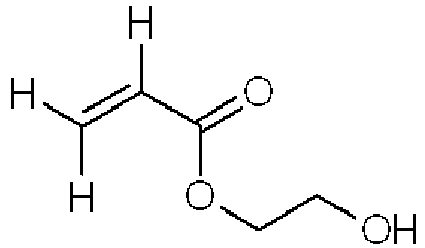
- The monomer (MA) is preferably selected from the followings:
- hydroxyethyl acrylate (HEA) of formula:
- 2-hydroxypropyl acrylate (HPA) of either of formulae:

- and mixtures thereof.
- In a preferred embodiment according to the present invention, polymer (F) is a VDF/HEA/HFP terpolymer.
- The polymer (F) is typically obtainable by polymerization of at least one fluorinated monomer, at least one monomer (MA) as above defined, and, optionally, a monomer (FM2).
- The polymer (F) is typically obtainable by emulsion polymerization or suspension polymerization.
- Preferably, the intrinsic viscosity of polymer (F), measured in dimethylformamide at 25 °C, is lower than 0.50 l/g, more preferably lower than 0.45 l/g.
- The polymer (F-h) typically comprises, preferably consists of, fluoropolymer domains and inorganic domains.
- The selection of the hydrolysable group Y of the compound (M) of formula (I) as defined in claim 1 is not particularly limited, provided that it enables under appropriate conditions the formation of a -O-A≡ bond between A of the compound (M) and the -O- atom belonging to the hydroxyl group on the ROH (meth)acrylic monomer (MA). The hydrolysable group Y of the compound (M) as defined above is typically selected from the group consisting of halogen atoms, preferably being a chlorine atom, hydrocarboxy groups, acyloxy groups and hydroxyl groups.
- According to a preferred embodiment, X in compound (M) is RA and Y is ORB, wherein RA and RB, equal to or different from each other and at each occurrence, are independently selected from C1-C18 hydrocarbon groups, wherein RA optionally comprises at least one functional group.
- In case the compound (M) as defined above comprises at least one functional group on X, it will be designated as functional compound (M1); in case none of X of the compound (M) as defined above comprise a functional group, the compound (M) will be designated as non-functional compound (M2).
- Non-limiting examples of functional groups that can be on X include, notably, epoxy group, carboxylic acid group (in its acid, ester, amide, anhydride, salt or halide form), sulphonic group (in its acid, ester, salt or halide form), hydroxyl group, phosphoric acid group (in its acid, ester, salt, or halide form), thiol group, amine group, quaternary ammonium group, ethylenically unsaturated group (like vinyl group), cyano group, urea group, organo-silane group, aromatic group.
- According to a more preferred embodiment, compound (M) is the compound (M1) wherein m is an integer from 1 to 3, A is a metal selected from the group consisting of Si, Ti and Zr, X is RA' and Y is ORB', wherein RA' is a C1-C12 hydrocarbon group comprising at least one functional group and RB' is a C1-C5 linear or branched alkyl group, preferably RB' being a methyl or ethyl group.
- Examples of functional compounds (M1) are notably vinyltriethoxysilane, vinyltrimethoxysilane, vinyltrismethoxyethoxysilane of formula CH2=CHSi(OC2H4OCH3)3, 2-(3,4-epoxycyclohexylethyltrimethoxysilane) of formula:


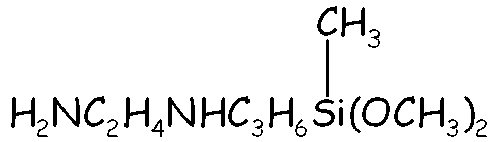
H2NC2H4NHC3H6Si(OCH3)3 3-aminopropyltriethoxysilane, 3-phenylaminopropyltrimethoxysilane, 3-chloroisobutyltriethoxysilane, 3-chloropropyltrimethoxysilane, 3-mercaptopropyltriethoxysilane, 3-mercaptopropyltrimethoxysilane, n-(3-acryloxy-2-hydroxypropyl)-3-aminopropyltriethoxysilane, (3-acryloxypropyl)dimethylmethoxysilane, (3-acryloxypropyl)methyldichlorosilane, (3-acryloxypropyl)methyldimethoxysilane, 3-(n-allylamino)propyltrimethoxysilane, 2-(4-chlorosulfonylphenyl)ethyltrimethoxysilane, 2-(4-chlorosulphonylphenyl)ethyl trichlorosilane, carboxyethylsilanetriol, and its sodium salts, triethoxysilylpropylmaleamic acid of formula:

- Examples of non-functional compounds (M2) are notably trimethoxysilane, triethoxysilane, tetramethoxysilane, tetraethoxysilane (TEOS), tetramethyltitanate, tetraethyltitanate, tetra-n-propyltitanate, tetraisopropyltitanate, tetra-n-butyltitanate, tetra-isobutyl titanate, tetra-tert-butyl titanate, tetra-n-pentyltitanate, tetra-n-hexyltitanate, tetraisooctyltitanate, tetra-n-lauryl titanate, tetraethylzirconate, tetra-n-propylzirconate, tetraisopropylzirconate, tetra-n-butyl zirconate, tetra-sec-butyl zirconate, tetra-tert-butyl zirconate, tetra-n-pentyl zirconate, tetra-tert-pentyl zirconate, tetra-tert-hexyl zirconate, tetra-n-heptyl zirconate, tetra-n-octyl zirconate, tetra-n-stearyl zirconate.
- According to another preferred embodiment, X in compound (M) is a C1-C12 hydrocarbon group comprising at least one -N=C=O functional group and wherein A and Y are as above defined; in this case, compound (M) will be designated compound (M').
- According to a still more preferred embodiment, in compound (M') Y is ORD, wherein RD is a C1-C5 linear or branched alkyl group, preferably RD being a methyl or ethyl group.
- Non-limiting examples of suitable compounds (M') according to this embodiment include the followings: trimethoxysilyl methyl isocyanate, triethoxysilyl methyl isocyanate, trimethoxysilyl ethyl isocyanate, triethoxysilyl ethyl isocyanate, trimethoxysilyl propyl isocyanate, triethoxysilyl propyl isocyanate, trimethoxysilyl butyl isocyanate, triethoxysilyl butyl isocyanate, trimethoxysilyl pentyl isocyanate, triethoxysilyl pentyl isocyanate, trimethoxysilyl hexyl isocyanate and triethoxysilyl hexyl isocyanate.
- According to a preferred embodiment, the at least one polymer (F-h) comprised in the membrane of the invention is obtained by reaction between:
- at least one [polymer (F)] as above defined,
- at least one metal compound (M') as above defined; and
- at least one metal compound (M2) as defined above.
- With the aim of manufacturing polymer (F-h), which can exhibit functional behaviour in terms of hydrophilicity or ion conductivity, the functional group of compound (M) will be preferably selected among carboxylic acid group (in its acid, ester, amide, anhydride, salt or halide form), sulphonic group (in its acid, ester, salt or halide form), hydroxyl group, phosphoric acid group (in its acid, ester, salt, or halide form), amine group, and quaternary ammonium group; most preferred will be carboxylic acid group (in its acid, ester, amide, anhydride, salt or halide form) and sulphonic group (in its acid, ester, salt or halide form).
- The compound (M) preferably complies with formula:
RA 4-m*E*(ORB)m*
wherein m* is an integer from 2 to 3, E* is a metal selected from the group consisting of Si, Ti and Zr, RA, equal to or different from each other at each occurrence, is a C1-12 hydrocarbon group, optionally comprising one or more functional group; RB, equal to or different from each other at each occurrence, is a C1-C5 linear or branched alkyl radical, preferably RB is methyl or ethyl. - The process of the invention comprises reacting at least a fraction of hydroxyl groups of ROH groups of said monomer (MA) of said polymer (F) with at least a fraction of said compound (M), so as to obtain a grafted polymer comprising pendant -Ym-1AX4-m groups, with m, Y, A and X having same meaning as above detailed.
- It is understood that -OH groups of the ROH functionalities of monomer (MA) are able to react with the hydrolysable group(s) of the compound (M) so as to yield a covalent bond between the compound (M) moiety and the monomer (MA) moiety.
- For reacting hydroxyl groups of polymer (F) with compound (M) as above described, several techniques can be successfully used.
- Polymer (F) and compound (M) can be notably reacted in the molten state; melt compounders such as extruders, melt kneaders or other devices can be advantageously used to this aim.
- Polymer (F) and compound (M) can be also notably reacted in solution; according to this embodiment polymer (F) and compound (M) are at least partially dissolved in a solvent. Dissolution can be obtained either at room temperature or upon heating. The selection of this solvent is not critical, provided that it efficiently solvates both polymer (F) and compound (M) and does not interfere with the reaction between the hydroxyl groups of polymer (F) and the hydrolysable groups of compound (M).
- Generally, polar aprotic solvent will be preferably selected. Among these solvents, mention can be notably made of N,N-dimethylformamide (DMF), N,N-dimethylacetamide, tetramethylurea, dimethylsulfoxide (DMSO), triethylphosphate, N-methyl-2-pyrrolidone (NMP), acetone, tetrahydrofuran, methylethylketone (MEK), methylisobutylketone (MIBK), glycol diethers, glycol ether-esters, n-butylacetate, cyclohexanone, diisobutylketone, butyrolactone, isophorone, propylene carbonate, glyceryl triacetate, dimethyl phthalate.
- According to an embodiment of the invention, the mixture can further comprise, in addition to compound (M) and polymer (F), at least one inorganic filler.
- The inorganic filler is generally provided in the mixture under the form of particles.
- The inorganic filler particles generally have an average particles size of 0.001 µm to 1000 µm, preferably of 0.01 µm to 800 µm, more preferably of 0.03 µm to 500 µm.
- The choice of the inorganic filler is not particularly limited; nevertheless, inorganic fillers having on their surface reactive groups towards compound (M) are generally preferred.
- Among surface reactive group, mention is notably made of hydroxyl groups.
- Without being bound by this theory, the Applicant believes that reaction between at least a fraction of compound (M) with at least a fraction of said surface reactive group of the inorganic filler can occur simultaneously with the reaction of at least a fraction of compound (M) with at least a fraction of the ROH groups of the monomer (MA), so that in subsequent hydrolysis/polycondensation step, chemical bonding between the polymer (F) and the inorganic filler is likely achieved through the inorganic domains derived from compound (M).
- Among inorganic fillers suitable for being used in the process of the invention, mention can be made of inorganic oxides, including mixed oxydes, metal sulphates, metal carbonates, metal sulfides and the like.
- Among metal oxides, mention can be made of SiO2, TiO2, ZnO, Al2O3.
- A class of compounds which gave particularly good results within the context of this embodiment of the present invention are notably silicates, aluminium-silicates and magnesium silicates, all optionally containing additional metals such as sodium, potassium, iron or lithium.
- These silicates, aluminium-silicates and magnesium silicates are generally known as possessing a layered structure.
- These silicates, aluminium-silicates and magnesium silicates, all optionally containing additional metals such as sodium, potassium, iron or lithium can be notably smectic clays, possibly of natural origin, such as notably montmorillonites, sauconite, vermiculite, hectorite, saponite, nontronite. As an alternative, silicates, aluminium-silicates and magnesium silicates, all optionally containing additional metals such as sodium, potassium, iron or lithium can be selected among synthetic clays, like notably fluorohectorite, hectorite, laponite.
- Best results have been obtained with particles of layered silicates, aluminium-silicates and magnesium silicates as above described having at least one dimension of less than 100 nm, preferably of less than 50 nm, more preferably of less than 10 nm.
- According to this embodiment, fluoropolymer hybrid organic/inorganic composites of the invention comprise said inorganic fillers. Said inorganic fillers are typically comprised in the inorganic domains of the composite of the invention.
- The process further comprises hydrolyzing and/or polycondensing compound (M) and/or pendant -Ym-1AX4-m groups, as above detailed to yield a fluoropolymer hybrid organic/inorganic composite comprising inorganic domains.
- The hydrolysis/polycondensation can be carried out simultaneously to the step of reacting hydroxyl groups of polymer (F) and compound (M) or can be carried out once said reaction has occurred.
- Typically, in particular for compounds wherein A = Si, this hydrolysis/polycondensation is initiated by addition of appropriate catalyst/reactant. Generally, water or a mixture of water and an acid can be used for promoting this reaction.
- The choice of the acid is not particularly limited; both organic and inorganic acids can be used. HCI is among the preferred acids which can be used in the process of the invention.
- In case of reaction between polymer (F) and compound (M) in the molten state, injection of water vapour, optionally in combination with a volatile acid, will be the preferred method for promoting the hydrolysis/polycondensation.
- In case of reaction between polymer (F) and compound (M) in solution, addition of an aqueous medium preferably comprising an acid will be the preferred method for promoting the hydrolysis/polycondensation.
- While this hydrolysis/polycondensation can take place at room temperature, it is generally preferred to carry out this step upon heating at a temperature exceeding 50°C.
- In case of reaction in the molten state, temperatures will range from 150 to 250°C as a function of the melting point of the polymer (F); in case of reaction in solution, temperatures will be selected having regards to the boiling point of the solvent. Generally temperatures between 50 and 150° C, preferably between 60°C and 120°C will be preferred.
- It is understood that in this step, hydrolysable group(s) of the compound (M) will react so as to yield a hybrid composite comprising fluoropolymer domain (2) consisting of chains of polymer (F) and inorganic domains (1) consisting of residues derived from compound (M).
- The fluoropolymer hybrid organic/inorganic composite comprising inorganic domains can be recovered from standard methods, which will depend upon techniques used in various reaction steps.
- Also other aspects of the invention pertain to the use of the fluoropolymer hybrid organic/inorganic composites of the present invention in different fields of use.
- According to one aspect of the present invention, the fluoropolymer hybrid organic/inorganic composites of the present invention are used for the treatment of glass and/or ceramic materials. In particular, the invention pertains to the use of said composite comprising coating a glass and/or a ceramic surface with a layer comprising said composite. Said layer comprising the inventive composite can be used as aesthetic finish, in particular possibly in admixture with pigments or other fillers, or can be used as shatterproof coating.
- Still under the scope of this embodiment is the use of said composite for manufacturing multilayer structures comprising a glass and/or ceramic substrate bound to a fluoropolymer layer through a layer comprising the composite as above defined.
- Still the composite of the invention can be used as a coating on different substrates for conferring scratch resistance. While the selection of materials which can be successfully coated with the composite of the invention is not particularly limited, it is generally understood that plastic materials will be preferred.
- Further, composites of the present invention, in particular those composites which are obtained by reaction between polymer (F) and a functional compound (M) can be used as raw materials for the manufacture of membranes for electrochemical applications and/or for separation processes. In particular, preferred composites for this use are those wherein the functional compound (M) used for their manufacture comprise a functional group selected from the group consisting of carboxylic acid group (in its acid, ester, amide, anhydride, salt or halide form), sulphonic group (in its acid, ester, salt or halide form), hydroxyl group, phosphoric acid group (in its acid, ester, salt, or halide form), amine group, and quaternary ammonium group; preferably from the group consisting of carboxylic acid group (in its acid, ester, amide, anhydride, salt or halide form) and sulphonic group (in its acid, ester, salt or halide form). Within this embodiment, inventive composites can be used for the manufacture of separators for lithium batteries, for manufacturing ion-conductive membranes for fuel cells, for manufacturing membranes for filtration.
- Further, composites of the present invention, in particular those composites which are obtained by reaction between polymer (F) and a functional compound (M) can be used as electroluminescent materials in photovoltaic or organic light emitting devices.
- In particular, preferred composites for this use are those wherein the functional compound (M) used for their manufacture comprise a functional group having electro-optic properties, such as notably hole transport capabilities, electron transport capabilities and chromophores. Among these groups, mention can be made of functional groups comprising carbazoles, oxadiazoles, tetraphenylenetetramine, dicyanomethylene-4-H-pyran, naphtalimide groups.
- In this case, the use of composites of the present invention in the field of optics exploit combination of properties such as transparency, good adhesion, barrier properties, corrosion protection, easy tuning of refractive index, adjustable mechanical properties and decorative properties.
- An extensive review of possible uses of the composites of the present invention made from functional compound (M) comprising a functional group having electro-optic properties is provided in SANCHEZ, Clement, et al. "Optical Properties of Functional Hybrid Organic-Inorganic Nanocomposites'. Advanced Materials. 3/12/2003, vol.15, no.23, p.1969-1994..
- Still, composites of the present invention can be used for coating surfaces comprising superficial hydroxyl groups; in this case, application of the composite can be performed during the hydrolysis/polycondensation phase so as to have compound (M) possibly establishing a chemical bond with the surface to be coated. Cellulose-based surfaces can be notably used within this approach so as to yield corresponding coated surfaces comprising the composite of the invention. Among substrates suitable as substrates, mention can be made of textiles, fabrics (e.g. for clothing), wood parts (e.g. for furniture), paper (e.g. for packaging).
- Should the disclosure of any patents, patent applications, and publications which are incorporated herein by reference conflict with the description of the present application to the extent that it may render a term unclear, the present description shall take precedence.
- The invention will be now described with reference to the following examples whose purpose is merely illustrative and not limitative of the present invention.
- Raw materials
- Polymer 1-Comp: VDF-HEA (0.8% by moles)-HFP (2.4% by mole) polymer having an intrinsic viscosity of 0.077 l/g in DMF at 25°C.
- Polymer (F-A): VDF-HEA (0.6% by moles)-HFP (2.5% by mole) polymer having an intrinsic viscosity of 0.097 l/g in DMF at 25°C.
- Polymer (F-B): VDF-HEA (0.2% by moles) polymer having an intrinsic viscosity of 0.30 l/g in DMF at 25°C
- Polymer (F-C): VDF-HEA (0.5% by moles) polymer having an intrinsic viscosity of 0.135 l/g in DMF at 25°C.
- Polymer (F-D): VDF-HEA (0.4% by moles) polymer having an intrinsic viscosity of 0.157 l/g in DMF at 25°C.
- Polymer (F-A) is according to the invention. Polymers (F-B), (F-C) and (F-D) are comparative.
- In a 80 I reactor equipped with an impeller running at a speed of 300 rpm were introduced in sequence 58242 g of demineralised water and 11.1 g of METHOCEL® K100 GR suspending agent (commercially available from Dow). The reactor was purged with sequence of vacuum (30 mmHg) and purged of nitrogen at 14°C. Then 149.9 g of a 75% by weight solution of t-amyl perpivalate initiator in isododecane was introduced in the reactor. Then 21.6 g of hydroxyethylacrylate (HEA) and 1873 g of hexafluoropropylene (HFP) monomers were introduced in the reactor. Finally, 16597 g of vinylidene fluoride (VDF) were added. The reactor was gradually heated until a set-point temperature at 57°C and the pressure was fixed at 110 bar. The pressure was kept constantly equal to 110 bars by feeding 13 kg of aqueous solution containing a 240.6 g of HEA during the polymerization. After this feeding, no more aqueous solution was introduced and the pressure started to decrease until 80 bar. Then, the polymerization was stopped by degassing the reactor until reaching atmospheric pressure. In general a conversion around 75% of monomers was obtained. The polymer so obtained was then recovered, washed with demineralised water and oven-dried at 65°C.
- In a 80 litres reactor equipped with an impeller running at a speed of 250 rpm were introduced in sequence 49992 g of demineralised water and 15.2 g of METHOCEL® K100 GR suspending agent. The reactor was purged with sequence of vacuum (30 mmHg) and purged of nitrogen at 20 °C. Then 204.4 g of a 75% by weight solution of t-amyl perpivalate initiator in isododecane was introduced. The speed of the stirring was increased at 300 rpm. Finally, 20.4 g of hydroxyethylacrylate (HEA) and 2555 g of hexafluoropropylene (HFP) monomers were introduced in the reactor, followed by 22735 g of vinylidene fluoride (VDF). The reactor was gradually heated until a set-point temperature at 55°C and the pressure was fixed at 120 bar. The pressure was kept constantly equal to 120 bars by feeding 16.9 kg of aqueous solution containing 235 g of HEA during the polymerization. After this feeding, no more aqueous solution was introduced and the pressure started to decrease until 90 bar. Then, the polymerization was stopped by degassing the reactor until reaching atmospheric pressure. In general a conversion around 76% of monomers was obtained. The polymer so obtained was then recovered, washed with demineralised water and oven-dried at 65°C.
- In a 80 litres reactor equipped with an impeller running at a speed of 250 rpm were introduced in sequence 53435 g of demineralised water and 18.3 g of METHOCEL® K100 GR suspending agent. The reactor was purged with sequence of vacuum (30 mmHg) and purged of nitrogen at 20 °C. Then 76.6 g of a 75% by weight solution of t-amyl perpivalate initiator in isododecane was added. The speed of the stirring was increased at 300 rpm. Finally, 5.8 g of hydroxyethylacrylate (HEA) were introduced in the reactor, followed by 22919 g of vinylidene fluoride (VDF). The reactor was gradually heated until a set-point temperature at 48°C and the pressure was fixed at 120 bar. The pressure was kept constantly equal to 120 bars by feeding 14.54 kg of aqueous solution containing at 4.55 g/kg of HEA in water during the polymerization. After this feeding, no more aqueous solution was introduced and the pressure started to decrease until 115 bar. Then, the polymerization was stopped by degassing the reactor until reaching atmospheric pressure. In general a conversion around 79% of comonomers was obtained. The polymer so obtained was then recovered, washed with demineralised water and oven-dried at 65°C.
- In a 4 litres reactor equipped with an impeller running at a speed of 650 rpm were introduced in sequence 2150 g of demineralised water and 0.93 g of METHOCEL® K100 GR suspending agent. The reactor was purged with sequence of vacuum (30 mmHg) and purged of nitrogen at 20°C. Then 9.34 g of a 75% by weight solution of t-amyl perpivalate initiator in isododecane was added. The speed of the stirring was increased at 880 rpm. Finally, 0.38 g of hydroxyethylacrylate (HEA) were introduced in the reactor, followed by 1166 g of vinylidene fluoride (VDF). The reactor was gradually heated until a set-point temperature at 55°C and the pressure was fixed at 120 bar. The pressure was kept constantly equal to 120 bars by feeding 834 g of aqueous solution containing 9 g of HEA. After this feeding, no more aqueous solution was introduced and the pressure started to decrease until 115 bar. Then, the polymerization was stopped by degassing the reactor until reaching atmospheric pressure. In general a conversion around 78% of comonomers was obtained. The polymer so obtained was then recovered, washed with demineralised water and oven-dried at 65°C.
- In a 4 litres reactor equipped with an impeller running at a speed of 650 rpm were introduced in sequence 2244 g of demineralised water and 0.93 g of METHOCEL® K100 GR suspending agent. The reactor was purged with sequence of vacuum (30 mmHg) and purged of nitrogen at 20°C. Then 9.34 g of a 75% by weight solution of t-amyl perpivalate initiator in isododecane was introduced. The speed of the stirring was increased at 880 rpm. Finally, 0.33 g of hydroxyethylacrylate (HEA) were introduced in the reactor, followed by 1168 g of vinylidene fluoride (VDF). The reactor was gradually heated until a set-point temperature at 48°C and the pressure was fixed at 120 bar. The pressure was kept constantly equal to 120 bars by feeding 767 g of aqueous solution containing 7.9 g of HEA. After this feeding, no more aqueous solution was introduced and the pressure started to decrease until 115 bar. Then, the polymerization was stopped by degassing the reactor until reaching atmospheric pressure. In general a conversion around 76% of comonomers was obtained. The polymer so obtained was then recovered, washed with demineralised water and oven-dried at 65°C.
- 3 grams of the polymer prepared according to any of reference Z examples 1 to 5 were dissolved in 27 grams of N-methylpyrrolidone (NMP). Then, 1.156 grams of TEOS were added drop-wise to the stirred solution, followed by 0.555 ml of aqueous HCI (0.1 M); the mixture was stirred at 60°C for 2 hours to ensure the sol-gel reaction (TEOS hydrolysis and polycondensation) so as to obtain a clear solution of a hybrid VDF-HEA/silica composite. The silica content, calculated assuming complete TEOS hydrolysis/polycondensation to SiO2, was 10% wt. referred to the composite.
- 2.5 grams of the polymer prepared according to any of reference examples 1 or 2 were dissolved in 22.5 grams of N-methylpyrrolidone (NMP). Then, 2.167 grams of TEOS were added drop-wise to the stirred solution, followed by 1.040 ml of aqueous HCI (0.1 M); the mixture was stirred at 60°C for 2 hours to ensure the sol-gel reaction (TEOS hydrolysis and polycondensation) so as to obtain a clear solution of a hybrid VDF-HEA/silica composite. The silica content, calculated assuming complete TEOS hydrolysis/polycondensation to SiO2, was 20% wt referred to the composite.
- The solutions obtained according to example 6 were casted with a Doctor Blade system on a glass plate, and solvent was removed at 120°C.
- The resulting films were smooth, homogeneous, and opaque. Wet Film thickness was about 500 µm. Dry Film thickness was about 25-35 µm.
- Mechanical properties of films obtained as described in example 7 were evaluated according to ASTM D-638 type V standard, by measuring tensile properties at room temperature.
- The results are shown in Table 1.
Table 1 Composition Modulu s [Mpa] Yield Stress [Mpa] Yield Strain [%] Stress at break [Mpa] Polymer (F-A) with SiO2 10% 999 29 3.9 24.3 Polymer (F-A) with SiO2 20% 1289 34.8 3.7 38.1 Polymer 1-Comp with SiO210% 844 26.3 4.1 25.4 Polymer 1-Comp with SiO2 20% 983 31.3 4.2 26.5 - Adhesion among glass and hybrid composite film was determined according to ISO 2409 standard and according to ASTM D-3359. The results are shown in Table 2.
Table 2 Composition ISO ASTM Polymer (F-A) with SiO2 10% 0 5B Polymer (F-A) with SiO220% 0 5B Polymer 1-Comp with SiO210% 1 4B Polymer 1-Comp with SiO220% 1 4B Polymer (F-B) with SiO210% 0 5B Polymer (F-C) with SiO210% 0 5B Polymer (F-D) with SiO210% 0 5B - Under ISO 2409 standard, rating ranges from 0 (complete adhesion) to 5 (no adhesion at all).
- Under ASTM D 3359, rating ranges from 0B (no adhesion at all) to 5B (complete adhesion).
- Hybrids of the invention made by reaction of the compound (M) and the polymer (F) having an intrinsic viscosity higher than 0.09 l/g in DMF at 25°C have been found to provide for outstanding adhesion performances.
- Sol-gel reaction on the VDF-HEA-HFP terpolymers (polymer 1-Comp) having an intrinsic viscosity lower than 0.09 l/g in DMF at 25°C has been shown to provide a lower adhesion to glass.
Claims (15)
- A fluoropolymer hybrid organic/inorganic composite [polymer (F-h)] comprising fluoropolymer domains and inorganic domains, said polymer (F-h) being obtained by reaction between:- at least one fluoropolymer [polymer (F)] that is a partially fluorinated fluoropolymer comprising recurring units derived from vinylidene fluoride (VDF), at least one (meth)acrylic monomer (MA) of formula:
 - at least one metal compound [compound (M)] of formula (I): X4-mAYm (I) wherein m is an integer from 1 to 4, A is a metal selected from the group consisting of Si, Ti and Zr, Y is a hydrolysable group, X is a hydrocarbon group, optionally comprising one or more functional groups, wherein the fluoropolymer domains derive from polymer (F) and the inorganic domains derive from compound (M) , and wherein the inorganic domains are grafted to the fluoropolymer domains through reaction of at least a fraction of the ROH groups of the monomer (MA) with at least a fraction of the hydrolysable groups Y of compound (M).
 - The polymer (F-h) according to claim 1, wherein polymer (F) comprises recurring units derived from:- at least 60% by moles, preferably at least 75% by moles, more preferably at least 85% by moles of vinylidene fluoride (VDF),- from 0.01% to 10% by moles, preferably from 0.05% to 5% by moles, more preferably from 0.1% to 3% by moles of at least one monomer (MA), and- from 0.1% to 15% by moles, preferably from 0.1% to 12% by moles, more preferably from 0.1% to 10% by moles of at least one monomer (FM2) selected from vinyl fluoride (VF1), chlorotrifluoroethylene (CTFE), hexafluoropropylene (HFP), tetrafluoroethylene (TFE) and trifluoroethylene (TrFE).
- The polymer (F-h) according to anyone of the preceding claims, wherein monomer (MA) is selected from the group consisting of:- hydroxyethylacrylate (HEA) of formula:
 - 2-hydroxypropyl acrylate (HPA) of either of formulae:
- The polymer (F-h) according to anyone of the preceding claims, wherein the intrinsic viscosity of polymer (F), measured in dimethylformamide at 25 °C, is lower than 0.50 l/g, more preferably lower than 0.45 l/g.
- The polymer (F-h) according to anyone of the preceding claims, wherein X in compound (M) is RA and Y is ORB, wherein RA and RB, equal to or different from each other and at each occurrence, are independently selected from C1-C18 hydrocarbon groups, wherein RA optionally comprises at least one functional group.
- The polymer (F-h) according to anyone of the preceding claims, wherein compound (M) is the functional compound (M1) wherein functional compound (M1) is selected from the group consisting of: vinyltriethoxysilane, vinyltrimethoxysilane, vinyltrismethoxyethoxysilane of formula CH2=CHSi(OC2H4OCH3)3, 2-(3,4-epoxycyclohexylethyltrimethoxysilane) of formula:


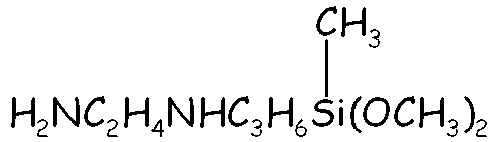
H2NC2H4NHC3H6Si(OCH3)3 3-aminopropyltriethoxysilane, 3-phenylaminopropyltrimethoxysilane, 3-chloroisobutyltriethoxysilane, 3-chloropropyltrimethoxysilane, 3-mercaptopropyltriethoxysilane, 3-mercaptopropyltrimethoxysilane, n-(3-acryloxy-2-hydroxypropyl)-3-aminopropyltriethoxysilane, (3-acryloxypropyl)dimethylmethoxysilane, (3-acryloxypropyl)methyldichlorosilane, (3-acryloxypropyl)methyldimethoxysilane, 3-(n-allylamino)propyltrimethoxysilane, 2-(4-chlorosulfonylphenyl)ethyltrimethoxysilane, 2-(4-chlorosulphonylphenyl)ethyl trichlorosilane, carboxyethylsilanetriol, and its sodium salts, triethoxysilylpropylmaleamic acid of formula:

- The polymer (F-h) according to anyone of claims 1, 4, 5, wherein compound (M) is the non-functional compound (M2), wherein compound (M2) is selected from the group consisting of: trimethoxysilane, triethoxysilane, tetramethoxysilane, tetraethoxysilane (TEOS), tetramethyltitanate, tetraethyltitanate, tetra-n-propyltitanate, tetraisopropyltitanate, tetra-n-butyltitanate, tetra-isobutyl titanate, tetra-tert-butyl titanate, tetra-n-pentyltitanate, tetra-n-hexyltitanate, tetraisooctyltitanate, tetra-n-lauryl titanate, tetraethylzirconate, tetra-n-propylzirconate, tetraisopropylzirconate, tetra-n-butyl zirconate, tetra-sec-butyl zirconate, tetra-tert-butyl zirconate, tetra-n-pentyl zirconate, tetra-tert-pentyl zirconate, tetra-tert-hexyl zirconate, tetra-n-heptyl zirconate, tetra-n-octyl zirconate, tetra-n-stearyl zirconate.
- The polymer (F-h) according to anyone of claims 1, 4, 5, wherein compound (M) is the compound (M'), wherein the compound (M') is selected from the group consisting of: trimethoxysilyl methyl isocyanate, triethoxysilyl methyl isocyanate, trimethoxysilyl ethyl isocyanate, triethoxysilyl ethyl isocyanate, trimethoxysilyl propyl isocyanate, triethoxysilyl propyl isocyanate, trimethoxysilyl butyl isocyanate, triethoxysilyl butyl isocyanate, trimethoxysilyl pentyl isocyanate, triethoxysilyl pentyl isocyanate, trimethoxysilyl hexyl isocyanate and triethoxysilyl hexyl isocyanate.
- The polymer (F-h) according to anyone of the preceding claims, further comprising inorganic fillers comprised in said inorganic domains.
- A process for manufacturing a fluoropolymer hybrid organic/inorganic composite [polymer (F-h)], said process comprising:(a) providing a mixture of:- a partially fluorinated fluoropolymer comprising recurring units derived from vinylidene fluoride (VDF), at least one (meth)acrylic monomer (MA) of formula:

X4-mAYm (I)
wherein m is an integer from 1 to 4, A is a metal selected from the group consisting of Si, Ti and Zr, Y is a hydrolysable group, X is a hydrocarbon group, optionally comprising one or more functional groups,(b) reacting at least a fraction of hydroxyl groups of the ROH groups of said monomer (MA) of said polymer (F) with at least a fraction of said compound (M), so as to obtain a grafted polymer comprising pendant -Ym-1AX4-m groups, with m, Y, A and X having same meaning as above detailed;(c) hydrolyzing and/or polycondensing compound (M) and/or pendant-Ym-1AX4-m groups, as above detailed to yield a polymer (F-h) comprising inorganic domains. - Use of polymer (F-h) according to anyone of claims 1 to 9 or obtained via the process of claim 10 for the treatment of glass and/or of ceramic materials.
- Use according to claim 11 comprising coating a glass and/or ceramic surface with a layer comprising the polymer (F-h) according to anyone of claims 1 to 9 or obtained via the process of claim 10.
- Use according to claim 11 for manufacturing multilayer structures comprising a glass and/or a ceramic substrate bound to a fluoropolymer layer through a layer comprising the polymer (F-h) according to anyone of claims 1 to 9 or obtained via the process of claim 10.
- Use of the polymer (F-h) according to anyone of claims 1 to 9 or obtained via the process of claim 10 as raw material for the manufacture of membranes for electrochemical applications and/or for separation processes.
- Use of the polymer (F-h) according to anyone of claims 1 to 9 or obtained via the process of claim 10 as electroluminescent materials in photovoltaic or organic light emitting devices.
Priority Applications (1)
| Application Number | Priority Date | Filing Date | Title |
|---|---|---|---|
| PL18812196T PL3724140T3 (en) | 2017-12-13 | 2018-12-11 | HYBRID ORGANIC / INORGANIC COMPOSITES BASED ON FLUOROPOLYMER |
Applications Claiming Priority (2)
| Application Number | Priority Date | Filing Date | Title |
|---|---|---|---|
| EP17306761 | 2017-12-13 | ||
| PCT/EP2018/084298 WO2019115502A1 (en) | 2017-12-13 | 2018-12-11 | Fluoropolymer-based hybrid organic/inorganic composites |
Publications (2)
| Publication Number | Publication Date |
|---|---|
| EP3724140A1 EP3724140A1 (en) | 2020-10-21 |
| EP3724140B1 true EP3724140B1 (en) | 2022-03-09 |
Family
ID=60915403
Family Applications (1)
| Application Number | Title | Priority Date | Filing Date |
|---|---|---|---|
| EP18812196.6A Active EP3724140B1 (en) | 2017-12-13 | 2018-12-11 | Fluoropolymer-based hybrid organic/inorganic composites |
Country Status (8)
| Country | Link |
|---|---|
| US (1) | US12391819B2 (en) |
| EP (1) | EP3724140B1 (en) |
| JP (1) | JP7321160B2 (en) |
| KR (1) | KR102697138B1 (en) |
| CN (2) | CN116903259A (en) |
| HU (1) | HUE058862T2 (en) |
| PL (1) | PL3724140T3 (en) |
| WO (1) | WO2019115502A1 (en) |
Cited By (1)
| Publication number | Priority date | Publication date | Assignee | Title |
|---|---|---|---|---|
| DE102023100045A1 (en) | 2023-01-03 | 2024-07-04 | Bayerische Motoren Werke Aktiengesellschaft | Coating composition, use of the coating composition and lithium-ion battery |
Families Citing this family (5)
| Publication number | Priority date | Publication date | Assignee | Title |
|---|---|---|---|---|
| WO2019115500A1 (en) | 2017-12-13 | 2019-06-20 | Solvay Sa | Fluoropolymer membrane for electrochemical devices |
| EP3991231A4 (en) * | 2019-06-25 | 2024-04-03 | Arkema, Inc. | HYBRID FUNCTIONAL FLUOROPOLYMERS FOR LITHIUM-ION BATTERIES |
| WO2023104890A1 (en) * | 2021-12-09 | 2023-06-15 | Solvay Sa | High performance hybrid fluoropolymer composites membranes |
| CN114133516B (en) * | 2021-12-31 | 2023-05-26 | 广东美涂士建材股份有限公司 | Preparation method of self-cleaning low-surface-energy modified polyurethane |
| WO2025153352A1 (en) * | 2024-01-15 | 2025-07-24 | Solvay Specialty Polymers Italy S.P.A. | Fluoropolymer-based adhesive composition |
Family Cites Families (10)
| Publication number | Priority date | Publication date | Assignee | Title |
|---|---|---|---|---|
| EP1243619B1 (en) | 1999-08-13 | 2006-03-29 | Asahi Kasei Kabushiki Kaisha | Organic domain/inorganic domain hybrid material |
| US7244797B2 (en) | 2001-02-08 | 2007-07-17 | Asahi Kasei Kabushiki Kaisha | Organic domain/inorganic domain complex materials and use thereof |
| US7125926B2 (en) | 2001-03-21 | 2006-10-24 | Daikin Industries, Ltd. | Surface treatment agent comprising inorganic-organic hybrid material |
| WO2011121078A1 (en) * | 2010-04-02 | 2011-10-06 | Solvay Solexis S.P.A. | Fluoropolymer-based hybrid organic/inorganic composites |
| US9130208B2 (en) * | 2012-05-08 | 2015-09-08 | Basf Se | Membrane electrode assemblies and fuel cells with long lifetime |
| KR102306322B1 (en) * | 2012-10-31 | 2021-10-01 | 솔베이(소시에떼아노님) | Process for manufacturing fluoropolymer hybrid composites |
| US10030112B2 (en) * | 2014-05-07 | 2018-07-24 | Solvay Sa | Hybrid fluoropolymer composites |
| JP7245648B2 (en) * | 2015-07-27 | 2023-03-24 | ソルヴェイ(ソシエテ アノニム) | Electrode-forming composition |
| HUE066950T2 (en) * | 2016-02-19 | 2024-09-28 | Solvay Specialty Polymers It | Multi-layer layout |
| WO2019115500A1 (en) | 2017-12-13 | 2019-06-20 | Solvay Sa | Fluoropolymer membrane for electrochemical devices |
-
2018
- 2018-12-11 JP JP2020531442A patent/JP7321160B2/en active Active
- 2018-12-11 WO PCT/EP2018/084298 patent/WO2019115502A1/en not_active Ceased
- 2018-12-11 PL PL18812196T patent/PL3724140T3/en unknown
- 2018-12-11 US US16/771,661 patent/US12391819B2/en active Active
- 2018-12-11 CN CN202310865900.1A patent/CN116903259A/en active Pending
- 2018-12-11 HU HUE18812196A patent/HUE058862T2/en unknown
- 2018-12-11 KR KR1020207018353A patent/KR102697138B1/en active Active
- 2018-12-11 EP EP18812196.6A patent/EP3724140B1/en active Active
- 2018-12-11 CN CN201880083781.1A patent/CN111566062A/en active Pending
Cited By (2)
| Publication number | Priority date | Publication date | Assignee | Title |
|---|---|---|---|---|
| DE102023100045A1 (en) | 2023-01-03 | 2024-07-04 | Bayerische Motoren Werke Aktiengesellschaft | Coating composition, use of the coating composition and lithium-ion battery |
| WO2024146668A1 (en) | 2023-01-03 | 2024-07-11 | Bayerische Motoren Werke Aktiengesellschaft | Coating composition, use of the coating composition, and lithium-ion battery |
Also Published As
| Publication number | Publication date |
|---|---|
| KR20200089315A (en) | 2020-07-24 |
| PL3724140T3 (en) | 2022-06-27 |
| JP7321160B2 (en) | 2023-08-04 |
| JP2021507005A (en) | 2021-02-22 |
| EP3724140A1 (en) | 2020-10-21 |
| KR102697138B1 (en) | 2024-08-23 |
| US20210189041A1 (en) | 2021-06-24 |
| WO2019115502A1 (en) | 2019-06-20 |
| HUE058862T2 (en) | 2022-09-28 |
| CN111566062A (en) | 2020-08-21 |
| US12391819B2 (en) | 2025-08-19 |
| CN116903259A (en) | 2023-10-20 |
Similar Documents
| Publication | Publication Date | Title |
|---|---|---|
| EP2552975B1 (en) | Fluoropolymer-based hybrid organic/inorganic composites | |
| EP3724140B1 (en) | Fluoropolymer-based hybrid organic/inorganic composites | |
| EP3724939B1 (en) | Fluoropolymer membrane for electrochemical devices | |
| TWI682955B (en) | Hybrid fluoropolymer composites | |
| CN104781312B (en) | Process for preparing fluoropolymer hybrid composites | |
| JP6523173B2 (en) | Solid composite fluoropolymer layer | |
| JP2024161352A (en) | Flexible Polymer Electrolyte | |
| CN110621726A (en) | Fluoropolymer hybrid composites |
Legal Events
| Date | Code | Title | Description |
|---|---|---|---|
| STAA | Information on the status of an ep patent application or granted ep patent |
Free format text: STATUS: UNKNOWN |
|
| STAA | Information on the status of an ep patent application or granted ep patent |
Free format text: STATUS: THE INTERNATIONAL PUBLICATION HAS BEEN MADE |
|
| PUAI | Public reference made under article 153(3) epc to a published international application that has entered the european phase |
Free format text: ORIGINAL CODE: 0009012 |
|
| STAA | Information on the status of an ep patent application or granted ep patent |
Free format text: STATUS: REQUEST FOR EXAMINATION WAS MADE |
|
| 17P | Request for examination filed |
Effective date: 20200713 |
|
| AK | Designated contracting states |
Kind code of ref document: A1 Designated state(s): AL AT BE BG CH CY CZ DE DK EE ES FI FR GB GR HR HU IE IS IT LI LT LU LV MC MK MT NL NO PL PT RO RS SE SI SK SM TR |
|
| AX | Request for extension of the european patent |
Extension state: BA ME |
|
| DAV | Request for validation of the european patent (deleted) | ||
| DAX | Request for extension of the european patent (deleted) | ||
| GRAP | Despatch of communication of intention to grant a patent |
Free format text: ORIGINAL CODE: EPIDOSNIGR1 |
|
| STAA | Information on the status of an ep patent application or granted ep patent |
Free format text: STATUS: GRANT OF PATENT IS INTENDED |
|
| GRAJ | Information related to disapproval of communication of intention to grant by the applicant or resumption of examination proceedings by the epo deleted |
Free format text: ORIGINAL CODE: EPIDOSDIGR1 |
|
| GRAP | Despatch of communication of intention to grant a patent |
Free format text: ORIGINAL CODE: EPIDOSNIGR1 |
|
| RIC1 | Information provided on ipc code assigned before grant |
Ipc: H01M 50/44 20210101ALI20210927BHEP Ipc: H01M 8/10 20160101ALI20210927BHEP Ipc: C08F 214/22 20060101ALI20210927BHEP Ipc: C08F 8/12 20060101ALI20210927BHEP Ipc: C09D 183/10 20060101ALI20210927BHEP Ipc: C08F 259/08 20060101ALI20210927BHEP Ipc: C08J 5/22 20060101ALI20210927BHEP Ipc: C03C 17/42 20060101ALI20210927BHEP Ipc: C03C 17/00 20060101AFI20210927BHEP |
|
| INTG | Intention to grant announced |
Effective date: 20211014 |
|
| INTG | Intention to grant announced |
Effective date: 20211027 |
|
| GRAS | Grant fee paid |
Free format text: ORIGINAL CODE: EPIDOSNIGR3 |
|
| GRAA | (expected) grant |
Free format text: ORIGINAL CODE: 0009210 |
|
| STAA | Information on the status of an ep patent application or granted ep patent |
Free format text: STATUS: THE PATENT HAS BEEN GRANTED |
|
| AK | Designated contracting states |
Kind code of ref document: B1 Designated state(s): AL AT BE BG CH CY CZ DE DK EE ES FI FR GB GR HR HU IE IS IT LI LT LU LV MC MK MT NL NO PL PT RO RS SE SI SK SM TR |
|
| REG | Reference to a national code |
Ref country code: CH Ref legal event code: EP Ref country code: AT Ref legal event code: REF Ref document number: 1474034 Country of ref document: AT Kind code of ref document: T Effective date: 20220315 |
|
| REG | Reference to a national code |
Ref country code: IE Ref legal event code: FG4D |
|
| REG | Reference to a national code |
Ref country code: DE Ref legal event code: R096 Ref document number: 602018032083 Country of ref document: DE |
|
| REG | Reference to a national code |
Ref country code: NO Ref legal event code: T2 Effective date: 20220309 |
|
| REG | Reference to a national code |
Ref country code: SE Ref legal event code: TRGR |
|
| REG | Reference to a national code |
Ref country code: LT Ref legal event code: MG9D |
|
| REG | Reference to a national code |
Ref country code: NL Ref legal event code: MP Effective date: 20220309 |
|
| PG25 | Lapsed in a contracting state [announced via postgrant information from national office to epo] |
Ref country code: RS Free format text: LAPSE BECAUSE OF FAILURE TO SUBMIT A TRANSLATION OF THE DESCRIPTION OR TO PAY THE FEE WITHIN THE PRESCRIBED TIME-LIMIT Effective date: 20220309 Ref country code: LT Free format text: LAPSE BECAUSE OF FAILURE TO SUBMIT A TRANSLATION OF THE DESCRIPTION OR TO PAY THE FEE WITHIN THE PRESCRIBED TIME-LIMIT Effective date: 20220309 Ref country code: HR Free format text: LAPSE BECAUSE OF FAILURE TO SUBMIT A TRANSLATION OF THE DESCRIPTION OR TO PAY THE FEE WITHIN THE PRESCRIBED TIME-LIMIT Effective date: 20220309 Ref country code: BG Free format text: LAPSE BECAUSE OF FAILURE TO SUBMIT A TRANSLATION OF THE DESCRIPTION OR TO PAY THE FEE WITHIN THE PRESCRIBED TIME-LIMIT Effective date: 20220609 |
|
| REG | Reference to a national code |
Ref country code: AT Ref legal event code: MK05 Ref document number: 1474034 Country of ref document: AT Kind code of ref document: T Effective date: 20220309 |
|
| PG25 | Lapsed in a contracting state [announced via postgrant information from national office to epo] |
Ref country code: LV Free format text: LAPSE BECAUSE OF FAILURE TO SUBMIT A TRANSLATION OF THE DESCRIPTION OR TO PAY THE FEE WITHIN THE PRESCRIBED TIME-LIMIT Effective date: 20220309 Ref country code: GR Free format text: LAPSE BECAUSE OF FAILURE TO SUBMIT A TRANSLATION OF THE DESCRIPTION OR TO PAY THE FEE WITHIN THE PRESCRIBED TIME-LIMIT Effective date: 20220610 Ref country code: FI Free format text: LAPSE BECAUSE OF FAILURE TO SUBMIT A TRANSLATION OF THE DESCRIPTION OR TO PAY THE FEE WITHIN THE PRESCRIBED TIME-LIMIT Effective date: 20220309 |
|
| REG | Reference to a national code |
Ref country code: HU Ref legal event code: AG4A Ref document number: E058862 Country of ref document: HU |
|
| PG25 | Lapsed in a contracting state [announced via postgrant information from national office to epo] |
Ref country code: NL Free format text: LAPSE BECAUSE OF FAILURE TO SUBMIT A TRANSLATION OF THE DESCRIPTION OR TO PAY THE FEE WITHIN THE PRESCRIBED TIME-LIMIT Effective date: 20220309 |
|
| PG25 | Lapsed in a contracting state [announced via postgrant information from national office to epo] |
Ref country code: SM Free format text: LAPSE BECAUSE OF FAILURE TO SUBMIT A TRANSLATION OF THE DESCRIPTION OR TO PAY THE FEE WITHIN THE PRESCRIBED TIME-LIMIT Effective date: 20220309 Ref country code: SK Free format text: LAPSE BECAUSE OF FAILURE TO SUBMIT A TRANSLATION OF THE DESCRIPTION OR TO PAY THE FEE WITHIN THE PRESCRIBED TIME-LIMIT Effective date: 20220309 Ref country code: RO Free format text: LAPSE BECAUSE OF FAILURE TO SUBMIT A TRANSLATION OF THE DESCRIPTION OR TO PAY THE FEE WITHIN THE PRESCRIBED TIME-LIMIT Effective date: 20220309 Ref country code: PT Free format text: LAPSE BECAUSE OF FAILURE TO SUBMIT A TRANSLATION OF THE DESCRIPTION OR TO PAY THE FEE WITHIN THE PRESCRIBED TIME-LIMIT Effective date: 20220711 Ref country code: ES Free format text: LAPSE BECAUSE OF FAILURE TO SUBMIT A TRANSLATION OF THE DESCRIPTION OR TO PAY THE FEE WITHIN THE PRESCRIBED TIME-LIMIT Effective date: 20220309 Ref country code: EE Free format text: LAPSE BECAUSE OF FAILURE TO SUBMIT A TRANSLATION OF THE DESCRIPTION OR TO PAY THE FEE WITHIN THE PRESCRIBED TIME-LIMIT Effective date: 20220309 Ref country code: CZ Free format text: LAPSE BECAUSE OF FAILURE TO SUBMIT A TRANSLATION OF THE DESCRIPTION OR TO PAY THE FEE WITHIN THE PRESCRIBED TIME-LIMIT Effective date: 20220309 Ref country code: AT Free format text: LAPSE BECAUSE OF FAILURE TO SUBMIT A TRANSLATION OF THE DESCRIPTION OR TO PAY THE FEE WITHIN THE PRESCRIBED TIME-LIMIT Effective date: 20220309 |
|
| PG25 | Lapsed in a contracting state [announced via postgrant information from national office to epo] |
Ref country code: IS Free format text: LAPSE BECAUSE OF FAILURE TO SUBMIT A TRANSLATION OF THE DESCRIPTION OR TO PAY THE FEE WITHIN THE PRESCRIBED TIME-LIMIT Effective date: 20220709 Ref country code: AL Free format text: LAPSE BECAUSE OF FAILURE TO SUBMIT A TRANSLATION OF THE DESCRIPTION OR TO PAY THE FEE WITHIN THE PRESCRIBED TIME-LIMIT Effective date: 20220309 |
|
| REG | Reference to a national code |
Ref country code: DE Ref legal event code: R097 Ref document number: 602018032083 Country of ref document: DE |
|
| PLBE | No opposition filed within time limit |
Free format text: ORIGINAL CODE: 0009261 |
|
| STAA | Information on the status of an ep patent application or granted ep patent |
Free format text: STATUS: NO OPPOSITION FILED WITHIN TIME LIMIT |
|
| PG25 | Lapsed in a contracting state [announced via postgrant information from national office to epo] |
Ref country code: DK Free format text: LAPSE BECAUSE OF FAILURE TO SUBMIT A TRANSLATION OF THE DESCRIPTION OR TO PAY THE FEE WITHIN THE PRESCRIBED TIME-LIMIT Effective date: 20220309 |
|
| 26N | No opposition filed |
Effective date: 20221212 |
|
| PG25 | Lapsed in a contracting state [announced via postgrant information from national office to epo] |
Ref country code: SI Free format text: LAPSE BECAUSE OF FAILURE TO SUBMIT A TRANSLATION OF THE DESCRIPTION OR TO PAY THE FEE WITHIN THE PRESCRIBED TIME-LIMIT Effective date: 20220309 |
|
| P01 | Opt-out of the competence of the unified patent court (upc) registered |
Effective date: 20230307 |
|
| PG25 | Lapsed in a contracting state [announced via postgrant information from national office to epo] |
Ref country code: IT Free format text: LAPSE BECAUSE OF FAILURE TO SUBMIT A TRANSLATION OF THE DESCRIPTION OR TO PAY THE FEE WITHIN THE PRESCRIBED TIME-LIMIT Effective date: 20220309 |
|
| REG | Reference to a national code |
Ref country code: CH Ref legal event code: PL |
|
| REG | Reference to a national code |
Ref country code: BE Ref legal event code: MM Effective date: 20221231 |
|
| PG25 | Lapsed in a contracting state [announced via postgrant information from national office to epo] |
Ref country code: LU Free format text: LAPSE BECAUSE OF NON-PAYMENT OF DUE FEES Effective date: 20221211 |
|
| PG25 | Lapsed in a contracting state [announced via postgrant information from national office to epo] |
Ref country code: LI Free format text: LAPSE BECAUSE OF NON-PAYMENT OF DUE FEES Effective date: 20221231 Ref country code: IE Free format text: LAPSE BECAUSE OF NON-PAYMENT OF DUE FEES Effective date: 20221211 Ref country code: CH Free format text: LAPSE BECAUSE OF NON-PAYMENT OF DUE FEES Effective date: 20221231 |
|
| PG25 | Lapsed in a contracting state [announced via postgrant information from national office to epo] |
Ref country code: BE Free format text: LAPSE BECAUSE OF NON-PAYMENT OF DUE FEES Effective date: 20221231 |
|
| PG25 | Lapsed in a contracting state [announced via postgrant information from national office to epo] |
Ref country code: CY Free format text: LAPSE BECAUSE OF FAILURE TO SUBMIT A TRANSLATION OF THE DESCRIPTION OR TO PAY THE FEE WITHIN THE PRESCRIBED TIME-LIMIT Effective date: 20220309 |
|
| PG25 | Lapsed in a contracting state [announced via postgrant information from national office to epo] |
Ref country code: MK Free format text: LAPSE BECAUSE OF FAILURE TO SUBMIT A TRANSLATION OF THE DESCRIPTION OR TO PAY THE FEE WITHIN THE PRESCRIBED TIME-LIMIT Effective date: 20220309 |
|
| PG25 | Lapsed in a contracting state [announced via postgrant information from national office to epo] |
Ref country code: MC Free format text: LAPSE BECAUSE OF FAILURE TO SUBMIT A TRANSLATION OF THE DESCRIPTION OR TO PAY THE FEE WITHIN THE PRESCRIBED TIME-LIMIT Effective date: 20220309 |
|
| PG25 | Lapsed in a contracting state [announced via postgrant information from national office to epo] |
Ref country code: TR Free format text: LAPSE BECAUSE OF FAILURE TO SUBMIT A TRANSLATION OF THE DESCRIPTION OR TO PAY THE FEE WITHIN THE PRESCRIBED TIME-LIMIT Effective date: 20220309 Ref country code: MC Free format text: LAPSE BECAUSE OF FAILURE TO SUBMIT A TRANSLATION OF THE DESCRIPTION OR TO PAY THE FEE WITHIN THE PRESCRIBED TIME-LIMIT Effective date: 20220309 |
|
| PG25 | Lapsed in a contracting state [announced via postgrant information from national office to epo] |
Ref country code: MT Free format text: LAPSE BECAUSE OF FAILURE TO SUBMIT A TRANSLATION OF THE DESCRIPTION OR TO PAY THE FEE WITHIN THE PRESCRIBED TIME-LIMIT Effective date: 20220309 |
|
| PGFP | Annual fee paid to national office [announced via postgrant information from national office to epo] |
Ref country code: NO Payment date: 20241211 Year of fee payment: 7 |
|
| PGFP | Annual fee paid to national office [announced via postgrant information from national office to epo] |
Ref country code: SE Payment date: 20241114 Year of fee payment: 7 |
|
| PGFP | Annual fee paid to national office [announced via postgrant information from national office to epo] |
Ref country code: DE Payment date: 20251104 Year of fee payment: 8 |
|
| PGFP | Annual fee paid to national office [announced via postgrant information from national office to epo] |
Ref country code: GB Payment date: 20251030 Year of fee payment: 8 |
|
| PGFP | Annual fee paid to national office [announced via postgrant information from national office to epo] |
Ref country code: HU Payment date: 20251127 Year of fee payment: 8 Ref country code: FR Payment date: 20251117 Year of fee payment: 8 |
|
| PGFP | Annual fee paid to national office [announced via postgrant information from national office to epo] |
Ref country code: PL Payment date: 20251117 Year of fee payment: 8 |