EP3723023A1 - Tire-rental management device and tire-rental management method - Google Patents
Tire-rental management device and tire-rental management method Download PDFInfo
- Publication number
- EP3723023A1 EP3723023A1 EP18887121.4A EP18887121A EP3723023A1 EP 3723023 A1 EP3723023 A1 EP 3723023A1 EP 18887121 A EP18887121 A EP 18887121A EP 3723023 A1 EP3723023 A1 EP 3723023A1
- Authority
- EP
- European Patent Office
- Prior art keywords
- tire
- rental
- tires
- remaining life
- history
- Prior art date
- Legal status (The legal status is an assumption and is not a legal conclusion. Google has not performed a legal analysis and makes no representation as to the accuracy of the status listed.)
- Withdrawn
Links
Images


Classifications
-
- G—PHYSICS
- G06—COMPUTING OR CALCULATING; COUNTING
- G06Q—INFORMATION AND COMMUNICATION TECHNOLOGY [ICT] SPECIALLY ADAPTED FOR ADMINISTRATIVE, COMMERCIAL, FINANCIAL, MANAGERIAL OR SUPERVISORY PURPOSES; SYSTEMS OR METHODS SPECIALLY ADAPTED FOR ADMINISTRATIVE, COMMERCIAL, FINANCIAL, MANAGERIAL OR SUPERVISORY PURPOSES, NOT OTHERWISE PROVIDED FOR
- G06Q30/00—Commerce
- G06Q30/06—Buying, selling or leasing transactions
- G06Q30/0645—Rental transactions; Leasing transactions
-
- G—PHYSICS
- G06—COMPUTING OR CALCULATING; COUNTING
- G06Q—INFORMATION AND COMMUNICATION TECHNOLOGY [ICT] SPECIALLY ADAPTED FOR ADMINISTRATIVE, COMMERCIAL, FINANCIAL, MANAGERIAL OR SUPERVISORY PURPOSES; SYSTEMS OR METHODS SPECIALLY ADAPTED FOR ADMINISTRATIVE, COMMERCIAL, FINANCIAL, MANAGERIAL OR SUPERVISORY PURPOSES, NOT OTHERWISE PROVIDED FOR
- G06Q10/00—Administration; Management
- G06Q10/08—Logistics, e.g. warehousing, loading or distribution; Inventory or stock management
- G06Q10/087—Inventory or stock management, e.g. order filling, procurement or balancing against orders
Definitions
- the present disclosure relates to a tire rental management apparatus, and a tire rental management method.
- tires to be mounted on a vehicle there are tires to which RFID (Radio-Frequency Identification) tags for performing near field communication are attached (see, for example, PTL 1).
- RFID Radio-Frequency Identification
- tire performance equal to or higher than predetermined performance is required to be maintained within a period during which a user desires to rent tires.
- tires mounted on a vehicle abrade away, for example, by friction with a road surface on which the vehicle is traveling. A degree of abrasion of the tires depends on how the tires are used, and affects tire performance such as maneuverability and braking performance.
- An object of the present disclosure which has been made in view of the problem as described above is to provide a tire rental management apparatus and a tire rental management method which are capable of determining tires whose tire performance is maintained at equal to or higher than predetermined performance within a period during which a user desires to rent tires, as rental tires among tires for rental.
- a tire rental management apparatus as one aspect of the present disclosure is a tire rental management apparatus which determines a rental tire which is a tire to be rented to a user who desires to rent a tire, the tire rental management apparatus including a memory configured to store rental history of each of a plurality of tires for rental, and a controller configured to estimate remaining life of a tire on a basis of the rental history of the tire stored in the memory and determine the rental tire in accordance with a period during which the user desires to rent a tire and the estimated remaining life.
- a tire rental management method as one aspect of the present disclosure is a tire rental management method for determining a rental tire which is a tire to be rented to a user who desires to rent a tire, the tire rental management method including a step of storing rental history of each of a plurality of tires for rental, and a step of estimating remaining life of a tire on the basis of the stored rental history of the tire, and determining the rental tire in accordance with a period during which the user desires to rent a tire and the estimated remaining life.
- a tire rental management apparatus and a tire rental management method which are capable of determining tires whose tire performance is maintained at equal to or higher than predetermined performance within a period during which a user desires to rent tires, as rental tires among tires for rental.
- FIG. 1 is a view illustrating a configuration example of a tire rental management apparatus 10 according to an embodiment of the present disclosure.
- the tire rental management apparatus 10 according to the present embodiment is provided at a store, or the like, of a service provider who provides service of renting tires to a user who desires to rent tires, and determines candidate tires (hereinafter, referred to as rental tires) to be rented to the user among a plurality of tires 1 for rental.
- the tire rental management apparatus 10 illustrated in FIG. 1 includes an input interface 11, an output interface 12, an acquirer 13, a memory 14, and a controller 15.
- the input interface 11 accepts input of a condition regarding rental of tires to the user.
- Examples of the condition to be input to the input interface 11 can include a vehicle on which tires are to be mounted, a size of tires desired to be rented, a period during which tires are desired to be rented, a period during which tires are used (such as, for example, "only winter season"), frequency of use of tires (such as “driving every day” and “approximately several tens of kilometers a week”), a usage area of tires (such as whether or not the area is a snowfall area), a budget, or the like.
- the input interface 11 outputs the input condition to the controller 15.
- the output interface 12 outputs information, or the like, regarding the rental tires determined in accordance with the condition, or the like, input to the input interface 11.
- the output interface 12 is configured with, for example, a display, or the like.
- the acquirer 13 performs wired communication or wireless communication with a vehicle on which the rental tires are mounted, to acquire traveling history of the vehicle in a rental period of the rental tires.
- the acquirer 13 acquires, for example, a traveling distance, traveling speed, addition-subtraction speed, statuses where an accelerator pedal and a brake pedal is depressed, a traveling route, weather during traveling, a status of a traveling road surface, or the like, in the rental period as the traveling history.
- Such traveling history can be acquired from various kinds of sensors mounted on the vehicle, an ECU (Electronic Control Unit) which controls operation of the vehicle, or the like.
- the acquirer 13 acquires traveling history from the vehicle, for example, upon return of the rental tires mounted on the vehicle, or the like.
- the memory 14 stores rental history of the tires 1 in association with identification information for identifying the respective tires 1 for rental managed by the service provider (hereinafter, referred to as tire ID information).
- the memory 14 stores information such as, for example, a rental period of the tires 1, a rental area of the tires 1 (area where a vehicle to which the tires 1 are rented mainly travels), and a vehicle on which the rental tires are mounted (vehicle to which tires are rented) as the rental history of the tires 1.
- Information stored as the rental history is mainly information acquired from the condition regarding rental of tires to the user input to the input interface 11.
- the memory 14 stores traveling history of the vehicle on which the tires 1 are mounted in the rental period of the tires 1 in association with the tire ID information of the respective tires 1 for rental.
- the memory 14 stores information such as, for example, a traveling distance in the rental period of the tires 1, traveling speed, addition-subtraction speed, and statuses where pedals are depressed as the traveling history of the tires 1.
- the information stored as the traveling history is mainly information acquired from the traveling history acquired by the acquirer 13.
- the memory 14 stores types of the tires 1 in association with the tire ID information of the respective tires 1 for rental.
- Examples of the types of the tires 1 can include information such as a size of the tires 1 and whether or not the tires are for winter use.
- the memory 14 stores information indicating a rental status of the tires 1 (whether or not the tires 1 are being rented) in association with the tire ID information of each of the tires 1 for rental.
- the memory 14 stores the rental history and the traveling history for each time of rental for the tires 1 which are rented a plurality of times (in an example illustrated in FIG. 2 , a tire having tire ID information of "0002"). With these kinds of information stored in the memory 14, it is possible to grasp a rental status, an inventory status, or the like, of the tires 1 for rental.
- a transmitter 2 is attached to the tire 1 for rental.
- the transmitter 2 is, for example, incorporated into the tire 1 (embedded in the tire 1 or pasted on an inner surface of the tire 1). Further, the transmitter 2 may be pasted on a surface of the tire 1 if a position where the transmitter 2 is attached is a position where the transmitter 2 is difficult to be removed from the tire 1, and a position where the transmitter 2 is not affected by contact between the tire 1 and a road surface.
- the transmitter 2 transmits a predetermined signal, for example, tire ID information of the tire 1 to which the transmitter 2 is attached. Specific examples of the transmitter 2 can include an RFID tag.
- the RFID tag performs near field (approximately several centimeters to several meters) communication with a reader apparatus using an electromagnetic field, a radio wave, or the like, to exchange information. As described above, in recent years, it is studied to attach an RFID tag to a tire.
- the tire ID information transmitted by the transmitter 2 attached to the tire 1 can be read by a reader apparatus 3.
- the reader apparatus 3 inputs the read tire ID information to the controller 15.
- the controller 15 controls overall operation of the tire rental management apparatus 10. For example, if a condition regarding rental of the tires is input to the input interface 11, and the tires 1 are rented in accordance with the condition, the controller 15 causes the rental history in accordance with the condition input to the input interface 11 to be stored in the memory 14 in association with the tire ID information of the rented tires 1. The tire ID information of the tires 1 is read by the reader apparatus 3 upon rental of the tires 1, and input to the controller 15.
- the controller 15 causes the traveling history to be stored in the memory 14 in association with the tire ID information of the tires 1.
- the tire ID information of the tires 1 is, for example, read by the reader apparatus 3 when the tires 1 are returned, and input to the controller 15.
- the transmitter 2 and the reader apparatus 3 perform near field communication in which a communication distance is several centimeters to several meters. Therefore, it is possible to acquire the tire ID information of the tires 1 by only bringing the reader apparatus 3 close to the transmitters 2 attached to the tires 1. Therefore, it becomes easy to acquire the tire ID information of the tires 1, so that it becomes easy to manage the tires 1 upon rental, return, or the like.
- the controller 15 determines rental tires which are tires to be rented to the user among the tires 1 for rental. Specifically, the controller 15 estimates remaining life of each tire 1 on the basis of at least the rental history stored in the memory 14. Note that the remaining life is a period until an estimated timing at which tire performance equal to or higher than predetermined performance can no longer be obtained.
- the controller 15, for example has data regarding an amount of abrasion of tires and change in tire performance due to abrasion in a case where the tires are used under various conditions, in advance, and estimates the remaining life of the tires 1 for rental on the basis of this data.
- the controller 15 determines the rental tires in accordance with the period during which the user desires to rent tires, input to the input interface 11, and the estimated remaining life of the tires 1 for rental. Specifically, the controller 15 determines the tires 1 whose remaining life is longer than the period during which the user desires to rent tires as the rental tires. By this means, it is possible to determine the tires 1 whose remaining life does not end, that is, whose tire performance is maintained at equal to or higher than predetermined performance within the period during which the user desires to rent tires, as the rental tires.
- the present disclosure is not limited to this.
- the memory 14 may be connected to a network to which the tire rental management apparatus 10 can be connected, and the controller 15 may access the memory 14 via the network as necessary.
- FIG. 3 is a flowchart illustrating an example of the operation when the rental history is stored in the memory 14.
- the controller 15 acquires the condition regarding rental of tires input to the input interface 11 (step S11). Further, the controller 15 acquires tire ID information of the tires 1 determined as the rental tires in accordance with the condition (step S12). The controller 15 acquires tire ID information of the tires 1 determined as the rental tires, for example, from the reader apparatus 3.
- the controller 15 causes the rental history in accordance with the acquired condition regarding rental of tires to be stored in the memory 14 in association with the acquired tire ID information (step S13).
- FIG. 4 is a flowchart illustrating an example of the operation when the traveling history is stored in the memory 14.
- the controller 15 acquires the traveling history acquired by the acquirer 13 (step S21).
- controller 15 acquires tire ID information of the returned tires 1 (step S22).
- the controller 15 acquires the tire ID information of the returned tires 1, for example, from the reader apparatus 3.
- the controller 15 causes the acquired traveling history to be stored in the memory 14 in association with the acquired tire ID information (step S23).
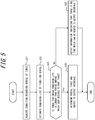
- FIG. 5 is a flowchart illustrating an example of operation of the tire rental management apparatus 10 when the rental tires are determined.
- the controller 15 acquires the condition regarding rental of tires input to the input interface 11 (step S31).
- the controller 15 estimates remaining life of the tires 1 for rental (step S32). Note that the controller 15 may exclude tires 1 which are being rented, and tires 1 which do not match a tire size, or the like, designated by the user, from tires for which the remaining life is to be estimated among the tires 1 for rental managed by the service provider.
- the controller 15 determines whether or not there are tires 1 whose estimated remaining life is longer than the period during which the user desires to rent tires (step S33).
- the controller 15 determines the tires 1 as the rental tires, and causes the output interface 12 to output tire ID information, cost for rental, or the like, of the tires 1 (step S34).
- step S33 the controller 15 causes the output interface 12 to output information indicating that there is no tire which can be rented (step S35).
- the controller 15 may estimate the remaining life of the tires 1 also using the traveling history as well as the rental history of the tires 1.
- the rental history of the tires 1 can be acquired on the service provider side from the condition regarding rental of tires input upon rental. However, during the rental period of the tires 1, it is difficult for the service provider side to grasp how the tires 1 are actually used. As described above, a degree of abrasion of the tires depends on how the tires are used. Therefore, there is a case where the remaining life cannot be estimated with high accuracy only from the rental history of the tires 1 obtained from the condition regarding the rental of the tires.
- By acquiring the traveling history in the rental period of the tires 1 from the vehicle on which the rented tires 1 are mounted it is possible to estimate how the tires 1 are used during the rental period. Therefore, by estimating the remaining life of the tires 1 using the rental history and the traveling history of the tires 1, it is possible to estimate the remaining life with higher accuracy.
- the controller 15 may determine the rental tires while also taking into account an inventory status of the tires 1 for rental. That is, the controller 15 may determine the rental tires so that inventory cost becomes the lowest in accordance with the period during which the user desires to rent tires, the estimated remaining life, and the inventory status of the tires for rental. For example, in a case where there are a plurality of tires 1 of different types whose remaining life is longer than the period during which the user desires to rent tires, the controller 15 determines the tires 1 of a type whose inventory level is high, as the rental tires. By determining the rental tires while also taking into account the inventory status of the tires 1 for rental in this manner, it is possible to realize reduction in inventory cost by adjusting balance of inventory levels among tires of different types.
- the controller 15 may determine a plurality of tires 1 of different types whose remaining life is longer than the period during which the user desires to rent tires, as the rental tires. In this case, the controller 15 may set lower charge for rental of the tires 1 of a type whose inventory level is higher. By this means, because it is possible to increase options for the user, and lead the user to rent tires whose charge is lower, it is possible to realize reduction in inventory cost by adjusting balance of inventory levels among the tires of different types.
- the controller 15 may determine the plurality of tires 1 as the rental tires. In this case, the controller 15 may set higher charge for rental of the tires 1 whose remaining life is longer. Typically, tire performance less degrades for tires whose degree of abrasion is less, that is, whose remaining life is longer. Therefore, by setting higher charge for the tires 1 whose remaining life is longer, it is possible to increase options for the user in accordance with safety.
- the tire rental management apparatus 10 includes the memory 14 configured to store rental history of each of a plurality of tires 1 for rental, and the controller 15 configured to estimate remaining life of the tires 1 on the basis of the rental history of the tires 1 stored in the memory 14, and determine the rental tires in accordance with the period during which the user desires to rent tires, and the estimated remaining life of the tires 1.
- the tire rental management method includes a step of storing rental history of each of a plurality of tires 1 for rental, and a step of estimating remaining life of the tires 1 on the basis of the stored rental history of the tires 1 and determining the rental tires in accordance with the period during which the user desires to rent tires and the estimated remaining history.
Landscapes
- Business, Economics & Management (AREA)
- Accounting & Taxation (AREA)
- Finance (AREA)
- Engineering & Computer Science (AREA)
- Economics (AREA)
- General Business, Economics & Management (AREA)
- Strategic Management (AREA)
- Physics & Mathematics (AREA)
- Marketing (AREA)
- General Physics & Mathematics (AREA)
- Development Economics (AREA)
- Theoretical Computer Science (AREA)
- Entrepreneurship & Innovation (AREA)
- Human Resources & Organizations (AREA)
- Operations Research (AREA)
- Quality & Reliability (AREA)
- Tourism & Hospitality (AREA)
- Management, Administration, Business Operations System, And Electronic Commerce (AREA)
Abstract
Description
- The present disclosure relates to a tire rental management apparatus, and a tire rental management method.
- Among tires to be mounted on a vehicle, there are tires to which RFID (Radio-Frequency Identification) tags for performing near field communication are attached (see, for example, PTL 1).
- PTL 1: Japanese Patent Laid-Open No.
2017-132292 - By the way, a service of renting tires to a user is being studied. In such a service, in terms of safety, tire performance equal to or higher than predetermined performance is required to be maintained within a period during which a user desires to rent tires. Here, tires mounted on a vehicle abrade away, for example, by friction with a road surface on which the vehicle is traveling. A degree of abrasion of the tires depends on how the tires are used, and affects tire performance such as maneuverability and braking performance. Therefore, in the service of renting tires as described above, a technique for determining tires (tires whose remaining life does not end) whose tire performance is maintained at equal to or higher than predetermined performance within a period during which the user desires to rent tires, as rental tires to be rented to the user among tires for rental, is desired.
- An object of the present disclosure which has been made in view of the problem as described above is to provide a tire rental management apparatus and a tire rental management method which are capable of determining tires whose tire performance is maintained at equal to or higher than predetermined performance within a period during which a user desires to rent tires, as rental tires among tires for rental.
- A tire rental management apparatus as one aspect of the present disclosure is a tire rental management apparatus which determines a rental tire which is a tire to be rented to a user who desires to rent a tire, the tire rental management apparatus including a memory configured to store rental history of each of a plurality of tires for rental, and a controller configured to estimate remaining life of a tire on a basis of the rental history of the tire stored in the memory and determine the rental tire in accordance with a period during which the user desires to rent a tire and the estimated remaining life.
- A tire rental management method as one aspect of the present disclosure is a tire rental management method for determining a rental tire which is a tire to be rented to a user who desires to rent a tire, the tire rental management method including a step of storing rental history of each of a plurality of tires for rental, and a step of estimating remaining life of a tire on the basis of the stored rental history of the tire, and determining the rental tire in accordance with a period during which the user desires to rent a tire and the estimated remaining life.
- According to the present disclosure, it is possible to provide a tire rental management apparatus and a tire rental management method which are capable of determining tires whose tire performance is maintained at equal to or higher than predetermined performance within a period during which a user desires to rent tires, as rental tires among tires for rental.
- In the accompanying drawings:
-
FIG. 1 is a view illustrating a configuration example of a tire rental management apparatus according to an embodiment of the present disclosure; -
FIG. 2 is a view illustrating a configuration example of a memory illustrated inFIG. 1 ; -
FIG. 3 is a flowchart illustrating an example of operation when rental history is stored in the memory illustrated inFIG. 1 ; -
FIG. 4 is a flowchart illustrating an example of operation when traveling history is stored in the memory illustrated inFIG. 1 ; and -
FIG. 5 is a flowchart illustrating an example of operation when rental tires are determined by the tire rental management apparatus illustrated inFIG. 1 . - An embodiment of the present disclosure will be described below with reference to the drawings. Note that, in the drawings, the same reference numerals indicate the same or equivalent components.
-
FIG. 1 is a view illustrating a configuration example of a tirerental management apparatus 10 according to an embodiment of the present disclosure. The tirerental management apparatus 10 according to the present embodiment is provided at a store, or the like, of a service provider who provides service of renting tires to a user who desires to rent tires, and determines candidate tires (hereinafter, referred to as rental tires) to be rented to the user among a plurality of tires 1 for rental. - The tire
rental management apparatus 10 illustrated inFIG. 1 includes aninput interface 11, anoutput interface 12, anacquirer 13, amemory 14, and acontroller 15. - The
input interface 11 accepts input of a condition regarding rental of tires to the user. Examples of the condition to be input to theinput interface 11 can include a vehicle on which tires are to be mounted, a size of tires desired to be rented, a period during which tires are desired to be rented, a period during which tires are used (such as, for example, "only winter season"), frequency of use of tires (such as "driving every day" and "approximately several tens of kilometers a week"), a usage area of tires (such as whether or not the area is a snowfall area), a budget, or the like. Theinput interface 11 outputs the input condition to thecontroller 15. - The
output interface 12 outputs information, or the like, regarding the rental tires determined in accordance with the condition, or the like, input to theinput interface 11. Theoutput interface 12 is configured with, for example, a display, or the like. - The
acquirer 13 performs wired communication or wireless communication with a vehicle on which the rental tires are mounted, to acquire traveling history of the vehicle in a rental period of the rental tires. The acquirer 13 acquires, for example, a traveling distance, traveling speed, addition-subtraction speed, statuses where an accelerator pedal and a brake pedal is depressed, a traveling route, weather during traveling, a status of a traveling road surface, or the like, in the rental period as the traveling history. Such traveling history can be acquired from various kinds of sensors mounted on the vehicle, an ECU (Electronic Control Unit) which controls operation of the vehicle, or the like. Theacquirer 13 acquires traveling history from the vehicle, for example, upon return of the rental tires mounted on the vehicle, or the like. - As illustrated in
FIG. 2 , thememory 14 stores rental history of the tires 1 in association with identification information for identifying the respective tires 1 for rental managed by the service provider (hereinafter, referred to as tire ID information). Thememory 14 stores information such as, for example, a rental period of the tires 1, a rental area of the tires 1 (area where a vehicle to which the tires 1 are rented mainly travels), and a vehicle on which the rental tires are mounted (vehicle to which tires are rented) as the rental history of the tires 1. Information stored as the rental history is mainly information acquired from the condition regarding rental of tires to the user input to theinput interface 11. - Further, as illustrated in
FIG. 2 , thememory 14 stores traveling history of the vehicle on which the tires 1 are mounted in the rental period of the tires 1 in association with the tire ID information of the respective tires 1 for rental. Thememory 14 stores information such as, for example, a traveling distance in the rental period of the tires 1, traveling speed, addition-subtraction speed, and statuses where pedals are depressed as the traveling history of the tires 1. The information stored as the traveling history is mainly information acquired from the traveling history acquired by theacquirer 13. - Further, as illustrated in
FIG. 2 , thememory 14 stores types of the tires 1 in association with the tire ID information of the respective tires 1 for rental. Examples of the types of the tires 1 can include information such as a size of the tires 1 and whether or not the tires are for winter use. Further, thememory 14 stores information indicating a rental status of the tires 1 (whether or not the tires 1 are being rented) in association with the tire ID information of each of the tires 1 for rental. Note that thememory 14 stores the rental history and the traveling history for each time of rental for the tires 1 which are rented a plurality of times (in an example illustrated inFIG. 2 , a tire having tire ID information of "0002"). With these kinds of information stored in thememory 14, it is possible to grasp a rental status, an inventory status, or the like, of the tires 1 for rental. - Note that, as illustrated in
FIG. 1 , it is assumed that atransmitter 2 is attached to the tire 1 for rental. Thetransmitter 2 is, for example, incorporated into the tire 1 (embedded in the tire 1 or pasted on an inner surface of the tire 1). Further, thetransmitter 2 may be pasted on a surface of the tire 1 if a position where thetransmitter 2 is attached is a position where thetransmitter 2 is difficult to be removed from the tire 1, and a position where thetransmitter 2 is not affected by contact between the tire 1 and a road surface. Thetransmitter 2 transmits a predetermined signal, for example, tire ID information of the tire 1 to which thetransmitter 2 is attached. Specific examples of thetransmitter 2 can include an RFID tag. The RFID tag performs near field (approximately several centimeters to several meters) communication with a reader apparatus using an electromagnetic field, a radio wave, or the like, to exchange information. As described above, in recent years, it is studied to attach an RFID tag to a tire. - The tire ID information transmitted by the
transmitter 2 attached to the tire 1 can be read by areader apparatus 3. Thereader apparatus 3 inputs the read tire ID information to thecontroller 15. - The
controller 15 controls overall operation of the tirerental management apparatus 10. For example, if a condition regarding rental of the tires is input to theinput interface 11, and the tires 1 are rented in accordance with the condition, thecontroller 15 causes the rental history in accordance with the condition input to theinput interface 11 to be stored in thememory 14 in association with the tire ID information of the rented tires 1. The tire ID information of the tires 1 is read by thereader apparatus 3 upon rental of the tires 1, and input to thecontroller 15. - Further, if the
acquirer 13 acquires the traveling history from the vehicle on which the tires 1 are mounted upon return of the rented tires 1, or the like, thecontroller 15 causes the traveling history to be stored in thememory 14 in association with the tire ID information of the tires 1. The tire ID information of the tires 1 is, for example, read by thereader apparatus 3 when the tires 1 are returned, and input to thecontroller 15. - As described above, the
transmitter 2 and thereader apparatus 3 perform near field communication in which a communication distance is several centimeters to several meters. Therefore, it is possible to acquire the tire ID information of the tires 1 by only bringing thereader apparatus 3 close to thetransmitters 2 attached to the tires 1. Therefore, it becomes easy to acquire the tire ID information of the tires 1, so that it becomes easy to manage the tires 1 upon rental, return, or the like. - Further, the
controller 15 determines rental tires which are tires to be rented to the user among the tires 1 for rental. Specifically, thecontroller 15 estimates remaining life of each tire 1 on the basis of at least the rental history stored in thememory 14. Note that the remaining life is a period until an estimated timing at which tire performance equal to or higher than predetermined performance can no longer be obtained. Thecontroller 15, for example, has data regarding an amount of abrasion of tires and change in tire performance due to abrasion in a case where the tires are used under various conditions, in advance, and estimates the remaining life of the tires 1 for rental on the basis of this data. - Then, the
controller 15 determines the rental tires in accordance with the period during which the user desires to rent tires, input to theinput interface 11, and the estimated remaining life of the tires 1 for rental. Specifically, thecontroller 15 determines the tires 1 whose remaining life is longer than the period during which the user desires to rent tires as the rental tires. By this means, it is possible to determine the tires 1 whose remaining life does not end, that is, whose tire performance is maintained at equal to or higher than predetermined performance within the period during which the user desires to rent tires, as the rental tires. - Note that, while, in
FIG. 1 , description has been provided using an example where the tirerental management apparatus 10 includes thecontroller 15 and thememory 14, the present disclosure is not limited to this. For example, thememory 14 may be connected to a network to which the tirerental management apparatus 10 can be connected, and thecontroller 15 may access thememory 14 via the network as necessary. - Operation of the tire
rental management apparatus 10 according to the present embodiment will be described next. - First, operation when the rental history and the traveling history are stored in the
memory 14 will be described.FIG. 3 is a flowchart illustrating an example of the operation when the rental history is stored in thememory 14. - The
controller 15 acquires the condition regarding rental of tires input to the input interface 11 (step S11). Further, thecontroller 15 acquires tire ID information of the tires 1 determined as the rental tires in accordance with the condition (step S12). Thecontroller 15 acquires tire ID information of the tires 1 determined as the rental tires, for example, from thereader apparatus 3. - The
controller 15 causes the rental history in accordance with the acquired condition regarding rental of tires to be stored in thememory 14 in association with the acquired tire ID information (step S13). - Operation when the traveling history is stored in the
memory 14 will be described next.FIG. 4 is a flowchart illustrating an example of the operation when the traveling history is stored in thememory 14. - For example, if the
acquirer 13 acquires the traveling history from the vehicle on which the tires 1 are mounted when the tires 1 rented to the user are returned, thecontroller 15 acquires the traveling history acquired by the acquirer 13 (step S21). - Further, the
controller 15 acquires tire ID information of the returned tires 1 (step S22). Thecontroller 15 acquires the tire ID information of the returned tires 1, for example, from thereader apparatus 3. - The
controller 15 causes the acquired traveling history to be stored in thememory 14 in association with the acquired tire ID information (step S23). - Operation when the rental tires are determined will be described next.
FIG. 5 is a flowchart illustrating an example of operation of the tirerental management apparatus 10 when the rental tires are determined. - The
controller 15 acquires the condition regarding rental of tires input to the input interface 11 (step S31). - Then, the
controller 15 estimates remaining life of the tires 1 for rental (step S32). Note that thecontroller 15 may exclude tires 1 which are being rented, and tires 1 which do not match a tire size, or the like, designated by the user, from tires for which the remaining life is to be estimated among the tires 1 for rental managed by the service provider. - Then, the
controller 15 determines whether or not there are tires 1 whose estimated remaining life is longer than the period during which the user desires to rent tires (step S33). - In a case where there are tires 1 whose estimated remaining life is longer than the period during which the user desires to rent tires (step S33: Yes), the
controller 15 determines the tires 1 as the rental tires, and causes theoutput interface 12 to output tire ID information, cost for rental, or the like, of the tires 1 (step S34). - In a case where there is no tire 1 whose estimated remaining life is longer than the period during which the user desires to rent tires (step S33: No), the
controller 15 causes theoutput interface 12 to output information indicating that there is no tire which can be rented (step S35). - The
controller 15 may estimate the remaining life of the tires 1 also using the traveling history as well as the rental history of the tires 1. The rental history of the tires 1 can be acquired on the service provider side from the condition regarding rental of tires input upon rental. However, during the rental period of the tires 1, it is difficult for the service provider side to grasp how the tires 1 are actually used. As described above, a degree of abrasion of the tires depends on how the tires are used. Therefore, there is a case where the remaining life cannot be estimated with high accuracy only from the rental history of the tires 1 obtained from the condition regarding the rental of the tires. By acquiring the traveling history in the rental period of the tires 1 from the vehicle on which the rented tires 1 are mounted, it is possible to estimate how the tires 1 are used during the rental period. Therefore, by estimating the remaining life of the tires 1 using the rental history and the traveling history of the tires 1, it is possible to estimate the remaining life with higher accuracy. - Further, the
controller 15 may determine the rental tires while also taking into account an inventory status of the tires 1 for rental. That is, thecontroller 15 may determine the rental tires so that inventory cost becomes the lowest in accordance with the period during which the user desires to rent tires, the estimated remaining life, and the inventory status of the tires for rental. For example, in a case where there are a plurality of tires 1 of different types whose remaining life is longer than the period during which the user desires to rent tires, thecontroller 15 determines the tires 1 of a type whose inventory level is high, as the rental tires. By determining the rental tires while also taking into account the inventory status of the tires 1 for rental in this manner, it is possible to realize reduction in inventory cost by adjusting balance of inventory levels among tires of different types. - Further, the
controller 15 may determine a plurality of tires 1 of different types whose remaining life is longer than the period during which the user desires to rent tires, as the rental tires. In this case, thecontroller 15 may set lower charge for rental of the tires 1 of a type whose inventory level is higher. By this means, because it is possible to increase options for the user, and lead the user to rent tires whose charge is lower, it is possible to realize reduction in inventory cost by adjusting balance of inventory levels among the tires of different types. - Further, in a case where there are a plurality of tires 1 whose estimated remaining life is longer than the period during which the user desires to rent tires, the
controller 15 may determine the plurality of tires 1 as the rental tires. In this case, thecontroller 15 may set higher charge for rental of the tires 1 whose remaining life is longer. Typically, tire performance less degrades for tires whose degree of abrasion is less, that is, whose remaining life is longer. Therefore, by setting higher charge for the tires 1 whose remaining life is longer, it is possible to increase options for the user in accordance with safety. - In this manner, the tire
rental management apparatus 10 according to the present embodiment includes thememory 14 configured to store rental history of each of a plurality of tires 1 for rental, and thecontroller 15 configured to estimate remaining life of the tires 1 on the basis of the rental history of the tires 1 stored in thememory 14, and determine the rental tires in accordance with the period during which the user desires to rent tires, and the estimated remaining life of the tires 1. - Further, the tire rental management method according to the present embodiment includes a step of storing rental history of each of a plurality of tires 1 for rental, and a step of estimating remaining life of the tires 1 on the basis of the stored rental history of the tires 1 and determining the rental tires in accordance with the period during which the user desires to rent tires and the estimated remaining history.
- By estimating the remaining life of the tires 1 on the basis of the rental history of the tires 1, it is possible to determine the tires whose tire performance is maintained at equal to or higher than predetermined performance within a period during which the user desires to rent tires, as the rental tires.
- The tire rental management apparatus and the tire rental management method according to the present disclosure are not limited to specific configurations described in the above-described embodiment, and various modifications and changes can be made without deviating from the scope of the claims.
-
- 1
- tire
- 2
- transmitter
- 3
- reader apparatus
- 10
- tire rental management apparatus
- 11
- input interface
- 12
- output interface
- 13
- acquirer
- 14
- memory
- 15
- controller
Claims (6)
- A tire rental management apparatus which determines a rental tire which is a tire to be rented to a user who desires to rent a tire, the tire rental management apparatus comprising:a memory configured to store rental history of each of a plurality of tires for rental; anda controller configured to estimate remaining life of a tire on a basis of the rental history of the tire stored in the memory and determine the rental tire in accordance with a period during which the user desires to rent a tire and the estimated remaining life.
- The tire rental management apparatus according to claim 1, further comprising:an acquirer configured to acquire traveling history in a rental period of the tire from a vehicle of the user to whom the tire is rented,wherein the memory further stores traveling history acquired by the acquirer from the vehicle on which the tire is mounted for each of the plurality of tires, andthe controller estimates the remaining life on a basis of the rental history and the traveling history stored in the memory.
- The tire rental management apparatus according to claim 1 or 2,
wherein the controller determines the rental tire in accordance with the period during which the user desires to rent a tire, the estimated remaining life, and an inventory status of the tires for rental. - The tire rental management apparatus according to any one of claims 1 to 3,
wherein, in a case where the controller determines a plurality of tires of different types as rental tires in accordance with the period during which the user desires to rent a tire and the estimated remaining life, the controller sets lower charge for rental of a tire of a type whose inventory level is higher among a plurality of tires determined as the rental tires. - The tire rental management apparatus according to any one of claims 1 to 4,
wherein, in a case where the controller determines a plurality of tires as the rental tires in accordance with the period during which the user desires to rent a tire and the estimated remaining life, the controller sets higher charge for rental of a tire whose estimated remaining life is longer. - A tire rental management method for determining a rental tire which is a tire to be rented to a user who desires to rent a tire, the tire rental management method comprising:a step of storing rental history of each of a plurality of tires for rental; anda step of estimating remaining life of a tire on a basis of the stored rental history of the tire and determining the rental tire in accordance with a period during which the user desires to rent a tire and the estimated remaining life.
Applications Claiming Priority (2)
| Application Number | Priority Date | Filing Date | Title |
|---|---|---|---|
| JP2017234624A JP2019101938A (en) | 2017-12-06 | 2017-12-06 | Tire rental management device and tire-rental management method |
| PCT/JP2018/033881 WO2019111484A1 (en) | 2017-12-06 | 2018-09-12 | Tire-rental management device and tire-rental management method |
Publications (2)
| Publication Number | Publication Date |
|---|---|
| EP3723023A1 true EP3723023A1 (en) | 2020-10-14 |
| EP3723023A4 EP3723023A4 (en) | 2021-08-04 |
Family
ID=66750485
Family Applications (1)
| Application Number | Title | Priority Date | Filing Date |
|---|---|---|---|
| EP18887121.4A Withdrawn EP3723023A4 (en) | 2017-12-06 | 2018-09-12 | Tire-rental management device and tire-rental management method |
Country Status (5)
| Country | Link |
|---|---|
| US (1) | US20200294118A1 (en) |
| EP (1) | EP3723023A4 (en) |
| JP (1) | JP2019101938A (en) |
| CN (1) | CN111465958A (en) |
| WO (1) | WO2019111484A1 (en) |
Families Citing this family (2)
| Publication number | Priority date | Publication date | Assignee | Title |
|---|---|---|---|---|
| CN113052555A (en) * | 2021-03-26 | 2021-06-29 | 浙江三一装备有限公司 | Method and system for managing loss parts |
| JP2024086419A (en) * | 2022-12-16 | 2024-06-27 | 株式会社ブリヂストン | Tire rental management device and tire rental management method |
Family Cites Families (17)
| Publication number | Priority date | Publication date | Assignee | Title |
|---|---|---|---|---|
| US5809437A (en) * | 1995-06-07 | 1998-09-15 | Automotive Technologies International, Inc. | On board vehicle diagnostic module using pattern recognition |
| US7421321B2 (en) * | 1995-06-07 | 2008-09-02 | Automotive Technologies International, Inc. | System for obtaining vehicular information |
| JP2001273411A (en) * | 2000-01-17 | 2001-10-05 | Sony Computer Entertainment Inc | System and method for managing selling price |
| US20020007295A1 (en) * | 2000-06-23 | 2002-01-17 | John Kenny | Rental store management system |
| JP2003050955A (en) * | 2001-08-08 | 2003-02-21 | Komatsu Ltd | Lease fee calculation system with maintenance |
| JP4141769B2 (en) * | 2002-02-05 | 2008-08-27 | 東京瓦斯株式会社 | Equipment management system, equipment management server, equipment management method, controller, program, recording medium |
| JP2004013449A (en) * | 2002-06-06 | 2004-01-15 | Hitachi Ltd | Vehicle control method, vehicle information transmission method, and tire management method |
| JP2005170065A (en) * | 2003-12-05 | 2005-06-30 | Hitachi Ltd | A wireless tag having a vehicle information memory area, a device for reading and writing to a wireless tag having a vehicle information memory area, a method for reading and writing to a wireless tag having a vehicle information memory area, and a read / write to a wireless tag having a vehicle information memory area Vehicle with device |
| JP2005174008A (en) * | 2003-12-11 | 2005-06-30 | Komatsu Ltd | Machine charge calculation system, machine charge calculation method, and program for causing computer to execute the method |
| JP4248428B2 (en) * | 2004-03-12 | 2009-04-02 | 太郎 齋藤 | Tire rental system and bucket / seat rental system |
| JP2005332193A (en) * | 2004-05-19 | 2005-12-02 | Matsushita Electric Ind Co Ltd | Rental system, rental system inventory management method, program, and recording medium |
| JP2007249543A (en) * | 2006-03-15 | 2007-09-27 | Nec Corp | Tire exchange method and tire exchange system |
| US20070222568A1 (en) * | 2006-03-21 | 2007-09-27 | International Business Machines Corporation | System and method for vehicle tire usage information |
| US20080065483A1 (en) * | 2006-09-13 | 2008-03-13 | Joe Ball | Inducing Renting Systems |
| JP2009054193A (en) * | 2008-12-08 | 2009-03-12 | Taro Saito | Tire rental computer system |
| US8112318B2 (en) * | 2010-11-15 | 2012-02-07 | Tire Centers, Llc | System and method for managing a plurality of tires |
| JP6650767B2 (en) | 2016-01-25 | 2020-02-19 | 株式会社ブリヂストン | RFID tag built-in tire |
-
2017
- 2017-12-06 JP JP2017234624A patent/JP2019101938A/en active Pending
-
2018
- 2018-09-12 CN CN201880078687.7A patent/CN111465958A/en active Pending
- 2018-09-12 WO PCT/JP2018/033881 patent/WO2019111484A1/en not_active Ceased
- 2018-09-12 US US16/765,475 patent/US20200294118A1/en not_active Abandoned
- 2018-09-12 EP EP18887121.4A patent/EP3723023A4/en not_active Withdrawn
Also Published As
| Publication number | Publication date |
|---|---|
| JP2019101938A (en) | 2019-06-24 |
| WO2019111484A1 (en) | 2019-06-13 |
| EP3723023A4 (en) | 2021-08-04 |
| CN111465958A (en) | 2020-07-28 |
| US20200294118A1 (en) | 2020-09-17 |
Similar Documents
| Publication | Publication Date | Title |
|---|---|---|
| US11495061B2 (en) | Systems and methods for data collection from maintenance-prone vehicle components | |
| US11125570B2 (en) | Method and apparatus for improved toll-booth vehicle handling | |
| US20160163130A1 (en) | Method and Apparatus for Connected Vehicle System Wear Estimation and Maintenance Scheduling | |
| US20180060970A1 (en) | System and method for context-based driver monitoring | |
| US20260057767A1 (en) | System and method for detecting speed anomalies in a connected vehicle infrastructure environment | |
| EP3608779A1 (en) | Method for processing a predetermined computing task by means of a distributed, vehicle-based computing system as well as computing system, server device, and motor vehicle | |
| US10553041B2 (en) | Method and apparatus for vehicle system wear prediction | |
| EP3679552A1 (en) | Electronic logging and track identification system for mobile telematics devices, and corresponding method thereof | |
| CN108416376B (en) | SVM-based logistics man-vehicle tracking monitoring management system and method | |
| CN103295272A (en) | Odometer monitoring and redundant storage system | |
| EP3723023A1 (en) | Tire-rental management device and tire-rental management method | |
| US10535258B2 (en) | Traffic volume determination system, traffic volume determination method, and non-transitory computer-readable storage medium storing traffic volume determination program | |
| CN111583430A (en) | Vehicle running cost confirmation method and related equipment | |
| CN119289995A (en) | Logistics park navigation method, device, equipment and storage medium | |
| JP6393766B2 (en) | Train operation prediction system, train operation prediction method, operation time calculation device, and operation time calculation method | |
| CN113302670A (en) | Traffic management method based on block chain network, device and system for executing traffic management method | |
| EP3723022A1 (en) | Tire-rental management device and tire-rental management method | |
| JP6916904B2 (en) | Terminal devices, transponders, billing systems, billing methods, and billing programs | |
| EP3598407A1 (en) | System | |
| JP2010009123A (en) | Vehicle traveling information management system, travel distance calculation device, and vehicle traveling information management method | |
| CN114084025B (en) | Multi-vehicle charging scheduling method and device, electronic equipment and storage medium | |
| KR20050081794A (en) | System and method for providing car driving information | |
| KR20210060295A (en) | Integrated Ride Management System and Method for Managing Driving Records and Ride Fare of Vehicles | |
| CN102289695A (en) | Method and system for identifying vehicle information | |
| EP3360748A1 (en) | Driving assistance of collaborative type |
Legal Events
| Date | Code | Title | Description |
|---|---|---|---|
| STAA | Information on the status of an ep patent application or granted ep patent |
Free format text: STATUS: THE INTERNATIONAL PUBLICATION HAS BEEN MADE |
|
| PUAI | Public reference made under article 153(3) epc to a published international application that has entered the european phase |
Free format text: ORIGINAL CODE: 0009012 |
|
| STAA | Information on the status of an ep patent application or granted ep patent |
Free format text: STATUS: REQUEST FOR EXAMINATION WAS MADE |
|
| 17P | Request for examination filed |
Effective date: 20200501 |
|
| AK | Designated contracting states |
Kind code of ref document: A1 Designated state(s): AL AT BE BG CH CY CZ DE DK EE ES FI FR GB GR HR HU IE IS IT LI LT LU LV MC MK MT NL NO PL PT RO RS SE SI SK SM TR |
|
| AX | Request for extension of the european patent |
Extension state: BA ME |
|
| DAV | Request for validation of the european patent (deleted) | ||
| DAX | Request for extension of the european patent (deleted) | ||
| A4 | Supplementary search report drawn up and despatched |
Effective date: 20210705 |
|
| RIC1 | Information provided on ipc code assigned before grant |
Ipc: G06Q 30/06 20120101AFI20210629BHEP Ipc: G06K 7/10 20060101ALI20210629BHEP |
|
| STAA | Information on the status of an ep patent application or granted ep patent |
Free format text: STATUS: THE APPLICATION IS DEEMED TO BE WITHDRAWN |
|
| 18D | Application deemed to be withdrawn |
Effective date: 20220202 |