EP3722429A1 - Transformation method of gram-positive bacteria - Google Patents
Transformation method of gram-positive bacteria Download PDFInfo
- Publication number
- EP3722429A1 EP3722429A1 EP18886941.6A EP18886941A EP3722429A1 EP 3722429 A1 EP3722429 A1 EP 3722429A1 EP 18886941 A EP18886941 A EP 18886941A EP 3722429 A1 EP3722429 A1 EP 3722429A1
- Authority
- EP
- European Patent Office
- Prior art keywords
- bacteria
- orit
- dna
- transfer
- recipient
- Prior art date
- Legal status (The legal status is an assumption and is not a legal conclusion. Google has not performed a legal analysis and makes no representation as to the accuracy of the status listed.)
- Granted
Links
Images




Classifications
-
- C—CHEMISTRY; METALLURGY
- C12—BIOCHEMISTRY; BEER; SPIRITS; WINE; VINEGAR; MICROBIOLOGY; ENZYMOLOGY; MUTATION OR GENETIC ENGINEERING
- C12N—MICROORGANISMS OR ENZYMES; COMPOSITIONS THEREOF; PROPAGATING, PRESERVING, OR MAINTAINING MICROORGANISMS; MUTATION OR GENETIC ENGINEERING; CULTURE MEDIA
- C12N15/00—Mutation or genetic engineering; DNA or RNA concerning genetic engineering, vectors, e.g. plasmids, or their isolation, preparation or purification; Use of hosts therefor
- C12N15/09—Recombinant DNA-technology
- C12N15/63—Introduction of foreign genetic material using vectors; Vectors; Use of hosts therefor; Regulation of expression
- C12N15/74—Vectors or expression systems specially adapted for prokaryotic hosts other than E. coli, e.g. Lactobacillus, Micromonospora
- C12N15/75—Vectors or expression systems specially adapted for prokaryotic hosts other than E. coli, e.g. Lactobacillus, Micromonospora for Bacillus
Definitions
- an object of the present invention is to provide a simple and efficient novel transformation method for gram-positive bacteria by which a DNA having a large size can be introduced intact into a host DNA of gram-positive bacteria. Another object is to provide a method in which an artificially designed long DNA can be produced by accumulating a desired DNA segment in a chromosome of a recipient (recipient bacteria), and a method in which transformed cells do not cause a problem also from the viewpoint of control of the natural environment.
- the present inventors found the following: When pLS20cat ⁇ oriT obtained by inactivation of an oriT LS20 region in pLS20cat is used as a helper plasmid, the helper plasmid itself is not transferred to a recipient (recipient bacteria) side in conjugational transfer of gram-positive bacteria but transformed cells to which a desired chromosome or plasmid alone has been transferred can be produced. According to the method of the present invention, the obtained transformed cells do not contain the helper plasmid, and hence can be subjected to, as a recipient (recipient bacteria), the conjugational transfer of the desired chromosome or plasmid again in the same manner.
- a large size DNA can be transferred to a recipient side intact and in a short period of time.
- the helper plasmid itself is not transferred to the recipient side in conjugational transfer of gram-positive bacteria but transformed cells to which a desired chromosome or plasmid alone has been transferred can be produced.
- the gram-positive bacteria include Bacillus (such as Bacillus subtilis, Bacillus anthracis, thermophilic bacteria ( Geobacillus ), Bacillus cereus, Bacillus licheniformis , Bacillus megaterium, Bacillus pumilus, and Bacillus thuringiensis ), Listeria, Staphylococcus, Streptococcus, Enterococcus (such as lactic acid bacteria), and Clostridium.
- Bacillus such as Bacillus subtilis, Bacillus anthracis, thermophilic bacteria belonging to the genus Bacillus are more preferred, and Geobacillus kaustophilus is further preferred.
- organ of DNA transfer (oriT) region refers to a region including a start sequence for the transfer of a DNA.
- OD600 reaches 0.5 to 0.7
- 500 ⁇ L of the donor culture and 500 ⁇ L of the recipient culture are mixed in a 1.5 mL microtube, and the resultant mixture is allowed to stand still at 37°C for 2 minutes to 2 hours, preferably 5 minutes to 1 hour, more preferably 10 minutes to 30 minutes, and further preferably about 15 minutes.
- a step of the conjugational transfer conventionally takes several hours or more, but adequate transfer can be attained even in about 15 minutes by the method of the present invention.
- the mixture is continuously diluted, and spread over LB plates respectively containing various combinations of antibiotics, so as to grow colonies overnight. In each of these plates, a colony forming unit (CFU) is measured for calculating transformation efficiency through the conjugational transfer, and thus, CFU x 10 6 (ppm) of transformed CFU/total recipient is obtained.
- CFU colony forming unit
- a DNA to be conjugationally transferred may be degraded by a restriction enzyme or the like in the recipient strain in some cases.
- transformation for introducing a methyltransferase into the donor strain may be performed in advance so that DNA modification (methylation modification or the like) similar to that in the recipient strain can be performed in the donor strain.
- thermophilic bacteria Geobacillus kaustophilus ; GK
- a method disclosed in JP 2011-211968 A can be employed.
- Bacterial strains and plasmids used in this study are shown in Table 1 below. Besides, synthetic oligonucleotides used as PCR primers are shown in Table 2 below (SEQ ID NOS: 1 to 33).
- the bacterial strain was grown in an LB medium (manufactured by Difco) under a condition of 37°C to be used. If necessary, an antibiotic (5 ⁇ g/mL chloramphenicol, 1 ⁇ g/mL erythromycin, 100 ⁇ g/mL spectinomycin, and 10 ⁇ g/mL kanamycin) was added to the medium.
- an antibiotic 5 ⁇ g/mL chloramphenicol, 1 ⁇ g/mL erythromycin, 100 ⁇ g/mL spectinomycin, and 10 ⁇ g/mL kanamycin
- YNB022 was grown in an LB liquid medium containing kanamycin at 37°C overnight. An aliquot of the culture fluid was transferred to a fresh LB liquid medium containing 1 mM isopropyl thiogalactopyranoside (IPTG) to grow cells at 37°C for 2 hours. Next, an aliquot of the culture fluid was spread on an LB plate containing 1 mM IPTG, and incubated at 37°C overnight. In the presence of IPTG, mazF was expressed to produce a suicide toxin, and hence, merely cells capable of coming out of the mazF kan cassette could survive by intermolecular recombination.
- IPTG isopropyl thiogalactopyranoside
- plasmid was named pLS20cat ⁇ oriT.
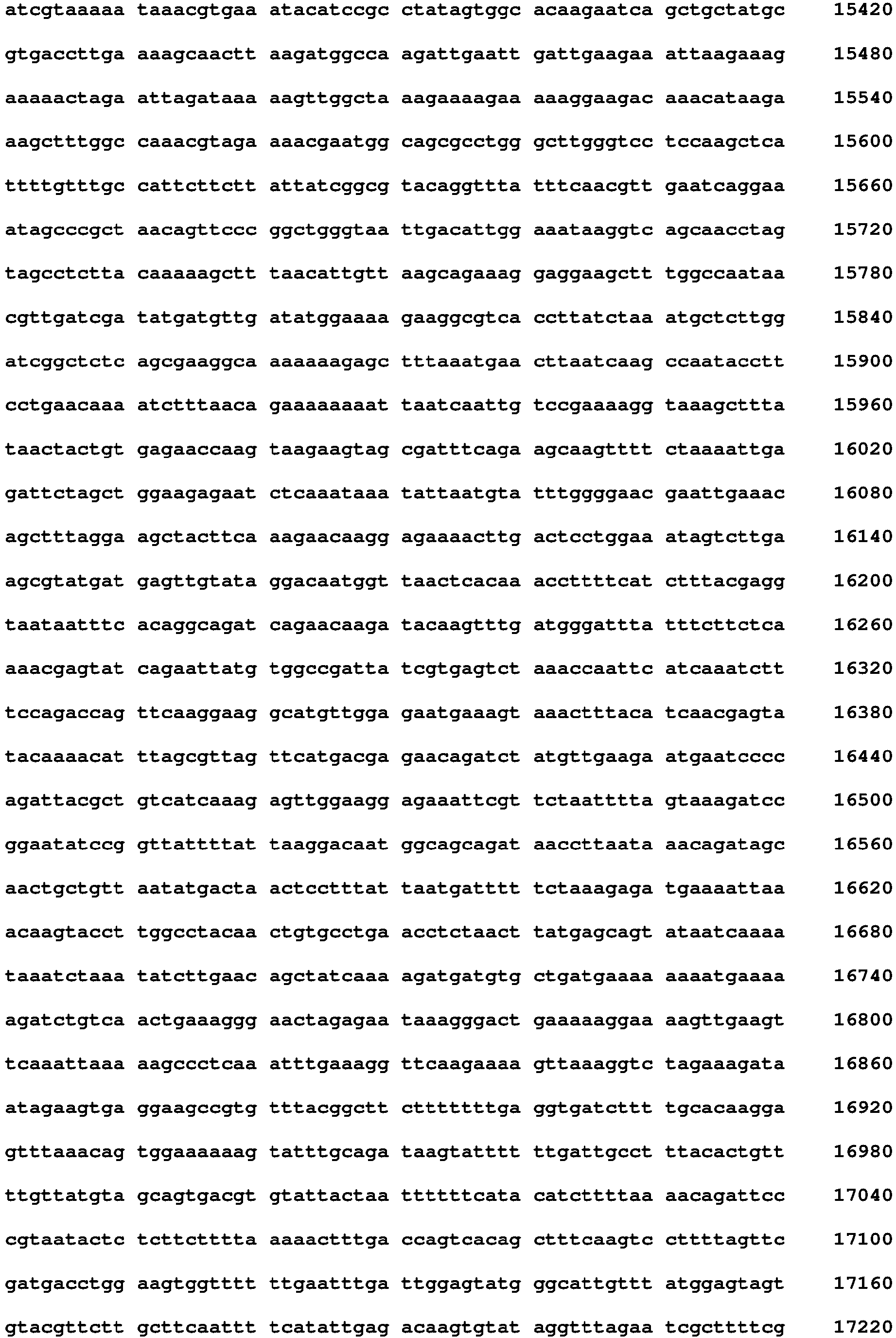
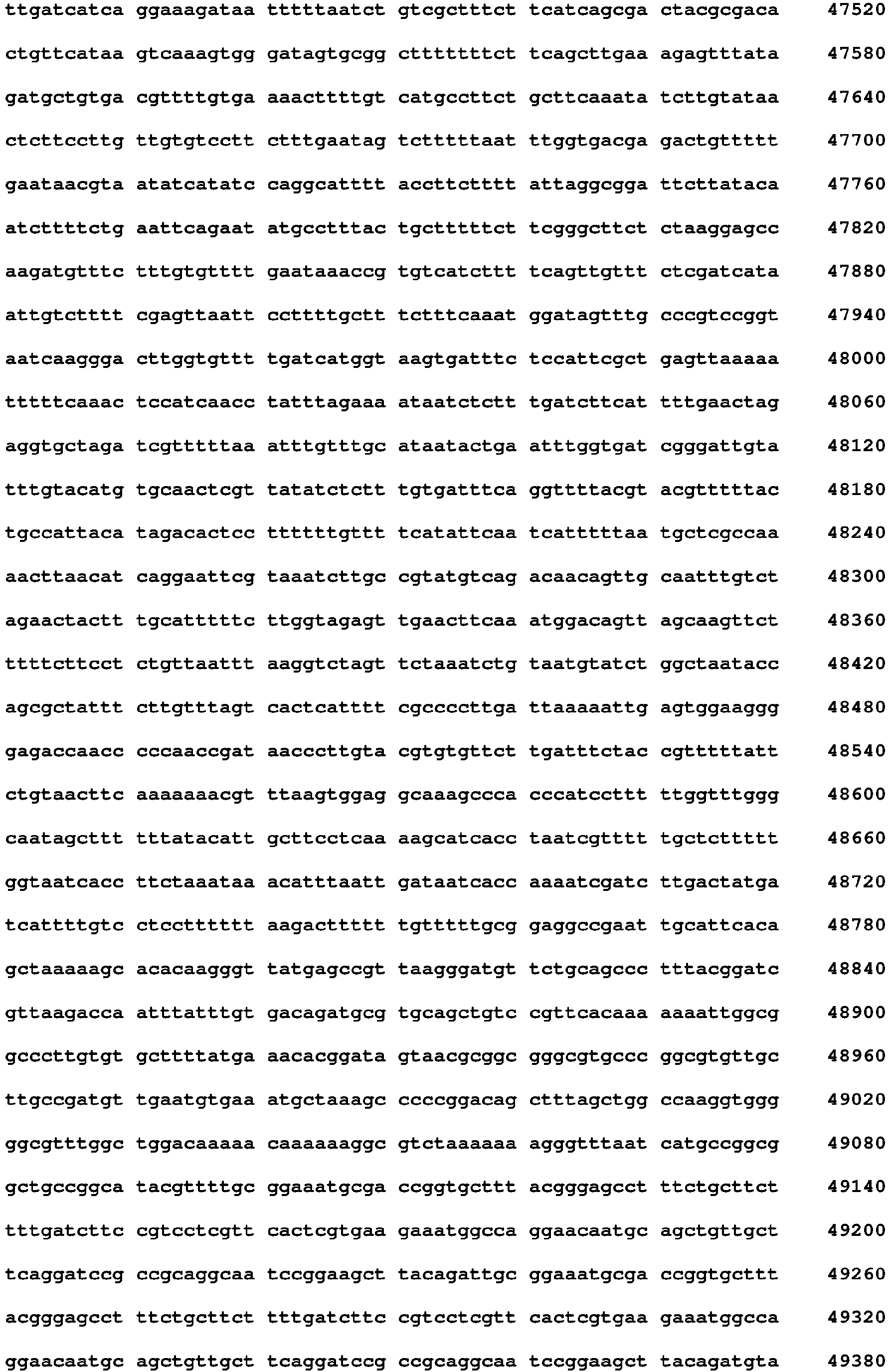
- the structure of this plasmid is illustrated in Fig. 1 . Besides, its gene sequence is shown in sequence listing as SEQ ID NO: 34.
- the donor strain YNB060 was constructed as follows ( Fig. 2 ).
- the primers yhfM-uF/yhfM-uR1 (for the upstream region) and yhfM-dF/yhfM-dR (for the downstream region) were used to amplify, from the 168 DNA, two fragments respectively corresponding to the upstream region (fragment 1) and the downstream region (fragment 4) of yhfM.
- a fragment 2 containing oriT LS20 was amplified by using a primer oriT-F/oriT-R with pLS20cat used as a template.
- a fragment 3 having an erythromycin resistant gene was amplified by using a primer erm-F1/erm-R with a plasmid pMutin2 used as a template.
- the fragments 1 to 4 were linked through the recombinant PCR using a primer yhfM-uF/yhfM-dR in the order of the fragment 1, the fragment 2, the fragment 3 and the fragment 4.
- the thus obtained recombinant PCR fragment was introduced to transform TMO311 (aprE::kan) to be resistant to both erythromycin and kanamycin, and a colony was selected.
- the thus obtained strain was named YNB060.
- This strain has an erythromycin marker at oriT LS20 , and has a kanamycin marker at both yhfM and aprE loci present on the same chromosome but away from each other by 6.6 kb.
- a replication direction of oriT LS20 is a direction toward the kanamycin marker present downstream by 6.6 kb.
- the thus obtained recombinant PCR fragment was introduced to transform TMN311 to be resistant to erythromycin, and a colony was selected to obtain YNB061.
- YNB060 the replication direction of oriT LS20 at the yhfM locus was opposite to the kanamycin marker present at the aprE locus in YNB061.
- YNB069, YNB062 and YNB097 were constructed in the same manner as described above ( Fig. 2 ).
- YNB069, yhfK-uF/yhfK-uR1 and yhfK-dF/yhfK-dR (Table 2) were used as primers, respectively to amplify, from the 168 DNA, two fragments of the upstream region (fragment 1) and the downstream region (fragment 4) of yhfK.
- the four fragments were linked by the recombinant PCR using a primer yhfK-uF/yhfK-dR for YNB069, a primer yhfC-uF/yhfC-dR for YNB062, and a primer yhcT-uF/yhcT-dR for YNB097.
- Each of the thus obtained recombinant PCR fragments was used to transform TMO311 (aprE::kan), and a colony resistant to both erythromycin and kanamycin was selected.
- the thus obtained strains were named YNB069, YNB062 and YNB097.
- strains YNB060, YNB061, YNB069, YNB062 and YNB097 obtained as described above a chromosomal DNA was extracted by an ordinary method, and was introduced into the strain 168 (PKS11) containing pLS20cat or YNB026 containing pLS20cat ⁇ oriT to obtain a donor strain to be used in experiments described below.
- strains containing pLS20cat strains YNB065, YNB066, YNB071, YNB067 and YNB099 were obtained, and as strains containing pLS20cat ⁇ oriT, strains YNB091, YNB095, YNB092, YNB094 and YNB100 were obtained.
- CS black column
- ES grey column
- CES white column
- ND indicates that a concentration was below detection limit ( ⁇ 0.01 ppm)
- * indicates that a corresponding experiment was not performed.
- pLS20cat was transferred from the donor strain PKS11 (the strain 168 containing pLS20cat) or GR138 (the strain 168 containing pLS20cat and pGR16B) to the recipient strain, resulting in obtaining a large number of recipient cells (2,500 ppm or more) having acquired chloramphenicol resistance.
- the donor strain GR138 containing the helper plasmid pLS20cat and transfer plasmid pGR16B imparted the erythromycin resistance to the recipient strain, and hence, it was found that pLS20cat can mediate the transfer of the transfer plasmid pGR16B containing oriT LS20 ( Fig. 3 ).
- the helper plasmid pLS20cat has approximately double efficiency in the transformation of recipient cells as compared with the transfer plasmid pGR16B.
- oriT LS20 was introduced into the yhfM locus present upstream by 6.6 kb from a kanamycin resistant gene at the aprE locus.
- a replication direction of oriT LS20 was the forward direction to and the reverse direction from the kanamycin resistant gene respectively in the strains YNB060 and YNB061.
- pLS20cat or pLS20cat ⁇ oriT was introduced into the donor as the helper plasmid to produce new strains (1) YNB065 (pLS20cat introduced into YNB060), (2) YNB066 (pLS20cat introduced into YNB061), (3) YNB091 (pLS20cat ⁇ oriT introduced into YNB060), and (4) YNB095 (pLS20cat ⁇ oriT introduced into YNB061).
- a recipient strain YNB001 comK encoding a transcription factor indispensable to natural competence was inactivated to completely eliminate natural competence (which data is not shown).
- pLS20cat of both YNB065 and YNB066 imparted the chloramphenicol resistance to 2,300 ppm or more of recipient cells.
- YNB065 imparted the kanamycin resistance to merely 1 ppm of recipient cells but YNB066 did not impart the kanamycin resistance at all ( Fig. 4 ).
- CS black column
- KS grey column
- ND a concentration was below detection limit ( ⁇ 0.01 ppm).
- strains YNB071 pLS20cat introduced into YNB069), YNB067 (pLS20cat introduced into YNB062), YNB099 (pLS20cat introduced into YNB097), YNB092 (pLS20cat ⁇ oriT introduced into YNB069), YNB094 (pLS20cat ⁇ oriT introduced into YNB062), and YNB100 (pLS20cat ⁇ oriT introduced into YNB097) are included. Although all the donors containing pLS20cat imparted the chloramphenicol resistance to the recipient cells over 600 ppm, the other donors containing pLS20cat ⁇ oriT did not impart the chloramphenicol resistance at all ( Fig. 5 ).
- thermophilic bacteria Geobacillus kaustophilus ; GK
- a method for performing the experiment a method disclosed in JP 2011-211968 A was employed. Specifically, genetic manipulation for imparting DNA methylase and for forced enhancement of rap gene expression was performed on a donor for plasmid transfer to GK.
- a plasmid pGK1 to be transferred to GK a plasmid obtained by adding, to pGR16B, ori for replication in GK and a kanamycin resistant gene KmR (TK101) capable of enduring a high temperature necessary for selection in GK was used.
- TK101 kanamycin resistant gene KmR
- a large size DNA can be transferred to a recipient side.
- the helper plasmid itself is not transferred to the recipient side in conjugational transfer of gram-positive bacteria but transformed cells to which a desired chromosome or plasmid alone has been transferred can be produced.
- the obtained transformed cells do not contain the helper plasmid, and hence can be subjected to, as a recipient (recipient bacteria), the conjugational transfer of the desired chromosome or plasmid again in the same manner.
- a huge DNA can be designed and produced by accumulating a desired DNA segment in a chromosome of a recipient (recipient bacteria) by the present invention.
- transformation performed by the method of the present invention can be rapidly and simply performed merely by mixing culture fluids of a donor (donor bacteria) and a recipient (recipient bacteria), and hence can be suitably employed for producing microorganisms, cultured cells or the like in synthetic biological industrial activities.
Landscapes
- Genetics & Genomics (AREA)
- Health & Medical Sciences (AREA)
- Engineering & Computer Science (AREA)
- Life Sciences & Earth Sciences (AREA)
- Chemical & Material Sciences (AREA)
- Bioinformatics & Cheminformatics (AREA)
- Organic Chemistry (AREA)
- Biotechnology (AREA)
- General Engineering & Computer Science (AREA)
- Zoology (AREA)
- Wood Science & Technology (AREA)
- Biomedical Technology (AREA)
- Microbiology (AREA)
- Plant Pathology (AREA)
- Molecular Biology (AREA)
- Physics & Mathematics (AREA)
- Biochemistry (AREA)
- General Health & Medical Sciences (AREA)
- Biophysics (AREA)
- Micro-Organisms Or Cultivation Processes Thereof (AREA)
Abstract
Description
- The present invention relates to a transformation method for gram-positive bacteria.
- Conventionally known transformation methods for bacteria and the like include a competent cell transformation method in which a recombinant plasmid or a DNA fragment is introduced into a host such as E.coli (see Non Patent Document 1), a protoplast transformation method, an electroporation method, an agrobacterium method, a particle gun method, a calcium phosphate method, and a lipofection method. However, it is difficult for such conventional transformation methods to introduce a DNA fragment having a large size of, for example, 100 kb or more into a host DNA.
- Known methods for introducing a DNA fragment having a large size into a host DNA include a method employing conjugational transfer using Bacillus subtilis having acquired natural transformation ability. This method has, however, disadvantages that special culture conditions for leading Bacillus subtilis to cells having high natural transformation ability are necessary, and that the transformation itself takes time and effort. Besides, it is difficult to introduce a DNA having a large size exceeding several hundred kb intact into a host DNA.
- On the other hand, it is known that plasmid pLS20 derived from Bacillus natto has ability of replicative transfer from gram-positive bacteria cells of Bacillus subtilis or the like to other gram-positive bacteria cells by conjugational transfer. Besides, it has been revealed that pLS20 functions as a helper plasmid in a donor and can transfer a donor's plasmid to a recipient (see Non Patent Documents 2 and 3). Since pLS20 working as the helper plasmid is also transferred to the other gram-positive bacteria of the recipient side simultaneously with the pLS20 plasmid, it can further repeat the conjugational transfer into other gram-positive bacteria as the donor, which can be a problem from the viewpoint of control of the natural environment (see Non Patent Documents 4 and 5).
-
- Non Patent Document 1: J. Bacterial. 93, 1967; 1925
- Non Patent Document 2: Ramsay JP, Firth N. Curr Opin Microbiol. 2017; 38: 1-9
- Non Patent Document 3: Tanaka T, Kuroda M, Sakaguchi K. J Bacteriol. 1977; 129: 1487-94
- Non Patent Document 4: Davies J. Davies D., Microbiol Mol Biol Rev. 2010; 74: 417-33
- Non Patent Document 5: Berglund, B., Infect Ecol Epidemiol. 2015; 5: 28564
- Under these circumstances, an object of the present invention is to provide a simple and efficient novel transformation method for gram-positive bacteria by which a DNA having a large size can be introduced intact into a host DNA of gram-positive bacteria. Another object is to provide a method in which an artificially designed long DNA can be produced by accumulating a desired DNA segment in a chromosome of a recipient (recipient bacteria), and a method in which transformed cells do not cause a problem also from the viewpoint of control of the natural environment.
- As a result of earnest studies made for solving the above-described problem, the present inventors found the following: When pLS20catΔoriT obtained by inactivation of an oriTLS20 region in pLS20cat is used as a helper plasmid, the helper plasmid itself is not transferred to a recipient (recipient bacteria) side in conjugational transfer of gram-positive bacteria but transformed cells to which a desired chromosome or plasmid alone has been transferred can be produced. According to the method of the present invention, the obtained transformed cells do not contain the helper plasmid, and hence can be subjected to, as a recipient (recipient bacteria), the conjugational transfer of the desired chromosome or plasmid again in the same manner. Accordingly, a long DNA can be designed and produced by accumulating a desired DNA segment in a chromosome of a recipient (recipient bacteria) by the present invention. Besides, since the transformed cells obtained by the method of the present invention do not contain the helper plasmid, and hence do not further repeat the conjugational transfer as the donor, a problem from the viewpoint of control of the natural environment does not occur. Furthermore, transformation performed by the method of the present invention can be rapidly and simply performed merely by mixing culture fluids of a donor (donor bacteria) and a recipient (recipient bacteria), and hence can be suitably employed for producing microorganisms, cultured cells or the like in synthetic biological industrial activities. Specifically, the summary of the present invention is as follows:
- [1] A transformation method for gram-positive bacteria by conjugational transfer, comprising using a helper plasmid having an inactivated origin of DNA transfer (oriT) region.
- [2] The transformation method according to [1], wherein the helper plasmid is a plasmid derived from pLS20cat by inactivation of an origin of DNA transfer (oriT) region therein.
- [3] The transformation method according to [1] or [2], wherein donor bacteria in the conjugational transfer contain the helper plasmid having an inactivated origin of DNA transfer (oriT) region, and a chromosomal DNA or plasmid having the origin of DNA transfer (oriT) region integrated therein.
- [4] The transformation method according to [3], wherein the donor bacteria are at least one type of bacteria selected from the group consisting of gram-positive bacteria.
- [5] The transformation method according to [3] or [4], wherein a recipient bacteria used in the conjugational transfer is at least one type of bacteria selected from the group consisting of gram positive bacteria.
- [6] The transformation method according to [5], wherein the donor bacteria and the recipient bacteria are Bacillus subtilis.
- [7] A transformation method for gram-positive bacteria, comprising the steps of: (1) preparing donor bacteria containing a helper plasmid having an inactivated origin of DNA transfer (oriT) region, and a chromosomal DNA or plasmid having an origin of DNA transfer (oriT) region; and (2) performing conjugational transfer from the donor bacteria to recipient bacteria.
- [8] The transformation method according to [7], comprising accumulating a desired DNA segment in a chromosome of the recipient bacteria by repeatedly performing the steps (1) and (2) using transformed cells obtained by the conjugational transfer as recipient bacteria.
- [9] Gram-positive bacteria containing a helper plasmid having an inactivated origin of DNA transfer (oriT) region, and a chromosomal DNA or plasmid having the origin of DNA transfer (oriT) region.
- [10] A helper plasmid having an inactivated origin of DNA transfer (oriT) region, for use in transformation of gram-positive bacteria by conjugational transfer.
- According to a transformation method for gram-positive bacteria of the present invention, a large size DNA can be transferred to a recipient side intact and in a short period of time. Besides, since pLS20catΔoriT obtained by inactivation of an oriTLS20 region in pLS20cat is used as a helper plasmid, the helper plasmid itself is not transferred to the recipient side in conjugational transfer of gram-positive bacteria but transformed cells to which a desired chromosome or plasmid alone has been transferred can be produced. According to the method of the present invention, the obtained transformed cells do not contain the helper plasmid, and hence can be subjected to, as a recipient (recipient bacteria), the conjugational transfer of the desired chromosome or plasmid again in the same manner. Accordingly, a long DNA can be designed and produced by accumulating a desired DNA segment in a chromosome of a recipient (recipient bacteria) by the present invention. Besides, since the transformed cells obtained by the method of the present invention do not contain the helper plasmid, and hence do not further repeat the conjugational transfer as the donor, a problem from the viewpoint of control of the natural environment does not occur. Furthermore, transformation performed by the method of the present invention can be rapidly and simply performed merely by mixing culture fluids of a donor (donor bacteria) and a recipient (recipient bacteria), and hence can be suitably employed for producing microorganisms, cultured cells or the like in synthetic biological industrial activities.
-
- [
Fig. 1] Fig. 1 is a diagram schematically illustrating a structure of a plasmid pLS20catΔoriT. - [
Fig. 2] Fig. 2 is a schematic diagram of a locus of oriTLS20 and integration of kanamycin resistant gene of a donor strain. - [
Fig. 3] Fig. 3 is a diagram illustrating mobilization efficiencies of transfer plasmid pGR16B, and helper plasmids pLS20cat and pL20catΔoriT. - [
Fig. 4] Fig. 4 is a diagram illustrating mobilization efficiencies of a chromosomal DNA, and the helper plasmids pLS20cat and pLS20catΔoriT. - [
Fig. 5] Fig. 5 is a diagram illustrating mobilization efficiencies of a chromosomal DNA, and the helper plasmids pLS20cat and pLS20catΔoriT. - [
Fig. 6] Fig. 6 illustrates comparison between pLS20cat and pLS20catΔoriT in transfer of pGK1 to GK. - Now, a transformation method for gram-positive bacteria of the present invention will be described in detail. It is noted that molecular biological methods employed herein for preparing a DNA and a vector can be performed by methods described in general experiment books known to those skilled in the art or equivalent methods unless otherwise stated. Besides, terms used herein should be understood as meaning usually used in this technical field unless otherwise stated.
- The transformation method for gram-positive bacteria of the present invention comprises using a helper plasmid having an inactivated origin of DNA transfer (oriT) region in conjugational transfer.
- In the present invention, gram-positive bacteria refer to bacteria and other fungi positive in gram staining. The gram-positive bacteria generally have a comparatively thick (15 nm to 80 nm) cell walls, and many of these do not contain lipopolysaccharide in cell coat. Besides, many of these are highly sensitive to lysozyme. Specific examples of the gram-positive bacteria include Bacillus (such as Bacillus subtilis, Bacillus anthracis, thermophilic bacteria (Geobacillus), Bacillus cereus, Bacillus licheniformis, Bacillus megaterium, Bacillus pumilus, and Bacillus thuringiensis), Listeria, Staphylococcus, Streptococcus, Enterococcus (such as lactic acid bacteria), and Clostridium. In the present invention, the gram-positive bacteria are preferably Bacillus, among which Bacillus subtilis, Bacillus anthracis and thermophilic bacteria belonging to the genus Bacillus are more preferred, and Geobacillus kaustophilus is further preferred.
- The term "transformation" herein refers to modification of a genomic DNA of the gram-positive bacteria or modification caused by introducing a DNA into the gram-positive bacteria, and embraces deletion, replication and mutation of a chromosomal DNA and all trait changes caused by introducing an autonomous replicating plasmid. An introduced DNA may be integrated into a chromosome to be retained or replicated, or may be retained or replicated independently of the chromosome like a plasmid or the like. When a DNA is integrated into a specific site of the chromosome of the gram-positive bacteria, homologous recombination technique may be employed.
- In the present invention, conjugational transfer is a phenomenon occurring when bacteria having different traits are mixedly cultured, and refers to transfer of a part of a gene of a bacteria (donor bacteria) to other bacteria (recipient bacteria). Intensity of conjugational transfer ability is affected by a gene involved in the conjugational transfer on a chromosome of the donor or on a plasmid contained in the donor. Examples of the gene involved in the conjugational transfer include a self-transmissible gene, a conjugate-transmissible gene and an oriT sequence. A protein encoded by a self-transmissible gene is involved in interaction between donor bacteria and recipient bacteria. A protein encoded by a conjugate-transmissible gene has a function to nick an oriT sequence and a function to stably carry a DNA having been single stranded. The oriT sequence contains a nick site and a recognition sequence for nicking. The conjugational transfer occurs only when these three exist together.
- The term "helper plasmid" herein refers to a plasmid that helps, in transferring a given gene to target bacteria, the transfer of the gene to the bacteria, and a specific example includes pLS20 used for Bacillus subtilis. When bacteria containing a helper plasmid are used in transformation, transformation efficiency, simplicity of procedures and necessary time efficiency can be largely improved as compared with those in natural transformation.
- The term "origin of DNA transfer (oriT) region" herein refers to a region including a start sequence for the transfer of a DNA.
- Now, the transformation method for gram-positive bacteria of the present invention will be specifically described. Specifically, the transformation method for gram-positive bacteria of the present invention includes the steps of:
- (1) preparing donor bacteria containing a helper plasmid having an inactivated origin of DNA transfer (oriT) region, and a chromosomal DNA or plasmid having the origin of DNA transfer (oriT) region integrated therein; and
- (2) performing conjugational transfer from the donor bacteria to recipient bacteria.
- The transformation method for gram-positive bacteria of the present invention preferably further includes, if necessary, the step (3) of accumulating a desired DNA segment in a chromosome in the recipient bacteria.
- As the recipient strain (recipient bacteria), Bacillus can be preferably used, and Bacillus subtilis, Bacillus anthracis and thermophilic bacteria can be more preferably used, and Bacillus subtilis can be further preferably used as described above. In order that it can be checked in the step (2) whether or not transformation has been caused by the conjugational transfer, an antibiotic resistant gene is introduced into such a recipient strain (recipient bacteria) in advance. The antibiotic resistant gene can be introduced into the recipient strain (recipient bacteria) by a method conventionally known to those skilled in the art.
- For example, when Bacillus subtilis is used as the recipient strain (recipient bacteria), a gene such as comK of Bacillus subtilis can be introduced by inactivation through substitution with a spectinomycin resistant gene or the like. Specifically, two DNA fragments respectively corresponding to upstream and downstream regions of the gene such as comK are amplified by PCR using a Bacillus subtilis DNA as a template. At this point, primers suitable for an upstream fragment and a downstream fragment are designed and used. Besides, another DNA fragment containing a spectinomycin resistant gene of another Bacillus subtilis strain such as TMO310 is amplified by using a proper primer. These three fragments are linked by recombinant PCR to insert the spectinomycin resistant gene between the upstream region and the downstream region of the gene such as comK. When Bacillus subtilis is transformed to introduce the recombinant PCR fragment into the recipient strain, the resistance against an antibiotic such as spectinomycin can be imparted, and thus, a novel Bacillus subtilis strain resulting from modification of the recipient strain can be obtained in the present invention.
- The inactivation of an oriT region of a helper plasmid can be performed in accordance with a genetic manipulation method conventionally known to those skilled in the art. It is noted that the inactivation of the oriT region embraces partial deletion of the oriT region, whole deletion of the oriT region, and substitution of one or more bases of the oriT region. For example, the oriT region can be inactivated through deletion by a method such as marker-free deletion. Now, a case where pLS20cat is used as the helper plasmid will be described.
- Two DNA fragments respectively corresponding to the upstream region (fragment 1) and the downstream region (fragment 2) of oriTLS20 of pLS20cat are amplified by PCR with a pLS20cat DNA used as a template and by using primers oriT-uF/oriT-uR and oriT-dF/ori for the upstream region. Since an end portion of the
fragment 1 and a head portion of the fragment 2 are the same in 22 bp, such portions can be used for deleting the oriTLS20 region by the transformation. Another DNA fragment (fragment 3) of a mazF kan cassette is amplified from a TMO311 DNA by using mazF-F/mazF-R as a primer. The three PCR fragments can be designed, by recombinant PCR using oriT-uF/oriT-dR as a primer, so as to be linked in the order of thefragment 1, the fragment 3 and the fragment 2. Next, the thus obtained recombinant PCR fragment is transformed into PKS11 to impart kanamycin resistance, and thus, a novel strain YNB022 can be obtained. In this strain, pLS20cat is modified by integrating the PCR fragment via a double crossing-over event of the oriTLS20 region. YNB022 is grown in an LB liquid medium containing kanamycin at 37°C about overnight. An aliquot of the culture fluid is transferred to a fresh LB liquid medium containing 1 mM isopropyl thiogalactopyranoside (IPTG) to grow cells at 37°C for about 2 hours. Next, an aliquot of the culture fluid is spread on an LB plate containing 1 mM IPTG, and incubated at 37°C about overnight. In the presence of IPTG, mazF is expressed to produce a suicide toxin, and hence, merely cells capable of coming out of the mazF kan cassette can survive by intermolecular recombination. A kanamycin-sensitive colony, out of colonies appearing on the plate, can be subjected to sequencing to confirm that the oriTLS20 region has been properly deleted. The primers are shown in Table 2 below. - As a donor strain (donor bacteria), Bacillus can be preferably used, and Bacillus subtilis, Bacillus anthracis and thermophilic bacteria can be more preferably used, and Bacillus subtilis can be further preferably used as described above. In this step, the Bacillus subtilis, prepared as described above, into which the helper plasmid containing the inactivated oriT region has been introduced in advance is used for producing the donor strain, and the oriT region derived from the helper plasmid is integrated into the chromosomal DNA. Alternatively, a plasmid can be transferred instead of the chromosomal DNA, but in this case, a plasmid containing the oriT region derived from the helper plasmid is introduced into the Bacillus subtilis into which the helper plasmid containing the inactivated oriT region has been introduced in advance, and thus, the donor strain usable in the step (2) is prepared.
- A method for integrating the oriT region derived from the helper plasmid into the chromosomal DNA of the donor strain can be performed in accordance with a genetic manipulation method conventionally known to those skilled in the art. Now, this step will be described by assuming, for example, a case where Bacillus subtilis YNB060 is to be constructed as the donor strain by using pLS20cat as the helper plasmid.
- Specifically, primers yhfM-uF/yhfM-uR1 (for the upstream region) and yhfM-dF/yhfM-dR (for the downstream region) are used to amplify, from the DNA of Bacillus subtilis 168, two fragments respectively corresponding to the upstream region (fragment 1) and the downstream region (fragment 4) of yhfM. A fragment 2 containing oriTLS20 is amplified by using a primer oriT-F/oriT-R with pLS20cat used as a template. Besides, a fragment 3 having an erythromycin resistant gene is amplified by using a primer erm-F1/erm-R with a plasmid pMutin2 used as a template. The
fragments 1 to 4 are linked through the recombinant PCR using a primer yhfM-uF/yhfM-dR in the order of thefragment 1, the fragment 2, the fragment 3 and the fragment 4. TMO311 (aprE::kan) is transformed with the resultant recombinant PCR fragment, and a colony resistant to both erythromycin and kanamycin can be selected to be defined as the donor strain (YNB060). - In this step, the conjugational transfer from the donor strain described above to a recipient strain is performed. The donor strain and the recipient strain are respectively cultured in LB liquid media respectively containing proper antibiotics under shaking at 180 rpm at 37°C about overnight. Each of the thus obtained cultures is diluted, in a fresh LB medium not containing an antibiotic, to a cell density of OD600 of about 0.05, and the resultant is incubated under shaking at 180 rpm at 37°C. When OD600 reaches 0.5 to 0.7, 500 µL of the donor culture and 500 µL of the recipient culture are mixed in a 1.5 mL microtube, and the resultant mixture is allowed to stand still at 37°C for 2 minutes to 2 hours, preferably 5 minutes to 1 hour, more preferably 10 minutes to 30 minutes, and further preferably about 15 minutes. A step of the conjugational transfer conventionally takes several hours or more, but adequate transfer can be attained even in about 15 minutes by the method of the present invention. The mixture is continuously diluted, and spread over LB plates respectively containing various combinations of antibiotics, so as to grow colonies overnight. In each of these plates, a colony forming unit (CFU) is measured for calculating transformation efficiency through the conjugational transfer, and thus, CFU x 106 (ppm) of transformed CFU/total recipient is obtained.
- In this step, a desired DNA segment is accumulated in the chromosome of the recipient bacteria. Specifically, the desired DNA segment can be accumulated in the chromosome of the recipient cells by repeatedly performing the steps (1) and (2) using transformed cells obtained by the conjugational transfer of the step (2), as recipient bacteria.
- In the transformation method of the present invention, when the donor strain and the recipient strain are different species, a DNA to be conjugationally transferred may be degraded by a restriction enzyme or the like in the recipient strain in some cases. In such a case, in the step (1), transformation for introducing a methyltransferase into the donor strain may be performed in advance so that DNA modification (methylation modification or the like) similar to that in the recipient strain can be performed in the donor strain. For example, when thermophilic bacteria (Geobacillus kaustophilus; GK) are used as the recipient strain, a method disclosed in
JP 2011-211968 A - The present invention will be specifically described with reference to the following examples, and it is noted that the present invention is not limited to these examples.
- Bacterial strains and plasmids used in this study are shown in Table 1 below. Besides, synthetic oligonucleotides used as PCR primers are shown in Table 2 below (SEQ ID NOS: 1 to 33). The bacterial strain was grown in an LB medium (manufactured by Difco) under a condition of 37°C to be used. If necessary, an antibiotic (5 µg/mL chloramphenicol, 1 µg/mL erythromycin, 100 µg/mL spectinomycin, and 10 µg/mL kanamycin) was added to the medium.
[Table 1] Strains and plasmids Relevant genotype or description Strains (B. subtilis) PKS11 trpC2 pLS20cat GR138 trpC2 pLS20cat pGR16B TMO310 trpC2 aprE::(spc lacI Pspac-mazF) TMO311 trpC2 aprE::(kan lacl Pspac-mazF) YNB001 trpC2 comK::spc YNB022 trpC2 pLS20cat (kan lacI Pspac-mazF) YNB026 trpC2 pLS20catΔoriT YNB031 trpC2 pLS20catΔoriT pGR16B YNB060 trpc2 aprE::kan yhfM::(oriTLS20-F erm) YNB061 trpc2 aprE::kan yhfM::(oriTLS20-R erm) YNB069 trpc2 aprE::kan yhfK::(oriTLS20-F erm) YNB062 trpc2 aprE::kan yhfC::(oriTLS20-F erm) YNB097 trpc2 aprE::kan yhcT::(oriTLS20-F erm) YNB065 trpc2 aprE::kan yhfM::(oriTLS20-F erm) pLS20cat YNB066 trpc2 aprE::kan yhfM::(oriTLS20-R erm) pLS20cat YNB071 trpc2 aprE::kan yhfK::(oriTLS20-F erm) pLS20cat YNB067 trpc2 aprE::kan yhfC::(oriTLS20-F erm) pLS20cat YNB099 trpc2 aprE::kan yhcT::(oriTLS20-F erm) pLS20cat YNB091 trpc2 apre::kan yhfM::(oriTLS20-F erm) pLS20catΔoriT YNB095 trpc2 aprE::kan yhfM::(oriTLS20-R erm) pLS20catΔoriT YNB092 troc2 aprE::kan yhfK::(oriTLS20-F erm) pLS20catΔoriT YNB094 trpc2 aprE::kan yhfC::(oriTLS20-F erm) pLS20catΔoriT YNB100 trpc2 aprE::kan yhcT::(oriTLS20-F erm) pLS20catΔoriT Plasmids pLS20cat Conjugative plasmid pLS20 with a chloramphenicol resistant gene inserted in the unique Sal1 site pLS20catΔoriT pLS20cat without oriTLS20 pGR16B mobile plasmid containing oriT LS20 [Table 2] Oligonucleotides used in this study Sequences (5'→3') spc-F GAGTCAGAAAACAGACGCATAAACGCTAACGGTCAGC spc-R 
comK-uF AGAGCGTAAGAAACGCATC comK-uR TGCGTCTGTTTTCTGACTC comK-dF CTCGGGGAACGGTATTAG comK-dR CGAAGATCTGCCTACTGAAC oriT-uF TAAATAACATGACTGTGGAAATGAC oriT-uR GCTTGAGTCAATTCCGCTGTCGTTAGTCTTCGATGACGAGATTG oriT-dF 
oriT-dR GCGTCTTCTTAAAACGCTG mazF-F CGACAGCGGAATTGACTCAAGC mazF-R CGGGGATCCTACCCAATCAG oriT-F AAAGAGCAATCTCGTCATCGAAGACTAAATTTC oriT-R TTGTTAACGCTCCTTTTCATCGATTTCTG erm-F 1 erm-F2 
erm-R CTACATTCCCTTTAGTAACGTGTAAC yhfM-uF GATCGTGAAAGGCCCCAATGTG yhfM-uR1 yhfM-dF 
yhfM-dR ATCAGCGAAAGCACAAACACAAAACC yhfK-uF ATGATAAAATGACCACCGAAGAATTCCG yhfK-uR1 
yhfK-dF 
yhfK-dR yhfC-uF GACGAGCTCAACCTTTGGCAGC GCCAAATGGAGGCCGTATGTCAG yhfC-uR1 
yhfC-dF 
yhfC-dR GGCTTGGGATCGATACAAGTTCTTTAATGAG yhcT-uF TTCGGGGACGAAAAATAGCACAGATC yhcT-uR1 
yhcT-dF 
yhcT-dR GCTTTGTTAGTCTTCTTTTGAAAGTCAGAAAAAGC - The comK gene of Bacillus subtilis 168 was inactivated by substitution with a spectinomycin resistant gene. Specifically, two DNA fragments respectively corresponding to the upstream and downstream regions of comK were amplified by PCR using the DNA of Bacillus subtilis 168 as a template. As primers, comK-uF/comK-uR was used for the upstream fragment, and comK-dF/comK-dR was used for the downstream fragment. Besides, another DNA fragment containing a spectinomycin resistant gene of TMO310 was amplified by using a primer spc-F/spc-R. These three fragments were linked by the recombinant PCR using comK-uF/comK-dR, so as to insert the spectinomycin resistant gene between the upstream and downstream regions of comK. The resultant recombinant PCR fragment was introduced to transform Bacillus subtilis 168 to be spectinomycin resistant, and thus, a novel Bacillus subtilis strain YNB001 (comK::spc) to be used as a recipient strain in this study was obtained.
- The oriTLS20 region of pLS20cat was inactivated by marker-free deletion. Specifically, two DNA fragments respectively corresponding to the upstream region (fragment 1) and the downstream region (fragment 2) of oriTLS20 were amplified by PCR by using the primers oriT-uF/oriT-uR and oriT-dF/ori for the upstream region with the DNA of pLS20cat used as a template. Since an end portion of the
fragment 1 and a head portion of the fragment 2 were the same in 30 bp, these portions were used for deleting the oriTLS20 region by the transformation. Another DNA fragment (fragment 3) of a mazF kan cassette was amplified from a TMO311 DNA by using masF-F/mazF-R as a primer. These three PCR fragments were designed to be linked by the recombinant PCR using oriT-uF/oriT-dR as a primer in the order of thefragment 1, the fragment 3 and the fragment 2. The thus obtained recombinant PCR fragment was introduced to transform PKS11 to be resistant to kanamycin, and thus, a novel strain YNB022 was obtained. In this strain, pLS20cat was modified by integrating the PCR fragment via a double crossing-over event of the oriTLS20 region. YNB022 was grown in an LB liquid medium containing kanamycin at 37°C overnight. An aliquot of the culture fluid was transferred to a fresh LB liquid medium containing 1 mM isopropyl thiogalactopyranoside (IPTG) to grow cells at 37°C for 2 hours. Next, an aliquot of the culture fluid was spread on an LB plate containing 1 mM IPTG, and incubated at 37°C overnight. In the presence of IPTG, mazF was expressed to produce a suicide toxin, and hence, merely cells capable of coming out of the mazF kan cassette could survive by intermolecular recombination. A kanamycin-sensitive colony, out of colonies appearing on the plate, was subjected to sequencing to confirm that the oriTLS20 region had been properly deleted. The thus obtained plasmid was named pLS20catΔoriT. The structure of this plasmid is illustrated inFig. 1 . Besides, its gene sequence is shown in sequence listing as SEQ ID NO: 34. - The donor strain YNB060 was constructed as follows (
Fig. 2 ). The primers yhfM-uF/yhfM-uR1 (for the upstream region) and yhfM-dF/yhfM-dR (for the downstream region) were used to amplify, from the 168 DNA, two fragments respectively corresponding to the upstream region (fragment 1) and the downstream region (fragment 4) of yhfM. A fragment 2 containing oriTLS20 was amplified by using a primer oriT-F/oriT-R with pLS20cat used as a template. Besides, a fragment 3 having an erythromycin resistant gene was amplified by using a primer erm-F1/erm-R with a plasmid pMutin2 used as a template. Thefragments 1 to 4 were linked through the recombinant PCR using a primer yhfM-uF/yhfM-dR in the order of thefragment 1, the fragment 2, the fragment 3 and the fragment 4. The thus obtained recombinant PCR fragment was introduced to transform TMO311 (aprE::kan) to be resistant to both erythromycin and kanamycin, and a colony was selected. The thus obtained strain was named YNB060. This strain has an erythromycin marker at oriTLS20, and has a kanamycin marker at both yhfM and aprE loci present on the same chromosome but away from each other by 6.6 kb. Besides, a replication direction of oriTLS20 is a direction toward the kanamycin marker present downstream by 6.6 kb. - Another strain YNB061 was constructed in the same manner as described above. Two fragments of yhfM (of upstream and downstream regions) were amplified by using primers yhfM-uF/yhfM-uR2 and yhfM-dF/yhfM-dR, respectively. Primers oriT-F/oriT-R and erm-F2/erm-R were used to amplify an oriTLS20 fragment (fragment 2) and an erythromycin resistant fragment (fragment 3), respectively. The thus obtained four fragments were linked by the recombinant PCR using primer yhfM-uF/yhfM-dR. The thus obtained recombinant PCR fragment was introduced to transform TMN311 to be resistant to erythromycin, and a colony was selected to obtain YNB061. In contrast to YNB060, the replication direction of oriTLS20 at the yhfM locus was opposite to the kanamycin marker present at the aprE locus in YNB061.
- As still other strains, YNB069, YNB062 and YNB097 were constructed in the same manner as described above (
Fig. 2 ). As for YNB069, yhfK-uF/yhfK-uR1 and yhfK-dF/yhfK-dR (Table 2) were used as primers, respectively to amplify, from the 168 DNA, two fragments of the upstream region (fragment 1) and the downstream region (fragment 4) of yhfK. As for YNB062, yhfC-uF/yhfC-uR1 and yhfC-dF/yhfC-dR were used as primers, respectively to amplify two fragments of the upstream region and the downstream region of yhfC. As for YNB097, yhcT-uF/yhcT-uR1 and yhcT-dF/yhcT-dR were used as primers, respectively to amplify two fragments of the upstream region and the downstream region of yhcT. The oriTLS20 fragment (fragment 2) and the erythromycin resistant fragment (fragment 3) were the same as those used in the construction of YNB060 described above. As for each of these strains, the four fragments were linked by the recombinant PCR using a primer yhfK-uF/yhfK-dR for YNB069, a primer yhfC-uF/yhfC-dR for YNB062, and a primer yhcT-uF/yhcT-dR for YNB097. Each of the thus obtained recombinant PCR fragments was used to transform TMO311 (aprE::kan), and a colony resistant to both erythromycin and kanamycin was selected. The thus obtained strains were named YNB069, YNB062 and YNB097. All of these strains have the erythromycin marker as well as oriTLS20 at yhfK, yhfC and yhcT loci. These are positioned, on the chromosome, away from the kanamycin marker at the aprE locus by respectively 9.5 kb, 16.4 kb and 113 kb. Besides, in all of these strains, the replication direction of oriTLS20 was the forward direction toward the kanamycin marker. - From each of the strains YNB060, YNB061, YNB069, YNB062 and YNB097 obtained as described above, a chromosomal DNA was extracted by an ordinary method, and was introduced into the strain 168 (PKS11) containing pLS20cat or YNB026 containing pLS20catΔoriT to obtain a donor strain to be used in experiments described below. As strains containing pLS20cat, strains YNB065, YNB066, YNB071, YNB067 and YNB099 were obtained, and as strains containing pLS20catΔoriT, strains YNB091, YNB095, YNB092, YNB094 and YNB100 were obtained.
- The conjugational transfer of a DNA was performed in a liquid medium. Specifically, the donor strain and the recipient strain were respectively cultured in 5 mL of LB liquid media containing proper antibiotics under shaking at 180 rpm at 37°C overnight.
Each of the thus obtained cultures was diluted, in 5 mL of a fresh LB medium not containing an antibiotic, to a cell density of OD600 of 0.05, and the resultant was incubated under shaking at 180 rpm at 37°C. When OD600 reached 0.5 to 0.7, 500 µL of the donor culture and 500 µL of the recipient culture were mixed in a 1.5 mL microtube, and the resultant mixture was allowed to stand still at 37°C for 15 minutes. The mixture was serially diluted, and spread over LB plates respectively containing various combinations of antibiotics, so as to grow colonies overnight. In each of these plates, a colony forming unit (CFU) was measured for calculating transformation efficiency through the conjugational transfer (transconjugate), and thus, CFU x 106 (ppm) of transformed CFU/total recipient was obtained. - As a result of the above-described experiment, it was found that pLS20catΔoriT (plasmid having oriT deleted) itself cannot transfer to the recipient strain but retains the ability to transfer, to a recipient strain, a plasmid containing oriTLS20 or a chromosomal DNA existing together. This will be described in detail.
- Results of an experiment of plasmid transfer are illustrated in
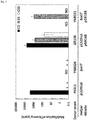
Fig. 3 . InFig. 3 , CS (black column) corresponds to a concentration (ppm) of cells having acquired chloramphenicol resistance, ES (gray column) corresponds to a concentration (ppm) of cells having acquired erythromycin resistance, and CES (white column) corresponds to a concentration (ppm) of cells having acquired chloramphenicol resistance and erythromycin resistance. Besides, ND indicates that a concentration was below detection limit (< 0.01 ppm), and * indicates that a corresponding experiment was not performed. - As illustrated in
Fig. 3 , pLS20cat was transferred from the donor strain PKS11 (the strain 168 containing pLS20cat) or GR138 (the strain 168 containing pLS20cat and pGR16B) to the recipient strain, resulting in obtaining a large number of recipient cells (2,500 ppm or more) having acquired chloramphenicol resistance. Besides, the donor strain GR138 containing the helper plasmid pLS20cat and transfer plasmid pGR16B (containing oriTLS20 and erythromycin resistant gene) imparted the erythromycin resistance to the recipient strain, and hence, it was found that pLS20cat can mediate the transfer of the transfer plasmid pGR16B containing oriTLS20 (Fig. 3 ). In the above-described experiment, since the donor strain GR138 imparted the erythromycin resistance to about 1,000 ppm of the recipient cells, it can be said that the helper plasmid pLS20cat has approximately double efficiency in the transformation of recipient cells as compared with the transfer plasmid pGR16B. Besides, since about 100 ppm of the recipient cells exhibited resistance to both erythromycin and chloramphenicol (Fig. 3 ), it is suggested that there is a possibility that about 10% of trans-zygotes having received pGR16B have acquired pLS20cat. - It is known that since bacteria having pLS20cat do not accept pLS20cat-mediated gene transfer, a transformant having received pLS20cat cannot be transformed again by using the same conjugational transfer system. On the other hand, as revealed by the above-described experiment, cells having pLS20cat could further transfer, to another strain, not only pLS20cat itself but also pGR16B. If such trans-zygotes are released to the environment, there might be a possibility that the antibiotic resistant gene is spread to other bacterial cells to cause novel antibiotic resistant bacteria to appear.
- Therefore, in order to avoid autotransfer of pLS20cat, the present inventors constructed pLS20catΔoriT by knocking out oriTLS20 of pLS20cat by the above-described method. As expected, YNB026, that is, the donor strain containing pLS20catΔoriT, did not transfer pLS20catΔoriT at all, but YNB031 containing pLS20catΔoriT and pGR16B could transfer pGR16B alone to impart erythromycin resistance to the recipient strain (
Fig. 3 ). Besides, the mobilization efficiency of pGR16B was substantially the same when pLS20cat was used as the helper plasmid and when pLS20catΔoriT was used as the helper plasmid. These results reveal that the pLS20cat-dependent transfer of pGR16B does not require self-mobility of pLS20cat of the helper plasmid. Furthermore, the knockout of oriT in pLS20cat did not affect the mobilization efficiency of pGR16B existing together. - Next, the present inventors checked whether or not pLS20catΔoriT could mediate the transfer of a chromosomal DNA depending on the state of the oriTLS20 region. Results are illustrated in
Fig. 4 . InFig. 4 , CS (black column) corresponds to a concentration (ppm) of cells having acquired chloramphenicol resistance, KS (gray column) corresponds to a concentration (ppm) of cells having acquired kanamycin resistance, and CKS (white column) corresponds to a concentration (ppm) of cells having acquired chloramphenicol resistance and kanamycin resistance. Besides, ND indicates that a concentration was below detection limit (< 0.01 ppm). - In a donor chromosome of each of YNB060 and YNB061, oriTLS20 was introduced into the yhfM locus present upstream by 6.6 kb from a kanamycin resistant gene at the aprE locus. A replication direction of oriTLS20 was the forward direction to and the reverse direction from the kanamycin resistant gene respectively in the strains YNB060 and YNB061. pLS20cat or pLS20catΔoriT was introduced into the donor as the helper plasmid to produce new strains (1) YNB065 (pLS20cat introduced into YNB060), (2) YNB066 (pLS20cat introduced into YNB061), (3) YNB091 (pLS20catΔoriT introduced into YNB060), and (4) YNB095 (pLS20catΔoriT introduced into YNB061). On the other hand, in a recipient strain YNB001, comK encoding a transcription factor indispensable to natural competence was inactivated to completely eliminate natural competence (which data is not shown).
- pLS20cat of both YNB065 and YNB066 imparted the chloramphenicol resistance to 2,300 ppm or more of recipient cells. On the other hand, with respect to impartation of the kanamycin resistance, YNB065 imparted the kanamycin resistance to merely 1 ppm of recipient cells but YNB066 did not impart the kanamycin resistance at all (
Fig. 4 ). These results reveal that when the replication direction of oriTLS20 is the forward direction to the kanamycin resistant gene, pLS20cat can transfer the kanamycin resistant gene present downstream by 6.6 kb from oriTLS20. Here, since the recipient did not have natural competence, it can be said that the acquisition of the kanamycin resistance depended on the conjugational transfer alone. On the other hand, YNB065 imparted, to the recipient cells (about 1 ppm of the recipient cells), not only the kanamycin resistance but also the chloramphenicol resistance (Fig. 4 ). This result suggests that most of recipient cells having acquired the kanamycin resistance through the introduction of the large chromosomal DNA can further acquire the helper plasmid pLS20cat. - In the experiment using YNB091 and YNB095 obtained by introducing pLS20catΔoriT as the helper plasmid respectively into YNB060 and YNB061, the recipient cells did not acquire the chloramphenicol resistance, and it was confirmed that pLS20catΔoriT had lost automobility (
Fig. 4 ). On the other hand, more significantly, when YNB091 was used as the donor cells, pLS20catΔoriT imparted the kanamycin resistance to recipient cells with the same efficiency as pLS20cat dependently on the orientation of oriTLS20. This result reveals that pLS20catΔoriT not only can transfect the transfer plasmid but also can exhibit helper activity in transfecting a chromosomal DNA efficiently in the same manner as the original helper plasmid pLS20cat. Since YNB095 did not impart the kanamycin resistance to the recipient, it was confirmed that the DNA transfection depends on oriTLS20 in the forward direction. - Next, the present inventors performed an experiment for checking the length of a chromosomal DNA that can be mediated to be transferred by pLS20catΔoriT. Results are illustrated in
Fig. 5 . InFig. 5 , CS (black column) corresponds to a concentration (ppm) of cells having acquired chloramphenicol resistance, and KS (gray column) corresponds to a concentration (ppm) of cells having acquired kanamycin resistance. Besides, ND indicates that a concentration was below detection limit (< 0.01 ppm). - Distances between oriTLS20 and the kanamycin marker in the strains YNB069, YNB062 and YNB097 were 9.5 kb, 16.4 kb, and 113 kb, respectively. In all of these strains, the replication direction of oriTLS20 was the forward direction to the kanamycin resistant gene. The strains YNB071 (pLS20cat introduced into YNB069), YNB067 (pLS20cat introduced into YNB062), YNB099 (pLS20cat introduced into YNB097), YNB092 (pLS20catΔoriT introduced into YNB069), YNB094 (pLS20catΔoriT introduced into YNB062), and YNB100 (pLS20catΔoriT introduced into YNB097) are included. Although all the donors containing pLS20cat imparted the chloramphenicol resistance to the recipient cells over 600 ppm, the other donors containing pLS20catΔoriT did not impart the chloramphenicol resistance at all (
Fig. 5 ). More significantly, however, all the strains containing pLS20catΔoriT could impart the kanamycin resistance to 0.5 to 10.0 ppm of recipient cells (Fig. 5 ). The efficiency was substantially equivalent to the efficiency achieved by YNB091 working as the donor, and it was revealed that the length of a DNA that can be transfected can be up to at least 113 kb. Besides, pLS20catΔoriT exhibited efficiency equivalent to that of pLS20cat in transferring a longer segment of a chromosomal DNA (Fig. 5 ). These results reveal that the mobility of pLS20cat itself is not required for the helper function to transfer a longer segment of a chromosomal DNA. - An experiment using, as the recipient stain, thermophilic bacteria (Geobacillus kaustophilus; GK) was performed. As a method for performing the experiment, a method disclosed in
JP 2011-211968 A Fig. 6 , it was found that pGK1 can be transferred with higher efficiency when pLS20catΔoriT is used than when pLS20cat is used. - According to the transformation method for gram-positive bacteria of the present invention, a large size DNA can be transferred to a recipient side. Besides, since pLS20catΔoriT obtained by inactivation of an oriTLS20 region in pLS20cat is used as a helper plasmid, the helper plasmid itself is not transferred to the recipient side in conjugational transfer of gram-positive bacteria but transformed cells to which a desired chromosome or plasmid alone has been transferred can be produced. According to the method of the present invention, the obtained transformed cells do not contain the helper plasmid, and hence can be subjected to, as a recipient (recipient bacteria), the conjugational transfer of the desired chromosome or plasmid again in the same manner. Accordingly, a huge DNA can be designed and produced by accumulating a desired DNA segment in a chromosome of a recipient (recipient bacteria) by the present invention. Furthermore, transformation performed by the method of the present invention can be rapidly and simply performed merely by mixing culture fluids of a donor (donor bacteria) and a recipient (recipient bacteria), and hence can be suitably employed for producing microorganisms, cultured cells or the like in synthetic biological industrial activities.






Claims (8)
- A transformation method for gram-positive bacteria by conjugational transfer, comprising using a helper plasmid having an inactivated origin of DNA transfer (oriT) region.
- The transformation method according to claim 1, wherein the helper plasmid is a plasmid derived from pLS20cat by inactivation of an origin of DNA transfer (oriT) region therein.
- The transformation method according to claim 1 or 2, wherein donor bacteria in the conjugational transfer contain the helper plasmid having an inactivated origin of DNA transfer (oriT) region, and a chromosomal DNA or plasmid having the origin of DNA transfer (oriT) region integrated therein.
- The transformation method according to claim 3, wherein the donor bacteria are at least one type of bacteria selected from the group consisting of gram-positive bacteria.
- The transformation method according to claim 3 or 4, wherein a recipient bacteria used in the conjugational transfer is at least one type of bacteria selected from the group consisting of gram-positive bacteria.
- The transformation method according to claim 5, wherein the donor bacteria and the recipient bacteria are Bacillus subtilis.
- A transformation method for gram-positive bacteria, comprising the steps of:(1) preparing donor bacteria containing a helper plasmid having an inactivated origin of DNA transfer (oriT) region, and a chromosomal DNA or plasmid having an origin of DNA transfer (oriT) region integrated therein; and(2) performing conjugational transfer from the donor bacteria to recipient bacteria.
- The transformation method according to claim 7, comprising accumulating a desired DNA segment in a chromosome of the recipient bacteria by repeatedly performing the steps (1) and (2) using transformed cells obtained by the conjugational transfer as recipient bacteria.
Applications Claiming Priority (2)
| Application Number | Priority Date | Filing Date | Title |
|---|---|---|---|
| JP2017235374 | 2017-12-07 | ||
| PCT/JP2018/045055 WO2019112032A1 (en) | 2017-12-07 | 2018-12-07 | Transformation method of gram-positive bacteria |
Publications (4)
| Publication Number | Publication Date |
|---|---|
| EP3722429A1 true EP3722429A1 (en) | 2020-10-14 |
| EP3722429A4 EP3722429A4 (en) | 2021-11-24 |
| EP3722429B1 EP3722429B1 (en) | 2024-10-16 |
| EP3722429C0 EP3722429C0 (en) | 2024-10-16 |
Family
ID=66750182
Family Applications (1)
| Application Number | Title | Priority Date | Filing Date |
|---|---|---|---|
| EP18886941.6A Active EP3722429B1 (en) | 2017-12-07 | 2018-12-07 | Transformation method of gram-positive bacteria |
Country Status (6)
| Country | Link |
|---|---|
| US (1) | US11473092B2 (en) |
| EP (1) | EP3722429B1 (en) |
| JP (2) | JP7053056B2 (en) |
| CN (1) | CN111433365B (en) |
| ES (1) | ES3000914T3 (en) |
| WO (1) | WO2019112032A1 (en) |
Family Cites Families (3)
| Publication number | Priority date | Publication date | Assignee | Title |
|---|---|---|---|---|
| AU5001496A (en) * | 1995-03-22 | 1996-10-08 | Novo Nordisk A/S | Introduction of dna into bacillus strains by conjugation |
| US6991786B1 (en) * | 2000-08-30 | 2006-01-31 | Wisconsin Alumni Research Foundation | Anti-microbial biotherapeutic agents: alternatives to conventional pharmaceutical antibiotics |
| JP5673996B2 (en) | 2010-03-31 | 2015-02-18 | 国立大学法人神戸大学 | Methods for transforming thermophilic microorganisms |
-
2018
- 2018-12-07 CN CN201880078292.7A patent/CN111433365B/en active Active
- 2018-12-07 EP EP18886941.6A patent/EP3722429B1/en active Active
- 2018-12-07 WO PCT/JP2018/045055 patent/WO2019112032A1/en not_active Ceased
- 2018-12-07 JP JP2019558291A patent/JP7053056B2/en active Active
- 2018-12-07 US US16/770,519 patent/US11473092B2/en active Active
- 2018-12-07 ES ES18886941T patent/ES3000914T3/en active Active
-
2022
- 2022-03-24 JP JP2022048676A patent/JP2022093333A/en active Pending
Also Published As
| Publication number | Publication date |
|---|---|
| JPWO2019112032A1 (en) | 2021-01-14 |
| EP3722429B1 (en) | 2024-10-16 |
| ES3000914T3 (en) | 2025-03-04 |
| JP7053056B2 (en) | 2022-04-12 |
| EP3722429A4 (en) | 2021-11-24 |
| US20210180073A1 (en) | 2021-06-17 |
| WO2019112032A1 (en) | 2019-06-13 |
| CN111433365B (en) | 2024-02-13 |
| JP2022093333A (en) | 2022-06-23 |
| EP3722429C0 (en) | 2024-10-16 |
| CN111433365A (en) | 2020-07-17 |
| US11473092B2 (en) | 2022-10-18 |
Similar Documents
| Publication | Publication Date | Title |
|---|---|---|
| Huang et al. | Development of a RecE/T‐assisted CRISPR–Cas9 toolbox for Lactobacillus | |
| Woods et al. | A novel conjugal donor strain for improved DNA transfer into Clostridium spp. | |
| Wasels et al. | A two-plasmid inducible CRISPR/Cas9 genome editing tool for Clostridium acetobutylicum | |
| Cartman et al. | A m ariner-Based Transposon System for In Vivo Random Mutagenesis of Clostridium difficile | |
| Bouillaut et al. | Genetic Manipulation of Clostridium difficile: Firmicutes (Low G+ C Gram Positive) | |
| Song et al. | CRISPR-Cas9D10A nickase-assisted genome editing in Lactobacillus casei | |
| Argov et al. | An effective counterselection system for Listeria monocytogenes and its use to characterize the monocin genomic region of strain 10403S | |
| Kato et al. | A simple method of markerless gene deletion in Staphylococcus aureus | |
| Ingle et al. | Generation of a fully erythromycin-sensitive strain of Clostridioides difficile using a novel CRISPR-Cas9 genome editing system | |
| WO2009022162A1 (en) | Bacillus with inactivated or downregulated htra and/or htrb | |
| EP2389440A1 (en) | Method of double crossover homologous recombination in clostridia | |
| Huguet-Tapia et al. | Characterization of the integration and modular excision of the integrative conjugative element PAISt in Streptomyces turgidiscabies Car8 | |
| Jore et al. | Efficient transformation system for Propionibacterium freudenreichii based on a novel vector | |
| Heap et al. | ClosTron-targeted mutagenesis | |
| Wang et al. | The resolution and regeneration of a cointegrate plasmid reveals a model for plasmid evolution mediated by conjugation and oriT site‐specific recombination | |
| Groom et al. | Promiscuous plasmid replication in thermophiles: use of a novel hyperthermophilic replicon for genetic manipulation of Clostridium thermocellum at its optimum growth temperature | |
| Kaneko et al. | DNA shuttling between plasmid vectors and a genome vector: systematic conversion and preservation of DNA libraries using the Bacillus subtilis genome (BGM) vector | |
| Kunnimalaiyaan et al. | Analysis of the replicon region and identification of an rRNA operon on pBM400 of Bacillus megaterium QM B1551 | |
| Bhattacharjee et al. | Factors and conditions that impact electroporation of Clostridioides difficile strains | |
| Gupta et al. | Marker-less deletion of cctA gene of Clostridium chauvoei | |
| EP3722429B1 (en) | Transformation method of gram-positive bacteria | |
| EP2831242B1 (en) | Vector | |
| Morozova et al. | Genetic and physiological characterization of 23S rRNA and ftsJ mutants of Borrelia burgdorferi isolated by mariner transposition | |
| Wilson et al. | VEX-capture: a new technique that allows in vivo excision, cloning, and broad-host-range transfer of large bacterial genomic DNA segments | |
| Emmerson et al. | Generation of gene deletions and gene replacements in Escherichia coli O157: H7 using a temperature sensitive allelic exchange system |
Legal Events
| Date | Code | Title | Description |
|---|---|---|---|
| STAA | Information on the status of an ep patent application or granted ep patent |
Free format text: STATUS: THE INTERNATIONAL PUBLICATION HAS BEEN MADE |
|
| PUAI | Public reference made under article 153(3) epc to a published international application that has entered the european phase |
Free format text: ORIGINAL CODE: 0009012 |
|
| STAA | Information on the status of an ep patent application or granted ep patent |
Free format text: STATUS: REQUEST FOR EXAMINATION WAS MADE |
|
| 17P | Request for examination filed |
Effective date: 20200702 |
|
| AK | Designated contracting states |
Kind code of ref document: A1 Designated state(s): AL AT BE BG CH CY CZ DE DK EE ES FI FR GB GR HR HU IE IS IT LI LT LU LV MC MK MT NL NO PL PT RO RS SE SI SK SM TR |
|
| AX | Request for extension of the european patent |
Extension state: BA ME |
|
| REG | Reference to a national code |
Ref country code: HK Ref legal event code: DE Ref document number: 40028771 Country of ref document: HK |
|
| DAV | Request for validation of the european patent (deleted) | ||
| DAX | Request for extension of the european patent (deleted) | ||
| A4 | Supplementary search report drawn up and despatched |
Effective date: 20211027 |
|
| RIC1 | Information provided on ipc code assigned before grant |
Ipc: C12N 1/21 20060101ALI20211021BHEP Ipc: C12N 15/75 20060101AFI20211021BHEP |
|
| STAA | Information on the status of an ep patent application or granted ep patent |
Free format text: STATUS: EXAMINATION IS IN PROGRESS |
|
| 17Q | First examination report despatched |
Effective date: 20230405 |
|
| GRAP | Despatch of communication of intention to grant a patent |
Free format text: ORIGINAL CODE: EPIDOSNIGR1 |
|
| STAA | Information on the status of an ep patent application or granted ep patent |
Free format text: STATUS: GRANT OF PATENT IS INTENDED |
|
| INTG | Intention to grant announced |
Effective date: 20240506 |
|
| GRAS | Grant fee paid |
Free format text: ORIGINAL CODE: EPIDOSNIGR3 |
|
| GRAA | (expected) grant |
Free format text: ORIGINAL CODE: 0009210 |
|
| STAA | Information on the status of an ep patent application or granted ep patent |
Free format text: STATUS: THE PATENT HAS BEEN GRANTED |
|
| AK | Designated contracting states |
Kind code of ref document: B1 Designated state(s): AL AT BE BG CH CY CZ DE DK EE ES FI FR GB GR HR HU IE IS IT LI LT LU LV MC MK MT NL NO PL PT RO RS SE SI SK SM TR |
|
| REG | Reference to a national code |
Ref country code: GB Ref legal event code: FG4D |
|
| REG | Reference to a national code |
Ref country code: CH Ref legal event code: EP Ref country code: DE Ref legal event code: R096 Ref document number: 602018075622 Country of ref document: DE |
|
| REG | Reference to a national code |
Ref country code: IE Ref legal event code: FG4D |
|
| U01 | Request for unitary effect filed |
Effective date: 20241016 |
|
| U07 | Unitary effect registered |
Designated state(s): AT BE BG DE DK EE FI FR IT LT LU LV MT NL PT RO SE SI Effective date: 20241022 |
|
| U20 | Renewal fee for the european patent with unitary effect paid |
Year of fee payment: 7 Effective date: 20241220 |
|
| REG | Reference to a national code |
Ref country code: ES Ref legal event code: FG2A Ref document number: 3000914 Country of ref document: ES Kind code of ref document: T3 Effective date: 20250304 |
|
| PG25 | Lapsed in a contracting state [announced via postgrant information from national office to epo] |
Ref country code: HR Free format text: LAPSE BECAUSE OF FAILURE TO SUBMIT A TRANSLATION OF THE DESCRIPTION OR TO PAY THE FEE WITHIN THE PRESCRIBED TIME-LIMIT Effective date: 20241016 Ref country code: IS Free format text: LAPSE BECAUSE OF FAILURE TO SUBMIT A TRANSLATION OF THE DESCRIPTION OR TO PAY THE FEE WITHIN THE PRESCRIBED TIME-LIMIT Effective date: 20250216 |
|
| PG25 | Lapsed in a contracting state [announced via postgrant information from national office to epo] |
Ref country code: NO Free format text: LAPSE BECAUSE OF FAILURE TO SUBMIT A TRANSLATION OF THE DESCRIPTION OR TO PAY THE FEE WITHIN THE PRESCRIBED TIME-LIMIT Effective date: 20250116 |
|
| PG25 | Lapsed in a contracting state [announced via postgrant information from national office to epo] |
Ref country code: GR Free format text: LAPSE BECAUSE OF FAILURE TO SUBMIT A TRANSLATION OF THE DESCRIPTION OR TO PAY THE FEE WITHIN THE PRESCRIBED TIME-LIMIT Effective date: 20250117 |
|
| PG25 | Lapsed in a contracting state [announced via postgrant information from national office to epo] |
Ref country code: PL Free format text: LAPSE BECAUSE OF FAILURE TO SUBMIT A TRANSLATION OF THE DESCRIPTION OR TO PAY THE FEE WITHIN THE PRESCRIBED TIME-LIMIT Effective date: 20241016 |
|
| PG25 | Lapsed in a contracting state [announced via postgrant information from national office to epo] |
Ref country code: RS Free format text: LAPSE BECAUSE OF FAILURE TO SUBMIT A TRANSLATION OF THE DESCRIPTION OR TO PAY THE FEE WITHIN THE PRESCRIBED TIME-LIMIT Effective date: 20250116 |
|
| PG25 | Lapsed in a contracting state [announced via postgrant information from national office to epo] |
Ref country code: SM Free format text: LAPSE BECAUSE OF FAILURE TO SUBMIT A TRANSLATION OF THE DESCRIPTION OR TO PAY THE FEE WITHIN THE PRESCRIBED TIME-LIMIT Effective date: 20241016 |
|
| PG25 | Lapsed in a contracting state [announced via postgrant information from national office to epo] |
Ref country code: MC Free format text: LAPSE BECAUSE OF FAILURE TO SUBMIT A TRANSLATION OF THE DESCRIPTION OR TO PAY THE FEE WITHIN THE PRESCRIBED TIME-LIMIT Effective date: 20241016 |
|
| PG25 | Lapsed in a contracting state [announced via postgrant information from national office to epo] |
Ref country code: SK Free format text: LAPSE BECAUSE OF FAILURE TO SUBMIT A TRANSLATION OF THE DESCRIPTION OR TO PAY THE FEE WITHIN THE PRESCRIBED TIME-LIMIT Effective date: 20241016 |
|
| PG25 | Lapsed in a contracting state [announced via postgrant information from national office to epo] |
Ref country code: CZ Free format text: LAPSE BECAUSE OF FAILURE TO SUBMIT A TRANSLATION OF THE DESCRIPTION OR TO PAY THE FEE WITHIN THE PRESCRIBED TIME-LIMIT Effective date: 20241016 |
|
| PLBE | No opposition filed within time limit |
Free format text: ORIGINAL CODE: 0009261 |
|
| STAA | Information on the status of an ep patent application or granted ep patent |
Free format text: STATUS: NO OPPOSITION FILED WITHIN TIME LIMIT |
|
| 26N | No opposition filed |
Effective date: 20250717 |
|
| PG25 | Lapsed in a contracting state [announced via postgrant information from national office to epo] |
Ref country code: IE Free format text: LAPSE BECAUSE OF NON-PAYMENT OF DUE FEES Effective date: 20241207 |
|
| U20 | Renewal fee for the european patent with unitary effect paid |
Year of fee payment: 8 Effective date: 20251126 |
|
| REG | Reference to a national code |
Ref country code: CH Ref legal event code: U11 Free format text: ST27 STATUS EVENT CODE: U-0-0-U10-U11 (AS PROVIDED BY THE NATIONAL OFFICE) Effective date: 20260101 |
|
| PGFP | Annual fee paid to national office [announced via postgrant information from national office to epo] |
Ref country code: GB Payment date: 20251113 Year of fee payment: 8 |
|
| PG25 | Lapsed in a contracting state [announced via postgrant information from national office to epo] |
Ref country code: CY Free format text: LAPSE BECAUSE OF FAILURE TO SUBMIT A TRANSLATION OF THE DESCRIPTION OR TO PAY THE FEE WITHIN THE PRESCRIBED TIME-LIMIT; INVALID AB INITIO Effective date: 20181207 |
|
| PGFP | Annual fee paid to national office [announced via postgrant information from national office to epo] |
Ref country code: ES Payment date: 20260108 Year of fee payment: 8 |
|
| PGFP | Annual fee paid to national office [announced via postgrant information from national office to epo] |
Ref country code: CH Payment date: 20260101 Year of fee payment: 8 |