EP3720012A1 - Autonomous distress tracking using automatic dependent surveillance broadcast - Google Patents
Autonomous distress tracking using automatic dependent surveillance broadcast Download PDFInfo
- Publication number
- EP3720012A1 EP3720012A1 EP20160532.6A EP20160532A EP3720012A1 EP 3720012 A1 EP3720012 A1 EP 3720012A1 EP 20160532 A EP20160532 A EP 20160532A EP 3720012 A1 EP3720012 A1 EP 3720012A1
- Authority
- EP
- European Patent Office
- Prior art keywords
- aircraft
- distress
- transmission
- automatic
- autonomous
- Prior art date
- Legal status (The legal status is an assumption and is not a legal conclusion. Google has not performed a legal analysis and makes no representation as to the accuracy of the status listed.)
- Granted
Links
Images





Classifications
-
- G—PHYSICS
- G01—MEASURING; TESTING
- G01S—RADIO DIRECTION-FINDING; RADIO NAVIGATION; DETERMINING DISTANCE OR VELOCITY BY USE OF RADIO WAVES; LOCATING OR PRESENCE-DETECTING BY USE OF THE REFLECTION OR RERADIATION OF RADIO WAVES; ANALOGOUS ARRANGEMENTS USING OTHER WAVES
- G01S5/00—Position-fixing by co-ordinating two or more direction or position line determinations; Position-fixing by co-ordinating two or more distance determinations
- G01S5/0009—Transmission of position information to remote stations
- G01S5/0018—Transmission from mobile station to base station
- G01S5/0027—Transmission from mobile station to base station of actual mobile position, i.e. position determined on mobile
-
- H—ELECTRICITY
- H04—ELECTRIC COMMUNICATION TECHNIQUE
- H04B—TRANSMISSION
- H04B7/00—Radio transmission systems, i.e. using radiation field
- H04B7/14—Relay systems
- H04B7/15—Active relay systems
- H04B7/185—Space-based or airborne stations; Stations for satellite systems
- H04B7/18502—Airborne stations
- H04B7/18506—Communications with or from aircraft, i.e. aeronautical mobile service
-
- G—PHYSICS
- G08—SIGNALLING
- G08B—SIGNALLING SYSTEMS, e.g. PERSONAL CALLING SYSTEMS; ORDER TELEGRAPHS; ALARM SYSTEMS
- G08B5/00—Visible signalling systems, e.g. visible personal calling systems or remote indication of seats occupied
- G08B5/006—Portable traffic signalling devices
-
- B—PERFORMING OPERATIONS; TRANSPORTING
- B64—AIRCRAFT; AVIATION; COSMONAUTICS
- B64D—EQUIPMENT FOR FITTING IN OR TO AIRCRAFT; FLIGHT SUITS; PARACHUTES; ARRANGEMENT OR MOUNTING OF POWER PLANTS OR PROPULSION TRANSMISSIONS IN AIRCRAFT
- B64D45/00—Aircraft indicators or protectors not otherwise provided for
-
- B—PERFORMING OPERATIONS; TRANSPORTING
- B64—AIRCRAFT; AVIATION; COSMONAUTICS
- B64D—EQUIPMENT FOR FITTING IN OR TO AIRCRAFT; FLIGHT SUITS; PARACHUTES; ARRANGEMENT OR MOUNTING OF POWER PLANTS OR PROPULSION TRANSMISSIONS IN AIRCRAFT
- B64D45/00—Aircraft indicators or protectors not otherwise provided for
- B64D45/0015—Devices specially adapted for the protection against criminal attack, e.g. anti-hijacking systems
- B64D45/0059—Devices specially adapted for the protection against criminal attack, e.g. anti-hijacking systems by communicating emergency situations to ground control or between crew members
-
- B—PERFORMING OPERATIONS; TRANSPORTING
- B64—AIRCRAFT; AVIATION; COSMONAUTICS
- B64F—GROUND OR AIRCRAFT-CARRIER-DECK INSTALLATIONS SPECIALLY ADAPTED FOR USE IN CONNECTION WITH AIRCRAFT; DESIGNING, MANUFACTURING, ASSEMBLING, CLEANING, MAINTAINING OR REPAIRING AIRCRAFT, NOT OTHERWISE PROVIDED FOR; HANDLING, TRANSPORTING, TESTING OR INSPECTING AIRCRAFT COMPONENTS, NOT OTHERWISE PROVIDED FOR
- B64F5/00—Designing, manufacturing, assembling, cleaning, maintaining or repairing aircraft, not otherwise provided for; Handling, transporting, testing or inspecting aircraft components, not otherwise provided for
- B64F5/60—Testing or inspecting aircraft components or systems
-
- G—PHYSICS
- G01—MEASURING; TESTING
- G01S—RADIO DIRECTION-FINDING; RADIO NAVIGATION; DETERMINING DISTANCE OR VELOCITY BY USE OF RADIO WAVES; LOCATING OR PRESENCE-DETECTING BY USE OF THE REFLECTION OR RERADIATION OF RADIO WAVES; ANALOGOUS ARRANGEMENTS USING OTHER WAVES
- G01S19/00—Satellite radio beacon positioning systems; Determining position, velocity or attitude using signals transmitted by such systems
- G01S19/01—Satellite radio beacon positioning systems transmitting time-stamped messages, e.g. GPS [Global Positioning System], GLONASS [Global Orbiting Navigation Satellite System] or GALILEO
- G01S19/13—Receivers
- G01S19/14—Receivers specially adapted for specific applications
-
- G—PHYSICS
- G01—MEASURING; TESTING
- G01S—RADIO DIRECTION-FINDING; RADIO NAVIGATION; DETERMINING DISTANCE OR VELOCITY BY USE OF RADIO WAVES; LOCATING OR PRESENCE-DETECTING BY USE OF THE REFLECTION OR RERADIATION OF RADIO WAVES; ANALOGOUS ARRANGEMENTS USING OTHER WAVES
- G01S19/00—Satellite radio beacon positioning systems; Determining position, velocity or attitude using signals transmitted by such systems
- G01S19/01—Satellite radio beacon positioning systems transmitting time-stamped messages, e.g. GPS [Global Positioning System], GLONASS [Global Orbiting Navigation Satellite System] or GALILEO
- G01S19/13—Receivers
- G01S19/14—Receivers specially adapted for specific applications
- G01S19/17—Emergency applications
-
- G—PHYSICS
- G01—MEASURING; TESTING
- G01S—RADIO DIRECTION-FINDING; RADIO NAVIGATION; DETERMINING DISTANCE OR VELOCITY BY USE OF RADIO WAVES; LOCATING OR PRESENCE-DETECTING BY USE OF THE REFLECTION OR RERADIATION OF RADIO WAVES; ANALOGOUS ARRANGEMENTS USING OTHER WAVES
- G01S19/00—Satellite radio beacon positioning systems; Determining position, velocity or attitude using signals transmitted by such systems
- G01S19/38—Determining a navigation solution using signals transmitted by a satellite radio beacon positioning system
- G01S19/39—Determining a navigation solution using signals transmitted by a satellite radio beacon positioning system the satellite radio beacon positioning system transmitting time-stamped messages, e.g. GPS [Global Positioning System], GLONASS [Global Orbiting Navigation Satellite System] or GALILEO
- G01S19/42—Determining position
-
- G—PHYSICS
- G08—SIGNALLING
- G08G—TRAFFIC CONTROL SYSTEMS
- G08G5/00—Traffic control systems for aircraft
- G08G5/20—Arrangements for acquiring, generating, sharing or displaying traffic information
- G08G5/21—Arrangements for acquiring, generating, sharing or displaying traffic information located onboard the aircraft
-
- G—PHYSICS
- G08—SIGNALLING
- G08G—TRAFFIC CONTROL SYSTEMS
- G08G5/00—Traffic control systems for aircraft
- G08G5/20—Arrangements for acquiring, generating, sharing or displaying traffic information
- G08G5/26—Transmission of traffic-related information between aircraft and ground stations
-
- G—PHYSICS
- G08—SIGNALLING
- G08G—TRAFFIC CONTROL SYSTEMS
- G08G5/00—Traffic control systems for aircraft
- G08G5/50—Navigation or guidance aids
- G08G5/55—Navigation or guidance aids for a single aircraft
-
- G—PHYSICS
- G01—MEASURING; TESTING
- G01S—RADIO DIRECTION-FINDING; RADIO NAVIGATION; DETERMINING DISTANCE OR VELOCITY BY USE OF RADIO WAVES; LOCATING OR PRESENCE-DETECTING BY USE OF THE REFLECTION OR RERADIATION OF RADIO WAVES; ANALOGOUS ARRANGEMENTS USING OTHER WAVES
- G01S2205/00—Position-fixing by co-ordinating two or more direction or position line determinations; Position-fixing by co-ordinating two or more distance determinations
- G01S2205/001—Transmission of position information to remote stations
- G01S2205/002—Transmission of position information to remote stations for traffic control, mobile tracking, guidance, surveillance or anti-collision
- G01S2205/003—Transmission of position information to remote stations for traffic control, mobile tracking, guidance, surveillance or anti-collision for aircraft positioning relative to the ground
-
- G—PHYSICS
- G01—MEASURING; TESTING
- G01S—RADIO DIRECTION-FINDING; RADIO NAVIGATION; DETERMINING DISTANCE OR VELOCITY BY USE OF RADIO WAVES; LOCATING OR PRESENCE-DETECTING BY USE OF THE REFLECTION OR RERADIATION OF RADIO WAVES; ANALOGOUS ARRANGEMENTS USING OTHER WAVES
- G01S2205/00—Position-fixing by co-ordinating two or more direction or position line determinations; Position-fixing by co-ordinating two or more distance determinations
- G01S2205/001—Transmission of position information to remote stations
- G01S2205/006—Transmission of position information to remote stations for emergency situations
-
- G—PHYSICS
- G08—SIGNALLING
- G08G—TRAFFIC CONTROL SYSTEMS
- G08G5/00—Traffic control systems for aircraft
- G08G5/50—Navigation or guidance aids
- G08G5/58—Navigation or guidance aids for emergency situations, e.g. hijacking or bird strikes
Definitions
- the present disclosure relates generally to tracking the position of an aircraft. More particularly, the present disclosure relates to a method and system for tracking the position of an aircraft that is in distress.
- An emergency locator transmitter on an aircraft is intended to aid in locating the aircraft after a crash.
- An emergency locator transmitter or other distress radio beacon on an aircraft may be manually or automatically activated to send out a distress signal.
- an emergency locator transmitter may be activated automatically upon immersion in water.
- the distress signals generated by an emergency locator transmitter or other distress radio beacon on an aircraft may be monitored and detected by a network of satellites worldwide.
- the geographic position of an emergency locator transmitter or other radio distress beacon emitting a distress signal may be determined using a satellite navigation system, triangulation, or using another method or an appropriate combination of methods.
- Current emergency locator transmitters may have several limitations. For example, position information provided by current emergency locator transmitters may not be sufficiently accurate or provided in a sufficiently reliable manner to effectively locate an aircraft in distress effectively. The majority of currently fielded emergency locator transmitters do not provide position information directly. The location of the emergency locator transmitter is determined by radio frequency direction finding or multilateration through satellite links. This process may take an undesirably long time and may not be sufficiently reliable.
- the weight of current emergency locator transmitters may be relatively high. Maintenance requirements for current emergency locator transmitters also may be relatively high. For example, most emergency locator transmitters fitted to aircraft today are powered by a non-rechargeable battery that is relatively heavy and must be maintained appropriately to ensure reliable operation and to prevent any undesired condition from occurring. It also may be relatively difficult to reduce or eliminate undesirable tampering with current emergency locator transmitters.
- new aviation requirements of tracking of aircraft in distress have been adopted at the international level. The requirements are performance based and essentially require that the position of an aircraft in distress be automatically broadcast at least once per minute.
- the system that broadcasts the position reports should be robust to failures in aircraft systems and loss of aircraft power to ensure that the reporting continues for the entire time that an aircraft is in distress.
- the illustrative embodiments of the present disclosure provide an autonomous distress tracking system for an aircraft, comprising an automatic dependent surveillance-broadcast transceiver, a system controller, and a housing.
- the automatic dependent surveillance-broadcast transceiver is configured to transmit an automatic distress transmission.
- the system controller comprises a distress identifier that is configured to determine when the aircraft is in a distress condition.
- the system controller is configured to control the automatic dependent surveillance-broadcast transceiver to transmit the automatic distress transmission in response to a determination that the aircraft is in the distress condition.
- the housing is attached to the aircraft on an outside of the aircraft.
- the automatic dependent surveillance-broadcast transceiver and the system controller are contained within the housing.
- the illustrative embodiments of the present disclosure also provide an autonomous distress tracking system for an aircraft, comprising a satellite navigation system receiver, a plurality of antennas, a software defined radio, a system controller, and a housing.
- the satellite navigation system receiver is configured to identify a position of the aircraft using navigation signals received from a satellite navigation system and to provide position information indicating the position of the aircraft.
- the plurality of antennas comprise a satellite navigation system antenna for receiving the navigation signals for the satellite navigation system receiver, an automatic dependent surveillance-broadcast antenna for an automatic dependent surveillance-broadcast transceiver, an emergency locator transmitter beacon antenna for a beacon transmitter, a satellite communications antenna for a satellite communications transceiver, and a wireless network antenna for connectivity to a wireless network by a wireless network transceiver.
- the software defined radio is configurable to implement the automatic dependent surveillance-broadcast transceiver, the beacon transmitter, the satellite communications transceiver, and the wireless network transceiver and to transmit a distress transmission via one or more of the automatic dependent surveillance-broadcast antenna, the emergency locator transmitter beacon antenna, the satellite communications antenna, and the wireless network antenna.
- the system controller comprises a distress identifier configured to determine when the aircraft is in a distress condition and is configured to control the software defined radio to transmit the distress transmission in response to a determination that the aircraft is in the distress condition.
- the housing is attached to the aircraft on an outside of the aircraft. The satellite navigation system receiver, the software defined radio, and the system controller are contained within the housing.
- the illustrative embodiments of the present disclosure also provide a method of autonomous distress tracking of an aircraft.
- a distress identifier implemented in a system controller, determines when the aircraft is in a distress condition.
- An automatic dependent surveillance-broadcast transceiver transmits an automatic distress transmission in response to a determination by the distress identifier that the aircraft is in the distress condition.
- a number means one or more items.
- a number of different considerations are one or more different considerations.
- ADT autonomous distress tracking
- ADS-B space- based automatic dependent surveillance - broadcast
- ADS-B technology uses an air traffic control, ATC, transponder on an aircraft to broadcast the position of the aircraft, as derived using a Global Positioning System, GPS, receiver on the aircraft, on a regular basis.
- ADS-B is now widely deployed technology and ADS-B capability will be required for access to airspace in many parts of the world in the near future.
- the ADS-B transmissions from an aircraft are received by satellites and relayed to the ground for use by air traffic control systems for surveillance or by other entities with an interest in tracking the position of the aircraft.
- Multiple organizations are working towards the introduction of space-based ADS-B technology and a full global space-based ADS-B capability.
- the different illustrative embodiments recognize and take into account that the use of conventional space-based ADS-B technology for autonomous distress tracking may have undesirable limitations.
- the typical aircraft transponders used for conventional ADS-B transmissions are relatively high-powered devices, making it difficult to ensure continued operation after loss of aircraft power when an aircraft is in distress.
- conventional ADS-B systems rely on the GPS receivers on an aircraft to determine the position of the aircraft.
- Conventional GPS receivers on an aircraft also may be subject to loss of function during a distress condition.
- conventional transponders used for ADS-B may be controlled by personnel on the aircraft. This makes conventional ADS-B systems inadequate for autonomous distress tracking, because tracking may be affected in an undesired manner from onboard the aircraft.
- autonomous distress tracking of an aircraft is provided using an ADS-B transmitter on the aircraft that is independent of the air traffic control transponders on the aircraft.
- An ADS-B transmitter for autonomous distress tracking in accordance with an illustrative embodiment is designed to require less power than conventional ADS-B transmission systems and is activated only when the aircraft is in distress.
- An autonomous distress tracking system in accordance with an illustrative embodiment includes a battery to provide power for the transmissions to continue after loss of aircraft power.
- the system also includes a GPS receiver to ensure that the GPS determined position of the aircraft is also robust to failures that could be associated with the aircraft distress condition.
- the system also may include a 121 MHz beacon that may be activated automatically when the aircraft is in distress and which is designed to function after a crash.
- An autonomous distress tracking system in accordance with an illustrative embodiment may be provided as a single line-replaceable unit that may be attached to an aircraft on the outside of the aircraft.
- an autonomous distress tracking system in accordance with an illustrative embodiment may be attached to the outside of an aircraft where an antenna for a conventional emergency locator transmitter might otherwise be attached.
- an autonomous distress tracking system line-replaceable unit may be fully integrated and self-contained with a battery, ADS-B transmitter, 121 MHz beacon transmitter, and GPS receiver in a housing that looks similar to a conventional blade antenna for an emergency locator transmitter.
- Aircraft operating environment 100 may include any appropriate environment in which aircraft 102 may be operated in any appropriate manner.
- aircraft 102 may be in flight in aircraft operating environment 100 .
- Aircraft 102 may be any appropriate type of aircraft that may be configured to perform any appropriate operation or mission in aircraft operating environment 100 .
- aircraft 102 may be a commercial passenger aircraft, a cargo aircraft, a military aircraft, or any other appropriate type of aircraft.
- aircraft 102 may be a fixed wing aircraft, a rotary wing aircraft, or a lighter-than-air aircraft.
- aircraft 102 may be a manned aircraft or an unmanned aircraft.
- Aircraft 102 may include conventional ADS-B system 10 4.
- Conventional ADS-B system 104 may be configured to identify the position of aircraft 102 using navigation signals 110 received from a number of navigation system satellites 112 in satellite navigation system 114 in a known manner.
- Conventional ADS-B system 104 may be configured to transmit the position of aircraft 102 and other information in conventional ADS-B transmission 108 for use by air traffic control system 116 .
- conventional ADS-B transmission 108 may be referred to as an ADS-B for air traffic control transmission.
- Conventional ADS-B transmission 108 may be received by receiving station 118 for air traffic control system 116 either directly or via satellite 120 .
- aircraft 102 may include autonomous distress tracking system 122 .
- autonomous distress tracking system 122 may be attached to the skin of aircraft 102 on the outside of aircraft 102 .
- autonomous distress tracking system 122 may be configured to determine automatically the position of aircraft 102 when aircraft 102 is in flight in aircraft operating environment 100 and to automatically transmit distress transmission 124 including position information identifying the position of aircraft 102 in response to a determination that aircraft 102 is in a distress condition.
- Autonomous distress tracking system 122 may be configured to identify the position of aircraft 102 using navigation signals 110 received from a number of navigation system satellites 112 in satellite navigation system 114 in a known manner. Autonomous distress tracking system 122 may use navigation signals 110 received from more than three navigation system satellites 112 in satellite navigation system 114 to determine the position of aircraft 102 .
- navigation system satellites 112 may include satellites in satellite navigation system 114 such as the Global Positioning System, GPS, the Global Navigation Satellite System, GLONASS, other appropriate satellite navigation systems, or various combinations of satellite navigation systems that may be used by autonomous distress tracking system 122 to determine the position of aircraft 102 .
- Distress transmission 124 may include an ADS-B transmission from an ADS-B transceiver in autonomous distress tracking system 122 .
- distress transmission 124 may include an emergency locator transmitter beacon transmission.
- Distress transmission 124 is configured to be transmitted to search and rescue system 126 via satellite 120 .
- Distress transmission 124 also may be transmitted to aircraft operator 128 or any another appropriate entity via satellite 120 .
- Aircraft operator 128 may be, for example, without limitation, an airline or any other public or private operator of aircraft 102 .
- Satellite 120 may comprise any appropriate satellite or plurality of satellites for establishing a communications link between autonomous distress tracking system 122 on aircraft 102 and receiving station 130 for search and rescue system 126 and receiving station 132 for aircraft operator 128 or a third party service provider working on behalf of the aircraft operator, for sending distress transmission 124 to search and rescue system 126 and aircraft operator 128 .
- Autonomous distress tracking system 200 attached to aircraft 202 is an example of one implementation of autonomous distress tracking system 122 attached to aircraft 102 in Figure 1 .
- autonomous distress tracking system 200 may be attached to aircraft 202 on outside 204 of aircraft 202 .
- Autonomous distress tracking system 200 comprises various electronics elements contained within housing 206 .
- Housing 206 may be made in any appropriate manner of any appropriate material such that the electronics contained inside housing 206 are protected to maintain proper operation of autonomous distress tracking system 200 when autonomous distress tracking system 200 is attached to aircraft 202 on outside 204 of aircraft 202 .
- Housing 206 may have any appropriate shape.
- housing 206 may have an appropriately aerodynamic shape.
- housing 206 may have a shape similar to a blade antenna for an emergency locator transmitter on an aircraft.
- Electronics elements for autonomous distress tracking system 200 may include system controller 208 , satellite navigation system receiver 210 , ADS-B transceiver 212, beacon transmitter 214, antennas 216, battery 218, and power manager 220 .
- System controller 208 may be implemented using an appropriate processor or in any other appropriate manner. System controller 208 may be configured to control overall operation of autonomous distress tracking system 200 as described herein. For example, system controller 208 may be configured to report status 222 of autonomous distress tracking system 200 to alerting system 224 on inside 226 of aircraft 202 .
- alerting system 224 may be an engine-indicating and crew-alerting system, EICAS.
- system controller 208 may report current status 222 of autonomous distress tracking system on a continuous basis on a 429 bus on aircraft 202 so that appropriate EICAS messages or maintenance computer actions can be supported.
- Distress identifier 228 may be implemented as part of or separate from system controller 208 .
- Distress identifier 228 is configured to determine when aircraft 202 is in distress condition 230 .
- Distress identifier 228 includes appropriate internal logic processing capabilities to determine when aircraft 202 is in distress condition 230 using information from various sources as described herein.
- System controller 208 is configured to cause autonomous distress tracking system 200 to transmit distress transmission 232 automatically in response to a determination by distress identifier 228 that aircraft 202 is in distress condition 230 .
- Satellite navigation system receiver 210 may be configured to receive navigation signals from satellites in a satellite navigation system.
- satellite navigation system receiver 210 may be configured to receive navigation signals from satellites in a global navigation satellite system such as the Global Positioning System (GPS), the Global Navigation Satellite System (GLONASS), another appropriate satellite navigation system, or from various combinations of satellite navigation systems.
- GPS Global Positioning System
- GLONASS Global Navigation Satellite System
- the navigation signals received by satellite navigation system receiver 210 may be used to determine position 234 of aircraft 202 .
- Position 234 of aircraft 202 preferably may be a three-dimensional position of aircraft 202 .
- Position 234 of aircraft 202 also may be determined by satellite navigation receiver for aircraft navigation 211 located inside 226 of aircraft 202 .
- Satellite navigation receiver for aircraft navigation 211 may determine position 234 of aircraft 202 in the same manner as satellite navigation system receiver 210 in autonomous distress tracking system 200 .
- ADS-B transceiver 212 is configured to transmit automatic distress transmission 236 .
- Automatic distress transmission 236 is part of distress transmission 232 that is transmitted by autonomous distress tracking system 200 automatically in response to a determination that aircraft 202 is in distress condition 230.
- Automatic distress transmission 236 may include identification information 238 that identifies aircraft 202, position information 240 that identifies position 234 of aircraft 202 as determined by satellite navigation system receiver 210, and distress status information 242 that identifies the cause of distress condition 230 for aircraft 202 .
- Automatic distress transmission 236 may be transmitted at any appropriate rate 244. For example, without limitation, rate 244 may be approximately one transmission per second.
- ADS-B transceiver 212 also may be configured to receive ADS-B transmission 246 and emergency mode code 248 which may be transmitted from air traffic control transponder 250 located inside 226 of aircraft 202 . As will be discussed in more detail below, ADS-B transmission 246 and emergency mode code 248 may be monitored and used by distress identifier 228 to determine whether aircraft 202 is in distress condition 230 .
- Beacon transmitter 214 is configured to transmit emergency locator transmitter beacon 252 as part of distress transmission 232 when aircraft 202 is determined to be in distress condition 230 .
- Emergency locator transmitter beacon 252 may be transmitted at 121 MHz, at 406 MHz, or at both 121 MHz and 406 MHz.
- autonomous distress tracking system 200 in accordance with an illustrative embodiment may replace a conventional emergency locator transmitter on aircraft 202 .
- Beacon transmitter 214 allows autonomous distress tracking system 200 to transmit emergency locator transmitter beacon 252 in place of the transmission from such a conventional emergency locator transmitter.
- Emergency locator transmitter beacon 252 transmitted from autonomous distress tracking system 200 may be received and handled in the same manner as a transmission from a conventional emergency locator transmitter.
- Antennas 216 comprise any appropriate antennas for receiving or transmitting signals by satellite navigation system receiver 210, ADS-B transceiver 212, and beacon transmitter 214. Antennas 216 may include other antennas for other communications systems in autonomous distress tracking system 200. Antennas 216 may be contained within housing 206. Alternatively, or in addition, antennas 216 or appropriate portions of antennas 216 may be on an outside surface of housing 206, with appropriate connections to the electronics within housing 206.
- Battery 218 comprises any appropriate number of rechargeable batteries.
- Power manager 220 is configured to control the providing of power to the electronic components of autonomous distress tracking system 200. For example, when power is available from power source 258 located inside 226 of aircraft 202, power manager 220 provides power to the electronic components of autonomous distress tracking system 200 from power source 258 and uses power from power source 258 to keep battery 218 in a charged state. When power is not available from power source 258, power manager 220 provides power to the electronic components of autonomous distress tracking system 200 from battery 218.
- autonomous distress tracking system 200 The different components illustrated for autonomous distress tracking system 200 are not meant to provide architectural limitations to the manner in which different embodiments may be implemented.
- the different illustrative embodiments may be implemented in a system including components in addition to or in place of those illustrated autonomous distress tracking system 200.
- Other components shown in Figure 2 can be varied from the illustrative examples shown.
- Distress identifier 300 is an example of one implementation of distress identifier 228 in Figure 2 .
- Distress identifier 300 is configured to determine when an aircraft is in a distress condition.
- distress identifier 300 may be configured to determine that an aircraft is in a distress condition when power from a power source on the inside of the aircraft is not available while the aircraft is in flight 302.
- Distress identifier 300 may be configured to determine that an aircraft is in a distress condition when an ADS-B for air traffic control transmission from the aircraft stops for longer than a selected period 304.
- Distress identifier 300 may be configured to determine that an aircraft is in a distress condition when position information for the aircraft is not available from either a satellite navigation system receiver in the autonomous distress tracking system or inside of the aircraft 306.
- Distress identifier 300 may be configured to determine that an aircraft is in a distress condition when transmission of an emergency mode code is detected 308 .
- Distress identifier 300 may be configured to determine that an aircraft is in a distress condition when a remote activation signal is received 310 .
- distress identifier 300 may be configured to determine that an aircraft is in a distress condition when other conditions 312 are determined to exist.
- Autonomous distress tracking system 400 on aircraft 401 may be an example of one implementation of autonomous distress tracking system 122 on aircraft 102 in Figure 1 or of autonomous distress tracking system 200 on aircraft 202 in Figure 2 .
- Autonomous distress tracking system 400 is attached to skin 402 of aircraft 401 on outside 406 of aircraft 401 .
- Skin 402 comprises any appropriate structure that separates outside 406 of aircraft 401 from inside 404 of aircraft 401 .
- Autonomous distress tracking system 400 comprises electronics 408 contained within housing 409 .
- the functionality provided by autonomous distress tracking system 400 may replace and improve upon the functionality provided by emergency locator transmitter 410 on aircraft 401 .
- emergency locator transmitter 410 may be removed from aircraft 401 before autonomous distress tracking system 400 is attached to aircraft 401 .
- Removing emergency locator transmitter 410 from aircraft 401 may include removing antenna 411 for emergency locator transmitter 410 from skin 402 of aircraft 401 on outside 406 of aircraft 401 and removing electronics 412 for emergency locator transmitter 410 from inside 404 of aircraft 401 .
- Footprint 414 of antenna 411 is the area on skin 402 of aircraft 401 from which antenna 411 for emergency locator transmitter 410 was removed.
- Footprint 414 may include various structures for positioning antenna 411 for emergency locator transmitter 410 on skin 402 of aircraft 401, for attaching antenna 411 for emergency locator transmitter 410 to skin 402 of aircraft 401, or for other appropriate purposes or various combinations of purposes.
- footprint 414 may include mounting holes 416 and through hole 418 .
- Mounting holes 416 may include any appropriate number of holes in skin 402 of aircraft 401 within footprint 414. Mounting holes 416 may have been used to attach antenna 411 for emergency locator transmitter 410 to skin 402 of aircraft 401.
- Through hole 418 may comprise a hole extending from inside 404 of aircraft 401 to outside 406 of aircraft 401 through skin 402 of aircraft 401 within footprint 414. Through hole 418 may have been used for extending wiring through skin 402 of aircraft 401 to connect antenna 411 for emergency locator transmitter 410 to electronics 412 for emergency locator transmitter 410.
- Autonomous distress tracking system 400 may be attached to skin 402 of aircraft 401 in footprint 414, at the location on skin 402 of aircraft 401 from where antenna 411 for emergency locator transmitter 410 was removed.
- Autonomous distress tracking system 400 may be attached to skin 402 of aircraft 401 using appropriate fasteners 422.
- fasteners 422 may extend from housing 409 of autonomous distress tracking system 400 into mounting holes 416 in skin 402 of aircraft 401 to attach housing 409 to skin 402 of aircraft 401.
- Fasteners 422 may include any appropriate structures for attaching housing 409 to skin 402 of aircraft 401.
- fasteners 422 may include screws, bolts, clips, rivets, an adhesive, any other appropriate fastening structure or material, or various combinations of appropriate fasteners.
- Line 437 may be extended from electronics 408 in housing 409 attached to skin 402 of aircraft 401 on outside 406 of aircraft 401 to aircraft systems 438 inside 404 of aircraft 401.
- line 437 may be extended through hole 426 in housing 409 and through hole 418 in skin 402 of aircraft 401 to connect aircraft systems 438 to electronics 408.
- Figure 5 is an illustration of a side view of an emergency locator transmitter antenna and a housing for an autonomous distress tracking system in accordance with an illustrative embodiment
- Figure 6 is an illustration of a front view of the emergency locator transmitter antenna and the housing for the autonomous distress tracking system in accordance with the illustrative embodiment of Figure 5 as taken along line 6-6 of Figure 5
- Figure 7 is an illustration of a bottom view of the emergency locator transmitter antenna and the housing for the autonomous distress tracking system in accordance with the illustrative embodiment of Figure 5 as taken along line 7-7 of Figure 5 .
- Emergency locator transmitter antenna 500 is shown in solid lines in Figures 5-7 .
- Housing 502 for an autonomous distress tracking system in accordance with an illustrative embodiment is shown in the dashed line in Figures 5- 7.
- housing 502 may have a similar general shape as emergency locator transmitter antenna 500 that housing 502 may replace on an aircraft.
- Housing 502 may be somewhat larger than antenna 500 that it is replacing, in order to accommodate the components of an autonomous distress tracking system in housing 502 .
- various mounting structures 504 on antenna 500 for attaching antenna 500 to an aircraft preferably are the same on housing 502, so that housing 502 may be easily mounted to the location on the aircraft from which antenna 500 was removed with minimal or no modification of the aircraft.
- Figure 8 is an illustration of a side view of a notional arrangement of components in a housing for an embodiment of an autonomous distress tracking system in accordance with an illustrative embodiment
- Figure 9 is an illustration of a front view of the notional arrangement of components in the housing for the embodiment of the autonomous distress tracking system in accordance with the illustrative embodiment of Figure 8 as taken along line 9-9 of Figure 8
- Figure 10 is an illustration of a bottom view of the notional arrangement of components in the housing for the embodiment of the emergency locator transmitter in accordance with the illustrative embodiment of Figure 8 as taken along line 10-10 of Figure 8 .
- Figures 8-10 show one possible arrangement of components of an autonomous distress tracking system in accordance with an illustrative embodiment in housing 800 having the shape of a blade antenna.
- Illustrated components include 121 MHz antenna 802 for a beacon transmission, 1090 MHz antenna 804 for an ADS-B transceiver, patch antenna 806 for a satellite navigation system receiver, electronics 808 for the autonomous distress tracking system, and rechargeable batteries 810.
- a connector 812 may be provided for connecting electronics 808 to aircraft systems on the inside of an aircraft when housing 800 is attached to the aircraft on an outside of the aircraft.
- Autonomous distress tracking system 1100 may be an example of the autonomous distress tracking system in housing 800 in Figures 8-10 .
- Autonomous distress tracking system 1100 includes antenna 1102 for beacon transmissions, antenna 1104 for an ADS-B transceiver, and antenna 1106 for a satellite navigation system receiver.
- the beacon transmitter, ADS-B transceiver, and satellite navigation receiver may be implemented in software defined radio 1108.
- Appropriate filtering and conditioning circuits 1110 and digital-to-analog and analog-to-digital converters 1112 may be provided between antennas 1102, 1104, and 1106 and software defined radio 1108.
- System controller 1114 provides general control of the operation of autonomous distress tracking system 1100.
- Power manager 1116 controls the providing of power to the other electronic components of the system including charging of rechargeable batteries 1118.
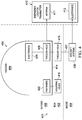
- Figure 12 is an illustration of a side view of a notional arrangement of components in a housing for another embodiment of an autonomous distress tracking system in accordance with an illustrative embodiment
- Figure 13 is an illustration of a front view of the notional arrangement of components in the housing for the embodiment of the autonomous distress tracking system in accordance with the illustrative embodiment of Figure 12 as taken along line 13-13 of Figure 12
- Figure 14 is an illustration of a bottom view of the notional arrangement of components in the housing for the embodiment of the emergency locator transmitter in accordance with the illustrative embodiment of Figure 12 as taken along line 14-14 of Figure 12 .
- Figures 12-14 show another possible arrangement of components of an autonomous distress tracking system in accordance with an illustrative embodiment in housing 1200 having the shape of a blade antenna.
- Illustrated components include 121 MHz antenna 1202 for a beacon transmission, 1090 MHz antenna 1204 for an ADS-B transceiver, patch antenna 1206 for a satellite navigation system receiver, patch antenna 1208 for satellite communications, antenna 1210 for connecting to a wireless network, electronics 1212 for the autonomous distress tracking system, and rechargeable batteries 1214.
- Connector 1216 may be provided for connecting electronics 1212 to aircraft systems on the inside of an aircraft when housing 1200 is attached to the aircraft on an outside of the aircraft.
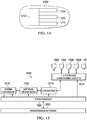
- Autonomous distress tracking system 1500 may be an example of the autonomous distress tracking system in housing 1200 in Figures 12- 14.
- Autonomous distress tracking system 1500 includes antenna 1502 for beacon transmissions, antenna 1504 for an ADS-B transceiver, antenna 1506 for a satellite navigation system receiver, antenna 1508 for satellite communications, and antenna 1510 for connectivity to a wireless network.
- antenna 1510 may provide access to a wireless network such as a Wi-Fi network, a cellular telephone network, or a personal area network.
- Antenna 1508 for satellite communications may be an antenna for L-band satellite communications.
- communications via the various communications channels provide by antennas 1502, 1504, 1506, 1508, and 1510 may be implemented in software defined radio 1512.
- Appropriate filtering and conditioning circuits 1514 and digital-to-analog and analog-to-digital converters 1516 may be provided between antennas 1502, 1504, 1506, 1508, and 1510 and software defined radio 1512.
- System controller 1518 provides general control of the operation of autonomous distress tracking system 1500.
- Power manager 1520 controls the providing of power to the other electronic components of the system including charging of rechargeable batteries 1522.
- Autonomous distress tracking system 1500 is an example of a multi-service integrated autonomous distress tracking system in accordance with an illustrative embodiment.
- Autonomous distress tracking system 1500 may be configured in the field to support a variety of communications links to support the service offering or the distress tracking operational approach that a particular airline or other aircraft operator wants to utilize.
- an airline could opt to use COSPAS SARSAT services only as with a conventional emergency locator transmitter, or use an Iridium or Inmarsat SATCOM based distress tracking service with ground based validation or pursue a hybrid or combined service for example using SATCOM based distress tracking services for potential distress conditions and adding COSPAS-SARSAT distress transmissions in the case of escalation to a validated distress event.
- the multi-service service approach may also be used to provide channels for remote ground activation of the distress tracker - for example when an aircraft has missed a scheduled position reporting time.
- Process 1600 may be an example of one implementation of a process for attaching autonomous distress tracking system 400 to aircraft 401 in Figure 4 .
- Process 1600 may begin by removing an emergency locator transmitter from an aircraft (operation 1602 ).
- Operation 1602 may include removing an antenna for the emergency locator transmitter from where the antenna was attached to a skin of the aircraft on an outside of the aircraft.
- An emergency locater transmitter in accordance with an illustrative embodiment then may be attached to the skin of the aircraft on the outside of the aircraft in the footprint of the antenna for the emergency locator transmitter that was removed from the aircraft (operation 1604 ), with the process terminating thereafter.
- Process 1700 may be implemented, for example, in autonomous distress tracking system 200 in Figure 2 .
- Process 1700 may begin with monitoring various aircraft conditions and signals (operation 1702 ). The monitored conditions and signals are used to determine whether the aircraft is in distress (operation 1704 ). In response to a determination at operation 1706 that the aircraft is in distress, an ADS-B distress transmission and emergency locator beacon transmission may be started (operation 1708 ), with the process terminating thereafter. In response to a determination at operation 1706 that the aircraft is not in distress, process 1700 may continue to monitor aircraft conditions and signals to determine whether the aircraft is in distress by returning to operation 1702 .
Landscapes
- Engineering & Computer Science (AREA)
- Physics & Mathematics (AREA)
- General Physics & Mathematics (AREA)
- Radar, Positioning & Navigation (AREA)
- Remote Sensing (AREA)
- Aviation & Aerospace Engineering (AREA)
- Computer Networks & Wireless Communication (AREA)
- Business, Economics & Management (AREA)
- Emergency Management (AREA)
- Astronomy & Astrophysics (AREA)
- Signal Processing (AREA)
- Manufacturing & Machinery (AREA)
- Transportation (AREA)
- Position Fixing By Use Of Radio Waves (AREA)
- Alarm Systems (AREA)
Abstract
Description
- The present disclosure relates generally to tracking the position of an aircraft. More particularly, the present disclosure relates to a method and system for tracking the position of an aircraft that is in distress.
- 1. Many aircraft carry distress radio beacons. Distress radio beacons also may be known as emergency beacons or by other names. For example, without limitation, many commercial passenger aircraft and other aircraft may carry a distress radio beacon known as an emergency locator transmitter, ELT.
- An emergency locator transmitter on an aircraft is intended to aid in locating the aircraft after a crash. An emergency locator transmitter or other distress radio beacon on an aircraft may be manually or automatically activated to send out a distress signal. For example, without limitation, an emergency locator transmitter may be activated automatically upon immersion in water.
- The distress signals generated by an emergency locator transmitter or other distress radio beacon on an aircraft may be monitored and detected by a network of satellites worldwide. The geographic position of an emergency locator transmitter or other radio distress beacon emitting a distress signal may be determined using a satellite navigation system, triangulation, or using another method or an appropriate combination of methods.
- Current emergency locator transmitters may have several limitations. For example, position information provided by current emergency locator transmitters may not be sufficiently accurate or provided in a sufficiently reliable manner to effectively locate an aircraft in distress effectively. The majority of currently fielded emergency locator transmitters do not provide position information directly. The location of the emergency locator transmitter is determined by radio frequency direction finding or multilateration through satellite links. This process may take an undesirably long time and may not be sufficiently reliable.
- The weight of current emergency locator transmitters may be relatively high. Maintenance requirements for current emergency locator transmitters also may be relatively high. For example, most emergency locator transmitters fitted to aircraft today are powered by a non-rechargeable battery that is relatively heavy and must be maintained appropriately to ensure reliable operation and to prevent any undesired condition from occurring. It also may be relatively difficult to reduce or eliminate undesirable tampering with current emergency locator transmitters.
- Aircraft crashes that happen in remote areas, including oceanic areas, can present a significant problem to search and rescue personnel as well as accident investigators due to the difficulty of locating the crash site in a timely manner. As an attempt to improve this situation, new aviation requirements of tracking of aircraft in distress have been adopted at the international level. The requirements are performance based and essentially require that the position of an aircraft in distress be automatically broadcast at least once per minute. Furthermore, the system that broadcasts the position reports should be robust to failures in aircraft systems and loss of aircraft power to ensure that the reporting continues for the entire time that an aircraft is in distress.
- Accordingly, it would be beneficial to have a method and apparatus that take into account one or more of the issues discussed above, as well as other possible issues.
- The illustrative embodiments of the present disclosure provide an autonomous distress tracking system for an aircraft, comprising an automatic dependent surveillance-broadcast transceiver, a system controller, and a housing. The automatic dependent surveillance-broadcast transceiver is configured to transmit an automatic distress transmission. The system controller comprises a distress identifier that is configured to determine when the aircraft is in a distress condition. The system controller is configured to control the automatic dependent surveillance-broadcast transceiver to transmit the automatic distress transmission in response to a determination that the aircraft is in the distress condition. The housing is attached to the aircraft on an outside of the aircraft. The automatic dependent surveillance-broadcast transceiver and the system controller are contained within the housing.
- The illustrative embodiments of the present disclosure also provide an autonomous distress tracking system for an aircraft, comprising a satellite navigation system receiver, a plurality of antennas, a software defined radio, a system controller, and a housing. The satellite navigation system receiver is configured to identify a position of the aircraft using navigation signals received from a satellite navigation system and to provide position information indicating the position of the aircraft. The plurality of antennas comprise a satellite navigation system antenna for receiving the navigation signals for the satellite navigation system receiver, an automatic dependent surveillance-broadcast antenna for an automatic dependent surveillance-broadcast transceiver, an emergency locator transmitter beacon antenna for a beacon transmitter, a satellite communications antenna for a satellite communications transceiver, and a wireless network antenna for connectivity to a wireless network by a wireless network transceiver. The software defined radio is configurable to implement the automatic dependent surveillance-broadcast transceiver, the beacon transmitter, the satellite communications transceiver, and the wireless network transceiver and to transmit a distress transmission via one or more of the automatic dependent surveillance-broadcast antenna, the emergency locator transmitter beacon antenna, the satellite communications antenna, and the wireless network antenna. The system controller comprises a distress identifier configured to determine when the aircraft is in a distress condition and is configured to control the software defined radio to transmit the distress transmission in response to a determination that the aircraft is in the distress condition. The housing is attached to the aircraft on an outside of the aircraft. The satellite navigation system receiver, the software defined radio, and the system controller are contained within the housing.
- The illustrative embodiments of the present disclosure also provide a method of autonomous distress tracking of an aircraft. A distress identifier, implemented in a system controller, determines when the aircraft is in a distress condition. An automatic dependent surveillance-broadcast transceiver transmits an automatic distress transmission in response to a determination by the distress identifier that the aircraft is in the distress condition.
- Various features, functions, and benefits may be achieved independently in various embodiments of the present disclosure or may be combined in yet other embodiments in which further details can be seen with reference to the following description and drawings.
- The novel features believed characteristic of the illustrative embodiments are set forth in the appended claims. The illustrative embodiments, however, as well as a preferred mode of use, further objectives, and benefits thereof, will best be understood by reference to the following detailed description of illustrative embodiments of the present disclosure when read in conjunction with the accompanying drawings, wherein:
-
Figure 1 is an illustration of an aircraft operating environment in accordance with an illustrative embodiment; -
Figure 2 is an illustration of a block diagram of an autonomous distress tracking system on an aircraft in accordance with an illustrative embodiment; -
Figure 3 is an illustration of a block diagram of a distress identifier in accordance with an illustrative embodiment; -
Figure 4 is an illustration of a block diagram of an autonomous distress tracking system attached to an aircraft to replace an emergency locator transmitter on the aircraft in accordance with an illustrative embodiment; -
Figure 5 is an illustration of a side view of an emergency locator transmitter antenna and a housing for an autonomous distress tracking system in accordance with an illustrative embodiment; -
Figure 6 is an illustration of a front view of the emergency locator transmitter antenna and the housing for the autonomous distress tracking system in accordance with the illustrative embodiment ofFigure 5 as taken along line 6-6 ofFigure 5 ; -
Figure 7 is an illustration of a bottom view of the emergency locator transmitter antenna and the housing for the autonomous distress tracking system in accordance with the illustrative embodiment ofFigure 5 as taken along line 7-7 ofFigure 5 ; -
Figure 8 is an illustration of a side view of a notional arrangement of components in a housing for an embodiment of an autonomous distress tracking system in accordance with an illustrative embodiment; -
Figure 9 is an illustration of a front view of the notional arrangement of components in the housing for the embodiment of the autonomous distress tracking system in accordance with the illustrative embodiment ofFigure 8 as taken along line 9-9 ofFigure 8 ; -
Figure 10 is an illustration of a bottom view of the notional arrangement of components in the housing for the embodiment of the emergency locator transmitter in accordance with the illustrative embodiment ofFigure 8 as taken along line 10-10 ofFigure 8 ; -
Figure 11 is functional block diagram of an embodiment of an autonomous distress tracking system in accordance with an illustrative embodiment; -
Figure 12 is an illustration of a side view of a notional arrangement of components in a housing for another embodiment of an autonomous distress tracking system in accordance with an illustrative embodiment; -
Figure 13 is an illustration of a front view of the notional arrangement of components in the housing for the embodiment of the autonomous distress tracking system in accordance with the illustrative embodiment ofFigure 12 as taken along line 13-13 ofFigure 12 ; -
Figure 14 is an illustration of a bottom view of the notional arrangement of components in the housing for the embodiment of the emergency locator transmitter in accordance with the illustrative embodiment ofFigure 12 as taken along line 14-14 ofFigure 12 ; -
Figure 15 is functional block diagram of an embodiment of an autonomous distress tracking system in accordance with another illustrative embodiment; -
Figure 16 is an illustration of a flowchart of a process for attaching an autonomous distress tracking system to an aircraft in accordance with an illustrative embodiment; and -
Figure 17 is an illustration of a flowchart of a process for operation of an autonomous distress tracking system in accordance with an illustrative embodiment. - The different illustrative embodiments recognize and take into account a number of different considerations. "A number," as used herein with reference to items, means one or more items. For example, "a number of different considerations" are one or more different considerations.
- The different illustrative embodiments recognize and take into account that the distress tracking requirement for automatically broadcasting the position of an aircraft in distress may be met with a variety of technologies. Systems that meet these requirements may be generally referred to as autonomous distress tracking, ADT, systems. One such candidate technology for autonomous distress tracking is space- based automatic dependent surveillance - broadcast, ADS-B.
- ADS-B technology uses an air traffic control, ATC, transponder on an aircraft to broadcast the position of the aircraft, as derived using a Global Positioning System, GPS, receiver on the aircraft, on a regular basis. ADS-B is now widely deployed technology and ADS-B capability will be required for access to airspace in many parts of the world in the near future. In a space-based ADS-B system, the ADS-B transmissions from an aircraft are received by satellites and relayed to the ground for use by air traffic control systems for surveillance or by other entities with an interest in tracking the position of the aircraft. Multiple organizations are working towards the introduction of space-based ADS-B technology and a full global space-based ADS-B capability.
- The different illustrative embodiments recognize and take into account that the use of conventional space-based ADS-B technology for autonomous distress tracking may have undesirable limitations. The typical aircraft transponders used for conventional ADS-B transmissions are relatively high-powered devices, making it difficult to ensure continued operation after loss of aircraft power when an aircraft is in distress. Furthermore, conventional ADS-B systems rely on the GPS receivers on an aircraft to determine the position of the aircraft. Conventional GPS receivers on an aircraft also may be subject to loss of function during a distress condition. Furthermore, conventional transponders used for ADS-B may be controlled by personnel on the aircraft. This makes conventional ADS-B systems inadequate for autonomous distress tracking, because tracking may be affected in an undesired manner from onboard the aircraft.
- The illustrative embodiments provide a technical solution that addresses the shortcomings of current distress tracking systems and methods through a novel combination of elements and packaging of those elements. In accordance with illustrative embodiment, autonomous distress tracking of an aircraft is provided using an ADS-B transmitter on the aircraft that is independent of the air traffic control transponders on the aircraft. An ADS-B transmitter for autonomous distress tracking in accordance with an illustrative embodiment is designed to require less power than conventional ADS-B transmission systems and is activated only when the aircraft is in distress. An autonomous distress tracking system in accordance with an illustrative embodiment includes a battery to provide power for the transmissions to continue after loss of aircraft power. The system also includes a GPS receiver to ensure that the GPS determined position of the aircraft is also robust to failures that could be associated with the aircraft distress condition. The system also may include a 121 MHz beacon that may be activated automatically when the aircraft is in distress and which is designed to function after a crash.
- An autonomous distress tracking system in accordance with an illustrative embodiment may be provided as a single line-replaceable unit that may be attached to an aircraft on the outside of the aircraft. For example, an autonomous distress tracking system in accordance with an illustrative embodiment may be attached to the outside of an aircraft where an antenna for a conventional emergency locator transmitter might otherwise be attached. In accordance with one illustrative embodiment, an autonomous distress tracking system line-replaceable unit may be fully integrated and self-contained with a battery, ADS-B transmitter, 121 MHz beacon transmitter, and GPS receiver in a housing that looks similar to a conventional blade antenna for an emergency locator transmitter.
- Turning to
Figure 1 , an illustration of an aircraft operating environment is depicted in accordance with an illustrative embodiment.Aircraft operating environment 100 may include any appropriate environment in whichaircraft 102 may be operated in any appropriate manner. For example, without limitation,aircraft 102 may be in flight inaircraft operating environment 100. -
Aircraft 102 may be any appropriate type of aircraft that may be configured to perform any appropriate operation or mission inaircraft operating environment 100. For example, without limitation,aircraft 102 may be a commercial passenger aircraft, a cargo aircraft, a military aircraft, or any other appropriate type of aircraft. Further,aircraft 102 may be a fixed wing aircraft, a rotary wing aircraft, or a lighter-than-air aircraft. Still further,aircraft 102 may be a manned aircraft or an unmanned aircraft. -
Aircraft 102 may include conventional ADS-B system 104. Conventional ADS-B system 104 may be configured to identify the position ofaircraft 102 usingnavigation signals 110 received from a number ofnavigation system satellites 112 insatellite navigation system 114 in a known manner. Conventional ADS-B system 104 may be configured to transmit the position ofaircraft 102 and other information in conventional ADS-B transmission 108 for use by airtraffic control system 116. In this case, conventional ADS-B transmission 108 may be referred to as an ADS-B for air traffic control transmission. Conventional ADS-B transmission 108 may be received by receivingstation 118 for airtraffic control system 116 either directly or viasatellite 120. - In accordance with an illustrative embodiment,
aircraft 102 may include autonomousdistress tracking system 122. For example, without limitation, autonomousdistress tracking system 122 may be attached to the skin ofaircraft 102 on the outside ofaircraft 102. In accordance with an illustrative embodiment, autonomousdistress tracking system 122 may be configured to determine automatically the position ofaircraft 102 whenaircraft 102 is in flight inaircraft operating environment 100 and to automatically transmitdistress transmission 124 including position information identifying the position ofaircraft 102 in response to a determination thataircraft 102 is in a distress condition. - Autonomous
distress tracking system 122 may be configured to identify the position ofaircraft 102 usingnavigation signals 110 received from a number ofnavigation system satellites 112 insatellite navigation system 114 in a known manner. Autonomousdistress tracking system 122 may usenavigation signals 110 received from more than threenavigation system satellites 112 insatellite navigation system 114 to determine the position ofaircraft 102. For example, without limitation,navigation system satellites 112 may include satellites insatellite navigation system 114 such as the Global Positioning System, GPS, the Global Navigation Satellite System, GLONASS, other appropriate satellite navigation systems, or various combinations of satellite navigation systems that may be used by autonomousdistress tracking system 122 to determine the position ofaircraft 102. -
Distress transmission 124 may include an ADS-B transmission from an ADS-B transceiver in autonomousdistress tracking system 122. In addition,distress transmission 124 may include an emergency locator transmitter beacon transmission.Distress transmission 124 is configured to be transmitted to search andrescue system 126 viasatellite 120.Distress transmission 124 also may be transmitted toaircraft operator 128 or any another appropriate entity viasatellite 120.Aircraft operator 128 may be, for example, without limitation, an airline or any other public or private operator ofaircraft 102. -
Satellite 120 may comprise any appropriate satellite or plurality of satellites for establishing a communications link between autonomousdistress tracking system 122 onaircraft 102 and receivingstation 130 for search andrescue system 126 and receivingstation 132 foraircraft operator 128 or a third party service provider working on behalf of the aircraft operator, for sendingdistress transmission 124 to search andrescue system 126 andaircraft operator 128. - Turning to
Figure 2 , an illustration of a block diagram of an autonomous distress tracking system on an aircraft is depicted in accordance with an illustrative embodiment. Autonomousdistress tracking system 200 attached toaircraft 202 is an example of one implementation of autonomousdistress tracking system 122 attached toaircraft 102 inFigure 1 . For example, without limitation, autonomousdistress tracking system 200 may be attached toaircraft 202 on outside 204 ofaircraft 202. - Autonomous
distress tracking system 200 comprises various electronics elements contained withinhousing 206.Housing 206 may be made in any appropriate manner of any appropriate material such that the electronics contained insidehousing 206 are protected to maintain proper operation of autonomousdistress tracking system 200 when autonomousdistress tracking system 200 is attached toaircraft 202 on outside 204 ofaircraft 202. -
Housing 206 may have any appropriate shape. For example,housing 206 may have an appropriately aerodynamic shape. For example, without limitation,housing 206 may have a shape similar to a blade antenna for an emergency locator transmitter on an aircraft. - Electronics elements for autonomous
distress tracking system 200 may includesystem controller 208, satellitenavigation system receiver 210, ADS-B transceiver 212,beacon transmitter 214,antennas 216,battery 218, andpower manager 220. -
System controller 208 may be implemented using an appropriate processor or in any other appropriate manner.System controller 208 may be configured to control overall operation of autonomousdistress tracking system 200 as described herein. For example,system controller 208 may be configured to reportstatus 222 of autonomousdistress tracking system 200 to alertingsystem 224 on inside 226 ofaircraft 202. For example, alertingsystem 224 may be an engine-indicating and crew-alerting system, EICAS. In this case,system controller 208 may reportcurrent status 222 of autonomous distress tracking system on a continuous basis on a 429 bus onaircraft 202 so that appropriate EICAS messages or maintenance computer actions can be supported. -
Distress identifier 228 may be implemented as part of or separate fromsystem controller 208.Distress identifier 228 is configured to determine whenaircraft 202 is indistress condition 230.Distress identifier 228 includes appropriate internal logic processing capabilities to determine whenaircraft 202 is indistress condition 230 using information from various sources as described herein.System controller 208 is configured to cause autonomousdistress tracking system 200 to transmitdistress transmission 232 automatically in response to a determination bydistress identifier 228 thataircraft 202 is indistress condition 230. - Satellite
navigation system receiver 210 may be configured to receive navigation signals from satellites in a satellite navigation system. For example, without limitation, satellitenavigation system receiver 210 may be configured to receive navigation signals from satellites in a global navigation satellite system such as the Global Positioning System (GPS), the Global Navigation Satellite System (GLONASS), another appropriate satellite navigation system, or from various combinations of satellite navigation systems. In accordance with an illustrative embodiment, the navigation signals received by satellitenavigation system receiver 210 may be used to determineposition 234 ofaircraft 202.Position 234 ofaircraft 202 preferably may be a three-dimensional position ofaircraft 202. -
Position 234 ofaircraft 202 also may be determined by satellite navigation receiver foraircraft navigation 211 located inside 226 ofaircraft 202. Satellite navigation receiver foraircraft navigation 211 may determineposition 234 ofaircraft 202 in the same manner as satellitenavigation system receiver 210 in autonomousdistress tracking system 200. - ADS-
B transceiver 212 is configured to transmitautomatic distress transmission 236.Automatic distress transmission 236 is part ofdistress transmission 232 that is transmitted by autonomousdistress tracking system 200 automatically in response to a determination thataircraft 202 is indistress condition 230.Automatic distress transmission 236 may includeidentification information 238 that identifiesaircraft 202,position information 240 that identifiesposition 234 ofaircraft 202 as determined by satellitenavigation system receiver 210, anddistress status information 242 that identifies the cause ofdistress condition 230 foraircraft 202.Automatic distress transmission 236 may be transmitted at anyappropriate rate 244. For example, without limitation,rate 244 may be approximately one transmission per second. - ADS-
B transceiver 212 also may be configured to receive ADS-B transmission 246 andemergency mode code 248 which may be transmitted from airtraffic control transponder 250 located inside 226 ofaircraft 202. As will be discussed in more detail below, ADS-B transmission 246 andemergency mode code 248 may be monitored and used bydistress identifier 228 to determine whetheraircraft 202 is indistress condition 230. -
Beacon transmitter 214 is configured to transmit emergencylocator transmitter beacon 252 as part ofdistress transmission 232 whenaircraft 202 is determined to be indistress condition 230. Emergencylocator transmitter beacon 252 may be transmitted at 121 MHz, at 406 MHz, or at both 121 MHz and 406 MHz. As discussed herein, for example, with reference toFigure 4 , autonomousdistress tracking system 200 in accordance with an illustrative embodiment may replace a conventional emergency locator transmitter onaircraft 202.Beacon transmitter 214 allows autonomousdistress tracking system 200 to transmit emergencylocator transmitter beacon 252 in place of the transmission from such a conventional emergency locator transmitter. Emergencylocator transmitter beacon 252 transmitted from autonomousdistress tracking system 200 may be received and handled in the same manner as a transmission from a conventional emergency locator transmitter. -
Antennas 216 comprise any appropriate antennas for receiving or transmitting signals by satellitenavigation system receiver 210, ADS-B transceiver 212, andbeacon transmitter 214.Antennas 216 may include other antennas for other communications systems in autonomousdistress tracking system 200.Antennas 216 may be contained withinhousing 206. Alternatively, or in addition,antennas 216 or appropriate portions ofantennas 216 may be on an outside surface ofhousing 206, with appropriate connections to the electronics withinhousing 206. -
Battery 218 comprises any appropriate number of rechargeable batteries.Power manager 220 is configured to control the providing of power to the electronic components of autonomousdistress tracking system 200. For example, when power is available frompower source 258 located inside 226 ofaircraft 202,power manager 220 provides power to the electronic components of autonomousdistress tracking system 200 frompower source 258 and uses power frompower source 258 to keepbattery 218 in a charged state. When power is not available frompower source 258,power manager 220 provides power to the electronic components of autonomousdistress tracking system 200 frombattery 218. - The different components illustrated for autonomous
distress tracking system 200 are not meant to provide architectural limitations to the manner in which different embodiments may be implemented. The different illustrative embodiments may be implemented in a system including components in addition to or in place of those illustrated autonomousdistress tracking system 200. Other components shown inFigure 2 can be varied from the illustrative examples shown. - Turning to
Figure 3 , an illustration of a block diagram of a distress identifier is depicted in accordance with an illustrative embodiment.Distress identifier 300 is an example of one implementation ofdistress identifier 228 inFigure 2 . -
Distress identifier 300 is configured to determine when an aircraft is in a distress condition. For example,distress identifier 300 may be configured to determine that an aircraft is in a distress condition when power from a power source on the inside of the aircraft is not available while the aircraft is inflight 302.Distress identifier 300 may be configured to determine that an aircraft is in a distress condition when an ADS-B for air traffic control transmission from the aircraft stops for longer than a selectedperiod 304.Distress identifier 300 may be configured to determine that an aircraft is in a distress condition when position information for the aircraft is not available from either a satellite navigation system receiver in the autonomous distress tracking system or inside of theaircraft 306.Distress identifier 300 may be configured to determine that an aircraft is in a distress condition when transmission of an emergency mode code is detected 308.Distress identifier 300 may be configured to determine that an aircraft is in a distress condition when a remote activation signal is received 310. Alternatively, or in addition,distress identifier 300 may be configured to determine that an aircraft is in a distress condition whenother conditions 312 are determined to exist. - Turning to
Figure 4 , an illustration of a block diagram of an autonomous distress tracking system attached to an aircraft to replace an emergency locator transmitter on the aircraft is depicted in accordance with an illustrative embodiment. Autonomousdistress tracking system 400 onaircraft 401 may be an example of one implementation of autonomousdistress tracking system 122 onaircraft 102 inFigure 1 or of autonomousdistress tracking system 200 onaircraft 202 inFigure 2 . - Autonomous
distress tracking system 400 is attached toskin 402 ofaircraft 401 on outside 406 ofaircraft 401.Skin 402 comprises any appropriate structure that separates outside 406 ofaircraft 401 from inside 404 ofaircraft 401. - Autonomous
distress tracking system 400 compriseselectronics 408 contained within housing 409. The functionality provided by autonomousdistress tracking system 400 may replace and improve upon the functionality provided byemergency locator transmitter 410 onaircraft 401. For example, without limitation,emergency locator transmitter 410 may be removed fromaircraft 401 before autonomousdistress tracking system 400 is attached toaircraft 401. Removingemergency locator transmitter 410 fromaircraft 401 may include removingantenna 411 foremergency locator transmitter 410 fromskin 402 ofaircraft 401 on outside 406 ofaircraft 401 and removingelectronics 412 foremergency locator transmitter 410 from inside 404 ofaircraft 401. -
Footprint 414 ofantenna 411 is the area onskin 402 ofaircraft 401 from whichantenna 411 foremergency locator transmitter 410 was removed.Footprint 414 may include various structures for positioningantenna 411 foremergency locator transmitter 410 onskin 402 ofaircraft 401, for attachingantenna 411 foremergency locator transmitter 410 toskin 402 ofaircraft 401, or for other appropriate purposes or various combinations of purposes. For example, without limitation,footprint 414 may include mountingholes 416 and throughhole 418. Mountingholes 416 may include any appropriate number of holes inskin 402 ofaircraft 401 withinfootprint 414. Mountingholes 416 may have been used to attachantenna 411 foremergency locator transmitter 410 toskin 402 ofaircraft 401. Throughhole 418 may comprise a hole extending from inside 404 ofaircraft 401 to outside 406 ofaircraft 401 throughskin 402 ofaircraft 401 withinfootprint 414. Throughhole 418 may have been used for extending wiring throughskin 402 ofaircraft 401 to connectantenna 411 foremergency locator transmitter 410 toelectronics 412 foremergency locator transmitter 410. - Autonomous
distress tracking system 400 may be attached toskin 402 ofaircraft 401 infootprint 414, at the location onskin 402 ofaircraft 401 from whereantenna 411 foremergency locator transmitter 410 was removed. Autonomousdistress tracking system 400 may be attached toskin 402 ofaircraft 401 usingappropriate fasteners 422. For example, without limitation,fasteners 422 may extend from housing 409 of autonomousdistress tracking system 400 into mountingholes 416 inskin 402 ofaircraft 401 to attach housing 409 toskin 402 ofaircraft 401.Fasteners 422 may include any appropriate structures for attaching housing 409 toskin 402 ofaircraft 401. For example, without limitation,fasteners 422 may include screws, bolts, clips, rivets, an adhesive, any other appropriate fastening structure or material, or various combinations of appropriate fasteners. -
Line 437 may be extended fromelectronics 408 in housing 409 attached toskin 402 ofaircraft 401 on outside 406 ofaircraft 401 toaircraft systems 438 inside 404 ofaircraft 401. For example,line 437 may be extended throughhole 426 in housing 409 and throughhole 418 inskin 402 ofaircraft 401 to connectaircraft systems 438 toelectronics 408. - Turning to
Figures 5-7, Figure 5 is an illustration of a side view of an emergency locator transmitter antenna and a housing for an autonomous distress tracking system in accordance with an illustrative embodiment,Figure 6 is an illustration of a front view of the emergency locator transmitter antenna and the housing for the autonomous distress tracking system in accordance with the illustrative embodiment ofFigure 5 as taken along line 6-6 ofFigure 5, and Figure 7 is an illustration of a bottom view of the emergency locator transmitter antenna and the housing for the autonomous distress tracking system in accordance with the illustrative embodiment ofFigure 5 as taken along line 7-7 ofFigure 5 . - Emergency
locator transmitter antenna 500 is shown in solid lines inFigures 5-7 .Housing 502 for an autonomous distress tracking system in accordance with an illustrative embodiment is shown in the dashed line inFigures 5- 7. Note thathousing 502 may have a similar general shape as emergencylocator transmitter antenna 500 thathousing 502 may replace on an aircraft.Housing 502 may be somewhat larger thanantenna 500 that it is replacing, in order to accommodate the components of an autonomous distress tracking system inhousing 502. However, various mountingstructures 504 onantenna 500 for attachingantenna 500 to an aircraft preferably are the same onhousing 502, so thathousing 502 may be easily mounted to the location on the aircraft from whichantenna 500 was removed with minimal or no modification of the aircraft. - Turning now to
Figures 8-10 ,Figure 8 is an illustration of a side view of a notional arrangement of components in a housing for an embodiment of an autonomous distress tracking system in accordance with an illustrative embodiment,Figure 9 is an illustration of a front view of the notional arrangement of components in the housing for the embodiment of the autonomous distress tracking system in accordance with the illustrative embodiment ofFigure 8 as taken along line 9-9 ofFigure 8 , andFigure 10 is an illustration of a bottom view of the notional arrangement of components in the housing for the embodiment of the emergency locator transmitter in accordance with the illustrative embodiment ofFigure 8 as taken along line 10-10 ofFigure 8 . -
Figures 8-10 show one possible arrangement of components of an autonomous distress tracking system in accordance with an illustrative embodiment inhousing 800 having the shape of a blade antenna. Illustrated components include 121MHz antenna 802 for a beacon transmission, 1090MHz antenna 804 for an ADS-B transceiver,patch antenna 806 for a satellite navigation system receiver,electronics 808 for the autonomous distress tracking system, andrechargeable batteries 810. Aconnector 812 may be provided for connectingelectronics 808 to aircraft systems on the inside of an aircraft whenhousing 800 is attached to the aircraft on an outside of the aircraft. - Turning to
Figure 11 , a functional block diagram of an embodiment of an autonomous distress tracking system is depicted in accordance with an illustrative embodiment. Autonomousdistress tracking system 1100 may be an example of the autonomous distress tracking system inhousing 800 inFigures 8-10 . - Autonomous
distress tracking system 1100 includesantenna 1102 for beacon transmissions,antenna 1104 for an ADS-B transceiver, andantenna 1106 for a satellite navigation system receiver. In accordance with this illustrative embodiment, the beacon transmitter, ADS-B transceiver, and satellite navigation receiver may be implemented in software definedradio 1108. Appropriate filtering andconditioning circuits 1110 and digital-to-analog and analog-to-digital converters 1112 may be provided betweenantennas radio 1108. -
System controller 1114 provides general control of the operation of autonomousdistress tracking system 1100.Power manager 1116 controls the providing of power to the other electronic components of the system including charging ofrechargeable batteries 1118. - Turning to
Figures 12-14 ,Figure 12 is an illustration of a side view of a notional arrangement of components in a housing for another embodiment of an autonomous distress tracking system in accordance with an illustrative embodiment,Figure 13 is an illustration of a front view of the notional arrangement of components in the housing for the embodiment of the autonomous distress tracking system in accordance with the illustrative embodiment ofFigure 12 as taken along line 13-13 ofFigure 12 , andFigure 14 is an illustration of a bottom view of the notional arrangement of components in the housing for the embodiment of the emergency locator transmitter in accordance with the illustrative embodiment ofFigure 12 as taken along line 14-14 ofFigure 12 . -
Figures 12-14 show another possible arrangement of components of an autonomous distress tracking system in accordance with an illustrative embodiment inhousing 1200 having the shape of a blade antenna. Illustrated components include 121MHz antenna 1202 for a beacon transmission, 1090MHz antenna 1204 for an ADS-B transceiver,patch antenna 1206 for a satellite navigation system receiver,patch antenna 1208 for satellite communications,antenna 1210 for connecting to a wireless network,electronics 1212 for the autonomous distress tracking system, andrechargeable batteries 1214.Connector 1216 may be provided for connectingelectronics 1212 to aircraft systems on the inside of an aircraft whenhousing 1200 is attached to the aircraft on an outside of the aircraft. - Turning to
Figure 15 , a functional block diagram of an embodiment of an autonomous distress tracking system is depicted in accordance with another illustrative embodiment. Autonomousdistress tracking system 1500 may be an example of the autonomous distress tracking system inhousing 1200 inFigures 12- 14. - Autonomous
distress tracking system 1500 includesantenna 1502 for beacon transmissions,antenna 1504 for an ADS-B transceiver,antenna 1506 for a satellite navigation system receiver,antenna 1508 for satellite communications, and antenna 1510 for connectivity to a wireless network. For example, antenna 1510 may provide access to a wireless network such as a Wi-Fi network, a cellular telephone network, or a personal area network.Antenna 1508 for satellite communications may be an antenna for L-band satellite communications. - In accordance with this illustrative embodiment communications via the various communications channels provide by
antennas radio 1512. Appropriate filtering andconditioning circuits 1514 and digital-to-analog and analog-to-digital converters 1516 may be provided betweenantennas radio 1512. -
System controller 1518 provides general control of the operation of autonomousdistress tracking system 1500.Power manager 1520 controls the providing of power to the other electronic components of the system including charging ofrechargeable batteries 1522. - Autonomous
distress tracking system 1500 is an example of a multi-service integrated autonomous distress tracking system in accordance with an illustrative embodiment. Autonomousdistress tracking system 1500 may be configured in the field to support a variety of communications links to support the service offering or the distress tracking operational approach that a particular airline or other aircraft operator wants to utilize. For example an airline could opt to use COSPAS SARSAT services only as with a conventional emergency locator transmitter, or use an Iridium or Inmarsat SATCOM based distress tracking service with ground based validation or pursue a hybrid or combined service for example using SATCOM based distress tracking services for potential distress conditions and adding COSPAS-SARSAT distress transmissions in the case of escalation to a validated distress event. The multi-service service approach may also be used to provide channels for remote ground activation of the distress tracker - for example when an aircraft has missed a scheduled position reporting time. - Turning to
Figure 16 , an illustration of a flowchart of a process for attaching an autonomous distress tracking system to an aircraft is depicted in accordance with an illustrative embodiment.Process 1600 may be an example of one implementation of a process for attaching autonomousdistress tracking system 400 toaircraft 401 inFigure 4 . -
Process 1600 may begin by removing an emergency locator transmitter from an aircraft (operation 1602).Operation 1602 may include removing an antenna for the emergency locator transmitter from where the antenna was attached to a skin of the aircraft on an outside of the aircraft. - An emergency locater transmitter in accordance with an illustrative embodiment then may be attached to the skin of the aircraft on the outside of the aircraft in the footprint of the antenna for the emergency locator transmitter that was removed from the aircraft (operation 1604), with the process terminating thereafter.
- Turning to
Figure 17 , an illustration of a flowchart of a process for operation of an autonomous distress tracking system is depicted in accordance with an illustrative embodiment.Process 1700 may be implemented, for example, in autonomousdistress tracking system 200 inFigure 2 . -
Process 1700 may begin with monitoring various aircraft conditions and signals (operation 1702). The monitored conditions and signals are used to determine whether the aircraft is in distress (operation 1704). In response to a determination atoperation 1706 that the aircraft is in distress, an ADS-B distress transmission and emergency locator beacon transmission may be started (operation 1708), with the process terminating thereafter. In response to a determination atoperation 1706 that the aircraft is not in distress,process 1700 may continue to monitor aircraft conditions and signals to determine whether the aircraft is in distress by returning tooperation 1702. - The description of the different illustrative embodiments has been presented for purposes of illustration and description and is not intended to be exhaustive or to limit the embodiments in the form disclosed. Many modifications and variations will be apparent to those of ordinary skill in the art. Further, different illustrative embodiments may provide different benefits as compared to other illustrative embodiments. The embodiment or embodiments selected are chosen and described in order to best explain the principles of the embodiments, the practical application, and to enable others of ordinary skill in the art to understand the disclosure for various embodiments with various modifications as are suited to the particular use contemplated.
- Further, the disclosure comprises embodiments according to the following clauses:
-
Clause 1. An autonomous distress tracking system for an aircraft, comprising:- an automatic dependent surveillance-broadcast transceiver configured to transmit an automatic distress transmission;
- a system controller comprising a distress identifier configured to determine when the aircraft is in a distress condition and configured to control the automatic dependent surveillance-broadcast transceiver to transmit the automatic distress transmission in response to a determination that the aircraft is in the distress condition; and
- a housing attached to the aircraft on an outside of the aircraft, wherein the automatic dependent surveillance-broadcast transceiver and the system controller are contained within the housing.
- Clause 2. The autonomous distress tracking system of
clause 1 further comprising:- a beacon transmitter contained within the housing and configured to transmit an emergency locator transmitter beacon;
- wherein the system controller is configured to control the beacon transmitter to transmit the emergency locator transmitter beacon in response to the determination that the aircraft is in the distress condition.
- Clause 3. The autonomous distress tracking system of
clause 1 or 2, wherein the automatic distress transmission comprises position information indicating a position of the aircraft and distress status information comprising information identifying a cause of the distress condition. - Clause 4. The autonomous distress tracking system of any of
clauses 1 to 3, wherein:- the automatic dependent surveillance-broadcast transceiver is configured to receive an automatic dependent surveillance-broadcast transmission from the aircraft; and
- the distress identifier is configured to determine that the aircraft is in the distress condition in response to the automatic dependent surveillance-broadcast transmission from the aircraft stopping for longer than a selected time period.
- Clause 5. The autonomous distress tracking system of any of
clauses 1 to 4, wherein:- the automatic distress transmission comprises position information indicating a position of the aircraft;
- the system controller is configured to receive first position information indicating the position of the aircraft from a first satellite navigation system receiver contained within the housing and to use the first position information for the position information in the automatic distress transmission;
- the system controller is configured to receive second position information indicating the position of the aircraft from a second satellite navigation system receiver on the aircraft that is not contained within the housing and to use the second position information instead of the first position information for the position information in the automatic distress transmission when the first position information is not available from the first satellite navigation system receiver; and
- the distress identifier is configured to determine that the aircraft is in the distress condition in response to neither the first position information nor the second position information being available.
- Clause 6. The autonomous distress tracking system of any of
clauses 1 to 5, wherein the distress identifier is configured to determine that the aircraft is in the distress condition in response to:- detecting transmission of an emergency mode code from the aircraft; or
- receiving a remote activation signal from a location off of the aircraft to activate the automatic distress transmission.
-
Clause 7. The autonomous distress tracking system of any ofclauses 1 to 6 further comprising:- a battery contained within the housing; and
- a power manager configured to:
- provide power to the automatic dependent surveillance-broadcast transceiver and the system controller and to charge the battery from a power source on an inside of the aircraft when the power is available from the power source on the inside of the aircraft; and
- provide the power to the automatic dependent surveillance-broadcast transceiver and the system controller from the battery when the power is not available from the power source on the inside of the aircraft; and
- wherein the distress identifier is configured to determine that the aircraft is in the distress condition in response to the power not being available from the power source on the inside of the aircraft when the aircraft is in flight.
- Clause 8The autonomous distress tracking system of any of
clauses 1 to 7, wherein the housing is attached to the outside of the aircraft at a location on the aircraft from which an antenna for an emergency locator transmitter was removed from the aircraft. -
Clause 9. An autonomous distress tracking system for an aircraft, comprising:- a satellite navigation system receiver configured to identify a position of the aircraft using navigation signals received from a satellite navigation system and to provide position information indicating the position of the aircraft;
- a plurality of antennas comprising a satellite navigation system antenna for receiving the navigation signals for the satellite navigation system receiver, an automatic dependent surveillance-broadcast antenna for an automatic dependent surveillance-broadcast transceiver, an emergency locator transmitter beacon antenna for a beacon transmitter, a satellite communications antenna for a satellite communications transceiver, and a wireless network antenna for connectivity to a wireless network by a wireless network transceiver;
- a software defined radio that is configurable to implement the automatic dependent surveillance-broadcast transceiver, the beacon transmitter, the satellite communications transceiver, and the wireless network transceiver and to transmit a distress transmission via one or more of the automatic dependent surveillance-broadcast antenna, the emergency locator transmitter beacon antenna, the satellite communications antenna, and the wireless network antenna;
- a system controller comprising a distress identifier configured to determine when the aircraft is in a distress condition and configured to control the software defined radio to transmit the distress transmission in response to a determination that the aircraft is in the distress condition; and
- a housing attached to the aircraft on an outside of the aircraft, wherein the satellite navigation system receiver, the software defined radio, and the system controller are contained within the housing.
-
Clause 10. The autonomous distress tracking system ofclause 9, wherein the satellite navigation system receiver is implemented using the software defined radio. - Clause 11. The autonomous distress tracking system of any of
clauses 9 to 10, wherein the wireless network is selected from the group of wireless networks consisting of a Wi-Fi network, a cellular telephone network, and a personal area network. - Clause 12. A method of autonomous distress tracking of an aircraft, comprising:
- determining, by a distress identifier implemented in a system controller, when the aircraft is in a distress condition; and
- transmitting, by an automatic dependent surveillance-broadcast transceiver, an automatic distress transmission in response to a determination by the distress identifier that the aircraft is in the distress condition.
-
Clause 13. The method of clause 12, wherein the automatic distress transmission comprises position information identifying a position of the aircraft and distress status information identifying a cause of the distress condition. -
Clause 14. The method ofclause 12 or 13 further comprising:
transmitting, by a beacon transmitter, an emergency locator transmitter beacon in response to the determination by the distress identifier that the aircraft is in the distress condition. -
Clause 15. The method of nay of clauses 12 to 14 further comprising:- receiving an automatic dependent surveillance-broadcast transmission from the aircraft; and
- determining, by the distress identifier, that the aircraft is in the distress condition in response to the automatic dependent surveillance-broadcast transmission from the aircraft stopping for longer than a selected time period.
- Clause 16. The method of any of clauses 12 to 15, wherein determining that the aircraft is in the distress condition comprises:
- detecting transmission of an emergency mode code from the aircraft; or
- receiving a remote activation signal from a location off of the aircraft to activate the automatic distress transmission.
- Clause 17. The method of any of clauses 12 to 16, wherein the system controller and the automatic dependent surveillance-broadcast transceiver are contained within a housing attached to the aircraft on an outside of the aircraft.
- Clause 18. The method of any of clauses 12 to 17, wherein:
- the automatic distress transmission comprises position information identifying a position of the aircraft;
- the system controller receives first position information indicating the position of the aircraft from a first satellite navigation system receiver contained within the housing and uses the first position information for the position information in the automatic distress transmission;
- the system controller receives second position information indicating the position of the aircraft from a second satellite navigation system receiver on the aircraft that is not contained within the housing; and
- the distress identifier determines that the aircraft is in the distress condition in response to neither the first position information nor the second position information being available.
- Clause 19. The method of any of clauses 12 to 18 further comprising:
- providing power to the system controller and the automatic dependent surveillance-broadcast transceiver from a power source on an inside of the aircraft when the power is available from the power source on the inside of the aircraft;
- charging a battery contained within the housing from the power from the power source on the inside of the aircraft when the power is available from the power source on the inside of the aircraft;
- providing power to the system controller and the automatic dependent surveillance-broadcast transceiver from the battery when the power is not available from the power source on the inside of the aircraft; and
- determining, by the distress identifier, that the aircraft is in the distress condition in response to the power not being available from the power source on the inside of the aircraft when the aircraft is in flight.
- Clause 20. The method of any of clauses 12 to 19 further comprising:
- removing an antenna for an emergency locator transmitter from a location on an outside of the aircraft where the antenna for the emergency locator transmitter is attached to the aircraft; and
- attaching the housing to the outside of the aircraft at the location on the outside of the aircraft from which the antenna for the emergency locator transmitter was removed from the aircraft.
Claims (15)
- An autonomous distress tracking system (200) for an aircraft (202), comprising:an automatic dependent surveillance-broadcast transceiver (212) configured to transmit an automatic distress transmission (236);a system controller (208) comprising a distress identifier (228) configured to determine when the aircraft (202) is in a distress condition (230) and configured to control the automatic dependent surveillance-broadcast transceiver (212) to transmit the automatic distress transmission (236) in response to a determination that the aircraft (202) is in the distress condition (230); anda housing (206) attached to the aircraft (202) on an outside (204) of the aircraft (202), wherein the automatic dependent surveillance-broadcast transceiver (212) and the system controller (208) are contained within the housing (206).
- The autonomous distress tracking system (200) of claim 1 further comprising:a beacon transmitter (214) contained within the housing (206) and configured to transmit an emergency locator transmitter beacon (252);wherein the system controller (208) is configured to control the beacon transmitter (214) to transmit the emergency locator transmitter beacon (252) in response to the determination that the aircraft (202) is in the distress condition (230).
- The autonomous distress tracking system (200) of any of claims 1-2, wherein the automatic distress transmission (236) comprises position information (240) indicating a position (234) of the aircraft (202) and distress status information (242) comprising information identifying a cause of the distress condition (230).
- The autonomous distress tracking system (200) of any of claims 1-3, wherein:the automatic dependent surveillance-broadcast transceiver (212) is configured to receive an automatic dependent surveillance-broadcast transmission (246) from the aircraft (202); andthe distress identifier (228) is configured to determine that the aircraft (202) is in the distress condition (230) in response to the automatic dependent surveillance-broadcast transmission (246) from the aircraft (202) stopping for longer than a selected time period (304).
- The autonomous distress tracking system (202) of any of claims 1-4, wherein:the automatic distress transmission (236) comprises position information (240) indicating a position (234) of the aircraft (202);the system controller (208) is configured to receive first position information (240) indicating the position (234) of the aircraft (202) from a first satellite navigation system receiver (210) contained within the housing (206) and to use the first position information (240) for the position information (240) in the automatic distress transmission (236);the system controller (208) is configured to receive second position information (240) indicating the position (234) of the aircraft (202) from a second satellite navigation system receiver (211) on the aircraft (202) that is not contained within the housing (206) and to use the second position information (240) instead of the first position information (240) for the position information (240) in the automatic distress transmission (236) when the first position information (240) is not available from the first satellite navigation system receiver (210); andthe distress identifier (228) is configured to determine that the aircraft is in the distress condition (230) in response to neither the first position information nor the second position information being available (306).
- The autonomous distress tracking system (200) of any of claims 1-5, wherein the distress identifier (228) is configured to determine that the aircraft (200) is in the distress condition (230) in response to:detecting transmission (308) of an emergency mode code (248) from the aircraft (202); orreceiving a remote activation signal (310) from a location off of the aircraft (202) to activate the automatic distress transmission (236).
- The autonomous distress tracking system (200) of any of claims 1-6 further comprising:a battery (218) contained within the housing (206); anda power manager (220) configured to:provide power to the automatic dependent surveillance-broadcast transceiver (212) and the system controller (208) and to charge the battery (218) from a power source (258) on an inside (226) of the aircraft (202) when the power is available from the power source (258) on the inside (226) of the aircraft (202); andprovide the power to the automatic dependent surveillance-broadcast transceiver (212) and the system controller (208) from the battery (218) when the power is not available from the power source (258) on the inside (226) of the aircraft (202); andwherein the distress identifier (228) is configured to determine that the aircraft (202) is in the distress condition (230) in response to the power not being available from the power source (258) on the inside of the aircraft (202) when the aircraft (202) is in flight (302).
- The autonomous distress tracking system (200) of any of claims 1-7, wherein the housing (206) is attached to the outside (204) of the aircraft (202) at a location (414) on the aircraft (202) from which an antenna (411) for an emergency locator transmitter (410) was removed from the aircraft (202).
- An autonomous distress tracking system (200) for an aircraft (202), comprising:a satellite navigation system receiver (210) configured to identify a position (234) of the aircraft (202) using navigation signals (110) received from a satellite navigation system (114) and to provide position information (240) indicating the position (234) of the aircraft (202);a plurality of antennas (216) comprising a satellite navigation system antenna (1506) for receiving the navigation signals (110) for the satellite navigation system receiver (210), an automatic dependent surveillance-broadcast antenna (1504) for an automatic dependent surveillance-broadcast transceiver (212), an emergency locator transmitter beacon antenna (1502) for a beacon transmitter (214), a satellite communications antenna (1508) for a satellite communications transceiver, and a wireless network antenna (1510) for connectivity to a wireless network by a wireless network transceiver;a software defined radio (1512) that is configurable to implement the automatic dependent surveillance-broadcast transceiver (212), the beacon transmitter (214), the satellite communications transceiver, and the wireless network transceiver and to transmit a distress transmission (236) via one or more of the automatic dependent surveillance-broadcast antenna (1504), the emergency locator transmitter beacon antenna (1502), the satellite communications antenna (1508), and the wireless network antenna (1510);a system controller (208) comprising a distress identifier (228) configured to determine when the aircraft (202) is in a distress condition (230) and configured to control the software defined radio (1512) to transmit the distress transmission (236) in response to a determination that the aircraft (202) is in the distress condition (230); anda housing (206) attached to the aircraft (202) on an outside (204) of the aircraft (202), wherein the satellite navigation system receiver (210), the software defined radio (1512), and the system controller (208) are contained within the housing (206).
- The autonomous distress tracking system (200) of claim 9, wherein the satellite navigation system receiver (210) is implemented using the software defined radio (1512).
- The autonomous distress tracking system (200) of any of claims 9-10, wherein the wireless network is selected from the group of wireless networks consisting of a Wi-Fi network, a cellular telephone network, and a personal area network.
- A method of autonomous distress tracking of an aircraft (202), comprising:determining, by a distress identifier (228) implemented in a system controller (208), when the aircraft (202) is in a distress condition (230); andtransmitting, by an automatic dependent surveillance-broadcast transceiver (212), an automatic distress transmission (236) in response to a determination by the distress identifier (228) that the aircraft (202) is in the distress condition (230) wherein the automatic distress transmission (236) comprises position information (240) identifying a position (234) of the aircraft (202) and distress status information (242) identifying a cause of the distress condition (230).
- The method of claim 12 further comprising:transmitting, by a beacon transmitter (214), an emergency locator transmitter beacon (252) in response to the determination by the distress identifier (228) that the aircraft (202) is in the distress condition (230);receiving an automatic dependent surveillance-broadcast transmission (246) from the aircraft (202); anddetermining, by the distress identifier (228), that the aircraft (202) is in the distress condition (230) in response to the automatic dependent surveillance-broadcast transmission (246) from the aircraft (202) stopping for longer than a selected time period (304).
- The method of any of claims 12-13, wherein determining that the aircraft (202) is in the distress condition (230) comprises:detecting transmission (308) of an emergency mode code (248) from the aircraft (202); orreceiving a remote activation signal (310) from a location off of the aircraft (202) to activate the automatic distress transmission (236).
- The method of any of claims 12-14, wherein the system controller (208) and the automatic dependent surveillance-broadcast transceiver (212) are contained within a housing (206) attached to the aircraft (202) on an outside (204) of the aircraft (202) further wherein the automatic distress transmission (236) comprises position information (240) identifying a position (234) of the aircraft (202);
the system controller (208) receives first position information (240) indicating the position (234) of the aircraft (202) from a first satellite navigation system receiver (210) contained within the housing (206) and uses the first position information (240) for the position information (240) in the automatic distress transmission (236);
the system controller (208) receives second position information (240) indicating the position (234) of the aircraft (202) from a second satellite navigation system receiver (211) on the aircraft (202) that is not contained within the housing (206); and
the distress identifier (228) determines that the aircraft (202) is in the distress condition (230) in response to neither the first position information nor the second position information being available (306).
Applications Claiming Priority (1)
| Application Number | Priority Date | Filing Date | Title |
|---|---|---|---|
| US16/362,413 US11506742B2 (en) | 2019-03-22 | 2019-03-22 | Autonomous distress tracking using automatic dependent surveillance-broadcast |
Publications (2)
| Publication Number | Publication Date |
|---|---|
| EP3720012A1 true EP3720012A1 (en) | 2020-10-07 |
| EP3720012B1 EP3720012B1 (en) | 2026-05-06 |
Family
ID=69770395
Family Applications (1)
| Application Number | Title | Priority Date | Filing Date |
|---|---|---|---|
| EP20160532.6A Active EP3720012B1 (en) | 2019-03-22 | 2020-03-03 | Autonomous distress tracking using automatic dependent surveillance broadcast |
Country Status (7)
| Country | Link |
|---|---|
| US (1) | US11506742B2 (en) |
| EP (1) | EP3720012B1 (en) |
| JP (1) | JP7475906B2 (en) |
| CN (1) | CN111724630A (en) |
| AU (1) | AU2020201498B2 (en) |
| CA (1) | CA3075238A1 (en) |
| RU (1) | RU2020108547A (en) |
Families Citing this family (7)
| Publication number | Priority date | Publication date | Assignee | Title |
|---|---|---|---|---|
| US11487985B2 (en) | 2016-12-14 | 2022-11-01 | Trackonomy Systems, Inc. | Vehicle centric logistics management |
| EP4042353B1 (en) | 2019-10-13 | 2025-04-23 | Trackonomy Systems, Inc. | Systems and methods for monitoring loading of cargo onto a transport vehicle |
| CN112394369A (en) * | 2020-11-25 | 2021-02-23 | 中国商用飞机有限责任公司 | Airplane emergency communication and autonomous distress tracking method and system |
| US12080108B1 (en) | 2021-02-11 | 2024-09-03 | Trackonomy Systems, Inc. | System for monitoring vehicles for wear and anomalous events using wireless sensing devices |
| US12409936B2 (en) | 2022-07-22 | 2025-09-09 | Trackonomy Systems, Inc. | Detection system, apparatus, user interface for aircraft galley assets and method thereof |
| CN115755048B (en) * | 2022-11-10 | 2023-11-14 | 北京卫星信息工程研究所 | Target detection system based on P-band radar and broadcast type automatic correlation monitoring |
| US12363507B2 (en) | 2023-02-03 | 2025-07-15 | Trackonomy Systems, Inc. | Wireless tracking device for air cargo containers and assets loaded onto aircraft |
Citations (5)
| Publication number | Priority date | Publication date | Assignee | Title |
|---|---|---|---|---|
| US20160176538A1 (en) * | 2011-02-08 | 2016-06-23 | Joseph Bekanich | Smart avionics system |
| EP3133421A1 (en) * | 2015-08-21 | 2017-02-22 | The Boeing Company | Aircraft tracking method and device and method of installation |
| US20170106997A1 (en) * | 2012-12-18 | 2017-04-20 | Joseph Bekanich | Autonomous distressed aircraft tracking system |
| EP3176607A1 (en) * | 2015-11-16 | 2017-06-07 | The Boeing Company | Verification of trustworthiness of position information transmitted from an aircraft via a communications satellite |
| WO2018195214A1 (en) * | 2017-04-18 | 2018-10-25 | Aviation Communication & Surveillance Systems Llc | Systems and methods for activating a radio beacon for global aircraft tracking |
Family Cites Families (5)
| Publication number | Priority date | Publication date | Assignee | Title |
|---|---|---|---|---|
| JP3912168B2 (en) | 2002-04-16 | 2007-05-09 | 株式会社デンソー | Mobile radio communication device |
| US7554481B2 (en) * | 2006-05-18 | 2009-06-30 | The Boeing Company | Localized jamming of navigation signals |
| WO2011100229A1 (en) | 2010-02-09 | 2011-08-18 | Joseph Bekanich | Multi-format message communication |
| US10088574B2 (en) * | 2015-08-21 | 2018-10-02 | The Boeing Company | Aircraft distress tracking and interface to search and rescue system |
| US10030995B2 (en) | 2015-08-21 | 2018-07-24 | The Boeing Company | Controller for an aircraft tracker |
-
2019
- 2019-03-22 US US16/362,413 patent/US11506742B2/en active Active
-
2020
- 2020-02-27 RU RU2020108547A patent/RU2020108547A/en unknown
- 2020-02-28 AU AU2020201498A patent/AU2020201498B2/en active Active
- 2020-03-03 EP EP20160532.6A patent/EP3720012B1/en active Active
- 2020-03-10 CN CN202010160322.8A patent/CN111724630A/en active Pending
- 2020-03-11 CA CA3075238A patent/CA3075238A1/en active Pending
- 2020-03-16 JP JP2020045061A patent/JP7475906B2/en active Active
Patent Citations (5)
| Publication number | Priority date | Publication date | Assignee | Title |
|---|---|---|---|---|
| US20160176538A1 (en) * | 2011-02-08 | 2016-06-23 | Joseph Bekanich | Smart avionics system |
| US20170106997A1 (en) * | 2012-12-18 | 2017-04-20 | Joseph Bekanich | Autonomous distressed aircraft tracking system |
| EP3133421A1 (en) * | 2015-08-21 | 2017-02-22 | The Boeing Company | Aircraft tracking method and device and method of installation |
| EP3176607A1 (en) * | 2015-11-16 | 2017-06-07 | The Boeing Company | Verification of trustworthiness of position information transmitted from an aircraft via a communications satellite |
| WO2018195214A1 (en) * | 2017-04-18 | 2018-10-25 | Aviation Communication & Surveillance Systems Llc | Systems and methods for activating a radio beacon for global aircraft tracking |
Also Published As
| Publication number | Publication date |
|---|---|
| CN111724630A (en) | 2020-09-29 |
| US11506742B2 (en) | 2022-11-22 |
| AU2020201498A1 (en) | 2020-10-08 |
| JP2020172253A (en) | 2020-10-22 |
| EP3720012B1 (en) | 2026-05-06 |
| CA3075238A1 (en) | 2020-09-22 |
| AU2020201498B2 (en) | 2024-12-19 |
| US20200300960A1 (en) | 2020-09-24 |
| RU2020108547A (en) | 2021-08-27 |
| JP7475906B2 (en) | 2024-04-30 |
| BR102020005523A2 (en) | 2020-10-06 |
Similar Documents
| Publication | Publication Date | Title |
|---|---|---|
| AU2020201498B2 (en) | Autonomous distress tracking using automatic dependent surveillance-broadcast | |
| CA2935837C (en) | Aircraft distress tracking and interface to search and rescue system | |
| EP3144694B1 (en) | Aircraft distress tracking and interface to search and rescue system | |
| US8004452B2 (en) | Methods and apparatus for coordinating ADS-B with mode S SSR and/or having single link communication | |
| US10451743B2 (en) | Integrated interface architecture and control logic for enhanced emergency location functionality | |
| US7961136B2 (en) | Automatic dependent surveillance-broadcast (ADS-B) network infrastructure, ground station and situation display software deployment and evaluation activity | |
| US20220128644A1 (en) | Systems and methods for activating a radio beacon for global aircraft tracking | |
| US20100283661A1 (en) | Observability of unmanned aircraft and aircraft without electrical systems | |
| US10071819B2 (en) | Systems and methods for providing emergency location functionality | |
| US10156627B2 (en) | Aircraft navigation light ADS-B radio | |
| EP3133421B1 (en) | Aircraft tracking method and device and method of installation | |
| US10450084B2 (en) | Emergency locator transmitter activation device for enhanced emergency location performance | |
| US10890657B2 (en) | ADS-B transponder system and method | |
| BR102020005523B1 (en) | AUTONOMOUS HAZARD TRACKING SYSTEM AND METHOD | |
| US10896617B2 (en) | Transmitting surveillance signals in response to a received signal |
Legal Events
| Date | Code | Title | Description |
|---|---|---|---|
| PUAI | Public reference made under article 153(3) epc to a published international application that has entered the european phase |
Free format text: ORIGINAL CODE: 0009012 |
|
| STAA | Information on the status of an ep patent application or granted ep patent |
Free format text: STATUS: THE APPLICATION HAS BEEN PUBLISHED |
|
| AK | Designated contracting states |
Kind code of ref document: A1 Designated state(s): AL AT BE BG CH CY CZ DE DK EE ES FI FR GB GR HR HU IE IS IT LI LT LU LV MC MK MT NL NO PL PT RO RS SE SI SK SM TR |
|
| AX | Request for extension of the european patent |
Extension state: BA ME |
|
| STAA | Information on the status of an ep patent application or granted ep patent |
Free format text: STATUS: REQUEST FOR EXAMINATION WAS MADE |
|
| 17P | Request for examination filed |
Effective date: 20210304 |
|
| RBV | Designated contracting states (corrected) |
Designated state(s): AL AT BE BG CH CY CZ DE DK EE ES FI FR GB GR HR HU IE IS IT LI LT LU LV MC MK MT NL NO PL PT RO RS SE SI SK SM TR |
|
| STAA | Information on the status of an ep patent application or granted ep patent |
Free format text: STATUS: EXAMINATION IS IN PROGRESS |
|
| 17Q | First examination report despatched |
Effective date: 20220310 |
|
| RAP3 | Party data changed (applicant data changed or rights of an application transferred) |
Owner name: THE BOEING COMPANY |
|
| GRAP | Despatch of communication of intention to grant a patent |
Free format text: ORIGINAL CODE: EPIDOSNIGR1 |
|
| STAA | Information on the status of an ep patent application or granted ep patent |
Free format text: STATUS: GRANT OF PATENT IS INTENDED |
|
| RIC1 | Information provided on ipc code assigned before grant |
Ipc: H04B 7/185 20060101AFI20260119BHEP Ipc: G01S 19/14 20100101ALI20260119BHEP Ipc: G08G 5/21 20250101ALI20260119BHEP Ipc: G08G 5/55 20250101ALI20260119BHEP Ipc: G08G 5/58 20250101ALI20260119BHEP Ipc: B64D 45/00 20060101ALI20260119BHEP Ipc: G01S 5/00 20060101ALI20260119BHEP Ipc: G08G 5/26 20250101ALI20260119BHEP |
|
| INTG | Intention to grant announced |
Effective date: 20260206 |
|
| GRAS | Grant fee paid |
Free format text: ORIGINAL CODE: EPIDOSNIGR3 |
|
| P01 | Opt-out of the competence of the unified patent court (upc) registered |
Free format text: CASE NUMBER: UPC_APP_0006392_3720012/2026 Effective date: 20260223 |
|
| GRAA | (expected) grant |
Free format text: ORIGINAL CODE: 0009210 |
|
| STAA | Information on the status of an ep patent application or granted ep patent |
Free format text: STATUS: THE PATENT HAS BEEN GRANTED |