EP3719708A1 - Model test method and device - Google Patents
Model test method and device Download PDFInfo
- Publication number
- EP3719708A1 EP3719708A1 EP19799244.9A EP19799244A EP3719708A1 EP 3719708 A1 EP3719708 A1 EP 3719708A1 EP 19799244 A EP19799244 A EP 19799244A EP 3719708 A1 EP3719708 A1 EP 3719708A1
- Authority
- EP
- European Patent Office
- Prior art keywords
- model
- test
- sample
- result
- tested
- Prior art date
- Legal status (The legal status is an assumption and is not a legal conclusion. Google has not performed a legal analysis and makes no representation as to the accuracy of the status listed.)
- Ceased
Links
Images


Classifications
-
- G—PHYSICS
- G06—COMPUTING OR CALCULATING; COUNTING
- G06N—COMPUTING ARRANGEMENTS BASED ON SPECIFIC COMPUTATIONAL MODELS
- G06N3/00—Computing arrangements based on biological models
- G06N3/02—Neural networks
-
- G—PHYSICS
- G06—COMPUTING OR CALCULATING; COUNTING
- G06N—COMPUTING ARRANGEMENTS BASED ON SPECIFIC COMPUTATIONAL MODELS
- G06N3/00—Computing arrangements based on biological models
- G06N3/02—Neural networks
- G06N3/08—Learning methods
-
- G—PHYSICS
- G06—COMPUTING OR CALCULATING; COUNTING
- G06F—ELECTRIC DIGITAL DATA PROCESSING
- G06F18/00—Pattern recognition
- G06F18/20—Analysing
-
- G—PHYSICS
- G06—COMPUTING OR CALCULATING; COUNTING
- G06F—ELECTRIC DIGITAL DATA PROCESSING
- G06F18/00—Pattern recognition
- G06F18/20—Analysing
- G06F18/21—Design or setup of recognition systems or techniques; Extraction of features in feature space; Blind source separation
- G06F18/214—Generating training patterns; Bootstrap methods, e.g. bagging or boosting
-
- G—PHYSICS
- G06—COMPUTING OR CALCULATING; COUNTING
- G06N—COMPUTING ARRANGEMENTS BASED ON SPECIFIC COMPUTATIONAL MODELS
- G06N20/00—Machine learning
- G06N20/20—Ensemble learning
-
- G—PHYSICS
- G06—COMPUTING OR CALCULATING; COUNTING
- G06N—COMPUTING ARRANGEMENTS BASED ON SPECIFIC COMPUTATIONAL MODELS
- G06N3/00—Computing arrangements based on biological models
- G06N3/02—Neural networks
- G06N3/04—Architecture, e.g. interconnection topology
- G06N3/045—Combinations of networks
-
- G—PHYSICS
- G06—COMPUTING OR CALCULATING; COUNTING
- G06N—COMPUTING ARRANGEMENTS BASED ON SPECIFIC COMPUTATIONAL MODELS
- G06N3/00—Computing arrangements based on biological models
- G06N3/02—Neural networks
- G06N3/04—Architecture, e.g. interconnection topology
- G06N3/0464—Convolutional networks [CNN, ConvNet]
-
- G—PHYSICS
- G06—COMPUTING OR CALCULATING; COUNTING
- G06N—COMPUTING ARRANGEMENTS BASED ON SPECIFIC COMPUTATIONAL MODELS
- G06N3/00—Computing arrangements based on biological models
- G06N3/02—Neural networks
- G06N3/08—Learning methods
- G06N3/09—Supervised learning
-
- G—PHYSICS
- G06—COMPUTING OR CALCULATING; COUNTING
- G06F—ELECTRIC DIGITAL DATA PROCESSING
- G06F18/00—Pattern recognition
- G06F18/20—Analysing
- G06F18/21—Design or setup of recognition systems or techniques; Extraction of features in feature space; Blind source separation
-
- G—PHYSICS
- G06—COMPUTING OR CALCULATING; COUNTING
- G06Q—INFORMATION AND COMMUNICATION TECHNOLOGY [ICT] SPECIALLY ADAPTED FOR ADMINISTRATIVE, COMMERCIAL, FINANCIAL, MANAGERIAL OR SUPERVISORY PURPOSES; SYSTEMS OR METHODS SPECIALLY ADAPTED FOR ADMINISTRATIVE, COMMERCIAL, FINANCIAL, MANAGERIAL OR SUPERVISORY PURPOSES, NOT OTHERWISE PROVIDED FOR
- G06Q10/00—Administration; Management
- G06Q10/04—Forecasting or optimisation specially adapted for administrative or management purposes, e.g. linear programming or "cutting stock problem"
Definitions
- One or more implementations of the present specification relate to the field of computer technologies, and in particular, to methods and apparatuses for performing model tests by using computers.
- An ANN is an operation model that includes a large quantity of interconnected processing units (also referred to as neurons). Each processing unit represents a specific output function that is referred to as activation function (activation function).
- activation function activation function
- a performance test on a neural network model is often measured by a code coverage rate of a system that generates the neural network model, or an output accuracy of the neural network model on a sample set and an output result accuracy in a special case (for example, in a certain place with a temperature -70°C) that a sample is difficult to cover.
- the background may be identified as a sky background and decision-making is affected, thereby causing an unrecoverable loss.
- an improved solution is expected, so as to effectively perform model tests by generating more different samples.
- Such a solution not only can reduce manpower waste caused by manual sample collection but also can further test models by using these different samples.
- the solution can be used to train the models to improve a model accuracy.
- One or more implementations of the present specification describe model test methods and apparatus, so as to effectively perform model tests by generating more different samples. Such practice not only can reduce manpower waste caused by manual sample collection but also can further test models by using these different samples. Moreover, an expanded test sample set can be used to train the models to improve a model accuracy.
- a model test method including: obtaining a sample from a test sample set; input the sample into a plurality of to-be-tested models included in a model set to obtain output results of the to-be-tested models, where the plurality of to-be-tested models include at least one neural network model; determining a test result based on the output results, where the test result includes at least one of a first test result or a second test result, the first test result includes output result accuracies corresponding to the to-be-tested models, and the second test result includes a neuron coverage rate of the at least one neural network model; and when the test result does not satisfy a predetermined condition, generating a new sample based on the sample and a predetermined rule, and adding the new sample to the test sample set.
- the determining a test result based on the output results includes: determining, through voting, a correct output result for to-be-tested models with a same function included in the plurality of to-be-tested models, where an output result with the largest quantity of votes is the correct output result; and determining that an output result of a to-be-tested model whose output result is the correct output result is accurate.
- the model set includes a standard model
- the determining a test result based on the output results includes: determining, based on an output result of the standard model, a correct output result of a to-be-tested model that has a same function as the standard model; and determining that an output result of a to-be-tested model whose output result is the correct output result is accurate.
- the predetermined condition includes: the output result accuracies corresponding to the plurality of to-be-tested models each are greater than a predetermined accuracy threshold.
- the determining a test result based on the output results includes: counting a quantity of covered neurons of each neural network model based on whether an output of each neuron in the at least one neural network model satisfies an output condition, where the quantity of covered neurons includes a quantity of neurons that satisfy the output condition in a test process; and determining a neuron coverage rate of each neural network model based on the quantity of covered neurons, where the neuron coverage rate is positively correlated with a ratio of the quantity of covered neurons to a total quantity of neurons.
- the predetermined condition includes: the neuron coverage rate of the at least one neural network model each is greater than a predetermined coverage rate threshold.
- the generating a new sample based on the sample and a predetermined rule includes: obtaining a specified range of each feature in the sample; and adding a random error term to the sample based on the specified range of each feature to generate the new sample.
- the method further includes one or more of the following: removing a to-be-tested model whose test result satisfies the predetermined condition from the model set; and adding a new to-be-tested model to the model set.
- a model test apparatus including: an acquisition unit, configured to obtain a sample from a test sample set; a test unit, configured to input the sample into a plurality of to-be-tested models included in a model set to obtain output results of the to-be-tested models, where the plurality of to-be-tested models include at least one neural network model; a determining unit, configured to determine a test result based on the output results, where the test result includes at least one of a first test result or a second test result, the first test result includes output result accuracies corresponding to the to-be-tested models, and the second test result includes a neuron coverage rate of the at least one neural network model; and a generation unit, configured to, when the test result does not satisfy a predetermined condition, generate a new sample based on the sample and a predetermined rule, and add the new sample to the test sample set.
- a computer-readable storage medium stores a computer program, and when the computer program runs on a computer, the computer is enabled to perform the method according to the first aspect.
- a computing device includes a memory and a processor, where the memory stores executable code, and when the processor executes the executable code, the method according to the first aspect is implemented.
- a sample is first obtained from a test sample set; next, the sample is input into a plurality of to-be-tested models included in a model set to obtain output results of the to-be-tested model; subsequently, a test result is determined based on the output results; and further, when the test result does not satisfy a predetermined condition, a new sample is generated based on the sample and a predetermined rule, and the new sample is added to the test sample set.
- model test method when the model test method is cyclically executed, on one hand, accuracies and/or test adequacy of the to-be-detected models can be evaluated, and on the other hand, a new sample that is generated based on the original sample and that is different from the original sample can be used to improve effectiveness of a model test.
- accuracies and/or test adequacy of the to-be-detected models can be evaluated, and on the other hand, a new sample that is generated based on the original sample and that is different from the original sample can be used to improve effectiveness of a model test.
- Such practice not only can reduce manpower waste caused by manual sample collection but also can further test models.
- an expanded test sample set can be used to train the models to improve a model accuracy.
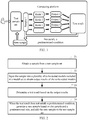
- FIG. 1 is a schematic diagram illustrating an implementation scenario, according to an implementation of the present specification.
- users such as application developers and test personnel
- the computing platform can be various apparatuses and devices that have a data processing capability and a data input function, such as a desktop computer and a server. It can be understood that the computing platform can further be a device cluster formed by the previous electronic devices.
- the users can collect samples as an initial test sample set and input the samples to the computing platform.
- the computing platform can obtain a sample from the test sample set, for example, sample 1, and then input sample 1 to a plurality of to-be-tested models included in a model set, for example, model 1, model 2, and model 3, and obtain output results of the test models, which are correspondingly output 1, output 2, and output 3, etc.
- the plurality of models can have a similar function (a predetermined function), so that sample 1 can be used simultaneously for testing of model 1, model 2, model 3, etc., which, for example, all have a pattern identification function.
- sample 1 can be simultaneously input to the plurality of models, and the plurality of models separately can provide respective output results, for example, pattern identification output results. Because accuracies of models are different, output results of to-be-tested models with a same function can be the same or different.
- these to-be-tested models include at least one neural network model.
- the computing platform can determine a test result based on the output results of the models.
- the test result can include at least one of a first test result or a second test result.
- the first test result includes output result accuracies corresponding to the to-be-tested models
- the second test result includes a neuron coverage rate of the at least one neural network model.
- the neuron coverage rate can be used to indicate a neuron activation status of a model.
- performance of the model can be evaluated by using the output result accuracies.
- through the neuron coverage rate it can be determined whether the model is adequately tested.
- the users can further set a related condition as a predetermined condition for the test result, so as to control an end time of the test.
- a predetermined condition that accuracies of all to-be-tested models are qualified can be set to control ending of the test process, etc. If the test process is not ended, the computing platform can obtain other samples from the test sample set and execute the above test process cyclically.
- the computing platform can generate a new sample based on a predetermined rule and sample 1 that is used in the current test process, and add the new sample to the test sample set for use in a subsequent test process.
- the users (such as application developers and test personnel) can control generation of samples by setting predetermined rules, so it can be ensured that various cases are covered without going far beyond an actual case.
- accuracies and/or test adequacy of the to-be-detected models can be evaluated, and on the other hand, a new sample that is generated based on the original sample and that is different from the original sample can be added to the test sample set, so that the quantity of samples in the test sample set and covered cases can be increased.
- a new sample that is generated based on the original sample and that is different from the original sample can be added to the test sample set, so that the quantity of samples in the test sample set and covered cases can be increased.
- an expanded test sample set can be used to train the models to improve a model accuracy. The following describes a specific execution process of the previous scenario.
- FIG. 2 is a flowchart illustrating a model test method, according to an implementation.
- the method can be executed by any system, device, apparatus, platform, or server that has computing and processing capabilities, for example, the computing platform shown in FIG. 1 .
- the method includes the following steps: Step 21: Obtain a sample from a test sample set.
- Step 23 Determine a test result based on the output results, where the test result includes at least one of a first test result or a second test result, the first test result includes output result accuracies corresponding to the to-be-tested models, and the second test result includes a neuron coverage rate of the at least one neural network model.
- Step 24 When the test result does not satisfy a predetermined condition, generate a new sample based on the sample and a predetermined rule, and add the new sample to the test sample set.
- a sample is obtained from the test sample set.
- the test sample set is used to store samples used for model tests.
- the test sample set can be a collection, or can be a database. No limitation is imposed in this application.
- the test sample set is an initial test sample set.
- the samples stored in the initial test sample set can include samples collected by a user, or can include samples collected by a user and samples generated in historical model test processes.
- the user can filter the collected samples to select some samples prone to error in the models or samples with a low sample feature proportion, and place the samples into the initial test sample set. For example, when a sample is input into 10 different models for image recognition, output results of five models is a truck, and output results of the other five models is blue sky. In this case, the sample is prone to an error and can be selected.
- 90 samples have a temperature ranging from 0°C to 20°C
- 4 samples have a temperature less than and near 0°C (for example, higher than -3°C)
- 1 sample has a temperature of -10°C.
- the sample with the temperature of -10°C occupies a low proportion and can be selected.
- the 4 samples with the temperature less than and near 0°C can all be selected, or one or two of them can be selected. As such, missing of some special cases can be reduced, which helps samples in the test sample set to evenly cover various cases.
- a sample can be obtained from the test sample set in any feasible way.
- a sample can be obtained based on a sorting sequence of the samples in the test sample set.
- the first sample can be obtained when the model test method is executed for the first time
- the second sample can be obtained when the model test method is executed for the second time, and so on.
- a sample can be randomly obtained from in the test sample set.
- a sample retrieval weight can further be set, to be specific, a higher retrieval weight can be set for a sample with a smaller quantity of use times, so as to increase a use probability for a sample that has not been used or has been less frequently used.
- the user can also obtain the sample from the test sample set in more feasible ways.
- the sample is input to the plurality of to-be-tested models included in the model set, so as to obtain the output results of the to-be-tested models.
- the model here is an operation model used to reveal a causal relationship between variables, and the operation model can include an algorithm including one or a series of functions.
- An output result determined by input variables can be obtained based on these variables by using such an algorithm, for example, an error back propagation (BP) algorithm or a convolutional neural network (CNN).
- BP error back propagation
- CNN convolutional neural network
- a relatively complex case can be implemented by using a neural network model.
- the neural network model includes a plurality of neurons. As shown in FIG. 3, FIG. 3 illustrates a specific example of a neural network model with a three-layer structure.
- the neural network model in FIG. 3 includes a plurality of neurons, such as neurons 31 and 32.
- Neurons at a first layer receive different input feature parameters x 1 , x 2 , x 3 , and x 4 and deliver them to the second layer.
- Neuron 31 at the second layer separately corresponds to operation units. Operation units can use x1, x2, x3, and x4 at the first layer as inputs.
- neuron 32 at the third layer is an operation unit that uses output values of neuron 31 and other neurons at the second layer as inputs.
- a connection between every two neurons represents a weight value for a signal passing the connection, which is referred to as a weight.
- the neural network model can obtain an output result, for example, a tangerine or an orange.
- W i a value of i ranges from 1 to 3, which respectively represents weight 1, weight 2, and weight 3.
- x i a value of i ranges from 1 to 3, which respectively represents feature parameter 1, feature parameter 2, and feature parameter 3.
- the plurality of to-be-tested models in the model set of the implementation include the at least one neural network model.
- the to-be-tested models are pre-trained by using a training sample set.
- the training sample set can include samples and corresponding known output results.
- Model parameters (for example, weight 1 in FIG. 4 ) can be adjusted based on input feature parameters and known output results that are determined based on the samples in the training sample set, until a model achieves a desired accuracy for the training sample set, and model parameters can be determined.
- the model due to a limitation of the training sample set, the model further needs to be tested by using a test sample set.
- the model set can be a model collection.
- the platform can include a model operation module, and a user can add to-be-tested models by using the module, so as to form the previous model set.
- the samples in the test sample set can be applied to all the to-be-tested models
- the to-be-tested models can have a same function or can have different functions, depending on a purpose and a specific circumstance of the test. For example, for a same picture sample, one to-be-tested model can identify a category, etc. based on various color and appearance features of trees and flowers, and another to-be-tested model can identify a season, etc. based on color features of trees and flowers.
- the to-be-tested models each can obtain an output result based on an input sample.
- the output results of the to-be-tested models might be different.
- models with different functions outputs a category "maple leaf” and a season "autumn” separately.
- output results are different.
- the plurality of to-be-tested models all include a same function.
- test result is determined based on the output results. It can be understood that the test result of the models is determined by using the output results obtained after the sample is input to the models. The specific test result depends on test content.
- the test content can be output result accuracies corresponding to the to-be-tested models.
- the output result accuracies corresponding to the to-be-tested models are referred to as the first test results.
- the first test results can be specific descriptions of the output result accuracies.
- the first test results can be either of the following: The results of the to-be-tested models are accurate and the results of the to-be-tested models are inaccurate; or the first test results can be accuracy rates (a quantity of accurate output results/a total quantity of determining times) calculated by collecting statistics about whether the plurality of output results of the to-be-tested models are correct.
- a correct output result can be determined by voting, and each output result is a vote result of a corresponding model. An output result with the largest quantity of votes is the correct output result. Then, it can be determined that an output result of the to-be-tested model whose output result is the correct output result is accurate. For example, assuming that there are 10 to-be-tested models in the model set, and 7 to-be-tested models can be used to identify seasons based on color features of trees and flowers. In this case, the 7 to-be-tested models have a same function.
- the model set can include a standard model.
- a correct output result of a to-be-tested model with a same function as the standard model can be determined based on an output result of the standard model, and it can be determined that an output result of the to-be-tested model whose output result is the correct output result is accurate.
- the standard model can be a tested model with a relatively high accuracy, for example, a 99.99% accuracy. Therefore, the output result of the standard model can be determined as the correct output result.
- the output results of the to-be-tested models with a same function as the standard model are all inconsistent with the output result of the standard model, it can further be detected whether the output results of these to-be-tested models are consistent. If yes, the consistent result can be determined as the correct output result. For example, for a portrait picture sample, the output result determined by the standard model is "man", but the output results of the 7 to-be-tested models with a same function as the standard model are all " woman". In this case, it can be determined that a correct output result is " woman". As the standard model is not necessarily accurate, such practice can prevent a judgment error of the to-be-tested model when the output result of the standard model is incorrect.
- a test result can also be determined in a way of determining the correct output result by voting, and details are omitted here for simplicity.
- all the to-be-tested models in the model set can have a same function as the standard model.
- the first test result can also be an output result accuracy of a certain sample in the test.
- output results of 4 models are accurate, and output results of 3 models are inaccurate, etc.
- an accuracy of the sample can be further calculated.
- a sample accuracy a quantity of models with correct output results/a total quantity of models.
- the accuracy can be an average value of single-time accuracies, or can be calculated based on a total quantity of times that the to-be-tested models output correct results/a total quantity of times that the to-be-tested models perform execution and output results.
- the sample can be evaluated for its usefulness in the model test process. When the output results of the models are all correct in each test of a sample, the sample has little significance to the model test.
- the test content can be a neuron coverage rate of the at least one neural network model.
- the neuron coverage rate of the at least one neural network model is referred to as the second test result.
- a neuron coverage rate of a model can be used to represent a proportion of a quantity of activated neurons in a total quantity of neurons.
- it can be detected whether an output of each neuron in the at least one neural network model satisfies an output condition, and a quantity of covered neurons of each neural network model can be counted.
- the quantity of covered neurons includes a quantity of neurons that satisfy the output condition in the test process.
- a neuron coverage rate of each neural network model can be determined based on the quantity of covered neurons.
- the neuron coverage rate is positively correlated with a ratio of the quantity of covered neurons to a total quantity of neurons.
- an activation function is also referred to as a firing rule, which is similar to operating of a human brain and can generate an output only when an input exceeds a specific standard. Therefore, in a sample, if values of some feature parameters of the sample are relatively small, a neuron cannot generate an output based only on these feature parameters, that is, the neuron is not activated. Therefore, a threshold can be set as an output condition of a neuron, for example, the output condition can be set to that an output of a neuron is greater than 0.
- the quantity of covered neurons is the quantity of neurons that satisfy the output condition in the test process.
- model 1 has a total of 50 neurons.
- the quantity of covered neurons is 5, and the neuron coverage rate is a number that is positively correlated with 5/50, for example, a percentage 10%.
- the neuron coverage rate is a number that is positively correlated with 6/50, for example, a percentage 12%.
- the test result can include at least one of the first test result and the second test result.
- the first test result includes the output result accuracies corresponding to the to-be-tested models
- the second test result includes the neuron coverage rate of the at least one neural network model.
- step 24 when the test result does not satisfy the predetermined condition, a new sample can be generated based on the sample and the predetermined rule, and the new sample can be added to the test sample set.
- the predetermined condition can be stored, and used to limit an end time of the model test process.
- it can be further detected whether the test result in step 23 satisfies the predetermined condition, and if yes, the model test process can be stopped. If the test result does not satisfy the predetermined condition, the sample can be processed based on the predetermined rule to generate a new sample, and the new sample can be added to the test sample set to expand the test sample set for a subsequent test process.
- processing on the sample can be changing values of features based on the predetermined rule (for example, a gradient ascending algorithm).
- the predetermined condition is determined based on the neuron coverage rate.
- the predetermined condition can include the following: The neuron coverage rate of the at least one neural network model each is greater than a predetermined coverage rate threshold.
- a predetermined coverage rate threshold can be used to limit a coverage degree of a sample for the model test, for example, 99%.
- the predetermined condition can further be set based on test result accuracies.
- the predetermined condition can further include the following: Output result accuracies corresponding to the plurality of to-be-tested models each are greater than a predetermined accuracy threshold, and the accuracies are positively correlated with a ratio of a quantity of accurate historical test results to a total quantity of tests.
- model 1 passes a test of 100 samples, where a quantity of accurate output results is 50, and an accuracy of model 1 is positively correlated with 50/100, for example, a percentage 50%.
- the test can be ended when an accuracy of each to-be-tested model in the model set is greater than 90%. If a test is performed a relatively small quantity of times, the test has little significance to evaluation of a model accuracy. For example, when the model test method is executed once, for a single sample, the model accuracy is either 0 or 100%. Therefore, in an optional implementation, a quantity of times can be further limited for accuracy statistics collection. For example, for a certain to-be-tested model, an accuracy of the to-be-tested model can be calculated only after at least 100 cycles are performed.
- the predetermined condition for each to-be-tested model, it can be further determined whether the predetermined condition is satisfied, for example, the accuracy reaches the predetermined accuracy threshold, or the neuron coverage rate reaches the predetermined coverage rate threshold.
- the accuracy reaches the predetermined accuracy threshold, it indicates that performance of the to-be-tested model is relatively good, and there is little significance to continue the test, and the to-be-tested model can be directly removed from the model set.
- the neuron coverage rate reaches the predetermined coverage rate threshold, it indicates that defects or problems in the to-be-tested model can already be adequately identified through the current test, and the to-be-tested model can also be removed from the model set. As such, a to-be-tested model that has finished the test can be removed in time, and data processing load of a model test body can be reduced.
- a new to-be-tested model can be added at any time to perform the test. As such, execution resources for the model test can be saved.
- the current sample can be processed based on the predetermined rule to generate a new sample and the new sample can be added to the sample set.
- the above predetermined rules can be set by the test personnel as needed, in consideration of the following: On one hand, not any value can be set for each feature of the sample, and some extreme values make the sample meaningless, for example, a face width exceeding twice a face length, an eye area accounting for three quarters of a face area, etc.
- the test personnel can generate samples under specific conditions to perform more targeted tests. For example, by setting the predetermined rule, a truck color in a current picture sample can be set as a specific color, for example, white, so as to test an identification status of various vehicle colors and backgrounds in a case of identification upon self-driving.
- a constraint range of a sample feature can be set based on the predetermined rule. For example, a pixel range can be set to 128x128-16384x16384, etc.
- a random error term can be added to the sample based on the specified range of each feature to generate a new sample. The random error term can change only an original feature of the sample, or can add a new feature related to an input of the to-be-tested model to the sample.
- a to-be-tested model identifies a season based on a picture color, and a color of each pixel of a picture sample is represented by using an RGB value as [(235,108,0),(199,98,3),(153,72,20),...].
- the random error term can make a changed value of each pixel to fall in the range 0-255, for example, [(0,1,30),(26,0,3),(-153,72,20),...], and the random error term can be added to the original sample to generate a new sample [(235,109,30),(255,98,6),(0,144,40),...].
- the random error term can add a pixel to a sample in a pixel range. For example, an original sample has 128x128 pixels, and the random error term can add 128x256 pixels, so that a new sample has 128x384 pixels.
- a new sample that is different from the manually collected samples can be automatically generated, so as to reduce complex manual collection. Further, a feature value range can be manually set, so that the generated new sample is more realistic.
- samples that have been used to test the models can be retained in the test sample set for use in a subsequent test process.
- a sample with a relatively high accuracy in each sample test has little significance to the model test, and can further be removed from the test sample set.
- a certain sample can be removed from the test sample set when all the to-be-tested models can provide correct output results each time the sample is used for testing.
- a threshold can be specified, and when the accuracy is greater than the specified threshold, the sample can be removed from the test sample set.
- a sample is first obtained from a test sample set; next, the sample is input into a plurality of to-be-tested models included in a model set to obtain output results of the to-be-tested model; subsequently, a test result is determined based on the output results; and further, when the test result does not satisfy a predetermined condition, a new sample is generated based on the sample and a predetermined rule, and the new sample is added to the test sample set.
- model test method when the model test method is cyclically executed, on one hand, accuracies and/or test adequacy of the to-be-tested models can be evaluated, and on the other hand, a new sample that is generated based on the original sample and that is different from the original sample can be used to improve effectiveness of a model test.
- accuracies and/or test adequacy of the to-be-tested models can be evaluated, and on the other hand, a new sample that is generated based on the original sample and that is different from the original sample can be used to improve effectiveness of a model test.
- Such practice not only can reduce manpower waste caused by manual sample collection but also can further test models.
- an expanded test sample set can be used to train the models to improve a model accuracy.
- FIG. 5 is a schematic block diagram illustrating a model test apparatus, according to an implementation.
- the model test apparatus 500 includes the following: an acquisition unit 51, configured to obtain a sample from a test sample set; a test unit 52, configured to input the sample into a plurality of to-be-tested models included in a model set to obtain output results of the to-be-tested models, where the plurality of to-be-tested models include at least one neural network model; a determining unit 53, configured to determine a test result based on the output results, where the test result includes at least one of a first test result or a second test result, the first test result includes output result accuracies corresponding to the to-be-tested models, and the second test result includes a neuron coverage rate of the at least one neural network model; and a generation unit 54, configured to, when the test result does not satisfy a predetermined condition, generate a new sample based on the sample and
- the determining unit 53 when the test result includes the first test result, the determining unit 53 further includes the following: a result determining module (not shown), configured to determine, through voting, a correct output result for to-be-tested models with a same function included in the plurality of to-be-tested models, where an output result with the largest quantity of votes is the correct output result; and an accuracy determining module (not shown), configured to determine that an output result of a to-be-tested model whose output result is the correct output result is accurate.
- a result determining module (not shown) configured to determine, through voting, a correct output result for to-be-tested models with a same function included in the plurality of to-be-tested models, where an output result with the largest quantity of votes is the correct output result
- an accuracy determining module (not shown), configured to determine that an output result of a to-be-tested model whose output result is the correct output result is accurate.
- the model set includes a standard model
- the determining unit 53 includes the following: a result determining module (not shown), configured to determine, based on an output result of the standard model, a correct output result of a to-be-tested model that has a same function as the standard model; and an accuracy determining module (not shown), configured to determine that an output result of a to-be-tested model whose output result is the correct output result is accurate.
- the determining unit when the test result includes the second test result, further includes the following: a counting module (not shown), configured to count a quantity of covered neurons of each neural network model based on whether an output of each neuron in the at least one neural network model satisfies an output condition, where the quantity of covered neurons includes a quantity of neurons that satisfy the output condition in a test process; and a coverage rate determining module, configured to determine a neuron coverage rate of each neural network model based on the quantity of covered neurons, where the neuron coverage rate is positively correlated with a ratio of the quantity of covered neurons to a total quantity of neurons.
- the predetermined condition includes the following: the neuron coverage rate of the at least one neural network model each is greater than a predetermined coverage rate threshold.
- the predetermined condition can further include the following: the output result accuracies corresponding to the plurality of to-be-tested models each are greater than a predetermined accuracy threshold.
- the accuracy can be positively correlated with a ratio of a quantity of accurate historical test results to a total quantity of tests.
- the generation unit 54 is further configured to obtain a specified range of each feature in the sample; and add a random error term to the sample based on the specified range of each feature to generate the new sample.
- the apparatus 500 further includes one or more of the following: a removing unit (not shown), configured to remove a to-be-tested model whose test result satisfies the predetermined condition from the model set; and an adding unit (not shown), configured to add a new to-be-tested model to the model set.
- samples can be continuously obtained from a test sample set to cyclically execute a model test method and more different samples can be generated, so as to greatly improve effectiveness of a model test.
- the generated different samples can be further used to train models, so as to improve accuracies of the models.
- a computer-readable storage medium stores a computer program, and when the computer program runs on a computer, the computer is enabled to perform the method described with reference FIG. 2 .
- a computing device including a memory and a processor, where the memory stores executable code, and when the processor executes the executable code, the method described with reference FIG. 2 can be implemented.
Landscapes
- Engineering & Computer Science (AREA)
- Theoretical Computer Science (AREA)
- Physics & Mathematics (AREA)
- Data Mining & Analysis (AREA)
- Artificial Intelligence (AREA)
- Evolutionary Computation (AREA)
- General Engineering & Computer Science (AREA)
- General Physics & Mathematics (AREA)
- Life Sciences & Earth Sciences (AREA)
- Software Systems (AREA)
- Mathematical Physics (AREA)
- Computing Systems (AREA)
- Molecular Biology (AREA)
- Health & Medical Sciences (AREA)
- Biomedical Technology (AREA)
- Biophysics (AREA)
- Computational Linguistics (AREA)
- General Health & Medical Sciences (AREA)
- Computer Vision & Pattern Recognition (AREA)
- Evolutionary Biology (AREA)
- Bioinformatics & Computational Biology (AREA)
- Bioinformatics & Cheminformatics (AREA)
- Medical Informatics (AREA)
- Image Analysis (AREA)
- Testing Or Calibration Of Command Recording Devices (AREA)
Abstract
Description
- One or more implementations of the present specification relate to the field of computer technologies, and in particular, to methods and apparatuses for performing model tests by using computers.
- With the development of computer and artificial intelligence technologies, increasing artificial neural networks (ANN) applications emerge, such as pattern recognition, automatic control, signal processing, and assistant decision-making. An ANN is an operation model that includes a large quantity of interconnected processing units (also referred to as neurons). Each processing unit represents a specific output function that is referred to as activation function (activation function). A performance test on a neural network model is often measured by a code coverage rate of a system that generates the neural network model, or an output accuracy of the neural network model on a sample set and an output result accuracy in a special case (for example, in a certain place with a temperature -70°C) that a sample is difficult to cover.
- In conventional technologies, a large quantity of training samples usually need to be collected to test models more adequately. In addition, more training samples often need to be collected to train the models and adjust and improve model parameters, so as to improve accuracies of the models. However, in such a method, the samples are collected manually and manpower is wasted. Moreover, the collected training samples are limited, and it cannot be ensured that the models are adequately tested, and improvement to accuracies of the models is limited. For example, if a temperature has never dropped below -70°C in a certain place, no quantity of collected samples can cover a case with a temperature below -70°C. Particularly, in some special cases, for example, a case of a self-driving vehicle facing a truck with a white background, if such a case is not covered by collected test samples, the background may be identified as a sky background and decision-making is affected, thereby causing an unrecoverable loss.
- Therefore, an improved solution is expected, so as to effectively perform model tests by generating more different samples. Such a solution not only can reduce manpower waste caused by manual sample collection but also can further test models by using these different samples. Moreover, the solution can be used to train the models to improve a model accuracy.
- One or more implementations of the present specification describe model test methods and apparatus, so as to effectively perform model tests by generating more different samples. Such practice not only can reduce manpower waste caused by manual sample collection but also can further test models by using these different samples. Moreover, an expanded test sample set can be used to train the models to improve a model accuracy.
- According to a first aspect, a model test method is provided, including: obtaining a sample from a test sample set; input the sample into a plurality of to-be-tested models included in a model set to obtain output results of the to-be-tested models, where the plurality of to-be-tested models include at least one neural network model; determining a test result based on the output results, where the test result includes at least one of a first test result or a second test result, the first test result includes output result accuracies corresponding to the to-be-tested models, and the second test result includes a neuron coverage rate of the at least one neural network model; and when the test result does not satisfy a predetermined condition, generating a new sample based on the sample and a predetermined rule, and adding the new sample to the test sample set.
- According to an implementation method of the first aspect, when the test result includes the first test result, the determining a test result based on the output results includes: determining, through voting, a correct output result for to-be-tested models with a same function included in the plurality of to-be-tested models, where an output result with the largest quantity of votes is the correct output result; and determining that an output result of a to-be-tested model whose output result is the correct output result is accurate.
- In a possible design, the model set includes a standard model, and the determining a test result based on the output results includes: determining, based on an output result of the standard model, a correct output result of a to-be-tested model that has a same function as the standard model; and determining that an output result of a to-be-tested model whose output result is the correct output result is accurate.
- Further, in an implementation, the predetermined condition includes: the output result accuracies corresponding to the plurality of to-be-tested models each are greater than a predetermined accuracy threshold.
- According to an implementation method of the first aspect, when the test result includes the second test result, the determining a test result based on the output results includes: counting a quantity of covered neurons of each neural network model based on whether an output of each neuron in the at least one neural network model satisfies an output condition, where the quantity of covered neurons includes a quantity of neurons that satisfy the output condition in a test process; and determining a neuron coverage rate of each neural network model based on the quantity of covered neurons, where the neuron coverage rate is positively correlated with a ratio of the quantity of covered neurons to a total quantity of neurons.
- Further, in an implementation, the predetermined condition includes: the neuron coverage rate of the at least one neural network model each is greater than a predetermined coverage rate threshold.
- In an implementation, the generating a new sample based on the sample and a predetermined rule includes: obtaining a specified range of each feature in the sample; and adding a random error term to the sample based on the specified range of each feature to generate the new sample.
- According to a possible design, the method further includes one or more of the following: removing a to-be-tested model whose test result satisfies the predetermined condition from the model set; and adding a new to-be-tested model to the model set.
- According to a second aspect, a model test apparatus is provided, including: an acquisition unit, configured to obtain a sample from a test sample set; a test unit, configured to input the sample into a plurality of to-be-tested models included in a model set to obtain output results of the to-be-tested models, where the plurality of to-be-tested models include at least one neural network model; a determining unit, configured to determine a test result based on the output results, where the test result includes at least one of a first test result or a second test result, the first test result includes output result accuracies corresponding to the to-be-tested models, and the second test result includes a neuron coverage rate of the at least one neural network model; and a generation unit, configured to, when the test result does not satisfy a predetermined condition, generate a new sample based on the sample and a predetermined rule, and add the new sample to the test sample set.
- According to a third aspect, a computer-readable storage medium is provided, where the computer-readable storage medium stores a computer program, and when the computer program runs on a computer, the computer is enabled to perform the method according to the first aspect.
- According to a fourth aspect, a computing device is provided, and includes a memory and a processor, where the memory stores executable code, and when the processor executes the executable code, the method according to the first aspect is implemented.
- According to the model test methods and apparatuses provided in the implementations of the present specification, a sample is first obtained from a test sample set; next, the sample is input into a plurality of to-be-tested models included in a model set to obtain output results of the to-be-tested model; subsequently, a test result is determined based on the output results; and further, when the test result does not satisfy a predetermined condition, a new sample is generated based on the sample and a predetermined rule, and the new sample is added to the test sample set. As such, when the model test method is cyclically executed, on one hand, accuracies and/or test adequacy of the to-be-detected models can be evaluated, and on the other hand, a new sample that is generated based on the original sample and that is different from the original sample can be used to improve effectiveness of a model test. Such practice not only can reduce manpower waste caused by manual sample collection but also can further test models. Moreover, an expanded test sample set can be used to train the models to improve a model accuracy.
- To describe the technical solutions in the implementations of the present disclosure more clearly, the following briefly describes the accompanying drawings needed for describing the implementations. Clearly, the accompanying drawings in the following description show merely some implementations of the present disclosure, and a person of ordinary skill in the art can still derive other drawings from these accompanying drawings without creative efforts.
-
FIG. 1 is a schematic diagram illustrating an implementation scenario, according to an implementation of the present specification; -
FIG. 2 is a flowchart illustrating a model test method, according to an implementation; -
FIG. 3 illustrates a specific example of a neural network model; -
FIG. 4 illustrates a specific example of a neuron of a neural network model; and -
FIG. 5 is a schematic block diagram illustrating a model test apparatus, according to an implementation. - The following describes the solutions provided in the present specification with reference to the accompanying drawings.
-
FIG. 1 is a schematic diagram illustrating an implementation scenario, according to an implementation of the present specification. As shown in the figure, users (such as application developers and test personnel) can test neural network models through a computing platform before they are formally used. The computing platform here can be various apparatuses and devices that have a data processing capability and a data input function, such as a desktop computer and a server. It can be understood that the computing platform can further be a device cluster formed by the previous electronic devices. The users can collect samples as an initial test sample set and input the samples to the computing platform. - During the test, the computing platform can obtain a sample from the test sample set, for example,
sample 1, and theninput sample 1 to a plurality of to-be-tested models included in a model set, for example,model 1,model 2, andmodel 3, and obtain output results of the test models, which are correspondinglyoutput 1,output 2, andoutput 3, etc. It can be understood that the plurality of models can have a similar function (a predetermined function), so thatsample 1 can be used simultaneously for testing ofmodel 1,model 2,model 3, etc., which, for example, all have a pattern identification function. As such,sample 1 can be simultaneously input to the plurality of models, and the plurality of models separately can provide respective output results, for example, pattern identification output results. Because accuracies of models are different, output results of to-be-tested models with a same function can be the same or different. It should be noted that, these to-be-tested models include at least one neural network model. - Then, the computing platform can determine a test result based on the output results of the models. Here, the test result can include at least one of a first test result or a second test result. The first test result includes output result accuracies corresponding to the to-be-tested models, and the second test result includes a neuron coverage rate of the at least one neural network model. Here, the neuron coverage rate can be used to indicate a neuron activation status of a model. As such, for each to-be-tested model, performance of the model can be evaluated by using the output result accuracies. On the other hand, through the neuron coverage rate, it can be determined whether the model is adequately tested.
- It can be understood that before the test, the users (such as application developers and test personnel) can further set a related condition as a predetermined condition for the test result, so as to control an end time of the test. For example, a predetermined condition that accuracies of all to-be-tested models are qualified can be set to control ending of the test process, etc. If the test process is not ended, the computing platform can obtain other samples from the test sample set and execute the above test process cyclically. In addition, because a quantity of samples in the original test sample set is limited, if the test process further needs to be cyclically executed, the computing platform can generate a new sample based on a predetermined rule and
sample 1 that is used in the current test process, and add the new sample to the test sample set for use in a subsequent test process. The users (such as application developers and test personnel) can control generation of samples by setting predetermined rules, so it can be ensured that various cases are covered without going far beyond an actual case. - As such, accuracies and/or test adequacy of the to-be-detected models can be evaluated, and on the other hand, a new sample that is generated based on the original sample and that is different from the original sample can be added to the test sample set, so that the quantity of samples in the test sample set and covered cases can be increased. With these different samples automatically generated, not only manpower waste caused by manual sample collection can be reduced but also the models can further be tested. Moreover, an expanded test sample set can be used to train the models to improve a model accuracy. The following describes a specific execution process of the previous scenario.
-
FIG. 2 is a flowchart illustrating a model test method, according to an implementation. The method can be executed by any system, device, apparatus, platform, or server that has computing and processing capabilities, for example, the computing platform shown inFIG. 1 . As shown inFIG. 2 , the method includes the following steps: Step 21: Obtain a sample from a test sample set. Step 22: Input the sample into a plurality of to-be-tested models included in a model set to obtain output results of the to-be-tested models, where the plurality of to-be-tested models include at least one neural network model. Step 23: Determine a test result based on the output results, where the test result includes at least one of a first test result or a second test result, the first test result includes output result accuracies corresponding to the to-be-tested models, and the second test result includes a neuron coverage rate of the at least one neural network model. Step 24: When the test result does not satisfy a predetermined condition, generate a new sample based on the sample and a predetermined rule, and add the new sample to the test sample set. - First, in
step 21, a sample is obtained from the test sample set. It can be understood that the test sample set is used to store samples used for model tests. The test sample set can be a collection, or can be a database. No limitation is imposed in this application. - When the model test method is executed for the first time, the test sample set is an initial test sample set. The samples stored in the initial test sample set can include samples collected by a user, or can include samples collected by a user and samples generated in historical model test processes.
- According to an implementation method, the user can filter the collected samples to select some samples prone to error in the models or samples with a low sample feature proportion, and place the samples into the initial test sample set. For example, when a sample is input into 10 different models for image recognition, output results of five models is a truck, and output results of the other five models is blue sky. In this case, the sample is prone to an error and can be selected. For another example, in 100 collected samples, 90 samples have a temperature ranging from 0°C to 20°C, 4 samples have a temperature less than and near 0°C (for example, higher than -3°C), and 1 sample has a temperature of -10°C. In this case, the sample with the temperature of -10°C occupies a low proportion and can be selected. The 4 samples with the temperature less than and near 0°C can all be selected, or one or two of them can be selected. As such, missing of some special cases can be reduced, which helps samples in the test sample set to evenly cover various cases.
- A sample can be obtained from the test sample set in any feasible way. In an implementation, a sample can be obtained based on a sorting sequence of the samples in the test sample set. For example, the first sample can be obtained when the model test method is executed for the first time, the second sample can be obtained when the model test method is executed for the second time, and so on.
- In another implementation, a sample can be randomly obtained from in the test sample set. When the sample is randomly obtained, after the model test method is executed a plurality of times, it is possible that some samples have been frequently used, and some samples have not been used or have been less frequently used. In this case, a sample retrieval weight can further be set, to be specific, a higher retrieval weight can be set for a sample with a smaller quantity of use times, so as to increase a use probability for a sample that has not been used or has been less frequently used.
- In more implementations, the user can also obtain the sample from the test sample set in more feasible ways.
- Next, in
step 22, the sample is input to the plurality of to-be-tested models included in the model set, so as to obtain the output results of the to-be-tested models. It should be noted that the model here is an operation model used to reveal a causal relationship between variables, and the operation model can include an algorithm including one or a series of functions. An output result determined by input variables can be obtained based on these variables by using such an algorithm, for example, an error back propagation (BP) algorithm or a convolutional neural network (CNN). - A relatively complex case can be implemented by using a neural network model. The neural network model includes a plurality of neurons. As shown in
FIG. 3, FIG. 3 illustrates a specific example of a neural network model with a three-layer structure. The neural network model inFIG. 3 includes a plurality of neurons, such asneurons Neuron 31 at the second layer separately corresponds to operation units. Operation units can use x1, x2, x3, and x4 at the first layer as inputs. The features x1, x2, x3, and x4 are provided by a sample or extracted from the sample, and can separately be, for example, parameters such as a color, a shape, and a size of a fruit. Similarly,neuron 32 at the third layer is an operation unit that uses output values ofneuron 31 and other neurons at the second layer as inputs. A connection between every two neurons represents a weight value for a signal passing the connection, which is referred to as a weight. Throughneuron 32, the neural network model can obtain an output result, for example, a tangerine or an orange. - Further, as shown in
FIG. 4 , each neuron represents a specific output function, which is referred to as an activation function (for example, a sigmoid function f(z)=1/(1+e-z)). In the neuron shown inFIG. 4 , the output function can be
weight 1,weight 2, andweight 3. For xi, a value of i ranges from 1 to 3, which respectively representsfeature parameter 1,feature parameter 2, andfeature parameter 3. After weighted summation is performed onfeature parameter 1,feature parameter 2, andfeature parameter 3, an output of the neuron can be obtained through mapping by using the activation function. - The plurality of to-be-tested models in the model set of the implementation include the at least one neural network model. The to-be-tested models are pre-trained by using a training sample set. The training sample set can include samples and corresponding known output results. Model parameters (for example,
weight 1 inFIG. 4 ) can be adjusted based on input feature parameters and known output results that are determined based on the samples in the training sample set, until a model achieves a desired accuracy for the training sample set, and model parameters can be determined. However, due to a limitation of the training sample set, the model further needs to be tested by using a test sample set. - In practice, the model set can be a model collection. When the model test method is executed by a test-type platform, the platform can include a model operation module, and a user can add to-be-tested models by using the module, so as to form the previous model set. Although the samples in the test sample set can be applied to all the to-be-tested models, the to-be-tested models can have a same function or can have different functions, depending on a purpose and a specific circumstance of the test. For example, for a same picture sample, one to-be-tested model can identify a category, etc. based on various color and appearance features of trees and flowers, and another to-be-tested model can identify a season, etc. based on color features of trees and flowers.
- It can be understood that the to-be-tested models each can obtain an output result based on an input sample. For a same sample, the output results of the to-be-tested models might be different. For example, for a same picture sample, models with different functions outputs a category "maple leaf" and a season "autumn" separately. For models with a same function, because the models have different accuracies, output results are different. For example, for a same picture sample, one outputs "spring" and another outputs "summer". In an implementation, the plurality of to-be-tested models all include a same function.
- Then, in
step 23, the test result is determined based on the output results. It can be understood that the test result of the models is determined by using the output results obtained after the sample is input to the models. The specific test result depends on test content. - Specifically, according to an aspect of the implementation, the test content can be output result accuracies corresponding to the to-be-tested models. For ease of description, the output result accuracies corresponding to the to-be-tested models are referred to as the first test results. The first test results can be specific descriptions of the output result accuracies. For example, the first test results can be either of the following: The results of the to-be-tested models are accurate and the results of the to-be-tested models are inaccurate; or the first test results can be accuracy rates (a quantity of accurate output results/a total quantity of determining times) calculated by collecting statistics about whether the plurality of output results of the to-be-tested models are correct.
- In an implementation, for to-be-tested models with a same function included in the plurality of to-be-tested models, a correct output result can be determined by voting, and each output result is a vote result of a corresponding model. An output result with the largest quantity of votes is the correct output result. Then, it can be determined that an output result of the to-be-tested model whose output result is the correct output result is accurate. For example, assuming that there are 10 to-be-tested models in the model set, and 7 to-be-tested models can be used to identify seasons based on color features of trees and flowers. In this case, the 7 to-be-tested models have a same function. For a certain picture sample, if output results of the 7 to-be-tested models are "spring", "spring", "summer", "autumn", "spring", "autumn", and "spring", a voting result is as follows: 4 votes for "spring", 1 vote for "summer", and 2 votes for "autumn". Therefore, "spring" with the largest quantity of votes is the correct output result. Then, it is determined that output results of the first, second, fifth, and seventh models are accurate, and output results of the third, fourth, and sixth models are inaccurate. For the other 3 to-be-tested models, if they have a same function, when test content is output result accuracies, a similar method can be used for processing. Details are omitted here for simplicity. In a possible design, all to-be-tested models in the model set have a same function.
- In another implementation, the model set can include a standard model. In this case, a correct output result of a to-be-tested model with a same function as the standard model can be determined based on an output result of the standard model, and it can be determined that an output result of the to-be-tested model whose output result is the correct output result is accurate. The standard model can be a tested model with a relatively high accuracy, for example, a 99.99% accuracy. Therefore, the output result of the standard model can be determined as the correct output result. In this case, for a portrait picture sample, when the output result determined by the standard model is "man", if output results of 4 among 7 to-be-tested models with a same function as the standard model are "woman" and output results of the other 3 among the 7 to-be-tested models are "man", it can be determined that the output results of the 3 to-be-tested models whose output results are "man" are accurate.
- In a possible design, when the output results of the to-be-tested models with a same function as the standard model are all inconsistent with the output result of the standard model, it can further be detected whether the output results of these to-be-tested models are consistent. If yes, the consistent result can be determined as the correct output result. For example, for a portrait picture sample, the output result determined by the standard model is "man", but the output results of the 7 to-be-tested models with a same function as the standard model are all "woman". In this case, it can be determined that a correct output result is "woman". As the standard model is not necessarily accurate, such practice can prevent a judgment error of the to-be-tested model when the output result of the standard model is incorrect.
- For another to-be-tested model with a different function from the standard model, a test result can also be determined in a way of determining the correct output result by voting, and details are omitted here for simplicity. Optionally, all the to-be-tested models in the model set can have a same function as the standard model.
- In an implementation, the first test result can also be an output result accuracy of a certain sample in the test. For example, for a sample, output results of 4 models are accurate, and output results of 3 models are inaccurate, etc. Optionally, an accuracy of the sample can be further calculated. For a single test process, a sample accuracy = a quantity of models with correct output results/a total quantity of models. For a plurality of test processes of the sample, the accuracy can be an average value of single-time accuracies, or can be calculated based on a total quantity of times that the to-be-tested models output correct results/a total quantity of times that the to-be-tested models perform execution and output results. As such, the sample can be evaluated for its usefulness in the model test process. When the output results of the models are all correct in each test of a sample, the sample has little significance to the model test.
- In another aspect, the test content can be a neuron coverage rate of the at least one neural network model. For ease of description, the neuron coverage rate of the at least one neural network model is referred to as the second test result. It can be easily understood that a neuron coverage rate of a model can be used to represent a proportion of a quantity of activated neurons in a total quantity of neurons. In this case, it can be detected whether an output of each neuron in the at least one neural network model satisfies an output condition, and a quantity of covered neurons of each neural network model can be counted. The quantity of covered neurons includes a quantity of neurons that satisfy the output condition in the test process. A neuron coverage rate of each neural network model can be determined based on the quantity of covered neurons. The neuron coverage rate is positively correlated with a ratio of the quantity of covered neurons to a total quantity of neurons.
- It can be understood that, in the neural network model, an activation function is also referred to as a firing rule, which is similar to operating of a human brain and can generate an output only when an input exceeds a specific standard. Therefore, in a sample, if values of some feature parameters of the sample are relatively small, a neuron cannot generate an output based only on these feature parameters, that is, the neuron is not activated. Therefore, a threshold can be set as an output condition of a neuron, for example, the output condition can be set to that an output of a neuron is greater than 0.
- It should be noted that the quantity of covered neurons is the quantity of neurons that satisfy the output condition in the test process. For example,
model 1 has a total of 50 neurons. Whensample 1 is input intomodel 1 and the first to the fifth neurons satisfy the output condition, the quantity of covered neurons is 5, and the neuron coverage rate is a number that is positively correlated with 5/50, for example, a percentage 10%. Whensample 2 is input intomodel 1 and the second to the sixth neurons satisfy the output condition, neurons that satisfies the output condition are the first to the sixth neurons. In this case, the quantity of covered neurons is 6, and the neuron coverage rate is a number that is positively correlated with 6/50, for example, a percentage 12%. - In conclusion, the test result can include at least one of the first test result and the second test result. The first test result includes the output result accuracies corresponding to the to-be-tested models, and the second test result includes the neuron coverage rate of the at least one neural network model.
- Subsequently, in
step 24, when the test result does not satisfy the predetermined condition, a new sample can be generated based on the sample and the predetermined rule, and the new sample can be added to the test sample set. Here, the predetermined condition can be stored, and used to limit an end time of the model test process. In this step, it can be further detected whether the test result instep 23 satisfies the predetermined condition, and if yes, the model test process can be stopped. If the test result does not satisfy the predetermined condition, the sample can be processed based on the predetermined rule to generate a new sample, and the new sample can be added to the test sample set to expand the test sample set for a subsequent test process. For example, processing on the sample can be changing values of features based on the predetermined rule (for example, a gradient ascending algorithm). - In an implementation, the predetermined condition is determined based on the neuron coverage rate. Specifically, when the test result includes the second test result, the predetermined condition can include the following: The neuron coverage rate of the at least one neural network model each is greater than a predetermined coverage rate threshold. To be specific, if the to-be-tested models include a neural network model, a neuron coverage rate of the neural network model needs to be greater than the predetermined coverage rate threshold. If the to-be-tested models include a plurality of neural network models, a neuron coverage rate of each neural network model needs to be greater than the predetermined coverage rate threshold. The predetermined coverage rate threshold can be used to limit a coverage degree of a sample for the model test, for example, 99%. When the neuron coverage rate exceeds the predetermined coverage rate threshold, it indicates that the sample in the test sample set can adequately test most of neurons in the models.
- In some other implementations, the predetermined condition can further be set based on test result accuracies. Specifically, the predetermined condition can further include the following: Output result accuracies corresponding to the plurality of to-be-tested models each are greater than a predetermined accuracy threshold, and the accuracies are positively correlated with a ratio of a quantity of accurate historical test results to a total quantity of tests. As an example, in the current model test,
model 1 passes a test of 100 samples, where a quantity of accurate output results is 50, and an accuracy ofmodel 1 is positively correlated with 50/100, for example, a percentage 50%. Assuming that the predetermined accuracy threshold is 90%, the test can be ended when an accuracy of each to-be-tested model in the model set is greater than 90%. If a test is performed a relatively small quantity of times, the test has little significance to evaluation of a model accuracy. For example, when the model test method is executed once, for a single sample, the model accuracy is either 0 or 100%. Therefore, in an optional implementation, a quantity of times can be further limited for accuracy statistics collection. For example, for a certain to-be-tested model, an accuracy of the to-be-tested model can be calculated only after at least 100 cycles are performed. - In an implementation, for each to-be-tested model, it can be further determined whether the predetermined condition is satisfied, for example, the accuracy reaches the predetermined accuracy threshold, or the neuron coverage rate reaches the predetermined coverage rate threshold. When the accuracy reaches the predetermined accuracy threshold, it indicates that performance of the to-be-tested model is relatively good, and there is little significance to continue the test, and the to-be-tested model can be directly removed from the model set. When the neuron coverage rate reaches the predetermined coverage rate threshold, it indicates that defects or problems in the to-be-tested model can already be adequately identified through the current test, and the to-be-tested model can also be removed from the model set. As such, a to-be-tested model that has finished the test can be removed in time, and data processing load of a model test body can be reduced.
- In an implementation, when the model test process is executed, a new to-be-tested model can be added at any time to perform the test. As such, execution resources for the model test can be saved.
- When the test is continued, as described above, the current sample can be processed based on the predetermined rule to generate a new sample and the new sample can be added to the sample set. The above predetermined rules can be set by the test personnel as needed, in consideration of the following: On one hand, not any value can be set for each feature of the sample, and some extreme values make the sample meaningless, for example, a face width exceeding twice a face length, an eye area accounting for three quarters of a face area, etc. On the other hand, the test personnel can generate samples under specific conditions to perform more targeted tests. For example, by setting the predetermined rule, a truck color in a current picture sample can be set as a specific color, for example, white, so as to test an identification status of various vehicle colors and backgrounds in a case of identification upon self-driving.
- In an implementation, a constraint range of a sample feature can be set based on the predetermined rule. For example, a pixel range can be set to 128x128-16384x16384, etc. Further, a random error term can be added to the sample based on the specified range of each feature to generate a new sample. The random error term can change only an original feature of the sample, or can add a new feature related to an input of the to-be-tested model to the sample. For example, a to-be-tested model identifies a season based on a picture color, and a color of each pixel of a picture sample is represented by using an RGB value as [(235,108,0),(199,98,3),(153,72,20),...]. Because a value of each pixel ranges from 0 to 255, the random error term can make a changed value of each pixel to fall in the range 0-255, for example, [(0,1,30),(26,0,3),(-153,72,20),...], and the random error term can be added to the original sample to generate a new sample [(235,109,30),(255,98,6),(0,144,40),...]. The random error term can add a pixel to a sample in a pixel range. For example, an original sample has 128x128 pixels, and the random error term can add 128x256 pixels, so that a new sample has 128x384 pixels.
- As such, a new sample that is different from the manually collected samples can be automatically generated, so as to reduce complex manual collection. Further, a feature value range can be manually set, so that the generated new sample is more realistic.
- In an implementation, samples that have been used to test the models can be retained in the test sample set for use in a subsequent test process. In some other possible implementations, a sample with a relatively high accuracy in each sample test has little significance to the model test, and can further be removed from the test sample set. For example, a certain sample can be removed from the test sample set when all the to-be-tested models can provide correct output results each time the sample is used for testing. In practice, a threshold can be specified, and when the accuracy is greater than the specified threshold, the sample can be removed from the test sample set.
- As described in the previous process, a sample is first obtained from a test sample set; next, the sample is input into a plurality of to-be-tested models included in a model set to obtain output results of the to-be-tested model; subsequently, a test result is determined based on the output results; and further, when the test result does not satisfy a predetermined condition, a new sample is generated based on the sample and a predetermined rule, and the new sample is added to the test sample set. As such, when the model test method is cyclically executed, on one hand, accuracies and/or test adequacy of the to-be-tested models can be evaluated, and on the other hand, a new sample that is generated based on the original sample and that is different from the original sample can be used to improve effectiveness of a model test. Such practice not only can reduce manpower waste caused by manual sample collection but also can further test models. Moreover, an expanded test sample set can be used to train the models to improve a model accuracy.
- According to an implementation of another aspect, a model test apparatus is further provided.
FIG. 5 is a schematic block diagram illustrating a model test apparatus, according to an implementation. As shown inFIG. 5 , themodel test apparatus 500 includes the following: anacquisition unit 51, configured to obtain a sample from a test sample set; atest unit 52, configured to input the sample into a plurality of to-be-tested models included in a model set to obtain output results of the to-be-tested models, where the plurality of to-be-tested models include at least one neural network model; a determiningunit 53, configured to determine a test result based on the output results, where the test result includes at least one of a first test result or a second test result, the first test result includes output result accuracies corresponding to the to-be-tested models, and the second test result includes a neuron coverage rate of the at least one neural network model; and ageneration unit 54, configured to, when the test result does not satisfy a predetermined condition, generate a new sample based on the sample and a predetermined rule, and add the new sample to the test sample set. - According to an implementation method of the another aspect, when the test result includes the first test result, the determining
unit 53 further includes the following: a result determining module (not shown), configured to determine, through voting, a correct output result for to-be-tested models with a same function included in the plurality of to-be-tested models, where an output result with the largest quantity of votes is the correct output result; and an accuracy determining module (not shown), configured to determine that an output result of a to-be-tested model whose output result is the correct output result is accurate. - In a possible design, the model set includes a standard model, and the determining
unit 53 includes the following: a result determining module (not shown), configured to determine, based on an output result of the standard model, a correct output result of a to-be-tested model that has a same function as the standard model; and an accuracy determining module (not shown), configured to determine that an output result of a to-be-tested model whose output result is the correct output result is accurate. - According to an implementation method of the another aspect, when the test result includes the second test result, the determining unit further includes the following: a counting module (not shown), configured to count a quantity of covered neurons of each neural network model based on whether an output of each neuron in the at least one neural network model satisfies an output condition, where the quantity of covered neurons includes a quantity of neurons that satisfy the output condition in a test process; and a coverage rate determining module, configured to determine a neuron coverage rate of each neural network model based on the quantity of covered neurons, where the neuron coverage rate is positively correlated with a ratio of the quantity of covered neurons to a total quantity of neurons.
- Further, when the test result includes the second test result, the predetermined condition includes the following: the neuron coverage rate of the at least one neural network model each is greater than a predetermined coverage rate threshold.
- Still further, the predetermined condition can further include the following: the output result accuracies corresponding to the plurality of to-be-tested models each are greater than a predetermined accuracy threshold. The accuracy can be positively correlated with a ratio of a quantity of accurate historical test results to a total quantity of tests.
- In an implementation, the
generation unit 54 is further configured to obtain a specified range of each feature in the sample; and add a random error term to the sample based on the specified range of each feature to generate the new sample. - In a possible design, the
apparatus 500 further includes one or more of the following: a removing unit (not shown), configured to remove a to-be-tested model whose test result satisfies the predetermined condition from the model set; and an adding unit (not shown), configured to add a new to-be-tested model to the model set. - With the apparatus, samples can be continuously obtained from a test sample set to cyclically execute a model test method and more different samples can be generated, so as to greatly improve effectiveness of a model test. In addition, the generated different samples can be further used to train models, so as to improve accuracies of the models.
- According to an implementation of another aspect, a computer-readable storage medium is further provided, where the computer-readable storage medium stores a computer program, and when the computer program runs on a computer, the computer is enabled to perform the method described with reference
FIG. 2 . - According to an implementation of still another aspect, a computing device is further provided, including a memory and a processor, where the memory stores executable code, and when the processor executes the executable code, the method described with reference
FIG. 2 can be implemented. - A person skilled in the art should be aware that in the previous one or more examples, functions described in the present disclosure can be implemented by hardware, software, firmware, or any combination thereof. When the present disclosure is implemented by software, the functions can be stored in a computer readable medium or transmitted as one or more instructions or code in the computer readable medium.
- The objectives, technical solutions, and benefits of the present disclosure are further described in detail in the earlier-described specific implementations. It should be understood that the earlier-described descriptions are merely specific implementations of the present disclosure, but are not intended to limit the protection scope of the present disclosure. Any modification, equivalent replacement, or improvement made based on the technical solutions of the present disclosure shall fall within the protection scope of the present disclosure.
Claims (18)
- A model test method, comprising:obtaining a sample from a test sample set;input the sample into a plurality of to-be-tested models comprised in a model set to obtain output results of the to-be-tested models, wherein the plurality of to-be-tested models comprise at least one neural network model;determining a test result based on the output results, wherein the test result comprises at least one of a first test result or a second test result, the first test result comprises output result accuracies corresponding to the plurality of to-be-tested models, and the second test result comprises at least one neuron coverage rate of the at least one neural network model; andwhen the test result does not satisfy a predetermined condition, generating a new sample based on the sample and a predetermined rule, and adding the new sample to the test sample set.
- The method according to claim 1, wherein when the test result comprises the first test result, the determining a test result based on the output results comprises:determining, through voting, a correct output result for to-be-tested models with a same function comprised in the plurality of to-be-tested models, wherein an output result with the largest quantity of votes is the correct output result; anddetermining that an output result of a to-be-tested model whose output result is the correct output result is accurate.
- The method according to claim 1, wherein the model set comprises a standard model; and
the determining a test result based on the output results comprises:determining, based on an output result of the standard model, a correct output result of a to-be-tested model that has a same function as the standard model; anddetermining that an output result of the to-be-tested model whose output result is the correct output result is accurate. - The method according to claim 1, wherein when the test result comprises the second test result, the determining a test result based on the output results comprises:counting a quantity of covered neurons of each neural network model based on whether an output of each neuron in the at least one neural network model satisfies an output condition, wherein the quantity of covered neurons comprises a quantity of neurons that satisfy the output condition in a test process; anddetermining a neuron coverage rate of each neural network model based on the quantity of covered neurons, wherein the neuron coverage rate is positively correlated with a ratio of the quantity of covered neurons to a total quantity of neurons.
- The method according to claim 4, wherein the predetermined condition comprises:
the at least one neuron coverage rate of the at least one neural network model each is greater than a predetermined coverage rate threshold. - The method according to claim 5, wherein the predetermined condition further comprises:
the output result accuracies of the plurality of to-be-tested models each are greater than a predetermined accuracy threshold. - The method according to claim 1, wherein the generating a new sample based on the sample and a predetermined rule comprises:obtaining a specified range of each feature in the sample; andadding a random error term to the sample based on the specified range of each feature to generate the new sample.
- The method according to claim 1, wherein the method further comprises one or more of the following:removing a to-be-tested model whose test result satisfies the predetermined condition from the model set; oradding a new to-be-tested model to the model set.
- A model test apparatus, comprising:an acquisition unit, configured to obtain a sample from a test sample set;a test unit, configured to input the sample into a plurality of to-be-tested models comprised in a model set to obtain output results of the to-be-tested models, wherein the plurality of to-be-tested models comprise at least one neural network model;a determining unit, configured to determine a test result based on the output results, wherein the test result comprises at least one of a first test result or a second test result, the first test result comprises output result accuracies corresponding to the to-be-tested models, and the second test result comprises a neuron coverage rate of the at least one neural network model; anda generation unit, configured to, when the test result does not satisfy a predetermined condition, generate a new sample based on the sample and a predetermined rule, and add the new sample to the test sample set.
- The apparatus according to claim 9, wherein when the test result comprises the first test result, the determining unit comprises:a result determining module, configured to determine, through voting, a correct output result for to-be-tested models with a same function comprised in the plurality of to-be-tested models, wherein an output result with the largest quantity of votes is the correct output result; andan accuracy determining module, configured to determine that an output result of a to-be-tested model whose output result is the correct output result is accurate.
- The apparatus according to claim 9, wherein the model set comprises a standard model; and
the determining unit comprises:a result determining module, configured to determine, based on an output result of the standard model, a correct output result of a to-be-tested model that has a same function as the standard model; andan accuracy determining module, configured to determine that an output result of the to-be-tested model whose output result is the correct output result is accurate. - The apparatus according to claim 9, wherein when the test result comprises the second test result, the determining unit comprises:a counting module, configured to count a quantity of covered neurons of each neural network model based on whether an output of each neuron in the at least one neural network model satisfies an output condition, wherein the quantity of covered neurons comprises a quantity of neurons that satisfy the output condition in a test process; anda coverage rate determining module, configured to determine a neuron coverage rate of each neural network model based on the quantity of covered neurons, wherein the neuron coverage rate is positively correlated with a ratio of the quantity of covered neurons to a total quantity of neurons.
- The apparatus according to claim 12, wherein the predetermined condition comprises:
the neuron coverage rate of the at least one neural network model each is greater than a predetermined coverage rate threshold. - The apparatus according to claim 13, wherein the predetermined condition further comprises:
the output result accuracies corresponding to the plurality of to-be-tested models each are greater than a predetermined accuracy threshold. - The apparatus according to claim 9, wherein the generation unit is further configured to:obtain a specified range of each feature in the sample; andadd a random error term to the sample based on the specified range of each feature to generate the new sample.
- The apparatus according to claim 9, wherein the apparatus further comprises one or more of the following:a removing unit, configured to remove a to-be-tested model whose test result satisfies the predetermined condition from the model set; oran adding unit, configured to add a new to-be-tested model to the model set.
- A computer-readable storage medium, wherein the computer-readable storage medium stores a computer program, and when the computer program runs on a computer, the computer is enabled to perform the method according to any one of claims 1 to 8.
- A computing device, comprising a memory and a processor, wherein the memory stores executable code, and when the processor executes the executable code, the method according to any one of claims 1 to 8 is implemented.
Applications Claiming Priority (2)
| Application Number | Priority Date | Filing Date | Title |
|---|---|---|---|
| CN201810443821.0A CN108615071B (en) | 2018-05-10 | 2018-05-10 | Method and device for model testing |
| PCT/CN2019/075438 WO2019214309A1 (en) | 2018-05-10 | 2019-02-19 | Model test method and device |
Publications (2)
| Publication Number | Publication Date |
|---|---|
| EP3719708A1 true EP3719708A1 (en) | 2020-10-07 |
| EP3719708A4 EP3719708A4 (en) | 2021-04-14 |
Family
ID=63662963
Family Applications (1)
| Application Number | Title | Priority Date | Filing Date |
|---|---|---|---|
| EP19799244.9A Ceased EP3719708A4 (en) | 2018-05-10 | 2019-02-19 | MODEL TEST PROCESS AND DEVICE |
Country Status (6)
| Country | Link |
|---|---|
| US (1) | US11176418B2 (en) |
| EP (1) | EP3719708A4 (en) |
| CN (2) | CN112232476B (en) |
| SG (1) | SG11202006208YA (en) |
| TW (1) | TWI698808B (en) |
| WO (1) | WO2019214309A1 (en) |
Cited By (1)
| Publication number | Priority date | Publication date | Assignee | Title |
|---|---|---|---|---|
| WO2022023697A1 (en) * | 2020-07-27 | 2022-02-03 | Thales Holdings Uk Plc | Methods and systems for verifying and predicting the performance of machine learning algorithms |
Families Citing this family (21)
| Publication number | Priority date | Publication date | Assignee | Title |
|---|---|---|---|---|
| CN112232476B (en) * | 2018-05-10 | 2024-04-16 | 创新先进技术有限公司 | Method and device for updating test sample set |
| CN109783700B (en) * | 2018-12-12 | 2021-06-08 | 广州市贺氏办公设备有限公司 | Method, system and device for processing point data |
| CN110009509B (en) * | 2019-01-02 | 2021-02-19 | 创新先进技术有限公司 | Method and device for evaluating vehicle damage recognition model |
| CN110008987B (en) * | 2019-02-20 | 2022-02-22 | 深圳大学 | Method and device for testing robustness of classifier, terminal and storage medium |
| CN111722610B (en) * | 2019-03-20 | 2021-10-22 | 北京新能源汽车股份有限公司 | Test case generation method and device |
| CN110110854B (en) * | 2019-04-01 | 2022-04-22 | 南京邮电大学 | A method for testing adequacy of deep neural networks based on edge states |
| DE102019207575A1 (en) * | 2019-05-23 | 2020-11-26 | Volkswagen Aktiengesellschaft | Method for assessing a function-specific robustness of a neural network |
| CN112288092B (en) * | 2019-07-23 | 2024-07-26 | 百度时代网络技术(北京)有限公司 | Model evaluation method, device, electronic equipment and storage medium |
| CN111026664B (en) * | 2019-12-09 | 2020-12-22 | 遵义职业技术学院 | ANN-based program detection method, detection system and application |
| WO2021128084A1 (en) * | 2019-12-25 | 2021-07-01 | 阿里巴巴集团控股有限公司 | Data processing, acquisition, model training and power consumption control methods, system and device |
| KR102191722B1 (en) * | 2020-07-15 | 2020-12-16 | 세종대학교산학협력단 | Apparatus and method for determinig vulnerability of deep learning model |
| CN112395203B (en) * | 2020-11-30 | 2024-06-14 | 京东科技控股股份有限公司 | Program testing method, device and storage medium |
| US12254401B2 (en) * | 2020-12-09 | 2025-03-18 | Micron Technology, Inc. | Artificial neural network model selection |
| CN114374534B (en) * | 2021-12-08 | 2024-04-02 | 山石网科通信技术股份有限公司 | Test sample set updating method and device and electronic equipment |
| CN114356684A (en) * | 2021-12-31 | 2022-04-15 | 西安紫光展锐科技有限公司 | Algorithm module testing method and device |
| CN114443506B (en) * | 2022-04-07 | 2022-06-10 | 浙江大学 | Method and device for testing artificial intelligence model |
| CN114817053A (en) * | 2022-05-10 | 2022-07-29 | 以萨技术股份有限公司 | Sample acquisition method, device, non-volatile storage medium and computer equipment |
| CN115098862B (en) * | 2022-06-06 | 2023-12-08 | 中国船舶集团有限公司系统工程研究院 | Safety and credibility assessment method and device for intelligent algorithm model of surface unmanned system |
| CN115688890A (en) * | 2022-10-21 | 2023-02-03 | 中国工商银行股份有限公司 | Sample processing method, backdoor attack detection method and device |
| CN119416669B (en) * | 2025-01-07 | 2025-05-06 | 北京英特利为环境科技有限公司 | Flood evolution prediction method, system, equipment and storage medium |
| CN121009024B (en) * | 2025-10-24 | 2026-02-13 | 南京理工大学 | Coverage rate analysis method, system, equipment and storage medium based on propagation sensitive neurons |
Family Cites Families (35)
| Publication number | Priority date | Publication date | Assignee | Title |
|---|---|---|---|---|
| US7130834B2 (en) * | 1997-12-12 | 2006-10-31 | Idaho Potato Commission | Identification system and method for determining the geographic origin of a fresh commodity |
| WO2002036812A2 (en) * | 2000-11-03 | 2002-05-10 | Michael Korenberg | Nonlinear system identification for class prediction in bioinformatics and related applications |
| US20030225719A1 (en) * | 2002-05-31 | 2003-12-04 | Lucent Technologies, Inc. | Methods and apparatus for fast and robust model training for object classification |
| US7007001B2 (en) * | 2002-06-26 | 2006-02-28 | Microsoft Corporation | Maximizing mutual information between observations and hidden states to minimize classification errors |
| JP2006518062A (en) * | 2003-01-15 | 2006-08-03 | ブラッコ イメージング ソチエタ ペル アチオニ | Prediction algorithm training and testing database optimization system and method |
| US7814036B2 (en) * | 2003-06-19 | 2010-10-12 | Haliburton Energy Services, Inc. | Processing well logging data with neural network |
| US7295981B1 (en) * | 2004-01-09 | 2007-11-13 | At&T Corp. | Method for building a natural language understanding model for a spoken dialog system |
| WO2009078096A1 (en) * | 2007-12-18 | 2009-06-25 | Fujitsu Limited | Generating method of two class classification prediction model, program for generating classification prediction model and generating device of two class classification prediction model |
| CN101782743A (en) * | 2010-02-11 | 2010-07-21 | 浙江大学 | Neural network modeling method and system |
| CN102567391B (en) * | 2010-12-20 | 2014-05-07 | 中国移动通信集团广东有限公司 | Method and device for building classification forecasting mixed model |
| CN103743980A (en) * | 2014-01-14 | 2014-04-23 | 山东科技大学 | Power quality disturbance recognition and classification method based on PSO (Particle Swarm Optimization) for SVM (Support Vector Machine) |
| US20170357911A1 (en) * | 2014-12-18 | 2017-12-14 | Asml Netherlands B.V. | Feature search by machine learning |
| US10013656B1 (en) * | 2014-12-23 | 2018-07-03 | EMC IP Holding Company LLC | Methods and apparatus for analytical processing of provenance data for HPC workflow optimization |
| CN105868769A (en) * | 2015-01-23 | 2016-08-17 | 阿里巴巴集团控股有限公司 | Method and device for positioning face key points in image |
| EP3070611A1 (en) * | 2015-03-18 | 2016-09-21 | Vestel Elektronik Sanayi ve Ticaret A.S. | Statistical model-based test design for effective test case generation |
| US9836564B1 (en) * | 2015-04-09 | 2017-12-05 | Cadence Design Systems, Inc. | Efficient extraction of the worst sample in Monte Carlo simulation |
| US10373054B2 (en) * | 2015-04-19 | 2019-08-06 | International Business Machines Corporation | Annealed dropout training of neural networks |
| US20160342861A1 (en) * | 2015-05-21 | 2016-11-24 | Mitsubishi Electric Research Laboratories, Inc. | Method for Training Classifiers to Detect Objects Represented in Images of Target Environments |
| CN105138963A (en) * | 2015-07-31 | 2015-12-09 | 小米科技有限责任公司 | Picture scene judging method, picture scene judging device and server |
| US10147049B2 (en) * | 2015-08-31 | 2018-12-04 | International Business Machines Corporation | Automatic generation of training data for anomaly detection using other user's data samples |
| CN106485192B (en) * | 2015-09-02 | 2019-12-06 | 富士通株式会社 | Training method and device of neural network for image recognition |
| CN105260786B (en) * | 2015-09-08 | 2018-10-26 | 哈尔滨工程大学 | A kind of simulation credibility of electric propulsion system assessment models comprehensive optimization method |
| US10373073B2 (en) * | 2016-01-11 | 2019-08-06 | International Business Machines Corporation | Creating deep learning models using feature augmentation |
| CN107133436A (en) * | 2016-02-26 | 2017-09-05 | 阿里巴巴集团控股有限公司 | A kind of multiple sample model training method and device |
| CN106022215B (en) * | 2016-05-05 | 2019-05-03 | 北京海鑫科金高科技股份有限公司 | Man face characteristic point positioning method and device |
| CN106408016A (en) * | 2016-09-13 | 2017-02-15 | 广西电网有限责任公司北海供电局 | Distribution network power outage time automatic identification model construction method |
| CN106503795A (en) * | 2016-10-10 | 2017-03-15 | 上海电机学院 | A kind of Neural Network Structure Design method covered based on multi-neuron |
| US10546237B2 (en) * | 2017-03-30 | 2020-01-28 | Atomwise Inc. | Systems and methods for correcting error in a first classifier by evaluating classifier output in parallel |
| JP6832783B2 (en) * | 2017-04-20 | 2021-02-24 | 株式会社日立製作所 | Data analyzers, data analysis methods, and data analysis programs |
| US20180314975A1 (en) * | 2017-04-27 | 2018-11-01 | Futurewei Technologies, Inc. | Ensemble transfer learning |
| CN107563280A (en) * | 2017-07-24 | 2018-01-09 | 南京道熵信息技术有限公司 | Face identification method and device based on multi-model |
| CN107590565B (en) * | 2017-09-08 | 2021-01-05 | 北京首钢自动化信息技术有限公司 | Method and device for constructing building energy consumption prediction model |
| US11645541B2 (en) * | 2017-11-17 | 2023-05-09 | Adobe Inc. | Machine learning model interpretation |
| CN112232476B (en) * | 2018-05-10 | 2024-04-16 | 创新先进技术有限公司 | Method and device for updating test sample set |
| KR101940029B1 (en) * | 2018-07-11 | 2019-01-18 | 주식회사 마키나락스 | Anomaly detection |
-
2018
- 2018-05-10 CN CN202011272937.6A patent/CN112232476B/en active Active
- 2018-05-10 CN CN201810443821.0A patent/CN108615071B/en active Active
-
2019
- 2019-02-19 EP EP19799244.9A patent/EP3719708A4/en not_active Ceased
- 2019-02-19 TW TW108105402A patent/TWI698808B/en active
- 2019-02-19 WO PCT/CN2019/075438 patent/WO2019214309A1/en not_active Ceased
- 2019-02-19 SG SG11202006208YA patent/SG11202006208YA/en unknown
-
2020
- 2020-05-28 US US16/886,609 patent/US11176418B2/en not_active Expired - Fee Related
Cited By (2)
| Publication number | Priority date | Publication date | Assignee | Title |
|---|---|---|---|---|
| WO2022023697A1 (en) * | 2020-07-27 | 2022-02-03 | Thales Holdings Uk Plc | Methods and systems for verifying and predicting the performance of machine learning algorithms |
| GB2597666A (en) * | 2020-07-27 | 2022-02-09 | Thales Holdings Uk Plc | Methods and systems for verifying and predicting the performance of machine learning algorithms |
Also Published As
| Publication number | Publication date |
|---|---|
| US20200293892A1 (en) | 2020-09-17 |
| CN112232476B (en) | 2024-04-16 |
| CN112232476A (en) | 2021-01-15 |
| SG11202006208YA (en) | 2020-07-29 |
| US11176418B2 (en) | 2021-11-16 |
| WO2019214309A1 (en) | 2019-11-14 |
| TW201947463A (en) | 2019-12-16 |
| CN108615071B (en) | 2020-11-24 |
| CN108615071A (en) | 2018-10-02 |
| EP3719708A4 (en) | 2021-04-14 |
| TWI698808B (en) | 2020-07-11 |
Similar Documents
| Publication | Publication Date | Title |
|---|---|---|
| US11176418B2 (en) | Model test methods and apparatuses | |
| CN106776842B (en) | Multimedia data detection method and device | |
| KR101967089B1 (en) | Convergence Neural Network based complete reference image quality evaluation | |
| CN112085056B (en) | Target detection model generation method, device, equipment and storage medium | |
| CN108960314B (en) | Training method, device and electronic device based on hard samples | |
| CN110991220B (en) | Egg detection, image processing methods, devices, electronic equipment and storage media | |
| CN109472193A (en) | Method for detecting human face and device | |
| CN113011893B (en) | Data processing method, device, computer equipment and storage medium | |
| CN110390261A (en) | Object detection method, device, computer readable storage medium and electronic equipment | |
| CN110084155A (en) | A kind of method, apparatus, equipment and storage medium that intensive number counts | |
| CN109284700B (en) | Method, storage medium, device and system for detecting multiple faces in image | |
| CN113553754A (en) | Memory, fire risk prediction model construction method, system and device | |
| CN111091147A (en) | Image classification method, device and equipment | |
| CN112906525A (en) | Age identification method and device and electronic equipment | |
| CN111091194B (en) | Operation system identification method based on CAVWBB _ KL algorithm | |
| CN117422619A (en) | Image reconstruction model training method, image reconstruction method, device and equipment | |
| CN110909674A (en) | Traffic sign identification method, device, equipment and storage medium | |
| CN108665455B (en) | Method and device for evaluating image significance prediction result | |
| CN114724011B (en) | Behavior determination method and device, storage medium and electronic device | |
| WO2023102844A1 (en) | Method and apparatus for determining pruning module, and computer-readable storage medium | |
| HK40044758B (en) | Method and device for updating test sample set | |
| HK40044758A (en) | Method and device for updating test sample set | |
| HK1261599B (en) | Model testing method and device | |
| HK1261599A1 (en) | Model testing method and device | |
| CN114170207A (en) | Method and device for evaluating image quality of power transmission line |
Legal Events
| Date | Code | Title | Description |
|---|---|---|---|
| STAA | Information on the status of an ep patent application or granted ep patent |
Free format text: STATUS: THE INTERNATIONAL PUBLICATION HAS BEEN MADE |
|
| PUAI | Public reference made under article 153(3) epc to a published international application that has entered the european phase |
Free format text: ORIGINAL CODE: 0009012 |
|
| STAA | Information on the status of an ep patent application or granted ep patent |
Free format text: STATUS: REQUEST FOR EXAMINATION WAS MADE |
|
| 17P | Request for examination filed |
Effective date: 20200630 |
|
| AK | Designated contracting states |
Kind code of ref document: A1 Designated state(s): AL AT BE BG CH CY CZ DE DK EE ES FI FR GB GR HR HU IE IS IT LI LT LU LV MC MK MT NL NO PL PT RO RS SE SI SK SM TR |
|
| AX | Request for extension of the european patent |
Extension state: BA ME |
|
| RAP1 | Party data changed (applicant data changed or rights of an application transferred) |
Owner name: ADVANCED NEW TECHNOLOGIES CO., LTD. |
|
| RAP1 | Party data changed (applicant data changed or rights of an application transferred) |
Owner name: ALIBABA GROUP HOLDING LIMITED |
|
| RAP1 | Party data changed (applicant data changed or rights of an application transferred) |
Owner name: ADVANCED NEW TECHNOLOGIES CO., LTD. |
|
| A4 | Supplementary search report drawn up and despatched |
Effective date: 20210312 |
|
| RIC1 | Information provided on ipc code assigned before grant |
Ipc: G06N 3/02 20060101AFI20210308BHEP Ipc: G06N 3/04 20060101ALI20210308BHEP Ipc: G06N 3/08 20060101ALI20210308BHEP |
|
| DAV | Request for validation of the european patent (deleted) | ||
| DAX | Request for extension of the european patent (deleted) | ||
| STAA | Information on the status of an ep patent application or granted ep patent |
Free format text: STATUS: EXAMINATION IS IN PROGRESS |
|
| 17Q | First examination report despatched |
Effective date: 20211124 |
|
| REG | Reference to a national code |
Ref country code: DE Ref legal event code: R003 |
|
| STAA | Information on the status of an ep patent application or granted ep patent |
Free format text: STATUS: THE APPLICATION HAS BEEN REFUSED |
|
| 18R | Application refused |
Effective date: 20230225 |