EP3719692B1 - Information detection method and mobile device - Google Patents
Information detection method and mobile device Download PDFInfo
- Publication number
- EP3719692B1 EP3719692B1 EP17935684.5A EP17935684A EP3719692B1 EP 3719692 B1 EP3719692 B1 EP 3719692B1 EP 17935684 A EP17935684 A EP 17935684A EP 3719692 B1 EP3719692 B1 EP 3719692B1
- Authority
- EP
- European Patent Office
- Prior art keywords
- intersection
- picture
- identifier
- mobile device
- server
- Prior art date
- Legal status (The legal status is an assumption and is not a legal conclusion. Google has not performed a legal analysis and makes no representation as to the accuracy of the status listed.)
- Active
Links
Images



Classifications
-
- G—PHYSICS
- G06—COMPUTING OR CALCULATING; COUNTING
- G06N—COMPUTING ARRANGEMENTS BASED ON SPECIFIC COMPUTATIONAL MODELS
- G06N3/00—Computing arrangements based on biological models
- G06N3/02—Neural networks
- G06N3/08—Learning methods
-
- G—PHYSICS
- G06—COMPUTING OR CALCULATING; COUNTING
- G06N—COMPUTING ARRANGEMENTS BASED ON SPECIFIC COMPUTATIONAL MODELS
- G06N3/00—Computing arrangements based on biological models
- G06N3/02—Neural networks
- G06N3/04—Architecture, e.g. interconnection topology
- G06N3/045—Combinations of networks
-
- G—PHYSICS
- G06—COMPUTING OR CALCULATING; COUNTING
- G06N—COMPUTING ARRANGEMENTS BASED ON SPECIFIC COMPUTATIONAL MODELS
- G06N3/00—Computing arrangements based on biological models
- G06N3/02—Neural networks
- G06N3/04—Architecture, e.g. interconnection topology
- G06N3/0464—Convolutional networks [CNN, ConvNet]
-
- G—PHYSICS
- G06—COMPUTING OR CALCULATING; COUNTING
- G06N—COMPUTING ARRANGEMENTS BASED ON SPECIFIC COMPUTATIONAL MODELS
- G06N3/00—Computing arrangements based on biological models
- G06N3/02—Neural networks
- G06N3/08—Learning methods
- G06N3/09—Supervised learning
-
- G—PHYSICS
- G06—COMPUTING OR CALCULATING; COUNTING
- G06V—IMAGE OR VIDEO RECOGNITION OR UNDERSTANDING
- G06V10/00—Arrangements for image or video recognition or understanding
- G06V10/70—Arrangements for image or video recognition or understanding using pattern recognition or machine learning
- G06V10/82—Arrangements for image or video recognition or understanding using pattern recognition or machine learning using neural networks
-
- G—PHYSICS
- G06—COMPUTING OR CALCULATING; COUNTING
- G06V—IMAGE OR VIDEO RECOGNITION OR UNDERSTANDING
- G06V20/00—Scenes; Scene-specific elements
- G06V20/50—Context or environment of the image
- G06V20/56—Context or environment of the image exterior to a vehicle by using sensors mounted on the vehicle
- G06V20/58—Recognition of moving objects or obstacles, e.g. vehicles or pedestrians; Recognition of traffic objects, e.g. traffic signs, traffic lights or roads
- G06V20/584—Recognition of moving objects or obstacles, e.g. vehicles or pedestrians; Recognition of traffic objects, e.g. traffic signs, traffic lights or roads of vehicle lights or traffic lights
-
- G—PHYSICS
- G08—SIGNALLING
- G08G—TRAFFIC CONTROL SYSTEMS
- G08G1/00—Traffic control systems for road vehicles
- G08G1/20—Monitoring the location of vehicles belonging to a group, e.g. fleet of vehicles, countable or determined number of vehicles
-
- H—ELECTRICITY
- H04—ELECTRIC COMMUNICATION TECHNIQUE
- H04M—TELEPHONIC COMMUNICATION
- H04M1/00—Substation equipment, e.g. for use by subscribers
-
- B—PERFORMING OPERATIONS; TRANSPORTING
- B60—VEHICLES IN GENERAL
- B60W—CONJOINT CONTROL OF VEHICLE SUB-UNITS OF DIFFERENT TYPE OR DIFFERENT FUNCTION; CONTROL SYSTEMS SPECIALLY ADAPTED FOR HYBRID VEHICLES; ROAD VEHICLE DRIVE CONTROL SYSTEMS FOR PURPOSES NOT RELATED TO THE CONTROL OF A PARTICULAR SUB-UNIT
- B60W2552/00—Input parameters relating to infrastructure
- B60W2552/53—Road markings, e.g. lane marker or crosswalk
-
- B—PERFORMING OPERATIONS; TRANSPORTING
- B60—VEHICLES IN GENERAL
- B60W—CONJOINT CONTROL OF VEHICLE SUB-UNITS OF DIFFERENT TYPE OR DIFFERENT FUNCTION; CONTROL SYSTEMS SPECIALLY ADAPTED FOR HYBRID VEHICLES; ROAD VEHICLE DRIVE CONTROL SYSTEMS FOR PURPOSES NOT RELATED TO THE CONTROL OF A PARTICULAR SUB-UNIT
- B60W60/00—Drive control systems specially adapted for autonomous road vehicles
- B60W60/001—Planning or execution of driving tasks
- B60W60/0025—Planning or execution of driving tasks specially adapted for specific operations
Definitions
- the present disclosure relates to the field of terminal technologies, and in particular, to an information detection method, a mobile device and a server.
- a machine learning method for example, a deep learning method
- a process of detecting a signal light status by using a machine learning method is generally as follows: First, a device needs to collect a large quantity of signal light pictures, for example, collect 100 signal light pictures of an intersection 1, collect 100 signal light pictures of an intersection 2, and collect 100 signal light pictures of an intersection 3.
- signal light statuses in the 300 signal light pictures need to be input into the device, that is, colors and shapes of turned-on signal lights are input.
- the device performs training and learning by using the 300 signal light pictures and a signal light status in each signal light picture, to obtain a detection model.
- a mobile device photographs a new signal light picture
- the new signal light picture is input into the detection model, so that a signal light status in the signal light picture can be detected, that is, a color and a shape of a turned-on signal light in the signal light picture can be detected.
- JOHN VIJAY ET AL "Saliency Map Generation by the Convolutional Neural Network for Real-Time Traffic Light Detection Using Template Matching", IEEE TRANSACTIONS ON COMPUTATIONAL IMAGING, IEEE, vol. 1, no. 3, 1 September 2015 (2015-09-01), pages 159-173 , relates to saliency map generation by the convolutional neural network for real-time traffic light detection using template matching.
- Implementations of the present disclosure disclose an information detection method, a mobile device and a server, to help improve a correctness percentage in detection of a signal light status by the mobile device.
- a mobile device detects a signal light status in a picture by using a general model.
- the general model is obtained through training based on signal light pictures of a plurality of intersections. Therefore, the general model is not well targeted, and it is not very accurate to detect a signal light status of an intersection by using the general model.
- the signal light status of the first intersection is detected by using the detection model corresponding to the first intersection.
- the detection model corresponding to the first intersection is obtained through training based on the plurality of signal light pictures of the first intersection, and is not obtained through training with reference to a signal light picture of another intersection. Therefore, the detection model corresponding to the first intersection can better fit a signal light feature of the first intersection, thereby improving a correctness percentage in detection of the signal light status of the first intersection.
- the mobile device automatically identifies the signal light statuses in the signal light pictures of the first intersection by using the general model (that is, the existing model). Therefore, signal light statuses in a large quantity of pictures do not need to be manually recognized and input, and the signal light statuses in the signal light pictures of the first intersection can be more intelligently and conveniently obtained.
- the mobile device can send the signal light pictures of the first intersection and the signal light statuses in the signal light pictures of the first intersection to the server, so that the server generates, based on the signal light pictures of the first intersection and the signal light statuses in the signal light pictures of the first intersection, the detection model corresponding to the first intersection.
- the mobile device receives the first detection model from the server, to detect the signal light status of the first intersection by using the first detection model.
- the mobile device uploads, to the server, a signal light picture photographed in the first direction of the first intersection and a corresponding detection result, so that the server can obtain, through training based on the received signal light picture and the corresponding detection result, the detection model corresponding to the first intersection and the first direction.
- the detection model corresponding to the first intersection and the first direction can better fit a feature of the signal light picture photographed in the first direction of the first intersection, thereby improving a correctness percentage in detection of a signal light status in the signal light picture photographed in the first direction of the first intersection.
- the mobile device obtains the first detection model from the server, to detect, by using the first detection model, the signal light status in the signal light picture photographed in the first direction of the first intersection.
- the mobile device uploads, to the server, the signal light picture photographed on the first lane in the first direction of the first intersection and a corresponding detection result, so that the server can obtain, through training based on the received signal light picture and the corresponding detection result, the detection model corresponding to the first intersection, the first direction, and the first lane.
- the detection model corresponding to the first intersection, the first direction, and the first lane can better fit a feature of the signal light picture photographed on the first lane in the first direction of the first intersection, thereby improving a correctness percentage in detection of a signal light status in the signal light picture photographed on the first lane in the first direction of the first intersection.
- the server generates, based on only signal light pictures of the first intersection and signal light statuses in the signal light pictures of the first intersection, the detection model corresponding to the first intersection, instead of obtaining, through training by using a signal light picture of another intersection, the detection model corresponding to the first intersection.
- the generated detection model corresponding to the first intersection can better fit a signal light feature of the first intersection, thereby improving a correctness percentage in detection of the signal light status of the first intersection.
- the server obtains, through training based on the received signal light picture and the corresponding detection result, the detection model corresponding to the first intersection and the first direction.
- the detection model corresponding to the first intersection and the first direction can better fit a feature of a signal light picture photographed in the first direction of the first intersection, thereby improving a correctness percentage in detection of the signal light status in the signal light picture photographed in the first direction of the first intersection.
- the server obtains, through training based on the received signal light picture and the corresponding detection result, the detection model corresponding to the first intersection, the first direction, and the first lane.
- the detection model corresponding to the first intersection, the first direction, and the first lane can better fit a feature of a signal light picture photographed on the first lane in the first direction of the first intersection, thereby improving a correctness percentage in detection of the signal light status in the signal light picture photographed on the first lane in the first direction of the first intersection.
- the implementations of this application provide an information detection method, a mobile device and a server, to help improve a correctness percentage in detection of a signal light status by the mobile device.
- FIG. 1 is a schematic diagram of a communications system according to an implementation of this application.
- the communications system includes a mobile device and a server. Wireless communication may be performed between the mobile device and the server.
- the mobile device may be a device, such as an automobile (for example, a self-driving vehicle or a person-driving vehicle) or an in-vehicle device, that needs to identify a signal light status.
- the signal light is a traffic signal light.
- the server is configured to generate a detection model corresponding to an intersection, and the detection model is used by the mobile device to detect a signal light status at the intersection.
- FIG. 2 is a schematic flowchart of an information detection method according to an implementation of this application. As shown in FIG. 2 , the information detection method includes the following 201 and 202.
- a mobile device photographs a first picture.
- the first picture includes a signal light at a first intersection.
- the first intersection may be any intersection.
- the signal light is a traffic signal light.
- the first picture may be a picture directly photographed by the mobile device, or the first picture may be a frame picture in video data photographed by the mobile device.
- the mobile device may photograph the first picture when the mobile device is within a preset range of the first intersection.
- the mobile device photographs the first picture by using a photographing apparatus of the mobile device.
- the photographing apparatus may be a camera or the like.
- the mobile device detects a signal light status in the first picture by using a first detection model.
- That the mobile device detects the signal light status in the first picture by using the first detection model may be: the mobile device detects a color and a shape of a turned-on signal light in the first picture by using the first detection model.
- the color of the turned-on signal light may be red, green, or yellow.
- the shape of the turned-on signal light may be a circle, an arrow pointing to the left, an arrow pointing to the right, an arrow pointing upwards, an arrow pointing downwards, or the like.
- the first detection model is a detection model corresponding to the first intersection.
- the first detection model is obtained by the server through training based on signal light pictures corresponding to the first intersection and signal light statuses in the signal light pictures.
- the signal light statuses in the signal light pictures are obtained through detection by using a general model.
- the general model is obtained through training based on pictures in a first set and a signal light status in each picture in the first set.
- the first set includes signal light pictures of a plurality of intersections.
- the signal light picture corresponding to the first intersection is a picture including a signal light at the first intersection.
- the first intersection may correspond to one or more signal light pictures.
- the server may obtain the first detection model through training based on 100 signal light pictures corresponding to the first intersection and signal light statuses in the 100 signal light pictures.
- the server obtains the first detection model through training based on only the signal light pictures corresponding to the first intersection and the signal light statuses in the signal light pictures corresponding to the first intersection, instead of obtaining the first detection model through training based on a signal light picture of another intersection and a corresponding signal light status.
- the first set includes signal light pictures of a plurality of intersections.
- the first set includes 100 signal light pictures of the first intersection, 100 signal light pictures of a second intersection, and 100 signal light pictures of a third intersection. Therefore, the general model is obtained through training based on signal light pictures of a plurality of intersections and signal light statuses in the pictures.
- the server may obtain, through training by using a machine learning method (for example, a deep learning method) and based on the signal light pictures corresponding to the first intersection and the signal light statuses in the signal light pictures corresponding to the first intersection, the detection model corresponding to the first intersection.
- a deep learning network is set in the deep learning method.
- the deep learning network is divided into a plurality of layers, each layer performs nonlinear transformation such as convolution and pooling, and the layers are connected based on different weights.
- the server inputs the signal light pictures corresponding to the first intersection into the deep learning network for training.
- the server obtains input data of a next layer based on output data of a previous layer.
- the server compares a final output result of the deep learning network with the signal light status in the signal light picture, to adjust a weight of the deep learning network to form a model.
- 100 signal light pictures corresponding to the first intersection are respectively a picture 1 to a picture 100.
- the picture 1 to the picture 100 each include a signal light at the first intersection.
- the server inputs the picture 1 to the picture 100 into the deep learning network, and the server compares an output result of the deep learning network with signal light statuses in the picture 1 to the picture 100, to adjust a weight value of the deep learning network to finally obtain the first detection model. Therefore, after the first picture is input into the first detection model, the signal light status in the first picture may be recognized by using the first detection model.
- the signal light statuses of the picture 1 to the picture 100 are detected by using the general model.
- the general model is obtained through training based on signal light pictures of a plurality of intersections and signal light statuses in the pictures.
- the general model is a model used to detect a signal light at any intersection, or a general detection algorithm used for a signal light at any intersection.
- a parameter in the general model is not adjusted for a specific intersection, and may be obtained by using a model or an algorithm in the prior art.
- the signal light statuses in the large quantity of pictures do not need to be manually recognized and input.
- the signal light statuses in the signal light pictures of the first intersection can be obtained more intelligently and conveniently. Therefore, the detection model corresponding to the first intersection can be obtained through training more quickly.
- a mobile device detects a signal light status in a picture by using a general model.
- the general model is obtained through training based on signal light pictures of a plurality of intersections. Therefore, the general model is not well targeted, and it is not very accurate to detect a signal light status of an intersection by using the general model.
- the signal light status of the first intersection is detected by using the detection model corresponding to the first intersection.
- the detection model corresponding to the first intersection is obtained through training based on the plurality of signal light pictures of the first intersection, and is not obtained through training by using a signal light picture of another intersection. Therefore, the detection model corresponding to the first intersection can better fit a signal light feature of the first intersection, thereby improving a correctness percentage in detection of a signal light status of the first intersection.
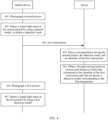
- FIG. 4 is a schematic flowchart of an information detection method according to an implementation of this application. As shown in FIG. 4 , the information detection method includes the following 401 to 407.
- a mobile device photographs a second picture.
- the mobile device may photograph the second picture when the mobile device is within a preset range of the first intersection.
- the mobile device photographs the second picture by using a photographing apparatus of the mobile device.
- the mobile device detects a signal light status in the second picture by using a general model, to obtain a detection result.
- the first information includes the second picture and the detection result, the first information further includes first geographical location information of the mobile device or an identifier of the first intersection, and the first geographical location information is used by the server to determine the identifier of the first intersection. There is a correspondence among the second picture, the detection result, and the identifier of the first intersection.
- the first information is used by the server to store the correspondence among the second picture, the detection result, and the identifier of the first intersection.
- Pictures and detection results that correspond to the identifier of the first intersection and that are stored in the server are used to obtain, through training, a detection model corresponding to the first intersection.
- the mobile device may obtain, by using a map application, an intersection identifier corresponding to current location information. This implementation has not been claimed as such.
- the server stores the correspondence among the second picture, the detection result, and the identifier of the first intersection.
- the server After receiving the first information, the server stores the correspondence among the second picture, the detection result, and the identifier of the first intersection.
- the server first determines the first intersection from the map application based on the first geographical location information, and then stores the correspondence among the second picture, the detection result, and the identifier of the first intersection. This implementation has not been claimed as such.
- the correspondence that is among a picture, a detection result, and the identifier of the first intersection and that is stored by the server may be shown in the following Table 1.
- the server obtains, through training based on a picture 1 to a picture 7 and a detection result 1 to a detection result 7, the detection model corresponding to the first intersection.
- the pictures and the detection results in Table 1 may be sent by different terminal devices. For example, the picture 1 to the picture 3 are sent by a terminal device 1, and the picture 4 to the picture 7 are sent by a terminal device 2.
- the server may further store a picture and a detection result corresponding to another intersection, to obtain, through training, a detection model corresponding to the another intersection.
- the server may further store a correspondence among a picture, a detection result, and an identifier of a second intersection
- the server may further store a correspondence among a picture, a detection result, and an identifier of a third intersection.
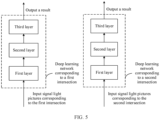
- the server may obtain, through training by using a machine learning method (for example, a deep learning method) and based on the pictures and the detection results that correspond to the identifier of the first intersection and that are stored, the detection model corresponding to the first intersection.
- a machine learning method for example, a deep learning method
- the server obtains, through training, the detection model corresponding to the first intersection and a detection model corresponding to the second intersection.
- the server reads, based on the stored correspondence, a plurality of pictures corresponding to the first intersection, and inputs the plurality of pictures corresponding to the first intersection into a deep learning network corresponding to the first intersection.
- the server adjusts, based on an output result of the deep learning network corresponding to the first intersection and a detection result corresponding to the pictures, a weight in the deep learning network corresponding to the first intersection, to generate the detection model corresponding to the first intersection, and stores the model in the server.
- the server reads, based on the stored correspondence, a plurality of pictures corresponding to the second intersection, and inputs the plurality of pictures corresponding to the second intersection into a deep learning network corresponding to the second intersection.
- the server compares an output result of the deep learning network corresponding to the second intersection with a detection result corresponding to the pictures, adjusts a weight in the deep learning network corresponding to the second intersection, to generate the detection model corresponding to the second intersection, and stores the model in the server.
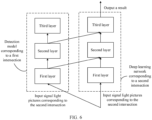
- Manner 2 As shown in FIG. 6 , the server reads, based on the stored correspondence, a plurality of pictures corresponding to the first intersection, and inputs the plurality of pictures corresponding to the first intersection into a deep learning network corresponding to the first intersection. The server adjusts, based on an output result of the deep learning network corresponding to the first intersection and a detection result corresponding to the pictures, a weight in the deep learning network corresponding to the first intersection, to generate the detection model corresponding to the first intersection, and stores the model in the server.
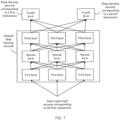
- the first K layers of a deep learning network are a general deep learning network, the general deep learning network is shared by data of all intersections, and the last (M-K) layers are separately used by specific intersections, and are deep learning networks corresponding to the intersections.
- a traffic light recognition model is generated for each intersection. As shown in FIG. 7 , for example, K is equal to 3.
- the server first reads, based on the stored correspondence, a plurality of pictures corresponding to the first intersection, and inputs the plurality of pictures corresponding to the first intersection into the general deep learning network.
- the server obtains, based on an output of a third layer, an input of a deep learning network corresponding to the first intersection, and the server adjusts, based on an output result of the deep learning network corresponding to the first intersection and a detection result corresponding to the pictures, a weight in the deep learning network corresponding to the first intersection, to generate the detection model corresponding to the first intersection, and stores the model in the server.
- the server reads, based on the stored correspondence, a plurality of pictures corresponding to the second intersection, and inputs the plurality of pictures corresponding to the second intersection into the general deep learning network.
- the server obtains, based on the output of the third layer, an input of the deep learning network corresponding to the second intersection, and the server adjusts, based on an output result of the deep learning network corresponding to the second intersection and a detection result corresponding to the pictures, a weight in the deep learning network corresponding to the second intersection, to generate the detection model corresponding to the second intersection, and stores the model in the server.
- the mobile device photographs a first picture.
- the first picture includes a signal light at the first intersection.
- the mobile device detects a signal light status in the first picture by using a first detection model.
- the first detection model is the detection model corresponding to the first intersection.
- the server generates, based on only the signal light pictures of the first intersection and the signal light statuses in the signal light pictures of the first intersection, the detection model corresponding to the first intersection, instead of obtaining, through training by using a signal light picture of another intersection, the detection model corresponding to the first intersection. Therefore, the generated detection model corresponding to the first intersection can better fit a signal light feature of the first intersection, and a correctness percentage in detection of a signal light status at the first intersection can be improved.
- the mobile device and the server may further perform the following 807 to 809. 806 and 807 may be simultaneously performed, 806 may be performed before 807, or 806 may be performed after 807 to 809.
- the mobile device sends, to the server, an obtaining request used to obtain the first detection model, where the obtaining request carries second geographical location information of the mobile device or the identifier of the first intersection, and the second geographical location information is used by the server to determine the identifier of the first intersection.
- the mobile device may send, to the server, the obtaining request used to obtain the first detection model.
- the server determines the first detection model based on the identifier of the first intersection.
- the server determines, from the stored detection model based on the identifier of the first intersection, the first detection model corresponding to the identifier of the first intersection.
- the server returns the first detection model to the mobile device.
- the mobile device After the server returns the first detection model to the mobile device, the mobile device receives the first detection model sent by the server.
- the mobile device may obtain the first detection model from the server by performing 807 to 809, to detect the signal light status of the first intersection by using the first detection model.
- the server broadcasts the first detection model to the mobile device located within the preset range of the first intersection.
- the mobile device may further receive the first detection model broadcast by the server.
- the server includes a model pushing apparatus and a model generation apparatus, and the model pushing apparatus and the model generation apparatus are deployed in different places.
- the model generation apparatus is configured to generate a detection model corresponding to each intersection.
- the model pushing apparatus is deployed at each intersection.
- the model pushing apparatus is configured to broadcast a detection model to a mobile device located within a preset range of an intersection. For example, a model pushing apparatus 1 is deployed at the first intersection, a model pushing apparatus 2 is deployed at the second intersection, and a model pushing apparatus 3 is deployed at the third intersection.
- the model generation apparatus sends the detection model corresponding to the first intersection to the model pushing apparatus 1, sends the detection model corresponding to the second intersection to the model pushing apparatus 2, and sends the detection model corresponding to the third intersection to the model pushing apparatus 3.
- the model pushing apparatus 1 is configured to broadcast, to the mobile device located within the preset range of the first intersection, the detection model corresponding to the first intersection.
- the model pushing apparatus 2 is configured to broadcast, to a mobile device located within a preset range of the second intersection, the detection model corresponding to the second intersection.
- the model pushing apparatus 3 is configured to broadcast, to a mobile device located within a preset range of the third intersection, the detection model corresponding to the third intersection.
- the mobile device may obtain the first detection model from the server, to detect the signal light status of the first intersection by using the first detection model.
- the mobile device before detecting the signal light status in the first picture by using the first detection model, the mobile device obtains the first detection model from the map application of the mobile device.
- the mobile device detects, by using the map application, that the mobile device is within the preset range of the first intersection, the mobile device obtains the first detection model from the map application of the mobile device.
- the server may integrate the first detection model into the map application. In this way, the server may not need to push the detection model to the mobile device, thereby helping save a transmission resource. This implementation has not been claimed as such.
- FIG. 9 is a schematic flowchart of an information detection method according to an implementation of this application. As shown in FIG. 9 , the information detection method includes the following 901 to 907.
- a mobile device photographs a second picture in a first direction of a first intersection.
- the second picture includes a signal light at the first intersection.
- the first direction may be any direction of east, west, south, and north.
- the mobile device detects a signal light status in the second picture by using a general model, to obtain a detection result.
- the mobile device sends first information to a server.
- the first information includes the second picture and the detection result, the first information further includes first geographical location information of the mobile device or the first information further includes an identifier of the first intersection and the first direction, and the first geographical location information is used by the server to determine the identifier of the first intersection and the first direction.
- the second picture There is a correspondence among the second picture, the detection result, the identifier of the first intersection, and the first direction.
- the first information is used by the server to store the correspondence among the second picture, the detection result, the identifier of the first intersection, and the first direction.
- Pictures and detection results that correspond to the identifier of the first intersection and the first direction and that are stored in the server are used to obtain, through training, a detection model corresponding to the first intersection and the first direction.
- the mobile device may obtain current location information by using the map application, and then determine, based on the current location information, the identifier and the first direction that correspond to the first intersection. This implementation has not been claimed as such.
- the server stores the correspondence among the second picture, the detection result, the identifier of the first intersection, and the first direction.
- the server After receiving the first information, the server stores the correspondence among the second picture, the detection result, the identifier of the first intersection, and the first direction.
- the server After receiving the first information, the server stores the correspondence among the second picture, the detection result, the identifier of the first intersection, and the first direction.
- the server first determines the identifier of the first intersection and the first direction from the map application based on the first geographical location information, and then stores the correspondence among the second picture, the detection result, the identifier of the first intersection, and the first direction. This implementation has not been claimed as such.
- the server obtains, through training based on the pictures and the detection results that correspond to the identifier of the first intersection and the first direction and that are stored, the detection model corresponding to the first intersection and the first direction.
- the server After obtaining, through training, the detection model corresponding to the first intersection and the first direction, the server stores the detection model corresponding to the first intersection.
- the correspondence that is among a picture, a detection result, the identifier of the first intersection, and the first direction and that is stored by the server may be shown in the following Table 2.
- the server obtains, through training based on a picture 1 to a picture 7 and a detection result 1 to a detection result 7, the detection model corresponding to the first intersection and the first direction.
- the pictures and the detection results in Table 2 may be sent by different terminal devices. For example, the picture 1 to the picture 3 are sent by a terminal device 1, and the picture 4 to the picture 7 are sent by a terminal device 2.
- the server may further store a correspondence among a picture, a detection result, the first intersection, and another direction, to obtain, through training, a detection model corresponding to the first intersection and the another direction.
- the server may further store a correspondence among a picture, a detection result, the identifier of the first intersection, and a second direction
- the server may further store a correspondence among a picture, a detection result, the identifier of the first intersection, and a third direction.
- the server may further store a correspondence among a picture, a detection result, another intersection, and another direction.
- the server may obtain, through training by using a machine learning method (for example, a deep learning method) and based on the pictures and the detection results that correspond to the identifier of the first intersection and the first direction and that are stored, the detection model corresponding to the first intersection and the first direction.
- a training principle of the detection model corresponding to the first intersection and the first direction is similar to those in FIG. 5 , FIG. 6 , and FIG. 7 . Refer to the training principles corresponding to FIG. 5 , FIG. 6 , and FIG. 7 . Details are not described herein.
- the mobile device photographs a first picture in the first direction of the first intersection.
- the first picture includes a signal light at the first intersection.
- the first direction may be any direction of east, west, south, and north.
- the mobile device detects a signal light status in the first picture by using a first detection model.
- the first detection model is the detection model corresponding to the first intersection and the first direction.
- the mobile device may send, to the server, an obtaining request used to obtain the first detection model, where the obtaining request carries second geographical location information of the mobile device or carries the identifier of the first intersection and the first direction, and the second geographical location information is used by the server to determine the identifier of the first intersection and the first direction.
- the server determines the first detection model based on the identifier of the first intersection and the first direction. The server returns the first detection model to the mobile device, and the mobile device receives the first detection model sent by the server.
- the mobile device may obtain the first detection model from the server, to detect, by using the first detection model, the signal light status in the signal light picture photographed in the first direction of the first intersection.
- the mobile device when detecting, by using the map application, that the mobile device is within a preset range of the first intersection, and detecting, by using the map application, that the mobile device is in the first direction of the first intersection, the mobile device obtains the first detection model from the map application of the mobile device.
- the server may integrate the first detection model into the map application. In this way, the server may not need to push the detection model to the mobile device, thereby helping save a transmission resource. This implementation has not been claimed as such.
- the first direction may be any direction of east, west, south, and north.
- one direction of an intersection has one or more lanes, and the first lane is any lane in the first direction.
- the first information is used by the server to store the correspondence among the second picture, the detection result, the identifier of the first intersection, the first direction, and the identifier of the first lane.
- Pictures and detection results that correspond to the identifier of the first intersection, the first direction, and the identifier of the first lane and that are stored in the server are used to obtain, through training, the detection model corresponding to the first intersection and the first direction.
- the server stores the correspondence among the second picture, the detection result, the identifier of the first intersection, the first direction, and the identifier of the first lane.
- the server After receiving the first information, the server stores the correspondence among the second picture, the detection result, the identifier of the first intersection, the first direction, and the identifier of the first lane.
- the server obtains, through training based on the pictures and the detection results that correspond to the identifier of the first intersection, the first direction, and the identifier of the first lane and that are stored, a detection model corresponding to the first intersection, the first direction, and the first lane.
- the server After obtaining, through training, the detection model corresponding to the first intersection, the first direction, and the first lane, the server stores the detection model corresponding to the first intersection, the first direction, and the first lane.
- the correspondence that is among a picture, a detection result, the identifier of the first intersection, the first direction, and the identifier of the first lane and that is stored by the server may be shown in the following Table 3.
- the server obtains, through training based on a picture 1 to a picture 7 and a detection result 1 to a detection result 7, the detection model corresponding to the first intersection, the first direction, and the first lane.
- the pictures and the detection results in Table 3 may be sent by different terminal devices.
- the picture 1 to the picture 3 are sent by a terminal device 1
- the picture 4 to the picture 7 are sent by a terminal device 2.
- the server may further store a correspondence among a picture, a detection result, the first intersection, the first direction, and an identifier of another lane, to obtain, through training, a detection model corresponding to the first intersection, the first direction, and the another lane.
- the mobile device photographs a first picture on the first lane in the first direction of the first intersection.
- the first picture includes a signal light at the first intersection.
- the first direction may be any direction of east, west, south, and north.
- the first lane is any lane in the first direction.
- the mobile device detects a signal light status in the first picture by using a first detection model.
- the first detection model is the detection model corresponding to the first intersection, the first direction, and the first lane.
- the mobile device may upload, to the server, a signal light picture photographed on the first lane in the first direction of the first intersection and a corresponding detection result, so that the server can obtain, through training based on the received signal light picture and the corresponding detection result, the detection model corresponding to the first intersection, the first direction, and the first lane.
- the detection model corresponding to the first intersection, the first direction, and the first lane can better fit a feature of a signal light picture photographed on the first lane in the first direction of the first intersection, thereby improving a correctness percentage in detection of a signal light status in the signal light picture photographed on the first lane in the first direction of the first intersection.
- the mobile device may send, to the server, an obtaining request used to obtain the first detection model, where the obtaining request carries second geographical location information of the mobile device or carries the identifier of the first intersection, the first direction, and the identifier of the first lane.
- the second geographical location information is used by the server to determine the identifier of the first intersection, the first direction, and the identifier of the first lane.
- the server determines the first detection model based on the identifier of the first intersection, the first direction, and the identifier of the first lane.
- the server returns the first detection model to the mobile device, and the mobile device receives the first detection model sent by the server.
- the server obtains, from the map application based on the second geographical location information, the identifier of the first intersection, the first direction, and the identifier of the first lane that correspond to the second geographical location information, and then determines the first detection model based on the identifier of the first intersection, the first direction, and the identifier of the first lane.
- the mobile device may obtain the first detection model from the server, to detect, by using the first detection model, the signal light status in the signal light picture photographed on the first lane in the first direction of the first intersection.
- the mobile device when detecting, by using the map application, that the mobile device is within the preset range of the first intersection, and detecting, by using the map application, that the mobile device is on the first lane in the first direction of the first intersection, the mobile device obtains the first detection model from the map application of the mobile device.
- the server may integrate the first detection model into the map application. In this way, the server may not need to push the detection model to the mobile device, thereby helping save a transmission resource. This implementation has not been claimed as such.
- division into functional modules may be performed on the device based on the foregoing method examples. For example, division into each functional module may be performed for each function, or two or more functions may be integrated into one module.
- the integrated module may be implemented in a form of hardware, or may be implemented in a form of a software functional module. It should be noted that, in the implementations of the present disclosure, division into the modules is an example, is merely logical function division, and may be other division in an actual implementation.
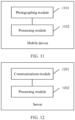
- FIG. 11 shows a mobile device according to an implementation of the present disclosure.
- the mobile device includes a photographing module 1101 and a processing module 1102.
- the photographing module 1101 is configured to photograph a first picture.
- the first picture includes a signal light at a first intersection.
- the processing module 1102 is configured to detect a signal light status in the first picture by using a first detection model.
- the first detection model is a detection model corresponding to the first intersection
- the first detection model is obtained by a server through training based on signal light pictures corresponding to the first intersection and signal light statuses in the signal light pictures
- the signal light statuses in the signal light pictures are obtained through detection by using a general model
- the general model is obtained through training based on pictures in a first set and a signal light status in each picture in the first set
- the first set includes signal light pictures of a plurality of intersections.
- the mobile device further includes a communications module.
- the photographing module 1101 is further configured to photograph a second picture.
- the second picture includes a signal light at the first intersection.
- the processing module 1102 is further configured to detect a signal light status in the second picture by using the general model, to obtain a detection result.
- the communications module is configured to send first information to the server.
- the first information includes the second picture and the detection result, the first information further includes first geographical location information of the mobile device or an identifier of the first intersection, and the first geographical location information is used by the server to determine the identifier of the first intersection. There is a correspondence among the second picture, the detection result, and the identifier of the first intersection.
- the first information is used by the server to store the correspondence among the second picture, the detection result, and the identifier of the first intersection.
- the pictures and detection results that correspond to the identifier of the first intersection and that are stored in the server are used to obtain, through training, the detection model corresponding to the first intersection.
- the mobile device further includes a communications module.
- the communications module is configured to send, to the server, an obtaining request used to obtain the first detection model.
- the obtaining request carries second geographical location information of the mobile device or the identifier of the first intersection, and the second geographical location information is used by the server to determine the identifier of the first intersection.
- the communications module is further configured to receive the first detection model sent by the server.
- the mobile device further includes a communications module.
- the communications module is configured to: when the mobile device is within a preset range of the first intersection, receive the first detection model broadcast by the server.
- the processing module 1102 is further configured to obtain the first detection model from a map application of the mobile device. This implementation has not been claimed as such.
- the first detection model is a detection model corresponding to both the first intersection and a first direction.
- a manner in which the photographing module 1101 photographs the first picture is specifically: photographing, by the photographing module 1101, the first picture in the first direction of the first intersection.
- a manner in which the photographing module 1101 photographs the second picture is specifically: photographing, by the photographing module 1101, the second picture in the first direction of the first intersection.
- the first information includes the first geographical location information
- the first geographical location information is further used by the server to determine the first direction.
- the first information includes the identifier of the first intersection, the first information further includes the first direction.
- the first information is used by the server to store the correspondence among the second picture, the detection result, the identifier of the first intersection, and the first direction.
- Pictures and detection results that correspond to the identifier of the first intersection and the first direction and that are stored in the server are used to obtain, through training, the detection model corresponding to the first intersection and the first direction.
- the first detection model is a detection model corresponding to all of the first intersection, the first direction, and a first lane.
- a manner in which the photographing module 1101 photographs the first picture is specifically: photographing, by the photographing module 1101, the first picture on the first lane in the first direction of the first intersection.
- a manner in which the photographing module 1101 photographs the second picture is specifically: photographing, by the photographing module 1101, the second picture on the first lane in the first direction of the first intersection.
- the first information includes the first geographical location information
- the first geographical location information is further used by the server to determine the first direction and an identifier of the first lane. If the first information includes the identifier of the first intersection, the first information further includes the first direction and the identifier of the first lane.
- the first information is used by the server to store the correspondence among the second picture, the detection result, the identifier of the first intersection, the first direction, and the identifier of the first lane.
- Pictures and detection results that correspond to the identifier of the first intersection, the first direction, and the identifier of the first lane and that are stored in the server are used to obtain, through training, the detection model corresponding to all of the first intersection, the first direction, and the first lane.
- the communications module 1201 is further configured to receive, from the mobile device, an obtaining request used to obtain a first detection model.
- the first detection model is the detection model corresponding to the first intersection
- the obtaining request carries second geographical location information of the mobile device or the identifier of the first intersection
- the second geographical location information is used by the server to determine the identifier of the first intersection.
- the processing module 1202 is further configured to determine the first detection model based on the identifier of the first intersection.
- the communications module 1201 is further configured to return the first detection model to the mobile device.
- a manner in which the processing module 1202 obtains, through training based on the pictures and the detection results that correspond to the identifier of the first intersection and that are stored, the detection model corresponding to the first intersection is specifically: obtaining, by the processing module 1202 through training based on pictures and detection results that correspond to the identifier of the first intersection, the first direction, and the identifier of the first lane and that are stored, the detection model corresponding to the first intersection and the first direction.
- the second picture is a picture photographed by the mobile device on a first lane in the first direction of the first intersection. If the first information includes the first geographical location information, the first geographical location information is further used by the server to determine the first direction and an identifier of the first lane. If the first information includes the identifier of the first intersection, the first information further includes the first direction and the identifier of the first lane. There is a correspondence among the second picture, the detection result, the identifier of the first intersection, the first direction, and the identifier of the first lane.
- a manner in which the processing module 1202 stores the correspondence among the second picture, the detection result, and the identifier of the first intersection is specifically: storing, by the processing module 1202, the correspondence among the second picture, the detection result, the identifier of the first intersection, the first direction, and the identifier of the first lane.
- a manner in which the processing module 1202 obtains, through training based on the pictures and the detection results that correspond to the identifier of the first intersection and that are stored, the detection model corresponding to the first intersection is specifically: obtaining, by the processing module 1202 based on to the pictures and the detection results that correspond to the identifier of the first intersection, the first direction, and the identifier of the first lane and that are stored, the detection model corresponding to the first intersection, the first direction, and the first lane.
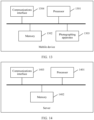
- FIG. 13 is a schematic structural diagram of a mobile device according to an implementation of this application.
- the mobile device 1300 includes a processor 1301, a memory 1302, a photographing apparatus 1303, and a communications interface 1304.
- the processor 1301, the memory 1302, the photographing apparatus 1303, and the communications interface 1304 are connected.
- the processor 1301 may be a central processing unit (central processing unit, CPU), a general-purpose processor, a coprocessor, a digital signal processor (digital signal processor, DSP), an application-specific integrated circuit (application-specific integrated circuit, ASIC), a field programmable gate array (field programmable gate array, FPGA) or another programmable logic device, a transistor logic device, a hardware component, or any combination thereof.
- the processor 1301 may be a combination implementing a computing function, for example, a combination including one or more microprocessors, or a combination of a DSP and a microprocessor.
- the photographing apparatus 1303 is configured to photograph a picture.
- the photographing apparatus may be a camera or the like.
- the communications interface 1304 is configured to implement communication with another device (for example, a server).
- the processor 1301 invokes program code stored in the memory 1302, to perform the steps performed by the mobile device in the foregoing method implementations.
- FIG. 14 is a schematic structural diagram of a mobile device according to an implementation of this application.
- the mobile device 1400 includes a processor 1401, a memory 1402, and a communications interface 1403.
- the processor 1401, the memory 1402, and the communications interface 1403 are connected.
- the processor 1401 may be a central processing unit (central processing unit, CPU), a general-purpose processor, a coprocessor, a digital signal processor (digital signal processor, DSP), an application-specific integrated circuit (application-specific integrated circuit, ASIC), a field programmable gate array (field programmable gate array, FPGA) or another programmable logic device, a transistor logic device, a hardware component, or any combination thereof.
- the processor 1401 may alternatively be a combination implementing a computing function, for example, a combination of one or more microprocessors or a combination of a DSP and a microprocessor.
- the communications interface 1403 is configured to implement communication with another device (for example, a server).
- the processor 1401 invokes program code stored in the memory 1402, to perform the steps performed by the mobile device in the foregoing method implementations.
Landscapes
- Engineering & Computer Science (AREA)
- Theoretical Computer Science (AREA)
- Physics & Mathematics (AREA)
- General Physics & Mathematics (AREA)
- Evolutionary Computation (AREA)
- General Health & Medical Sciences (AREA)
- Health & Medical Sciences (AREA)
- Artificial Intelligence (AREA)
- Software Systems (AREA)
- Computing Systems (AREA)
- Biophysics (AREA)
- Life Sciences & Earth Sciences (AREA)
- Data Mining & Analysis (AREA)
- General Engineering & Computer Science (AREA)
- Computational Linguistics (AREA)
- Mathematical Physics (AREA)
- Biomedical Technology (AREA)
- Molecular Biology (AREA)
- Multimedia (AREA)
- Computer Vision & Pattern Recognition (AREA)
- Databases & Information Systems (AREA)
- Medical Informatics (AREA)
- Signal Processing (AREA)
- Telephonic Communication Services (AREA)
- Traffic Control Systems (AREA)
- Navigation (AREA)
Description
- The present disclosure relates to the field of terminal technologies, and in particular, to an information detection method, a mobile device and a server.
- In the field of vehicle self-driving, detection accuracy of a signal light status is of great significance to legality, regulation compliance, and safe driving of a vehicle. In an existing self-driving system in the industry, a machine learning method (for example, a deep learning method) is usually used to detect a signal light status. A process of detecting a signal light status by using a machine learning method is generally as follows: First, a device needs to collect a large quantity of signal light pictures, for example, collect 100 signal light pictures of an intersection 1, collect 100 signal light pictures of an intersection 2, and collect 100 signal light pictures of an intersection 3. In addition, signal light statuses in the 300 signal light pictures need to be input into the device, that is, colors and shapes of turned-on signal lights are input. The device performs training and learning by using the 300 signal light pictures and a signal light status in each signal light picture, to obtain a detection model. When a mobile device photographs a new signal light picture, the new signal light picture is input into the detection model, so that a signal light status in the signal light picture can be detected, that is, a color and a shape of a turned-on signal light in the signal light picture can be detected.
- However, in the prior art, a same detection model is used for signal light detection in all places, resulting in a comparatively low correctness percentage in detection of a signal light status by a mobile device.
- JOHN VIJAY ET AL: "Saliency Map Generation by the Convolutional Neural Network for Real-Time Traffic Light Detection Using Template Matching", IEEE TRANSACTIONS ON COMPUTATIONAL IMAGING, IEEE, vol. 1, no. 3, 1 September 2015 (2015-09-01), pages 159-173, relates to saliency map generation by the convolutional neural network for real-time traffic light detection using template matching.
-
-
- Implementations of the present disclosure disclose an information detection method, a mobile device and a server, to help improve a correctness percentage in detection of a signal light status by the mobile device.
- The invention has been defined in the independent claims. Further specific technical features have been defined in the dependent claims.
- In the prior art, a mobile device detects a signal light status in a picture by using a general model. The general model is obtained through training based on signal light pictures of a plurality of intersections. Therefore, the general model is not well targeted, and it is not very accurate to detect a signal light status of an intersection by using the general model. In the method described in the first aspect, the signal light status of the first intersection is detected by using the detection model corresponding to the first intersection. The detection model corresponding to the first intersection is obtained through training based on the plurality of signal light pictures of the first intersection, and is not obtained through training with reference to a signal light picture of another intersection. Therefore, the detection model corresponding to the first intersection can better fit a signal light feature of the first intersection, thereby improving a correctness percentage in detection of the signal light status of the first intersection.
- In addition, in the prior art, when the general model is obtained through training based on signal light pictures, signal light statuses in the pictures are manually recognized, and the recognized signal light statuses are input into the device. Obtaining the general model through training requires a large quantity of pictures. Therefore, signal light statuses in the large quantity of pictures need to be manually recognized and input. This consumes a lot of manpower and is very unintelligent. In implementation of the method described in the first aspect, when the detection model corresponding to the first intersection is obtained through training based on the signal light pictures corresponding to the first intersection, the signal light statuses in the signal light pictures corresponding to the first intersection are automatically recognized by using the general model (that is, an existing model). Signal light statuses in a large quantity of pictures do not need to be manually recognized and input. The signal light statuses in the signal light pictures of the first intersection can be obtained more intelligently and conveniently. Therefore, the detection model corresponding to the first intersection can be obtained through training more quickly.
- In an implementation, the mobile device automatically identifies the signal light statuses in the signal light pictures of the first intersection by using the general model (that is, the existing model). Therefore, signal light statuses in a large quantity of pictures do not need to be manually recognized and input, and the signal light statuses in the signal light pictures of the first intersection can be more intelligently and conveniently obtained. In addition, the mobile device can send the signal light pictures of the first intersection and the signal light statuses in the signal light pictures of the first intersection to the server, so that the server generates, based on the signal light pictures of the first intersection and the signal light statuses in the signal light pictures of the first intersection, the detection model corresponding to the first intersection.
- The mobile device receives the first detection model from the server, to detect the signal light status of the first intersection by using the first detection model.
- In an implementation, the mobile device uploads, to the server, a signal light picture photographed in the first direction of the first intersection and a corresponding detection result, so that the server can obtain, through training based on the received signal light picture and the corresponding detection result, the detection model corresponding to the first intersection and the first direction. The detection model corresponding to the first intersection and the first direction can better fit a feature of the signal light picture photographed in the first direction of the first intersection, thereby improving a correctness percentage in detection of a signal light status in the signal light picture photographed in the first direction of the first intersection.
- In an implementation, the mobile device obtains the first detection model from the server, to detect, by using the first detection model, the signal light status in the signal light picture photographed in the first direction of the first intersection.
- In an implementation, the mobile device uploads, to the server, the signal light picture photographed on the first lane in the first direction of the first intersection and a corresponding detection result, so that the server can obtain, through training based on the received signal light picture and the corresponding detection result, the detection model corresponding to the first intersection, the first direction, and the first lane. The detection model corresponding to the first intersection, the first direction, and the first lane can better fit a feature of the signal light picture photographed on the first lane in the first direction of the first intersection, thereby improving a correctness percentage in detection of a signal light status in the signal light picture photographed on the first lane in the first direction of the first intersection.
- In an implementation, the mobile device obtains the first detection model from the server, to detect, by using the first detection model, the signal light status in the signal light picture photographed on the first lane in the first direction of the first intersection.
- In an implementation, the server generates, based on only signal light pictures of the first intersection and signal light statuses in the signal light pictures of the first intersection, the detection model corresponding to the first intersection, instead of obtaining, through training by using a signal light picture of another intersection, the detection model corresponding to the first intersection. In this way, the generated detection model corresponding to the first intersection can better fit a signal light feature of the first intersection, thereby improving a correctness percentage in detection of the signal light status of the first intersection.
- In an implementation, the server broadcasts the first detection model to the mobile device when the mobile device is within a preset range of the first intersection.
- In an implementation, the server obtains, through training based on the received signal light picture and the corresponding detection result, the detection model corresponding to the first intersection and the first direction. The detection model corresponding to the first intersection and the first direction can better fit a feature of a signal light picture photographed in the first direction of the first intersection, thereby improving a correctness percentage in detection of the signal light status in the signal light picture photographed in the first direction of the first intersection.
- In an implementation, the server obtains, through training based on the received signal light picture and the corresponding detection result, the detection model corresponding to the first intersection, the first direction, and the first lane. The detection model corresponding to the first intersection, the first direction, and the first lane can better fit a feature of a signal light picture photographed on the first lane in the first direction of the first intersection, thereby improving a correctness percentage in detection of the signal light status in the signal light picture photographed on the first lane in the first direction of the first intersection.
-
-
FIG. 1 is a schematic diagram of a communications system according to an implementation of the present disclosure; -
FIG. 2 is a schematic flowchart of an information detection method according to an implementation of the present disclosure; -
FIG. 3 is a schematic diagram of a deep learning network according to an implementation of the present disclosure; -
FIG. 4 is a schematic flowchart of an information detection method according to an implementation of the present disclosure; -
FIG. 5 is a schematic diagram of obtaining a detection model through training according to an implementation of the present disclosure; -
FIG. 6 is a schematic diagram of obtaining a detection model through training according to an implementation of the present disclosure; -
FIG. 7 is a schematic diagram of obtaining a detection model through training according to an implementation of the present disclosure; -
FIG. 8 is a schematic flowchart of an information detection method according to an implementation of the present disclosure; -
FIG. 9 is a schematic flowchart of an information detection method according to an implementation of the present disclosure; -
FIG. 10 is a schematic flowchart of an information detection method according to an implementation of the present disclosure; -
FIG. 11 is a schematic structural diagram of a mobile device according to an implementation of the present disclosure; -
FIG. 12 is a schematic structural diagram of a server according to an implementation of the present disclosure; -
FIG. 13 is a schematic structural diagram of a mobile device according to an implementation of the present disclosure; -
FIG. 14 is a schematic structural diagram of a server according to an implementation of the present disclosure. - To make the objectives, technical solutions, and advantages of this invention clearer, the following further describes various implementations in detail with reference to the accompanying drawings. The implementations described below are not all claimed, they are included to help understanding the context of the invention. While the description refers to various implementations, the embodiments of the invention are those which comprise at least all the features of an independent claim. Any implementation which does not fall within the scope of the claims does not form part of the invention, but rather included as an illustrative example that is useful for understanding the invention.
- The implementations of this application provide an information detection method, a mobile device and a server, to help improve a correctness percentage in detection of a signal light status by the mobile device.
- For better understanding of the implementations of this application, the following describes a communications system to which the implementations of this application are applicable.
-
FIG. 1 is a schematic diagram of a communications system according to an implementation of this application. As shown inFIG. 1 , the communications system includes a mobile device and a server. Wireless communication may be performed between the mobile device and the server. - The mobile device may be a device, such as an automobile (for example, a self-driving vehicle or a person-driving vehicle) or an in-vehicle device, that needs to identify a signal light status. The signal light is a traffic signal light.
- The server is configured to generate a detection model corresponding to an intersection, and the detection model is used by the mobile device to detect a signal light status at the intersection.
- The following describes details of the information detection method and the mobile device provided in this application.
-
FIG. 2 is a schematic flowchart of an information detection method according to an implementation of this application. As shown inFIG. 2 , the information detection method includes the following 201 and 202. - 201. A mobile device photographs a first picture.
- The first picture includes a signal light at a first intersection. The first intersection may be any intersection. The signal light is a traffic signal light.
- Optionally, the first picture may be a picture directly photographed by the mobile device, or the first picture may be a frame picture in video data photographed by the mobile device.
- Optionally, the mobile device may photograph the first picture when the mobile device is within a preset range of the first intersection.
- Specifically, the mobile device photographs the first picture by using a photographing apparatus of the mobile device. The photographing apparatus may be a camera or the like.
- 202. The mobile device detects a signal light status in the first picture by using a first detection model.
- That the mobile device detects the signal light status in the first picture by using the first detection model may be: the mobile device detects a color and a shape of a turned-on signal light in the first picture by using the first detection model. The color of the turned-on signal light may be red, green, or yellow. The shape of the turned-on signal light may be a circle, an arrow pointing to the left, an arrow pointing to the right, an arrow pointing upwards, an arrow pointing downwards, or the like.
- The first detection model is a detection model corresponding to the first intersection. The first detection model is obtained by the server through training based on signal light pictures corresponding to the first intersection and signal light statuses in the signal light pictures. The signal light statuses in the signal light pictures are obtained through detection by using a general model. The general model is obtained through training based on pictures in a first set and a signal light status in each picture in the first set. The first set includes signal light pictures of a plurality of intersections.
- The signal light picture corresponding to the first intersection is a picture including a signal light at the first intersection. The first intersection may correspond to one or more signal light pictures. For example, the server may obtain the first detection model through training based on 100 signal light pictures corresponding to the first intersection and signal light statuses in the 100 signal light pictures. In other words, the server obtains the first detection model through training based on only the signal light pictures corresponding to the first intersection and the signal light statuses in the signal light pictures corresponding to the first intersection, instead of obtaining the first detection model through training based on a signal light picture of another intersection and a corresponding signal light status.
- The first set includes signal light pictures of a plurality of intersections. For example, the first set includes 100 signal light pictures of the first intersection, 100 signal light pictures of a second intersection, and 100 signal light pictures of a third intersection. Therefore, the general model is obtained through training based on signal light pictures of a plurality of intersections and signal light statuses in the pictures.
- Optionally, the server may obtain, through training by using a machine learning method (for example, a deep learning method) and based on the signal light pictures corresponding to the first intersection and the signal light statuses in the signal light pictures corresponding to the first intersection, the detection model corresponding to the first intersection. For example, as shown in
FIG. 3 , a deep learning network is set in the deep learning method. The deep learning network is divided into a plurality of layers, each layer performs nonlinear transformation such as convolution and pooling, and the layers are connected based on different weights. InFIG. 3 , for example, there are three deep learning network layers. There may be less than three or more than three deep learning network layers. The server inputs the signal light pictures corresponding to the first intersection into the deep learning network for training. The server obtains input data of a next layer based on output data of a previous layer. The server compares a final output result of the deep learning network with the signal light status in the signal light picture, to adjust a weight of the deep learning network to form a model. - For example, 100 signal light pictures corresponding to the first intersection are respectively a picture 1 to a picture 100. The picture 1 to the picture 100 each include a signal light at the first intersection. The server inputs the picture 1 to the picture 100 into the deep learning network, and the server compares an output result of the deep learning network with signal light statuses in the picture 1 to the picture 100, to adjust a weight value of the deep learning network to finally obtain the first detection model. Therefore, after the first picture is input into the first detection model, the signal light status in the first picture may be recognized by using the first detection model.
- The signal light statuses of the picture 1 to the picture 100 are detected by using the general model. The general model is obtained through training based on signal light pictures of a plurality of intersections and signal light statuses in the pictures. In other words, the general model is a model used to detect a signal light at any intersection, or a general detection algorithm used for a signal light at any intersection. A parameter in the general model is not adjusted for a specific intersection, and may be obtained by using a model or an algorithm in the prior art.
- In the prior art, when the general model is obtained through training based on signal light pictures, signal light statuses in the pictures are manually recognized, and the recognized signal light statuses are input into the device. Obtaining the general model through training requires a large quantity of pictures. Therefore, signal light statuses in the large quantity of pictures need to be manually recognized and input. This consumes a lot of manpower and is very unintelligent. According to the method described in
FIG. 2 , when the detection model corresponding to the first intersection is trained based on the signal light pictures corresponding to the first intersection, the signal light statuses in the signal light pictures corresponding to the first intersection are automatically recognized by using the general model (that is, an existing model). The signal light statuses in the large quantity of pictures do not need to be manually recognized and input. The signal light statuses in the signal light pictures of the first intersection can be obtained more intelligently and conveniently. Therefore, the detection model corresponding to the first intersection can be obtained through training more quickly. - In the prior art, a mobile device detects a signal light status in a picture by using a general model. The general model is obtained through training based on signal light pictures of a plurality of intersections. Therefore, the general model is not well targeted, and it is not very accurate to detect a signal light status of an intersection by using the general model. In the method described in
FIG. 2 , the signal light status of the first intersection is detected by using the detection model corresponding to the first intersection. The detection model corresponding to the first intersection is obtained through training based on the plurality of signal light pictures of the first intersection, and is not obtained through training by using a signal light picture of another intersection. Therefore, the detection model corresponding to the first intersection can better fit a signal light feature of the first intersection, thereby improving a correctness percentage in detection of a signal light status of the first intersection. -
FIG. 4 is a schematic flowchart of an information detection method according to an implementation of this application. As shown inFIG. 4 , the information detection method includes the following 401 to 407. - 401. A mobile device photographs a second picture.
- The second picture includes a signal light at a first intersection.
- Optionally, the second picture may be a picture directly photographed by the mobile device, or the second picture may be a frame picture in video data photographed by the mobile device.
- Optionally, the mobile device may photograph the second picture when the mobile device is within a preset range of the first intersection.
- Specifically, the mobile device photographs the second picture by using a photographing apparatus of the mobile device.
- 402. The mobile device detects a signal light status in the second picture by using a general model, to obtain a detection result.
- For related descriptions of the general model, refer to corresponding descriptions in the implementation described in
FIG. 2 . Details are not described herein. - 403. The mobile device sends first information to a server.
- The first information includes the second picture and the detection result, the first information further includes first geographical location information of the mobile device or an identifier of the first intersection, and the first geographical location information is used by the server to determine the identifier of the first intersection. There is a correspondence among the second picture, the detection result, and the identifier of the first intersection.
- The first information is used by the server to store the correspondence among the second picture, the detection result, and the identifier of the first intersection. Pictures and detection results that correspond to the identifier of the first intersection and that are stored in the server are used to obtain, through training, a detection model corresponding to the first intersection.
- Optionally, if the first information includes the identifier of the first intersection, the mobile device may obtain, by using a map application, an intersection identifier corresponding to current location information. This implementation has not been claimed as such.
- 404. The server stores the correspondence among the second picture, the detection result, and the identifier of the first intersection.
- If the first information includes the second picture, the detection result, and the identifier of the first intersection, after receiving the first information, the server stores the correspondence among the second picture, the detection result, and the identifier of the first intersection.
- If the first information includes the second picture, the detection result, and the first geographical location information, after receiving the first information, the server first determines the first intersection from the map application based on the first geographical location information, and then stores the correspondence among the second picture, the detection result, and the identifier of the first intersection. This implementation has not been claimed as such.
- 405. The server obtains, through training based on pictures and detection results that correspond to the identifier of the first intersection and that are stored, the detection model corresponding to the first intersection.
- After obtaining, through training, the detection model corresponding to the first intersection, the server stores the detection model corresponding to the first intersection.
- For example, the correspondence that is among a picture, a detection result, and the identifier of the first intersection and that is stored by the server may be shown in the following Table 1. The server obtains, through training based on a picture 1 to a picture 7 and a detection result 1 to a detection result 7, the detection model corresponding to the first intersection. Certainly, the pictures and the detection results in Table 1 may be sent by different terminal devices. For example, the picture 1 to the picture 3 are sent by a terminal device 1, and the picture 4 to the picture 7 are sent by a terminal device 2.
Table 1 Sequence number Identifier of the first intersection Picture Detection result 1 1 Picture 1 Detection result 1 2 1 Picture 2 Detection result 2 3 1 Picture 3 Detection result 3 4 1 Picture 4 Detection result 4 5 1 Picture 5 Detection result 5 6 1 Picture 6 Detection result 6 7 1 Picture 7 Detection result 7 - Certainly, the server may further store a picture and a detection result corresponding to another intersection, to obtain, through training, a detection model corresponding to the another intersection. For example, the server may further store a correspondence among a picture, a detection result, and an identifier of a second intersection, and the server may further store a correspondence among a picture, a detection result, and an identifier of a third intersection.
- The server may obtain, through training by using a machine learning method (for example, a deep learning method) and based on the pictures and the detection results that correspond to the identifier of the first intersection and that are stored, the detection model corresponding to the first intersection.
- Optionally, the server may obtain the detection model through training in any one of the following three manners.
- Manner 1: For example, the server obtains, through training, the detection model corresponding to the first intersection and a detection model corresponding to the second intersection. As shown in
FIG. 5 , the server reads, based on the stored correspondence, a plurality of pictures corresponding to the first intersection, and inputs the plurality of pictures corresponding to the first intersection into a deep learning network corresponding to the first intersection. The server adjusts, based on an output result of the deep learning network corresponding to the first intersection and a detection result corresponding to the pictures, a weight in the deep learning network corresponding to the first intersection, to generate the detection model corresponding to the first intersection, and stores the model in the server. Then, the server reads, based on the stored correspondence, a plurality of pictures corresponding to the second intersection, and inputs the plurality of pictures corresponding to the second intersection into a deep learning network corresponding to the second intersection. The server compares an output result of the deep learning network corresponding to the second intersection with a detection result corresponding to the pictures, adjusts a weight in the deep learning network corresponding to the second intersection, to generate the detection model corresponding to the second intersection, and stores the model in the server. - Manner 2: As shown in
FIG. 6 , the server reads, based on the stored correspondence, a plurality of pictures corresponding to the first intersection, and inputs the plurality of pictures corresponding to the first intersection into a deep learning network corresponding to the first intersection. The server adjusts, based on an output result of the deep learning network corresponding to the first intersection and a detection result corresponding to the pictures, a weight in the deep learning network corresponding to the first intersection, to generate the detection model corresponding to the first intersection, and stores the model in the server. The server reads, based on the stored correspondence, a plurality of pictures corresponding to the second intersection, inputs the plurality of pictures corresponding to the second intersection into a deep learning network corresponding to the second intersection, and simultaneously inputs the plurality of pictures corresponding to the second intersection into the detection model that corresponds to the first intersection and that is obtained through training. An output of an Lth layer obtained through training of the detection model corresponding to the first intersection is used as an additional input of an (L+1)th layer of the deep learning network corresponding to the second intersection, where L≥0 and L≤M-1, and M is a total quantity of layers of the deep learning network corresponding to the second intersection. For example, as shown inFIG. 6 , when obtaining, through training, the detection model corresponding to the second intersection, the server obtains, based on an output of a first layer of the deep learning network corresponding to the second intersection, an input of a second layer of the deep learning network corresponding to the second intersection, and obtains, based on an output of a first layer of the detection model corresponding to the first intersection, an additional input of the second layer of the deep learning network corresponding to the second intersection. The server compares an output result of the deep learning network corresponding to the second intersection with the detection result corresponding to the pictures, adjusts a weight in the deep learning network corresponding to the second intersection, to obtain the detection model corresponding to the second intersection, and stores the model in the server. - Manner 3: The first K layers of a deep learning network are a general deep learning network, the general deep learning network is shared by data of all intersections, and the last (M-K) layers are separately used by specific intersections, and are deep learning networks corresponding to the intersections. A traffic light recognition model is generated for each intersection. As shown in
FIG. 7 , for example, K is equal to 3. The server first reads, based on the stored correspondence, a plurality of pictures corresponding to the first intersection, and inputs the plurality of pictures corresponding to the first intersection into the general deep learning network. The server obtains, based on an output of a third layer, an input of a deep learning network corresponding to the first intersection, and the server adjusts, based on an output result of the deep learning network corresponding to the first intersection and a detection result corresponding to the pictures, a weight in the deep learning network corresponding to the first intersection, to generate the detection model corresponding to the first intersection, and stores the model in the server. Similarly, the server reads, based on the stored correspondence, a plurality of pictures corresponding to the second intersection, and inputs the plurality of pictures corresponding to the second intersection into the general deep learning network. The server obtains, based on the output of the third layer, an input of the deep learning network corresponding to the second intersection, and the server adjusts, based on an output result of the deep learning network corresponding to the second intersection and a detection result corresponding to the pictures, a weight in the deep learning network corresponding to the second intersection, to generate the detection model corresponding to the second intersection, and stores the model in the server. - 406. The mobile device photographs a first picture.
- The first picture includes a signal light at the first intersection.
- 407. The mobile device detects a signal light status in the first picture by using a first detection model.
- The first detection model is the detection model corresponding to the first intersection.
- For specific implementations of 406 and 407, refer to descriptions corresponding to 202 and 201 in
FIG. 2 . Details are not described herein. - As can be learned, by performing 401 to 405, the mobile device can automatically recognize the signal light status in the signal light picture of the first intersection by using the general model (that is, an existing model). Therefore, signal light statuses in a large quantity of pictures do not need to be manually recognized and input, and the signal light status in the signal light picture of the first intersection can be more intelligently and conveniently obtained. In addition, the mobile device can send the signal light pictures of the first intersection and the signal light statuses in the signal light pictures of the first intersection to the server, so that the server generates, based on the signal light pictures of the first intersection and the signal light statuses in the signal light picture of the first intersection, the detection model corresponding to the first intersection. The server generates, based on only the signal light pictures of the first intersection and the signal light statuses in the signal light pictures of the first intersection, the detection model corresponding to the first intersection, instead of obtaining, through training by using a signal light picture of another intersection, the detection model corresponding to the first intersection. Therefore, the generated detection model corresponding to the first intersection can better fit a signal light feature of the first intersection, and a correctness percentage in detection of a signal light status at the first intersection can be improved.
- Optionally, as shown in
FIG. 8 , before the mobile device detects the signal light status in the first picture by using the first detection model, the mobile device and the server may further perform the following 807 to 809. 806 and 807 may be simultaneously performed, 806 may be performed before 807, or 806 may be performed after 807 to 809. - 807. The mobile device sends, to the server, an obtaining request used to obtain the first detection model, where the obtaining request carries second geographical location information of the mobile device or the identifier of the first intersection, and the second geographical location information is used by the server to determine the identifier of the first intersection.
- Optionally, when the mobile device is within the preset range of the first intersection, if the first detection model does not exist in the mobile device, the mobile device may send, to the server, the obtaining request used to obtain the first detection model.
- 808. The server determines the first detection model based on the identifier of the first intersection.
- If the obtaining request carries the second geographical location information of the mobile device, after receiving the obtaining request from the mobile device, the server determines the identifier of the first intersection from the map application based on the second geographical location information, and then determines, from the stored detection model based on the identifier of the first intersection, the first detection model corresponding to the identifier of the first intersection. This implementation has not been claimed as such.
- If the obtaining request carries the identifier of the first intersection, after receiving the obtaining request from the mobile device, the server determines, from the stored detection model based on the identifier of the first intersection, the first detection model corresponding to the identifier of the first intersection.
- 809. The server returns the first detection model to the mobile device.
- After the server returns the first detection model to the mobile device, the mobile device receives the first detection model sent by the server.
- The mobile device may obtain the first detection model from the server by performing 807 to 809, to detect the signal light status of the first intersection by using the first detection model.
- Optionally, the server broadcasts the first detection model to the mobile device located within the preset range of the first intersection. Correspondingly, when the mobile device is within the preset range of the first intersection, the mobile device may further receive the first detection model broadcast by the server.
- In this implementation, the server includes a model pushing apparatus and a model generation apparatus, and the model pushing apparatus and the model generation apparatus are deployed in different places. The model generation apparatus is configured to generate a detection model corresponding to each intersection. The model pushing apparatus is deployed at each intersection. The model pushing apparatus is configured to broadcast a detection model to a mobile device located within a preset range of an intersection. For example, a model pushing apparatus 1 is deployed at the first intersection, a model pushing apparatus 2 is deployed at the second intersection, and a model pushing apparatus 3 is deployed at the third intersection. The model generation apparatus sends the detection model corresponding to the first intersection to the model pushing apparatus 1, sends the detection model corresponding to the second intersection to the model pushing apparatus 2, and sends the detection model corresponding to the third intersection to the model pushing apparatus 3. The model pushing apparatus 1 is configured to broadcast, to the mobile device located within the preset range of the first intersection, the detection model corresponding to the first intersection. The model pushing apparatus 2 is configured to broadcast, to a mobile device located within a preset range of the second intersection, the detection model corresponding to the second intersection. The model pushing apparatus 3 is configured to broadcast, to a mobile device located within a preset range of the third intersection, the detection model corresponding to the third intersection.
- In this implementation, the mobile device may obtain the first detection model from the server, to detect the signal light status of the first intersection by using the first detection model.
- Optionally, before detecting the signal light status in the first picture by using the first detection model, the mobile device obtains the first detection model from the map application of the mobile device. This implementation has not been claimed as such. Optionally, when the mobile device detects, by using the map application, that the mobile device is within the preset range of the first intersection, the mobile device obtains the first detection model from the map application of the mobile device. In other words, in this implementation, after obtaining the first detection model through training, the server may integrate the first detection model into the map application. In this way, the server may not need to push the detection model to the mobile device, thereby helping save a transmission resource. This implementation has not been claimed as such.
-
FIG. 9 is a schematic flowchart of an information detection method according to an implementation of this application. As shown inFIG. 9 , the information detection method includes the following 901 to 907. - 901. A mobile device photographs a second picture in a first direction of a first intersection.
- The second picture includes a signal light at the first intersection.
- The first direction may be any direction of east, west, south, and north.
- 902. The mobile device detects a signal light status in the second picture by using a general model, to obtain a detection result.
- For related descriptions of the general model, refer to corresponding descriptions in the implementation described in
FIG. 1 . Details are not described herein. - 903. The mobile device sends first information to a server.
- The first information includes the second picture and the detection result, the first information further includes first geographical location information of the mobile device or the first information further includes an identifier of the first intersection and the first direction, and the first geographical location information is used by the server to determine the identifier of the first intersection and the first direction. There is a correspondence among the second picture, the detection result, the identifier of the first intersection, and the first direction.
- The first information is used by the server to store the correspondence among the second picture, the detection result, the identifier of the first intersection, and the first direction. Pictures and detection results that correspond to the identifier of the first intersection and the first direction and that are stored in the server are used to obtain, through training, a detection model corresponding to the first intersection and the first direction.
- Optionally, if the first information includes the identifier of the first intersection and the first direction, the mobile device may obtain current location information by using the map application, and then determine, based on the current location information, the identifier and the first direction that correspond to the first intersection. This implementation has not been claimed as such.
- 904. The server stores the correspondence among the second picture, the detection result, the identifier of the first intersection, and the first direction.
- After receiving the first information, the server stores the correspondence among the second picture, the detection result, the identifier of the first intersection, and the first direction.
- If the first information includes the second picture, the detection result, the identifier of the first intersection, and the first direction, after receiving the first information, the server stores the correspondence among the second picture, the detection result, the identifier of the first intersection, and the first direction.
- If the first information includes the second picture, the detection result, and the first geographical location information, after receiving the first information, the server first determines the identifier of the first intersection and the first direction from the map application based on the first geographical location information, and then stores the correspondence among the second picture, the detection result, the identifier of the first intersection, and the first direction. This implementation has not been claimed as such.
- 905. The server obtains, through training based on the pictures and the detection results that correspond to the identifier of the first intersection and the first direction and that are stored, the detection model corresponding to the first intersection and the first direction.
- After obtaining, through training, the detection model corresponding to the first intersection and the first direction, the server stores the detection model corresponding to the first intersection.
- For example, the correspondence that is among a picture, a detection result, the identifier of the first intersection, and the first direction and that is stored by the server may be shown in the following Table 2. The server obtains, through training based on a picture 1 to a picture 7 and a detection result 1 to a detection result 7, the detection model corresponding to the first intersection and the first direction. Certainly, the pictures and the detection results in Table 2 may be sent by different terminal devices. For example, the picture 1 to the picture 3 are sent by a terminal device 1, and the picture 4 to the picture 7 are sent by a terminal device 2.
Table 2 Sequence number Identifier of the first intersection First direction Picture Detection result 1 1 East Picture 1 Detection result 1 2 1 East Picture 2 Detection result 2 3 1 East Picture 3 Detection result 3 4 1 East Picture 4 Detection result 4 5 1 East Picture 5 Detection result 5 6 1 East Picture 6 Detection result 6 7 1 East Picture 7 Detection result 7 - Certainly, the server may further store a correspondence among a picture, a detection result, the first intersection, and another direction, to obtain, through training, a detection model corresponding to the first intersection and the another direction. For example, the server may further store a correspondence among a picture, a detection result, the identifier of the first intersection, and a second direction, and the server may further store a correspondence among a picture, a detection result, the identifier of the first intersection, and a third direction. Certainly, the server may further store a correspondence among a picture, a detection result, another intersection, and another direction.
- The server may obtain, through training by using a machine learning method (for example, a deep learning method) and based on the pictures and the detection results that correspond to the identifier of the first intersection and the first direction and that are stored, the detection model corresponding to the first intersection and the first direction. Optionally, a training principle of the detection model corresponding to the first intersection and the first direction is similar to those in
FIG. 5 ,FIG. 6 , andFIG. 7 . Refer to the training principles corresponding toFIG. 5 ,FIG. 6 , andFIG. 7 . Details are not described herein. - 906. The mobile device photographs a first picture in the first direction of the first intersection.
- The first picture includes a signal light at the first intersection.
- The first direction may be any direction of east, west, south, and north.
- 907. The mobile device detects a signal light status in the first picture by using a first detection model.
- The first detection model is the detection model corresponding to the first intersection and the first direction.
- In implementation of the method shown in
FIG. 9 , the mobile device may upload, to the server, a signal light picture photographed in the first direction of the first intersection and a corresponding detection result, so that the server can obtain, through training based on the received signal light picture and the corresponding detection result, the detection model corresponding to the first intersection and the first direction. The detection model corresponding to the first intersection and the first direction can better fit a feature of the signal light picture photographed in the first direction of the first intersection, thereby improving a correctness percentage in detection of a signal light status in the signal light picture photographed in the first direction of the first intersection. - Optionally, before detecting the signal light status in the first picture by using the first detection model, the mobile device may send, to the server, an obtaining request used to obtain the first detection model, where the obtaining request carries second geographical location information of the mobile device or carries the identifier of the first intersection and the first direction, and the second geographical location information is used by the server to determine the identifier of the first intersection and the first direction. After receiving the obtaining request from the mobile device, the server determines the first detection model based on the identifier of the first intersection and the first direction. The server returns the first detection model to the mobile device, and the mobile device receives the first detection model sent by the server.
- Specifically, if the obtaining request carries the second geographical location information, after receiving the obtaining request, the server obtains, from the map application based on the second geographical location information, the identifier of the first intersection and the first direction corresponding to the second geographical location information, and then determines the first detection model based on the identifier of the first intersection and the first direction. This implementation has not been claimed as such.
- In this implementation, the mobile device may obtain the first detection model from the server, to detect, by using the first detection model, the signal light status in the signal light picture photographed in the first direction of the first intersection.
- Optionally, when detecting, by using the map application, that the mobile device is within a preset range of the first intersection, and detecting, by using the map application, that the mobile device is in the first direction of the first intersection, the mobile device obtains the first detection model from the map application of the mobile device. In other words, in this implementation, after obtaining the first detection model through training, the server may integrate the first detection model into the map application. In this way, the server may not need to push the detection model to the mobile device, thereby helping save a transmission resource. This implementation has not been claimed as such.
-
FIG. 10 is a schematic flowchart of an information detection method according to an implementation of this application. As shown inFIG. 10 , the information detection method includes the following 1001 to 1007. - 1001. A mobile device photographs a second picture on a first lane of a first direction of a first intersection.
- The second picture includes a signal light at the first intersection.
- The first direction may be any direction of east, west, south, and north. Generally, one direction of an intersection has one or more lanes, and the first lane is any lane in the first direction.
- 1002. The mobile device detects a signal light status in the second picture by using a general model, to obtain a detection result.
- For related descriptions of the general model, refer to corresponding descriptions in the implementation described in
FIG. 1 . Details are not described herein. - 1003. The mobile device sends first information to a server.
- The first information includes the second picture and the detection result. The first information further includes first geographical location information of the mobile device or the first information further includes an identifier of the first intersection, the first direction, and an identifier of the first lane. The first geographical location information is used by the server to determine the identifier of the first intersection, the first direction, and the identifier of the first lane. There is a correspondence among the second picture, the detection result, the identifier of the first intersection, the first direction, and the identifier of the first lane.
- The first information is used by the server to store the correspondence among the second picture, the detection result, the identifier of the first intersection, the first direction, and the identifier of the first lane. Pictures and detection results that correspond to the identifier of the first intersection, the first direction, and the identifier of the first lane and that are stored in the server are used to obtain, through training, the detection model corresponding to the first intersection and the first direction.
- Optionally, if the first information includes the identifier of the first intersection, the first direction, and the identifier of the first lane, the mobile device may obtain current location information by using a map application, and then determine, based on the current location information, the identifier, the first direction, and the identifier of the first lane that correspond to the first intersection.
- 1004. The server stores the correspondence among the second picture, the detection result, the identifier of the first intersection, the first direction, and the identifier of the first lane.
- After receiving the first information, the server stores the correspondence among the second picture, the detection result, the identifier of the first intersection, the first direction, and the identifier of the first lane.
- If the first information includes the second picture, the detection result, the identifier of the first intersection, the first direction, and the identifier of the first lane, after receiving the first information, the server stores the correspondence among the second picture, the detection result, the identifier of the first intersection, the first direction, and the identifier of the first lane.
- If the first information includes the second picture, the detection result, and the first geographical location information, after receiving the first information, the server first determines the identifier of the first intersection, the first direction, and the identifier of the first lane from the map application based on the first geographical location information, and then stores the correspondence among the second picture, the detection result, the identifier of the first intersection, the first direction, and the identifier of the first lane. This implementation has not been claimed as such.
- 1005. The server obtains, through training based on the pictures and the detection results that correspond to the identifier of the first intersection, the first direction, and the identifier of the first lane and that are stored, a detection model corresponding to the first intersection, the first direction, and the first lane.
- After obtaining, through training, the detection model corresponding to the first intersection, the first direction, and the first lane, the server stores the detection model corresponding to the first intersection, the first direction, and the first lane.
- For example, the correspondence that is among a picture, a detection result, the identifier of the first intersection, the first direction, and the identifier of the first lane and that is stored by the server may be shown in the following Table 3. The server obtains, through training based on a picture 1 to a picture 7 and a detection result 1 to a detection result 7, the detection model corresponding to the first intersection, the first direction, and the first lane. Certainly, the pictures and the detection results in Table 3 may be sent by different terminal devices. For example, the picture 1 to the picture 3 are sent by a terminal device 1, and the picture 4 to the picture 7 are sent by a terminal device 2.
Table 3 Sequence number Identifier of the first intersection First direction Identifier of the first lane Photo Detection result 1 1 East 1 Picture 1 Detection result 1 2 1 East 1 Picture 2 Detection result 2 3 1 East 1 Picture 3 Detection result 3 4 1 East 1 Picture 4 Detection result 4 5 1 East 1 Picture 5 Detection result 5 6 1 East 1 Picture 6 Detection result 6 7 1 East 1 Picture 7 Detection result 7 - Certainly, the server may further store a correspondence among a picture, a detection result, the first intersection, the first direction, and an identifier of another lane, to obtain, through training, a detection model corresponding to the first intersection, the first direction, and the another lane.
- The server may obtain, through training by using a machine learning method (for example, a deep learning method) and based on the pictures and detection results that correspond to the identifier of the first intersection, the first direction, and the identifier of the first lane and that are stored, the detection model corresponding to the first intersection, the first direction, and the first lane. Optionally, a training principle of the detection model corresponding to the first intersection, the first direction, and the first lane is similar to those in
FIG. 5 ,FIG. 6 , andFIG. 7 . Refer to the training principles corresponding toFIG. 5 ,FIG. 6 , andFIG. 7 . Details are not described herein. - 1006. The mobile device photographs a first picture on the first lane in the first direction of the first intersection.
- The first picture includes a signal light at the first intersection.
- The first direction may be any direction of east, west, south, and north. The first lane is any lane in the first direction.
- 1007. The mobile device detects a signal light status in the first picture by using a first detection model.
- The first detection model is the detection model corresponding to the first intersection, the first direction, and the first lane.
- In implementation of the method shown in
FIG. 10 , the mobile device may upload, to the server, a signal light picture photographed on the first lane in the first direction of the first intersection and a corresponding detection result, so that the server can obtain, through training based on the received signal light picture and the corresponding detection result, the detection model corresponding to the first intersection, the first direction, and the first lane. The detection model corresponding to the first intersection, the first direction, and the first lane can better fit a feature of a signal light picture photographed on the first lane in the first direction of the first intersection, thereby improving a correctness percentage in detection of a signal light status in the signal light picture photographed on the first lane in the first direction of the first intersection. - Optionally, before detecting the signal light status in the first picture by using the first detection model, the mobile device may send, to the server, an obtaining request used to obtain the first detection model, where the obtaining request carries second geographical location information of the mobile device or carries the identifier of the first intersection, the first direction, and the identifier of the first lane. The second geographical location information is used by the server to determine the identifier of the first intersection, the first direction, and the identifier of the first lane. After receiving the obtaining request from the mobile device, the server determines the first detection model based on the identifier of the first intersection, the first direction, and the identifier of the first lane. The server returns the first detection model to the mobile device, and the mobile device receives the first detection model sent by the server.
- Specifically, if the obtaining request carries the second geographical location information, after receiving the obtaining request, the server obtains, from the map application based on the second geographical location information, the identifier of the first intersection, the first direction, and the identifier of the first lane that correspond to the second geographical location information, and then determines the first detection model based on the identifier of the first intersection, the first direction, and the identifier of the first lane. This implementation has not been claimed as such.
- In this implementation, the mobile device may obtain the first detection model from the server, to detect, by using the first detection model, the signal light status in the signal light picture photographed on the first lane in the first direction of the first intersection.
- Optionally, when detecting, by using the map application, that the mobile device is within the preset range of the first intersection, and detecting, by using the map application, that the mobile device is on the first lane in the first direction of the first intersection, the mobile device obtains the first detection model from the map application of the mobile device. In other words, in this implementation, after obtaining the first detection model through training, the server may integrate the first detection model into the map application. In this way, the server may not need to push the detection model to the mobile device, thereby helping save a transmission resource. This implementation has not been claimed as such.
- In the implementations of the present disclosure, division into functional modules may be performed on the device based on the foregoing method examples. For example, division into each functional module may be performed for each function, or two or more functions may be integrated into one module. The integrated module may be implemented in a form of hardware, or may be implemented in a form of a software functional module. It should be noted that, in the implementations of the present disclosure, division into the modules is an example, is merely logical function division, and may be other division in an actual implementation.
-
FIG. 11 shows a mobile device according to an implementation of the present disclosure. The mobile device includes a photographingmodule 1101 and aprocessing module 1102. - The photographing
module 1101 is configured to photograph a first picture. The first picture includes a signal light at a first intersection. - The
processing module 1102 is configured to detect a signal light status in the first picture by using a first detection model. The first detection model is a detection model corresponding to the first intersection, the first detection model is obtained by a server through training based on signal light pictures corresponding to the first intersection and signal light statuses in the signal light pictures, the signal light statuses in the signal light pictures are obtained through detection by using a general model, the general model is obtained through training based on pictures in a first set and a signal light status in each picture in the first set, and the first set includes signal light pictures of a plurality of intersections. - Optionally, the mobile device further includes a communications module. The photographing
module 1101 is further configured to photograph a second picture. The second picture includes a signal light at the first intersection. Theprocessing module 1102 is further configured to detect a signal light status in the second picture by using the general model, to obtain a detection result. The communications module is configured to send first information to the server. The first information includes the second picture and the detection result, the first information further includes first geographical location information of the mobile device or an identifier of the first intersection, and the first geographical location information is used by the server to determine the identifier of the first intersection. There is a correspondence among the second picture, the detection result, and the identifier of the first intersection. The first information is used by the server to store the correspondence among the second picture, the detection result, and the identifier of the first intersection. The pictures and detection results that correspond to the identifier of the first intersection and that are stored in the server are used to obtain, through training, the detection model corresponding to the first intersection. - Optionally, the mobile device further includes a communications module. The communications module is configured to send, to the server, an obtaining request used to obtain the first detection model. The obtaining request carries second geographical location information of the mobile device or the identifier of the first intersection, and the second geographical location information is used by the server to determine the identifier of the first intersection. The communications module is further configured to receive the first detection model sent by the server.
- Optionally, the mobile device further includes a communications module. The communications module is configured to: when the mobile device is within a preset range of the first intersection, receive the first detection model broadcast by the server.
- Optionally, the
processing module 1102 is further configured to obtain the first detection model from a map application of the mobile device. This implementation has not been claimed as such. - Optionally, the first detection model is a detection model corresponding to both the first intersection and a first direction. A manner in which the photographing
module 1101 photographs the first picture is specifically: photographing, by the photographingmodule 1101, the first picture in the first direction of the first intersection. A manner in which the photographingmodule 1101 photographs the second picture is specifically: photographing, by the photographingmodule 1101, the second picture in the first direction of the first intersection. If the first information includes the first geographical location information, the first geographical location information is further used by the server to determine the first direction. If the first information includes the identifier of the first intersection, the first information further includes the first direction. There is a correspondence among the second picture, the detection result, the identifier of the first intersection, and the first direction. The first information is used by the server to store the correspondence among the second picture, the detection result, the identifier of the first intersection, and the first direction. Pictures and detection results that correspond to the identifier of the first intersection and the first direction and that are stored in the server are used to obtain, through training, the detection model corresponding to the first intersection and the first direction. - Optionally, the first detection model is a detection model corresponding to all of the first intersection, the first direction, and a first lane. A manner in which the photographing
module 1101 photographs the first picture is specifically: photographing, by the photographingmodule 1101, the first picture on the first lane in the first direction of the first intersection. A manner in which the photographingmodule 1101 photographs the second picture is specifically: photographing, by the photographingmodule 1101, the second picture on the first lane in the first direction of the first intersection. If the first information includes the first geographical location information, the first geographical location information is further used by the server to determine the first direction and an identifier of the first lane. If the first information includes the identifier of the first intersection, the first information further includes the first direction and the identifier of the first lane. There is a correspondence among the second picture, the detection result, the identifier of the first intersection, the first direction, and the identifier of the first lane. The first information is used by the server to store the correspondence among the second picture, the detection result, the identifier of the first intersection, the first direction, and the identifier of the first lane. Pictures and detection results that correspond to the identifier of the first intersection, the first direction, and the identifier of the first lane and that are stored in the server are used to obtain, through training, the detection model corresponding to all of the first intersection, the first direction, and the first lane. -
FIG. 12 shows a server according to an implementation of the present disclosure. The server includes acommunications module 1201 and aprocessing module 1202. - The
communications module 1201 is configured to receive first information from a mobile device. The first information includes a second picture and a detection result, the second picture includes a signal light at a first intersection, the detection result is obtained by the mobile device through detection of a signal light status in the second picture by using a general model, the general model is obtained through training based on pictures in a first set and a signal light status in each picture in the first set, the first set includes signal light pictures of a plurality of intersections, the first information further includes first geographical location information of the mobile device or an identifier of the first intersection, the first geographical location information is used by the server to determine the identifier of the first intersection, and there is a correspondence among the second picture, the detection result, and the identifier of the first intersection. - The
processing module 1202 is configured to store the correspondence among the second picture, the detection result, and the identifier of the first intersection. - The
processing module 1202 is further configured to obtain, through training based on pictures and detection results that correspond to the identifier of the first intersection and that are stored, a detection model corresponding to the first intersection. - Optionally, the
communications module 1201 is further configured to receive, from the mobile device, an obtaining request used to obtain a first detection model. The first detection model is the detection model corresponding to the first intersection, the obtaining request carries second geographical location information of the mobile device or the identifier of the first intersection, and the second geographical location information is used by the server to determine the identifier of the first intersection. Theprocessing module 1202 is further configured to determine the first detection model based on the identifier of the first intersection. Thecommunications module 1201 is further configured to return the first detection model to the mobile device. - Optionally, the
communications module 1201 is further configured to broadcast the first detection model to the mobile device located within a preset range of the first intersection. The first detection model is the detection model corresponding to the first intersection. - Optionally, the second picture is a picture photographed by the mobile device in a first direction of the first intersection. If the first information includes the first geographical location information, the first geographical location information is further used by the server to determine the first direction. If the first information includes the identifier of the first intersection, the first information further includes the first direction. There is a correspondence among the second picture, the detection result, the identifier of the first intersection, and the first direction. A manner in which the
processing module 1202 stores the correspondence among the second picture, the detection result, and the identifier of the first intersection is specifically: storing, by theprocessing module 1202, the correspondence among the second picture, the detection result, the identifier of the first intersection, and the first direction. A manner in which theprocessing module 1202 obtains, through training based on the pictures and the detection results that correspond to the identifier of the first intersection and that are stored, the detection model corresponding to the first intersection is specifically: obtaining, by theprocessing module 1202 through training based on pictures and detection results that correspond to the identifier of the first intersection, the first direction, and the identifier of the first lane and that are stored, the detection model corresponding to the first intersection and the first direction. - Optionally, the second picture is a picture photographed by the mobile device on a first lane in the first direction of the first intersection. If the first information includes the first geographical location information, the first geographical location information is further used by the server to determine the first direction and an identifier of the first lane. If the first information includes the identifier of the first intersection, the first information further includes the first direction and the identifier of the first lane. There is a correspondence among the second picture, the detection result, the identifier of the first intersection, the first direction, and the identifier of the first lane. A manner in which the
processing module 1202 stores the correspondence among the second picture, the detection result, and the identifier of the first intersection is specifically: storing, by theprocessing module 1202, the correspondence among the second picture, the detection result, the identifier of the first intersection, the first direction, and the identifier of the first lane. A manner in which theprocessing module 1202 obtains, through training based on the pictures and the detection results that correspond to the identifier of the first intersection and that are stored, the detection model corresponding to the first intersection is specifically: obtaining, by theprocessing module 1202 based on to the pictures and the detection results that correspond to the identifier of the first intersection, the first direction, and the identifier of the first lane and that are stored, the detection model corresponding to the first intersection, the first direction, and the first lane. -
FIG. 13 is a schematic structural diagram of a mobile device according to an implementation of this application. As shown inFIG. 13 , the mobile device 1300 includes aprocessor 1301, amemory 1302, a photographingapparatus 1303, and acommunications interface 1304. Theprocessor 1301, thememory 1302, the photographingapparatus 1303, and thecommunications interface 1304 are connected. - The
processor 1301 may be a central processing unit (central processing unit, CPU), a general-purpose processor, a coprocessor, a digital signal processor (digital signal processor, DSP), an application-specific integrated circuit (application-specific integrated circuit, ASIC), a field programmable gate array (field programmable gate array, FPGA) or another programmable logic device, a transistor logic device, a hardware component, or any combination thereof. Alternatively, theprocessor 1301 may be a combination implementing a computing function, for example, a combination including one or more microprocessors, or a combination of a DSP and a microprocessor. - The photographing
apparatus 1303 is configured to photograph a picture. The photographing apparatus may be a camera or the like. - The
communications interface 1304 is configured to implement communication with another device (for example, a server). - The
processor 1301 invokes program code stored in thememory 1302, to perform the steps performed by the mobile device in the foregoing method implementations. -
FIG. 14 is a schematic structural diagram of a mobile device according to an implementation of this application. As shown inFIG. 14 , the mobile device 1400 includes aprocessor 1401, amemory 1402, and acommunications interface 1403. Theprocessor 1401, thememory 1402, and thecommunications interface 1403 are connected. - The
processor 1401 may be a central processing unit (central processing unit, CPU), a general-purpose processor, a coprocessor, a digital signal processor (digital signal processor, DSP), an application-specific integrated circuit (application-specific integrated circuit, ASIC), a field programmable gate array (field programmable gate array, FPGA) or another programmable logic device, a transistor logic device, a hardware component, or any combination thereof. Theprocessor 1401 may alternatively be a combination implementing a computing function, for example, a combination of one or more microprocessors or a combination of a DSP and a microprocessor. - The
communications interface 1403 is configured to implement communication with another device (for example, a server). - The
processor 1401 invokes program code stored in thememory 1402, to perform the steps performed by the mobile device in the foregoing method implementations. - Based on a same inventive concept, problem-resolving principles of the devices provided in the implementations of this application are similar to those of the method implementations of this application. Therefore, for implementation of the devices, refer to implementation of the methods. For brevity, details are not described herein again.
- In the foregoing implementations, the description of each implementation has respective focuses. For a part that is not described in detail in an implementation, refer to related descriptions in other implementations.
- The scope of protection shall be defined by the appended claims.
Claims (19)
- An information detection method, wherein the method comprises:photographing (201), by a mobile device, a first picture, wherein the first picture comprises a signal light at a first intersection, wherein the mobile device is an automobile or an in-vehicle device; anddetecting (202), by the mobile device, a signal light status in the first picture by using a first detection model, wherein the first detection model is received from a server and wherein the first detection model is obtained through training using only signal light pictures corresponding to the first intersection and signal light statuses in the signal light pictures, the signal light statuses in the signal light pictures are obtained through detection by using a general model, the general model is obtained through training based on pictures in a first set and a signal light status in each picture in the first set, and the first set comprises signal light pictures of a plurality of intersections.
- The method according to claim 1, wherein before the photographing, by a mobile device, a first picture, the method further comprises:photographing, by the mobile device, a second picture, wherein the second picture comprises a signal light at the first intersection;detecting, by the mobile device, a signal light status in the second picture by using the general model, to obtain a detection result; andsending, by the mobile device, first information to the server, wherein the first information comprises the second picture and the detection result, the first information further comprises first geographical location information of the mobile device or an identifier of the first intersection, the first geographical location information is used by the server to determine the identifier of the first intersection, there is a correspondence among the second picture, the detection result, and the identifier of the first intersection, the first information is used by the server to store the correspondence among the second picture, the detection result, and the identifier of the first intersection, and the pictures and detection results that correspond to the identifier of the first intersection and that are stored in the server are used to obtain, through training, the detection model corresponding to the first intersection.
- The method according to claim 1 or 2, wherein before the detecting, by the mobile device, a signal light status in the first picture by using a first detection model, the method further comprises:sending, by the mobile device to the server, an obtaining request used to obtain the first detection model, wherein the obtaining request carries second geographical location information of the mobile device or the identifier of the first intersection, and the second geographical location information is used by the server to determine the identifier of the first intersection; andreceiving, by the mobile device, the first detection model sent by the server.
- The method according to claim 2, wherein the first detection model is a detection model corresponding to both the first intersection and a first direction;
the photographing, by a mobile device, a first picture comprises:photographing, by the mobile device, the first picture in the first direction of the first intersection; andthe photographing, by the mobile device, a second picture comprises:photographing, by the mobile device, the second picture in the first direction of the first intersection, whereinif the first information comprises the first geographical location information, the first geographical location information is further used by the server to determine the first direction; if the first information comprises the identifier of the first intersection, the first information further comprises the first direction; there is a correspondence among the second picture, the detection result, the identifier of the first intersection, and the first direction; the first information is used by the server to store the correspondence among the second picture, the detection result, the identifier of the first intersection, and the first direction; and pictures and detection results that correspond to the identifier of the first intersection and the first direction and that are stored in the server are used to obtain, through training, the detection model corresponding to the first intersection and the first direction. - The method according to claim 2, wherein the first detection model is a detection model corresponding to all of the first intersection, the first direction, and a first lane;
the photographing, by a mobile device, a first picture comprises:photographing, by the mobile device, the first picture on the first lane in the first direction of the first intersection; andthe photographing, by the mobile device, a second picture comprises:photographing, by the mobile device, the second picture on the first lane in the first direction of the first intersection, whereinif the first information comprises the first geographical location information, the first geographical location information is further used by the server to determine the first direction and an identifier of the first lane; if the first information comprises the identifier of the first intersection, the first information further comprises the first direction and the identifier of the first lane; there is a correspondence among the second picture, the detection result, the identifier of the first intersection, the first direction, and the identifier of the first lane; the first information is used by the server to store the correspondence among the second picture, the detection result, the identifier of the first intersection, the first direction, and the identifier of the first lane; and pictures and detection results that correspond to the identifier of the first intersection, the first direction, and the identifier of the first lane and that are stored in the server are used to obtain, through training, the detection model corresponding to all of the first intersection, the first direction, and the first lane. - A model generation method, wherein the method comprises:receiving (403), by a server, first information from a mobile device, wherein the mobile device is an automobile or an in-vehicle device, and wherein the first information comprises a second picture and a detection result, the second picture comprises a signal light at a first intersection, the detection result is obtained by the mobile device through detection of a signal light status in the second picture by using a general model, the general model is obtained through training based on pictures in a first set and a signal light status in each picture in the first set, the first set comprises signal light pictures of a plurality of intersections, the first information further comprises first geographical location information of the mobile device or an identifier of the first intersection, wherein when the first information comprises first geographical location information of the mobile device, the first geographical location information is used by the server to determine the identifier of the first intersection, and there is a correspondence among the second picture, the detection result, and the identifier of the first intersection, wherein the second picture and corresponding detection result correspond to the identifier of the first intersection;storing (404), by the server, the second picture along with the detection result, and the identifier of the first intersection;obtaining (405), by the server through training by using a machine learning method and using only multiple second pictures and corresponding detection results that correspond to the identifier of the first intersection and that are stored, a detection model corresponding to the first intersection.
- The method according to claim 6, wherein the method further comprises:receiving, by the server from the mobile device, an obtaining request used to obtain a first detection model, wherein the first detection model is the detection model corresponding to the first intersection, the obtaining request carries second geographical location information of the mobile device or the identifier of the first intersection, and the second geographical location information is used by the server to determine the identifier of the first intersection;determining, by the server, the first detection model based on the identifier of the first intersection; andreturning, by the server, the first detection model to the mobile device.
- The method according to claim 6, wherein the method further comprises:
broadcasting, by the server, the first detection model to the mobile device located within a preset range of the first intersection, wherein the first detection model is the detection model corresponding to the first intersection. - The method according to any one of claims 6 to 8, wherein the second picture is a picture photographed by the mobile device in a first direction of the first intersection; if the first information comprises the first geographical location information, the first geographical location information is further used by the server to determine the first direction; if the first information comprises the identifier of the first intersection, the first information further comprises the first direction; and there is a correspondence among the second picture, the detection result, the identifier of the first intersection, and the first direction;
the storing, by the server, the correspondence among the second picture, the detection result, and the identifier of the first intersection comprises:storing, by the server, the correspondence among the second picture, the detection result, the identifier of the first intersection, and the first direction; andthe obtaining, by the server through training based on pictures and detection results that correspond to the identifier of the first intersection and that are stored, a detection model corresponding to the first intersection comprises:
obtaining, by the server through training based on pictures and detection results that correspond to the identifier of the first intersection and the first direction and that are stored, the detection model corresponding to the first intersection and the first direction. - A mobile device, wherein the mobile device is an automobile or an in-vehicle device and wherein the mobile device comprises:a photographing module (1101), configured to photograph a first picture, wherein the first picture comprises a signal light at a first intersection; anda processing module (1102), configured to detect a signal light status in the first picture by using a first detection model, wherein the first detection model is received from a server and wherein the first detection model is obtained through training using only signal light pictures corresponding to the first intersection and signal light statuses in the signal light pictures, the signal light statuses in the signal light pictures are obtained through detection by using a general model, the general model is obtained through training based on pictures in a first set and a signal light status in each picture in the first set, and the first set comprises signal light pictures of a plurality of intersections.
- The mobile device according to claim 10, wherein the mobile device further comprises a communications module;the photographing module is further configured to photograph a second picture, wherein the second picture comprises a signal light at the first intersection;the processing module is further configured to detect a signal light status in the second picture by using the general model, to obtain a detection result; andthe communications module is configured to send first information to the server, wherein the first information comprises the second picture and the detection result, the first information further comprises first geographical location information of the mobile device or an identifier of the first intersection, the first geographical location information is used by the server to determine the identifier of the first intersection, there is a correspondence among the second picture, the detection result, and the identifier of the first intersection, the first information is used by the server to store the correspondence among the second picture, the detection result, and the identifier of the first intersection, and pictures and detection results that correspond to the identifier of the first intersection and that are stored in the server are used to obtain, through training, the detection model corresponding to the first intersection.
- The mobile device according to claim 10 or 11, wherein the mobile device further comprises a communications module;the communications module is configured to send, to the server, an obtaining request used to obtain the first detection model, wherein the obtaining request carries second geographical location information of the mobile device or the identifier of the first intersection, and the second geographical location information is used by the server to determine the identifier of the first intersection; andthe communications module is further configured to receive the first detection model sent by the server.
- The mobile device according to claim 11, wherein the first detection model is a detection model corresponding to both the first intersection and a first direction;
a manner in which the photographing module photographs the first picture is specifically:photographing, by the photographing module, the first picture in the first direction of the first intersection; anda manner in which the photographing module photographs the second picture is specifically:photographing, by the photographing module, the second picture in the first direction of the first intersection, whereinif the first information comprises the first geographical location information, the first geographical location information is further used by the server to determine the first direction; if the first information comprises the identifier of the first intersection, the first information further comprises the first direction; there is a correspondence among the second picture, the detection result, the identifier of the first intersection, and the first direction; the first information is used by the server to store the correspondence among the second picture, the detection result, the identifier of the first intersection, and the first direction; and pictures and detection results that correspond to the identifier of the first intersection and the first direction and that are stored in the server are used to obtain, through training, the detection model corresponding to the first intersection and the first direction. - The mobile device according to claim 11, wherein the first detection model is a detection model corresponding to all of the first intersection, the first direction, and a first lane;
a manner in which the photographing module photographs the first picture is specifically:photographing, by the mobile device, the first picture on the first lane in the first direction of the first intersection; anda manner in which the photographing module photographs the second picture is specifically:photographing, by the mobile device, the second picture on the first lane in the first direction of the first intersection, whereinif the first information comprises the first geographical location information, the first geographical location information is further used by the server to determine the first direction and an identifier of the first lane; if the first information comprises the identifier of the first intersection, the first information further comprises the first direction and the identifier of the first lane; there is a correspondence among the second picture, the detection result, the identifier of the first intersection, the first direction, and the identifier of the first lane; the first information is used by the server to store the correspondence among the second picture, the detection result, the identifier of the first intersection, the first direction, and the identifier of the first lane; and pictures and detection results that correspond to the identifier of the first intersection, the first direction, and the identifier of the first lane and that are stored in the server are used to obtain, through training, the detection model corresponding to all of the first intersection, the first direction, and the first lane. - A server, wherein the mobile device is an automobile or an in-vehicle device and wherein the server comprises:a communications module (1201), configured to receive first information from a mobile device, wherein the first information comprises a second picture and a detection result, the second picture comprises a signal light at a first intersection, the detection result is obtained by the mobile device through detection of a signal light status in the second picture by using a general model, the general model is obtained through training based on pictures in a first set and a signal light status in each picture in the first set, the first set comprises signal light pictures of a plurality of intersections, the first information further comprises first geographical location information of the mobile device or an identifier of the first intersection, wherein when the first information comprises first geographical location information of the mobile device, the first geographical location information is used by the server to determine the identifier of the first intersection, and there is a correspondence among the second picture, the detection result, and the identifier of the first intersection, wherein the second picture and corresponding detection result correspond to the identifier of the first intersection; anda processing module (1202), configured to store the second picture along with the detection result, and the identifier of the first intersection, whereinthe processing module is further configured to obtain, through training by using a machine learning method and using only multiple second pictures and corresponding detection results that correspond to the identifier of the first intersection and that are stored, a detection model corresponding to the first intersection.
- The server according to claim 15, whereinthe communications module is further configured to receive, from the mobile device, an obtaining request used to obtain a first detection model, wherein the first detection model is the detection model corresponding to the first intersection, the obtaining request carries second geographical location information of the mobile device or the identifier of the first intersection, and the second geographical location information is used by the server to determine the identifier of the first intersection;the processing module is further configured to determine the first detection model based on the identifier of the first intersection; andthe communications module is further configured to return the first detection model to the mobile device.
- The server according to claim 15, wherein
the communications module is further configured to broadcast the first detection model to the mobile device located within a preset range of the first intersection, wherein the first detection model is the detection model corresponding to the first intersection. - The server according to any one of claims 15 to 17, wherein the second picture is a picture photographed by the mobile device in a first direction of the first intersection; if the first information comprises the first geographical location information, the first geographical location information is further used by the server to determine the first direction; if the first information comprises the identifier of the first intersection, the first information further comprises the first direction; and there is a correspondence among the second picture, the detection result, the identifier of the first intersection, and the first direction;
a manner in which the processing module stores the correspondence among the second picture, the detection result, and the identifier of the first intersection is specifically:storing, by the processing module, the correspondence among the second picture, the detection result, the identifier of the first intersection, and the first direction; anda manner in which the processing module obtains, through training based on the pictures and the detection results that correspond to the identifier of the first intersection and that are stored, the detection model corresponding to the first intersection is specifically:
obtaining, by the processing module through training based on pictures and detection results that correspond to the identifier of the first intersection and the first direction and that are stored, the detection model corresponding to the first intersection and the first direction. - A computer-readable storage medium, wherein the computer-readable storage medium stores a computer program, the computer program comprises a program instruction, and when the program instruction is executed by a processor, the processor is enabled to perform the method according to any one of claims 1 to 9.
Applications Claiming Priority (1)
| Application Number | Priority Date | Filing Date | Title |
|---|---|---|---|
| PCT/CN2017/117775 WO2019119356A1 (en) | 2017-12-21 | 2017-12-21 | Information detection method and mobile device |
Publications (3)
| Publication Number | Publication Date |
|---|---|
| EP3719692A1 EP3719692A1 (en) | 2020-10-07 |
| EP3719692A4 EP3719692A4 (en) | 2020-12-30 |
| EP3719692B1 true EP3719692B1 (en) | 2025-03-26 |
Family
ID=66992935
Family Applications (1)
| Application Number | Title | Priority Date | Filing Date |
|---|---|---|---|
| EP17935684.5A Active EP3719692B1 (en) | 2017-12-21 | 2017-12-21 | Information detection method and mobile device |
Country Status (4)
| Country | Link |
|---|---|
| US (1) | US20200320317A1 (en) |
| EP (1) | EP3719692B1 (en) |
| CN (1) | CN111492366B (en) |
| WO (1) | WO2019119356A1 (en) |
Family Cites Families (21)
| Publication number | Priority date | Publication date | Assignee | Title |
|---|---|---|---|---|
| DE102007034505A1 (en) * | 2007-07-24 | 2009-01-29 | Hella Kgaa Hueck & Co. | Method and device for traffic sign recognition |
| US9070305B1 (en) * | 2010-01-22 | 2015-06-30 | Google Inc. | Traffic light detecting system and method |
| US8559673B2 (en) * | 2010-01-22 | 2013-10-15 | Google Inc. | Traffic signal mapping and detection |
| US8620032B2 (en) * | 2011-05-10 | 2013-12-31 | GM Global Technology Operations LLC | System and method for traffic signal detection |
| CN102298852A (en) * | 2011-08-26 | 2011-12-28 | 北京汉王智通科技有限公司 | Traffic light detection method based on video and device thereof |
| US9489637B2 (en) * | 2013-04-29 | 2016-11-08 | Here Global B.V. | Method and apparatus for deriving spatial properties of bus stops and traffic controls |
| CN103985267A (en) * | 2014-06-06 | 2014-08-13 | 郝明学 | System and method for synchronously displaying traffic signal lamp state of front intersection |
| US20160050315A1 (en) * | 2014-08-14 | 2016-02-18 | Harman International Industries, Incorporated | Driver status indicator |
| US9779314B1 (en) * | 2014-08-21 | 2017-10-03 | Waymo Llc | Vision-based detection and classification of traffic lights |
| JP6481484B2 (en) * | 2014-09-10 | 2019-03-13 | 株式会社デンソー | Vehicle control device |
| US10328855B2 (en) * | 2015-03-18 | 2019-06-25 | Uber Technologies, Inc. | Methods and systems for providing alerts to a connected vehicle driver and/or a passenger via condition detection and wireless communications |
| US10878320B2 (en) * | 2015-07-22 | 2020-12-29 | Qualcomm Incorporated | Transfer learning in neural networks |
| EP3144918B1 (en) * | 2015-09-21 | 2018-01-10 | Urban Software Institute GmbH | Computer system and method for monitoring a traffic system |
| CN106803353B (en) * | 2015-11-26 | 2021-06-29 | 罗伯特·博世有限公司 | Method and in-vehicle system for determining change rules for traffic lights |
| CN105608417B (en) * | 2015-12-15 | 2018-11-06 | 福州华鹰重工机械有限公司 | Traffic lights detection method and device |
| CN105976062B (en) * | 2016-05-13 | 2018-10-30 | 腾讯科技(深圳)有限公司 | Method for digging, trip service implementing method and the device of signal lamp duration data |
| US10720050B2 (en) * | 2016-10-18 | 2020-07-21 | Uber Technologies, Inc. | Predicting safety incidents using machine learning |
| CN106570494A (en) * | 2016-11-21 | 2017-04-19 | 北京智芯原动科技有限公司 | Traffic signal lamp recognition method and device based on convolution neural network |
| CN106650641B (en) * | 2016-12-05 | 2019-05-14 | 北京文安智能技术股份有限公司 | A kind of traffic lights positioning identifying method, apparatus and system |
| CN106821694B (en) * | 2017-01-18 | 2018-11-30 | 西南大学 | A kind of mobile blind guiding system based on smart phone |
| CN106971563B (en) * | 2017-04-01 | 2020-05-19 | 中国科学院深圳先进技术研究院 | Intelligent traffic light control method and system |
-
2017
- 2017-12-21 WO PCT/CN2017/117775 patent/WO2019119356A1/en not_active Ceased
- 2017-12-21 EP EP17935684.5A patent/EP3719692B1/en active Active
- 2017-12-21 CN CN201780097877.9A patent/CN111492366B/en active Active
-
2020
- 2020-06-19 US US16/906,323 patent/US20200320317A1/en not_active Abandoned
Non-Patent Citations (2)
| Title |
|---|
| CIESLAK DAVID A. ET AL: "Hellinger distance decision trees are robust and skew-insensitive", JOURNAL OF DATA MINING AND KNOWLEDGE DISCOVERY, vol. 24, no. 1, 9 June 2011 (2011-06-09), US, pages 136 - 158, XP093050778, ISSN: 1384-5810, Retrieved from the Internet <URL:http://link.springer.com/article/10.1007/s10618-011-0222-1/fulltext.html> DOI: 10.1007/s10618-011-0222-1 * |
| JOHN VIJAY ET AL: "Saliency Map Generation by the Convolutional Neural Network for Real-Time Traffic Light Detection Using Template Matching", IEEE TRANSACTIONS ON COMPUTATIONAL IMAGING, IEEE, vol. 1, no. 3, 1 September 2015 (2015-09-01), pages 159 - 173, XP011588186, DOI: 10.1109/TCI.2015.2480006 * |
Also Published As
| Publication number | Publication date |
|---|---|
| WO2019119356A1 (en) | 2019-06-27 |
| EP3719692A1 (en) | 2020-10-07 |
| CN111492366A (en) | 2020-08-04 |
| US20200320317A1 (en) | 2020-10-08 |
| CN111492366B (en) | 2024-08-13 |
| EP3719692A4 (en) | 2020-12-30 |
Similar Documents
| Publication | Publication Date | Title |
|---|---|---|
| CN102354449B (en) | Networking-based method for realizing image information sharing for vehicle and device and system thereof | |
| CN112016349A (en) | Parking space detection method and device and electronic equipment | |
| CN104661300B (en) | Localization method, device, system and mobile terminal | |
| JP2023517365A (en) | Parking space detection method, device, device and storage medium | |
| CN115601665B (en) | Image change detection method, device, storage medium and unmanned aerial vehicle system | |
| US11227175B2 (en) | Method and system for automatic license-plate recognition | |
| CN113160272A (en) | Target tracking method and device, electronic equipment and storage medium | |
| CN113393492A (en) | Target tracking method, target tracking device, electronic device and storage medium | |
| TWI851992B (en) | Object tracking integration method and integrating apparatus | |
| CN116346862B (en) | Sensor sharing method and device for intelligent network-connected automobile | |
| EP3719692B1 (en) | Information detection method and mobile device | |
| CN113537378B (en) | Image detection method and device, storage medium, and electronic device | |
| CN113206994B (en) | Camera automatic engineering survey method and device, electronic equipment, chip and storage medium | |
| CN114220087B (en) | License plate detection method, license plate detector and related equipment | |
| CN104184977A (en) | Projection method and electronic equipment | |
| CN115171060A (en) | Vehicle type determination method and device, storage medium and electronic device | |
| US9953448B2 (en) | Method and system for image processing | |
| CN106682611B (en) | Image processing method and device | |
| CN110874814B (en) | An image processing method, image processing device and terminal equipment | |
| CN110848907A (en) | Control method of air conditioner, air conditioner and computer readable storage medium | |
| CN112669346B (en) | Pavement emergency determination method and device | |
| CN113780286A (en) | Object recognition method and device, storage medium and electronic device | |
| CN116109711A (en) | A driving assistance method, device and electronic device | |
| CN110689004A (en) | Vehicle image recognition method and related device | |
| CN113609978A (en) | Image identification method, device, equipment and storage medium |
Legal Events
| Date | Code | Title | Description |
|---|---|---|---|
| STAA | Information on the status of an ep patent application or granted ep patent |
Free format text: STATUS: THE INTERNATIONAL PUBLICATION HAS BEEN MADE |
|
| PUAI | Public reference made under article 153(3) epc to a published international application that has entered the european phase |
Free format text: ORIGINAL CODE: 0009012 |
|
| STAA | Information on the status of an ep patent application or granted ep patent |
Free format text: STATUS: REQUEST FOR EXAMINATION WAS MADE |
|
| 17P | Request for examination filed |
Effective date: 20200630 |
|
| AK | Designated contracting states |
Kind code of ref document: A1 Designated state(s): AL AT BE BG CH CY CZ DE DK EE ES FI FR GB GR HR HU IE IS IT LI LT LU LV MC MK MT NL NO PL PT RO RS SE SI SK SM TR |
|
| AX | Request for extension of the european patent |
Extension state: BA ME |
|
| A4 | Supplementary search report drawn up and despatched |
Effective date: 20201126 |
|
| RIC1 | Information provided on ipc code assigned before grant |
Ipc: H04M 1/00 20060101ALI20201120BHEP Ipc: G06N 3/04 20060101ALI20201120BHEP Ipc: G06K 9/00 20060101AFI20201120BHEP |
|
| DAV | Request for validation of the european patent (deleted) | ||
| DAX | Request for extension of the european patent (deleted) | ||
| STAA | Information on the status of an ep patent application or granted ep patent |
Free format text: STATUS: EXAMINATION IS IN PROGRESS |
|
| 17Q | First examination report despatched |
Effective date: 20220726 |
|
| REG | Reference to a national code |
Ref country code: DE Ref legal event code: R079 Ipc: G06N0003080000 Ref country code: DE Ref legal event code: R079 Ref document number: 602017088603 Country of ref document: DE Free format text: PREVIOUS MAIN CLASS: G06K0009000000 Ipc: G06N0003080000 |
|
| GRAP | Despatch of communication of intention to grant a patent |
Free format text: ORIGINAL CODE: EPIDOSNIGR1 |
|
| STAA | Information on the status of an ep patent application or granted ep patent |
Free format text: STATUS: GRANT OF PATENT IS INTENDED |
|
| RIC1 | Information provided on ipc code assigned before grant |
Ipc: G06N 3/045 20230101ALI20241112BHEP Ipc: G06V 20/58 20220101ALI20241112BHEP Ipc: G06V 10/82 20220101ALI20241112BHEP Ipc: H04M 1/00 20060101ALI20241112BHEP Ipc: G06N 3/08 20060101AFI20241112BHEP |
|
| INTG | Intention to grant announced |
Effective date: 20241121 |
|
| GRAS | Grant fee paid |
Free format text: ORIGINAL CODE: EPIDOSNIGR3 |
|
| GRAA | (expected) grant |
Free format text: ORIGINAL CODE: 0009210 |
|
| STAA | Information on the status of an ep patent application or granted ep patent |
Free format text: STATUS: THE PATENT HAS BEEN GRANTED |
|
| AK | Designated contracting states |
Kind code of ref document: B1 Designated state(s): AL AT BE BG CH CY CZ DE DK EE ES FI FR GB GR HR HU IE IS IT LI LT LU LV MC MK MT NL NO PL PT RO RS SE SI SK SM TR |
|
| REG | Reference to a national code |
Ref country code: GB Ref legal event code: FG4D |
|
| REG | Reference to a national code |
Ref country code: CH Ref legal event code: EP |
|
| REG | Reference to a national code |
Ref country code: DE Ref legal event code: R096 Ref document number: 602017088603 Country of ref document: DE |
|
| REG | Reference to a national code |
Ref country code: IE Ref legal event code: FG4D |
|
| PG25 | Lapsed in a contracting state [announced via postgrant information from national office to epo] |
Ref country code: RS Free format text: LAPSE BECAUSE OF FAILURE TO SUBMIT A TRANSLATION OF THE DESCRIPTION OR TO PAY THE FEE WITHIN THE PRESCRIBED TIME-LIMIT Effective date: 20250626 |
|
| PG25 | Lapsed in a contracting state [announced via postgrant information from national office to epo] |
Ref country code: FI Free format text: LAPSE BECAUSE OF FAILURE TO SUBMIT A TRANSLATION OF THE DESCRIPTION OR TO PAY THE FEE WITHIN THE PRESCRIBED TIME-LIMIT Effective date: 20250326 |
|
| REG | Reference to a national code |
Ref country code: LT Ref legal event code: MG9D |
|
| PG25 | Lapsed in a contracting state [announced via postgrant information from national office to epo] |
Ref country code: NO Free format text: LAPSE BECAUSE OF FAILURE TO SUBMIT A TRANSLATION OF THE DESCRIPTION OR TO PAY THE FEE WITHIN THE PRESCRIBED TIME-LIMIT Effective date: 20250626 |
|
| PG25 | Lapsed in a contracting state [announced via postgrant information from national office to epo] |
Ref country code: HR Free format text: LAPSE BECAUSE OF FAILURE TO SUBMIT A TRANSLATION OF THE DESCRIPTION OR TO PAY THE FEE WITHIN THE PRESCRIBED TIME-LIMIT Effective date: 20250326 |
|
| PG25 | Lapsed in a contracting state [announced via postgrant information from national office to epo] |
Ref country code: LV Free format text: LAPSE BECAUSE OF FAILURE TO SUBMIT A TRANSLATION OF THE DESCRIPTION OR TO PAY THE FEE WITHIN THE PRESCRIBED TIME-LIMIT Effective date: 20250326 |
|
| PG25 | Lapsed in a contracting state [announced via postgrant information from national office to epo] |
Ref country code: GR Free format text: LAPSE BECAUSE OF FAILURE TO SUBMIT A TRANSLATION OF THE DESCRIPTION OR TO PAY THE FEE WITHIN THE PRESCRIBED TIME-LIMIT Effective date: 20250627 Ref country code: BG Free format text: LAPSE BECAUSE OF FAILURE TO SUBMIT A TRANSLATION OF THE DESCRIPTION OR TO PAY THE FEE WITHIN THE PRESCRIBED TIME-LIMIT Effective date: 20250326 |
|
| REG | Reference to a national code |
Ref country code: NL Ref legal event code: MP Effective date: 20250326 |
|
| PG25 | Lapsed in a contracting state [announced via postgrant information from national office to epo] |
Ref country code: NL Free format text: LAPSE BECAUSE OF FAILURE TO SUBMIT A TRANSLATION OF THE DESCRIPTION OR TO PAY THE FEE WITHIN THE PRESCRIBED TIME-LIMIT Effective date: 20250326 |
|
| PG25 | Lapsed in a contracting state [announced via postgrant information from national office to epo] |
Ref country code: SE Free format text: LAPSE BECAUSE OF FAILURE TO SUBMIT A TRANSLATION OF THE DESCRIPTION OR TO PAY THE FEE WITHIN THE PRESCRIBED TIME-LIMIT Effective date: 20250326 |
|
| REG | Reference to a national code |
Ref country code: AT Ref legal event code: MK05 Ref document number: 1779678 Country of ref document: AT Kind code of ref document: T Effective date: 20250326 |
|
| PG25 | Lapsed in a contracting state [announced via postgrant information from national office to epo] |
Ref country code: SM Free format text: LAPSE BECAUSE OF FAILURE TO SUBMIT A TRANSLATION OF THE DESCRIPTION OR TO PAY THE FEE WITHIN THE PRESCRIBED TIME-LIMIT Effective date: 20250326 |
|
| PG25 | Lapsed in a contracting state [announced via postgrant information from national office to epo] |
Ref country code: ES Free format text: LAPSE BECAUSE OF FAILURE TO SUBMIT A TRANSLATION OF THE DESCRIPTION OR TO PAY THE FEE WITHIN THE PRESCRIBED TIME-LIMIT Effective date: 20250326 Ref country code: PT Free format text: LAPSE BECAUSE OF FAILURE TO SUBMIT A TRANSLATION OF THE DESCRIPTION OR TO PAY THE FEE WITHIN THE PRESCRIBED TIME-LIMIT Effective date: 20250728 |
|
| PG25 | Lapsed in a contracting state [announced via postgrant information from national office to epo] |
Ref country code: IT Free format text: LAPSE BECAUSE OF FAILURE TO SUBMIT A TRANSLATION OF THE DESCRIPTION OR TO PAY THE FEE WITHIN THE PRESCRIBED TIME-LIMIT Effective date: 20250326 Ref country code: PL Free format text: LAPSE BECAUSE OF FAILURE TO SUBMIT A TRANSLATION OF THE DESCRIPTION OR TO PAY THE FEE WITHIN THE PRESCRIBED TIME-LIMIT Effective date: 20250326 |
|
| PG25 | Lapsed in a contracting state [announced via postgrant information from national office to epo] |
Ref country code: AT Free format text: LAPSE BECAUSE OF FAILURE TO SUBMIT A TRANSLATION OF THE DESCRIPTION OR TO PAY THE FEE WITHIN THE PRESCRIBED TIME-LIMIT Effective date: 20250326 |
|
| PG25 | Lapsed in a contracting state [announced via postgrant information from national office to epo] |
Ref country code: EE Free format text: LAPSE BECAUSE OF FAILURE TO SUBMIT A TRANSLATION OF THE DESCRIPTION OR TO PAY THE FEE WITHIN THE PRESCRIBED TIME-LIMIT Effective date: 20250326 |
|
| PG25 | Lapsed in a contracting state [announced via postgrant information from national office to epo] |
Ref country code: RO Free format text: LAPSE BECAUSE OF FAILURE TO SUBMIT A TRANSLATION OF THE DESCRIPTION OR TO PAY THE FEE WITHIN THE PRESCRIBED TIME-LIMIT Effective date: 20250326 |
|
| PG25 | Lapsed in a contracting state [announced via postgrant information from national office to epo] |
Ref country code: SK Free format text: LAPSE BECAUSE OF FAILURE TO SUBMIT A TRANSLATION OF THE DESCRIPTION OR TO PAY THE FEE WITHIN THE PRESCRIBED TIME-LIMIT Effective date: 20250326 |
|
| PG25 | Lapsed in a contracting state [announced via postgrant information from national office to epo] |
Ref country code: IS Free format text: LAPSE BECAUSE OF FAILURE TO SUBMIT A TRANSLATION OF THE DESCRIPTION OR TO PAY THE FEE WITHIN THE PRESCRIBED TIME-LIMIT Effective date: 20250726 |
|
| REG | Reference to a national code |
Ref country code: DE Ref legal event code: R097 Ref document number: 602017088603 Country of ref document: DE |
|
| PGFP | Annual fee paid to national office [announced via postgrant information from national office to epo] |
Ref country code: DE Payment date: 20251104 Year of fee payment: 9 |
|
| PG25 | Lapsed in a contracting state [announced via postgrant information from national office to epo] |
Ref country code: DK Free format text: LAPSE BECAUSE OF FAILURE TO SUBMIT A TRANSLATION OF THE DESCRIPTION OR TO PAY THE FEE WITHIN THE PRESCRIBED TIME-LIMIT Effective date: 20250326 |
|
| PG25 | Lapsed in a contracting state [announced via postgrant information from national office to epo] |
Ref country code: CZ Free format text: LAPSE BECAUSE OF FAILURE TO SUBMIT A TRANSLATION OF THE DESCRIPTION OR TO PAY THE FEE WITHIN THE PRESCRIBED TIME-LIMIT Effective date: 20250326 |
|
| PLBE | No opposition filed within time limit |
Free format text: ORIGINAL CODE: 0009261 |
|
| STAA | Information on the status of an ep patent application or granted ep patent |
Free format text: STATUS: NO OPPOSITION FILED WITHIN TIME LIMIT |
|
| REG | Reference to a national code |
Ref country code: CH Ref legal event code: L10 Free format text: ST27 STATUS EVENT CODE: U-0-0-L10-L00 (AS PROVIDED BY THE NATIONAL OFFICE) Effective date: 20260211 |
|
| 26N | No opposition filed |
Effective date: 20260105 |