EP3719648A1 - Edge component computing system having integrated faas call handling capability - Google Patents
Edge component computing system having integrated faas call handling capability Download PDFInfo
- Publication number
- EP3719648A1 EP3719648A1 EP20164626.2A EP20164626A EP3719648A1 EP 3719648 A1 EP3719648 A1 EP 3719648A1 EP 20164626 A EP20164626 A EP 20164626A EP 3719648 A1 EP3719648 A1 EP 3719648A1
- Authority
- EP
- European Patent Office
- Prior art keywords
- memory
- memory module
- faas
- computing system
- request
- Prior art date
- Legal status (The legal status is an assumption and is not a legal conclusion. Google has not performed a legal analysis and makes no representation as to the accuracy of the status listed.)
- Pending
Links
Images



Classifications
-
- H—ELECTRICITY
- H04—ELECTRIC COMMUNICATION TECHNIQUE
- H04L—TRANSMISSION OF DIGITAL INFORMATION, e.g. TELEGRAPHIC COMMUNICATION
- H04L67/00—Network arrangements or protocols for supporting network services or applications
- H04L67/01—Protocols
- H04L67/10—Protocols in which an application is distributed across nodes in the network
- H04L67/1097—Protocols in which an application is distributed across nodes in the network for distributed storage of data in networks, e.g. transport arrangements for network file system [NFS], storage area networks [SAN] or network attached storage [NAS]
-
- G—PHYSICS
- G06—COMPUTING OR CALCULATING; COUNTING
- G06F—ELECTRIC DIGITAL DATA PROCESSING
- G06F15/00—Digital computers in general; Data processing equipment in general
- G06F15/16—Combinations of two or more digital computers each having at least an arithmetic unit, a program unit and a register, e.g. for a simultaneous processing of several programs
- G06F15/163—Interprocessor communication
- G06F15/167—Interprocessor communication using a common memory, e.g. mailbox
-
- G—PHYSICS
- G06—COMPUTING OR CALCULATING; COUNTING
- G06F—ELECTRIC DIGITAL DATA PROCESSING
- G06F15/00—Digital computers in general; Data processing equipment in general
- G06F15/16—Combinations of two or more digital computers each having at least an arithmetic unit, a program unit and a register, e.g. for a simultaneous processing of several programs
- G06F15/163—Interprocessor communication
- G06F15/173—Interprocessor communication using an interconnection network, e.g. matrix, shuffle, pyramid, star, snowflake
- G06F15/17306—Intercommunication techniques
- G06F15/17331—Distributed shared memory [DSM], e.g. remote direct memory access [RDMA]
-
- G—PHYSICS
- G06—COMPUTING OR CALCULATING; COUNTING
- G06F—ELECTRIC DIGITAL DATA PROCESSING
- G06F9/00—Arrangements for program control, e.g. control units
- G06F9/06—Arrangements for program control, e.g. control units using stored programs, i.e. using an internal store of processing equipment to receive or retain programs
- G06F9/46—Multiprogramming arrangements
- G06F9/54—Interprogram communication
- G06F9/547—Remote procedure calls [RPC]; Web services
-
- H—ELECTRICITY
- H04—ELECTRIC COMMUNICATION TECHNIQUE
- H04L—TRANSMISSION OF DIGITAL INFORMATION, e.g. TELEGRAPHIC COMMUNICATION
- H04L63/00—Network architectures or network communication protocols for network security
- H04L63/08—Network architectures or network communication protocols for network security for authentication of entities
-
- H—ELECTRICITY
- H04—ELECTRIC COMMUNICATION TECHNIQUE
- H04L—TRANSMISSION OF DIGITAL INFORMATION, e.g. TELEGRAPHIC COMMUNICATION
- H04L63/00—Network architectures or network communication protocols for network security
- H04L63/08—Network architectures or network communication protocols for network security for authentication of entities
- H04L63/0892—Network architectures or network communication protocols for network security for authentication of entities by using authentication-authorization-accounting [AAA] servers or protocols
-
- H—ELECTRICITY
- H04—ELECTRIC COMMUNICATION TECHNIQUE
- H04L—TRANSMISSION OF DIGITAL INFORMATION, e.g. TELEGRAPHIC COMMUNICATION
- H04L63/00—Network architectures or network communication protocols for network security
- H04L63/10—Network architectures or network communication protocols for network security for controlling access to devices or network resources
- H04L63/102—Entity profiles
Definitions
- the field of invention pertains generally to the computing sciences, and, more specifically, to an edge component computing system having integrated FaaS call handling capability.
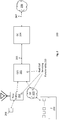
- Fig. 1 shows an information systems (IS) deployment 100 that is common to large entities such as large corporations and/or large government entities.
- a central office switch 101 acts as a gateway between more regional/local networking infrastructure (e.g., a base station 102, local internet service provider 103, etc.) and the entity's data center 104.
- more regional/local networking infrastructure e.g., a base station 102, local internet service provider 103, etc.
- one or more high speed trunk lines 105 carry data traffic between the central office switch 101 and the data center 104 over a long geographic distance that separates the central office switch 101 and the data center 104.
- the data center 104 relies upon a cloud service 106 for one or more IS services (e.g., cloud computing, cloud storage, etc.).
- various client devices 108 e.g., mobile devices (e.g., smartphones, laptop computers) and/or desktop computers, tower computers, etc.) access data that is stored by the cloud service 106 and/or access/invoke applications that the cloud service 106 is executing.
- the application is continuously executing in the cloud 106 and the entity is bearing the cost of its continuous execution in large time increments (e.g., the entity pays by the hour or by the second for its usage of the application).
- This particular configuration can be particularly inefficient, e.g., in the case of a cloud application whose invocations or function calls can be fully processed (completed) in much smaller time increments and/or a cloud application that is sparsely used over time by the entity. In such circumstances the entity essentially pays for application resources that the entity does not actually use.
- FaaS Fluction As A Service
- time increments e.g., tenths of seconds or less.
- FaaS the entity's payments correlate much closer to its actual usage, particularly for applications that complete their invocations in short time periods and/or applications that are sparsely used over time by the entity.
- FaaS Current examples include AWS Lambda offered by Amazon's Cloud Computing Plartform (AWS), Google Cloud Functions offered by Google's (and/or its parent Alphabet's) cloud computing platform (Google Cloud), Microsoft Azure Functions offered by Microsoft's Azure Cloud Computing Platform (Azure), OpenWhisk offered by IBM and/or Apache, and Oracle Cloud Fn offered by Oracle.
- AWS Lambda offered by Amazon's Cloud Computing Plartform (AWS)
- Google Cloud Functions offered by Google's (and/or its parent Alphabet's) cloud computing platform (Google Cloud)
- Microsoft Azure Functions offered by Microsoft's Azure Cloud Computing Platform (Azure)
- OpenWhisk offered by IBM and/or Apache
- Oracle Cloud Fn offered by Oracle.
- edge computing Another emerging trend is edge computing.
- the long distance e.g., geographic (in terms of physical distance) and/or logical (in terms of nodal hops over the infrastructure 100)
- a cloud application that is executing in the cloud service 106 and a client 108 that invokes the application.
- significant time delays can be observed by a client device 108 that is invoking an application in the cloud 106.
- IS managers are seeking to push functionality out of the cloud 106 towards a processing resource that is much closer to an invoking client 108.
- IS managers are seeking ways, for example, to push application functionality into any/all of the local central office switch 101, the base station 102 that a mobile client is communicating with, and/or the hardware resources of the client devices' local ISP 103.
- FaaS costs can be particularly sensitive to the time delays associated with large geographic distances and/or too many IS nodal hops between an invoking client 108 and an application that is executing in the cloud.
- a client device 108 that, under a FaaS payment structure, calls an application in the cloud 106 to perform a search of the client's files (the clients files are also stored in the cloud 106).
- the cloud application can determine the files to be searched (e.g., from the identity of the calling device, a memory range specified in the function call, etc.) and the FaaS function call is assumed to include some search criteria (e.g., a key-word, etc.).
- the return of the search (the items in the searched over files that meet the search criteria) includes a large amount of data (e.g., the content of a large number of files) and the function call is not deemed completed until the calling client device confirms to the application in the cloud 106 that it has successfully received the search results, the cost of the FaaS search function will largely be determined from the delay associated with the large amount of data being transported over the IS infrastructure 100 from the cloud 106 to the client device 108.
- the cost inefficiency is compounded if certain resources of the IS infrastructure (e.g., trunk lines 105 or 107) are swamped with additional traffic (e.g., the aggregate traffic between all the client devices and the cloud 106) thereby causing them to deliver the data only after a significant amount of time has elapsed (e.g., seconds).
- resources of the IS infrastructure e.g., trunk lines 105 or 107
- additional traffic e.g., the aggregate traffic between all the client devices and the cloud 106
- FaaS payment structure provides for significant cost reductions if function calls can be completed sooner, an incentive exists to move FaaS functions from the cloud 106 to the edge 101, 102, 103.
- Fig. 2 shows an improved architecture in which FaaS functionality has been integrated into edge components 201, 202 and 203 so as to reduce the aforementioned delays and drive down the costs of FaaS functions. That is, with, e.g., full functionality of various FaaS function calls being performed at an edge component, latency issues associated with large geographic distances and/or multiple nodal hops within an IS infrastructure should be greatly reduced resulting in completion of a called FaaS function in minimal time and correspondingly lower costs given that FaaS tracks usage in very small time increments.
- the latency between initial invocation of the function and final completion of the function should be miniscule. Not only are latencies associated with search processing to the edge component's internal latencies but also communication with the client is immediately direct.
- Fig. 3 shows a more detailed implementation of an edge component 300 having integrated FaaS function call servicing/handling functionality.
- the edge component 300 includes a computing system 310 that itself includes one or more processing cores 311, a main memory controller 312, a main memory 313, a peripheral control hub 314 and a networking interface card (NIC) 315.
- the edge component computing system 310 communicates with the client device 308 that invokes the FaaS function call.
- the client device includes a NIC 319 that physically transmits the FaaS function call to the edge component 300.
- the client device 308 may be a complex system such as a gateway router/switch, tower computer, server computer, etc.
- the networking interfacing function 319 may be integrated in some other fashion to the client device 308 (e.g., if the client device is a smartphone the networking interface function may be integrated into a system-on-chip semiconductor chip).
- an end client e.g., application software program, specific user computer or mobile device
- the FaaS function call is directed to the client side NIC 319 which physically sends the FaaS function call (if the NIC 319 is integrated into a gateway router/switch or other networking hardware component, the end client is apt to be communicatively coupled to the router/switch via a network (such as a local area network)).
- a network such as a local area network
- the FaaS function call 1 is embedded into a remote direct memory access (RDMA) command so that, as will be more clear further below, the called function is fully performed without invoking the computing system's processing cores 311.
- RDMA remote direct memory access
- the RDMA is a protocol used in large scale parallel computing clusters so that an application that is executing on one machine can read from or write to the system memory of another machine without invoking the processing cores of the machine with the targeted memory.
- RDMA is a type of protocol that provides for a remote computer's sending of a request (or command) over a network to another (local) computer, where, the request/command asks for some function to be performed by and/or invokes some resource of the local computer (e.g., memory, memory controller, network interface, peripheral control hub, mass storage device, etc.) without invoking the local computer's central processing unit (e.g., its general purpose processing cores) to handle/service the request/command.
- some resource of the local computer e.g., memory, memory controller, network interface, peripheral control hub, mass storage device, etc.
- central processing unit e.g., its general purpose processing cores
- the embodiment of Fig. 3 again pertains to a search function.
- the RDMA command is structured to include the identity of the FaaS function being called and certain parameters associated with the FaaS function being called. Specifically, a first field 321 of the RDMA command identifies that a search function is being called. A second field 322 of the RDMA command includes the search's search criteria (the item(s) to be searched for). A third field 323 of the RDMA command identifies a memory range to be searched over.
- the memory range specified in the third field 323 corresponds to memory space that has been allocated to the end client.
- such memory space may include non volatile memory space such as persistent memory within the edge component computing system's main memory 313.
- non volatile memory also known as "main” memory
- byte addressable system memory also known as "main” memory
- non volatile memory candidates for the non volatile system memory technology include flash as well as emerging non volatile memory technologies (e.g., phase change memory (PCM), dielectric random access memory, magnetic random access memory, spin transfer torque random access memory, ferroelectric random access memory among others).
- PCM phase change memory
- dielectric random access memory dielectric random access memory
- magnetic random access memory magnetic random access memory
- spin transfer torque random access memory ferroelectric random access memory among others
- ferroelectric random access memory among others.
- Many of the non volatile memory technologies are extremely high density because they are three dimensional (e.g., the storage cells are stacked above the semiconductor substrate amongst the interconnect wiring of the semiconductor substrate and are made accessible through a cross-point accessing architecture).
- the edge component computing system 311 can readily mimic cloud storage for the client device.
- the "memory range" field 323 of the RDMA command can correspond, e.g., to the cloud storage capacity that has been allocated to the client that is making the function call and/or the application that is executing on the client device and is making the function call.
- the NIC's security logic 324 Upon receipt of the RDMA command 1 by the edge component computing system's NIC 315, the NIC's security logic 324 performs appropriate authentication services to ensure that the calling end client is truly the device/application it claims to be, and, performs authorization services to ensure that the calling end client has been given permission to access the storage space it has specified in the memory range field 323.
- the security logic 324 authenticates the calling end client with a public key and private key scheme.
- each end client that is permitted to make FaaS function calls to the edge component is assigned a private key.
- the client side NIC 319 locally stores in protected register and/or memory space of the NIC 319, the respective private key for each end client that it sends RDMA requests on behalf of and participates in an authentication scheme with the security logic 324 of the edge component NIC 315 as the security logic 324 authenticates the end caller that is calling a FaaS command through an RDMA request.
- the edge component NIC 315 securely keeps (e.g., in protected register and/or memory space of the NIC 315) a corresponding public key for each end client private key maintained by the client side NIC 319.
- the security logic 324 Upon receipt of an RDMA request with embedded FaaS function call, the security logic 324 sends the client side NIC 319 an encrypted message using its local public key for the end client that is invoking the FaaS call.
- the client side NIC 319 decrypts the message using the end client's corresponding private key and sends the decrypted message back to the edge component NIC 315.
- the security logic 324 examines the decrypted message and, if the decrypted message is correct, the edge component NIC 315 deems the calling end client to be legitimate/authentic.
- the NIC 315 proceeds to refer to additional register and/or memory space of the NIC 315 that lists what FaaS functions the authenticated end client is permitted to call and/or what memory address range(s) and/or mass storage space address range(s) the end client is permitted to access. In various embodiments the NIC 315 keeps such meta data for each end client that can invoke an FaaS call to the NIC 315.
- the RDMA command is passed 2 to the memory controller 312 which has special logic 317 to support RDMA commands with embedded FaaS calls.
- the search logic 318 that performs the search is implemented on a memory module 320 (e.g., dual-in-line memory module (DIMM), stacked memory chip memory module, etc.) that is coupled to the memory controller 312.
- the memory module(s) 320 and/or interface between the memory module(s) 320 and memory controller 312 may be compliant with an industry standard specification such as a standard specification promulgated by the Joint Electron Device Engineering Council (JEDEC).
- JEDEC Joint Electron Device Engineering Council
- the special logic 317 on the memory controller 312 is able to comprehend and parse the RDMA command with the embedded FaaS function call 2, and, direct a (e.g., reformatted) command 3 to the memory module(s) 320 whose memory space falls within the address range called out by the FaaS function call 2.
- the command sent by the memory controller 312 to the module(s) 320 identifies that a search is to performed, identifies the memory address range to be searched over and includes the search criteria.
- the memory module's special search logic 318_1 reads the data from its module's memory chips whose memory capacity includes the specified range, compares the read data to the search criteria and sends to the memory controller 312 those of the read data items having content that matches the search criteria 4.
- memory channel bandwidth is hardly impacted by performing the actual search on the memory module 320_1 with logic 318_1. That is, if the searching were performed by memory controller's special logic 317, the entirety of the content to be searched (e.g., all of a device's/user's files) would have to be read from the memory module 320_1 and sent to the memory controller 312 over the memory channel that couples the memory module 320_1 and the memory controller 312. If large amounts of data were to be searched (and therefore passed over the memory channel), overall memory performance could be impacted (other transactions would observe delays because the memory channel is overwhelmed sending data to be searched from the memory module 320_1 to the memory controller 312).
- the memory controller's special logic 317 forms a response to the search request 2 sent by the NIC 315, and sends 5 the response to the NIC 315.
- the NIC 315 then sends 6 the response to the end client that invoked the search function call. Note that software executing on the processing cores 311 of the edge component computing system 310 can be left entirely out of the end-to-end FaaS call handling process (it is completely managed by the NIC 315, the memory controller 312 and the memory module 320_1).
- the content to be searched may be kept on the memory capacity of more than one memory module.
- the memory controller logic 317 sends a search command, search criteria and applicable memory range to each impacted memory module.
- Each memory module then performs its own local search and sends its respective search results (the content that matched the search criteria) to the memory controller 312.
- the memory controller's special logic 317 then combines the individual search results into a single response that is sent 5 to the NIC 315.
- the NIC 315 sends the response 6 to the client side NIC 319.
- special logic instances 317 and 318 can be viewed as smart end points because they specifically handle/process the precise request/function called out in the embedded FaaS call.
- the client side NIC 319 maintains a public key and the edge component NIC's security logic 324 maintains a private key so that the client side NIC 319 can confirm that the response is actually being sent from the edge component computer system 310. That is, for example, commensurate with the sending of the response 6 to the client side NIC 319, the client side NIC 319 sends an encrypted message to the edge component NIC 315.
- the security logic 324 of the edge component NIC 315 decrypts the message with its private key and sends the decrypted message back to the client side NIC 319. With the correct decrypted message, the client side NIC 319 confirms the response is from the correct sender and forwards the response to the end client that called the FaaS search function. In a more granularized approach, there is a private key maintained by the NIC 315 for each FaaS function that the computing system 310 supports. Accordingly, the client side NIC 319 can confirm that the response is being sent by the specific function that was called.
- Fig. 3 has been particularly focused on an FaaS call that relied upon logic circuitry 317, 318 to actually handle the request (a search)
- other and/or combined embodiments e.g., that respond to other kinds of FaaS calls embedded in an RDMA command or other similar protocol, may partially or wholly rely upon similar smart end point logic circuitry 330 that is disposed on the edge component NIC 315 and physically handles the FaaS call.
- a simple FaaS read call was embedded in an RDMA command
- special logic 330 on the edge component NIC 315 could intercept the RDMA command, parse and comprehend the embedded FaaS read call and then issue a standard RDMA "GET" command to the memory controller 312.
- the GET command could appear indistinguishable from a nominal RDMA GET command (e.g., sent from a parallel computing system).
- the memory controller 312 simply reads the requested data from memory 313 and sends it to the NIC 315 via a standard RDMA GET response (as per a normal/standard RDMA protocol).
- smart end point logic for handling embedded FaaS calls 317, 318, 330 may be disposed on any of a memory module 320 (and/or similarly, a traditional mass storage device), a memory controller 312 (and/or, interface/controller to a mass storage device such as a peripheral control hub), and/or NIC 315.
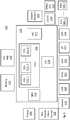
- Fig. 4 shows an embodiment of an edge component NIC 415 having security logic 424 as discussed above and various circuitry that supports the security logic 424.
- the security logic 424 performs the actual security functions described above (processing keys, encrypting messages, decrypting messages, etc.).
- the security logic 424 is coupled to secure/protected register and/or memory storage space 425 where its private and public keys are kept.
- the security logic 424 is also coupled to protected register and/or memory space 426 that keeps authorization profiles for each of the end clients the NIC 415 handles RDMA embedded FaaS calls for.
- each profile identifies, for each end client, the FaaS functions it is permitted to execute and the memory and/or storage resources it is permitted to access (e.g., as defined by address ranges, directories, etc.).
- the NIC 415 also includes special logic 430 for physically handling at least one embedded FaaS call.
- FaaS function calls besides searching can be supported and executed by the edge component computing system 310.
- Examples include encryption, decryption, or a mathematical function.
- any "function" whose logic can be implemented in the edge computer 310 can be called upon by an FaaS call.
- Such functions may support or be a component of, e.g., any/all of a batch process, a stream process and an extract-transform-load process.
- the actual logic that performs the FaaS function may be located somewhere other than a memory module or main memory controller (e.g., peripheral control hub 314, NIC 315, etc.).
- main memory controller e.g., peripheral control hub 314, NIC 315, etc.
- any/all functions could also be executed by the processing cores 311.
- executing at least simple functions with resources other than the processing cores and with dedicated logic elsewhere may minimize internal propagation latencies and therefore cost per FaaS function execute.
- the FaaS logic 317, 318, 330 described above can be implemented with one or more forms of logic circuitry including dedicated hardwired logic circuitry (e.g., application specification integrated circuit (ASIC) logic circuitry (e.g., one or more state machine circuits and other hardwired logic circuits), programmable logic circuitry (e.g., field programmable gate array (FPGA) logic circuitry) and/or logic circuitry designed to execute some form of program code (e.g., an embedded controller, an embedded processor, etc.).
- ASIC application specification integrated circuit
- FPGA field programmable gate array
- the design of the logic may also be described in a hardware description language (HDL) (e.g., Verilog, VHDL, RTL, transistor netlist, etc.) and recorded on a machine readable medium.
- HDL hardware description language
- the edge component computing system 300 can be implemented in various ways. For example, according to a first approach the edge component computing system is a complete, wholly integrated computer (e.g., a server computer where all of the main components 311 through 315 are integrated in a same hardware "box" or chassis). According to a second approach the edge component computing system is more distributed. Examples include a large scale "rack" in which one or more of the main components 311 through 315 are implemented on a card or blade and plugged into the rack's backplane, or, more generally, one or more of the main components 311 through 315 are essentially separate physical components that are interconnected to one another through one or more networks.
- a large scale "rack" in which one or more of the main components 311 through 315 are implemented on a card or blade and plugged into the rack's backplane, or, more generally, one or more of the main components 311 through 315 are essentially separate physical components that are interconnected to one another through one or more networks.
- the computing system 300 can be a stand alone computing system, or, be integrated with a network routing or switching function apparatus of an edge component.
- the computing system 300 can be the control platform, or general purpose computing platform, of a high performance router or switch networking system.
- FIG. 5 provides an exemplary depiction of a computing system 500 (e.g., a server computer, a distributed computing system, etc.) that can be used to implemented the computing system 300 of Fig. 3 .
- the basic computing system 500 may include a central processing unit 501 (which may include, e.g., a plurality of general purpose processing cores 515_1 through 515_X) and a main memory controller 517 disposed on a multi-core processor or applications processor, system memory 502, a display 503 (e.g., touchscreen, flat-panel), a local wired point-to-point link (e.g., USB) interface 504, various network I/O functions 505 including a NIC (such as an Ethernet interface and/or cellular modem subsystem), a wireless local area network (e.g., WiFi) interface 506, a wireless point-to-point link (e.g., Bluetooth) interface 507 and a Global Positioning System interface 508, various sensors 509_1 through 509
- NIC such
- An applications processor or multi-core processor 550 may include one or more general purpose processing cores 515 within its CPU 501, one or more graphical processing units 516, a memory management function 517 (e.g., a memory controller) and an I/O control function 518.
- the general purpose processing cores 515 typically execute the operating system and application software of the computing system.
- the graphics processing unit 516 typically executes graphics intensive functions to, e.g., generate graphics information that is presented on the display 503.
- the memory control function 517 interfaces with the system memory 502 to write/read data to/from system memory 502.
- the power management control unit 512 generally controls the power consumption of the system 500.
- Each of the touchscreen display 503, the communication interfaces 504-507, the GPS interface 508, the sensors 509, the camera(s) 510, and the speaker/microphone codec 513, 514 all can be viewed as various forms of I/O (input and/or output) relative to the overall computing system including, where appropriate, an integrated peripheral device as well (e.g., the one or more cameras 510).
- I/O components may be integrated on the applications processor/multi-core processor 550 or may be located off the die or outside the package of the applications processor/multi-core processor 550.
- the computing system also includes non-volatile storage 520 which may be the mass storage component of the system.
- Various components may be enhanced to include logic to handle FaaS calls (such as FaaS calls embedded in RDMA requests) as described at length above.
- FaaS calls such as FaaS calls embedded in RDMA requests
- Embodiments of the invention may include various processes as set forth above.
- the processes may be embodied in machine-executable instructions.
- the instructions can be used to cause a general-purpose or special-purpose processor to perform certain processes.
- these processes may be performed by specific/custom hardware components that contain hardwired logic circuitry or programmable logic circuitry (e.g., FPGA, PLD) for performing the processes, or by any combination of programmed computer components and custom hardware components.
- programmable logic circuitry e.g., FPGA, PLD
- an HDL, RTL or transistor level netlist description of the above described comparator and/or ADC may be used to perform a simulation of an electronic circuit in a computer environment.
- elements of the present invention may also be provided as a machine-readable medium for storing the machine-executable instructions.
- the machine-readable medium may include, but is not limited to, floppy diskettes, optical disks, CD-ROMs, and magneto-optical disks, FLASH memory, ROMs, RAMs, EPROMs, EEPROMs, magnetic or optical cards, propagation media or other type of media/machine-readable medium suitable for storing electronic instructions and/or data.
- the present invention may be downloaded as a computer program which may be transferred from a remote computer (e.g., a server) to a requesting computer (e.g., a client) by way of data signals embodied in a carrier wave or other propagation medium via a communication link (e.g., a modem or network connection).
- a remote computer e.g., a server
- a requesting computer e.g., a client
- a communication link e.g., a modem or network connection
Landscapes
- Engineering & Computer Science (AREA)
- Computer Hardware Design (AREA)
- General Engineering & Computer Science (AREA)
- Theoretical Computer Science (AREA)
- Signal Processing (AREA)
- Computer Networks & Wireless Communication (AREA)
- Computer Security & Cryptography (AREA)
- Physics & Mathematics (AREA)
- Computing Systems (AREA)
- Software Systems (AREA)
- General Physics & Mathematics (AREA)
- Mathematical Physics (AREA)
- Business, Economics & Management (AREA)
- Accounting & Taxation (AREA)
- Computer And Data Communications (AREA)
- Information Retrieval, Db Structures And Fs Structures Therefor (AREA)
Abstract
Description
- The field of invention pertains generally to the computing sciences, and, more specifically, to an edge component computing system having integrated FaaS call handling capability.
- With the emergence of "cloud" computing in which client devices invoke application software or other services over a network, IS managers are increasingly looking for new ways to architect the cloud so that propagation delays associated with the invocation of services over a network is reduced.
- A better understanding of the present invention can be obtained from the following detailed description in conjunction with the following drawings, in which:
-
Fig. 1 shows an information systems (IS) infrastructure; -
Fig. 2 shows an improved IS infrastructure; -
Fig. 3 shows a computing system that handles FaaS function calls; -
Fig. 4 shows a network interface card (NIC) for use in the computing system ofFig. 3 ; -
Fig. 5 shows a computing system. -
Fig. 1 shows an information systems (IS)deployment 100 that is common to large entities such as large corporations and/or large government entities. As observed inFig. 1 , acentral office switch 101 acts as a gateway between more regional/local networking infrastructure (e.g., abase station 102, localinternet service provider 103, etc.) and the entity'sdata center 104. Here, not uncommonly, one or more highspeed trunk lines 105 carry data traffic between thecentral office switch 101 and thedata center 104 over a long geographic distance that separates thecentral office switch 101 and thedata center 104. - The
data center 104, in turn, relies upon acloud service 106 for one or more IS services (e.g., cloud computing, cloud storage, etc.). Here, various client devices 108 (e.g., mobile devices (e.g., smartphones, laptop computers) and/or desktop computers, tower computers, etc.) access data that is stored by thecloud service 106 and/or access/invoke applications that thecloud service 106 is executing. - With respect to the clients' invocation of applications that the
cloud service 106 is executing, according to a basic and traditional configuration, the application is continuously executing in thecloud 106 and the entity is bearing the cost of its continuous execution in large time increments (e.g., the entity pays by the hour or by the second for its usage of the application). This particular configuration can be particularly inefficient, e.g., in the case of a cloud application whose invocations or function calls can be fully processed (completed) in much smaller time increments and/or a cloud application that is sparsely used over time by the entity. In such circumstances the entity essentially pays for application resources that the entity does not actually use. - An emerging trend, referred to as "Function As A Service" (FaaS), granularizes payments so that they are based on much smaller time increments (e.g., tenths of seconds or less). With FaaS, the entity's payments correlate much closer to its actual usage, particularly for applications that complete their invocations in short time periods and/or applications that are sparsely used over time by the entity. Current examples of FaaS include AWS Lambda offered by Amazon's Cloud Computing Plartform (AWS), Google Cloud Functions offered by Google's (and/or its parent Alphabet's) cloud computing platform (Google Cloud), Microsoft Azure Functions offered by Microsoft's Azure Cloud Computing Platform (Azure), OpenWhisk offered by IBM and/or Apache, and Oracle Cloud Fn offered by Oracle.
- Another emerging trend is edge computing. Referring again to
Fig. 1 , note the long distance (e.g., geographic (in terms of physical distance) and/or logical (in terms of nodal hops over the infrastructure 100)), that exists between a cloud application that is executing in thecloud service 106 and aclient 108 that invokes the application. In use cases where large amounts of data traffic are transported over thetrunk line 105 between thecloud service 106 and thedata center 104, and/or thetrunk line 107 between thedata center 104 and thecentral office 101, significant time delays can be observed by aclient device 108 that is invoking an application in thecloud 106. - In order to reduce such delays, IS managers are seeking to push functionality out of the
cloud 106 towards a processing resource that is much closer to aninvoking client 108. As such, IS managers are seeking ways, for example, to push application functionality into any/all of the localcentral office switch 101, thebase station 102 that a mobile client is communicating with, and/or the hardware resources of the client devices'local ISP 103. - Here, FaaS costs can be particularly sensitive to the time delays associated with large geographic distances and/or too many IS nodal hops between an
invoking client 108 and an application that is executing in the cloud. For example, consider aclient device 108 that, under a FaaS payment structure, calls an application in thecloud 106 to perform a search of the client's files (the clients files are also stored in the cloud 106). Here, the cloud application can determine the files to be searched (e.g., from the identity of the calling device, a memory range specified in the function call, etc.) and the FaaS function call is assumed to include some search criteria (e.g., a key-word, etc.). - If the return of the search (the items in the searched over files that meet the search criteria) includes a large amount of data (e.g., the content of a large number of files) and the function call is not deemed completed until the calling client device confirms to the application in the
cloud 106 that it has successfully received the search results, the cost of the FaaS search function will largely be determined from the delay associated with the large amount of data being transported over theIS infrastructure 100 from thecloud 106 to theclient device 108. The cost inefficiency is compounded if certain resources of the IS infrastructure (e.g.,trunk lines 105 or 107) are swamped with additional traffic (e.g., the aggregate traffic between all the client devices and the cloud 106) thereby causing them to deliver the data only after a significant amount of time has elapsed (e.g., seconds). - As such, given that FaaS payment structure provides for significant cost reductions if function calls can be completed sooner, an incentive exists to move FaaS functions from the
cloud 106 to theedge -
Fig. 2 shows an improved architecture in which FaaS functionality has been integrated intoedge components - Recalling the FaaS search function example, if the calling client's files are also kept on the same edge component that handles the FaaS search function call, the latency between initial invocation of the function and final completion of the function should be miniscule. Not only are latencies associated with search processing to the edge component's internal latencies but also communication with the client is immediately direct.
-
Fig. 3 shows a more detailed implementation of anedge component 300 having integrated FaaS function call servicing/handling functionality. Here, theedge component 300 includes acomputing system 310 that itself includes one ormore processing cores 311, amain memory controller 312, amain memory 313, aperipheral control hub 314 and a networking interface card (NIC) 315. The edgecomponent computing system 310 communicates with theclient device 308 that invokes the FaaS function call. - The client device includes a
NIC 319 that physically transmits the FaaS function call to theedge component 300. Here, in the case of an actual NIC "card", theclient device 308 may be a complex system such as a gateway router/switch, tower computer, server computer, etc. In other cases thenetworking interfacing function 319 may be integrated in some other fashion to the client device 308 (e.g., if the client device is a smartphone the networking interface function may be integrated into a system-on-chip semiconductor chip). - In the example of
Fig. 1 an end client (e.g., application software program, specific user computer or mobile device) desires to execute an FaaS function call. The FaaS function call is directed to the client side NIC 319 which physically sends the FaaS function call (if the NIC 319 is integrated into a gateway router/switch or other networking hardware component, the end client is apt to be communicatively coupled to the router/switch via a network (such as a local area network)). - In the example of
Fig. 3 theFaaS function call 1 is embedded into a remote direct memory access (RDMA) command so that, as will be more clear further below, the called function is fully performed without invoking the computing system'sprocessing cores 311. Here, as is known in the art, the RDMA is a protocol used in large scale parallel computing clusters so that an application that is executing on one machine can read from or write to the system memory of another machine without invoking the processing cores of the machine with the targeted memory. - More generally, RDMA is a type of protocol that provides for a remote computer's sending of a request (or command) over a network to another (local) computer, where, the request/command asks for some function to be performed by and/or invokes some resource of the local computer (e.g., memory, memory controller, network interface, peripheral control hub, mass storage device, etc.) without invoking the local computer's central processing unit (e.g., its general purpose processing cores) to handle/service the request/command.
- For the sake of example, the embodiment of
Fig. 3 again pertains to a search function. As observed inFig. 3 , the RDMA command is structured to include the identity of the FaaS function being called and certain parameters associated with the FaaS function being called. Specifically, afirst field 321 of the RDMA command identifies that a search function is being called. Asecond field 322 of the RDMA command includes the search's search criteria (the item(s) to be searched for). Athird field 323 of the RDMA command identifies a memory range to be searched over. - Here, in various embodiments, the memory range specified in the
third field 323 corresponds to memory space that has been allocated to the end client. In further embodiments such memory space may include non volatile memory space such as persistent memory within the edge component computing system'smain memory 313. - The computer industry is presently migrating toward a new system memory paradigm in which byte addressable system memory (also known as "main" memory) is being enhanced to include non volatile memory. Candidates for the non volatile system memory technology include flash as well as emerging non volatile memory technologies (e.g., phase change memory (PCM), dielectric random access memory, magnetic random access memory, spin transfer torque random access memory, ferroelectric random access memory among others). Many of the non volatile memory technologies are extremely high density because they are three dimensional (e.g., the storage cells are stacked above the semiconductor substrate amongst the interconnect wiring of the semiconductor substrate and are made accessible through a cross-point accessing architecture).
- With non volatile system memory (or with traditional mass storage (e.g., solid state drive (SSD), hard disk drive) coupled, e.g., to the peripheral control hub 314), the edge
component computing system 311 can readily mimic cloud storage for the client device. Here, particularly where the storage resources are physically implemented as non volatile memory within the edgecomponent computing system 313, the "memory range"field 323 of the RDMA command can correspond, e.g., to the cloud storage capacity that has been allocated to the client that is making the function call and/or the application that is executing on the client device and is making the function call. - Upon receipt of the
RDMA command 1 by the edge component computing system'sNIC 315, the NIC'ssecurity logic 324 performs appropriate authentication services to ensure that the calling end client is truly the device/application it claims to be, and, performs authorization services to ensure that the calling end client has been given permission to access the storage space it has specified in thememory range field 323. - In various embodiments, the
security logic 324 authenticates the calling end client with a public key and private key scheme. Here, each end client that is permitted to make FaaS function calls to the edge component is assigned a private key. In an embodiment, the client side NIC 319 locally stores in protected register and/or memory space of theNIC 319, the respective private key for each end client that it sends RDMA requests on behalf of and participates in an authentication scheme with thesecurity logic 324 of theedge component NIC 315 as thesecurity logic 324 authenticates the end caller that is calling a FaaS command through an RDMA request. - The
edge component NIC 315 securely keeps (e.g., in protected register and/or memory space of the NIC 315) a corresponding public key for each end client private key maintained by theclient side NIC 319. Upon receipt of an RDMA request with embedded FaaS function call, thesecurity logic 324 sends theclient side NIC 319 an encrypted message using its local public key for the end client that is invoking the FaaS call. Theclient side NIC 319 decrypts the message using the end client's corresponding private key and sends the decrypted message back to theedge component NIC 315. Thesecurity logic 324 examines the decrypted message and, if the decrypted message is correct, theedge component NIC 315 deems the calling end client to be legitimate/authentic. - Once the
edge component NIC 315 has deemed the calling end client to be authentic, theNIC 315 proceeds to refer to additional register and/or memory space of theNIC 315 that lists what FaaS functions the authenticated end client is permitted to call and/or what memory address range(s) and/or mass storage space address range(s) the end client is permitted to access. In various embodiments theNIC 315 keeps such meta data for each end client that can invoke an FaaS call to theNIC 315. - With the end client having been properly authenticated and its request to access the specified memory range having been properly authorized, the RDMA command is passed 2 to the
memory controller 312 which hasspecial logic 317 to support RDMA commands with embedded FaaS calls. As observed inFig. 3 the search logic 318 that performs the search (receives data read from the memory range specified in the command and compares the read data to the search criteria) is implemented on a memory module 320 (e.g., dual-in-line memory module (DIMM), stacked memory chip memory module, etc.) that is coupled to thememory controller 312. The memory module(s) 320 and/or interface between the memory module(s) 320 andmemory controller 312 may be compliant with an industry standard specification such as a standard specification promulgated by the Joint Electron Device Engineering Council (JEDEC). - Thus, in this case, the
special logic 317 on thememory controller 312 is able to comprehend and parse the RDMA command with the embeddedFaaS function call 2, and, direct a (e.g., reformatted)command 3 to the memory module(s) 320 whose memory space falls within the address range called out by theFaaS function call 2. The command sent by thememory controller 312 to the module(s) 320 identifies that a search is to performed, identifies the memory address range to be searched over and includes the search criteria. - In the simple case where the called out memory range is entirely on a single memory module 320_1, the memory module's special search logic 318_1 reads the data from its module's memory chips whose memory capacity includes the specified range, compares the read data to the search criteria and sends to the
memory controller 312 those of the read data items having content that matches thesearch criteria 4. - Note that memory channel bandwidth is hardly impacted by performing the actual search on the memory module 320_1 with logic 318_1. That is, if the searching were performed by memory controller's
special logic 317, the entirety of the content to be searched (e.g., all of a device's/user's files) would have to be read from the memory module 320_1 and sent to thememory controller 312 over the memory channel that couples the memory module 320_1 and thememory controller 312. If large amounts of data were to be searched (and therefore passed over the memory channel), overall memory performance could be impacted (other transactions would observe delays because the memory channel is overwhelmed sending data to be searched from the memory module 320_1 to the memory controller 312). - After the search results have been received, the memory controller's
special logic 317 forms a response to thesearch request 2 sent by theNIC 315, and sends 5 the response to theNIC 315. TheNIC 315 then sends 6 the response to the end client that invoked the search function call. Note that software executing on theprocessing cores 311 of the edgecomponent computing system 310 can be left entirely out of the end-to-end FaaS call handling process (it is completely managed by theNIC 315, thememory controller 312 and the memory module 320_1). - With various search FaaS function calls, the content to be searched may be kept on the memory capacity of more than one memory module. In this case, the
memory controller logic 317 sends a search command, search criteria and applicable memory range to each impacted memory module. Each memory module then performs its own local search and sends its respective search results (the content that matched the search criteria) to thememory controller 312. The memory controller'sspecial logic 317 then combines the individual search results into a single response that is sent 5 to theNIC 315. TheNIC 315 sends theresponse 6 to theclient side NIC 319. - Regardless,
special logic instances 317 and 318 can be viewed as smart end points because they specifically handle/process the precise request/function called out in the embedded FaaS call. - In an embodiment, the
client side NIC 319 maintains a public key and the edge component NIC'ssecurity logic 324 maintains a private key so that theclient side NIC 319 can confirm that the response is actually being sent from the edgecomponent computer system 310. That is, for example, commensurate with the sending of theresponse 6 to theclient side NIC 319, theclient side NIC 319 sends an encrypted message to theedge component NIC 315. - The
security logic 324 of theedge component NIC 315 decrypts the message with its private key and sends the decrypted message back to theclient side NIC 319. With the correct decrypted message, theclient side NIC 319 confirms the response is from the correct sender and forwards the response to the end client that called the FaaS search function. In a more granularized approach, there is a private key maintained by theNIC 315 for each FaaS function that thecomputing system 310 supports. Accordingly, theclient side NIC 319 can confirm that the response is being sent by the specific function that was called. - Although the above example of
Fig. 3 has been particularly focused on an FaaS call that relied uponlogic circuitry 317, 318 to actually handle the request (a search), other and/or combined embodiments, e.g., that respond to other kinds of FaaS calls embedded in an RDMA command or other similar protocol, may partially or wholly rely upon similar smart endpoint logic circuitry 330 that is disposed on theedge component NIC 315 and physically handles the FaaS call. - For example, if a simple FaaS read call was embedded in an RDMA command,
special logic 330 on theedge component NIC 315 could intercept the RDMA command, parse and comprehend the embedded FaaS read call and then issue a standard RDMA "GET" command to thememory controller 312. In this case, from the memory controller's perspective, the GET command could appear indistinguishable from a nominal RDMA GET command (e.g., sent from a parallel computing system). As such, thememory controller 312 simply reads the requested data frommemory 313 and sends it to theNIC 315 via a standard RDMA GET response (as per a normal/standard RDMA protocol). - The special logic 325 on the
NIC 315 then sends the read response as per the applicable embedded FaaS protocol to theclient side NIC 319. Thus, smart end point logic for handling embedded FaaS calls 317, 318, 330 may be disposed on any of a memory module 320 (and/or similarly, a traditional mass storage device), a memory controller 312 (and/or, interface/controller to a mass storage device such as a peripheral control hub), and/orNIC 315. -
Fig. 4 shows an embodiment of an edge component NIC 415 havingsecurity logic 424 as discussed above and various circuitry that supports thesecurity logic 424. Here, thesecurity logic 424 performs the actual security functions described above (processing keys, encrypting messages, decrypting messages, etc.). As observed inFig. 4 , thesecurity logic 424 is coupled to secure/protected register and/ormemory storage space 425 where its private and public keys are kept. Thesecurity logic 424 is also coupled to protected register and/or memory space 426 that keeps authorization profiles for each of the end clients the NIC 415 handles RDMA embedded FaaS calls for. Here, each profile identifies, for each end client, the FaaS functions it is permitted to execute and the memory and/or storage resources it is permitted to access (e.g., as defined by address ranges, directories, etc.). The NIC 415 also includes special logic 430 for physically handling at least one embedded FaaS call. - As alluded to above other FaaS function calls besides searching can be supported and executed by the edge
component computing system 310. Examples include encryption, decryption, or a mathematical function. Essentially any "function" whose logic can be implemented in theedge computer 310 can be called upon by an FaaS call. Such functions may support or be a component of, e.g., any/all of a batch process, a stream process and an extract-transform-load process. - As discussed above, for those processes that do not require a read from the edge computing system memory or a write to the edge computing system memory, the actual logic that performs the FaaS function may be located somewhere other than a memory module or main memory controller (e.g.,
peripheral control hub 314,NIC 315, etc.). Generally, any/all functions could also be executed by theprocessing cores 311. However, executing at least simple functions with resources other than the processing cores and with dedicated logic elsewhere may minimize internal propagation latencies and therefore cost per FaaS function execute. - The
FaaS logic memory controller 312, embedded in module 320, embedded inNIC 315, etc.) and/orNIC security logic 324 can be implemented with one or more forms of logic circuitry including dedicated hardwired logic circuitry (e.g., application specification integrated circuit (ASIC) logic circuitry (e.g., one or more state machine circuits and other hardwired logic circuits), programmable logic circuitry (e.g., field programmable gate array (FPGA) logic circuitry) and/or logic circuitry designed to execute some form of program code (e.g., an embedded controller, an embedded processor, etc.). The design of the logic may also be described in a hardware description language (HDL) (e.g., Verilog, VHDL, RTL, transistor netlist, etc.) and recorded on a machine readable medium. - The edge
component computing system 300 can be implemented in various ways. For example, according to a first approach the edge component computing system is a complete, wholly integrated computer (e.g., a server computer where all of themain components 311 through 315 are integrated in a same hardware "box" or chassis). According to a second approach the edge component computing system is more distributed. Examples include a large scale "rack" in which one or more of themain components 311 through 315 are implemented on a card or blade and plugged into the rack's backplane, or, more generally, one or more of themain components 311 through 315 are essentially separate physical components that are interconnected to one another through one or more networks. - In any of these embodiments the
computing system 300 can be a stand alone computing system, or, be integrated with a network routing or switching function apparatus of an edge component. For example, thecomputing system 300 can be the control platform, or general purpose computing platform, of a high performance router or switch networking system. -
FIG. 5 provides an exemplary depiction of a computing system 500 (e.g., a server computer, a distributed computing system, etc.) that can be used to implemented thecomputing system 300 ofFig. 3 . As observed inFIG. 5 , thebasic computing system 500 may include a central processing unit 501 (which may include, e.g., a plurality of general purpose processing cores 515_1 through 515_X) and amain memory controller 517 disposed on a multi-core processor or applications processor,system memory 502, a display 503 (e.g., touchscreen, flat-panel), a local wired point-to-point link (e.g., USB)interface 504, various network I/O functions 505 including a NIC (such as an Ethernet interface and/or cellular modem subsystem), a wireless local area network (e.g., WiFi)interface 506, a wireless point-to-point link (e.g., Bluetooth)interface 507 and a GlobalPositioning System interface 508, various sensors 509_1 through 509_Y, one ormore cameras 510, abattery 511, a powermanagement control unit 512, a speaker andmicrophone 513 and an audio coder/decoder 514. - An applications processor or
multi-core processor 550 may include one or more generalpurpose processing cores 515 within itsCPU 501, one or moregraphical processing units 516, a memory management function 517 (e.g., a memory controller) and an I/O control function 518. The generalpurpose processing cores 515 typically execute the operating system and application software of the computing system. Thegraphics processing unit 516 typically executes graphics intensive functions to, e.g., generate graphics information that is presented on thedisplay 503. Thememory control function 517 interfaces with thesystem memory 502 to write/read data to/fromsystem memory 502. The powermanagement control unit 512 generally controls the power consumption of thesystem 500. - Each of the
touchscreen display 503, the communication interfaces 504-507, theGPS interface 508, thesensors 509, the camera(s) 510, and the speaker/microphone codec multi-core processor 550 or may be located off the die or outside the package of the applications processor/multi-core processor 550. The computing system also includesnon-volatile storage 520 which may be the mass storage component of the system. - Various components, e.g., other than the
CPU 501, may be enhanced to include logic to handle FaaS calls (such as FaaS calls embedded in RDMA requests) as described at length above. - Embodiments of the invention may include various processes as set forth above. The processes may be embodied in machine-executable instructions. The instructions can be used to cause a general-purpose or special-purpose processor to perform certain processes. Alternatively, these processes may be performed by specific/custom hardware components that contain hardwired logic circuitry or programmable logic circuitry (e.g., FPGA, PLD) for performing the processes, or by any combination of programmed computer components and custom hardware components. For example an HDL, RTL or transistor level netlist description of the above described comparator and/or ADC may be used to perform a simulation of an electronic circuit in a computer environment.
- Therefore elements of the present invention may also be provided as a machine-readable medium for storing the machine-executable instructions. The machine-readable medium may include, but is not limited to, floppy diskettes, optical disks, CD-ROMs, and magneto-optical disks, FLASH memory, ROMs, RAMs, EPROMs, EEPROMs, magnetic or optical cards, propagation media or other type of media/machine-readable medium suitable for storing electronic instructions and/or data. For example, the present invention may be downloaded as a computer program which may be transferred from a remote computer (e.g., a server) to a requesting computer (e.g., a client) by way of data signals embodied in a carrier wave or other propagation medium via a communication link (e.g., a modem or network connection).
- In the foregoing specification, the invention has been described with reference to specific exemplary embodiments thereof. It will, however, be evident that various modifications and changes may be made thereto without departing from the broader spirit and scope of the invention as set forth in the appended claims. The specification and drawings are, accordingly, to be regarded in an illustrative rather than a restrictive sense.
Claims (15)
- A smart end point, comprising:
logic circuitry embedded in at least one of a memory controller, network interface, peripheral control hub and mass storage device to process a function as a service (FaaS) function call embedded in a request, the request being formatted according to a protocol, the protocol to allow a remote computing system to respectively access the at least one of the memory controller, network interface, peripheral control hub and mass storage device without invoking a central processing unit of a local computing system that the at least one of the memory controller, network interface, peripheral control hub and mass storage device is a component of. - The smart end point of claim 1, wherein the logic circuity is embedded in a memory controller and is to parse the request and direct the function call to a memory module.
- The smart end point of claim 2, wherein the memory module is a JEDEC compliant memory module.
- The smart end point of one of the previous claims, wherein the protocol is an RDMA protocol.
- The smart end point of one of the previous claims, wherein the logic circuity is to direct the request to at least one other memory module if a memory range specified in the request corresponds to memory space that is only partially within the memory module.
- The smart end point of claim 5, wherein the logic circuitry is to combine results from the memory module and the at least one other memory module to prepare a response to the function call.
- The smart end point of one of the previous claims, wherein the logic circuitry is disposed in the network interface and the function call is a read function call.
- An apparatus, comprising:
memory module logic circuitry to process a function as a service (FaaS) function call embedded in a request, the request being formatted according to a protocol, the protocol to allow a remote computing system to access the memory module without invoking a central processing unit of a local computing system that the memory module is a component of. - The apparatus of claim 8, wherein the memory module is a JEDEC compliant memory module.
- The apparatus of claim 8 or 9, wherein the protocol is an RDMA protocol.
- The apparatus of claim 8, 9 or 10, wherein the logic circuity is to read information from memory of the memory module from one or more addresses within an address range specified by the RDMA request.
- The apparatus of claim 11, wherein the memory is non volatile.
- The apparatus of claim 11 or 12, wherein the logic circuitry is to compare the information against search criteria specified in the request and send items of the information that match the search criteria to a memory controller.
- The apparatus of claim 13, wherein the memory is non volatile.
- A computing system comprising the subject matter of any of claims 1 through 14.
Applications Claiming Priority (1)
| Application Number | Priority Date | Filing Date | Title |
|---|---|---|---|
| US16/373,339 US11055256B2 (en) | 2019-04-02 | 2019-04-02 | Edge component computing system having integrated FaaS call handling capability |
Publications (1)
| Publication Number | Publication Date |
|---|---|
| EP3719648A1 true EP3719648A1 (en) | 2020-10-07 |
Family
ID=67298638
Family Applications (1)
| Application Number | Title | Priority Date | Filing Date |
|---|---|---|---|
| EP20164626.2A Pending EP3719648A1 (en) | 2019-04-02 | 2020-03-20 | Edge component computing system having integrated faas call handling capability |
Country Status (2)
| Country | Link |
|---|---|
| US (2) | US11055256B2 (en) |
| EP (1) | EP3719648A1 (en) |
Families Citing this family (4)
| Publication number | Priority date | Publication date | Assignee | Title |
|---|---|---|---|---|
| US10983768B2 (en) * | 2019-08-09 | 2021-04-20 | Vijay Madisetti | Method and system for persistent helpers for functions as a service (FAAS) in cloud computing environments |
| CN116095061A (en) * | 2021-11-08 | 2023-05-09 | 华为云计算技术有限公司 | Public cloud system and related method thereof |
| US12143312B2 (en) * | 2022-01-28 | 2024-11-12 | VMware LLC | On-demand resource capacity in a serverless function-as-a-service infrastructure |
| US20250254037A1 (en) * | 2022-05-31 | 2025-08-07 | Intel Corporation | Transparent transportation in cloud-to-pc extension framework |
Family Cites Families (95)
| Publication number | Priority date | Publication date | Assignee | Title |
|---|---|---|---|---|
| EP1049341A1 (en) * | 1999-04-29 | 2000-11-02 | TELEFONAKTIEBOLAGET LM ERICSSON (publ) | Processing of calls terminating in a packet switched protocol based cellular communication network |
| US7742586B1 (en) * | 2004-06-14 | 2010-06-22 | Callwave, Inc. | Enhanced service levels for call-processing services |
| US7532713B2 (en) * | 2004-09-23 | 2009-05-12 | Vapps Llc | System and method for voice over internet protocol audio conferencing |
| US10637724B2 (en) * | 2006-09-25 | 2020-04-28 | Remot3.It, Inc. | Managing network connected devices |
| US11336511B2 (en) * | 2006-09-25 | 2022-05-17 | Remot3.It, Inc. | Managing network connected devices |
| US8090832B1 (en) * | 2007-04-30 | 2012-01-03 | Netapp, Inc. | Method and apparatus for allocating network protocol operation resources |
| US9565217B2 (en) * | 2009-12-31 | 2017-02-07 | Bce Inc. | Method, system, network and computer-readable media for controlling outgoing telephony calls |
| US8423529B1 (en) * | 2010-08-05 | 2013-04-16 | Bluearc Uk Limited | System, device, and method for running third-party data processing applications virtualized on a NAS server |
| US8866701B2 (en) * | 2011-03-03 | 2014-10-21 | Citrix Systems, Inc. | Transparent user interface integration between local and remote computing environments |
| US9141410B2 (en) * | 2011-03-08 | 2015-09-22 | Rackspace Us, Inc. | Pluggable allocation in a cloud computing system |
| US8644157B2 (en) * | 2011-03-28 | 2014-02-04 | Citrix Systems, Inc. | Systems and methods for handling NIC congestion via NIC aware application |
| US9621441B2 (en) * | 2012-07-10 | 2017-04-11 | Microsoft Technology Licensing, Llc | Methods and computer program products for analysis of network traffic by port level and/or protocol level filtering in a network device |
| CN104704448B (en) * | 2012-08-31 | 2017-12-15 | 思杰系统有限公司 | Reverse Seamless integration- between local and remote computing environment |
| US9229854B1 (en) * | 2013-01-28 | 2016-01-05 | Radian Memory Systems, LLC | Multi-array operation support and related devices, systems and software |
| US9154397B2 (en) * | 2013-03-15 | 2015-10-06 | Microsoft Technology Licensing, Llc | Methods and computer program products for transaction relationships between application servers |
| US10148736B1 (en) * | 2014-05-19 | 2018-12-04 | Amazon Technologies, Inc. | Executing parallel jobs with message passing on compute clusters |
| US9998434B2 (en) * | 2015-01-26 | 2018-06-12 | Listat Ltd. | Secure dynamic communication network and protocol |
| US10541938B1 (en) * | 2015-04-06 | 2020-01-21 | EMC IP Holding Company LLC | Integration of distributed data processing platform with one or more distinct supporting platforms |
| US10756995B2 (en) * | 2015-07-27 | 2020-08-25 | Datagrid Systems, Inc. | Method, apparatus and system for real-time optimization of computer-implemented application operations using machine learning techniques |
| EP3742324B1 (en) * | 2015-09-15 | 2024-11-27 | Gatekeeper Ltd. | System and method for securely connecting to a peripheral device |
| US10432537B2 (en) * | 2015-10-12 | 2019-10-01 | Fujitsu Limited | Service function chaining based on resource availability in the time dimension |
| US20170269947A1 (en) * | 2016-03-21 | 2017-09-21 | Wal-Mart Stores, Inc. | Custom kiosk |
| US10455053B2 (en) * | 2016-05-23 | 2019-10-22 | Citrix Systems, Inc. | Systems and methods for provisioning network automation by logically separating L2-L3 entities from L4-L7 entities using a software defined network (SDN) controller |
| US20200067789A1 (en) * | 2016-06-24 | 2020-02-27 | QiO Technologies Ltd. | Systems and methods for distributed systemic anticipatory industrial asset intelligence |
| WO2018005297A1 (en) * | 2016-06-30 | 2018-01-04 | Intel Corporation | Technologies for implementing consolidated device infrastructure systems |
| US10419550B2 (en) * | 2016-07-06 | 2019-09-17 | Cisco Technology, Inc. | Automatic service function validation in a virtual network environment |
| US10536391B1 (en) * | 2016-07-07 | 2020-01-14 | Binaris Inc | Systems and methods for intelligently directing a service request to a preferred place of execution |
| US10402187B2 (en) * | 2016-08-10 | 2019-09-03 | Trilio Data Inc. | Efficient workload deployment using containers and unikernels |
| US10528367B1 (en) * | 2016-09-02 | 2020-01-07 | Intuit Inc. | Execution of workflows in distributed systems |
| US10592280B2 (en) * | 2016-11-23 | 2020-03-17 | Amazon Technologies, Inc. | Resource allocation and scheduling for batch jobs |
| US10613901B1 (en) * | 2016-11-29 | 2020-04-07 | Amazon Technologies, Inc. | Context-aware resource allocation |
| US11232056B2 (en) * | 2016-12-28 | 2022-01-25 | Intel Corporation | System and method for vector communication |
| US10956346B1 (en) * | 2017-01-13 | 2021-03-23 | Lightbits Labs Ltd. | Storage system having an in-line hardware accelerator |
| CN108366082B (en) * | 2017-01-26 | 2020-03-10 | 华为技术有限公司 | Capacity expansion method and capacity expansion device |
| JP6249119B1 (en) * | 2017-03-15 | 2017-12-20 | 日本電気株式会社 | Control device, control method, program, information processing device |
| US11094029B2 (en) * | 2017-04-10 | 2021-08-17 | Intel Corporation | Abstraction layers for scalable distributed machine learning |
| US10778767B2 (en) * | 2017-04-28 | 2020-09-15 | International Business Machines Corporation | Persistent memory replication in RDMA-capable networks |
| US10554689B2 (en) * | 2017-04-28 | 2020-02-04 | Cisco Technology, Inc. | Secure communication session resumption in a service function chain |
| US10621001B1 (en) * | 2017-07-06 | 2020-04-14 | Binaris Inc | Systems and methods for efficiently expediting execution of tasks in isolated environments |
| US10742750B2 (en) * | 2017-07-20 | 2020-08-11 | Cisco Technology, Inc. | Managing a distributed network of function execution environments |
| US20190068466A1 (en) * | 2017-08-30 | 2019-02-28 | Intel Corporation | Technologies for auto-discovery of fault domains |
| US10360025B2 (en) * | 2017-09-08 | 2019-07-23 | Accenture Global Solutions Limited | Infrastructure instantiation, collaboration, and validation architecture for serverless execution frameworks |
| US10601672B2 (en) * | 2017-10-24 | 2020-03-24 | Cisco Technology, Inc. | Inter-tenant workload performance correlation and recommendation |
| WO2019090523A1 (en) * | 2017-11-08 | 2019-05-16 | 华为技术有限公司 | Business deployment method under serverless architecture and function management platform |
| KR102423416B1 (en) * | 2017-12-12 | 2022-07-22 | 한국전자통신연구원 | Apparatus and method for providing long-term execution of function in sever-less environment |
| EP3724776A4 (en) * | 2017-12-13 | 2021-07-28 | Telefonaktiebolaget LM Ericsson (PUBL) | Method, function manager and arrangement for handling function calls |
| WO2019119408A1 (en) * | 2017-12-22 | 2019-06-27 | Intel Corporation | Manageability engine and automatic firmware validation |
| US10565034B2 (en) * | 2017-12-29 | 2020-02-18 | Futurewei Technologies, Inc. | Event-driven serverless function orchestration |
| US10514958B2 (en) * | 2018-02-14 | 2019-12-24 | Capital One Services, Llc | Remotely managing execution of jobs in a cluster computing framework |
| CN112313627B (en) * | 2018-03-01 | 2024-01-16 | 华为云计算技术有限公司 | Mapping mechanism for events to serverless function workflow instances |
| US10621004B2 (en) * | 2018-03-19 | 2020-04-14 | Accenture Global Solutions Limited | Resource control stack based system for multiple domain presentation of cloud computing resource control |
| US20190303212A1 (en) * | 2018-03-30 | 2019-10-03 | Cisco Technology, Inc. | Method for managing application configuration state with cloud based application management techniques |
| US11567807B2 (en) * | 2018-03-30 | 2023-01-31 | EMC IP Holding Company LLC | Allocation of shared computing resources using source code feature extraction and machine learning |
| US10678444B2 (en) * | 2018-04-02 | 2020-06-09 | Cisco Technology, Inc. | Optimizing serverless computing using a distributed computing framework |
| US11962606B2 (en) * | 2018-04-04 | 2024-04-16 | Twistlock Ltd. | Protecting serverless applications |
| US10719360B2 (en) * | 2018-04-11 | 2020-07-21 | Accenture Global Solutions Limited | Distributed multiple tier multi-node serverless framework for complex analytics task execution |
| US10740149B2 (en) * | 2018-04-20 | 2020-08-11 | Verizon Patent And Licensing, Inc. | Serverless computing architecture |
| US10684790B2 (en) * | 2018-04-27 | 2020-06-16 | EMC IP Holding Company LLC | Serverless solution for continuous data protection |
| SG11202011209XA (en) * | 2018-05-11 | 2020-12-30 | Jpmorgan Chase Bank Na | Function as a service gateway |
| US20190377604A1 (en) * | 2018-06-11 | 2019-12-12 | Nuweba Labs Ltd. | Scalable function as a service platform |
| US10656980B2 (en) * | 2018-06-18 | 2020-05-19 | Wipro Limited | Method and system for processing data in a serverless computing environment |
| US10944689B2 (en) * | 2018-06-29 | 2021-03-09 | Intel Corporation | Scalable edge computing |
| US10819571B2 (en) * | 2018-06-29 | 2020-10-27 | Cisco Technology, Inc. | Network traffic optimization using in-situ notification system |
| US10725941B2 (en) * | 2018-06-30 | 2020-07-28 | Western Digital Technologies, Inc. | Multi-device storage system with hosted services on peer storage devices |
| US10409511B1 (en) * | 2018-06-30 | 2019-09-10 | Western Digital Technologies, Inc. | Multi-device storage system with distributed read/write processing |
| US10929035B2 (en) * | 2018-07-18 | 2021-02-23 | Sap Se | Memory management via dynamic tiering pools |
| US10809987B2 (en) * | 2018-08-14 | 2020-10-20 | Hyperblox Inc. | Software acceleration platform for supporting decomposed, on-demand network services |
| US10747580B2 (en) * | 2018-08-17 | 2020-08-18 | Vmware, Inc. | Function as a service (FaaS) execution distributor |
| US11520611B2 (en) * | 2018-08-20 | 2022-12-06 | Intel Corporation | Secure public cloud using extended paging and memory integrity |
| US10747584B2 (en) * | 2018-08-20 | 2020-08-18 | Sap Se | Security-aware partitioning of processes |
| US11422868B2 (en) * | 2018-08-24 | 2022-08-23 | Exosite LLC | Product-as-a-service for connected devices |
| US11593291B2 (en) * | 2018-09-10 | 2023-02-28 | GigaIO Networks, Inc. | Methods and apparatus for high-speed data bus connection and fabric management |
| US10783038B2 (en) * | 2018-09-21 | 2020-09-22 | EMC IP Holding Company LLC | Distributed generation of random data in a storage system |
| US10796058B1 (en) * | 2018-09-25 | 2020-10-06 | Xilinx, Inc. | Partial reconfiguration of integrated circuits using shell representation of platform design |
| US10996972B2 (en) * | 2018-09-25 | 2021-05-04 | Microsoft Technology Licensing, Llc | Multi-tenant support on virtual machines in cloud computing networks |
| US10824466B2 (en) * | 2018-09-26 | 2020-11-03 | International Business Machines Corporation | Container migration |
| US11243953B2 (en) * | 2018-09-27 | 2022-02-08 | Amazon Technologies, Inc. | Mapreduce implementation in an on-demand network code execution system and stream data processing system |
| US11093525B2 (en) * | 2018-09-27 | 2021-08-17 | Sap Se | Transaction merging for offline applications |
| US20200120112A1 (en) * | 2018-10-10 | 2020-04-16 | Nuweba Labs Ltd. | Techniques for detecting known vulnerabilities in serverless functions as a service (faas) platform |
| US10901783B2 (en) * | 2018-10-16 | 2021-01-26 | Vmware, Inc. | Reducing the startup latency of functions in a FaaS infrastructure |
| US10671302B1 (en) * | 2018-10-26 | 2020-06-02 | Pure Storage, Inc. | Applying a rate limit across a plurality of storage systems |
| US11169789B2 (en) * | 2018-10-26 | 2021-11-09 | Salesforce.Com, Inc. | Rich text box for live applications in a cloud collaboration platform |
| US10296451B1 (en) * | 2018-11-01 | 2019-05-21 | EMC IP Holding Company LLC | Content addressable storage system utilizing content-based and address-based mappings |
| US11425111B2 (en) * | 2018-11-14 | 2022-08-23 | Intel Corporation | Attestation token sharing in edge computing environments |
| US11200168B2 (en) * | 2018-12-10 | 2021-12-14 | International Business Machines Corporation | Caching data from remote memories |
| US10848974B2 (en) * | 2018-12-28 | 2020-11-24 | Intel Corporation | Multi-domain trust establishment in edge cloud architectures |
| US11412052B2 (en) * | 2018-12-28 | 2022-08-09 | Intel Corporation | Quality of service (QoS) management in edge computing environments |
| US10969992B2 (en) * | 2018-12-29 | 2021-04-06 | Intel Corporation | Address translation for scalable linked devices |
| US10462112B1 (en) * | 2019-01-09 | 2019-10-29 | Cyberark Software Ltd. | Secure distributed authentication data |
| US11042405B2 (en) * | 2019-01-10 | 2021-06-22 | Vmware, Inc. | Scheduling and executing functions across different functions-as-a-service (FAAS) infrastructures |
| CN113424508B (en) * | 2019-02-13 | 2023-01-06 | 苹果公司 | Session Initiation Protocol Registration Process for Access Network Bit Rate Recommendation Capability Signaling |
| US11003585B2 (en) * | 2019-03-07 | 2021-05-11 | International Business Machines Corporation | Determining affinity domain information based on virtual memory address |
| US11126554B2 (en) * | 2019-03-22 | 2021-09-21 | Intel Corporation | Prefetching write permissions into address translation cache |
| US11252220B2 (en) * | 2019-03-27 | 2022-02-15 | International Business Machines Corporation | Distributed code execution involving a serverless computing infrastructure |
| US10542586B2 (en) * | 2019-03-29 | 2020-01-21 | Intel Corporation | Technologies for providing hardware resources as a service with direct resource addressability |
-
2019
- 2019-04-02 US US16/373,339 patent/US11055256B2/en active Active
-
2020
- 2020-03-20 EP EP20164626.2A patent/EP3719648A1/en active Pending
-
2021
- 2021-06-30 US US17/363,867 patent/US11650951B2/en active Active
Non-Patent Citations (2)
| Title |
|---|
| ALEKSANDAR DRAGOJEVIC ET AL: "FaRM: Fast Remote Memory", 2 April 2014 (2014-04-02), pages 408 - 421, XP061024555, Retrieved from the Internet <URL:https://www.usenix.org/sites/default/files/nsdi14_full_proceedings_interior.pdf> [retrieved on 20140402] * |
| SHUOTAO XU ET AL: "BlueCache: A Scalable Distributed Flash-based Key-value Store Sang-Woo Jun", 1 November 2016 (2016-11-01), XP055720111, Retrieved from the Internet <URL:https://dl.acm.org/doi/pdf/10.14778/3025111.3025113> [retrieved on 20200804] * |
Also Published As
| Publication number | Publication date |
|---|---|
| US20190227978A1 (en) | 2019-07-25 |
| US11650951B2 (en) | 2023-05-16 |
| US11055256B2 (en) | 2021-07-06 |
| US20210326299A1 (en) | 2021-10-21 |
Similar Documents
| Publication | Publication Date | Title |
|---|---|---|
| US11650951B2 (en) | Edge component computing system having integrated FaaS call handling capability | |
| US12530470B2 (en) | Policy implementation for data processing systems based on location data using out-of-band components | |
| US12432219B2 (en) | Managing data processing systems based on location using out-of-band communications | |
| US12143265B1 (en) | Managing entitlements for data processing systems using out of band communication channels | |
| US12438713B2 (en) | Management controller registration using a trusted platform module | |
| US20250139271A1 (en) | Managing sanitization of data processing systems using out-of-band methods | |
| US12598213B2 (en) | Location-based policy enforcement for data processing systems using out-of-band methods | |
| US12204767B2 (en) | System and method for managing data storage to identify undesired data modification | |
| US11334245B1 (en) | Native memory semantic remote memory access system | |
| US20250338122A1 (en) | Managing secure access to wireless connection credentials | |
| US12621129B2 (en) | Systems and methods for managing storage devices for data processing systems using out-of-band methods | |
| US12608499B2 (en) | Managing a data processing system using a management controller and a secured storage region | |
| US20250337563A1 (en) | Systems and methods for managing storage devices for data processing systems using out-of-band methods | |
| US20250247805A1 (en) | Time synchronization using a management controller and an out of band communication channel | |
| US20260064483A1 (en) | Entitlement enforcement for data processing systems using out-of-band methods | |
| US12608481B2 (en) | Offloading secure boot during startups of data processing systems | |
| US20260030388A1 (en) | Managing non-standard channel cards of data processing systems | |
| US12542786B2 (en) | Systems and methods for managing operations of data processing systems based on geolocation tracking | |
| US12574411B2 (en) | Transport layer security management using a management controller | |
| US20260030356A1 (en) | Managing levels of trust for components of data processing systems | |
| US12537820B2 (en) | Systems and methods for remotely managing devices using out-of-band components | |
| US20260113342A1 (en) | Systems and methods for managing compromised data processing systems using out of band components | |
| US20260067692A1 (en) | Managing cellular network communicaton for a data processing system with a management controller | |
| US12457493B1 (en) | Managing operation of a data processing system for shared wireless connection | |
| US20260095314A1 (en) | Distributed management of blueprints |
Legal Events
| Date | Code | Title | Description |
|---|---|---|---|
| PUAI | Public reference made under article 153(3) epc to a published international application that has entered the european phase |
Free format text: ORIGINAL CODE: 0009012 |
|
| STAA | Information on the status of an ep patent application or granted ep patent |
Free format text: STATUS: THE APPLICATION HAS BEEN PUBLISHED |
|
| AK | Designated contracting states |
Kind code of ref document: A1 Designated state(s): AL AT BE BG CH CY CZ DE DK EE ES FI FR GB GR HR HU IE IS IT LI LT LU LV MC MK MT NL NO PL PT RO RS SE SI SK SM TR |
|
| AX | Request for extension of the european patent |
Extension state: BA ME |
|
| STAA | Information on the status of an ep patent application or granted ep patent |
Free format text: STATUS: REQUEST FOR EXAMINATION WAS MADE |
|
| 17P | Request for examination filed |
Effective date: 20210407 |
|
| RBV | Designated contracting states (corrected) |
Designated state(s): AL AT BE BG CH CY CZ DE DK EE ES FI FR GB GR HR HU IE IS IT LI LT LU LV MC MK MT NL NO PL PT RO RS SE SI SK SM TR |
|
| STAA | Information on the status of an ep patent application or granted ep patent |
Free format text: STATUS: EXAMINATION IS IN PROGRESS |
|
| 17Q | First examination report despatched |
Effective date: 20220601 |