EP3719494A1 - Using in-line multi-angle-light-scattering (mals) detectors for establishing digital twins of chromatography unit operations - Google Patents
Using in-line multi-angle-light-scattering (mals) detectors for establishing digital twins of chromatography unit operations Download PDFInfo
- Publication number
- EP3719494A1 EP3719494A1 EP20154468.1A EP20154468A EP3719494A1 EP 3719494 A1 EP3719494 A1 EP 3719494A1 EP 20154468 A EP20154468 A EP 20154468A EP 3719494 A1 EP3719494 A1 EP 3719494A1
- Authority
- EP
- European Patent Office
- Prior art keywords
- sample
- molecule
- interest
- line multi
- chromatography
- Prior art date
- Legal status (The legal status is an assumption and is not a legal conclusion. Google has not performed a legal analysis and makes no representation as to the accuracy of the status listed.)
- Withdrawn
Links
- 238000000569 multi-angle light scattering Methods 0.000 title claims abstract description 33
- 238000004587 chromatography analysis Methods 0.000 title claims abstract description 29
- 238000010977 unit operation Methods 0.000 title claims abstract description 10
- 238000000034 method Methods 0.000 claims description 22
- 102000004169 proteins and genes Human genes 0.000 claims description 17
- 108090000623 proteins and genes Proteins 0.000 claims description 17
- 238000005259 measurement Methods 0.000 claims description 12
- 238000000926 separation method Methods 0.000 claims description 11
- 238000004519 manufacturing process Methods 0.000 claims description 9
- 238000004886 process control Methods 0.000 claims description 5
- 238000011165 process development Methods 0.000 claims description 4
- 238000004364 calculation method Methods 0.000 claims description 3
- 238000013064 process characterization Methods 0.000 claims description 3
- 238000013404 process transfer Methods 0.000 claims description 3
- 238000005406 washing Methods 0.000 claims description 2
- 239000000178 monomer Substances 0.000 description 9
- 238000001542 size-exclusion chromatography Methods 0.000 description 8
- 238000010828 elution Methods 0.000 description 7
- 238000004191 hydrophobic interaction chromatography Methods 0.000 description 5
- 230000008569 process Effects 0.000 description 5
- 230000008901 benefit Effects 0.000 description 3
- 239000003814 drug Substances 0.000 description 3
- 238000002474 experimental method Methods 0.000 description 3
- 239000012535 impurity Substances 0.000 description 3
- 238000011057 process analytical technology Methods 0.000 description 3
- 238000001042 affinity chromatography Methods 0.000 description 2
- 238000004458 analytical method Methods 0.000 description 2
- 238000005571 anion exchange chromatography Methods 0.000 description 2
- 239000000539 dimer Substances 0.000 description 2
- 229940079593 drug Drugs 0.000 description 2
- 239000012634 fragment Substances 0.000 description 2
- 238000004255 ion exchange chromatography Methods 0.000 description 2
- 239000000203 mixture Substances 0.000 description 2
- 238000000746 purification Methods 0.000 description 2
- FGUUSXIOTUKUDN-IBGZPJMESA-N C1(=CC=CC=C1)N1C2=C(NC([C@H](C1)NC=1OC(=NN=1)C1=CC=CC=C1)=O)C=CC=C2 Chemical compound C1(=CC=CC=C1)N1C2=C(NC([C@H](C1)NC=1OC(=NN=1)C1=CC=CC=C1)=O)C=CC=C2 FGUUSXIOTUKUDN-IBGZPJMESA-N 0.000 description 1
- 238000010521 absorption reaction Methods 0.000 description 1
- 230000002411 adverse Effects 0.000 description 1
- 230000002776 aggregation Effects 0.000 description 1
- 238000004220 aggregation Methods 0.000 description 1
- 238000013459 approach Methods 0.000 description 1
- 230000015572 biosynthetic process Effects 0.000 description 1
- 150000001768 cations Chemical class 0.000 description 1
- 238000011210 chromatographic step Methods 0.000 description 1
- 238000004590 computer program Methods 0.000 description 1
- 238000012790 confirmation Methods 0.000 description 1
- 238000012444 downstream purification process Methods 0.000 description 1
- 239000013628 high molecular weight specie Substances 0.000 description 1
- 230000028993 immune response Effects 0.000 description 1
- 230000010354 integration Effects 0.000 description 1
- 230000003993 interaction Effects 0.000 description 1
- 239000013627 low molecular weight specie Substances 0.000 description 1
- 238000012434 mixed-mode chromatography Methods 0.000 description 1
- 238000005457 optimization Methods 0.000 description 1
- 230000003389 potentiating effect Effects 0.000 description 1
- 230000006916 protein interaction Effects 0.000 description 1
- 150000003839 salts Chemical class 0.000 description 1
- 238000005070 sampling Methods 0.000 description 1
- 239000000126 substance Substances 0.000 description 1
- 230000036962 time dependent Effects 0.000 description 1
Images
Classifications
-
- G—PHYSICS
- G01—MEASURING; TESTING
- G01N—INVESTIGATING OR ANALYSING MATERIALS BY DETERMINING THEIR CHEMICAL OR PHYSICAL PROPERTIES
- G01N30/00—Investigating or analysing materials by separation into components using adsorption, absorption or similar phenomena or using ion-exchange, e.g. chromatography or field flow fractionation
- G01N30/02—Column chromatography
- G01N30/86—Signal analysis
- G01N30/8693—Models, e.g. prediction of retention times, method development and validation
-
- G—PHYSICS
- G01—MEASURING; TESTING
- G01N—INVESTIGATING OR ANALYSING MATERIALS BY DETERMINING THEIR CHEMICAL OR PHYSICAL PROPERTIES
- G01N30/00—Investigating or analysing materials by separation into components using adsorption, absorption or similar phenomena or using ion-exchange, e.g. chromatography or field flow fractionation
- G01N30/02—Column chromatography
- G01N30/88—Integrated analysis systems specially adapted therefor, not covered by a single one of the groups G01N30/04 - G01N30/86
- G01N2030/8809—Integrated analysis systems specially adapted therefor, not covered by a single one of the groups G01N30/04 - G01N30/86 analysis specially adapted for the sample
- G01N2030/8813—Integrated analysis systems specially adapted therefor, not covered by a single one of the groups G01N30/04 - G01N30/86 analysis specially adapted for the sample biological materials
-
- G—PHYSICS
- G01—MEASURING; TESTING
- G01N—INVESTIGATING OR ANALYSING MATERIALS BY DETERMINING THEIR CHEMICAL OR PHYSICAL PROPERTIES
- G01N30/00—Investigating or analysing materials by separation into components using adsorption, absorption or similar phenomena or using ion-exchange, e.g. chromatography or field flow fractionation
- G01N30/02—Column chromatography
- G01N30/88—Integrated analysis systems specially adapted therefor, not covered by a single one of the groups G01N30/04 - G01N30/86
- G01N2030/8809—Integrated analysis systems specially adapted therefor, not covered by a single one of the groups G01N30/04 - G01N30/86 analysis specially adapted for the sample
- G01N2030/8813—Integrated analysis systems specially adapted therefor, not covered by a single one of the groups G01N30/04 - G01N30/86 analysis specially adapted for the sample biological materials
- G01N2030/8831—Integrated analysis systems specially adapted therefor, not covered by a single one of the groups G01N30/04 - G01N30/86 analysis specially adapted for the sample biological materials involving peptides or proteins
-
- G—PHYSICS
- G01—MEASURING; TESTING
- G01N—INVESTIGATING OR ANALYSING MATERIALS BY DETERMINING THEIR CHEMICAL OR PHYSICAL PROPERTIES
- G01N30/00—Investigating or analysing materials by separation into components using adsorption, absorption or similar phenomena or using ion-exchange, e.g. chromatography or field flow fractionation
- G01N30/02—Column chromatography
- G01N30/62—Detectors specially adapted therefor
- G01N30/74—Optical detectors
Definitions
- the aggregate removal process can be complex and challenging. Various factors such as light, mechanical influences and thermal conditions can contribute to aggregate formation. Removal of aggregates is necessary in manufacture of protein drugs as protein aggregates can have adverse immune responses and potentially affect safety and efficacy. Thus, aggregation level is directly linked to product quality and is an important critical quality attribute (CQA) that is monitored and controlled. Therefore, purifications methods such as various chromatographies, e.g. Protein A affinity chromatography, Ion exchange chromatography (IEX), Size-exclusion chromatography (SEC), and hydrophobic interaction chromatography (HIC), etc.
- CQA critical quality attribute
- This object was solved by using an In-Line Multi-Angle-Light-Scattering for establishing a digital model of a chromatography unit operation.
- In-Line Multi-Angle-Light-Scattering allows for generation of high quality potent chromatography models such as a digital twin of the chromatography unit operation in question.
- Said digital twin model established using data generated with In-Line Multi-Angle-Light-Scattering enables modelling of all interactions between a protein of interest and a separation medium - usually a chromatography unit operation.
- the signal generated by In-Line Multi Angle Light Scattering changes according to the molecule (protein) size analyzed. As the signal is continuous for a given sample, i.e.
- the signal generated by In-Line Multi Angle Light Scattering overcomes the limitation so far set by resources and the required volume for analysis to establish e.g. isotherm chromatography models.
- employing In-Line Multi Angle Light Scattering is much more efficient and less time consuming than previously employed procedures where fractions were collected and analyzed for impurity assessment as well as confirmation of molecular weight (MW) and low or high molecular weight species (LMW / HMW, respectively) share fraction after the purification was finished.
- MW molecular weight
- LMW / HMW low or high molecular weight species
- the digital model is a digital twin.
- digital twin refers to a digital copy of the physical system used to optimize the operation of said physical systems.
- the digital twin is based on measured data e.g. experimental chromatography experiments.
- the molecule of interest is not referred to as critical quality attribute as it is the wanted entity. Instead the molecule of interest is referred to as "quality attribute”. It is measured e.g. as % monomer.
- Multi Angle Light Scattering is used synonymous with "In Line Multi Angle Light Scattering” and refers to a technique for measuring the light scattered by a sample into a plurality of angles. It is used for determining both the absolute molar mass and the average size of molecules in solution, by detecting how they scatter light. The measured intensity is proportional to MW and concentration of the protein.
- the protein concentration can be measured using ultraviolet absorption (UV), differential refractive index, or alternate concentration determination methods.
- In-Line multiangle light scattering using laser light is employed.
- the MALS system is a Wyatt DAWN 8+ with the Astra light scattering software.
- Cation & anion exchange chromatography CEX and AEX, respectively
- Protein A affinity chromatography e.g., GAC
- SEC Size-exclusion chromatography
- HIC Hydrophobic interaction chromatography
- step f) is carried out by a computer program receiving the signals from the at least one In-Line Multi-Angle-Light-Scattering detector and at least one concentration detector.
- the method step of assuming a functional difference comprises generation of at least two, more preferably three sub models.
- one sub model is generated for low molecular weight molecules comprised in the sample
- one sub model is generated for the molecule of interest (monomer)
- one sub model is generated for high molecular weight molecules comprised in the sample.
- the advantage of using sub models is an even better overall understanding of the process. In other words via using three different submodels it is possible to accurately assess the ratio of HMW molecules/ molecule of interest/ LMW molecules.
- a digital model e.g. a digital twin, established using the method described herein is used to model a chromatography unit operation e.g. during process development, process transfer, process characterization and/or process control of a commercial biotech manufacturing process.
- a digital model e.g. a digital twin
- signal correlation is established it could even be sufficient to only monitor the UV signal to enable a real time control of the chromatography.
- the measured quality attribute is the radius of at least one molecule of interest comprised in the sample.
- the measured MW values might be adjusted by a concentration factor (A 2 ). This calculation is know in the state of the art.
- the protein of interest is processed under these conditions on various chromatography steps e.g. CEX etc. as detailed above.
- the MALS and UV signal can be used to establish a model such as a digital twin to simulate different process conditions.
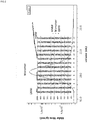
- the advantage of the described approach is depicted in Figure 2 .
- Fig. 2 shows that in contrast to the models of the state of the art, which rely on collected fractions and interpolated data points for areas between the analyzed fractions, the MALS signal is more a continuous signal not requiring interpolated data and hence allowing for generation of a more accurate model.
- the digital model based on MALS and UV data has a better "fit" while requiring less resources and time i.e. establishing such a model is cheaper and faster.
Landscapes
- Physics & Mathematics (AREA)
- Health & Medical Sciences (AREA)
- Life Sciences & Earth Sciences (AREA)
- Chemical & Material Sciences (AREA)
- Analytical Chemistry (AREA)
- Biochemistry (AREA)
- General Health & Medical Sciences (AREA)
- General Physics & Mathematics (AREA)
- Immunology (AREA)
- Pathology (AREA)
- Investigating Or Analysing Materials By Optical Means (AREA)
Abstract
What is described herein relates to the use of In-Line Multi Angle Light Scattering for establishing a digital model of a chromatography unit operation.
Description
- For many commercial biotech manufacturing processes including protein therapeutics such as monoclonal antibodies, the aggregate removal process can be complex and challenging. Various factors such as light, mechanical influences and thermal conditions can contribute to aggregate formation. Removal of aggregates is necessary in manufacture of protein drugs as protein aggregates can have adverse immune responses and potentially affect safety and efficacy. Thus, aggregation level is directly linked to product quality and is an important critical quality attribute (CQA) that is monitored and controlled. Therefore, purifications methods such as various chromatographies, e.g. Protein A affinity chromatography, Ion exchange chromatography (IEX), Size-exclusion chromatography (SEC), and hydrophobic interaction chromatography (HIC), etc. , have been developed to remove aggerate impurities in order to ensure safe and efficacious protein drugs. However, on a commercial scale aggregate removal usually comes at the expense of yield. Thus, process control and process analytical technologies (PAT) are required to achieve an efficient commercial biotech manufacturing process delivering a safe and effective product.
- It was therefore an object of the present invention to provide improved methods for process control and process analytical technologies in biotech manufacturing
- This object was solved by using an In-Line Multi-Angle-Light-Scattering for establishing a digital model of a chromatography unit operation.
- It was surprisingly discovered that employing In-Line Multi-Angle-Light-Scattering allows for generation of high quality potent chromatography models such as a digital twin of the chromatography unit operation in question. Said digital twin model established using data generated with In-Line Multi-Angle-Light-Scattering enables modelling of all interactions between a protein of interest and a separation medium - usually a chromatography unit operation. In detail the signal generated by In-Line Multi Angle Light Scattering changes according to the molecule (protein) size analyzed. As the signal is continuous for a given sample, i.e. either a signal reflecting the sizes of the one or more proteins in the sample can be detected or not, the signal generated by In-Line Multi Angle Light Scattering overcomes the limitation so far set by resources and the required volume for analysis to establish e.g. isotherm chromatography models. Hence employing In-Line Multi Angle Light Scattering is much more efficient and less time consuming than previously employed procedures where fractions were collected and analyzed for impurity assessment as well as confirmation of molecular weight (MW) and low or high molecular weight species (LMW / HMW, respectively) share fraction after the purification was finished. The higher resolution of data enables more accurate isotherms that describe the column - protein interaction of LMW, monomer and HMW. The benefit of the use, method and system described herein becomes especially apparent during process development and optimization where different operation conditions (e.g., pH and salt concentrations) are assessed with a more accurate model requiring reduced resources especially in terms of time and analytical resources.
- Therefore, overall an efficient process-development, transfer, characterization and control of a commercial biotech manufacturing process as well as a more reliable and/or more accurate manufacturing scale production process deviation handling becomes possible.
- Preferably the digital model is a digital twin.
- As used herein the term "digital twin" refers to a digital copy of the physical system used to optimize the operation of said physical systems. The digital twin is based on measured data e.g. experimental chromatography experiments.
- In the case of biotech downstream purification processes these processes can be described by digital twins (isotherm models). The models can describe the generated product quantity and quality (outputs) based on process parameters (inputs), which are connected through a isotherm that describes the physico chemical properties of a process step and the molecule that is being purified. The setup of the isotherm relies on experimental chromatography experiments. During these experiments time dependent information on outputs is collected. This information can be available in real time (online, e.g. UV detector) or needs to be generated at-line by sampling and application of analytical methods. The higher the resolution (number) of the samples e.g. generated using HPLC-SEC the more accurate the generated isotherm model.
- As used herein the term "quality attribute" refers to


- Where c is the concentration and F the flow rate.
- In this respect it should be noted that the molecule of interest is not referred to as critical quality attribute as it is the wanted entity. Instead the molecule of interest is referred to as "quality attribute". It is measured e.g. as % monomer.
- As used herein the term "Multi Angle Light Scattering" (MALS) is used synonymous with "In Line Multi Angle Light Scattering" and refers to a technique for measuring the light scattered by a sample into a plurality of angles. It is used for determining both the absolute molar mass and the average size of molecules in solution, by detecting how they scatter light. The measured intensity is proportional to MW and concentration of the protein. The protein concentration can be measured using ultraviolet absorption (UV), differential refractive index, or alternate concentration determination methods.
- In one embodiment In-Line multiangle light scattering using laser light is employed.
- In one embodiment the MALS system is a Wyatt
DAWN 8+ with the Astra light scattering software. - Preferred types of chromatography are Cation & anion exchange chromatography (CEX and AEX, respectively), Protein A affinity chromatography, Mixed mode chromatography, Size-exclusion chromatography (SEC), and Hydrophobic interaction chromatography (HIC)
- In a different aspect what is described herein relates to a method for establishing a digital model of a chromatography using data generated via In Line Multi Angle Light Scattering comprising the steps of
- a) introducing a sample comprising at least one molecule of interest into a chromatography column or other separation means;
- b) loading, washing, eluting or stripping the chromatography column or other separation means,
- c) providing at least one multi angle light scattering detector and at least one concentration detector wherein the sample comprising the at least one molecule of interest passes both detectors as soon as it leaves the column or other separation means
- d) determining the average molecule radius of the at least one molecule of interest comprised in the sample passing through the In-Line Multi-Angle-Light-Scattering
- e) determining the concentration of the at least one molecule of interest comprised in the sample using the data generated by the at least one concentration detector
- f) determining the molecular mass of the at least one molecule of interest comprised in the sample using the data generated by the In-Line Multi-Angle-Light-Scattering detector and concentration detector
- g) assuming a functional dependence
- h) establishing a digital model of the chromatography column or other separation means.
- In one example step f) is carried out by a computer program receiving the signals from the at least one In-Line Multi-Angle-Light-Scattering detector and at least one concentration detector.
- In a preferred embodiment the method step of assuming a functional difference comprises generation of at least two, more preferably three sub models. In the case of three sub models one sub model is generated for low molecular weight molecules comprised in the sample, one sub model is generated for the molecule of interest (monomer) and one sub model is generated for high molecular weight molecules comprised in the sample. The advantage of using sub models is an even better overall understanding of the process. In other words via using three different submodels it is possible to accurately assess the ratio of HMW molecules/ molecule of interest/ LMW molecules.
- In a preferred embodiment a digital model, e.g. a digital twin, established using the method described herein is used to model a chromatography unit operation e.g. during process development, process transfer, process characterization and/or process control of a commercial biotech manufacturing process. As soon as said digital model exists and signal correlation is established it could even be sufficient to only monitor the UV signal to enable a real time control of the chromatography.
- In a further aspect what is described herein relates to a system for establishing a digital model of a chromatography unit operation using data collected from In-Line Multi-Angle-Light-Scattering comprising at least
- at least one measurement point for In-Line Multi-Angle-Light-Scattering
- at least one measurement point for an UV signal
- at least one chromatography column or other separation means,
- at least one computational means using data collected from the at least two measurement points
- In a preferred embodiment of the system described herein the measured quality attribute is the radius of at least one molecule of interest comprised in the sample.
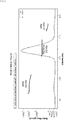
- In this example 10µL of a sample comprising 4.5g/L of a molecule of interest were applied to a SEC (size exclusion chromatography) column. In this example the elution profile of the molecule of interest was analyzed. An Äkta UV detector coupled to the exit of the SEC column was used to detect the concentration of the molecules in the sample (cf. peak of
FIG: 1 ) . AWyatt DAWN 8 was used to detect the average molecule radius of the molecules in the sample. The signals of both detectors were used to calculate the molecular mass of the molecule comprised in the sample employing unicorn software. The results are depicted inFIG. 1 . In this example, three MALS signals were detected, one from molecules of around 300 kDa, one from molecules of around 152 kDa and one from molecules of 112 kDa (cf.Fig. 1 ). Thus, the protein of interest under the given experimental conditions such as a flow rate of 0.5 mL/min is eluted as dimer, as monomer and as fragments. The UV signals clearly demonstrates that most of the protein of interest is eluted as the 152 kDa monomer. Via integration of the areas under the UV peaks, it is possible to assume a functional dependence here to conclude which ratio of dimers, monomers and fragments was comprised in the original 10 µL sample. Once these different molecular weights are known it is possible to calculate the share of a single molecule in any sample where mixtures of LMW and molecule of interest (monomer) or HMW and molecue of interest (monomer) are present and separated using known techniques such as HIC/ SEC /Mix mode/ Protein A / CEX (cf. Table 1). - The measured MW values might be adjusted by a concentration factor (A2). This calculation is know in the state of the art.
Table 1 MW HMW Share [%] Monomer Share [%] 300 100% 0% 285.2 90% 10% 270.4 80% 20% 255.6 70% 30% 240.8 60% 40% 226 50% 50% 211.2 40% 60% 196.4 30% 70% 181.6 20% 80% 166.8 10% 90% 152 0% 100% 148 10% 90% 144 20% 80% 140 30% 70% 136 40% 60% 132 50% 50% 128 60% 40% 124 70% 30% 120 80% 20% 116 90% 10% 112 100% 0% - The protein of interest is processed under these conditions on various chromatography steps e.g. CEX etc. as detailed above. The MALS and UV signal can be used to establish a model such as a digital twin to simulate different process conditions. The advantage of the described approach is depicted in
Figure 2 . In detailFig. 2 shows that in contrast to the models of the state of the art, which rely on collected fractions and interpolated data points for areas between the analyzed fractions, the MALS signal is more a continuous signal not requiring interpolated data and hence allowing for generation of a more accurate model. In other words the digital model based on MALS and UV data has a better "fit" while requiring less resources and time i.e. establishing such a model is cheaper and faster.
Claims (8)
- Use of In-Line Multi Angle Light Scattering for establishing a digital model of a chromatography unit operation.
- Method for establishing a digital model of a chromatography using data generated via In-Line Multi Angle Light Scattering comprising the steps ofa) introducing a sample comprising at least one molecule of interest into a chromatography column or other separation means;b) loading, washing, eluting or stripping the chromatography column or other separation means,c) providing at least one multi angle light scattering detector and at least one concentration detector wherein the sample comprising the at least one molecule of interest passes both detectors as soon as it leaves the column or other separation meansd) determining the average molecule radius of the at least one molecule of interest comprised in the sample passing through the In-Line Multi-Angle-Light-Scattering detectore) determining the concentration of the at least one molecule of interest comprised in the sample using the data generated by the at least one concentration detectorf) determining the molecular mass of the at least one molecule of interest comprised in the sample using the data generated by the In-Line Multi-Angle-Light-Scattering detector and concentration detectorg) assuming a functional dependenceh) establishing a digital model of the chromatography column or other separation means.
- Method according to claim 2, wherein the method step of assuming a functional difference comprises generation of at least two, more preferably three sub models.
- Method according to claim 3, wherein three sub-models are generated one sub model for low molecular weight molecules comprised in the sample, one sub model for the molecule of interest and one sub model for high molecular weight molecules.
- Digital model established with a method according to claims 2-4.
- Using a digital model established with the method according to claims 2-4 to model a chromatography unit operation during process development, process transfer, process characterization and/or process control of a biotech manufacturing process.
- System for establishing a digital model of a chromatography unit operation using data collected from In Line Multi Angle Light Scattering comprising at least• at least one measurement point for In Line Multi Angle Light Scattering• at least one measurement point for an UV signal• at least one chromatography column or other separation means,• at least one computational means using data collected from the at least two measurement pointswherein at the at least one measurement point of the In Line Multi Angle Light Scattering at least one characteristic of a sample corresponding to at least one actual quality attribute or at least one actual critical quality attribute is measured and at the at least one measurement point for an UV signal at least the concentration of a protein of interest comprised in the sample is measured wherein based on the data collected from the at least two measurement points the at least computational means is configured to calculate the share of the at least one actual quality attribute or the share of the at least one actual critical quality attribute in the sample over time and based on that calculation a digital model of the at least one chromatography column is fitted.
- System according to claim 7, wherein the measured at least one quality attribute is the radius of at least one molecule of interest comprised in the sample.
Priority Applications (1)
| Application Number | Priority Date | Filing Date | Title |
|---|---|---|---|
| EP20154468.1A EP3719494A1 (en) | 2020-01-30 | 2020-01-30 | Using in-line multi-angle-light-scattering (mals) detectors for establishing digital twins of chromatography unit operations |
Applications Claiming Priority (1)
| Application Number | Priority Date | Filing Date | Title |
|---|---|---|---|
| EP20154468.1A EP3719494A1 (en) | 2020-01-30 | 2020-01-30 | Using in-line multi-angle-light-scattering (mals) detectors for establishing digital twins of chromatography unit operations |
Publications (1)
| Publication Number | Publication Date |
|---|---|
| EP3719494A1 true EP3719494A1 (en) | 2020-10-07 |
Family
ID=69411242
Family Applications (1)
| Application Number | Title | Priority Date | Filing Date |
|---|---|---|---|
| EP20154468.1A Withdrawn EP3719494A1 (en) | 2020-01-30 | 2020-01-30 | Using in-line multi-angle-light-scattering (mals) detectors for establishing digital twins of chromatography unit operations |
Country Status (1)
| Country | Link |
|---|---|
| EP (1) | EP3719494A1 (en) |
Cited By (1)
| Publication number | Priority date | Publication date | Assignee | Title |
|---|---|---|---|---|
| EP4610645A1 (en) | 2024-02-29 | 2025-09-03 | Sartorius Stedim Biotech GmbH | Methods for processing and/or purification of a biological product involving multi-angle light scattering as analytical tool for process control |
Citations (2)
| Publication number | Priority date | Publication date | Assignee | Title |
|---|---|---|---|---|
| EP0665433A1 (en) * | 1994-01-27 | 1995-08-02 | Wyatt Technology Corporation | Precision determination for molecular weights |
| US20050240385A1 (en) * | 2004-04-22 | 2005-10-27 | Waters Investments Limited | System and method for determining radius of gyration, molecular weight, and intrinsic viscosity of a polymeric distribution using gel permeation chromatography and light scattering detection |
-
2020
- 2020-01-30 EP EP20154468.1A patent/EP3719494A1/en not_active Withdrawn
Patent Citations (2)
| Publication number | Priority date | Publication date | Assignee | Title |
|---|---|---|---|---|
| EP0665433A1 (en) * | 1994-01-27 | 1995-08-02 | Wyatt Technology Corporation | Precision determination for molecular weights |
| US20050240385A1 (en) * | 2004-04-22 | 2005-10-27 | Waters Investments Limited | System and method for determining radius of gyration, molecular weight, and intrinsic viscosity of a polymeric distribution using gel permeation chromatography and light scattering detection |
Non-Patent Citations (4)
| Title |
|---|
| ASTAFIEVA I V ET AL: "Absolute on-line molecular mass analysis of basic fibroblast growth factor and its multimers by reversed-phase liquid chromatography with multi-angle laser light scattering detection", JOURNAL OF CHROMATOGRAPHY A, ELSEVIER, AMSTERDAM, NL, vol. 740, no. 2, 2 August 1996 (1996-08-02), pages 215 - 229, XP004020139, ISSN: 0021-9673, DOI: 10.1016/0021-9673(96)00134-3 * |
| T. WANG ET AL: "Use of Multi-Angle Laser Light Scattering and Size-Exclusion Chromatography to Characterize the Molecular Weight and Types of Aggregates Present in Commercial Whey Protein Products", JOURNAL OF DAIRY SCIENCE, vol. 86, no. 10, 1 October 2003 (2003-10-01), US, pages 3090 - 3101, XP055715011, ISSN: 0022-0302, DOI: 10.3168/jds.S0022-0302(03)73909-5 * |
| WIKIPEDIA: "4/07/2020 Multiangle light scattering -Wikipedia Multiangle light scattering", WIKIPEDIA.ORG, 14 October 2019 (2019-10-14), XP055715909, Retrieved from the Internet <URL:https://en.wikipedia.org/w/index.php?title=Multiangle_light_scattering&oldid=921242598> [retrieved on 20200717] * |
| XIAOYI YANG ET AL: "Molecular Characterization and Functional Activity of an IL-15 Antagonist MutIL-15/Fc Human Fusion Protein", MOLECULAR PHARMACEUTICS, vol. 10, no. 2, 22 January 2013 (2013-01-22), US, pages 717 - 727, XP055582655, ISSN: 1543-8384, DOI: 10.1021/mp300513j * |
Cited By (2)
| Publication number | Priority date | Publication date | Assignee | Title |
|---|---|---|---|---|
| EP4610645A1 (en) | 2024-02-29 | 2025-09-03 | Sartorius Stedim Biotech GmbH | Methods for processing and/or purification of a biological product involving multi-angle light scattering as analytical tool for process control |
| WO2025181303A2 (en) | 2024-02-29 | 2025-09-04 | Sartorius Stedim Biotech Gmbh | Methods for processing and/or purification of a biological product involving multi-angle light scattering as analytical tool for process control |
Similar Documents
| Publication | Publication Date | Title |
|---|---|---|
| Ahrer et al. | Analysis of aggregates of human immunoglobulin G using size-exclusion chromatography, static and dynamic light scattering | |
| Großhans et al. | In-line Fourier-transform infrared spectroscopy as a versatile process analytical technology for preparative protein chromatography | |
| Kumar et al. | Mechanistic modeling of ion-exchange process chromatography of charge variants of monoclonal antibody products | |
| US20080201111A1 (en) | Method to derive physical properties of a sample after correcting the effects of interdetector band broadening | |
| Bajaj et al. | Determination of second virial coefficient of proteins using a dual-detector cell for simultaneous measurement of scattered light intensity and concentration in SEC-HPLC | |
| US20110264380A1 (en) | Determination of the hydrodynamic radii and/or content of constituents of a mixture by analysis of the taylor dispersion of the mixture in a capillary tube | |
| US10312063B2 (en) | Eluate analysis and collection | |
| EP2344265B1 (en) | Evaluating heparin preparations for pharmaceutical use | |
| EP3719494A1 (en) | Using in-line multi-angle-light-scattering (mals) detectors for establishing digital twins of chromatography unit operations | |
| Bhirde et al. | High performance size exclusion chromatography and high-throughput dynamic light scattering as orthogonal methods to screen for aggregation and stability of monoclonal antibody drug products | |
| US20070178013A1 (en) | Dual-detector systems and methods having utility in biomolecular measurements | |
| Thielking et al. | Determination of the structural parameters of aqueous polymer solutions in the molecular, partially aggregated, and particulate states by means of FFFF/MALLS | |
| US20220187256A1 (en) | Cation chromatography using predicted elution buffer salt concentration | |
| US6411383B1 (en) | Method for measuring the 2nd virial coefficient | |
| Amartely et al. | Ion exchange chromatography (IEX) coupled to multi-angle light scattering (MALS) for protein separation and characterization | |
| US3920398A (en) | Method for chromatographic analysis of organic acids or their carboxylate salts | |
| US20220120678A1 (en) | Purifying a sample solution via real-time multi-angle light scattering | |
| CN110208419B (en) | Method for detecting impurities in bivalirudin | |
| US12135316B2 (en) | Controlling the purification of a macromolecule solution via real-time multi-angle light scattering | |
| Tran et al. | In-line fiber optical sensor for detection of IgG aggregates in affinity chromatography | |
| Márkus et al. | Optimization of anion exchange chromatographic purification of Adalimumab and evaluation of its combination with cation exchange method to improve purity | |
| Oh et al. | Improved chromatographic fractionation and characterization of human plasma proteins | |
| Ronnerfors | Screening of HETP test conditions and resin storage solutions for HIC | |
| EP4610645A1 (en) | Methods for processing and/or purification of a biological product involving multi-angle light scattering as analytical tool for process control | |
| Sanchez Reyes | Separation and characterization of antibody-based protein variants in column chromatography for the production of biopharmaceuticals |
Legal Events
| Date | Code | Title | Description |
|---|---|---|---|
| PUAI | Public reference made under article 153(3) epc to a published international application that has entered the european phase |
Free format text: ORIGINAL CODE: 0009012 |
|
| STAA | Information on the status of an ep patent application or granted ep patent |
Free format text: STATUS: THE APPLICATION HAS BEEN PUBLISHED |
|
| AK | Designated contracting states |
Kind code of ref document: A1 Designated state(s): AL AT BE BG CH CY CZ DE DK EE ES FI FR GB GR HR HU IE IS IT LI LT LU LV MC MK MT NL NO PL PT RO RS SE SI SK SM TR |
|
| AX | Request for extension of the european patent |
Extension state: BA ME |
|
| STAA | Information on the status of an ep patent application or granted ep patent |
Free format text: STATUS: THE APPLICATION IS DEEMED TO BE WITHDRAWN |
|
| 18D | Application deemed to be withdrawn |
Effective date: 20210408 |