EP3716624A1 - Video encoding method, computer device and storage medium - Google Patents
Video encoding method, computer device and storage medium Download PDFInfo
- Publication number
- EP3716624A1 EP3716624A1 EP18880220.1A EP18880220A EP3716624A1 EP 3716624 A1 EP3716624 A1 EP 3716624A1 EP 18880220 A EP18880220 A EP 18880220A EP 3716624 A1 EP3716624 A1 EP 3716624A1
- Authority
- EP
- European Patent Office
- Prior art keywords
- picture frame
- current
- quantization parameter
- frame
- obtaining
- Prior art date
- Legal status (The legal status is an assumption and is not a legal conclusion. Google has not performed a legal analysis and makes no representation as to the accuracy of the status listed.)
- Granted
Links
Images




Classifications
-
- H—ELECTRICITY
- H04—ELECTRIC COMMUNICATION TECHNIQUE
- H04N—PICTORIAL COMMUNICATION, e.g. TELEVISION
- H04N19/00—Methods or arrangements for coding, decoding, compressing or decompressing digital video signals
- H04N19/10—Methods or arrangements for coding, decoding, compressing or decompressing digital video signals using adaptive coding
- H04N19/102—Methods or arrangements for coding, decoding, compressing or decompressing digital video signals using adaptive coding characterised by the element, parameter or selection affected or controlled by the adaptive coding
- H04N19/124—Quantisation
- H04N19/126—Details of normalisation or weighting functions, e.g. normalisation matrices or variable uniform quantisers
-
- H—ELECTRICITY
- H04—ELECTRIC COMMUNICATION TECHNIQUE
- H04N—PICTORIAL COMMUNICATION, e.g. TELEVISION
- H04N19/00—Methods or arrangements for coding, decoding, compressing or decompressing digital video signals
- H04N19/10—Methods or arrangements for coding, decoding, compressing or decompressing digital video signals using adaptive coding
- H04N19/134—Methods or arrangements for coding, decoding, compressing or decompressing digital video signals using adaptive coding characterised by the element, parameter or criterion affecting or controlling the adaptive coding
- H04N19/136—Incoming video signal characteristics or properties
- H04N19/14—Coding unit complexity, e.g. amount of activity or edge presence estimation
-
- H—ELECTRICITY
- H04—ELECTRIC COMMUNICATION TECHNIQUE
- H04N—PICTORIAL COMMUNICATION, e.g. TELEVISION
- H04N19/00—Methods or arrangements for coding, decoding, compressing or decompressing digital video signals
- H04N19/10—Methods or arrangements for coding, decoding, compressing or decompressing digital video signals using adaptive coding
- H04N19/102—Methods or arrangements for coding, decoding, compressing or decompressing digital video signals using adaptive coding characterised by the element, parameter or selection affected or controlled by the adaptive coding
- H04N19/103—Selection of coding mode or of prediction mode
- H04N19/114—Adapting the group of pictures [GOP] structure, e.g. number of B-frames between two anchor frames
-
- H—ELECTRICITY
- H04—ELECTRIC COMMUNICATION TECHNIQUE
- H04N—PICTORIAL COMMUNICATION, e.g. TELEVISION
- H04N19/00—Methods or arrangements for coding, decoding, compressing or decompressing digital video signals
- H04N19/10—Methods or arrangements for coding, decoding, compressing or decompressing digital video signals using adaptive coding
- H04N19/102—Methods or arrangements for coding, decoding, compressing or decompressing digital video signals using adaptive coding characterised by the element, parameter or selection affected or controlled by the adaptive coding
- H04N19/124—Quantisation
-
- H—ELECTRICITY
- H04—ELECTRIC COMMUNICATION TECHNIQUE
- H04N—PICTORIAL COMMUNICATION, e.g. TELEVISION
- H04N19/00—Methods or arrangements for coding, decoding, compressing or decompressing digital video signals
- H04N19/10—Methods or arrangements for coding, decoding, compressing or decompressing digital video signals using adaptive coding
- H04N19/134—Methods or arrangements for coding, decoding, compressing or decompressing digital video signals using adaptive coding characterised by the element, parameter or criterion affecting or controlling the adaptive coding
- H04N19/146—Data rate or code amount at the encoder output
-
- H—ELECTRICITY
- H04—ELECTRIC COMMUNICATION TECHNIQUE
- H04N—PICTORIAL COMMUNICATION, e.g. TELEVISION
- H04N19/00—Methods or arrangements for coding, decoding, compressing or decompressing digital video signals
- H04N19/10—Methods or arrangements for coding, decoding, compressing or decompressing digital video signals using adaptive coding
- H04N19/134—Methods or arrangements for coding, decoding, compressing or decompressing digital video signals using adaptive coding characterised by the element, parameter or criterion affecting or controlling the adaptive coding
- H04N19/157—Assigned coding mode, i.e. the coding mode being predefined or preselected to be further used for selection of another element or parameter
- H04N19/159—Prediction type, e.g. intra-frame, inter-frame or bidirectional frame prediction
-
- H—ELECTRICITY
- H04—ELECTRIC COMMUNICATION TECHNIQUE
- H04N—PICTORIAL COMMUNICATION, e.g. TELEVISION
- H04N19/00—Methods or arrangements for coding, decoding, compressing or decompressing digital video signals
- H04N19/10—Methods or arrangements for coding, decoding, compressing or decompressing digital video signals using adaptive coding
- H04N19/169—Methods or arrangements for coding, decoding, compressing or decompressing digital video signals using adaptive coding characterised by the coding unit, i.e. the structural portion or semantic portion of the video signal being the object or the subject of the adaptive coding
- H04N19/17—Methods or arrangements for coding, decoding, compressing or decompressing digital video signals using adaptive coding characterised by the coding unit, i.e. the structural portion or semantic portion of the video signal being the object or the subject of the adaptive coding the unit being an image region, e.g. an object
- H04N19/172—Methods or arrangements for coding, decoding, compressing or decompressing digital video signals using adaptive coding characterised by the coding unit, i.e. the structural portion or semantic portion of the video signal being the object or the subject of the adaptive coding the unit being an image region, e.g. an object the region being a picture, frame or field
-
- H—ELECTRICITY
- H04—ELECTRIC COMMUNICATION TECHNIQUE
- H04N—PICTORIAL COMMUNICATION, e.g. TELEVISION
- H04N19/00—Methods or arrangements for coding, decoding, compressing or decompressing digital video signals
- H04N19/10—Methods or arrangements for coding, decoding, compressing or decompressing digital video signals using adaptive coding
- H04N19/169—Methods or arrangements for coding, decoding, compressing or decompressing digital video signals using adaptive coding characterised by the coding unit, i.e. the structural portion or semantic portion of the video signal being the object or the subject of the adaptive coding
- H04N19/187—Methods or arrangements for coding, decoding, compressing or decompressing digital video signals using adaptive coding characterised by the coding unit, i.e. the structural portion or semantic portion of the video signal being the object or the subject of the adaptive coding the unit being a scalable video layer
-
- H—ELECTRICITY
- H04—ELECTRIC COMMUNICATION TECHNIQUE
- H04N—PICTORIAL COMMUNICATION, e.g. TELEVISION
- H04N19/00—Methods or arrangements for coding, decoding, compressing or decompressing digital video signals
- H04N19/46—Embedding additional information in the video signal during the compression process
- H04N19/463—Embedding additional information in the video signal during the compression process by compressing encoding parameters before transmission
-
- H—ELECTRICITY
- H04—ELECTRIC COMMUNICATION TECHNIQUE
- H04N—PICTORIAL COMMUNICATION, e.g. TELEVISION
- H04N19/00—Methods or arrangements for coding, decoding, compressing or decompressing digital video signals
- H04N19/50—Methods or arrangements for coding, decoding, compressing or decompressing digital video signals using predictive coding
- H04N19/503—Methods or arrangements for coding, decoding, compressing or decompressing digital video signals using predictive coding involving temporal prediction
- H04N19/51—Motion estimation or motion compensation
- H04N19/573—Motion compensation with multiple frame prediction using two or more reference frames in a given prediction direction
-
- H—ELECTRICITY
- H04—ELECTRIC COMMUNICATION TECHNIQUE
- H04N—PICTORIAL COMMUNICATION, e.g. TELEVISION
- H04N19/00—Methods or arrangements for coding, decoding, compressing or decompressing digital video signals
- H04N19/50—Methods or arrangements for coding, decoding, compressing or decompressing digital video signals using predictive coding
- H04N19/503—Methods or arrangements for coding, decoding, compressing or decompressing digital video signals using predictive coding involving temporal prediction
- H04N19/51—Motion estimation or motion compensation
- H04N19/577—Motion compensation with bidirectional frame interpolation, i.e. using B-pictures
-
- H—ELECTRICITY
- H04—ELECTRIC COMMUNICATION TECHNIQUE
- H04N—PICTORIAL COMMUNICATION, e.g. TELEVISION
- H04N19/00—Methods or arrangements for coding, decoding, compressing or decompressing digital video signals
- H04N19/30—Methods or arrangements for coding, decoding, compressing or decompressing digital video signals using hierarchical techniques, e.g. scalability
-
- H—ELECTRICITY
- H04—ELECTRIC COMMUNICATION TECHNIQUE
- H04N—PICTORIAL COMMUNICATION, e.g. TELEVISION
- H04N19/00—Methods or arrangements for coding, decoding, compressing or decompressing digital video signals
- H04N19/30—Methods or arrangements for coding, decoding, compressing or decompressing digital video signals using hierarchical techniques, e.g. scalability
- H04N19/31—Methods or arrangements for coding, decoding, compressing or decompressing digital video signals using hierarchical techniques, e.g. scalability in the temporal domain
Definitions
- This application relates to the field of video coding, and in particular, to a video coding method and apparatus, a computer device, and a storage medium.
- a quantization parameter (QP) of a coder can be adjusted in terms of video to adjust a coding bit rate of a picture, such that a stable bit rate and a lower video delay can be ensured over a limited video transmission bandwidth.
- QP quantization parameter
- a QP of a current picture frame needs to be calculated according to a configured bit rate control model, which can lead to high calculation complexity and low video coding efficiency.
- a video coding method a computer device, and a storage medium are provided.
- a video coding method including:
- a computer device including: a memory and a processor, the memory storing computer-readable instructions, the computer-readable instructions, when executed by the processor, causing the processor to perform the following steps:
- One or more non-volatile storage medium storing computer-readable instructions, the computer-readable instructions, when executed by one or more processors, causing the one or more processors to perform the following steps:
- FIG. 1A is a diagram of an application environment of a video coding method according to an embodiment.
- video coding when video coding is performed, because the content of frames of a video picture are different, complexity is different. Therefore, a quantity of bits during coding of each frame of the picture constantly varies, and a transmission channel also keeps changing. Therefore, a coder buffer needs to be set to balance a coding bit rate and bandwidth.
- FIG. 1 when video coding needs to be performed, a video picture sequence is input to a video coder 1, a bitstream obtained after the sequence is coded by the video coder 1 is input to a coder buffer 2 for buffering and then transmitted by a network.
- a bit rate controller 3 adjusts a quantization parameter of the video coder according to a set bit rate control model, to control the video coder to perform video coding to obtain a bit rate, thereby preventing overflow or underflow of the coder buffer 2.
- the video coding method in this embodiment of this application may be applied to a computer device.
- the computer device may be an independent physical server or terminal, may be a server cluster including a plurality of physical servers, or may be a cloud server providing basic cloud computing services such as a cloud server, a cloud database, a cloud storage and a CDN.
- the terminal may be a smartphone, a tablet computer, a notebook computer, a desktop computer, a smart speaker, a smartwatch, or the like, but is not limited thereto.
- a terminal 110 or a server 120 may perform video coding by using a coder or video decoding by using a decoder.
- the terminal 110 or the server 120 may also perform video coding by using a processor running a video coding program or video decoding by using a processor running a video decoding program.
- the server 120 may directly transfer the coded data to the processor for decoding, or may store the coded data in a database for subsequent decoding.
- the server 120 may directly send the coded data to the terminal 110 through an output interface, or may store the coded data in a database for subsequent transfer.
- the coded data is data obtained by coding a picture frame.
- a video coding method is provided. This embodiment is mainly described by using an example in which the method is applied to the foregoing computer device.
- the method may specifically include the following steps: Step S202: Obtain a to-be-coded current picture frame.
- a video includes a sequence of pictures. Each picture may be considered as one frame.
- the current picture frame is a picture frame currently needs to be coded.
- the sequence of pictures is input to a video coder, and the video coder obtains, according to a preset sequence, a to-be-coded picture frame for coding.
- Step S204 Obtain a current layer of the current picture frame in a group of pictures to which the current picture frame belongs, the group of pictures including a plurality of picture frames.
- the group of pictures is a group of successive pictures, and several successive pictures in the video picture sequence may form a group, to facilitate random access and edition.
- a quantity of picture frames in one group of pictures may be set according to an actual requirement, for example, may be eight.
- the group of pictures may include three types of frames, namely, I frame, P frame, and B frame.
- the I frame is an intra-frame predicted frame.
- the P frame is a unidirectionally predicted frame, and may be predicted through inter-frame prediction.
- the B frame is a bidirectionally predicted frame, and may be predicted by referring to a preceding or a following picture frame.
- the current layer is a layer of the current picture frame in the group of pictures.
- a layered coding structure may be preset, and accordingly a layer of a picture frame in the group of pictures can be obtained according to the layered coding structure.
- the layered coding structure refers to picture frames in the group of pictures being divided into a plurality of layers for coding, and different layers may correspond to different coding quality.
- a specific layering method may be set according to an actual requirement or application scenario. For example, the picture frames in the group of pictures are layered chronologically, to obtain a time-based B-frame layered coding structure (hierarchical B structure).
- the layered coding structure sets a quantity of layers, a picture frame corresponding to each layer and a reference relationship between picture frames. A lower layer picture frame may serve as a reference for coding of a higher layer picture frame.
- the quantity of layers may be specifically set according to an actual requirement.
- the group of pictures may be divided in to two layers, three layers, or four layers.
- the preset layered coding structure is the time-based B-frame layered coding structure.
- One group of pictures includes eight picture frames.
- B frames in the group of pictures are divided into three layers, namely, B0 layer, B1 layer, and B2 layer.
- the B0 layer includes the fourth B frame
- the B1 layer includes the second and the sixth B frames
- the B2 layer includes the remaining B-frame picture frames.
- a start point of an arrow represents a reference frame picture
- an end point of the arrow indicates a picture frame coded according to the reference frame
- the picture frames are sorted according to a display sequence of the picture frames.
- FIG. 2B the time-based B-frame layered coding structure is shown in FIG. 2B .
- a lower layer picture frame may serve as a reference for coding of a higher layer picture frame.
- reference frames of the picture frame on the B0 layer are P frames at the two sides.
- the picture frames on the B1 layer may serve as a reference for coding of the picture frames on the B2 layer.
- the time-based B-frame layered coding structure is not limited to the three-layer coding structure, but may be, for example, a two-layer coding structure or a four-layer coding structure.
- Step S206 Obtain a current quantization parameter offset corresponding to the current picture frame according to the current layer, picture frames on different layers of the group of pictures corresponding to different quantization parameter offsets.
- a quantization needs to be performed to reduce a quantity of data.
- a value obtained after a discrete cosine transform is performed on the prediction residual is mapped to a relatively small value.
- a relatively small value may be obtained by dividing the value by a quantization step.
- a quantization parameter is a sequence number of a quantization step, and a corresponding quantization step may be searched according to a quantization parameter.
- a small quantization parameter indicates reservation of more details of a picture frame and a higher corresponding bit rate.
- a greater quantization parameter indicates a lower corresponding bit rate, greater distortion and lower quality of a picture.
- a quantization parameter offset is a quantization parameter offset value of a coded picture frame relative to a reference frame of the picture frame.
- Picture frames on different layers of a group of pictures correspond to different quantization parameter offsets, and the quantization parameter offsets corresponding to the picture frames on the different layers may be preset, and may be specifically set according to an actual requirement.
- quantization parameter offsets of the first layer to the third layer may be respectively 0.42, 0.8, and 1.2.
- a quantization parameter offset corresponding to a high layer is greater than a quantization parameter offset corresponding to a low layer. That is, a layer level of a picture frame has a positive correlation with a quantization parameter offset, to improve compression efficiency of video coding.
- Step S208 Obtain a reference quantization parameter corresponding to a reference picture frame of the current picture frame.
- reference frames are used for performing prediction on the coded picture frame.
- a selection method of the reference frame may be set according to an actual requirement.
- a reference picture frame is a reference frame selected from a list of candidate reference frames of the current picture frame.
- the reference frame may be selected, for example, based on a spatial similarity and the like.
- the current picture frame is a B frame, that is, a bidirectionally predicted frame.
- Each B frame has two sequences of candidate reference frames, and the first picture frame of each of the two sequences of candidate reference frames may be selected as a reference picture frame.
- the reference quantization parameter may be a coding quantization parameter during coding performed by using the reference picture frame.
- the reference quantization parameter may be obtained with reference to the coding quantization parameter and the quantization parameter offset that correspond to the reference picture frame.
- the reference quantization parameter is obtained by subtracting the quantization parameter offset corresponding to the reference picture frame from the coding quantization parameter corresponding to the reference picture frame.
- the reference quantization parameter may be an average value of the quantization parameters in the reference picture frame.
- Step S210 Obtain a current quantization parameter corresponding to the current picture frame according to the reference quantization parameter and the current quantization parameter offset.
- a current quantization parameter corresponding to the current picture frame is obtained according to the reference quantization parameter and the current quantization parameter offset.
- the current quantization parameter may be a sum of the reference quantization parameter and the current quantization parameter offset.
- the current quantization parameter may also be obtained according to a frame distance between each of the reference picture frames and the current picture frame. For example, a weight corresponding to the frame distance is set. An impact value corresponding to the reference picture frames is obtained according to the weights corresponding to the reference picture frames and the coding quantization parameter of the reference picture frame, and then the current quantization parameter is obtained according to the impact value and the current quantization parameter offset.
- Step S212 Code the current picture frame according to the current quantization parameter.
- a correspondence is preset between a quantization parameter and a quantization step. Therefore, a corresponding quantization step may be obtained according to the current quantization parameter, and quantization coding is performed on the current picture frame according to the quantization step.
- the Round(x) function is used for performing rounding off to an even number on the quantized value.
- the correspondence between the quantization parameter and the quantization step may be specifically set according to requirement.
- the quantization step has 52 values that are integers from 0 to 51.
- the quantization step has values that are integers from 0 to 39.
- the quantization step increases as the quantization parameter increases. Each time the quantization parameter is increased by 6, the quantization step is doubled. It may be understood that, when all the quantization parameters in the correspondence between the quantization parameter and the quantization step are integers, rounding may be performed on the current quantization parameter. A rounding method may be performed to round off to an integer.
- the video coding method may be used to compress a video file, for example, compressing a WeChat short-form video.
- the current layer of the current picture frame in the group of pictures to which the current picture frame belongs is obtained, and then the quantization parameter offset corresponding to the current picture frame is obtained according to the current layer.
- the reference quantization parameter corresponding to the reference picture frame of the current picture frame is obtained, and the current quantization parameter corresponding to the current picture frame is obtained according to the reference quantization parameter and the quantization parameter offset.
- the current picture frame is coded according to the current quantization parameter.
- the current quantization parameter corresponding to the current picture frame is obtained by using the quantization parameter offset corresponding to the current layer of the to-be-coded current picture frame and the coding quantization parameter corresponding to the reference picture frame, the calculation complexity is lowed.
- the quantization parameter offset is flexibly changed for picture frames on different layers, so that coding efficiency is high.
- the current picture frame is a bidirectionally predicted frame
- the step of obtaining a current quantization parameter offset corresponding to the current picture frame according to the current layer includes:
- Step S302 Obtain a preset quantization offset parameter between the picture frame on the current layer and a unidirectionally predicted frame.
- quantization offset parameters of different layers of each layered coding structure with respect to the unidirectionally predicted frame may be preconfigured.
- the quantization parameter offset is calculated according to the quantization offset parameter, and the quantization parameter offset has a positive correlation with the quantization offset parameter.
- a formula of obtaining a quantization offset based on a quantization offset parameter may be obtained according to the correspondence between the quantization step and the quantization parameter. For example, for the current brightness coding, the quantization step has 52 values in total that are integers from 0 to 51, and the quantization parameter has a correlation with the quantization step.
- the quantization parameter increases as the quantization step increases. Each time the quantization parameter is increased by 6, the quantization parameter is doubled.
- PbOffset_i represents a quantization parameter offset corresponding to an i th layer
- PbFactor_i represents a quantization offset parameter corresponding to the i th layer.
- a specific value of the quantization offset parameter may be preset according to requirement or experience.
- the unidirectionally predicted frame may serve as a reference to set quantization offset parameters between picture frames on different layers of the bidirectionally predicted frame and the unidirectionally predicted frame.
- quantization offset parameters corresponding to the B0 layer, the B1 layer and the B2 layer may be respectively 1.05, 1.10, and 1.15.
- Step S304 Obtain the current quantization parameter offset corresponding to the current picture frame according to the quantization offset parameter.
- the current quantization parameter offset corresponding to the current picture frame may be obtained according to the obtained quantization offset parameter and a corresponding calculation formula.
- a specific calculation formula may be obtained according to the correspondence between the quantization step and the quantization parameter.
- step S208 of obtaining a reference quantization parameter corresponding to a reference picture frame of the current picture frame includes: Step S402: Obtain a reference frame type of the reference picture frame and a coding quantization parameter of the reference picture frame.
- the reference frame type may include I-frame, B-frame and P-frame.
- a reference frame type may be specifically set according to requirement or different video coding standards. For example, in some video coding standards such as H26.3, B frame cannot be used as a reference frame. In some video coding standards, however, B frame can be used as a reference frame.
- the coding quantization parameter of the reference picture frame is a quantization parameter used for coding the reference picture frame.
- Step S404 Obtain the reference quantization parameter corresponding to the reference picture frame according to the reference frame type and the coding quantization parameter.
- the coding quantization parameter corresponding to the reference picture frame may be adjusted according to different reference frame types to obtain the reference quantization parameter.
- the coding quantization parameter corresponding to the reference picture frame may be used as the reference quantization parameter.
- the reference quantization parameter may be obtained with reference to the quantization parameter offset and the coding quantization parameter.
- the reference quantization parameter is obtained by subtracting the quantization parameter offset corresponding to the reference frame from the coding quantization parameter corresponding to the reference picture frame.
- the method for obtaining the current quantization parameter according to the reference quantization parameter of the reference picture frame and the current quantization parameter offset provided in this embodiment of this application may be used.
- the current picture frame is an I frame and a P frame
- the method provided in this embodiment of this application may not be used for calculating the current quantization parameter of current picture frame.
- the current quantization parameter corresponding to the current picture frame is calculated according to a bit rate control model to control the bit rate and prevent an error of the bit rate from being excessively great.
- the bit rate control model may be a reference mode 8 (RM8), a verification mode 8 (VM8), and the like, and is not specifically limited.
- the current quantization parameter corresponding to the current picture frame may be calculated by using the bit rate control model.
- a quantization parameter offset of a P frame relative to an I frame may be set, and then the current quantization parameter corresponding to the current picture frame is obtained according to a quantization parameter corresponding to the P frame and the quantization parameter offset of a P frame relative to an I frame.
- a quantization parameter corresponding to the I frame is obtained by subtracting the quantization parameter offset of a P frame relative to an I frame from a coding quantization parameter corresponding to the P frame.
- the quantization parameter corresponding to the I frame is less than the quantization parameter corresponding to the P frame, so that coding precision corresponding to the I frame is higher and picture distortion is smaller.
- a coding quantization parameter corresponding to a P frame nearest to the I frame may be selected to subtract the quantization parameter offset of the P frame relative to the I frame.
- the current picture frame is a bidirectionally predicted frame
- the step of obtaining the reference quantization parameter corresponding to the reference picture frame according to the reference frame type and the coding quantization parameter includes: when the reference frame type is a bidirectionally predicted frame, obtaining a layer of the reference picture frame in a group of pictures to which the reference picture frame belongs; obtaining a reference quantization parameter offset corresponding to the reference picture frame according to the layer of the reference picture frame in the group of pictures to which the reference picture frame belongs; and obtaining the reference quantization parameter corresponding to the reference picture frame according to the coding quantization parameter and the reference quantization parameter offset corresponding to the reference picture frame.
- the reference quantization parameter offset is a quantization parameter offset corresponding to the layer on which the reference picture frame is located. Because when the picture frame is a bidirectionally predicted frame, the quantization parameter offset needs to be obtained according to the current layer corresponding to the picture frame, and the corresponding current quantization parameter is obtained according to the quantization parameter offset and the reference quantization parameter of the reference picture frame. Therefore, when the reference picture frame is a bidirectionally predicted frame, the coding quantization parameter corresponding to the reference picture frame is obtained by using the quantization parameter offset corresponding to the layer on which the reference picture frame is located and the reference quantization parameter corresponding to the reference picture frame.
- the layer of the reference picture frame in the group of pictures to which the reference picture frame belongs needs to be obtained, and the reference quantization parameter offset corresponding to the reference picture frame is obtained according to the layer of the reference picture frame in the group of pictures to which the reference picture frame belongs.
- the reference quantization parameter corresponding to the reference picture frame is obtained according to the coding quantization parameter of the reference picture frame and the reference quantization parameter offset corresponding to the reference picture frame.
- the reference quantization parameter is a difference between the coding quantization parameter and the reference quantization parameter offset. This may be specifically set according to requirement.
- the step of coding the current picture frame according to the current quantization parameter includes: Step S502: Obtain a current quantization step corresponding to the current picture frame according to the current quantization parameter.
- a quantization step corresponding to the current quantization parameter is obtained according to the correspondence between the quantization parameter and the quantization step and is used as the current quantization step.
- Step S504 Code the current picture frame according to the current quantization step, to obtain a current bit rate corresponding to the current picture frame.
- the bit rate is a quantity of data bits sent in a unit time.
- the current bit rate is a corresponding bit rate after the current picture frame is coded according to the current quantization step.
- a bit rate unit may be a quantity of bits transmitted per second, and a higher bit rate indicates a higher data transferring speed.
- the current bit rate corresponding to the coded current picture frame is obtained by coding according to the current quantization step.
- the current picture frame is a bidirectionally predicted frame.
- the video coding method further includes the following the steps: Step S602: Obtain a preset quantization offset parameter between the picture frame on the current layer and a unidirectionally predicted frame.
- the quantization parameter offset is calculated according to the quantization offset parameter. Because the current quantization parameter of the current picture frame is obtained according to the current quantization parameter offset of the current picture frame, a bit rate corresponding to the current picture frame may be corrected according to the quantization offset parameter when a picture complexity parameter is calculated, to obtain the corrected bit rate. Then, the corresponding picture complexity parameter is calculated. This improves accuracy of the picture complexity parameter.
- Step S604 Obtain a corresponding complexity update value according to the current bit rate corresponding to the current picture frame and the quantization offset parameter.
- the picture complexity parameter is used for representing complexity of a picture frame.
- the picture complexity parameter is a parameter in the bit rate control model, and is used for calculating a quantization step of the picture frame.
- a greater picture complexity parameter indicates more complex information such as image texture and a higher required transmission bit rate.
- the complexity update value is used for updating the picture complexity parameter, to dynamically update the picture complexity parameter.
- Step S606 Obtain an updated picture complexity parameter according to a picture complexity parameter corresponding to a forward picture frame of the current picture frame and the complexity update value.
- the picture complexity parameter corresponding to the forward picture frame is a picture complexity parameter obtained through updating after the forward picture frame is coded.
- the forward picture frame is a picture frame coded before the current picture frame.
- the forward picture frame may be a preceding picture frame, so that a picture complexity parameter can be updated in time.
- the forward picture frame may be another forward picture frame, and may be specifically set according to requirement.
- the complexity update value is obtained according to the corrected bit rate and the current quantization step that correspond to the current picture frame.
- the current picture frame be a j th frame, and a forward preceding frame is a j -1 th frame, a complexity parameter after the j -1 th picture frame is coded is cplxsum j -1 , Bit j is the bit rate corresponding to the j th frame, that is, the current picture frame, and Scale j is the current quantization step corresponding to the j th frame. If the current picture frame is divided into a plurality of coding units, and each coding unit corresponds to a quantization step, Scale j may be an average quantization step corresponding to the current picture frame.
- pbFactor _ i represents a quantization offset parameter between a bidirectionally predicted frame of an i th layer and a unidirectionally predicted frame.
- pre _ param j is a pre-analysis parameter of the j th frame, and may be a sum of absolute differences (SAD) corresponding to the j th frame, that is, the current picture frame.
- SAD is a sum of absolute differences between a predicted value and an actual value of the current picture frame.
- the video coding method further includes the following the steps: Step S702: Obtain a frame type corresponding to a backward picture frame that is coded after the current picture frame and that corresponds to the current picture frame.
- the backward picture frame is a picture frame coded after the current picture frame.
- the backward picture frame may be a following picture frame.
- the backward picture may be another backward picture frame, and may be specifically set according to requirement.
- the frame type may include I-frame, B-frame, and P-frame.
- Step S704 When the backward picture frame is a non-bidirectionally predicted picture, obtain a quantization parameter corresponding to the backward picture frame according to a preset bit rate control model and the updated picture complexity parameter.
- the non-bidirectionally predicted frame includes an I frame and a P frame.
- the non-bidirectionally predicted frame may be that the quantization parameter corresponding to the backward picture frame is obtained according to the preset bit rate control model and the updated picture complexity parameter only when the backward picture frame is a P frame.
- the picture complexity parameter in the bit rate control model is a model parameter. Therefore, the bit rate control model is updated by using the updated picture complexity parameter, and the quantization parameter corresponding to the backward picture frame is obtained according to the bit rate control model.
- the bit rate control model may be set according to requirement.
- the bit rate control model may be a test mode 5 (TM5) algorithm.
- the quantization parameter of the backward picture frame is calculated by using the bit rate control model when the backward picture frame is a non-bidirectionally predicted frame, so that an error of a video bit rate is not excessively great as a quantity of picture frames increases.
- step S210 of obtaining a current quantization parameter corresponding to the current picture frame according to the reference quantization parameter and the current quantization parameter offset includes: Step S802: Obtain a frame distance between each of the reference picture frames and the current picture frame.
- the frame distance may be represented by using a quantity of frames between picture frames, or may be represented by using a difference of display time between picture frames.
- the quantity of frames between picture frames may be represented by using a difference of display orders between the picture frames. For example, if the reference picture frame is the second frame in the group of pictures, and the current picture frame is the sixth frame in the same group of pictures, the frame distance is 4.
- Step S804 Calculate a first quantization parameter corresponding to the current picture frame according to the frame distances between each of the reference picture frames and the current picture frame and reference quantization parameters corresponding to each of the reference picture frames.
- a ratio coefficient corresponding to the frame distance may be set, and then the first quantization parameter corresponding to the picture frame is obtained according to the ratio coefficients and the corresponding reference quantization parameters.
- a weight corresponding to a current reference picture frame may be obtained according to a frame distance between the current reference picture frame and the current picture frame, and then the first quantization parameter corresponding to the current picture frame is obtained according to the weight and the reference quantization parameter corresponding to each of the reference picture frames.
- the frame distance may have a negative correlation with the weight, so that a quantization parameter corresponding to a reference picture frame closer to the current picture frame has a great impact on the quantization parameter of the current picture frame.
- the weight may be a reciprocal of the frame distance.
- the current picture frame is a bidirectionally predicted frame, there are two reference picture frames.
- a distance between a first reference frame and the current picture frame is n 1 frames, and a reference quantization parameter of the first reference picture frame is qp 1 .
- a distance between a second reference picture frame and the current picture frame is n 2 frames, and a reference quantization parameter of the second reference picture frame is qp 2 .
- n 1 and n 2 are both positive integers.
- the first quantization parameter is a weighted average value of the reference quantization parameters and weights of the two reference picture frames.
- the weight of a quantization parameter of the first reference picture frame is a ratio of the frame distance between the second reference picture frame and the current picture frame to a total frame distance.
- the weight of a quantization parameter of the second reference picture frame is a ratio of the frame distance between the first reference picture frame and the current picture frame to the total frame distance. That the first quantization parameter corresponding to the current picture frame is calculated according to the frame distance between each of the reference picture frames and the current picture frame and the reference quantization parameter corresponding to each of the reference picture frames may be expressed by using the formula (1): qp 1 ⁇ n 2 + qp 2 ⁇ n 1 n 1 + n 2
- Step S806 Obtain the current quantization parameter corresponding to the current picture frame according to the first quantization parameter corresponding to the current picture frame and the current quantization parameter offset.
- a current quantization parameter corresponding to the current picture frame is obtained according to the first quantization parameter and the current quantization parameter offset.
- the current quantization parameter may be a sum of the first quantization parameter and the current quantization parameter offset.
- the current picture frame is a bidirectionally predicted frame, and there are two reference picture frames.
- Step S210 of obtaining a current quantization parameter corresponding to the current picture frame according to the reference quantization parameter and the current quantization parameter offset further includes determining whether the reference picture frame is an I frame. In an embodiment, if one of the reference picture frames is an I frame, and the other is a P frame, the steps S802 to S806 are not performed, and the current quantization parameter corresponding to the current picture frame is obtained according to a sum of a reference quantization parameter corresponding to the P-frame reference picture frame and the current quantization parameter offset.
- the steps S802 to S806 are not performed, and the current quantization parameter corresponding to the current picture frame is obtained according to a sum of a reference quantization parameter corresponding to the B-frame reference picture frame and the current quantization parameter offset.
- a second quantization parameter may be obtained according to coding quantization parameters of the two reference picture frames, and then the current quantization parameter is obtained according to a sum of the second quantization parameter and a preset value.
- the second quantization parameter may be an average value of the coding quantization parameters of the two reference picture frames.
- the preset value may be set according to actual requirement. For example, the preset value may be a quantization parameter offset of a P frame relative to an I frame.
- a layered coding structure is a time-based B-frame layered coding structure
- a group of pictures includes eight picture frames in which the preceding seven picture frames are B frames and the last one is a P frame, and a reference relationship is shown in FIG. 2B .
- steps of the embodiments of this application are not necessarily performed according to a sequence indicated by step numbers. Unless otherwise clearly stated in this specification, a sequence of performing these steps is not strictly limited, and the steps may be performed according to another sequence. Furthermore, at least some steps of the embodiments may include a plurality of sub-steps or stages. These sub-steps or stages are not necessarily performed at the same time but may be performed at different times. These sub-steps or stages are not necessarily performed sequentially, but may be performed in turn or alternately with another step or at least a part of sub-steps or stages of another step.
- a video coding apparatus is provided.
- the apparatus may specifically include:
- the current quantization parameter obtaining module 910 includes:
- the parameter calculating unit 910B is configured to: obtain a weight corresponding to a current reference picture frame according to a frame distance between the current reference picture frame and the current picture frame, the frame distance having a negative correlation with the weight; and obtain the first quantization parameter corresponding to the current picture frame according to the weight and the reference quantization parameter corresponding to each of the reference picture frames.
- the reference quantization parameter obtaining module 908 includes:
- the current picture frame is a bidirectionally predicted frame
- the reference quantization parameter obtaining unit 908B is configured to: when the reference frame type is a bidirectionally predicted frame, obtain a layer of the reference picture frame in a group of pictures to which the reference picture frame belongs; obtain a reference quantization parameter offset corresponding to the reference picture frame according to the layer of the reference picture frame in the group of pictures to which the reference picture frame belongs; and obtain the reference quantization parameter corresponding to the reference picture frame according to the coding quantization parameter and the reference quantization parameter offset corresponding to the reference picture frame.
- the coding module 912 includes:
- the current picture frame is a bidirectionally predicted frame
- the apparatus further includes:
- the apparatus further includes:
- the current offset obtaining module 906 includes:
- FIG. 16 is a diagram of an internal structure of a computer device according to an embodiment.
- the computer device may be the terminal 110 in FIG. 1B .
- the computer device includes a processor, a memory, a network interface, an input apparatus and a display screen that are connected by using a system bus.
- the memory includes a non-transitory storage medium and an internal memory.
- the non-transitory storage medium of the computer device stores an operating system, and may further store computer-readable instructions.
- the computer-readable instructions when executed by the processor, may cause the processor to implement the video coding method.
- the internal memory may also store computer-readable instructions.
- the computer-readable instructions, when executed by the processor may cause the processor to implement the video coding method.
- the display screen of the computer device may be a liquid crystal display screen or an e-ink display screen.
- the input apparatus of the computer device may be a touch layer covering the display screen, or may be a button, a trackball, or a touchpad disposed on a housing of the computer device, or may be an external keyboard, touchpad, a mouse or the like.
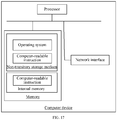
- FIG. 17 is a diagram of an internal structure of a computer device according to an embodiment.
- the computer device may be the server 120 in FIG. 1B .
- the computer device includes a processor, a memory, and a network interface that are connected by using a system bus.
- the memory includes a non-transitory storage medium and an internal memory.
- the non-transitory storage medium of the computer device stores an operating system, and may further store computer-readable instructions.
- the computer-readable instructions when executed by the processor, may cause the processor to implement the video coding method.
- the internal memory may also store computer-readable instructions.
- the computer-readable instructions, when executed by the processor may cause the processor to implement the video coding method.
- FIG. 16 and FIG. 17 is a block diagram of a partial structure related to a solution in this application, and FIG. 16 and FIG. 17 do not constitute a limitation to the computer device to which the solution in this application is applied.
- the computer device may include more or fewer components than those shown in FIG. 16 and FIG. 17 , or some components may be combined, or a different component deployment may be used.
- the video coding apparatus provided in this application may be implemented in a form of a computer-readable instruction.
- the computer-readable instruction may run on the computer device shown in FIG. 16 and FIG. 17 .
- the memory in the computer device may store various program modules in the video coding apparatus such as the current frame obtaining module 902, the current layer obtaining module 904, the current offset obtaining module 906, the reference quantization parameter obtaining module 908, the current quantization parameter obtaining module 910, and the coding module 912 shown in FIG. 9 .
- the computer-readable instruction formed by the various program modules causes the processor to perform the steps of the video coding method described in the embodiments of this application in this specification.
- the computer device shown in FIG. 16 and FIG. 17 may obtain a to-be-coded current picture frame by using the current frame obtaining module 902 in the video coding apparatus shown in FIG. 9 ; obtain a current layer of the current picture frame in a group of pictures to which the current picture frame belongs by using the current layer obtaining module 904, the group of pictures including a plurality of picture frames; obtain a current quantization parameter offset corresponding to the current picture frame according to the current layer by using the current offset obtaining module 906; obtain a reference quantization parameter corresponding to a reference picture frame of the current picture frame by using the reference quantization parameter obtaining module; obtain a current quantization parameter corresponding to the current picture frame according to the reference quantization parameter and the current quantization parameter offset by using the current quantization parameter obtaining module 910; and code the current picture frame according to the current quantization parameter by using the coding module 912.
- the program may be stored in a non-transitory computer-readable storage medium. When the program runs, the procedures of the foregoing method embodiments are performed. Any use of a memory, a storage, a database or another medium in the embodiments of this application may include a non-transitory and/or transitory memory.
- the non-transitory memory may include a read-only memory (ROM), a programmable ROM (PROM), an electrically programmable ROM (EPROM), an electrically erasable programmable ROM (EEPROM), or a flash memory.
- the transitory memory may include a random access memory (RAM) or an external cache memory.
- the RAM may be in a plurality of forms such as a static RAM (SRAM), a dynamic RAM (DRAM), a synchronous DRAM (SDRAM), a dual data rate SDRAM (DDRSDRAM), an enhanced SDRAM (ESDRAM), a synchronization link (Synchlink) DRAM (SLDRAM), a Rambus (Rambus) direct RAM (RDRAM), a direct Rambus dynamic RAM (DRDRAM), and a Rambus dynamic RAM (RDRAM).
- SRAM static RAM
- DRAM dynamic RAM
- SDRAM synchronous DRAM
- DDRSDRAM dual data rate SDRAM
- ESDRAM enhanced SDRAM
- SLDRAM synchronization link
- Rambus Rambus
- RDRAM direct RAM
- DRAM direct Rambus dynamic RAM
- RDRAM Rambus dynamic RAM
Landscapes
- Engineering & Computer Science (AREA)
- Multimedia (AREA)
- Signal Processing (AREA)
- Compression Or Coding Systems Of Tv Signals (AREA)
Abstract
Description
- This application claims priority to Chinese Patent Application No.
2017111661957 - This application relates to the field of video coding, and in particular, to a video coding method and apparatus, a computer device, and a storage medium.
- With the rapid development and wide application of multimedia technologies and network technologies, a large amount of video information is used in people's daily life and production activities. To reduce a quantity of transmitted data or stored data of videos, video coding is required.
- During video coding, a quantization parameter (QP) of a coder can be adjusted in terms of video to adjust a coding bit rate of a picture, such that a stable bit rate and a lower video delay can be ensured over a limited video transmission bandwidth. Currently, for a QP of each picture frame, a QP of a current picture frame needs to be calculated according to a configured bit rate control model, which can lead to high calculation complexity and low video coding efficiency.
- According to various embodiments provided in this application, a video coding method, a computer device, and a storage medium are provided.
- A video coding method, including:
- obtaining, by a computer device, a to-be-coded current picture frame;
- obtaining, by the computer device, a current layer of the current picture frame in a group of pictures to which the current picture frame belongs, the group of pictures including a plurality of picture frames;
- obtaining, by the computer device, a current quantization parameter offset corresponding to the current picture frame according to the current layer, picture frames on different layers of the group of pictures corresponding to different quantization parameter offsets;
- obtaining, by the computer device, a reference quantization parameter corresponding to a reference picture frame of the current picture frame;
- obtaining, by the computer device, a current quantization parameter corresponding to the current picture frame according to the reference quantization parameter and the current quantization parameter offset; and
- coding, by the computer device, the current picture frame according to the current quantization parameter.
- A computer device, including: a memory and a processor, the memory storing computer-readable instructions, the computer-readable instructions, when executed by the processor, causing the processor to perform the following steps:
- obtaining a to-be-coded current picture frame;
- obtaining a current layer of the current picture frame in a group of pictures to which the current picture frame belongs, the group of pictures including a plurality of picture frames;
- obtaining a current quantization parameter offset corresponding to the current picture frame according to the current layer, picture frames on different layers of the group of pictures corresponding to different quantization parameter offsets;
- obtaining a reference quantization parameter corresponding to a reference picture frame of the current picture frame;
- obtaining a current quantization parameter corresponding to the current picture frame according to the reference quantization parameter and the current quantization parameter offset; and
- coding the current picture frame according to the current quantization parameter.
- One or more non-volatile storage medium storing computer-readable instructions, the computer-readable instructions, when executed by one or more processors, causing the one or more processors to perform the following steps:
- obtaining a to-be-coded current picture frame;
- obtaining a current layer of the current picture frame in a group of pictures to which the current picture frame belongs, the group of pictures including a plurality of picture frames;
- obtaining a current quantization parameter offset corresponding to the current picture frame according to the current layer, picture frames on different layers of the group of pictures corresponding to different quantization parameter offsets;
- obtaining a reference quantization parameter corresponding to a reference picture frame of the current picture frame;
- obtaining a current quantization parameter corresponding to the current picture frame according to the reference quantization parameter and the current quantization parameter offset; and
- coding the current picture frame according to the current quantization parameter.
- Details of one or more embodiments of this application are provided in the following accompanying drawings and descriptions. Other features, objectives, and advantages of this application become more obvious with reference to this specification, the accompanying drawings, and the claims.
- To describe the technical solutions in the embodiments of this application more clearly, the following briefly describes the accompanying drawings required for describing the embodiments. Apparently, the accompanying drawings in the following description show merely some embodiments of this application, and a person of ordinary skill in the art may still derive other drawings from these accompanying drawings without creative efforts.
-
FIG. 1A is a diagram of an application environment of a video coding method according to an embodiment. -
FIG. 1B is a diagram of an application environment of a video coding method according to an embodiment. -
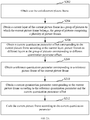
FIG. 2A is a flowchart of a video coding method according to an embodiment. -
FIG. 2B is a schematic diagram of a time-based B-frame layered coding structure according to an embodiment. -
FIG. 3 is a flowchart of obtaining a current quantization parameter offset corresponding to a current picture frame according to a current layer according to an embodiment. -
FIG. 4 is a flowchart of obtaining a reference quantization parameter corresponding to a reference picture frame of a current picture frame according to an embodiment. -
FIG. 5 is a flowchart of coding a current picture frame according to a current quantization parameter according to an embodiment. -
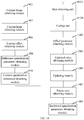
FIG. 6 is a flowchart of a video coding method according to an embodiment. -
FIG. 7 is a flowchart of a video coding method according to an embodiment. -
FIG. 8 is a flowchart of obtaining a current quantization parameter corresponding to a current picture frame according to a reference quantization parameter and a current quantization parameter offset according to an embodiment. -
FIG. 9 is a structural block diagram of a video coding apparatus according to an embodiment. -
FIG. 10 is a structural block diagram of a current quantization parameter obtaining module according to an embodiment. -
FIG. 11 is a structural block diagram of a reference quantization parameter obtaining module according to an embodiment. -
FIG. 12 is a structural block diagram of a coding module according to an embodiment. -
FIG. 13 is a structural block diagram of a video coding apparatus according to an embodiment. -
FIG. 14 is a structural block diagram of a video coding apparatus according to an embodiment. -
FIG. 15 is a structural block diagram of a current offset obtaining module according to an embodiment. -
FIG. 16 is a block diagram of an internal structure of a computer device according to an embodiment. -
FIG. 17 is a block diagram of an internal structure of a computer device according to an embodiment. - To make the objectives, technical solutions, and advantages of this application clearer and more comprehensible, the following further describes this application in detail with reference to the accompanying drawings and embodiments. It is noted that the specific embodiments described herein are merely used for explaining this application but are not intended to limit this application.
- It may be understood that the terms "first", "second" and the like used in this application may be used for describing various elements in this specification. However, the elements are not limited by the terms unless otherwise specified. The terms are only used for distinguishing one element from another element.
-
FIG. 1A is a diagram of an application environment of a video coding method according to an embodiment. When video coding is performed, because the content of frames of a video picture are different, complexity is different. Therefore, a quantity of bits during coding of each frame of the picture constantly varies, and a transmission channel also keeps changing. Therefore, a coder buffer needs to be set to balance a coding bit rate and bandwidth. As shown inFIG. 1 , when video coding needs to be performed, a video picture sequence is input to a video coder 1, a bitstream obtained after the sequence is coded by the video coder 1 is input to acoder buffer 2 for buffering and then transmitted by a network. Abit rate controller 3 adjusts a quantization parameter of the video coder according to a set bit rate control model, to control the video coder to perform video coding to obtain a bit rate, thereby preventing overflow or underflow of thecoder buffer 2. - The video coding method in this embodiment of this application may be applied to a computer device. The computer device may be an independent physical server or terminal, may be a server cluster including a plurality of physical servers, or may be a cloud server providing basic cloud computing services such as a cloud server, a cloud database, a cloud storage and a CDN. The terminal may be a smartphone, a tablet computer, a notebook computer, a desktop computer, a smart speaker, a smartwatch, or the like, but is not limited thereto.
- As shown in
FIG. 1B , a terminal 110 or aserver 120 may perform video coding by using a coder or video decoding by using a decoder. The terminal 110 or theserver 120 may also perform video coding by using a processor running a video coding program or video decoding by using a processor running a video decoding program. After receiving, through an input interface, coded data sent by the terminal 110, theserver 120 may directly transfer the coded data to the processor for decoding, or may store the coded data in a database for subsequent decoding. After obtaining coded data by using the processor coding a picture frame, theserver 120 may directly send the coded data to the terminal 110 through an output interface, or may store the coded data in a database for subsequent transfer. The coded data is data obtained by coding a picture frame. - As shown in
FIG. 2A , in an embodiment, a video coding method is provided. This embodiment is mainly described by using an example in which the method is applied to the foregoing computer device. The method may specifically include the following steps:
Step S202: Obtain a to-be-coded current picture frame. - Specifically, a video includes a sequence of pictures. Each picture may be considered as one frame. The current picture frame is a picture frame currently needs to be coded. When the video needs to be coded, the sequence of pictures is input to a video coder, and the video coder obtains, according to a preset sequence, a to-be-coded picture frame for coding.
- Step S204: Obtain a current layer of the current picture frame in a group of pictures to which the current picture frame belongs, the group of pictures including a plurality of picture frames.
- Specifically, the group of pictures (GOP) is a group of successive pictures, and several successive pictures in the video picture sequence may form a group, to facilitate random access and edition. A quantity of picture frames in one group of pictures may be set according to an actual requirement, for example, may be eight. The group of pictures may include three types of frames, namely, I frame, P frame, and B frame. The I frame is an intra-frame predicted frame. The P frame is a unidirectionally predicted frame, and may be predicted through inter-frame prediction. The B frame is a bidirectionally predicted frame, and may be predicted by referring to a preceding or a following picture frame. The current layer is a layer of the current picture frame in the group of pictures. A layered coding structure may be preset, and accordingly a layer of a picture frame in the group of pictures can be obtained according to the layered coding structure. The layered coding structure refers to picture frames in the group of pictures being divided into a plurality of layers for coding, and different layers may correspond to different coding quality. A specific layering method may be set according to an actual requirement or application scenario. For example, the picture frames in the group of pictures are layered chronologically, to obtain a time-based B-frame layered coding structure (hierarchical B structure). The layered coding structure sets a quantity of layers, a picture frame corresponding to each layer and a reference relationship between picture frames. A lower layer picture frame may serve as a reference for coding of a higher layer picture frame. Therefore, during coding, more error correction protection or transmission priorities may be provided to a lower layer picture frame, to dynamically adapt to a network bandwidth change or improve coding efficiency. In the layered coding structure, the quantity of layers may be specifically set according to an actual requirement. For example, the group of pictures may be divided in to two layers, three layers, or four layers. After the layered coding structure is determined, a coding sequence of the picture frames in the group of pictures is obtained according to the layered coding structure, and the picture frames in the group of pictures are coded, to obtain the current picture frame. Then, the current layer corresponding to the current picture frame may be obtained according to the layered coding structure.
- An example in which the preset layered coding structure is the time-based B-frame layered coding structure is used. One group of pictures includes eight picture frames. B frames in the group of pictures are divided into three layers, namely, B0 layer, B1 layer, and B2 layer. The B0 layer includes the fourth B frame, the B1 layer includes the second and the sixth B frames, and the B2 layer includes the remaining B-frame picture frames. A start point of an arrow represents a reference frame picture, an end point of the arrow indicates a picture frame coded according to the reference frame, and the picture frames are sorted according to a display sequence of the picture frames. In this way, the time-based B-frame layered coding structure is shown in
FIG. 2B . In a layered coding structure, a lower layer picture frame may serve as a reference for coding of a higher layer picture frame. For example, reference frames of the picture frame on the B0 layer are P frames at the two sides. The picture frames on the B1 layer may serve as a reference for coding of the picture frames on the B2 layer. It may be understood that, the time-based B-frame layered coding structure is not limited to the three-layer coding structure, but may be, for example, a two-layer coding structure or a four-layer coding structure. - Step S206: Obtain a current quantization parameter offset corresponding to the current picture frame according to the current layer, picture frames on different layers of the group of pictures corresponding to different quantization parameter offsets.
- Specifically, after a prediction residual obtained after prediction is performed on the picture frame is transformed, a quantization needs to be performed to reduce a quantity of data. During the quantization, a value obtained after a discrete cosine transform is performed on the prediction residual is mapped to a relatively small value. For example, a relatively small value may be obtained by dividing the value by a quantization step. A quantization parameter is a sequence number of a quantization step, and a corresponding quantization step may be searched according to a quantization parameter. A small quantization parameter indicates reservation of more details of a picture frame and a higher corresponding bit rate. A greater quantization parameter indicates a lower corresponding bit rate, greater distortion and lower quality of a picture. That is, the quantization parameter has a negative correlation with the bit rate. During coding, a basic method for controlling a bit rate corresponding to a picture is adjusting a quantization parameter. A quantization parameter offset is a quantization parameter offset value of a coded picture frame relative to a reference frame of the picture frame. Picture frames on different layers of a group of pictures correspond to different quantization parameter offsets, and the quantization parameter offsets corresponding to the picture frames on the different layers may be preset, and may be specifically set according to an actual requirement. For example, quantization parameter offsets of the first layer to the third layer may be respectively 0.42, 0.8, and 1.2. In the layered coding structure, because a lower layer picture frame may serve as a reference for coding of a higher layer picture frame, occasions that a higher layer picture frame serves as a reference is relatively fewer, while occasions that a lower layer picture frame serves as a reference is relatively greater. Therefore, it may be set that a quantization parameter offset corresponding to a high layer is greater than a quantization parameter offset corresponding to a low layer. That is, a layer level of a picture frame has a positive correlation with a quantization parameter offset, to improve compression efficiency of video coding.
- Step S208: Obtain a reference quantization parameter corresponding to a reference picture frame of the current picture frame.
- Specifically, reference frames are used for performing prediction on the coded picture frame. A selection method of the reference frame may be set according to an actual requirement. A reference picture frame is a reference frame selected from a list of candidate reference frames of the current picture frame. The reference frame may be selected, for example, based on a spatial similarity and the like. In an embodiment, an example is used in which the current picture frame is a B frame, that is, a bidirectionally predicted frame. Each B frame has two sequences of candidate reference frames, and the first picture frame of each of the two sequences of candidate reference frames may be selected as a reference picture frame. The reference quantization parameter may be a coding quantization parameter during coding performed by using the reference picture frame. In an embodiment, the reference quantization parameter may be obtained with reference to the coding quantization parameter and the quantization parameter offset that correspond to the reference picture frame. For example, the reference quantization parameter is obtained by subtracting the quantization parameter offset corresponding to the reference picture frame from the coding quantization parameter corresponding to the reference picture frame. In an embodiment, if the reference picture frame has a plurality of coding quantization parameters, for example, each coding unit corresponds to a quantization parameter, the reference quantization parameter may be an average value of the quantization parameters in the reference picture frame.
- Step S210: Obtain a current quantization parameter corresponding to the current picture frame according to the reference quantization parameter and the current quantization parameter offset.
- Specifically, a current quantization parameter corresponding to the current picture frame is obtained according to the reference quantization parameter and the current quantization parameter offset. In an embodiment, the current quantization parameter may be a sum of the reference quantization parameter and the current quantization parameter offset. In an embodiment, when the current picture frame is a bidirectionally predicted frame, because there are two reference picture frames, the current quantization parameter may also be obtained according to a frame distance between each of the reference picture frames and the current picture frame. For example, a weight corresponding to the frame distance is set. An impact value corresponding to the reference picture frames is obtained according to the weights corresponding to the reference picture frames and the coding quantization parameter of the reference picture frame, and then the current quantization parameter is obtained according to the impact value and the current quantization parameter offset.
- Step S212: Code the current picture frame according to the current quantization parameter.
- Specifically, a correspondence is preset between a quantization parameter and a quantization step. Therefore, a corresponding quantization step may be obtained according to the current quantization parameter, and quantization coding is performed on the current picture frame according to the quantization step. For example, generally, a principle of quantization is expressed by using the following formula: FQ = round(y/Qstep), where y is a value corresponding to a picture frame before quantization is performed, Qstep is a quantization step, and FQ is a quantized value of y. The Round(x) function is used for performing rounding off to an even number on the quantized value. The correspondence between the quantization parameter and the quantization step may be specifically set according to requirement. For example, in a current video coding standard, for brightness coding, the quantization step has 52 values that are integers from 0 to 51. For chroma coding, the quantization step has values that are integers from 0 to 39. In addition, the quantization step increases as the quantization parameter increases. Each time the quantization parameter is increased by 6, the quantization step is doubled. It may be understood that, when all the quantization parameters in the correspondence between the quantization parameter and the quantization step are integers, rounding may be performed on the current quantization parameter. A rounding method may be performed to round off to an integer.
- The video coding method may be used to compress a video file, for example, compressing a WeChat short-form video. When the current picture frame needs to be coded, the current layer of the current picture frame in the group of pictures to which the current picture frame belongs is obtained, and then the quantization parameter offset corresponding to the current picture frame is obtained according to the current layer. The reference quantization parameter corresponding to the reference picture frame of the current picture frame is obtained, and the current quantization parameter corresponding to the current picture frame is obtained according to the reference quantization parameter and the quantization parameter offset. The current picture frame is coded according to the current quantization parameter. Because the current quantization parameter corresponding to the current picture frame is obtained by using the quantization parameter offset corresponding to the current layer of the to-be-coded current picture frame and the coding quantization parameter corresponding to the reference picture frame, the calculation complexity is lowed. In addition, the quantization parameter offset is flexibly changed for picture frames on different layers, so that coding efficiency is high.
- In an embodiment, as shown in
FIG. 3 , the current picture frame is a bidirectionally predicted frame, and the step of obtaining a current quantization parameter offset corresponding to the current picture frame according to the current layer includes: - Step S302: Obtain a preset quantization offset parameter between the picture frame on the current layer and a unidirectionally predicted frame.
- Specifically, quantization offset parameters of different layers of each layered coding structure with respect to the unidirectionally predicted frame may be preconfigured. The quantization parameter offset is calculated according to the quantization offset parameter, and the quantization parameter offset has a positive correlation with the quantization offset parameter. A formula of obtaining a quantization offset based on a quantization offset parameter may be obtained according to the correspondence between the quantization step and the quantization parameter. For example, for the current brightness coding, the quantization step has 52 values in total that are integers from 0 to 51, and the quantization parameter has a correlation with the quantization step. The quantization parameter increases as the quantization step increases. Each time the quantization parameter is increased by 6, the quantization parameter is doubled. Accordingly, the quantization parameter offset is a product between 6 and a logarithm of a quantization offset parameter with 2 as the base. This is expressed by using the following formula:
pbOffset_i = 6 ∗ log2(phFactor_i). PbOffset_i represents a quantization parameter offset corresponding to an ith layer, and PbFactor_i represents a quantization offset parameter corresponding to the ith layer. A specific value of the quantization offset parameter may be preset according to requirement or experience. Because occasions that a higher layer picture frame serves as a reference is a fewer, a layer level of a picture frame has a positive correlation with a quantization parameter offset, a quantization parameter corresponding to the higher layer picture frame is greater, and a bit rate is lower. In an embodiment, because a layer on which the unidirectionally predicted frame is located is lower than a layer on which the bidirectionally predicted frame is located in layered coding structure, the unidirectionally predicted frame may serve as a reference to set quantization offset parameters between picture frames on different layers of the bidirectionally predicted frame and the unidirectionally predicted frame. A quantization parameter corresponding to the lower layer unidirectionally predicted frame is smaller than a quantization parameter corresponding to the higher layer bidirectionally predicted frame, so that coding efficiency can be improved. Therefore, the quantization offset parameter is greater than 1. In an embodiment, quantization offset parameters corresponding to the B0 layer, the B1 layer and the B2 layer may be respectively 1.05, 1.10, and 1.15. - Step S304: Obtain the current quantization parameter offset corresponding to the current picture frame according to the quantization offset parameter.
- Specifically, after the quantization offset parameter is obtained, the current quantization parameter offset corresponding to the current picture frame may be obtained according to the obtained quantization offset parameter and a corresponding calculation formula. A specific calculation formula may be obtained according to the correspondence between the quantization step and the quantization parameter.
- In an embodiment, as shown in
FIG. 4 , step S208 of obtaining a reference quantization parameter corresponding to a reference picture frame of the current picture frame includes:
Step S402: Obtain a reference frame type of the reference picture frame and a coding quantization parameter of the reference picture frame. - Specifically, the reference frame type may include I-frame, B-frame and P-frame. A reference frame type may be specifically set according to requirement or different video coding standards. For example, in some video coding standards such as H26.3, B frame cannot be used as a reference frame. In some video coding standards, however, B frame can be used as a reference frame. The coding quantization parameter of the reference picture frame is a quantization parameter used for coding the reference picture frame.
- Step S404: Obtain the reference quantization parameter corresponding to the reference picture frame according to the reference frame type and the coding quantization parameter.
- Specifically, the coding quantization parameter corresponding to the reference picture frame may be adjusted according to different reference frame types to obtain the reference quantization parameter. For example, for an I frame and a P frame, the coding quantization parameter corresponding to the reference picture frame may be used as the reference quantization parameter. For B frame, because the B frame has a plurality of layers, and quantization parameter offsets corresponding to different layers are different, the reference quantization parameter may be obtained with reference to the quantization parameter offset and the coding quantization parameter. For example, when the reference picture frame is a B frame, the reference quantization parameter is obtained by subtracting the quantization parameter offset corresponding to the reference frame from the coding quantization parameter corresponding to the reference picture frame.
- In an embodiment, when the current picture frame is a B frame, that is, a bidirectionally predicted frame, the method for obtaining the current quantization parameter according to the reference quantization parameter of the reference picture frame and the current quantization parameter offset provided in this embodiment of this application may be used. However, when the current picture frame is an I frame and a P frame, the method provided in this embodiment of this application may not be used for calculating the current quantization parameter of current picture frame. For example, when the current picture frame is a P frame, the current quantization parameter corresponding to the current picture frame is calculated according to a bit rate control model to control the bit rate and prevent an error of the bit rate from being excessively great. The bit rate control model may be a reference mode 8 (RM8), a verification mode 8 (VM8), and the like, and is not specifically limited. When the current picture frame is an I frame, the current quantization parameter corresponding to the current picture frame may be calculated by using the bit rate control model. Alternatively, a quantization parameter offset of a P frame relative to an I frame may be set, and then the current quantization parameter corresponding to the current picture frame is obtained according to a quantization parameter corresponding to the P frame and the quantization parameter offset of a P frame relative to an I frame. In an embodiment, a quantization parameter corresponding to the I frame is obtained by subtracting the quantization parameter offset of a P frame relative to an I frame from a coding quantization parameter corresponding to the P frame. In other words, the quantization parameter corresponding to the I frame is less than the quantization parameter corresponding to the P frame, so that coding precision corresponding to the I frame is higher and picture distortion is smaller. A coding quantization parameter corresponding to a P frame nearest to the I frame may be selected to subtract the quantization parameter offset of the P frame relative to the I frame.
- In an embodiment, the current picture frame is a bidirectionally predicted frame, and the step of obtaining the reference quantization parameter corresponding to the reference picture frame according to the reference frame type and the coding quantization parameter includes: when the reference frame type is a bidirectionally predicted frame, obtaining a layer of the reference picture frame in a group of pictures to which the reference picture frame belongs; obtaining a reference quantization parameter offset corresponding to the reference picture frame according to the layer of the reference picture frame in the group of pictures to which the reference picture frame belongs; and obtaining the reference quantization parameter corresponding to the reference picture frame according to the coding quantization parameter and the reference quantization parameter offset corresponding to the reference picture frame.
- Specifically, the reference quantization parameter offset is a quantization parameter offset corresponding to the layer on which the reference picture frame is located. Because when the picture frame is a bidirectionally predicted frame, the quantization parameter offset needs to be obtained according to the current layer corresponding to the picture frame, and the corresponding current quantization parameter is obtained according to the quantization parameter offset and the reference quantization parameter of the reference picture frame. Therefore, when the reference picture frame is a bidirectionally predicted frame, the coding quantization parameter corresponding to the reference picture frame is obtained by using the quantization parameter offset corresponding to the layer on which the reference picture frame is located and the reference quantization parameter corresponding to the reference picture frame. Therefore, when the reference picture frame is a bidirectionally predicted frame, the layer of the reference picture frame in the group of pictures to which the reference picture frame belongs needs to be obtained, and the reference quantization parameter offset corresponding to the reference picture frame is obtained according to the layer of the reference picture frame in the group of pictures to which the reference picture frame belongs. Then, the reference quantization parameter corresponding to the reference picture frame is obtained according to the coding quantization parameter of the reference picture frame and the reference quantization parameter offset corresponding to the reference picture frame. For example, the reference quantization parameter is a difference between the coding quantization parameter and the reference quantization parameter offset. This may be specifically set according to requirement.
- In an embodiment, as shown in
FIG. 5 , the step of coding the current picture frame according to the current quantization parameter includes:
Step S502: Obtain a current quantization step corresponding to the current picture frame according to the current quantization parameter. - Specifically, after the current quantization parameter is obtained, a quantization step corresponding to the current quantization parameter is obtained according to the correspondence between the quantization parameter and the quantization step and is used as the current quantization step.
- Step S504: Code the current picture frame according to the current quantization step, to obtain a current bit rate corresponding to the current picture frame.
- Specifically, the bit rate is a quantity of data bits sent in a unit time. The current bit rate is a corresponding bit rate after the current picture frame is coded according to the current quantization step. A bit rate unit may be a quantity of bits transmitted per second, and a higher bit rate indicates a higher data transferring speed. The current bit rate corresponding to the coded current picture frame is obtained by coding according to the current quantization step.
- In an embodiment, the current picture frame is a bidirectionally predicted frame. As shown in
FIG. 6 , the video coding method further includes the following the steps:
Step S602: Obtain a preset quantization offset parameter between the picture frame on the current layer and a unidirectionally predicted frame. - Specifically, the quantization parameter offset is calculated according to the quantization offset parameter. Because the current quantization parameter of the current picture frame is obtained according to the current quantization parameter offset of the current picture frame, a bit rate corresponding to the current picture frame may be corrected according to the quantization offset parameter when a picture complexity parameter is calculated, to obtain the corrected bit rate. Then, the corresponding picture complexity parameter is calculated. This improves accuracy of the picture complexity parameter.
- Step S604: Obtain a corresponding complexity update value according to the current bit rate corresponding to the current picture frame and the quantization offset parameter.
- Specifically, the picture complexity parameter is used for representing complexity of a picture frame. The picture complexity parameter is a parameter in the bit rate control model, and is used for calculating a quantization step of the picture frame. A greater picture complexity parameter indicates more complex information such as image texture and a higher required transmission bit rate. The complexity update value is used for updating the picture complexity parameter, to dynamically update the picture complexity parameter.
- Step S606: Obtain an updated picture complexity parameter according to a picture complexity parameter corresponding to a forward picture frame of the current picture frame and the complexity update value.
- Specifically, the picture complexity parameter corresponding to the forward picture frame is a picture complexity parameter obtained through updating after the forward picture frame is coded. The forward picture frame is a picture frame coded before the current picture frame. The forward picture frame may be a preceding picture frame, so that a picture complexity parameter can be updated in time. Alternatively, the forward picture frame may be another forward picture frame, and may be specifically set according to requirement. By updating the picture complexity parameter corresponding to the forward picture frame by using the complexity update value to obtain the updated picture complexity parameter, the picture complexity parameter in the bit rate control model is updated.
- In an example, the complexity update value is obtained according to the corrected bit rate and the current quantization step that correspond to the current picture frame. The updated picture complexity parameter may be a sum of the picture complexity parameter corresponding to the forward picture frame of the current picture frame and the complexity update value, and is expressed by using the following formula:

- In an embodiment, as shown in
FIG. 7 , the video coding method further includes the following the steps:
Step S702: Obtain a frame type corresponding to a backward picture frame that is coded after the current picture frame and that corresponds to the current picture frame. - Specifically, the backward picture frame is a picture frame coded after the current picture frame. The backward picture frame may be a following picture frame. Alternatively, the backward picture may be another backward picture frame, and may be specifically set according to requirement. The frame type may include I-frame, B-frame, and P-frame.
- Step S704: When the backward picture frame is a non-bidirectionally predicted picture, obtain a quantization parameter corresponding to the backward picture frame according to a preset bit rate control model and the updated picture complexity parameter.
- Specifically, the non-bidirectionally predicted frame includes an I frame and a P frame. The non-bidirectionally predicted frame may be that the quantization parameter corresponding to the backward picture frame is obtained according to the preset bit rate control model and the updated picture complexity parameter only when the backward picture frame is a P frame. The picture complexity parameter in the bit rate control model is a model parameter. Therefore, the bit rate control model is updated by using the updated picture complexity parameter, and the quantization parameter corresponding to the backward picture frame is obtained according to the bit rate control model. The bit rate control model may be set according to requirement. For example, the bit rate control model may be a test mode 5 (TM5) algorithm. The quantization parameter of the backward picture frame is calculated by using the bit rate control model when the backward picture frame is a non-bidirectionally predicted frame, so that an error of a video bit rate is not excessively great as a quantity of picture frames increases.
- In an embodiment, there is a plurality of reference picture frames. As shown in
FIG. 8 , step S210 of obtaining a current quantization parameter corresponding to the current picture frame according to the reference quantization parameter and the current quantization parameter offset includes:
Step S802: Obtain a frame distance between each of the reference picture frames and the current picture frame. - Specifically, the frame distance may be represented by using a quantity of frames between picture frames, or may be represented by using a difference of display time between picture frames. The quantity of frames between picture frames may be represented by using a difference of display orders between the picture frames. For example, if the reference picture frame is the second frame in the group of pictures, and the current picture frame is the sixth frame in the same group of pictures, the frame distance is 4. There may be two reference picture frames. For example, there are two reference picture frames for a B frame.
- Step S804: Calculate a first quantization parameter corresponding to the current picture frame according to the frame distances between each of the reference picture frames and the current picture frame and reference quantization parameters corresponding to each of the reference picture frames.
- Specifically, a ratio coefficient corresponding to the frame distance may be set, and then the first quantization parameter corresponding to the picture frame is obtained according to the ratio coefficients and the corresponding reference quantization parameters. In an embodiment, a weight corresponding to a current reference picture frame may be obtained according to a frame distance between the current reference picture frame and the current picture frame, and then the first quantization parameter corresponding to the current picture frame is obtained according to the weight and the reference quantization parameter corresponding to each of the reference picture frames. The frame distance may have a negative correlation with the weight, so that a quantization parameter corresponding to a reference picture frame closer to the current picture frame has a great impact on the quantization parameter of the current picture frame. In an embodiment, the weight may be a reciprocal of the frame distance.
- For example, the current picture frame is a bidirectionally predicted frame, there are two reference picture frames. A distance between a first reference frame and the current picture frame is n 1 frames, and a reference quantization parameter of the first reference picture frame is qp 1. A distance between a second reference picture frame and the current picture frame is n 2 frames, and a reference quantization parameter of the second reference picture frame is qp 2. n 1 and n 2 are both positive integers. The first quantization parameter is a weighted average value of the reference quantization parameters and weights of the two reference picture frames. The weight of a quantization parameter of the first reference picture frame is a ratio of the frame distance between the second reference picture frame and the current picture frame to a total frame distance. The weight of a quantization parameter of the second reference picture frame is a ratio of the frame distance between the first reference picture frame and the current picture frame to the total frame distance. That the first quantization parameter corresponding to the current picture frame is calculated according to the frame distance between each of the reference picture frames and the current picture frame and the reference quantization parameter corresponding to each of the reference picture frames may be expressed by using the formula (1):

- Step S806: Obtain the current quantization parameter corresponding to the current picture frame according to the first quantization parameter corresponding to the current picture frame and the current quantization parameter offset.
- Specifically, a current quantization parameter corresponding to the current picture frame is obtained according to the first quantization parameter and the current quantization parameter offset. In an embodiment, the current quantization parameter may be a sum of the first quantization parameter and the current quantization parameter offset.
- In an embodiment, the current picture frame is a bidirectionally predicted frame, and there are two reference picture frames. Step S210 of obtaining a current quantization parameter corresponding to the current picture frame according to the reference quantization parameter and the current quantization parameter offset further includes determining whether the reference picture frame is an I frame. In an embodiment, if one of the reference picture frames is an I frame, and the other is a P frame, the steps S802 to S806 are not performed, and the current quantization parameter corresponding to the current picture frame is obtained according to a sum of a reference quantization parameter corresponding to the P-frame reference picture frame and the current quantization parameter offset. In an embodiment, if one of the reference picture frames is an I frame, and the other is a B frame, the steps S802 to S806 are not performed, and the current quantization parameter corresponding to the current picture frame is obtained according to a sum of a reference quantization parameter corresponding to the B-frame reference picture frame and the current quantization parameter offset. In an embodiment, if both of the reference picture frames are I frames, a second quantization parameter may be obtained according to coding quantization parameters of the two reference picture frames, and then the current quantization parameter is obtained according to a sum of the second quantization parameter and a preset value. The second quantization parameter may be an average value of the coding quantization parameters of the two reference picture frames. The preset value may be set according to actual requirement. For example, the preset value may be a quantization parameter offset of a P frame relative to an I frame.
- The video coding method provided in this embodiment is described below by using an example in which a layered coding structure is a time-based B-frame layered coding structure, a group of pictures includes eight picture frames in which the preceding seven picture frames are B frames and the last one is a P frame, and a reference relationship is shown in
FIG. 2B . - 1. It can be known from the reference relationship in
FIG. 2B and that the reference picture frame of the current picture frame is coded before the current picture frame, the last picture frame is coded first in the group of pictures. Therefore the last picture frame in the group of pictures is obtained. Because the current picture frame is a P frame, a quantization parameter of the last picture frame in the group of pictures is calculated according to a set bit rate control model and a target bit rate, and the picture frame is coded according to the calculated quantization parameter. - 2. Obtain the fourth picture frame in the group of pictures. The fourth picture frame is a B frame and located on a B0 layer. Therefore, a quantization parameter offset corresponding to the B0 layer is obtained.
- 3. Obtain two reference picture frames of the fourth picture frame, to obtain coding quantization parameters and frame types that correspond to the two reference picture frames. If the reference picture frames are B frames, a quantization parameter offset corresponding to a layer on which each reference picture frame is located is obtained, and a difference between the coding quantization parameter and the quantization parameter offset corresponding to each reference picture frame is calculated, to obtain a reference quantization parameter corresponding to each reference picture frame. If the reference picture frame is an I frame or a P frame, the coding quantization parameter corresponding to the reference picture frame is used as the reference quantization parameter.
- 4. If one of the two reference frames of the fourth picture frame is an I frame, add a reference quantization parameter of a non-I-frame reference picture frame and the quantization parameter offset corresponding to the B0 layer, to obtain a coding quantization parameter corresponding to the fourth picture frame that is the current quantization parameter. If both of two reference frames of the fourth picture frame are I frames, calculate an average value of reference quantization parameters corresponding to the two reference picture frames, add the average value and the set quantization parameter offset of a P frame relative to an I frame, and further add the quantization parameter offset corresponding to the B0 layer, to obtain the coding quantization parameter corresponding to the fourth picture frame. If neither of the two reference frames of the fourth picture frame is an I frame, obtain a frame distance between each of the two reference picture frames and the fourth picture frame, calculate a weight corresponding to each of the reference picture frames according to the frame distance, obtain a weighted average value according to the weight and reference quantization parameter corresponding to each of the picture frames, and add the obtained weighted average value and the quantization parameter offset corresponding to the B0 layer, to obtain the coding quantization parameter corresponding to the fourth picture frame.
- 5. Code the fourth picture frame according to the coding quantization parameter corresponding to the fourth picture frame.
- 6. Obtain a bit rate corresponding to the fourth picture frame and a quantization offset parameter corresponding to the B0 layer, calculate a picture complexity parameter corresponding to the fourth picture frame, and update a picture complexity parameter in the bit rate control model by using a picture complexity parameter corresponding to the fourth picture frame.
- 7. Sequentially obtain the second picture frame, the sixth picture frame, the first picture frame, the third picture frame, the fifth picture frame, and the seventh picture frame for coding. For a coding procedure, refer to the procedure of the
steps 2 to 6 of the fourth picture frame, and details are not described herein again. - 8. Obtain the last picture frame, that is, a P frame, of a next group of pictures, and calculate a quantization parameter corresponding to the last picture frame of the next group of pictures according to a bit rate control model and a picture complexity parameter corresponding to the seventh picture frame.
- It should be noted that, the steps of the embodiments of this application are not necessarily performed according to a sequence indicated by step numbers. Unless otherwise clearly stated in this specification, a sequence of performing these steps is not strictly limited, and the steps may be performed according to another sequence. Furthermore, at least some steps of the embodiments may include a plurality of sub-steps or stages. These sub-steps or stages are not necessarily performed at the same time but may be performed at different times. These sub-steps or stages are not necessarily performed sequentially, but may be performed in turn or alternately with another step or at least a part of sub-steps or stages of another step.
- As shown in
FIG. 9 , in an embodiment, a video coding apparatus is provided. The apparatus may specifically include: - a current
frame obtaining module 902, configured to obtain a to-be-coded current picture frame; - a current
layer obtaining module 904, configured to obtain a current layer of the current picture frame in a group of pictures to which the current picture frame belongs, the group of pictures including a plurality of picture frames; - a current offset obtaining
module 906, configured to obtain a current quantization parameter offset corresponding to the current picture frame according to the current layer, picture frames on different layers of the group of pictures corresponding to different quantization parameter offsets; - a reference quantization
parameter obtaining module 908, configured to obtain a reference quantization parameter corresponding to a reference picture frame of the current picture frame; and - a current quantization
parameter obtaining module 910, configured to obtain a current quantization parameter corresponding to the current picture frame according to the reference quantization parameter and the current quantization parameter offset; and - a
coding module 912, configured to code the current picture frame according to the current quantization parameter. - As shown in
FIG. 10 , in an embodiment, there is a plurality of reference picture frames. The current quantizationparameter obtaining module 910 includes: - a frame
distance obtaining unit 910A, configured to obtain a frame distance between each of the reference picture frames and the current picture frame; - a
parameter calculating unit 910B, configured to calculate a first quantization parameter corresponding to the current picture frame according to the frame distance between each of the reference picture frames and the current picture frame and reference quantization parameter corresponding to each of the reference picture frames; and - a current quantization
parameter obtaining unit 910C, configured to obtain the current quantization parameter corresponding to the current picture frame according to the first quantization parameter corresponding to the current picture frame and the current quantization parameter offset. - In an embodiment, the
parameter calculating unit 910B is configured to: obtain a weight corresponding to a current reference picture frame according to a frame distance between the current reference picture frame and the current picture frame, the frame distance having a negative correlation with the weight; and obtain the first quantization parameter corresponding to the current picture frame according to the weight and the reference quantization parameter corresponding to each of the reference picture frames. - As shown in
FIG. 11 , in an embodiment, the reference quantizationparameter obtaining module 908 includes: - a reference frame
information obtaining unit 908A, configured to obtain a reference frame type of the reference picture frame and a coding quantization parameter of the reference picture frame; and - a reference quantization
parameter obtaining unit 908B, configured to obtain the reference quantization parameter corresponding to the reference picture frame according to the reference frame type and the coding quantization parameter. - In an embodiment, the current picture frame is a bidirectionally predicted frame, and the reference quantization
parameter obtaining unit 908B is configured to: when the reference frame type is a bidirectionally predicted frame, obtain a layer of the reference picture frame in a group of pictures to which the reference picture frame belongs; obtain a reference quantization parameter offset corresponding to the reference picture frame according to the layer of the reference picture frame in the group of pictures to which the reference picture frame belongs; and obtain the reference quantization parameter corresponding to the reference picture frame according to the coding quantization parameter and the reference quantization parameter offset corresponding to the reference picture frame. - As shown in
FIG. 12 , in an embodiment, thecoding module 912 includes: - a
step obtaining unit 912A, configured to obtain a current quantization step corresponding to the current picture frame according to the current quantization parameter; and - a
coding unit 912B, configured to code the current picture frame according to the current quantization step, to obtain a current bit rate corresponding to the current picture frame. - As shown in
FIG. 13 , in an embodiment, the current picture frame is a bidirectionally predicted frame, and the apparatus further includes: - an offset
parameter obtaining module 1302, configured to obtain a preset quantization offset parameter between the picture frame on the current layer and a unidirectionally predicted frame; - an updated
value obtaining module 1304, configured to obtain a corresponding complexity update value according to the current bit rate corresponding to the current picture frame and the quantization offset parameter; and - an
updating module 1306, configured to obtain an updated picture complexity parameter according to a picture complexity parameter corresponding to a forward picture frame of the current picture frame and the complexity update value. - As shown in
FIG. 14 , in an embodiment, the apparatus further includes: - a frame
type obtaining module 1402, configured to obtain a frame type corresponding to a backward picture frame that is coded after the current picture frame and that corresponds to the current picture frame; and - a backward quantization
parameter obtaining module 1404, configured to: when the backward picture frame is a non-bidirectionally predicted frame, obtain a quantization parameter corresponding to the backward picture frame according to a preset bit rate control model and the updated picture complexity parameter. - As shown in
FIG. 15 , in an embodiment, the current offset obtainingmodule 906 includes: - an offset
parameter obtaining unit 906A, configured to obtain a preset quantization offset parameter between the picture frame on the current layer and a unidirectionally predicted frame; and - a current offset obtaining
unit 906B, configured to obtain the current quantization parameter offset corresponding to the current picture frame according to the quantization offset parameter. -
FIG. 16 is a diagram of an internal structure of a computer device according to an embodiment. The computer device may be the terminal 110 inFIG. 1B . As shown inFIG. 16 , the computer device includes a processor, a memory, a network interface, an input apparatus and a display screen that are connected by using a system bus. The memory includes a non-transitory storage medium and an internal memory. The non-transitory storage medium of the computer device stores an operating system, and may further store computer-readable instructions. The computer-readable instructions, when executed by the processor, may cause the processor to implement the video coding method. The internal memory may also store computer-readable instructions. The computer-readable instructions, when executed by the processor, may cause the processor to implement the video coding method. The display screen of the computer device may be a liquid crystal display screen or an e-ink display screen. The input apparatus of the computer device may be a touch layer covering the display screen, or may be a button, a trackball, or a touchpad disposed on a housing of the computer device, or may be an external keyboard, touchpad, a mouse or the like. -
FIG. 17 is a diagram of an internal structure of a computer device according to an embodiment. The computer device may be theserver 120 inFIG. 1B . As shown inFIG. 17 , the computer device includes a processor, a memory, and a network interface that are connected by using a system bus. The memory includes a non-transitory storage medium and an internal memory. The non-transitory storage medium of the computer device stores an operating system, and may further store computer-readable instructions. The computer-readable instructions, when executed by the processor, may cause the processor to implement the video coding method. The internal memory may also store computer-readable instructions. The computer-readable instructions, when executed by the processor, may cause the processor to implement the video coding method. - A person skilled in the art may understand that the structure shown in
FIG. 16 andFIG. 17 is a block diagram of a partial structure related to a solution in this application, andFIG. 16 andFIG. 17 do not constitute a limitation to the computer device to which the solution in this application is applied. Specifically, the computer device may include more or fewer components than those shown inFIG. 16 andFIG. 17 , or some components may be combined, or a different component deployment may be used. - In an embodiment, the video coding apparatus provided in this application may be implemented in a form of a computer-readable instruction. The computer-readable instruction may run on the computer device shown in
FIG. 16 andFIG. 17 . The memory in the computer device may store various program modules in the video coding apparatus such as the currentframe obtaining module 902, the currentlayer obtaining module 904, the current offset obtainingmodule 906, the reference quantizationparameter obtaining module 908, the current quantizationparameter obtaining module 910, and thecoding module 912 shown inFIG. 9 . The computer-readable instruction formed by the various program modules causes the processor to perform the steps of the video coding method described in the embodiments of this application in this specification. - For example, the computer device shown in
FIG. 16 andFIG. 17 may obtain a to-be-coded current picture frame by using the currentframe obtaining module 902 in the video coding apparatus shown inFIG. 9 ; obtain a current layer of the current picture frame in a group of pictures to which the current picture frame belongs by using the currentlayer obtaining module 904, the group of pictures including a plurality of picture frames; obtain a current quantization parameter offset corresponding to the current picture frame according to the current layer by using the current offset obtainingmodule 906; obtain a reference quantization parameter corresponding to a reference picture frame of the current picture frame by using the reference quantization parameter obtaining module; obtain a current quantization parameter corresponding to the current picture frame according to the reference quantization parameter and the current quantization parameter offset by using the current quantizationparameter obtaining module 910; and code the current picture frame according to the current quantization parameter by using thecoding module 912. - A person of ordinary skill in the art may understand that all or some of the procedures of the methods in the foregoing embodiments may be implemented by a computer-readable instruction instructing relevant hardware. The program may be stored in a non-transitory computer-readable storage medium. When the program runs, the procedures of the foregoing method embodiments are performed. Any use of a memory, a storage, a database or another medium in the embodiments of this application may include a non-transitory and/or transitory memory. The non-transitory memory may include a read-only memory (ROM), a programmable ROM (PROM), an electrically programmable ROM (EPROM), an electrically erasable programmable ROM (EEPROM), or a flash memory. The transitory memory may include a random access memory (RAM) or an external cache memory. For description instead of limitation, the RAM may be in a plurality of forms such as a static RAM (SRAM), a dynamic RAM (DRAM), a synchronous DRAM (SDRAM), a dual data rate SDRAM (DDRSDRAM), an enhanced SDRAM (ESDRAM), a synchronization link (Synchlink) DRAM (SLDRAM), a Rambus (Rambus) direct RAM (RDRAM), a direct Rambus dynamic RAM (DRDRAM), and a Rambus dynamic RAM (RDRAM).
- Technical features of the foregoing embodiments may be randomly combined. To make description concise, not all possible combinations of the technical features in the foregoing embodiments are described. However, the combinations of these technical features shall be considered as falling within the scope recorded by this specification provided that no conflict exists.
- The foregoing embodiments only show several implementations of this application and are described in detail, but they should not be construed as a limit to the patent scope of this application. It is noted that a person of ordinary skill in the art may make various changes and improvements without departing from the ideas of this application, which shall all fall within the protection scope of this application. Therefore, the protection scope of the patent of this application shall be subject to the appended claims.
Claims (30)
- A video coding method, comprising:obtaining, by a computer device, a to-be-coded current picture frame;obtaining, by the computer device, a current layer of the current picture frame in a group of pictures to which the current picture frame belongs, the group of pictures comprising a plurality of picture frames;obtaining, by the computer device, a current quantization parameter offset corresponding to the current picture frame according to the current layer, picture frames on different layers of the group of pictures corresponding to different quantization parameter offsets;obtaining, by the computer device, a reference quantization parameter corresponding to a reference picture frame of the current picture frame;obtaining, by the computer device, a current quantization parameter corresponding to the current picture frame according to the reference quantization parameter and the current quantization parameter offset; andcoding, by the computer device, the current picture frame according to the current quantization parameter.
- The method according to claim 1, wherein there is a plurality of reference picture frames, and the step of obtaining, by the computer device, a current quantization parameter corresponding to the current picture frame according to the reference quantization parameter and the current quantization parameter offset comprises:obtaining, by the computer device, a frame distance between each of the reference picture frames and the current picture frame;calculating, by the computer device, a first quantization parameter corresponding to the current picture frame according to the frame distance between each of the reference picture frames and the current picture frame and a reference quantization parameter corresponding to each of the reference picture frames; andobtaining, by the computer device, the current quantization parameter corresponding to the current picture frame according to the first quantization parameter corresponding to the current picture frame and the current quantization parameter offset.
- The method according to claim 2, wherein the step of calculating, by the computer device, a first quantization parameter corresponding to the current picture frame according to the frame distance between each of the reference picture frames and the current picture frame and a reference quantization parameter corresponding to each of the reference picture frames comprises:obtaining, by the computer device, a weight corresponding to a current reference picture frame according to a frame distance between the current reference picture frame and the current picture frame, the frame distance having a negative correlation with the weight; andobtaining, by the computer device, the first quantization parameter corresponding to the current picture frame according to the weight and the reference quantization parameter corresponding to each of the reference picture frames.
- The method according to claim 1, wherein the step of obtaining, by the computer device, a reference quantization parameter corresponding to a reference picture frame of the current picture frame comprises:obtaining, by the computer device, a reference frame type of the reference picture frame and a coding quantization parameter of the reference picture frame; andobtaining, by the computer device, the reference quantization parameter corresponding to the reference picture frame according to the reference frame type and the coding quantization parameter.
- The method according to claim 4, wherein the current picture frame is a bidirectionally predicted frame, and the step of obtaining, by the computer device, the reference quantization parameter corresponding to the reference picture frame according to the reference frame type and the coding quantization parameter comprises:when the reference frame type is a bidirectionally predicted frame, obtaining, by the computer device, a layer of the reference picture frame in a group of pictures to which the reference picture frame belongs;obtaining, by the computer device, a reference quantization parameter offset corresponding to the reference picture frame according to the layer of the reference picture frame in the group of pictures to which the reference picture frame belongs; andobtaining, by the computer device, the reference quantization parameter corresponding to the reference picture frame according to the coding quantization parameter and the reference quantization parameter offset corresponding to the reference picture frame.
- The method according to claim 1, wherein the step of coding, by the computer device, the current picture frame according to the current quantization parameter comprises:obtaining, by the computer device, a current quantization step corresponding to the current picture frame according to the current quantization parameter; andcoding, by the computer device, the current picture frame according to the current quantization step, to obtain a current bit rate corresponding to the current picture frame.
- The method according to claim 6, wherein the current picture frame is a bidirectionally predicted frame, and the method further comprises:obtaining, by the computer device, a preset quantization offset parameter between the picture frame on the current layer and a unidirectionally predicted frame;obtaining, by the computer device, a corresponding complexity update value according to the current bit rate corresponding to the current picture frame and the quantization offset parameter; andobtaining, by the computer device, an updated picture complexity parameter according to a picture complexity parameter corresponding to a forward picture frame of the current picture frame and the complexity update value.
- The method according to claim 7, further comprising:obtaining, by the computer device, a frame type corresponding to a backward picture frame that is coded after the current picture frame and that corresponds to the current picture frame; andwhen the backward picture frame is a non-bidirectionally predicted frame, obtaining, by the computer device, a quantization parameter corresponding to the backward picture frame according to a preset bit rate control model and the updated picture complexity parameter.
- The method according to claim 1, wherein the step of obtaining, by the computer device, a current quantization parameter offset corresponding to the current picture frame according to the current layer comprises:obtaining, by the computer device, a preset quantization offset parameter between the picture frame on the current layer and a unidirectionally predicted frame; andobtaining, by the computer device, the current quantization parameter offset corresponding to the current picture frame according to the quantization offset parameter.
- The method according to claim 1, wherein a layer level of a picture frame has a positive correlation with a quantization parameter offset.
- A computer device, comprising: a memory and a processor, the memory storing computer-readable instructions, the computer-readable instructions, when executed by the processor, causing the processor to perform the following steps:obtaining a to-be-coded current picture frame;obtaining a current layer of the current picture frame in a group of pictures to which the current picture frame belongs, the group of pictures comprising a plurality of picture frames;obtaining a current quantization parameter offset corresponding to the current picture frame according to the current layer, picture frames on different layers of the group of pictures corresponding to different quantization parameter offsets;obtaining a reference quantization parameter corresponding to a reference picture frame of the current picture frame;obtaining a current quantization parameter corresponding to the current picture frame according to the reference quantization parameter and the current quantization parameter offset; andcoding the current picture frame according to the current quantization parameter.
- The computer device according to claim 11, wherein there is a plurality of reference picture frames, and the obtaining a current quantization parameter corresponding to the current picture frame according to the reference quantization parameter and the current quantization parameter offset comprises:obtaining a frame distance between each of the reference picture frames and the current picture frame;calculating a first quantization parameter corresponding to the current picture frame according to the frame distance between each of the reference picture frames and the current picture frame and a reference quantization parameter corresponding to each of the reference picture frames; andobtaining the current quantization parameter corresponding to the current picture frame according to the first quantization parameter corresponding to the current picture frame and the current quantization parameter offset.
- The computer device according to claim 12, wherein the calculating a first quantization parameter corresponding to the current picture frame according to the frame distance between each of the reference picture frames and the current picture frame and a reference quantization parameter corresponding to each of the reference picture frames comprises:obtaining a weight corresponding to a current reference picture frame according to a frame distance between the current reference picture frame and the current picture frame, the frame distance having a negative correlation with the weight; andobtaining the first quantization parameter corresponding to the current picture frame according to the weight and the reference quantization parameter corresponding to each of the reference picture frames.
- The computer device according to claim 11, wherein the obtaining, by the computer device, a reference quantization parameter corresponding to a reference picture frame of the current picture frame comprises:obtaining a reference frame type of the reference picture frame and a coding quantization parameter of the reference picture frame; andobtaining the reference quantization parameter corresponding to the reference picture frame according to the reference frame type and the coding quantization parameter.
- The computer device according to claim 14, wherein the current picture frame is a bidirectionally predicted frame, and the obtaining the reference quantization parameter corresponding to the reference picture frame according to the reference frame type and the coding quantization parameter comprises:when the reference frame type is a bidirectionally predicted frame, obtaining a layer of the reference picture frame in a group of pictures to which the reference picture frame belongs;obtaining a reference quantization parameter offset corresponding to the reference picture frame according to the layer of the reference picture frame in the group of pictures to which the reference picture frame belongs; andobtaining the reference quantization parameter corresponding to the reference picture frame according to the coding quantization parameter and the reference quantization parameter offset corresponding to the reference picture frame.
- The computer device according to claim 11, wherein the coding the current picture frame according to the current quantization parameter comprises:obtaining a current quantization step corresponding to the current picture frame according to the current quantization parameter; andcoding the current picture frame according to the current quantization step, to obtain a current bit rate corresponding to the current picture frame.
- The computer device according to claim 16, wherein the current picture frame is a bidirectionally predicted frame, and the computer-readable instructions further cause the processor to perform the following steps:obtaining a preset quantization offset parameter between the picture frame on the current layer and a unidirectionally predicted frame;obtaining a corresponding complexity update value according to the current bit rate corresponding to the current picture frame and the quantization offset parameter; andobtaining an updated picture complexity parameter according to a picture complexity parameter corresponding to a forward picture frame of the current picture frame and the complexity update value.
- The computer device according to claim 17, wherein the computer-readable instructions further cause the processor to perform the following steps:obtaining a frame type corresponding to a backward picture frame that is coded after the current picture frame and that corresponds to the current picture frame; andwhen the backward picture frame is a non-bidirectionally predicted frame, obtaining a quantization parameter corresponding to the backward picture frame according to a preset bit rate control model and the updated picture complexity parameter.
- The computer device according to claim 11, wherein the obtaining a current quantization parameter offset corresponding to the current picture frame according to the current layer comprises:obtaining a preset quantization offset parameter between the picture frame on the current layer and a unidirectionally predicted frame; andobtaining the current quantization parameter offset corresponding to the current picture frame according to the quantization offset parameter.
- The computer device according to claim 11, wherein a layer level of a picture frame has a positive correlation with a quantization parameter offset.
- One or more non-volatile storage medium storing computer-readable instructions, the computer-readable instructions, when executed by one or more processors, causing the one or more processors to perform the following steps:obtaining a to-be-coded current picture frame;obtaining a current layer of the current picture frame in a group of pictures to which the current picture frame belongs, the group of pictures comprising a plurality of picture frames;obtaining a current quantization parameter offset corresponding to the current picture frame according to the current layer, picture frames on different layers of the group of pictures corresponding to different quantization parameter offsets;obtaining a reference quantization parameter corresponding to a reference picture frame of the current picture frame;obtaining a current quantization parameter corresponding to the current picture frame according to the reference quantization parameter and the current quantization parameter offset; andcoding the current picture frame according to the current quantization parameter.
- The computer storage medium according to claim 21, wherein there is a plurality of reference picture frames, and the obtaining a current quantization parameter corresponding to the current picture frame according to the reference quantization parameter and the current quantization parameter offset comprises:obtaining a frame distance between each of the reference picture frames and the current picture frame;calculating a first quantization parameter corresponding to the current picture frame according to the frame distance between each of the reference picture frames and the current picture frame and a reference quantization parameter corresponding to each of the reference picture frames; andobtaining the current quantization parameter corresponding to the current picture frame according to the first quantization parameter corresponding to the current picture frame and the current quantization parameter offset.
- The computer storage medium according to claim 22, wherein the calculating a first quantization parameter corresponding to the current picture frame according to the frame distance between each of the reference picture frames and the current picture frame and a reference quantization parameter corresponding to each of the reference picture frames comprises:obtaining a weight corresponding to a current reference picture frame according to a frame distance between the current reference picture frame and the current picture frame, the frame distance having a negative correlation with the weight; andobtaining the first quantization parameter corresponding to the current picture frame according to the weight and the reference quantization parameter corresponding to each of the reference picture frames.
- The computer storage medium according to claim 21, wherein the computer storage medium obtaining a reference quantization parameter corresponding to a reference picture frame of the current picture frame comprises:obtaining a reference frame type of the reference picture frame and a coding quantization parameter of the reference picture frame; andobtaining the reference quantization parameter corresponding to the reference picture frame according to the reference frame type and the coding quantization parameter.
- The computer storage medium according to claim 24, wherein the current picture frame is a bidirectionally predicted frame, and the obtaining the reference quantization parameter corresponding to the reference picture frame according to the reference frame type and the coding quantization parameter comprises:when the reference frame type is a bidirectionally predicted frame, obtaining a layer of the reference picture frame in a group of pictures to which the reference picture frame belongs;obtaining a reference quantization parameter offset corresponding to the reference picture frame according to the layer of the reference picture frame in the group of pictures to which the reference picture frame belongs; andobtaining the reference quantization parameter corresponding to the reference picture frame according to the coding quantization parameter and the reference quantization parameter offset corresponding to the reference picture frame.
- The computer storage medium according to claim 21, wherein the coding the current picture frame according to the current quantization parameter comprises:obtaining a current quantization step corresponding to the current picture frame according to the current quantization parameter; andcoding the current picture frame according to the current quantization step, to obtain a current bit rate corresponding to the current picture frame.
- The computer storage medium according to claim 26, wherein the current picture frame is a bidirectionally predicted frame, and the computer-readable instructions further cause the processor to perform the following steps:obtaining a preset quantization offset parameter between the picture frame on the current layer and a unidirectionally predicted frame;obtaining a corresponding complexity update value according to the current bit rate corresponding to the current picture frame and the quantization offset parameter; andobtaining an updated picture complexity parameter according to a picture complexity parameter corresponding to a forward picture frame of the current picture frame and the complexity update value.
- The computer storage medium according to claim 27, wherein the computer-readable instructions further cause the processor to perform the following steps:obtaining a frame type corresponding to a backward picture frame that is coded after the current picture frame and that corresponds to the current picture frame; andwhen the backward picture frame is a non-bidirectionally predicted frame, obtaining a quantization parameter corresponding to the backward picture frame according to a preset bit rate control model and the updated picture complexity parameter.
- The computer storage medium according to claim 21, wherein the obtaining a current quantization parameter offset corresponding to the current picture frame according to the current layer comprises:obtaining a preset quantization offset parameter between the picture frame on the current layer and a unidirectionally predicted frame;obtaining the current quantization parameter offset corresponding to the current picture frame according to the quantization offset parameter.
- The computer storage medium according to claim 21, wherein a layer level of a picture frame has a positive correlation with a quantization parameter offset.
Applications Claiming Priority (2)
| Application Number | Priority Date | Filing Date | Title |
|---|---|---|---|
| CN201711166195.7A CN109819253B (en) | 2017-11-21 | 2017-11-21 | Video encoding method, video encoding device, computer equipment and storage medium |
| PCT/CN2018/092688 WO2019100712A1 (en) | 2017-11-21 | 2018-06-25 | Video encoding method, computer device and storage medium |
Publications (3)
| Publication Number | Publication Date |
|---|---|
| EP3716624A1 true EP3716624A1 (en) | 2020-09-30 |
| EP3716624A4 EP3716624A4 (en) | 2021-06-09 |
| EP3716624B1 EP3716624B1 (en) | 2026-04-01 |
Family
ID=66600324
Family Applications (1)
| Application Number | Title | Priority Date | Filing Date |
|---|---|---|---|
| EP18880220.1A Active EP3716624B1 (en) | 2017-11-21 | 2018-06-25 | Video encoding method, computer device and storage medium |
Country Status (7)
| Country | Link |
|---|---|
| US (1) | US10944970B2 (en) |
| EP (1) | EP3716624B1 (en) |
| JP (1) | JP6906637B2 (en) |
| KR (1) | KR102263979B1 (en) |
| CN (1) | CN109819253B (en) |
| MA (1) | MA50876A (en) |
| WO (1) | WO2019100712A1 (en) |
Families Citing this family (16)
| Publication number | Priority date | Publication date | Assignee | Title |
|---|---|---|---|---|
| JP7125594B2 (en) * | 2018-04-27 | 2022-08-25 | 富士通株式会社 | Encoding device, encoding method, and encoding program |
| CN110536134B (en) * | 2019-09-27 | 2022-11-04 | 腾讯科技(深圳)有限公司 | Video encoding method, video decoding method, video encoding apparatus, video decoding apparatus, storage medium, and electronic apparatus |
| CN111988611B (en) * | 2020-07-24 | 2024-03-05 | 北京达佳互联信息技术有限公司 | Quantization offset information determining method, image encoding device and electronic equipment |
| CN114125458B (en) * | 2020-08-31 | 2025-01-21 | 北京金山云网络技术有限公司 | A video encoding method and device |
| CN114125459B (en) * | 2020-08-31 | 2025-05-02 | 北京金山云网络技术有限公司 | A video encoding method and device |
| CN112165620B (en) * | 2020-09-24 | 2024-09-13 | 北京金山云网络技术有限公司 | Video encoding method and device, storage medium and electronic equipment |
| CN112165618B (en) * | 2020-09-27 | 2022-08-16 | 北京金山云网络技术有限公司 | Video coding method, device, equipment and computer readable storage medium |
| US11930215B2 (en) * | 2020-09-29 | 2024-03-12 | Qualcomm Incorporated | Multiple neural network models for filtering during video coding |
| CN112203096B (en) * | 2020-09-30 | 2024-07-23 | 北京金山云网络技术有限公司 | Video encoding method, apparatus, computer device and storage medium |
| CN115914629B (en) * | 2021-08-19 | 2025-08-29 | 北京金山云网络技术有限公司 | Video encoding method, device and electronic equipment |
| WO2023050072A1 (en) * | 2021-09-28 | 2023-04-06 | Guangdong Oppo Mobile Telecommunications Corp., Ltd. | Methods and systems for video compression |
| CN113938689B (en) * | 2021-12-03 | 2023-09-26 | 北京达佳互联信息技术有限公司 | Quantization parameter determination method and device |
| CN116634151A (en) * | 2022-02-11 | 2023-08-22 | 腾讯科技(深圳)有限公司 | Video processing method, device, computer equipment, storage medium and program product |
| CN117221545A (en) * | 2023-09-20 | 2023-12-12 | 杭州微帧信息科技有限公司 | A B-frame quantification method, device, electronic equipment and storage medium |
| CN117729355A (en) * | 2023-12-15 | 2024-03-19 | 书行科技(北京)有限公司 | Video transcoding method and device, electronic equipment and storage medium |
| CN120881277B (en) * | 2025-09-29 | 2025-12-05 | 马栏山音视频实验室 | AVS3 video coding method, device, equipment and computer storage medium |
Family Cites Families (22)
| Publication number | Priority date | Publication date | Assignee | Title |
|---|---|---|---|---|
| US8135063B2 (en) * | 2006-09-08 | 2012-03-13 | Mediatek Inc. | Rate control method with frame-layer bit allocation and video encoder |
| US8331438B2 (en) * | 2007-06-05 | 2012-12-11 | Microsoft Corporation | Adaptive selection of picture-level quantization parameters for predicted video pictures |
| CN100562118C (en) * | 2007-07-03 | 2009-11-18 | 上海富瀚微电子有限公司 | Code rate control method for video coding |
| US9819952B2 (en) * | 2009-10-05 | 2017-11-14 | Thomson Licensing Dtv | Methods and apparatus for embedded quantization parameter adjustment in video encoding and decoding |
| WO2011084918A1 (en) * | 2010-01-06 | 2011-07-14 | Dolby Laboratories Licensing Corporation | High performance rate control for multi-layered video coding applications |
| CN101917614B (en) * | 2010-06-03 | 2012-07-04 | 北京邮电大学 | Bit rate control method based on H.264 hierarchical B-frame coding structure |
| KR20120096863A (en) * | 2011-02-23 | 2012-08-31 | 한국전자통신연구원 | Rate control for hierarchical coding structure in high efficiency video coding(hevc) |
| US10298939B2 (en) * | 2011-06-22 | 2019-05-21 | Qualcomm Incorporated | Quantization in video coding |
| CN102420987A (en) * | 2011-12-01 | 2012-04-18 | 上海大学 | Self-adaption bit distribution method based on code rate control of hierarchical B frame structure |
| US9762902B2 (en) * | 2012-01-09 | 2017-09-12 | Futurewei Technologies, Inc. | Weighted prediction method and apparatus in quantization matrix coding |
| GB2499865B (en) * | 2012-03-02 | 2016-07-06 | Canon Kk | Method and devices for encoding a sequence of images into a scalable video bit-stream, and decoding a corresponding scalable video bit-stream |
| GB2506594B (en) * | 2012-09-28 | 2016-08-17 | Canon Kk | Method and devices for encoding an image of pixels into a video bitstream and decoding the corresponding video bitstream |
| US9978156B2 (en) * | 2012-10-03 | 2018-05-22 | Avago Technologies General Ip (Singapore) Pte. Ltd. | High-throughput image and video compression |
| MX367546B (en) * | 2012-12-18 | 2019-08-27 | Sony Corp | Image processing device and image processing method. |
| US9294766B2 (en) * | 2013-09-09 | 2016-03-22 | Apple Inc. | Chroma quantization in video coding |
| KR101789954B1 (en) * | 2013-12-27 | 2017-10-25 | 인텔 코포레이션 | Content adaptive gain compensated prediction for next generation video coding |
| US9661329B2 (en) * | 2014-04-30 | 2017-05-23 | Intel Corporation | Constant quality video coding |
| US10397574B2 (en) * | 2014-05-12 | 2019-08-27 | Intel Corporation | Video coding quantization parameter determination suitable for video conferencing |
| CN104954793B (en) * | 2015-06-18 | 2018-01-12 | 电子科技大学 | A kind of QP Offset methods to set up of GOP levels |
| CN105872545B (en) * | 2016-04-19 | 2019-03-29 | 电子科技大学 | A Hierarchical Temporal Rate-Distortion Optimization Method for Random Access Video Coding |
| CN106961603B (en) * | 2017-03-07 | 2018-06-15 | 腾讯科技(深圳)有限公司 | Intracoded frame code rate allocation method and device |
| CN107197251B (en) * | 2017-06-27 | 2019-08-13 | 中南大学 | A kind of inter-frame mode fast selecting method and device based on hierarchical B-frame of new video coding standard |
-
2017
- 2017-11-21 CN CN201711166195.7A patent/CN109819253B/en active Active
-
2018
- 2018-06-25 KR KR1020197035254A patent/KR102263979B1/en active Active
- 2018-06-25 JP JP2019563158A patent/JP6906637B2/en active Active
- 2018-06-25 MA MA050876A patent/MA50876A/en unknown
- 2018-06-25 WO PCT/CN2018/092688 patent/WO2019100712A1/en not_active Ceased
- 2018-06-25 EP EP18880220.1A patent/EP3716624B1/en active Active
-
2019
- 2019-06-24 US US16/450,705 patent/US10944970B2/en active Active
Also Published As
| Publication number | Publication date |
|---|---|
| JP2020520197A (en) | 2020-07-02 |
| KR20200002032A (en) | 2020-01-07 |
| MA50876A (en) | 2020-09-30 |
| KR102263979B1 (en) | 2021-06-10 |
| JP6906637B2 (en) | 2021-07-21 |
| WO2019100712A1 (en) | 2019-05-31 |
| CN109819253B (en) | 2022-04-22 |
| US20190320175A1 (en) | 2019-10-17 |
| EP3716624A4 (en) | 2021-06-09 |
| US10944970B2 (en) | 2021-03-09 |
| CN109819253A (en) | 2019-05-28 |
| EP3716624B1 (en) | 2026-04-01 |
Similar Documents
| Publication | Publication Date | Title |
|---|---|---|
| EP3716624B1 (en) | Video encoding method, computer device and storage medium | |
| US10827182B2 (en) | Video encoding processing method, computer device and storage medium | |
| US11563974B2 (en) | Method and apparatus for video decoding | |
| US11070817B2 (en) | Video encoding method, computer device, and storage medium for determining skip status | |
| US11412229B2 (en) | Method and apparatus for video encoding and decoding | |
| US12457343B2 (en) | Method and apparatus for determining video bitrate, computer device, and storage medium | |
| JP7012747B2 (en) | Video frame coding method, terminal, and storage medium | |
| CN107277520B (en) | Rate Control Method for Intra Prediction | |
| CN102036062B (en) | Video coding method and device and electronic equipment | |
| US10536696B2 (en) | Image encoding device and image encoding method | |
| KR20190061073A (en) | Code rate allocation method for intra frame coded frames, computer equipment, and storage medium | |
| US20150172680A1 (en) | Producing an Output Need Parameter for an Encoder | |
| CN112272299A (en) | Video coding method, device, equipment and storage medium | |
| CN105898296A (en) | Video coding frame selection method and device | |
| EP4333433A1 (en) | Video coding method and apparatus, and electronic device | |
| CN119232931A (en) | Video processing method, video encoding method, video processing device, video encoding device, electronic equipment and storage medium | |
| CN117459733B (en) | Video encoding method, apparatus, device, readable storage medium, and program product | |
| KR20130032807A (en) | Method and apparatus for encoding a moving picture | |
| CN104052999A (en) | Method for performing rate control in parallel coding system and parallel coding system | |
| CN114422783A (en) | Video coding method, electronic device and storage medium | |
| EP2458861A1 (en) | Bit rate regulation module and method for regulating bit rate | |
| CN116366850B (en) | A video encoding control method, apparatus, and electronic device | |
| Zhao et al. | Region-of-interest based coding scheme for synthesized video | |
| CN116074535A (en) | Video decoding method and device, computer-readable storage medium, and terminal | |
| CN118138767A (en) | Video coding method, device, computer equipment and medium |
Legal Events
| Date | Code | Title | Description |
|---|---|---|---|
| STAA | Information on the status of an ep patent application or granted ep patent |
Free format text: STATUS: THE INTERNATIONAL PUBLICATION HAS BEEN MADE |
|
| PUAI | Public reference made under article 153(3) epc to a published international application that has entered the european phase |
Free format text: ORIGINAL CODE: 0009012 |
|
| STAA | Information on the status of an ep patent application or granted ep patent |
Free format text: STATUS: REQUEST FOR EXAMINATION WAS MADE |
|
| 17P | Request for examination filed |
Effective date: 20200303 |
|
| AK | Designated contracting states |
Kind code of ref document: A1 Designated state(s): AL AT BE BG CH CY CZ DE DK EE ES FI FR GB GR HR HU IE IS IT LI LT LU LV MC MK MT NL NO PL PT RO RS SE SI SK SM TR |
|
| AX | Request for extension of the european patent |
Extension state: BA ME |
|
| REG | Reference to a national code |
Ref country code: DE Ref legal event code: R079 Free format text: PREVIOUS MAIN CLASS: H04N0019300000 Ipc: H04N0019124000 |
|
| A4 | Supplementary search report drawn up and despatched |
Effective date: 20210512 |
|
| RIC1 | Information provided on ipc code assigned before grant |
Ipc: H04N 19/124 20140101AFI20210506BHEP Ipc: H04N 19/14 20140101ALI20210506BHEP Ipc: H04N 19/146 20140101ALI20210506BHEP Ipc: H04N 19/159 20140101ALI20210506BHEP Ipc: H04N 19/172 20140101ALI20210506BHEP Ipc: H04N 19/187 20140101ALI20210506BHEP Ipc: H04N 19/30 20140101ALI20210506BHEP Ipc: H04N 19/463 20140101ALI20210506BHEP Ipc: H04N 19/577 20140101ALI20210506BHEP |
|
| RAP3 | Party data changed (applicant data changed or rights of an application transferred) |
Owner name: TENCENT TECHNOLOGY (SHENZHEN) COMPANY LIMITED |
|
| STAA | Information on the status of an ep patent application or granted ep patent |
Free format text: STATUS: EXAMINATION IS IN PROGRESS |
|
| 17Q | First examination report despatched |
Effective date: 20230417 |
|
| GRAP | Despatch of communication of intention to grant a patent |
Free format text: ORIGINAL CODE: EPIDOSNIGR1 |
|
| STAA | Information on the status of an ep patent application or granted ep patent |
Free format text: STATUS: GRANT OF PATENT IS INTENDED |
|
| INTG | Intention to grant announced |
Effective date: 20251031 |
|
| GRAS | Grant fee paid |
Free format text: ORIGINAL CODE: EPIDOSNIGR3 |
|
| GRAA | (expected) grant |
Free format text: ORIGINAL CODE: 0009210 |
|
| STAA | Information on the status of an ep patent application or granted ep patent |
Free format text: STATUS: THE PATENT HAS BEEN GRANTED |
|
| AK | Designated contracting states |
Kind code of ref document: B1 Designated state(s): AL AT BE BG CH CY CZ DE DK EE ES FI FR GB GR HR HU IE IS IT LI LT LU LV MC MK MT NL NO PL PT RO RS SE SI SK SM TR |
|
| REG | Reference to a national code |
Ref country code: CH Ref legal event code: F10 Free format text: ST27 STATUS EVENT CODE: U-0-0-F10-F00 (AS PROVIDED BY THE NATIONAL OFFICE) Effective date: 20260401 Ref country code: GB Ref legal event code: FG4D |
|
| REG | Reference to a national code |
Ref country code: IE Ref legal event code: FG4D |
|
| REG | Reference to a national code |
Ref country code: DE Ref legal event code: R096 Ref document number: 602018090301 Country of ref document: DE |