EP3715448A2 - Novel lactic acid bacteria and use thereof - Google Patents
Novel lactic acid bacteria and use thereof Download PDFInfo
- Publication number
- EP3715448A2 EP3715448A2 EP18860530.7A EP18860530A EP3715448A2 EP 3715448 A2 EP3715448 A2 EP 3715448A2 EP 18860530 A EP18860530 A EP 18860530A EP 3715448 A2 EP3715448 A2 EP 3715448A2
- Authority
- EP
- European Patent Office
- Prior art keywords
- disease
- proteobacteria
- mental disease
- neurological
- lactic acid
- Prior art date
- Legal status (The legal status is an assumption and is not a legal conclusion. Google has not performed a legal analysis and makes no representation as to the accuracy of the status listed.)
- Pending
Links
Images







Classifications
-
- C—CHEMISTRY; METALLURGY
- C12—BIOCHEMISTRY; BEER; SPIRITS; WINE; VINEGAR; MICROBIOLOGY; ENZYMOLOGY; MUTATION OR GENETIC ENGINEERING
- C12Q—MEASURING OR TESTING PROCESSES INVOLVING ENZYMES, NUCLEIC ACIDS OR MICROORGANISMS; COMPOSITIONS OR TEST PAPERS THEREFOR; PROCESSES OF PREPARING SUCH COMPOSITIONS; CONDITION-RESPONSIVE CONTROL IN MICROBIOLOGICAL OR ENZYMOLOGICAL PROCESSES
- C12Q1/00—Measuring or testing processes involving enzymes, nucleic acids or microorganisms; Compositions therefor; Processes of preparing such compositions
- C12Q1/02—Measuring or testing processes involving enzymes, nucleic acids or microorganisms; Compositions therefor; Processes of preparing such compositions involving viable microorganisms
- C12Q1/04—Determining presence or kind of microorganism; Use of selective media for testing antibiotics or bacteriocides; Compositions containing a chemical indicator therefor
- C12Q1/10—Enterobacteria
-
- A—HUMAN NECESSITIES
- A61—MEDICAL OR VETERINARY SCIENCE; HYGIENE
- A61K—PREPARATIONS FOR MEDICAL, DENTAL OR TOILETRY PURPOSES
- A61K35/00—Medicinal preparations containing materials or reaction products thereof with undetermined constitution
- A61K35/66—Microorganisms or materials therefrom
- A61K35/74—Bacteria
- A61K35/741—Probiotics
- A61K35/744—Lactic acid bacteria, e.g. enterococci, pediococci, lactococci, streptococci or leuconostocs
- A61K35/747—Lactobacilli, e.g. L. acidophilus or L. brevis
-
- C—CHEMISTRY; METALLURGY
- C12—BIOCHEMISTRY; BEER; SPIRITS; WINE; VINEGAR; MICROBIOLOGY; ENZYMOLOGY; MUTATION OR GENETIC ENGINEERING
- C12N—MICROORGANISMS OR ENZYMES; COMPOSITIONS THEREOF; PROPAGATING, PRESERVING, OR MAINTAINING MICROORGANISMS; MUTATION OR GENETIC ENGINEERING; CULTURE MEDIA
- C12N1/00—Microorganisms; Compositions thereof; Processes of propagating, maintaining or preserving microorganisms or compositions thereof; Processes of preparing or isolating a composition containing a microorganism; Culture media therefor
- C12N1/20—Bacteria; Culture media therefor
-
- A—HUMAN NECESSITIES
- A23—FOODS OR FOODSTUFFS; TREATMENT THEREOF, NOT COVERED BY OTHER CLASSES
- A23L—FOODS, FOODSTUFFS OR NON-ALCOHOLIC BEVERAGES, NOT OTHERWISE PROVIDED FOR; PREPARATION OR TREATMENT THEREOF
- A23L33/00—Modifying nutritive qualities of foods; Dietetic products; Preparation or treatment thereof
- A23L33/10—Modifying nutritive qualities of foods; Dietetic products; Preparation or treatment thereof using additives
- A23L33/135—Bacteria or derivatives thereof, e.g. probiotics
-
- A—HUMAN NECESSITIES
- A61—MEDICAL OR VETERINARY SCIENCE; HYGIENE
- A61K—PREPARATIONS FOR MEDICAL, DENTAL OR TOILETRY PURPOSES
- A61K35/00—Medicinal preparations containing materials or reaction products thereof with undetermined constitution
- A61K35/66—Microorganisms or materials therefrom
- A61K35/74—Bacteria
- A61K35/741—Probiotics
- A61K35/744—Lactic acid bacteria, e.g. enterococci, pediococci, lactococci, streptococci or leuconostocs
- A61K35/745—Bifidobacteria
-
- A—HUMAN NECESSITIES
- A61—MEDICAL OR VETERINARY SCIENCE; HYGIENE
- A61P—SPECIFIC THERAPEUTIC ACTIVITY OF CHEMICAL COMPOUNDS OR MEDICINAL PREPARATIONS
- A61P1/00—Drugs for disorders of the alimentary tract or the digestive system
-
- A—HUMAN NECESSITIES
- A61—MEDICAL OR VETERINARY SCIENCE; HYGIENE
- A61P—SPECIFIC THERAPEUTIC ACTIVITY OF CHEMICAL COMPOUNDS OR MEDICINAL PREPARATIONS
- A61P1/00—Drugs for disorders of the alimentary tract or the digestive system
- A61P1/02—Stomatological preparations, e.g. drugs for caries, aphtae, periodontitis
-
- A—HUMAN NECESSITIES
- A61—MEDICAL OR VETERINARY SCIENCE; HYGIENE
- A61P—SPECIFIC THERAPEUTIC ACTIVITY OF CHEMICAL COMPOUNDS OR MEDICINAL PREPARATIONS
- A61P1/00—Drugs for disorders of the alimentary tract or the digestive system
- A61P1/16—Drugs for disorders of the alimentary tract or the digestive system for liver or gallbladder disorders, e.g. hepatoprotective agents, cholagogues, litholytics
-
- A—HUMAN NECESSITIES
- A61—MEDICAL OR VETERINARY SCIENCE; HYGIENE
- A61P—SPECIFIC THERAPEUTIC ACTIVITY OF CHEMICAL COMPOUNDS OR MEDICINAL PREPARATIONS
- A61P1/00—Drugs for disorders of the alimentary tract or the digestive system
- A61P1/18—Drugs for disorders of the alimentary tract or the digestive system for pancreatic disorders, e.g. pancreatic enzymes
-
- A—HUMAN NECESSITIES
- A61—MEDICAL OR VETERINARY SCIENCE; HYGIENE
- A61P—SPECIFIC THERAPEUTIC ACTIVITY OF CHEMICAL COMPOUNDS OR MEDICINAL PREPARATIONS
- A61P11/00—Drugs for disorders of the respiratory system
-
- A—HUMAN NECESSITIES
- A61—MEDICAL OR VETERINARY SCIENCE; HYGIENE
- A61P—SPECIFIC THERAPEUTIC ACTIVITY OF CHEMICAL COMPOUNDS OR MEDICINAL PREPARATIONS
- A61P11/00—Drugs for disorders of the respiratory system
- A61P11/06—Antiasthmatics
-
- A—HUMAN NECESSITIES
- A61—MEDICAL OR VETERINARY SCIENCE; HYGIENE
- A61P—SPECIFIC THERAPEUTIC ACTIVITY OF CHEMICAL COMPOUNDS OR MEDICINAL PREPARATIONS
- A61P13/00—Drugs for disorders of the urinary system
- A61P13/02—Drugs for disorders of the urinary system of urine or of the urinary tract, e.g. urine acidifiers
-
- A—HUMAN NECESSITIES
- A61—MEDICAL OR VETERINARY SCIENCE; HYGIENE
- A61P—SPECIFIC THERAPEUTIC ACTIVITY OF CHEMICAL COMPOUNDS OR MEDICINAL PREPARATIONS
- A61P13/00—Drugs for disorders of the urinary system
- A61P13/10—Drugs for disorders of the urinary system of the bladder
-
- A—HUMAN NECESSITIES
- A61—MEDICAL OR VETERINARY SCIENCE; HYGIENE
- A61P—SPECIFIC THERAPEUTIC ACTIVITY OF CHEMICAL COMPOUNDS OR MEDICINAL PREPARATIONS
- A61P13/00—Drugs for disorders of the urinary system
- A61P13/12—Drugs for disorders of the urinary system of the kidneys
-
- A—HUMAN NECESSITIES
- A61—MEDICAL OR VETERINARY SCIENCE; HYGIENE
- A61P—SPECIFIC THERAPEUTIC ACTIVITY OF CHEMICAL COMPOUNDS OR MEDICINAL PREPARATIONS
- A61P15/00—Drugs for genital or sexual disorders; Contraceptives
- A61P15/02—Drugs for genital or sexual disorders; Contraceptives for disorders of the vagina
-
- A—HUMAN NECESSITIES
- A61—MEDICAL OR VETERINARY SCIENCE; HYGIENE
- A61P—SPECIFIC THERAPEUTIC ACTIVITY OF CHEMICAL COMPOUNDS OR MEDICINAL PREPARATIONS
- A61P17/00—Drugs for dermatological disorders
-
- A—HUMAN NECESSITIES
- A61—MEDICAL OR VETERINARY SCIENCE; HYGIENE
- A61P—SPECIFIC THERAPEUTIC ACTIVITY OF CHEMICAL COMPOUNDS OR MEDICINAL PREPARATIONS
- A61P17/00—Drugs for dermatological disorders
- A61P17/02—Drugs for dermatological disorders for treating wounds, ulcers, burns, scars, keloids, or the like
-
- A—HUMAN NECESSITIES
- A61—MEDICAL OR VETERINARY SCIENCE; HYGIENE
- A61P—SPECIFIC THERAPEUTIC ACTIVITY OF CHEMICAL COMPOUNDS OR MEDICINAL PREPARATIONS
- A61P19/00—Drugs for skeletal disorders
- A61P19/02—Drugs for skeletal disorders for joint disorders, e.g. arthritis, arthrosis
-
- A—HUMAN NECESSITIES
- A61—MEDICAL OR VETERINARY SCIENCE; HYGIENE
- A61P—SPECIFIC THERAPEUTIC ACTIVITY OF CHEMICAL COMPOUNDS OR MEDICINAL PREPARATIONS
- A61P19/00—Drugs for skeletal disorders
- A61P19/06—Antigout agents, e.g. antihyperuricemic or uricosuric agents
-
- A—HUMAN NECESSITIES
- A61—MEDICAL OR VETERINARY SCIENCE; HYGIENE
- A61P—SPECIFIC THERAPEUTIC ACTIVITY OF CHEMICAL COMPOUNDS OR MEDICINAL PREPARATIONS
- A61P25/00—Drugs for disorders of the nervous system
-
- A—HUMAN NECESSITIES
- A61—MEDICAL OR VETERINARY SCIENCE; HYGIENE
- A61P—SPECIFIC THERAPEUTIC ACTIVITY OF CHEMICAL COMPOUNDS OR MEDICINAL PREPARATIONS
- A61P25/00—Drugs for disorders of the nervous system
- A61P25/06—Antimigraine agents
-
- A—HUMAN NECESSITIES
- A61—MEDICAL OR VETERINARY SCIENCE; HYGIENE
- A61P—SPECIFIC THERAPEUTIC ACTIVITY OF CHEMICAL COMPOUNDS OR MEDICINAL PREPARATIONS
- A61P25/00—Drugs for disorders of the nervous system
- A61P25/14—Drugs for disorders of the nervous system for treating abnormal movements, e.g. chorea, dyskinesia
-
- A—HUMAN NECESSITIES
- A61—MEDICAL OR VETERINARY SCIENCE; HYGIENE
- A61P—SPECIFIC THERAPEUTIC ACTIVITY OF CHEMICAL COMPOUNDS OR MEDICINAL PREPARATIONS
- A61P25/00—Drugs for disorders of the nervous system
- A61P25/14—Drugs for disorders of the nervous system for treating abnormal movements, e.g. chorea, dyskinesia
- A61P25/16—Anti-Parkinson drugs
-
- A—HUMAN NECESSITIES
- A61—MEDICAL OR VETERINARY SCIENCE; HYGIENE
- A61P—SPECIFIC THERAPEUTIC ACTIVITY OF CHEMICAL COMPOUNDS OR MEDICINAL PREPARATIONS
- A61P25/00—Drugs for disorders of the nervous system
- A61P25/18—Antipsychotics, i.e. neuroleptics; Drugs for mania or schizophrenia
-
- A—HUMAN NECESSITIES
- A61—MEDICAL OR VETERINARY SCIENCE; HYGIENE
- A61P—SPECIFIC THERAPEUTIC ACTIVITY OF CHEMICAL COMPOUNDS OR MEDICINAL PREPARATIONS
- A61P25/00—Drugs for disorders of the nervous system
- A61P25/20—Hypnotics; Sedatives
-
- A—HUMAN NECESSITIES
- A61—MEDICAL OR VETERINARY SCIENCE; HYGIENE
- A61P—SPECIFIC THERAPEUTIC ACTIVITY OF CHEMICAL COMPOUNDS OR MEDICINAL PREPARATIONS
- A61P25/00—Drugs for disorders of the nervous system
- A61P25/22—Anxiolytics
-
- A—HUMAN NECESSITIES
- A61—MEDICAL OR VETERINARY SCIENCE; HYGIENE
- A61P—SPECIFIC THERAPEUTIC ACTIVITY OF CHEMICAL COMPOUNDS OR MEDICINAL PREPARATIONS
- A61P25/00—Drugs for disorders of the nervous system
- A61P25/24—Antidepressants
-
- A—HUMAN NECESSITIES
- A61—MEDICAL OR VETERINARY SCIENCE; HYGIENE
- A61P—SPECIFIC THERAPEUTIC ACTIVITY OF CHEMICAL COMPOUNDS OR MEDICINAL PREPARATIONS
- A61P25/00—Drugs for disorders of the nervous system
- A61P25/28—Drugs for disorders of the nervous system for treating neurodegenerative disorders of the central nervous system, e.g. nootropic agents, cognition enhancers, drugs for treating Alzheimer's disease or other forms of dementia
-
- A—HUMAN NECESSITIES
- A61—MEDICAL OR VETERINARY SCIENCE; HYGIENE
- A61P—SPECIFIC THERAPEUTIC ACTIVITY OF CHEMICAL COMPOUNDS OR MEDICINAL PREPARATIONS
- A61P27/00—Drugs for disorders of the senses
- A61P27/02—Ophthalmic agents
-
- A—HUMAN NECESSITIES
- A61—MEDICAL OR VETERINARY SCIENCE; HYGIENE
- A61P—SPECIFIC THERAPEUTIC ACTIVITY OF CHEMICAL COMPOUNDS OR MEDICINAL PREPARATIONS
- A61P29/00—Non-central analgesic, antipyretic or antiinflammatory agents, e.g. antirheumatic agents; Non-steroidal antiinflammatory drugs [NSAID]
-
- A—HUMAN NECESSITIES
- A61—MEDICAL OR VETERINARY SCIENCE; HYGIENE
- A61P—SPECIFIC THERAPEUTIC ACTIVITY OF CHEMICAL COMPOUNDS OR MEDICINAL PREPARATIONS
- A61P3/00—Drugs for disorders of the metabolism
- A61P3/04—Anorexiants; Antiobesity agents
-
- A—HUMAN NECESSITIES
- A61—MEDICAL OR VETERINARY SCIENCE; HYGIENE
- A61P—SPECIFIC THERAPEUTIC ACTIVITY OF CHEMICAL COMPOUNDS OR MEDICINAL PREPARATIONS
- A61P3/00—Drugs for disorders of the metabolism
- A61P3/08—Drugs for disorders of the metabolism for glucose homeostasis
- A61P3/10—Drugs for disorders of the metabolism for glucose homeostasis for hyperglycaemia, e.g. antidiabetics
-
- A—HUMAN NECESSITIES
- A61—MEDICAL OR VETERINARY SCIENCE; HYGIENE
- A61P—SPECIFIC THERAPEUTIC ACTIVITY OF CHEMICAL COMPOUNDS OR MEDICINAL PREPARATIONS
- A61P31/00—Antiinfectives, i.e. antibiotics, antiseptics, chemotherapeutics
- A61P31/04—Antibacterial agents
- A61P31/06—Antibacterial agents for tuberculosis
-
- A—HUMAN NECESSITIES
- A61—MEDICAL OR VETERINARY SCIENCE; HYGIENE
- A61P—SPECIFIC THERAPEUTIC ACTIVITY OF CHEMICAL COMPOUNDS OR MEDICINAL PREPARATIONS
- A61P9/00—Drugs for disorders of the cardiovascular system
- A61P9/10—Drugs for disorders of the cardiovascular system for treating ischaemic or atherosclerotic diseases, e.g. antianginal drugs, coronary vasodilators, drugs for myocardial infarction, retinopathy, cerebrovascula insufficiency, renal arteriosclerosis
-
- C—CHEMISTRY; METALLURGY
- C12—BIOCHEMISTRY; BEER; SPIRITS; WINE; VINEGAR; MICROBIOLOGY; ENZYMOLOGY; MUTATION OR GENETIC ENGINEERING
- C12N—MICROORGANISMS OR ENZYMES; COMPOSITIONS THEREOF; PROPAGATING, PRESERVING, OR MAINTAINING MICROORGANISMS; MUTATION OR GENETIC ENGINEERING; CULTURE MEDIA
- C12N1/00—Microorganisms; Compositions thereof; Processes of propagating, maintaining or preserving microorganisms or compositions thereof; Processes of preparing or isolating a composition containing a microorganism; Culture media therefor
- C12N1/20—Bacteria; Culture media therefor
- C12N1/205—Bacterial isolates
-
- A—HUMAN NECESSITIES
- A23—FOODS OR FOODSTUFFS; TREATMENT THEREOF, NOT COVERED BY OTHER CLASSES
- A23V—INDEXING SCHEME RELATING TO FOODS, FOODSTUFFS OR NON-ALCOHOLIC BEVERAGES AND LACTIC OR PROPIONIC ACID BACTERIA USED IN FOODSTUFFS OR FOOD PREPARATION
- A23V2002/00—Food compositions, function of food ingredients or processes for food or foodstuffs
-
- A—HUMAN NECESSITIES
- A23—FOODS OR FOODSTUFFS; TREATMENT THEREOF, NOT COVERED BY OTHER CLASSES
- A23V—INDEXING SCHEME RELATING TO FOODS, FOODSTUFFS OR NON-ALCOHOLIC BEVERAGES AND LACTIC OR PROPIONIC ACID BACTERIA USED IN FOODSTUFFS OR FOOD PREPARATION
- A23V2200/00—Function of food ingredients
- A23V2200/30—Foods, ingredients or supplements having a functional effect on health
- A23V2200/322—Foods, ingredients or supplements having a functional effect on health having an effect on the health of the nervous system or on mental function
-
- A—HUMAN NECESSITIES
- A23—FOODS OR FOODSTUFFS; TREATMENT THEREOF, NOT COVERED BY OTHER CLASSES
- A23V—INDEXING SCHEME RELATING TO FOODS, FOODSTUFFS OR NON-ALCOHOLIC BEVERAGES AND LACTIC OR PROPIONIC ACID BACTERIA USED IN FOODSTUFFS OR FOOD PREPARATION
- A23V2400/00—Lactic or propionic acid bacteria
- A23V2400/11—Lactobacillus
- A23V2400/173—Reuteri
-
- C—CHEMISTRY; METALLURGY
- C12—BIOCHEMISTRY; BEER; SPIRITS; WINE; VINEGAR; MICROBIOLOGY; ENZYMOLOGY; MUTATION OR GENETIC ENGINEERING
- C12R—INDEXING SCHEME ASSOCIATED WITH SUBCLASSES C12C - C12Q, RELATING TO MICROORGANISMS
- C12R2001/00—Microorganisms ; Processes using microorganisms
- C12R2001/01—Bacteria or Actinomycetales ; using bacteria or Actinomycetales
-
- C—CHEMISTRY; METALLURGY
- C12—BIOCHEMISTRY; BEER; SPIRITS; WINE; VINEGAR; MICROBIOLOGY; ENZYMOLOGY; MUTATION OR GENETIC ENGINEERING
- C12R—INDEXING SCHEME ASSOCIATED WITH SUBCLASSES C12C - C12Q, RELATING TO MICROORGANISMS
- C12R2001/00—Microorganisms ; Processes using microorganisms
- C12R2001/01—Bacteria or Actinomycetales ; using bacteria or Actinomycetales
- C12R2001/225—Lactobacillus
-
- G—PHYSICS
- G01—MEASURING; TESTING
- G01N—INVESTIGATING OR ANALYSING MATERIALS BY DETERMINING THEIR CHEMICAL OR PHYSICAL PROPERTIES
- G01N2333/00—Assays involving biological materials from specific organisms or of a specific nature
- G01N2333/195—Assays involving biological materials from specific organisms or of a specific nature from bacteria
- G01N2333/335—Assays involving biological materials from specific organisms or of a specific nature from bacteria from Lactobacillus (G)
-
- G—PHYSICS
- G01—MEASURING; TESTING
- G01N—INVESTIGATING OR ANALYSING MATERIALS BY DETERMINING THEIR CHEMICAL OR PHYSICAL PROPERTIES
- G01N2800/00—Detection or diagnosis of diseases
- G01N2800/28—Neurological disorders
-
- G—PHYSICS
- G01—MEASURING; TESTING
- G01N—INVESTIGATING OR ANALYSING MATERIALS BY DETERMINING THEIR CHEMICAL OR PHYSICAL PROPERTIES
- G01N2800/00—Detection or diagnosis of diseases
- G01N2800/30—Psychoses; Psychiatry
-
- G—PHYSICS
- G01—MEASURING; TESTING
- G01N—INVESTIGATING OR ANALYSING MATERIALS BY DETERMINING THEIR CHEMICAL OR PHYSICAL PROPERTIES
- G01N2800/00—Detection or diagnosis of diseases
- G01N2800/30—Psychoses; Psychiatry
- G01N2800/304—Mood disorders, e.g. bipolar, depression
-
- Y—GENERAL TAGGING OF NEW TECHNOLOGICAL DEVELOPMENTS; GENERAL TAGGING OF CROSS-SECTIONAL TECHNOLOGIES SPANNING OVER SEVERAL SECTIONS OF THE IPC; TECHNICAL SUBJECTS COVERED BY FORMER USPC CROSS-REFERENCE ART COLLECTIONS [XRACs] AND DIGESTS
- Y02—TECHNOLOGIES OR APPLICATIONS FOR MITIGATION OR ADAPTATION AGAINST CLIMATE CHANGE
- Y02A—TECHNOLOGIES FOR ADAPTATION TO CLIMATE CHANGE
- Y02A50/00—TECHNOLOGIES FOR ADAPTATION TO CLIMATE CHANGE in human health protection, e.g. against extreme weather
- Y02A50/30—Against vector-borne diseases, e.g. mosquito-borne, fly-borne, tick-borne or waterborne diseases whose impact is exacerbated by climate change
Definitions
- the present invention relates to Lactobacillus reuteri and Bifidobacterium adolescentis, which are novel lactic acid bacteria, and more particularly, to a composition comprising the novel lactic acid bacteria useful in preventing and treating a neurological mental disease or an inflammatory disease.
- the present invention relates to a composition for diagnosing the neurological mental disease, comprising a preparation for measuring a level of an intestinal microorganism.
- neurological mental diseases including anxiety, depression, schizophrenia, etc. are on the increase due to a rapid rise in stress, etc.
- the trend is that more and more patients are suffering from mental disorders such as depression, anxiety and the like due to various causes such as social and structural ones, etc. in our modern times overflowing with individualism.
- the present inventors identified that mental disorders may be diagnosed from a change in intestinal microbial communities, while studying a preventive and therapeutic agent for mental disorders, and further identified that novel lactic acid bacteria isolated from human and mouse feces show an effect of inhibiting a neurodegenerative disease-inducing factor, reducing anxious and depressive behaviors and the like, such that the novel lactic acid bacteria may be helpfully used in preventing or treating neurological mental diseases, particularly neurodegenerative diseases and mental disorders, thereby completed the present invention.
- Patent Document 1 Korean patent publication No. 10-2017-0061457
- An objective of the present invention is to provide a novel lactic acid bacterium.
- composition for preventing or treating a neurological mental disease comprising the novel lactic acid bacterium.
- Another objective of the present invention is to provide a composition for preventing or treating an inflammatory disease, comprising the novel lactic acid bacterium.
- Another objective of the present invention is to provide a composition for diagnosing the neurological mental disease, comprising a preparation for measuring a level of an intestinal microorganism.
- Another objective of the present invention is to provide a method for diagnosing the neurological mental disease, comprising: a step of measuring a level of an intestinal microorganism from feces isolated from an individual suspicious about the neurological mental disease; and a step of comparing the level of the said intestinal microorganism with that of the intestinal microorganism in feces of a control group, rather than that of the neurological mental disease.
- the present invention provides a novel lactic acid bacterium.
- the said novel lactic acid bacterium may be Lactobacillus reuteri NK 33 (depository institution: the Korean Culture Center of Microorganisms (KCCM), date of deposit: Aug. 04, 2017, accession number: KCCM12090P) or Bifidobacterium adolescentis NK98 (depository institution: the KCCM, date of deposit: Aug. 03, 2018, accession number: KCCM12297P).
- KCCM Korean Culture Center of Microorganisms
- accession number: KCCM12090P accession number: KCCM12090P
- Bifidobacterium adolescentis NK98 depository institution: the KCCM, date of deposit: Aug. 03, 2018, accession number: KCCM12297P.
- Lactobacillus reuteri NK33 or Bifidobacterium adolescentis NK98 according to the present invention is characterized by being a novel lactic acid bacterium isolated and identified from human or mouse feces.
- a 16S rDNA sequence for identification and classification of Lactobacillus reuteri NK33 according to the present invention is the same as SEQ ID NO: 1 attached to the present specification.
- Lactobacillus reuteri NK33 according to the present invention may include the 16S rDNA of SEQ ID NO: 1.
- the said lactic acid bacterium was identified as Lactobacillus reuteri, named as Lactobacillus reuteri NK33, and deposited to the KCCM on Aug. 04, 2017 (accession number: KCCM12090P).
- Lactobacillus reuteri NK33 according to the present invention is a gram-positive bacterium and a cell type thereof is bacillus. More particularly, the physiological characteristics of Lactobacillus reuteri NK33 may be analyzed according to a conventional method in the art, wherein the results thereof are as shown in a following table 3.
- Lactobacillus reuteri NK33 may use as a carbon source L-arabinose, D-ribose, D-xylose, D-galactose, D-glucose, D-fructose, D-mannose, mannitol, sorbitol, N-acetyl-glucosamine, amygdaline, arbutin, esculin, salicin, cellobiose, maltose, lactose, melibiose, sucrose, trehalose, melezitose, raffinose, gentiobiose, D-turanose and gluconate.
- a 16S rDNA sequence for identification and classification of Bifidobacterium adolescentis NK98 according to the present invention is the same as SEQ ID NO: 38 attached to the present specification.
- Bifidobacterium adolescentis NK98 according to the present invention may include the 16S rDNA of SEQ ID NO: 38.
- such sequence was 98% homologous to that of a known Bifidobacterium adolescentis strain, thus showing the highest molecular phylogenetic relationship with Bifidobacterium adolescentis.
- the said lactic acid bacterium was identified as Bifidobacterium adolescentis, named as Bifidobacterium adolescentis NK98, and deposited to the KCCM on Aug. 03, 2018 (accession number: KCCM12297P).
- Bifidobacterium adolescentis NK98 may be analyzed according to a conventional method in the art, wherein the results thereof are as shown in a following table 4.
- Bifidobacterium adolescentis NK98 may use as a carbon source D-glucose, D-mannitol, D-lactose, D-saccharose, D-maltose, salicin, D-xylose, L-arabinose, gelatin, esculin ferric citrate, D-cellobiose, D-raffinose and D-trehalose.
- the present invention provides a pharmaceutical composition for preventing or treating a neurological mental disease, comprising a novel lactic acid bacterium.
- the said novel lactic acid bacterium may be Lactobacillus reuteri NK33, Bifidobacterium adolescentis NK98 or a mixture thereof.
- the lactic acid bacterium contained in the pharmaceutical composition according to the present invention may be a live bacterial cell thereof, a dead bacterial cell thereof, a culture product thereof, a crush thereof or an extract thereof, but any type of lactic acid bacterium may be used without limitation, as long as it may achieve a preventive or therapeutic effect on the neurological mental disease.
- the term "culture product” means an object obtained by culturing a lactic acid bacterium in a known liquid medium or solid medium, and is a concept encompassing a novel lactic acid bacterium in the present invention.
- a neurological mental disease according to the present invention may be a neurodegenerative disease or a mental disorder.
- the neurological mental disease according to the present invention may be the mental disorder, and the said mental disorder may be one or more selected from the group including anxiety, depression, mood disorder, insomnia, delusional disorder, obsessive disorder, migraine, stress, memory disorder, cognitive disorder and disturbance attention.
- Lactobacillus reuteri NK33 or Bifidobacterium adolescentis NK98 is administered to an animal model with stress induced, anxious and depressive behaviors caused by stress are remarkably reduced; an activity of NF- ⁇ B is inhibited in a hippocampus of the animal model with stress induced; an expression of a brain derivated neurotrophic factor is increased; and amounts of corticosterone, IL-6, TNF- ⁇ and lipopolysaccharide (LPS), which are stress parameters in blood, are decreased.
- a pharmaceutical composition comprising the said lactic acid bacteria may be helpfully used in preventing or treating a neurological mental disease, particularly a mental disorder.
- the neurological mental disease according to the present invention may be a neurodegenerative disease, wherein the said neurodegenerative disease may be one or more selected from the group consisting of Parkinson's disease, Huntington's disease, Alzheimer's disease, amyotrophic lateral sclerosis, spinocerebellar atrophy, Tourette's syndrome, Friedrich's ataxia, Machado-Joseph's disease, dementia, dystonia, progressive supranuclear palsy and frontotemporal dementia.
- Parkinson's disease Huntington's disease
- Alzheimer's disease amyotrophic lateral sclerosis
- spinocerebellar atrophy Spinocerebellar atrophy
- Tourette's syndrome Friedrich's ataxia
- Machado-Joseph's disease dementia
- dystonia progressive supranuclear palsy and frontotemporal dementia
- NF- ⁇ B NF- ⁇ B
- BDNF brain derivated neurotrophic factor
- the said pharmaceutical composition may further comprise Bifidobacterium adolescentis IM38 KCCM11807P.
- the said Bifidobacterium adolescentis IM38 KCCM11807P is a known lactic acid bacterium disclosed in Korean patent publication No. 10-2017-0090359 , and may be easily available based on Korean patent publication No. 10-2017-0090359 .
- the present invention provides a pharmaceutical composition for preventing or treating an inflammatory disease, comprising Lactobacillus reuteri NK33, Bifidobacterium adolescentis NK98 or a mixture thereof.
- the lactic acid bacterium contained in the pharmaceutical composition according to the present invention may be a live bacterial cell thereof, a dead bacterial cell thereof, a culture product thereof, a crush thereof or an extract thereof, but any type of a lactic acid bacterium may be used without limitation, as long as it may achieve a preventive or therapeutic effect on the inflammatory disease.
- the term "culture product” means an object obtained by culturing a lactic acid bacterium in a known liquid medium or solid medium, and is a concept encompassing a novel lactic acid bacterium in the present invention.
- An inflammatory disease according to the present invention may be one or more selected from the group including arthritis, gout, hepatitis, asthma, obesity, corneitis, gastritis, enteritis, nephritis, colitis, diabetes, tuberculosis, bronchitis, pleurisy, peritonitis, spondylitis, pancreatitis, inflammatory pain, urethritis, cystitis, vaginitis, arteriosclerosis, septicemia, burn, dermatitis, periodontitis and gingivitis.
- arthritis gout, hepatitis, asthma, obesity, corneitis, gastritis, enteritis, nephritis, colitis, diabetes, tuberculosis, bronchitis, pleurisy, peritonitis, spondylitis, pancreatitis, inflammatory pain, urethritis, cystitis, vaginitis, arteriosclerosis, s
- the inflammatory disease may be colitis.
- the pharmaceutical composition comprising the said Lactobacillus reuteri NK33 or Bifidobacterium adolescentis NK98 may be helpfully used in preventing and treating the inflammatory disease, particularly colitis.
- a pharmaceutical composition for preventing or treating a neurological mental disease, or a pharmaceutical composition for preventing or treating an inflammatory disease according to the present invention may be prepared into a pharmaceutical dosage form by means of a well-known method in the art, such that an active component of such composition may be provided via a fast, suspended or prolonged release, after being administered to a mammal.
- the pharmaceutical composition according to the present invention may further comprise a pharmaceutically acceptable carrier, to the extent that such carrier does not suppress an activity of a novel lactic acid bacterium.
- the pharmaceutically acceptable carrier may include, but not limited thereto, conventionally used ones, for example, lactose, dextrose, sucrose, sorbitol, mannitol, xylitol, erythritol, maltitol, starch, acacia rubber, alginate, gelatin, calcium phosphate, calcium silicate, cellulose, methyl cellulose, microcrystalline cellulose, polyvinyl pyrrolidone, water, methyl hydroxybenzoate, propylhydroxybenzoate, talc, magnesium stearate, mineral oil and the like.
- the pharmaceutical composition according to the present invention may comprise a diluent or an excipient such as filler, extender, binder, humectant, disintegrant, surfactant, etc., and other pharmaceutically acceptable additives.
- a dosage of the pharmaceutical composition according to the present invention needs to be a pharmaceutically effective amount.
- the "pharmaceutically effective amount” means an amount enough to prevent or treat neurological mental diseases or inflammatory diseases at a reasonable benefit/risk ratio applicable to medical treatment.
- An effective dose level may be variously selected by those skilled in the art according to such factors as a formulation method, a patient's condition and weight, the patient's gender, age and degree of disease, a drug form, an administration route and period, an excretion rate, reaction sensitivity, etc.
- the effective amount may vary depending on a route of treatment, a use of excipient and a possibility of being used with other drugs, as recognized by those skilled in the art.
- the composition according to the present invention may be generally administered to an adult in an amount of 0.0001 to 100 mg/kg a day, preferably 0.001 to 100 mg/kg a day based on 1 kg of body weight.
- Lactobacillus reuteri NK33 or Bifidobacterium adolescentis NK98 according to the present invention may be administered in an amount of 1 x 10 2 CFU/60kg to 1 x 10 11 CFU/60kg a day.
- Such administration maybe done once a day, or divided into several times a day. The said dosage does not limit the scope of the present invention in any aspect.
- the pharmaceutical composition for preventing or treating a neurological mental disease, or the pharmaceutical composition for preventing or treating an inflammatory disease according to the present invention may be administered to mammals such as mice, livestock, humans, etc. through various routes.
- the pharmaceutical composition according to the present invention may be orally or parenterally administered (for example, applied or injected intravenously, subcutaneously or intraperitoneally), but may be preferably orally administered.
- a solid preparation for oral administration may include powder, granule, tablet, capsule, soft capsule, pill, etc.
- a liquid preparation for oral administration may include a suspending agent, liquid for internal use, emulsion, syrup, aerosol, etc., but may also include various excipients, for example, humectant, a sweetening agent, a flavoring agent, preservative, etc. in addition to water and liquid paraffin, which are frequently used simple diluents.
- a preparation for parenteral administration may be used by being formulated into a dosage form of external preparation and sterilized injectable preparation such as sterilized aqueous solution, liquid, non-aqueous solvent, a suspending agent, emulsion, eye drop, eye ointment, syrup, suppository, aerosol, etc., according to respective conventional methods, and preferably may be used by preparing a pharmaceutical composition of cream, gel, patch, spray, ointment, plaster, lotion, liniment, eye ointment, eye drop, paste or cataplasma, but not limited thereto.
- a preparation for local administration may be an anhydrous or aqueous form depending on a clinical prescription.
- non-aqueous solvent and the suspending agent propylene glycol, polyethylene glycol, vegetable oil like olive oil, injectable ester like ethyl oleate, etc. may be used.
- witepsol, macrogol, tween 61, cacao butter, laurin oil, glycerogelatin, etc. maybe used.
- the present invention provides a method for preventing or treating a neurological mental disease, comprising a step of administering Lactobacillus reuteri NK33, Bifidobacterium adolescentis NK98 or a mixture thereof to an individual.
- the present invention provides a method for preventing or treating an inflammatory disease, comprising a step of administering Lactobacillus reuteri NK33, Bifidobacterium adolescentis NK98 or a mixture thereof to an individual.
- the individual refers to an animal, and may be typically a mammal, on which treatment using the inventive novel lactic acid bacterium may show a beneficial effect.
- a preferable example of such individual may include primates like human, as well as a rat, mouse, monkey, dog, cat, cow, horse, pig, sheep or goat.
- such individuals may include all the individuals having a symptom of a neurological mental disease or an inflammatory disease, or having a risk of having such symptom.
- the present invention provides a health functional food for preventing or improving a neurological mental disease, comprising Lactobacillus reuteri NK33, Bifidobacterium adolescentis NK98 or a mixture thereof.
- the present invention provides a health functional food for preventing or improving an inflammatory disease, comprising Lactobacillus reuteri NK33, Bifidobacterium adolescentis NK98 or a mixture thereof.
- the health functional food which puts an emphasis on a body modulating function of food, is a food given added value by means of a physical, biochemical or bioengineering method, such that the food may act to express the functions thereof for a particular purpose.
- a component of such health functional food is designed and processed to fully exert its body modulating function in vivo, which is involved in defending a living body, adjusting a body rhythm, preventing a disease and helping a recovery from the disease, and may comprise food supplementary additives, which are acceptable as food, sweeteners or functional raw materials.
- Lactobacillus reuteri NK33 or Bifidobacterium adolescentis NK98 according to the present invention as a health functional food (or health functional beverage additives)
- the said lactic acid bacteria may be added thereto as they are, used along with other food or food components, or appropriately used according to a conventional method.
- a mixed amount of the said lactic acid bacteria may be appropriately determined depending on a purpose of use thereof (prevention, health, improvement or therapeutic treatment).
- the health functional food may comprise various nutrients, vitamins, minerals (electrolytes), flavoring agents such as synthetic flavoring agents, natural flavoring agents and the like, coloring agents and enhancers (cheese, chocolate, etc.), pectic acid and salts thereof, organic acid, protective colloidal thickeners, pH adjusting agents, stabilizers, preservatives, glycerin, alcohol, carbonators used in carbonated beverages, etc.
- the health functional food according to the present invention may comprise pulp for preparing fruit and vegetable based beverages. Such components may be used alone or in combination, and a ratio of such additives is generally selected from a range of 0.001 to 50 parts by weight with regard to a total weight of the composition.
- a type of the health functional food has no particular limitation.
- As food, to which the said lactic acid bacteria may be added there are sausage, meats, bread, chocolates, snacks, candies, confectionery, ramen, pizza, other noodles, chewing gums, dairy products including ice creams, various soups, beverages, teas, health drinks, alcohol beverages, vitamin complexes, etc.
- a liquid component which is added to the beverages in addition to the novel lactic acid bacteria, may include, but not limited thereto, various flavors, natural carbohydrates or the like as an additional component just as contained in conventional beverages.
- the aforementioned natural carbohydrates may be monosaccharide (ex. glucose, fructose, etc.), disaccharide (ex.
- maltose sucrose, etc.
- polysaccharide ex. conventional sugar such as dextrin, cyclodextrin, etc.
- sugar alcohol such as xylitol, sorbitol, erythritol, etc.
- the present invention provides a composition for diagnosing a neurological mental disease, comprising a preparation for measuring a level of intestinal microorganisms.
- neurological mental disease etc. according to the present invention are the same as described above.
- intestinal microorganism refers to a microorganism present in a digestive tract, particularly the microorganism present specifically in intestines, wherein such intestinal microorganism may be one or more selected from the group including bacteroidetes, actinobacteria, firmicutes, bifidobacteria, lactobacilli, ⁇ -proteobacteria, ⁇ -proteobacteria, ⁇ -proteobacteria, ⁇ -proteobacteria and enterobacteriaceae.
- a composition for diagnosis according to the present invention may diagnose a neurological mental disease, if there is an increase in a level of one or more selected from the group including ⁇ -proteobacteria, ⁇ -proteobacteria, y-proteobacteria, e-proteobacteria and enterobacteriaceae among the said intestinal microorganisms; such composition may diagnose the neurological mental disease, if there is a decrease in a level of one selected from the group including bacteroidetes, actinobacteria, firmicutes, bifidobacteria and lactobacilli among the said intestinal microorganisms; and such composition may diagnose the neurological mental disease, if there is an increase in a level of one or more selected from the group including ⁇ -proteobacteria, ⁇ -proteobacteria, e-proteobacteria and enterobacteriaceae among the said intestinal microorganisms, and
- the said enterobacteriaceae of which level is increased, may be one or more selected from the group including Klebsiella oxytoca, Escherichia coli and Morganella morganii.
- the said lactobacilli, of which level is decreased may be one or more selected from the group including Lactobacillus reuteri, Lactobacillus johnsonii and Lactobacillus rhamnosus, and the said bifidobacteria, of which level is decreased, may be Bifidobacterium animalis.
- the composition for diagnosing a neurological mental disease comprises a preparation capable of measuring a level of an intestinal microorganisms, wherein an occurrence of the neurological mental disease to an individual may be identified by measuring the level of the intestinal microorganism from feces isolated from the individual, who needs to be identified about the occurrence of the neurological mental disease, by means of the preparation contained in the said composition.
- the said individual may be an animal, preferably a mammal, for example, primates like human, as well as a rat, mouse, monkey, dog, cat, cow, horse, pig, sheep or goat.
- the preparation may be used to identify whether the neurological mental disease has occurred to the individual or not, by measuring the level of the intestinal microorganism isolated from feces of the said individual.
- the preparation capable of measuring the said level of the intestinal microorganism may be particularly a primer, probe or the like, capable of measuring a level of a specific gene of the intestinal microorganism; may be an antibody, aptamer or the like, capable of measuring a level of a protein expressed from the said specific gene; may be a primer, probe or the like, to quantitatively analyze a 16S rDNA sequence of the intestinal microorganism; and may be a preparation for pyrosequencing, etc. to quantitatively analyze a genome DNA sequence of the intestinal microorganism, but not particularly limited thereto, as long as the preparation may be used to quantitatively analyze the intestinal microorganism isolated from feces of the individual.
- the levels of intestinal microorganisms were measured by carrying out pyrosequencing by means of a preparation for pyrosequencing containing a barcoded primer of SEQ ID NO: 2 to SEQ ID NO: 19 in Table 1 (Experimental Example 3).
- the composition according to the present invention may further comprise a preparation for measuring an amount of lipopolysaccharide (LPS).
- the preparation for measuring the said amount of lipopolysaccharide (LPS) may be a preparation conventionally used to measure the amount of lipopolysaccharide (LPS), more particularly a preparation included in Limulus amoebocyte lysate (LAL) assay kit, but not limited thereto.
- LAL Limulus amoebocyte lysate
- LPS lipopolysaccharide
- the present invention provides a kit for diagnosing a neurological mental disease, comprising the said composition.
- the kit according to the present invention may include a collection container capable of collecting feces of an individual to be identified about an occurrence of the neurological mental disease thereto by using the said composition; a buffer solution for extracting an intestinal microorganism in feces; a measurement means used to measure the intestinal microorganism; and the like.
- the present invention provides a method for diagnosing a neurological mental disease, comprising: a step of measuring a level of an intestinal microorganism from feces isolated from an individual suspicious about the neurological mental disease; and a step of comparing the level of the said intestinal microorganism with a level of the intestinal microorganism in feces of a control group, rather than that of the neurological mental disease.
- the present invention provides an information-offering method for diagnosing a neurological mental disease, comprising: a step of measuring a level of an intestinal microorganism from feces isolated from an individual suspicious about the neurological mental disease; and a step of comparing the level of the said intestinal microorganism with a level of the intestinal microorganism in feces of a control group, rather than that of the neurological mental disease.
- the feces mean feces isolated and collected from an individual as a sample for measuring a level of an intestinal microorganism.
- the intestinal microorganism may be one or more selected from the group including bacteroidetes, actinobacteria, firmicutes, bifidobacteria, lactobacilli, ⁇ -proteobacteria, ⁇ -proteobacteria, ⁇ -proteobacteria and enterobacteriaceae.
- the method for diagnosing a neurological mental disease or providing information thereon according to the present invention may diagnose whether the neurological mental disease occurs or has a risk of occurrence by identifying a microorganism, of which level is increased, among the said intestinal microorganisms.
- the method for diagnosing a neurological mental disease or providing information thereon may further comprise a step of determining an individual, whose level of an intestinal microorganism is increased, as the neurological mental disease by comparing the level of the intestinal microorganism in feces of an individual suspicious about the neurological mental disease with a level of the intestinal microorganism in feces of a control group, rather than that of the neurological mental disease.
- the intestinal microorganism, of which level is increased may be one or more selected from the group including ⁇ -proteobacteria, ⁇ -proteobacteria, ⁇ -proteobacteria, e-proteobacteria and enterobacteriaceae.
- the enterobacteriaceae may be one or more selected from the group including Klebsiella oxytoca, Escherichia coli and Morganella morganii.
- the method for diagnosing a neurological mental disease or providing information thereon according to the invention may diagnose whether the neurological mental disease occurs or has a risk of occurrence by identifying a microorganism, of which level is decreased, among the said intestinal microorganisms.
- neurological mental disease etc. according to the present invention are the same as described above.
- the method for diagnosing a neurological mental disease or providing information thereon may further comprise a step of determining an individual, whose level of an intestinal microorganism is decreased, as the neurological mental disease by comparing a level of the intestinal microorganism in feces of an individual suspicious about the neurological mental disease with a level of the intestinal microorganism in feces of a control group, rather than that of the neurological mental disease.
- the intestinal microorganism, of which level is decreased may be one or more selected from the group including bacteroidetes, actinobacteria, firmicutes, bifidobacteria and lactobacilli.
- the lactobacilli may be one or more selected from the group including Lactobacillus reuteri, Lactobacillus johnsonii and Lactobacillus rhamnosus, and the bifidobacteria may be Bifidobacterium animalis.
- the present invention provides a use of a novel lactic acid bacterium for preventing or treating a neurological mental disease.
- the present invention provides a use of Lactobacillus reuteri NK33 for preventing or treating the neurological mental disease.
- the present invention provides a use of Bifidobacterium adolescentis NK98 for preventing or treating the neurological mental disease.
- the present invention provides a use of a novel lactic acid bacterium for preventing or treating an inflammatory disease.
- the present invention provides a use of Lactobacillus reuteri NK33 for preventing or treating the inflammatory disease.
- the present invention provides a use of Bifidobacterium adolescentis NK98 for preventing or treating the inflammatory disease.
- the present invention provides a use of a composition comprising a novel lactic acid bacterium in preparing a drug for preventing or treating a neurological mental disease.
- the present invention provides a use of a composition comprising Lactobacillus reuteri NK33 in preparing a drug for preventing or treating the neurological mental disease.
- the present invention provides a use of a composition comprising Bifidobacterium adolescentis NK98 in preparing a drug for preventing or treating the neurological mental disease.
- a novel lactic acid bacterium according to the present invention i.e. Lactobacillus reuteri NK33 or Bifidobacterium adolescentis NK98 has an effect on inhibiting a neurodegenerative disease-inducing factor and reducing anxious and depressive behaviors.
- the novel lactic acid bacterium according to the present invention may be used as a composition for preventing or treating a neurological mental disease, and particularly effective in preventing and treating a neurodegenerative disease and a mental disorder.
- novel lactic acid bacterium according to the present invention is effective in inhibiting an inflammatory reaction, and thus may be used in a composition for preventing or treating an inflammatory disease, and particularly effective in preventing and treating colitis.
- composition for measuring a level of intestinal microorganisms is effective in diagnosing a neurological mental disease by measuring the level of intestinal microorganisms.
- a mouse In order to induce a mental disorder such as anxiety, depression, stress or the like, a mouse was fixed to a 3 x 10 cm cylindrical-shaped immobilization stress apparatus, such that the mouse may not move therein at all.
- the said mouse which had been fixed to the apparatus, was repeatedly subjected to immobilization stress five times, in such a way that the mouse was held with its head up for two hours once every other day, and then a behavioral experiment was performed in two hours after a final immobilization stress.
- the said mouse which had been fixed to the apparatus, was repeatedly subjected to continuous immobilization stress once daily for two days, in such a way that the mouse was held with its head up for 12 hours.
- a lactic acid bacterium was administered once daily for five days, and a behaviroal experiment was performed in one hour after a final administration.
- a mouse In order to induce a mental disorder such as anxiety, depression, stress or the like, a mouse was administered ampicillin (100 mg/kg) for two days in a row. An anxiety behavior was measured in 10 days after administration.
- a lactic acid bacterium or physiological saline solution was administered thereto depending on an experimental group once daily for three days from Day 7 after starting the immobilization stress.
- a lactic acid bacterium or physiological saline solution was administered thereto depending on an experimental group once daily for three days from Day 7 after starting the antibiotic stress.
- An anxiety behavior was measured in five hours after administering the lactic acid bacterium or physiological saline solution, and blood indicators (corticosterone, IL-6, TNF- ⁇ etc.) were measured by collecting blood in one hour after finishing an elevated plus maze test.
- An elevated plus maze is an experimental apparatus to measure a degree of a mental disorder such as stress, anxiety or the like.
- An elevated plus maze experimental apparatus used in the present experiment is a black plexiglass apparatus, in which two open arms (30 x 7 cm) and two enclosed arms (30 x 7 cm) with 20 cm-high walls stand 50 cm high above a floor, each extending 7 cm away from a center platform.
- a mouse was placed in the elevated plus maze in a room, where a video camera of 20 Lux was installed high up there, and then a movement of the mouse was recorded.
- a C57BL/6 mouse male, 19-22 g was placed in the middle of the elevated plus maze, in such a way that a head of the mouse faced toward an open arm. Time spent in open and closed arms as well as the number of arm entries were measured for five minutes. An arm entry was defined as a case in which the mouse entered an arm with all four feet.
- An apparatus used for a light/dark transition test consisted of a bright area (21 x 42 x 25 cm, 390 Lux white diode) and a dark area (21 x 42 x 25 cm, 2 Lux), which were of a size and partitioned off with a door (7.5 x 7.5 cm).
- a mouse was placed in a bright area and observed for five minutes, during which time in bright area and the number of transitions into the bright area were measured. After the end of each behavioral experiment, remaining smell was eliminated by means of 70% ethanol.
- a mouse was placed in a transparent cage filled with sawdust 5 cm deep, and stayed there for 15 minutes. Then, 25 marbles (transparent, 2 cm in diameter) were placed on the sawdust at an interval of 5 cm. The mouse was placed again in the middle of one side and the number of marbles that the mouse buried for 30 minutes was measured.
- Porsolt et al. Porsolt RD, Le Pichon, Jalfre M (1977) Depression: A new animal model sensitive to antidepressant treatments, Nature, Vol. 266; pp. 730-732
- water at 25 ⁇ 1°C was filled into a water tank 40 cm in height and 20 cm in diameter, until a water level reached 25 cm high.
- a laboratory mouse was put into each tank and stayed there for total six minutes, out of which first two minutes were not measured as an adaptive time, and then for the last four minutes, an immobility time of the laboratory animal was measured.
- the immobility means a state that the mouse is floating in the water motionlessly except the least movement to keep its head only above the water.
- the tail suspension test A new method for screening antidepressants in mice, Psychopharmacology, Vol. 85; pp. 367-370 ), a mouse was hanged up in a container 35 cm in diameter and 50 cm in height by placing a fixing device approximately 1 cm from the tip of a tail thereof of a mouse, such that the mouse was suspended 50 cm above a floor. For six minutes in total, an immobility time of the laboratory animal was measured.
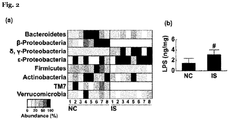
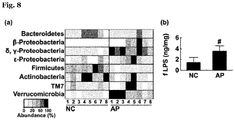
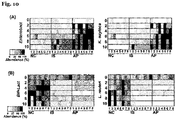
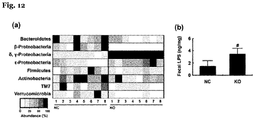
- a real-time PCR or 454 pyrosequencing was performed to measure the shares of firmicutes, proteobacteria, actinobacteria, bacteroidetes and the like in an intestinal microbial community.
- DNA of feces obtained from an animal model was isolated by means of QIAamp DNA stool mini kit (Qiagen, Germany). Pyrosequencing was performed by means of a barcoded primer (V1 to V3 domains of a bacterial 16S rDNA gene). qPCR was analyzed by means of a primer shown in a following table 1.
- Inflammatory reaction biomarkers such as p-p65, p65, iNOS, COX-2 and ⁇ -actin were measured by means of a western blotting method. Particularly, 50 ⁇ g of supernatant, which had been obtained by the same method as shown in the said experiment for measuring the activity of myeloperoxidase (MPO), was taken and then immune blotting was performed thereon. Also, an expression level of cytokines was measured by means of ELISA kit, and LPS was measured by means of LAL assay kit.
- MPO myeloperoxidase
- Example 1 Identification of a state of an animal model with immobilization stress induced
- NF- ⁇ B activity p-p65/p65
- BDNF brain derivated neurotrophic factor
- Example 2 Identification of a state of an animal model administered with feces of the animal model with immobilization stress induced
- NF- ⁇ B activity p-p65/p65
- BDNF brain derivated neurotrophic factor
- Example 3 Identification of a state of an animal model with antibiotic stress induced
- NF- ⁇ B activity p-p65/p65
- BDNF brain derivated neurotrophic factor
- Example 4 Identification of a state of an animal model administered with microorganisms isolated from feces of the animal model with stress induced
- NF- ⁇ B activity p-p65/p65
- BDNF brain derivated neurotrophic factor
- Example 5 Isolation and identification of lactic acid bacteria
- GAM liquid medium GAM broth; Nissui Pharmaceutical, Japan
- MRS Brain-Heart-Infusion
- BL agar medium Nasui Pharmaceutical, Japan
- lactic acid bacteria isolated from human or mouse feces were analyzed, then species of the strains were identified, and then names were given to the strains.
- Strain names given to lactic acid bacteria are as shown in a following table 2. Particularly, lactic acid bacteria isolated from human or mouse feces were 9 types of Lactobacillus spp. and 22 types of Bifidobacterium spp. [Table 2] Management no .
- Lactobacillus reuteri NK31 2 Lactobacillus reuteri NK32 3 Lactobacillus reuteri NK33 4 Lactobacillus reuteri NK34 5 Lactobacillus reuteri NK35 6 Lactobacillus johnsonii NK36 7 Lactobacillus johnsonii NK37 8 Lactobacillus johnsonii NK38 9 Lactobacillus johnsonii NK39 10 Bifidobacterium longum NK81 11 Bifidobacterium longum NK82 12 Bifidobacterium longum NK83 13 Bifidobacterium longum NK84 14 Bifidobacterium bifidum NK85 15 Bifidobacterium bifidum NK86 16 Bifidobacterium infantis NK87 17 Bifidobacterium infantis NK88 18 Bifidobacterium infantis NK89 19 Bifido
- Lactobacillus reuteri NK33 (accession number KCCM12090P) is a gram-positive bacillus. Also, it was shown that a 16S rDNA of Lactobacillus reuteri NK33 has a sequence of SEQ ID NO: 1. As a result of comparing the 16S rDNA sequences of Lactobacillus reuteri NK33 by means of BLAST search, it was identified that a Lactobacillus reuteri strain having the same 16S rDNA sequence is not searched at all, and 99% homologous to the 16S rDNA sequence of a known Lactobacillus reuteri strain.
- adolescentis NK98 L-tryptophan Indole formation Urea Urease - D-glucose Acidification (glucose) + D-mannitol Acidification (mannitol) + D-lactose Acidification (lactose) + D-saccharose Acidification (saccharose) + D-maltose Acidification (maltose) + Salicin Acidification (salicin) + D-xylose Acidification (xylose) ⁇ L-arabinose Acidification (arabinose) + Gelatin Hydrolysis (protease) + Esculin ferric citrate Hydrolysis ( ⁇ -glucosidase) + Glycerol Acidification (glycerol) - D-cellobiose Acidification (cellobiose) ⁇ D-mannose Acidification (mannose) - D-melezitose Acidification (melezitose) - D-raffinose Acidification (raffinose) + D-sorbito
- Example 7 Comparison of activity of isolated lactic acid bacteria
- DPPH 2,2-Diphenyl-1-picrylhydrazyl
- a DPPH solution was prepared.
- a suspension of lactic acid bacteria (1 ⁇ 10 8 CFU/ml) or a vitamin C solution (1 g/ml) was inserted into 0.1 ml of the said DPPH solution, and then cultured at 37°C for 20 minutes.
- a culture fluid was centrifuged at 3000 rpm for five minutes, such that supernatant was obtained. After that, an absorbance of the supernatant was measured at 517 nm, and then antioxidant activity of isolated lactic acid bacteria was calculated accordingly.
- Antioxidant activity of each lactic acid bacterium is as shown in following table 5 ( Lactobacillus spp.) and table 6 ( Bifidobacterium spp.).
- lactic acid bacteria and lipopolysaccharide an inflammatory reaction inducer for 2 or 24 hours, and then supernatant and cells were obtained.
- the obtained cells were inserted into an RIPA buffer (Gibco) and homogenized.
- An expression level of cytokines such as TNF- ⁇ was measured from a culture supernatant treated for 24 hours, and then expression levels of p65 (NF- ⁇ B), p-p6 5 (phosphor-NF- ⁇ B) and ⁇ -actin were measured from the cells obtained with treatment for two hours by means of an immunoblotting method.
- Expression levels of inflammatory indicators for each Lactobacillus spp. lactic acid bacterium are as shown in a following table 5.
- a BV-2 microglia was spread into a 24-well plate at 0.5 ⁇ 10 6 cells per well, then treated with isolated Bifidobacterium spp. lactic acid bacteria and lipopolysaccharide, an inflammatory reaction inducer, for 2 or 24 hours, and then supernatant and cells were obtained.
- the obtained cells were inserted into an RIPA buffer (Gibco) and homogenized.
- Expression levels of p65 (NF-kB), p-p6 5 (phosphor-NF- ⁇ B) and ⁇ -actin were measured from the cells obtained with treatment for two hours by means of an immunoblotting method.
- Expression levels of inflammatory indicators for each Bifidobacterium spp. lactic acid bacterium are as shown in a following table 6.
- SH-SY5Y cells which are a nerve call, were purchased from Korean Cell Line Bank, then cultured in a DMEM medium containing 10% FBS and 1% antibiotics, and then divided into a 12-well plate at 2 ⁇ 10 6 cells per well. After that, corticosterone was added into each well at a concentration of 300 mg/ml along with lactic acid bacteria (1 ⁇ 104 CFU/ml), then cultured, and then expression levels of NF- ⁇ B (p65, p-p65) and brain derivated neurotrophic factor (BDNF) were measured by means of an immunoblotting method.
- NF- ⁇ B p65, p-p65
- BDNF brain derivated neurotrophic factor
- BDNF expression levels and NF- ⁇ B activation levels for each lactic acid baterium are as shown in following table 5 ( Lactobacillus spp.) and table 6 ( Bifidobacterium spp.).
- Table 5 Strain name Antioxidant activity Macrophage SH-SY5Y cell TNF- ⁇ inhibitory capacity IL-10 expression increase NF- ⁇ B inhibitory capacity BDNF Expression increase NF- ⁇ B inhibition L. reuteri NK31 + + + + + + + + + + + + + + + + + + + + + + + + + + + + + + + + + + + + + + + + + + + + + + + + + + + + + + + + + + + + + + + + + + + + + + + + + + + + + + + + + + + + + + + + + + + + + + + + + + + + + + + + + + + + + + + + + + + + + + L.
- Lactobacillus reuteri NK33 and Bifidobacterium adolescentis NK98 inhibit the activity of NF- ⁇ B, known as a substance of inducing aging-related diseases such as Alzheimer's disease, inhibit an inflammatory reaction of microglia present in aging, dementia and the like, and increase an expression of a brain derived neurotrophic factor (BDNF) which is produced by a brain nerve, but decreased in aging, dementia and the like (Tables 5 and 6).
- BDNF brain derived neurotrophic factor
- the said macrophage culture fluid was treated with Bifidobacterium adolescentis NK98 and lipopolysaccharide, an inflammatory reaction inducer, for 2 or 24 hours, and then supernatant and cells were obtained, wherein a concentration for treating lactic acid bacteria was 1 ⁇ 10 4 CFU/ml.
- the obtained cells were inserted into an RIPA buffer (Gibco) and homogenized.
- An expression level of TNF- ⁇ from the obtained supernatant was measured by means of ELISA kit, and then expression levels of p65 (NF- ⁇ B), p-p65 (phosphor-NF- ⁇ B) and ⁇ -actin from the obtained cells were measured by means of an immunoblotting method.
- a spleen of a C57BL/6 mouse male, 6-week old, 20-22 g, OrientBio Co., Ltd. was isolated and crushed, and then suspended in an RPMI 1640 medium containing 10% FCS.
- CD4 T cells were isolated therefrom by means of CD4 T cell isolation kit (MiltenyiBiotec, Bergisch Gladbach, Germany), and then the isolated CD4 T cells were divided into a 12-well plate at 5 ⁇ 10 5 cells per well.
- the cells were cultured with an addition of anti-CD3, anti-CD28, IL-2 and IL-12 to induce differentiation of T cells into Thi cells; anti-CD3, anti-CD28, IL-2 and IL-4 to to induce differentiation of T cells into Th2 cells; anti-CD3, anti-CD28, IL-6 and TGF- ⁇ to induce differentiation of T cells into Th17 cells; and anti-CD3 and anti-CD28 to induce differentiation of T cells into Treg cells, then lactic acid bacteria were inserted thereinto at 1 ⁇ 10 5 CFU/ml per well, and then cultured for four days.
- expression rates of transcription factors and cytokines of Thi cells, Th2 cells, Th17 cells and Treg cells isolated from the spleen T cells were measured.
- the expression levels of T-bet, IFN- ⁇ and IL-12 from a Thi cell differentiation-inducing culture fluid; GATA3 and IL-5 from a Th2 cell differentiation-inducing culture fluid; RORyt and IL-17 from a Th17 cell differentiation-inducing culture fluid; and Foxp3 and IL-10 from a Treg cell differentiation-inducing culture fluid were analyzed by means of qRT-PCR, wherein the results thereof are as shown in a following table 9.
- Bifidobacterium adolescentis NK98 has a high inhibition rate on the differentiation of T cells into Thi cells, Th2 cells and Th17 cells and in particular has a high increase rate on the differentiation of T cells into Treg cells, thus effectively inhibiting an inflammatory reaction, and effectively improving an inflammatory disease accordingly.
- NF- ⁇ B activity p-p65/p65
- BDNF brain derivated neurotrophic factor
- Lactobacillus reuteri NK33 the novel lactic acid bacterium, has an excellent effect of improving a mental disorder, such as anxiety, depression, stress and the like.
- BDNF brain derivated neurotrophic factor
- an object recognition test method two objects (A, A') of the same shape and size were fixed into a box (40 ⁇ 40 ⁇ 40 cm), of which outside is not visible from the inside, then a mouse was allowed to start moving at the center of the box, and then the number of touching the two objects was recorded for 10 minutes. In 24 hours later, one of the two objects was replaced with a new one (A, B), and then the number of touching an old one and a new one was recorded and quantified.
- a test apparatus consisted of the three identical arms (8 cm in length, 30 cm in width, 14 cm in height), each positioning at a certain angle of 120°. The mouse was placed at the end of one arm and allowed to freely move in a Y maze for eight minutes, after which the number and order of entering respective arms were measured, so as to evaluate a spontaneous alteration (%).
- the alteration was defined as an alphabetical character order, in which the mouse sequentially entered into three arms, i.e. ABC, BCA, CAB, etc.
- % alteration Total number of alterations / Total number of arm entries ⁇ 2 ⁇ 100 [Table 18] Object recognition test (%) Y maze test (%) Hippocampus BDNF expression capacity Normal control 52.1 76.5 IS 38.5 56.7 - NK98 48.6 68.4 +++ IM38 46.5 64.5 ++ Buspirone 42.9 62.4 + * -, ⁇ 10%; +, 10 ⁇ 0%; ++, 30 ⁇ 50%; +++, >50%
- Lactobacillus reuteri NK33 a novel lactic acid bacterium, Bifidobacterium adolescentis IM38 (accession number: KCCM11807P), a bacterium disclosed in Korean patent publication No. 10-2017-0090359 , or a mixture thereof were compared to each other in terms of an effect of reducing stress.
- physiological salt solution 1 x 10 9 cfu of Lactobacillus reuteri NK33 (NK33), 1 x 10 9 cfu of Bifidobacterium adolescentis IM38 (IM38) or a combination of the said lactic acid bacteria (NK33+IM38) each 0.5 x 10 9 cfu was administered into a model with immobilization stress induced as shown in Experimental Example 1-(1) above, and then an elevated plus maze test was performed. After that, blood was collected from each group, and then an amount of corticosterone in blood was measured, wherein the results thereof are as shown in a following table 19.
- the present inventors deposited Lactobacillus reuteri NK33 for the purpose of patent to the Korean Culture Center of Microorganisms, a certified depository institution (address: Yulim Building, 45, Hongjenae 2ga-gil, Seodaemun-gu, Seoul, South Korea) on August 04, 2017, and received an accession number of KCCM12090P.
- the present inventors deposited Bifidobacterium adolescentis NK98 for the purpose of patent to the Korean Culture Center of Microorganisms, a certified depository institution (address: Yulim Building, 45, Hongjenae 2ga-gil, Seodaemun-gu, Seoul, South Korea) on August 03, 2018, and received an accession number of KCCM12297P.
Landscapes
- Health & Medical Sciences (AREA)
- Life Sciences & Earth Sciences (AREA)
- Chemical & Material Sciences (AREA)
- Engineering & Computer Science (AREA)
- General Health & Medical Sciences (AREA)
- Organic Chemistry (AREA)
- Bioinformatics & Cheminformatics (AREA)
- Medicinal Chemistry (AREA)
- Veterinary Medicine (AREA)
- Pharmacology & Pharmacy (AREA)
- Public Health (AREA)
- Animal Behavior & Ethology (AREA)
- Chemical Kinetics & Catalysis (AREA)
- Nuclear Medicine, Radiotherapy & Molecular Imaging (AREA)
- General Chemical & Material Sciences (AREA)
- Microbiology (AREA)
- Mycology (AREA)
- Biomedical Technology (AREA)
- Neurosurgery (AREA)
- Neurology (AREA)
- Wood Science & Technology (AREA)
- Zoology (AREA)
- Genetics & Genomics (AREA)
- Biotechnology (AREA)
- Molecular Biology (AREA)
- Epidemiology (AREA)
- General Engineering & Computer Science (AREA)
- Biochemistry (AREA)
- Virology (AREA)
- Tropical Medicine & Parasitology (AREA)
- Urology & Nephrology (AREA)
- Diabetes (AREA)
- Pulmonology (AREA)
- Pain & Pain Management (AREA)
- Nutrition Science (AREA)
- Food Science & Technology (AREA)
- Polymers & Plastics (AREA)
- Rheumatology (AREA)
- Psychiatry (AREA)
- Immunology (AREA)
Abstract
Description
- The present invention relates to Lactobacillus reuteri and Bifidobacterium adolescentis, which are novel lactic acid bacteria, and more particularly, to a composition comprising the novel lactic acid bacteria useful in preventing and treating a neurological mental disease or an inflammatory disease.
- Also, the present invention relates to a composition for diagnosing the neurological mental disease, comprising a preparation for measuring a level of an intestinal microorganism.
- In modern society, neurological mental diseases including anxiety, depression, schizophrenia, etc. are on the increase due to a rapid rise in stress, etc. In particular, the trend is that more and more patients are suffering from mental disorders such as depression, anxiety and the like due to various causes such as social and structural ones, etc. in our modern times overflowing with individualism.
- In severe cases, patients with mental disorders may end up committing suicide accidents. In particular, it is reported that more than half of depressed patients consider suicide. Indeed, it is known that 10 to 15% of those patients actually commit suicide.
- Mental disorders have no clear and objective criteria for judgment yet, such that symptoms thereof may vary depending on respective patients. If there is any suspicion about mental disorders, treatment is required according to accurate diagnosis and examination. However, the reality is that such proper treatment is not done due to negative social attitudes toward hospital treatments for mental disorders. Also, drugs such as antidepressants, etc. used to treat mental disorders have not shown a satisfactory therapeutic effect thereon and may cause serious side effects such as cardiovascular diseases, suicide and the like, such that those drugs are limited in use.
- On the other hand, as a result of study involving a use of natural products, a composition for treating mental disorders using a Fomes fomentarius extract and a Lithospermum erythrorhizon extract is disclosed in Korean patent publication No.
10-2017-0061457 - Against such backdrops, the present inventors identified that mental disorders may be diagnosed from a change in intestinal microbial communities, while studying a preventive and therapeutic agent for mental disorders, and further identified that novel lactic acid bacteria isolated from human and mouse feces show an effect of inhibiting a neurodegenerative disease-inducing factor, reducing anxious and depressive behaviors and the like, such that the novel lactic acid bacteria may be helpfully used in preventing or treating neurological mental diseases, particularly neurodegenerative diseases and mental disorders, thereby completed the present invention.
- (Patent Document 1) Korean patent publication No.
10-2017-0061457 - An objective of the present invention is to provide a novel lactic acid bacterium.
- Other objective of the present invention is to provide a composition for preventing or treating a neurological mental disease, comprising the novel lactic acid bacterium.
- Another objective of the present invention is to provide a composition for preventing or treating an inflammatory disease, comprising the novel lactic acid bacterium.
- Another objective of the present invention is to provide a composition for diagnosing the neurological mental disease, comprising a preparation for measuring a level of an intestinal microorganism.
- Another objective of the present invention is to provide a method for diagnosing the neurological mental disease, comprising: a step of measuring a level of an intestinal microorganism from feces isolated from an individual suspicious about the neurological mental disease; and a step of comparing the level of the said intestinal microorganism with that of the intestinal microorganism in feces of a control group, rather than that of the neurological mental disease.
- In one aspect for achieving the said objectives, the present invention provides a novel lactic acid bacterium.
- Particularly, in the present invention, the said novel lactic acid bacterium may be Lactobacillus reuteri NK33 (depository institution: the Korean Culture Center of Microorganisms (KCCM), date of deposit: Aug. 04, 2017, accession number: KCCM12090P) or Bifidobacterium adolescentis NK98 (depository institution: the KCCM, date of deposit: Aug. 03, 2018, accession number: KCCM12297P).
- Lactobacillus reuteri NK33 or Bifidobacterium adolescentis NK98 according to the present invention is characterized by being a novel lactic acid bacterium isolated and identified from human or mouse feces.
- A 16S rDNA sequence for identification and classification of Lactobacillus reuteri NK33 according to the present invention is the same as SEQ ID NO: 1 attached to the present specification. Thus, Lactobacillus reuteri NK33 according to the present invention may include the 16S rDNA of SEQ ID NO: 1. As a result of analyzing the 16S rDNA sequence of the said SEQ ID NO: 1, such sequence was 99% homologous to that of known Lactobacillus reuteri strains, thus showing the highest molecular phylogenetic relationship with Lactobacillus reuteri. Thus, the said lactic acid bacterium was identified as Lactobacillus reuteri, named as Lactobacillus reuteri NK33, and deposited to the KCCM on Aug. 04, 2017 (accession number: KCCM12090P).
- Lactobacillus reuteri NK33 according to the present invention is a gram-positive bacterium and a cell type thereof is bacillus. More particularly, the physiological characteristics of Lactobacillus reuteri NK33 may be analyzed according to a conventional method in the art, wherein the results thereof are as shown in a following table 3. Particularly, Lactobacillus reuteri NK33 may use as a carbon source L-arabinose, D-ribose, D-xylose, D-galactose, D-glucose, D-fructose, D-mannose, mannitol, sorbitol, N-acetyl-glucosamine, amygdaline, arbutin, esculin, salicin, cellobiose, maltose, lactose, melibiose, sucrose, trehalose, melezitose, raffinose, gentiobiose, D-turanose and gluconate.
- A 16S rDNA sequence for identification and classification of Bifidobacterium adolescentis NK98 according to the present invention is the same as SEQ ID NO: 38 attached to the present specification. Thus, Bifidobacterium adolescentis NK98 according to the present invention may include the 16S rDNA of SEQ ID NO: 38. As a result of analyzing the 16S rDNA sequence of the said SEQ ID NO: 38, such sequence was 98% homologous to that of a known Bifidobacterium adolescentis strain, thus showing the highest molecular phylogenetic relationship with Bifidobacterium adolescentis. Thus, the said lactic acid bacterium was identified as Bifidobacterium adolescentis, named as Bifidobacterium adolescentis NK98, and deposited to the KCCM on Aug. 03, 2018 (accession number: KCCM12297P).
- The physiological characteristics of Bifidobacterium adolescentis NK98 according to the present invention may be analyzed according to a conventional method in the art, wherein the results thereof are as shown in a following table 4. Particularly, Bifidobacterium adolescentis NK98 may use as a carbon source D-glucose, D-mannitol, D-lactose, D-saccharose, D-maltose, salicin, D-xylose, L-arabinose, gelatin, esculin ferric citrate, D-cellobiose, D-raffinose and D-trehalose.
- In other aspect for achieving the said objectives, the present invention provides a pharmaceutical composition for preventing or treating a neurological mental disease, comprising a novel lactic acid bacterium.
- In the present invention, the said novel lactic acid bacterium may be Lactobacillus reuteri NK33, Bifidobacterium adolescentis NK98 or a mixture thereof.
- "Lactobacillus reuteri NK33" and "Bifidobacterium adolescentis NK98" according to the present invention are the same as described above.
- Particularly, the lactic acid bacterium contained in the pharmaceutical composition according to the present invention may be a live bacterial cell thereof, a dead bacterial cell thereof, a culture product thereof, a crush thereof or an extract thereof, but any type of lactic acid bacterium may be used without limitation, as long as it may achieve a preventive or therapeutic effect on the neurological mental disease.
- In the present invention, the term "culture product" means an object obtained by culturing a lactic acid bacterium in a known liquid medium or solid medium, and is a concept encompassing a novel lactic acid bacterium in the present invention.
- A neurological mental disease according to the present invention may be a neurodegenerative disease or a mental disorder.
- Particularly, the neurological mental disease according to the present invention may be the mental disorder, and the said mental disorder may be one or more selected from the group including anxiety, depression, mood disorder, insomnia, delusional disorder, obsessive disorder, migraine, stress, memory disorder, cognitive disorder and disturbance attention.
- In an exemplary embodiment of the present invention, it was identified that, when Lactobacillus reuteri NK33 or Bifidobacterium adolescentis NK98 is administered to an animal model with stress induced, anxious and depressive behaviors caused by stress are remarkably reduced; an activity of NF-κB is inhibited in a hippocampus of the animal model with stress induced; an expression of a brain derivated neurotrophic factor is increased; and amounts of corticosterone, IL-6, TNF-α and lipopolysaccharide (LPS), which are stress parameters in blood, are decreased. From the results, it was also identified that a pharmaceutical composition comprising the said lactic acid bacteria may be helpfully used in preventing or treating a neurological mental disease, particularly a mental disorder.
- Particularly, the neurological mental disease according to the present invention may be a neurodegenerative disease, wherein the said neurodegenerative disease may be one or more selected from the group consisting of Parkinson's disease, Huntington's disease, Alzheimer's disease, amyotrophic lateral sclerosis, spinocerebellar atrophy, Tourette's syndrome, Friedrich's ataxia, Machado-Joseph's disease, dementia, dystonia, progressive supranuclear palsy and frontotemporal dementia.
- In an exemplary embodiment of the present invention, it was identified that, when nerve cells are treated with the said lactic acid bacteria along with a stress hormone corticosterone, the activity of NF-κB, known as a substance of inducing neurodegenerative diseases such as Alzheimer's disease, is inhibited, and an expression of a brain derivated neurotrophic factor (BDNF), known to be decreased in aging, dementia and the like, is increased at the same time (Tables 5 and 6). From the results, it was also identified that the pharmaceutical composition comprising the said lactic acid bacteria may be helpfully used in preventing and treating the neurological mental disease, particularly the neurodegenerative disease.
- Also, in an exemplary embodiment of the present invention, it was identified that, when co-administered with Lactobacillus reuteri NK33 and Bifidobacterium adolescentis NK98, an effect of improving a neurological mental disease, particularly the effect of reducing stress, is remarkably increased compared to each group administered with the said lactic acid bacteria alone (Table 20).
- In the present invention, the said pharmaceutical composition may further comprise Bifidobacterium adolescentis IM38 KCCM11807P.
- The said Bifidobacterium adolescentis IM38 KCCM11807P is a known lactic acid bacterium disclosed in Korean patent publication No.
10-2017-0090359 10-2017-0090359 - In an exemplary embodiment of the present invention, it was identified that, when Lactobacillus reuteri NK33 or Bifidobacterium adolescentis NK98 and Bifidobacterium adolescentis IM38 are co-administered to an animal model with stress induced, anxious and depressive behaviors caused by stress are remarkably reduced, and an amount of corticosterone, which is a stress parameter in blood, is decreased.
- In another aspect for achieving the said objectives, the present invention provides a pharmaceutical composition for preventing or treating an inflammatory disease, comprising Lactobacillus reuteri NK33, Bifidobacterium adolescentis NK98 or a mixture thereof.
- "Lactobacillus reuteri NK33" and "Bifidobacterium adolescentis NK98" according to the present invention are the same as described above.
- Particularly, the lactic acid bacterium contained in the pharmaceutical composition according to the present invention may be a live bacterial cell thereof, a dead bacterial cell thereof, a culture product thereof, a crush thereof or an extract thereof, but any type of a lactic acid bacterium may be used without limitation, as long as it may achieve a preventive or therapeutic effect on the inflammatory disease.
- In the present invention, the term "culture product" means an object obtained by culturing a lactic acid bacterium in a known liquid medium or solid medium, and is a concept encompassing a novel lactic acid bacterium in the present invention.
- An inflammatory disease according to the present invention may be one or more selected from the group including arthritis, gout, hepatitis, asthma, obesity, corneitis, gastritis, enteritis, nephritis, colitis, diabetes, tuberculosis, bronchitis, pleurisy, peritonitis, spondylitis, pancreatitis, inflammatory pain, urethritis, cystitis, vaginitis, arteriosclerosis, septicemia, burn, dermatitis, periodontitis and gingivitis.
- In an exemplary embodiment of the present invention, it was identified that, when macrophage isolated from a mouse is treated with the said lactic acid bacteria along with lipopolysaccharide (LPS), an inflammatory reaction inducer, an inflammatory reaction is remarkably inhibited (Tables 5 and 6). From the results, it was also identified that the pharmaceutical composition comprising the said lactic acid bacteria according to the invention may be helpfully used in preventing and treating the inflammatory disease.
- Particularly, the inflammatory disease may be colitis.
- In an exemplary embodiment of the present invention, it was identified that, when Lactobacillus reuteri NK33 or Bifidobacterium adolescentis NK98 is administered to an animal model with colitis induced by stress, a colon length thereof, which is a colitis indicator, is recovered to a normal level, and amounts of myeloperoxidase, COX-2 and iNOS, which are colitis parameters, are decreased and an activity of TNF-α is decreased, too (
Fig. 15 and Table 15). From the results, it was also identified that the pharmaceutical composition comprising the said Lactobacillus reuteri NK33 or Bifidobacterium adolescentis NK98 may be helpfully used in preventing and treating the inflammatory disease, particularly colitis. - A pharmaceutical composition for preventing or treating a neurological mental disease, or a pharmaceutical composition for preventing or treating an inflammatory disease according to the present invention may be prepared into a pharmaceutical dosage form by means of a well-known method in the art, such that an active component of such composition may be provided via a fast, suspended or prolonged release, after being administered to a mammal. In preparing a dosage form, the pharmaceutical composition according to the present invention may further comprise a pharmaceutically acceptable carrier, to the extent that such carrier does not suppress an activity of a novel lactic acid bacterium.
- The pharmaceutically acceptable carrier may include, but not limited thereto, conventionally used ones, for example, lactose, dextrose, sucrose, sorbitol, mannitol, xylitol, erythritol, maltitol, starch, acacia rubber, alginate, gelatin, calcium phosphate, calcium silicate, cellulose, methyl cellulose, microcrystalline cellulose, polyvinyl pyrrolidone, water, methyl hydroxybenzoate, propylhydroxybenzoate, talc, magnesium stearate, mineral oil and the like. Also, the pharmaceutical composition according to the present invention may comprise a diluent or an excipient such as filler, extender, binder, humectant, disintegrant, surfactant, etc., and other pharmaceutically acceptable additives.
- A dosage of the pharmaceutical composition according to the present invention needs to be a pharmaceutically effective amount. The "pharmaceutically effective amount" means an amount enough to prevent or treat neurological mental diseases or inflammatory diseases at a reasonable benefit/risk ratio applicable to medical treatment. An effective dose level may be variously selected by those skilled in the art according to such factors as a formulation method, a patient's condition and weight, the patient's gender, age and degree of disease, a drug form, an administration route and period, an excretion rate, reaction sensitivity, etc. The effective amount may vary depending on a route of treatment, a use of excipient and a possibility of being used with other drugs, as recognized by those skilled in the art. However, in case of a preparation for oral administration to achieve a preferable effect, the composition according to the present invention may be generally administered to an adult in an amount of 0.0001 to 100 mg/kg a day, preferably 0.001 to 100 mg/kg a day based on 1 kg of body weight. When such preparation is administered as shown above, Lactobacillus reuteri NK33 or Bifidobacterium adolescentis NK98 according to the present invention may be administered in an amount of 1 x 10² CFU/60kg to 1 x 10¹¹ CFU/60kg a day. Such administration maybe done once a day, or divided into several times a day. The said dosage does not limit the scope of the present invention in any aspect.
- The pharmaceutical composition for preventing or treating a neurological mental disease, or the pharmaceutical composition for preventing or treating an inflammatory disease according to the present invention may be administered to mammals such as mice, livestock, humans, etc. through various routes. Particularly, the pharmaceutical composition according to the present invention may be orally or parenterally administered (for example, applied or injected intravenously, subcutaneously or intraperitoneally), but may be preferably orally administered. A solid preparation for oral administration may include powder, granule, tablet, capsule, soft capsule, pill, etc. A liquid preparation for oral administration may include a suspending agent, liquid for internal use, emulsion, syrup, aerosol, etc., but may also include various excipients, for example, humectant, a sweetening agent, a flavoring agent, preservative, etc. in addition to water and liquid paraffin, which are frequently used simple diluents. A preparation for parenteral administration may be used by being formulated into a dosage form of external preparation and sterilized injectable preparation such as sterilized aqueous solution, liquid, non-aqueous solvent, a suspending agent, emulsion, eye drop, eye ointment, syrup, suppository, aerosol, etc., according to respective conventional methods, and preferably may be used by preparing a pharmaceutical composition of cream, gel, patch, spray, ointment, plaster, lotion, liniment, eye ointment, eye drop, paste or cataplasma, but not limited thereto. A preparation for local administration may be an anhydrous or aqueous form depending on a clinical prescription. As the non-aqueous solvent and the suspending agent above, propylene glycol, polyethylene glycol, vegetable oil like olive oil, injectable ester like ethyl oleate, etc. may be used. As a base of the suppository above, witepsol, macrogol, tween 61, cacao butter, laurin oil, glycerogelatin, etc. maybe used.
- In another aspect for achieving the said objectives, the present invention provides a method for preventing or treating a neurological mental disease, comprising a step of administering Lactobacillus reuteri NK33, Bifidobacterium adolescentis NK98 or a mixture thereof to an individual.
- In another aspect for achieving the said objectives, the present invention provides a method for preventing or treating an inflammatory disease, comprising a step of administering Lactobacillus reuteri NK33, Bifidobacterium adolescentis NK98 or a mixture thereof to an individual.
- The terms "Lactobacillus reuteri NK33," "Bifidobacterium adolescentis NK98," "administration," "neurological mental disease," "inflammatory disease" and the like according to the present invention are the same as described above.
- The individual refers to an animal, and may be typically a mammal, on which treatment using the inventive novel lactic acid bacterium may show a beneficial effect. A preferable example of such individual may include primates like human, as well as a rat, mouse, monkey, dog, cat, cow, horse, pig, sheep or goat. Also, such individuals may include all the individuals having a symptom of a neurological mental disease or an inflammatory disease, or having a risk of having such symptom.
- In another aspect for achieving the said objectives, the present invention provides a health functional food for preventing or improving a neurological mental disease, comprising Lactobacillus reuteri NK33, Bifidobacterium adolescentis NK98 or a mixture thereof.
- In another aspect for achieving the said objectives, the present invention provides a health functional food for preventing or improving an inflammatory disease, comprising Lactobacillus reuteri NK33, Bifidobacterium adolescentis NK98 or a mixture thereof.
- The terms "Lactobacillus reuteri NK33," "Bifidobacterium adolescentis NK98," "administration," "neurological mental disease," "inflammatory disease" and the like according to the present invention are the same as described above.
- The health functional food, which puts an emphasis on a body modulating function of food, is a food given added value by means of a physical, biochemical or bioengineering method, such that the food may act to express the functions thereof for a particular purpose. A component of such health functional food is designed and processed to fully exert its body modulating function in vivo, which is involved in defending a living body, adjusting a body rhythm, preventing a disease and helping a recovery from the disease, and may comprise food supplementary additives, which are acceptable as food, sweeteners or functional raw materials.
- In case of using Lactobacillus reuteri NK33 or Bifidobacterium adolescentis NK98 according to the present invention as a health functional food (or health functional beverage additives), the said lactic acid bacteria may be added thereto as they are, used along with other food or food components, or appropriately used according to a conventional method. A mixed amount of the said lactic acid bacteria may be appropriately determined depending on a purpose of use thereof (prevention, health, improvement or therapeutic treatment).
- The health functional food may comprise various nutrients, vitamins, minerals (electrolytes), flavoring agents such as synthetic flavoring agents, natural flavoring agents and the like, coloring agents and enhancers (cheese, chocolate, etc.), pectic acid and salts thereof, organic acid, protective colloidal thickeners, pH adjusting agents, stabilizers, preservatives, glycerin, alcohol, carbonators used in carbonated beverages, etc. Also, the health functional food according to the present invention may comprise pulp for preparing fruit and vegetable based beverages. Such components may be used alone or in combination, and a ratio of such additives is generally selected from a range of 0.001 to 50 parts by weight with regard to a total weight of the composition.
- A type of the health functional food has no particular limitation. As food, to which the said lactic acid bacteria may be added, there are sausage, meats, bread, chocolates, snacks, candies, confectionery, ramen, pizza, other noodles, chewing gums, dairy products including ice creams, various soups, beverages, teas, health drinks, alcohol beverages, vitamin complexes, etc. In case of being formulated into beverages, a liquid component, which is added to the beverages in addition to the novel lactic acid bacteria, may include, but not limited thereto, various flavors, natural carbohydrates or the like as an additional component just as contained in conventional beverages. The aforementioned natural carbohydrates may be monosaccharide (ex. glucose, fructose, etc.), disaccharide (ex. maltose, sucrose, etc.) and polysaccharide (ex. conventional sugar such as dextrin, cyclodextrin, etc.), as well as sugar alcohol such as xylitol, sorbitol, erythritol, etc.
- In another aspect for achieving the said objectives, the present invention provides a composition for diagnosing a neurological mental disease, comprising a preparation for measuring a level of intestinal microorganisms.
- The terms such as "neurological mental disease," etc. according to the present invention are the same as described above.
- In the present invention, the term "intestinal microorganism" refers to a microorganism present in a digestive tract, particularly the microorganism present specifically in intestines, wherein such intestinal microorganism may be one or more selected from the group including bacteroidetes, actinobacteria, firmicutes, bifidobacteria, lactobacilli, β-proteobacteria, δ-proteobacteria, γ-proteobacteria, ε-proteobacteria and enterobacteriaceae.
- Particularly, a composition for diagnosis according to the present invention may diagnose a neurological mental disease, if there is an increase in a level of one or more selected from the group including β-proteobacteria, δ-proteobacteria, y-proteobacteria, e-proteobacteria and enterobacteriaceae among the said intestinal microorganisms; such composition may diagnose the neurological mental disease, if there is a decrease in a level of one selected from the group including bacteroidetes, actinobacteria, firmicutes, bifidobacteria and lactobacilli among the said intestinal microorganisms; and such composition may diagnose the neurological mental disease, if there is an increase in a level of one or more selected from the group including β-proteobacteria, δ-proteobacteria, γ-proteobacteria, e-proteobacteria and enterobacteriaceae among the said intestinal microorganisms, and if there is a decrease in a level of one selected from the group including bacteroidetes, actinobacteria, firmicutes, bifidobacteria and lactobacilli among the said intestinal microorganisms.
- Particularly, the said enterobacteriaceae, of which level is increased, may be one or more selected from the group including Klebsiella oxytoca, Escherichia coli and Morganella morganii.
- Also, the said lactobacilli, of which level is decreased, may be one or more selected from the group including Lactobacillus reuteri, Lactobacillus johnsonii and Lactobacillus rhamnosus, and the said bifidobacteria, of which level is decreased, may be Bifidobacterium animalis.
- The composition for diagnosing a neurological mental disease, provided in the present invention, comprises a preparation capable of measuring a level of an intestinal microorganisms, wherein an occurrence of the neurological mental disease to an individual may be identified by measuring the level of the intestinal microorganism from feces isolated from the individual, who needs to be identified about the occurrence of the neurological mental disease, by means of the preparation contained in the said composition. The said individual may be an animal, preferably a mammal, for example, primates like human, as well as a rat, mouse, monkey, dog, cat, cow, horse, pig, sheep or goat.
- The preparation may be used to identify whether the neurological mental disease has occurred to the individual or not, by measuring the level of the intestinal microorganism isolated from feces of the said individual.
- The preparation capable of measuring the said level of the intestinal microorganism may be particularly a primer, probe or the like, capable of measuring a level of a specific gene of the intestinal microorganism; may be an antibody, aptamer or the like, capable of measuring a level of a protein expressed from the said specific gene; may be a primer, probe or the like, to quantitatively analyze a 16S rDNA sequence of the intestinal microorganism; and may be a preparation for pyrosequencing, etc. to quantitatively analyze a genome DNA sequence of the intestinal microorganism, but not particularly limited thereto, as long as the preparation may be used to quantitatively analyze the intestinal microorganism isolated from feces of the individual.
- Particularly, a primer specific to firmicutes, the said intestinal microorganism, may be a primer pair consisting of SEQ ID NO: 2 and SEQ ID NO: 3; a primer specific to bacteroidetes may be a primer pair consisting of SEQ ID NO: 4 and SEQ ID NO: 5; a primer specific to β-proteobacteria may be a primer pair consisting of SEQ ID NO: 6 and SEQ ID NO: 7; a primer specific to δ/γ-proteobacteria may be a primer pair consisting of SEQ ID NO: 8 and SEQ ID NO: 9; a primer specific to e-proteobacteria maybe a primer pair consisting of SEQ ID NO: 10 and SEQ ID NO: 11; a primer specific to actinobacteria may be a primer pair consisting of SEQ ID NO: 12 and SEQ ID NO: 13; and a primer specific to enterobacteriaceae may be a primer pair consisting of SEQ ID NO: 18 and SEQ ID NO: 19.
- In an exemplary embodiment of the present invention, the levels of intestinal microorganisms were measured by carrying out pyrosequencing by means of a preparation for pyrosequencing containing a barcoded primer of SEQ ID NO: 2 to SEQ ID NO: 19 in Table 1 (Experimental Example 3).
- The composition according to the present invention may further comprise a preparation for measuring an amount of lipopolysaccharide (LPS). Particularly, the preparation for measuring the said amount of lipopolysaccharide (LPS) may be a preparation conventionally used to measure the amount of lipopolysaccharide (LPS), more particularly a preparation included in Limulus amoebocyte lysate (LAL) assay kit, but not limited thereto.
- In an exemplary embodiment of the present invention, it was identified that the amount of lipopolysaccharide (LPS) is increased as a result of analyzing feces of an animal model with a mental disorder induced (
Figs. 1 ,2 ,7 and11 ). - In another aspect, the present invention provides a kit for diagnosing a neurological mental disease, comprising the said composition.
- The kit according to the present invention may include a collection container capable of collecting feces of an individual to be identified about an occurrence of the neurological mental disease thereto by using the said composition; a buffer solution for extracting an intestinal microorganism in feces; a measurement means used to measure the intestinal microorganism; and the like.
- In another aspect, the present invention provides a method for diagnosing a neurological mental disease, comprising: a step of measuring a level of an intestinal microorganism from feces isolated from an individual suspicious about the neurological mental disease; and a step of comparing the level of the said intestinal microorganism with a level of the intestinal microorganism in feces of a control group, rather than that of the neurological mental disease.
- Also, the present invention provides an information-offering method for diagnosing a neurological mental disease, comprising: a step of measuring a level of an intestinal microorganism from feces isolated from an individual suspicious about the neurological mental disease; and a step of comparing the level of the said intestinal microorganism with a level of the intestinal microorganism in feces of a control group, rather than that of the neurological mental disease.
- The feces mean feces isolated and collected from an individual as a sample for measuring a level of an intestinal microorganism.
- Particularly, the intestinal microorganism may be one or more selected from the group including bacteroidetes, actinobacteria, firmicutes, bifidobacteria, lactobacilli, β-proteobacteria, δ-proteobacteria, γ-proteobacteria, ε-proteobacteria and enterobacteriaceae.
- The method for diagnosing a neurological mental disease or providing information thereon according to the present invention may diagnose whether the neurological mental disease occurs or has a risk of occurrence by identifying a microorganism, of which level is increased, among the said intestinal microorganisms.
- Particularly, the method for diagnosing a neurological mental disease or providing information thereon may further comprise a step of determining an individual, whose level of an intestinal microorganism is increased, as the neurological mental disease by comparing the level of the intestinal microorganism in feces of an individual suspicious about the neurological mental disease with a level of the intestinal microorganism in feces of a control group, rather than that of the neurological mental disease.
- The intestinal microorganism, of which level is increased, may be one or more selected from the group including β-proteobacteria, δ-proteobacteria, γ-proteobacteria, e-proteobacteria and enterobacteriaceae.
- Particularly, the enterobacteriaceae may be one or more selected from the group including Klebsiella oxytoca, Escherichia coli and Morganella morganii.
- Also, the method for diagnosing a neurological mental disease or providing information thereon according to the invention may diagnose whether the neurological mental disease occurs or has a risk of occurrence by identifying a microorganism, of which level is decreased, among the said intestinal microorganisms.
- The terms such as "neurological mental disease," etc. according to the present invention are the same as described above.
- Particularly, the method for diagnosing a neurological mental disease or providing information thereon may further comprise a step of determining an individual, whose level of an intestinal microorganism is decreased, as the neurological mental disease by comparing a level of the intestinal microorganism in feces of an individual suspicious about the neurological mental disease with a level of the intestinal microorganism in feces of a control group, rather than that of the neurological mental disease.
- The intestinal microorganism, of which level is decreased, may be one or more selected from the group including bacteroidetes, actinobacteria, firmicutes, bifidobacteria and lactobacilli.
- Also, the lactobacilli may be one or more selected from the group including Lactobacillus reuteri, Lactobacillus johnsonii and Lactobacillus rhamnosus, and the bifidobacteria may be Bifidobacterium animalis.
- In an exemplary embodiment of the present invention, as a result of identifying a change in an intestinal microbial community by using feces isolated from an animal model with stress induced, such as immobilization stress, antibiotic stress or the like, it was identified that levels of β-proteobacteria, δ-proteobacteria, γ-proteobacteria, ε-proteobacteria and enterobacteriaceae are increased, and levels of bacteroidetes, actinobacteria, firmicutes, bifidobacteria and lactobacilli are decreased compared to an animal model without stress (
Figs. 2 ,6 ,8 ,10 and12 ). In particular, it was identified that, as a particular enterobacteriaceae, of which level is increased, there are Klebsiella oxytoca, Escherichia coli and Morganella morganii; as a particular lactobacilli, of which level is decreased, there are Lactobacillus reuteri, Lactobacillus johnsonii and Lactobacillus rhamnosus; and as a particular bifidobacteria, of which level is decreased, there is Bifidobacterium animalis. - In another aspect, the present invention provides a use of a novel lactic acid bacterium for preventing or treating a neurological mental disease. Particularly, the present invention provides a use of Lactobacillus reuteri NK33 for preventing or treating the neurological mental disease. Also, the present invention provides a use of Bifidobacterium adolescentis NK98 for preventing or treating the neurological mental disease.
- In another aspect, the present invention provides a use of a novel lactic acid bacterium for preventing or treating an inflammatory disease. Particularly, the present invention provides a use of Lactobacillus reuteri NK33 for preventing or treating the inflammatory disease. Also, the present invention provides a use of Bifidobacterium adolescentis NK98 for preventing or treating the inflammatory disease.
- In another aspect, the present invention provides a use of a composition comprising a novel lactic acid bacterium in preparing a drug for preventing or treating a neurological mental disease. Particularly, the present invention provides a use of a composition comprising Lactobacillus reuteri NK33 in preparing a drug for preventing or treating the neurological mental disease. Also, the present invention provides a use of a composition comprising Bifidobacterium adolescentis NK98 in preparing a drug for preventing or treating the neurological mental disease.
- The terms "Lactobacillus reuteri NK33," "Bifidobacterium adolescentis NK98," "neurological mental disease," "inflammatory disease" and the like according to the present invention are the same as described above.
- The numerical values described in the present specification should be interpreted to include a range of equivalents thereof, unless otherwise stated.
- Hereinafter, the present invention will be described in detail through preferred Examples for better understanding of the present invention. However, the following Examples are provided only for the purpose of illustrating the present invention, and thus the present invention is not limited thereto.
- A novel lactic acid bacterium according to the present invention, i.e. Lactobacillus reuteri NK33 or Bifidobacterium adolescentis NK98 has an effect on inhibiting a neurodegenerative disease-inducing factor and reducing anxious and depressive behaviors. Thus, the novel lactic acid bacterium according to the present invention may be used as a composition for preventing or treating a neurological mental disease, and particularly effective in preventing and treating a neurodegenerative disease and a mental disorder.
- Also, the novel lactic acid bacterium according to the present invention is effective in inhibiting an inflammatory reaction, and thus may be used in a composition for preventing or treating an inflammatory disease, and particularly effective in preventing and treating colitis.
- Further, a composition for measuring a level of intestinal microorganisms according to the present invention is effective in diagnosing a neurological mental disease by measuring the level of intestinal microorganisms.
-
-
Fig. 1 shows results of measuring anxious behaviors and blood indicators with regard to a mouse (IS) subjected to immobilization stress; (a) is a graph of identifying that time spent in open arms (OT) and open arm entries (OE) are decreased as a result of an elevated plus maze test; (b) is a graph of identifying that time in bright area is decreased as a result of a light/dark transition test; (c) is a graph of identifying that a marble-burying behavior is increased in a marble burying test; (d) is an image of identifying that an NF-κB activity (p-p65/p65) is increased in a hippocampus and an expression level of a brain derivated neurotrophic factor (BDNF) is decreased; (e) is a graph of identifying that corticosterone in blood is increased; (f) is a graph of identifying that IL-6 in blood is increased; (g) is a graph of identifying that TNF-α in blood is increased; and (h) is a graph of identifying that lipopolysaccharide (LPS) in blood is increased. -
Fig. 2 (a) is a diagram of identifying that there is a change in an intestinal microbial community in feces of a mouse (IS) subjected to immobilization stress; andFig. 2 (b) is a graph of identifying that there is an increase in lipopolysaccharide (LPS) in feces of a mouse (IS) subjected to immobilization stress. -
Fig. 3 shows results of measuring colitis indicators with regard to a mouse (IS) subjected to immobilization stress; (a) is a graph of identifying that there is a decrease in a length of a colon of a mouse (IS) subjected to immobilization stress; (b) is a graph of identifying that myeloperoxidase is increased in the colon; (c) is a graph of identifying that TNF-α is increased in the colon; (d) is an image of identifying that an NF-κB activity (p-p65/p65) is increased and expressions of COX-2 and iNOS are increased in the colon; and (e) is an image of identifying that occludin and claudin-1 are decreased in the colon. -
Fig. 4 shows results of identifying a state of an animal model (FIS), administered with feces of an animal model with immobilization stress induced; (a) is a graph of identifying that time spent in open arms (OT) and open arm entries (OE) are decreased as a result of an elevated plus maze test; (b) is a graph of identifying that time in bright area is decreased as a result of a light/dark transition test; (c) is a graph of identifying that a marble-burying behavior is increased in a marble burying test; (d) is an image of identifying that an NF-κB activity (p-p65/p65) is increased in a hippocampus and an expression level of a brain derivated neurotrophic factor (BDNF) is decreased; (e) is a graph of identifying that a length of a colon is decreased; and (f) is a graph of identifying that myeloperoxidase is increased in the colon. -
Fig. 5 shows results of measuring blood indicators with regard to an animal model (FIS) administered with feces of an animal model with immobilization stress induced; (a) is a graph of identifying that corticosterone in blood is increased; (b) is a graph of identifying that IL-6 in blood is increased; and (c) is a graph of identifying that TNF-α in blood is increased. -
Fig. 6 shows results of identifying a change in colitis indicators and an intestinal microbial community with regard to an animal model (FIS) administered with feces of an animal model with immobilization stress induced; (a) is a graph of identifying that TNF-α is increased; (b) is a graph of identifying that IL-6 is increased in a colon; (c) is a graph of identifying that IL-10 is decreased in the colon; (d) is an image of identifying that an NF-κB activity (p-p65/p65) is increased and expressions of COX-2 and iNOS are increased in the colon; and (e) is a diagram of identifying that an intestinal microbial community in feces is changed. -
Fig. 7 shows results of measuring anxious behaviors and blood indicators with regard to a mouse (AP) subjected to antibiotic stress; (a) is a graph of identifying that time spent in open arms (OT) and open arm entries (OE) are decreased as a result of an elevated plus maze test; (b) is a graph of identifying that time in bright area is decreased as a result of a light/dark transition test; (c) is a graph of identifying that a marble-burying behavior is increased in a marble burying test; (d) is an image of identifying that an NF-κB activity (p-p65/p65) is increased in a hippocampus and an expression level of a brain derivated neurotrophic factor (BDNF) is decreased; (e) is a graph of identifying that corticosterone in blood is increased; (f) is a graph of identifying that IL-6 in blood is increased; (g) is a graph identifying that TNF-α in blood is increased; and (h) is a graph of identifying that lipopolysaccharide (LPS) in blood is increased. -
Fig. 8 (a) is a diagram of identifying that there is a change in an intestinal microbial community in feces of a mouse (AP) subjected to antibiotic stress; andFig. 8 (b) is a graph of identifying that there is an increase in lipopolysaccharide (LPS) in feces of a mouse (AP) subjected to antibiotic stress. -
Fig. 9 shows results of measuring colitis indicators with regard to a mouse (AP) subjected to antibiotic stress; (a) is a graph of identifying that there is a decrease in a length of a colon; (b) is a graph of identifying that myeloperoxidase is increased in the colon; (c) is a graph of identifying that TNF-α is increased in the colon; (d) is an image of identifying that an NF-κB activity (p-p65/p65) is increased and expressions of COX-2 and iNOS are increased in the colon; and (e) is an image of identifying that occludin and claudin-1 are decreased in the colon. -
Fig. 10 (A) is a diagram of identifying which bacterium is increased as a result of culturing feces of a mouse (IS) subjected to immobilization stress and feces of a mouse (AP) subjected to antibiotic stress in a selective medium; andFig. 10 (B) is a diagram of identifying which bacterium is decreased as a result of culturing feces of the mouse (IS) subjected to immobilization stress and feces of the mouse (AP) subjected to antibiotic stress in a selective medium. -
Fig. 11 shows results of measuring anxious behaviors and blood indicators with regard to a mouse (AP) administered with a microorganism increased in feces of mice subjected to immobilization stress and antibiotic stress; (a) is a graph of identifying that time spent in open arms (OT) and open arm entries (OE) are remarkably decreased in a group administered with Klebsiella oxytoca, as a result of an elevated plus maze test with mice administered with Klebsiella oxytoca (KO), Escherichia coli (EC), Aerococcus urinaeequi (AU) and Morganella morganii (MM); (b) is a graph of identifying that time spent in open arms (OT) and open arm entries (OE) are decreased as a result of an elevated plus maze test with a mouse administered with Klebsiella oxytoca (KO); (c) is a graph of identifying that time in bright area is decreased as a result of a light/dark transition test; (d) is a graph of identifying that a marble-burying behavior is increased in a marble burying test; (e) is an image of identifying that an NF-κB activity (p-p65/p65) is increased in a hippocampus and an expression level of a brain derivated neurotrophic factor (BDNF) is decreased; (f) is a graph of identifying that corticosterone in blood is increased; (g) is a graph of identifying that IL-6 in blood is increased; (h) is a graph of identifying that TNF-α in blood is increased; and (i) is a graph of identifying that lipopolysaccharide (LPS) in blood is increased. -
Fig. 12 (a) is a diagram of identifying that there is a change in an intestinal microbial community in feces of a mouse (KO) administered with Klebsiella oxytoca; andFig. 12 (b) is a graph of identifying that there is an increase in lipopolysaccharide (LPS) in feces of a mouse (KO) administered with Klebsiella oxytoca. -
Fig. 13 shows results of measuring colitis indicators with regard to a mouse (KO) administered with Klebsiella oxytoca; (a) is a graph of identifying that a length of a colon is decreased; (b) is a graph of identifying that myeloperoxidase is increased in the colon; (c) is a graph of identifying that TNF-α is increased in the colon; (d) is an image of identifying that an NF-κB activity (p-p65/p65) is increased and expressions of COX-2 and iNOS are increased in the colon; and (e) is an image of identifying that occludin and claudin-1 are decreased in the colon. -
Fig. 14 shows results of measuring anxious behaviors with regard to and comparing blood indicators between a group (IS), in which a mouse subjected to immobilization stress is administered with physiological saline solution, and a group administered with Lactobacillus reuteri NK33 (IS+LR), a novel lactic acid bacterium; (a) is a graph of identifying that time spent in open arms (OT) and open arm entries (OE) are increased as a result of an elevated plus maze test with the group administered with Lactobacillus reuteri NK33 (IS+LR), the novel lactic acid bacterium; (b) is a graph of identifying that time in bright area is increased as a result of a light/dark transition test; (c) is a graph of identifying that a marble-burying behavior is decreased in a marble burying test; (d) is an image of identifying that an NF-κB activity (p-p65/p65) is inhibited in a hippocampus and an expression level of a brain derivated neurotrophic factor (BDNF) is increased; (e) is a graph of identifying that corticosterone in blood is decreased; (f) is a graph of identifying that IL-6 in blood is decreased; and (g) is a graph of identifying that TNF-α in blood is decreased. -
Fig. 15 shows results of measuring colitis indicators with regard to a group (IS), in which a mouse subjected to immobilization stress is administered with physiological saline solution, and a group administered with Lactobacillus reuteri NK33 (IS+LR), a novel lactic acid bacterium; (a) is a graph of identifying that a length of a colon is recovered; (b) is a graph of identifying that myeloperoxidase is decreased in the colon; (c) is a graph of identifying that TNF-α is decreased in the colon; and (d) is an image of identifying that an NF-κB activity (p-p65/p65) is decreased and expressions of COX-2 and iNOS are decreased in the colon. - Hereinafter, the present invention will be described in detail through preferred Examples and Experimental Examples for better understanding of the present invention. However, the following Examples and Experimental Examples are provided only for the purpose of illustrating the present invention, and thus the present invention is not limited thereto.
- In order to induce a mental disorder such as anxiety, depression, stress or the like, a mouse was fixed to a 3 x 10 cm cylindrical-shaped immobilization stress apparatus, such that the mouse may not move therein at all.
- Particularly, in order to prepare a mouse with anxiety induced by immobilization stress, the said mouse, which had been fixed to the apparatus, was repeatedly subjected to immobilization stress five times, in such a way that the mouse was held with its head up for two hours once every other day, and then a behavioral experiment was performed in two hours after a final immobilization stress.
- Also, in order to prepare a mouse with depression induced by immobilization stress, the said mouse, which had been fixed to the apparatus, was repeatedly subjected to continuous immobilization stress once daily for two days, in such a way that the mouse was held with its head up for 12 hours. A lactic acid bacterium was administered once daily for five days, and a behaviroal experiment was performed in one hour after a final administration.
- In order to induce a mental disorder such as anxiety, depression, stress or the like, a mouse was administered ampicillin (100 mg/kg) for two days in a row. An anxiety behavior was measured in 10 days after administration.
- For a mouse model with immobilization stress induced, a lactic acid bacterium or physiological saline solution was administered thereto depending on an experimental group once daily for three days from
Day 7 after starting the immobilization stress. For a mouse model with antibiotic stress induced, a lactic acid bacterium or physiological saline solution was administered thereto depending on an experimental group once daily for three days fromDay 7 after starting the antibiotic stress. - An anxiety behavior was measured in five hours after administering the lactic acid bacterium or physiological saline solution, and blood indicators (corticosterone, IL-6, TNF-α etc.) were measured by collecting blood in one hour after finishing an elevated plus maze test.
- An elevated plus maze is an experimental apparatus to measure a degree of a mental disorder such as stress, anxiety or the like. An elevated plus maze experimental apparatus used in the present experiment is a black plexiglass apparatus, in which two open arms (30 x 7 cm) and two enclosed arms (30 x 7 cm) with 20 cm-high walls stand 50 cm high above a floor, each extending 7 cm away from a center platform. In the present test, a mouse was placed in the elevated plus maze in a room, where a video camera of 20 Lux was installed high up there, and then a movement of the mouse was recorded.
- Particularly, a C57BL/6 mouse (male, 19-22 g) was placed in the middle of the elevated plus maze, in such a way that a head of the mouse faced toward an open arm. Time spent in open and closed arms as well as the number of arm entries were measured for five minutes. An arm entry was defined as a case in which the mouse entered an arm with all four feet.
- Out of a whole test time, the time spent in open arms (OT) was calculated via [Time spent in open arms (OT) / (Time spent in open arms (OT) + Time spent in closed arms)] x 100. And open arm entries (OE) were calculated via [Open arm entries (OE) / (Open arm entries (OE) + Closed arm entries)] x 100. After the end of each behavioral experiment, remaining smell was eliminated by means of 70% ethanol.
- According to a known interpretation of test results, it was interpreted that a mental disorder symptom such as anxiety, depression or the like occurs, if OT and OE decrease.
- An apparatus used for a light/dark transition test consisted of a bright area (21 x 42 x 25 cm, 390 Lux white diode) and a dark area (21 x 42 x 25 cm, 2 Lux), which were of a size and partitioned off with a door (7.5 x 7.5 cm). A mouse was placed in a bright area and observed for five minutes, during which time in bright area and the number of transitions into the bright area were measured. After the end of each behavioral experiment, remaining smell was eliminated by means of 70% ethanol.
- According to a known interpretation of test results, it was interpreted that a mental disorder symptom such as anxiety, depression or the like occurs, if the time in bright area and the number of transitions into the bright area decrease.
- A mouse was placed in a transparent cage filled with
sawdust 5 cm deep, and stayed there for 15 minutes. Then, 25 marbles (transparent, 2 cm in diameter) were placed on the sawdust at an interval of 5 cm. The mouse was placed again in the middle of one side and the number of marbles that the mouse buried for 30 minutes was measured. - According to a known interpretation of test results, it was interpreted that a mental disorder symptom such as anxiety, depression or the like occurs, if the mouse's behavior of burying and hiding marbles increases.
- According to a method of Porsolt et al. (Porsolt RD, Le Pichon, Jalfre M (1977) Depression: A new animal model sensitive to antidepressant treatments, Nature, Vol. 266; pp. 730-732), water at 25±1°C was filled into a
water tank 40 cm in height and 20 cm in diameter, until a water level reached 25 cm high. A laboratory mouse was put into each tank and stayed there for total six minutes, out of which first two minutes were not measured as an adaptive time, and then for the last four minutes, an immobility time of the laboratory animal was measured. The immobility means a state that the mouse is floating in the water motionlessly except the least movement to keep its head only above the water. - According to a method of Steru et al. (Steru L, Chermat R, Thierry B, Simon P (1985) The tail suspension test: A new method for screening antidepressants in mice, Psychopharmacology, Vol. 85; pp. 367-370), a mouse was hanged up in a container 35 cm in diameter and 50 cm in height by placing a fixing device approximately 1 cm from the tip of a tail thereof of a mouse, such that the mouse was suspended 50 cm above a floor. For six minutes in total, an immobility time of the laboratory animal was measured.
- A real-time PCR or 454 pyrosequencing was performed to measure the shares of firmicutes, proteobacteria, actinobacteria, bacteroidetes and the like in an intestinal microbial community.
- Particularly, DNA of feces obtained from an animal model was isolated by means of QIAamp DNA stool mini kit (Qiagen, Germany). Pyrosequencing was performed by means of a barcoded primer (V1 to V3 domains of a bacterial 16S rDNA gene). qPCR was analyzed by means of a primer shown in a following table 1.
[Table 1] Type Sequence (5'-3') Firmicutes Forward (F) (SEQ ID NO: 2) GGA GYA TGT GGT TTA ATT CGA AGC A Reverse (R) (SEQ ID NO: 3) AGC TGA CGA CAA CCA TGC AC Bacteroidetes Forward (F) (SEQ ID NO: 4) GTT TAA TTC GAT GAT ACG CGA G Reverse (R) (SEQ ID NO: 5) TTA ASC CGA CAC CTC ACG G β-Proteobacteria Forward (F) (SEQ ID NO: 6) AAC GCG AAA AAC CTT ACC TAC C Reverse (R) (SEQ ID NO: 7) TGC CCT TTC GTA GCA ACT AGT G δ/γ-Proteobacteria Forward (F) (SEQ ID NO: 8) GCT AAC GCA TTA AGT RYC CCG Reverse (R) (SEQ ID NO: 9) GCC ATG CRG CAC CTG TCT ε-Proteobacteria Forward (F) (SEQ ID NO: 10) TAG GCT TGA CAT TGA TAG AAT C Reverse (R) (SEQ ID NO: 11) CTT ACG AAG GCA GTC TCC TTA Actinobacteria Forward (F) (SEQ ID NO: 12) TGT AGC GGT GGA ATG CGC Reverse (R) (SEQ ID NO: 13) AAT TAA GCC ACA TGC TCC GCT TM Forward (F) (SEQ ID NO: 14) AYT GGG CGT AAA GAG TTG C Reverse (R) (SEQ ID NO: 15) TAC GGY TAC CTT GTT ACG ACT T Verrucomicrobia Forward (F) (SEQ ID NO: 16) TCA KGT CAG TAT GGC CCT TAT Reverse (R) (SEQ ID NO: 17) CAG TTT TYA GGA TTT CCT CCG CC Enterobacteriaceae Forward (F) (SEQ ID NO: 18) CAT TGA CGT TAC CCG CAG AAG AAG C Reverse (R) (SEQ ID NO: 19) CTC TAC GAG ACT CAA GCT TGC Escherichia coli Forward (F) (SEQ ID NO: 20) CGC GTA CTA TAC GCC ATG AAC GTA Reverse (R) (SEQ ID NO: 21) ACC GTT GAT CAC TTC GGT CAG G Klebsiella spp. Forward (F) (SEQ ID NO: 22) GAT ACG GAG TAT GCC TTT ACG GTG Reverse (R) (SEQ ID NO: 23) TAG CCT TTA TCA AGC GGA TAC TGG Klebsiella oxytoca Forward (F) (SEQ ID NO: 24) GTT AAT ACC TTT GCT CAT TGA Reverse (R) (SEQ ID NO: 25) ACC AGG GTA TCT AAT CCT GTT Morganella morganii Forward (F) (SEQ ID NO: 26) CTC GCA CCA TCA GAT GAA CCC ATA T Reverse (R) 
Lactobacillus reuteri Forward (F) (SEQ ID NO: 28) GAA CGC AYT GGC CCA A Reverse (R) (SEQ ID NO: 29) TCC ATT GTG GCC GAT CAG T Lactobacillus johnsonii Forward (F) (SEQ ID NO: 30) CAC TAG ACG CAT GTC TAG AG Reverse (R) (SEQ ID NO: 31) AGT CTC TCA ACT CGG CTA TG Lactobacillus plantarum Forward (F) (SEQ ID NO: 32) TCA TGA TTT ACA TTT GAG TG Reverse (R) (SEQ ID NO: 33) GAC CAT GCG GTC CAA GTT GTT Lactobacillus rhamnosus Forward (F) (SEQ ID NO: 34) CGC CCT TAA CAG CAG TCT TC Reverse (R) (SEQ ID NO: 35) GCC CTC CGT ATG CTT AAA CC Bacterial 16S rDNA Forward (F) 
Reverse (R) 
- Feces (20 mg) were suspended in 30 mL of PBS, then microorganisms thereof were crushed by means of ultrasonic treatment for one hour, and then centrifuged at 500 rpm for 15 minutes. A resulting supernatant was filtered with a 0.45 µm filter, then filtered again with a 0.22 µm filter, then treated at 70°C for 10 minutes, and then used as a specimen. For the said specimen, lipopolysaccharide was measured by means of Limulus amoebocyte lysate (LAL) assay kit (Cape Cod Inc., East Falmouth, MA, U.S.A.).
- Blood was diluted 10 times with PBS, then centrifuged, and then a resulting supernatant was treated at 0°C for 10 minutes. A resulting supernatant was filtered with a 0.45 µm filter, then filtered again with a 0.22 µm filter, and then used as a specimen. For the said specimen, lipopolysaccharide was measured by means of Limulus amoebocyte lysate (LAL) assay kit (Cape Cod Inc., East Falmouth, MA, U.S.A.).
- 200 µℓ of 10 mM potassium phosphate buffer, pH 7.0 containing 0.5% hexadecyl trimethyl ammonium bromide was put into 100 mg of a colon tissue, and then subjected to homogenization. A resulting mixture was centrifuged for 10 minutes on condition of 4°C and 10,000 g, so as to obtain a supernatant. 50 µℓ of the supernatant was put into 0.95 ml of a reaction solution (containing 1.6 mM tetramethyl benzidine and 0.1 mM H2O2), then subjected to reaction at 37°C, and then an observance was microscopically measured at 650 nm. An activity of the said myeloperoxidase (MPO) was calculated with a resulting reactant H2O2 1 µmol/ml = 1 unit.
- Inflammatory reaction biomarkers such as p-p65, p65, iNOS, COX-2 and β-actin were measured by means of a western blotting method. Particularly, 50 µg of supernatant, which had been obtained by the same method as shown in the said experiment for measuring the activity of myeloperoxidase (MPO), was taken and then immune blotting was performed thereon. Also, an expression level of cytokines was measured by means of ELISA kit, and LPS was measured by means of LAL assay kit.
- According to Experimental Examples 2 to 5, an experiment was performed on a mouse (IS), which had been subjected to immobilization stress once every other day for five times in total by the same method as shown in the Experimental Example 1-(1) above.
- As a result of performing Experimental Example 2, it was identified that time spent in open arms (OT) and open arm entries (OE) are decreased in an elevated plus maze test; time in bright area is decreased in a light/dark transition test; and a marble-burying behavior is increased in a marble burying test (
Figs. 1 (a) to (c) ). - Also, as a result of identifying with western blotting, it was identified that an NF-κB activity (p-p65/p65) is increased in a hippocampus; an expression level of a brain derivated neurotrophic factor (BDNF) is decreased (
Fig. 1 (d) ); and amounts of corticosterone, IL-6, TNF-α and lipopolysaccharide in blood are increased (Figs. 1 (e) to (h) ). - As a result of performing Experimental Example 3, it was identified that bacteroidetes, actinobacteria and firmicutes in feces are decreased and δ, γ-proteobacteria and e-proteobacteria are increased. As a result of performing Experimental Example 4, it was identified that lipopolysaccharide in feces is increased (
Fig. 2 ). - As a result of performing Experimental Example 5, it was identified that as indicators of colitis, a length of a colon is decreased; myeloperoxidase is increased; TNF-α of the colon is increased; expressions of COX-2 and iNOS of the colon are increased; an NF-κB activity is increased; and occludin and claudin-i, tight junction proteins, are decreased (
Figs. 3 (a) to (e) ). - According to Experimental Examples 2 to 4, an experiment was performed on a mouse (FIS), which was administered with feces of a mouse, which had been subjected to immobilization stress once every other day for five times in total by the same method as shown in the Experimental Example 1-(1) above.
- As a result of performing Experimental Example 2, it was identified that OT and OE are decreased in an elevated plus maze test; time in bright area is decreased in a light/dark transition test; and a marble-burying behavior is increased in a marble burying test (
Figs. 4 (a) to (c) ). - As a result of identifying with western blotting, it was identified that an NF-κB activity (p-p65/p65) is increased in a hippocampus; an expression level of a brain derivated neurotrophic factor (BDNF) is decreased (
Fig. 4 (d) ); and amounts of corticosterone, IL-6 and TNF-α in blood are increased (Figs. 5 (a) to (c) ). - As a result of performing Experimental Example 5, it was identified that as indicators of colitis, a length of a colon is decreased; myeloperoxidase is increased (
Figs. 4 (e) and (f) ; TNF-α and IL-6 of the colon are increased; IL-10 of the colon is decreased; expressions of COX-2 and iNOS of the colon are increased; and an NF-κB activity is increased (Figs. 6 (a) to (d) ). - As a result of performing Experimental Example 3, it was identified that bacteroidetes, actinobacteria and firmicutes in feces are decreased and γ-proteobacteria and e-proteobacteria are increased (
Fig. 6 (e) ). - According to Experimental Examples 2 to 5, an experiment was performed on a mouse (AP), which had been subjected to antibiotic stress with an administration of ampicillin (100 mg/kg) for consecutive two days by the same method as shown in the Experimental Example 1-(2) above.
- As a result of performing Experimental Example 2, it was identified that OT and OE are decreased in an elevated plus maze test; time in bright area is decreased in a light/dark transition test; and a marble-burying behavior is increased in a marble burying test (
Figs. 7 (a) to (c) ). - It was identified that an NF-κB activity (p-p65/p65) is increased in a hippocampus; an expression level of a brain derivated neurotrophic factor (BDNF) is decreased (
Fig. 7 (d) ); and amounts of corticosterone, IL-6, TNF-α and lipopolysaccharide in blood are increased (Figs. 7 (e) to (h) ). - As a result of performing Experimental Example 3, it was identified that bacteroidetes, actinobacteria and firmicutes in feces are decreased and δ, γ-proteobacteria and e-proteobacteria are increased. As a result of performing Experimental Example 4, it was identified that lipopolysaccharide in feces is increased (
Figs. 8 (a) and (b) ). - As a result of performing Experimental Example 5, it was identified that as indicators of colitis, a length of a colon is decreased; myeloperoxidase is increased; TNF-α of the colon is increased; expressions of COX-2 and iNOS of the colon are increased; an NF-κB activity is increased; and occludin and claudin-i, tight junction proteins, are decreased (
Figs. 9 (a) to (e) ). - Feces of a mouse subjected to immobilization stress and faces of a mouse subjected to antibiotic stress were cultured in a selective medium, respectively. As a result, it was identified that enterobacteriaceae grown in a DHL medium is increased, and in particular Klebsiella oxytoca, Escherichia coli and Morganella morganii are increased (
Fig. 10 (A) ). - On the other hand, it was identified that bifidobacteria and lactobacilli grown in a BL medium are decreased, and in particular Lactobacillus reuteri, Lactobacillus johnsonii, Lactobacillus rhamnosus and Bifidobacterium animalis are decreased (
Fig. 10 (B) ). - After administering to each mouse 1 x 10⁹ cfu of Klebsiella oxytoca, Escherichia coli and Morganella morganii respectively, which had been increased in feces of the mouse subjected to immobilization stress and the mouse subjected to antibiotic stress, an elevated plus maze test was performed according to Experimental Example 2-(1) above. As a result, it was identified that OT and OE are remarkably decreased in a group administered with Klebsiella oxytoca compared to a group administered with other microorganisms (
Fig. 11 (a) ). - After that, according to Experimental Examples 2 to 5, an experiment was performed on a mouse (KO) administered with Klebsiella oxytoca.
- As a result of performing Experimental Example 2, it was identified that OT and OE are decreased in an elevated plus maze test; time in bright area is decreased in a light/dark transition test; and a marble-burying behavior is increased in a marble burying test (
Figs. 11 (b) to (d) ). - It was identified that an NF-κB activity (p-p65/p65) is increased in a hippocampus; an expression level of a brain derivated neurotrophic factor (BDNF) is decreased (
Fig. 11 (e) ); and amounts of corticosterone, IL-6, TNF-α and lipopolysaccharide in blood are increased (Figs. 11 (f) to (i) ). - As a result of performing Experimental Example 3, it was identified that bacteroidetes, actinobacteria and firmicutes in feces are decreased and δ, γ-proteobacteria and e-proteobacteria in feces are increased. As a result of performing Experimental Example 4, it was identified that lipopolysaccharide in feces is increased (
Figs. 12 (a) and (b) ). - As a result of performing Experimental Example 5, it was identified that as indicators of colitis, a length of a colon is decreased; myeloperoxidase is increased; TNF-α of the colon is increased; expressions of COX-2 and iNOS of the colon are increased; an NF-κB activity is increased; and occludin and claudin-i, tight junction proteins, are decreased (
Figs. 13 (a) to (e) ). - Fresh human and mouse feces were inserted and suspended in a GAM liquid medium (GAM broth; Nissui Pharmaceutical, Japan), respectively. After that, supernatant was taken and implanted to MRS, BHI (Brain-Heart-Infusion) or BL agar medium (Nissui Pharmaceutical, Japan), then anaerobically cultured at 37°C for about 48 to 72 hours, and then strains forming a colony were isolated therefrom.
- Physiological characteristics and 16S rDNA sequences of strains isolated from human or mouse feces were analyzed, then species of the strains were identified, and then names were given to the strains. Strain names given to lactic acid bacteria are as shown in a following table 2. Particularly, lactic acid bacteria isolated from human or mouse feces were 9 types of Lactobacillus spp. and 22 types of Bifidobacterium spp.
[Table 2] Management no. Strain name 1 Lactobacillus reuteri NK31 2 Lactobacillus reuteri NK32 3 Lactobacillus reuteri NK33 4 Lactobacillus reuteri NK34 5 Lactobacillus reuteri NK35 6 Lactobacillus johnsonii NK36 7 Lactobacillus johnsonii NK37 8 Lactobacillus johnsonii NK38 9 Lactobacillus johnsonii NK39 10 Bifidobacterium longum NK81 11 Bifidobacterium longum NK82 12 Bifidobacterium longum NK83 13 Bifidobacterium longum NK84 14 Bifidobacterium bifidum NK85 15 Bifidobacterium bifidum NK86 16 Bifidobacterium infantis NK87 17 Bifidobacterium infantis NK88 18 Bifidobacterium infantis NK89 19 Bifidobacterium breve NK90 20 Bifidobacterium breve NK91 21 Bifidobacterium choerinum NK92 22 Bifidobacterium catenulatum NK93 23 Bifidobacterium catenulatum NK94 24 Bifidobacterium adolescentis NK95 25 Bifidobacterium pseudolongum NK96 26 Bifidobacterium adolescentis NK97 27 Bifidobacterium adolescentis NK98 28 Bifidobacterium adolescentis NK99 29 Bifidobacterium pseudocatenulatum NK100 30 Bifidobacterium pseudocatenulatum NK101 31 Bifidobacterium minimum NK102 - Out of strains described in Table 2 above, it was identified that Lactobacillus reuteri NK33 (accession number KCCM12090P) is a gram-positive bacillus. Also, it was shown that a 16S rDNA of Lactobacillus reuteri NK33 has a sequence of SEQ ID NO: 1. As a result of comparing the 16S rDNA sequences of Lactobacillus reuteri NK33 by means of BLAST search, it was identified that a Lactobacillus reuteri strain having the same 16S rDNA sequence is not searched at all, and 99% homologous to the 16S rDNA sequence of a known Lactobacillus reuteri strain.
- Out of physiological characteristics of Lactobacillus reuteri NK33, availability of carbon source was analyzed with a sugar fermentation test using API 50 CHL kit (BioMerieux's, USA). The results thereof are as shown in a following table 3. In Table 3 below, "+" indicates that availability of carbon source is positive and "-" indicates that availability of carbon source is negative.
[Table 3] Carbon source L. reuteri NK33 Carbon source L. reuteri NK33 CONTROL - Esculin + Glycerol - Salicin + Erythritol - Cellobiose + D-arabinose - Maltose + L-arabinose + Lactose + D-ribose + Melibiose + D-xylose + Sucrose + L-xylose - Trehalose + D-adonitol - Inulin - Methyl-(3-D-xylopyranoside - Melezitose + D-galactose + Raffinose + D-glucose + Starch - D-fructose + Glycogen - D-mannose + Xylitol - L-sorbose - Gentiobiose + Rhamnosus - D-turanose + Dulcitol - D-lixose - Inocitol - D-tagatose - Mannitol + D-fucose - Sorbitol ± L-fucose - α-methyl-D-mannoside - D-arabitol - α-methyl-D-glucoside - L-arabitol - N -acetyl-gl ucosamine + Gluconate ± Amygdalin + 2-keto-gluconate - Arbutin + 5-keto-gluconate - - Out of strains described in Table 2 above, it was shown that a 16S rDNA of Bifidobacterium adolescentis NK98 (accession number KCCM12297P) has a sequence of SEQ ID NO: 38. As a result of comparing the 16S rDNA sequences of Bifidobacterium adolescentis NK98 by means of BLAST search, it was identified that a Bifidobacterium adolescentis NK98 strain having the same 16S rDNA sequence is not searched at all, and 98% homologous to the 16S rDNA sequence of a known Bifidobacterium adolescentis strain.
- Out of physiological characteristics of Bifidobacterium adolescentis NK98, availability of carbon source was analyzed with a sugar fermentation test using API kit (API 20A, BioMerieux's, USA). The results thereof are as shown in a following table 4. In Table 4 below, "+" indicates that availability of carbon source is positive and "-" indicates that availability of carbon source is negative.
[Table 4] Carbon source Reaction/Enzyme B. adolescentis NK98 L-tryptophan Indole formation - Urea Urease - D-glucose Acidification (glucose) + D-mannitol Acidification (mannitol) + D-lactose Acidification (lactose) + D-saccharose Acidification (saccharose) + D-maltose Acidification (maltose) + Salicin Acidification (salicin) + D-xylose Acidification (xylose) ± L-arabinose Acidification (arabinose) + Gelatin Hydrolysis (protease) + Esculin ferric citrate Hydrolysis (β-glucosidase) + Glycerol Acidification (glycerol) - D-cellobiose Acidification (cellobiose) ± D-mannose Acidification (mannose) - D-melezitose Acidification (melezitose) - D-raffinose Acidification (raffinose) + D-sorbitol Acidification (sorbitol) - L-rhamnose Acidification (rhamnose) - D-trehalose Acidification (trehalose) + Catalase - Spores - Gram reaction + Morphology - - DPPH (2,2-Diphenyl-1-picrylhydrazyl) was dissolved in ethanol to reach a 0.2 mM concentration, such that a DPPH solution was prepared. A suspension of lactic acid bacteria (1 × 10⁸ CFU/mℓ) or a vitamin C solution (1 g/mℓ) was inserted into 0.1 mℓ of the said DPPH solution, and then cultured at 37°C for 20 minutes. A culture fluid was centrifuged at 3000 rpm for five minutes, such that supernatant was obtained. After that, an absorbance of the supernatant was measured at 517 nm, and then antioxidant activity of isolated lactic acid bacteria was calculated accordingly. Antioxidant activity of each lactic acid bacterium is as shown in following table 5 (Lactobacillus spp.) and table 6 (Bifidobacterium spp.).
- 2 ml of sterilized 4% thioglycolate was intraperitoneally administered into a C57BL/6 mouse (male, 6-week old, 20-23 g). In 96 hours later, the mouse was anesthetized, and then 8 mℓ of RPMI 1640 medium was intraperitoneally administered to the mouse. In 5 to 10 minutes later, an RPMI medium (macrophage) was intraperitoneally extracted from the mouse, then centrifuged at 1000 g for 10 minutes, and then washed twice again with an RPMI 1640 medium. The said macrophage was spread into a 24-well plate at 0.5 × 10⁶ cells per well, then treated with isolated Lactobacillus spp. lactic acid bacteria and lipopolysaccharide, an inflammatory reaction inducer for 2 or 24 hours, and then supernatant and cells were obtained. The obtained cells were inserted into an RIPA buffer (Gibco) and homogenized. An expression level of cytokines such as TNF-α was measured from a culture supernatant treated for 24 hours, and then expression levels of p65 (NF-κB), p-p65 (phosphor-NF-κB) and β-actin were measured from the cells obtained with treatment for two hours by means of an immunoblotting method. Expression levels of inflammatory indicators for each Lactobacillus spp. lactic acid bacterium are as shown in a following table 5.
- A BV-2 microglia was spread into a 24-well plate at 0.5 × 10⁶ cells per well, then treated with isolated Bifidobacterium spp. lactic acid bacteria and lipopolysaccharide, an inflammatory reaction inducer, for 2 or 24 hours, and then supernatant and cells were obtained. The obtained cells were inserted into an RIPA buffer (Gibco) and homogenized. Expression levels of p65 (NF-kB), p-p65 (phosphor-NF-κB) and β-actin were measured from the cells obtained with treatment for two hours by means of an immunoblotting method. Expression levels of inflammatory indicators for each Bifidobacterium spp. lactic acid bacterium are as shown in a following table 6.
- SH-SY5Y cells, which are a nerve call, were purchased from Korean Cell Line Bank, then cultured in a DMEM medium containing 10% FBS and 1% antibiotics, and then divided into a 12-well plate at 2 × 10⁶ cells per well. After that, corticosterone was added into each well at a concentration of 300 mg/mℓ along with lactic acid bacteria (1 × 10⁴ CFU/mℓ), then cultured, and then expression levels of NF-κB (p65, p-p65) and brain derivated neurotrophic factor (BDNF) were measured by means of an immunoblotting method. The BDNF expression levels and NF-κB activation levels for each lactic acid baterium are as shown in following table 5 (Lactobacillus spp.) and table 6 (Bifidobacterium spp.).
[Table 5] Strain name Antioxidant activity Macrophage SH-SY5Y cell TNF-α inhibitory capacity IL-10 expression increase NF-κB inhibitory capacity BDNF Expression increase NF-κB inhibition L. reuteri NK31 + + + + + + L. reuteri NK32 ++ ++ ++ ++ + ++ L. reuteri NK33 +++ ++ ++ ++ ++ ++ L. reuteri NK34 + + + + + + L. reuteri NK35 + + + + + + L.johnsonii NK36 ++ ++ ++ + ++ + L.johnsonii NK37 ++ ++ ++ ++ + ++ L.johnsonii NK38 + + + + + + L.johnsonii NK39 + + + + - + [Table 6] Strain name Antioxidant activity Microglia NF-κB inhibitory capacity SH-SY5Y cell BDNF expression capacity Untreated - - - L. reuteri NK33 +++ ++ ++ B. longum NK81 + + + B. longum NK82 + + + B. longum NK83 ++ + + B. longum NK84 ++ ++ + B. bifidum NK85 ++ ++ + B. bifidum NK86 + - + B. infantis NK87 ++ + + B. infantis NK88 + + ++ B. infantis NK89 + + + B. breve NK90 + + ++ B. breve NK91 ++ + + B. choerinum NK92 + + + B. catenulatum NK93 + + + B. catenulatum NK94 + + + B. adolescentis NK95 ++ + + B. pseudolongum NK96 ++ + + B. adolescentis NK97 + + + B. adolescentis NK98 ++ +++ +++ B. adolescentis NK99 + ++ ++ B. pseudocatenulatum NK100 ++ + ++ B. pseudocatenulatum NK101 ++ + + B. minimum NK102 + + + *-, <10%; +, 10∼30%; ++, 30∼50%; +++, >50% - As a result of evaluating the activity of isolated lactic acid bacteria, it was identified that out of isolated Lactobacillus spp. or Bifidobacterium spp. lactic acid bacteria, Lactobacillus reuteri NK33 and Bifidobacterium adolescentis NK98 herein have a remarkably excellent effect on promoting antioxidant activity and inhibiting inflammatory reactions. In particular, it was identified that Lactobacillus reuteri NK33 and Bifidobacterium adolescentis NK98 inhibit the activity of NF-κB, known as a substance of inducing aging-related diseases such as Alzheimer's disease, inhibit an inflammatory reaction of microglia present in aging, dementia and the like, and increase an expression of a brain derived neurotrophic factor (BDNF) which is produced by a brain nerve, but decreased in aging, dementia and the like (Tables 5 and 6).
- To evaluate an immunoregulatory effect of Bifidobacterium spp. lactic acid bacteria isolated from feces, the effect of Bifidobacterium spp. lactic acid bacteria on an immuno reaction of macrophage and spleen cells was measured.
- 2 ml of sterilized 4% thioglycolate was intraperitoneally administered into a C57BL/6 mouse (male, 6-week old, 20-23 g, Raonbio Co., Ltd.). In 96 hours after administration, the mouse was anesthetized, and then 8 ml of RPMI 1640 medium was intraperitoneally administered to the mouse. In 5 to 10 minutes later, an RPMI medium (including macrophage) was intraperitoneally extracted from the mouse, then centrifuged at 1000 rpm for 10 minutes, and then washed twice again with an RPMI 1640 medium. The said macrophage was spread over a 24-well plate at 0.5 × 10⁶ cells per well, then cultured for 24 hours, and then unattached cells were removed and used.
- The said macrophage culture fluid was treated with Bifidobacterium adolescentis NK98 and lipopolysaccharide, an inflammatory reaction inducer, for 2 or 24 hours, and then supernatant and cells were obtained, wherein a concentration for treating lactic acid bacteria was 1 × 10⁴ CFU/ml. The obtained cells were inserted into an RIPA buffer (Gibco) and homogenized. An expression level of TNF-α from the obtained supernatant was measured by means of ELISA kit, and then expression levels of p65 (NF-κB), p-p65 (phosphor-NF-κB) and β-actin from the obtained cells were measured by means of an immunoblotting method. Particularly, 50 µg of the supernatant was taken and subjected to electrophoresis in
SDS 10%(w/v) polyacrylamide gel for one and half an hour. A sample subjected to electrophoresis was transferred onto a nitrocellulose paper on condition of 100 V and 400 mA for one hour and 10 minutes. The nitrocellulose paper, onto which the sample was transferred, was subjected to blocking by means of 5% skimmed milk for 30 minutes, then washed with PBS-Tween three times each for five minutes, and then subjected to reaction overnight with primary antibodies (Santa Cruz Biotechnology, the U.S.) at a ratio of 1:100. After that, such paper was washed three times each for 10 minutes, and subjected to reaction with secondary antibodies (Santa Cruz Biotechnology, the U.S.) at a ratio of 1:1000 for one hour and 20 minutes. Then, such paper was washed three times each for 15 minutes, then subjected to fluorescence and luminescence, then developed, and then intensity of a chromophore band was measured, wherein the results thereof are as shown in a following table 7.[Table 7] Strain name NF-κB inhibitory capacity (p-p65/p65) TNF-α inhibitory capacity Untreated - - B. adolescentis NK98 + ++ * Inhibition rate: -, <10%; +, 10∼30%; ++, 30∼60%; +++, >60 - A spleen of a C57BL/6 mouse (male, 6-week old, 20-22 g, OrientBio Co., Ltd.) was isolated and crushed, and then suspended in an RPMI 1640 medium containing 10% FCS. CD4 T cells were isolated therefrom by means of CD4 T cell isolation kit (MiltenyiBiotec, Bergisch Gladbach, Germany), and then the isolated CD4 T cells were divided into a 12-well plate at 5 × 10⁵ cells per well.
- The cells were cultured with an addition of anti-CD3, anti-CD28, IL-2 and IL-12 to induce differentiation of T cells into Thi cells; anti-CD3, anti-CD28, IL-2 and IL-4 to to induce differentiation of T cells into Th2 cells; anti-CD3, anti-CD28, IL-6 and TGF-β to induce differentiation of T cells into Th17 cells; and anti-CD3 and anti-CD28 to induce differentiation of T cells into Treg cells, then lactic acid bacteria were inserted thereinto at 1 × 10⁵ CFU/mℓ per well, and then cultured for four days.
- After that, a differentiation potency of T cells isolated from the spleen into Thi cells, Th2 cells, Th17 cells and Treg cells was measured. Particularly, cells of culture fluid were stained with anti-FoxP3 or anti-IL-17A antibodies, and then a distribution of Thi cells, Th2 cells, Th17 cells and Treg cells was analyzed by means of FACS (fluorescence-activated cell sorting) device (C6 Flow Cytometer System, San Jose, CA, USA), wherein the results thereof are as shown in a following table 8.
[Table 8] Strain name Differentiation inhibition rate Differentiation increase rate Th1 cell Th2 cell Th17 cell Treg cell Untreated - - - - B. longum NK81 + ++ + + B. longum NK82 + ++ + + B. longum NK83 + ++ ++ + B. longum NK84 +++ + +++ ++ B. bifidum NK85 +++ + +++ ++ B. bifidum NK86 + + +++ + B. infantis NK87 + + +++ ++ B. infantis NK88 + + +++ + B. infantis NK89 + + +++ + B. breve NK90 + +++ ++ ++ B. breve NK91 ++ ++ + + B. choerinum NK92 - + + - B. catenulatum NK93 + ++ ++ + B. catenulatum NK94 ++ + + ++ B. adolescentis NK95 ++ + + + B. pseudolongum NK96 ++ ++ ++ + B. adolescentis NK97 + ++ + + B. adolescentis NK98 ++ ++ +++ +++ B. adolescentis NK99 + + ++ + B. pseudocatenulatum NK100 ++ ++ + + B. pseudocatenulatum NK101 + ++ + + B. minimum NK102 + + + + * Inhibition rate: -, <10%; +, 10-30%; ++, 30-60%; +++, >60
* Increase rate: -, <10%; +, 10-50%; ++, 50-100%; +++, >100% - Also, expression rates of transcription factors and cytokines of Thi cells, Th2 cells, Th17 cells and Treg cells isolated from the spleen T cells were measured. Particularly, the expression levels of T-bet, IFN-γ and IL-12 from a Thi cell differentiation-inducing culture fluid; GATA3 and IL-5 from a Th2 cell differentiation-inducing culture fluid; RORyt and IL-17 from a Th17 cell differentiation-inducing culture fluid; and Foxp3 and IL-10 from a Treg cell differentiation-inducing culture fluid were analyzed by means of qRT-PCR, wherein the results thereof are as shown in a following table 9.
[Table 9] Strain name Expression inhibition rate Expression increase rate T-bet IFN-γ GATA3 IL-5 cell RORγt IL-17 FOXp3 IL-10 Untreated B. longum NK81 ++ + + + + + - + B. longum NK82 + + + + + + + + B. longum NK83 + + + + + + + + B. longum NK84 ++ ++ + + +++ +++ ++ ++ B. bifidum NK85 +++ +++ + + + + ++ ++ B. bifidum NK86 - - + + + + + + B. infantis NK87 + + + + + + + + B. infantis NK88 + + ++ ++ + + + + B. infantis NK89 + + + + ++ ++ + + B. breve NK90 + + +++ +++ ++ ++ ++ ++ B. breve NK91 + + + + + +++ ++ + B. choerinum NK92 + + + + + ++ + ++ B. catenulatum NK93 + + + + + + + + B. catenulatum NK94 ++ + + + + + + + B. adolescentis NK95 + + + + ++ ++ ++ ++ B. pseudolongum NK96 + + + + + + + + B. adolescentis NK97 + + + + + + + + B. adolescentis NK98 ++ ++ ++ ++ +++ +++ +++ +++ B. adolescentis NK99 + ++ + + + + + + B. pseudocatenulatum NK100 ++ + + + - - + + B. pseudocatenulatum NK101 ++ + + + - - + + B. minimum NK102 + + + + + - - - * Inhibition rate: -, <10%; +, 10-30%; ++, 30-60%; +++, >60
* Increase rate: -, <10%; +, 10-50%; ++, 50-100%; +++, >100% - As identified in Tables 8 and 9 above, it was identified that Bifidobacterium adolescentis NK98 has a high inhibition rate on the differentiation of T cells into Thi cells, Th2 cells and Th17 cells and in particular has a high increase rate on the differentiation of T cells into Treg cells, thus effectively inhibiting an inflammatory reaction, and effectively improving an inflammatory disease accordingly.
- From
Day 7 after starting a immobilization stress process with regard to a mouse, which had been subjected to immobilization stress as shown in Experimental Example 1 above, 1 x 10⁹ cfu of Lactobacillus reuteri NK33, a novel lactic acid bacterium, or physiological saline solution was administered once daily for five days to the mouse. According to Experimental Examples 2 to 5, an experiment was performed on the mouse above. - As a result of performing Experimental Example 2, it was identified in a group (IS) administered with physiological saline solution that OT and OE are decreased in an elevated plus maze test; time in bright area is decreased in a light/dark transition test; and a marble-burying behavior is increased in a marble burying test. However, it was identified in a group (IS+LR) administered with Lactobacillus reuteri NK33 that OT and OE are increased; time in bright area is increased; and a marble-burying behavior is decreased in a marble burying test (
Figs. 14 (a) to (c) ). - It was identified in the group (IS) administered with physiological saline solution that an NF-κB activity (p-p65/p65) is increased in a hippocampus; an expression level of a brain derivated neurotrophic factor (BDNF) is decreased; and amounts of corticosterone, IL-6, TNF-α and lipopolysaccharide in blood are increased. However, it was identified in the group (IS+LR) administered with Lactobacillus reuteri NK33 that an NF-κB activity (p-p65/p65) is inhibited; an expression level of a brain derivated neurotrophic factor (BDNF) is increased; and amounts of corticosterone, IL-6, TNF-α and lipopolysaccharide in blood are decreased (
Figs. 14 (d) to (g) ). - As a result of performing Experimental Example 5, it was identified in the group (IS) administered with physiological saline solution that as indicators of colitis, a length of a colon is decreased; myeloperoxidase is increased; TNF-α of the colon is increased; expressions of COX-2 and iNOS of the colon are increased; and an NF-κB activity is increased. However, it was identified in the group (IR) administered with Lactobacillus reuteri NK33 that a length of a colon is recovered to a normal level; myeloperoxidase is decreased; TNF-α of the colon is decreased; expressions of COX-2 and iNOS of the colon are decreased; and an NF-κB activity is inhibited (
Figs. 15 (a) to (d) ). - From the results, it was identified that Lactobacillus reuteri NK33, the novel lactic acid bacterium, has an excellent effect of improving a mental disorder, such as anxiety, depression, stress and the like.
- From
Day 7 after starting the immobilization stress process with regard to the mouse, which had been subjected to immobilization stress as shown in Experimental Example 1 above, 1 x 10⁹ cfu of Bifidobacterium adolescentis NK98 (NK98), 1 x 10⁹ cfu of Bifidobacterium adolescentis IM38 (IM38), physiological saline solution (IS) or 1 mg/kg of Buspirone was administered once daily for three days to a mouse. Then, according to Experimental Examples 2 and 5 above, an experiment was performed. - Along with an elevated plus maze test of Experimental Example 2-(1) above, an amount of corticosterone (BC) in blood was measured, wherein the results thereof are as shown in a following table 10.
[Table 10] Anxious mouse Depressive mouse OT (%) OE (%) BC (ng/mL) OT (%) OE (%) BC (ng/mL) Normal control 17.1 35.2 0.8 18.2 38.5 0.7 IS 5.2 16.1 2.8 3.4 13.5 7.4 NK98 16.2 34.1 1.2 16.2 32.3 3.5 IM38 14.3 32.6 1.5 13.3 28.6 4.1 Buspirone 16.7 33.8 1.2 15.7 29.8 3.8 - As identified in Table 10 above, it was identified in the group (IS) of immobilization stress models administered with physiological saline solution that both OT and OE are decreased in an elevated plus maze test compared to a normal control group without immobilization stress. However, it was identified in a group administered with Bifidobacterium adolescentis NK98 that time spent in open arms (OT) and frequency of open arm entries (OE) are increased; and an amount of corticosterone in blood is remarkably decreased, thus showing a more excellent effect compared to Bifidobacterium adolescentis IM38.
- According to Experimental Example 2-(2) above, a light/dark transition test was performed, wherein the results thereof are as shown in a following table 11.
[Table 11] Time in bright area (%) Number of transitions Normal control 46.5 23.5 IS 23.1 13.8 NK98 39.4 21.9 IM38 35.8 18.3 Buspirone 40.1 19.6 - As Identified in Table 11 above, it was identified in a group (IS) of immobilization stress models administered with physiological saline solution that time in bright area is decreased compared to a normal control group without immobilization stress, but in a group administered with Bifidobacterium adolescentis NK98 that time in bright area is increased compared to a group administered with Bifidobacterium adolescentis IM38.
- According to Experimental Example 2-(4) above, a forced swimming test was performed, wherein the results thereof are as shown in a following table 12.
[Table 12] Immobility time (%) Normal control 28.5 IS 46.7 NK98 31.2 IM38 38.2 Buspirone 32.1 - As identified in Table 12 above, it was identified in a group (IS) of depressed mouse models administered with physiological saline solution that an immobility time is increased compared to a normal control group without immobilization stress, and in a group administered with Bifidobacterium adolescentis NK98 that the immobility time is decreased compared to a group administered with Bifidobacterium adolescentis IM38.
- According to Experimental Example 2-(5) above, a tail suspension test (TST) was performed, wherein the results thereof are as shown in a following table 13.
[Table 13] Immobility time (%) Normal control 21.5 IS 37.9 NK98 24.2 IM38 26.9 Buspirone 25.2 - As identified in Table 13 above, it was identified in a group (IS) of depressed mouse models administered with physiological saline solution that an immobility time is increased compared to a normal control group without immobilization stress, but in a group administered with Bifidobacterium adolescentis NK98 that the immobility time is decreased.
- In two hours after performing a last behavioral experiment on a depressed mouse, the mouse was anesthetized, and corticosterone in blood was measured by means of ELISA, and a brain derivated neurotrophic factor (BDNF) and NF-kB of a brain and NF-kB of a colon were measured by means of immunoblotting by the same method as shown in Experimental Example 5 above, wherein the results thereof are as shown in a following table 14.
[Table 14] NF-kB activation inhibitory capacity BDNF expression level Blood corticosterone (ng/mL) Normal control 0.7 IS - - 7.4 NK98 +++ +++ 3.5 IM38 ++ ++ 4.1 Buspirone - - 3.8 * -, <10%; +, 10∼30%; ++, 30∼50%; +++, >50% - As identified in Table 14 above, it was identified in a group (IS) administered with physiological saline solution that an NF-κB activity (p-p65/p65) is increased in a hippocampus; an expression level of a brain derivated neurotrophic factor (BDNF) is decreased; and an amount of corticosterone in blood is increased. However, it was identified in a group administered with NK98 that an NF-kB activity is inhibited; an expression level of the BDNF is increased; and an amount of corticosterone in blood is decreased, wherein such effect is excellent compared to a group administered with IM38.
- In two hours after performing a last behavioral experiment on an anxious mouse in Experimental Example 1, the mouse was anesthetized, and a colon length and activations of MPO, COX-2, TNF-α and NF-Kb were measured by the same method as shown in Experimental Example 5, wherein the results thereof are as shown in a following table 15.
[Table 15] Colon length (cm) MPO inhibitory capacity Inflammatory indicator inhibition rate NF-κB COX-2 TNF-α Normal control 6.2 IS 5.1 - - - - NK98 5.7 +++ +++ +++ +++ IM38 5.5 +++ ++ ++ ++ Buspirone 5.2 + + + + * -, <10%; +, 10∼0%; ++, 30∼50%; +++, >50% - As identified in Table 15 above, it was identified in a group (IS) of immobilization stress models administered with physiological saline solution that a colon length is decreased and MPO and inflammatory indicators are increased compared to a normal control group without immobilization stress, but in a group administered with Bifidobacterium adolescentis NK98 that a colon length is recovered, and the MPO inhibitory capacity and inflammatory indicators are improved.
- According to Experimental Examples 2 to 5, an experiment was performed on a mouse, which had been subjected to antibiotic stress with an administration of ampicillin (100 mg/kg) for consecutive two days by the same method as shown in Experimental Example 1-(2) above, wherein the results thereof are as shown in following Tables 16 and 17.
[Table 16] Time spent in open arms (%) Open arm entries (%) Blood corticosterone (ng/mL) Normal control 16.8 33.5 0.8 IS 4.9 13.4 3.2 NK98 14.3 30.5 1.6 IM38 12.9 29.2 1.9 Buspirone 14.1 31.3 1.6 [Table 17] Colon length (cm) MPO inhibitory capacity Inflammatory indicator inhibition rate NF-κB COX-2 TNF-α Normal control 6.3 IS 5.4 - - - - NK98 6.1 +++ +++ +++ +++ IM38 5.8 ++ ++ ++ ++ Buspirone 5.5 + + + + * -, <10%; +, 10∼0%; ++, 30∼50%; +++, >50% - As identified in Table 16 above, it was identified in a group (IS) of antibiotics-induced stress models administered with physiological saline solution that OT and OE are decreased compared to a normal control group in an elevated plus maze test, and in a group administered with Bifidobacterium adolescentis NK98 that OT and frequency of OE are increased and an amount of corticosterone in blood is remarkably decreased, wherein such effect is excellent compared to Bifidobacterium adolescentis IM38.
- As identified in Table 17 above, it was identified in a group (IS) of antibiotics-induced stress models administered with physiological saline solution that a colon length is decreased compared to a normal control group, and MPO and inflammatory indicators are increased, but in a group administered with Bifidobacterium adolescentis NK98 that a colon length is recovered and MPO inhibitory capacity and inflammatory indicators are improved.
- On a following day after intraperitoneally administering LPS isolated from E. coli (0.5 mg/kg/day) to a mouse for five days, lactic acid bacteria were administered thereto, and an effect of lactic acid bacteria on improving a cognitive function was identified in such a way that an object recognition test and a Y maze test were performed and BDNF in a hippocampus was measured by immunoblotting, wherein the results thereof are as shown in a following table 18.
- Particularly, as an object recognition test method, two objects (A, A') of the same shape and size were fixed into a box (40 × 40 × 40 cm), of which outside is not visible from the inside, then a mouse was allowed to start moving at the center of the box, and then the number of touching the two objects was recorded for 10 minutes. In 24 hours later, one of the two objects was replaced with a new one (A, B), and then the number of touching an old one and a new one was recorded and quantified.
- Also, as a Y maze test method, a test apparatus consisted of the three identical arms (8 cm in length, 30 cm in width, 14 cm in height), each positioning at a certain angle of 120°. The mouse was placed at the end of one arm and allowed to freely move in a Y maze for eight minutes, after which the number and order of entering respective arms were measured, so as to evaluate a spontaneous alteration (%). The alteration was defined as an alphabetical character order, in which the mouse sequentially entered into three arms, i.e. ABC, BCA, CAB, etc.

[Table 18] Object recognition test (%) Y maze test (%) Hippocampus BDNF expression capacity Normal control 52.1 76.5 IS 38.5 56.7 - NK98 48.6 68.4 +++ IM38 46.5 64.5 ++ Buspirone 42.9 62.4 + * -, <10%; +, 10∼0%; ++, 30∼50%; +++, >50% - As identified in Table 18 above, it was identified in a group administered with Bifidobacterium adolescentis NK98 that a cognitive function is improved and an expression of BDNF is increased through the object recognition test and the Y maze test.
- Lactobacillus reuteri NK33, a novel lactic acid bacterium, Bifidobacterium adolescentis IM38 (accession number: KCCM11807P), a bacterium disclosed in Korean patent publication No.
10-2017-0090359 - Particularly, physiological salt solution (IS), 1 x 10⁹ cfu of Lactobacillus reuteri NK33 (NK33), 1 x 10⁹ cfu of Bifidobacterium adolescentis IM38 (IM38) or a combination of the said lactic acid bacteria (NK33+IM38) each 0.5 x 10⁹ cfu was administered into a model with immobilization stress induced as shown in Experimental Example 1-(1) above, and then an elevated plus maze test was performed. After that, blood was collected from each group, and then an amount of corticosterone in blood was measured, wherein the results thereof are as shown in a following table 19.
[Table 19] Time spent in open arms (%) Open arm entries (%) Blood corticosterone (ng/mL) Normal control 16.1 34.0 0.9 IS 5.4 16.1 2.4 NK33 14.1 33.5 1.4 IM38 14.8 31.5 1.5 NK33+IM38 17.3 36.5 1.2 - As identified in Table 19 above, it was identified in a co-administration group that time spent in open arms and open arm entries are increased and an amount of corticosterone in blood is remarkably decreased compared to a group administered with lactic acid bacteria alone.
- Also, an effect of a mixture of Lactobacillus reuteri NK33 and Bifidobacterium adolescentis NK98 on reducing stress was compared by the same method as shown in an experiment on a co-administration of NK33 and IM38 above, wherein the results thereof are as shown in a following table 20.
[Table 20] Time spent in open arms (%) Open arm entries (%) Blood corticosterone (ng/mL) Normal control 18.1 34.2 0.9 IS 5.5 17.1 2.9 NK33 14.1 33.5 1.4 NK98 16.8 33.3 1.3 NK33+NK98 18.5 38.2 1.1 - As identified in Table 20 above, it was identified in the co-administration group that time spent in open arms and open arm entries are increased and an amount of corticosterone in blood is remarkably decreased compared to a group administered with lactic acid bacteria alone.
- The present inventors deposited Lactobacillus reuteri NK33 for the purpose of patent to the Korean Culture Center of Microorganisms, a certified depository institution (address: Yulim Building, 45, Hongjenae 2ga-gil, Seodaemun-gu, Seoul, South Korea) on August 04, 2017, and received an accession number of KCCM12090P.
- Also, the present inventors deposited Bifidobacterium adolescentis NK98 for the purpose of patent to the Korean Culture Center of Microorganisms, a certified depository institution (address: Yulim Building, 45, Hongjenae 2ga-gil, Seodaemun-gu, Seoul, South Korea) on August 03, 2018, and received an accession number of KCCM12297P.


Claims (23)
- A lactic acid bacterium isolated from feces.
- The lactic acid baceterium, according to claim 1, wherein the lactic acid bacterium is Lactobacillus reuteri NK33 (KCCM12090P) or Bifidobacterium adolescentis NK98 (KCCM12297P).
- The lactic acid bacterium, according to claim 2, wherein the Lactobacillus reuteri NK33 (KCCM12090P) comprises a 16S rDNA sequence of SEQ ID NO: 1.
- The lactic acid bacterium, according to claim 2, wherein the Bifidobacterium adolescentis NK98 (KCCM12297P) comprises a 16S rDNA sequence of SEQ ID NO: 38.
- A pharmaceutical composition for preventing or treating a neurological mental disease, containing Lactobacillus reuteri NK33 (KCCM12090P), Bifidobacterium adolescentis NK98 (KCCM12297P) or a mixture thereof.
- The pharmaceutical composition for preventing or treating a neurological mental disease, according to claim 5, wherein the Lactobacillus reuteri NK33 (KCCM12090P) or Bifidobacterium adolescentis NK98 (KCCM12297P) is a live bacterial cell thereof, a dead bacterial cell thereof, a culture product thereof, a crush thereof or an extract thereof.
- The pharmaceutical composition for preventing or treating a neurological mental disease, according to claim 5, wherein the neurological mental disease is a neurodegenerative disease or a mental disorder.
- The pharmaceutical composition for preventing or treating a neurological mental disease, according to claim 7, wherein the mental disorder is one or more selected from the group comprising anxiety, depression, mood disorder, insomnia, delusional disorder, obsessive disorder, migraine, stress, memory disorder, cognitive disorder and disturbance attention.
- The pharmaceutical composition for preventing or treating a neurological mental disease, according to claim 7, wherein the neurodegenerative disease is one or more selected from the group comprising Parkinson's disease, Huntington's disease, Alzheimer's disease, amyotrophic lateral sclerosis, spinocerebellar atrophy, Tourette's syndrome, Friedrich's ataxia, Machado-Joseph's disease, dementia, dystonia and progressive supranuclear palsy.
- The pharmaceutical composition for preventing or treating a neurological mental disease, according to claim 5, wherein the pharmaceutical composition further comprises Bifidobacterium adolescentis IM38 (KCCM11807P).
- A health functional food for preventing or improving a neurological mental disease, comprising Lactobacillus reuteri NK33 (KCCM12090P), Bifidobacterium adolescentis NK98 (KCCM12297P) or a mixture thereof.
- A pharmaceutical composition for preventing or treating an inflammatory disease, comprising Lactobacillus reuteri NK33 (KCCM12090P), Bifidobacterium adolescentis NK98 (KCCM12297P) or a mixture thereof.
- A health functional food for preventing or improving an inflammatory disease, comprising Lactobacillus reuteri NK33 (KCCM12090P), Bifidobacterium adolescentis NK98 (KCCM12297P) or a mixture thereof.
- A composition for diagnosing a neurological mental disease, comprising a preparation for measuring a level of an intestinal microorganism, wherein the intestinal microorganism is one or more selected from the group comprising bacteroidetes, actinobacteria, firmicutes, bifidobacteria, lactobacilli, β-proteobacteria, δ-proteobacteria, γ-proteobacteria, e-proteobacteria and enterobacteriaceae.
- The composition for diagnosing a neurological mental disease, according to claim 14, wherein the composition diagnoses the neurological mental disease, if there is an increase in a level of one or more selected from the group comprising β-proteobacteria, δ-proteobacteria, γ-proteobacteria, ε-proteobacteria and enterobacteriaceae among the intestinal microorganisms.
- The composition for diagnosing a neurological mental disease, according to claim 15, wherein the enterobacteriaceae is one or more selected from the group comprising Klebsiella oxytoca, Escherichia coli and Morganella morganii.
- The composition for diagnosing a neurological mental disease, according to claim 14, wherein the composition diagnoses the neurological mental disease, if there is a decrease in a level of one selected from the group comprising bacteroidetes, actinobacteria, firmicutes, bifidobacteria and lactobacilli among the intestinal microorganisms.
- The composition for diagnosing a neurological mental disease, according to claim 17, wherein the lactobacilli is one or more selected from the group comprising Lactobacillus reuteri, Lactobacillus johnsonii and Lactobacillus rhamnosus, and the bifidobacteria is Bifidobacterium animalis.
- The composition for diagnosing a neurological mental disease, according to claim 14, wherein the composition diagnoses the neurological mental disease, if there is an increase in a level of one or more selected from the group comprising β-proteobacteria, δ-proteobacteria, γ-proteobacteria, e-proteobacteria and enterobacteriaceae among the intestinal microorganisms; and if there is a decrease in a level of one selected from the group comprising bacteroidetes, actinobacteria, firmicutes, bifidobacteria and lactobacilli among the intestinal microorganisms.
- The composition for diagnosing a neurological mental disease, according to claim 14, wherein the preparation is a primer or probe capable of measuring a level of a specific gene of an intestinal microorganism; an antibody or aptamer capable of measuring a level of a protein expressed from the specific gene; a primer or probe to quantitatively analyze a 16S rDNA sequence of the intestinal microorganism; or a preparation for pyrosequencing to quantitatively analyze a genome DNA sequence of the intestinal microorganism.
- The composition for diagnosing a neurological mental disease, according to claim 14, wherein the composition further comprises a preparation for measuring an amount of lipopolysaccharide (LPS).
- A kit for diagnosing a neurological mental disease, comprising the composition according to one of claims 14 to 21.
- An information-offering method for diagnosing a neurological mental disease, comprising: a step of measuring a level of an intestinal microorganism from feces isolated from an individual suspicious about the neurological mental disease; and a step of comparing the level of the intestinal microorganism with a level of the intestinal microorganism in feces of a control group, rather than that of the neurological mental disease, wherein the intestinal microorganism is one or more selected from the group comprising bacteroidetes, actinobacteria, firmicutes, bifidobacteria, lactobacilli, β-proteobacteria, δ-proteobacteria, γ-proteobacteria, e-proteobacteria and enterobacteriaceae.
Applications Claiming Priority (2)
| Application Number | Priority Date | Filing Date | Title |
|---|---|---|---|
| KR20170127422 | 2017-09-29 | ||
| PCT/KR2018/011607 WO2019066599A2 (en) | 2017-09-29 | 2018-09-28 | Novel lactic acid bacteria and use thereof |
Publications (2)
| Publication Number | Publication Date |
|---|---|
| EP3715448A2 true EP3715448A2 (en) | 2020-09-30 |
| EP3715448A4 EP3715448A4 (en) | 2021-06-30 |
Family
ID=65902558
Family Applications (1)
| Application Number | Title | Priority Date | Filing Date |
|---|---|---|---|
| EP18860530.7A Pending EP3715448A4 (en) | 2017-09-29 | 2018-09-28 | NEW LACTIC ACID BACTERIA AND THEIR USE |
Country Status (11)
| Country | Link |
|---|---|
| US (2) | US12447184B1 (en) |
| EP (1) | EP3715448A4 (en) |
| JP (2) | JP7038202B2 (en) |
| KR (3) | KR102260489B1 (en) |
| CN (2) | CN116286509A (en) |
| AU (2) | AU2018341753B2 (en) |
| BR (1) | BR112020005747A2 (en) |
| CA (2) | CA3063669C (en) |
| MX (2) | MX2020003198A (en) |
| SG (2) | SG10201913043TA (en) |
| WO (1) | WO2019066599A2 (en) |
Families Citing this family (17)
| Publication number | Priority date | Publication date | Assignee | Title |
|---|---|---|---|---|
| KR102049700B1 (en) * | 2019-07-31 | 2019-11-28 | (주) 에이투젠 | Composition for improving preventing or treating muscular disease including Lactobacillus reuteri ATG-F4 |
| KR102819613B1 (en) | 2020-01-23 | 2025-06-12 | 엠앤에이치바이오 주식회사 | Lactobacillus reuteri UBC-U80, and use thereof in prevention and treatment of neurodegenerative disease |
| KR102136522B1 (en) * | 2020-03-04 | 2020-07-22 | 주식회사 락토메이슨 | Lactobacillus reuteri lm1071 from breast milk having high safety and intestine adhesive property, and composition comprising the strain or its culture fluid |
| EP3932415A1 (en) | 2020-07-01 | 2022-01-05 | Fundació Institut d'Investigació Biomèdica de Girona Dr. Josep Trueta (IDIBGI) | Gut microbiota composition and uses thereof |
| CN112029844B (en) * | 2020-07-30 | 2021-10-19 | 中国医学科学院病原生物学研究所 | Use of gut microbes in the diagnosis of dystonia |
| KR102875769B1 (en) | 2020-08-20 | 2025-10-24 | 주식회사 리스큐어바이오사이언시스 | Composition for treating brain diseases comprising lactobacillus sakei or extracellular vesicle derived therefrom as an active ingredient |
| KR102215599B1 (en) * | 2020-12-28 | 2021-02-15 | 주식회사 에이치이엠 | A novel strain of bifidobacterium animalis subsp. lactis hem20-01, and composition for treating depression comprising the strain or its culture fluid |
| CN114790475B (en) * | 2021-01-25 | 2025-01-10 | 首都医科大学附属北京天坛医院 | An intestinal microorganism associated with Huntington's disease and its application |
| CN113122473B (en) * | 2021-04-10 | 2022-08-02 | 江南大学 | Lactobacillus BB1 enhancing memory ability and its application |
| CN114098084A (en) * | 2021-04-13 | 2022-03-01 | 中国人民解放军军事科学院军事医学研究院 | Probiotic composition for relieving cognitive impairment caused by long-term low-dose radiation exposure and application thereof |
| CN113180109B (en) * | 2021-04-16 | 2022-02-18 | 段云峰 | Application of lactobacillus reuteri in preparation of products for preventing or treating developmental disorder diseases |
| CN113073066B (en) | 2021-04-16 | 2022-01-04 | 段云峰 | Lactobacillus reuteri and application, composition, medicine and food thereof |
| KR102792000B1 (en) * | 2021-10-21 | 2025-04-08 | 경북대학교 산학협력단 | Novel Lactobacillus reuteri PSC102 strain and use thereof |
| KR20230108616A (en) | 2022-01-11 | 2023-07-18 | 주식회사 엘지에너지솔루션 | Die coater for coating of electrode slurry on secondary cell electrode |
| KR102645749B1 (en) * | 2023-04-24 | 2024-03-13 | 주식회사 메디오젠 | Lactobacillus reuteri MG5462 strain having immune enhancing and intestinal health promoting activity and composition composing the same |
| AU2024342848A1 (en) * | 2023-09-14 | 2026-04-23 | Ezaki Glico Co., Ltd. | Composition for improving total attentiveness, cognitive flexibility, and/or execution function |
| WO2025206186A1 (en) * | 2024-03-27 | 2025-10-02 | 雪印メグミルク株式会社 | Stress-relieving composition, food and drink, medicine, and feed |
Family Cites Families (15)
| Publication number | Priority date | Publication date | Assignee | Title |
|---|---|---|---|---|
| JP2008195635A (en) * | 2007-02-09 | 2008-08-28 | Crossfield Bio Inc | Lactic acid bacteria preparation for horse |
| WO2010124387A1 (en) * | 2009-05-01 | 2010-11-04 | Micropharma Limited | Bacterial compositions for prophylaxis and treatment of degenerative disease |
| WO2011148219A1 (en) * | 2010-05-28 | 2011-12-01 | Compagnie Gervais Danone | Probiotic strains for use in improving the enteric nervous system |
| EP2609814A1 (en) | 2011-12-30 | 2013-07-03 | Nestec S.A. | Lactobacillus reuteri DSM 17938 for the development of cognitive function |
| FI127671B (en) * | 2014-05-28 | 2018-11-30 | Filip Scheperjans | A method for the diagnosis of Parkinson's disease |
| DK3194567T3 (en) * | 2014-08-29 | 2020-01-13 | Chr Hansen As | Probiotic Bifidobacterium adolescentis strains |
| CN107849609B (en) * | 2015-04-13 | 2022-01-25 | 普梭梅根公司 | Methods and systems for the diagnosis and treatment of a microbiome-derived mental health related condition |
| WO2016167365A1 (en) * | 2015-04-16 | 2016-10-20 | 国立研究開発法人国立精神・神経医療研究センター | Biomarker for mental disease |
| KR20170032815A (en) * | 2015-09-15 | 2017-03-23 | 경희대학교 산학협력단 | Novel lactic acid bacteria and composition for preventing, improving or treating neurodegenerative diseases or cognitive dysfunction |
| RU2616899C1 (en) | 2015-10-19 | 2017-04-18 | Федеральное государственное бюджетное учреждение науки Институт общей генетики им. Н.И. Вавилова Российской академии наук (ИОГЕН РАН) | Anti-inflammatory pharmaceutical compositions based on bacterial strain |
| KR101935019B1 (en) | 2015-11-26 | 2019-01-03 | 몰렉스 엘엘씨 | Lens and light emitting module having the same |
| WO2017131402A1 (en) * | 2016-01-28 | 2017-08-03 | 경희대학교 산학협력단 | Novel human gut-derived lactic acid bacteria having immune regulatory function, and use thereof |
| WO2017160711A1 (en) * | 2016-03-14 | 2017-09-21 | Holobiome, Inc. | Modulation of the gut microbiome to treat mental disorders or diseases of the central nervous system |
| CN107699517A (en) * | 2017-10-17 | 2018-02-16 | 无限极(中国)有限公司 | A kind of bifidobacterium adolescentis and application thereof |
| CN108261425A (en) * | 2017-12-31 | 2018-07-10 | 温州医科大学附属第二医院、温州医科大学附属育英儿童医院 | A kind of functional oligose composition for mitigating Alzheimer disease and preparation method and application |
-
2018
- 2018-09-28 JP JP2020518088A patent/JP7038202B2/en active Active
- 2018-09-28 AU AU2018341753A patent/AU2018341753B2/en active Active
- 2018-09-28 WO PCT/KR2018/011607 patent/WO2019066599A2/en not_active Ceased
- 2018-09-28 SG SG10201913043TA patent/SG10201913043TA/en unknown
- 2018-09-28 CA CA3063669A patent/CA3063669C/en active Active
- 2018-09-28 US US16/614,242 patent/US12447184B1/en active Active
- 2018-09-28 EP EP18860530.7A patent/EP3715448A4/en active Pending
- 2018-09-28 SG SG11201911984QA patent/SG11201911984QA/en unknown
- 2018-09-28 MX MX2020003198A patent/MX2020003198A/en unknown
- 2018-09-28 CN CN202310187699.6A patent/CN116286509A/en active Pending
- 2018-09-28 CA CA3199327A patent/CA3199327A1/en active Pending
- 2018-09-28 BR BR112020005747-9A patent/BR112020005747A2/en unknown
- 2018-09-28 KR KR1020180116643A patent/KR102260489B1/en active Active
- 2018-09-28 CN CN201880063145.2A patent/CN111465684B/en active Active
-
2020
- 2020-03-20 MX MX2024011127A patent/MX2024011127A/en unknown
-
2021
- 2021-05-26 KR KR1020210067851A patent/KR102348851B1/en active Active
- 2021-12-08 AU AU2021282468A patent/AU2021282468B2/en active Active
-
2022
- 2022-01-04 KR KR1020220000928A patent/KR102655293B1/en active Active
- 2022-03-02 JP JP2022031656A patent/JP7307216B2/en active Active
-
2025
- 2025-09-25 US US19/340,623 patent/US20260102442A1/en active Pending
Also Published As
Similar Documents
| Publication | Publication Date | Title |
|---|---|---|
| US20260102442A1 (en) | Novel lactic acid bacteria and use thereof | |
| US12036253B2 (en) | Lactic acid bacteria and use thereof | |
| EP3715449A2 (en) | Novel lactic acid bacteria and use thereof | |
| US20220323515A1 (en) | Novel lactic acid bacteria and use thereof | |
| KR102249260B1 (en) | Novel lactic acid bacteria and use thereof | |
| EP3351616A1 (en) | Novel lactobacillus and composition for preventing, improving, or treating degenerative brain diseases or cognitive function disorders | |
| US10967013B2 (en) | Lactic acid bacterium for prophylaxis or treatment of a stress-induced disorder and a composition containing the same | |
| EP3255140B1 (en) | Lactic acid bacteria, natural immunoactivator and infection preventative/therapeutic derived from said lactic acid bacteria, and food/beverage | |
| EP3018199A1 (en) | Composition containing bacterium belonging to genus lactobacillus | |
| CN111565581A (en) | Composition for Type IV Allergy | |
| TWI355939B (en) | Composition and use of probiotic strain gm-263 (ad | |
| EP3578637A1 (en) | Novel lactic acid bacteria and use thereof | |
| EP3793580B1 (en) | Probiotic strain lactobacillus kefiri sgl 13 and use thereof for the prevention and treatment of intestinal inflammation and in the prevention of intestinal neoplasms | |
| KR102323673B1 (en) | Manufacturing method for HtrA(high temperature requirement A) chaperone probiotics and composition manufactured through thereof having the effect of controlling the intestinal microbiome for the treatment of inflammatory bowel disease | |
| RU2776223C2 (en) | New lactic acid bacteria and their use | |
| NZ762407B2 (en) | Novel lactic acid bacteria and use thereof | |
| HK40087655A (en) | Novel lactic acid bacteria and use thereof | |
| US20250268962A1 (en) | Composition for inflammatory bowel disease | |
| HK40032711A (en) | Novel lactic acid bacteria and use thereof | |
| HK40032711B (en) | Novel lactic acid bacteria and use thereof | |
| EP4696770A1 (en) | Levilactobacillus brevis and use thereof |
Legal Events
| Date | Code | Title | Description |
|---|---|---|---|
| STAA | Information on the status of an ep patent application or granted ep patent |
Free format text: STATUS: THE INTERNATIONAL PUBLICATION HAS BEEN MADE |
|
| PUAI | Public reference made under article 153(3) epc to a published international application that has entered the european phase |
Free format text: ORIGINAL CODE: 0009012 |
|
| STAA | Information on the status of an ep patent application or granted ep patent |
Free format text: STATUS: REQUEST FOR EXAMINATION WAS MADE |
|
| 17P | Request for examination filed |
Effective date: 20200331 |
|
| AK | Designated contracting states |
Kind code of ref document: A2 Designated state(s): AL AT BE BG CH CY CZ DE DK EE ES FI FR GB GR HR HU IE IS IT LI LT LU LV MC MK MT NL NO PL PT RO RS SE SI SK SM TR |
|
| AX | Request for extension of the european patent |
Extension state: BA ME |
|
| DAV | Request for validation of the european patent (deleted) | ||
| DAX | Request for extension of the european patent (deleted) | ||
| A4 | Supplementary search report drawn up and despatched |
Effective date: 20210602 |
|
| RIC1 | Information provided on ipc code assigned before grant |
Ipc: C12N 1/20 20060101AFI20210526BHEP Ipc: A61K 35/747 20150101ALI20210526BHEP Ipc: A23L 33/135 20160101ALI20210526BHEP Ipc: C12R 1/225 20060101ALI20210526BHEP |