EP3714888A1 - Compounds for use in the treatment of adcy5-related dyskinesia - Google Patents
Compounds for use in the treatment of adcy5-related dyskinesia Download PDFInfo
- Publication number
- EP3714888A1 EP3714888A1 EP19305366.7A EP19305366A EP3714888A1 EP 3714888 A1 EP3714888 A1 EP 3714888A1 EP 19305366 A EP19305366 A EP 19305366A EP 3714888 A1 EP3714888 A1 EP 3714888A1
- Authority
- EP
- European Patent Office
- Prior art keywords
- compound
- composition
- caffeine
- use according
- uptake
- Prior art date
- Legal status (The legal status is an assumption and is not a legal conclusion. Google has not performed a legal analysis and makes no representation as to the accuracy of the status listed.)
- Withdrawn
Links
- 150000001875 compounds Chemical class 0.000 title claims abstract description 62
- 208000012661 Dyskinesia Diseases 0.000 title claims abstract description 42
- 238000011282 treatment Methods 0.000 title claims abstract description 17
- RYYVLZVUVIJVGH-UHFFFAOYSA-N caffeine Chemical compound CN1C(=O)N(C)C(=O)C2=C1N=CN2C RYYVLZVUVIJVGH-UHFFFAOYSA-N 0.000 claims abstract description 79
- 239000000203 mixture Substances 0.000 claims abstract description 38
- 229960001948 caffeine Drugs 0.000 claims abstract description 36
- LPHGQDQBBGAPDZ-UHFFFAOYSA-N Isocaffeine Natural products CN1C(=O)N(C)C(=O)C2=C1N(C)C=N2 LPHGQDQBBGAPDZ-UHFFFAOYSA-N 0.000 claims abstract description 35
- VJEONQKOZGKCAK-UHFFFAOYSA-N caffeine Natural products CN1C(=O)N(C)C(=O)C2=C1C=CN2C VJEONQKOZGKCAK-UHFFFAOYSA-N 0.000 claims abstract description 35
- 102100032161 Adenylate cyclase type 5 Human genes 0.000 claims description 37
- 101000775478 Homo sapiens Adenylate cyclase type 5 Proteins 0.000 claims description 30
- 235000013353 coffee beverage Nutrition 0.000 claims description 10
- ZFXYFBGIUFBOJW-UHFFFAOYSA-N theophylline Chemical compound O=C1N(C)C(=O)N(C)C2=C1NC=N2 ZFXYFBGIUFBOJW-UHFFFAOYSA-N 0.000 claims description 9
- YAPQBXQYLJRXSA-UHFFFAOYSA-N theobromine Chemical compound CN1C(=O)NC(=O)C2=C1N=CN2C YAPQBXQYLJRXSA-UHFFFAOYSA-N 0.000 claims description 8
- 150000003839 salts Chemical class 0.000 claims description 7
- PFWLFWPASULGAN-UHFFFAOYSA-N 7-methylxanthine Chemical compound N1C(=O)NC(=O)C2=C1N=CN2C PFWLFWPASULGAN-UHFFFAOYSA-N 0.000 claims description 6
- 229960000278 theophylline Drugs 0.000 claims description 6
- 235000013361 beverage Nutrition 0.000 claims description 5
- 235000013305 food Nutrition 0.000 claims description 5
- 244000269722 Thea sinensis Species 0.000 claims description 4
- 244000299461 Theobroma cacao Species 0.000 claims description 4
- 239000000546 pharmaceutical excipient Substances 0.000 claims description 4
- 229960004559 theobromine Drugs 0.000 claims description 4
- 244000228088 Cola acuminata Species 0.000 claims description 3
- 235000010205 Cola acuminata Nutrition 0.000 claims description 3
- 235000015438 Cola nitida Nutrition 0.000 claims description 3
- 244000188472 Ilex paraguariensis Species 0.000 claims description 3
- 235000003368 Ilex paraguariensis Nutrition 0.000 claims description 3
- 235000000556 Paullinia cupana Nutrition 0.000 claims description 3
- 240000003444 Paullinia cupana Species 0.000 claims description 3
- 235000009470 Theobroma cacao Nutrition 0.000 claims description 3
- 239000004480 active ingredient Substances 0.000 claims description 3
- 241000533293 Sesbania emerus Species 0.000 claims description 2
- 239000002775 capsule Substances 0.000 claims description 2
- 238000002347 injection Methods 0.000 claims description 2
- 239000007924 injection Substances 0.000 claims description 2
- IQVRBWUUXZMOPW-PKNBQFBNSA-N istradefylline Chemical compound CN1C=2C(=O)N(CC)C(=O)N(CC)C=2N=C1\C=C\C1=CC=C(OC)C(OC)=C1 IQVRBWUUXZMOPW-PKNBQFBNSA-N 0.000 claims description 2
- 229950009028 istradefylline Drugs 0.000 claims description 2
- 239000006187 pill Substances 0.000 claims description 2
- 239000000843 powder Substances 0.000 claims description 2
- 239000006188 syrup Substances 0.000 claims description 2
- 235000020357 syrup Nutrition 0.000 claims description 2
- 230000035772 mutation Effects 0.000 description 12
- 206010008748 Chorea Diseases 0.000 description 11
- 208000013667 paroxysmal dyskinesia Diseases 0.000 description 9
- 101710194247 Adenylate cyclase type 5 Proteins 0.000 description 8
- OIRDTQYFTABQOQ-KQYNXXCUSA-N adenosine Chemical compound C1=NC=2C(N)=NC=NC=2N1[C@@H]1O[C@H](CO)[C@@H](O)[C@H]1O OIRDTQYFTABQOQ-KQYNXXCUSA-N 0.000 description 8
- 208000037265 diseases, disorders, signs and symptoms Diseases 0.000 description 8
- 108020003175 receptors Proteins 0.000 description 8
- 102000005962 receptors Human genes 0.000 description 8
- 208000035475 disorder Diseases 0.000 description 7
- 238000000034 method Methods 0.000 description 7
- 240000007154 Coffea arabica Species 0.000 description 6
- 235000016213 coffee Nutrition 0.000 description 6
- 210000001577 neostriatum Anatomy 0.000 description 6
- 208000014094 Dystonic disease Diseases 0.000 description 5
- 208000016285 Movement disease Diseases 0.000 description 5
- 208000010118 dystonia Diseases 0.000 description 5
- 230000006872 improvement Effects 0.000 description 5
- 102000009346 Adenosine receptors Human genes 0.000 description 4
- 108050000203 Adenosine receptors Proteins 0.000 description 4
- 239000002126 C01EB10 - Adenosine Substances 0.000 description 4
- 101001000545 Homo sapiens Probable hydrolase PNKD Proteins 0.000 description 4
- 208000003150 Paroxysmal non-kinesigenic dyskinesia Diseases 0.000 description 4
- 102100035920 Probable hydrolase PNKD Human genes 0.000 description 4
- 229960005305 adenosine Drugs 0.000 description 4
- 239000005557 antagonist Substances 0.000 description 4
- VYFYYTLLBUKUHU-UHFFFAOYSA-N dopamine Chemical compound NCCC1=CC=C(O)C(O)=C1 VYFYYTLLBUKUHU-UHFFFAOYSA-N 0.000 description 4
- 239000003814 drug Substances 0.000 description 4
- 230000000694 effects Effects 0.000 description 4
- 238000002474 experimental method Methods 0.000 description 4
- 230000000422 nocturnal effect Effects 0.000 description 4
- 230000001314 paroxysmal effect Effects 0.000 description 4
- 101150061984 Adcy5 gene Proteins 0.000 description 3
- 241000196324 Embryophyta Species 0.000 description 3
- 101001072037 Homo sapiens cAMP and cAMP-inhibited cGMP 3',5'-cyclic phosphodiesterase 10A Proteins 0.000 description 3
- 208000000269 Hyperkinesis Diseases 0.000 description 3
- 102100036377 cAMP and cAMP-inhibited cGMP 3',5'-cyclic phosphodiesterase 10A Human genes 0.000 description 3
- 235000015114 espresso Nutrition 0.000 description 3
- 239000008194 pharmaceutical composition Substances 0.000 description 3
- 108090000623 proteins and genes Proteins 0.000 description 3
- 230000001960 triggered effect Effects 0.000 description 3
- 102000058063 Glucose Transporter Type 1 Human genes 0.000 description 2
- 241000282412 Homo Species 0.000 description 2
- 101000997083 Homo sapiens Guanine nucleotide-binding protein G(olf) subunit alpha Proteins 0.000 description 2
- 208000015592 Involuntary movements Diseases 0.000 description 2
- 241001465754 Metazoa Species 0.000 description 2
- 208000033390 Paroxysmal kinesigenic dyskinesia Diseases 0.000 description 2
- 108091006296 SLC2A1 Proteins 0.000 description 2
- 230000004913 activation Effects 0.000 description 2
- 230000036461 convulsion Effects 0.000 description 2
- 230000007547 defect Effects 0.000 description 2
- 230000008034 disappearance Effects 0.000 description 2
- 229960003638 dopamine Drugs 0.000 description 2
- 230000003291 dopaminomimetic effect Effects 0.000 description 2
- 229940079593 drug Drugs 0.000 description 2
- 210000003414 extremity Anatomy 0.000 description 2
- 230000002068 genetic effect Effects 0.000 description 2
- 230000002109 interictal effect Effects 0.000 description 2
- 230000002045 lasting effect Effects 0.000 description 2
- 238000004519 manufacturing process Methods 0.000 description 2
- 238000012986 modification Methods 0.000 description 2
- 230000004048 modification Effects 0.000 description 2
- 230000003990 molecular pathway Effects 0.000 description 2
- 230000017311 musculoskeletal movement, spinal reflex action Effects 0.000 description 2
- 230000001717 pathogenic effect Effects 0.000 description 2
- 230000037361 pathway Effects 0.000 description 2
- 230000004983 pleiotropic effect Effects 0.000 description 2
- 230000008569 process Effects 0.000 description 2
- 230000009467 reduction Effects 0.000 description 2
- 230000001629 suppression Effects 0.000 description 2
- 208000024891 symptom Diseases 0.000 description 2
- 235000013616 tea Nutrition 0.000 description 2
- 238000012360 testing method Methods 0.000 description 2
- 230000021542 voluntary musculoskeletal movement Effects 0.000 description 2
- MGUBQPRSQWCLCX-UHFFFAOYSA-N 3,7-dimethylpurine-2,6-dione Chemical compound CN1C(=O)NC(=O)C2=C1N=CN2C.CN1C(=O)NC(=O)C2=C1N=CN2C MGUBQPRSQWCLCX-UHFFFAOYSA-N 0.000 description 1
- 230000010729 Adenosine Receptor Interactions Effects 0.000 description 1
- 241000894006 Bacteria Species 0.000 description 1
- 0 CS(NCc1c2[n](*)cn1)(NC2=O)=O Chemical compound CS(NCc1c2[n](*)cn1)(NC2=O)=O 0.000 description 1
- 101150049660 DRD2 gene Proteins 0.000 description 1
- 230000010654 Dopamine Receptor Interactions Effects 0.000 description 1
- 208000015107 Familial dyskinesia and facial myokymia Diseases 0.000 description 1
- 241000233866 Fungi Species 0.000 description 1
- 102100034339 Guanine nucleotide-binding protein G(olf) subunit alpha Human genes 0.000 description 1
- 206010020751 Hypersensitivity Diseases 0.000 description 1
- 241000124008 Mammalia Species 0.000 description 1
- 206010028347 Muscle twitching Diseases 0.000 description 1
- 206010028980 Neoplasm Diseases 0.000 description 1
- 244000046052 Phaseolus vulgaris Species 0.000 description 1
- 235000010627 Phaseolus vulgaris Nutrition 0.000 description 1
- 240000004808 Saccharomyces cerevisiae Species 0.000 description 1
- 238000012300 Sequence Analysis Methods 0.000 description 1
- 206010044565 Tremor Diseases 0.000 description 1
- 239000000654 additive Substances 0.000 description 1
- 230000000996 additive effect Effects 0.000 description 1
- 208000030961 allergic reaction Diseases 0.000 description 1
- VREFGVBLTWBCJP-UHFFFAOYSA-N alprazolam Chemical compound C12=CC(Cl)=CC=C2N2C(C)=NN=C2CN=C1C1=CC=CC=C1 VREFGVBLTWBCJP-UHFFFAOYSA-N 0.000 description 1
- 230000003042 antagnostic effect Effects 0.000 description 1
- 230000008485 antagonism Effects 0.000 description 1
- 230000037007 arousal Effects 0.000 description 1
- 208000036972 autosomal dominant dyskinesia with orofacial involvement Diseases 0.000 description 1
- 230000003542 behavioural effect Effects 0.000 description 1
- 230000015572 biosynthetic process Effects 0.000 description 1
- RCQXSQPPHJPGOF-UHFFFAOYSA-N caffeine citrate Chemical compound OC(=O)CC(O)(C(O)=O)CC(O)=O.CN1C(=O)N(C)C(=O)C2=C1N=CN2C RCQXSQPPHJPGOF-UHFFFAOYSA-N 0.000 description 1
- 229960002031 caffeine citrate Drugs 0.000 description 1
- 201000011510 cancer Diseases 0.000 description 1
- 239000000969 carrier Substances 0.000 description 1
- 230000015556 catabolic process Effects 0.000 description 1
- 210000003169 central nervous system Anatomy 0.000 description 1
- 238000006243 chemical reaction Methods 0.000 description 1
- 208000012601 choreatic disease Diseases 0.000 description 1
- 238000006731 degradation reaction Methods 0.000 description 1
- 238000003745 diagnosis Methods 0.000 description 1
- 201000010099 disease Diseases 0.000 description 1
- 230000035622 drinking Effects 0.000 description 1
- 235000013399 edible fruits Nutrition 0.000 description 1
- 208000014337 facial nerve disease Diseases 0.000 description 1
- 238000009472 formulation Methods 0.000 description 1
- 238000012252 genetic analysis Methods 0.000 description 1
- 230000001660 hyperkinetic effect Effects 0.000 description 1
- 208000027866 inflammatory disease Diseases 0.000 description 1
- 239000004615 ingredient Substances 0.000 description 1
- 230000002401 inhibitory effect Effects 0.000 description 1
- 208000023589 ischemic disease Diseases 0.000 description 1
- 238000011813 knockout mouse model Methods 0.000 description 1
- 239000000463 material Substances 0.000 description 1
- 210000003205 muscle Anatomy 0.000 description 1
- 238000010984 neurological examination Methods 0.000 description 1
- 210000002569 neuron Anatomy 0.000 description 1
- 231100000989 no adverse effect Toxicity 0.000 description 1
- 230000008506 pathogenesis Effects 0.000 description 1
- 230000035935 pregnancy Effects 0.000 description 1
- 238000000159 protein binding assay Methods 0.000 description 1
- 230000000306 recurrent effect Effects 0.000 description 1
- 230000004044 response Effects 0.000 description 1
- 238000011808 rodent model Methods 0.000 description 1
- 102220077278 rs797045002 Human genes 0.000 description 1
- 208000019116 sleep disease Diseases 0.000 description 1
- 238000001228 spectrum Methods 0.000 description 1
- 230000002269 spontaneous effect Effects 0.000 description 1
- 239000000126 substance Substances 0.000 description 1
- 238000003786 synthesis reaction Methods 0.000 description 1
- 230000001225 therapeutic effect Effects 0.000 description 1
- 210000001364 upper extremity Anatomy 0.000 description 1
Classifications
-
- A—HUMAN NECESSITIES
- A61—MEDICAL OR VETERINARY SCIENCE; HYGIENE
- A61K—PREPARATIONS FOR MEDICAL, DENTAL OR TOILETRY PURPOSES
- A61K31/00—Medicinal preparations containing organic active ingredients
- A61K31/33—Heterocyclic compounds
- A61K31/395—Heterocyclic compounds having nitrogen as a ring hetero atom, e.g. guanethidine or rifamycins
- A61K31/495—Heterocyclic compounds having nitrogen as a ring hetero atom, e.g. guanethidine or rifamycins having six-membered rings with two or more nitrogen atoms as the only ring heteroatoms, e.g. piperazine or tetrazines
- A61K31/505—Pyrimidines; Hydrogenated pyrimidines, e.g. trimethoprim
- A61K31/519—Pyrimidines; Hydrogenated pyrimidines, e.g. trimethoprim ortho- or peri-condensed with heterocyclic rings
- A61K31/52—Purines, e.g. adenine
- A61K31/522—Purines, e.g. adenine having oxo groups directly attached to the heterocyclic ring, e.g. hypoxanthine, guanine, acyclovir
-
- A—HUMAN NECESSITIES
- A23—FOODS OR FOODSTUFFS; TREATMENT THEREOF, NOT COVERED BY OTHER CLASSES
- A23L—FOODS, FOODSTUFFS OR NON-ALCOHOLIC BEVERAGES, NOT OTHERWISE PROVIDED FOR; PREPARATION OR TREATMENT THEREOF
- A23L2/00—Non-alcoholic beverages; Dry compositions or concentrates therefor; Preparation or treatment thereof
- A23L2/52—Adding ingredients
-
- A—HUMAN NECESSITIES
- A23—FOODS OR FOODSTUFFS; TREATMENT THEREOF, NOT COVERED BY OTHER CLASSES
- A23L—FOODS, FOODSTUFFS OR NON-ALCOHOLIC BEVERAGES, NOT OTHERWISE PROVIDED FOR; PREPARATION OR TREATMENT THEREOF
- A23L29/00—Foods or foodstuffs containing additives; Preparation or treatment thereof
- A23L29/03—Organic compounds
- A23L29/045—Organic compounds containing nitrogen as heteroatom
-
- A—HUMAN NECESSITIES
- A23—FOODS OR FOODSTUFFS; TREATMENT THEREOF, NOT COVERED BY OTHER CLASSES
- A23L—FOODS, FOODSTUFFS OR NON-ALCOHOLIC BEVERAGES, NOT OTHERWISE PROVIDED FOR; PREPARATION OR TREATMENT THEREOF
- A23L33/00—Modifying nutritive qualities of foods; Dietetic products; Preparation or treatment thereof
- A23L33/10—Modifying nutritive qualities of foods; Dietetic products; Preparation or treatment thereof using additives
- A23L33/105—Plant extracts, their artificial duplicates or their derivatives
-
- A—HUMAN NECESSITIES
- A61—MEDICAL OR VETERINARY SCIENCE; HYGIENE
- A61P—SPECIFIC THERAPEUTIC ACTIVITY OF CHEMICAL COMPOUNDS OR MEDICINAL PREPARATIONS
- A61P25/00—Drugs for disorders of the nervous system
- A61P25/14—Drugs for disorders of the nervous system for treating abnormal movements, e.g. chorea, dyskinesia
Definitions
- the present invention relates to compounds and compositions comprising said compounds, for use in the treatment of ADCY5-related dyskinesia.
- Paroxysmal dyskinesia is a rare group of movement disorders manifesting as abnormal involuntary movements that recur episodically and last only a brief time. They can be isolated or part of a more complex movement disorder.
- ADCY5- related dyskinesia is a childhood-onset hyperkinetic movement disorder due to mutations in the ADCY5 gene, coding for adenylate cyclase type 5. Recurrent mutations suggest particular functional importance of residues 418 and 726 of the adenylate cyclase type 5 in disease pathogenesis ( Chen et al., ADCY5-related dyskinesia: Broader spectrum and genotype-phenotype correlations. Neurology. 2015;85(23):2026-35 .).
- ADCY5-related dyskinesia is characterized by pleiotropic paroxysmal dyskinesia, with diurnal and nocturnal episodes, and a permanent hyperkinetic movement disorder with marked fluctuations of the motor state ( Friedman et al., ADCY5 mutation carriers display pleiotropic paroxysmal day and night time dyskinesias. Mov Disord. 2016;31(1):147-8 ).
- Symptoms include abnormal movements affecting the limbs, trunk, face and/or neck. In mild cases, the abnormal movements minimally affect function but can be socially debilitating, whereas more severe cases may affect the ability to ambulate, leading to confinement in a wheelchair. Currently no effective treatment exists.
- the present invention is believed to meet such need by providing compounds and compositions for treating ADCY5 -related dyskinesia.
- Caffeine is a natural stimulant of the central nervous system. It is most commonly found in coffee, tea and cocoa plants and derived alimentary products. Unlike many other psychoactive substances, it is legal and unregulated in nearly all parts of the world.
- caffeine intake induces a near-complete resolution of episodes of dyskinesia in a patient suffering from paroxysmal dyskinesia.
- caffeine was rather known as a triggering factor for paroxysmal non-kinesigenic dyskinesia due to PNKD mutations ( Méneret & Roze, Paroxysmal movement disorders: An update. Revue Neurol. 2016; 172(8-9):433-445 ).
- a 2A R adenosine receptors type 2A
- a 2A receptors also couple to adenylate cyclase type 5 in the striatum ( Xie et al., Adenosine and dopamine receptor interactions in striatum and caffeine-induced behavioral activation. Comp Med. 2007;57 (6):538-45 ).
- the present invention concerns a compound of formula (I): wherein :
- the present invention further relates to a composition comprising at least one compound as defined above as active ingredient and at least one pharmaceutically acceptable excipient, for use in the treatment of ADCY5 -related dyskinesia.
- the present invention further relates to a method for treating ADCY5 -related dyskinesia, by means of administration, to a patient in need thereof, of an effective amount of a compound as defined above.
- the present invention further relates to the use of a compound as defined above for the manufacture of a medication for treating ADCY5 -related dyskinesia.
- the compound according to the invention is selected from the group consisting of: (1,3,7-trimethylxanthine, caffeine), (7-methylxanthine), (3,7-dimethylxanthine, theobromine), (1,3-dimethylxanthine, theophylline), (istradefylline), and pharmaceutically acceptable salts thereof.
- the compound of the invention is caffeine or pharmaceutically acceptable salt thereof.
- the term "caffeine”, also known as “theine”, “guaranine” or “methyltheobromine”, refers to the molecule 1,3,7-trimethylxanthine.
- Caffeine is naturally present in some plants, in particular in coffee, tea, cocoa, guarana, kola and yerba mate. Caffeine can be extracted from such plants, in particular from beans, nuts, leaves or fruits, by various processes, which are well known by one skilled in the art and the industry.
- the compound according to the invention is a pharmaceutically acceptable salt of caffeine, preferably caffeine citrate.
- the compound according to the invention is an antagonist of the A 2A receptor, preferably a selective antagonist of the A 2A receptor.
- the selective antagonism to the A 2A receptor can be demonstrated via binding assays or using rodent models knockout for specific adenosine receptor subtypes.
- the compound according to the invention corresponds to a compound naturally produced during synthesis of caffeine by plants or during degradation of caffeine by living organisms (mammals, humans, bacteria, fungi, yeast, ...), such as 7-methylxanthine, 3,7-dimethylxanthine (theobromine) or 1,3-dimethylxanthine (theophylline).
- pharmaceutically acceptable excipient is meant, according to the invention, a non-pharmaceutically active additive used in the manufacture of a pharmaceutical composition, which allows the pharmaceutically active ingredient to be manufactured into a pharmaceutical formulation or a galenic formulation providing the necessary bioavailability of the medicament to the patient upon the administration of the pharmaceutical composition.
- the excipient is preferably compatible with the other ingredients of the composition and produces no adverse effect, allergic reaction or other undesirable reaction when it is administered to a human or an animal.
- paroxysmal dyskinesia refers to abnormal involuntary movements that recur episodically. Paroxysmal dyskinesia can be triggered by voluntary movements in the case of paroxysmal kinesigenic dyskinesia (PKD), not triggered by voluntary movements in the case of paroxysmal non-kinesigenic dyskinesia (PNKD) or triggered by physical exercise in the case of paroxysmal exercise-induced dyskinesia (PED). All three subtypes may co-exist in ADCY5 -related dyskinesia, as well as an interictal movement disorder of variable severity.
- PPD paroxysmal kinesigenic dyskinesia
- PNKD paroxysmal non-kinesigenic dyskinesia
- PED paroxysmal exercise-induced dyskinesia
- ADCY5 -related dyskinesia designates dyskinesia caused by mutations in the ADCY5 gene.
- the diagnosis of ADCY5 -related dyskinesia can be established with genetic testing to detect a pathogenic variant in ADCY5.
- Genetic testing methods may include sequence analysis of ADCY5 or use of a multi-gene panel that includes ADCY5 and other genes of interest. This condition is inherited in an autosomal dominant pattern, which means that one copy of the altered gene is sufficient to cause the disorder. In some cases, an affected person inherits the mutation from one affected parent.
- ADCY5 -related dyskinesia Some of the abnormal movements that occur in ADCY5 -related dyskinesia are permanent, whereas others appear as sudden (paroxysmal) jerks, twitches, tremors, muscle tensing (dystonia), or writhing (choreiform) movements, and can affect the limbs, neck, trunk and face.
- treatment is meant, according to the present invention, the decrease or the disappearance of permanent and paroxysmal dyskinesia.
- the treatment corresponds to a reduction, preferably a suppression, of the abnormal involuntary movements in the patients suffering from ADCY5 -related dyskinesia.
- the treatment according to the invention applies to humans or animals.
- the compound or the composition according to the invention can be administered by enteral route, in particular by oral or rectal administration, or by parenteral route, in particular by injection.
- the compound or the composition according to the invention may be in any forms allowing its administration by patient, for example a beverage, a food, a pill, a tablet, a syrup, a patch, a gum, a powder, a capsule, a vial, etc ...
- the compound or the composition according to the invention is in the form of a beverage or a food product.
- the compound or the composition according to the invention is in the form of a beverage or a food, comprising or consisting of coffee beans, tea leaves, cocoa nuts, kola nuts, guarana seeds and yerba mate leaves.
- the compound or the composition according to the invention is formulated into unit dose forms from 10 to 1 000 mg, preferably from 50 to 500 mg, more preferably from 100 to 300 mg of said compound.
- the compound or the composition according to the invention is formulated into unit dose forms of 10, 20, 30, 40, 50, 60, 70, 80, 90, 100, 150, 200, 250, 300, 350, 400, 450, 500, 550, 600, 650, 700, 750, 800, 850, 900, 950 or 1 000 mg of said compound.
- the compound or the composition according to the invention can be administered one or more times per day.
- the regimen can be easily adjusted by the person skilled in the art or the practitioner.
- the compound or the composition according to the invention is administered once daily, twice daily, three times daily or four times daily.
- the compound or the composition according to the invention is administered three times daily with an uptake of 100 mg of said compound in the morning, an uptake of 100 mg of said compound in the afternoon and an uptake of 50 mg of said compound at bedtime.
- caffeine is administered three times daily with an uptake of 100 mg in the morning, an uptake of 100 mg in the afternoon and an uptake of 50 mg at bedtime, preferably in the form of a coffee drink, such as an expresso.
- the compound or the composition according to the invention is administered four times daily with an uptake of 100 mg of said compound in the morning, an uptake of 100 mg of said compound in the afternoon, an uptake of 100 mg of said compound at bedtime and an uptake of 100 mg of said compound at night.
- caffeine is administered four times daily with an uptake of 100 mg in the morning, an uptake of 100 mg in the afternoon, an uptake of 100 mg at bedtime and an uptake of 100 mg at night, preferably in the form of a coffee drink, such as an expresso.
- the present invention also relates to any compound, any composition or any method as defined above for the treatment of subtypes of dystonia due to a defect in the D1 and D2 dopaminergic pathways in the striatum, such as dystonia due to mutations in the gene GNAL or PDE10A -related dyskinesia.
- GNAL codes for G ⁇ (olf), which couples dopamine type 1 receptors and adenosine A 2A receptors to the activation of adenylate cyclase type 5, and PDE10A encodes phosphodiesterase 10A, which degrades cAMP formed by adenylate cyclase type 5.
- the molecular pathways implicated in these disorders are comparable to the molecular pathway causing ADCY5 -related dyskinesia.
- the patient is an 11-year-old boy with the disorder. Pregnancy, birth and first acquisitions were unremarkable. At the age of three, he developed diurnal and nocturnal episodes of hyperkinetic involuntary movements involving the face and upper limbs, lasting from a few seconds to ten minutes. There was a clear kinesigenic trigger for some of the episodes, others were exercise-induced, and a few were spontaneous. In addition, he was described as clumsy, and had difficulties in various activities of daily living such as fine motor tasks or riding a bike. Frequency of the episodes was around 30 per day at age 11, causing significant disruption of activities. For example, he had trouble writing in class, was not able to walk home from school and could not do sports.
- ADCY5-related dyskinesia is believed to be due to gain of function mutations of adenylate cyclase type 5, which is mainly expressed in the striatum.
- adenylate cyclase type 5 is inhibited by dopamine through D2 receptors and activated by adenosine through A 2A receptors (A 2A R), whose density is high in the striatum.
- Antagonizing A 2A R and thereby inhibiting adenylate cyclase type 5 therefore makes sense in order to reduce the hyperkinetic movement disorder seen in patients with ADCY5-related dyskinesia.
- Caffeine is the most commonly consumed drug in the world and is an antagonist of adenosine receptors. It probably acts primarily through A 2A R, as its wake-promoting effect is abolished in A 2A R knockout mice ( Huang et al., Adenosine A2A, but not A1, receptors mediate the arousal effect of caffeine. Nat Neurosci. 2005;8(7):858-9 .). In light of this strong rationale and clinical experience of the Inventors, caffeine and analogous compounds antagonists of adenosine receptors 2A appear to be effective and promising treatments in patients with ADCY5 -related dyskinesia.
Landscapes
- Health & Medical Sciences (AREA)
- Life Sciences & Earth Sciences (AREA)
- Chemical & Material Sciences (AREA)
- Engineering & Computer Science (AREA)
- Medicinal Chemistry (AREA)
- Pharmacology & Pharmacy (AREA)
- Animal Behavior & Ethology (AREA)
- General Health & Medical Sciences (AREA)
- Public Health (AREA)
- Veterinary Medicine (AREA)
- Food Science & Technology (AREA)
- Nutrition Science (AREA)
- Polymers & Plastics (AREA)
- Epidemiology (AREA)
- Bioinformatics & Cheminformatics (AREA)
- Mycology (AREA)
- Psychology (AREA)
- Botany (AREA)
- Biomedical Technology (AREA)
- Neurology (AREA)
- Neurosurgery (AREA)
- Chemical Kinetics & Catalysis (AREA)
- General Chemical & Material Sciences (AREA)
- Nuclear Medicine, Radiotherapy & Molecular Imaging (AREA)
- Organic Chemistry (AREA)
- Pharmaceuticals Containing Other Organic And Inorganic Compounds (AREA)
Abstract
The present invention relates to compounds of formula (I), preferably caffeine, and compositions comprising said compounds, for use in the treatment ofADCY5-related dyskinesia.
Description
- The present invention relates to compounds and compositions comprising said compounds, for use in the treatment of ADCY5-related dyskinesia.
- Paroxysmal dyskinesia (PD) is a rare group of movement disorders manifesting as abnormal involuntary movements that recur episodically and last only a brief time. They can be isolated or part of a more complex movement disorder. In particular, ADCY5-related dyskinesia is a childhood-onset hyperkinetic movement disorder due to mutations in the ADCY5 gene, coding for adenylate cyclase type 5. Recurrent mutations suggest particular functional importance of residues 418 and 726 of the adenylate cyclase type 5 in disease pathogenesis (Chen et al., ADCY5-related dyskinesia: Broader spectrum and genotype-phenotype correlations. Neurology. 2015;85(23):2026-35.). ADCY5-related dyskinesia is characterized by pleiotropic paroxysmal dyskinesia, with diurnal and nocturnal episodes, and a permanent hyperkinetic movement disorder with marked fluctuations of the motor state (Friedman et al., ADCY5 mutation carriers display pleiotropic paroxysmal day and night time dyskinesias. Mov Disord. 2016;31(1):147-8). Symptoms include abnormal movements affecting the limbs, trunk, face and/or neck. In mild cases, the abnormal movements minimally affect function but can be socially debilitating, whereas more severe cases may affect the ability to ambulate, leading to confinement in a wheelchair. Currently no effective treatment exists.
- There thus remains a genuine need for an effective treatment of ADCY5-related dyskinesia.
- The present invention is believed to meet such need by providing compounds and compositions for treating ADCY5-related dyskinesia.
- Caffeine is a natural stimulant of the central nervous system. It is most commonly found in coffee, tea and cocoa plants and derived alimentary products. Unlike many other psychoactive substances, it is legal and unregulated in nearly all parts of the world.
- Surprisingly, the Inventors have demonstrated that caffeine intake induces a near-complete resolution of episodes of dyskinesia in a patient suffering from paroxysmal dyskinesia. Until then, caffeine was rather known as a triggering factor for paroxysmal non-kinesigenic dyskinesia due to PNKD mutations (Méneret & Roze, Paroxysmal movement disorders: An update. Revue Neurol. 2016; 172(8-9):433-445).
- The major targets of caffeine are adenosine receptors type 2A (A2A R), which are promising therapeutic targets for a wide range of conditions including ischemic disease, sleep disorders, inflammatory disorders and cancer. Interestingly, A2A receptors also couple to adenylate cyclase type 5 in the striatum (Xie et al., Adenosine and dopamine receptor interactions in striatum and caffeine-induced behavioral activation. Comp Med. 2007;57 (6):538-45).
- In this context, the present invention concerns a compound of formula (I):

- R1 is selected from H, CH3 and C2H5,
- R2 is selected from H, CH3 and C2H5,
- R3 is selected from H, CH3 and C2H5,
- R4 is selected from H, CH3, C2H5 and

- The present invention further relates to a composition comprising at least one compound as defined above as active ingredient and at least one pharmaceutically acceptable excipient, for use in the treatment of ADCY5-related dyskinesia.
- The present invention further relates to a method for treating ADCY5-related dyskinesia, by means of administration, to a patient in need thereof, of an effective amount of a compound as defined above.
- The present invention further relates to the use of a compound as defined above for the manufacture of a medication for treating ADCY5-related dyskinesia.
- In some embodiments, the compound according to the invention is selected from the group consisting of:


and pharmaceutically acceptable salts thereof. - In preferred embodiments, the compound of the invention is caffeine or pharmaceutically acceptable salt thereof.
- In the present invention, the term "caffeine", also known as "theine", "guaranine" or "methyltheobromine", refers to the molecule 1,3,7-trimethylxanthine.
- Caffeine is naturally present in some plants, in particular in coffee, tea, cocoa, guarana, kola and yerba mate. Caffeine can be extracted from such plants, in particular from beans, nuts, leaves or fruits, by various processes, which are well known by one skilled in the art and the industry.
- In some embodiments, the compound according to the invention is a pharmaceutically acceptable salt of caffeine, preferably caffeine citrate.
- In some embodiments, the compound according to the invention is an antagonist of the A2A receptor, preferably a selective antagonist of the A2A receptor. The selective antagonism to the A2A receptor can be demonstrated via binding assays or using rodent models knockout for specific adenosine receptor subtypes.
- In some embodiments, the compound according to the invention corresponds to a compound naturally produced during synthesis of caffeine by plants or during degradation of caffeine by living organisms (mammals, humans, bacteria, fungi, yeast, ...), such as 7-methylxanthine, 3,7-dimethylxanthine (theobromine) or 1,3-dimethylxanthine (theophylline).
- By "pharmaceutically acceptable excipient" is meant, according to the invention, a non-pharmaceutically active additive used in the manufacture of a pharmaceutical composition, which allows the pharmaceutically active ingredient to be manufactured into a pharmaceutical formulation or a galenic formulation providing the necessary bioavailability of the medicament to the patient upon the administration of the pharmaceutical composition. The excipient is preferably compatible with the other ingredients of the composition and produces no adverse effect, allergic reaction or other undesirable reaction when it is administered to a human or an animal.
- In the present invention, the term "paroxysmal dyskinesia" refers to abnormal involuntary movements that recur episodically. Paroxysmal dyskinesia can be triggered by voluntary movements in the case of paroxysmal kinesigenic dyskinesia (PKD), not triggered by voluntary movements in the case of paroxysmal non-kinesigenic dyskinesia (PNKD) or triggered by physical exercise in the case of paroxysmal exercise-induced dyskinesia (PED). All three subtypes may co-exist in ADCY5-related dyskinesia, as well as an interictal movement disorder of variable severity.
- In the present invention, the term "ADCY5-related dyskinesia", formerly known as "familial dyskinesia with facial myokymia" or "FDFM", designates dyskinesia caused by mutations in the ADCY5 gene. The diagnosis of ADCY5-related dyskinesia can be established with genetic testing to detect a pathogenic variant in ADCY5. Genetic testing methods may include sequence analysis of ADCY5 or use of a multi-gene panel that includes ADCY5 and other genes of interest. This condition is inherited in an autosomal dominant pattern, which means that one copy of the altered gene is sufficient to cause the disorder. In some cases, an affected person inherits the mutation from one affected parent. Other cases result from new mutations in the gene and occur in people with no history of the disorder in their family. Some of the abnormal movements that occur in ADCY5-related dyskinesia are permanent, whereas others appear as sudden (paroxysmal) jerks, twitches, tremors, muscle tensing (dystonia), or writhing (choreiform) movements, and can affect the limbs, neck, trunk and face.
- By "treatment" is meant, according to the present invention, the decrease or the disappearance of permanent and paroxysmal dyskinesia. In other words, the treatment corresponds to a reduction, preferably a suppression, of the abnormal involuntary movements in the patients suffering from ADCY5-related dyskinesia.
- The treatment according to the invention applies to humans or animals.
- The compound or the composition according to the invention can be administered by enteral route, in particular by oral or rectal administration, or by parenteral route, in particular by injection.
- The compound or the composition according to the invention may be in any forms allowing its administration by patient, for example a beverage, a food, a pill, a tablet, a syrup, a patch, a gum, a powder, a capsule, a vial, etc ...
- In preferred embodiments, the compound or the composition according to the invention is in the form of a beverage or a food product.
- In more preferred embodiments, the compound or the composition according to the invention is in the form of a beverage or a food, comprising or consisting of coffee beans, tea leaves, cocoa nuts, kola nuts, guarana seeds and yerba mate leaves.
- In an embodiment, the compound or the composition according to the invention is formulated into unit dose forms from 10 to 1 000 mg, preferably from 50 to 500 mg, more preferably from 100 to 300 mg of said compound.
- In an embodiment, the compound or the composition according to the invention is formulated into unit dose forms of 10, 20, 30, 40, 50, 60, 70, 80, 90, 100, 150, 200, 250, 300, 350, 400, 450, 500, 550, 600, 650, 700, 750, 800, 850, 900, 950 or 1 000 mg of said compound.
- The compound or the composition according to the invention can be administered one or more times per day. The regimen can be easily adjusted by the person skilled in the art or the practitioner.
- In an embodiment, the compound or the composition according to the invention is administered once daily, twice daily, three times daily or four times daily.
- In an embodiment, the compound or the composition according to the invention is administered three times daily with an uptake of 100 mg of said compound in the morning, an uptake of 100 mg of said compound in the afternoon and an uptake of 50 mg of said compound at bedtime.
- In an embodiment, caffeine is administered three times daily with an uptake of 100 mg in the morning, an uptake of 100 mg in the afternoon and an uptake of 50 mg at bedtime, preferably in the form of a coffee drink, such as an expresso.
- In an embodiment, the compound or the composition according to the invention is administered four times daily with an uptake of 100 mg of said compound in the morning, an uptake of 100 mg of said compound in the afternoon, an uptake of 100 mg of said compound at bedtime and an uptake of 100 mg of said compound at night.
- In an embodiment, caffeine is administered four times daily with an uptake of 100 mg in the morning, an uptake of 100 mg in the afternoon, an uptake of 100 mg at bedtime and an uptake of 100 mg at night, preferably in the form of a coffee drink, such as an expresso.
- In another aspect, the present invention also relates to any compound, any composition or any method as defined above for the treatment of subtypes of dystonia due to a defect in the D1 and D2 dopaminergic pathways in the striatum, such as dystonia due to mutations in the gene GNAL or PDE10A-related dyskinesia.
- GNAL codes for Gα(olf), which couples dopamine type 1 receptors and adenosine A2A receptors to the activation of adenylate cyclase type 5, and PDE10A encodes phosphodiesterase 10A, which degrades cAMP formed by adenylate cyclase type 5. Thus, the molecular pathways implicated in these disorders are comparable to the molecular pathway causing ADCY5-related dyskinesia.
- Consequently, all the embodiments of compounds, compositions and methods described above for their use in the treatment of ADCY5-related dyskinesia apply mutatis mutandis to the treatment of subtypes of dystonia due to a defect in the D1 and D2 dopaminergic pathways in the striatum.
- The following Examples are put forth so as to provide those of ordinary skill in the art with a complete disclosure and description of how to make and use the present invention, and are not intended to limit the scope of what the Inventors regard as their invention nor are they intended to represent that the experiments below are all or the only experiments performed. While the present invention has been described with reference to the specific embodiments thereof, it should be understood by those skilled in the art that various changes may be made and equivalents may be substituted without departing from the true spirit and scope of the invention. In addition, many modifications may be made to adapt a particular situation, material, composition of matter, process, process step or steps, to the objective, spirit and scope of the present invention. All such modifications are intended to be within the scope of the claims appended hereto.
- Two patients, a father and a daughter, were diagnosed by the Inventors as suffering from ADCY5-related dyskinesia. They had diurnal and nocturnal paroxysmal dyskinesia as well as a mild permanent movement disorder. They had self-medicated for years with coffee, which they said could prevent the occurrence of episodes. According to the father, he would never go to bed without drinking coffee, or else he would be woken up by dyskinesia.
- The below experiments were carried out to report in detail the efficacy of caffeine in another patient with ADCY5-related dyskinesia and discuss the rationale supporting caffeine use in this condition.
- The patient is an 11-year-old boy with the disorder. Pregnancy, birth and first acquisitions were unremarkable. At the age of three, he developed diurnal and nocturnal episodes of hyperkinetic involuntary movements involving the face and upper limbs, lasting from a few seconds to ten minutes. There was a clear kinesigenic trigger for some of the episodes, others were exercise-induced, and a few were spontaneous. In addition, he was described as clumsy, and had difficulties in various activities of daily living such as fine motor tasks or riding a bike. Frequency of the episodes was around 30 per day at age 11, causing significant disruption of activities. For example, he had trouble writing in class, was not able to walk home from school and could not do sports. Interictal neurological examination was normal except for some fleeting choreodystonic movements. Because of the co-occurrence of several types of paroxysmal dyskinesia, the patient was first tested for mutations in the SLC2A1 and ADCY5 genes. Genetic analysis was negative for SLC2A1 but found a mosaic heterozygous mutation in the ADCY5 gene (c.2088+1G>A), previously reported as pathogenic (Carapito et al., A de novo ADCY5 mutation causes early-onset autosomal dominant chorea and dystonia. Mov Disord. 2015;30(3):423-7).
- Caffeine was the first treatment tried. The parents were not surprised by the coffee prescription, as it is a commonly used medicine for various ailments in both children and adults in Madagascar, their country of origin. He was first started on one espresso in the morning, approximately 100 mg of caffeine, with a dramatic response starting 45 minutes after intake and lasting for seven hours. He then took a second espresso in the afternoon and half an espresso at bedtime, with next to complete resolution of the diurnal and nocturnal episodes. There were at most one or two short and non-disruptive episodes during the day. The patient was able to resume regular activities such as writing in class or walking home from school, and even started riding a bike again.
- In a fortuitous, real-life double-blind experiment, the parents unknowingly bought decaffeinated coffee, resulting in immediate reversal to baseline for four days until the mistake was discovered. Caffeine intake immediately restored the improvement noted before.
- ADCY5-related dyskinesia is believed to be due to gain of function mutations of adenylate cyclase type 5, which is mainly expressed in the striatum. In the striato-pallidal neurons, adenylate cyclase type 5 is inhibited by dopamine through D2 receptors and activated by adenosine through A2A receptors (A2AR), whose density is high in the striatum. Antagonizing A2AR and thereby inhibiting adenylate cyclase type 5 therefore makes sense in order to reduce the hyperkinetic movement disorder seen in patients with ADCY5-related dyskinesia. Caffeine is the most commonly consumed drug in the world and is an antagonist of adenosine receptors. It probably acts primarily through A2AR, as its wake-promoting effect is abolished in A2AR knockout mice (Huang et al., Adenosine A2A, but not A1, receptors mediate the arousal effect of caffeine. Nat Neurosci. 2005;8(7):858-9.). In light of this strong rationale and clinical experience of the Inventors, caffeine and analogous compounds antagonists of adenosine receptors 2A appear to be effective and promising treatments in patients with ADCY5-related dyskinesia.
- Currently, seven patients are treated with caffeine with similar results with uptakes varying from 150 to 800 mg of caffeine per day. In all cases, it is observed a reduction or a suppression of dyskinesia episodes. Four of them were asked to rate the improvement brought by caffeine on their involuntary movements, on a scale of 0 (no improvement) to 100% (major improvement with total disappearance of symptoms). All four reported an improvement of 80 to 100%.
for use in the treatment of ADCY5-related dyskinesia.
Claims (13)
- A compound of formula (I):
 R1 is selected from H, CH3 and C2H5,R2 is selected from H, CH3 and C2H5,R3 is selected from H, CH3 and C2H5,R4 is selected from H, CH3, C2H5 andor pharmaceutically acceptable salts thereof,
for use in the treatment of ADCY5-related dyskinesia. - A compound for use according to claim 1, wherein said compound is selected from the group consisting of:
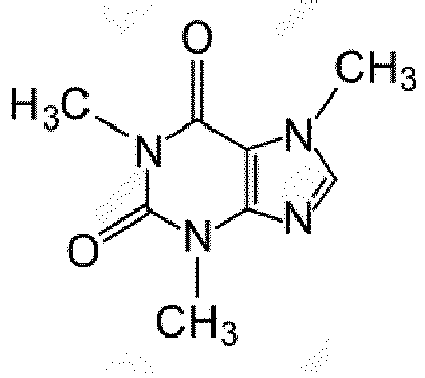


- A compound for use according to claim 1 or 2, wherein said compound is caffeine or a pharmaceutically acceptable salt thereof.
- A composition comprising at least one compound as defined in any one of claims 1 to 3 as active ingredient, and at least one pharmaceutically acceptable excipient, for use in the treatment of ADCY5-related dyskinesia.
- The compound or the composition for use according to any one of claims 1 to 4, wherein said compound or said composition is administered by enteral route, in particular by oral or rectal administration, or by parenteral route, in particular by injection.
- The compound or the composition for use according to any one of claims 1 to 5, wherein said compound or said composition is in the form of a beverage, a food, a pill, a tablet, a syrup, a patch, a gum, a powder, a capsule or a vial.
- The compound or the composition for use according to any one of claims 1 to 6, wherein said compound or said composition is in the form of a beverage or a food comprising or consisting of coffee beans, tea leaves, cocoa nuts, kola nuts, guarana seeds and yerba mate leaves.
- The compound or the composition for use according to any one of claims 1 to 7, wherein said compound or said composition is formulated into unit dose forms from 10 to 1 000 mg, preferably from 50 to 500 mg, more preferably from 100 to 300 mg of said compound.
- The compound or the composition for use according to any one of claims 1 to 8, wherein said compound or said composition is formulated into unit dose forms of 10, 20, 30, 40, 50, 60, 70, 80, 90, 100, 150, 200, 250, 300, 350, 400, 450, 500, 550, 600, 650, 700, 750, 800, 850, 900, 950 or 1 000 mg of said compound.
- The compound or the composition for use according to any one of claims 1 to 9, wherein said compound or said composition is administered one or more times per day.
- The compound or the composition for use according to any one of claims 1 to 10, wherein said compound or said composition is administered once daily, twice daily, three times daily or four times daily.
- The compound or the composition for use according to any one of claims 1 to 11, wherein caffeine or a composition comprising caffeine is administered three times daily with an uptake of 100 mg of caffeine in the morning, an uptake of 100 mg in the afternoon and an uptake of 50 mg at bedtime, preferably in the form of a coffee drink.
- The compound or the composition for use according to any one of claims 1 to 11, wherein caffeine or a composition comprising caffeine is administered four times daily with an uptake of 100 mg of caffeine in the morning, an uptake of 100 mg in the afternoon, an uptake of 100 mg at bedtime and an uptake of 100 mg at night, preferably in the form of a coffee drink.
Priority Applications (7)
| Application Number | Priority Date | Filing Date | Title |
|---|---|---|---|
| EP19305366.7A EP3714888A1 (en) | 2019-03-25 | 2019-03-25 | Compounds for use in the treatment of adcy5-related dyskinesia |
| CA3134126A CA3134126A1 (en) | 2019-03-25 | 2020-03-24 | Compounds for use in the treatment of adcy5-related dyskinesia |
| PCT/EP2020/058198 WO2020193567A1 (en) | 2019-03-25 | 2020-03-24 | Compounds for use in the treatment of adcy5-related dyskinesia |
| EP20712973.5A EP3946353A1 (en) | 2019-03-25 | 2020-03-24 | Compounds for use in the treatment of adcy5-related dyskinesia |
| AU2020249421A AU2020249421A1 (en) | 2019-03-25 | 2020-03-24 | Compounds for use in the treatment of ADCY5- related dyskinesia |
| US17/441,405 US20220096486A1 (en) | 2019-03-25 | 2020-03-24 | Compounds for use in the treatment of adcy5-related dyskinesia |
| IL286533A IL286533A (en) | 2019-03-25 | 2021-09-19 | Compounds for use in the treatment of adcy5-related dyskinesia |
Applications Claiming Priority (1)
| Application Number | Priority Date | Filing Date | Title |
|---|---|---|---|
| EP19305366.7A EP3714888A1 (en) | 2019-03-25 | 2019-03-25 | Compounds for use in the treatment of adcy5-related dyskinesia |
Publications (1)
| Publication Number | Publication Date |
|---|---|
| EP3714888A1 true EP3714888A1 (en) | 2020-09-30 |
Family
ID=66041401
Family Applications (2)
| Application Number | Title | Priority Date | Filing Date |
|---|---|---|---|
| EP19305366.7A Withdrawn EP3714888A1 (en) | 2019-03-25 | 2019-03-25 | Compounds for use in the treatment of adcy5-related dyskinesia |
| EP20712973.5A Withdrawn EP3946353A1 (en) | 2019-03-25 | 2020-03-24 | Compounds for use in the treatment of adcy5-related dyskinesia |
Family Applications After (1)
| Application Number | Title | Priority Date | Filing Date |
|---|---|---|---|
| EP20712973.5A Withdrawn EP3946353A1 (en) | 2019-03-25 | 2020-03-24 | Compounds for use in the treatment of adcy5-related dyskinesia |
Country Status (6)
| Country | Link |
|---|---|
| US (1) | US20220096486A1 (en) |
| EP (2) | EP3714888A1 (en) |
| AU (1) | AU2020249421A1 (en) |
| CA (1) | CA3134126A1 (en) |
| IL (1) | IL286533A (en) |
| WO (1) | WO2020193567A1 (en) |
Cited By (1)
| Publication number | Priority date | Publication date | Assignee | Title |
|---|---|---|---|---|
| WO2021210684A1 (en) * | 2020-04-16 | 2021-10-21 | 協和キリン株式会社 | Therapeutic agent for hyperkinesia |
Citations (1)
| Publication number | Priority date | Publication date | Assignee | Title |
|---|---|---|---|---|
| WO2003063876A2 (en) * | 2002-01-28 | 2003-08-07 | Kyowa Hakko Kogyo Co., Ltd. | Methods of treating patients suffering from movement disorders |
-
2019
- 2019-03-25 EP EP19305366.7A patent/EP3714888A1/en not_active Withdrawn
-
2020
- 2020-03-24 US US17/441,405 patent/US20220096486A1/en not_active Abandoned
- 2020-03-24 EP EP20712973.5A patent/EP3946353A1/en not_active Withdrawn
- 2020-03-24 WO PCT/EP2020/058198 patent/WO2020193567A1/en not_active Ceased
- 2020-03-24 CA CA3134126A patent/CA3134126A1/en active Pending
- 2020-03-24 AU AU2020249421A patent/AU2020249421A1/en not_active Abandoned
-
2021
- 2021-09-19 IL IL286533A patent/IL286533A/en unknown
Patent Citations (1)
| Publication number | Priority date | Publication date | Assignee | Title |
|---|---|---|---|---|
| WO2003063876A2 (en) * | 2002-01-28 | 2003-08-07 | Kyowa Hakko Kogyo Co., Ltd. | Methods of treating patients suffering from movement disorders |
Non-Patent Citations (9)
| Title |
|---|
| CARAPITO ET AL.: "A de novo ADCY5 mutation causes early-onset autosomal dominant chorea and dystonia", MOV DISORD., vol. 30, no. 3, 2015, pages 423 - 7 |
| CHANG FLORENCE C F ET AL: "Phenotypic insights into ADCY5-associated disease.", MOVEMENT DISORDERS : OFFICIAL JOURNAL OF THE MOVEMENT DISORDER SOCIETY 07 2016, vol. 31, no. 7, July 2016 (2016-07-01), pages 1033 - 1040, XP002793799, ISSN: 1531-8257 * |
| CHEN ET AL.: "ADCY5-related dyskinesia: Broader spectrum and genotype-phenotype correlations", NEUROLOGY, vol. 85, no. 23, 2015, pages 2026 - 35 |
| FRIEDMAN ET AL.: "ADCY5 mutation carriers display pleiotropic paroxysmal day and night time dyskinesias", MOV DISORD., vol. 31, no. 1, 2016, pages 147 - 8 |
| HUANG ET AL.: "Adenosine A2A, but not Al, receptors mediate the arousal effect of caffeine", NAT NEUROSCI., vol. 8, no. 7, 2005, pages 858 - 9 |
| LAMBRECQ VIRGINIE ET AL: "Caffeine improved paroxysmal dyskinesia caused by the PRRT2 mutation.", MOVEMENT DISORDERS : OFFICIAL JOURNAL OF THE MOVEMENT DISORDER SOCIETY MAY 2013, vol. 28, no. 5, May 2013 (2013-05-01), pages 683, XP002793800, ISSN: 1531-8257 * |
| MÉNERET AURÉLIE ET AL: "Caffeine and the Dyskinesia Related to Mutations in the ADCY5 Gene", ANNALS OF INTERNAL MEDICINE, PHILADELPHIA, PA. : AMERICAN COLLEGE OF PHYSICIANS, 1927, US, no. epub, 11 June 2019 (2019-06-11), pages 1, XP009515557, ISSN: 1539-3704, DOI: 10.7326/L19-0038 * |
| MENERET; ROZE: "Paroxysmal movement disorders: An update", REVUE NEUROL., vol. 172, no. 8-9, 2016, pages 433 - 445 |
| XIE ET AL.: "Adenosine and dopamine receptor interactions in striatum and caffeine-induced behavioral activation", COMP MED., vol. 57, no. 6, 2007, pages 538 - 45 |
Cited By (1)
| Publication number | Priority date | Publication date | Assignee | Title |
|---|---|---|---|---|
| WO2021210684A1 (en) * | 2020-04-16 | 2021-10-21 | 協和キリン株式会社 | Therapeutic agent for hyperkinesia |
Also Published As
| Publication number | Publication date |
|---|---|
| IL286533A (en) | 2021-10-31 |
| AU2020249421A1 (en) | 2021-11-04 |
| US20220096486A1 (en) | 2022-03-31 |
| CA3134126A1 (en) | 2020-10-01 |
| EP3946353A1 (en) | 2022-02-09 |
| WO2020193567A1 (en) | 2020-10-01 |
Similar Documents
| Publication | Publication Date | Title |
|---|---|---|
| US10772880B2 (en) | Method of treatment with tradipitant | |
| HU206042B (en) | Process for producing pharmaceutical compositions comprising indole-3-carboxylic acid-endo-8-methyl-8-azabicyclo/3.2.1./oct-3-yl ester and/or 1,2,3-9-tetrahydro-9-methyl-3-(2-methyl-1h-imidazol-1-yl)-methyl-4h-carbazol-4-one, with an activity preventing or reducing opiate-, alcohol- and nicotine-dependence | |
| CN106999467A (en) | Approaches to treating cognitive decline | |
| JP4989775B2 (en) | Peptides with brain function improving action | |
| EP0969843B1 (en) | Antitussive compositions containing theobromine | |
| EP3813816B1 (en) | Use of (s)-3-amino-4-(difluoromethylenyl) cyclopent-1-ene-1-carboxylic acid and related compounds, (1s,3s)-3-amino-4-(difluoromethylidene) cyclopentane-1-carboxylic acid in the treatment of fragile x syndrome or fragile x-associated tremor/ataxia syndrome | |
| JP6145946B2 (en) | Combined ALS therapy | |
| HK1252562A1 (en) | Uses of benzimidazole derivative for nocturnal acid breakthrough | |
| BR112019023557A2 (en) | PHARMACEUTICAL COMPOSITION UNDERSTANDING PDE INHIBITOR9 | |
| JPS59501459A (en) | Improved analgesic and anti-inflammatory compositions comprising caffeine and methods of use thereof | |
| JP2891464B2 (en) | Formulations for treating neurological diseases | |
| JPWO2018221551A1 (en) | Agent for treating Lewy body disease containing pyrazoloquinoline derivative | |
| WO2020193567A1 (en) | Compounds for use in the treatment of adcy5-related dyskinesia | |
| JP2021517128A (en) | Levodopa split dose composition and use | |
| RU2722272C1 (en) | Agent for treating and preventing nematodosis and cestodiasis in small domestic animals | |
| JP5634062B2 (en) | Composition for improving brain function and method for improving brain function | |
| HUT57584A (en) | Process for producing pharmaceutical compositions suitable for treating drug addiction and comprising dopamin-autoreceptor agonists | |
| Gallo et al. | Tabernanthe iboga: a comprehensive review | |
| KR20220017072A (en) | Composition for preventing or treating cognitive dysfunction comprising a complex extract of motherwort extract and peppermint extract as an active ingredient | |
| CN112789044A (en) | Methods and compositions for treating aging-related injuries using CCR 3-inhibitors | |
| WO2012036191A1 (en) | Composition for improving brain function and method for improving brain function | |
| WO2018220457A1 (en) | Vitamin b1 in high doses for use in the medical treatment of motor symptoms of some sporadic neurodegenerative diseases, of genetic origin, and of cluster headache and of migraine headache | |
| NZ185928A (en) | Oral psychostimulation-inducing compositions comprising 3-phenoxypyridine | |
| Class et al. | Patent application title: USE OF PRIDOPIDINE FOR THE TREATMENT OF FRAGILE X SYNDROME Inventors: Michael Hayden (Herzliya, IL) Mahmoud Abdulhossein Pouladi (Singapore, SG) Assignees: PRILENIA NEUROTHERAPEUTICS LTD. NATIONAL UNIVERSITY OF SINGAPORE Agency For Science, Technology and Research | |
| Maan | Comparison of Methamphetamine and MDMA Extended Access Self-administration: Acquisition, Maintenance, and Response patterns |
Legal Events
| Date | Code | Title | Description |
|---|---|---|---|
| PUAI | Public reference made under article 153(3) epc to a published international application that has entered the european phase |
Free format text: ORIGINAL CODE: 0009012 |
|
| STAA | Information on the status of an ep patent application or granted ep patent |
Free format text: STATUS: THE APPLICATION HAS BEEN PUBLISHED |
|
| AK | Designated contracting states |
Kind code of ref document: A1 Designated state(s): AL AT BE BG CH CY CZ DE DK EE ES FI FR GB GR HR HU IE IS IT LI LT LU LV MC MK MT NL NO PL PT RO RS SE SI SK SM TR |
|
| AX | Request for extension of the european patent |
Extension state: BA ME |
|
| STAA | Information on the status of an ep patent application or granted ep patent |
Free format text: STATUS: THE APPLICATION IS DEEMED TO BE WITHDRAWN |
|
| 18D | Application deemed to be withdrawn |
Effective date: 20210331 |