EP3713765B1 - Panel, integrated structure, and method - Google Patents
Panel, integrated structure, and method Download PDFInfo
- Publication number
- EP3713765B1 EP3713765B1 EP18819381.7A EP18819381A EP3713765B1 EP 3713765 B1 EP3713765 B1 EP 3713765B1 EP 18819381 A EP18819381 A EP 18819381A EP 3713765 B1 EP3713765 B1 EP 3713765B1
- Authority
- EP
- European Patent Office
- Prior art keywords
- equal
- panel
- less
- polymer composition
- polycarbonate
- Prior art date
- Legal status (The legal status is an assumption and is not a legal conclusion. Google has not performed a legal analysis and makes no representation as to the accuracy of the status listed.)
- Active
Links
Images

Classifications
-
- C—CHEMISTRY; METALLURGY
- C08—ORGANIC MACROMOLECULAR COMPOUNDS; THEIR PREPARATION OR CHEMICAL WORKING-UP; COMPOSITIONS BASED THEREON
- C08J—WORKING-UP; GENERAL PROCESSES OF COMPOUNDING; AFTER-TREATMENT NOT COVERED BY SUBCLASSES C08B, C08C, C08F, C08G or C08H
- C08J7/00—Chemical treatment or coating of shaped articles made of macromolecular substances
- C08J7/04—Coating
- C08J7/046—Forming abrasion-resistant coatings; Forming surface-hardening coatings
-
- B—PERFORMING OPERATIONS; TRANSPORTING
- B32—LAYERED PRODUCTS
- B32B—LAYERED PRODUCTS, i.e. PRODUCTS BUILT-UP OF STRATA OF FLAT OR NON-FLAT, e.g. CELLULAR OR HONEYCOMB, FORM
- B32B3/00—Layered products comprising a layer with external or internal discontinuities or unevennesses, or a layer of non-planar shape; Layered products comprising a layer having particular features of form
- B32B3/10—Layered products comprising a layer with external or internal discontinuities or unevennesses, or a layer of non-planar shape; Layered products comprising a layer having particular features of form characterised by a discontinuous layer, i.e. formed of separate pieces of material
- B32B3/14—Layered products comprising a layer with external or internal discontinuities or unevennesses, or a layer of non-planar shape; Layered products comprising a layer having particular features of form characterised by a discontinuous layer, i.e. formed of separate pieces of material characterised by a face layer formed of separate pieces of material which are juxtaposed side-by-side
-
- B—PERFORMING OPERATIONS; TRANSPORTING
- B60—VEHICLES IN GENERAL
- B60R—VEHICLES, VEHICLE FITTINGS, OR VEHICLE PARTS, NOT OTHERWISE PROVIDED FOR
- B60R19/00—Wheel guards; Radiator guards, e.g. grilles; Obstruction removers; Fittings damping bouncing force in collisions
- B60R19/52—Radiator or grille guards ; Radiator grilles
-
- B—PERFORMING OPERATIONS; TRANSPORTING
- B29—WORKING OF PLASTICS; WORKING OF SUBSTANCES IN A PLASTIC STATE IN GENERAL
- B29C—SHAPING OR JOINING OF PLASTICS; SHAPING OF MATERIAL IN A PLASTIC STATE, NOT OTHERWISE PROVIDED FOR; AFTER-TREATMENT OF THE SHAPED PRODUCTS, e.g. REPAIRING
- B29C45/00—Injection moulding, i.e. forcing the required volume of moulding material through a nozzle into a closed mould; Apparatus therefor
- B29C45/0001—Injection moulding, i.e. forcing the required volume of moulding material through a nozzle into a closed mould; Apparatus therefor characterised by the choice of material
-
- B—PERFORMING OPERATIONS; TRANSPORTING
- B32—LAYERED PRODUCTS
- B32B—LAYERED PRODUCTS, i.e. PRODUCTS BUILT-UP OF STRATA OF FLAT OR NON-FLAT, e.g. CELLULAR OR HONEYCOMB, FORM
- B32B27/00—Layered products comprising a layer of synthetic resin
- B32B27/06—Layered products comprising a layer of synthetic resin as the main or only constituent of a layer, which is next to another layer of the same or of a different material
- B32B27/08—Layered products comprising a layer of synthetic resin as the main or only constituent of a layer, which is next to another layer of the same or of a different material of synthetic resin
-
- B—PERFORMING OPERATIONS; TRANSPORTING
- B32—LAYERED PRODUCTS
- B32B—LAYERED PRODUCTS, i.e. PRODUCTS BUILT-UP OF STRATA OF FLAT OR NON-FLAT, e.g. CELLULAR OR HONEYCOMB, FORM
- B32B27/00—Layered products comprising a layer of synthetic resin
- B32B27/18—Layered products comprising a layer of synthetic resin characterised by the use of special additives
-
- B—PERFORMING OPERATIONS; TRANSPORTING
- B32—LAYERED PRODUCTS
- B32B—LAYERED PRODUCTS, i.e. PRODUCTS BUILT-UP OF STRATA OF FLAT OR NON-FLAT, e.g. CELLULAR OR HONEYCOMB, FORM
- B32B27/00—Layered products comprising a layer of synthetic resin
- B32B27/18—Layered products comprising a layer of synthetic resin characterised by the use of special additives
- B32B27/20—Layered products comprising a layer of synthetic resin characterised by the use of special additives using fillers, pigments, thixotroping agents
-
- B—PERFORMING OPERATIONS; TRANSPORTING
- B32—LAYERED PRODUCTS
- B32B—LAYERED PRODUCTS, i.e. PRODUCTS BUILT-UP OF STRATA OF FLAT OR NON-FLAT, e.g. CELLULAR OR HONEYCOMB, FORM
- B32B27/00—Layered products comprising a layer of synthetic resin
- B32B27/18—Layered products comprising a layer of synthetic resin characterised by the use of special additives
- B32B27/22—Layered products comprising a layer of synthetic resin characterised by the use of special additives using plasticisers
-
- B—PERFORMING OPERATIONS; TRANSPORTING
- B32—LAYERED PRODUCTS
- B32B—LAYERED PRODUCTS, i.e. PRODUCTS BUILT-UP OF STRATA OF FLAT OR NON-FLAT, e.g. CELLULAR OR HONEYCOMB, FORM
- B32B27/00—Layered products comprising a layer of synthetic resin
- B32B27/28—Layered products comprising a layer of synthetic resin comprising synthetic resins not wholly covered by any one of the sub-groups B32B27/30 - B32B27/42
- B32B27/283—Layered products comprising a layer of synthetic resin comprising synthetic resins not wholly covered by any one of the sub-groups B32B27/30 - B32B27/42 comprising polysiloxanes
-
- B—PERFORMING OPERATIONS; TRANSPORTING
- B32—LAYERED PRODUCTS
- B32B—LAYERED PRODUCTS, i.e. PRODUCTS BUILT-UP OF STRATA OF FLAT OR NON-FLAT, e.g. CELLULAR OR HONEYCOMB, FORM
- B32B27/00—Layered products comprising a layer of synthetic resin
- B32B27/30—Layered products comprising a layer of synthetic resin comprising vinyl (co)polymers; comprising acrylic (co)polymers
- B32B27/302—Layered products comprising a layer of synthetic resin comprising vinyl (co)polymers; comprising acrylic (co)polymers comprising aromatic vinyl (co)polymers, e.g. styrenic (co)polymers
-
- B—PERFORMING OPERATIONS; TRANSPORTING
- B32—LAYERED PRODUCTS
- B32B—LAYERED PRODUCTS, i.e. PRODUCTS BUILT-UP OF STRATA OF FLAT OR NON-FLAT, e.g. CELLULAR OR HONEYCOMB, FORM
- B32B27/00—Layered products comprising a layer of synthetic resin
- B32B27/30—Layered products comprising a layer of synthetic resin comprising vinyl (co)polymers; comprising acrylic (co)polymers
- B32B27/308—Layered products comprising a layer of synthetic resin comprising vinyl (co)polymers; comprising acrylic (co)polymers comprising acrylic (co)polymers
-
- B—PERFORMING OPERATIONS; TRANSPORTING
- B32—LAYERED PRODUCTS
- B32B—LAYERED PRODUCTS, i.e. PRODUCTS BUILT-UP OF STRATA OF FLAT OR NON-FLAT, e.g. CELLULAR OR HONEYCOMB, FORM
- B32B27/00—Layered products comprising a layer of synthetic resin
- B32B27/32—Layered products comprising a layer of synthetic resin comprising polyolefins
-
- B—PERFORMING OPERATIONS; TRANSPORTING
- B32—LAYERED PRODUCTS
- B32B—LAYERED PRODUCTS, i.e. PRODUCTS BUILT-UP OF STRATA OF FLAT OR NON-FLAT, e.g. CELLULAR OR HONEYCOMB, FORM
- B32B27/00—Layered products comprising a layer of synthetic resin
- B32B27/36—Layered products comprising a layer of synthetic resin comprising polyesters
-
- B—PERFORMING OPERATIONS; TRANSPORTING
- B32—LAYERED PRODUCTS
- B32B—LAYERED PRODUCTS, i.e. PRODUCTS BUILT-UP OF STRATA OF FLAT OR NON-FLAT, e.g. CELLULAR OR HONEYCOMB, FORM
- B32B27/00—Layered products comprising a layer of synthetic resin
- B32B27/36—Layered products comprising a layer of synthetic resin comprising polyesters
- B32B27/365—Layered products comprising a layer of synthetic resin comprising polyesters comprising polycarbonates
-
- B—PERFORMING OPERATIONS; TRANSPORTING
- B32—LAYERED PRODUCTS
- B32B—LAYERED PRODUCTS, i.e. PRODUCTS BUILT-UP OF STRATA OF FLAT OR NON-FLAT, e.g. CELLULAR OR HONEYCOMB, FORM
- B32B37/00—Methods or apparatus for laminating, e.g. by curing or by ultrasonic bonding
- B32B37/02—Methods or apparatus for laminating, e.g. by curing or by ultrasonic bonding characterised by a sequence of laminating steps, e.g. by adding new layers at consecutive laminating stations
-
- B—PERFORMING OPERATIONS; TRANSPORTING
- B32—LAYERED PRODUCTS
- B32B—LAYERED PRODUCTS, i.e. PRODUCTS BUILT-UP OF STRATA OF FLAT OR NON-FLAT, e.g. CELLULAR OR HONEYCOMB, FORM
- B32B7/00—Layered products characterised by the relation between layers; Layered products characterised by the relative orientation of features between layers, or by the relative values of a measurable parameter between layers, i.e. products comprising layers having different physical, chemical or physicochemical properties; Layered products characterised by the interconnection of layers
- B32B7/02—Physical, chemical or physicochemical properties
- B32B7/022—Mechanical properties
-
- B—PERFORMING OPERATIONS; TRANSPORTING
- B32—LAYERED PRODUCTS
- B32B—LAYERED PRODUCTS, i.e. PRODUCTS BUILT-UP OF STRATA OF FLAT OR NON-FLAT, e.g. CELLULAR OR HONEYCOMB, FORM
- B32B7/00—Layered products characterised by the relation between layers; Layered products characterised by the relative orientation of features between layers, or by the relative values of a measurable parameter between layers, i.e. products comprising layers having different physical, chemical or physicochemical properties; Layered products characterised by the interconnection of layers
- B32B7/02—Physical, chemical or physicochemical properties
- B32B7/023—Optical properties
-
- B—PERFORMING OPERATIONS; TRANSPORTING
- B60—VEHICLES IN GENERAL
- B60R—VEHICLES, VEHICLE FITTINGS, OR VEHICLE PARTS, NOT OTHERWISE PROVIDED FOR
- B60R19/00—Wheel guards; Radiator guards, e.g. grilles; Obstruction removers; Fittings damping bouncing force in collisions
- B60R19/02—Bumpers, i.e. impact receiving or absorbing members for protecting vehicles or fending off blows from other vehicles or objects
- B60R19/023—Details
-
- C—CHEMISTRY; METALLURGY
- C08—ORGANIC MACROMOLECULAR COMPOUNDS; THEIR PREPARATION OR CHEMICAL WORKING-UP; COMPOSITIONS BASED THEREON
- C08K—Use of inorganic or non-macromolecular organic substances as compounding ingredients
- C08K5/00—Use of organic ingredients
- C08K5/36—Sulfur-, selenium-, or tellurium-containing compounds
- C08K5/41—Compounds containing sulfur bound to oxygen
- C08K5/42—Sulfonic acids; Derivatives thereof
-
- C—CHEMISTRY; METALLURGY
- C08—ORGANIC MACROMOLECULAR COMPOUNDS; THEIR PREPARATION OR CHEMICAL WORKING-UP; COMPOSITIONS BASED THEREON
- C08L—COMPOSITIONS OF MACROMOLECULAR COMPOUNDS
- C08L55/00—Compositions of homopolymers or copolymers, obtained by polymerisation reactions only involving carbon-to-carbon unsaturated bonds, not provided for in groups C08L23/00 - C08L53/00
- C08L55/02—ABS [Acrylonitrile-Butadiene-Styrene] polymers
-
- C—CHEMISTRY; METALLURGY
- C08—ORGANIC MACROMOLECULAR COMPOUNDS; THEIR PREPARATION OR CHEMICAL WORKING-UP; COMPOSITIONS BASED THEREON
- C08L—COMPOSITIONS OF MACROMOLECULAR COMPOUNDS
- C08L67/00—Compositions of polyesters obtained by reactions forming a carboxylic ester link in the main chain; Compositions of derivatives of such polymers
- C08L67/02—Polyesters derived from dicarboxylic acids and dihydroxy compounds
-
- C—CHEMISTRY; METALLURGY
- C08—ORGANIC MACROMOLECULAR COMPOUNDS; THEIR PREPARATION OR CHEMICAL WORKING-UP; COMPOSITIONS BASED THEREON
- C08L—COMPOSITIONS OF MACROMOLECULAR COMPOUNDS
- C08L69/00—Compositions of polycarbonates; Compositions of derivatives of polycarbonates
-
- C—CHEMISTRY; METALLURGY
- C09—DYES; PAINTS; POLISHES; NATURAL RESINS; ADHESIVES; COMPOSITIONS NOT OTHERWISE PROVIDED FOR; APPLICATIONS OF MATERIALS NOT OTHERWISE PROVIDED FOR
- C09D—COATING COMPOSITIONS, e.g. PAINTS, VARNISHES OR LACQUERS; FILLING PASTES; CHEMICAL PAINT OR INK REMOVERS; INKS; CORRECTING FLUIDS; WOODSTAINS; PASTES OR SOLIDS FOR COLOURING OR PRINTING; USE OF MATERIALS THEREFOR
- C09D183/00—Coating compositions based on macromolecular compounds obtained by reactions forming in the main chain of the macromolecule a linkage containing silicon, with or without sulfur, nitrogen, oxygen, or carbon only; Coating compositions based on derivatives of such polymers
-
- B—PERFORMING OPERATIONS; TRANSPORTING
- B29—WORKING OF PLASTICS; WORKING OF SUBSTANCES IN A PLASTIC STATE IN GENERAL
- B29K—INDEXING SCHEME ASSOCIATED WITH SUBCLASSES B29B, B29C OR B29D, RELATING TO MOULDING MATERIALS OR TO MATERIALS FOR MOULDS, REINFORCEMENTS, FILLERS OR PREFORMED PARTS, e.g. INSERTS
- B29K2069/00—Use of PC, i.e. polycarbonates or derivatives thereof, as moulding material
-
- B—PERFORMING OPERATIONS; TRANSPORTING
- B29—WORKING OF PLASTICS; WORKING OF SUBSTANCES IN A PLASTIC STATE IN GENERAL
- B29K—INDEXING SCHEME ASSOCIATED WITH SUBCLASSES B29B, B29C OR B29D, RELATING TO MOULDING MATERIALS OR TO MATERIALS FOR MOULDS, REINFORCEMENTS, FILLERS OR PREFORMED PARTS, e.g. INSERTS
- B29K2105/00—Condition, form or state of moulded material or of the material to be shaped
- B29K2105/0005—Condition, form or state of moulded material or of the material to be shaped containing compounding ingredients
- B29K2105/0044—Stabilisers, e.g. against oxydation, light or heat
-
- B—PERFORMING OPERATIONS; TRANSPORTING
- B29—WORKING OF PLASTICS; WORKING OF SUBSTANCES IN A PLASTIC STATE IN GENERAL
- B29L—INDEXING SCHEME ASSOCIATED WITH SUBCLASS B29C, RELATING TO PARTICULAR ARTICLES
- B29L2031/00—Other particular articles
- B29L2031/30—Vehicles, e.g. ships or aircraft, or body parts thereof
-
- B—PERFORMING OPERATIONS; TRANSPORTING
- B32—LAYERED PRODUCTS
- B32B—LAYERED PRODUCTS, i.e. PRODUCTS BUILT-UP OF STRATA OF FLAT OR NON-FLAT, e.g. CELLULAR OR HONEYCOMB, FORM
- B32B2250/00—Layers arrangement
- B32B2250/24—All layers being polymeric
-
- B—PERFORMING OPERATIONS; TRANSPORTING
- B32—LAYERED PRODUCTS
- B32B—LAYERED PRODUCTS, i.e. PRODUCTS BUILT-UP OF STRATA OF FLAT OR NON-FLAT, e.g. CELLULAR OR HONEYCOMB, FORM
- B32B2255/00—Coating on the layer surface
- B32B2255/10—Coating on the layer surface on synthetic resin layer or on natural or synthetic rubber layer
-
- B—PERFORMING OPERATIONS; TRANSPORTING
- B32—LAYERED PRODUCTS
- B32B—LAYERED PRODUCTS, i.e. PRODUCTS BUILT-UP OF STRATA OF FLAT OR NON-FLAT, e.g. CELLULAR OR HONEYCOMB, FORM
- B32B2255/00—Coating on the layer surface
- B32B2255/20—Inorganic coating
-
- B—PERFORMING OPERATIONS; TRANSPORTING
- B32—LAYERED PRODUCTS
- B32B—LAYERED PRODUCTS, i.e. PRODUCTS BUILT-UP OF STRATA OF FLAT OR NON-FLAT, e.g. CELLULAR OR HONEYCOMB, FORM
- B32B2255/00—Coating on the layer surface
- B32B2255/26—Polymeric coating
-
- B—PERFORMING OPERATIONS; TRANSPORTING
- B32—LAYERED PRODUCTS
- B32B—LAYERED PRODUCTS, i.e. PRODUCTS BUILT-UP OF STRATA OF FLAT OR NON-FLAT, e.g. CELLULAR OR HONEYCOMB, FORM
- B32B2255/00—Coating on the layer surface
- B32B2255/28—Multiple coating on one surface
-
- B—PERFORMING OPERATIONS; TRANSPORTING
- B32—LAYERED PRODUCTS
- B32B—LAYERED PRODUCTS, i.e. PRODUCTS BUILT-UP OF STRATA OF FLAT OR NON-FLAT, e.g. CELLULAR OR HONEYCOMB, FORM
- B32B2262/00—Composition or structural features of fibres which form a fibrous or filamentary layer or are present as additives
- B32B2262/02—Synthetic macromolecular fibres
-
- B—PERFORMING OPERATIONS; TRANSPORTING
- B32—LAYERED PRODUCTS
- B32B—LAYERED PRODUCTS, i.e. PRODUCTS BUILT-UP OF STRATA OF FLAT OR NON-FLAT, e.g. CELLULAR OR HONEYCOMB, FORM
- B32B2262/00—Composition or structural features of fibres which form a fibrous or filamentary layer or are present as additives
- B32B2262/02—Synthetic macromolecular fibres
- B32B2262/0223—Vinyl resin fibres
-
- B—PERFORMING OPERATIONS; TRANSPORTING
- B32—LAYERED PRODUCTS
- B32B—LAYERED PRODUCTS, i.e. PRODUCTS BUILT-UP OF STRATA OF FLAT OR NON-FLAT, e.g. CELLULAR OR HONEYCOMB, FORM
- B32B2262/00—Composition or structural features of fibres which form a fibrous or filamentary layer or are present as additives
- B32B2262/02—Synthetic macromolecular fibres
- B32B2262/0253—Polyolefin fibres
-
- B—PERFORMING OPERATIONS; TRANSPORTING
- B32—LAYERED PRODUCTS
- B32B—LAYERED PRODUCTS, i.e. PRODUCTS BUILT-UP OF STRATA OF FLAT OR NON-FLAT, e.g. CELLULAR OR HONEYCOMB, FORM
- B32B2262/00—Composition or structural features of fibres which form a fibrous or filamentary layer or are present as additives
- B32B2262/02—Synthetic macromolecular fibres
- B32B2262/0261—Polyamide fibres
- B32B2262/0269—Aromatic polyamide fibres
-
- B—PERFORMING OPERATIONS; TRANSPORTING
- B32—LAYERED PRODUCTS
- B32B—LAYERED PRODUCTS, i.e. PRODUCTS BUILT-UP OF STRATA OF FLAT OR NON-FLAT, e.g. CELLULAR OR HONEYCOMB, FORM
- B32B2262/00—Composition or structural features of fibres which form a fibrous or filamentary layer or are present as additives
- B32B2262/02—Synthetic macromolecular fibres
- B32B2262/0276—Polyester fibres
-
- B—PERFORMING OPERATIONS; TRANSPORTING
- B32—LAYERED PRODUCTS
- B32B—LAYERED PRODUCTS, i.e. PRODUCTS BUILT-UP OF STRATA OF FLAT OR NON-FLAT, e.g. CELLULAR OR HONEYCOMB, FORM
- B32B2262/00—Composition or structural features of fibres which form a fibrous or filamentary layer or are present as additives
- B32B2262/06—Vegetal fibres
- B32B2262/062—Cellulose fibres, e.g. cotton
-
- B—PERFORMING OPERATIONS; TRANSPORTING
- B32—LAYERED PRODUCTS
- B32B—LAYERED PRODUCTS, i.e. PRODUCTS BUILT-UP OF STRATA OF FLAT OR NON-FLAT, e.g. CELLULAR OR HONEYCOMB, FORM
- B32B2262/00—Composition or structural features of fibres which form a fibrous or filamentary layer or are present as additives
- B32B2262/06—Vegetal fibres
- B32B2262/062—Cellulose fibres, e.g. cotton
- B32B2262/065—Lignocellulosic fibres, e.g. jute, sisal, hemp, flax, bamboo
-
- B—PERFORMING OPERATIONS; TRANSPORTING
- B32—LAYERED PRODUCTS
- B32B—LAYERED PRODUCTS, i.e. PRODUCTS BUILT-UP OF STRATA OF FLAT OR NON-FLAT, e.g. CELLULAR OR HONEYCOMB, FORM
- B32B2262/00—Composition or structural features of fibres which form a fibrous or filamentary layer or are present as additives
- B32B2262/10—Inorganic fibres
- B32B2262/101—Glass fibres
-
- B—PERFORMING OPERATIONS; TRANSPORTING
- B32—LAYERED PRODUCTS
- B32B—LAYERED PRODUCTS, i.e. PRODUCTS BUILT-UP OF STRATA OF FLAT OR NON-FLAT, e.g. CELLULAR OR HONEYCOMB, FORM
- B32B2262/00—Composition or structural features of fibres which form a fibrous or filamentary layer or are present as additives
- B32B2262/10—Inorganic fibres
- B32B2262/103—Metal fibres
-
- B—PERFORMING OPERATIONS; TRANSPORTING
- B32—LAYERED PRODUCTS
- B32B—LAYERED PRODUCTS, i.e. PRODUCTS BUILT-UP OF STRATA OF FLAT OR NON-FLAT, e.g. CELLULAR OR HONEYCOMB, FORM
- B32B2262/00—Composition or structural features of fibres which form a fibrous or filamentary layer or are present as additives
- B32B2262/10—Inorganic fibres
- B32B2262/105—Ceramic fibres
-
- B—PERFORMING OPERATIONS; TRANSPORTING
- B32—LAYERED PRODUCTS
- B32B—LAYERED PRODUCTS, i.e. PRODUCTS BUILT-UP OF STRATA OF FLAT OR NON-FLAT, e.g. CELLULAR OR HONEYCOMB, FORM
- B32B2262/00—Composition or structural features of fibres which form a fibrous or filamentary layer or are present as additives
- B32B2262/10—Inorganic fibres
- B32B2262/106—Carbon fibres, e.g. graphite fibres
-
- B—PERFORMING OPERATIONS; TRANSPORTING
- B32—LAYERED PRODUCTS
- B32B—LAYERED PRODUCTS, i.e. PRODUCTS BUILT-UP OF STRATA OF FLAT OR NON-FLAT, e.g. CELLULAR OR HONEYCOMB, FORM
- B32B2262/00—Composition or structural features of fibres which form a fibrous or filamentary layer or are present as additives
- B32B2262/14—Mixture of at least two fibres made of different materials
-
- B—PERFORMING OPERATIONS; TRANSPORTING
- B32—LAYERED PRODUCTS
- B32B—LAYERED PRODUCTS, i.e. PRODUCTS BUILT-UP OF STRATA OF FLAT OR NON-FLAT, e.g. CELLULAR OR HONEYCOMB, FORM
- B32B2264/00—Composition or properties of particles which form a particulate layer or are present as additives
- B32B2264/06—Vegetal particles
- B32B2264/062—Cellulose particles, e.g. cotton
- B32B2264/067—Wood particles
-
- B—PERFORMING OPERATIONS; TRANSPORTING
- B32—LAYERED PRODUCTS
- B32B—LAYERED PRODUCTS, i.e. PRODUCTS BUILT-UP OF STRATA OF FLAT OR NON-FLAT, e.g. CELLULAR OR HONEYCOMB, FORM
- B32B2264/00—Composition or properties of particles which form a particulate layer or are present as additives
- B32B2264/10—Inorganic particles
-
- B—PERFORMING OPERATIONS; TRANSPORTING
- B32—LAYERED PRODUCTS
- B32B—LAYERED PRODUCTS, i.e. PRODUCTS BUILT-UP OF STRATA OF FLAT OR NON-FLAT, e.g. CELLULAR OR HONEYCOMB, FORM
- B32B2264/00—Composition or properties of particles which form a particulate layer or are present as additives
- B32B2264/10—Inorganic particles
- B32B2264/101—Glass
-
- B—PERFORMING OPERATIONS; TRANSPORTING
- B32—LAYERED PRODUCTS
- B32B—LAYERED PRODUCTS, i.e. PRODUCTS BUILT-UP OF STRATA OF FLAT OR NON-FLAT, e.g. CELLULAR OR HONEYCOMB, FORM
- B32B2264/00—Composition or properties of particles which form a particulate layer or are present as additives
- B32B2264/10—Inorganic particles
- B32B2264/102—Oxide or hydroxide
-
- B—PERFORMING OPERATIONS; TRANSPORTING
- B32—LAYERED PRODUCTS
- B32B—LAYERED PRODUCTS, i.e. PRODUCTS BUILT-UP OF STRATA OF FLAT OR NON-FLAT, e.g. CELLULAR OR HONEYCOMB, FORM
- B32B2264/00—Composition or properties of particles which form a particulate layer or are present as additives
- B32B2264/10—Inorganic particles
- B32B2264/104—Oxysalt, e.g. carbonate, sulfate, phosphate or nitrate particles
-
- B—PERFORMING OPERATIONS; TRANSPORTING
- B32—LAYERED PRODUCTS
- B32B—LAYERED PRODUCTS, i.e. PRODUCTS BUILT-UP OF STRATA OF FLAT OR NON-FLAT, e.g. CELLULAR OR HONEYCOMB, FORM
- B32B2264/00—Composition or properties of particles which form a particulate layer or are present as additives
- B32B2264/10—Inorganic particles
- B32B2264/105—Metal
-
- B—PERFORMING OPERATIONS; TRANSPORTING
- B32—LAYERED PRODUCTS
- B32B—LAYERED PRODUCTS, i.e. PRODUCTS BUILT-UP OF STRATA OF FLAT OR NON-FLAT, e.g. CELLULAR OR HONEYCOMB, FORM
- B32B2264/00—Composition or properties of particles which form a particulate layer or are present as additives
- B32B2264/10—Inorganic particles
- B32B2264/107—Ceramic
-
- B—PERFORMING OPERATIONS; TRANSPORTING
- B32—LAYERED PRODUCTS
- B32B—LAYERED PRODUCTS, i.e. PRODUCTS BUILT-UP OF STRATA OF FLAT OR NON-FLAT, e.g. CELLULAR OR HONEYCOMB, FORM
- B32B2264/00—Composition or properties of particles which form a particulate layer or are present as additives
- B32B2264/12—Mixture of at least two particles made of different materials
-
- B—PERFORMING OPERATIONS; TRANSPORTING
- B32—LAYERED PRODUCTS
- B32B—LAYERED PRODUCTS, i.e. PRODUCTS BUILT-UP OF STRATA OF FLAT OR NON-FLAT, e.g. CELLULAR OR HONEYCOMB, FORM
- B32B2270/00—Resin or rubber layer containing a blend of at least two different polymers
-
- B—PERFORMING OPERATIONS; TRANSPORTING
- B32—LAYERED PRODUCTS
- B32B—LAYERED PRODUCTS, i.e. PRODUCTS BUILT-UP OF STRATA OF FLAT OR NON-FLAT, e.g. CELLULAR OR HONEYCOMB, FORM
- B32B2307/00—Properties of the layers or laminate
- B32B2307/30—Properties of the layers or laminate having particular thermal properties
- B32B2307/306—Resistant to heat
- B32B2307/3065—Flame resistant or retardant, fire resistant or retardant
-
- B—PERFORMING OPERATIONS; TRANSPORTING
- B32—LAYERED PRODUCTS
- B32B—LAYERED PRODUCTS, i.e. PRODUCTS BUILT-UP OF STRATA OF FLAT OR NON-FLAT, e.g. CELLULAR OR HONEYCOMB, FORM
- B32B2307/00—Properties of the layers or laminate
- B32B2307/40—Properties of the layers or laminate having particular optical properties
- B32B2307/41—Opaque
-
- B—PERFORMING OPERATIONS; TRANSPORTING
- B32—LAYERED PRODUCTS
- B32B—LAYERED PRODUCTS, i.e. PRODUCTS BUILT-UP OF STRATA OF FLAT OR NON-FLAT, e.g. CELLULAR OR HONEYCOMB, FORM
- B32B2307/00—Properties of the layers or laminate
- B32B2307/40—Properties of the layers or laminate having particular optical properties
- B32B2307/412—Transparent
-
- B—PERFORMING OPERATIONS; TRANSPORTING
- B32—LAYERED PRODUCTS
- B32B—LAYERED PRODUCTS, i.e. PRODUCTS BUILT-UP OF STRATA OF FLAT OR NON-FLAT, e.g. CELLULAR OR HONEYCOMB, FORM
- B32B2307/00—Properties of the layers or laminate
- B32B2307/50—Properties of the layers or laminate having particular mechanical properties
- B32B2307/558—Impact strength, toughness
-
- B—PERFORMING OPERATIONS; TRANSPORTING
- B32—LAYERED PRODUCTS
- B32B—LAYERED PRODUCTS, i.e. PRODUCTS BUILT-UP OF STRATA OF FLAT OR NON-FLAT, e.g. CELLULAR OR HONEYCOMB, FORM
- B32B2307/00—Properties of the layers or laminate
- B32B2307/50—Properties of the layers or laminate having particular mechanical properties
- B32B2307/584—Scratch resistance
-
- B—PERFORMING OPERATIONS; TRANSPORTING
- B32—LAYERED PRODUCTS
- B32B—LAYERED PRODUCTS, i.e. PRODUCTS BUILT-UP OF STRATA OF FLAT OR NON-FLAT, e.g. CELLULAR OR HONEYCOMB, FORM
- B32B2307/00—Properties of the layers or laminate
- B32B2307/70—Other properties
- B32B2307/71—Resistive to light or to UV
-
- B—PERFORMING OPERATIONS; TRANSPORTING
- B32—LAYERED PRODUCTS
- B32B—LAYERED PRODUCTS, i.e. PRODUCTS BUILT-UP OF STRATA OF FLAT OR NON-FLAT, e.g. CELLULAR OR HONEYCOMB, FORM
- B32B2307/00—Properties of the layers or laminate
- B32B2307/70—Other properties
- B32B2307/714—Inert, i.e. inert to chemical degradation, corrosion
-
- B—PERFORMING OPERATIONS; TRANSPORTING
- B32—LAYERED PRODUCTS
- B32B—LAYERED PRODUCTS, i.e. PRODUCTS BUILT-UP OF STRATA OF FLAT OR NON-FLAT, e.g. CELLULAR OR HONEYCOMB, FORM
- B32B2307/00—Properties of the layers or laminate
- B32B2307/70—Other properties
- B32B2307/732—Dimensional properties
-
- B—PERFORMING OPERATIONS; TRANSPORTING
- B32—LAYERED PRODUCTS
- B32B—LAYERED PRODUCTS, i.e. PRODUCTS BUILT-UP OF STRATA OF FLAT OR NON-FLAT, e.g. CELLULAR OR HONEYCOMB, FORM
- B32B2307/00—Properties of the layers or laminate
- B32B2307/70—Other properties
- B32B2307/732—Dimensional properties
- B32B2307/734—Dimensional stability
-
- B—PERFORMING OPERATIONS; TRANSPORTING
- B32—LAYERED PRODUCTS
- B32B—LAYERED PRODUCTS, i.e. PRODUCTS BUILT-UP OF STRATA OF FLAT OR NON-FLAT, e.g. CELLULAR OR HONEYCOMB, FORM
- B32B2605/00—Vehicles
- B32B2605/08—Cars
-
- B—PERFORMING OPERATIONS; TRANSPORTING
- B32—LAYERED PRODUCTS
- B32B—LAYERED PRODUCTS, i.e. PRODUCTS BUILT-UP OF STRATA OF FLAT OR NON-FLAT, e.g. CELLULAR OR HONEYCOMB, FORM
- B32B2607/00—Walls, panels
-
- B—PERFORMING OPERATIONS; TRANSPORTING
- B60—VEHICLES IN GENERAL
- B60R—VEHICLES, VEHICLE FITTINGS, OR VEHICLE PARTS, NOT OTHERWISE PROVIDED FOR
- B60R19/00—Wheel guards; Radiator guards, e.g. grilles; Obstruction removers; Fittings damping bouncing force in collisions
- B60R19/52—Radiator or grille guards ; Radiator grilles
- B60R2019/525—Radiator grilles
-
- C—CHEMISTRY; METALLURGY
- C08—ORGANIC MACROMOLECULAR COMPOUNDS; THEIR PREPARATION OR CHEMICAL WORKING-UP; COMPOSITIONS BASED THEREON
- C08L—COMPOSITIONS OF MACROMOLECULAR COMPOUNDS
- C08L2205/00—Polymer mixtures characterised by other features
- C08L2205/02—Polymer mixtures characterised by other features containing two or more polymers of the same C08L -group
- C08L2205/025—Polymer mixtures characterised by other features containing two or more polymers of the same C08L -group containing two or more polymers of the same hierarchy C08L, and differing only in parameters such as density, comonomer content, molecular weight, structure
-
- C—CHEMISTRY; METALLURGY
- C08—ORGANIC MACROMOLECULAR COMPOUNDS; THEIR PREPARATION OR CHEMICAL WORKING-UP; COMPOSITIONS BASED THEREON
- C08L—COMPOSITIONS OF MACROMOLECULAR COMPOUNDS
- C08L2205/00—Polymer mixtures characterised by other features
- C08L2205/03—Polymer mixtures characterised by other features containing three or more polymers in a blend
Definitions
- parts such as the grill can be superfluous and new parts can be used instead.
- a grill can be superfluous if introduction of cold air under a hood including a gasoline engine is not needed.
- the grill can be replaced with a panel (e.g., front panel), depending on the Critical to Quality (CTQ) characteristics of the panel.
- CQ Critical to Quality
- plastic panels of a desired dimension can be problematic, as the plastic panels are generally thick (e.g., greater than 5 millimeters (mm) thick), have poor impact properties, and display brittle failure. Panels with thicknesses less than 5 mm can have ductile behavior, but require complex manufacturing techniques (such as compression molding, multiple gating, or sequential gating during molding). Though conventional molding techniques (e.g., injection molding) can be used to produce panels with thicknesses less than 5 mm, a higher flow material is needed. However, use of such a material results in loss of ductility after application of a protective hardcoat layer to the panels.
- US 2015/104599 is directed to a thermoplastic composition
- a thermoplastic composition comprising a poly(carbonate-arylate ester); and an organophosphorus compound in an amount effective to provide 0.1 to 1.0 wt % of phosphorus based on the total weight of the composition, wherein an article molded from the composition has a smoke density after four minutes (Ds-4) of less than or equal to 300 determined according to ISO 5659-2 on a 3 millimeter (mm) thick plaque, and a maximum average rate of heat release emission (MAHRE) of less than or equal to 90 kW/m 2 determined according to ISO 5660-1 on a 3 mm thick plaque.
- Ds-4 smoke density after four minutes
- MAHRE maximum average rate of heat release emission
- US 2014/370213 is directed to an aircraft component formed from a thermoplastic polymer composition comprising, 90 to 97.5 wt. % of a poly(carbonate-arylate ester); 2.5 to 10 wt. % of an aromatic organophosphorus compound such as BPADP or RDP; and optionally, up to 5 wt. % of an additive composition.
- a thermoplastic polymer composition comprising, 90 to 97.5 wt. % of a poly(carbonate-arylate ester); 2.5 to 10 wt. % of an aromatic organophosphorus compound such as BPADP or RDP; and optionally, up to 5 wt. % of an additive composition.
- thermoplastic composition has an OSU integrated 2 minute heat release test value of less than 65 kW-min/m 2 and a peak heat release rate of less than 65 kiloWatts per square meter (kW/m 2 ), each measured using the method of FAR F25.4, in accordance with FAR 25.853 (d) at a thickness of 1.5 or 3 mm, an E662 smoke test DsMax value of less than 200 when measured at a thickness of 1.5 mm or 3 mm, a flame time of less than 15 seconds, a burn length of less than 6 inches, and a drip extinguishing time of less than 5 seconds, each measured using the method of FAR F25.5.
- US 2017/210882 A1 is directed to a polycarbonate composition that maintains its color and transparency for long time periods.
- the composition comprises a polycarbonate polymer formed by a melt process; a hexamethylene-bis[3-(3,5-di-tert-butyl-4-hydroxyphenyl) propionate] antioxidant; and optionally a phosphite stabilizer.
- Articles made from the polycarbonate composition have less yellowing at lower amounts compared to other antioxidants.
- the invention is directed to a panel for a vehicle comprising a substrate; and a hardcoat layer on a surface of the substrate configured as a vehicle front-facing surface; wherein the panel comprises a first portion having a visible light transmission equal to or greater than 40%, or equal to or greater than 60%, preferably equal to or greater than 75%, more preferably equal to or greater than 88%, measured in accordance with ASTM D1003-00; and wherein the substrate comprises a polymer composition comprising polycarbonate and having a melt volume rate, wherein if the polymer composition comprises more than one polycarbonate, the melt volume rate is a melt volume rate of a blend of all of the polycarbonates, and if the polymer composition comprises one polycarbonate, the melt volume rate is a melt volume rate of the one polycarbonate; wherein the melt volume rate is equal to or less than 15 cm3/10 min, measured at 300°C with a 1.2 kg load in accordance with ISO1133; wherein the polymer composition comprises an acid stabilizer comprising sulfonic acid or
- An integrated structure for a vehicle includes the above described panel and a bumper connected to the panel.
- a vehicle includes the above described panel or the above described integrated structure.
- the invention is also directed to the use of a polymer composition to form a substrate of a panel of a vehicle, wherein the polymer composition comprises polycarbonate, and wherein a melt volume rate of the polycarbonate is equal to or less than 15 cm3/10 min, or equal to or less than 12 cm3/10 min, measured at 300°C with a 1.2 kg load in accordance with ISO1133, wherein the polymer composition comprises an acid stabilizer comprising sulfonic acid or an ester thereof, preferably n-butyl tosylate, wherein the panel comprises a first portion having a visible light transmission equal to or greater than 40%, or equal to or greater than 60%, preferably equal to or greater than 75%, more preferably equal to or greater than 88%, measured in accordance with ASTM D1003-00 and the panel further comprises a second portion, wherein a visible light transmission of the second portion is less than 40%, or equal to or less than 10%, preferably equal to or less than 1%, more preferably equal to or less than 0.1%, measured in accordance
- the invention is finally also directed to a method for producing the above described panel which includes shaping the polymer composition at a temperature of 310°C to 360°C, or 320°C to 350°C, preferably 320°C to 350°C, to obtain the substrate and applying the hardcoat layer on the surface of the substrate.
- the panels which include a hardcoat layer and a polycarbonate with a melt volume rate (MVR) of equal to or less than 12 cubic centimeters per ten minutes (cm 3 /10 min), meet at least one of the following CTQ characteristics: visible light transmission (T%) equal to or greater than 40%, as measured in accordance to ASTM D 1003-00; UV resistance meeting the requirements for color stability, transmission, and haze of SAE Standard J576-10; scratch resistance as shown by a haze equal to or less than 30% after abrasion of the hardcoat layer for 500 cycles at 500 gram, as measured with CS-10F in accordance with ASTMD1044-13 (i.e., Taber abrasion); pedestrian impact meeting the lower leg and upper leg requirements of European Enhanced Vehicle-Safety Committee (EEVC), European New Car Assessment Programme (Euro NCAP), Vehicle Regulations under the United Nations Economic Commission for Europe
- MVR refers to the combined MVR of the polycarbonate in the polymer composition. In other words, if there is one polycarbonate in the composition, it is the MVR of that polycarbonate. If there is more than one polycarbonate in the polymer composition, the MVR is the MVR of the blend of polycarbonates.
- the impact properties e.g., as indicated by puncture energy
- ductility which correlates to high energy absorption
- brittle failure e.g., break at low puncture energies (such as less than 20 Joules (J) for a 3.2 mm thick plaque), low energy absorption, or sharp edges resulting from break
- compression molding reduces the inner stress of the molded panels, thereby reducing their impact properties and ductility.
- Annealing or applying a hardcoat layer to the polymer also reduces the inner stress of the polymer, resulting in reduced impact properties and ductility.
- flow promoters previously could be used to increase the flow of polymers with lower flow, the flow promoters caused a decrease in impact properties.
- Impact modifiers such as rubber particles or polyesters could be blended to improve the impact properties of the polymers, but these materials caused a loss of visible light transmission.
- polycarbonates with lower flow e.g., MVR equal to or less than 15 cm 3 /10 min
- panels could be produced with thinner substrates having a thickness equal to or less than 5 mm (meeting thickness and weight CTQ characteristics requirements) by increasing the flow of the polymer compositions including polycarbonate used to form the substrate via shaping the polymer compositions at a higher temperature of 310°C to 360°C, or 320°C to 350°C, preferably 325°C to 350°C.
- the polymer compositions used for producing the present components possess a melt stability which aids in avoiding loss of molecular weight during molding at these higher temperatures (e.g., due to degradation, which can result in a reduction of impact properties).
- the present components can comprise different polymer compositions that can be less heat resistant and more ductile.
- the panels can be produced by a 2-component (e.g., 2K) molding process, where a first polymer composition and a second polymer composition can be molded adjacent to one another to provide different properties in each of the resultant layers of the panel.
- the components can be easily assembled onto a vehicle despite narrow tolerances for assembly, as they exhibit high dimensional stability and low warpage (e.g., equal to or less than 3% over a 1,000 mm length).
- Dimensional stability or warpage of a component can be determined by evaluating the differences between the component dimensions and the mold cavity dimensions. The dimensional stability and warpage are calculated by subtracting the dimension of the component from the corresponding dimension of the mold cavity and dividing by the latter.
- a component such as a panel for a vehicle, can include a substrate and a hardcoat layer on a surface of the substrate.
- the panel includes a first portion, wherein the substrate has a visible light transmission equal to or greater than 40%, or equal to or greater than 60%, preferably equal to or greater than 75%, more preferably equal to or greater than 88%.
- visible light transmission or “transmission” is measured in accordance with ASTM D1003-00, at the component thickness, using Procedure A, on a HAZE-GUARD DUAL from BYK-Gardner with an integrating sphere (0°/diffuse geometry) and a spectral sensitivity conforming to the International Commission on Illumination (CIE) standard spectral value under standard lamp D65.
- CIE International Commission on Illumination
- the substrate can comprise a polymer composition including polycarbonate that meets the required CTQ characteristics.
- a melt volume rate of the polycarbonate i.e., the combined MVR of the one or more polycarbonates in the composition
- the melt volume rate of the polycarbonate can be 3 cm 3 /10 min to 15 cm 3 /10 min, or 3 cm 3 /10 min to 12 cm 3 /10 min, preferably 6 cm 3 /10 min to 12 cm 3 /10 min.
- melt volume rate is measured at 300°C with a 1.2 kg load and a dwell time of 300 seconds in accordance with ISO1133. MVR measures the rate of extrusion of a thermoplastic polymer through an orifice at a prescribed temperature and load. Combinations of polymers of different flow properties can be used to achieve the overall desired flow property.
- a width of the panel is equal to or greater than 450 mm, or 450 mm to 1,400 mm, preferably 500 mm to 1,200 mm, and a height of the panel is equal to or greater than 200 mm, or 200 mm to 1,000 mm, preferably 300 mm to 600 mm.
- the width of the panel can span the width of the vehicle, or span 50% to 90% of the width of the vehicle.
- a thickness of the panel can be equal to or less than 5 mm (e.g., 0.5 mm to 5 mm), or equal to or less than 4.5 mm (e.g., 1 mm to 4.5 mm), preferably 1.5 mm to 4 mm, more preferably 2 mm to 4 mm. Even at such a thickness, the panel can meet the required CTQ characteristics (e.g., pedestrian impact) for vehicles, while also spanning the width and the height as described herein.
- CTQ characteristics e.g., pedestrian impact
- the component can have different properties in different areas. This can be accomplished with additives and/or additional layer(s).
- a panel can include two or more layers.
- the substrate can have a higher visible light transmission than a second layer on a surface of the substrate that has a lower visible light transmission such that the aesthetics of the panel (e.g., when viewing the panel as a whole as the vehicle front-facing surface) can be modified by the second layer (e.g., to hide functional devices from view).
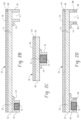
- the panel can include a second layer on a surface of the substrate opposite the hardcoat layer, and wherein the second layer comprises a second polymer composition, and wherein the second layer is discontinuous over the substrate, and wherein a visible light transmission of the second layer is different (e.g., less) than a visible light transmission of the first portion of the panel.
- a panel can be provided with a first portion, e.g., where lighting functions could be provided, and a second portion, e.g., where visible light can be blocked or a sensor can be hidden from view, and yet transmission of infrared light can occur.
- the first portion can be transparent and the second portion can be opaque.
- transparent can refer to a material property comprising at least one of: a visible light transmission equal to or greater than 40%; and a haze equal to or less than 30.0%.
- haze is measured in accordance with ASTM D1003-00, at the component thickness, using Procedure A, on a HAZE-GUARD DUAL from BYK-Gardner with an integrating sphere (0°/diffuse geometry) and a spectral sensitivity conforming to the International Commission on Illumination (CIE) standard spectral value under standard lamp D65.
- CIE International Commission on Illumination
- opaque can refer to a material property comprising a visible light transmission less than 10%.
- a haze of the first portion is equal to or less than 30%, or equal to or less than 20%, preferably equal to or less than 10%, more preferably equal to or less than 5.0%, still more preferably, equal to or less than 1.5%, yet still more preferably equal to or less than 1.0%.
- a visible light transmission of the first portion can be 60% to 91% and a thickness of the panel can be 2 mm to 4 mm.
- a haze of the first portion can be equal to or less than 20%, and a thickness of the panel can be 1.5 mm to 4 mm.
- the panel further includes a second portion and at least one of: a visible light transmission of the second portion less than 40%, or equal to or less than 10%, preferably equal to or less than 1%, more preferably equal to or less than 0.1%; an "L*" value of the second portion equal to or less than 10.0, or equal to or less than 7.5, preferably equal to or less than 5.0; an "a*" value of the second portion of -2 to 2, or -1 to 1; and a "b*" value of the second portion of -2 to 2, or -1 to 1.
- L* or “lightness”, "a*” or “color opponent green-red”, and “b*” or “color opponent blue-yellow” are measured using CIE illuminant D65 and 10° observer specular component excluded on an X rite i7 spectrophotometer in accordance with ASTM E308-15 (Standard Practice for Computing the Colors of Objects by using the CIE System).
- the second portion can be at least partially transparent to infrared light (i.e., transmission of infrared light can occur) such that infrared sensors can be hidden from view, but yet transmit infrared light through the second portion.
- the panel can be a single layer or multiple layers.
- a panel can include the substrate and a second layer comprising a second polymer composition.
- the substrate can include a first polymer composition with higher impact properties than the second polymer composition.
- a first puncture energy of the first polymer composition can be greater than a second puncture energy of the second polymer composition.
- a first ductility of the first polymer composition can be greater than a second ductility of the second polymer composition.
- the substrate can include polycarbonate.
- the substrate can include a blend of polycarbonate and at least one of polypropylene and poly(methyl methacrylate).
- the substrate e.g., at least one of the first polymer composition and the second polymer composition
- the second polymer composition can include at least one of a polycarbonate and a polycarbonate blend, preferably a blend of polycarbonate and acrylonitrile-butadiene-styrene, a blend of polycarbonate and polybutylene terephthalate, or a combination comprising at least one of the foregoing.
- the first polymer composition can include a polycarbonate copolymer, a linear homopolymer containing bisphenol A carbonate units, a polycarbonate-siloxane) copolymer comprising bisphenol A carbonate units and siloxane units, poly(aliphatic ester-carbonate)s, a blend of at least one of the foregoing with an impact modifier, or a combination of at least one of the foregoing and the second polymer composition can include a polycarbonate blend, preferably a blend of polycarbonate and acrylonitrile-butadiene-styrene, a blend of polycarbonate and polybutylene terephthalate, or a combination comprising at least one of the foregoing.
- the second polymer composition can include a filler such as the fillers described herein or pigments that block light in the visible wavelength spectrum, yet allow transmission of light in the infrared wavelength spectrum.
- the second polymer can include a polycarbonate copolymer and carbon black.
- the present panel can comprise at least one of: a ductility of 80% to 100%, or 90% to 100%, preferably 95% to 100%, measured at 23°C; and a ductility of 80% to 100%, or 90% to 100%, preferably 95% to 100%, measured at -25°C.
- a puncture energy of the panel can be equal to or greater than 40 Joules, or equal to or greater than 50 Joules, preferably equal to or greater than 60 Joules.
- ductility is measured at 23°C in accordance with ISO6603-2-00.
- punchcture energy is measured at 23°C (unless otherwise specified) with a ball speed of 4.4 meters per second (m/s) and the hardcoat layer facing upwards in accordance with ISO6603-2-00.
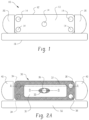
- the panel includes a device (e.g., electronic device) accommodating portion comprising at least one of a sensor accommodating portion, a light accommodating portion (e.g., a headlamp accommodating portion or a LED light accommodating portion), a camera accommodating portion, a display accommodating portion, a receiver accommodating portion, a reflector accommodating portion, and a transmitter accommodating portion.
- a device accommodating portion refers to a design element in or on the component that allows a device to be placed, mounted, attached or adhered proximate to, adjacent to, or incorporated into the panel.
- the device accommodating portion can be in at least one of the first portion and the second portion.
- the device accommodating portion can be 1) opaque and allow transmission of infrared light, 2) partially transparent and partially opaque (e.g., includes a light diffuser portion), or 3) transparent.
- the device accommodating portion includes a cavity into which a device can be positioned.
- the device accommodating portion can include connectors, which can be used to connect the front panel to a front end or to the body of the vehicle.
- the connectors can be screw fittings, clips, welding bond areas, laser welding areas, adhesive areas (e.g., glue areas), or a combination comprising at least one of the foregoing.
- Polycarbonate as used herein means a polymer or copolymer having repeating structural carbonate units of formula (1) wherein at least 60 percent of the total number of R 1 groups are aromatic, or each R 1 contains at least one C 6-30 aromatic group.
- each R 1 can be derived from a dihydroxy compound such as an aromatic dihydroxy compound of formula (2) or a bisphenol of formula (3).
- each R h is independently a halogen atom, for instance bromine, a C 1-10 hydrocarbyl group such as a C 1-10 alkyl, a halogen-substituted C 1-10 alkyl, a C 6-10 aryl, or a halogen-substituted C 6-10 aryl, and n is 0 to 4.
- R a and R b are each independently a halogen, C 1-12 alkoxy, or C 1-12 alkyl, and p and q are each independently integers of 0 to 4, such that when p or q is less than 4, the valence of each carbon of the ring is filled by hydrogen.
- p and q can each be 0, or p and q is each 1
- R a and R b are each a C 1-3 alkyl group, specifically methyl, disposed meta to the hydroxy group on each arylene group.
- X a is a bridging group connecting the two hydroxy-substituted aromatic groups, where the bridging group and the hydroxy substituent of each C 6 arylene group are disposed ortho, meta, or para (specifically para) to each other on the C 6 arylene group, for instance, a single bond, -O-, -S-, -S(O)-, -S(O) 2 -, -C(O)-, or a C 1-18 organic group, which can be cyclic or acyclic, aromatic or non-aromatic, and can further comprise heteroatoms such as halogens, oxygen, nitrogen, sulfur, silicon, or phosphorous.
- Bisphenol compounds can include 4,4'-dihydroxybiphenyl, 1,6-dihydroxynaphthalene, 2,6-dihydroxynaphthalene, bis(4-hydroxyphenyl)methane, bis(4-hydroxyphenyl)diphenylmethane, bis(4-hydroxyphenyl)-1-naphthylmethane, 1,2-bis(4-hydroxyphenyl)ethane, 1,1-bis(4-hydroxyphenyl)-1-phenylethane, 2-(4-hydroxyphenyl)-2-(3-hydroxyphenyl)propane, bis(4-hydroxyphenyl)phenylmethane, 2,2-bis(4-hydroxy-3-bromophenyl)propane, 1,1-bis (hydroxyphenyl)cyclopentane, 1,1-bis(4-hydroxyphenyl)cyclohexane, 1,1-bis(4-hydroxyphenyl)isobutene, 1,1-bis(4-hydroxyphenyl)cycl
- dihydroxy compounds include resorcinol, 2,2-bis(4-hydroxyphenyl) propane (“bisphenol A” or "BPA”), 3,3-bis(4-hydroxyphenyl) phthalimidine, 2-phenyl-3,3'-bis(4-hydroxyphenyl) phthalimidine (also known as N-phenyl phenolphthalein bisphenol, "PPPBP”, or 3,3-bis(4-hydroxyphenyl)-2-phenylisoindolin-1-one), 1,1-bis(4-hydroxy-3-methylphenyl)cyclohexane, and 1,1-bis(4-hydroxyphenyl)-3,3,5-trimethylcyclohexane (isophorone bisphenol).
- BPA 2,2-bis(4-hydroxyphenyl) propane
- PPPBP 3,3-bis(4-hydroxyphenyl)-2-phenylisoindolin-1-one
- 1,1-bis(4-hydroxy-3-methylphenyl)cyclohexane 1,1-bis(4-hydroxy
- Polycarbonate as used herein also includes copolymers comprising carbonate units and ester units ("poly(ester-carbonate)s", also known as polyester-polycarbonates).
- Poly(ester-carbonate)s further contain, in addition to recurring carbonate chain units of formula (1), repeating ester units of formula (4) wherein J is a divalent group derived from a dihydroxy compound (which includes a reactive derivative thereof), and can be, for instance, a C 2-10 alkylene, a C 6-20 cycloalkylene, a C 6-20 arylene, or a polyoxyalkylene group in which the alkylene groups contain 2 to 6 carbon atoms, specifically, 2, 3, or 4 carbon atoms; and T is a divalent group derived from a dicarboxylic acid (which includes a reactive derivative thereof), and can be, for instance, a C 2-20 alkylene, a C 6-20 cycloalkylene, or a C 6-20 arylene.
- Specific dihydroxy compounds include aromatic dihydroxy compounds of formula (2) (e.g., resorcinol), bisphenols of formula (3) (e.g., bisphenol A), a C 1-8 aliphatic diol such as ethane diol, n-propane diol, i-propane diol, 1,4-butane diol, 1,6-cyclohexane diol, 1,6-hydroxymethylcyclohexane, or a combination comprising at least one of the foregoing dihydroxy compounds.
- aromatic dihydroxy compounds of formula (2) e.g., resorcinol
- bisphenols of formula (3) e.g., bisphenol A
- a C 1-8 aliphatic diol such as ethane diol, n-propane diol, i-propane diol, 1,4-butane diol, 1,6-cyclohexane diol, 1,6-hydroxymethylcyclohexane,
- Aliphatic dicarboxylic acids that can be used include C 6-20 aliphatic dicarboxylic acids (which includes the terminal carboxyl groups), specifically linear C 8-12 aliphatic dicarboxylic acid such as decanedioic acid (sebacic acid); and alpha, omega-C 12 dicarboxylic acids such as dodecanedioic acid (DDDA).
- Aromatic dicarboxylic acids that can be used include terephthalic acid, isophthalic acid, naphthalene dicarboxylic acid, 1,6-cyclohexane dicarboxylic acid, or a combination comprising at least one of the foregoing acids.
- a combination of isophthalic acid and terephthalic acid wherein the weight ratio of isophthalic acid to terephthalic acid is 91:9 to 2:98 can be used.
- ester units include ethylene terephthalate units, n-propylene terephthalate units, n-butylene terephthalate units, ester units derived from isophthalic acid, terephthalic acid, and resorcinol (ITR ester units), and ester units derived from sebacic acid and bisphenol A.
- the molar ratio of ester units to carbonate units in the poly(ester-carbonate)s can vary broadly, for instance 1:99 to 99:1, specifically, 10:90 to 90:10, more specifically, 25:75 to 75:25, or from 2:98 to 15:85.
- the molar ratio of ester units to carbonate units in the poly(ester-carbonate)s can vary from 1:99 to 30: 70, specifically 2:98 to 25:75, more specifically 3:97 to 20:80, or from 5:95 to 15:85.
- the polycarbonate can be a linear homopolymer containing bisphenol A carbonate units (BPA-PC), commercially available under the trade name LEXAN TM from SABIC; or a branched bisphenol A homopolycarbonate produced via interfacial polymerization, containing 3 mole % 1,1,1-tris(4-hydroxyphenyl)ethane (THPE) branching agent.
- BPA-PC bisphenol A carbonate units
- LEXAN TM branched bisphenol A homopolycarbonate produced via interfacial polymerization, containing 3 mole % 1,1,1-tris(4-hydroxyphenyl)ethane
- the polycarbonate can be a poly(carbonate-siloxane) copolymer comprising bisphenol A carbonate units and siloxane units, for instance blocks containing 5 to 200 dimethylsiloxane units, such as those commercially available under the trade name EXL TM from SABIC.
- Poly(aliphatic ester-carbonate)s can be used, such as those comprising bisphenol A carbonate units and sebacic acid-bisphenol A ester units, such as those commercially available under the trade name LEXAN TM HFD from SABIC.
- the polycarbonate can be of a particular purity level.
- the polycarbonate can be a high purity polycarbonate characterized as having a purity of equal to or greater than 99.65 weight % (wt%), or 99.65 wt% to 99.70 wt%, and which contains less than 2 parts per million by weight (ppm) sulfur, based on the total weight of the polycarbonate, although other purity criteria could be applied.
- the polycarbonate can be produced from a para, para-bisphenol A polymer having a purity equal to or greater than 99.65 wt% and which contains less than 2 ppm sulfur, based on the total weight of the polycarbonate. Sulfur levels are measured, for instance, by a Total Sulfur Analysis based on combustion and coulometric detection.
- the polycarbonate can be copolymers and bisphenol A homopolycarbonates with very low residual amounts of volatile impurities.
- chlorobenzene and other aromatic chlorine compounds can be present in the polycarbonate in an amount equal to or less than 10 ppm, or equal to or less than 5 ppm, preferably equal to or less than 2 ppm, based on the total weight of the polycarbonate
- dichloromethane can be present in the polycarbonate in an amount equal to or less than 1 ppm, or equal to or less than 0.5 ppm, based on the total weight of the polycarbonate
- monohydric phenols such as phenol, tert-butylphenol, and cumylphenol, can be present in the polycarbonate in an amount equal to or less than 15 ppm, or equal to or less than 5 ppm, preferably equal to or less than 2 ppm, based on the total weight of the polycarbonate
- alkanes can be present in the polycarbonate in an amount equal to or
- the polycarbonate can include residual amounts of: carbon tetrachloride in an amount equal to or less than 0.01 ppm, based on the total weight of the polycarbonate; diaryl carbonates, such as diphenyl carbonate and di-tert-butyl phenolcarbonate, in an amount equal to or less than 5 ppm, or equal to or less than 2 ppm, based on the total weight of the polycarbonate; bisphenol A and other bisphenols in an amount equal to or less than 5 ppm, or equal to or less than 2 ppm, preferably equal to or less than 0.5 ppm, based on the total weight of the polycarbonate; sodium and other alkali metals and alkaline earth metals in an amount equal to or less than 0.05 ppm, based on the total weight of the polycarbonate; cresols in an amount equal to or less than 1 ppm, or equal to or less than 0.2 ppm, based on the total weight of the polycarbonate; phenolic OH groups in an amount
- Polycarbonates can be manufactured by processes such as interfacial polymerization and melt polymerization, which are known, and are described, for instance, in WO 2013/175448 A1 and WO 2014/072923 A1 .
- An end-capping agent also referred to as a chain stopper agent or chain terminating agent
- Branched polycarbonate blocks can be prepared by adding a branching agent during polymerization, for instance trimellitic acid, trimellitic anhydride, trimellitic trichloride, tris-p-hydroxyphenylethane, isatin-bis-phenol, tris-phenol TC (1,3,5-tris((p-hydroxyphenyl)isopropyl)benzene), tris-phenol PA (4(4(1,1-bis(p-hydroxyphenyl)-ethyl) alpha, alpha-dimethyl benzyl)phenol), 4-chloroformyl phthalic anhydride, trimesic acid, and benzophenone tetracarboxylic acid.
- the branching agents can be added at a level of 0.05 wt% to 2.0 wt%. Combinations comprising linear polycarbonates and branched polycarbonates can be used.
- the polycarbonates can have a weight average molecular weight (Mw) of 10,000 Daltons to 100,000 Daltons, or 15,000 Daltons to 50,000 Daltons, preferably 17,000 Daltons to 35,000 Daltons, as measured by gel permeation chromatography (GPC), using a crosslinked styrene-divinylbenzene column and calibrated to bisphenol A homopolycarbonate references. GPC samples are prepared at a concentration of 1 milligram per milliliter (ml), and are eluted at a flow rate of 1.5 ml per minute.
- Mw weight average molecular weight
- the polymer composition further comprises an acid stabilizer comprising a sulfonic acid or ester thereof, an organophosphorous acid or ester thereof, or a combination comprising at least one of the foregoing, preferably n-butyl tosylate (BuTos).
- an acid stabilizer comprising a sulfonic acid or ester thereof, an organophosphorous acid or ester thereof, or a combination comprising at least one of the foregoing, preferably n-butyl tosylate (BuTos).
- the sulfonic acid can comprise an alkylbenzene sulfonic acid, a polystyrene sulfonic acid, or a p-toluene sulfonic acid anhydride.
- the sulfonic acid can comprise p-toluene sulfonic acid or butyl p-toluenesulfonate (i.e., n-butyl tosylate).
- the sulfonic acid or ester thereof can be present in the polymer composition an amount of 0.5 ppm to 5 ppm, based on the total weight of the polymer composition.
- the organophosphorous acid or ester thereof can include phosphorous acid, phosphoric acid, phosphite, phosphine, phosphonite compound, or a combination comprising at least one of the foregoing.
- the sulfonic acid or ester thereof, the organophosphorous acid or ester thereof, or a combination comprising at least one of the foregoing contributes to stabilizing a UV absorbing additive as described herein in the polymer composition, preventing or minimizing binding of the UV absorbing additive to a polycarbonate chain when subjected to the high temperatures of the step of shaping described herein.
- the polymer composition can further comprise a heat stabilizer and an acid stabilizer.
- the heat stabilizer can stabilize the polymer composition by improving color stability upon heat processing.
- the heat stabilizer can include at least one organophosphorous compound, including but not limited to a phosphite, phosphine or phosphonite compound.
- the heat stabilizer can include tris-(2,4-di-tert-butylphenyl) phosphite (e.g., IRGAFOS TM 168, commercially available from BASF) (IRG), triphenylphosphine (TPP), tridecylphosphite (TDP), tetrakis(2,4-di-tert-butylphenyl)-4,4-diphenyldiphosphonite) (PEPQ), bis (2,4-dicumylphenyl) pentaerythritol diphosphite (e.g., Doverphos S-9228, commercially available from Dover Chemical) (DP), diphenyl monodecyl phosphite (DPDP), or a combination comprising at least one of the foregoing.
- IRGAFOS TM 168 commercially available from BASF
- TPP triphenylphosphine
- TDP tridecylphosphite
- the heat stabilizer can be present in the polymer composition in an amount of 0.01 wt% to 0.1 wt%, or 0.01 wt% to 0.5 wt%, preferably 0.01 wt% to 0.1 wt%, based on the total weight of the polymer composition.
- UV absorbing additives include hydroxybenzophenones; hydroxybenzotriazoles; hydroxybenzotriazines; cyanoacrylates; oxanilides; benzoxazinones; aryl salicylates; monoesters of diphenols such as resorcinol monobenzoate; 2-(2H-benzotriazol-2-yl)-4-(1,1,3,3-tetramethylbutyl)-phenol (CYASORB TM 5411); 2-hydroxy-4-n-octyloxybenzophenone (CYASORB TM 531); 2-[4,6-bis(2,4-dimethylphenyl)-1,3,5-triazin-2-yl]- 5-(octyloxy)-phenol (CYASORB TM 1164); 2,2'-(1,4-phenylene)bis(4H-3,1
- UV absorbers can be used in amounts of 0.01 to 1 part by weight, based on 100 parts by weight of the polymer composition.
- UV absorbers that can be particularly useful with the polymer compositions disclosed herein include 2-(2H-benzotriazol-2-yl)-4-(1,1,3,3-tetramethylbutyl)-phenol (e.g., CYASORB TM 5411 commercially available from Cytec Industries, Inc., Woodland Park, New Jersey) and 2,2'-(1,4-phenylene)bis(4H-3,1-benzoxazin-4-one) (e.g., CYASORB TM UV- 3638, commercially available from Cytec Industries, Inc., Woodland Park, New Jersey), and combinations comprising at least one of the foregoing.
- CYASORB TM 5411 commercially available from Cytec Industries, Inc., Woodland Park, New Jersey
- 2,2'-(1,4-phenylene)bis(4H-3,1-benzoxazin-4-one e.g., C
- the UV stabilizers can be present in an amount of 0.01 to 1 wt%, or 0.1 wt% to 0.5 wt%, preferably, 0.15 wt% to 0.4 wt%, based upon the total weight of the polymer composition.
- the substrate of the panel can include equal to or greater than 60 wt%, or 70 wt%, preferably 80 wt%, more preferably 90 wt%, unbound UV absorbing additive, based upon the total amount of UV absorbing additive, upon shaping the polymer composition at the temperatures described herein.
- the polymer composition can further include an impact modifier, with the proviso that the additive(s) are selected so as to not significantly adversely affect the desired properties of the thermoplastic composition, in particular transmission, haze, ductility, puncture energy, moldability (i.e., the ability to be molded), or a combination comprising at least one of the foregoing.
- an impact modifier with the proviso that the additive(s) are selected so as to not significantly adversely affect the desired properties of the thermoplastic composition, in particular transmission, haze, ductility, puncture energy, moldability (i.e., the ability to be molded), or a combination comprising at least one of the foregoing.
- Impact modifiers can include natural rubber, fluoroelastomers, ethylene-propylene rubber (EPR), ethylene-butene rubber, ethylene-propylene-diene monomer rubber (EPDM), acrylate rubbers, hydrogenated nitrile rubber (HNBR), silicone elastomers, styrene-butadiene-styrene (SBS), styrene-butadiene rubber (SBR), styrene-(ethylene-butene)-styrene (SEBS), acrylonitrile-butadiene-styrene (ABS), acrylonitrile-ethylene-propylene-diene-styrene (AES), styrene-isoprene-styrene (SIS), styrene-(ethylene-propylene)-styrene (SEPS), methyl methacrylate-butadiene-styrene (MBS), high rubber graft (HR
- the polymer composition can include various additional additives (e.g., plasticizers, lubricants, mold release agents, colorants, dyes, fillers, flame retardants, light diffusers, epoxides) ordinarily incorporated into polymer compositions of this type, with the proviso that the additive(s) are selected so as to not significantly adversely affect the desired properties of the thermoplastic composition, in particular transmission, haze, ductility, puncture energy, moldability, or a combination comprising at least one of the foregoing. Since these properties can vary depending on the area of the component (e.g., opaque area or transparent area), various materials are possible. Combinations of additives can be used. Such additives can be mixed during the mixing of the components for forming the composition.
- additives e.g., plasticizers, lubricants, mold release agents, colorants, dyes, fillers, flame retardants, light diffusers, epoxides
- plasticizers include, for instance, pentaerythritol tetrastearate (PETS), glycerol monostearate (GMS), glycerol tristearate (GTS), phthalic acid esters (e.g., octyl-4,5-epoxy-hexahydrophthalate), tris-(octoxycarbonylethyl)isocyanurate, tristearin, di- or polyfunctional aromatic phosphates (e.g., resorcinol tetraphenyl diphosphate (RDP), the bis(diphenyl) phosphate of hydroquinone and the bis(diphenyl) phosphate of bisphenol A); poly-alpha-olefins; epoxidized soybean oil; silicones, including silicone oils (e.g., poly(dimethyl diphenyl siloxanes); esters, for instance, fatty acid esters (e
- PETS pentaerythritol te
- Possible fillers or reinforcing agents include, for instance, mica, clay, feldspar, quartz, quartzite, perlite, tripoli, diatomaceous earth, aluminum silicate (mullite), synthetic calcium silicate, fused silica, fumed silica, sand, boron-nitride powder, boron-silicate powder, calcium sulfate, calcium carbonates (such as chalk, limestone, marble, and synthetic precipitated calcium carbonates), talc (including fibrous, modular, needle shaped, and lamellar talc), wollastonite, hollow or solid glass spheres, silicate spheres, cenospheres, aluminosilicate or (armospheres), kaolin, whiskers of silicon carbide, alumina, boron carbide, iron, nickel, or copper, continuous and chopped carbon fibers or glass fibers, molybdenum sulfide, zinc sulfide, barium titanate, barium ferrite, barium sulfate,
- the fillers and reinforcing agents can be coated with a layer of metallic material to facilitate conductivity, or surface treated with silanes to improve adhesion and dispersion with the polymer composition.
- Fillers are used in amounts of 1 to 200 parts by weight, based on 100 parts by weight of the polymer composition.
- Antioxidant additives include organophosphites such as tris(nonyl phenyl)phosphite, tris(2,4-di-t-butylphenyl)phosphite, bis(2,4-di-t-butylphenyl)pentaerythritol diphosphite, distearyl pentaerythritol diphosphite; alkylated monophenols or polyphenols; alkylated reaction products of polyphenols with dienes, such as tetrakis[methylene(3,5-di-tert-butyl-4-hydroxyhydrocinnamate)] methane; butylated reaction products of para-cresol or dicyclopentadiene; alkylated hydroquinones; hydroxylated thiodiphenyl ethers; alkylidene-bisphenols; benzyl compounds; esters of beta-(3,5-di-tert-butyl-4-hydroxypheny
- Colorants such as pigment or dye additives can also be present.
- Useful pigments can include, for instance, inorganic pigments such as metal oxides and mixed metal oxides such as zinc oxide, titanium dioxides, iron oxides, or the like; sulfides such as zinc sulfides, or the like; aluminates; sodium sulfo-silicates sulfates, chromates, or the like; carbon blacks; zinc ferrites; ultramarine blue; organic pigments such as azos, di-azos, quinacridones, perylenes, naphthalene tetracarboxylic acids, flavanthrones, isoindolinones, tetrachloroisoindolinones, anthraquinones, enthrones, dioxazines, phthalocyanines, and azo lakes; Pigment Red 101, Pigment Red 122, Pigment Red 149, Pigment Red 177, Pigment Red 179, Pigment Red 202,
- Pigments are generally used in amounts of 0.00001 wt% to 0.01 wt%, or 0.00002 wt% to 0.0010 wt%, preferably 0.00002 wt% to 0.0005 wt%, based on the total weight of the polymer composition.
- Dyes are generally organic materials and include coumarin dyes such as coumarin 460 (blue), coumarin 6 (green), nile red or the like; lanthanide complexes; hydrocarbon and substituted hydrocarbon dyes; polycyclic aromatic hydrocarbon dyes; scintillation dyes such as oxazole or oxadiazole dyes; aryl- or heteroaryl-substituted poly (C 2-8 ) olefin dyes; carbocyanine dyes; indanthrone dyes; phthalocyanine dyes; oxazine dyes; carbostyryl dyes; napthalenetetracarboxylic acid dyes; porphyrin dyes; bis(styryl)biphenyl dyes; acridine dyes; anthraquinone dyes; cyanine dyes; methine dyes; arylmethane dyes; azo dyes; indigoid dyes, thioindigoid dye
- Dyes are generally used in amounts of 0.00001 wt% to 0.01 wt%, or 0.00002 wt% to 0.0010 wt%, or preferably0.00002 wt% to 0.0005 wt. %, based on the total weight of the polymer composition.
- Flame retardants include organic compounds that include phosphorus, bromine, or chlorine.
- Non-brominated and non-chlorinated phosphorus-containing flame retardants can be used in certain applications for regulatory reasons, for instance organic phosphates and organic compounds containing phosphorus-nitrogen bonds.
- Flame retardant aromatic phosphates include triphenyl phosphate, tricresyl phosphate, isopropylated triphenyl phosphate, phenyl bis(dodecyl) phosphate, phenyl bis(neopentyl) phosphate, phenyl bis(3,5,5'-trimethylhexyl) phosphate, ethyl diphenyl phosphate, 2-ethylhexyl di(p-tolyl) phosphate, bis(2-ethylhexyl) p-tolyl phosphate, tritolyl phosphate, bis(2-ethylhexyl) phenyl phosphate, tri(nonylphenyl) phosphate, bis(dodecyl) p-tolyl phosphate, dibutyl phenyl phosphate, 2-chloroethyl diphenyl phosphate, p-tolyl bis(2,5,5'
- Di- or polyfunctional aromatic phosphorus-containing compounds are also useful, for instance resorcinol tetraphenyl diphosphate (RDP), the bis(diphenyl) phosphate of hydroquinone and the bis(diphenyl) phosphate of bisphenol A, respectively, and their oligomeric and polymeric counterparts.
- Flame retardant compounds containing phosphorus-nitrogen bonds include phosphonitrilic chloride, phosphorus ester amides, phosphoric acid amides, phosphonic acid amides, phosphinic acid amides, and tris(aziridinyl) phosphine oxide.
- phosphorus-containing flame retardants are present in amounts of 0.1 to 30 parts by weight, more specifically 1 to 20 parts by weight, based on 100 parts by weight of the total composition, excluding any filler.
- Halogenated materials can also be used as flame retardants, for instance bisphenols of which the following are representative: 2,2-bis-(3,5-dichlorophenyl)-propane; bis-(2-chlorophenyl)-methane; bis(2,6-dibromophenyl)-methane; 1,1-bis-(4-iodophenyl)-ethane; 1,2-bis-(2,6-dichlorophenyl)-ethane; 1,1-bis-(2-chloro-4-iodophenyl)ethane; 1,1-bis-(2-chloro-4-methylphenyl)-ethane; 1,1-bis-(3,5-dichlorophenyl)-ethane; 2,2-bis-(3-phenyl-4-bromophenyl)-ethane; 2,6-bis-(4,6-dichloronaphthyl)-propane; and 2,2-bis-(3,5-dichloro-4
- halogenated materials include 1,3-dichlorobenzene, 1,4-dibromobenzene, 1,3-dichloro-4-hydroxybenzene, and biphenyls such as 2,2'-dichlorobiphenyl, polybrominated 1,4-diphenoxybenzene, 2,4'-dibromobiphenyl, and 2,4'-dichlorobiphenyl as well as decabromo diphenyl oxide, as well as oligomeric and polymeric halogenated aromatic compounds, such as a copolycarbonate of bisphenol A and tetrabromobisphenol A and a carbonate precursor, e.g., phosgene.
- biphenyls such as 2,2'-dichlorobiphenyl, polybrominated 1,4-diphenoxybenzene, 2,4'-dibromobiphenyl, and 2,4'-dichlorobiphenyl as well as decabromo diphenyl oxide, as well as oligo
- Metal synergists e.g., antimony oxide
- halogen containing flame retardants are present in amounts of 1 parts by weight to 25 parts by weight, or 2 parts by weight to 20 parts by weight, based on 100 parts by weight of the polymer composition, excluding any filler.
- thermoplastic composition can be essentially free of chlorine and bromine.
- "Essentially free of chlorine and bromine” is defined as having a bromine or chlorine content of less than or equal to 100 parts ppm, or less than or equal to 75 ppm, preferably less than or equal to 50 ppm, based on the total weight of the polymer composition, excluding any filler.
- Inorganic flame retardants can also be used, for instance salts of C 1-16 alkyl sulfonate salts such as potassium perfluorobutane sulfonate (Rimar salt), potassium perfluoroctane sulfonate, tetraethylammonium perfluorohexane sulfonate, and potassium diphenylsulfone sulfonate; salts such as Na 2 CO 3 , K 2 CO 3 , MgCO 3 , CaCO 3 , and BaCO 3 , or fluoro-anion complexes such as Li 3 AlF 6 , BaSiF 6 , KBF 4 , K 3 AlF 6 , KAlF 4 , K 2 SiF 6 , or Na 3 AlF 6 .
- inorganic flame retardant salts are present in amounts of 0.01 to 10 parts by weight, more specifically 0.02 to 1 parts by weight, based on 100 parts by weight of the total composition, excluding any filler.
- the hardcoat layer can be any material that does not significantly adversely affect the desired properties of the thermoplastic composition, in particular transmission, haze, ductility, puncture energy, moldability, or a combination comprising at least one of the foregoing, and is configured as a vehicle front-facing surface.
- the hardcoat layer can provide UV weathering resistance, chemical resistance, color stability, scratch resistance, or a combination comprising at least one of the foregoing.
- the hardcoat layer on a surface of the substrate can comprise at least one of: a taber abrasion comprising a haze equal to or less than 30%, or equal to or less than 20%, preferably equal to or less than 10% after 500 cycles at 500 grams, as measured with CS-10F in accordance ASTM D1044-13; an optical performance of the first portion comprising a haze of equal to or less than 30% (e.g., for a reflector accommodating portion), or equal to or less than 7% (e.g., for a light accommodating portion), as measured in accordance with ASTM D1003-00; and a decrease in transmission of equal to or less than 25% of the transmission of the substrate, as measured after conditions in accordance with lifetime test SAEJ576-10, at thicknesses of 1.6 mm, 2.3 mm, 3.2 mm, or 6.4 mm.
- the hardcoat layer can be at least one of a UV curing hardcoat layer and thermal curing hardcoat layer.
- the hardcoat layer can include at least one of a silicone, a polyurethane, an acrylate, and a metal oxide; preferably silicone.
- the hardcoat layer can include SilFort UV hardcoat UVHC3000, SilFort UV hardcoat UVHC3000K1-50, SilFort hardcoat UVHC5000, Silfort hardcoat PHC587C (all commercially available from Momentive Performance Materials GmBH), SH-51 (commercially available from Stanley Electric Co.), Ltd.), UVT610V SRC hardcoat (commercially available from Red Spot Paint & Varnish Co., Inc.), UVT820V1 hardcoat (commercially available from Red Spot Paint & Varnish Co., Inc.), UVT820V2 hardcoat (commercially available from Red Spot Paint & Varnish Co., Inc.), UVT820V3 hardcoat (commercially available from Red Spot Paint & Varnish Co., Inc.), UVT820V8 hardcoat (commercially available from Red Spot Paint & Varnish Co., Inc.), KUV-1000 (commercially available from KCC Corporation), KUV-2000 (commercially available from KCC Corporation), KUV-3000
- materials for the hardcoat layer that can be a hardcoat first layer can include SilFort SHP470 or SilFort SHP401 (all commercially available from Momentive Performance Materials GmBH).
- Commercially available materials for the hardcoat layer that can be a hardcoat second layer can include SilFort AS4700 (commercially available from Momentive Performance Materials GmbH).
- a metal oxide coating can be applied to the substrate by chemical vapor deposition, plasma enhanced chemical vapor deposition, plasma deposition, or a combination comprising at least one of the foregoing.
- the hardcoat layers can act as a primer layer, a UV resistant layer (e.g., including UV absorbers), a top coat, a scratch resistant layer, or a combination comprising at least one of the foregoing.
- a first hardcoat layer with UV weathering resistance can be applied to a surface of the substrate and a second hardcoat layer with scratch resistance can be applied to the first hardcoat layer.
- top coat includes a metal oxide hardcoat layer.
- Each hardcoat layer can have a thickness of 2 micrometers to 1,000 micrometers, or 2 micrometers to 500 micrometers, preferably 6 micrometers to 25 micrometers.
- a primer hardcoat layer can have a thickness of 2 micrometers to 1,000 micrometers, or 10 micrometers to 500 micrometers;
- a UV resistant hardcoat layer can have a thickness of 6 micrometers to 1,000 micrometers, or 8 micrometers to 25 micrometers;
- a top coat hardcoat layer can have a thickness of 2 micrometers to 1,000 micrometers, or 2 micrometers to 500 micrometers.
- An integrated structure for a vehicle can include the above described panel attached to a vehicle component such as at least one of a bumper and a side rail.
- the panel can be molded, mechanically attached, screwed, clipped, adhered (e.g., glued), or welded to a bumper (e.g., via connectors), a side rail, or a combination comprising at least one of the foregoing.
- a vehicle can include the above described panel or the above described integrated structure.
- the vehicle can be a passenger vehicle such as a car, a motorcycle, a bus, or a truck.
- the passenger vehicle can be a gasoline vehicle, a diesel vehicle, an electric vehicle, a hybrid electric vehicle, or a plug in hybrid electric vehicle.
- Use of the above described polymer composition can include forming a substrate of a panel of a vehicle.
- a method for producing the above described panel can include shaping the polymer composition at a temperature of 300°C to 360°C, or 310°C to 350°C, preferably 320°C to 350°C, to obtain the substrate and applying the hardcoat layer on the surface of the substrate.
- shaping e.g., molding
- polymer articles e.g., polycarbonate articles
- automotive lighting lenses e.g., headlamps
- other applications utilize lower temperatures, e.g., temperatures equal to or less than 310°C in order to avoid molecular weight loss and an increase in yellowness.
- Molecular weight loss can result in loss of impact properties and brittle failure. While an increase in yellowness has a negative impact in the aesthetics and affects the color of the transmitted light.
- the present methods increase the temperature of the polymer composition during molding so that sufficient flow (low enough viscosity) of the polymer composition is present to fill the entire mold and/or to fill a mold cavity having relatively thinner dimensions. Desirably, the present methods limit molecular weight loss and color change during higher temperature molding, which facilitates an increase in flow of the polymer during molding.
- the step of shaping the polymer composition can include at least one of extrusion (e.g., sheet extrusion), injection molding, thermoforming, and compression molding.
- the step of molding can further include multiple gating, sequential gating, or a combination comprising at least one of the forgoing.
- the step of molding is devoid of multiple gating, sequential gating, or a combination comprising at least one of the forgoing.
- the step of shaping comprises 2-component molding.
- the step of molding can comprise 2-component molding of a first polymer composition and a second polymer composition, wherein a substrate and a second layer, respectively, are formed and the second layer is discontinuous over the substrate, and wherein the substrate has a visible light transmission equal to or greater than 40% (e.g., is transparent) and the second layer has a visible light transmission less than 40% (e.g., is opaque).
- the step of molding can be at temperature equal to or greater than 330°C at a residence time equal to or greater than 10 minutes, or at temperature equal to or greater than 330°C at a residence time equal to or greater than 12 minutes, or at a temperature equal to or greater than 330°C at a residence time equal to or greater than 15 minutes, or at a temperature equal to or greater than 340°C at a residence time equal to or greater than 6 minutes, or at a temperature equal to or greater than 340°C at a residence time equal to or greater than 10 minutes, or at a temperature equal to or greater than 350°C at a residence time equal to or greater than 6 minutes, or at a temperature equal to or greater than 350°C at a residence time equal to or greater than 10 minutes, or at a temperature equal to or greater than 350°C at a residence time equal to or greater than 15 minutes, or even at a temperature equal to or greater than 360°C at a residence time equal to or greater than 3 minutes.
- FIG. are merely schematic representations based on convenience and the ease of demonstrating the present disclosure, and are, therefore, not intended to indicate relative size and dimensions of the devices or components thereof and/or to define or limit the scope of the exemplary embodiments.
- integrated structure 10 includes panel 12 and bumper 16 connected to panel 12.
- Panel 12 includes first portion 13 and sensor accommodating portions 14.
- the first portion 13 has a visible light transmission equal to or greater than 40%.
- Panel 12 can include two headlamp accommodating portions 20.
- panel 30 includes second portions 32, 33, first portion 31, sensor accommodating portions 34, 36, and camera accommodating portions 38.
- the second portions 32, 33 have a visible light transmission less than 40%.
- Panel 30 can be positioned between two headlamps 40 and above bumper 50.
- panel 30 can include substrate 62, which is transparent and a second layer 64 that is opaque.
- Hardcoat layer 66 can be on a surface of substrate 62 distal second layer 64.
- Hardcoat layer 66 can include hardcoat first layer 68 and hardcoat second layer 69.
- Sensor 70 can be placed in sensor accommodating portion 34 such that, in use, sensor 70 is behind second portion 65 and not visible.
- Camera accommodating portion 38 can include a cavity 72 that is adjacent to substrate 62, which is transparent such that, in use, a camera (not shown) can be positioned in cavity 72 and at least a portion of the camera (e.g., a lens) can be viewed through the substrate 62.
- sensor 74 can be placed in sensor accommodating portion 36 such that, in use, sensor 74 is behind light diffuser portion 76, which can diffuse light passing therethrough. Thus, sensor 74 can be partially visible in use.
- sensor accommodating portions 84 and 88 can include connectors 80 for connecting the front panel to a vehicle.
- vehicle front 90 can include front panel 92 installed thereon.
- Front panel 92 can be below hood 94 and above bumper 96.
- Behind bumper 96 can be bumper bar 97 and behind front panel 92 can be front end 98.
- Table 1 Acronym / Name Description
- Source PC1 Linear Bisphenol A Polycarbonate produced via interfacial polymerization, Mw of about 30,000 grams per mole (g/mol) as determined by GPC using polycarbonate standards, phenol end-capped (at least 98%) with an MVR at 300°C/1.2kg, of 6 cm 3 /10 min
- SABIC PC2 Linear Bisphenol A Polycarbonate produced via interfacial polymerization, Mw of about 21,800 g/mol as determined by GPC using polycarbonate standards, para-cumylphenyl (PCP) end-capped (at least 98%) with an MVR at 300°C/1.2kg, of 25 cm 3 /10 min
- SABIC IRGF Tris-(2,4-di-tert-butylphenyl) phosphite Cas.
- the BPA organic purity can be defined as 100 wt% minus the sum of known and unknown impurities detected using ultraviolet (UV) (see HPLC method in Nowakowska et al., Polish J. Appl. Chem., XI (3), 247-254 (1996 )).
- UV ultraviolet
- the puncture energy i.e., energy at break
- MAI multi axial impact
- Colorimetric values (dE*, L*, a*, b*) were measured on 2.5 mm plaques using CIE illuminant D65 and 10° observer specular component excluded on an X rite i7 spectrophotometer in accordance with ASTM E308-15 (Standard Practice for Computing the Colors of Objects by using the CIE System).
- Injection molded test specimens were molded in accordance with ASTM test methods.
- the residence time of the material in the screw was controlled by the cooling of the injection molded plaques. The resulting residence times were from 3 to 15 minutes.
- the hardcoat layer materials were filtered and applied on the plaque by flow coating. After coating, plaques were dried in air for 5 minutes and dried in a convection oven at 80°C for 5 minutes.
- UV curing of the hardcoat layers was performed using a C211 Benchtop conveyor with a Fusion I300 type H UV curing lamp (250 MW). To achieve curing, a UV dose of 1,200 MW/cm 2 was used. The dose per pass was adjusted by the conveyor belt speed. The lamp height was adjusted to provide a dose of UV light of 377 MW/cm 2 . Three passes were done to achieve complete curing of the hardcoat layers. Using interferometry and the refractive indices of the substrates the hardcoat layers, and primer layers between the substrate and the hardcoat layer, the thickness of the hardcoat layer was measured to be in the specification range (8 micrometers to 15 micrometers).
- Examples (EX) 1-4 and Comparative Examples (CEX) 1-3 ten samples per example were produced using the polymer compositions listed in Table 2 molded with a 300°C temperature profile for 6 minutes and a hardcoat layer comprising HC was applied. The samples were tested for puncture energy and ductility.
- CEX7 has low impact energy and is brittle when processed at 360°C for 15 minutes. Actually, under these conditions, the acid stabilizer did not affect the results (compare CEX6 and CEX7).
- Table 4 EX12 CEX5 CEX6 EX13 EX14 CEX7 MVR 1 (cm 3 /10 min) 12 12 12 12 12 12 PC1 (wt%) 52 52 52 52 52 PC2 (wt%) 47.33 47.33 47.33 47.33 47.33 47.33 UV stabilizer: UVS (wt%) 0.3 0.3 0.3 0.3 0.3 0.3 0.3 0.3 0.3 0.3 0.3 0.3 0.3 0.3 0.3 0.3 0.3 0.3 0.3 0.3 0.3 0.3 0.3 0.3 0.3 0.3 0.3 0.3 0.3 0.3 0.3 0.3 0.3 0.3 0.3 0.3 0.3 0.3 0.3 0.3 0.3 0.3 0.3 0.3 0.3 0.3 0.3 0.3 0.3 0.3 0.3 0.3 0.3 0.3 0.3 0.3 0.3 0.3 0.3 0.3 0.3
- the effectiveness of the polymer composition to reduce loss of Mw after molding should improve the impact properties (e.g., higher puncture energy and ductility) after application of a hardcoat layer. Therefore, large panels (e.g., front panels) or integrated structures can be produced to meet the CTQ characteristics required for vehicles (e.g., transmission, pedestrian impact requirements, etc.).
- compositions, methods, and articles can alternatively comprise, consist of, or consist essentially of, any appropriate components or steps herein disclosed.
- the compositions, methods, and articles can additionally, or alternatively, be formulated so as to be devoid, or substantially free, of any steps, components, materials, ingredients, adjuvants, or species that are otherwise not necessary to the achievement of the function or objectives of the compositions, methods, and articles.
Landscapes
- Chemical & Material Sciences (AREA)
- Organic Chemistry (AREA)
- Chemical Kinetics & Catalysis (AREA)
- Polymers & Plastics (AREA)
- Health & Medical Sciences (AREA)
- Medicinal Chemistry (AREA)
- Engineering & Computer Science (AREA)
- Mechanical Engineering (AREA)
- Manufacturing & Machinery (AREA)
- Life Sciences & Earth Sciences (AREA)
- Materials Engineering (AREA)
- Wood Science & Technology (AREA)
- Compositions Of Macromolecular Compounds (AREA)
- Laminated Bodies (AREA)
Description
- In current vehicles (e.g., electric vehicles), parts such as the grill can be superfluous and new parts can be used instead. In particular, a grill can be superfluous if introduction of cold air under a hood including a gasoline engine is not needed. The grill can be replaced with a panel (e.g., front panel), depending on the Critical to Quality (CTQ) characteristics of the panel.
- However, due to molding issues, forming plastic panels of a desired dimension can be problematic, as the plastic panels are generally thick (e.g., greater than 5 millimeters (mm) thick), have poor impact properties, and display brittle failure. Panels with thicknesses less than 5 mm can have ductile behavior, but require complex manufacturing techniques (such as compression molding, multiple gating, or sequential gating during molding). Though conventional molding techniques (e.g., injection molding) can be used to produce panels with thicknesses less than 5 mm, a higher flow material is needed. However, use of such a material results in loss of ductility after application of a protective hardcoat layer to the panels.
- Thus, it would be desirable to provide improved panels for vehicles, particularly materials for producing panels satisfying various CTQ characteristics.
-
US 2015/104599 is directed to a thermoplastic composition comprising a poly(carbonate-arylate ester); and an organophosphorus compound in an amount effective to provide 0.1 to 1.0 wt % of phosphorus based on the total weight of the composition, wherein an article molded from the composition has a smoke density after four minutes (Ds-4) of less than or equal to 300 determined according to ISO 5659-2 on a 3 millimeter (mm) thick plaque, and a maximum average rate of heat release emission (MAHRE) of less than or equal to 90 kW/m2 determined according to ISO 5660-1 on a 3 mm thick plaque. -
US 2014/370213 is directed to an aircraft component formed from a thermoplastic polymer composition comprising, 90 to 97.5 wt. % of a poly(carbonate-arylate ester); 2.5 to 10 wt. % of an aromatic organophosphorus compound such as BPADP or RDP; and optionally, up to 5 wt. % of an additive composition. A sample of the thermoplastic composition has an OSU integrated 2 minute heat release test value of less than 65 kW-min/m2 and a peak heat release rate of less than 65 kiloWatts per square meter (kW/m2), each measured using the method of FAR F25.4, in accordance with FAR 25.853 (d) at a thickness of 1.5 or 3 mm, an E662 smoke test DsMax value of less than 200 when measured at a thickness of 1.5 mm or 3 mm, a flame time of less than 15 seconds, a burn length of less than 6 inches, and a drip extinguishing time of less than 5 seconds, each measured using the method of FAR F25.5. -
US 2017/210882 A1 is directed to a polycarbonate composition that maintains its color and transparency for long time periods. The composition comprises a polycarbonate polymer formed by a melt process; a hexamethylene-bis[3-(3,5-di-tert-butyl-4-hydroxyphenyl) propionate] antioxidant; and optionally a phosphite stabilizer. Articles made from the polycarbonate composition have less yellowing at lower amounts compared to other antioxidants. - The invention is directed to a panel for a vehicle comprising a substrate; and a hardcoat layer on a surface of the substrate configured as a vehicle front-facing surface; wherein the panel comprises a first portion having a visible light transmission equal to or greater than 40%, or equal to or greater than 60%, preferably equal to or greater than 75%, more preferably equal to or greater than 88%, measured in accordance with ASTM D1003-00; and wherein the substrate comprises a polymer composition comprising polycarbonate and having a melt volume rate, wherein if the polymer composition comprises more than one polycarbonate, the melt volume rate is a melt volume rate of a blend of all of the polycarbonates, and if the polymer composition comprises one polycarbonate, the melt volume rate is a melt volume rate of the one polycarbonate; wherein the melt volume rate is equal to or less than 15 cm3/10 min, measured at 300°C with a 1.2 kg load in accordance with ISO1133; wherein the polymer composition comprises an acid stabilizer comprising sulfonic acid or an ester thereof, preferably n-butyl tosylate, wherein a width of the panel is equal to or greater than 450 mm; wherein a height of the panel is equal to or greater than 300 mm; and wherein a thickness of the panel is equal to or less than 5 mm, preferably 0.5 mm to 5 mm, or 1 mm to 4.5 mm, or 1.5 mm to 4 mm, wherein the panel further comprises a second portion, wherein a visible light transmission of the second portion is less than 40%, or equal to or less than 10%, preferably equal to or less than 1%, more preferably equal to or less than 0.1%, measured in accordance with ASTM D1003-00.
- An integrated structure for a vehicle includes the above described panel and a bumper connected to the panel.
- A vehicle includes the above described panel or the above described integrated structure.
- The invention is also directed to the use of a polymer composition to form a substrate of a panel of a vehicle, wherein the polymer composition comprises polycarbonate, and wherein a melt volume rate of the polycarbonate is equal to or less than 15 cm3/10 min, or equal to or less than 12 cm3/10 min, measured at 300°C with a 1.2 kg load in accordance with ISO1133, wherein the polymer composition comprises an acid stabilizer comprising sulfonic acid or an ester thereof, preferably n-butyl tosylate, wherein the panel comprises a first portion having a visible light transmission equal to or greater than 40%, or equal to or greater than 60%, preferably equal to or greater than 75%, more preferably equal to or greater than 88%, measured in accordance with ASTM D1003-00 and the panel further comprises a second portion, wherein a visible light transmission of the second portion is less than 40%, or equal to or less than 10%, preferably equal to or less than 1%, more preferably equal to or less than 0.1%, measured in accordance with ASTM D1003-00.
- The invention is finally also directed to a method for producing the above described panel which includes shaping the polymer composition at a temperature of 310°C to 360°C, or 320°C to 350°C, preferably 320°C to 350°C, to obtain the substrate and applying the hardcoat layer on the surface of the substrate.
- The above described and other features are exemplified by the following figures, detailed description, claims, and examples.
- The following figures are exemplary embodiments wherein the like elements are numbered alike.
-
FIG. 1 is a schematic illustration of the front view of an embodiment of an integrated structure for a vehicle front end. -
FIG. 2A is a schematic illustration of the front view of an embodiment of a panel for a vehicle front end. -
FIG. 2B is a cross-sectional view A-A of the panel illustrated inFIG. 2A . -
FIG. 2C is a cross-sectional view B-B of the panel illustrated inFIG. 2A . -
FIG. 2D is a cross-sectional view of another panel. -
FIG. 3 is a cross-sectional view of an embodiment of a front end of a vehicle. - The above described and other features are exemplified by the following detailed description, examples, and claims.
- Disclosed herein are panels (e.g., front panels or safety glazing panels) for vehicles, integrated structures for vehicles, and methods for producing the panels. The panels, which include a hardcoat layer and a polycarbonate with a melt volume rate (MVR) of equal to or less than 12 cubic centimeters per ten minutes (cm3/10 min), meet at least one of the following CTQ characteristics: visible light transmission (T%) equal to or greater than 40%, as measured in accordance to ASTM D 1003-00; UV resistance meeting the requirements for color stability, transmission, and haze of SAE Standard J576-10; scratch resistance as shown by a haze equal to or less than 30% after abrasion of the hardcoat layer for 500 cycles at 500 gram, as measured with CS-10F in accordance with ASTMD1044-13 (i.e., Taber abrasion); pedestrian impact meeting the lower leg and upper leg requirements of European Enhanced Vehicle-Safety Committee (EEVC), European New Car Assessment Programme (Euro NCAP), Vehicle Regulations under the United Nations Economic Commission for Europe (UNECE), or ISO 11096; low-speed vehicle damageability meeting the requirements of 49 C.F.R. Part 581, International Regulation ECE42, Insurance Institute for Highway Safety (IIHS) or RCAR; chemical resistance meeting the requirements of the Consolidated Resolution on the Construction of Vehicles (ECE/TRANS/WP.29/2008/92) or the Federal Motor Vehicle Safety Standards (49 C.F.R. Part 571). As used herein, MVR refers to the combined MVR of the polycarbonate in the polymer composition. In other words, if there is one polycarbonate in the composition, it is the MVR of that polycarbonate. If there is more than one polycarbonate in the polymer composition, the MVR is the MVR of the blend of polycarbonates.
- Prior attempts to produce large plastic components (e.g., having a width equal to or greater than 450 mm or a height equal to or greater than 300 mm), such as panels (e.g., front panels), for vehicles meeting the above described CTQ characteristics suffered from molding problems. In particular, due to the large size of the component, a minimum flow of the polymer (i.e., MVR greater than 15 cm3/10 min) and advanced processing techniques (such as compression molding, multiple gating, or sequential gating during molding) were required. Upon application of a hardcoat layer onto such polymers, the impact properties (e.g., as indicated by puncture energy) and ductility (which correlates to high energy absorption) were reduced to an extent that resulted in brittle failure (e.g., break at low puncture energies (such as less than 20 Joules (J) for a 3.2 mm thick plaque), low energy absorption, or sharp edges resulting from break), which was unsatisfactory for CTQ characteristics such as pedestrian impact requirements.
- For instance, compression molding reduces the inner stress of the molded panels, thereby reducing their impact properties and ductility. Annealing or applying a hardcoat layer to the polymer also reduces the inner stress of the polymer, resulting in reduced impact properties and ductility. Though flow promoters previously could be used to increase the flow of polymers with lower flow, the flow promoters caused a decrease in impact properties. Impact modifiers such as rubber particles or polyesters could be blended to improve the impact properties of the polymers, but these materials caused a loss of visible light transmission.
- Surprisingly, it was found that polycarbonates with lower flow (e.g., MVR equal to or less than 15 cm3/10 min) can be used to produce large panels meeting the aforementioned CTQ characteristics. Desirably, panels could be produced with thinner substrates having a thickness equal to or less than 5 mm (meeting thickness and weight CTQ characteristics requirements) by increasing the flow of the polymer compositions including polycarbonate used to form the substrate via shaping the polymer compositions at a higher temperature of 310°C to 360°C, or 320°C to 350°C, preferably 325°C to 350°C. In addition, the polymer compositions used for producing the present components possess a melt stability which aids in avoiding loss of molecular weight during molding at these higher temperatures (e.g., due to degradation, which can result in a reduction of impact properties).
- Furthermore, as the present components are not exposed to high temperatures (e.g., greater than 100°C) upon assembly onto a vehicle, they can comprise different polymer compositions that can be less heat resistant and more ductile. For instance, the panels can be produced by a 2-component (e.g., 2K) molding process, where a first polymer composition and a second polymer composition can be molded adjacent to one another to provide different properties in each of the resultant layers of the panel.
- Moreover, the components can be easily assembled onto a vehicle despite narrow tolerances for assembly, as they exhibit high dimensional stability and low warpage (e.g., equal to or less than 3% over a 1,000 mm length). Dimensional stability or warpage of a component can be determined by evaluating the differences between the component dimensions and the mold cavity dimensions. The dimensional stability and warpage are calculated by subtracting the dimension of the component from the corresponding dimension of the mold cavity and dividing by the latter.
- These components present further advantages as they can integrate additional functions. For instance, since the function of a grill is not required, new functions such as lighting functions, display functions, camera functions, and sensor functions can be provided on the vehicle at the front panel.
- A component, such as a panel for a vehicle, can include a substrate and a hardcoat layer on a surface of the substrate. A noted above, the panel includes a first portion, wherein the substrate has a visible light transmission equal to or greater than 40%, or equal to or greater than 60%, preferably equal to or greater than 75%, more preferably equal to or greater than 88%. As used herein, "visible light transmission" or "transmission" is measured in accordance with ASTM D1003-00, at the component thickness, using Procedure A, on a HAZE-GUARD DUAL from BYK-Gardner with an integrating sphere (0°/diffuse geometry) and a spectral sensitivity conforming to the International Commission on Illumination (CIE) standard spectral value under standard lamp D65.
- Desirably, the substrate can comprise a polymer composition including polycarbonate that meets the required CTQ characteristics. A melt volume rate of the polycarbonate (i.e., the combined MVR of the one or more polycarbonates in the composition) can be equal to or less than 15 cm3/10 min, or equal to or less than 12 cm3/10 min, preferably equal to or less than 10 cm3/10 min, equal to or less than 6 cm3/10 min. For instance, the melt volume rate of the polycarbonate can be 3 cm3/10 min to 15 cm3/10 min, or 3 cm3/10 min to 12 cm3/10 min, preferably 6 cm3/10 min to 12 cm3/10 min. As used herein, "melt volume rate" (MVR) is measured at 300°C with a 1.2 kg load and a dwell time of 300 seconds in accordance with ISO1133. MVR measures the rate of extrusion of a thermoplastic polymer through an orifice at a prescribed temperature and load. Combinations of polymers of different flow properties can be used to achieve the overall desired flow property.
- A width of the panel is equal to or greater than 450 mm, or 450 mm to 1,400 mm, preferably 500 mm to 1,200 mm, and a height of the panel is equal to or greater than 200 mm, or 200 mm to 1,000 mm, preferably 300 mm to 600 mm. For instance, the width of the panel can span the width of the vehicle, or span 50% to 90% of the width of the vehicle.
- Desirably, a thickness of the panel can be equal to or less than 5 mm (e.g., 0.5 mm to 5 mm), or equal to or less than 4.5 mm (e.g., 1 mm to 4.5 mm), preferably 1.5 mm to 4 mm, more preferably 2 mm to 4 mm. Even at such a thickness, the panel can meet the required CTQ characteristics (e.g., pedestrian impact) for vehicles, while also spanning the width and the height as described herein.
- Optionally, the component can have different properties in different areas. This can be accomplished with additives and/or additional layer(s). For instance, to provide different properties at different portions of the panel, a panel can include two or more layers. The substrate can have a higher visible light transmission than a second layer on a surface of the substrate that has a lower visible light transmission such that the aesthetics of the panel (e.g., when viewing the panel as a whole as the vehicle front-facing surface) can be modified by the second layer (e.g., to hide functional devices from view).
- For instance, the panel can include a second layer on a surface of the substrate opposite the hardcoat layer, and wherein the second layer comprises a second polymer composition, and wherein the second layer is discontinuous over the substrate, and wherein a visible light transmission of the second layer is different (e.g., less) than a visible light transmission of the first portion of the panel. Thus, a panel can be provided with a first portion, e.g., where lighting functions could be provided, and a second portion, e.g., where visible light can be blocked or a sensor can be hidden from view, and yet transmission of infrared light can occur. As such, the first portion can be transparent and the second portion can be opaque.
- As used herein, unless specified otherwise, "transparent" can refer to a material property comprising at least one of: a visible light transmission equal to or greater than 40%; and a haze equal to or less than 30.0%. As used herein, unless specified otherwise, "haze" is measured in accordance with ASTM D1003-00, at the component thickness, using Procedure A, on a HAZE-GUARD DUAL from BYK-Gardner with an integrating sphere (0°/diffuse geometry) and a spectral sensitivity conforming to the International Commission on Illumination (CIE) standard spectral value under standard lamp D65. As used herein, "opaque" can refer to a material property comprising a visible light transmission less than 10%.
- Desirably, a haze of the first portion is equal to or less than 30%, or equal to or less than 20%, preferably equal to or less than 10%, more preferably equal to or less than 5.0%, still more preferably, equal to or less than 1.5%, yet still more preferably equal to or less than 1.0%.
- For instance, a visible light transmission of the first portion can be 60% to 91% and a thickness of the panel can be 2 mm to 4 mm. In another instance, a haze of the first portion can be equal to or less than 20%, and a thickness of the panel can be 1.5 mm to 4 mm.
- Desirably, the panel further includes a second portion and at least one of: a visible light transmission of the second portion less than 40%, or equal to or less than 10%, preferably equal to or less than 1%, more preferably equal to or less than 0.1%; an "L*" value of the second portion equal to or less than 10.0, or equal to or less than 7.5, preferably equal to or less than 5.0; an "a*" value of the second portion of -2 to 2, or -1 to 1; and a "b*" value of the second portion of -2 to 2, or -1 to 1. As used herein "L*" or "lightness", "a*" or "color opponent green-red", and "b*" or "color opponent blue-yellow" are measured using CIE illuminant D65 and 10° observer specular component excluded on an X rite i7 spectrophotometer in accordance with ASTM E308-15 (Standard Practice for Computing the Colors of Objects by using the CIE System).
- Desirably, the second portion can be at least partially transparent to infrared light (i.e., transmission of infrared light can occur) such that infrared sensors can be hidden from view, but yet transmit infrared light through the second portion.
- As noted above, the panel can be a single layer or multiple layers. A panel can include the substrate and a second layer comprising a second polymer composition. The substrate can include a first polymer composition with higher impact properties than the second polymer composition. For instance, a first puncture energy of the first polymer composition can be greater than a second puncture energy of the second polymer composition. Desirably, a first ductility of the first polymer composition can be greater than a second ductility of the second polymer composition.
- The substrate (e.g., the first polymer composition) can include polycarbonate. The substrate can include a blend of polycarbonate and at least one of polypropylene and poly(methyl methacrylate). Desirably, the substrate (e.g., at least one of the first polymer composition and the second polymer composition) comprises a polycarbonate copolymer, a linear homopolymer containing bisphenol A carbonate units, a poly(carbonate-siloxane) copolymer comprising bisphenol A carbonate units and siloxane units, poly(aliphatic ester- carbonate)s, a blend of at least one of the foregoing with an impact modifier, or a combination of at least one of the foregoing.
- The second polymer composition can include at least one of a polycarbonate and a polycarbonate blend, preferably a blend of polycarbonate and acrylonitrile-butadiene-styrene, a blend of polycarbonate and polybutylene terephthalate, or a combination comprising at least one of the foregoing. For instance, the first polymer composition can include a polycarbonate copolymer, a linear homopolymer containing bisphenol A carbonate units, a polycarbonate-siloxane) copolymer comprising bisphenol A carbonate units and siloxane units, poly(aliphatic ester-carbonate)s, a blend of at least one of the foregoing with an impact modifier, or a combination of at least one of the foregoing and the second polymer composition can include a polycarbonate blend, preferably a blend of polycarbonate and acrylonitrile-butadiene-styrene, a blend of polycarbonate and polybutylene terephthalate, or a combination comprising at least one of the foregoing.
- The second polymer composition can include a filler such as the fillers described herein or pigments that block light in the visible wavelength spectrum, yet allow transmission of light in the infrared wavelength spectrum. For instance, the second polymer can include a polycarbonate copolymer and carbon black.
- The present panel can comprise at least one of: a ductility of 80% to 100%, or 90% to 100%, preferably 95% to 100%, measured at 23°C; and a ductility of 80% to 100%, or 90% to 100%, preferably 95% to 100%, measured at -25°C. A puncture energy of the panel can be equal to or greater than 40 Joules, or equal to or greater than 50 Joules, preferably equal to or greater than 60 Joules. Unless otherwise indicated, "ductility" is measured at 23°C in accordance with ISO6603-2-00. As used herein, "puncture energy" is measured at 23°C (unless otherwise specified) with a ball speed of 4.4 meters per second (m/s) and the hardcoat layer facing upwards in accordance with ISO6603-2-00.
- Desirably, the panel includes a device (e.g., electronic device) accommodating portion comprising at least one of a sensor accommodating portion, a light accommodating portion (e.g., a headlamp accommodating portion or a LED light accommodating portion), a camera accommodating portion, a display accommodating portion, a receiver accommodating portion, a reflector accommodating portion, and a transmitter accommodating portion. As used herein, "device accommodating portion" refers to a design element in or on the component that allows a device to be placed, mounted, attached or adhered proximate to, adjacent to, or incorporated into the panel. The device accommodating portion can be in at least one of the first portion and the second portion. For instance, the device accommodating portion can be 1) opaque and allow transmission of infrared light, 2) partially transparent and partially opaque (e.g., includes a light diffuser portion), or 3) transparent.
- Desirably, the device accommodating portion includes a cavity into which a device can be positioned. The device accommodating portion can include connectors, which can be used to connect the front panel to a front end or to the body of the vehicle. The connectors can be screw fittings, clips, welding bond areas, laser welding areas, adhesive areas (e.g., glue areas), or a combination comprising at least one of the foregoing.
- "Polycarbonate" as used herein means a polymer or copolymer having repeating structural carbonate units of formula (1)


- In formula (3), Ra and Rb are each independently a halogen, C1-12 alkoxy, or C1-12 alkyl, and p and q are each independently integers of 0 to 4, such that when p or q is less than 4, the valence of each carbon of the ring is filled by hydrogen. For instance, p and q can each be 0, or p and q is each 1, and Ra and Rb are each a C1-3 alkyl group, specifically methyl, disposed meta to the hydroxy group on each arylene group. Xa is a bridging group connecting the two hydroxy-substituted aromatic groups, where the bridging group and the hydroxy substituent of each C6 arylene group are disposed ortho, meta, or para (specifically para) to each other on the C6 arylene group, for instance, a single bond, -O-, -S-, -S(O)-, -S(O)2-, -C(O)-, or a C1-18 organic group, which can be cyclic or acyclic, aromatic or non-aromatic, and can further comprise heteroatoms such as halogens, oxygen, nitrogen, sulfur, silicon, or phosphorous. For instance, Xa can be a substituted or unsubstituted C3-18 cycloalkylidene; a C1-25 alkylidene of the formula - C(Rc)(Rd) - wherein Rc and Rd are each independently hydrogen, C1-12 alkyl, C1-12 cycloalkyl, C7-12 arylalkyl, C1-12 heteroalkyl, or cyclic C7-12 heteroarylalkyl; or a group of the formula - C(=Re)- wherein Re is a divalent C1-12 hydrocarbon group.
- Bisphenol compounds can include 4,4'-dihydroxybiphenyl, 1,6-dihydroxynaphthalene, 2,6-dihydroxynaphthalene, bis(4-hydroxyphenyl)methane, bis(4-hydroxyphenyl)diphenylmethane, bis(4-hydroxyphenyl)-1-naphthylmethane, 1,2-bis(4-hydroxyphenyl)ethane, 1,1-bis(4-hydroxyphenyl)-1-phenylethane, 2-(4-hydroxyphenyl)-2-(3-hydroxyphenyl)propane, bis(4-hydroxyphenyl)phenylmethane, 2,2-bis(4-hydroxy-3-bromophenyl)propane, 1,1-bis (hydroxyphenyl)cyclopentane, 1,1-bis(4-hydroxyphenyl)cyclohexane, 1,1-bis(4-hydroxyphenyl)isobutene, 1,1-bis(4-hydroxyphenyl)cyclododecane, trans-2,3-bis(4-hydroxyphenyl)-2-butene, 2,2-bis(4-hydroxyphenyl)adamantane, alpha,alpha'-bis(4-hydroxyphenyl)toluene, bis(4-hydroxyphenyl)acetonitrile, 2,2-bis(3-methyl-4-hydroxyphenyl)propane, 2,2-bis(3-ethyl-4-hydroxyphenyl)propane, 2,2-bis(3-n-propyl-4-hydroxyphenyl)propane, 2,2-bis(3-isopropyl-4-hydroxyphenyl)propane, 2,2-bis(3-sec-butyl-4-hydroxyphenyl)propane, 2,2-bis(3-t-butyl-4-hydroxyphenyl)propane, 2,2-bis(3-cyclohexyl-4-hydroxyphenyl)propane, 2,2-bis(3-allyl-4-hydroxyphenyl)propane, 2,2-bis(3-methoxy-4-hydroxyphenyl)propane, 2,2-bis(4-hydroxyphenyl)hexafluoropropane, 1,1-dichloro-2,2-bis(4-hydroxyphenyl)ethylene, 1,1-dibromo-2,2-bis(4-hydroxyphenyl)ethylene, 1,1-dichloro-2,2-bis(5-phenoxy-4-hydroxyphenyl)ethylene, 4,4'-dihydroxybenzophenone, 3,3-bis(4-hydroxyphenyl)-2-butanone, 1,6-bis(4-hydroxyphenyl)-1,6-hexanedione, ethylene glycol bis(4-hydroxyphenyl)ether, bis(4-hydroxyphenyl)ether, bis(4-hydroxyphenyl)sulfide, bis(4-hydroxyphenyl)sulfoxide, bis(4-hydroxyphenyl)sulfone, 9,9-bis(4-hydroxyphenyl)fluorene, 2,7-dihydroxypyrene, 6,6'-dihydroxy-3,3,3',3'- tetramethylspiro(bis)indane ("spirobiindane bisphenol"), 3,3-bis(4-hydroxyphenyl)phthalimide, 2,6-dihydroxydibenzo-p-dioxin, 2,6-dihydroxythianthrene, 2,7-dihydroxyphenoxathin, 2,7-dihydroxy-9,10-dimethylphenazine, 3,6-dihydroxydibenzofuran, 3,6-dihydroxydibenzothiophene, and 2,7-dihydroxycarbazole; resorcinol, substituted resorcinol compounds such as 5-methyl resorcinol, 5-ethyl resorcinol, 5-propyl resorcinol, 5-butyl resorcinol, 5-t-butyl resorcinol, 5-phenyl resorcinol, 5-cumyl resorcinol, 2,4,5,6-tetrafluoro resorcinol, 2,4,5,6-tetrabromo resorcinol, or the like; catechol; hydroquinone; substituted hydroquinones such as 2-methyl hydroquinone, 2-ethyl hydroquinone, 2-propyl hydroquinone, 2-butyl hydroquinone, 2-t-butyl hydroquinone, 2-phenyl hydroquinone, 2-cumyl hydroquinone, 2,3,5,6-tetramethyl hydroquinone, 2,3,5,6-tetra-t-butyl hydroquinone, 2,3,5,6-tetrafluoro hydroquinone, 2,3,5,6-tetrabromo hydroquinone, or the like.
- Specific dihydroxy compounds include resorcinol, 2,2-bis(4-hydroxyphenyl) propane ("bisphenol A" or "BPA"), 3,3-bis(4-hydroxyphenyl) phthalimidine, 2-phenyl-3,3'-bis(4-hydroxyphenyl) phthalimidine (also known as N-phenyl phenolphthalein bisphenol, "PPPBP", or 3,3-bis(4-hydroxyphenyl)-2-phenylisoindolin-1-one), 1,1-bis(4-hydroxy-3-methylphenyl)cyclohexane, and 1,1-bis(4-hydroxyphenyl)-3,3,5-trimethylcyclohexane (isophorone bisphenol).
- "Polycarbonate" as used herein also includes copolymers comprising carbonate units and ester units ("poly(ester-carbonate)s", also known as polyester-polycarbonates). Poly(ester-carbonate)s further contain, in addition to recurring carbonate chain units of formula (1), repeating ester units of formula (4)

- Specific dihydroxy compounds include aromatic dihydroxy compounds of formula (2) (e.g., resorcinol), bisphenols of formula (3) (e.g., bisphenol A), a C1-8 aliphatic diol such as ethane diol, n-propane diol, i-propane diol, 1,4-butane diol, 1,6-cyclohexane diol, 1,6-hydroxymethylcyclohexane, or a combination comprising at least one of the foregoing dihydroxy compounds. Aliphatic dicarboxylic acids that can be used include C6-20 aliphatic dicarboxylic acids (which includes the terminal carboxyl groups), specifically linear C8-12 aliphatic dicarboxylic acid such as decanedioic acid (sebacic acid); and alpha, omega-C12 dicarboxylic acids such as dodecanedioic acid (DDDA). Aromatic dicarboxylic acids that can be used include terephthalic acid, isophthalic acid, naphthalene dicarboxylic acid, 1,6-cyclohexane dicarboxylic acid, or a combination comprising at least one of the foregoing acids. A combination of isophthalic acid and terephthalic acid wherein the weight ratio of isophthalic acid to terephthalic acid is 91:9 to 2:98 can be used.
- Specific ester units include ethylene terephthalate units, n-propylene terephthalate units, n-butylene terephthalate units, ester units derived from isophthalic acid, terephthalic acid, and resorcinol (ITR ester units), and ester units derived from sebacic acid and bisphenol A. The molar ratio of ester units to carbonate units in the poly(ester-carbonate)s can vary broadly, for instance 1:99 to 99:1, specifically, 10:90 to 90:10, more specifically, 25:75 to 75:25, or from 2:98 to 15:85. The molar ratio of ester units to carbonate units in the poly(ester-carbonate)s can vary from 1:99 to 30: 70, specifically 2:98 to 25:75, more specifically 3:97 to 20:80, or from 5:95 to 15:85.
- Desirably, the polycarbonate can be a linear homopolymer containing bisphenol A carbonate units (BPA-PC), commercially available under the trade name LEXAN™ from SABIC; or a branched bisphenol A homopolycarbonate produced via interfacial polymerization, containing 3 mole % 1,1,1-tris(4-hydroxyphenyl)ethane (THPE) branching agent.
- The polycarbonate can be a poly(carbonate-siloxane) copolymer comprising bisphenol A carbonate units and siloxane units, for instance blocks containing 5 to 200 dimethylsiloxane units, such as those commercially available under the trade name EXL™ from SABIC.
- Poly(aliphatic ester-carbonate)s can be used, such as those comprising bisphenol A carbonate units and sebacic acid-bisphenol A ester units, such as those commercially available under the trade name LEXAN™ HFD from SABIC.
- The polycarbonate can be of a particular purity level. For instance, the polycarbonate can be a high purity polycarbonate characterized as having a purity of equal to or greater than 99.65 weight % (wt%), or 99.65 wt% to 99.70 wt%, and which contains less than 2 parts per million by weight (ppm) sulfur, based on the total weight of the polycarbonate, although other purity criteria could be applied. The polycarbonate can be produced from a para, para-bisphenol A polymer having a purity equal to or greater than 99.65 wt% and which contains less than 2 ppm sulfur, based on the total weight of the polycarbonate. Sulfur levels are measured, for instance, by a Total Sulfur Analysis based on combustion and coulometric detection.
- Desirably, the polycarbonate can be copolymers and bisphenol A homopolycarbonates with very low residual amounts of volatile impurities. For instance, chlorobenzene and other aromatic chlorine compounds can be present in the polycarbonate in an amount equal to or less than 10 ppm, or equal to or less than 5 ppm, preferably equal to or less than 2 ppm, based on the total weight of the polycarbonate; dichloromethane can be present in the polycarbonate in an amount equal to or less than 1 ppm, or equal to or less than 0.5 ppm, based on the total weight of the polycarbonate; monohydric phenols, such as phenol, tert-butylphenol, and cumylphenol, can be present in the polycarbonate in an amount equal to or less than 15 ppm, or equal to or less than 5 ppm, preferably equal to or less than 2 ppm, based on the total weight of the polycarbonate; and alkanes can be present in the polycarbonate in an amount equal to or less than 10 ppm, or equal to or less than 5 ppm, based on the total weight of the polycarbonate.
- The polycarbonate can include residual amounts of: carbon tetrachloride in an amount equal to or less than 0.01 ppm, based on the total weight of the polycarbonate; diaryl carbonates, such as diphenyl carbonate and di-tert-butyl phenolcarbonate, in an amount equal to or less than 5 ppm, or equal to or less than 2 ppm, based on the total weight of the polycarbonate; bisphenol A and other bisphenols in an amount equal to or less than 5 ppm, or equal to or less than 2 ppm, preferably equal to or less than 0.5 ppm, based on the total weight of the polycarbonate; sodium and other alkali metals and alkaline earth metals in an amount equal to or less than 0.05 ppm, based on the total weight of the polycarbonate; cresols in an amount equal to or less than 1 ppm, or equal to or less than 0.2 ppm, based on the total weight of the polycarbonate; phenolic OH groups in an amount equal to or less than 300 ppm, or equal to or less than 200 ppm, preferably equal to or less than 100 ppm, based on the total weight of the polycarbonate; alkaline earth metals in an amount equal to or less than 0.1 ppm, or equal to or less than 0.05 ppm, based on the total weight of the polycarbonate; pyridine in an amount equal to or less than 1 ppm, or equal to or less than 0.1 ppm, based on the total weight of the polycarbonate; nonhalogenated aromatic compounds such as xylene and toluene in an amount equal to or less than 10 ppm, equal to or less than 5 ppm, based on the total weight of the polycarbonate.
- Polycarbonates can be manufactured by processes such as interfacial polymerization and melt polymerization, which are known, and are described, for instance, in
WO 2013/175448 A1 andWO 2014/072923 A1 . An end-capping agent (also referred to as a chain stopper agent or chain terminating agent) can be included during polymerization to provide end groups, for instance monocyclic phenols such as phenol, p-cyanophenol, and C1-C22 alkyl-substituted phenols such as p-cumyl-phenol, resorcinol monobenzoate, and p-and tertiarybutyl phenol, monoethers of diphenols, such as p-methoxyphenol, monoesters of diphenols such as resorcinol monobenzoate, functionalized chlorides of aliphatic monocarboxylic acids such as acryloyl chloride and methacryoyl chloride, and mono-chloroformates such as phenyl chloroformate, alkyl-substituted phenyl chloroformates, p-cumyl phenyl chloroformate, and toluene chloroformate. Combinations of different end groups can be used. Branched polycarbonate blocks can be prepared by adding a branching agent during polymerization, for instance trimellitic acid, trimellitic anhydride, trimellitic trichloride, tris-p-hydroxyphenylethane, isatin-bis-phenol, tris-phenol TC (1,3,5-tris((p-hydroxyphenyl)isopropyl)benzene), tris-phenol PA (4(4(1,1-bis(p-hydroxyphenyl)-ethyl) alpha, alpha-dimethyl benzyl)phenol), 4-chloroformyl phthalic anhydride, trimesic acid, and benzophenone tetracarboxylic acid. The branching agents can be added at a level of 0.05 wt% to 2.0 wt%. Combinations comprising linear polycarbonates and branched polycarbonates can be used. - The polycarbonates can have a weight average molecular weight (Mw) of 10,000 Daltons to 100,000 Daltons, or 15,000 Daltons to 50,000 Daltons, preferably 17,000 Daltons to 35,000 Daltons, as measured by gel permeation chromatography (GPC), using a crosslinked styrene-divinylbenzene column and calibrated to bisphenol A homopolycarbonate references. GPC samples are prepared at a concentration of 1 milligram per milliliter (ml), and are eluted at a flow rate of 1.5 ml per minute.
- Desirably, the polymer composition further comprises an acid stabilizer comprising a sulfonic acid or ester thereof, an organophosphorous acid or ester thereof, or a combination comprising at least one of the foregoing, preferably n-butyl tosylate (BuTos).
- The sulfonic acid ester can comprise an organosulfonic acid stabilizer of the formula:
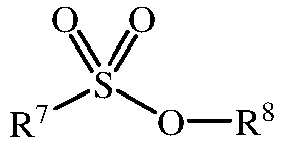
- The organophosphorous acid or ester thereof can include phosphorous acid, phosphoric acid, phosphite, phosphine, phosphonite compound, or a combination comprising at least one of the foregoing.
- Without being bound to any particular theory, the sulfonic acid or ester thereof, the organophosphorous acid or ester thereof, or a combination comprising at least one of the foregoing contributes to stabilizing a UV absorbing additive as described herein in the polymer composition, preventing or minimizing binding of the UV absorbing additive to a polycarbonate chain when subjected to the high temperatures of the step of shaping described herein.
- Desirably, the polymer composition can further comprise a heat stabilizer and an acid stabilizer. The heat stabilizer can stabilize the polymer composition by improving color stability upon heat processing. The heat stabilizer can include at least one organophosphorous compound, including but not limited to a phosphite, phosphine or phosphonite compound. The heat stabilizer can include tris-(2,4-di-tert-butylphenyl) phosphite (e.g., IRGAFOS™ 168, commercially available from BASF) (IRG), triphenylphosphine (TPP), tridecylphosphite (TDP), tetrakis(2,4-di-tert-butylphenyl)-4,4-diphenyldiphosphonite) (PEPQ), bis (2,4-dicumylphenyl) pentaerythritol diphosphite (e.g., Doverphos S-9228, commercially available from Dover Chemical) (DP), diphenyl monodecyl phosphite (DPDP), or a combination comprising at least one of the foregoing.
- The heat stabilizer can be present in the polymer composition in an amount of 0.01 wt% to 0.1 wt%, or 0.01 wt% to 0.5 wt%, preferably 0.01 wt% to 0.1 wt%, based on the total weight of the polymer composition.
- Light stabilizers or ultraviolet light (UV) absorbing additives, also referred to as UV stabilizers, can also be present in the polymer composition. UV absorbing additives include hydroxybenzophenones; hydroxybenzotriazoles; hydroxybenzotriazines; cyanoacrylates; oxanilides; benzoxazinones; aryl salicylates; monoesters of diphenols such as resorcinol monobenzoate; 2-(2H-benzotriazol-2-yl)-4-(1,1,3,3-tetramethylbutyl)-phenol (CYASORB™ 5411); 2-hydroxy-4-n-octyloxybenzophenone (CYASORB™ 531); 2-[4,6-bis(2,4-dimethylphenyl)-1,3,5-triazin-2-yl]- 5-(octyloxy)-phenol (CYASORB™ 1164); 2,2'-(1,4-phenylene)bis(4H-3,1-benzoxazin-4-one) (CYASORB™ UV- 3638); poly[(6-morphilino-s-triazine-2,4-diyl)[2,2,6,6-tetramethyl-4-piperidyl) imino]-hexamethylene[(2,2,6,6-tetramethyl-4-piperidyl)imino], 2-hydroxy-4-octyloxybenzophenone (UVINUL™3008), 6-tert-butyl-2-(5-chloro-2H-benzotriazole-2-yl)-4-methylphenyl (UVINUL™3026), 2,4-di-tert-butyl-6-(5-chloro-2H-benzotriazole-2-yl)-phenol (UVINUL™3027), 2-(2H-benzotriazole-2-yl)-4,6-di-tert-pentylphenol (UVINUL™3028), 2-(2H-benzotriazole-2-yl)-4-(1,1,3,3-tetramethylbutyl)-phenol (UVINUL™3029), 1,3-bis[(2'cyano-3',3'-diphenylacryloyl)oxy]-2,2-bis-{[(2'-cyano-3',3'-diphenylacryloyl)oxy]methyl}-propane (UVINUL™3030), 2-(2H-benzotriazole-2-yl)-4-methylphenol (UVINUL™3033), 2-(2H-benzotriazole-2-yl)-4,6-bis(1-methyl-1-phenyethyl)phenol (UVINUL™3034), ethyl-2-cyano-3,3-diphenylacrylate (UVINUL™3035), (2-ethylhexyl)-2-cyano-3,3-diphenylacrylate (UVINUL™3039), N,N'-bisformyl-N,N'-bis(2,2,6,6-tetramethyl-4-piperidinyl)hexamethylendiamine (UVINUL™4050H), bis-(2,2,6,6-tetramethyl-4-piperidyl)-sebacate (UVINUL™4077H), bis-(1,2,2,6,6-pentamethyl-4-piperdiyl)-sebacate + methyl-(1,2,2,6,6-pentamethyl-4-piperidyl)-sebacate (UVINUL™4092H) 1,3-bis[(2-cyano-3,3-diphenylacryloyl)oxy]-2,2-bis[[(2-cyano-3, 3-diphenylacryloyl)oxy]methyl]propane (UVINUL™ 3030); 2,2'-(1,4-phenylene) bis(4H-3,1-benzoxazin-4-one); 1,3-bis[(2-cyano-3,3-diphenylacryloyl)oxy] -2,2-bis[[(2-cyano-3,3-diphenylacryloyl)oxy]methyl]propane; TINUVIN™ 234; nano-size inorganic materials such as titanium oxide, cerium oxide, and zinc oxide, all with particle size less than or equal to 100 nanometers; or the like, or combinations comprising at least one of the foregoing UV absorbers. UV absorbers can be used in amounts of 0.01 to 1 part by weight, based on 100 parts by weight of the polymer composition. UV absorbers that can be particularly useful with the polymer compositions disclosed herein include 2-(2H-benzotriazol-2-yl)-4-(1,1,3,3-tetramethylbutyl)-phenol (e.g., CYASORB™ 5411 commercially available from Cytec Industries, Inc., Woodland Park, New Jersey) and 2,2'-(1,4-phenylene)bis(4H-3,1-benzoxazin-4-one) (e.g., CYASORB™ UV- 3638, commercially available from Cytec Industries, Inc., Woodland Park, New Jersey), and combinations comprising at least one of the foregoing. The UV stabilizers can be present in an amount of 0.01 to 1 wt%, or 0.1 wt% to 0.5 wt%, preferably, 0.15 wt% to 0.4 wt%, based upon the total weight of the polymer composition.
- The substrate of the panel can include equal to or greater than 60 wt%, or 70 wt%, preferably 80 wt%, more preferably 90 wt%, unbound UV absorbing additive, based upon the total amount of UV absorbing additive, upon shaping the polymer composition at the temperatures described herein.
- The polymer composition can further include an impact modifier, with the proviso that the additive(s) are selected so as to not significantly adversely affect the desired properties of the thermoplastic composition, in particular transmission, haze, ductility, puncture energy, moldability (i.e., the ability to be molded), or a combination comprising at least one of the foregoing. Impact modifiers can include natural rubber, fluoroelastomers, ethylene-propylene rubber (EPR), ethylene-butene rubber, ethylene-propylene-diene monomer rubber (EPDM), acrylate rubbers, hydrogenated nitrile rubber (HNBR), silicone elastomers, styrene-butadiene-styrene (SBS), styrene-butadiene rubber (SBR), styrene-(ethylene-butene)-styrene (SEBS), acrylonitrile-butadiene-styrene (ABS), acrylonitrile-ethylene-propylene-diene-styrene (AES), styrene-isoprene-styrene (SIS), styrene-(ethylene-propylene)-styrene (SEPS), methyl methacrylate-butadiene-styrene (MBS), high rubber graft (HRG), and the like.
- The polymer composition can include various additional additives (e.g., plasticizers, lubricants, mold release agents, colorants, dyes, fillers, flame retardants, light diffusers, epoxides) ordinarily incorporated into polymer compositions of this type, with the proviso that the additive(s) are selected so as to not significantly adversely affect the desired properties of the thermoplastic composition, in particular transmission, haze, ductility, puncture energy, moldability, or a combination comprising at least one of the foregoing. Since these properties can vary depending on the area of the component (e.g., opaque area or transparent area), various materials are possible. Combinations of additives can be used. Such additives can be mixed during the mixing of the components for forming the composition.
- There is considerable overlap among plasticizers, lubricants, and mold release agents, which include, for instance, pentaerythritol tetrastearate (PETS), glycerol monostearate (GMS), glycerol tristearate (GTS), phthalic acid esters (e.g., octyl-4,5-epoxy-hexahydrophthalate), tris-(octoxycarbonylethyl)isocyanurate, tristearin, di- or polyfunctional aromatic phosphates (e.g., resorcinol tetraphenyl diphosphate (RDP), the bis(diphenyl) phosphate of hydroquinone and the bis(diphenyl) phosphate of bisphenol A); poly-alpha-olefins; epoxidized soybean oil; silicones, including silicone oils (e.g., poly(dimethyl diphenyl siloxanes); esters, for instance, fatty acid esters (e.g., alkyl stearyl esters, such as, methyl stearate, stearyl stearate, and the like), waxes (e.g., beeswax, montan wax, paraffin wax, or the like), or combinations comprising at least one of the foregoing plasticizers, lubricants, and mold release agents. These are generally used in amounts of 0.01 wt% to 5 wt%, based on the total weight of the polymer composition.
- Possible fillers or reinforcing agents include, for instance, mica, clay, feldspar, quartz, quartzite, perlite, tripoli, diatomaceous earth, aluminum silicate (mullite), synthetic calcium silicate, fused silica, fumed silica, sand, boron-nitride powder, boron-silicate powder, calcium sulfate, calcium carbonates (such as chalk, limestone, marble, and synthetic precipitated calcium carbonates), talc (including fibrous, modular, needle shaped, and lamellar talc), wollastonite, hollow or solid glass spheres, silicate spheres, cenospheres, aluminosilicate or (armospheres), kaolin, whiskers of silicon carbide, alumina, boron carbide, iron, nickel, or copper, continuous and chopped carbon fibers or glass fibers, molybdenum sulfide, zinc sulfide, barium titanate, barium ferrite, barium sulfate, heavy spar, TiO2, aluminum oxide, magnesium oxide, particulate or fibrous aluminum, bronze, zinc, copper, or nickel, glass flakes, flaked silicon carbide, flaked aluminum diboride, flaked aluminum, steel flakes, natural fillers such as wood flour, fibrous cellulose, cotton, sisal, jute, starch , lignin, ground nut shells, or rice grain husks, reinforcing organic fibrous fillers such as poly(ether ketone), polyimide, polybenzoxazole, poly(phenylene sulfide), polyesters, polyethylene, aromatic polyamides, aromatic polyimides, polyetherimides, polytetrafluoroethylene, and poly(vinyl alcohol), as well combinations comprising at least one of the foregoing fillers or reinforcing agents. The fillers and reinforcing agents can be coated with a layer of metallic material to facilitate conductivity, or surface treated with silanes to improve adhesion and dispersion with the polymer composition. Fillers are used in amounts of 1 to 200 parts by weight, based on 100 parts by weight of the polymer composition.
- Antioxidant additives include organophosphites such as tris(nonyl phenyl)phosphite, tris(2,4-di-t-butylphenyl)phosphite, bis(2,4-di-t-butylphenyl)pentaerythritol diphosphite, distearyl pentaerythritol diphosphite; alkylated monophenols or polyphenols; alkylated reaction products of polyphenols with dienes, such as tetrakis[methylene(3,5-di-tert-butyl-4-hydroxyhydrocinnamate)] methane; butylated reaction products of para-cresol or dicyclopentadiene; alkylated hydroquinones; hydroxylated thiodiphenyl ethers; alkylidene-bisphenols; benzyl compounds; esters of beta-(3,5-di-tert-butyl-4-hydroxyphenyl)-propionic acid with monohydric or polyhydric alcohols; esters of beta-(5-tert-butyl-4-hydroxy-3-methylphenyl)-propionic acid with monohydric or polyhydric alcohols; esters of thioalkyl or thioaryl compounds such as distearylthiopropionate, dilaurylthiopropionate, ditridecylthiodipropionate, octadecyl-3-(3,5-di-tert-butyl-4-hydroxyphenyl)propionate, pentaerythrityl-tetrakis[3-(3,5-di-tert-butyl-4-hydroxyphenyl)propionate; amides of beta-(3,5-di-tert-butyl-4-hydroxyphenyl)-propionic acid, or combinations comprising at least one of the foregoing antioxidants. Antioxidants are used in amounts of 0.01 to 0.1 parts by weight, based on 100 parts by weight of the polymer composition, excluding any filler.
- Colorants such as pigment or dye additives can also be present. Useful pigments can include, for instance, inorganic pigments such as metal oxides and mixed metal oxides such as zinc oxide, titanium dioxides, iron oxides, or the like; sulfides such as zinc sulfides, or the like; aluminates; sodium sulfo-silicates sulfates, chromates, or the like; carbon blacks; zinc ferrites; ultramarine blue; organic pigments such as azos, di-azos, quinacridones, perylenes, naphthalene tetracarboxylic acids, flavanthrones, isoindolinones, tetrachloroisoindolinones, anthraquinones, enthrones, dioxazines, phthalocyanines, and azo lakes; Pigment Red 101, Pigment Red 122, Pigment Red 149, Pigment Red 177, Pigment Red 179, Pigment Red 202,
Pigment Violet 29, Pigment Blue 15, Pigment Blue 60, Pigment Green 7, Pigment Yellow 119, Pigment Yellow 147, Pigment Yellow 150, and Pigment Brown 24; or combinations comprising at least one of the foregoing pigments. Pigments are generally used in amounts of 0.00001 wt% to 0.01 wt%, or 0.00002 wt% to 0.0010 wt%, preferably 0.00002 wt% to 0.0005 wt%, based on the total weight of the polymer composition. - Dyes are generally organic materials and include coumarin dyes such as coumarin 460 (blue), coumarin 6 (green), nile red or the like; lanthanide complexes; hydrocarbon and substituted hydrocarbon dyes; polycyclic aromatic hydrocarbon dyes; scintillation dyes such as oxazole or oxadiazole dyes; aryl- or heteroaryl-substituted poly (C2-8) olefin dyes; carbocyanine dyes; indanthrone dyes; phthalocyanine dyes; oxazine dyes; carbostyryl dyes; napthalenetetracarboxylic acid dyes; porphyrin dyes; bis(styryl)biphenyl dyes; acridine dyes; anthraquinone dyes; cyanine dyes; methine dyes; arylmethane dyes; azo dyes; indigoid dyes, thioindigoid dyes, diazonium dyes; nitro dyes; quinone imine dyes; aminoketone dyes; tetrazolium dyes; thiazole dyes; perylene dyes, perinone dyes; bis-benzoxazolylthiophene (BBOT); triarylmethane dyes; xanthene dyes; thioxanthene dyes; naphthalimide dyes; lactone dyes; fluorophores such as anti-stokes shift dyes which absorb in the near infrared wavelength and emit in the visible wavelength, or the like; luminescent dyes such as 7-amino-4-methylcoumarin; 3-(2'-benzothiazolyl)-7-diethylaminocoumarin; 2-(4-biphenylyl)-5-(4-t-butylphenyl)-1,3,4-oxadiazole; 2,5-bis-(4-biphenylyl)-oxazole; 2,2'-dimethyl-p-quaterphenyl; 2,2-dimethyl-p-terphenyl; 3,5,3"",5""-tetra-t-butyl-p-quinquephenyl; 2,5-diphenylfuran; 2,5-diphenyloxazole; 4,4'-diphenylstilbene; 4-dicyanomethylene-2-methyl-6-(p-dimethylaminostyryl)-4H-pyran; 1,1'-diethyl-2,2'-carbocyanine iodide; 3,3'-diethyl-4,4',5,5'-dibenzothiatricarbocyanine iodide; 7-dimethylamino-1-methyl-4-methoxy-8-azaquinolone-2; 7-dimethylamino-4-methylquinolone-2; 2-(4-(4-dimethylaminophenyl)-1,3-butadienyl)-3-ethylbenzothiazolium perchlorate; 3-diethylamino-7-diethyliminophenoxazonium perchlorate; 2-(1-naphthyl)-5-phenyloxazole; 2,2'-p-phenylen-bis(5-phenyloxazole); rhodamine 700; rhodamine 800; pyrene, chrysene, rubrene, coronene, or the like; or combinations comprising at least one of the foregoing dyes. Dyes are generally used in amounts of 0.00001 wt% to 0.01 wt%, or 0.00002 wt% to 0.0010 wt%, or preferably0.00002 wt% to 0.0005 wt. %, based on the total weight of the polymer composition.
- Flame retardants include organic compounds that include phosphorus, bromine, or chlorine. Non-brominated and non-chlorinated phosphorus-containing flame retardants can be used in certain applications for regulatory reasons, for instance organic phosphates and organic compounds containing phosphorus-nitrogen bonds.
- Flame retardant aromatic phosphates include triphenyl phosphate, tricresyl phosphate, isopropylated triphenyl phosphate, phenyl bis(dodecyl) phosphate, phenyl bis(neopentyl) phosphate, phenyl bis(3,5,5'-trimethylhexyl) phosphate, ethyl diphenyl phosphate, 2-ethylhexyl di(p-tolyl) phosphate, bis(2-ethylhexyl) p-tolyl phosphate, tritolyl phosphate, bis(2-ethylhexyl) phenyl phosphate, tri(nonylphenyl) phosphate, bis(dodecyl) p-tolyl phosphate, dibutyl phenyl phosphate, 2-chloroethyl diphenyl phosphate, p-tolyl bis(2,5,5'-trimethylhexyl) phosphate, and 2-ethylhexyl diphenyl phosphate. Di- or polyfunctional aromatic phosphorus-containing compounds are also useful, for instance resorcinol tetraphenyl diphosphate (RDP), the bis(diphenyl) phosphate of hydroquinone and the bis(diphenyl) phosphate of bisphenol A, respectively, and their oligomeric and polymeric counterparts. Flame retardant compounds containing phosphorus-nitrogen bonds include phosphonitrilic chloride, phosphorus ester amides, phosphoric acid amides, phosphonic acid amides, phosphinic acid amides, and tris(aziridinyl) phosphine oxide. When used, phosphorus-containing flame retardants are present in amounts of 0.1 to 30 parts by weight, more specifically 1 to 20 parts by weight, based on 100 parts by weight of the total composition, excluding any filler.
- Halogenated materials can also be used as flame retardants, for instance bisphenols of which the following are representative: 2,2-bis-(3,5-dichlorophenyl)-propane; bis-(2-chlorophenyl)-methane; bis(2,6-dibromophenyl)-methane; 1,1-bis-(4-iodophenyl)-ethane; 1,2-bis-(2,6-dichlorophenyl)-ethane; 1,1-bis-(2-chloro-4-iodophenyl)ethane; 1,1-bis-(2-chloro-4-methylphenyl)-ethane; 1,1-bis-(3,5-dichlorophenyl)-ethane; 2,2-bis-(3-phenyl-4-bromophenyl)-ethane; 2,6-bis-(4,6-dichloronaphthyl)-propane; and 2,2-bis-(3,5-dichloro-4-hydroxyphenyl)-
propane - Alternatively, the thermoplastic composition can be essentially free of chlorine and bromine. "Essentially free of chlorine and bromine" is defined as having a bromine or chlorine content of less than or equal to 100 parts ppm, or less than or equal to 75 ppm, preferably less than or equal to 50 ppm, based on the total weight of the polymer composition, excluding any filler.
- Inorganic flame retardants can also be used, for instance salts of C1-16 alkyl sulfonate salts such as potassium perfluorobutane sulfonate (Rimar salt), potassium perfluoroctane sulfonate, tetraethylammonium perfluorohexane sulfonate, and potassium diphenylsulfone sulfonate; salts such as Na2CO3, K2CO3, MgCO3, CaCO3, and BaCO3, or fluoro-anion complexes such as Li3AlF6, BaSiF6, KBF4, K3AlF6, KAlF4, K2SiF6, or Na3AlF6. When present, inorganic flame retardant salts are present in amounts of 0.01 to 10 parts by weight, more specifically 0.02 to 1 parts by weight, based on 100 parts by weight of the total composition, excluding any filler.
- The hardcoat layer can be any material that does not significantly adversely affect the desired properties of the thermoplastic composition, in particular transmission, haze, ductility, puncture energy, moldability, or a combination comprising at least one of the foregoing, and is configured as a vehicle front-facing surface. The hardcoat layer can provide UV weathering resistance, chemical resistance, color stability, scratch resistance, or a combination comprising at least one of the foregoing. For instance, the hardcoat layer on a surface of the substrate can comprise at least one of: a taber abrasion comprising a haze equal to or less than 30%, or equal to or less than 20%, preferably equal to or less than 10% after 500 cycles at 500 grams, as measured with CS-10F in accordance ASTM D1044-13; an optical performance of the first portion comprising a haze of equal to or less than 30% (e.g., for a reflector accommodating portion), or equal to or less than 7% (e.g., for a light accommodating portion), as measured in accordance with ASTM D1003-00; and a decrease in transmission of equal to or less than 25% of the transmission of the substrate, as measured after conditions in accordance with lifetime test SAEJ576-10, at thicknesses of 1.6 mm, 2.3 mm, 3.2 mm, or 6.4 mm. The hardcoat layer can be at least one of a UV curing hardcoat layer and thermal curing hardcoat layer.
- Desirably, the hardcoat layer can include at least one of a silicone, a polyurethane, an acrylate, and a metal oxide; preferably silicone.
- Commercially available materials for the hardcoat layer can include SilFort UV hardcoat UVHC3000, SilFort UV hardcoat UVHC3000K1-50, SilFort hardcoat UVHC5000, Silfort hardcoat PHC587C (all commercially available from Momentive Performance Materials GmBH), SH-51 (commercially available from Stanley Electric Co.), Ltd.), UVT610V SRC hardcoat (commercially available from Red Spot Paint & Varnish Co., Inc.), UVT820V1 hardcoat (commercially available from Red Spot Paint & Varnish Co., Inc.), UVT820V2 hardcoat (commercially available from Red Spot Paint & Varnish Co., Inc.), UVT820V3 hardcoat (commercially available from Red Spot Paint & Varnish Co., Inc.), UVT820V8 hardcoat (commercially available from Red Spot Paint & Varnish Co., Inc.), KUV-1000 (commercially available from KCC Corporation), KUV-2000 (commercially available from KCC Corporation), KUV-3000 (commercially available from KCC Corporation), KUV-5000 (commercially available from KCC Corporation), KUV-6000 (commercially available from KCC Corporation), Acryking PH-710 (commercially available from Mitsubishi Rayon Co., Ltd.), Acryking PH-720 (commercially available from Mitsubishi Rayon Co., Ltd.), Acryking PH-800, (commercially available from Mitsubishi Rayon Co., Ltd.), FUJIHARD HH2540U (commercially available from Fujikura Kasei Co., Ltd.), or RayGloss 402 (commercially available from BASF Coatings GmbH). Commercially available materials for the hardcoat layer that can be a hardcoat first layer can include SilFort SHP470 or SilFort SHP401 (all commercially available from Momentive Performance Materials GmBH). Commercially available materials for the hardcoat layer that can be a hardcoat second layer can include SilFort AS4700 (commercially available from Momentive Performance Materials GmbH).
- Desirably, a metal oxide coating can be applied to the substrate by chemical vapor deposition, plasma enhanced chemical vapor deposition, plasma deposition, or a combination comprising at least one of the foregoing.
- Multiple hardcoat layers can be applied adjacent to one another or on opposite surfaces of the substrate. The hardcoat layers can act as a primer layer, a UV resistant layer (e.g., including UV absorbers), a top coat, a scratch resistant layer, or a combination comprising at least one of the foregoing. For instance, a first hardcoat layer with UV weathering resistance can be applied to a surface of the substrate and a second hardcoat layer with scratch resistance can be applied to the first hardcoat layer. Desirably, top coat includes a metal oxide hardcoat layer. Each hardcoat layer can have a thickness of 2 micrometers to 1,000 micrometers, or 2 micrometers to 500 micrometers, preferably 6 micrometers to 25 micrometers. For instance, a primer hardcoat layer can have a thickness of 2 micrometers to 1,000 micrometers, or 10 micrometers to 500 micrometers; a UV resistant hardcoat layer can have a thickness of 6 micrometers to 1,000 micrometers, or 8 micrometers to 25 micrometers; a top coat hardcoat layer can have a thickness of 2 micrometers to 1,000 micrometers, or 2 micrometers to 500 micrometers.
- An integrated structure for a vehicle can include the above described panel attached to a vehicle component such as at least one of a bumper and a side rail. For instance, the panel can be molded, mechanically attached, screwed, clipped, adhered (e.g., glued), or welded to a bumper (e.g., via connectors), a side rail, or a combination comprising at least one of the foregoing.
- A vehicle can include the above described panel or the above described integrated structure. The vehicle can be a passenger vehicle such as a car, a motorcycle, a bus, or a truck. The passenger vehicle can be a gasoline vehicle, a diesel vehicle, an electric vehicle, a hybrid electric vehicle, or a plug in hybrid electric vehicle.
- Use of the above described polymer composition can include forming a substrate of a panel of a vehicle.
- A method for producing the above described panel can include shaping the polymer composition at a temperature of 300°C to 360°C, or 310°C to 350°C, preferably 320°C to 350°C, to obtain the substrate and applying the hardcoat layer on the surface of the substrate. Previously, shaping (e.g., molding) of polymer articles (e.g., polycarbonate articles) such as those used in automotive lighting lenses (e.g., headlamps) and other applications utilize lower temperatures, e.g., temperatures equal to or less than 310°C in order to avoid molecular weight loss and an increase in yellowness. Molecular weight loss can result in loss of impact properties and brittle failure. While an increase in yellowness has a negative impact in the aesthetics and affects the color of the transmitted light. The present methods increase the temperature of the polymer composition during molding so that sufficient flow (low enough viscosity) of the polymer composition is present to fill the entire mold and/or to fill a mold cavity having relatively thinner dimensions. Desirably, the present methods limit molecular weight loss and color change during higher temperature molding, which facilitates an increase in flow of the polymer during molding.
- The step of shaping the polymer composition can include at least one of extrusion (e.g., sheet extrusion), injection molding, thermoforming, and compression molding. The step of molding can further include multiple gating, sequential gating, or a combination comprising at least one of the forgoing. In one instance, the step of molding is devoid of multiple gating, sequential gating, or a combination comprising at least one of the forgoing.
Desirably, the step of shaping comprises 2-component molding. The step of molding can comprise 2-component molding of a first polymer composition and a second polymer composition, wherein a substrate and a second layer, respectively, are formed and the second layer is discontinuous over the substrate, and wherein the substrate has a visible light transmission equal to or greater than 40% (e.g., is transparent) and the second layer has a visible light transmission less than 40% (e.g., is opaque). - In the method of producing the above described panel or the above described integrated structure, it can be desirable to increase the amount of time that the polymer composition is held at these elevated temperatures to ensure that the polymer composition is set in the mold. This can be desirable in multicomponent (e.g., 2-component or 2K) molding applications. For instance, the step of molding can be at temperature equal to or greater than 330°C at a residence time equal to or greater than 10 minutes, or at temperature equal to or greater than 330°C at a residence time equal to or greater than 12 minutes, or at a temperature equal to or greater than 330°C at a residence time equal to or greater than 15 minutes, or at a temperature equal to or greater than 340°C at a residence time equal to or greater than 6 minutes, or at a temperature equal to or greater than 340°C at a residence time equal to or greater than 10 minutes, or at a temperature equal to or greater than 350°C at a residence time equal to or greater than 6 minutes, or at a temperature equal to or greater than 350°C at a residence time equal to or greater than 10 minutes, or at a temperature equal to or greater than 350°C at a residence time equal to or greater than 15 minutes, or even at a temperature equal to or greater than 360°C at a residence time equal to or greater than 3 minutes.
- A more complete understanding of the components, processes, and apparatuses disclosed herein can be obtained by reference to the accompanying drawings. These figures (also referred to herein as "FIG.") are merely schematic representations based on convenience and the ease of demonstrating the present disclosure, and are, therefore, not intended to indicate relative size and dimensions of the devices or components thereof and/or to define or limit the scope of the exemplary embodiments. Although specific terms are used in the following description for the sake of clarity, these terms are intended to refer only to the particular structure of the embodiments selected for illustration in the drawings, and are not intended to define or limit the scope of the disclosure. In the drawings and the following description below, it is to be understood that like numeric designations refer to components of like function.
- As illustrated in
FIG. 1 , integrated structure 10 includes panel 12 andbumper 16 connected to panel 12. Panel 12 includes first portion 13 and sensor accommodating portions 14. The first portion 13 has a visible light transmission equal to or greater than 40%. Panel 12 can include twoheadlamp accommodating portions 20. - As illustrated in
FIG. 2A , panel 30 includes second portions 32, 33, first portion 31,sensor accommodating portions 34, 36, and camera accommodating portions 38. The second portions 32, 33 have a visible light transmission less than 40%. Panel 30 can be positioned between two headlamps 40 and above bumper 50. - As illustrated in
FIG. 2B , panel 30 can includesubstrate 62, which is transparent and a second layer 64 that is opaque. Hardcoat layer 66 can be on a surface ofsubstrate 62 distal second layer 64. Hardcoat layer 66 can include hardcoat first layer 68 and hardcoat second layer 69.Sensor 70 can be placed insensor accommodating portion 34 such that, in use,sensor 70 is behind second portion 65 and not visible. Camera accommodating portion 38 can include a cavity 72 that is adjacent tosubstrate 62, which is transparent such that, in use, a camera (not shown) can be positioned in cavity 72 and at least a portion of the camera (e.g., a lens) can be viewed through thesubstrate 62. - As illustrated in
FIG. 2C , sensor 74 can be placed in sensor accommodating portion 36 such that, in use, sensor 74 is behind light diffuser portion 76, which can diffuse light passing therethrough. Thus, sensor 74 can be partially visible in use. - As illustrated in
FIG. 2D ,sensor accommodating portions 84 and 88 can includeconnectors 80 for connecting the front panel to a vehicle. - As illustrated in
FIG. 3 , vehicle front 90 can include front panel 92 installed thereon. Front panel 92 can be below hood 94 and above bumper 96. Behind bumper 96 can be bumper bar 97 and behind front panel 92 can befront end 98. - The following examples are merely illustrative of the panels disclosed herein and are not intended to limit the scope hereof.
- The following components listed in Table 1 are used in the examples. Unless specifically indicated otherwise, the amount of each component is in weight percent in the following examples, based on the total weight of the composition.
Table 1 Acronym / Name Description Source PC1 Linear Bisphenol A Polycarbonate, produced via interfacial polymerization, Mw of about 30,000 grams per mole (g/mol) as determined by GPC using polycarbonate standards, phenol end-capped (at least 98%) with an MVR at 300°C/1.2kg, of 6 cm3/10 min SABIC PC2 Linear Bisphenol A Polycarbonate, produced via interfacial polymerization, Mw of about 21,800 g/mol as determined by GPC using polycarbonate standards, para-cumylphenyl (PCP) end-capped (at least 98%) with an MVR at 300°C/1.2kg, of 25 cm3/10 min SABIC IRGF Tris-(2,4-di-tert-butylphenyl) phosphite (Cas. No. 31570-04-4); IRGAFOS™ 168 CIBA IRGN Octadecyl 3-(3,5-ditertbutyl-4-hydroxyphenyl) propionate; IRGANOX™ 1076 (Cas. No. 2082-79-3) BASF PETS Palmitic/Stearic Acid Ester of Dipenta/Pentaerythritol (Cas. No. 115-83-3) UVS 2-(2'-Hydroxy-5'-t-octylphenyl) benzotriazole; UV5411 (Cas. No. 3147-75-9) CYTEC BuTos Butyl p-toluenesulfonate (Cas. No. 778-28-9) HC SilFort UV hardcoat UVHC3000 MOMENTIVE - Unless otherwise indicated, physical measurements were made using the tests and test methods described below. Unless indicated otherwise, all tests are the most recent version of the test in effect in the year 2010.
- The BPA organic purity can be defined as 100 wt% minus the sum of known and unknown impurities detected using ultraviolet (UV) (see HPLC method in Nowakowska et al., Polish J. Appl. Chem., XI (3), 247-254 (1996)).
- The puncture energy (i.e., energy at break) and the maximum force at break in multi axial impact (MAI) was measured at 23°C (unless otherwise specified) on 3.2 mm thick plaques, with a ball speed of 4.4 m/s and the hardcoat layer facing upwards in accordance with ISO6603-2-00.
- Colorimetric values (dE*, L*, a*, b*) were measured on 2.5 mm plaques using CIE illuminant D65 and 10° observer specular component excluded on an X rite i7 spectrophotometer in accordance with ASTM E308-15 (Standard Practice for Computing the Colors of Objects by using the CIE System).
- Injection molded test specimens were molded in accordance with ASTM test methods.
- The materials were dried at 120°C for 2.5 hours before injection molding. All thermoplastic compositions except where indicated are compounded on a Werner & Pfleiderer co-rotating twin screw extruder (Length/Diameter (L/D) ratio = 30/1, vacuum port located near die face). The twin-screw extruder had enough distributive and dispersive mixing elements to produce good mixing between the polymer compositions. The compositions are subsequently molded according to ISO 294 on an Engel-75 injection molding machine. The following temperature profiles were used: Zone 1/
Zone 2/Zone 3/Nozzle = 280/290/300/295°C ("300°C temperature profile") or 330°C/340°C/350°C/345°C ("350°C temperature profile"). The residence time of the material in the screw was controlled by the cooling of the injection molded plaques. The resulting residence times were from 3 to 15 minutes. - The hardcoat layer materials were filtered and applied on the plaque by flow coating. After coating, plaques were dried in air for 5 minutes and dried in a convection oven at 80°C for 5 minutes. UV curing of the hardcoat layers was performed using a C211 Benchtop conveyor with a Fusion I300 type H UV curing lamp (250 MW). To achieve curing, a UV dose of 1,200 MW/cm2 was used. The dose per pass was adjusted by the conveyor belt speed. The lamp height was adjusted to provide a dose of UV light of 377 MW/cm2. Three passes were done to achieve complete curing of the hardcoat layers. Using interferometry and the refractive indices of the substrates the hardcoat layers, and primer layers between the substrate and the hardcoat layer, the thickness of the hardcoat layer was measured to be in the specification range (8 micrometers to 15 micrometers).
- For Examples (EX) 1-4 and Comparative Examples (CEX) 1-3, ten samples per example were produced using the polymer compositions listed in Table 2 molded with a 300°C temperature profile for 6 minutes and a hardcoat layer comprising HC was applied. The samples were tested for puncture energy and ductility.
- As shown in Table 2, for MVR 12 cm3/10 min and a plaque thickness of 1.6 mm, impact energy is low. However, at a plaque thickness of 2.2 and 3.2 mm, the samples are ductile and have sufficient impact energy. For example, the puncture energy of the examples having a thickness of 3.2 mm, EX1, EX4, and CEX3, uncoated, were all high. However, for the coated samples, the impact energy of CEX3 dropped very significantly and the sample became brittle (ductility of zero). EX1, EX4, and CEX3, all had a plaque thickness of 3.2 mm. However, they had different MVR. At MVR of less than 20 cm3/10 min (e.g., at less than or equal to MVR 15 cm3/10 min), impact energy remained high, and the samples were ductile. A similar trend can be seen with plaques having a thickness of 2.2 mm (EX3 and CEX2).
- It is noted that at MVR 6 cm3/10 min, samples have good impact performance at a plaque thickness of 3.2 mm, but due to its low flow, such a material can be difficult to process for larger parts at this thickness (hence requiring the higher temperature molding).
Table 2 EX1 EX2 EX3 EX4 CEX1 CEX2 CEX3 MVR1 (cm3/10 min) 6 12 12 12 21 21 21 PC1 (wt%) 99.32 49.85 49.85 49.85 17.45 17.45 17.45 PC2 (wt%) 49.47 49.47 49.47 81.93 81.93 81.93 UV stabilizer: UVS (wt%) 0.15 0.3 0.3 0.3 0.3 0.3 0.3 Heat stabilizer: IRGF (wt%) 0.08 0.08 0.08 0.08 0.08 0.08 0.08 Release agent: PETS (wt%) 0.3 0.3 0.3 0.3 0.3 0.3 0.3 Part thickness (mm) 3.2 1.6 2.2 3.2 1.6 2.2 3.2 Hardcoat HC HC HC HC HC HC HC Impact energy uncoated (J) 152 71 113 153 57 101 144 Impact energy2 coated (J) 108 34 62 108 32 18 17 Ductility3 coated (%) 100 100 50 100 100 0 0 1MVR is the MVR of the polycarbonate (here a blend of polycarbonates) in the composition.
2measured at 23°C with a ball speed of 4.4 m/s and the hardcoat layer facing upwards in accordance with ISO6603-2-00
3 measured at 23°C in accordance with ISO6603-2-00. - Five samples were produced per example and the results were averaged. The samples had a thicknesses of 3.2 mm (EX 5-7 and CEX4) and 5 mm (EX 8-11). The materials, molding conditions, and test results are summarized in Table 3.
Table 3 EX5 CEX4 EX6 EX7 EX8 EX9 EX10 EX11 MVR1 (cm3/10 min) 6 6 6 6 6 6 6 6 PC1 (wt%) 96.13 96.13 94.13 94.13 94.33 94.33 92.33 92.33 UV stabilizer: UVS (wt%) 0.3 0.3 0.3 0.3 0.3 0.3 0.3 0.3 Heat stabilizer: IRGF (wt%) 0.05 0.05 0.05 0.05 0.05 0.05 0.05 0.05 Release agent: PETS (wt%) 0.3 0.3 0.3 0.3 0.3 0.3 0.3 0.3 Anti-oxidant: IRGN (wt%) 0.02 0.02 0.02 0.02 0.02 0.02 0.02 0.02 Acid stabilizer: BuTos (ppm) 0 0 2 2 0 0 2 2 Molding conditions (15 min) 350 360 350 360 350 360 350 360 Part thickness (mm) 3.2 3.2 3.2 3.2 5 5 5 5 haze 0.7 0.6 0.7 0.6 0.4 0.4 0.4 0.4 %T 90.4 90.3 90.5 90.4 89.8 89.4 90 89.7 Hardcoat HC HC HC HC HC HC HC HC Impact energy2 coated (J) 110 33 110 90 155 233 268 203 Ductility3 coated (%) 100 25 100 80 100 100 100 100 1MVR is the MVR of the polycarbonate (here a single polycarbonate) in the composition.
2measured at 23°C with a ball speed of 4.4 m/s and the hardcoat layer facing upwards in accordance with ISO6603-2-00
3 measured at 23°C in accordance with ISO6603-2-00 - Five samples were produced per example and the results were averaged. The below examples illustrate the benefit of the acid stabilizer. Comparing EX14 to CEX5; the coated plaque has low impact energy and poor ductility with no acid stabilizer (CEX5), and high impact energy and good ductility with acid stabilizer (EX14) under the same processing conditions.
- Also illustrated is the limitations of processing. CEX7 has low impact energy and is brittle when processed at 360°C for 15 minutes. Actually, under these conditions, the acid stabilizer did not affect the results (compare CEX6 and CEX7).
Table 4 EX12 CEX5 CEX6 EX13 EX14 CEX7 MVR1 (cm3/10 min) 12 12 12 12 12 12 PC1 (wt%) 52 52 52 52 52 52 PC2 (wt%) 47.33 47.33 47.33 47.33 47.33 47.33 UV stabilizer: UVS (wt%) 0.3 0.3 0.3 0.3 0.3 0.3 Heat stabilizer: IRGF (wt%) 0.05 0.05 0.05 0.05 0.05 0.05 Release agent: PETS (wt%) 0.3 0.3 0.3 0.3 0.3 0.3 Anti-oxidant: IRGN (wt%) 0.02 0.02 0.02 0.02 0.02 0.02 Acid stabilizer: BuTos (ppm) 0 0 0 2 2 2 Part thickness (mm) 3.2 3.2 3.2 3.2 3.2 3.2 haze 0.7 0.6 0.7 0.4 0.6 0.6 %T 90.6 90.7 90.4 90.8 90.8 90.4 molding condition °C/min 350/6 350/15 360/15 350/6 350/15 360/15 Hardcoat HC HC HC HC HC HC Impact energy2 coated (J) 77 35 11 82 122 8 Ductility3 coated (%) 70 30 0 90 100 0 1MVR is the MVR of the polycarbonate (here a blend of polycarbonates) in the composition. - Thus, the effectiveness of the polymer composition to reduce loss of Mw after molding should improve the impact properties (e.g., higher puncture energy and ductility) after application of a hardcoat layer. Therefore, large panels (e.g., front panels) or integrated structures can be produced to meet the CTQ characteristics required for vehicles (e.g., transmission, pedestrian impact requirements, etc.).
- The compositions, methods, and articles can alternatively comprise, consist of, or consist essentially of, any appropriate components or steps herein disclosed. The compositions, methods, and articles can additionally, or alternatively, be formulated so as to be devoid, or substantially free, of any steps, components, materials, ingredients, adjuvants, or species that are otherwise not necessary to the achievement of the function or objectives of the compositions, methods, and articles.
- The singular forms "a," "an," and "the" include plural referents unless the context clearly dictates otherwise. "Or" means "and/or" unless clearly indicated otherwise by context. The terms "front", "back", "bottom", or "top" are used herein, unless otherwise noted, merely for convenience of description, and are not limited to any one position or spatial orientation. The terms "first," "second," and the like, "primary," "secondary," and the like, as used herein do not denote any order, quantity, or importance, but rather are used to distinguish one element from another.
- The endpoints of all ranges directed to the same component or property are inclusive and independently combinable (e.g., ranges of "less than or equal to 25 wt%, or 5 wt% to 20 wt%," is inclusive of the endpoints and all intermediate values of the ranges of "5 wt% to 25 wt%," etc.). Disclosure of a narrower range or more specific group in addition to a broader range is not a disclaimer of the broader range or larger group.
- The suffix "(s)" is intended to include both the singular and the plural of the term that it modifies, thereby including at least one of that term (e.g., the colorant(s) includes at least one colorants). "Optional" or "optionally" means that the subsequently described event or circumstance can or cannot occur, and that the description includes instances where the event occurs and instances where it does not. Unless defined otherwise, technical and scientific terms used herein have the same meaning as is commonly understood by one of skill in the art to which this disclosure belongs. A "combination" is inclusive of blends, mixtures, alloys, reaction products, and the like.
- While typical embodiments have been set forth for the purpose of illustration, the foregoing descriptions should not be deemed to be a limitation on the scope herein. Accordingly, various modifications, adaptations, and alternatives can occur to one skilled in the art without departing from the scope of the invention as defined in the appended claims.
Claims (15)
- A panel (12, 30, 92) for a vehicle comprising:a substrate (62); anda hardcoat layer on a surface of the substrate configured as a vehicle front-facing surface;wherein the panel comprises a first portion (13, 31) having a visible light transmission equal to or greater than 40%, or equal to or greater than 60%, preferably equal to or greater than 75%, more preferably equal to or greater than 88%, measured in accordance with ASTM D1003-00; andwherein the substrate comprises a polymer composition comprising polycarbonate and having a melt volume rate, whereinif the polymer composition comprises more than one polycarbonate, the melt volume rate is a melt volume rate of a blend of all of the polycarbonates, andif the polymer composition comprises one polycarbonate, the melt volume rate is a melt volume rate of the one polycarbonate;wherein the melt volume rate is equal to or less than 15 cm3/10 min, measured at 300°C with a 1.2 kg load in accordance with ISO1133;wherein the polymer composition comprises an acid stabilizer comprising sulfonic acid or an ester thereof, preferably n-butyl tosylate,wherein a width of the panel is equal to or greater than 450 mm;wherein a height of the panel is equal to or greater than 300 mm; andwherein a thickness of the panel is equal to or less than 5 mm, preferably 0.5 mm to 5 mm, or 1 mm to 4.5 mm, or 1.5 mm to 4 mm,wherein the panel further comprises a second portion (32, 33, 65), wherein a visible light transmission of the second portion is less than 40%, or equal to or less than 10%, preferably equal to or less than 1%, more preferably equal to or less than 0.1%, measured in accordance with ASTM D1003-00.
- The panel of Claim 1, wherein a haze of the panel is equal to or less than 30%, or equal to or less than 20%, preferably equal to or less than 10% after abrasion of the hardcoat layer for 500 cycles at 500 gram, as measured with CS-10F in accordance with ASTMD1044-13.
- The panel of Claim 1, wherein the acid stabilizer is present in the polymer composition in an amount of 0.5 ppm to 5 ppm, preferably 1 ppm to 3 ppm, based on the total weight of the polymer composition.
- The panel of any one or more of the preceding claims, wherein the panel further comprises a second layer on a surface of the substrate opposite the hardcoat layer, and wherein the second layer comprises a second polymer composition, and wherein the second layer is discontinuous over the substrate, and wherein a visible light transmission of the second layer is less than a visible light transmission of the first portion of the panel.
- The panel of Claim 4, wherein the second polymer composition comprises at least one of a polycarbonate and a polycarbonate blend, preferably a blend of polycarbonate and acrylonitrile-butadiene-styrene, a blend of polycarbonate and polybutylene terephthalate, or a combination comprising at least one of the foregoing.
- The panel of any one or more of the preceding claims, wherein a haze of the first portion is equal to or less than 30%, or equal to or less than 20%, preferably equal to or less than 10%, more preferably equal to or less than 5.0%, still more preferably equal to or less than 1.5%, yet still more preferably equal to or less than 1.0%, measured in accordance with ASTM D1003-00.
- The panel of any one or more of the preceding claims, further comprising a second portion, wherein at least one of:a L* value of the second portion is equal to or less than 10, or equal to or less than 7.5, preferably equal to or less than 5.0, measured using CIE illuminant D65 and 10° observer, specular component excluded on an X rite i7 spectrophotometer in accordance with ASTM E308-15 (Standard Practice for Computing the Colors of Objects by using the CIE System);an a* value of the second portion of -2 to 2, or-1 to 1, measured using CIE illuminant D65 and 10° observer specular component excluded on an X rite i7 spectrophotometer in accordance with ASTM E308-15 (Standard Practice for Computing the Colors of Objects by using the CIE System); anda b* value of the second portion is -2 to 2, or -1 to 1, measured using CIE illuminant D65 and 10° observer specular component excluded on an X rite i7 spectrophotometer in accordance with ASTM E308-15 (Standard Practice for Computing the Colors of Objects by using the CIE System).
- The panel of any one or more of the preceding claims, wherein the hardcoat layer comprises at least one of a silicone, a polyurethane, an acrylate, and a metal oxide; preferably the card coat layer comprises silicone.
- The panel of any one or more of the preceding claims, wherein at least one of:a ductility of the panel is 80% to 100%, or 90% to 100%, preferably 95% to 100%, measured at 23°C in accordance with ISO6603-2-00;a ductility of the panel is 80% to 100%, or 90% to 100%, preferably 95% to 100%, measured at -25°C in accordance with ISO6603-2-00; anda puncture energy of the panel is equal to or greater than 40 Joules, or equal to or greater than 50 Joules, preferably equal to or greater than 60 Joules, as measured with a ball speed of 4.4 m/s and the hardcoat layer facing upwards in accordance with ISO6603-2-00.
- The panel of any one or more of the preceding claims, wherein the panel comprises a device accommodating portion comprising at least one of a sensor accommodating portion, a light accommodating portion, a camera accommodating portion, a display accommodating portion, a receiver accommodating portion, and a transmitter accommodating portion.
- An integrated structure (10) for a vehicle comprising:the panel (12, 30, 92) of any one or more of the preceding claims; anda bumper (16, 50, 96) connected to the panel.
- A vehicle comprising the panel of any one or more of Claims 1-10 or the integrated structure of Claim 11.
- Use of a polymer composition to form a substrate (62) of a panel (12, 30, 92) of a vehicle wherein the polymer composition comprises polycarbonate, and wherein a melt volume rate of the polycarbonate is equal to or less than 15 cm3/10 min, or equal to or less than 12 cm3/10 min, measured at 300°C with a 1.2 kg load in accordance with ISO1133, wherein the polymer composition comprises an acid stabilizer comprising sulfonic acid or an ester thereof, preferably n-butyl tosylate, wherein the panel comprises a first portion (13, 31) having a visible light transmission equal to or greater than 40%, or equal to or greater than 60%, preferably equal to or greater than 75%, more preferably equal to or greater than 88%, measured in accordance with ASTM D1003-00 and the panel further comprises a second portion (32, 33, 65), wherein a visible light transmission of the second portion is less than 40%, or equal to or less than 10%, preferably equal to or less than 1%, more preferably equal to or less than 0.1%, measured in accordance with ASTM D1003-00.
- A method for producing the panel (12, 30, 92) of any one or more of Claims 1 - 10 comprising:shaping the polymer composition at a temperature of 310°C to 360°C, or 320°C to 360°C, preferably 330°C to 355°C, to obtain the substrate; andapplying the hardcoat layer on the surface of the substrate.
- The method of Claim 14, wherein the step of shaping the polymer composition comprises at least one of extrusion, injection molding, compression molding, and thermoforming.
Applications Claiming Priority (2)
| Application Number | Priority Date | Filing Date | Title |
|---|---|---|---|
| EP17203445 | 2017-11-24 | ||
| PCT/IB2018/059135 WO2019102349A2 (en) | 2017-11-24 | 2018-11-20 | Panel, integrated structure, and method |
Publications (2)
| Publication Number | Publication Date |
|---|---|
| EP3713765A2 EP3713765A2 (en) | 2020-09-30 |
| EP3713765B1 true EP3713765B1 (en) | 2025-01-01 |
Family
ID=60543344
Family Applications (1)
| Application Number | Title | Priority Date | Filing Date |
|---|---|---|---|
| EP18819381.7A Active EP3713765B1 (en) | 2017-11-24 | 2018-11-20 | Panel, integrated structure, and method |
Country Status (5)
| Country | Link |
|---|---|
| US (1) | US11981277B2 (en) |
| EP (1) | EP3713765B1 (en) |
| KR (1) | KR102823248B1 (en) |
| CN (1) | CN111372778A (en) |
| WO (1) | WO2019102349A2 (en) |
Families Citing this family (2)
| Publication number | Priority date | Publication date | Assignee | Title |
|---|---|---|---|---|
| WO2021043968A1 (en) | 2019-09-04 | 2021-03-11 | Sabic Global Technologies B.V. | Infrared transparant polycarbonate composition |
| CN114381109B (en) * | 2020-10-21 | 2024-08-02 | Sabic环球技术有限责任公司 | Polycarbonate compositions that are transparent to infrared light |
Citations (1)
| Publication number | Priority date | Publication date | Assignee | Title |
|---|---|---|---|---|
| US20170210882A1 (en) * | 2014-07-30 | 2017-07-27 | Sabic Global Technologies B.V. | Color stable polycarbonate with long lifetime |
Family Cites Families (9)
| Publication number | Priority date | Publication date | Assignee | Title |
|---|---|---|---|---|
| CN101151321B (en) * | 2005-03-28 | 2012-05-23 | 三菱工程塑料株式会社 | Polycarbonate resin composition and heat radiation-shielding member |
| US20070129470A1 (en) * | 2005-12-05 | 2007-06-07 | Kuvshinnikova Olga I | Weatherable resinous composition with low heat storage and method |
| US9006324B2 (en) * | 2011-03-31 | 2015-04-14 | Sabic Global Technologies B.V. | Flame retardant polycarbonate compositions, methods of manufacture, and articles formed therefrom |
| CN104136535B (en) | 2012-02-29 | 2016-08-24 | 沙特基础全球技术有限公司 | Thermoplastic polycarbonate copolymer compositions, processes for their manufacture and articles thereof |
| US20130317142A1 (en) | 2012-05-24 | 2013-11-28 | Sabic Innovative Plastics Ip B.V. | Flame retardant thermoplastic compositions, methods of manufacture thereof and articles comprising the same |
| US9662833B2 (en) * | 2012-06-04 | 2017-05-30 | Sabic Global Technologies B.V. | Marked thermoplastic compositions, methods of making and articles comprising the same, and uses thereof |
| EP2730618B1 (en) | 2012-11-07 | 2016-10-12 | SABIC Global Technologies B.V. | Process for producing polycarbonate compositions |
| US9650496B2 (en) * | 2013-06-12 | 2017-05-16 | Sabic Global Technologies B.V. | Interior aircraft components and methods of manufacture |
| EP2853561A1 (en) | 2013-09-27 | 2015-04-01 | SABIC Innovative Plastics IP B.V. | Color stable polycarbonate with long lifetime |
-
2018
- 2018-11-20 KR KR1020207018015A patent/KR102823248B1/en active Active
- 2018-11-20 WO PCT/IB2018/059135 patent/WO2019102349A2/en not_active Ceased
- 2018-11-20 CN CN201880075870.1A patent/CN111372778A/en active Pending
- 2018-11-20 US US16/652,295 patent/US11981277B2/en active Active
- 2018-11-20 EP EP18819381.7A patent/EP3713765B1/en active Active
Patent Citations (1)
| Publication number | Priority date | Publication date | Assignee | Title |
|---|---|---|---|---|
| US20170210882A1 (en) * | 2014-07-30 | 2017-07-27 | Sabic Global Technologies B.V. | Color stable polycarbonate with long lifetime |
Also Published As
| Publication number | Publication date |
|---|---|
| US20200298778A1 (en) | 2020-09-24 |
| KR20200086361A (en) | 2020-07-16 |
| EP3713765A2 (en) | 2020-09-30 |
| KR102823248B1 (en) | 2025-06-23 |
| WO2019102349A3 (en) | 2019-07-18 |
| US11981277B2 (en) | 2024-05-14 |
| WO2019102349A2 (en) | 2019-05-31 |
| CN111372778A (en) | 2020-07-03 |
Similar Documents
| Publication | Publication Date | Title |
|---|---|---|
| US9650496B2 (en) | Interior aircraft components and methods of manufacture | |
| EP2730618B1 (en) | Process for producing polycarbonate compositions | |
| KR20140034173A (en) | Aircraft component comprising flame retardant siloxane-containing polymer compositions | |
| EP3004233B1 (en) | Color stable thermoplastic composition | |
| US9352755B2 (en) | Interior train components having low smoke and low heat release, and methods of their manufacture | |
| EP3004234B1 (en) | Illuminating devices with color stable thermoplastic light-transmitting articles | |
| KR20150104629A (en) | Polycarbonate compositions for reduced splay in combination with sustained or improved impact resistance | |
| US11981277B2 (en) | Panel, integrated structure, and method | |
| EP4605473B1 (en) | Polycarbonate composition, method for the manufacture thereof, and articles comprising the polycarbonate composition | |
| CN119948104B (en) | Polycarbonate compositions, articles formed therefrom, and methods for manufacturing them | |
| US20250230316A1 (en) | Thermoplastic compositions and uses thereof | |
| CN119923440A (en) | Polycarbonate composition, articles formed therefrom, and method of making the same |
Legal Events
| Date | Code | Title | Description |
|---|---|---|---|
| STAA | Information on the status of an ep patent application or granted ep patent |
Free format text: STATUS: UNKNOWN |
|
| STAA | Information on the status of an ep patent application or granted ep patent |
Free format text: STATUS: THE INTERNATIONAL PUBLICATION HAS BEEN MADE |
|
| PUAI | Public reference made under article 153(3) epc to a published international application that has entered the european phase |
Free format text: ORIGINAL CODE: 0009012 |
|
| STAA | Information on the status of an ep patent application or granted ep patent |
Free format text: STATUS: REQUEST FOR EXAMINATION WAS MADE |
|
| 17P | Request for examination filed |
Effective date: 20200403 |
|
| AK | Designated contracting states |
Kind code of ref document: A2 Designated state(s): AL AT BE BG CH CY CZ DE DK EE ES FI FR GB GR HR HU IE IS IT LI LT LU LV MC MK MT NL NO PL PT RO RS SE SI SK SM TR |
|
| AX | Request for extension of the european patent |
Extension state: BA ME |
|
| DAV | Request for validation of the european patent (deleted) | ||
| DAX | Request for extension of the european patent (deleted) | ||
| STAA | Information on the status of an ep patent application or granted ep patent |
Free format text: STATUS: EXAMINATION IS IN PROGRESS |
|
| 17Q | First examination report despatched |
Effective date: 20220406 |
|
| REG | Reference to a national code |
Ref country code: DE Ref legal event code: R079 Free format text: PREVIOUS MAIN CLASS: B32B0037020000 Ipc: C08L0069000000 Ref country code: DE Ref legal event code: R079 Ref document number: 602018078172 Country of ref document: DE Free format text: PREVIOUS MAIN CLASS: B32B0037020000 Ipc: C08L0069000000 |
|
| GRAP | Despatch of communication of intention to grant a patent |
Free format text: ORIGINAL CODE: EPIDOSNIGR1 |
|
| STAA | Information on the status of an ep patent application or granted ep patent |
Free format text: STATUS: GRANT OF PATENT IS INTENDED |
|
| RIC1 | Information provided on ipc code assigned before grant |
Ipc: B32B 7/02 20190101ALN20240912BHEP Ipc: B32B 3/14 20060101ALN20240912BHEP Ipc: B60R 19/02 20060101ALN20240912BHEP Ipc: C08L 69/00 20060101AFI20240912BHEP |
|
| GRAS | Grant fee paid |
Free format text: ORIGINAL CODE: EPIDOSNIGR3 |
|
| INTG | Intention to grant announced |
Effective date: 20241004 |
|
| GRAA | (expected) grant |
Free format text: ORIGINAL CODE: 0009210 |
|
| STAA | Information on the status of an ep patent application or granted ep patent |
Free format text: STATUS: THE PATENT HAS BEEN GRANTED |
|
| AK | Designated contracting states |
Kind code of ref document: B1 Designated state(s): AL AT BE BG CH CY CZ DE DK EE ES FI FR GB GR HR HU IE IS IT LI LT LU LV MC MK MT NL NO PL PT RO RS SE SI SK SM TR |
|
| REG | Reference to a national code |
Ref country code: GB Ref legal event code: FG4D |
|
| REG | Reference to a national code |
Ref country code: DE Ref legal event code: R096 Ref document number: 602018078172 Country of ref document: DE |
|
| REG | Reference to a national code |
Ref country code: CH Ref legal event code: EP |
|
| REG | Reference to a national code |
Ref country code: IE Ref legal event code: FG4D |
|
| REG | Reference to a national code |
Ref country code: LT Ref legal event code: MG9D |
|
| REG | Reference to a national code |
Ref country code: NL Ref legal event code: MP Effective date: 20250101 |
|
| REG | Reference to a national code |
Ref country code: AT Ref legal event code: MK05 Ref document number: 1756208 Country of ref document: AT Kind code of ref document: T Effective date: 20250101 |
|
| PG25 | Lapsed in a contracting state [announced via postgrant information from national office to epo] |
Ref country code: NL Free format text: LAPSE BECAUSE OF FAILURE TO SUBMIT A TRANSLATION OF THE DESCRIPTION OR TO PAY THE FEE WITHIN THE PRESCRIBED TIME-LIMIT Effective date: 20250101 |
|
| P01 | Opt-out of the competence of the unified patent court (upc) registered |
Free format text: CASE NUMBER: APP_24314/2025 Effective date: 20250521 |
|
| PG25 | Lapsed in a contracting state [announced via postgrant information from national office to epo] |
Ref country code: FI Free format text: LAPSE BECAUSE OF FAILURE TO SUBMIT A TRANSLATION OF THE DESCRIPTION OR TO PAY THE FEE WITHIN THE PRESCRIBED TIME-LIMIT Effective date: 20250101 |
|
| PG25 | Lapsed in a contracting state [announced via postgrant information from national office to epo] |
Ref country code: PL Free format text: LAPSE BECAUSE OF FAILURE TO SUBMIT A TRANSLATION OF THE DESCRIPTION OR TO PAY THE FEE WITHIN THE PRESCRIBED TIME-LIMIT Effective date: 20250101 |
|
| PG25 | Lapsed in a contracting state [announced via postgrant information from national office to epo] |
Ref country code: ES Free format text: LAPSE BECAUSE OF FAILURE TO SUBMIT A TRANSLATION OF THE DESCRIPTION OR TO PAY THE FEE WITHIN THE PRESCRIBED TIME-LIMIT Effective date: 20250101 |
|
| PG25 | Lapsed in a contracting state [announced via postgrant information from national office to epo] |
Ref country code: NO Free format text: LAPSE BECAUSE OF FAILURE TO SUBMIT A TRANSLATION OF THE DESCRIPTION OR TO PAY THE FEE WITHIN THE PRESCRIBED TIME-LIMIT Effective date: 20250401 Ref country code: IS Free format text: LAPSE BECAUSE OF FAILURE TO SUBMIT A TRANSLATION OF THE DESCRIPTION OR TO PAY THE FEE WITHIN THE PRESCRIBED TIME-LIMIT Effective date: 20250501 |
|
| PG25 | Lapsed in a contracting state [announced via postgrant information from national office to epo] |
Ref country code: HR Free format text: LAPSE BECAUSE OF FAILURE TO SUBMIT A TRANSLATION OF THE DESCRIPTION OR TO PAY THE FEE WITHIN THE PRESCRIBED TIME-LIMIT Effective date: 20250101 |
|
| PG25 | Lapsed in a contracting state [announced via postgrant information from national office to epo] |
Ref country code: LV Free format text: LAPSE BECAUSE OF FAILURE TO SUBMIT A TRANSLATION OF THE DESCRIPTION OR TO PAY THE FEE WITHIN THE PRESCRIBED TIME-LIMIT Effective date: 20250101 Ref country code: PT Free format text: LAPSE BECAUSE OF FAILURE TO SUBMIT A TRANSLATION OF THE DESCRIPTION OR TO PAY THE FEE WITHIN THE PRESCRIBED TIME-LIMIT Effective date: 20250502 |
|
| PG25 | Lapsed in a contracting state [announced via postgrant information from national office to epo] |
Ref country code: GR Free format text: LAPSE BECAUSE OF FAILURE TO SUBMIT A TRANSLATION OF THE DESCRIPTION OR TO PAY THE FEE WITHIN THE PRESCRIBED TIME-LIMIT Effective date: 20250402 Ref country code: BG Free format text: LAPSE BECAUSE OF FAILURE TO SUBMIT A TRANSLATION OF THE DESCRIPTION OR TO PAY THE FEE WITHIN THE PRESCRIBED TIME-LIMIT Effective date: 20250101 |
|
| PG25 | Lapsed in a contracting state [announced via postgrant information from national office to epo] |
Ref country code: AT Free format text: LAPSE BECAUSE OF FAILURE TO SUBMIT A TRANSLATION OF THE DESCRIPTION OR TO PAY THE FEE WITHIN THE PRESCRIBED TIME-LIMIT Effective date: 20250101 |
|
| PG25 | Lapsed in a contracting state [announced via postgrant information from national office to epo] |
Ref country code: CZ Free format text: LAPSE BECAUSE OF FAILURE TO SUBMIT A TRANSLATION OF THE DESCRIPTION OR TO PAY THE FEE WITHIN THE PRESCRIBED TIME-LIMIT Effective date: 20250101 |
|
| PG25 | Lapsed in a contracting state [announced via postgrant information from national office to epo] |
Ref country code: SE Free format text: LAPSE BECAUSE OF FAILURE TO SUBMIT A TRANSLATION OF THE DESCRIPTION OR TO PAY THE FEE WITHIN THE PRESCRIBED TIME-LIMIT Effective date: 20250101 |
|
| REG | Reference to a national code |
Ref country code: DE Ref legal event code: R097 Ref document number: 602018078172 Country of ref document: DE |
|
| PG25 | Lapsed in a contracting state [announced via postgrant information from national office to epo] |
Ref country code: SM Free format text: LAPSE BECAUSE OF FAILURE TO SUBMIT A TRANSLATION OF THE DESCRIPTION OR TO PAY THE FEE WITHIN THE PRESCRIBED TIME-LIMIT Effective date: 20250101 |
|
| PG25 | Lapsed in a contracting state [announced via postgrant information from national office to epo] |
Ref country code: DK Free format text: LAPSE BECAUSE OF FAILURE TO SUBMIT A TRANSLATION OF THE DESCRIPTION OR TO PAY THE FEE WITHIN THE PRESCRIBED TIME-LIMIT Effective date: 20250101 |
|
| PG25 | Lapsed in a contracting state [announced via postgrant information from national office to epo] |
Ref country code: IT Free format text: LAPSE BECAUSE OF FAILURE TO SUBMIT A TRANSLATION OF THE DESCRIPTION OR TO PAY THE FEE WITHIN THE PRESCRIBED TIME-LIMIT Effective date: 20250101 |
|
| PG25 | Lapsed in a contracting state [announced via postgrant information from national office to epo] |
Ref country code: EE Free format text: LAPSE BECAUSE OF FAILURE TO SUBMIT A TRANSLATION OF THE DESCRIPTION OR TO PAY THE FEE WITHIN THE PRESCRIBED TIME-LIMIT Effective date: 20250101 |
|
| PG25 | Lapsed in a contracting state [announced via postgrant information from national office to epo] |
Ref country code: RO Free format text: LAPSE BECAUSE OF FAILURE TO SUBMIT A TRANSLATION OF THE DESCRIPTION OR TO PAY THE FEE WITHIN THE PRESCRIBED TIME-LIMIT Effective date: 20250101 |
|
| PG25 | Lapsed in a contracting state [announced via postgrant information from national office to epo] |
Ref country code: SK Free format text: LAPSE BECAUSE OF FAILURE TO SUBMIT A TRANSLATION OF THE DESCRIPTION OR TO PAY THE FEE WITHIN THE PRESCRIBED TIME-LIMIT Effective date: 20250101 |
|
| PLBE | No opposition filed within time limit |
Free format text: ORIGINAL CODE: 0009261 |
|
| STAA | Information on the status of an ep patent application or granted ep patent |
Free format text: STATUS: NO OPPOSITION FILED WITHIN TIME LIMIT |
|
| 26N | No opposition filed |
Effective date: 20251002 |
|
| PGFP | Annual fee paid to national office [announced via postgrant information from national office to epo] |
Ref country code: DE Payment date: 20251128 Year of fee payment: 8 |
|
| PGFP | Annual fee paid to national office [announced via postgrant information from national office to epo] |
Ref country code: GB Payment date: 20251127 Year of fee payment: 8 |
|
| PGFP | Annual fee paid to national office [announced via postgrant information from national office to epo] |
Ref country code: FR Payment date: 20251125 Year of fee payment: 8 |