EP3713124A1 - Hybrid automatic repeat request feedback indication and feedback method, device, and base station - Google Patents
Hybrid automatic repeat request feedback indication and feedback method, device, and base station Download PDFInfo
- Publication number
- EP3713124A1 EP3713124A1 EP17931998.3A EP17931998A EP3713124A1 EP 3713124 A1 EP3713124 A1 EP 3713124A1 EP 17931998 A EP17931998 A EP 17931998A EP 3713124 A1 EP3713124 A1 EP 3713124A1
- Authority
- EP
- European Patent Office
- Prior art keywords
- harq feedback
- downlink data
- time domain
- timing relationship
- current downlink
- Prior art date
- Legal status (The legal status is an assumption and is not a legal conclusion. Google has not performed a legal analysis and makes no representation as to the accuracy of the status listed.)
- Granted
Links
Images





Classifications
-
- H—ELECTRICITY
- H04—ELECTRIC COMMUNICATION TECHNIQUE
- H04L—TRANSMISSION OF DIGITAL INFORMATION, e.g. TELEGRAPHIC COMMUNICATION
- H04L5/00—Arrangements affording multiple use of the transmission path
- H04L5/003—Arrangements for allocating sub-channels of the transmission path
- H04L5/0053—Allocation of signalling, i.e. of overhead other than pilot signals
- H04L5/0055—Physical resource allocation for ACK/NACK
-
- H—ELECTRICITY
- H04—ELECTRIC COMMUNICATION TECHNIQUE
- H04L—TRANSMISSION OF DIGITAL INFORMATION, e.g. TELEGRAPHIC COMMUNICATION
- H04L1/00—Arrangements for detecting or preventing errors in the information received
- H04L1/12—Arrangements for detecting or preventing errors in the information received by using return channel
- H04L1/16—Arrangements for detecting or preventing errors in the information received by using return channel in which the return channel carries supervisory signals, e.g. repetition request signals
- H04L1/18—Automatic repetition systems, e.g. Van Duuren systems
- H04L1/1812—Hybrid protocols; Hybrid automatic repeat request [HARQ]
- H04L1/1819—Hybrid protocols; Hybrid automatic repeat request [HARQ] with retransmission of additional or different redundancy
-
- H—ELECTRICITY
- H04—ELECTRIC COMMUNICATION TECHNIQUE
- H04L—TRANSMISSION OF DIGITAL INFORMATION, e.g. TELEGRAPHIC COMMUNICATION
- H04L1/00—Arrangements for detecting or preventing errors in the information received
- H04L1/12—Arrangements for detecting or preventing errors in the information received by using return channel
- H04L1/16—Arrangements for detecting or preventing errors in the information received by using return channel in which the return channel carries supervisory signals, e.g. repetition request signals
- H04L1/18—Automatic repetition systems, e.g. Van Duuren systems
- H04L1/1867—Arrangements specially adapted for the transmitter end
- H04L1/1896—ARQ related signaling
-
- H—ELECTRICITY
- H04—ELECTRIC COMMUNICATION TECHNIQUE
- H04L—TRANSMISSION OF DIGITAL INFORMATION, e.g. TELEGRAPHIC COMMUNICATION
- H04L1/00—Arrangements for detecting or preventing errors in the information received
- H04L1/12—Arrangements for detecting or preventing errors in the information received by using return channel
- H04L1/16—Arrangements for detecting or preventing errors in the information received by using return channel in which the return channel carries supervisory signals, e.g. repetition request signals
- H04L1/1607—Details of the supervisory signal
-
- H—ELECTRICITY
- H04—ELECTRIC COMMUNICATION TECHNIQUE
- H04L—TRANSMISSION OF DIGITAL INFORMATION, e.g. TELEGRAPHIC COMMUNICATION
- H04L1/00—Arrangements for detecting or preventing errors in the information received
- H04L1/12—Arrangements for detecting or preventing errors in the information received by using return channel
- H04L1/16—Arrangements for detecting or preventing errors in the information received by using return channel in which the return channel carries supervisory signals, e.g. repetition request signals
- H04L1/1607—Details of the supervisory signal
- H04L1/1685—Details of the supervisory signal the supervisory signal being transmitted in response to a specific request, e.g. to a polling signal
-
- H—ELECTRICITY
- H04—ELECTRIC COMMUNICATION TECHNIQUE
- H04L—TRANSMISSION OF DIGITAL INFORMATION, e.g. TELEGRAPHIC COMMUNICATION
- H04L1/00—Arrangements for detecting or preventing errors in the information received
- H04L1/12—Arrangements for detecting or preventing errors in the information received by using return channel
- H04L1/16—Arrangements for detecting or preventing errors in the information received by using return channel in which the return channel carries supervisory signals, e.g. repetition request signals
- H04L1/18—Automatic repetition systems, e.g. Van Duuren systems
- H04L1/1812—Hybrid protocols; Hybrid automatic repeat request [HARQ]
-
- H—ELECTRICITY
- H04—ELECTRIC COMMUNICATION TECHNIQUE
- H04L—TRANSMISSION OF DIGITAL INFORMATION, e.g. TELEGRAPHIC COMMUNICATION
- H04L1/00—Arrangements for detecting or preventing errors in the information received
- H04L1/12—Arrangements for detecting or preventing errors in the information received by using return channel
- H04L1/16—Arrangements for detecting or preventing errors in the information received by using return channel in which the return channel carries supervisory signals, e.g. repetition request signals
- H04L1/18—Automatic repetition systems, e.g. Van Duuren systems
- H04L1/1829—Arrangements specially adapted for the receiver end
- H04L1/1854—Scheduling and prioritising arrangements
-
- H—ELECTRICITY
- H04—ELECTRIC COMMUNICATION TECHNIQUE
- H04L—TRANSMISSION OF DIGITAL INFORMATION, e.g. TELEGRAPHIC COMMUNICATION
- H04L5/00—Arrangements affording multiple use of the transmission path
- H04L5/0091—Signalling for the administration of the divided path, e.g. signalling of configuration information
- H04L5/0094—Indication of how sub-channels of the path are allocated
-
- H—ELECTRICITY
- H04—ELECTRIC COMMUNICATION TECHNIQUE
- H04W—WIRELESS COMMUNICATION NETWORKS
- H04W72/00—Local resource management
- H04W72/04—Wireless resource allocation
- H04W72/044—Wireless resource allocation based on the type of the allocated resource
- H04W72/0446—Resources in time domain, e.g. slots or frames
-
- H—ELECTRICITY
- H04—ELECTRIC COMMUNICATION TECHNIQUE
- H04W—WIRELESS COMMUNICATION NETWORKS
- H04W72/00—Local resource management
- H04W72/20—Control channels or signalling for resource management
- H04W72/23—Control channels or signalling for resource management in the downlink direction of a wireless link, i.e. towards a terminal
-
- H—ELECTRICITY
- H04—ELECTRIC COMMUNICATION TECHNIQUE
- H04W—WIRELESS COMMUNICATION NETWORKS
- H04W76/00—Connection management
- H04W76/20—Manipulation of established connections
- H04W76/27—Transitions between radio resource control [RRC] states
-
- H—ELECTRICITY
- H04—ELECTRIC COMMUNICATION TECHNIQUE
- H04W—WIRELESS COMMUNICATION NETWORKS
- H04W80/00—Wireless network protocols or protocol adaptations to wireless operation
- H04W80/02—Data link layer protocols
Definitions
- the present disclosure relates to the field of communication technology, and in particular, to a hybrid automatic repeat request (HARQ) feedback indication method, a HARQ feedback method, an apparatus, a base station, a user equipment and a computer-readable storage medium.
- HARQ hybrid automatic repeat request
- eMBB enhanced Mobile Broad Band
- URLLC Ultra Reliable Low Latency Communication
- mMTC mass Machine Type Communication
- HARQ Hybrid Automatic Repeat reQuest
- a HARQ feedback of a downlink data packet is synchronous, that is, there is a fixed timing relationship between the transmission of a downlink data packet and the uplink ACK feedback or NACK feedback for the data packet.
- the HARQ feedback of the uplink data packet may be synchronous or asynchronous.
- the terminal may have relatively strong processing capabilities.
- the terminal may perform ACK or NACK feedback relatively fast on received data, to reduce latency of data transmission, which is important for some services, such as URLLC services, that have relatively high requirements on latency.
- the traditional HARQ timing feedback method is no longer suitable for this scenario.
- the present application discloses a HARQ feedback indication method, a HARQ feedback method and an apparatus, a base station, a user equipment and a computer-readable storage medium, to support dynamic HARQ feedback.
- a hybrid automatic repeat request HARQ feedback indication method applied to a base station, the method including:
- the timing relationship is located in an information domain of the DCI, the information domain is located at a fixed location or a configurable location in the DCI, and a length of the information domain is fixed or configurable.
- the timing relationship is one value or multiple values.
- the method further includes: sending signaling for triggering dynamic HARQ feedback to the terminal.
- the signaling for triggering dynamic HARQ feedback includes RRC signaling, MAC CE or physical layer signaling.
- a hybrid automatic repeat request HARQ feedback method applied to a terminal, the method including:
- the timing relationship is located in an information domain of the DCI, the information domain is located at a fixed location or a configurable location in the DCI, and when a length of the information domain is fixed or configurable, the parsing the timing relationship from the control information includes: detecting an information domain of a fixed length or a configurable length at the fixed location of the DCI to obtain the timing relationship.
- the sending when the control information is radio resource control RRC signaling, media access control MAC control element CE or physical layer signaling, and the timing relationship is one value, the sending, according to the timing relationship and the time domain unit where the current downlink data is located, the uplink HARQ feedback information of the current downlink data to the base station in the corresponding time domain unit includes:
- the method further includes: receiving, before the parsing the timing relationship from the control information, signaling for triggering dynamic HARQ feedback sent by the base station.
- the method further includes: obtaining a default timing relationship before the received signaling for triggering dynamic HARQ feedback takes effective, and sending the uplink HARQ feedback information of the current downlink data to the base station in a corresponding time domain unit according to the default timing relationship and the time domain unit where the current downlink data is located.
- the signaling for triggering dynamic HARQ feedback includes RRC signaling, MAC CE or physical layer signaling.
- a hybrid automatic repeat request HARQ feedback method applied to a base station, the method including:
- a hybrid automatic repeat request HARQ feedback indication apparatus applied to a base station, the apparatus including:
- the timing relationship is located in an information domain of the DCI, the information domain is located at a fixed location or a configurable location in the DCI, and a length of the information domain is fixed or configurable.
- the timing relationship is one value or multiple values.
- the apparatus further includes: a second sending module, configured to send signaling for triggering dynamic HARQ feedback to the terminal.
- the signaling for triggering dynamic HARQ feedback includes RRC signaling, MAC CE or physical layer signaling.
- a hybrid automatic repeat request HARQ feedback apparatus applied to a terminal, the apparatus including:
- the parsing module is configured to: detect an information domain of a fixed length or a configurable length at the fixed location of the DCI to obtain the timing relationship.
- the third sending module is configured to:
- the apparatus further includes: a second receiving module, configured to receive, before the parsing module parses the timing relationship from the control information, signaling for triggering dynamic HARQ feedback sent by the base station.
- the apparatus further includes: an obtaining and sending module, configured to obtain a default timing relationship, before the signaling received by the second receiving module for triggering dynamic HARQ feedback takes effective, and send the uplink HARQ feedback information of the current downlink data to the base station in a corresponding time domain unit according to the default timing relationship and the time domain unit where the current downlink data is located.
- an obtaining and sending module configured to obtain a default timing relationship, before the signaling received by the second receiving module for triggering dynamic HARQ feedback takes effective, and send the uplink HARQ feedback information of the current downlink data to the base station in a corresponding time domain unit according to the default timing relationship and the time domain unit where the current downlink data is located.
- the signaling for triggering dynamic HARQ feedback includes RRC signaling, MAC CE or physical layer signaling.
- a hybrid automatic repeat request HARQ feedback apparatus applied to a base station, the apparatus including:
- a base station including:
- a user equipment including:
- a base station including:
- a computer-readable storage medium a computer instruction is stored thereon, and when the instruction is executed by a processor, operations of the hybrid automatic repeat request HARQ feedback indication method described above are implemented.
- a computer-readable storage medium a computer instruction being stored thereon, and when the instruction being executed by a processor operations of the hybrid automatic repeat request HARQ feedback method described above being implemented.
- a computer-readable storage medium a computer instruction being stored thereon, and when the instruction being executed by a processor operations of the hybrid automatic repeat request HARQ feedback method described above being implemented.
- Technical solutions provided by embodiments of the present disclosure may include the following beneficial effects: through that a timing relationship between the time domain unit where current downlink data is located and the time domain unit of the uplink HARQ feedback of the current downlink data is added to control information, and the current downlink data and the control information added with timing information is sent to a terminal, the terminal may send uplink HARQ feedback information of the current downlink data to the base station according to the timing relationship, thereby implementing a dynamic HARQ feedback.
- the timing relationship from the control information is parsed, and an uplink HARQ feedback information of the current downlink data is sent to the base station in a corresponding time domain unit according to the timing relationship and the time domain unit where the current downlink data is located, thereby implementing a dynamic HARQ feedback.
- the terminal Through receiving current uplink data sent by a terminal and sending downlink HARQ feedback information of the current uplink data to the terminal in one or more time domain units next to a unit for receiving the current uplink data sent by the terminal, the terminal is thereby supported to achieve a dynamic HARQ feedback.
- FIG. 1 is a flowchart of a HARQ feedback indication method according to an exemplary embodiment of the present application, the embodiment is described from the base station side, and the embodiment describes the HARQ feedback indication method using uplink feedback of downlink data as an example.
- the HARQ feedback indication method includes the following.
- a timing relationship between a time domain unit where current downlink data is located and a time domain unit of an uplink HARQ feedback of the current downlink data is added to control information.
- control information may include, but is not limited to, radio resource control (RRC) signaling, media access control (MAC) control element (CE), or physical layer signaling and the like, where the physical layer signaling includes downlink control information (DCI).
- RRC radio resource control
- MAC media access control
- CE control element
- DCI downlink control information
- the above timing relationship may be located in an information domain of the DCI, and the information domain may be located at a fixed location or a configurable location in the DCI.
- a base station may notify a terminal of the location of the information domain via RRC signaling, MAC CE or physical layer signaling and the like.
- a length of the information domain may be fixed, and also may be pre-determined with the terminal, and still also may be configurable. If the length of the information domain is configurable, the base station may notify the terminal of the length of the information domain via RRC signaling, MAC CE or physical layer signaling and the like.
- the signaling may include RRC signaling, MAC CE or physical layer signaling.
- the timing relationship may be one value, for example, two symbols or four symbols, and may also be multiple values, for example, two symbols, three symbols and four symbols.
- the method may further include: sending signaling which is used for triggering dynamic HARQ feedback to the terminal, so that the terminal may trigger the dynamic HARQ feedback based on the signaling.
- the signaling used to trigger dynamic HARQ feedback may include RRC signaling, MAC CE or physical layer signaling.
- the timing relationship may be added to different control information, and the implementation manner is flexible and diverse.
- the current downlink data and the control information added with the above timing information may be sent to the terminal.
- the terminal may send uplink HARQ feedback information of the current downlink data to the base station in a corresponding time domain unit according to the timing relationship and the time domain unit where the current downlink data is located, so as to implement a dynamic HARQ feedback.
- the terminal may send uplink HARQ feedback information of the current downlink data to the base station according to the timing relationship, thereby implementing a dynamic HARQ feedback.
- FIG. 2 is a flowchart of another HARQ feedback indication method according to an exemplary embodiment of the present application. As shown in FIG. 2 , the HARQ feedback indication method includes the following.
- the signaling for triggering dynamic HARQ feedback may include RRC signaling, MAC CE or physical layer signaling.
- a default timing relationship between a time domain unit where the downlink data is located and a time domain unit of an uplink HARQ feedback of the downlink data may also be defined in advance, alternatively, the default timing relationship is carried in RRC signaling, MAC CE or physical layer signaling to be notified to the terminal.
- the base station there are a plurality of trigger conditions on which the base station sends signaling to the terminal for triggering dynamic HARQ feedback.
- the base station has detected that the current service was switched to a preset type service.
- the base station receives the current service information reported by the terminal, and determines that the current service is switched to a preset type service according to the current service information, where the preset type service may include, but are not limited to, low-latency service.
- trigger conditions listed above are only examples. In actual applications, there may also be other trigger conditions.
- timing relationship may be added to the DCI as well as other control information.
- the DCI listed here is only an example.
- operation S201 and operations S202 to S203 have no strict sequential relationship, that is, operation S201 may be performed first, and then operations S202 to S203 may be performed, or operations S202 to S203 may be performed first, and then operation S201 may be performed.
- the terminal may a trigger dynamic HARQ feedback based on the signaling.
- FIG. 3 is a flowchart of a HARQ feedback method according to an exemplary embodiment of the present application. This embodiment is described from a terminal side. As shown in FIG. 3 , the HARQ feedback method includes the following.
- control information may include, but is not limited to, downlink control information (DCI), radio resource control (RRC) signaling, media access control (MAC) control element (CE), or physical layer signaling and the like.
- DCI downlink control information
- RRC radio resource control
- MAC media access control
- CE control element
- the terminal may detect the information domain of the fixed length or the configurable length at the fixed location in the DCI, to obtain the timing relationship.
- the terminal may parse the timing relationship from the corresponding signaling.
- the terminal may send uplink HARQ feedback information of the current downlink data to the base station in one corresponding time domain unit according to the timing relationship and the time domain unit where the current downlink data is located.
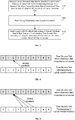
- the terminal performs current downlink data transmission on symbol 2. Assuming that the timing relationship is 2 symbols, the uplink HARQ feedback for the current downlink data is transmitted on symbol 4.
- the terminal may send uplink HARQ feedback information of the current downlink data to the base station in the corresponding multiple time domain units respectively according to the timing relationship and the time domain unit where the current downlink data is located.
- the terminal performs current downlink data transmission on symbol 2. Assuming that the timing relationship is 2 symbols, 3 symbols and 4 symbols, the uplink HARQ feedback for the current downlink data is transmitted on symbol 4, symbol 5 and symbol 6.
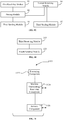
- FIG. 6 is a flowchart of another HARQ feedback method according to an exemplary embodiment of the present application. The embodiment is described from a terminal side. As shown in FIG. 6 , the HARQ feedback method includes the following.
- the signaling for triggering dynamic HARQ feedback may include RRC signaling, MAC CE or physical layer signaling.
- a timing relationship between the time domain unit where an initial downlink data of the terminal is located and the time domain unit of the uplink HARQ feedback of the downlink data is a default value, that is, the terminal has a default timing relationship.
- the terminal may obtain the default timing relationship in a predefined manner, and may also obtain the default timing relationship from RRC signaling, MAC CE, or physical layer signaling sent by the base station.
- uplink HARQ feedback information of the current downlink data is sent to the base station in a corresponding time domain unit according to the timing relationship and the time domain unit where the current downlink data is located.
- the terminal may parse the timing relationship from the received DCI, and perform a feedback on the received downlink data in the corresponding time domain unit.
- the terminal may obtain a default timing relationship, and send uplink HARQ feedback information of the current downlink data to the base station in a corresponding time domain unit according to the default timing relationship and the time domain unit where the current downlink data is located.
- FIG. 7 is a flowchart of another HARQ feedback method according to an exemplary embodiment of the present application. This embodiment is described from the base station side. The embodiment describes the HARQ feedback indication method by using a downlink feedback of uplink data as an example. As shown in FIG. 7 , the HARQ feedback method includes the following.
- downlink HARQ feedback information of the current uplink data is sent to the terminal in one or more time domain units after receiving the current uplink data sent by the terminal.
- the base station may send the downlink HARQ feedback information of the current uplink data to the terminal in some or certain time domain units after receiving the uplink data sent by the terminal.
- the downlink HARQ feedback information may be carried on a physical downlink control channel (PDCCH) or a newly defined channel for carrying feedback information, and the PDCCH or the newly defined channel for carrying feedback information may also implicitly or explicitly include identification information containing the uplink data targeted by the downlink feedback information.
- the PDCCH includes downlink feedback information for uplink data of a plurality of terminals. After receiving the downlink HARQ feedback information of the current uplink data, the terminal may decide whether to re-send the current uplink data according to the HARQ feedback information.
- the terminal through having received the current uplink data sent by the terminal, and sending downlink HARQ feedback information of the current uplink data to the terminal in one or more time domain units after receiving the current uplink data sent by the terminal, the terminal is supported to achieve a dynamic HARQ feedback.
- FIG. 8A is a block diagram of a HARQ feedback indication apparatus according to an exemplary embodiment, and the apparatus may be located in a base station. As shown in FIG. 8A , the apparatus includes: an adding module 81 and a first sending module 82.
- the adding module 81 is configured to add a timing relationship between the time domain unit where current downlink data is located and a time domain unit of an uplink HARQ feedback of the current downlink data to control information.
- control information may include, but is not limited to, downlink control information (DCI), radio resource control (RRC) signaling, media access control (MAC) control element (CE), or physical layer signaling and the like.
- DCI downlink control information
- RRC radio resource control
- MAC media access control
- CE control element
- the above timing relationship may be located in an information domain of the DCI, and the information domain may be located at a fixed location or a configurable location in the DCI Moreover, a length of the information domain may be fixed, or may also be pre-determined with the terminal, and still also may be configurable. If the length of the information domain is configurable, the base station may notify the terminal of the length of the information domain via RRC signaling, MAC CE or physical layer signaling.
- the signaling may include RRC signaling, MAC CE or physical layer signaling.
- the timing relationship may be one value, for example, two symbols or four symbols, and may also be multiple values, for example, two symbols, three symbols and four symbols.
- the first sending module 82 is configured to send the current downlink data and control information added with the timing information by the adding module 81 to the terminal.
- the current downlink data and the control information added with the above timing information may be sent to the terminal.
- the terminal may send uplink HARQ feedback information of the current downlink data to the base station in a corresponding time domain unit according to the timing relationship and the time domain unit where the current downlink data is located, so as to implement a dynamic HARQ feedback.
- the terminal may send uplink HARQ feedback information of the current downlink data to the base station according to the timing relationship, thereby implementing a dynamic HARQ feedback.
- FIG. 8B is a block diagram of another HARQ feedback indication apparatus according to an exemplary embodiment. As shown in FIG. 8B , based on the embodiments shown in FIG. 8A , the apparatus may further include a second sending module 83.
- the second sending module 83 is configured to send signaling for triggering dynamic HARQ feedback to the terminal.
- the signaling for triggering dynamic HARQ feedback may include RRC signaling, MAC CE or physical layer signaling.
- the base station there are a plurality of trigger conditions on which the base station sends signaling to the terminal for triggering dynamic HARQ feedback
- the base station has detected that the current service was switched to a preset type service.
- the base station receives the current service information reported by the terminal, and determines that the current service is switched to a preset type service according to the current service information, where the preset type service may include, but are not limited to, low-latency service.
- trigger conditions listed above are only examples. In actual applications, there may also be other trigger conditions.
- the terminal may trigger dynamic HARQ feedback based on the signaling.
- FIG. 9A is a block diagram of a HARQ feedback apparatus according to an exemplary embodiment, and the apparatus may be located in a terminal. As shown in FIG. 9A , the apparatus includes a first receiving module 91, a parsing module 92, and a third sending module 93.
- the first receiving module 91 is configured to receive current downlink data sent by a base station and control information added with a timing relationship between a time domain unit where the current downlink data is located and a time domain unit of an uplink HARQ feedback of the current downlink data sent by the base station.
- control information may include, but is not limited to, downlink control information (DCI), radio resource control (RRC) signaling, media access control (MAC) control element (CE), or physical layer signaling and the like.
- DCI downlink control information
- RRC radio resource control
- MAC media access control
- CE control element
- the parsing module 92 is configured to parse the timing relationship from the control information received by the first receiving module 91.
- the terminal may detect the information domain of the fixed length or the configurable length at the fixed location in the DCI, to obtain the timing relationship.
- the terminal may parse the timing relationship from the corresponding signaling.
- the third sending module 93 is configured to send uplink HARQ feedback information of the current downlink data to the base station in a corresponding time domain unit according to the timing relationship parsed by the parsing module 92 and time domain unit where the current downlink data is located.
- the third sending module 93 may send uplink HARQ feedback information of the current downlink data to the base station in one corresponding time domain unit according to the timing relationship and the time domain unit where the current downlink data is located.
- the terminal performs current downlink data transmission on symbol 2. Assuming that the timing relationship is 2 symbols, the uplink HARQ feedback for the current downlink data is transmitted on symbol 4.
- the third sending module 93 may send uplink HARQ feedback information of the current downlink data to the base station in the corresponding multiple time domain units respectively according to the timing relationship and the time domain unit where the current downlink data is located.
- the terminal performs current downlink data transmission on symbol 2. Assuming that the timing relationship is 2 symbols, 3 symbols and 4 symbols, the uplink HARQ feedback for the current downlink data is transmitted on symbol 4, symbol 5 and symbol 6.
- FIG. 9B is a block diagram of another HARQ feedback apparatus according to an exemplary embodiment. As shown in FIG. 9B , based on the embodiments shown in FIG. 9A , the apparatus may further include a second receiving module 94.
- the second receiving module 94 is configured to receive signaling for triggering dynamic HARQ feedback sent by the base station before the parsing module 92 parses the timing relationship from the control information.
- the signaling for triggering dynamic HARQ feedback may include RRC signaling, MAC CE or physical layer signaling.
- FIG. 9C is a block diagram of another HARQ feedback apparatus according to an exemplary embodiment. As shown in FIG. 9C , based on the embodiment shown in FIG. 9B , the apparatus may further include: an obtaining and sending module 95.
- the obtaining and sending module 95 is configured to obtain a default timing relationship before the signaling received by the second receiving module 94 for triggering dynamic HARQ feedback takes effective, and send the uplink HARQ feedback information of the current downlink data to the base station in a corresponding time domain unit according to the default timing relationship and the time domain unit where the current downlink data is located.
- a timing relationship between the time domain unit where an initial downlink data of the terminal is located and the time domain unit of the uplink HARQ feedback of the downlink data is a default value, that is, the terminal has a default timing relationship.
- the terminal Before the received signaling for triggering dynamic HARQ feedback takes effective, the terminal may obtain a default timing relationship, and send uplink HARQ feedback information of the current downlink data to the base station in a corresponding time domain unit according to the default timing relationship and the time domain unit where the current downlink data is located.
- a default timing relationship may be obtained, and the uplink HARQ feedback information of the current downlink data is sent to the base station in a corresponding time domain unit according to the default timing relationship and the time domain unit where the current downlink data is located, thereby implementing an uplink HARQ feedback on the current downlink data.
- FIG. 10 is a block diagram illustrating another HARQ feedback apparatus according to an exemplary embodiment, and the apparatus may be located in a base station. As shown in FIG. 10 , the apparatus includes a third receiving module 110 and a fourth sending module 120.
- the third receiving module 110 is configured to receive current uplink data sent by a terminal.
- the fourth sending module 120 is configured to send downlink HARQ feedback information of the current uplink data received by the third receiving module 110 to the terminal in one or more time domain units next to a unit for receiving the current uplink data sent by the terminal.
- the base station may send the downlink HARQ feedback information of the current uplink data to the terminal in some or certain time domain units after receiving the current uplink data sent by the terminal.
- the downlink HARQ feedback information may be carried on a physical downlink control channel (PDCCH) or a newly defined channel for carrying feedback information, and the PDCCH or the newly defined channel for carrying feedback information may also implicitly or explicitly include identification information containing the uplink data targeted by the downlink feedback information.
- the PDCCH includes downlink feedback information for uplink data of a plurality of terminals. After receiving the downlink HARQ feedback information of the current uplink data, the terminal may decide whether to re-send the current uplink data according to the HARQ feedback information.
- the terminal through having received the current uplink data sent by the terminal, and sending downlink HARQ feedback information of the current uplink data to the terminal in one or more time domain units after receiving the current uplink data sent by the terminal, the terminal is supported to achieve a dynamic HARQ feedback.
- FIG. 11 is another block diagram applied to a HARQ feedback apparatus according to an exemplary embodiment.
- the apparatus 1100 may be provided as a base station.
- the apparatus 1100 includes a processing component 1122, a wireless transmitting/receiving component 1124, an antenna component 1126, and a signal processing portion unique to a wireless interface.
- the processing component 1122 may further include one or more processors.
- One of the processors from the processing component 1122 may be configured to:
- non-transitory computer-readable storage medium including instructions, the above described instructions may be executed by the processing component 1122 of the apparatus 1100 to complete the above-mentioned Hybrid Automatic Repeat reQuest HARQ feedback indication method.
- the non-transitory computer-readable storage medium may be a ROM, a random access memory (RAM), a CD-ROM, a magnetic tape, a floppy disk and an optical data storage apparatus and the like.
- Fig. 12 is a block diagram applied to a HARQ feedback apparatus according to an exemplary embodiment.
- the apparatus 1200 may be a user equipment such as a mobile phone, a computer, a digital broadcasting terminal, a message receiving and sending device, a game console, a tablet device, a medical device, a fitness device, a personal digital assistant and the like.
- the apparatus 1200 may include one or more of the following components: a processing component 1202, a memory 1204, a power component 1206, a multimedia component 1208, an audio component 1210, an input/output (I/O) interface 1212, a sensor component 1214 and a communication component 1216.
- a processing component 1202 a memory 1204, a power component 1206, a multimedia component 1208, an audio component 1210, an input/output (I/O) interface 1212, a sensor component 1214 and a communication component 1216.
- the processing component 1201 typically controls overall operations of the apparatus 1200, such as the operations associated with displays, telephone calls, data communication, camera operations and recording operations.
- the processing component 1202 may include one or more processors 1220 to execute instructions to perform all or part of the operations in the above described methods.
- the processing component 1202 may include one or more modules which facilitate the interaction between the processing component 1202 and other components.
- the processing component 1202 may include a multimedia module to facilitate interactions between the multimedia component 1208 and the processing component 1202.
- One of the processors 1220 from the processing component 1202 may be configured to:
- the memory 1204 is configured to store various types of data to support operations on the apparatus 1200. Examples of such data include instructions, contact data, phonebook data, messages, pictures, videos and the like for any applications or methods operated on the apparatus 1200.
- the memory 1204 may be implemented by using any type of volatile or non-volatile memory devices or a combination thereof, such as a Static Random Access Memory (SRAM), an Electrically Erasable Programmable Read-Only Memory (EEPROM), an Erasable Programmable Read-Only Memory (EPROM), a Programmable Read-Only Memory (PROM), a Read-Only Memory (ROM), a magnetic memory, a flash memory and a magnetic or optical disk.
- SRAM Static Random Access Memory
- EEPROM Electrically Erasable Programmable Read-Only Memory
- EPROM Erasable Programmable Read-Only Memory
- PROM Programmable Read-Only Memory
- ROM Read-Only Memory
- magnetic memory a magnetic memory
- flash memory and a magnetic or optical disk.
- the power component 1206 provides power to various components of the apparatus 1200.
- the power component 1206 may include a power management system, one or more power sources and any other components associated with generation, management and distribution of power for the apparatus 1200.
- the multimedia component 1208 includes a screen providing an output interface between the apparatus 1200 and a user.
- the screen may include a Liquid Crystal Display (LCD) and a Touch Panel (TP). If the screen includes a touch panel, the screen may be implemented as a touch screen, to receive input signals from the user.
- the touch panel includes one or more touch sensors to sense touches, slips and gestures on the touch panel. The touch sensors may not only sense a boundary of a touch or slip action, but also detect duration and a pressure associated with the touch or the slip action.
- the multimedia component 1208 includes a front camera and/or a rear camera. The front camera and the rear camera may receive external multimedia data when the apparatus 1200 is in an operation mode, such as a photographing mode or a video mode. Each of the front camera and the rear camera may be a fixed optical lens system or have focus and an optical zoom capability.
- the audio component 1210 is configured to output and/or input audio signals.
- the audio component 1210 includes a microphone (MIC) configured to receive an external audio signal when the apparatus 1200 is in an operation mode, such as a call mode, a recording mode or a voice recognition mode.
- the received audio signal may be further stored in the memory 1204 or transmitted via the communication component 1216.
- the audio component 1210 further includes a speaker, to output audio signals.
- the I/O interface 1212 provides an interface between the processing component 1202 and peripheral interface modules, and the above peripheral interface modules may be such as a keyboard, a click wheel, buttons and the like. These buttons may include, but are not limited to, a home button, a volume button, a starting button and a locking button.
- the sensor component 1214 includes one or more sensors used to provide status assessments of various aspects for the apparatus 1200.
- the sensor component 1214 may detect an open/closed status of the apparatus 1200, relative positioning of components, e.g., the components may be a display and a keypad of the apparatus 1200; the sensor component 1214 may also detect a change in position of the apparatus 1200 or a component of the apparatus 1200, presence or absence of user contact with the apparatus 1200, an orientation or an acceleration/deceleration of the apparatus 1200 and a change in temperature of the apparatus 1200.
- the sensor component 1214 may include a proximity sensor configured to detect presence of nearby objects without any physical contact.
- the sensor component 1214 may further include a light sensor, such as a CMOS or CCD image sensor for use in imaging applications.
- the sensor component 1214 may further include an accelerometer sensor, a gyroscope sensor, a magnetic sensor, a pressure sensor or a temperature sensor.
- the communication component 1216 is configured to facilitate communication, wired or wirelessly, between the apparatus1200 and other apparatuses.
- the apparatus 1200 may access a wireless network based on a communication standard, such as WiFi, 2G, or 3G or a combination thereof.
- the communication component 1216 receives a broadcast signal or broadcast-associated information from an external broadcast management system via a broadcast channel.
- the communication component 1216 further includes a Near Field Communication (NFC) module, to facilitate short-range communications.
- NFC Near Field Communication
- the NFC module may be implemented based on Radio Frequency Identification (RFID) technology, Infrared Data Association (IrDA) technology, Ultra-Wideband (UWB) technology, Bluetooth (BT) technology and other technologies.
- RFID Radio Frequency Identification
- IrDA Infrared Data Association
- UWB Ultra-Wideband
- Bluetooth Bluetooth
- the apparatus 1200 may be realized with one or more Application Specific Integrated Circuits (ASIC), Digital Signal Processors (DSP), Digital Signal Processing Devices (DSPD), Programmable Logic Devices (PLD), Field Programmable Gate Arrays (FPGA), controllers, micro-controllers, micro-processors or other electronic components, for performing above-mentioned method.
- ASIC Application Specific Integrated Circuits
- DSP Digital Signal Processors
- DSPD Digital Signal Processing Devices
- PLD Programmable Logic Devices
- FPGA Field Programmable Gate Arrays
- controllers micro-controllers, micro-processors or other electronic components, for performing above-mentioned method.
- a non-transitory computer-readable storage medium including instructions, for example, a memory 1204 including instructions, and the above instructions may be executed by the processor 1220 of the apparatus 1200 to perform the above-described method.
- the non-transitory computer-readable storage medium may be a ROM, a Random Access Memory (RAM), a CD-ROM, a magnetic tape, a floppy disk and an optical data storage device and the like.
- FIG. 13 is a block diagram applied to a HARQ feedback apparatus according to an exemplary embodiment, the apparatus 1300 may be provided as a base station.
- the apparatus 1300 includes a processing component 1322, a wireless transmitting/receiving component 1324, an antenna component 1326, and a signal processing portion unique to a wireless interface.
- the processing component 1322 may further include one or more processors.
- One of the processors in processing component 1322 may be configured to:
- non-transitory computer-readable storage medium including instructions, and the above described instructions may be executed by the processing component 1322 of the apparatus 1300 to complete the above-mentioned Hybrid Automatic Repeat reQuest HARQ feedback method.
- the non-transitory computer-readable storage medium may be a ROM, a Random Access Memory (RAM), a CD-ROM, a magnetic tape, a floppy disk and an optical data storage device and the like.
- the relevant parts may refer to the descriptions of the method embodiments.
- the apparatus embodiments described above are only schematic, and the units described as separate components may or may not be physically separated, the components displayed as units may or may not be physical units, that is, may be located in one place, or may be distributed in multiple network units. A part or all of the modules may be selected according actual needs to achieve objectives of the solutions of these embodiments. Those of ordinary skill in the art may understand and implement without creative efforts.
Landscapes
- Engineering & Computer Science (AREA)
- Signal Processing (AREA)
- Computer Networks & Wireless Communication (AREA)
- Mobile Radio Communication Systems (AREA)
Abstract
Description
- The present disclosure relates to the field of communication technology, and in particular, to a hybrid automatic repeat request (HARQ) feedback indication method, a HARQ feedback method, an apparatus, a base station, a user equipment and a computer-readable storage medium.
- Continuous emergence of new Internet applications such as Augmented Reality (abbreviated to AR), Virtual Reality (abbreviated to VR) and vehicle-to-vehicle communication has placed relatively high requirements on wireless communication technology, driving wireless communication technology continue to evolve to meet needs of applications. At present, the cellular mobile communication technology is in an evolution stage of a new generation technology. An important feature of the new generation technology is to support flexible configurations of multiple service types. Because different service types have different requirements for wireless communication technologies, for example, requirements of enhanced Mobile Broad Band (abbreviated to eMBB) service types lay emphasis on aspects of large bandwidths, high speeds and the like, main requirements of Ultra Reliable Low Latency Communication (abbreviated to URLLC) service types lay emphasis on aspects of relatively high reliability and low latency, and main requirements for mass Machine Type Communication (abbreviated to mMTC) service types lay emphasis on aspects of large connections, a new generation of wireless communication systems need flexible and configurable designs to support transmission of multiple service types.
- In a wireless communication system, the time-varying characteristics and multi-path fading of a wireless channel may affect transmission of signals, resulting in data transmission failure. In order to solve this problem, in a traditional wireless communication system, a Hybrid Automatic Repeat reQuest (abbreviated to HARQ) mechanism is introduced, through the feedback of the receiving side on whether the data is received correctly or not, the sending side determines whether it is necessary to re-send the sent packet. In a traditional Long-Term Evolution (LTE) system, there is a timing relationship between the time of transmission of data and the time of acknowledgement (ACK) feedback or non-acknowledgement (NACK) feedback. Limited by processing capabilities of terminals, in the LTE, there is at least 4 milli-seconds (ms) between the time of transmission of data and the time of ACK feedback or NACK feedback. In the LTE system, a HARQ feedback of a downlink data packet is synchronous, that is, there is a fixed timing relationship between the transmission of a downlink data packet and the uplink ACK feedback or NACK feedback for the data packet. The HARQ feedback of the uplink data packet may be synchronous or asynchronous.
- With enhancement on terminal capabilities, the terminal may have relatively strong processing capabilities. In this case, the terminal may perform ACK or NACK feedback relatively fast on received data, to reduce latency of data transmission, which is important for some services, such as URLLC services, that have relatively high requirements on latency. The traditional HARQ timing feedback method is no longer suitable for this scenario.
- In view of this, the present application discloses a HARQ feedback indication method, a HARQ feedback method and an apparatus, a base station, a user equipment and a computer-readable storage medium, to support dynamic HARQ feedback.
- According to a first aspect of embodiments of the present disclosure, there is provided a hybrid automatic repeat request HARQ feedback indication method, applied to a base station, the method including:
- adding a timing relationship between a time domain unit where current downlink data is located and a time domain unit of an uplink HARQ feedback of the current downlink data to control information; and
- sending the current downlink data and the control information added with the timing information to a terminal.
- In one embodiment, when the control information is downlink control information DCI, the timing relationship is located in an information domain of the DCI, the information domain is located at a fixed location or a configurable location in the DCI, and a length of the information domain is fixed or configurable.
- In one embodiment, when the control information is radio resource control RRC signaling, media access control MAC control element CE, or physical layer signaling, the timing relationship is one value or multiple values.
- In one embodiment, the method further includes:
sending signaling for triggering dynamic HARQ feedback to the terminal. - In one embodiment, the signaling for triggering dynamic HARQ feedback includes RRC signaling, MAC CE or physical layer signaling.
- According to a second aspect of embodiments of the present disclosure, there is provided a hybrid automatic repeat request HARQ feedback method, applied to a terminal, the method including:
- receiving current downlink data sent by a base station and control information added with a timing relationship between a time domain unit where the current downlink data is located and a time domain unit of an uplink HARQ feedback of the current downlink data sent by the base station;
- parsing the timing relationship from the control information; and
- sending, according to the timing relationship and the time domain unit where the current downlink data is located, uplink HARQ feedback information of the current downlink data to the base station in a corresponding time domain unit.
- In one embodiment, when the control information is downlink control information DCI, the timing relationship is located in an information domain of the DCI, the information domain is located at a fixed location or a configurable location in the DCI, and when a length of the information domain is fixed or configurable, the parsing the timing relationship from the control information includes:
detecting an information domain of a fixed length or a configurable length at the fixed location of the DCI to obtain the timing relationship. - In one embodiment, when the control information is radio resource control RRC signaling, media access control MAC control element CE or physical layer signaling, and the timing relationship is one value, the sending, according to the timing relationship and the time domain unit where the current downlink data is located, the uplink HARQ feedback information of the current downlink data to the base station in the corresponding time domain unit includes:
- sending, according to the timing relationship and the time domain unit where the current downlink data is located, uplink HARQ feedback information of the current downlink data to the base station in one corresponding time domain unit; or
- when the control information is RRC signaling, MAC CE or physical layer signaling, and the timing relationship are a plurality of values, the sending, according to the timing relationship and the time domain unit where the current downlink data is located, the uplink HARQ feedback information of the current downlink data to the base station in corresponding time domain unit includes:
- sending, according to the timing relationship and the time domain unit where the current downlink data is located, uplink HARQ feedback information of the current downlink data to the base station in corresponding multiple time domain units respectively.
- In one embodiment, the method further includes:
receiving, before the parsing the timing relationship from the control information, signaling for triggering dynamic HARQ feedback sent by the base station. - In one embodiment, the method further includes:
obtaining a default timing relationship before the received signaling for triggering dynamic HARQ feedback takes effective, and sending the uplink HARQ feedback information of the current downlink data to the base station in a corresponding time domain unit according to the default timing relationship and the time domain unit where the current downlink data is located. - In one embodiment, the signaling for triggering dynamic HARQ feedback includes RRC signaling, MAC CE or physical layer signaling.
- According to a third aspect of embodiments of the present disclosure, there is provided a hybrid automatic repeat request HARQ feedback method, applied to a base station, the method including:
- receiving current uplink data sent by a terminal; and
- sending downlink HARQ feedback information of the current uplink data to the terminal in one or more time domain units next to a unit for receiving the current uplink data sent by the terminal.
- According to a fourth aspect of embodiments of the present disclosure, there is provided a hybrid automatic repeat request HARQ feedback indication apparatus, applied to a base station, the apparatus including:
- an adding module, configured to add a timing relationship between a time domain unit where current downlink data is located and a time domain unit of an uplink HARQ feedback of the current downlink data to control information; and
- a first sending module, configured to send the current downlink data and the control information added with the timing information by the adding module to the terminal.
- In one embodiment, when the control information is downlink control information DCI, the timing relationship is located in an information domain of the DCI, the information domain is located at a fixed location or a configurable location in the DCI, and a length of the information domain is fixed or configurable.
- In one embodiment, when the control information is radio resource control RRC signaling, media access control MAC control element CE or physical layer signaling, the timing relationship is one value or multiple values.
- In one embodiment, the apparatus further includes:
a second sending module, configured to send signaling for triggering dynamic HARQ feedback to the terminal. - In one embodiment, the signaling for triggering dynamic HARQ feedback includes RRC signaling, MAC CE or physical layer signaling.
- According to a fifth aspect of embodiments of the present disclosure, there is provided a hybrid automatic repeat request HARQ feedback apparatus, applied to a terminal, the apparatus including:
- a first receiving module, configured to receive current downlink data sent by a base station and control information added with a timing relationship between a time domain unit where the current downlink data is located and a time domain unit of an uplink HARQ feedback of the current downlink data sent by the base station;
- a parsing module, configured to parse the timing relationship from the control information received by the first receiving module; and
- a third sending module, configured to send, according to the timing relationship parsed by the parsing module and time domain unit where the current downlink data is located, uplink HARQ feedback information of the current downlink data to the base station in a corresponding time domain unit.
- In one embodiment, when the control information is downlink control information DCI, the timing relationship is located in an information domain of the DCI, the information domain is located at a fixed location or a configurable location in the DCI, and a length of the information domain is fixed or configurable, the parsing module is configured to:
detect an information domain of a fixed length or a configurable length at the fixed location of the DCI to obtain the timing relationship. - In one embodiment, when the control information is radio resource control RRC signaling, media access control MAC control element CE or physical layer signaling, and the timing relationship is one value, the third sending module is configured to:
- send, according to the timing relationship and the time domain unit where the current downlink data is located, uplink HARQ feedback information of the current downlink data to the base station in one corresponding time domain unit; or
- when the control information is RRC signaling, MAC CE or physical layer signaling, and the timing relationship is a plurality of values, the third sending module is configured to:
- send, according to the timing relationship and the time domain unit where the current downlink data is located, uplink HARQ feedback information of the current downlink data to the base station in corresponding multiple time domain units respectively.
- In one embodiment, the apparatus further includes:
a second receiving module, configured to receive, before the parsing module parses the timing relationship from the control information, signaling for triggering dynamic HARQ feedback sent by the base station. - In one embodiment, the apparatus further includes:
an obtaining and sending module, configured to obtain a default timing relationship, before the signaling received by the second receiving module for triggering dynamic HARQ feedback takes effective, and send the uplink HARQ feedback information of the current downlink data to the base station in a corresponding time domain unit according to the default timing relationship and the time domain unit where the current downlink data is located. - In one embodiment, the signaling for triggering dynamic HARQ feedback includes RRC signaling, MAC CE or physical layer signaling.
- According to a sixth aspect of embodiments of the present disclosure, there is provided a hybrid automatic repeat request HARQ feedback apparatus, applied to a base station, the apparatus including:
- a third receiving module, configured to receive current uplink data sent by a terminal; and
- a fourth sending module, configured to send downlink HARQ feedback information of the current uplink data received by the third receiving module to the terminal in one or more time domain units next to a unit for receiving the current uplink data sent by the terminal.
- According to a seventh aspect of embodiments of the present disclosure, there is provided a base station, including:
- a processor; and
- a memory for storing instructions executable by the processor;
- where the processor is configured to:
- add a timing relationship between a time domain unit where current downlink data is located and a time domain unit of an uplink HARQ feedback of the current downlink data to control information; and
- send the current downlink data and the control information added with the timing information to a terminal.
- According to an eighth aspect of embodiments of the present disclosure, there is provided a user equipment, including:
- a processor; and
- a memory for storing instructions executable by the processor;
- where the processor is configured to:
- receive current downlink data sent by a base station and control information added with a timing relationship between a time domain unit where the current downlink data is located and a time domain unit of an uplink HARQ feedback of the current downlink data sent by the base station;
- parse the timing relationship from the control information; and
- send, according to the timing relationship and the time domain unit where the current downlink data is located, uplink HARQ feedback information of the current downlink data to the base station in a corresponding time domain unit.
- According to a ninth aspect of embodiments of the present disclosure, there is provided a base station, including:
- a processor; and
- a memory for storing instructions executable by the processor;
- where the processor is configured to:
- receive current uplink data sent by a terminal;
- send downlink HARQ feedback information of the current uplink data to the terminal in one or more time domain units next to a unit for receiving the current uplink data sent by the terminal.
- According to a tenth aspect of embodiments of the present disclosure, there is provided a computer-readable storage medium, a computer instruction is stored thereon, and when the instruction is executed by a processor, operations of the hybrid automatic repeat request HARQ feedback indication method described above are implemented.
- According to an eleventh aspect of embodiments of the present disclosure, there is provided a computer-readable storage medium, a computer instruction being stored thereon, and when the instruction being executed by a processor operations of the hybrid automatic repeat request HARQ feedback method described above being implemented.
- According to a twelfth aspect of embodiments of the present disclosure, there is provided a computer-readable storage medium, a computer instruction being stored thereon, and when the instruction being executed by a processor operations of the hybrid automatic repeat request HARQ feedback method described above being implemented.
- Technical solutions provided by embodiments of the present disclosure may include the following beneficial effects:
through that a timing relationship between the time domain unit where current downlink data is located and the time domain unit of the uplink HARQ feedback of the current downlink data is added to control information, and the current downlink data and the control information added with timing information is sent to a terminal, the terminal may send uplink HARQ feedback information of the current downlink data to the base station according to the timing relationship, thereby implementing a dynamic HARQ feedback. - Through receiving current downlink data sent by a base station and control information added with a timing relationship between the time domain unit where the current downlink data is located and the time domain unit of the uplink HARQ feedback of the current downlink data sent by the base station, the timing relationship from the control information is parsed, and an uplink HARQ feedback information of the current downlink data is sent to the base station in a corresponding time domain unit according to the timing relationship and the time domain unit where the current downlink data is located, thereby implementing a dynamic HARQ feedback.
- Through receiving current uplink data sent by a terminal and sending downlink HARQ feedback information of the current uplink data to the terminal in one or more time domain units next to a unit for receiving the current uplink data sent by the terminal, the terminal is thereby supported to achieve a dynamic HARQ feedback.
- It should be understood that above general descriptions and the following detailed descriptions are merely exemplary and explanatory, and should not limit the present disclosure.
- The accompanying drawings herein are incorporated into the specification and constitute a part of the present specification, illustrate embodiments conforming to the present disclosure, and serve to explain principles of the present disclosure in conjunction with the specification.
-
FIG. 1 is a flowchart of a HARQ feedback indication method according to an exemplary embodiment of the present application; -
FIG. 2 is a flowchart of another HARQ feedback indication method according to an exemplary embodiment of the present application; -
FIG. 3 is a flowchart of a HARQ feedback method according to an exemplary embodiment of the present application; -
FIG. 4 is a first schematic diagram of a timing relationship between a time domain unit where the current downlink data is located and a time domain unit of uplink HARQ feedback according to an exemplary embodiment of the present application; -
FIG. 5 is a second schematic diagram of a timing relationship between a time domain unit where the current downlink data is located and a time domain unit of uplink HARQ feedback thereof according to an exemplary embodiment of the present application; -
FIG. 6 is a flowchart of another HARQ feedback method according to an exemplary embodiment of the present application; -
FIG. 7 is a flowchart of another HARQ feedback method according to an exemplary embodiment of the present application; -
FIG. 8A is a block diagram of a HARQ feedback indication apparatus according to an exemplary embodiment; -
FIG. 8B is a block diagram of another HARQ feedback indication apparatus according to an exemplary embodiment; -
FIG. 9A is a block diagram of a HARQ feedback apparatus according to an exemplary embodiment; -
FIG. 9B is a block diagram of another HARQ feedback apparatus according to an exemplary embodiment; -
FIG. 9C is a block diagram of another HARQ feedback apparatus according to an exemplary embodiment; -
FIG. 10 is a block diagram of another HARQ feedback apparatus according to an exemplary embodiment; -
FIG. 11 is a block diagram applied to a HARQ feedback indication apparatus according to an exemplary embodiment; -
FIG. 12 is a block diagram applied to a HARQ feedback apparatus according to an exemplary embodiment; -
FIG. 13 is another block diagram applied to a HARQ feedback apparatus according to an exemplary embodiment. - Exemplary embodiments will be described in detail herein, examples of which are illustrated in the accompanying drawings. When the following description refers to the accompanying drawings, unless other indicated, the same numbers in different accompanying drawings indicate the same or similar elements. The embodiments described in the following exemplary embodiments do not represent all embodiments consistent with the present disclosure. Instead, they are merely examples of apparatus and methods consistent with aspects as detailed in the appended claims of the present disclosure.
-
FIG. 1 is a flowchart of a HARQ feedback indication method according to an exemplary embodiment of the present application, the embodiment is described from the base station side, and the embodiment describes the HARQ feedback indication method using uplink feedback of downlink data as an example. As shown inFIG. 1 , the HARQ feedback indication method includes the following. - In operation S101, a timing relationship between a time domain unit where current downlink data is located and a time domain unit of an uplink HARQ feedback of the current downlink data is added to control information.
- In one embodiment, the control information may include, but is not limited to, radio resource control (RRC) signaling, media access control (MAC) control element (CE), or physical layer signaling and the like, where the physical layer signaling includes downlink control information (DCI).
- When the control information is DCI, the above timing relationship may be located in an information domain of the DCI, and the information domain may be located at a fixed location or a configurable location in the DCI. When the location of the information domain is configurable, a base station may notify a terminal of the location of the information domain via RRC signaling, MAC CE or physical layer signaling and the like. Moreover, a length of the information domain may be fixed, and also may be pre-determined with the terminal, and still also may be configurable. If the length of the information domain is configurable, the base station may notify the terminal of the length of the information domain via RRC signaling, MAC CE or physical layer signaling and the like.
- When the control information is signaling, the signaling may include RRC signaling, MAC CE or physical layer signaling. At this time, the timing relationship may be one value, for example, two symbols or four symbols, and may also be multiple values, for example, two symbols, three symbols and four symbols.
- When the control information is DCI, the method may further include: sending signaling which is used for triggering dynamic HARQ feedback to the terminal, so that the terminal may trigger the dynamic HARQ feedback based on the signaling. Where the signaling used to trigger dynamic HARQ feedback may include RRC signaling, MAC CE or physical layer signaling.
- In this embodiment, the timing relationship may be added to different control information, and the implementation manner is flexible and diverse.
- In operation S102, the current downlink data and the control information added with the timing information are sent to the terminal.
- In this embodiment, after adding the timing relationship to the control information, the current downlink data and the control information added with the above timing information may be sent to the terminal. After receiving the control information, the terminal may send uplink HARQ feedback information of the current downlink data to the base station in a corresponding time domain unit according to the timing relationship and the time domain unit where the current downlink data is located, so as to implement a dynamic HARQ feedback.
- In the above described embodiments, through that the timing relationship between the time domain unit where the current downlink data is located and the time domain unit of the uplink HARQ feedback of the current downlink data is added to the control information, and the current downlink data and the control information added with timing information is sent to the terminal, the terminal may send uplink HARQ feedback information of the current downlink data to the base station according to the timing relationship, thereby implementing a dynamic HARQ feedback.
-
FIG. 2 is a flowchart of another HARQ feedback indication method according to an exemplary embodiment of the present application. As shown inFIG. 2 , the HARQ feedback indication method includes the following. - In operation S201, sending signaling for triggering dynamic HARQ feedback to a terminal.
- Where the signaling for triggering dynamic HARQ feedback may include RRC signaling, MAC CE or physical layer signaling.
- In the embodiment, before a base station sending the signaling for triggering the dynamic HARQ feedback to the terminal, a default timing relationship between a time domain unit where the downlink data is located and a time domain unit of an uplink HARQ feedback of the downlink data may also be defined in advance, alternatively, the default timing relationship is carried in RRC signaling, MAC CE or physical layer signaling to be notified to the terminal.
- In the embodiment, there are a plurality of trigger conditions on which the base station sends signaling to the terminal for triggering dynamic HARQ feedback. For example, the base station has detected that the current service was switched to a preset type service. For another example, the base station receives the current service information reported by the terminal, and determines that the current service is switched to a preset type service according to the current service information, where the preset type service may include, but are not limited to, low-latency service.
- It should be noted that the trigger conditions listed above are only examples. In actual applications, there may also be other trigger conditions.
- In operation S202, a timing relationship between a time domain unit where current downlink data is located and a time domain unit of an uplink HARQ feedback of current downlink data is added to the DCI.
- Where the timing relationship may be added to the DCI as well as other control information. The DCI listed here is only an example.
- In operation S203, the current downlink data and the DCI added with the above timing information to the terminal are sent.
- Where operation S201 and operations S202 to S203 have no strict sequential relationship, that is, operation S201 may be performed first, and then operations S202 to S203 may be performed, or operations S202 to S203 may be performed first, and then operation S201 may be performed.
- In the above described embodiments, through sending signaling for triggering dynamic HARQ feedback to the terminal and sending the current downlink data and DCI with timing information added to the terminal, the terminal may a trigger dynamic HARQ feedback based on the signaling.
-
FIG. 3 is a flowchart of a HARQ feedback method according to an exemplary embodiment of the present application. This embodiment is described from a terminal side. As shown inFIG. 3 , the HARQ feedback method includes the following. - In operation S301, current downlink data sent by a base station and control information added with a timing relationship between a time domain unit where the current downlink data is located and a time domain unit of an uplink HARQ feedback of the current downlink data sent by the base station are received.
- Where, the control information may include, but is not limited to, downlink control information (DCI), radio resource control (RRC) signaling, media access control (MAC) control element (CE), or physical layer signaling and the like.
- In operation S302, the timing relationship from the control information is parsed.
- When the control information is DCI, the timing relationship is located in an information domain of the DCI, and the information domain is in a fixed or configurable location in the DCI, and the length of the information domain is fixed or configurable, the terminal may detect the information domain of the fixed length or the configurable length at the fixed location in the DCI, to obtain the timing relationship.
- When the control information is RRC signaling, MAC CE or physical layer signaling, the terminal may parse the timing relationship from the corresponding signaling.
- In operation S303, sending uplink HARQ feedback information of the current downlink data to the base station in a corresponding time domain unit according to the timing relationship and the time domain unit where the current downlink data is located.
- Where when the control information is radio resource control RRC signaling, media access control MAC control element CE or physical layer signaling, and the timing relationship is one value, the terminal may send uplink HARQ feedback information of the current downlink data to the base station in one corresponding time domain unit according to the timing relationship and the time domain unit where the current downlink data is located.
- For example, as shown in
FIG. 4 , the terminal performs current downlink data transmission onsymbol 2. Assuming that the timing relationship is 2 symbols, the uplink HARQ feedback for the current downlink data is transmitted onsymbol 4. - Where when the control information is RRC signaling, MAC CE, or physical layer signaling, and the timing relationship is a plurality of values, the terminal may send uplink HARQ feedback information of the current downlink data to the base station in the corresponding multiple time domain units respectively according to the timing relationship and the time domain unit where the current downlink data is located.
- For example, as shown in
FIG. 5 , the terminal performs current downlink data transmission onsymbol 2. Assuming that the timing relationship is 2 symbols, 3 symbols and 4 symbols, the uplink HARQ feedback for the current downlink data is transmitted onsymbol 4,symbol 5 andsymbol 6. - In the above described embodiments, through receiving current downlink data sent by a base station and control information added with a timing relationship between the time domain unit where the current downlink data is located and the time domain unit of the uplink HARQ feedback of the current downlink data sent by the base station, parsing the timing relationship from the control information, and sending uplink HARQ feedback information of the current downlink data to the base station in a corresponding time domain unit according to the timing relationship and the time domain unit where the current downlink data is located, thereby a dynamic HARQ feedback is implemented.
-
FIG. 6 is a flowchart of another HARQ feedback method according to an exemplary embodiment of the present application. The embodiment is described from a terminal side. As shown inFIG. 6 , the HARQ feedback method includes the following. - In operation S601, signaling for triggering dynamic HARQ feedback sent by the base station is received.
- Where the signaling for triggering dynamic HARQ feedback may include RRC signaling, MAC CE or physical layer signaling.
- A timing relationship between the time domain unit where an initial downlink data of the terminal is located and the time domain unit of the uplink HARQ feedback of the downlink data is a default value, that is, the terminal has a default timing relationship. The terminal may obtain the default timing relationship in a predefined manner, and may also obtain the default timing relationship from RRC signaling, MAC CE, or physical layer signaling sent by the base station.
- In operation S602, current downlink data and DCI added with a timing relationship between a time domain unit where current downlink data is located and a time domain unit of an uplink HARQ feedback of the current downlink data are received.
- In operation S603, the timing relationship from the DCI is parsed.
- In operation S604, uplink HARQ feedback information of the current downlink data is sent to the base station in a corresponding time domain unit according to the timing relationship and the time domain unit where the current downlink data is located.
- After receiving the signaling for triggering dynamic HARQ feedback sent by the base station, the terminal may parse the timing relationship from the received DCI, and perform a feedback on the received downlink data in the corresponding time domain unit.
- In addition, before the received signaling for triggering dynamic HARQ feedback takes effective, the terminal may obtain a default timing relationship, and send uplink HARQ feedback information of the current downlink data to the base station in a corresponding time domain unit according to the default timing relationship and the time domain unit where the current downlink data is located.
- In the above described embodiments, through receiving sent by the base station signaling for triggering dynamic HARQ feedback, parsing the timing relationship from the DCI according to the signaling, and sending uplink HARQ feedback information to the base station in the corresponding time domain unit according to the timing relationship, thereby a dynamic HARQ feedback is implemented.
-
FIG. 7 is a flowchart of another HARQ feedback method according to an exemplary embodiment of the present application. This embodiment is described from the base station side. The embodiment describes the HARQ feedback indication method by using a downlink feedback of uplink data as an example. As shown inFIG. 7 , the HARQ feedback method includes the following. - In operation S701, current uplink data sent by a terminal is received.
- In operation S702, downlink HARQ feedback information of the current uplink data is sent to the terminal in one or more time domain units after receiving the current uplink data sent by the terminal.
- In this embodiment, after receiving the current uplink data sent by the terminal, the base station may send the downlink HARQ feedback information of the current uplink data to the terminal in some or certain time domain units after receiving the uplink data sent by the terminal. The downlink HARQ feedback information may be carried on a physical downlink control channel (PDCCH) or a newly defined channel for carrying feedback information, and the PDCCH or the newly defined channel for carrying feedback information may also implicitly or explicitly include identification information containing the uplink data targeted by the downlink feedback information. Preferably, the PDCCH includes downlink feedback information for uplink data of a plurality of terminals. After receiving the downlink HARQ feedback information of the current uplink data, the terminal may decide whether to re-send the current uplink data according to the HARQ feedback information.
- In the above described embodiments, through having received the current uplink data sent by the terminal, and sending downlink HARQ feedback information of the current uplink data to the terminal in one or more time domain units after receiving the current uplink data sent by the terminal, the terminal is supported to achieve a dynamic HARQ feedback.
-
FIG. 8A is a block diagram of a HARQ feedback indication apparatus according to an exemplary embodiment, and the apparatus may be located in a base station. As shown inFIG. 8A , the apparatus includes: an addingmodule 81 and afirst sending module 82. - The adding
module 81 is configured to add a timing relationship between the time domain unit where current downlink data is located and a time domain unit of an uplink HARQ feedback of the current downlink data to control information. - Where the control information may include, but is not limited to, downlink control information (DCI), radio resource control (RRC) signaling, media access control (MAC) control element (CE), or physical layer signaling and the like.
- When the control information is DCI, the above timing relationship may be located in an information domain of the DCI, and the information domain may be located at a fixed location or a configurable location in the DCI Moreover, a length of the information domain may be fixed, or may also be pre-determined with the terminal, and still also may be configurable. If the length of the information domain is configurable, the base station may notify the terminal of the length of the information domain via RRC signaling, MAC CE or physical layer signaling.
- When the control information is signaling, the signaling may include RRC signaling, MAC CE or physical layer signaling. At this time, the timing relationship may be one value, for example, two symbols or four symbols, and may also be multiple values, for example, two symbols, three symbols and four symbols.
- The
first sending module 82 is configured to send the current downlink data and control information added with the timing information by the addingmodule 81 to the terminal. - In this embodiment, after adding the timing relationship to the control information, the current downlink data and the control information added with the above timing information may be sent to the terminal. After receiving the control information, the terminal may send uplink HARQ feedback information of the current downlink data to the base station in a corresponding time domain unit according to the timing relationship and the time domain unit where the current downlink data is located, so as to implement a dynamic HARQ feedback.
- In the above described embodiments, through that the timing relationship between the time domain unit where the current downlink data is located and the time domain unit of the uplink HARQ feedback of the current downlink data is added to the control information, and the current downlink data and the control information added with timing information is sent to the terminal, the terminal may send uplink HARQ feedback information of the current downlink data to the base station according to the timing relationship, thereby implementing a dynamic HARQ feedback.
-
FIG. 8B is a block diagram of another HARQ feedback indication apparatus according to an exemplary embodiment. As shown inFIG. 8B , based on the embodiments shown inFIG. 8A , the apparatus may further include asecond sending module 83. - The
second sending module 83 is configured to send signaling for triggering dynamic HARQ feedback to the terminal. - Where the signaling for triggering dynamic HARQ feedback may include RRC signaling, MAC CE or physical layer signaling.
- In the embodiment, there are a plurality of trigger conditions on which the base station sends signaling to the terminal for triggering dynamic HARQ feedback For example, the base station has detected that the current service was switched to a preset type service. For another example, the base station receives the current service information reported by the terminal, and determines that the current service is switched to a preset type service according to the current service information, where the preset type service may include, but are not limited to, low-latency service.
- It should be noted that the trigger conditions listed above are only examples. In actual applications, there may also be other trigger conditions.
- In the above described embodiments, through sending signaling for triggering dynamic HARQ feedback to the terminal and sending the current downlink data and DCI added with timing information to the terminal, the terminal may trigger dynamic HARQ feedback based on the signaling.
-
FIG. 9A is a block diagram of a HARQ feedback apparatus according to an exemplary embodiment, and the apparatus may be located in a terminal. As shown inFIG. 9A , the apparatus includes afirst receiving module 91, aparsing module 92, and athird sending module 93. - The
first receiving module 91 is configured to receive current downlink data sent by a base station and control information added with a timing relationship between a time domain unit where the current downlink data is located and a time domain unit of an uplink HARQ feedback of the current downlink data sent by the base station. - Where, the control information may include, but is not limited to, downlink control information (DCI), radio resource control (RRC) signaling, media access control (MAC) control element (CE), or physical layer signaling and the like.
- The
parsing module 92 is configured to parse the timing relationship from the control information received by thefirst receiving module 91. - When the control information is DCI, the timing relationship is located in an information domain of the DCI, and the information domain is in a fixed or configurable location in the DCI, and the length of the information domain is fixed or configurable, the terminal may detect the information domain of the fixed length or the configurable length at the fixed location in the DCI, to obtain the timing relationship.
- When the control information is RRC signaling, MAC CE or physical layer signaling, the terminal may parse the timing relationship from the corresponding signaling.
- The
third sending module 93 is configured to send uplink HARQ feedback information of the current downlink data to the base station in a corresponding time domain unit according to the timing relationship parsed by the parsingmodule 92 and time domain unit where the current downlink data is located. - Where, when the control information is radio resource control RRC signaling, media access control MAC control element CE or physical layer signaling, and the timing relationship is one value, the
third sending module 93 may send uplink HARQ feedback information of the current downlink data to the base station in one corresponding time domain unit according to the timing relationship and the time domain unit where the current downlink data is located. - For example, as shown in
FIG. 4 , the terminal performs current downlink data transmission onsymbol 2. Assuming that the timing relationship is 2 symbols, the uplink HARQ feedback for the current downlink data is transmitted onsymbol 4. - Where when the control information is RRC signaling, MAC CE, or physical layer signaling, and the timing relationship is a plurality of values, the
third sending module 93 may send uplink HARQ feedback information of the current downlink data to the base station in the corresponding multiple time domain units respectively according to the timing relationship and the time domain unit where the current downlink data is located. - For example, as shown in
FIG. 5 , the terminal performs current downlink data transmission onsymbol 2. Assuming that the timing relationship is 2 symbols, 3 symbols and 4 symbols, the uplink HARQ feedback for the current downlink data is transmitted onsymbol 4,symbol 5 andsymbol 6. - In the above described embodiments, through receiving current downlink data sent by a base station and control information added with a timing relationship between the time domain unit where the current downlink data is located and the time domain unit of the uplink HARQ feedback of the current downlink data sent by the base station, parsing the timing relationship from the control information, and sending uplink HARQ feedback information of the current downlink data to the base station in a corresponding time domain unit according to the timing relationship and the time domain unit where the current downlink data is located, thereby a dynamic HARQ feedback is implemented.
-
FIG. 9B is a block diagram of another HARQ feedback apparatus according to an exemplary embodiment. As shown inFIG. 9B , based on the embodiments shown inFIG. 9A , the apparatus may further include asecond receiving module 94. - The
second receiving module 94 is configured to receive signaling for triggering dynamic HARQ feedback sent by the base station before theparsing module 92 parses the timing relationship from the control information. - Where the signaling for triggering dynamic HARQ feedback may include RRC signaling, MAC CE or physical layer signaling.
- In the above described embodiments, through receiving signaling for triggering dynamic HARQ feedback sent by the base station, parsing the timing relationship from the DCI according to the signaling, and sending uplink HARQ feedback information to the base station in a corresponding time domain unit according to the timing relationship, thereby a dynamic HARQ feedback is implemented.
-
FIG. 9C is a block diagram of another HARQ feedback apparatus according to an exemplary embodiment. As shown inFIG. 9C , based on the embodiment shown inFIG. 9B , the apparatus may further include: an obtaining and sendingmodule 95. - The obtaining and sending
module 95 is configured to obtain a default timing relationship before the signaling received by thesecond receiving module 94 for triggering dynamic HARQ feedback takes effective, and send the uplink HARQ feedback information of the current downlink data to the base station in a corresponding time domain unit according to the default timing relationship and the time domain unit where the current downlink data is located. - A timing relationship between the time domain unit where an initial downlink data of the terminal is located and the time domain unit of the uplink HARQ feedback of the downlink data is a default value, that is, the terminal has a default timing relationship.
- Before the received signaling for triggering dynamic HARQ feedback takes effective, the terminal may obtain a default timing relationship, and send uplink HARQ feedback information of the current downlink data to the base station in a corresponding time domain unit according to the default timing relationship and the time domain unit where the current downlink data is located.
- In the above described embodiments, before the received signaling for triggering dynamic HARQ feedback takes effective, a default timing relationship may be obtained, and the uplink HARQ feedback information of the current downlink data is sent to the base station in a corresponding time domain unit according to the default timing relationship and the time domain unit where the current downlink data is located, thereby implementing an uplink HARQ feedback on the current downlink data.
-
FIG. 10 is a block diagram illustrating another HARQ feedback apparatus according to an exemplary embodiment, and the apparatus may be located in a base station. As shown inFIG. 10 , the apparatus includes athird receiving module 110 and afourth sending module 120. - The
third receiving module 110 is configured to receive current uplink data sent by a terminal. - The
fourth sending module 120 is configured to send downlink HARQ feedback information of the current uplink data received by thethird receiving module 110 to the terminal in one or more time domain units next to a unit for receiving the current uplink data sent by the terminal. - In the embodiment, after receiving the current uplink data sent by the terminal, the base station may send the downlink HARQ feedback information of the current uplink data to the terminal in some or certain time domain units after receiving the current uplink data sent by the terminal. The downlink HARQ feedback information may be carried on a physical downlink control channel (PDCCH) or a newly defined channel for carrying feedback information, and the PDCCH or the newly defined channel for carrying feedback information may also implicitly or explicitly include identification information containing the uplink data targeted by the downlink feedback information. Preferably, the PDCCH includes downlink feedback information for uplink data of a plurality of terminals. After receiving the downlink HARQ feedback information of the current uplink data, the terminal may decide whether to re-send the current uplink data according to the HARQ feedback information.
- In the above described embodiments, through having received the current uplink data sent by the terminal, and sending downlink HARQ feedback information of the current uplink data to the terminal in one or more time domain units after receiving the current uplink data sent by the terminal, the terminal is supported to achieve a dynamic HARQ feedback.
-
FIG. 11 is another block diagram applied to a HARQ feedback apparatus according to an exemplary embodiment. Theapparatus 1100 may be provided as a base station. Referring toFIG. 11 , theapparatus 1100 includes aprocessing component 1122, a wireless transmitting/receiving component 1124, anantenna component 1126, and a signal processing portion unique to a wireless interface. Theprocessing component 1122 may further include one or more processors. - One of the processors from the
processing component 1122 may be configured to: - add a timing relationship between the time domain unit where current downlink data is located and a time domain unit of an uplink HARQ feedback of the current downlink data to control information; and
- send current downlink data and control information added with timing information to the terminal.
- In exemplary embodiments, there is also provided a non-transitory computer-readable storage medium including instructions, the above described instructions may be executed by the
processing component 1122 of theapparatus 1100 to complete the above-mentioned Hybrid Automatic Repeat reQuest HARQ feedback indication method. For example, the non-transitory computer-readable storage medium may be a ROM, a random access memory (RAM), a CD-ROM, a magnetic tape, a floppy disk and an optical data storage apparatus and the like. -
Fig. 12 is a block diagram applied to a HARQ feedback apparatus according to an exemplary embodiment. For example, theapparatus 1200 may be a user equipment such as a mobile phone, a computer, a digital broadcasting terminal, a message receiving and sending device, a game console, a tablet device, a medical device, a fitness device, a personal digital assistant and the like. - Referring to
FIG. 12 , theapparatus 1200 may include one or more of the following components: aprocessing component 1202, amemory 1204, apower component 1206, amultimedia component 1208, anaudio component 1210, an input/output (I/O)interface 1212, asensor component 1214 and acommunication component 1216. - The processing component 1201 typically controls overall operations of the
apparatus 1200, such as the operations associated with displays, telephone calls, data communication, camera operations and recording operations. Theprocessing component 1202 may include one ormore processors 1220 to execute instructions to perform all or part of the operations in the above described methods. Moreover, theprocessing component 1202 may include one or more modules which facilitate the interaction between theprocessing component 1202 and other components. For instance, theprocessing component 1202 may include a multimedia module to facilitate interactions between themultimedia component 1208 and theprocessing component 1202. - One of the
processors 1220 from theprocessing component 1202 may be configured to: - receive current downlink data sent by a base station and control information added with a timing relationship between a time domain unit where the current downlink data is located and a time domain unit of an uplink HARQ feedback of the current downlink data;
- parse the timing relationship from the control information; and
- send, according to the timing relationship and the time domain unit where the current downlink data is located, uplink HARQ feedback information of the current downlink data to the base station in a corresponding time domain unit.
- The
memory 1204 is configured to store various types of data to support operations on theapparatus 1200. Examples of such data include instructions, contact data, phonebook data, messages, pictures, videos and the like for any applications or methods operated on theapparatus 1200. Thememory 1204 may be implemented by using any type of volatile or non-volatile memory devices or a combination thereof, such as a Static Random Access Memory (SRAM), an Electrically Erasable Programmable Read-Only Memory (EEPROM), an Erasable Programmable Read-Only Memory (EPROM), a Programmable Read-Only Memory (PROM), a Read-Only Memory (ROM), a magnetic memory, a flash memory and a magnetic or optical disk. - The
power component 1206 provides power to various components of theapparatus 1200. Thepower component 1206 may include a power management system, one or more power sources and any other components associated with generation, management and distribution of power for theapparatus 1200. - The
multimedia component 1208 includes a screen providing an output interface between theapparatus 1200 and a user. In some embodiments, the screen may include a Liquid Crystal Display (LCD) and a Touch Panel (TP). If the screen includes a touch panel, the screen may be implemented as a touch screen, to receive input signals from the user. The touch panel includes one or more touch sensors to sense touches, slips and gestures on the touch panel. The touch sensors may not only sense a boundary of a touch or slip action, but also detect duration and a pressure associated with the touch or the slip action. In some embodiments, themultimedia component 1208 includes a front camera and/or a rear camera. The front camera and the rear camera may receive external multimedia data when theapparatus 1200 is in an operation mode, such as a photographing mode or a video mode. Each of the front camera and the rear camera may be a fixed optical lens system or have focus and an optical zoom capability. - The
audio component 1210 is configured to output and/or input audio signals. For example, theaudio component 1210 includes a microphone (MIC) configured to receive an external audio signal when theapparatus 1200 is in an operation mode, such as a call mode, a recording mode or a voice recognition mode. The received audio signal may be further stored in thememory 1204 or transmitted via thecommunication component 1216. In some embodiments, theaudio component 1210 further includes a speaker, to output audio signals. - The I/
O interface 1212 provides an interface between theprocessing component 1202 and peripheral interface modules, and the above peripheral interface modules may be such as a keyboard, a click wheel, buttons and the like. These buttons may include, but are not limited to, a home button, a volume button, a starting button and a locking button. - The
sensor component 1214 includes one or more sensors used to provide status assessments of various aspects for theapparatus 1200. For instance, thesensor component 1214 may detect an open/closed status of theapparatus 1200, relative positioning of components, e.g., the components may be a display and a keypad of theapparatus 1200; thesensor component 1214 may also detect a change in position of theapparatus 1200 or a component of theapparatus 1200, presence or absence of user contact with theapparatus 1200, an orientation or an acceleration/deceleration of theapparatus 1200 and a change in temperature of theapparatus 1200. Thesensor component 1214 may include a proximity sensor configured to detect presence of nearby objects without any physical contact. Thesensor component 1214 may further include a light sensor, such as a CMOS or CCD image sensor for use in imaging applications. In some embodiments, thesensor component 1214 may further include an accelerometer sensor, a gyroscope sensor, a magnetic sensor, a pressure sensor or a temperature sensor. - The
communication component 1216 is configured to facilitate communication, wired or wirelessly, between the apparatus1200 and other apparatuses. Theapparatus 1200 may access a wireless network based on a communication standard, such as WiFi, 2G, or 3G or a combination thereof. In one exemplary embodiment, thecommunication component 1216 receives a broadcast signal or broadcast-associated information from an external broadcast management system via a broadcast channel. In one exemplary embodiment, thecommunication component 1216 further includes a Near Field Communication (NFC) module, to facilitate short-range communications. For example, the NFC module may be implemented based on Radio Frequency Identification (RFID) technology, Infrared Data Association (IrDA) technology, Ultra-Wideband (UWB) technology, Bluetooth (BT) technology and other technologies. - In exemplary embodiments, the
apparatus 1200 may be realized with one or more Application Specific Integrated Circuits (ASIC), Digital Signal Processors (DSP), Digital Signal Processing Devices (DSPD), Programmable Logic Devices (PLD), Field Programmable Gate Arrays (FPGA), controllers, micro-controllers, micro-processors or other electronic components, for performing above-mentioned method. - In exemplary embodiments, there is also provided a non-transitory computer-readable storage medium including instructions, for example, a
memory 1204 including instructions, and the above instructions may be executed by theprocessor 1220 of theapparatus 1200 to perform the above-described method. For example, the non-transitory computer-readable storage medium may be a ROM, a Random Access Memory (RAM), a CD-ROM, a magnetic tape, a floppy disk and an optical data storage device and the like. -
FIG. 13 is a block diagram applied to a HARQ feedback apparatus according to an exemplary embodiment, theapparatus 1300 may be provided as a base station. Refer toFIG. 13 , theapparatus 1300 includes aprocessing component 1322, a wireless transmitting/receiving component 1324, anantenna component 1326, and a signal processing portion unique to a wireless interface. Theprocessing component 1322 may further include one or more processors. - One of the processors in
processing component 1322 may be configured to: - receive the current uplink data sent by a terminal; and
- send downlink HARQ feedback information of the current uplink data to the terminal in one or more time domain units next to a unit for receiving the current uplink data sent by the terminal.
- In exemplary embodiments, there is also provided a non-transitory computer-readable storage medium including instructions, and the above described instructions may be executed by the
processing component 1322 of theapparatus 1300 to complete the above-mentioned Hybrid Automatic Repeat reQuest HARQ feedback method. For example, the non-transitory computer-readable storage medium may be a ROM, a Random Access Memory (RAM), a CD-ROM, a magnetic tape, a floppy disk and an optical data storage device and the like. - As for the apparatus embodiments, because they basically correspond to the method embodiments, the relevant parts may refer to the descriptions of the method embodiments. The apparatus embodiments described above are only schematic, and the units described as separate components may or may not be physically separated, the components displayed as units may or may not be physical units, that is, may be located in one place, or may be distributed in multiple network units. A part or all of the modules may be selected according actual needs to achieve objectives of the solutions of these embodiments. Those of ordinary skill in the art may understand and implement without creative efforts.
- It should be noted that in this article, relational terms such as the first and the second are only used to distinguish one entity or operation from another entity or operation, and do not necessarily require or imply any such actual relationship or order between these entities or operations. The term "comprise", "include" or any other variations thereof is intended to encompass non-exclusive inclusion, so that a process, a method, an article, or an apparatus that includes a set of elements includes not only those elements, but also other elements that are not explicitly listed, or may include elements that are inherent to such a process, a method, an article or an apparatus. Without more restrictions, the elements defined by a statement "include a ..." do not exclude the existence of other identical elements in the process, method, article or apparatus including the elements.
- Those skilled in the art will easily contemplate other embodiments of the present disclosure after considering the specification and practicing the disclosure disclosed herein. This application is intended to cover any variations, uses, or adaptive changes of this disclosure, and these variations, uses, or adaptive changes follow the general principles of the present disclosure and include common general knowledge or conventional technical means in the technical field not disclosed in the present disclosure. The specification and examples are deemed as exemplary only, with a true scope and spirit of the disclosure being indicated by the following claims.
- It should be understood that the present disclosure is not limited to the precise structures that have been described above and illustrated in the drawings, and various modifications and changes may be made without departing from the scope thereof. The scope of the disclosure is limited only by the following claims.
Claims (30)
- A hybrid automatic repeat request HARQ feedback indication method, applied to a base station, the method comprising:adding a timing relationship between a time domain unit where current downlink data is located and a time domain unit of an uplink HARQ feedback of the current downlink data to control information; andsending the current downlink data and the control information added with the timing information to a terminal.
- The method according to claim 1, wherein when the control information is downlink control information DCI, the timing relationship is located in an information domain of the DCI, the information domain is located at a fixed location or a configurable location in the DCI, and a length of the information domain is fixed or configurable.
- The method according to claim 1, wherein when the control information is radio resource control RRC signaling, media access control MAC control element CE, or physical layer signaling, the timing relationship is one value or multiple values.
- The method according to claim 1, wherein the method further comprises:
sending signaling for triggering dynamic HARQ feedback to the terminal. - The method according to claim 4, wherein the signaling for triggering dynamic HARQ feedback comprises RRC signaling, MAC CE or physical layer signaling.
- A hybrid automatic repeat request HARQ feedback method, applied to a terminal, the method comprising:receiving current downlink data sent by a base station and control information added with a timing relationship between a time domain unit where the current downlink data is located and a time domain unit of an uplink HARQ feedback of the current downlink data sent by the base station;parsing the timing relationship from the control information; andsending, according to the timing relationship and the time domain unit where the current downlink data is located, uplink HARQ feedback information of the current downlink data to the base station in a corresponding time domain unit.
- The method according to claim 6, wherein when the control information is downlink control information DCI, the timing relationship is located in an information domain of the DCI, the information domain is located at a fixed location or a configurable location in the DCI, and when a length of the information domain is fixed or configurable, the parsing the timing relationship from the control information comprises:
detecting an information domain of a fixed length or a configurable length at the fixed location of the DCI, to obtain the timing relationship. - The method according to claim 6, wherein when the control information is radio resource control RRC signaling, media access control MAC control element CE or physical layer signaling, and the timing relationship is one value, the sending, according to the timing relationship and the time domain unit where the current downlink data is located, the uplink HARQ feedback information of the current downlink data to the base station in the corresponding time domain unit comprises:sending, according to the timing relationship and the time domain unit where the current downlink data is located, uplink HARQ feedback information of the current downlink data to the base station in one corresponding time domain unit; orwhen the control information is RRC signaling, MAC CE or physical layer signaling, and the timing relationship are a plurality of values, the sending, according to the timing relationship and the time domain unit where the current downlink data is located, the uplink HARQ feedback information of the current downlink data to the base station in the corresponding time domain unit comprises:
sending, according to the timing relationship and the time domain unit where the current downlink data is located, uplink HARQ feedback information of the current downlink data to the base station in corresponding multiple time domain units respectively. - The method according to claim 6, wherein the method further comprises:
receiving, before the parsing the timing relationship from the control information, signaling for triggering dynamic HARQ feedback sent by the base station. - The method according to claim 9, wherein the method further comprises:
before the received signaling for triggering dynamic HARQ feedback takes effective, obtaining a default timing relationship and sending the uplink HARQ feedback information of the current downlink data to the base station in a corresponding time domain unit according to the default timing relationship and the time domain unit where the current downlink data is located. - The method according to claim 9, wherein the signaling for triggering dynamic HARQ feedback comprises RRC signaling, MAC CE or physical layer signaling.
- A hybrid automatic repeat request HARQ feedback method, applied to a base station, the method comprising:receiving current uplink data sent by a terminal; andsending downlink HARQ feedback information of the current uplink data to the terminal in one or more time domain units next to a unit for receiving the current uplink data sent by the terminal.
- A hybrid automatic repeat request HARQ feedback indication apparatus, applied to a base station, the apparatus comprising:an adding module, configured to add a timing relationship between a time domain unit where current downlink data is located and a time domain unit of an uplink HARQ feedback of the current downlink data to control information; anda first sending module, configured to send the current downlink data and the control information added with the timing information by the adding module to the terminal.
- The apparatus according to claim 13, wherein when the control information is downlink control information DCI, the timing relationship is located in an information domain of the DCI, the information domain is located at a fixed location or a configurable location in the DCI, and a length of the information domain is fixed or configurable.
- The apparatus according to claim 13, wherein when the control information is radio resource control RRC signaling, media access control MAC control element CE or physical layer signaling, the timing relationship is one value or multiple values.
- The apparatus according to claim 13, wherein the apparatus further comprises:
a second sending module, configured to send signaling for triggering dynamic HARQ feedback to the terminal. - The apparatus according to claim 16, wherein the signaling for triggering dynamic HARQ feedback comprises RRC signaling, MAC CE or physical layer signaling.
- A hybrid automatic repeat request HARQ feedback apparatus, applied to a terminal, the apparatus comprising:a first receiving module, configured to receive current downlink data sent by a base station and control information added with a timing relationship between a time domain unit where the current downlink data is located and a time domain unit of an uplink HARQ feedback of the current downlink data sent by the base station;a parsing module, configured to parse the timing relationship from the control information received by the first receiving module; anda third sending module, configured to send, according to the timing relationship parsed by the parsing module and the time domain unit where the current downlink data is located, uplink HARQ feedback information of the current downlink data to the base station in a corresponding time domain unit.
- The apparatus according to claim 18, wherein when the control information is downlink control information DCI, the timing relationship is located in an information domain of the DCI, the information domain is located at a fixed location or a configurable location in the DCI, and a length of the information domain is fixed or configurable, the parsing module is configured to:
detect an information domain of a fixed length or a configurable length at the fixed location of the DCI to obtain the timing relationship. - The apparatus according to claim 18, wherein, when the control information is radio resource control RRC signaling, media access control MAC control element CE or physical layer signaling, and the timing relationship is one value, the third sending module is configured to:send, according to the timing relationship and the time domain unit where the current downlink data is located, uplink HARQ feedback information of the current downlink data to the base station in one corresponding time domain unit; orwhen the control information is RRC signaling, MAC CE or physical layer signaling, and the timing relationship is a plurality of values, the third sending module is configured to:
send, according to the timing relationship and the time domain unit where the current downlink data is located, uplink HARQ feedback information of the current downlink data to the base station in corresponding multiple time domain units respectively. - The apparatus according to claim 18, wherein the apparatus further comprises:
a second receiving module, configured to receive, before the parsing module parses the timing relationship from the control information, signaling for triggering dynamic HARQ feedback sent by the base station. - The apparatus according to claim 21, wherein the apparatus further comprises:
an obtaining and sending module, configured to obtain a default timing relationship before the signaling received by the second receiving module for triggering dynamic HARQ feedback takes effective, and send the uplink HARQ feedback information of the current downlink data to the base station in a corresponding time domain unit according to the default timing relationship and the time domain unit where the current downlink data is located. - The apparatus according to claim 21, wherein the signaling for triggering dynamic HARQ feedback comprises RRC signaling, MAC CE or physical layer signaling.
- A hybrid automatic repeat request HARQ feedback apparatus, applied to a base station, the apparatus comprising:a third receiving module, configured to receive current uplink data sent by a terminal; anda fourth sending module, configured to send downlink HARQ feedback information of the current uplink data received by the third receiving module to the terminal in one or more time domain units next to a unit for receiving the current uplink data sent by the terminal.
- Abase station, comprising:a processor; anda memory for storing instructions executable by the processor;wherein the processor is configured to:add a timing relationship between a time domain unit where current downlink data is located and a time domain unit of an uplink HARQ feedback of the current downlink data to control information; andsend the current downlink data and the control information added with the timing information to a terminal.
- A user equipment, comprising:a processor; anda memory for storing instructions executable by the processor;wherein the processor is configured to:receive current downlink data sent by a base station and control information added with a timing relationship between a time domain unit where the current downlink data is located and a time domain unit of an uplink HARQ feedback of the current downlink data sent by the base stationparse the timing relationship from the control information; andsend, according to the timing relationship and the time domain unit where the current downlink data is located, uplink HARQ feedback information of the current downlink data to the base station in a corresponding time domain unit.
- Abase station, comprising:a processor; anda memory for storing instructions executable by the processor;wherein the processor is configured to:receive current uplink data sent by a terminal;send downlink HARQ feedback information of the current uplink data to the terminal in one or more time domain units next to a unit for receiving the current uplink data sent by the terminal.
- A computer-readable storage medium, a computer instruction being stored thereon, when the instruction being executed by a processor, operations of the hybrid automatic repeat request HARQ feedback indication method according to claim 1 being implemented.
- A computer-readable storage medium, a computer instruction being stored thereon, when the instruction being executed by a processor, operations of the hybrid automatic repeat request HARQ feedback method according to claim 6 being implemented.
- A computer-readable storage medium, a computer instruction being stored thereon, when the instruction being executed by a processor, operations of the hybrid automatic repeat request HARQ feedback method according to claim 12 being implemented.
Applications Claiming Priority (1)
| Application Number | Priority Date | Filing Date | Title |
|---|---|---|---|
| PCT/CN2017/111689 WO2019095296A1 (en) | 2017-11-17 | 2017-11-17 | Hybrid automatic repeat request feedback indication and feedback method, device, and base station |
Publications (3)
| Publication Number | Publication Date |
|---|---|
| EP3713124A1 true EP3713124A1 (en) | 2020-09-23 |
| EP3713124A4 EP3713124A4 (en) | 2020-11-25 |
| EP3713124B1 EP3713124B1 (en) | 2025-08-20 |
Family
ID=63095084
Family Applications (1)
| Application Number | Title | Priority Date | Filing Date |
|---|---|---|---|
| EP17931998.3A Active EP3713124B1 (en) | 2017-11-17 | 2017-11-17 | Hybrid automatic repeat request feedback indication and feedback method, device, and base station |
Country Status (5)
| Country | Link |
|---|---|
| US (1) | US11539471B2 (en) |
| EP (1) | EP3713124B1 (en) |
| CN (1) | CN108401486A (en) |
| ES (1) | ES3052655T3 (en) |
| WO (1) | WO2019095296A1 (en) |
Cited By (1)
| Publication number | Priority date | Publication date | Assignee | Title |
|---|---|---|---|---|
| US20230354335A1 (en) * | 2021-01-13 | 2023-11-02 | Huawei Technologies Co., Ltd. | Communication method, communication device, and communication system |
Families Citing this family (10)
| Publication number | Priority date | Publication date | Assignee | Title |
|---|---|---|---|---|
| CN109792369B (en) * | 2018-12-29 | 2021-11-23 | 北京小米移动软件有限公司 | Data transmission method, device, equipment and system for direct connection communication |
| CN109891791B (en) * | 2019-02-01 | 2023-06-27 | 北京小米移动软件有限公司 | Method and device for scheduling hybrid automatic repeat transmission |
| CN111435899B (en) * | 2019-02-15 | 2021-08-24 | 维沃移动通信有限公司 | Hybrid automatic repeat request HARQ feedback method, terminal and network device |
| CN119544159A (en) * | 2019-07-16 | 2025-02-28 | 北京小米移动软件有限公司 | Feedback information transmission method and device, user equipment, base station and storage medium |
| WO2021016895A1 (en) * | 2019-07-30 | 2021-02-04 | 北京小米移动软件有限公司 | Data transmission method and device, and storage medium |
| CN110505045B (en) * | 2019-08-16 | 2022-08-16 | 展讯通信(上海)有限公司 | Downlink control information feedback method and device |
| CN112204908B (en) * | 2020-08-03 | 2024-03-29 | 北京小米移动软件有限公司 | HARQ feedback processing method and device and storage medium |
| WO2022047806A1 (en) * | 2020-09-07 | 2022-03-10 | 北京小米移动软件有限公司 | Hybrid automatic repeat request (harq) delay configuration method and apparatus, and storage medium |
| WO2022082748A1 (en) * | 2020-10-23 | 2022-04-28 | Jrd Communication (Shenzhen) Ltd | Hybrid automatic repeat request method, semi-persistent scheduling method, and communication apparatus |
| CN114765488B (en) * | 2021-01-14 | 2024-05-03 | 大唐移动通信设备有限公司 | HARQ-ACK (hybrid automatic repeat request-acknowledgement) enabling control method, device, equipment and storage medium |
Family Cites Families (15)
| Publication number | Priority date | Publication date | Assignee | Title |
|---|---|---|---|---|
| US6985719B2 (en) * | 2000-12-21 | 2006-01-10 | Nokia, Inc. | Secure wireless backup mechanism |
| JP5485870B2 (en) * | 2007-04-30 | 2014-05-07 | テレフオンアクチーボラゲット エル エム エリクソン(パブル) | Methods and configurations for communication networks |
| CN102237927B (en) * | 2010-04-23 | 2016-01-20 | 电信科学技术研究院 | Information on access link sends and response feedback method, system and equipment |
| JP2012060526A (en) * | 2010-09-10 | 2012-03-22 | Sony Corp | Radio communication device, program, radio communication method, and radio communication system |
| CN102684855A (en) * | 2011-03-11 | 2012-09-19 | 北京三星通信技术研究有限公司 | Indicating method for HARQ (Hybrid Automatic Repeat reQuest) timing relation |
| CN102355731B (en) * | 2011-08-01 | 2017-10-27 | 中兴通讯股份有限公司 | The base station that carries out data transmission in TDD system, terminal, system and method |
| CN110149724B (en) * | 2013-05-10 | 2023-04-07 | 北京三星通信技术研究有限公司 | Method and device for realizing multi-subframe scheduling of physical downlink shared channel |
| CN105099633B (en) * | 2014-04-25 | 2019-08-09 | 北京三星通信技术研究有限公司 | Transmission method and device for physical downlink shared channel |
| US10219256B2 (en) * | 2015-01-13 | 2019-02-26 | Qualcomm Incorporated | Control information feedback for eCC on PCell |
| CN112468268B (en) * | 2015-09-21 | 2024-04-23 | 瑞典爱立信有限公司 | Method and apparatus for controlling timing of feedback transmission |
| JP7149849B2 (en) * | 2015-12-31 | 2022-10-07 | 華為技術有限公司 | Method, base station and terminal device for transmitting downlink feedback information |
| EP3414856B1 (en) * | 2016-02-09 | 2023-03-22 | Telefonaktiebolaget LM Ericsson (PUBL) | Efficient harq feedback |
| CN107332646B (en) * | 2016-04-29 | 2021-05-11 | 中兴通讯股份有限公司 | HARQ-ACK transmission method and device |
| CN106301699A (en) * | 2016-08-11 | 2017-01-04 | 宇龙计算机通信科技(深圳)有限公司 | The information feedback method of a kind of downlink data and relevant device |
| WO2018175820A1 (en) * | 2017-03-23 | 2018-09-27 | Gang Xiong | Scheduling and hybrid automatic repeat request operation and codebook design for new radio carrier aggregation |
-
2017
- 2017-11-17 WO PCT/CN2017/111689 patent/WO2019095296A1/en not_active Ceased
- 2017-11-17 EP EP17931998.3A patent/EP3713124B1/en active Active
- 2017-11-17 CN CN201780001890.XA patent/CN108401486A/en active Pending
- 2017-11-17 ES ES17931998T patent/ES3052655T3/en active Active
-
2020
- 2020-05-14 US US16/874,657 patent/US11539471B2/en active Active
Cited By (1)
| Publication number | Priority date | Publication date | Assignee | Title |
|---|---|---|---|---|
| US20230354335A1 (en) * | 2021-01-13 | 2023-11-02 | Huawei Technologies Co., Ltd. | Communication method, communication device, and communication system |
Also Published As
| Publication number | Publication date |
|---|---|
| US20200274650A1 (en) | 2020-08-27 |
| CN108401486A (en) | 2018-08-14 |
| ES3052655T3 (en) | 2026-01-12 |
| US11539471B2 (en) | 2022-12-27 |
| WO2019095296A1 (en) | 2019-05-23 |
| EP3713124B1 (en) | 2025-08-20 |
| EP3713124A4 (en) | 2020-11-25 |
Similar Documents
| Publication | Publication Date | Title |
|---|---|---|
| US11539471B2 (en) | Hybrid automatic repeat request feedback indication and feedback method, apparatus and base station | |
| US12015490B2 (en) | Hybrid automatic repeat request feedback indication and feedback method, device, and base station | |
| KR102565624B1 (en) | Information multiplexing transmission method and apparatus, and information receiving method and apparaus | |
| US11483819B2 (en) | Data transmission method and apparatus and user equipment | |
| EP3745790B1 (en) | Information configuration method and device, method and device for determining time-frequency location, and base station | |
| EP3618549B1 (en) | Data transmission method and apparatus | |
| EP3836663B1 (en) | Information scheduling and sending-receiving method and apparatus | |
| US11864190B2 (en) | Method and apparatus for configuring and determining transmission block scheduling interval, and base station | |
| EP3621231B1 (en) | Harq feedback method and apparatus, device, and computer readable storage medium | |
| WO2019024037A1 (en) | Method and device for indicating multi-service data multiplex transmission, terminal, and base station | |
| US12418933B2 (en) | Method for transmitting feedback information, user equipment | |
| EP3809772A1 (en) | Method and device for determining uplink and downlink switching points | |
| CN109451802B (en) | Transmission method of control signaling, terminal and base station | |
| EP3735022B1 (en) | Hybrid automatic repeat request (harq) feedback method and device and data receiving apparatus | |
| EP3955497B1 (en) | Data feedback method and apparatus, data transmission method and apparatus, base station, and user equipment | |
| US12137372B2 (en) | Multi-band communication method and apparatus, and storage medium | |
| EP4184830A1 (en) | Retransmission request method and apparatus, and retransmitted data reception method and apparatus | |
| EP3734880B1 (en) | Method and device for transmitting hybrid automatic repeat request information | |
| WO2021243699A1 (en) | Method and apparatus for determining value of continuous duration field |
Legal Events
| Date | Code | Title | Description |
|---|---|---|---|
| STAA | Information on the status of an ep patent application or granted ep patent |
Free format text: STATUS: THE INTERNATIONAL PUBLICATION HAS BEEN MADE |
|
| PUAI | Public reference made under article 153(3) epc to a published international application that has entered the european phase |
Free format text: ORIGINAL CODE: 0009012 |
|
| STAA | Information on the status of an ep patent application or granted ep patent |
Free format text: STATUS: REQUEST FOR EXAMINATION WAS MADE |
|
| 17P | Request for examination filed |
Effective date: 20200617 |
|
| AK | Designated contracting states |
Kind code of ref document: A1 Designated state(s): AL AT BE BG CH CY CZ DE DK EE ES FI FR GB GR HR HU IE IS IT LI LT LU LV MC MK MT NL NO PL PT RO RS SE SI SK SM TR |
|
| AX | Request for extension of the european patent |
Extension state: BA ME |
|
| A4 | Supplementary search report drawn up and despatched |
Effective date: 20201026 |
|
| RIC1 | Information provided on ipc code assigned before grant |
Ipc: H04L 1/18 20060101AFI20201020BHEP Ipc: H04L 1/16 20060101ALI20201020BHEP Ipc: H04B 7/26 20060101ALI20201020BHEP |
|
| DAV | Request for validation of the european patent (deleted) | ||
| DAX | Request for extension of the european patent (deleted) | ||
| STAA | Information on the status of an ep patent application or granted ep patent |
Free format text: STATUS: EXAMINATION IS IN PROGRESS |
|
| 17Q | First examination report despatched |
Effective date: 20221017 |
|
| GRAP | Despatch of communication of intention to grant a patent |
Free format text: ORIGINAL CODE: EPIDOSNIGR1 |
|
| STAA | Information on the status of an ep patent application or granted ep patent |
Free format text: STATUS: GRANT OF PATENT IS INTENDED |
|
| INTG | Intention to grant announced |
Effective date: 20250319 |
|
| GRAS | Grant fee paid |
Free format text: ORIGINAL CODE: EPIDOSNIGR3 |
|
| GRAA | (expected) grant |
Free format text: ORIGINAL CODE: 0009210 |
|
| STAA | Information on the status of an ep patent application or granted ep patent |
Free format text: STATUS: THE PATENT HAS BEEN GRANTED |
|
| P01 | Opt-out of the competence of the unified patent court (upc) registered |
Free format text: CASE NUMBER: APP_31688/2025 Effective date: 20250701 |
|
| AK | Designated contracting states |
Kind code of ref document: B1 Designated state(s): AL AT BE BG CH CY CZ DE DK EE ES FI FR GB GR HR HU IE IS IT LI LT LU LV MC MK MT NL NO PL PT RO RS SE SI SK SM TR |
|
| REG | Reference to a national code |
Ref country code: GB Ref legal event code: FG4D |
|
| REG | Reference to a national code |
Ref country code: CH Ref legal event code: EP |
|
| REG | Reference to a national code |
Ref country code: IE Ref legal event code: FG4D |
|
| REG | Reference to a national code |
Ref country code: DE Ref legal event code: R096 Ref document number: 602017091385 Country of ref document: DE |
|
| REG | Reference to a national code |
Ref country code: NL Ref legal event code: FP |
|
| PGFP | Annual fee paid to national office [announced via postgrant information from national office to epo] |
Ref country code: NL Payment date: 20251119 Year of fee payment: 9 |
|
| PG25 | Lapsed in a contracting state [announced via postgrant information from national office to epo] |
Ref country code: IS Free format text: LAPSE BECAUSE OF FAILURE TO SUBMIT A TRANSLATION OF THE DESCRIPTION OR TO PAY THE FEE WITHIN THE PRESCRIBED TIME-LIMIT Effective date: 20251220 |
|
| PGFP | Annual fee paid to national office [announced via postgrant information from national office to epo] |
Ref country code: DE Payment date: 20251119 Year of fee payment: 9 |
|
| PGFP | Annual fee paid to national office [announced via postgrant information from national office to epo] |
Ref country code: GB Payment date: 20251121 Year of fee payment: 9 |
|
| PG25 | Lapsed in a contracting state [announced via postgrant information from national office to epo] |
Ref country code: NO Free format text: LAPSE BECAUSE OF FAILURE TO SUBMIT A TRANSLATION OF THE DESCRIPTION OR TO PAY THE FEE WITHIN THE PRESCRIBED TIME-LIMIT Effective date: 20251120 |
|
| REG | Reference to a national code |
Ref country code: ES Ref legal event code: FG2A Ref document number: 3052655 Country of ref document: ES Kind code of ref document: T3 Effective date: 20260112 Ref country code: LT Ref legal event code: MG9D |
|
| PG25 | Lapsed in a contracting state [announced via postgrant information from national office to epo] |
Ref country code: PT Free format text: LAPSE BECAUSE OF FAILURE TO SUBMIT A TRANSLATION OF THE DESCRIPTION OR TO PAY THE FEE WITHIN THE PRESCRIBED TIME-LIMIT Effective date: 20251222 |
|
| PG25 | Lapsed in a contracting state [announced via postgrant information from national office to epo] |
Ref country code: FI Free format text: LAPSE BECAUSE OF FAILURE TO SUBMIT A TRANSLATION OF THE DESCRIPTION OR TO PAY THE FEE WITHIN THE PRESCRIBED TIME-LIMIT Effective date: 20250820 |
|
| PGFP | Annual fee paid to national office [announced via postgrant information from national office to epo] |
Ref country code: IT Payment date: 20251128 Year of fee payment: 9 |
|
| PG25 | Lapsed in a contracting state [announced via postgrant information from national office to epo] |
Ref country code: HR Free format text: LAPSE BECAUSE OF FAILURE TO SUBMIT A TRANSLATION OF THE DESCRIPTION OR TO PAY THE FEE WITHIN THE PRESCRIBED TIME-LIMIT Effective date: 20250820 |
|
| PGFP | Annual fee paid to national office [announced via postgrant information from national office to epo] |
Ref country code: FR Payment date: 20251126 Year of fee payment: 9 |
|
| PG25 | Lapsed in a contracting state [announced via postgrant information from national office to epo] |
Ref country code: GR Free format text: LAPSE BECAUSE OF FAILURE TO SUBMIT A TRANSLATION OF THE DESCRIPTION OR TO PAY THE FEE WITHIN THE PRESCRIBED TIME-LIMIT Effective date: 20251121 |
|
| PG25 | Lapsed in a contracting state [announced via postgrant information from national office to epo] |
Ref country code: SE Free format text: LAPSE BECAUSE OF FAILURE TO SUBMIT A TRANSLATION OF THE DESCRIPTION OR TO PAY THE FEE WITHIN THE PRESCRIBED TIME-LIMIT Effective date: 20250820 |
|
| PG25 | Lapsed in a contracting state [announced via postgrant information from national office to epo] |
Ref country code: LV Free format text: LAPSE BECAUSE OF FAILURE TO SUBMIT A TRANSLATION OF THE DESCRIPTION OR TO PAY THE FEE WITHIN THE PRESCRIBED TIME-LIMIT Effective date: 20250820 |
|
| PG25 | Lapsed in a contracting state [announced via postgrant information from national office to epo] |
Ref country code: PL Free format text: LAPSE BECAUSE OF FAILURE TO SUBMIT A TRANSLATION OF THE DESCRIPTION OR TO PAY THE FEE WITHIN THE PRESCRIBED TIME-LIMIT Effective date: 20250820 Ref country code: BG Free format text: LAPSE BECAUSE OF FAILURE TO SUBMIT A TRANSLATION OF THE DESCRIPTION OR TO PAY THE FEE WITHIN THE PRESCRIBED TIME-LIMIT Effective date: 20250820 |
|
| PG25 | Lapsed in a contracting state [announced via postgrant information from national office to epo] |
Ref country code: RS Free format text: LAPSE BECAUSE OF FAILURE TO SUBMIT A TRANSLATION OF THE DESCRIPTION OR TO PAY THE FEE WITHIN THE PRESCRIBED TIME-LIMIT Effective date: 20251120 |
|
| PGFP | Annual fee paid to national office [announced via postgrant information from national office to epo] |
Ref country code: ES Payment date: 20251229 Year of fee payment: 9 |
|
| REG | Reference to a national code |
Ref country code: AT Ref legal event code: MK05 Ref document number: 1828524 Country of ref document: AT Kind code of ref document: T Effective date: 20250820 |
|
| PG25 | Lapsed in a contracting state [announced via postgrant information from national office to epo] |
Ref country code: RO Free format text: LAPSE BECAUSE OF FAILURE TO SUBMIT A TRANSLATION OF THE DESCRIPTION OR TO PAY THE FEE WITHIN THE PRESCRIBED TIME-LIMIT Effective date: 20250820 |
|
| PG25 | Lapsed in a contracting state [announced via postgrant information from national office to epo] |
Ref country code: SM Free format text: LAPSE BECAUSE OF FAILURE TO SUBMIT A TRANSLATION OF THE DESCRIPTION OR TO PAY THE FEE WITHIN THE PRESCRIBED TIME-LIMIT Effective date: 20250820 |
|
| PG25 | Lapsed in a contracting state [announced via postgrant information from national office to epo] |
Ref country code: DK Free format text: LAPSE BECAUSE OF FAILURE TO SUBMIT A TRANSLATION OF THE DESCRIPTION OR TO PAY THE FEE WITHIN THE PRESCRIBED TIME-LIMIT Effective date: 20250820 |
|
| PG25 | Lapsed in a contracting state [announced via postgrant information from national office to epo] |
Ref country code: AT Free format text: LAPSE BECAUSE OF FAILURE TO SUBMIT A TRANSLATION OF THE DESCRIPTION OR TO PAY THE FEE WITHIN THE PRESCRIBED TIME-LIMIT Effective date: 20250820 |
|
| PG25 | Lapsed in a contracting state [announced via postgrant information from national office to epo] |
Ref country code: CZ Free format text: LAPSE BECAUSE OF FAILURE TO SUBMIT A TRANSLATION OF THE DESCRIPTION OR TO PAY THE FEE WITHIN THE PRESCRIBED TIME-LIMIT Effective date: 20250820 |
|
| PG25 | Lapsed in a contracting state [announced via postgrant information from national office to epo] |
Ref country code: EE Free format text: LAPSE BECAUSE OF FAILURE TO SUBMIT A TRANSLATION OF THE DESCRIPTION OR TO PAY THE FEE WITHIN THE PRESCRIBED TIME-LIMIT Effective date: 20250820 Ref country code: SK Free format text: LAPSE BECAUSE OF FAILURE TO SUBMIT A TRANSLATION OF THE DESCRIPTION OR TO PAY THE FEE WITHIN THE PRESCRIBED TIME-LIMIT Effective date: 20250820 |