EP3712841A1 - Image processing method, image processing apparatus, and computer-readable recording medium - Google Patents
Image processing method, image processing apparatus, and computer-readable recording medium Download PDFInfo
- Publication number
- EP3712841A1 EP3712841A1 EP20162542.3A EP20162542A EP3712841A1 EP 3712841 A1 EP3712841 A1 EP 3712841A1 EP 20162542 A EP20162542 A EP 20162542A EP 3712841 A1 EP3712841 A1 EP 3712841A1
- Authority
- EP
- European Patent Office
- Prior art keywords
- current frame
- frame image
- image
- depth map
- grayscale
- Prior art date
- Legal status (The legal status is an assumption and is not a legal conclusion. Google has not performed a legal analysis and makes no representation as to the accuracy of the status listed.)
- Granted
Links
Images



Classifications
-
- G—PHYSICS
- G06—COMPUTING OR CALCULATING; COUNTING
- G06T—IMAGE DATA PROCESSING OR GENERATION, IN GENERAL
- G06T5/00—Image enhancement or restoration
- G06T5/77—Retouching; Inpainting; Scratch removal
-
- G—PHYSICS
- G06—COMPUTING OR CALCULATING; COUNTING
- G06T—IMAGE DATA PROCESSING OR GENERATION, IN GENERAL
- G06T7/00—Image analysis
- G06T7/50—Depth or shape recovery
- G06T7/55—Depth or shape recovery from multiple images
-
- G—PHYSICS
- G06—COMPUTING OR CALCULATING; COUNTING
- G06T—IMAGE DATA PROCESSING OR GENERATION, IN GENERAL
- G06T5/00—Image enhancement or restoration
- G06T5/40—Image enhancement or restoration using histogram techniques
-
- G—PHYSICS
- G06—COMPUTING OR CALCULATING; COUNTING
- G06T—IMAGE DATA PROCESSING OR GENERATION, IN GENERAL
- G06T5/00—Image enhancement or restoration
- G06T5/50—Image enhancement or restoration using two or more images, e.g. averaging or subtraction
-
- G—PHYSICS
- G06—COMPUTING OR CALCULATING; COUNTING
- G06T—IMAGE DATA PROCESSING OR GENERATION, IN GENERAL
- G06T5/00—Image enhancement or restoration
- G06T5/60—Image enhancement or restoration using machine learning, e.g. neural networks
-
- G—PHYSICS
- G06—COMPUTING OR CALCULATING; COUNTING
- G06T—IMAGE DATA PROCESSING OR GENERATION, IN GENERAL
- G06T2207/00—Indexing scheme for image analysis or image enhancement
- G06T2207/10—Image acquisition modality
- G06T2207/10016—Video; Image sequence
-
- G—PHYSICS
- G06—COMPUTING OR CALCULATING; COUNTING
- G06T—IMAGE DATA PROCESSING OR GENERATION, IN GENERAL
- G06T2207/00—Indexing scheme for image analysis or image enhancement
- G06T2207/10—Image acquisition modality
- G06T2207/10024—Color image
-
- G—PHYSICS
- G06—COMPUTING OR CALCULATING; COUNTING
- G06T—IMAGE DATA PROCESSING OR GENERATION, IN GENERAL
- G06T2207/00—Indexing scheme for image analysis or image enhancement
- G06T2207/10—Image acquisition modality
- G06T2207/10028—Range image; Depth image; 3D point clouds
-
- G—PHYSICS
- G06—COMPUTING OR CALCULATING; COUNTING
- G06T—IMAGE DATA PROCESSING OR GENERATION, IN GENERAL
- G06T2207/00—Indexing scheme for image analysis or image enhancement
- G06T2207/20—Special algorithmic details
- G06T2207/20081—Training; Learning
-
- G—PHYSICS
- G06—COMPUTING OR CALCULATING; COUNTING
- G06T—IMAGE DATA PROCESSING OR GENERATION, IN GENERAL
- G06T2207/00—Indexing scheme for image analysis or image enhancement
- G06T2207/20—Special algorithmic details
- G06T2207/20084—Artificial neural networks [ANN]
-
- G—PHYSICS
- G06—COMPUTING OR CALCULATING; COUNTING
- G06T—IMAGE DATA PROCESSING OR GENERATION, IN GENERAL
- G06T2207/00—Indexing scheme for image analysis or image enhancement
- G06T2207/30—Subject of image; Context of image processing
- G06T2207/30248—Vehicle exterior or interior
- G06T2207/30252—Vehicle exterior; Vicinity of vehicle
Definitions
- the present invention relates to a field of image processing. More specifically, the present invention relates to an image processing method, an image processing apparatus, and a computer-readable recording medium.
- a depth map can represent information about a distance to a surface of an object in an image from a viewpoint (e.g., a camera on a vehicle). Since depth maps are used to create per-pixel realistic 3D images, it is now becoming more and more common to generate 3D content with depth maps, as depth maps are further applied to scenes such as autonomous driving, 3D reconstruction, augmented reality, and virtual reality. For example, for an autonomous driving system, accurate depth prediction can efficiently interact with orientation estimation and improve the accuracy of orientation results, and accurate depth estimation for a captured image can facilitate distance measurement and avoidance of obstacles.
- depth information is often susceptible to external factors such as lighting, environment, and blur, so it is difficult to estimate depth information accurately.
- the depth information of the image may be inaccurate in depth estimation due to the effect of a bright ray. Therefore, an image processing method, an image processing apparatus, and a computer-readable recording medium that can accurately perform depth estimation is desired.
- an aspect of the present invention provides an image processing method including acquiring consecutive frame images, generating a depth map and a grayscale histogram of a current frame image of the consecutive frame images, outputting, in a case where the grayscale histogram of the current frame image does not satisfy a first condition, the depth map of the current frame image, determining, in a case where the grayscale histogram of the current frame image satisfies the first condition, whether the grayscale histogram of the current frame image satisfies a second condition, and correcting, in a case where the grayscale histogram of the current frame image satisfies the second condition, the depth map of the current frame image, and outputting the corrected depth map of the current frame image.
- an image processing apparatus including a memory storing instructions for causing, when executed by the image processing apparatus, the image processing apparatus to execute an image processing method, a processor configured to execute the instructions to cause the image processing apparatus to execute the image processing method, wherein the image processing method comprises acquiring consecutive frame images, generating a depth map and a grayscale histogram of a current frame image of the consecutive frame images, outputting, in a case where the grayscale histogram of the current frame image does not satisfy a first condition, the depth map of the current frame image, determining, in a case where the grayscale histogram of the current frame image satisfies the first condition, whether the grayscale histogram of the current frame image satisfies a second condition, and correcting, in a case where the grayscale histogram of the current frame image satisfies the second condition, the depth map of the current frame image, and outputting the corrected depth map of the current frame image.
- the first condition may be that a representative grayscale value is less than a first threshold value.
- the second condition may be that, in a grayscale section in which a grayscale value is more than a second threshold value in the generated grayscale histogram, a difference in number of pixels for adjacent grayscale values is more than a third threshold value.
- the correcting of the depth map of the current frame image may further include identifying at least one first target in the current frame image, calculating a degree of accuracy of a depth value of a pixel related to the at least one first target, comparing the degree of accuracy of the depth value of the pixel related to the at least one first target with a threshold value of the degree of accuracy, and correcting, in a case where the pixel related to the at least one first target includes at least one first pixel of which degree of accuracy of the depth value is less than the threshold value of the degree of accuracy, the depth value of the at least one first pixel.
- the calculating of the degree of accuracy of the depth value of the pixel related to the first target may further include determining, in a previous frame image, at least one second target corresponding to the at least one first target, calculating, as the degree of accuracy of the depth value of the pixel related to the at least one first target, a difference between the depth value of the pixel related to the at least one first target and a depth value of a pixel corresponding to the at least one second target.
- the correcting of the depth value of the pixel related to the at least one first target may further include correcting the depth value of the first pixel, based on a depth value of a pixel, related to the at least one first target, of which a degree of accuracy of the depth value is equal to or more than the threshold value of the degree of accuracy, or correcting the depth value of the first pixel, based on a depth value of a pixel related to at least one second target in a previous frame image.
- the depth map of the current frame image is generated based on a deep neural network.
- an image processing apparatus including a memory storing instructions for causing, when executed by the image processing apparatus, the image processing apparatus to execute an image processing method, a processor configured to execute the instructions to cause the image processing apparatus to execute the image processing method, wherein the image processing method comprises acquiring consecutive frame images, generating a depth map and a grayscale histogram of a current frame image of the consecutive frame images, outputting, in a case where the grayscale histogram of the current frame image does not satisfy a first condition, the depth map of the current frame image, determining, in a case where the grayscale histogram of the current frame image satisfies the first condition, whether the grayscale histogram of the current frame image satisfies a second condition, and correcting, in a case where the grayscale histogram of the current frame image satisfies the second condition, the depth map of the current frame image, and outputting the corrected depth map of the current frame image.
- Another aspect of the present invention provides a computer-readable recording medium recorded with instructions for causing, when executed by a computer, the computer to execute an image processing method, and the image processing method includes acquiring consecutive frame images, generating a depth map and a grayscale histogram of a current frame image of the consecutive frame images, outputting, in a case where the grayscale histogram of the current frame image does not satisfy a first condition, the depth map of the current frame image, determining, in a case where the grayscale histogram of the current frame image satisfies the first condition, whether the grayscale histogram of the current frame image satisfies a second condition, and correcting, in a case where the grayscale histogram of the current frame image satisfies the second condition, the depth map of the current frame image, and outputting the corrected depth map of the current frame image.
- the image processing apparatus, and the computer-readable recording medium of the present invention based on the grayscale histogram, a determination can be made as to whether the acquired image needs to be processed in depth correction, and accurate depth estimation can be performed by outputting the corrected depth map.
- the method according to the present invention can correct a depth map that requires depth correction based on determined accurate depth information, and can further improve the efficiency and accuracy of depth estimation.
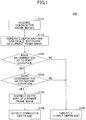
- FIG. 1 illustrates a flowchart of an image processing method 100. As illustrated in FIG. 1 , the image processing method 100 can include the following steps.
- consecutive frame images are acquired.
- the acquiring of consecutive frame images may be as follows, but is not limited thereto.
- Consecutive frame images may be received via a wire or wirelessly.
- the acquiring of consecutive frame images may be as follows.
- Consecutive frame images stored in a memory in advance may be acquired, or consecutive frame images captured by an image capture apparatus such as a camera may be acquired.
- the consecutive frame images may be original images captured by an image capture apparatus, and the original image may be a monochrome, grayscale, or color image, or may be an image acquired by processing various kinds of preprocessing on an original image.
- the preprocessing may be as follows, but is not limited thereto.
- the preprocessing may be cropping, scaling, deformation, noise reduction, or the like.
- step S102 is performed.
- step S102 a depth map and a grayscale histogram of the current frame image of the consecutive frame images are generated.
- the grayscale histogram is a function of an image grayscale distribution, and is a statistical diagram about a grayscale value distribution in the image. Therefore, the grayscale histogram can represent the number of grayscale pixels in the image to reflect the frequency of occurrence of the grayscale pixels in the image, and can intuitively display, with respect to the image, a proportion of each grayscale pixel occupying the image.
- the number of pixels for each grayscale value is calculated according to the magnitudes of the grayscale values for all the pixels in the acquired image.
- the horizontal axis represents grayscale values of pixels
- the vertical axis represents the number of pixels for each grayscale value.
- the grayscale value can be divided into a total of 256 values from 0 to 255.
- a grayscale value "0" represents the darkest area of pure black.
- a grayscale value "255” represents the brightest area of pure white.
- Intermediate grayscale values represent grays of different levels of luminance.
- the grayscale histogram can be classified into five regions: a black region, a shadow region, an exposure region, a highlight region, and a white region.
- pixels in an exposure region located in the middle of the horizontal axis are pixels in which the levels of the grayscale are adequate in the image. Therefore, the exposure region is usually rich in the image gradations. Furthermore, a large amount of useful image information and details can all be represented in an exposure region having moderate luminance.
- the black region (the darkest region) at the left end and the white region (the brightest region) at the right end of the horizontal axis usually do not have any details. Therefore, the grayscale histogram of an image can reflect the overall degree of brightness and darkness of the image.
- the depth map includes depth information about each pixel in an image, and the depth information can represent information about a distance between a viewpoint and a target surface in the image.
- the depth map is not limited to a 2D image in which each pixel corresponds to a 2D pixel in a coordinate system (i.e., a pixel is located at a position on an X-Y plane), and a 3D image can be structured in a 3D per-pixel manner by defining a position of a pixel in the Z axis with depth information.
- a series of frame images can be acquired from a vehicle camera in real time, and depth information of the images can indicate a distance between a target surface in an image and a camera or an imaging plane.
- the depth map can be a grayscale image constituted by grayscale pixels in which grayscale values of the pixels can be defined by values of 0 to 255.
- the grayscale pixel has a value closer to "0”
- the pixel is closer to black, which indicates that the pixel is located far away from the viewpoint in the scene.
- the grayscale pixel has a value almost close to "255”
- the pixel is close to white, which indicates that the pixel is located close to the viewpoint in the scene.
- various kinds of preprocessing such as "color inversion" processing can be performed on the depth map, or, by previously making a setting on the basis of an application scene, a camera parameter, and the like, the value of the grayscale pixel of each pixel and depth information indicating a distance may be applied to other correlations, but the embodiment is not limited thereto.
- an original image at the left-hand side in FIG. 3A is an image taken under a normal light environment.
- distance information about each target (for example, a vehicle, a tree, and a mountain in the distance) in an image is represented by a grayscale of a pixel, so that a realistic 3D model and a 3D image can be generated with the distance information.
- the original image may be captured, for example, in a dark environment (e.g., at night, in a tunnel, and the like), or the entire image may be dark due to lack of exposure, and such images may include a pixel of high luminance (e.g., a light source, a reflection phenomenon, or the like).
- a portion for example, a portion corresponding to a high-luminance region
- the entire depth map is adversely affected.
- an original image at the left-hand side in FIG. 3B is an image taken under a night environment, and the image as a whole is dark.
- the depth map i.e., a graph at the right-hand side in FIG. 4
- depth pixels related to a vehicle are not accurately generated in the corresponding region indicated by a dashed frame at the right-hand side in the depth map due to the strong headlights, and in addition, the depth values of image edges are not uniform, and it can be seen that the generated depth map is inaccurate.
- the embodiment of the present invention will be hereinafter described in detail with regard to processing for such an inaccurate depth map.
- the present invention does not limit the manner of generating the above-mentioned depth map and grayscale histogram, and any suitable method or a software and/or hardware module may be used to generate a depth map and a grayscale histogram of the current frame image in the acquired consecutive frame images.
- a grayscale histogram can be acquired using traditional statistical mathematical methods, or a depth map and/or a grayscale histogram of the current frame image can be generated based on any trained deep neural network, so that a more reliable depth map and/or a grayscale histogram is generated in order to make subsequent image processing more accurate.
- step S103 is performed.
- step S103 a determination is made as to whether the grayscale histogram generated in step S102 satisfies a first condition. In a case where the generated grayscale histogram satisfies the first condition, step S104 is subsequently performed to determine whether the grayscale histogram satisfies a second condition. In a case where the generated grayscale histogram does not satisfy the first condition, step S106' is subsequently performed to output a depth map of the current frame image as it is. It should be understood that the depth map that is output in step S106 may be saved for subsequent correction processing.
- the first condition may be that a representative grayscale value of the generated grayscale histogram is smaller than a first threshold value. That is, in step S103, a determination is made as to whether a representative grayscale value of the grayscale histogram of the current frame image is smaller than the first threshold value.
- a representative grayscale value of the grayscale histogram of the current frame image is smaller than the first threshold value.
- a peak is formed in a low grayscale section. This is because there are a large number of pixels with low grayscale values in such a dark image. For this reason, such a dark image usually appears to be relatively dark as a whole.
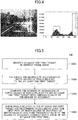
- FIG. 4 is a drawing illustrating an original image and a corresponding grayscale histogram according to an embodiment of the present invention.
- the picture as a whole is dark
- a grayscale histogram at the right-hand side in FIG. 4 a peak is formed in a grayscale section from about 60 to 130. It can be understood that in other cases, for example, when the captured image is underexposed, the image as a whole may be relatively dark, and its grayscale histogram forms a peak in a lower grayscale section.
- the representative grayscale value of the generated grayscale histogram can be determined by the average value of the grayscale values of all the pixels in the grayscale histogram or pixels in a particular section. In a case where the average value of the grayscale value is less than a predetermined grayscale value (i.e., a first threshold value such as, e.g., 100), it is determined that the first condition is satisfied.
- a predetermined grayscale value i.e., a first threshold value such as, e.g., 100
- the representative grayscale value of the grayscale histogram can also be evaluated by counting the number of pixels in a particular section.
- the number of pixels can be counted in a low grayscale section (for example, a grayscale section from 60 to 130), and in a case where the counted number of pixels exceeds a predetermined number, or in a case where a ratio of the counted number of pixels to the total number of pixels exceeds a predetermined value, the number of pixels in the grayscale section may be determined to satisfy the first condition. It should be understood that any suitable method may be used to determine the first condition, and the present invention is not limited thereto.
- step S104 processing for proceeding to step S104 in a case where the first condition is satisfied. More specifically, as described above, according to an embodiment of the present invention, in a case where it is determined that the image is a dark image as a whole based on the generated grayscale histogram of the current frame image, the depth map of the current frame image may be affected by strong light or other external factors, and it is necessary to further determine whether or not the image is to be corrected, and therefore, step S104 is subsequently performed.
- step S104 it is determined whether the generated grayscale histogram satisfies a second condition. In a case where the generated grayscale histogram satisfies the second condition, step S105 is subsequently performed to correct the depth of the current frame image. In a case where the generated grayscale histogram does not satisfy the second condition, step S106' is subsequently performed to output the depth map of the current frame image as it is. It should be understood that the depth map that is output in step S106 may be saved for subsequent correction processing.
- the second condition is that, in a grayscale section, of the generated grayscale histogram, in which the grayscale value is more than a second threshold value, the difference in the number of pixels for adjacent grayscale values is more than a third threshold value. That is, in step S104, a determination is made as to whether there is a peak exceeding a threshold value within a particular section of the grayscale histogram of the current frame image.
- the depth information of the image will be affected by bright light sources (such as, e.g., headlights of cars, street lights, and natural light), resulting in inaccurate depth estimation, and these light sources in the image appear in the grayscale histogram as a peak at a grayscale value of about 255.
- bright light sources such as, e.g., headlights of cars, street lights, and natural light
- these light sources in the image appear in the grayscale histogram as a peak at a grayscale value of about 255.
- the original image at the left-hand side in FIG. 4 is a road image taken at night, which is dark as a whole, but there are strong (high luminance) headlights in the region indicated by a dashed frame at the right-hand side in the grayscale histogram (at the right-hand side in FIG. 4 ) corresponding to the image.
- a very high peak appears at the grayscale value of about 255 in the grayscale histogram (at the right-hand side in FIG. 4 ) corresponding to the image.
- the grayscale image appears in the grayscale image as gray pixels with very high grayscale values, and the stronger the light is, the more greatly the number of pixels at the grayscale value of about 255 increases, and accordingly, a very high peak is formed at the grayscale value of about 255 in the corresponding grayscale histogram, and as illustrated in FIG. 4 , it can be understood that there are more than about 140,000 pixels for a grayscale value of about 255 in the image.
- the light source may be weak, and the position where the peak appears in the grayscale histogram will be lower than 255, but still at a relatively high grayscale value. Therefore, depending on the specific application scenario, equipment parameters, and accuracy requirements, the second threshold value and the third threshold value can be set as required. For example, in a case where the overall environment is very dark, the luminance of the image as a whole is low, and the image depth may be more susceptible to the adverse effects of high-luminance light. Therefore, the third threshold value can be set to 50,000, and in other cases, the third threshold can be set to 100,000 or higher in order to select depth maps of images that certainly need to be corrected.
- a determination can be made as to whether a high-luminance target exists in the dark image, and further, a determination can be made as to whether the depth map of the current frame image needs to be further processed or not.
- a cliff-like shape i.e., the number of pixels of a grayscale value drops sharply from the number of pixels of an adjacent grayscale value
- a target of a relatively high luminance e.g., a light source, a reflection phenomenon, or the like
- an extremely high peak appears in the grayscale section in which the cliff is formed.
- a cliff-like shape is formed at about a grayscale value of about 250, and due to the presence of headlights in the original image, a peak is formed in a grayscale section located to the right of the grayscale value of 250. Therefore, through the above characteristics of the grayscale histogram, a grayscale range where a peak corresponding to a high-luminance target in a dark image appears can be more accurately located, and the degree of accuracy of image processing according to an embodiment of the present invention can be further improved.
- step S104 the processing for determining whether the generated grayscale histogram satisfies the second condition in step S104 has been explained.
- step S105 processing for proceeding to step S105 in a case where the second condition is satisfied will be explained. More specifically, as described above, according to an embodiment of the present invention, in a case where it is determined that there is a high-luminance target in the dark image based on the generated grayscale histogram of the current frame image, the depth map of the current frame image may be affected adversely, and it is necessary to correct the depth map of the current frame image, and therefore, step S105 is subsequently performed.
- step S105 the depth map of the current frame image is corrected.
- specific processing of depth map correction according to an embodiment of the present invention will be explained with reference to FIG. 5 .
- FIG. 5 is a flowchart illustrating depth map correction processing according to an embodiment of the present invention. As illustrated in FIG. 5 , depth map correction processing 500 may include the following steps.
- a first target in a current frame image is identified.
- the image recognition can be implemented based on a trained deep neural network.
- an algorithm such as Mask-RCNN and SegNet is used to classify the current frame image into different categories to identify the first target of interest in the current frame image.
- the first target of interest is a dynamic target in an image, such as a vehicle.
- FIG. 6 is a drawing illustrating an example of classifying an image into different categories by using SegNet.
- the vehicle can be identified as at least one first target.
- image information such as a contour, a position, and a depth of the target can be acquired.
- the specific processing for acquiring such image information is well known to those skilled in the art, and will not be repeated here. It should be understood that the present invention is not limited by the specific identification method to be used, and both existing identification methods and identification methods developed in the future can be applied to the method according to the embodiment of the present invention.
- step S502 is subsequently performed.
- step S502 the degree of accuracy of a depth value of a pixel associated with the first target is calculated.
- the degree of accuracy is used to evaluate whether the depth value of the corresponding pixel is reliable. More specifically, the smaller the degree of accuracy is, the more inaccurate the depth value of the pixel at the point is. Conversely, the larger the degree of accuracy is, the more accurate the depth value of the pixel at the point is.
- step S503 is subsequently performed.
- step S503 the degree of accuracy of the depth value of the pixel associated with the first object is compared with a threshold value of the degree of accuracy.
- the calculating of the degree of accuracy of the depth value of the pixel related to the first target includes determining a second target corresponding to the first target in a previous frame image and calculating, as the degree of accuracy of the depth value of the pixel related to the first target, a difference between the depth value of the pixel related to the first target and a depth value of the pixel related to the second target.
- the previous frame image may be one or more frames before the current frame image, with respect to consecutive frame images. Because a series of image frames are in a consecutive order and the interval between each frame is short, at least one first target in the current frame image appears in a consecutive order. In other words, it appears as a second target in a previous frame image.
- the second target and the first target correspond to each other, and pixels in the second target and pixels in the first target also correspond to each other in one-to-one relationship, and this correspondence can be determined by a method such as a feature point matching.
- the depth values of pixels related to the at least one first target and the second target corresponding to the first target are obtained, and a difference between the depth value of the pixel related to the first target and the depth value of the corresponding pixel related to the second target is successively calculated as the degree of accuracy of the depth value of the pixel related to the first target. More specifically, this can be expressed by the following expression.
- i denotes an index of a particular pixel related to the first target
- i' denotes an index of a corresponding pixel related to the second target
- a i denotes the degree of accuracy of the depth of the particular pixel i related to the first target.
- D i denotes the depth value of the particular pixel i related to the first target.
- D i' denotes the depth value of the corresponding pixel i' related to the second target.
- the first target and the second target correspond to each other
- the pixel i and the pixel i' correspond to each other in a one-to-one relationship.
- step S504 in a case where pixels related to the first target are determined to include at least one first pixel of which the degree of accuracy of the depth value is less than a threshold value of the degree of accuracy, the depth value of the first pixel is corrected.
- the correcting of the depth value of the first pixel may include correcting the depth value of at least one pixel (i.e., the first pixel) of which the degree of accuracy is less than the threshold value of the degree of accuracy, on the basis of the depth value of at least one pixel in the first target of which the degree of accuracy is not less than the threshold value of the degree of accuracy.
- the depth value of the pixel of which the degree of accuracy is not less than the threshold value of the degree of accuracy is substituted for the depth value of the first pixel in the first target of the current frame image, and the at least one pixel (i.e., the first pixel) of which the degree of accuracy is less than the threshold value of the degree of accuracy is updated. Therefore, the overall depth estimation of the first target can be corrected.
- an average value of depth values of such substitute pixels may be derived, and the depth value of the first pixel may be updated with the averaged depth value to achieve depth correction.
- each substitute depth value of the pixel can be weighted on the basis of the similarity between the substitute pixel and the pixel to be corrected (i.e., a Euclidean distance between pixels), and an average value of substitute depth values of the pixels weighted based on the similarity may be calculated to be used for updating the depth value of the first pixel.
- all the depth values in the first target of the current frame image may be undesirable.
- a series of acquired image frames is in a consecutive order and the interval between frames is short, and according to the image processing method of an embodiment of the present invention, the depth map of the previous frame image does not need to be corrected, or the depth has already been corrected, and therefore, correction is preferably made with the depth value of the pixel corresponding to the previous frame image.
- the depth value of a pixel i.e., a first pixel
- the depth value of a pixel i.e., a first pixel
- the depth value of a pixel i.e., a first pixel
- the luminance of light that affects the depth in the image is gradually increasing. For example, when a vehicle comes closer from the distance, the illumination range becomes larger. When the vehicle is still distant, the image as a whole is dark. Even if there are some weak lights in the image, their influence on the depth map of the image may be acceptable without correction, and considering that the depths of the same object in two adjacent frames are the closest in most cases, it may be more desirable to save the depth map of such an image and use the depth map to correct depth maps of subsequent images that need to be corrected in consecutive frame images.
- this third condition it means that the depth map of the current frame image will be significantly adversely affected by light, and the like.
- step S105 is subsequently performed to correct the depth map of the current frame image, and the corrected depth map is output in step S106.
- the depth map of the current frame image is considered to be acceptable, and in this case, step S106 is subsequently performed to output the depth map of the current frame image.
- the third threshold value can be 50000
- the fourth threshold value can be 100000.
- the headlights in the distance are weak, which corresponds to only 40000 pixels at the grayscale value "255" in the grayscale histogram of the image.
- the depth estimation of the image has not been greatly adversely affected, and the accuracy of the depth map is acceptable.
- the vehicle comes closer, the headlights are strong and the illumination range becomes larger, which corresponds to more than 100000 pixels at the grayscale value "255" in the grayscale histogram of the image (in the case of FIG. 4 ).
- the depth map of the image needs to be corrected.
- step S106 is subsequently performed to output the corrected depth map.
- step S101 consecutive frame images are acquired in step S101, and a grayscale histogram is generated in step S102.
- the depth map of the current frame image is directly output in step S106'.
- the depth map to be output is a depth map that does not need to be corrected.
- the grayscale histogram generated in step S102 is determined to satisfy the first condition and the second condition in step S103 and step S104, the depth map of the current frame image is corrected in step S105, and the corrected depth map is output in step S106.
- the depth map to be output is a depth map that has been corrected. It should be understood that the depth map to be output in steps S106 and S106' may be saved, and the output depth maps include a directly output depth map and a corrected depth map so as to allow correction of depth maps in subsequent frame images of the consecutive frame images.
- FIG. 7 is a drawing illustrating an original image and a corrected depth map according to an embodiment of the present invention.
- the original image at the left-hand side of FIG. 7 is the same as the original image at the left-hand side of FIG. 3B , and as described above, as can be understood from the depth map at the right-hand side of FIG. 3B , depth pixels related to the vehicle are not accurately generated in the corresponding region indicated by the dashed frame at the right-hand side of the depth map.
- the depth map is corrected by the above-mentioned image processing method proposed by the present invention, as illustrated in the depth map at the right-hand side of FIG. 7 , the contour of the vehicle is effectively restored, and depths at edges of the image are uniform, and the accuracy of the depth map of the image is significantly improved by correction.
- FIG. 8 is a block diagram illustrating the image processing apparatus 800 according to the embodiment of the present invention.
- the image processing apparatus 800 may include an acquiring unit 810, a generating unit 820, and a processing unit 830.
- the image processing apparatus 800 may include other constituent elements in addition to the above-mentioned units. However, since these constituent elements are not related to the content of the embodiment of the present invention, the illustration and description about these constituent elements are omitted here.
- the specific details of the following operations performed by the image processing apparatus 800 according to the embodiment of the present invention are the same as those described above with reference to FIGS. 1 to 7 , repeated descriptions about the same details are omitted here to avoid repetition.
- the acquiring unit 810 is configured to obtain consecutive frame images.
- the acquiring unit 810 may be an image acquiring device such as a camera, a video camera, or the like.
- the acquiring unit 810 may be physically separated from other constituent elements in the image processing apparatus 800, and an image acquired by the acquiring unit 810 can be transmitted to other constituent elements in the image processing apparatus 800 via a wire or wirelessly.
- the acquiring unit 810 may be physically located at the same location as other constituent elements in the image processing apparatus 800 or may be integrated with other constituent elements, and other constituent elements in the image processing apparatus 800 can receive an image acquired by the acquiring unit 810 via an internal bus.
- the specific processing performed by the acquiring unit 810 is similar to the corresponding content of step S101 described above.
- the generating unit 820 is configured to generate a depth map and a grayscale histogram of the current frame image of the consecutive frame images.
- the specific processing performed by the generating unit 820 is similar to the corresponding content of step S102 described above.
- the present invention does not limit the manner in which the generating unit 820 generates the above-mentioned depth map and grayscale histogram, and any suitable manner or software and/or hardware module may be used as the generating unit 820 to generate the depth map and the grayscale histogram of the current frame image of the acquired consecutive frame images.
- the generating unit 820 may generate a depth map and/or a grayscale histogram of the current frame image on the basis of any trained deep neural network, so that a more reliable depth map and/or a grayscale histogram is generated in order to make subsequent image processing more accurate.
- the processing unit 830 is configured to, in a case where the generated grayscale histogram does not satisfy the first condition, output a depth map of the current frame image, and in a case where the generated grayscale histogram satisfies the first condition, determine whether the generated grayscale histogram satisfies the second condition. In a case where the second condition is not satisfied, the depth map of the current frame image is output, and in a case where the second condition is satisfied, the depth map of the current frame image is corrected, and the corrected depth map of the current frame image is output.
- the specific processing performed by the processing unit 830 is similar to the corresponding content of steps S103 to S106 described above.
- the processing unit 830 determines whether the generated grayscale histogram satisfies the first condition, and in a case where the generated grayscale histogram satisfies the first condition, the processing unit 830 continues to determine whether the grayscale histogram satisfies the second condition. In a case where the generated grayscale histogram does not satisfy the first condition, the processing unit 830 directly outputs the depth map of the current frame image. It should be understood that the depth map output by the processing unit 830 may be saved for subsequent correction processing.
- the first condition may be that a representative grayscale value of the generated grayscale histogram is smaller than a first threshold value. That is, the processing unit 830 determines whether a representative grayscale value of the grayscale histogram of the current frame image is smaller than the first threshold value.
- a peak is formed in a low grayscale section. This is because there are a large number of pixels with low grayscale values in such a dark image. For this reason, such a dark image usually appears to be relatively dark as a whole.
- the processing unit 830 can determine the representative grayscale value of the grayscale histogram generated by the processing unit 830. In a case where the average value of the grayscale value is less than a predetermined grayscale value (i.e., a first threshold value such as, e.g., 100), the processing unit 830 determines that the first condition is satisfied. Alternatively, according to an embodiment of the present invention, the processing unit 830 can also evaluate the representative grayscale value of the grayscale histogram by counting the number of pixels in a particular section.
- a predetermined grayscale value i.e., a first threshold value such as, e.g., 100
- the processing unit 830 can count the number of pixels in a low grayscale section (for example, a grayscale section from 60 to 130), and in a case where the counted number of pixels exceeds a predetermined number, or in a case where a ratio of the counted number of pixels to the total number of pixels exceeds a predetermined value, the processing unit 830 may determine that the number of pixels in the grayscale section satisfies the first condition. It should be understood that the processing unit 830 may use any suitable method to determine the first condition, and the present invention is not limited thereto.
- the depth map of the current frame image may be affected by strong light or other external factors, and it is necessary for the processing unit 830 to further determine whether or not the image is to be corrected.
- the processing unit 830 determines whether the generated grayscale histogram satisfies a second condition. In a case where the generated grayscale histogram satisfies the second condition, the processing unit 830 corrects the depth of the current frame image. In a case where the generated grayscale histogram does not satisfy the second condition, the processing unit 830 outputs the depth map of the current frame image as it is. It should be understood that the depth map that is output by the processing unit 830 may be saved for subsequent correction processing.
- the second condition is that, in a grayscale section, of the generated grayscale histogram, in which the grayscale value is more than a second threshold value, the difference in the number of pixels for adjacent grayscale values is more than a third threshold value. That is, the processing unit 830 determines whether there is a peak exceeding a threshold value within a particular section of the grayscale histogram of the current frame image.
- the depth information of the image will be affected by bright light sources (such as, e.g., headlights of cars, street lights, and natural light), resulting in inaccurate depth estimation, and these light sources in the image appear in the grayscale histogram as a peak at a grayscale value of about 255.
- bright light sources such as, e.g., headlights of cars, street lights, and natural light
- these light sources in the image appear in the grayscale histogram as a peak at a grayscale value of about 255.
- the original image at the left-hand side in FIG. 4 is a road image taken at night, which is dark as a whole, but there are strong (high luminance) headlights in the region indicated by a dashed frame at the right-hand side in the grayscale histogram (at the right-hand side in FIG. 4 ) corresponding to the image.
- a very high peak appears at the grayscale value of about 255 in the grayscale histogram (at the right-hand side in FIG. 4 ) corresponding to the image.
- the grayscale image appears in the grayscale image as gray pixels with very high grayscale values, and the stronger the light is, the more greatly the number of pixels at the grayscale value of about 255 increases, and accordingly, a very high peak is formed at the grayscale value of about 255 in the corresponding grayscale histogram, and as illustrated in FIG. 4 , it can be understood that there are more than about 140,000 pixels for a grayscale value of about 255 in the image.
- the light source may be weak, and the position where the peak appears in the grayscale histogram will be lower than 255, but still at a relatively high grayscale value. Therefore, depending on the specific application scenario, equipment parameters, and accuracy requirements, the second threshold value and the third threshold value can be set as required. For example, in a case where the overall environment is very dark, the luminance of the image as a whole is low, and the image depth may be more susceptible to the adverse effects of high-luminance light. Therefore, the third threshold value can be set to 50,000, and in other cases, the third threshold can be set to 100,000 or higher in order to select depth maps of images that certainly need to be corrected.
- the processing unit 830 can determine whether a high-luminance target exists in the dark image, and further, determine whether the depth map of the current frame image needs to be further processed or not.
- a cliff-like shape i.e., the number of pixels of a grayscale value drops sharply from the number of pixels of an adjacent grayscale value
- a target of a relatively high luminance e.g., a light source, a reflection phenomenon, or the like
- an extremely high peak appears in the grayscale section in which the cliff is formed.
- a cliff-like shape is formed at about a grayscale value of about 250, and due to the presence of headlights in the original image, a peak is formed in a grayscale section located to the right of the grayscale value of 250. Therefore, through the above characteristics of the grayscale histogram, a grayscale range where a peak corresponding to a high-luminance target in a dark image appears can be more accurately located, and the degree of accuracy of image processing according to an embodiment of the present invention can be further improved.
- the processing for determining whether the generated grayscale histogram satisfies the second condition by the processing unit 830 has been explained.
- processing performed by the processing unit 830 in a case where the second condition is satisfied will be explained. More specifically, as described above, according to an embodiment of the present invention, in a case where the processing unit 830 determines that there is a high-luminance target in the dark image based on the generated grayscale histogram of the current frame image, the depth map of the current frame image may be affected adversely, and it is necessary for the processing unit 830 to correct the depth map of the current frame image.
- FIG. 5 is the flowchart illustrating the depth map correction processing according to the embodiment of the present invention.
- the specific processing of the depth map correction according to the embodiment of the present invention has been described above with reference to FIG. 5 , and the correction processing performed by the processing unit 830 is similar to the above description, which will not be repeated here.
- the luminance of light that affects the depth in the image is gradually increasing. For example, when a vehicle comes closer from the distance, the illumination range becomes larger. When the vehicle is still distant, the image as a whole is dark. Even if there are some weak lights in the image, their influence on the depth map of the image may be acceptable without correction, and considering that the depths of the same object in two adjacent frames are the closest in most cases, it may be more desirable to save the depth map of such an image and use the depth map to correct depth maps of subsequent images that need to be corrected in consecutive frame images.
- the processing unit 830 can determine whether the grayscale histogram satisfies the third condition after the second condition is determined to be satisfied, and the third condition is that a peak value exceeding a fourth threshold value is present in a particular section of the grayscale histogram of the current frame image, and the fourth threshold value is more than the third threshold value.
- this third condition it means that the depth map of the current frame image will be significantly adversely affected by light, and the like.
- the processing unit 830 corrects the depth map of the current frame image, and outputs the corrected depth map.
- the depth map of the current frame image is considered to be acceptable, and in this case, the processing unit 830 outputs the depth map of the current frame image.
- the processing unit 830 After the processing unit 830 corrects the depth map of the current frame image, the processing unit 830 outputs the corrected depth map.
- the acquiring unit 810 acquires consecutive frame images, and the generating unit 820 generates a grayscale histogram.
- the processing unit 830 determines that the generated grayscale histogram does not satisfy the first condition or the second condition, the processing unit 830 outputs the depth map of the current frame image as it is.
- the depth map to be output is a depth map that does not need to be corrected.
- the processing unit 830 determines that the grayscale histogram generated satisfies the first condition and the second condition, the processing unit 830 corrects the depth map of the current frame image, and outputs the depth map corrected.
- the depth map to be output is a depth map that has been corrected. It should be understood that the depth map to be output may be saved, and the output depth maps include a directly output depth map and a corrected depth map so as to allow correction of depth maps in subsequent frame images of the consecutive frame images.
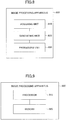
- FIG. 9 is a block diagram illustrating the image processing apparatus 900 according to the embodiment of the present invention.
- the image processing apparatus 900 can be a computer or a server.
- the image processing apparatus 900 includes one or more processors 910 and a memory 920. It is to be understood that, in addition to the above-mentioned units, the image processing apparatus 900 may also include an input device, an output device (not illustrated), and the like. These units can be interconnected via a bus system and/or other forms of connection mechanism. It should be noted that the constituent elements and configurations of the image processing apparatus 900 illustrated in FIG. 9 are merely exemplary and not limiting, and the image processing apparatus 900 may also have other constituent elements and configurations as necessary.
- the processor 910 may be a central processing unit (CPU) or other forms of processing units having data processing capabilities and/or instruction execution capabilities, and may utilize computer program instructions stored in the memory 920 to perform desired functions, which may include acquiring consecutive frame images, generating a depth map and a grayscale histogram of a current frame image of the consecutive frame images, outputting, in a case where the grayscale histogram of the current frame image does not satisfy a first condition, the depth map of the current frame image, determining, in a case where the grayscale histogram of the current frame image satisfies the first condition, whether the grayscale histogram of the current frame image satisfies a second condition, correcting, in a case where the grayscale histogram of the current frame image satisfies the second condition, the depth map of the current frame image, and outputting the corrected depth map of the current frame image.
- CPU central processing unit
- a grayscale histogram of a current frame image of the consecutive frame images outputting, in a case where
- the memory 920 may include one or more computer program products, which may include various forms of computer-readable storage media, such as a volatile memory and/or a non-volatile memory.
- One or more computer program instructions may be stored in a computer-readable storage medium, and the processor 910 may execute the program instructions to implement the functions of the image processing apparatus according to the embodiment of the present invention described above and/or other desired functions, and/or the image processing method according to the embodiment of the present invention.
- Various application programs and various data can also be stored in the computer-readable storage medium.
- a computer-readable recording medium is recorded with instructions for causing, when executed by a computer, the computer to execute an image processing method, and the image processing method includes acquiring consecutive frame images, generating a depth map and a grayscale histogram of a current frame image of the consecutive frame images, outputting, in a case where the grayscale histogram of the current frame image does not satisfy a first condition, the depth map of the current frame image, determining, in a case where the grayscale histogram of the current frame image satisfies the first condition, whether the grayscale histogram of the current frame image satisfies a second condition, and correcting, in a case where the grayscale histogram of the current frame image satisfies the second condition, the depth map of the current frame image, and outputting the corrected depth map of the current frame image.
- each constituent element in the image processing apparatus may be implemented by hardware, software, or a combination of hardware and software.
- the means may include various hardware and/or software components and/or modules, including but not limited to circuits, ASICs (Application Specific Integrated Circuits), or processors.
- a general-purpose processor a digital signal processor (DSP), an ASIC, a FPGA (Field Programmable Gate Array Signal), or other PLD (Programmable Logic Device), a discrete gate, a transistor logic, discrete hardware components, or any combination thereof designed to perform the functions described herein can implement or perform various logic blocks, modules, and circuits described herein.
- the general-purpose processor may be a microprocessor.
- the processor may be any commercially available processor, controller, microcontroller, or state machine.
- the processor may also be implemented as a combination of computing devices, such as a combination of a DSP and a microprocessor, multiple microprocessors, one or more microprocessors in cooperation with a DSP core, or any other such configuration.
- a software module may reside in any form of tangible storage medium.
- storage media that can be used include a random access memory (RAM), a read-only memory (ROM), a flash memory, an EPROM memory, an EEPROM memory, a register, a hard disk, a removable disk, a CD-ROM, and the like.
- RAM random access memory
- ROM read-only memory
- flash memory an EPROM memory
- EEPROM memory a register
- hard disk a removable disk
- CD-ROM compact flash memory
- a storage medium may be coupled to the processor such that the processor can read information from the storage medium and write information to the storage medium.
- the storage medium may be integrated with the processor.
- a software module may include a single instruction or multiple instructions, and may be distributed over several different code segments, between different programs, and across multiple storage media.
- the method of the invention includes one or more actions for implementing said method.
- the methods and/or actions may be interchanged with one another without departing from the scope of the claims.
- the order and/or execution of specific actions may be modified without departing from the scope of the claims.
- a storage medium may be any available physical medium that can be accessed by a computer.
- such computer-readable media may include a RAM, a ROM, an EEPROM, a CD-ROM or other optical disks, disk storages, or other magnetic storage devices, or any other tangible media that are used to carry or store desired program codes in the form of instructions or data structures to allow access by a computer.
- disks include compact disks (CDs), laser disks, optical disks, digital versatile disks (DVDs), floppy disks, and Blu-ray disks.
- a computer program product can perform the operations given herein.
- a computer program product may be a computer-readable tangible medium having instructions tangibly stored (and/or encoded) thereon, the instructions being executable by one or more processors to perform the operations described herein.
- the computer program product may include packaging materials.
- Software or instructions may also be transmitted over a transmission medium.
- software may be transmitted from a website, a server, or other remote sources using a transmission medium such as a coaxial cable, a fiber optic cable, a twisted pair, a digital subscriber line (DSL), or wireless techniques such as infrared, radio, or microwave communications.
- a transmission medium such as a coaxial cable, a fiber optic cable, a twisted pair, a digital subscriber line (DSL), or wireless techniques such as infrared, radio, or microwave communications.
- modules and/or other suitable means for performing the methods and techniques described herein may be downloaded and/or otherwise obtained by a user terminal and/or a base station as appropriate.
- a user terminal and/or a base station may be coupled to a server to facilitate the transfer of means for performing the methods described herein.
- various methods described herein may be provided as a storage medium (e.g., a physical storage medium such as a RAM, a ROM, a CD, or a floppy disk) so that the user terminal and/or the base station can be coupled to the device or various methods are acquired when the storage medium is provided to the device.
- any other suitable techniques for providing the methods and techniques described herein to a device may be utilized.
Landscapes
- Engineering & Computer Science (AREA)
- Physics & Mathematics (AREA)
- General Physics & Mathematics (AREA)
- Theoretical Computer Science (AREA)
- Computer Vision & Pattern Recognition (AREA)
- Image Analysis (AREA)
- Image Processing (AREA)
Abstract
Description
- The present invention relates to a field of image processing. More specifically, the present invention relates to an image processing method, an image processing apparatus, and a computer-readable recording medium.
- In the field of image processing, a depth map can represent information about a distance to a surface of an object in an image from a viewpoint (e.g., a camera on a vehicle). Since depth maps are used to create per-pixel realistic 3D images, it is now becoming more and more common to generate 3D content with depth maps, as depth maps are further applied to scenes such as autonomous driving, 3D reconstruction, augmented reality, and virtual reality. For example, for an autonomous driving system, accurate depth prediction can efficiently interact with orientation estimation and improve the accuracy of orientation results, and accurate depth estimation for a captured image can facilitate distance measurement and avoidance of obstacles.
- However, depth information is often susceptible to external factors such as lighting, environment, and blur, so it is difficult to estimate depth information accurately. For example, in a case of a dark image, the depth information of the image may be inaccurate in depth estimation due to the effect of a bright ray. Therefore, an image processing method, an image processing apparatus, and a computer-readable recording medium that can accurately perform depth estimation is desired.
- In order to solve at least the problems associated with the above conventional techniques, an aspect of the present invention provides an image processing method including acquiring consecutive frame images, generating a depth map and a grayscale histogram of a current frame image of the consecutive frame images, outputting, in a case where the grayscale histogram of the current frame image does not satisfy a first condition, the depth map of the current frame image, determining, in a case where the grayscale histogram of the current frame image satisfies the first condition, whether the grayscale histogram of the current frame image satisfies a second condition, and correcting, in a case where the grayscale histogram of the current frame image satisfies the second condition, the depth map of the current frame image, and outputting the corrected depth map of the current frame image.
- Another aspect of the present invention provides an image processing apparatus including a memory storing instructions for causing, when executed by the image processing apparatus, the image processing apparatus to execute an image processing method, a processor configured to execute the instructions to cause the image processing apparatus to execute the image processing method, wherein the image processing method comprises acquiring consecutive frame images, generating a depth map and a grayscale histogram of a current frame image of the consecutive frame images, outputting, in a case where the grayscale histogram of the current frame image does not satisfy a first condition, the depth map of the current frame image, determining, in a case where the grayscale histogram of the current frame image satisfies the first condition, whether the grayscale histogram of the current frame image satisfies a second condition, and correcting, in a case where the grayscale histogram of the current frame image satisfies the second condition, the depth map of the current frame image, and outputting the corrected depth map of the current frame image.
- According to an embodiment of the present invention, the first condition may be that a representative grayscale value is less than a first threshold value.
- According to an embodiment of the present invention, the second condition may be that, in a grayscale section in which a grayscale value is more than a second threshold value in the generated grayscale histogram, a difference in number of pixels for adjacent grayscale values is more than a third threshold value.
- According to an embodiment of the present invention, the correcting of the depth map of the current frame image may further include identifying at least one first target in the current frame image, calculating a degree of accuracy of a depth value of a pixel related to the at least one first target, comparing the degree of accuracy of the depth value of the pixel related to the at least one first target with a threshold value of the degree of accuracy, and correcting, in a case where the pixel related to the at least one first target includes at least one first pixel of which degree of accuracy of the depth value is less than the threshold value of the degree of accuracy, the depth value of the at least one first pixel.
- According to an embodiment of the present invention, the calculating of the degree of accuracy of the depth value of the pixel related to the first target may further include determining, in a previous frame image, at least one second target corresponding to the at least one first target, calculating, as the degree of accuracy of the depth value of the pixel related to the at least one first target, a difference between the depth value of the pixel related to the at least one first target and a depth value of a pixel corresponding to the at least one second target.
- According to an embodiment of the present invention, the correcting of the depth value of the pixel related to the at least one first target may further include correcting the depth value of the first pixel, based on a depth value of a pixel, related to the at least one first target, of which a degree of accuracy of the depth value is equal to or more than the threshold value of the degree of accuracy, or correcting the depth value of the first pixel, based on a depth value of a pixel related to at least one second target in a previous frame image.
- According to an embodiment of the present invention, the depth map of the current frame image is generated based on a deep neural network.
- Another aspect of the present invention provides an image processing apparatus including a memory storing instructions for causing, when executed by the image processing apparatus, the image processing apparatus to execute an image processing method, a processor configured to execute the instructions to cause the image processing apparatus to execute the image processing method, wherein the image processing method comprises acquiring consecutive frame images, generating a depth map and a grayscale histogram of a current frame image of the consecutive frame images, outputting, in a case where the grayscale histogram of the current frame image does not satisfy a first condition, the depth map of the current frame image, determining, in a case where the grayscale histogram of the current frame image satisfies the first condition, whether the grayscale histogram of the current frame image satisfies a second condition, and correcting, in a case where the grayscale histogram of the current frame image satisfies the second condition, the depth map of the current frame image, and outputting the corrected depth map of the current frame image.
- Another aspect of the present invention provides a computer-readable recording medium recorded with instructions for causing, when executed by a computer, the computer to execute an image processing method, and the image processing method includes acquiring consecutive frame images, generating a depth map and a grayscale histogram of a current frame image of the consecutive frame images, outputting, in a case where the grayscale histogram of the current frame image does not satisfy a first condition, the depth map of the current frame image, determining, in a case where the grayscale histogram of the current frame image satisfies the first condition, whether the grayscale histogram of the current frame image satisfies a second condition, and correcting, in a case where the grayscale histogram of the current frame image satisfies the second condition, the depth map of the current frame image, and outputting the corrected depth map of the current frame image.
- According to the image processing method, the image processing apparatus, and the computer-readable recording medium of the present invention, based on the grayscale histogram, a determination can be made as to whether the acquired image needs to be processed in depth correction, and accurate depth estimation can be performed by outputting the corrected depth map. In addition, the method according to the present invention can correct a depth map that requires depth correction based on determined accurate depth information, and can further improve the efficiency and accuracy of depth estimation.
- The above content, objects, features, and advantages of the present application will become apparent in more detail from description about embodiments and drawings of the present invention. It should be understood that the attached drawings are used to further explain the embodiments disclosed in the present application, and it should be understood that the drawings are not intended to limit the scope of the present invention by interpreting the present application with drawings and the embodiments of the present application.
-
FIG. 1 is a flowchart of an image processing method according to an embodiment of the present invention; -
FIG. 2 is a drawing illustrating a grayscale histogram according to an embodiment of the present invention; -
FIG. 3A and FIG. 3B are two exemplary drawings each illustrating an original image and a corresponding depth map according to an embodiment of the present invention; -
FIG. 4 is a drawing illustrating an original image and a corresponding grayscale histogram according to an embodiment of the present invention; -
FIG. 5 is a flowchart illustrating depth map correction processing according to an embodiment of the present invention; -
FIG. 6 is a drawing illustrating an example of classifying an image into different categories by using SegNet; -
FIG. 7 is a drawing illustrating an original image and a corrected depth map according to an embodiment of the present invention; -
FIG. 8 is a block diagram illustrating an image processing apparatus according to an embodiment of the present invention; and -
FIG. 9 is a block diagram illustrating an image processing apparatus according to an embodiment of the present invention. - Hereinafter, an image processing method, an image processing apparatus, and a computer-readable recording medium according to an embodiment of the present invention will be explained with reference to drawings. In the drawings, similar numbers denote similar constituent elements. It is to be understood that the embodiments described herein are used for illustration purpose only and do not limit the scope of the present invention.
- An image processing method according to an embodiment of the present invention can be applied to a series of consecutive static images, and can also be applied to video frames in a video that changes over time. The application of the image processing method is not limited here. Hereinafter, the image processing method according to the embodiment of the present invention will be explained with reference to
FIG. 1. FIG. 1 illustrates a flowchart of animage processing method 100. As illustrated inFIG. 1 , theimage processing method 100 can include the following steps. - In step S101, consecutive frame images are acquired. According to an embodiment of the present invention, the acquiring of consecutive frame images may be as follows, but is not limited thereto. Consecutive frame images may be received via a wire or wirelessly. Alternatively, the acquiring of consecutive frame images may be as follows. Consecutive frame images stored in a memory in advance may be acquired, or consecutive frame images captured by an image capture apparatus such as a camera may be acquired. Here, the consecutive frame images may be original images captured by an image capture apparatus, and the original image may be a monochrome, grayscale, or color image, or may be an image acquired by processing various kinds of preprocessing on an original image. Here, the preprocessing may be as follows, but is not limited thereto. For example, the preprocessing may be cropping, scaling, deformation, noise reduction, or the like.
- Thereafter, step S102 is performed.
- In step S102, a depth map and a grayscale histogram of the current frame image of the consecutive frame images are generated.
- First, the grayscale histogram according to an embodiment of the present invention will be explained with reference to
FIG. 2 . As is known, the grayscale histogram is a function of an image grayscale distribution, and is a statistical diagram about a grayscale value distribution in the image. Therefore, the grayscale histogram can represent the number of grayscale pixels in the image to reflect the frequency of occurrence of the grayscale pixels in the image, and can intuitively display, with respect to the image, a proportion of each grayscale pixel occupying the image. - As illustrated in
FIG. 2 , according to an embodiment of the present invention, in the grayscale histogram, the number of pixels for each grayscale value is calculated according to the magnitudes of the grayscale values for all the pixels in the acquired image. Here, the horizontal axis represents grayscale values of pixels, and the vertical axis represents the number of pixels for each grayscale value. According to an embodiment of the present invention, the grayscale value can be divided into a total of 256 values from 0 to 255. Here, a grayscale value "0" represents the darkest area of pure black. A grayscale value "255" represents the brightest area of pure white. Intermediate grayscale values represent grays of different levels of luminance. Further as illustrated inFIG. 2 , the grayscale histogram can be classified into five regions: a black region, a shadow region, an exposure region, a highlight region, and a white region. Among them, pixels in an exposure region located in the middle of the horizontal axis are pixels in which the levels of the grayscale are adequate in the image. Therefore, the exposure region is usually rich in the image gradations. Furthermore, a large amount of useful image information and details can all be represented in an exposure region having moderate luminance. In contrast, the black region (the darkest region) at the left end and the white region (the brightest region) at the right end of the horizontal axis usually do not have any details. Therefore, the grayscale histogram of an image can reflect the overall degree of brightness and darkness of the image. - Subsequently, an image and a depth map of the image according to an embodiment of the present invention will be explained with reference to
FIG. 3A and FIG. 3B . As described above, the depth map includes depth information about each pixel in an image, and the depth information can represent information about a distance between a viewpoint and a target surface in the image. More specifically, the depth map is not limited to a 2D image in which each pixel corresponds to a 2D pixel in a coordinate system (i.e., a pixel is located at a position on an X-Y plane), and a 3D image can be structured in a 3D per-pixel manner by defining a position of a pixel in the Z axis with depth information. More specifically, for example, in the field of autonomous driving, a series of frame images can be acquired from a vehicle camera in real time, and depth information of the images can indicate a distance between a target surface in an image and a camera or an imaging plane. - According to an embodiment of the present invention, as illustrated in the depth maps at the right-hand side in
FIG. 3A and FIG. 3B , the depth map can be a grayscale image constituted by grayscale pixels in which grayscale values of the pixels can be defined by values of 0 to 255. For example, when the grayscale pixel has a value closer to "0", the pixel is closer to black, which indicates that the pixel is located far away from the viewpoint in the scene. On the contrary, when the grayscale pixel has a value almost close to "255", the pixel is close to white, which indicates that the pixel is located close to the viewpoint in the scene. In other words, the smaller the grayscale value of the pixel is, the farther the pixel is located from the viewpoint, and the larger the grayscale value of the pixel is, the closer the pixel is located to the viewpoint. It is to be naturally understood that various kinds of preprocessing such as "color inversion" processing can be performed on the depth map, or, by previously making a setting on the basis of an application scene, a camera parameter, and the like, the value of the grayscale pixel of each pixel and depth information indicating a distance may be applied to other correlations, but the embodiment is not limited thereto. - For example, an original image at the left-hand side in
FIG. 3A is an image taken under a normal light environment. In a depth map at the right-hand side corresponding to the original image, distance information about each target (for example, a vehicle, a tree, and a mountain in the distance) in an image is represented by a grayscale of a pixel, so that a realistic 3D model and a 3D image can be generated with the distance information. However, in some cases, the original image may be captured, for example, in a dark environment (e.g., at night, in a tunnel, and the like), or the entire image may be dark due to lack of exposure, and such images may include a pixel of high luminance (e.g., a light source, a reflection phenomenon, or the like). In this case, the generation of a portion (for example, a portion corresponding to a high-luminance region) of a depth map or the entire depth map is adversely affected. - For example, an original image at the left-hand side in
FIG. 3B is an image taken under a night environment, and the image as a whole is dark. However, there are strong headlights in the region indicated by a dashed frame at the right-hand side. Therefore, in the depth map (i.e., a graph at the right-hand side inFIG. 4 ) of the original image, depth pixels related to a vehicle are not accurately generated in the corresponding region indicated by a dashed frame at the right-hand side in the depth map due to the strong headlights, and in addition, the depth values of image edges are not uniform, and it can be seen that the generated depth map is inaccurate. The embodiment of the present invention will be hereinafter described in detail with regard to processing for such an inaccurate depth map. - In addition, the present invention does not limit the manner of generating the above-mentioned depth map and grayscale histogram, and any suitable method or a software and/or hardware module may be used to generate a depth map and a grayscale histogram of the current frame image in the acquired consecutive frame images. For example, according to an embodiment of the present invention, a grayscale histogram can be acquired using traditional statistical mathematical methods, or a depth map and/or a grayscale histogram of the current frame image can be generated based on any trained deep neural network, so that a more reliable depth map and/or a grayscale histogram is generated in order to make subsequent image processing more accurate.
- Thereafter, step S103 is performed.
- In step S103, a determination is made as to whether the grayscale histogram generated in step S102 satisfies a first condition. In a case where the generated grayscale histogram satisfies the first condition, step S104 is subsequently performed to determine whether the grayscale histogram satisfies a second condition. In a case where the generated grayscale histogram does not satisfy the first condition, step S106' is subsequently performed to output a depth map of the current frame image as it is. It should be understood that the depth map that is output in step S106 may be saved for subsequent correction processing.
- More specifically, according to an embodiment of the present invention, the first condition may be that a representative grayscale value of the generated grayscale histogram is smaller than a first threshold value. That is, in step S103, a determination is made as to whether a representative grayscale value of the grayscale histogram of the current frame image is smaller than the first threshold value. Generally, in a grayscale histogram corresponding to a dark image, a peak is formed in a low grayscale section. This is because there are a large number of pixels with low grayscale values in such a dark image. For this reason, such a dark image usually appears to be relatively dark as a whole.
-
FIG. 4 is a drawing illustrating an original image and a corresponding grayscale histogram according to an embodiment of the present invention. For example, in an original image at the left-hand side inFIG. 4 , the picture as a whole is dark, and in a grayscale histogram at the right-hand side inFIG. 4 , a peak is formed in a grayscale section from about 60 to 130. It can be understood that in other cases, for example, when the captured image is underexposed, the image as a whole may be relatively dark, and its grayscale histogram forms a peak in a lower grayscale section. Therefore, it can be seen that by determining whether the image is a dark image as a whole by determining whether the representative grayscale value of the grayscale histogram satisfies the first condition, a determination can be made as to whether the depth map of the current frame image is desired to be processed in subsequent processing. - More specifically, according to an embodiment of the present invention, the representative grayscale value of the generated grayscale histogram can be determined by the average value of the grayscale values of all the pixels in the grayscale histogram or pixels in a particular section. In a case where the average value of the grayscale value is less than a predetermined grayscale value (i.e., a first threshold value such as, e.g., 100), it is determined that the first condition is satisfied. Alternatively, according to an embodiment of the present invention, the representative grayscale value of the grayscale histogram can also be evaluated by counting the number of pixels in a particular section. For example, the number of pixels can be counted in a low grayscale section (for example, a grayscale section from 60 to 130), and in a case where the counted number of pixels exceeds a predetermined number, or in a case where a ratio of the counted number of pixels to the total number of pixels exceeds a predetermined value, the number of pixels in the grayscale section may be determined to satisfy the first condition. It should be understood that any suitable method may be used to determine the first condition, and the present invention is not limited thereto.
- As described above, the processing of determining whether the generated grayscale histogram satisfies the first condition at step S103 is described above. Hereinafter, processing for proceeding to step S104 in a case where the first condition is satisfied will be explained. More specifically, as described above, according to an embodiment of the present invention, in a case where it is determined that the image is a dark image as a whole based on the generated grayscale histogram of the current frame image, the depth map of the current frame image may be affected by strong light or other external factors, and it is necessary to further determine whether or not the image is to be corrected, and therefore, step S104 is subsequently performed.
- In step S104, it is determined whether the generated grayscale histogram satisfies a second condition. In a case where the generated grayscale histogram satisfies the second condition, step S105 is subsequently performed to correct the depth of the current frame image. In a case where the generated grayscale histogram does not satisfy the second condition, step S106' is subsequently performed to output the depth map of the current frame image as it is. It should be understood that the depth map that is output in step S106 may be saved for subsequent correction processing.
- According to an embodiment of the present invention, the second condition is that, in a grayscale section, of the generated grayscale histogram, in which the grayscale value is more than a second threshold value, the difference in the number of pixels for adjacent grayscale values is more than a third threshold value. That is, in step S104, a determination is made as to whether there is a peak exceeding a threshold value within a particular section of the grayscale histogram of the current frame image.
- More specifically, in a dark image as a whole, the depth information of the image will be affected by bright light sources (such as, e.g., headlights of cars, street lights, and natural light), resulting in inaccurate depth estimation, and these light sources in the image appear in the grayscale histogram as a peak at a grayscale value of about 255. For example, in
FIG. 4 , the original image at the left-hand side inFIG. 4 is a road image taken at night, which is dark as a whole, but there are strong (high luminance) headlights in the region indicated by a dashed frame at the right-hand side in the grayscale histogram (at the right-hand side inFIG. 4 ) corresponding to the image. In this case, a very high peak (indicated by the dashed frame) appears at the grayscale value of about 255 in the grayscale histogram (at the right-hand side inFIG. 4 ) corresponding to the image. This is because the light appears in the grayscale image as gray pixels with very high grayscale values, and the stronger the light is, the more greatly the number of pixels at the grayscale value of about 255 increases, and accordingly, a very high peak is formed at the grayscale value of about 255 in the corresponding grayscale histogram, and as illustrated inFIG. 4 , it can be understood that there are more than about 140,000 pixels for a grayscale value of about 255 in the image. It can be understood that in other cases, the light source may be weak, and the position where the peak appears in the grayscale histogram will be lower than 255, but still at a relatively high grayscale value. Therefore, depending on the specific application scenario, equipment parameters, and accuracy requirements, the second threshold value and the third threshold value can be set as required. For example, in a case where the overall environment is very dark, the luminance of the image as a whole is low, and the image depth may be more susceptible to the adverse effects of high-luminance light. Therefore, the third threshold value can be set to 50,000, and in other cases, the third threshold can be set to 100,000 or higher in order to select depth maps of images that certainly need to be corrected. - Therefore, by determining whether the grayscale histogram satisfies the second condition, a determination can be made as to whether a high-luminance target exists in the dark image, and further, a determination can be made as to whether the depth map of the current frame image needs to be further processed or not.
- In addition, in a grayscale histogram of an image that is dark as a whole, a cliff-like shape (i.e., the number of pixels of a grayscale value drops sharply from the number of pixels of an adjacent grayscale value) is usually formed in a high luminance region. In a case where there is a target of a relatively high luminance (e.g., a light source, a reflection phenomenon, or the like) in the dark image, an extremely high peak appears in the grayscale section in which the cliff is formed. For example, in the grayscale histogram at the right-hand side corresponding to the original image at the left-hand side in
FIG. 4 , a cliff-like shape is formed at about a grayscale value of about 250, and due to the presence of headlights in the original image, a peak is formed in a grayscale section located to the right of the grayscale value of 250. Therefore, through the above characteristics of the grayscale histogram, a grayscale range where a peak corresponding to a high-luminance target in a dark image appears can be more accurately located, and the degree of accuracy of image processing according to an embodiment of the present invention can be further improved. - Hereinabove, the processing for determining whether the generated grayscale histogram satisfies the second condition in step S104 has been explained. Hereinafter, processing for proceeding to step S105 in a case where the second condition is satisfied will be explained. More specifically, as described above, according to an embodiment of the present invention, in a case where it is determined that there is a high-luminance target in the dark image based on the generated grayscale histogram of the current frame image, the depth map of the current frame image may be affected adversely, and it is necessary to correct the depth map of the current frame image, and therefore, step S105 is subsequently performed.
- In step S105, the depth map of the current frame image is corrected. Hereinafter, specific processing of depth map correction according to an embodiment of the present invention will be explained with reference to
FIG. 5 . -
FIG. 5 is a flowchart illustrating depth map correction processing according to an embodiment of the present invention. As illustrated inFIG. 5 , depthmap correction processing 500 may include the following steps. - In step S501, a first target in a current frame image is identified. According to an embodiment of the present invention, the image recognition can be implemented based on a trained deep neural network. For example, an algorithm such as Mask-RCNN and SegNet is used to classify the current frame image into different categories to identify the first target of interest in the current frame image. Preferably, as illustrated in
FIG. 6 , the first target of interest is a dynamic target in an image, such as a vehicle. -
FIG. 6 is a drawing illustrating an example of classifying an image into different categories by using SegNet. As illustrated inFIG. 6 , the vehicle can be identified as at least one first target. It can be understood that, during this processing, image information such as a contour, a position, and a depth of the target can be acquired. The specific processing for acquiring such image information is well known to those skilled in the art, and will not be repeated here. It should be understood that the present invention is not limited by the specific identification method to be used, and both existing identification methods and identification methods developed in the future can be applied to the method according to the embodiment of the present invention. Thereafter, step S502 is subsequently performed. - In step S502, the degree of accuracy of a depth value of a pixel associated with the first target is calculated. The degree of accuracy is used to evaluate whether the depth value of the corresponding pixel is reliable. More specifically, the smaller the degree of accuracy is, the more inaccurate the depth value of the pixel at the point is. Conversely, the larger the degree of accuracy is, the more accurate the depth value of the pixel at the point is. Thereafter, step S503 is subsequently performed. In step S503, the degree of accuracy of the depth value of the pixel associated with the first object is compared with a threshold value of the degree of accuracy.
- According to an embodiment of the present invention, the calculating of the degree of accuracy of the depth value of the pixel related to the first target includes determining a second target corresponding to the first target in a previous frame image and calculating, as the degree of accuracy of the depth value of the pixel related to the first target, a difference between the depth value of the pixel related to the first target and a depth value of the pixel related to the second target. The previous frame image may be one or more frames before the current frame image, with respect to consecutive frame images. Because a series of image frames are in a consecutive order and the interval between each frame is short, at least one first target in the current frame image appears in a consecutive order. In other words, it appears as a second target in a previous frame image. Therefore, the second target and the first target correspond to each other, and pixels in the second target and pixels in the first target also correspond to each other in one-to-one relationship, and this correspondence can be determined by a method such as a feature point matching. On this basis, the depth values of pixels related to the at least one first target and the second target corresponding to the first target are obtained, and a difference between the depth value of the pixel related to the first target and the depth value of the corresponding pixel related to the second target is successively calculated as the degree of accuracy of the depth value of the pixel related to the first target. More specifically, this can be expressed by the following expression.

- Here, i denotes an index of a particular pixel related to the first target, and i' denotes an index of a corresponding pixel related to the second target. Ai denotes the degree of accuracy of the depth of the particular pixel i related to the first target. Di denotes the depth value of the particular pixel i related to the first target. Di' denotes the depth value of the corresponding pixel i' related to the second target. Herein, the first target and the second target correspond to each other, and the pixel i and the pixel i' correspond to each other in a one-to-one relationship.
- In step S504, in a case where pixels related to the first target are determined to include at least one first pixel of which the degree of accuracy of the depth value is less than a threshold value of the degree of accuracy, the depth value of the first pixel is corrected.
- According to an embodiment of the present invention, the correcting of the depth value of the first pixel may include correcting the depth value of at least one pixel (i.e., the first pixel) of which the degree of accuracy is less than the threshold value of the degree of accuracy, on the basis of the depth value of at least one pixel in the first target of which the degree of accuracy is not less than the threshold value of the degree of accuracy. More specifically, since it can be considered thdistants between the view point and the pixels of the same target in the current frame image are similar, the depth value of the pixel of which the degree of accuracy is not less than the threshold value of the degree of accuracy is substituted for the depth value of the first pixel in the first target of the current frame image, and the at least one pixel (i.e., the first pixel) of which the degree of accuracy is less than the threshold value of the degree of accuracy is updated. Therefore, the overall depth estimation of the first target can be corrected. Alternatively, an average value of depth values of such substitute pixels (i.e., pixels of which the degrees of accuracy are not less than the threshold value of the degree of accuracy) may be derived, and the depth value of the first pixel may be updated with the averaged depth value to achieve depth correction. Furthermore, each substitute depth value of the pixel can be weighted on the basis of the similarity between the substitute pixel and the pixel to be corrected (i.e., a Euclidean distance between pixels), and an average value of substitute depth values of the pixels weighted based on the similarity may be calculated to be used for updating the depth value of the first pixel.
- Sometimes, all the depth values in the first target of the current frame image may be undesirable. In such a case, it may be conceivable to correct the depth map of the current frame image with the depth value of the corresponding target in the previous frame image. Alternatively, according to another embodiment of the present invention, a series of acquired image frames is in a consecutive order and the interval between frames is short, and according to the image processing method of an embodiment of the present invention, the depth map of the previous frame image does not need to be corrected, or the depth has already been corrected, and therefore, correction is preferably made with the depth value of the pixel corresponding to the previous frame image. More specifically, in a case where pixels of the first target corresponding to the current frame image do not include any pixel of which the degree of accuracy of the depth value is equal to or more than (i.e., not less than) the threshold value of the degree of accuracy, the depth value of a pixel (i.e., a first pixel) of which the degree of accuracy is less than the threshold value of the degree of accuracy can be corrected on the basis of the depth value of the pixel corresponding to the second target in the previous frame image, or regardless of the degrees of accuracy of pixels of the first target in the current frame image, the depth value of a pixel (i.e., a first pixel) of which the degree of accuracy is less than the threshold value of the degree of accuracy can be corrected on the basis of the depth value of the pixel corresponding to the second target in the previous frame image.
- In addition, in some cases, the luminance of light that affects the depth in the image is gradually increasing. For example, when a vehicle comes closer from the distance, the illumination range becomes larger. When the vehicle is still distant, the image as a whole is dark. Even if there are some weak lights in the image, their influence on the depth map of the image may be acceptable without correction, and considering that the depths of the same object in two adjacent frames are the closest in most cases, it may be more desirable to save the depth map of such an image and use the depth map to correct depth maps of subsequent images that need to be corrected in consecutive frame images.
- More specifically, according to another embodiment of the present invention, a determination can be made as to whether the grayscale histogram satisfies the third condition after the second condition is determined to be satisfied in step S104, and the third condition is that a peak value exceeding a fourth threshold value is present in a particular section of the grayscale histogram of the current frame image, and the fourth threshold value is more than the third threshold value. When this third condition is satisfied, it means that the depth map of the current frame image will be significantly adversely affected by light, and the like. In this case, step S105 is subsequently performed to correct the depth map of the current frame image, and the corrected depth map is output in step S106. In a case where the third condition is not satisfied, the depth map of the current frame image is considered to be acceptable, and in this case, step S106 is subsequently performed to output the depth map of the current frame image.
- For example, according to an embodiment of the present invention, the third threshold value can be 50000, and the fourth threshold value can be 100000. In a more specific example, in a previous frame of two consecutive images, the headlights in the distance are weak, which corresponds to only 40000 pixels at the grayscale value "255" in the grayscale histogram of the image. At this time, the depth estimation of the image has not been greatly adversely affected, and the accuracy of the depth map is acceptable. In the next frame of the two consecutive images, the vehicle comes closer, the headlights are strong and the illumination range becomes larger, which corresponds to more than 100000 pixels at the grayscale value "255" in the grayscale histogram of the image (in the case of
FIG. 4 ). At this time, the depth map of the image needs to be corrected. - Back to step S105, when the depth map of the current frame image is corrected, step S106 is subsequently performed to output the corrected depth map.
- In summary, according to the flowchart illustrated in
FIG. 1 , firstly, consecutive frame images are acquired in step S101, and a grayscale histogram is generated in step S102. In a case where the generated grayscale histogram is determined not to satisfy the first condition or the second condition in step S103 or step S104, the depth map of the current frame image is directly output in step S106'. In this case, the depth map to be output is a depth map that does not need to be corrected. In a case where the grayscale histogram generated in step S102 is determined to satisfy the first condition and the second condition in step S103 and step S104, the depth map of the current frame image is corrected in step S105, and the corrected depth map is output in step S106. In this case, the depth map to be output is a depth map that has been corrected. It should be understood that the depth map to be output in steps S106 and S106' may be saved, and the output depth maps include a directly output depth map and a corrected depth map so as to allow correction of depth maps in subsequent frame images of the consecutive frame images. -
FIG. 7 is a drawing illustrating an original image and a corrected depth map according to an embodiment of the present invention. As illustrated inFIG. 7 , the original image at the left-hand side ofFIG. 7 is the same as the original image at the left-hand side ofFIG. 3B , and as described above, as can be understood from the depth map at the right-hand side ofFIG. 3B , depth pixels related to the vehicle are not accurately generated in the corresponding region indicated by the dashed frame at the right-hand side of the depth map. In contrast, after the depth map is corrected by the above-mentioned image processing method proposed by the present invention, as illustrated in the depth map at the right-hand side ofFIG. 7 , the contour of the vehicle is effectively restored, and depths at edges of the image are uniform, and the accuracy of the depth map of the image is significantly improved by correction. - Hereinafter, an
image processing apparatus 800 according to an embodiment of the present invention will be explained with reference toFIG. 8. FIG. 8 is a block diagram illustrating theimage processing apparatus 800 according to the embodiment of the present invention. As illustrated inFIG. 8 , theimage processing apparatus 800 may include an acquiringunit 810, agenerating unit 820, and aprocessing unit 830. It should be understood that theimage processing apparatus 800 may include other constituent elements in addition to the above-mentioned units. However, since these constituent elements are not related to the content of the embodiment of the present invention, the illustration and description about these constituent elements are omitted here. In addition, since the specific details of the following operations performed by theimage processing apparatus 800 according to the embodiment of the present invention are the same as those described above with reference toFIGS. 1 to 7 , repeated descriptions about the same details are omitted here to avoid repetition. - The acquiring
unit 810 is configured to obtain consecutive frame images. According to an embodiment of the present invention, the acquiringunit 810 may be an image acquiring device such as a camera, a video camera, or the like. In addition, the acquiringunit 810 may be physically separated from other constituent elements in theimage processing apparatus 800, and an image acquired by the acquiringunit 810 can be transmitted to other constituent elements in theimage processing apparatus 800 via a wire or wirelessly. Alternatively, the acquiringunit 810 may be physically located at the same location as other constituent elements in theimage processing apparatus 800 or may be integrated with other constituent elements, and other constituent elements in theimage processing apparatus 800 can receive an image acquired by the acquiringunit 810 via an internal bus. The specific processing performed by the acquiringunit 810 is similar to the corresponding content of step S101 described above. - The generating
unit 820 is configured to generate a depth map and a grayscale histogram of the current frame image of the consecutive frame images. The specific processing performed by the generatingunit 820 is similar to the corresponding content of step S102 described above. - In addition, the present invention does not limit the manner in which the
generating unit 820 generates the above-mentioned depth map and grayscale histogram, and any suitable manner or software and/or hardware module may be used as the generatingunit 820 to generate the depth map and the grayscale histogram of the current frame image of the acquired consecutive frame images. For example, according to an embodiment of the present invention, the generatingunit 820 may generate a depth map and/or a grayscale histogram of the current frame image on the basis of any trained deep neural network, so that a more reliable depth map and/or a grayscale histogram is generated in order to make subsequent image processing more accurate. - The
processing unit 830 is configured to, in a case where the generated grayscale histogram does not satisfy the first condition, output a depth map of the current frame image, and in a case where the generated grayscale histogram satisfies the first condition, determine whether the generated grayscale histogram satisfies the second condition. In a case where the second condition is not satisfied, the depth map of the current frame image is output, and in a case where the second condition is satisfied, the depth map of the current frame image is corrected, and the corrected depth map of the current frame image is output. The specific processing performed by theprocessing unit 830 is similar to the corresponding content of steps S103 to S106 described above. - First, the
processing unit 830 determines whether the generated grayscale histogram satisfies the first condition, and in a case where the generated grayscale histogram satisfies the first condition, theprocessing unit 830 continues to determine whether the grayscale histogram satisfies the second condition. In a case where the generated grayscale histogram does not satisfy the first condition, theprocessing unit 830 directly outputs the depth map of the current frame image. It should be understood that the depth map output by theprocessing unit 830 may be saved for subsequent correction processing. - More specifically, according to an embodiment of the present invention, the first condition may be that a representative grayscale value of the generated grayscale histogram is smaller than a first threshold value. That is, the
processing unit 830 determines whether a representative grayscale value of the grayscale histogram of the current frame image is smaller than the first threshold value. Generally, in a grayscale histogram corresponding to a dark image, a peak is formed in a low grayscale section. This is because there are a large number of pixels with low grayscale values in such a dark image. For this reason, such a dark image usually appears to be relatively dark as a whole. - More specifically, according to an embodiment of the present invention, with the average value of the grayscale values of all the pixels in the grayscale histogram or pixels in a particular section, the
processing unit 830 can determine the representative grayscale value of the grayscale histogram generated by theprocessing unit 830. In a case where the average value of the grayscale value is less than a predetermined grayscale value (i.e., a first threshold value such as, e.g., 100), theprocessing unit 830 determines that the first condition is satisfied. Alternatively, according to an embodiment of the present invention, theprocessing unit 830 can also evaluate the representative grayscale value of the grayscale histogram by counting the number of pixels in a particular section. For example, theprocessing unit 830 can count the number of pixels in a low grayscale section (for example, a grayscale section from 60 to 130), and in a case where the counted number of pixels exceeds a predetermined number, or in a case where a ratio of the counted number of pixels to the total number of pixels exceeds a predetermined value, theprocessing unit 830 may determine that the number of pixels in the grayscale section satisfies the first condition. It should be understood that theprocessing unit 830 may use any suitable method to determine the first condition, and the present invention is not limited thereto. - As described above, in a case where the
processing unit 830 determines that the image is a dark image as a whole based on the generated grayscale histogram of the current frame image, the depth map of the current frame image may be affected by strong light or other external factors, and it is necessary for theprocessing unit 830 to further determine whether or not the image is to be corrected. - Subsequently, the
processing unit 830 determines whether the generated grayscale histogram satisfies a second condition. In a case where the generated grayscale histogram satisfies the second condition, theprocessing unit 830 corrects the depth of the current frame image. In a case where the generated grayscale histogram does not satisfy the second condition, theprocessing unit 830 outputs the depth map of the current frame image as it is. It should be understood that the depth map that is output by theprocessing unit 830 may be saved for subsequent correction processing. - According to an embodiment of the present invention, the second condition is that, in a grayscale section, of the generated grayscale histogram, in which the grayscale value is more than a second threshold value, the difference in the number of pixels for adjacent grayscale values is more than a third threshold value. That is, the
processing unit 830 determines whether there is a peak exceeding a threshold value within a particular section of the grayscale histogram of the current frame image. - More specifically, in a dark image as a whole, the depth information of the image will be affected by bright light sources (such as, e.g., headlights of cars, street lights, and natural light), resulting in inaccurate depth estimation, and these light sources in the image appear in the grayscale histogram as a peak at a grayscale value of about 255. For example, in
FIG. 4 , the original image at the left-hand side inFIG. 4 is a road image taken at night, which is dark as a whole, but there are strong (high luminance) headlights in the region indicated by a dashed frame at the right-hand side in the grayscale histogram (at the right-hand side inFIG. 4 ) corresponding to the image. In this case, a very high peak (indicated by the dashed frame) appears at the grayscale value of about 255 in the grayscale histogram (at the right-hand side inFIG. 4 ) corresponding to the image. This is because the light appears in the grayscale image as gray pixels with very high grayscale values, and the stronger the light is, the more greatly the number of pixels at the grayscale value of about 255 increases, and accordingly, a very high peak is formed at the grayscale value of about 255 in the corresponding grayscale histogram, and as illustrated inFIG. 4 , it can be understood that there are more than about 140,000 pixels for a grayscale value of about 255 in the image. It can be understood that in other cases, the light source may be weak, and the position where the peak appears in the grayscale histogram will be lower than 255, but still at a relatively high grayscale value. Therefore, depending on the specific application scenario, equipment parameters, and accuracy requirements, the second threshold value and the third threshold value can be set as required. For example, in a case where the overall environment is very dark, the luminance of the image as a whole is low, and the image depth may be more susceptible to the adverse effects of high-luminance light. Therefore, the third threshold value can be set to 50,000, and in other cases, the third threshold can be set to 100,000 or higher in order to select depth maps of images that certainly need to be corrected. - Therefore, by determining whether the grayscale histogram satisfies the second condition, the
processing unit 830 can determine whether a high-luminance target exists in the dark image, and further, determine whether the depth map of the current frame image needs to be further processed or not. - In addition, in a grayscale histogram of an image that is dark as a whole, a cliff-like shape (i.e., the number of pixels of a grayscale value drops sharply from the number of pixels of an adjacent grayscale value) is usually formed in a high luminance region. In a case where there is a target of a relatively high luminance (e.g., a light source, a reflection phenomenon, or the like) in the dark image, an extremely high peak appears in the grayscale section in which the cliff is formed. For example, in the grayscale histogram at the right-hand side corresponding to the original image at the left-hand side in
FIG. 4 , a cliff-like shape is formed at about a grayscale value of about 250, and due to the presence of headlights in the original image, a peak is formed in a grayscale section located to the right of the grayscale value of 250. Therefore, through the above characteristics of the grayscale histogram, a grayscale range where a peak corresponding to a high-luminance target in a dark image appears can be more accurately located, and the degree of accuracy of image processing according to an embodiment of the present invention can be further improved. - Hereinabove, the processing for determining whether the generated grayscale histogram satisfies the second condition by the
processing unit 830 has been explained. Hereinafter, processing performed by theprocessing unit 830 in a case where the second condition is satisfied will be explained. More specifically, as described above, according to an embodiment of the present invention, in a case where theprocessing unit 830 determines that there is a high-luminance target in the dark image based on the generated grayscale histogram of the current frame image, the depth map of the current frame image may be affected adversely, and it is necessary for theprocessing unit 830 to correct the depth map of the current frame image. -
FIG. 5 is the flowchart illustrating the depth map correction processing according to the embodiment of the present invention. The specific processing of the depth map correction according to the embodiment of the present invention has been described above with reference toFIG. 5 , and the correction processing performed by theprocessing unit 830 is similar to the above description, which will not be repeated here. - In addition, in some cases, the luminance of light that affects the depth in the image is gradually increasing. For example, when a vehicle comes closer from the distance, the illumination range becomes larger. When the vehicle is still distant, the image as a whole is dark. Even if there are some weak lights in the image, their influence on the depth map of the image may be acceptable without correction, and considering that the depths of the same object in two adjacent frames are the closest in most cases, it may be more desirable to save the depth map of such an image and use the depth map to correct depth maps of subsequent images that need to be corrected in consecutive frame images.
- More specifically, according to another embodiment of the present invention, the
processing unit 830 can determine whether the grayscale histogram satisfies the third condition after the second condition is determined to be satisfied, and the third condition is that a peak value exceeding a fourth threshold value is present in a particular section of the grayscale histogram of the current frame image, and the fourth threshold value is more than the third threshold value. When this third condition is satisfied, it means that the depth map of the current frame image will be significantly adversely affected by light, and the like. In this case, theprocessing unit 830 corrects the depth map of the current frame image, and outputs the corrected depth map. In a case where the third condition is not satisfied, the depth map of the current frame image is considered to be acceptable, and in this case, theprocessing unit 830 outputs the depth map of the current frame image. - After the
processing unit 830 corrects the depth map of the current frame image, theprocessing unit 830 outputs the corrected depth map. - In summary, according to the flowchart illustrated in
FIG. 1 , firstly, the acquiringunit 810 acquires consecutive frame images, and thegenerating unit 820 generates a grayscale histogram. In a case where theprocessing unit 830 determines that the generated grayscale histogram does not satisfy the first condition or the second condition, theprocessing unit 830 outputs the depth map of the current frame image as it is. In this case, the depth map to be output is a depth map that does not need to be corrected. In a case where theprocessing unit 830 determines that the grayscale histogram generated satisfies the first condition and the second condition, theprocessing unit 830 corrects the depth map of the current frame image, and outputs the depth map corrected. In this case, the depth map to be output is a depth map that has been corrected. It should be understood that the depth map to be output may be saved, and the output depth maps include a directly output depth map and a corrected depth map so as to allow correction of depth maps in subsequent frame images of the consecutive frame images. - Hereinafter, an
image processing apparatus 900 according to an embodiment of the present invention will be explained with reference toFIG. 9. FIG. 9 is a block diagram illustrating theimage processing apparatus 900 according to the embodiment of the present invention. As illustrated inFIG. 9 , theimage processing apparatus 900 can be a computer or a server. - As illustrated in
FIG. 9 , theimage processing apparatus 900 includes one ormore processors 910 and amemory 920. It is to be understood that, in addition to the above-mentioned units, theimage processing apparatus 900 may also include an input device, an output device (not illustrated), and the like. These units can be interconnected via a bus system and/or other forms of connection mechanism. It should be noted that the constituent elements and configurations of theimage processing apparatus 900 illustrated inFIG. 9 are merely exemplary and not limiting, and theimage processing apparatus 900 may also have other constituent elements and configurations as necessary. - The
processor 910 may be a central processing unit (CPU) or other forms of processing units having data processing capabilities and/or instruction execution capabilities, and may utilize computer program instructions stored in thememory 920 to perform desired functions, which may include acquiring consecutive frame images, generating a depth map and a grayscale histogram of a current frame image of the consecutive frame images, outputting, in a case where the grayscale histogram of the current frame image does not satisfy a first condition, the depth map of the current frame image, determining, in a case where the grayscale histogram of the current frame image satisfies the first condition, whether the grayscale histogram of the current frame image satisfies a second condition, correcting, in a case where the grayscale histogram of the current frame image satisfies the second condition, the depth map of the current frame image, and outputting the corrected depth map of the current frame image. - The
memory 920 may include one or more computer program products, which may include various forms of computer-readable storage media, such as a volatile memory and/or a non-volatile memory. One or more computer program instructions may be stored in a computer-readable storage medium, and theprocessor 910 may execute the program instructions to implement the functions of the image processing apparatus according to the embodiment of the present invention described above and/or other desired functions, and/or the image processing method according to the embodiment of the present invention. Various application programs and various data can also be stored in the computer-readable storage medium. - A computer-readable recording medium according to an embodiment of the present invention is recorded with instructions for causing, when executed by a computer, the computer to execute an image processing method, and the image processing method includes acquiring consecutive frame images, generating a depth map and a grayscale histogram of a current frame image of the consecutive frame images, outputting, in a case where the grayscale histogram of the current frame image does not satisfy a first condition, the depth map of the current frame image, determining, in a case where the grayscale histogram of the current frame image satisfies the first condition, whether the grayscale histogram of the current frame image satisfies a second condition, and correcting, in a case where the grayscale histogram of the current frame image satisfies the second condition, the depth map of the current frame image, and outputting the corrected depth map of the current frame image.
- It should be understood that each constituent element in the image processing apparatus may be implemented by hardware, software, or a combination of hardware and software.
- It is to be understood that the above-mentioned specific embodiments are merely exemplary and not limiting, and those skilled in the art may merge and combine some of the steps and constituent elements in the above-described embodiment according to the present invention to achieve the effect of the present invention. Such an embodiment made by merging and combining some of the steps and constituent elements are not described here, but are also included in the present invention.
- Note that the advantages, effects, and the like described in the present invention are merely examples and not limitations, and these advantages, effects, and the like cannot be considered to be required in various embodiments of the present invention. In addition, the specific details of the above-mentioned invention are merely for the purpose of illustration and ease of understanding, and are not limiting. The above-mentioned details do not require or imply that the above-mentioned specific details must be implemented.
- The block diagrams of the members, apparatuses, equipment, and systems of the present invention are only illustrative examples and are not intended to require or imply that they must be connected, arranged, and configured in the manner illustrated in the block diagrams. As those skilled in the art would recognize, these members, apparatuses, equipment, and systems may be connected, arranged, and configured in any manner. Terms such as "including", "comprising", "having", and the like are openended terms, meaning "including, but not limited to", and can be used interchangeably with each other. As used herein, terms "or" and "and" refer to the words "and/or" and are used interchangeably with each other, unless the context clearly indicates otherwise. A term "such as" as used herein refers to a phrase "such as, but not limited to", and is used interchangeably with the phrase "such as, but not limited to".
- The flowchart of the steps and the above description of the method according to the embodiment of the present invention are merely illustrative examples and are not intended to require or imply that the steps of various embodiments must be performed in the described order. As those skilled in the art will recognize, the order of the steps in the above embodiments may be performed in any order. Words such as "subsequently", "thereafter", "then", and the like are not intended to limit the order of the steps. These words are only used to guide the reader through the description of these methods. Furthermore, any reference to an element in a singular form using an article such as "a", "an", or "the" is not to be construed as limiting the element to the singular number.
- In addition, the steps and constituent elements described herein are not limited to the specific embodiment. In fact, according to the concept of the present invention, some of the steps and devices related to various embodiments in the present application can be combined into a new embodiment, and such new combined embodiments are also included in the scope of the present invention.
- Various operations in the methods described above may be performed by any appropriate means capable of performing corresponding functions. The means may include various hardware and/or software components and/or modules, including but not limited to circuits, ASICs (Application Specific Integrated Circuits), or processors.
- A general-purpose processor, a digital signal processor (DSP), an ASIC, a FPGA (Field Programmable Gate Array Signal), or other PLD (Programmable Logic Device), a discrete gate, a transistor logic, discrete hardware components, or any combination thereof designed to perform the functions described herein can implement or perform various logic blocks, modules, and circuits described herein. The general-purpose processor may be a microprocessor. The processor may be any commercially available processor, controller, microcontroller, or state machine. The processor may also be implemented as a combination of computing devices, such as a combination of a DSP and a microprocessor, multiple microprocessors, one or more microprocessors in cooperation with a DSP core, or any other such configuration.
- The steps of the method or algorithm described in combination with the present invention may be directly embedded in hardware, a software module executed by a processor, or a combination of hardware and software. A software module may reside in any form of tangible storage medium. Some examples of storage media that can be used include a random access memory (RAM), a read-only memory (ROM), a flash memory, an EPROM memory, an EEPROM memory, a register, a hard disk, a removable disk, a CD-ROM, and the like. A storage medium may be coupled to the processor such that the processor can read information from the storage medium and write information to the storage medium. Alternatively, the storage medium may be integrated with the processor. A software module may include a single instruction or multiple instructions, and may be distributed over several different code segments, between different programs, and across multiple storage media.
- The method of the invention includes one or more actions for implementing said method. The methods and/or actions may be interchanged with one another without departing from the scope of the claims. In other words, unless a specific order of actions is specified, the order and/or execution of specific actions may be modified without departing from the scope of the claims.
- The functions described may be implemented with hardware, software, firmware, or any combination thereof. If implemented with software, the functions may be stored as one or more instructions on a tangible computer-readable medium. A storage medium may be any available physical medium that can be accessed by a computer. By way of example and not limitation, such computer-readable media may include a RAM, a ROM, an EEPROM, a CD-ROM or other optical disks, disk storages, or other magnetic storage devices, or any other tangible media that are used to carry or store desired program codes in the form of instructions or data structures to allow access by a computer. As used herein, disks include compact disks (CDs), laser disks, optical disks, digital versatile disks (DVDs), floppy disks, and Blu-ray disks.
- Therefore, a computer program product can perform the operations given herein. For example, such a computer program product may be a computer-readable tangible medium having instructions tangibly stored (and/or encoded) thereon, the instructions being executable by one or more processors to perform the operations described herein. The computer program product may include packaging materials.
- Software or instructions may also be transmitted over a transmission medium. For example, software may be transmitted from a website, a server, or other remote sources using a transmission medium such as a coaxial cable, a fiber optic cable, a twisted pair, a digital subscriber line (DSL), or wireless techniques such as infrared, radio, or microwave communications.
- In addition, modules and/or other suitable means for performing the methods and techniques described herein may be downloaded and/or otherwise obtained by a user terminal and/or a base station as appropriate. For example, such a device may be coupled to a server to facilitate the transfer of means for performing the methods described herein. Alternatively, various methods described herein may be provided as a storage medium (e.g., a physical storage medium such as a RAM, a ROM, a CD, or a floppy disk) so that the user terminal and/or the base station can be coupled to the device or various methods are acquired when the storage medium is provided to the device. Moreover, any other suitable techniques for providing the methods and techniques described herein to a device may be utilized.
- Other examples and implementations are within the scope and spirit of the invention and the appended claims. For example, due to the nature of software, the functions described above can be implemented using software executed by a processor, hardware, firmware, hard-wired, or any combination thereof. Features that implement functions may also be physically located at various locations, including portions distributed so that functions are implemented at different physical locations. Also, as used herein, including in a claim, the use of "or" in an enumeration of items beginning with "at least one" indicates a separate enumeration, such as "at least one of A, B, or C". The enumeration means A or B or C, or AB or AC or BC, or ABC (i.e., A and B and C). Furthermore, a term, "exemplary", does not mean that the described example is preferred or better than other examples.
- Various changes, substitutions, and alterations to the techniques described herein can be made without departing from the techniques taught by the claims defined below. Further, the scope of the claims of the present invention is not limited to the specific aspects of the processes, devices, manufacturing, composition of events, means, methods, and actions described above. The processes, devices, manufacturing, composition of events, means, methods, and actions that currently exist or developed at a later point in time may be utilized to perform substantially the same functions or achieve substantially the same results as the corresponding aspects described herein. Accordingly, the appended claims include, within their scope, the processes, devices, manufacturing, composition of events, means, methods, and actions that currently exist or developed at a later point in time.
- The above description about the aspects of the present invention is provided to enable any person skilled in the art to make or use the invention. Various modifications to these aspects will be readily apparent to those skilled in the art, and the general principles defined herein may be applied to other aspects without departing from the scope of the invention. Therefore, the present invention should not be limited to the aspects described above, but the present invention includes the widest scope consistent with the principles and novel features of the invention.
- The foregoing description has been given for the purposes of illustration and description. This description should not limit the embodiments of the present invention to those described above. Although a number of exemplary aspects and embodiments have been discussed above, those skilled in the art will recognize certain variations, modifications, changes, additions, and sub-combinations thereof.
Claims (10)
- An image processing method (100) comprising:acquiring consecutive frame images;generating a depth map and a grayscale histogram of a current frame image of the consecutive frame images;outputting, in a case where the grayscale histogram of the current frame image does not satisfy a first condition, the depth map of the current frame image;determining, in a case where the grayscale histogram of the current frame image satisfies the first condition, whether the grayscale histogram of the current frame image satisfies a second condition; andcorrecting, in a case where the grayscale histogram of the current frame image satisfies the second condition, the depth map of the current frame image, and outputting the corrected depth map of the current frame image.
- The image processing method (100) according to claim 1, wherein the first condition is that a representative grayscale value is less than a first threshold value.
- The image processing method (100) according to claim 1, wherein the second condition is that, in a grayscale section in which a grayscale value is more than a second threshold value in the generated grayscale histogram, a difference in number of pixels for adjacent grayscale values is more than a third threshold value.
- The image processing method (100) according to claim 1, wherein the correcting of the depth map of the current frame image further comprises:identifying at least one first target in the current frame image;calculating a degree of accuracy of a depth value of one or more pixels related to the at least one first target;comparing the degree of accuracy of the depth value of the one or more pixels related to the at least one first target with a threshold value of the degree of accuracy; andcorrecting, in a case where the one or more pixels related to the at least one first target includes at least one first pixel of which degree of accuracy of the depth value is less than the threshold value of the degree of accuracy, the depth value of the at least one first pixel.
- The image processing method (100) according to claim 4, wherein the calculating of the degree of accuracy of the depth value of the one or more pixels related to the first target further comprises:determining, in a previous frame image, at least one second target corresponding to the at least one first target;calculating, as the degree of accuracy of the depth value of the one or more pixels related to the at least one first target, a difference between the depth value of the one or more pixels related to the at least one first target and a depth value of one or more pixels corresponding to the at least one second target.
- The image processing method (100) according to claim 4 or 5, wherein the correcting of the depth value of the at least one first pixel further comprises:correcting the depth value of the first pixel, based on a depth value of a pixel, related to the at least one first target, of which a degree of accuracy of the depth value is equal to or more than the threshold value of the degree of accuracy; orcorrecting the depth value of the first pixel, based on a depth value of a pixel related to at least one second target in a previous frame image.
- The image processing method (100) according to claim 1, wherein the depth map of the current frame image is generated based on a deep neural network.
- An image processing apparatus (800) comprising:an acquiring unit (810) configured to acquire consecutive frame images;a generating unit (820) configured to generate a depth map and a grayscale histogram of a current frame image of the consecutive frame images; anda processing unit (830),wherein in a case where the grayscale histogram of the current frame image does not satisfy a first condition, the processing unit outputs the depth map of the current frame image,in a case where the grayscale histogram of the current frame image satisfies the first condition, the processing unit determines whether the grayscale histogram of the current frame image satisfies a second condition, andin a case where the grayscale histogram of the current frame image satisfies the second condition, the processing unit corrects the depth map of the current frame image, and outputs the corrected depth map of the current frame image.
- An image processing apparatus (800) comprising:a memory (920) storing instructions for causing, when executed by the image processing apparatus, the image processing apparatus to execute an image processing method (100),a processor (910) configured to execute the instructions to cause the image processing apparatus to execute the image processing method,wherein the image processing method comprises:acquiring consecutive frame images;generating a depth map and a grayscale histogram of a current frame image of the consecutive frame images;outputting, in a case where the grayscale histogram of the current frame image does not satisfy a first condition, the depth map of the current frame image;determining, in a case where the grayscale histogram of the current frame image satisfies the first condition, whether the grayscale histogram of the current frame image satisfies a second condition; andcorrecting, in a case where the grayscale histogram of the current frame image satisfies the second condition, the depth map of the current frame image, and outputting the corrected depth map of the current frame image.
- A computer-readable recording medium recorded with instructions for causing, when executed by a computer, the computer to execute an image processing method (100),
the image processing method comprising:acquiring consecutive frame images;generating a depth map and a grayscale histogram of a current frame image of the consecutive frame images;outputting, in a case where the grayscale histogram of the current frame image does not satisfy a first condition, the depth map of the current frame image;determining, in a case where the grayscale histogram of the current frame image satisfies the first condition, whether the grayscale histogram of the current frame image satisfies a second condition; andcorrecting, in a case where the grayscale histogram of the current frame image satisfies the second condition, the depth map of the current frame image, and outputting the corrected depth map of the current frame image.
Applications Claiming Priority (1)
| Application Number | Priority Date | Filing Date | Title |
|---|---|---|---|
| CN201910219962.9A CN111724430A (en) | 2019-03-22 | 2019-03-22 | Image processing method and device and computer readable storage medium |
Publications (2)
| Publication Number | Publication Date |
|---|---|
| EP3712841A1 true EP3712841A1 (en) | 2020-09-23 |
| EP3712841B1 EP3712841B1 (en) | 2021-08-11 |
Family
ID=69804737
Family Applications (1)
| Application Number | Title | Priority Date | Filing Date |
|---|---|---|---|
| EP20162542.3A Active EP3712841B1 (en) | 2019-03-22 | 2020-03-11 | Image processing method, image processing apparatus, and computer-readable recording medium |
Country Status (3)
| Country | Link |
|---|---|
| EP (1) | EP3712841B1 (en) |
| JP (1) | JP7004019B2 (en) |
| CN (1) | CN111724430A (en) |
Cited By (10)
| Publication number | Priority date | Publication date | Assignee | Title |
|---|---|---|---|---|
| CN112733952A (en) * | 2021-01-19 | 2021-04-30 | 深圳市轱辘车联数据技术有限公司 | Image data processing method and device, terminal equipment and readable storage medium |
| CN113344907A (en) * | 2021-06-29 | 2021-09-03 | 深圳前海微众银行股份有限公司 | An image detection method and device |
| CN115311301A (en) * | 2022-10-12 | 2022-11-08 | 江苏银生新能源科技有限公司 | PCB welding spot defect detection method |
| CN115457099A (en) * | 2022-09-09 | 2022-12-09 | 梅卡曼德(北京)机器人科技有限公司 | Deep completion method, device, equipment, medium and product |
| CN116129787A (en) * | 2023-01-03 | 2023-05-16 | 北京欧铼德微电子技术有限公司 | Picture compensation method and device |
| CN116309672A (en) * | 2023-05-23 | 2023-06-23 | 武汉地震工程研究院有限公司 | A method and device for measuring bridge dynamic deflection at night based on LED targets |
| CN116934624A (en) * | 2023-07-28 | 2023-10-24 | 武汉高德智感科技有限公司 | Infrared image dimming method and system |
| US20230360239A1 (en) * | 2022-05-05 | 2023-11-09 | Visual Sensing Technology Co., Ltd. | Method for Establishing Semantic Distance Map and Related Moving device |
| WO2024117951A1 (en) * | 2022-12-01 | 2024-06-06 | Telefonaktiebolaget Lm Ericsson (Publ) | Holographic communication system |
| CN118506285A (en) * | 2024-07-15 | 2024-08-16 | 浪潮通用软件有限公司 | Intelligent environment-adapting violation monitoring method, device and medium |
Families Citing this family (9)
| Publication number | Priority date | Publication date | Assignee | Title |
|---|---|---|---|---|
| JP2021051015A (en) * | 2019-09-25 | 2021-04-01 | ソニーセミコンダクタソリューションズ株式会社 | Distance measuring device, distance measuring method, and program |
| CN112465891B (en) * | 2020-12-11 | 2024-07-05 | 杭州海康机器人股份有限公司 | Depth image obtaining method and device, electronic equipment and storage medium |
| US11823402B2 (en) | 2021-05-03 | 2023-11-21 | Electronics And Telecommunications Research Institute | Method and apparatus for correcting error in depth information estimated from 2D image |
| US12014507B2 (en) * | 2021-06-10 | 2024-06-18 | Toyota Motor Engineering & Manufacturing North America, Inc. | Systems and methods for training a prediction system |
| CN113949830B (en) * | 2021-09-30 | 2023-11-24 | 国家能源集团广西电力有限公司 | Image processing method |
| US12347125B2 (en) | 2022-05-27 | 2025-07-01 | Toyota Research Institute, Inc. | Using histograms for self-supervised depth estimation |
| CN115330779B (en) * | 2022-10-13 | 2022-12-20 | 四川迪晟新达类脑智能技术有限公司 | Blasting time confirmation method and system based on fire light and smoke dust in civil blasting |
| CN116310448B (en) * | 2023-05-24 | 2023-08-04 | 山东曙岳车辆有限公司 | Container assembly matching detection method based on computer vision |
| CN117522760B (en) * | 2023-11-13 | 2024-06-25 | 书行科技(北京)有限公司 | Image processing method, device, electronic equipment, medium and product |
Citations (1)
| Publication number | Priority date | Publication date | Assignee | Title |
|---|---|---|---|---|
| US20040190789A1 (en) * | 2003-03-26 | 2004-09-30 | Microsoft Corporation | Automatic analysis and adjustment of digital images with exposure problems |
Family Cites Families (4)
| Publication number | Priority date | Publication date | Assignee | Title |
|---|---|---|---|---|
| JP2010062919A (en) | 2008-09-04 | 2010-03-18 | Ricoh Co Ltd | Image processing apparatus and method, program, and recording medium |
| JP2012253643A (en) | 2011-06-06 | 2012-12-20 | Sony Corp | Image processing apparatus and method, and program |
| JP6140935B2 (en) | 2012-05-17 | 2017-06-07 | キヤノン株式会社 | Image processing apparatus, image processing method, image processing program, and imaging apparatus |
| KR101970563B1 (en) | 2012-11-23 | 2019-08-14 | 엘지디스플레이 주식회사 | Device for correcting depth map of three dimensional image and method for correcting the same |
-
2019
- 2019-03-22 CN CN201910219962.9A patent/CN111724430A/en not_active Withdrawn
-
2020
- 2020-03-06 JP JP2020038576A patent/JP7004019B2/en not_active Expired - Fee Related
- 2020-03-11 EP EP20162542.3A patent/EP3712841B1/en active Active
Patent Citations (1)
| Publication number | Priority date | Publication date | Assignee | Title |
|---|---|---|---|---|
| US20040190789A1 (en) * | 2003-03-26 | 2004-09-30 | Microsoft Corporation | Automatic analysis and adjustment of digital images with exposure problems |
Non-Patent Citations (1)
| Title |
|---|
| ANONYMOUS: "Depthmap Plugin - elsamuko", 23 June 2015 (2015-06-23), XP055717511, Retrieved from the Internet <URL:https://web.archive.org/web/20150623030353/https://sites.google.com/site/elsamuko/gimp/depthmap> [retrieved on 20200723] * |
Cited By (13)
| Publication number | Priority date | Publication date | Assignee | Title |
|---|---|---|---|---|
| CN112733952A (en) * | 2021-01-19 | 2021-04-30 | 深圳市轱辘车联数据技术有限公司 | Image data processing method and device, terminal equipment and readable storage medium |
| CN113344907B (en) * | 2021-06-29 | 2023-09-08 | 深圳前海微众银行股份有限公司 | An image detection method and device |
| CN113344907A (en) * | 2021-06-29 | 2021-09-03 | 深圳前海微众银行股份有限公司 | An image detection method and device |
| US11972587B2 (en) * | 2022-05-05 | 2024-04-30 | Fitipower Integrated Technology Inc. | Method for establishing semantic distance map and related moving device |
| US20230360239A1 (en) * | 2022-05-05 | 2023-11-09 | Visual Sensing Technology Co., Ltd. | Method for Establishing Semantic Distance Map and Related Moving device |
| CN115457099A (en) * | 2022-09-09 | 2022-12-09 | 梅卡曼德(北京)机器人科技有限公司 | Deep completion method, device, equipment, medium and product |
| CN115311301A (en) * | 2022-10-12 | 2022-11-08 | 江苏银生新能源科技有限公司 | PCB welding spot defect detection method |
| WO2024117951A1 (en) * | 2022-12-01 | 2024-06-06 | Telefonaktiebolaget Lm Ericsson (Publ) | Holographic communication system |
| CN116129787A (en) * | 2023-01-03 | 2023-05-16 | 北京欧铼德微电子技术有限公司 | Picture compensation method and device |
| CN116309672B (en) * | 2023-05-23 | 2023-08-01 | 武汉地震工程研究院有限公司 | Night bridge dynamic deflection measuring method and device based on LED targets |
| CN116309672A (en) * | 2023-05-23 | 2023-06-23 | 武汉地震工程研究院有限公司 | A method and device for measuring bridge dynamic deflection at night based on LED targets |
| CN116934624A (en) * | 2023-07-28 | 2023-10-24 | 武汉高德智感科技有限公司 | Infrared image dimming method and system |
| CN118506285A (en) * | 2024-07-15 | 2024-08-16 | 浪潮通用软件有限公司 | Intelligent environment-adapting violation monitoring method, device and medium |
Also Published As
| Publication number | Publication date |
|---|---|
| CN111724430A (en) | 2020-09-29 |
| JP2020155116A (en) | 2020-09-24 |
| EP3712841B1 (en) | 2021-08-11 |
| JP7004019B2 (en) | 2022-01-21 |
Similar Documents
| Publication | Publication Date | Title |
|---|---|---|
| EP3712841B1 (en) | Image processing method, image processing apparatus, and computer-readable recording medium | |
| US11861813B2 (en) | Image distortion correction method and apparatus | |
| US11700457B2 (en) | Flicker mitigation via image signal processing | |
| CN109886997B (en) | Identification frame determining method and device based on target detection and terminal equipment | |
| CN110248096B (en) | Focusing method and apparatus, electronic device, computer-readable storage medium | |
| US8755630B2 (en) | Object pose recognition apparatus and object pose recognition method using the same | |
| EP3496383A1 (en) | Image processing method, apparatus and device | |
| CN110378946B (en) | Depth map processing method, device and electronic device | |
| US8503771B2 (en) | Method and apparatus for estimating light source | |
| US9710715B2 (en) | Image processing system, image processing device, and image processing method | |
| EP2849431B1 (en) | Method and apparatus for detecting backlight | |
| CN111091592B (en) | Image processing method, image processing device, electronic device, and readable storage medium | |
| EP3621041B1 (en) | Three-dimensional representation generating system | |
| CN107864337B (en) | Sketch image processing method, device and equipment and computer readable storage medium | |
| US20180295340A1 (en) | Method and apparatus for determining a depth map for an angle | |
| CN106993112A (en) | Background virtualization method and device based on depth of field and electronic device | |
| US20100232685A1 (en) | Image processing apparatus and method, learning apparatus and method, and program | |
| CN112699885B (en) | A method and system for augmenting semantic segmentation training data based on generative adversarial network (GAN) | |
| KR20200023651A (en) | Preview photo blurring method and apparatus and storage medium | |
| EP2511875A1 (en) | Apparatus and method for refining a value of a similarity measure | |
| US20240428498A1 (en) | Image processing apparatus, image processing method, and storage medium | |
| CN115187954B (en) | A traffic sign recognition method in special scenarios based on image processing | |
| CN110717962A (en) | Dynamic photo generation method and device, photographing equipment and storage medium | |
| CN110188640B (en) | Face recognition method, apparatus, server and computer readable medium | |
| CN116958164B (en) | An image processing method, apparatus, electronic device, and storage medium |
Legal Events
| Date | Code | Title | Description |
|---|---|---|---|
| PUAI | Public reference made under article 153(3) epc to a published international application that has entered the european phase |
Free format text: ORIGINAL CODE: 0009012 |
|
| STAA | Information on the status of an ep patent application or granted ep patent |
Free format text: STATUS: REQUEST FOR EXAMINATION WAS MADE |
|
| 17P | Request for examination filed |
Effective date: 20200311 |
|
| AK | Designated contracting states |
Kind code of ref document: A1 Designated state(s): AL AT BE BG CH CY CZ DE DK EE ES FI FR GB GR HR HU IE IS IT LI LT LU LV MC MK MT NL NO PL PT RO RS SE SI SK SM TR |
|
| AX | Request for extension of the european patent |
Extension state: BA ME |
|
| GRAP | Despatch of communication of intention to grant a patent |
Free format text: ORIGINAL CODE: EPIDOSNIGR1 |
|
| STAA | Information on the status of an ep patent application or granted ep patent |
Free format text: STATUS: GRANT OF PATENT IS INTENDED |
|
| INTG | Intention to grant announced |
Effective date: 20210428 |
|
| GRAS | Grant fee paid |
Free format text: ORIGINAL CODE: EPIDOSNIGR3 |
|
| GRAA | (expected) grant |
Free format text: ORIGINAL CODE: 0009210 |
|
| STAA | Information on the status of an ep patent application or granted ep patent |
Free format text: STATUS: THE PATENT HAS BEEN GRANTED |
|
| RIN1 | Information on inventor provided before grant (corrected) |
Inventor name: WANG, GANG Inventor name: LIU, DIANCHAO Inventor name: SU, XIAOMING |
|
| AK | Designated contracting states |
Kind code of ref document: B1 Designated state(s): AL AT BE BG CH CY CZ DE DK EE ES FI FR GB GR HR HU IE IS IT LI LT LU LV MC MK MT NL NO PL PT RO RS SE SI SK SM TR |
|
| REG | Reference to a national code |
Ref country code: CH Ref legal event code: EP |
|
| REG | Reference to a national code |
Ref country code: DE Ref legal event code: R096 Ref document number: 602020000348 Country of ref document: DE |
|
| REG | Reference to a national code |
Ref country code: IE Ref legal event code: FG4D Ref country code: AT Ref legal event code: REF Ref document number: 1420162 Country of ref document: AT Kind code of ref document: T Effective date: 20210915 |
|
| REG | Reference to a national code |
Ref country code: LT Ref legal event code: MG9D |
|
| REG | Reference to a national code |
Ref country code: NL Ref legal event code: MP Effective date: 20210811 |
|
| REG | Reference to a national code |
Ref country code: AT Ref legal event code: MK05 Ref document number: 1420162 Country of ref document: AT Kind code of ref document: T Effective date: 20210811 |
|
| PG25 | Lapsed in a contracting state [announced via postgrant information from national office to epo] |
Ref country code: NO Free format text: LAPSE BECAUSE OF FAILURE TO SUBMIT A TRANSLATION OF THE DESCRIPTION OR TO PAY THE FEE WITHIN THE PRESCRIBED TIME-LIMIT Effective date: 20211111 Ref country code: PT Free format text: LAPSE BECAUSE OF FAILURE TO SUBMIT A TRANSLATION OF THE DESCRIPTION OR TO PAY THE FEE WITHIN THE PRESCRIBED TIME-LIMIT Effective date: 20211213 Ref country code: HR Free format text: LAPSE BECAUSE OF FAILURE TO SUBMIT A TRANSLATION OF THE DESCRIPTION OR TO PAY THE FEE WITHIN THE PRESCRIBED TIME-LIMIT Effective date: 20210811 Ref country code: FI Free format text: LAPSE BECAUSE OF FAILURE TO SUBMIT A TRANSLATION OF THE DESCRIPTION OR TO PAY THE FEE WITHIN THE PRESCRIBED TIME-LIMIT Effective date: 20210811 Ref country code: LT Free format text: LAPSE BECAUSE OF FAILURE TO SUBMIT A TRANSLATION OF THE DESCRIPTION OR TO PAY THE FEE WITHIN THE PRESCRIBED TIME-LIMIT Effective date: 20210811 Ref country code: BG Free format text: LAPSE BECAUSE OF FAILURE TO SUBMIT A TRANSLATION OF THE DESCRIPTION OR TO PAY THE FEE WITHIN THE PRESCRIBED TIME-LIMIT Effective date: 20211111 Ref country code: AT Free format text: LAPSE BECAUSE OF FAILURE TO SUBMIT A TRANSLATION OF THE DESCRIPTION OR TO PAY THE FEE WITHIN THE PRESCRIBED TIME-LIMIT Effective date: 20210811 Ref country code: SE Free format text: LAPSE BECAUSE OF FAILURE TO SUBMIT A TRANSLATION OF THE DESCRIPTION OR TO PAY THE FEE WITHIN THE PRESCRIBED TIME-LIMIT Effective date: 20210811 Ref country code: RS Free format text: LAPSE BECAUSE OF FAILURE TO SUBMIT A TRANSLATION OF THE DESCRIPTION OR TO PAY THE FEE WITHIN THE PRESCRIBED TIME-LIMIT Effective date: 20210811 Ref country code: ES Free format text: LAPSE BECAUSE OF FAILURE TO SUBMIT A TRANSLATION OF THE DESCRIPTION OR TO PAY THE FEE WITHIN THE PRESCRIBED TIME-LIMIT Effective date: 20210811 |
|
| PG25 | Lapsed in a contracting state [announced via postgrant information from national office to epo] |
Ref country code: PL Free format text: LAPSE BECAUSE OF FAILURE TO SUBMIT A TRANSLATION OF THE DESCRIPTION OR TO PAY THE FEE WITHIN THE PRESCRIBED TIME-LIMIT Effective date: 20210811 Ref country code: LV Free format text: LAPSE BECAUSE OF FAILURE TO SUBMIT A TRANSLATION OF THE DESCRIPTION OR TO PAY THE FEE WITHIN THE PRESCRIBED TIME-LIMIT Effective date: 20210811 Ref country code: GR Free format text: LAPSE BECAUSE OF FAILURE TO SUBMIT A TRANSLATION OF THE DESCRIPTION OR TO PAY THE FEE WITHIN THE PRESCRIBED TIME-LIMIT Effective date: 20211112 |
|
| PG25 | Lapsed in a contracting state [announced via postgrant information from national office to epo] |
Ref country code: NL Free format text: LAPSE BECAUSE OF FAILURE TO SUBMIT A TRANSLATION OF THE DESCRIPTION OR TO PAY THE FEE WITHIN THE PRESCRIBED TIME-LIMIT Effective date: 20210811 |
|
| PG25 | Lapsed in a contracting state [announced via postgrant information from national office to epo] |
Ref country code: DK Free format text: LAPSE BECAUSE OF FAILURE TO SUBMIT A TRANSLATION OF THE DESCRIPTION OR TO PAY THE FEE WITHIN THE PRESCRIBED TIME-LIMIT Effective date: 20210811 |
|
| REG | Reference to a national code |
Ref country code: DE Ref legal event code: R097 Ref document number: 602020000348 Country of ref document: DE |
|
| PG25 | Lapsed in a contracting state [announced via postgrant information from national office to epo] |
Ref country code: SM Free format text: LAPSE BECAUSE OF FAILURE TO SUBMIT A TRANSLATION OF THE DESCRIPTION OR TO PAY THE FEE WITHIN THE PRESCRIBED TIME-LIMIT Effective date: 20210811 Ref country code: SK Free format text: LAPSE BECAUSE OF FAILURE TO SUBMIT A TRANSLATION OF THE DESCRIPTION OR TO PAY THE FEE WITHIN THE PRESCRIBED TIME-LIMIT Effective date: 20210811 Ref country code: RO Free format text: LAPSE BECAUSE OF FAILURE TO SUBMIT A TRANSLATION OF THE DESCRIPTION OR TO PAY THE FEE WITHIN THE PRESCRIBED TIME-LIMIT Effective date: 20210811 Ref country code: EE Free format text: LAPSE BECAUSE OF FAILURE TO SUBMIT A TRANSLATION OF THE DESCRIPTION OR TO PAY THE FEE WITHIN THE PRESCRIBED TIME-LIMIT Effective date: 20210811 Ref country code: CZ Free format text: LAPSE BECAUSE OF FAILURE TO SUBMIT A TRANSLATION OF THE DESCRIPTION OR TO PAY THE FEE WITHIN THE PRESCRIBED TIME-LIMIT Effective date: 20210811 Ref country code: AL Free format text: LAPSE BECAUSE OF FAILURE TO SUBMIT A TRANSLATION OF THE DESCRIPTION OR TO PAY THE FEE WITHIN THE PRESCRIBED TIME-LIMIT Effective date: 20210811 |
|
| PLBE | No opposition filed within time limit |
Free format text: ORIGINAL CODE: 0009261 |
|
| STAA | Information on the status of an ep patent application or granted ep patent |
Free format text: STATUS: NO OPPOSITION FILED WITHIN TIME LIMIT |
|
| 26N | No opposition filed |
Effective date: 20220512 |
|
| PG25 | Lapsed in a contracting state [announced via postgrant information from national office to epo] |
Ref country code: IT Free format text: LAPSE BECAUSE OF FAILURE TO SUBMIT A TRANSLATION OF THE DESCRIPTION OR TO PAY THE FEE WITHIN THE PRESCRIBED TIME-LIMIT Effective date: 20210811 |
|
| PG25 | Lapsed in a contracting state [announced via postgrant information from national office to epo] |
Ref country code: SI Free format text: LAPSE BECAUSE OF FAILURE TO SUBMIT A TRANSLATION OF THE DESCRIPTION OR TO PAY THE FEE WITHIN THE PRESCRIBED TIME-LIMIT Effective date: 20210811 |
|
| REG | Reference to a national code |
Ref country code: DE Ref legal event code: R119 Ref document number: 602020000348 Country of ref document: DE |
|
| PG25 | Lapsed in a contracting state [announced via postgrant information from national office to epo] |
Ref country code: MC Free format text: LAPSE BECAUSE OF FAILURE TO SUBMIT A TRANSLATION OF THE DESCRIPTION OR TO PAY THE FEE WITHIN THE PRESCRIBED TIME-LIMIT Effective date: 20210811 |
|
| REG | Reference to a national code |
Ref country code: BE Ref legal event code: MM Effective date: 20220331 |
|
| PG25 | Lapsed in a contracting state [announced via postgrant information from national office to epo] |
Ref country code: LU Free format text: LAPSE BECAUSE OF NON-PAYMENT OF DUE FEES Effective date: 20220311 Ref country code: IE Free format text: LAPSE BECAUSE OF NON-PAYMENT OF DUE FEES Effective date: 20220311 Ref country code: FR Free format text: LAPSE BECAUSE OF NON-PAYMENT OF DUE FEES Effective date: 20220331 Ref country code: DE Free format text: LAPSE BECAUSE OF NON-PAYMENT OF DUE FEES Effective date: 20221001 |
|
| PG25 | Lapsed in a contracting state [announced via postgrant information from national office to epo] |
Ref country code: BE Free format text: LAPSE BECAUSE OF NON-PAYMENT OF DUE FEES Effective date: 20220331 |
|
| REG | Reference to a national code |
Ref country code: CH Ref legal event code: PL |
|
| PG25 | Lapsed in a contracting state [announced via postgrant information from national office to epo] |
Ref country code: LI Free format text: LAPSE BECAUSE OF NON-PAYMENT OF DUE FEES Effective date: 20230331 Ref country code: CH Free format text: LAPSE BECAUSE OF NON-PAYMENT OF DUE FEES Effective date: 20230331 |
|
| PG25 | Lapsed in a contracting state [announced via postgrant information from national office to epo] |
Ref country code: MK Free format text: LAPSE BECAUSE OF FAILURE TO SUBMIT A TRANSLATION OF THE DESCRIPTION OR TO PAY THE FEE WITHIN THE PRESCRIBED TIME-LIMIT Effective date: 20210811 Ref country code: CY Free format text: LAPSE BECAUSE OF FAILURE TO SUBMIT A TRANSLATION OF THE DESCRIPTION OR TO PAY THE FEE WITHIN THE PRESCRIBED TIME-LIMIT Effective date: 20210811 |
|
| PG25 | Lapsed in a contracting state [announced via postgrant information from national office to epo] |
Ref country code: HU Free format text: LAPSE BECAUSE OF FAILURE TO SUBMIT A TRANSLATION OF THE DESCRIPTION OR TO PAY THE FEE WITHIN THE PRESCRIBED TIME-LIMIT; INVALID AB INITIO Effective date: 20200311 |
|
| PG25 | Lapsed in a contracting state [announced via postgrant information from national office to epo] |
Ref country code: MT Free format text: LAPSE BECAUSE OF FAILURE TO SUBMIT A TRANSLATION OF THE DESCRIPTION OR TO PAY THE FEE WITHIN THE PRESCRIBED TIME-LIMIT Effective date: 20210811 |
|
| GBPC | Gb: european patent ceased through non-payment of renewal fee |
Effective date: 20240311 |
|
| PG25 | Lapsed in a contracting state [announced via postgrant information from national office to epo] |
Ref country code: GB Free format text: LAPSE BECAUSE OF NON-PAYMENT OF DUE FEES Effective date: 20240311 |
|
| PG25 | Lapsed in a contracting state [announced via postgrant information from national office to epo] |
Ref country code: GB Free format text: LAPSE BECAUSE OF NON-PAYMENT OF DUE FEES Effective date: 20240311 |
|
| PG25 | Lapsed in a contracting state [announced via postgrant information from national office to epo] |
Ref country code: TR Free format text: LAPSE BECAUSE OF FAILURE TO SUBMIT A TRANSLATION OF THE DESCRIPTION OR TO PAY THE FEE WITHIN THE PRESCRIBED TIME-LIMIT Effective date: 20210811 |