EP3712656A1 - Method for reconstructing a missing sample of a correlated signal in a sar system - Google Patents
Method for reconstructing a missing sample of a correlated signal in a sar system Download PDFInfo
- Publication number
- EP3712656A1 EP3712656A1 EP20157612.1A EP20157612A EP3712656A1 EP 3712656 A1 EP3712656 A1 EP 3712656A1 EP 20157612 A EP20157612 A EP 20157612A EP 3712656 A1 EP3712656 A1 EP 3712656A1
- Authority
- EP
- European Patent Office
- Prior art keywords
- digital sample
- sample value
- missing
- quantization
- sar
- Prior art date
- Legal status (The legal status is an assumption and is not a legal conclusion. Google has not performed a legal analysis and makes no representation as to the accuracy of the status listed.)
- Granted
Links
Images




Classifications
-
- G—PHYSICS
- G01—MEASURING; TESTING
- G01S—RADIO DIRECTION-FINDING; RADIO NAVIGATION; DETERMINING DISTANCE OR VELOCITY BY USE OF RADIO WAVES; LOCATING OR PRESENCE-DETECTING BY USE OF THE REFLECTION OR RERADIATION OF RADIO WAVES; ANALOGOUS ARRANGEMENTS USING OTHER WAVES
- G01S7/00—Details of systems according to groups G01S13/00, G01S15/00, G01S17/00
- G01S7/003—Transmission of data between radar, sonar or lidar systems and remote stations
-
- G—PHYSICS
- G01—MEASURING; TESTING
- G01S—RADIO DIRECTION-FINDING; RADIO NAVIGATION; DETERMINING DISTANCE OR VELOCITY BY USE OF RADIO WAVES; LOCATING OR PRESENCE-DETECTING BY USE OF THE REFLECTION OR RERADIATION OF RADIO WAVES; ANALOGOUS ARRANGEMENTS USING OTHER WAVES
- G01S13/00—Systems using the reflection or reradiation of radio waves, e.g. radar systems; Analogous systems using reflection or reradiation of waves whose nature or wavelength is irrelevant or unspecified
- G01S13/88—Radar or analogous systems specially adapted for specific applications
- G01S13/89—Radar or analogous systems specially adapted for specific applications for mapping or imaging
- G01S13/90—Radar or analogous systems specially adapted for specific applications for mapping or imaging using synthetic aperture techniques, e.g. synthetic aperture radar [SAR] techniques
-
- G—PHYSICS
- G06—COMPUTING OR CALCULATING; COUNTING
- G06T—IMAGE DATA PROCESSING OR GENERATION, IN GENERAL
- G06T9/00—Image coding
Definitions
- the present invention relates to a method for reconstructing a missing sample of a correlated signal in a SAR (Synthetic Aperture Radar) system, especially for effective data volume reduction in the SAR system.
- the invention can be specifically used in staggered SAR systems or for SAR systems with gapped SAR data.
- the present invention relates to the general signal processing. Let us consider a partially correlated signal which needs to be transmitted through a channel with limited capacity and is affected by missing samples at certain known positions (i.e. such samples cannot be transmitted through the channel for some reason, and they are represented as information gaps in the received signal).
- the task consists in the efficient discretization and encoding of the signal by optimizing the resulting data rate and the overall signal quality.
- the a-priori knowledge about the position of the missing samples allows for a better signal reconstruction by means of the joint operation of variable bit rate allocation together with predictive coding.
- Fig. 1 A simplified block scheme of the process is depicted in Fig. 1 in which the upper part represents the encoding process where prediction and quantization allows for the efficient transmission of the channel of a partially correlated signal with missing samples, and the lower part represents the process of decoding and signal reconstruction (interpolation).
- Predictive quantization relies on the correlation between adjacent samples.
- the presence of a gap (missing sample) at certain time instants alters the statistic properties on the basis of which the prediction filter is designed. This, in turn, makes the prediction of the subsequent samples imprecise, degrading the resulting performance.
- the higher the order of prediction the less accurate the discretization of the samples located after the gap (i.e. a sort of error propagation occurs).
- the use of a constant bit rate in presence of gaps does not exploit the resources (bits) originally allocated for the missing sample which does not carry any useful information.
- a method for reconstructing a missing sample of a correlated signal in a SAR system comprising
- the a-priori information of the position of gaps plays a key role in the invention, allowing for a dynamic behavior of the process in two domains: the prediction order and, if desirable, the bit rate, which are both dynamically set in the gap vicinity.
- the encoder starts from a direct (i.e. not predictive) quantization and then switches to a predictive quantization with increasing order until reaching a targeted order of its predictive quantization, which has been previously defined at system design stage.
- the encoding process for the digital sample values following the missing digital sample up to the next missing digital sample value is as follows:
- a dynamic bit allocation for the sample values in the vicinity of the gap is performed.
- This dynamic bit allocation in the neighborhood of the gap allows for a more accurate interpolation of the missing information.
- the resources (bits) originally allocated for the missing sample value do not carry any useful information.
- These resources can be used for the samples adjacent to the gap to achieve a better reconstruction of the missing sample after proper interpolation, hence by mitigating interpolation errors due to the limited signal correlation and quantization performance.
- the joint operation of dynamic prediction order and variable bit rate guarantees efficient performance at a cost of a slight increase of the required system complexity.
- the number of bits of the missing digital sample value are used for increasing the bitrate for at least one of the digital sample values adjacent the missing digital sample value.
- increasing the bitrates for at least two of the digital sample values adjacent the missing digital sample value is applied to the same degree or to substantially the same degree.
- the number of bits of the missing digital sample value are used for increasing the bitrate of the digital sample value directly preceding the missing digital sample value and for increasing the bitrate of at least one digital sample value following the missing digital sample value.
- the number of bits of the missing digital sample value are used for increasing the bitrate of the digital sample value directly preceding the missing digital sample value and for increasing the bitrate of at least two digital sample values following the missing digital sample value.
- the number of bits of the missing digital sample value are used for increasing the bitrate of the digital sample value directly preceding the missing sample and for increasing the bitrate of the digital sample value directly following the missing digital sample value in that each of these bitrates are increased by half of the predetermined number of bits.
- N is determined in that the result of the autocorrelation function of the N-th digital sample value following the missing digital sample value is at least equal to or exceeds a predetermined threshold value.
- the process according to the invention is structured as a standard predictive quantizer with variable prediction order assuming a sufficient correlation between the samples (as required for predictive quantization techniques) and, if desirable, with variable bit rate.
- the contributions of the invention can be identified in the following two aspects:
- the raw data quantization of a staggered SAR system is considered in the following.
- Synthetic aperture radar represents nowadays a well-recognized technique for a broad variety of remote sensing applications, being able to acquire high-resolution images of the Earth's surface independently of sunlight and weather conditions.
- conventional SAR is constrained by the pulse repetition frequency (PRF) for the imaging of wide swaths and, at the same time, of fine azimuth resolutions.
- PRF pulse repetition frequency
- innovative spaceborne radar techniques have been proposed, which allow for high-resolution imaging of a wide swath width by exploiting multiple azimuth channels (MAC) and digital beamforming (DBF) in elevation to achieve Scan-on-Receive (SCORE).
- single-channel SAR based on the simultaneous recording of multiple echo pulses received from different directions enables a further increase of the illuminated area by keeping reduced antenna sizes and avoiding the employment of burst modes.
- Such systems are still limited by the presence of blind ranges across the swath, which arise since the radar cannot receive while transmitting.
- the opportunity of exploiting the variation of the pulse repetition interval (PRI) to solve the blind range problem was first proposed independently in diverse publications. Then, the idea culminated in the staggered SAR concept, which includes a refined design of the PRI sequences, the use of proper interpolation on the raw data and consideration of the ambiguities [1], [2], [3].
- Staggered SAR allows to vary (i.e., to "stagger") the range positions of such data gaps along the azimuth dimension. In this way, high-resolution imaging of a large continuous swath of up to 350 km without the need for a long antenna with multiple apertures becomes possible.
- PRI pulse repetition interval
- SAR raw data quantization represents an aspect of utmost importance, since the number of bits employed to digitize the recorded radar signal, on the one hand, directly affects the performance of the resulting SAR products and, on the other hand, defines the total amount of data to be managed by the system.
- BAQ block-adaptive quantization
- the invention addresses the use of linear predictive coding for onboard data reduction in staggered SAR systems.
- Linear predictive coding exploits the existing correlation between adjacent azimuth samples, which is introduced by the antenna pattern and the azimuth oversampling. This allows for an efficient encoding of the data stream and, in turn, for a reduction of the number of quantization bits for a given target performance, at the cost of a modest computational burden.
- the use of predictive quantization in the context of conventional SAR has been previously investigated in [11], [12].
- Staggered synthetic aperture radar is an innovative SAR acquisition concept which exploits digital beamforming (DBF) in elevation to form multiple receive beams and continuous variation of the pulse repetition interval to achieve high-resolution imaging of a wide continuous swath.
- Staggered SAR requires an azimuth oversampling higher than a SAR with constant PRI, which results in an increased volume of data.
- linear predictive coding is investigated, which exploits the correlation properties exhibited by the non-uniform azimuth raw data stream. According to this, a prediction of each sample is calculated on board as linear combination of a set of previous samples.
- the resulting prediction error is then quantized and downlinked (instead of the original value), which allows for a reduction of the signal entropy and, in turn, of the onboard data rate achievable for a given target performance.
- the a-priori knowledge of the gaps position can be exploited to dynamically adapt the prediction order to further improve the performance and to further dynamically adapt the bit rate allocation in the vicinity of a gap so as to still further improve the performance.
- the present invention can also be used in SAR systems with gapped SAR data.
- the invention can be used in systems other than SAR in which digital signal processing is performed.
- SAR SAR
- data encoding is a critical aspect since the data rate is limited by the storage capacity of the platform (e.g. a satellite) and its downlink capacity, and affects, on the other hand, the quality of the resulting SAR products.
- a specific case of SAR system is a SAR system with gapped SAR data or the staggered SAR system [1] which allows for the acquisition of a wide ground range (in the order of hundreds of kilometers) at each survey by exploiting digital beamforming in elevation. As drawback, some samples in each range line are not received since the antenna is transmitting in that time slot. The location of such gaps (missing samples) is uniquely determined by timing constraints (acquisition geometry and sampling frequency) and is therefore known a-priori.
- staggered SAR implements the acquisition by varying the pulse repetition interval (PRI) in azimuth such that there are never two subsequent missing samples.
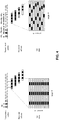
- Fig. 4 shows on the lefthand side the location of the missing samples if the employed PRI is constant, while on the right-hand side the location of the gaps is not fixed due to the use of staggered PRI (for the same ground range extension). It is possible to notice that, for a constant-PRI SAR, along the azimuth dimension the gaps are located at the same range position, while for a staggered SAR they are displaced along range such that an azimuth interpolation allows for proper recovering of the data.
- PRI pulse repetition interval
- the invention is applied for efficient encoding of the azimuth raw data signal in the context of the Tandem-L mission, a DLR mission proposal for a highly innovative bistatic SAR.
- the mean pulse repetition frequency (PRF) is of 2700 Hz (i.e. the mean PRI is of 0.37 ms) while the processed bandwidth is 1130 Hz, leading to an azimuth oversampling of about 140%.
- the quantization of the SAR raw data represents an aspect of utmost importance, since the number of bits employed to digitize the recorded radar signal directly affects the performance of the resulting SAR products, together with the total amount of data to be managed by the system.
- a direct quantization method i.e. not exploiting the correlation properties of the signal
- SAR raw data leads to a required data rate of about 16 terabytes per day, which poses severe constraints at mission design.
- An onboard solution to reduce the amount of data of a significant factor is mandatory for the mission success.
- the sample correlation obtained for the Tandem-L-like system is reported in Fig. 4 as a function of the azimuth time (PRI), and the average PRI and the resulting correlation are depicted by the green dot.
- PRI azimuth time
- the PRI slightly varies along the azimuth, hence the correlation between the samples is not constant.
- the approximation of the real staggered SAR signal with a constant PRI equal to the mean staggered PRI for the design of the predictive coder has shown no significant loss of performance.
- a strategy for efficient onboard data volume reduction proposed by the present invention is described in the following.
- a state-of-the-art quantization technique for SAR application is the Block Adaptive Quantization (BAQ) which consists of a Max-Lloyd quantizer adapted to the statistics of signal blocks, which extend along a range line of a SAR raw data take.
- BAQ Block Adaptive Quantization
- the predictive quantization is applied along the azimuth dimension, where more significant signal correlation is obtained in the data (see Fig. 5 showing the theoretical correlation between raw azimuth samples as function of time delay, wherein the average time delay of about 0.37 ms and the resulting correlation of around 0.66 are depicted by the dotted lines).
- the encoding is performed by means of a predictive quantizer of the 4-th order (it has been verified that higher prediction orders do not lead to significant performance improvement) and the prediction errors are encoded with a standard BAQ.
- Predictive coding has been specifically structured to be flexible after the occurrence of a gap starting over the prediction until reaching the operative 4-th order prediction, as pictured in Fig. 6 .
- Each cell represents a sample and the number represents the number of bits allocated for each sample. The higher quantization rate nearby the gap exploits the bits of the gap (4 in this case).
- the first sample is quantized with a direct BAQ (i.e.
- the non-uniform signal is transmitted on ground where the BLU interpolation is performed in order to resample the data to a uniform PRI grid (which is mandatory in order to apply standard SAR processing algorithms).
- the SQNR is evaluated by comparing different orders of prediction with a BAQ with constant bit rate (state of the art). Additionally, the performance of a BAQ with variable bit allocation (considering the a-priori knowledge of gap position) is considered as well.
- the results depicted in Fig. 7 suggest that, for this application, if a 4-bit BAQ is considered as reference, the presented invention allows to achieve the same performance (SQNR of about 22 dB) by allocating 3 bits/sample (i.e.
- the present method results in a higher data rate but allows for a simpler and cheaper implementation, i.e. it needs significantly less range lines (up to four, being four the target order of prediction) to be stored in the onboard computing memory (FPGA).
- FPGAs have indeed strong storage limitations making the onboard real-time implementation a cost-driving challenge. Moreover, it preserves the non-uniformly sampled SAR raw data that may be used for a more advanced on-ground processing.
- the present invention can be used in the design and development of future SAR sensors, for SAR performance optimization and SAR mission acquisition planning. Also the present invention can be used in all other digital signal processing technologies using block-wise integer quantization.
Landscapes
- Engineering & Computer Science (AREA)
- Remote Sensing (AREA)
- Radar, Positioning & Navigation (AREA)
- Physics & Mathematics (AREA)
- General Physics & Mathematics (AREA)
- Computer Networks & Wireless Communication (AREA)
- Multimedia (AREA)
- Theoretical Computer Science (AREA)
- Electromagnetism (AREA)
- Compression, Expansion, Code Conversion, And Decoders (AREA)
Abstract
Description
- The present invention relates to a method for reconstructing a missing sample of a correlated signal in a SAR (Synthetic Aperture Radar) system, especially for effective data volume reduction in the SAR system. The invention can be specifically used in staggered SAR systems or for SAR systems with gapped SAR data.
- The present invention relates to the general signal processing. Let us consider a partially correlated signal which needs to be transmitted through a channel with limited capacity and is affected by missing samples at certain known positions (i.e. such samples cannot be transmitted through the channel for some reason, and they are represented as information gaps in the received signal). The task consists in the efficient discretization and encoding of the signal by optimizing the resulting data rate and the overall signal quality. The a-priori knowledge about the position of the missing samples allows for a better signal reconstruction by means of the joint operation of variable bit rate allocation together with predictive coding. In this way, the encoding of the signal can be carried out by achieving the same quality as of state-of-the-art techniques by reducing, at the same time, the volume of data (bit rate) to be transmitted through the channel. A simplified block scheme of the process is depicted in
Fig. 1 in which the upper part represents the encoding process where prediction and quantization allows for the efficient transmission of the channel of a partially correlated signal with missing samples, and the lower part represents the process of decoding and signal reconstruction (interpolation). - For efficient encoding of signals showing some degree of correlation, predictive quantization is known in literature and is largely used especially in the field of audio/speech signals. Typically, a fixed order for the prediction filter is defined at system design stage depending on the achievable prediction gain and on the system complexity. State-of-the-art quantization techniques typically feature a constant bit rate (i.e. not varying in time), which is selected as a trade-off between the data rate and the resulting quality of the reconstructed signal (i.e. the higher the bit rate the higher the signal quality and the bigger the required memory to store it). The recovery of missing samples is then carried out by performing a proper interpolation which allows for the reconstruction of the information gap by exploiting the neighboring samples and the correlation properties among them.
- Predictive quantization for applying in staggered SAR systems is described in GOLLIN, Nicola: Predictive quantization for staggered synthetic aperture radar systems. Trient, 2018 (DLR-IB-HR-OP-2019-77). 89S. - Trient, Univ., Master thesis, 2018.
- Predictive quantization relies on the correlation between adjacent samples. In this scenario, the presence of a gap (missing sample) at certain time instants alters the statistic properties on the basis of which the prediction filter is designed. This, in turn, makes the prediction of the subsequent samples imprecise, degrading the resulting performance. Moreover, in case a sample is lost, the higher the order of prediction, the less accurate the discretization of the samples located after the gap (i.e. a sort of error propagation occurs). In addition to that, the use of a constant bit rate in presence of gaps does not exploit the resources (bits) originally allocated for the missing sample which does not carry any useful information.
- It is an object of the present invention to provide for an improved method for the reconstruction of a missing sample of a correlated signal in a SAR system for effective data volume reconstruction.
- For solving this problem by way of the invention there is provided a method for reconstructing a missing sample of a correlated signal in a SAR system, especially for effective data volume reduction in the SAR system, comprising
- providing, with a predetermined sample frequency, a series of digital sample values of a correlated analog signal including a-priori knowledge of a position of a missing digital sample value within the series of digital sample values, wherein the digital sample values have a predetermined bitrate defined by a predetermined number of bits,
- encoding the series of digital sample values by means of an N-th order predictive quantization, wherein N is a natural number equal to or larger than 1, and
- recovering the missing digital sample value by way of
- encoding digital sample values following the missing digital sample value by applying a dynamic order predictive quantization in that,
- for the first digital sample value following the missing digital sample value, a quantization specifically a block-wise quantization such as a block adaptive quantization, is performed and
- for each of the next digital sample values following said first digital sample value up to the next missing sample value, performing a predictive order quantization, wherein,
- for each of those next respective j-th digital sample values, with j=2,3,...,N, a j-1-th order predictive quantization is performed, and
- for each of those next respective j-th digital sample values, with j≥N+1, an N-th order predictive quantization is performed.
- The a-priori information of the position of gaps plays a key role in the invention, allowing for a dynamic behavior of the process in two domains: the prediction order and, if desirable, the bit rate, which are both dynamically set in the gap vicinity. According to the proposed technique, by taking into account the drop of correlation after a gap, the encoder starts from a direct (i.e. not predictive) quantization and then switches to a predictive quantization with increasing order until reaching a targeted order of its predictive quantization, which has been previously defined at system design stage.
- For a system, in which, as an illustrative example N is 4 and with 10 digital sample values between a missing digital sample value and the next missing digital sample value, the encoding process for the digital sample values following the missing digital sample up to the next missing digital sample value is as follows:
- the missing digital sample value when considering the numbering of the index j is the 0-th digital sample value (j=0)
- direct quantization for the first sample value (j=1) following the missing sample value (j=0)
- dynamic precision (i.e. dynamic predictive quantization) after a missing digital sample value for each of the next following j-th sample values (j=2,3,4), accordingly a 1st order dynamic precision for the 2nd sample value, a 2nd order dynamic precision for the 3rd sample value, and a 3rd dynamic precision order for the 4th sample value following the missing sample value,
- 4th order prediction for the 5th up to the 10th sample value following the missing sample value.
- This example once again is shown in the following table:
Missing Sample Direct Quantization 1st order Quantization 2nd Order Quantization 3rd Order Quantization 4th Order Quantization 4th Order Quantization j=0 j=1 j=2 j=3 j=4 j=5 j=6,7,8,9,10 - If there are less than N+1 digital sample values following a missing digital sample value up to the next missing digital sample value, then the process is terminated at the digital sample value proceeding the next missing digital sample value.
- In a further advantageous embodiment of the present invention, a dynamic bit allocation for the sample values in the vicinity of the gap is performed. This dynamic bit allocation in the neighborhood of the gap allows for a more accurate interpolation of the missing information. Namely, in case of a gap, the resources (bits) originally allocated for the missing sample value, do not carry any useful information. These resources can be used for the samples adjacent to the gap to achieve a better reconstruction of the missing sample after proper interpolation, hence by mitigating interpolation errors due to the limited signal correlation and quantization performance. The joint operation of dynamic prediction order and variable bit rate guarantees efficient performance at a cost of a slight increase of the required system complexity.
- In a further preferred embodiment of the invention, the number of bits of the missing digital sample value are used for increasing the bitrate for at least one of the digital sample values adjacent the missing digital sample value.
- Additionally or alternatively, increasing the bitrates for at least two of the digital sample values adjacent the missing digital sample value is applied to the same degree or to substantially the same degree.
- In another embodiment of the present invention, the number of bits of the missing digital sample value are used for increasing the bitrate of the digital sample value directly preceding the missing digital sample value and for increasing the bitrate of at least one digital sample value following the missing digital sample value.
- In a further embodiment of the present invention, the number of bits of the missing digital sample value are used for increasing the bitrate of the digital sample value directly preceding the missing digital sample value and for increasing the bitrate of at least two digital sample values following the missing digital sample value.
- In still a further embodiment of the present invention, the number of bits of the missing digital sample value are used for increasing the bitrate of the digital sample value directly preceding the missing sample and for increasing the bitrate of the digital sample value directly following the missing digital sample value in that each of these bitrates are increased by half of the predetermined number of bits.
- Typically, when designing the system and defining the system performance, N is determined in that the result of the autocorrelation function of the N-th digital sample value following the missing digital sample value is at least equal to or exceeds a predetermined threshold value.
- The process according to the invention is structured as a standard predictive quantizer with variable prediction order assuming a sufficient correlation between the samples (as required for predictive quantization techniques) and, if desirable, with variable bit rate. The contributions of the invention can be identified in the following two aspects:
- The order of the predictor must be dynamically set by encoding the sample which follows a gap by means of a standard "direct" quantizer (i.e. not predictive). Then, the following sample is encoded through a 1-st order predictor, which exploits, for the sample prediction, the information carried out by the previous sample only; the next one is then encoded through a 2-nd order predictor (in general, the j-th sample after the gap is encoded is encoded with a predictor filter of order j-1). The predictor order is increased until reaching the operative order of prediction which is defined at system design stage as trade-off between system complexity and achievable prediction gain (which is, in turn, dependent on the correlation properties of the signal under consideration).
- The dynamic bit allocation is introduced to efficiently exploit the resources originally assigned to the gap positions which do not carry informative content. Given a missing sample and its position in time known a-priori, the bits to encode such a missing sample are unnecessary, and are therefore exploited to increase the reconstruction quality of the samples before and after the gap. This is necessary since the missing sample is recovered at a later stage through proper interpolation, where the samples adjacent to the gap carry most of the information and need therefore to be represented as accurate as possible. For this, an efficient way to account for the statistical properties of the signal, for example, is to implement the Best Linear Unbiased (BLU) estimates of the signal itself at the desired locations, as known in the literature. As an example, given an average bit rate of k bits per sample, in presence of a gap, k/2 bits are additionally allocated for the samples before and after the gap position so that the previous and the subsequent samples will have a bit rate of k+k/2 when considering a missing sample (black) at a certain time instance of a signal quantized at k bits per samples to increase the overall quantization performance (depicted in
Fig. 2 ). The performance of different allocation strategies in the gap vicinity has been evaluated showing that a higher signal quality is obtained by equally distributing the bits, originally assigned to the missing sample, to the samples right before and after the gap itself. Alternative bit allocation strategies are shown in the table ofFig. 3 . - The present invention will be described in more detail hereinbelow with reference to the drawing which shows in
- Fig. 1
- a simplified block scheme of the present invention,
- Fig. 2
- a potential bit allocation strategy (schematically),
- Fig. 3
- a table of alternative bit allocation strategies,
- Fig. 4
- PRI sequence of constant-PRI SAR (left) and staggered SAR (right),
- Fig. 5
- a waveform showing the theoretical correlation between raw azimuth samples as a function of time delay (PRI),
- Fig. 6
- a schematic representation of a 4-th order PBAQ with a 4 bps bit rate implementation on SAR raw data, and
- Fig. 7
- SQNR evaluated after SAR focusing operation.
- As an example for the application of the invention, the raw data quantization of a staggered SAR system is considered in the following.
- Synthetic aperture radar (SAR) represents nowadays a well-recognized technique for a broad variety of remote sensing applications, being able to acquire high-resolution images of the Earth's surface independently of sunlight and weather conditions. However, conventional SAR is constrained by the pulse repetition frequency (PRF) for the imaging of wide swaths and, at the same time, of fine azimuth resolutions. To overcome these limitations, in the last decades innovative spaceborne radar techniques have been proposed, which allow for high-resolution imaging of a wide swath width by exploiting multiple azimuth channels (MAC) and digital beamforming (DBF) in elevation to achieve Scan-on-Receive (SCORE). Alternatively, single-channel SAR based on the simultaneous recording of multiple echo pulses received from different directions (so-called "multibeam" mode) enables a further increase of the illuminated area by keeping reduced antenna sizes and avoiding the employment of burst modes. Such systems are still limited by the presence of blind ranges across the swath, which arise since the radar cannot receive while transmitting. The opportunity of exploiting the variation of the pulse repetition interval (PRI) to solve the blind range problem was first proposed independently in diverse publications. Then, the idea culminated in the staggered SAR concept, which includes a refined design of the PRI sequences, the use of proper interpolation on the raw data and consideration of the ambiguities [1], [2], [3]. By cyclically changing the pulse repetition interval (PRI), Staggered SAR allows to vary (i.e., to "stagger") the range positions of such data gaps along the azimuth dimension. In this way, high-resolution imaging of a large continuous swath of up to 350 km without the need for a long antenna with multiple apertures becomes possible.
- The requirement of swath width and resolution, together with the use of large bandwidths and multiple acquisition channels, is clearly associated to the generation of a large volume of data, which implies, from the mission design point of view, harder requirements in terms of onboard memory and downlink capacity. In the context of single-channel staggered SAR systems, a method consisting in an interpolation combined with low-pass Doppler filtering and decimation of the acquired raw data has been proposed in [4], which allows for a data reduction of up to 50% at the cost of a significant onboard computational effort. In this scenario, SAR raw data quantization represents an aspect of utmost importance, since the number of bits employed to digitize the recorded radar signal, on the one hand, directly affects the performance of the resulting SAR products and, on the other hand, defines the total amount of data to be managed by the system.
- Nowadays, one of the most widely used methods for SAR raw data compression is the block-adaptive quantization (BAQ). BAQ is a lossy data reduction technique which employs a space-varying estimation of the raw data statistics in order to set the quantization decision levels. BAQ offers a good trade-off between scheme complexity (a simple scalar quantizer), achievable compression ratio, and resulting image quality, and represents therefore an attractive solution for data volume reduction in spaceborne SAR systems. In the last years, novel compression algorithms have been proposed to allow for a finer performance and resource optimization, based on the implementation of non-integer quantization rates [5], combined with data-driven compression schemes [6], [7], [8]. Further, possible strategies for data volume reduction in the context of multi-channel SAR systems have been proposed in [9], [10].
- Conventional SAR raw data usually show very little correlation among nearby samples, which can be only partially used for compression algorithms. On the other hand, in staggered SAR a significant azimuth oversampling is mandatory to properly reconstruct the information lost within the blind ranges. The resulting data redundancy can be therefore exploited to reduce the volume of data to be acquired and stored on board.
- The invention addresses the use of linear predictive coding for onboard data reduction in staggered SAR systems. Linear predictive coding exploits the existing correlation between adjacent azimuth samples, which is introduced by the antenna pattern and the azimuth oversampling. This allows for an efficient encoding of the data stream and, in turn, for a reduction of the number of quantization bits for a given target performance, at the cost of a modest computational burden. The use of predictive quantization in the context of conventional SAR has been previously investigated in [11], [12].
- Staggered synthetic aperture radar (SAR) is an innovative SAR acquisition concept which exploits digital beamforming (DBF) in elevation to form multiple receive beams and continuous variation of the pulse repetition interval to achieve high-resolution imaging of a wide continuous swath. Staggered SAR requires an azimuth oversampling higher than a SAR with constant PRI, which results in an increased volume of data. The use of linear predictive coding is investigated, which exploits the correlation properties exhibited by the non-uniform azimuth raw data stream. According to this, a prediction of each sample is calculated on board as linear combination of a set of previous samples. The resulting prediction error is then quantized and downlinked (instead of the original value), which allows for a reduction of the signal entropy and, in turn, of the onboard data rate achievable for a given target performance. In addition, the a-priori knowledge of the gaps position can be exploited to dynamically adapt the prediction order to further improve the performance and to further dynamically adapt the bit rate allocation in the vicinity of a gap so as to still further improve the performance. However, the present invention can also be used in SAR systems with gapped SAR data. Finally, the invention can be used in systems other than SAR in which digital signal processing is performed.
- In SAR applications, data encoding is a critical aspect since the data rate is limited by the storage capacity of the platform (e.g. a satellite) and its downlink capacity, and affects, on the other hand, the quality of the resulting SAR products. A specific case of SAR system is a SAR system with gapped SAR data or the staggered SAR system [1] which allows for the acquisition of a wide ground range (in the order of hundreds of kilometers) at each survey by exploiting digital beamforming in elevation. As drawback, some samples in each range line are not received since the antenna is transmitting in that time slot. The location of such gaps (missing samples) is uniquely determined by timing constraints (acquisition geometry and sampling frequency) and is therefore known a-priori. In particular, staggered SAR implements the acquisition by varying the pulse repetition interval (PRI) in azimuth such that there are never two subsequent missing samples.
Fig. 4 shows on the lefthand side the location of the missing samples if the employed PRI is constant, while on the right-hand side the location of the gaps is not fixed due to the use of staggered PRI (for the same ground range extension). It is possible to notice that, for a constant-PRI SAR, along the azimuth dimension the gaps are located at the same range position, while for a staggered SAR they are displaced along range such that an azimuth interpolation allows for proper recovering of the data. The recovery of the missing samples is done with a BLU interpolation along azimuth and, for this purpose, a significant azimuth oversampling is required in order to have an acceptable data correlation. In this example, the invention is applied for efficient encoding of the azimuth raw data signal in the context of the Tandem-L mission, a DLR mission proposal for a highly innovative bistatic SAR. For Tandem-L, the mean pulse repetition frequency (PRF) is of 2700 Hz (i.e. the mean PRI is of 0.37 ms) while the processed bandwidth is 1130 Hz, leading to an azimuth oversampling of about 140%. - For typical SAR applications, the quantization of the SAR raw data represents an aspect of utmost importance, since the number of bits employed to digitize the recorded radar signal directly affects the performance of the resulting SAR products, together with the total amount of data to be managed by the system. Considering a mean bit rate of 4 bits/sample (which is selected in order to minimize quantization effects in SAR performance), a direct quantization method (i.e. not exploiting the correlation properties of the signal) for the SAR raw data leads to a required data rate of about 16 terabytes per day, which poses severe constraints at mission design. An onboard solution to reduce the amount of data of a significant factor is mandatory for the mission success.
- In conjunction with the staggered SAR system of [4], a method consisting in an interpolation combined with low-pass Doppler filtering and decimation of the acquired raw data has been proposed, which allows for a data reduction of up to 50% at the cost of a significant onboard computational burden. The generation of such a largely oversampled data leads also to a higher correlation among the samples, which can be exploited by the proposed invention to achieve onboard data volume reduction. In particular, the correlation in the raw data signal is introduced by the antenna pattern.
- Considering a SAR azimuth line, the sample correlation obtained for the Tandem-L-like system is reported in
Fig. 4 as a function of the azimuth time (PRI), and the average PRI and the resulting correlation are depicted by the green dot. As expected, the larger the time lag between the samples, the lower the correlation. According to the staggered SAR acquisition mode, the PRI slightly varies along the azimuth, hence the correlation between the samples is not constant. Even though, the approximation of the real staggered SAR signal with a constant PRI equal to the mean staggered PRI for the design of the predictive coder has shown no significant loss of performance. In this scenario, a strategy for efficient onboard data volume reduction proposed by the present invention is described in the following. - A state-of-the-art quantization technique for SAR application is the Block Adaptive Quantization (BAQ) which consists of a Max-Lloyd quantizer adapted to the statistics of signal blocks, which extend along a range line of a SAR raw data take. In this scenario, the predictive quantization is applied along the azimuth dimension, where more significant signal correlation is obtained in the data (see
Fig. 5 showing the theoretical correlation between raw azimuth samples as function of time delay, wherein the average time delay of about 0.37 ms and the resulting correlation of around 0.66 are depicted by the dotted lines). - Considering the specific signal statistics and system characteristics of Tandem-L, the encoding is performed by means of a predictive quantizer of the 4-th order (it has been verified that higher prediction orders do not lead to significant performance improvement) and the prediction errors are encoded with a standard BAQ. Predictive coding has been specifically structured to be flexible after the occurrence of a gap starting over the prediction until reaching the operative 4-th order prediction, as pictured in
Fig. 6 . Each cell represents a sample and the number represents the number of bits allocated for each sample. The higher quantization rate nearby the gap exploits the bits of the gap (4 in this case). After the gap (black cells), the first sample is quantized with a direct BAQ (i.e. no prediction is applied), then each following sample is quantized performing the prediction with the available previous samples until reaching the 4-th order. It is important to notice that the gap line inFig. 6 represents qualitatively one of the black "squares" depicted inFig. 4 : in fact, gaps in staggered SAR extend by one sample in azimuth and by hundreds of samples along range [1]. - Once the encoding has been completed, the non-uniform signal is transmitted on ground where the BLU interpolation is performed in order to resample the data to a uniform PRI grid (which is mandatory in order to apply standard SAR processing algorithms). After the SAR focusing operation the SQNR is evaluated by comparing different orders of prediction with a BAQ with constant bit rate (state of the art). Additionally, the performance of a BAQ with variable bit allocation (considering the a-priori knowledge of gap position) is considered as well. The results depicted in
Fig. 7 suggest that, for this application, if a 4-bit BAQ is considered as reference, the presented invention allows to achieve the same performance (SQNR of about 22 dB) by allocating 3 bits/sample (i.e. one bit less) and encoding the data with a dynamic Predictive quantizer of the 4-th order (see continuous line inFig. 7 ). The reported results refer to a BAQ quantizer (used as reference), a BAQ quantizer with variable bit rate in gap vicinity ("BAQ Distributed") and Predictive-BAQ (PBAQ) at different orders of prediction by exploiting variable bit rate and dynamic prediction order as proposed by the invention. Going from 4 to 3 bit/sample corresponds to a reduction of the overall data rate of 25%, by slightly increasing the complexity of the system. This is translated to a payload of 12 Terabytes per day with respect to the 16 Terabytes per day achieved with a state of the art compression technique. If compared with the approach proposed in [4], the present method results in a higher data rate but allows for a simpler and cheaper implementation, i.e. it needs significantly less range lines (up to four, being four the target order of prediction) to be stored in the onboard computing memory (FPGA). FPGAs have indeed strong storage limitations making the onboard real-time implementation a cost-driving challenge. Moreover, it preserves the non-uniformly sampled SAR raw data that may be used for a more advanced on-ground processing. - The present invention can be used in the design and development of future SAR sensors, for SAR performance optimization and SAR mission acquisition planning. Also the present invention can be used in all other digital signal processing technologies using block-wise integer quantization.
-
- [1] M. Villano, G. Krieger, and A. Moreira, "Staggered SAR: High-resolution wide-swath imaging by continuous PRI variation," IEEE Trans. Geosci. and Remote Sens., vol. 52, no. 7, pp. 4462-4479, July 2014.
- [2] M. Villano, K. G. and A. Moreira, "A novel processing strategy for staggered SAR," IEEE Geosci. Remote Sens. Lett., vol. 11, no. 11, pp. 1891-1895, November 2014.
- [3] M. Villano, K. G. M. Jager, and A. Moreira, "Staggered SAR: Performance analysis and experiments with real data" IEEE Trans. on Geosci Remote Sens., vol. 55, no. 11, pp. 6617-6638, November 2017.
- [4] M. Villano, G. Krieger, and A. Moreira, "Onboard processing for data volume reduction in high-resolution wide-swath SAR," IEEE Geosci. Remote Sens. Lett., vol. 13, no. 8, pp. 1173-1177, August 2016.
- [5] M. Martone, B. Bräutigam, and G. Krieger, "Azimuth-Switched Quantization for SAR systems and performance analysis on TanDEM-X data," IEEE Geosci. Remote Sens. Lett., vol. 11, no. 1, pp. 181-185, January 2014.
- [6] T. Algra, "Data compression for operational SAR missions using entropy-constrained block adaptive quantization," in Proc. Int. Geosci. Remote Sens. Symp., pp. 1135-1138.
- [7] E. Attema, C. Cafforio, M. Gottwald, P. Guccione, A. M. Guarnieri, F. Rocca, and P. Snoeij, "Flexible dynamic block adaptive quantization for Sentinel-1 SAR missions," IEEE Geosci. Remote Sens. Lett., vol. 7, no. 4, pp. 766-770, October 2010
- [8] P. Guccione and A. M. Guarnieri, "A space adaptive quantizer for spaceborne SAR," IEEE Trans. Geosci. Remote Sens., vol. 49, no. 10, pp. 3564-3573, October 2011.
- [9] P. Guccione, M. Scagliola, and D. Giudici, "Principal components dynamic block quantization for multichannel SAR," in IEEE Int. Geosci. Remote Sens. Symp., Bejing, China, July 2016, pp. 2090-2093
- [10] M. Martone, M. Villano, M. Younis, and G. Krieger, "An efficient onboard quantization strategy for multi-channel SAR systems," in Proc. EUSAR, Aachen, Germany, June 2018, pp. 1-6.
- [11] E. Magli and G. Olmo, "Lossy predictive coding of SAR raw data," IEEE Trans. Geosci. and Remote Sens., vol. 41, no. 5, pp. 977-987, May 2003.
- [12] T. Ikuma, M. Naraghi-Pour, and T. Lewis, "Predictive quantization of range-focused SAR raw data," IEEE Trans. Geosci. and Remote Sens., vol. 50, no. 4, pp. 1340-1348, April 2012.
-
- SAR
- Synthetic Aperture Radar
- PRF
- Pulse Repetition Frequency
- MAC
- Multiple Azimuth Channel
- DBF
- Digital Beam Forming
- SCORE
- Scan-on-Receive
- BAQ
- Block-Adaptive Quantization
- DP-BAQ
- Dynamic Predictive Block-Adaptive Quantization
- BLU
- Best Linear Unbiased
- PRI
- Pulse Repetition Interval
- SQNR
- Signal-to-Quantization Noise Ratio
Claims (8)
- Method for reconstructing a missing sample of a correlated signal in a SAR system, especially for effective data volume reduction in the SAR system, comprising- providing, with a predetermined sample frequency, a series of digital sample values of a correlated analog signal including a-priori knowledge of a position of a missing digital sample value within the series of digital sample values, wherein the digital sample values have a predetermined bitrate defined by a predetermined number of bits,- encoding the series of digital sample values by means of an N-th order predictive quantization, wherein N is a natural number equal to or larger than 1, and- recovering the missing digital sample value by way of- encoding digital sample values following the missing digital sample value by applying a dynamic order predictive quantization in that,- for the first digital sample value following the missing digital sample value, a quantization is performed and- for each of the next digital sample values following said first digital sample value up to the next missing sample value, performing a predictive order quantization, wherein,- for each of those next respective j-th digital sample values, with j=2,3,...,N, a j-1-th order predictive quantization is performed, and- for each of those next respective j-th digital sample values, with j≥N+1, an N-th order predictive quantization is performed.
- Method according to claim 1, wherein the quantization of the first digital sample value following the missing digital sample value is a block-wise quantization such as a block adaptive quantization.
- Method according to claim 1 or 2, characterized in that the number of bits for the missing digital sample value are used for increasing the bitrate for at least one of the digital sample values adjacent the missing digital sample value.
- Method according to claim 3, characterized in that increasing the bitrates for at least two of the digital sample values adjacent the missing digital sample value is applied to the same degree or to substantially the same degree.
- Method according to claim 3 or 4, characterized in that the number of bits of the missing digital sample value are used for increasing the bitrate of the digital sample value directly preceding the missing digital sample value and for increasing the bitrate of at least one digital sample value following the missing digital sample value.
- Method according to any one of claims 3 to 5, characterized in that the number of bits of the missing digital sample value are used for increasing the bitrate of the digital sample value directly preceding the missing digital sample value and for increasing the bitrate of at least two digital sample values following the missing digital sample value.
- Method according to any one of claims 3 to 6, characterized in that the number of bits of the missing digital sample value are used for increasing the bitrate of the digital sample value directly preceding the missing sample and for increasing the bitrate of the digital sample value directly following the missing digital sample value in that each of these bitrates are increased by half of the predetermined number of bits.
- Method according to any one of claims 1 to 7, characterized in that N is determined in that the result of the autocorrelation function of the N-th digital sample value following the missing digital sample value is at least equal to or exceeds a predetermined threshold value.
Applications Claiming Priority (1)
| Application Number | Priority Date | Filing Date | Title |
|---|---|---|---|
| DE102019106858.4A DE102019106858B3 (en) | 2019-03-18 | 2019-03-18 | Method for reconstructing a missing sample of a correlated signal in a SAR system |
Publications (3)
| Publication Number | Publication Date |
|---|---|
| EP3712656A1 true EP3712656A1 (en) | 2020-09-23 |
| EP3712656B1 EP3712656B1 (en) | 2025-10-01 |
| EP3712656C0 EP3712656C0 (en) | 2025-10-01 |
Family
ID=69631415
Family Applications (1)
| Application Number | Title | Priority Date | Filing Date |
|---|---|---|---|
| EP20157612.1A Active EP3712656B1 (en) | 2019-03-18 | 2020-02-17 | Method for reconstructing a missing sample of a correlated signal in a sar system |
Country Status (2)
| Country | Link |
|---|---|
| EP (1) | EP3712656B1 (en) |
| DE (1) | DE102019106858B3 (en) |
Cited By (1)
| Publication number | Priority date | Publication date | Assignee | Title |
|---|---|---|---|---|
| CN118131236A (en) * | 2024-04-29 | 2024-06-04 | 深圳大学 | A multi-channel joint threshold single-bit SAR imaging method |
Families Citing this family (2)
| Publication number | Priority date | Publication date | Assignee | Title |
|---|---|---|---|---|
| DE102021206555A1 (en) | 2021-06-24 | 2022-12-29 | Deutsches Zentrum für Luft- und Raumfahrt e.V. | Synthetic Aperture Radar Method |
| DE102022123897B3 (en) | 2022-09-19 | 2024-02-08 | Deutsches Zentrum für Luft- und Raumfahrt e.V. | Method for the computer-aided generation of a data-driven model for the computer-aided processing of digital SAR raw data |
Citations (2)
| Publication number | Priority date | Publication date | Assignee | Title |
|---|---|---|---|---|
| US8422799B1 (en) * | 2007-12-20 | 2013-04-16 | Science Applications International Corporation | Complex image compression |
| CN106199602B (en) * | 2016-08-31 | 2018-09-28 | 电子科技大学 | A kind of Staggered-SAR echo-signals method for reconstructing |
-
2019
- 2019-03-18 DE DE102019106858.4A patent/DE102019106858B3/en active Active
-
2020
- 2020-02-17 EP EP20157612.1A patent/EP3712656B1/en active Active
Patent Citations (2)
| Publication number | Priority date | Publication date | Assignee | Title |
|---|---|---|---|---|
| US8422799B1 (en) * | 2007-12-20 | 2013-04-16 | Science Applications International Corporation | Complex image compression |
| CN106199602B (en) * | 2016-08-31 | 2018-09-28 | 电子科技大学 | A kind of Staggered-SAR echo-signals method for reconstructing |
Non-Patent Citations (13)
| Title |
|---|
| E. ATTEMAC. CAFFORIOM. GOTTWALDP. GUCCIONEA. M. GUARNIERIF. ROCCAP. SNOEIJ: "Flexible dynamic block adaptive quantization for Sentinel-1 SAR missions", IEEE GEOSCI. REMOTE SENS. LETT., vol. 7, no. 4, October 2010 (2010-10-01), pages 766 - 770, XP011310411 |
| E. MAGLIG. OLMO: "Lossy predictive coding of SAR raw data", IEEE TRANS. GEOSCI. AND REMOTE SENS., vol. 41, no. 5, May 2003 (2003-05-01), pages 977 - 987, XP011073398 |
| M. MARTONEB. BRAUTIGAMG. KRIEGER: "Azimuth-Switched Quantization for SAR systems and performance analysis on TanDEM-X data", IEEE GEOSCI. REMOTE SENS. LETT., vol. 11, no. 1, January 2014 (2014-01-01), pages 181 - 185, XP011531938, DOI: 10.1109/LGRS.2013.2251603 |
| M. MARTONEM. VILLANOM. YOUNISG. KRIEGER: "An efficient onboard quantization strategy for multi-channel SAR systems", PROC. EUSAR, June 2018 (2018-06-01), pages 1 - 6 |
| M. VILLANOG. KRIEGERA. MOREIRA: "Onboard processing for data volume reduction in high-resolution wide-swath SAR", IEEE GEOSCI. REMOTE SENS. LETT., vol. 13, no. 8, August 2016 (2016-08-01), pages 1173 - 1177, XP011617462, DOI: 10.1109/LGRS.2016.2574886 |
| M. VILLANOG. KRIEGERA. MOREIRA: "Staggered SAR: High-resolution wide-swath imaging by continuous PRI variation", IEEE TRANS. GEOSCI. AND REMOTE SENS., vol. 52, no. 7, July 2014 (2014-07-01), pages 4462 - 4479, XP011541425, DOI: 10.1109/TGRS.2013.2282192 |
| M. VILLANOK. G. M. JAGERA. MOREIRA: "Staggered SAR: Performance analysis and experiments with real data", IEEE TRANS. ON GEOSCI REMOTE SENS, vol. 55, no. 11, November 2017 (2017-11-01), pages 6617 - 6638, XP011671875, DOI: 10.1109/TGRS.2017.2731047 |
| M. VILLANOK. G.A. MOREIRA: "A novel processing strategy for staggered SAR", IEEE GEOSCI. REMOTE SENS. LETT., vol. 11, no. 11, November 2014 (2014-11-01), pages 1891 - 1895, XP011549197, DOI: 10.1109/LGRS.2014.2313138 |
| NICOLA GOLLIN: "Predictive Quantization for Staggered Synthetic Aperture Radar Systems", THESIS. DLR-IB-HR-OP-2019-77, 10 October 2018 (2018-10-10), XP055678700 * |
| P. GUCCIONEA. M. GUARNIERI: "A space adaptive quantizer for spaceborne SAR", IEEE TRANS. GEOSCI. REMOTE SENS., vol. 49, no. 10, October 2011 (2011-10-01), pages 3564 - 3573, XP011384166, DOI: 10.1109/TGRS.2011.2158222 |
| P. GUCCIONEM. SCAGLIOLAD. GIUDICI: "Principal components dynamic block quantization for multichannel SAR", IEEE INT. GEOSCI. REMOTE SENS. SYMP., July 2016 (2016-07-01), pages 2090 - 2093, XP032990758, DOI: 10.1109/IGARSS.2016.7729539 |
| T. ALGRA: "Data compression for operational SAR missions using entropy-constrained block adaptive quantization", PROC. INT. GEOSCI. REMOTE SENS. SYMP., pages 1135 - 1138 |
| T. IKUMAM. NARAGHI-POURT. LEWIS: "Predictive quantization of range-focused SAR raw data", IEEE TRANS. GEOSCI. AND REMOTE SENS., vol. 50, no. 4, April 2012 (2012-04-01), pages 1340 - 1348, XP011439819, DOI: 10.1109/TGRS.2011.2167236 |
Cited By (1)
| Publication number | Priority date | Publication date | Assignee | Title |
|---|---|---|---|---|
| CN118131236A (en) * | 2024-04-29 | 2024-06-04 | 深圳大学 | A multi-channel joint threshold single-bit SAR imaging method |
Also Published As
| Publication number | Publication date |
|---|---|
| DE102019106858B3 (en) | 2020-06-25 |
| EP3712656B1 (en) | 2025-10-01 |
| EP3712656C0 (en) | 2025-10-01 |
Similar Documents
| Publication | Publication Date | Title |
|---|---|---|
| EP3712656B1 (en) | Method for reconstructing a missing sample of a correlated signal in a sar system | |
| US6380879B2 (en) | Method and apparatus for acquiring wide-band pseudorandom noise encoded waveforms | |
| Chiao et al. | Sparse array imaging with spatially-encoded transmits | |
| US7876257B2 (en) | Method and apparatus for compressing SAR signals | |
| DE69024033T2 (en) | Coding system with variable bit rate. | |
| US4805193A (en) | Protection of energy information in sub-band coding | |
| GB2411087A (en) | Compression of interleaved Synthetic Aperture Radar (SAR) data | |
| US6823018B1 (en) | Multiple description coding communication system | |
| Martone et al. | Predictive quantization for data volume reduction in staggered SAR systems | |
| CA2045970C (en) | Method for transmitting a signal | |
| US6072420A (en) | Ultra wide band coherent radar system optimising the radio interference discrimination capability | |
| Scheiber et al. | Chirp selection and data compression for spaceborne wide-swath SAR in FScan-mode | |
| Magli et al. | Lossy predictive coding of SAR raw data | |
| CN101068123A (en) | Radar transmit-receive antenna uncoupling method and device | |
| US6526532B1 (en) | Channel error correction apparatus and method | |
| IL170726A (en) | Signal acquisition system and method for ultra-wideband (uwb) radar | |
| Wang et al. | Improving the image quality of spaceborne multiple-aperture SAR under minimization of sidelobe clutter and noise | |
| Gollin et al. | Predictive Quantization for Staggered Synthetic Aperture Radar | |
| EP0856956A1 (en) | Multiple description coding communication system | |
| Martone et al. | Data volume reduction for multi-channel SAR: Opportunities and challenges | |
| Martone et al. | Advances in Onboard Data Reduction Methods for Next-Generation Synthetic Aperture Radar Systems | |
| WO2006052122A1 (en) | Method and system for data compression | |
| Snoeij et al. | FDBAQ a novel encoding scheme for Sentinel-1 | |
| US5666121A (en) | VLSI processor design of real-time data compression for high resolution imaging radar | |
| Gollin et al. | Dynamic predictive quantization for staggered SAR: Experiments with real data |
Legal Events
| Date | Code | Title | Description |
|---|---|---|---|
| PUAI | Public reference made under article 153(3) epc to a published international application that has entered the european phase |
Free format text: ORIGINAL CODE: 0009012 |
|
| STAA | Information on the status of an ep patent application or granted ep patent |
Free format text: STATUS: THE APPLICATION HAS BEEN PUBLISHED |
|
| AK | Designated contracting states |
Kind code of ref document: A1 Designated state(s): AL AT BE BG CH CY CZ DE DK EE ES FI FR GB GR HR HU IE IS IT LI LT LU LV MC MK MT NL NO PL PT RO RS SE SI SK SM TR |
|
| AX | Request for extension of the european patent |
Extension state: BA ME |
|
| STAA | Information on the status of an ep patent application or granted ep patent |
Free format text: STATUS: REQUEST FOR EXAMINATION WAS MADE |
|
| 17P | Request for examination filed |
Effective date: 20210318 |
|
| RBV | Designated contracting states (corrected) |
Designated state(s): AL AT BE BG CH CY CZ DE DK EE ES FI FR GB GR HR HU IE IS IT LI LT LU LV MC MK MT NL NO PL PT RO RS SE SI SK SM TR |
|
| STAA | Information on the status of an ep patent application or granted ep patent |
Free format text: STATUS: EXAMINATION IS IN PROGRESS |
|
| 17Q | First examination report despatched |
Effective date: 20230215 |
|
| GRAP | Despatch of communication of intention to grant a patent |
Free format text: ORIGINAL CODE: EPIDOSNIGR1 |
|
| STAA | Information on the status of an ep patent application or granted ep patent |
Free format text: STATUS: GRANT OF PATENT IS INTENDED |
|
| INTG | Intention to grant announced |
Effective date: 20250425 |
|
| GRAS | Grant fee paid |
Free format text: ORIGINAL CODE: EPIDOSNIGR3 |
|
| GRAA | (expected) grant |
Free format text: ORIGINAL CODE: 0009210 |
|
| STAA | Information on the status of an ep patent application or granted ep patent |
Free format text: STATUS: THE PATENT HAS BEEN GRANTED |
|
| AK | Designated contracting states |
Kind code of ref document: B1 Designated state(s): AL AT BE BG CH CY CZ DE DK EE ES FI FR GB GR HR HU IE IS IT LI LT LU LV MC MK MT NL NO PL PT RO RS SE SI SK SM TR |
|
| REG | Reference to a national code |
Ref country code: GB Ref legal event code: FG4D Ref country code: CH Ref legal event code: F10 Free format text: ST27 STATUS EVENT CODE: U-0-0-F10-F00 (AS PROVIDED BY THE NATIONAL OFFICE) Effective date: 20251001 |
|
| REG | Reference to a national code |
Ref country code: IE Ref legal event code: FG4D |
|
| REG | Reference to a national code |
Ref country code: DE Ref legal event code: R096 Ref document number: 602020059581 Country of ref document: DE |
|
| U01 | Request for unitary effect filed |
Effective date: 20251103 |
|
| U07 | Unitary effect registered |
Designated state(s): AT BE BG DE DK EE FI FR IT LT LU LV MT NL PT RO SE SI Effective date: 20251110 |
|
| U20 | Renewal fee for the european patent with unitary effect paid |
Year of fee payment: 7 Effective date: 20260112 |
|
| PG25 | Lapsed in a contracting state [announced via postgrant information from national office to epo] |
Ref country code: ES Free format text: LAPSE BECAUSE OF FAILURE TO SUBMIT A TRANSLATION OF THE DESCRIPTION OR TO PAY THE FEE WITHIN THE PRESCRIBED TIME-LIMIT Effective date: 20251001 |
|
| PG25 | Lapsed in a contracting state [announced via postgrant information from national office to epo] |
Ref country code: NO Free format text: LAPSE BECAUSE OF FAILURE TO SUBMIT A TRANSLATION OF THE DESCRIPTION OR TO PAY THE FEE WITHIN THE PRESCRIBED TIME-LIMIT Effective date: 20260101 |
|
| PG25 | Lapsed in a contracting state [announced via postgrant information from national office to epo] |
Ref country code: HR Free format text: LAPSE BECAUSE OF FAILURE TO SUBMIT A TRANSLATION OF THE DESCRIPTION OR TO PAY THE FEE WITHIN THE PRESCRIBED TIME-LIMIT Effective date: 20251001 |
|
| PG25 | Lapsed in a contracting state [announced via postgrant information from national office to epo] |
Ref country code: RS Free format text: LAPSE BECAUSE OF FAILURE TO SUBMIT A TRANSLATION OF THE DESCRIPTION OR TO PAY THE FEE WITHIN THE PRESCRIBED TIME-LIMIT Effective date: 20260101 |
|
| PG25 | Lapsed in a contracting state [announced via postgrant information from national office to epo] |
Ref country code: IS Free format text: LAPSE BECAUSE OF FAILURE TO SUBMIT A TRANSLATION OF THE DESCRIPTION OR TO PAY THE FEE WITHIN THE PRESCRIBED TIME-LIMIT Effective date: 20260201 |
|
| PG25 | Lapsed in a contracting state [announced via postgrant information from national office to epo] |
Ref country code: CZ Free format text: LAPSE BECAUSE OF FAILURE TO SUBMIT A TRANSLATION OF THE DESCRIPTION OR TO PAY THE FEE WITHIN THE PRESCRIBED TIME-LIMIT Effective date: 20251001 |
|
| PG25 | Lapsed in a contracting state [announced via postgrant information from national office to epo] |
Ref country code: PL Free format text: LAPSE BECAUSE OF FAILURE TO SUBMIT A TRANSLATION OF THE DESCRIPTION OR TO PAY THE FEE WITHIN THE PRESCRIBED TIME-LIMIT Effective date: 20251001 |