EP3712616A1 - Aging condition evaluation method, information presentation method, and screening method for substance that ameliorates or prevents aging condition - Google Patents
Aging condition evaluation method, information presentation method, and screening method for substance that ameliorates or prevents aging condition Download PDFInfo
- Publication number
- EP3712616A1 EP3712616A1 EP18879904.3A EP18879904A EP3712616A1 EP 3712616 A1 EP3712616 A1 EP 3712616A1 EP 18879904 A EP18879904 A EP 18879904A EP 3712616 A1 EP3712616 A1 EP 3712616A1
- Authority
- EP
- European Patent Office
- Prior art keywords
- aging condition
- subject
- extracellular vesicles
- amount
- serum
- Prior art date
- Legal status (The legal status is an assumption and is not a legal conclusion. Google has not performed a legal analysis and makes no representation as to the accuracy of the status listed.)
- Withdrawn
Links
Images


Classifications
-
- G—PHYSICS
- G01—MEASURING; TESTING
- G01N—INVESTIGATING OR ANALYSING MATERIALS BY DETERMINING THEIR CHEMICAL OR PHYSICAL PROPERTIES
- G01N33/00—Investigating or analysing materials by specific methods not covered by groups G01N1/00 - G01N31/00
- G01N33/48—Biological material, e.g. blood, urine; Haemocytometers
- G01N33/50—Chemical analysis of biological material, e.g. blood, urine; Testing involving biospecific ligand binding methods; Immunological testing
- G01N33/5005—Chemical analysis of biological material, e.g. blood, urine; Testing involving biospecific ligand binding methods; Immunological testing involving human or animal cells
- G01N33/5008—Chemical analysis of biological material, e.g. blood, urine; Testing involving biospecific ligand binding methods; Immunological testing involving human or animal cells for testing or evaluating the effect of chemical or biological compounds, e.g. drugs, cosmetics
- G01N33/5076—Chemical analysis of biological material, e.g. blood, urine; Testing involving biospecific ligand binding methods; Immunological testing involving human or animal cells for testing or evaluating the effect of chemical or biological compounds, e.g. drugs, cosmetics involving cell organelles, e.g. Golgi complex, endoplasmic reticulum
-
- G—PHYSICS
- G01—MEASURING; TESTING
- G01N—INVESTIGATING OR ANALYSING MATERIALS BY DETERMINING THEIR CHEMICAL OR PHYSICAL PROPERTIES
- G01N33/00—Investigating or analysing materials by specific methods not covered by groups G01N1/00 - G01N31/00
- G01N33/15—Medicinal preparations ; Physical properties thereof, e.g. dissolubility
-
- G—PHYSICS
- G01—MEASURING; TESTING
- G01N—INVESTIGATING OR ANALYSING MATERIALS BY DETERMINING THEIR CHEMICAL OR PHYSICAL PROPERTIES
- G01N33/00—Investigating or analysing materials by specific methods not covered by groups G01N1/00 - G01N31/00
- G01N33/48—Biological material, e.g. blood, urine; Haemocytometers
- G01N33/50—Chemical analysis of biological material, e.g. blood, urine; Testing involving biospecific ligand binding methods; Immunological testing
-
- G—PHYSICS
- G01—MEASURING; TESTING
- G01N—INVESTIGATING OR ANALYSING MATERIALS BY DETERMINING THEIR CHEMICAL OR PHYSICAL PROPERTIES
- G01N33/00—Investigating or analysing materials by specific methods not covered by groups G01N1/00 - G01N31/00
- G01N33/48—Biological material, e.g. blood, urine; Haemocytometers
- G01N33/50—Chemical analysis of biological material, e.g. blood, urine; Testing involving biospecific ligand binding methods; Immunological testing
- G01N33/53—Immunoassay; Biospecific binding assay; Materials therefor
-
- G—PHYSICS
- G01—MEASURING; TESTING
- G01N—INVESTIGATING OR ANALYSING MATERIALS BY DETERMINING THEIR CHEMICAL OR PHYSICAL PROPERTIES
- G01N33/00—Investigating or analysing materials by specific methods not covered by groups G01N1/00 - G01N31/00
- G01N33/48—Biological material, e.g. blood, urine; Haemocytometers
- G01N33/50—Chemical analysis of biological material, e.g. blood, urine; Testing involving biospecific ligand binding methods; Immunological testing
- G01N33/68—Chemical analysis of biological material, e.g. blood, urine; Testing involving biospecific ligand binding methods; Immunological testing involving proteins, peptides or amino acids
-
- G—PHYSICS
- G01—MEASURING; TESTING
- G01N—INVESTIGATING OR ANALYSING MATERIALS BY DETERMINING THEIR CHEMICAL OR PHYSICAL PROPERTIES
- G01N2400/00—Assays, e.g. immunoassays or enzyme assays, involving carbohydrates
-
- G—PHYSICS
- G01—MEASURING; TESTING
- G01N—INVESTIGATING OR ANALYSING MATERIALS BY DETERMINING THEIR CHEMICAL OR PHYSICAL PROPERTIES
- G01N2440/00—Post-translational modifications [PTMs] in chemical analysis of biological material
- G01N2440/38—Post-translational modifications [PTMs] in chemical analysis of biological material addition of carbohydrates, e.g. glycosylation, glycation
-
- G—PHYSICS
- G01—MEASURING; TESTING
- G01N—INVESTIGATING OR ANALYSING MATERIALS BY DETERMINING THEIR CHEMICAL OR PHYSICAL PROPERTIES
- G01N2800/00—Detection or diagnosis of diseases
- G01N2800/70—Mechanisms involved in disease identification
- G01N2800/7042—Aging, e.g. cellular aging
Definitions
- the present invention relates to a method of evaluating an aging condition, a method of presenting information, and a method of screening for a substance capable of improving or preventing an aging condition.
- Organisms show decreased physiological functions as growing older. This is called the aging phenomenon. Similarly, individual cells constituting a living body also undergo aging, during the course of which the cells change their traits, regress in terms of functions, and subsequently stop proliferation, eventually leading to cell death.
- Patent Document 1 Japanese Unexamined Patent Application, Publication No. 2001-161364
- evaluation results of aging can be more accurately determined as the number of options of markers capable of accurately evaluating an aging condition increases. This is because aging is a phenomenon involving various factors.
- an object of the present invention is to provide a novel method of evaluating an aging condition, a method of presenting information, and a method of screening for a substance capable of improving or preventing an aging condition.
- the present inventors found that the amount of extracellular vesicles including exosomes in serum and the amount of advanced glycation end products (AGEs) of surface proteins on extracellular vesicles are correlated with an aging condition. Then the present invention has been completed. Specifically, the present invention can provide the followings.
- the present invention can provide a novel method of evaluating an aging condition, a method of presenting information, and a method of screening for a substance capable of improving or preventing an aging condition.
- Fig. 1 shows a graph indicating the relationship between the ages of subjects and the amounts of extracellular vesicles including exosomes in serum. It is noted that “young” refers to a subject of actual age of 35 or younger, and “old” refers to a subject of actual age of 60 or older.
- Fig. 2 shows (a) a graph indicating the relationship between the ages of subjects and the total amount of advanced glycation end products in serum, and (b) a graph indicating the relationship between the ages of subjects and the amounts of advanced glycation end products of surface proteins on extracellular vesicles in serum.
- Fig. 3 shows a graph indicating the relationship between the ages of subjects and the amounts of advanced glycation end products of surface proteins on extracellular vesicles in serum. It is noted that the horizontal axis represents the actual ages of subjects.
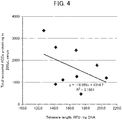
- Fig. 4 shows a graph indicating the relationship between the amounts of advanced glycation end products of surface proteins on extracellular vesicles in serum and the lengths of telomere.
- An embodiment of the present invention is a method of evaluating an aging condition of a subject, the method comprising the step of: comparing a value from the subject of either of the amount of extracellular vesicles including exosomes in serum, the amount of advanced glycation end products of surface proteins on the extracellular vesicles, or parameters based on the amounts with a correlation criterion, the correlation criterion with the aging condition being pre-determined.
- This enables objective evaluation of the aging condition.
- the aging condition which is conventionally perceived collectively, can be subcategorized based on the values of the above amounts or parameters. This may enable the aging condition of a subject to be improved more reliably.
- the values of the above amounts or parameters are highly correlated with the aging condition, but not particularly highly correlated with an aging marker other than these (for example, the length of chromosomal telomere of a subject). For this reason, the above amounts or parameters are preferably used in combination with an aging marker other than these in view of the fact that the aging condition can be evaluated more accurately in terms of various aspects.
- Another embodiment of the present invention is a method of presenting information about a subject, the method comprising the steps of: evaluating the aging condition of the subject in accordance with the above method; and in a case where the aging condition is evaluated not to be in a target condition, presenting information registered in a database as an ingredient capable of shifting the values of the amounts or the parameters towards numerical ranges of the amounts or the parameters as determined based on the correlation criterion when the aging condition is in the target condition.
- This enables information for improving the aging condition and the like be presented to the subject in a personalized form.
- the term "information" as used herein refers to the name of an ingredient or an ingredient-containing formulation, the usage/dose of an ingredient/formulation, the way or degree of expected improvement in the aging condition, side effects, and the like.
- the method preferably further includes the steps of: re-evaluating the aging condition of the subject after the ingredient is ingested in accordance with the above method of evaluation; and updating the information based on the degree of improvement in the aging condition re-evaluated. This may enable information in the data base to be improved, leading to more reliable improvement in the aging condition, and the like.
- timing of re-evaluation there is no particular limitation for the timing of re-evaluation, but the timing may be, for example, a point where time has passed enough for expecting an improved aging condition after the ingredient is used (which may be included in the data base).
- Another embodiment of the present invention is a method of screening for a substance capable of improving or preventing an aging condition, the method comprising the step of: selecting a candidate substance based on a change in either of the amount of extracellular vesicles including exosomes in serum, the amount of advanced glycation end products of surface proteins on the extracellular vesicles, or parameters based on the amounts due to the candidate substance, a correlation criterion with the aging condition being pre-determined. This may enable a substance capable of improving or preventing an aging condition to be screened with a high probability.
- the probably of the presence of a subject capable of improving or preventing an aging condition may be increased in the group of candidate substances after the screening as compared with that in the group of candidate substances before the screening.
- a candidate substance after the screening does not necessarily need to improve or prevent the aging condition. Therefore, it is preferred to further perform a step of determining if a screened candidate substance has an effect for improving or preventing the aging condition.
- the parameters may be the difference, sum, product, ratio, or a combination thereof of the amounts. Among these, the parameters may be the sum, product, or a combination thereof.
- the subject may be any of a living body, an organ, a tissue, and a cell.
- the organ, tissue, and cell may be those taken from a living body, or those differentiated/regenerated from a stem cell.
- Extracellular vesicles mediate communication between cells, and are involved in various processes such as immune response and blood coagulation. They are classified into exosomes, microvesicles, and apoptotic bodies according to their properties.
- exosomes has a particle size of 40 to 120 nm as measured with a nanoparticle multianalyzer qNano for measuring particle size distribution and particle diameter (available from Izon Science), and marker molecules thereof include CD9 and CD63.
- marker molecules thereof include CD9 and CD63.
- the presence of an exosome can be determined by detecting the presence of CD9 and CD63 with Western blotting.
- the amount of extracellular vesicles including exosomes may be the number of extracellular vesicles, and measured by isolating exosomes from serum according to a conventional method and counting the number of particles included in a fraction thereof with a nanoparticle multianalyzer qNano (available from Izon Science) and the like for measuring particle size distribution and particle diameter.
- qNano nanoparticle multianalyzer
- Surface proteins on extracellular vesicles are proteins which are present on the lipid bilayer membranes of extracellular vesicles.
- the amount of advanced glycation end products of surface proteins may be a proportion of advanced glycation end products in the surface proteins.
- the amount of surface proteins may be determined by the BCA protein assay of exosomes isolated from serum.
- the amount of advanced glycation end products may be determined in exosomes isolated from serum according to a conventional method such as ELISA (OxiSelectTM Advanced Glycation End Product (AGE) Competitive ELISA kit (Cell Biolabs Inc.) or similar kits).
- the aging condition there is no particular limitation for the aging condition as long as it shows a correlation with the above amounts or parameters, but it can be a qualitative or quantative condition associated with aging.
- Specific examples of the aging condition include cellular senescence, ages of individual parts (for example, skin, blood vessel, muscle), and the manifested or potential severity of symptoms arising from the progress of aging (for example, myocardial infarction, cancer, dementia, cerebral infarction, arteriosclerosis, and the like).
- the correlation criterion can determine an aging condition to be evaluated qualitatively or quantitatively based on the above amounts or parameters, and typically a correlation formula between the above amounts or parameters and the aging condition.
- An example of evaluation of an aging condition may be, for example, evaluation of whether the aging condition as determined from the values of the above amounts or parameters and the correlation criterion is advanced further than expected from the actual age of a subject.
- aging conditions can be correlated with not only the amount of extracellular vesicles including exosomes in serum and the amount of advanced glycation end products of surface proteins on the extracellular vesicles but also other phenomena (for example, the actual age).
- a correlation criterion is preferably used in which influences due to at least one of events known to be correlated with aging conditions has been eliminated. This can suppress such influences due to the presence or absence or the degree of the above other events with regard to a subject, and enables more accurate evaluation of physical conditions based on the amount of extracellular vesicles including exosomes in serum, the amount of advanced glycation end products of surface proteins on the above extracellular vesicles, or the value of a parameter.
- the presence or absence or the degree of the above other events with regard to a subject will preferably be inputted along with the amount of extracellular vesicles including exosomes in the above serum, the amount of advanced glycation end products of surface proteins on the above extracellular vesicles, or the parameters.
- the substance capable of improving or preventing an aging condition may be more easily obtained regardless of the above other events of a user.
- peripheral blood was obtained from 20 healthy volunteers having neither chronic diseases nor under-treatment diseases.
- the details of peripheral blood used for analysis in this example are as follows: 10 elderly persons (6 males and 4 females; the average of 66.5 years old, 58 to 75 years old) and 10 young persons (6 males and 4 females; the average of 26.2 years old, 22 to 33 years old).
- Peripheral blood was collected into a Venoject II vacuum blood collection tube (TERUMO cat. VP-AS106K50) containing a serum separator.
- the blood collection tube was incubated for 30 minutes at room temperature, and then centrifuged at 2330 ⁇ g and room temperature for 10 minutes.
- the upper serum was transferred to a 2-mL tube, and further centrifuged at 12000 ⁇ g and 4°C for 10 minutes.
- the supernatant was dispensed each about 0.3 mL into 1.5 mL tubes, and cryopreserved at -80°C.
- Exosomes were purified from 200 ⁇ L of serum with a Total Exosome Isolation kit from serum (Invitrogen, cat. 4478360) according to the protocol of the kit, and suspended in 100 ⁇ L of 1 ⁇ PBS(-) buffer. The number and size of the purified particles were measured with a qNano (Izon Science). Further, the presence of CD63 and CD9, which are marker proteins for exosomes, was checked in the purified particles by Western blotting. The relationship between the ages of subjects and the amounts (the number of particles) of extracellular vesicles including exosomes in serum is shown in Fig. 1 .
- Fig. 2(b) shows the relationship between the ages of subjects and the amounts of advanced glycation end products of surface proteins on extracellular vesicles in serum.
- Fig. 3 shows the relationship between the ages of subjects and the amounts of advanced glycation end products of surface proteins on extracellular vesicles in serum.
- Advanced glycation end products of exosomes were quantified by competitive inhibition ELISA (Enzyme Linked Immunosolvent Assay) using an advanced glycation end product-BSA with a known concentration of advanced glycation end products as a standard.
- Advanced glycation end product-BSA having synthesized advanced glycation end products bound to BSA was immobilized to a microplate. Then, a mouse anti-advanced glycation end product antibody was allowed to react with the immobilized advanced glycation end product-BSA in the presence of an advanced glycation end product-BSA standard diluted to a plurality of concentrations or a sample (serum obtained from the above section 2).
- Fig. 2(a) shows the relationship between the ages of subjects and the total amounts of advanced glycation end products in serum.
- telomere DNA was extracted from cells obtained from healthy volunteers, and the length of telomere was determined according to the method described in Japanese Patent No. 5514401 .
- Fig. 4 shows the relationship between the amounts of advanced glycation end products of surface proteins on extracellular vesicles in serum and the lengths of telomere.
- the amount of extracellular vesicles including exosomes in serum was found to increase as the age of a subject increased.
- the amount of advanced glycation end products of surface proteins on extracellular vesicles including exosomes in serum was found to increase as the age of a subject increased.
- the amount of advanced glycation end products of surface proteins on extracellular vesicles including exosomes in serum was found to show a reasonable correlation with the age of a subject.
- the total amount of advanced glycation end products in serum did not show correlation with the age of a subject, as shown in Fig. 2(a) .
- the amount of extracellular vesicles including exosomes in serum and the amount of advanced glycation end products of surface proteins on extracellular vesicles including exosomes showed correlation with an aging condition correlated strongly with age. This means that an aging condition can be evaluated by comparing the values of the amounts with correlation formulas.
- telomere As shown in Fig. 4 , the amount of advanced glycation end products of surface proteins on extracellular vesicles including exosomes in serum was also correlated with the length of telomere. Further, this correlation is somewhat weaker than that shown in Fig. 3 , suggesting that the above amounts and the length of telomere may reflect partly different aspects of an aging condition. For this reason, an aging condition can be evaluated more accurately in terms of various aspects by using the above amounts or parameters in combination with an aging marker other than these.
Landscapes
- Health & Medical Sciences (AREA)
- Life Sciences & Earth Sciences (AREA)
- Engineering & Computer Science (AREA)
- Immunology (AREA)
- Chemical & Material Sciences (AREA)
- Biomedical Technology (AREA)
- Molecular Biology (AREA)
- Hematology (AREA)
- Urology & Nephrology (AREA)
- Analytical Chemistry (AREA)
- General Health & Medical Sciences (AREA)
- Pathology (AREA)
- General Physics & Mathematics (AREA)
- Food Science & Technology (AREA)
- Medicinal Chemistry (AREA)
- Physics & Mathematics (AREA)
- Biochemistry (AREA)
- Microbiology (AREA)
- Biotechnology (AREA)
- Cell Biology (AREA)
- Bioinformatics & Cheminformatics (AREA)
- Toxicology (AREA)
- Tropical Medicine & Parasitology (AREA)
- Biophysics (AREA)
- Pharmacology & Pharmacy (AREA)
- Proteomics, Peptides & Aminoacids (AREA)
- Investigating Or Analysing Biological Materials (AREA)
Abstract
Description
- The present invention relates to a method of evaluating an aging condition, a method of presenting information, and a method of screening for a substance capable of improving or preventing an aging condition.
- Organisms show decreased physiological functions as growing older. This is called the aging phenomenon. Similarly, individual cells constituting a living body also undergo aging, during the course of which the cells change their traits, regress in terms of functions, and subsequently stop proliferation, eventually leading to cell death.
- Conventionally, known is a method of evaluating an aging condition based on the length of telomere in chromosome obtained from a subject (for example, see Patent Document 1).
- Patent Document 1: Japanese Unexamined Patent Application, Publication No.
2001-161364 - However, evaluation results of aging can be more accurately determined as the number of options of markers capable of accurately evaluating an aging condition increases. This is because aging is a phenomenon involving various factors.
- Accordingly, an object of the present invention is to provide a novel method of evaluating an aging condition, a method of presenting information, and a method of screening for a substance capable of improving or preventing an aging condition.
- The present inventors found that the amount of extracellular vesicles including exosomes in serum and the amount of advanced glycation end products (AGEs) of surface proteins on extracellular vesicles are correlated with an aging condition. Then the present invention has been completed. Specifically, the present invention can provide the followings.
- (1) A method of evaluating an aging condition of a subject, the method comprising the step of: comparing a value from the subject of either of the amount of extracellular vesicles including exosomes in serum, the amount of advanced glycation end products of surface proteins on the extracellular vesicles, or parameters based on the amounts with a correlation criterion, the correlation criterion with the aging condition being pre-determined.
- (2) A method of presenting information about a subject, the method comparing the steps of: evaluating an aging condition of the subject in accordance with the method according to (1); and in a case where the aging condition is evaluated not to be in a target condition, presenting information registered in a database as an ingredient capable of shifting the values of the amounts or the parameters towards numerical ranges of the amounts or the parameters as determined based on the correlation criterion when the aging condition is in the target condition.
- (3) The method according to (2), further comprising the steps of: re-evaluating the aging condition of the subject after the ingredient is ingested in accordance with the method according to claim 1; and updating the information based on the degree of improvement in the aging condition re-evaluated.
- (4) A method of screening for a substance capable of improving or preventing an aging condition, the method comprising the step of: selecting a candidate substance based on a change in either of the amount of extracellular vesicles including exosomes in serum, the amount of advanced glycation end products of surface proteins on the extracellular vesicles, or parameters based on the amounts due to the candidate substance, a correlation criterion with the aging condition being pre-determined.
- The present invention can provide a novel method of evaluating an aging condition, a method of presenting information, and a method of screening for a substance capable of improving or preventing an aging condition.
-
Fig. 1 shows a graph indicating the relationship between the ages of subjects and the amounts of extracellular vesicles including exosomes in serum. It is noted that "young" refers to a subject of actual age of 35 or younger, and "old" refers to a subject of actual age of 60 or older.Fig. 2 shows (a) a graph indicating the relationship between the ages of subjects and the total amount of advanced glycation end products in serum, and (b) a graph indicating the relationship between the ages of subjects and the amounts of advanced glycation end products of surface proteins on extracellular vesicles in serum. It is noted that "young" refers to a subject of actual age of 35 or younger, and "old" refers to a subject of actual age of 60 or older.Fig. 3 shows a graph indicating the relationship between the ages of subjects and the amounts of advanced glycation end products of surface proteins on extracellular vesicles in serum. It is noted that the horizontal axis represents the actual ages of subjects.Fig. 4 shows a graph indicating the relationship between the amounts of advanced glycation end products of surface proteins on extracellular vesicles in serum and the lengths of telomere. - Below, the embodiments of the present invention will be described, but the present invention shall not be limited to these.
- An embodiment of the present invention is a method of evaluating an aging condition of a subject, the method comprising the step of: comparing a value from the subject of either of the amount of extracellular vesicles including exosomes in serum, the amount of advanced glycation end products of surface proteins on the extracellular vesicles, or parameters based on the amounts with a correlation criterion, the correlation criterion with the aging condition being pre-determined. This enables objective evaluation of the aging condition. Further, the aging condition, which is conventionally perceived collectively, can be subcategorized based on the values of the above amounts or parameters. This may enable the aging condition of a subject to be improved more reliably. It is noted that the values of the above amounts or parameters are highly correlated with the aging condition, but not particularly highly correlated with an aging marker other than these (for example, the length of chromosomal telomere of a subject). For this reason, the above amounts or parameters are preferably used in combination with an aging marker other than these in view of the fact that the aging condition can be evaluated more accurately in terms of various aspects.
- Another embodiment of the present invention is a method of presenting information about a subject, the method comprising the steps of: evaluating the aging condition of the subject in accordance with the above method; and in a case where the aging condition is evaluated not to be in a target condition, presenting information registered in a database as an ingredient capable of shifting the values of the amounts or the parameters towards numerical ranges of the amounts or the parameters as determined based on the correlation criterion when the aging condition is in the target condition. This enables information for improving the aging condition and the like be presented to the subject in a personalized form. It is noted that the term "information" as used herein refers to the name of an ingredient or an ingredient-containing formulation, the usage/dose of an ingredient/formulation, the way or degree of expected improvement in the aging condition, side effects, and the like.
- In an embodiment, the method preferably further includes the steps of: re-evaluating the aging condition of the subject after the ingredient is ingested in accordance with the above method of evaluation; and updating the information based on the degree of improvement in the aging condition re-evaluated. This may enable information in the data base to be improved, leading to more reliable improvement in the aging condition, and the like.
- There is no particular limitation for the timing of re-evaluation, but the timing may be, for example, a point where time has passed enough for expecting an improved aging condition after the ingredient is used (which may be included in the data base).
- Another embodiment of the present invention is a method of screening for a substance capable of improving or preventing an aging condition, the method comprising the step of: selecting a candidate substance based on a change in either of the amount of extracellular vesicles including exosomes in serum, the amount of advanced glycation end products of surface proteins on the extracellular vesicles, or parameters based on the amounts due to the candidate substance, a correlation criterion with the aging condition being pre-determined. This may enable a substance capable of improving or preventing an aging condition to be screened with a high probability.
- It is noted that in the screening according to the embodiments of the present invention, the probably of the presence of a subject capable of improving or preventing an aging condition may be increased in the group of candidate substances after the screening as compared with that in the group of candidate substances before the screening. A candidate substance after the screening, however, does not necessarily need to improve or prevent the aging condition. Therefore, it is preferred to further perform a step of determining if a screened candidate substance has an effect for improving or preventing the aging condition.
- There is no particular limitation for the parameters as long as they are based on the amount of extracellular vesicles including exosomes in serum or the amount of advanced glycation end products of surface proteins on extracellular vesicles. The parameters may be the difference, sum, product, ratio, or a combination thereof of the amounts. Among these, the parameters may be the sum, product, or a combination thereof.
- The subject may be any of a living body, an organ, a tissue, and a cell. The organ, tissue, and cell may be those taken from a living body, or those differentiated/regenerated from a stem cell.
- Extracellular vesicles mediate communication between cells, and are involved in various processes such as immune response and blood coagulation. They are classified into exosomes, microvesicles, and apoptotic bodies according to their properties.
- Among extracellular vesicles, exosomes has a particle size of 40 to 120 nm as measured with a nanoparticle multianalyzer qNano for measuring particle size distribution and particle diameter (available from Izon Science), and marker molecules thereof include CD9 and CD63. The presence of an exosome can be determined by detecting the presence of CD9 and CD63 with Western blotting.
- The amount of extracellular vesicles including exosomes may be the number of extracellular vesicles, and measured by isolating exosomes from serum according to a conventional method and counting the number of particles included in a fraction thereof with a nanoparticle multianalyzer qNano (available from Izon Science) and the like for measuring particle size distribution and particle diameter.
- Surface proteins on extracellular vesicles are proteins which are present on the lipid bilayer membranes of extracellular vesicles.
- The amount of advanced glycation end products of surface proteins may be a proportion of advanced glycation end products in the surface proteins. Here, the amount of surface proteins may be determined by the BCA protein assay of exosomes isolated from serum. The amount of advanced glycation end products may be determined in exosomes isolated from serum according to a conventional method such as ELISA (OxiSelect™ Advanced Glycation End Product (AGE) Competitive ELISA kit (Cell Biolabs Inc.) or similar kits).
- There is no particular limitation for the aging condition as long as it shows a correlation with the above amounts or parameters, but it can be a qualitative or quantative condition associated with aging. Specific examples of the aging condition include cellular senescence, ages of individual parts (for example, skin, blood vessel, muscle), and the manifested or potential severity of symptoms arising from the progress of aging (for example, myocardial infarction, cancer, dementia, cerebral infarction, arteriosclerosis, and the like).
- The correlation criterion can determine an aging condition to be evaluated qualitatively or quantitatively based on the above amounts or parameters, and typically a correlation formula between the above amounts or parameters and the aging condition. An example of evaluation of an aging condition may be, for example, evaluation of whether the aging condition as determined from the values of the above amounts or parameters and the correlation criterion is advanced further than expected from the actual age of a subject.
- Many of aging conditions can be correlated with not only the amount of extracellular vesicles including exosomes in serum and the amount of advanced glycation end products of surface proteins on the extracellular vesicles but also other phenomena (for example, the actual age). For this reason, a correlation criterion is preferably used in which influences due to at least one of events known to be correlated with aging conditions has been eliminated. This can suppress such influences due to the presence or absence or the degree of the above other events with regard to a subject, and enables more accurate evaluation of physical conditions based on the amount of extracellular vesicles including exosomes in serum, the amount of advanced glycation end products of surface proteins on the above extracellular vesicles, or the value of a parameter. Further, in the method of presenting information about a subject, more appropriate information can be presented by considering the presence or absence or the degree of the above other events with regard to a subject. For this reason, the presence or absence or the degree of the above other events with regard to a subject will preferably be inputted along with the amount of extracellular vesicles including exosomes in the above serum, the amount of advanced glycation end products of surface proteins on the above extracellular vesicles, or the parameters. Further, in the method of screening for a substance capable of improving or preventing an aging condition, the substance capable of improving or preventing an aging condition may be more easily obtained regardless of the above other events of a user.
- Collection of peripheral blood was performed in accordance with the human genome research proposal approved by the Ethical Committee for Human Genome Research of Hiroshima University. With regard to blood, peripheral blood was obtained from 20 healthy volunteers having neither chronic diseases nor under-treatment diseases. The details of peripheral blood used for analysis in this example are as follows: 10 elderly persons (6 males and 4 females; the average of 66.5 years old, 58 to 75 years old) and 10 young persons (6 males and 4 females; the average of 26.2 years old, 22 to 33 years old).
- Peripheral blood was collected into a Venoject II vacuum blood collection tube (TERUMO cat. VP-AS106K50) containing a serum separator. The blood collection tube was incubated for 30 minutes at room temperature, and then centrifuged at 2330×g and room temperature for 10 minutes. The upper serum was transferred to a 2-mL tube, and further centrifuged at 12000×g and 4°C for 10 minutes. The supernatant was dispensed each about 0.3 mL into 1.5 mL tubes, and cryopreserved at -80°C.
- Exosomes were purified from 200 µL of serum with a Total Exosome Isolation kit from serum (Invitrogen, cat. 4478360) according to the protocol of the kit, and suspended in 100 µL of 1×PBS(-) buffer. The number and size of the purified particles were measured with a qNano (Izon Science). Further, the presence of CD63 and CD9, which are marker proteins for exosomes, was checked in the purified particles by Western blotting. The relationship between the ages of subjects and the amounts (the number of particles) of extracellular vesicles including exosomes in serum is shown in
Fig. 1 . - Quantification of proteins in the exosome sample was also performed with a Micro BCA protein assay kit (Thermo Fisher Scientific, cat. 23235).
- Quantification of advanced glycation end products residing on the surfaces of exosomes in serum was performed with OxiSelect™ Advanced Glycation End Product according to the protocol of the kit after the exosome-containing sample obtained from the
above section 3 was diluted with a 1×PBS(-) buffer to a concentration of 10 mg/ml.Fig. 2(b) shows the relationship between the ages of subjects and the amounts of advanced glycation end products of surface proteins on extracellular vesicles in serum.Fig. 3 shows the relationship between the ages of subjects and the amounts of advanced glycation end products of surface proteins on extracellular vesicles in serum. - Advanced glycation end products of exosomes were quantified by competitive inhibition ELISA (Enzyme Linked Immunosolvent Assay) using an advanced glycation end product-BSA with a known concentration of advanced glycation end products as a standard. Advanced glycation end product-BSA having synthesized advanced glycation end products bound to BSA was immobilized to a microplate. Then, a mouse anti-advanced glycation end product antibody was allowed to react with the immobilized advanced glycation end product-BSA in the presence of an advanced glycation end product-BSA standard diluted to a plurality of concentrations or a sample (serum obtained from the above section 2). An enzyme-labeled antimouse IgG antibody was allowed to react with the bound mouse anti-advanced glycation end product antibody, and a substrate was then added to measure the activity of the enzyme remained in the microplate. Based on the absorbance of the advanced glycation end product-BSA standard, the concentration of the total advanced glycation end products within the sample was computed.
Fig. 2(a) shows the relationship between the ages of subjects and the total amounts of advanced glycation end products in serum. - DNA was extracted from cells obtained from healthy volunteers, and the length of telomere was determined according to the method described in Japanese Patent No.
5514401 Fig. 4 shows the relationship between the amounts of advanced glycation end products of surface proteins on extracellular vesicles in serum and the lengths of telomere. - As shown in
Fig. 1 , the amount of extracellular vesicles including exosomes in serum was found to increase as the age of a subject increased. Further, as shown inFig. 2(b) , the amount of advanced glycation end products of surface proteins on extracellular vesicles including exosomes in serum was found to increase as the age of a subject increased. As shown inFig. 3 , the amount of advanced glycation end products of surface proteins on extracellular vesicles including exosomes in serum was found to show a reasonable correlation with the age of a subject. In contrast, the total amount of advanced glycation end products in serum did not show correlation with the age of a subject, as shown inFig. 2(a) . As described above, the amount of extracellular vesicles including exosomes in serum and the amount of advanced glycation end products of surface proteins on extracellular vesicles including exosomes showed correlation with an aging condition correlated strongly with age. This means that an aging condition can be evaluated by comparing the values of the amounts with correlation formulas. - As shown in
Fig. 4 , the amount of advanced glycation end products of surface proteins on extracellular vesicles including exosomes in serum was also correlated with the length of telomere. Further, this correlation is somewhat weaker than that shown inFig. 3 , suggesting that the above amounts and the length of telomere may reflect partly different aspects of an aging condition. For this reason, an aging condition can be evaluated more accurately in terms of various aspects by using the above amounts or parameters in combination with an aging marker other than these.
Claims (4)
- A method of evaluating an aging condition of a subject, the method comprising the step of:
comparing a value from the subject of either of the amount of extracellular vesicles including exosomes in serum, the amount of advanced glycation end products of surface proteins on the extracellular vesicles, or parameters based on the amounts with a correlation criterion, the correlation criterion with the aging condition being pre-determined. - A method of presenting information about a subject, the method comparing the steps of:evaluating an aging condition of the subject in accordance with the method according to claim 1; andin a case where the aging condition is evaluated not to be in a target condition, presenting information registered in a database as an ingredient capable of shifting the values of the amounts or the parameters towards numerical ranges of the amounts or the parameters as determined based on the correlation criterion when the aging condition is in the target condition.
- The method according to claim 2, further comprising the steps of: re-evaluating the aging condition of the subject after the ingredient is ingested in accordance with the method according to claim 1; and
updating the information based on the degree of improvement in the aging condition re-evaluated. - A method of screening for a substance capable of improving or preventing an aging condition, the method comprising the step of:
selecting a candidate substance based on a change in either of the amount of extracellular vesicles including exosomes in serum, the amount of advanced glycation end products of surface proteins on the extracellular vesicles, or parameters based on the amounts due to the candidate substance, a correlation criterion with the aging condition being pre-determined.
Applications Claiming Priority (2)
| Application Number | Priority Date | Filing Date | Title |
|---|---|---|---|
| JP2017218704 | 2017-11-14 | ||
| PCT/JP2018/041990 WO2019098194A1 (en) | 2017-11-14 | 2018-11-13 | Aging condition evaluation method, information presentation method, and screening method for substance that ameliorates or prevents aging condition |
Publications (2)
| Publication Number | Publication Date |
|---|---|
| EP3712616A1 true EP3712616A1 (en) | 2020-09-23 |
| EP3712616A4 EP3712616A4 (en) | 2021-08-25 |
Family
ID=66539452
Family Applications (1)
| Application Number | Title | Priority Date | Filing Date |
|---|---|---|---|
| EP18879904.3A Withdrawn EP3712616A4 (en) | 2017-11-14 | 2018-11-13 | AGING STATE ASSESSMENT PROCESS, INFORMATION PRESENTATION PROCESS AND SCREENING PROCESS FOR A SUBSTANCE TO IMPROVE OR PREVENT AN AGING STATE |
Country Status (4)
| Country | Link |
|---|---|
| US (1) | US20200386771A1 (en) |
| EP (1) | EP3712616A4 (en) |
| JP (1) | JPWO2019098194A1 (en) |
| WO (1) | WO2019098194A1 (en) |
Family Cites Families (5)
| Publication number | Priority date | Publication date | Assignee | Title |
|---|---|---|---|---|
| JPS5241528A (en) | 1976-10-12 | 1977-03-31 | Olympus Optical Co Ltd | Telephoto lens |
| JP2001161364A (en) | 1999-12-03 | 2001-06-19 | Sony Cp Laboratories Inc | Pna skeleton telomere recognition probe and method for determining telomere length |
| WO2009130330A1 (en) * | 2008-04-25 | 2009-10-29 | Lenhard Rudolph | Marker for determining biological ageing |
| WO2016125266A1 (en) * | 2015-02-04 | 2016-08-11 | 国立大学法人 東京大学 | Method for screening substance having life-prolonging activity |
| JP2018151276A (en) * | 2017-03-14 | 2018-09-27 | 国立大学法人大阪大学 | Aging biomarker |
-
2018
- 2018-11-13 JP JP2019554228A patent/JPWO2019098194A1/en not_active Ceased
- 2018-11-13 US US16/763,569 patent/US20200386771A1/en not_active Abandoned
- 2018-11-13 EP EP18879904.3A patent/EP3712616A4/en not_active Withdrawn
- 2018-11-13 WO PCT/JP2018/041990 patent/WO2019098194A1/en not_active Ceased
Also Published As
| Publication number | Publication date |
|---|---|
| US20200386771A1 (en) | 2020-12-10 |
| JPWO2019098194A1 (en) | 2021-01-14 |
| EP3712616A4 (en) | 2021-08-25 |
| WO2019098194A1 (en) | 2019-05-23 |
Similar Documents
| Publication | Publication Date | Title |
|---|---|---|
| Smith et al. | Diverse human astrocyte and microglial transcriptional responses to Alzheimer’s pathology | |
| Doolittle et al. | Multiparametric senescent cell phenotyping reveals targets of senolytic therapy in the aged murine skeleton | |
| Luna-Tortós et al. | Evaluation of transport of common antiepileptic drugs by human multidrug resistance-associated proteins (MRP1, 2 and 5) that are overexpressed in pharmacoresistant epilepsy | |
| Li et al. | Profile of pathogenic proteins and microRNAs in plasma-derived extracellular vesicles in Alzheimer’s disease: a pilot study | |
| Sanchez et al. | Huntington’s disease mice and human brain tissue exhibit increased G3BP1 granules and TDP43 mislocalization | |
| Dungan et al. | In vivo analysis of γH2AX+ cells in skeletal muscle from aged and obese humans | |
| US20240255509A1 (en) | Compositions and methods related to k180 dimethylated h1.0 protein | |
| JP6908785B2 (en) | Exosome-based lung cancer diagnostic or prognosis marker composition overexpressing the GCC2 gene or protein | |
| JP5078100B2 (en) | Detection and treatment of steroid receptors in circulating cancer cells | |
| JP6717428B2 (en) | Cancer diagnostic composition using potassium channel protein | |
| US20150141274A1 (en) | Methods and Compositions for Activity Dependent Transcriptome Profiling | |
| Zhang et al. | A higher frequency of CD4+ CXCR5+ T follicular helper cells in patients with newly diagnosed IgA nephropathy | |
| JP6271636B2 (en) | BARD1 isoforms and their use in lung and colorectal cancer | |
| KR102157768B1 (en) | Method for diagnosing a molecular phenotype of a patient suffering from an illness accompanied by chronic inflammation | |
| KR20140042331A (en) | Multiplex markers for diagnosing cognitive disorder and its use | |
| Lee et al. | 1α, 25-Dihydroxyvitamin D3 upregulates HIF-1 and TREM-1 via mTOR signaling | |
| WO2014112571A1 (en) | Depression marker, assay method, depression determination method, and screening method and kit for depression medication | |
| JP2014522990A (en) | Materials and methods for determining the susceptibility potential of compounds | |
| US20200386771A1 (en) | Aging condition evaluation method, information presentation method, and screening method for substance that improves or prevents aging condition | |
| CN111289749B (en) | Application of C-type 1 Niemann-Pickin detection substance in the preparation of products for screening hepatocellular carcinoma | |
| EP2795337B1 (en) | Screening methods to identify compounds useful in the prevention and/or treatment of inflammatory conditions | |
| WO2024015951A2 (en) | Methods and materials for identifying biomarkers and/or pathways associated with alzheimer's disease | |
| KR102242285B1 (en) | Biomarker composition for predicting the therapeutic efficacy of mesenchymal stem cells in systemic lupus erythematosus | |
| Doolittle et al. | Multiparametric senescent cell phenotyping reveals CD24 osteolineage cells as targets of senolytic therapy in the aged murine skeleton | |
| KR102072772B1 (en) | Peripheral neuropathy biomarkers for subtype diagnosis |
Legal Events
| Date | Code | Title | Description |
|---|---|---|---|
| STAA | Information on the status of an ep patent application or granted ep patent |
Free format text: STATUS: THE INTERNATIONAL PUBLICATION HAS BEEN MADE |
|
| PUAI | Public reference made under article 153(3) epc to a published international application that has entered the european phase |
Free format text: ORIGINAL CODE: 0009012 |
|
| STAA | Information on the status of an ep patent application or granted ep patent |
Free format text: STATUS: REQUEST FOR EXAMINATION WAS MADE |
|
| 17P | Request for examination filed |
Effective date: 20200613 |
|
| AK | Designated contracting states |
Kind code of ref document: A1 Designated state(s): AL AT BE BG CH CY CZ DE DK EE ES FI FR GB GR HR HU IE IS IT LI LT LU LV MC MK MT NL NO PL PT RO RS SE SI SK SM TR |
|
| AX | Request for extension of the european patent |
Extension state: BA ME |
|
| DAV | Request for validation of the european patent (deleted) | ||
| DAX | Request for extension of the european patent (deleted) | ||
| RIC1 | Information provided on ipc code assigned before grant |
Ipc: G01N 33/53 20060101AFI20210520BHEP Ipc: G01N 33/15 20060101ALI20210520BHEP Ipc: G01N 33/50 20060101ALI20210520BHEP Ipc: G01N 33/68 20060101ALI20210520BHEP |
|
| A4 | Supplementary search report drawn up and despatched |
Effective date: 20210726 |
|
| RIC1 | Information provided on ipc code assigned before grant |
Ipc: G01N 33/53 20060101AFI20210720BHEP Ipc: G01N 33/15 20060101ALI20210720BHEP Ipc: G01N 33/50 20060101ALI20210720BHEP Ipc: G01N 33/68 20060101ALI20210720BHEP |
|
| STAA | Information on the status of an ep patent application or granted ep patent |
Free format text: STATUS: THE APPLICATION IS DEEMED TO BE WITHDRAWN |
|
| 18D | Application deemed to be withdrawn |
Effective date: 20220223 |