EP3709749A1 - Handling random access channel responses - Google Patents
Handling random access channel responses Download PDFInfo
- Publication number
- EP3709749A1 EP3709749A1 EP20172055.4A EP20172055A EP3709749A1 EP 3709749 A1 EP3709749 A1 EP 3709749A1 EP 20172055 A EP20172055 A EP 20172055A EP 3709749 A1 EP3709749 A1 EP 3709749A1
- Authority
- EP
- European Patent Office
- Prior art keywords
- wtru
- cces
- pdcch
- random access
- rach response
- Prior art date
- Legal status (The legal status is an assumption and is not a legal conclusion. Google has not performed a legal analysis and makes no representation as to the accuracy of the status listed.)
- Granted
Links
Images


Classifications
-
- H—ELECTRICITY
- H04—ELECTRIC COMMUNICATION TECHNIQUE
- H04B—TRANSMISSION
- H04B7/00—Radio transmission systems, i.e. using radiation field
- H04B7/24—Radio transmission systems, i.e. using radiation field for communication between two or more posts
- H04B7/26—Radio transmission systems, i.e. using radiation field for communication between two or more posts at least one of which is mobile
- H04B7/2612—Arrangements for wireless medium access control, e.g. by allocating physical layer transmission capacity
-
- H—ELECTRICITY
- H04—ELECTRIC COMMUNICATION TECHNIQUE
- H04W—WIRELESS COMMUNICATION NETWORKS
- H04W74/00—Wireless channel access
- H04W74/002—Transmission of channel access control information
- H04W74/006—Transmission of channel access control information in the downlink, i.e. towards the terminal
-
- H—ELECTRICITY
- H04—ELECTRIC COMMUNICATION TECHNIQUE
- H04J—MULTIPLEX COMMUNICATION
- H04J11/00—Orthogonal multiplex systems, e.g. using WALSH codes
- H04J11/0023—Interference mitigation or co-ordination
-
- H—ELECTRICITY
- H04—ELECTRIC COMMUNICATION TECHNIQUE
- H04L—TRANSMISSION OF DIGITAL INFORMATION, e.g. TELEGRAPHIC COMMUNICATION
- H04L5/00—Arrangements affording multiple use of the transmission path
- H04L5/003—Arrangements for allocating sub-channels of the transmission path
-
- H—ELECTRICITY
- H04—ELECTRIC COMMUNICATION TECHNIQUE
- H04W—WIRELESS COMMUNICATION NETWORKS
- H04W72/00—Local resource management
- H04W72/04—Wireless resource allocation
- H04W72/044—Wireless resource allocation based on the type of the allocated resource
- H04W72/0466—Wireless resource allocation based on the type of the allocated resource the resource being a scrambling code
-
- H—ELECTRICITY
- H04—ELECTRIC COMMUNICATION TECHNIQUE
- H04W—WIRELESS COMMUNICATION NETWORKS
- H04W74/00—Wireless channel access
- H04W74/002—Transmission of channel access control information
- H04W74/004—Transmission of channel access control information in the uplink, i.e. towards network
-
- H—ELECTRICITY
- H04—ELECTRIC COMMUNICATION TECHNIQUE
- H04W—WIRELESS COMMUNICATION NETWORKS
- H04W74/00—Wireless channel access
- H04W74/08—Non-scheduled access, e.g. ALOHA
- H04W74/0833—Random access procedures, e.g. with 4-step access
Definitions
- the present application is related to wireless communications.
- E-UTRA evolved universal terrestrial radio access
- LTE long term evolution
- OFDMA orthogonal frequency division multiple access
- FDMA frequency division multiple access
- CDMA code division multiple access
- Another change includes applying all packet switched service, which means all the voice calls will be made on the packet switched basis.
- Packet switched communications operate on a random access channel.
- the physical channel specification for LTE specifies that the random access burst occupies a bandwidth corresponding to 72 sub-carriers (6 resource blocks).
- the set of six resource blocks is referred to as one time-frequency random access resource, or alternatively, resources of one LTE physical random access channel (PRACH).
- PRACH physical random access channel
- having a configurable number of time-frequency random access resources in one radio frame (10 ms) depends on the system bandwidth and the random access load.
- the existence of any additionally configured time-frequency random access resources needs to be explicitly signaled to wireless transmit/receive units (WTRUs).
- WTRUs wireless transmit/receive units
- eNB evolved Node-B
- RA-RNTI random access-radio network temporary identity
- a method and apparatus for supporting a random access using a random access channel are disclosed.
- Each of a plurality of wireless transmit/receive units (WTRUs) sends a random access request to a base station on an uplink RACH preamble.
- a RACH Response sent by the base station, is received by each WTRU.
- a control signal portion of the RACH Response indicates the location of the RACH Response message in a corresponding data portion.
- the RACH Response control information is defined by single or multiple control channel elements (CCE), where each WTRU is allocated at least one CCE to provide its unique RACH Response control signal.
- the WTRU is configured to locate its intended CCE from among the multiple CCEs sent by the base station.
- wireless transmit/receive unit includes but is not limited to a user equipment (UE), a mobile station, a fixed or mobile subscriber unit, a pager, a cellular telephone, a personal digital assistant (PDA), a computer, or any other type of user device capable of operating in a wireless environment.
- base station includes but is not limited to a Node-B, a site controller, an access point (AP), or any other type of interfacing device capable of operating in a wireless environment.
- RACH Response is used interchangeably with an access indication channel (AICH) message.
- FIG. 1 shows a wireless communication network 100, in which a base station 101 grants random access to a plurality of wireless transmit/receive units (WTRUs) 102-104.
- a RACH Response signal 105 is sent to the WTRUs 102-104 granting random access resource allocations in response to random access requests 106-108 sent by the WTRUs 102-104.
- the random access requests 106-108 are sent in RACH preambles from the same random access burst.
- a single time-frequency random access resource is granted per random access request by one of the WTRUs 102-104. Alternatively, multiple time-frequency random access resources may be granted per random access request.
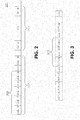
- FIG. 2 shows a RACH Response format 201 comprising a control channel 202 and a data channel 203 according to a first embodiment.
- the control channel 202 may be a physical downlink control channel (PDCCH) and the data channel 212 may be a physical downlink shared channel (PDSCH).
- the control channel 202 includes a common control portion 203, in which a plurality of control channel elements (CCEs), CCE-0 to CCE-N, are defined for RACH Responses intended for WTRUs 102-104.
- Each set of CCEs contains location information for directing each respective WTRU to the RACH Response resource allocation found on the data channel 212 in transport blocks TB-0 to TB-N.
- CCEs control channel elements
- the CCEs may also include transport format information, such as the transport formats and modulation and coding scheme (MCS) to be used for decoding the RACH Response message on the data channel 203.
- transport format information such as the transport formats and modulation and coding scheme (MCS) to be used for decoding the RACH Response message on the data channel 203.
- MCS modulation and coding scheme
- the WTRUs 102-104 perform blind decoding of the common control elements CCE-0 to CCE-N within the common control portion 203, searching for their respective CCE having the intended RACH Response control information.
- the starting location of the common control signal portion 203 may be pre-defined. For example, the starting location may be set to CCE-0, as shown in Figure 2 .
- the required RACH Response resources i.e., the number of common control elements
- Figure 3 shows an alternative embodiment to the starting point being defined as CCE-0, where a subset L of CCEs between CCE-N and CCE-M may be allocated for a RACH Response common control portion 303.
- CCE-N to CCE-N+L may be allocated for the common control portion 303, as shown in Figure 3 .
- the common control portion 303 maybe allocated to CCE-M-L to CCE-M, or any other subset of CCEs.
- the starting location of the RACH Response common control portion 303, the number of CCEs, and/or the subset of L CCEs may be received by the WTRUs 102-104 in one of the broadcast channel (BCH) system information blocks (SIBs).
- BCH broadcast channel
- SIBs system information blocks
- FIG. 4 shows a WTRU 401 configured to receive and process the RACH Response 105 from a base station 411.
- a cyclic redundancy code (CRC) generator 414 computes a CRC which is added as a set of bits onto CCE control information 420.
- the CRC is first is masked by an ID code at mask encoder 413.
- the masked CRC is then added to the CCE information 420.
- a 16-bit CRC code may be masked by a 16-bit ID, and then encoded onto the control information 420 for transmission at transmitter 412.
- receiver 402 demodulates the received RF RACH Response signal 105
- blind decoder 403 processes the demodulated received signal 105, for example, by using a forward error correction (FEC) code or a Viterbi code.
- FEC forward error correction
- a CRC de-masker 404 processes the CRC bits by de-masking them according to the ID code.
- a CRC decoder 405 decodes the de-masked CRC bits, allowing the WTRU 401 to perform an error check on the received CCEs of the RACH Response.
- the blind decoder 403, CRC de-masker 404, and CRC decoder 405 may be implemented as a single processor or as separate individual processors.
- the ID code may be a Group ID or a WTRU-specific ID.
- the Group ID is used when a set of WTRUs served by the base station 411 are to receive a common RACH Response.
- the ID code may be a temporary ID assigned to a WTRU to identify the RACH Response addressed to it even if sharing a Group ID with other WTRUs.
- the temporary ID may be a RACH radio network temporary ID (RA-RNTI).
- RA-RNTI RACH radio network temporary ID
- the ID code is received by the WTRU 401 with other system parameters when it initially acquires a cell and camps on the cell of the base station 411 via higher layer signaling.
- a fixed time-frequency resource allocation may be dedicated to the CCEs corresponding to the random access grant control in the RACH Response.
- This fixed resource allocation may be independent of the other physical channel allocations, such as a physical HARQ. indicator channel (PHICH) location, and avoids the need to have any knowledge of the configuration of those other physical channels.
- the fixed time-frequency resource allocation dedicated to the RACH Response control may be allocated at a location immediately following a particular type of physical channel, such as a physical control format indicator channel (PCFICH).
- PCFICH physical control format indicator channel
- the CCEs may be spread in time-frequency domain, within the control portion of a sub-frame.
- a one-to-one association (e.g., a time offset) between the random access request in the RACH preamble and a dedicated time-frequency resource allocation may be used to provide WTRU-specific RACH Response control.
- each RACH Response control portion only contains resource allocation and transport format information for one WTRU RACH Response data portion.
- each RACH Response combines both control and data portions together for one WTRU.
- the RA-RNTI may be used to scramble each RACH Response control portion or the combined RACH Response control and data.
- the RA-RNTI may be used to scramble the RACH Response data portion since a WTRU knows that the RACH Response data portion part is intended for it based on the RACH Response control portion.
- Different antenna configurations may be applied to different RACH responses based on different WTRUs' capabilities.
- MIMO multiple-input multiple-output
- SFBC space frequency block coding
- the first RACH Response data portion or RACH Response control portion may contain the information of how many total RACH Response data portions or RACH Response control portions are to be sent for different WTRUs. From this, the WTRUs know how many RACH Responses they need to detect to find the specific RACH Response intended to them. In doing this, the WTRUs associated with one RA-RNTI do not need to monitor all RACH Response channels, thus reducing the detection complexity and saving power.
- the frequency hopping pattern for transmission of the RACH Response control or data portions may be indicated in the first RACH Response control portion or the combined RACH Response data and control.
- the transport format (such as MCS or power for different WTRUs) may vary for RACH Response data portion which is signaled in the RACH Response control portion.
- the location of the RACH Response per WTRU may be fixed or spread across the time-frequency spectrum. It may be standardized or signaled in one of the BCH SIBs.
- the network may decide which format should be used for the RACH Response.
- the exact RACH Response to be used may be signaled in the BCH so that the WTRU knows how to perform the blind decoding.
- the WTRU may receive a downlink control indicator (DCI) format code, detected by the blind decoder 403, from which the WTRU may know the size (e.g., number of CCEs) of the RACH Response control portion and/or the starting location of the RACH Response control on the sub-frame.
- DCI downlink control indicator
- Different RACH Response locations for different WTRUs may be associated with WTRU IDs (e.g., cell radio network temporary identity (C-RNTI), international mobile subscriber identity (IMSI), international mobile equipment identity (IMEI), or any other WTRU ID).
- WTRU IDs may be known from the paging information.
- the relation between the WTRU ID and its RACH location may be pre-defined. In this way, the WTRU knows where to look for its RACH channel.
- the initial RACH response location for the WTRU may be signaled in the BCH or derived from a relation between the WTRU ID and RACH location and then the WTRU may get the location of subsequent RACHs in the first RACH Response message signaled, (e.g., in case that the WTRU fails at the first RACH and has to send another RACH).
- ROM read only memory
- RAM random access memory
- register cache memory
- semiconductor memory devices magnetic media such as internal hard disks and removable disks, magneto-optical media, and optical media such as CD-ROM disks, and digital versatile disks (DVDs).
- Suitable processors include, by way of example, a general purpose processor, a special purpose processor, a conventional processor, a digital signal processor (DSP), a plurality of microprocessors, one or more microprocessors in association with a DSP core, a controller, a microcontroller, Application Specific Integrated Circuits (ASICs), Field Programmable Gate Arrays (FPGAs) circuits, any other type of integrated circuit (IC), and/or a state machine.
- DSP digital signal processor
- ASICs Application Specific Integrated Circuits
- FPGAs Field Programmable Gate Arrays
- a processor in association with software may be used to implement a radio frequency transceiver for use in a wireless transmit receive unit (WTRU), user equipment (UE), terminal, base station, radio network controller (RNC), or any host computer.
- the WTRU may be used in conjunction with modules, implemented in hardware and/or software, such as a camera, a video camera module, a videophone, a speakerphone, a vibration device, a speaker, a microphone, a television transceiver, a hands free headset, a keyboard, a Bluetooth® module, a frequency modulated (FM) radio unit, a liquid crystal display (LCD) display unit, an organic light-emitting diode (OLED) display unit, a digital music player, a media player, a video game player module, an Internet browser, and/or any wireless local area network (WLAN) or Ultra Wide Band (UWB) module.
- WLAN wireless local area network
- UWB Ultra Wide Band
Landscapes
- Engineering & Computer Science (AREA)
- Signal Processing (AREA)
- Computer Networks & Wireless Communication (AREA)
- Mobile Radio Communication Systems (AREA)
Abstract
Description
- The present application is related to wireless communications.
- The objective of evolved universal terrestrial radio access (E-UTRA) and long term evolution (LTE) in wireless communications is to develop a radio access network towards a high-data-rate, low-latency, packet-optimized system with improved system capacity and coverage. In order to achieve these goals, an evolution of the radio interface as well as the radio network architecture is being considered. For example, orthogonal frequency division multiple access (OFDMA) and frequency division multiple access (FDMA) are proposed air interface technologies to be used in the downlink and uplink transmissions, respectively, instead of using code division multiple access (CDMA), which is currently used in 3rd Generation Partnership Project (3GPP) communication systems. Another change includes applying all packet switched service, which means all the voice calls will be made on the packet switched basis.
- Packet switched communications operate on a random access channel. The physical channel specification for LTE specifies that the random access burst occupies a bandwidth corresponding to 72 sub-carriers (6 resource blocks). The set of six resource blocks is referred to as one time-frequency random access resource, or alternatively, resources of one LTE physical random access channel (PRACH). For the system flexibility, having a configurable number of time-frequency random access resources in one radio frame (10 ms) depends on the system bandwidth and the random access load. The existence of any additionally configured time-frequency random access resources needs to be explicitly signaled to wireless transmit/receive units (WTRUs).
- There may be multiple random access preambles that are available for the access in one time-frequency random access resource, and the number of random accesses that expect the responses in a certain time window may vary greatly. If an evolved Node-B (eNB) always needs to signal all responses in one transport block per one random access-radio network temporary identity (RA-RNTI), the resultant size of the transport block may reduce the scheduling flexibility of the random access response.
- A method and apparatus for supporting a random access using a random access channel (RACH) are disclosed. Each of a plurality of wireless transmit/receive units (WTRUs) sends a random access request to a base station on an uplink RACH preamble. A RACH Response, sent by the base station, is received by each WTRU. A control signal portion of the RACH Response indicates the location of the RACH Response message in a corresponding data portion. The RACH Response control information is defined by single or multiple control channel elements (CCE), where each WTRU is allocated at least one CCE to provide its unique RACH Response control signal. The WTRU is configured to locate its intended CCE from among the multiple CCEs sent by the base station.
- A more detailed understanding may be had from the following description, given by way of example in conjunction with the accompanying drawings wherein:
-
Figure 1 shows a wireless communication network using random access; -
Figure 2 shows a format for a RACH Response control channel and data channel; -
Figure 3 shows an alternative format for a RACH Response control channel; and -
Figure 4 shows a WTRU configuration for receiving a RACH Response. - When referred to hereafter, the terminology "wireless transmit/receive unit (WTRU)" includes but is not limited to a user equipment (UE), a mobile station, a fixed or mobile subscriber unit, a pager, a cellular telephone, a personal digital assistant (PDA), a computer, or any other type of user device capable of operating in a wireless environment. When referred to hereafter, the terminology "base station" includes but is not limited to a Node-B, a site controller, an access point (AP), or any other type of interfacing device capable of operating in a wireless environment.
- Herein, the term "RACH Response" is used interchangeably with an access indication channel (AICH) message.
-
Figure 1 shows a wireless communication network 100, in which abase station 101 grants random access to a plurality of wireless transmit/receive units (WTRUs) 102-104. ARACH Response signal 105 is sent to the WTRUs 102-104 granting random access resource allocations in response to random access requests 106-108 sent by the WTRUs 102-104. The random access requests 106-108 are sent in RACH preambles from the same random access burst. A single time-frequency random access resource is granted per random access request by one of the WTRUs 102-104. Alternatively, multiple time-frequency random access resources may be granted per random access request. -
Figure 2 shows aRACH Response format 201 comprising acontrol channel 202 and adata channel 203 according to a first embodiment. By way of example, thecontrol channel 202 may be a physical downlink control channel (PDCCH) and thedata channel 212 may be a physical downlink shared channel (PDSCH). Thecontrol channel 202 includes acommon control portion 203, in which a plurality of control channel elements (CCEs), CCE-0 to CCE-N, are defined for RACH Responses intended for WTRUs 102-104. Each set of CCEs contains location information for directing each respective WTRU to the RACH Response resource allocation found on thedata channel 212 in transport blocks TB-0 to TB-N. - The CCEs may also include transport format information, such as the transport formats and modulation and coding scheme (MCS) to be used for decoding the RACH Response message on the
data channel 203. - In the first embodiment, the WTRUs 102-104 perform blind decoding of the common control elements CCE-0 to CCE-N within the
common control portion 203, searching for their respective CCE having the intended RACH Response control information. The starting location of the commoncontrol signal portion 203 may be pre-defined. For example, the starting location may be set to CCE-0, as shown inFigure 2 . The required RACH Response resources (i.e., the number of common control elements) may vary based on the number of WTRUs requiring the random access responses. A maximum number of CCEs may be specified accordingly. -
Figure 3 shows an alternative embodiment to the starting point being defined as CCE-0, where a subset L of CCEs between CCE-N and CCE-M may be allocated for a RACH Responsecommon control portion 303. For example, CCE-N to CCE-N+L may be allocated for thecommon control portion 303, as shown inFigure 3 . Alternatively, thecommon control portion 303 maybe allocated to CCE-M-L to CCE-M, or any other subset of CCEs.
The starting location of the RACH Responsecommon control portion 303, the number of CCEs, and/or the subset of L CCEs may be received by the WTRUs 102-104 in one of the broadcast channel (BCH) system information blocks (SIBs). -
Figure 4 shows a WTRU 401 configured to receive and process theRACH Response 105 from abase station 411. At thebase station 411, a cyclic redundancy code (CRC)generator 414 computes a CRC which is added as a set of bits ontoCCE control information 420. The CRC is first is masked by an ID code atmask encoder 413. The masked CRC is then added to theCCE information 420. As an example, a 16-bit CRC code may be masked by a 16-bit ID, and then encoded onto thecontrol information 420 for transmission attransmitter 412. - At WTRU 401,
receiver 402 demodulates the received RFRACH Response signal 105, andblind decoder 403 processes the demodulated receivedsignal 105, for example, by using a forward error correction (FEC) code or a Viterbi code. ACRC de-masker 404 processes the CRC bits by de-masking them according to the ID code. Next, aCRC decoder 405 decodes the de-masked CRC bits, allowing the WTRU 401 to perform an error check on the received CCEs of the RACH Response. Theblind decoder 403, CRC de-masker 404, andCRC decoder 405 may be implemented as a single processor or as separate individual processors. - The ID code may be a Group ID or a WTRU-specific ID. The Group ID is used when a set of WTRUs served by the
base station 411 are to receive a common RACH Response. The ID code may be a temporary ID assigned to a WTRU to identify the RACH Response addressed to it even if sharing a Group ID with other WTRUs. For example, the temporary ID may be a RACH radio network temporary ID (RA-RNTI). The ID code is received by the WTRU 401 with other system parameters when it initially acquires a cell and camps on the cell of thebase station 411 via higher layer signaling. - Alternatively, a fixed time-frequency resource allocation may be dedicated to the CCEs corresponding to the random access grant control in the RACH Response. This fixed resource allocation may be independent of the other physical channel allocations, such as a physical HARQ. indicator channel (PHICH) location, and avoids the need to have any knowledge of the configuration of those other physical channels. For example, the fixed time-frequency resource allocation dedicated to the RACH Response control may be allocated at a location immediately following a particular type of physical channel, such as a physical control format indicator channel (PCFICH).
- For better performance and scheduling flexibility, the CCEs may be spread in time-frequency domain, within the control portion of a sub-frame. A one-to-one association (e.g., a time offset) between the random access request in the RACH preamble and a dedicated time-frequency resource allocation may be used to provide WTRU-specific RACH Response control.
- In a second embodiment, multiple RACH Responses are sent to each of several different WTRUs. In a first alternative, each RACH Response control portion only contains resource allocation and transport format information for one WTRU RACH Response data portion. In another alternative, each RACH Response combines both control and data portions together for one WTRU. The RA-RNTI may be used to scramble each RACH Response control portion or the combined RACH Response control and data. Optionally, the RA-RNTI may be used to scramble the RACH Response data portion since a WTRU knows that the RACH Response data portion part is intended for it based on the RACH Response control portion.
- Different antenna configurations may be applied to different RACH responses based on different WTRUs' capabilities. For example multiple-input multiple-output (MIMO) or space frequency block coding (SFBC) may be applied based on the WTRUs' capabilities.
- For both alternatives, the first RACH Response data portion or RACH Response control portion may contain the information of how many total RACH Response data portions or RACH Response control portions are to be sent for different WTRUs. From this, the WTRUs know how many RACH Responses they need to detect to find the specific RACH Response intended to them. In doing this, the WTRUs associated with one RA-RNTI do not need to monitor all RACH Response channels, thus reducing the detection complexity and saving power.
- If frequency hopping is employed for the RACH Response, the frequency hopping pattern for transmission of the RACH Response control or data portions may be indicated in the first RACH Response control portion or the combined RACH Response data and control. The transport format (such as MCS or power for different WTRUs) may vary for RACH Response data portion which is signaled in the RACH Response control portion. When combining the RACH Response control and data parts together, there is no need to signal the resource allocation for the RACH Response data portion.
- The location of the RACH Response per WTRU may be fixed or spread across the time-frequency spectrum. It may be standardized or signaled in one of the BCH SIBs.
- For the first and the second embodiments for the RACH Response, the network may decide which format should be used for the RACH Response. The exact RACH Response to be used may be signaled in the BCH so that the WTRU knows how to perform the blind decoding. For example, the WTRU may receive a downlink control indicator (DCI) format code, detected by the
blind decoder 403, from which the WTRU may know the size (e.g., number of CCEs) of the RACH Response control portion and/or the starting location of the RACH Response control on the sub-frame. - Different RACH Response locations for different WTRUs may be associated with WTRU IDs (e.g., cell radio network temporary identity (C-RNTI), international mobile subscriber identity (IMSI), international mobile equipment identity (IMEI), or any other WTRU ID). The WTRU IDs may be known from the paging information. The relation between the WTRU ID and its RACH location may be pre-defined. In this way, the WTRU knows where to look for its RACH channel.
- As an alternative, the initial RACH response location for the WTRU may be signaled in the BCH or derived from a relation between the WTRU ID and RACH location and then the WTRU may get the location of subsequent RACHs in the first RACH Response message signaled, (e.g., in case that the WTRU fails at the first RACH and has to send another RACH).
- It should be noted that although the embodiments are described with reference to LTE, this is an example implementation, and the embodiments may be applied to any other wireless communication systems, such as high speed packet access (HSPA) systems or future development, and other wireless system when similar services and concepts are supported.
-
- 1. A method implemented by a wireless transmit/receive unit (WTRU) for processing multiple random access channel responses in a wireless communication, comprising:
- receiving a random access channel (RACH) response signal having a control portion and a data portion, said data portion carrying the random access allocation, said control portion corresponding to at least one RACH response for a random access allocation corresponding to the random access request, said control portion including a set of common control elements (CCEs), wherein at least one CCE corresponds to the random access allocation in the data portion; and
- searching the control portion and identifying the at least one CCE corresponding to the random access allocation.
- 2. The method as in
embodiment 1, further comprising detecting a format code for the RACH response signal; and - 3. The method as in any preceding embodiment, further comprising sending a random access request to a base station for random access on a physical random access channel (PRACH);
- 4. The method as in any preceding embodiment, wherein a starting location for the searching is predefined.
- 5. The method as in embodiment 4, wherein the set of CCEs are numbered as CCE-0 through CCE-N, and the starting location for the searching is pre-defined as CCE-0.
- 6. The method as in any preceding embodiment, further comprising receiving a pre-defined starting location of the control portion via a broadcast channel indication.
- 7. The method as in any preceding embodiment, further comprising receiving a pre-defined value indicating a maximum number of control channel elements (CCEs) in the control portion via a broadcast channel indication.
- 8. The method as in any preceding embodiment, further comprising performing a blind decoding on the RACH Response signal for identifying the at least one CCE.
- 9. The method as in any preceding embodiment, further comprising de-masking cyclic redundancy codes (CRCs) in the RACH Response signal using an ID code.
- 10. The method as in any preceding embodiment, wherein a fixed resource allocation is dedicated to each CCE.
- 11. The method as in any preceding embodiment, wherein the resource allocations are spread in time-frequency domain.
- 12. The method as in embodiment 11 wherein the resource allocations are localized.
- 13. The method as in embodiment 11 wherein the resource allocations are distributed.
- 14. The method as in any preceding embodiment, wherein a one-to-one association is built between a RACH preamble and a dedicated resource allocation.
- 15. The method as in any preceding embodiment, wherein the common control portion includes transport format information for the random access allocation.
- 16. The method as in any preceding embodiment, wherein the common control portion includes a frequency hopping pattern for the RACH Response data portion.
- 17. A wireless transmit/receive unit (WTRU), comprising:
- a receiver configured to receive a random access channel (RACH) response signal having a control portion and a data portion, said data portion carrying the random access allocation, said control portion corresponding to at least one RACH response for a random access allocation corresponding to the random access request, said control portion including a set of common control elements (CCEs), wherein at least one CCE corresponds to the random access allocation in the data portion, said RACH response signal received responsive to a random access request by the WTRU; and
- a blind decoder configured to detect a format code for the RACH response signal;
- wherein the WTRU is configured to search the control portion according to the format code and to identify the at least one CCE corresponding to the random access allocation.
- 18. The WTRU as in embodiment 15, wherein a starting location for the searching is predefined.
- 19. The WTRU as in embodiment 18, wherein the set of CCEs are numbered as CCE-0 through CCE-N, and the starting location for the searching is pre-defined as CCE-0.
- 20. The WTRU as in any one of embodiments 17-19, wherein the receiver is configured to receive a pre-defined starting location of the control portion via a broadcast channel indication.
- 21. The WTRU as in any one of embodiments 17-20, wherein the receiver is configured to receive a pre-defined value indicating a maximum number of control channel elements (CCEs) in the control portion via a broadcast channel indication.
- 22. The WTRU as in any one of embodiments 17-21, wherein the blind decoder is configured to perform a blind decoding on the RACH Response signal for identifying the at least one CCE.
- 23. The WTRU as in any one of embodiments 17-22, further comprising a cyclic redundancy code de-masker configured to de-mask cyclic redundancy codes the RACH Response signal using an ID code.
- 24. The WTRU as in any one of embodiments 17-23, wherein the receiver is configured to receive a fixed resource allocation dedicated to each CCE.
- 25. The WTRU as in any one of embodiments 17-24, wherein the receiver is configured to receive the resource allocations spread in time-frequency domain.
- 26. The WTRU as in embodiment 25 wherein the resource allocations are localized.
- 27. The WTRU as in embodiment 25 wherein the resource allocations are distributed.
- 28. The WTRU as in any one of embodiments 17-27, wherein the receiver is configured to recognize a one-to-one association between a RACH preamble and a dedicated resource allocation.
- 29. The WTRU as in any one of embodiments 17-28, wherein the receiver is configured to receive transport format information in the control information for the random access allocation.
- 30. The WTRU as in any one of embodiments 17-29, wherein the receiver is configured to receive a frequency hopping pattern for the RACH Response data portion, the frequency hopping pattern included in the control portion.
- Although features and elements are described above in particular combinations, each feature or element can be used alone without the other features and elements or in various combinations with or without other features and elements. The methods or flow charts provided herein may be implemented in a computer program, software, or firmware incorporated in a computer-readable storage medium for execution by a general purpose computer or a processor. Examples of computer-readable storage mediums include a read only memory (ROM), a random access memory (RAM), a register, cache memory, semiconductor memory devices, magnetic media such as internal hard disks and removable disks, magneto-optical media, and optical media such as CD-ROM disks, and digital versatile disks (DVDs).
- Suitable processors include, by way of example, a general purpose processor, a special purpose processor, a conventional processor, a digital signal processor (DSP), a plurality of microprocessors, one or more microprocessors in association with a DSP core, a controller, a microcontroller, Application Specific Integrated Circuits (ASICs), Field Programmable Gate Arrays (FPGAs) circuits, any other type of integrated circuit (IC), and/or a state machine.
- A processor in association with software may be used to implement a radio frequency transceiver for use in a wireless transmit receive unit (WTRU), user equipment (UE), terminal, base station, radio network controller (RNC), or any host computer. The WTRU may be used in conjunction with modules, implemented in hardware and/or software, such as a camera, a video camera module, a videophone, a speakerphone, a vibration device, a speaker, a microphone, a television transceiver, a hands free headset, a keyboard, a Bluetooth® module, a frequency modulated (FM) radio unit, a liquid crystal display (LCD) display unit, an organic light-emitting diode (OLED) display unit, a digital music player, a media player, a video game player module, an Internet browser, and/or any wireless local area network (WLAN) or Ultra Wide Band (UWB) module.
-
- A1. A method implemented by a wireless transmit/receive unit (WTRU) for processing multiple random access channel responses in a wireless communication, comprising:
- sending a random access request to a base station for random access on a physical random access channel (PRACH);
- receiving a random access channel (RACH) response signal having a control portion and a data portion, said data portion carrying the random access allocation, said control portion corresponding to at least one RACH response for a random access allocation corresponding to the random access request, said control portion including a set of common control elements (CCEs), wherein at least one CCE corresponds to the random access allocation in the data portion;
- detecting a format code for the RACH response signal; and searching the control portion and identifying the at least one CCE corresponding to the random access allocation.
- A2. The method as in embodiment A1, wherein a starting location for the searching is predefined.
- A3. The method as in embodiment A2, wherein the set of CC Es are numbered as CCE-0 through CCE-N, and the starting location for the searching is pre-defined as CCE-0.
- A4. The method as in embodiment A1, further comprising receiving a pre-defined starting location of the control portion via a broadcast channel indication.
- A5. The method as in embodiment A1, further comprising receiving a pre-defined value indicating a maximum number of control channel elements (CCEs) in the control portion via a broadcast channel indication.
- A6. The method as in embodiment A1, further comprising performing a blind decoding on the RACH Response signal for identifying the at least one CCE.
- A7. The method as in embodiment A1, further comprising de-masking cyclic redundancy codes (CRCs) in the RACH Response signal using an ID code.
- A8. The method as in embodiment A1, wherein a fixed resource allocation is dedicated to each CCE.
- A9. The method as in embodiment A1, wherein the resource allocations are spread in time-frequency domain.
- A10. The method as in embodiment A9 wherein the resource allocations are localized.
- A11. The method as in embodiment A9 wherein the resource allocations are distributed.
- A12. The method as in embodiment A1 wherein a one-to-one association is built between a RACH preamble and a dedicated resource allocation.
- A13. The method as in embodiment A1, wherein the common control portion includes transport format information for the random access allocation.
- A14. The method as in embodiment A1, wherein the common control portion includes a frequency hopping pattern for the RACH Response data portion.
- A15. A wireless transmit/receive unit (WTRU), comprising:
a receiver configured to receive a random access channel (RACH) response signal having a control portion and a data portion, said data portion carrying the random access allocation, said control portion corresponding to at least one RACH response for a random access allocation corresponding to the random access request, said control portion including a set of common control elements (CCEs), wherein at least one CCE corresponds to the random access allocation in the data portion, said RACH response signal received responsive to a random access request by the WTRU; and- a blind decoder configured to detect a format code for the RACH response signal;
- wherein the WTRU is configured to search the control portion according to the format code and to identify the at least one CCE corresponding to the random access allocation.
- A16. The WTRU as in embodiment A15, wherein a starting location for the searching is predefined.
- A17. The WTRU as in embodiment A16, wherein the set of CCEs are numbered as CCE-0 through CCE-N, and the starting location for the searching is pre-defined as CCE-0.
- A18. The WTRU as in embodiment A15, wherein the receiver is configured to receive a pre-defined starting location of the control portion via a broadcast channel indication.
- A19. The WTRU as in embodiment A15, wherein the receiver is configured to receive a pre-defined value indicating a maximum number of control channel elements (CCEs) in the control portion via a broadcast channel indication.
- A20. The WTRU as in embodiment A15, wherein the blind decoder is configured to perform a blind decoding on the RACH Response signal for identifying the at least one CCE.
- A21. The WTRU as in embodiment A15, further comprising a cyclic redundancy code de-masker configured to de-mask cyclic redundancy codes the RACH Response signal using an ID code.
- A22. The WTRU as in embodiment A15, wherein the receiver is configured to receive a fixed resource allocation dedicated to each CCE.
- A23. The WTRU as in embodiment A15, wherein the receiver is configured to receive the resource allocations spread in time-frequency domain.
- A24. The WTRU as in embodiment A23 wherein the resource allocations are localized.
- A25. The WTRU as in embodiment A 23 wherein the resource allocations are distributed.
- A26. The WTRU as in embodiment A15, wherein the receiver is configured to recognize a one-to-one association between a RACH preamble and a dedicated resource allocation.
- A27. The WTRU as in embodiment A15, wherein the receiver is configured to receive transport format information in the control information for the random access allocation.
- A28. The WTRU as in embodiment A15, wherein the receiver is configured to receive a frequency hopping pattern for the RACH Response data portion, the frequency hopping pattern included in the control portion.
Claims (15)
- A wireless transmit/receive unit, WTRU, comprising:a transmitter configured to transmit a random access preamble;a receiver configured to receive a downlink transmission, wherein the downlink transmission comprises a physical downlink control channel, PDCCH, the PDCCH comprises a plurality of control channel elements, CCEs, and a subset of the plurality of CCEs corresponds to a common portion of the PDCCH, wherein the common portion of the PDCCH is intended for a plurality of WTRUs and is not addressed to a WTRU-specific identity for the WTRU; anda processor, operatively coupled to the transmitter and the receiver, configured to:perform decoding within the subset of the plurality of CCEs to detect downlink control information intended for the WTRU, wherein the downlink control information comprises a resource allocation to be used to process a random access channel, RACH, response in a physical downlink shared channel, PDSCH, included in the downlink transmission; andprocess the RACH response in the PDSCH in accordance with the downlink control information.
- The WTRU of claim 1, wherein the processor is configured to perform the decoding to the subset of the plurality of CCEs corresponding to the common portion of the PDCCH.
- The WTRU of claim 1, wherein the processor is configured to decode the RACH response using information relating to a modulation and coding scheme, MCS, included in the subset of the plurality of CCEs.
- The WTRU of claim 1, wherein the processor is configured to determine a random access radio network temporary identifier, RA-RNTI, and to unmask a masked cyclic redundancy check, CRC, using the determined RA-RNTI.
- The WTRU of claim 1, wherein a starting CCE of the subset of the plurality of CCEs of the PDCCH corresponds to a first CCE in the PDCCH.
- A method performed by a wireless transmit/receive unit, WTRU, the method comprising:transmitting a random access preamble;receiving a downlink transmission, wherein the downlink transmission comprises a physical downlink control channel, PDCCH, the PDCCH comprises a plurality of control channel elements, CCEs, and a subset of the plurality of CCEs corresponds to a common portion of the PDCCH, wherein the common portion of the PDCCH is intended for a plurality of WTRUs and is not addressed to a WTRU-specific identity for the WTRU;performing decoding within the subset of the plurality of CCEs to detect downlink control information intended for the WTRU, wherein the downlink control information comprises a resource allocation to be used to process a random access channel, RACH, response in a physical downlink shared channel, PDSCH, included in the downlink transmission; andprocessing the RACH response in the PDSCH in accordance with the downlink control information.
- The method of claim 5, wherein the performing of decoding comprises performing decoding to the subset of the plurality of CCEs corresponding to the common portion of the PDCCH.
- The method of claim 5, wherein the processing of the RACH response comprises decoding the RACH response using information relating to a modulation and coding scheme, MCS, included in the subset of the plurality of CCEs.
- The method of claim 5, further comprising determining a random access radio network temporary identifier, RA-RNTI, and unmasking a masked cyclic redundancy check, CRC, using the determined RA-RNTI.
- The method of claim 5, wherein a starting CCE of the subset of the plurality of CCEs of the PDCCH corresponds to a first CCE in the PDCCH.
- The method of claim 5, wherein the subset of the plurality of CCEs of the PDCCH corresponds to a number of consecutive CCEs in the PDCCH.
- The method of claim 5, wherein the subset of the plurality of CCEs of the PDCCH comprises downlink control information that comprises a RACH response intended for at least one other WTRU.
- The WTRU of claim 1 or the method of claim 5, wherein the subset of the plurality of CCEs comprises transport format information.
- The WTRU of claim 1 or the method of claim 5, wherein the subset of the plurality of CCEs is spread in a time-frequency domain.
- The WTRU of claim 4 or the method of claim 9, wherein the RA-RNTI is utilized by the plurality of WTRUs.
Applications Claiming Priority (3)
| Application Number | Priority Date | Filing Date | Title |
|---|---|---|---|
| US98347307P | 2007-10-29 | 2007-10-29 | |
| EP08844389.0A EP2220903B1 (en) | 2007-10-29 | 2008-10-29 | Handling random access channel responses |
| PCT/US2008/081543 WO2009058832A1 (en) | 2007-10-29 | 2008-10-29 | Handling random access channel responses |
Related Parent Applications (1)
| Application Number | Title | Priority Date | Filing Date |
|---|---|---|---|
| EP08844389.0A Division EP2220903B1 (en) | 2007-10-29 | 2008-10-29 | Handling random access channel responses |
Publications (2)
| Publication Number | Publication Date |
|---|---|
| EP3709749A1 true EP3709749A1 (en) | 2020-09-16 |
| EP3709749B1 EP3709749B1 (en) | 2023-09-20 |
Family
ID=40352314
Family Applications (2)
| Application Number | Title | Priority Date | Filing Date |
|---|---|---|---|
| EP20172055.4A Active EP3709749B1 (en) | 2007-10-29 | 2008-10-29 | Handling random access channel responses |
| EP08844389.0A Active EP2220903B1 (en) | 2007-10-29 | 2008-10-29 | Handling random access channel responses |
Family Applications After (1)
| Application Number | Title | Priority Date | Filing Date |
|---|---|---|---|
| EP08844389.0A Active EP2220903B1 (en) | 2007-10-29 | 2008-10-29 | Handling random access channel responses |
Country Status (11)
| Country | Link |
|---|---|
| US (4) | US8582510B2 (en) |
| EP (2) | EP3709749B1 (en) |
| JP (4) | JP5023218B2 (en) |
| KR (4) | KR20140054424A (en) |
| CN (4) | CN101843160B (en) |
| AR (1) | AR069102A1 (en) |
| AU (1) | AU2008318792B2 (en) |
| MX (1) | MX2010004691A (en) |
| MY (1) | MY154134A (en) |
| TW (3) | TWM354286U (en) |
| WO (1) | WO2009058832A1 (en) |
Families Citing this family (54)
| Publication number | Priority date | Publication date | Assignee | Title |
|---|---|---|---|---|
| EP3709749B1 (en) | 2007-10-29 | 2023-09-20 | InterDigital Patent Holdings, Inc. | Handling random access channel responses |
| US8687745B2 (en) * | 2007-12-13 | 2014-04-01 | Telefonaktiebolaget Lm Ericsson (Publ) | Method and apparatus for blind decoding |
| KR101519345B1 (en) * | 2008-01-01 | 2015-05-21 | 주식회사 팬택 | A method for transmitting and receiving random access request and transmitting and receiving random access response |
| WO2009087742A1 (en) | 2008-01-04 | 2009-07-16 | Panasonic Corporation | Radio communication base station device, radio communication mobile station device, and control channel allocation method |
| KR101615231B1 (en) * | 2008-03-17 | 2016-04-25 | 엘지전자 주식회사 | A method for transmitting group ack/nack in communication system |
| KR20100089728A (en) | 2009-02-03 | 2010-08-12 | 엘지전자 주식회사 | Method of transmitting and receiving an acknowledgement in a wireless system |
| KR101036482B1 (en) | 2009-02-03 | 2011-05-24 | 엘지전자 주식회사 | Random access method in wireless communication system |
| US8310921B2 (en) | 2008-09-04 | 2012-11-13 | Lg Electronics Inc. | Method of random access in a wireless system |
| CN103491574B (en) * | 2008-10-31 | 2016-08-17 | 松下电器(美国)知识产权公司 | Base station apparatus, terminal installation, communication means and integrated circuit |
| US8837352B2 (en) | 2009-04-07 | 2014-09-16 | Lg Electronics Inc. | Method for allocating resources in a broadband wireless access system |
| KR101638899B1 (en) * | 2009-04-08 | 2016-07-12 | 엘지전자 주식회사 | Method of transmitting and receiving an acknowledgement in a wireless system |
| US8649281B2 (en) * | 2009-04-27 | 2014-02-11 | Samsung Electronics Co., Ltd. | Control design for backhaul relay to support multiple HARQ processes |
| US9106378B2 (en) * | 2009-06-10 | 2015-08-11 | Qualcomm Incorporated | Systems, apparatus and methods for communicating downlink information |
| US20110243075A1 (en) * | 2009-06-16 | 2011-10-06 | Qualcomm Incorporated | Method and apparatus for access procedure in a wireless communication system |
| ES2536840T3 (en) | 2009-06-19 | 2015-05-29 | Blackberry Limited | Method and system for signaling transmission layers for single-user and multi-user MIMO |
| US9144037B2 (en) * | 2009-08-11 | 2015-09-22 | Qualcomm Incorporated | Interference mitigation by puncturing transmission of interfering cells |
| US8724563B2 (en) * | 2009-08-24 | 2014-05-13 | Qualcomm Incorporated | Method and apparatus that facilitates detecting system information blocks in a heterogeneous network |
| US9277566B2 (en) | 2009-09-14 | 2016-03-01 | Qualcomm Incorporated | Cross-subframe control channel design |
| US8942192B2 (en) | 2009-09-15 | 2015-01-27 | Qualcomm Incorporated | Methods and apparatus for subframe interlacing in heterogeneous networks |
| AU2010298857B2 (en) | 2009-09-28 | 2013-11-28 | Samsung Electronics Co., Ltd. | Extending physical downlink control channels |
| US8328468B2 (en) * | 2009-10-05 | 2012-12-11 | Tt Technologies, Inc. | Pipe splitting apparatus with replaceable blade |
| US9226288B2 (en) | 2010-04-13 | 2015-12-29 | Qualcomm Incorporated | Method and apparatus for supporting communications in a heterogeneous network |
| US9392608B2 (en) | 2010-04-13 | 2016-07-12 | Qualcomm Incorporated | Resource partitioning information for enhanced interference coordination |
| US9125072B2 (en) | 2010-04-13 | 2015-09-01 | Qualcomm Incorporated | Heterogeneous network (HetNet) user equipment (UE) radio resource management (RRM) measurements |
| US9271167B2 (en) | 2010-04-13 | 2016-02-23 | Qualcomm Incorporated | Determination of radio link failure with enhanced interference coordination and cancellation |
| WO2011161907A1 (en) * | 2010-06-21 | 2011-12-29 | パナソニック株式会社 | Wireless communication apparatus and wireless communication method |
| US8886190B2 (en) | 2010-10-08 | 2014-11-11 | Qualcomm Incorporated | Method and apparatus for measuring cells in the presence of interference |
| US8638131B2 (en) | 2011-02-23 | 2014-01-28 | Qualcomm Incorporated | Dynamic feedback-controlled output driver with minimum slew rate variation from process, temperature and supply |
| EP2693807A4 (en) * | 2011-03-28 | 2015-05-20 | Lg Electronics Inc | METHOD AND DEVICE FOR TRANSFER IN A MOBILE COMMUNICATION SYSTEM |
| CN102164425A (en) * | 2011-05-11 | 2011-08-24 | 大唐移动通信设备有限公司 | MTC (machine type communication)equipment management method, system and MTC equipment |
| US9198200B2 (en) * | 2011-10-04 | 2015-11-24 | Google Technology Holdings LLC | Method for contention based random access on a secondary carrier |
| RU2577028C2 (en) * | 2011-12-20 | 2016-03-10 | ЭлДжи ЭЛЕКТРОНИКС ИНК. | Method and apparatus for performing random access process in wireless communication system |
| US10231247B2 (en) * | 2012-09-26 | 2019-03-12 | Futurewei Technologies, Inc. | System and method for random access in heterogeneous communications systems |
| US9144079B1 (en) * | 2013-08-05 | 2015-09-22 | Sprint Communications Company L.P. | Dynamic adjustment of the number of uplink grants per random access response message |
| KR102074283B1 (en) * | 2013-12-17 | 2020-02-06 | 후아웨이 테크놀러지 컴퍼니 리미티드 | Uplink data transmission confirmation apparatus, device and method |
| CN111629449B (en) * | 2014-08-15 | 2024-05-28 | 交互数字专利控股公司 | Method performed by WTRU and WTRU |
| CN107005564B (en) * | 2015-01-05 | 2019-11-29 | 华为技术有限公司 | A kind of information transferring method, equipment and system |
| US10165599B2 (en) * | 2015-06-10 | 2018-12-25 | Apple Inc. | Random access procedures for link budget constrained wireless devices |
| JP6593450B2 (en) * | 2015-11-12 | 2019-10-23 | 富士通株式会社 | Terminal apparatus, base station apparatus, radio communication system, and radio communication method |
| JP2019054311A (en) * | 2016-01-29 | 2019-04-04 | シャープ株式会社 | Terminal, base station device and communication metho |
| WO2018097497A1 (en) * | 2016-11-23 | 2018-05-31 | 한국전자통신연구원 | Access method in communication system and device for performing same |
| CN115189815B (en) * | 2017-01-04 | 2025-07-29 | 交互数字专利控股公司 | Receiver feedback in a wireless system |
| CN110463282B (en) * | 2017-03-24 | 2021-11-02 | Oppo广东移动通信有限公司 | Method, terminal device and network device for terminal device to access network |
| CN107018576B (en) * | 2017-03-28 | 2019-10-11 | 西安电子科技大学 | Random Access Method Based on Grid Graph |
| CN110447299B (en) | 2017-03-29 | 2024-05-07 | 夏普株式会社 | Random access procedure for radio systems |
| CN115499072B (en) * | 2017-05-31 | 2026-07-28 | 弗劳恩霍夫应用研究促进协会 | Network device for use in a wireless communication network and end-to-end air test and measurement system for one or more network devices |
| CN110785952B (en) * | 2017-06-14 | 2022-10-25 | Idac控股公司 | Two-stage scrambling for polarization encoded PDCCH transmission |
| CN109219153B (en) * | 2017-06-30 | 2021-01-29 | 上海华为技术有限公司 | Random access method, base station and terminal |
| CN109219150B (en) * | 2017-06-30 | 2021-02-09 | 上海华为技术有限公司 | Random access method and base station |
| US10841828B2 (en) | 2017-10-30 | 2020-11-17 | Qualcomm Incorporated | Disambiguation of random access response for random access support on supplemental uplink |
| US12167468B2 (en) * | 2019-12-23 | 2024-12-10 | Qualcomm Incorporated | Random access response enhancement for user equipments with reduced capabilities |
| CN115001640B (en) * | 2022-06-08 | 2023-11-07 | 河南省四通锅炉有限公司 | Big data-based boiler industry data information transmission method and system |
| EP4397121A4 (en) * | 2023-04-05 | 2025-03-12 | ZTE Corporation | RANDOM ACCESS PROCEDURE TECHNIQUES |
| KR102993953B1 (en) | 2024-11-20 | 2026-07-21 | 서울대학교산학협력단 | Wireless control apparatus using frequency modulation of inaudible sound and data communication method using thereof |
Citations (2)
| Publication number | Priority date | Publication date | Assignee | Title |
|---|---|---|---|---|
| EP2104294A2 (en) * | 2008-03-20 | 2009-09-23 | LG Electronics Inc. | Monitoring a control channel in a wireless communication system |
| EP2193616A1 (en) * | 2007-09-28 | 2010-06-09 | Lg Electronics Inc. | Wireless communication system for monitoring physical downlink control channel |
Family Cites Families (20)
| Publication number | Priority date | Publication date | Assignee | Title |
|---|---|---|---|---|
| US7551546B2 (en) * | 2002-06-27 | 2009-06-23 | Nortel Networks Limited | Dual-mode shared OFDM methods/transmitters, receivers and systems |
| GB2391431A (en) * | 2002-07-30 | 2004-02-04 | Fujitsu Ltd | Adaptive modulation and coding method |
| KR20050014984A (en) * | 2003-08-01 | 2005-02-21 | 삼성전자주식회사 | Methoed for retransmitting rrc connection request in a mobile communication system which support mbms |
| US8031583B2 (en) | 2005-03-30 | 2011-10-04 | Motorola Mobility, Inc. | Method and apparatus for reducing round trip latency and overhead within a communication system |
| JP4616350B2 (en) | 2005-11-04 | 2011-01-19 | 株式会社エヌ・ティ・ティ・ドコモ | Transmission control method, mobile station and radio base station |
| KR20070080552A (en) * | 2006-02-07 | 2007-08-10 | 엘지전자 주식회사 | Method of transmitting response information in mobile communication system |
| TWI451774B (en) * | 2006-01-31 | 2014-09-01 | 內數位科技公司 | Method and apparatus for providing and utilizing non-competitive basic channels in a wireless communication system |
| US7840866B2 (en) | 2006-02-06 | 2010-11-23 | Samsung Electronics Co., Ltd. | Digital broadcasting transmission apparatus and robust stream coding method thereof |
| US8295243B2 (en) * | 2006-08-21 | 2012-10-23 | Qualcomm Incorporated | Method and apparatus for random access in an orthogonal multiple-access communication system |
| EP3554180B1 (en) | 2006-10-03 | 2021-05-05 | QUALCOMM Incorporated | Method and apparatuses for random access to a wireless communication system |
| US20080084853A1 (en) * | 2006-10-04 | 2008-04-10 | Motorola, Inc. | Radio resource assignment in control channel in wireless communication systems |
| US8107987B2 (en) * | 2007-02-14 | 2012-01-31 | Qualcomm Incorporated | Apparatus and method for uplink power control of wireless communications |
| EP3709749B1 (en) | 2007-10-29 | 2023-09-20 | InterDigital Patent Holdings, Inc. | Handling random access channel responses |
| US8600413B2 (en) * | 2007-10-30 | 2013-12-03 | Qualcomm Incorporated | Control arrangement and method for communicating paging messages in a wireless communication system |
| US8238475B2 (en) * | 2007-10-30 | 2012-08-07 | Qualcomm Incorporated | Methods and systems for PDCCH blind decoding in mobile communications |
| KR101487553B1 (en) * | 2008-03-20 | 2015-01-30 | 엘지전자 주식회사 | Method for monitoring control channel in wireless communication |
| KR20100090632A (en) * | 2009-02-06 | 2010-08-16 | 엘지전자 주식회사 | Random access method using ndi and user equipment for the same |
| WO2010150512A1 (en) * | 2009-06-22 | 2010-12-29 | パナソニック株式会社 | Wireless communication base station device, wireless communication terminal device, control channel transmission method, and control channel reception method |
| JP5568747B2 (en) * | 2009-08-17 | 2014-08-13 | パナソニック インテレクチュアル プロパティ コーポレーション オブ アメリカ | COMMUNICATION DEVICE, CONTROL INFORMATION ALLOCATION METHOD, AND INTEGRATED CIRCUIT |
| US8982693B2 (en) * | 2012-05-14 | 2015-03-17 | Google Technology Holdings LLC | Radio link monitoring in a wireless communication device |
-
2008
- 2008-10-29 EP EP20172055.4A patent/EP3709749B1/en active Active
- 2008-10-29 MY MYPI2010001901A patent/MY154134A/en unknown
- 2008-10-29 CN CN200880114090.XA patent/CN101843160B/en not_active Expired - Fee Related
- 2008-10-29 CN CN201310718401.6A patent/CN103763783B/en active Active
- 2008-10-29 MX MX2010004691A patent/MX2010004691A/en active IP Right Grant
- 2008-10-29 JP JP2010532197A patent/JP5023218B2/en active Active
- 2008-10-29 TW TW97219354U patent/TWM354286U/en not_active IP Right Cessation
- 2008-10-29 TW TW97141706A patent/TWI472182B/en active
- 2008-10-29 AU AU2008318792A patent/AU2008318792B2/en not_active Ceased
- 2008-10-29 KR KR1020147008736A patent/KR20140054424A/en not_active Ceased
- 2008-10-29 TW TW103128195A patent/TW201511600A/en unknown
- 2008-10-29 WO PCT/US2008/081543 patent/WO2009058832A1/en not_active Ceased
- 2008-10-29 AR ARP080104731 patent/AR069102A1/en active IP Right Grant
- 2008-10-29 KR KR20107011493A patent/KR101236252B1/en not_active Expired - Fee Related
- 2008-10-29 KR KR20107014768A patent/KR101410425B1/en active Active
- 2008-10-29 CN CN201310717604.3A patent/CN103747533B/en active Active
- 2008-10-29 EP EP08844389.0A patent/EP2220903B1/en active Active
- 2008-10-29 US US12/260,495 patent/US8582510B2/en active Active
- 2008-10-29 CN CNU2008201798659U patent/CN201286174Y/en not_active Expired - Fee Related
- 2008-10-29 KR KR1020147005789A patent/KR20140042924A/en not_active Ceased
-
2012
- 2012-06-18 JP JP2012137083A patent/JP5531055B2/en active Active
-
2013
- 2013-11-11 US US14/076,832 patent/US9276712B2/en active Active
-
2014
- 2014-04-21 JP JP2014087504A patent/JP5853049B2/en active Active
-
2015
- 2015-12-07 JP JP2015238933A patent/JP6336954B2/en active Active
- 2015-12-11 US US14/966,275 patent/US9730244B2/en active Active
-
2017
- 2017-07-03 US US15/640,618 patent/US10178693B2/en active Active
Patent Citations (2)
| Publication number | Priority date | Publication date | Assignee | Title |
|---|---|---|---|---|
| EP2193616A1 (en) * | 2007-09-28 | 2010-06-09 | Lg Electronics Inc. | Wireless communication system for monitoring physical downlink control channel |
| EP2104294A2 (en) * | 2008-03-20 | 2009-09-23 | LG Electronics Inc. | Monitoring a control channel in a wireless communication system |
Non-Patent Citations (5)
| Title |
|---|
| INTERDIGITAL COMMUNICATIONS ET AL: "ACK/NACK Index Mapping for Uplink Transmission for E-UTRA", 3GPP DRAFT; R1-074385, 3RD GENERATION PARTNERSHIP PROJECT (3GPP), MOBILE COMPETENCE CENTRE ; 650, ROUTE DES LUCIOLES ; F-06921 SOPHIA-ANTIPOLIS CEDEX ; FRANCE, vol. RAN WG1, no. Shanghai, China; 20071002, 2 October 2007 (2007-10-02), XP050107900 * |
| MOTOROLA: "E-UTRA DL L1/L2 Control Channel Design - PICH/AICH/D-BCH", 3GPP DRAFT; R1-072699 - PICH-AICH-DBCH_L1L2CCH, 3RD GENERATION PARTNERSHIP PROJECT (3GPP), MOBILE COMPETENCE CENTRE ; 650, ROUTE DES LUCIOLES ; F-06921 SOPHIA-ANTIPOLIS CEDEX ; FRANCE, vol. RAN WG1, no. Orlando, USA; 20070620, 20 June 2007 (2007-06-20), XP050106388 * |
| NEC ET AL: "Control channel format for DBCH, PCH and RACH response", 3GPP DRAFT; R1-074165, 3RD GENERATION PARTNERSHIP PROJECT (3GPP), MOBILE COMPETENCE CENTRE ; 650, ROUTE DES LUCIOLES ; F-06921 SOPHIA-ANTIPOLIS CEDEX ; FRANCE, vol. RAN WG1, no. Shanghai, China; 20071002, 2 October 2007 (2007-10-02), XP050107697 * |
| PANASONIC: "PDCCH on common search space", 3GPP DRAFT; R1-082628, 3RD GENERATION PARTNERSHIP PROJECT (3GPP), MOBILE COMPETENCE CENTRE ; 650, ROUTE DES LUCIOLES ; F-06921 SOPHIA-ANTIPOLIS CEDEX ; FRANCE, vol. RAN WG1, no. Warsaw, Poland; 20080702, 2 July 2008 (2008-07-02), XP050110877 * |
| SAMSUNG: "Configuration of PDCCH candidate sets for the control of blind decoding attempts", 3GPP DRAFT; R1-080675 PDCCH CANDIDATE SET, 3RD GENERATION PARTNERSHIP PROJECT (3GPP), MOBILE COMPETENCE CENTRE ; 650, ROUTE DES LUCIOLES ; F-06921 SOPHIA-ANTIPOLIS CEDEX ; FRANCE, vol. RAN WG1, no. Sorrento, Italy; 20080211 - 20080215, 5 February 2008 (2008-02-05), XP050596641 * |
Also Published As
Similar Documents
| Publication | Publication Date | Title |
|---|---|---|
| AU2008318792B2 (en) | Handling random access channel responses | |
| EP2590465B1 (en) | Methods and aparatuses to allocate radio resources for transmitting a message part in an enhanced rach | |
| US20230140970A1 (en) | Methods, terminal device and base station for random access procedure | |
| US20070211671A1 (en) | Method and apparatus for a flexible preamble and efficient transmission thereof | |
| CN117751656A (en) | Data scheduling method, data sending method and device | |
| EP3454488B1 (en) | Method and device for monitoring control channel | |
| AU2012261516B2 (en) | Handling Random Access Channel Responses | |
| HK1148891A (en) | Handling random access channel responses | |
| EP4485010B1 (en) | POSITIONING METHOD AND DEVICE FOR ABSOLUTE POSITION, DEVICE AND MEDIUM |
Legal Events
| Date | Code | Title | Description |
|---|---|---|---|
| PUAI | Public reference made under article 153(3) epc to a published international application that has entered the european phase |
Free format text: ORIGINAL CODE: 0009012 |
|
| STAA | Information on the status of an ep patent application or granted ep patent |
Free format text: STATUS: REQUEST FOR EXAMINATION WAS MADE |
|
| 17P | Request for examination filed |
Effective date: 20200429 |
|
| AC | Divisional application: reference to earlier application |
Ref document number: 2220903 Country of ref document: EP Kind code of ref document: P |
|
| AK | Designated contracting states |
Kind code of ref document: A1 Designated state(s): AT BE BG CH CY CZ DE DK EE ES FI FR GB GR HR HU IE IS IT LI LT LU LV MC MT NL NO PL PT RO SE SI SK TR |
|
| STAA | Information on the status of an ep patent application or granted ep patent |
Free format text: STATUS: EXAMINATION IS IN PROGRESS |
|
| 17Q | First examination report despatched |
Effective date: 20220510 |
|
| RAP3 | Party data changed (applicant data changed or rights of an application transferred) |
Owner name: INTERDIGITAL PATENT HOLDINGS, INC. |
|
| GRAP | Despatch of communication of intention to grant a patent |
Free format text: ORIGINAL CODE: EPIDOSNIGR1 |
|
| STAA | Information on the status of an ep patent application or granted ep patent |
Free format text: STATUS: GRANT OF PATENT IS INTENDED |
|
| INTG | Intention to grant announced |
Effective date: 20230406 |
|
| GRAS | Grant fee paid |
Free format text: ORIGINAL CODE: EPIDOSNIGR3 |
|
| GRAA | (expected) grant |
Free format text: ORIGINAL CODE: 0009210 |
|
| STAA | Information on the status of an ep patent application or granted ep patent |
Free format text: STATUS: THE PATENT HAS BEEN GRANTED |
|
| P01 | Opt-out of the competence of the unified patent court (upc) registered |
Effective date: 20230713 |
|
| AC | Divisional application: reference to earlier application |
Ref document number: 2220903 Country of ref document: EP Kind code of ref document: P |
|
| AK | Designated contracting states |
Kind code of ref document: B1 Designated state(s): AT BE BG CH CY CZ DE DK EE ES FI FR GB GR HR HU IE IS IT LI LT LU LV MC MT NL NO PL PT RO SE SI SK TR |
|
| REG | Reference to a national code |
Ref country code: GB Ref legal event code: FG4D |
|
| REG | Reference to a national code |
Ref country code: CH Ref legal event code: EP |
|
| REG | Reference to a national code |
Ref country code: DE Ref legal event code: R096 Ref document number: 602008064871 Country of ref document: DE |
|
| REG | Reference to a national code |
Ref country code: IE Ref legal event code: FG4D |
|
| REG | Reference to a national code |
Ref country code: NL Ref legal event code: FP |
|
| REG | Reference to a national code |
Ref country code: LT Ref legal event code: MG9D |
|
| PG25 | Lapsed in a contracting state [announced via postgrant information from national office to epo] |
Ref country code: GR Free format text: LAPSE BECAUSE OF FAILURE TO SUBMIT A TRANSLATION OF THE DESCRIPTION OR TO PAY THE FEE WITHIN THE PRESCRIBED TIME-LIMIT Effective date: 20231221 |
|
| PG25 | Lapsed in a contracting state [announced via postgrant information from national office to epo] |
Ref country code: SE Free format text: LAPSE BECAUSE OF FAILURE TO SUBMIT A TRANSLATION OF THE DESCRIPTION OR TO PAY THE FEE WITHIN THE PRESCRIBED TIME-LIMIT Effective date: 20230920 Ref country code: NO Free format text: LAPSE BECAUSE OF FAILURE TO SUBMIT A TRANSLATION OF THE DESCRIPTION OR TO PAY THE FEE WITHIN THE PRESCRIBED TIME-LIMIT Effective date: 20231220 Ref country code: LV Free format text: LAPSE BECAUSE OF FAILURE TO SUBMIT A TRANSLATION OF THE DESCRIPTION OR TO PAY THE FEE WITHIN THE PRESCRIBED TIME-LIMIT Effective date: 20230920 Ref country code: LT Free format text: LAPSE BECAUSE OF FAILURE TO SUBMIT A TRANSLATION OF THE DESCRIPTION OR TO PAY THE FEE WITHIN THE PRESCRIBED TIME-LIMIT Effective date: 20230920 Ref country code: HR Free format text: LAPSE BECAUSE OF FAILURE TO SUBMIT A TRANSLATION OF THE DESCRIPTION OR TO PAY THE FEE WITHIN THE PRESCRIBED TIME-LIMIT Effective date: 20230920 Ref country code: GR Free format text: LAPSE BECAUSE OF FAILURE TO SUBMIT A TRANSLATION OF THE DESCRIPTION OR TO PAY THE FEE WITHIN THE PRESCRIBED TIME-LIMIT Effective date: 20231221 Ref country code: FI Free format text: LAPSE BECAUSE OF FAILURE TO SUBMIT A TRANSLATION OF THE DESCRIPTION OR TO PAY THE FEE WITHIN THE PRESCRIBED TIME-LIMIT Effective date: 20230920 |
|
| REG | Reference to a national code |
Ref country code: AT Ref legal event code: MK05 Ref document number: 1614407 Country of ref document: AT Kind code of ref document: T Effective date: 20230920 |
|
| PG25 | Lapsed in a contracting state [announced via postgrant information from national office to epo] |
Ref country code: IS Free format text: LAPSE BECAUSE OF FAILURE TO SUBMIT A TRANSLATION OF THE DESCRIPTION OR TO PAY THE FEE WITHIN THE PRESCRIBED TIME-LIMIT Effective date: 20240120 |
|
| PG25 | Lapsed in a contracting state [announced via postgrant information from national office to epo] |
Ref country code: AT Free format text: LAPSE BECAUSE OF FAILURE TO SUBMIT A TRANSLATION OF THE DESCRIPTION OR TO PAY THE FEE WITHIN THE PRESCRIBED TIME-LIMIT Effective date: 20230920 |
|
| PG25 | Lapsed in a contracting state [announced via postgrant information from national office to epo] |
Ref country code: ES Free format text: LAPSE BECAUSE OF FAILURE TO SUBMIT A TRANSLATION OF THE DESCRIPTION OR TO PAY THE FEE WITHIN THE PRESCRIBED TIME-LIMIT Effective date: 20230920 |
|
| PG25 | Lapsed in a contracting state [announced via postgrant information from national office to epo] |
Ref country code: RO Free format text: LAPSE BECAUSE OF FAILURE TO SUBMIT A TRANSLATION OF THE DESCRIPTION OR TO PAY THE FEE WITHIN THE PRESCRIBED TIME-LIMIT Effective date: 20230920 Ref country code: IS Free format text: LAPSE BECAUSE OF FAILURE TO SUBMIT A TRANSLATION OF THE DESCRIPTION OR TO PAY THE FEE WITHIN THE PRESCRIBED TIME-LIMIT Effective date: 20240120 Ref country code: ES Free format text: LAPSE BECAUSE OF FAILURE TO SUBMIT A TRANSLATION OF THE DESCRIPTION OR TO PAY THE FEE WITHIN THE PRESCRIBED TIME-LIMIT Effective date: 20230920 Ref country code: EE Free format text: LAPSE BECAUSE OF FAILURE TO SUBMIT A TRANSLATION OF THE DESCRIPTION OR TO PAY THE FEE WITHIN THE PRESCRIBED TIME-LIMIT Effective date: 20230920 Ref country code: CZ Free format text: LAPSE BECAUSE OF FAILURE TO SUBMIT A TRANSLATION OF THE DESCRIPTION OR TO PAY THE FEE WITHIN THE PRESCRIBED TIME-LIMIT Effective date: 20230920 Ref country code: AT Free format text: LAPSE BECAUSE OF FAILURE TO SUBMIT A TRANSLATION OF THE DESCRIPTION OR TO PAY THE FEE WITHIN THE PRESCRIBED TIME-LIMIT Effective date: 20230920 Ref country code: PT Free format text: LAPSE BECAUSE OF FAILURE TO SUBMIT A TRANSLATION OF THE DESCRIPTION OR TO PAY THE FEE WITHIN THE PRESCRIBED TIME-LIMIT Effective date: 20240122 Ref country code: SK Free format text: LAPSE BECAUSE OF FAILURE TO SUBMIT A TRANSLATION OF THE DESCRIPTION OR TO PAY THE FEE WITHIN THE PRESCRIBED TIME-LIMIT Effective date: 20230920 |
|
| PG25 | Lapsed in a contracting state [announced via postgrant information from national office to epo] |
Ref country code: PL Free format text: LAPSE BECAUSE OF FAILURE TO SUBMIT A TRANSLATION OF THE DESCRIPTION OR TO PAY THE FEE WITHIN THE PRESCRIBED TIME-LIMIT Effective date: 20230920 Ref country code: IT Free format text: LAPSE BECAUSE OF FAILURE TO SUBMIT A TRANSLATION OF THE DESCRIPTION OR TO PAY THE FEE WITHIN THE PRESCRIBED TIME-LIMIT Effective date: 20230920 |
|
| REG | Reference to a national code |
Ref country code: CH Ref legal event code: PL |
|
| REG | Reference to a national code |
Ref country code: BE Ref legal event code: MM Effective date: 20231031 |
|
| PG25 | Lapsed in a contracting state [announced via postgrant information from national office to epo] |
Ref country code: LU Free format text: LAPSE BECAUSE OF NON-PAYMENT OF DUE FEES Effective date: 20231029 |
|
| REG | Reference to a national code |
Ref country code: DE Ref legal event code: R097 Ref document number: 602008064871 Country of ref document: DE |
|
| PG25 | Lapsed in a contracting state [announced via postgrant information from national office to epo] |
Ref country code: LU Free format text: LAPSE BECAUSE OF NON-PAYMENT OF DUE FEES Effective date: 20231029 |
|
| PG25 | Lapsed in a contracting state [announced via postgrant information from national office to epo] |
Ref country code: MC Free format text: LAPSE BECAUSE OF FAILURE TO SUBMIT A TRANSLATION OF THE DESCRIPTION OR TO PAY THE FEE WITHIN THE PRESCRIBED TIME-LIMIT Effective date: 20230920 |
|
| PG25 | Lapsed in a contracting state [announced via postgrant information from national office to epo] |
Ref country code: DK Free format text: LAPSE BECAUSE OF FAILURE TO SUBMIT A TRANSLATION OF THE DESCRIPTION OR TO PAY THE FEE WITHIN THE PRESCRIBED TIME-LIMIT Effective date: 20230920 |
|
| PG25 | Lapsed in a contracting state [announced via postgrant information from national office to epo] |
Ref country code: CH Free format text: LAPSE BECAUSE OF NON-PAYMENT OF DUE FEES Effective date: 20231031 |
|
| PLBE | No opposition filed within time limit |
Free format text: ORIGINAL CODE: 0009261 |
|
| STAA | Information on the status of an ep patent application or granted ep patent |
Free format text: STATUS: NO OPPOSITION FILED WITHIN TIME LIMIT |
|
| PG25 | Lapsed in a contracting state [announced via postgrant information from national office to epo] |
Ref country code: MC Free format text: LAPSE BECAUSE OF FAILURE TO SUBMIT A TRANSLATION OF THE DESCRIPTION OR TO PAY THE FEE WITHIN THE PRESCRIBED TIME-LIMIT Effective date: 20230920 Ref country code: DK Free format text: LAPSE BECAUSE OF FAILURE TO SUBMIT A TRANSLATION OF THE DESCRIPTION OR TO PAY THE FEE WITHIN THE PRESCRIBED TIME-LIMIT Effective date: 20230920 Ref country code: CH Free format text: LAPSE BECAUSE OF NON-PAYMENT OF DUE FEES Effective date: 20231031 |
|
| 26N | No opposition filed |
Effective date: 20240621 |
|
| PG25 | Lapsed in a contracting state [announced via postgrant information from national office to epo] |
Ref country code: BE Free format text: LAPSE BECAUSE OF NON-PAYMENT OF DUE FEES Effective date: 20231031 |
|
| PG25 | Lapsed in a contracting state [announced via postgrant information from national office to epo] |
Ref country code: IE Free format text: LAPSE BECAUSE OF NON-PAYMENT OF DUE FEES Effective date: 20231029 |
|
| PG25 | Lapsed in a contracting state [announced via postgrant information from national office to epo] |
Ref country code: SI Free format text: LAPSE BECAUSE OF FAILURE TO SUBMIT A TRANSLATION OF THE DESCRIPTION OR TO PAY THE FEE WITHIN THE PRESCRIBED TIME-LIMIT Effective date: 20230920 |
|
| PG25 | Lapsed in a contracting state [announced via postgrant information from national office to epo] |
Ref country code: SI Free format text: LAPSE BECAUSE OF FAILURE TO SUBMIT A TRANSLATION OF THE DESCRIPTION OR TO PAY THE FEE WITHIN THE PRESCRIBED TIME-LIMIT Effective date: 20230920 Ref country code: IE Free format text: LAPSE BECAUSE OF NON-PAYMENT OF DUE FEES Effective date: 20231029 |
|
| PG25 | Lapsed in a contracting state [announced via postgrant information from national office to epo] |
Ref country code: BG Free format text: LAPSE BECAUSE OF FAILURE TO SUBMIT A TRANSLATION OF THE DESCRIPTION OR TO PAY THE FEE WITHIN THE PRESCRIBED TIME-LIMIT Effective date: 20230920 |
|
| PG25 | Lapsed in a contracting state [announced via postgrant information from national office to epo] |
Ref country code: BG Free format text: LAPSE BECAUSE OF FAILURE TO SUBMIT A TRANSLATION OF THE DESCRIPTION OR TO PAY THE FEE WITHIN THE PRESCRIBED TIME-LIMIT Effective date: 20230920 |
|
| PG25 | Lapsed in a contracting state [announced via postgrant information from national office to epo] |
Ref country code: CY Free format text: LAPSE BECAUSE OF FAILURE TO SUBMIT A TRANSLATION OF THE DESCRIPTION OR TO PAY THE FEE WITHIN THE PRESCRIBED TIME-LIMIT; INVALID AB INITIO Effective date: 20081029 |
|
| PG25 | Lapsed in a contracting state [announced via postgrant information from national office to epo] |
Ref country code: HU Free format text: LAPSE BECAUSE OF FAILURE TO SUBMIT A TRANSLATION OF THE DESCRIPTION OR TO PAY THE FEE WITHIN THE PRESCRIBED TIME-LIMIT; INVALID AB INITIO Effective date: 20081029 |
|
| PGFP | Annual fee paid to national office [announced via postgrant information from national office to epo] |
Ref country code: NL Payment date: 20251024 Year of fee payment: 18 |
|
| PG25 | Lapsed in a contracting state [announced via postgrant information from national office to epo] |
Ref country code: TR Free format text: LAPSE BECAUSE OF FAILURE TO SUBMIT A TRANSLATION OF THE DESCRIPTION OR TO PAY THE FEE WITHIN THE PRESCRIBED TIME-LIMIT Effective date: 20230920 |
|
| PGFP | Annual fee paid to national office [announced via postgrant information from national office to epo] |
Ref country code: DE Payment date: 20251028 Year of fee payment: 18 |
|
| PGFP | Annual fee paid to national office [announced via postgrant information from national office to epo] |
Ref country code: GB Payment date: 20251023 Year of fee payment: 18 |
|
| PGFP | Annual fee paid to national office [announced via postgrant information from national office to epo] |
Ref country code: FR Payment date: 20251027 Year of fee payment: 18 |