EP3709565A1 - Communication terminal, server device, and program - Google Patents
Communication terminal, server device, and program Download PDFInfo
- Publication number
- EP3709565A1 EP3709565A1 EP18875762.9A EP18875762A EP3709565A1 EP 3709565 A1 EP3709565 A1 EP 3709565A1 EP 18875762 A EP18875762 A EP 18875762A EP 3709565 A1 EP3709565 A1 EP 3709565A1
- Authority
- EP
- European Patent Office
- Prior art keywords
- key
- message
- encrypted text
- communication terminal
- server apparatus
- Prior art date
- Legal status (The legal status is an assumption and is not a legal conclusion. Google has not performed a legal analysis and makes no representation as to the accuracy of the status listed.)
- Granted
Links
Images




Classifications
-
- H—ELECTRICITY
- H04—ELECTRIC COMMUNICATION TECHNIQUE
- H04L—TRANSMISSION OF DIGITAL INFORMATION, e.g. TELEGRAPHIC COMMUNICATION
- H04L63/00—Network architectures or network communication protocols for network security
- H04L63/04—Network architectures or network communication protocols for network security for providing a confidential data exchange among entities communicating through data packet networks
- H04L63/0428—Network architectures or network communication protocols for network security for providing a confidential data exchange among entities communicating through data packet networks wherein the data content is protected, e.g. by encrypting or encapsulating the payload
- H04L63/0478—Network architectures or network communication protocols for network security for providing a confidential data exchange among entities communicating through data packet networks wherein the data content is protected, e.g. by encrypting or encapsulating the payload applying multiple layers of encryption, e.g. nested tunnels or encrypting the content with a first key and then with at least a second key
-
- H—ELECTRICITY
- H04—ELECTRIC COMMUNICATION TECHNIQUE
- H04L—TRANSMISSION OF DIGITAL INFORMATION, e.g. TELEGRAPHIC COMMUNICATION
- H04L9/00—Cryptographic mechanisms or cryptographic arrangements for secret or secure communications; Network security protocols
- H04L9/08—Key distribution or management, e.g. generation, sharing or updating, of cryptographic keys or passwords
- H04L9/0861—Generation of secret information including derivation or calculation of cryptographic keys or passwords
-
- H—ELECTRICITY
- H04—ELECTRIC COMMUNICATION TECHNIQUE
- H04L—TRANSMISSION OF DIGITAL INFORMATION, e.g. TELEGRAPHIC COMMUNICATION
- H04L12/00—Data switching networks
- H04L12/66—Arrangements for connecting between networks having differing types of switching systems, e.g. gateways
-
- H—ELECTRICITY
- H04—ELECTRIC COMMUNICATION TECHNIQUE
- H04L—TRANSMISSION OF DIGITAL INFORMATION, e.g. TELEGRAPHIC COMMUNICATION
- H04L63/00—Network architectures or network communication protocols for network security
- H04L63/02—Network architectures or network communication protocols for network security for separating internal from external traffic, e.g. firewalls
- H04L63/0281—Proxies
-
- H—ELECTRICITY
- H04—ELECTRIC COMMUNICATION TECHNIQUE
- H04L—TRANSMISSION OF DIGITAL INFORMATION, e.g. TELEGRAPHIC COMMUNICATION
- H04L9/00—Cryptographic mechanisms or cryptographic arrangements for secret or secure communications; Network security protocols
- H04L9/08—Key distribution or management, e.g. generation, sharing or updating, of cryptographic keys or passwords
-
- H—ELECTRICITY
- H04—ELECTRIC COMMUNICATION TECHNIQUE
- H04L—TRANSMISSION OF DIGITAL INFORMATION, e.g. TELEGRAPHIC COMMUNICATION
- H04L9/00—Cryptographic mechanisms or cryptographic arrangements for secret or secure communications; Network security protocols
- H04L9/08—Key distribution or management, e.g. generation, sharing or updating, of cryptographic keys or passwords
- H04L9/0816—Key establishment, i.e. cryptographic processes or cryptographic protocols whereby a shared secret becomes available to two or more parties, for subsequent use
- H04L9/0819—Key transport or distribution, i.e. key establishment techniques where one party creates or otherwise obtains a secret value, and securely transfers it to the other(s)
-
- H—ELECTRICITY
- H04—ELECTRIC COMMUNICATION TECHNIQUE
- H04L—TRANSMISSION OF DIGITAL INFORMATION, e.g. TELEGRAPHIC COMMUNICATION
- H04L9/00—Cryptographic mechanisms or cryptographic arrangements for secret or secure communications; Network security protocols
- H04L9/08—Key distribution or management, e.g. generation, sharing or updating, of cryptographic keys or passwords
- H04L9/0891—Revocation or update of secret information, e.g. encryption key update or rekeying
-
- H—ELECTRICITY
- H04—ELECTRIC COMMUNICATION TECHNIQUE
- H04L—TRANSMISSION OF DIGITAL INFORMATION, e.g. TELEGRAPHIC COMMUNICATION
- H04L9/00—Cryptographic mechanisms or cryptographic arrangements for secret or secure communications; Network security protocols
- H04L9/14—Cryptographic mechanisms or cryptographic arrangements for secret or secure communications; Network security protocols using a plurality of keys or algorithms
- H04L9/16—Cryptographic mechanisms or cryptographic arrangements for secret or secure communications; Network security protocols using a plurality of keys or algorithms the keys or algorithms being changed during operation
-
- H—ELECTRICITY
- H04—ELECTRIC COMMUNICATION TECHNIQUE
- H04L—TRANSMISSION OF DIGITAL INFORMATION, e.g. TELEGRAPHIC COMMUNICATION
- H04L9/00—Cryptographic mechanisms or cryptographic arrangements for secret or secure communications; Network security protocols
- H04L9/32—Cryptographic mechanisms or cryptographic arrangements for secret or secure communications; Network security protocols including means for verifying the identity or authority of a user of the system or for message authentication, e.g. authorization, entity authentication, data integrity or data verification, non-repudiation, key authentication or verification of credentials
- H04L9/3236—Cryptographic mechanisms or cryptographic arrangements for secret or secure communications; Network security protocols including means for verifying the identity or authority of a user of the system or for message authentication, e.g. authorization, entity authentication, data integrity or data verification, non-repudiation, key authentication or verification of credentials using cryptographic hash functions
- H04L9/3242—Cryptographic mechanisms or cryptographic arrangements for secret or secure communications; Network security protocols including means for verifying the identity or authority of a user of the system or for message authentication, e.g. authorization, entity authentication, data integrity or data verification, non-repudiation, key authentication or verification of credentials using cryptographic hash functions involving keyed hash functions, e.g. message authentication codes [MACs], CBC-MAC or HMAC
-
- H—ELECTRICITY
- H04—ELECTRIC COMMUNICATION TECHNIQUE
- H04L—TRANSMISSION OF DIGITAL INFORMATION, e.g. TELEGRAPHIC COMMUNICATION
- H04L2463/00—Additional details relating to network architectures or network communication protocols for network security covered by H04L63/00
- H04L2463/062—Additional details relating to network architectures or network communication protocols for network security covered by H04L63/00 applying encryption of the keys
-
- H—ELECTRICITY
- H04—ELECTRIC COMMUNICATION TECHNIQUE
- H04L—TRANSMISSION OF DIGITAL INFORMATION, e.g. TELEGRAPHIC COMMUNICATION
- H04L67/00—Network arrangements or protocols for supporting network services or applications
- H04L67/50—Network services
- H04L67/56—Provisioning of proxy services
Definitions
- the present invention relates to a communication terminal, a server apparatus, and a program.
- the system which can support multiple devices includes a cloud-based message transmitting system in which data is not left at a communication terminal in view of leakage of confidential information at a company.
- Examples of the cloud-based message transmitting system can include one disclosed in Non-patent literature 1.
- Examples of the threats to the server apparatus described here can include an "attack on the server apparatus from outside", an “internal fraud by a server administrator, or the like", or the like. It is possible to take a measure of encrypting a message and storing the encrypted message, to deal with these threats. However, as long as a message can be decrypted on the server apparatus side, there remains a possibility of leakage of a message from the server apparatus, for the above-described threats. It is important that a message to be transmitted to the server apparatus which transmits, receives and stores the message is kept concealed from the server apparatus (is not tapped on the server apparatus side).
- Non-patent literature 2 proposes protocol for sharing a key (hereinafter, a session key) between users without leaking any information to an authentication server in a star network in which the authentication server is located at the center.
- communication terminals can perform communication with each other while a message is kept concealed from the server apparatus. Further, because a session key is shared so that only communication terminals which are currently taking part in communication can read the message, the session key is updated by an event such as addition and deletion of a user.
- Non-patent literature 2 it is possible to perform communication while a message is kept concealed from a server apparatus by sharing a session key between communication terminals so as not to be known to the server apparatus.
- a communication system as described above there is a case where other processing may occur on the server apparatus in coordination with updating of the session key, and there is a possibility that load of the server apparatus may increase.
- load of the server apparatus may increase.
- the present invention is directed to providing a communication terminal which can reduce load of a server apparatus by reutilizing a message key to be used for encrypting a message.
- a communication terminal of the present invention is a communication terminal which transmits an encrypted text to another communication terminal via a server apparatus, the communication terminal including a session key storage part, a determining part, a message key generating part, a message key storage part, a message encrypting part, a message key encrypting part and an encrypted text transmitting part.
- the session key storage part stores a session key which is shared with the other communication terminal and which is not shared with the server apparatus.
- the determining part determines to newly generate a message key to be used for encrypting a message in a case where transmission of the encrypted text is first transmission after the session key is generated or updated, and, otherwise, determines to reutilize the message key.
- the message key generating part generates a message key in a case where a result of the determination is to newly generate a message key.
- the message key storage part stores the message key to be reutilized in association with a message key identifier in a case where a result of the determination is to reutilize the message key.
- the message encrypting part generates a message encrypted text based on a common key cryptosystem using the message and the generated or stored message key.
- the message key encrypting part generates a message key encrypted text based on a common key cryptosystem which can perform re-encryption using the session key and the generated message key in a case where the result of the determination is to newly generate a message key.
- the encrypted text transmitting part transmits a group identifier which is an identifier of a group to which an own terminal belongs, a message key encrypted text, and a message encrypted text to the server apparatus in a case where the result of the determination is to newly generate a message key, and transmits the group identifier, a message key identifier and the message encrypted text to the server apparatus in a case where the result of the determination is to reutilize the message key.
- the communication terminal of the present invention it is possible to reduce load of the server apparatus by reutilizing a message key to be used for encrypting a message.
- a common key cryptosystem is used for encrypting a message.
- a key to be utilized for encrypting a message (hereinafter, a message key) is encrypted with a session key by utilizing a common key cryptosystem which can perform re-encryption.
- a message key is encrypted with a session key by utilizing a common key cryptosystem which can perform re-encryption.
- the same message key is used after a session key is updated until the session key is updated next.
- an encrypted text of a message hereinafter, a message encrypted text
- an encrypted text of a message key hereinafter, a message key encrypted text
- an identifier of a key key ID
- the server apparatus updates only the table (storage part) in which the message key encrypted text is stored.
- the server apparatus Because a plurality of message encrypted texts are associated with one message key encrypted text with a key ID, the number of targets to be re-encrypted is reduced, so that load of the server apparatus during re-encryption processing is reduced. Note that, because the message is never decrypted during re-encryption processing, the server apparatus performs re-encryption processing without knowing content of the message. Further, when a plurality of messages are acquired at the same time for log-in, participation in a group, or the like, it is possible to reduce decryption processing by decrypting the message key in advance, temporarily storing the decrypted message key and decrypting the message with a message key corresponding to the key ID associated with the message encrypted text.
- a set N is set as a set of the whole positive integers.
- Kspace 1 and Kspace 2 are set as key space.
- a common key cryptosystem which can perform re-encryption includes the following four types of algorithm (KEM.Enc, KEM.Dec, KEM.ReKeyGen, KEM.ReEnc), which respectively have the following input and output. - KEM.Enc(SK i1 , K) ⁇ C 1 (i1)
- Examples of the re-encryption scheme which satisfies the above can include a scheme of reference non-patent literature 1.
- q is set as a prime number
- Z q is set as a residue ring modulo q for a ring of integers Z.
- G is set as a cyclic group of order q
- Kspace 2 G. While the cyclic group G is considered as a multiplicative group, the cyclic group G may be considered as an additive group.
- Kspace 1 Z q .
- Rand is set as random space
- H:Rand ⁇ G is set as a hash function in which Rand is set as a domain and G is set as a range.
- the common key cryptosystem includes the following two types of algorithm (Enc, Dec), which respectively have the following input and output. - Enc(K, m) ⁇ C 2
- Dec(K, Enc(K, m)) m for arbitrary original K of Kspace 2 and an arbitrary message m.
- the communication system 1 in the present embodiment includes a server apparatus 10, a communication terminal 11, a communication terminal 12 and a communication terminal 13, and the respective apparatuses are connected with a network 9 so as to be able to perform communication.
- the communication terminal 11, the communication terminal 12 and the communication terminal 13 can be realized with a personal computer, a smartphone, or the like, the configuration is not particularly limited.
- the communication terminal 11 is a terminal which is in charge of encrypting a message and transmitting the encrypted message, or the like
- the communication terminal 12 is a terminal which is in charge of receiving the encrypted message, or the like, and decrypting the encrypted message, or the like
- the communication terminal 13 is a terminal which is in charge of generating and transmitting a re-encryption key which will be described later.
- the above is allocation for explanatory convenience, it is also possible to realize, for example, a communication terminal having all functions of the communication terminal 11, the communication terminal 12 and the communication terminal 13.
- the communication system 1 in the present embodiment it is possible to form a group of users who send chat messages to each other.
- An identifier is provided to each group.
- Users of the communication terminal 11, the communication terminal 12 and the communication terminal 13 are respectively set as a user A, a user B and a user C. It is assumed that the user A, the user B and the user C belong to groups having group identifiers group IDs, and each communication terminal stores the group ID.
- the session key refers to a key shared among communication terminals to be utilized by users belonging to a group for each group. While there is reference non-patent literature 2 as protocol for sharing a key without leaking any information regarding the session key to apparatuses other than the communication terminal, for example, the server apparatus 10, a session key sharing method is not particularly limited.
- the session key is generated/updated every time a user is added to a group, a user leaves a group, a certain period elapses, and a user logs in/logs out.
- the server apparatus 10 includes a receiving part 101, a message encrypted text storage part 102, a message key encrypted text storage part 103, a group user storage part 104, a delivery part 105 and a re-encryption processing part 106.
- the communication terminal 11 includes a determining part 111, a message key generating part 112, a message encrypting part 113, a message key encrypting part 114, a transmitting part 115, a message key storage part 116, and a session key storage part 117. Further, as illustrated in Fig.
- the communication terminal 12 includes a receiving part 121, a message key decrypting part 122, a message decrypting part 123, a session key storage part 124, and a message key storage part 125. Still further, as illustrated in Fig. 5 , the communication terminal 13 includes a re-encryption key generating part 131, a transmitting part 132, and a session key storage part 133.
- the user A transmits a message m in a form of an encrypted text, to a group specified with a group identifier group ID using the communication terminal 11.
- the respective communication terminals (the communication terminal 11, the communication terminal 12, the communication terminal 13) share the latest session key SK 1 , and hold the latest session key SK 1 respectively in the session key storage part 117, the session key storage part 124 and the session key storage part 133. Because this session key SK 1 is not shared with the server apparatus 10, the server apparatus 10 does not know the session key SK 1 .
- the message key generating part 112 of the communication terminal 11 generates original K 1 (message key) of Kspace 2 (S112-1).
- the message encrypting part 113 of the communication terminal 11 generates a message encrypted text C 2,m ⁇ Enc(K 1,m ) based on the common key cryptosystem using the message m and the generated message key K 1 (S113).
- the message key encrypting part 114 of the communication terminal 11 generates a message key encrypted text C (1) 1,K1 ⁇ KEM.Enc(SK 1 , K 1 ) based on the common key cryptosystem which can perform re-encryption using the session key SK 1 and the generated message key K 1 (S114).
- the transmitting part 115 of the communication terminal 11 transmits a group identifier group ID which is an identifier of a group to which the own terminal belongs, the message key encrypted text C (1) 1,K1 , the message encrypted text C 2,m , that is, (group ID, C (1) 1,K1 , C 2,m ) to the server apparatus 10 (S115-1).
- K 1,m is provided to (C (1) 1,K1 , C 2,m ) for convenience sake only to distinguish from other messages and encrypted texts of other message keys, and the message key K 1 and the message m are not inferred from the encrypted text.
- message key identifier Key ID 1 may be generated by the communication terminal 11, or Key ID 1 may be generated for the message key encrypted text when the server apparatus 10 receives a message, and attached and transmitted when the communication terminal 11 is notified of reception of the message, generation and transmission of the message key identifier Key ID 1 are not limited.
- the message key storage part 116 of the communication terminal 11 stores the message key K 1 and the message key identifier Key ID 1 of the message key K 1 (S116).
- the message key generating part 112 of the communication terminal 11 acquires the message key K 1 and the message key identifier Key ID 1 from the message key storage part 116 (S112-2).
- This message key K 1 is a message key used for encrypting the message m upon at least previous message transmission.
- the message encrypting part 113 of the communication terminal 11 generates the message encrypted text C 2,m ⁇ Enc(K 1,m ) based on the common key cryptosystem using the message m and the message key K 1 stored in the message key storage part 116 (S113).
- the transmitting part 115 of the communication terminal 11 transmits the group identifier group ID, the message key identifier Key ID 1 , the message encrypted text C 2,m , that is, (group ID, Key ID 1 , C 2,m ) to the server apparatus 10 (S115-2).
- a case where determination is true corresponds to a case where a form of a message transmitted from the communication terminal 11 is (group ID, C (1) 1,K1 , C 2,m ).
- the receiving part 101 of the server apparatus 10 receives (group ID, C (1) 1,K1 , C 2,m ) from the communication terminal 11 (S101-1).
- the message encrypted text storage part 102 of the server apparatus 10 stores the message key identifier Key ID 1 , the message encrypted text C 2,m , that is, (Key ID 1 , C 2,m ) (SI02).
- the message key encrypted text storage part 103 of the server apparatus 10 stores the message key identifier Key ID 1 , and the message key encrypted text C (1) 1,K1 , that is, (Key ID 1 , C (1) 1,K1 ) (S103-1). Note that the server apparatus 10 executes the above-described operation (S101-1, S102, S103-1) every time the server apparatus 10 receives data in a form of (group ID, C (1) 1,K1 , C 2,m ).
- the server apparatus 10 refers to information of users (including the users B and C) belonging to a group corresponding to the group ID, stored in the group user storage part 104 (S104).
- the delivery part 105 of the server apparatus 10 transmits (delivers) the message key encrypted text C (1) 1,K1 , and the message encrypted text C 2 ,m, that is, (C (1) 1,K1 , C 2,m ) to the respective users belonging to the group corresponding to the group ID (S105).
- the server apparatus 10 transmits (delivers) (C (1) 1,K1 , C 2,m ) to the communication terminal 12.
- a case where determination is false corresponds to a case where a form of the message transmitted from the communication terminal 11 is (group ID, Key ID 1 , C 2,m ).
- the receiving part 101 of the server apparatus 10 receives (group ID, Key ID 1 , C 2,m ) from the communication terminal 11 (S101-2).
- the message encrypted text storage part 102 of the server apparatus 10 stores the message key identifier Key ID 1 , and the message encrypted text C 2,m , that is, (Key ID 1 , C 2,m ) (S102). Note that, it is assumed that the server apparatus 10 executes the above-described operation (S101-2, S102) every time the server apparatus 10 receives data in a form of (group ID, Key ID 1 , C 2,m ).
- the message key encrypted text storage part 103 of the server apparatus 10 acquires the message key encrypted text C (1) 1,K1 associated with Key ID 1 (S103-2).
- the server apparatus 10 refers to information of users (including the users B and C) belonging to a group corresponding to the group ID, stored in the group user storage part 104 (S104).
- the delivery part 105 of the server apparatus 10 transmits (delivers) the message key encrypted text C (1) 1,K1 , and the message encrypted text C 2,m , that is, (C (1) 1,K1 , C 2,m ) to the respective users belonging to the group corresponding to the group ID (S105).
- the server apparatus 10 transmits (delivers) (C (1) 1,K1 , C 2,m ) to the communication terminal 12.
- the session key storage part 124 stores the latest session key SK 1 which is shared with other communication terminals and which is not shared with the server apparatus.
- the receiving part 121 of the communication terminal 12 receives the message key encrypted text C (1) 1,K1 , and the message encrypted text C 2,m , that is, (C (1) 1,K1 , C 2,m ) from the server apparatus 10 (S121).
- the message key decrypting part 122 of the communication terminal 12 calculates K 1 ⁇ KEM.Dec(SK 1 , C (1) 1,K1 ) from the latest session key SK 1 taken out from the session key storage part 124 and the message key encrypted text C (1) 1,K1 , to decrypt the message key K 1 (S122).
- the message decrypting part 123 of the communication terminal 12 calculates m ⁇ Dec(K 1 , C 2,m ) from the decrypted message key K 1 and the message encrypted text C 2,m based on the common key cryptosystem, to decrypt the message m (S123). By this means, the communication terminal 12 can correctly display the message m transmitted from the communication terminal 11.
- the session key is updated from SK 1 to SK 2 in the group corresponding to the group ID.
- the communication terminal 11, the communication terminal 12 and the communication terminal 13 share the latest session key SK 2 , and store the latest session key SK 2 respectively in the session key storage part 117, the session key storage part 124, and the session key storage part 133 ( Fig. 8 , sharing of a new session key).
- the session key storage part 133 of the communication terminal 13 also holds the session key SK 1 before being updated.
- the server apparatus 10 does not know the session keys SK 1 and SK 2 .
- the server apparatus 10 holds the encrypted text associated with the group ID, that is, the encrypted text transmitted to the group identifier group ID, C (1) 1,Ki1 , ..., C (1) 1,Kin in the message key encrypted text storage part 103.
- i 1 , ..., i n are indexes for distinguishing the message key, in the description of the present embodiment.
- the re-encryption key generating part 131 of the communication terminal 13 calculates RK 1,2 ⁇ KEM.ReKeyGen(SK 1 , SK 2 ) from the session key SK 1 before being updated and the updated session key SK 2 to generate a re-encryption key RK 1,2 (S131).
- the transmitting part 132 of the communication terminal 13 transmits a set of the group identifier group ID and the re-encryption key RK 1,2 , that is, (group ID, RK 1,2 ) to the server apparatus 10 (S132).
- the receiving part 101 of the server apparatus 10 receives the set of the group identifier group ID and the re-encryption key RK 1,2 (group ID, RK 1,2 ) from the communication terminal 13 (S101-3).
- the re-encryption processing part 106 and the message key encrypted text storage part 103 of the server apparatus 10 repeatedly executes the following processing on each of j ⁇ ⁇ i 1 , ..., i n ⁇ .
- each message key identifier is not changed after this processing. Therefore, there is no change in correspondence relationship between the message encrypted text in the message encrypted text storage part 102 and the message key encrypted text in the message key encrypted text storage part 103.
- the communication terminal which receives the encrypted text associated with the group ID delivered from the server apparatus 10 after the above-described processing can correctly decrypt each message through operation which is the same as that upon message reception if the communication terminal holds the latest session key SK 2 .
- the server apparatus 10 extracts sets of the message key identifiers and the message key encrypted texts (Key ID 1 , C 1,K1 ), (Key ID 2 , C 1,K2 ) and (Key ID 3 , C 1,K3 ) from the message key encrypted text storage part 103.
- the server apparatus 10 transmits sets of the message key identifiers and the message key encrypted texts (Key ID 1 , C 1,K1 ), (Key ID 2 , C 1,K2 ) and (Key ID 3 , C 1,K3 ) and sets of the message key identifiers and the message encrypted texts (Key ID 1 , C 2,m1 ), (Key ID 1 , C 2,m2 ), (Key ID 2 , C 2,m3 ), (Key ID 1 , C 2,m4 ) and (Key ID 3 , C 2,m5 ) to the communication terminal 12.
- the communication terminal 12 which has received the sets of the message key identifiers and the message key encrypted texts (Key ID 1 , C 1,K1 ), (Key ID 2 , C 1,K2 ) and (Key ID 3 , C 1,K3 ) and sets of the message key identifiers and the message encrypted texts (Key ID 1 , C 2,m1 ), (Key ID 1 , C 2,m2 ), (Key ID 2 , C 2,m3 ), (Key ID 1 , C 2,m4 ) and (Key ID 3 , C 2,m5 ) takes out the latest session key SK 1 from the session key storage part 124.
- the message key decrypting part 122 of the communication terminal 12 calculates each of K 1 ⁇ KEM.Dec(SK 1 , C 1,K1 ), K 2 ⁇ KEM.Dec(SK 1 , C 1,K2 ), and K 3 ⁇ KEM.Dec(SK 1 , C 1,K3 ) to decrypt the message keys K 1 , K 2 and K 3 , and temporarily stores each of sets of the message key identifiers and the message keys (Key ID 1 , K 1 ), (Key ID 2 , K 2 ) and (Key ID 3 , K 3 ) in the message key storage part 125.
- a message is decrypted. Because the message encrypted text is acquired in combination with the message key identifier, decryption processing is performed by extracting the corresponding message key. That is, the message decrypting part 123 calculates m 1 ⁇ Dec(K 1 , C 2,m1 ), m 2 ⁇ Dec(K 1 , C 2,m2 ), m 3 ⁇ Dec(K 2 , C 2,m3 ), m 4 ⁇ Dec(K 1 , C 2,m4 ) and m 5 ⁇ Dec(K 3 , C 2,m5 ) to decrypt each message.
- it is possible to reduce processing of decrypting the message key encrypted text for each message so that it is possible to correctly display each message. Note that it is desirable in terms of security to delete all sets of the message key identifiers and the message keys stored in the message key storage part 125 after all the messages are acquired.
- the apparatus of the present invention includes, for example, as single hardware entity, an input part to which a keyboard, or the like, can be connected, an output part to which a liquid crystal display, or the like, can be connected, a communication part to which a communication apparatus (for example, a communication cable) which can perform communication with outside of the hardware entity, can be connected, a CPU (Central Processing Unit, which may include a cash memory, a resistor, or the like), a RAM and a ROM which are memories, an external storage apparatus which is a hard disk, and a bus which connects these input part, output part, communication part, CPU, RAM, ROM and external storage apparatus so that data can be exchanged.
- an apparatus (drive), or the like which can perform read/write in a recording medium such as a CD-ROM may be provided at the hardware entity. Examples of physical entity including such hardware resources can include a general-purpose computer, or the like.
- the external storage apparatus which is the hardware entity
- programs which are required for realizing the above-described functions, data which is required in processing of this program, or the like are stored (the programs and the data may be stored in, for example, a ROM which is a read-only storage apparatus for reading out the programs, as well as in the external storage apparatus). Further, data, or the like, which can be obtained through processing of these program are stored in the RAM, the external storage apparatus, or the like, as appropriate.
- each program stored in the external storage apparatus or a ROM, or the like
- data required for processing of each program are loaded to the memory as necessary, and interpreted, executed, and processed as appropriate at the CPU.
- the CPU realizes predetermined functions (respective components expressed as the above-described ... part, ... means, or the like).
- the present invention is not limited to the above-described embodiment, and can be changed as appropriate within a range not deviating from the gist of the present invention. Further, the processing described in the above-described embodiment may be executed in parallel or individually in accordance with processing capability of an apparatus which executes the processing or as necessary as well as being executed in chronological order in accordance with the order of description.
- processing functions in the hardware entity (the apparatus of the present invention) described in the above-described embodiment is realized with a computer
- processing content of the functions which the hardware entity should have is described by a program.
- this program being executed at the computer, the processing functions at the above-described hardware entity are realized on the computer.
- the program which describes this processing content can be recorded in a computer-readable recording medium.
- the computer-readable recording medium may be, for example, a magnetic recording apparatus, an optical disk, a magnetooptical recording medium, a semiconductor memory, or the like.
- a hard disk apparatus, a flexible disk, a magnetic tape, or the like can be used as the magnetic recording apparatus
- a CD-ROM Compact Disc Read Only Memory
- CD-R Recordable
- RW ReWritable
- an MO MagnettoOptical disc
- an EEP-ROM Electrically Erasable and Programmable-Read Only Memory
- this program is distributed by, for example, a portable recording medium such as a DVD and a CD-ROM in which the program is recorded being sold, given, lent, or the like. Still further, it is also possible to employ a configuration where this program is distributed by the program being stored in a storage apparatus of a server computer and transferred from the server computer to other computers via a network.
- a computer which executes such a program for example, first, stores a program recorded in the portable recording medium or a program transferred from the server computer in the storage apparatus of the own computer once. Then, upon execution of processing, this computer reads out the program stored in the recording medium of the own computer and executes processing in accordance with the read program. Further, as another execution form of this program, the computer may directly read a program from the portable recording medium and execute processing in accordance with the program, and, further, sequentially execute processing in accordance with the received program every time the program is transferred from the server computer to this computer.
- ASP Application Service Provider
- the program in the present embodiment includes information which is to be used for processing by an electronic computer, and which is equivalent to a program (not a direct command to the computer, but data, or the like, having property specifying processing of the computer).
- the hardware entity is constituted by a predetermined program being executed on the computer, at least part of the processing content may be realized with hardware.
Landscapes
- Engineering & Computer Science (AREA)
- Computer Security & Cryptography (AREA)
- Computer Networks & Wireless Communication (AREA)
- Signal Processing (AREA)
- Computer Hardware Design (AREA)
- Computing Systems (AREA)
- General Engineering & Computer Science (AREA)
- Power Engineering (AREA)
- Information Transfer Between Computers (AREA)
- Mobile Radio Communication Systems (AREA)
Abstract
Description
- The present invention relates to a communication terminal, a server apparatus, and a program.
- As a message transmitting system assuming usage in business, there exists a system which can support multiple devices such as a personal computer and a smartphone. The system which can support multiple devices includes a cloud-based message transmitting system in which data is not left at a communication terminal in view of leakage of confidential information at a company. Examples of the cloud-based message transmitting system can include one disclosed in Non-patent literature 1.
- In such a message transmitting system, tapping on a communication path is prevented by a communication channel being encrypted, and, as described above, leakage of information due to a communication terminal being lost or illegally taken out is prevented by data being not left at the communication terminal. In this manner, while a conventional message transmitting system deals with threats to a "communication path" and a "communication terminal", threats to a server apparatus are not sufficiently dealt with.
- Examples of the threats to the server apparatus described here can include an "attack on the server apparatus from outside", an "internal fraud by a server administrator, or the like", or the like. It is possible to take a measure of encrypting a message and storing the encrypted message, to deal with these threats. However, as long as a message can be decrypted on the server apparatus side, there remains a possibility of leakage of a message from the server apparatus, for the above-described threats. It is important that a message to be transmitted to the server apparatus which transmits, receives and stores the message is kept concealed from the server apparatus (is not tapped on the server apparatus side).
- As one method, it is possible to realize end-to-end encrypted communication in which a message is kept concealed from the server apparatus, and the message can be decrypted only at a communication terminal. In this case, how to share a common key to be used between communication terminals becomes a problem. A solution to this problem is, for example, disclosed in Non-patent literature 2. Non-patent literature 2 proposes protocol for sharing a key (hereinafter, a session key) between users without leaking any information to an authentication server in a star network in which the authentication server is located at the center.
- By this means, communication terminals can perform communication with each other while a message is kept concealed from the server apparatus. Further, because a session key is shared so that only communication terminals which are currently taking part in communication can read the message, the session key is updated by an event such as addition and deletion of a user.
-
- Non-patent literature 1: NTT Software, "Group Chat for Business TopicRoom", [online], NTT Software, [retrieved on October 18, 2017], Internet, <URL: https://www.ntt-tx.co.jp/products/topicroom/>
- Non-patent literature 2: Tetsutaro Kobayashi, Kazuki Yoneyama, Reo Yoshida, Yuto Kawahara, Hitoshi Fuji, Tomohide Yamamoto, "Scalable and Dynamic Multi-Cast Key Distribution", SCIS2016 - Symposium on Cryptography and Information Security - collection of papers, The Institute of Electronics, Information and Communication Engineers, 2016, January, 4E2-3
- According to the technique of the above-described Non-patent literature 2, it is possible to perform communication while a message is kept concealed from a server apparatus by sharing a session key between communication terminals so as not to be known to the server apparatus. However, in a communication system as described above, there is a case where other processing may occur on the server apparatus in coordination with updating of the session key, and there is a possibility that load of the server apparatus may increase. Particularly, in a system in which real time is required, like a group chat system, it is not desirable that it takes time in processing on the server apparatus.
- Therefore, the present invention is directed to providing a communication terminal which can reduce load of a server apparatus by reutilizing a message key to be used for encrypting a message.
- A communication terminal of the present invention is a communication terminal which transmits an encrypted text to another communication terminal via a server apparatus, the communication terminal including a session key storage part, a determining part, a message key generating part, a message key storage part, a message encrypting part, a message key encrypting part and an encrypted text transmitting part.
- The session key storage part stores a session key which is shared with the other communication terminal and which is not shared with the server apparatus. The determining part determines to newly generate a message key to be used for encrypting a message in a case where transmission of the encrypted text is first transmission after the session key is generated or updated, and, otherwise, determines to reutilize the message key. The message key generating part generates a message key in a case where a result of the determination is to newly generate a message key. The message key storage part stores the message key to be reutilized in association with a message key identifier in a case where a result of the determination is to reutilize the message key. The message encrypting part generates a message encrypted text based on a common key cryptosystem using the message and the generated or stored message key. The message key encrypting part generates a message key encrypted text based on a common key cryptosystem which can perform re-encryption using the session key and the generated message key in a case where the result of the determination is to newly generate a message key. The encrypted text transmitting part transmits a group identifier which is an identifier of a group to which an own terminal belongs, a message key encrypted text, and a message encrypted text to the server apparatus in a case where the result of the determination is to newly generate a message key, and transmits the group identifier, a message key identifier and the message encrypted text to the server apparatus in a case where the result of the determination is to reutilize the message key.
- According to the communication terminal of the present invention, it is possible to reduce load of the server apparatus by reutilizing a message key to be used for encrypting a message.
-
-
Fig. 1 is a block diagram illustrating a configuration of a communication system in a first embodiment; -
Fig. 2 is a block diagram illustrating a configuration of a server apparatus in the first embodiment; -
Fig. 3 is a block diagram illustrating a configuration of a communication terminal which performs message transmission operation in the first embodiment; -
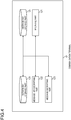
Fig. 4 is a block diagram illustrating a configuration of a communication terminal which performs message reception operation in the first embodiment; -
Fig. 5 is a block diagram illustrating a configuration of a communication terminal which performs re-encryption key transmission operation in the first embodiment; -
Fig. 6 is a sequence diagram illustrating message delivery operation (determination = true) in the first embodiment; -
Fig. 7 is a sequence diagram illustrating message delivery operation (determination = false) in the first embodiment; and -
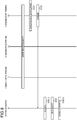
Fig. 8 is a sequence diagram illustrating re-encryption operation in the first embodiment. - An embodiment of the present invention will be described in detail below. Note that the same reference numerals will be assigned to components having the same function, and overlapped description will be omitted.
- In a communication system in a first embodiment, a common key cryptosystem is used for encrypting a message. A key to be utilized for encrypting a message (hereinafter, a message key) is encrypted with a session key by utilizing a common key cryptosystem which can perform re-encryption. At this time, instead of a message key being generated for each encryption of each message, the same message key is used after a session key is updated until the session key is updated next. While, in the server apparatus, an encrypted text of a message (hereinafter, a message encrypted text) and an encrypted text of a message key (hereinafter, a message key encrypted text) are respectively stored in different tables (storage parts), an identifier of a key (key ID) is added so as to allow the server apparatus side to know which message key is used for which message, and the message encrypted text and the message key encrypted text are stored in different tables (storage parts) using this key ID as a key. When re-encryption processing is performed, the server apparatus updates only the table (storage part) in which the message key encrypted text is stored. Because a plurality of message encrypted texts are associated with one message key encrypted text with a key ID, the number of targets to be re-encrypted is reduced, so that load of the server apparatus during re-encryption processing is reduced. Note that, because the message is never decrypted during re-encryption processing, the server apparatus performs re-encryption processing without knowing content of the message. Further, when a plurality of messages are acquired at the same time for log-in, participation in a group, or the like, it is possible to reduce decryption processing by decrypting the message key in advance, temporarily storing the decrypted message key and decrypting the message with a message key corresponding to the key ID associated with the message encrypted text.
- A set N is set as a set of the whole positive integers. Kspace1 and Kspace2 are set as key space. A common key cryptosystem which can perform re-encryption includes the following four types of algorithm (KEM.Enc, KEM.Dec, KEM.ReKeyGen, KEM.ReEnc), which respectively have the following input and output.
- KEM.Enc(SKi1, K) → C1 (i1) - Algorithm in which original Ski1 of Kspace1 and original K of Kspace2 are input, and an encrypted text C1 (i1) is output
- KEM.Dec(SKj, C1 (i)) → K' - Algorithm in which original SKj of Kspace1 and an encrypted text C1 (i) are input and original K' of Kspace2 is output
- KEM.ReKeyGen(SKi1, SKi2) → RKi1,i2 - Algorithm in which two original SKi1 and SKi2 of Kspace1 are input and a re-encryption key RKi1,i2 is output
- KEM.ReEnc(RKi1,i2, C1 (i1)) → C1 (i2) - Algorithm in which the re-encryption key RKi1,i2 and an encrypted text C1 (i1) are input, and a re-encrypted text C1 (i2) is output
- Further, it is assumed that the above-described algorithm satisfies the following two conditions.
- (1) For arbitrary original SK of Kspace1 and arbitrary original K of Kspace2, KEM.Dec(SK,KEM.Enc(SK, K)) = K
- (2) For an arbitrary integer n>1, a sequence SK1, ..., SKn of an arbitrary key of Kspacei, a sequence RK1,2, ..., RKn-1,n of a re-encryption key output by KEM.ReKeyGen(Ski, Ski+1) for arbitrary i ∈ {1, ..., n-1}, and arbitrary i1, i2 which satisfy arbitrary original K,1 ≤ i1 < i2 ≤ n of Kspacei, KEM.Dec(SKi2, KEM.ReEnc(RKi2-1,i2, ..., KEM.ReEnc(RKi1,i1+1, KEM.Enc(SKi1, K)))) = K
- Examples of the re-encryption scheme which satisfies the above can include a scheme of reference non-patent literature 1.
- (Reference non-patent literature 1: D. Boneh, K. Lewi, H. Montgomery, and A. Raghunathan. 2015.Key Homomorphic PRFs and Their Applications. Cryptology ePrint Archive, Report 2015/220. (2015).)
- This is constituted as follows. First, q is set as a prime number, Zq is set as a residue ring modulo q for a ring of integers Z. G is set as a cyclic group of order q, and Kspace2 = G. While the cyclic group G is considered as a multiplicative group, the cyclic group G may be considered as an additive group. Further, Kspace1 = Zq. Still further, Rand is set as random space, and H:Rand → G is set as a hash function in which Rand is set as a domain and G is set as a range. A function F:Kspace × Rand → G in which a direct product of Kspace1 = Zq and Rand is set as a domain and G is set as a range, is defined with F(SK,r) = H(r)SK.
- KEM.Enc(SKil, K) → C1 (i1)
r ∈ Rand is uniformly and randomly extracted, and C1 (i1) = (r, K + F(SK, r)) is output.
- KEM.Dec(SKj, C1 (i)) → K'
C1 (1) is resolved as (r, C), and K' = C-F(SK, r) is output.
- KEM.ReKeyGen(SKi1, SKi2) → RKi1,i2
RKi1,i2 = SKi2 - SKi1 is output.
- KEM.ReEnc(RKi1,i2, C1 (i1)) → C1 (i2)
C1 (i1) is resolved as (r, C), and C1 (i2) = (r, C + F(RKi1,i2,r)) is output. - Note that, while reference non-patent literature 1 has been described as an example of the encryption scheme which can perform re-encryption (KEM.Enc, KEM.Dec, KEM.ReKeyGen, KEM.ReEnc), an encryption scheme which can perform re-encryption may be realized with methods other than the above-described method, and is not particularly limited.
- The common key cryptosystem includes the following two types of algorithm (Enc, Dec), which respectively have the following input and output.
- Enc(K, m) → C2 - Algorithm in which original K of Kspace2 and a message m are input, and an encrypted text C2 is output
- Dec(K, C2) → m - Algorithm in which original K of Kspace2 and an encrypted text C2 are input, and a message m is output
- Further, the above-described algorithm satisfies the following condition.
- Dec(K, Enc(K, m)) = m for arbitrary original K of Kspace2 and an arbitrary message m.
- While examples of the encryption scheme which satisfies the above condition include AES, Camellia, or the like, the encryption scheme is not limited here.
- As illustrated in
Fig. 1 , the communication system 1 in the present embodiment includes aserver apparatus 10, acommunication terminal 11, acommunication terminal 12 and acommunication terminal 13, and the respective apparatuses are connected with anetwork 9 so as to be able to perform communication. While thecommunication terminal 11, thecommunication terminal 12 and thecommunication terminal 13 can be realized with a personal computer, a smartphone, or the like, the configuration is not particularly limited. - In the following description, it is assumed that the
communication terminal 11 is a terminal which is in charge of encrypting a message and transmitting the encrypted message, or the like, thecommunication terminal 12 is a terminal which is in charge of receiving the encrypted message, or the like, and decrypting the encrypted message, or the like, and thecommunication terminal 13 is a terminal which is in charge of generating and transmitting a re-encryption key which will be described later. However, because the above is allocation for explanatory convenience, it is also possible to realize, for example, a communication terminal having all functions of thecommunication terminal 11, thecommunication terminal 12 and thecommunication terminal 13. - Note that, in the communication system 1 in the present embodiment, it is possible to form a group of users who send chat messages to each other. An identifier is provided to each group. Users of the
communication terminal 11, thecommunication terminal 12 and thecommunication terminal 13 are respectively set as a user A, a user B and a user C. It is assumed that the user A, the user B and the user C belong to groups having group identifiers group IDs, and each communication terminal stores the group ID. - Further, the session key will be described. The session key refers to a key shared among communication terminals to be utilized by users belonging to a group for each group. While there is reference non-patent literature 2 as protocol for sharing a key without leaking any information regarding the session key to apparatuses other than the communication terminal, for example, the
server apparatus 10, a session key sharing method is not particularly limited. - (Reference non-patent literature 2: K. Yoneyama, R. Yoshida, Y. Kawahara, T. Kobayashi, H. Fuji, and T. Yamamoto, 2016, Multi-Cast Key Distribution, Scalable, Dynamic and Provably Secure Construction, Cryptology ePrint Archive, Report 2016.833, (2016))
- Note that, to securely share the session key, the session key is generated/updated every time a user is added to a group, a user leaves a group, a certain period elapses, and a user logs in/logs out.
- As illustrated in
Fig. 2 , theserver apparatus 10 includes a receivingpart 101, a message encryptedtext storage part 102, a message key encryptedtext storage part 103, a groupuser storage part 104, adelivery part 105 and are-encryption processing part 106. Further, as illustrated inFig. 3 , thecommunication terminal 11 includes a determiningpart 111, a messagekey generating part 112, amessage encrypting part 113, a messagekey encrypting part 114, a transmittingpart 115, a messagekey storage part 116, and a sessionkey storage part 117. Further, as illustrated inFig. 4 , thecommunication terminal 12 includes a receivingpart 121, a messagekey decrypting part 122, amessage decrypting part 123, a sessionkey storage part 124, and a messagekey storage part 125. Still further, as illustrated inFig. 5 , thecommunication terminal 13 includes a re-encryptionkey generating part 131, a transmittingpart 132, and a sessionkey storage part 133. - Operation of the respective apparatuses of the communication system 1 of the present embodiment will be described below with reference to
Fig. 6 ,Fig. 7 andFig. 8 . First, it is assumed that the user A transmits a message m in a form of an encrypted text, to a group specified with a group identifier group ID using thecommunication terminal 11. Note that, it is assumed that the respective communication terminals (thecommunication terminal 11, thecommunication terminal 12, the communication terminal 13) share the latest session key SK1, and hold the latest session key SK1 respectively in the sessionkey storage part 117, the sessionkey storage part 124 and the sessionkey storage part 133. Because this session key SK1 is not shared with theserver apparatus 10, theserver apparatus 10 does not know the session key SK1. - When the determining
part 111 of thecommunication terminal 11 transmits (the encrypted text) of the message m, the determiningpart 111 of thecommunication terminal 11 determines whether or not transmission of (the encrypted text of) the message m is first transmission after the session key SK1 is generated or updated (S111). In a case where transmission of (the encrypted text of) the message m is the first transmission after the session key SK1 is generated or updated, the determiningpart 111 determines to newly generate a message key (determination = true), and, otherwise, determines to reutilize the message key (determination = false). - As illustrated in
Fig. 6 , the messagekey generating part 112 of thecommunication terminal 11 generates original K1 (message key) of Kspace2 (S112-1). - The
message encrypting part 113 of thecommunication terminal 11 generates a message encrypted text C2,m ← Enc(K1,m) based on the common key cryptosystem using the message m and the generated message key K1 (S113). - Further, the message
key encrypting part 114 of thecommunication terminal 11 generates a message key encrypted text C(1) 1,K1 ← KEM.Enc(SK1, K1) based on the common key cryptosystem which can perform re-encryption using the session key SK1 and the generated message key K1 (S114). - The transmitting
part 115 of thecommunication terminal 11 transmits a group identifier group ID which is an identifier of a group to which the own terminal belongs, the message key encrypted text C(1) 1,K1, the message encrypted text C2,m, that is, (group ID, C(1) 1,K1, C2,m) to the server apparatus 10 (S115-1). - Note that K1,m is provided to (C(1) 1,K1, C2,m) for convenience sake only to distinguish from other messages and encrypted texts of other message keys, and the message key K1 and the message m are not inferred from the encrypted text.
- While the
communication terminal 11 stores the message key K1 in the messagekey storage part 116 after transmitting a message to theserver apparatus 10, it is assumed that a message key identifier Key ID1 is allocated to the message key K1 at this time point. It is desirable that the message key K1 itself is not identified from the message key identifier Key ID1. While examples of a method for generating an identifier can include a method in which an output value when the message key K1 is input to a SHA256 hash function is set as an identifier using the SHA256 hash function, or the like, the method is not particularly limited. - Further, while the message key identifier Key ID1 may be generated by the
communication terminal 11, or Key ID1 may be generated for the message key encrypted text when theserver apparatus 10 receives a message, and attached and transmitted when thecommunication terminal 11 is notified of reception of the message, generation and transmission of the message key identifier Key ID1 are not limited. - The message
key storage part 116 of thecommunication terminal 11 stores the message key K1 and the message key identifier Key ID1 of the message key K1 (S116). The stored message key K1 is reutilized in a case where it is determined to reutilize the message key in the above-described determination (determination = false). - In this case, as illustrated in
Fig. 7 , the messagekey generating part 112 of thecommunication terminal 11 acquires the message key K1 and the message key identifier Key ID1 from the message key storage part 116 (S112-2). This message key K1 is a message key used for encrypting the message m upon at least previous message transmission. - The
message encrypting part 113 of thecommunication terminal 11 generates the message encrypted text C2,m ← Enc(K1,m) based on the common key cryptosystem using the message m and the message key K1 stored in the message key storage part 116 (S113). - The transmitting
part 115 of thecommunication terminal 11 transmits the group identifier group ID, the message key identifier Key ID1, the message encrypted text C2,m, that is, (group ID, Key ID1, C2,m) to the server apparatus 10 (S115-2). - Operation when the
server apparatus 10 receives the message encrypted text C2,m from thecommunication terminal 11 will be described below. Note that, while description is provided such that operation of delivery to another communication terminal is performed by being triggered by reception of a message, there is a case where theserver apparatus 10 delivers the stored encrypted message to the communication terminal in response to addition and log-in of a user, and requests from other communication terminals. - That is, a case where determination is true corresponds to a case where a form of a message transmitted from the
communication terminal 11 is (group ID, C(1) 1,K1, C2,m). As illustrated inFig. 6 , the receivingpart 101 of theserver apparatus 10 receives (group ID, C(1) 1,K1, C2,m) from the communication terminal 11 (S101-1). - The message encrypted
text storage part 102 of theserver apparatus 10 stores the message key identifier Key ID1, the message encrypted text C2,m, that is, (Key ID1, C2,m) (SI02). - Further, the message key encrypted
text storage part 103 of theserver apparatus 10 stores the message key identifier Key ID1, and the message key encrypted text C(1) 1,K1, that is, (Key ID1, C(1) 1,K1) (S103-1). Note that theserver apparatus 10 executes the above-described operation (S101-1, S102, S103-1) every time theserver apparatus 10 receives data in a form of (group ID, C(1) 1,K1, C2,m). - The
server apparatus 10 refers to information of users (including the users B and C) belonging to a group corresponding to the group ID, stored in the group user storage part 104 (S104). Thedelivery part 105 of theserver apparatus 10 transmits (delivers) the message key encrypted text C(1) 1,K1, and the message encrypted text C2,m, that is, (C(1) 1,K1, C2,m) to the respective users belonging to the group corresponding to the group ID (S105). Note that, in the present embodiment, theserver apparatus 10 transmits (delivers) (C(1) 1,K1, C2,m) to thecommunication terminal 12. - That is, a case where determination is false corresponds to a case where a form of the message transmitted from the
communication terminal 11 is (group ID, Key ID1, C2,m). As illustrated inFig. 7 , the receivingpart 101 of theserver apparatus 10 receives (group ID, Key ID1, C2,m) from the communication terminal 11 (S101-2). - The message encrypted
text storage part 102 of theserver apparatus 10 stores the message key identifier Key ID1, and the message encrypted text C2,m, that is, (Key ID1, C2,m) (S102). Note that, it is assumed that theserver apparatus 10 executes the above-described operation (S101-2, S102) every time theserver apparatus 10 receives data in a form of (group ID, Key ID1, C2,m). - The message key encrypted
text storage part 103 of theserver apparatus 10 acquires the message key encrypted text C(1) 1,K1 associated with Key ID1 (S103-2). - The
server apparatus 10 refers to information of users (including the users B and C) belonging to a group corresponding to the group ID, stored in the group user storage part 104 (S104). Thedelivery part 105 of theserver apparatus 10 transmits (delivers) the message key encrypted text C(1) 1,K1, and the message encrypted text C2,m, that is, (C(1) 1,K1, C2,m) to the respective users belonging to the group corresponding to the group ID (S105). Note that, in the present embodiment, theserver apparatus 10 transmits (delivers) (C(1) 1,K1, C2,m) to thecommunication terminal 12. - Operation of the
communication terminal 12 will be described below with reference toFig. 6 (Fig. 7 ). As described above, the sessionkey storage part 124 stores the latest session key SK1 which is shared with other communication terminals and which is not shared with the server apparatus. - The receiving
part 121 of thecommunication terminal 12 receives the message key encrypted text C(1) 1,K1, and the message encrypted text C2,m, that is, (C(1) 1,K1, C2,m) from the server apparatus 10 (S121). - The message
key decrypting part 122 of thecommunication terminal 12 calculates K1 ← KEM.Dec(SK1, C(1) 1,K1) from the latest session key SK1 taken out from the sessionkey storage part 124 and the message key encrypted text C(1) 1,K1, to decrypt the message key K1 (S122). - The message decrypting
part 123 of thecommunication terminal 12 calculates m ← Dec(K1, C2,m) from the decrypted message key K1 and the message encrypted text C2,m based on the common key cryptosystem, to decrypt the message m (S123). By this means, thecommunication terminal 12 can correctly display the message m transmitted from thecommunication terminal 11. - Operation of the
communication terminal 13 will be described below with reference toFig. 8 . It is assumed, for example, that the session key is updated from SK1 to SK2 in the group corresponding to the group ID. At this time, thecommunication terminal 11, thecommunication terminal 12 and thecommunication terminal 13 share the latest session key SK2, and store the latest session key SK2 respectively in the sessionkey storage part 117, the sessionkey storage part 124, and the session key storage part 133 (Fig. 8 , sharing of a new session key). Further, it is assumed that the sessionkey storage part 133 of thecommunication terminal 13 also holds the session key SK1 before being updated. - Note that, because the session keys SK1 and SK2 are not shared with the
server apparatus 10, theserver apparatus 10 does not know the session keys SK1 and SK2. - Further, it is assumed that the
server apparatus 10 holds the encrypted text associated with the group ID, that is, the encrypted text transmitted to the group identifier group ID, C(1) 1,Ki1, ..., C(1) 1,Kin in the message key encryptedtext storage part 103. Note that i1, ..., in are indexes for distinguishing the message key, in the description of the present embodiment. - As illustrated in
Fig. 8 , the re-encryptionkey generating part 131 of thecommunication terminal 13 calculates RK1,2 ← KEM.ReKeyGen(SK1, SK2) from the session key SK1 before being updated and the updated session key SK2 to generate a re-encryption key RK1,2 (S131). - The transmitting
part 132 of thecommunication terminal 13 transmits a set of the group identifier group ID and the re-encryption key RK1,2, that is, (group ID, RK1,2) to the server apparatus 10 (S132). - Re-encryption operation of the
server apparatus 10 will be continuously described with reference toFig. 8 . The receivingpart 101 of theserver apparatus 10 receives the set of the group identifier group ID and the re-encryption key RK1,2 (group ID, RK1,2) from the communication terminal 13 (S101-3). - The
re-encryption processing part 106 and the message key encryptedtext storage part 103 of theserver apparatus 10 repeatedly executes the following processing on each of j ∈ {i1, ..., in}. - The message key encrypted
text storage part 103 takes out the message key encrypted text C(1) i,Kj. There-encryption processing part 106 executes C(2) 1,Kj ← KEM.ReEnc(RK1,2, C(1) 1,Kj) from the re-encryption key RK1,2 and the message key encrypted text C(1) 1,Kj corresponding to the group identifier group ID based on the common key cryptosystem which can perform re-encryption, to generate the re-encrypted message key encrypted text C(2) 1,Kj (SI06). - The message key encrypted
text storage part 103 overwrites the message key encrypted text C(1) 1,Kj and stores the re-encrypted message key encrypted text C(2) 1,Kj (SI03-3). - Note that each message key identifier is not changed after this processing. Therefore, there is no change in correspondence relationship between the message encrypted text in the message encrypted
text storage part 102 and the message key encrypted text in the message key encryptedtext storage part 103. - The communication terminal which receives the encrypted text associated with the group ID delivered from the
server apparatus 10 after the above-described processing can correctly decrypt each message through operation which is the same as that upon message reception if the communication terminal holds the latest session key SK2. - There is a case where a plurality of messages such as 10 messages and 20 messages are received at one time upon log-in, upon addition of a group, or the like. Operation at that time will be described. Here, description will be provided assuming that the
communication terminal 12 enters a predetermined group upon log-in and downloads the latest five messages. Theserver apparatus 10 extracts the latest five messages transmitted in the group from the message encryptedtext storage part 102. - It is assumed that these are sequentially (Key ID1, C2,m1), (Key ID1, C2,m2), (Key ID2, C2,m3), (Key ID1, C2,m4) and (Key ID3, C2,m5) from the newest one. Because the message key identifiers included in the extracted messages are three types of Key ID1, Key ID2 and Key ID3, the
server apparatus 10 extracts sets of the message key identifiers and the message key encrypted texts (Key ID1, C1,K1), (Key ID2, C1,K2) and (Key ID3, C1,K3) from the message key encryptedtext storage part 103. - The
server apparatus 10 transmits sets of the message key identifiers and the message key encrypted texts (Key ID1, C1,K1), (Key ID2, C1,K2) and (Key ID3, C1,K3) and sets of the message key identifiers and the message encrypted texts (Key ID1, C2,m1), (Key ID1, C2,m2), (Key ID2, C2,m3), (Key ID1, C2,m4) and (Key ID3, C2,m5) to thecommunication terminal 12. - The
communication terminal 12 which has received the sets of the message key identifiers and the message key encrypted texts (Key ID1, C1,K1), (Key ID2, C1,K2) and (Key ID3, C1,K3) and sets of the message key identifiers and the message encrypted texts (Key ID1, C2,m1), (Key ID1, C2,m2), (Key ID2, C2,m3), (Key ID1, C2,m4) and (Key ID3, C2,m5) takes out the latest session key SK1 from the sessionkey storage part 124. - The message
key decrypting part 122 of thecommunication terminal 12 calculates each of K1 ← KEM.Dec(SK1, C1,K1), K2 ← KEM.Dec(SK1, C1,K2), and K3 ← KEM.Dec(SK1, C1,K3) to decrypt the message keys K1, K2 and K3, and temporarily stores each of sets of the message key identifiers and the message keys (Key ID1, K1), (Key ID2, K2) and (Key ID3, K3) in the messagekey storage part 125. - Then, a message is decrypted. Because the message encrypted text is acquired in combination with the message key identifier, decryption processing is performed by extracting the corresponding message key. That is, the
message decrypting part 123 calculates m1 ← Dec(K1, C2,m1), m2 ← Dec(K1, C2,m2), m3 ← Dec(K2, C2,m3), m4 ← Dec(K1, C2,m4) and m5 ← Dec(K3, C2,m5) to decrypt each message. By this means, it is possible to reduce processing of decrypting the message key encrypted text for each message, so that it is possible to correctly display each message. Note that it is desirable in terms of security to delete all sets of the message key identifiers and the message keys stored in the messagekey storage part 125 after all the messages are acquired. - The apparatus of the present invention includes, for example, as single hardware entity, an input part to which a keyboard, or the like, can be connected, an output part to which a liquid crystal display, or the like, can be connected, a communication part to which a communication apparatus (for example, a communication cable) which can perform communication with outside of the hardware entity, can be connected, a CPU (Central Processing Unit, which may include a cash memory, a resistor, or the like), a RAM and a ROM which are memories, an external storage apparatus which is a hard disk, and a bus which connects these input part, output part, communication part, CPU, RAM, ROM and external storage apparatus so that data can be exchanged. Further, as necessary, an apparatus (drive), or the like, which can perform read/write in a recording medium such as a CD-ROM may be provided at the hardware entity. Examples of physical entity including such hardware resources can include a general-purpose computer, or the like.
- In the external storage apparatus which is the hardware entity, programs which are required for realizing the above-described functions, data which is required in processing of this program, or the like, are stored (the programs and the data may be stored in, for example, a ROM which is a read-only storage apparatus for reading out the programs, as well as in the external storage apparatus). Further, data, or the like, which can be obtained through processing of these program are stored in the RAM, the external storage apparatus, or the like, as appropriate.
- In the hardware entity, each program stored in the external storage apparatus (or a ROM, or the like) and data required for processing of each program are loaded to the memory as necessary, and interpreted, executed, and processed as appropriate at the CPU. As a result, the CPU realizes predetermined functions (respective components expressed as the above-described ... part, ... means, or the like).
- The present invention is not limited to the above-described embodiment, and can be changed as appropriate within a range not deviating from the gist of the present invention. Further, the processing described in the above-described embodiment may be executed in parallel or individually in accordance with processing capability of an apparatus which executes the processing or as necessary as well as being executed in chronological order in accordance with the order of description.
- As described above, in a case where processing functions in the hardware entity (the apparatus of the present invention) described in the above-described embodiment is realized with a computer, processing content of the functions which the hardware entity should have is described by a program. Then, by this program being executed at the computer, the processing functions at the above-described hardware entity are realized on the computer.
- The program which describes this processing content can be recorded in a computer-readable recording medium. The computer-readable recording medium may be, for example, a magnetic recording apparatus, an optical disk, a magnetooptical recording medium, a semiconductor memory, or the like. Specifically, for example, a hard disk apparatus, a flexible disk, a magnetic tape, or the like, can be used as the magnetic recording apparatus, a DVD (Digital Versatile Disc), a DVD-RAM (Random Access Memory), a CD-ROM (Compact Disc Read Only Memory), a CD-R (Recordable) / RW (ReWritable), or the like, can be used as the optical disk, an MO (MagnetoOptical disc), or the like, can be used as a magnetooptical recording medium, and an EEP-ROM (Electronically Erasable and Programmable-Read Only Memory), or the like, can be used as the semiconductor memory.
- Further, this program is distributed by, for example, a portable recording medium such as a DVD and a CD-ROM in which the program is recorded being sold, given, lent, or the like. Still further, it is also possible to employ a configuration where this program is distributed by the program being stored in a storage apparatus of a server computer and transferred from the server computer to other computers via a network.
- A computer which executes such a program, for example, first, stores a program recorded in the portable recording medium or a program transferred from the server computer in the storage apparatus of the own computer once. Then, upon execution of processing, this computer reads out the program stored in the recording medium of the own computer and executes processing in accordance with the read program. Further, as another execution form of this program, the computer may directly read a program from the portable recording medium and execute processing in accordance with the program, and, further, sequentially execute processing in accordance with the received program every time the program is transferred from the server computer to this computer. Further, it is also possible to employ a configuration where the above-described processing is executed by so-called ASP (Application Service Provider) type service which realizes processing functions only by an instruction of execution and acquisition of a result without the program being transferred from the server computer to this computer. Note that, it is assumed that the program in the present embodiment includes information which is to be used for processing by an electronic computer, and which is equivalent to a program (not a direct command to the computer, but data, or the like, having property specifying processing of the computer).
- Further, while, in this embodiment, the hardware entity is constituted by a predetermined program being executed on the computer, at least part of the processing content may be realized with hardware.
Claims (7)
- A communication terminal which transmits an encrypted text to another communication terminal via a server apparatus, the communication terminal comprising:a session key storage part which stores a session key which is shared with the other communication terminal and which is not shared with the server apparatus;a determining part which determines to newly generate a message key to be used for encrypting a message in a case where transmission of the encrypted text is first transmission after the session key is generated or updated, and, otherwise, determines to reutilize the message key;a message key generating part which generates the message key in a case where a result of the determination is to newly generate a message key;a message key storage part which stores a message key to be reutilized in association with a message key identifier in a case where a result of the determination is to reutilize the message key;a message encrypting part which generates a message encrypted text based on a common key cryptosystem using the message and the generated or stored message key;a message key encrypting part which generates a message key encrypted text based on a common key cryptosystem which can perform re-encryption using the session key and the generated message key in a case where the result of the determination is to newly generate a message key; andan encrypted text transmitting part which transmits a group identifier which is an identifier of a group to which an own terminal belongs, the message key encrypted text, and the message encrypted text to the server apparatus in a case where the result of the determination is to newly generate a message key, and transmits the group identifier, the message key identifier and the message encrypted text to the server apparatus in a case where the result of the determination is to reutilize the message key.
- A communication terminal which receives an encrypted text transmitted by another communication terminal via a server apparatus, the communication terminal comprising:a session key storage part which stores a session key which is shared with the other communication terminal and which is not shared with the server apparatus;a receiving part which receives a message key encrypted text generated based on a common key cryptosystem which can perform re-encryption using the session key and a message key generated by the other communication terminal, and receives a message encrypted text generated based on a common key cryptosystem using the message generated by the other communication terminal and the message key generated or stored by the other communication terminal, from the server apparatus;a message key decrypting part which decrypts the message key from the session key and the message key encrypted text based on a common key cryptosystem which can perform re-encryption; anda message decrypting part which decrypts the message from the message key and the message encrypted text based on a common key cryptosystem.
- A communication terminal which transmits a re-encryption key to a server apparatus every time a session key which is shared with another communication terminal and which is not shared with the server apparatus is updated, the communication terminal comprising:a session key storage part which stores the session key;a re-encryption key generating part which generates the re-encryption key from the session key before being updated and the updated session key; anda transmitting part which transmits the re-encryption key to the server apparatus.
- A communication terminal which transmits an encrypted text to another communication terminal via a server apparatus, receives the encrypted text transmitted by the other communication terminal via the server apparatus, and transmits a re-encryption key to the server apparatus every time a session key which is shared with the other communication terminal and which is not shared with the server apparatus is updated, the communication terminal comprising:a session key storage part which stores the session key;a determining part which determines to newly generate a message key to be used for encrypting a message in a case where transmission of the encrypted text is first transmission after the session key is generated or updated, and, otherwise, determines to reutilize the message key;a message key generating part which generates the message key in a case where a result of the determination is to newly generate a message key;a message key storage part which stores a message key to be reutilized in a case where a result of the determination is to reutilize the message key, in association with a message key identifier;a message encrypting part which generates a message encrypted text based on a common key cryptosystem using the message and the generated or stored message key;a message key encrypting part which generates a message key encrypted text based on a common key cryptosystem which can perform re-encryption using the session key and the generated message key in a case where the result of the determination is to newly generate a message key;an encrypted text transmitting part which transmits a group identifier which is an identifier of a group to which an own terminal belongs, the message key encrypted text, and the message encrypted text to the server apparatus in a case where the result of the determination is to newly generate a message key, and transmits the group identifier, the message key identifier and the message encrypted text to the server apparatus in a case where the result of the determination is to reutilize the message key;a receiving part which receives the message key encrypted text and the message encrypted text from the server apparatus;a message key decrypting part which decrypts the message key from the session key and the message key encrypted text based on a common key cryptosystem which can perform re-encryption;a message decrypting part which decrypts the message from the message key and the message key encrypted text based on a common key cryptosystem;a re-encryption key generating part which generates the re-encryption key from the session key before being updated and the updated session key; anda transmitting part which transmits the re-encryption key to the server apparatus.
- A server apparatus which re-encrypts a corresponding message key encrypted text every time a session key which is shared among a plurality of communication terminals and which is not shared with an own apparatus is updated, the server apparatus comprising:a receiving part which receives group identifiers which are identifiers of groups to which the communication terminals belong and a re-encryption key generated from the session key before being updated and the updated session key, from the communication terminals; anda re-encryption processing part which generates the re-encrypted message key encrypted text from the re-encryption key and the message key encrypted text corresponding to the group identifiers based on a common key cryptosystem which can perform re-encryption.
- A program for causing a computer to function as the communication terminal according to any one of claims 1 to 4.
- A program for causing a computer to function as the server apparatus according to claim 5.
Applications Claiming Priority (2)
| Application Number | Priority Date | Filing Date | Title |
|---|---|---|---|
| JP2017214927 | 2017-11-07 | ||
| PCT/JP2018/040472 WO2019093201A1 (en) | 2017-11-07 | 2018-10-31 | Communication terminal, server device, and program |
Publications (3)
| Publication Number | Publication Date |
|---|---|
| EP3709565A1 true EP3709565A1 (en) | 2020-09-16 |
| EP3709565A4 EP3709565A4 (en) | 2021-05-26 |
| EP3709565B1 EP3709565B1 (en) | 2022-06-08 |
Family
ID=66437714
Family Applications (1)
| Application Number | Title | Priority Date | Filing Date |
|---|---|---|---|
| EP18875762.9A Active EP3709565B1 (en) | 2017-11-07 | 2018-10-31 | Communication terminal, server device, and program |
Country Status (5)
| Country | Link |
|---|---|
| US (1) | US11336441B2 (en) |
| EP (1) | EP3709565B1 (en) |
| JP (1) | JP6939897B2 (en) |
| CN (1) | CN111480313B (en) |
| WO (1) | WO2019093201A1 (en) |
Families Citing this family (5)
| Publication number | Priority date | Publication date | Assignee | Title |
|---|---|---|---|---|
| US12088728B2 (en) * | 2018-10-03 | 2024-09-10 | Panasonic Automotive Systems Company Of America, Division Of Panasonic Corporation Of North America | Secure controller area network in vehicles |
| WO2021138426A1 (en) * | 2019-12-30 | 2021-07-08 | Dogwood Logic, Inc. | Secure decentralized control of network access to ai models and data |
| DE112020007079B4 (en) * | 2020-06-17 | 2024-04-25 | Mitsubishi Electric Corporation | RE-ENCRYPTION DEVICE, CRYPTOGRAPHIC SYSTEM, RE-ENCRYPTION METHOD AND RE-ENCRYPTION PROGRAM |
| US12579284B2 (en) | 2020-07-06 | 2026-03-17 | Dogwood Logic, Inc. | Traceable decentralized control of network access to private information |
| JP2025016818A (en) * | 2021-12-27 | 2025-02-05 | ソニーセミコンダクタソリューションズ株式会社 | Electronic device, information processing method |
Family Cites Families (17)
| Publication number | Priority date | Publication date | Assignee | Title |
|---|---|---|---|---|
| US7356688B1 (en) * | 1999-04-06 | 2008-04-08 | Contentguard Holdings, Inc. | System and method for document distribution |
| US7181017B1 (en) * | 2001-03-23 | 2007-02-20 | David Felsher | System and method for secure three-party communications |
| US7082200B2 (en) * | 2001-09-06 | 2006-07-25 | Microsoft Corporation | Establishing secure peer networking in trust webs on open networks using shared secret device key |
| US7706540B2 (en) * | 2002-12-16 | 2010-04-27 | Entriq, Inc. | Content distribution using set of session keys |
| US20050195975A1 (en) * | 2003-01-21 | 2005-09-08 | Kevin Kawakita | Digital media distribution cryptography using media ticket smart cards |
| US8520844B2 (en) * | 2003-06-20 | 2013-08-27 | Alcatel Lucent | Methods and apparatus for providing secure two-party public key cryptosystem |
| JP4764639B2 (en) * | 2005-01-28 | 2011-09-07 | 株式会社オーク情報システム | File encryption / decryption program, program storage medium |
| US8291237B2 (en) * | 2005-03-01 | 2012-10-16 | The Regents Of The University Of California | Method for private keyword search on streaming data |
| US8630422B2 (en) * | 2009-11-10 | 2014-01-14 | International Business Machines Corporation | Fully homomorphic encryption method based on a bootstrappable encryption scheme, computer program and apparatus |
| US8515058B1 (en) * | 2009-11-10 | 2013-08-20 | The Board Of Trustees Of The Leland Stanford Junior University | Bootstrappable homomorphic encryption method, computer program and apparatus |
| US8954740B1 (en) * | 2010-10-04 | 2015-02-10 | Symantec Corporation | Session key proxy decryption method to secure content in a one-to-many relationship |
| WO2012149395A1 (en) * | 2011-04-29 | 2012-11-01 | International Business Machines Corporation | Fully homomorphic encryption |
| US9281941B2 (en) * | 2012-02-17 | 2016-03-08 | International Business Machines Corporation | Homomorphic evaluation including key switching, modulus switching, and dynamic noise management |
| US9380044B2 (en) * | 2014-09-10 | 2016-06-28 | Cisco Technology, Inc. | Supporting differentiated secure communications among heterogeneous electronic devices |
| WO2016051591A1 (en) * | 2014-10-03 | 2016-04-07 | 株式会社 東芝 | Re-encryption key generation device, re-encryption device, encryption device, decryption device and program |
| WO2016168487A1 (en) * | 2015-04-14 | 2016-10-20 | Gigavation, Inc. | Paravirtualized security threat protection of a computer-driven system with networked devices |
| JP6576699B2 (en) * | 2015-06-12 | 2019-09-18 | コニカミノルタ株式会社 | ENCRYPTION SYSTEM, UPDATE METHOD, AND UPDATE PROGRAM |
-
2018
- 2018-10-31 EP EP18875762.9A patent/EP3709565B1/en active Active
- 2018-10-31 WO PCT/JP2018/040472 patent/WO2019093201A1/en not_active Ceased
- 2018-10-31 CN CN201880068770.6A patent/CN111480313B/en active Active
- 2018-10-31 JP JP2019552739A patent/JP6939897B2/en active Active
- 2018-10-31 US US16/758,936 patent/US11336441B2/en active Active
Also Published As
| Publication number | Publication date |
|---|---|
| JP6939897B2 (en) | 2021-09-22 |
| EP3709565B1 (en) | 2022-06-08 |
| EP3709565A4 (en) | 2021-05-26 |
| JPWO2019093201A1 (en) | 2020-12-03 |
| US11336441B2 (en) | 2022-05-17 |
| US20210184844A1 (en) | 2021-06-17 |
| CN111480313A (en) | 2020-07-31 |
| WO2019093201A1 (en) | 2019-05-16 |
| CN111480313B (en) | 2023-11-03 |
Similar Documents
| Publication | Publication Date | Title |
|---|---|---|
| EP3709565B1 (en) | Communication terminal, server device, and program | |
| US20220014360A1 (en) | Right Holder Terminal, Permission Information Management Method, and Permission Information Management Program | |
| US20170310479A1 (en) | Key Replacement Direction Control System and Key Replacement Direction Control Method | |
| US20180278410A1 (en) | Secret search system, management device, secret search method and computer readable medium | |
| US8954740B1 (en) | Session key proxy decryption method to secure content in a one-to-many relationship | |
| US10116442B2 (en) | Data storage apparatus, data updating system, data processing method, and computer readable medium | |
| JP6770075B2 (en) | Encrypted message search method, message sending / receiving system, terminal, program | |
| EP3561797B1 (en) | Message transmission system, communication terminal, server device, message transmission method, and program | |
| US11190499B2 (en) | Communication terminals, server devices, and programs | |
| KR101615137B1 (en) | Data access method based on attributed | |
| CN112889240B (en) | Server device, communication terminal, communication system, and recording medium | |
| US11177949B2 (en) | Data sharing method, data sharing system, data sharing server, communication terminal and program | |
| JP2019121999A (en) | Data sharing method, data sharing system, communication terminal, data sharing server, and program | |
| JP2015070498A (en) | KEY EXCHANGE SYSTEM, KEY EXCHANGE DEVICE, ITS METHOD, AND PROGRAM | |
| CN113169862B (en) | Information processing method, terminal equipment and network system | |
| Xue-Zhou | Network data encryption strategy for cloud computing | |
| JP7097581B2 (en) | Communication systems, server devices, communication methods, and programs | |
| JP6711522B2 (en) | Communication system, communication device, and communication method |
Legal Events
| Date | Code | Title | Description |
|---|---|---|---|
| STAA | Information on the status of an ep patent application or granted ep patent |
Free format text: STATUS: THE INTERNATIONAL PUBLICATION HAS BEEN MADE |
|
| PUAI | Public reference made under article 153(3) epc to a published international application that has entered the european phase |
Free format text: ORIGINAL CODE: 0009012 |
|
| STAA | Information on the status of an ep patent application or granted ep patent |
Free format text: STATUS: REQUEST FOR EXAMINATION WAS MADE |
|
| 17P | Request for examination filed |
Effective date: 20200608 |
|
| AK | Designated contracting states |
Kind code of ref document: A1 Designated state(s): AL AT BE BG CH CY CZ DE DK EE ES FI FR GB GR HR HU IE IS IT LI LT LU LV MC MK MT NL NO PL PT RO RS SE SI SK SM TR |
|
| AX | Request for extension of the european patent |
Extension state: BA ME |
|
| DAV | Request for validation of the european patent (deleted) | ||
| DAX | Request for extension of the european patent (deleted) | ||
| A4 | Supplementary search report drawn up and despatched |
Effective date: 20210426 |
|
| RIC1 | Information provided on ipc code assigned before grant |
Ipc: H04L 9/08 20060101AFI20210420BHEP Ipc: H04L 9/16 20060101ALI20210420BHEP Ipc: H04L 12/58 20060101ALI20210420BHEP Ipc: H04L 12/66 20060101ALI20210420BHEP Ipc: H04L 29/06 20060101ALI20210420BHEP |
|
| GRAP | Despatch of communication of intention to grant a patent |
Free format text: ORIGINAL CODE: EPIDOSNIGR1 |
|
| STAA | Information on the status of an ep patent application or granted ep patent |
Free format text: STATUS: GRANT OF PATENT IS INTENDED |
|
| INTG | Intention to grant announced |
Effective date: 20220119 |
|
| RIC1 | Information provided on ipc code assigned before grant |
Ipc: H04L 9/40 20220101ALI20220111BHEP Ipc: H04L 12/66 20060101ALI20220111BHEP Ipc: H04L 9/16 20060101ALI20220111BHEP Ipc: H04L 9/08 20060101AFI20220111BHEP |
|
| RIN1 | Information on inventor provided before grant (corrected) |
Inventor name: KOBAYASHI, TETSUTARO Inventor name: NISHIMAKI, RYO Inventor name: YOSHIDA, REO Inventor name: OKANO, YUKI |
|
| GRAS | Grant fee paid |
Free format text: ORIGINAL CODE: EPIDOSNIGR3 |
|
| GRAA | (expected) grant |
Free format text: ORIGINAL CODE: 0009210 |
|
| STAA | Information on the status of an ep patent application or granted ep patent |
Free format text: STATUS: THE PATENT HAS BEEN GRANTED |
|
| AK | Designated contracting states |
Kind code of ref document: B1 Designated state(s): AL AT BE BG CH CY CZ DE DK EE ES FI FR GB GR HR HU IE IS IT LI LT LU LV MC MK MT NL NO PL PT RO RS SE SI SK SM TR |
|
| REG | Reference to a national code |
Ref country code: AT Ref legal event code: REF Ref document number: 1497678 Country of ref document: AT Kind code of ref document: T Effective date: 20220615 Ref country code: CH Ref legal event code: EP |
|
| REG | Reference to a national code |
Ref country code: DE Ref legal event code: R096 Ref document number: 602018036634 Country of ref document: DE |
|
| REG | Reference to a national code |
Ref country code: IE Ref legal event code: FG4D |
|
| REG | Reference to a national code |
Ref country code: LT Ref legal event code: MG9D |
|
| REG | Reference to a national code |
Ref country code: NL Ref legal event code: MP Effective date: 20220608 |
|
| PG25 | Lapsed in a contracting state [announced via postgrant information from national office to epo] |
Ref country code: SE Free format text: LAPSE BECAUSE OF FAILURE TO SUBMIT A TRANSLATION OF THE DESCRIPTION OR TO PAY THE FEE WITHIN THE PRESCRIBED TIME-LIMIT Effective date: 20220608 Ref country code: NO Free format text: LAPSE BECAUSE OF FAILURE TO SUBMIT A TRANSLATION OF THE DESCRIPTION OR TO PAY THE FEE WITHIN THE PRESCRIBED TIME-LIMIT Effective date: 20220908 Ref country code: LT Free format text: LAPSE BECAUSE OF FAILURE TO SUBMIT A TRANSLATION OF THE DESCRIPTION OR TO PAY THE FEE WITHIN THE PRESCRIBED TIME-LIMIT Effective date: 20220608 Ref country code: HR Free format text: LAPSE BECAUSE OF FAILURE TO SUBMIT A TRANSLATION OF THE DESCRIPTION OR TO PAY THE FEE WITHIN THE PRESCRIBED TIME-LIMIT Effective date: 20220608 Ref country code: GR Free format text: LAPSE BECAUSE OF FAILURE TO SUBMIT A TRANSLATION OF THE DESCRIPTION OR TO PAY THE FEE WITHIN THE PRESCRIBED TIME-LIMIT Effective date: 20220909 Ref country code: FI Free format text: LAPSE BECAUSE OF FAILURE TO SUBMIT A TRANSLATION OF THE DESCRIPTION OR TO PAY THE FEE WITHIN THE PRESCRIBED TIME-LIMIT Effective date: 20220608 Ref country code: ES Free format text: LAPSE BECAUSE OF FAILURE TO SUBMIT A TRANSLATION OF THE DESCRIPTION OR TO PAY THE FEE WITHIN THE PRESCRIBED TIME-LIMIT Effective date: 20220608 Ref country code: BG Free format text: LAPSE BECAUSE OF FAILURE TO SUBMIT A TRANSLATION OF THE DESCRIPTION OR TO PAY THE FEE WITHIN THE PRESCRIBED TIME-LIMIT Effective date: 20220908 |
|
| REG | Reference to a national code |
Ref country code: AT Ref legal event code: MK05 Ref document number: 1497678 Country of ref document: AT Kind code of ref document: T Effective date: 20220608 |
|
| PG25 | Lapsed in a contracting state [announced via postgrant information from national office to epo] |
Ref country code: RS Free format text: LAPSE BECAUSE OF FAILURE TO SUBMIT A TRANSLATION OF THE DESCRIPTION OR TO PAY THE FEE WITHIN THE PRESCRIBED TIME-LIMIT Effective date: 20220608 Ref country code: LV Free format text: LAPSE BECAUSE OF FAILURE TO SUBMIT A TRANSLATION OF THE DESCRIPTION OR TO PAY THE FEE WITHIN THE PRESCRIBED TIME-LIMIT Effective date: 20220608 |
|
| PG25 | Lapsed in a contracting state [announced via postgrant information from national office to epo] |
Ref country code: NL Free format text: LAPSE BECAUSE OF FAILURE TO SUBMIT A TRANSLATION OF THE DESCRIPTION OR TO PAY THE FEE WITHIN THE PRESCRIBED TIME-LIMIT Effective date: 20220608 |
|
| PG25 | Lapsed in a contracting state [announced via postgrant information from national office to epo] |
Ref country code: SM Free format text: LAPSE BECAUSE OF FAILURE TO SUBMIT A TRANSLATION OF THE DESCRIPTION OR TO PAY THE FEE WITHIN THE PRESCRIBED TIME-LIMIT Effective date: 20220608 Ref country code: SK Free format text: LAPSE BECAUSE OF FAILURE TO SUBMIT A TRANSLATION OF THE DESCRIPTION OR TO PAY THE FEE WITHIN THE PRESCRIBED TIME-LIMIT Effective date: 20220608 Ref country code: RO Free format text: LAPSE BECAUSE OF FAILURE TO SUBMIT A TRANSLATION OF THE DESCRIPTION OR TO PAY THE FEE WITHIN THE PRESCRIBED TIME-LIMIT Effective date: 20220608 Ref country code: PT Free format text: LAPSE BECAUSE OF FAILURE TO SUBMIT A TRANSLATION OF THE DESCRIPTION OR TO PAY THE FEE WITHIN THE PRESCRIBED TIME-LIMIT Effective date: 20221010 Ref country code: EE Free format text: LAPSE BECAUSE OF FAILURE TO SUBMIT A TRANSLATION OF THE DESCRIPTION OR TO PAY THE FEE WITHIN THE PRESCRIBED TIME-LIMIT Effective date: 20220608 Ref country code: CZ Free format text: LAPSE BECAUSE OF FAILURE TO SUBMIT A TRANSLATION OF THE DESCRIPTION OR TO PAY THE FEE WITHIN THE PRESCRIBED TIME-LIMIT Effective date: 20220608 Ref country code: AT Free format text: LAPSE BECAUSE OF FAILURE TO SUBMIT A TRANSLATION OF THE DESCRIPTION OR TO PAY THE FEE WITHIN THE PRESCRIBED TIME-LIMIT Effective date: 20220608 |
|
| PG25 | Lapsed in a contracting state [announced via postgrant information from national office to epo] |
Ref country code: PL Free format text: LAPSE BECAUSE OF FAILURE TO SUBMIT A TRANSLATION OF THE DESCRIPTION OR TO PAY THE FEE WITHIN THE PRESCRIBED TIME-LIMIT Effective date: 20220608 Ref country code: IS Free format text: LAPSE BECAUSE OF FAILURE TO SUBMIT A TRANSLATION OF THE DESCRIPTION OR TO PAY THE FEE WITHIN THE PRESCRIBED TIME-LIMIT Effective date: 20221008 |
|
| REG | Reference to a national code |
Ref country code: DE Ref legal event code: R097 Ref document number: 602018036634 Country of ref document: DE |
|
| PG25 | Lapsed in a contracting state [announced via postgrant information from national office to epo] |
Ref country code: AL Free format text: LAPSE BECAUSE OF FAILURE TO SUBMIT A TRANSLATION OF THE DESCRIPTION OR TO PAY THE FEE WITHIN THE PRESCRIBED TIME-LIMIT Effective date: 20220608 |
|
| PLBE | No opposition filed within time limit |
Free format text: ORIGINAL CODE: 0009261 |
|
| STAA | Information on the status of an ep patent application or granted ep patent |
Free format text: STATUS: NO OPPOSITION FILED WITHIN TIME LIMIT |
|
| PG25 | Lapsed in a contracting state [announced via postgrant information from national office to epo] |
Ref country code: DK Free format text: LAPSE BECAUSE OF FAILURE TO SUBMIT A TRANSLATION OF THE DESCRIPTION OR TO PAY THE FEE WITHIN THE PRESCRIBED TIME-LIMIT Effective date: 20220608 |
|
| 26N | No opposition filed |
Effective date: 20230310 |
|
| PG25 | Lapsed in a contracting state [announced via postgrant information from national office to epo] |
Ref country code: SI Free format text: LAPSE BECAUSE OF FAILURE TO SUBMIT A TRANSLATION OF THE DESCRIPTION OR TO PAY THE FEE WITHIN THE PRESCRIBED TIME-LIMIT Effective date: 20220608 Ref country code: MC Free format text: LAPSE BECAUSE OF FAILURE TO SUBMIT A TRANSLATION OF THE DESCRIPTION OR TO PAY THE FEE WITHIN THE PRESCRIBED TIME-LIMIT Effective date: 20220608 |
|
| REG | Reference to a national code |
Ref country code: CH Ref legal event code: PL |
|
| REG | Reference to a national code |
Ref country code: BE Ref legal event code: MM Effective date: 20221031 |
|
| PG25 | Lapsed in a contracting state [announced via postgrant information from national office to epo] |
Ref country code: LU Free format text: LAPSE BECAUSE OF NON-PAYMENT OF DUE FEES Effective date: 20221031 |
|
| PG25 | Lapsed in a contracting state [announced via postgrant information from national office to epo] |
Ref country code: LI Free format text: LAPSE BECAUSE OF NON-PAYMENT OF DUE FEES Effective date: 20221031 Ref country code: CH Free format text: LAPSE BECAUSE OF NON-PAYMENT OF DUE FEES Effective date: 20221031 |
|
| PG25 | Lapsed in a contracting state [announced via postgrant information from national office to epo] |
Ref country code: BE Free format text: LAPSE BECAUSE OF NON-PAYMENT OF DUE FEES Effective date: 20221031 |
|
| PG25 | Lapsed in a contracting state [announced via postgrant information from national office to epo] |
Ref country code: IE Free format text: LAPSE BECAUSE OF NON-PAYMENT OF DUE FEES Effective date: 20221031 |
|
| PG25 | Lapsed in a contracting state [announced via postgrant information from national office to epo] |
Ref country code: IT Free format text: LAPSE BECAUSE OF FAILURE TO SUBMIT A TRANSLATION OF THE DESCRIPTION OR TO PAY THE FEE WITHIN THE PRESCRIBED TIME-LIMIT Effective date: 20220608 |
|
| PG25 | Lapsed in a contracting state [announced via postgrant information from national office to epo] |
Ref country code: CY Free format text: LAPSE BECAUSE OF FAILURE TO SUBMIT A TRANSLATION OF THE DESCRIPTION OR TO PAY THE FEE WITHIN THE PRESCRIBED TIME-LIMIT Effective date: 20220608 |
|
| PG25 | Lapsed in a contracting state [announced via postgrant information from national office to epo] |
Ref country code: MK Free format text: LAPSE BECAUSE OF FAILURE TO SUBMIT A TRANSLATION OF THE DESCRIPTION OR TO PAY THE FEE WITHIN THE PRESCRIBED TIME-LIMIT Effective date: 20220608 Ref country code: HU Free format text: LAPSE BECAUSE OF FAILURE TO SUBMIT A TRANSLATION OF THE DESCRIPTION OR TO PAY THE FEE WITHIN THE PRESCRIBED TIME-LIMIT; INVALID AB INITIO Effective date: 20181031 |
|
| PG25 | Lapsed in a contracting state [announced via postgrant information from national office to epo] |
Ref country code: MT Free format text: LAPSE BECAUSE OF FAILURE TO SUBMIT A TRANSLATION OF THE DESCRIPTION OR TO PAY THE FEE WITHIN THE PRESCRIBED TIME-LIMIT Effective date: 20220608 |
|
| PG25 | Lapsed in a contracting state [announced via postgrant information from national office to epo] |
Ref country code: BG Free format text: LAPSE BECAUSE OF FAILURE TO SUBMIT A TRANSLATION OF THE DESCRIPTION OR TO PAY THE FEE WITHIN THE PRESCRIBED TIME-LIMIT Effective date: 20220608 |
|
| PG25 | Lapsed in a contracting state [announced via postgrant information from national office to epo] |
Ref country code: BG Free format text: LAPSE BECAUSE OF FAILURE TO SUBMIT A TRANSLATION OF THE DESCRIPTION OR TO PAY THE FEE WITHIN THE PRESCRIBED TIME-LIMIT Effective date: 20220608 |
|
| PG25 | Lapsed in a contracting state [announced via postgrant information from national office to epo] |
Ref country code: TR Free format text: LAPSE BECAUSE OF FAILURE TO SUBMIT A TRANSLATION OF THE DESCRIPTION OR TO PAY THE FEE WITHIN THE PRESCRIBED TIME-LIMIT Effective date: 20220608 |
|
| PGFP | Annual fee paid to national office [announced via postgrant information from national office to epo] |
Ref country code: DE Payment date: 20251021 Year of fee payment: 8 |
|
| PGFP | Annual fee paid to national office [announced via postgrant information from national office to epo] |
Ref country code: GB Payment date: 20251022 Year of fee payment: 8 |
|
| PGFP | Annual fee paid to national office [announced via postgrant information from national office to epo] |
Ref country code: FR Payment date: 20251030 Year of fee payment: 8 |
|
| REG | Reference to a national code |
Ref country code: DE Ref legal event code: R081 Ref document number: 602018036634 Country of ref document: DE Owner name: NTT, INC., JP Free format text: FORMER OWNER: NIPPON TELEGRAPH AND TELEPHONE CORPORATION, TOKYO, JP Ref country code: DE Ref legal event code: R082 Ref document number: 602018036634 Country of ref document: DE Representative=s name: DENNEMEYER & ASSOCIATES RECHTSANWALTSGESELLSCH, DE |