EP3708155A1 - Massively parallel combinatorial genetics for crispr - Google Patents
Massively parallel combinatorial genetics for crispr Download PDFInfo
- Publication number
- EP3708155A1 EP3708155A1 EP20167714.3A EP20167714A EP3708155A1 EP 3708155 A1 EP3708155 A1 EP 3708155A1 EP 20167714 A EP20167714 A EP 20167714A EP 3708155 A1 EP3708155 A1 EP 3708155A1
- Authority
- EP
- European Patent Office
- Prior art keywords
- cells
- seq
- cell
- sequence
- crispr guide
- Prior art date
- Legal status (The legal status is an assumption and is not a legal conclusion. Google has not performed a legal analysis and makes no representation as to the accuracy of the status listed.)
- Withdrawn
Links
- 108091033409 CRISPR Proteins 0.000 title claims abstract description 47
- 108090000623 proteins and genes Proteins 0.000 claims abstract description 220
- 239000003112 inhibitor Substances 0.000 claims abstract description 150
- 230000001973 epigenetic effect Effects 0.000 claims abstract description 130
- 238000000034 method Methods 0.000 claims abstract description 125
- 239000000203 mixture Substances 0.000 claims abstract description 61
- 206010028980 Neoplasm Diseases 0.000 claims abstract description 33
- 201000011510 cancer Diseases 0.000 claims abstract description 33
- 238000010354 CRISPR gene editing Methods 0.000 claims abstract description 8
- 230000014509 gene expression Effects 0.000 claims description 85
- 108091005625 BRD4 Proteins 0.000 claims description 52
- 102100029895 Bromodomain-containing protein 4 Human genes 0.000 claims description 52
- 230000008685 targeting Effects 0.000 claims description 52
- 108091027967 Small hairpin RNA Proteins 0.000 claims description 49
- 102000004169 proteins and genes Human genes 0.000 claims description 45
- 239000004055 small Interfering RNA Substances 0.000 claims description 38
- 101001088893 Homo sapiens Lysine-specific demethylase 4C Proteins 0.000 claims description 37
- 102100033230 Lysine-specific demethylase 4C Human genes 0.000 claims description 37
- 101001025971 Homo sapiens Lysine-specific demethylase 6B Proteins 0.000 claims description 33
- 102100037461 Lysine-specific demethylase 6B Human genes 0.000 claims description 33
- 230000000694 effects Effects 0.000 claims description 32
- 230000035755 proliferation Effects 0.000 claims description 25
- 150000003384 small molecules Chemical class 0.000 claims description 25
- DNVXATUJJDPFDM-KRWDZBQOSA-N JQ1 Chemical compound N([C@@H](CC(=O)OC(C)(C)C)C1=NN=C(N1C=1SC(C)=C(C)C=11)C)=C1C1=CC=C(Cl)C=C1 DNVXATUJJDPFDM-KRWDZBQOSA-N 0.000 claims description 24
- WBKCKEHGXNWYMO-UHFFFAOYSA-N 3-[[2-(2-pyridinyl)-6-(1,2,4,5-tetrahydro-3-benzazepin-3-yl)-4-pyrimidinyl]amino]propanoic acid ethyl ester Chemical group N=1C(NCCC(=O)OCC)=CC(N2CCC3=CC=CC=C3CC2)=NC=1C1=CC=CC=N1 WBKCKEHGXNWYMO-UHFFFAOYSA-N 0.000 claims description 21
- 239000013604 expression vector Substances 0.000 claims description 15
- 238000003259 recombinant expression Methods 0.000 claims description 11
- 206010033128 Ovarian cancer Diseases 0.000 claims description 9
- 206010061535 Ovarian neoplasm Diseases 0.000 claims description 9
- VEXZGXHMUGYJMC-UHFFFAOYSA-N Hydrochloric acid Chemical compound Cl VEXZGXHMUGYJMC-UHFFFAOYSA-N 0.000 claims description 8
- PBZYAPZLINAHET-UHFFFAOYSA-N N-[2-furanyl-(8-hydroxy-7-quinolinyl)methyl]-2-methylpropanamide Chemical compound C=1C=C2C=CC=NC2=C(O)C=1C(NC(=O)C(C)C)C1=CC=CO1 PBZYAPZLINAHET-UHFFFAOYSA-N 0.000 claims description 8
- 230000002068 genetic effect Effects 0.000 abstract description 106
- 230000004663 cell proliferation Effects 0.000 abstract description 15
- 210000004027 cell Anatomy 0.000 description 347
- 108020005004 Guide RNA Proteins 0.000 description 235
- 239000013598 vector Substances 0.000 description 198
- 108020004414 DNA Proteins 0.000 description 104
- 238000000137 annealing Methods 0.000 description 69
- 108091008146 restriction endonucleases Proteins 0.000 description 47
- 150000007523 nucleic acids Chemical class 0.000 description 46
- 108020004707 nucleic acids Proteins 0.000 description 38
- 102000039446 nucleic acids Human genes 0.000 description 38
- 238000000926 separation method Methods 0.000 description 35
- 238000003752 polymerase chain reaction Methods 0.000 description 32
- 238000011144 upstream manufacturing Methods 0.000 description 29
- 108091034117 Oligonucleotide Proteins 0.000 description 28
- 108010043121 Green Fluorescent Proteins Proteins 0.000 description 27
- 108010054624 red fluorescent protein Proteins 0.000 description 27
- 102000004144 Green Fluorescent Proteins Human genes 0.000 description 26
- 239000005090 green fluorescent protein Substances 0.000 description 26
- 239000013612 plasmid Substances 0.000 description 26
- 241000713666 Lentivirus Species 0.000 description 24
- 230000001028 anti-proliverative effect Effects 0.000 description 24
- 102100031780 Endonuclease Human genes 0.000 description 21
- 238000003776 cleavage reaction Methods 0.000 description 20
- 238000003780 insertion Methods 0.000 description 20
- 230000037431 insertion Effects 0.000 description 20
- 108091032973 (ribonucleotides)n+m Proteins 0.000 description 19
- 108010042407 Endonucleases Proteins 0.000 description 19
- 108091027544 Subgenomic mRNA Proteins 0.000 description 18
- 239000002773 nucleotide Substances 0.000 description 18
- 125000003729 nucleotide group Chemical group 0.000 description 18
- 230000007017 scission Effects 0.000 description 18
- 238000012163 sequencing technique Methods 0.000 description 18
- 238000003860 storage Methods 0.000 description 18
- 208000015181 infectious disease Diseases 0.000 description 17
- 101710163270 Nuclease Proteins 0.000 description 16
- 108091028043 Nucleic acid sequence Proteins 0.000 description 14
- 238000005516 engineering process Methods 0.000 description 14
- 238000003556 assay Methods 0.000 description 13
- 238000006243 chemical reaction Methods 0.000 description 13
- JLCPHMBAVCMARE-UHFFFAOYSA-N [3-[[3-[[3-[[3-[[3-[[3-[[3-[[3-[[3-[[3-[[3-[[5-(2-amino-6-oxo-1H-purin-9-yl)-3-[[3-[[3-[[3-[[3-[[3-[[5-(2-amino-6-oxo-1H-purin-9-yl)-3-[[5-(2-amino-6-oxo-1H-purin-9-yl)-3-hydroxyoxolan-2-yl]methoxy-hydroxyphosphoryl]oxyoxolan-2-yl]methoxy-hydroxyphosphoryl]oxy-5-(5-methyl-2,4-dioxopyrimidin-1-yl)oxolan-2-yl]methoxy-hydroxyphosphoryl]oxy-5-(6-aminopurin-9-yl)oxolan-2-yl]methoxy-hydroxyphosphoryl]oxy-5-(6-aminopurin-9-yl)oxolan-2-yl]methoxy-hydroxyphosphoryl]oxy-5-(6-aminopurin-9-yl)oxolan-2-yl]methoxy-hydroxyphosphoryl]oxy-5-(6-aminopurin-9-yl)oxolan-2-yl]methoxy-hydroxyphosphoryl]oxyoxolan-2-yl]methoxy-hydroxyphosphoryl]oxy-5-(5-methyl-2,4-dioxopyrimidin-1-yl)oxolan-2-yl]methoxy-hydroxyphosphoryl]oxy-5-(4-amino-2-oxopyrimidin-1-yl)oxolan-2-yl]methoxy-hydroxyphosphoryl]oxy-5-(5-methyl-2,4-dioxopyrimidin-1-yl)oxolan-2-yl]methoxy-hydroxyphosphoryl]oxy-5-(5-methyl-2,4-dioxopyrimidin-1-yl)oxolan-2-yl]methoxy-hydroxyphosphoryl]oxy-5-(6-aminopurin-9-yl)oxolan-2-yl]methoxy-hydroxyphosphoryl]oxy-5-(6-aminopurin-9-yl)oxolan-2-yl]methoxy-hydroxyphosphoryl]oxy-5-(4-amino-2-oxopyrimidin-1-yl)oxolan-2-yl]methoxy-hydroxyphosphoryl]oxy-5-(4-amino-2-oxopyrimidin-1-yl)oxolan-2-yl]methoxy-hydroxyphosphoryl]oxy-5-(4-amino-2-oxopyrimidin-1-yl)oxolan-2-yl]methoxy-hydroxyphosphoryl]oxy-5-(6-aminopurin-9-yl)oxolan-2-yl]methoxy-hydroxyphosphoryl]oxy-5-(4-amino-2-oxopyrimidin-1-yl)oxolan-2-yl]methyl [5-(6-aminopurin-9-yl)-2-(hydroxymethyl)oxolan-3-yl] hydrogen phosphate Polymers Cc1cn(C2CC(OP(O)(=O)OCC3OC(CC3OP(O)(=O)OCC3OC(CC3O)n3cnc4c3nc(N)[nH]c4=O)n3cnc4c3nc(N)[nH]c4=O)C(COP(O)(=O)OC3CC(OC3COP(O)(=O)OC3CC(OC3COP(O)(=O)OC3CC(OC3COP(O)(=O)OC3CC(OC3COP(O)(=O)OC3CC(OC3COP(O)(=O)OC3CC(OC3COP(O)(=O)OC3CC(OC3COP(O)(=O)OC3CC(OC3COP(O)(=O)OC3CC(OC3COP(O)(=O)OC3CC(OC3COP(O)(=O)OC3CC(OC3COP(O)(=O)OC3CC(OC3COP(O)(=O)OC3CC(OC3COP(O)(=O)OC3CC(OC3COP(O)(=O)OC3CC(OC3COP(O)(=O)OC3CC(OC3COP(O)(=O)OC3CC(OC3CO)n3cnc4c(N)ncnc34)n3ccc(N)nc3=O)n3cnc4c(N)ncnc34)n3ccc(N)nc3=O)n3ccc(N)nc3=O)n3ccc(N)nc3=O)n3cnc4c(N)ncnc34)n3cnc4c(N)ncnc34)n3cc(C)c(=O)[nH]c3=O)n3cc(C)c(=O)[nH]c3=O)n3ccc(N)nc3=O)n3cc(C)c(=O)[nH]c3=O)n3cnc4c3nc(N)[nH]c4=O)n3cnc4c(N)ncnc34)n3cnc4c(N)ncnc34)n3cnc4c(N)ncnc34)n3cnc4c(N)ncnc34)O2)c(=O)[nH]c1=O JLCPHMBAVCMARE-UHFFFAOYSA-N 0.000 description 12
- 230000000295 complement effect Effects 0.000 description 12
- 230000029087 digestion Effects 0.000 description 12
- 239000003814 drug Substances 0.000 description 12
- 229940079593 drug Drugs 0.000 description 12
- 230000003651 pro-proliferative effect Effects 0.000 description 12
- 230000002829 reductive effect Effects 0.000 description 12
- 108700028369 Alleles Proteins 0.000 description 11
- 230000010261 cell growth Effects 0.000 description 11
- 238000010367 cloning Methods 0.000 description 11
- 230000012010 growth Effects 0.000 description 11
- 230000000670 limiting effect Effects 0.000 description 11
- 238000012216 screening Methods 0.000 description 10
- 238000004458 analytical method Methods 0.000 description 9
- 210000005260 human cell Anatomy 0.000 description 9
- 230000035772 mutation Effects 0.000 description 9
- 230000003833 cell viability Effects 0.000 description 8
- 238000012350 deep sequencing Methods 0.000 description 8
- 239000000523 sample Substances 0.000 description 8
- 238000013518 transcription Methods 0.000 description 8
- 230000035897 transcription Effects 0.000 description 8
- 230000008859 change Effects 0.000 description 7
- 210000004748 cultured cell Anatomy 0.000 description 7
- 230000005764 inhibitory process Effects 0.000 description 7
- 108020004999 messenger RNA Proteins 0.000 description 7
- 238000005580 one pot reaction Methods 0.000 description 7
- 239000000047 product Substances 0.000 description 7
- 230000001105 regulatory effect Effects 0.000 description 7
- 238000010200 validation analysis Methods 0.000 description 7
- 108091093088 Amplicon Proteins 0.000 description 6
- 102000004190 Enzymes Human genes 0.000 description 6
- 108090000790 Enzymes Proteins 0.000 description 6
- 241000588724 Escherichia coli Species 0.000 description 6
- 101001000378 Homo sapiens Histone lysine demethylase PHF8 Proteins 0.000 description 6
- 101000872170 Homo sapiens Polycomb complex protein BMI-1 Proteins 0.000 description 6
- 102100033566 Polycomb complex protein BMI-1 Human genes 0.000 description 6
- 230000004913 activation Effects 0.000 description 6
- 230000009702 cancer cell proliferation Effects 0.000 description 6
- 238000009826 distribution Methods 0.000 description 6
- 238000002474 experimental method Methods 0.000 description 6
- 238000000684 flow cytometry Methods 0.000 description 6
- 239000012634 fragment Substances 0.000 description 6
- 230000008569 process Effects 0.000 description 6
- 230000002441 reversible effect Effects 0.000 description 6
- 238000007480 sanger sequencing Methods 0.000 description 6
- 238000010356 CRISPR-Cas9 genome editing Methods 0.000 description 5
- 102100035864 Histone lysine demethylase PHF8 Human genes 0.000 description 5
- 238000000134 MTT assay Methods 0.000 description 5
- 231100000002 MTT assay Toxicity 0.000 description 5
- 239000011543 agarose gel Substances 0.000 description 5
- 230000001580 bacterial effect Effects 0.000 description 5
- 238000012258 culturing Methods 0.000 description 5
- 238000013461 design Methods 0.000 description 5
- 230000037433 frameshift Effects 0.000 description 5
- 230000006870 function Effects 0.000 description 5
- 239000000463 material Substances 0.000 description 5
- 230000004048 modification Effects 0.000 description 5
- 238000012986 modification Methods 0.000 description 5
- 238000010361 transduction Methods 0.000 description 5
- 230000026683 transduction Effects 0.000 description 5
- 230000003612 virological effect Effects 0.000 description 5
- 108091026890 Coding region Proteins 0.000 description 4
- 108700039691 Genetic Promoter Regions Proteins 0.000 description 4
- 238000003559 RNA-seq method Methods 0.000 description 4
- 230000000692 anti-sense effect Effects 0.000 description 4
- 230000008901 benefit Effects 0.000 description 4
- 238000004113 cell culture Methods 0.000 description 4
- 238000012217 deletion Methods 0.000 description 4
- 230000037430 deletion Effects 0.000 description 4
- 238000001514 detection method Methods 0.000 description 4
- 230000009977 dual effect Effects 0.000 description 4
- 230000006718 epigenetic regulation Effects 0.000 description 4
- 238000003209 gene knockout Methods 0.000 description 4
- 230000009036 growth inhibition Effects 0.000 description 4
- 230000037361 pathway Effects 0.000 description 4
- 238000011002 quantification Methods 0.000 description 4
- 230000010076 replication Effects 0.000 description 4
- 238000004088 simulation Methods 0.000 description 4
- 241000894007 species Species 0.000 description 4
- 239000006228 supernatant Substances 0.000 description 4
- JGRPKOGHYBAVMW-UHFFFAOYSA-N 8-hydroxy-5-quinolinecarboxylic acid Chemical compound C1=CC=C2C(C(=O)O)=CC=C(O)C2=N1 JGRPKOGHYBAVMW-UHFFFAOYSA-N 0.000 description 3
- 108091003079 Bovine Serum Albumin Proteins 0.000 description 3
- 241000283984 Rodentia Species 0.000 description 3
- 240000004808 Saccharomyces cerevisiae Species 0.000 description 3
- 241000700605 Viruses Species 0.000 description 3
- 101150063416 add gene Proteins 0.000 description 3
- 230000004075 alteration Effects 0.000 description 3
- 230000001093 anti-cancer Effects 0.000 description 3
- 230000015572 biosynthetic process Effects 0.000 description 3
- 238000001516 cell proliferation assay Methods 0.000 description 3
- 238000003570 cell viability assay Methods 0.000 description 3
- 230000005754 cellular signaling Effects 0.000 description 3
- 239000003795 chemical substances by application Substances 0.000 description 3
- 238000010276 construction Methods 0.000 description 3
- 239000000890 drug combination Substances 0.000 description 3
- 239000012636 effector Substances 0.000 description 3
- 239000012091 fetal bovine serum Substances 0.000 description 3
- 238000000799 fluorescence microscopy Methods 0.000 description 3
- 231100000221 frame shift mutation induction Toxicity 0.000 description 3
- 238000010363 gene targeting Methods 0.000 description 3
- 238000003119 immunoblot Methods 0.000 description 3
- 238000000338 in vitro Methods 0.000 description 3
- 238000004519 manufacturing process Methods 0.000 description 3
- -1 meganucleases Proteins 0.000 description 3
- 239000012528 membrane Substances 0.000 description 3
- CWCMIVBLVUHDHK-ZSNHEYEWSA-N phleomycin D1 Chemical compound N([C@H](C(=O)N[C@H](C)[C@@H](O)[C@H](C)C(=O)N[C@@H]([C@H](O)C)C(=O)NCCC=1SC[C@@H](N=1)C=1SC=C(N=1)C(=O)NCCCCNC(N)=N)[C@@H](O[C@H]1[C@H]([C@@H](O)[C@H](O)[C@H](CO)O1)O[C@@H]1[C@H]([C@@H](OC(N)=O)[C@H](O)[C@@H](CO)O1)O)C=1N=CNC=1)C(=O)C1=NC([C@H](CC(N)=O)NC[C@H](N)C(N)=O)=NC(N)=C1C CWCMIVBLVUHDHK-ZSNHEYEWSA-N 0.000 description 3
- 108090000765 processed proteins & peptides Proteins 0.000 description 3
- 102000005912 ran GTP Binding Protein Human genes 0.000 description 3
- 238000003753 real-time PCR Methods 0.000 description 3
- 230000006798 recombination Effects 0.000 description 3
- 238000005215 recombination Methods 0.000 description 3
- BOLDJAUMGUJJKM-LSDHHAIUSA-N renifolin D Natural products CC(=C)[C@@H]1Cc2c(O)c(O)ccc2[C@H]1CC(=O)c3ccc(O)cc3O BOLDJAUMGUJJKM-LSDHHAIUSA-N 0.000 description 3
- 239000000243 solution Substances 0.000 description 3
- 230000002195 synergetic effect Effects 0.000 description 3
- 238000003786 synthesis reaction Methods 0.000 description 3
- 230000009897 systematic effect Effects 0.000 description 3
- 238000011311 validation assay Methods 0.000 description 3
- GUAHPAJOXVYFON-ZETCQYMHSA-N (8S)-8-amino-7-oxononanoic acid zwitterion Chemical compound C[C@H](N)C(=O)CCCCCC(O)=O GUAHPAJOXVYFON-ZETCQYMHSA-N 0.000 description 2
- AVZCPICCWKMZDT-UHFFFAOYSA-N 3-[[2-(2-pyridinyl)-6-(1,2,4,5-tetrahydro-3-benzazepin-3-yl)-4-pyrimidinyl]amino]propanoic acid Chemical compound N=1C(NCCC(=O)O)=CC(N2CCC3=CC=CC=C3CC2)=NC=1C1=CC=CC=N1 AVZCPICCWKMZDT-UHFFFAOYSA-N 0.000 description 2
- 102000007469 Actins Human genes 0.000 description 2
- 108010085238 Actins Proteins 0.000 description 2
- 241000193830 Bacillus <bacterium> Species 0.000 description 2
- 241000894006 Bacteria Species 0.000 description 2
- 206010006187 Breast cancer Diseases 0.000 description 2
- 208000026310 Breast neoplasm Diseases 0.000 description 2
- 238000010446 CRISPR interference Methods 0.000 description 2
- 102000053642 Catalytic RNA Human genes 0.000 description 2
- 108090000994 Catalytic RNA Proteins 0.000 description 2
- 108020004705 Codon Proteins 0.000 description 2
- 238000007702 DNA assembly Methods 0.000 description 2
- 238000007400 DNA extraction Methods 0.000 description 2
- 230000007018 DNA scission Effects 0.000 description 2
- 238000001712 DNA sequencing Methods 0.000 description 2
- 108010014303 DNA-directed DNA polymerase Proteins 0.000 description 2
- 102000016928 DNA-directed DNA polymerase Human genes 0.000 description 2
- 108010053770 Deoxyribonucleases Proteins 0.000 description 2
- 102000016911 Deoxyribonucleases Human genes 0.000 description 2
- 108700028146 Genetic Enhancer Elements Proteins 0.000 description 2
- 229920000209 Hexadimethrine bromide Polymers 0.000 description 2
- 102100038885 Histone acetyltransferase p300 Human genes 0.000 description 2
- 102100038970 Histone-lysine N-methyltransferase EZH2 Human genes 0.000 description 2
- 101000882390 Homo sapiens Histone acetyltransferase p300 Proteins 0.000 description 2
- 101000882127 Homo sapiens Histone-lysine N-methyltransferase EZH2 Proteins 0.000 description 2
- 101000613625 Homo sapiens Lysine-specific demethylase 4A Proteins 0.000 description 2
- 102100040863 Lysine-specific demethylase 4A Human genes 0.000 description 2
- GGRCIHACOIMRKY-HNNXBMFYSA-N MS-417 Chemical compound N([C@H](C1=NN=C(C)N1C=1SC(C)=C(C)C=11)CC(=O)OC)=C1C1=CC=C(Cl)C=C1 GGRCIHACOIMRKY-HNNXBMFYSA-N 0.000 description 2
- 241000588650 Neisseria meningitidis Species 0.000 description 2
- 238000012408 PCR amplification Methods 0.000 description 2
- 206010061902 Pancreatic neoplasm Diseases 0.000 description 2
- 102000009572 RNA Polymerase II Human genes 0.000 description 2
- 108010009460 RNA Polymerase II Proteins 0.000 description 2
- 102000014450 RNA Polymerase III Human genes 0.000 description 2
- 108010078067 RNA Polymerase III Proteins 0.000 description 2
- 238000012228 RNA interference-mediated gene silencing Methods 0.000 description 2
- 239000013614 RNA sample Substances 0.000 description 2
- 108010092799 RNA-directed DNA polymerase Proteins 0.000 description 2
- 238000011529 RT qPCR Methods 0.000 description 2
- 241000187560 Saccharopolyspora Species 0.000 description 2
- 108020004459 Small interfering RNA Proteins 0.000 description 2
- 241000191967 Staphylococcus aureus Species 0.000 description 2
- 241000193996 Streptococcus pyogenes Species 0.000 description 2
- 241000194020 Streptococcus thermophilus Species 0.000 description 2
- 241000282898 Sus scrofa Species 0.000 description 2
- 241000589892 Treponema denticola Species 0.000 description 2
- 108010084455 Zeocin Proteins 0.000 description 2
- 238000011481 absorbance measurement Methods 0.000 description 2
- 239000012190 activator Substances 0.000 description 2
- 230000003321 amplification Effects 0.000 description 2
- 230000003466 anti-cipated effect Effects 0.000 description 2
- 239000002543 antimycotic Substances 0.000 description 2
- NETXMUIMUZJUTB-UHFFFAOYSA-N apabetalone Chemical compound C=1C(OC)=CC(OC)=C(C(N2)=O)C=1N=C2C1=CC(C)=C(OCCO)C(C)=C1 NETXMUIMUZJUTB-UHFFFAOYSA-N 0.000 description 2
- 238000013459 approach Methods 0.000 description 2
- 238000002701 cell growth assay Methods 0.000 description 2
- 230000001413 cellular effect Effects 0.000 description 2
- 238000011278 co-treatment Methods 0.000 description 2
- 230000007748 combinatorial effect Effects 0.000 description 2
- 238000012937 correction Methods 0.000 description 2
- 239000013078 crystal Substances 0.000 description 2
- 238000007405 data analysis Methods 0.000 description 2
- 208000037265 diseases, disorders, signs and symptoms Diseases 0.000 description 2
- 102000034287 fluorescent proteins Human genes 0.000 description 2
- 108091006047 fluorescent proteins Proteins 0.000 description 2
- 108020001507 fusion proteins Proteins 0.000 description 2
- 102000037865 fusion proteins Human genes 0.000 description 2
- 239000000499 gel Substances 0.000 description 2
- 230000009368 gene silencing by RNA Effects 0.000 description 2
- 230000006872 improvement Effects 0.000 description 2
- 230000010354 integration Effects 0.000 description 2
- 239000002502 liposome Substances 0.000 description 2
- 208000015486 malignant pancreatic neoplasm Diseases 0.000 description 2
- 210000004962 mammalian cell Anatomy 0.000 description 2
- 239000003550 marker Substances 0.000 description 2
- 238000005259 measurement Methods 0.000 description 2
- 230000007246 mechanism Effects 0.000 description 2
- 230000001404 mediated effect Effects 0.000 description 2
- 238000010369 molecular cloning Methods 0.000 description 2
- VMGAPWLDMVPYIA-HIDZBRGKSA-N n'-amino-n-iminomethanimidamide Chemical compound N\N=C\N=N VMGAPWLDMVPYIA-HIDZBRGKSA-N 0.000 description 2
- 239000002105 nanoparticle Substances 0.000 description 2
- 238000003199 nucleic acid amplification method Methods 0.000 description 2
- 238000002966 oligonucleotide array Methods 0.000 description 2
- 201000002528 pancreatic cancer Diseases 0.000 description 2
- 208000008443 pancreatic carcinoma Diseases 0.000 description 2
- 229920000642 polymer Polymers 0.000 description 2
- 229940121649 protein inhibitor Drugs 0.000 description 2
- 239000012268 protein inhibitor Substances 0.000 description 2
- 238000000746 purification Methods 0.000 description 2
- 230000009467 reduction Effects 0.000 description 2
- 230000022532 regulation of transcription, DNA-dependent Effects 0.000 description 2
- 108091092562 ribozyme Proteins 0.000 description 2
- 230000035945 sensitivity Effects 0.000 description 2
- 239000000126 substance Substances 0.000 description 2
- QAIPRVGONGVQAS-DUXPYHPUSA-N trans-caffeic acid Chemical compound OC(=O)\C=C\C1=CC=C(O)C(O)=C1 QAIPRVGONGVQAS-DUXPYHPUSA-N 0.000 description 2
- 238000001890 transfection Methods 0.000 description 2
- 230000014616 translation Effects 0.000 description 2
- 210000005253 yeast cell Anatomy 0.000 description 2
- ACEAELOMUCBPJP-UHFFFAOYSA-N (E)-3,4,5-trihydroxycinnamic acid Natural products OC(=O)C=CC1=CC(O)=C(O)C(O)=C1 ACEAELOMUCBPJP-UHFFFAOYSA-N 0.000 description 1
- AZKSAVLVSZKNRD-UHFFFAOYSA-M 3-(4,5-dimethylthiazol-2-yl)-2,5-diphenyltetrazolium bromide Chemical compound [Br-].S1C(C)=C(C)N=C1[N+]1=NC(C=2C=CC=CC=2)=NN1C1=CC=CC=C1 AZKSAVLVSZKNRD-UHFFFAOYSA-M 0.000 description 1
- FWMNVWWHGCHHJJ-SKKKGAJSSA-N 4-amino-1-[(2r)-6-amino-2-[[(2r)-2-[[(2r)-2-[[(2r)-2-amino-3-phenylpropanoyl]amino]-3-phenylpropanoyl]amino]-4-methylpentanoyl]amino]hexanoyl]piperidine-4-carboxylic acid Chemical compound C([C@H](C(=O)N[C@H](CC(C)C)C(=O)N[C@H](CCCCN)C(=O)N1CCC(N)(CC1)C(O)=O)NC(=O)[C@H](N)CC=1C=CC=CC=1)C1=CC=CC=C1 FWMNVWWHGCHHJJ-SKKKGAJSSA-N 0.000 description 1
- UHPMCKVQTMMPCG-UHFFFAOYSA-N 5,8-dihydroxy-2-methoxy-6-methyl-7-(2-oxopropyl)naphthalene-1,4-dione Chemical compound CC1=C(CC(C)=O)C(O)=C2C(=O)C(OC)=CC(=O)C2=C1O UHPMCKVQTMMPCG-UHFFFAOYSA-N 0.000 description 1
- FVFVNNKYKYZTJU-UHFFFAOYSA-N 6-chloro-1,3,5-triazine-2,4-diamine Chemical group NC1=NC(N)=NC(Cl)=N1 FVFVNNKYKYZTJU-UHFFFAOYSA-N 0.000 description 1
- 208000030507 AIDS Diseases 0.000 description 1
- 241000589220 Acetobacter Species 0.000 description 1
- 241000266272 Acidithiobacillus Species 0.000 description 1
- 241001019659 Acremonium <Plectosphaerellaceae> Species 0.000 description 1
- 208000016683 Adult T-cell leukemia/lymphoma Diseases 0.000 description 1
- 241000607534 Aeromonas Species 0.000 description 1
- 241000589158 Agrobacterium Species 0.000 description 1
- 241000588986 Alcaligenes Species 0.000 description 1
- 102000002260 Alkaline Phosphatase Human genes 0.000 description 1
- 108020004774 Alkaline Phosphatase Proteins 0.000 description 1
- 241001136561 Allomyces Species 0.000 description 1
- 241000186063 Arthrobacter Species 0.000 description 1
- 241000228212 Aspergillus Species 0.000 description 1
- 241000589151 Azotobacter Species 0.000 description 1
- 208000032791 BCR-ABL1 positive chronic myelogenous leukemia Diseases 0.000 description 1
- 102100026189 Beta-galactosidase Human genes 0.000 description 1
- 206010005003 Bladder cancer Diseases 0.000 description 1
- 241000283690 Bos taurus Species 0.000 description 1
- 241001465180 Botrytis Species 0.000 description 1
- 208000003174 Brain Neoplasms Diseases 0.000 description 1
- 241000722885 Brettanomyces Species 0.000 description 1
- 102100033640 Bromodomain-containing protein 1 Human genes 0.000 description 1
- 102100033642 Bromodomain-containing protein 3 Human genes 0.000 description 1
- 102100021975 CREB-binding protein Human genes 0.000 description 1
- 241000222120 Candida <Saccharomycetales> Species 0.000 description 1
- 241000283707 Capra Species 0.000 description 1
- 208000009458 Carcinoma in Situ Diseases 0.000 description 1
- 108010078791 Carrier Proteins Proteins 0.000 description 1
- 206010008342 Cervix carcinoma Diseases 0.000 description 1
- 108091092236 Chimeric RNA Proteins 0.000 description 1
- 208000006332 Choriocarcinoma Diseases 0.000 description 1
- 108010077544 Chromatin Proteins 0.000 description 1
- 241000588881 Chromobacterium Species 0.000 description 1
- 208000010833 Chronic myeloid leukaemia Diseases 0.000 description 1
- 241000588923 Citrobacter Species 0.000 description 1
- 241000193403 Clostridium Species 0.000 description 1
- 206010009944 Colon cancer Diseases 0.000 description 1
- 241000589519 Comamonas Species 0.000 description 1
- 241000186216 Corynebacterium Species 0.000 description 1
- 102000053602 DNA Human genes 0.000 description 1
- 108010009540 DNA (Cytosine-5-)-Methyltransferase 1 Proteins 0.000 description 1
- 102100036279 DNA (cytosine-5)-methyltransferase 1 Human genes 0.000 description 1
- 102100024811 DNA (cytosine-5)-methyltransferase 3-like Human genes 0.000 description 1
- 102100024812 DNA (cytosine-5)-methyltransferase 3A Human genes 0.000 description 1
- 102100024810 DNA (cytosine-5)-methyltransferase 3B Human genes 0.000 description 1
- 101710123222 DNA (cytosine-5)-methyltransferase 3B Proteins 0.000 description 1
- 108010024491 DNA Methyltransferase 3A Proteins 0.000 description 1
- 230000007067 DNA methylation Effects 0.000 description 1
- 230000033616 DNA repair Effects 0.000 description 1
- 241000235035 Debaryomyces Species 0.000 description 1
- 108091027757 Deoxyribozyme Proteins 0.000 description 1
- 239000006144 Dulbecco’s modified Eagle's medium Substances 0.000 description 1
- 206010014733 Endometrial cancer Diseases 0.000 description 1
- 206010014759 Endometrial neoplasm Diseases 0.000 description 1
- 241000283073 Equus caballus Species 0.000 description 1
- 241000588722 Escherichia Species 0.000 description 1
- 208000000461 Esophageal Neoplasms Diseases 0.000 description 1
- 241000282326 Felis catus Species 0.000 description 1
- 241000589565 Flavobacterium Species 0.000 description 1
- 241000589601 Francisella Species 0.000 description 1
- 241000233866 Fungi Species 0.000 description 1
- 241000223218 Fusarium Species 0.000 description 1
- 241000287828 Gallus gallus Species 0.000 description 1
- 241000626621 Geobacillus Species 0.000 description 1
- 241001135750 Geobacter Species 0.000 description 1
- 241000589236 Gluconobacter Species 0.000 description 1
- 208000002250 Hematologic Neoplasms Diseases 0.000 description 1
- 241000238631 Hexapoda Species 0.000 description 1
- 108010074870 Histone Demethylases Proteins 0.000 description 1
- 102000008157 Histone Demethylases Human genes 0.000 description 1
- 108090000246 Histone acetyltransferases Proteins 0.000 description 1
- 102000003893 Histone acetyltransferases Human genes 0.000 description 1
- 102100039996 Histone deacetylase 1 Human genes 0.000 description 1
- 102100039999 Histone deacetylase 2 Human genes 0.000 description 1
- 102100025210 Histone-arginine methyltransferase CARM1 Human genes 0.000 description 1
- 102100022103 Histone-lysine N-methyltransferase 2A Human genes 0.000 description 1
- 102100027768 Histone-lysine N-methyltransferase 2D Human genes 0.000 description 1
- 102100032742 Histone-lysine N-methyltransferase SETD2 Human genes 0.000 description 1
- 102100029239 Histone-lysine N-methyltransferase, H3 lysine-36 specific Human genes 0.000 description 1
- 108010033040 Histones Proteins 0.000 description 1
- 101000871846 Homo sapiens Bromodomain-containing protein 1 Proteins 0.000 description 1
- 101000871851 Homo sapiens Bromodomain-containing protein 3 Proteins 0.000 description 1
- 101000896987 Homo sapiens CREB-binding protein Proteins 0.000 description 1
- 101000909250 Homo sapiens DNA (cytosine-5)-methyltransferase 3-like Proteins 0.000 description 1
- 101001035024 Homo sapiens Histone deacetylase 1 Proteins 0.000 description 1
- 101001035011 Homo sapiens Histone deacetylase 2 Proteins 0.000 description 1
- 101001045846 Homo sapiens Histone-lysine N-methyltransferase 2A Proteins 0.000 description 1
- 101001045848 Homo sapiens Histone-lysine N-methyltransferase 2B Proteins 0.000 description 1
- 101001008894 Homo sapiens Histone-lysine N-methyltransferase 2D Proteins 0.000 description 1
- 101001028782 Homo sapiens Histone-lysine N-methyltransferase EZH1 Proteins 0.000 description 1
- 101000654725 Homo sapiens Histone-lysine N-methyltransferase SETD2 Proteins 0.000 description 1
- 101000634050 Homo sapiens Histone-lysine N-methyltransferase, H3 lysine-36 specific Proteins 0.000 description 1
- 101001053708 Homo sapiens Inhibitor of growth protein 2 Proteins 0.000 description 1
- 101001053716 Homo sapiens Inhibitor of growth protein 3 Proteins 0.000 description 1
- 101001001418 Homo sapiens Inhibitor of growth protein 4 Proteins 0.000 description 1
- 101001001416 Homo sapiens Inhibitor of growth protein 5 Proteins 0.000 description 1
- 101000613958 Homo sapiens Lysine-specific demethylase 2A Proteins 0.000 description 1
- 101000614013 Homo sapiens Lysine-specific demethylase 2B Proteins 0.000 description 1
- 101000614017 Homo sapiens Lysine-specific demethylase 3A Proteins 0.000 description 1
- 101000614020 Homo sapiens Lysine-specific demethylase 3B Proteins 0.000 description 1
- 101000613629 Homo sapiens Lysine-specific demethylase 4B Proteins 0.000 description 1
- 101001088892 Homo sapiens Lysine-specific demethylase 5A Proteins 0.000 description 1
- 101001088883 Homo sapiens Lysine-specific demethylase 5B Proteins 0.000 description 1
- 101001088887 Homo sapiens Lysine-specific demethylase 5C Proteins 0.000 description 1
- 101001088879 Homo sapiens Lysine-specific demethylase 5D Proteins 0.000 description 1
- 101001025967 Homo sapiens Lysine-specific demethylase 6A Proteins 0.000 description 1
- 101000692954 Homo sapiens Lysine-specific demethylase PHF2 Proteins 0.000 description 1
- 101001050886 Homo sapiens Lysine-specific histone demethylase 1A Proteins 0.000 description 1
- 101000613960 Homo sapiens Lysine-specific histone demethylase 1B Proteins 0.000 description 1
- 101000581507 Homo sapiens Methyl-CpG-binding domain protein 1 Proteins 0.000 description 1
- 101000615488 Homo sapiens Methyl-CpG-binding domain protein 2 Proteins 0.000 description 1
- 101000979342 Homo sapiens Nuclear factor NF-kappa-B p105 subunit Proteins 0.000 description 1
- 101000757216 Homo sapiens Protein arginine N-methyltransferase 1 Proteins 0.000 description 1
- 101000757232 Homo sapiens Protein arginine N-methyltransferase 2 Proteins 0.000 description 1
- 101000924541 Homo sapiens Protein arginine N-methyltransferase 3 Proteins 0.000 description 1
- 101000775582 Homo sapiens Protein arginine N-methyltransferase 6 Proteins 0.000 description 1
- 101000693024 Homo sapiens Protein arginine N-methyltransferase 7 Proteins 0.000 description 1
- 241000701024 Human betaherpesvirus 5 Species 0.000 description 1
- 108090000191 Inhibitor of growth protein 1 Proteins 0.000 description 1
- 102000003781 Inhibitor of growth protein 1 Human genes 0.000 description 1
- 102100024067 Inhibitor of growth protein 2 Human genes 0.000 description 1
- 102100024070 Inhibitor of growth protein 3 Human genes 0.000 description 1
- 102100035677 Inhibitor of growth protein 4 Human genes 0.000 description 1
- 102100035676 Inhibitor of growth protein 5 Human genes 0.000 description 1
- 102000012330 Integrases Human genes 0.000 description 1
- 108010061833 Integrases Proteins 0.000 description 1
- 208000008839 Kidney Neoplasms Diseases 0.000 description 1
- 241000235649 Kluyveromyces Species 0.000 description 1
- 241000186660 Lactobacillus Species 0.000 description 1
- 241000194036 Lactococcus Species 0.000 description 1
- 108090000364 Ligases Proteins 0.000 description 1
- 102000003960 Ligases Human genes 0.000 description 1
- 108060001084 Luciferase Proteins 0.000 description 1
- 239000005089 Luciferase Substances 0.000 description 1
- 206010058467 Lung neoplasm malignant Diseases 0.000 description 1
- 206010025323 Lymphomas Diseases 0.000 description 1
- 102100040598 Lysine-specific demethylase 2A Human genes 0.000 description 1
- 102100040584 Lysine-specific demethylase 2B Human genes 0.000 description 1
- 102100040581 Lysine-specific demethylase 3A Human genes 0.000 description 1
- 102100040582 Lysine-specific demethylase 3B Human genes 0.000 description 1
- 102100040860 Lysine-specific demethylase 4B Human genes 0.000 description 1
- 102100033246 Lysine-specific demethylase 5A Human genes 0.000 description 1
- 102100033247 Lysine-specific demethylase 5B Human genes 0.000 description 1
- 102100033249 Lysine-specific demethylase 5C Human genes 0.000 description 1
- 102100033143 Lysine-specific demethylase 5D Human genes 0.000 description 1
- 102100037462 Lysine-specific demethylase 6A Human genes 0.000 description 1
- 102100026395 Lysine-specific demethylase PHF2 Human genes 0.000 description 1
- 102100024985 Lysine-specific histone demethylase 1A Human genes 0.000 description 1
- 102100040596 Lysine-specific histone demethylase 1B Human genes 0.000 description 1
- 241001344133 Magnaporthe Species 0.000 description 1
- 102100027383 Methyl-CpG-binding domain protein 1 Human genes 0.000 description 1
- 102100021299 Methyl-CpG-binding domain protein 2 Human genes 0.000 description 1
- 108700011259 MicroRNAs Proteins 0.000 description 1
- 241001148170 Microlunatus Species 0.000 description 1
- 208000003445 Mouth Neoplasms Diseases 0.000 description 1
- 208000034578 Multiple myelomas Diseases 0.000 description 1
- 101100219625 Mus musculus Casd1 gene Proteins 0.000 description 1
- 241000186359 Mycobacterium Species 0.000 description 1
- 208000033761 Myelogenous Chronic BCR-ABL Positive Leukemia Diseases 0.000 description 1
- 102100031455 NAD-dependent protein deacetylase sirtuin-1 Human genes 0.000 description 1
- 206010029260 Neuroblastoma Diseases 0.000 description 1
- 241000221960 Neurospora Species 0.000 description 1
- 239000000020 Nitrocellulose Substances 0.000 description 1
- 208000015914 Non-Hodgkin lymphomas Diseases 0.000 description 1
- 102100023050 Nuclear factor NF-kappa-B p105 subunit Human genes 0.000 description 1
- 108010047956 Nucleosomes Proteins 0.000 description 1
- 206010030155 Oesophageal carcinoma Diseases 0.000 description 1
- 239000012124 Opti-MEM Substances 0.000 description 1
- 241000235652 Pachysolen Species 0.000 description 1
- 241000520272 Pantoea Species 0.000 description 1
- 241001494479 Pecora Species 0.000 description 1
- 241000228143 Penicillium Species 0.000 description 1
- 241000009328 Perro Species 0.000 description 1
- 241001542817 Phaffia Species 0.000 description 1
- 241000235648 Pichia Species 0.000 description 1
- ZYFVNVRFVHJEIU-UHFFFAOYSA-N PicoGreen Chemical compound CN(C)CCCN(CCCN(C)C)C1=CC(=CC2=[N+](C3=CC=CC=C3S2)C)C2=CC=CC=C2N1C1=CC=CC=C1 ZYFVNVRFVHJEIU-UHFFFAOYSA-N 0.000 description 1
- 206010035226 Plasma cell myeloma Diseases 0.000 description 1
- 239000004695 Polyether sulfone Substances 0.000 description 1
- 208000020584 Polyploidy Diseases 0.000 description 1
- 102100037935 Polyubiquitin-C Human genes 0.000 description 1
- 208000006664 Precursor Cell Lymphoblastic Leukemia-Lymphoma Diseases 0.000 description 1
- 241000288906 Primates Species 0.000 description 1
- 206010060862 Prostate cancer Diseases 0.000 description 1
- 208000000236 Prostatic Neoplasms Diseases 0.000 description 1
- 108010076504 Protein Sorting Signals Proteins 0.000 description 1
- 102100022985 Protein arginine N-methyltransferase 1 Human genes 0.000 description 1
- 102100022988 Protein arginine N-methyltransferase 2 Human genes 0.000 description 1
- 102100034603 Protein arginine N-methyltransferase 3 Human genes 0.000 description 1
- 102100034607 Protein arginine N-methyltransferase 5 Human genes 0.000 description 1
- 101710084427 Protein arginine N-methyltransferase 5 Proteins 0.000 description 1
- 102100032140 Protein arginine N-methyltransferase 6 Human genes 0.000 description 1
- 102100026297 Protein arginine N-methyltransferase 7 Human genes 0.000 description 1
- 241000589516 Pseudomonas Species 0.000 description 1
- 238000012181 QIAquick gel extraction kit Methods 0.000 description 1
- 239000012083 RIPA buffer Substances 0.000 description 1
- 238000002123 RNA extraction Methods 0.000 description 1
- 241000232299 Ralstonia Species 0.000 description 1
- 102000018120 Recombinases Human genes 0.000 description 1
- 108010091086 Recombinases Proteins 0.000 description 1
- 208000015634 Rectal Neoplasms Diseases 0.000 description 1
- 206010038389 Renal cancer Diseases 0.000 description 1
- 241000589180 Rhizobium Species 0.000 description 1
- 241000235527 Rhizopus Species 0.000 description 1
- 241000316848 Rhodococcus <scale insect> Species 0.000 description 1
- 239000006146 Roswell Park Memorial Institute medium Substances 0.000 description 1
- 241000235070 Saccharomyces Species 0.000 description 1
- 206010039491 Sarcoma Diseases 0.000 description 1
- 241000235346 Schizosaccharomyces Species 0.000 description 1
- 241000607720 Serratia Species 0.000 description 1
- 241001135312 Sinorhizobium Species 0.000 description 1
- 108010041191 Sirtuin 1 Proteins 0.000 description 1
- 208000000453 Skin Neoplasms Diseases 0.000 description 1
- 241000221948 Sordaria Species 0.000 description 1
- 241000122971 Stenotrophomonas Species 0.000 description 1
- 208000005718 Stomach Neoplasms Diseases 0.000 description 1
- 241000194017 Streptococcus Species 0.000 description 1
- 241000187747 Streptomyces Species 0.000 description 1
- 241000192584 Synechocystis Species 0.000 description 1
- 208000029052 T-cell acute lymphoblastic leukemia Diseases 0.000 description 1
- 108700026226 TATA Box Proteins 0.000 description 1
- 241000228341 Talaromyces Species 0.000 description 1
- 208000024313 Testicular Neoplasms Diseases 0.000 description 1
- 206010057644 Testis cancer Diseases 0.000 description 1
- 241000589596 Thermus Species 0.000 description 1
- 208000024770 Thyroid neoplasm Diseases 0.000 description 1
- 108091028113 Trans-activating crRNA Proteins 0.000 description 1
- 108010073062 Transcription Activator-Like Effectors Proteins 0.000 description 1
- 108091023040 Transcription factor Proteins 0.000 description 1
- 102000040945 Transcription factor Human genes 0.000 description 1
- 241000223259 Trichoderma Species 0.000 description 1
- 108060008682 Tumor Necrosis Factor Proteins 0.000 description 1
- 102000000852 Tumor Necrosis Factor-alpha Human genes 0.000 description 1
- 102000044159 Ubiquitin Human genes 0.000 description 1
- 108090000848 Ubiquitin Proteins 0.000 description 1
- 208000007097 Urinary Bladder Neoplasms Diseases 0.000 description 1
- 241000221566 Ustilago Species 0.000 description 1
- 208000006105 Uterine Cervical Neoplasms Diseases 0.000 description 1
- 241000589634 Xanthomonas Species 0.000 description 1
- 241000235013 Yarrowia Species 0.000 description 1
- 108010017070 Zinc Finger Nucleases Proteins 0.000 description 1
- 238000002835 absorbance Methods 0.000 description 1
- 201000006966 adult T-cell leukemia Diseases 0.000 description 1
- 229940125528 allosteric inhibitor Drugs 0.000 description 1
- 239000003242 anti bacterial agent Substances 0.000 description 1
- 229940088710 antibiotic agent Drugs 0.000 description 1
- 230000006907 apoptotic process Effects 0.000 description 1
- 210000004507 artificial chromosome Anatomy 0.000 description 1
- 238000003149 assay kit Methods 0.000 description 1
- 108010005774 beta-Galactosidase Proteins 0.000 description 1
- 201000009036 biliary tract cancer Diseases 0.000 description 1
- 208000020790 biliary tract neoplasm Diseases 0.000 description 1
- 230000031018 biological processes and functions Effects 0.000 description 1
- 230000033228 biological regulation Effects 0.000 description 1
- 210000004369 blood Anatomy 0.000 description 1
- 239000008280 blood Substances 0.000 description 1
- WYEMLYFITZORAB-UHFFFAOYSA-N boscalid Chemical compound C1=CC(Cl)=CC=C1C1=CC=CC=C1NC(=O)C1=CC=CN=C1Cl WYEMLYFITZORAB-UHFFFAOYSA-N 0.000 description 1
- 229940074360 caffeic acid Drugs 0.000 description 1
- 235000004883 caffeic acid Nutrition 0.000 description 1
- 230000005907 cancer growth Effects 0.000 description 1
- 239000012830 cancer therapeutic Substances 0.000 description 1
- FPPNZSSZRUTDAP-UWFZAAFLSA-N carbenicillin Chemical compound N([C@H]1[C@H]2SC([C@@H](N2C1=O)C(O)=O)(C)C)C(=O)C(C(O)=O)C1=CC=CC=C1 FPPNZSSZRUTDAP-UWFZAAFLSA-N 0.000 description 1
- 229960003669 carbenicillin Drugs 0.000 description 1
- 101150055766 cat gene Proteins 0.000 description 1
- 239000006143 cell culture medium Substances 0.000 description 1
- 230000033077 cellular process Effects 0.000 description 1
- 201000010881 cervical cancer Diseases 0.000 description 1
- 239000007795 chemical reaction product Substances 0.000 description 1
- 210000003483 chromatin Anatomy 0.000 description 1
- QAIPRVGONGVQAS-UHFFFAOYSA-N cis-caffeic acid Natural products OC(=O)C=CC1=CC=C(O)C(O)=C1 QAIPRVGONGVQAS-UHFFFAOYSA-N 0.000 description 1
- 239000013599 cloning vector Substances 0.000 description 1
- 108010030886 coactivator-associated arginine methyltransferase 1 Proteins 0.000 description 1
- 208000029742 colonic neoplasm Diseases 0.000 description 1
- 238000007398 colorimetric assay Methods 0.000 description 1
- 239000002299 complementary DNA Substances 0.000 description 1
- 150000001875 compounds Chemical class 0.000 description 1
- 230000009260 cross reactivity Effects 0.000 description 1
- 230000001186 cumulative effect Effects 0.000 description 1
- 231100000433 cytotoxic Toxicity 0.000 description 1
- 230000001472 cytotoxic effect Effects 0.000 description 1
- 230000007423 decrease Effects 0.000 description 1
- 230000003247 decreasing effect Effects 0.000 description 1
- 230000008260 defense mechanism Effects 0.000 description 1
- 230000001419 dependent effect Effects 0.000 description 1
- 238000011161 development Methods 0.000 description 1
- 238000010586 diagram Methods 0.000 description 1
- 229940042399 direct acting antivirals protease inhibitors Drugs 0.000 description 1
- 201000010099 disease Diseases 0.000 description 1
- 208000035475 disorder Diseases 0.000 description 1
- 238000002651 drug therapy Methods 0.000 description 1
- 230000002500 effect on skin Effects 0.000 description 1
- 238000004520 electroporation Methods 0.000 description 1
- 230000006862 enzymatic digestion Effects 0.000 description 1
- 238000001976 enzyme digestion Methods 0.000 description 1
- 230000004049 epigenetic modification Effects 0.000 description 1
- 201000004101 esophageal cancer Diseases 0.000 description 1
- 210000003527 eukaryotic cell Anatomy 0.000 description 1
- 230000003631 expected effect Effects 0.000 description 1
- 210000002950 fibroblast Anatomy 0.000 description 1
- 238000002073 fluorescence micrograph Methods 0.000 description 1
- 238000001943 fluorescence-activated cell sorting Methods 0.000 description 1
- 230000002538 fungal effect Effects 0.000 description 1
- 230000004927 fusion Effects 0.000 description 1
- 206010017758 gastric cancer Diseases 0.000 description 1
- 238000001502 gel electrophoresis Methods 0.000 description 1
- 238000010199 gene set enrichment analysis Methods 0.000 description 1
- 238000010448 genetic screening Methods 0.000 description 1
- 238000013412 genome amplification Methods 0.000 description 1
- 238000010362 genome editing Methods 0.000 description 1
- 239000010931 gold Substances 0.000 description 1
- 229910052737 gold Inorganic materials 0.000 description 1
- 210000005256 gram-negative cell Anatomy 0.000 description 1
- 210000005255 gram-positive cell Anatomy 0.000 description 1
- 239000001963 growth medium Substances 0.000 description 1
- 201000009277 hairy cell leukemia Diseases 0.000 description 1
- 230000036541 health Effects 0.000 description 1
- 238000013537 high throughput screening Methods 0.000 description 1
- 238000012165 high-throughput sequencing Methods 0.000 description 1
- 238000003384 imaging method Methods 0.000 description 1
- 238000001727 in vivo Methods 0.000 description 1
- 230000006698 induction Effects 0.000 description 1
- 230000002401 inhibitory effect Effects 0.000 description 1
- 230000000977 initiatory effect Effects 0.000 description 1
- 230000003993 interaction Effects 0.000 description 1
- 238000012804 iterative process Methods 0.000 description 1
- 201000010982 kidney cancer Diseases 0.000 description 1
- 210000003292 kidney cell Anatomy 0.000 description 1
- 229940039696 lactobacillus Drugs 0.000 description 1
- 208000032839 leukemia Diseases 0.000 description 1
- 208000012987 lip and oral cavity carcinoma Diseases 0.000 description 1
- 201000007270 liver cancer Diseases 0.000 description 1
- 208000014018 liver neoplasm Diseases 0.000 description 1
- 238000011068 loading method Methods 0.000 description 1
- 201000005202 lung cancer Diseases 0.000 description 1
- 208000020816 lung neoplasm Diseases 0.000 description 1
- 201000011649 lymphoblastic lymphoma Diseases 0.000 description 1
- 239000006166 lysate Substances 0.000 description 1
- 230000001320 lysogenic effect Effects 0.000 description 1
- 230000002101 lytic effect Effects 0.000 description 1
- 230000003211 malignant effect Effects 0.000 description 1
- 238000013507 mapping Methods 0.000 description 1
- 230000000873 masking effect Effects 0.000 description 1
- 238000013178 mathematical model Methods 0.000 description 1
- 239000002609 medium Substances 0.000 description 1
- 201000001441 melanoma Diseases 0.000 description 1
- 239000002679 microRNA Substances 0.000 description 1
- 238000002493 microarray Methods 0.000 description 1
- 238000010208 microarray analysis Methods 0.000 description 1
- 108091064355 mitochondrial RNA Proteins 0.000 description 1
- 230000002438 mitochondrial effect Effects 0.000 description 1
- 230000011278 mitosis Effects 0.000 description 1
- 238000010858 multiplexed labeling Methods 0.000 description 1
- 238000002703 mutagenesis Methods 0.000 description 1
- 231100000350 mutagenesis Toxicity 0.000 description 1
- 238000007481 next generation sequencing Methods 0.000 description 1
- 229920001220 nitrocellulos Polymers 0.000 description 1
- 108091027963 non-coding RNA Proteins 0.000 description 1
- 102000042567 non-coding RNA Human genes 0.000 description 1
- 210000001623 nucleosome Anatomy 0.000 description 1
- 230000009438 off-target cleavage Effects 0.000 description 1
- 230000009437 off-target effect Effects 0.000 description 1
- 238000002515 oligonucleotide synthesis Methods 0.000 description 1
- 230000003287 optical effect Effects 0.000 description 1
- 238000005457 optimization Methods 0.000 description 1
- 239000002245 particle Substances 0.000 description 1
- 239000000137 peptide hydrolase inhibitor Substances 0.000 description 1
- 229920002401 polyacrylamide Polymers 0.000 description 1
- 229920006393 polyether sulfone Polymers 0.000 description 1
- 108091033319 polynucleotide Proteins 0.000 description 1
- 102000040430 polynucleotide Human genes 0.000 description 1
- 239000002157 polynucleotide Substances 0.000 description 1
- 229920001184 polypeptide Polymers 0.000 description 1
- 238000002360 preparation method Methods 0.000 description 1
- 102000004196 processed proteins & peptides Human genes 0.000 description 1
- 210000001236 prokaryotic cell Anatomy 0.000 description 1
- 206010038038 rectal cancer Diseases 0.000 description 1
- 201000001275 rectum cancer Diseases 0.000 description 1
- 238000007634 remodeling Methods 0.000 description 1
- 230000008263 repair mechanism Effects 0.000 description 1
- 238000011160 research Methods 0.000 description 1
- 230000004044 response Effects 0.000 description 1
- 238000003757 reverse transcription PCR Methods 0.000 description 1
- 108020004418 ribosomal RNA Proteins 0.000 description 1
- 150000003839 salts Chemical class 0.000 description 1
- 231100000241 scar Toxicity 0.000 description 1
- 238000005204 segregation Methods 0.000 description 1
- 238000013207 serial dilution Methods 0.000 description 1
- 239000013605 shuttle vector Substances 0.000 description 1
- 108091006024 signal transducing proteins Proteins 0.000 description 1
- 102000034285 signal transducing proteins Human genes 0.000 description 1
- 230000011664 signaling Effects 0.000 description 1
- 201000000849 skin cancer Diseases 0.000 description 1
- 229940126586 small molecule drug Drugs 0.000 description 1
- 239000011537 solubilization buffer Substances 0.000 description 1
- 238000012289 standard assay Methods 0.000 description 1
- 201000011549 stomach cancer Diseases 0.000 description 1
- 239000000758 substrate Substances 0.000 description 1
- 230000009885 systemic effect Effects 0.000 description 1
- 201000003120 testicular cancer Diseases 0.000 description 1
- 238000012360 testing method Methods 0.000 description 1
- 230000001225 therapeutic effect Effects 0.000 description 1
- 201000002510 thyroid cancer Diseases 0.000 description 1
- 210000001519 tissue Anatomy 0.000 description 1
- 230000000699 topical effect Effects 0.000 description 1
- 230000002103 transcriptional effect Effects 0.000 description 1
- 239000012096 transfection reagent Substances 0.000 description 1
- 230000009466 transformation Effects 0.000 description 1
- 238000013519 translation Methods 0.000 description 1
- 241000701161 unidentified adenovirus Species 0.000 description 1
- 241001515965 unidentified phage Species 0.000 description 1
- 201000005112 urinary bladder cancer Diseases 0.000 description 1
- 238000012800 visualization Methods 0.000 description 1
- 238000001262 western blot Methods 0.000 description 1
- 230000009614 wildtype growth Effects 0.000 description 1
Images


Classifications
-
- C—CHEMISTRY; METALLURGY
- C12—BIOCHEMISTRY; BEER; SPIRITS; WINE; VINEGAR; MICROBIOLOGY; ENZYMOLOGY; MUTATION OR GENETIC ENGINEERING
- C12N—MICROORGANISMS OR ENZYMES; COMPOSITIONS THEREOF; PROPAGATING, PRESERVING, OR MAINTAINING MICROORGANISMS; MUTATION OR GENETIC ENGINEERING; CULTURE MEDIA
- C12N15/00—Mutation or genetic engineering; DNA or RNA concerning genetic engineering, vectors, e.g. plasmids, or their isolation, preparation or purification; Use of hosts therefor
- C12N15/09—Recombinant DNA-technology
- C12N15/63—Introduction of foreign genetic material using vectors; Vectors; Use of hosts therefor; Regulation of expression
- C12N15/79—Vectors or expression systems specially adapted for eukaryotic hosts
- C12N15/85—Vectors or expression systems specially adapted for eukaryotic hosts for animal cells
-
- C—CHEMISTRY; METALLURGY
- C12—BIOCHEMISTRY; BEER; SPIRITS; WINE; VINEGAR; MICROBIOLOGY; ENZYMOLOGY; MUTATION OR GENETIC ENGINEERING
- C12N—MICROORGANISMS OR ENZYMES; COMPOSITIONS THEREOF; PROPAGATING, PRESERVING, OR MAINTAINING MICROORGANISMS; MUTATION OR GENETIC ENGINEERING; CULTURE MEDIA
- C12N15/00—Mutation or genetic engineering; DNA or RNA concerning genetic engineering, vectors, e.g. plasmids, or their isolation, preparation or purification; Use of hosts therefor
- C12N15/09—Recombinant DNA-technology
- C12N15/10—Processes for the isolation, preparation or purification of DNA or RNA
- C12N15/102—Mutagenizing nucleic acids
-
- A—HUMAN NECESSITIES
- A61—MEDICAL OR VETERINARY SCIENCE; HYGIENE
- A61K—PREPARATIONS FOR MEDICAL, DENTAL OR TOILETRY PURPOSES
- A61K31/00—Medicinal preparations containing organic active ingredients
- A61K31/33—Heterocyclic compounds
- A61K31/395—Heterocyclic compounds having nitrogen as a ring hetero atom, e.g. guanethidine or rifamycins
- A61K31/435—Heterocyclic compounds having nitrogen as a ring hetero atom, e.g. guanethidine or rifamycins having six-membered rings with one nitrogen as the only ring hetero atom
- A61K31/47—Quinolines; Isoquinolines
- A61K31/4709—Non-condensed quinolines and containing further heterocyclic rings
-
- A—HUMAN NECESSITIES
- A61—MEDICAL OR VETERINARY SCIENCE; HYGIENE
- A61K—PREPARATIONS FOR MEDICAL, DENTAL OR TOILETRY PURPOSES
- A61K31/00—Medicinal preparations containing organic active ingredients
- A61K31/33—Heterocyclic compounds
- A61K31/395—Heterocyclic compounds having nitrogen as a ring hetero atom, e.g. guanethidine or rifamycins
- A61K31/55—Heterocyclic compounds having nitrogen as a ring hetero atom, e.g. guanethidine or rifamycins having seven-membered rings, e.g. azelastine, pentylenetetrazole
-
- A—HUMAN NECESSITIES
- A61—MEDICAL OR VETERINARY SCIENCE; HYGIENE
- A61P—SPECIFIC THERAPEUTIC ACTIVITY OF CHEMICAL COMPOUNDS OR MEDICINAL PREPARATIONS
- A61P15/00—Drugs for genital or sexual disorders; Contraceptives
-
- A—HUMAN NECESSITIES
- A61—MEDICAL OR VETERINARY SCIENCE; HYGIENE
- A61P—SPECIFIC THERAPEUTIC ACTIVITY OF CHEMICAL COMPOUNDS OR MEDICINAL PREPARATIONS
- A61P35/00—Antineoplastic agents
-
- A—HUMAN NECESSITIES
- A61—MEDICAL OR VETERINARY SCIENCE; HYGIENE
- A61P—SPECIFIC THERAPEUTIC ACTIVITY OF CHEMICAL COMPOUNDS OR MEDICINAL PREPARATIONS
- A61P43/00—Drugs for specific purposes, not provided for in groups A61P1/00-A61P41/00
-
- C—CHEMISTRY; METALLURGY
- C12—BIOCHEMISTRY; BEER; SPIRITS; WINE; VINEGAR; MICROBIOLOGY; ENZYMOLOGY; MUTATION OR GENETIC ENGINEERING
- C12N—MICROORGANISMS OR ENZYMES; COMPOSITIONS THEREOF; PROPAGATING, PRESERVING, OR MAINTAINING MICROORGANISMS; MUTATION OR GENETIC ENGINEERING; CULTURE MEDIA
- C12N2310/00—Structure or type of the nucleic acid
- C12N2310/10—Type of nucleic acid
- C12N2310/14—Type of nucleic acid interfering nucleic acids [NA]
-
- C—CHEMISTRY; METALLURGY
- C12—BIOCHEMISTRY; BEER; SPIRITS; WINE; VINEGAR; MICROBIOLOGY; ENZYMOLOGY; MUTATION OR GENETIC ENGINEERING
- C12N—MICROORGANISMS OR ENZYMES; COMPOSITIONS THEREOF; PROPAGATING, PRESERVING, OR MAINTAINING MICROORGANISMS; MUTATION OR GENETIC ENGINEERING; CULTURE MEDIA
- C12N2310/00—Structure or type of the nucleic acid
- C12N2310/10—Type of nucleic acid
- C12N2310/20—Type of nucleic acid involving clustered regularly interspaced short palindromic repeats [CRISPR]
Definitions
- the invention relates to methods and compositions for the rapid generation of high-order combinations of genetic elements comprising a CRISPR guide sequence and scaffold sequence, and the identification of said genetic elements.
- the invention also relates to compositions of inhibitors that target epigenetic genes to inhibit cell proliferation and related methods.
- CRISPR clustered regularly interspaced short palindromic repeats
- Cas system was initially discovered in bacterial and archaeal species as a defense mechanism against foreign genetic material (e.g., plasmids and bacteriophages).
- the naturally occurring CRISPR / Cas systems rely on expression of three components: a guide RNA sequence that is complementary to a target sequence, scaffold RNA that aids in recruiting the third component, an endonuclease, to the site.
- CRISPR / Cas systems are used to degrade foreign genetic material
- the system has been adapted for use in a wide variety of prokaryotic and eukaryotic organisms and have been used for many methods including gene knockout, mutagenesis, and expression activation or repression ( Hsu, et al. Cell (2014) 157(6):1262-1278 ).
- sgRNA small guide RNA
- aspects of the present invention provide genetic constructs comprising a first DNA element comprising a CRISPR guide sequence and a scaffold sequence; a first compatible end element and a second compatible end element flanking the first DNA element, wherein the first and second compatible end elements are capable of annealing to each other; a barcode element; a third compatible end element and a fourth compatible end element flanking the barcode element, wherein the third and fourth compatible end elements are capable of annealing to each other but are not capable of annealing to the first or second compatible end elements; and a separation site located between the fourth compatible end element and the first compatible end element, wherein the DNA element, first compatible end element, and second compatible end element are on one side of the separation site, and the barcode element, the third compatible end element, and the fourth compatible end element are on the other side of the separation site.
- the genetic construct further comprises a promoter element upstream of the first DNA element.
- each DNA element of the plurality of DNA element comprises a CRISPR guide sequence and a scaffold sequence; a first compatible end element and a second compatible end element flanking the plurality of DNA elements, wherein the first and second compatible end elements are capable of annealing to each other; a plurality of barcode elements; a third compatible end element and a fourth compatible end element flanking the plurality of barcode elements, wherein the third and fourth compatible end elements are capable of annealing to each other but are not capable of annealing to the first or second compatible end elements; and a separation site located between the plurality of DNA elements and the plurality of barcode elements.
- vectors comprising any of the genetic constructs provided herein and a promoter sequence located upstream of each of the CRISPR guide sequences.
- Yet other aspects provide methods for generating a combinatorial vector, comprising (a) providing a vector containing a first genetic construct comprising a CRISPR guide sequence; a second compatible end element and a first recognition site for a first restriction enzyme flanking the CRISPR guide sequence; a barcode element; and a third compatible end element and a second recognition site for a second restriction enzyme flanking the barcode element; (b) cleaving the first genetic construct at the first recognition site, resulting in a fifth compatible end element, and cleaving the vector at the second recognition site, resulting in a sixth compatible end element; (c) providing a scaffold element comprising a scaffold sequence; a separation site comprising a first compatible end element and a fourth compatible end element; and a seventh compatible end element and an eighth compatible end element flanking the scaffold element, wherein the seventh compatible end element is capable of annealing to the fifth compatible end element and the eighth compatible end element is capable of annealing to the sixth compatible end element; and (d) annealing the scaffold
- the method further comprises (a) providing any of the combinatorial vector as described herein; (b) cleaving the vector at the separation site within the scaffold element, resulting in a first compatible end element and a fourth compatible end element; (c) providing a second genetic construct comprising a CRISPR guide sequence; a scaffold sequence; a barcode element; and a second compatible end element and a third compatible end element flanking the second genetic construct, wherein the second compatible end element of the second genetic construct is capable of annealing with the first compatible end element of the vector and the third compatible end element of the second genetic construct is capable of annealing to the fourth compatible end element of the vector; and (d) annealing the second genetic construct to the cleaved vector, wherein the annealing occurs at compatible end elements within the second genetic construct and the vector that are capable of annealing to each other, and wherein after annealing, the second genetic construct is integrated into the vector, creating a combinatorial vector comprising concatenated barcode elements
- the combinatorial vector further comprises one or more promoter upstream of the CRISPR guide sequence.
- the method is iterative.
- the first recognition site and the second recognition sites have the same recognition site sequence, and the first restriction enzyme and the second restriction enzyme are the same restriction enzymes.
- aspects of the invention provide genetic constructs comprising at least two CRISPR guide sequences; a barcode element; and a restriction recognition site located between each CRISPR guide sequence and between the barcode element and the CRISPR guide sequence nearest to the barcode element.
- genetic constructs comprising a plurality of DNA elements, each comprising a CRISPR guide sequence and a scaffold sequence; a barcode element; and a promoter sequence located upstream of each of the DNA elements of the plurality of DNA elements.
- the barcode element is located at the 5' end of the genetic construct. In some embodiments, the barcode element is located at the 3' end of the genetic construct.
- vectors comprising any of the genetic constructs described herein.
- Yet other aspects provide methods for generating a combinatorial vector, comprising (a) providing a vector comprising: a plurality of CRISPR guide sequences; a barcode element, wherein the barcode element is located downstream of the plurality of CRISPR guide sequences; optionally a promoter sequence located upstream of at least one of the plurality of CRISPR guide sequences; and a plurality of recognition sites for a plurality of restriction enzymes, wherein each of the plurality of recognition sites is located downstream of one of the plurality of CRISPR guide sequences; (b) cleaving the vector at at least one of the plurality of recognition sites with at least one of the plurality of restriction enzymes, resulting in a first compatible end element and a second compatible end element; (c) providing a first scaffold element comprising: a scaffold sequence, optionally a promoter sequence, and a third compatible end element and fourth compatible end element flanking the first scaffold element, wherein the third compatible end element is capable of annealing to the first compatible end element of the
- kits for generating a combinatorial vector comprising (a) providing a vector comprising: a plurality of CRISPR guide sequences, a barcode element, wherein the barcode element is located upstream of the plurality of CRISPR guide sequences; optionally a promoter sequence located upstream of at least one of the plurality of CRISPR guide sequences; and a plurality of recognition sites for a plurality of restriction enzymes, wherein each of the plurality of recognition sites is located upstream of one of the plurality of CRISPR guide sequences; (b) cleaving the vector at least one of the plurality of recognition sites with at least one of the plurality of restriction enzymes, resulting in a first compatible end element and a second compatible end element; (c) providing a first scaffold element comprising optionally a scaffold sequence, a promoter sequence, and a third compatible end element and fourth compatible end element flanking the first scaffold element, wherein the third compatible end element is capable of annealing to the first compatible end element of the cleave
- compositions comprising two or more inhibitors targeting two or more epigenetic genes selected from the combinations of epigenetic genes set forth in Table 2.
- each of the two or more inhibitors reduce or prevent expression of an epigenetic gene or reduce or prevent activity of a protein encoded by the epigenetic gene.
- each of the inhibitors is selected from the group consisting of a CRISPR guide sequence and scaffold sequence; an shRNA; and a small molecule.
- at least one of the inhibitors is a CRISPR guide sequence and scaffold sequence; and the composition further comprises or encodes a Cas9 endonuclease.
- the CRISPR guide sequence or shRNA is expressed from a recombinant expression vector.
- the combination of epigenetic genes comprises BRD4 and KDM4C or BRD4 and KDM6B.
- the inhibitor of BRD4 is JQ1 ((6S)-4-(4-Chlorophenyl)-2,3,9-trimethyl-6H-thieno[3,2-f][1,2,4]triazolo[4,3-a][1,4]diazepine-6-acetic acid 1,1-dimethylethyl ester).
- the inhibitor of KDM4C is SD70 (N-(furan-2-yl(8-hydroxyquinolin-7-yl)methyl)isobutyramide).
- the inhibitor of KDM6B is GSK-J4 (ethyl 3-((6-(4,5-dihydro-1H-benzo[d]azepin-3(2H)-yl)-2-(pyridin-2-yl)pyrimidin-4-yl)amino)propanoate, monohydrochloride).
- each of the two or more inhibitors reduce or prevent expression of an epigenetic gene or reduce or prevent activity of a protein encoded by the epigenetic gene.
- each of the inhibitors is selected from the group consisting of a CRISPR guide sequence and scaffold sequence; an shRNA; and a small molecule.
- At least one of the inhibitors is a CRISPR guide sequence and scaffold sequence; and the composition further comprises or encodes a Cas9 endonuclease.
- the CRISPR guide sequence or shRNA is expressed from a recombinant expression vector.
- the combination of epigenetic genes comprises BRD4 and KDM4C or BRD4 and KDM6B.
- the inhibitor of BRD4 is JQ1 ((6S)-4-(4-Chlorophenyl)-2,3,9-trimethyl-6H-thieno[3,2-f][1,2,4]triazolo[4,3-a][1,4]diazepine-6-acetic acid 1,1-dimethylethyl ester).
- the inhibitor of KDM4C is SD70 (N-(furan-2-yl(8-hydroxyquinolin-7-yl)methyl)isobutyramide).
- the inhibitor of KDM6B is GSK-J4 (ethyl 3-((6-(4,5-dihydro-1H-benzo[d]azepin-3(2H)-yl)-2-(pyridin-2-yl)pyrimidin-4-yl)amino)propanoate, monohydrochloride).
- kits for treating cancer in a subject comprising administering to the subject a combination of two or more inhibitors targeting two or more epigenetic genes selected from the combinations of epigenetic genes set forth in Table 2, wherein each of the two or more inhibitors are administered in an effective amount.
- each of the inhibitors is selected from the group consisting of a CRISPR guide sequence, an shRNA, and a small molecule.
- the effective amount of each of the two or more inhibitors administered in the combination is less than the effective amount of the inhibitor when not administered in the combination.
- each of the two or more inhibitors reduce or prevent expression of an epigenetic gene or reduce or prevent activity of a protein encoded by the epigenetic gene.
- each of the inhibitors is selected from the group consisting of a CRISPR guide sequence and scaffold sequence; an shRNA; and a small molecule.
- at least one of the inhibitors is a CRISPR guide sequence and scaffold sequence; and the composition further comprises or encodes a Cas9 endonuclease.
- the CRISPR guide sequence or shRNA is expressed from a recombinant expression vector.
- the combination of epigenetic genes comprises BRD4 and KDM4C or BRD4 and KDM6B.
- the inhibitor of BRD4 is JQ1 ((6S)-4-(4-Chlorophenyl)-2,3,9-trimethyl-6H-thieno[3,2-f][1,2,4]triazolo[4,3-a][1,4]diazepine-6-acetic acid 1,1-dimethylethyl ester).
- the inhibitor of KDM4C is SD70 (N-(furan-2-yl(8-hydroxyquinolin-7-yl)methyl)isobutyramide).
- the inhibitor of KDM6B is GSK-J4 (ethyl 3-((6-(4,5-dihydro-1H-benzo[d]azepin-3(2H)-yl)-2-(pyridin-2-yl)pyrimidin-4-yl)amino)propanoate, monohydrochloride).
- Other aspects provide methods for identifying a combination of inhibitors of epigenetic genes that reduces proliferation of a cell comprising contacting a first population of cells and a second population of cells with a plurality of combinations of two or more CRISPR guide sequences and scaffold sequences and a Cas9 endonuclease; culturing the first population of cells and the second population of cells such that the second population of cells is cultured for a longer duration compared to the first population of cells; identifying the combinations of two or more CRISPR guide sequences and scaffold sequences in the first population of cells and the combinations of two or more CRISPR guide sequences and scaffold sequences in the second population of cells; comparing the abundance of each combination of two or more CRISPR guide sequences and scaffold sequences in the first population of cells to the abundance of each combination of two or more CRISPR guide sequences and scaffold sequences in the second population of cells; and identifying a combination of two or more CRISPR guide sequences and scaffold sequences that is absent from or in reduced abundance in the second population of cells but
- Yet other aspects provide methods for identifying a combination of genes to be inhibited to reduce proliferation of a cell comprising contacting a first population of cells and a second population of cells with a plurality of combinations of two or more CRISPR guide sequences and scaffold sequences and a Cas9 endonuclease; culturing the first population of cells and the second population of cells such that the second population of cells is cultured for a longer duration compared to the first population of cells; identifying the combinations of two or more CRISPR guide sequences and scaffold sequences in the first population of cells and the combinations of two or more CRISPR guide sequences and scaffold sequences in the second population of cells; comparing the abundance of each combination of two or more CRISPR guide sequences and scaffold sequences in the first population of cells to the abundance of each combination of two or more CRISPR guide sequences and scaffold sequences in the second population of cells; and identifying a combination of two or more CRISPR guide sequences and scaffold sequences that is absent from or in reduced abundance in the second population of cells but present
- the Massively Parallel Combinatorial Genetics approach to generating CRISPR constructs and vectors described herein allows the rapid generation of combinatorial sets of genetic constructs comprising components of the CRISPR system (CRISPR guide sequences and scaffold sequences) capable of targeting nucleic acid of a host cell.
- the methods also enable the pooled screening of multiple combination orders (e.g., pairwise, tri-wise, and n-wise combination can be pooled and screened together simultaneously), identifying minimal combinations needed for a given application.
- Combinatorial sets of genetic constructs, such as those generated using the methods described herein may be useful for the identification of genes and genetic pathways that interact synergistically to regulate a cellular process or phenotype, such as cancer cell growth.
- a "genetic construct” refers to one or more DNA element(s) comprising a CRISPR guide sequence and a scaffold sequence and a barcode element, such that each DNA element is associated with a barcode element.
- association between a specific DNA element and a barcode element means that a specific DNA element and a barcode element are always contained within the same genetic construct. Accordingly, the presence or detection of a specific barcode element within a genetic construct indicates that the associated specific DNA element(s) is also present within the same genetic construct.
- the DNA element comprising a CRISPR guide sequence and a scaffold sequence is transcribed and forms a CRISPR small-guide RNA (sgRNA) that functions to recruit an endonuclease to a specific target nucleic acid in a host cell, which may result in site-specific CRISPR activity.
- sgRNA CRISPR small-guide RNA
- a "CRISPR guide sequence” refers to a nucleic acid sequence that is complementary to a target nucleic acid sequence in a host cell.
- the CRISPR guide sequence targets the sgRNA to a target nucleic acid sequence, also referred to as a target site.
- the CRISPR guide sequence that is complementary to the target nucleic acid may be between 15-25 nucleotides, 18-22 nucleotides, or 19-21 nucleotides in length. In some embodiments, the CRISPR guide sequence that is complementary to the target nucleic acid is 15, 16, 17, 18, 19, 20, 21, 22, 23, 24, or 25 nucleotides in length. In some embodiments, the CRISPR guide sequence that is complementary to the target nucleic acid is 20 nucleotides in length.
- a CRISPR guide sequence is complementary to a target nucleic acid in a host cell if the CRISPR guide sequence is capable of hybridizing to the target nucleic acid.
- the CRISPR guide sequence is at least 50%, 55%, 60%, 65%, 70%, 75%, 80%, 85%, 90%, 95%, 96%, 97%, 98%, 99%, or at least 100% complementary to a target nucleic acid (see also US Patent 8,697,359 , which is incorporated by reference for its teaching of complementarity of a CRISPR guide sequence with a target polynucleotide sequence).
- the CRISPR guide sequence is at least 50%, 55%, 60%, 65%, 70%, 75%, 80%, 85%, 90%, 95%, 96%, 97%, 98%, 99%, or at least 100% complementary to the 3' end of the target nucleic acid (e.g., the last 5, 6, 7, 8, 9, or 10 nucleotides of the 3' end of the target nucleic acid).
- the CRISPR guide sequence may be obtained from any source known in the art.
- the CRISPR guide sequence may be any nucleic acid sequence of the indicated length present in the nucleic acid of a host cell (e.g., genomic nucleic acid and/or extra-genomic nucleic acid).
- CRISPR guide sequences may be designed and synthesized to target desired nucleic acids, such as nucleic acids encoding transcription factors, signaling proteins, transporters, etc.
- the CRISPR guide sequences are designed and synthesized to target epigenetic genes.
- the CRISPR guide sequences may be designed to target any of the combinations of epigenetic genes presented in Table 2.
- the CRISPR guide sequences comprise any of the example CRISPR guide sequences provided in Table 1.
- a "scaffold sequence,” also referred to as a tracrRNA, refers to a nucleic acid sequence that recruits an endonuclease to a target nucleic acid bound (hybridized) to a complementary CRISPR guide sequence.
- Any scaffold sequence that comprises at least one stem loop structure and recruits an endonuclease may be used in the genetic elements and vectors described herein. Exemplary scaffold sequences will be evident to one of skill in the art and can be found for example in Jinek, et al. Science (2012) 337(6096):816-821 , Ran, et al. Nature Protocols (2013) 8:2281-2308 , PCT Application No. WO2014/093694 , and PCT Application No. WO2013/176772 .
- target nucleic acid may be used interchangeably throughout and refer to any nucleic acid sequence in a host cell that may be targeted by the CRISPR guide sequences described herein.
- the target nucleic acid is flanked downstream (on the 3' side) by a protospacer adjacent motif (PAM) that may interact with the endonuclease and be further involved in targeting the endonuclease activity to the target nucleic acid. It is generally thought that the PAM sequence flanking the target nucleic acid depends on the endonuclease and the source from which the endonuclease is derived.
- PAM protospacer adjacent motif
- the PAM sequence is NGG.
- the PAM sequence is NNGRRT.
- the PAM sequence is NNNNGATT.
- the PAM sequence is NNAGAA.
- the PAM sequence is NAAAAC.
- the PAM sequence is TTN.
- the CRISPR guide sequence and the scaffold sequence are expressed as separate transcripts.
- the CRISPR guide sequence further comprises an additional sequence that is complementary to a portion of the scaffold sequence and functions to bind (hybridize) the scaffold sequence and recruit the endonuclease to the target nucleic acid.
- the CRISPR guide sequence and the scaffold sequence are expressed as a single transcript, as a chimeric RNA that may be referred to as a single guide RNA (sgRNA).
- sgRNA single guide RNA
- An sgRNA has the dual function of both binding (hybridizing) to the target nucleic acid and recruiting the endonuclease to the target nucleic acid.
- the scaffold sequence may further comprise a linker loop sequence.
- the barcode elements can be used as identifiers for a genetic construct and may indicate the presence of one or more specific CRISPR guide sequences in a vector or genetic element. Members of a set of barcode elements have a sufficiently unique nucleic acid sequence such that each barcode element is readily distinguishable from the other barcode elements of the set. Barcode elements may be any length of nucleotide but are preferably less than 30 nucleotides in length. In some embodiments, the barcode element is 6, 7, 8, 9, 10, 11, 12, 13, 14, 15, 16, 17, 18, 19, 20, 21, 22, 23, 25, 26, 27, 28, 29, or 30 or more nucleotides in length.
- Barcode elements and determining the nucleic acid sequence of a barcode element or plurality of barcode elements are used to determine the presence of an associated DNA element of a genetic construct. Barcode elements as described herein can be detected by any method known in the art, including sequencing or microarray methods.
- FIG. 1 shows several schematics of non-limiting examples of genetic constructs associated with the invention.
- a DNA element comprising a CRISPR guide sequence, designated “guide sequence,” and a scaffold sequence, designated “scaffold,” is flanked by a first compatible end element, indicated with “BamHI,” and a second compatible end element, indicated with “BglII,” which are capable of annealing to each other.
- the genetic construct also contains a barcode element, designated as “barcode,” which is flanked by a third compatible end element, indicated with "EcoRI,” and a fourth compatible end element, indicated with "MfeI,” which are capable of annealing to each other, but are not capable of annealing to the first and second compatible end elements.
- the genetic construct also contains a separation site, such that the barcode element is located on one side of the separation site and the DNA element is located on the other side of the separation site.
- FIG. 1 also depicts a promoter element upstream (5' relative to) the DNA element that allows for expression (transcription) of the DNA element. While FIG. 1 depicts the DNA element as being upstream (5' relative to) the barcode element, this arrangement can also be reversed.
- Compatible ends can be created in a variety of ways that will be evident to one of skill in the art and can consist of a variety of different sequences.
- "compatible end elements” refer to regions of DNA that are capable of ligating or annealing to each other.
- Compatible end elements that are capable of ligating or annealing to each other will be apparent to one of skill in the art and refers to end elements that are complementary in nucleotide sequence to one another and therefore, are capable of base-pairing to one another.
- compatible end elements can be composed of restriction sites with compatible overhangs, Gibson assembly sequences, or functional elements of any other DNA assembly method, including recombinases, meganucleases, TAL Effector/Zinc-finger nucleases, trans-cleaving ribozymes/DNAzymes or integrases.
- Gibson assembly is used to generate compatible overhangs.
- Gibson assembly refers to an isothermal DNA end-linking technique whereby multiple DNA fragments can be joined in a single reaction. This method is described further in, and incorporated by reference from, Gibson et al. (2009) Nature Methods 6:343-5 .
- restriction digestion is used to generate compatible ends, as depicted in FIG. 1 .
- two unique restriction enzymes generate compatible overhangs. When these overhangs are ligated, a scar is created that is no longer recognized by either enzyme.
- any restriction enzymes that generate compatible overhangs can be used.
- standard biological parts such as BIOBRICKS ® (The BioBricks Foundation) or BglBricks ( Anderson et al. (2010) Journal of Biological Engineering 4:1 ), and enzymes associated with such standard biological parts, are used.
- BIOBRICKS ® or BglBricks is routine to one of ordinary skill in the art.
- restriction enzymes can be used (such as Type I, II or III restriction enzymes)
- other DNA-cleaving molecules can also be used.
- targeted ribozymes can be used for cleavage of specific target sites.
- Meganucleases can also be utilized to minimize the possibility of interference with the inserted DNA elements.
- TALE or ZF nucleases can also be used to target long DNA sites to minimize the probability of internal cleavage within inserted DNA elements.
- TOPO® cloning can be used to accomplish restriction digestions and ligations.
- the first compatible end element is generated by recognition and cleavage with the restriction enzyme BamHI
- the second compatible end element is generated by recognition and cleavage with the restriction enzyme BglII
- the third compatible end element is generated by recognition and cleavage with the restriction enzyme MfeI
- the fourth compatible end element is generated by recognition and cleavage with the restriction enzyme EcoRI.
- a "separation site" of a genetic construct refers to a region that allows linearization of the construct. It should be appreciated that the separation site is a site within the nucleic acid of a construct at which cleavage linearizes the construct and may allow for insertion of additional genetic elements.
- the separation site is a restriction enzyme recognition site.
- the separation site is formed by the first and fourth compatible end elements, indicated by the BamHI and EcoRI recognition sites, respectively. Cleavage of the construct using the corresponding restriction enzymes (BamHI and EcoRI) linearizes the construct, and allows for insertion of additional genetic constructs.
- the separation site is formed by one recognition site. In some embodiments, the separation site is formed by more than one recognition site.
- aspects of the invention relate to methods for producing a combinatorial vector comprising genetic constructs described herein.
- the methods involve providing a vector containing a first genetic construct comprising a CRISPR guide sequence denoted "20 bp guide sequence,” flanked by a second compatible end element indicated by “BglII,” and a first recognition site for a first restriction enzyme denoted as “BbsI;” a barcode element, denoted “barcode,” flanked by a third compatible end element indicated by "MfeI” and a second recognition site for a second restriction enzyme.
- the vector may be generated by annealing and ligating a first genetic construct containing compatible ends with a cleaved vector, as shown in step 2 of FIG. 1 .
- the first genetic construct is synthesized, for example by oligonucleotide array synthesis. The first genetic construct can be cleaved at the first recognition site, resulting in a fifth compatible end element, and cleaved at the second recognition site, resulting in a sixth compatible end element.
- a scaffold element comprising a scaffold sequence and a separation site, indicated by "BamHI” and "EcoRI,” flanked by a seventh compatible end element that is capable of annealing to the fifth compatible end element of the cleaved vector and an eight compatible end element that is capable of annealing to the sixth compatible end element of the cleaved vector.
- the scaffold element is annealed to the cleaved first genetic construct of the vector using the compatible end elements. After annealing, the scaffold element is integrated between the CRISPR guide sequence and the barcode element, and the separation site is located between the scaffold sequence and the barcode element.
- the two recognition sites located outside of the CRISPR guide sequence and the barcode element are recognized by the same restriction enzyme, which produces compatible ends with the scaffold element.
- the two restriction sites located outside of the CRISPR guide sequence and the barcode element are recognized by two different restriction enzymes, each of which produces compatible ends with the scaffold element.
- a "combinatorial construct” refers to a genetic construct that contains a plurality of DNA elements.
- a plurality of DNA elements refers to more than one DNA element, each of the DNA elements comprising a CRISPR guide sequence and a scaffold sequence.
- the generation of a combinatorial construct can involve the linearization of a vector that contains a first genetic construct associated with the invention, by cleaving the vector at the separation site within the genetic construct.
- a second genetic construct associated with the invention may be inserted into the cleaved vector and annealed and ligated to the vector.
- an "insert” refers to a genetic construct that is intended to be inserted into a cleaved vector.
- the insert is purified from a vector, such as by PCR or restriction digestion.
- the insert can be ligated to the cleaved vector through the annealing of terminal compatible end elements within the insert and their compatible components within the linearized vector.
- the (n)-wise guide RNA library of step 5 of FIG. 1 depicts a post-combination combinatorial construct that contains a plurality of DNA elements and a plurality of corresponding barcode elements.
- the genetic construct contains four different DNA elements and four corresponding barcode elements.
- the combinatorial construct further contains a separation site, located between the plurality of barcode elements and the plurality of DNA elements.
- the methods described herein for generating combinatorial constructs can be iterative.
- the combinatorial vector depicted in FIG. 1 can be cleaved again at the separation site, and one or more further inserts can be ligated into the combinatorial construct, while maintaining a separation site for further insertions.
- the unique barcodes associated with each DNA element are maintained within the same genetic construct as their associated DNA elements.
- the combination process is repeated at least 2, 3, 4, 5, 6, 7, 8, 9, 10, 11, 12, 13, 14, 15, 16, 17, 18, 19, 20, times or more than 20 times.
- the process is repeated an nth number of times, where n can be 1, 2, 3, 4, 5, 6, 7, 8, 9, 10, 11, 12, 13, 14, 15, 16, 17, 18, 19, 20, or a number greater than 20.
- combinatorial constructs can contain any number of DNA elements and associated barcode elements.
- a combinatorial construct contains 2, 3, 4, 5, 6, 7, 8, 9, 10, 11, 12, 13, 14, 15, 16, 17, 18, 19, 20, 21, 22, 23, 24, 25, 26, 27, 28, 29, 30, 31, 32, 33, 34, 35, 36, 37, 38, 39, 40, 41, 42, 43, 44, 45, 46, 47, 48, 49, 50, 51, 52, 53, 54, 55, 56, 57, 58, 59, 60, 61, 62, 63, 64, 65, 66, 67, 68, 69, 70, 71, 72, 73, 74, 75, 76, 77, 78, 79, 80, 81, 82, 83, 84, 85, 86, 87, 88, 89, 90, 91, 92, 93, 94, 95, 96, 97, 98, 99, 100 or more than 100 DNA elements and associated barcode elements.
- FIG. 2 shows several schematics of non-limiting examples of genetic constructs associated with the invention.
- Step 1 of FIG. 2A and 2B shows a genetic construct containing three CRISPR guide sequences, denoted "20 bp guide sequence A,” “20 bp guide sequence B,” and “20 bp guide sequence C,” a barcode element indicated by "barcode” and a recognition site located between each CRISPR guide sequence and between the barcode element and the CRISPR guide sequence nearest to the barcode element.
- the barcode element may be located downstream of the CRISPR guide sequences, as shown in FIG. 2A .
- the barcode element may be located upstream of the CRISPR guide sequences, as shown in FIG. 2B .
- the recognition sites located between the CRISPR guide sequences and between the barcode element and the CRISPR guide sequence nearest to the barcode element are each different recognition sites for different restriction enzymes.
- the genetic construct comprising the at least two CRISPR guide sequences, barcode element, and recognition sites are synthesized by any method known in the art, such as by oligonucleotide array synthesis.
- a genetic construct comprising a plurality of DNA elements and one barcode element.
- a genetic construct comprises three DNA elements each of which contain a CRISPR guide sequence and a scaffold sequence, a barcode element, and a promoter sequence located upstream of each of the DNA elements.
- the barcode element may be located downstream of the CRISPR guide sequences, as shown in FIG. 2A . In other embodiments, the barcode element may be located upstream of the CRISPR guide sequences, as shown in FIG. 2B .
- aspects of the invention relate to methods for producing a combinatorial vector comprising the genetic constructs described herein.
- the methods involve providing a vector containing a plurality of CRISPR guide sequences and a barcode element located downstream of the plurality of CRISPR guide sequences.
- a vector containing a plurality of CRISPR guide sequences and a barcode element located downstream of the plurality of CRISPR guide sequences As shown in step 1 of FIG. 2A and 2B , three CRISPR guide sequences are denoted “20 bp guide sequence A,” “20 bp guide sequence B,” and “20 bp guide sequence C,” and the barcode element is indicated by "barcode.”
- the vector also contains a plurality of recognition sites for a plurality of restriction enzymes. In step 1 of FIG.
- each of the recognition sites is located downstream of a CRISPR guide sequence and indicated by "RE1,” “RE2,” and “RE3.”
- each of the recognition sites is located upstream of a CRISPR guide sequence and indicated by "RE1,” "RE2,” and “RE3.”
- the vector also contains a promoter sequence located upstream of at least one of the CRISPR guide sequences. Compatible end elements downstream of at least one of the CRISPR guide sequences are generated by any method known in the art.
- the vector is cleaved at at least one of the recognition sites with a restriction enzyme resulting in a first compatible end element and a second compatible end element.
- a scaffold element comprising a scaffold sequence, optionally a promoter sequence, and a third compatible end element and fourth compatible end element that are capable of annealing to the first compatible end element and second compatible end element of the cleaved vector, respectively.
- the scaffold element is annealed to the cleaved vector through the annealing of terminal compatible end elements within the scaffold element and their compatible components within the cleaved vector.
- the methods described herein may be iterative resulting in a combinatorial vector containing a plurality of CRISPR guide sequences and scaffold sequences and one barcode element.
- combinatorial vectors can contain any number of DNA elements associated with one barcode element.
- a combinatorial construct contains 2, 3, 4, 5, 6, 7, 8, 9, 10, 11, 12, 13, 14, 15, 16, 17, 18, 19, 20, 21, 22, 23, 24, 25, 26, 27, 28, 29, 30, 31, 32, 33, 34, 35, 36, 37, 38, 39, 40, 41, 42, 43, 44, 45, 46, 47, 48, 49, 50, 51, 52, 53, 54, 55, 56, 57, 58, 59, 60, 61, 62, 63, 64, 65, 66, 67, 68, 69, 70, 71, 72, 73, 74, 75, 76, 77, 78, 79, 80, 81, 82, 83, 84, 85, 86, 87, 88, 89, 90, 91, 92, 93, 94, 95, 96, 97, 98, 99, 100 or more than 100 DNA elements and one barcode element.
- one or more RNA domains may be inserted into one or more CRISPR guide sequences.
- the CRISPR guide sequence is fused to one or more RNA domain.
- the RNA is a non-coding RNA or fragment thereof.
- the RNA domain may be targeted to a DNA loci.
- Such constructs or vectors may be used for CRISPR display.
- FIG. 1 Further aspects of the invention relate to methods for identifying one or more DNA elements within a genetic construct or vector. After a combination event, a unique barcode that is associated with a specific DNA element(s) remains within the same genetic construct as the specific DNA element. Accordingly, identification of a barcode element or plurality of barcode elements allows for the identification of the associated DNA element or plurality of DNA elements within the same genetic construct.
- the sequence of a barcode element and/or a DNA element is determined by sequencing or by microarray analysis. It should be appreciated that any means of determining DNA sequence is compatible with identifying one or more barcode elements and corresponding DNA elements.
- the plurality of barcode elements are within close proximity to each other allowing for the rapid identification of multiple barcode elements, and accordingly multiple DNA elements, simultaneously through methods such as DNA sequencing.
- a library of genetic constructs refers to a collection of two or more genetic constructs.
- a library of genetic constructs is generated in which each unique DNA element is on a plasmid. This plasmid library can be pooled to form a vector library.
- An insert library can be generated, for example, by conducting PCR on the vector library. In a first combination event, all of the vectors can be paired with all of the inserts, generating a full combinatorial set of pairwise combinations.
- Libraries of combinatorial constructs can used to conduct screens of host cells expressing said libraries of combinatorial constructs.
- the libraries of combinatorial constructs contain DNA elements or combinations of DNA elements with CRISPR guide sequences that target epigenetic genes, such as the example CRISPR guide sequences presented in Table 1.
- the host cell is a bacterial cell.
- the organism is bacteria and the constructs are carried on plasmids or phages.
- the host cell is a yeast cell.
- the organism is yeast and the constructs are carried on plasmids or shuttle vectors.
- the host cell is a mammalian cell, such as a human cell.
- the genetic constructs described herein can be carried on plasmids or delivered by viruses such as lentiviruses or adenoviruses.
- the genetic constructs and vectors described herein relate to the expression of components of a CRISPR system including a CRISPR guide sequence and scaffold sequence.
- the host cell in which the CRISPR system is expressed may express one or more additional CRISPR components, such as an endonuclease.
- the host cell also expresses an endonuclease, such as a Cas endonuclease.
- the Cas endonuclease is Cas1, Cas2, or Cas9 endonuclease.
- the host cell expresses a Cas9 endonuclease derived from Streptococcus pyogenes, Staphylococcus aureus, Neisseria meningitidis, Streptococcus thermophilus, or Treponema denticola.
- the nucleotide sequence encoding the Cas9 endonuclease may be codon optimized for expression in a host cell or organism.
- the endonuclease is a Cas9 homology or ortholog.
- the nucleotide sequence encoding the Cas9 endonuclease is further modified to alter the activity of the protein.
- the Cas9 endonuclease is a catalytically inactive Cas9.
- dCas9 contains mutations of catalytically active residues (D10 and H840) and does not have nuclease activity.
- the Cas9 endonuclease may be fused to another protein or portion thereof.
- dCas9 is fused to a repressor domain, such as a KRAB domain.
- such dCas9 fusion proteins are used with the constructs described herein for multiplexed gene repression (e.g . CRISPR interference (CRISPRi)).
- dCas9 is fused to an activator domain, such as VP64 or VPR.
- such dCas9 fusion proteins are used with the constructs described herein for multiplexed gene activation (e.g. CRISPR activation (CRISPRa)).
- dCas9 is fused to an epigenetic modulating domain, such as a histone demethylase domain or a histone acetyltransferase domain.
- dCas9 is fused to a LSD1 or p300, or a portion thereof. In some embodiments, the dCas9 fusion is used for CRISPR-based epigenetic modulation. In some embodiments, dCas9 or Cas9 is fused to a Fokl nuclease domain. In some embodiments, Cas9 or dCas9 fused to a Fok1 nuclease domain is used for multiplexed gene editing. In some embodiments, Cas9 or dCas9 is fused to a fluorescent protein (e.g., GFP, RFP, mCherry, etc). In some embodiments, Cas9/dCas9 proteins fused to fluorescent proteins are used for multiplexed labeling and/or visualization of genomic loci.
- a fluorescent protein e.g., GFP, RFP, mCherry, etc.
- the endonuclease is a Cpf1 nuclease.
- the host cell expresses a Cpf1 nuclease derived from Provetella spp. or Francisella spp.
- the nucleotide sequence encoding the Cpf1 nuclease may be codon optimized for expression in a host cell or organism.
- the invention encompasses any cell type in which DNA can be introduced, including prokaryotic and eukaryotic cells.
- the cell is a bacterial cell, such as Escherichia spp., Streptomyces spp., Zymonas spp., Acetobacter spp., Citrobacter spp., Synechocystis spp., Rhizobium spp., Clostridium spp., Corynebacterium spp., Streptococcus spp., Xanthomonas spp., Lactobacillus spp., Lactococcus spp., Bacillus spp., Alcaligenes spp., Pseudomonas spp., Aeromonas spp., Azotobacter spp., Comamonas spp., Mycobacterium spp., Rhodococcus spp., Glucon
- the cell is a fungal cell such as a yeast cell, e.g., Saccharomyces spp., Schizosaccharomyces spp., Pichia spp., Phaffia spp., Kluyveromyces spp., Candida spp., Talaromyces spp., Brettanomyces spp., Pachysolen spp., Debaryomyces spp., Yarrowia spp. and industrial polyploid yeast strains.
- yeast strain is a S. cerevisiae strain.
- fungi include Aspergillus spp., Penicillium spp., Fusarium spp., Rhizopus spp., Acremonium spp., Neurospora spp., Sordaria spp., Magnaporthe spp., Allomyces spp., Ustilago spp., Botrytis spp., and Trichoderma spp.
- the cell is an algal cell, a plant cell, an insect cell, a rodent cell or a mammalian cell, including a rodent cell or a human cell (e.g., a human embryonic kidney cell (e.g., HEK293T cell), a human dermal fibroblast, a human cancer cells, such as a OVCAR8 cell or a OVCAR8-ADR cell.
- the cell is a human cancer cell, such as a human ovarian cancer cell.
- compositions comprising inhibitors targeting epigenetic genes.
- the term "epigenetic gene” refers to any gene that affects epigenetic regulation of another molecule or process in a cell.
- the epigenetic gene encodes a protein that is involved in epigenetic regulation.
- the epigenetic gene encodes a nucleic acid, such as an RNA ( e.g., a microRNA), that affects epigenetic regulation.
- RNA e.g., a microRNA
- epigenetics refers to any alteration to a molecule or process that does not involve mutation of the genomic DNA of the cell ( Jaenisch and Bird Nat. Gene. (2003) 33: 245-254 ).
- Epigenetic regulation involves DNA-mediated processes in a cell, such as transcription, DNA repair, and replication through mechanisms including DNA methylation, histone modification, nucleosome remodeling, and RNA-mediating targeting ( Dawson and Kouzarides Cell (2012) 150(1): 12-27 ).
- Non-limiting examples of epigenetic genes include: DNMT1, DNMT3A, DNMT3B, DNMT3L, MBD1, MBD2, CREBBP, EP300, HDAC1, HDAC2, SIRT1, CARM1, EZH1, EZH2, MLL, MLL2, NSD1, PRMT1, PRMT2, PRMT3, PRMT5, PRMT6, PRMT7, SETD2, KDM1A-, KDM1B, KDM2A, KDM2B, KDM3A, KDM3B, KDM4A, KDM4B, KDM4C, KDM5A, KDM5B, KDM5C, KDM5D, KDM6A, KDM6B, PHF2, PHF8, BMI1, BRD1, BRD3, BRD4, ING1, ING2, ING3, ING4, and ING5.
- the term "inhibitor” refers to any molecule, such as a protein, nucleic acid, or small molecule that reduces or prevents expression of an epigenetic gene or reduces or prevents activity of a protein encoded by the epigenetic gene.
- the combination of two or more inhibitors of epigenetic genes reduces expression of an epigenetic gene by at least 10%, 15%, 20%, 25%, 30%, 35%, 40%, 45%, 50%, 55%, 60%, or at least 65% as compared to expression of the epigenetic gene in the absence of the combination of inhibitors.
- the combination of two or more inhibitors of epigenetic genes reduces activity of a protein encoded by an epigenetic gene by at least 10%, 15%, 20%, 25%, 30%, 35%, 40%, 45%, 50%, 55%, 60%, or at least 65% as compared to activity of the protein encoded by the epigenetic gene in the absence of the combination of inhibitors.
- the combination of inhibitors of epigenetic genes comprises at least 2, 3, 4, 5, 6, 7, 8, 9, or at least 10 or more inhibitors of epigenetic genes. In some embodiments, the combination of inhibitors of epigenetic genes comprises two inhibitors of epigenetic genes. In some embodiments, the combination of inhibitors inhibit 2, 3, 4, 5, 6, 7, 8, 9, 10 or more epigenetic genes. In some embodiments, the combination of inhibitors of epigenetic genes comprises two inhibitors that target and inhibit two epigenetic genes.
- At least one inhibitor of the combination of inhibitors is a protein that directly or indirectly reduces or prevents expression of an epigenetic gene or reduces or prevents activity of a protein encoded by the epigenetic gene.
- the protein may be a repressor that reduces or prevents expression of the epigenetic gene or an allosteric inhibitor of a protein encoded by the epigenetic gene.
- two or more inhibitors are proteins targeting two or more epigenetic genes.
- the two or more inhibitors are proteins that target any of the combinations of epigenetic genes presented in Table 2.
- At least one inhibitor of the combination of inhibitors is a nucleic acid that reduces or prevents expression of an epigenetic gene or reduces or prevents activity of a protein encoded by the epigenetic gene.
- the nucleic acid is a CRISPR guide sequence that, along with a scaffold sequence, recruits an endonuclease to the epigenetic gene.
- two or more inhibitors are CRISPR guide sequences targeting two or more epigenetic genes.
- the two or more inhibitors are CRISPR guide sequences that target any of the combinations of epigenetic genes presented in Table 2.
- the two or more inhibitors are CRISPR guide sequences selected from the example CRISPR guide sequences targeting epigenetic genes provided in Table 1.
- the combination of epigenetic genes comprises BRD4 and KDM4C.
- the combination of epigenetic genes comprises BRD4 and KDM6B.
- the nucleic acid is a shRNA that is processed by the RNA interference (RNAi) pathway of the cell to silence expression of the target gene (e.g., reduce mRNA levels and/or protein production).
- RNAi RNA interference
- two or more inhibitors are shRNAs targeting two or more epigenetic genes.
- the two or more inhibitors are shRNAs that target any of the combinations of epigenetic genes presented in Table 2.
- the two or more inhibitors are shRNAs selected from the example shRNAs targeting epigenetic genes provided in Table 4.
- the combination of epigenetic genes comprises BRD4 and KDM4C.
- the combination of epigenetic genes comprises BRD4 and KDM6B.
- At least one inhibitor of the combination of inhibitors is a small molecule that reduces or prevents expression of an epigenetic gene or reduces or prevents activity of a protein encoded by the epigenetic gene.
- two or more inhibitors are small molecules targeting two or more epigenetic genes.
- the two or more inhibitors are small molecules that target any of the combinations of epigenetic genes presented in Table 2.
- the combination of epigenetic genes comprises BRD4 and KDM4C.
- the combination of epigenetic genes comprises BRD4 and KDM6B.
- BRD4 inhibitors include, without limitation, JQ1 ((6S)-4-(4-Chlorophenyl)-2,3,9-trimethyl-6H-thieno[3,2-f][1,2,4]triazolo[4,3-a][1,4]diazepine-6-acetic acid 1,1-dimethylethyl ester), MS417 (methyl [(6S)-4-(4-chlorophenyl)-2,3,9-trimethyl-6 H -thieno[3,2- f ][1,2,4]triazolo[4,3- a ][1,4]diazepin-6-yl]acetate), or RVX-208 (2-[4-(2-Hydroxyethoxy)-3,5-dimethylphenyl]-5,7-dimethoxy
- the BRD4 inhibitor is JQ1. Additional BRD4 inhibitors will be evident to one of skill in the art and can be found, for example, in PCT Publication WO 2014/154760 A1 and Vidler et al. J. Med. Chem. (2013) 56: 8073-8088 .
- KDM4C inhibitor is SD70 (N-(furan-2-yl(8-hydroxyquinolin-7-yl)methyl)isobutyramide) or caffeic acid. Additional KDM4C inhibitors will be evident to one of skill in the art and can be found, for example, in Leurs et al. Bioorg. & Med. Chem. Lett. (2012) 22(12): 5811-5813 and Hamada et al. Bioorg. & Med. Chem. Lett. (2009) 19: 2852-2855 ).
- KDM6B inhibitors include, without limitation, GSK-J4 (ethyl 3-((6-(4,5-dihydro-1H-benzo[d]azepin-3(2H)-yl)-2-(pyridin-2-yl)pyrimidin-4-yl)amino)propanoate, monohydrochloride), GSK-J1 (N-[2-(2-Pyridinyl)-6-(1,2,4,5-tetrahydro-3H-3-benzazepin-3-yl)-4-pyrimidinyl]- ⁇ -alanine), and IOX1 (8-Hydroxy-5-quinolinecarboxylic acid; 8-Hydroxy-5-quinolinecarboxylic acid).
- the KDM6B inhibitors include, without limitation, GSK-J4 (ethyl 3-((6-(4,5-dihydro-1H-benzo[d]azepin-3(2H)-yl)-2-(pyridin-2-yl)pyrimi
- the combination of two or more inhibitors may comprise two or more protein inhibitors, two or more CRISPR guide sequences, two or more shRNAs, or two or more small molecule inhibitors.
- the two or more inhibitors are different types of inhibitors (e.g., proteins, nucleic acids, small molecules).
- the combination comprises a protein inhibitor and one or more additional inhibitors (e.g., CRISPR guide sequences, shRNAs, and/or small molecule inhibitors).
- the combination comprises a CRISPR guide sequence and one or more additional inhibitors (e.g., proteins, shRNAs, and/or small molecule inhibitors).
- the combination comprises a shRNA and one or more additional inhibitors (e.g., proteins, CRISPR guide sequences, and/or small molecule inhibitors).
- additional inhibitors e.g., proteins, CRISPR guide sequences, and/or small molecule inhibitors.
- the combination comprises a small molecule inhibitor and one or more additional inhibitors (e.g., proteins, shRNAs, and/or shRNAs).
- compositions described herein may be useful for reducing proliferation of a cell, such as a cancer cell or other cell for which reduced proliferation is desired.
- contacting a cell with a combination of two or more inhibitors of epigenetic genes e.g., combinations of inhibitors targeting epigenetic genes presented in Table 2 partially or completely reduces proliferation of the cell.
- contacting a cell with a combination of two or more inhibitors of epigenetic genes partially or completely reduces proliferation of the cell as compared to a cell that is not contacted with the combination of inhibitors.
- contacting cells with a combination of two or more inhibitors of epigenetic genes reduces proliferation of the cells by at least 10%, 15%, 20%, 25%, 30%, 35%, 40%, 45%, 50%, 55%, 60%, or at least 65% as compared to cells that were not contacted with the combination of inhibitors.
- contacting a cell with a combination of two or more inhibitors of epigenetic genes partially or completely reduces proliferation of a cancer cell as compared to a non-cancer cell that is contacted with the combination of inhibitors.
- Cell proliferation may be assessed and quantified by any method known in the art, for example using cell viability assays, MTT assays, or BrdU cell proliferation assays.
- Cancer is a disease characterized by uncontrolled or aberrantly controlled cell proliferation and other malignant cellular properties.
- cancer refers to any type of cancer known in the art, including without limitation, breast cancer, biliary tract cancer, bladder cancer, brain cancer, cervical cancer, choriocarcinoma, colon cancer, endometrial cancer, esophageal cancer, gastric cancer, hematological neoplasms, T-cell acute lymphoblastic leukemia/lymphoma, hairy cell leukemia, chronic myelogenous leukemia, multiple myeloma, AIDS-associated leukemias and adult T-cell leukemia/lymphoma, intraepithelial neoplasms, liver cancer, lung cancer, lymphomas, neuroblastomas, oral cancer, ovarian cancer, pancreatic cancer, prostate cancer, rectal cancer, sarcomas, skin cancer, testicular
- the methods involve administering to a subject a combination of two or more inhibitors of epigenetic genes in an effective amount.
- the subject is a subject having, suspected of having, or at risk of developing cancer.
- the subject is a mammalian subject, including but not limited to a dog, cat, horse, cow, pig, sheep, goat, chicken, rodent, or primate.
- the subject is a human subject, such as a patient.
- the human subject may be a pediatric or adult subject. Whether a subject is deemed "at risk" of having a cancer may be determined by a skilled practitioner.
- treating includes ameliorating, curing, preventing it from becoming worse, slowing the rate of progression, or preventing the disorder from re-occurring (i.e., to prevent a relapse).
- An effective amount of a composition refers to an amount of the composition that results in a therapeutic effect.
- an effective amount of a combination of inhibitors targeting epigenetic genes is any amount that provides an anti-cancer effect, such as reduces or prevents proliferation of a cancer cell or is cytotoxic towards a cancer cell.
- the effective amount of an inhibitor targeting an epigenetic gene is reduced when an inhibitor is administered concomitantly or in combination with one or more additional inhibitors targeting epigenetic genes as compared to the effective amount of the inhibitor when administered in the absence of one or more additional inhibitors targeting epigenetic genes.
- the inhibitor targeting an epigenetic gene does not reduce or prevent proliferation of a cancer cell when administered in the absence of one or more additional inhibitors targeting epigenetic genes.
- Inhibitors targeting epigenetic genes or combinations of inhibitors targeting epigenetic genes may be administered to a subject using any method known in the art.
- the inhibitors are administered by a topical, enteral, or parenteral route of administration.
- the inhibitors are administered intravenously, intramuscularly, or subcutaneously.
- any of the inhibitors of epigenetic genes described herein may be administered to a subject, or delivered to or contacted with a cell by any methods known in the art.
- the inhibitors of epigenetic genes are delivered to the cell by a nanoparticle, cell-permeating peptide, polymer, liposome, or recombinant expression vector.
- the inhibitors of epigenetic genes are conjugated to one or more nanoparticle, cell-permeating peptide, and/or polymer.
- the inhibitors of epigenetic genes are contained within a liposome.
- the methods involve contacting two populations of cells with a combinatorial library of CRISPR guide sequences targeting epigenetic genes and scaffold sequences (e.g., a barcoded CRISPR library) and a Cas9 endonuclease.
- the two populations of cells are cultured for different durations of time. For example, one population of cells may be cultured for 15 days and the other population of cells is cultured for 20 days.
- the identification of the combinations of two or more CRISPR guide sequences and scaffold sequences are determined for each population of cells, e.g. by sequencing methods.
- the CRISPR guide sequences and scaffold sequences may be identified by sequencing a barcode that is a unique identifier of the CRISPR guide sequence.
- the abundance of each combination of CRISPR guide sequences and scaffold sequences in the population of cells that was cultured for a longer duration of time is compared to the abundance of each combination of CRISPR guide sequences and scaffold sequences in the population of cells that was cultured for the shorter duration of time.
- Combinations of CRISPR guide sequences and scaffold sequences that reduced proliferation of the cells will be less abundant in the population of cells that was cultured for the longer duration of time compared to the abundance of the CRISPR guide sequence in the population of cells that was cultured for the shorter duration of time.
- Such combinations are identified as combinations of inhibitors of epigenetic genes that reduce cell proliferation.
- the methods involve contacting two populations of cells with a combinatorial library of CRISPR guide sequences targeting epigenetic genes and scaffold sequences (e.g., a barcoded CRISPR library) and a Cas9 endonuclease.
- the two populations of cells are cultured for different durations of time. For example, one population of cells may be cultured for 15 days and the other population of cells is cultured for 20 days.
- the identification of the combinations of two or more CRISPR guide sequences and scaffold sequences are determined for each population of cells, e.g. by sequencing methods.
- the CRISPR guide sequences and scaffold sequences may be identified by sequencing a barcode that is a unique identifier of the CRISPR guide sequence.
- the abundance of each combination of CRISPR guide sequences and scaffold sequences in the population of cells that was cultured for a longer duration of time is compared to the abundance of each combination of CRISPR guide sequences and scaffold sequences in the population of cells that was cultured for the shorter duration of time.
- Combinations of CRISPR guide sequences and scaffold sequences that reduced proliferation of the cells will be less abundant in the population of cells that was cultured for the longer duration of time.
- Such combinations are identified as combinations of epigenetic genes that may be target by inhibitors to reduce or prevent cell proliferation.
- a "vector" may be any of a number of nucleic acids into which a desired sequence or sequences may be inserted by restriction and ligation (e.g., using the CombiGEM method) or by recombination for transport between different genetic environments or for expression in a host cell ( e.g., a cancer cell).
- Vectors are typically composed of DNA, although RNA vectors are also available. Vectors include, but are not limited to: plasmids, fosmids, phagemids, virus genomes and artificial chromosomes.
- the vector is a lentiviral vector.
- two or more genes or inhibitors targeting epigenetic genes are expressed on the same recombinant expression vector.
- two or more genes or inhibitors targeting epigenetic genes are expressed on two or more recombinant expression vectors.
- a cloning vector is one which is able to replicate autonomously or integrated in the genome in a host cell, and which is further characterized by one or more endonuclease restriction sites at which the vector may be cut in a determinable fashion and into which a desired DNA sequence may be ligated or recombination sites at which an insert with compatible ends can be integrated such that the new recombinant vector retains its ability to replicate in the host cell.
- replication of the desired sequence may occur many times as the plasmid increases in copy number within the host cell such as a host bacterium or just a single time per host before the host reproduces by mitosis.
- replication may occur actively during a lytic phase or passively during a lysogenic phase.
- An expression vector is one into which a desired DNA sequence may be inserted by restriction and ligation or recombination such that it is operably joined to regulatory sequences and may be expressed as an RNA transcript.
- Vectors may further contain one or more marker sequences suitable for use in the identification of cells which have or have not been transformed or transfected with the vector.
- Markers include, for example, genes encoding proteins which increase or decrease either resistance or sensitivity to antibiotics or other compounds, genes which encode enzymes whose activities are detectable by standard assays known in the art (e.g., ⁇ -galactosidase, luciferase or alkaline phosphatase), and genes which visibly affect the phenotype of transformed or transfected cells, hosts, colonies or plaques (e.g., green fluorescent protein, red fluorescent protein).
- Preferred vectors are those capable of autonomous replication and expression of the structural gene products present in the DNA segments to which they are operably joined.
- a coding sequence and regulatory sequences are said to be "operably” joined when they are covalently linked in such a way as to place the expression or transcription of the coding sequence under the influence or control of the regulatory sequences.
- two DNA sequences are said to be operably joined if induction of a promoter in the 5' regulatory sequences results in the transcription of the coding sequence and if the nature of the linkage between the two DNA sequences does not (1) result in the introduction of a frame-shift mutation, (2) interfere with the ability of the promoter region to direct the transcription of the coding sequences, or (3) interfere with the ability of the corresponding RNA transcript to be translated into a protein.
- a promoter region would be operably joined to a coding sequence if the promoter region were capable of effecting transcription of that DNA sequence such that the resulting transcript can be translated into the desired protein or polypeptide.
- a variety of transcription control sequences can be used to direct its expression.
- the promoter can be a native promoter, i.e., the promoter of the gene in its endogenous context, which provides normal regulation of expression of the gene.
- the promoter can be constitutive, i.e., the promoter is unregulated allowing for continual transcription of its associated gene.
- a variety of conditional promoters also can be used, such as promoters controlled by the presence or absence of a molecule.
- the promoter is a RNA polymerase II promoter, such as a mammalian RNA polymerase II promoter.
- the promoter is a human ubiquitin C promoter (UBCp). In some embodiments, the promoter is a viral promoter. In some embodiments, the promoter is a human cytomegalovirus promoter (CMVp). In some embodiments, the promoter is a RNA polymerase III promoter. Examples of RNA polymerase III promoters include, without limitation, HI promoter, U6 promoter, mouse U6 promoter, swine U6 promoter. In some embodiments, the promoter is a U6 promoter (U6p).
- regulatory sequences needed for gene expression may vary between species or cell types, but shall in general include, as necessary, 5' non-transcribed and 5' non-translated sequences involved with the initiation of transcription and translation respectively, such as a TATA box, capping sequence, CAAT sequence, and the like.
- 5' non-transcribed regulatory sequences will include a promoter region which includes a promoter sequence for transcriptional control of the operably joined gene.
- Regulatory sequences may also include enhancer sequences or upstream activator sequences as desired.
- the vectors of the invention may optionally include 5' leader or signal sequences. The choice and design of an appropriate vector is within the ability and discretion of one of ordinary skill in the art.
- RNA heterologous DNA
- a nucleic acid molecule associated with the invention can be introduced into a cell or cells using methods and techniques that are standard in the art.
- nucleic acid molecules can be introduced by standard protocols such as transformation including chemical transformation and electroporation, viral transduction, particle bombardment, etc.
- the viral transduction is achieved using a lentivirus.
- Expressing the nucleic acid molecule may also be accomplished by integrating the nucleic acid molecule into the genome.
- a high complexity combinatorial library of barcoded CRISPR molecules can be made using the methods described herein.
- a massive CRISPR guide RNA (gRNA) library was generated using array-based oligonucleotide synthesis, including forward and reverse oligonucleotides for each CRISPR guide sequence (e.g, Oligo F-A and Oligo R-A; Oligo F-B and Oligo R-B).
- the length of the oligonucleotide synthesized is independent of the complexity of the end-product library.
- the pair of oligonucleotides for a gRNA are then isolated and annealed.
- An oligonucleotide against each gRNA contains the 20-base pair CRISPR guide sequence, two BbsI sites, and a barcode element.
- the oligonucleotide may also contain 5' and 3' single stranded overhang regions for ligation of the oligonucleotide into a storage vector.
- step 3 annealed oligo pairs containing BbsI and MfeI overhangs were pooled together for a one-pot ligation reaction to insert the gRNA library into the AWp28 storage vector digested with BbsI and MfeI. This results in a library of AWp28 storage vectors each containing a CRISPR guide sequence, two BbsI sites, and a barcode element.
- step 4 the pooled library of storage vectors then underwent a single-pot digestion using BbsI to open the vector between the CRISPR guide sequence and the barcode element to allow for the insertion of gRNA scaffold element in between the CRISPR guide sequence and the barcode element. Since the insert of gRNA scaffold element contains a separation site formed by the restriction recognition sites BamHI and EcoRI at the 3'end of the scaffold element, the library of gRNA storage vectors can undergo iterative cloning steps to generate progressively more complex n-wise barcoded library encompassing multiple gRNA expression cassettes that can mediate combinatorial gene knockout, activation or repression using Cas9 nuclease or effectors, as shown in step 5.
- the barcoded guide RNA library is digested using restriction enzyme complementary to the restriction recognition sites at the separation site (e.g., BamHI and EcoRI). Digestion allows for insertion of additional segments encoding a CRISPR guide sequence, scaffold sequence, separation site, and barcode element. Because the same sets of restriction enzymes can be used for the multiple rounds of cloning to build an (n)-wise library, one of the advantages of this strategy is that the (n+1)-wise library does not increase the set of restriction enzymes required.
- restriction enzyme complementary to the restriction recognition sites at the separation site e.g., BamHI and EcoRI.
- a complex combinatorial libraries of barcoded CRISPR molecules can be made using the methods described herein.
- step 1 multiple CRISPR guide sequences and a single barcode element were synthesized on a single oligonucleotide to generate a massive combinatorial gRNA library. Restriction recognition sites were present following each of the CRISPR guide sequences. Guide sequences and the barcode are linked together by the different restriction enzyme sites.
- the genetic construct and vector of FIG. 2A shows an exemplary oligonucleotide containing three CRISPR guide sequences and a barcode element located downstream of the CRISPR guide sequences.
- step 2 the pooled synthesized oligonucleotides were ligated into a destination vector in a single-pot assembly.
- the destination vector may contain an promoter to drive expression of at least one of the CRISPR guide sequences.
- the vector was sequentially digested at each of the restriction recognition sites following each CRISPR guide sequence with different restriction enzymes, allowing for insertion of a scaffold element, and in some cases a promoter element to drive expression of a downstream CRISPR guide sequence.
- the method resulted in the generation of a barcoded combinatorial guide RNA library encoding multiple CRISPR guide sequences and scaffold sequences with a single barcode element for combinatorial gene knockout, activation or repression using Cas9 nuclease or effectors.
- FIG. 2B depicts an alternative strategy to generate a complex combinatorial libraries of barcoded CRISPR molecules.
- step 1 multiple CRISPR guide sequences and a single barcode element were synthesized on a single oligonucleotide to generate a massive combinatorial gRNA library. Restriction recognition sites were present following each of the CRISPR guide sequences as well as a restriction recognition site upstream of the first CRISPR guide sequence for insertion of a promoter element. Guide sequences and the barcode are linked together by the different restriction enzyme sites.
- the genetic construct and vector of FIG. 2B shows an exemplary oligonucleotide containing three CRISPR guide sequences and a barcode element located upstream of the CRISPR guide sequences.
- step 2 the pooled synthesized oligonucleotides were ligated into a destination vector in a single-pot assembly.
- the destination vector may contain an promoter to drive expression of at least one of the CRISPR guide sequences.
- the vector was sequentially digested at each of the restriction recognition sites following each CRISPR guide sequence with different restriction enzymes, allowing for insertion of a scaffold element, and in some cases a promoter element to drive expression of a downstream CRISPR guide sequence.
- the method resulted in the generation of a barcoded combinatorial guide RNA library encoding multiple CRISPR guide sequences and scaffold sequences with a single barcode element for combinatorial gene knockout, activation or repression using Cas9 nuclease or effectors.
- a (n)-wise library of (m) gRNA members can be built with (n+1) rounds of cloning steps.
- the complexity of the library generated is dependent on the length of the oligonucleotide synthesized in step 1. Because the restriction recognition sites that allow for insertion of the scaffold sequence are different for each CRISPR guide sequence as well as promoter elements, increasing the complexity of the oligonucleotide ( i.e., number of CRISPR guide sequences) also increases the number of restriction enzymes necessary for the digestion steps.
- the CombiGEM-based DNA assembly method was used for the efficient and scalable assembly of barcoded combinatorial gRNA libraries.
- the libraries were delivered into human cells by lentiviruses in order to create genetically ultra-diverse cell populations harboring unique gRNA combinations that may be tracked via barcode sequencing in pooled assays.
- This strategy termed CombiGEM-CRISPR, uses simple one-pot cloning steps to enable the scalable assembly of high-order combinatorial gRNA libraries, thus simplifying and accelerating the workflow towards systematic analysis of combinatorial gene functions.
- an array of oligo pairs encoding a library of barcoded gRNA target sequences was first synthesized, annealed, and pooled in equal ratios for cloning downstream of a U6 promoter in the storage vector ( FIG. 1 ). Subsequently, the scaffold sequence for the gRNAs was inserted into the storage vector library in a single-pot ligation reaction. The CombiGEM method was applied for scalable assembly of higher-order combinatorial gRNA libraries ( FIG. 1 ). Within the barcoded sgRNA construct, BamHI and EcoRI sites were positioned in between the gRNA sequence and its barcode, while BglII and MfeI sites were located at the ends.
- the one-wise library then served as the destination vector for the next round of pooled insertion of the barcoded sgRNA expression units to generate the two-wise library, in which barcodes representing each sgRNA were localized to one end of each lentiviral construct.
- This process may be iteratively repeated to generate higher-order barcoded combinatorial gRNA libraries.
- the identity of the combinatorial gRNAs can be tracked by detection of the concatenated barcodes, which are unique for each combination ( e.g., by high-throughput sequencing).
- gRNA combinations were constructed targeting sequences encoding green fluorescent protein (GFP) and red fluorescent protein (RFP) (Table 1).
- the combinatorial gene perturbation phenotypes were determined by using flow cytometry ( FIGs. 6A and 6B ) and fluorescence microscopy ( FIG. 6E ).
- Lentiviruses carrying dual RFP and GFP reporters together with the barcoded combinatorial gRNA expression units were used to infect human ovarian cancer cells (OVCAR8-ADR) ( Honma, et al. Nat. Med.
- FIG. 6A stably expressing human codon-optimized Cas9 nuclease (OVCAR8-ADR-Cas9) ( FIG. 6A ). It was anticipated that active gRNAs would target the sequences encoding GFP and RFP, and generate indels to knockout the expression of GFP and RFP. Efficient repression of GFP and RFP fluorescence levels was observed, as the GFP and RFP double-negative population was the major population observed in cells carrying Cas9 nuclease and gRNA expression units targeting both RFP and GFP at both day 4 and 8 post-infection ( ⁇ 83 to 97% of the total population), compared with ⁇ 0.7% in the vector control ( FIGs. 6C and 6D ).
- a library was constructed containing 153 barcoded sgRNAs targeting a set of 50 epigenetic genes (3 sgRNAs per gene) and 3 control sgRNAs based on the GeCKOv2 library ( Shalem, et al. Science (2014) 343:84-87 )(Table 1).
- Table 1 sgRNA target sequences sgRNA ID sgRNA target sequence GFP-sg1 GGGCGAGGAGCTGTTCACCG (SEQ ID NO: 7) RFP-sg1 CACCCAGACCATGAAGATCA (SEQ ID NO: 8) RFP-sg2 CCACTTCAAGTGCACATCCG (SEQ ID NO: 9) Control-sg 1 ATCGTTTCCGCTTAACGGCG (SEQ ID NO: 10) Control-sg2 AAACGGTACGACAGCGTGTG (SEQ ID NO: 11) Control-sg3 CCATCACCGATCGTGAGCCT (SEQ ID NO: 12) DNMT1-sg1 CTAGACGTCCATTCACTTCC (SEQ ID NO: 13) DNMT1-sg2 TTTCCAAACCTCGCACGCCC (SEQ ID NO: 14) DNMT1-sg3 ACGTAAAGAAGAATTATCCG (SEQ ID NO: 15) DNMT3A-sg1 CCGCCCCACC
- Indel generation efficiency was also estimated by performing deep sequencing at targeted genomic loci. Large variations in the rates of generating indels were observed (i.e., 14 to 93%; FIG. 16A ) and frameshift mutations (i.e., 52 to 95% out of all indels; FIG. S5B) among different gRNAs. In addition, gRNAs that were validated in a previous study with A375 melanoma cells ( Shalem et al.
- a pooled combinatorial genetic screen with OVCAR8-ADR-Cas9 cells was initiated to identify gRNA combinations that regulate cancer cell proliferation.
- a mathematical model was constructed to map out how relative changes in abundances of each library member within a population depend on various parameters (see Methods below; FIGs. 17A and 17B ).
- Populations containing heterogeneous subpopulations that harbor different gRNA combinations were simulated. Specifically, specific percentages of the overall population were defined at the start of the simulation as harboring subpopulations with anti-proliferative ( f s ) and pro-proliferative ( f f ) gRNA combinations.
- the OVCAR8-ADR-Cas9 cell populations infected with the two-wise combinatorial gRNA library were cultured for 15 and 20 days, then genomic DNA was isolated from the cells for unbiased amplification and quantification of the integrated barcodes ( FIGs. 4A , 10A and 10B ).
- Comparison of the barcode abundances (normalized per million reads) between the day 20 and day 15 groups yielded log 2 (barcode count ratios) values ( FIGs. 4A , 10A, and 10B ).
- Guide RNA combinations inhibiting cell proliferation were expected to yield negative log 2 ratios, while those conferring cells with growth advantages were expected to have positive log 2 ratios.
- gRNA combinations did not exhibit significant changes in barcode representations between the day 15 and day 20 groups, including three control gRNAs from the GeCKOv2 library ( Shalem et al (2014) Science 343: 84-7 ) that do not have on-target loci in the human genome as internal controls.
- Sixty-one gRNA combinations were shown to exert considerable anti-proliferative effects (log 2 ratio ⁇ -0.90) in both biological replicates (Q-value ⁇ 0.01, Table 2 and FIG. 12B ), yielding potential sets of genes to investigate further for their ability to suppress the growth of cancer cells.
- Hits from the screen were validated by evaluating the ability of the gRNA pair to inhibit the proliferation of OVCAR8-ADR-Cas9 cells (i.e., by ⁇ 33% within 5 days) in individual (non-pooled) cell growth assays using the corresponding gRNA pairs delivered via lentiviruses ( FIG. 4C ). There was high consistency between data collected from the pooled screen and individual validation assays ( FIG. 13 ). Collectively, the methods described herein provide an experimental pipeline for the systematic screening of barcoded combinatorial gRNAs that are capable of exerting anti-proliferative effects on ovarian cancer cells.
- gRNA pairs were confirmed with validation assays ( FIGs. 5A and 8 ) and shRNA pairs ( FIGs. 5B and 14 ) targeting KDM4C and BRD4 simultaneously led to synergistic reductions in cancer cell growth. Furthermore, co-treatment with the small-molecule KDM4C inhibitor SD70 ( Jin, et al. PNAS (2014) 111:9235-9240 ) and small-molecule BRD4 inhibitor JQ1 ( Asangani, et al. Nature (2014) 510:278-282 )( FIG. 5C ) inhibited the proliferation of OVCAR8-ADR cells synergistically. Similarly, gRNA pairs ( FIGs. 5A and 8 ) and shRNA pairs ( FIGs.
- the methods described herein allow for the identification of novel epigenetic target gene pairs that inhibit cancer cell proliferation and the potential development of synergistic drug therapies.
- the methods also expand the utility of CRISPR-Cas9-based systems for performing systemic multiplexed genetic perturbation screens in a high-throughput capacity.
- the vectors were constructed using standard molecular cloning techniques, including restriction enzyme digestion, ligation, PCR, and Gibson assembly (Table 3). Custom oligonucleotides were purchased from Integrated DNA Technologies. The vector constructs were transformed into E. coli strain DH5 ⁇ , and 50 ⁇ g/ml of carbenicillin (Teknova) was used to isolate colonies harboring the constructs. DNA was extracted and purified using Plasmid Mini or Midi Kits (Qiagen). Sequences of the vector constructs were verified with Genewiz's DNA sequencing service.
- oligonucleotide pairs harboring the sense and antisense sequences were synthesized, annealed, and cloned in the AgeI- and EcoRI-digested pLKO.1 vector29 (Addgene plasmid #10879) by ligation.
- the shRNA sense and antisense sequences were designed and constructed based on the siRNA Selection Program (sirna.wi.mit.edu/) (Table 4).
- shRNA antisense sequences used for individual validation assays
- shRNA ID shRNA antisense sequence Control-sh CGAGGGCGACTTAACCTTAGG (SEQ ID NO: 163)
- KDM4C-sh2 GTAATACCGGGTGTTCCGATG SEQ ID NO: 165)
- KDM6B-sh ATTAATCCACACGAGGTCTCC SEQ ID NO: 166)
- BRD4-sh1 TATAGTAATCAGGGAGGTTCA BRD4-sh2 TTTAGACTTGATTGTGCTCAT (SEQ ID NO: 168)
- the EFS promoter and Cas9 sequences were amplified from Addgene plasmid #49535, while the Zeocin sequence was amplified from Addgene plasmid #25736, by PCR using Phusion DNA polymerase (New England Biolabs). The PCR products were cloned into the pAWp11 lentiviral vector backbone using Gibson Assembly Master Mix (New England Biolabs).
- U6 promoter U6 promoter
- oligo pairs with the 20 bp sgRNA target sequences were synthesized, annealed, and cloned in the BbsI-digested pAWp28 vector using T4 ligase (New England Biolabs).
- U6p-sgRNA expression cassettes were prepared from digestion of the storage vector with BglII and MfeI enzymes (Thermo Scientific), and inserted into the pAWp12 vector backbone or the single sgRNA expression vector, respectively, using ligation via the compatible sticky ends generated by digestion of the vector with BamHI and EcoRI enzymes (Thermo Scientific).
- BglII and MfeI enzymes Thermo Scientific
- the U6p-driven sgRNA expression cassettes were inserted into the pAWp9, instead of pAWp12, lentiviral vector backbone using the same strategy described above.
- the pAWp9 vector was modified from the pAWp7 vector backbone by introducing unique BamHI and EcoRI sites into the vector to enable the insertion of the U6p-sgRNA expression cassettes.
- the 153 annealed inserts were mixed at equal ratios and cloned in the pAWp28 storage vector (digested with BbsI and MfeI) via a single pot of ligation reaction via their compatible ends.
- Another one-pot ligation reaction was performed with the pooled storage vector library digested with BbsI, and an insert containing the sgRNA scaffold sequence, BamHI and EcoRI restriction sites, and 5' overhangs at their ends that was prepared via synthesis and annealing of an oligo pair S1 and S2.
- the pooled storage vector and the barcoded sgRNA libraries were both prepared in Endura competent cells (Lucigen) and purified by the Plasmid Midi kit (Qiagen).
- pooled lentiviral vector libraries harboring single or combinatorial gRNA(s) were constructed with same strategy as for the generation of single and combinatorial sgRNA constructs described above, except that the assembly was performed with pooled inserts and vectors, instead of individual ones. Briefly, the pooled U6p-sgRNA inserts were generated by a single-pot digestion of the pooled storage vector library with BglII and MfeI. The destination lentiviral vector (pAWp12) was digested with BamHI and EcoRI.
- the digested inserts and vectors were ligated via their compatible ends (i.e., BamHI + BglII & EcoRI + MfeI) to create the pooled one-wise sgRNA library (153 sgRNAs) in lentiviral vector.
- the lentiviral sgRNA library pools were prepared in XL10-Gold ultracompetent cells (Agilent Technologies) and purified by Plasmid Midi kit (Qiagen).
- HEK293T cells were obtained from ATC, and were cultured in DMEM supplemented with 10% heat-inactivated fetal bovine serum and 1X antibiotic-antimycotic (Life Technologies) at 37°C with 5% CO 2 .
- OVCAR8-ADR cells were a gift from T. Ochiya (Japanese National Cancer Center Research Institute, Japan). The identity of the OVCAR8-ADR cells was authenticated (Genetica DNA Laboratories).
- OVCAR8-ADR cells stably expressing Cas9 protein were generated by lentiviral infection of OVCAR8-ADR cells with the pAWp30 vector and selected for three weeks in the presence of 200 ⁇ g/ml Zeocin (Life Technologies).
- OVCAR8-ADR and OVCAR8-ADR-Cas9 cells were cultured in RPMI supplemented with 10% heat-inactivated fetal bovine serum and 1X antibiotic-antimycotic at 37°C with 5% CO 2 .
- SD70 (Xcessbio #M60194), GSK-J4 (Cayman Chemical #12073), and/or (+)-JQ1 (Cayman Chemical #11187) were used to treat OVCAR8-ADR cells at indicated drug doses prior to the cell viability assays.
- Lentiviruses were produced and packaged in HEK283T cells in 6-well format. HEK293T cells were maintained at ⁇ 70% confluency before transfection. FuGENE HD transfection reagents (Promega) were mixed with 0.5 ⁇ g of lentiviral vector, 1 ⁇ g of pCMV-dR8.2-dvpr vector, and 0.5 ⁇ g of pCMV-VSV-G vector in 100 ⁇ l of OptiMEM medium (Life Technologies), and were incubated for 15 minutes at room temperature before adding to cell culture. Culture medium was replaced the next day.
- Cells were infected in the presence of 8 ⁇ g/ml polybrene at a multiplicity of infection of 0.3 to 0.5 to ensure single copy integration in most cells, which corresponded to an infection efficiency of 30-40%.
- the total number of cells used in the screening was approximately 300-fold more than the library sizes in order to maintain library coverage and reduce any spurious effects due to random lentiviral integration into the genome.
- Cell culture medium was replaced the next day after infection and cultured for indicated time periods prior to experiments.
- genomic DNA was extracted and prepared using DNeasy Blood & Tissue Kit (Qiagen) according to the manufacturer's protocol.
- plasmid DNA transformed into E. coli was extracted using the Plasmid Midi Kit (Qiagen). DNA concentrations were determined using Quant-iT PicoGreen dsDNA Assay Kit (Life Technologies).
- a ⁇ 360 bp fragment containing unique barcode representing each combination within the pooled vector and infected cell libraries was PCR amplified from the plasmid/genomic DNA samples using Kapa Hotstart Ready Mix (Kapa Biosystems).
- Kapa Hotstart Ready Mix Kapa Biosystems
- For plasmid DNA 1 ng of DNA template was added for a 25- ⁇ l PCR reaction.
- For genomic DNA 800 ng of DNA was added for a 50- ⁇ l PCR reaction and a total of 64 PCR reactions were performed for each genomic DNA sample to ensure that the number of cell genomes being amplified was more than 100 times the library size.
- the PCR parameters were optimized to ensure that PCR amplification steps were maintained in the exponential phase to avoid PCR bias.
- the Illumina anchor sequences and an 8 base-pair indexing barcode were added during the PCR for multiplexed sequencing.
- the primer pair sequences used to amplify barcode sequence were: 5'-AATGATACGGCGACCACCGAGATCTACACGGATCCGCAACGGAATTC-3' (SEQ ID NO: 1) and 5'CAAGCAGAAGACGGCATACGAGATNNNNNNGGTTGCGTCAGCAAACACAG-3' (SEQ ID NO: 2), where NNNNNN indicates a specific indexing barcode assigned for each experimental sample.
- PCR products containing the barcode sequences were then purified based on fragment size by running on a 1.5% agarose gel and further extracted using the QIAquick Gel Extraction Kit (Qiagen).
- the PCR product concentrations were determined by quantitative PCR using KAPA SYBR Fast qPCR Master Mix (Kapa Biosystems) and the Illumina Library Quantification Kit (Kapa Biosystems).
- the forward and reverse primer used for quantitative PCR were 5'-AATGATACGGCGACCACCGA-3' (SEQ ID NO: 3) and 5'-CAAGCAGAAGACGGCATACGA-3' (SEQ ID NO: 4), respectively.
- PCR products from different samples were then pooled at a desired ratio for multiplexed sample sequencing and loaded on the Illumina HiSeq system with CombiGEM barcode primer (5'-CCACCGAGATCTACACGGATCCGCAACGGAATTC-3' (SEQ ID NO: 5)) and indexing barcode primer (5'-GTGGCGTGGTGTGCACTGTGTTTGCTGACGCAACC-3' (SEQ ID NO: 6)).
- the fold changes of the different possible orders of each same sgRNA combination were averaged, and high consistency in the fold-changes was observed (i.e., coefficient of variation (CV) ⁇ 0.2 and ⁇ 0.4 for over 82% and 95% of the combinations, respectively ( FIG. 11 ).
- the calculated fold change was log transformed to give the log2 ratio.
- Screens were performed in two biological replicates with independent infections of the same lentiviral libraries. Combinations were ranked by the log2 ratio across all experimental conditions.
- the set of top hits (open circles) were defined as those with a log 2 ratio that was at least three standard deviations from the mean of sgRNA combinations harboring only the control sgRNAs (open triangles) in both biological replicates ( FIGs. 4B , 12A, and 12B ).
- MTT colorimetric assay was performed to assess cell viability. For each 96 well, 100 ⁇ l of MTT (3-(4,5-dimethylthiazol-2-yl)-2,5-diphenyltetrazolium bromide) solution (Sigma) was added to the cell cultures. Cells were incubated for 3 hours at 37°C with 5% CO 2 . Viable cells convert the soluble MTT salt to insoluble blue formazan crystals. Formazan crystals were dissolved with 100 ⁇ l of solubilization buffer at 37°C. Absorbance reading at an optical density (OD) of 570nm and 650nm (reference) were measured using a Synergy HI Microplate Reader (BioTek).
- OD optical density
- the Bliss independence (BI) model ( Bliss Ann. Appl.Biol. (1939) 26: 585-615 ) and the Highest Single Agent (HSA) model ( Borisy, et al. PNAS (2003) 100: 7977-7982 ) are commonly used methods to evaluate synergy between drug combinations.
- BI Bliss independence
- HSA Highest Single Agent
- E Exp E A + E B ⁇ E A ⁇ E B
- E A is the growth inhibition effect observed at a certain concentration of drug A alone
- E B is the growth inhibition effect observed at a certain concentration of drug B alone.
- E Obs is the observed growth inhibition effect for the drug combination (A + B), each at the same concentration as in E A and E B , respectively.
- Each effect is expressed as a fractional inhibition between 0 and 1.
- the HSA model is similar to the BI model except, according to the HSA model, E Exp is equal to the larger of the growth inhibition effect produced by the combination's single drug agents (E A or E B ) at the same concentrations as in the drug combination (A + B).
- Cells were collected at 4-day and 8-day post infection. Samples were washed and resuspended in 1x PBS supplemented with 2% fetal bovine serum. To remove any clumps of cells, the resuspended cells were passed through cell strainers before loading onto the LSRII Fortessa flow cytometer (Becton Dickinson). At least 20,000 events were acquired per sample. Proper laser sets and filters were selected based on cell samples. Forward scatter and side scatter were used to identify appropriate cell populations. Data were analyzed using manufacturer's build-in software.
- Cells were lysed in 2X RIPA buffer supplemented with protease inhibitors. Lysates were homogenized using a pestle motor mixer (Agros) for 30 seconds, and then centrifuged at 15,000 rpm for 15 min at 4°C. Supernatants were quantified using the BCA assay (Thermo Scientific). Protein was denatured at 99°C for 5 minutes before gel electrophoresis on a 4-15% polyacrylamide gel (Bio-Rad). Proteins were transferred to nitrocellulose membranes at 80V for 2 hours at 4°C.
- the Surveyor assay was carried out to evaluate DNA cleavage efficiency. Genomic DNA was extracted from cell cultures using QuickExtract DNA extraction solution (Epicentre) according to the manufacturer's protocol. Amplicons harboring the targeted loci were generated by PCR using Phusion DNA polymerase and primers listed in Table 5. About 200 ng of the PCR amplicons were denatured, self-annealed, and incubated with 1.5 ⁇ l of Surveyor Nuclease (Transgenomic) at 42°C for 30 minutes. The samples were then analyzed on a 2% agarose gel. The DNA band intensities were quantified using ImageJ software, and the indel occurence was estimated with the following formula ( Ran et al. Nat. Protoc.
- the expected uncleaved and cleaved bands for the targeted alleles are listed in FIGs. 7 and 8 .
- Sanger sequencing was performed to analyze the genome modifications generated by the expression of combinatorial sgRNAs.
- Cells infected with the combinatorial sgRNA constructs were cultured for 12 days, and re-plated in 96-well plates as single cells by serial dilution of the cultures.
- Genomic DNA was extracted from the isolated single cell-expanded clones after culturing for 5 to 21 days using QuickExtract DNA extraction solution, and amplicons harboring the targeted alleles were prepared by PCR as described above.
- the PCR amplicons were cloned into a TOPO vector using TA Cloning Kit (Life Technologies) according to the manufacturer's protocol, and the nucleotide mutations, insertions, and deletions were identified using Sanger sequencing.
- Table 5 List of PCR primers used in Surveyor assay and Sanger sequencing Target sgRNA ID Forward primer (5' to 3') Reverse primer (5' to 3') BMI1-sg2 AGAAATTAAACGGCTACCCTCCA (SEQ ID NO: 169) GTTGGTACAAAGTGGTGAAGGC (SEQ ID NO: 183) BRD4-sg2 TCCATAGTGTCTTGAGCACCAC (SEQ ID NO: 170) ACGTGGCTTCATTGTACATCCT (SEQ ID NO: 184) BRD4-sg3 CACTTGCTGATGCCAGTAGGAG (SEQ ID NO: 171) AAGCACATGCTTCAGGCTAACA (SEQ ID NO: 185) DNMT1-sg1 GTGAATAGCTTGGGAATGTGGG (SEQ ID NO: 172) TCATCTGCTCTTACGCTTAGCC (SEQ ID NO: 186) DNMT3B-sg1 GCCACACTCTACATGGGAGC (SEQ ID NO: 173) CTCGGCAACC
- RNA extraction and quantitative RT-PCR (qRT-PCR)
- RNA were extracted from cells using TRIzol Plus RNA Purification Kit (Life Technologies) according to manufacturer's protocol and treated with PureLink on-column DNase kit (Life Technologies). RNA quality and concentration was determined using NanoDrop Spectrophotometer. RNA samples were reverse-transcribed using SuperScript III Reverse Transcriptase (Life Technologies), Random Primer Mix (New England Biolabs) and RNAse OUT (Invitrogen). To evaluate gene expression level, quantitative PCR was conducted using SYBR FAST qPCR MasterMix (KAPA) on the LightCycler480 system (Roche). Data was quantified and analyzed using LifeCyler480 SW 1.1 build-in software. PCR primers were designed and evaluated using PrimerBlast (NCBI).
- Primer sequences are listed in Table 7.
- Table 6 PCR primers used in qRT-PCR Target gene ID Forward primer (5' to 3') Reverse primer (5' to 3') BRD4 GTTGATGTGATTGCCGGCTC (SEQ ID NO: 197) TTAGGCAGGACCTGTTTCGG (SEQ ID NO: 200) KDM4C CGTACGGGTTCATGCAAGTT (SEQ ID NO: 198) CGTTTGCTTAAGAGCACCTCC (SEQ ID NO: 201) KDM6B CCCCTCACCGCCTATCAGTA TCTTGAACAAGTCGGGGTCG (SEQ ID NO: 199) (SEQ ID NO: 202)
- Table 8 PCR primers used in deep sequencing for indel detection Target gRNA ID Type of target site 20 bp GRNA targeting sequence (5' to 3') SEQ ID NO.
- RNA-Seq experiments were performed in two biological replicates.
- Raw single-end reads of the cDNA fragments were aligned to the human transcriptome (RefSeq, hg19) using TopHat2 ( Kim, et al. Genome Biol (2013) 14:R36 ) and Bowtie ( Langmead, et al. Genome Biol (2009) 10:R25 ). Differentially expressed genes between samples were called using Cuffdiff2 ( Trapnell, et al. Nat Biotechnol (2013) 31:46-53 ) with the bias correction option, masking reads mapping to mitochondrial and ribosomal RNA transcripts.
- Genes were called differentially expressed if they met a minimum of 0.1 fragments per kilobase per million reads (FPKM) in at least one of the conditions tested, the absolute log 2 -fold-change was at least 0.5, and the P-value after multiple hypothesis correction (Q-value) was less than 0.05.
- Gene set enrichment analysis was performed using MSigDB database (broadinstitute.org/gsea/index.jsp) ( Subramanian, et al. Proc NatlAcad Sci USA (2005) 102:15545-50 ).
- cell growth is represented by Eq. (1).
- cells with each gRNA combination consist of two populations: one with a modified growth rate ( k m ) due to gene disruption by the CRISPR-Cas9 system, and the other (unmodified cells) with the wild-type growth rate ( k wt ).
- the former population is defined as a fraction of cells, p , which is limited by the cleavage efficiency of the CRISPR-Cas9 system. For simplicity, we assumed that p was constant throughout the duration of the assay.
- p represents the fraction of mutated cells with a modified growth rate
- C 0 represents the initial number of cells carrying the same barcoded gRNA combination.
- the cell growth rate ( k ) is evaluated from the cell's doubling time ( T doubling ) following Eq. 2.
- T doubling The doubling time for wild-type OVCAR8-ADR-Cas9 cells was experimentally determined to be ⁇ 24 hours (data not shown).
- k ln 2 / T doubling
- C i,slow ( t ) and C i,fast (t) represent the average growth profiles of cells with anti-proliferative gRNAs and pro-proliferative gRNAs, respectively, which are determined by Eq. (1).
- the percentages of the overall population that behave as wild type or that contain anti-proliferative gRNAs and pro-proliferative gRNAs are represented by f wt , f s and f f , respectively.
- R . F . the relative frequency of a pro-proliferative gRNA's and an anti-proliferative gRNA's representation in the whole population.
- the total number of combinations in a pool, N and the initial number of cells, C 0 do not impact the relative frequency results.
- inventive embodiments are presented by way of example only and that, within the scope of the appended claims and equivalents thereto, inventive embodiments may be practiced otherwise than as specifically described and claimed.
- inventive embodiments of the present disclosure are directed to each individual feature, system, article, material, kit, and/or method described herein.
- a reference to "A and/or B", when used in conjunction with open-ended language such as “comprising” can refer, in one embodiment, to A only (optionally including elements other than B); in another embodiment, to B only (optionally including elements other than A); in yet another embodiment, to both A and B (optionally including other elements); etc.
- the phrase "at least one,” in reference to a list of one or more elements, should be understood to mean at least one element selected from any one or more of the elements in the list of elements, but not necessarily including at least one of each and every element specifically listed within the list of elements and not excluding any combinations of elements in the list of elements.
- This definition also allows that elements may optionally be present other than the elements specifically identified within the list of elements to which the phrase "at least one" refers, whether related or unrelated to those elements specifically identified.
- At least one of A and B can refer, in one embodiment, to at least one, optionally including more than one, A, with no B present (and optionally including elements other than B); in another embodiment, to at least one, optionally including more than one, B, with no A present (and optionally including elements other than A); in yet another embodiment, to at least one, optionally including more than one, A, and at least one, optionally including more than one, B (and optionally including other elements); etc.
- the current disclosure contains, inter alia, the following items:
Landscapes
- Health & Medical Sciences (AREA)
- Life Sciences & Earth Sciences (AREA)
- Chemical & Material Sciences (AREA)
- Engineering & Computer Science (AREA)
- Genetics & Genomics (AREA)
- Organic Chemistry (AREA)
- General Health & Medical Sciences (AREA)
- Bioinformatics & Cheminformatics (AREA)
- Zoology (AREA)
- Biotechnology (AREA)
- Biomedical Technology (AREA)
- General Engineering & Computer Science (AREA)
- Wood Science & Technology (AREA)
- Medicinal Chemistry (AREA)
- Veterinary Medicine (AREA)
- Public Health (AREA)
- Animal Behavior & Ethology (AREA)
- Pharmacology & Pharmacy (AREA)
- Physics & Mathematics (AREA)
- Biophysics (AREA)
- Biochemistry (AREA)
- Molecular Biology (AREA)
- Plant Pathology (AREA)
- Microbiology (AREA)
- Epidemiology (AREA)
- Crystallography & Structural Chemistry (AREA)
- General Chemical & Material Sciences (AREA)
- Nuclear Medicine, Radiotherapy & Molecular Imaging (AREA)
- Chemical Kinetics & Catalysis (AREA)
- Endocrinology (AREA)
- Reproductive Health (AREA)
- Medicines That Contain Protein Lipid Enzymes And Other Medicines (AREA)
- Pharmaceuticals Containing Other Organic And Inorganic Compounds (AREA)
- Micro-Organisms Or Cultivation Processes Thereof (AREA)
- Measuring Or Testing Involving Enzymes Or Micro-Organisms (AREA)
Abstract
Description
- This application claims the benefit under 35 U.S.C. § 119(e) of
U.S. provisional application number 62/073,126, filed October 31, 2014 U.S. provisional application number 62/166,302, filed May 26, 2015 - This invention was made with government funding support under Grant No. OD008435 awarded by National Institutes of Health. The government has certain rights in this invention.
- The invention relates to methods and compositions for the rapid generation of high-order combinations of genetic elements comprising a CRISPR guide sequence and scaffold sequence, and the identification of said genetic elements. The invention also relates to compositions of inhibitors that target epigenetic genes to inhibit cell proliferation and related methods.
- The clustered regularly interspaced short palindromic repeats (CRISPR) / Cas system was initially discovered in bacterial and archaeal species as a defense mechanism against foreign genetic material (e.g., plasmids and bacteriophages). The naturally occurring CRISPR / Cas systems rely on expression of three components: a guide RNA sequence that is complementary to a target sequence, scaffold RNA that aids in recruiting the third component, an endonuclease, to the site. Though in many bacterial and archaeal species CRISPR / Cas systems are used to degrade foreign genetic material, the system has been adapted for use in a wide variety of prokaryotic and eukaryotic organisms and have been used for many methods including gene knockout, mutagenesis, and expression activation or repression (Hsu, et al. Cell (2014) 157(6):1262-1278). In genetically engineered CRISPR / Cas systems, the requirement for three independent components can be circumvented by expression of a small guide RNA (sgRNA) that contains both the CRISPR guide RNA sequence for binding a target sequence and the scaffold RNA that together mimics the structure formed by the individual guide RNA sequence and scaffold sequence and is sufficient to recruit the endonuclease to the appropriate target site (Jinek, et al. Science (2012) 337(6096):816-821).
- Generation of vectors and genetic elements for the expression of multiple CRISPR systems comprising more than one sgRNA (guide sequence and scaffold sequence) is very laborious, and the complexity of libraries of CRISPR systems built using traditional cloning methods is very limited. The methods described herein allow for the generation of vectors comprising multiple sgRNAs each comprising a CRISPR guide sequences and a scaffold sequence, and concatenated barcode elements that can be detected and used as indicators of the identity of the CRISPR guide sequence(s). The methods also provide simple and rapid generation of highly complex libraries of vectors.
- Aspects of the present invention provide genetic constructs comprising a first DNA element comprising a CRISPR guide sequence and a scaffold sequence; a first compatible end element and a second compatible end element flanking the first DNA element, wherein the first and second compatible end elements are capable of annealing to each other; a barcode element; a third compatible end element and a fourth compatible end element flanking the barcode element, wherein the third and fourth compatible end elements are capable of annealing to each other but are not capable of annealing to the first or second compatible end elements; and a separation site located between the fourth compatible end element and the first compatible end element, wherein the DNA element, first compatible end element, and second compatible end element are on one side of the separation site, and the barcode element, the third compatible end element, and the fourth compatible end element are on the other side of the separation site.
- In some embodiments, the genetic construct further comprises a promoter element upstream of the first DNA element.
- Aspects provide vectors comprising any of the genetic constructs provided herein.
- Other aspects provide genetic constructs comprising a plurality of DNA elements, wherein each DNA element of the plurality of DNA element comprises a CRISPR guide sequence and a scaffold sequence; a first compatible end element and a second compatible end element flanking the plurality of DNA elements, wherein the first and second compatible end elements are capable of annealing to each other; a plurality of barcode elements; a third compatible end element and a fourth compatible end element flanking the plurality of barcode elements, wherein the third and fourth compatible end elements are capable of annealing to each other but are not capable of annealing to the first or second compatible end elements; and a separation site located between the plurality of DNA elements and the plurality of barcode elements.
- Other aspects provide vectors comprising any of the genetic constructs provided herein and a promoter sequence located upstream of each of the CRISPR guide sequences.
- Yet other aspects provide methods for generating a combinatorial vector, comprising (a) providing a vector containing a first genetic construct comprising a CRISPR guide sequence; a second compatible end element and a first recognition site for a first restriction enzyme flanking the CRISPR guide sequence; a barcode element; and a third compatible end element and a second recognition site for a second restriction enzyme flanking the barcode element; (b) cleaving the first genetic construct at the first recognition site, resulting in a fifth compatible end element, and cleaving the vector at the second recognition site, resulting in a sixth compatible end element; (c) providing a scaffold element comprising a scaffold sequence; a separation site comprising a first compatible end element and a fourth compatible end element; and a seventh compatible end element and an eighth compatible end element flanking the scaffold element, wherein the seventh compatible end element is capable of annealing to the fifth compatible end element and the eighth compatible end element is capable of annealing to the sixth compatible end element; and (d) annealing the scaffold element to the cleaved first genetic construct, wherein the annealing occurs at compatible end elements within the vector and the scaffold element that are capable of annealing to each other, and wherein after the annealing, the scaffold element is integrated between the CRISPR guide sequence and the barcode element, and wherein the separation site is located between the scaffold sequence and the barcode element, creating a combinatorial vector.
- In some embodiments, the method further comprises (a) providing any of the combinatorial vector as described herein; (b) cleaving the vector at the separation site within the scaffold element, resulting in a first compatible end element and a fourth compatible end element; (c) providing a second genetic construct comprising a CRISPR guide sequence; a scaffold sequence; a barcode element; and a second compatible end element and a third compatible end element flanking the second genetic construct, wherein the second compatible end element of the second genetic construct is capable of annealing with the first compatible end element of the vector and the third compatible end element of the second genetic construct is capable of annealing to the fourth compatible end element of the vector; and (d) annealing the second genetic construct to the cleaved vector, wherein the annealing occurs at compatible end elements within the second genetic construct and the vector that are capable of annealing to each other, and wherein after annealing, the second genetic construct is integrated into the vector, creating a combinatorial vector comprising concatenated barcode elements and concatenated CRISPR guide and scaffold sequences.
- In some embodiments, the combinatorial vector further comprises one or more promoter upstream of the CRISPR guide sequence. In some embodiments, the method is iterative. In some embodiments, the first recognition site and the second recognition sites have the same recognition site sequence, and the first restriction enzyme and the second restriction enzyme are the same restriction enzymes.
- Other aspects of the invention provide genetic constructs comprising at least two CRISPR guide sequences; a barcode element; and a restriction recognition site located between each CRISPR guide sequence and between the barcode element and the CRISPR guide sequence nearest to the barcode element.
- Other aspects provide genetic constructs comprising a plurality of DNA elements, each comprising a CRISPR guide sequence and a scaffold sequence; a barcode element; and a promoter sequence located upstream of each of the DNA elements of the plurality of DNA elements. In some embodiments, the barcode element is located at the 5' end of the genetic construct. In some embodiments, the barcode element is located at the 3' end of the genetic construct.
- Other aspects provide vectors comprising any of the genetic constructs described herein.
- Yet other aspects provide methods for generating a combinatorial vector, comprising (a) providing a vector comprising: a plurality of CRISPR guide sequences; a barcode element, wherein the barcode element is located downstream of the plurality of CRISPR guide sequences; optionally a promoter sequence located upstream of at least one of the plurality of CRISPR guide sequences; and a plurality of recognition sites for a plurality of restriction enzymes, wherein each of the plurality of recognition sites is located downstream of one of the plurality of CRISPR guide sequences; (b) cleaving the vector at at least one of the plurality of recognition sites with at least one of the plurality of restriction enzymes, resulting in a first compatible end element and a second compatible end element; (c) providing a first scaffold element comprising: a scaffold sequence, optionally a promoter sequence, and a third compatible end element and fourth compatible end element flanking the first scaffold element, wherein the third compatible end element is capable of annealing to the first compatible end element of the cleaved vector and the fourth compatible end element is capable of annealing to the second compatible end element of the cleaved vector; and (d) annealing the first scaffold element to the cleaved vector, wherein the annealing occurs at compatible end elements within the first scaffold element and the cleaved vector, and wherein after annealing, the first scaffold element is integrated downstream of one of the plurality of CRISPR guide sequences, thereby producing a combinatorial vector. In some embodiments, the method is iterative.
- Other aspects provide methods for generating a combinatorial vector comprising (a) providing a vector comprising: a plurality of CRISPR guide sequences, a barcode element, wherein the barcode element is located upstream of the plurality of CRISPR guide sequences; optionally a promoter sequence located upstream of at least one of the plurality of CRISPR guide sequences; and a plurality of recognition sites for a plurality of restriction enzymes, wherein each of the plurality of recognition sites is located upstream of one of the plurality of CRISPR guide sequences; (b) cleaving the vector at least one of the plurality of recognition sites with at least one of the plurality of restriction enzymes, resulting in a first compatible end element and a second compatible end element; (c) providing a first scaffold element comprising optionally a scaffold sequence, a promoter sequence, and a third compatible end element and fourth compatible end element flanking the first scaffold element, wherein the third compatible end element is capable of annealing to the first compatible end element of the cleaved vector and the fourth compatible end element is capable of annealing to the second compatible end element of the cleaved vector; (d) annealing the first scaffold element to the cleaved vector, wherein the annealing occurs at compatible end elements within the first scaffold element and the cleaved vector, and wherein after annealing, the first scaffold element is integrated upstream of one of the plurality of CRISPR guide sequences, thereby producing a combinatorial vector. In some embodiments, the method is iterative.
- Aspects of the invention provide compositions comprising two or more inhibitors targeting two or more epigenetic genes selected from the combinations of epigenetic genes set forth in Table 2. In some embodiments, each of the two or more inhibitors reduce or prevent expression of an epigenetic gene or reduce or prevent activity of a protein encoded by the epigenetic gene. In some embodiments, each of the inhibitors is selected from the group consisting of a CRISPR guide sequence and scaffold sequence; an shRNA; and a small molecule. In some embodiments, at least one of the inhibitors is a CRISPR guide sequence and scaffold sequence; and the composition further comprises or encodes a Cas9 endonuclease. In some embodiments, the CRISPR guide sequence or shRNA is expressed from a recombinant expression vector. In some embodiments, the combination of epigenetic genes comprises BRD4 and KDM4C or BRD4 and KDM6B. In some embodiments, the inhibitor of BRD4 is JQ1 ((6S)-4-(4-Chlorophenyl)-2,3,9-trimethyl-6H-thieno[3,2-f][1,2,4]triazolo[4,3-a][1,4]diazepine-6-
acetic acid 1,1-dimethylethyl ester). In some embodiments, the inhibitor of KDM4C is SD70 (N-(furan-2-yl(8-hydroxyquinolin-7-yl)methyl)isobutyramide). In some embodiments, the inhibitor of KDM6B is GSK-J4 (ethyl 3-((6-(4,5-dihydro-1H-benzo[d]azepin-3(2H)-yl)-2-(pyridin-2-yl)pyrimidin-4-yl)amino)propanoate, monohydrochloride). - Other aspects provide methods for reducing proliferation of a cell, comprising contacting the cell with a combination of two or more inhibitors targeting two or more epigenetic genes selected from the combinations of epigenetic genes set forth in Table 2. In some embodiments, the cell is a cancer cell. In some embodiments, the cancer cell is an ovarian cancer cell. In some embodiments, each of the two or more inhibitors reduce or prevent expression of an epigenetic gene or reduce or prevent activity of a protein encoded by the epigenetic gene. In some embodiments, each of the inhibitors is selected from the group consisting of a CRISPR guide sequence and scaffold sequence; an shRNA; and a small molecule. In some embodiments, at least one of the inhibitors is a CRISPR guide sequence and scaffold sequence; and the composition further comprises or encodes a Cas9 endonuclease. In some embodiments, the CRISPR guide sequence or shRNA is expressed from a recombinant expression vector. In some embodiments, the combination of epigenetic genes comprises BRD4 and KDM4C or BRD4 and KDM6B. In some embodiments, the inhibitor of BRD4 is JQ1 ((6S)-4-(4-Chlorophenyl)-2,3,9-trimethyl-6H-thieno[3,2-f][1,2,4]triazolo[4,3-a][1,4]diazepine-6-
acetic acid 1,1-dimethylethyl ester). In some embodiments, the inhibitor of KDM4C is SD70 (N-(furan-2-yl(8-hydroxyquinolin-7-yl)methyl)isobutyramide). In some embodiments, the inhibitor of KDM6B is GSK-J4 (ethyl 3-((6-(4,5-dihydro-1H-benzo[d]azepin-3(2H)-yl)-2-(pyridin-2-yl)pyrimidin-4-yl)amino)propanoate, monohydrochloride). - Other aspects provide methods for treating cancer in a subject comprising administering to the subject a combination of two or more inhibitors targeting two or more epigenetic genes selected from the combinations of epigenetic genes set forth in Table 2, wherein each of the two or more inhibitors are administered in an effective amount. In some embodiments, each of the inhibitors is selected from the group consisting of a CRISPR guide sequence, an shRNA, and a small molecule. In some embodiments, the effective amount of each of the two or more inhibitors administered in the combination is less than the effective amount of the inhibitor when not administered in the combination. In some embodiments, each of the two or more inhibitors reduce or prevent expression of an epigenetic gene or reduce or prevent activity of a protein encoded by the epigenetic gene. In some embodiments, each of the inhibitors is selected from the group consisting of a CRISPR guide sequence and scaffold sequence; an shRNA; and a small molecule. In some embodiments, at least one of the inhibitors is a CRISPR guide sequence and scaffold sequence; and the composition further comprises or encodes a Cas9 endonuclease. In some embodiments, the CRISPR guide sequence or shRNA is expressed from a recombinant expression vector. In some embodiments, the combination of epigenetic genes comprises BRD4 and KDM4C or BRD4 and KDM6B. In some embodiments, the inhibitor of BRD4 is JQ1 ((6S)-4-(4-Chlorophenyl)-2,3,9-trimethyl-6H-thieno[3,2-f][1,2,4]triazolo[4,3-a][1,4]diazepine-6-
acetic acid 1,1-dimethylethyl ester). In some embodiments, the inhibitor of KDM4C is SD70 (N-(furan-2-yl(8-hydroxyquinolin-7-yl)methyl)isobutyramide). In some embodiments, the inhibitor of KDM6B is GSK-J4 (ethyl 3-((6-(4,5-dihydro-1H-benzo[d]azepin-3(2H)-yl)-2-(pyridin-2-yl)pyrimidin-4-yl)amino)propanoate, monohydrochloride). - Other aspects provide methods for identifying a combination of inhibitors of epigenetic genes that reduces proliferation of a cell comprising contacting a first population of cells and a second population of cells with a plurality of combinations of two or more CRISPR guide sequences and scaffold sequences and a Cas9 endonuclease; culturing the first population of cells and the second population of cells such that the second population of cells is cultured for a longer duration compared to the first population of cells; identifying the combinations of two or more CRISPR guide sequences and scaffold sequences in the first population of cells and the combinations of two or more CRISPR guide sequences and scaffold sequences in the second population of cells; comparing the abundance of each combination of two or more CRISPR guide sequences and scaffold sequences in the first population of cells to the abundance of each combination of two or more CRISPR guide sequences and scaffold sequences in the second population of cells; and identifying a combination of two or more CRISPR guide sequences and scaffold sequences that is absent from or in reduced abundance in the second population of cells but present in or in increased abundance in the first population of cells as a combination of CRISPR guide sequences and scaffold sequences that reduces cell proliferation.
- Yet other aspects provide methods for identifying a combination of genes to be inhibited to reduce proliferation of a cell comprising contacting a first population of cells and a second population of cells with a plurality of combinations of two or more CRISPR guide sequences and scaffold sequences and a Cas9 endonuclease; culturing the first population of cells and the second population of cells such that the second population of cells is cultured for a longer duration compared to the first population of cells; identifying the combinations of two or more CRISPR guide sequences and scaffold sequences in the first population of cells and the combinations of two or more CRISPR guide sequences and scaffold sequences in the second population of cells; comparing the abundance of each combination of two or more CRISPR guide sequences and scaffold sequences in the first population of cells to the abundance of each combination of two or more CRISPR guide sequences and scaffold sequences in the second population of cells; and identifying a combination of two or more CRISPR guide sequences and scaffold sequences that is absent from or in reduced abundance in the second population of cells but present in or in increased abundance in the first population of cells as a combination of genes to be inhibited to reduce proliferation.
- These and other aspects of the invention, as well as various embodiments thereof, will become more apparent in reference to the drawings and detailed description of the invention.
- Each of the limitations of the invention can encompass various embodiments of the invention. It is, therefore, anticipated that each of the limitations of the invention involving any one element or combination of elements can be included in each aspect of the invention. This invention is not limited in its application to the details of construction and the arrangement of components set forth in the following description or illustrated in the drawings. The invention is capable of other embodiments and of being practiced or of being carried out in various ways.
- The accompanying drawings are not intended to be drawn to scale. For purposes of clarity, not every component may be labeled in every drawing. In the drawings:
-
FIG. 1 presents a schematic depicting a non-limiting embodiment of the invention. Insteps step 3, the oligonucleotides are ligated into a storage vector in a one-pot ligation reaction resulting in a vector containing the oligonucleotide. Instep 4, the vector is digested at the BbsI restriction recognition sites to allow for insertion of a scaffold sequence as well as a separation site formed by BamHI and EcoRI restriction recognition sites. The barcoded guide RNA library can be iteratively digested at the separation site for insertion of additional elements containing a CRISPR guide sequence, scaffold sequence, separation site, and barcode element, resulting in a complex guide RNA library with concatenated barcode elements. The sequences, from top to bottom, correspond to SEQ ID NOs: 364-366. -
FIGs. 2A and2B present schematics depicting non-limiting embodiments of the invention. Instep 1 ofFIG. 2A , oligonucleotides are synthesized, each containing multiple CRISPR guide sequences and a single barcode element downstream of the CRISPR guide sequences. Restriction recognition sites (RE) are present following each of the CRISPR guide sequences. Instep 2, the pooled synthesized oligonucleotides are ligated into a destination vector in a one-pot ligation reaction. As shown instep 3, the vector can be sequentially digested at each of the restriction recognition sites following each CRISPR guide sequence with different restriction enzymes, allowing for insertion of a scaffold element, and in some cases a promoter element to drive expression of a downstream CRISPR guide sequence, resulting in a barcoded combinatorial guide RNA library encoding multiple CRISPR guide sequences and scaffold sequences with a single barcode element. Instep 1 ofFIG. 2B , oligonucleotides are synthesized, each containing multiple CRISPR guide sequences and a single barcode element upstream of the CRISPR guide sequences. Restriction recognition sites (RE) are present following each of the CRISPR guide sequences. Instep 2, the pooled synthesized oligonucleotides are ligated into a destination vector in a one-pot ligation reaction. As shown instep 3, the vector can be sequentially digested at each of the restriction recognition sites following each CRISPR guide sequence with different restriction enzymes, allowing for insertion of a scaffold element, and in some cases a promoter element to drive expression of a downstream CRISPR guide sequence, resulting in a barcoded combinatorial guide RNA library encoding multiple CRISPR guide sequences and scaffold sequences with a single barcode element. -
FIGs. 3A-3D show generation of a high-coverage combinatorial gRNA library and efficient delivery of the library to human cells.FIG. 3A presents the cumulative distributions of barcode reads for a one-wise gRNA library in the plasmid pool extracted from E. coli indicating full coverage for all expected combinations.FIG. 3B presents the two-wise gRNA library in both the plasmid pool and the lentivirus-infected OVCAR8-ADR-Cas9 cell pool indicating near-full coverage for all expected combinations. Most barcoded gRNA combinations were detected within a 5-fold range from the mean barcode reads per combination (highlighted by the shaded areas and indicated by the arrows).FIG. 3C shows a high correlation between barcode representations (log2 values of normalized barcode counts) within the plasmid pool and the infected OVCAR8-ADR-Cas9 cell pool, indicating efficient lentiviral delivery of the two-wise library into human cells.FIGs. 3D shows high reproducibility for barcode representations between two biological replicates in OVCAR8-ADR-Cas9 cells cultured for 5-days post-infection with the two-wise gRNA library. R is the Pearson correlation coefficient. -
FIGs. 4A-4C show identification of gRNA combinations that inhibit cancer cell proliferation using a high-throughput screening.FIG. 4A shows a schematic of the high-throughput screen in which OVCAR8-ADR-Cas9 cells were infected with the barcoded two-wise gRNA library and cultured for 15 or 20 days. Barcode representations within the cell pools were identified and quantified using Illumina HiSeq and compared between the two pools.FIG. 4B (right panel) shows two-wise gRNA combinations that were found to modulate cell proliferation ranked by log2 ratios between the normalized barcode count in 20-day versus 15-day cultured cells.FIG. 4B (left panel) shows the same gRNAs paired with control gRNAs. Combinations with control gRNA pairs are highlighted in open triangles. The anti-proliferative effects of gRNA combinations that were confirmed in another biological replicate are highlighted in open circles (seeFIG. 12 ). The labeled gRNA combinations were further validated.FIG. 4C presents validation of two-wise combinations that modulate cancer cell proliferation. OVCAR8-ADR-Cas9 cell populations were infected with the indicated two-wise gRNA combinations and cultured for 15 days. Equal numbers of cells were then re-plated and cultured for additional time periods as indicated. Cell viability was measured using the MTT assay and characterized by absorbance measurements (OD570 - OD650) (n = 3). Data represent the mean ± standard deviation (SD). -
FIGs. 5A-5D show combinatorial inhibition of KDM4C and BRD4 or KDM6B and BRD4 inhibits human ovarian cancer cell growth.FIG. 5A shows the fold change in cell viability of OVCAR8-ADR-Cas9 cells infected with lentiviruses expressing the indicated single or combinatorial gRNAs relative to cells infected with lentiviruses expressing control gRNA. Cells were cultured for 15 days, then equal numbers of infected cells were then re-plated and cultured for 5 additional days.FIG. 5B shows the fold change in cell viability of OVCAR8-ADR cells co-infected with lentiviruses expressing the indicated shRNAs relative to cells infected with lentiviruses expressing control shRNA. Cells were cultured for 9 days, then equal numbers of infected cells were re-plated and cultured for 4 additional days.FIG. 5C shows the percentage of cell growth inhibition of OVCAR8-ADR cells treated with SD70 and JQ1 at the indicated concentrations for 5 days relative control cells that did not receive drug. The calculated excess inhibition over the predicted Bliss independence and HSA models are also shown for the combination of SD70 and JQ1 (center and right panels).FIG. 5D shows the percentage of cell growth inhibition of OVCAR8-ADR cells treated with GSK-J4 and JQ1 at the indicated concentrations for 7 days relative to control cells that did not receive drug. The calculated excess inhibition over the predicted Bliss independence and HSA models are also shown for the combination of GSK-J4 and JQ1 (center and right panels). Cell viability was determined by MTT assay. Data represent mean ± SD (n =3 for (FIG. 5A ); n = 6 for (FIGs. 5B-5D )). The asterisk (*P < 0.05) and hash (#P < 0.05) represent significant differences between the indicated samples and between drug-treated versus no drug control samples, respectively. -
FIGs. 6A-6E show lentiviral delivery of combinatorial gRNA expression constructs provides efficient target gene repression.FIG. 6A presents a schematic of a strategy for testing lentiviral combinatorial gRNA expression constructs in human cells. Lentiviruses were generated that contained genes encoding RFP and GFP expressed under control of UBC and CMV promoters, respectively, and tandem U6 promoter-driven expression cassettes of gRNAs targeting RFP (RFP-sgl or RFP-sg2) and GFP (GFP-sg1) sequences. The lentiviruses were used to infect OVCAR8-ADR or OVCAR8-ADR-Cas9 cells, and GFP and RFP expression were assessed using flow cytometry and fluorescence microscopy.FIG. 6B shows flow cytometry scatter plots assessing GFP and RFP expression in cells infected with lentiviruses encoding the indicated gRNA expression constructs for 4 days. Lentiviruses encoding combinatorial gRNA expression constructs reduced the percentage of cells positive for RFP and GFP fluorescence in OVCAR8-ADR-Cas9 cells but not OVCAR8-ADR cells.FIG. 6C presents the percentage of cells positive for GFP (left columns) and RFP (right columns) atday 4 post-infection with lentiviruses encoding the indicated gRNA expression constructs.FIG. 6D presents the percentage of cells positive for GFP (left columns) and RFP (right columns) atday 8 post-infection with lentiviruses encoding the indicated gRNA expression constructs. Limited cross-reactivity between gRNAs targeting RFP and GFP was detected. Data inFIG. 6B represents flow cytometry measurements for cells infected for 4 days, while quantifications inFIGs. 6C and 6D represent the mean ± standard deviation (n = 3).FIG. 6E presents representative fluorescence micrographs demonstrating that combinatorial gRNA expression constructs effectively repressed RFP and GFP fluorescence levels in OVCAR8-ADR-Cas9 cells but not in OVCAR8-ADR cells atday 3 post-infection. -
FIGs. 7A-7C show the cleavage efficiency of gRNAs of targeted genes in OVCAR8-ADR-Cas9 cells.FIG. 7A presents a summary table showing the indel percentages detected in OVCAR8-ADR-Cas9 cells, using the Surveyor assay. Cells were infected with 8 different gRNAs randomly-selected from the screening library for 8 or 12 days. The expected sizes of the uncleaved and cleaved PCR products detected for the Surveyor assay are listed in base pairs.FIGs. 7B and7C present agarose gels showing the Surveyor assay results for DNA cleavage efficiency in OVCAR8-ADR-Cas9 cells that were either uninfected or infected with the indicated gRNAs for 8 or 12 days. -
FIGs. 8A and 8B show the cleavage efficiency of dual-gRNA expression constructs at targeted genes in OVCAR8-ADR-Cas9 cells.FIG. 8A presents the expected sizes of the uncleaved and cleaved PCR products detected for the Surveyor assay listed in base pairs (upper panel). The agarose gel shows the indel percentages detected in OVCAR8-ADR-Cas9 cells infected with the indicated single or dual-gRNA expression constructs for 12 days using the Surveyor assay (lower panel).FIG. 8B is an immunoblot analysis showing protein levels in OVCAR8-ADR-Cas9 cells that were either infected with vector control, or the indicated single- or dual- gRNA constructs for 15 days. -
FIGs. 9A-9C present DNA alignments of targeted alleles for single-cell-derived OVCAR8-ADR-Cas9 clones infected with dual-gRNA expression constructs.FIG. 9A shows alignments of sequences from OVCAR8-ADR-Cas9 cells infected with lentiviruses expressing sgRNAs targeting BMI1 and PHF8. The sequences, from top to bottom, correspond to SEQ ID NOs: 203, 204, 203, 203, 204, 204, 203, 205, 206, 206, 203, 203, 204, 207, 208, 209, 204, 210, 208, 208, 210, 210, 203, 219, 206, 206, 208, 208, 220, 220, 221, 222, 204, 204, 223, 224, 204, 204, 203, 203, 204, and 204, respectively.FIG. 9B shows alignments of sequences from OVCAR8-ADR-Cas9 cells infected with lentiviruses expressing gRNAs targeting BRD4 and KDM4C. The OVCAR8-ADR-Cas9 cells were infected with lentiviruses for 12 days and plated as single cells. Genomic DNA for each single cell-expanded clone was extracted. The targeted alleles were amplified by PCR and inserted into the TOPO vector by TA cloning for Sanger sequencing. The sequences for the two alleles of each clone are shown. Mutations and insertions of nucleotides are in bold, while deletions are indicated as "-". Wildtype (WT) sequences for the targeted genes are shown as references, with the 20 bp gRNA target underlined and PAM sequences in bold italics. The sequences, from top to bottom, correspond to SEQ ID NOs: 211,212, 211, 211, 213, 213, 211, 211, 214, 214, 211, 215, 212, 216, 211, 211, 217, 218, 211, 211, 212, 212, 211,211,225,226,211,211,226,227,211,211,212,212,211,228,226,229,211,211, 229, 226, 211, 211, 230, and 226, respectively.FIG. 9C is a Venn diagram showing the frequency of single- and dual- gene-edited cells. OVCAR8-ADR-Cas9 cells harboring the indicated dual-gRNA expression constructs were plated as single cells by FACS. The targeted alleles were sequenced from 40 whole genome-amplified single cells with Illumina MiSeq. 75% (i.e., 30/40) and 80% (i.e., 32/40) of the single cells harbored at least one mutant allele at the targeted BMI1 and PHF8 loci, respectively. 62.5% (i.e., 25/40) of the single cells contained at least one mutant allele in both BMI1 and PHF8 genes. The sequences for the two alleles of each single cell are shown in Table 6. Similar mutant allele frequencies determined from the single-cell-derived clones by Sanger sequencing (FIG. 9B ) and whole-genome-amplified single cells by Illumina MiSeq (FIG. 9C ) were observed. -
FIGs. 10A and 10B show high reproducibility of barcode quantitation between biological replicates for the combinatorial gRNA screen.FIG. 10A presents a scatter plot comparing barcode representations (log2 number of normalized barcode counts) between two biological replicates for OVCAR8-ADR-Cas9 cells cultured for 15 days post-infection with the two-wise gRNA library.FIG. 10B presents a scatter plot comparing barcode representations (log2 number of normalized barcode counts) between two biological replicates for OVCAR8-ADR-Cas9 cells cultured for 20 days post-infection with the two-wise gRNA library. R is the Pearson correlation coefficient. -
FIG. 11 shows consistent fold-changes in barcodes quantitation among the same gRNA combinations arranged in different orders within the expression constructs. The coefficient of variation (CV; defined as SD /mean of the fold changes of normalized barcode counts for 20-day versus 15-day cultured OVCAR8-ADR-Cas9 cells) was determined for each two-wise gRNA combination arranged in different orders (i.e., sgRNA-A + sgRNA-B and sgRNA-B + sgRNA-A). Over 82% of the two-wise gRNA combinations had a CV of <0.2, and 95% of two-wise gRNA combinations had a CV of <0.4, respectively, in the cell-proliferation screen. -
FIGs. 12A-12C show biological replicates for the combinatorial screen identifying gRNA pairs that inhibit cancer cell proliferation.FIG. 12A shows log2 fold change for OVCAR8-ADR-Cas9 cells infected with the same two-wise gRNA library used inFIG. 4B . Combinations of guide RNA pairs (right panel) and their gRNA + control counterparts (i.e., gene-targeting gRNA + control gRNA; left panel) that modulated proliferation were ranked by the log2 ratios of the normalized barcode count for 20-day compared to 15-day cultured cells. The anti-proliferative effects of gRNA combinations that were confirmed in another biological replicate are highlighted in open circles (FIG. 4B ), while combinations with control gRNA pairs are highlighted in open triangles. Labeled gRNA combinations were further validated inFIG. 4C .FIG. 12B presents a scatter plot showing the log2 ratios of the normalized barcode counts for 20-day versus 15-day cultured cell between two biological replicates of OVCAR8-ADR-Cas9 cells infected with the two-wise gRNA library.FIG. 12C shows the frequency distribution of log2 ratios for the gRNA combinations in the pooled screen. Log2 ratios shown were calculated form the mean of two biological replicates. -
FIG. 13 shows high consistency between individual hits in the pooled screen and in the validation data. For each two-wise gRNA combination, the fold-change in the normalized barcode count for 20-day versus 15-day cultured cells, obtained from the pooled screening data ('Screen phenotype') was plotted against its relative cell viability compared to the vector control determined from the individual cell-proliferation assays ('Validation phenotype') (R = 0.932). Data for the screen phenotype are the mean of two biological replicates; the individual validation phenotype represents the mean of three independent experiments. R is the Pearson correlation coefficient. -
FIGs. 14A-14F show shRNA-mediated knockdown of targeted genes in OVCAR8-ADR cells.FIG. 14A presents the relative mRNA levels of KDM4C in OVCAR8-ADR cells expressing control shRNA or shRNA targeting KDM4C.FIG. 14B presents the relative mRNA levels of BRD4 in OVCAR8-ADR cells expressing control shRNA or shRNA targeting BRD4.FIG. 14C presents the relative mRNA levels of KDM6B in OVCAR8-ADR cells expressing control shRNA or shRNA targeting KDM6B. mRNA levels were quantified by qRT-PCR and normalized to actin mRNA levels. Data represent the mean ± SD (n = 3).FIGs. 14D-14F show Western blot analysis of relative protein levels in OVCAR8-ADR cells expressing control shRNA or shRNAs targeting KDM4C, BRD4, or KDM6B. Measured protein levels were normalized to actin levels, normalized to the control shRNA samples, and plot as the relative protein level in the graphs below. The asterisk (*P < 0.05) represents a significant difference in mRNA or protein levels between cells expressing the gene-targeting shRNA versus control shRNA. -
FIG. 15 shows a strategy for assembling barcoded combinatorial gRNA libraries. Barcoded gRNA oligo pairs were synthesized, annealed, and cloned in storage vectors in pooled format. Oligos with the gRNA scaffold sequence were inserted into the pooled storage vector library to create the barcoded sgRNA library. Detailed assembly steps are shown inFIG. 1 . The CombiGEM strategy was used to build the combinatorial gRNA library. Pooled barcoded sgRNA inserts prepared from the sgRNA library with BglII and MfeI digestion were ligated via compatible overhangs generated in the destination vectors with BamHI and EcoRI digestion. Iterative one-pot ligation created (n)-wise gRNA libraries with unique barcodes corresponding to the gRNAs concatenated at one end, thus enabling tracking of individual combinatorial members within pooled populations via next-generation sequencing. -
FIGs. 16A-16E present the results from deep sequencing for indel analysis at gRNA-at targeted genomic loci in OVCAR8-ADR-Cas9 cells. Cells were infected with the indicated sgRNAs for 15 days and then subjected to deep sequencing.FIG. 16A presents the indel frequency.FIG. 16B shows the percentage of frameshift and in-frame mutations.FIG. 16C shows the distribution of indel sizes.FIG. 16D shows the distribution of indels analyzed by deep sequencing of the targeted genomic loci in OVCAR8-ADR-Cas9 cells that were infected for 15 days with either the single sgRNAs (KDM4C or BRD4), top graphs, or dual-gRNA expression constructs (KDM4 and BRD4), bottom graphs.FIG. 16E shows the distribution of indels analyzed by deep sequencing of the targeted genomic loci in OVCAR8-ADR-Cas9 cells that were infected for 15 days with either the single sgRNAs (PHF8 or BMI1), top graphs, or dual-gRNA expression constructs (PHF8 and BMI1), bottom graphs. -
FIGs. 17A-17C show mathematical modeling of the frequency of a pro-proliferative gRNA and an anti-proliferative gRNA within a mixed cell population.FIG. 17A shows simulation of the relative frequencies of a pro-proliferative gRNA and an anti-proliferative gRNA in a cell population with different fractions (i.e., 2, 5, or 10%) of cells that contain the anti-proliferative gRNA (fs ) and the pro-proliferative (ff ) gRNA initially. The relative frequency is defined as the barcode abundance at a given time compared to the initial time point. In this example, the fraction of cells with the modified growth rate due to genetic perturbations by the CRISPR-Cas9 system (p) is set as 1.0 (i.e., 100%), and the doubling time of the anti-proliferative clone (Tdoubling,m ) is 48 hours.FIGs. 17B and17C show modeled relative frequencies of an anti-proliferative gRNA in a mixed cell population with regard to variations in the parameters: p, Troubling,m, fs, and ff. In each graph ofFIGs. 17B and17C , lines represent p=0.2, p=.4, p=0.6, p=0.8, and p=1.0, from top to bottom. InFIGs. 17A-17C , the doubling time of the pro-proliferative clone is set as 12 hours. Detailed definitions are described in Example 3. -
FIG. 18 shows pooled screen and validation data for individual gRNA combinations. For each gRNA combination, the fold-change in the normalized barcode count for 20-day versus 15-day cultured cells obtained from the pooled screening data ('Screen phenotype') was plotted against its relative cell viability compared to the vector control determined from the individual cell-proliferation assays ('Validation phenotype'). The Screen phenotype of each individual sgRNA was averaged from the fold-change of the corresponding sgRNA paired with each of the three control sgRNAs. Data for the screening data are the mean of two biological replicates, while the individual validation data represent the mean ± SD (n ≥ 3). -
FIG. 19 presents the measurement of on-target and off-target indel generation rates for gRNAs targeting KDM4C, KDM6B, and BRD4. Each row represents a genomic locus corresponding to a 20 bp guide sequence (in black) followed by a 3 bp PAM sequence (in gray). Sequences in bold black font represent the gRNA's on-target genomic sequence. Below each dashed line for KDM4C-sg1, KDM6B-sg2, and BRD4-sg3 are all the predicted exonic off-target genomic sequences identified using the CRISPR design (Ran, et al. Nature Protocols (2013) 8:2281-2308) and CCTop (Stemmer, PLoS One (2015) 10:e0124633) tools. Five exonic/intronic off-target sites predicted for BRD4-sg2 were also evaluated. Underlined nucleotides highlight the differences in the off-target sequences from the on-target sequence. Each genomic locus was PCR amplified from ∼10,000 cells and deep sequenced with >4.2 million reads. n.d. indicates that PCR of the genomic sequence failed to provide specific amplicons for sequencing. The sequences, from top to bottom, correspond to SEQ ID NOs: 368-393. -
FIGs. 20A-20B show the reduced growth in OVCAR8-ADR-Cas9 cells harboring both KDM4C and BRD4 frameshift mutations.FIG. 20A depicts a cell growth assay on a single-cell-expanded OVCAR8-ADR-Cas9 mutant clone with both KDM4C and BRD4 frameshift mutations (i.e., derived fromClone # 3 shown inFIG. 9B ). Equal numbers of cells were plated and cultured for 5 days before MTT assay. Data represent mean ± SD (n = 3) of absorbance measurements (OD570 - OD650) relative to control OVCAR8-ADR-Cas9 cells. The asterisk (*P < 0.01) represents significant difference between the control and mutant cells.FIG. 20B presents an immunoblot analysis of protein levels in the control and mutant cells fromFIG. 20A . -
FIGs. 21A-21B show RNA-sequencing analysis of OVCAR8-ADR-Cas9 cells infected with gRNA expression constructs.FIG. 21A presents representative heatmaps showing the relative expression levels of each gene transcript (rows) in each sample (column) for OVCAR8-ADR-Cas9 cells targeted by the respective single or dual gRNAs. Transcripts that were identified as significantly differentially expressed in OVCAR8-ADR-Cas9 cells infected with the indicated gRNA(s), when compared to the vector control, are included in the heatmaps. Values are log2-transformed FPKM measured using RNA-Seq, and mean-centered by the transcript. Hierarchical clustering of transcripts and samples was performed based on the Pearson's correlation.FIG. 21B shows the top ten enriched gene sets of biological processes for the differentially expressed genes identified in OVCAR8-ADR-Cas9 cells infected with the indicated gRNAs when compared to the vector control (Q-value <0.05). Subsets of the differentially expressed genes (x-axes) that are associated with the gene sets (y-axes) are shaded in gray in the tables. -
FIGs. 22A-22B show the effect of KDM4C and BRD4, as well as KDM6B and BRD4, on cell growth for additional cancer cell lines.FIG. 22A shows that combinatorial gRNA expression constructs effectively repressed targeted fluorescence genes in breast cancer MDA-MB231-Cas9 and pancreatic cancer Bx-PC3-Cas9 cells. Lentiviral vectors that contained RFP and GFP genes expressed from constitutive promoters, with or without tandem U6 promoter-driven expression cassettes of gRNAs targeting RFP and GFP sequences, were delivered to MDA-MB231-Cas9 and Bx-PC3-Cas9 cells for analysis of GFP and RFP expression under flow cytometry. Detailed strategy is described inFIG. 6 . Lentiviruses encoding combinatorial gRNA expression constructs reduced the percentage of cells positive for RFP and GFP fluorescence atday 4 post-infection.FIG. 22B shows MDA-MB231-Cas9 and Bx-PC3-Cas9 cells infected with lentiviruses expressing the indicated single or combinatorial gRNAs were cultured for 14 days. Equal numbers of infected cells were then re-plated and cultured for additional 5 days. Cell viabilities relative to control sgRNA were determined by the MTT assay. Data represent mean ± SD (n =6) from biological replicates. The asterisk (*P < 0.05) represents significant differences between the indicated samples. These results indicate that combinatorial gRNA targeting of epigenetic genes can have variable phenotypes depending on the cellular background. - Generation of vectors and genetic elements for the expression of multiple CRISPR systems comprising more than one sgRNA (guide sequence and scaffold sequence) is very laborious, and the complexity of libraries of CRISPR systems built using traditional cloning methods is very limited. The methods described herein result in vectors with concatenated barcodes and CRISPR guide sequences and scaffold sequences. The methods are potentially highly efficient for building large libraries for combinatorial genetic screening and leverage the fact that large numbers of oligonucleotides can be readily printed and that guide sequences with target specificity determining regions can be printed onto these oligonucleotides because the guide sequences and barcode elements are of short lengths.
- The Massively Parallel Combinatorial Genetics approach to generating CRISPR constructs and vectors described herein allows the rapid generation of combinatorial sets of genetic constructs comprising components of the CRISPR system (CRISPR guide sequences and scaffold sequences) capable of targeting nucleic acid of a host cell. The methods also enable the pooled screening of multiple combination orders (e.g., pairwise, tri-wise, and n-wise combination can be pooled and screened together simultaneously), identifying minimal combinations needed for a given application. Combinatorial sets of genetic constructs, such as those generated using the methods described herein, may be useful for the identification of genes and genetic pathways that interact synergistically to regulate a cellular process or phenotype, such as cancer cell growth. Also described herein are novel combinations of epigenetic genes identified, using combinatorial CRISPR constructs described herein that, when inhibited together, have anti-cancer effects, such as reducing proliferation of cells.
- Aspects of the present disclosure relate to genetic constructs, vectors comprising genetic constructs, combinatorial vectors, and methods of generating combinatorial vectors using in the Massively Parallel Combinatorial Genetics approach, which can be found in
PCT Publication No. WO2014/00542 - In a host cell, the DNA element comprising a CRISPR guide sequence and a scaffold sequence is transcribed and forms a CRISPR small-guide RNA (sgRNA) that functions to recruit an endonuclease to a specific target nucleic acid in a host cell, which may result in site-specific CRISPR activity. As used herein, a "CRISPR guide sequence" refers to a nucleic acid sequence that is complementary to a target nucleic acid sequence in a host cell. The CRISPR guide sequence targets the sgRNA to a target nucleic acid sequence, also referred to as a target site. The CRISPR guide sequence that is complementary to the target nucleic acid may be between 15-25 nucleotides, 18-22 nucleotides, or 19-21 nucleotides in length. In some embodiments, the CRISPR guide sequence that is complementary to the target nucleic acid is 15, 16, 17, 18, 19, 20, 21, 22, 23, 24, or 25 nucleotides in length. In some embodiments, the CRISPR guide sequence that is complementary to the target nucleic acid is 20 nucleotides in length.
- It will be appreciated that a CRISPR guide sequence is complementary to a target nucleic acid in a host cell if the CRISPR guide sequence is capable of hybridizing to the target nucleic acid. In some embodiments, the CRISPR guide sequence is at least 50%, 55%, 60%, 65%, 70%, 75%, 80%, 85%, 90%, 95%, 96%, 97%, 98%, 99%, or at least 100% complementary to a target nucleic acid (see also
US Patent 8,697,359 , which is incorporated by reference for its teaching of complementarity of a CRISPR guide sequence with a target polynucleotide sequence). It has been demonstrated that mismatches between a CRISPR guide sequence and the target nucleic acid near the 3' end of the target nucleic acid may abolish nuclease cleavage activity (Upadhyay, et al. Genes Genome Genetics (2013) 3(12):2233-2238). In some embodiments, the CRISPR guide sequence is at least 50%, 55%, 60%, 65%, 70%, 75%, 80%, 85%, 90%, 95%, 96%, 97%, 98%, 99%, or at least 100% complementary to the 3' end of the target nucleic acid (e.g., the last 5, 6, 7, 8, 9, or 10 nucleotides of the 3' end of the target nucleic acid). - The CRISPR guide sequence may be obtained from any source known in the art. For example, the CRISPR guide sequence may be any nucleic acid sequence of the indicated length present in the nucleic acid of a host cell (e.g., genomic nucleic acid and/or extra-genomic nucleic acid). In some embodiments, CRISPR guide sequences may be designed and synthesized to target desired nucleic acids, such as nucleic acids encoding transcription factors, signaling proteins, transporters, etc. In some embodiments, the CRISPR guide sequences are designed and synthesized to target epigenetic genes. For example, the CRISPR guide sequences may be designed to target any of the combinations of epigenetic genes presented in Table 2. In some embodiments, the CRISPR guide sequences comprise any of the example CRISPR guide sequences provided in Table 1.
- As used herein, a "scaffold sequence," also referred to as a tracrRNA, refers to a nucleic acid sequence that recruits an endonuclease to a target nucleic acid bound (hybridized) to a complementary CRISPR guide sequence. Any scaffold sequence that comprises at least one stem loop structure and recruits an endonuclease may be used in the genetic elements and vectors described herein. Exemplary scaffold sequences will be evident to one of skill in the art and can be found for example in Jinek, et al. Science (2012) 337(6096):816-821, Ran, et al. Nature Protocols (2013) 8:2281-2308,
PCT Application No. WO2014/093694 , andPCT Application No. WO2013/176772 . - The terms "target nucleic acid," "target site, " and "target sequence" may be used interchangeably throughout and refer to any nucleic acid sequence in a host cell that may be targeted by the CRISPR guide sequences described herein. The target nucleic acid is flanked downstream (on the 3' side) by a protospacer adjacent motif (PAM) that may interact with the endonuclease and be further involved in targeting the endonuclease activity to the target nucleic acid. It is generally thought that the PAM sequence flanking the target nucleic acid depends on the endonuclease and the source from which the endonuclease is derived. For example, for Cas9 endonucleases that are derived from Streptococcus pyogenes, the PAM sequence is NGG. For Cas9 endonucleases derived from Staphylococcus aureus, the PAM sequence is NNGRRT. For Cas9 endonucleases that are derived from Neisseria meningitidis, the PAM sequence is NNNNGATT. For Cas9 endonucleases derived from Streptococcus thermophilus, the PAM sequence is NNAGAA. For Cas9 endonuclease derived from Treponema denticola, the PAM sequence is NAAAAC. For a Cpf1 nuclease, the PAM sequence is TTN.
- In some embodiments, the CRISPR guide sequence and the scaffold sequence are expressed as separate transcripts. In such embodiments, the CRISPR guide sequence further comprises an additional sequence that is complementary to a portion of the scaffold sequence and functions to bind (hybridize) the scaffold sequence and recruit the endonuclease to the target nucleic acid. In other embodiments, the CRISPR guide sequence and the scaffold sequence are expressed as a single transcript, as a chimeric RNA that may be referred to as a single guide RNA (sgRNA). An sgRNA has the dual function of both binding (hybridizing) to the target nucleic acid and recruiting the endonuclease to the target nucleic acid. In such embodiments, the scaffold sequence may further comprise a linker loop sequence.
- The barcode elements can be used as identifiers for a genetic construct and may indicate the presence of one or more specific CRISPR guide sequences in a vector or genetic element. Members of a set of barcode elements have a sufficiently unique nucleic acid sequence such that each barcode element is readily distinguishable from the other barcode elements of the set. Barcode elements may be any length of nucleotide but are preferably less than 30 nucleotides in length. In some embodiments, the barcode element is 6, 7, 8, 9, 10, 11, 12, 13, 14, 15, 16, 17, 18, 19, 20, 21, 22, 23, 25, 26, 27, 28, 29, or 30 or more nucleotides in length. Detecting barcode elements and determining the nucleic acid sequence of a barcode element or plurality of barcode elements are used to determine the presence of an associated DNA element of a genetic construct. Barcode elements as described herein can be detected by any method known in the art, including sequencing or microarray methods.
-
FIG. 1 shows several schematics of non-limiting examples of genetic constructs associated with the invention. InFIG. 1 step 4, a DNA element comprising a CRISPR guide sequence, designated "guide sequence," and a scaffold sequence, designated "scaffold," is flanked by a first compatible end element, indicated with "BamHI," and a second compatible end element, indicated with "BglII," which are capable of annealing to each other. The genetic construct also contains a barcode element, designated as "barcode," which is flanked by a third compatible end element, indicated with "EcoRI," and a fourth compatible end element, indicated with "MfeI," which are capable of annealing to each other, but are not capable of annealing to the first and second compatible end elements. The genetic construct also contains a separation site, such that the barcode element is located on one side of the separation site and the DNA element is located on the other side of the separation site.FIG. 1 also depicts a promoter element upstream (5' relative to) the DNA element that allows for expression (transcription) of the DNA element. WhileFIG. 1 depicts the DNA element as being upstream (5' relative to) the barcode element, this arrangement can also be reversed. - Compatible ends can be created in a variety of ways that will be evident to one of skill in the art and can consist of a variety of different sequences. As used herein, "compatible end elements" refer to regions of DNA that are capable of ligating or annealing to each other. Compatible end elements that are capable of ligating or annealing to each other will be apparent to one of skill in the art and refers to end elements that are complementary in nucleotide sequence to one another and therefore, are capable of base-pairing to one another. In several non-limiting embodiments, compatible end elements can be composed of restriction sites with compatible overhangs, Gibson assembly sequences, or functional elements of any other DNA assembly method, including recombinases, meganucleases, TAL Effector/Zinc-finger nucleases, trans-cleaving ribozymes/DNAzymes or integrases.
- In some embodiments, Gibson assembly is used to generate compatible overhangs. Gibson assembly refers to an isothermal DNA end-linking technique whereby multiple DNA fragments can be joined in a single reaction. This method is described further in, and incorporated by reference from, Gibson et al. (2009) Nature Methods 6:343-5.
- In other embodiments, restriction digestion is used to generate compatible ends, as depicted in
FIG. 1 . Using this method, two unique restriction enzymes generate compatible overhangs. When these overhangs are ligated, a scar is created that is no longer recognized by either enzyme. It should be appreciated that any restriction enzymes that generate compatible overhangs can be used. In some non-limiting embodiments, standard biological parts such as BIOBRICKS ® (The BioBricks Foundation) or BglBricks (Anderson et al. (2010) Journal of Biological Engineering 4:1), and enzymes associated with such standard biological parts, are used. The use of standard biological parts such as BIOBRICKS ® or BglBricks is routine to one of ordinary skill in the art. It should be appreciated that while classical restriction enzymes can be used (such as Type I, II or III restriction enzymes), other DNA-cleaving molecules can also be used. For example, targeted ribozymes can be used for cleavage of specific target sites. Meganucleases can also be utilized to minimize the possibility of interference with the inserted DNA elements. TALE or ZF nucleases can also be used to target long DNA sites to minimize the probability of internal cleavage within inserted DNA elements. Furthermore, TOPO® cloning can be used to accomplish restriction digestions and ligations. - In some embodiments, the first compatible end element is generated by recognition and cleavage with the restriction enzyme BamHI, and the second compatible end element is generated by recognition and cleavage with the restriction enzyme BglII. In some embodiments, the third compatible end element is generated by recognition and cleavage with the restriction enzyme MfeI, and the fourth compatible end element is generated by recognition and cleavage with the restriction enzyme EcoRI.
- As used herein, a "separation site" of a genetic construct refers to a region that allows linearization of the construct. It should be appreciated that the separation site is a site within the nucleic acid of a construct at which cleavage linearizes the construct and may allow for insertion of additional genetic elements. In some embodiments, the separation site is a restriction enzyme recognition site. For example, in
FIG. 1 the separation site is formed by the first and fourth compatible end elements, indicated by the BamHI and EcoRI recognition sites, respectively. Cleavage of the construct using the corresponding restriction enzymes (BamHI and EcoRI) linearizes the construct, and allows for insertion of additional genetic constructs. In some embodiments, the separation site is formed by one recognition site. In some embodiments, the separation site is formed by more than one recognition site. - Aspects of the invention relate to methods for producing a combinatorial vector comprising genetic constructs described herein. As depicted in
step 3 ofFIG. 1 , the methods involve providing a vector containing a first genetic construct comprising a CRISPR guide sequence denoted "20 bp guide sequence," flanked by a second compatible end element indicated by "BglII," and a first recognition site for a first restriction enzyme denoted as "BbsI;" a barcode element, denoted "barcode," flanked by a third compatible end element indicated by "MfeI" and a second recognition site for a second restriction enzyme. In some embodiments, the vector may be generated by annealing and ligating a first genetic construct containing compatible ends with a cleaved vector, as shown instep 2 ofFIG. 1 . In some embodiments, the first genetic construct is synthesized, for example by oligonucleotide array synthesis. The first genetic construct can be cleaved at the first recognition site, resulting in a fifth compatible end element, and cleaved at the second recognition site, resulting in a sixth compatible end element. A scaffold element is provided comprising a scaffold sequence and a separation site, indicated by "BamHI" and "EcoRI," flanked by a seventh compatible end element that is capable of annealing to the fifth compatible end element of the cleaved vector and an eight compatible end element that is capable of annealing to the sixth compatible end element of the cleaved vector. The scaffold element is annealed to the cleaved first genetic construct of the vector using the compatible end elements. After annealing, the scaffold element is integrated between the CRISPR guide sequence and the barcode element, and the separation site is located between the scaffold sequence and the barcode element. - It should be appreciated that a variety of different enzyme combinations can be used to cleave the first and second recognition sites. In some embodiments, the two recognition sites located outside of the CRISPR guide sequence and the barcode element are recognized by the same restriction enzyme, which produces compatible ends with the scaffold element. In other embodiments, the two restriction sites located outside of the CRISPR guide sequence and the barcode element are recognized by two different restriction enzymes, each of which produces compatible ends with the scaffold element.
- Further aspects of the invention relate to combinatorial constructs, and methods for producing combinatorial constructs. As used herein, a "combinatorial construct" refers to a genetic construct that contains a plurality of DNA elements. As used herein, a plurality of DNA elements refers to more than one DNA element, each of the DNA elements comprising a CRISPR guide sequence and a scaffold sequence. As shown in
step 5 ofFIG. 1 , the generation of a combinatorial construct can involve the linearization of a vector that contains a first genetic construct associated with the invention, by cleaving the vector at the separation site within the genetic construct. A second genetic construct associated with the invention may be inserted into the cleaved vector and annealed and ligated to the vector. As used herein, an "insert" refers to a genetic construct that is intended to be inserted into a cleaved vector. In some embodiments, the insert is purified from a vector, such as by PCR or restriction digestion. The insert can be ligated to the cleaved vector through the annealing of terminal compatible end elements within the insert and their compatible components within the linearized vector. - The (n)-wise guide RNA library of
step 5 ofFIG. 1 depicts a post-combination combinatorial construct that contains a plurality of DNA elements and a plurality of corresponding barcode elements. In the non-limiting example depicted instep 5 ofFIG. 1 , the genetic construct contains four different DNA elements and four corresponding barcode elements. The combinatorial construct further contains a separation site, located between the plurality of barcode elements and the plurality of DNA elements. - The methods described herein for generating combinatorial constructs can be iterative. For example, the combinatorial vector depicted in
FIG. 1 can be cleaved again at the separation site, and one or more further inserts can be ligated into the combinatorial construct, while maintaining a separation site for further insertions. Significantly, throughout the iterative process, as the number of DNA elements within the genetic construct continues to increase, the unique barcodes associated with each DNA element are maintained within the same genetic construct as their associated DNA elements. In some embodiments, the combination process is repeated at least 2, 3, 4, 5, 6, 7, 8, 9, 10, 11, 12, 13, 14, 15, 16, 17, 18, 19, 20, times or more than 20 times. In some embodiments, the process is repeated an nth number of times, where n can be 1, 2, 3, 4, 5, 6, 7, 8, 9, 10, 11, 12, 13, 14, 15, 16, 17, 18, 19, 20, or a number greater than 20. - It should be appreciated that combinatorial constructs can contain any number of DNA elements and associated barcode elements. In some embodiments a combinatorial construct contains 2, 3, 4, 5, 6, 7, 8, 9, 10, 11, 12, 13, 14, 15, 16, 17, 18, 19, 20, 21, 22, 23, 24, 25, 26, 27, 28, 29, 30, 31, 32, 33, 34, 35, 36, 37, 38, 39, 40, 41, 42, 43, 44, 45, 46, 47, 48, 49, 50, 51, 52, 53, 54, 55, 56, 57, 58, 59, 60, 61, 62, 63, 64, 65, 66, 67, 68, 69, 70, 71, 72, 73, 74, 75, 76, 77, 78, 79, 80, 81, 82, 83, 84, 85, 86, 87, 88, 89, 90, 91, 92, 93, 94, 95, 96, 97, 98, 99, 100 or more than 100 DNA elements and associated barcode elements.
- Another aspect of the present invention relates to genetic constructs and vectors comprising more than one CRISPR guide sequence associated with a single barcode element.
FIG. 2 shows several schematics of non-limiting examples of genetic constructs associated with the invention.Step 1 ofFIG. 2A and2B shows a genetic construct containing three CRISPR guide sequences, denoted "20 bp guide sequence A," "20 bp guide sequence B," and "20 bp guide sequence C," a barcode element indicated by "barcode" and a recognition site located between each CRISPR guide sequence and between the barcode element and the CRISPR guide sequence nearest to the barcode element. In some embodiments, the barcode element may be located downstream of the CRISPR guide sequences, as shown inFIG. 2A . In other embodiments, the barcode element may be located upstream of the CRISPR guide sequences, as shown inFIG. 2B . In some embodiments, the recognition sites located between the CRISPR guide sequences and between the barcode element and the CRISPR guide sequence nearest to the barcode element are each different recognition sites for different restriction enzymes. In some embodiments, the genetic construct comprising the at least two CRISPR guide sequences, barcode element, and recognition sites are synthesized by any method known in the art, such as by oligonucleotide array synthesis. - Also within the scope of the present invention are genetic constructs comprising a plurality of DNA elements and one barcode element. In
step 3 ofFIG. 2 , a genetic construct comprises three DNA elements each of which contain a CRISPR guide sequence and a scaffold sequence, a barcode element, and a promoter sequence located upstream of each of the DNA elements. In some embodiments, the barcode element may be located downstream of the CRISPR guide sequences, as shown inFIG. 2A . In other embodiments, the barcode element may be located upstream of the CRISPR guide sequences, as shown inFIG. 2B . - Aspects of the invention relate to methods for producing a combinatorial vector comprising the genetic constructs described herein. In some embodiments, the methods involve providing a vector containing a plurality of CRISPR guide sequences and a barcode element located downstream of the plurality of CRISPR guide sequences. As shown in
step 1 ofFIG. 2A and2B , three CRISPR guide sequences are denoted "20 bp guide sequence A," "20 bp guide sequence B," and "20 bp guide sequence C," and the barcode element is indicated by "barcode." The vector also contains a plurality of recognition sites for a plurality of restriction enzymes. Instep 1 ofFIG. 2A , each of the recognition sites is located downstream of a CRISPR guide sequence and indicated by "RE1," "RE2," and "RE3." Instep 1 ofFIG. 2B , each of the recognition sites is located upstream of a CRISPR guide sequence and indicated by "RE1," "RE2," and "RE3." In some embodiments, the vector also contains a promoter sequence located upstream of at least one of the CRISPR guide sequences. Compatible end elements downstream of at least one of the CRISPR guide sequences are generated by any method known in the art. In some embodiments, the vector is cleaved at at least one of the recognition sites with a restriction enzyme resulting in a first compatible end element and a second compatible end element. A scaffold element is provided comprising a scaffold sequence, optionally a promoter sequence, and a third compatible end element and fourth compatible end element that are capable of annealing to the first compatible end element and second compatible end element of the cleaved vector, respectively. The scaffold element is annealed to the cleaved vector through the annealing of terminal compatible end elements within the scaffold element and their compatible components within the cleaved vector. The methods described herein may be iterative resulting in a combinatorial vector containing a plurality of CRISPR guide sequences and scaffold sequences and one barcode element. - It should be appreciated that combinatorial vectors can contain any number of DNA elements associated with one barcode element. In some embodiments a combinatorial construct contains 2, 3, 4, 5, 6, 7, 8, 9, 10, 11, 12, 13, 14, 15, 16, 17, 18, 19, 20, 21, 22, 23, 24, 25, 26, 27, 28, 29, 30, 31, 32, 33, 34, 35, 36, 37, 38, 39, 40, 41, 42, 43, 44, 45, 46, 47, 48, 49, 50, 51, 52, 53, 54, 55, 56, 57, 58, 59, 60, 61, 62, 63, 64, 65, 66, 67, 68, 69, 70, 71, 72, 73, 74, 75, 76, 77, 78, 79, 80, 81, 82, 83, 84, 85, 86, 87, 88, 89, 90, 91, 92, 93, 94, 95, 96, 97, 98, 99, 100 or more than 100 DNA elements and one barcode element. The number of DNA elements associated with one barcode element may depend on the length of the genetic construct containing at the CRISPR guide sequences, barcode and recognition sites that is capable of being synthesized.
- In any of the constructs or vectors described herein, one or more RNA domains may be inserted into one or more CRISPR guide sequences. In some embodiments, the CRISPR guide sequence is fused to one or more RNA domain. In some embodiments, the RNA is a non-coding RNA or fragment thereof. In such embodiments, the RNA domain may be targeted to a DNA loci. Such constructs or vectors may be used for CRISPR display.
- Further aspects of the invention relate to methods for identifying one or more DNA elements within a genetic construct or vector. After a combination event, a unique barcode that is associated with a specific DNA element(s) remains within the same genetic construct as the specific DNA element. Accordingly, identification of a barcode element or plurality of barcode elements allows for the identification of the associated DNA element or plurality of DNA elements within the same genetic construct. In some embodiments, the sequence of a barcode element and/or a DNA element is determined by sequencing or by microarray analysis. It should be appreciated that any means of determining DNA sequence is compatible with identifying one or more barcode elements and corresponding DNA elements. Significantly, in a combinatorial construct, such as is depicted in
step 5 ofFIG. 1 , the plurality of barcode elements are within close proximity to each other allowing for the rapid identification of multiple barcode elements, and accordingly multiple DNA elements, simultaneously through methods such as DNA sequencing. - Further aspects of the invention relate to libraries comprising two or more genetic constructs as described herein that are compatible with methods for Massively Parallel Combinatorial Genetics. As used herein, a library of genetic constructs refers to a collection of two or more genetic constructs. In some embodiments, a library of genetic constructs is generated in which each unique DNA element is on a plasmid. This plasmid library can be pooled to form a vector library. An insert library can be generated, for example, by conducting PCR on the vector library. In a first combination event, all of the vectors can be paired with all of the inserts, generating a full combinatorial set of pairwise combinations. Further reactions between this pairwise library and an insert library can lead to a tri-wise, quad-wise or more than quad-wise library arising from a single vector library. Libraries of combinatorial constructs can used to conduct screens of host cells expressing said libraries of combinatorial constructs. In some embodiments, the libraries of combinatorial constructs contain DNA elements or combinations of DNA elements with CRISPR guide sequences that target epigenetic genes, such as the example CRISPR guide sequences presented in Table 1.
- It should be appreciated that since the combinatorial step is conducted in vitro, this technology can be scaled to any host cell or organism that can receive DNA. In some embodiments, the host cell is a bacterial cell. In some embodiments, the organism is bacteria and the constructs are carried on plasmids or phages. In some embodiments, the host cell is a yeast cell. In other embodiments, the organism is yeast and the constructs are carried on plasmids or shuttle vectors. In other embodiments, the host cell is a mammalian cell, such as a human cell. In such embodiments, the genetic constructs described herein can be carried on plasmids or delivered by viruses such as lentiviruses or adenoviruses.
- The genetic constructs and vectors described herein relate to the expression of components of a CRISPR system including a CRISPR guide sequence and scaffold sequence. The host cell in which the CRISPR system is expressed may express one or more additional CRISPR components, such as an endonuclease. In some embodiments, the host cell also expresses an endonuclease, such as a Cas endonuclease. In some embodiments, the Cas endonuclease is Cas1, Cas2, or Cas9 endonuclease. In some embodiments, the host cell expresses a Cas9 endonuclease derived from Streptococcus pyogenes, Staphylococcus aureus, Neisseria meningitidis, Streptococcus thermophilus, or Treponema denticola. In some embodiments, the nucleotide sequence encoding the Cas9 endonuclease may be codon optimized for expression in a host cell or organism. In some embodiments, the endonuclease is a Cas9 homology or ortholog.
- In some embodiments, the nucleotide sequence encoding the Cas9 endonuclease is further modified to alter the activity of the protein. In some embodiments, the Cas9 endonuclease is a catalytically inactive Cas9. For example, dCas9 contains mutations of catalytically active residues (D10 and H840) and does not have nuclease activity. Alternatively or in addition, the Cas9 endonuclease may be fused to another protein or portion thereof. In some embodiments, dCas9 is fused to a repressor domain, such as a KRAB domain. In some embodiments, such dCas9 fusion proteins are used with the constructs described herein for multiplexed gene repression (e.g. CRISPR interference (CRISPRi)). In some embodiments, dCas9 is fused to an activator domain, such as VP64 or VPR. In some embodiments, such dCas9 fusion proteins are used with the constructs described herein for multiplexed gene activation (e.g. CRISPR activation (CRISPRa)). In some embodiments, dCas9 is fused to an epigenetic modulating domain, such as a histone demethylase domain or a histone acetyltransferase domain. In some embodiments, dCas9 is fused to a LSD1 or p300, or a portion thereof. In some embodiments, the dCas9 fusion is used for CRISPR-based epigenetic modulation. In some embodiments, dCas9 or Cas9 is fused to a Fokl nuclease domain. In some embodiments, Cas9 or dCas9 fused to a Fok1 nuclease domain is used for multiplexed gene editing. In some embodiments, Cas9 or dCas9 is fused to a fluorescent protein (e.g., GFP, RFP, mCherry, etc). In some embodiments, Cas9/dCas9 proteins fused to fluorescent proteins are used for multiplexed labeling and/or visualization of genomic loci.
- Alternatively or in addition, the endonuclease is a Cpf1 nuclease. In some embodiments, the host cell expresses a Cpf1 nuclease derived from Provetella spp. or Francisella spp. In some embodiments, the nucleotide sequence encoding the Cpf1 nuclease may be codon optimized for expression in a host cell or organism.
- The invention encompasses any cell type in which DNA can be introduced, including prokaryotic and eukaryotic cells. In some embodiments the cell is a bacterial cell, such as Escherichia spp., Streptomyces spp., Zymonas spp., Acetobacter spp., Citrobacter spp., Synechocystis spp., Rhizobium spp., Clostridium spp., Corynebacterium spp., Streptococcus spp., Xanthomonas spp., Lactobacillus spp., Lactococcus spp., Bacillus spp., Alcaligenes spp., Pseudomonas spp., Aeromonas spp., Azotobacter spp., Comamonas spp., Mycobacterium spp., Rhodococcus spp., Gluconobacter spp., Ralstonia spp., Acidithiobacillus spp., Microlunatus spp., Geobacter spp., Geobacillus spp., Arthrobacter spp., Flavobacterium spp., Serratia spp., Saccharopolyspora spp., Thermus spp., Stenotrophomonas spp., Chromobacterium spp., Sinorhizobium spp., Saccharopolyspora spp., Agrobacterium spp. and Pantoea spp. The bacterial cell can be a Gram-negative cell such as an Escherichia coli (E. coli) cell, or a Gram-positive cell such as a species of Bacillus.
- In other embodiments, the cell is a fungal cell such as a yeast cell, e.g., Saccharomyces spp., Schizosaccharomyces spp., Pichia spp., Phaffia spp., Kluyveromyces spp., Candida spp., Talaromyces spp., Brettanomyces spp., Pachysolen spp., Debaryomyces spp., Yarrowia spp. and industrial polyploid yeast strains. Preferably the yeast strain is a S. cerevisiae strain. Other examples of fungi include Aspergillus spp., Penicillium spp., Fusarium spp., Rhizopus spp., Acremonium spp., Neurospora spp., Sordaria spp., Magnaporthe spp., Allomyces spp., Ustilago spp., Botrytis spp., and Trichoderma spp.
- In other embodiments, the cell is an algal cell, a plant cell, an insect cell, a rodent cell or a mammalian cell, including a rodent cell or a human cell (e.g., a human embryonic kidney cell (e.g., HEK293T cell), a human dermal fibroblast, a human cancer cells, such as a OVCAR8 cell or a OVCAR8-ADR cell. In some embodiments, the cell is a human cancer cell, such as a human ovarian cancer cell.
- Also provided herein are compositions comprising inhibitors targeting epigenetic genes. As used herein, the term "epigenetic gene" refers to any gene that affects epigenetic regulation of another molecule or process in a cell. In some embodiments, the epigenetic gene encodes a protein that is involved in epigenetic regulation. In some embodiments, the epigenetic gene encodes a nucleic acid, such as an RNA (e.g., a microRNA), that affects epigenetic regulation. In general, epigenetics refers to any alteration to a molecule or process that does not involve mutation of the genomic DNA of the cell (Jaenisch and Bird Nat. Gene. (2003) 33: 245-254). Epigenetic regulation involves DNA-mediated processes in a cell, such as transcription, DNA repair, and replication through mechanisms including DNA methylation, histone modification, nucleosome remodeling, and RNA-mediating targeting (Dawson and Kouzarides Cell (2012) 150(1): 12-27). Non-limiting examples of epigenetic genes include: DNMT1, DNMT3A, DNMT3B, DNMT3L, MBD1, MBD2, CREBBP, EP300, HDAC1, HDAC2, SIRT1, CARM1, EZH1, EZH2, MLL, MLL2, NSD1, PRMT1, PRMT2, PRMT3, PRMT5, PRMT6, PRMT7, SETD2, KDM1A-, KDM1B, KDM2A, KDM2B, KDM3A, KDM3B, KDM4A, KDM4B, KDM4C, KDM5A, KDM5B, KDM5C, KDM5D, KDM6A, KDM6B, PHF2, PHF8, BMI1, BRD1, BRD3, BRD4, ING1, ING2, ING3, ING4, and ING5.
- As used herein, the term "inhibitor" refers to any molecule, such as a protein, nucleic acid, or small molecule that reduces or prevents expression of an epigenetic gene or reduces or prevents activity of a protein encoded by the epigenetic gene. In some embodiments, the combination of two or more inhibitors of epigenetic genes reduces expression of an epigenetic gene by at least 10%, 15%, 20%, 25%, 30%, 35%, 40%, 45%, 50%, 55%, 60%, or at least 65% as compared to expression of the epigenetic gene in the absence of the combination of inhibitors. In some embodiments, the combination of two or more inhibitors of epigenetic genes reduces activity of a protein encoded by an epigenetic gene by at least 10%, 15%, 20%, 25%, 30%, 35%, 40%, 45%, 50%, 55%, 60%, or at least 65% as compared to activity of the protein encoded by the epigenetic gene in the absence of the combination of inhibitors.
- In some embodiments, the combination of inhibitors of epigenetic genes comprises at least 2, 3, 4, 5, 6, 7, 8, 9, or at least 10 or more inhibitors of epigenetic genes. In some embodiments, the combination of inhibitors of epigenetic genes comprises two inhibitors of epigenetic genes. In some embodiments, the combination of inhibitors inhibit 2, 3, 4, 5, 6, 7, 8, 9, 10 or more epigenetic genes. In some embodiments, the combination of inhibitors of epigenetic genes comprises two inhibitors that target and inhibit two epigenetic genes.
- In some embodiments, at least one inhibitor of the combination of inhibitors is a protein that directly or indirectly reduces or prevents expression of an epigenetic gene or reduces or prevents activity of a protein encoded by the epigenetic gene. For example, the protein may be a repressor that reduces or prevents expression of the epigenetic gene or an allosteric inhibitor of a protein encoded by the epigenetic gene. In some embodiments, two or more inhibitors are proteins targeting two or more epigenetic genes. In some embodiments, the two or more inhibitors are proteins that target any of the combinations of epigenetic genes presented in Table 2.
- In some embodiments, at least one inhibitor of the combination of inhibitors is a nucleic acid that reduces or prevents expression of an epigenetic gene or reduces or prevents activity of a protein encoded by the epigenetic gene. In some embodiments, the nucleic acid is a CRISPR guide sequence that, along with a scaffold sequence, recruits an endonuclease to the epigenetic gene. In some embodiments, two or more inhibitors are CRISPR guide sequences targeting two or more epigenetic genes. In some embodiments, the two or more inhibitors are CRISPR guide sequences that target any of the combinations of epigenetic genes presented in Table 2. In some embodiments, the two or more inhibitors are CRISPR guide sequences selected from the example CRISPR guide sequences targeting epigenetic genes provided in Table 1. In some embodiments, the combination of epigenetic genes comprises BRD4 and KDM4C. In some embodiments, the combination of epigenetic genes comprises BRD4 and KDM6B.
- In some embodiments, the nucleic acid is a shRNA that is processed by the RNA interference (RNAi) pathway of the cell to silence expression of the target gene (e.g., reduce mRNA levels and/or protein production). In some embodiments, two or more inhibitors are shRNAs targeting two or more epigenetic genes. In some embodiments, the two or more inhibitors are shRNAs that target any of the combinations of epigenetic genes presented in Table 2. In some embodiments, the two or more inhibitors are shRNAs selected from the example shRNAs targeting epigenetic genes provided in Table 4. In some embodiments, the combination of epigenetic genes comprises BRD4 and KDM4C. In some embodiments, the combination of epigenetic genes comprises BRD4 and KDM6B.
- In some embodiments, at least one inhibitor of the combination of inhibitors is a small molecule that reduces or prevents expression of an epigenetic gene or reduces or prevents activity of a protein encoded by the epigenetic gene. In some embodiments, two or more inhibitors are small molecules targeting two or more epigenetic genes. In some embodiments, the two or more inhibitors are small molecules that target any of the combinations of epigenetic genes presented in Table 2. In some embodiments, the combination of epigenetic genes comprises BRD4 and KDM4C. In some embodiments, the combination of epigenetic genes comprises BRD4 and KDM6B.
- Any small molecule that reduces or prevents expression of BRD4 or reduces or prevents activity of a protein encoded by BRD4 may be compatible with the compositions and methods described herein. Examples of BRD4 inhibitors include, without limitation, JQ1 ((6S)-4-(4-Chlorophenyl)-2,3,9-trimethyl-6H-thieno[3,2-f][1,2,4]triazolo[4,3-a][1,4]diazepine-6-
acetic acid 1,1-dimethylethyl ester), MS417 (methyl [(6S)-4-(4-chlorophenyl)-2,3,9-trimethyl-6H-thieno[3,2-f][1,2,4]triazolo[4,3-a][1,4]diazepin-6-yl]acetate), or RVX-208 (2-[4-(2-Hydroxyethoxy)-3,5-dimethylphenyl]-5,7-dimethoxy-4(3H)-quinazolinone). In some embodiments, the BRD4 inhibitor is JQ1. Additional BRD4 inhibitors will be evident to one of skill in the art and can be found, for example, inPCT Publication WO 2014/154760 A1 - Any small molecule that reduces or prevents expression of KDM4C (also referred to as JMJD2) or reduces or prevents activity of a protein encoded by KDM4C may be compatible with the compositions and methods described herein. In some embodiments, the KDM4C inhibitor is SD70 (N-(furan-2-yl(8-hydroxyquinolin-7-yl)methyl)isobutyramide) or caffeic acid. Additional KDM4C inhibitors will be evident to one of skill in the art and can be found, for example, in Leurs et al. Bioorg. & Med. Chem. Lett. (2012) 22(12): 5811-5813 and Hamada et al. Bioorg. & Med. Chem. Lett. (2009) 19: 2852-2855).
- Any small molecule that reduces or prevents expression of KDM6B (also referred to as JMJD3) or reduces or prevents activity of a protein encoded by KDM6B may be compatible with the compositions and methods described herein. Examples of KDM6B inhibitors include, without limitation, GSK-J4 (ethyl 3-((6-(4,5-dihydro-1H-benzo[d]azepin-3(2H)-yl)-2-(pyridin-2-yl)pyrimidin-4-yl)amino)propanoate, monohydrochloride), GSK-J1 (N-[2-(2-Pyridinyl)-6-(1,2,4,5-tetrahydro-3H-3-benzazepin-3-yl)-4-pyrimidinyl]-β-alanine), and IOX1 (8-Hydroxy-5-quinolinecarboxylic acid; 8-Hydroxy-5-quinolinecarboxylic acid). In some embodiments, the KDM6B inhibitor is GSK-J4. Additional KDM4C inhibitors will be evident to one of skill in the art.
- The combination of two or more inhibitors may comprise two or more protein inhibitors, two or more CRISPR guide sequences, two or more shRNAs, or two or more small molecule inhibitors. In some embodiments, the two or more inhibitors are different types of inhibitors (e.g., proteins, nucleic acids, small molecules). In some embodiments, the combination comprises a protein inhibitor and one or more additional inhibitors (e.g., CRISPR guide sequences, shRNAs, and/or small molecule inhibitors). In other embodiments, the combination comprises a CRISPR guide sequence and one or more additional inhibitors (e.g., proteins, shRNAs, and/or small molecule inhibitors). In other embodiments, the combination comprises a shRNA and one or more additional inhibitors (e.g., proteins, CRISPR guide sequences, and/or small molecule inhibitors). In other embodiments, the combination comprises a small molecule inhibitor and one or more additional inhibitors (e.g., proteins, shRNAs, and/or shRNAs).
- The methods and compositions described herein may be useful for reducing proliferation of a cell, such as a cancer cell or other cell for which reduced proliferation is desired. In some embodiments, contacting a cell with a combination of two or more inhibitors of epigenetic genes (e.g., combinations of inhibitors targeting epigenetic genes presented in Table 2) partially or completely reduces proliferation of the cell. In some embodiments, contacting a cell with a combination of two or more inhibitors of epigenetic genes partially or completely reduces proliferation of the cell as compared to a cell that is not contacted with the combination of inhibitors. In some embodiments, contacting cells with a combination of two or more inhibitors of epigenetic genes reduces proliferation of the cells by at least 10%, 15%, 20%, 25%, 30%, 35%, 40%, 45%, 50%, 55%, 60%, or at least 65% as compared to cells that were not contacted with the combination of inhibitors. In some embodiments, contacting a cell with a combination of two or more inhibitors of epigenetic genes partially or completely reduces proliferation of a cancer cell as compared to a non-cancer cell that is contacted with the combination of inhibitors. Cell proliferation may be assessed and quantified by any method known in the art, for example using cell viability assays, MTT assays, or BrdU cell proliferation assays.
- Other aspects of the invention relate to methods and compositions for treating cancer in a subject. Cancer is a disease characterized by uncontrolled or aberrantly controlled cell proliferation and other malignant cellular properties. As used herein, the term "cancer" refers to any type of cancer known in the art, including without limitation, breast cancer, biliary tract cancer, bladder cancer, brain cancer, cervical cancer, choriocarcinoma, colon cancer, endometrial cancer, esophageal cancer, gastric cancer, hematological neoplasms, T-cell acute lymphoblastic leukemia/lymphoma, hairy cell leukemia, chronic myelogenous leukemia, multiple myeloma, AIDS-associated leukemias and adult T-cell leukemia/lymphoma, intraepithelial neoplasms, liver cancer, lung cancer, lymphomas, neuroblastomas, oral cancer, ovarian cancer, pancreatic cancer, prostate cancer, rectal cancer, sarcomas, skin cancer, testicular cancer, thyroid cancer, and renal cancer. The cancer cell may be a cancer cell in vivo (i.e., in an organism), ex vivo (i.e., removed from an organism and maintained in vitro), or in vitro.
- The methods involve administering to a subject a combination of two or more inhibitors of epigenetic genes in an effective amount. In some embodiments, the subject is a subject having, suspected of having, or at risk of developing cancer. In some embodiments, the subject is a mammalian subject, including but not limited to a dog, cat, horse, cow, pig, sheep, goat, chicken, rodent, or primate. In some embodiments, the subject is a human subject, such as a patient. The human subject may be a pediatric or adult subject. Whether a subject is deemed "at risk" of having a cancer may be determined by a skilled practitioner.
- As used herein "treating" includes ameliorating, curing, preventing it from becoming worse, slowing the rate of progression, or preventing the disorder from re-occurring (i.e., to prevent a relapse). An effective amount of a composition refers to an amount of the composition that results in a therapeutic effect. For example, in methods for treating cancer in a subject, an effective amount of a combination of inhibitors targeting epigenetic genes is any amount that provides an anti-cancer effect, such as reduces or prevents proliferation of a cancer cell or is cytotoxic towards a cancer cell. In some embodiments, the effective amount of an inhibitor targeting an epigenetic gene is reduced when an inhibitor is administered concomitantly or in combination with one or more additional inhibitors targeting epigenetic genes as compared to the effective amount of the inhibitor when administered in the absence of one or more additional inhibitors targeting epigenetic genes. In some embodiments, the inhibitor targeting an epigenetic gene does not reduce or prevent proliferation of a cancer cell when administered in the absence of one or more additional inhibitors targeting epigenetic genes.
- Inhibitors targeting epigenetic genes or combinations of inhibitors targeting epigenetic genes (e.g., combinations of epigenetic genes presented in Table 2) may be administered to a subject using any method known in the art. In some embodiments, the inhibitors are administered by a topical, enteral, or parenteral route of administration. In some embodiments, the inhibitors are administered intravenously, intramuscularly, or subcutaneously.
- Any of the inhibitors of epigenetic genes described herein may be administered to a subject, or delivered to or contacted with a cell by any methods known in the art. In some embodiments, the inhibitors of epigenetic genes are delivered to the cell by a nanoparticle, cell-permeating peptide, polymer, liposome, or recombinant expression vector. In other embodiments, the inhibitors of epigenetic genes are conjugated to one or more nanoparticle, cell-permeating peptide, and/or polymer. In other embodiments, the inhibitors of epigenetic genes are contained within a liposome.
- Also provided are methods for identifying combinations of inhibitors of epigenetic genes that reduce or prevent proliferation of a cell or population of cells. As depicted in
FIG. 4A , the methods involve contacting two populations of cells with a combinatorial library of CRISPR guide sequences targeting epigenetic genes and scaffold sequences (e.g., a barcoded CRISPR library) and a Cas9 endonuclease. The two populations of cells are cultured for different durations of time. For example, one population of cells may be cultured for 15 days and the other population of cells is cultured for 20 days. The identification of the combinations of two or more CRISPR guide sequences and scaffold sequences are determined for each population of cells, e.g. by sequencing methods. For example, the CRISPR guide sequences and scaffold sequences may be identified by sequencing a barcode that is a unique identifier of the CRISPR guide sequence. The abundance of each combination of CRISPR guide sequences and scaffold sequences in the population of cells that was cultured for a longer duration of time is compared to the abundance of each combination of CRISPR guide sequences and scaffold sequences in the population of cells that was cultured for the shorter duration of time. Combinations of CRISPR guide sequences and scaffold sequences that reduced proliferation of the cells will be less abundant in the population of cells that was cultured for the longer duration of time compared to the abundance of the CRISPR guide sequence in the population of cells that was cultured for the shorter duration of time. Such combinations are identified as combinations of inhibitors of epigenetic genes that reduce cell proliferation. - Other methods are provided for identifying combinations of epigenetic genes that when inhibited reduce or prevent proliferation of a cell or population of cells. As depicted in
FIG. 4A , the methods involve contacting two populations of cells with a combinatorial library of CRISPR guide sequences targeting epigenetic genes and scaffold sequences (e.g., a barcoded CRISPR library) and a Cas9 endonuclease. The two populations of cells are cultured for different durations of time. For example, one population of cells may be cultured for 15 days and the other population of cells is cultured for 20 days. The identification of the combinations of two or more CRISPR guide sequences and scaffold sequences are determined for each population of cells, e.g. by sequencing methods. For example, the CRISPR guide sequences and scaffold sequences may be identified by sequencing a barcode that is a unique identifier of the CRISPR guide sequence. The abundance of each combination of CRISPR guide sequences and scaffold sequences in the population of cells that was cultured for a longer duration of time is compared to the abundance of each combination of CRISPR guide sequences and scaffold sequences in the population of cells that was cultured for the shorter duration of time. Combinations of CRISPR guide sequences and scaffold sequences that reduced proliferation of the cells will be less abundant in the population of cells that was cultured for the longer duration of time. Such combinations are identified as combinations of epigenetic genes that may be target by inhibitors to reduce or prevent cell proliferation. - In some embodiments, one or more of the genes or inhibitors targeting an epigenetic gene associated with the invention is expressed in a recombinant expression vector. As used herein, a "vector" may be any of a number of nucleic acids into which a desired sequence or sequences may be inserted by restriction and ligation (e.g., using the CombiGEM method) or by recombination for transport between different genetic environments or for expression in a host cell (e.g., a cancer cell). Vectors are typically composed of DNA, although RNA vectors are also available. Vectors include, but are not limited to: plasmids, fosmids, phagemids, virus genomes and artificial chromosomes. In some embodiments, the vector is a lentiviral vector. In some embodiments, two or more genes or inhibitors targeting epigenetic genes are expressed on the same recombinant expression vector. In some embodiments, two or more genes or inhibitors targeting epigenetic genes are expressed on two or more recombinant expression vectors.
- A cloning vector is one which is able to replicate autonomously or integrated in the genome in a host cell, and which is further characterized by one or more endonuclease restriction sites at which the vector may be cut in a determinable fashion and into which a desired DNA sequence may be ligated or recombination sites at which an insert with compatible ends can be integrated such that the new recombinant vector retains its ability to replicate in the host cell. In the case of plasmids, replication of the desired sequence may occur many times as the plasmid increases in copy number within the host cell such as a host bacterium or just a single time per host before the host reproduces by mitosis. In the case of phage, replication may occur actively during a lytic phase or passively during a lysogenic phase.
- An expression vector is one into which a desired DNA sequence may be inserted by restriction and ligation or recombination such that it is operably joined to regulatory sequences and may be expressed as an RNA transcript. Vectors may further contain one or more marker sequences suitable for use in the identification of cells which have or have not been transformed or transfected with the vector. Markers include, for example, genes encoding proteins which increase or decrease either resistance or sensitivity to antibiotics or other compounds, genes which encode enzymes whose activities are detectable by standard assays known in the art (e.g., β-galactosidase, luciferase or alkaline phosphatase), and genes which visibly affect the phenotype of transformed or transfected cells, hosts, colonies or plaques (e.g., green fluorescent protein, red fluorescent protein). Preferred vectors are those capable of autonomous replication and expression of the structural gene products present in the DNA segments to which they are operably joined.
- As used herein, a coding sequence and regulatory sequences are said to be "operably" joined when they are covalently linked in such a way as to place the expression or transcription of the coding sequence under the influence or control of the regulatory sequences. If it is desired that the coding sequences be translated into a functional protein, two DNA sequences are said to be operably joined if induction of a promoter in the 5' regulatory sequences results in the transcription of the coding sequence and if the nature of the linkage between the two DNA sequences does not (1) result in the introduction of a frame-shift mutation, (2) interfere with the ability of the promoter region to direct the transcription of the coding sequences, or (3) interfere with the ability of the corresponding RNA transcript to be translated into a protein. Thus, a promoter region would be operably joined to a coding sequence if the promoter region were capable of effecting transcription of that DNA sequence such that the resulting transcript can be translated into the desired protein or polypeptide.
- When the nucleic acid molecule is expressed in a cell, a variety of transcription control sequences (e.g., promoter/enhancer sequences) can be used to direct its expression. The promoter can be a native promoter, i.e., the promoter of the gene in its endogenous context, which provides normal regulation of expression of the gene. In some embodiments the promoter can be constitutive, i.e., the promoter is unregulated allowing for continual transcription of its associated gene. A variety of conditional promoters also can be used, such as promoters controlled by the presence or absence of a molecule. In some embodiments, the promoter is a RNA polymerase II promoter, such as a mammalian RNA polymerase II promoter. In some embodiments, the promoter is a human ubiquitin C promoter (UBCp). In some embodiments, the promoter is a viral promoter. In some embodiments, the promoter is a human cytomegalovirus promoter (CMVp). In some embodiments, the promoter is a RNA polymerase III promoter. Examples of RNA polymerase III promoters include, without limitation, HI promoter, U6 promoter, mouse U6 promoter, swine U6 promoter. In some embodiments, the promoter is a U6 promoter (U6p).
- The precise nature of the regulatory sequences needed for gene expression may vary between species or cell types, but shall in general include, as necessary, 5' non-transcribed and 5' non-translated sequences involved with the initiation of transcription and translation respectively, such as a TATA box, capping sequence, CAAT sequence, and the like. In particular, such 5' non-transcribed regulatory sequences will include a promoter region which includes a promoter sequence for transcriptional control of the operably joined gene. Regulatory sequences may also include enhancer sequences or upstream activator sequences as desired. The vectors of the invention may optionally include 5' leader or signal sequences. The choice and design of an appropriate vector is within the ability and discretion of one of ordinary skill in the art.
- Expression vectors containing all the necessary elements for expression are commercially available and known to those skilled in the art. See, e.g., Sambrook et al., Molecular Cloning: A Laboratory Manual, Fourth Edition, Cold Spring Harbor Laboratory Press, 2012. Cells are genetically engineered by the introduction into the cells of heterologous DNA (RNA). That heterologous DNA (RNA) is placed under operable control of transcriptional elements to permit the expression of the heterologous DNA in the host cell.
- A nucleic acid molecule associated with the invention can be introduced into a cell or cells using methods and techniques that are standard in the art. For example, nucleic acid molecules can be introduced by standard protocols such as transformation including chemical transformation and electroporation, viral transduction, particle bombardment, etc. In some embodiments, the viral transduction is achieved using a lentivirus. Expressing the nucleic acid molecule may also be accomplished by integrating the nucleic acid molecule into the genome.
- The invention is not limited in its application to the details of construction and the arrangement of components set forth in the following description or illustrated in the drawings. The invention is capable of other embodiments and of being practiced or of being carried out in various ways. Also, the phraseology and terminology used herein is for the purpose of description and should not be regarded as limiting. The use of "including," "comprising," or "having," "containing," "involving," and variations thereof herein, is meant to encompass the items listed thereafter and equivalents thereof as well as additional items.
- The present invention is further illustrated by the following Examples, which in no way should be construed as further limiting. The entire contents of all of the references (including literature references, issued patents, published patent applications, and co-pending patent applications) cited throughout this application are hereby expressly incorporated by reference, particularly for the teachings referenced herein.
- As shown in
FIG. 1 , a high complexity combinatorial library of barcoded CRISPR molecules can be made using the methods described herein. Instep 1, a massive CRISPR guide RNA (gRNA) library was generated using array-based oligonucleotide synthesis, including forward and reverse oligonucleotides for each CRISPR guide sequence (e.g, Oligo F-A and Oligo R-A; Oligo F-B and Oligo R-B). The length of the oligonucleotide synthesized is independent of the complexity of the end-product library. Instep 2, the pair of oligonucleotides for a gRNA are then isolated and annealed. An oligonucleotide against each gRNA contains the 20-base pair CRISPR guide sequence, two BbsI sites, and a barcode element. The oligonucleotide may also contain 5' and 3' single stranded overhang regions for ligation of the oligonucleotide into a storage vector. Instep 3, annealed oligo pairs containing BbsI and MfeI overhangs were pooled together for a one-pot ligation reaction to insert the gRNA library into the AWp28 storage vector digested with BbsI and MfeI. This results in a library of AWp28 storage vectors each containing a CRISPR guide sequence, two BbsI sites, and a barcode element. - In
step 4, the pooled library of storage vectors then underwent a single-pot digestion using BbsI to open the vector between the CRISPR guide sequence and the barcode element to allow for the insertion of gRNA scaffold element in between the CRISPR guide sequence and the barcode element. Since the insert of gRNA scaffold element contains a separation site formed by the restriction recognition sites BamHI and EcoRI at the 3'end of the scaffold element, the library of gRNA storage vectors can undergo iterative cloning steps to generate progressively more complex n-wise barcoded library encompassing multiple gRNA expression cassettes that can mediate combinatorial gene knockout, activation or repression using Cas9 nuclease or effectors, as shown instep 5. Briefly, the barcoded guide RNA library is digested using restriction enzyme complementary to the restriction recognition sites at the separation site (e.g., BamHI and EcoRI). Digestion allows for insertion of additional segments encoding a CRISPR guide sequence, scaffold sequence, separation site, and barcode element. Because the same sets of restriction enzymes can be used for the multiple rounds of cloning to build an (n)-wise library, one of the advantages of this strategy is that the (n+1)-wise library does not increase the set of restriction enzymes required. - To build a (n)-wise library of (m) gRNA members, it takes (n + 2) rounds of cloning steps. An additional advantage of this strategy is that the same CRISPR guide libraries can be used to generate higher order complexity libraries.
- As shown in
FIG. 2A , a complex combinatorial libraries of barcoded CRISPR molecules can be made using the methods described herein. Instep 1, multiple CRISPR guide sequences and a single barcode element were synthesized on a single oligonucleotide to generate a massive combinatorial gRNA library. Restriction recognition sites were present following each of the CRISPR guide sequences. Guide sequences and the barcode are linked together by the different restriction enzyme sites. The genetic construct and vector ofFIG. 2A shows an exemplary oligonucleotide containing three CRISPR guide sequences and a barcode element located downstream of the CRISPR guide sequences. - In
step 2, the pooled synthesized oligonucleotides were ligated into a destination vector in a single-pot assembly. The destination vector may contain an promoter to drive expression of at least one of the CRISPR guide sequences. As shown instep 3, the vector was sequentially digested at each of the restriction recognition sites following each CRISPR guide sequence with different restriction enzymes, allowing for insertion of a scaffold element, and in some cases a promoter element to drive expression of a downstream CRISPR guide sequence. The method resulted in the generation of a barcoded combinatorial guide RNA library encoding multiple CRISPR guide sequences and scaffold sequences with a single barcode element for combinatorial gene knockout, activation or repression using Cas9 nuclease or effectors. -
FIG. 2B depicts an alternative strategy to generate a complex combinatorial libraries of barcoded CRISPR molecules. Instep 1, multiple CRISPR guide sequences and a single barcode element were synthesized on a single oligonucleotide to generate a massive combinatorial gRNA library. Restriction recognition sites were present following each of the CRISPR guide sequences as well as a restriction recognition site upstream of the first CRISPR guide sequence for insertion of a promoter element. Guide sequences and the barcode are linked together by the different restriction enzyme sites. The genetic construct and vector ofFIG. 2B shows an exemplary oligonucleotide containing three CRISPR guide sequences and a barcode element located upstream of the CRISPR guide sequences. - In
step 2, the pooled synthesized oligonucleotides were ligated into a destination vector in a single-pot assembly. The destination vector may contain an promoter to drive expression of at least one of the CRISPR guide sequences. As shown instep 3, the vector was sequentially digested at each of the restriction recognition sites following each CRISPR guide sequence with different restriction enzymes, allowing for insertion of a scaffold element, and in some cases a promoter element to drive expression of a downstream CRISPR guide sequence. The method resulted in the generation of a barcoded combinatorial guide RNA library encoding multiple CRISPR guide sequences and scaffold sequences with a single barcode element for combinatorial gene knockout, activation or repression using Cas9 nuclease or effectors. - Using the strategies depicted in
FIGs. 2A and2B , a (n)-wise library of (m) gRNA members can be built with (n+1) rounds of cloning steps. The complexity of the library generated is dependent on the length of the oligonucleotide synthesized instep 1. Because the restriction recognition sites that allow for insertion of the scaffold sequence are different for each CRISPR guide sequence as well as promoter elements, increasing the complexity of the oligonucleotide (i.e., number of CRISPR guide sequences) also increases the number of restriction enzymes necessary for the digestion steps. - The CombiGEM-based DNA assembly method was used for the efficient and scalable assembly of barcoded combinatorial gRNA libraries. The libraries were delivered into human cells by lentiviruses in order to create genetically ultra-diverse cell populations harboring unique gRNA combinations that may be tracked via barcode sequencing in pooled assays. This strategy, termed CombiGEM-CRISPR, uses simple one-pot cloning steps to enable the scalable assembly of high-order combinatorial gRNA libraries, thus simplifying and accelerating the workflow towards systematic analysis of combinatorial gene functions.
- To create the initial barcoded sgRNA library, an array of oligo pairs encoding a library of barcoded gRNA target sequences was first synthesized, annealed, and pooled in equal ratios for cloning downstream of a U6 promoter in the storage vector (
FIG. 1 ). Subsequently, the scaffold sequence for the gRNAs was inserted into the storage vector library in a single-pot ligation reaction. The CombiGEM method was applied for scalable assembly of higher-order combinatorial gRNA libraries (FIG. 1 ). Within the barcoded sgRNA construct, BamHI and EcoRI sites were positioned in between the gRNA sequence and its barcode, while BglII and MfeI sites were located at the ends. Strategic positioning of these restriction enzyme sites results in the segregation of the barcode from its gRNA sequence upon enzymatic digestion and the concatenation of barcodes representing their respective gRNAs upon ligation of inserts. To construct the one-wise library, pooled inserts of the barcoded sgRNA expression units were prepared by restriction digestion of the storage vectors with BglII and MfeI and joined to their compatible DNA ends in the lentiviral destination vector, which was digested with BamHI and EcoRI. The one-wise library then served as the destination vector for the next round of pooled insertion of the barcoded sgRNA expression units to generate the two-wise library, in which barcodes representing each sgRNA were localized to one end of each lentiviral construct. This process may be iteratively repeated to generate higher-order barcoded combinatorial gRNA libraries. The identity of the combinatorial gRNAs can be tracked by detection of the concatenated barcodes, which are unique for each combination (e.g., by high-throughput sequencing). - To evaluate the functionality of our lentiviral combinatorial gRNA expression system, gRNA combinations were constructed targeting sequences encoding green fluorescent protein (GFP) and red fluorescent protein (RFP) (Table 1). The combinatorial gene perturbation phenotypes were determined by using flow cytometry (
FIGs. 6A and6B ) and fluorescence microscopy (FIG. 6E ). Lentiviruses carrying dual RFP and GFP reporters together with the barcoded combinatorial gRNA expression units were used to infect human ovarian cancer cells (OVCAR8-ADR) (Honma, et al. Nat. Med. (2008) 14: 939-948) stably expressing human codon-optimized Cas9 nuclease (OVCAR8-ADR-Cas9) (FIG. 6A ). It was anticipated that active gRNAs would target the sequences encoding GFP and RFP, and generate indels to knockout the expression of GFP and RFP. Efficient repression of GFP and RFP fluorescence levels was observed, as the GFP and RFP double-negative population was the major population observed in cells carrying Cas9 nuclease and gRNA expression units targeting both RFP and GFP at bothday FIGs. 6C and 6D ). This repression was not observed in control cell lines expressing the gRNAs targeting GFP and/or RFP but without Cas9 nuclease (FIG. 6B ). The specificity of gene perturbation was confirmed, as cells only harboring GFP-targeting sgRNA exhibited loss of the GFP signal but not the RFP signal. Similarly, cells containing the RFP-targeting sgRNAs exhibited a reduction in RFP expression, but there was not effect on GFP expression (FIG. 6E ). These results demonstrate the ability of lentiviral vectors to encode combinatorial gRNA constructs that can repress the expression of multiple genes simultaneously within a single human cell. - Diverse epigenetic modifications tend to act cooperatively to regulate gene expression patterns (Wang, et al. Nat. Genet. (2008) 40:897-903), and combinatorial epigenetic modulation is emerging as a promising strategy for effective cancer therapeutics (Dawson, et al. Cell (2012) 150: 12-27; Juergens, et al. Cancer Discov. (2011) 1: 598-607). Using the CombiGEM-CRISPR methods and compositions described herein, the combinatorial effects of epigenetic gene perturbations on anti-cancer phenotypes were systematically evaluated. A library was constructed containing 153 barcoded sgRNAs targeting a set of 50 epigenetic genes (3 sgRNAs per gene) and 3 control sgRNAs based on the GeCKOv2 library (Shalem, et al. Science (2014) 343:84-87)(Table 1).
Table 1: sgRNA target sequences sgRNA ID sgRNA target sequence GFP-sg1 GGGCGAGGAGCTGTTCACCG (SEQ ID NO: 7) RFP-sg1 CACCCAGACCATGAAGATCA (SEQ ID NO: 8) RFP-sg2 CCACTTCAAGTGCACATCCG (SEQ ID NO: 9) Control-sg 1 ATCGTTTCCGCTTAACGGCG (SEQ ID NO: 10) Control-sg2 AAACGGTACGACAGCGTGTG (SEQ ID NO: 11) Control-sg3 CCATCACCGATCGTGAGCCT (SEQ ID NO: 12) DNMT1-sg1 CTAGACGTCCATTCACTTCC (SEQ ID NO: 13) DNMT1-sg2 TTTCCAAACCTCGCACGCCC (SEQ ID NO: 14) DNMT1-sg3 ACGTAAAGAAGAATTATCCG (SEQ ID NO: 15) DNMT3A-sg1 CCGCCCCACCTTCCGTGCCG (SEQ ID NO: 16) DNMT3A-sg2 TGGCGCTCCTCCTTGCCACG (SEQ ID NO: 17) DNMT3A-sg3 CCGCTCCGCAGCAGAGCTGC (SEQ ID NO: 18) DNMT3B-sg1 AGAGTCGCGAGCTTGATCTT (SEQ ID NO: 19) DNMT3B-sg2 ATCCGCACCCCGGAGATCAG (SEQ ID NO: 20) DNMT3B-sg3 GAAGACTCGATCCTCGTCAA (SEQ ID NO: 21) DNMT3L-sg1 AGGGATCTGCGCCCCATGTA (SEQ ID NO: 22) DNMT3L-sg2 ACTCACCTTCTATATTTCGC (SEQ ID NO: 23) DNMT3L-sg3 CACCAAAATCACGTCCATGC (SEQ ID NO: 24) MBD1-sg1 TCACCCGTAGGCAACGTCGC (SEQ ID NO: 25) MBD1-sg2 GTGTCCAGCGACGTTGCCTA (SEQ ID NO: 26) MBD1-sg3 ACGTTGTGCAAAGACTGTCG (SEQ ID NO: 27) MBD2-sg1 CGGCGACTCCGCCATAGAGC (SEQ ID NO: 28) MBD2-sg2 GGAGCCGGTCCCTTTCCCGT (SEQ ID NO: 29) MBD2-sg3 AGTCTTGAAAGCGCATGCCA (SEQ ID NO: 30) CREBBP-sg1 AGCGGCTCTAGTATCAACCC (SEQ ID NO: 31) CREBBP-sg2 GAATCACATGACGCATTGTC (SEQ ID NO: 32) CREBBP-sg3 CCCGCAAATGACTGGTCACG (SEQ ID NO: 33) EP300-sg1 CTGTCAGAATTGCTGCGATC (SEQ ID NO: 34) EP300-sg2 CTTGGCAAGACTTGCCTGAC (SEQ ID NO: 35) EP300-sg3 TAGTTCCCCTAACCTCAATA (SEQ ID NO: 36) HDAC1-sg1 ACACCATTCGTAACGTTGCC (SEQ ID NO: 37) HDAC1-sg2 TCACTCGAGATGCGCTTGTC (SEQ ID NO: 38) HDAC1-sg3 AGAATGCTGCCGCACGCACC (SEQ ID NO: 39) HDAC2-sg1 TCCGTAATGTTGCTCGATGT (SEQ ID NO: 40) HDAC2-sg2 TCCAACATCGAGCAACATTA (SEQ ID NO: 41) HDAC2-sg3 TACAACAGATCGTGTAATGA (SEQ ID NO: 42) SIRT1-sg1 GTTGACTGTGAAGCTGTACG (SEQ ID NO: 43) SIRT1-sg2 AACAGGTTGCGGGAATCCAA (SEQ ID NO: 44) SIRT1-sg3 TACCCAGAACATAGACACGC (SEQ ID NO: 45) CARM1-sg1 CTCGCCGTTCGCGTCGCCGA (SEQ ID NO: 46) CARM1-sg2 CCCGTACTCACGGCTGTAGA (SEQ ID NO: 47) CARM1-sg3 GGGCCACGTACCGTTGGGTG (SEQ ID NO: 48) EZH1-sg1 ACAGGCTTCATTGACTGAAC (SEQ ID NO: 49) EZH1-sg2 AGCTGATCAATAACTATGAT (SEQ ID NO: 50) EZH1-sg3 CCTCATCTGAGTACTGATTC (SEQ ID NO: 51) EZH2-sg1 ACACGCTTCCGCCAACAAAC (SEQ ID NO: 52) EZH2-sg2 TGCGACTGAGACAGCTCAAG (SEQ ID NO: 53) EZH2-sg3 AAAACTTCATCTCCCATATA (SEQ ID NO: 54) MLL-sg1 GTACAAATTGTACGACGGAG (SEQ ID NO: 55) MLL-sg2 GACCCCTCGGCGGTTTATAG (SEQ ID NO: 56) MLL-sg3 TATATTGCGACCACCAAACT (SEQ ID NO: 57) MLL2-sg1 CAGAGAGCACAACGCCGCAC (SEQ ID NO: 58) MLL2-sg2 GGAACCGCTGGCAGTCGCGC (SEQ ID NO: 59) MLL2-sg3 CTCCCGCTGCCCGTGTAGAC (SEQ ID NO: 60) NSD1-sg1 CTGGCTCGAGATTTAGCGCA (SEQ ID NO: 61) NSD1-sg2 AATCTGTTCATGCGCTTACG (SEQ ID NO: 62) NSD1-sg3 GATTCCAGTACCAGTACATT (SEQ ID NO: 63) PRMT1-sg1 CTCACCGTGGTCTAACTTGT (SEQ ID NO: 64) PRMT1-sg2 GGATGTCATGTCCTCAGCGT (SEQ ID NO: 65) PRMT1-sg3 TTTGACTCCTACGCACACTT (SEQ ID NO: 66) PRMT2-sg1 CGTGGATGAGTACGACCCCG (SEQ ID NO: 67) PRMT2-sg2 TCTTCTGTGCACACTATGCG (SEQ ID NO: 68) PRMT2-sg3 CTGTCCCAGAAGTGAATCGC (SEQ ID NO: 69) PRMT3-sg1 GCCATGTGCTCGTTAGCGTC (SEQ ID NO: 70) PRMT3-sg2 GCCTGACGCTAACGAGCACA (SEQ ID NO: 71) PRMT3-sg3 GAATTCATGTACTCAACTGT (SEQ ID NO: 72) PRMT5-sg1 CGGAATGCGGGGTCCGAACT (SEQ ID NO: 73) PRMT5-sg2 CAGCATACAGCTTTATCCGC (SEQ ID NO: 74) PRMT5-sg3 ATGAACTCCCTCTTGAAACG (SEQ ID NO: 75) PRMT6-sg1 ATTGTCCGGCGAGGACGTGC (SEQ ID NO: 76) PRMT6-sg2 CTTCGCCACGCGCTGTCTCA (SEQ ID NO: 77) PRMT6-sg3 GACGGTACTGGACGTGGGCG (SEQ ID NO: 78) PRMT7-sg1 CAATCCGACCACGGGGTCTG (SEQ ID NO: 79) PRMT7-sg2 GAGGTTCAAACCGCCTGCTA (SEQ ID NO: 80) PRMT7-sg3 TAAAGTCGGCTGGTGACACC (SEQ ID NO: 81) SETD2-sg1 AGTTCTTCTCGGTGTCCAAA (SEQ ID NO: 82) SETD2-sg2 GACTATCAGTTCCAGAGATA (SEQ ID NO: 83) SETD2-sg3 AACTTACGAAGGAAGGTCTT (SEQ ID NO: 84) KDM1A-sg1 TTACCTTCGCCCGCTTGCGC (SEQ ID NO: 85) KDM1A-sg2 CCGGCCCTACTGTCGTGCCT (SEQ ID NO: 86) KDM1A-sg3 AGAGCCGACTTCCTCATGAC (SEQ ID NO: 87) KDM1B-sg1 CATACCGCATCGATAAGTCT (SEQ ID NO: 88) KDM1B-sg2 ATAGCCAAGACTTATCGATG (SEQ ID NO: 89) KDM1B-sg3 GAACATACCTTCTGTAGTAA (SEQ ID NO: 90) KDM2A-sg1 ACGCTACTATGAGACCCCAG (SEQ ID NO: 91) KDM2A-sg2 TATGGCAGGGAGTCGTCGCA (SEQ ID NO: 92) KDM2A-sg3 GTAACGAATCCTTTCTTCTT (SEQ ID NO: 93) KDM2B-sg1 CCTCGTTCTCGTCGTATCGC (SEQ ID NO: 94) KDM2B-sg2 GCGTTACTACGAGACGCCCG (SEQ ID NO: 95) KDM2B-sg3 CTTGGTCAAGCGTCCGACTG (SEQ ID NO: 96) KDM3A-sg1 TAAATGCCGAGAGTGTCGCT (SEQ ID NO: 97) KDM3A-sg2 GTCTGTCAAAACCGACTTCC (SEQ ID NO: 98) KDM3A-sg3 GATACTGCTTGGCTGTACTG (SEQ ID NO: 99) KDM3B-sg 1 TCTTGTATGGGCGCCCCGTG (SEQ ID NO: 100) KDM3B-sg2 GCCTTGACTGTTACCGGCTC (SEQ ID NO: 101) KDM3B-sg3 TCCTGAGCCGGTAACAGTCA (SEQ ID NO: 102) KDM4A-sg1 ACTCCGCACAGTTAAAACCA (SEQ ID NO: 103) KDM4A-sg2 GCGGAACTCTCGAACAGTCA (SEQ ID NO: 104) KDM4A-sg3 TTCCACTCACTTATCGCTAT (SEQ ID NO: 105) KDM4B-sg1 CCCCGCGTACTTCTCGCTGT (SEQ ID NO: 106) KDM4B-sg2 GTATGATGACATCGACGACG (SEQ ID NO: 107) KDM4B-sg3 TCACCAGGTACTGTACCCCG (SEQ ID NO: 108) KDM4C-sg1 CCTTTGCAAGACCCGCACGA (SEQ ID NO: 109) KDM4C-sg2 AGTAGGCTTCGTGTGATCAA (SEQ ID NO: 110) KDM4C-sg3 GTCTAAAGGAGCCCATCGTG (SEQ ID NO: 111) KDM5A-sg1 CATGAACCCCAACGTGCTAA (SEQ ID NO: 112) KDM5A-sg2 CTGGGATTCAAATAACTCGG (SEQ ID NO: 113) KDM5A-sg3 TCTCTGGTATGAAAGTGCCG (SEQ ID NO: 114) KDM5B-sg1 GTCCGCGAACTCTTCCCAGC (SEQ ID NO: 115) KDM5B-sg2 TCGAAGACCGGGCACTCGGG (SEQ ID NO: 116) KDM5B-sg3 GGACTTATTTCAGCTTAATA (SEQ ID NO: 117) KDM5C-sg1 CTTACCGCCATGACACACTT (SEQ ID NO: 118) KDM5C-sg2 GATAAACAATGCGTTCGTAG (SEQ ID NO: 119) KDM5C-sg3 GGGCTACCCGAGCCCACCGA (SEQ ID NO: 120) KDM5D-sg1 GATTTACTCCTCGCGTCCAA (SEQ ID NO: 121) KDM5D-sg2 AAAGACTTACCGCGGGTGGG (SEQ ID NO: 122) KDM5D-sg3 TAAGGCCCGACATGGAACCG (SEQ ID NO: 123) KDM6A-sg1 ACTGTAAACTGTAGTACCTC (SEQ ID NO: 124) KDM6A-sg2 CAGCATTATCTGCATACCAG (SEQ ID NO: 125) KDM6A-sg3 AGACTATGAGTCTAGTTTAA (SEQ ID NO: 126) KDM6B-sg1 TACCACAGCGCCCTTCGATA (SEQ ID NO: 127) KDM6B-sg2 ATCCCCCTCCTCGTAGCGCA (SEQ ID NO: 128) KDM6B-sg3 CAAAGGCTTCCCGTGCAGCG (SEQ ID NO: 129) PHF2-sg 1 TTCTGCACGGGCTTGACGTC (SEQ ID NO: 130) PHF2-sg2 GACGTCAAGCCCGTGCAGAA (SEQ ID NO: 131) PHF2-sg3 CAGTGACGTCGAGAACTACG (SEQ ID NO: 132) PHF8-sg 1 TCTGACGAACGTAGGGCTCC (SEQ ID NO: 133) PHF8-sg2 GGCTTAGTGAAAAAACGCCG (SEQ ID NO: 134) PHF8-sg3 CCTCGCCATCATTCACTGTG (SEQ ID NO: 135) BMI1-sg1 AACGTGTATTGTTCGTTACC (SEQ ID NO: 136) BMI1-sg2 TCCTACCTTATATTCAGTAG (SEQ ID NO: 137) BMI1-sg3 AAAGGTTTACCATCAGCAGA (SEQ ID NO: 138) BRD1-sg1 CACCGTGTTCTATAGAGCCG (SEQ ID NO: 139) BRD1-sg2 CGGCGCGAGGTGGACAGCAT (SEQ ID NO: 140) BRD1-sg3 CGACTCACCGGCTGCGATCC (SEQ ID NO: 141) BRD3-sg1 CGACGTGACGTTTGCAGTGA (SEQ ID NO: 142) BRD3-sg2 CAAAGGTCGGAAGCCGGCTG (SEQ ID NO: 143) BRD3-sg3 CATCACTGCAAACGTCACGT (SEQ ID NO: 144) BRD4-sg1 ACTAGCATGTCTGCGGAGAG (SEQ ID NO: 145) BRD4-sg2 TCTAGTCCATCCCCCATTAC (SEQ ID NO: 146) BRD4-sg3 GGGAACAATAAAGAAGCGCT (SEQ ID NO: 147) ING1-sg1 GAGATCGACGCGAAATACCA (SEQ ID NO: 148) ING1-sg2 TATAAATCCGCGCCCGAAAG (SEQ ID NO: 149) ING1-sg3 CCCATACCAGTTATTGCGCT (SEQ ID NO: 150) ING2-sg1 GCAGCAGCAACTGTACTCGT (SEQ ID NO: 151) ING2-sg2 GCAGCGACTCCACGCACTCA (SEQ ID NO: 152) ING2-sg3 GATCTTCAAGAAGACCCCGC (SEQ ID NO: 153) ING3-sg1 TCTCGCGCATTTCCGTGAAG (SEQ ID NO: 154) ING3-sg2 CTTCACGGAAATGCGCGAGA (SEQ ID NO: 155) ING3-sg3 TCGATACTGCATTTGTAATC (SEQ ID NO: 156) ING4-sg1 GCTGCTCGTGCTCGTTCCAA (SEQ ID NO: 157) ING4-sg2 CCTAGAAGGCCGGACTCAAA (SEQ ID NO: 158) ING4-sg3 GGCACTACTCATATACTCAG (SEQ ID NO: 159) ING5-sg1 GATCTGCTTCAAAGCGCGCC (SEQ ID NO: 160) ING5-sg2 CTTCCAGCTGATGCGAGAGC (SEQ ID NO: 161) ING5-sg3 GAAGTTCCTCTGAAGTTCGC (SEQ ID NO: 162) - Expression of these 50 epigenetic genes was evaluated in OVCAR8-ADR cells using qRT-PCR. A two-wise (153 x 153 sgRNAs = 23,409 total combinations) pooled barcoded gRNA library was generated using the CombiGEM method. Lentiviral pools were produced to deliver the library into OVCAR8-ADR-Cas9 cells. Genomic DNA from the pooled cell populations was isolated for unbiased barcode amplification by polymerase chain reaction (PCR). The representation of individual barcoded combinations in the plasmid pools stored in Escherichia coli and also in the infected human cell pools was quantified using Illumina HiSeq sequencing (
FIGs. 3A-3D ). Near-full coverage for the two-wise library was achieved within both the plasmid and infected cell pools with between -23 to 34 million reads per sample (FIG. 3B ), and a relatively even distribution of barcoded gRNA combinations was observed (FIGs. 3A and3B ). Furthermore, there was a high correlation between barcode representation in the plasmid and infected cell pools (FIG. 3C ), as well as high reproducibility in barcodes represented in biological replicates for infected cell pools (FIG. 3D ). Thus, CombiGEM-CRISPR can be used to efficiently assemble and deliver barcoded combinatorial gRNA libraries into human cells. - To confirm the function of gRNAs to edit endogenous genes in OVCAR8-ADR-Cas9 cells, Surveyor assays were performed to estimate the cleavage efficiency at 8 randomly picked loci targeted by the gRNAs from the library. Indel generation efficiencies ranging from 1.9% to 26.2% were observed at
day 12 post-infection (FIGs. 7A-7C ). Cleavage of DNA mismatches for all of the gRNA-targeted loci atday 12 post-infection were detected (FIGs. 7A and8A ). The simultaneous cleavage efficiency was determined at multiple loci in our dual-gRNA system, and comparable levels of cleavage were observed in cells expressing individual gRNAs or double gRNAs (FIGs. 7A and8A ). Depletion of targeted protein levels in individual gRNA- and double gRNA-expressing cells was also detected (FIG. 8B ). These results indicated that the multiplexed system did not hamper the activity of the gRNAs. To distinguish dual-cleavage events directed by double gRNAs within a single cell from the whole infected population, clones derived from single cells infected with the double gRNAs were isolated and cells with insertions, deletions, or mutations in both targeted genomic loci were detected using Sanger sequencing (FIGs. 9A and9B ). - Indel generation efficiency was also estimated by performing deep sequencing at targeted genomic loci. Large variations in the rates of generating indels were observed (i.e., 14 to 93%;
FIG. 16A ) and frameshift mutations (i.e., 52 to 95% out of all indels; FIG. S5B) among different gRNAs. In addition, gRNAs that were validated in a previous study with A375 melanoma cells (Shalem et al. 2014 Science 343:84-7) displayed reduced activity (e.g., for NF1-sg4 and MED12-sg1 sgRNAs) and differential indel generation preferences (e.g., for the NF1-sg1 sgRNA) in OVCAR8-ADR-Cas9 cells (Fig. 16C ). Such discrepancies may be partially due to variations in chromatin accessibility at target loci (Wu et al. (2014) Nat. Biotechnol. 32: 670-6) and DNA break repair mechanisms (Ghezraoui et al (2014) Mol Cell 55:829-42) that can vary among cell types. Continual efforts in gRNA design optimization, including improving on-target cleavage rates (Donesch et al (2014) Nat Biotechnol 32:1262-7) and minimizing off-target cleavage, should enable the creation of more efficient gRNA sets that will improve their applicability for large-scale genetic perturbation screening in a broad range of cell types. Indel generation was further assessed by gRNAs in the multiplexed system. The deep sequencing analysis detected largely comparable indel generation frequencies and preferences for the same gRNA expressed under the sgRNA or double gRNA systems (FIG. 16D ). To distinguish dual-cleavage events directed by double gRNAs within a single cell from cleavage events distributed across the population, clones derived from single cells infected with double gRNA constructs were isolated. Cells with insertions, deletions, or mutations in both targeted genomic loci were detected (Fig. 9A-9C ; Table 6). Our results indicate that the CombiGEM combinatorial gRNA library can be used to generate double genetic mutants in OVCAR8-ADR-Cas9 cells. - A pooled combinatorial genetic screen with OVCAR8-ADR-Cas9 cells was initiated to identify gRNA combinations that regulate cancer cell proliferation. A mathematical model was constructed to map out how relative changes in abundances of each library member within a population depend on various parameters (see Methods below;
FIGs. 17A and17B ). Populations containing heterogeneous subpopulations that harbor different gRNA combinations were simulated. Specifically, specific percentages of the overall population were defined at the start of the simulation as harboring subpopulations with anti-proliferative (fs ) and pro-proliferative (ff ) gRNA combinations. Within each subpopulation, a fraction of cells was mutated by the CRISPR-Cas9 system (p) at the start of the simulation, resulting in a modified doubling time (Tdoubling,m ). The model indicated that the representation of barcoded cells with an anti-proliferative gRNA set in the entire cell population can be depleted by about 23 to 97% under simulated conditions (i.e., fs , and ff = 2, 5, or 10%; p = 0.2, 0.4, 0.6, 0.8, or 1.0; Tdoubling,m = 36, 48, or 60 hours) (FIG. 17B ). In general, increasing mutation efficiencies, increasing doubling times for anti-proliferative cells, decreasing doubling times for pro-proliferative cells, as well as increasing the percentage of pro-proliferative combinations in the population (FIG. 17C ), are expected to result in greater barcode depletion of anti-proliferative barcodes in the overall population. - In the experimental screen, to identify gRNA combinations that regulate cancer cell proliferation, the OVCAR8-ADR-Cas9 cell populations infected with the two-wise combinatorial gRNA library were cultured for 15 and 20 days, then genomic DNA was isolated from the cells for unbiased amplification and quantification of the integrated barcodes (
FIGs. 4A ,10A and 10B ). Comparison of the barcode abundances (normalized per million reads) between theday 20 andday 15 groups yielded log2 (barcode count ratios) values (FIGs. 4A ,10A, and 10B ). Guide RNA combinations inhibiting cell proliferation were expected to yield negative log2 ratios, while those conferring cells with growth advantages were expected to have positive log2 ratios. To reduce variability, combinations with less than ∼100 absolute reads in theday 15 group were filtered out, and the log2 ratios of the two potential arrangements for each gRNA pair (i.e., sgRNA-A + sgRNA-B and sgRNA-B + sgRNA-A) were averaged (FIG. 11 ). Log2 ratios for each gRNA combination were determined for two biological replicates and ranked (FIGs. 5B and12A ). The majority of the gRNA combinations did not exhibit significant changes in barcode representations between theday 15 andday 20 groups, including three control gRNAs from the GeCKOv2 library (Shalem et al (2014) Science 343: 84-7) that do not have on-target loci in the human genome as internal controls. Sixty-one gRNA combinations were shown to exert considerable anti-proliferative effects (log2 ratio < -0.90) in both biological replicates (Q-value <0.01, Table 2 andFIG. 12B ), yielding potential sets of genes to investigate further for their ability to suppress the growth of cancer cells.Table 2: Two-wise sgRNA hits that inhibit OVCAR8-ADR cell proliferation based on pooled screening sgRNA-A sgRNA-B Log2 ratio - Day 20/Day15 Replicate 1 Log2 ratio - Day 20/Day15 Replicate 2 Z-score Replicate 1 Z-score Replicate 2 Q value BRD4_sg3 MLL_sg3 -2.61 -3.32 -8.45 -10.72 7.01E-33 BMI1_sg2 HDAC2_sg3 -3.91 -1.93 -12.62 -6.29 3.41E-32 BMI1_sg2 KDM1B_sg3 -1.34 -3.71 -4.39 -11.99 1.20E-23 ING3_sg3 BMI1_sg1 -3.68 -1.11 -11.87 -3.64 4.57E-21 BRD4_sg3 KDM6A_sg2 -2.30 -2.20 -7.45 -7.15 1.52E-18 BRD4_sg3 PHF2_sg2 -1.57 -2.88 -5.12 -9.31 4.05E-18 BMI1_sg2 PRMT6_sg1 -2.80 -1.59 -9.05 -5.19 1.19E-17 ING3_sg2 KDM5A_sg2 -2.28 -2.04 -7.40 -6.65 3.48E-17 KDM5B_sg3 MLL_sg3 -3.17 -1.05 -10.23 -3.47 2.61E-16 KDM6A_sg3 KDM6A_sg2 -1.95 -2.26 -6.35 -7.33 2.61E-16 BRD4_sg3 KDM4C_sg1 -1.48 -2.28 -4.84 -7.40 7.88E-13 KDM6B_sg1 KDM3A_sg2 -0.98 -2.70 -3.23 -8.74 3.00E-12 ING3_sg3 KDM6A_sg2 -1.46 -2.10 -4.79 -6.81 2.02E-11 PRMT5_sg3 PRMT5_sg3 -1.54 -1.92 -5.04 -6.26 9.13E-11 BRD4_sg3 BRD4_sg2 -2.45 -1.00 -7.93 -3.30 1.24E-10 BMI1_sg2 NSD1_sg3 -2.19 -1.20 -7.13 -3.94 2.68E-10 BMI1_sg2 MBD2_sg3 -1.44 -1.93 -4.70 -6.27 3.94E-10 BMI1_sg2 KDM1A_sg1 -1.62 -1.40 -5.29 -4.59 5.85E-08 KDM3A_sg2 PRMT5_sg3 -1.28 -1.72 -4.21 -5.62 6.62E-08 BRD4_sg3 EP300_sg3 -1.28 -1.71 -4.22 -5.58 7.28E-08 BMI1_sg2 KDM3A_sg1 -1.47 -1.48 -4.79 -4.85 1.32E-07 BRD4_sg3 KDM6B_sg1 -1.20 -1.64 -3.94 -5.35 5.58E-07 PHF8_sg2 KDM1A_sg1 -1.11 -1.69 -3.65 -5.52 8.77E-07 KDM6A_sg3 HDAC2_sg3 -1.03 -1.77 -3.40 -5.77 8.77E-07 BRD4_sg3 KDM6B_sg2 -0.92 -1.86 -3.05 -6.05 1.13E-06 PRMT5_sg3 HDAC1_sg1 -1.26 -1.43 -4.15 -4.68 3.14E-06 PHF8_sg2 PRMT5_sg3 -1.60 -1.08 -5.23 -3.57 3.50E-06 BRD4_sg3 PHF2_sg1 -1.51 -1.13 -4.94 -3.71 5.35E-06 BRD4_sg3 EZH2_sg3 -1.02 -1.57 -3.38 -5.12 8.80E-06 PRMT5_sg3 EZH1_sg1 -0.96 -1.62 -3.19 -5.28 9.53E-06 KDM6A_sg2 KDM5A_sg2 -1.48 -1.04 -4.86 -3.44 1.72E-05 BRD4_sg3 KDM2B_sg2 -1.00 -1.49 -3.30 -4.88 2.59E-05 KDM6B_sg3 PRMT5_sg3 -1.03 -1.43 -3.41 -4.67 3.60E-05 BRD4_sg1 KDM6B_sg1 -1.30 -1.15 -4.27 -3.79 3.74E-05 KDM1A_sg3 PRMT5_sg3 -1.52 -0.91 -4.96 -3.01 4.81E-05 PRMT5_sg3 EP300_sg2 -1.41 -1.00 -4.61 -3.31 5.44E-05 BRD4_sg3 PRMT5_sg2 -1.46 -0.91 -4.79 -3.02 7.59E-05 KDM5D_sg2 MLL_sg3 -1.01 -1.34 -3.35 -4.40 9.28E-05 BRD4_sg3 PRMT5_sg3 -1.03 -1.33 -3.39 -4.35 9.28E-05 PHF2_sg1 PRMT5_sg3 -1.19 -1.13 -3.92 -3.71 1.32E-04 PRMT5_sg2 DNMT1_sg1 -1.28 -1.02 -4.21 -3.37 1.54E-04 KDM6A_sg2 KDM5C_sg1 -1.28 -1.01 -4.19 -3.34 1.73E-04 BMI1_sg2 KDM6A_sg2 -0.96 -1.30 -3.17 -4.25 2.47E-04 KDM1A_sg1 PRMT5_sg3 -0.95 -1.29 -3.15 -4.24 2.68E-04 BRD4_sg2 KDM2B_sg1 -1.06 -1.17 -3.51 -3.85 2.82E-04 KDM4A_sg2 PRMT5_sg3 -1.07 -1.16 -3.52 -3.81 3.18E-04 PRMT6_sg2 PRMT5_sg2 -1.02 -1.13 -3.37 -3.74 6.20E-04 KDM2B_sg3 PRMT5_sg3 -1.13 -1.01 -3.73 -3.34 6.95E-04 KDM6B_sg1 MLL_sg3 -0.92 -1.19 -3.05 -3.90 9.39E-04 BRD4_sg3 BMIl_sg2 -0.94 -1.14 -3.11 -3.76 1.10E-03 KDM5A_sg3 NSD1_sg3 -0.91 -1.14 -3.03 -3.75 1.37E-03 BRD4_sg3 KDM3A_sg2 -0.92 -1.13 -3.04 -3.74 1.37E-03 KDM6B_sg3 PRMT7_sg3 -1.11 -0.90 -3.65 -3.00 1.85E-03 BRD3_sg3 KDM4C_sg1 -0.99 -1.01 -3.27 -3.33 2.13E-03 KDM4C_sg1 PRMT5_sg3 -0.93 -1.06 -3.08 -3.51 2.15E-03 KDM3B_sg1 PRMT5_sg3 -1.00 -0.99 -3.31 -3.28 2.15E-03 PRMT5_sg2 MBD1_sg1 -0.94 -1.04 -3.11 -3.42 2.47E-03 EP300_sg3 MBD1_sg3 -0.92 -1.03 -3.05 -3.41 2.93E-03 ING3_sg1 BRD4_sg3 -0.99 -0.96 -3.28 -3.17 2.93E-03 KDM1A_sg1 HDAC2_sg3 -0.94 -0.95 -3.12 -3.14 4.71E-03 PRMT5_sg2 CARMl_sg1 -0.95 -0.91 -3.14 -3.02 5.78E-03 - Hits from the screen were validated by evaluating the ability of the gRNA pair to inhibit the proliferation of OVCAR8-ADR-Cas9 cells (i.e., by ∼33% within 5 days) in individual (non-pooled) cell growth assays using the corresponding gRNA pairs delivered via lentiviruses (
FIG. 4C ). There was high consistency between data collected from the pooled screen and individual validation assays (FIG. 13 ). Collectively, the methods described herein provide an experimental pipeline for the systematic screening of barcoded combinatorial gRNAs that are capable of exerting anti-proliferative effects on ovarian cancer cells. - Many gRNAs targeting epigenetic genes exhibited stronger anti-proliferative effects when used in combination with other epigenetic-gene-targeting gRNAs than when used in combination with control gRNAs (
FIGs. 4B and12A ). - Off-target activity of the gRNAs was assessed by deep sequencing, which revealed a low indel generation rate (i.e., 0.15 to 0.38%) at all exonic off-target genomic loci computationally predicted by the CRISPR design and CCTop tools for the two gRNAs (
FIG. 19 ). Collectively, an experimental pipeline was established and validated for the systematic screening of barcoded combinatorial gRNAs that are capable of exerting anti-proliferative effects on ovarian cancer cells. - The gRNA pairs were confirmed with validation assays (
FIGs. 5A and8 ) and shRNA pairs (FIGs. 5B and14 ) targeting KDM4C and BRD4 simultaneously led to synergistic reductions in cancer cell growth. Furthermore, co-treatment with the small-molecule KDM4C inhibitor SD70 (Jin, et al. PNAS (2014) 111:9235-9240) and small-molecule BRD4 inhibitor JQ1 (Asangani, et al. Nature (2014) 510:278-282)(FIG. 5C ) inhibited the proliferation of OVCAR8-ADR cells synergistically. Similarly, gRNA pairs (FIGs. 5A and8 ) and shRNA pairs (FIGs. 5B and14 ) that simultaneously targeted KDM6B and BRD4 exhibited synergy, as did co-treatment with the KDM6B/6A inhibitor GSK-J4 (Kruidenier, et al. Nature (2012) 488: 404-408) and JQ1 (FIG. 5D ). Synergy between both of these pairwise combinations of small-molecule drugs was confirmed by both the Bliss independence (Bliss Ann. Appl. Biol. (1939) 6: 585-615) and the Highest Single Agent (Borisy, et al. PNAS (2003) 100: 7977-7982) models (FIGs. 5C and5D ). - The methods described herein allow for the identification of novel epigenetic target gene pairs that inhibit cancer cell proliferation and the potential development of synergistic drug therapies. The methods also expand the utility of CRISPR-Cas9-based systems for performing systemic multiplexed genetic perturbation screens in a high-throughput capacity.
- These methods can also help identify new areas for biological inquiry, such as studies into the mechanisms that underlie observed phenotypes. For example, gene expression patterns were evaluated in cell populations infected with lentiviruses encoding gRNAs targeting both KDM4C and BRD4, or KDM6B and BRD4 (
FIG. 21A ). Significantly perturbed genes were associated with gene sets involved in cancer-related pathways, including TNFα/NFκB signaling, p53 pathways, and apoptosis (Fig. 21B ). In addition, the combinatorial effects of epigenetic perturbations are complex and can vary across different cell types (FIGs. 22A and22B ). - The vectors were constructed using standard molecular cloning techniques, including restriction enzyme digestion, ligation, PCR, and Gibson assembly (Table 3). Custom oligonucleotides were purchased from Integrated DNA Technologies. The vector constructs were transformed into E. coli strain DH5α, and 50 µg/ml of carbenicillin (Teknova) was used to isolate colonies harboring the constructs. DNA was extracted and purified using Plasmid Mini or Midi Kits (Qiagen). Sequences of the vector constructs were verified with Genewiz's DNA sequencing service.
Table 3: Constructs Construct ID Design pAWp28 pBT264-U6p-{2xBbsI}-sgRNA scaffold-{MfeI} pAWp28-1 pBT264-U6p-GFP-sg1 pAWp28-2 pBT264-U6p-RFP-sg1 pAWp28-3 pBT264-U6p-RFP-sg2 pAWp28-4 pBT264-U6p-KDM4C-sg1 pAWp28-5 pBT264-U6p-PHF2-sg1 pAWp28-6 pBT264-U6p-KDM6B-sg2 pAWp28-7 pBT264-U6p-PHF2-sg2 pAWp28-8 pBT264-U6p-DNMT 1-sg1 pAWp28-9 pBT264-U6p-DNMT3B-sg1 pAWp28-10 pBT264-U6p-PRMT2-sg3 pAWp28-11 pBT264-U6p-HDAC2-sg 1 pAWp28-12 pBT264-U6p-ING4-sg1 pAWp28-13 pBT264-U6p-KDM1B-sg3 pAWp28-14 pBT264-U6p-KDM2A-sg3 pAWp28-15 pBT264-U6p-PRMT6-sg 1 pAWp28-16 pBT264-U6p-BMI1-sg2 pAWp28-17 pBT264-U6p-PHF8-sg2 pAWp9 pFUGW-UBCp-RFP-CMVp-GFP-{BamHI+EcoRI} pAWp9-1 pFUGW-UBCp-RFP-CMVp-GFP-U6p-GFP-sg1 pAWp9-2 pFUGW-UBCp-RFP-CMVp-GFP-U6p-RFP-sg1 pAWp9-3 pFUGW-UBCp-RFP-CMVp-GFP-U6p-RFP-sg2 pAWp9-4 pFUGW-UBCp-RFP-CMVp-GFP-U6p-RFP-sg1-U6p-GFP-sg1 pAWp9-5 pFUGW-UBCp-RFP-CMVp-GFP-U6p-RFP-sg2-U6p-GFP-sg1 pAWp11 pFUGW-CMVp pAWp12 pFUGW-CMVp-GFP pAWp12-1 pFUGW-CMVp-GFP-[U6p-BRD4-sg3]-[U6p-PHF2-sg1] pAWp12-2 pFUGW-CMVp-GFP-[U6p-BRD4-sg3]-[U6p-KDM6B-sg2] pAWp12-3 pFUGW-CMVp-GFP-[U6p-BRD4-sg3]-[U6p-KDM4C-sg1] pAWp12-4 pFUGW-CMVp-GFP-[U6p-BRD4-sg3]-[U6p-PHF2-sg2] pAWp12-5 pFUGW-CMVp-GFP-[U6p-BRD4-sg3] pAWp12-6 pFUGW-CMVp-GFP-[U6p-KDM4C-sg1] pAWp12-7 pFUGW-CMVp-GFP-[U6p-KDM6B-sg2] pAWp12-8 pFUGW-CMVp-GFP-[U6p-DNMT1-sg1] pAWp12-9 pFUGW-CMVp-GFP-[U6p-DNMT3B-sg1] pAWp12-10 pFUGW-CMVp-GFP-[U6p-PRMT2-sg3] pAWp12-11 pFUGW-CMVp-GFP-[U6p-HDAC2-sgl] pAWp12-12 pFUGW-CMVp-GFP-[U6p-ING4-sg1] pAWp12-13 pFUGW-CMVp-GFP-[U6p-KDM 1 B-sg3] pAWp12-14 pFUGW-CMVp-GFP-[U6p-KDM2A-sg3] pAWp12-15 pFUGW-CMVp-GFP-[U6p-PRMT6-sg1] pAWp12-16 pFUGW-CMVp-GFP-[U6p-BMI1-sg2]-[U6p-PHF8-sg2] pAWp21 pLKO.1-Control sh pAWp21-1 pLKO.1-KDM4C-sh1 pAWp21-2 pLKO.1-KDM4C-sh2 pAWp21-3 pLKO.1-KDM6B-sh pAWp21-4 pLKO.1-BRD4-sh1 pAWp21-5 pLKO.1-BRD4-sh2 pAWp30 pFUGW-EFSp-Cas9-P2A-Zeo - To generate a lentiviral vector encoding an shRNA that targeted a specific gene, oligonucleotide pairs harboring the sense and antisense sequences were synthesized, annealed, and cloned in the AgeI- and EcoRI-digested pLKO.1 vector29 (Addgene plasmid #10879) by ligation. The shRNA sense and antisense sequences were designed and constructed based on the siRNA Selection Program (sirna.wi.mit.edu/) (Table 4).
Table 4: shRNA antisense sequences used for individual validation assays shRNA ID shRNA antisense sequence Control-sh CGAGGGCGACTTAACCTTAGG (SEQ ID NO: 163) KDM4C-sh1 AAATCTTCGTAATCCAAGTAT (SEQ ID NO: 164) KDM4C-sh2 GTAATACCGGGTGTTCCGATG (SEQ ID NO: 165) KDM6B-sh ATTAATCCACACGAGGTCTCC (SEQ ID NO: 166) BRD4-sh1 TATAGTAATCAGGGAGGTTCA (SEQ ID NO: 167) BRD4-sh2 TTTAGACTTGATTGTGCTCAT (SEQ ID NO: 168) - To generate the pAWp30 lentiviral expression vector encoding Cas9 protein and Zeocin resistance as the selection marker, the EFS promoter and Cas9 sequences were amplified from Addgene plasmid #49535, while the Zeocin sequence was amplified from Addgene plasmid #25736, by PCR using Phusion DNA polymerase (New England Biolabs). The PCR products were cloned into the pAWp11 lentiviral vector backbone using Gibson Assembly Master Mix (New England Biolabs).
- To construct a storage vector containing U6 promoter (U6p)-driven expression of sgRNA that targeted a specific gene, oligo pairs with the 20 bp sgRNA target sequences were synthesized, annealed, and cloned in the BbsI-digested pAWp28 vector using T4 ligase (New England Biolabs). To construct a lentiviral vector for U6p-driven expression of single or combinatorial sgRNA(s), U6p-sgRNA expression cassettes were prepared from digestion of the storage vector with BglII and MfeI enzymes (Thermo Scientific), and inserted into the pAWp12 vector backbone or the single sgRNA expression vector, respectively, using ligation via the compatible sticky ends generated by digestion of the vector with BamHI and EcoRI enzymes (Thermo Scientific). To express the sgRNAs together with the dual RFP and GFP fluorescent protein reporters, the U6p-driven sgRNA expression cassettes were inserted into the pAWp9, instead of pAWp12, lentiviral vector backbone using the same strategy described above. The pAWp9 vector was modified from the pAWp7 vector backbone by introducing unique BamHI and EcoRI sites into the vector to enable the insertion of the U6p-sgRNA expression cassettes.
- An array of 153 oligo pairs (Oligo F-(x) and Oligo R-(x), where x = 1 to 153) harboring the barcoded sgRNA sequences were synthesized, and annealed to generate double-stranded inserts harboring the 20 bp sgRNA target sequences, two BbsI restriction sites, 8 bp barcodes unique to each sgRNA while differed from each other by at least two bases, and 5' overhangs at their ends. To generate the pooled storage vector library, the 153 annealed inserts were mixed at equal ratios and cloned in the pAWp28 storage vector (digested with BbsI and MfeI) via a single pot of ligation reaction via their compatible ends. To build the barcoded sgRNA library, another one-pot ligation reaction was performed with the pooled storage vector library digested with BbsI, and an insert containing the sgRNA scaffold sequence, BamHI and EcoRI restriction sites, and 5' overhangs at their ends that was prepared via synthesis and annealing of an oligo pair S1 and S2. The pooled storage vector and the barcoded sgRNA libraries were both prepared in Endura competent cells (Lucigen) and purified by the Plasmid Midi kit (Qiagen).
- Pooled lentiviral vector libraries harboring single or combinatorial gRNA(s) were constructed with same strategy as for the generation of single and combinatorial sgRNA constructs described above, except that the assembly was performed with pooled inserts and vectors, instead of individual ones. Briefly, the pooled U6p-sgRNA inserts were generated by a single-pot digestion of the pooled storage vector library with BglII and MfeI. The destination lentiviral vector (pAWp12) was digested with BamHI and EcoRI. The digested inserts and vectors were ligated via their compatible ends (i.e., BamHI + BglII & EcoRI + MfeI) to create the pooled one-wise sgRNA library (153 sgRNAs) in lentiviral vector. The one-wise sgRNA vector library was digested again with BamHI and EcoRI, and ligated with the same U6p-sgRNA insert pool to assemble the two-wise sgRNA library (153 x 153 sgRNAs = 23,409 total combinations). After the pooled assembly steps, the sgRNAs were localized to one end of the vector construct and their respective barcodes were concatenated at the other end. The lentiviral sgRNA library pools were prepared in XL10-Gold ultracompetent cells (Agilent Technologies) and purified by Plasmid Midi kit (Qiagen).
- HEK293T cells were obtained from ATC, and were cultured in DMEM supplemented with 10% heat-inactivated fetal bovine serum and 1X antibiotic-antimycotic (Life Technologies) at 37°C with 5% CO2. OVCAR8-ADR cells were a gift from T. Ochiya (Japanese National Cancer Center Research Institute, Japan). The identity of the OVCAR8-ADR cells was authenticated (Genetica DNA Laboratories). OVCAR8-ADR cells stably expressing Cas9 protein (OVCAR-ADR-Cas9) were generated by lentiviral infection of OVCAR8-ADR cells with the pAWp30 vector and selected for three weeks in the presence of 200 µg/ml Zeocin (Life Technologies). OVCAR8-ADR and OVCAR8-ADR-Cas9 cells were cultured in RPMI supplemented with 10% heat-inactivated fetal bovine serum and 1X antibiotic-antimycotic at 37°C with 5% CO2. For drug treatment, SD70 (Xcessbio #M60194), GSK-J4 (Cayman Chemical #12073), and/or (+)-JQ1 (Cayman Chemical #11187) were used to treat OVCAR8-ADR cells at indicated drug doses prior to the cell viability assays.
- Lentiviruses were produced and packaged in HEK283T cells in 6-well format. HEK293T cells were maintained at ∼70% confluency before transfection. FuGENE HD transfection reagents (Promega) were mixed with 0.5 µg of lentiviral vector, 1 µg of pCMV-dR8.2-dvpr vector, and 0.5 µg of pCMV-VSV-G vector in 100 µl of OptiMEM medium (Life Technologies), and were incubated for 15 minutes at room temperature before adding to cell culture. Culture medium was replaced the next day. Supernatant containing newly produced viruses were collected at 48-hour and 96-hour post-transfection, and filtered through a 0.45 µm polyethersulfone membrane (Pall). 500 µl of filtered viral supernatant was used to infect 250,000 cells in the presence of 8 µg/ml polybrene (Sigma) overnight for transduction with individual vector constructs. For pooled lentiviral library production used in the screens, lentivirus production and transduction were scaled up using the same experimental procedures. Filtered viral supernatant was concentrated using Amicon Ultra Centrifugal Filter Unit (Millipore). Cells were infected in the presence of 8 µg/ml polybrene at a multiplicity of infection of 0.3 to 0.5 to ensure single copy integration in most cells, which corresponded to an infection efficiency of 30-40%. The total number of cells used in the screening was approximately 300-fold more than the library sizes in order to maintain library coverage and reduce any spurious effects due to random lentiviral integration into the genome. Cell culture medium was replaced the next day after infection and cultured for indicated time periods prior to experiments.
- To prepare samples from cultured cells for barcode sequencing, genomic DNA was extracted and prepared using DNeasy Blood & Tissue Kit (Qiagen) according to the manufacturer's protocol. For the barcoded sgRNA plasmid libraries, plasmid DNA transformed into E. coli was extracted using the Plasmid Midi Kit (Qiagen). DNA concentrations were determined using Quant-iT PicoGreen dsDNA Assay Kit (Life Technologies).
- A ∼360 bp fragment containing unique barcode representing each combination within the pooled vector and infected cell libraries was PCR amplified from the plasmid/genomic DNA samples using Kapa Hotstart Ready Mix (Kapa Biosystems). For plasmid DNA, 1 ng of DNA template was added for a 25-µl PCR reaction. For genomic DNA, 800 ng of DNA was added for a 50-µl PCR reaction and a total of 64 PCR reactions were performed for each genomic DNA sample to ensure that the number of cell genomes being amplified was more than 100 times the library size. Moreover, the PCR parameters were optimized to ensure that PCR amplification steps were maintained in the exponential phase to avoid PCR bias. The Illumina anchor sequences and an 8 base-pair indexing barcode were added during the PCR for multiplexed sequencing. The primer pair sequences used to amplify barcode sequence were: 5'-AATGATACGGCGACCACCGAGATCTACACGGATCCGCAACGGAATTC-3' (SEQ ID NO: 1) and
5'CAAGCAGAAGACGGCATACGAGATNNNNNNNNGGTTGCGTCAGCAAACACAG-3' (SEQ ID NO: 2), where NNNNNNNN indicates a specific indexing barcode assigned for each experimental sample. - The PCR products containing the barcode sequences were then purified based on fragment size by running on a 1.5% agarose gel and further extracted using the QIAquick Gel Extraction Kit (Qiagen). The PCR product concentrations were determined by quantitative PCR using KAPA SYBR Fast qPCR Master Mix (Kapa Biosystems) and the Illumina Library Quantification Kit (Kapa Biosystems). The forward and reverse primer used for quantitative PCR were 5'-AATGATACGGCGACCACCGA-3' (SEQ ID NO: 3) and 5'-CAAGCAGAAGACGGCATACGA-3' (SEQ ID NO: 4), respectively. The PCR products from different samples were then pooled at a desired ratio for multiplexed sample sequencing and loaded on the Illumina HiSeq system with CombiGEM barcode primer (5'-CCACCGAGATCTACACGGATCCGCAACGGAATTC-3' (SEQ ID NO: 5)) and indexing barcode primer (5'-GTGGCGTGGTGTGCACTGTGTTTGCTGACGCAACC-3' (SEQ ID NO: 6)).
- Barcode reads for each sgRNA combinations were processed from the Illumina sequencing data. Barcode reads representing each combination were normalized per million reads for each sample categorized by the indexing barcodes. As measures of cell proliferation, barcode count ratios of normalized barcode reads comparing
day 20 againstday 15 groups were calculated as fold changes. Pro-proliferation and anti-proliferation phenotypes had fold changes of normalized barcode reads of > 1 and < 1 respectively, while no phenotypic change resulted in a fold change = 1. Barcodes that gave less than ∼100 absolute reads in theday 15 group were filtered out to improve data reliability. The fold changes of the different possible orders of each same sgRNA combination were averaged, and high consistency in the fold-changes was observed (i.e., coefficient of variation (CV) < 0.2 and < 0.4 for over 82% and 95% of the combinations, respectively (FIG. 11 ). The calculated fold change was log transformed to give the log2 ratio. Screens were performed in two biological replicates with independent infections of the same lentiviral libraries. Combinations were ranked by the log2 ratio across all experimental conditions. The set of top hits (open circles) were defined as those with a log2 ratio that was at least three standard deviations from the mean of sgRNA combinations harboring only the control sgRNAs (open triangles) in both biological replicates (FIGs. 4B ,12A, and 12B ). - The MTT colorimetric assay was performed to assess cell viability. For each 96 well, 100 µl of MTT (3-(4,5-dimethylthiazol-2-yl)-2,5-diphenyltetrazolium bromide) solution (Sigma) was added to the cell cultures. Cells were incubated for 3 hours at 37°C with 5% CO2. Viable cells convert the soluble MTT salt to insoluble blue formazan crystals. Formazan crystals were dissolved with 100 µl of solubilization buffer at 37°C. Absorbance reading at an optical density (OD) of 570nm and 650nm (reference) were measured using a Synergy HI Microplate Reader (BioTek).
- The Bliss independence (BI) model (Bliss Ann. Appl.Biol. (1939) 26: 585-615) and the Highest Single Agent (HSA) model (Borisy, et al. PNAS (2003) 100: 7977-7982) are commonly used methods to evaluate synergy between drug combinations.
- Based on the BI model, the expected effect (EExp) is given by:

- The HSA model is similar to the BI model except, according to the HSA model, EExp is equal to the larger of the growth inhibition effect produced by the combination's single drug agents (EA or EB) at the same concentrations as in the drug combination (A + B).
- Two drugs were considered to be synergistic if EObs - EExp > 0.1 (i.e. > 10% of excess inhibition over the predicted BI and HSA models in
FIGs. 5C and5D ) for at least two different concentration combinations in both models to enhance the stringency of our criteria. - Cells were collected at 4-day and 8-day post infection. Samples were washed and resuspended in 1x PBS supplemented with 2% fetal bovine serum. To remove any clumps of cells, the resuspended cells were passed through cell strainers before loading onto the LSRII Fortessa flow cytometer (Becton Dickinson). At least 20,000 events were acquired per sample. Proper laser sets and filters were selected based on cell samples. Forward scatter and side scatter were used to identify appropriate cell populations. Data were analyzed using manufacturer's build-in software.
- Cultured cell were directly observed under an inverted fluorescent microscope (Zeiss) three days post-lentiviral infection. Images were captured using the Zeiss built-in software.
- Cells were lysed in 2X RIPA buffer supplemented with protease inhibitors. Lysates were homogenized using a pestle motor mixer (Agros) for 30 seconds, and then centrifuged at 15,000 rpm for 15 min at 4°C. Supernatants were quantified using the BCA assay (Thermo Scientific). Protein was denatured at 99°C for 5 minutes before gel electrophoresis on a 4-15% polyacrylamide gel (Bio-Rad). Proteins were transferred to nitrocellulose membranes at 80V for 2 hours at 4°C. Primary antibodies used were: anti-BRD4 (1:2,000, Cell Signaling #13440), anti-KDM4C (1:1,000, Abcam ab85454) anti-KDM6B (1:1,000, Abcam ab85392), and anti-beta-actin (1:4,000, Abcam ab6276). Secondary antibodies used were: HRP-linked anti-rabbit IgG (1:2,000, Cell Signaling #7074), and HRP-linked anti-mouse IgG (1:4,000, Cell Signaling #7076). Membranes were developed by SuperSignal West Pico chemiluminescent substrate (Thermo Scientific) and imaged using a ChemiDoc Touch imaging system (BioRad).
- The Surveyor assay was carried out to evaluate DNA cleavage efficiency. Genomic DNA was extracted from cell cultures using QuickExtract DNA extraction solution (Epicentre) according to the manufacturer's protocol. Amplicons harboring the targeted loci were generated by PCR using Phusion DNA polymerase and primers listed in Table 5. About 200 ng of the PCR amplicons were denatured, self-annealed, and incubated with 1.5 µl of Surveyor Nuclease (Transgenomic) at 42°C for 30 minutes. The samples were then analyzed on a 2% agarose gel. The DNA band intensities were quantified using ImageJ software, and the indel occurence was estimated with the following formula (Ran et al. Nat. Protoc. (2013) 8:2281-2308):

FIGs. 7 and8 . - Sanger sequencing was performed to analyze the genome modifications generated by the expression of combinatorial sgRNAs. Cells infected with the combinatorial sgRNA constructs were cultured for 12 days, and re-plated in 96-well plates as single cells by serial dilution of the cultures. Genomic DNA was extracted from the isolated single cell-expanded clones after culturing for 5 to 21 days using QuickExtract DNA extraction solution, and amplicons harboring the targeted alleles were prepared by PCR as described above. The PCR amplicons were cloned into a TOPO vector using TA Cloning Kit (Life Technologies) according to the manufacturer's protocol, and the nucleotide mutations, insertions, and deletions were identified using Sanger sequencing.
Table 5: List of PCR primers used in Surveyor assay and Sanger sequencing Target sgRNA ID Forward primer (5' to 3') Reverse primer (5' to 3') BMI1-sg2 AGAAATTAAACGGCTACCCTCCA (SEQ ID NO: 169) GTTGGTACAAAGTGGTGAAGGC (SEQ ID NO: 183) BRD4-sg2 TCCATAGTGTCTTGAGCACCAC (SEQ ID NO: 170) ACGTGGCTTCATTGTACATCCT (SEQ ID NO: 184) BRD4-sg3 CACTTGCTGATGCCAGTAGGAG (SEQ ID NO: 171) AAGCACATGCTTCAGGCTAACA (SEQ ID NO: 185) DNMT1-sg1 GTGAATAGCTTGGGAATGTGGG (SEQ ID NO: 172) TCATCTGCTCTTACGCTTAGCC (SEQ ID NO: 186) DNMT3B-sg1 GCCACACTCTACATGGGAGC (SEQ ID NO: 173) CTCGGCAACCCTCCATACAT (SEQ ID NO: 187) HDAC2-sg1 GACTTTTCCATCAGGGACACCT (SEQ ID NO: 174) AACCATGCACAGAATCCAGATTTA (SEQ ID NO: 188) ING4-sg1 GGTGGACAAACACATTCGGC (SEQ ID NO: 175) AAGAGTTCTTGGCGCAGACA (SEQ ID NO: 189) KDM1B-sg3 CCTATCATTGCCCCAAGGAGTC (SEQ ID NO: 176) TCGTCCAAGTTACAGTCATCACA (SEQ ID NO: 190) KDM2A-sg3 CTAGGCCTCCGACAGTTGTAAT (SEQ ID NO: 177) TCCTCTGGTGCACAGAAAAGTC (SEQ ID NO: 191) KDM4C-sg1 AGCCACCCTTGGTTGGTTTT (SEQ ID NO: 178) TTCTCTCCAGACACTGCCCT (SEQ ID NO: 192) KDM6B-sg2 GGTAAGGGAAACTCTGGGGC (SEQ ID NO: 179) GTGCCCAGAACTACTGCCAT (SEQ ID NO: 193) PHF8-sg2 CTCCCTCCCTTCCTAAGGCT (SEQ ID NO: 180) GAGGTGAGTTCCAGCTTCCC (SEQ ID NO: 194) PRMT2-sg3 ATTGCCTTAAGTCGACACCTGAT (SEQ ID NO: 181) CACCTTACAGGCACTGCGTT (SEQ ID NO: 195) PRMT6-sg1 GACTGTAGAGTTGCCGGAACAG (SEQ ID NO: 182) CTCCCTCCCTAGAGGCTATGAG (SEQ ID NO: 196) Table 6: Sequence of the targeted alleles in OVCAR8-ADR-Cas9 single cells harboring BMI1-sg2 and PHF8-sg2 expression construct. Nucleotides in boldface indicate the PAM sequence; and underlined nucleotides refer to base pair insertions or mutations. Single Cell sgRNA ID Sequence (5' to 3') SEQ ID NO. Indel 1 BMI1-sg2 
231 -10bp 1 BMI1-sg2 
231 -10bp 1 PHF8-sg2 
232 -10bp 1 PHF8-sg2 
232 -10bp 2 BMI1-sg2 
233 -9bp 2 BMI1-sg2 
234 -3bp 2 PHF8-sg2 
235 -1bp 2 PHF8-sg2 
236 -5bp 3 BMI1-sg2 
237 2mut & +4bp 3 BMI1-sg2 
237 2mut & +4bp 3 PHF8-sg2 
238 -3bp 3 PHF8-sg2 
238 -3bp 4 BMI1-sg2 
239 WT 4 BMI1-sg2 
239 WT 4 PHF8-sg2 
240 WT 4 PHF8-sg2 
240 WT 5 BMI1-sg2 
241 +30bp 5 BMI1-sg2 
241 +30bp 5 PHF8-sg2 
242 +16bp & 2mut 5 PHF8-sg2 
242 +16bp & 2mut 6 BMI1-sg2 
243 -5bp 6 BMI1-sg2 
244 -24bp 6 PHF8-sg2 
245 -4bp & 1mut 6 PHF8-sg2 
246 -3bp 7 BMI1-sg2 
247 -10bp 7 BMI1-sg2 
247 -10bp 7 PHF8-sg2 
246 -3bp 7 PHF8-sg2 
246 -3bp 8 BMI1-sg2 
248 1mut & -3bp 8 BMI1-sg2 
248 1mut & -3bp 8 PHF8-sg2 
246 -3bp 8 PHF8-sg2 
246 -3bp 9 BMI1-sg2 
239 WT 9 BMI1-sg2 
243 -5bp 9 PHF8-sg2 
245 -4bp & 1mut 9 PHF8-sg2 
246 -3bp 10 BMI1-sg2 
239 WT 10 BMI1-sg2 
239 WT 10 PHF8-sg2 
249 3mut 10 PHF8-sg2 
240 WT 11 BMI1-sg2 
239 WT 11 BMI1-sg2 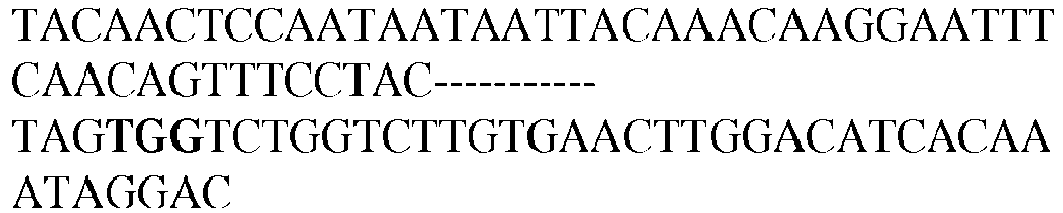
250 -11bp 11 PHF8-sg2 
240 WT 11 PHF8-sg2 
240 WT 12 BMI1-sg2 
239 WT 12 BMI1-sg2 
239 WT 12 PHF8-sg2 
240 WT 12 PHF8-sg2 
240 WT 13 BMI1-sg2 
239 WT 13 BMI1-sg2 
239 WT 13 PIIF8-sg2 
251 -13bp 13 PHF8-sg2 
251 -13bp 14 BMI1-sg2 
239 WT 14 BMI1-sg2 
239 WT 14 PHF8-sg2 
246 -3bp 14 PHF8-sg2 
246 -3bp 15 BMI1-sg2 
239 WT 15 BMI1-sg2 
239 WT 15 PHF8-sg2 
246 -3bp 15 PHF8-sg2 
246 -3bp 16 BMI1-sg2 
239 WT 16 BMI1-sg2 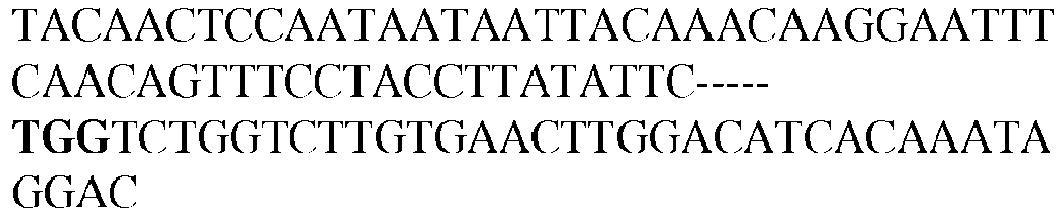
243 -5bp 16 PHF8-sg2 
245 -4bp & 1mut 16 PHF8-sg2 
246 -3bp 17 BMI1-sg2 
234 -3bp 17 BMI1-sg2 
234 -3bp 17 PIIF8-sg2 
240 WT 17 PHF8-sg2 
240 WT 18 BMI1-sg2 
239 WT 18 BMI1-sg2 
239 WT 18 PHF8-sg2 
240 WT 18 PHF8-sg2 
240 WT 19 BMI1-sg2 
239 WT 19 BMI1-sg2 
252 -14bp & 1mut 19 PHF8-sg2 
246 -3bp 19 PHF8-sg2 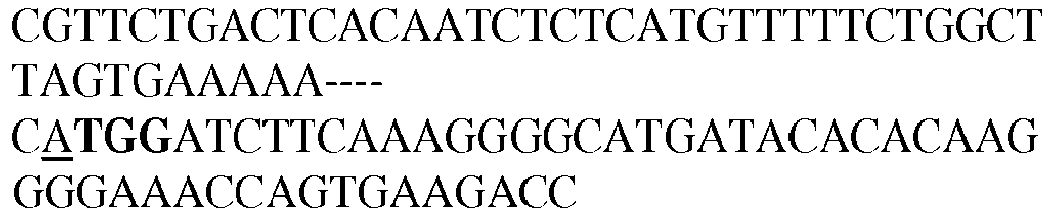
245 -4bp & 1mut 20 BMI1-sg2 
239 WT 20 BMI1-sg2 
239 WT 20 PHF8-sg2 
253 -3bp 20 PHF8-sg2 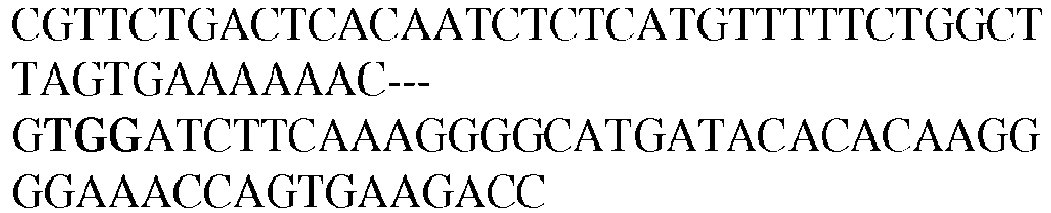
253 -3bp 21 BMI1-sg2 
254 +1bp 21 BMI1-sg2 
254 +1bp 21 PHF8-sg2 
240 WT 21 PHF8-sg2 
246 -3bp 22 BMI1-sg2 
255 -14bp 22 BMI1-sg2 
256 -3bp 22 PHF8-sg2 
246 -3bp 22 PHF8-sg2 
246 -3bp 23 BMI1-sg2 
257 -13bp 23 BMI1-sg2 
258 -5bp 23 PHF8-sg2 
246 -3bp 23 PHF8-sg2 
246 -3bp 24 BMI1-sg2 
239 -3bp 24 BMI1-sg2 
255 -14bp 24 PHF8-sg2 
259 +3bp & 2mut 24 PHF8-sg2 
259 +3bp & 2mut 25 BMI1-sg2 
239 -3bp 25 BMI1-sg2 
239 -3bp 25 PHF8-sg2 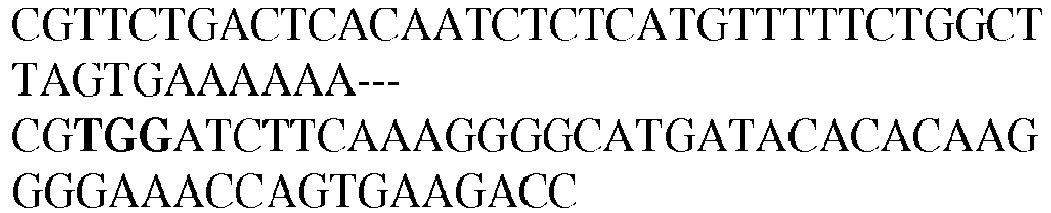
246 -3bp 25 PHF8-sg2 
246 -3bp 26 BMI1-sg2 
239 WT 26 BMI1-sg2 
234 -3bp 26 PHF8-sg2 
246 -3bp 26 PHF8-sg2 
246 -3bp 27 BMI1-sg2 
260 -9bp 27 BMI1-sg2 
260 -9bp 27 PHF8-sg2 
240 WT 27 PHF8-sg2 
246 -3bp 28 BMI1-sg2 
261 -22bp 28 BMI1-sg2 
261 -22bp 28 PHF8-sg2 
246 -3bp 28 PHF8-sg2 
246 -3bp 29 BMI1-sg2 
239 WT 29 BMI1-sg2 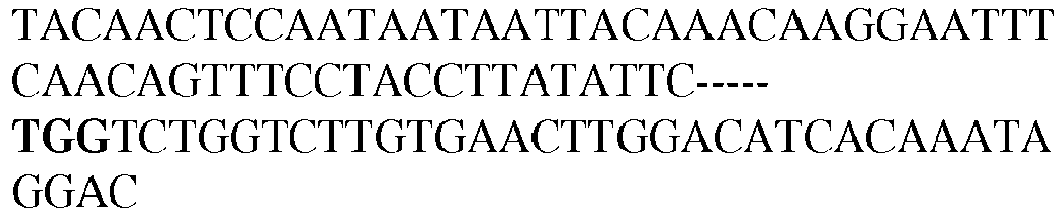
243 -5bp 29 PHF8-sg2 
245 -4bp & 1 mut 29 PHF8-sg2 
246 -3bp 30 BMI1-sg2 
239 WT 30 BMI1-sg2 
239 WT 30 PHF8-sg2 
262 +17bp & 1mut 30 PHF8-sg2 
262 +17bp & 1mut 31 BMI1-sg2 
263 5mut 31 BMI1-sg2 
255 -14bp 31 PHF8-sg2 
246 -3bp 31 PHF8-sg2 
246 -3bp 32 BMI1-sg2 
239 WT 32 BMI1-sg2 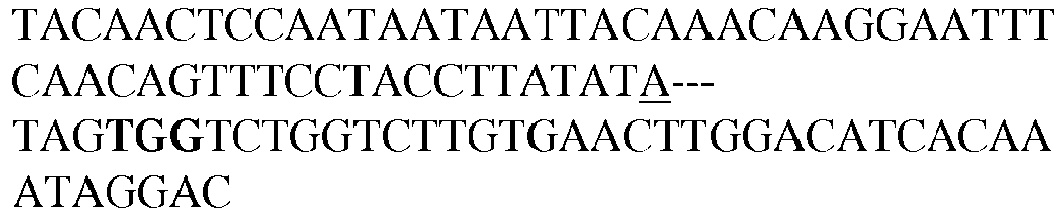
264 -3bp & 1mut 32 PHF8-sg2 
240 WT 32 PHF8-sg2 
240 WT 33 BMI1-sg2 
265 -18bp 33 BMI1-sg2 
265 -18bp 33 PHF8-sg2 
240 WT 33 PHF8-sg2 
240 WT 34 BMI1-sg2 
239 WT 34 BMI1-sg2 
239 WT 34 PHF8-sg2 
240 WT 34 PHF8-sg2 
266 +1bp 35 BMI1-sg2 
267 +14bp 35 BMI1-sg2 
267 +14bp 35 PHF8-sg2 
268 -13bp 35 PHF8-sg2 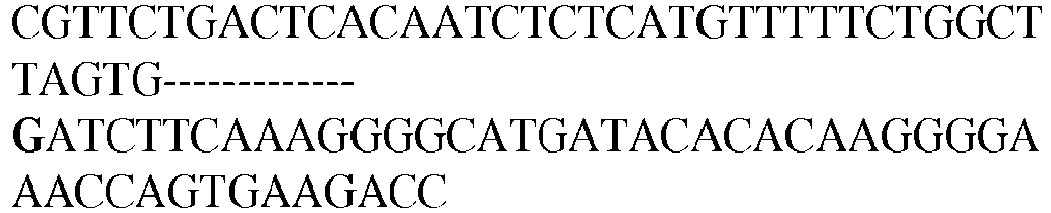
268 -13bp 36 BMI1-sg2 
269 -2bp 36 BMI1-sg2 
269 -2bp 36 PHF8-sg2 
246 -3bp 36 PHF8-sg2 
240 WT 37 BMI1-sg2 
270 3mut 37 BMI1-sg2 
239 WT 37 PHF8-sg2 
236 -5bp 37 PHF8-sg2 
236 -5bp 38 BMI1-sg2 
239 -3bp 38 BMI1-sg2 
271 +14bp 38 PHF8-sg2 
253 -3bp 38 PHF8-sg2 
253 -3bp 39 BMI1-sg2 
272 -15bp 39 BMI1-sg2 
239 -3bp 39 PHF8-sg2 
273 +11bp & 4mut 39 PHF8-sg2 
273 +11bp & 4mut 40 BMI1-sg2 
274 -18bp 40 BMI1-sg2 
275 -3bp 40 PHF8-sg2 
240 WT 40 PHF8-sg2 
240 WT - RNA were extracted from cells using TRIzol Plus RNA Purification Kit (Life Technologies) according to manufacturer's protocol and treated with PureLink on-column DNase kit (Life Technologies). RNA quality and concentration was determined using NanoDrop Spectrophotometer. RNA samples were reverse-transcribed using SuperScript III Reverse Transcriptase (Life Technologies), Random Primer Mix (New England Biolabs) and RNAse OUT (Invitrogen). To evaluate gene expression level, quantitative PCR was conducted using SYBR FAST qPCR MasterMix (KAPA) on the LightCycler480 system (Roche). Data was quantified and analyzed using LifeCyler480 SW 1.1 build-in software. PCR primers were designed and evaluated using PrimerBlast (NCBI). Primer sequences are listed in Table 7.
Table 6: PCR primers used in qRT-PCR Target gene ID Forward primer (5' to 3') Reverse primer (5' to 3') BRD4 GTTGATGTGATTGCCGGCTC (SEQ ID NO: 197) TTAGGCAGGACCTGTTTCGG (SEQ ID NO: 200) KDM4C CGTACGGGTTCATGCAAGTT (SEQ ID NO: 198) CGTTTGCTTAAGAGCACCTCC (SEQ ID NO: 201) KDM6B CCCCTCACCGCCTATCAGTA TCTTGAACAAGTCGGGGTCG (SEQ ID NO: 199) (SEQ ID NO: 202) Table 8: PCR primers used in deep sequencing for indel detection Target gRNA ID Type of target site 20 bp GRNA targeting sequence (5' to 3') SEQ ID NO. Forward primer (5' to 3') SEQ ID NO. Reverse primer (5' to 3') SEQ ID NO. NF1-sg1 On-target 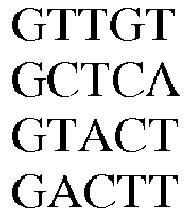
276 
304 
332 NF1-sg4 On-target 
277 
304 
332 NF2-sg2 On-target 
278 
305 
333 MED1 2-sg1 On-target 
279 
306 
334 PHF8-sg2 On-target 
280 
307 
335 BMI-sg2 On-target 
281 
308 
336 KDM4 C-sg1 On-target 
109 
309 
337 KDM4 C-sg1 Off-target 
282 
310 
338 KDM4 C-sg1 Off-target 
283 
311 
339 KDM4 C-sg1 Off-target 
284 
312 
340 KDM4 C-sg1 Off-target 
285 
313 
341 KDM6 B-sg2 On-target 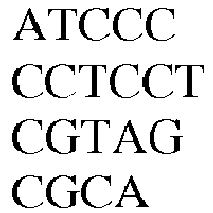
286 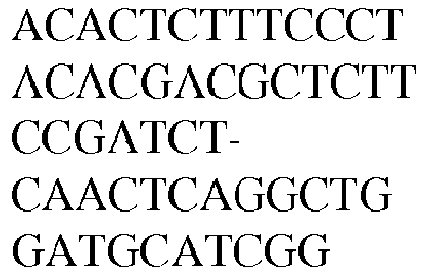
314 
342 KDM6 B-sg2 Off-target 
287 
315 
343 KDM6 B-sg2 Off-target 
288 
316 
344 KDM6 B-sg2 Off-target 
289 
317 
345 KDM6 B-sg2 Off-target 
290 
318 
346 KDM6 B-sg2 Off-target 
291 
319 
347 KDM6 B-sg2 Off-target 
292 
320 
348 KDM6 B-sg2 Off-target 
293 
321 
349 BRD4-sg3 On-target 
294 
322 
350 


BRD4-sg3 Off-target 
295 
323 
351 BRD4-sg3 Off-target 
296 
324 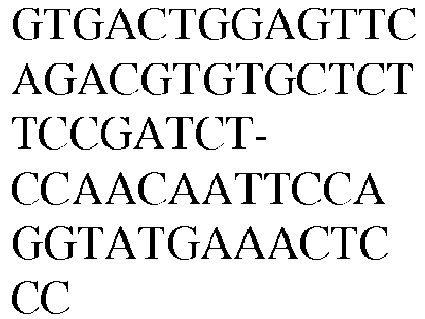
352 BRD4-sg3 Off-target 
297 
325 
353 BRD4-sg2 On-target 
298 
326 
354 BRD4-sg2 Off-target 
299 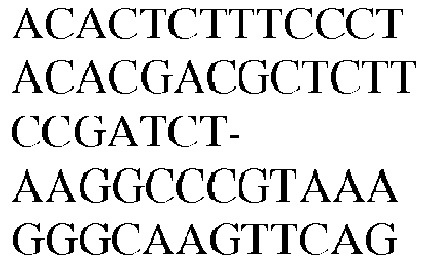
327 
355 BRD4-sg2 Off-target 
300 
328 
356 BRD4-sg2 Off-target 
301 
329 
357 BRD4-sg2 Off-target 
302 
330 
358 BRD4-sg2 Off-target 
303 
331 
359 Table 9: PCR primers used in whole genome amplification for indel detection Target sgRNA ID Forward primer (5' to 3') Reverse primer (5' to 3') BMI1-sg2 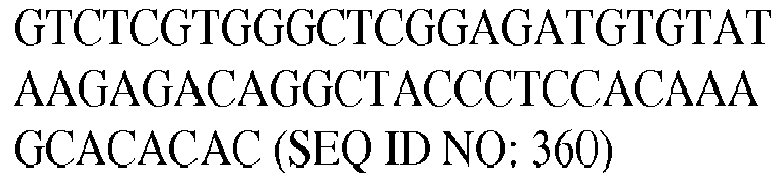

PHF8-sg2 

- RNA was extracted from cells using TRIzol Plus RNA Purification Kit (Life Technologies) according to the manufacturer's protocol and treated with PureLink on-column DNase kit (Life Technologies). RNA quality and concentration was determined using NanoDrop Spectrophotometer. RNA samples were reverse-transcribed using SuperScript III Reverse Transcriptase (Life Technologies), Random Primer Mix (New England Biolabs) and RNAse OUT (Invitrogen). Sequencing libraries were prepared using the Illumina Library Prep Kit, starting with an input amount of 1 µg total RNA and following the manufacturer's recommendations. After PCR amplification, the libraries were size-selected to 300 +/- 25 bp on a 2% agarose gel (E-Gel EX, Invitrogen) and submitted to single-end sequencing on an
Illumina HiSeq 2000 instrument. RNA-Seq experiments were performed in two biological replicates. - Raw single-end reads of the cDNA fragments were aligned to the human transcriptome (RefSeq, hg19) using TopHat2 (Kim, et al. Genome Biol (2013) 14:R36) and Bowtie (Langmead, et al. Genome Biol (2009) 10:R25). Differentially expressed genes between samples were called using Cuffdiff2 (Trapnell, et al. Nat Biotechnol (2013) 31:46-53) with the bias correction option, masking reads mapping to mitochondrial and ribosomal RNA transcripts. Genes were called differentially expressed if they met a minimum of 0.1 fragments per kilobase per million reads (FPKM) in at least one of the conditions tested, the absolute log2-fold-change was at least 0.5, and the P-value after multiple hypothesis correction (Q-value) was less than 0.05. Gene set enrichment analysis was performed using MSigDB database (broadinstitute.org/gsea/index.jsp) (Subramanian, et al. Proc NatlAcad Sci USA (2005) 102:15545-50).
- To estimate how different parameters affect results in our pooled screens, we simulated cell proliferation in a mixed cell population harboring gRNA combinations that exhibit different growth rates. At a given time (t), the total cell count (CN ) in the population is represented by the summation of individual cell counts containing different combinations (Ci ; 1 to N, where N is the total number of combinations), such that

- For each individual gRNA combination, cell growth is represented by Eq. (1). Based on an exponential cell growth model, cells with each gRNA combination consist of two populations: one with a modified growth rate (km ) due to gene disruption by the CRISPR-Cas9 system, and the other (unmodified cells) with the wild-type growth rate (kwt ). The former population is defined as a fraction of cells, p, which is limited by the cleavage efficiency of the CRISPR-Cas9 system. For simplicity, we assumed that p was constant throughout the duration of the assay.


- For simplicity in modeling, we segregated the total cell population into three sub-populations with different growth phenotypes as described in Eq. (3).

- Based on this mixed cell growth model, we modeled the relative frequency (R. F.) of a pro-proliferative gRNA's and an anti-proliferative gRNA's representation in the whole population. The relative frequency is defined as the barcode abundance at a given time compared to the initial time point (i. e.,

FIG. 17A ). The degree of enrichment and depletion was observed to change with different percentages (i.e., 2, 5, or 10%) of initial gRNA combinations defined to have an anti-proliferative (fs ) and pro-proliferative (ff ) response (FIG. 17A ). We further evaluated the relative frequency of an anti-proliferative gRNA's representation by modulating the doubling time of modified cells (Tdoubling,m ) and the fraction of cells with the modified growth rate (p) for the anti-proliferative gRNA. Assuming that p stayed constant throughout the experiment, the representation of an anti-proliferative clone in the entire cell population could be depleted by ∼23% to 97% under the parameter ranges shown inFIGs. 17B-17C . This model represents a simplified version of cell growth dynamics by segregating cell populations into sub-populations with average growth rates and does not account for potential interactions between cells. Based on our model, the sensitivity of our screen could be enhanced with improved gRNA efficiencies to increase the fraction of cells with modified growth rates and by increasing the assay time. - Having thus described several aspects of at least one embodiment of this invention, it is to be appreciated various alterations, modifications, and improvements will readily occur to those skilled in the art. Such alterations, modifications, and improvements are intended to be part of this disclosure, and are intended to be within the spirit and scope of the invention. Accordingly, the foregoing description and drawings are by way of example only.
-
- 1. Shalem, O. et al. Genome-scale CRISPR-Cas9 knockout screening in human cells. Science 343, 84-7 (2014).
- 2. Wang, T., Wei, J. J., Sabatini, D. M. & Lander, E. S. Genetic screens in human cells using the CRISPR-Cas9 system. Science 343, 80-4 (2014).
- 3. Zhou, Y. et al. High-throughput screening of a CRISPR/Cas9 library for functional genomics in human cells. Nature 509, 487-491 (2014).
- 4. Koike-Yusa, H., Li, Y., Tan, E.-P., Velasco-Herrera, M. D. C. & Yusa, K. Genome-wide recessive genetic screening in mammalian cells with a lentiviral CRISPR-guide RNA library. Nat. Biotechnol. 32, 267-73 (2014).
- 5. Gilbert, L. A. et al. Genome-Scale CRISPR-Mediated Control of Gene Repression and Activation. Cell 159, 647-661 (2014).
- 6. Konermann, S. et al. Genome-scale transcriptional activation by an engineered CRISPR-Cas9 complex. Nature doi:10.1038/nature14136 (2014).
- 7. Cong, L. et al. Multiplex genome engineering using CRISPR/Cas systems. Science 339, 819-23 (2013).
- 8. Mali, P. et al. RNA-guided human genome engineering via Cas9. Science 339, 823-6 (2013).
- 9. Gilbert, L. A. et al. CRISPR-mediated modular RNA-guided regulation of transcription in eukaryotes. Cell 154, 442-451 (2013).
- 10. Cheng, A. A., Ding, H. & Lu, T. K. Enhanced killing of antibiotic-resistant bacteria enabled by massively parallel combinatorial genetics. Proc. Natl. Acad. Sci. 111, 12462-7 (2014).
- 11. Honma, K. et al. RPN2 gene confers docetaxel resistance in breast cancer. Nat. Med. 14, 939-948 (2008).
- 12. Wang, Z. et al. Combinatorial patterns of histone acetylations and methylations in the human genome. Nat. Genet. 40, 897-903 (2008).
- 13. Dawson, M. A. & Kouzarides, T. Cancer epigenetics: From mechanism to therapy. Cell 150, 12-27 (2012).
- 14. Juergens, R. A. et al. Combination epigenetic therapy has efficacy in patients with refractory advanced non-small cell lung cancer. Cancer Discov. 1, 598-607 (2011).
- 15. Jones, P. A. & Baylin, S. B. The Epigenomics of Cancer. Cell 128, 683-692 (2007).
- 16. Yoo, C. B. & Jones, P. A. Epigenetic therapy of cancer: past, present and future. Nat. Rev. Drug Discov. 5, 37-50 (2006).
- 17. Jin, C. et al. Chem-seq permits identification of genomic targets of drugs against androgen receptor regulation selected by functional phenotypic screens. Proc. Natl. Acad. Sci. U. S. A. 111, 9235-40 (2014).
- 18. Asangani, I. a et al. Therapeutic targeting of BET bromodomain proteins in castration-resistant prostate cancer. Nature 510, 278-82 (2014).
- 19. Kruidenier, L. et al. A selective jumonji H3K27 demethylase inhibitor modulates the proinflammatory macrophage response. Nature 488, 404-408 (2012).
- 20. Bliss, C. I. THE TOXICITY OF POISONS APPLIED JOINTLY1. Ann. Appl. Biol. 26, 585-615 (1939).
- 21. Borisy, A. A. et al. Systematic discovery of multicomponent therapeutics. Proc. Natl. Acad. Sci. U. S. A. 100, 7977-7982 (2003).
- 22. Pattanayak, V. et al. High-throughput profiling of off-target DNA cleavage reveals RNA-programmed Cas9 nuclease specificity. Nat. Biotechnol. 31, 839-43 (2013).
- 23. Kuscu, C., Arslan, S., Singh, R., Thorpe, J. & Adli, M. Genome-wide analysis reveals characteristics of off-target sites bound by the Cas9 endonuclease. Nat. Biotechnol. 32, 677-683 (2014).
- 24. Wu, X. et al. Genome-wide binding of the CRISPR endonuclease Cas9 in mammalian cells. Nat. Biotechnol. 32, 670-676 (2014).
- 25. Doench, J. G. et al. Rational design of highly active sgRNAs for CRISPR-Cas9-mediated gene inactivation. Nat. Biotechnol. 32, 1262-1267 (2014).
- 26. Essletzbichler, P. et al. Megabase-scale deletion using CRISPR/Cas9 to generate a fully haploid human cell line. Genome Res. 24, 2059-2065 (2014).
- 27. Blasco, R. B. et al. Simple and rapid in vivo generation of chromosomal rearrangements using CRISPR/Cas9 technology. Cell Rep. 9, 1219-1227 (2014).
- 28. Choi, P. S. & Meyerson, M. Targeted genomic rearrangements using CRISPR/Cas technology. Nat. Commun. 5, 3728 (2014).
- 29. Moffat, J. et al. A Lentiviral RNAi Library for Human and Mouse Genes Applied to an Arrayed Viral High-Content Screen. Cell 124, 1283-1298 (2006).
- 30. Ran, F. A. et al. Genome engineering using the CRISPR-Cas9 system. Nat. Protoc. 8, 2281-308 (2013).
- 31. Kim D, et al. (2013) TopHat2: accurate alignment of transcriptomes in the presence of insertions, deletions and gene fusions. Genome Biol 14:R36.
- 32. Langmead B, Trapnell C, Pop M, Salzberg SL (2009) Ultrafast and memory-efficient alignment of short DNA sequences to the human genome. Genome Biol 10:R25.
- 33. Trapnell C, et al. (2013) Differential analysis of gene regulation at transcript resolution with RNA-seq. Nat Biotechnol 31:46-53.
- 34. Subramanian A, et al. (2005) Gene set enrichment analysis: a knowledge-based approach for interpreting genome-wide expression profiles. Proc Natl Acad Sci U S A 102:15545-50.
- 35. Stemmer M (2015) CCTop: An Intuitive, Flexible and Reliable CRISPR/Cas9 Target Prediction Tool. PLoS One 10(4):e0124633.
- While several inventive embodiments have been described and illustrated herein, those of ordinary skill in the art will readily envision a variety of other means and/or structures for performing the function and/or obtaining the results and/or one or more of the advantages described herein, and each of such variations and/or modifications is deemed to be within the scope of the inventive embodiments described herein. More generally, those skilled in the art will readily appreciate that all parameters, dimensions, materials, and configurations described herein are meant to be exemplary and that the actual parameters, dimensions, materials, and/or configurations will depend upon the specific application or applications for which the inventive teachings is/are used. Those skilled in the art will recognize, or be able to ascertain using no more than routine experimentation, many equivalents to the specific inventive embodiments described herein. It is, therefore, to be understood that the foregoing embodiments are presented by way of example only and that, within the scope of the appended claims and equivalents thereto, inventive embodiments may be practiced otherwise than as specifically described and claimed. Inventive embodiments of the present disclosure are directed to each individual feature, system, article, material, kit, and/or method described herein. In addition, any combination of two or more such features, systems, articles, materials, kits, and/or methods, if such features, systems, articles, materials, kits, and/or methods are not mutually inconsistent, is included within the inventive scope of the present disclosure.
- All definitions, as defined and used herein, should be understood to control over dictionary definitions, definitions in documents incorporated by reference, and/or ordinary meanings of the defined terms.
- The indefinite articles "a" and "an," as used herein in the specification and in the claims, unless clearly indicated to the contrary, should be understood to mean "at least one."
- The phrase "and/or," as used herein in the specification and in the claims, should be understood to mean "either or both" of the elements so conjoined, i.e., elements that are conjunctively present in some cases and disjunctively present in other cases. Multiple elements listed with "and/or" should be construed in the same fashion, i.e., "one or more" of the elements so conjoined. Other elements may optionally be present other than the elements specifically identified by the "and/or" clause, whether related or unrelated to those elements specifically identified. Thus, as a non-limiting example, a reference to "A and/or B", when used in conjunction with open-ended language such as "comprising" can refer, in one embodiment, to A only (optionally including elements other than B); in another embodiment, to B only (optionally including elements other than A); in yet another embodiment, to both A and B (optionally including other elements); etc.
- As used herein in the specification and in the claims, "or" should be understood to have the same meaning as "and/or," as defined above. For example, when separating items in a list, "or" or "and/or" shall be interpreted as being inclusive, i.e., the inclusion of at least one, but also including more than one, of a number or list of elements, and, optionally, additional unlisted items. Only terms clearly indicated to the contrary, such as "only one of" or "exactly one of," or, when used in the claims, "consisting of," will refer to the inclusion of exactly one element of a number or list of elements. In general, the term "or" as used herein shall only be interpreted as indicating exclusive alternatives (i.e., "one or the other but not both") when preceded by terms of exclusivity, such as "either," "one of," "only one of," or "exactly one of." "Consisting essentially of," when used in the claims, shall have its ordinary meaning as used in the field of patent law.
- As used herein in the specification and in the claims, the phrase "at least one," in reference to a list of one or more elements, should be understood to mean at least one element selected from any one or more of the elements in the list of elements, but not necessarily including at least one of each and every element specifically listed within the list of elements and not excluding any combinations of elements in the list of elements. This definition also allows that elements may optionally be present other than the elements specifically identified within the list of elements to which the phrase "at least one" refers, whether related or unrelated to those elements specifically identified. Thus, as a non-limiting example, "at least one of A and B" (or, equivalently, "at least one of A or B," or, equivalently "at least one of A and/or B") can refer, in one embodiment, to at least one, optionally including more than one, A, with no B present (and optionally including elements other than B); in another embodiment, to at least one, optionally including more than one, B, with no A present (and optionally including elements other than A); in yet another embodiment, to at least one, optionally including more than one, A, and at least one, optionally including more than one, B (and optionally including other elements); etc.
- It should also be understood that, unless clearly indicated to the contrary, in any methods claimed herein that include more than one step or act, the order of the steps or acts of the method is not necessarily limited to the order in which the steps or acts of the method are recited.
- All references, patents and patent applications disclosed herein are incorporated by reference with respect to the subject matter for which each is cited, which in some cases may encompass the entirety of the document.
- In the claims, as well as in the specification above, all transitional phrases such as "comprising," "including," "carrying," "having," "containing," "involving," "holding," "composed of," and the like are to be understood to be open-ended, i.e., to mean including but not limited to. Only the transitional phrases "consisting of' and "consisting essentially of' shall be closed or semi-closed transitional phrases, respectively, as set forth in the United States Patent Office Manual of Patent Examining Procedures, Section 2111.03.
- The current disclosure contains, inter alia, the following items:
- 1. A genetic construct comprising
- a first DNA element comprising
- a CRISPR guide sequence and
- a scaffold sequence;
- a first compatible end element and a second compatible end element flanking the first DNA element, wherein the first and second compatible end elements are capable of annealing to each other;
- a barcode element;
- a third compatible end element and a fourth compatible end element flanking the barcode element, wherein the third and fourth compatible end elements are capable of annealing to each other but are not capable of annealing to the first or second compatible end elements; and
- a separation site located between the fourth compatible end element and the first compatible end element, wherein the DNA element, first compatible end element, and second compatible end element are on one side of the separation site, and the barcode element, the third compatible end element, and the fourth compatible end element are on the other side of the separation site.
- a first DNA element comprising
- 2. The genetic construct of
item 1, further comprising a promoter element upstream of the first DNA element. - 3. A vector comprising a genetic construct according to
item - 4. A genetic construct comprising:
- a plurality of DNA elements, wherein each DNA element of the plurality of DNA element comprises a CRISPR guide sequence and a scaffold sequence;
- a first compatible end element and a second compatible end element flanking the plurality of DNA elements, wherein the first and second compatible end elements are capable of annealing to each other;
- a plurality of barcode elements;
- a third compatible end element and a fourth compatible end element flanking the plurality of barcode elements, wherein the third and fourth compatible end elements are capable of annealing to each other but are not capable of annealing to the first or second compatible end elements; and
- a separation site located between the plurality of DNA elements and the plurality of barcode elements.
- 5. A vector comprising
- a genetic construct according to
item 4 and - a promoter sequence located upstream of each of the CRISPR guide sequences.
- a genetic construct according to
- 6. A method for generating a combinatorial vector, comprising:
- (a) providing a vector containing a first genetic construct comprising:
- a CRISPR guide sequence;
- a second compatible end element and a first recognition site for a first restriction enzyme flanking the CRISPR guide sequence;
- a barcode element; and
- a third compatible end element and a second recognition site for a second restriction enzyme flanking the barcode element;
- (b) cleaving the first genetic construct at the first recognition site, resulting in a fifth compatible end element, and cleaving the vector at the second recognition site, resulting in a sixth compatible end element;
- (c) providing a scaffold element comprising
- a scaffold sequence;
- a separation site comprising a first compatible end element and a fourth compatible end element; and
- a seventh compatible end element and an eighth compatible end element flanking the scaffold element, wherein the seventh compatible end element is capable of annealing to the fifth compatible end element and the eighth compatible end element is capable of annealing to the sixth compatible end element;
- (d) annealing the scaffold element to the cleaved first genetic construct, wherein the annealing occurs at compatible end elements within the vector and the scaffold element that are capable of annealing to each other, and wherein after the annealing, the scaffold element is integrated between the CRISPR guide sequence and the barcode element, and wherein the separation site is located between the scaffold sequence and the barcode element, creating a combinatorial vector.
- (a) providing a vector containing a first genetic construct comprising:
- 7. The method of
item 6, further comprising:- (a) providing a combinatorial vector according to item C1;
- (b) cleaving the vector at the separation site within the scaffold element, resulting in a first compatible end element and a fourth compatible end element;
- (c) providing a second genetic construct comprising
- a CRISPR guide sequence;
- a scaffold sequence;
- a barcode element; and
- a second compatible end element and a third compatible end element flanking the second genetic construct, wherein the second compatible end element of the second genetic construct is capable of annealing with the first compatible end element of the vector and the third compatible end element of the second genetic construct is capable of annealing to the fourth compatible end element of the vector;
- (d) annealing the second genetic construct to the cleaved vector, wherein the annealing occurs at compatible end elements within the second genetic construct and the vector that are capable of annealing to each other, and wherein after annealing, the second genetic construct is integrated into the vector, creating a combinatorial vector comprising concatenated barcode elements and concatenated CRISPR guide and scaffold sequences.
- 8. The method of
item 7, wherein the combinatorial vector further comprises a promoter element upstream of the CRISPR guide sequences. - 9. The method of
item - 10. The method of any one of items 6-9, wherein the first recognition site and the second recognition sites have the same recognition site sequence, and the first restriction enzyme and the second restriction enzyme are the same restriction enzymes.
- 11. A genetic construct comprising
- at least two CRISPR guide sequences;
- a barcode element; and
- a restriction recognition site located between each CRISPR guide sequence and between the barcode element and the CRISPR guide sequence nearest to the barcode element.
- 12. A genetic construct comprising
- a plurality of DNA elements, each comprising
- a CRISPR guide sequence and
- a scaffold sequence;
- a barcode element; and
- a promoter sequence located upstream of each of the DNA elements of the plurality of DNA elements.
- a plurality of DNA elements, each comprising
- 13. The genetic construct of
item - 14. The genetic construct of
item - 15. A vector comprising any of the genetic constructs according to items 11-14.
- 16. A method for generating a combinatorial vector, comprising
- (a) providing a vector comprising:
- a plurality of CRISPR guide sequences;
- a barcode element, wherein the barcode element is located downstream of the plurality of CRISPR guide sequences;
- optionally a promoter sequence located upstream of at least one of the plurality of CRISPR guide sequences; and
- a plurality of recognition sites for a plurality of restriction enzymes, wherein each of the plurality of recognition sites is located downstream of one of the plurality of CRISPR guide sequences;
- (b) cleaving the vector at at least one of the plurality of recognition sites with at least one of the plurality of restriction enzymes, resulting in a first compatible end element and a second compatible end element;
- (c) providing a first scaffold element comprising:
- a scaffold sequence,
- optionally a promoter sequence, and
- a third compatible end element and fourth compatible end element flanking the first scaffold element, wherein the third compatible end element is capable of annealing to the first compatible end element of the cleaved vector and the fourth compatible end element is capable of annealing to the second compatible end element of the cleaved vector;
- (d) annealing the first scaffold element to the cleaved vector, wherein the annealing occurs at compatible end elements within the first scaffold element and the cleaved vector, and wherein after annealing, the first scaffold element is integrated downstream of one of the plurality of CRISPR guide sequences, thereby producing a combinatorial vector.
- (a) providing a vector comprising:
- 17. The method of
item 16, wherein the method is iterative. - 18. A method for generating a combinatorial vector, comprising
- (a) providing a vector comprising:
- a plurality of CRISPR guide sequences,
- a barcode element, wherein the barcode element is located upstream of the plurality of CRISPR guide sequences;
- optionally a promoter sequence located upstream of at least one of the plurality of CRISPR guide sequences; and
- a plurality of recognition sites for a plurality of restriction enzymes, wherein each of the plurality of recognition sites is located upstream of one of the plurality of CRISPR guide sequences;
- (b) cleaving the vector at least one of the plurality of recognition sites with at least one of the plurality of restriction enzymes, resulting in a first compatible end element and a second compatible end element;
- (c) providing a first scaffold element comprising:
- optionally a scaffold sequence,
- a promoter sequence, and
- a third compatible end element and fourth compatible end element flanking the first scaffold element, wherein the third compatible end element is capable of annealing to the first compatible end element of the cleaved vector and the fourth compatible end element is capable of annealing to the second compatible end element of the cleaved vector;
- (d) annealing the first scaffold element to the cleaved vector, wherein the annealing occurs at compatible end elements within the first scaffold element and the cleaved vector, and wherein after annealing, the first scaffold element is integrated upstream of one of the plurality of CRISPR guide sequences, thereby producing a combinatorial vector.
- (a) providing a vector comprising:
- 19. The method of
item 18, wherein the method is iterative. - 20. A composition comprising two or more inhibitors targeting two or more epigenetic genes selected from the combinations of epigenetic genes set forth in Table 2.
- 21. The composition of
item 20, wherein each of the two or more inhibitors reduce or prevent expression of an epigenetic gene or reduce or prevent activity of a protein encoded by the epigenetic gene. - 22. The composition of
item - 23. The composition of item 22, wherein at least one of the inhibitors is a CRISPR guide sequence and scaffold sequence; and the composition further comprises or encodes a Cas9 endonuclease.
- 24. The composition of item 22 or 23, wherein the CRISPR guide sequence or shRNA is expressed from a recombinant expression vector.
- 25. The composition of any one of items 20-24, wherein the combination of epigenetic genes comprises BRD4 and KDM4C or BRD4 and KDM6B.
- 26. The composition of
item 25, wherein the inhibitor of BRD4 is JQ1 ((6S)-4-(4-Chlorophenyl)-2,3,9-trimethyl-6H-thieno[3,2-f][1,2,4]triazolo[4,3-a][1,4]diazepine-6-acetic acid 1,1-dimethylethyl ester). - 27. The composition of
item 25 or 26, wherein the inhibitor of KDM4C is SD70 (N-(furan-2-yl(8-hydroxyquinolin-7-yl)methyl)isobutyramide). - 28. The composition of
item 25 or 26, wherein the inhibitor of KDM6B is GSK-J4 (ethyl 3-((6-(4,5-dihydro-1H-benzo[d]azepin-3(2H)-yl)-2-(pyridin-2-yl)pyrimidin-4-yl)amino)propanoate, monohydrochloride). - 29. A method for reducing proliferation of a cell, comprising contacting the cell with a combination of two or more inhibitors targeting two or more epigenetic genes selected from the combinations of epigenetic genes set forth in Table 2.
- 30. The method of item 29, wherein the cell is a cancer cell.
- 31. The method of
item 30, wherein the cancer cell is an ovarian cancer cell. - 32. The composition of any one of items 29-31, wherein each of the two or more inhibitors reduce or prevent expression of an epigenetic gene or reduce or prevent activity of a protein encoded by the epigenetic gene.
- 33. The composition of any one of items 29-32, wherein each of the inhibitors is selected from the group consisting of a CRISPR guide sequence and scaffold sequence; an shRNA; and a small molecule.
- 34. The composition of item 33, wherein at least one of the inhibitors is a CRISPR guide sequence and scaffold sequence; and the composition further comprises or encodes a Cas9 endonuclease.
- 35. The composition of
item 33 or 34, wherein the CRISPR guide sequence or shRNA is expressed from a recombinant expression vector. - 36. The composition of any one of items 29-35, wherein the combination of epigenetic genes comprises BRD4 and KDM4C or BRD4 and KDM6B.
- 37. The composition of
item 36, wherein the inhibitor of BRD4 is JQ1 ((6S)-4-(4-Chlorophenyl)-2,3,9-trimethyl-6H-thieno[3,2-f][1,2,4]triazolo[4,3-a][1,4]diazepine-6-acetic acid 1,1-dimethylethyl ester). - 38. The composition of
item - 39. The composition of
item - 40. A method for treating cancer in a subject, comprising administering to the subject a combination of two or more inhibitors targeting two or more epigenetic genes selected from the combinations of epigenetic genes set forth in Table 2, wherein each of the two or more inhibitors are administered in an effective amount.
- 41. The method of
item 40, wherein each of the inhibitors is selected from the group consisting of a CRISPR guide sequence, an shRNA, and a small molecule. - 42. The method of item 41, wherein the effective amount of each of the two or more inhibitors administered in the combination is less than the effective amount of the inhibitor when not administered in the combination.
- 43. The composition of any one of items 40-42, wherein each of the two or more inhibitors reduce or prevent expression of an epigenetic gene or reduce or prevent activity of a protein encoded by the epigenetic gene.
- 44. The composition of any one of items 40-43, wherein each of the inhibitors is selected from the group consisting of a CRISPR guide sequence and scaffold sequence; an shRNA; and a small molecule.
- 45. The composition of item 44, wherein at least one of the inhibitors is a CRISPR guide sequence and scaffold sequence; and the composition further comprises or encodes a Cas9 endonuclease.
- 46. The composition of
item 44 or 45, wherein the CRISPR guide sequence or shRNA is expressed from a recombinant expression vector. - 47. The composition of any one of items 40-46, wherein the combination of epigenetic genes comprises BRD4 and KDM4C or BRD4 and KDM6B.
- 48. The composition of item 47, wherein the inhibitor of BRD4 is JQ1 ((6S)-4-(4-Chlorophenyl)-2,3,9-trimethyl-6H-thieno[3,2-f][1,2,4]triazolo[4,3-a][1,4]diazepine-6-
acetic acid 1,1-dimethylethyl ester). - 49. The composition of
item 47 or 48, wherein the inhibitor of KDM4C is SD70 (N-(furan-2-yl(8-hydroxyquinolin-7-yl)methyl)isobutyramide). - 50. The composition of
item 47or 48, wherein the inhibitor of KDM6B is GSK-J4 (ethyl 3-((6-(4,5-dihydro-1H-benzo[d]azepin-3(2H)-yl)-2-(pyridin-2-yl)pyrimidin-4-yl)amino)propanoate, monohydrochloride). - 51. A method for identifying a combination of inhibitors of epigenetic genes that reduces proliferation of a cell, the method comprising:
- contacting a first population of cells and a second population of cells with a plurality of combinations of two or more CRISPR guide sequences and scaffold sequences and a Cas9 endonuclease;
- culturing the first population of cells and the second population of cells such that the second population of cells is cultured for a longer duration compared to the first population of cells;
- identifying the combinations of two or more CRISPR guide sequences and scaffold sequences in the first population of cells and the combinations of two or more CRISPR guide sequences and scaffold sequences in the second population of cells;
- comparing the abundance of each combination of two or more CRISPR guide sequences and scaffold sequences in the first population of cells to the abundance of each combination of two or more CRISPR guide sequences and scaffold sequences in the second population of cells; and
- identifying a combination of two or more CRISPR guide sequences and scaffold sequences that is absent from or in reduced abundance in the second population of cells but present in or in increased abundance in the first population of cells as a combination of CRISPR guide sequences and scaffold sequences that reduces cell proliferation.
- 52. A method for identifying a combination of genes to be inhibited to reduce proliferation of a cell, the method comprising:
- contacting a first population of cells and a second population of cells with a plurality of combinations of two or more CRISPR guide sequences and scaffold sequences and a Cas9 endonuclease;
- culturing the first population of cells and the second population of cells such that the second population of cells is cultured for a longer duration compared to the first population of cells;
- identifying the combinations of two or more CRISPR guide sequences and scaffold sequences in the first population of cells and the combinations of two or more CRISPR guide sequences and scaffold sequences in the second population of cells;
- comparing the abundance of each combination of two or more CRISPR guide sequences and scaffold sequences in the first population of cells to the abundance of each combination of two or more CRISPR guide sequences and scaffold sequences in the second population of cells; and
- identifying a combination of two or more CRISPR guide sequences and scaffold sequences that is absent from or in reduced abundance in the second population of cells but present in or in increased abundance in the first population of cells as a combination of genes to be inhibited to reduce proliferation.

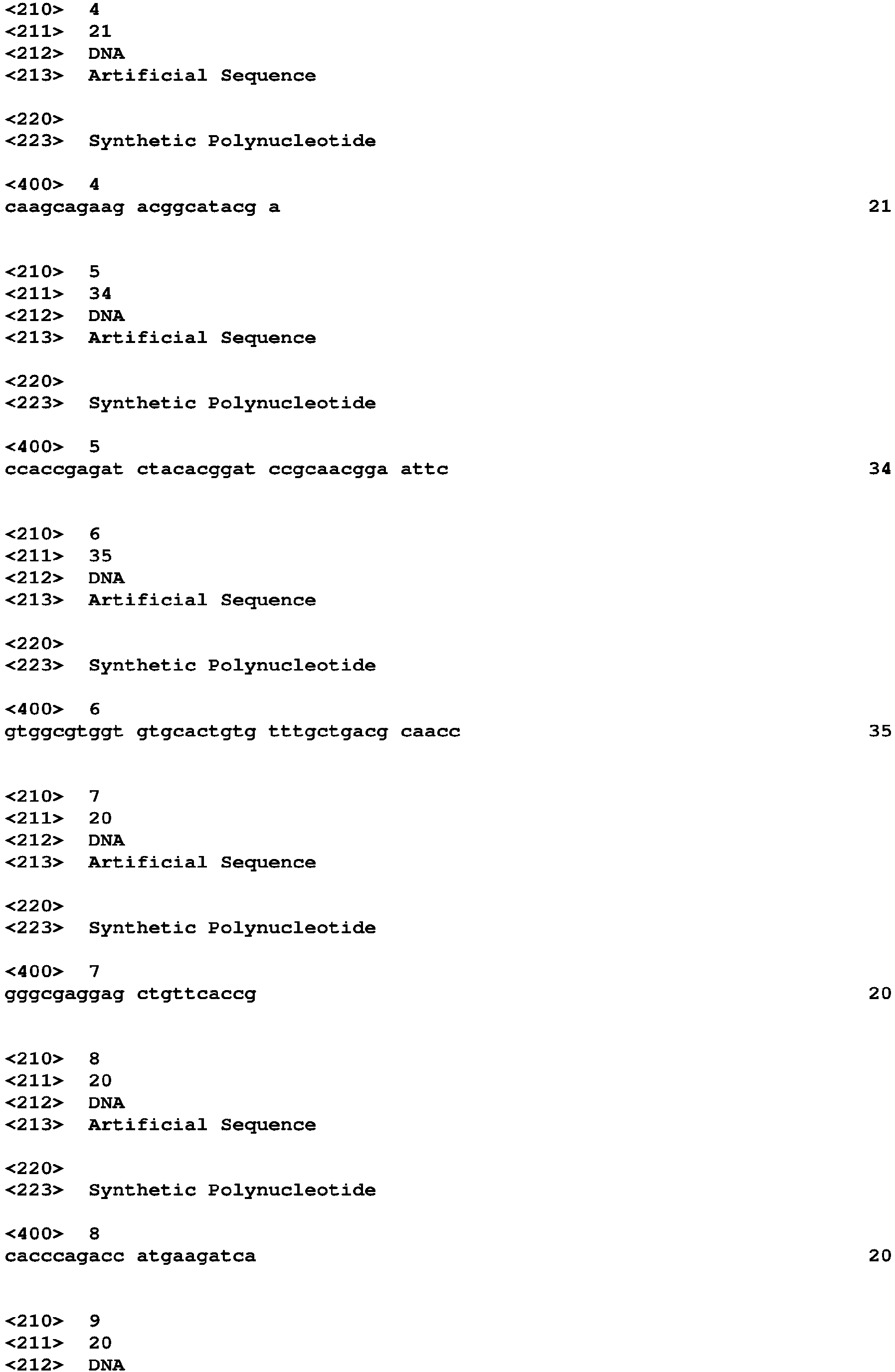

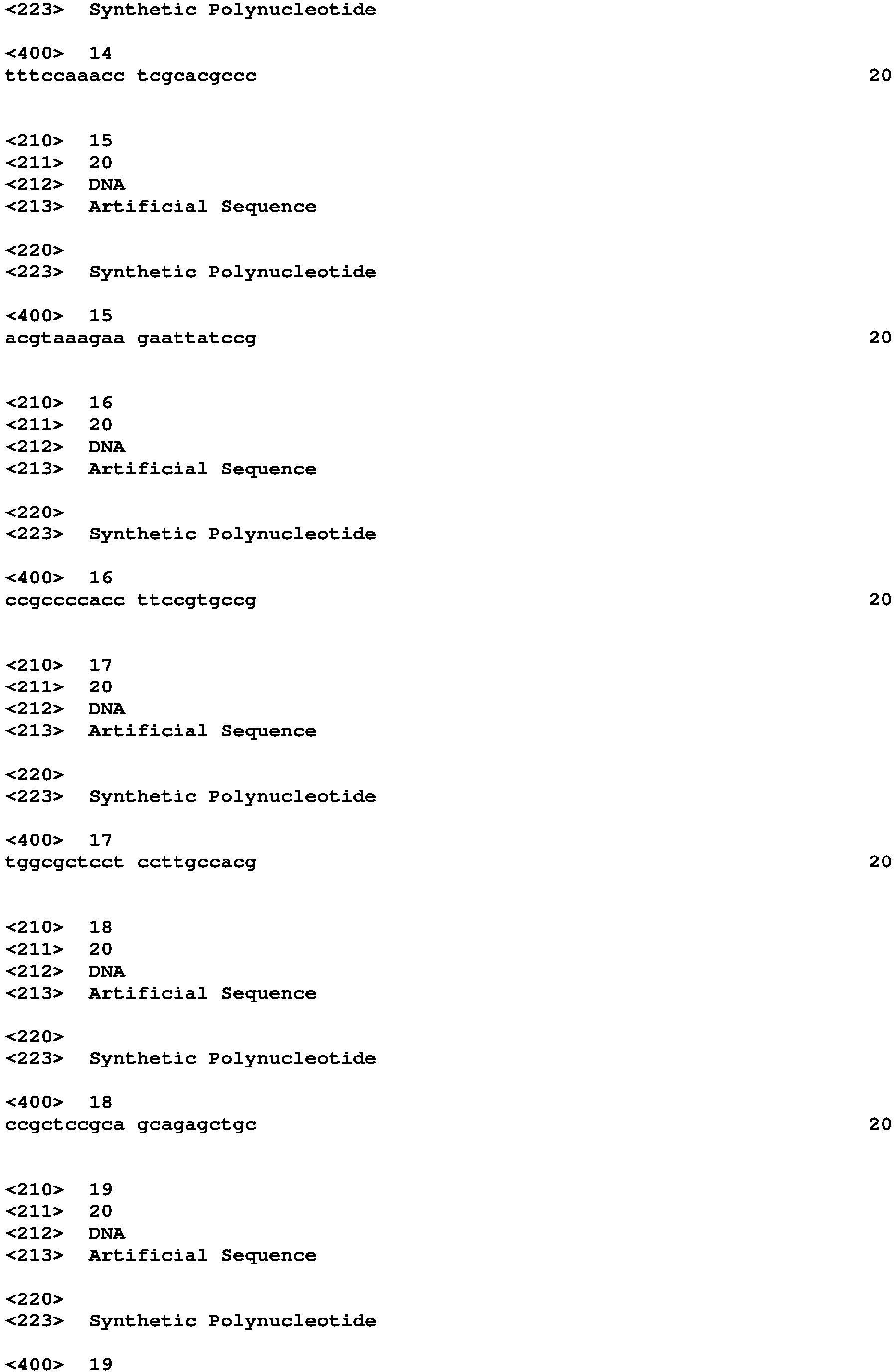


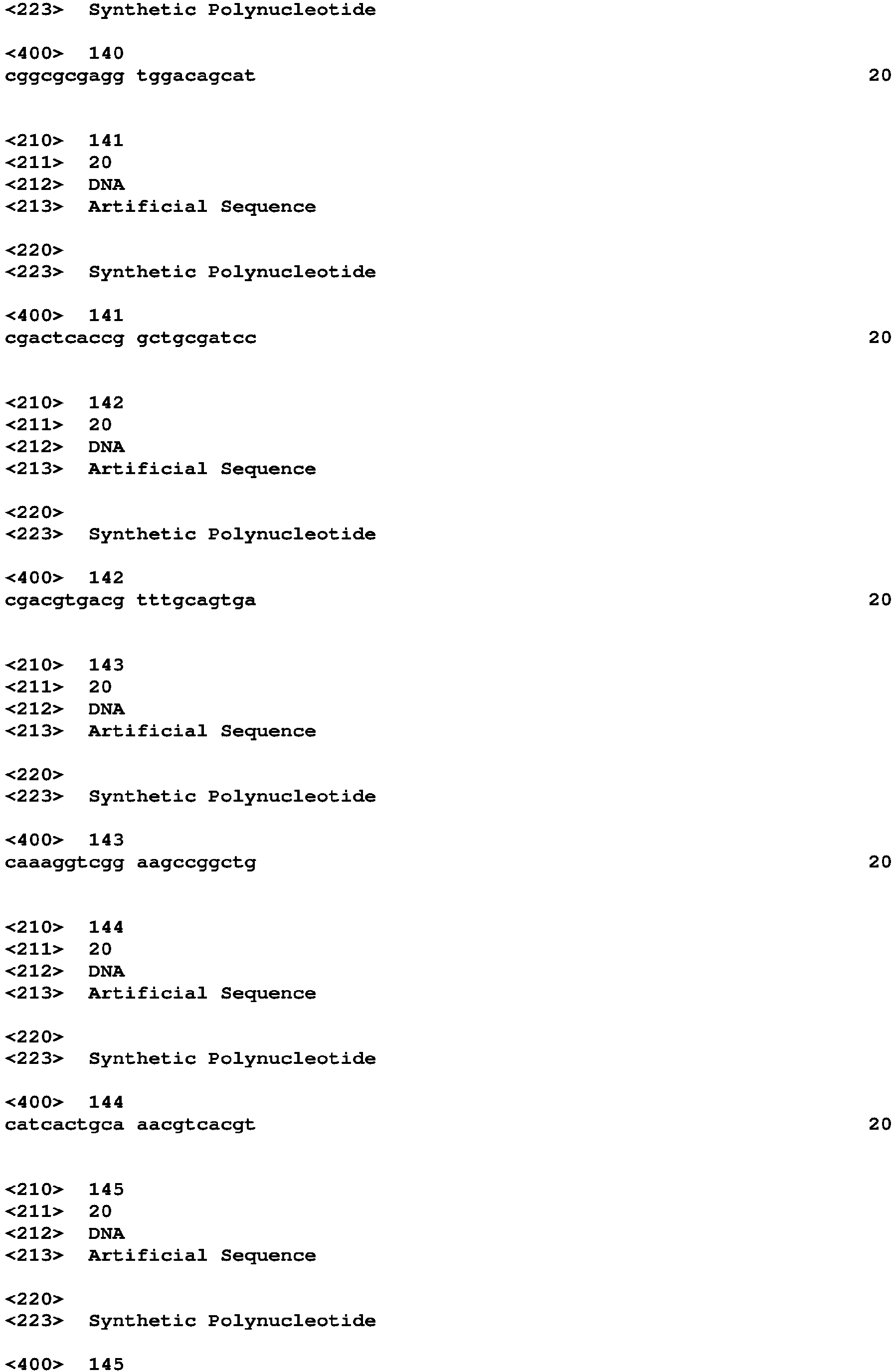


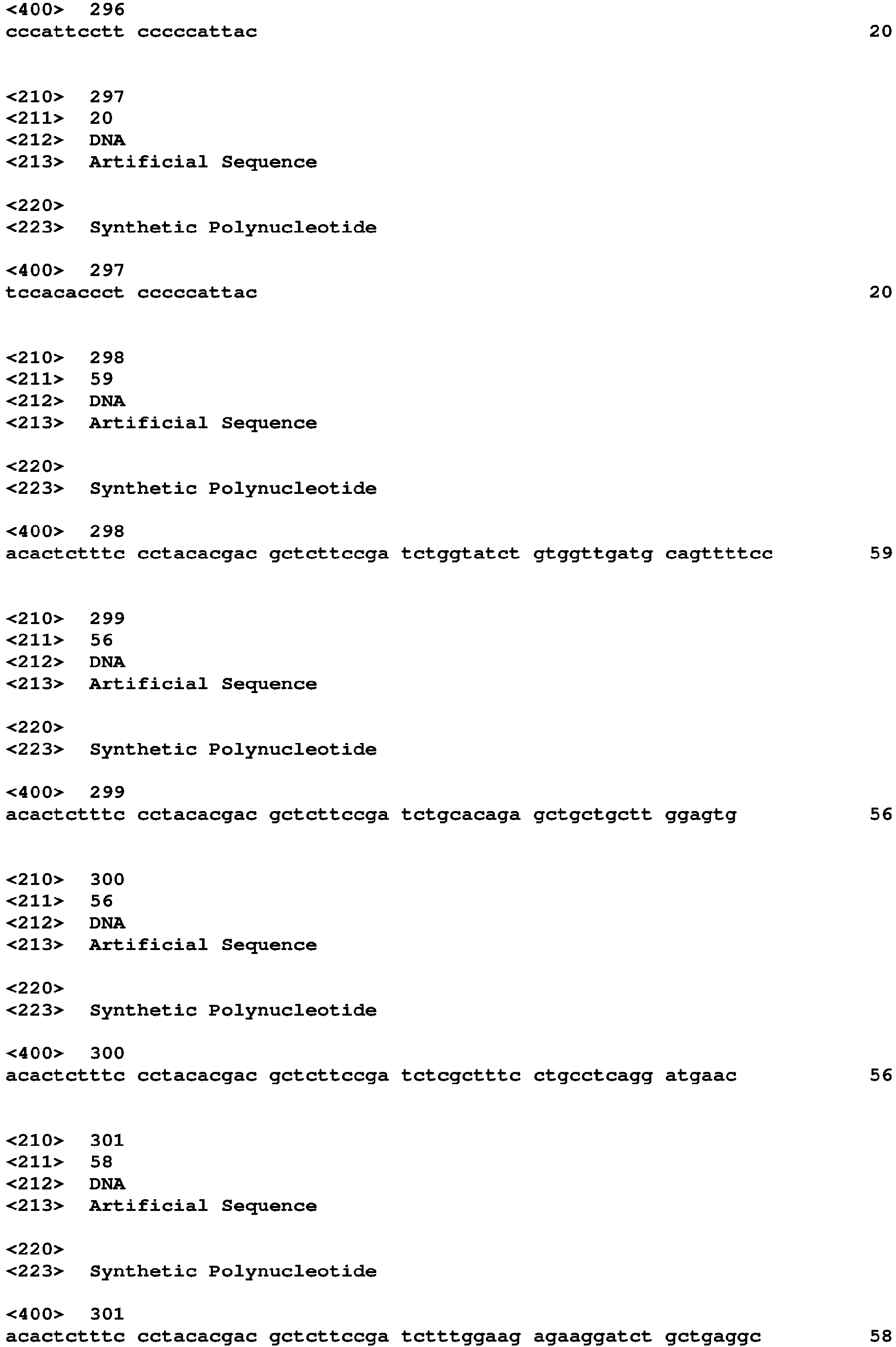


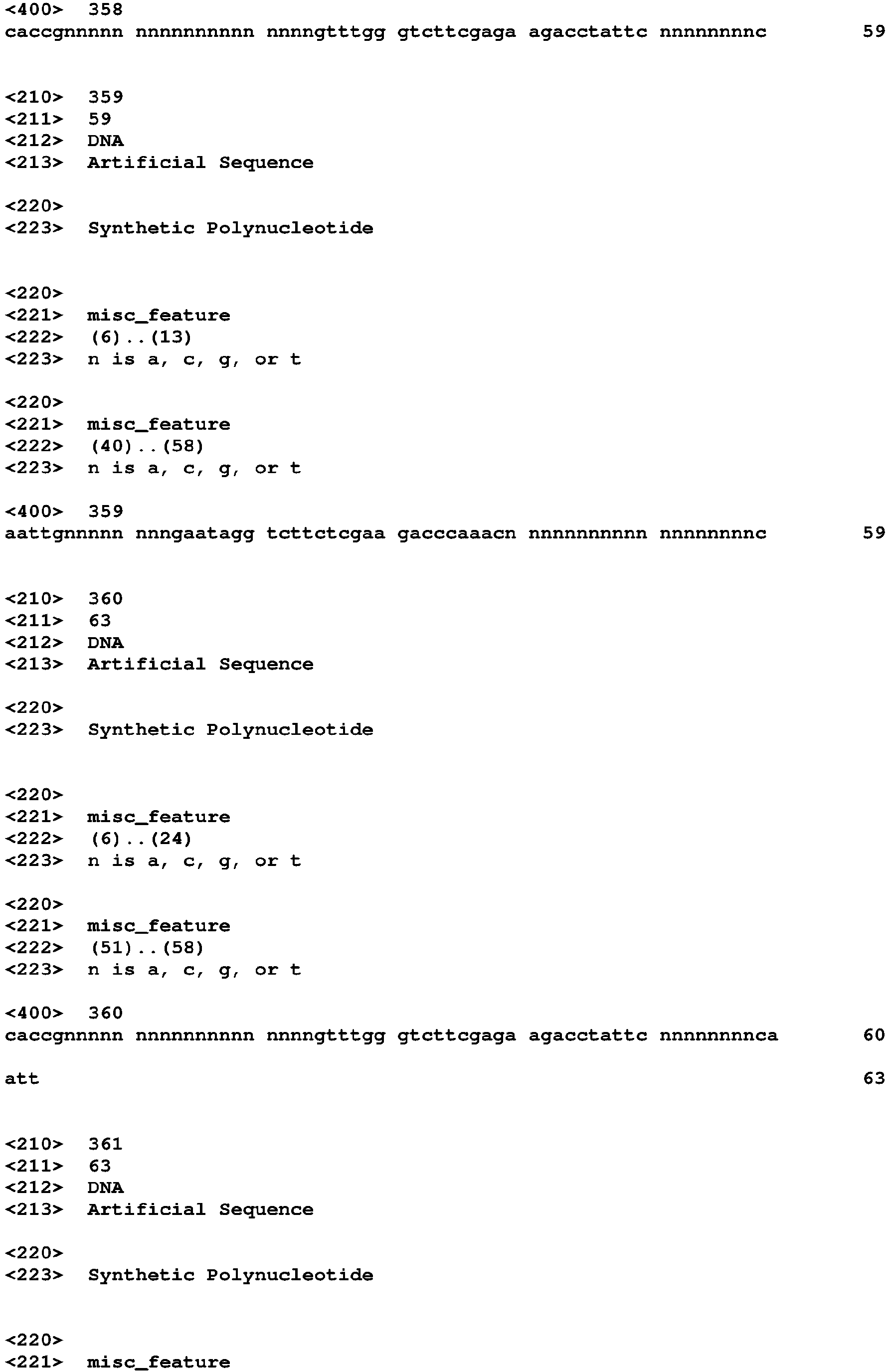


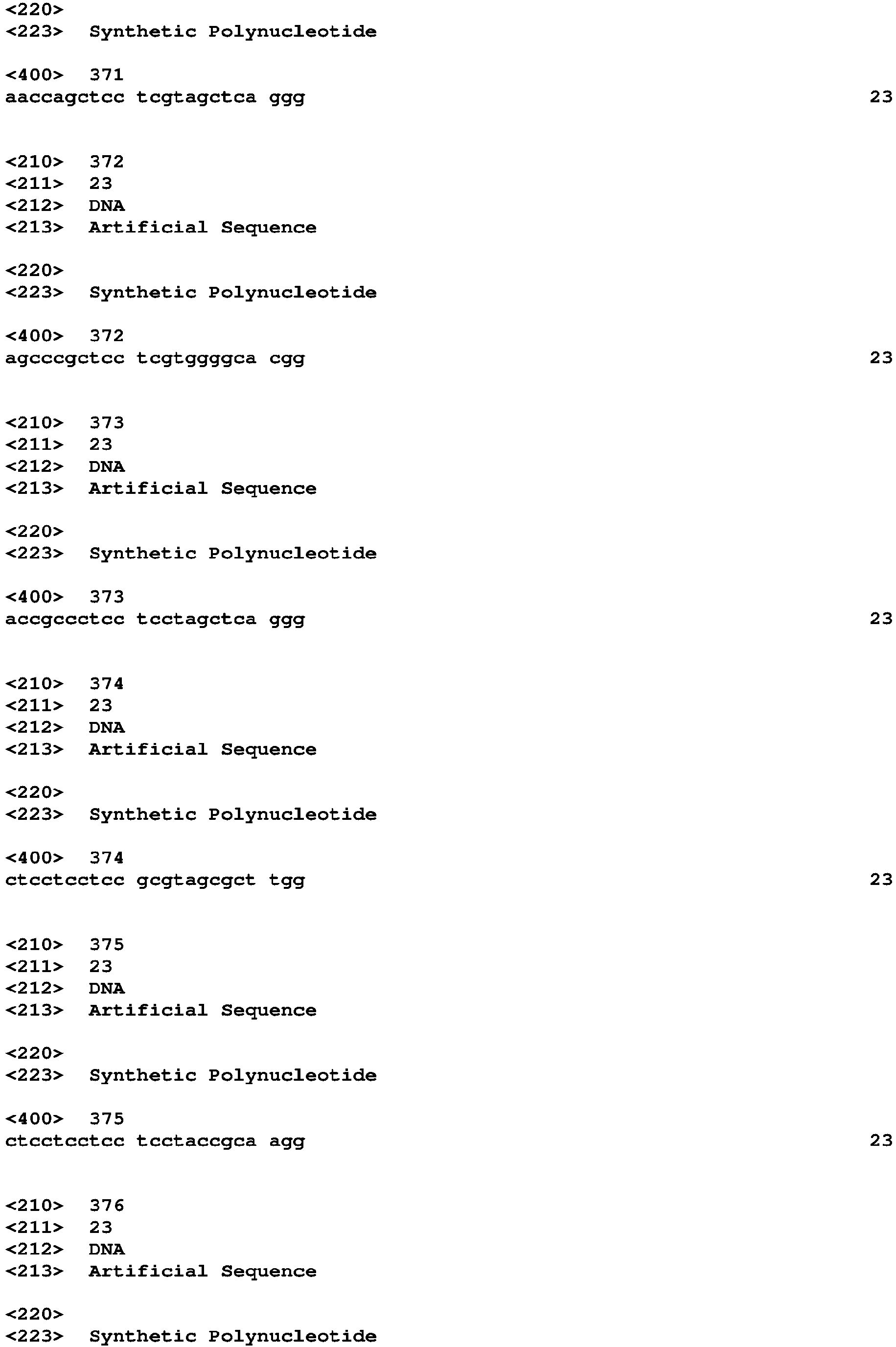


Claims (14)
- A composition comprising two or more inhibitors targeting two or more epigenetic genes selected from the combinations of epigenetic genes set forth in Table 2.
- A method for reducing proliferation of a cell, comprising contacting the cell with a combination of two or more inhibitors targeting two or more epigenetic genes selected from the combinations of epigenetic genes set forth in Table 2.
- The method of claim 2, wherein the cell is a cancer cell, optionally wherein the cancer cell is an ovarian cancer cell.
- A method for treating cancer in a subject, comprising administering to the subject a combination of two or more inhibitors targeting two or more epigenetic genes selected from the combinations of epigenetic genes set forth in Table 2, wherein each of the two or more inhibitors are administered in an effective amount.
- The composition of claim 1 or the method of any one of claims 2-4, wherein each of the inhibitors is selected from the group consisting of a CRISPR guide sequence, an shRNA, and a small molecule.
- The method of claim 4 or 5, wherein the effective amount of each of the two or more inhibitors administered in the combination is less than the effective amount of the inhibitor when not administered in the combination.
- The composition or method of any one of the preceding claims, wherein each of the two or more inhibitors reduce or prevent expression of an epigenetic gene or reduce or prevent activity of a protein encoded by the epigenetic gene.
- The composition or method of any one of the preceding claims, wherein each of the inhibitors is selected from the group consisting of a CRISPR guide sequence and scaffold sequence; an shRNA; and a small molecule.
- The composition or method of claim 8, wherein at least one of the inhibitors is a CRISPR guide sequence and scaffold sequence; and the composition further comprises or encodes a Cas9 endonuclease.
- The composition or method of claim 8 or 9, wherein the CRISPR guide sequence or shRNA is expressed from a recombinant expression vector.
- The composition or method of any one of the preceding claims, wherein the combination of epigenetic genes comprises BRD4 and KDM4C or BRD4 and KDM6B.
- The composition or method of claim 11, wherein the inhibitor of BRD4 is JQ1 ((6S)-4-(4-Chlorophenyl)-2,3,9-trimethyl-6H-thieno[3,2-f][1,2,4]triazolo[4,3-a][1,4]diazepine-6-acetic acid 1,1-dimethylethyl ester).
- The composition or method of claim 11 or 12, wherein the inhibitor of KDM4C is SD70 (N-(furan-2-yl(8-hydroxyquinolin-7-yl)methyl)isobutyramide).
- The composition or method of claim 11 or 12, wherein the inhibitor of KDM6B is GSK-J4 (ethyl 3-((6-(4,5-dihydro-1H-benzo[d]azepin-3(2H)-yl)-2-(pyridin-2-yl)pyrimidin-4-yl)amino)propanoate, monohydrochloride).
Applications Claiming Priority (4)
| Application Number | Priority Date | Filing Date | Title |
|---|---|---|---|
| US201462073126P | 2014-10-31 | 2014-10-31 | |
| US201562166302P | 2015-05-26 | 2015-05-26 | |
| EP15813148.2A EP3212789B1 (en) | 2014-10-31 | 2015-10-30 | Massively parallel combinatorial genetics for crispr |
| PCT/US2015/058304 WO2016070037A2 (en) | 2014-10-31 | 2015-10-30 | Massively parallel combinatorial genetics for crispr |
Related Parent Applications (1)
| Application Number | Title | Priority Date | Filing Date |
|---|---|---|---|
| EP15813148.2A Division EP3212789B1 (en) | 2014-10-31 | 2015-10-30 | Massively parallel combinatorial genetics for crispr |
Publications (1)
| Publication Number | Publication Date |
|---|---|
| EP3708155A1 true EP3708155A1 (en) | 2020-09-16 |
Family
ID=54884363
Family Applications (2)
| Application Number | Title | Priority Date | Filing Date |
|---|---|---|---|
| EP20167714.3A Withdrawn EP3708155A1 (en) | 2014-10-31 | 2015-10-30 | Massively parallel combinatorial genetics for crispr |
| EP15813148.2A Active EP3212789B1 (en) | 2014-10-31 | 2015-10-30 | Massively parallel combinatorial genetics for crispr |
Family Applications After (1)
| Application Number | Title | Priority Date | Filing Date |
|---|---|---|---|
| EP15813148.2A Active EP3212789B1 (en) | 2014-10-31 | 2015-10-30 | Massively parallel combinatorial genetics for crispr |
Country Status (7)
| Country | Link |
|---|---|
| US (2) | US20190100769A1 (en) |
| EP (2) | EP3708155A1 (en) |
| JP (1) | JP6788584B2 (en) |
| CN (1) | CN107429246B (en) |
| DK (1) | DK3212789T3 (en) |
| TW (1) | TWI716367B (en) |
| WO (1) | WO2016070037A2 (en) |
Families Citing this family (66)
| Publication number | Priority date | Publication date | Assignee | Title |
|---|---|---|---|---|
| US10323236B2 (en) | 2011-07-22 | 2019-06-18 | President And Fellows Of Harvard College | Evaluation and improvement of nuclease cleavage specificity |
| US9163284B2 (en) | 2013-08-09 | 2015-10-20 | President And Fellows Of Harvard College | Methods for identifying a target site of a Cas9 nuclease |
| US9359599B2 (en) | 2013-08-22 | 2016-06-07 | President And Fellows Of Harvard College | Engineered transcription activator-like effector (TALE) domains and uses thereof |
| US9526784B2 (en) | 2013-09-06 | 2016-12-27 | President And Fellows Of Harvard College | Delivery system for functional nucleases |
| US9228207B2 (en) | 2013-09-06 | 2016-01-05 | President And Fellows Of Harvard College | Switchable gRNAs comprising aptamers |
| US9322037B2 (en) | 2013-09-06 | 2016-04-26 | President And Fellows Of Harvard College | Cas9-FokI fusion proteins and uses thereof |
| US20150165054A1 (en) | 2013-12-12 | 2015-06-18 | President And Fellows Of Harvard College | Methods for correcting caspase-9 point mutations |
| EP3690044B1 (en) | 2014-02-11 | 2024-01-10 | The Regents of the University of Colorado, a body corporate | Crispr enabled multiplexed genome engineering |
| US10077453B2 (en) | 2014-07-30 | 2018-09-18 | President And Fellows Of Harvard College | CAS9 proteins including ligand-dependent inteins |
| CA2969619A1 (en) | 2014-12-03 | 2016-06-09 | Agilent Technologies, Inc. | Guide rna with chemical modifications |
| KR102888521B1 (en) | 2015-04-06 | 2025-11-19 | 더 보드 어브 트러스티스 어브 더 리랜드 스탠포드 주니어 유니버시티 | Chemically modified guide rnas for crispr/cas-mediated gene regulation |
| IL310721B2 (en) | 2015-10-23 | 2025-11-01 | Harvard College | Nucleobase editors and their uses |
| MX2018008345A (en) | 2016-01-11 | 2018-12-06 | Univ Leland Stanford Junior | Chimeric proteins and methods of immunotherapy. |
| IL260532B2 (en) | 2016-01-11 | 2023-12-01 | Univ Leland Stanford Junior | Systems containing chaperone proteins and their uses for controlling gene expression |
| JP2019514377A (en) * | 2016-04-26 | 2019-06-06 | マサチューセッツ インスティテュート オブ テクノロジー | Expandable recombinase cascade |
| US10767175B2 (en) | 2016-06-08 | 2020-09-08 | Agilent Technologies, Inc. | High specificity genome editing using chemically modified guide RNAs |
| AU2017280353B2 (en) * | 2016-06-24 | 2021-11-11 | Inscripta, Inc. | Methods for generating barcoded combinatorial libraries |
| WO2018005691A1 (en) * | 2016-06-29 | 2018-01-04 | The Regents Of The University Of California | Efficient genetic screening method |
| CN110214183A (en) | 2016-08-03 | 2019-09-06 | 哈佛大学的校长及成员们 | Adenosine nucleobase editing machine and application thereof |
| WO2018031683A1 (en) | 2016-08-09 | 2018-02-15 | President And Fellows Of Harvard College | Programmable cas9-recombinase fusion proteins and uses thereof |
| CA3034369A1 (en) | 2016-08-19 | 2018-02-22 | Whitehead Institute For Biomedical Research | Methods of editing dna methylation |
| US11542509B2 (en) | 2016-08-24 | 2023-01-03 | President And Fellows Of Harvard College | Incorporation of unnatural amino acids into proteins using base editing |
| US20190255106A1 (en) * | 2016-09-07 | 2019-08-22 | Flagship Pioneering Inc. | Methods and compositions for modulating gene expression |
| KR102622411B1 (en) | 2016-10-14 | 2024-01-10 | 프레지던트 앤드 펠로우즈 오브 하바드 칼리지 | AAV delivery of nucleobase editor |
| US20200149039A1 (en) | 2016-12-12 | 2020-05-14 | Whitehead Institute For Biomedical Research | Regulation of transcription through ctcf loop anchors |
| US10815525B2 (en) * | 2016-12-22 | 2020-10-27 | 10X Genomics, Inc. | Methods and systems for processing polynucleotides |
| WO2018119359A1 (en) | 2016-12-23 | 2018-06-28 | President And Fellows Of Harvard College | Editing of ccr5 receptor gene to protect against hiv infection |
| CN110249049A (en) * | 2016-12-29 | 2019-09-17 | 法兰克福大学 | The method for generating high-order genome editor library |
| DK3565891T3 (en) | 2017-01-09 | 2023-07-24 | Whitehead Inst Biomedical Res | METHODS OF ALTERING GENE EXPRESSION BY DISRUPTING TRANSCRIPTION FACTOR MULTIMERS THAT STRUCTURE REGULATORY LOOPS |
| WO2018145041A1 (en) * | 2017-02-06 | 2018-08-09 | 10X Genomics, Inc. | Systems and methods for nucleic acid preparation |
| US10995333B2 (en) | 2017-02-06 | 2021-05-04 | 10X Genomics, Inc. | Systems and methods for nucleic acid preparation |
| US12390514B2 (en) | 2017-03-09 | 2025-08-19 | President And Fellows Of Harvard College | Cancer vaccine |
| EP3592853A1 (en) | 2017-03-09 | 2020-01-15 | President and Fellows of Harvard College | Suppression of pain by gene editing |
| US11542496B2 (en) | 2017-03-10 | 2023-01-03 | President And Fellows Of Harvard College | Cytosine to guanine base editor |
| KR20240116572A (en) | 2017-03-23 | 2024-07-29 | 프레지던트 앤드 펠로우즈 오브 하바드 칼리지 | Nucleobase editors comprising nucleic acid programmable dna binding proteins |
| US11560566B2 (en) | 2017-05-12 | 2023-01-24 | President And Fellows Of Harvard College | Aptazyme-embedded guide RNAs for use with CRISPR-Cas9 in genome editing and transcriptional activation |
| US9982279B1 (en) | 2017-06-23 | 2018-05-29 | Inscripta, Inc. | Nucleic acid-guided nucleases |
| US10011849B1 (en) | 2017-06-23 | 2018-07-03 | Inscripta, Inc. | Nucleic acid-guided nucleases |
| CN111801345A (en) | 2017-07-28 | 2020-10-20 | 哈佛大学的校长及成员们 | Methods and compositions for evolutionary base editors using phage-assisted sequential evolution (PACE) |
| CN110891420B (en) | 2017-07-31 | 2022-06-03 | 瑞泽恩制药公司 | CAS transgenic mouse embryonic stem cell, mouse and application thereof |
| KR20200033259A (en) | 2017-07-31 | 2020-03-27 | 리제너론 파마슈티칼스 인코포레이티드 | Methods and compositions for evaluating CRISPR / Cas-mediated destruction or deletion in vivo and CRISPR / Cas-induced recombination with exogenous donor nucleic acids |
| EP3676376B1 (en) | 2017-08-30 | 2025-01-15 | President and Fellows of Harvard College | High efficiency base editors comprising gam |
| KR20250107288A (en) | 2017-10-16 | 2025-07-11 | 더 브로드 인스티튜트, 인코퍼레이티드 | Uses of adenosine base editors |
| WO2019089803A1 (en) * | 2017-10-31 | 2019-05-09 | The Broad Institute, Inc. | Methods and compositions for studying cell evolution |
| US12406749B2 (en) | 2017-12-15 | 2025-09-02 | The Broad Institute, Inc. | Systems and methods for predicting repair outcomes in genetic engineering |
| US12157760B2 (en) | 2018-05-23 | 2024-12-03 | The Broad Institute, Inc. | Base editors and uses thereof |
| US12522807B2 (en) | 2018-07-09 | 2026-01-13 | The Broad Institute, Inc. | RNA programmable epigenetic RNA modifiers and uses thereof |
| WO2020033585A1 (en) * | 2018-08-07 | 2020-02-13 | The Broad Institute, Inc. | Methods for combinatorial screening and use of therapeutic targets thereof |
| EP4253549A3 (en) | 2018-09-19 | 2023-12-06 | The University of Hong Kong | Improved high-throughput combinatorial genetic modification system and optimized cas9 enzyme variants |
| WO2020092453A1 (en) | 2018-10-29 | 2020-05-07 | The Broad Institute, Inc. | Nucleobase editors comprising geocas9 and uses thereof |
| AU2019408503B2 (en) * | 2018-12-20 | 2023-06-29 | Edigene Biotechnology Inc. | Compositions and methods for highly efficient genetic screening using barcoded guide rna constructs |
| US12351837B2 (en) | 2019-01-23 | 2025-07-08 | The Broad Institute, Inc. | Supernegatively charged proteins and uses thereof |
| WO2020191233A1 (en) | 2019-03-19 | 2020-09-24 | The Broad Institute, Inc. | Methods and compositions for editing nucleotide sequences |
| US12473543B2 (en) | 2019-04-17 | 2025-11-18 | The Broad Institute, Inc. | Adenine base editors with reduced off-target effects |
| CN114729376A (en) | 2019-09-23 | 2022-07-08 | 欧米茄治疗公司 | Compositions and methods for modulating hepatocyte nuclear factor 4 alpha (HNF4 alpha) gene expression |
| US12435330B2 (en) | 2019-10-10 | 2025-10-07 | The Broad Institute, Inc. | Methods and compositions for prime editing RNA |
| CN110652589A (en) * | 2019-10-12 | 2020-01-07 | 中国人民解放军陆军军医大学 | Application of GASC1 inhibitor in preparation of medicine for treating liver cancer |
| WO2021119435A1 (en) * | 2019-12-12 | 2021-06-17 | The Trustees Of The University Of Pennsylvania | High performance platform for combinatorial genetic screening |
| WO2021208971A1 (en) | 2020-04-16 | 2021-10-21 | The University Of Hong Kong | A system for three-way combinatorial crispr screens for analysing target interactions and methods thereof |
| IL297761A (en) | 2020-05-08 | 2022-12-01 | Broad Inst Inc | Methods and compositions for simultaneous editing of both strands of a target double-stranded nucleotide sequence |
| US20240110175A1 (en) * | 2021-01-19 | 2024-04-04 | The Board Of Trustees Of The Leland Stanford Junior University | Composition and method for high-multiplexed genome engineering using synthetic crispr arrays |
| WO2022195582A1 (en) * | 2021-03-15 | 2022-09-22 | G.T.A.I Innovation Ltd. | A method and apparatus for lab tests |
| CN113599522B (en) * | 2021-08-03 | 2022-09-20 | 深圳市北科生物科技有限公司 | Application of KDM6 as target in preparation of medicine for improving differentiation efficiency of early neuroectoderm |
| JP2024534945A (en) | 2021-09-10 | 2024-09-26 | アジレント・テクノロジーズ・インク | Guide RNA for Prime Editing with Chemical Modifications |
| CN116019811B (en) * | 2023-02-07 | 2024-04-12 | 华中科技大学协和深圳医院 | Application of GSK-J4 in the preparation of drugs for resisting Gram-positive bacterial infection |
| CN118425525B (en) * | 2024-03-13 | 2025-08-22 | 郑州大学第一附属医院 | Application of KDM5B in the treatment of renal fibrosis |
Citations (13)
| Publication number | Priority date | Publication date | Assignee | Title |
|---|---|---|---|---|
| WO2013176772A1 (en) | 2012-05-25 | 2013-11-28 | The Regents Of The University Of California | Methods and compositions for rna-directed target dna modification and for rna-directed modulation of transcription |
| WO2014000542A1 (en) | 2012-06-28 | 2014-01-03 | 中兴通讯股份有限公司 | Dialing method and device |
| WO2014053491A1 (en) * | 2012-10-02 | 2014-04-10 | Epitherapeutics Aps | Inhibitors of histone demethylases |
| US8697359B1 (en) | 2012-12-12 | 2014-04-15 | The Broad Institute, Inc. | CRISPR-Cas systems and methods for altering expression of gene products |
| US20140142102A1 (en) * | 2012-11-21 | 2014-05-22 | Rvx Therapeutics Inc. | Cyclic amines as bromodomain inhibitors |
| WO2014093622A2 (en) * | 2012-12-12 | 2014-06-19 | The Broad Institute, Inc. | Delivery, engineering and optimization of systems, methods and compositions for sequence manipulation and therapeutic applications |
| WO2014093694A1 (en) | 2012-12-12 | 2014-06-19 | The Broad Institute, Inc. | Crispr-cas nickase systems, methods and compositions for sequence manipulation in eukaryotes |
| WO2014154760A1 (en) | 2013-03-27 | 2014-10-02 | Boehringer Ingelheim International Gmbh | Indolinone analogues as brd4 inhibitors |
| WO2014204728A1 (en) * | 2013-06-17 | 2014-12-24 | The Broad Institute Inc. | Delivery, engineering and optimization of systems, methods and compositions for targeting and modeling diseases and disorders of post mitotic cells |
| WO2015089465A1 (en) * | 2013-12-12 | 2015-06-18 | The Broad Institute Inc. | Delivery, use and therapeutic applications of the crispr-cas systems and compositions for hbv and viral diseases and disorders |
| WO2015089462A1 (en) * | 2013-12-12 | 2015-06-18 | The Broad Institute Inc. | Delivery, use and therapeutic applications of the crispr-cas systems and compositions for genome editing |
| WO2015089419A2 (en) * | 2013-12-12 | 2015-06-18 | The Broad Institute Inc. | Delivery, use and therapeutic applications of the crispr-cas systems and compositions for targeting disorders and diseases using particle delivery components |
| WO2016049024A2 (en) * | 2014-09-24 | 2016-03-31 | The Broad Institute Inc. | Delivery, use and therapeutic applications of the crispr-cas systems and compositions for modeling competition of multiple cancer mutations in vivo |
Family Cites Families (12)
| Publication number | Priority date | Publication date | Assignee | Title |
|---|---|---|---|---|
| BRPI0511046A (en) * | 2004-05-10 | 2007-11-27 | Basf Plant Science Gmbh | methods for producing a multiple expression construct, for producing food or food, pharmaceuticals or chemicals, and a transgenic plant or plant cell, multiple expression construct, microorganism, and, use of a microorganism, a plant cell , a plant tissue, a plant organ, or a part of a plant |
| KR101600634B1 (en) * | 2007-12-28 | 2016-03-07 | 미쓰비시 타나베 파마 코퍼레이션 | Antitumor agent |
| MX354217B (en) * | 2010-05-14 | 2018-02-19 | Dana Farber Cancer Inst Inc | Compositions and methods for treating leukemia. |
| AR084070A1 (en) * | 2010-12-02 | 2013-04-17 | Constellation Pharmaceuticals Inc | BROMODOMINIUM INHIBITORS AND USES OF THE SAME |
| JP6401700B2 (en) * | 2012-06-29 | 2018-10-10 | マサチューセッツ インスティテュート オブ テクノロジー | Massively parallel combinatorial genetics |
| CN103833671B (en) * | 2012-11-27 | 2016-12-21 | 中国科学院上海药物研究所 | A class of dihydrothiazolone compounds and their pharmaceutical compositions and uses |
| PL3360964T3 (en) * | 2012-12-06 | 2020-03-31 | Sigma-Aldrich Co. Llc | Crispr-based genome modification and regulation |
| RU2662932C2 (en) * | 2013-03-14 | 2018-07-31 | Карибо Биосайенсиз, Инк. | Compositions and methods with use of nucleic acids targeted at nucleic acids |
| WO2015095501A1 (en) * | 2013-12-18 | 2015-06-25 | Onn Brandman | Pooled method for high throughput screening of trans factors affecting rna levels |
| CN106170550A (en) * | 2014-04-03 | 2016-11-30 | 麻省理工学院 | For producing the method and composition guiding RNA |
| EP3137079A1 (en) * | 2014-04-28 | 2017-03-08 | The J. David Gladstone Institutes | Inhibitors of jmjd2c as anticancer agents |
| AU2015301746A1 (en) * | 2014-08-13 | 2017-02-16 | Celgene Corporation | Combination therapy for treating cancer |
-
2015
- 2015-10-30 TW TW104135960A patent/TWI716367B/en active
- 2015-10-30 EP EP20167714.3A patent/EP3708155A1/en not_active Withdrawn
- 2015-10-30 EP EP15813148.2A patent/EP3212789B1/en active Active
- 2015-10-30 US US15/521,931 patent/US20190100769A1/en not_active Abandoned
- 2015-10-30 DK DK15813148.2T patent/DK3212789T3/en active
- 2015-10-30 CN CN201580065962.8A patent/CN107429246B/en active Active
- 2015-10-30 JP JP2017523864A patent/JP6788584B2/en active Active
- 2015-10-30 WO PCT/US2015/058304 patent/WO2016070037A2/en not_active Ceased
-
2021
- 2021-06-03 US US17/338,027 patent/US20210310022A1/en not_active Abandoned
Patent Citations (13)
| Publication number | Priority date | Publication date | Assignee | Title |
|---|---|---|---|---|
| WO2013176772A1 (en) | 2012-05-25 | 2013-11-28 | The Regents Of The University Of California | Methods and compositions for rna-directed target dna modification and for rna-directed modulation of transcription |
| WO2014000542A1 (en) | 2012-06-28 | 2014-01-03 | 中兴通讯股份有限公司 | Dialing method and device |
| WO2014053491A1 (en) * | 2012-10-02 | 2014-04-10 | Epitherapeutics Aps | Inhibitors of histone demethylases |
| US20140142102A1 (en) * | 2012-11-21 | 2014-05-22 | Rvx Therapeutics Inc. | Cyclic amines as bromodomain inhibitors |
| WO2014093694A1 (en) | 2012-12-12 | 2014-06-19 | The Broad Institute, Inc. | Crispr-cas nickase systems, methods and compositions for sequence manipulation in eukaryotes |
| WO2014093622A2 (en) * | 2012-12-12 | 2014-06-19 | The Broad Institute, Inc. | Delivery, engineering and optimization of systems, methods and compositions for sequence manipulation and therapeutic applications |
| US8697359B1 (en) | 2012-12-12 | 2014-04-15 | The Broad Institute, Inc. | CRISPR-Cas systems and methods for altering expression of gene products |
| WO2014154760A1 (en) | 2013-03-27 | 2014-10-02 | Boehringer Ingelheim International Gmbh | Indolinone analogues as brd4 inhibitors |
| WO2014204728A1 (en) * | 2013-06-17 | 2014-12-24 | The Broad Institute Inc. | Delivery, engineering and optimization of systems, methods and compositions for targeting and modeling diseases and disorders of post mitotic cells |
| WO2015089465A1 (en) * | 2013-12-12 | 2015-06-18 | The Broad Institute Inc. | Delivery, use and therapeutic applications of the crispr-cas systems and compositions for hbv and viral diseases and disorders |
| WO2015089462A1 (en) * | 2013-12-12 | 2015-06-18 | The Broad Institute Inc. | Delivery, use and therapeutic applications of the crispr-cas systems and compositions for genome editing |
| WO2015089419A2 (en) * | 2013-12-12 | 2015-06-18 | The Broad Institute Inc. | Delivery, use and therapeutic applications of the crispr-cas systems and compositions for targeting disorders and diseases using particle delivery components |
| WO2016049024A2 (en) * | 2014-09-24 | 2016-03-31 | The Broad Institute Inc. | Delivery, use and therapeutic applications of the crispr-cas systems and compositions for modeling competition of multiple cancer mutations in vivo |
Non-Patent Citations (51)
| Title |
|---|
| ANDERSON ET AL., JOURNAL OF BIOLOGICAL ENGINEERING, vol. 4, 2010, pages 1 |
| ASANGANI, I. A ET AL.: "Therapeutic targeting of BET bromodomain proteins in castration-resistant prostate cancer", NATURE, vol. 510, 2014, pages 278 - 82, XP055235062, DOI: 10.1038/nature13229 |
| BLASCO, R. B. ET AL.: "Simple and rapid in vivo generation of chromosomal rearrangements using CRISPR/Cas9 technology", CELL REP., vol. 9, 2014, pages 1219 - 1227, XP055177311, DOI: 10.1016/j.celrep.2014.10.051 |
| BLISS, ANN. APPL.BIOL., vol. 26, 1939, pages 585 - 615 |
| BLISS, C. I.: "THE TOXICITY OF POISONS APPLIED JOINTLY1", ANN. APPL. BIOL., vol. 26, 1939, pages 585 - 615, XP055065740, DOI: 10.1111/j.1744-7348.1939.tb06990.x |
| BORISY ET AL., PNAS, vol. 100, 2003, pages 7977 - 7982 |
| BORISY, A. A. ET AL.: "Systematic discovery of multicomponent therapeutics", PROC. NATL. ACAD. SCI. U. S. A., vol. 100, 2003, pages 7977 - 7982, XP009061663, DOI: 10.1073/pnas.1337088100 |
| CHENG, A. A.DING, H.LU, T. K.: "Enhanced killing of antibiotic-resistant bacteria enabled by massively parallel combinatorial genetics", PROC. NATL. ACAD. SCI., vol. Ill, 2014, pages 12462 - 7, XP055495219, DOI: 10.1073/pnas.1400093111 |
| CHOI, P. S.MEYERSON, M.: "Targeted genomic rearrangements using CRISPR/Cas technology", NAT. COMMUN., vol. 5, 2014, pages 3728 |
| CONG, L. ET AL.: "Multiplex genome engineering using CRISPR/Cas systems", SCIENCE, vol. 339, 2013, pages 819 - 23, XP055458249, DOI: 10.1126/science.1231143 |
| DAWSON, M. A.KOUZANDES, T.: "Cancer epigenetics: From mechanism to therapy", CELL, vol. 150, no. 1, 2012, pages 12 - 27, XP028400980, DOI: 10.1016/j.cell.2012.06.013 |
| DOENCH, J. G. ET AL.: "Rational design of highly active sgRNAs for CRISPR-Cas9-mediated gene inactivation", NAT. BIOTECHNOL., vol. 32, 2014, pages 1262 - 1267, XP055539784, DOI: 10.1038/nbt.3026 |
| DONESCH ET AL., NAT BIOTECHNOL, vol. 32, 2014, pages 1262 - 7 |
| ESSLETZBICHLER, P. ET AL.: "Megabase-scale deletion using CRISPR/Cas9 to generate a fully haploid human cell line", GENOME RES., vol. 24, 2014, pages 2059 - 2065, XP055159551, DOI: 10.1101/gr.177220.114 |
| GHEZRAOUI ET AL., MOL CELL, vol. 55, 2014, pages 829 - 42 |
| GIBSON ET AL., NATURE METHODS, vol. 6, 2009, pages 343 - 5 |
| GILBERT, L. A. ET AL.: "CRISPR-mediated modular RNA-guided regulation of transcription in eukaryotes", CELL, vol. 154, 2013, pages 442 - 451, XP055115843, DOI: 10.1016/j.cell.2013.06.044 |
| GILBERT, L. A. ET AL.: "Genome-Scale CRISPR-Mediated Control of Gene Repression and Activation", CELL, vol. 159, no. 6, 2014, pages 1262 - 1278 |
| HAMADA ET AL., BIOORG. & MED. CHEM. LETT., vol. 19, 2009, pages 2852 - 2855 |
| HONMA, K. ET AL.: "RPN2 gene confers docetaxel resistance in breast cancer", NAT. MED., vol. 14, 2008, pages 939 - 948, XP055125506, DOI: 10.1038/nm.1858 |
| JAENISCHBIRD, NAT. GENE., vol. 33, 2003, pages 245 - 254 |
| JIN ET AL., PNAS, vol. 111, 2014, pages 9235 - 9240 |
| JIN, C. ET AL.: "Chem-seq permits identification of genomic targets of drugs against androgen receptor regulation selected by functional phenotypic screens", PROC. NATL. ACAD. SCI. U. S. A., vol. Ill, 2014, pages 9235 - 40 |
| JINEK ET AL., SCIENCE, vol. 337, no. 6096, 2012, pages 816 - 821 |
| JONES, P. A.BAYLIN, S. B.: "The Epigenomics of Cancer", CELL, vol. 128, 2007, pages 683 - 692 |
| JUERGENS, R. A. ET AL.: "Combination epigenetic therapy has efficacy in patients with refractory advanced non-small cell lung cancer", CANCER DISCOV., vol. 1, 2011, pages 598 - 607, XP055503564, DOI: 10.1158/2159-8290.CD-11-0214 |
| KIM D ET AL.: "TopHat2: accurate alignment of transcriptomes in the presence of insertions, deletions and gene fusions", GENOME BIOL, vol. 14, 2013, pages R36, XP021151894, DOI: 10.1186/gb-2013-14-4-r36 |
| KOIKE-YUSA, H.LI, Y.TAN, E.-P.VELASCO-HERRERA, M. D. C.YUSA, K.: "Genome-wide recessive genetic screening in mammalian cells with a lentiviral CRISPR-guide RNA library", NAT. BIOTECHNOL., vol. 32, 2014, pages 267 - 73, XP055115706, DOI: 10.1038/nbt.2800 |
| KONERMANN, S. ET AL.: "Genome-scale transcriptional activation by an engineered CRISPR-Cas9 complex", NATURE, 2014 |
| KRUIDENIER, L. ET AL.: "A selective jumonji H3K27 demethylase inhibitor modulates the proinflammatory macrophage response", NATURE, vol. 488, 2012, pages 404 - 408 |
| KUSCU, C.ARSLAN, S.SINGH, R.THORPE, J.ADLI, M.: "Genome-wide analysis reveals characteristics of off-target sites bound by the Cas9 endonuclease", NAT. BIOTECHNOL., vol. 32, 2014, pages 677 - 683, XP055382577, DOI: 10.1038/nbt.2916 |
| LANGMEAD BTRAPNELL CPOP MSALZBERG SL: "Ultrafast and memory-efficient alignment of short DNA sequences to the human genome", GENOME BIOL, vol. 10, 2009, pages R25, XP021053573, DOI: 10.1186/gb-2009-10-3-r25 |
| LEURS ET AL., BIOORG. & MED. CHEM. LETT., vol. 22, no. 12, 2012, pages 5811 - 5813 |
| MALI, P. ET AL.: "RNA-guided human genome engineering via Cas9", SCIENCE, vol. 339, 2013, pages 823 - 6, XP055469277, DOI: 10.1126/science.1232033 |
| MARKA DAWSON ET AL: "Cancer Epigenetics: From Mechanism to Therapy", CELL, vol. 150, no. 1, 6 July 2012 (2012-07-06), pages 12 - 27, XP028400980, ISSN: 0092-8674, [retrieved on 20120622], DOI: 10.1016/J.CELL.2012.06.013 * |
| MOFFAT, J. ET AL.: "A Lentiviral RNAi Library for Human and Mouse Genes Applied to an Arrayed Viral High-Content Screen", CELL, vol. 124, 2006, pages 1283 - 1298, XP055021141, DOI: 10.1016/j.cell.2006.01.040 |
| PATTANAYAK, V. ET AL.: "High-throughput profiling of off-target DNA cleavage reveals RNA-programmed Cas9 nuclease specificity", NAT. BIOTECHNOL., vol. 31, 2013, pages 839 - 43, XP055148795, DOI: 10.1038/nbt.2673 |
| RAN ET AL., NATURE PROTOCOLS, vol. 8, 2013, pages 2281 - 2308 |
| RAN, F. A. ET AL.: "Genome engineering using the CRISPR-Cas9 system", NAT. PROTOC., vol. 8, 2013, pages 2281 - 2308, XP009174668, DOI: 10.1038/nprot.2013.143 |
| SHALEM, O. ET AL.: "Genome-scale CRISPR-Cas9 knockout screening in human cells", SCIENCE, vol. 343, 2014, pages 84 - 87, XP055115506, DOI: 10.1126/science.1247005 |
| STEMMER M: "CCTop: An Intuitive, Flexible and Reliable CRISPR/Cas9 Target Prediction Tool", PLOS ONE, vol. 10, no. 4, 2015, pages e0124633 |
| SUBRAMANIAN A ET AL.: "Gene set enrichment analysis: a knowledge-based approach for interpreting genome-wide expression profiles", PROC NATL ACAD SCI U S A, vol. 102, 2005, pages 15545 - 50, XP002464143, DOI: 10.1073/pnas.0506580102 |
| SUBRAMANIAN ET AL., PROC NATLACAD SCI USA, vol. 102, 2005, pages 15545 - 50 |
| TRAPNELL C ET AL.: "Differential analysis of gene regulation at transcript resolution with RNA-seq", NAT BIOTECHNOL, vol. 31, 2013, pages 46 - 53 |
| UPADHYAY ET AL., GENES GENOME GENETICS, vol. 3, no. 12, 2013, pages 2233 - 2238 |
| VIDLER ET AL., J. MED. CHEM., vol. 56, 2013, pages 8073 - 8088 |
| WANG, T.WEI, J. J.SABATINI, D. M.LANDER, E. S.: "Genetic screens in human cells using the CRISPR-Cas9 system", SCIENCE, vol. 343, 2014, pages 80 - 4, XP055294787, DOI: 10.1126/science.1246981 |
| WANG, Z. ET AL.: "Combinatorial patterns of histone acetylations and methylations in the human genome", NAT. GENET., vol. 40, 2008, pages 897 - 903 |
| WU, X. ET AL.: "Genome-wide binding of the CRISPR endonuclease Cas9 in mammalian cells", NAT. BIOTECHNOL., vol. 32, 2014, pages 670 - 676, XP055241568, DOI: 10.1038/nbt.2889 |
| YOO, C. B.JONES, P. A.: "Epigenetic therapy of cancer: past, present and future", NAT. REV. DRUG DISCOV., vol. 5, 2006, pages 37 - 50, XP009142060, DOI: 10.1038/nrd1930 |
| ZHOU, Y. ET AL.: "High-throughput screening of a CRISPR/Cas9 library for functional genomics in human cells", NATURE, vol. 509, 2014, pages 487 - 491, XP055234634, DOI: 10.1038/nature13166 |
Also Published As
| Publication number | Publication date |
|---|---|
| CN107429246A (en) | 2017-12-01 |
| EP3212789A2 (en) | 2017-09-06 |
| HK1243456A1 (en) | 2018-07-13 |
| TW201631155A (en) | 2016-09-01 |
| JP2017534285A (en) | 2017-11-24 |
| US20210310022A1 (en) | 2021-10-07 |
| JP6788584B2 (en) | 2020-11-25 |
| EP3212789B1 (en) | 2020-04-22 |
| WO2016070037A2 (en) | 2016-05-06 |
| CN107429246B (en) | 2021-06-01 |
| TWI716367B (en) | 2021-01-21 |
| WO2016070037A3 (en) | 2016-06-23 |
| US20190100769A1 (en) | 2019-04-04 |
| WO2016070037A8 (en) | 2017-03-02 |
| DK3212789T3 (en) | 2020-07-27 |
Similar Documents
| Publication | Publication Date | Title |
|---|---|---|
| US20210310022A1 (en) | Massively parallel combinatorial genetics for crispr | |
| Liao et al. | Modular one-pot assembly of CRISPR arrays enables library generation and reveals factors influencing crRNA biogenesis | |
| Creutzburg et al. | Good guide, bad guide: spacer sequence-dependent cleavage efficiency of Cas12a | |
| US20220267759A1 (en) | Methods and compositions for scalable pooled rna screens with single cell chromatin accessibility profiling | |
| Vriend et al. | Distinct genetic control of homologous recombination repair of Cas9-induced double-strand breaks, nicks and paired nicks | |
| EP3872177B1 (en) | Compositions and methods for enhancing homologous recombination | |
| US20180023139A1 (en) | Methods of identifying essential protein domains | |
| Malyarchuk et al. | DNA repair of clustered lesions in mammalian cells: involvement of non-homologous end-joining | |
| US20220348910A1 (en) | Methods and compositions for multiplex gene editing | |
| WO2015065964A1 (en) | Functional genomics using crispr-cas systems, compositions, methods, screens and applications thereof | |
| US20210261954A1 (en) | Method for generating a gene editing vector with fixed guide rna pairs | |
| HK1243456B (en) | Massively parallel combinatorial genetics for crispr | |
| US20220290139A1 (en) | Methods and compositions for gene specific demethylation and activation | |
| Liao et al. | One-step assembly of large CRISPR arrays enables multi-functional targeting and reveals constraints on array design | |
| Yan | Mapping the Cellular Determinants of Genome Editing | |
| Frisbie | Neurofibromin 2 (NF2) Is Necessary for Efficient Silencing of LINE-1 Retrotransposition Events in Human Embryonic Carcinoma Cells | |
| Haskó et al. | Generative Modelling of Oncogene-carrying Extrachromosomal Circular DNA Biogenesis and Dynamics in Cells | |
| WO2025019675A1 (en) | Prime editing system and uses thereof | |
| Kovač | Advanced genome engineering using CRISPR/Cas9 and transposases | |
| HK40058696A (en) | Compositions and methods for enhancing homologous recombination | |
| Liu | Multiplexed Crispr Libraries For Cancer Functional Genomics | |
| Germain | Investigation of Transcription-Replication Interactions | |
| Kurata | Elucidation of miRNA Function Using the CRISPR-Cas9 System | |
| Köferle | Development of a CRISPR-based epigenetic screening method | |
| Grimmer | Genome-wide functional analysis of epigenetic toggle switches |
Legal Events
| Date | Code | Title | Description |
|---|---|---|---|
| PUAI | Public reference made under article 153(3) epc to a published international application that has entered the european phase |
Free format text: ORIGINAL CODE: 0009012 |
|
| STAA | Information on the status of an ep patent application or granted ep patent |
Free format text: STATUS: REQUEST FOR EXAMINATION WAS MADE |
|
| 17P | Request for examination filed |
Effective date: 20200402 |
|
| AC | Divisional application: reference to earlier application |
Ref document number: 3212789 Country of ref document: EP Kind code of ref document: P |
|
| AK | Designated contracting states |
Kind code of ref document: A1 Designated state(s): AL AT BE BG CH CY CZ DE DK EE ES FI FR GB GR HR HU IE IS IT LI LT LU LV MC MK MT NL NO PL PT RO RS SE SI SK SM TR |
|
| RIN1 | Information on inventor provided before grant (corrected) |
Inventor name: LU, TIMOTHY KUAN-TA Inventor name: CHOI, CHING GEE Inventor name: WONG, ALAN SIU LUN |
|
| RIN1 | Information on inventor provided before grant (corrected) |
Inventor name: WONG, ALAN SIU LUN Inventor name: CHOI, CHING GEE Inventor name: LU, TIMOTHY KUAN-TA |
|
| STAA | Information on the status of an ep patent application or granted ep patent |
Free format text: STATUS: THE APPLICATION IS DEEMED TO BE WITHDRAWN |
|
| 18D | Application deemed to be withdrawn |
Effective date: 20210317 |