EP3707238B1 - Micro-organism tolerant for inorganic nitrogen compounds - Google Patents
Micro-organism tolerant for inorganic nitrogen compounds Download PDFInfo
- Publication number
- EP3707238B1 EP3707238B1 EP18800121.8A EP18800121A EP3707238B1 EP 3707238 B1 EP3707238 B1 EP 3707238B1 EP 18800121 A EP18800121 A EP 18800121A EP 3707238 B1 EP3707238 B1 EP 3707238B1
- Authority
- EP
- European Patent Office
- Prior art keywords
- nitrite
- micro
- organism
- organisms
- source
- Prior art date
- Legal status (The legal status is an assumption and is not a legal conclusion. Google has not performed a legal analysis and makes no representation as to the accuracy of the status listed.)
- Active
Links
Images
Classifications
-
- C—CHEMISTRY; METALLURGY
- C12—BIOCHEMISTRY; BEER; SPIRITS; WINE; VINEGAR; MICROBIOLOGY; ENZYMOLOGY; MUTATION OR GENETIC ENGINEERING
- C12N—MICROORGANISMS OR ENZYMES; COMPOSITIONS THEREOF; PROPAGATING, PRESERVING, OR MAINTAINING MICROORGANISMS; MUTATION OR GENETIC ENGINEERING; CULTURE MEDIA
- C12N1/00—Microorganisms; Compositions thereof; Processes of propagating, maintaining or preserving microorganisms or compositions thereof; Processes of preparing or isolating a composition containing a microorganism; Culture media therefor
- C12N1/14—Fungi; Culture media therefor
-
- C—CHEMISTRY; METALLURGY
- C02—TREATMENT OF WATER, WASTE WATER, SEWAGE, OR SLUDGE
- C02F—TREATMENT OF WATER, WASTE WATER, SEWAGE, OR SLUDGE
- C02F3/00—Biological treatment of water, waste water, or sewage
- C02F3/34—Biological treatment of water, waste water, or sewage characterised by the microorganisms used
- C02F3/347—Use of yeasts or fungi
-
- C—CHEMISTRY; METALLURGY
- C12—BIOCHEMISTRY; BEER; SPIRITS; WINE; VINEGAR; MICROBIOLOGY; ENZYMOLOGY; MUTATION OR GENETIC ENGINEERING
- C12N—MICROORGANISMS OR ENZYMES; COMPOSITIONS THEREOF; PROPAGATING, PRESERVING, OR MAINTAINING MICROORGANISMS; MUTATION OR GENETIC ENGINEERING; CULTURE MEDIA
- C12N1/00—Microorganisms; Compositions thereof; Processes of propagating, maintaining or preserving microorganisms or compositions thereof; Processes of preparing or isolating a composition containing a microorganism; Culture media therefor
- C12N1/14—Fungi; Culture media therefor
- C12N1/145—Fungi isolates
-
- C—CHEMISTRY; METALLURGY
- C12—BIOCHEMISTRY; BEER; SPIRITS; WINE; VINEGAR; MICROBIOLOGY; ENZYMOLOGY; MUTATION OR GENETIC ENGINEERING
- C12N—MICROORGANISMS OR ENZYMES; COMPOSITIONS THEREOF; PROPAGATING, PRESERVING, OR MAINTAINING MICROORGANISMS; MUTATION OR GENETIC ENGINEERING; CULTURE MEDIA
- C12N15/00—Mutation or genetic engineering; DNA or RNA concerning genetic engineering, vectors, e.g. plasmids, or their isolation, preparation or purification; Use of hosts therefor
- C12N15/01—Preparation of mutants without inserting foreign genetic material therein; Screening processes therefor
-
- C—CHEMISTRY; METALLURGY
- C12—BIOCHEMISTRY; BEER; SPIRITS; WINE; VINEGAR; MICROBIOLOGY; ENZYMOLOGY; MUTATION OR GENETIC ENGINEERING
- C12P—FERMENTATION OR ENZYME-USING PROCESSES TO SYNTHESISE A DESIRED CHEMICAL COMPOUND OR COMPOSITION OR TO SEPARATE OPTICAL ISOMERS FROM A RACEMIC MIXTURE
- C12P13/00—Preparation of nitrogen-containing organic compounds
- C12P13/04—Alpha- or beta- amino acids
-
- C—CHEMISTRY; METALLURGY
- C12—BIOCHEMISTRY; BEER; SPIRITS; WINE; VINEGAR; MICROBIOLOGY; ENZYMOLOGY; MUTATION OR GENETIC ENGINEERING
- C12P—FERMENTATION OR ENZYME-USING PROCESSES TO SYNTHESISE A DESIRED CHEMICAL COMPOUND OR COMPOSITION OR TO SEPARATE OPTICAL ISOMERS FROM A RACEMIC MIXTURE
- C12P19/00—Preparation of compounds containing saccharide radicals
- C12P19/04—Polysaccharides, i.e. compounds containing more than five saccharide radicals attached to each other by glycosidic bonds
-
- C—CHEMISTRY; METALLURGY
- C12—BIOCHEMISTRY; BEER; SPIRITS; WINE; VINEGAR; MICROBIOLOGY; ENZYMOLOGY; MUTATION OR GENETIC ENGINEERING
- C12P—FERMENTATION OR ENZYME-USING PROCESSES TO SYNTHESISE A DESIRED CHEMICAL COMPOUND OR COMPOSITION OR TO SEPARATE OPTICAL ISOMERS FROM A RACEMIC MIXTURE
- C12P21/00—Preparation of peptides or proteins
- C12P21/02—Preparation of peptides or proteins having a known sequence of two or more amino acids, e.g. glutathione
-
- C—CHEMISTRY; METALLURGY
- C02—TREATMENT OF WATER, WASTE WATER, SEWAGE, OR SLUDGE
- C02F—TREATMENT OF WATER, WASTE WATER, SEWAGE, OR SLUDGE
- C02F2101/00—Nature of the contaminant
- C02F2101/10—Inorganic compounds
- C02F2101/16—Nitrogen compounds, e.g. ammonia
- C02F2101/166—Nitrites
-
- C—CHEMISTRY; METALLURGY
- C12—BIOCHEMISTRY; BEER; SPIRITS; WINE; VINEGAR; MICROBIOLOGY; ENZYMOLOGY; MUTATION OR GENETIC ENGINEERING
- C12R—INDEXING SCHEME ASSOCIATED WITH SUBCLASSES C12C - C12Q, RELATING TO MICROORGANISMS
- C12R2001/00—Microorganisms ; Processes using microorganisms
- C12R2001/645—Fungi ; Processes using fungi
Definitions
- the invention relates to a novel nitrite tolerant organism, capable of using one or more inorganic nitrogen compounds as nitrogen source, while removing said one or more inorganic nitrogen compounds from a liquid source.
- inorganic nitrogen compounds' as used herein, is intended to encompass at least ammonium, nitrite and/or nitrate or a combination of two or more thereof, unless otherwise indicated.
- Such inorganic nitrogen compounds are undesired compounds in waste/fertilizer streams, in particular in waste streams, originating from intensive livestock (of i.e. pigs, cattle, poultry), where high amounts of dung are produced. Said dung comprises high levels of inorganic nitrogen compounds, such as ammonium.
- Stables where such intensive livestock is placed have a too high level of the odorous ammonia in the air, so that the air must be cleaned before being discharged to the environment.
- air scrubbers e.g.
- a liquid is brought in contact with the polluted air and as a result, the ammonia dissolves in the liquid resulting in ammonium.
- the liquid is processed with sulphuric acid, which reacts with the ammonia to form an ammonium sulphate solution of low pH (about 1.5 - 4).
- the starting material sulphuric acid is a potential treat for the environment as well.
- bacteria are present in the liquid and washer that are responsible for oxidation of ammonium into nitrite followed by further oxidation of the nitrite to nitrate.
- nitrification different species are known, e.g. Nitrosomas and Nitrobacter.
- the problem with the biological air scrubbers is that not all of the ammonium is converted to nitrate, resulting in the inorganic nitrogen compounds ammonium, nitrite and nitrate in the residual water.
- the residual waste water from biological air scrubbers usually has a pH of ⁇ 5.0 to 6.5.
- combi-installations are known, wherein ammonia reduction is combined with odor and dust reduction.
- the pH of the waste water can also be corrected to the neutral range, i.e. up to a pH of 7.5.
- CN106010981 describes a nitrite degrading fungus, isolated from riverside sludge, capable of growing on standard Czapek's agar plates that contain 2.5 g/l sodium nitrite ( ⁇ 1.7 g/l nitrite). The pH of such plates is in the neutral range (i.e. 7.3 ⁇ 0.2). In liquid standard Czapek's medium having a pH of 7.4, the said fungus is capable of nitrite removal at a nitrite concentration of 1 g/l.
- CN203112574 describes a wastewater treatment device, wherein nitrite oxidizing Nitrobacter, derived from activated sludge, can be cultured at a nitrite content of 1 g/l N-NO 2 , i.e. 3.3 g/l nitrite at a pH of 7.2 - 7.9. Nitrite is oxidized to nitrate, the most oxidized form of nitrogen.
- CN102465105 describes a new Arthrobacter capable of denitrification, (i.e. the reduction of nitrite into molecular nitrogen) at a pH of 7.7 - 8.2, and has a nitrite tolerance of 800 mg/l.
- WO2006/044499 describes a consortium of Nitrosomas eutropha and Nitrobacter winogradskyi, capable of nitrification at a pH of 8. Said consortium may work for small pollution as observed for shrimp breeding water.
- the micro-organisms of the art are capable of nitrite removal at neutral or slightly basic pH. None of the known micro-organisms is suitable for removal of nitrite from aqueous liquids that are produced by the above described air scrubbers (possibly connected to reversed osmosis in order to concentrate the waste water for transport and further processing purposes; a 3 fold concentration can be obtained by reverse osmosis), due to the acidic pH and high concentrations of inorganic nitrogen compounds therein, where nitrite concentrations higher than 10 gram per liter nitrite are observed. Such acidic pH and high nitrite concentrations are toxic to the micro-organisms, presently known and used for removal of inorganic nitrogen compounds from liquid aqueous media.
- micro-organism that is tolerant for one or more inorganic nitrogen compounds at such high concentrations at acidic pH, that is also capable of removing said one or more inorganic nitrogen compounds, in particular from liquid waste such as biological or chemical air scrubber water, and preferably also of nitrification and/or nitrogen assimilation into organic nitrogen containing compounds.
- CBS-KNAW Centraalbureau voor Schimmelcultures
- the said micro-organism is capable of growing on and removal of nitrite, nitrate and ammonia at an acidic pH even below 3, and at neutral pH of up to 8 or even higher. Further, said micro-organism is capable of using ammonium, nitrite and nitrate as nitrogen source and assimilation of said inorganic nitrogen compounds into organic nitrogen containing compounds.
- the tolerance is preferably for nitrite, nitrate and/or ammonium, in particular for nitrite.
- the micro-organism of the present disclosure preferably has an increased tolerance for inorganic nitrogen compounds, and has a nitrite tolerance of at least 200 mg/l, more preferably of at least 500 mg/l, even more preferably of 1 g/l nitrite, even more preferably of at least 2 g/l nitrite, even more preferably of at least 3.5 g/l nitrite, even more preferably of at least 5 g/l nitrite, even more preferably of at least 7 g/l nitrite, and most preferably of at least 10 g/l or even 12 g/l nitrite at a cultivation pH of 6.0.
- the cultivation pH of the micro-organism of the present disclosure is preferably acidic, more preferably 2 - 6 or 3 - 6, still more preferably 4 - 6 and even more preferably 5 - 6.
- the indicated values for nitrite tolerance and nitrite clearance rate are therefore preferably valid for these pH ranges.
- the micro-organism of the present disclosure preferably has a nitrite clearance rate of at least 100, more preferably at least 250, more preferably of at least 500 and most preferably of at least 630 mg/l/d, at a pH of 6.0.
- the starting concentration of nitrite is preferably 12.6 g/l. This means that the organism was capable to remove nitrite as nitrogen source in 250 ml shake flasks with 100 ml medium (biological air scrubber water supplemented with 200 mM phosphate and 30 g/l glucose; pH 6.0) at gentle agitation of 200 rpm and 20°C.
- a method for the preparation of a monoculture of a micro-organism as described above i.e. having a nitrite tolerance of at least 200 mg/l, more preferably of at least 500 mg/l, even more preferably of 1 g/l nitrite, even more preferably of at least 2 g/l nitrite, even more preferably of at least 3.5 g/l nitrite, even more preferably of at least 3.9 g/l nitrite, even more preferably of at least 5 g/l nitrite, even more preferably of at least 7 g/l nitrite, and most preferably of at least 10 g/l or even 12 g/l nitrite at a cultivation pH of 6.0, and a nitrite clearance rate at least 100, more preferably at least 250, more preferably of at least 500 and most preferably of at least 630 mg/l/d, at a pH of 6.0, comprising the steps of:
- the aqueous medium in step A) can e.g. be residual water from a chemical or biological air scrubber as described above, or a mixture thereof, or any aqueous medium containing inorganic nitrogen compounds that need to be removed therefrom or need to be assimilated into organic nitrogen containing compounds. Used breeding water of aquatic animals or industrial residual water containing inorganic nitrogen compounds can also be used in step A).
- the nitrite concentration corresponds preferably with the envisaged nitrite tolerance of the micro-organism to be identified, and is preferably at least 500 mg/l, more preferably at least 1 g/l, at least 3.5 g/l, at least 3.9 g/l, even more preferably at least 5 g/l, more preferably at least 7 g/l, at least 10 g/l, and most preferably 12.6 g/l at a cultivation pH of 6.0. It is also possible to replace nitrite in step A) for another inorganic nitrogen compound such as ammonium or nitrate, in order to prepare a monoculture of a micro-organism that is tolerant for the said inorganic nitrogen compound.
- another inorganic nitrogen compound such as ammonium or nitrate
- the pH of the aqueous medium is preferably 3 - 6, 4 - 6 and more preferably 5 - 6, even more preferably 5.5 - 6.0 or 6.0.
- the nitrite tolerance values as given above are preferably at pH 6.0, but can attractively be at the pH of the aqueous medium provided in step A.
- the aqueous water is supplemented with a carbon and a phosphorous source.
- the carbon source can e.g. be glucose
- the phosphor source can e.g be a phosphate such as Na 2 HPO 4 or KH 2 PO 4 .
- the amount of carbon is chosen such that it corresponds with the carbon provided by at least 1 g/l glucose, but preferably with 10 g/l glucose or even 30 g/l glucose. When growing on such medium, it has been observed that the amount of carbon needed seems to be depend on the amount of nitrogen, which needs to be removed.
- the amount of phosphor is chosen such that it corresponds with at least 1 mM Na 2 HPO 4 , preferably at least 5 mM, more preferably at least 10 mM, more preferably at least 20 mM, more preferably at least 50 mM, more preferably at least 100 mM, most preferably at least 200mM Na 2 HPO 4 .
- step C the micro-organisms are allowed to grow in step C), in particular for 3 weeks at 30°C and a pH typically around 6, preferably under mild agitation, such as at 200 rpm.
- step D) the micro-organisms of step C) are brought into an aqueous medium that has similar levels of carbon source and phosphate as the levels obtained in step B).
- an inoculum of e.g.2 ml is taken from step C).
- the aqueous medium in step D) is identical to that of step B). So if in step B) air scrubber residual water, supplemented with glucose and phosphate is used, the same medium is preferably used in step D).
- step D) it is also possible to use a different aqueous medium, such as a growth medium comprising similar or preferably identical amounts of carbon source and phosphate.
- the nitrite concentration and pH is similar to or the same of that of step A). Thereafter, the micro-organism is allowed to grow again.
- the micro-organisms are allowed to grow on a solid growth medium in the form of single colonies.
- the medium is suitable for fungal growth, such as 2% PDA (Potato Dextrose Agar such as potato extract glucose broth manufactured by Carl Roth, Germany supplemented with 2% agar), comprising an antibiotic to prevent bacterial growth such as chloramphenicol at a concentration of e.g. 34 ⁇ g/ml.
- PDA Pantotato Dextrose Agar such as potato extract glucose broth manufactured by Carl Roth, Germany supplemented with 2% agar
- an antibiotic to prevent bacterial growth such as chloramphenicol at a concentration of e.g. 34 ⁇ g/ml.
- this method is also suitable to identify other micro-organisms than fungi, such as bacteria, and to this end, the growth medium can be made suitable for bacterial growth.
- the steps of inoculating and growing can be repeated until a significant fast growing micro-organism, in particular a fungus is able to grow on high concentration of inorganic nitrogen compounds in the medium, in particular nitrite. This way, the deposited micro-organism as described above has been found.
- the organic carbon source is preferably supplemented to a carbon level corresponding with that of at least 10 g/l glucose.
- the phosphate source is preferably supplemented to a level of at least 200mM.
- the pH and nitrite content is preferably similar or the same as of the aqueous medium of step A).
- the carbon source comprises glucose, although also other carbon sources known to the skilled person can be used.
- the micro-organisms as described herein can use ethylene glycol and derivatives thereof as carbon source, even as sole carbon source.
- the growth is slightly better when grown on glucose. Therefore, the micro-organisms of the present disclosure can also be used for the removal of ethylene glycol and derivatives thereof, e.g. from antifreeze, coolant, hydraulic fluids, low-freezing dynamites and resins industry. High concentration of nitrite in the growth medium is not necessary, but still possible, for use of the micro-organism for removal of ethylene glycol from a liquid medium.
- a micro-organism can be obtained having a nitrite tolerance of at least 200 mg/l nitrite, and/or a nitrite clearance rate of at least 100 mg/l/d nitrite, in particular of the preferred values as described above.
- Said tolerance and/or clearance rate are preferably at a pH of 2 - 6, or 3 - 6, more preferably 4 - 6, even more preferably 5 - 6 an most preferably at 6.0.
- the micro-organism as described above preferably is a fungus belonging to the family of the Trichocomaceae.
- the inorganic nitrogen By contacting the described micro-organisms with a liquid source comprising inorganic nitrogen, said inorganic nitrogen will be subjected to biological growth, resulting in clearing of nitrite, but also clearing of nitrate or ammonium present in the liquid.
- the pH can be in the range of 2 - 8, in particular 3 - 8, however, the pH is preferably acidic, such as between 3 and 6, preferably between 4 and 6 or more preferably between 5 and 6.
- the biomass of the fungi is grown as described above.
- the pH of the liquid medium is preferably between 3 and 8, more preferably between 4 and 7, even more preferably between 5 and 6, most preferably 5.5 - 6.0 or 6.0.
- the biomass of fungi comprises chitin. Due to the fact that the carbon source, such as glucose or ethylene glycol, and nitrogen are consumed while biomass is formed, it is most likely that the carbon and nitrogen are mainly used for biomass assimilation, such as (N-containing) carbohydrates, like chitin or derivatives thereof, proteins and lipids.
- the one or more organic nitrogen containing compounds preferably are or comprise amino acids, such as in particular commercial interesting enzymes or proteins in general.
- Other nitrogen containing compounds such as chitin or derivatives thereof can be prepared and purified as well.
- the term 'derivatives of chitin' is meant to encompass biomolecules, produced by the micro-organism wherein chitin is starting of intermediate material. The skilled person will be aware of such derivatives.
- the liquid source is preferably derived from waste water from a biological or chemical air scrubber or a mixture thereof.
- Biological air scrubber waste water has a pH of usually ⁇ 5 - 6.5 ( or up to 7.5 if neutralized), in particular around 6.5.
- Chemical air scrubber waste water has a more acidic pH of about 1.5 - 4.
- a sufficient amount of phosphate buffer can be added to both waste waters or to the mixture thereof, preferably in a concentration of 20 - 400 mM, more preferably 20 - 200 mM.
- the pH can be further adjusted using a hydroxide, in particular sodium hydroxide, or an acid, such as hydrogen chloride.
- a hydroxide in particular sodium hydroxide
- an acid such as hydrogen chloride.
- the skilled person will be familiar with the preparation of the suitable phosphate buffer by using KH 2 PO 4 and/or K 2 HPO 4 or a combination thereof and will know how to apply the hydroxide or acid to arrive at the envisaged pH.
- the micro-organism of the present disclosure i.e. as deposited as CBS143205, was identified in 250 ml shake flasks with 100 ml medium (biological air scrubber water supplemented with 200 mM phosphate and 10 g/l glucose; pH 6.0) at 200 rpm and 20°C.
- the micro-organisms were allowed to grow for 3 weeks at 20°C and a pH typically around 6.
- an inoculum of 2 ml was taken and brought into refreshed identical medium, based on residual air scrubber water, supplemented with glucose and phosphate, where after the micro-organism was allowed to grow again. These steps of inoculating and growing were repeated until a significant fast growing fungi was able to grow on high concentration of nitrite in the medium.
- the nuclear rRNA cistron has been used for fungal diagnostics and phylogenetics for more than 20 year (2016 Begerow).
- Preliminary Next-Generation sequencing reveal at least 18 rRNAs and 70 tRNAs in the novel micro-organism, which are provided in SEQ ID No 1 - 88.
- the rRNAs and tRNAs sequences were identified with Barrnap and Aragorn.
- Barrnap is a software program that predicts the location of ribosomal RNA genes in genomes. It supports bacteria (5S,23S,16S), archaea (5S,5.8S,23S,16S), mitochondria (12S,16S) and eukaryotes (5S,5.8S,28S,18S).
- ARAGORN is a program commonly used to detect tRNA genes in nucleotide sequences ( http://mbio-serv2.mbioekol.lu.se/ARAGORN/).
- the eukaryotic rRNA cistron consists of the 18S, 5.8S, and 28S rRNA genes transcribed as a unit by RNA polymerase I. Posttranscriptional processes split the cistron, removing two internal transcribed spacers. These two spacers, including the 5.8S gene, are usually referred to as the ITS region.
- LSU a favoured phylogenetic marker among many mycologists, had virtually no amplification, sequencing, alignment, or editing problems, and the barcode gap was superior to the SSU.
- ITS was generally superior to LSU in species discrimination and had a more clearly defined barcode gap (2016 Begerow).
- the ITS RNA sequence (643 nt) of this unidentified fungi was determined by PCR and has been designated SEQ ID No 89.
- RNA polymerase II may have potential as a fungal barcode; together with two additional optional genes, namely the second largest subunit of RNA polymerase II (RPB2) and a gene encoding a minichromosome maintenance protein (MCM7).
- the LSU, SSU, RPB1, RPB2, MCM7 were extracted from Next-Generation sequencing data and were designated SEQ ID No 90, 91, 92, 93, 94, respectively.
- the protein encoding sequences RPB1, RPB2, MCM7 were found in the annotated preliminary next generation sequence data.
- the present disclosure also encompasses a micro-organism having an ITS RNA sequence having at least 97%, preferably at least 98, or 99% sequence identity with SEQ ID NO 89.
- the tRNA and rRNA of said micro-organism preferably has a sequence identity with SEQ ID Nos 1 - 88 (with a query coverage of 100%) of at least 95%, more preferably of at least 98%, or 99%.
- Said micro-organism preferably has a sequence identity of at least 97%, preferably at least 98% or more preferably of at least 99% with SEQ ID NO 90-94.
- the micro-organism of the present disclosure i.e. as deposited as CBS143205, was inoculated in 250 ml shake flasks with 100 ml biological air scrubber water supplemented with 200 mM phosphate and 10 g/l glucose; pH 6,0) at 200 rpm and 20°C.
- the micro-organisms were allowed to grow for 19 days at 30°C and a pH of 6.
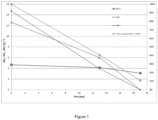
- concentrations of the inorganic nitrogen compounds of the biological air scrubber water are depicted in table 1 and figure 1 , wherein concentration of nitrite, nitrate, and ammonium of biological air scrubber water are depicted in time.
- Table 1 Concentration of inorganic compounds in g/l in (concentrated) biological air scrubber water in time 0 days 13 days 19 days NH 4 + 4.7 4.1 3.1 NO 2 - 12.6 6.0 0.0 NO 3 - 65.1 17.5 0.0
- micro-organism of the present disclosure was inoculated in 100 mL shake flasks with 50 mL medium (chemical air scrubber water; brought to a pH of 6.0 by supplementation with 100 mM phosphate; 30 g/L glucose) at 200 rpm and 20°C.
- Spore elements were supplemented to a final concentration of 1,2 mM H 3 BO 3 , 40 ⁇ M CuSO 4 , 3 ⁇ M Co(NO 3 ) 2 , 227 ⁇ M MnCl 2 , 41 ⁇ M Na 2 MoO 4 , 94 ⁇ M ZnSO 4 , 14 mM MgSO 4 , 18 mM CaCl 2 , 1 mM C 6 H 8 O 7 , 290 ⁇ M (NH 4 ) 5 Fe(C 6 H 4 O 7 )2, 67 ⁇ M Na 2 EDTA.
- the micro-organisms were allowed to grow for 19 days at 30°C and a pH of 6.
- concentrations of the inorganic nitrogen compounds of the chemical air scrubber water are depicted in table 2, wherein concentration of nitrite, nitrate, and ammonium of chemical air scrubber water are depicted in time.
- Table 2 Concentration of inorganic compounds in g/l in (concentrated) biological air scrubber water in time 0 days 13 days 19 days NH 4 + 38.0 30.0 20.0 NO 2 - 0.0 0.0 0.0 NO 3 - 0.0 0.0 0.0 0.0 0.0
- the micro-organism of the present disclosure was inoculated in 250 mL shake flasks with 40 ml chemical air scrubber water (set at a pH of 6.0) and 50 ml biological air scrubber water, 200 mM phosphate (pH 6.0) and 30 g/l glucose at 200 rpm and 20°C.
- the micro-organisms were allowed to grow for 19 days at 30°C and a pH of 6.
- concentrations of the inorganic nitrogen compounds of the chemical air scrubber water are depicted in table 3, wherein concentration of nitrite, nitrate, and ammonium of chemical air scrubber water are depicted in time.
- Table 3 Concentration of inorganic compounds in g/l in (concentrated) mixed air scrubber water in time 0 days 13 days 19 days NH 4 + 24.3 19.5 13.7 NO 2 - 3.6 3.2 0.0 NO 3 - 6.7 2.8 0.0 0.0
- any mixture between waste water of biological air scrubbers and chemical air scrubbers could be used as material for nitrite removal and nitrogen assimilation, as long as the pH was brought in the range 3 - 8, preferably to 4 - 6, more preferably in particular in the range 5 - 6.
- This can be done by mixing chemical with biological air scrubber waste waters in any ratio, the neutralized chemical waste water having a pH as low as 1.5 - 4 to a pH of 6, the biological waste water having a pH of 5 - 7.5, as long as the final pH is within the range of 3 - 8, preferably 4 - 6, more preferably 5 - 6, even more preferably 5.5 - 6.0.
- the neutralized chemical air scrubber waste water is preferably brought to the envisaged pH and subsequently mixed with the biological air scrubber waste water, as mixing the high nitrite containing biological air scrubber water with the acidic chemical air scrubber water may cause undesired formation of nitrous and nitric oxide.
- phosphate buffer can be used, e.g. by the addition of KH 2 PO 4 and/or K 2 HPO 4 , and, if still necessary, addition of the required amount of sodium hydroxide or hydrogen chloride is possible.
- the micro-organism of the present disclosure was inoculated in 250 mL shake flasks with 100 mL biological air scrubber water supplemented with 200 mM phosphate and 10 g/l ethylene glycol; pH 6,0) at 200 rpm and 20°C.
- the micro-organisms were allowed to grow for 19 days at 30°C and a pH of 6.
- concentrations of the inorganic nitrogen compounds of the biological air scrubber water are depicted in table 4, wherein concentration of nitrite, nitrate, and ammonium of biological air scrubber water are depicted in time.
- Table 4 Concentration of inorganic compounds in g/l in (concentrated) biological air scrubber water in time, ethylene glycol as sole carbon source. 0 days 13 days 19 days NH 4 + 4.7 3.8 2.9 NO 2 - 12.6 5.7 0.0 NO 3 - 65.1 16.6 0.0
- micro-organism had a somewhat slower growth as compared to growth on a medium having a similar glucose content instead of ethylene glycol. Similar results were observed for ethylene glycol levels up to 30 g/l.
- the micro-organism of the present disclosure was inoculated in 250 ml shake flasks with 100 ml aqueous growth medium, i.e. water supplemented with 30 g/l ethylene glycol, 100mM phosphate pH 6.0, 25.9 g/l ammonium chloride, 1,2 mM H 3 BO 3 , 40 ⁇ M CuSO 4 , 3 ⁇ M Co(NO 3 ) 2 , 227 ⁇ M MnCl 2 , 41 ⁇ M Na 2 MoO 4 , 94 ⁇ M ZnSO 4 , 14 mM MgSO 4 , 18 mM CaCl 2 , 1 mM C 6 H 8 O 7 , 290 ⁇ M (NH 4 ) 5 Fe(C 6 H 4 O 7 )2, 67 ⁇ M Na 2 EDTA), at 200 rpm and 20°C.
- the micro-organisms were allowed to grow for 19 days at 30°C and a pH of 6.
- concentrations of ammonium and ethylene glycol of the defined media are depicted in table 5, wherein concentration is depicted in time.
- Table 5 Concentration of inorganic compounds in g/l in media in time, ethylene glycol as sole carbon source, NH 4 + as sole nitrogen source. 0 days 13 days 19 days NH 4 + 8.7 5.2 4.1 Ethylene glycol 30 20 8
Landscapes
- Life Sciences & Earth Sciences (AREA)
- Chemical & Material Sciences (AREA)
- Organic Chemistry (AREA)
- Engineering & Computer Science (AREA)
- Health & Medical Sciences (AREA)
- Zoology (AREA)
- Wood Science & Technology (AREA)
- Genetics & Genomics (AREA)
- Biotechnology (AREA)
- Bioinformatics & Cheminformatics (AREA)
- Microbiology (AREA)
- General Engineering & Computer Science (AREA)
- General Health & Medical Sciences (AREA)
- Biochemistry (AREA)
- Biomedical Technology (AREA)
- Mycology (AREA)
- General Chemical & Material Sciences (AREA)
- Chemical Kinetics & Catalysis (AREA)
- Tropical Medicine & Parasitology (AREA)
- Molecular Biology (AREA)
- Medicinal Chemistry (AREA)
- Botany (AREA)
- Virology (AREA)
- Plant Pathology (AREA)
- Biophysics (AREA)
- Physics & Mathematics (AREA)
- Proteomics, Peptides & Aminoacids (AREA)
- Biodiversity & Conservation Biology (AREA)
- Hydrology & Water Resources (AREA)
- Environmental & Geological Engineering (AREA)
- Water Supply & Treatment (AREA)
- Micro-Organisms Or Cultivation Processes Thereof (AREA)
Description
- The invention relates to a novel nitrite tolerant organism, capable of using one or more inorganic nitrogen compounds as nitrogen source, while removing said one or more inorganic nitrogen compounds from a liquid source.
- The term 'inorganic nitrogen compounds' as used herein, is intended to encompass at least ammonium, nitrite and/or nitrate or a combination of two or more thereof, unless otherwise indicated. Such inorganic nitrogen compounds are undesired compounds in waste/fertilizer streams, in particular in waste streams, originating from intensive livestock (of i.e. pigs, cattle, poultry), where high amounts of dung are produced. Said dung comprises high levels of inorganic nitrogen compounds, such as ammonium. Stables where such intensive livestock is placed, have a too high level of the odorous ammonia in the air, so that the air must be cleaned before being discharged to the environment. Such removal of ammonia usually takes place by so-called air scrubbers (e.g. biological and/or chemical), wherein a liquid is brought in contact with the polluted air and as a result, the ammonia dissolves in the liquid resulting in ammonium. In chemical air washers, the liquid is processed with sulphuric acid, which reacts with the ammonia to form an ammonium sulphate solution of low pH (about 1.5 - 4). Apart from the fact that such an acid end product may not be desired, the starting material sulphuric acid is a potential treat for the environment as well. In biological air washers, bacteria are present in the liquid and washer that are responsible for oxidation of ammonium into nitrite followed by further oxidation of the nitrite to nitrate. For this process, called nitrification, different species are known, e.g. Nitrosomas and Nitrobacter. The problem with the biological air scrubbers is that not all of the ammonium is converted to nitrate, resulting in the inorganic nitrogen compounds ammonium, nitrite and nitrate in the residual water. The residual waste water from biological air scrubbers usually has a pH of <5.0 to 6.5. For both biological and chemical air scrubbers, so-called combi-installations are known, wherein ammonia reduction is combined with odor and dust reduction. In biological combi air washers, the pH of the waste water can also be corrected to the neutral range, i.e. up to a pH of 7.5.
-
CN106010981 describes a nitrite degrading fungus, isolated from riverside sludge, capable of growing on standard Czapek's agar plates that contain 2.5 g/l sodium nitrite (~1.7 g/l nitrite). The pH of such plates is in the neutral range (i.e. 7.3 ± 0.2). In liquid standard Czapek's medium having a pH of 7.4, the said fungus is capable of nitrite removal at a nitrite concentration of 1 g/l. -
CN203112574 describes a wastewater treatment device, wherein nitrite oxidizing Nitrobacter, derived from activated sludge, can be cultured at a nitrite content of 1 g/l N-NO2, i.e. 3.3 g/l nitrite at a pH of 7.2 - 7.9. Nitrite is oxidized to nitrate, the most oxidized form of nitrogen. -
CN102465105 describes a new Arthrobacter capable of denitrification, (i.e. the reduction of nitrite into molecular nitrogen) at a pH of 7.7 - 8.2, and has a nitrite tolerance of 800 mg/l. - Another example where elevated levels of inorganic nitrogen compounds are generated, is in breeding water of aquatic animal breeding, e.g. shrimps and fish. Such polluted breeding water is also often treated by addition of a cocktail of Nitrosomas and Nitrobacter species.
WO2006/044499 describes a consortium of Nitrosomas eutropha and Nitrobacter winogradskyi, capable of nitrification at a pH of 8. Said consortium may work for small pollution as observed for shrimp breeding water. - The micro-organisms of the art are capable of nitrite removal at neutral or slightly basic pH. None of the known micro-organisms is suitable for removal of nitrite from aqueous liquids that are produced by the above described air scrubbers (possibly connected to reversed osmosis in order to concentrate the waste water for transport and further processing purposes; a 3 fold concentration can be obtained by reverse osmosis), due to the acidic pH and high concentrations of inorganic nitrogen compounds therein, where nitrite concentrations higher than 10 gram per liter nitrite are observed. Such acidic pH and high nitrite concentrations are toxic to the micro-organisms, presently known and used for removal of inorganic nitrogen compounds from liquid aqueous media.
- Therefore, there is a need to provide a micro-organism that is tolerant for one or more inorganic nitrogen compounds at such high concentrations at acidic pH, that is also capable of removing said one or more inorganic nitrogen compounds, in particular from liquid waste such as biological or chemical air scrubber water, and preferably also of nitrification and/or nitrogen assimilation into organic nitrogen containing compounds.
- The present inventors have now identified a hitherto unknown micro-organism deposited at the Westerdijk Fungal Biodiversity Institute (previously known as Centraalbureau voor Schimmelcultures (CBS-KNAW)) under accession number CBS143205, that is tolerant for at least nitrite, nitrate and/or ammonium and capable of nitrite, nitrate and ammonium removal (also at higher concentrations of nitrite, nitrate and/or ammonium in the medium), in particular at acidic pH, such as pH 3 - 6, more in particular at pH 4 - 6, 5 - 6 or 6.0. It was also found that the said micro-organism is capable of growing on and removal of nitrite, nitrate and ammonia at an acidic pH even below 3, and at neutral pH of up to 8 or even higher. Further, said micro-organism is capable of using ammonium, nitrite and nitrate as nitrogen source and assimilation of said inorganic nitrogen compounds into organic nitrogen containing compounds. The tolerance is preferably for nitrite, nitrate and/or ammonium, in particular for nitrite.
- The micro-organism of the present disclosure preferably has an increased tolerance for inorganic nitrogen compounds, and has a nitrite tolerance of at least 200 mg/l, more preferably of at least 500 mg/l, even more preferably of 1 g/l nitrite, even more preferably of at least 2 g/l nitrite, even more preferably of at least 3.5 g/l nitrite, even more preferably of at least 5 g/l nitrite, even more preferably of at least 7 g/l nitrite, and most preferably of at least 10 g/l or even 12 g/l nitrite at a cultivation pH of 6.0. This means that the micro-organism can survive and utilize the inorganic nitrogen present (as nitrate, nitrite or ammonium) at such levels of nitrite at pH 6.0. The cultivation pH of the micro-organism of the present disclosure is preferably acidic, more preferably 2 - 6 or 3 - 6, still more preferably 4 - 6 and even more preferably 5 - 6. The indicated values for nitrite tolerance and nitrite clearance rate are therefore preferably valid for these pH ranges.
- The micro-organism of the present disclosure preferably has a nitrite clearance rate of at least 100, more preferably at least 250, more preferably of at least 500 and most preferably of at least 630 mg/l/d, at a pH of 6.0. The starting concentration of nitrite is preferably 12.6 g/l. This means that the organism was capable to remove nitrite as nitrogen source in 250 ml shake flasks with 100 ml medium (biological air scrubber water supplemented with 200 mM phosphate and 30 g/l glucose; pH 6.0) at gentle agitation of 200 rpm and 20°C.
- Further described is a method for the preparation of a monoculture of a micro-organism as described above, i.e. having a nitrite tolerance of at least 200 mg/l, more preferably of at least 500 mg/l, even more preferably of 1 g/l nitrite, even more preferably of at least 2 g/l nitrite, even more preferably of at least 3.5 g/l nitrite, even more preferably of at least 3.9 g/l nitrite, even more preferably of at least 5 g/l nitrite, even more preferably of at least 7 g/l nitrite, and most preferably of at least 10 g/l or even 12 g/l nitrite at a cultivation pH of 6.0, and a nitrite clearance rate at least 100, more preferably at least 250, more preferably of at least 500 and most preferably of at least 630 mg/l/d, at a pH of 6.0, comprising the steps of:
- A) providing an aqueous medium having a pH of 2 - 6 and a nitrite concentration of at least 200mg/l,
- B) supplementing the aqueous medium of step A) with an organic carbon source, to a carbon level corresponding with that of at least 1 g/l glucose and a phosphate source to a level of at least 1 mM,
- C) allowing micro-organisms to grow,
- D) inoculating micro-organisms from step C) into a fresh aqueous medium having a pH of 2 - 6 comprising a similar level of organic carbon source and phosphate as the aqueous medium after step B) and allow the micro-organisms to grow,
- E) plating micro-organisms from step D) on a solid medium and allowing growth of single colonies thereon,
- F) inoculating single colony micro-organisms from step E) into a fresh aqueous medium having a pH of 2 - 6 comprising a similar level of organic carbon source and phosphate as the aqueous medium after step B) and allow the micro-organisms to grow,
- G) optionally repeat steps E) and F) until a monoculture of the micro-organism is obtained.
- The aqueous medium in step A) can e.g. be residual water from a chemical or biological air scrubber as described above, or a mixture thereof, or any aqueous medium containing inorganic nitrogen compounds that need to be removed therefrom or need to be assimilated into organic nitrogen containing compounds. Used breeding water of aquatic animals or industrial residual water containing inorganic nitrogen compounds can also be used in step A). The nitrite concentration corresponds preferably with the envisaged nitrite tolerance of the micro-organism to be identified, and is preferably at least 500 mg/l, more preferably at least 1 g/l, at least 3.5 g/l, at least 3.9 g/l, even more preferably at least 5 g/l, more preferably at least 7 g/l, at least 10 g/l, and most preferably 12.6 g/l at a cultivation pH of 6.0. It is also possible to replace nitrite in step A) for another inorganic nitrogen compound such as ammonium or nitrate, in order to prepare a monoculture of a micro-organism that is tolerant for the said inorganic nitrogen compound. The pH of the aqueous medium is preferably 3 - 6, 4 - 6 and more preferably 5 - 6, even more preferably 5.5 - 6.0 or 6.0. The nitrite tolerance values as given above are preferably at pH 6.0, but can attractively be at the pH of the aqueous medium provided in step A.
- In step B) the aqueous water is supplemented with a carbon and a phosphorous source. The carbon source can e.g. be glucose, whereas the phosphor source can e.g be a phosphate such as Na2HPO4 or KH2PO4. The amount of carbon is chosen such that it corresponds with the carbon provided by at least 1 g/l glucose, but preferably with 10 g/l glucose or even 30 g/l glucose. When growing on such medium, it has been observed that the amount of carbon needed seems to be depend on the amount of nitrogen, which needs to be removed.
- The amount of phosphor is chosen such that it corresponds with at least 1 mM Na2HPO4, preferably at least 5 mM, more preferably at least 10 mM, more preferably at least 20 mM, more preferably at least 50 mM, more preferably at least 100 mM, most preferably at least 200mM Na2HPO4.
- Subsequently, the micro-organisms are allowed to grow in step C), in particular for 3 weeks at 30°C and a pH typically around 6, preferably under mild agitation, such as at 200 rpm.
- In step D), the micro-organisms of step C) are brought into an aqueous medium that has similar levels of carbon source and phosphate as the levels obtained in step B). For example, an inoculum of e.g.2 ml is taken from step C). Preferably, the aqueous medium in step D), is identical to that of step B). So if in step B) air scrubber residual water, supplemented with glucose and phosphate is used, the same medium is preferably used in step D). However, in step D), it is also possible to use a different aqueous medium, such as a growth medium comprising similar or preferably identical amounts of carbon source and phosphate. Preferably, the nitrite concentration and pH is similar to or the same of that of step A). Thereafter, the micro-organism is allowed to grow again.
- Subsequently, the micro-organisms are allowed to grow on a solid growth medium in the form of single colonies. If a fungus is envisaged to be isolated, the medium is suitable for fungal growth, such as 2% PDA (Potato Dextrose Agar such as potato extract glucose broth manufactured by Carl Roth, Germany supplemented with 2% agar), comprising an antibiotic to prevent bacterial growth such as chloramphenicol at a concentration of e.g. 34 µg/ml. However, this method is also suitable to identify other micro-organisms than fungi, such as bacteria, and to this end, the growth medium can be made suitable for bacterial growth.
- If necessary for obtaining a monoculture, the steps of inoculating and growing can be repeated until a significant fast growing micro-organism, in particular a fungus is able to grow on high concentration of inorganic nitrogen compounds in the medium, in particular nitrite. This way, the deposited micro-organism as described above has been found.
- For growth of the micro-organism in steps B), D) and F), the organic carbon source is preferably supplemented to a carbon level corresponding with that of at least 10 g/l glucose. The phosphate source is preferably supplemented to a level of at least 200mM. The pH and nitrite content is preferably similar or the same as of the aqueous medium of step A).
- Preferably, the carbon source comprises glucose, although also other carbon sources known to the skilled person can be used. It has surprisingly been found that the micro-organisms as described herein can use ethylene glycol and derivatives thereof as carbon source, even as sole carbon source. However, the growth is slightly better when grown on glucose. Therefore, the micro-organisms of the present disclosure can also be used for the removal of ethylene glycol and derivatives thereof, e.g. from antifreeze, coolant, hydraulic fluids, low-freezing dynamites and resins industry. High concentration of nitrite in the growth medium is not necessary, but still possible, for use of the micro-organism for removal of ethylene glycol from a liquid medium. It can be contemplated to combine air scrubber water from either biological or chemical air scrubbers or from both, with a liquid ethylene glycol containing waste medium, as the micro-organism of the present disclosure is capable of growth removal of both nitrite and ethylene glycol simultaneously.
- By the above-described method, a micro-organism can be obtained having a nitrite tolerance of at least 200 mg/l nitrite, and/or a nitrite clearance rate of at least 100 mg/l/d nitrite, in particular of the preferred values as described above. Said tolerance and/or clearance rate are preferably at a pH of 2 - 6, or 3 - 6, more preferably 4 - 6, even more preferably 5 - 6 an most preferably at 6.0.
- As will be further exemplified in the following examples, the micro-organism as described above preferably is a fungus belonging to the family of the Trichocomaceae.
- Also disclosed is a method for clearing of inorganic nitrogen from a liquid source comprising inorganic nitrogen having an acid or neutral pH, i.e. of 2 - 8, comprising the steps of
- a) contacting micro-organisms as described above with the liquid source,
- b) allowing the micro-organisms to grow in the liquid source, providing the liquid source cleared from inorganic nitrogen.
- By contacting the described micro-organisms with a liquid source comprising inorganic nitrogen, said inorganic nitrogen will be subjected to biological growth, resulting in clearing of nitrite, but also clearing of nitrate or ammonium present in the liquid. This was done by inoculation of the fungus into medium containing air scrubber water enriched with glucose and phosphate and grow for 20 days at 30°C and a pH of 6.0. It was found that the nitrite level of the liquid source could be brought from an initial level of 12,6 g/l nitrite to 0 g/l after 20 days at 30°C and a pH of 6.0, optionally at mild agitation, such as at 200 rpm. The pH can be in the range of 2 - 8, in particular 3 - 8, however, the pH is preferably acidic, such as between 3 and 6, preferably between 4 and 6 or more preferably between 5 and 6.
- Also disclosed is a method for the preparation of one or more organic nitrogen containing compounds from a liquid source, comprising inorganic nitrogen, comprising the steps of
- a) contacting micro-organisms as described above with the liquid source,
- b) allowing the micro-organisms to grow in the liquid source,
- c) purifying the one or more organic nitrogen containing compounds from the liquid source of step b).
- The biomass of the fungi is grown as described above. The pH of the liquid medium is preferably between 3 and 8, more preferably between 4 and 7, even more preferably between 5 and 6, most preferably 5.5 - 6.0 or 6.0. The biomass of fungi comprises chitin. Due to the fact that the carbon source, such as glucose or ethylene glycol, and nitrogen are consumed while biomass is formed, it is most likely that the carbon and nitrogen are mainly used for biomass assimilation, such as (N-containing) carbohydrates, like chitin or derivatives thereof, proteins and lipids.
- The one or more organic nitrogen containing compounds preferably are or comprise amino acids, such as in particular commercial interesting enzymes or proteins in general. Other nitrogen containing compounds, such as chitin or derivatives thereof can be prepared and purified as well. The term 'derivatives of chitin' is meant to encompass biomolecules, produced by the micro-organism wherein chitin is starting of intermediate material. The skilled person will be aware of such derivatives.
- In the above methods, the liquid source is preferably derived from waste water from a biological or chemical air scrubber or a mixture thereof. Biological air scrubber waste water has a pH of usually <5 - 6.5 ( or up to 7.5 if neutralized), in particular around 6.5. Chemical air scrubber waste water has a more acidic pH of about 1.5 - 4. In order to bring the pH to the envisaged range of 3 - 6, in particular to 4 - 6, more in particular to 5 - 6 or 6.0, a sufficient amount of phosphate buffer can be added to both waste waters or to the mixture thereof, preferably in a concentration of 20 - 400 mM, more preferably 20 - 200 mM. If necessary, the pH can be further adjusted using a hydroxide, in particular sodium hydroxide, or an acid, such as hydrogen chloride. The skilled person will be familiar with the preparation of the suitable phosphate buffer by using KH2PO4 and/or K2HPO4 or a combination thereof and will know how to apply the hydroxide or acid to arrive at the envisaged pH.
- The following examples are given to further illustrate the present disclosure.
- The micro-organism of the present disclosure, i.e. as deposited as CBS143205, was identified in 250 ml shake flasks with 100 ml medium (biological air scrubber water supplemented with 200 mM phosphate and 10 g/l glucose; pH 6.0) at 200 rpm and 20°C. The micro-organisms were allowed to grow for 3 weeks at 20°C and a pH typically around 6. After 3 weeks, an inoculum of 2 ml was taken and brought into refreshed identical medium, based on residual air scrubber water, supplemented with glucose and phosphate, where after the micro-organism was allowed to grow again. These steps of inoculating and growing were repeated until a significant fast growing fungi was able to grow on high concentration of nitrite in the medium.
- The nuclear rRNA cistron has been used for fungal diagnostics and phylogenetics for more than 20 year (2016 Begerow). Preliminary Next-Generation sequencing reveal at least 18 rRNAs and 70 tRNAs in the novel micro-organism, which are provided in SEQ ID No 1 - 88. The rRNAs and tRNAs sequences were identified with Barrnap and Aragorn. Barrnap is a software program that predicts the location of ribosomal RNA genes in genomes. It supports bacteria (5S,23S,16S), archaea (5S,5.8S,23S,16S), mitochondria (12S,16S) and eukaryotes (5S,5.8S,28S,18S). ARAGORN is a program commonly used to detect tRNA genes in nucleotide sequences ( http://mbio-serv2.mbioekol.lu.se/ARAGORN/).
The eukaryotic rRNA cistron consists of the 18S, 5.8S, and 28S rRNA genes transcribed as a unit by RNA polymerase I. Posttranscriptional processes split the cistron, removing two internal transcribed spacers. These two spacers, including the 5.8S gene, are usually referred to as the ITS region. The 18S nuclear ribosomal small subunit rRNA gene (SSU) and the 28S nuclear ribosomal large subunit rRNA gene (LSU) sometimes discriminates species on its own or combined with ITS. LSU, a favoured phylogenetic marker among many mycologists, had virtually no amplification, sequencing, alignment, or editing problems, and the barcode gap was superior to the SSU. However, across the fungal kingdom, ITS was generally superior to LSU in species discrimination and had a more clearly defined barcode gap (2016 Begerow). The ITS RNA sequence (643 nt) of this unidentified fungi was determined by PCR and has been designated SEQ ID No 89. Internet nucleotide blast search (https://blast.ncbi.nim.nih.gov/Blast.cgi?PROGRAM=blastn&PAGE TYPE=BlastSear ch&LINK LOC=blasthome; Database Nucleotide collection (nr/nt) using Megablast (Optimize for highly similar sequences) reveals an identity of only 91% with Phialosimplex chlamydosporus, suggesting a new genus and species. - Next to ITS, LSU and SSU, protein-coding genes are also widely used in mycology for phylogenetic analyses or species identification. For Ascomycota (including mold genera such as Aspergillus), they are generally superior to rRNA genes for resolving relationships at various taxonomic levels. Among protein-coding genes, the largest subunit of RNA polymerase II (RPB1) may have potential as a fungal barcode; together with two additional optional genes, namely the second largest subunit of RNA polymerase II (RPB2) and a gene encoding a minichromosome maintenance protein (MCM7).
- The LSU, SSU, RPB1, RPB2, MCM7 were extracted from Next-Generation sequencing data and were designated
SEQ ID No 90, 91, 92, 93, 94, respectively. LSU was found with the primers LR0R 5'-ACCCGCTGAACTTAAGC-3'; forward and LR5 5'-TCCTGAGGGAAACTTCG-3'; reverse and for SSU with the primers NS1 5'-GTAGTCATATGCTTGTCTC-3'; forward and NS4 5'-CTTCCGTCAATTCCTTTAAG-3'; reverse (http://www.fungalbarcoding.org/DefaultInfo.aspx?Page=Primers). The protein encoding sequences RPB1, RPB2, MCM7 were found in the annotated preliminary next generation sequence data. - Internet nucleotide blast search (https://blast.ncbi.nlm.nih.gov/Blast.cgi?PROGRAM=blastn&PAGE TYPE=BlastSear ch&LINK LOC=blasthome; Database Nucleotide collection (nr/nt) using Megablast (Optimize for highly similar sequences) of
SEQ ID No 90, 91, 92, 93, 94 revealed an identity of only 97%, 94%, 78%(1st part)/75% (2nd part), 80%, 78% with Sagenomella sp. HMH-2007a 28S ribosomal RNA gene, partial sequence; Trichocoma paradoxa gene for 18S rRNA, partial sequence, strain:IFO 6765; Aspergillus niger contig An01c0390, genomic contig/Aspergillus terreus NIH2624 conserved hypothetical protein (ATEG_00681) partial mRNA; Aspergillus niger contig An12c0030, genomic contig; Aspergillus fischeri NRRL 181 DNA replication licensing factor Mcm7, putative partial mRNA, respectively. - Therefore, the present disclosure also encompasses a micro-organism having an ITS RNA sequence having at least 97%, preferably at least 98, or 99% sequence identity with SEQ ID NO 89. The tRNA and rRNA of said micro-organism preferably has a sequence identity with SEQ ID Nos 1 - 88 (with a query coverage of 100%) of at least 95%, more preferably of at least 98%, or 99%. Said micro-organism preferably has a sequence identity of at least 97%, preferably at least 98% or more preferably of at least 99% with SEQ ID NO 90-94.
- Clearing of inorganic nitrogen from biological air scrubber waste water The micro-organism of the present disclosure, i.e. as deposited as CBS143205, was inoculated in 250 ml shake flasks with 100 ml biological air scrubber water supplemented with 200 mM phosphate and 10 g/l glucose;
pH 6,0) at 200 rpm and 20°C. The micro-organisms were allowed to grow for 19 days at 30°C and a pH of 6. - The concentrations of the inorganic nitrogen compounds of the biological air scrubber water are depicted in table 1 and
figure 1 , wherein concentration of nitrite, nitrate, and ammonium of biological air scrubber water are depicted in time.Table 1: Concentration of inorganic compounds in g/l in (concentrated) biological air scrubber water in time 0 days 13 days 19 days NH4 + 4.7 4.1 3.1 NO2 - 12.6 6.0 0.0 NO3 - 65.1 17.5 0.0 - Clearing of inorganic nitrogen from chemical air scrubber waste water The micro-organism of the present disclosure was inoculated in 100 mL shake flasks with 50 mL medium (chemical air scrubber water; brought to a pH of 6.0 by supplementation with 100 mM phosphate; 30 g/L glucose) at 200 rpm and 20°C. Spore elements were supplemented to a final concentration of 1,2 mM H3BO3, 40 µM CuSO4, 3 µM Co(NO3)2, 227 µM MnCl2, 41 µM Na2MoO4, 94 µM ZnSO4, 14 mM MgSO4, 18 mM CaCl2, 1 mM C6H8O7, 290 µM (NH4)5Fe(C6H4O7)2, 67 µM Na2EDTA. The micro-organisms were allowed to grow for 19 days at 30°C and a pH of 6.
- The concentrations of the inorganic nitrogen compounds of the chemical air scrubber water are depicted in table 2, wherein concentration of nitrite, nitrate, and ammonium of chemical air scrubber water are depicted in time.
Table 2: Concentration of inorganic compounds in g/l in (concentrated) biological air scrubber water in time 0 days 13 days 19 days NH4 + 38.0 30.0 20.0 NO2 - 0.0 0.0 0.0 NO3 - 0.0 0.0 0.0 - The micro-organism of the present disclosure was inoculated in 250 mL shake flasks with 40 ml chemical air scrubber water (set at a pH of 6.0) and 50 ml biological air scrubber water, 200 mM phosphate (pH 6.0) and 30 g/l glucose at 200 rpm and 20°C. The micro-organisms were allowed to grow for 19 days at 30°C and a pH of 6.
- The concentrations of the inorganic nitrogen compounds of the chemical air scrubber water are depicted in table 3, wherein concentration of nitrite, nitrate, and ammonium of chemical air scrubber water are depicted in time.
Table 3: Concentration of inorganic compounds in g/l in (concentrated) mixed air scrubber water in time 0 days 13 days 19 days NH4 + 24.3 19.5 13.7 NO2 - 3.6 3.2 0.0 NO3 - 6.7 2.8 0.0 - It was observed that any mixture between waste water of biological air scrubbers and chemical air scrubbers could be used as material for nitrite removal and nitrogen assimilation, as long as the pH was brought in the range 3 - 8, preferably to 4 - 6, more preferably in particular in the range 5 - 6. This can be done by mixing chemical with biological air scrubber waste waters in any ratio, the neutralized chemical waste water having a pH as low as 1.5 - 4 to a pH of 6, the biological waste water having a pH of 5 - 7.5, as long as the final pH is within the range of 3 - 8, preferably 4 - 6, more preferably 5 - 6, even more preferably 5.5 - 6.0. To this end, the neutralized chemical air scrubber waste water is preferably brought to the envisaged pH and subsequently mixed with the biological air scrubber waste water, as mixing the high nitrite containing biological air scrubber water with the acidic chemical air scrubber water may cause undesired formation of nitrous and nitric oxide. To bring the waste waters or the mixture to the envisaged pH, phosphate buffer can be used, e.g. by the addition of KH2PO4 and/or K2HPO4, and, if still necessary, addition of the required amount of sodium hydroxide or hydrogen chloride is possible.
- The micro-organism of the present disclosure was inoculated in 250 mL shake flasks with 100 mL biological air scrubber water supplemented with 200 mM phosphate and 10 g/l ethylene glycol;
pH 6,0) at 200 rpm and 20°C. The micro-organisms were allowed to grow for 19 days at 30°C and a pH of 6. - The concentrations of the inorganic nitrogen compounds of the biological air scrubber water are depicted in table 4, wherein concentration of nitrite, nitrate, and ammonium of biological air scrubber water are depicted in time.
Table 4: Concentration of inorganic compounds in g/l in (concentrated) biological air scrubber water in time, ethylene glycol as sole carbon source. 0 days 13 days 19 days NH4 + 4.7 3.8 2.9 NO2 - 12.6 5.7 0.0 NO3 - 65.1 16.6 0.0 - It was observed that the micro-organism had a somewhat slower growth as compared to growth on a medium having a similar glucose content instead of ethylene glycol. Similar results were observed for ethylene glycol levels up to 30 g/l.
- The micro-organism of the present disclosure was inoculated in 250 ml shake flasks with 100 ml aqueous growth medium, i.e. water supplemented with 30 g/l ethylene glycol, 100mM phosphate pH 6.0, 25.9 g/l ammonium chloride, 1,2 mM H3BO3, 40 µM CuSO4, 3 µM Co(NO3)2, 227 µM MnCl2, 41 µM Na2MoO4, 94 µM ZnSO4, 14 mM MgSO4, 18 mM CaCl2, 1 mM C6H8O7, 290 µM (NH4)5Fe(C6H4O7)2, 67 µM Na2EDTA), at 200 rpm and 20°C. The micro-organisms were allowed to grow for 19 days at 30°C and a pH of 6.
- The concentrations of ammonium and ethylene glycol of the defined media are depicted in table 5, wherein concentration is depicted in time.
Table 5: Concentration of inorganic compounds in g/l in media in time, ethylene glycol as sole carbon source, NH4 + as sole nitrogen source. 0 days 13 days 19 days NH4 + 8.7 5.2 4.1 Ethylene glycol 30 20 8
Claims (12)
- Micro-organism, deposited at the Westerdijk Fungal Biodiversity Institute under accession number CBS143205.
- Method for the preparation of a monoculture of a micro-organism having a nitrite tolerance of at least 200 mg/l nitrite and a nitrite clearance rate of at least 100 mg/l/d nitrite at a pH of 6.0, comprising the steps of:A) providing an aqueous medium having a pH of 2 - 6.0 and a nitrite concentration of at least 200 mg/l,B) supplementing the aqueous medium of step A) with an organic carbon source, to a carbon level corresponding with that of at least 1 g/l glucose and a phosphate source to a level of at least 20 mM,C) allowing micro-organisms to grow,D) inoculating micro-organisms from step C) into a fresh aqueous medium comprising the same level of organic carbon source, phosphate and nitrite as the aqueous medium after step B) and allow the micro-organisms to grow,E) plating micro-organisms from step D) on a solid medium and allowing growth of single colonies thereon,F) inoculating single colony micro-organisms from step E) into a fresh aqueous medium comprising the same level of organic carbon source, phosphate and nitrite as the aqueous medium after step B) and allow the micro-organisms to grow,G) optionally repeat steps E) and F) until a monoculture of the micro-organism is obtained.
- Method of claim 2, wherein the pH of the aqueous liquid is 3 - 6.0, preferably 4 - 6.0, more preferably 5 - 6.0, even more preferably 6.0.
- Method of claim 2 or 3, wherein in step B) the organic carbon source is supplemented to a carbon level corresponding with that of at least 10 g/l glucose and/or wherein the phosphate source is supplemented to a level of at least 200mM.
- Method of any of claims 2 - 4, wherein the carbon source comprises glucose or ethylene glycol.
- Method of any of the claims 2 - 5, wherein the micro-organism has a nitrite tolerance of at least 500 mg/l, preferably of 1 g/l nitrite, more preferably of at least 2 g/l nitrite, even more preferably of at least 3.5 g/l nitrite, even more preferably of at least 5 g/l nitrite, even more preferably of at least 7 g/l nitrite, even more preferably of at least 10 g/l and most preferably of at least 12 g/l nitrite at a cultivation pH of 6.0.
- Method of any of the claims 2 - 6, wherein the micro-organism has a nitrite clearance rate of at least 100 mg/l/d nitrite, preferably of at least 250, more preferably of at least 500 and most preferably of at least 630 mg/l/d, at a pH of 6.0.
- Method of any of the claims 2 - 7, wherein the micro-organism is a fungus belonging to the family of the Trichocomaceae.
- Method for clearing of inorganic nitrogen from a liquid source having a pH of 2 - 8 comprising inorganic nitrogen comprising the steps ofa) contacting a micro-organism of claim 1 with the liquid source,b) allowing the micro-organisms to grow in the liquid source, providing the liquid source cleared from inorganic nitrogen.
- Method for the preparation of one or more organic nitrogen containing compounds from a liquid source comprising inorganic nitrogen, comprising the steps ofa) contacting micro-organism of claim 1 with the liquid source,b) allowing the micro-organisms to grow in the liquid source,c) purifying the one or more organic nitrogen containing compounds from the liquid source of step b).
- Method according to claim 9 or 10, wherein the pH of the liquid source is 2 - 8, preferably 4 - 6, more preferably 5 - 6, even more preferably 6.0.
- Method according to any of the claims 9 - 11 wherein the liquid source is derived from wastewater from a biological or chemical air scrubber or a mixture thereof.
Applications Claiming Priority (2)
| Application Number | Priority Date | Filing Date | Title |
|---|---|---|---|
| EP17200389.9A EP3480295A1 (en) | 2017-11-07 | 2017-11-07 | Micro-organism tolerant for inorganic nitrogen compounds |
| PCT/EP2018/080523 WO2019092054A1 (en) | 2017-11-07 | 2018-11-07 | Micro-organism tolerant for inorganic nitrogen compounds |
Publications (3)
| Publication Number | Publication Date |
|---|---|
| EP3707238A1 EP3707238A1 (en) | 2020-09-16 |
| EP3707238B1 true EP3707238B1 (en) | 2025-04-23 |
| EP3707238C0 EP3707238C0 (en) | 2025-04-23 |
Family
ID=60574349
Family Applications (2)
| Application Number | Title | Priority Date | Filing Date |
|---|---|---|---|
| EP17200389.9A Withdrawn EP3480295A1 (en) | 2017-11-07 | 2017-11-07 | Micro-organism tolerant for inorganic nitrogen compounds |
| EP18800121.8A Active EP3707238B1 (en) | 2017-11-07 | 2018-11-07 | Micro-organism tolerant for inorganic nitrogen compounds |
Family Applications Before (1)
| Application Number | Title | Priority Date | Filing Date |
|---|---|---|---|
| EP17200389.9A Withdrawn EP3480295A1 (en) | 2017-11-07 | 2017-11-07 | Micro-organism tolerant for inorganic nitrogen compounds |
Country Status (2)
| Country | Link |
|---|---|
| EP (2) | EP3480295A1 (en) |
| WO (1) | WO2019092054A1 (en) |
Families Citing this family (2)
| Publication number | Priority date | Publication date | Assignee | Title |
|---|---|---|---|---|
| WO2024218715A1 (en) | 2023-04-19 | 2024-10-24 | Btl Healthcare Technologies A.S. | Culture media based on protein hydrolysate and a process for preparing thereof |
| US12668774B2 (en) | 2023-10-12 | 2026-06-30 | Btl Healthcare Technologies A.S. | Product, system and method of cell cultivation |
Family Cites Families (4)
| Publication number | Priority date | Publication date | Assignee | Title |
|---|---|---|---|---|
| MY138999A (en) | 2004-10-14 | 2009-08-28 | Novozymes Biologicals Inc | Consortium of nitrifying bacteria |
| CN102465105B (en) * | 2010-11-04 | 2014-06-25 | 中国石油化工股份有限公司 | Nitrous acid-type denitrification bacteria strain and application thereof |
| CN203112574U (en) * | 2012-11-29 | 2013-08-07 | 北京工业大学 | Culture device capable of fast enrichment of nitrite oxidizing bacteria (NOB) |
| CN106010981B (en) * | 2016-06-13 | 2019-05-07 | 淮阴师范学院 | A nitrite-degrading bacteria |
-
2017
- 2017-11-07 EP EP17200389.9A patent/EP3480295A1/en not_active Withdrawn
-
2018
- 2018-11-07 WO PCT/EP2018/080523 patent/WO2019092054A1/en not_active Ceased
- 2018-11-07 EP EP18800121.8A patent/EP3707238B1/en active Active
Also Published As
| Publication number | Publication date |
|---|---|
| EP3480295A1 (en) | 2019-05-08 |
| WO2019092054A1 (en) | 2019-05-16 |
| EP3707238A1 (en) | 2020-09-16 |
| EP3707238C0 (en) | 2025-04-23 |
Similar Documents
| Publication | Publication Date | Title |
|---|---|---|
| Keuter et al. | Longterm monitoring of nitrification and nitrifying communities during biofilter activation of two marine recirculation aquaculture systems (RAS) | |
| Araujo et al. | Anammox bacteria enrichment and characterization from municipal activated sludge | |
| Rosa et al. | Performance and molecular evaluation of an anaerobic system with suspended biomass for treating wastewater with high fat content after enzymatic hydrolysis | |
| Lin et al. | Seagrass (Zostera marina) promotes nitrification potential and selects specific ammonia oxidizers in coastal sediments | |
| KR102150330B1 (en) | Novel strains of Oceanobacillus species having activity to reduce foul smell from livestock excretions and a composition containing them | |
| JP7800933B2 (en) | Aromatic polyester-degrading bacteria | |
| CN110846231B (en) | A laccase-producing fungus Trametes pilus La-7 and its application | |
| CN110438025A (en) | A kind of denitrogenation bacterial strain and its application | |
| Yamamoto et al. | Ammonia-oxidizing bacteria rather than ammonia-oxidizing archaea were widely distributed in animal manure composts from field-scale facilities | |
| Yu et al. | Identification of novel denitrifying bacteria Stenotrophomonas sp. ZZ15 and Oceanimonas sp. YC13 and application for removal of nitrate from industrial wastewater | |
| Molina-Munoz et al. | Effect of the concentration of suspended solids on the enzymatic activities and biodiversity of a submerged membrane bioreactor for aerobic treatment of domestic wastewater | |
| CN115948288B (en) | An aerobic and efficient denitrification compound bacterial group and its application | |
| EP3707238A1 (en) | Micro-organism tolerant for inorganic nitrogen compounds | |
| CN113373072B (en) | Heterotrophic nitrification aerobic denitrification fungus strain and separation method and application thereof | |
| Chu et al. | A comparison of anammox bacterial abundance and community structures in three different emerged plants-related sediments | |
| Carini et al. | Interactions between methane oxidation and nitrification in coastal sediments | |
| CN108728372A (en) | The Sphingol single-cell LPN080 and its microorganism formulation of one plant of different oxygen ammonia assimilation and application | |
| EP1502948B1 (en) | Ammonia-oxidizing bacteria | |
| Mori et al. | Quantification of Bacillus species in a wastewater treatment system by the molecular analyses | |
| CN109880752B (en) | Heterotrophic nitrification-aerobic denitrification bacterium and identification method thereof | |
| You et al. | Ammonia oxidizing bacteria in a nitrite-accumulating membrane bioreactor | |
| JP7191825B2 (en) | Bacterial strains and consortia containing them for degrading MTBE, TBA and/or HCHO | |
| Ciesielski et al. | Characterization of bacterial structures in two-stage moving-bed biofilm reactor (MBBR) during nitrification of the landfill leachate | |
| Fitriyanto et al. | Isolation and characterization of Alcaligenes sp. LS2T from poultry farm at Yogyakarta city and the growth ability in animal’s urine medium | |
| EP4626833A2 (en) | Method for the preparation of a ammonia and nitrous acid tolerant bacterial consortium and method for removal of high ammonium, urea, nitrite, and/or nitrate concentrations in watery streams |
Legal Events
| Date | Code | Title | Description |
|---|---|---|---|
| STAA | Information on the status of an ep patent application or granted ep patent |
Free format text: STATUS: UNKNOWN |
|
| STAA | Information on the status of an ep patent application or granted ep patent |
Free format text: STATUS: THE INTERNATIONAL PUBLICATION HAS BEEN MADE |
|
| PUAI | Public reference made under article 153(3) epc to a published international application that has entered the european phase |
Free format text: ORIGINAL CODE: 0009012 |
|
| STAA | Information on the status of an ep patent application or granted ep patent |
Free format text: STATUS: REQUEST FOR EXAMINATION WAS MADE |
|
| 17P | Request for examination filed |
Effective date: 20200518 |
|
| AK | Designated contracting states |
Kind code of ref document: A1 Designated state(s): AL AT BE BG CH CY CZ DE DK EE ES FI FR GB GR HR HU IE IS IT LI LT LU LV MC MK MT NL NO PL PT RO RS SE SI SK SM TR |
|
| AX | Request for extension of the european patent |
Extension state: BA ME |
|
| DAV | Request for validation of the european patent (deleted) | ||
| DAX | Request for extension of the european patent (deleted) | ||
| RAP3 | Party data changed (applicant data changed or rights of an application transferred) |
Owner name: BIOSOLUM B.V. |
|
| GRAP | Despatch of communication of intention to grant a patent |
Free format text: ORIGINAL CODE: EPIDOSNIGR1 |
|
| STAA | Information on the status of an ep patent application or granted ep patent |
Free format text: STATUS: GRANT OF PATENT IS INTENDED |
|
| INTG | Intention to grant announced |
Effective date: 20241122 |
|
| RIN1 | Information on inventor provided before grant (corrected) |
Inventor name: KUIT, WOUTER Inventor name: SIEMERINK, MARCO ANTONIUS JOSEF |
|
| GRAS | Grant fee paid |
Free format text: ORIGINAL CODE: EPIDOSNIGR3 |
|
| GRAA | (expected) grant |
Free format text: ORIGINAL CODE: 0009210 |
|
| STAA | Information on the status of an ep patent application or granted ep patent |
Free format text: STATUS: THE PATENT HAS BEEN GRANTED |
|
| AK | Designated contracting states |
Kind code of ref document: B1 Designated state(s): AL AT BE BG CH CY CZ DE DK EE ES FI FR GB GR HR HU IE IS IT LI LT LU LV MC MK MT NL NO PL PT RO RS SE SI SK SM TR |
|
| REG | Reference to a national code |
Ref country code: GB Ref legal event code: FG4D |
|
| REG | Reference to a national code |
Ref country code: CH Ref legal event code: EP |
|
| REG | Reference to a national code |
Ref country code: DE Ref legal event code: R096 Ref document number: 602018081349 Country of ref document: DE |
|
| REG | Reference to a national code |
Ref country code: IE Ref legal event code: FG4D |
|
| U01 | Request for unitary effect filed |
Effective date: 20250507 |
|
| U07 | Unitary effect registered |
Designated state(s): AT BE BG DE DK EE FI FR IT LT LU LV MT NL PT RO SE SI Effective date: 20250514 |
|
| PG25 | Lapsed in a contracting state [announced via postgrant information from national office to epo] |
Ref country code: ES Free format text: LAPSE BECAUSE OF FAILURE TO SUBMIT A TRANSLATION OF THE DESCRIPTION OR TO PAY THE FEE WITHIN THE PRESCRIBED TIME-LIMIT Effective date: 20250423 |
|
| PG25 | Lapsed in a contracting state [announced via postgrant information from national office to epo] |
Ref country code: GR Free format text: LAPSE BECAUSE OF FAILURE TO SUBMIT A TRANSLATION OF THE DESCRIPTION OR TO PAY THE FEE WITHIN THE PRESCRIBED TIME-LIMIT Effective date: 20250724 Ref country code: NO Free format text: LAPSE BECAUSE OF FAILURE TO SUBMIT A TRANSLATION OF THE DESCRIPTION OR TO PAY THE FEE WITHIN THE PRESCRIBED TIME-LIMIT Effective date: 20250723 |
|
| PG25 | Lapsed in a contracting state [announced via postgrant information from national office to epo] |
Ref country code: PL Free format text: LAPSE BECAUSE OF FAILURE TO SUBMIT A TRANSLATION OF THE DESCRIPTION OR TO PAY THE FEE WITHIN THE PRESCRIBED TIME-LIMIT Effective date: 20250423 |
|
| PG25 | Lapsed in a contracting state [announced via postgrant information from national office to epo] |
Ref country code: HR Free format text: LAPSE BECAUSE OF FAILURE TO SUBMIT A TRANSLATION OF THE DESCRIPTION OR TO PAY THE FEE WITHIN THE PRESCRIBED TIME-LIMIT Effective date: 20250423 |
|
| PG25 | Lapsed in a contracting state [announced via postgrant information from national office to epo] |
Ref country code: RS Free format text: LAPSE BECAUSE OF FAILURE TO SUBMIT A TRANSLATION OF THE DESCRIPTION OR TO PAY THE FEE WITHIN THE PRESCRIBED TIME-LIMIT Effective date: 20250723 |
|
| PG25 | Lapsed in a contracting state [announced via postgrant information from national office to epo] |
Ref country code: IS Free format text: LAPSE BECAUSE OF FAILURE TO SUBMIT A TRANSLATION OF THE DESCRIPTION OR TO PAY THE FEE WITHIN THE PRESCRIBED TIME-LIMIT Effective date: 20250823 |
|
| U20 | Renewal fee for the european patent with unitary effect paid |
Year of fee payment: 8 Effective date: 20251125 |
|
| PG25 | Lapsed in a contracting state [announced via postgrant information from national office to epo] |
Ref country code: SM Free format text: LAPSE BECAUSE OF FAILURE TO SUBMIT A TRANSLATION OF THE DESCRIPTION OR TO PAY THE FEE WITHIN THE PRESCRIBED TIME-LIMIT Effective date: 20250423 |
|
| PG25 | Lapsed in a contracting state [announced via postgrant information from national office to epo] |
Ref country code: CZ Free format text: LAPSE BECAUSE OF FAILURE TO SUBMIT A TRANSLATION OF THE DESCRIPTION OR TO PAY THE FEE WITHIN THE PRESCRIBED TIME-LIMIT Effective date: 20250423 |
|
| PG25 | Lapsed in a contracting state [announced via postgrant information from national office to epo] |
Ref country code: SK Free format text: LAPSE BECAUSE OF FAILURE TO SUBMIT A TRANSLATION OF THE DESCRIPTION OR TO PAY THE FEE WITHIN THE PRESCRIBED TIME-LIMIT Effective date: 20250423 |
|
| PLBE | No opposition filed within time limit |
Free format text: ORIGINAL CODE: 0009261 |
|
| STAA | Information on the status of an ep patent application or granted ep patent |
Free format text: STATUS: NO OPPOSITION FILED WITHIN TIME LIMIT |
|
| REG | Reference to a national code |
Ref country code: CH Ref legal event code: L10 Free format text: ST27 STATUS EVENT CODE: U-0-0-L10-L00 (AS PROVIDED BY THE NATIONAL OFFICE) Effective date: 20260304 |
|
| 26N | No opposition filed |
Effective date: 20260126 |
|
| REG | Reference to a national code |
Ref country code: CH Ref legal event code: H13 Free format text: ST27 STATUS EVENT CODE: U-0-0-H10-H13 (AS PROVIDED BY THE NATIONAL OFFICE) Effective date: 20260623 |
|
| PG25 | Lapsed in a contracting state [announced via postgrant information from national office to epo] |
Ref country code: MC Free format text: LAPSE BECAUSE OF FAILURE TO SUBMIT A TRANSLATION OF THE DESCRIPTION OR TO PAY THE FEE WITHIN THE PRESCRIBED TIME-LIMIT Effective date: 20250423 |
|
| PG25 | Lapsed in a contracting state [announced via postgrant information from national office to epo] |
Ref country code: CH Free format text: LAPSE BECAUSE OF NON-PAYMENT OF DUE FEES Effective date: 20251130 |