EP3706267A1 - Artificial intelligence monitoring system using infrared images to identify hotspots in a switchgear - Google Patents
Artificial intelligence monitoring system using infrared images to identify hotspots in a switchgear Download PDFInfo
- Publication number
- EP3706267A1 EP3706267A1 EP19161425.4A EP19161425A EP3706267A1 EP 3706267 A1 EP3706267 A1 EP 3706267A1 EP 19161425 A EP19161425 A EP 19161425A EP 3706267 A1 EP3706267 A1 EP 3706267A1
- Authority
- EP
- European Patent Office
- Prior art keywords
- infra
- image
- red image
- switchgear
- images
- Prior art date
- Legal status (The legal status is an assumption and is not a legal conclusion. Google has not performed a legal analysis and makes no representation as to the accuracy of the status listed.)
- Granted
Links
Images


Classifications
-
- G—PHYSICS
- G06—COMPUTING OR CALCULATING; COUNTING
- G06N—COMPUTING ARRANGEMENTS BASED ON SPECIFIC COMPUTATIONAL MODELS
- G06N3/00—Computing arrangements based on biological models
- G06N3/02—Neural networks
- G06N3/08—Learning methods
- G06N3/088—Non-supervised learning, e.g. competitive learning
-
- G—PHYSICS
- G06—COMPUTING OR CALCULATING; COUNTING
- G06N—COMPUTING ARRANGEMENTS BASED ON SPECIFIC COMPUTATIONAL MODELS
- G06N3/00—Computing arrangements based on biological models
- G06N3/02—Neural networks
- G06N3/04—Architecture, e.g. interconnection topology
- G06N3/045—Combinations of networks
-
- G—PHYSICS
- G06—COMPUTING OR CALCULATING; COUNTING
- G06N—COMPUTING ARRANGEMENTS BASED ON SPECIFIC COMPUTATIONAL MODELS
- G06N3/00—Computing arrangements based on biological models
- G06N3/02—Neural networks
- G06N3/04—Architecture, e.g. interconnection topology
- G06N3/0464—Convolutional networks [CNN, ConvNet]
-
- G—PHYSICS
- G06—COMPUTING OR CALCULATING; COUNTING
- G06N—COMPUTING ARRANGEMENTS BASED ON SPECIFIC COMPUTATIONAL MODELS
- G06N3/00—Computing arrangements based on biological models
- G06N3/02—Neural networks
- G06N3/04—Architecture, e.g. interconnection topology
- G06N3/047—Probabilistic or stochastic networks
-
- G—PHYSICS
- G06—COMPUTING OR CALCULATING; COUNTING
- G06N—COMPUTING ARRANGEMENTS BASED ON SPECIFIC COMPUTATIONAL MODELS
- G06N3/00—Computing arrangements based on biological models
- G06N3/02—Neural networks
- G06N3/04—Architecture, e.g. interconnection topology
- G06N3/0475—Generative networks
-
- G—PHYSICS
- G06—COMPUTING OR CALCULATING; COUNTING
- G06N—COMPUTING ARRANGEMENTS BASED ON SPECIFIC COMPUTATIONAL MODELS
- G06N3/00—Computing arrangements based on biological models
- G06N3/02—Neural networks
- G06N3/08—Learning methods
- G06N3/09—Supervised learning
-
- G—PHYSICS
- G06—COMPUTING OR CALCULATING; COUNTING
- G06N—COMPUTING ARRANGEMENTS BASED ON SPECIFIC COMPUTATIONAL MODELS
- G06N3/00—Computing arrangements based on biological models
- G06N3/02—Neural networks
- G06N3/08—Learning methods
- G06N3/094—Adversarial learning
-
- G—PHYSICS
- G06—COMPUTING OR CALCULATING; COUNTING
- G06V—IMAGE OR VIDEO RECOGNITION OR UNDERSTANDING
- G06V10/00—Arrangements for image or video recognition or understanding
- G06V10/40—Extraction of image or video features
- G06V10/44—Local feature extraction by analysis of parts of the pattern, e.g. by detecting edges, contours, loops, corners, strokes or intersections; Connectivity analysis, e.g. of connected components
- G06V10/443—Local feature extraction by analysis of parts of the pattern, e.g. by detecting edges, contours, loops, corners, strokes or intersections; Connectivity analysis, e.g. of connected components by matching or filtering
- G06V10/449—Biologically inspired filters, e.g. difference of Gaussians [DoG] or Gabor filters
- G06V10/451—Biologically inspired filters, e.g. difference of Gaussians [DoG] or Gabor filters with interaction between the filter responses, e.g. cortical complex cells
- G06V10/454—Integrating the filters into a hierarchical structure, e.g. convolutional neural networks [CNN]
-
- G—PHYSICS
- G06—COMPUTING OR CALCULATING; COUNTING
- G06V—IMAGE OR VIDEO RECOGNITION OR UNDERSTANDING
- G06V10/00—Arrangements for image or video recognition or understanding
- G06V10/70—Arrangements for image or video recognition or understanding using pattern recognition or machine learning
- G06V10/77—Processing image or video features in feature spaces; using data integration or data reduction, e.g. principal component analysis [PCA] or independent component analysis [ICA] or self-organising maps [SOM]; Blind source separation
- G06V10/772—Determining representative reference patterns, e.g. averaging or distorting patterns; Generating dictionaries
-
- G—PHYSICS
- G06—COMPUTING OR CALCULATING; COUNTING
- G06V—IMAGE OR VIDEO RECOGNITION OR UNDERSTANDING
- G06V10/00—Arrangements for image or video recognition or understanding
- G06V10/70—Arrangements for image or video recognition or understanding using pattern recognition or machine learning
- G06V10/82—Arrangements for image or video recognition or understanding using pattern recognition or machine learning using neural networks
-
- G—PHYSICS
- G01—MEASURING; TESTING
- G01J—MEASUREMENT OF INTENSITY, VELOCITY, SPECTRAL CONTENT, POLARISATION, PHASE OR PULSE CHARACTERISTICS OF INFRARED, VISIBLE OR ULTRAVIOLET LIGHT; COLORIMETRY; RADIATION PYROMETRY
- G01J5/00—Radiation pyrometry, e.g. infrared or optical thermometry
- G01J5/0066—Radiation pyrometry, e.g. infrared or optical thermometry for hot spots detection
Definitions
- the present invention relates to an apparatus and system for monitoring a switchgear.
- Switchgear failures due to hot spots with high temperatures can have dramatic consequences, for example electric arcs / flash overs that can act almost like explosions.
- a method and associated system for monitoring and early warning before such incidents develop is highly needed and currently not available, in an aDordable form, which could be installed as a standard in every switchgear and give enough information on the switchgear health state.
- no method or system is available where images of a switchgear are acquired and transmitted for processing elsewhere in order to provide such monitoring and early warning.
- using IR sensors to detect hot spots in circuit breakers, switchgear, and other electrical equipment requires a lot of very precise calibration to measure the temperature at exactly the right position.
- an apparatus for monitoring a switchgear comprising:
- the plurality of training images comprises a plurality of synthetic images generated by the image processing algorithm operating as a generator.
- the at least some of the plurality of training images used to train the image processing algorithm operating as a discriminator comprises the plurality of synthetic images.
- the output unit is configured to output information relating to the one or more anomalous hot spots.
- the information relating to the expected efficacy of the machine learning classifier algorithm in analysing the monitor infra-red image comprises a similarity metric between the monitor infra-red image and the plurality of training images.
- the information relating to the expected efficacy of the machine learning classifier algorithm in analysing the monitor infra-red image comprises a similarity metric between the monitor infra-red image and the plurality of synthetic images.
- the plurality of synthetic images were generated on the basis of at least one real image of a switchgear.
- the at least one real image comprises image data of at least one circuit breaker.
- the plurality of synthetic image comprises a plurality of different synthetic images.
- the plurality of synthetic images comprises two or more different synthetic images generated on the basis of at least one real image.
- the at least one real image comprises a plurality of different real images, and wherein the number of real images is less than the number of synthetic images.
- the at least one real image is at least one infra-red image.
- the plurality of training images comprises at least one real infra-red image of a switchgear.
- the at least some of the plurality of training images used to train the image processing algorithm as a discriminator comprises one or more of the at least one real infra-red image.
- the at least one real infra-red image comprises image data of at least one circuit breaker.
- the plurality of synthetic images comprises synthetic infra-red image of a switchgear.
- the plurality of synthetic images comprises image data of at least one circuit breaker.
- the monitor infra-red image comprises image data of at least one circuit breaker.
- the machine learning classifier algorithm is a neural network.
- the neural network is a convolutional neural network.
- the processing unit is configured to update the training of the machine learning classifier algorithm comprising utilisation of the monitor infra-red image.
- the training update comprises a manual indication that the monitor infra-red image comprises no anomalous hot spots or a manual indication that the monitor infra-red image comprises one or more anomalous hot spots.
- the manual indication that the monitor infra-red image comprises one or more anomalous hot spots comprises a manual indication of one or more locations in the monitor infra-red image of the one or more anomalous hot spots.
- the image processing algorithm is a Generative Adversarial Network.
- a system for monitoring a switchgear comprising:
- the infra-red camera is configured to acquire the monitor infra-red image of the switchgear.
- the apparatus and system enables hot spots in switchgear, for example in circuit breakers, and in other electrical equipment to be detected through identifying hot spots in infra-red imagery of this equipment.
- This is achieved through utilization of a machine learning classifier algorithm that has been trained on imagery, at least some of which can be synthetically generated in order that the training set can be significant enough for the machine learning classifier algorithm to be able to identify hot spots in different equipment types, from different vantage points and in different situations.
- At least some of the data can also be real infrared data.
- the algorithm that generates the synthetic training data also uses that, or at least some of that, training data to determine if an image being interrogated is similar enough to that used in the training for the machine learning classifier algorithm to be able to operate successfully to determine if a switchgear and for example a circuit breaker in that switchgear has a hot spot.
- a decision could be made to acquire different imagery to be analysed that could be suitable, or to decide to train the machine learning classifier algorithm further or for example a human operator to intervene and assess the situation.
- an apparatus that comprises an input unit, a processing unit, and an output unit.
- the input unit is configured to provide the processing unit with a monitor infra-red image of a switchgear.
- the processing unit is configured to implement a machine learning classifier algorithm to analyse the monitor infra-red image and determine if there is one or more anomalous hot spots in the switchgear.
- the machine learning classifier algorithm has been trained on the basis of a plurality of training images of a switchgear.
- the processing unit is configured to implement an image processing algorithm operating as a discriminator to analyse the monitor infra-red image to determine information relating to the expected efficacy of the machine learning classifier algorithm in analysing the monitor infra-red image.
- the image processing algorithm is trained to operate as a discriminator on the basis of at least some of the plurality of training images.
- the output unit is configured to output the information relating to the expected efficacy of the machine learning classifier algorithm in analysing the monitor infra-red image.
- the plurality of training images comprises a plurality of synthetic images generated by the image processing algorithm operating as a generator.
- the at least some of the plurality of training images used to train the image processing algorithm operating as a discriminator comprises the plurality of synthetic images.
- the output unit is configured to output information relating to the one or more anomalous hot spots.
- the information relating to the expected efficacy of the machine learning classifier algorithm in analysing the monitor infra-red image comprises a similarity metric between the monitor infra-red image and the plurality of training images.
- the information relating to the expected efficacy of the machine learning classifier algorithm in analysing the monitor infra-red image comprises a similarity metric between the monitor infra-red image and the plurality of synthetic images.
- the plurality of synthetic images were generated on the basis of at least one real image of a switchgear.
- the at least one real image comprises image data of at least one circuit breaker.
- the plurality of synthetic image comprises a plurality of different synthetic images.
- the plurality of synthetic images comprises two or more different synthetic images generated on the basis of at least one real image.
- the at least one real image comprises a plurality of different real images, and wherein the number of real images is less than the number of synthetic images.
- the at least one real image is at least one infra-red image.
- the plurality of training images comprises at least one real infra-red image of a switchgear.
- the at least some of the plurality of training images used to train the image processing algorithm as a discriminator comprises one or more of the at least one real infra-red image.
- the at least one real infra-red image comprises image data of at least one circuit breaker.
- the plurality of synthetic images comprises synthetic infra-red image of a switchgear.
- the plurality of synthetic images comprises image data of at least one circuit breaker.
- the monitor infra-red image comprises image data of at least one circuit breaker.
- the machine learning classifier algorithm is a neural network.
- the neural network is a convolutional neural network.
- the processing unit is configured to update the training of the machine learning classifier algorithm comprising utilisation of the monitor infra-red image.
- the training update comprises a manual indication that the monitor infra-red image comprises no anomalous hot spots or a manual indication that the monitor infra-red image comprises one or more anomalous hot spots.
- the manual indication that the monitor infra-red image comprises one or more anomalous hot spots comprises a manual indication of one or more locations in the monitor infra-red image of the one or more anomalous hot spots.
- the image processing algorithm is a Generative Adversarial Network.
- the apparatus can be part of a system that has a camera that acquires the monitor infra-red image and provides this to the processing unit, via the input unit.
- the described apparatus and system provides a way to analyze an infra-red image as a whole without defining regions of interest. It specifically takes into account the fact that there are different circuit breaker (and other electrical equipment) geometries.
- a machine learning classifier algorithm e.g. a convolutional neural network
- the network is trained with data, at least some of which can be artificial data produced by an image processing algorithm such as a Generative Adversarial Network (GAN) and at least part of which can be real infrared data.
- GAN Generative Adversarial Network
- the apparatus and system uses the image processing algorithm, for example the GAN, operating in a different way to determine if the imagery being analysed, to assess if there are hotspots, is suitable for analysis by the machine learning classifier algorithm.
- the expensive human intervention of either calibration or region definition is eliminated from the process, and overfitting is eliminated and it can be determined for example that further training data for the machine learning classifier algorithm is required.
- the Neural Network learns from experience and is better at judging situations identical or similar to what it has seen before.
- a neural network is used to automate the process, there is risk of overfitting, which results from the process of training as shown in Fig. 1 .
- the neural network learns to recognize patterns, which (it is anticipated, at the time of training) will apply to situations encountered later.
- the example is very different from the original training examples, there is a risk that the neural network will not work, because certain unique properties of the original data have become part of the patterns.
- the apparatus and system described here uses a similarity assessor to determine if the neural network will work with a particular circuit breaker image or not. Even if there is overfitting, a new sample that exhibits all the properties found in the overfitted data still works well and no further training is required for now. If however there is overfitting, this can be determined and further training data provided to train the neural network classifier for example.
- a Generative Adversarial Network (GAN) is used by the apparatus and system.
- Generative Adversarial Networks (GAN) are a technology that is primarily intended for two purposes: On the one hand, the generator part of a GAN can synthetically create new images that look similar to a training set of inputs. On the other hand, the discriminator is trained to spot images, which do not belong to the original training set.
- the apparatus and system utilize a discriminator trained on the original training data of the neural network to assess how far a new sample is away from the original data set. This can be used to establish if there is overfitting, or not, and whether the trained neural network classifier algorithm could successfully analyses the image or not to determine if there are hot spots.
- GANs Generative Adversarial Networks
- One well-known example is their use for the generation of photorealistic images of human beings. The best of these images are indistinguishable from a real human portrait but show people that do not exist in real life. Even the inferior examples are still recognizable as faces.
- a GAN consists of 2 neural networks, a generator and a discriminator (As shown in Fig. 3 ).
- the generator produces new images similar to the input data.
- the discriminator looks at images and determines whether they are real or generated.
- the two neural networks give feedback to each other. Thus, the generator gets better at creating images that cannot be distinguished from real ones by the discriminator.
- the discriminator gets better at detecting images that look different from the original input set.
- a GAN operating as a generator has been used to generate infra-red images of circuit breakers based on previous examples of real infra-red images of circuit breakers.
- the synthetic images of the circuit breakers do not necessarily depict a functional circuit breaker, but creates images with features that look very much like that in a circuit breaker.
- These images are used along with real infra red imagery to train another neural network (called a "classifier") which can recognize hot spots from infra-red imagery acquired from a circuit breaker being monitored.
- the classifier is now more robust towards different kinds of circuit breakers as input, and is also in general more accurate.
- the GAN operating as a discriminator is trained on the images that were generated by the GAN, that were used to train the classifier, enabling the GAN to determine a similarity between a new real image of a circuit breaker, being used to determine a hotspot, and the data that was used to train the classifier - thus the apparatus and system can determine if overfitting is occurring.
- a GAN is trained in parallel to neural network classifier algorithm (i.e. the one that will identify problems in a circuit breaker).
- the GAN's discriminator is now trained to detect images which are different from the original training set.
- the discriminator is being used as a similarity assessor as described above. An image considered to be very similar will work well with the classifier. An image considered to be different will probably not work well as input for the classifier. Only in the latter case, additional training is required.
Landscapes
- Engineering & Computer Science (AREA)
- Theoretical Computer Science (AREA)
- Physics & Mathematics (AREA)
- Evolutionary Computation (AREA)
- Artificial Intelligence (AREA)
- General Physics & Mathematics (AREA)
- Health & Medical Sciences (AREA)
- General Health & Medical Sciences (AREA)
- Software Systems (AREA)
- Computing Systems (AREA)
- Life Sciences & Earth Sciences (AREA)
- Biomedical Technology (AREA)
- Molecular Biology (AREA)
- Biophysics (AREA)
- General Engineering & Computer Science (AREA)
- Mathematical Physics (AREA)
- Data Mining & Analysis (AREA)
- Computational Linguistics (AREA)
- Computer Vision & Pattern Recognition (AREA)
- Multimedia (AREA)
- Databases & Information Systems (AREA)
- Medical Informatics (AREA)
- Biodiversity & Conservation Biology (AREA)
- Probability & Statistics with Applications (AREA)
- Image Analysis (AREA)
- Image Processing (AREA)
Abstract
Description
- The present invention relates to an apparatus and system for monitoring a switchgear.
- Switchgear failures due to hot spots with high temperatures can have dramatic consequences, for example electric arcs / flash overs that can act almost like explosions. A method and associated system for monitoring and early warning before such incidents develop is highly needed and currently not available, in an aDordable form, which could be installed as a standard in every switchgear and give enough information on the switchgear health state. Also, no method or system is available where images of a switchgear are acquired and transmitted for processing elsewhere in order to provide such monitoring and early warning. At the moment, using IR sensors to detect hot spots in circuit breakers, switchgear, and other electrical equipment requires a lot of very precise calibration to measure the temperature at exactly the right position. There is also an associated problem of identifying the right region in the IR image to monitor, which can be done by a human operator but has to be repeated frequently because of for example different circuit breaker types within switchgear and their geometries. A common solution for all switchgear and all circuit breakers within such switchgear is not possible because of different types and geometry.
- There is a need to address these issues.
- Therefore, it would be advantageous to have an improved ability to monitor a switchgear.
- The object of the present invention is solved with the subject matter of the independent claims, wherein further embodiments are incorporated in the dependent claims.
- In a first aspect, there is provided an apparatus for monitoring a switchgear, the apparatus comprising:
- an input unit;
- a processing unit; and
- an output unit.
- In an example, the plurality of training images comprises a plurality of synthetic images generated by the image processing algorithm operating as a generator.
- In an example, the at least some of the plurality of training images used to train the image processing algorithm operating as a discriminator comprises the plurality of synthetic images.
- In an example, the output unit is configured to output information relating to the one or more anomalous hot spots.
- In an example, the information relating to the expected efficacy of the machine learning classifier algorithm in analysing the monitor infra-red image comprises a similarity metric between the monitor infra-red image and the plurality of training images.
- In an example, the information relating to the expected efficacy of the machine learning classifier algorithm in analysing the monitor infra-red image comprises a similarity metric between the monitor infra-red image and the plurality of synthetic images.
- In an example, the plurality of synthetic images were generated on the basis of at least one real image of a switchgear.
- In an example, the at least one real image comprises image data of at least one circuit breaker.
- In an example, the plurality of synthetic image comprises a plurality of different synthetic images.
- In an example, the plurality of synthetic images comprises two or more different synthetic images generated on the basis of at least one real image.
- In an example, the at least one real image comprises a plurality of different real images, and wherein the number of real images is less than the number of synthetic images.
- In an example, the at least one real image is at least one infra-red image.
- In an example, the plurality of training images comprises at least one real infra-red image of a switchgear.
- In an example, the at least some of the plurality of training images used to train the image processing algorithm as a discriminator comprises one or more of the at least one real infra-red image.
- In an example, the at least one real infra-red image comprises image data of at least one circuit breaker.
- In an example, the plurality of synthetic images comprises synthetic infra-red image of a switchgear.
- In an example, the plurality of synthetic images comprises image data of at least one circuit breaker.
- In an example, the monitor infra-red image comprises image data of at least one circuit breaker.
- In an example, the machine learning classifier algorithm is a neural network.
- In an example, the neural network is a convolutional neural network.
- In an example, the processing unit is configured to update the training of the machine learning classifier algorithm comprising utilisation of the monitor infra-red image.
- In an example, the training update comprises a manual indication that the monitor infra-red image comprises no anomalous hot spots or a manual indication that the monitor infra-red image comprises one or more anomalous hot spots.
- In an example, the manual indication that the monitor infra-red image comprises one or more anomalous hot spots comprises a manual indication of one or more locations in the monitor infra-red image of the one or more anomalous hot spots.
- In an example, the image processing algorithm is a Generative Adversarial Network.
- In a second aspect, there is provided a system for monitoring a switchgear, the system comprising:
- an infra-red camera; and
- an apparatus for monitoring a switchgear according to the first aspect.
- The infra-red camera is configured to acquire the monitor infra-red image of the switchgear.
- The above aspects and examples will become apparent from and be elucidated with reference to the embodiments described hereinafter.
- Exemplary embodiments will be described in the following with reference to the following drawings:
-
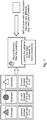
Fig. 1 shows a schematic example relating to a neural network training process and limitations; -
Fig. 2 shows a process flow with respect to the detection of overfitting; and -
Fig. 3 shows an example of a GAN that comproses 2 neural networks, operating as a generator and a discriminator. - The apparatus and system enables hot spots in switchgear, for example in circuit breakers, and in other electrical equipment to be detected through identifying hot spots in infra-red imagery of this equipment. This is achieved through utilization of a machine learning classifier algorithm that has been trained on imagery, at least some of which can be synthetically generated in order that the training set can be significant enough for the machine learning classifier algorithm to be able to identify hot spots in different equipment types, from different vantage points and in different situations. At least some of the data can also be real infrared data. However, the algorithm that generates the synthetic training data also uses that, or at least some of that, training data to determine if an image being interrogated is similar enough to that used in the training for the machine learning classifier algorithm to be able to operate successfully to determine if a switchgear and for example a circuit breaker in that switchgear has a hot spot. Thus, a decision could be made to acquire different imagery to be analysed that could be suitable, or to decide to train the machine learning classifier algorithm further or for example a human operator to intervene and assess the situation.
This is achieved by an apparatus that comprises an input unit, a processing unit, and an output unit. The input unit is configured to provide the processing unit with a monitor infra-red image of a switchgear. The processing unit is configured to implement a machine learning classifier algorithm to analyse the monitor infra-red image and determine if there is one or more anomalous hot spots in the switchgear. The machine learning classifier algorithm has been trained on the basis of a plurality of training images of a switchgear. The processing unit is configured to implement an image processing algorithm operating as a discriminator to analyse the monitor infra-red image to determine information relating to the expected efficacy of the machine learning classifier algorithm in analysing the monitor infra-red image. The image processing algorithm is trained to operate as a discriminator on the basis of at least some of the plurality of training images. The output unit is configured to output the information relating to the expected efficacy of the machine learning classifier algorithm in analysing the monitor infra-red image. - According to an example, the plurality of training images comprises a plurality of synthetic images generated by the image processing algorithm operating as a generator.
- According to an example, the at least some of the plurality of training images used to train the image processing algorithm operating as a discriminator comprises the plurality of synthetic images.
- According to an example, the output unit is configured to output information relating to the one or more anomalous hot spots.
- According to an example, the information relating to the expected efficacy of the machine learning classifier algorithm in analysing the monitor infra-red image comprises a similarity metric between the monitor infra-red image and the plurality of training images.
- According to an example, the information relating to the expected efficacy of the machine learning classifier algorithm in analysing the monitor infra-red image comprises a similarity metric between the monitor infra-red image and the plurality of synthetic images.
- According to an example, the plurality of synthetic images were generated on the basis of at least one real image of a switchgear.
- According to an example, the at least one real image comprises image data of at least one circuit breaker.
- According to an example, the plurality of synthetic image comprises a plurality of different synthetic images.
- According to an example, the plurality of synthetic images comprises two or more different synthetic images generated on the basis of at least one real image.
- According to an example, the at least one real image comprises a plurality of different real images, and wherein the number of real images is less than the number of synthetic images.
- According to an example, the at least one real image is at least one infra-red image.
- According to an example, the plurality of training images comprises at least one real infra-red image of a switchgear.
- According to an example, the at least some of the plurality of training images used to train the image processing algorithm as a discriminator comprises one or more of the at least one real infra-red image.
- According to an example, the at least one real infra-red image comprises image data of at least one circuit breaker.
- According to an example, the plurality of synthetic images comprises synthetic infra-red image of a switchgear.
- According to an example, the plurality of synthetic images comprises image data of at least one circuit breaker.
- According to an example, the monitor infra-red image comprises image data of at least one circuit breaker.
- According to an example, the machine learning classifier algorithm is a neural network.
- According to an example, the neural network is a convolutional neural network.
- According to an example, the processing unit is configured to update the training of the machine learning classifier algorithm comprising utilisation of the monitor infra-red image.
- According to an example, the training update comprises a manual indication that the monitor infra-red image comprises no anomalous hot spots or a manual indication that the monitor infra-red image comprises one or more anomalous hot spots.
- According to an example, the manual indication that the monitor infra-red image comprises one or more anomalous hot spots comprises a manual indication of one or more locations in the monitor infra-red image of the one or more anomalous hot spots.
- According to an example, the image processing algorithm is a Generative Adversarial Network.
- As discussed above, the apparatus can be part of a system that has a camera that acquires the monitor infra-red image and provides this to the processing unit, via the input unit.
Thus, the described apparatus and system provides a way to analyze an infra-red image as a whole without defining regions of interest. It specifically takes into account the fact that there are different circuit breaker (and other electrical equipment) geometries. For this purpose a machine learning classifier algorithm (e.g. a convolutional neural network) is used. The network is trained with data, at least some of which can be artificial data produced by an image processing algorithm such as a Generative Adversarial Network (GAN) and at least part of which can be real infrared data. Furthermore, the apparatus and system uses the image processing algorithm, for example the GAN, operating in a different way to determine if the imagery being analysed, to assess if there are hotspots, is suitable for analysis by the machine learning classifier algorithm. As a result, the expensive human intervention of either calibration or region definition is eliminated from the process, and overfitting is eliminated and it can be determined for example that further training data for the machine learning classifier algorithm is required. - The apparatus and system are explained in more detail for a specific example with reference to a circuit breaker in a switchgear, but this is just one example and the apparatus and system find utility to other parts of switchgear and many other types of electrical equipment, where hot spots can occur and be problematic.
- Thus it is convenient to set the scene. There is currently a strong interest in using infrared data to assess a circuit breaker's health state, where hot spots are indicative of a problem and these hotspots are easy for a human to identify and interpret. However, using skilled technicians and engineers in this manner is very expensive. Machine learning algorithms are here utilised to achieve this without a human. However, machine learning algorithms require an extensive training dataset of relevant data, and this is difficult and expensive to provide. Furthermore, there is a possibility or risk of overfitting, where imagery being analysed is too different to that used for training and as a result the machine learning classifier algorithm will not work well. Overfitting can be overcome by adding more training data, but it is not easy to determine if overfitting is occurring and remedial action such as providing more training data being required. The apparatus and system described here addresses this situation.
- Continuing with the situation prior to development of the described apparatus and system, there is a strong interest in using IR data to assess a circuit breaker's health state. The hot spots indicative of a problem can be identified by a human operator. However, humans are an expensive resource, and as such it would be advantageous to automate the process. The apparatus and system described here enables this.
- Regarding any generic solution that does not require identification of the right areas (e.g. based on a convolutional neural network classifier algorithm), this needs to be robust against the differences in circuit breaker geometry and function to be useful. However, if the trained network has never experienced certain situations, it is less likely to classify them correctly.
- Like a human, the Neural Network learns from experience and is better at judging situations identical or similar to what it has seen before. However, if a neural network is used to automate the process, there is risk of overfitting, which results from the process of training as shown in
Fig. 1 . Basically, the neural network learns to recognize patterns, which (it is anticipated, at the time of training) will apply to situations encountered later. However, if the example is very different from the original training examples, there is a risk that the neural network will not work, because certain unique properties of the original data have become part of the patterns. - However, detecting overfitting is not easy. Given a large dataset from a new circuit breaker, with both failures and non-failures as well as labels that explain to which category a sample belongs, it is possible to test the trained neural network (This is shown schematically in
Fig. 2 ). If most of the samples are classified correctly, there is no overfitting. - The problem with this approach is that there is often not a large amount of data and almost always there is no failure data among it. This means that the given data is not really well-suited to determine whether a neural network will work well for a particular circuit breaker or not.
- Thus to circumvent the large scale collection of data, the apparatus and system described here uses a similarity assessor to determine if the neural network will work with a particular circuit breaker image or not. Even if there is overfitting, a new sample that exhibits all the properties found in the overfitted data still works well and no further training is required for now. If however there is overfitting, this can be determined and further training data provided to train the neural network classifier for example.
A Generative Adversarial Network (GAN) is used by the apparatus and system. Generative Adversarial Networks (GAN) are a technology that is primarily intended for two purposes: On the one hand, the generator part of a GAN can synthetically create new images that look similar to a training set of inputs. On the other hand, the discriminator is trained to spot images, which do not belong to the original training set. - Thus, the apparatus and system utilize a discriminator trained on the original training data of the neural network to assess how far a new sample is away from the original data set. This can be used to establish if there is overfitting, or not, and whether the trained neural network classifier algorithm could successfully analyses the image or not to determine if there are hot spots.
- Generative Adversarial Networks (GANs) are a new technology for the generation of data. One well-known example is their use for the generation of photorealistic images of human beings. The best of these images are indistinguishable from a real human portrait but show people that do not exist in real life. Even the inferior examples are still recognizable as faces.
- A GAN consists of 2 neural networks, a generator and a discriminator (As shown in
Fig. 3 ). The generator produces new images similar to the input data. The discriminator looks at images and determines whether they are real or generated. The two neural networks give feedback to each other. Thus, the generator gets better at creating images that cannot be distinguished from real ones by the discriminator. The discriminator gets better at detecting images that look different from the original input set. - Therefore, for the apparatus and system described here, a GAN operating as a generator has been used to generate infra-red images of circuit breakers based on previous examples of real infra-red images of circuit breakers. Like the generation of photo-realistic human faces discussed above, the synthetic images of the circuit breakers do not necessarily depict a functional circuit breaker, but creates images with features that look very much like that in a circuit breaker. These images are used along with real infra red imagery to train another neural network (called a "classifier") which can recognize hot spots from infra-red imagery acquired from a circuit breaker being monitored. The classifier is now more robust towards different kinds of circuit breakers as input, and is also in general more accurate.
- Then the GAN operating as a discriminator is trained on the images that were generated by the GAN, that were used to train the classifier, enabling the GAN to determine a similarity between a new real image of a circuit breaker, being used to determine a hotspot, and the data that was used to train the classifier - thus the apparatus and system can determine if overfitting is occurring.
- Thus is essence, a GAN is trained in parallel to neural network classifier algorithm (i.e. the one that will identify problems in a circuit breaker). The GAN's discriminator is now trained to detect images which are different from the original training set. The discriminator is being used as a similarity assessor as described above. An image considered to be very similar will work well with the classifier. An image considered to be different will probably not work well as input for the classifier. Only in the latter case, additional training is required.
Claims (25)
- An apparatus for monitoring a switchgear, the apparatus comprising:- an input unit;- a processing unit; and- an output unit;wherein, the input unit is configured to provide the processing unit with a monitor infra-red image of a switchgear;
wherein, the processing unit is configured to implement a machine learning classifier algorithm to analyse the monitor infra-red image and determine if there is one or more anomalous hot spots in the switchgear;
wherein, the machine learning classifier algorithm has been trained on the basis of a plurality of training images of a switchgear;
wherein, the processing unit is configured to implement an image processing algorithm operating as a discriminator to analyse the monitor infra-red image to determine information relating to the expected efficacy of the machine learning classifier algorithm in analysing the monitor infra-red image, wherein the image processing algorithm is trained to operate as a discriminator on the basis of at least some of the plurality of training images; and
wherein, the output unit is configured to output the information relating to the expected efficacy of the machine learning classifier algorithm in analysing the monitor infra-red image. - Apparatus according to claim 1, wherein the plurality of training images comprises a plurality of synthetic images generated by the image processing algorithm operating as a generator.
- Apparatus according to claim 2, wherein the at least some of the plurality of training images used to train the image processing algorithm operating as a discriminator comprises the plurality of synthetic images.
- Apparatus according to any of claims 1-3, wherein the output unit is configured to output information relating to the one or more anomalous hot spots.
- Apparatus according to any of claims 1-4, wherein the information relating to the expected efficacy of the machine learning classifier algorithm in analysing the monitor infra-red image comprises a similarity metric between the monitor infra-red image and the plurality of training images.
- Apparatus according to any of claims 1-5, wherein the information relating to the expected efficacy of the machine learning classifier algorithm in analysing the monitor infra-red image comprises a similarity metric between the monitor infra-red image and the plurality of synthetic images.
- Apparatus according to any of claims 2-6, wherein the plurality of synthetic images were generated on the basis of at least one real image of a switchgear.
- Apparatus according to claim 7, wherein the at least one real image comprises image data of at least one circuit breaker.
- Apparatus according to any of claims 2-8, wherein the plurality of synthetic image comprises a plurality of different synthetic images.
- Apparatus according to any of claims 7-9, wherein the plurality of synthetic images comprises two or more different synthetic images generated on the basis of at least one real image.
- Apparatus according to any of claims 7-10, wherein the at least one real image comprises a plurality of different real images, and wherein the number of real images is less than the number of synthetic images.
- Apparatus according to any of claims 7-11, wherein the at least one real image is at least one infra-red image.
- Apparatus according to any of claims 1-12, wherein the plurality of training images comprises at least one real infra-red image of a switchgear.
- Apparatus according to claim 13, wherein the at least some of the plurality of training images used to train the image processing algorithm as a discriminator comprises one or more of the at least one real infra-red image.
- Apparatus according to any of claims 10-14, wherein the at least one real infra-red image comprises image data of at least one circuit breaker.
- Apparatus according to any of claims 2-15, wherein the plurality of synthetic images comprises synthetic infra-red image of a switchgear.
- Apparatus according to any of claims 2-16, wherein the plurality of synthetic images comprises image data of at least one circuit breaker.
- Apparatus according to any of claims 1-17, wherein the monitor infra-red image comprises image data of at least one circuit breaker.
- Apparatus according to any of claims 1-18, wherein the machine learning classifier algorithm is a neural network.
- Apparatus according to claim 19, wherein the neural network is a convolutional neural network.
- Apparatus according to any of claims 1-20, wherein the processing unit is configured to update the training of the machine learning classifier algorithm comprising utilisation of the monitor infra-red image.
- Apparatus according to claim 21, wherein the training update comprises a manual indication that the monitor infra-red image comprises no anomalous hot spots or a manual indication that the monitor infra-red image comprises one or more anomalous hot spots.
- Apparatus according to claim 22, wherein the manual indication that the monitor infra-red image comprises one or more anomalous hot spots comprises a manual indication of one or more locations in the monitor infra-red image of the one or more anomalous hot spots.
- Apparatus according to any of claims 1-23, wherein the image processing algorithm is a Generative Adversarial Network.
- A system for monitoring a switchgear, the system comprising:- an infra-red camera; and- an apparatus for monitoring a switchgear according to any of claims 1-24; andwherein, the infra-red camera is configured to acquire the monitor infra-red image of the switchgear.
Priority Applications (1)
| Application Number | Priority Date | Filing Date | Title |
|---|---|---|---|
| EP19161425.4A EP3706267B1 (en) | 2019-03-07 | 2019-03-07 | Artificial intelligence monitoring system using infrared images to identify hotspots in a switchgear |
Applications Claiming Priority (1)
| Application Number | Priority Date | Filing Date | Title |
|---|---|---|---|
| EP19161425.4A EP3706267B1 (en) | 2019-03-07 | 2019-03-07 | Artificial intelligence monitoring system using infrared images to identify hotspots in a switchgear |
Publications (2)
| Publication Number | Publication Date |
|---|---|
| EP3706267A1 true EP3706267A1 (en) | 2020-09-09 |
| EP3706267B1 EP3706267B1 (en) | 2021-11-24 |
Family
ID=65729130
Family Applications (1)
| Application Number | Title | Priority Date | Filing Date |
|---|---|---|---|
| EP19161425.4A Active EP3706267B1 (en) | 2019-03-07 | 2019-03-07 | Artificial intelligence monitoring system using infrared images to identify hotspots in a switchgear |
Country Status (1)
| Country | Link |
|---|---|
| EP (1) | EP3706267B1 (en) |
Cited By (4)
| Publication number | Priority date | Publication date | Assignee | Title |
|---|---|---|---|---|
| CN112383137A (en) * | 2020-10-09 | 2021-02-19 | 北京星闪世图科技有限公司 | Transformer area monitoring system and method based on machine vision and thermal imaging technology |
| EP4009235A1 (en) * | 2020-12-07 | 2022-06-08 | ABB Schweiz AG | Medium voltage switching or controlgear monitoring system |
| CN116660316A (en) * | 2022-02-28 | 2023-08-29 | Abb瑞士股份有限公司 | System for monitoring switchgear |
| CN120765612A (en) * | 2025-07-08 | 2025-10-10 | 北京市地铁运营有限公司 | Method and system for identifying abnormalities in infrared images of electrical equipment based on parallel operation characteristics |
Citations (4)
| Publication number | Priority date | Publication date | Assignee | Title |
|---|---|---|---|---|
| EP0342597A2 (en) * | 1988-05-16 | 1989-11-23 | Hitachi, Ltd. | Abnormality system for a high voltage power supply apparatus |
| CN107680195A (en) * | 2017-11-13 | 2018-02-09 | 国网内蒙古东部电力有限公司 | A kind of transformer station intelligent robot inspection Computer Aided Analysis System and method |
| US20180307947A1 (en) * | 2017-04-25 | 2018-10-25 | Nec Laboratories America, Inc. | Cyclic generative adversarial network for unsupervised cross-domain image generation |
| WO2019002507A1 (en) * | 2017-06-28 | 2019-01-03 | Abb Schweiz Ag | Substation containing switchgear or controlgear with unmanned operation and maintenance |
-
2019
- 2019-03-07 EP EP19161425.4A patent/EP3706267B1/en active Active
Patent Citations (4)
| Publication number | Priority date | Publication date | Assignee | Title |
|---|---|---|---|---|
| EP0342597A2 (en) * | 1988-05-16 | 1989-11-23 | Hitachi, Ltd. | Abnormality system for a high voltage power supply apparatus |
| US20180307947A1 (en) * | 2017-04-25 | 2018-10-25 | Nec Laboratories America, Inc. | Cyclic generative adversarial network for unsupervised cross-domain image generation |
| WO2019002507A1 (en) * | 2017-06-28 | 2019-01-03 | Abb Schweiz Ag | Substation containing switchgear or controlgear with unmanned operation and maintenance |
| CN107680195A (en) * | 2017-11-13 | 2018-02-09 | 国网内蒙古东部电力有限公司 | A kind of transformer station intelligent robot inspection Computer Aided Analysis System and method |
Non-Patent Citations (1)
| Title |
|---|
| BINHAI WANG ET AL: "SmartGuard: An autonomous robotic system for inspecting substation equipment", JOURNAL OF FIELD ROBOTICS, vol. 29, no. 1, 16 November 2011 (2011-11-16), US, pages 123 - 137, XP055471462, ISSN: 1556-4959, DOI: 10.1002/rob.20423 * |
Cited By (8)
| Publication number | Priority date | Publication date | Assignee | Title |
|---|---|---|---|---|
| CN112383137A (en) * | 2020-10-09 | 2021-02-19 | 北京星闪世图科技有限公司 | Transformer area monitoring system and method based on machine vision and thermal imaging technology |
| EP4009235A1 (en) * | 2020-12-07 | 2022-06-08 | ABB Schweiz AG | Medium voltage switching or controlgear monitoring system |
| CN114663825A (en) * | 2020-12-07 | 2022-06-24 | Abb瑞士股份有限公司 | Medium voltage switchgear or control device monitoring system |
| US12483010B2 (en) | 2020-12-07 | 2025-11-25 | Abb Schweiz Ag | Medium voltage switching or controlgear monitoring system |
| CN116660316A (en) * | 2022-02-28 | 2023-08-29 | Abb瑞士股份有限公司 | System for monitoring switchgear |
| EP4235591A1 (en) * | 2022-02-28 | 2023-08-30 | Abb Schweiz Ag | System for monitoring a switchgear |
| US12613139B2 (en) | 2022-02-28 | 2026-04-28 | Abb Schweiz Ag | System for monitoring a switchgear |
| CN120765612A (en) * | 2025-07-08 | 2025-10-10 | 北京市地铁运营有限公司 | Method and system for identifying abnormalities in infrared images of electrical equipment based on parallel operation characteristics |
Also Published As
| Publication number | Publication date |
|---|---|
| EP3706267B1 (en) | 2021-11-24 |
Similar Documents
| Publication | Publication Date | Title |
|---|---|---|
| EP3706267A1 (en) | Artificial intelligence monitoring system using infrared images to identify hotspots in a switchgear | |
| Jadin et al. | Feature extraction and classification for detecting the thermal faults in electrical installations | |
| US12412261B2 (en) | System for monitoring a switchgear | |
| US12316079B2 (en) | Apparatus for monitoring a switchgear | |
| CN111431284B (en) | An intelligent management and control system for substations based on BIM technology | |
| US12092526B2 (en) | Apparatus for monitoring a switchgear | |
| CN112734977B (en) | Equipment risk early warning system and algorithm based on Internet of things | |
| CN116704733B (en) | Aging early warning method and system for aluminum alloy cable | |
| CN117713381A (en) | Switch board system convenient to overhaul | |
| CN120294522B (en) | Multi-source data monitoring processing method and system for GIS equipment | |
| CN117007877A (en) | Full spectrum domain multi-state parameter full life detection method and equipment for power transmission and transformation equipment | |
| CN114500574B (en) | A monitoring method, device and medium for improving grain depot safety based on blockchain | |
| CN115580635A (en) | An intelligent fault diagnosis method and system for an Internet of Things terminal | |
| EP3706269B1 (en) | Artificial intelligence monitoring system using infrared images to identify hotspots in a switchgear | |
| Gitzel et al. | Automatic Analysis of Thermograms–Challenge in Thermal Monitoring of Switchgears Using Infrared Cameras | |
| US12613139B2 (en) | System for monitoring a switchgear | |
| EP3706266A1 (en) | Artificial intelligence monitoring system using infrared images to identify hotspots in a switchgear | |
| CN114399496A (en) | Method and device for automatically identifying power grid equipment from infrared image | |
| KR20200064185A (en) | Apparatus for detecting electric supply equipment | |
| CN118282048A (en) | Intelligent online monitoring system for low voltage switchgear based on wide area measurement technology | |
| CN118362872A (en) | Systems for monitoring switchgear | |
| Faria et al. | STATE MACHINES APPLIED TO SUPERVISE THE LIVE LINE WORK IN ELECTRICAL ENERGY DISTRIBUTION SYSTEM |
Legal Events
| Date | Code | Title | Description |
|---|---|---|---|
| PUAI | Public reference made under article 153(3) epc to a published international application that has entered the european phase |
Free format text: ORIGINAL CODE: 0009012 |
|
| STAA | Information on the status of an ep patent application or granted ep patent |
Free format text: STATUS: THE APPLICATION HAS BEEN PUBLISHED |
|
| AK | Designated contracting states |
Kind code of ref document: A1 Designated state(s): AL AT BE BG CH CY CZ DE DK EE ES FI FR GB GR HR HU IE IS IT LI LT LU LV MC MK MT NL NO PL PT RO RS SE SI SK SM TR |
|
| AX | Request for extension of the european patent |
Extension state: BA ME |
|
| STAA | Information on the status of an ep patent application or granted ep patent |
Free format text: STATUS: REQUEST FOR EXAMINATION WAS MADE |
|
| 17P | Request for examination filed |
Effective date: 20210205 |
|
| RBV | Designated contracting states (corrected) |
Designated state(s): AL AT BE BG CH CY CZ DE DK EE ES FI FR GB GR HR HU IE IS IT LI LT LU LV MC MK MT NL NO PL PT RO RS SE SI SK SM TR |
|
| GRAP | Despatch of communication of intention to grant a patent |
Free format text: ORIGINAL CODE: EPIDOSNIGR1 |
|
| STAA | Information on the status of an ep patent application or granted ep patent |
Free format text: STATUS: GRANT OF PATENT IS INTENDED |
|
| RIC1 | Information provided on ipc code assigned before grant |
Ipc: H02B 3/00 20060101AFI20210601BHEP Ipc: G06K 9/62 20060101ALI20210601BHEP Ipc: G06K 9/46 20060101ALI20210601BHEP Ipc: G06N 3/08 20060101ALI20210601BHEP Ipc: G06N 3/04 20060101ALI20210601BHEP |
|
| INTG | Intention to grant announced |
Effective date: 20210624 |
|
| GRAS | Grant fee paid |
Free format text: ORIGINAL CODE: EPIDOSNIGR3 |
|
| GRAA | (expected) grant |
Free format text: ORIGINAL CODE: 0009210 |
|
| STAA | Information on the status of an ep patent application or granted ep patent |
Free format text: STATUS: THE PATENT HAS BEEN GRANTED |
|
| RAP3 | Party data changed (applicant data changed or rights of an application transferred) |
Owner name: ABB SCHWEIZ AG |
|
| AK | Designated contracting states |
Kind code of ref document: B1 Designated state(s): AL AT BE BG CH CY CZ DE DK EE ES FI FR GB GR HR HU IE IS IT LI LT LU LV MC MK MT NL NO PL PT RO RS SE SI SK SM TR |
|
| REG | Reference to a national code |
Ref country code: GB Ref legal event code: FG4D |
|
| REG | Reference to a national code |
Ref country code: AT Ref legal event code: REF Ref document number: 1450583 Country of ref document: AT Kind code of ref document: T Effective date: 20211215 |
|
| REG | Reference to a national code |
Ref country code: DE Ref legal event code: R096 Ref document number: 602019009436 Country of ref document: DE |
|
| REG | Reference to a national code |
Ref country code: IE Ref legal event code: FG4D |
|
| REG | Reference to a national code |
Ref country code: LT Ref legal event code: MG9D |
|
| REG | Reference to a national code |
Ref country code: NL Ref legal event code: MP Effective date: 20211124 |
|
| REG | Reference to a national code |
Ref country code: AT Ref legal event code: MK05 Ref document number: 1450583 Country of ref document: AT Kind code of ref document: T Effective date: 20211124 |
|
| PG25 | Lapsed in a contracting state [announced via postgrant information from national office to epo] |
Ref country code: RS Free format text: LAPSE BECAUSE OF FAILURE TO SUBMIT A TRANSLATION OF THE DESCRIPTION OR TO PAY THE FEE WITHIN THE PRESCRIBED TIME-LIMIT Effective date: 20211124 Ref country code: LT Free format text: LAPSE BECAUSE OF FAILURE TO SUBMIT A TRANSLATION OF THE DESCRIPTION OR TO PAY THE FEE WITHIN THE PRESCRIBED TIME-LIMIT Effective date: 20211124 Ref country code: FI Free format text: LAPSE BECAUSE OF FAILURE TO SUBMIT A TRANSLATION OF THE DESCRIPTION OR TO PAY THE FEE WITHIN THE PRESCRIBED TIME-LIMIT Effective date: 20211124 Ref country code: BG Free format text: LAPSE BECAUSE OF FAILURE TO SUBMIT A TRANSLATION OF THE DESCRIPTION OR TO PAY THE FEE WITHIN THE PRESCRIBED TIME-LIMIT Effective date: 20220224 Ref country code: AT Free format text: LAPSE BECAUSE OF FAILURE TO SUBMIT A TRANSLATION OF THE DESCRIPTION OR TO PAY THE FEE WITHIN THE PRESCRIBED TIME-LIMIT Effective date: 20211124 |
|
| PG25 | Lapsed in a contracting state [announced via postgrant information from national office to epo] |
Ref country code: IS Free format text: LAPSE BECAUSE OF FAILURE TO SUBMIT A TRANSLATION OF THE DESCRIPTION OR TO PAY THE FEE WITHIN THE PRESCRIBED TIME-LIMIT Effective date: 20220324 Ref country code: SE Free format text: LAPSE BECAUSE OF FAILURE TO SUBMIT A TRANSLATION OF THE DESCRIPTION OR TO PAY THE FEE WITHIN THE PRESCRIBED TIME-LIMIT Effective date: 20211124 Ref country code: PT Free format text: LAPSE BECAUSE OF FAILURE TO SUBMIT A TRANSLATION OF THE DESCRIPTION OR TO PAY THE FEE WITHIN THE PRESCRIBED TIME-LIMIT Effective date: 20220324 Ref country code: PL Free format text: LAPSE BECAUSE OF FAILURE TO SUBMIT A TRANSLATION OF THE DESCRIPTION OR TO PAY THE FEE WITHIN THE PRESCRIBED TIME-LIMIT Effective date: 20211124 Ref country code: NO Free format text: LAPSE BECAUSE OF FAILURE TO SUBMIT A TRANSLATION OF THE DESCRIPTION OR TO PAY THE FEE WITHIN THE PRESCRIBED TIME-LIMIT Effective date: 20220224 Ref country code: NL Free format text: LAPSE BECAUSE OF FAILURE TO SUBMIT A TRANSLATION OF THE DESCRIPTION OR TO PAY THE FEE WITHIN THE PRESCRIBED TIME-LIMIT Effective date: 20211124 Ref country code: LV Free format text: LAPSE BECAUSE OF FAILURE TO SUBMIT A TRANSLATION OF THE DESCRIPTION OR TO PAY THE FEE WITHIN THE PRESCRIBED TIME-LIMIT Effective date: 20211124 Ref country code: HR Free format text: LAPSE BECAUSE OF FAILURE TO SUBMIT A TRANSLATION OF THE DESCRIPTION OR TO PAY THE FEE WITHIN THE PRESCRIBED TIME-LIMIT Effective date: 20211124 Ref country code: GR Free format text: LAPSE BECAUSE OF FAILURE TO SUBMIT A TRANSLATION OF THE DESCRIPTION OR TO PAY THE FEE WITHIN THE PRESCRIBED TIME-LIMIT Effective date: 20220225 |
|
| PG25 | Lapsed in a contracting state [announced via postgrant information from national office to epo] |
Ref country code: SM Free format text: LAPSE BECAUSE OF FAILURE TO SUBMIT A TRANSLATION OF THE DESCRIPTION OR TO PAY THE FEE WITHIN THE PRESCRIBED TIME-LIMIT Effective date: 20211124 Ref country code: SK Free format text: LAPSE BECAUSE OF FAILURE TO SUBMIT A TRANSLATION OF THE DESCRIPTION OR TO PAY THE FEE WITHIN THE PRESCRIBED TIME-LIMIT Effective date: 20211124 Ref country code: RO Free format text: LAPSE BECAUSE OF FAILURE TO SUBMIT A TRANSLATION OF THE DESCRIPTION OR TO PAY THE FEE WITHIN THE PRESCRIBED TIME-LIMIT Effective date: 20211124 Ref country code: ES Free format text: LAPSE BECAUSE OF FAILURE TO SUBMIT A TRANSLATION OF THE DESCRIPTION OR TO PAY THE FEE WITHIN THE PRESCRIBED TIME-LIMIT Effective date: 20211124 Ref country code: EE Free format text: LAPSE BECAUSE OF FAILURE TO SUBMIT A TRANSLATION OF THE DESCRIPTION OR TO PAY THE FEE WITHIN THE PRESCRIBED TIME-LIMIT Effective date: 20211124 Ref country code: DK Free format text: LAPSE BECAUSE OF FAILURE TO SUBMIT A TRANSLATION OF THE DESCRIPTION OR TO PAY THE FEE WITHIN THE PRESCRIBED TIME-LIMIT Effective date: 20211124 Ref country code: CZ Free format text: LAPSE BECAUSE OF FAILURE TO SUBMIT A TRANSLATION OF THE DESCRIPTION OR TO PAY THE FEE WITHIN THE PRESCRIBED TIME-LIMIT Effective date: 20211124 |
|
| REG | Reference to a national code |
Ref country code: DE Ref legal event code: R097 Ref document number: 602019009436 Country of ref document: DE |
|
| PLBE | No opposition filed within time limit |
Free format text: ORIGINAL CODE: 0009261 |
|
| STAA | Information on the status of an ep patent application or granted ep patent |
Free format text: STATUS: NO OPPOSITION FILED WITHIN TIME LIMIT |
|
| PG25 | Lapsed in a contracting state [announced via postgrant information from national office to epo] |
Ref country code: MC Free format text: LAPSE BECAUSE OF FAILURE TO SUBMIT A TRANSLATION OF THE DESCRIPTION OR TO PAY THE FEE WITHIN THE PRESCRIBED TIME-LIMIT Effective date: 20211124 Ref country code: AL Free format text: LAPSE BECAUSE OF FAILURE TO SUBMIT A TRANSLATION OF THE DESCRIPTION OR TO PAY THE FEE WITHIN THE PRESCRIBED TIME-LIMIT Effective date: 20211124 |
|
| REG | Reference to a national code |
Ref country code: CH Ref legal event code: PL |
|
| 26N | No opposition filed |
Effective date: 20220825 |
|
| PG25 | Lapsed in a contracting state [announced via postgrant information from national office to epo] |
Ref country code: SI Free format text: LAPSE BECAUSE OF FAILURE TO SUBMIT A TRANSLATION OF THE DESCRIPTION OR TO PAY THE FEE WITHIN THE PRESCRIBED TIME-LIMIT Effective date: 20211124 |
|
| REG | Reference to a national code |
Ref country code: BE Ref legal event code: MM Effective date: 20220331 |
|
| PG25 | Lapsed in a contracting state [announced via postgrant information from national office to epo] |
Ref country code: LU Free format text: LAPSE BECAUSE OF NON-PAYMENT OF DUE FEES Effective date: 20220307 Ref country code: LI Free format text: LAPSE BECAUSE OF NON-PAYMENT OF DUE FEES Effective date: 20220331 Ref country code: IE Free format text: LAPSE BECAUSE OF NON-PAYMENT OF DUE FEES Effective date: 20220307 Ref country code: CH Free format text: LAPSE BECAUSE OF NON-PAYMENT OF DUE FEES Effective date: 20220331 |
|
| PG25 | Lapsed in a contracting state [announced via postgrant information from national office to epo] |
Ref country code: BE Free format text: LAPSE BECAUSE OF NON-PAYMENT OF DUE FEES Effective date: 20220331 |
|
| PG25 | Lapsed in a contracting state [announced via postgrant information from national office to epo] |
Ref country code: IT Free format text: LAPSE BECAUSE OF FAILURE TO SUBMIT A TRANSLATION OF THE DESCRIPTION OR TO PAY THE FEE WITHIN THE PRESCRIBED TIME-LIMIT Effective date: 20211124 |
|
| GBPC | Gb: european patent ceased through non-payment of renewal fee |
Effective date: 20230307 |
|
| PG25 | Lapsed in a contracting state [announced via postgrant information from national office to epo] |
Ref country code: GB Free format text: LAPSE BECAUSE OF NON-PAYMENT OF DUE FEES Effective date: 20230307 |
|
| PG25 | Lapsed in a contracting state [announced via postgrant information from national office to epo] |
Ref country code: GB Free format text: LAPSE BECAUSE OF NON-PAYMENT OF DUE FEES Effective date: 20230307 |
|
| PG25 | Lapsed in a contracting state [announced via postgrant information from national office to epo] |
Ref country code: MK Free format text: LAPSE BECAUSE OF FAILURE TO SUBMIT A TRANSLATION OF THE DESCRIPTION OR TO PAY THE FEE WITHIN THE PRESCRIBED TIME-LIMIT Effective date: 20211124 Ref country code: CY Free format text: LAPSE BECAUSE OF FAILURE TO SUBMIT A TRANSLATION OF THE DESCRIPTION OR TO PAY THE FEE WITHIN THE PRESCRIBED TIME-LIMIT Effective date: 20211124 |
|
| PG25 | Lapsed in a contracting state [announced via postgrant information from national office to epo] |
Ref country code: HU Free format text: LAPSE BECAUSE OF FAILURE TO SUBMIT A TRANSLATION OF THE DESCRIPTION OR TO PAY THE FEE WITHIN THE PRESCRIBED TIME-LIMIT; INVALID AB INITIO Effective date: 20190307 |
|
| PG25 | Lapsed in a contracting state [announced via postgrant information from national office to epo] |
Ref country code: TR Free format text: LAPSE BECAUSE OF FAILURE TO SUBMIT A TRANSLATION OF THE DESCRIPTION OR TO PAY THE FEE WITHIN THE PRESCRIBED TIME-LIMIT Effective date: 20211124 |
|
| PG25 | Lapsed in a contracting state [announced via postgrant information from national office to epo] |
Ref country code: MT Free format text: LAPSE BECAUSE OF FAILURE TO SUBMIT A TRANSLATION OF THE DESCRIPTION OR TO PAY THE FEE WITHIN THE PRESCRIBED TIME-LIMIT Effective date: 20211124 |
|
| PGFP | Annual fee paid to national office [announced via postgrant information from national office to epo] |
Ref country code: DE Payment date: 20260319 Year of fee payment: 8 |
|
| PGFP | Annual fee paid to national office [announced via postgrant information from national office to epo] |
Ref country code: FR Payment date: 20260320 Year of fee payment: 8 |