EP3706207A1 - Cathode and secondary battery comprising same cathode - Google Patents
Cathode and secondary battery comprising same cathode Download PDFInfo
- Publication number
- EP3706207A1 EP3706207A1 EP19741173.9A EP19741173A EP3706207A1 EP 3706207 A1 EP3706207 A1 EP 3706207A1 EP 19741173 A EP19741173 A EP 19741173A EP 3706207 A1 EP3706207 A1 EP 3706207A1
- Authority
- EP
- European Patent Office
- Prior art keywords
- positive electrode
- active material
- electrode active
- sub
- material layer
- Prior art date
- Legal status (The legal status is an assumption and is not a legal conclusion. Google has not performed a legal analysis and makes no representation as to the accuracy of the status listed.)
- Pending
Links
Images

Classifications
-
- H—ELECTRICITY
- H01—ELECTRIC ELEMENTS
- H01M—PROCESSES OR MEANS, e.g. BATTERIES, FOR THE DIRECT CONVERSION OF CHEMICAL ENERGY INTO ELECTRICAL ENERGY
- H01M4/00—Electrodes
- H01M4/02—Electrodes composed of, or comprising, active material
- H01M4/13—Electrodes for accumulators with non-aqueous electrolyte, e.g. for lithium-accumulators; Processes of manufacture thereof
- H01M4/131—Electrodes based on mixed oxides or hydroxides, or on mixtures of oxides or hydroxides, e.g. LiCoOx
-
- H—ELECTRICITY
- H01—ELECTRIC ELEMENTS
- H01M—PROCESSES OR MEANS, e.g. BATTERIES, FOR THE DIRECT CONVERSION OF CHEMICAL ENERGY INTO ELECTRICAL ENERGY
- H01M10/00—Secondary cells; Manufacture thereof
- H01M10/05—Accumulators with non-aqueous electrolyte
- H01M10/052—Li-accumulators
-
- H—ELECTRICITY
- H01—ELECTRIC ELEMENTS
- H01M—PROCESSES OR MEANS, e.g. BATTERIES, FOR THE DIRECT CONVERSION OF CHEMICAL ENERGY INTO ELECTRICAL ENERGY
- H01M4/00—Electrodes
- H01M4/02—Electrodes composed of, or comprising, active material
- H01M4/04—Processes of manufacture in general
- H01M4/0402—Methods of deposition of the material
- H01M4/0404—Methods of deposition of the material by coating on electrode collectors
-
- H—ELECTRICITY
- H01—ELECTRIC ELEMENTS
- H01M—PROCESSES OR MEANS, e.g. BATTERIES, FOR THE DIRECT CONVERSION OF CHEMICAL ENERGY INTO ELECTRICAL ENERGY
- H01M4/00—Electrodes
- H01M4/02—Electrodes composed of, or comprising, active material
- H01M4/36—Selection of substances as active materials, active masses, active liquids
- H01M4/48—Selection of substances as active materials, active masses, active liquids of inorganic oxides or hydroxides
- H01M4/50—Selection of substances as active materials, active masses, active liquids of inorganic oxides or hydroxides of manganese
- H01M4/505—Selection of substances as active materials, active masses, active liquids of inorganic oxides or hydroxides of manganese of mixed oxides or hydroxides containing manganese for inserting or intercalating light metals, e.g. LiMn2O4 or LiMn2OxFy
-
- H—ELECTRICITY
- H01—ELECTRIC ELEMENTS
- H01M—PROCESSES OR MEANS, e.g. BATTERIES, FOR THE DIRECT CONVERSION OF CHEMICAL ENERGY INTO ELECTRICAL ENERGY
- H01M4/00—Electrodes
- H01M4/02—Electrodes composed of, or comprising, active material
- H01M4/36—Selection of substances as active materials, active masses, active liquids
- H01M4/48—Selection of substances as active materials, active masses, active liquids of inorganic oxides or hydroxides
- H01M4/52—Selection of substances as active materials, active masses, active liquids of inorganic oxides or hydroxides of nickel, cobalt or iron
- H01M4/525—Selection of substances as active materials, active masses, active liquids of inorganic oxides or hydroxides of nickel, cobalt or iron of mixed oxides or hydroxides containing iron, cobalt or nickel for inserting or intercalating light metals, e.g. LiNiO2, LiCoO2 or LiCoOxFy
-
- H—ELECTRICITY
- H01—ELECTRIC ELEMENTS
- H01M—PROCESSES OR MEANS, e.g. BATTERIES, FOR THE DIRECT CONVERSION OF CHEMICAL ENERGY INTO ELECTRICAL ENERGY
- H01M4/00—Electrodes
- H01M4/02—Electrodes composed of, or comprising, active material
- H01M4/62—Selection of inactive substances as ingredients for active masses, e.g. binders, fillers
- H01M4/621—Binders
- H01M4/622—Binders being polymers
-
- H—ELECTRICITY
- H01—ELECTRIC ELEMENTS
- H01M—PROCESSES OR MEANS, e.g. BATTERIES, FOR THE DIRECT CONVERSION OF CHEMICAL ENERGY INTO ELECTRICAL ENERGY
- H01M4/00—Electrodes
- H01M4/02—Electrodes composed of, or comprising, active material
- H01M4/62—Selection of inactive substances as ingredients for active masses, e.g. binders, fillers
- H01M4/621—Binders
- H01M4/622—Binders being polymers
- H01M4/623—Binders being polymers fluorinated polymers
-
- H—ELECTRICITY
- H01—ELECTRIC ELEMENTS
- H01M—PROCESSES OR MEANS, e.g. BATTERIES, FOR THE DIRECT CONVERSION OF CHEMICAL ENERGY INTO ELECTRICAL ENERGY
- H01M4/00—Electrodes
- H01M4/02—Electrodes composed of, or comprising, active material
- H01M4/62—Selection of inactive substances as ingredients for active masses, e.g. binders, fillers
- H01M4/624—Electric conductive fillers
- H01M4/625—Carbon or graphite
-
- H—ELECTRICITY
- H01—ELECTRIC ELEMENTS
- H01M—PROCESSES OR MEANS, e.g. BATTERIES, FOR THE DIRECT CONVERSION OF CHEMICAL ENERGY INTO ELECTRICAL ENERGY
- H01M4/00—Electrodes
- H01M4/02—Electrodes composed of, or comprising, active material
- H01M2004/021—Physical characteristics, e.g. porosity, surface area
-
- H—ELECTRICITY
- H01—ELECTRIC ELEMENTS
- H01M—PROCESSES OR MEANS, e.g. BATTERIES, FOR THE DIRECT CONVERSION OF CHEMICAL ENERGY INTO ELECTRICAL ENERGY
- H01M4/00—Electrodes
- H01M4/02—Electrodes composed of, or comprising, active material
- H01M2004/026—Electrodes composed of, or comprising, active material characterised by the polarity
- H01M2004/028—Positive electrodes
-
- Y—GENERAL TAGGING OF NEW TECHNOLOGICAL DEVELOPMENTS; GENERAL TAGGING OF CROSS-SECTIONAL TECHNOLOGIES SPANNING OVER SEVERAL SECTIONS OF THE IPC; TECHNICAL SUBJECTS COVERED BY FORMER USPC CROSS-REFERENCE ART COLLECTIONS [XRACs] AND DIGESTS
- Y02—TECHNOLOGIES OR APPLICATIONS FOR MITIGATION OR ADAPTATION AGAINST CLIMATE CHANGE
- Y02E—REDUCTION OF GREENHOUSE GAS [GHG] EMISSIONS, RELATED TO ENERGY GENERATION, TRANSMISSION OR DISTRIBUTION
- Y02E60/00—Enabling technologies; Technologies with a potential or indirect contribution to GHG emissions mitigation
- Y02E60/10—Energy storage using batteries
Definitions
- the present invention when using a specific positive electrode active material, relates to a positive electrode and a secondary battery including the same, in which a total content of the remaining components excluding the positive electrode active material in the positive electrode active material layer and a loading amount of the positive electrode active material layer satisfy an optimum relationship.
- the lithium secondary battery means a battery in which an electrode assembly, which includes: a positive electrode containing a positive electrode active material capable of intercalating/deintercalating lithium ions; a negative electrode containing a negative electrode active material capable of intercalating/deintercalating lithium ions; a micro-porous separator interposed between the positive electrode and the negative electrode; and a non-aqueous electrolyte containing lithium ions, is included.
- an electrode assembly which includes: a positive electrode containing a positive electrode active material capable of intercalating/deintercalating lithium ions; a negative electrode containing a negative electrode active material capable of intercalating/deintercalating lithium ions; a micro-porous separator interposed between the positive electrode and the negative electrode; and a non-aqueous electrolyte containing lithium ions, is included.
- the positive electrode and/or the negative electrode may include a conductive material to improve conductivity.
- a conductive material to improve conductivity.
- a dot-type conductive material such as carbon black has been mainly used, but when a content of the conductive material is increased to improve the conductivity, an amount of the positive electrode active material or the negative electrode active material is relatively decreased, and accordingly, output and durability of the battery are deteriorated, thereby deteriorating the life-time characteristics.
- the positive electrode active material itself has a level of low conductivity, and thus the above-described problems are exhibited much seriously.
- a method for using a linear conductive material such as a carbon nanotube has been introduced. Since the carbon nanotube has a relatively longer length than the particle-type conductive material, the conductivity may be improved even with a smaller content than the dot-type conductive material. Accordingly, the amount of the active material may be increased.
- the positive electrode of the secondary battery requires a high energy density
- the positive electrode may include a positive electrode active material capable of manufacturing a battery having high capacity such as Li (Ni 0.6 Mn 0.2 Co 0.2 )O 2 and Li (Ni 0.8 Mn 0.1 Co 0.1 )O 2 .
- a positive electrode active material capable of manufacturing a battery having high capacity such as Li (Ni 0.6 Mn 0.2 Co 0.2 )O 2 and Li (Ni 0.8 Mn 0.1 Co 0.1 )O 2 .
- positive electrode adhesion when adhesion between the positive electrode active material layer and a current collector (positive electrode adhesion), and mobility of the lithium ions are not ensured in the positive electrode including the carbon nanotube and a binder in addition to the positive electrode active materials, there are problems that the life-time characteristics at high temperature and output characteristics in an environment requiring high output are deteriorated.
- a positive electrode capable of improving life-time characteristics at high temperature and high output characteristics, and including the positive electrode active materials, the carbon nanotube, and the binder.
- a positive electrode active material which is any one among Li(Ni x1 Mn y1 Co z1 )O 2 (0.55 ⁇ x1 ⁇ 0.69, 0.15 ⁇ y1 ⁇ 0.29, 0.15 ⁇ z1 ⁇ 0.29, x1+y1+z
- a means a loading amount (unit: mg/25cm 2 ) of the positive electrode active material layer
- b means a total content (unit: wt%) of the remaining components excluding the positive electrode active material in the positive electrode active material layer with respect to the total weight of the positive electrode active material layer.
- a secondary battery and a battery module including the positive electrode there are provided a secondary battery and a battery module including the positive electrode.
- positive electrode adhesion and mobility of lithium ions may be appropriately controlled, thereby improving high output characteristics and life-time characteristics at high temperature of a secondary battery.
- a means a loading amount (unit: mg/25cm 2 ) of the positive electrode active material layer
- b means a total content (unit: wt%) of the remaining components excluding the positive electrode active material in the positive electrode active material layer with respect to the total weight of the positive electrode active material layer.
- the current collector is not particularly limited as long as having electrical conductivity without causing any chemical changes in the battery.
- the current collector may use copper, stainless steel, aluminum, nickel, titanium, sintered carbon, or aluminum or stainless steel of which surface is treated with carbon, nickel, titanium, silver, or the like.
- a transition metal which adsorbs carbon well such as copper and nickel may be used as a current collector.
- the positive electrode active material layer may be disposed on the current collector.
- the positive electrode active material layer may be disposed on one side or both sides of the current collector.
- the loading amount of the positive electrode active material layer may be 20-1500 mg/25cm 2 , specifically 100-1300 mg/25cm 2 , and more specifically 300-1100 mg/25cm 2 .
- the positive electrode active material layer may include a positive electrode active material, a conductive material, and a binder.
- Li(Ni x1 Mn y1 Co z1 )O 2 and Li(Ni x2 Mn y2 Co z2 )O 2 have high energy densities, thereby enabling producing a high capacity battery.
- An average particle diameter (D 50 ) of the positive electrode active material may be 3-20 ⁇ m, specifically 6-18 ⁇ m, and more specifically 9-16 ⁇ m. When the above range is satisfied, life-time characteristics at high temperature and output characteristics of a battery may be improved.
- an average particle diameter (D 50 ) may mean a particle diameter corresponding to 50% of a volume accumulation amount in a particle diameter distribution curve of particles.
- the average particle size (D 50 ) may be measured using, for example, a laser diffraction method. The laser diffraction method generally enables to measure a particle diameter about from a submicron region to several millimeters (mm), thereby obtaining results having high reproducibility and high resolution.
- the conductive material may contain a carbon nanotube, and specifically, may be composed of a carbon nanotube.
- the carbon nanotube may be a single-walled carbon nanotube or a multi-walled carbon nanotube, but more preferably, may be a multi-walled carbon nanotube.
- An average diameter of the carbon nanotube may be 1-30 nm, specifically 3-26 nm, and more specifically 5-22 nm. When the above range is satisfied, the carbon nanotube is easily dispersed in the positive electrode slurry, thereby improving conductivity of the positive electrode.
- the average diameter may be measured by using TEM or SEM.
- a BET specific surface area of the carbon nanotube may be 100-300 m 2 /g, specifically 125-275 m 2 /g, and more specifically 150-250 m 2 /g. When the above range is satisfied, the carbon nanotube is easily dispersed in the positive electrode slurry, thereby improving conductivity of the positive electrode.
- the BET specific surface area may be measured by using a nitrogen adsorption BET method.
- the carbon nanotube may be contained in an amount of 0.25-1.15 wt%, and specifically 0.30-1.10 wt% with respect to the total weight of the positive electrode active material layer.
- the carbon nanotube may be contained in an amount of 0.20-1.10 wt%, and specifically 0.25-1.05 wt% with respect to the total weight of the positive electrode active material layer.
- the conductivity of the electrode may be ensured, thereby improving output and life-time characteristics of a battery while the content of the positive electrode active material may be sufficiently ensured, thereby preventing deterioration in initial capacity of a battery.
- the binder may contain a fluorine-based binder and a non-fluorine-based binder, and specifically, the binder may be composed of a fluorine-based binder and a non-fluorine-based binder.
- the fluorine-based binder may be polyvinylidene fluoride (PVdF) to improve chemical stability and positive electrode adhesion.
- PVdF polyvinylidene fluoride
- a weight average molecular weight of the fluorine-based binder may be 200,000-1,200,000 g/mol, and specifically 500,000-1,000,000 g/mol. When the above range is satisfied, the adhesion (positive electrode adhesion) between the positive electrode active material layer and the current collector may be improved.
- the non-fluorine-based binder may be at least one among nitrile butadiene rubber (NBR) and hydrogenated nitrile butadiene rubber (H-NBR), and specifically may be hydrogenated nitrile butadiene rubber.
- NBR nitrile butadiene rubber
- H-NBR hydrogenated nitrile butadiene rubber
- a weight ratio of the fluorine-based binder and the non-fluorine-based binder may be 35:1 to 1:1, and specifically 29:1 to 2:1. When the above range is satisfied, there are effects of improving the positive electrode adhesion and improving dispersion of the carbon nanotube.
- the binder may be contained in an amount of 0.80-3.00 wt%, specifically 0.85-2.90 wt%, more specifically 0.90-2.80 wt% with respect to the total weight of the positive electrode active material layer.
- 0.80-3.00 wt% specifically 0.85-2.90 wt%, more specifically 0.90-2.80 wt% with respect to the total weight of the positive electrode active material layer.
- a means a loading amount (unit: mg/25cm 2 ) of the positive electrode active material layer
- b means a total content (unit: wt%) of the remaining components excluding the positive electrode active material in the positive electrode active material layer with respect to the total weight of the positive electrode active material layer.
- the positive electrode active material layer satisfies Relation 3
- the positive electrode active material layer satisfies Relation 4: 0.0021 ⁇ a ⁇ b ⁇ 0.0047 ⁇ a 0.0017 ⁇ a ⁇ b ⁇ 0.0043 ⁇ a
- the positive electrode active material is Li(Ni x1 Mn y1 Co z1 )O 2
- the positive electrode active material layer satisfies a relation of b ⁇ 0.0020 ⁇ a or when the positive electrode active material is Li(Ni x2 Mn y2 Co z2 )O 2 , the positive electrode active material layer satisfies a relation of b ⁇ 0.0015 ⁇ a, the total content of the remaining components excluding the positive electrode active material in the positive electrode active material layer is insufficient, whereby the positive electrode adhesion is deteriorated and the positive electrode active material layer tends to peel off from the current collector, so that there is a problem of drastically deteriorating the life-time characteristics of the secondary battery at a high temperature of 45°C or more.
- the positive electrode active material is Li(Ni x1 Mn y1 Co z1 )O 2
- the positive electrode active material layer satisfies a relation of b ⁇ 0.0050 ⁇ a or when the positive electrode active material is Li(Ni x2 Mn y2 Co z2 )O 2
- the positive electrode active material layer satisfies a relation of b ⁇ 0.0044 ⁇ a
- the total content of the remaining components excluding the positive electrode active material in the positive electrode active material layer is excessively large, whereby voids in the positive electrode active material layer are hardly present.
- lithium ions are difficult to transfer in the positive electrode active material layer, so that there is a problem of deteriorating the output characteristics.
- the relationship between the total content of the remaining components excluding the positive electrode active material and the loading amount in the positive electrode active material layer is important. That is, not only the total content of the remaining components excluding the positive electrode active material in the positive electrode active material layer is a major factor, but in the present invention, also the loading amount is considered together, and thus both the positive electrode adhesion and the lithium ion mobility are improved, thereby improving the life-time and output characteristics of a battery.
- a secondary battery includes: a positive electrode; a negative electrode; a separator interposed between the positive electrode and the negative electrode; and an electrolyte, wherein the positive electrode is the same as the positive electrode of the described embodiment. Accordingly, description of the positive electrode will be omitted.
- the negative electrode may include a negative electrode current collector and a negative electrode active material layer disposed on one side or both sides of the negative electrode current collector.
- the negative electrode current collector is not particularly limited as long as having electrical conductivity without causing any chemical changes in the battery.
- the negative electrode current collector may use copper, stainless steel, aluminum, nickel, titanium, sintered carbon, or aluminum or stainless steel of which surface is treated with carbon, nickel, titanium, silver, or the like.
- a transition metal which adsorbs carbon well such as copper and nickel may be used as a negative electrode current collector.
- the negative electrode active material layer may include a negative electrode active material, a negative electrode conductive material, and a negative electrode binder.
- the negative electrode active material may be a graphite-based active material particle or a silicon-based active material particle.
- the graphite-based active material particle may use at least one selected from the group consisting of artificial graphite, natural graphite, a graphitized carbon fiber, and a graphitized mesocarbon microbead, and particularly, when artificial graphite is used, rate characteristics may be improved.
- the silicon-based active material particle may use at least one selected from the group consisting of Si, SiO x (0 ⁇ x ⁇ 2), a Si-C composite, and a Si-Y alloy (wherein, Y is an element selected from the group consisting of an alkali metal, an alkaline earth metal, a transition metal, a Group 13 element, a Group 14 element, a rare earth element, and a combination thereof), and particularly, when Si is used, a high capacity battery may be obtained.
- the negative electrode binder may include at least one selected from the group consisting of a polyvinylidene fluoride-hexafluoropropylene copolymer (PVDF-co-HFP), polyvinylidene fluoride, polyacrylonitrile, polymethylmethacrylate, polyvinyl alcohol, carboxymethylcellulose (CMC), starch, hydroxypropylcellulose, regenerated cellulose, polyvinylpyrrolidone, tetrafluoroethylene, polyethylene, polypropylene, polyacrylic acid, an ethylene-propylene-diene monomer (EPDM), a sulfonated-EPDM, a styrene butadiene rubber (SBR), a fluorine rubber, polyacrylic acid, and a material in which hydrogen is substituted with Li, Na, or Ca, etc., and may also include various copolymers thereof.
- PVDF-co-HFP polyvinylidene fluoride-hexafluoropropylene
- the negative electrode conductive material is not particularly limited as long as having electrical conductivity without causing any chemical changes in the battery, and the negative electrode conductive material may use, for example: graphite such as natural graphite and artificial graphite; carbon black such as carbon black, acetylene black, Ketjen black, channel black, furnace black, lamp black, and thermal black; a conductive fiber such as a carbon fiber and a metal fiber; a conductive tube such as a carbon nanotube; a metal powder such as fluorocarbon powder, aluminum powder, and nickel powder; a conductive whisker such as zinc oxide and potassium titanate; a conductive metal oxides such as titanium oxide; or conductive materials such as polyphenylene derivatives, etc.
- graphite such as natural graphite and artificial graphite
- carbon black such as carbon black, acetylene black, Ketjen black, channel black, furnace black, lamp black, and thermal black
- a conductive fiber such as a carbon fiber and a metal fiber
- a conductive tube
- the separator serves to separate the negative electrode and the positive electrode from each other and provide a transfer channel for lithium ions
- any separator may be used without particular limitation as long as typically used in a secondary battery, and particularly, a separator having excellent electrolyte-retention ability as well as low resistance to transfer of the electrolyte ions may be preferably used for the separator.
- a porous polymer film for example, a porous polymer film formed of a polyolefin-based polymer (e.g., an ethylene homopolymer, a propylene homopolymer, an ethylene/butene copolymer, an ethylene/hexene copolymer, and an ethylene/methacrylate copolymer), or a laminated structure having two or more layers thereof may be used.
- a typical porous nonwoven fabric for example, a nonwoven fabric formed of a glass fiber having a high melting point or a polyethylene terephthalate fiber may be used.
- a coated separator containing a ceramic component or a polymer material may be used to ensure heat resistance or mechanical strength, and either a single layer structure or a multilayer structure may be selectively used.
- Examples of the electrolyte may include an organic-based liquid electrolyte, an inorganic-based liquid electrolyte, a solid polymer electrolyte, a gel-type polymer electrolyte, a solid inorganic electrolyte, and a molten-type inorganic electrolyte which are available in production of a lithium secondary battery, but the embodiment is not limited thereto.
- the electrolyte may include a non-aqueous organic solvent and a metal salt.
- an aprotic organic solvent such as N-methyl-2-pyrrolidinone, propylene carbonate, ethylene carbonate, butylene carbonate, dimethyl carbonate, diethyl carbonate, ⁇ -butyrolactone, 1,2-dimethoxy ethane, tetrahydrofuran, 2-methyl tetrahydrofuran, dimethyl sulfoxide, 1,3-dioxolane, formamide, dimethylformamide, dioxolane, acetonitrile, nitromethane, methyl formate, methyl acetate, phosphoric acid triester, trimethoxy methane, dioxolane derivatives, sulfolane, methyl sulfolane, 1,3-dimethyl-2-imidazolidinone, propylene carbonate derivatives, tetrahydrofuran derivatives, ether, methyl propionate, and ethyl propionate, etc.
- an aprotic organic solvent such as N-methyl
- ethylene carbonate and propylene carbonate which are cyclic carbonates among the carbonate-based organic solvent
- the carbonate-based organic solvents have a high viscosity and a high dielectric constant to easily dissociate a lithium salt
- dimethyl carbonate and diethyl carbonate which are linear carbonates having a low viscosity and a low dielectric constant, are added to the cyclic carbonates and mixed in an appropriate ratio
- an electrolyte having a high electric conductivity may be prepared, and the electrolyte prepared in this way may be more preferably used.
- the metal salt may use a lithium salt, and the lithium salt may be easily soluble in the non-aqueous electrolyte, and an anion of the lithium salt may use one selected from the group consisting of, for example, F - , Cl - , I - , NO 3 - , N(CN) 2 - , BF 4 - , ClO 4 - , PF 6 - , (CF 3 ) 2 PF 4 - , (CF 3 ) 3 PF 3 - , (CF 3 ) 4 PF 2 - , (CF 3 ) 5 PF - , (CF 3 ) 6 P - , CF 3 SO 3 - , CF 3 CF 2 SO 3 - , (CF 3 SO 2 ) 2 N - , CF 3 CF 2 (CF 3 ) 2 CO - , (CF 3 SO 2 ) 2 CH - , (SF 5 ) 3 C - , (CF 3 SO 2 ) 3 C - ,
- the electrolyte may further contain one more additive of, for example, a halo-alkylene carbonate-based compound such as difluoroethylene carbonate, pyridine, triethylphosphite, triethanolamine, cyclic ether, ethylene diamine, n-glyme, hexaphosphoric triamide, nitrobenzene derivatives, sulfur, quinone imine dyes, N-substituted oxazolidinone, N,N-substituted imidazolidine, ethylene glycol dialkyl ether, an ammonium salt, pyrrole, 2-methoxy ethanol, aluminum trichloride, or the like.
- a halo-alkylene carbonate-based compound such as difluoroethylene carbonate, pyridine, triethylphosphite, triethanolamine, cyclic ether, ethylene diamine, n-glyme, hexaphosphoric triamide, nitrobenzene derivatives, sulfur
- a battery module including the secondary battery as a unit cell; and a battery pack including the same. Since the battery module and the battery pack include the secondary battery having a high capacity, enhanced rate performance, and high cycle characteristics, the battery module and the battery pack may be used as a power source of a middle-sized or large-sized device selected from a group consisting of electric vehicles, hybrid electric vehicles, plug-in hybrid electric vehicles, and a power storage system.
- Li (Ni 0.6 Mn 0.2 Co 0.2 )O 2 having an average particle diameter (D 50 ) of 12 ⁇ m was used as a positive electrode active material, and a multi-walled carbon nanotube having an average diameter of 12 nm and a BET specific surface area of 200 m 2 /g was used as a conductive material.
- a conductive material dispersed solution including the multi-walled carbon nanotube, hydrogenated nitrile butadiene rubber (H-NBR), and N-methylpyrrolidone (NMP) which is a dispersion medium was prepared. Thereafter, the positive electrode active material, PVdF having a weight average molecular weight of 900,000 g/mol, the conductive material dispersed solution, and NMP were mixed to prepare a positive electrode slurry having a solid content of 70% and a weight ratio of the positive electrode active material, the carbon nanotube, and the binders (PVdF and H-NBR) of 98.75:0.35:0.90.
- the positive electrode slurry was applied to a positive electrode current collector (Al) having a thickness of 20 ⁇ m and dried in a vacuum oven at 130°C for 6 hours. Thereafter, the current collector was rolled between rolls heated to 60°C under a pressure of 10 MPa to produce a positive electrode having a final thickness (a thickness of the current collector and the active material layer) of 78 ⁇ m and a loading amount of the positive electrode active material layer of 400 mg/25cm 2 .
- the total content of the remaining components (the conductive material and the binder) excluding the positive electrode active material in the positive electrode active material layer was 1.25 wt% with respect to the total weight of the positive electrode active material layer.
- Natural graphite as a negative electrode active material, carbon black as a negative electrode conductive material, and styrene butadiene rubber (SBR) as a negative electrode binder were mixed with distilled water at a weight ratio of 92:2:6, respectively, to prepare a negative electrode slurry.
- the prepared slurry was applied to a negative electrode current collector (Cu) having a thickness of 20 ⁇ m and dried in a vacuum oven at 80°C for 6 hours.
- Cu negative electrode current collector
- the current collector was rolled between rolls heated to 60°C under a pressure of 10 MPa to produce a negative electrode having a final thickness (thicknesses of the current collector and the active material layer) of 65 ⁇ m and a loading amount of the active material layer of 250 mg/25cm 2 .
- Example 2 Secondary batteries in Examples 2 to 7 and Comparative Examples 1 to 5 were manufactured in the same manner as in Example 1 except that, in Example 1, the content of the positive electrode active material, the total content of the remaining components excluding the positive electrode active material in the positive electrode active material layer, and the loading amount of the positive electrode active material layer were changed as shown in Table 1 below.
- the content (wt%) of the positive electrode active material, and the total content (wt%) of the conductive material and the binder are based on the total weight of the positive electrode active material layer.
- a first cycle and a second cycle were charged/discharged at 0.5 C, and from 3 cycles to 500 cycles, charging/discharging were performed at 0.5 C/1.0 C.
- Capacity retention rate % 500 times discharge capacity / 1 time discharge capacity ⁇ 100
- a reducing discharge capacity (%) was measured at a fixed charging rate of 0.5 C and a discharging rate of 4.0 C. Meanwhile, a discharge capacity at a discharging rate of 0.5 C was set as 100%.
- Relation 1 0.0020 ⁇ a ⁇ b ⁇ 0.0050 ⁇ a, wherein "a” means a loading amount (unit: mg/25cm 2 ) of the positive electrode active material layer, and “b” means a total content (unit: wt%) of the remaining components excluding the positive electrode active material in the positive electrode active material layer with respect to the total weight of the positive electrode active material layer.
- Li(Ni 0.8 Mn 0.1 Co 0.1 )O 2 having an average particle diameter (D 50 ) of 12 ⁇ m was used as a positive electrode active material, and a multi-walled carbon nanotube having an average diameter of 12 nm and a BET specific surface area of 200 m 2 /g was used as a conductive material.
- a conductive material dispersed solution including the multi-walled carbon nanotube, hydrogenated nitrile butadiene rubber (H-NBR), and N-methylpyrrolidone (NMP) which is a dispersion medium was prepared. Thereafter, the positive electrode active material, PVdF having a weight average molecular weight of 900,000 g/mol, the conductive material dispersed solution, and NMP were mixed to prepare a positive electrode slurry having a solid content of 70% and a weight ratio of the positive electrode active material, the carbon nanotube, and the binders (PVdF and H-NBR) of 98.75:0.35:0.90.
- the positive electrode slurry was applied to a positive electrode current collector (Al) having a thickness of 20 ⁇ m and dried in a vacuum oven at 130°C for 6 hours. Thereafter, the current collector was rolled between rolls heated to 60°C under a pressure of 10 MPa to produce a positive electrode having a final thickness (a thickness of the current collector and the active material layer) of 78 ⁇ m and a loading amount of the positive electrode active material layer of 400 mg/25cm 2 .
- the total content of the remaining components (the conductive material and the binder) excluding the positive electrode active material in the positive electrode active material layer was 1.25 wt% with respect to the total weight of the positive electrode active material layer.
- Natural graphite as a negative electrode active material, carbon black as a negative electrode conductive material, and styrene butadiene rubber (SBR) as a negative electrode binder were mixed with distilled water at a weight ratio of 92:2:6, respectively, to prepare a negative electrode slurry.
- the prepared slurry was applied to a negative electrode current collector (Cu) having a thickness of 20 ⁇ m and dried in a vacuum oven at 80°C for 6 hours. Thereafter, the current collector was rolled between rolls heated to 60°C under a pressure of 10 MPa to produce a negative electrode having a final thickness (a thickness of the current collector and the active material layer) of 65 ⁇ m and a loading amount of the active material layer of 250 mg/25cm 2 .
- Example 9 Secondary batteries in Examples 9 to 14 and Comparative Examples 6 to 10 were manufactured in the same manner as in Example 8 except that, in Example 8, the content of the positive electrode active material, the total content of the remaining components excluding the positive electrode active material in the positive electrode active material layer, and the loading amount of the positive electrode active material layer were changed as shown in Table 3 below.
- the content (wt%) of the positive electrode active material, and the total content (wt%) of the conductive material and the binder are based on the total weight of the positive electrode active material layer.
- a first cycle and a second cycle were charged/discharged at 0.5 C, and from 3 cycles to 500 cycles, charging/discharging were performed at 0.5 C/1.0 C.
- Capacity retention rate % 500 times discharge capacity / 1 time discharge capacity ⁇ 100
- a reducing discharge capacity (%) was measured at a fixed charging rate of 0.5 C and a discharging rate of 4.0 C. Meanwhile, a discharge capacity at a discharging rate of 0.5 C was set as 100%.
Landscapes
- Chemical & Material Sciences (AREA)
- Chemical Kinetics & Catalysis (AREA)
- Electrochemistry (AREA)
- General Chemical & Material Sciences (AREA)
- Inorganic Chemistry (AREA)
- Engineering & Computer Science (AREA)
- Manufacturing & Machinery (AREA)
- Materials Engineering (AREA)
- Battery Electrode And Active Subsutance (AREA)
- Secondary Cells (AREA)
Abstract
Description
- This application claims the benefit of Korean Patent Application No.
10-2018-0007352, filed on January 19, 2018 - The present invention, when using a specific positive electrode active material, relates to a positive electrode and a secondary battery including the same, in which a total content of the remaining components excluding the positive electrode active material in the positive electrode active material layer and a loading amount of the positive electrode active material layer satisfy an optimum relationship.
- In recent years, with the development of technology and demand for mobile devices, demand for a battery as an energy source has been rapidly increased, and accordingly, various studies on a battery have been conducted to meet various demands. Particularly, a study for a lithium secondary battery having a high energy density and excellent life-time and cycle characteristics as a power source of such devices has been actively conducted.
- The lithium secondary battery means a battery in which an electrode assembly, which includes: a positive electrode containing a positive electrode active material capable of intercalating/deintercalating lithium ions; a negative electrode containing a negative electrode active material capable of intercalating/deintercalating lithium ions; a micro-porous separator interposed between the positive electrode and the negative electrode; and a non-aqueous electrolyte containing lithium ions, is included.
- The positive electrode and/or the negative electrode may include a conductive material to improve conductivity. Conventionally, a dot-type conductive material such as carbon black has been mainly used, but when a content of the conductive material is increased to improve the conductivity, an amount of the positive electrode active material or the negative electrode active material is relatively decreased, and accordingly, output and durability of the battery are deteriorated, thereby deteriorating the life-time characteristics. Particularly, in a case of the positive electrode, the positive electrode active material itself has a level of low conductivity, and thus the above-described problems are exhibited much seriously.
- To solve the problems, a method for using a linear conductive material such as a carbon nanotube has been introduced. Since the carbon nanotube has a relatively longer length than the particle-type conductive material, the conductivity may be improved even with a smaller content than the dot-type conductive material. Accordingly, the amount of the active material may be increased.
- Meanwhile, the positive electrode of the secondary battery requires a high energy density, and the positive electrode may include a positive electrode active material capable of manufacturing a battery having high capacity such as Li (Ni0.6Mn0.2Co0.2)O2 and Li (Ni0.8Mn0.1Co0.1)O2. However, when adhesion between the positive electrode active material layer and a current collector (positive electrode adhesion), and mobility of the lithium ions are not ensured in the positive electrode including the carbon nanotube and a binder in addition to the positive electrode active materials, there are problems that the life-time characteristics at high temperature and output characteristics in an environment requiring high output are deteriorated.
- Accordingly, there has been a demand for a positive electrode capable of improving life-time characteristics at high temperature and high output characteristics, and including the positive electrode active materials, the carbon nanotube, and the binder.
- An aspect of the present invention provides a positive electrode and a secondary battery including the same, the positive electrode including: a positive electrode active material which is any one among Li(Nix1Mny1Coz1)O2 (0.55<x1<0.69, 0.15<y1<0.29, 0.15<z1<0.29, x1+y1+z1=1) and Li(Nix2Mny2Coz2)O2 (0.75<x2<0.89, 0.05<y2<0.19, 0.05<z2<0.19, x2+y2+z2=1); a carbon nanotube; and a binder, and having high output characteristics and excellent life-time characteristics at a high temperature.
- According to an aspect of the present invention, there is provided a positive electrode including a current collector and a positive electrode active material layer disposed on the current collector, wherein the positive electrode active material layer includes a positive electrode active material, a conductive material, and a binder, wherein the positive electrode active material contains any one among Li(Nix1Mny1Coz1)O2 (0.55<x1<0.69, 0.15<y1<0.29, 0.15<z1<0.29, x1+y1+z1=1) and Li(Nix2Mny2Coz2)O2 (0.75<x2<0.89, 0.05<y2<0.19, 0.05<z2<0.19, x2+y2+z2=1), and the conductive material contains a carbon nanotube, and when the positive electrode active material is Li(Nix1Mny1Coz1)O2, the positive electrode active material layer satisfies
Relation 1 and when the positive electrode active material is Li(Nix2Mny2COz2)O2, the positive electrode active material layer satisfies Relation 2 :

- In
Relation 1 andRelation 2, "a" means a loading amount (unit: mg/25cm2) of the positive electrode active material layer, and "b" means a total content (unit: wt%) of the remaining components excluding the positive electrode active material in the positive electrode active material layer with respect to the total weight of the positive electrode active material layer. - According to another aspect of the present invention, there are provided a secondary battery and a battery module including the positive electrode.
- According to the present invention, in a positive electrode including a positive electrode active material which is any one among Li(Nix1Mny1COz1)O2 (0.55<x1<0.69, 0.15<y1<0.29, 0.15<z1<0.29, x1+y1+z1=1) and Li(Nix2Mny2Coz2)O2 (0.75<x2<0.89, 0.05<y2<0.19, 0.05<z2<0.19, x2+y2+z2=1), since an appropriate relation between a loading amount of a positive electrode active material layer and a total content of the remaining components excluding the positive electrode active material in the positive electrode active material layer is satisfied, positive electrode adhesion and mobility of lithium ions may be appropriately controlled, thereby improving high output characteristics and life-time characteristics at high temperature of a secondary battery.
- The following drawings attached to the specification illustrate preferred examples of the present invention by example, and serve to enable technical concepts of the present invention to be further understood together with detailed description of the invention given below, and therefore the present invention should not be interpreted only with matters in such drawings.
-
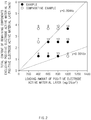
FIG. 1 is a graph showing a total content of the remaining components excluding the positive electrode active material in a positive electrode active material layer in Examples and Comparative Examples; and -
FIG. 2 is a graph showing a loading amount of a positive electrode active material layer and a total content of the remaining components excluding the positive electrode active material in a positive electrode active material layer in Examples and Comparative Examples. - Hereinafter, the present invention will be described in more detail to allow for a clearer understanding of the present invention. In this case, it will be understood that words or terms used in the specification and claims shall not be interpreted as the meaning defined in commonly used dictionaries, and it will be further understood that the words or terms should be interpreted as having a meaning that is consistent with their meaning in the context of the relevant art and the technical idea of the invention, based on the principle that an inventor may properly define the meaning of the words or terms to best explain the invention.
- According to an aspect of the present invention, a positive electrode includes a current collector and a positive electrode active material layer disposed on the current collector, wherein the positive electrode active material layer includes a positive electrode active material, a conductive material, and a binder, wherein the positive electrode active material contains any one among Li(Nix1Mny1Coz1)O2 (0.55<x1<0.69, 0.15<y1<0.29, 0.15<z1<0.29, x1+y1+z1=1) and Li(Nix2Mny2Coz2)O2 (0.75<x2<0.89, 0.05<y2<0.19, 0.05<z2<0.19, x2+y2+z2=1) and the conductive material contains a carbon nanotube, and when the positive electrode active material is Li(Nix1Mny1Coz1)O2, the positive electrode active material layer satisfies
Relation 1 and when the positive electrode active material is Li(Nix2Mny2COz2)O2, the positive electrode active material layer satisfies Relation 2 :

- In
Relation 1 andRelation 2, "a" means a loading amount (unit: mg/25cm2) of the positive electrode active material layer, and "b" means a total content (unit: wt%) of the remaining components excluding the positive electrode active material in the positive electrode active material layer with respect to the total weight of the positive electrode active material layer. - The current collector is not particularly limited as long as having electrical conductivity without causing any chemical changes in the battery. For example, the current collector may use copper, stainless steel, aluminum, nickel, titanium, sintered carbon, or aluminum or stainless steel of which surface is treated with carbon, nickel, titanium, silver, or the like. Specifically, a transition metal which adsorbs carbon well such as copper and nickel may be used as a current collector.
- The positive electrode active material layer may be disposed on the current collector. The positive electrode active material layer may be disposed on one side or both sides of the current collector.
- The loading amount of the positive electrode active material layer may be 20-1500 mg/25cm2, specifically 100-1300 mg/25cm2, and more specifically 300-1100 mg/25cm2.
- The positive electrode active material layer may include a positive electrode active material, a conductive material, and a binder.
- The positive electrode active material may contain any one among Li(Nix1Mny1Coz1)O2 (0.55<x1<0.69, 0.15<y1<0.29, 0.15<z1<0.29, x1+y1+z1=1) and Li(Nix2Mny2Coz2)O2 (0.75<x2<0.89, 0.05<y2<0.19, 0.05<z2<0.19, x2+y2+z2=1). Specifically, the positive electrode active material may be composed of any one among Li(Nix1Mny1Coz1)O2 (0.55<x1<0.69, 0.15<y1<0.29, 0.15<z1<0.29, x1+y1+z1=1) and Li(Nix2Mny2Coz2)O2 (0.75<x2<0.89, 0.05<y2<0.19, 0.05<z2<0.19, x2+y2+z2=1). More specifically, the positive electrode active material may be composed of any one among Li(Nix1Mny1Coz1)O2 (0.56<x1<0.66, 0.17<y1<0.22, 0.17<z1<0.22, x1+y1+z1=1) and Li(Nix2Mny2COz2)O2 (0.76<x2<0.88, 0.06<y2<0.12, 0.06<z2<0.12, x2+y2+z2=1). Li(Nix1Mny1Coz1)O2 and Li(Nix2Mny2Coz2)O2 have high energy densities, thereby enabling producing a high capacity battery.
- An average particle diameter (D50) of the positive electrode active material may be 3-20 µm, specifically 6-18 µm, and more specifically 9-16 µm. When the above range is satisfied, life-time characteristics at high temperature and output characteristics of a battery may be improved. In the description, an average particle diameter (D50) may mean a particle diameter corresponding to 50% of a volume accumulation amount in a particle diameter distribution curve of particles. The average particle size (D50) may be measured using, for example, a laser diffraction method. The laser diffraction method generally enables to measure a particle diameter about from a submicron region to several millimeters (mm), thereby obtaining results having high reproducibility and high resolution.
- The conductive material may contain a carbon nanotube, and specifically, may be composed of a carbon nanotube.
- The carbon nanotube may be a single-walled carbon nanotube or a multi-walled carbon nanotube, but more preferably, may be a multi-walled carbon nanotube.
- An average diameter of the carbon nanotube may be 1-30 nm, specifically 3-26 nm, and more specifically 5-22 nm. When the above range is satisfied, the carbon nanotube is easily dispersed in the positive electrode slurry, thereby improving conductivity of the positive electrode. The average diameter may be measured by using TEM or SEM.
- A BET specific surface area of the carbon nanotube may be 100-300 m2/g, specifically 125-275 m2/g, and more specifically 150-250 m2/g. When the above range is satisfied, the carbon nanotube is easily dispersed in the positive electrode slurry, thereby improving conductivity of the positive electrode. The BET specific surface area may be measured by using a nitrogen adsorption BET method.
- When the positive electrode active material is Li(Nix1Mny1Coz1)O2 (0.55<x1<0.69, 0.15<y1<0.29, 0.15<z1<0.29, x1+y1+z1=1), the carbon nanotube may be contained in an amount of 0.25-1.15 wt%, and specifically 0.30-1.10 wt% with respect to the total weight of the positive electrode active material layer. When the positive electrode active material is Li(Nix2Mny2COz2)O2 (0.75<x2<0.89, 0.05<y2<0.19, 0.05<z2<0.19, x2+y2+z2=1), the carbon nanotube may be contained in an amount of 0.20-1.10 wt%, and specifically 0.25-1.05 wt% with respect to the total weight of the positive electrode active material layer. When the above range is satisfied, the conductivity of the electrode may be ensured, thereby improving output and life-time characteristics of a battery while the content of the positive electrode active material may be sufficiently ensured, thereby preventing deterioration in initial capacity of a battery.
- The binder may contain a fluorine-based binder and a non-fluorine-based binder, and specifically, the binder may be composed of a fluorine-based binder and a non-fluorine-based binder.
- The fluorine-based binder may be polyvinylidene fluoride (PVdF) to improve chemical stability and positive electrode adhesion. A weight average molecular weight of the fluorine-based binder may be 200,000-1,200,000 g/mol, and specifically 500,000-1,000,000 g/mol. When the above range is satisfied, the adhesion (positive electrode adhesion) between the positive electrode active material layer and the current collector may be improved.
- The non-fluorine-based binder may be at least one among nitrile butadiene rubber (NBR) and hydrogenated nitrile butadiene rubber (H-NBR), and specifically may be hydrogenated nitrile butadiene rubber.
- A weight ratio of the fluorine-based binder and the non-fluorine-based binder may be 35:1 to 1:1, and specifically 29:1 to 2:1. When the above range is satisfied, there are effects of improving the positive electrode adhesion and improving dispersion of the carbon nanotube.
- The binder may be contained in an amount of 0.80-3.00 wt%, specifically 0.85-2.90 wt%, more specifically 0.90-2.80 wt% with respect to the total weight of the positive electrode active material layer. When the above range is satisfied, the sufficient positive adhesion may be ensured, and simultaneously, when the above range is satisfied, voids in the electrode are sufficient and an electrolyte solution is easily dispersed, whereby electrode resistance may be reduced and flexibility of the electrode may be prevented from being excessively deteriorated.
- In the positive electrode active material of an embodiment, when the positive electrode active material is Li(Nix1Mny1Coz1)O2 (0.55<x1<0.69, 0.15<y1<0.29, 0.15<z1<0.29, x1+y1+z1=1), the positive electrode active material layer satisfies
Relation 1 and when the positive electrode active material is Li(Nix2Mny2COz2)O2 (0.75<x2<0.89, 0.05<y2<0.19, 0.05<z2<0.19, x2+y2+z2=1), the positive electrode active material layer satisfies Relation 2:

- In
Relation 1 andRelation 2, "a" means a loading amount (unit: mg/25cm2) of the positive electrode active material layer, and "b" means a total content (unit: wt%) of the remaining components excluding the positive electrode active material in the positive electrode active material layer with respect to the total weight of the positive electrode active material layer. - Specifically, when the positive electrode active material is Li(Nix1Mny1Coz1)O2 (0.55<x1<0.69, 0.15<y1<0.29, 0.15<z1<0.29, x1+y1+z1=1), the positive electrode active material layer satisfies
Relation 3 and when the positive electrode active material is Li(Nix2Mny2COz2)O2 (0.75<x2<0.89, 0.05<y2<0.19, 0.05<z2<0.19, x2+y2+z2=1), the positive electrode active material layer satisfies Relation 4:

- When the positive electrode active material is Li(Nix1Mny1Coz1)O2, the positive electrode active material layer satisfies a relation of b≤0.0020×a or when the positive electrode active material is Li(Nix2Mny2Coz2)O2, the positive electrode active material layer satisfies a relation of b≤0.0015×a, the total content of the remaining components excluding the positive electrode active material in the positive electrode active material layer is insufficient, whereby the positive electrode adhesion is deteriorated and the positive electrode active material layer tends to peel off from the current collector, so that there is a problem of drastically deteriorating the life-time characteristics of the secondary battery at a high temperature of 45°C or more.
- Meanwhile, when the positive electrode active material is Li(Nix1Mny1Coz1)O2, the positive electrode active material layer satisfies a relation of b≥0.0050×a or when the positive electrode active material is Li(Nix2Mny2Coz2)O2, the positive electrode active material layer satisfies a relation of b≥0.0044×a, the total content of the remaining components excluding the positive electrode active material in the positive electrode active material layer is excessively large, whereby voids in the positive electrode active material layer are hardly present. As a result, lithium ions are difficult to transfer in the positive electrode active material layer, so that there is a problem of deteriorating the output characteristics.
- In the present invention, particularly, the relationship between the total content of the remaining components excluding the positive electrode active material and the loading amount in the positive electrode active material layer is important. That is, not only the total content of the remaining components excluding the positive electrode active material in the positive electrode active material layer is a major factor, but in the present invention, also the loading amount is considered together, and thus both the positive electrode adhesion and the lithium ion mobility are improved, thereby improving the life-time and output characteristics of a battery.
- According to another aspect of the present invention, a secondary battery includes: a positive electrode; a negative electrode; a separator interposed between the positive electrode and the negative electrode; and an electrolyte, wherein the positive electrode is the same as the positive electrode of the described embodiment. Accordingly, description of the positive electrode will be omitted.
- The negative electrode may include a negative electrode current collector and a negative electrode active material layer disposed on one side or both sides of the negative electrode current collector.
- The negative electrode current collector is not particularly limited as long as having electrical conductivity without causing any chemical changes in the battery. For example, the negative electrode current collector may use copper, stainless steel, aluminum, nickel, titanium, sintered carbon, or aluminum or stainless steel of which surface is treated with carbon, nickel, titanium, silver, or the like. Specifically, a transition metal which adsorbs carbon well such as copper and nickel may be used as a negative electrode current collector.
- The negative electrode active material layer may include a negative electrode active material, a negative electrode conductive material, and a negative electrode binder.
- The negative electrode active material may be a graphite-based active material particle or a silicon-based active material particle. The graphite-based active material particle may use at least one selected from the group consisting of artificial graphite, natural graphite, a graphitized carbon fiber, and a graphitized mesocarbon microbead, and particularly, when artificial graphite is used, rate characteristics may be improved. The silicon-based active material particle may use at least one selected from the group consisting of Si, SiOx (0<x<2), a Si-C composite, and a Si-Y alloy (wherein, Y is an element selected from the group consisting of an alkali metal, an alkaline earth metal, a transition metal, a
Group 13 element, aGroup 14 element, a rare earth element, and a combination thereof), and particularly, when Si is used, a high capacity battery may be obtained. - The negative electrode binder may include at least one selected from the group consisting of a polyvinylidene fluoride-hexafluoropropylene copolymer (PVDF-co-HFP), polyvinylidene fluoride, polyacrylonitrile, polymethylmethacrylate, polyvinyl alcohol, carboxymethylcellulose (CMC), starch, hydroxypropylcellulose, regenerated cellulose, polyvinylpyrrolidone, tetrafluoroethylene, polyethylene, polypropylene, polyacrylic acid, an ethylene-propylene-diene monomer (EPDM), a sulfonated-EPDM, a styrene butadiene rubber (SBR), a fluorine rubber, polyacrylic acid, and a material in which hydrogen is substituted with Li, Na, or Ca, etc., and may also include various copolymers thereof.
- The negative electrode conductive material is not particularly limited as long as having electrical conductivity without causing any chemical changes in the battery, and the negative electrode conductive material may use, for example: graphite such as natural graphite and artificial graphite; carbon black such as carbon black, acetylene black, Ketjen black, channel black, furnace black, lamp black, and thermal black; a conductive fiber such as a carbon fiber and a metal fiber; a conductive tube such as a carbon nanotube; a metal powder such as fluorocarbon powder, aluminum powder, and nickel powder; a conductive whisker such as zinc oxide and potassium titanate; a conductive metal oxides such as titanium oxide; or conductive materials such as polyphenylene derivatives, etc.
- The separator serves to separate the negative electrode and the positive electrode from each other and provide a transfer channel for lithium ions, and any separator may be used without particular limitation as long as typically used in a secondary battery, and particularly, a separator having excellent electrolyte-retention ability as well as low resistance to transfer of the electrolyte ions may be preferably used for the separator. Specifically, a porous polymer film, for example, a porous polymer film formed of a polyolefin-based polymer (e.g., an ethylene homopolymer, a propylene homopolymer, an ethylene/butene copolymer, an ethylene/hexene copolymer, and an ethylene/methacrylate copolymer), or a laminated structure having two or more layers thereof may be used. In addition, a typical porous nonwoven fabric, for example, a nonwoven fabric formed of a glass fiber having a high melting point or a polyethylene terephthalate fiber may be used. Alternatively, a coated separator containing a ceramic component or a polymer material may be used to ensure heat resistance or mechanical strength, and either a single layer structure or a multilayer structure may be selectively used.
- Examples of the electrolyte may include an organic-based liquid electrolyte, an inorganic-based liquid electrolyte, a solid polymer electrolyte, a gel-type polymer electrolyte, a solid inorganic electrolyte, and a molten-type inorganic electrolyte which are available in production of a lithium secondary battery, but the embodiment is not limited thereto.
- Specifically, the electrolyte may include a non-aqueous organic solvent and a metal salt.
- As the non-aqueous organic solvent, for example, an aprotic organic solvent such as N-methyl-2-pyrrolidinone, propylene carbonate, ethylene carbonate, butylene carbonate, dimethyl carbonate, diethyl carbonate, γ-butyrolactone, 1,2-dimethoxy ethane, tetrahydrofuran, 2-methyl tetrahydrofuran, dimethyl sulfoxide, 1,3-dioxolane, formamide, dimethylformamide, dioxolane, acetonitrile, nitromethane, methyl formate, methyl acetate, phosphoric acid triester, trimethoxy methane, dioxolane derivatives, sulfolane, methyl sulfolane, 1,3-dimethyl-2-imidazolidinone, propylene carbonate derivatives, tetrahydrofuran derivatives, ether, methyl propionate, and ethyl propionate, etc. may be used.
- Particularly, ethylene carbonate and propylene carbonate, which are cyclic carbonates among the carbonate-based organic solvent, may be preferably used because the carbonate-based organic solvents have a high viscosity and a high dielectric constant to easily dissociate a lithium salt, and when dimethyl carbonate and diethyl carbonate, which are linear carbonates having a low viscosity and a low dielectric constant, are added to the cyclic carbonates and mixed in an appropriate ratio, an electrolyte having a high electric conductivity may be prepared, and the electrolyte prepared in this way may be more preferably used.
- The metal salt may use a lithium salt, and the lithium salt may be easily soluble in the non-aqueous electrolyte, and an anion of the lithium salt may use one selected from the group consisting of, for example, F-, Cl-, I-, NO3 -, N(CN)2 -, BF4 -, ClO4 -, PF6 -, (CF3)2PF4 -, (CF3)3PF3 -, (CF3)4PF2 -, (CF3)5PF-, (CF3)6P-, CF3SO3 -, CF3CF2SO3 -, (CF3SO2)2N-, CF3CF2(CF3)2CO-, (CF3SO2)2CH-, (SF5)3C-, (CF3SO2)3C-, CF3(CF2)7SO3 -, CF3CO2 -, CH3CO2 -, SCN-, and (CF3CF2SO2)2N-.
- In addition to the electrolyte components, to improve life-time characteristics of a battery, suppress capacity reduction of a battery, and improve discharge capacity of a battery, the electrolyte may further contain one more additive of, for example, a halo-alkylene carbonate-based compound such as difluoroethylene carbonate, pyridine, triethylphosphite, triethanolamine, cyclic ether, ethylene diamine, n-glyme, hexaphosphoric triamide, nitrobenzene derivatives, sulfur, quinone imine dyes, N-substituted oxazolidinone, N,N-substituted imidazolidine, ethylene glycol dialkyl ether, an ammonium salt, pyrrole, 2-methoxy ethanol, aluminum trichloride, or the like.
- According to another aspect of the present invention, there are provided: a battery module including the secondary battery as a unit cell; and a battery pack including the same. Since the battery module and the battery pack include the secondary battery having a high capacity, enhanced rate performance, and high cycle characteristics, the battery module and the battery pack may be used as a power source of a middle-sized or large-sized device selected from a group consisting of electric vehicles, hybrid electric vehicles, plug-in hybrid electric vehicles, and a power storage system.
- Hereinafter, the present invention will be described in more detail according to examples. However, the invention may be embodied in many different forms and should not be construed as being limited to the embodiments set forth herein.
- Li (Ni0.6Mn0.2Co0.2)O2 having an average particle diameter (D50) of 12 µm was used as a positive electrode active material, and a multi-walled carbon nanotube having an average diameter of 12 nm and a BET specific surface area of 200 m2/g was used as a conductive material.
- A conductive material dispersed solution including the multi-walled carbon nanotube, hydrogenated nitrile butadiene rubber (H-NBR), and N-methylpyrrolidone (NMP) which is a dispersion medium was prepared. Thereafter, the positive electrode active material, PVdF having a weight average molecular weight of 900,000 g/mol, the conductive material dispersed solution, and NMP were mixed to prepare a positive electrode slurry having a solid content of 70% and a weight ratio of the positive electrode active material, the carbon nanotube, and the binders (PVdF and H-NBR) of 98.75:0.35:0.90.
- The positive electrode slurry was applied to a positive electrode current collector (Al) having a thickness of 20 µm and dried in a vacuum oven at 130°C for 6 hours. Thereafter, the current collector was rolled between rolls heated to 60°C under a pressure of 10 MPa to produce a positive electrode having a final thickness (a thickness of the current collector and the active material layer) of 78 µm and a loading amount of the positive electrode active material layer of 400 mg/25cm2. The total content of the remaining components (the conductive material and the binder) excluding the positive electrode active material in the positive electrode active material layer was 1.25 wt% with respect to the total weight of the positive electrode active material layer.
- Natural graphite as a negative electrode active material, carbon black as a negative electrode conductive material, and styrene butadiene rubber (SBR) as a negative electrode binder were mixed with distilled water at a weight ratio of 92:2:6, respectively, to prepare a negative electrode slurry. The prepared slurry was applied to a negative electrode current collector (Cu) having a thickness of 20 µm and dried in a vacuum oven at 80°C for 6 hours. Thereafter, the current collector was rolled between rolls heated to 60°C under a pressure of 10 MPa to produce a negative electrode having a final thickness (thicknesses of the current collector and the active material layer) of 65 µm and a loading amount of the active material layer of 250 mg/25cm2.
- The produced negative electrode and positive electrode, and a porous polyethylene separator were assembled by using a stacking method, and an electrolyte solution (ethylenecarbonate (EC)/ethylmethylcarbonate (EMC) = 1/2 (volume ratio), lithium hexafluorophosphate (1 mole of LiPF6)) was injected into the assembled battery to manufacture a lithium secondary battery.
- Secondary batteries in Examples 2 to 7 and Comparative Examples 1 to 5 were manufactured in the same manner as in Example 1 except that, in Example 1, the content of the positive electrode active material, the total content of the remaining components excluding the positive electrode active material in the positive electrode active material layer, and the loading amount of the positive electrode active material layer were changed as shown in Table 1 below.
[Table 1] Total content of positive electrode active material (wt%) Total content of remaining components excluding positive electrode active material in positive electrode active material layer (wt%) Loading amount of positive electrode active material layer (mg/25cm2) Loading amount of positive electrode active material layer×0.0020 (mg/25cm2) Loading amount of positive electrode active material layer×0.0050 (mg/25cm2) Example 1 98.75 1.25 400 0.80 2.00 Example 2 98.75 1.25 600 1.20 3.00 Example 3 97.50 2.50 600 1.20 3.00 Example 4 97.50 2.50 800 1.60 4.00 Example 5 97.50 2.50 1000 2.00 5.00 Example 6 96.25 3.75 800 1.60 4.00 Example 7 96.25 3.75 1000 2.00 5.00 Comparative Example 1 98.75 1.25 800 1.60 4.00 Comparative Example 2 98.75 1.25 1000 2.00 5.00 Comparative Example 3 97.50 2.50 400 0.80 2.00 Comparative Example 4 96.25 3.75 400 0.80 2.00 Comparative Example 5 96.25 3.75 600 1.20 3.00 - The content (wt%) of the positive electrode active material, and the total content (wt%) of the conductive material and the binder are based on the total weight of the positive electrode active material layer.
- Charging/discharging were performed for the batteries in Examples 1 to 7 and Comparative Examples 1 to 5 and capacity retention rates at 500 cycles were evaluated, and the results are shown in Table 2 below.
- At 45°C, a first cycle and a second cycle were charged/discharged at 0.5 C, and from 3 cycles to 500 cycles, charging/discharging were performed at 0.5 C/1.0 C.
- Charging conditions: CC (constant current)/CV (constant voltage) (4.25 V/0.05 C cut-off)
Discharging conditions: CC (constant current) condition 2.5 V cut-off - Specifically, the capacity retention rate was derived by the following calculation.

- Discharging rate characteristics were evaluated for the batteries in Examples 1 to 7 and Comparative Examples 1 to 5, and the results are shown in Table 2 below.
- Specifically, for each of the batteries in Examples 1 to 7 and Comparative Examples 1 to 5, a reducing discharge capacity (%) was measured at a fixed charging rate of 0.5 C and a discharging rate of 4.0 C. Meanwhile, a discharge capacity at a discharging rate of 0.5 C was set as 100%.
[Table 2] Satisfaction of Relation 1 (O/X) Capacity retention rate at 500 cycles (%) Discharge capacity at discharging rate of 4.0 C (%) Example 1 ○ 86.5 77.5 Example 2 ○ 81.3 76.2 Example 3 ○ 88.4 75.3 Example 4 ○ 85.8 74.1 Example 5 ○ 82.6 71.5 Example 6 ○ 85.3 72.8 Example 7 ○ 80.3 70.3 Comparative Example 1 X 71.5 63.8 Comparative Example 2 X 55.4 58.9 Comparative Example 3 X 92.3 63.8 Comparative Example 4 X 94.1 59.2 Comparative Example 5 X 89.4 66.2 - Relation 1: 0.0020×a < b < 0.0050×a, wherein "a" means a loading amount (unit: mg/25cm2) of the positive electrode active material layer, and "b" means a total content (unit: wt%) of the remaining components excluding the positive electrode active material in the positive electrode active material layer with respect to the total weight of the positive electrode active material layer.
- Referring to Table 2, it could be confirmed that the
batteries satisfying Relation 1 in Examples 1 to 7 had a higher discharge capacity at discharging rate of 4.0 C than the batteries not satisfyingRelation 1 in Comparative Examples 1 to 5, and accordingly, it is considered that the batteries in Examples 1 to 7 have high output. It could also be confirmed that the batteries in Comparative Examples 1 and 2 had a lower capacity retention rate than the batteries in Examples. That is, it is considered that cycle characteristics and output characteristics may be improved together only whenRelation 1 is satisfied. - Li(Ni0.8Mn0.1Co0.1)O2 having an average particle diameter (D50) of 12 µm was used as a positive electrode active material, and a multi-walled carbon nanotube having an average diameter of 12 nm and a BET specific surface area of 200 m2/g was used as a conductive material.
- A conductive material dispersed solution including the multi-walled carbon nanotube, hydrogenated nitrile butadiene rubber (H-NBR), and N-methylpyrrolidone (NMP) which is a dispersion medium was prepared. Thereafter, the positive electrode active material, PVdF having a weight average molecular weight of 900,000 g/mol, the conductive material dispersed solution, and NMP were mixed to prepare a positive electrode slurry having a solid content of 70% and a weight ratio of the positive electrode active material, the carbon nanotube, and the binders (PVdF and H-NBR) of 98.75:0.35:0.90.
- The positive electrode slurry was applied to a positive electrode current collector (Al) having a thickness of 20 µm and dried in a vacuum oven at 130°C for 6 hours. Thereafter, the current collector was rolled between rolls heated to 60°C under a pressure of 10 MPa to produce a positive electrode having a final thickness (a thickness of the current collector and the active material layer) of 78 µm and a loading amount of the positive electrode active material layer of 400 mg/25cm2. The total content of the remaining components (the conductive material and the binder) excluding the positive electrode active material in the positive electrode active material layer was 1.25 wt% with respect to the total weight of the positive electrode active material layer.
- Natural graphite as a negative electrode active material, carbon black as a negative electrode conductive material, and styrene butadiene rubber (SBR) as a negative electrode binder were mixed with distilled water at a weight ratio of 92:2:6, respectively, to prepare a negative electrode slurry. The prepared slurry was applied to a negative electrode current collector (Cu) having a thickness of 20 µm and dried in a vacuum oven at 80°C for 6 hours. Thereafter, the current collector was rolled between rolls heated to 60°C under a pressure of 10 MPa to produce a negative electrode having a final thickness (a thickness of the current collector and the active material layer) of 65 µm and a loading amount of the active material layer of 250 mg/25cm2.
- The produced negative electrode and positive electrode, and a porous polyethylene separator were assembled by using a stacking method, and an electrolyte solution (ethylenecarbonate (EC)/ethylmethylcarbonate (EMC) = 1/2 (volume ratio), lithium hexafluorophosphate (1 mole of LiPF6)) was injected into the assembled battery to manufacture a lithium secondary battery.
- Secondary batteries in Examples 9 to 14 and Comparative Examples 6 to 10 were manufactured in the same manner as in Example 8 except that, in Example 8, the content of the positive electrode active material, the total content of the remaining components excluding the positive electrode active material in the positive electrode active material layer, and the loading amount of the positive electrode active material layer were changed as shown in Table 3 below.
[Table 3] Total content of positive electrode active material (wt%) Total content of remaining components excluding positive electrode active material in positive electrode active material layer (wt%) Loading amount of positive electrode active material layer (mg/25cm2) Loading amount of positive electrode active material layer×0.0015 (mg/25cm2) Loading amount of positive electrode active material layer×0.0044 (mg/25cm2) Example 8 98.75 1.25 400 0.60 1.76 Example 9 98.75 1.25 600 0.90 2.64 Example 10 98.75 1.25 800 1.20 3.52 Example 11 97.50 2.50 600 0.90 2.64 Example 12 97.50 2.50 800 1.20 3.52 Example 13 97.50 2.50 1000 1.50 4.40 Example 14 96.25 3.75 1000 1.50 4.40 Comparative Example 6 98.75 1.25 1000 1.50 4.40 Comparative Example 7 97.50 2.50 400 0.60 1.76 Comparative Example 8 96.25 3.75 400 0.60 1.76 Comparative Example 9 96.25 3.75 600 0.90 2.64 Comparative Example 10 96.25 3.75 800 1.20 3.52 - The content (wt%) of the positive electrode active material, and the total content (wt%) of the conductive material and the binder are based on the total weight of the positive electrode active material layer.
- Charging/discharging were performed for the batteries in Examples 8 to 14 and Comparative Examples 6 to 10 and capacity retention rates at 500 cycles were evaluated, and the results are shown in Table 4 below.
- At 45°C, a first cycle and a second cycle were charged/discharged at 0.5 C, and from 3 cycles to 500 cycles, charging/discharging were performed at 0.5 C/1.0 C.
Charging conditions: CC (constant current)/CV (constant voltage) (4.25 V/0.05 C cut-off)
Discharging conditions: CC (constant current) condition 2.5 V cut-off - Specifically, the capacity retention rate was derived by the following calculation.

- Discharging rate characteristics were evaluated for the batteries in Examples 8 to 14 and Comparative Examples 6 to 10, and the results are shown in Table 4 below.
- Specifically, for each of the batteries in Examples 8 to 14 and Comparative Examples 6 to 10, a reducing discharge capacity (%) was measured at a fixed charging rate of 0.5 C and a discharging rate of 4.0 C. Meanwhile, a discharge capacity at a discharging rate of 0.5 C was set as 100%.
[Table 4] Satisfaction of Relation 2 (○/X) Capacity retention rate at 500 cycles (%) Discharge capacity at discharging rate of 4.0 C (%) Example 8 ○ 88.4 81.2 Example 9 ○ 84.5 78.6 Example 10 ○ 81.6 76.2 Example 11 ○ 90.3 77.0 Example 12 ○ 86.8 75.3 Example 13 ○ 82.3 72.8 Example 14 ○ 80.9 71.2 Comparative Example 6 X 76.5 65.8 Comparative Example 7 X 92.3 62.3 Comparative Example 8 X 93.1 60.2 Comparative Example 9 X 91.5 62.3 Comparative Example 10 X 86.4 65.8 Relation 2: 0.0015×a < b < 0.0044×a, wherein "a" means a loading amount (unit: mg/25cm2) of the positive electrode active material layer, and "b" means a total content (unit: wt%) of the remaining components excluding the positive electrode active material in the positive electrode active material layer with respect to the total weight of the positive electrode active material layer. - Referring to Table 4, it could be confirmed that the
batteries satisfying Relation 2 in Examples 8 to 14 had a higher discharge capacity at discharging rate of 4.0 C than the batteries not satisfyingRelation 2 in Comparative Examples 6 to 10, and accordingly, it is considered that the batteries in Examples 8 to 14 have high output. It could also be confirmed that the battery in Comparative Example 6 had a lower capacity retention rate than the batteries in Examples. That is, it is considered that cycle characteristics and output characteristics may be improved together only whenRelation 2 is satisfied.
Claims (11)
- A positive electrode comprising:a current collector; anda positive electrode active material layer disposed on the current collector,wherein the positive electrode active material layer includes a positive electrode active material, a conductive material, and a binder,wherein the positive electrode active material includes any one among Li(Nix1Mny1Coz1)O2 (0.55<x1<0.69, 0.15<y1<0.29, 0.15<z1<0.29, x1+y1+z1=1) and Li(Nix2Mny2Coz2)O2 (0.75<x2<0.89, 0.05<y2<0.19, 0.05<z2<0.19, x2+y2+z2=1),the conductive material includes a carbon nanotube,when the positive electrode active material is Li(Nix1Mny1Coz1)O2, the positive electrode active material layer satisfies Relation 1, andwhen the positive electrode active material is Li(Nix2Mny2COz2)O2, the positive electrode active material layer satisfies Relation 2:

 a is a loading amount (unit: mg/25cm2) of the positive electrode active material layer, andb is a total content (unit: wt%) of remaining components excluding the positive electrode active material in the positive electrode active material layer with respect to a total weight of the positive electrode active material layer.
 - The positive electrode of claim 1,
wherein an average diameter of the carbon nanotube is 1-30 nm. - The positive electrode of claim 1,
wherein a BET specific surface area of the carbon nanotube is 100-300 m2/g. - The positive electrode of claim 1,
wherein when the positive electrode active material is Li(Nix1Mny1Coz1)O2 (0.55<x1<0.69, 0.15<y1<0.29, 0.15<z1<0.29, x1+y1+z1=1), the carbon nanotube is contained in an amount of 0.25-1.15 wt%. - The positive electrode of claim 1,
wherein when the positive electrode active material is Li(Nix2Mny2Coz2)O2 (0.75<x2<0.89, 0.05<y2<0.19, 0.05<z2<0.19, x2+y2+z2=1), the carbon nanotube is contained in an amount of 0.20-1.10 wt%. - The positive electrode of claim 1,
wherein the binder comprises a fluorine-based binder and a non-fluorine-based binder. - The positive electrode of claim 6,
wherein a weight average molecular weight of the fluorine-based binder is 200,000-1,200,000 g/mol. - The positive electrode of claim 6,
wherein a weight ratio of the fluorine-based binder and the non-fluorine-based binder is 35:1 to 1:1. - The positive electrode of claim 1,
wherein the binder is contained in an amount of 0.8-3.0 wt%. - A secondary battery comprising:a positive electrode according to any one of claims 1 to 9,a negative electrode;a separator interposed between the positive electrode and the negative electrode; andan electrolyte.
- A battery module comprising the secondary battery of claim 10 as a unit cell.
Applications Claiming Priority (2)
| Application Number | Priority Date | Filing Date | Title |
|---|---|---|---|
| KR1020180007352A KR102278999B1 (en) | 2018-01-19 | 2018-01-19 | Positive electrode, and secondary battery comprising the positive electrode |
| PCT/KR2019/000854 WO2019143214A1 (en) | 2018-01-19 | 2019-01-21 | Cathode and secondary battery comprising same cathode |
Publications (2)
| Publication Number | Publication Date |
|---|---|
| EP3706207A1 true EP3706207A1 (en) | 2020-09-09 |
| EP3706207A4 EP3706207A4 (en) | 2020-12-30 |
Family
ID=67301506
Family Applications (1)
| Application Number | Title | Priority Date | Filing Date |
|---|---|---|---|
| EP19741173.9A Pending EP3706207A4 (en) | 2018-01-19 | 2019-01-21 | CATHODE AND SECONDARY BATTERY WITH THE SAME CATHODE |
Country Status (6)
| Country | Link |
|---|---|
| US (1) | US11594728B2 (en) |
| EP (1) | EP3706207A4 (en) |
| JP (1) | JP7065963B2 (en) |
| KR (1) | KR102278999B1 (en) |
| CN (1) | CN111448689B (en) |
| WO (1) | WO2019143214A1 (en) |
Cited By (1)
| Publication number | Priority date | Publication date | Assignee | Title |
|---|---|---|---|---|
| JP2024010882A (en) * | 2022-07-13 | 2024-01-25 | プライムプラネットエナジー&ソリューションズ株式会社 | secondary battery |
Families Citing this family (4)
| Publication number | Priority date | Publication date | Assignee | Title |
|---|---|---|---|---|
| JP7722002B2 (en) * | 2021-07-20 | 2025-08-13 | 日産自動車株式会社 | Positive electrodes for lithium-ion secondary batteries |
| CN114843512B (en) * | 2022-03-22 | 2024-05-31 | 深圳新宙邦科技股份有限公司 | A positive electrode sheet and lithium ion battery |
| EP4517782A4 (en) * | 2022-04-28 | 2025-12-17 | Panasonic Ip Man Co Ltd | Liquid dispersion of conductive material, positive electrode suspension, method for manufacturing positive electrodes for secondary batteries with non-aqueous electrolytes, positive electrode for secondary batteries with non-aqueous electrolytes, and secondary batteries with non-aqueous electrolytes |
| GB2628630A (en) * | 2023-03-31 | 2024-10-02 | Dyson Technology Ltd | Electrode precursor composition |
Family Cites Families (23)
| Publication number | Priority date | Publication date | Assignee | Title |
|---|---|---|---|---|
| JP3769344B2 (en) | 1997-01-21 | 2006-04-26 | 日本化学工業株式会社 | Positive electrode composition for lithium secondary battery and lithium secondary battery |
| US20060024584A1 (en) | 2004-05-28 | 2006-02-02 | Kim Dong M | Additives for lithium secondary battery |
| KR100907621B1 (en) | 2006-08-28 | 2009-07-15 | 주식회사 엘지화학 | A positive electrode mixture containing a conductive material of two components and a lithium secondary battery composed of it |
| US11081721B2 (en) * | 2009-11-24 | 2021-08-03 | Duracell U.S. Operations, Inc. | Secondary electrochemical cells with separator and electrolyte combination |
| RU2501124C1 (en) | 2009-11-25 | 2013-12-10 | ЭлДжи КЕМ, ЛТД. | Cathode based on two types of compounds and lithium secondary battery including it |
| JP2013093171A (en) | 2011-10-25 | 2013-05-16 | Mitsubishi Chemicals Corp | Positive electrode for lithium secondary battery and lithium secondary battery using the same |
| KR20140013885A (en) * | 2012-07-24 | 2014-02-05 | 가부시키가이샤 히타치세이사쿠쇼 | Lithium ion secondary battery |
| KR101470090B1 (en) * | 2012-11-30 | 2014-12-05 | 삼성정밀화학 주식회사 | Positive active material composite for lithium secondary battery, method of preparing the same, and lithium secondary battery using the same |
| JP2014192136A (en) * | 2013-03-28 | 2014-10-06 | Asahi Kasei Corp | Method for manufacturing positive electrode for nonaqueous electrolyte secondary battery use, and nonaqueous electrolyte secondary battery |
| JP6070421B2 (en) * | 2013-05-31 | 2017-02-01 | ソニー株式会社 | Batteries, battery packs, electronic devices, electric vehicles, power storage devices, and power systems |
| KR101684395B1 (en) | 2014-10-02 | 2016-12-08 | 주식회사 엘지화학 | Cathode of Improved Conductivity and Secondary Battery Comprising the Same |
| CN104393310A (en) * | 2014-10-20 | 2015-03-04 | 上海空间电源研究所 | Air electrode material of high-activity lithium air battery and preparation method of nano-composite catalyst material |
| JP6406544B2 (en) | 2014-10-29 | 2018-10-17 | トヨタ自動車株式会社 | Non-aqueous electrolyte secondary battery and electrode body used in the battery |
| EP3309879B1 (en) | 2015-06-12 | 2018-10-03 | LG Chem, Ltd. | Positive electrode mixture and secondary battery including same |
| US11050061B2 (en) | 2015-10-28 | 2021-06-29 | Lg Chem, Ltd. | Conductive material dispersed liquid and lithium secondary battery manufactured using the same |
| WO2017074124A1 (en) | 2015-10-28 | 2017-05-04 | 주식회사 엘지화학 | Conductive material dispersed liquid and lithium secondary battery manufactured using same |
| US11196051B2 (en) | 2015-11-30 | 2021-12-07 | Lg Chem, Ltd. | Positive electrode for secondary battery and secondary battery including the same |
| KR102101006B1 (en) | 2015-12-10 | 2020-04-14 | 주식회사 엘지화학 | Positive electrode for secondary battery and secondary battery comprising the same |
| KR102201331B1 (en) * | 2016-03-28 | 2021-01-08 | 주식회사 엘지화학 | Positive electrode and lithium secondary battery comprising the same |
| JP7056567B2 (en) | 2016-09-14 | 2022-04-19 | 日本電気株式会社 | Lithium ion secondary battery |
| CN106848327A (en) * | 2017-03-03 | 2017-06-13 | 广州鹏辉能源科技股份有限公司 | A kind of positive pole of lithium pyrite battery and the battery being made from it |
| JP6753806B2 (en) | 2017-03-23 | 2020-09-09 | 株式会社東芝 | Electrodes, rechargeable batteries, battery packs and vehicles |
| AU2018297173B2 (en) * | 2017-07-07 | 2021-03-11 | Ppg Industries Ohio, Inc. | Electrode binder slurry composition for lithium ion electrical storage devices |
-
2018
- 2018-01-19 KR KR1020180007352A patent/KR102278999B1/en active Active
-
2019
- 2019-01-21 US US16/769,132 patent/US11594728B2/en active Active
- 2019-01-21 EP EP19741173.9A patent/EP3706207A4/en active Pending
- 2019-01-21 CN CN201980006343.XA patent/CN111448689B/en active Active
- 2019-01-21 WO PCT/KR2019/000854 patent/WO2019143214A1/en not_active Ceased
- 2019-01-21 JP JP2020530379A patent/JP7065963B2/en active Active
Cited By (2)
| Publication number | Priority date | Publication date | Assignee | Title |
|---|---|---|---|---|
| JP2024010882A (en) * | 2022-07-13 | 2024-01-25 | プライムプラネットエナジー&ソリューションズ株式会社 | secondary battery |
| JP7574250B2 (en) | 2022-07-13 | 2024-10-28 | プライムプラネットエナジー&ソリューションズ株式会社 | Secondary battery |
Also Published As
| Publication number | Publication date |
|---|---|
| US11594728B2 (en) | 2023-02-28 |
| WO2019143214A1 (en) | 2019-07-25 |
| JP7065963B2 (en) | 2022-05-12 |
| KR102278999B1 (en) | 2021-07-20 |
| CN111448689A (en) | 2020-07-24 |
| JP2021506064A (en) | 2021-02-18 |
| US20210151753A1 (en) | 2021-05-20 |
| CN111448689B (en) | 2023-05-30 |
| EP3706207A4 (en) | 2020-12-30 |
| KR20190088823A (en) | 2019-07-29 |
Similar Documents
| Publication | Publication Date | Title |
|---|---|---|
| US12512460B2 (en) | Positive electrode and secondary battery including the positive electrode | |
| US11817585B2 (en) | Positive electrode having improved adhesion and energy density, and lithium secondary battery including the same | |
| US11594728B2 (en) | Positive electrode and secondary battery including same | |
| KR102769344B1 (en) | Negative electrode and secondary battery comprising the negative electrode | |
| KR102485284B1 (en) | Negative electrode and secondary battery comprising the negative electrode | |
| KR20170109293A (en) | Negative electrode and secondary battery | |
| EP3716375A1 (en) | Secondary battery | |
| EP4037012A1 (en) | Anode and secondary battery comprising anode | |
| KR20220048852A (en) | Negative electrode, method for preparing the negative electrode, and secondary battery comprising the negative electrode | |
| KR20170111289A (en) | Electrode for secondary battery | |
| EP4174981B1 (en) | Negative electrode and secondary battery comprising the negative electrode | |
| EP4020637B1 (en) | Negative electrode and secondary battery including same | |
| KR102391534B1 (en) | Negative electrode, and lithium secondarty battery comprising the negative electrode | |
| KR20220006006A (en) | Negative electrode and secondary battery comprising the negative electorde | |
| EP4539156A1 (en) | Negative electrode composition, negative electrode, lithium secondary battery, battery module, and battery pack | |
| KR102941177B1 (en) | Anode and secondary battary | |
| KR102790552B1 (en) | Lithium secondary battary and manufacturing thereof | |
| EP4345935A2 (en) | Negative electrode and secondary battery | |
| KR102896545B1 (en) | Negative electrode and lithium secondary battery | |
| EP4641684A1 (en) | Anode composition, anode for lithium secondary battery, comprising same, lithium secondary battery, and method for preparing anode composition | |
| KR20250048670A (en) | Lithium secondary battary and manufacturing thereof | |
| EP3770998A1 (en) | Negative electrode active material, negative electrode comprising negative electrode active material, and lithium secondary battery comprising negative electrode | |
| KR20250035492A (en) | Lithium secondary battery, battery module and battary pack | |
| EP3944369A1 (en) | Anode and secondary battery including anode |
Legal Events
| Date | Code | Title | Description |
|---|---|---|---|
| STAA | Information on the status of an ep patent application or granted ep patent |
Free format text: STATUS: THE INTERNATIONAL PUBLICATION HAS BEEN MADE |
|
| PUAI | Public reference made under article 153(3) epc to a published international application that has entered the european phase |
Free format text: ORIGINAL CODE: 0009012 |
|
| STAA | Information on the status of an ep patent application or granted ep patent |
Free format text: STATUS: REQUEST FOR EXAMINATION WAS MADE |
|
| 17P | Request for examination filed |
Effective date: 20200604 |
|
| AK | Designated contracting states |
Kind code of ref document: A1 Designated state(s): AL AT BE BG CH CY CZ DE DK EE ES FI FR GB GR HR HU IE IS IT LI LT LU LV MC MK MT NL NO PL PT RO RS SE SI SK SM TR |
|
| AX | Request for extension of the european patent |
Extension state: BA ME |
|
| A4 | Supplementary search report drawn up and despatched |
Effective date: 20201201 |
|
| RIC1 | Information provided on ipc code assigned before grant |
Ipc: H01M 4/02 20060101ALI20201123BHEP Ipc: H01M 4/505 20100101ALI20201123BHEP Ipc: H01M 4/525 20100101ALI20201123BHEP Ipc: H01M 10/052 20100101ALI20201123BHEP Ipc: H01M 4/04 20060101ALI20201123BHEP Ipc: H01M 4/131 20100101AFI20201123BHEP Ipc: H01M 4/62 20060101ALI20201123BHEP |
|
| DAV | Request for validation of the european patent (deleted) | ||
| DAX | Request for extension of the european patent (deleted) | ||
| RAP1 | Party data changed (applicant data changed or rights of an application transferred) |
Owner name: LG ENERGY SOLUTION LTD. |
|
| RAP3 | Party data changed (applicant data changed or rights of an application transferred) |
Owner name: LG ENERGY SOLUTION, LTD. |
|
| STAA | Information on the status of an ep patent application or granted ep patent |
Free format text: STATUS: EXAMINATION IS IN PROGRESS |
|
| 17Q | First examination report despatched |
Effective date: 20231006 |