EP3705196A2 - Article management device, article management system, and computer-readable storage medium - Google Patents
Article management device, article management system, and computer-readable storage medium Download PDFInfo
- Publication number
- EP3705196A2 EP3705196A2 EP20150671.4A EP20150671A EP3705196A2 EP 3705196 A2 EP3705196 A2 EP 3705196A2 EP 20150671 A EP20150671 A EP 20150671A EP 3705196 A2 EP3705196 A2 EP 3705196A2
- Authority
- EP
- European Patent Office
- Prior art keywords
- article
- control signal
- sorter
- carrier
- sorting
- Prior art date
- Legal status (The legal status is an assumption and is not a legal conclusion. Google has not performed a legal analysis and makes no representation as to the accuracy of the status listed.)
- Withdrawn
Links
Images




Classifications
-
- B—PERFORMING OPERATIONS; TRANSPORTING
- B07—SEPARATING SOLIDS FROM SOLIDS; SORTING
- B07C—POSTAL SORTING; SORTING INDIVIDUAL ARTICLES, OR BULK MATERIAL FIT TO BE SORTED PIECE-MEAL, e.g. BY PICKING
- B07C5/00—Sorting according to a characteristic or feature of the articles or material being sorted, e.g. by control effected by devices which detect or measure such characteristic or feature; Sorting by manually actuated devices, e.g. switches
- B07C5/36—Sorting apparatus characterised by the means used for distribution
-
- B—PERFORMING OPERATIONS; TRANSPORTING
- B07—SEPARATING SOLIDS FROM SOLIDS; SORTING
- B07C—POSTAL SORTING; SORTING INDIVIDUAL ARTICLES, OR BULK MATERIAL FIT TO BE SORTED PIECE-MEAL, e.g. BY PICKING
- B07C3/00—Sorting according to destination
- B07C3/10—Apparatus characterised by the means used for detection ofthe destination
- B07C3/12—Apparatus characterised by the means used for detection ofthe destination using electric or electronic detecting means
-
- B—PERFORMING OPERATIONS; TRANSPORTING
- B07—SEPARATING SOLIDS FROM SOLIDS; SORTING
- B07C—POSTAL SORTING; SORTING INDIVIDUAL ARTICLES, OR BULK MATERIAL FIT TO BE SORTED PIECE-MEAL, e.g. BY PICKING
- B07C1/00—Measures preceding sorting according to destination
- B07C1/10—Sorting according to size or flexibility
-
- B—PERFORMING OPERATIONS; TRANSPORTING
- B07—SEPARATING SOLIDS FROM SOLIDS; SORTING
- B07C—POSTAL SORTING; SORTING INDIVIDUAL ARTICLES, OR BULK MATERIAL FIT TO BE SORTED PIECE-MEAL, e.g. BY PICKING
- B07C3/00—Sorting according to destination
- B07C3/02—Apparatus characterised by the means used for distribution
- B07C3/08—Apparatus characterised by the means used for distribution using arrangements of conveyors
-
- B—PERFORMING OPERATIONS; TRANSPORTING
- B07—SEPARATING SOLIDS FROM SOLIDS; SORTING
- B07C—POSTAL SORTING; SORTING INDIVIDUAL ARTICLES, OR BULK MATERIAL FIT TO BE SORTED PIECE-MEAL, e.g. BY PICKING
- B07C5/00—Sorting according to a characteristic or feature of the articles or material being sorted, e.g. by control effected by devices which detect or measure such characteristic or feature; Sorting by manually actuated devices, e.g. switches
- B07C5/04—Sorting according to size
-
- B—PERFORMING OPERATIONS; TRANSPORTING
- B07—SEPARATING SOLIDS FROM SOLIDS; SORTING
- B07C—POSTAL SORTING; SORTING INDIVIDUAL ARTICLES, OR BULK MATERIAL FIT TO BE SORTED PIECE-MEAL, e.g. BY PICKING
- B07C5/00—Sorting according to a characteristic or feature of the articles or material being sorted, e.g. by control effected by devices which detect or measure such characteristic or feature; Sorting by manually actuated devices, e.g. switches
- B07C5/16—Sorting according to weight
-
- B—PERFORMING OPERATIONS; TRANSPORTING
- B07—SEPARATING SOLIDS FROM SOLIDS; SORTING
- B07C—POSTAL SORTING; SORTING INDIVIDUAL ARTICLES, OR BULK MATERIAL FIT TO BE SORTED PIECE-MEAL, e.g. BY PICKING
- B07C5/00—Sorting according to a characteristic or feature of the articles or material being sorted, e.g. by control effected by devices which detect or measure such characteristic or feature; Sorting by manually actuated devices, e.g. switches
- B07C5/34—Sorting according to other particular properties
- B07C5/3412—Sorting according to other particular properties according to a code applied to the object which indicates a property of the object, e.g. quality class, contents or incorrect indication
-
- B—PERFORMING OPERATIONS; TRANSPORTING
- B07—SEPARATING SOLIDS FROM SOLIDS; SORTING
- B07C—POSTAL SORTING; SORTING INDIVIDUAL ARTICLES, OR BULK MATERIAL FIT TO BE SORTED PIECE-MEAL, e.g. BY PICKING
- B07C5/00—Sorting according to a characteristic or feature of the articles or material being sorted, e.g. by control effected by devices which detect or measure such characteristic or feature; Sorting by manually actuated devices, e.g. switches
- B07C5/34—Sorting according to other particular properties
- B07C5/342—Sorting according to other particular properties according to optical properties, e.g. colour
- B07C5/3422—Sorting according to other particular properties according to optical properties, e.g. colour using video scanning devices, e.g. TV-cameras
-
- B—PERFORMING OPERATIONS; TRANSPORTING
- B65—CONVEYING; PACKING; STORING; HANDLING THIN OR FILAMENTARY MATERIAL
- B65G—TRANSPORT OR STORAGE DEVICES, e.g. CONVEYORS FOR LOADING OR TIPPING, SHOP CONVEYOR SYSTEMS OR PNEUMATIC TUBE CONVEYORS
- B65G1/00—Storing articles, individually or in orderly arrangement, in warehouses or magazines
- B65G1/02—Storage devices
- B65G1/04—Storage devices mechanical
- B65G1/137—Storage devices mechanical with arrangements or automatic control means for selecting which articles are to be removed
-
- B—PERFORMING OPERATIONS; TRANSPORTING
- B65—CONVEYING; PACKING; STORING; HANDLING THIN OR FILAMENTARY MATERIAL
- B65G—TRANSPORT OR STORAGE DEVICES, e.g. CONVEYORS FOR LOADING OR TIPPING, SHOP CONVEYOR SYSTEMS OR PNEUMATIC TUBE CONVEYORS
- B65G37/00—Combinations of mechanical conveyors of the same kind, or of different kinds, of interest apart from their application in particular machines or use in particular manufacturing processes
-
- G—PHYSICS
- G05—CONTROLLING; REGULATING
- G05B—CONTROL OR REGULATING SYSTEMS IN GENERAL; FUNCTIONAL ELEMENTS OF SUCH SYSTEMS; MONITORING OR TESTING ARRANGEMENTS FOR SUCH SYSTEMS OR ELEMENTS
- G05B19/00—Program-control systems
- G05B19/02—Program-control systems electric
- G05B19/418—Total factory control, i.e. centrally controlling a plurality of machines, e.g. direct or distributed numerical control [DNC], flexible manufacturing systems [FMS], integrated manufacturing systems [IMS] or computer integrated manufacturing [CIM]
- G05B19/4183—Total factory control, i.e. centrally controlling a plurality of machines, e.g. direct or distributed numerical control [DNC], flexible manufacturing systems [FMS], integrated manufacturing systems [IMS] or computer integrated manufacturing [CIM] characterised by data acquisition, e.g. workpiece identification
-
- G—PHYSICS
- G05—CONTROLLING; REGULATING
- G05B—CONTROL OR REGULATING SYSTEMS IN GENERAL; FUNCTIONAL ELEMENTS OF SUCH SYSTEMS; MONITORING OR TESTING ARRANGEMENTS FOR SUCH SYSTEMS OR ELEMENTS
- G05B2219/00—Program-control systems
- G05B2219/30—Nc systems
- G05B2219/31—From computer integrated manufacturing till monitoring
- G05B2219/31304—Identification of workpiece and data for control, inspection, safety, calibration
-
- G—PHYSICS
- G05—CONTROLLING; REGULATING
- G05B—CONTROL OR REGULATING SYSTEMS IN GENERAL; FUNCTIONAL ELEMENTS OF SUCH SYSTEMS; MONITORING OR TESTING ARRANGEMENTS FOR SUCH SYSTEMS OR ELEMENTS
- G05B2219/00—Program-control systems
- G05B2219/30—Nc systems
- G05B2219/45—Nc applications
- G05B2219/45047—Sorting
-
- Y—GENERAL TAGGING OF NEW TECHNOLOGICAL DEVELOPMENTS; GENERAL TAGGING OF CROSS-SECTIONAL TECHNOLOGIES SPANNING OVER SEVERAL SECTIONS OF THE IPC; TECHNICAL SUBJECTS COVERED BY FORMER USPC CROSS-REFERENCE ART COLLECTIONS [XRACs] AND DIGESTS
- Y02—TECHNOLOGIES OR APPLICATIONS FOR MITIGATION OR ADAPTATION AGAINST CLIMATE CHANGE
- Y02P—CLIMATE CHANGE MITIGATION TECHNOLOGIES IN THE PRODUCTION OR PROCESSING OF GOODS
- Y02P90/00—Enabling technologies with a potential contribution to greenhouse gas [GHG] emissions mitigation
- Y02P90/02—Total factory control, e.g. smart factories, flexible manufacturing systems [FMS] or integrated manufacturing systems [IMS]
Definitions
- Embodiments described herein relate generally to an article management device, an article management system, and a computer-readable storage medium.
- a sorting system with a sorter is common means for automated sorting of articles such as packages.
- sorters There are many types of sorters and a sorter for use is selected according to an area for installation, handling speed, and kinds of articles.
- Kinds of articles may refer to differences in size, weight, shape, etc.
- an article management device includes a receiver, a processor, and a transmitter.
- the receiver is configured to receive article measurement information acquired from measuring an article.
- the processor is configured to select a first divergence control signal or a second divergence control signal based on the article measurement information, the first divergence control signal being for forwarding the article to a sorter configured to sort the article according to sorting destination information corresponding to the article, the second divergence control signal being for forwarding the article to a carrier configured to carry the article according to a carrier control signal.
- the transmitter is configured to transmit the first or the second divergence control signal to a diverger configured to forward the article toward the sorter or the carrier.
- an article management device includes a receiver, a processor, and a transmitter.
- the receiver is adapted to receive article measurement information acquired from measuring an article.
- the processor is adapted to select a first divergence control signal or a second divergence control signal based on the article measurement information.
- the first divergence control signal is for forwarding the article to a sorter adapted to sort the article according to sorting destination information corresponding to the article.
- the second divergence control signal is for forwarding the article to a carrier adapted to carry the article according to a carrier control signal.
- the transmitter is adapted to transmit the first or the second divergence control signal to a diverger adapted to forward the article toward the sorter or the carrier.
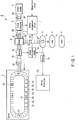
- FIG. 1 is a diagram showing one exemplary general configuration of an article management system according to a certain embodiment.
- the article management system is denoted by S, and as shown in FIG. 1 , the article management system S includes an article management device 1, a sorter 2, one or more automated guided vehicles (AGV's) 3's, and so on.
- the article management system S is provided with an article feeder 4, an article measurer 5, a diverger 6, cameras 7a and 7b, an article information reader 8, conveyor belts 9a, 9b, 9c, and 9d, etc.
- the article management system S further includes multiple article sensors to detect articles c's (e.g., articles c1 to c8) conveyed by the sorter 2, the conveyor belts 9a, 9b, 9c, and 9d, etc.
- the article management system S with this configuration monitors detection signals from the article sensors to trace the conveyance (movement) of each article c, and thus can detect or estimate where each article c is located.
- the article management system S is capable of detecting or estimating an article c having been placed on the AGV 3, as well.
- the article management system S also assigns article detection identification information (hereinafter, "article detection ID" or "article detection ID's”) to respective articles c's (fed one by one from the article feeder 4) as the subjects of detection by the article sensors.
- article detection ID article detection identification information
- Articles c's handled by the article management system S are packages, etc., of various sizes, shapes, and weights.
- the articles c's are each preassigned with article identification information (hereinafter, "article ID” or “article ID's”).
- article ID article identification information
- each article c may be directly marked with the article ID, or a tag or the like marked with the article ID may be attached to each article c.
- Marking of the article ID's may be implemented by a method of printing visible marks, or a method of printing invisible marks using infrared-absorbing ink, etc.
- Each article c may instead or optionally be affixed with an electronic tag, wireless tag, or the like that stores the article ID.
- the article ID is an information piece constituted by numerals, characters, symbols, a barcode, a two-dimensional code, a QR code (registered trademark), or a combination of two or more thereof, and at least contains unique information.
- the article ID may contain later-discussed sorting destination information, or an article management table TA stored by the article management device 1 may contain the sorting destination information associated with the article ID. The description of this embodiment will assume the latter.
- the article management device 1 may be realized by, for example, a single computer or a combination of multiple computers, and it communicates with other devices using cables or in a wireless manner so that information from other devices is received and stored and control over other devices is implemented by transmitting control signals, etc. to them. Examples of such other devices include the sorter 2, the AGV's 3's, and the diverger 6. Operations, etc. of the article management device 1 will be described in more detail later, with reference to FIG. 2 .
- the sorter 2 is a sorting device adapted to sort articles c's to respective sorting destinations based on their corresponding sorting information. More specifically, the sorter 2 sorts an article c to, according to one example, a targeted or intended sorting tray among sorting trays 21 to 27, based on the sorting destination information associated with the article ID. The sorter 2 receives the article c having been conveyed by the conveyor belt 9c, and sorts it to intended one of the sorting trays 21 to 27 based on the sorting destination information from the article management device 1. Operations, etc. of the sorter 2 will be described in more detail later.
- Each AGV 3 may be an unmanned carrier vehicle adapted to carry articles c's.
- the AGV 3 receives the article c having been conveyed by the conveyor belt 9d, and delivers it to a carrier destination 10 according to a carrier control signal from the article management device 1.
- the AGV 3 carries the received article c to the carrier destination 10 based on the carrier control signal containing location information corresponding to the carrier destination 10.
- the AGV 3 may instead or further be adapted to carry the received article c to a location corresponding to intended one of the sorting trays 21 to 27 based on the carrier control signal containing location information corresponding to this intended tray.
- the article feeder 4 receives articles c's from an operator or articles c's passed on by a conveyor belt, etc., and the conveyor belt 9a conveys the articles c's received at the article feeder 4 to the article measurer 5.
- the article measurer 5 measures at least one of the size, shape, and weight of the conveyed article c, and outputs article measurement information acquired from the measurement to the article management device 1.
- the article measurer 5 may utilize multiple sensors to obtain multi-directional sensing results for the article c so that the size (measurements in the directions of X-axis, Y-axis, and Z-axis) and shape of the article c are measured based on the combination of these sensing results, and may utilize a scale to measure the weight of the article c.
- Examples that can be employed as such sensors include a laser distance sensor adapted to measure the distance from the light source to the article c.
- the article measurer 5 may also employ a camera or the like as appropriate to take images of the article c from multiple directions and subjects the acquired images to analysis processing so that the size and shape of the article c are measured.
- the conveyor belt 9b conveys the article c after the measurement at the article measurer 5 to the diverger 6.
- the diverger 6 forwards articles c's toward the sorter 2 or the AGV's 3's based on a divergence control signal S11 (first divergence control signal) or a divergence control signal S12 (second divergence control signal), transmitted from the article management device 1.
- a divergence control signal S11 first divergence control signal
- a divergence control signal S12 second divergence control signal
- the diverger 6 places the article c having been conveyed by the conveyor belt 9b onto the conveyor belt 9c based on the divergence control signal S11 transmitted from the article management device 1, and the conveyor belt 9c conveys the article c to the sorter 2 so that the article c is sent to the sorter 2.
- the diverger 6 places the article c having been conveyed by the conveyor belt 9b onto the conveyor belt 9d based on the divergence control signal S12 transmitted from the article management device 1, and the conveyor belt 9d conveys the article c to the AGV's 3's so that the article c is set in the loading position of the applicable AGV 3.
- the diverger 6 may include a robot arm configuration, etc. to pick up articles c's and forward them toward the sorter 2 or the AGV's 3's.
- the camera 7a is arranged at a position where it faces the conveyor belt 9c, and images the articles c's conveyed by the conveyor belt 9c.
- multiple cameras 7a's may be arranged so that the article c being conveyed by the conveyor belt 9c is imaged at various angles.
- the camera 7a outputs image data acquired from the imaging to the article information reader 8. Note that one or more cameras 7a's may be arranged at any positions including, for example, a position to face the conveyor belt 9a or 9b.
- the AGV 3 loads the article c having been conveyed by the conveyor belt 9d, and carries it to the carrier destination 10 or a location corresponding to intended one of the sorting trays 21 to 27, based on the carrier control signal transmitted from the article management device 1.
- the camera 7b is arranged at a position where it faces the carriage path of the AGV's 3's, and images the articles c's carried by the AGV's 3's. For example, multiple cameras 7b's may be arranged so that the article c being carried by the AGV 3 is imaged at various angles.
- the camera 7b outputs image data acquired from the imaging to the article information reader 8. Note that one or more cameras 7b's may be arranged at any positions including, for example, a position to face the conveyor belt 9d.
- the article information reader 8 receives the image data output from the cameras 7a and 7b, reads the article ID contained in the image data, and transmits the article ID to the article management device 1. If the article ID is constituted by a QR code, the article information reader 8 functions as a QR code reader. If the article ID is in the form of information stored in a wireless tag, the article information reader 8 functions as a wireless tag reader adapted to read the article ID from the wireless tag in a wireless manner.
- FIG. 2 is a block diagram showing one exemplary general configuration of the article management device 1 according to a certain embodiment.
- the article management device 1 includes a processor 11, a read-only memory (ROM) 12, a random-access memory (RAM) 13, an auxiliary storage 14, a communication interface 15, and an input/output unit 16.
- the processor 11 serves as a central part of the computer and performs calculation processing and control processing required for the handling of articles c's.
- the handling of articles c's includes conveyance, carriage, forwarding, and sorting operations, etc. for the articles c's.
- the processor 11 executes control based on one or more programs of system software, application software, or firmware stored in the ROM 12 or the auxiliary storage 14.
- the processor 11 may be, for example, a central processing unit (CPU), a micro processing unit (MPU), or a digital signal processor (DSP).
- the processor 11 may also be a combination of two or more of a CPU, an MPU, and a DSP.
- the processor 11 assigns, based on the detection signals from the multiple article sensors, the article detection ID to each article c as the subject of detection, and detects or estimates where each article c is located by tracing its conveyance (movement).
- the ROM 12 serves as a main storage unit of the computer that employs the processor 11 as a central part.
- the ROM 12 may be a nonvolatile memory used exclusively for data read.
- the ROM 12 may be a non-transitory computer-readable storage medium storing the aforementioned one or more programs. Also, the ROM 12 stores data for use by the processor 11 to perform various processing, as well as a variety of setting values, etc.
- the RAM 13 serves as a main storage unit of the computer that employs the processor 11 as a central part.
- the RAM 13 is a memory for data read and data write.
- the RAM 13 may be used as a so-called work area or the like, for storage of data used on a tentative basis by the processor 11 to perform various processing.
- the auxiliary storage 14 serves as an auxiliary storage unit of the computer that employs the processor 11 as a central part.
- the auxiliary storage 14 may be, for example, an electric erasable programmable read-only memory (EEPROM) (registered trademark), a hard disk drive (HDD), a solid state drive (SSD), or the like.
- EEPROM electric erasable programmable read-only memory
- HDD hard disk drive
- SSD solid state drive
- the auxiliary storage 14 may also function as a non-transitory computer-readable storage medium storing the aforementioned one or more programs.
- the auxiliary storage 14 stores data for use by the processor 11 to perform various processing, data generated from the processing by the processor 11, a variety of setting values, and so on.
- the article management device 1 may include an interface adapted to receive insertion of a storage medium such as a memory card, a universal serial bus (USB), etc., in place of or in addition to the auxiliary storage 14.
- USB universal serial bus
- the program or programs stored in the ROM 12 or the auxiliary storage 14 include a program for handling articles c's.
- the article management device 1 is provided to an administrator or the like of the same, in the state that such a program has already been stored in the ROM 12 or the auxiliary storage 14.
- the article management device 1 may be provided to an administrator, etc., in the state that the program is not stored in the ROM 12 or the auxiliary storage 14.
- the communication interface 15 is an interface adapted to communicate with other devices via a network, etc., using cables or in a wireless manner.
- the communication interface 15 receives various information from other devices, and transmits various information to other devices.
- the communication interface 15 functions as a receiver to receive, from a higher-level server for the article management system S, the article ID of the respective article c and the sorting destination information associated with this article ID before the article management system S starts article handling operations.
- the communication interface 15 receives the detection signals from the article sensors, the article measurement information from the article measurer 5, and the article Id's from the article information reader 8.
- the communication interface 15 further functions as a transmitter to transmit the sorting destination information to the sorter 2, the carrier control signals to the AGV 3, and the divergence control signals S11 and S12 to the diverger 6.
- the input/output unit 16 includes a keyboard, numerical keypads, a mouse, a touch-panel display, and so on. Operator's instruction inputs are received through the keyboard, numerical keypads, mouse, touch-panel display, etc., and sent to the processor 11.
- the touch-panel display is adapted to present various information to the operator.
- FIG. 3 is a diagram showing one exemplary article management table TA stored in the auxiliary storage 14 of the article management device 1 according to a certain embodiment.
- the auxiliary storage 14 functions as a storage unit to store the article management table TA, and this article management table TA stores the article ID, sorting destination information, article measurement information, forwarding site information, and AGV identification information (hereinafter, "AGVID” or “AGVID's”) in association with the respective article detection ID assigned to each of the every detected article c, namely, articles c1 to c8 here.
- AGV AGV identification information
- the article management table TA stores the sorting destination information, article measurement information, forwarding site information, and AGVID in association with the respective article ID acquired.
- the processor 11 detects or estimates where each of the articles c1 to c8 is located, by tracing the movement of the articles c1 to c8 corresponding to their respective article ID's.
- the sorter 2 may be, for example, a cross belt sorter, a sliding shoe sorter, or a bomb-bay sorter.
- the sorter 2 when it is a cross belt sorter, conveys an article c using a conveyance tray of a belt conveyor component, and discharges the article c from the position on the conveyance tray to an intended sorting tray by utilizing the rotation of the conveyor belt.
- the sorter 2, when it is a sliding shoe sorter conveys an article c using a conveyance tray, and upon the conveyance tray reaching the location of an intended sorting tray, inclines the conveyance tray so that the article c slides to the intended sorting tray.
- the sorter 2 when it is a bomb-bay sorter, conveys an article c using a conveyance tray with an openable bottom, and upon the conveyance tray reaching the location above an intended sorting tray or a chute that leads to an intended sorting tray, opens the bottom of the conveyance tray so that the article c drops to the intended sorting tray or the chute.
- the sorter 2 to be a bomb-bay sorter.
- the sorter 2 includes a circular conveyance path with multiple conveyance trays. These conveyance trays rotate along the conveyance path. Articles c's having been conveyed by the conveyor belt 9c are placed on the respective conveyance trays on the conveyance path of the sorter 2, one conveyance tray loading one article c to rotate along the conveyance path.
- the sorter 2 opens the bottom of the respective conveyance tray upon it reaching the location above the intended one of the sorting trays 21 to 27, and allows the article c to drop to the intended sorting tray.
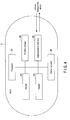
- FIG. 4 is a block diagram showing one exemplary general configuration of the AGV 3 according to a certain embodiment.
- Each AGV 3 may be an automated, wheeled robot adapted to carry one or more articles c's loaded thereon to a destination point, according to the carrier control signal from the article management device 1.
- the AGV 3 carries an article c to the carrier destination 10 or a location corresponding to intended one of the sorting trays 21 to 27 based on map data, destination point data, and current location data contained in the carrier control signal.
- the AGV 3 runs by itself to the destination point while detecting the distance and direction of its traveling.
- the AGV 3 may be adapted to automatically run to the destination point by following a magnetic tape or a two-dimensional barcode arranged on the traveling course.
- the AGV 3 may be additionally equipped with a laser detector, a camera, or the like for detecting obstacles (including other AGV's 3's) so that during the travel it can avoid obstacles detected by the laser detector or identified through the analysis of images acquired by the camera.
- each AGV 3 includes a processor 31, a ROM 32, a RAM 33, an auxiliary storage 34, a communication interface 35, and a carrier actuator 36.
- the processor 31 serves as a central part of a computer and performs calculation processing and control processing required for the operation of carrying articles c's. In order to realize various functions of the AGV 3, the processor 31 executes control based on one or more programs of system software, application software, or firmware stored in the ROM 32 or the auxiliary storage 34.
- the processor 11 may be, for example, a CPU, an MPU, or a DSP. The processor 11 may also be a combination of two or more of these.
- the article management device 1 transmits the carrier control signal for the AGV 3 to move to a destination point, and the processor 31 outputs an actuation signal according to the map data, the destination point data, and the current location data contained in this carrier control signal.
- the ROM 32 serves as a main storage unit of the computer that employs the processor 31 as a central part.
- the ROM 32 may be a nonvolatile memory used exclusively for data read.
- the ROM 32 may be a non-transitory computer-readable storage medium storing the aforementioned one or more programs. Also, the ROM 32 stores data for use by the processor 31 to perform various processing, as well as a variety of setting values, etc.
- the RAM 33 serves as a main storage unit of the computer that employs the processor 31 as a central part.
- the RAM 33 is a memory for data read and data write.
- the RAM 33 may be used as a so-called work area or the like, for storage of data used on a tentative basis by the processor 31 to perform various processing.
- the auxiliary storage 34 serves as an auxiliary storage unit of the computer that employs the processor 31 as a central part.
- the auxiliary storage 14 may be an EEPROM, an HDD, an SSD, or the like.
- the auxiliary storage 34 may also function as a non-transitory computer-readable storage medium storing the aforementioned one or more programs.
- the auxiliary storage 34 stores data for use by the processor 31 to perform various processing, data generated from the processing by the processor 31, a variety of setting values, and so on.
- the communication interface 35 is an interface adapted to communicate with other devices via a network, etc. in a wireless manner.
- the communication interface 35 receives various information from other devices, and transmits various information to other devices.
- the communication interface 15 functions as a receiver to receive the carrier control signal from the article management device 1.
- the carrier actuator 36 includes a motor, one or more wheels revolved by the motor, a steering mechanism for switching the traveling directions, and so on.
- the carrier actuator 36 rotates or stops the motor based on the actuation signal output from the processor 31 and controls the steering mechanism, so that the AGV 3 is moved to the destination point.
- FIG. 5 is a flowchart showing one exemplary article handling performed by the article management system S according to a certain embodiment.
- the higher-level server sends the article ID and the sorting destination information for each handling subject, i.e., article c, to the article management device 1 in advance, and the article management table TA registers these article ID and sorting destination information in advance.
- Articles c's are fed from the article feeder 4 of the article management system S, and the article management system S starts conveyance of the articles c's using the conveyor belts 9a, 9b, 9c, and 9d, etc. (ST1).
- the multiple article sensors in the article management system S detect the sequentially conveyed articles c's and transmit the corresponding detection signals to the article management device 1.
- the communication interface 15 of the article management device 1 receives the detection signals, and the processor 11 assigns the article detection ID'S to the respective articles c's based on the detection signals. In other words, the processor 11 registers the article detection ID's in association with the respective, sequentially detected articles c's in the article management table TA. At this stage, the article ID's have not been read from the conveyed articles c's yet, so the article ID's already and previously registered in the article management table TA cannot be associable with the article detection ID's.
- the conveyor belt 9a conveys the articles c's to the article measurer 5.
- the article measurer 5 measures at least one of the size, shape, and weight of each conveyed article c (ST2), and transmits the article measurement information acquired from the measurement to the article management device 1.
- the communication interface 15 receives the article measurement information, and the processor 11 registers the article measurement information in association with the corresponding article detection ID in the article management table TA.
- the processor 11 also performs processing for determining to which site each article c should be forwarded (determining the forwarding site) based on the article measurement information (ST3).
- the processor 11 selects and outputs the divergence control signal S11 for forwarding the article c to the sorter 2 or the divergence control signal S12 for forwarding the article c to the AGV 3.
- the communication interface 15 transmits the output divergence control signal S11 or S12 to the diverger 6.
- the processor 11 When it is determined in the forwarding site determination processing that the article c should be forwarded to the sorter 2, the processor 11 registers the forwarding site information indicative of the sorter 2 in association with the article detection ID of the article c in the article management table TA. On the other hand, when it is determined in the forwarding site determination processing that the article c should be forwarded to the AGV 3, the processor 11 registers the forwarding site information indicative of the AGV 3 in association with the article detection ID of the article c in the article management table TA.
- the diverger 6 forwards each article c toward the sorter 2 or the AGV 3 based on the respective result of the forwarding site determination processing (ST4). That is, according to the result of the forwarding site determination processing, the diverger 6 forwards the article c toward the sorter 2 in response to receiving the divergence control signal S11, and forwards the article c toward the AGV 3 in response to receiving the divergence control signal S12.
- the article c is conveyed to the sorter 2 by the conveyor belt 9c (ST6).
- the camera 7a images each article c conveyed by the conveyor belt 9c, and outputs the image data acquired from the imaging to the article information reader 8.
- the article information reader 8 receives the image data output from the camera 7a, reads the article ID from the image data (ST7), and transmits the article ID to the article management device 1.
- the communication interface 15 of the article management device 1 receives the article ID from the article information reader 8, and the processor 11 associates the received article ID with the previously registered article ID in the article management table TA.
- the article management table TA therefore, the article ID, the sorting destination information, the article measurement information, and the forwarding site information are now registered in association with the article detection ID for the corresponding article c.
- the processor 11 performs processing for determining the sorting destination (ST8) to select and output the sorting destination information associated with the article detection ID, and the communication interface 15 transmits the sorting destination information to the sorter 2.
- the sorter 2 receives the sorting destination information, and sorts the corresponding article c to intended one of the sorting trays 21 to 27 based on the sorting destination information (ST9).
- the diverger 6 has forwarded the article c toward the AGV 3 (ST5, NO)
- the article c is conveyed to the AGV 3 by the conveyor belt 9d (ST10).
- the camera 7b here images each article c conveyed by the conveyor belt 9d, and outputs the image data acquired from the imaging to the article information reader 8.
- the article information reader 8 receives the image data output from the camera 7b, reads the article ID from the image data (ST11), and transmits the article ID to the article management device 1.
- the communication interface 15 of the article management device 1 receives the article ID from the article information reader 8, and the processor 11 associates the received article ID with the previously registered article ID in the article management table TA.
- the article management table TA therefore, the article ID, the sorting destination information, the article measurement information, and the forwarding site information are now registered in association with the article detection ID for the corresponding article c.
- the processor 11 performs the sorting destination determination processing (ST12) to select and output the destination point data corresponding to the sorting destination information associated with the article ID.
- the communication interface 15 communicates with one of the multiple AGV's 3's that is on standby for the article carriage, so that the communication interface 15 receives the AGVID from this AGV 3 and transmits the carrier control signal containing the map data, the destination point data, the current location data, etc. to this AGV 3.
- the AGV 3 receives the carrier control signal, and carries the article c loaded thereon to the destination based on the map data, the destination point data, and the current location data contained in the carrier control signal (ST13).
- the destination point data indicates the carrier destination 10.
- the destination point data can instead indicate the location corresponding to intended one of the sorting trays 21 to 27.
- FIG. 6 is a flowchart showing one exemplary processing for determining the article forwarding site (i.e., ST3 in FIG. 5 ), performed by the article management system S according to a certain embodiment.
- the processor 11 receives the article measurement information transmitted from the article measurer 5 (ST21), makes comparison between the article measurement values contained in the article measurement information and the conditions registered in the auxiliary storage 34 for compatibility with the sorter 2 (ST22), and determines whether or not the corresponding article c is compatible with the specification of the sorter 2 (ST23).
- compatibility conditions include threshold criteria for determining whether the article c can be sorted by the sorter 2 or the article c is not a suitable object for the sorting by the sorter 2.
- the processor 11 compares the article measurement values with the threshold criteria, and determines based on the comparison result that the article c can be sorted by the sorter 2 or that the article c is not a suitable object for the sorting by the sorter 2.
- the compatibility conditions of the sorter 2 may adopt an upper limit or a lower limit for the sum of measurements of the article c in the X-axis, Y-axis, and Z-axis directions (hereinafter, "three-side size").
- the processor 11 compares the three-side size extracted from the article measurement values with the upper limit or the lower limit, and if the three-side size is found above the upper limit or below the lower limit, the processor 11 determines that the article c is not compatible with the sorter 2, i.e., the article c is not a suitable object for the sorting by the sorter 2.
- the processor 11 determines that the article c is compatible with the sorter 2, i.e., the article c can be sorted by the sorter 2.
- the compatibility conditions may adopt both the upper limit and the lower limit for the three-side size.
- the processor 11 may be adapted to determine, if the three-side size is above the upper limit or below the lower limit, that the article c is not compatible with the sorter 2 (the article c is not a suitable object for the sorting by the sorter 2), and to determine, if the three-side size is equal to or below the upper limit and also equal to or above the lower limit, that the article c is compatible with the sorter 2 (the article c can be sorted by the sorter 2).
- the compatibility conditions may instead or additionally adopt at least one of an upper weight limit and a lower weight limit, as well as a condition for the shape.
- the compatibility conditions may include shape or geometry parameters for determining that shapes such as easily-rolling spheres and cylinders are not the suitable objects for the sorting by the sorter 2.
- the processor 11 selects and outputs the divergence control signal S11 for forwarding the article c to the sorter 2 (ST24).
- the communication interface 15 transmits the divergence control signal S11 to the diverger 6 (ST25).
- the diverger 6 receives the divergence control signal S11, and based thereon, forwards the article c toward the sorter 2.
- the processor 11 selects and outputs the divergence control signal S12 for forwarding the article c to the AGV 3 (ST26).
- the communication interface 15 transmits the divergence control signal S12 to the diverger 6 (ST27).
- the diverger 6 receives the divergence control signal S12, and based thereon, forwards the article c toward the AGV 3.
- FIG. 7 is flowchart showing one exemplary processing for determining the sorting destination (i.e., ST8 and ST12 in FIG. 5 ), performed by the article management system S according to a certain embodiment.
- the processor 11 receives the article ID transmitted from the article information reader 8 (ST31), and selects the sorting destination information associated with this article ID in the article management table TA (ST32).
- the processor 11 selects the sorting destination information for transmission to the sorter 2.
- the processor 11 also gives an instruction to transmit the sorting destination information to the sorter 2.
- the communication interface 15 transmits the sorting destination information to the sorter 2 (ST34).
- the sorter 2 sorts the article c to intended one of the sorting trays 21 to 27 based on the sorting destination information.
- the processor 11 selects the carrier control signal for transmission to the AGV 3. Further, the processor 11 converts the sorting destination information into the destination point data (ST35). The processor 11 gives an instruction to transmit the carrier control signal containing the map data, this destination point data, the current location data, etc. to the AGV 3. Following this instruction, the communication interface 15 transmits the carrier control signal containing the map data, the destination point data, the current location data, etc. to the AGV 3 (ST36).
- the processor 11 may refer to the detection signals from the multiple article sensors to detect or estimate the article c having been loaded on one AGV 3, and control the transmission of the carrier control signal so that the carrier control signal is provided to the AGV 3 according to the detection or estimation timing.
- the AGV 3 upon receipt of the carrier control signal, is allowed to directly proceed to its carriage operation based on the carrier control signal.
- each AGV 3 may also include an article sensor so that the communication interface 15 transmits the carrier control signal at any desired timing and the AGV 3 starts the carriage operation based on the carrier control signal after detecting the own loading of the article c by its article sensor.
- the destination point data is location data corresponding to the carrier destination 10.
- the destination point data can instead be location data corresponding to intended one of the sorting trays 21 to 27.
- the auxiliary storage 14 stores, as the initial setting of the article management system S, the location data corresponding to the carrier destination 10 or the location data corresponding to respective one of the sorting trays 21 to 27 in accordance with the instructions from the higher-level server or the operator.
- the processor 11 converts the sorting destination information into the location data corresponding to the carrier destination 10.
- the processor 11 converts the sorting destination information into the location data corresponding to the sorting tray 21.
- the embodiments having been described can offer an article management device, an article management system, and a program that each realize efficient handling of a great variety of articles even with limited sorter facilities.
- the embodiments can also offer a non-transitory computer-readable medium storing a program that causes a computer to perform efficient handling of a great variety of articles even with limited sorter facilities.
- the article management device 1 selects the divergence control signal S11 or S12 based on the article measurement information, and transmits the selected divergence control signal S11 or S12 to the diverger 6.
- the diverger 6 then forwards the articles c's that can be handled by the sorter 2 of the article management system S (articles c's with the determination d1) directly toward the sorter 2. Also, the diverger 6 forwards the articles c's that are not suitable for the handling of the sorter 2 (articles c's with the determination d2) toward the AGV's 3's.
- the diverger 6 forwards the articles c's that are not suitable for the handling of the sorter 2 (articles c's with the determination d2) toward the AGV's 3's.
- the sorter 2 installed may be one, or more than one.
- the article management system S may include two sorters 2's, but even the use of two sorters 2's would not allow for the practical handling of all kinds of articles.
- the articles c's that cannot be suitably handled by these sorters 2's are carried by the AGV's 3's to the intended destinations, and therefore, all the articles c's can be efficiently handled without needing the manual work of operators, etc.
- the article management device 1 transmits the carrier control signals to the AGV's 3's to cause each AGV 3 to carry an article c to any desired destination point.
- the article management device 1 transmits the carrier control signal containing the destination point data corresponding to the carrier destination 10, so that it can cause the AGV 3 to carry an article c to the location corresponding to the carrier destination 10.
- the article management device 1 detects the sorting tray (one of the sorting trays 21 to 27) corresponding to the sorting destination information, and transmits the carrier control signal containing the destination point data corresponding to this detected sorting tray, so that it can cause the AGV 3 to carry an article c to the corresponding location. That is, the embodiments enable delivery of articles c's to locations corresponding to the intended sorting trays, without routing them through the sorter 2.
- the article management device 1 only establishing a network connection among the article management device 1, the sorter 2, the AGV's 3's, and the discretionarily-configured diverger 6 can form the article management system S.
- the embodiments do not pose a particular limitation on the sorter 2, the AGV's 3's, and the diverger 6.
Landscapes
- Engineering & Computer Science (AREA)
- General Engineering & Computer Science (AREA)
- Manufacturing & Machinery (AREA)
- Quality & Reliability (AREA)
- Physics & Mathematics (AREA)
- General Physics & Mathematics (AREA)
- Automation & Control Theory (AREA)
- Mechanical Engineering (AREA)
- Multimedia (AREA)
- Warehouses Or Storage Devices (AREA)
Abstract
Description
- Embodiments described herein relate generally to an article management device, an article management system, and a computer-readable storage medium.
- A sorting system with a sorter is common means for automated sorting of articles such as packages. There are many types of sorters and a sorter for use is selected according to an area for installation, handling speed, and kinds of articles. Kinds of articles may refer to differences in size, weight, shape, etc.
- Still, a sorter that can deal with every kind of articles is yet to be available, and articles out of the sorter's capability are handled by operators' manual sorting. Manual sorting poses a great burden to logistics businesses. Such a burden might be mitigated through, for example, installation of two or more types of sorters, which however would incur upsizing of the entire system and would not promise cost-effectiveness, so is not the best approach. Also, increased labor of operators to pick and route articles to respective sorters, and delayed handling are additional concerns.
- It is an ever-present demand in logistics businesses to improve efficiency in article sorting, and technology for realizing efficient handling of a greater variety of articles is sought for.
- General architecture for implementing various features of the embodiments will be described with reference to the drawings. The drawings and the associated descriptions are provided to illustrate the embodiments and not to limit the scope of the invention.
-
FIG. 1 is a diagram showing one exemplary general configuration of an article management system according to a certain embodiment. -
FIG. 2 is a block diagram showing one exemplary general configuration of an article management device according to a certain embodiment. -
FIG. 3 is a diagram showing one exemplary article management table stored in an auxiliary storage of an article management device according to a certain embodiment. -
FIG. 4 is a block diagram showing one exemplary general configuration of an automated guided vehicle (AGV) according to a certain embodiment. -
FIG. 5 is a flowchart showing one exemplary article handling performed by an article management system according to a certain embodiment. -
FIG. 6 is a flowchart showing one exemplary processing for determining an article forwarding site, performed by an article management system according to a certain embodiment. -
FIG. 7 is flowchart showing one exemplary processing for determining a sorting destination, performed by an article management system according to a certain embodiment. - In general, according to one embodiment, an article management device includes a receiver, a processor, and a transmitter. The receiver is configured to receive article measurement information acquired from measuring an article. The processor is configured to select a first divergence control signal or a second divergence control signal based on the article measurement information, the first divergence control signal being for forwarding the article to a sorter configured to sort the article according to sorting destination information corresponding to the article, the second divergence control signal being for forwarding the article to a carrier configured to carry the article according to a carrier control signal. The transmitter is configured to transmit the first or the second divergence control signal to a diverger configured to forward the article toward the sorter or the carrier.
- According to a certain embodiment, an article management device includes a receiver, a processor, and a transmitter.
- The receiver is adapted to receive article measurement information acquired from measuring an article. The processor is adapted to select a first divergence control signal or a second divergence control signal based on the article measurement information. The first divergence control signal is for forwarding the article to a sorter adapted to sort the article according to sorting destination information corresponding to the article. The second divergence control signal is for forwarding the article to a carrier adapted to carry the article according to a carrier control signal. The transmitter is adapted to transmit the first or the second divergence control signal to a diverger adapted to forward the article toward the sorter or the carrier.
- Now, the embodiments will be described with reference to the drawings.
-
FIG. 1 is a diagram showing one exemplary general configuration of an article management system according to a certain embodiment. - The article management system is denoted by S, and as shown in
FIG. 1 , the article management system S includes anarticle management device 1, asorter 2, one or more automated guided vehicles (AGV's) 3's, and so on. The article management system S is provided with anarticle feeder 4, anarticle measurer 5, adiverger 6,cameras article information reader 8,conveyor belts - The article management system S further includes multiple article sensors to detect articles c's (e.g., articles c1 to c8) conveyed by the
sorter 2, theconveyor belts AGV 3, as well. The article management system S also assigns article detection identification information (hereinafter, "article detection ID" or "article detection ID's") to respective articles c's (fed one by one from the article feeder 4) as the subjects of detection by the article sensors. - Articles c's handled by the article management system S are packages, etc., of various sizes, shapes, and weights. The articles c's are each preassigned with article identification information (hereinafter, "article ID" or "article ID's"). For example, each article c may be directly marked with the article ID, or a tag or the like marked with the article ID may be attached to each article c. Marking of the article ID's may be implemented by a method of printing visible marks, or a method of printing invisible marks using infrared-absorbing ink, etc. Each article c may instead or optionally be affixed with an electronic tag, wireless tag, or the like that stores the article ID.
- The article ID is an information piece constituted by numerals, characters, symbols, a barcode, a two-dimensional code, a QR code (registered trademark), or a combination of two or more thereof, and at least contains unique information. The article ID may contain later-discussed sorting destination information, or an article management table TA stored by the
article management device 1 may contain the sorting destination information associated with the article ID. The description of this embodiment will assume the latter. - The
article management device 1 may be realized by, for example, a single computer or a combination of multiple computers, and it communicates with other devices using cables or in a wireless manner so that information from other devices is received and stored and control over other devices is implemented by transmitting control signals, etc. to them. Examples of such other devices include thesorter 2, the AGV's 3's, and thediverger 6. Operations, etc. of thearticle management device 1 will be described in more detail later, with reference toFIG. 2 . - The
sorter 2 is a sorting device adapted to sort articles c's to respective sorting destinations based on their corresponding sorting information. More specifically, thesorter 2 sorts an article c to, according to one example, a targeted or intended sorting tray among sortingtrays 21 to 27, based on the sorting destination information associated with the article ID. Thesorter 2 receives the article c having been conveyed by theconveyor belt 9c, and sorts it to intended one of thesorting trays 21 to 27 based on the sorting destination information from thearticle management device 1. Operations, etc. of thesorter 2 will be described in more detail later. - Each
AGV 3 may be an unmanned carrier vehicle adapted to carry articles c's. The AGV 3 receives the article c having been conveyed by theconveyor belt 9d, and delivers it to acarrier destination 10 according to a carrier control signal from thearticle management device 1. For example, the AGV 3 carries the received article c to thecarrier destination 10 based on the carrier control signal containing location information corresponding to thecarrier destination 10. TheAGV 3 may instead or further be adapted to carry the received article c to a location corresponding to intended one of thesorting trays 21 to 27 based on the carrier control signal containing location information corresponding to this intended tray. - The
article feeder 4 receives articles c's from an operator or articles c's passed on by a conveyor belt, etc., and theconveyor belt 9a conveys the articles c's received at thearticle feeder 4 to thearticle measurer 5. - The article measurer 5 measures at least one of the size, shape, and weight of the conveyed article c, and outputs article measurement information acquired from the measurement to the
article management device 1. For example, thearticle measurer 5 may utilize multiple sensors to obtain multi-directional sensing results for the article c so that the size (measurements in the directions of X-axis, Y-axis, and Z-axis) and shape of the article c are measured based on the combination of these sensing results, and may utilize a scale to measure the weight of the article c. Examples that can be employed as such sensors include a laser distance sensor adapted to measure the distance from the light source to the article c. Thearticle measurer 5 may also employ a camera or the like as appropriate to take images of the article c from multiple directions and subjects the acquired images to analysis processing so that the size and shape of the article c are measured. Theconveyor belt 9b conveys the article c after the measurement at thearticle measurer 5 to thediverger 6. - The
diverger 6 forwards articles c's toward thesorter 2 or the AGV's 3's based on a divergence control signal S11 (first divergence control signal) or a divergence control signal S12 (second divergence control signal), transmitted from thearticle management device 1. For example, thediverger 6 places the article c having been conveyed by theconveyor belt 9b onto theconveyor belt 9c based on the divergence control signal S11 transmitted from thearticle management device 1, and theconveyor belt 9c conveys the article c to thesorter 2 so that the article c is sent to thesorter 2. Also, thediverger 6 places the article c having been conveyed by theconveyor belt 9b onto theconveyor belt 9d based on the divergence control signal S12 transmitted from thearticle management device 1, and theconveyor belt 9d conveys the article c to the AGV's 3's so that the article c is set in the loading position of theapplicable AGV 3. Note that thediverger 6 may include a robot arm configuration, etc. to pick up articles c's and forward them toward thesorter 2 or the AGV's 3's. - The
camera 7a is arranged at a position where it faces theconveyor belt 9c, and images the articles c's conveyed by theconveyor belt 9c. For example,multiple cameras 7a's may be arranged so that the article c being conveyed by theconveyor belt 9c is imaged at various angles. Thecamera 7a outputs image data acquired from the imaging to thearticle information reader 8. Note that one ormore cameras 7a's may be arranged at any positions including, for example, a position to face theconveyor belt - The
AGV 3 loads the article c having been conveyed by theconveyor belt 9d, and carries it to thecarrier destination 10 or a location corresponding to intended one of the sortingtrays 21 to 27, based on the carrier control signal transmitted from thearticle management device 1. - The
camera 7b is arranged at a position where it faces the carriage path of the AGV's 3's, and images the articles c's carried by the AGV's 3's. For example,multiple cameras 7b's may be arranged so that the article c being carried by theAGV 3 is imaged at various angles. Thecamera 7b outputs image data acquired from the imaging to thearticle information reader 8. Note that one ormore cameras 7b's may be arranged at any positions including, for example, a position to face theconveyor belt 9d. - The
article information reader 8 receives the image data output from thecameras article management device 1. If the article ID is constituted by a QR code, thearticle information reader 8 functions as a QR code reader. If the article ID is in the form of information stored in a wireless tag, thearticle information reader 8 functions as a wireless tag reader adapted to read the article ID from the wireless tag in a wireless manner. -
FIG. 2 is a block diagram showing one exemplary general configuration of thearticle management device 1 according to a certain embodiment. As shown inFIG. 2 , thearticle management device 1 includes aprocessor 11, a read-only memory (ROM) 12, a random-access memory (RAM) 13, anauxiliary storage 14, acommunication interface 15, and an input/output unit 16. - The
processor 11 serves as a central part of the computer and performs calculation processing and control processing required for the handling of articles c's. The handling of articles c's includes conveyance, carriage, forwarding, and sorting operations, etc. for the articles c's. In order to realize various functions of thearticle management device 1, theprocessor 11 executes control based on one or more programs of system software, application software, or firmware stored in theROM 12 or theauxiliary storage 14. Theprocessor 11 may be, for example, a central processing unit (CPU), a micro processing unit (MPU), or a digital signal processor (DSP). Theprocessor 11 may also be a combination of two or more of a CPU, an MPU, and a DSP. Theprocessor 11 assigns, based on the detection signals from the multiple article sensors, the article detection ID to each article c as the subject of detection, and detects or estimates where each article c is located by tracing its conveyance (movement). - The
ROM 12 serves as a main storage unit of the computer that employs theprocessor 11 as a central part. TheROM 12 may be a nonvolatile memory used exclusively for data read. TheROM 12 may be a non-transitory computer-readable storage medium storing the aforementioned one or more programs. Also, theROM 12 stores data for use by theprocessor 11 to perform various processing, as well as a variety of setting values, etc. - The
RAM 13 serves as a main storage unit of the computer that employs theprocessor 11 as a central part. TheRAM 13 is a memory for data read and data write. TheRAM 13 may be used as a so-called work area or the like, for storage of data used on a tentative basis by theprocessor 11 to perform various processing. - The
auxiliary storage 14 serves as an auxiliary storage unit of the computer that employs theprocessor 11 as a central part. Theauxiliary storage 14 may be, for example, an electric erasable programmable read-only memory (EEPROM) (registered trademark), a hard disk drive (HDD), a solid state drive (SSD), or the like. Theauxiliary storage 14 may also function as a non-transitory computer-readable storage medium storing the aforementioned one or more programs. Theauxiliary storage 14 stores data for use by theprocessor 11 to perform various processing, data generated from the processing by theprocessor 11, a variety of setting values, and so on. Note that thearticle management device 1 may include an interface adapted to receive insertion of a storage medium such as a memory card, a universal serial bus (USB), etc., in place of or in addition to theauxiliary storage 14. - The program or programs stored in the
ROM 12 or theauxiliary storage 14 include a program for handling articles c's. In an exemplary instance, thearticle management device 1 is provided to an administrator or the like of the same, in the state that such a program has already been stored in theROM 12 or theauxiliary storage 14. In other instances, thearticle management device 1 may be provided to an administrator, etc., in the state that the program is not stored in theROM 12 or theauxiliary storage 14. The program for handling articles c's may be separately given to the administrator, etc., and subsequently written to theauxiliary storage 14 by the administrator or a serviceman, etc. Giving the program here may be realized through, for example, handover of a removable, non-transitory computer-readable storage medium such as a magnetic disk, an optical disk, or a semiconductor memory storing the program, or through download of the program via a network. - The
communication interface 15 is an interface adapted to communicate with other devices via a network, etc., using cables or in a wireless manner. Thecommunication interface 15 receives various information from other devices, and transmits various information to other devices. For example, thecommunication interface 15 functions as a receiver to receive, from a higher-level server for the article management system S, the article ID of the respective article c and the sorting destination information associated with this article ID before the article management system S starts article handling operations. Also, thecommunication interface 15 receives the detection signals from the article sensors, the article measurement information from thearticle measurer 5, and the article Id's from thearticle information reader 8. Thecommunication interface 15 further functions as a transmitter to transmit the sorting destination information to thesorter 2, the carrier control signals to theAGV 3, and the divergence control signals S11 and S12 to thediverger 6. - The input/
output unit 16 includes a keyboard, numerical keypads, a mouse, a touch-panel display, and so on. Operator's instruction inputs are received through the keyboard, numerical keypads, mouse, touch-panel display, etc., and sent to theprocessor 11. The touch-panel display is adapted to present various information to the operator. -
FIG. 3 is a diagram showing one exemplary article management table TA stored in theauxiliary storage 14 of thearticle management device 1 according to a certain embodiment. - As shown in
FIG. 3 , theauxiliary storage 14 functions as a storage unit to store the article management table TA, and this article management table TA stores the article ID, sorting destination information, article measurement information, forwarding site information, and AGV identification information (hereinafter, "AGVID" or "AGVID's") in association with the respective article detection ID assigned to each of the every detected article c, namely, articles c1 to c8 here. Note that if the article ID is available from all the articles c's handled by the article management system S, the article detection ID is not a requisite. In such cases, the article management table TA stores the sorting destination information, article measurement information, forwarding site information, and AGVID in association with the respective article ID acquired. Theprocessor 11 then detects or estimates where each of the articles c1 to c8 is located, by tracing the movement of the articles c1 to c8 corresponding to their respective article ID's. - Next, the
sorter 2 will be described. Thesorter 2 may be, for example, a cross belt sorter, a sliding shoe sorter, or a bomb-bay sorter. Thesorter 2, when it is a cross belt sorter, conveys an article c using a conveyance tray of a belt conveyor component, and discharges the article c from the position on the conveyance tray to an intended sorting tray by utilizing the rotation of the conveyor belt. Thesorter 2, when it is a sliding shoe sorter, conveys an article c using a conveyance tray, and upon the conveyance tray reaching the location of an intended sorting tray, inclines the conveyance tray so that the article c slides to the intended sorting tray. Thesorter 2, when it is a bomb-bay sorter, conveys an article c using a conveyance tray with an openable bottom, and upon the conveyance tray reaching the location above an intended sorting tray or a chute that leads to an intended sorting tray, opens the bottom of the conveyance tray so that the article c drops to the intended sorting tray or the chute. - The description of this embodiment will assume the
sorter 2 to be a bomb-bay sorter. For example, thesorter 2 includes a circular conveyance path with multiple conveyance trays. These conveyance trays rotate along the conveyance path. Articles c's having been conveyed by theconveyor belt 9c are placed on the respective conveyance trays on the conveyance path of thesorter 2, one conveyance tray loading one article c to rotate along the conveyance path. Thesorter 2 opens the bottom of the respective conveyance tray upon it reaching the location above the intended one of the sortingtrays 21 to 27, and allows the article c to drop to the intended sorting tray. -
FIG. 4 is a block diagram showing one exemplary general configuration of theAGV 3 according to a certain embodiment. - Each
AGV 3 may be an automated, wheeled robot adapted to carry one or more articles c's loaded thereon to a destination point, according to the carrier control signal from thearticle management device 1. For example, theAGV 3 carries an article c to thecarrier destination 10 or a location corresponding to intended one of the sortingtrays 21 to 27 based on map data, destination point data, and current location data contained in the carrier control signal. TheAGV 3 runs by itself to the destination point while detecting the distance and direction of its traveling. For example, theAGV 3 may be adapted to automatically run to the destination point by following a magnetic tape or a two-dimensional barcode arranged on the traveling course. TheAGV 3 may be additionally equipped with a laser detector, a camera, or the like for detecting obstacles (including other AGV's 3's) so that during the travel it can avoid obstacles detected by the laser detector or identified through the analysis of images acquired by the camera. - As shown in
FIG. 4 , eachAGV 3 includes aprocessor 31, aROM 32, aRAM 33, anauxiliary storage 34, acommunication interface 35, and acarrier actuator 36. - The
processor 31 serves as a central part of a computer and performs calculation processing and control processing required for the operation of carrying articles c's. In order to realize various functions of theAGV 3, theprocessor 31 executes control based on one or more programs of system software, application software, or firmware stored in theROM 32 or theauxiliary storage 34. Theprocessor 11 may be, for example, a CPU, an MPU, or a DSP. Theprocessor 11 may also be a combination of two or more of these. In one exemplary case, thearticle management device 1 transmits the carrier control signal for theAGV 3 to move to a destination point, and theprocessor 31 outputs an actuation signal according to the map data, the destination point data, and the current location data contained in this carrier control signal. - The
ROM 32 serves as a main storage unit of the computer that employs theprocessor 31 as a central part. TheROM 32 may be a nonvolatile memory used exclusively for data read. TheROM 32 may be a non-transitory computer-readable storage medium storing the aforementioned one or more programs. Also, theROM 32 stores data for use by theprocessor 31 to perform various processing, as well as a variety of setting values, etc. - The
RAM 33 serves as a main storage unit of the computer that employs theprocessor 31 as a central part. TheRAM 33 is a memory for data read and data write. TheRAM 33 may be used as a so-called work area or the like, for storage of data used on a tentative basis by theprocessor 31 to perform various processing. - The
auxiliary storage 34 serves as an auxiliary storage unit of the computer that employs theprocessor 31 as a central part. Theauxiliary storage 14 may be an EEPROM, an HDD, an SSD, or the like. Theauxiliary storage 34 may also function as a non-transitory computer-readable storage medium storing the aforementioned one or more programs. Theauxiliary storage 34 stores data for use by theprocessor 31 to perform various processing, data generated from the processing by theprocessor 31, a variety of setting values, and so on. - The
communication interface 35 is an interface adapted to communicate with other devices via a network, etc. in a wireless manner. Thecommunication interface 35 receives various information from other devices, and transmits various information to other devices. For example, thecommunication interface 15 functions as a receiver to receive the carrier control signal from thearticle management device 1. - The
carrier actuator 36 includes a motor, one or more wheels revolved by the motor, a steering mechanism for switching the traveling directions, and so on. Thecarrier actuator 36 rotates or stops the motor based on the actuation signal output from theprocessor 31 and controls the steering mechanism, so that theAGV 3 is moved to the destination point. -
FIG. 5 is a flowchart showing one exemplary article handling performed by the article management system S according to a certain embodiment. Here, for example, the higher-level server sends the article ID and the sorting destination information for each handling subject, i.e., article c, to thearticle management device 1 in advance, and the article management table TA registers these article ID and sorting destination information in advance. - Articles c's are fed from the
article feeder 4 of the article management system S, and the article management system S starts conveyance of the articles c's using theconveyor belts article management device 1. Thecommunication interface 15 of thearticle management device 1 receives the detection signals, and theprocessor 11 assigns the article detection ID'S to the respective articles c's based on the detection signals. In other words, theprocessor 11 registers the article detection ID's in association with the respective, sequentially detected articles c's in the article management table TA. At this stage, the article ID's have not been read from the conveyed articles c's yet, so the article ID's already and previously registered in the article management table TA cannot be associable with the article detection ID's. - The
conveyor belt 9a conveys the articles c's to thearticle measurer 5. The article measurer 5 measures at least one of the size, shape, and weight of each conveyed article c (ST2), and transmits the article measurement information acquired from the measurement to thearticle management device 1. Thecommunication interface 15 receives the article measurement information, and theprocessor 11 registers the article measurement information in association with the corresponding article detection ID in the article management table TA. - The
processor 11 also performs processing for determining to which site each article c should be forwarded (determining the forwarding site) based on the article measurement information (ST3). Here, based on the article measurement information, theprocessor 11 selects and outputs the divergence control signal S11 for forwarding the article c to thesorter 2 or the divergence control signal S12 for forwarding the article c to theAGV 3. In response to theprocessor 11 having selected and output the divergence control signal S11 or S12, thecommunication interface 15 transmits the output divergence control signal S11 or S12 to thediverger 6. The processing for determining the forwarding site will be described in more detail later. - When it is determined in the forwarding site determination processing that the article c should be forwarded to the
sorter 2, theprocessor 11 registers the forwarding site information indicative of thesorter 2 in association with the article detection ID of the article c in the article management table TA. On the other hand, when it is determined in the forwarding site determination processing that the article c should be forwarded to theAGV 3, theprocessor 11 registers the forwarding site information indicative of theAGV 3 in association with the article detection ID of the article c in the article management table TA. - The
diverger 6 forwards each article c toward thesorter 2 or theAGV 3 based on the respective result of the forwarding site determination processing (ST4). That is, according to the result of the forwarding site determination processing, thediverger 6 forwards the article c toward thesorter 2 in response to receiving the divergence control signal S11, and forwards the article c toward theAGV 3 in response to receiving the divergence control signal S12. - When the
diverger 6 has forwarded the article c toward the sorter 2 (ST5, YES), the article c is conveyed to thesorter 2 by theconveyor belt 9c (ST6). Thecamera 7a images each article c conveyed by theconveyor belt 9c, and outputs the image data acquired from the imaging to thearticle information reader 8. Thearticle information reader 8 receives the image data output from thecamera 7a, reads the article ID from the image data (ST7), and transmits the article ID to thearticle management device 1. - The
communication interface 15 of thearticle management device 1 receives the article ID from thearticle information reader 8, and theprocessor 11 associates the received article ID with the previously registered article ID in the article management table TA. In the article management table TA, therefore, the article ID, the sorting destination information, the article measurement information, and the forwarding site information are now registered in association with the article detection ID for the corresponding article c. - The
processor 11 performs processing for determining the sorting destination (ST8) to select and output the sorting destination information associated with the article detection ID, and thecommunication interface 15 transmits the sorting destination information to thesorter 2. Thesorter 2 receives the sorting destination information, and sorts the corresponding article c to intended one of the sortingtrays 21 to 27 based on the sorting destination information (ST9). - When, on the other hand, the
diverger 6 has forwarded the article c toward the AGV 3 (ST5, NO), the article c is conveyed to theAGV 3 by theconveyor belt 9d (ST10). Thecamera 7b here images each article c conveyed by theconveyor belt 9d, and outputs the image data acquired from the imaging to thearticle information reader 8. Thearticle information reader 8 receives the image data output from thecamera 7b, reads the article ID from the image data (ST11), and transmits the article ID to thearticle management device 1. - The
communication interface 15 of thearticle management device 1 receives the article ID from thearticle information reader 8, and theprocessor 11 associates the received article ID with the previously registered article ID in the article management table TA. In the article management table TA, therefore, the article ID, the sorting destination information, the article measurement information, and the forwarding site information are now registered in association with the article detection ID for the corresponding article c. - The
processor 11 performs the sorting destination determination processing (ST12) to select and output the destination point data corresponding to the sorting destination information associated with the article ID. Thecommunication interface 15 communicates with one of the multiple AGV's 3's that is on standby for the article carriage, so that thecommunication interface 15 receives the AGVID from thisAGV 3 and transmits the carrier control signal containing the map data, the destination point data, the current location data, etc. to thisAGV 3. - The
AGV 3 receives the carrier control signal, and carries the article c loaded thereon to the destination based on the map data, the destination point data, and the current location data contained in the carrier control signal (ST13). For example, the destination point data indicates thecarrier destination 10. The destination point data can instead indicate the location corresponding to intended one of the sortingtrays 21 to 27. -
FIG. 6 is a flowchart showing one exemplary processing for determining the article forwarding site (i.e., ST3 inFIG. 5 ), performed by the article management system S according to a certain embodiment. - As shown in
FIG. 6 , theprocessor 11 receives the article measurement information transmitted from the article measurer 5 (ST21), makes comparison between the article measurement values contained in the article measurement information and the conditions registered in theauxiliary storage 34 for compatibility with the sorter 2 (ST22), and determines whether or not the corresponding article c is compatible with the specification of the sorter 2 (ST23). Examples of such compatibility conditions include threshold criteria for determining whether the article c can be sorted by thesorter 2 or the article c is not a suitable object for the sorting by thesorter 2. Theprocessor 11 compares the article measurement values with the threshold criteria, and determines based on the comparison result that the article c can be sorted by thesorter 2 or that the article c is not a suitable object for the sorting by thesorter 2. - For example, the compatibility conditions of the
sorter 2 may adopt an upper limit or a lower limit for the sum of measurements of the article c in the X-axis, Y-axis, and Z-axis directions (hereinafter, "three-side size"). Theprocessor 11 compares the three-side size extracted from the article measurement values with the upper limit or the lower limit, and if the three-side size is found above the upper limit or below the lower limit, theprocessor 11 determines that the article c is not compatible with thesorter 2, i.e., the article c is not a suitable object for the sorting by thesorter 2. If the three-side size is found equal to or below the upper limit, or found equal to or above the lower limit, theprocessor 11 determines that the article c is compatible with thesorter 2, i.e., the article c can be sorted by thesorter 2. In another instance, the compatibility conditions may adopt both the upper limit and the lower limit for the three-side size. In this instance, theprocessor 11 may be adapted to determine, if the three-side size is above the upper limit or below the lower limit, that the article c is not compatible with the sorter 2 (the article c is not a suitable object for the sorting by the sorter 2), and to determine, if the three-side size is equal to or below the upper limit and also equal to or above the lower limit, that the article c is compatible with the sorter 2 (the article c can be sorted by the sorter 2). Moreover, the compatibility conditions may instead or additionally adopt at least one of an upper weight limit and a lower weight limit, as well as a condition for the shape. For example, the compatibility conditions may include shape or geometry parameters for determining that shapes such as easily-rolling spheres and cylinders are not the suitable objects for the sorting by thesorter 2. - When it is determined based on the article measurement information that the article c is compatible with the specification of the
sorter 2, and is therefore sortable (ST23, YES), theprocessor 11 selects and outputs the divergence control signal S11 for forwarding the article c to the sorter 2 (ST24). Thecommunication interface 15 transmits the divergence control signal S11 to the diverger 6 (ST25). Thediverger 6 receives the divergence control signal S11, and based thereon, forwards the article c toward thesorter 2. - On the other hand, when it is determined based on the article measurement information that the article c is not compatible with the specification of the
sorter 2, and is therefore unsuitable for sorting (ST23, NO), theprocessor 11 selects and outputs the divergence control signal S12 for forwarding the article c to the AGV 3 (ST26). Thecommunication interface 15 transmits the divergence control signal S12 to the diverger 6 (ST27). Thediverger 6 receives the divergence control signal S12, and based thereon, forwards the article c toward theAGV 3. -
FIG. 7 is flowchart showing one exemplary processing for determining the sorting destination (i.e., ST8 and ST12 inFIG. 5 ), performed by the article management system S according to a certain embodiment. - As shown in
FIG. 7 , theprocessor 11 receives the article ID transmitted from the article information reader 8 (ST31), and selects the sorting destination information associated with this article ID in the article management table TA (ST32). - When the forwarding site based on the "sortable" determination (hereinafter, "determination d1") in ST3 of the forwarding site determination processing for the corresponding article c is the sorter 2 (ST33, YES), the
processor 11 selects the sorting destination information for transmission to thesorter 2. Theprocessor 11 also gives an instruction to transmit the sorting destination information to thesorter 2. Following this instruction, thecommunication interface 15 transmits the sorting destination information to the sorter 2 (ST34). Thesorter 2 sorts the article c to intended one of the sortingtrays 21 to 27 based on the sorting destination information. - On the other hand, when the forwarding site based on the "unsuitable for sorting" determination (hereinafter, "determination d2") in ST3 of the forwarding site determination processing for the corresponding article c is the AGV 3 (ST33, NO), the
processor 11 selects the carrier control signal for transmission to theAGV 3. Further, theprocessor 11 converts the sorting destination information into the destination point data (ST35). Theprocessor 11 gives an instruction to transmit the carrier control signal containing the map data, this destination point data, the current location data, etc. to theAGV 3. Following this instruction, thecommunication interface 15 transmits the carrier control signal containing the map data, the destination point data, the current location data, etc. to the AGV 3 (ST36). Here, for example, theprocessor 11 may refer to the detection signals from the multiple article sensors to detect or estimate the article c having been loaded on oneAGV 3, and control the transmission of the carrier control signal so that the carrier control signal is provided to theAGV 3 according to the detection or estimation timing. In this case, theAGV 3, upon receipt of the carrier control signal, is allowed to directly proceed to its carriage operation based on the carrier control signal. Alternatively or additionally, eachAGV 3 may also include an article sensor so that thecommunication interface 15 transmits the carrier control signal at any desired timing and theAGV 3 starts the carriage operation based on the carrier control signal after detecting the own loading of the article c by its article sensor. - For example, the destination point data is location data corresponding to the
carrier destination 10. The destination point data can instead be location data corresponding to intended one of the sortingtrays 21 to 27. According to one exemplary configuration, theauxiliary storage 14 stores, as the initial setting of the article management system S, the location data corresponding to thecarrier destination 10 or the location data corresponding to respective one of the sortingtrays 21 to 27 in accordance with the instructions from the higher-level server or the operator. In this case, when the location data corresponding to thecarrier destination 10 is in the storage, theprocessor 11 converts the sorting destination information into the location data corresponding to thecarrier destination 10. When the location data corresponding to respective one of the sortingtrays 21 to 27 is in the storage, and the sorting destination information is indicative of the sortingtray 21, theprocessor 11 converts the sorting destination information into the location data corresponding to the sortingtray 21. - The embodiments having been described can offer an article management device, an article management system, and a program that each realize efficient handling of a great variety of articles even with limited sorter facilities. The embodiments can also offer a non-transitory computer-readable medium storing a program that causes a computer to perform efficient handling of a great variety of articles even with limited sorter facilities.
- According to one example, the
article management device 1 selects the divergence control signal S11 or S12 based on the article measurement information, and transmits the selected divergence control signal S11 or S12 to thediverger 6. Thediverger 6 then forwards the articles c's that can be handled by thesorter 2 of the article management system S (articles c's with the determination d1) directly toward thesorter 2. Also, thediverger 6 forwards the articles c's that are not suitable for the handling of the sorter 2 (articles c's with the determination d2) toward the AGV's 3's. Thus, a wide variety of articles can be handled efficiently with limited sorter facilities. - As the limited sorter facilities, the
sorter 2 installed may be one, or more than one. For example, the article management system S may include twosorters 2's, but even the use of twosorters 2's would not allow for the practical handling of all kinds of articles. According to the embodiments, the articles c's that cannot be suitably handled by thesesorters 2's (articles c's with the determination d2) are carried by the AGV's 3's to the intended destinations, and therefore, all the articles c's can be efficiently handled without needing the manual work of operators, etc. - Moreover, it is possible according to the embodiments that the
article management device 1 transmits the carrier control signals to the AGV's 3's to cause eachAGV 3 to carry an article c to any desired destination point. For example, thearticle management device 1 transmits the carrier control signal containing the destination point data corresponding to thecarrier destination 10, so that it can cause theAGV 3 to carry an article c to the location corresponding to thecarrier destination 10. Also, thearticle management device 1 detects the sorting tray (one of the sortingtrays 21 to 27) corresponding to the sorting destination information, and transmits the carrier control signal containing the destination point data corresponding to this detected sorting tray, so that it can cause theAGV 3 to carry an article c to the corresponding location. That is, the embodiments enable delivery of articles c's to locations corresponding to the intended sorting trays, without routing them through thesorter 2. - Also, according to one application example of the
article management device 1, only establishing a network connection among thearticle management device 1, thesorter 2, the AGV's 3's, and the discretionarily-configureddiverger 6 can form the article management system S. The embodiments do not pose a particular limitation on thesorter 2, the AGV's 3's, and thediverger 6. - While certain embodiments have been described, they have been presented by way of example only, and are not intended to limit the scope of the inventions. Indeed, the novel embodiments described herein may be embodied in a variety of other forms. Furthermore, various omissions, substitutions, and changes in the form of the embodiments may be made without departing from the spirit of the inventions. The accompanying claims and their equivalents are intended to cover such forms or modifications as would fall within the scope and the spirit of the inventions.
Claims (10)
- An article management device comprising:a receiver (15) configured to receive article measurement information acquired from measuring an article;a processor (11) configured to select a first divergence control signal or a second divergence control signal based on the article measurement information, the first divergence control signal being for forwarding the article to a sorter configured to sort the article according to sorting destination information corresponding to the article, the second divergence control signal being for forwarding the article to a carrier configured to carry the article according to a carrier control signal; anda transmitter (15) configured to transmit the first or the second divergence control signal to a diverger configured to forward the article toward the sorter or the carrier.
- The article management device according to claim 1, wherein the processor (11) is configured to select the first divergence control signal in response to determining based on the article measurement information that the article is sortable by the sorter, and to select the second divergence control signal in response to determining based on the article measurement information that the article is unsuitable for sorting by the sorter.
- The article management device according to claim 1 or 2, wherein
the receiver (15) is configured to receive article identification information for identifying the article,
the processor (11) is configured to select the sorting destination information associated with the article identification information in response to determining that the article is sortable by the sorter, and
the transmitter (15) is configured to transmit the sorting destination information to the sorter. - The article management device according to claim 3, wherein
the processor (11) is configured to select the carrier control signal for carrying the article to a carrier destination, in response to determining that the article is unsuitable for sorting by the sorter, and
the transmitter (15) is configured to transmit the carrier control signal to the carrier. - The article management device according to claim 4, wherein the processor (11) is configured to select the carrier control signal containing destination point data corresponding to the carrier destination.
- The article management device according to any one of claims 3 to 5, further comprising a storage (14) configured to store the article identification information, and the sorting destination information associated with the article identification information.
- The article management device according to claim 5, wherein the processor (11) is configured to convert the sorting destination information into the destination point data in response to determining that the article is unsuitable for sorting by the sorter.
- An article management system comprising:the article management device (1) according to claim 4;the sorter (2); andthe carrier (3),wherein the sorter (2) is configured to sort the article to a sorting destination based on the sorting destination information, andthe carrier (3) is configured to carry the article to the carrier destination based on the carrier control signal.
- The article management system according to claim 8, wherein
the carrier control signal contains destination point data corresponding to the carrier destination, and
the carrier (3) is configured to carry the article to the carrier destination corresponding to the sorting destination, based on the destination point data contained in the carrier control signal. - A non-transitory computer-readable storage medium storing a program for causing a computer to:select a first divergence control signal or a second divergence control signal based on article measurement information acquired from measuring an article, the first divergence control signal being for forwarding the article to a sorter configured to sort the article according to sorting destination information corresponding to the article, the second divergence control signal being for forwarding the article to a carrier configured to carry the article according to a carrier control signal; andtransmit the first or the second divergence control signal to a diverger configured to forward the article toward the sorter or the carrier.
Applications Claiming Priority (1)
| Application Number | Priority Date | Filing Date | Title |
|---|---|---|---|
| JP2019025732A JP7237636B2 (en) | 2019-02-15 | 2019-02-15 | GOODS MANAGEMENT DEVICE, GOODS MANAGEMENT SYSTEM AND PROGRAM |
Publications (2)
| Publication Number | Publication Date |
|---|---|
| EP3705196A2 true EP3705196A2 (en) | 2020-09-09 |
| EP3705196A3 EP3705196A3 (en) | 2020-10-28 |
Family
ID=69147523
Family Applications (1)
| Application Number | Title | Priority Date | Filing Date |
|---|---|---|---|
| EP20150671.4A Withdrawn EP3705196A3 (en) | 2019-02-15 | 2020-01-08 | Article management device, article management system, and computer-readable storage medium |
Country Status (4)
| Country | Link |
|---|---|
| US (1) | US11376634B2 (en) |
| EP (1) | EP3705196A3 (en) |
| JP (1) | JP7237636B2 (en) |
| RU (1) | RU2739726C1 (en) |
Cited By (2)
| Publication number | Priority date | Publication date | Assignee | Title |
|---|---|---|---|---|
| US20230406629A1 (en) * | 2021-03-18 | 2023-12-21 | Kabushiki Kaisha Toshiba | System and computer-readable storage medium |
| EP4353636A4 (en) * | 2021-06-09 | 2025-06-11 | Kabushiki Kaisha Toshiba | ARTICLE FEEDING SYSTEM AND ARTICLE PROCESSING SYSTEM |
Families Citing this family (4)
| Publication number | Priority date | Publication date | Assignee | Title |
|---|---|---|---|---|
| EP3791969B1 (en) * | 2019-09-11 | 2023-04-19 | Interroll Holding AG | A conveyor sorting device and method |
| CN113600510B (en) * | 2021-08-06 | 2023-08-22 | 苏州艾斯达克智能科技有限公司 | SMT material use control method of production line |
| JP7746082B2 (en) | 2021-09-07 | 2025-09-30 | 株式会社東芝 | system |
| JP7816214B2 (en) * | 2023-02-24 | 2026-02-18 | 株式会社ダイフク | Sorting system and sorting method |
Family Cites Families (20)
| Publication number | Priority date | Publication date | Assignee | Title |
|---|---|---|---|---|
| RU2113284C1 (en) * | 1995-11-20 | 1998-06-20 | Воронежская государственная технологическая академия | Gear for contactless determination of weight and sorting of objects with developed surfaces |
| JP3619877B2 (en) | 1999-02-04 | 2005-02-16 | 横河電機株式会社 | Parts set shipping system |
| US6505093B1 (en) * | 2000-05-03 | 2003-01-07 | Si Handling Systems, Inc. | Automated order filling method and system |
| US6892890B2 (en) * | 2001-01-16 | 2005-05-17 | Abb Automation, Inc. | Dynamic sortation of items in a containerization system |
| JP3827568B2 (en) | 2001-12-06 | 2006-09-27 | 株式会社イシダ | Product sorting instruction device, product sorting instruction method, and product sorting instruction program |
| JP2011050923A (en) | 2009-09-04 | 2011-03-17 | Nachi Fujikoshi Corp | Width inspection device and picking apparatus for cardboard box packed with vegetable or green crop |
| DE102011080096A1 (en) * | 2011-07-29 | 2013-01-31 | Siemens Aktiengesellschaft | Apparatus and method for loading a transport unit |
| DE102011083580A1 (en) * | 2011-09-28 | 2013-03-28 | Siemens Aktiengesellschaft | Sorting system and sorting method for the common sorting of various objects |
| JP6556532B2 (en) | 2015-07-07 | 2019-08-07 | 株式会社東芝 | COMMUNICATION DEVICE, CARRYING AUXILIARY DEVICE AND CARRYING SYSTEM |
| DE102015116741B4 (en) * | 2015-10-02 | 2024-07-11 | Deutsche Post Ag | Shipment tracking for shipments that cannot be processed by sorting systems |
| JP7034919B2 (en) | 2016-01-11 | 2022-03-14 | オペックス コーポレーション | Material handling equipment with transport vehicles |
| KR102487997B1 (en) * | 2016-02-12 | 2023-01-16 | 한국전자통신연구원 | Control system for controlling goods sorter and operation method thereof |
| US9987665B2 (en) * | 2016-07-18 | 2018-06-05 | Siemens Industry, Inc. | Separation of machinable parcels from non-machinable parcel stream |
| US9908696B1 (en) * | 2016-09-08 | 2018-03-06 | X Development Llc | Pallet-conveyor system |
| JP2018052671A (en) | 2016-09-28 | 2018-04-05 | 株式会社Apt | Assortment apparatus |
| FR3061043B1 (en) | 2016-12-22 | 2020-02-21 | Solystic | SHUTTLE TROLLEY WITH STRUCTURED TRAY FOR SORTING NON-STANDARD PACKAGES |
| JP2019072668A (en) * | 2017-10-16 | 2019-05-16 | 株式会社東芝 | Assortment system |
| US11353858B2 (en) * | 2019-01-18 | 2022-06-07 | United States Postal Service | Systems and methods for automated guided vehicle control |
| CN110238078B (en) * | 2019-05-17 | 2022-04-26 | 丰翼科技(深圳)有限公司 | Sorting method, device, system and storage medium |
| US20210031240A1 (en) * | 2019-07-29 | 2021-02-04 | Siemens Logistics Llc | Sorting system |
-
2019
- 2019-02-15 JP JP2019025732A patent/JP7237636B2/en active Active
-
2020
- 2020-01-08 EP EP20150671.4A patent/EP3705196A3/en not_active Withdrawn
- 2020-01-15 US US16/742,946 patent/US11376634B2/en active Active
- 2020-02-10 RU RU2020106126A patent/RU2739726C1/en active
Cited By (3)
| Publication number | Priority date | Publication date | Assignee | Title |
|---|---|---|---|---|
| US20230406629A1 (en) * | 2021-03-18 | 2023-12-21 | Kabushiki Kaisha Toshiba | System and computer-readable storage medium |
| EP4310024A4 (en) * | 2021-03-18 | 2025-01-22 | Kabushiki Kaisha Toshiba | SYSTEM AND PROGRAM |
| EP4353636A4 (en) * | 2021-06-09 | 2025-06-11 | Kabushiki Kaisha Toshiba | ARTICLE FEEDING SYSTEM AND ARTICLE PROCESSING SYSTEM |
Also Published As
| Publication number | Publication date |
|---|---|
| EP3705196A3 (en) | 2020-10-28 |
| US20200261945A1 (en) | 2020-08-20 |
| US11376634B2 (en) | 2022-07-05 |
| JP2020132330A (en) | 2020-08-31 |
| JP7237636B2 (en) | 2023-03-13 |
| RU2739726C1 (en) | 2020-12-28 |
Similar Documents
| Publication | Publication Date | Title |
|---|---|---|
| US11376634B2 (en) | Article management device, article management system, and computer-readable storage medium | |
| EP3761245B1 (en) | Robotic sortation system | |
| CA2485660A1 (en) | Systems and methods for package sortation and delivery using radio frequency identification technology | |
| JP6348670B2 (en) | A logistics facility with a shuttle cart for transporting parcels and a handheld unit for identifying parcels | |
| JP7134120B2 (en) | ARTICLE CONVEYANCE CONTROL DEVICE, ARTICLE CONVEYANCE CONTROL SYSTEM, AND PROGRAM | |
| EP3848898B1 (en) | Target object recognition device, manipulator, and mobile robot | |
| EP3434623B1 (en) | Projection indicator, cargo assortment system, and projection indicating method | |
| WO2021074687A1 (en) | Induction station for conveying packages in storage facility | |
| JP6367171B2 (en) | Delivery support system, delivery support device, and delivery support program | |
| JP6888349B2 (en) | Accumulation management device, integration management method, program, integration management system | |
| JP2000219317A (en) | Cargo sorting equipment | |
| JP7136489B2 (en) | Article position estimation system and article position estimation method | |
| US12050302B2 (en) | Inspection apparatus and inspection program | |
| US20230406629A1 (en) | System and computer-readable storage medium | |
| JP6730061B2 (en) | Delivery support device, delivery support system, and delivery support program | |
| JP2021017301A (en) | Article transport-control apparatus and assortment system | |
| JP7204592B2 (en) | Article Sorting Control Device, Article Sorting Control Program, and Article Sorting System | |
| JP6786242B2 (en) | Delivery support device, delivery support system, and delivery support program | |
| KR20050066789A (en) | The automatic system for managing of distribution using rfid | |
| RS66660B1 (en) | Package inspection system | |
| JP2016066277A (en) | Object management system, object management device, object management method, and object management program | |
| KR102746224B1 (en) | Apparatus and method for loading parcel | |
| JP7326562B2 (en) | carrier | |
| EP4406878A1 (en) | Transport plan generation method, transport plan generation device, program, and computer-readable storage medium | |
| WO2020039647A1 (en) | Position information management apparatus, position information management system, conveyance apparatus, position information management method, and program |
Legal Events
| Date | Code | Title | Description |
|---|---|---|---|
| PUAI | Public reference made under article 153(3) epc to a published international application that has entered the european phase |
Free format text: ORIGINAL CODE: 0009012 |
|
| STAA | Information on the status of an ep patent application or granted ep patent |
Free format text: STATUS: REQUEST FOR EXAMINATION WAS MADE |
|
| 17P | Request for examination filed |
Effective date: 20200108 |
|
| AK | Designated contracting states |
Kind code of ref document: A2 Designated state(s): AL AT BE BG CH CY CZ DE DK EE ES FI FR GB GR HR HU IE IS IT LI LT LU LV MC MK MT NL NO PL PT RO RS SE SI SK SM TR |
|
| AX | Request for extension of the european patent |
Extension state: BA ME |
|
| PUAL | Search report despatched |
Free format text: ORIGINAL CODE: 0009013 |
|
| AK | Designated contracting states |
Kind code of ref document: A3 Designated state(s): AL AT BE BG CH CY CZ DE DK EE ES FI FR GB GR HR HU IE IS IT LI LT LU LV MC MK MT NL NO PL PT RO RS SE SI SK SM TR |
|
| AX | Request for extension of the european patent |
Extension state: BA ME |
|
| RIC1 | Information provided on ipc code assigned before grant |
Ipc: B07C 5/36 20060101AFI20200918BHEP Ipc: B07C 1/10 20060101ALI20200918BHEP |
|
| STAA | Information on the status of an ep patent application or granted ep patent |
Free format text: STATUS: EXAMINATION IS IN PROGRESS |
|
| 17Q | First examination report despatched |
Effective date: 20220218 |
|
| STAA | Information on the status of an ep patent application or granted ep patent |
Free format text: STATUS: THE APPLICATION IS DEEMED TO BE WITHDRAWN |
|
| 18D | Application deemed to be withdrawn |
Effective date: 20230607 |