EP3704588B1 - Strong simulation methods for unit testing quantum software - Google Patents
Strong simulation methods for unit testing quantum software Download PDFInfo
- Publication number
- EP3704588B1 EP3704588B1 EP18830975.1A EP18830975A EP3704588B1 EP 3704588 B1 EP3704588 B1 EP 3704588B1 EP 18830975 A EP18830975 A EP 18830975A EP 3704588 B1 EP3704588 B1 EP 3704588B1
- Authority
- EP
- European Patent Office
- Prior art keywords
- quantum
- state
- program
- test
- computing device
- Prior art date
- Legal status (The legal status is an assumption and is not a legal conclusion. Google has not performed a legal analysis and makes no representation as to the accuracy of the status listed.)
- Active
Links
Images




Classifications
-
- G—PHYSICS
- G06—COMPUTING OR CALCULATING; COUNTING
- G06N—COMPUTING ARRANGEMENTS BASED ON SPECIFIC COMPUTATIONAL MODELS
- G06N10/00—Quantum computing, i.e. information processing based on quantum-mechanical phenomena
- G06N10/80—Quantum programming, e.g. interfaces, languages or software-development kits for creating or handling programs capable of running on quantum computers; Platforms for simulating or accessing quantum computers, e.g. cloud-based quantum computing
-
- B—PERFORMING OPERATIONS; TRANSPORTING
- B82—NANOTECHNOLOGY
- B82Y—SPECIFIC USES OR APPLICATIONS OF NANOSTRUCTURES; MEASUREMENT OR ANALYSIS OF NANOSTRUCTURES; MANUFACTURE OR TREATMENT OF NANOSTRUCTURES
- B82Y10/00—Nanotechnology for information processing, storage or transmission, e.g. quantum computing or single electron logic
-
- G—PHYSICS
- G06—COMPUTING OR CALCULATING; COUNTING
- G06F—ELECTRIC DIGITAL DATA PROCESSING
- G06F11/00—Error detection; Error correction; Monitoring
- G06F11/36—Prevention of errors by analysis, debugging or testing of software
- G06F11/3604—Analysis of software for verifying properties of programs
-
- G—PHYSICS
- G06—COMPUTING OR CALCULATING; COUNTING
- G06F—ELECTRIC DIGITAL DATA PROCESSING
- G06F30/00—Computer-aided design [CAD]
- G06F30/20—Design optimisation, verification or simulation
-
- G—PHYSICS
- G06—COMPUTING OR CALCULATING; COUNTING
- G06N—COMPUTING ARRANGEMENTS BASED ON SPECIFIC COMPUTATIONAL MODELS
- G06N10/00—Quantum computing, i.e. information processing based on quantum-mechanical phenomena
- G06N10/20—Models of quantum computing, e.g. quantum circuits or universal quantum computers
-
- G—PHYSICS
- G06—COMPUTING OR CALCULATING; COUNTING
- G06N—COMPUTING ARRANGEMENTS BASED ON SPECIFIC COMPUTATIONAL MODELS
- G06N7/00—Computing arrangements based on specific mathematical models
- G06N7/01—Probabilistic graphical models, e.g. probabilistic networks
Definitions
- the disclosed technology includes example embodiments that provide a framework for testing quantum programs in a manner similar to unit testing of classical programs by using a simulator that can predict the probability (e.g., the exact probability) of measurements in a quantum system (known as a "strong simulator").
- a simulator that can predict the probability (e.g., the exact probability) of measurements in a quantum system (known as a "strong simulator").
- strong simulator e.g., the exact probability of measurements in a quantum system
- embodiments of the disclosed technology use information exposed by strong simulation that would not otherwise be available to compare the given program to a desired reference program.
- certain embodiments of the disclosed technology employ quantum characterization in the context of a quantum programming language coupled to a strong quantum simulator to provide unit testing methodologies.
- Embodiments of the disclosed technology provide a method to test the correctness of quantum programs on a strong simulator of quantum dynamics using concepts from quantum information theory and open quantum system.
- the non-physical resources provided by a strong simulator also enable testing properties of a quantum program that would otherwise not be directly testable, such as the correctness of a quantum program conditioned on classical randomness.
- Existing approaches can only directly test the average behavior of a quantum program.
- Embodiments of the disclosed technology adapt ideas from quantum characterization, namely process tomography, to reduce the problem of asserting a quantum operation acts as expected to the problem of asserting that a quantum state is equal to a particular expected state.
- This latter problem can then be efficiently solved by interaction with a strong quantum simulator much more efficiently than it can be solved on an actual physical implementation (a physical implementation of quantum computing device).
- a strong simulator such as a matrix-vector simulator, can report the probability of any particular measurement without performing the measurement and collapsing the state of interest- this is not consistent with the no-cloning theorem, and represents that the classical information used to implement a simulator can be readily cloned.
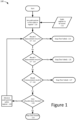
- FIG. 1 is a flowchart 100 showing an example of the disclosed technology.
- the particular operations and sequence of operations should not be construed as limiting, as they can be performed alone or in any combination, subcombination, and/or sequence with one another. Additionally, the illustrated operations can be performed together with one or more other operations.
- an evaluation is made as to whether an X measurement would result in a positive result with a probability of 1 ⁇ 2. If not, then at 113, the test is determined to have failed and the process is stopped.
- the process that is illustrated is checking if the quantum state of the qubit at the pointer is 10), which has a probability 1 of returning a +1 eigenvalue when Z is measured, and a probability 1 ⁇ 2 of returning a +1 eigenvalue when either X or Y is measured.
- 0 ⁇ can be used, in which case the expected probabilities for X, Y and Z measurements can be readily computed.
- an evaluation is made as to whether an Y measurement would result in a positive result with a probability of 1 ⁇ 2. If not, then at 115, the test is determined to have failed and the process is stopped.
- an entangled state is prepared, as described herein.
- This state may be prepared by acting Hadamard and controlled-NOT gates between the first and second half of a register initially in the "all zeros" state.
- This state may also be prepared by directly initializing the internal representation of the simulator to an entangled state such as a Bell pair.
- the simplest way of preparing an entangled state is to have a Hadamard gate act on each qubit in the first half of the register and a controlled-NOT gate between corresponding pairs of qubits from each half. This is not required, however, as an implementation may simply set its internal representation of the state to be an entangled state between the two registers.
- the inverse of a quantum program is performed (acted in reverse) on half of the entangled state. (Recall that the adjoint of an operation undoes an operation by applying the inverse of each step in reverse order). Further, in the illustrated embodiment, the quantum program applied is a quantum program defining expected behavior (as shown by 215).
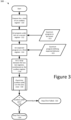
- FIG. 3 is a flowchart 300 showing an example embodiment for implementing an embodiment of the disclosed technology using a SWAP test.
- the particular operations and sequence of operations should not be construed as limiting, as they can be performed alone or in any combination, subcombination, and/or sequence with one another. Additionally, the illustrated operations can be performed together with one or more other operations.
- a quantum program to be tested (as shown by 313) is performed (acted) on a second register.
- a quantum program defining expected behavior (as shown by 315) is performed (acted) on a third register.
- a swap is performed (acted) between the two test registers, conditioned on the auxiliary register.
- One example technical benefit of the disclosed technology is that it avoids the infeasible large time requirements of existing alternative solutions, especially for programs acting on more than two qubits.
- additional memory may be used, but that additional memory greatly reduces the overall time, processing resource, power, and other processing resource burden that would be experienced by the alternative solutions.
- the section describes various example embodiments for implementing the disclosed technology as part of a quantum simulator implemented by a classical computer in support of a quantum computing device.
- Embodiments of the techniques disclosed herein can be used to develop quantum program in a computationally efficiently mannet that provides significant savings to processing time, power, and other computational resource usage.
- the technical computational savings of the disclosed approaches are significant.
- the disclosed techniques are significant in their contribution to developing computationally efficient techniques for writing quantum programs that are to be used to program a quantum computing device and measure results from the quantum states achieved by such devices. If such quantum programs cannot be accurately and appropriately tested ahead of time, the quantum resource cost (e.g., in terms of time, power, and resource usage) will be significant. Accordingly, the desirablilty of mechanisms to improve the development and significance.
- Q# supports creating unit tests that act upon quantum programs, and which can be executed as tests within the xUnit unit testing framework.
- Tests.qs provides a convenient place to define new Q# unit tests. Initially this file contains one sample unit test AllocateQubitTest which checks that a newly allocated qubit is in the
- TestSuiteRunner holds test suite runners - methods annotated with OperationDriver which define what subset of tests is to be executed as part of this test suite and how to execute these tests.
- this file contains one sample test suite TestTarget which runs all tests in the same namespace as it is which have names ending with ...Test on QuantumSimulator. Using other arguments of OperationDriver allows to select only tests from certain assembly or with names starting or ending with certain string.
- Test Settings > Default Processor Architecture > X64.
- Test Execution Command Line Tool Version 15.0.26720.2 Starting test execution please wait... Warning: Using Isolation mode to run tests as required by effective Platform: X64 and .Net Framework:Framework40 settings for test run. Use the /inIsolation parameter to suppress this warning.
- the logged messages can be directed to the test output.
- this redirection is preconfigured for the suite and created by default as follows:
- test output After one executes a test in Test Explorer and clicks on the test, a panel will appear with information about test execution: Passed/Failed status, elapsed time and an "Output" link. If one clicks the "Output” link, test output will open in a new window.
- the keyword fail indicates that the computation should not proceed, raising an exception in the target machine running the Q# program.
- a failure of this kind cannot be observed from within Q#, as no further Q# code is run after a fail statement is reached.
- AssertPositive one can be assured by the anthropic principle (see, e.g., https://www.scottaaronson.com/democritus/lec17.html) that its input was positive, even though one is not able to directly observe this fact.
- the Microsoft.Quantum.Canon namespace provides several more functions of the Assert family which allow us to check more advanced conditions. They are detailed in Q# standard libraries: Testing and Debugging section
- example functions and operations are discussed.
- the example functions and operations are provided by the canon to assist in diagnosing quantum operations implemented in Q#, built on top of AssertProb.
- Many of these functions and operations rely on the fact that classical simulations of quantum mechanics need not obey the no cloning theorem (see, e.g., https:/ /arxiv.org/pdf/quant-ph/9607018.pdf), such that one can make unphysical measurements and assertions when using a simulator for a target quantum machine.
- the canon provides a range of functions for asserting different properties of and relations between classical values. These functions all start with prefix Assert and located in Microsoft.Quantum.Canon namespace.
- the target machine is a simulator
- the classical information used by a simulator to represent the internal state of a qubit is amenable to copying, such that one does not need to actually perform a measurement to test the assertion. In particular, this allows one to reason about incompatible measurements that would be impossible on actual hardware.
- AssertQubit provides a particularly useful shorthand to do so in the case that one wishes to test the assertion
- ⁇ ⁇
- P and Q operations both prepare the same state, and when Q supports Adjoint.
- the AssertQubitState implements these assertions given representations of ⁇ and ⁇ as values of type Complex. This is helpful when the expected state can be computed mathematically.
- FIG. 4 illustrates a generalized example of a suitable classical computing environment 400 in which the described embodiments can be implemented.
- the computing environment 400 is not intended to suggest any limitation as to the scope of use or functionality of the disclosed technology, as the techniques and tools described herein can be implemented in diverse general-purpose or special-purpose environments that have computing hardware.
- the computing environment 400 can have additional features.
- the computing environment 400 includes storage 440, one or more input devices 450, one or more output devices 460, and one or more communication connections 470.
- An interconnection mechanism (not shown), such as a bus, controller, or network, interconnects the components of the computing environment 400.
- operating system software (not shown) provides an operating environment for other software executing in the computing environment 400, and coordinates activities of the components of the computing environment 400.
- the storage 440 can be removable or non-removable, and includes one or more magnetic disks (e.g., hard drives), solid state drives (e.g., flash drives), magnetic tapes or cassettes, CD-ROMs, DVDs, or any other tangible non-volatile storage medium which can be used to store information and which can be accessed within the computing environment 400.
- the storage 440 can also store instructions for the software 480 implementing any of the disclosed simulation techniques.
- the storage 440 can also store instructions for the software 480 for generating and/or synthesizing any of the described techniques, systems, or reversible circuits.
- the input device(s) 450 can be a touch input device such as a keyboard, touchscreen, mouse, pen, trackball, a voice input device, a scanning device, or another device that provides input to the computing environment 400.
- the output device(s) 460 can be a display device (e.g., a computer monitor, laptop display, smartphone display, tablet display, netbook display, or touchscreen), printer, speaker, or another device that provides output from the computing environment 400.
- the communication connection(s) 470 enable communication over a communication medium to another computing entity.
- the communication medium conveys information such as computer-executable instructions or other data in a modulated data signal.
- a modulated data signal is a signal that has one or more of its characteristics set or changed in such a manner as to encode information in the signal.
- communication media include wired or wireless techniques implemented with an electrical, optical, RF, infrared, acoustic, or other carrier.
- Computer-readable media are any available media (e.g., memory or storage device) that can be accessed within or by a computing environment.
- Computer-readable media include tangible computer-readable memory or storage devices, such as memory 420 and/or storage 440, and do not include propagating carrier waves or signals per se (tangible computer-readable memory or storage devices do not include propagating carrier waves or signals per se).
- program modules include routines, programs, libraries, objects, classes, components, data structures, and so on, that perform particular tasks or implement particular abstract data types.
- the functionality of the program modules may be combined or split between program modules as desired in various embodiments.
- Computer-executable instructions for program modules may be executed within a local or distributed computing environment.
- Networked computing device 520 can be, for example, a computer running a browser or other software connected to a network 512.
- the computing device 520 can have a computer architecture as shown in FIG. 5 and discussed above.
- the computing device 520 is not limited to a traditional personal computer but can comprise other computing hardware configured to connect to and communicate with a network 512 (e.g., smart phones, laptop computers, tablet computers, or other mobile computing devices, servers, network devices, dedicated devices, and the like).
- the computing device 520 can comprise an FPGA or other programmable logic device.
- the computing device 520 is configured to communicate with a computing device 530 (e.g., a remote server, such as a server in a cloud computing environment) via a network 512.
- a computing device 530 e.g., a remote server, such as a server in a cloud computing environment
- the computing device 520 is configured to transmit input data to the computing device 530
- the computing device 530 is configured to implement a quantum program simulation technique according to the embodiments and/or a circuit generation or compilation/synthesis methods for generating qunatum circuits based on or in conjunction with any of the quantum program simulation techniques disclosed herein.
- the computing device 530 can output results to the computing device 520.
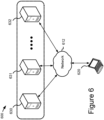
- Networked computing device 620 can be, for example, a computer running a browser or other software connected to a network 612.
- the computing device 620 can have a computer architecture as shown in FIG. 4 and discussed above.
- the computing device 620 is configured to communicate with multiple computing devices 630, 631, 632 (e.g., remote servers or other distributed computing devices, such as one or more servers in a cloud computing environment) via the network 612.
- each of the computing devices 630, 631, 632 in the computing environment 600 is used to perform at least a portion of a quantum program simulation technique (as disclosed herein) and/or a synthesis/compilation process.
- the computing devices 630, 631, 632 form a distributed computing environment in which the quantum program simulation technique (as disclosed herein) and/or generation/compilation/synthesis processes are shared across multiple computing devices.
- the computing device 620 is configured to transmit input data to the computing devices 630, 631, 632, which are configured to distributively implement such as process, including performance of any of the disclosed methods or creation of any of the disclosed circuits, and to provide results to the computing device 620.
- Any of the data received from the computing devices 630, 631, 632 can be stored or displayed on the computing device 620 (e.g., displayed as data on a graphical user interface or web page at the computing devices 620).
- the illustrated network 612 can be any of the networks discussed above with respect to FIG. 5 .
- an exemplary system for implementing the disclosed technology includes computing environment 700.
- a compiled quantum computer circuit description (including quantum circuits resulting from and/or supported by any of the quantum program simulation techniques as disclosed herein) can be used to program (or configure) one or more quantum processing units such that the quantum processing unit(s) implement the circuit described by the quantum computer circuit description.
- the environment 700 includes one or more quantum processing units 702 and one or more readout device(s) 708.
- the quantum processing unit(s) execute quantum circuits that are precompiled and described by the quantum computer circuit description.
- the quantum processing unit(s) can be one or more of, but are not limited to: (a) a superconducting quantum computer; (b) an ion trap quantum computer; (c) a fault-tolerant architecture for quantum computing; and/or (d) a topological quantum architecture (e.g., a topological quantum computing device using Majorana zero modes).
- the precompiled quantum circuits, including any of the disclosed circuits can be sent into (or otherwise applied to) the quantum processing unit(s) via control lines 706 at the control of quantum processor controller 720.
- the quantum processor controller (QP controller) 720 can operate in conjunction with a classical processor 710 (e.g., having an architecture as described above with respect to FIG. 4 ) to implement the desired quantum computing process.
- the QP controller 720 further implements the desired quantum computing process via one or more QP subcontrollers 704 that are specially adapted to control a corresponding one of the quantum processor(s) 702.
- the quantum controller 720 facilitates implementation of the compiled quantum circuit by sending instructions to one or more memories (e.g., lower-temperature memories), which then pass the instructions to low-temperature control unit(s) (e.g., QP subcontroller(s) 704) that transmit, for instance, pulse sequences representing the gates to the quantum processing unit(s) 702 for implementation.
- the QP controller(s) 720 and QP subcontroller(s) 704 operate to provide appropriate magnetic fields, encoded operations, or other such control signals to the quantum processor(s) to implement the operations of the compiled quantum computer circuit description.
- the quantum controller(s) can further interact with readout devices 708 to help control and implement the desired quantum computing process (e.g., by reading or measuring out data results from the quantum processing units once available, etc.)
- compilation is the process of translating a high-level description of a quantum algorithm into a quantum computer circuit description comprising a sequence of quantum operations or gates, which can include the circuits as disclosed herein.
- the compilation can be performed by a compiler 722 using a classical processor 710 (e.g., as shown in FIG. 4 ) of the environment 700 which loads the high-level description from memory or storage devices 712 and stores the resulting quantum computer circuit description in the memory or storage devices 712.
- a simulator 721 can be used to test the correctness of the quantum program using any of the disclosed testing techniques.
- compilation and/or quantum program simulation can be performed remotely by a remote computer 760 (e.g., a computer having a computing environment as described above with respect to FIG. 4 ) which stores the resulting quantum computer circuit description in one or more memory or storage devices 762 and transmits the quantum computer circuit description to the computing environment 700 for implementation in the quantum processing unit(s) 702.
- remote computer 760 includes a quantum program simulator 764 that can be perform any of the simulation techniques disclosed herein.
- the remote computer 700 can store the high-level description in the memory or storage devices 762 and transmit the high-level description to the computing environment 700 for compilation and use with the quantum processor(s).
- results from the computation performed by the quantum processor(s) can be communicated to the remote computer after and/or during the computation process.
- the remote computer can communicate with the QP controller(s) 720 such that the quantum computing process (including any compilation, simulation, and QP control procedures) can be remotely controlled by the remote computer 760.
- the remote computer 760 communicates with the QP controller(s) 720, compiler/synthesizer 722, quantum program simulator 721, via communication connections 750.
- the environment 700 can be a cloud computing environment, which provides the quantum processing resources of the environment 700 to one or more remote computers (such as remote computer 760) over a suitable network (which can include the internet).
- a cloud computing environment which provides the quantum processing resources of the environment 700 to one or more remote computers (such as remote computer 760) over a suitable network (which can include the internet).
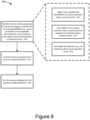
- FIG. 8 is a flowchart 800 showing a generalized example of the disclosed technology.
- the particular operations and sequence of operations should not be construed as limiting, as they can be performed alone or in any combination, subcombination, and/or sequence with one another. Additionally, the illustrated operations can be performed together with one or more other operations.
- the testing comprises applying a Choi-Jami kowski isomorphism to reduce assertions about quantum states.
- the testing comprises using a SWAP test to reduce assertions about unitary quantum programs to assertions about quantum states.
- the testing comprises testing of single-shot behavior.
- the testing of single-shot behavior analyzes calls for each operation once.
- the quantum program is loaded into a qauntum computing device.
- the quantum program is run on the quantum computing device.
Landscapes
- Engineering & Computer Science (AREA)
- Theoretical Computer Science (AREA)
- Physics & Mathematics (AREA)
- General Physics & Mathematics (AREA)
- Software Systems (AREA)
- General Engineering & Computer Science (AREA)
- Mathematical Physics (AREA)
- Evolutionary Computation (AREA)
- Computing Systems (AREA)
- Mathematical Analysis (AREA)
- Mathematical Optimization (AREA)
- Pure & Applied Mathematics (AREA)
- Data Mining & Analysis (AREA)
- Computational Mathematics (AREA)
- Artificial Intelligence (AREA)
- Condensed Matter Physics & Semiconductors (AREA)
- Computer Hardware Design (AREA)
- Chemical & Material Sciences (AREA)
- Nanotechnology (AREA)
- Quality & Reliability (AREA)
- Crystallography & Structural Chemistry (AREA)
- Geometry (AREA)
- Probability & Statistics with Applications (AREA)
- Algebra (AREA)
- Tests Of Electronic Circuits (AREA)
- Test And Diagnosis Of Digital Computers (AREA)
Description
- The disclosed technology includes example embodiments that provide a framework for testing quantum programs in a manner similar to unit testing of classical programs by using a simulator that can predict the probability (e.g., the exact probability) of measurements in a quantum system (known as a "strong simulator"). For a particular quantum program, embodiments of the disclosed technology use information exposed by strong simulation that would not otherwise be available to compare the given program to a desired reference program.
- Previous approaches have been developed within the context of characterizing and certifying quantum processes developed for experimental use.
- Robert Rand, and al.: "Formal Verification of Quantum Circuits in Coq", 3 July 2017 (2017-07-03), 4th International Conference on Quantum Physics and Logic discloses a method for testing the correctness of a quantum program based on denotational semantics and the Coq proof assistant.
- By contrast, certain embodiments of the disclosed technology employ quantum characterization in the context of a quantum programming language coupled to a strong quantum simulator to provide unit testing methodologies.
- Embodiments of the disclosed technology provide a method to test the correctness of quantum programs on a strong simulator of quantum dynamics using concepts from quantum information theory and open quantum system.
- The non-physical resources provided by a strong simulator also enable testing properties of a quantum program that would otherwise not be directly testable, such as the correctness of a quantum program conditioned on classical randomness. Existing approaches can only directly test the average behavior of a quantum program.
- Examples comprise using assertions about exact probabilities of incompatible measurements to test quantum states in a strong quantum simulator against classical descriptions of expected states. In certain implementations the Choi-Jamilkowski isomorphism is used to reduce assertions about quantum programs to assertions about quantum states in a time-efficient manner. In other examples, a SWAP test is used to reduce assertions about unitary quantum programs to assertions about quantum states in a memory-efficient manner. Further examples include the testing of "single-shot" behavior rather than average behavior of a quantum program.
- The foregoing and other objects, features, and advantages of the disclosed technology will become more apparent from the following detailed description, which proceeds with reference to the accompanying figures.
-
-
Figure 1 is a flowchart of an example procedure for testing whether an arbitrary quantum state is in the all-zeros state. -
Figure 2 is a flowchart of an example procedure for performing an evaluation where certain acts can be performed by the procedure ofFigure 1 . -
Figure 3 is a flowchart of an example procedure for performing the SWAP test evaluation where certain acts can be performed by the procedure ofFigure 1 . -
Figure 4 illustrates a generalized example of a suitable classical computing environment in which several of the described embodiments can be implemented. -
Figure 5 is an example of a possible network topology (e.g., a client-server network) for implementing a system according to the disclosed technology. -
Figure 6 is another example of a possible network topology (e.g., a distributed computing environment) for implementing a system according to the disclosed technology is depicted. -
Figure 7 is an exemplary system for implementing the disclosed technology that includes a classical computing environment and a quantum computing environment. -
Figure 8 is a flowchart of another example procedure for performing a test as to the correctness of a quantum program. - As used in this application, the singular forms "a," "an," and "the" include the plural forms unless the context clearly dictates otherwise. Additionally, the term "includes" means "comprises." Further, the term "coupled" does not exclude the presence of intermediate elements between the coupled items. Further, as used herein, the term "and/or" means any one item or combination of any items in the phrase.
- Although the operations of some of the disclosed methods are described in a particular, sequential order for convenient presentation, it should be understood that this manner of description encompasses rearrangement, unless a particular ordering is required by specific language set forth below. For example, operations described sequentially may in some cases be rearranged or performed concurrently. Moreover, for the sake of simplicity, the attached figures may not show the various ways in which the disclosed systems, methods, and apparatus can be used in conjunction with other systems, meth-ods, and apparatus. Additionally, the description sometimes uses terms like "produce" and "provide" to describe the disclosed methods. These terms are high-level abstrac-tions of the actual operations that are performed. The actual operations that correspond to these terms will vary depending on the particular implementation and are readily dis-cernible by one of ordinary skill in the art.
- Embodiments of the disclosed technology adapt ideas from quantum characterization, namely process tomography, to reduce the problem of asserting a quantum operation acts as expected to the problem of asserting that a quantum state is equal to a particular expected state. This latter problem can then be efficiently solved by interaction with a strong quantum simulator much more efficiently than it can be solved on an actual physical implementation (a physical implementation of quantum computing device). For instance, a strong simulator, such as a matrix-vector simulator, can report the probability of any particular measurement without performing the measurement and collapsing the state of interest- this is not consistent with the no-cloning theorem, and represents that the classical information used to implement a simulator can be readily cloned.
- Using this idea, one can efficiently test whether an arbitrary quantum state is in the all-zeros state by asserting that the reduced density operator on each individual qubit is the pure zero state on that qubit. An example procedure for testing whether an arbitrary quantum state is in the all-zeros state is shown in
flow chart 100 ofFigure 1 . It should be understood that the particular ordering shown inFigure 1 is by way of example only. For instance, the x, y, and z measurements can be tested in a different order, or a different reference state may be used, resulting in different probabilities for each measurement, depending on the implementation. - In more detail,
FIG. 1 is aflowchart 100 showing an example of the disclosed technology. The particular operations and sequence of operations should not be construed as limiting, as they can be performed alone or in any combination, subcombination, and/or sequence with one another. Additionally, the illustrated operations can be performed together with one or more other operations. - At 110, a qubit pointer is set to the first qubit in the register based on the qubit register to be tested (shown at 111).
- At 112, an evaluation is made as to whether an X measurement would result in a positive result with a probability of ½. If not, then at 113, the test is determined to have failed and the process is stopped. In more detail, the process that is illustrated is checking if the quantum state of the qubit at the pointer is 10), which has a
probability 1 of returning a +1 eigenvalue when Z is measured, and a probability ½ of returning a +1 eigenvalue when either X or Y is measured. In general, a reference state other than | |0〉 can be used, in which case the expected probabilities for X, Y and Z measurements can be readily computed. - At 114, an evaluation is made as to whether an Y measurement would result in a positive result with a probability of ½. If not, then at 115, the test is determined to have failed and the process is stopped.
- At 116, an evaluation is made as to whether an Z measurement would result in a positive result with a probability of 1. If not, then at 117, the test is determined to have failed and the process is stopped.
- At 118, a determination is made as to whether all the qubits of the qubit register (provided from 111) have been checked. If not, then the qubit pointer is advanced to the next qubit at 120. If so, then the test is stopped with a determination that the test was passed.
- The reduction from assertion of quantum programs then follows by using, in one example, the Choi-Jamikowski isomorphism to prepare a state that is the all zeros state if and only if two quantum programs are identical. An example procedure for performing this evaluation is shown in

flowchart 200 ofFigure 2 , where the act of "check[ing] that each qubit is in the zero state" can be performed by the procedure ofFigure 1 . Similarly, one can use the SWAP test to assert that two quantum programs intended for use in state preparation actually prepare identical states. An example procedure for performing the SWAP test evaluation is shown inflowchart 300 ofFigure 3 , where the act of "check[ing] that each qubit is in the zero state" can be performed by the procedure ofFigure 1 . - In more detail,
FIG. 2 is aflowchart 200 showing an example embodiment for implementing an embodiment of the disclosed technology using the Choi-Jamilkowski isomorphism. The particular operations and sequence of operations should not be construed as limiting, as they can be performed alone or in any combination, subcombination, and/or sequence with one another. Additionally, the illustrated operations can be performed together with one or more other operations. - At 210, an entangled state is prepared, as described herein. This state may be prepared by acting Hadamard and controlled-NOT gates between the first and second half of a register initially in the "all zeros" state. This state may also be prepared by directly initializing the internal representation of the simulator to an entangled state such as a Bell pair. In more detail, the simplest way of preparing an entangled state is to have a Hadamard gate act on each qubit in the first half of the register and a controlled-NOT gate between corresponding pairs of qubits from each half. This is not required, however, as an implementation may simply set its internal representation of the state to be an entangled state between the two registers.
- At 212, a quantum program is performed (acted) on half of entangled state. The quantum program performed is a quantum program to be tested (as shown by 213).
- At 214, the inverse of a quantum program is performed (acted in reverse) on half of the entangled state. (Recall that the adjoint of an operation undoes an operation by applying the inverse of each step in reverse order). Further, in the illustrated embodiment, the quantum program applied is a quantum program defining expected behavior (as shown by 215).
- At 216, the entangled state is unprepared, as described herein. The entangled state may be unprepared by performing the inverse of the quantum program (acting in reverse) used at 210 to prepare the state.
- At 218, a check is made to determine whether all qubits are in the zero state (as shown by decision block 218). If not, then the process is stopped and the test is deemed failed at 220. If all qubits are in the zero state, then the process is stopped at the test is deemed to be passed at 222.
- In more detail,
FIG. 3 is aflowchart 300 showing an example embodiment for implementing an embodiment of the disclosed technology using a SWAP test. The particular operations and sequence of operations should not be construed as limiting, as they can be performed alone or in any combination, subcombination, and/or sequence with one another. Additionally, the illustrated operations can be performed together with one or more other operations. - At 310, a plus (+) state is prepared on an auxiliary register. This state may be prepared by acting a Hadamard gate on a register in the 'zero' state. This state may also be prepared by directly setting the internal representation of a simulator to the equal superposition of a 'zero' state and a 'one' state.
- At 312, a quantum program to be tested (as shown by 313) is performed (acted) on a second register.
- At 314, a quantum program defining expected behavior (as shown by 315) is performed (acted) on a third register.
- At 316, a swap is performed (acted) between the two test registers, conditioned on the auxiliary register.
- At 318, a check is made to determine whether all qubits are in the zero state (as shown by decision block 320). If not, then the process is stopped and the test is deemed failed at 322. If all qubits are in the zero state, then the process is stopped at the test is deemed to be passed at 324.
- Alternatives might employ the same reduction, but with the all zeros state assertion replaced by a time-intensive simulation of a conventional quantum state tomography experiment. Other alternatives might optimize by not performing the above reduction, but by preparing a basis of different input states to the quantum programs under test and then performing quantum process tomography.
- One example technical benefit of the disclosed technology is that it avoids the infeasible large time requirements of existing alternative solutions, especially for programs acting on more than two qubits. In certain examples, additional memory may be used, but that additional memory greatly reduces the overall time, processing resource, power, and other processing resource burden that would be experienced by the alternative solutions.
- The two alternatives described above (the Choi-Jamilkowski or SWAP test and the tomography approach), though identical in quantum experiments, differ in a simulator due to the presence of strong simulation. Consequently, certain examples of the disclosed technology are capable of probing the interaction of classical programs, such as pseudorandom number generators and classical control feedback, with the quantum programs under test.
- The section describes various example embodiments for implementing the disclosed technology as part of a quantum simulator implemented by a classical computer in support of a quantum computing device. Embodiments of the techniques disclosed herein can be used to develop quantum program in a computationally efficiently mannet that provides significant savings to processing time, power, and other computational resource usage. Thus, the technical computational savings of the disclosed approaches are significant. Still further, the disclosed techniques are significant in their contribution to developing computationally efficient techniques for writing quantum programs that are to be used to program a quantum computing device and measure results from the quantum states achieved by such devices. If such quantum programs cannot be accurately and appropriately tested ahead of time, the quantum resource cost (e.g., in terms of time, power, and resource usage) will be significant. Accordingly, the desirablilty of mechanisms to improve the development and significance.
- As with classical programming, it is important to be able to check that quantum programs act as intended, and to be able to diagnose a quantum program that is incorrect. In this section, tools are described for testing and debugging quantum programs (e.g., written in a suitable quantum computer programming language, such as Q#).
- One common approach to testing classical programs is to write small programs called unit tests, which run code in a library and compare its output to some expected output. For instance, one may want to ensure that Square (2) returns 4, since one knows a priori that 22 = 4.
- Q# supports creating unit tests that act upon quantum programs, and which can be executed as tests within the xUnit unit testing framework.
- The subsections below describe one example procedure for performing unit tests of a quantum program. The particular procedure and commands are by way of example only and can be adapted to other platforms and quantum programming languages.
- Open Visual Studio 2017. Go to the File menu and select New > Project.... In the project template explorer, under Installed > Visual C#, select the Q# Test Project template. This will create a project with two files open.
- The first file, Tests.qs, provides a convenient place to define new Q# unit tests. Initially this file contains one sample unit test AllocateQubitTest which checks that a newly allocated qubit is in the |0〉 state and prints a message:
 operation AllocateQubitTest () : ()
 {
   body
   {
       using (qs = Qubit[1]) {
           Assert([PauliZ], [qs[0]], Zero, "Newly allocated qubit must
           be in |0> state");
       }
       Message("Test passed");
   }
   }
vstest.console.exe .\bin\Debug\QSharpTestProject1.dll /Platform:x64
Test Execution Command Line Tool Version 15.0.26720.2
Starting test execution, please wait...
Warning: Using Isolation mode to run tests as required by effective Platform: X64 and .Net Framework:Framework40 settings for test run.
Use the /inIsolation parameter to suppress this warning.
| Information: | [xUnit.net 00:00:01.0018943] | Discovering: | QSharpTestProject1 |
| Information: | [xUnit.net 00:00:01.4948065] | Discovered: | QSharpTestProject1 |
| Information: | [xUnit.net 00:00:01.5081234] | Starting: | QSharpTestProject1 |
| Information: | [xUnit.net 00:00:02.0242517] | Finished: | QSharpTestProject1 |
Passed AllocateQubitTest
Total tests: 1. Passed: 1. Failed: 0. Skipped: 0.
Test Run Successful..
Test execution time: 3.0038 Seconds
 using (var sim = new QuantumSimulator())
 {
   // OnLog defines action(s) performed when Q# test calls operation Message
   sim.OnLog += (msg) => { output.WriteLine(msg); };
   op.TestOperationRunner(sim);
   }
 function AssertPositive(value : Double) : () {
   if (value <= 0) {
       fail "Expected a positive number.";
   }
   }
 using (register = Qubit[1]) {
   H(register[0]);
   Assert([PauliX], register, Zero);
   // Even though one does not have access to states in Q#,
   // one knows by the anthropic principle that the state
   // of register at this point is |+〉.
   }

 using (register = Qubit[1]) {
   P(register[0]);
   (Adjoint Q)(register[0]);
   AssertQubit(Zero, register[0]);
   }


Claims (5)
- A method for testing correctness of a first quantum program (213), the first quantum program deemed to be correct if it acts identically to a second quantum program, the method performed by a strong quantum simulator implemented in a classical computer device and comprising:preparing (210) an entangled state between first and second halves of a register of simulated qubits, the entangled state prepared by acting a third quantum program on the register in a zero state or by directly initialising the internal representation of the simulator to an entangled state;performing (212), on one of the first and second halves, the first quantum program (213);performing (214), on said one of the first and second halves, the inverse of the second quantum program (215);unpreparing (216) the entangled state by performing the inverse of the third quantum program; andchecking (218) whether all qubits of the register of simulated qubits are in a zero state,wherein the test is deemed passed if all of the qubits are in the zero state, and deemed failed if not all of the qubits are in the zero state.
- The method of claim 1, further comprising:loading the quantum program into a quantum computing device; andrunning the quantum program on the quantum computing device.
- The method of claim 1 or 2, wherein the third quantum program is performed by acting Hadamard and controlled-NOT gates between the first and second half of the register.
- One or more computer-readable media storing computer-executable instructions, which when executed by a processor cause the processor to implement a strong quantum simulator configured to perform the method of claim 1, 2 or 3.
- A system, comprising:a quantum computing device; anda classical computing device in communication with the quantum computing device and adapted to be a strong quantum simulator configured to perform the method of claim 1,2 or 3.
Applications Claiming Priority (3)
| Application Number | Priority Date | Filing Date | Title |
|---|---|---|---|
| US201762596620P | 2017-12-08 | 2017-12-08 | |
| US16/023,908 US11386345B2 (en) | 2017-12-08 | 2018-06-29 | Strong simulation methods for unit testing quantum software |
| PCT/US2018/063533 WO2019112918A1 (en) | 2017-12-08 | 2018-12-02 | Strong simulation methods for unit testing quantum software |
Publications (2)
| Publication Number | Publication Date |
|---|---|
| EP3704588A1 EP3704588A1 (en) | 2020-09-09 |
| EP3704588B1 true EP3704588B1 (en) | 2025-01-29 |
Family
ID=66697024
Family Applications (1)
| Application Number | Title | Priority Date | Filing Date |
|---|---|---|---|
| EP18830975.1A Active EP3704588B1 (en) | 2017-12-08 | 2018-12-02 | Strong simulation methods for unit testing quantum software |
Country Status (3)
| Country | Link |
|---|---|
| US (1) | US11386345B2 (en) |
| EP (1) | EP3704588B1 (en) |
| WO (1) | WO2019112918A1 (en) |
Families Citing this family (8)
| Publication number | Priority date | Publication date | Assignee | Title |
|---|---|---|---|---|
| US10872021B1 (en) | 2017-12-06 | 2020-12-22 | Rigetti & Co, Inc. | Testing hardware in a quantum computing system |
| US11314535B2 (en) * | 2019-06-21 | 2022-04-26 | International Business Machines Corporation | Quantum data result streaming |
| US20210150403A1 (en) * | 2019-11-15 | 2021-05-20 | Board Of Regents, The University Of Texas System | Methods and Circuits for Copying Qubits and Quantum Representation of Images and Signals |
| US12106179B2 (en) * | 2020-12-17 | 2024-10-01 | International Business Machines Corporation | Measurement aggregation in quantum programs |
| CN115329963B (en) * | 2021-04-25 | 2024-07-16 | 本源量子计算科技(合肥)股份有限公司 | Quantum bit testing method, device and quantum computer operating system |
| US12117921B2 (en) * | 2021-04-29 | 2024-10-15 | Red Hat, Inc. | Performing comparative testing of quantum services |
| US12450513B2 (en) * | 2022-05-31 | 2025-10-21 | Q.M Technologies Ltd. | Quantum controller validation |
| CN118333181B (en) * | 2024-04-09 | 2024-09-13 | 浙江大学 | A method and system for exploiting isomorphism in quantum programs to facilitate confident verification |
Citations (1)
| Publication number | Priority date | Publication date | Assignee | Title |
|---|---|---|---|---|
| CA2470715A1 (en) * | 2001-12-22 | 2003-07-10 | D-Wave Systems, Inc. | Quantum computing integrated development environment |
Family Cites Families (4)
| Publication number | Priority date | Publication date | Assignee | Title |
|---|---|---|---|---|
| US20060224547A1 (en) * | 2005-03-24 | 2006-10-05 | Ulyanov Sergey V | Efficient simulation system of quantum algorithm gates on classical computer based on fast algorithm |
| US8832165B2 (en) * | 2007-12-12 | 2014-09-09 | Lockheed Martin Corporation | Computer systems and methods for quantum verification and validation |
| US11205132B2 (en) * | 2014-02-17 | 2021-12-21 | Invent.Ly, Llc | Perturbing the contextualization of a proposition by a group of subjects considered in a quantum representation by injecting a subject exhibiting an anti-consensus statistic modulo the proposition |
| US9646257B2 (en) * | 2014-09-03 | 2017-05-09 | Microsoft Technology Licensing, Llc | Probabilistic assertions and verifying them |
-
2018
- 2018-06-29 US US16/023,908 patent/US11386345B2/en active Active
- 2018-12-02 EP EP18830975.1A patent/EP3704588B1/en active Active
- 2018-12-02 WO PCT/US2018/063533 patent/WO2019112918A1/en not_active Ceased
Patent Citations (1)
| Publication number | Priority date | Publication date | Assignee | Title |
|---|---|---|---|---|
| CA2470715A1 (en) * | 2001-12-22 | 2003-07-10 | D-Wave Systems, Inc. | Quantum computing integrated development environment |
Non-Patent Citations (3)
| Title |
|---|
| JENNIFER PAYKIN ET AL: "QWIRE: a core language for quantum circuits", ACM SIGPLAN NOTICES, ASSOCIATION FOR COMPUTING MACHINERY, US, vol. 52, no. 1, 1 January 2017 (2017-01-01), pages 846 - 858, XP058337251, ISSN: 0362-1340, DOI: 10.1145/3093333.3009894 * |
| MINGSHENG YING ET AL: "Quantum programming: From theories to implementations", CHINESE SCIENCE BULLETIN, SCIENCE IN CHINA PRESS, BE, vol. 57, no. 16, 1 June 2012 (2012-06-01), pages 1903 - 1909, XP035064442, ISSN: 1861-9541, DOI: 10.1007/S11434-012-5147-6 * |
| MINGSHENG YING ET AL: "Verification of Quantum Programs", ARXIV.ORG, CORNELL UNIVERSITY LIBRARY, 201 OLIN LIBRARY CORNELL UNIVERSITY ITHACA, NY 14853, 21 June 2011 (2011-06-21), XP080510422, DOI: 10.1016/J.SCICO.2013.03.016 * |
Also Published As
| Publication number | Publication date |
|---|---|
| US11386345B2 (en) | 2022-07-12 |
| US20190180197A1 (en) | 2019-06-13 |
| EP3704588A1 (en) | 2020-09-09 |
| WO2019112918A1 (en) | 2019-06-13 |
Similar Documents
| Publication | Publication Date | Title |
|---|---|---|
| US11386345B2 (en) | Strong simulation methods for unit testing quantum software | |
| CN113032195B (en) | Chip simulation verification method, system, equipment and storage medium | |
| US11842177B2 (en) | Systems and methods for unified computing on digital and quantum computers | |
| JP7199489B2 (en) | Methods, systems, electronics, and media for removing quantum measurement noise | |
| CN112819169B (en) | Quantum control pulse generation method, device, equipment and storage medium | |
| US10872021B1 (en) | Testing hardware in a quantum computing system | |
| US8181132B2 (en) | Validating one or more circuits using one or more grids | |
| US12373719B2 (en) | Systems and methods for simulating a quantum processor | |
| CN109643398A (en) | Fidelity estimation of quantum computing systems | |
| US10235477B2 (en) | Prototyping an image processing algorithm and emulating or simulating execution on a hardware accelerator to estimate resource usage or performance | |
| US10430532B2 (en) | Bidomain simulator | |
| JP7369809B2 (en) | Quantum gate calibration methods and apparatus, electronic equipment and media | |
| Hao et al. | Enabling high performance debugging for variational quantum algorithms using compressed sensing | |
| JP5692739B2 (en) | Method, program and system for solving ordinary differential equations | |
| US20140013290A1 (en) | Input Space Reduction for Verification Test Set Generation | |
| Ali et al. | Technique for early reliability prediction of software components using behaviour models | |
| US20130298102A1 (en) | Input Space Reduction for Verification Test Set Generation | |
| Gomes et al. | Off-the-shelf Components for Quantum Programming and Testing. | |
| KR20080055913A (en) | Development Method, System and Apparatus of Assertion for Integrated Circuit Design Simulation | |
| CN120031152A (en) | Quantum system verification method, device, equipment, storage medium and computer program product based on parallel measurement | |
| Miachin et al. | The open system for storing and processing of a dataset of combinational circuits | |
| US12141512B1 (en) | Method, product, and system for universal verification methodology (UVM) sequence selection using machine learning | |
| KR20200090061A (en) | Method and apparatus for artificial neural network | |
| Wang et al. | WEST: Interactive Validation of Mission-time Linear Temporal Logic (MLTL) | |
| Sheldon et al. | A review of some rigorous software design and analysis tools |
Legal Events
| Date | Code | Title | Description |
|---|---|---|---|
| STAA | Information on the status of an ep patent application or granted ep patent |
Free format text: STATUS: UNKNOWN |
|
| STAA | Information on the status of an ep patent application or granted ep patent |
Free format text: STATUS: THE INTERNATIONAL PUBLICATION HAS BEEN MADE |
|
| PUAI | Public reference made under article 153(3) epc to a published international application that has entered the european phase |
Free format text: ORIGINAL CODE: 0009012 |
|
| STAA | Information on the status of an ep patent application or granted ep patent |
Free format text: STATUS: REQUEST FOR EXAMINATION WAS MADE |
|
| 17P | Request for examination filed |
Effective date: 20200605 |
|
| AK | Designated contracting states |
Kind code of ref document: A1 Designated state(s): AL AT BE BG CH CY CZ DE DK EE ES FI FR GB GR HR HU IE IS IT LI LT LU LV MC MK MT NL NO PL PT RO RS SE SI SK SM TR |
|
| AX | Request for extension of the european patent |
Extension state: BA ME |
|
| DAV | Request for validation of the european patent (deleted) | ||
| DAX | Request for extension of the european patent (deleted) | ||
| RAP3 | Party data changed (applicant data changed or rights of an application transferred) |
Owner name: MICROSOFT TECHNOLOGY LICENSING, LLC |
|
| STAA | Information on the status of an ep patent application or granted ep patent |
Free format text: STATUS: EXAMINATION IS IN PROGRESS |
|
| 17Q | First examination report despatched |
Effective date: 20220207 |
|
| GRAP | Despatch of communication of intention to grant a patent |
Free format text: ORIGINAL CODE: EPIDOSNIGR1 |
|
| STAA | Information on the status of an ep patent application or granted ep patent |
Free format text: STATUS: GRANT OF PATENT IS INTENDED |
|
| INTG | Intention to grant announced |
Effective date: 20240412 |
|
| GRAJ | Information related to disapproval of communication of intention to grant by the applicant or resumption of examination proceedings by the epo deleted |
Free format text: ORIGINAL CODE: EPIDOSDIGR1 |
|
| STAA | Information on the status of an ep patent application or granted ep patent |
Free format text: STATUS: EXAMINATION IS IN PROGRESS |
|
| P01 | Opt-out of the competence of the unified patent court (upc) registered |
Free format text: CASE NUMBER: APP_40110/2024 Effective date: 20240705 |
|
| GRAP | Despatch of communication of intention to grant a patent |
Free format text: ORIGINAL CODE: EPIDOSNIGR1 |
|
| STAA | Information on the status of an ep patent application or granted ep patent |
Free format text: STATUS: GRANT OF PATENT IS INTENDED |
|
| INTC | Intention to grant announced (deleted) | ||
| INTG | Intention to grant announced |
Effective date: 20240909 |
|
| GRAS | Grant fee paid |
Free format text: ORIGINAL CODE: EPIDOSNIGR3 |
|
| GRAA | (expected) grant |
Free format text: ORIGINAL CODE: 0009210 |
|
| STAA | Information on the status of an ep patent application or granted ep patent |
Free format text: STATUS: THE PATENT HAS BEEN GRANTED |
|
| AK | Designated contracting states |
Kind code of ref document: B1 Designated state(s): AL AT BE BG CH CY CZ DE DK EE ES FI FR GB GR HR HU IE IS IT LI LT LU LV MC MK MT NL NO PL PT RO RS SE SI SK SM TR |
|
| REG | Reference to a national code |
Ref country code: GB Ref legal event code: FG4D |
|
| REG | Reference to a national code |
Ref country code: CH Ref legal event code: EP |
|
| REG | Reference to a national code |
Ref country code: DE Ref legal event code: R096 Ref document number: 602018078877 Country of ref document: DE |
|
| REG | Reference to a national code |
Ref country code: IE Ref legal event code: FG4D |
|
| REG | Reference to a national code |
Ref country code: NL Ref legal event code: MP Effective date: 20250129 |
|
| PG25 | Lapsed in a contracting state [announced via postgrant information from national office to epo] |
Ref country code: NL Free format text: LAPSE BECAUSE OF FAILURE TO SUBMIT A TRANSLATION OF THE DESCRIPTION OR TO PAY THE FEE WITHIN THE PRESCRIBED TIME-LIMIT Effective date: 20250129 |
|
| PG25 | Lapsed in a contracting state [announced via postgrant information from national office to epo] |
Ref country code: RS Free format text: LAPSE BECAUSE OF FAILURE TO SUBMIT A TRANSLATION OF THE DESCRIPTION OR TO PAY THE FEE WITHIN THE PRESCRIBED TIME-LIMIT Effective date: 20250429 |
|
| PG25 | Lapsed in a contracting state [announced via postgrant information from national office to epo] |
Ref country code: FI Free format text: LAPSE BECAUSE OF FAILURE TO SUBMIT A TRANSLATION OF THE DESCRIPTION OR TO PAY THE FEE WITHIN THE PRESCRIBED TIME-LIMIT Effective date: 20250129 |
|
| PG25 | Lapsed in a contracting state [announced via postgrant information from national office to epo] |
Ref country code: PL Free format text: LAPSE BECAUSE OF FAILURE TO SUBMIT A TRANSLATION OF THE DESCRIPTION OR TO PAY THE FEE WITHIN THE PRESCRIBED TIME-LIMIT Effective date: 20250129 |
|
| PG25 | Lapsed in a contracting state [announced via postgrant information from national office to epo] |
Ref country code: ES Free format text: LAPSE BECAUSE OF FAILURE TO SUBMIT A TRANSLATION OF THE DESCRIPTION OR TO PAY THE FEE WITHIN THE PRESCRIBED TIME-LIMIT Effective date: 20250129 |
|
| REG | Reference to a national code |
Ref country code: LT Ref legal event code: MG9D |
|
| PG25 | Lapsed in a contracting state [announced via postgrant information from national office to epo] |
Ref country code: NO Free format text: LAPSE BECAUSE OF FAILURE TO SUBMIT A TRANSLATION OF THE DESCRIPTION OR TO PAY THE FEE WITHIN THE PRESCRIBED TIME-LIMIT Effective date: 20250429 Ref country code: IS Free format text: LAPSE BECAUSE OF FAILURE TO SUBMIT A TRANSLATION OF THE DESCRIPTION OR TO PAY THE FEE WITHIN THE PRESCRIBED TIME-LIMIT Effective date: 20250529 |
|
| REG | Reference to a national code |
Ref country code: AT Ref legal event code: MK05 Ref document number: 1764126 Country of ref document: AT Kind code of ref document: T Effective date: 20250129 |
|
| PG25 | Lapsed in a contracting state [announced via postgrant information from national office to epo] |
Ref country code: HR Free format text: LAPSE BECAUSE OF FAILURE TO SUBMIT A TRANSLATION OF THE DESCRIPTION OR TO PAY THE FEE WITHIN THE PRESCRIBED TIME-LIMIT Effective date: 20250129 |
|
| PG25 | Lapsed in a contracting state [announced via postgrant information from national office to epo] |
Ref country code: PT Free format text: LAPSE BECAUSE OF FAILURE TO SUBMIT A TRANSLATION OF THE DESCRIPTION OR TO PAY THE FEE WITHIN THE PRESCRIBED TIME-LIMIT Effective date: 20250529 Ref country code: LV Free format text: LAPSE BECAUSE OF FAILURE TO SUBMIT A TRANSLATION OF THE DESCRIPTION OR TO PAY THE FEE WITHIN THE PRESCRIBED TIME-LIMIT Effective date: 20250129 |
|
| PG25 | Lapsed in a contracting state [announced via postgrant information from national office to epo] |
Ref country code: BG Free format text: LAPSE BECAUSE OF FAILURE TO SUBMIT A TRANSLATION OF THE DESCRIPTION OR TO PAY THE FEE WITHIN THE PRESCRIBED TIME-LIMIT Effective date: 20250129 Ref country code: GR Free format text: LAPSE BECAUSE OF FAILURE TO SUBMIT A TRANSLATION OF THE DESCRIPTION OR TO PAY THE FEE WITHIN THE PRESCRIBED TIME-LIMIT Effective date: 20250430 |
|
| PG25 | Lapsed in a contracting state [announced via postgrant information from national office to epo] |
Ref country code: AT Free format text: LAPSE BECAUSE OF FAILURE TO SUBMIT A TRANSLATION OF THE DESCRIPTION OR TO PAY THE FEE WITHIN THE PRESCRIBED TIME-LIMIT Effective date: 20250129 |
|
| PG25 | Lapsed in a contracting state [announced via postgrant information from national office to epo] |
Ref country code: SE Free format text: LAPSE BECAUSE OF FAILURE TO SUBMIT A TRANSLATION OF THE DESCRIPTION OR TO PAY THE FEE WITHIN THE PRESCRIBED TIME-LIMIT Effective date: 20250129 |
|
| PG25 | Lapsed in a contracting state [announced via postgrant information from national office to epo] |
Ref country code: SM Free format text: LAPSE BECAUSE OF FAILURE TO SUBMIT A TRANSLATION OF THE DESCRIPTION OR TO PAY THE FEE WITHIN THE PRESCRIBED TIME-LIMIT Effective date: 20250129 |
|
| PG25 | Lapsed in a contracting state [announced via postgrant information from national office to epo] |
Ref country code: DK Free format text: LAPSE BECAUSE OF FAILURE TO SUBMIT A TRANSLATION OF THE DESCRIPTION OR TO PAY THE FEE WITHIN THE PRESCRIBED TIME-LIMIT Effective date: 20250129 |
|
| PG25 | Lapsed in a contracting state [announced via postgrant information from national office to epo] |
Ref country code: IT Free format text: LAPSE BECAUSE OF FAILURE TO SUBMIT A TRANSLATION OF THE DESCRIPTION OR TO PAY THE FEE WITHIN THE PRESCRIBED TIME-LIMIT Effective date: 20250129 |
|
| PG25 | Lapsed in a contracting state [announced via postgrant information from national office to epo] |
Ref country code: CZ Free format text: LAPSE BECAUSE OF FAILURE TO SUBMIT A TRANSLATION OF THE DESCRIPTION OR TO PAY THE FEE WITHIN THE PRESCRIBED TIME-LIMIT Effective date: 20250129 Ref country code: EE Free format text: LAPSE BECAUSE OF FAILURE TO SUBMIT A TRANSLATION OF THE DESCRIPTION OR TO PAY THE FEE WITHIN THE PRESCRIBED TIME-LIMIT Effective date: 20250129 |
|
| PG25 | Lapsed in a contracting state [announced via postgrant information from national office to epo] |
Ref country code: RO Free format text: LAPSE BECAUSE OF FAILURE TO SUBMIT A TRANSLATION OF THE DESCRIPTION OR TO PAY THE FEE WITHIN THE PRESCRIBED TIME-LIMIT Effective date: 20250129 |
|
| PG25 | Lapsed in a contracting state [announced via postgrant information from national office to epo] |
Ref country code: SK Free format text: LAPSE BECAUSE OF FAILURE TO SUBMIT A TRANSLATION OF THE DESCRIPTION OR TO PAY THE FEE WITHIN THE PRESCRIBED TIME-LIMIT Effective date: 20250129 |
|
| REG | Reference to a national code |
Ref country code: DE Ref legal event code: R097 Ref document number: 602018078877 Country of ref document: DE |
|
| PLBE | No opposition filed within time limit |
Free format text: ORIGINAL CODE: 0009261 |
|
| STAA | Information on the status of an ep patent application or granted ep patent |
Free format text: STATUS: NO OPPOSITION FILED WITHIN TIME LIMIT |
|
| 26N | No opposition filed |
Effective date: 20251030 |
|
| PGFP | Annual fee paid to national office [announced via postgrant information from national office to epo] |
Ref country code: DE Payment date: 20251126 Year of fee payment: 8 |
|
| PGFP | Annual fee paid to national office [announced via postgrant information from national office to epo] |
Ref country code: GB Payment date: 20251120 Year of fee payment: 8 |