EP3703310A1 - Information processing device, information processing system, and program - Google Patents
Information processing device, information processing system, and program Download PDFInfo
- Publication number
- EP3703310A1 EP3703310A1 EP18869644.7A EP18869644A EP3703310A1 EP 3703310 A1 EP3703310 A1 EP 3703310A1 EP 18869644 A EP18869644 A EP 18869644A EP 3703310 A1 EP3703310 A1 EP 3703310A1
- Authority
- EP
- European Patent Office
- Prior art keywords
- authentication
- information
- code
- processing device
- information processing
- Prior art date
- Legal status (The legal status is an assumption and is not a legal conclusion. Google has not performed a legal analysis and makes no representation as to the accuracy of the status listed.)
- Pending
Links
Images




Classifications
-
- H—ELECTRICITY
- H04—ELECTRIC COMMUNICATION TECHNIQUE
- H04L—TRANSMISSION OF DIGITAL INFORMATION, e.g. TELEGRAPHIC COMMUNICATION
- H04L63/00—Network architectures or network communication protocols for network security
- H04L63/08—Network architectures or network communication protocols for network security for authentication of entities
- H04L63/0869—Network architectures or network communication protocols for network security for authentication of entities for achieving mutual authentication
-
- G—PHYSICS
- G06—COMPUTING OR CALCULATING; COUNTING
- G06F—ELECTRIC DIGITAL DATA PROCESSING
- G06F21/00—Security arrangements for protecting computers, components thereof, programs or data against unauthorised activity
- G06F21/30—Authentication, i.e. establishing the identity or authorisation of security principals
- G06F21/45—Structures or tools for the administration of authentication
- G06F21/46—Structures or tools for the administration of authentication by designing passwords or checking the strength of passwords
-
- G—PHYSICS
- G06—COMPUTING OR CALCULATING; COUNTING
- G06F—ELECTRIC DIGITAL DATA PROCESSING
- G06F21/00—Security arrangements for protecting computers, components thereof, programs or data against unauthorised activity
- G06F21/30—Authentication, i.e. establishing the identity or authorisation of security principals
- G06F21/44—Program or device authentication
-
- G—PHYSICS
- G06—COMPUTING OR CALCULATING; COUNTING
- G06F—ELECTRIC DIGITAL DATA PROCESSING
- G06F21/00—Security arrangements for protecting computers, components thereof, programs or data against unauthorised activity
- G06F21/30—Authentication, i.e. establishing the identity or authorisation of security principals
- G06F21/44—Program or device authentication
- G06F21/445—Program or device authentication by mutual authentication, e.g. between devices or programs
-
- H—ELECTRICITY
- H04—ELECTRIC COMMUNICATION TECHNIQUE
- H04L—TRANSMISSION OF DIGITAL INFORMATION, e.g. TELEGRAPHIC COMMUNICATION
- H04L9/00—Cryptographic mechanisms or cryptographic arrangements for secret or secure communications; Network security protocols
- H04L9/32—Cryptographic mechanisms or cryptographic arrangements for secret or secure communications; Network security protocols including means for verifying the identity or authority of a user of the system or for message authentication, e.g. authorization, entity authentication, data integrity or data verification, non-repudiation, key authentication or verification of credentials
- H04L9/3271—Cryptographic mechanisms or cryptographic arrangements for secret or secure communications; Network security protocols including means for verifying the identity or authority of a user of the system or for message authentication, e.g. authorization, entity authentication, data integrity or data verification, non-repudiation, key authentication or verification of credentials using challenge-response
-
- H—ELECTRICITY
- H04—ELECTRIC COMMUNICATION TECHNIQUE
- H04L—TRANSMISSION OF DIGITAL INFORMATION, e.g. TELEGRAPHIC COMMUNICATION
- H04L9/00—Cryptographic mechanisms or cryptographic arrangements for secret or secure communications; Network security protocols
- H04L9/32—Cryptographic mechanisms or cryptographic arrangements for secret or secure communications; Network security protocols including means for verifying the identity or authority of a user of the system or for message authentication, e.g. authorization, entity authentication, data integrity or data verification, non-repudiation, key authentication or verification of credentials
- H04L9/3297—Cryptographic mechanisms or cryptographic arrangements for secret or secure communications; Network security protocols including means for verifying the identity or authority of a user of the system or for message authentication, e.g. authorization, entity authentication, data integrity or data verification, non-repudiation, key authentication or verification of credentials involving time stamps, e.g. generation of time stamps
-
- H—ELECTRICITY
- H04—ELECTRIC COMMUNICATION TECHNIQUE
- H04W—WIRELESS COMMUNICATION NETWORKS
- H04W12/00—Security arrangements; Authentication; Protecting privacy or anonymity
- H04W12/06—Authentication
-
- H—ELECTRICITY
- H04—ELECTRIC COMMUNICATION TECHNIQUE
- H04W—WIRELESS COMMUNICATION NETWORKS
- H04W4/00—Services specially adapted for wireless communication networks; Facilities therefor
- H04W4/70—Services for machine-to-machine communication [M2M] or machine type communication [MTC]
-
- H—ELECTRICITY
- H04—ELECTRIC COMMUNICATION TECHNIQUE
- H04L—TRANSMISSION OF DIGITAL INFORMATION, e.g. TELEGRAPHIC COMMUNICATION
- H04L2209/00—Additional information or applications relating to cryptographic mechanisms or cryptographic arrangements for secret or secure communication H04L9/00
- H04L2209/80—Wireless
- H04L2209/805—Lightweight hardware, e.g. radio-frequency identification [RFID] or sensor
Definitions
- the present disclosure relates to an information processing device, an information processing system, and a program.
- an RF communication function such as a communication function using Near Field Communication (NFC) is sometimes used for communication with a reader/writer in read processing or write processing for a non-contact IC card.
- NFC Near Field Communication
- a reader/writer in read processing or write processing for a non-contact IC card.
- CCF ContactLess Frontend
- an information processing device including: a code generation unit that generates a code in which part of information necessary for authentication and identification information are embedded; a display control unit that controls display of the code; and an authentication unit that performs a rest of the authentication by using a connection established, after part of the authentication is performed on the basis of the part of the information necessary for the authentication and the connection based on the identification information included in the code is established.
- an information processing system including: a first information processing device including a code generation unit that generates a code in which part of information necessary for authentication and identification information are embedded, a display control unit that controls display of the code, and an authentication unit that performs a rest of the authentication by using a connection established, after part of the authentication is performed on the basis of the part of the information necessary for the authentication and the connection based on the identification information included in the code is established; and a second information processing device including a code acquisition unit that acquires the code, and an authentication processing unit that performs part of the authentication on the basis of the part of the information necessary for the authentication.
- a program causes a computer to function as an information processing system including: a code generation unit that generates a code in which part of information necessary for authentication and identification information are embedded; a display control unit that controls display of the code; an authentication unit that performs a rest of the authentication by using a connection established, after part of the authentication is performed on the basis of the part of the information necessary for the authentication and the connection based on the identification information included in the code is established; a code acquisition unit that acquires the code; and an authentication processing unit that performs part of the authentication on the basis of the part of the information necessary for the authentication.
- a technology that can advance the timing of communication start after connection establishment.
- the above-described effect is not necessarily limited, and, in addition to the above-described effect, or in place of the above-described effect, any of effects described in the present specification, or other effects that can be grasped from the present specification may be exhibited.
- a plurality of constituents having substantially the same or similar functional configuration may be distinguished by attaching different numerals after the same reference numerals.
- similar constituents in different embodiments may be distinguished by attaching different alphabets after the same reference numerals.
- it is not necessary to distinguish each of the similar constituents only the same reference numerals are given.
- FIG. 1 is a diagram illustrating the configuration example of the information processing system according to the embodiment of the present disclosure.
- an information processing system 1 includes a first information processing device (hereinafter also referred to as "mobile terminal") 10, a second information processing device (hereinafter also referred to as "reader/writer”) 20, and a third information processing device 30.
- the mobile terminal 10 includes an IC chip described later.
- the IC chip includes a memory area described later. Prior to access to such a memory area, authentication needs to be performed.
- the mobile terminal 10 and the reader/writer 20 can perform non-contact communication (P2P wireless communication). Examples of P2P wireless communication include communication using Bluetooth (registered trademark), communication using Wi-Fi (registered trademark), and the like.
- the third information processing device 30 provides a service that uses the memory area of the IC chip by non-contact communication.
- FIG. 2 is a block diagram illustrating the hardware configuration example of the mobile terminal 10 according to the present embodiment.
- the mobile terminal 10 includes a communication device 810, a display device 820, an input device 830, a storage device 840, a Central Processing Unit (CPU) 850, a Read Only Memory (ROM) 860, a Random Access Memory (RAM) 870, and an IC chip 160. Furthermore, the mobile terminal 10 also includes a bus, a bridge, an interface, and the like in addition to those illustrated in Fig. 2 .
- a communication device 810 includes a communication device 810, a display device 820, an input device 830, a storage device 840, a Central Processing Unit (CPU) 850, a Read Only Memory (ROM) 860, a Random Access Memory (RAM) 870, and an IC chip 160.
- CPU Central Processing Unit
- ROM Read Only Memory
- RAM Random Access Memory
- the mobile terminal 10 also includes a bus, a bridge, an interface, and the like in addition to those illustrated in Fig. 2 .
- the CPU 850 functions as, for example, an arithmetic processing device or a control device, and controls all or part of operations of each constituent on the basis of various programs recorded on the storage device 840, the ROM 860, the RAM 870, or a removable recording medium (not illustrated).
- the ROM 860 stores, for example, a program read by the CPU 850, data used for calculation, and the like.
- the RAM 870 temporarily or permanently stores, for example, a program read by the CPU 850 and various parameters and the like that change as appropriate when the program is executed.
- the storage device 840 is a device for storing various data, and includes, for example, a magnetic storage device such as a hard disk drive (HDD), a semiconductor storage device, an optical storage device, a magneto-optical storage device, or the like.
- a magnetic storage device such as a hard disk drive (HDD)
- a semiconductor storage device such as a hard disk drive (HDD)
- an optical storage device such as a magneto-optical storage device, or the like.
- the communication device 810 transmits and receives radio waves wirelessly to and from the reader/writer 20, for example.
- the display device 820 is a display device, for example, a Liquid Crystal Display (LCD), an Electro-Luminescence Display (ELD), or the like.
- LCD Liquid Crystal Display
- ELD Electro-Luminescence Display
- the input device 830 mainly includes a microphone and input keys.
- the microphone is a device for inputting voice mainly.
- the microphone is used for a call, for example.
- the input keys are a numeric keypad, a power key, a call key, and the like.
- the input keys are used for inputting a telephone number of a call partner and creating an e-mail, for example.
- the input device may be a remote control means (so-called remote controller) capable of transmitting a control signal using infrared rays or other radio waves.
- the input device 830 includes an input control circuit for transmitting information input by using operation means described above to the CPU 850 as an input signal, and the like.
- the IC chip 160 mainly includes a CPU (not illustrated), a ROM (not illustrated), a RAM (not illustrated), a storage device (not illustrated), and a non-contact communication device (not illustrated).
- the CPU (not illustrated) functions as an arithmetic processing device or a control device on the basis of various programs recorded on, for example, the ROM (not illustrated), the RAM (not illustrated), and the storage device (not illustrated).
- the mobile terminal 10 is a mobile phone that can perform non-contact communication, and the CPU (not illustrated) mainly controls part or all of operation of the non-contact communication device (not illustrated).
- the ROM (not illustrated) stores, for example, a program read by the CPU (not illustrated), data used for calculation, and the like.
- the RAM (not illustrated) temporarily or permanently stores, for example, a program read by the CPU (not illustrated) and various parameters and the like that change as appropriate when the program is executed.
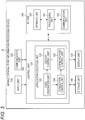
- Fig. 3 is a diagram illustrating the functional configuration example of the mobile terminal 10 according to the embodiment of the present disclosure.
- the mobile terminal 10 includes an input unit 110, a control unit 120, a communication unit 130, a storage unit 140, a display unit 150, and an IC chip 160.
- an input unit 110 a control unit 120, a communication unit 130, a storage unit 140, a display unit 150, and an IC chip 160.
- the input unit 110 has a function of accepting an operation input by a user.
- the input unit 110 includes a touch panel.
- the input unit 110 may include a button, a mouse, a keyboard, a switch, a lever, or the like.
- the input unit 110 may include a microphone that detects the user's voice.
- the control unit 120 may include, for example, a processing device such as one or a plurality of Central Processing Units (CPUs). In a case where these blocks include a processing device such as a CPU, such a processing device may include an electronic circuit.
- the control unit 120 can be implemented by executing a program by such a processing device.
- the control unit 120 includes an application execution unit 121, and the application execution unit 121 includes a code generation unit 122, a display control unit 123, a connection control unit 124, and a communication control unit 125. Functions of these units will be described later.
- the communication unit 130 includes a communication circuit and has a function of communicating with another device. For example, in a case where a connection with the reader/writer 20 is established, the communication unit 130 performs P2P wireless communication with the reader/writer 20 by using a communication path with which the connection is established. As described above, examples of P2P wireless communication include communication using Bluetooth (registered trademark), communication using Wi-Fi (registered trademark), and the like. For example, the communication unit 130 includes a communication interface.
- the storage unit 140 includes a memory, and is a recording medium that stores a program executed by the control unit 120 and stores data necessary for executing the program. Furthermore, the storage unit 140 temporarily stores data for calculation by the control unit 120.
- the storage unit 140 includes a magnetic storage device, a semiconductor storage device, an optical storage device, or a magneto-optical storage device.
- the display unit 150 outputs various types of information.
- the display unit 150 may include a display capable of performing display visible to the user.
- the display may be a liquid crystal display or an organic electro-luminescence (EL) display.
- EL organic electro-luminescence
- the IC chip 160 includes a processing unit 161, a storage unit 162, and a communication unit 163.
- the processing unit 161 may include, for example, a processing device such as one or a plurality of CPUs. In a case where these blocks include a processing device such as a CPU, such a processing device may include an electronic circuit. The processing unit 161 can be implemented by executing a program by such a processing device.
- the communication unit 163 includes a communication circuit, and has a function of communicating with the control unit 120.
- the communication unit 163 has a function of acquiring data from the control unit 120 and providing data to the other device.
- the storage unit 162 includes a memory, and is a recording medium that stores a program executed by the processing unit 161 and stores data necessary for executing the program. Furthermore, the storage unit 162 temporarily stores data for calculation by the processing unit 161.
- the storage unit 162 includes a semiconductor storage device.
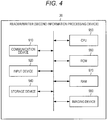
- FIG. 4 is a block diagram illustrating a hardware configuration example of the reader/writer 20 according to the present embodiment.
- the reader/writer 20 includes a communication device 910, an input device 920, a storage device 940, a Central Processing Unit (CPU) 950, a Read Only Memory (ROM) 960, a Random Access Memory (RAM) 970, and an imaging device 980. Furthermore, the reader/writer 20 also includes a bus, a bridge, an interface, and the like in addition to those illustrated in Fig. 4 .
- CPU Central Processing Unit
- ROM Read Only Memory
- RAM Random Access Memory
- the CPU 950 functions as, for example, an arithmetic processing device or a control device, and controls all or part of operations of each constituent on the basis of various programs recorded on the storage device 940, the ROM 960, the RAM 970, or a removable recording medium (not illustrated).
- the ROM 960 stores, for example, a program read by the CPU 950, data used for calculation, and the like.
- the RAM 970 temporarily or permanently stores, for example, a program read by the CPU 950 and various parameters and the like that change as appropriate when the program is executed.
- the storage device 940 is a device for storing various data, and includes, for example, a magnetic storage device such as a hard disk drive (HDD), a semiconductor storage device, an optical storage device, a magneto-optical storage device, or the like.
- a magnetic storage device such as a hard disk drive (HDD)
- a semiconductor storage device such as a hard disk drive (HDD)
- an optical storage device such as a magneto-optical storage device, or the like.
- the communication device 910 transmits and receives radio waves wirelessly to and from the mobile terminal 10, for example.
- the input device 920 mainly includes input buttons. Furthermore, the input device 920 may be a remote control means (so-called remote controller) capable of transmitting a control signal using infrared rays or other radio waves. Note that, the input device 920 includes an input control circuit for transmitting information input by using the operation means described above to the CPU 950 as an input signal, and the like.
- a remote control means so-called remote controller
- the imaging device 980 uses various members, such as an imaging element, for example, a Charge Coupled Device (CCD) or a Complementary Metal Oxide Semiconductor (CMOS), and a lens for controlling formation of a subject image on the imaging element, to capture an image of a real space, and generates a captured image.
- an imaging element for example, a Charge Coupled Device (CCD) or a Complementary Metal Oxide Semiconductor (CMOS), and a lens for controlling formation of a subject image on the imaging element, to capture an image of a real space, and generates a captured image.
- the imaging device 980 may be a device that captures a still image, or may be a device that captures a moving image.
- Fig. 5 is a diagram illustrating a functional configuration example of the reader/writer 20 according to the embodiment of the present disclosure.
- the reader/writer 20 includes an input unit 210, a control unit 220, a communication unit 230, a storage unit 240, and an imaging unit 260.
- the input unit 210 has a function of accepting an operation input by a user.
- the input unit 210 includes a button.
- the input unit 210 may include a touch panel, a mouse, a keyboard, a switch, a lever, or the like.
- the input unit 210 may include a microphone that detects the user's voice.
- the control unit 220 executes control of each unit of the reader/writer 20.
- the control unit 220 may include, for example, a Central Processing Unit (CPU), and the like.
- the control unit 220 includes a processing device such as a CPU, such a processing device may include an electronic circuit.
- the control unit 220 can be implemented by executing a program by such a processing device.
- the control unit 220 includes a code acquisition unit 221, an authentication processing unit 222, a connection control unit 223, and a communication control unit 224. Functions of these units will be described later.
- the storage unit 240 includes a memory, and is a recording medium that stores a program executed by the control unit 220 and stores data necessary for executing the program. Furthermore, the storage unit 240 temporarily stores data for calculation by the control unit 220.
- the storage unit 240 includes a magnetic storage device, a semiconductor storage device, an optical storage device, or a magneto-optical storage device.
- the communication unit 230 includes a communication circuit, and has a function of communicating with another device. For example, in a case where a connection with the mobile terminal 10 is established, the communication unit 230 performs P2P wireless communication with the mobile terminal 10 by using a communication path with which the connection is established. For example, the communication unit 230 includes a communication interface.
- the imaging unit 260 performs imaging in accordance with control by the control unit 220. Specifically, the imaging unit 260 performs imaging of a subject around the reader/writer 20 in accordance with the control by the control unit 220. For example, the imaging unit 260 performs imaging when receiving an imaging instruction from the control unit 220. Then, the imaging unit 260 provides the control unit 220 with image data obtained by imaging.
- the imaging unit 260 can include an imaging optical system such as a focusing imaging lens and a zoom lens, and a signal conversion element such as a Charge Coupled Device (CCD) or a Complementary Metal Oxide Semiconductor (CMOS).
- CCD Charge Coupled Device
- CMOS Complementary Metal Oxide Semiconductor
- connection processing and authentication processing in a case where information necessary for connection between the reader/writer 20 and the mobile terminal 10 (hereinafter also referred to as "P2P connection information") is embedded in a code.
- P2P connection information information necessary for connection between the reader/writer 20 and the mobile terminal 10
- a code as an example; however, the type of the code is not limited to the two-dimensional code.
- a QR code registered trademark
- the P2P connection information can correspond to an example of "identification information”.
- the P2P connection information may be address information used for communication between the reader/writer 20 and the mobile terminal 10.
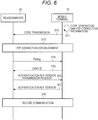
- Fig. 6 is a flowchart illustrating a flow of the connection processing and the authentication processing in a case where the P2P connection information is embedded in the code.
- a two-dimensional code is generated in which P2P connection information is embedded (S11).
- the mobile terminal 10 transmits the two-dimensional code to the reader/writer 20 (S12).
- the reader/writer 20 and the mobile terminal 10 establish a connection (establish a P2P connection) on the basis of the P2P connection information (S13).
- polling transmission is performed from the reader/writer 20 to the mobile terminal 10, and a card ID is returned from the mobile terminal 10 to the reader/writer 20 as a response to the polling (S15).
- an authentication key version transmission request is made from the reader/writer 20 to the mobile terminal 10 (S16), and an authentication key version is returned from the mobile terminal 10 to the reader/writer 20 as a response to the authentication key version transmission request (S17).
- the reader/writer 20 performs authentication based on the card ID and the authentication key version, and when the authentication is successful, secure communication is started between the reader/writer 20 and the mobile terminal 10 (S18).
- connection processing and the authentication processing are performed as illustrated in Fig. 6 .
- the P2P connection information is exchanged, and connection establishment based on the P2P connection information is performed, and then information necessary for authentication (for example, card ID, authentication key version, and the like) are exchanged and authentication based on the information necessary for the authentication is performed, so that the timing is delayed of communication start after the connection establishment.
- information necessary for authentication for example, card ID, authentication key version, and the like
- the two-dimensional code may be generated in a server to reduce the risk that the two-dimensional code is stolen.
- the mobile terminal 10 needs to be connected to the network (needs to be online), but it may be difficult to bring the mobile terminal 10 online, for example, in regions where infrastructure is insufficient.
- a technology will be described that enables authentication even when the mobile terminal 10 is offline.
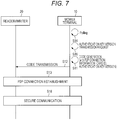
- FIG. 7 is a flowchart illustrating a flow of the connection processing and the authentication processing according to the present embodiment.
- polling transmission is performed and a card ID is acquired as a response to the polling (S14), and an authentication key version transmission request is transmitted and an authentication key version is acquired as a response to the authentication key version transmission request.
- the mobile terminal 10 generates a two-dimensional code in which not only the P2P connection information but also the card ID and the authentication key version are embedded (S11). Then, the mobile terminal 10 transmits the two-dimensional code to the reader/writer 20 (S12). The reader/writer 20 and the mobile terminal 10 establish a connection (establish a P2P connection) on the basis of the P2P connection information (S13).
- the reader/writer 20 authentication is performed based on the card ID and the authentication key version (part of the information necessary for the authentication), and when the authentication is successful, secure communication is started between the reader/writer 20 and the mobile terminal 10 (S18).
- the order relation between the connection establishment based on the P2P connection information and the authentication based on the card ID and the authentication key version is not particularly limited.
- connection processing and the authentication processing are performed as illustrated in Fig. 7 , exchange of the P2P connection information and the information necessary for the authentication (for example, card ID, authentication key version, and the like) is simultaneously performed by using the code.
- the time for exchanging the information necessary for the authentication is therefore reduced, so that it is possible to advance the timing of the communication start after the connection establishment.
- authentication can be performed even when the mobile terminal 10 is offline.
- connection processing and the authentication processing according to the present embodiment have been given of the connection processing and the authentication processing according to the present embodiment.
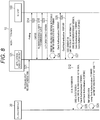
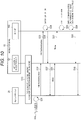
- Figs. 8 to 10 are flowcharts illustrating the details of the connection processing and the authentication processing according to the present embodiment.
- the application execution unit 121 performs polling transmission to the IC chip 160 (S14). Then, the application execution unit 121 acquires a card ID as a response to the polling (S22).
- the application execution unit 121 transmits an authentication key version transmission request to the IC chip 160 (S16). Then, the application execution unit 121 acquires an authentication key version as a response to the authentication key version transmission request (S23).
- the application execution unit 121 generates a random challenge (challenge value) on the basis of time information of the mobile terminal 10 (S24). Then, the application execution unit 121 generates a Card Authentication command (authentication command) and transmits the authentication command to the IC chip 160 (S25).
- the Card Authentication command may include a random challenge generated immediately before, information indicating an area for which access permission is requested during encrypted communication in the storage unit 162 (memory area) of the IC chip 160, and part of session information for encrypted communication.
- the IC chip 160 As a response to the Card Authentication command, the IC chip 160 generates a Card Authentication response (authentication response) based on the random challenge, the card ID, and the authentication key version, and transmits the authentication response to the application execution unit 121 (S26).
- the Card Authentication response may include a challenge response (response value) for the random challenge, a random challenge (challenge value) for the reader/writer 20, and the part of the session information for the encrypted communication.
- the code generation unit 122 generates a two-dimensional code in which not only the P2P connection information but also the card ID, the authentication key version, the Card Authentication command, and the Card Authentication response are embedded (S27). Then, in the mobile terminal 10, the display control unit 123 controls display by the display unit 150 of the two-dimensional code. In the reader/writer 20, the two-dimensional code is imaged by the imaging unit 260. As a result, the two-dimensional code is transmitted from the mobile terminal 10 to the reader/writer 20 (S12).
- the authentication processing unit 222 performs authentication processing. Specifically, the authentication processing unit 222 extracts the P2P connection information, card ID, authentication key version, Card Authentication command, and Card Authentication response from the two-dimensional code, and performs card authentication (part of the authentication) on the basis of the card ID, authentication key version, Card Authentication command, and Card Authentication response (S28).
- the authentication processing unit 222 compares time information in the reader/writer 20 with time information acquired from the random challenge extracted from the Card Authentication command, and obtains a comparison result.
- the authentication processing unit 222 performs the card authentication (part of the authentication) on the basis of the comparison result and the part of the information necessary for the authentication. More specifically, in a case where the time information in the reader/writer 20 matches the time information acquired from the random challenge, and the card authentication (part of the authentication) based on the part of the information necessary for the authentication is successful, the authentication processing unit 222 shifts the operation to the P2P connection establishment in S13.
- the communication control unit 224 permits the reader/writer 20 to access the memory area of the storage unit 162. As a result, it is possible to suppress spoofing due to theft of the two-dimensional code.
- connection control unit 223 in the reader/writer 20 and the connection control unit 124 in the mobile terminal 10 establish a P2P connection (establish a connection based on the P2P connection information) (S13).
- the communication control unit 224 generates a challenge response from the random challenge included in the Card Authentication response (S31), and transmits an RW Authentication command including the generated challenge response to the IC chip 160 via the communication unit 230 and the application execution unit 121 by using the established P2P connection (S32, S33).
- the IC chip 160 authentication unit
- performs R/W authentication the rest of the authentication based on the RW Authentication command
- the communication control unit 224 transmits a Read command to the IC chip 160 via the communication unit 230 (S41, S42).
- the communication control unit 125 encrypts the data in the area where the reader/writer 20 is permitted to access the memory area of the storage unit 162, by using the session information, and transmits the encrypted data to the reader/writer 20 via the communication unit 130 (S44, S45).
- the data is decrypted by the communication control unit 224 (S46).
- the communication control unit 224 encrypts the data by using the session information, and transmits a Write command including the encrypted data to the IC chip 160 via the communication unit 230 (S51, S52).
- the communication control unit 125 decrypts the data encrypted by using the session information (S53), and writes the decrypted data in an area where access to the memory area of the storage unit 162 is permitted (S54).
- the communication control unit 125 transmits a processing result to the reader/writer 20 via the communication unit 130 (S55, S56).
- an information processing device including: a code generation unit that generates a code in which part of information necessary for authentication and identification information are embedded; and a display control unit that controls display of the code, in which a connection based on the identification information included in the code is established, and authentication is performed on the basis of the part of the information necessary for the authentication.
- the time for exchanging the information necessary for the authentication is reduced, so that it is possible to advance the timing of the communication start after the connection establishment.
- authentication can be performed even when the information processing device is offline.
- a program for causing hardware such as a CPU, ROM, and RAM incorporated in a computer to exhibit functions equivalent to the functions of the control unit 120 described above.
- a computer-readable recording medium that records the program can also be provided.
- a program for causing hardware such as a CPU, ROM, and RAM incorporated in a computer to exhibit functions equivalent to the functions of the control unit 220 described above.
- a computer-readable recording medium that records the program can also be provided.
Landscapes
- Engineering & Computer Science (AREA)
- Computer Security & Cryptography (AREA)
- Theoretical Computer Science (AREA)
- Signal Processing (AREA)
- Computer Networks & Wireless Communication (AREA)
- Software Systems (AREA)
- General Engineering & Computer Science (AREA)
- Computer Hardware Design (AREA)
- General Physics & Mathematics (AREA)
- Physics & Mathematics (AREA)
- Computing Systems (AREA)
- Mobile Radio Communication Systems (AREA)
- Telephone Function (AREA)
Abstract
Description
- The present disclosure relates to an information processing device, an information processing system, and a program.
- In recent years, an RF communication function such as a communication function using Near Field Communication (NFC) is sometimes used for communication with a reader/writer in read processing or write processing for a non-contact IC card. However, depending on regions, there is an actual situation in which many mobile terminals are sold not having the RF communication function (for example, a terminal not having a ContactLess Frontend (CLF) chip). Such a situation can be a hindrance to an improvement in the installation rate of a non-contact IC card function to mobile terminals.
- On the other hand, as an alternative to communication using the RF communication function, it is assumed that communication between the non-contact IC card and the reader/writer is performed on a P2P communication path generated by connection establishment using a two-dimensional code. For example, a technology is disclosed for exchanging information necessary for connection between devices with a barcode (for example, see Patent Document 1). Furthermore, a technology is disclosed for implementing settlement by wireless communication by exchanging image information in which address information is embedded (see, for example, Patent Document 2).
-
- Patent Document 1: Japanese Patent Application Laid-Open No.
2002-063652 - Patent Document 2: Japanese Patent Application Laid-Open No.
2002-251653 - As described above, there are also mobile terminals not having the RF communication function (for example, terminals not having the CLF chip). In such a terminal, RF communication is impossible. Thus, it is desirable to provide a technology that enables authentication even in a terminal not capable of the RF communication.
- According to the present disclosure, an information processing device is provided including: a code generation unit that generates a code in which part of information necessary for authentication and identification information are embedded; a display control unit that controls display of the code; and an authentication unit that performs a rest of the authentication by using a connection established, after part of the authentication is performed on the basis of the part of the information necessary for the authentication and the connection based on the identification information included in the code is established.
- According to the present disclosure, an information processing system is provided including: a first information processing device including a code generation unit that generates a code in which part of information necessary for authentication and identification information are embedded, a display control unit that controls display of the code, and an authentication unit that performs a rest of the authentication by using a connection established, after part of the authentication is performed on the basis of the part of the information necessary for the authentication and the connection based on the identification information included in the code is established; and a second information processing device including a code acquisition unit that acquires the code, and an authentication processing unit that performs part of the authentication on the basis of the part of the information necessary for the authentication.
- According to the present disclosure, a program is provided that causes a computer to function as an information processing system including: a code generation unit that generates a code in which part of information necessary for authentication and identification information are embedded; a display control unit that controls display of the code; an authentication unit that performs a rest of the authentication by using a connection established, after part of the authentication is performed on the basis of the part of the information necessary for the authentication and the connection based on the identification information included in the code is established; a code acquisition unit that acquires the code; and an authentication processing unit that performs part of the authentication on the basis of the part of the information necessary for the authentication.
- As described above, according to the present disclosure, a technology is provided that can advance the timing of communication start after connection establishment. Note that, the above-described effect is not necessarily limited, and, in addition to the above-described effect, or in place of the above-described effect, any of effects described in the present specification, or other effects that can be grasped from the present specification may be exhibited.
-
-
Fig. 1 is a diagram illustrating a configuration example of an information processing system according to an embodiment of the present disclosure. -
Fig. 2 is a block diagram illustrating a hardware configuration example of a mobile terminal according to the present embodiment. -
Fig. 3 is a diagram illustrating a functional configuration example of the mobile terminal according to the embodiment of the present disclosure. -
Fig. 4 is a block diagram illustrating a hardware configuration example of a reader/writer according to the present embodiment. -
Fig. 5 is a diagram illustrating a functional configuration example of the reader/writer according to the embodiment of the present disclosure. -
Fig. 6 is a flowchart illustrating a flow of connection processing and authentication processing in a case where P2P connection information is embedded in a code. -
Fig. 7 is a flowchart illustrating a flow of connection processing and authentication processing according to the present embodiment. -
Fig. 8 is a flowchart illustrating details of the connection processing and the authentication processing according to the present embodiment. -
Fig. 9 is a flowchart illustrating details of the connection processing and the authentication processing according to the present embodiment. -
Fig. 10 is a flowchart illustrating details of the connection processing and the authentication processing according to the present embodiment. - Preferred embodiments of the present disclosure will be described in detail below with reference to the accompanying drawings. Note that, in the present specification and the drawings, constituents having substantially the same functional configuration are denoted by the same reference signs, and redundant explanations will be omitted.
- Furthermore, in the present specification and drawings, a plurality of constituents having substantially the same or similar functional configuration may be distinguished by attaching different numerals after the same reference numerals. However, in a case where it is not necessary to distinguish each of the plurality of constituents having substantially the same or similar functional configuration, only the same reference numerals will be given. Furthermore, similar constituents in different embodiments may be distinguished by attaching different alphabets after the same reference numerals. However, in a case where it is not necessary to distinguish each of the similar constituents, only the same reference numerals are given.
- Note that, the description will be made in the following order.
- 1. Details of embodiment
- 1.1. System configuration example
- 1.2. Hardware configuration example of mobile terminal
- 1.3. Functional configuration example of mobile terminal
- 1.4. Hardware configuration example of reader/writer
- 1.5. Functional configuration example of reader/writer
- 1.6. General connection processing and authentication processing
- 1.7. Connection processing and authentication processing according to present embodiment
- 1.8. Details of connection processing and authentication processing
- 2. Conclusion
- Hereinafter, details will be described of an embodiment of the present disclosure.
- First, a configuration example will be described of an information processing system according to the embodiment of the present disclosure.
-
Fig. 1 is a diagram illustrating the configuration example of the information processing system according to the embodiment of the present disclosure. In the example illustrated inFig. 1 , aninformation processing system 1 includes a first information processing device (hereinafter also referred to as "mobile terminal") 10, a second information processing device (hereinafter also referred to as "reader/writer") 20, and a thirdinformation processing device 30. - The
mobile terminal 10 includes an IC chip described later. The IC chip includes a memory area described later. Prior to access to such a memory area, authentication needs to be performed. Themobile terminal 10 and the reader/writer 20 can perform non-contact communication (P2P wireless communication). Examples of P2P wireless communication include communication using Bluetooth (registered trademark), communication using Wi-Fi (registered trademark), and the like. The thirdinformation processing device 30 provides a service that uses the memory area of the IC chip by non-contact communication. - Subsequently, a hardware configuration example will be described of the
mobile terminal 10 according to the embodiment of the present disclosure.Fig. 2 is a block diagram illustrating the hardware configuration example of themobile terminal 10 according to the present embodiment. - In the example illustrated in
Fig. 2 , themobile terminal 10 includes acommunication device 810, adisplay device 820, aninput device 830, astorage device 840, a Central Processing Unit (CPU) 850, a Read Only Memory (ROM) 860, a Random Access Memory (RAM) 870, and anIC chip 160. Furthermore, themobile terminal 10 also includes a bus, a bridge, an interface, and the like in addition to those illustrated inFig. 2 . - The
CPU 850 functions as, for example, an arithmetic processing device or a control device, and controls all or part of operations of each constituent on the basis of various programs recorded on thestorage device 840, theROM 860, theRAM 870, or a removable recording medium (not illustrated). - The
ROM 860 stores, for example, a program read by theCPU 850, data used for calculation, and the like. TheRAM 870 temporarily or permanently stores, for example, a program read by theCPU 850 and various parameters and the like that change as appropriate when the program is executed. - The
storage device 840 is a device for storing various data, and includes, for example, a magnetic storage device such as a hard disk drive (HDD), a semiconductor storage device, an optical storage device, a magneto-optical storage device, or the like. - The
communication device 810 transmits and receives radio waves wirelessly to and from the reader/writer 20, for example. - The
display device 820 is a display device, for example, a Liquid Crystal Display (LCD), an Electro-Luminescence Display (ELD), or the like. - The
input device 830 mainly includes a microphone and input keys. The microphone is a device for inputting voice mainly. The microphone is used for a call, for example. The input keys are a numeric keypad, a power key, a call key, and the like. The input keys are used for inputting a telephone number of a call partner and creating an e-mail, for example. Furthermore, the input device may be a remote control means (so-called remote controller) capable of transmitting a control signal using infrared rays or other radio waves. Note that, theinput device 830 includes an input control circuit for transmitting information input by using operation means described above to theCPU 850 as an input signal, and the like. - The
IC chip 160 mainly includes a CPU (not illustrated), a ROM (not illustrated), a RAM (not illustrated), a storage device (not illustrated), and a non-contact communication device (not illustrated). The CPU (not illustrated) functions as an arithmetic processing device or a control device on the basis of various programs recorded on, for example, the ROM (not illustrated), the RAM (not illustrated), and the storage device (not illustrated). In the present embodiment, themobile terminal 10 is a mobile phone that can perform non-contact communication, and the CPU (not illustrated) mainly controls part or all of operation of the non-contact communication device (not illustrated). - The ROM (not illustrated) stores, for example, a program read by the CPU (not illustrated), data used for calculation, and the like. The RAM (not illustrated) temporarily or permanently stores, for example, a program read by the CPU (not illustrated) and various parameters and the like that change as appropriate when the program is executed.
- In the above, the hardware configuration example has been described of the mobile terminal according to the embodiment of the present disclosure.
- Subsequently, a functional configuration example will be described of the
mobile terminal 10. -
Fig. 3 is a diagram illustrating the functional configuration example of themobile terminal 10 according to the embodiment of the present disclosure. As illustrated inFig. 3 , themobile terminal 10 includes aninput unit 110, acontrol unit 120, acommunication unit 130, astorage unit 140, adisplay unit 150, and anIC chip 160. Hereinafter, descriptions will be given of these functional blocks included in themobile terminal 10. - The
input unit 110 has a function of accepting an operation input by a user. In the embodiment of the present disclosure, a case is mainly assumed where theinput unit 110 includes a touch panel. However, theinput unit 110 may include a button, a mouse, a keyboard, a switch, a lever, or the like. Furthermore, theinput unit 110 may include a microphone that detects the user's voice. - The
control unit 120 may include, for example, a processing device such as one or a plurality of Central Processing Units (CPUs). In a case where these blocks include a processing device such as a CPU, such a processing device may include an electronic circuit. Thecontrol unit 120 can be implemented by executing a program by such a processing device. Thecontrol unit 120 includes anapplication execution unit 121, and theapplication execution unit 121 includes acode generation unit 122, adisplay control unit 123, aconnection control unit 124, and acommunication control unit 125. Functions of these units will be described later. - The
communication unit 130 includes a communication circuit and has a function of communicating with another device. For example, in a case where a connection with the reader/writer 20 is established, thecommunication unit 130 performs P2P wireless communication with the reader/writer 20 by using a communication path with which the connection is established. As described above, examples of P2P wireless communication include communication using Bluetooth (registered trademark), communication using Wi-Fi (registered trademark), and the like. For example, thecommunication unit 130 includes a communication interface. - The
storage unit 140 includes a memory, and is a recording medium that stores a program executed by thecontrol unit 120 and stores data necessary for executing the program. Furthermore, thestorage unit 140 temporarily stores data for calculation by thecontrol unit 120. For example, thestorage unit 140 includes a magnetic storage device, a semiconductor storage device, an optical storage device, or a magneto-optical storage device. - The
display unit 150 outputs various types of information. For example, thedisplay unit 150 may include a display capable of performing display visible to the user. At this time, the display may be a liquid crystal display or an organic electro-luminescence (EL) display. - The
IC chip 160 includes aprocessing unit 161, astorage unit 162, and acommunication unit 163. - The
processing unit 161 may include, for example, a processing device such as one or a plurality of CPUs. In a case where these blocks include a processing device such as a CPU, such a processing device may include an electronic circuit. Theprocessing unit 161 can be implemented by executing a program by such a processing device. - The
communication unit 163 includes a communication circuit, and has a function of communicating with thecontrol unit 120. For example, thecommunication unit 163 has a function of acquiring data from thecontrol unit 120 and providing data to the other device. - The
storage unit 162 includes a memory, and is a recording medium that stores a program executed by theprocessing unit 161 and stores data necessary for executing the program. Furthermore, thestorage unit 162 temporarily stores data for calculation by theprocessing unit 161. For example, thestorage unit 162 includes a semiconductor storage device. - In the above, the functional configuration example has been described of the
mobile terminal 10 according to the embodiment of the present disclosure. - Subsequently, a hardware configuration example will be described of the reader/
writer 20 according to the embodiment of the present disclosure.Fig. 4 is a block diagram illustrating a hardware configuration example of the reader/writer 20 according to the present embodiment. - In the example illustrated in
Fig. 4 , the reader/writer 20 includes acommunication device 910, aninput device 920, astorage device 940, a Central Processing Unit (CPU) 950, a Read Only Memory (ROM) 960, a Random Access Memory (RAM) 970, and animaging device 980. Furthermore, the reader/writer 20 also includes a bus, a bridge, an interface, and the like in addition to those illustrated inFig. 4 . - The
CPU 950 functions as, for example, an arithmetic processing device or a control device, and controls all or part of operations of each constituent on the basis of various programs recorded on thestorage device 940, theROM 960, theRAM 970, or a removable recording medium (not illustrated). - The
ROM 960 stores, for example, a program read by theCPU 950, data used for calculation, and the like. TheRAM 970 temporarily or permanently stores, for example, a program read by theCPU 950 and various parameters and the like that change as appropriate when the program is executed. - The
storage device 940 is a device for storing various data, and includes, for example, a magnetic storage device such as a hard disk drive (HDD), a semiconductor storage device, an optical storage device, a magneto-optical storage device, or the like. - The
communication device 910 transmits and receives radio waves wirelessly to and from themobile terminal 10, for example. - The
input device 920 mainly includes input buttons. Furthermore, theinput device 920 may be a remote control means (so-called remote controller) capable of transmitting a control signal using infrared rays or other radio waves. Note that, theinput device 920 includes an input control circuit for transmitting information input by using the operation means described above to theCPU 950 as an input signal, and the like. - The
imaging device 980 uses various members, such as an imaging element, for example, a Charge Coupled Device (CCD) or a Complementary Metal Oxide Semiconductor (CMOS), and a lens for controlling formation of a subject image on the imaging element, to capture an image of a real space, and generates a captured image. Theimaging device 980 may be a device that captures a still image, or may be a device that captures a moving image. - In the above, the hardware configuration example has been described of the reader/
writer 20 according to the embodiment of the present disclosure. - Subsequently, a functional configuration example will be described of the reader/
writer 20 according to the embodiment of the present disclosure.Fig. 5 is a diagram illustrating a functional configuration example of the reader/writer 20 according to the embodiment of the present disclosure. As illustrated inFig. 5 , the reader/writer 20 includes aninput unit 210, acontrol unit 220, acommunication unit 230, astorage unit 240, and animaging unit 260. - The
input unit 210 has a function of accepting an operation input by a user. In the embodiment of the present disclosure, a case is mainly assumed where theinput unit 210 includes a button. However, theinput unit 210 may include a touch panel, a mouse, a keyboard, a switch, a lever, or the like. Furthermore, theinput unit 210 may include a microphone that detects the user's voice. - The
control unit 220 executes control of each unit of the reader/writer 20. Note that, thecontrol unit 220 may include, for example, a Central Processing Unit (CPU), and the like. In a case where thecontrol unit 220 includes a processing device such as a CPU, such a processing device may include an electronic circuit. Thecontrol unit 220 can be implemented by executing a program by such a processing device. Thecontrol unit 220 includes acode acquisition unit 221, anauthentication processing unit 222, aconnection control unit 223, and acommunication control unit 224. Functions of these units will be described later. - The
storage unit 240 includes a memory, and is a recording medium that stores a program executed by thecontrol unit 220 and stores data necessary for executing the program. Furthermore, thestorage unit 240 temporarily stores data for calculation by thecontrol unit 220. For example, thestorage unit 240 includes a magnetic storage device, a semiconductor storage device, an optical storage device, or a magneto-optical storage device. - The
communication unit 230 includes a communication circuit, and has a function of communicating with another device. For example, in a case where a connection with themobile terminal 10 is established, thecommunication unit 230 performs P2P wireless communication with themobile terminal 10 by using a communication path with which the connection is established. For example, thecommunication unit 230 includes a communication interface. - The
imaging unit 260 performs imaging in accordance with control by thecontrol unit 220. Specifically, theimaging unit 260 performs imaging of a subject around the reader/writer 20 in accordance with the control by thecontrol unit 220. For example, theimaging unit 260 performs imaging when receiving an imaging instruction from thecontrol unit 220. Then, theimaging unit 260 provides thecontrol unit 220 with image data obtained by imaging. Note that, theimaging unit 260 can include an imaging optical system such as a focusing imaging lens and a zoom lens, and a signal conversion element such as a Charge Coupled Device (CCD) or a Complementary Metal Oxide Semiconductor (CMOS). - In the above, the functional configuration example has been described of the reader/
writer 20 according to the embodiment of the present disclosure. - Here, a description will be given of connection processing and authentication processing in a case where information necessary for connection between the reader/
writer 20 and the mobile terminal 10 (hereinafter also referred to as "P2P connection information") is embedded in a code. Hereinafter, a case will be described where a two-dimensional code is used as the code, as an example; however, the type of the code is not limited to the two-dimensional code. Furthermore, a QR code (registered trademark) can be used as a typical example of the two-dimensional code. Furthermore, the P2P connection information can correspond to an example of "identification information". For example, the P2P connection information may be address information used for communication between the reader/writer 20 and themobile terminal 10. -
Fig. 6 is a flowchart illustrating a flow of the connection processing and the authentication processing in a case where the P2P connection information is embedded in the code. As illustrated inFig. 6 , in themobile terminal 10, a two-dimensional code is generated in which P2P connection information is embedded (S11). Then, themobile terminal 10 transmits the two-dimensional code to the reader/writer 20 (S12). The reader/writer 20 and themobile terminal 10 establish a connection (establish a P2P connection) on the basis of the P2P connection information (S13). - Subsequently, polling transmission is performed from the reader/
writer 20 to themobile terminal 10, and a card ID is returned from themobile terminal 10 to the reader/writer 20 as a response to the polling (S15). Then, an authentication key version transmission request is made from the reader/writer 20 to the mobile terminal 10 (S16), and an authentication key version is returned from themobile terminal 10 to the reader/writer 20 as a response to the authentication key version transmission request (S17). - The reader/
writer 20 performs authentication based on the card ID and the authentication key version, and when the authentication is successful, secure communication is started between the reader/writer 20 and the mobile terminal 10 (S18). - In a case where the connection processing and the authentication processing are performed as illustrated in
Fig. 6 , the P2P connection information is exchanged, and connection establishment based on the P2P connection information is performed, and then information necessary for authentication (for example, card ID, authentication key version, and the like) are exchanged and authentication based on the information necessary for the authentication is performed, so that the timing is delayed of communication start after the connection establishment. Thus, in the present embodiment, a technology will be mainly described that can advance the timing of the communication start after the connection establishment. - Moreover, in a case where a two-dimensional code is used for authentication, the two-dimensional code may be generated in a server to reduce the risk that the two-dimensional code is stolen. In other words, the
mobile terminal 10 needs to be connected to the network (needs to be online), but it may be difficult to bring themobile terminal 10 online, for example, in regions where infrastructure is insufficient. Thus, in the present embodiment, a technology will be described that enables authentication even when themobile terminal 10 is offline. - In the above, the flow has been described of the connection processing and the authentication processing in the case where the P2P connection information is embedded in the code.
- Subsequently, a description will be given of connection processing and authentication processing according to the present embodiment.
Fig. 7 is a flowchart illustrating a flow of the connection processing and the authentication processing according to the present embodiment. As illustrated inFig. 7 , inside themobile terminal 10, polling transmission is performed and a card ID is acquired as a response to the polling (S14), and an authentication key version transmission request is transmitted and an authentication key version is acquired as a response to the authentication key version transmission request. - Subsequently, the
mobile terminal 10 generates a two-dimensional code in which not only the P2P connection information but also the card ID and the authentication key version are embedded (S11). Then, themobile terminal 10 transmits the two-dimensional code to the reader/writer 20 (S12). The reader/writer 20 and themobile terminal 10 establish a connection (establish a P2P connection) on the basis of the P2P connection information (S13). - In the reader/
writer 20, authentication is performed based on the card ID and the authentication key version (part of the information necessary for the authentication), and when the authentication is successful, secure communication is started between the reader/writer 20 and the mobile terminal 10 (S18). Note that, the order relation between the connection establishment based on the P2P connection information and the authentication based on the card ID and the authentication key version is not particularly limited. - In a case where the connection processing and the authentication processing are performed as illustrated in
Fig. 7 , exchange of the P2P connection information and the information necessary for the authentication (for example, card ID, authentication key version, and the like) is simultaneously performed by using the code. The time for exchanging the information necessary for the authentication is therefore reduced, so that it is possible to advance the timing of the communication start after the connection establishment. - Moreover, in the present embodiment, authentication can be performed even when the
mobile terminal 10 is offline. - In the above, the description has been given of the connection processing and the authentication processing according to the present embodiment.
- Subsequently, details will be described of the connection processing and the authentication processing according to the present embodiment.
Figs. 8 to 10 are flowcharts illustrating the details of the connection processing and the authentication processing according to the present embodiment. As illustrated inFig. 8 , in themobile terminal 10, when a processing start request is input to theapplication execution unit 121 by a user action (S21), theapplication execution unit 121 performs polling transmission to the IC chip 160 (S14). Then, theapplication execution unit 121 acquires a card ID as a response to the polling (S22). - Subsequently, the
application execution unit 121 transmits an authentication key version transmission request to the IC chip 160 (S16). Then, theapplication execution unit 121 acquires an authentication key version as a response to the authentication key version transmission request (S23). - Subsequently, the
application execution unit 121 generates a random challenge (challenge value) on the basis of time information of the mobile terminal 10 (S24). Then, theapplication execution unit 121 generates a Card Authentication command (authentication command) and transmits the authentication command to the IC chip 160 (S25). The Card Authentication command may include a random challenge generated immediately before, information indicating an area for which access permission is requested during encrypted communication in the storage unit 162 (memory area) of theIC chip 160, and part of session information for encrypted communication. - As a response to the Card Authentication command, the
IC chip 160 generates a Card Authentication response (authentication response) based on the random challenge, the card ID, and the authentication key version, and transmits the authentication response to the application execution unit 121 (S26). The Card Authentication response may include a challenge response (response value) for the random challenge, a random challenge (challenge value) for the reader/writer 20, and the part of the session information for the encrypted communication. - Subsequently, in the
mobile terminal 10, thecode generation unit 122 generates a two-dimensional code in which not only the P2P connection information but also the card ID, the authentication key version, the Card Authentication command, and the Card Authentication response are embedded (S27). Then, in themobile terminal 10, thedisplay control unit 123 controls display by thedisplay unit 150 of the two-dimensional code. In the reader/writer 20, the two-dimensional code is imaged by theimaging unit 260. As a result, the two-dimensional code is transmitted from themobile terminal 10 to the reader/writer 20 (S12). - In the reader/
writer 20, when the two-dimensional code is acquired by thecode acquisition unit 221, theauthentication processing unit 222 performs authentication processing. Specifically, theauthentication processing unit 222 extracts the P2P connection information, card ID, authentication key version, Card Authentication command, and Card Authentication response from the two-dimensional code, and performs card authentication (part of the authentication) on the basis of the card ID, authentication key version, Card Authentication command, and Card Authentication response (S28). - At this time, the
authentication processing unit 222 compares time information in the reader/writer 20 with time information acquired from the random challenge extracted from the Card Authentication command, and obtains a comparison result. Theauthentication processing unit 222 performs the card authentication (part of the authentication) on the basis of the comparison result and the part of the information necessary for the authentication. More specifically, in a case where the time information in the reader/writer 20 matches the time information acquired from the random challenge, and the card authentication (part of the authentication) based on the part of the information necessary for the authentication is successful, theauthentication processing unit 222 shifts the operation to the P2P connection establishment in S13. Thecommunication control unit 224 permits the reader/writer 20 to access the memory area of thestorage unit 162. As a result, it is possible to suppress spoofing due to theft of the two-dimensional code. - As illustrated in
Fig. 9 , theconnection control unit 223 in the reader/writer 20 and theconnection control unit 124 in themobile terminal 10 establish a P2P connection (establish a connection based on the P2P connection information) (S13). Thecommunication control unit 224 generates a challenge response from the random challenge included in the Card Authentication response (S31), and transmits an RW Authentication command including the generated challenge response to theIC chip 160 via thecommunication unit 230 and theapplication execution unit 121 by using the established P2P connection (S32, S33). The IC chip 160 (authentication unit) performs R/W authentication (the rest of the authentication) based on the RW Authentication command - (S34), and returns an authentication result to the reader/
writer 20 via thecommunication unit 130 in the mobile terminal 10 (S36, S37). If the R/W authentication (the rest of the authentication) is successful, thecommunication control unit 125 permits the reader/writer 20 to access the memory area of thestorage unit 162. - At the time of reading data, in the reader/
writer 20, thecommunication control unit 224 transmits a Read command to theIC chip 160 via the communication unit 230 (S41, S42). In themobile terminal 10, thecommunication control unit 125 encrypts the data in the area where the reader/writer 20 is permitted to access the memory area of thestorage unit 162, by using the session information, and transmits the encrypted data to the reader/writer 20 via the communication unit 130 (S44, S45). In the reader/writer 20, when the data encrypted by thecommunication unit 230 is received, the data is decrypted by the communication control unit 224 (S46). - At the time of writing data, in the reader/
writer 20, thecommunication control unit 224 encrypts the data by using the session information, and transmits a Write command including the encrypted data to theIC chip 160 via the communication unit 230 (S51, S52). In themobile terminal 10, thecommunication control unit 125 decrypts the data encrypted by using the session information (S53), and writes the decrypted data in an area where access to the memory area of thestorage unit 162 is permitted (S54). Thecommunication control unit 125 transmits a processing result to the reader/writer 20 via the communication unit 130 (S55, S56). - In the above, the details have been described of the connection processing and the authentication processing according to the present embodiment.
- As described above, according to the embodiment of the present disclosure, an information processing device is provided including: a code generation unit that generates a code in which part of information necessary for authentication and identification information are embedded; and a display control unit that controls display of the code, in which a connection based on the identification information included in the code is established, and authentication is performed on the basis of the part of the information necessary for the authentication.
- According to such a configuration, the time for exchanging the information necessary for the authentication is reduced, so that it is possible to advance the timing of the communication start after the connection establishment. Moreover, according to such a configuration, authentication can be performed even when the information processing device is offline.
- In the above, the preferred embodiments of the present disclosure have been described in detail with reference to the accompanying drawings; however, the technical scope of the present disclosure is not limited to such examples. It is obvious that persons having ordinary knowledge in the technical field of the present disclosure can conceive various modification examples or correction examples within the scope of the technical idea described in the claims, and it is understood that the modification examples or correction examples also belong to the technical scope of the present disclosure.
- For example, it is also possible to create a program for causing hardware such as a CPU, ROM, and RAM incorporated in a computer to exhibit functions equivalent to the functions of the
control unit 120 described above. Furthermore, a computer-readable recording medium that records the program can also be provided. Furthermore, for example, it is also possible to create a program for causing hardware such as a CPU, ROM, and RAM incorporated in a computer to exhibit functions equivalent to the functions of thecontrol unit 220 described above. Furthermore, a computer-readable recording medium that records the program can also be provided. - Furthermore, the effects described in the present specification are merely illustrative or exemplary and not restrictive. That is, the technology according to the present disclosure can exhibit other effects obvious to those skilled in the art from the description of the present specification together with the above-described effects or in place of the above effects.
- Note that, the following configurations also belong to the technical scope of the present disclosure.
- (1) An information processing device including:
- a code generation unit that generates a code in which part of information necessary for authentication and identification information are embedded;
- a display control unit that controls display of the code; and
- an authentication unit that performs a rest of the authentication by using a connection established, after part of the authentication is performed on the basis of the part of the information necessary for the authentication and the connection based on the identification information included in the code is established.
- (2) The information processing device according to (1), in which
in a case where the part of the authentication based on the part of the information necessary for the authentication is successful and the rest of the authentication is successful, access to a memory area is permitted. - (3) The information processing device according to (1) or (2), in which
the part of the information necessary for the authentication includes an authentication command. - (4) The information processing device according to (3), in which
the authentication command includes a challenge value generated on the basis of time information in the information processing device. - (5) The information processing device according to (4), in which
in the information processing device, the part of the authentication is performed on the basis of a comparison result between time information in a reader that reads the code and time information acquired from the challenge value, and the part of the information necessary for the authentication. - (6) The information processing device according to (5), in which
in the information processing device, in a case where the time information in the reader that reads the code matches the time information acquired from the challenge value, and the part of the authentication based on the part of the information necessary for the authentication is successful, and the rest of the authentication is successful, access to a memory area is permitted for another information processing device. - (7) The information processing device according to any one of (3) to (6), in which
the part of the information necessary for the authentication includes an authentication response to the authentication command. - (8) The information processing device according to (7), in which
the authentication response includes a response value based on a challenge value, a card ID, and an authentication key version. - (9) The information processing device according to any one of (1) to (8), in which
the part of the information necessary for the authentication includes a card ID. - (10) The information processing device according to any one of (1) to (9), in which
the part of the information necessary for the authentication includes an authentication key version. - (11) The information processing device according to any one of (1) to (10), in which
the code is a two-dimensional code. - (12) The information processing device according to any one of (3) to (8), further including
a communication control unit that permits another information processing device to access a memory area, in a case where the part of the authentication based on the part of the information necessary for the authentication is successful and the rest of the authentication is successful. - (13) The information processing device according to any one of (3) to (8), in which
the authentication command includes information indicating an area for which access permission is requested in a memory area. - (14) The information processing device according to any one of (1) to (11), in which
the identification information includes address information used for communication with another information processing device. - (15) An information processing system including:
- a first information processing device including
- a code generation unit that generates a code in which part of information necessary for authentication and identification information are embedded,
- a display control unit that controls display of the code, and
- an authentication unit that performs a rest of the authentication by using a connection established, after part of the authentication is performed on the basis of the part of the information necessary for the authentication and the connection based on the identification information included in the code is established; and
- a second information processing device including
- a code acquisition unit that acquires the code, and
- an authentication processing unit that performs part of the authentication on the basis of the part of the information necessary for the authentication.
- (16) A program that causes a computer to function as
an information processing system including:- a code generation unit that generates a code in which part of information necessary for authentication and identification information are embedded;
- a display control unit that controls display of the code;
- an authentication unit that performs a rest of the authentication by using a connection established, after part of the authentication is performed on the basis of the part of the information necessary for the authentication and the connection based on the identification information included in the code is established;
- a code acquisition unit that acquires the code; and
- an authentication processing unit that performs part of the authentication on the basis of the part of the information necessary for the authentication.
-
- 1
- Information processing system
- 10
- Mobile terminal
- 110
- Input unit
- 120
- Control unit
- 121
- Application execution unit
- 122
- Code generation unit
- 123
- Display control unit
- 124
- Connection control unit
- 125
- Communication control unit
- 130
- Communication unit
- 140
- Storage unit
- 150
- Display unit
- 160
- IC chip
- 161
- Processing unit
- 162
- Storage unit
- 163
- Communication unit
- 20
- Reader/writer
- 210
- Input unit
- 220
- Control unit
- 221
- Code acquisition unit
- 222
- Authentication processing unit
- 223
- Connection control unit
- 224
- Communication control unit
- 230
- Communication unit
- 240
- Storage unit
- 260
- Imaging unit
- 30
- Third Information processing device
Claims (16)
- An information processing device comprising:a code generation unit that generates a code in which part of information necessary for authentication and identification information are embedded;a display control unit that controls display of the code; andan authentication unit that performs a rest of the authentication by using a connection established, after part of the authentication is performed on a basis of the part of the information necessary for the authentication and the connection based on the identification information included in the code is established.
- The information processing device according to claim 1, wherein
in a case where the part of the authentication based on the part of the information necessary for the authentication is successful and the rest of the authentication is successful, access to a memory area is permitted. - The information processing device according to claim 1, wherein
the part of the information necessary for the authentication includes an authentication command. - The information processing device according to claim 3, wherein
the authentication command includes a challenge value generated on a basis of time information in the information processing device. - The information processing device according to claim 4, wherein
in the information processing device, the part of the authentication is performed on a basis of a comparison result between time information in a reader that reads the code and time information acquired from the challenge value, and the part of the information necessary for the authentication. - The information processing device according to claim 5, wherein
in the information processing device, in a case where the time information in the reader that reads the code matches the time information acquired from the challenge value, and the part of the authentication based on the part of the information necessary for the authentication is successful, and the rest of the authentication is successful, access to a memory area is permitted for another information processing device. - The information processing device according to claim 3, wherein
the part of the information necessary for the authentication includes an authentication response to the authentication command. - The information processing device according to claim 7, wherein
the authentication response includes a response value based on a challenge value, a card ID, and an authentication key version. - The information processing device according to claim 1, wherein
the part of the information necessary for the authentication includes a card ID. - The information processing device according to claim 1, wherein
the part of the information necessary for the authentication includes an authentication key version. - The information processing device according to claim 1, wherein the code is a two-dimensional code.
- The information processing device according to claim 3, further comprising
a communication control unit that permits another information processing device to access a memory area, in a case where the part of the authentication based on the part of the information necessary for the authentication is successful and the rest of the authentication is successful. - The information processing device according to claim 3, wherein
the authentication command includes information indicating an area for which access permission is requested in a memory area. - The information processing device according to claim 1, wherein
the identification information includes address information used for communication with another information processing device. - An information processing system comprising:a first information processing device includinga code generation unit that generates a code in which part of information necessary for authentication and identification information are embedded,a display control unit that controls display of the code, andan authentication unit that performs a rest of the authentication by using a connection established, after part of the authentication is performed on a basis of the part of the information necessary for the authentication and the connection based on the identification information included in the code is established; anda second information processing device includinga code acquisition unit that acquires the code, andan authentication processing unit that performs part of the authentication on a basis of the part of the information necessary for the authentication.
- A program that causes a computer to function as an information processing system including:a code generation unit that generates a code in which part of information necessary for authentication and identification information are embedded;a display control unit that controls display of the code;an authentication unit that performs a rest of the authentication by using a connection established, after part of the authentication is performed on a basis of the part of the information necessary for the authentication and the connection based on the identification information included in the code is established;a code acquisition unit that acquires the code; andan authentication processing unit that performs part of the authentication on a basis of the part of the information necessary for the authentication.
Applications Claiming Priority (2)
| Application Number | Priority Date | Filing Date | Title |
|---|---|---|---|
| JP2017208328 | 2017-10-27 | ||
| PCT/JP2018/033660 WO2019082530A1 (en) | 2017-10-27 | 2018-09-11 | Information processing device, information processing system, and program |
Publications (2)
| Publication Number | Publication Date |
|---|---|
| EP3703310A1 true EP3703310A1 (en) | 2020-09-02 |
| EP3703310A4 EP3703310A4 (en) | 2021-07-28 |
Family
ID=66247422
Family Applications (1)
| Application Number | Title | Priority Date | Filing Date |
|---|---|---|---|
| EP18869644.7A Pending EP3703310A4 (en) | 2017-10-27 | 2018-09-11 | Information processing device, information processing system, and program |
Country Status (6)
| Country | Link |
|---|---|
| US (1) | US20210192041A1 (en) |
| EP (1) | EP3703310A4 (en) |
| JP (1) | JP7160046B2 (en) |
| CN (1) | CN111226416B (en) |
| PH (1) | PH12020550451A1 (en) |
| WO (1) | WO2019082530A1 (en) |
Family Cites Families (14)
| Publication number | Priority date | Publication date | Assignee | Title |
|---|---|---|---|---|
| JP3756741B2 (en) | 2000-08-21 | 2006-03-15 | 株式会社東芝 | Information exchange device and cash register device |
| KR20030091883A (en) * | 2003-10-29 | 2003-12-03 | 한영봉 | a system and method for prevention of document alteration or forgery using density of color |
| JP4550636B2 (en) * | 2005-03-18 | 2010-09-22 | 富士通株式会社 | Electronic device, its registration method and registration program |
| JP2007286913A (en) * | 2006-04-17 | 2007-11-01 | Matsushita Electric Ind Co Ltd | Communication terminal device |
| JPWO2009028018A1 (en) * | 2007-08-24 | 2010-11-25 | 富士通株式会社 | Authentication information management apparatus, authentication information management program and method thereof, authentication apparatus, authentication program and method thereof |
| US20090204417A1 (en) * | 2007-11-27 | 2009-08-13 | Yossi Tsuria | System for product authentication using covert codes |
| US20120138679A1 (en) * | 2010-12-01 | 2012-06-07 | Yodo Inc. | Secure two dimensional bar codes for authentication |
| JP5657364B2 (en) * | 2010-12-08 | 2015-01-21 | フェリカネットワークス株式会社 | Information processing apparatus and method, program, and information processing system |
| GB2490318B (en) * | 2011-04-20 | 2014-08-06 | Vodafone Ip Licensing Ltd | Authenticating a transaction using an authentication code derived from a seed on a SIM |
| WO2013163217A1 (en) * | 2012-04-23 | 2013-10-31 | Netspectrum Inc. | Secure and authenticated transactions with mobile devices |
| GB201216284D0 (en) * | 2012-09-12 | 2012-10-24 | Illinois Tool Works | A secure door entry system and method |
| US9741265B2 (en) * | 2012-12-31 | 2017-08-22 | Piyush Bhatnagar | System, design and process for secure documents credentials management using out-of-band authentication |
| US10817875B2 (en) * | 2013-09-20 | 2020-10-27 | Visa International Service Association | Secure remote payment transaction processing including consumer authentication |
| KR101652625B1 (en) * | 2015-02-11 | 2016-08-30 | 주식회사 이베이코리아 | Security authentification system for membership login of online website and method thereof |
-
2018
- 2018-09-11 JP JP2019549922A patent/JP7160046B2/en active Active
- 2018-09-11 WO PCT/JP2018/033660 patent/WO2019082530A1/en not_active Ceased
- 2018-09-11 US US16/757,272 patent/US20210192041A1/en not_active Abandoned
- 2018-09-11 EP EP18869644.7A patent/EP3703310A4/en active Pending
- 2018-09-11 CN CN201880068134.3A patent/CN111226416B/en active Active
-
2020
- 2020-04-20 PH PH12020550451A patent/PH12020550451A1/en unknown
Also Published As
| Publication number | Publication date |
|---|---|
| JPWO2019082530A1 (en) | 2020-11-26 |
| PH12020550451A1 (en) | 2021-03-15 |
| CN111226416A (en) | 2020-06-02 |
| EP3703310A4 (en) | 2021-07-28 |
| WO2019082530A1 (en) | 2019-05-02 |
| CN111226416B (en) | 2023-10-20 |
| US20210192041A1 (en) | 2021-06-24 |
| JP7160046B2 (en) | 2022-10-25 |
Similar Documents
| Publication | Publication Date | Title |
|---|---|---|
| RU2615334C2 (en) | Method and system for authentication of transaction request from device | |
| US9531710B2 (en) | Behavioral authentication system using a biometric fingerprint sensor and user behavior for authentication | |
| US12261839B2 (en) | User authentication system and portable terminal | |
| EP3107028A1 (en) | Short-range communication device, function control method and function control system | |
| WO2018234882A1 (en) | A system and method for conducting a transaction | |
| US20150296118A1 (en) | Communication apparatus | |
| KR20190064792A (en) | Electronic device and method for processing remote payment | |
| KR20140011975A (en) | Digital system for card settlement by tagging, settlment side system and providing method thereof | |
| EP3703310A1 (en) | Information processing device, information processing system, and program | |
| JP7638333B2 (en) | User authentication system and mobile terminal | |
| JP5726056B2 (en) | Portable information terminal, control method thereof, and program | |
| HK40028195A (en) | Information processing device, information processing system, and program | |
| JP6896632B2 (en) | Communication device, communication method, and communication system | |
| JP5960865B2 (en) | Portable information terminal and control method thereof | |
| JP6394371B2 (en) | Information processing apparatus and program | |
| HK40028195B (en) | Information processing device, information processing system, and program | |
| KR20190052405A (en) | Computer security system and method using authentication function in smart phone | |
| JP6832459B2 (en) | Electronic equipment and output equipment | |
| KR20140016444A (en) | Digital system for card settlement by tagging, settlment side system and providing method thereof | |
| EP3595340B1 (en) | Image forming apparatus and communication mode setting method | |
| KR102195456B1 (en) | Method for Executing Function of Mobile Terminal by Using Facial Recognition | |
| JP2018088131A (en) | Settlement management system, settlement management apparatus, settlement management method, and program | |
| JP2014130472A (en) | Information writing program and information writing system | |
| JP6649081B2 (en) | Electronic equipment and output devices | |
| KR20140011997A (en) | Digital system for card settlement by tagging, settlment side system and providing method thereof |
Legal Events
| Date | Code | Title | Description |
|---|---|---|---|
| STAA | Information on the status of an ep patent application or granted ep patent |
Free format text: STATUS: THE INTERNATIONAL PUBLICATION HAS BEEN MADE |
|
| PUAI | Public reference made under article 153(3) epc to a published international application that has entered the european phase |
Free format text: ORIGINAL CODE: 0009012 |
|
| STAA | Information on the status of an ep patent application or granted ep patent |
Free format text: STATUS: REQUEST FOR EXAMINATION WAS MADE |
|
| 17P | Request for examination filed |
Effective date: 20200420 |
|
| AK | Designated contracting states |
Kind code of ref document: A1 Designated state(s): AL AT BE BG CH CY CZ DE DK EE ES FI FR GB GR HR HU IE IS IT LI LT LU LV MC MK MT NL NO PL PT RO RS SE SI SK SM TR |
|
| AX | Request for extension of the european patent |
Extension state: BA ME |
|
| DAV | Request for validation of the european patent (deleted) | ||
| DAX | Request for extension of the european patent (deleted) | ||
| A4 | Supplementary search report drawn up and despatched |
Effective date: 20210624 |
|
| RAP3 | Party data changed (applicant data changed or rights of an application transferred) |
Owner name: SONY GROUP CORPORATION |
|
| RIC1 | Information provided on ipc code assigned before grant |
Ipc: H04L 9/32 20060101AFI20210618BHEP Ipc: G06F 21/44 20130101ALI20210618BHEP Ipc: H04W 12/06 20210101ALI20210618BHEP Ipc: H04L 29/06 20060101ALI20210618BHEP Ipc: H04W 4/70 20180101ALI20210618BHEP |
|
| STAA | Information on the status of an ep patent application or granted ep patent |
Free format text: STATUS: EXAMINATION IS IN PROGRESS |
|
| 17Q | First examination report despatched |
Effective date: 20240124 |