EP3703170A1 - Solid ion conductor having a fluoride garnet-like structure - Google Patents
Solid ion conductor having a fluoride garnet-like structure Download PDFInfo
- Publication number
- EP3703170A1 EP3703170A1 EP19159662.6A EP19159662A EP3703170A1 EP 3703170 A1 EP3703170 A1 EP 3703170A1 EP 19159662 A EP19159662 A EP 19159662A EP 3703170 A1 EP3703170 A1 EP 3703170A1
- Authority
- EP
- European Patent Office
- Prior art keywords
- lithium
- containing fluoride
- solid
- fluoride
- crystal structure
- Prior art date
- Legal status (The legal status is an assumption and is not a legal conclusion. Google has not performed a legal analysis and makes no representation as to the accuracy of the status listed.)
- Withdrawn
Links
- 239000007787 solid Substances 0.000 title claims abstract description 27
- 239000010416 ion conductor Substances 0.000 title claims abstract description 24
- KRHYYFGTRYWZRS-UHFFFAOYSA-M Fluoride anion Chemical compound [F-] KRHYYFGTRYWZRS-UHFFFAOYSA-M 0.000 title claims description 44
- 229910052744 lithium Inorganic materials 0.000 claims abstract description 77
- WHXSMMKQMYFTQS-UHFFFAOYSA-N Lithium Chemical compound [Li] WHXSMMKQMYFTQS-UHFFFAOYSA-N 0.000 claims abstract description 75
- 150000002222 fluorine compounds Chemical class 0.000 claims abstract description 35
- 239000002223 garnet Substances 0.000 claims abstract description 34
- 239000013078 crystal Substances 0.000 claims abstract description 24
- 239000000470 constituent Substances 0.000 claims abstract description 10
- 230000015572 biosynthetic process Effects 0.000 claims description 30
- 238000003786 synthesis reaction Methods 0.000 claims description 26
- 238000006243 chemical reaction Methods 0.000 claims description 20
- 239000000203 mixture Substances 0.000 claims description 17
- 150000001768 cations Chemical class 0.000 claims description 14
- 238000003860 storage Methods 0.000 claims description 13
- 150000001450 anions Chemical class 0.000 claims description 12
- 239000011241 protective layer Substances 0.000 claims description 11
- 150000001875 compounds Chemical class 0.000 claims description 9
- 229910052760 oxygen Inorganic materials 0.000 claims description 9
- 239000002243 precursor Substances 0.000 claims description 9
- 150000003839 salts Chemical class 0.000 claims description 7
- 239000011244 liquid electrolyte Substances 0.000 claims description 6
- 238000000034 method Methods 0.000 claims description 6
- 238000001556 precipitation Methods 0.000 claims description 6
- 230000008569 process Effects 0.000 claims description 6
- 239000002019 doping agent Substances 0.000 claims description 4
- 238000004519 manufacturing process Methods 0.000 claims description 4
- 241000976924 Inca Species 0.000 claims description 3
- 150000004679 hydroxides Chemical class 0.000 claims description 3
- KRHYYFGTRYWZRS-UHFFFAOYSA-N Fluorane Chemical compound F KRHYYFGTRYWZRS-UHFFFAOYSA-N 0.000 claims description 2
- 239000000446 fuel Substances 0.000 claims description 2
- 229910000040 hydrogen fluoride Inorganic materials 0.000 claims description 2
- 229910001416 lithium ion Inorganic materials 0.000 description 64
- 239000007784 solid electrolyte Substances 0.000 description 30
- PQXKHYXIUOZZFA-UHFFFAOYSA-M lithium fluoride Chemical compound [Li+].[F-] PQXKHYXIUOZZFA-UHFFFAOYSA-M 0.000 description 18
- 239000008188 pellet Substances 0.000 description 14
- 229910052751 metal Inorganic materials 0.000 description 12
- 239000002184 metal Substances 0.000 description 12
- 239000003792 electrolyte Substances 0.000 description 11
- 239000011229 interlayer Substances 0.000 description 10
- OKKJLVBELUTLKV-UHFFFAOYSA-N Methanol Chemical compound OC OKKJLVBELUTLKV-UHFFFAOYSA-N 0.000 description 9
- 210000004027 cell Anatomy 0.000 description 9
- 238000001228 spectrum Methods 0.000 description 9
- 239000000126 substance Substances 0.000 description 9
- 239000010409 thin film Substances 0.000 description 9
- XKRFYHLGVUSROY-UHFFFAOYSA-N Argon Chemical compound [Ar] XKRFYHLGVUSROY-UHFFFAOYSA-N 0.000 description 8
- RYGMFSIKBFXOCR-UHFFFAOYSA-N Copper Chemical compound [Cu] RYGMFSIKBFXOCR-UHFFFAOYSA-N 0.000 description 8
- 229910052802 copper Inorganic materials 0.000 description 8
- 239000010949 copper Substances 0.000 description 8
- 238000005516 engineering process Methods 0.000 description 8
- PUZPDOWCWNUUKD-UHFFFAOYSA-M sodium fluoride Chemical compound [F-].[Na+] PUZPDOWCWNUUKD-UHFFFAOYSA-M 0.000 description 8
- 238000006467 substitution reaction Methods 0.000 description 8
- HBBGRARXTFLTSG-UHFFFAOYSA-N Lithium ion Chemical compound [Li+] HBBGRARXTFLTSG-UHFFFAOYSA-N 0.000 description 7
- QVGXLLKOCUKJST-UHFFFAOYSA-N atomic oxygen Chemical compound [O] QVGXLLKOCUKJST-UHFFFAOYSA-N 0.000 description 7
- 230000008901 benefit Effects 0.000 description 7
- 238000002484 cyclic voltammetry Methods 0.000 description 7
- 150000002500 ions Chemical class 0.000 description 7
- 239000007788 liquid Substances 0.000 description 7
- 239000000463 material Substances 0.000 description 7
- 238000005259 measurement Methods 0.000 description 7
- 239000001301 oxygen Substances 0.000 description 7
- 238000010438 heat treatment Methods 0.000 description 6
- 230000001965 increasing effect Effects 0.000 description 6
- 239000010410 layer Substances 0.000 description 6
- 239000000243 solution Substances 0.000 description 6
- 229910002984 Li7La3Zr2O12 Inorganic materials 0.000 description 4
- 229910032387 LiCoO2 Inorganic materials 0.000 description 4
- 229910052786 argon Inorganic materials 0.000 description 4
- 210000001787 dendrite Anatomy 0.000 description 4
- 238000009792 diffusion process Methods 0.000 description 4
- 238000010348 incorporation Methods 0.000 description 4
- 229910052738 indium Inorganic materials 0.000 description 4
- 239000002245 particle Substances 0.000 description 4
- 238000005240 physical vapour deposition Methods 0.000 description 4
- 230000006641 stabilisation Effects 0.000 description 4
- 238000011105 stabilization Methods 0.000 description 4
- 229910021620 Indium(III) fluoride Inorganic materials 0.000 description 3
- HEMHJVSKTPXQMS-UHFFFAOYSA-M Sodium hydroxide Chemical compound [OH-].[Na+] HEMHJVSKTPXQMS-UHFFFAOYSA-M 0.000 description 3
- 230000007423 decrease Effects 0.000 description 3
- 238000006731 degradation reaction Methods 0.000 description 3
- 239000007772 electrode material Substances 0.000 description 3
- 238000004146 energy storage Methods 0.000 description 3
- 239000010408 film Substances 0.000 description 3
- 239000010931 gold Substances 0.000 description 3
- 238000001566 impedance spectroscopy Methods 0.000 description 3
- 229910052749 magnesium Inorganic materials 0.000 description 3
- 238000002360 preparation method Methods 0.000 description 3
- 229910052708 sodium Inorganic materials 0.000 description 3
- JNLSTWIBJFIVHZ-UHFFFAOYSA-K trifluoroindigane Chemical compound F[In](F)F JNLSTWIBJFIVHZ-UHFFFAOYSA-K 0.000 description 3
- KLZUFWVZNOTSEM-UHFFFAOYSA-K Aluminium flouride Chemical compound F[Al](F)F KLZUFWVZNOTSEM-UHFFFAOYSA-K 0.000 description 2
- -1 Ga3+ or In3+ Chemical class 0.000 description 2
- 229910013024 LiNi0.5Mn1.5O2 Inorganic materials 0.000 description 2
- 229910002995 LiNi0.8Co0.15Al0.05O2 Inorganic materials 0.000 description 2
- WMFOQBRAJBCJND-UHFFFAOYSA-M Lithium hydroxide Chemical compound [Li+].[OH-] WMFOQBRAJBCJND-UHFFFAOYSA-M 0.000 description 2
- 239000002228 NASICON Substances 0.000 description 2
- 241000519995 Stachys sylvatica Species 0.000 description 2
- 238000002441 X-ray diffraction Methods 0.000 description 2
- 230000004913 activation Effects 0.000 description 2
- 238000004458 analytical method Methods 0.000 description 2
- 238000002485 combustion reaction Methods 0.000 description 2
- 230000002860 competitive effect Effects 0.000 description 2
- 238000011161 development Methods 0.000 description 2
- 230000005611 electricity Effects 0.000 description 2
- 239000002001 electrolyte material Substances 0.000 description 2
- 230000007613 environmental effect Effects 0.000 description 2
- 238000002474 experimental method Methods 0.000 description 2
- 229910052731 fluorine Inorganic materials 0.000 description 2
- 239000002803 fossil fuel Substances 0.000 description 2
- 230000036541 health Effects 0.000 description 2
- 238000002847 impedance measurement Methods 0.000 description 2
- 239000012535 impurity Substances 0.000 description 2
- 229910052500 inorganic mineral Inorganic materials 0.000 description 2
- 238000011835 investigation Methods 0.000 description 2
- 239000011707 mineral Substances 0.000 description 2
- 230000036961 partial effect Effects 0.000 description 2
- 230000037361 pathway Effects 0.000 description 2
- 238000000634 powder X-ray diffraction Methods 0.000 description 2
- 238000011160 research Methods 0.000 description 2
- 238000004626 scanning electron microscopy Methods 0.000 description 2
- 239000002904 solvent Substances 0.000 description 2
- 239000007858 starting material Substances 0.000 description 2
- OKTJSMMVPCPJKN-UHFFFAOYSA-N Carbon Chemical compound [C] OKTJSMMVPCPJKN-UHFFFAOYSA-N 0.000 description 1
- 208000032953 Device battery issue Diseases 0.000 description 1
- 241000196324 Embryophyta Species 0.000 description 1
- 239000004593 Epoxy Substances 0.000 description 1
- YCKRFDGAMUMZLT-UHFFFAOYSA-N Fluorine atom Chemical compound [F] YCKRFDGAMUMZLT-UHFFFAOYSA-N 0.000 description 1
- UFHFLCQGNIYNRP-UHFFFAOYSA-N Hydrogen Chemical compound [H][H] UFHFLCQGNIYNRP-UHFFFAOYSA-N 0.000 description 1
- 239000002227 LISICON Substances 0.000 description 1
- 229910000733 Li alloy Inorganic materials 0.000 description 1
- 229910003405 Li10GeP2S12 Inorganic materials 0.000 description 1
- 229910002986 Li4Ti5O12 Inorganic materials 0.000 description 1
- 229910002099 LiNi0.5Mn1.5O4 Inorganic materials 0.000 description 1
- 229910015965 LiNi0.8Mn0.1Co0.1O2 Inorganic materials 0.000 description 1
- XOJVVFBFDXDTEG-UHFFFAOYSA-N Norphytane Natural products CC(C)CCCC(C)CCCC(C)CCCC(C)C XOJVVFBFDXDTEG-UHFFFAOYSA-N 0.000 description 1
- XUIMIQQOPSSXEZ-UHFFFAOYSA-N Silicon Chemical compound [Si] XUIMIQQOPSSXEZ-UHFFFAOYSA-N 0.000 description 1
- NINIDFKCEFEMDL-UHFFFAOYSA-N Sulfur Chemical compound [S] NINIDFKCEFEMDL-UHFFFAOYSA-N 0.000 description 1
- 239000006230 acetylene black Substances 0.000 description 1
- 239000011149 active material Substances 0.000 description 1
- 230000002411 adverse Effects 0.000 description 1
- 229910052783 alkali metal Inorganic materials 0.000 description 1
- 150000001340 alkali metals Chemical class 0.000 description 1
- 229910045601 alloy Inorganic materials 0.000 description 1
- 239000000956 alloy Substances 0.000 description 1
- 239000010405 anode material Substances 0.000 description 1
- 239000007864 aqueous solution Substances 0.000 description 1
- 239000012300 argon atmosphere Substances 0.000 description 1
- 239000012298 atmosphere Substances 0.000 description 1
- 230000000903 blocking effect Effects 0.000 description 1
- WUKWITHWXAAZEY-UHFFFAOYSA-L calcium difluoride Chemical compound [F-].[F-].[Ca+2] WUKWITHWXAAZEY-UHFFFAOYSA-L 0.000 description 1
- 229910001634 calcium fluoride Inorganic materials 0.000 description 1
- 230000015556 catabolic process Effects 0.000 description 1
- 239000010406 cathode material Substances 0.000 description 1
- 150000004770 chalcogenides Chemical class 0.000 description 1
- 239000003245 coal Substances 0.000 description 1
- 239000011248 coating agent Substances 0.000 description 1
- 238000000576 coating method Methods 0.000 description 1
- 239000002131 composite material Substances 0.000 description 1
- 239000002482 conductive additive Substances 0.000 description 1
- 229910001610 cryolite Inorganic materials 0.000 description 1
- 238000000151 deposition Methods 0.000 description 1
- 230000008021 deposition Effects 0.000 description 1
- 239000012153 distilled water Substances 0.000 description 1
- 238000012983 electrochemical energy storage Methods 0.000 description 1
- 238000003487 electrochemical reaction Methods 0.000 description 1
- 238000002149 energy-dispersive X-ray emission spectroscopy Methods 0.000 description 1
- 230000002708 enhancing effect Effects 0.000 description 1
- 238000005530 etching Methods 0.000 description 1
- 239000011737 fluorine Substances 0.000 description 1
- 229910052733 gallium Inorganic materials 0.000 description 1
- 229910000204 garnet group Inorganic materials 0.000 description 1
- PCHJSUWPFVWCPO-UHFFFAOYSA-N gold Chemical compound [Au] PCHJSUWPFVWCPO-UHFFFAOYSA-N 0.000 description 1
- 229910052737 gold Inorganic materials 0.000 description 1
- 150000004820 halides Chemical class 0.000 description 1
- 239000001257 hydrogen Substances 0.000 description 1
- 229910052739 hydrogen Inorganic materials 0.000 description 1
- 230000003116 impacting effect Effects 0.000 description 1
- 238000001453 impedance spectrum Methods 0.000 description 1
- 230000010354 integration Effects 0.000 description 1
- 238000009830 intercalation Methods 0.000 description 1
- 230000002687 intercalation Effects 0.000 description 1
- 238000010884 ion-beam technique Methods 0.000 description 1
- 238000002955 isolation Methods 0.000 description 1
- 239000001989 lithium alloy Substances 0.000 description 1
- 229910021450 lithium metal oxide Inorganic materials 0.000 description 1
- FZRNJOXQNWVMIH-UHFFFAOYSA-N lithium;hydrate Chemical compound [Li].O FZRNJOXQNWVMIH-UHFFFAOYSA-N 0.000 description 1
- 238000001755 magnetron sputter deposition Methods 0.000 description 1
- 229910001092 metal group alloy Inorganic materials 0.000 description 1
- 229910021645 metal ion Inorganic materials 0.000 description 1
- 238000012544 monitoring process Methods 0.000 description 1
- 239000011255 nonaqueous electrolyte Substances 0.000 description 1
- 238000005457 optimization Methods 0.000 description 1
- 230000003647 oxidation Effects 0.000 description 1
- 238000007254 oxidation reaction Methods 0.000 description 1
- 238000012856 packing Methods 0.000 description 1
- 238000002161 passivation Methods 0.000 description 1
- 238000000059 patterning Methods 0.000 description 1
- 238000000206 photolithography Methods 0.000 description 1
- 229920002120 photoresistant polymer Polymers 0.000 description 1
- 229920000642 polymer Polymers 0.000 description 1
- 239000000843 powder Substances 0.000 description 1
- 238000001144 powder X-ray diffraction data Methods 0.000 description 1
- 238000003672 processing method Methods 0.000 description 1
- 230000005855 radiation Effects 0.000 description 1
- 230000009467 reduction Effects 0.000 description 1
- 238000012827 research and development Methods 0.000 description 1
- 230000002441 reversible effect Effects 0.000 description 1
- 229910052710 silicon Inorganic materials 0.000 description 1
- 239000010703 silicon Substances 0.000 description 1
- 238000005245 sintering Methods 0.000 description 1
- 229910001388 sodium aluminate Inorganic materials 0.000 description 1
- 229910001251 solid state electrolyte alloy Inorganic materials 0.000 description 1
- 229940035637 spectrum-4 Drugs 0.000 description 1
- 238000003756 stirring Methods 0.000 description 1
- 229910052717 sulfur Inorganic materials 0.000 description 1
- 239000011593 sulfur Substances 0.000 description 1
- 230000002194 synthesizing effect Effects 0.000 description 1
- 230000009897 systematic effect Effects 0.000 description 1
- 230000009466 transformation Effects 0.000 description 1
- 229910052723 transition metal Inorganic materials 0.000 description 1
- 150000003624 transition metals Chemical group 0.000 description 1
- 230000000007 visual effect Effects 0.000 description 1
- 238000005406 washing Methods 0.000 description 1
- XLYOFNOQVPJJNP-UHFFFAOYSA-N water Chemical compound O XLYOFNOQVPJJNP-UHFFFAOYSA-N 0.000 description 1
- 230000036642 wellbeing Effects 0.000 description 1
Images


Classifications
-
- H—ELECTRICITY
- H01—ELECTRIC ELEMENTS
- H01M—PROCESSES OR MEANS, e.g. BATTERIES, FOR THE DIRECT CONVERSION OF CHEMICAL ENERGY INTO ELECTRICAL ENERGY
- H01M10/00—Secondary cells; Manufacture thereof
- H01M10/05—Accumulators with non-aqueous electrolyte
- H01M10/056—Accumulators with non-aqueous electrolyte characterised by the materials used as electrolytes, e.g. mixed inorganic/organic electrolytes
- H01M10/0561—Accumulators with non-aqueous electrolyte characterised by the materials used as electrolytes, e.g. mixed inorganic/organic electrolytes the electrolyte being constituted of inorganic materials only
- H01M10/0562—Solid materials
-
- C—CHEMISTRY; METALLURGY
- C01—INORGANIC CHEMISTRY
- C01F—COMPOUNDS OF THE METALS BERYLLIUM, MAGNESIUM, ALUMINIUM, CALCIUM, STRONTIUM, BARIUM, RADIUM, THORIUM, OR OF THE RARE-EARTH METALS
- C01F11/00—Compounds of calcium, strontium, or barium
-
- C—CHEMISTRY; METALLURGY
- C01—INORGANIC CHEMISTRY
- C01F—COMPOUNDS OF THE METALS BERYLLIUM, MAGNESIUM, ALUMINIUM, CALCIUM, STRONTIUM, BARIUM, RADIUM, THORIUM, OR OF THE RARE-EARTH METALS
- C01F5/00—Compounds of magnesium
-
- C—CHEMISTRY; METALLURGY
- C01—INORGANIC CHEMISTRY
- C01F—COMPOUNDS OF THE METALS BERYLLIUM, MAGNESIUM, ALUMINIUM, CALCIUM, STRONTIUM, BARIUM, RADIUM, THORIUM, OR OF THE RARE-EARTH METALS
- C01F7/00—Compounds of aluminium
- C01F7/48—Halides, with or without other cations besides aluminium
- C01F7/50—Fluorides
- C01F7/54—Double compounds containing both aluminium and alkali metals or alkaline-earth metals
-
- C—CHEMISTRY; METALLURGY
- C01—INORGANIC CHEMISTRY
- C01G—COMPOUNDS CONTAINING METALS NOT COVERED BY SUBCLASSES C01D OR C01F
- C01G15/00—Compounds of gallium, indium or thallium
- C01G15/006—Compounds containing gallium, indium or thallium, with or without oxygen or hydrogen, and containing two or more other elements
-
- H—ELECTRICITY
- H01—ELECTRIC ELEMENTS
- H01M—PROCESSES OR MEANS, e.g. BATTERIES, FOR THE DIRECT CONVERSION OF CHEMICAL ENERGY INTO ELECTRICAL ENERGY
- H01M10/00—Secondary cells; Manufacture thereof
- H01M10/05—Accumulators with non-aqueous electrolyte
- H01M10/052—Li-accumulators
-
- H—ELECTRICITY
- H01—ELECTRIC ELEMENTS
- H01M—PROCESSES OR MEANS, e.g. BATTERIES, FOR THE DIRECT CONVERSION OF CHEMICAL ENERGY INTO ELECTRICAL ENERGY
- H01M10/00—Secondary cells; Manufacture thereof
- H01M10/42—Methods or arrangements for servicing or maintenance of secondary cells or secondary half-cells
- H01M10/4235—Safety or regulating additives or arrangements in electrodes, separators or electrolyte
-
- C—CHEMISTRY; METALLURGY
- C01—INORGANIC CHEMISTRY
- C01P—INDEXING SCHEME RELATING TO STRUCTURAL AND PHYSICAL ASPECTS OF SOLID INORGANIC COMPOUNDS
- C01P2002/00—Crystal-structural characteristics
- C01P2002/70—Crystal-structural characteristics defined by measured X-ray, neutron or electron diffraction data
- C01P2002/72—Crystal-structural characteristics defined by measured X-ray, neutron or electron diffraction data by d-values or two theta-values, e.g. as X-ray diagram
-
- H—ELECTRICITY
- H01—ELECTRIC ELEMENTS
- H01M—PROCESSES OR MEANS, e.g. BATTERIES, FOR THE DIRECT CONVERSION OF CHEMICAL ENERGY INTO ELECTRICAL ENERGY
- H01M2300/00—Electrolytes
- H01M2300/0017—Non-aqueous electrolytes
- H01M2300/0065—Solid electrolytes
- H01M2300/0068—Solid electrolytes inorganic
- H01M2300/008—Halides
-
- Y—GENERAL TAGGING OF NEW TECHNOLOGICAL DEVELOPMENTS; GENERAL TAGGING OF CROSS-SECTIONAL TECHNOLOGIES SPANNING OVER SEVERAL SECTIONS OF THE IPC; TECHNICAL SUBJECTS COVERED BY FORMER USPC CROSS-REFERENCE ART COLLECTIONS [XRACs] AND DIGESTS
- Y02—TECHNOLOGIES OR APPLICATIONS FOR MITIGATION OR ADAPTATION AGAINST CLIMATE CHANGE
- Y02E—REDUCTION OF GREENHOUSE GAS [GHG] EMISSIONS, RELATED TO ENERGY GENERATION, TRANSMISSION OR DISTRIBUTION
- Y02E60/00—Enabling technologies; Technologies with a potential or indirect contribution to GHG emissions mitigation
- Y02E60/10—Energy storage using batteries
Definitions
- the present invention relates to the use of lithium-containing garnets as solid ion conductors or as constituents of solid ion conductors.
- the present invention also relates to novel lithium-containing garnets, suitable for said use.
- LiBs Li-ion battery technologies
- LIBs having improved properties can promote the wellbeing of an entire economic sector, including power suppliers, grid operators, battery manufacturers, energy storage integrators, solar developers, and energy-service companies, providing an opportunity for enhancing industrial competitiveness, a major enabler of future economic growth and job creation.
- Li metal has the highest theoretical capacity (3860 mAh g -1 ) and the lowest electrochemical potential (3.04 V vs standard hydrogen electrode) for LIBs, it is the preferred anode material for both high-energy and power density batteries, especially when combined with high voltage Li-containing cathodes (e.g ., LiNi 0.8 Mn 0.1 Co 0.1 O 2 , LiNi 0.5 Mn 1.5 O 4 ) or non-Li containing cathodes ( e.g. , sulfur and air/O 2 ).
- Li-containing cathodes e.g ., LiNi 0.8 Mn 0.1 Co 0.1 O 2 , LiNi 0.5 Mn 1.5 O 4
- non-Li containing cathodes e.g. , sulfur and air/O 2 .
- liquid electrolytes limit battery voltages to approximately 4.3 V. Above 4.3 V the liquid electrolytes start to dissociate. Additionally, on the anode side, Li dendrite formation has been the main challenge for decades. These dendrites pose major safety and electrochemical performance concerns.
- the current research bottleneck can be relieved when good solid-state electrolytes become available. They have the potential to pave the way towards all solid-state Li-ion batteries, which are projected to be able to achieve gravimetric and volumetric energy densities of about 500 kWh/kg and 1000 kWh/l, respectively. Such high values would enable the realization of electric vehicles (EV) with a range of 700 km in a single charge, which is an increase of more than 100 % to the current best.
- EV electric vehicles
- a lithium-containing fluoride having a garnet crystal structure and having the stoichiometric composition of the general formula: ⁇ Na 3-a M' a ⁇ [M" b M"' c ](Li 3+c )F 12-d A d wherein
- the present invention also relates to the use of a lithium-containing fluoride having a garnet crystal structure and having the stoichiometric composition of the general formula: ⁇ Na 3-a M' a ⁇ [M" b M"' c ](Li 3+c )F 12-d A d wherein
- cryolithionite with the formula Na 3 Al 2 Li 3 F 12 , is a unique natural mineral of the fluoride garnet group that occurs in hydrothermal deposits associated with minerals of other alumino-fluorides (e.g ., Ivigtut, Greenland).
- cryolithionite is remarkably chemically flexible. Furthermore, cryolithionite has an extremely high stability window above 7 V (see Example 3 below in the experimental chapter). Moreover, it shows high Li-ion conductivities comparable to Li-oxide garnets (see Example 4 below in the experimental chapter). Surprisingly and to the inventor's best knowledge, cryolithionite has not yet received any attention with regard to a use as a solid ion conductor or as a constituent of a solid ion conductor in Li-ion battery applications.
- the lithium fluoride garnets according to the present invention which are based on cryolithionite, fulfill all the requirements to be used in advanced Li-ion battery technologies.
- the chemical flexibility of the fluoride garnets enables the tuning of the Li-ion conductivity by more than ten orders of magnitude by simply increasing the nominal Li content in the garnet formula.
- the trivalent B-site Al 3+ in cryolithionite can be substituted by elements of the same group (e.g. Ga, In) or by a divalent cation to partially fill the interstitial sites in the garnet structure with extra lithium.
- an increase in the Li-ion conductivity may also be achieved by a sub-valent substitution of the trivalent B-site Al 3+ with Ca 2+ and Li + .
- the cyrolithionite-based lithium fluoride garnets according to the present invention possess a high stability window of above 7V. They may be used as a solid electrolyte or protecting layer for Li-metal anodes and high voltage cathodes to prevent dendrite formation and chemical, as well as electrochemical, degradation at both the cathode and anode interfaces needed to avoid battery failure scenarios.
- the unique combination of high Li-ion conductivity and high thermodynamic stability of the lithium fluoride garnets according to the present invention provides solid electrolytes having superior properties in comparison to those known in the art.
- a further advantage of the lithium fluoride garnets according to the present invention is the possibility to synthesize them at room temperature by simple and reproducible precipitation reactions.
- the lithium fluoride garnets according to the present invention may be prepared at a very low cost and without Li-loss.
- the garnets of the present invention hence, may be used as ultra-low cost components for future battery technologies. This economic factor is particularly important in order to drop the battery price per kWh to make batteries competitive with combustion engines in automotive applications.
- A is not present in the fluoride garnet structure und the A-site is only occupied by Na + which is available in any quantity at considerable low costs.
- M" Ga 3+ or In 3+ . Since larger cations, i.e. Ga 3+ or In 3+ , are present in the lattice, the lattice parameters become larger, resulting in a further increase in the conductivity. According to the Goldschmidt's rule the cations can be fully substituted by cations with similar ionic radii and by cations with charges differing less than one charge.
- M"' Mg 2+ or Ca 2+ .
- lithium-containing fluorides according to the present invention have a stoichiometric composition which is selected from the group consisting of ⁇ Na 3 ⁇ [Mg 2 ](Li 5 )F 12 , ⁇ Na 3 ⁇ [Ca 2 ](Li 5 )F 12 , ⁇ Na 3 ⁇ [InMg](Li 4 )F 12 , ⁇ Na 3 ⁇ [InCa](Li 4 )F 12 , ⁇ Na 3 ⁇ [Mg 2 ](Li 5 )F 11 Cl, ⁇ Na 3 ⁇ [Ca 2 ](Li 5 )F 11 Cl.
- the lithium-containing fluoride which is used as a solid ion conductor or as a constituent of a solid ion conductor has a stoichiometric composition of formula ⁇ Na 3 ⁇ [M" 2 ](Li 3 )F 12 .
- the lithium-containing fluoride has a stoichiometric composition selected from the group consisting of ⁇ Na 3 ⁇ [Al 2 ](Li 3 )F 12 , ⁇ Na 3 ⁇ [Ga 2 ](Li 3 )F 12 , ⁇ Na 3 ⁇ [In 2 ](Li 3 )F 12
- the lithium-containing fluoride may further comprise at least one anion dopant selected from the group consisting of O 2- , N 3- and/or S 2 , replacing the anions in the crystal lattice of the garnet in an amount of up to 10%.
- anion dopant selected from the group consisting of O 2- , N 3- and/or S 2 , replacing the anions in the crystal lattice of the garnet in an amount of up to 10%.
- Representative examples of lithium-containing fluorides comprising an anion dopant are ⁇ Na 3 ⁇ [InMg](Li 5 )F 11 O, ⁇ Na 3 ⁇ [InCa](Li 5 )F 11 O, and ⁇ Na 3 ⁇ [Ca 2 ](Li 6 )F 11 O.
- the lithium-containing fluorides according to the invention have both a high Li-ion conductivity and a high electrochemical stability. Because of these reasons, the lithium-containing fluorides according to the invention are particularly useful as solid ion conductors or as constituents of a solid ion conductor.
- the lithium-containing fluorides described herein are valuable solid electrolytes that can be used in a broad range of energy-related applications and devices, in particular, in electrochemical storage and/or conversion devices, sensors, thermoelectric converters and/or electrochromic devices.
- a further aspect of the present invention relates to electrochemical storage and/or conversion device comprising a lithium-containing fluoride having a garnet crystal structure as described herein, with the proviso that the electrochemical storage and/or conversion device does not include ⁇ Na 3 ⁇ [Al 2 ](Li 3 )F 12 in the form of a conducting salt in a liquid electrolyte.
- the electrochemical storage and/or conversion device is preferably selected from the group consisting of a battery, an accumulator, a supercapacitor (supercap) and a fuel cell.
- the lithium-containing fluorides of the invention may be used as solid ion conductors in sensors; for example, as solid ion conductors in CO 2 sensors, e.g. for use as solid ion conductors in CO 2 sensors as described by Struzik et al ( Struzik et al, A Simple and Fast Electrochemical CO2 Sensor based on Li7La3Zr2O12 for Environmental Monitoring, Advanced Materials (2016), Volume 40, Issue 44; 1804098 ).
- Electrochromic devices as mentioned above are, for example, windows, exterior walls, and Visual Display Units (VDUs).
- VDUs Visual Display Units
- the lithium-containing fluorides described herein can also be used for fabrication of a thin-film all solid-state micro-battery.
- Micro-batteries are particularly attractive as on-chip energy supply for powering portable units where information is measured, exchanged, or stored at high volumetric densities.
- the benefit of using solid-state materials based on the present invention is the possibility to prepare thin-film structures with less than 1 ⁇ m thickness. This significantly decreases the Li-ion diffusion pathway and increases the packing density of the micro-battery units when compared to liquid or polymer based micro-batteries.
- all solid-state batteries can take full advantage of current silicon wafer processing methods for complete integration into micro-electro-mechanical system technologies.
- the lithium-containing fluorides are used in these micro-batteries as solid electrolyte, or an ion conducting protective layer for Li metal or high voltage cathodes, or an ion conducting interlayer.
- R t l ⁇ ( ⁇ t ⁇ A) -1 , where A is the contact area, l is the thickness, and ⁇ t is the total Li-ion conductivity of the solid electrolyte.
- the Li-ion conductivity of Cryolithionite-based lithium-containing fluorides as described herein with a thickness of about 100 ⁇ m is high enough to be used as an electrolyte in all solid-state batteries or for protecting Li-metal anodes.
- the present invention is especially attractive for high current loads beyond 2 mA cm -2 such as for fast charging in electric vehicles.
- Thin films of lithium-containing fluorides as described herein can be prepared, e.g., by physical vapor deposition (PVD), radiofrequency magnetron sputtering (RFMS) and pulse laser deposition.
- PVD physical vapor deposition
- RFMS radiofrequency magnetron sputtering
- Cryolithionite-based electrodes as thin films overcomes the drawback of F-based electrode materials having low electronic conductivities by providing short diffusion pathways for Li-ions during charge and discharge, which enables high power density devices.
- the electrical conductivity can be also increased by substitution of the transition metal by a divalent cation.
- Cryolithionite can be prepared without any heat treatment, which is a big advantage (low cost, no Li-loss) compared to other Li-containing solid electrolytes.
- the lithium-containing fluorides according to the present invention are used in the form of a protective layer before an electrode or in the form of a constituent of a protective layer before an electrode, in order to enhance the chemical stability of the electrode towards the electrolyte.
- a fluorine-based instead of an oxygen-based framework in the lithium-containing fluorides of the invention provides higher electrochemical stability with a large band gap of about 7 V.
- the present invention is particularly attractive as a protective layer for Li metal in liquid-based battery systems, preventing passivation of Li metal and dendrite formation.
- a further aspect of the present invention relates to an electrode comprising a lithium-containing fluoride as described herein, wherein the lithium-containing fluoride has a stoichiometric composition as defined herein.
- the electrode is coated with the lithium-containing fluoride.
- the term "the electrode is coated with the lithium-containing fluoride” as used herein refers to a coating of the electrode's surface in the common sense, e.g. a thin-film layer deposited onto the electrode's surface by physical vapor deposition (PVD), as well as to core-shell-like structures that comprise or consist of the lithium-containing fluoride and cover/encase the electrode.
- PVD physical vapor deposition
- the lithium-containing fluorides described herein may also be used an interlayer between other solid electrolytes and high voltage electrodes, thus, extending the chemical potential to match the potential between the electrolyte and electrode materials.
- the lithium-containing fluorides of the present invention may be used as solid electrolytes which are mixed with the electrode material in order to enable a good ion conductivity and achieve smooth electrochemical reaction within the cell.
- the lithium-containing fluorides may be added to the composite electrode, for example, composed of three kinds of particles; e.g. particles of an active material (LiCoO 2 ), particles of a cryolithionite-based material according to the invention, and particles of a conductive additive (acetylene black) with a weight ratio of 20:30:3 are mixed in order to form continuous lithium ion and electron conducting paths to LiCoO 2 .
- the high chemical stability and the low synthesis temperature of the lithium-containing fluorides can overcome issues with all solid-state batteries with cathodes such as LiCoO 2 (LCO), where passivating inter-diffusion layers currently formed during cell preparation cause high interfacial resistance.
- LCO LiCoO 2
- a further aspect of the present invention relates to a process for preparing a lithium-containing fluoride having a garnet crystal structure as described herein, wherein the process is characterized in that precursor compounds, preferably salts, hydroxides and/or oxides, of components Na + , M', M" and/or M'" are reacted with one another.
- the reaction is carried out by means of a precipitation reaction of the dissolved precursor compounds of said components in the presence of hydrogen fluoride.
- the synthesis of the lithium-containing fluorides by means of a precipitation reaction has the advantages that there is no Li-loss and that no heat treatment is required, thus, keeping the production costs very low.
- the reaction is carried out by means of solid-state synthesis.
- the precursor compounds are fluorides of said components.
- FIG. 1A, 1B, and 1C describe a protected active metal, but also alloy or intercalation electrode that enables very high energy density lithium batteries such as those using aqueous electrolytes or other electrolytes that would otherwise adversely react with lithium metal. Examples of such high energy battery couples are lithium-air, lithium-water, lithium-metal hydride, lithium-metal oxide, and the lithium alloy and lithium-ion variants of the aforementioned.
- FIG. 1A describes, as an exemplary embodiment, the use of a non-aqueous electrolyte interlayer architecture to isolate an active metal (e.g., alkali metal, such as lithium), but also active metal alloy or active metal-ion electrode (usually the anode of a battery cell).
- an active metal e.g., alkali metal, such as lithium
- active metal alloy or active metal-ion electrode usually the anode of a battery cell.
- Isolation of the anode from other components of a battery cell or other electrochemical cell by a protective layer (PL) made of a cryolithionite-based solid electrolyte according to the invention allows the use of virtually any solvent, electrolyte and/or cathode material in conjunction with the anode. Also, optimization of electrolytes or cathode-side solvent systems may be achieved without impacting anode stability or performance.
- PL protective layer
- FIG. 1B shows, as an exemplary embodiment, that the use of a cryolithionite-based solid electrolyte according to the invention as interlayer (IL) architecture effectively isolates (decouples) the anode as well as the cathode from a solid electrolyte (e.g. Li 10 GeP 2 S 12 [ Kamaya N. et al, A lithium superionic conductor: Nat. Mater., (2011), 10:682-686 ]) with higher Li-ion conductivity but lower electrochemical stability against metallic Li and high voltage cathodes.
- a solid electrolyte e.g. Li 10 GeP 2 S 12 [ Kamaya N. et al, A lithium superionic conductor: Nat. Mater., (2011), 10:682-686 ]
- FIG. 1C shows, as an exemplary embodiment, a Li-metal battery using a cryolithionite-based solid electrolyte according to the invention to de-couple the Li-metal anode and the high voltage cathode.
- Example 1 Liquid-based synthesis of lithium-containing fluorides according to the invention
- Lithium-containing fluorides having a stoichiometric composition as defined in the present disclosure are prepared by precipitation from aqueous solution.
- Precursor compounds, preferably salts, hydroxides and/or oxides, of components Na + , M', M" and/or M"' are first dissolved in distilled water. Afterwards a 5 % HF solution (in methanol) is added for the precipitation of the lithium-containing fluorides having a garnet crystal structure.
- Na 3 Al 2 Li 3 F 12 was synthesized using 10 ml of NaOH, and stoichiometric amounts of LiOH and NaAlO 2 . During stirring a participation was formed, which was then dissolved by adding HCl until a pH value of 2 was achieved. To the solution 10 ml of 5 % HF (1:10 in methanol) was added. The fluoride garnet then participated over night and was purified by washing with methanol 3 times. To check if the synthesis was successful X-ray powder diffraction measurements were carried out using a Bruker D8 Advance diffractometer operating with CuK ⁇ radiation. Data were collected at angles 2 ⁇ ranging from 10° to 110°.
- FIG. 6 shows the XRD pattern of calculated and synthesized Na 3 Al 2 Li 3 F 12 (by liquid based synthesis, Example 1), as well as for calculated Na 3 In 2 Li 3 F 12 , and synthesized Na 3 In 2 Li 3 F 12 and Na 3 In 1.9 Ca 0.1 Li 3.1 F 12 (by solid state synthesis, see Example 2 below).
- the obtained powder pattern shown in FIG. 6 clearly indicates the successful synthesis of Cryolithionite by liquid based synthesis.
- a calculated pattern is shown for comparison. Only some small reflexions can be observed, which does not belong to the cubic garnet structure, indicating a minor extra phases. Those reflexions are not possible to assign to a phases, due to the lack of intensity.
- Solid state synthesis of lithium containing fluorides having a stoichiometric composition as defined in the present disclosure is performed by reacting precursor compounds in form of fluorides of components Na + , M', M" and/or M"'.
- the precursor compounds in form of fluorides are mixed, pressed to pellets and then put into a copper tube.
- the copper tube is then put into an oven under argon atmosphere to prevent oxidation of the copper.
- the copper tube is then heated up with a heating rate between 5 and 10 °C/min to a temperature, preferably in a range of between 600 °C and 800 °C for a predefined dwelling time, preferably for 12 - 24 hours.
- Solid-state synthesis of Na 3 Al 2 Li 3 F 12 was done with stoichiometric amounts of NaF, LiF and AlF 3 .
- the substances were mixed, pressed and the pellet was put into a cooper tube, which was sealed under argon (to exclude any oxygen).
- the copper tube was then heated up to 700° C for 17 hours.
- Solid-state synthesis of Na 3 In 2 Li 3 F 12 was done with stoichiometric amounts of NaF, LiF and InF 3 .
- the substances were mixed, pressed to pellets an put into a cooper tube, which was sealed under argon (to exclude any oxygen).
- the copper tube was then heated up to 600° C with a heating rate of 5 °C/min for 16 hours.
- Solid-state synthesis of Na 3 In 1.9 Ca 0.1 Li 3.1 F 12 was done with stoichiometric amounts of NaF, LiF, InF 3 , and CaF 2 .
- the substances were mixed, pressed and the pellet was put into a cooper tube, which was sealed under argon (to exclude any oxygen).
- the copper tube was then heated up to 600°, with a heating rate of 5 °C/min for 17 hours.
- the powder XRD pattern for both Na 3 In 2 Li 3 F 12 and Na 3 In 1.9 Ca 0.1 Li 3.1 F 12 are shown in FIG. 6 in comparison with the calculated pattern of Na 3 In 2 Li 2 F 12 .
- Those patterns look similar to the reference indicating the success of the synthesis and phase purity. Only some small amounts of extra unidentified oxide-based phases, most probably caused by oxide-impurities within the starting materials, are present, which are identical in the modified and non-modified cryolithionite but cannot be assigned to a known phases due to the low intensity of those reflexions. Nevertheless, since no additional reflexions occur after the substitution of In by Ca we conclude the successful incorporation of Ca into the garnet structure.
- Solid-state synthesis of Na 3 In 1.9 Mg 0.1 Li 3.1 F 12 was done with stoichiometric amounts of NaF, LiF and InF 3 .
- the substances were mixed, pressed and the pellet was put into a cooper tube, which was sealed under argon (to exclude any oxygen).
- the copper tube was then heated up to 600°, with a heating rate of 5 °C/min for 17 hours.
- Example 3 Investigation of the electrochemical stability window of Na 3 Al 2 Li 3 F 12 , and Na 3 In 1.9 Ca 0.1 Li 3.1 F 12
- Cyclic voltammetry (CV) measurements were performed using a Li/Cryolithionite/Au configuration to assess the electrochemical window of garnet pellets.
- the 100 nm Au blocking electrode was sputtered on one surface of the garnet pellet, and the reversible Li electrode was applied on the other side of the pellet.
- the cell was scanned at a rate of 100 ⁇ V s -1 in the potential range from 0 to 10 V vs Li/Li + .
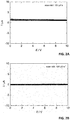
- FIG. 2A the cyclic voltammogram of Na 3 Al 2 Li 3 F 12 is shown. No peaks towards higher voltages are observed, indicating that Li + could pass through the garnet pellet without possible degradation reactions.
- the garnet was found to be stable up to 10 V, even exceeding the theoretically predicted thermodynamic stability window of 7.1 V - is observed (may related to kinetic stabilization).
- FIG. 2B the cyclic voltammogram of Na 3 In 1.9 Ca 0.1 Li 3.1 F 12 is shown. No peaks towards higher voltages are observed, indicating that Li + could pass through the garnet pellet without possible degradation reactions.
- the garnet was found to be stable up to 10 V, even exceeding the theoretically predicted thermodynamic stability window of 7.1 V - is observed (may related to kinetic stabilization).
- the samples were exposed to UV light. Areas which were covered during exposure were removed using a developer solution (Microresist Technologies, Germany).
- the microstructure was produced by ion beam etching. All impedance measurements were performed between 200 and 400 °C in a tube furnace using an Alpha-A High Resolution dielectric analyzer with a ZG-2 interface (Novocontrol, Germany) in the frequency range from 3 ⁇ 10 6 Hz to 10 2 Hz with a voltage amplitude of 100 mV. The temperature were measured using a thermocouple placed close to the single crystals.
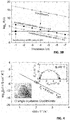
- the temperature dependency of the Li-ion conductivity illustrated in FIG. 4 is a typical Arrhenius plot representation.
- a representative Nyquist plot of the measurement at 240 °C is shown in the inset of FIG. 4 . Since the measurements are performed on a single crystal (and based on the capacitance in the pF range typical for bulk processes), we conclude that the semicircle in the complex plane corresponds to the bulk Li-ion conductivity. Since the Li-ion conductivity is too low below 200 °C to be measurable by impedance spectroscopy the Li-ion conductivity was extrapolated to RT as shown in FIG. 4 . The calculated bulk Li-ion conductivity at RT is ⁇ 10 -17 S cm -1 with an activation energy of 0.95 eV.
- FIG. 3B shows the total effective resistance of Cryolithionite as a function of the solid electrolyte thickness.
- ⁇ represents a functioning bulk all solid-state battery using cubic Li 7 La 3 Zr 2 O 12 as solid electrolyte with about 1 mm thickness and a Li-ion conductivity of about 10 -4 S cm -1 .
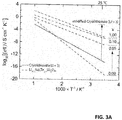
- 3A shows the Arrhenius behaviour of the total Li-ion conductivity of Cryolithionite in comparison with Li-oxide garnets from literature. A huge increase in the Li-ion mobility in the order of 10 - 12 magnitudes is observed after the incorporation of extra lithium into the garnet structure.
Landscapes
- Chemical & Material Sciences (AREA)
- Organic Chemistry (AREA)
- Inorganic Chemistry (AREA)
- Chemical Kinetics & Catalysis (AREA)
- Electrochemistry (AREA)
- General Chemical & Material Sciences (AREA)
- Engineering & Computer Science (AREA)
- Manufacturing & Machinery (AREA)
- Life Sciences & Earth Sciences (AREA)
- Geology (AREA)
- Physics & Mathematics (AREA)
- Condensed Matter Physics & Semiconductors (AREA)
- General Physics & Mathematics (AREA)
- Secondary Cells (AREA)
- Conductive Materials (AREA)
Abstract
The present invention relates to the use of cryolithionite-based lithium-containing fluorides having a garnet crystal structure for use as solid ion conductors or as constituents of solid ion conductors. The present invention also relates to novel lithium-containing fluorides which are suitable for these uses.
Description
- The present invention relates to the use of lithium-containing garnets as solid ion conductors or as constituents of solid ion conductors. The present invention also relates to novel lithium-containing garnets, suitable for said use.
- To boost the global current transformation to efficient low-emission transport and a sustainable energy economy new electrical energy storage solutions (EES) are needed to efficiently store electricity from intermittent solar, wind, or tidal sources and reduce the dependency on fossil fuels. Among EES advanced Li-ion battery technologies (LiBs) are the most promising solutions, due to their high energy density and high power density. Such LiBs are currently limited by the instability of liquid and even state-of-the-art solid electrolytes against Li metal and/or high voltage cathodes, which pose major safety and performance concerns.
- The international goal to gradually replace the current fossil- and nuclear-based energy supply with renewable energy requires further advancements in research and development of next generation Li-ion battery technologies with higher energy and power density and improved safety, using abundant materials for low cost. On one hand, this complex shift in the energy infrastructure requires research strategies that cultivate an in-depth understanding of the underlying fundamental processes in electrochemical cells, which can be used to develop new conceptual electrochemical energy storage systems. On the other hand, it requires the development of batteries with new chemistry, which could offer higher energy density, better safety, use of abundant materials, lower cost, and operational flexibility at different temperatures and under various environmental conditions.
- The realization of advanced battery technologies using new chemistry will reduce the dependency on polluting, inefficient coal plants by introducing a reliable way to use intermittent renewable energy. There is a strong potential for advanced Li-ion battery (LIB) storage solutions for a variety of power and energy storage requirements. As an example, in standalone household systems or as utility grid-connected assets, these batteries would allow for the storage of energy produced by solar panels for use even after the sun has gone down, thus reducing the energy price volatility. Implementation in future electrical vehicles facilitates the reduction of exhaust, particularly in congested centers, to counter the increasing amount of serious health issues from pollution exposure, which is associated with enormous health costs. Furthermore, the development of LIBs having improved properties can promote the wellbeing of an entire economic sector, including power suppliers, grid operators, battery manufacturers, energy storage integrators, solar developers, and energy-service companies, providing an opportunity for enhancing industrial competitiveness, a major enabler of future economic growth and job creation.
- In order to realize advanced battery technologies the increase in battery voltage (the voltage difference between the cathode and the anode) is very advantageous to enable higher energy density (the battery voltage times the capacity applications without an increase in the cell weight or volume. Since Li metal has the highest theoretical capacity (3860 mAh g-1) and the lowest electrochemical potential (3.04 V vs standard hydrogen electrode) for LIBs, it is the preferred anode material for both high-energy and power density batteries, especially when combined with high voltage Li-containing cathodes (e.g., LiNi0.8Mn0.1Co0.1O2, LiNi0.5Mn1.5O4) or non-Li containing cathodes (e.g., sulfur and air/O2). Currently, liquid electrolytes limit battery voltages to approximately 4.3 V. Above 4.3 V the liquid electrolytes start to dissociate. Additionally, on the anode side, Li dendrite formation has been the main challenge for decades. These dendrites pose major safety and electrochemical performance concerns.
- The current research bottleneck can be relieved when good solid-state electrolytes become available. They have the potential to pave the way towards all solid-state Li-ion batteries, which are projected to be able to achieve gravimetric and volumetric energy densities of about 500 kWh/kg and 1000 kWh/l, respectively. Such high values would enable the realization of electric vehicles (EV) with a range of 700 km in a single charge, which is an increase of more than 100 % to the current best. Although several solid electrolytes have been reported and are currently studied, such as Li-oxide garnets or NASICON-based materials (Na super ionic conductor), they appear to be only kinetically stable (Zhu et al., 2015, Origin of outstanding stability in the lithium solid electrolyte materials: Insights from thermodynamic analyses based on first-principles calculations, ACS Appl. Mater. Inter. 7: 23685 - 23693). Furthermore, these known solid electrolytes usually need high temperatures for synthesis and, therefore, are expensive to process. A decrease in the battery price below $100 per kWh is needed to allow EVs to become competitive with combustion engines (e.g., today, Tesla's Model 3 battery pack costs $190 per kWh, and the General Motors' 2017 Chevrolet Bolt battery pack is estimated to cost about $205 per kWh). Solid ion conductors based on Li-oxide garnets have been described earlier, for example in
EP 2 176 190 A1US 2015/0118571 A1 , andUS 2014/0193695 A1 . - It is an object of the present invention to overcome the current limitations of known Li-ion based solid ion conductors and to provide novel Li-ion based solid ion conductors having high Li-ion conductivities and a high electrochemical stability and which can be produced at low cost.
- It is a further object of the present invention to realize improved Li-ion based energy systems which are urgently needed to efficiently store electricity from solar, wind, or tidal sources and, thus, to ultimately cut the worldwide dependencies on fossil fuels.
- These objects are met by the present invention, which, in a first aspect, relates to a lithium-containing fluoride having a garnet crystal structure and having the stoichiometric composition of the general formula:
{Na3-aM'a}[M"bM"'c](Li3+c)F12-dAd
wherein - M' = Li+, K+ and/or Ag+
- M" = Al3+, Ga3+, In3+, Sc3+ and/or Y3+, wherein M" is optionally partially substituted with Xe, with X = Ti3+, V3+, Mn3+, Fe3+, Cu3+, Zn3+, Ni3+ and/or Co3+, and e < 1
- M"' = Mg2+, Cu2+, Ca2+, and/or Zn2+
- A = Cl-, Br-, and/or I-
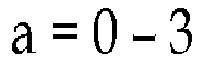


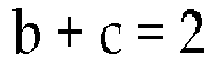

wherein the anions are optionally partially replaced by a vacancy VAf, with f = 0 - 1 and/or the cations are optionally partially replaced by a vacancy VCg, with g = 0 - 1. - Furthermore, in another aspect, the present invention also relates to the use of a lithium-containing fluoride having a garnet crystal structure and having the stoichiometric composition of the general formula:
{Na3-aM'a}[M"bM"'c](Li3+c)F12-dAd
wherein - M' = Li+, K+ and/or Ag+
- M" = Al3+, Ga3+, In3+, Sc3+ and/or Y3+, wherein M" is optionally partially substituted with Xe, with X = Ti3+, V3+, Cr3+, Mn3+, Fe3+, Cu3+, Zn3+, Ni3+ and/or Co3+, and e < 1
- M"' = Mg2+, Ca2+, Cu2+ and/or Zn2+
- A = Cl-, Br-, and/or I-


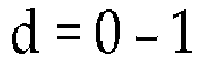
wherein the anions are optionally partially replaced by a vacancy VAf, with f = 0 - 1 and/or the cations are optionally partially replaced by a vacancy VCg, with g = 0 - 1,
as a solid ion conductor or as a constituent of a solid ion conductor, and with the proviso that the use of {Na3}[Al2](Li3)F12 as a conducting salt comprised in a liquid electrolyte of an electrochemical storage and/or conversion device is excluded. - Accordingly, the present invention relates to lithium-containing fluorides based on cryolithionite. Cryolithionite, with the formula Na3Al2Li3F12, is a unique natural mineral of the fluoride garnet group that occurs in hydrothermal deposits associated with minerals of other alumino-fluorides (e.g., Ivigtut, Greenland). In the Li-fluoride garnet structure, the F- is located at general crystallographic positions 96h (located at the corners of the polyhedra), which forms an F- framework with interstices occupied by Na+ at the eight-fold coordinated 24c position (A-site), by Al3+ at the six-fold coordinated 16a position (B-site) and by Li+ at the four-fold coordinated 24d position (C-site). Like oxide garnets, also cryolithionite is remarkably chemically flexible. Furthermore, cryolithionite has an extremely high stability window above 7 V (see Example 3 below in the experimental chapter). Moreover, it shows high Li-ion conductivities comparable to Li-oxide garnets (see Example 4 below in the experimental chapter). Surprisingly and to the inventor's best knowledge, cryolithionite has not yet received any attention with regard to a use as a solid ion conductor or as a constituent of a solid ion conductor in Li-ion battery applications.
- The lithium fluoride garnets according to the present invention, which are based on cryolithionite, fulfill all the requirements to be used in advanced Li-ion battery technologies. The chemical flexibility of the fluoride garnets enables the tuning of the Li-ion conductivity by more than ten orders of magnitude by simply increasing the nominal Li content in the garnet formula. For example, the trivalent B-site Al3+ in cryolithionite can be substituted by elements of the same group (e.g. Ga, In) or by a divalent cation to partially fill the interstitial sites in the garnet structure with extra lithium. For example, an increase in the Li-ion conductivity may also be achieved by a sub-valent substitution of the trivalent B-site Al3+ with Ca2+ and Li+. Like cryolithionite, also the cyrolithionite-based lithium fluoride garnets according to the present invention possess a high stability window of above 7V. They may be used as a solid electrolyte or protecting layer for Li-metal anodes and high voltage cathodes to prevent dendrite formation and chemical, as well as electrochemical, degradation at both the cathode and anode interfaces needed to avoid battery failure scenarios. Thus, the unique combination of high Li-ion conductivity and high thermodynamic stability of the lithium fluoride garnets according to the present invention provides solid electrolytes having superior properties in comparison to those known in the art.
- A further advantage of the lithium fluoride garnets according to the present invention is the possibility to synthesize them at room temperature by simple and reproducible precipitation reactions. In contrast to conventional synthesis routes that include several high temperature sintering steps, the lithium fluoride garnets according to the present invention may be prepared at a very low cost and without Li-loss. The garnets of the present invention, hence, may be used as ultra-low cost components for future battery technologies. This economic factor is particularly important in order to drop the battery price per kWh to make batteries competitive with combustion engines in automotive applications.
- In certain embodiments of the lithium-containing fluorides described herein, the anions may be partially replaced by a vacancy VAf, with f = 0 - 1 and/or the cations may be partially replaced by a vacancy VCg, with g = 0 - 1. In certain embodiments of the lithium-containing fluorides described herein, (Li3+c) at the C-site may be partially substituted with Zh, with Z = Na+, K+, Rb+, Cs+, Ag+, B3+, Al3+, Ga3+, In3+, Si4+, and/or Ge4+, and h < 0.2. It is clear to those skilled in the art that the partial replacement of the cations and/or anions by a vacancy or the partial substitution of (Li3+c) with another cation may require a charge compensation. For example, when In3+ is partially substituted in Na3In2Li3F12 by 0.1 Ca2+ per formula unit (pfu) additional 0.1 Li pfu has to be added to achieve charge neutrality. In case of vacancy formation of 0.2 pfu in the fluorine-anion lattice of Na3In1.9Ca0.1Li3.1F12 additional 0.2 Li pfu has to be added (Na3In1.9Ca0.1Li3.3F1.8VA0.2).
- In certain embodiments of the invention, a = 0 and d = 0. Thus, A is not present in the fluoride garnet structure und the A-site is only occupied by Na+ which is available in any quantity at considerable low costs.
- In preferable embodiments of the invention, M" = Ga3+ or In3+. Since larger cations, i.e. Ga3+ or In3+, are present in the lattice, the lattice parameters become larger, resulting in a further increase in the conductivity. According to the Goldschmidt's rule the cations can be fully substituted by cations with similar ionic radii and by cations with charges differing less than one charge. In order to crystal chemically engineer the polyhedral volume of the B site to fit for the proposed divalent cations (Mg2+ (r VI = 0.86 Å), Cu2+(r VI = 0.87 Å), Zn2+ (r VI = 0.885 Å)), Al3+ (r VI = 0.67 Å) is gradually substituted or fully exchanged by the larger Ga3+ (r VI = 0.76 Å) or In3+ (r VI = 0.93 Å) (Radii r VI taken from literature: R. D. Shannon, Revised effective ionic radii and systematic studies of interatomic distances in halides and chalcogenides: Acta Crystallogr. A32 (1976) 751-757).
- In preferable embodiments of the invention, M"' = Mg2+ or Ca2+.
- Preferable examples of lithium-containing fluorides according to the present invention have a stoichiometric composition which is selected from the group consisting of {Na3}[Mg2](Li5)F12, {Na3}[Ca2](Li5)F12, {Na3}[InMg](Li4)F12, {Na3}[InCa](Li4)F12, {Na3}[Mg2](Li5)F11Cl, {Na3}[Ca2](Li5)F11Cl. The increase of the Li content in the crystal lattice by the substitution leads to high ion conductivities. Another increase is achieved by anion substitution, because Cl- is greater than F-; thus, substituting F- with Cl- leads to lattice expansion and consequently to an increase in the ion conductivity. It is found for Li-oxide garnets that a lattice parameter of about 12.90-12.95 is the optimum to achieve high Li-ion conductivities (Zeier W., Structural limitations for optimizing garnet-type solid electrolytes: a perspective, Dalton Trans. (2014), 43:16133 - 16138).
- In certain embodiments, the lithium-containing fluoride which is used as a solid ion conductor or as a constituent of a solid ion conductor, has a stoichiometric composition of formula {Na3}[M"2](Li3)F12.
- Preferably, the lithium-containing fluoride has a stoichiometric composition selected from the group consisting of {Na3}[Al2](Li3)F12, {Na3}[Ga2](Li3)F12, {Na3}[In2](Li3)F12
- In certain embodiments, the lithium-containing fluoride may further comprise at least one anion dopant selected from the group consisting of O2-, N3- and/or S2, replacing the anions in the crystal lattice of the garnet in an amount of up to 10%. Representative examples of lithium-containing fluorides comprising an anion dopant are {Na3}[InMg](Li5)F11O, {Na3}[InCa](Li5)F11O, and {Na3}[Ca2](Li6)F11O.
- In contrast to the Li-ion based solid ion conductors known in the art, the lithium-containing fluorides according to the invention have both a high Li-ion conductivity and a high electrochemical stability. Because of these reasons, the lithium-containing fluorides according to the invention are particularly useful as solid ion conductors or as constituents of a solid ion conductor.
- In specific embodiments, the lithium-containing fluorides described herein are valuable solid electrolytes that can be used in a broad range of energy-related applications and devices, in particular, in electrochemical storage and/or conversion devices, sensors, thermoelectric converters and/or electrochromic devices.
- Accordingly, a further aspect of the present invention relates to electrochemical storage and/or conversion device comprising a lithium-containing fluoride having a garnet crystal structure as described herein, with the proviso that the electrochemical storage and/or conversion device does not include {Na3}[Al2](Li3)F12 in the form of a conducting salt in a liquid electrolyte.
- The electrochemical storage and/or conversion device is preferably selected from the group consisting of a battery, an accumulator, a supercapacitor (supercap) and a fuel cell.
- As mentioned above, the lithium-containing fluorides of the invention may be used as solid ion conductors in sensors; for example, as solid ion conductors in CO2 sensors, e.g. for use as solid ion conductors in CO2 sensors as described by Struzik et al (Struzik et al, A Simple and Fast Electrochemical CO2 Sensor based on Li7La3Zr2O12 for Environmental Monitoring, Advanced Materials (2018), Volume 40, Issue 44; 1804098).
- Electrochromic devices as mentioned above are, for example, windows, exterior walls, and Visual Display Units (VDUs).
- The lithium-containing fluorides described herein can also be used for fabrication of a thin-film all solid-state micro-battery. Micro-batteries are particularly attractive as on-chip energy supply for powering portable units where information is measured, exchanged, or stored at high volumetric densities. The benefit of using solid-state materials based on the present invention is the possibility to prepare thin-film structures with less than 1 µm thickness. This significantly decreases the Li-ion diffusion pathway and increases the packing density of the micro-battery units when compared to liquid or polymer based micro-batteries. In addition, all solid-state batteries can take full advantage of current silicon wafer processing methods for complete integration into micro-electro-mechanical system technologies. In preferable embodiments, the lithium-containing fluorides are used in these micro-batteries as solid electrolyte, or an ion conducting protective layer for Li metal or high voltage cathodes, or an ion conducting interlayer.
- The preparation of thin films based on said lithium-containing fluorides has the advantage that their Li-ion conductivity for the use in an all solid-state battery does not need to be as high as compared to bulk solid electrolytes, taking into account the total electrolyte resistance Rt = l·(σt·A)-1, where A is the contact area, l is the thickness, and σt is the total Li-ion conductivity of the solid electrolyte. As an example, in the study Liu et al. (Liu et al, Achieving high capacity in bulk-type solid-state lithium ion battery based on Li6.75La3Zr1.75Ta0.25O12 electrolyte: Interfacial resistance: J. Power Sources 324 (2016) 349-357), a functioning bulk all solid-state battery using cubic LLZO as a solid electrolyte with ∼1 mm thickness and a σ t of ∼10-4 S ·cm-1 is reported. In comparison, under similar conditions and considering the same resistance, an all solid-state battery based on the lithium-containing fluorides of the invention can be operated using a solid electrolyte thin film with only ∼1 µm thickness and a σ t of ∼7 ·10-7 S cm-1. Consequently, in case of thin films the Li-ion conductivity of Cryolithionite-based lithium-containing fluorides as described herein with a thickness of about 100 µm is high enough to be used as an electrolyte in all solid-state batteries or for protecting Li-metal anodes. Taking advantage of the increased electrochemical window, the present invention is especially attractive for high current loads beyond 2 mA cm-2 such as for fast charging in electric vehicles.
- Thin films of lithium-containing fluorides as described herein can be prepared, e.g., by physical vapor deposition (PVD), radiofrequency magnetron sputtering (RFMS) and pulse laser deposition.
- Furthermore, the preparation of Cryolithionite-based electrodes as thin films overcomes the drawback of F-based electrode materials having low electronic conductivities by providing short diffusion pathways for Li-ions during charge and discharge, which enables high power density devices. As mentioned above, the electrical conductivity can be also increased by substitution of the transition metal by a divalent cation. Moreover, Cryolithionite can be prepared without any heat treatment, which is a big advantage (low cost, no Li-loss) compared to other Li-containing solid electrolytes.
- In a further aspect, the lithium-containing fluorides according to the present invention are used in the form of a protective layer before an electrode or in the form of a constituent of a protective layer before an electrode, in order to enhance the chemical stability of the electrode towards the electrolyte. A fluorine-based instead of an oxygen-based framework in the lithium-containing fluorides of the invention provides higher electrochemical stability with a large band gap of about 7 V. For example, the present invention is particularly attractive as a protective layer for Li metal in liquid-based battery systems, preventing passivation of Li metal and dendrite formation.
- A further aspect of the present invention relates to an electrode comprising a lithium-containing fluoride as described herein, wherein the lithium-containing fluoride has a stoichiometric composition as defined herein. In preferred embodiments, the electrode is coated with the lithium-containing fluoride. The term "the electrode is coated with the lithium-containing fluoride" as used herein refers to a coating of the electrode's surface in the common sense, e.g. a thin-film layer deposited onto the electrode's surface by physical vapor deposition (PVD), as well as to core-shell-like structures that comprise or consist of the lithium-containing fluoride and cover/encase the electrode.
- In a further aspect, the lithium-containing fluorides described herein may also be used an interlayer between other solid electrolytes and high voltage electrodes, thus, extending the chemical potential to match the potential between the electrolyte and electrode materials.
- In another aspect, the lithium-containing fluorides of the present invention may be used as solid electrolytes which are mixed with the electrode material in order to enable a good ion conductivity and achieve smooth electrochemical reaction within the cell. The lithium-containing fluorides may be added to the composite electrode, for example, composed of three kinds of particles; e.g. particles of an active material (LiCoO2), particles of a cryolithionite-based material according to the invention, and particles of a conductive additive (acetylene black) with a weight ratio of 20:30:3 are mixed in order to form continuous lithium ion and electron conducting paths to LiCoO2.
- To sum up, the high chemical stability and the low synthesis temperature of the lithium-containing fluorides can overcome issues with all solid-state batteries with cathodes such as LiCoO2 (LCO), where passivating inter-diffusion layers currently formed during cell preparation cause high interfacial resistance.
- A further aspect of the present invention relates to a process for preparing a lithium-containing fluoride having a garnet crystal structure as described herein, wherein the process is characterized in that precursor compounds, preferably salts, hydroxides and/or oxides, of components Na+, M', M" and/or M'" are reacted with one another.
- In a particularly, preferred embodiment, the reaction is carried out by means of a precipitation reaction of the dissolved precursor compounds of said components in the presence of hydrogen fluoride. The synthesis of the lithium-containing fluorides by means of a precipitation reaction has the advantages that there is no Li-loss and that no heat treatment is required, thus, keeping the production costs very low.
- In other embodiments, the reaction is carried out by means of solid-state synthesis. Preferably, the precursor compounds are fluorides of said components.
- In the following, in order to further demonstrate the present invention, illustrative and non-restrictive examples and embodiments, which are also illustrated in the accompanying Figures, are discussed.
-
-
FIGS. 1A, 1B and 1C show three different battery types containing Cryolithionite-based solid electrolytes according to the present invention as solid electrolyte (FIG. 1C ), as an ion conducting interlayer (FIG. 1B ), or as an ion conducting protective layer (FIG. 1A ) for Li metal or high voltage cathodes. Cat = cathode, An = anode, SE = solid electrolyte, IL = Interlayer, PL = protecting layer, LNMO = LiNi0.5Mn1.5O2, NCA = LiNi0.8CO0.15Al0.05O2 -
FIG. 2A shows the electrochemical stability window of Na3Al2Li3F12 which was investigated via CV. An extremely high stability window of 10 V - even exceeding the theoretically predicted thermodynamic stability window of 7.1 V - is observed (may be related to kinetic stabilization). -
FIG. 2B shows the electrochemical stability window of Na3In1.9Ca0.1Li3.1F12 which was investigated via CV. An extremely high stability window of 10 V - even exceeding the theoretically predicted thermodynamic stability window of 7.1 V - is observed (may be related to kinetic stabilization). -
FIG. 3A shows the Arrhenius behaviour of the total Li-ion conductivity of Cryolithionite in comparison with Li-oxide garnets from literature. A huge increase in the Li-ion mobility in the order of 10 - 12 magnitudes is observed after the incorporation of extra lithium into the garnet structure. -
FIG. 3B shows the total effective resistance of Cryolithionite as a function of the solid electrolyte thickness. ★ represents a functioning bulk all solid-state battery using cubic Li7La3Zr2O12 as solid electrolyte with about 1 mm thickness and a Li-ion conductivity of about 10-4 S cm-1 (Liu et al, Achieving high capacity in bulk-type solid-state lithium ion battery based on Li6.75La3Zr1.75Ta0.25O12 electrolyte: Interfacial resistance, J. Power Sources, (2016), 324:349-357). This suggests a film thickness of about 100 µm with a Li-ion conductivity of only about 10-7 S cm-1, which thickness is already thin enough to use Cryolithionite-based electrolytes in a Li-ion battery device. -
FIG. 4 shows an Arrhenius plot of natural abundant single crystalline Na3Al2Li3F12. A representative Nyquist plot taken at 240 °C is shown in the inset. -
FIG. 5 shows a representative Nyquist plot of Na3In2Li3F12 and Na3In1.9 Ca0.1Li3.1F12 taken at 23 °C. -
FIG. 6 shows the XRD pattern of calculated and synthesized Na3Al2Li3F12, as well as for calculated Na3In2Li3F12, and synthesized Na3In2Li3F12 and Na3In1.9Ca0.1Li3.1F12. -
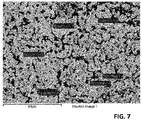
FIG. 7 shows a scanning electron microscopy photo of Na3In1.9Mg0.1Li3.1F12 using a backscattered electron detector. The white spots shown inFIG. 7 correspond to an unidentified oxygen-based extra phase. Spots of energy dispersive spectroscopy, EDS, measurements are highlighted (Spectrum 1-8). -
FIG. 1A, 1B, and 1C show three different battery types containing cryolithionite-based lithium-containing fluorides according to the present invention as solid electrolyte, wherein Cat = cathode, An = anode, SE = solid electrolyte, IL = Interlayer, PL = protecting layer, LNMO = LiNi0.5Mn1.5O2, LTO = Li4Ti5O12, NCA = LiNi0.8Co0.15Al0.05O2.FIG. 1A, 1B, and 1C describe a protected active metal, but also alloy or intercalation electrode that enables very high energy density lithium batteries such as those using aqueous electrolytes or other electrolytes that would otherwise adversely react with lithium metal. Examples of such high energy battery couples are lithium-air, lithium-water, lithium-metal hydride, lithium-metal oxide, and the lithium alloy and lithium-ion variants of the aforementioned. -
FIG. 1A describes, as an exemplary embodiment, the use of a non-aqueous electrolyte interlayer architecture to isolate an active metal (e.g., alkali metal, such as lithium), but also active metal alloy or active metal-ion electrode (usually the anode of a battery cell). Isolation of the anode from other components of a battery cell or other electrochemical cell by a protective layer (PL) made of a cryolithionite-based solid electrolyte according to the invention allows the use of virtually any solvent, electrolyte and/or cathode material in conjunction with the anode. Also, optimization of electrolytes or cathode-side solvent systems may be achieved without impacting anode stability or performance. -
FIG. 1B shows, as an exemplary embodiment, that the use of a cryolithionite-based solid electrolyte according to the invention as interlayer (IL) architecture effectively isolates (decouples) the anode as well as the cathode from a solid electrolyte (e.g. Li10GeP2S12 [Kamaya N. et al, A lithium superionic conductor: Nat. Mater., (2011), 10:682-686]) with higher Li-ion conductivity but lower electrochemical stability against metallic Li and high voltage cathodes. -
FIG. 1C shows, as an exemplary embodiment, a Li-metal battery using a cryolithionite-based solid electrolyte according to the invention to de-couple the Li-metal anode and the high voltage cathode. - Lithium-containing fluorides having a stoichiometric composition as defined in the present disclosure are prepared by precipitation from aqueous solution. Precursor compounds, preferably salts, hydroxides and/or oxides, of components Na+, M', M" and/or M"' are first dissolved in distilled water. Afterwards a 5 % HF solution (in methanol) is added for the precipitation of the lithium-containing fluorides having a garnet crystal structure.
- Na3Al2Li3F12 was synthesized using 10 ml of NaOH, and stoichiometric amounts of LiOH and NaAlO2. During stirring a participation was formed, which was then dissolved by adding HCl until a pH value of 2 was achieved. To the
solution 10 ml of 5 % HF (1:10 in methanol) was added. The fluoride garnet then participated over night and was purified by washing withmethanol 3 times. To check if the synthesis was successful X-ray powder diffraction measurements were carried out using a Bruker D8 Advance diffractometer operating with CuKα radiation. Data were collected at angles 2θ ranging from 10° to 110°. -
FIG. 6 shows the XRD pattern of calculated and synthesized Na3Al2Li3F12 (by liquid based synthesis, Example 1), as well as for calculated Na3In2Li3F12, and synthesized Na3In2Li3F12 and Na3In1.9Ca0.1Li3.1F12 (by solid state synthesis, see Example 2 below). The obtained powder pattern shown inFIG. 6 clearly indicates the successful synthesis of Cryolithionite by liquid based synthesis. A calculated pattern is shown for comparison. Only some small reflexions can be observed, which does not belong to the cubic garnet structure, indicating a minor extra phases. Those reflexions are not possible to assign to a phases, due to the lack of intensity. - Solid state synthesis of lithium containing fluorides having a stoichiometric composition as defined in the present disclosure is performed by reacting precursor compounds in form of fluorides of components Na+, M', M" and/or M"'. The precursor compounds in form of fluorides are mixed, pressed to pellets and then put into a copper tube. The copper tube is then put into an oven under argon atmosphere to prevent oxidation of the copper. The copper tube is then heated up with a heating rate between 5 and 10 °C/min to a temperature, preferably in a range of between 600 °C and 800 °C for a predefined dwelling time, preferably for 12 - 24 hours.
- Solid-state synthesis of Na3Al2Li3F12 was done with stoichiometric amounts of NaF, LiF and AlF3. The substances were mixed, pressed and the pellet was put into a cooper tube, which was sealed under argon (to exclude any oxygen). The copper tube was then heated up to 700° C for 17 hours.
- Solid-state synthesis of Na3In2Li3F12 was done with stoichiometric amounts of NaF, LiF and InF3. The substances were mixed, pressed to pellets an put into a cooper tube, which was sealed under argon (to exclude any oxygen). The copper tube was then heated up to 600° C with a heating rate of 5 °C/min for 16 hours.
- For example, the substitution of In by Ca (see solid-state based synthesis of Na3In1.9Ca0.1Li3.1F12 below) will lead to an strong increased in the Li-ion conductivities of about 10 orders of magnitude (see
FIG. 3A of Example 4 below) similar as observed by O'Callaghan et al for Li-oxide garnets [O'Callaghan et al, Switching on Fast Lithium Ion Conductivity in Garnets: The Structure and Transport Properties of Li3+xNd3Te2-xSbxO12: Chem. Mater. 20 (2008) 2360.] - Solid-state synthesis of Na3In1.9 Ca0.1Li3.1F12 was done with stoichiometric amounts of NaF, LiF, InF3, and CaF2. The substances were mixed, pressed and the pellet was put into a cooper tube, which was sealed under argon (to exclude any oxygen). The copper tube was then heated up to 600°, with a heating rate of 5 °C/min for 17 hours.
- The powder XRD pattern for both Na3In2Li3F12 and Na3In1.9Ca0.1Li3.1F12 are shown in
FIG. 6 in comparison with the calculated pattern of Na3In2Li2F12. Those patterns look similar to the reference indicating the success of the synthesis and phase purity. Only some small amounts of extra unidentified oxide-based phases, most probably caused by oxide-impurities within the starting materials, are present, which are identical in the modified and non-modified cryolithionite but cannot be assigned to a known phases due to the low intensity of those reflexions. Nevertheless, since no additional reflexions occur after the substitution of In by Ca we conclude the successful incorporation of Ca into the garnet structure. - Further evidence is given that the substitution of In by Ca leads to a conductivity increase of more than 10 orders of magnitude to a value of 10-5 S cm-1 (see Example 4)
- Solid-state synthesis of Na3In1.9 Mg0.1Li3.1F12 was done with stoichiometric amounts of NaF, LiF and InF3. The substances were mixed, pressed and the pellet was put into a cooper tube, which was sealed under argon (to exclude any oxygen). The copper tube was then heated up to 600°, with a heating rate of 5 °C/min for 17 hours.
- Scanning electron microscopy, SEM, analysis was made using a Zeiss Ultra Plus device. Small polycrystalline chips, taken from the larger pellets, were embedded in an epoxy holder and the surface was ground and then polished with successively finer abrasive papers, culminating in a final polish with abrasive paper with a grid size of 4000. In
FIG. 7 a SEM picture using a back scattered electron detector of the polished pellet of Na3In1.9 Mg0.1Li3.1F12 is shown. EDS measurements were undertaken to characterize the synthetic product Na3In1.9 Mg0.1Li3.1F12 in terms of its composition and in particular if the dopant elements, in this case Mg, is incorporated into the fluoride-based garnet structure. The obtained normalized values of F, In, Na, and Mg given in Table 1 below were used to qualitatively calculate the composition of Na3In1.9 Mg0.1Li3.1F12. Since Li can only hardly measured by X-rays the obtained values for Na, In, Mg are normalized to Na = 3. This results in an average ratio between Na, In, and Mg of 3, 0.09(1), and 1.98(1), respectively, clearly indicating the successful incorporation of Mg into the Na3In1.9Mg0.1Li3.1F12-structure. The white spots shown inFIG. 7 correspond to an unidentified oxygen-based extra phase. This phase occurs due to some oxide impurities in the starting materials and explains the presents of minor extra phases as observed in the X-ray powder diffraction pattern as observed, for example, inFIG. 6 .Table 1: EDS results (in weight-%) of Na3In1.9Mg0.1Li3.1F12 Spectrum F Na Mg In Total Spectrum 1 53.10 10.72 0.41 35.77 100.00 Spectrum 252.65 10.88 0.68 35.78 100.00 Spectrum 352.26 11.85 0.15 35.74 100.00 Spectrum 452.49 10.66 0.21 36.64 100.00 Spectrum 552.84 10.75 0.20 36.21 100.00 Spectrum 652.94 10.47 0.26 36.32 100.00 Spectrum 752.53 11.21 0.45 35.82 100.00 Spectrum 852.08 11.33 0.42 36.17 100.00 Mean 52.61 10.98 0.35 36.06 100.00 Std. deviation 0.34 0.45 0.18 0.33 Max. 53.10 11.85 0.68 36.64 Min. 52.08 10.47 0.15 35.74 - Cyclic voltammetry (CV) measurements were performed using a Li/Cryolithionite/Au configuration to assess the electrochemical window of garnet pellets. The 100 nm Au blocking electrode was sputtered on one surface of the garnet pellet, and the reversible Li electrode was applied on the other side of the pellet. The cell was scanned at a rate of 100 µV s-1 in the potential range from 0 to 10 V vs Li/Li+. In
FIG. 2A the cyclic voltammogram of Na3Al2Li3F12 is shown. No peaks towards higher voltages are observed, indicating that Li+ could pass through the garnet pellet without possible degradation reactions. During the anodic sweep of the CV experiment, the garnet was found to be stable up to 10 V, even exceeding the theoretically predicted thermodynamic stability window of 7.1 V - is observed (may related to kinetic stabilization). InFIG. 2B the cyclic voltammogram of Na3In1.9Ca0.1Li3.1F12 is shown. No peaks towards higher voltages are observed, indicating that Li+ could pass through the garnet pellet without possible degradation reactions. During the anodic sweep of the CV experiment, the garnet was found to be stable up to 10 V, even exceeding the theoretically predicted thermodynamic stability window of 7.1 V - is observed (may related to kinetic stabilization). - To check the Li-ion conductivity of a single crystal (about 2 cm in diameter) received from the Natural History Museum, in Vienna, Austria (see inset of
Fig. 4 ) the single crystal was investigated by microcontact impedance spectroscopy. Micro electrodes were applied to avoid contributions from extra phases (such as Cryolite). On top of the polished single crystals Pt thin films were sputter deposited with a thickness of 200 nm on top of approximately 10 nm Ti (used to improve the adhesion between the sample and the electrode). The patterning of the microelectrodes was performed by photolithography. Therefore, a negative photoresist was coated on top of the embedded and polished single crystals. After applying the mask with circular electrodes with a diameter of 0.2 mm the samples were exposed to UV light. Areas which were covered during exposure were removed using a developer solution (Microresist Technologies, Germany). In a subsequent step, the microstructure was produced by ion beam etching. All impedance measurements were performed between 200 and 400 °C in a tube furnace using an Alpha-A High Resolution dielectric analyzer with a ZG-2 interface (Novocontrol, Germany) in the frequency range from 3 × 10⁶ Hz to 102 Hz with a voltage amplitude of 100 mV. The temperature were measured using a thermocouple placed close to the single crystals. The temperature dependency of the Li-ion conductivity illustrated inFIG. 4 is a typical Arrhenius plot representation. A representative Nyquist plot of the measurement at 240 °C is shown in the inset ofFIG. 4 . Since the measurements are performed on a single crystal (and based on the capacitance in the pF range typical for bulk processes), we conclude that the semicircle in the complex plane corresponds to the bulk Li-ion conductivity. Since the Li-ion conductivity is too low below 200 °C to be measurable by impedance spectroscopy the Li-ion conductivity was extrapolated to RT as shown inFIG. 4 . The calculated bulk Li-ion conductivity at RT is ∼10-17 S cm-1 with an activation energy of 0.95 eV. - Compared to a report about a functioning bulk all solid-state battery using 1 mm thick cubic Li7La3Zr2O12 as the solid electrolyte with a Li-ion conductivity of about 10-4 S cm-1 (see Liu et al, Achieving high capacity in bulk-type solid-state lithium ion battery based on Li6.75La3Zr1.75Ta0.25O12 electrolyte: Interfacial resistance: J. Power Sources 324 (2016) 349-357), a film thickness of about 100 µm with a Li-ion conductivity of only about 10-7 S cm-1 is already thin enough to use Cryolithionite and Cryolithinite-based fluorides according to the invention in a future Li-ion battery device (see
FIG. 3B). FIG. 3B shows the total effective resistance of Cryolithionite as a function of the solid electrolyte thickness. ★ represents a functioning bulk all solid-state battery using cubic Li7La3Zr2O12 as solid electrolyte with about 1 mm thickness and a Li-ion conductivity of about 10-4 S cm-1. This suggests a film thickness of about 100 µm with a Li-ion conductivity of only about 10-7 S cm-1, which thickness is already thin enough to use Cryolithionite-based electrolytes in a Li-ion battery device. - To activate fast-ion diffusion in garnets, a nominal Li content larger than 3 formula units in the garnet formula is needed. This is demonstrated by O'Callagahan et al. by synthesizing the oxide-based Li3+x Nd3Te2-x Sb x O12 garnets, with x = 0.0 - 1.5, to study the relationship between Li-site occupation and Li-ion conductivity (O'Callaghan et al, Switching on Fast Lithium Ion Conductivity in Garnets: The Structure and Transport Properties of Li3+xNd3Te2-xSbxO12: Chem. Mater. 20 (2008) 2360.) They found a decrease in the activation energy from 1.22 eV to ∼0.67 eV and an increase in the Li-ion conductivity from 0.01 mS cm-1 at 600 °C to 0.03 mS cm-1 at 400 °C by increasing the amount of Li at the interstitials by only 0.05 Li per formula unit (pfu). The further increase of Li goes along with an increase in Li-ion conductivity up to 3 mS cm-1 at 400 °C. Introducing small amounts of extra Li into Cryolithionite (0.05-0.10 formula units) will consequently lead to an increase in the Li-ion conductivity by 10-12 orders of magnitude, as illustrated in
FIG. 3A. FIG. 3A shows the Arrhenius behaviour of the total Li-ion conductivity of Cryolithionite in comparison with Li-oxide garnets from literature. A huge increase in the Li-ion mobility in the order of 10 - 12 magnitudes is observed after the incorporation of extra lithium into the garnet structure. - To evaluate the impact of a Li content > 3 Cryolithionite with the formula Na3In2Li3F12 and Na3In1.9Ca0.1Li3.1F12 were synthesized (see Example 2 above) and evaluated by impedance spectroscopy. For the impedance measurements sintered cylindrical pellets with 10 mm in diameter and 1 mm in thickness were used. Gold electrodes with a layer thickness of 100 nm on both sides of the pellet were applied with a Leica EM SCD 050 sputter device. Impedance spectra were recorded with a Novocontrol Concept 80 broadband dielectric spectrometer covering a frequency range from υ = 10 mHz to 10 MHz at 23 °C. Measurements were carried out under Ar atmosphere in a glovebox.
FIG. 5 shows a representative Nyquist plot of Na3In2Li3F12 and Na3In1.9 Ca0.1Li3.1F12 taken at 23 °C. A single semicircle was observed for the modified Cryolithionite, which can be fitted by a standard R-CPE element giving a Li-ion conductivity of 10-5 S cm-1 at RT. In contrast pristine Na3In2Li3F12 garnet was not measureable, due to its isolating character at RT (see also for single crystalline Na3Al2Li3F12). Based on the capacitance in the pF range typical the semicircle in the complex plane can be assigned to the bulk Li-ion conductivity. -
- Kamaya N. et al, A lithium superionic conductor: Nat. Mater., (2011), 10:682-686
- Liu et al, Achieving high capacity in bulk-type solid-state lithium ion battery based on Li6.75La3Zr1.75Ta0.25O12 electrolyte: Interfacial resistance: J. Power Sources 324 (2016) 349-357
- O'Callaghan et al, Switching on Fast Lithium Ion Conductivity in Garnets: The Structure and Transport Properties of Li3+xNd3Te2-xSbxO12: Chem. Mater. 20 (2008) 2360.
- Redhammer, D. et al, A single crystal X-ray and powder neutron diffraction study on NASICON-type Li1+xAlxTi2-x(PO4)3 (0 ≤ x ≤ 0.5) crystals: Implications on ionic conductivity Solid State Sci. 60 (2016) 99-107.)
- Shannon R.D., Revised effective ionic radii and systematic studies of interatomic distances in halides and chalcogenides: Acta Crystallogr. (1976) A32:751-757
- Struzik et al, A Simple and Fast Electrochemical CO2 Sensor based on Li7La3Zr2O12 for Environmental Monitoring: Advanced Materials (2018), Volume 40, Issue 44,1804098
- Zeier W., Structural limitations for optimizing garnet-type solid electrolytes: a perspective: Dalton Trans. (2014), 43:16133 -16138
- Zhu et al., Origin of outstanding stability in the lithium solid electrolyte materials: Insights from thermodynamic analyses based on first-principles calculations, ACS Appl. Mater. (2015), Inter. 7: 23685 - 23693
Claims (18)
- A lithium-containing fluoride having a garnet crystal structure and having the stoichiometric composition of the general formula:
{Na3-aM'a}[M"bM"'c] (Li3+c)F12-dAd
whereinM' = Li+, K+ and/or Ag+M" = Al3+, Ga3+, In3+, Sc3+ and/or Y3+, wherein M" is optionally partially substituted with Xe, with X = Ti3+, V3+, Mn3+, Fe3+, Cu3+, Zn3+, Ni3+ and/or Co3+, and e < 1M"' = Mg2+, Cu2+, Ca2+, and/or Zn2+A = Cl-, Br-, and/or I-


wherein the anions are optionally partially replaced by a vacancy VAf, with f = 0 - 1 and/or the cations are optionally partially replaced by a vacancy VCg, with g = 0 - 1. - Use of a lithium-containing fluoride having a garnet crystal structure and having the stoichiometric composition of the general formula:
{Na3-aM'a}[M"bM"'c](Li3+c)F12-dAd
whereinM' = Li+, K+ and/or Ag+M" = Al3+, Ga3+, In3+, Sc3+ and/or Y3+, wherein M" is optionally partially substituted with Xe, with X = Ti3+, V3+, Cr3+, Mn3+, Fe3+, Cu3+, Zn3+, Ni3+ and/or Co3+, and e < 1M"' = Mg2+, Ca2+, Cu2+ and/or Zn2+A = Cl-, Br-, and/or I-


wherein the anions are optionally partially replaced by a vacancy VAf, with f = 0 - 1 and/or the cations are optionally partially replaced by a vacancy VCg, with g = 0 - 1,
as a solid ion conductor or as a constituent of a solid ion conductor, and with the proviso that the use of {Na3}[Al2](Li3)F12 as a conducting salt comprised in a liquid electrolyte of an electrochemical storage and/or conversion device is excluded. - The lithium-containing fluoride according to claim 1 or the use of a lithium-containing fluoride according to claim 2, wherein a = 0 and d = 0.
- The lithium-containing fluoride according to any one of the preceding claims or the use of a lithium-containing fluoride according to any one of the preceding claims, wherein M" = Ga3+ or In3+.
- The lithium-containing fluoride according to any one of the preceding claims or the use of a lithium-containing fluoride according to any one of the preceding claims, wherein M"' = Mg2+.
- The lithium-containing fluoride according to any one of the preceding claims or the use of a lithium-containing fluoride according to any one of the preceding claims, wherein the stoichiometric composition is selected from the group consisting of {Na3}[Mg2](Li5)F12, {Na3}[Ca2](Li5)F12, {Na3}[InMg](Li4)F12, {Na3}[InCa](Li4)F12, {Na3}[Mg2](Li5)F11Cl, {Na3}[Ca2](Li5)F11Cl.
- The use according to claim 2, characterized in that the lithium-containing fluoride has a stoichiometric composition of formula {Na3}[M"2](Li3)F12.
- The use according to claim 7, wherein the lithium-containing fluoride has a stoichiometric composition selected from the group consisting of Al3+ {Na3}[Al2](Li3)F12, {Na3}[Ga2](Li3)F12, {Na3}[In2](Li3)F12
- The lithium-containing fluoride according to any one of the preceding claims or the use of a lithium-containing fluoride according to any one of the preceding claims, further comprising at least one anion dopant selected from the group consisting of O2-, N3- and/or S2, replacing the anions in the crystal lattice of the garnet in an amount of up to 10%.
- Use of a lithium-containing fluoride having a garnet crystal structure according to claim 1, as a solid ion conductor or as a constituent of a solid ion conductor.
- The use of a lithium-containing fluoride having a garnet crystal structure according to any one of claims 2 - 9 or the use of a lithium-containing fluoride according to claim 10, in electrochemical storage and/or conversion devices, sensors, thermoelectric converters and/or electrochromic devices.
- The use of a lithium-containing fluoride having a garnet crystal structure according to any one of claims 2 - 9 or the use of a lithium-containing fluoride according to claim 10, in the form of a protective layer before an electrode or in the form of a constituent of a protective layer before an electrode.
- An electrode comprising a lithium-containing fluoride having a garnet crystal structure, wherein the lithium-containing fluoride has a stoichiometric composition as defined in any one of claims 2 - 9, wherein preferably the electrode is coated with the lithium-containing fluoride.
- An electrochemical storage and/or conversion device comprising a lithium-containing fluoride having a garnet crystal structure, wherein the lithium-containing fluoride has a stoichiometric composition as defined in any one of claims 2 - 9, with the proviso that the electrochemical storage and/or conversion device does not include {Na3}[Al2](Li3)F12 in the form of a conducting salt in a liquid electrolyte.
- The use according to claim 11 or the electrochemical storage and/or conversion device according to claim 14, wherein the electrochemical storage and/or conversion device is selected from the group consisting of a battery, an accumulator, a supercapacitor and a fuel cell.
- A process for preparing a lithium-containing fluoride having a garnet crystal structure according to any one of claims 1 and 3 to 9, characterized in that precursor compounds, preferably salts, hydroxides and/or oxides, of components Na+, M', M" and/or M'" are reacted with one another.
- The process according to claim 16, characterized in that the reaction is carried out by means of a precipitations reaction of the dissolved precursor compounds of said components in the presence of hydrogen fluoride, or in that the reaction is carried out by means of solid-state synthesis.
- The process of claim 17, characterized in that the reaction is carried out by means of solid-state synthesis and the precursor compounds are fluorides of said components.
Priority Applications (3)
| Application Number | Priority Date | Filing Date | Title |
|---|---|---|---|
| EP19159662.6A EP3703170A1 (en) | 2019-02-27 | 2019-02-27 | Solid ion conductor having a fluoride garnet-like structure |
| EP20705712.6A EP3931900A1 (en) | 2019-02-27 | 2020-02-19 | Solid ion conductor having a fluoride garnet-like structure |
| PCT/EP2020/054323 WO2020173781A1 (en) | 2019-02-27 | 2020-02-19 | Solid ion conductor having a fluoride garnet-like structure |
Applications Claiming Priority (1)
| Application Number | Priority Date | Filing Date | Title |
|---|---|---|---|
| EP19159662.6A EP3703170A1 (en) | 2019-02-27 | 2019-02-27 | Solid ion conductor having a fluoride garnet-like structure |
Publications (1)
| Publication Number | Publication Date |
|---|---|
| EP3703170A1 true EP3703170A1 (en) | 2020-09-02 |
Family
ID=65628642
Family Applications (2)
| Application Number | Title | Priority Date | Filing Date |
|---|---|---|---|
| EP19159662.6A Withdrawn EP3703170A1 (en) | 2019-02-27 | 2019-02-27 | Solid ion conductor having a fluoride garnet-like structure |
| EP20705712.6A Withdrawn EP3931900A1 (en) | 2019-02-27 | 2020-02-19 | Solid ion conductor having a fluoride garnet-like structure |
Family Applications After (1)
| Application Number | Title | Priority Date | Filing Date |
|---|---|---|---|
| EP20705712.6A Withdrawn EP3931900A1 (en) | 2019-02-27 | 2020-02-19 | Solid ion conductor having a fluoride garnet-like structure |
Country Status (2)
| Country | Link |
|---|---|
| EP (2) | EP3703170A1 (en) |
| WO (1) | WO2020173781A1 (en) |
Cited By (1)
| Publication number | Priority date | Publication date | Assignee | Title |
|---|---|---|---|---|
| US20240239676A1 (en) * | 2021-06-02 | 2024-07-18 | Sumitomo Chemical Company, Limited | Lithium-containing oxide, and method for preparing solid electrolyte |
Families Citing this family (3)
| Publication number | Priority date | Publication date | Assignee | Title |
|---|---|---|---|---|
| KR102595966B1 (en) * | 2020-04-14 | 2023-11-01 | 세인트-고바인 세라믹스 앤드 플라스틱스, 인크. | Ion conductive material, electrolyte comprising ion conductive material, and method of forming |
| JPWO2024189736A1 (en) * | 2023-03-13 | 2024-09-19 | ||
| CN120581680B (en) * | 2025-06-06 | 2025-12-02 | 辽宁天裕宏创新能源科技有限公司 | A solid electrolyte with high ionic conductivity and its preparation method |
Citations (4)
| Publication number | Priority date | Publication date | Assignee | Title |
|---|---|---|---|---|
| EP2176190A2 (en) | 2007-07-02 | 2010-04-21 | Basf Se | Ion conductor having a garnet structure |
| US20140193695A1 (en) | 2012-03-13 | 2014-07-10 | Kabushiki Kaisha Toshiba | Lithium-ion conducting oxide, solid electrolyte secondary battery and battery pack |
| US20150118571A1 (en) | 2013-10-31 | 2015-04-30 | Shanghai Institute Of Ceramics, Chinese Acadamy Of Sciences | Fluorine-containing lithium-garnet-type oxide ceramics |
| US20150372199A1 (en) * | 2009-12-17 | 2015-12-24 | Koninklijke Philips N.V. | Light emitting diode device with luminescent material |
-
2019
- 2019-02-27 EP EP19159662.6A patent/EP3703170A1/en not_active Withdrawn
-
2020
- 2020-02-19 EP EP20705712.6A patent/EP3931900A1/en not_active Withdrawn
- 2020-02-19 WO PCT/EP2020/054323 patent/WO2020173781A1/en not_active Ceased
Patent Citations (4)
| Publication number | Priority date | Publication date | Assignee | Title |
|---|---|---|---|---|
| EP2176190A2 (en) | 2007-07-02 | 2010-04-21 | Basf Se | Ion conductor having a garnet structure |
| US20150372199A1 (en) * | 2009-12-17 | 2015-12-24 | Koninklijke Philips N.V. | Light emitting diode device with luminescent material |
| US20140193695A1 (en) | 2012-03-13 | 2014-07-10 | Kabushiki Kaisha Toshiba | Lithium-ion conducting oxide, solid electrolyte secondary battery and battery pack |
| US20150118571A1 (en) | 2013-10-31 | 2015-04-30 | Shanghai Institute Of Ceramics, Chinese Acadamy Of Sciences | Fluorine-containing lithium-garnet-type oxide ceramics |
Non-Patent Citations (13)
| Title |
|---|
| ANDRZEJ GRZECHNIK ET AL: "The compressibility mechanism of Li3Na3In2F12 garnet", JOURNAL OF PHYSICS: CONDENSED MATTER, INSTITUTE OF PHYSICS PUBLISHING, BRISTOL, GB, vol. 18, no. 10, 15 March 2006 (2006-03-15), pages 2915 - 2924, XP020101715, ISSN: 0953-8984, DOI: 10.1088/0953-8984/18/10/014 * |
| KAMAYA N. ET AL.: "A lithium superionic conductor", NAT. MATER., vol. 10, 2011, pages 682 - 686, XP055386603, DOI: doi:10.1038/nmat3066 |
| LIU ET AL.: "Achieving high capacity in bulk-type solid-state lithium ion battery based on Li La Zr Ta O electrolyte: Interfacial resistance", J. POWER SOURCES, vol. 324, 2016, pages 349 - 357, XP029624642, DOI: doi:10.1016/j.jpowsour.2016.05.111 |
| O'CALLAGHAN ET AL.: "Switching on Fast Lithium Ion Conductivity in Garnets: The Structure and Transport Properties of Li Nd Te -xSbxOi", CHEM. MATER., vol. 20, 2008, pages 2360 |
| R. D. SHANNON: "Revised effective ionic radii and systematic studies of interatomic distances in halides and chalcogenides", ACTA CRYSTALLOGR., vol. A32, 1976, pages 751 - 757 |
| REDHAMMER, D. ET AL.: "A single crystal X-ray and powder neutron diffraction study on NASICON-type Lii+xAlxTi -x(P0 ) (0 < x < 0.5) crystals", IMPLICATIONS ON IONIC CONDUCTIVITY SOLID STATE SCI., vol. 60, 2016, pages 99 - 107 |
| S GELLER: "REFINEMENT OF THE CRYSTAL STRUCTURE OF CRYOLITHIONITE, {Na3}[AI2](Li3)F12", THE AMERICAN MINERALOGIST, vol. 56, no. 1-2, 1 January 1971 (1971-01-01), pages 18 - 23, XP055611893, ISSN: 1945-3027 * |
| SHANNON R.D.: "Revised effective ionic radii and systematic studies of interatomic distances in halides and chalcogenides", ACTA CRYSTALLOGR., vol. A32, 1976, pages 751 - 757 |
| STRUZIK ET AL.: "A Simple and Fast Electrochemical C0 Sensor based on Li La Zr 0i for Environmental Monitoring", ADVANCED MATERIALS, vol. 40, no. 44, 2018, pages 1804098 |
| TAKEDA Y ET AL: "High pressure form of fluoride garnets Na3M2Li3F12 (M=Al & Fe)", MATERIALS RESEARCH BULLETIN, ELSEVIER, KIDLINGTON, GB, vol. 12, no. 7, 1 July 1977 (1977-07-01), pages 689 - 692, XP024077218, ISSN: 0025-5408, [retrieved on 19770701], DOI: 10.1016/0025-5408(77)90127-1 * |
| ZEIER W.: "Structural limitations for optimizing garnet-type solid electrolytes: a perspective", DALTON TRANS., vol. 43, 2014, pages 16133 - 16138 |
| ZHU ET AL.: "Origin of outstanding stability in the lithium solid electrolyte materials: Insights from thermodynamic analyses based on first-principles calculations", ACS APPL. MATER. INTER, vol. 7, 2015, pages 23685 - 23693 |
| ZHU ET AL.: "Origin of outstanding stability in the lithium solid electrolyte materials: Insights from thermodynamic analyses based on first-principles calculations", ACS APPL. MATER., vol. 7, 2015, pages 23685 - 23693 |
Cited By (2)
| Publication number | Priority date | Publication date | Assignee | Title |
|---|---|---|---|---|
| US20240239676A1 (en) * | 2021-06-02 | 2024-07-18 | Sumitomo Chemical Company, Limited | Lithium-containing oxide, and method for preparing solid electrolyte |
| US12528708B2 (en) * | 2021-06-02 | 2026-01-20 | Sumitomo Chemical Company, Limited | Lithium-containing oxide, and method for preparing solid electrolyte |
Also Published As
| Publication number | Publication date |
|---|---|
| EP3931900A1 (en) | 2022-01-05 |
| WO2020173781A1 (en) | 2020-09-03 |
Similar Documents
| Publication | Publication Date | Title |
|---|---|---|
| Zhang et al. | Li-richening strategy in Li2ZrCl6 lattice towards enhanced ionic conductivity | |
| Kepler et al. | Li x Cu6Sn5 (0< x< 13): an intermetallic insertion electrode for rechargeable lithium batteries | |
| EP3026749B1 (en) | Sulfide-based solid electrolyte for lithium ion battery | |
| EP3007262B1 (en) | Sulfide solid electrolyte material, cell, and method for producing sulfide solid electrolyte material | |
| EP3429016B1 (en) | Sulfide solid electrolyte | |
| US20180006306A1 (en) | Transition-metals doped lithium-rich anti-perovskites for cathode applications | |
| TWI509860B (en) | Battery system, battery system manufacturing method, battery control device | |
| EP3703170A1 (en) | Solid ion conductor having a fluoride garnet-like structure | |
| Li et al. | Enhanced electrochemical performance of Ni-rich cathode material by N-doped LiAlO2 surface modification for lithium-ion batteries | |
| WO2014121237A1 (en) | Prussian blue analogue anodes for aqueous electrolyte batteries | |
| CN107994228A (en) | A kind of five yuan high entropy oxide nano-film of lithium ion battery and its preparation and application | |
| Zhao et al. | Slower capacity/voltage degradation of surface engineered LiNi0. 92Co0. 05Mn0. 03O2 cathode for lithium-ion batteries | |
| Chaupatnaik et al. | Perovskite lead-based oxide anodes for rechargeable batteries | |
| Zhang et al. | Rate-determining process at electrode/electrolyte interfaces for all-solid-state fluoride-ion batteries | |
| Lopez et al. | Novel hybrid organic-inorganic CH3NH3NiCl3 active material for high-capacity and sustainable lithium-ion batteries | |
| Kitta et al. | Irreversible structural change of a spinel Li4Ti5O12 particle via Na insertion-extraction cycles of a sodium-ion battery | |
| EP4389708A1 (en) | Lithium-containing chloride, method for producing same, solid electrolyte and battery | |
| Yu et al. | Recovery of degraded Ni-rich NMC811 particles for lithium-ion batteries | |
| Subramanian et al. | Toward achieving a high ionic conducting halide solid electrolyte through low-cost metal (Zr and Fe) and F substitution and their admirable performance in all-solid-state batteries | |
| Liu et al. | A cost-effective Ca-doped Li 2 ZrCl 6 halide solid electrolyte for all-solid-state lithium batteries | |
| EP4253329A1 (en) | New li-rich layered positive electrode material and its synthesis | |
| Liu et al. | Lanthanum Oxyfluoride modifications boost the electrochemical performance of Nickel-rich cathode | |
| Kim et al. | Thin‐Film Batteries for On‐Chip and Wearable Applications: Advances, Challenges, and Future Perspectives | |
| Kawakita et al. | Lithium insertion behaviour of silver vanadium bronze | |
| Machida et al. | A new amorphous lithium-ion conductor in the system Li2S–P2S3 |
Legal Events
| Date | Code | Title | Description |
|---|---|---|---|
| PUAI | Public reference made under article 153(3) epc to a published international application that has entered the european phase |
Free format text: ORIGINAL CODE: 0009012 |
|
| STAA | Information on the status of an ep patent application or granted ep patent |
Free format text: STATUS: THE APPLICATION HAS BEEN PUBLISHED |
|
| AK | Designated contracting states |
Kind code of ref document: A1 Designated state(s): AL AT BE BG CH CY CZ DE DK EE ES FI FR GB GR HR HU IE IS IT LI LT LU LV MC MK MT NL NO PL PT RO RS SE SI SK SM TR |
|
| AX | Request for extension of the european patent |
Extension state: BA ME |
|
| STAA | Information on the status of an ep patent application or granted ep patent |
Free format text: STATUS: THE APPLICATION IS DEEMED TO BE WITHDRAWN |
|
| 18D | Application deemed to be withdrawn |
Effective date: 20210303 |