EP3702728A1 - Target instrument and surveying system - Google Patents
Target instrument and surveying system Download PDFInfo
- Publication number
- EP3702728A1 EP3702728A1 EP20159052.8A EP20159052A EP3702728A1 EP 3702728 A1 EP3702728 A1 EP 3702728A1 EP 20159052 A EP20159052 A EP 20159052A EP 3702728 A1 EP3702728 A1 EP 3702728A1
- Authority
- EP
- European Patent Office
- Prior art keywords
- tilt
- target instrument
- pole
- image pickup
- image
- Prior art date
- Legal status (The legal status is an assumption and is not a legal conclusion. Google has not performed a legal analysis and makes no representation as to the accuracy of the status listed.)
- Granted
Links
Images
Classifications
-
- G—PHYSICS
- G01—MEASURING; TESTING
- G01S—RADIO DIRECTION-FINDING; RADIO NAVIGATION; DETERMINING DISTANCE OR VELOCITY BY USE OF RADIO WAVES; LOCATING OR PRESENCE-DETECTING BY USE OF THE REFLECTION OR RERADIATION OF RADIO WAVES; ANALOGOUS ARRANGEMENTS USING OTHER WAVES
- G01S7/00—Details of systems according to groups G01S13/00, G01S15/00, G01S17/00
- G01S7/48—Details of systems according to groups G01S13/00, G01S15/00, G01S17/00 of systems according to group G01S17/00
- G01S7/4808—Evaluating distance, position or velocity data
-
- G—PHYSICS
- G01—MEASURING; TESTING
- G01C—MEASURING DISTANCES, LEVELS OR BEARINGS; SURVEYING; NAVIGATION; GYROSCOPIC INSTRUMENTS; PHOTOGRAMMETRY OR VIDEOGRAMMETRY
- G01C15/00—Surveying instruments or accessories not provided for in groups G01C1/00 - G01C13/00
- G01C15/02—Means for marking measuring points
- G01C15/06—Surveyors' staffs; Movable markers
-
- G—PHYSICS
- G01—MEASURING; TESTING
- G01C—MEASURING DISTANCES, LEVELS OR BEARINGS; SURVEYING; NAVIGATION; GYROSCOPIC INSTRUMENTS; PHOTOGRAMMETRY OR VIDEOGRAMMETRY
- G01C1/00—Measuring angles
- G01C1/02—Theodolites
- G01C1/04—Theodolites combined with cameras
-
- G—PHYSICS
- G01—MEASURING; TESTING
- G01S—RADIO DIRECTION-FINDING; RADIO NAVIGATION; DETERMINING DISTANCE OR VELOCITY BY USE OF RADIO WAVES; LOCATING OR PRESENCE-DETECTING BY USE OF THE REFLECTION OR RERADIATION OF RADIO WAVES; ANALOGOUS ARRANGEMENTS USING OTHER WAVES
- G01S17/00—Systems using the reflection or reradiation of electromagnetic waves other than radio waves, e.g. lidar systems
- G01S17/02—Systems using the reflection of electromagnetic waves other than radio waves
- G01S17/06—Systems determining position data of a target
- G01S17/08—Systems determining position data of a target for measuring distance only
-
- G—PHYSICS
- G01—MEASURING; TESTING
- G01S—RADIO DIRECTION-FINDING; RADIO NAVIGATION; DETERMINING DISTANCE OR VELOCITY BY USE OF RADIO WAVES; LOCATING OR PRESENCE-DETECTING BY USE OF THE REFLECTION OR RERADIATION OF RADIO WAVES; ANALOGOUS ARRANGEMENTS USING OTHER WAVES
- G01S7/00—Details of systems according to groups G01S13/00, G01S15/00, G01S17/00
- G01S7/48—Details of systems according to groups G01S13/00, G01S15/00, G01S17/00 of systems according to group G01S17/00
- G01S7/4804—Auxiliary means for detecting or identifying lidar signals or the like, e.g. laser illuminators
Definitions
- the present invention relates to a target instrument which is erected on a measuring point and has a prism as an object to be measured, and to a surveying system which measures the measuring point via the measurement of the prism.
- a target instrument having a prism provided on a support pole is used.
- the measuring point is measured.
- the target instrument is sequentially moved to the different measuring points, the prism is tracked by the surveying instrument, and the measuring points are sequentially measured.
- the prism in order to accurately measure a measuring point, the prism must be placed vertically above the measuring point.
- the prism is provided on an upper part of the support pole, and a worker installs a lower end of the support pole on the measuring point and vertically supports the support pole.
- an air bubble tube is provided in the target instrument, and the worker confirms whether the support pole, i.e., the target instrument is vertical with the use of the air bubble tube.
- a target instrument comprises a pole which has a ferrule part at a lower end part thereof, a prism which is provided on the pole and provided at a known distance from a lower end of the pole, and a terminal device provided on the pole, wherein the terminal device comprises an image pickup module which is fixed with a known attitude with respect to the pole, a tilt sensor which detects tilts in two axial directions which are orthogonal to each other and one of which axial directions is parallel to an optical axis of the image pickup module, and an arithmetic control module, wherein the image pickup module is configured to acquire an image which includes a reference object, the tilt sensor is configured to detect a tilt angle of a target instrument with respect to the verticality, and the arithmetic control module is configured to calculate a tilt direction of the target instrument from a position of the reference object in the image, to calculate a tilt direction of the target instrument based on tilt angles in the two axial directions of the tilt sensor, to acquire a
- an image pickup element of the image pickup module has a coordinate system for identifying a position in the image pickup element, and one of the coordinate axes of the coordinate system is orthogonal or parallel to an axis of the pole.
- the arithmetic control module is configured to calculate a displacement of the prism in a horizontal direction with respect to a lower end position based on the corrected tilt angles and the distance from the lower end of the pole.
- the terminal device is a smartphone.
- a surveying system comprises the target instrument and a surveying instrument with a tracking function, wherein the surveying system is configured to measure a lower end of the target instrument based on a measurement result of the prism by the surveying instrument, a tilt angle of the target instrument, and a distance from the lower end of the pole to the prism.
- the target instrument comprises preferably a pole which has a ferrule part at a lower end part thereof, a prism which is provided on the pole and provided at a known distance from a lower end of the pole, and a terminal device provided on the pole, wherein the terminal device comprises an image pickup module which is fixed with a known attitude with respect to the pole, a tilt sensor which detects tilts in two axial directions which are orthogonal to each other and one of which axial directions is parallel to an optical axis of the image pickup module, and an arithmetic control module, wherein the image pickup module is configured to acquire an image which includes a reference object, the tilt sensor is configured to detect a tilt angle of a target instrument with respect to the verticality, and the arithmetic control module is configured to calculate a tilt direction of the target instrument from a position of the reference object in the image, to calculate a tilt direction of the target instrument based on tilt angles in the two axial directions of the tilt sensor, to acquire a deviation between the tilt direction of
- the surveying system comprises preferably the target instrument and a surveying instrument with a tracking function, wherein the surveying system is configured to measure a lower end of the target instrument based on a measurement result of the prism by the surveying instrument, a tilt angle of the target instrument, and a distance from the lower end of the pole to the prism.
- FIG.1 shows a surveying system 1 according to an embodiment of the present invention and, in FIG.1 , a reference numeral 2 denotes a target instrument and a reference numeral 3 denotes a surveying instrument having a tracking function, e.g., a total station.
- a reference numeral 2 denotes a target instrument
- a reference numeral 3 denotes a surveying instrument having a tracking function, e.g., a total station.
- the total station 3 performs the three-dimensional measurement, and stores a measurement result in a built-in storage module. Further, the total station 3 may include a communication device and transmit a measurement result to the target instrument 2.
- a lower end part of a pole 5 is a ferrule, and a lower end of the ferrule is installed on a measuring point P.
- a prism (e.g., a corner cube or an all-around prism) 6 is provided at a predetermined distance (a known distance H) from the lower end of the ferrule, and a distance between an optical center of the prism 6 and the lower end of the pole 5 is known.
- a terminal device 7 is horizontally or vertically provided on a predetermined position, e.g., an upper end of the pole 5. Further, the terminal device 7 is portable, and an attachment (not shown) may be attached to the pole 5 so that the terminal device 7 can be attached to or detached from the pole 5 via the attachment. Further, in a state where the terminal device 7 is attached to the pole 5, the terminal device 7 is fixed to the pole 5 and held with a known attitude.
- the terminal device 7 a portable terminal device which is portable, for example, a smartphone or a tablet is used.
- the terminal device 7 will now be described with reference to FIG.2 .
- the terminal device 7 mainly includes a tilt sensor 8, an image pickup module 9, an arithmetic control module 11, a storage module 12, a communication module 13, and a display unit 14.
- the tilt sensor 8 can detect the tilts of the terminal device 7 in two axes (an X-axis, a Y-axis) to the horizontality, and the detection results are input to the arithmetic control module 11.
- One of the two axes of the tilt sensor 8 is parallel to an optical axis of the image pickup module 9. It is to be noted that the tilt sensor 8 may be configured to simply detect a tilt with respect to the verticality or the horizontality.
- the optical axis of the image pickup module 9 is parallel to an optical axis of the light which is reflected from the prism 6 and enters the total station 3. Further, the optical axis of the image pickup module 9 is orthogonal to an axis of the pole 5, and a distance D between the optical axis of the image pickup module 9 and an optical axis of the prism 6 is known. It is to be noted that if an intersection angle of the optical axis of the image pickup module 9 and the axis of the pole 5 is known, the optical axes do not have to be orthogonal to each other.
- a positional relationship and a distance between a reference position of the image pickup module 9, e.g., a center of an image pickup element (not shown) and the lower end of the pole 5 are also known.
- the image pickup module 9 can acquire a video image and a still image, and photographs an object which becomes a reference. For example, the image pickup module 9 photographs the total station 3 as a reference object.
- the image pickup module 9 has an image pickup element (not shown) for acquiring an image, and a CCD, a CMOS, or the like constituted of an aggregation of the pixels is used as the image pickup element.
- the image pickup element is orthogonal (vertical) to the optical axis of the image pickup module 9, the image pickup element has a coordinate system, a position of each pixel in the image pickup element is identified by the coordinate system, and a light receiving signal from each pixel includes the positional information in the image pickup element, e.g., the coordinate data of the coordinate system having as an origin a point at which the optical axis of the image pickup module 9 passes through the image pickup element.
- the coordinate axes orthogonal to each other in the coordinate system of the image pickup element are fixed to the pole 5, and have a know relationship to the axis of the pole 5.
- one of the coordinate axes is parallel or orthogonal to the axis of the pole 5.
- the image data output from the image pickup module 9 is constituted of light receiving signals output from the image pickup element.
- the image data is input to the arithmetic control module 11.
- the arithmetic control module 11 is typified by a CPU, and may be a CPU specialized for this instrument or a general-purpose CPU.
- the arithmetic control module 11 develops and executes the later-described programs and performs measuring, signal processing, calculating, controlling, and others.
- the communication module 13 can perform data communication of, e.g., image data or measurement data, and transmission/reception of data to/from the total station 3 may be enabled by the communication module 13.
- the storage module 12 may be a semiconductor memory incorporated in the terminal device 7 or a memory card attachable to/detachable from the terminal device 7, or it may be an externally attachable storage device.
- the programs include a display program configured to display the image data input from the image pickup module 9, the measurement data calculated by the arithmetic control module 11, or the like in the display unit 14, a program configured to identify the total station 3 based on an image acquired by the image pickup module 9 by the pattern recognition and calculate a position of the total station 3 in the image, a program configured to calculate a direction of the terminal device 7 with respect to the total station 3 based on the position of the total station 3 in the image, a program configured to divide a tilt angle with respect to the horizontality, which the tilt sensor 8 detects from a direction of the terminal device 7, into the tilt angles in two horizontal directions, a program configured to calculate movement amounts of the prism 6 (an optical center) in the two horizontal directions with respect to a measuring point P based on the tilt detection result from the tilt sensor 8 (or the tilt angles divided in the two horizontal directions) and the distance H, a program configured to correct a measurement result (the three-dimensional data) of the total station 3 about the prism 6 based on the movement amounts in the
- the total station 3 is installed on a reference point R. Since the total station 3 is subjected to the unmanned operation, the automatic operation or the remote-control operation is performed after installing the total station 3.
- the target instrument 2 is installed on the measuring point P.
- the installation of the target instrument 2 on the measuring point P is completed by matching the lower end of the ferrule with the measuring point P and directing the prism 6 or the terminal device 7 toward the total station 3.
- the operation of directing toward the total station 3 could be carried out as long as an image acquired by the image pickup module 9 is displayed in the display unit 14 and the total station 3 is included in the image.
- a straight line connecting the reference point R with the measuring point P is a y-axis
- a straight line which runs through the measuring point P and is orthogonal to the y-axis is an x-axis
- a straight line which runs through the measuring point P and is orthogonal (vertical) to the x-axis and the y-axis is a z-axis.
- the distance measuring light 16 from the total station 3 is projected toward the prism 6, and the three-dimensional measurement (the distance measurement, the measurement of the angles which are a horizontal angle and an elevation angle) of the prism 6 is performed. It is to be noted that the tracking light 17 is projected together with the distance measuring light 16, and the prism 6 is tracked. The tracking may be performed before installing the target instrument 2 or the tracking may be started simultaneously with the start of the measurement.
- the total station 3 transmits the measurement results to the target instrument 2 at the predetermined time intervals or in real time.
- a figure 3 ' of the total station 3 in the image is extracted by the pattern recognition or the like, and a position of the figure 3 ' in the image is calculated.
- a reference numeral 21 denotes an image displayed in the display unit 14, and a reference sign O designates a center of the image 21, i.e., a position of the optical axis of the image pickup module 9. Further, a position of the figure 3 ' in the image 21 corresponds to a position in an image element.
- the crossing alternate long and short dash lines 22 represent a coordinate system Q having the O as an origin.
- a reference numeral 23 denotes a vertical line running through the reference point R, and an intersection T on the vertical line 23 represents an optical axis of the total station 3.
- the intersection of the alternate long and short dash lines 22 coincides with the intersection T in the image 21. That is, when the terminal device 7 faces the total station 3 and the target instrument 2 is vertical, the intersection of the alternate long and short dash lines 22 coincides with the intersection T.
- the figure 3 ' appears on a lower side of the image 21. Further, when the target instrument 2 tilts leftward to the total station 3, the figure 3 ' appears on a right side of the image 21. That is, a position of the figure 3 ', which appears in the coordinate system Q (a position of the optical axis of the total station 3), indicates a tilt angle and a tilt direction of the target instrument 2.
- a up-and-down change in position of the figure 3 ' appears as a change in elevation angle ⁇ of the optical axis of the image pickup module 9 with respect to the horizontality, and hence a front-and-back tilt angle ⁇ of the target instrument 2 with respect to the verticality can be calculated based on the up-and-down change in position of the figure 3 '.
- a tilt angle of the target instrument 2 with respect to the verticality can be acquired in a state where the terminal device 7 faces the total station 3.
- the tilt angle ⁇ in the front-and-back direction and the tilt angle ⁇ in the right-and-left direction of the target instrument 2 can be also detected by the tilt sensor 8.
- the tilt sensor 8 can detect the tilt angles in two axes orthogonal to each other, one axis is determined to be parallel to the optical axis of the image pickup module 9, and the other axis is determined as an axis which is orthogonal to the optical axis of the image pickup module 9 and extends in the horizontal direction.
- a position of the figure 3 ' changes.
- the figure 3 ' moves rightward in the image, and an amount of this movement corresponds to a horizontal rotation angle ⁇ of the optical axis of the image pickup module 9.
- the horizontal rotation angle ⁇ of the target instrument 2 that is, a change in direction of the target instrument 2 can be calculated.
- an actual tilt of the target instrument 2 includes a front-and-back or right-and-left tilt of the target instrument 2. Further, the actual tilt of the target instrument 2 includes the rotation of the target instrument 2 around the axis of the pole 5 (a deviation of a direction from the total station 3). Thus, a displacement which appears in the image includes the tilt of the target instrument 2 and a change in direction of the target instrument 2.
- the tilt sensor 8 detects the tilt angles in the two axial directions (an x-axis component, a y-axis component), and a synthetic tilt angle of the two axial directions represents a tilt angle ⁇ of the axis of the pole 5 with respect to the verticality.
- a direction of the tilt sensor 8 changes, and hence the x-axis component and the y-axis component change.
- the tilt angles (the x-axis component, the y-axis component) in the two axial directions detected by the tilt sensor 8 deviate from the x-axis component and the y-axis component in the x-axis direction and the y-axis direction in a measurement state.
- the synthetic tilt angle detected by the tilt sensor 8 is constant irrespective of a direction of the tilt sensor 8.
- the x-axis and the y-axis of the tilt sensor 8 are matched with the x-axis and the y-axis in the measurement state (the target instrument 2 is arranged to face the total station 3) and the x-axis component and the y-axis component detected by the tilt sensor 8 are corrected in such a manner that the synthetic angle becomes ⁇ , the actual x-axis component and y-axis component of the target instrument 2 in the measurement state can be detected.
- an x-axis and a y-axis correspond to the x-axis and the y-axis shown in FIG.1 . Further, it is assumed that an origin in the x-y coordinates in FIG.4 corresponds to the origin O in the image in FIG.3 , and each tilt angle shown in the x-y coordinates corresponds to the displacement in FIG.3 .
- a circle in FIG.4 represents a synthetic angle ⁇ obtained from the tilt angles of two axes detected by the tilt sensor 8.
- a tilt vector obtained from an x-axis component ⁇ x' and a y-axis component ⁇ y' detected by the tilt sensor 8 is represented by an arrow 25' in the drawing. Further, in the image 21, the figure 3 ' must appear at a position of a point of the arrow 25'.
- the arithmetic control module 11 calculates the deviation of the x-axis and the y-axis of the tilt sensor 8 based on the deviation amount ⁇ , and corrects the x-axis component ⁇ x' and the y-axis component ⁇ y' detected by the tilt sensor 8 to an x-axis component ⁇ x and a y-axis component ⁇ y of the x-axis and the y-axis in the measurement state based on the deviation amount. That is, the x-axis component ⁇ x' and the y-axis component ⁇ y' are corrected to tilt angles of the optical axis direction of the image pickup module 9 and a direction orthogonal to the optical axis.
- a tilt direction of the tilt sensor 8 shifts to a direction of the vector 25, and the values with which the synthetic angle of the x-axis component and the y-axis component becomes ⁇ in the direction of the vector 25, namely, ⁇ x (a tilt angle ⁇ x) and ⁇ y (a tilt angle ⁇ y) are acquired.
- the three-dimensional coordinates of the prism 6 are measured by the total station 3.
- a horizontal displacement amount (Hsin ⁇ ) of the prism 6 to the measuring point P is acquired based on the synthetic angle ⁇ and the distance H from the lower end of the target instrument 2 to the prism 6.
- a displacement ⁇ x of an x component with respect to the measuring point P can be acquired using (Hsin ⁇ ) ⁇ cos ⁇ x
- a displacement ⁇ y of a y component with respect to the measuring point P can be acquired using (Hsin ⁇ ) ⁇ cos ⁇ y.
- the measuring point P can be determined.
- the measuring point P can be accurately measured without accurately vertically supporting the target instrument 2 and without accurately arranging the target instrument 2 to face the total station 3.
- the measurement result of the total station 3 may be transmitted to the target instrument 2, or a tilt measurement result may be transmitted to the total station 3, and the calculation of the measuring point P may be performed by the target instrument 2 or the total station 3 in real time during the measurement.
- a measurement result of a tilt angle and a distance measurement result of the prism 6 may be stored by each measuring point respectively, and the calculation may be carried out by a PC or the like after the completion of all the measurements.
- a distance measurement result of the total station 3 is not required.
- the displacement amount of the prism 6 in the horizontal direction with reference to the measuring point P may be calculated by the arithmetic control module 11.
- the total station 3 is imaged as a reference object, and a position of the total station 3 in an image is detected by the pattern recognition.
- the guide light which is coaxial with the distance measuring light or parallel to the distance measuring light may be emitted from the total station 3, the guide light may be received by the image pickup module 9, the guide light may be determined as a reference object, and a position of the guide light may be detected.
- the distance measuring light or the tracking light may be used in place of the guide light.
- any measuring instrument having a tracking function can suffice, the measuring instrument is not restricted to the total station 3.
- the image pickup module 9 could be configured to enable detecting a tilt and a direction of the target instrument 2 from an acquired image. Therefore, the reference for detecting the tilt and the direction of the target instrument 2 does not have to be the total station 3, and something which can serve as the reference may be installed at a predetermined position or, if an object which can be the reference in a measuring direction is present, this object may be used as the reference object.
- the target instrument 2 does not have to be vertically supported, it is possible to perform the measurement when the measuring point is a ceiling surface or a wall surface, or perform the measurement of a narrow part which a person cannot enter.
- the terminal device 7 can be connected to a wearable terminal as a display unit.
- a wearable terminal there is a head-up display or a glass type AR device, and using such a device enables improving the workability.
Landscapes
- Physics & Mathematics (AREA)
- Engineering & Computer Science (AREA)
- General Physics & Mathematics (AREA)
- Radar, Positioning & Navigation (AREA)
- Remote Sensing (AREA)
- Computer Networks & Wireless Communication (AREA)
- Electromagnetism (AREA)
- Optics & Photonics (AREA)
- Length Measuring Devices By Optical Means (AREA)
Abstract
Description
- The present invention relates to a target instrument which is erected on a measuring point and has a prism as an object to be measured, and to a surveying system which measures the measuring point via the measurement of the prism.
- In case of measuring a measuring point, a target instrument having a prism provided on a support pole is used. When the target instrument is erected on the measuring point and the prism is measured by a surveying instrument, the measuring point is measured. Further, in case of using the surveying instrument with a tracking function, the target instrument is sequentially moved to the different measuring points, the prism is tracked by the surveying instrument, and the measuring points are sequentially measured.
- In this case, in order to accurately measure a measuring point, the prism must be placed vertically above the measuring point. Usually, the prism is provided on an upper part of the support pole, and a worker installs a lower end of the support pole on the measuring point and vertically supports the support pole. Further, to enable vertically supporting the support pole, an air bubble tube is provided in the target instrument, and the worker confirms whether the support pole, i.e., the target instrument is vertical with the use of the air bubble tube.
- In this case, whether the target instrument is supported in a vertical state or stably supported, is dependent upon the worker's skill level or concentration, further there is also a problem which an error becomes considerable in a case where a distance from the lower end of the support pole to the prism increases.
- It is an object of the present invention to provide a target instrument and a surveying system which are configured to highly accurately enable the measurement of a measuring point even if the target instrument is not accurately vertically supported or without requiring a worker's skill or concentration for the support of the target instrument.
- To attain the object as described above, a target instrument according to the present invention comprises a pole which has a ferrule part at a lower end part thereof, a prism which is provided on the pole and provided at a known distance from a lower end of the pole, and a terminal device provided on the pole, wherein the terminal device comprises an image pickup module which is fixed with a known attitude with respect to the pole, a tilt sensor which detects tilts in two axial directions which are orthogonal to each other and one of which axial directions is parallel to an optical axis of the image pickup module, and an arithmetic control module, wherein the image pickup module is configured to acquire an image which includes a reference object, the tilt sensor is configured to detect a tilt angle of a target instrument with respect to the verticality, and the arithmetic control module is configured to calculate a tilt direction of the target instrument from a position of the reference object in the image, to calculate a tilt direction of the target instrument based on tilt angles in the two axial directions of the tilt sensor, to acquire a deviation between the tilt direction of the target instrument acquired from the image and the tilt direction acquired from the tilt sensor, and to correct the tilt angles in the two axial directions of the tilt sensor to tilt angles in directions parallel to the optical axis of the image pickup module and orthogonal to the optical axis based on the deviation.
- Further, in the target instrument according to a preferred embodiment, an image pickup element of the image pickup module has a coordinate system for identifying a position in the image pickup element, and one of the coordinate axes of the coordinate system is orthogonal or parallel to an axis of the pole.
- Further, in the target instrument according to a preferred embodiment, the arithmetic control module is configured to calculate a displacement of the prism in a horizontal direction with respect to a lower end position based on the corrected tilt angles and the distance from the lower end of the pole.
- Further, in the target instrument according to a preferred embodiment, the terminal device is a smartphone.
- Furthermore, a surveying system according to the present invention comprises the target instrument and a surveying instrument with a tracking function, wherein the surveying system is configured to measure a lower end of the target instrument based on a measurement result of the prism by the surveying instrument, a tilt angle of the target instrument, and a distance from the lower end of the pole to the prism.
- According to the present invention, the target instrument comprises preferably a pole which has a ferrule part at a lower end part thereof, a prism which is provided on the pole and provided at a known distance from a lower end of the pole, and a terminal device provided on the pole, wherein the terminal device comprises an image pickup module which is fixed with a known attitude with respect to the pole, a tilt sensor which detects tilts in two axial directions which are orthogonal to each other and one of which axial directions is parallel to an optical axis of the image pickup module, and an arithmetic control module, wherein the image pickup module is configured to acquire an image which includes a reference object, the tilt sensor is configured to detect a tilt angle of a target instrument with respect to the verticality, and the arithmetic control module is configured to calculate a tilt direction of the target instrument from a position of the reference object in the image, to calculate a tilt direction of the target instrument based on tilt angles in the two axial directions of the tilt sensor, to acquire a deviation between the tilt direction of the target instrument acquired from the image and the tilt direction acquired from the tilt sensor, and to correct the tilt angles in the two axial directions of the tilt sensor to tilt angles in directions parallel to the optical axis of the image pickup module and orthogonal to the optical axis based on the deviation. As a result, a measurement worker is freed from a work to vertically erect the target instrument, the workability is improved, and a measurement accuracy is enhanced.
- Further, according to the present invention, the surveying system comprises preferably the target instrument and a surveying instrument with a tracking function, wherein the surveying system is configured to measure a lower end of the target instrument based on a measurement result of the prism by the surveying instrument, a tilt angle of the target instrument, and a distance from the lower end of the pole to the prism. As a result, a measurement worker is freed from a work to vertically erect the target instrument, the workability is improved, and a measurement accuracy is enhanced.
-
-
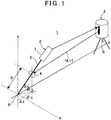
FIG.1 is a schematical diagram showing an outline of an embodiment according to the present invention. -
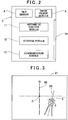
FIG.2 is a schematical block diagram of a terminal device used in the embodiment. -
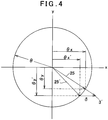
FIG.3 is an explanatory drawing of an image displayed in a display unit of the terminal device. -
FIG.4 is an explanatory drawing showing a relationship between a position of an object to be measured in an image and the tilt angles detected by a tilt sensor. - By referring to the drawings, a description will be given below on an embodiment of the present invention.
-
FIG.1 shows asurveying system 1 according to an embodiment of the present invention and, inFIG.1 , areference numeral 2 denotes a target instrument and areference numeral 3 denotes a surveying instrument having a tracking function, e.g., a total station. - The
total station 3 performs the three-dimensional measurement, and stores a measurement result in a built-in storage module. Further, thetotal station 3 may include a communication device and transmit a measurement result to thetarget instrument 2. - First, a description will be given on the
target instrument 2. - A lower end part of a
pole 5 is a ferrule, and a lower end of the ferrule is installed on a measuring point P. A prism (e.g., a corner cube or an all-around prism) 6 is provided at a predetermined distance (a known distance H) from the lower end of the ferrule, and a distance between an optical center of theprism 6 and the lower end of thepole 5 is known. - A
terminal device 7 is horizontally or vertically provided on a predetermined position, e.g., an upper end of thepole 5. Further, theterminal device 7 is portable, and an attachment (not shown) may be attached to thepole 5 so that theterminal device 7 can be attached to or detached from thepole 5 via the attachment. Further, in a state where theterminal device 7 is attached to thepole 5, theterminal device 7 is fixed to thepole 5 and held with a known attitude. - Further, as the
terminal device 7, a portable terminal device which is portable, for example, a smartphone or a tablet is used. - The
terminal device 7 will now be described with reference toFIG.2 . - The
terminal device 7 mainly includes atilt sensor 8, animage pickup module 9, anarithmetic control module 11, astorage module 12, acommunication module 13, and adisplay unit 14. - The
tilt sensor 8 can detect the tilts of theterminal device 7 in two axes (an X-axis, a Y-axis) to the horizontality, and the detection results are input to thearithmetic control module 11. One of the two axes of thetilt sensor 8 is parallel to an optical axis of theimage pickup module 9. It is to be noted that thetilt sensor 8 may be configured to simply detect a tilt with respect to the verticality or the horizontality. - In a state where the
image pickup module 9 is attached to thepole 5, the optical axis of theimage pickup module 9 is parallel to an optical axis of the light which is reflected from theprism 6 and enters thetotal station 3. Further, the optical axis of theimage pickup module 9 is orthogonal to an axis of thepole 5, and a distance D between the optical axis of theimage pickup module 9 and an optical axis of theprism 6 is known. It is to be noted that if an intersection angle of the optical axis of theimage pickup module 9 and the axis of thepole 5 is known, the optical axes do not have to be orthogonal to each other. - Further, a positional relationship and a distance between a reference position of the
image pickup module 9, e.g., a center of an image pickup element (not shown) and the lower end of thepole 5 are also known. Theimage pickup module 9 can acquire a video image and a still image, and photographs an object which becomes a reference. For example, theimage pickup module 9 photographs thetotal station 3 as a reference object. - The
image pickup module 9 has an image pickup element (not shown) for acquiring an image, and a CCD, a CMOS, or the like constituted of an aggregation of the pixels is used as the image pickup element. The image pickup element is orthogonal (vertical) to the optical axis of theimage pickup module 9, the image pickup element has a coordinate system, a position of each pixel in the image pickup element is identified by the coordinate system, and a light receiving signal from each pixel includes the positional information in the image pickup element, e.g., the coordinate data of the coordinate system having as an origin a point at which the optical axis of theimage pickup module 9 passes through the image pickup element. Further, the coordinate axes orthogonal to each other in the coordinate system of the image pickup element are fixed to thepole 5, and have a know relationship to the axis of thepole 5. Preferably, one of the coordinate axes is parallel or orthogonal to the axis of thepole 5. - The image data output from the
image pickup module 9 is constituted of light receiving signals output from the image pickup element. The image data is input to thearithmetic control module 11. - The
arithmetic control module 11 is typified by a CPU, and may be a CPU specialized for this instrument or a general-purpose CPU. Thearithmetic control module 11 develops and executes the later-described programs and performs measuring, signal processing, calculating, controlling, and others. - The
communication module 13 can perform data communication of, e.g., image data or measurement data, and transmission/reception of data to/from thetotal station 3 may be enabled by thecommunication module 13. - The
storage module 12 may be a semiconductor memory incorporated in theterminal device 7 or a memory card attachable to/detachable from theterminal device 7, or it may be an externally attachable storage device. - Various kinds of programs are stored in the
storage module 12. - The programs include a display program configured to display the image data input from the
image pickup module 9, the measurement data calculated by thearithmetic control module 11, or the like in thedisplay unit 14, a program configured to identify thetotal station 3 based on an image acquired by theimage pickup module 9 by the pattern recognition and calculate a position of thetotal station 3 in the image, a program configured to calculate a direction of theterminal device 7 with respect to thetotal station 3 based on the position of thetotal station 3 in the image, a program configured to divide a tilt angle with respect to the horizontality, which thetilt sensor 8 detects from a direction of theterminal device 7, into the tilt angles in two horizontal directions, a program configured to calculate movement amounts of the prism 6 (an optical center) in the two horizontal directions with respect to a measuring point P based on the tilt detection result from the tilt sensor 8 (or the tilt angles divided in the two horizontal directions) and the distance H, a program configured to correct a measurement result (the three-dimensional data) of thetotal station 3 about theprism 6 based on the movement amounts in the two horizontal directions and determine a position of the measuring point P, a communication program, and others. - A description will now be given below on a measuring action.
- The
total station 3 is installed on a reference point R. Since thetotal station 3 is subjected to the unmanned operation, the automatic operation or the remote-control operation is performed after installing thetotal station 3. - The
target instrument 2 is installed on the measuring point P. The installation of thetarget instrument 2 on the measuring point P is completed by matching the lower end of the ferrule with the measuring point P and directing theprism 6 or theterminal device 7 toward thetotal station 3. - Even if the
target instrument 2 tilts from the verticality, no correction is required in particular. Further, the operation of directing toward thetotal station 3 could be carried out as long as an image acquired by theimage pickup module 9 is displayed in thedisplay unit 14 and thetotal station 3 is included in the image. - It is to be noted that, here, a straight line connecting the reference point R with the measuring point P is a y-axis, a straight line which runs through the measuring point P and is orthogonal to the y-axis is an x-axis, and a straight line which runs through the measuring point P and is orthogonal (vertical) to the x-axis and the y-axis is a z-axis.
- The distance measuring light 16 from the
total station 3 is projected toward theprism 6, and the three-dimensional measurement (the distance measurement, the measurement of the angles which are a horizontal angle and an elevation angle) of theprism 6 is performed. It is to be noted that the tracking light 17 is projected together with the distance measuring light 16, and theprism 6 is tracked. The tracking may be performed before installing thetarget instrument 2 or the tracking may be started simultaneously with the start of the measurement. - The
total station 3 transmits the measurement results to thetarget instrument 2 at the predetermined time intervals or in real time. - With reference to
FIG.3 , a description will be given on a case where a direction of thetarget instrument 2 to thetotal station 3 is calculated. - From an image acquired by the
image pickup module 9, afigure 3 ' of thetotal station 3 in the image is extracted by the pattern recognition or the like, and a position of thefigure 3 ' in the image is calculated. - It is to be noted that, in
FIG.3 , areference numeral 21 denotes an image displayed in thedisplay unit 14, and a reference sign O designates a center of theimage 21, i.e., a position of the optical axis of theimage pickup module 9. Further, a position of thefigure 3 ' in theimage 21 corresponds to a position in an image element. - In the
image 21, the crossing alternate long andshort dash lines 22 represent a coordinate system Q having the O as an origin. Further, in theimage 21, areference numeral 23 denotes a vertical line running through the reference point R, and an intersection T on thevertical line 23 represents an optical axis of thetotal station 3. - When the optical axis of the
image pickup module 9 coincides with the optical axis of thetotal station 3, the intersection of the alternate long andshort dash lines 22 coincides with the intersection T in theimage 21. That is, when theterminal device 7 faces thetotal station 3 and thetarget instrument 2 is vertical, the intersection of the alternate long andshort dash lines 22 coincides with the intersection T. - In a state where the
terminal device 7 faces thetarget instrument 2, when thetarget instrument 2 tilts in such a manner that thetarget instrument 2 recedes from the total station 3 (tilts toward a rear side), thefigure 3 ' appears on a lower side of theimage 21. Further, when thetarget instrument 2 tilts leftward to thetotal station 3, thefigure 3 ' appears on a right side of theimage 21. That is, a position of thefigure 3 ', which appears in the coordinate system Q (a position of the optical axis of the total station 3), indicates a tilt angle and a tilt direction of thetarget instrument 2. - A up-and-down change in position of the
figure 3 ' appears as a change in elevation angle α of the optical axis of theimage pickup module 9 with respect to the horizontality, and hence a front-and-back tilt angle α of thetarget instrument 2 with respect to the verticality can be calculated based on the up-and-down change in position of thefigure 3 '. - Further, since a right-and-left change in position (a change in position in the horizontal direction) of the
figure 3 ' in the image in a facing state appears as (a tilt angle β in the left-and-right direction)×(H+D), and the right-and-left tilt angle β of thetarget instrument 2 can be likewise calculated based on the right-and-left change in position of thefigure 3 '. - Thus, by acquiring a position of the
figure 3 ' to the origin O in theimage 21, a tilt angle of thetarget instrument 2 with respect to the verticality can be acquired in a state where theterminal device 7 faces thetotal station 3. - Further, the tilt angle α in the front-and-back direction and the tilt angle β in the right-and-left direction of the
target instrument 2 can be also detected by thetilt sensor 8. Thetilt sensor 8 can detect the tilt angles in two axes orthogonal to each other, one axis is determined to be parallel to the optical axis of theimage pickup module 9, and the other axis is determined as an axis which is orthogonal to the optical axis of theimage pickup module 9 and extends in the horizontal direction. - Next, when the
terminal device 7 has been in a vertical state and rotated around the axis of the pole 5 (when a direction of theterminal device 7 has changed around the axis of the pole 5), a position of thefigure 3 ' changes. For example, when thetarget instrument 2 has rotated around the axis of thepole 5 at a γ angle in a counterclockwise direction, thefigure 3 'moves rightward in the image, and an amount of this movement corresponds to a horizontal rotation angle γ of the optical axis of theimage pickup module 9. Thus, based on a displacement amount of thefigure 3 ' in the image, the horizontal rotation angle γ of thetarget instrument 2, that is, a change in direction of thetarget instrument 2 can be calculated. - In a state where the
target instrument 2 is measured by thetotal station 3, an actual tilt of thetarget instrument 2 includes a front-and-back or right-and-left tilt of thetarget instrument 2. Further, the actual tilt of thetarget instrument 2 includes the rotation of thetarget instrument 2 around the axis of the pole 5 (a deviation of a direction from the total station 3). Thus, a displacement which appears in the image includes the tilt of thetarget instrument 2 and a change in direction of thetarget instrument 2. - The
tilt sensor 8 detects the tilt angles in the two axial directions (an x-axis component, a y-axis component), and a synthetic tilt angle of the two axial directions represents a tilt angle θ of the axis of thepole 5 with respect to the verticality. In a state where this tilt angle θ is held, when thetarget instrument 2 is rotated around the axis, a direction of thetilt sensor 8 changes, and hence the x-axis component and the y-axis component change. - Contrarily, when the x-axis and the y-axis of the
tilt sensor 8 deviate from the x-axis and the y-axis (seeFIG.1 ) in the measurement state (when thetarget instrument 2 rotates), the tilt angles (the x-axis component, the y-axis component) in the two axial directions detected by thetilt sensor 8 deviate from the x-axis component and the y-axis component in the x-axis direction and the y-axis direction in a measurement state. On the other hand, the synthetic tilt angle detected by thetilt sensor 8 is constant irrespective of a direction of thetilt sensor 8. Therefore, when the x-axis and the y-axis of thetilt sensor 8 are matched with the x-axis and the y-axis in the measurement state (thetarget instrument 2 is arranged to face the total station 3) and the x-axis component and the y-axis component detected by thetilt sensor 8 are corrected in such a manner that the synthetic angle becomes θ, the actual x-axis component and y-axis component of thetarget instrument 2 in the measurement state can be detected. - With reference to
FIG.4 , a description will be further given. InFIG.4 , an x-axis and a y-axis correspond to the x-axis and the y-axis shown inFIG.1 . Further, it is assumed that an origin in the x-y coordinates inFIG.4 corresponds to the origin O in the image inFIG.3 , and each tilt angle shown in the x-y coordinates corresponds to the displacement inFIG.3 . - A circle in
FIG.4 represents a synthetic angle θ obtained from the tilt angles of two axes detected by thetilt sensor 8. - First, assuming that the two axes of the
tilt sensor 8 coincide with the x-axis and the y-axis in the measurement state, a tilt vector obtained from an x-axis component θx' and a y-axis component θy' detected by thetilt sensor 8 is represented by an arrow 25' in the drawing. Further, in theimage 21, thefigure 3 ' must appear at a position of a point of the arrow 25'. - On the other hand, when the
target instrument 2 is rotating, thefigure 3 ' in theimage 21 appears at a position deviating from the position of the point of the arrow 25'. This deviation amount δ is caused by the rotation of thetarget instrument 2. Due to this deviation amount δ, the tilt vector 25' becomes atilt vector 25, and a direction of the tilt vector changes. Since a change in direction of the tilt vector corresponds to a deviation between the x-axis and the y-axis of thetilt sensor 8 and the x-axis and the y-axis in the measurement state, thearithmetic control module 11 calculates the deviation of the x-axis and the y-axis of thetilt sensor 8 based on the deviation amount δ, and corrects the x-axis component θx' and the y-axis component θy' detected by thetilt sensor 8 to an x-axis component θx and a y-axis component θy of the x-axis and the y-axis in the measurement state based on the deviation amount. That is, the x-axis component θx' and the y-axis component θy' are corrected to tilt angles of the optical axis direction of theimage pickup module 9 and a direction orthogonal to the optical axis. - For example, in order to correct the x-axis component θx' and the y-axis component θy' in a state where the
tilt sensor 8 is deviating to the x-axis component and the y-axis component in a state where thetarget instrument 2 faces thetotal station 3, a tilt direction of thetilt sensor 8 shifts to a direction of thevector 25, and the values with which the synthetic angle of the x-axis component and the y-axis component becomes θ in the direction of thevector 25, namely, θx (a tilt angle θx) and θy (a tilt angle θy) are acquired. - Thus, it is possible to acquire the x-axis component θx (the tilt angle θx) and the y-axis component θy (the tilt angle θy) in a state where the
target instrument 2 is not rotating, i.e., a state where thetarget instrument 2 faces thetotal station 3. - A description will now be given on the measurement of the measuring point P with reference to
FIG.1 . - The three-dimensional coordinates of the
prism 6 are measured by thetotal station 3. - A horizontal displacement amount (Hsinθ) of the
prism 6 to the measuring point P is acquired based on the synthetic angle θ and the distance H from the lower end of thetarget instrument 2 to theprism 6. - Further, a displacement Δx of an x component with respect to the measuring point P can be acquired using (Hsinθ)×cosθx, and a displacement Δy of a y component with respect to the measuring point P can be acquired using (Hsinθ)×cosθy.
- Thus, with the use of a measurement result of the three-dimensional coordinates of the
prism 6, the synthetic angle θ, the tilt angle θx, and the tilt angle θy, the measuring point P can be determined. - Thus, the measuring point P can be accurately measured without accurately vertically supporting the
target instrument 2 and without accurately arranging thetarget instrument 2 to face thetotal station 3. - In a case where the measurement of one measuring point P is completed and a measuring point shifts to a subsequent measuring point P, since the
total station 3 tracks theprism 6, by installing thetarget instrument 2 on the subsequent measuring point, a measurement is capable of immediately starting. - It is to be noted that, in case of measuring the measuring point P based on a measurement result of the
total station 3, the measurement result of thetotal station 3 may be transmitted to thetarget instrument 2, or a tilt measurement result may be transmitted to thetotal station 3, and the calculation of the measuring point P may be performed by thetarget instrument 2 or thetotal station 3 in real time during the measurement. Alternatively, a measurement result of a tilt angle and a distance measurement result of theprism 6 may be stored by each measuring point respectively, and the calculation may be carried out by a PC or the like after the completion of all the measurements. - Furthermore, in case of acquiring a displacement amount of the
prism 6 with reference to the measuring point P, a distance measurement result of thetotal station 3 is not required. For example, based on each tilt angle of thetarget instrument 2 and a distance from the lower end of thetarget instrument 2 to theprism 6, the displacement amount of theprism 6 in the horizontal direction with reference to the measuring point P may be calculated by thearithmetic control module 11. - It is to be note that, in the above description, the
total station 3 is imaged as a reference object, and a position of thetotal station 3 in an image is detected by the pattern recognition. On the other hand, the guide light which is coaxial with the distance measuring light or parallel to the distance measuring light may be emitted from thetotal station 3, the guide light may be received by theimage pickup module 9, the guide light may be determined as a reference object, and a position of the guide light may be detected. Alternatively, the distance measuring light or the tracking light may be used in place of the guide light. Further, any measuring instrument having a tracking function can suffice, the measuring instrument is not restricted to thetotal station 3. - Further, the
image pickup module 9 could be configured to enable detecting a tilt and a direction of thetarget instrument 2 from an acquired image. Therefore, the reference for detecting the tilt and the direction of thetarget instrument 2 does not have to be thetotal station 3, and something which can serve as the reference may be installed at a predetermined position or, if an object which can be the reference in a measuring direction is present, this object may be used as the reference object. - Further, since the
target instrument 2 does not have to be vertically supported, it is possible to perform the measurement when the measuring point is a ceiling surface or a wall surface, or perform the measurement of a narrow part which a person cannot enter. - Further, the
terminal device 7 can be connected to a wearable terminal as a display unit. As the wearable terminal, there is a head-up display or a glass type AR device, and using such a device enables improving the workability.
Claims (5)
- A target instrument comprising: a pole (5) which has a ferrule part at a lower end part thereof, a prism (6) which is provided on said pole and provided at a known distance from a lower end of said pole, and a terminal device (7) provided on said pole, wherein said terminal device comprises an image pickup module (9) which is fixed with a known attitude with respect to said pole, a tilt sensor (8) which detects tilts in two axial directions which are orthogonal to each other and one of which axial directions is parallel to an optical axis of said image pickup module, and an arithmetic control module (11), wherein said image pickup module is configured to acquire an image (21) which includes a reference object (3'), said tilt sensor is configured to detect a tilt angle of a target instrument (2) with respect to the verticality, and said arithmetic control module is configured to calculate a tilt direction of said target instrument from a position of said reference object in said image, to calculate a tilt direction of said target instrument based on tilt angles in the two axial directions of said tilt sensor, to acquire a deviation between the tilt direction of said target instrument acquired from said image and the tilt direction acquired from said tilt sensor, and to correct the tilt angles in the two axial directions of said tilt sensor to tilt angles in directions parallel to said optical axis of said image pickup module and orthogonal to said optical axis based on said deviation.
- The target instrument according to claim 1, wherein an image pickup element of said image pickup module (9) has a coordinate system for identifying a position in said image pickup element, and one of the coordinate axes of said coordinate system is orthogonal or parallel to an axis of said pole (5).
- The target instrument according to claim 1 or 2, wherein said arithmetic control module (11) is configured to calculate a displacement of said prism (6) in a horizontal direction with respect to a lower end position based on the corrected tilt angles and the distance from the lower end of said pole (5).
- The target instrument according to one of claims 1-3, wherein said terminal device (7) is a smartphone.
- A surveying system comprising said target instrument (2) according to one of claims 1-4 and a surveying instrument (3) with a tracking function, wherein said surveying system is configured to measure a lower end of said target instrument based on a measurement result of said prism (6) by said surveying instrument, a tilt angle of said target instrument, and a distance from the lower end of said pole (5) to said prism.
Applications Claiming Priority (1)
| Application Number | Priority Date | Filing Date | Title |
|---|---|---|---|
| JP2019033208A JP7287793B2 (en) | 2019-02-26 | 2019-02-26 | Target device and survey system |
Publications (2)
| Publication Number | Publication Date |
|---|---|
| EP3702728A1 true EP3702728A1 (en) | 2020-09-02 |
| EP3702728B1 EP3702728B1 (en) | 2025-05-07 |
Family
ID=69845802
Family Applications (1)
| Application Number | Title | Priority Date | Filing Date |
|---|---|---|---|
| EP20159052.8A Active EP3702728B1 (en) | 2019-02-26 | 2020-02-24 | Target instrument and surveying system |
Country Status (3)
| Country | Link |
|---|---|
| US (1) | US11550034B2 (en) |
| EP (1) | EP3702728B1 (en) |
| JP (1) | JP7287793B2 (en) |
Cited By (1)
| Publication number | Priority date | Publication date | Assignee | Title |
|---|---|---|---|---|
| EP3971521A1 (en) * | 2020-09-18 | 2022-03-23 | Topcon Corporation | Target direction determining device, control system, and method and program for aiming surveying device at a target |
Families Citing this family (7)
| Publication number | Priority date | Publication date | Assignee | Title |
|---|---|---|---|---|
| JP2022140903A (en) * | 2021-03-15 | 2022-09-29 | 株式会社トプコン | Surveying device and surveying method using the same |
| JP2023050332A (en) * | 2021-09-30 | 2023-04-11 | 株式会社トプコン | surveying system |
| CN121876859A (en) * | 2022-07-05 | 2026-04-17 | 深圳市中图仪器股份有限公司 | Detection equipment and coaxiality measurement method thereof |
| CN114882028B (en) * | 2022-07-08 | 2022-10-21 | 深圳市瑞祥鑫五金制品有限公司 | Multi-camera-based welding terminal detection method, device and system |
| CN115900755B (en) * | 2022-08-30 | 2024-04-02 | 中国科学院上海天文台 | Target pointing automatic correction method and target for realizing same |
| JP2024145599A (en) * | 2023-03-31 | 2024-10-15 | 株式会社トプコン | Surveying system, surveying equipment, surveying method and surveying program |
| JP2024151268A (en) * | 2023-04-11 | 2024-10-24 | 株式会社トプコン | Surveying systems and methods |
Citations (3)
| Publication number | Priority date | Publication date | Assignee | Title |
|---|---|---|---|---|
| US20140156219A1 (en) * | 2011-06-24 | 2014-06-05 | Trimble Navigation Limited | Determining tilt angle and tilt direction using image processing |
| US20160109560A1 (en) * | 2014-10-20 | 2016-04-21 | Kabushiki Kaisha Topcon | Measuring system, and portable radio transceiver and measurement pole used in measuring system |
| US20170061605A1 (en) * | 2015-08-25 | 2017-03-02 | Topcon Corporation | Position guiding device, position guiding method, and position guiding program |
Family Cites Families (7)
| Publication number | Priority date | Publication date | Assignee | Title |
|---|---|---|---|---|
| JP2001241950A (en) | 2000-03-02 | 2001-09-07 | Topcon Corp | Target, surveying device and surveying method |
| JP6253932B2 (en) | 2013-09-17 | 2017-12-27 | 株式会社トプコン | Direction detection device and survey system |
| JP2016045002A (en) | 2014-08-20 | 2016-04-04 | 株式会社トプコン | Illuminance measurement system |
| JP6713847B2 (en) * | 2016-06-14 | 2020-06-24 | 株式会社トプコン | Surveying system |
| JP6937126B2 (en) | 2017-01-31 | 2021-09-22 | 株式会社トプコン | Rover and rover measurement system |
| JP7240137B2 (en) * | 2018-11-07 | 2023-03-15 | 株式会社トプコン | Target device and measurement system |
| JP7183017B2 (en) * | 2018-12-11 | 2022-12-05 | 株式会社トプコン | Surveying instruments and photogrammetric methods |
-
2019
- 2019-02-26 JP JP2019033208A patent/JP7287793B2/en active Active
-
2020
- 2020-02-24 EP EP20159052.8A patent/EP3702728B1/en active Active
- 2020-02-25 US US16/799,967 patent/US11550034B2/en active Active
Patent Citations (3)
| Publication number | Priority date | Publication date | Assignee | Title |
|---|---|---|---|---|
| US20140156219A1 (en) * | 2011-06-24 | 2014-06-05 | Trimble Navigation Limited | Determining tilt angle and tilt direction using image processing |
| US20160109560A1 (en) * | 2014-10-20 | 2016-04-21 | Kabushiki Kaisha Topcon | Measuring system, and portable radio transceiver and measurement pole used in measuring system |
| US20170061605A1 (en) * | 2015-08-25 | 2017-03-02 | Topcon Corporation | Position guiding device, position guiding method, and position guiding program |
Cited By (2)
| Publication number | Priority date | Publication date | Assignee | Title |
|---|---|---|---|---|
| EP3971521A1 (en) * | 2020-09-18 | 2022-03-23 | Topcon Corporation | Target direction determining device, control system, and method and program for aiming surveying device at a target |
| US11933611B2 (en) | 2020-09-18 | 2024-03-19 | Topcon Corporation | Target direction determining device, control system, and method and program for aiming surveying device at a target |
Also Published As
| Publication number | Publication date |
|---|---|
| US20200271758A1 (en) | 2020-08-27 |
| JP7287793B2 (en) | 2023-06-06 |
| EP3702728B1 (en) | 2025-05-07 |
| JP2020139750A (en) | 2020-09-03 |
| US11550034B2 (en) | 2023-01-10 |
Similar Documents
| Publication | Publication Date | Title |
|---|---|---|
| US11550034B2 (en) | Target instrument and surveying system | |
| US10469754B2 (en) | Position guiding device, position guiding method, and position guiding program | |
| CN103119396B (en) | Geodetic system with video camera integrated in remote control unit | |
| US11307031B2 (en) | Surveying device, and calibration checking method and calibration checking program for surveying device | |
| US10634795B2 (en) | Rover and rover measuring system | |
| US9354054B2 (en) | Surveying system | |
| EP2788715B1 (en) | Robotic leveling | |
| JP6864653B2 (en) | Vertical measurement system and reference point tracing method | |
| EP1130355A2 (en) | Target, surveying system and surveying method | |
| CN101545770A (en) | Surveying system | |
| US11421989B2 (en) | Surveying instrument | |
| US12013239B2 (en) | Marking system and marking method | |
| JP2021039013A (en) | Wall crack measuring machine and measuring method | |
| US12359915B2 (en) | Surveying instrument and surveying system | |
| US20200386546A1 (en) | Surveying Instrument | |
| US6611664B2 (en) | Stereo image photographing system | |
| CN111308485B (en) | Measuring device and photogrammetric method | |
| KR101103354B1 (en) | Surveyor with automatic control | |
| US12535319B2 (en) | Surveying apparatus, surveying method, and surveying program | |
| JP5793777B2 (en) | Vertical indicator | |
| JP5789868B2 (en) | Horizontal position guide | |
| JP2025186766A (en) | Surveying systems and methods | |
| JP2018048922A (en) | Surveying device and surveying method | |
| WO2026050253A1 (en) | Double-sided target and method for non-contact determination of three-dimensional spatial coordinates |
Legal Events
| Date | Code | Title | Description |
|---|---|---|---|
| PUAI | Public reference made under article 153(3) epc to a published international application that has entered the european phase |
Free format text: ORIGINAL CODE: 0009012 |
|
| STAA | Information on the status of an ep patent application or granted ep patent |
Free format text: STATUS: REQUEST FOR EXAMINATION WAS MADE |
|
| 17P | Request for examination filed |
Effective date: 20200224 |
|
| AK | Designated contracting states |
Kind code of ref document: A1 Designated state(s): AL AT BE BG CH CY CZ DE DK EE ES FI FR GB GR HR HU IE IS IT LI LT LU LV MC MK MT NL NO PL PT RO RS SE SI SK SM TR |
|
| AX | Request for extension of the european patent |
Extension state: BA ME |
|
| RBV | Designated contracting states (corrected) |
Designated state(s): AL AT BE BG CH CY CZ DE DK EE ES FI FR GB GR HR HU IE IS IT LI LT LU LV MC MK MT NL NO PL PT RO RS SE SI SK SM TR |
|
| STAA | Information on the status of an ep patent application or granted ep patent |
Free format text: STATUS: EXAMINATION IS IN PROGRESS |
|
| 17Q | First examination report despatched |
Effective date: 20210831 |
|
| GRAP | Despatch of communication of intention to grant a patent |
Free format text: ORIGINAL CODE: EPIDOSNIGR1 |
|
| STAA | Information on the status of an ep patent application or granted ep patent |
Free format text: STATUS: GRANT OF PATENT IS INTENDED |
|
| INTG | Intention to grant announced |
Effective date: 20241219 |
|
| GRAS | Grant fee paid |
Free format text: ORIGINAL CODE: EPIDOSNIGR3 |
|
| GRAA | (expected) grant |
Free format text: ORIGINAL CODE: 0009210 |
|
| STAA | Information on the status of an ep patent application or granted ep patent |
Free format text: STATUS: THE PATENT HAS BEEN GRANTED |
|
| AK | Designated contracting states |
Kind code of ref document: B1 Designated state(s): AL AT BE BG CH CY CZ DE DK EE ES FI FR GB GR HR HU IE IS IT LI LT LU LV MC MK MT NL NO PL PT RO RS SE SI SK SM TR |
|
| REG | Reference to a national code |
Ref country code: GB Ref legal event code: FG4D |
|
| REG | Reference to a national code |
Ref country code: CH Ref legal event code: EP |
|
| REG | Reference to a national code |
Ref country code: DE Ref legal event code: R096 Ref document number: 602020050697 Country of ref document: DE |
|
| REG | Reference to a national code |
Ref country code: IE Ref legal event code: FG4D |
|
| REG | Reference to a national code |
Ref country code: NL Ref legal event code: MP Effective date: 20250507 |
|
| PG25 | Lapsed in a contracting state [announced via postgrant information from national office to epo] |
Ref country code: PT Free format text: LAPSE BECAUSE OF FAILURE TO SUBMIT A TRANSLATION OF THE DESCRIPTION OR TO PAY THE FEE WITHIN THE PRESCRIBED TIME-LIMIT Effective date: 20250908 Ref country code: ES Free format text: LAPSE BECAUSE OF FAILURE TO SUBMIT A TRANSLATION OF THE DESCRIPTION OR TO PAY THE FEE WITHIN THE PRESCRIBED TIME-LIMIT Effective date: 20250507 Ref country code: FI Free format text: LAPSE BECAUSE OF FAILURE TO SUBMIT A TRANSLATION OF THE DESCRIPTION OR TO PAY THE FEE WITHIN THE PRESCRIBED TIME-LIMIT Effective date: 20250507 |
|
| REG | Reference to a national code |
Ref country code: LT Ref legal event code: MG9D |
|
| PG25 | Lapsed in a contracting state [announced via postgrant information from national office to epo] |
Ref country code: NO Free format text: LAPSE BECAUSE OF FAILURE TO SUBMIT A TRANSLATION OF THE DESCRIPTION OR TO PAY THE FEE WITHIN THE PRESCRIBED TIME-LIMIT Effective date: 20250807 Ref country code: GR Free format text: LAPSE BECAUSE OF FAILURE TO SUBMIT A TRANSLATION OF THE DESCRIPTION OR TO PAY THE FEE WITHIN THE PRESCRIBED TIME-LIMIT Effective date: 20250808 |
|
| PG25 | Lapsed in a contracting state [announced via postgrant information from national office to epo] |
Ref country code: NL Free format text: LAPSE BECAUSE OF FAILURE TO SUBMIT A TRANSLATION OF THE DESCRIPTION OR TO PAY THE FEE WITHIN THE PRESCRIBED TIME-LIMIT Effective date: 20250507 Ref country code: PL Free format text: LAPSE BECAUSE OF FAILURE TO SUBMIT A TRANSLATION OF THE DESCRIPTION OR TO PAY THE FEE WITHIN THE PRESCRIBED TIME-LIMIT Effective date: 20250507 |
|
| REG | Reference to a national code |
Ref country code: AT Ref legal event code: MK05 Ref document number: 1792890 Country of ref document: AT Kind code of ref document: T Effective date: 20250507 |
|
| PG25 | Lapsed in a contracting state [announced via postgrant information from national office to epo] |
Ref country code: BG Free format text: LAPSE BECAUSE OF FAILURE TO SUBMIT A TRANSLATION OF THE DESCRIPTION OR TO PAY THE FEE WITHIN THE PRESCRIBED TIME-LIMIT Effective date: 20250507 |
|
| PG25 | Lapsed in a contracting state [announced via postgrant information from national office to epo] |
Ref country code: HR Free format text: LAPSE BECAUSE OF FAILURE TO SUBMIT A TRANSLATION OF THE DESCRIPTION OR TO PAY THE FEE WITHIN THE PRESCRIBED TIME-LIMIT Effective date: 20250507 |
|
| PG25 | Lapsed in a contracting state [announced via postgrant information from national office to epo] |
Ref country code: AT Free format text: LAPSE BECAUSE OF FAILURE TO SUBMIT A TRANSLATION OF THE DESCRIPTION OR TO PAY THE FEE WITHIN THE PRESCRIBED TIME-LIMIT Effective date: 20250507 |
|
| PG25 | Lapsed in a contracting state [announced via postgrant information from national office to epo] |
Ref country code: RS Free format text: LAPSE BECAUSE OF FAILURE TO SUBMIT A TRANSLATION OF THE DESCRIPTION OR TO PAY THE FEE WITHIN THE PRESCRIBED TIME-LIMIT Effective date: 20250807 |
|
| PG25 | Lapsed in a contracting state [announced via postgrant information from national office to epo] |
Ref country code: IS Free format text: LAPSE BECAUSE OF FAILURE TO SUBMIT A TRANSLATION OF THE DESCRIPTION OR TO PAY THE FEE WITHIN THE PRESCRIBED TIME-LIMIT Effective date: 20250907 |
|
| PG25 | Lapsed in a contracting state [announced via postgrant information from national office to epo] |
Ref country code: LV Free format text: LAPSE BECAUSE OF FAILURE TO SUBMIT A TRANSLATION OF THE DESCRIPTION OR TO PAY THE FEE WITHIN THE PRESCRIBED TIME-LIMIT Effective date: 20250507 |
|
| PG25 | Lapsed in a contracting state [announced via postgrant information from national office to epo] |
Ref country code: DK Free format text: LAPSE BECAUSE OF FAILURE TO SUBMIT A TRANSLATION OF THE DESCRIPTION OR TO PAY THE FEE WITHIN THE PRESCRIBED TIME-LIMIT Effective date: 20250507 Ref country code: SM Free format text: LAPSE BECAUSE OF FAILURE TO SUBMIT A TRANSLATION OF THE DESCRIPTION OR TO PAY THE FEE WITHIN THE PRESCRIBED TIME-LIMIT Effective date: 20250507 |
|
| PG25 | Lapsed in a contracting state [announced via postgrant information from national office to epo] |
Ref country code: CZ Free format text: LAPSE BECAUSE OF FAILURE TO SUBMIT A TRANSLATION OF THE DESCRIPTION OR TO PAY THE FEE WITHIN THE PRESCRIBED TIME-LIMIT Effective date: 20250507 |
|
| PG25 | Lapsed in a contracting state [announced via postgrant information from national office to epo] |
Ref country code: EE Free format text: LAPSE BECAUSE OF FAILURE TO SUBMIT A TRANSLATION OF THE DESCRIPTION OR TO PAY THE FEE WITHIN THE PRESCRIBED TIME-LIMIT Effective date: 20250507 |
|
| PG25 | Lapsed in a contracting state [announced via postgrant information from national office to epo] |
Ref country code: SK Free format text: LAPSE BECAUSE OF FAILURE TO SUBMIT A TRANSLATION OF THE DESCRIPTION OR TO PAY THE FEE WITHIN THE PRESCRIBED TIME-LIMIT Effective date: 20250507 Ref country code: RO Free format text: LAPSE BECAUSE OF FAILURE TO SUBMIT A TRANSLATION OF THE DESCRIPTION OR TO PAY THE FEE WITHIN THE PRESCRIBED TIME-LIMIT Effective date: 20250507 |
|
| PG25 | Lapsed in a contracting state [announced via postgrant information from national office to epo] |
Ref country code: IT Free format text: LAPSE BECAUSE OF FAILURE TO SUBMIT A TRANSLATION OF THE DESCRIPTION OR TO PAY THE FEE WITHIN THE PRESCRIBED TIME-LIMIT Effective date: 20250507 |
|
| REG | Reference to a national code |
Ref country code: DE Ref legal event code: R097 Ref document number: 602020050697 Country of ref document: DE |
|
| REG | Reference to a national code |
Ref country code: CH Ref legal event code: U11 Free format text: ST27 STATUS EVENT CODE: U-0-0-U10-U11 (AS PROVIDED BY THE NATIONAL OFFICE) Effective date: 20260301 |
|
| PLBE | No opposition filed within time limit |
Free format text: ORIGINAL CODE: 0009261 |
|
| STAA | Information on the status of an ep patent application or granted ep patent |
Free format text: STATUS: NO OPPOSITION FILED WITHIN TIME LIMIT |
|
| REG | Reference to a national code |
Ref country code: CH Ref legal event code: L10 Free format text: ST27 STATUS EVENT CODE: U-0-0-L10-L00 (AS PROVIDED BY THE NATIONAL OFFICE) Effective date: 20260318 |
|
| PGFP | Annual fee paid to national office [announced via postgrant information from national office to epo] |
Ref country code: DE Payment date: 20260102 Year of fee payment: 7 |
|
| 26N | No opposition filed |
Effective date: 20260210 |
|
| PGFP | Annual fee paid to national office [announced via postgrant information from national office to epo] |
Ref country code: CH Payment date: 20260301 Year of fee payment: 7 |