EP3702395A1 - Sulfur-based polyester electrolytes for high voltage lithium ion batteries - Google Patents
Sulfur-based polyester electrolytes for high voltage lithium ion batteries Download PDFInfo
- Publication number
- EP3702395A1 EP3702395A1 EP20157811.9A EP20157811A EP3702395A1 EP 3702395 A1 EP3702395 A1 EP 3702395A1 EP 20157811 A EP20157811 A EP 20157811A EP 3702395 A1 EP3702395 A1 EP 3702395A1
- Authority
- EP
- European Patent Office
- Prior art keywords
- electrolyte
- catholyte
- lithium
- polymer
- positive electrode
- Prior art date
- Legal status (The legal status is an assumption and is not a legal conclusion. Google has not performed a legal analysis and makes no representation as to the accuracy of the status listed.)
- Granted
Links
Images


Classifications
-
- C—CHEMISTRY; METALLURGY
- C08—ORGANIC MACROMOLECULAR COMPOUNDS; THEIR PREPARATION OR CHEMICAL WORKING-UP; COMPOSITIONS BASED THEREON
- C08G—MACROMOLECULAR COMPOUNDS OBTAINED OTHERWISE THAN BY REACTIONS ONLY INVOLVING UNSATURATED CARBON-TO-CARBON BONDS
- C08G75/00—Macromolecular compounds obtained by reactions forming a linkage containing sulfur with or without nitrogen, oxygen, or carbon in the main chain of the macromolecule
- C08G75/26—Polythioesters
-
- C—CHEMISTRY; METALLURGY
- C08—ORGANIC MACROMOLECULAR COMPOUNDS; THEIR PREPARATION OR CHEMICAL WORKING-UP; COMPOSITIONS BASED THEREON
- C08G—MACROMOLECULAR COMPOUNDS OBTAINED OTHERWISE THAN BY REACTIONS ONLY INVOLVING UNSATURATED CARBON-TO-CARBON BONDS
- C08G75/00—Macromolecular compounds obtained by reactions forming a linkage containing sulfur with or without nitrogen, oxygen, or carbon in the main chain of the macromolecule
-
- C—CHEMISTRY; METALLURGY
- C08—ORGANIC MACROMOLECULAR COMPOUNDS; THEIR PREPARATION OR CHEMICAL WORKING-UP; COMPOSITIONS BASED THEREON
- C08G—MACROMOLECULAR COMPOUNDS OBTAINED OTHERWISE THAN BY REACTIONS ONLY INVOLVING UNSATURATED CARBON-TO-CARBON BONDS
- C08G75/00—Macromolecular compounds obtained by reactions forming a linkage containing sulfur with or without nitrogen, oxygen, or carbon in the main chain of the macromolecule
- C08G75/18—Polysulfoxides
-
- C—CHEMISTRY; METALLURGY
- C08—ORGANIC MACROMOLECULAR COMPOUNDS; THEIR PREPARATION OR CHEMICAL WORKING-UP; COMPOSITIONS BASED THEREON
- C08L—COMPOSITIONS OF MACROMOLECULAR COMPOUNDS
- C08L81/00—Compositions of macromolecular compounds obtained by reactions forming in the main chain of the macromolecule a linkage containing sulfur with or without nitrogen, oxygen or carbon only; Compositions of polysulfones; Compositions of derivatives of such polymers
-
- H—ELECTRICITY
- H01—ELECTRIC ELEMENTS
- H01M—PROCESSES OR MEANS, e.g. BATTERIES, FOR THE DIRECT CONVERSION OF CHEMICAL ENERGY INTO ELECTRICAL ENERGY
- H01M10/00—Secondary cells; Manufacture thereof
- H01M10/05—Accumulators with non-aqueous electrolyte
- H01M10/052—Li-accumulators
- H01M10/0525—Rocking-chair batteries, i.e. batteries with lithium insertion or intercalation in both electrodes; Lithium-ion batteries
-
- H—ELECTRICITY
- H01—ELECTRIC ELEMENTS
- H01M—PROCESSES OR MEANS, e.g. BATTERIES, FOR THE DIRECT CONVERSION OF CHEMICAL ENERGY INTO ELECTRICAL ENERGY
- H01M10/00—Secondary cells; Manufacture thereof
- H01M10/05—Accumulators with non-aqueous electrolyte
- H01M10/056—Accumulators with non-aqueous electrolyte characterised by the materials used as electrolytes, e.g. mixed inorganic/organic electrolytes
-
- H—ELECTRICITY
- H01—ELECTRIC ELEMENTS
- H01M—PROCESSES OR MEANS, e.g. BATTERIES, FOR THE DIRECT CONVERSION OF CHEMICAL ENERGY INTO ELECTRICAL ENERGY
- H01M10/00—Secondary cells; Manufacture thereof
- H01M10/05—Accumulators with non-aqueous electrolyte
- H01M10/056—Accumulators with non-aqueous electrolyte characterised by the materials used as electrolytes, e.g. mixed inorganic/organic electrolytes
- H01M10/0564—Accumulators with non-aqueous electrolyte characterised by the materials used as electrolytes, e.g. mixed inorganic/organic electrolytes the electrolyte being constituted of organic materials only
- H01M10/0565—Polymeric materials, e.g. gel-type or solid-type
-
- H—ELECTRICITY
- H01—ELECTRIC ELEMENTS
- H01M—PROCESSES OR MEANS, e.g. BATTERIES, FOR THE DIRECT CONVERSION OF CHEMICAL ENERGY INTO ELECTRICAL ENERGY
- H01M10/00—Secondary cells; Manufacture thereof
- H01M10/05—Accumulators with non-aqueous electrolyte
- H01M10/058—Construction or manufacture
-
- H—ELECTRICITY
- H01—ELECTRIC ELEMENTS
- H01M—PROCESSES OR MEANS, e.g. BATTERIES, FOR THE DIRECT CONVERSION OF CHEMICAL ENERGY INTO ELECTRICAL ENERGY
- H01M10/00—Secondary cells; Manufacture thereof
- H01M10/42—Methods or arrangements for servicing or maintenance of secondary cells or secondary half-cells
- H01M10/4235—Safety or regulating additives or arrangements in electrodes, separators or electrolyte
-
- H—ELECTRICITY
- H01—ELECTRIC ELEMENTS
- H01M—PROCESSES OR MEANS, e.g. BATTERIES, FOR THE DIRECT CONVERSION OF CHEMICAL ENERGY INTO ELECTRICAL ENERGY
- H01M4/00—Electrodes
- H01M4/02—Electrodes composed of, or comprising, active material
- H01M4/13—Electrodes for accumulators with non-aqueous electrolyte, e.g. for lithium-accumulators; Processes of manufacture thereof
-
- H—ELECTRICITY
- H01—ELECTRIC ELEMENTS
- H01M—PROCESSES OR MEANS, e.g. BATTERIES, FOR THE DIRECT CONVERSION OF CHEMICAL ENERGY INTO ELECTRICAL ENERGY
- H01M4/00—Electrodes
- H01M4/02—Electrodes composed of, or comprising, active material
- H01M4/13—Electrodes for accumulators with non-aqueous electrolyte, e.g. for lithium-accumulators; Processes of manufacture thereof
- H01M4/134—Electrodes based on metals, Si or alloys
-
- H—ELECTRICITY
- H01—ELECTRIC ELEMENTS
- H01M—PROCESSES OR MEANS, e.g. BATTERIES, FOR THE DIRECT CONVERSION OF CHEMICAL ENERGY INTO ELECTRICAL ENERGY
- H01M4/00—Electrodes
- H01M4/02—Electrodes composed of, or comprising, active material
- H01M4/36—Selection of substances as active materials, active masses, active liquids
- H01M4/362—Composites
- H01M4/364—Composites as mixtures
-
- H—ELECTRICITY
- H01—ELECTRIC ELEMENTS
- H01M—PROCESSES OR MEANS, e.g. BATTERIES, FOR THE DIRECT CONVERSION OF CHEMICAL ENERGY INTO ELECTRICAL ENERGY
- H01M4/00—Electrodes
- H01M4/02—Electrodes composed of, or comprising, active material
- H01M4/36—Selection of substances as active materials, active masses, active liquids
- H01M4/38—Selection of substances as active materials, active masses, active liquids of elements or alloys
- H01M4/381—Alkaline or alkaline earth metals elements
- H01M4/382—Lithium
-
- H—ELECTRICITY
- H01—ELECTRIC ELEMENTS
- H01M—PROCESSES OR MEANS, e.g. BATTERIES, FOR THE DIRECT CONVERSION OF CHEMICAL ENERGY INTO ELECTRICAL ENERGY
- H01M4/00—Electrodes
- H01M4/02—Electrodes composed of, or comprising, active material
- H01M4/62—Selection of inactive substances as ingredients for active masses, e.g. binders, fillers
-
- H—ELECTRICITY
- H01—ELECTRIC ELEMENTS
- H01M—PROCESSES OR MEANS, e.g. BATTERIES, FOR THE DIRECT CONVERSION OF CHEMICAL ENERGY INTO ELECTRICAL ENERGY
- H01M50/00—Constructional details or processes of manufacture of the non-active parts of electrochemical cells other than fuel cells, e.g. hybrid cells
- H01M50/40—Separators; Membranes; Diaphragms; Spacing elements inside cells
- H01M50/409—Separators, membranes or diaphragms characterised by the material
-
- H—ELECTRICITY
- H01—ELECTRIC ELEMENTS
- H01M—PROCESSES OR MEANS, e.g. BATTERIES, FOR THE DIRECT CONVERSION OF CHEMICAL ENERGY INTO ELECTRICAL ENERGY
- H01M50/00—Constructional details or processes of manufacture of the non-active parts of electrochemical cells other than fuel cells, e.g. hybrid cells
- H01M50/40—Separators; Membranes; Diaphragms; Spacing elements inside cells
- H01M50/409—Separators, membranes or diaphragms characterised by the material
- H01M50/443—Particulate material
-
- H—ELECTRICITY
- H01—ELECTRIC ELEMENTS
- H01M—PROCESSES OR MEANS, e.g. BATTERIES, FOR THE DIRECT CONVERSION OF CHEMICAL ENERGY INTO ELECTRICAL ENERGY
- H01M50/00—Constructional details or processes of manufacture of the non-active parts of electrochemical cells other than fuel cells, e.g. hybrid cells
- H01M50/40—Separators; Membranes; Diaphragms; Spacing elements inside cells
- H01M50/489—Separators, membranes, diaphragms or spacing elements inside the cells, characterised by their physical properties, e.g. swelling degree, hydrophilicity or shut down properties
- H01M50/497—Ionic conductivity
-
- H—ELECTRICITY
- H01—ELECTRIC ELEMENTS
- H01M—PROCESSES OR MEANS, e.g. BATTERIES, FOR THE DIRECT CONVERSION OF CHEMICAL ENERGY INTO ELECTRICAL ENERGY
- H01M4/00—Electrodes
- H01M4/02—Electrodes composed of, or comprising, active material
- H01M2004/026—Electrodes composed of, or comprising, active material characterised by the polarity
- H01M2004/028—Positive electrodes
-
- H—ELECTRICITY
- H01—ELECTRIC ELEMENTS
- H01M—PROCESSES OR MEANS, e.g. BATTERIES, FOR THE DIRECT CONVERSION OF CHEMICAL ENERGY INTO ELECTRICAL ENERGY
- H01M2300/00—Electrolytes
- H01M2300/0017—Non-aqueous electrolytes
- H01M2300/0025—Organic electrolyte
-
- H—ELECTRICITY
- H01—ELECTRIC ELEMENTS
- H01M—PROCESSES OR MEANS, e.g. BATTERIES, FOR THE DIRECT CONVERSION OF CHEMICAL ENERGY INTO ELECTRICAL ENERGY
- H01M2300/00—Electrolytes
- H01M2300/0017—Non-aqueous electrolytes
- H01M2300/0065—Solid electrolytes
- H01M2300/0068—Solid electrolytes inorganic
-
- H—ELECTRICITY
- H01—ELECTRIC ELEMENTS
- H01M—PROCESSES OR MEANS, e.g. BATTERIES, FOR THE DIRECT CONVERSION OF CHEMICAL ENERGY INTO ELECTRICAL ENERGY
- H01M2300/00—Electrolytes
- H01M2300/0017—Non-aqueous electrolytes
- H01M2300/0065—Solid electrolytes
- H01M2300/0082—Organic polymers
-
- H—ELECTRICITY
- H01—ELECTRIC ELEMENTS
- H01M—PROCESSES OR MEANS, e.g. BATTERIES, FOR THE DIRECT CONVERSION OF CHEMICAL ENERGY INTO ELECTRICAL ENERGY
- H01M2300/00—Electrolytes
- H01M2300/0088—Composites
- H01M2300/0091—Composites in the form of mixtures
-
- Y—GENERAL TAGGING OF NEW TECHNOLOGICAL DEVELOPMENTS; GENERAL TAGGING OF CROSS-SECTIONAL TECHNOLOGIES SPANNING OVER SEVERAL SECTIONS OF THE IPC; TECHNICAL SUBJECTS COVERED BY FORMER USPC CROSS-REFERENCE ART COLLECTIONS [XRACs] AND DIGESTS
- Y02—TECHNOLOGIES OR APPLICATIONS FOR MITIGATION OR ADAPTATION AGAINST CLIMATE CHANGE
- Y02E—REDUCTION OF GREENHOUSE GAS [GHG] EMISSIONS, RELATED TO ENERGY GENERATION, TRANSMISSION OR DISTRIBUTION
- Y02E60/00—Enabling technologies; Technologies with a potential or indirect contribution to GHG emissions mitigation
- Y02E60/10—Energy storage using batteries
-
- Y—GENERAL TAGGING OF NEW TECHNOLOGICAL DEVELOPMENTS; GENERAL TAGGING OF CROSS-SECTIONAL TECHNOLOGIES SPANNING OVER SEVERAL SECTIONS OF THE IPC; TECHNICAL SUBJECTS COVERED BY FORMER USPC CROSS-REFERENCE ART COLLECTIONS [XRACs] AND DIGESTS
- Y02—TECHNOLOGIES OR APPLICATIONS FOR MITIGATION OR ADAPTATION AGAINST CLIMATE CHANGE
- Y02P—CLIMATE CHANGE MITIGATION TECHNOLOGIES IN THE PRODUCTION OR PROCESSING OF GOODS
- Y02P70/00—Climate change mitigation technologies in the production process for final industrial or consumer products
- Y02P70/50—Manufacturing or production processes characterised by the final manufactured product
Definitions
- This invention relates generally to electrolytes for lithium batteries, and, more specifically, to electrolytes that are especially suited for use in cathodes and at high voltages.
- next-generation cathode materials such as NCA (lithium nickel cobalt aluminum oxide), NCM (lithium nickel cobalt manganese oxide), and high energy NCM (HE-NCM-magnesium-rich lithium nickel cobalt manganese oxide) in order to exploit their potentially high gravimetric energy densities (as high as 300-500 Wh/kg), their good rate capabilities, and their long-term stability.
- Cells made with such oxidic cathode materials often operate at higher voltages (e.g., as high as 4.7V) than do cells ( e.g., 3.6-3.8V) with olivine cathode materials such as LFP (lithium iron phosphate). Electrolytes that have been stable at the lower voltages of LFP cells may have difficulty operating at the higher voltages, especially in the cathode. Degradation, in the form of oxidation, may lead to capacity fade early in the life of a cell.
- new polymers are disclosed.
- the polymers include sulfur-based polyester structures described by: wherein:
- any of the polymers described herein are combined with an electrolyte salt and can be used as a polymer electrolyte.
- any of the polymer electrolytes described herein further includes ceramic electrolyte particles.
- any of the polymers described herein is crosslinked. In some arrangements any of the polymers described herein is crosslinked and is combined with an electrolyte salt to be used as a polymer electrolyte.
- a positive electrode in one embodiment, includes a positive electrode active material; and a catholyte comprising any of the electrolytes described herein.
- the positive electrode active material particles and the catholyte are mixed together.
- the catholyte may also include a solid polymer electrolyte.
- the catholyte may also include ceramic electrolyte particles.
- the catholyte may be crosslinked.
- the catholyte may contain an electrolyte salt that is a lithium salt.
- the positive electrode active material may be any of lithium iron phosphate, lithium metal phosphate, divanadium pentoxide, lithium nickel cobalt aluminum oxide, lithium nickel cobalt manganese oxide, magnesium-rich lithium nickel cobalt manganese oxide, lithium manganese spinel, lithium nickel manganese spinel, and combinations thereof.
- an electrochemical cell in another embodiment, includes an anode configured to absorb and release lithium ions; a cathode comprising cathode active material particles, an electronically-conductive additive, and a first catholyte; a current collector adjacent to an outside surface of the cathode; and a separator region between the anode and the cathode, the separator region comprising a separator electrolyte configured to facilitate movement of lithium ions back and forth between the anode and the cathode.
- the first catholyte may include any of the electrolytes described herein.
- the first catholyte may also contain ceramic electrolyte particles.
- the first catholyte may be crosslinked.
- the electrolyte salt may be a lithium salt.
- the first catholyte and/or the separator electrolyte may also contain a solid polymer electrolyte. In one arrangement, the first catholyte and the separator electrolyte are the same.
- the overcoat layer includes a second catholyte, which may be any of the electrolytes disclosed herein.
- the first catholyte and the second catholyte may or may not be the same.
- the anode may contain any of lithium metal, lithium alloy, lithium titanate, graphite and silicon.
- negative electrode and “anode” are both used to describe a negative electrode.
- positive electrode and “cathode” are both used to describe a positive electrode.
- lithium metal or “lithium foil,” as used herein with respect to negative electrodes, describe both pure lithium metal and lithium-rich metal alloys as are known in the art.
- lithium rich metal alloys suitable for use as anodes include Li-Al, Li-Si, Li-Sn, Li-Hg, Li-Zn, Li-Pb, Li-C or any other Li-metal alloy suitable for use in lithium metal batteries.
- Other negative electrode materials that can be used in the embodiments of the invention include materials in which lithium can intercalate, such as graphite, and other materials that can absorb and release lithium ions, such as silicon, germanium, tin, and alloys thereof.
- batteries with solid polymer electrolytes which serve the functions of both electrolyte and separator.
- batteries with liquid electrolytes use an inactive separator material that is distinct from the liquid electrolyte.
- each variable is chosen independently from a list that is provided.
- An example of this usage can be found with reference to X groups in some of the inventive polymer structures in which there are many Xs.
- the example is, "each X may be chosen independently from hydrogen, fluorine, methyl, ethyl, isopropyl, and trifluoromethyl groups.”
- This construction is used to mean that for a particular X in the structure, any of the groups in the list may be used. In choosing a group to use for another X in the structure, any of the groups in the list may be used with no regard to the choices that have been made for other X groups.
- the following arrangements are all possible: all the Xs may be the same, all the Xs may be different, or some Xs may be the same and some may be different.
- the molecular weights given herein are number-averaged molecular weights.
- solid polymer electrolyte is used herein to mean a polymer electrolyte that is solid at battery cell operating temperatures.
- useful battery cell operating temperatures include room temperature (25°C), 40°C, and 80°C.
- Li + coordinates with partially-negatively-charged atoms in polymer electrolytes For example, in polyethylene oxide (PEO), Li + coordinates with partially-negatively-charged oxygen atoms in the PEO. Similarly, in sulfur-based polyesters, Li + coordinates with partially-negatively charged oxygens of the carbonyl groups.
- PEO polyethylene oxide
- sulfur-based polyesters Li + coordinates with partially-negatively charged oxygens of the carbonyl groups.
- S sulphur
- Y may be sulphoxide
- n ranges from 1 to 1000.
- R is chosen independently from the lists below.
- c, d and e are all integers that range independently from 0 to 10;
- X may be hydrogen, fluorine, methyl, ethyl, isopropyl, or trifluoromethyl.
- particles of ceramic electrolyte are mixed into a sulfur-based polyester electrolyte to form an enhanced composite electrolyte with superior ionic transport and mechanical properties.
- a composite electrolyte may be used in a lithium battery cell in the separator region or in the cathode.
- ceramic electrolytes that are useful for mixing with sulfur-based polyester electrolytes include, but are not limited to, those shown in Table 1 below.
- Table 2 shows simulated lithium ion transport properties for various sulfur-based polyester materials. These polymers show promising lithium ion transport properties. Table 2 Comparison of Lithium Transport Properties for PEO, PPM and Poly(sulfate) Electrolyte Materials Polymer Chemical Structure LiTFSI Concentration (wt%) ⁇ (S/cm) t + PEO 30 8.2 ⁇ 2.2 ⁇ 10 -4 0.18 ⁇ 0.07 Poly(pentylmalonate) 30 4.4 ⁇ 10 -4 0.66 Poly(ethylsulphate) 30 9.2 x 10 -5 0.90
- a lithium battery cell 100 has an anode 120 that is configured to absorb and release lithium ions, as shown in Figure 1 .
- the anode 120 may be a lithium or lithium alloy foil or it may be made of a material into which lithium ions can be absorbed such as graphite or silicon. Other choices for the anode 120 include, but are not limited to, lithium titanate, and lithium-silicon alloys.
- the lithium battery cell 100 also has a cathode 140 that includes cathode active material particles 142, an electronically-conductive additive such as carbon black (not shown), a current collector 144, a catholyte (electrolyte in the cathode) 146, and an optional binder (not shown).
- the catholyte 146 includes any of the sulfur-based polyester electrolytes disclosed above. In another arrangement, the catholyte 146 includes mixtures or combinations of other solid polymer electrolytes with sulfur-based polyester electrolytes.
- the electrolyte 146 in the separator region 160 and the catholyte 146 in the cathode 140 are the same.
- a lithium battery cell 200 has an anode 220 that is configured to absorb and release lithium ions as shown in Figure 2 .
- the anode 220 may be a lithium or lithium alloy foil or it may be made of a material into which lithium ions can be absorbed such as graphite or silicon. Other choices for the anode 220 include, but are not limited to, lithium titanate, and lithium-silicon alloys.
- the lithium battery cell 200 also has a cathode 240 that includes cathode active material particles 242, an electronically-conductive additive such as carbon black (not shown), a current collector 244, a catholyte 246, and an optional binder (not shown).
- the catholyte 246 includes any of the sulfur-based polyester electrolytes disclosed above. In another arrangement, the catholyte 246 includes mixtures or combinations of other solid polymer electrolytes with sulfur-based polyester electrolytes.
- the separator electrolyte 260 may include any electrolyte that is suitable for use in a lithium battery cell.
- the separator electrolyte 260 contains a liquid electrolyte that is soaked into a porous plastic material (not shown).
- the separator electrolyte 260 contains a viscous liquid or gel electrolyte.
- the separator region 260 contains a solid polymer electrolyte in which the sulfur-based polyester is immiscible.
- a battery cell with a third configuration is described.
- a lithium battery cell 300 has an anode 320 that is configured to absorb and release lithium ions.
- the anode 320 may be a lithium or lithium alloy foil or it may be made of a material into which lithium ions can be absorbed such as graphite or silicon. Other choices for the anode 320 include, but are not limited to, lithium titanate, and lithium-silicon alloys.
- the lithium battery cell 300 also has a cathode 350 that includes cathode active material particles 352, an electronically-conductive additive (not shown), a current collector 354, a catholyte 356, an optional binder (not shown), and an overcoat layer 358.
- the electrolyte in the overcoat layer 358 and the catholyte 356 are the same. In another arrangement, the electrolyte in the overcoat layer 358 and the catholyte 356 are different.
- the overcoat layer 358 and/or the catholyte 356 may contain any of the sulfur-based polyester electrolytes or mixtures or combinations of other solid polymer electrolytes with sulfur-based polyester electrolytes or electrolyte additives (in a solid polymer electrolyte host) disclosed herein.
- the overcoat layer 358 is a solid electrolyte layer.
- the separator electrolyte 360 may include any electrolyte that is suitable for such use in a lithium battery cell.
- the separator electrolyte 360 contains a liquid electrolyte that is soaked into a porous plastic material (not shown).
- the separator electrolyte 360 contains a viscous liquid or gel electrolyte.
- the separator electrolyte 360 contains a solid polymer electrolyte in which the sulfur-based polyester is immiscible.
- a solid polymer electrolyte for use in separator region can be any electrolyte that is appropriate for use in a Li battery.
- electrolytes also include electrolyte salt(s) that help to provide ionic conductivity.
- useful Li salts include, but are not limited to, LiPF 6 , LiN(CF 3 SO 2 ) 2 , Li(CF 3 SO 2 ) 3 C, LiN(SO 2 CF 2 CF 3 ) 2 , LiB(C 2 O 4 ) 2 , Li 2 B 12 F x H 12-x , Li 2 B 12 F 12 , LiN(FSO 2 ) 2 , LiN(CN) 2 , LiB(CN) 4 and mixtures thereof.
- electrolytes examples include, but are not limited to, block copolymers that contain ionically-conductive blocks and structural blocks that make up ionically-conductive phases and structural phases, respectively.
- the ionically-conductive phase may contain one or more linear polymers such as polyethers, polyamines, polyimides, polyamides, poly alkyl carbonates, polynitriles, perfluoro polyethers, fluorocarbon polymers substituted with high dielectric constant groups such as nitriles, carbonates, and sulfones, and combinations thereof.
- the ionically-conductive phase contains one or more sulfur-based polyester electrolytes, as disclosed herein.
- the linear polymers can also be used in combination as graft copolymers with polysiloxanes, polyalkoxysiloxanes, polyphosphazines, polyolefins, and/or polydienes to form the conductive phase.
- the structural phase can be made of polymers such as polystyrene, hydrogenated polystyrene, polymethacrylate, poly(methyl methacrylate), polyvinylpyridine, polyvinylcyclohexane, polyimide, polyamide, polypropylene, polyolefins, poly(t-butyl vinyl ether), poly(cyclohexyl methacrylate), poly(cyclohexyl vinyl ether), poly(t-butyl vinyl ether), polyethylene, poly(phenylene oxide), poly(2,6-dimethyl-1,4-phenylene oxide), poly(phenylene sulfide), poly(phenylene sulfide sulfone), poly(phenylene sulfide
- suitable cathode active materials include, but are not limited to, LFP (lithium iron phosphate), LMP (lithium metal phosphate in which the metal can be Mn, Co, or Ni), V 2 O 5 (divanadium pentoxide), NCA (lithium nickel cobalt aluminum oxide), NCM (lithium nickel cobalt manganese oxide), high energy NCM (HE-NCM - magnesium-rich lithium nickel cobalt manganese oxide), lithium manganese spinel, lithium nickel manganese spinel, and combinations thereof.
- LFP lithium iron phosphate
- LMP lithium metal phosphate in which the metal can be Mn, Co, or Ni
- V 2 O 5 divanadium pentoxide
- NCA lithium nickel cobalt aluminum oxide
- NCM lithium nickel cobalt manganese oxide
- HE-NCM - magnesium-rich lithium nickel cobalt manganese oxide lithium manganese spinel, lithium nickel manganese spinel, and combinations thereof.
- Suitable electronically-conductive additives include, but are not limited to, carbon black, graphite, vapor-grown carbon fiber, graphene, carbon nanotubes, and combinations thereof.
- a binder can be used to hold together the cathode active material particles and the electronically conductive additive.
- Suitable binders include, but are not limited to, PVDF (polyvinylidene difluoride), PVDF-HFP poly (vinylidene fluoride-co-hexafluoropropylene), PAN (polyacrylonitrile), PAA (polyacrylic acid), PEO (polyethylene oxide), CMC (carboxymethyl cellulose), and SBR (styrene-butadiene rubber).
- any of the polymers described herein may be liquid or solid, depending on its molecular weight. Any of the polymers described herein may be in a crosslinked or an uncrosslinked state. Any of the polymers described herein may be crystalline or glassy. Any of the polymers described herein may be copolymerized with other polymers to form copolymers, block copolymers, or graft copolymers. Copolymerization may also affect the mechanical properties of some polymers allowing them to become solid polymer electrolytes. Any of the polymers described herein can be combined with an electrolyte salt to be used as a solid polymer electrolyte. Any of these solid polymer electrolytes may be used as separator, catholyte, anolyte, or any combination thereof in a battery cell.
Landscapes
- Chemical & Material Sciences (AREA)
- Chemical Kinetics & Catalysis (AREA)
- Electrochemistry (AREA)
- General Chemical & Material Sciences (AREA)
- Engineering & Computer Science (AREA)
- Manufacturing & Machinery (AREA)
- Organic Chemistry (AREA)
- Medicinal Chemistry (AREA)
- Polymers & Plastics (AREA)
- Health & Medical Sciences (AREA)
- Materials Engineering (AREA)
- Inorganic Chemistry (AREA)
- Composite Materials (AREA)
- Dispersion Chemistry (AREA)
- General Physics & Mathematics (AREA)
- Condensed Matter Physics & Semiconductors (AREA)
- Physics & Mathematics (AREA)
- Secondary Cells (AREA)
- Battery Electrode And Active Subsutance (AREA)
- Cell Separators (AREA)
Abstract
Description
- This invention relates generally to electrolytes for lithium batteries, and, more specifically, to electrolytes that are especially suited for use in cathodes and at high voltages.
- More and more lithium battery manufacturers are using next-generation cathode materials such as NCA (lithium nickel cobalt aluminum oxide), NCM (lithium nickel cobalt manganese oxide), and high energy NCM (HE-NCM-magnesium-rich lithium nickel cobalt manganese oxide) in order to exploit their potentially high gravimetric energy densities (as high as 300-500 Wh/kg), their good rate capabilities, and their long-term stability. Cells made with such oxidic cathode materials often operate at higher voltages (e.g., as high as 4.7V) than do cells (e.g., 3.6-3.8V) with olivine cathode materials such as LFP (lithium iron phosphate). Electrolytes that have been stable at the lower voltages of LFP cells may have difficulty operating at the higher voltages, especially in the cathode. Degradation, in the form of oxidation, may lead to capacity fade early in the life of a cell.
- Thus, there is a need to develop electrolytes that are especially well-suited to operate in the high voltage conditions of next generation cathode materials.
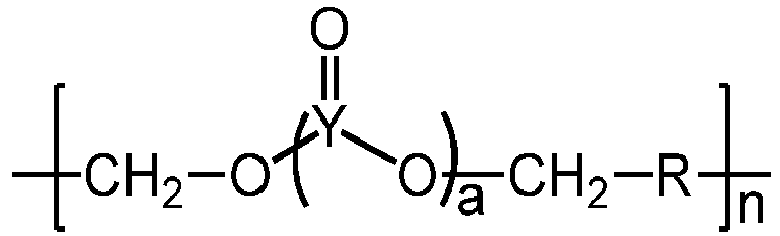
- In one embodiment of the invention, new polymers are disclosed. The polymers include sulfur-based polyester structures described by:

- Y is selected from the group consisting of sulphur (S) for poly(sulfites) and sulphoxide (S=O) for poly(sulfates);
- a and n are integers, wherein a ranges from 2 to 10, and n ranges from 1 to 1000;
- R is selected from the group consisting of:


- wherein c, d and e are all integers that range independently from 0 to 10; and
- X is selected from the group consisting of hydrogen, fluorine, methyl, ethyl, isopropyl, and trifluoromethyl.
- In some embodiments of the invention, any of the polymers described herein are combined with an electrolyte salt and can be used as a polymer electrolyte.
- In some embodiments of the invention, any of the polymer electrolytes described herein further includes ceramic electrolyte particles.
- In some arrangements, any of the polymers described herein is crosslinked. In some arrangements any of the polymers described herein is crosslinked and is combined with an electrolyte salt to be used as a polymer electrolyte.
- In one embodiment of the invention, a positive electrode includes a positive electrode active material; and a catholyte comprising any of the electrolytes described herein. The positive electrode active material particles and the catholyte are mixed together. The catholyte may also include a solid polymer electrolyte. The catholyte may also include ceramic electrolyte particles. The catholyte may be crosslinked. The catholyte may contain an electrolyte salt that is a lithium salt.
- The positive electrode active material may be any of lithium iron phosphate, lithium metal phosphate, divanadium pentoxide, lithium nickel cobalt aluminum oxide, lithium nickel cobalt manganese oxide, magnesium-rich lithium nickel cobalt manganese oxide, lithium manganese spinel, lithium nickel manganese spinel, and combinations thereof.
- In another embodiment of the invention an electrochemical cell includes an anode configured to absorb and release lithium ions; a cathode comprising cathode active material particles, an electronically-conductive additive, and a first catholyte; a current collector adjacent to an outside surface of the cathode; and a separator region between the anode and the cathode, the separator region comprising a separator electrolyte configured to facilitate movement of lithium ions back and forth between the anode and the cathode. The first catholyte may include any of the electrolytes described herein. The first catholyte may also contain ceramic electrolyte particles. The first catholyte may be crosslinked. The electrolyte salt may be a lithium salt.
- The first catholyte and/or the separator electrolyte may also contain a solid polymer electrolyte. In one arrangement, the first catholyte and the separator electrolyte are the same.
- In one arrangement, there is an overcoat layer between the cathode and the separator region. The overcoat layer includes a second catholyte, which may be any of the electrolytes disclosed herein. The first catholyte and the second catholyte may or may not be the same.
- The anode may contain any of lithium metal, lithium alloy, lithium titanate, graphite and silicon.
- The foregoing aspects and others will be readily appreciated by the skilled artisan from the following description of illustrative embodiments when read in conjunction with the accompanying drawings.
-
Figure 1 is a schematic illustration of one configuration of a lithium battery cell that contains an electrolyte that is used in both the cathode and the separator, according to an embodiment of the invention. -
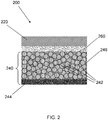
Figure 2 is a schematic illustration of another configuration of a lithium battery cell that contains a catholyte and a separator electrolyte different from the catholyte, according to an embodiment of the invention. -
Figure 3 is a schematic illustration of another configuration of a lithium battery cell that contains a catholyte and a cathode overcoat layer, according to an embodiment of the invention. - The embodiments of the invention are illustrated in the context of sulfur-based polyesters that can be used as electrolytes or electrolyte additives in lithium battery cells and the like. The skilled artisan will readily appreciate, however, that the materials and methods disclosed herein will have application in a number of other contexts where high-voltage electrolytes are desirable, particularly where long-term stability is important.
- These and other objects and advantages of the present invention will become more fully apparent from the following description taken in conjunction with the accompanying drawings.
- All publications referred to herein are incorporated by reference in their entirety for all purposes as if fully set forth herein.
- In this disclosure, the terms "negative electrode" and "anode" are both used to describe a negative electrode. Likewise, the terms "positive electrode" and "cathode" are both used to describe a positive electrode.
- It is to be understood that the terms "lithium metal" or "lithium foil," as used herein with respect to negative electrodes, describe both pure lithium metal and lithium-rich metal alloys as are known in the art. Examples of lithium rich metal alloys suitable for use as anodes include Li-Al, Li-Si, Li-Sn, Li-Hg, Li-Zn, Li-Pb, Li-C or any other Li-metal alloy suitable for use in lithium metal batteries. Other negative electrode materials that can be used in the embodiments of the invention include materials in which lithium can intercalate, such as graphite, and other materials that can absorb and release lithium ions, such as silicon, germanium, tin, and alloys thereof. Many embodiments described herein are directed to batteries with solid polymer electrolytes, which serve the functions of both electrolyte and separator. As it is well known in the art, batteries with liquid electrolytes use an inactive separator material that is distinct from the liquid electrolyte.
- The following construction is used throughout this disclosure: "each variable is chosen independently" from a list that is provided. An example of this usage can be found with reference to X groups in some of the inventive polymer structures in which there are many Xs. The example is, "each X may be chosen independently from hydrogen, fluorine, methyl, ethyl, isopropyl, and trifluoromethyl groups." This construction is used to mean that for a particular X in the structure, any of the groups in the list may be used. In choosing a group to use for another X in the structure, any of the groups in the list may be used with no regard to the choices that have been made for other X groups. Thus, the following arrangements are all possible: all the Xs may be the same, all the Xs may be different, or some Xs may be the same and some may be different.
- The molecular weights given herein are number-averaged molecular weights.
- The term "solid polymer electrolyte" is used herein to mean a polymer electrolyte that is solid at battery cell operating temperatures. Examples of useful battery cell operating temperatures include room temperature (25°C), 40°C, and 80°C.
- In this disclosure, ranges of values are given for many variables. It should be understood that the possible values for any variable also include any range subsumed within the given range.
- Based on repeated observation of Li+ interaction with other atoms in molecular dynamics (MD) simulations, it seems that Li+ coordinates with partially-negatively-charged atoms in polymer electrolytes. For example, in polyethylene oxide (PEO), Li+ coordinates with partially-negatively-charged oxygen atoms in the PEO. Similarly, in sulfur-based polyesters, Li+ coordinates with partially-negatively charged oxygens of the carbonyl groups.
- In some embodiments of the invention, the general structures of sulfur-based polyesters are shown below:


- In another embodiment of the invention, particles of ceramic electrolyte are mixed into a sulfur-based polyester electrolyte to form an enhanced composite electrolyte with superior ionic transport and mechanical properties. Such a composite electrolyte may be used in a lithium battery cell in the separator region or in the cathode. Examples of ceramic electrolytes that are useful for mixing with sulfur-based polyester electrolytes include, but are not limited to, those shown in Table 1 below.
Table 1 Exemplary Ceramic Conductors for Use as Additives in Sulfur-based Polyester Electrolytes Electrolyte Type Exemplary Formulas Mixture Proportion Oxynitride glass LixPOyNz x=2.9, y=3.3, z=0.46 0.24<z<1.2 LixBOyNz Sulfide and oxysulfide glass Li2S • P2S5 0.75 : 0.25 Li2S • SiS2 0.6 : 0.4 Li2S • SiS2 • LixMO4 M=Si, P, Ge 0.57 : 0.38 : 0.05 Li2S • SiS2 • Li3PO4 0.63 : 0.36 : 0.01 Li2S • SiS2 • xMSy M=Sn, Ta, Ti 0.6 : 0.4 : 0.01-0.05 Li2S • SiS2 • Li3N 0.55 : 0.40 : 0.03 Li thionitride glass Li3N • SiS2 0.4 : 0.6 LLTO Perovskite structure (Ohara type) La2/3-xLi3xTiO3 0.03≤x≤0.167 La1/3-xLi3xTaO3 0.025≤x≤0.167 La1/3-xLi3xNbO3 0≤x≤0.06 Nasicon-type (Lisicon) phosphate Li1.3Ti1.7Al0.3(PO4)3 LiAlTa(PO4)3 LiAl0.4Ge1.6(PO4)3 Li1.4Ti1.6Y0.4(PO4)3 Li3-2x(SC1-xMx)2(PO4)3 M=Zr, Ti, x=0.1, 0.2 Li3Sc1.5Fe0.5(PO4)3 • denotes that components are mixed together - Table 2 below shows simulated lithium ion transport properties for various sulfur-based polyester materials. These polymers show promising lithium ion transport properties.
Table 2 Comparison of Lithium Transport Properties for PEO, PPM and Poly(sulfate) Electrolyte Materials Polymer Chemical Structure LiTFSI Concentration (wt%) κ (S/cm) t + PEO 
30 8.2 ± 2.2 × 10⁻⁴ 0.18 ± 0.07 Poly(pentylmalonate) 
30 4.4 × 10⁻⁴ 0.66 Poly(ethylsulphate) 
30 9.2 x 10⁻⁵ 0.90 - In one embodiment of the invention, a
lithium battery cell 100 has ananode 120 that is configured to absorb and release lithium ions, as shown inFigure 1 . Theanode 120 may be a lithium or lithium alloy foil or it may be made of a material into which lithium ions can be absorbed such as graphite or silicon. Other choices for theanode 120 include, but are not limited to, lithium titanate, and lithium-silicon alloys. Thelithium battery cell 100 also has acathode 140 that includes cathodeactive material particles 142, an electronically-conductive additive such as carbon black (not shown), acurrent collector 144, a catholyte (electrolyte in the cathode) 146, and an optional binder (not shown). In one arrangement, thecatholyte 146 includes any of the sulfur-based polyester electrolytes disclosed above. In another arrangement, thecatholyte 146 includes mixtures or combinations of other solid polymer electrolytes with sulfur-based polyester electrolytes. There is aseparator region 160 between theanode 120 and thecathode 140. Thecatholyte 146 extends all the way into theseparator region 160 and facilitates movement of lithium ions back and forth between theanode 120 and thecathode 140 as thecell 100 cycles. Theelectrolyte 146 in theseparator region 160 and thecatholyte 146 in thecathode 140 are the same. - In another embodiment of the invention, a
lithium battery cell 200 has ananode 220 that is configured to absorb and release lithium ions as shown inFigure 2 . Theanode 220 may be a lithium or lithium alloy foil or it may be made of a material into which lithium ions can be absorbed such as graphite or silicon. Other choices for theanode 220 include, but are not limited to, lithium titanate, and lithium-silicon alloys. Thelithium battery cell 200 also has acathode 240 that includes cathodeactive material particles 242, an electronically-conductive additive such as carbon black (not shown), acurrent collector 244, acatholyte 246, and an optional binder (not shown). In one arrangement, thecatholyte 246 includes any of the sulfur-based polyester electrolytes disclosed above. In another arrangement, thecatholyte 246 includes mixtures or combinations of other solid polymer electrolytes with sulfur-based polyester electrolytes. There is aseparator electrolyte 260 between theanode 220 and thecathode 240. Theseparator electrolyte 260 facilitates movement of lithium ions back and forth between theanode 220 and thecathode 240 as thecell 200 cycles. Theseparator electrolyte 260 may include any electrolyte that is suitable for use in a lithium battery cell. In one arrangement, theseparator electrolyte 260 contains a liquid electrolyte that is soaked into a porous plastic material (not shown). In another arrangement, theseparator electrolyte 260 contains a viscous liquid or gel electrolyte. In another arrangement, theseparator region 260 contains a solid polymer electrolyte in which the sulfur-based polyester is immiscible. - In another embodiment of the invention, a battery cell with a third configuration is described. With reference to
Figure 3 , alithium battery cell 300 has ananode 320 that is configured to absorb and release lithium ions. Theanode 320 may be a lithium or lithium alloy foil or it may be made of a material into which lithium ions can be absorbed such as graphite or silicon. Other choices for theanode 320 include, but are not limited to, lithium titanate, and lithium-silicon alloys. Thelithium battery cell 300 also has acathode 350 that includes cathodeactive material particles 352, an electronically-conductive additive (not shown), acurrent collector 354, acatholyte 356, an optional binder (not shown), and anovercoat layer 358. In one arrangement, the electrolyte in theovercoat layer 358 and thecatholyte 356 are the same. In another arrangement, the electrolyte in theovercoat layer 358 and thecatholyte 356 are different. Theovercoat layer 358 and/or thecatholyte 356 may contain any of the sulfur-based polyester electrolytes or mixtures or combinations of other solid polymer electrolytes with sulfur-based polyester electrolytes or electrolyte additives (in a solid polymer electrolyte host) disclosed herein. In one arrangement, theovercoat layer 358 is a solid electrolyte layer. Between theanode 320 and thecathode 350 there is a separator region that contains aseparator electrolyte 360 that facilitates movement of lithium ions back and forth between theanode 320 and thecathode 350 as thecell 300 cycles. Theseparator electrolyte 360 may include any electrolyte that is suitable for such use in a lithium battery cell. In one arrangement, theseparator electrolyte 360 contains a liquid electrolyte that is soaked into a porous plastic material (not shown). In another arrangement, theseparator electrolyte 360 contains a viscous liquid or gel electrolyte. In another arrangement, theseparator electrolyte 360 contains a solid polymer electrolyte in which the sulfur-based polyester is immiscible. - A solid polymer electrolyte for use in separator region, such as
separator regions - With respect to the embodiments described in
Figures 1 ,2 , and3 , suitable cathode active materials include, but are not limited to, LFP (lithium iron phosphate), LMP (lithium metal phosphate in which the metal can be Mn, Co, or Ni), V2O5 (divanadium pentoxide), NCA (lithium nickel cobalt aluminum oxide), NCM (lithium nickel cobalt manganese oxide), high energy NCM (HE-NCM - magnesium-rich lithium nickel cobalt manganese oxide), lithium manganese spinel, lithium nickel manganese spinel, and combinations thereof. Suitable electronically-conductive additives include, but are not limited to, carbon black, graphite, vapor-grown carbon fiber, graphene, carbon nanotubes, and combinations thereof. A binder can be used to hold together the cathode active material particles and the electronically conductive additive. Suitable binders include, but are not limited to, PVDF (polyvinylidene difluoride), PVDF-HFP poly (vinylidene fluoride-co-hexafluoropropylene), PAN (polyacrylonitrile), PAA (polyacrylic acid), PEO (polyethylene oxide), CMC (carboxymethyl cellulose), and SBR (styrene-butadiene rubber). - Any of the polymers described herein may be liquid or solid, depending on its molecular weight. Any of the polymers described herein may be in a crosslinked or an uncrosslinked state. Any of the polymers described herein may be crystalline or glassy. Any of the polymers described herein may be copolymerized with other polymers to form copolymers, block copolymers, or graft copolymers. Copolymerization may also affect the mechanical properties of some polymers allowing them to become solid polymer electrolytes. Any of the polymers described herein can be combined with an electrolyte salt to be used as a solid polymer electrolyte. Any of these solid polymer electrolytes may be used as separator, catholyte, anolyte, or any combination thereof in a battery cell.
- The following example provides details relating to synthesis of sulfur-based polyesters, poly butyl(disulfites) in accordance with the present invention. It should be understood the following is representative only, and that the invention is not limited by the detail set forth in this example.

- This invention has been described herein in considerable detail to provide those skilled in the art with information relevant to apply the novel principles and to construct and use such specialized components as are required. However, it is to be understood that the invention can be carried out by different equipment, materials and devices, and that various modifications, both as to the equipment and operating procedures, can be accomplished without departing from the scope of the invention itself.
Claims (20)
- A polymer, comprising:a polymer structure described by:
 Y is selected from the group consisting of sulphur and sulphoxide;a and n are integers, wherein a ranges from 2 to 10, and n ranges from 1 to 1000;wherein b is an integer that ranges from 0 to 10;R is selected from the group consisting of:
 wherein c, d and e are all integers that range independently from 0 to 10; andX is selected from the group consisting of hydrogen, fluorine, methyl, ethyl, isopropyl, and trifluoromethyl.
 - The polymer of Claim 1 further comprising an electrolyte salt, wherein the polymer is an electrolyte.
- The polymer of Claim 2 further comprising ceramic electrolyte particles.
- The polymer of Claim 1 wherein the polymer is crosslinked.
- The polymer of Claim 4 further comprising an electrolyte salt, wherein the polymer is an electrolyte.
- A positive electrode comprising:a positive electrode active material; anda catholyte comprising the electrolyte according to Claim 2;wherein the positive electrode active material particles and the catholyte are mixed together.
- The positive electrode of Claim 6 wherein the catholyte further comprises a solid polymer electrolyte.
- The positive electrode of Claim 6 wherein the catholyte further comprises ceramic electrolyte particles.
- The positive electrode of Claim 6 wherein the catholyte is crosslinked.
- The positive electrode of Claim 6 wherein the positive electrode active material is selected from the group consisting of lithium iron phosphate, lithium metal phosphate, divanadium pentoxide, lithium nickel cobalt aluminum oxide, lithium nickel cobalt manganese oxide, magnesium-rich lithium nickel cobalt manganese oxide, lithium manganese spinel, lithium nickel manganese spinel, and combinations thereof.
- The positive electrode of Claim 6 wherein the electrolyte salt is a lithium salt.
- An electrochemical cell, comprising:an anode configured to absorb and release lithium ions;a cathode comprising cathode active material particles, an electronically-conductive additive, and a first catholyte;a current collector adjacent to an outside surface of the cathode; anda separator region between the anode and the cathode, the separator region comprising a separator electrolyte configured to facilitate movement of lithium ions back and forth between the anode and the cathode;wherein the first catholyte comprises the electrolyte according to Claim 2, and the electrolyte salt is a lithium salt.
- The electrochemical cell of Claim 12 wherein the first catholyte further comprises a solid polymer electrolyte.
- The electrochemical cell of Claim 12 wherein the first catholyte and the separator electrolyte are the same.
- The electrochemical cell of Claim 12 wherein the separator electrolyte comprises a solid polymer electrolyte.
- The electrochemical cell of Claim 12 further comprising an overcoat layer between the cathode and the separator region, the overcoat layer comprising a second catholyte, the second catholyte comprising the electrolyte according to Claim 2.
- The electrochemical cell of Claim 16 wherein the first catholyte and the second catholyte are the same.
- The electrochemical cell of Claim 12 wherein the anode comprises a material selected from the group consisting of lithium metal, lithium alloy, lithium titanate, graphite and silicon.
- The electrochemical cell of Claim 12 wherein the first catholyte further comprises ceramic electrolyte particles.
- The electrochemical cell of Claim 12 wherein the first catholyte is crosslinked.
Applications Claiming Priority (1)
| Application Number | Priority Date | Filing Date | Title |
|---|---|---|---|
| US16/286,549 US11127976B2 (en) | 2019-02-26 | 2019-02-26 | Sulfur-based polyester electrolytes for high voltage lithium ion batteries |
Publications (2)
| Publication Number | Publication Date |
|---|---|
| EP3702395A1 true EP3702395A1 (en) | 2020-09-02 |
| EP3702395B1 EP3702395B1 (en) | 2022-11-02 |
Family
ID=69723773
Family Applications (1)
| Application Number | Title | Priority Date | Filing Date |
|---|---|---|---|
| EP20157811.9A Active EP3702395B1 (en) | 2019-02-26 | 2020-02-18 | Sulfur-based polyester electrolytes for high voltage lithium ion batteries |
Country Status (4)
| Country | Link |
|---|---|
| US (1) | US11127976B2 (en) |
| EP (1) | EP3702395B1 (en) |
| CN (1) | CN111607087B (en) |
| DE (1) | DE102020201438A1 (en) |
Citations (6)
| Publication number | Priority date | Publication date | Assignee | Title |
|---|---|---|---|---|
| US3514487A (en) * | 1967-04-25 | 1970-05-26 | Allied Chem | Telomers and process for the preparation thereof |
| US3562310A (en) * | 1967-08-11 | 1971-02-09 | Allied Chem | Novel polysulfates and methods for their preparation |
| EP0627780A1 (en) * | 1993-05-26 | 1994-12-07 | Sony Corporation | Non-aqueous liquid electrolyte secondary cell |
| US20190131653A1 (en) * | 2017-10-31 | 2019-05-02 | Seeo, Inc. | Poly(anhydride)-based polymer electrolytes for high voltage lithium ion batteries |
| US20190190067A1 (en) * | 2017-12-16 | 2019-06-20 | Seeo, Inc. | Poly(ketone)-based polymer electrolytes for high voltage lithium ion batteries |
| US20190393545A1 (en) * | 2018-06-26 | 2019-12-26 | Seeo, Inc. | Poly(pyrocarbonate)-based polymer electrolytes for high voltage lithium ion batteries |
Family Cites Families (6)
| Publication number | Priority date | Publication date | Assignee | Title |
|---|---|---|---|---|
| US2497135A (en) * | 1947-01-21 | 1950-02-14 | Celanese Corp | Polymeric sulfurous acid esters |
| US3554986A (en) * | 1967-09-21 | 1971-01-12 | Union Carbide Corp | Polysulfite of 2,2,4,4-tetraalkyl-cyclobutane-1,3-diols |
| JPH10168194A (en) * | 1996-12-10 | 1998-06-23 | Toyota Motor Corp | Polymer solid electrolyte |
| CN104059228B (en) * | 2013-10-25 | 2016-05-25 | 陈元文 | Poly-sulfuric acid (ammonia) ester type compound of a kind of bisphenol A-type and synthetic method thereof |
| US9917339B2 (en) * | 2016-03-11 | 2018-03-13 | Toyota Motor Engineering & Manufacturing North America, Inc. | Non-aqueous lithium-air battery |
| CN109346767A (en) * | 2018-11-01 | 2019-02-15 | 苏州大学 | A solid polymer electrolyte and its application in lithium metal batteries |
-
2019
- 2019-02-26 US US16/286,549 patent/US11127976B2/en not_active Expired - Fee Related
-
2020
- 2020-02-06 DE DE102020201438.8A patent/DE102020201438A1/en not_active Withdrawn
- 2020-02-18 EP EP20157811.9A patent/EP3702395B1/en active Active
- 2020-02-25 CN CN202010115769.3A patent/CN111607087B/en not_active Expired - Fee Related
Patent Citations (6)
| Publication number | Priority date | Publication date | Assignee | Title |
|---|---|---|---|---|
| US3514487A (en) * | 1967-04-25 | 1970-05-26 | Allied Chem | Telomers and process for the preparation thereof |
| US3562310A (en) * | 1967-08-11 | 1971-02-09 | Allied Chem | Novel polysulfates and methods for their preparation |
| EP0627780A1 (en) * | 1993-05-26 | 1994-12-07 | Sony Corporation | Non-aqueous liquid electrolyte secondary cell |
| US20190131653A1 (en) * | 2017-10-31 | 2019-05-02 | Seeo, Inc. | Poly(anhydride)-based polymer electrolytes for high voltage lithium ion batteries |
| US20190190067A1 (en) * | 2017-12-16 | 2019-06-20 | Seeo, Inc. | Poly(ketone)-based polymer electrolytes for high voltage lithium ion batteries |
| US20190393545A1 (en) * | 2018-06-26 | 2019-12-26 | Seeo, Inc. | Poly(pyrocarbonate)-based polymer electrolytes for high voltage lithium ion batteries |
Non-Patent Citations (2)
| Title |
|---|
| KAZ'MINA N B ET AL: "Reaction of hexafluorobutadiene with sulfur trioxide", BULLETIN OF THE ACADEMY OF SCIENCES OF THE USSR, DIVISION OF CHEMICAL SCIENCES, SPRINGER NEW YORK LLC, US, vol. 28, no. 1, 10 July 1979 (1979-07-10), pages 118 - 126, XP008150221, ISSN: 0568-5230, DOI: 10.1007/BF00925407 * |
| LOUIS G. ANELLO ET AL: "Fluorinated dialkyl mono- and polysulfates. I. Preparation and some reactions", JOURNAL OF ORGANIC CHEMISTRY, vol. 35, no. 1, 1 January 1970 (1970-01-01), US, pages 118 - 122, XP055686993, ISSN: 0022-3263, DOI: 10.1021/jo00826a026 * |
Also Published As
| Publication number | Publication date |
|---|---|
| US20200274196A1 (en) | 2020-08-27 |
| CN111607087A (en) | 2020-09-01 |
| EP3702395B1 (en) | 2022-11-02 |
| US11127976B2 (en) | 2021-09-21 |
| CN111607087B (en) | 2023-04-07 |
| DE102020201438A1 (en) | 2020-08-27 |
Similar Documents
| Publication | Publication Date | Title |
|---|---|---|
| KR101499586B1 (en) | Sodium-Sulfur battery of atmospheric temperature | |
| KR20140051895A (en) | Liquid electrolyte for a lithium battery, containing a quaternary mixture of non-aqueous organic solvents | |
| EP3709401A1 (en) | Grafted polyesters as electrolytes for lithium ion batteries | |
| EP3696897A1 (en) | Acrylate polymers with dicarbonyl pendant groups as electrolytes for lithium ion batteries | |
| US10950890B2 (en) | Diester-based polymer electrolytes for high voltage lithium ion batteries | |
| US20190393545A1 (en) | Poly(pyrocarbonate)-based polymer electrolytes for high voltage lithium ion batteries | |
| US11101495B2 (en) | Phosphorous-based polyester electrolytes for high voltage lithium ion batteries | |
| US10886559B2 (en) | Poly(anhydride)-based polymer electrolytes for high voltage lithium ion batteries | |
| US11258102B2 (en) | Fluorinated ionic liquids for multi-layer Li ion battery applications | |
| US10490850B2 (en) | Poly(ketone)-based polymer electrolytes for high voltage lithium ion batteries | |
| EP3702395B1 (en) | Sulfur-based polyester electrolytes for high voltage lithium ion batteries | |
| CN108140878A (en) | The compound of additive in electrolyte as ion cycle battery | |
| KR102459146B1 (en) | Diester-Based Polymer Electrolyte for High Voltage Lithium Ion Batteries |
Legal Events
| Date | Code | Title | Description |
|---|---|---|---|
| PUAI | Public reference made under article 153(3) epc to a published international application that has entered the european phase |
Free format text: ORIGINAL CODE: 0009012 |
|
| STAA | Information on the status of an ep patent application or granted ep patent |
Free format text: STATUS: THE APPLICATION HAS BEEN PUBLISHED |
|
| AK | Designated contracting states |
Kind code of ref document: A1 Designated state(s): AL AT BE BG CH CY CZ DE DK EE ES FI FR GB GR HR HU IE IS IT LI LT LU LV MC MK MT NL NO PL PT RO RS SE SI SK SM TR |
|
| AX | Request for extension of the european patent |
Extension state: BA ME |
|
| RAP1 | Party data changed (applicant data changed or rights of an application transferred) |
Owner name: ROBERT BOSCH GMBH |
|
| STAA | Information on the status of an ep patent application or granted ep patent |
Free format text: STATUS: REQUEST FOR EXAMINATION WAS MADE |
|
| 17P | Request for examination filed |
Effective date: 20210301 |
|
| RBV | Designated contracting states (corrected) |
Designated state(s): AL AT BE BG CH CY CZ DE DK EE ES FI FR GB GR HR HU IE IS IT LI LT LU LV MC MK MT NL NO PL PT RO RS SE SI SK SM TR |
|
| STAA | Information on the status of an ep patent application or granted ep patent |
Free format text: STATUS: EXAMINATION IS IN PROGRESS |
|
| 17Q | First examination report despatched |
Effective date: 20210503 |
|
| GRAP | Despatch of communication of intention to grant a patent |
Free format text: ORIGINAL CODE: EPIDOSNIGR1 |
|
| STAA | Information on the status of an ep patent application or granted ep patent |
Free format text: STATUS: GRANT OF PATENT IS INTENDED |
|
| INTG | Intention to grant announced |
Effective date: 20220104 |
|
| GRAJ | Information related to disapproval of communication of intention to grant by the applicant or resumption of examination proceedings by the epo deleted |
Free format text: ORIGINAL CODE: EPIDOSDIGR1 |
|
| STAA | Information on the status of an ep patent application or granted ep patent |
Free format text: STATUS: EXAMINATION IS IN PROGRESS |
|
| INTC | Intention to grant announced (deleted) | ||
| GRAP | Despatch of communication of intention to grant a patent |
Free format text: ORIGINAL CODE: EPIDOSNIGR1 |
|
| STAA | Information on the status of an ep patent application or granted ep patent |
Free format text: STATUS: GRANT OF PATENT IS INTENDED |
|
| INTG | Intention to grant announced |
Effective date: 20220714 |
|
| GRAS | Grant fee paid |
Free format text: ORIGINAL CODE: EPIDOSNIGR3 |
|
| GRAA | (expected) grant |
Free format text: ORIGINAL CODE: 0009210 |
|
| STAA | Information on the status of an ep patent application or granted ep patent |
Free format text: STATUS: THE PATENT HAS BEEN GRANTED |
|
| AK | Designated contracting states |
Kind code of ref document: B1 Designated state(s): AL AT BE BG CH CY CZ DE DK EE ES FI FR GB GR HR HU IE IS IT LI LT LU LV MC MK MT NL NO PL PT RO RS SE SI SK SM TR |
|
| REG | Reference to a national code |
Ref country code: GB Ref legal event code: FG4D |
|
| REG | Reference to a national code |
Ref country code: CH Ref legal event code: EP Ref country code: AT Ref legal event code: REF Ref document number: 1528713 Country of ref document: AT Kind code of ref document: T Effective date: 20221115 |
|
| REG | Reference to a national code |
Ref country code: DE Ref legal event code: R096 Ref document number: 602020005951 Country of ref document: DE |
|
| REG | Reference to a national code |
Ref country code: IE Ref legal event code: FG4D |
|
| REG | Reference to a national code |
Ref country code: LT Ref legal event code: MG9D |
|
| REG | Reference to a national code |
Ref country code: NL Ref legal event code: MP Effective date: 20221102 |
|
| REG | Reference to a national code |
Ref country code: AT Ref legal event code: MK05 Ref document number: 1528713 Country of ref document: AT Kind code of ref document: T Effective date: 20221102 |
|
| PG25 | Lapsed in a contracting state [announced via postgrant information from national office to epo] |
Ref country code: SE Free format text: LAPSE BECAUSE OF FAILURE TO SUBMIT A TRANSLATION OF THE DESCRIPTION OR TO PAY THE FEE WITHIN THE PRESCRIBED TIME-LIMIT Effective date: 20221102 Ref country code: PT Free format text: LAPSE BECAUSE OF FAILURE TO SUBMIT A TRANSLATION OF THE DESCRIPTION OR TO PAY THE FEE WITHIN THE PRESCRIBED TIME-LIMIT Effective date: 20230302 Ref country code: NO Free format text: LAPSE BECAUSE OF FAILURE TO SUBMIT A TRANSLATION OF THE DESCRIPTION OR TO PAY THE FEE WITHIN THE PRESCRIBED TIME-LIMIT Effective date: 20230202 Ref country code: LT Free format text: LAPSE BECAUSE OF FAILURE TO SUBMIT A TRANSLATION OF THE DESCRIPTION OR TO PAY THE FEE WITHIN THE PRESCRIBED TIME-LIMIT Effective date: 20221102 Ref country code: FI Free format text: LAPSE BECAUSE OF FAILURE TO SUBMIT A TRANSLATION OF THE DESCRIPTION OR TO PAY THE FEE WITHIN THE PRESCRIBED TIME-LIMIT Effective date: 20221102 Ref country code: ES Free format text: LAPSE BECAUSE OF FAILURE TO SUBMIT A TRANSLATION OF THE DESCRIPTION OR TO PAY THE FEE WITHIN THE PRESCRIBED TIME-LIMIT Effective date: 20221102 Ref country code: AT Free format text: LAPSE BECAUSE OF FAILURE TO SUBMIT A TRANSLATION OF THE DESCRIPTION OR TO PAY THE FEE WITHIN THE PRESCRIBED TIME-LIMIT Effective date: 20221102 |
|
| PGFP | Annual fee paid to national office [announced via postgrant information from national office to epo] |
Ref country code: FR Payment date: 20230217 Year of fee payment: 4 |
|
| PG25 | Lapsed in a contracting state [announced via postgrant information from national office to epo] |
Ref country code: RS Free format text: LAPSE BECAUSE OF FAILURE TO SUBMIT A TRANSLATION OF THE DESCRIPTION OR TO PAY THE FEE WITHIN THE PRESCRIBED TIME-LIMIT Effective date: 20221102 Ref country code: PL Free format text: LAPSE BECAUSE OF FAILURE TO SUBMIT A TRANSLATION OF THE DESCRIPTION OR TO PAY THE FEE WITHIN THE PRESCRIBED TIME-LIMIT Effective date: 20221102 Ref country code: LV Free format text: LAPSE BECAUSE OF FAILURE TO SUBMIT A TRANSLATION OF THE DESCRIPTION OR TO PAY THE FEE WITHIN THE PRESCRIBED TIME-LIMIT Effective date: 20221102 Ref country code: IS Free format text: LAPSE BECAUSE OF FAILURE TO SUBMIT A TRANSLATION OF THE DESCRIPTION OR TO PAY THE FEE WITHIN THE PRESCRIBED TIME-LIMIT Effective date: 20230302 Ref country code: HR Free format text: LAPSE BECAUSE OF FAILURE TO SUBMIT A TRANSLATION OF THE DESCRIPTION OR TO PAY THE FEE WITHIN THE PRESCRIBED TIME-LIMIT Effective date: 20221102 Ref country code: GR Free format text: LAPSE BECAUSE OF FAILURE TO SUBMIT A TRANSLATION OF THE DESCRIPTION OR TO PAY THE FEE WITHIN THE PRESCRIBED TIME-LIMIT Effective date: 20230203 |
|
| PG25 | Lapsed in a contracting state [announced via postgrant information from national office to epo] |
Ref country code: NL Free format text: LAPSE BECAUSE OF FAILURE TO SUBMIT A TRANSLATION OF THE DESCRIPTION OR TO PAY THE FEE WITHIN THE PRESCRIBED TIME-LIMIT Effective date: 20221102 |
|
| PG25 | Lapsed in a contracting state [announced via postgrant information from national office to epo] |
Ref country code: SM Free format text: LAPSE BECAUSE OF FAILURE TO SUBMIT A TRANSLATION OF THE DESCRIPTION OR TO PAY THE FEE WITHIN THE PRESCRIBED TIME-LIMIT Effective date: 20221102 Ref country code: RO Free format text: LAPSE BECAUSE OF FAILURE TO SUBMIT A TRANSLATION OF THE DESCRIPTION OR TO PAY THE FEE WITHIN THE PRESCRIBED TIME-LIMIT Effective date: 20221102 Ref country code: EE Free format text: LAPSE BECAUSE OF FAILURE TO SUBMIT A TRANSLATION OF THE DESCRIPTION OR TO PAY THE FEE WITHIN THE PRESCRIBED TIME-LIMIT Effective date: 20221102 Ref country code: DK Free format text: LAPSE BECAUSE OF FAILURE TO SUBMIT A TRANSLATION OF THE DESCRIPTION OR TO PAY THE FEE WITHIN THE PRESCRIBED TIME-LIMIT Effective date: 20221102 Ref country code: CZ Free format text: LAPSE BECAUSE OF FAILURE TO SUBMIT A TRANSLATION OF THE DESCRIPTION OR TO PAY THE FEE WITHIN THE PRESCRIBED TIME-LIMIT Effective date: 20221102 |
|
| REG | Reference to a national code |
Ref country code: DE Ref legal event code: R097 Ref document number: 602020005951 Country of ref document: DE |
|
| PG25 | Lapsed in a contracting state [announced via postgrant information from national office to epo] |
Ref country code: SK Free format text: LAPSE BECAUSE OF FAILURE TO SUBMIT A TRANSLATION OF THE DESCRIPTION OR TO PAY THE FEE WITHIN THE PRESCRIBED TIME-LIMIT Effective date: 20221102 Ref country code: AL Free format text: LAPSE BECAUSE OF FAILURE TO SUBMIT A TRANSLATION OF THE DESCRIPTION OR TO PAY THE FEE WITHIN THE PRESCRIBED TIME-LIMIT Effective date: 20221102 |
|
| REG | Reference to a national code |
Ref country code: DE Ref legal event code: R119 Ref document number: 602020005951 Country of ref document: DE |
|
| PLBE | No opposition filed within time limit |
Free format text: ORIGINAL CODE: 0009261 |
|
| STAA | Information on the status of an ep patent application or granted ep patent |
Free format text: STATUS: NO OPPOSITION FILED WITHIN TIME LIMIT |
|
| PG25 | Lapsed in a contracting state [announced via postgrant information from national office to epo] |
Ref country code: MC Free format text: LAPSE BECAUSE OF FAILURE TO SUBMIT A TRANSLATION OF THE DESCRIPTION OR TO PAY THE FEE WITHIN THE PRESCRIBED TIME-LIMIT Effective date: 20221102 |
|
| REG | Reference to a national code |
Ref country code: CH Ref legal event code: PL |
|
| 26N | No opposition filed |
Effective date: 20230803 |
|
| REG | Reference to a national code |
Ref country code: BE Ref legal event code: MM Effective date: 20230228 |
|
| PG25 | Lapsed in a contracting state [announced via postgrant information from national office to epo] |
Ref country code: LU Free format text: LAPSE BECAUSE OF NON-PAYMENT OF DUE FEES Effective date: 20230218 Ref country code: LI Free format text: LAPSE BECAUSE OF NON-PAYMENT OF DUE FEES Effective date: 20230228 Ref country code: CH Free format text: LAPSE BECAUSE OF NON-PAYMENT OF DUE FEES Effective date: 20230228 |
|
| PG25 | Lapsed in a contracting state [announced via postgrant information from national office to epo] |
Ref country code: SI Free format text: LAPSE BECAUSE OF FAILURE TO SUBMIT A TRANSLATION OF THE DESCRIPTION OR TO PAY THE FEE WITHIN THE PRESCRIBED TIME-LIMIT Effective date: 20221102 |
|
| REG | Reference to a national code |
Ref country code: IE Ref legal event code: MM4A |
|
| PG25 | Lapsed in a contracting state [announced via postgrant information from national office to epo] |
Ref country code: IE Free format text: LAPSE BECAUSE OF NON-PAYMENT OF DUE FEES Effective date: 20230218 Ref country code: DE Free format text: LAPSE BECAUSE OF NON-PAYMENT OF DUE FEES Effective date: 20230901 |
|
| PG25 | Lapsed in a contracting state [announced via postgrant information from national office to epo] |
Ref country code: BE Free format text: LAPSE BECAUSE OF NON-PAYMENT OF DUE FEES Effective date: 20230228 |
|
| PG25 | Lapsed in a contracting state [announced via postgrant information from national office to epo] |
Ref country code: IT Free format text: LAPSE BECAUSE OF FAILURE TO SUBMIT A TRANSLATION OF THE DESCRIPTION OR TO PAY THE FEE WITHIN THE PRESCRIBED TIME-LIMIT Effective date: 20221102 |
|
| GBPC | Gb: european patent ceased through non-payment of renewal fee |
Effective date: 20240218 |
|
| PG25 | Lapsed in a contracting state [announced via postgrant information from national office to epo] |
Ref country code: BG Free format text: LAPSE BECAUSE OF FAILURE TO SUBMIT A TRANSLATION OF THE DESCRIPTION OR TO PAY THE FEE WITHIN THE PRESCRIBED TIME-LIMIT Effective date: 20221102 |
|
| PG25 | Lapsed in a contracting state [announced via postgrant information from national office to epo] |
Ref country code: BG Free format text: LAPSE BECAUSE OF FAILURE TO SUBMIT A TRANSLATION OF THE DESCRIPTION OR TO PAY THE FEE WITHIN THE PRESCRIBED TIME-LIMIT Effective date: 20221102 |
|
| PG25 | Lapsed in a contracting state [announced via postgrant information from national office to epo] |
Ref country code: GB Free format text: LAPSE BECAUSE OF NON-PAYMENT OF DUE FEES Effective date: 20240218 |
|
| PG25 | Lapsed in a contracting state [announced via postgrant information from national office to epo] |
Ref country code: FR Free format text: LAPSE BECAUSE OF NON-PAYMENT OF DUE FEES Effective date: 20240229 |
|
| PG25 | Lapsed in a contracting state [announced via postgrant information from national office to epo] |
Ref country code: GB Free format text: LAPSE BECAUSE OF NON-PAYMENT OF DUE FEES Effective date: 20240218 Ref country code: FR Free format text: LAPSE BECAUSE OF NON-PAYMENT OF DUE FEES Effective date: 20240229 |
|
| PG25 | Lapsed in a contracting state [announced via postgrant information from national office to epo] |
Ref country code: CY Free format text: LAPSE BECAUSE OF FAILURE TO SUBMIT A TRANSLATION OF THE DESCRIPTION OR TO PAY THE FEE WITHIN THE PRESCRIBED TIME-LIMIT; INVALID AB INITIO Effective date: 20200218 |
|
| PG25 | Lapsed in a contracting state [announced via postgrant information from national office to epo] |
Ref country code: HU Free format text: LAPSE BECAUSE OF FAILURE TO SUBMIT A TRANSLATION OF THE DESCRIPTION OR TO PAY THE FEE WITHIN THE PRESCRIBED TIME-LIMIT; INVALID AB INITIO Effective date: 20200218 |
|
| PG25 | Lapsed in a contracting state [announced via postgrant information from national office to epo] |
Ref country code: TR Free format text: LAPSE BECAUSE OF FAILURE TO SUBMIT A TRANSLATION OF THE DESCRIPTION OR TO PAY THE FEE WITHIN THE PRESCRIBED TIME-LIMIT Effective date: 20221102 |