EP3702205A1 - Control apparatus of vehicle seat - Google Patents
Control apparatus of vehicle seat Download PDFInfo
- Publication number
- EP3702205A1 EP3702205A1 EP20159288.8A EP20159288A EP3702205A1 EP 3702205 A1 EP3702205 A1 EP 3702205A1 EP 20159288 A EP20159288 A EP 20159288A EP 3702205 A1 EP3702205 A1 EP 3702205A1
- Authority
- EP
- European Patent Office
- Prior art keywords
- vehicle
- seat
- control unit
- speed
- road
- Prior art date
- Legal status (The legal status is an assumption and is not a legal conclusion. Google has not performed a legal analysis and makes no representation as to the accuracy of the status listed.)
- Granted
Links
Images








Classifications
-
- B—PERFORMING OPERATIONS; TRANSPORTING
- B60—VEHICLES IN GENERAL
- B60N—SEATS SPECIALLY ADAPTED FOR VEHICLES; VEHICLE PASSENGER ACCOMMODATION NOT OTHERWISE PROVIDED FOR
- B60N2/00—Seats specially adapted for vehicles; Arrangement or mounting of seats in vehicles
- B60N2/02—Seats specially adapted for vehicles; Arrangement or mounting of seats in vehicles the seat or part thereof being movable, e.g. adjustable
- B60N2/0224—Non-manual adjustments, e.g. with electrical operation
- B60N2/0244—Non-manual adjustments, e.g. with electrical operation with logic circuits
- B60N2/0276—Non-manual adjustments, e.g. with electrical operation with logic circuits reaction to emergency situations, e.g. crash
-
- B—PERFORMING OPERATIONS; TRANSPORTING
- B60—VEHICLES IN GENERAL
- B60N—SEATS SPECIALLY ADAPTED FOR VEHICLES; VEHICLE PASSENGER ACCOMMODATION NOT OTHERWISE PROVIDED FOR
- B60N2/00—Seats specially adapted for vehicles; Arrangement or mounting of seats in vehicles
- B60N2/90—Details or parts not otherwise provided for
-
- B—PERFORMING OPERATIONS; TRANSPORTING
- B60—VEHICLES IN GENERAL
- B60N—SEATS SPECIALLY ADAPTED FOR VEHICLES; VEHICLE PASSENGER ACCOMMODATION NOT OTHERWISE PROVIDED FOR
- B60N2/00—Seats specially adapted for vehicles; Arrangement or mounting of seats in vehicles
- B60N2/02—Seats specially adapted for vehicles; Arrangement or mounting of seats in vehicles the seat or part thereof being movable, e.g. adjustable
- B60N2/04—Seats specially adapted for vehicles; Arrangement or mounting of seats in vehicles the seat or part thereof being movable, e.g. adjustable the whole seat being movable
- B60N2/06—Seats specially adapted for vehicles; Arrangement or mounting of seats in vehicles the seat or part thereof being movable, e.g. adjustable the whole seat being movable slidable
-
- B—PERFORMING OPERATIONS; TRANSPORTING
- B60—VEHICLES IN GENERAL
- B60N—SEATS SPECIALLY ADAPTED FOR VEHICLES; VEHICLE PASSENGER ACCOMMODATION NOT OTHERWISE PROVIDED FOR
- B60N2/00—Seats specially adapted for vehicles; Arrangement or mounting of seats in vehicles
- B60N2/02—Seats specially adapted for vehicles; Arrangement or mounting of seats in vehicles the seat or part thereof being movable, e.g. adjustable
- B60N2/0224—Non-manual adjustments, e.g. with electrical operation
- B60N2/0244—Non-manual adjustments, e.g. with electrical operation with logic circuits
- B60N2/0278—Non-manual adjustments, e.g. with electrical operation with logic circuits using sensors external to the seat for measurements in relation to the seat adjustment, e.g. for identifying the presence of obstacles or the appropriateness of the occupants position
- B60N2/0279—Non-manual adjustments, e.g. with electrical operation with logic circuits using sensors external to the seat for measurements in relation to the seat adjustment, e.g. for identifying the presence of obstacles or the appropriateness of the occupants position for detecting objects outside the vehicle, e.g. for user identification
-
- B—PERFORMING OPERATIONS; TRANSPORTING
- B60—VEHICLES IN GENERAL
- B60N—SEATS SPECIALLY ADAPTED FOR VEHICLES; VEHICLE PASSENGER ACCOMMODATION NOT OTHERWISE PROVIDED FOR
- B60N2/00—Seats specially adapted for vehicles; Arrangement or mounting of seats in vehicles
- B60N2/02—Seats specially adapted for vehicles; Arrangement or mounting of seats in vehicles the seat or part thereof being movable, e.g. adjustable
- B60N2/20—Seats specially adapted for vehicles; Arrangement or mounting of seats in vehicles the seat or part thereof being movable, e.g. adjustable the back-rest being tiltable, e.g. to permit easy access
-
- B—PERFORMING OPERATIONS; TRANSPORTING
- B60—VEHICLES IN GENERAL
- B60N—SEATS SPECIALLY ADAPTED FOR VEHICLES; VEHICLE PASSENGER ACCOMMODATION NOT OTHERWISE PROVIDED FOR
- B60N2/00—Seats specially adapted for vehicles; Arrangement or mounting of seats in vehicles
- B60N2/02—Seats specially adapted for vehicles; Arrangement or mounting of seats in vehicles the seat or part thereof being movable, e.g. adjustable
- B60N2/22—Seats specially adapted for vehicles; Arrangement or mounting of seats in vehicles the seat or part thereof being movable, e.g. adjustable the back-rest being adjustable
-
- B—PERFORMING OPERATIONS; TRANSPORTING
- B60—VEHICLES IN GENERAL
- B60N—SEATS SPECIALLY ADAPTED FOR VEHICLES; VEHICLE PASSENGER ACCOMMODATION NOT OTHERWISE PROVIDED FOR
- B60N2/00—Seats specially adapted for vehicles; Arrangement or mounting of seats in vehicles
- B60N2/24—Seats specially adapted for vehicles; Arrangement or mounting of seats in vehicles for particular purposes or particular vehicles
- B60N2/42—Seats specially adapted for vehicles; Arrangement or mounting of seats in vehicles for particular purposes or particular vehicles the seat constructed to protect the occupant from the effect of abnormal g-forces, e.g. crash or safety seats
- B60N2/427—Seats or parts thereof displaced during a crash
- B60N2/42772—Seats or parts thereof displaced during a crash characterised by the triggering system
- B60N2/4279—Seats or parts thereof displaced during a crash characterised by the triggering system electric or electronic triggering
-
- B—PERFORMING OPERATIONS; TRANSPORTING
- B60—VEHICLES IN GENERAL
- B60Q—ARRANGEMENT OF SIGNALLING OR LIGHTING DEVICES, THE MOUNTING OR SUPPORTING THEREOF OR CIRCUITS THEREFOR, FOR VEHICLES IN GENERAL
- B60Q9/00—Arrangement or adaptation of signal devices not provided for in one of main groups B60Q1/00 - B60Q7/00, e.g. haptic signalling
-
- B—PERFORMING OPERATIONS; TRANSPORTING
- B60—VEHICLES IN GENERAL
- B60W—CONJOINT CONTROL OF VEHICLE SUB-UNITS OF DIFFERENT TYPE OR DIFFERENT FUNCTION; CONTROL SYSTEMS SPECIALLY ADAPTED FOR HYBRID VEHICLES; ROAD VEHICLE DRIVE CONTROL SYSTEMS FOR PURPOSES NOT RELATED TO THE CONTROL OF A PARTICULAR SUB-UNIT
- B60W10/00—Conjoint control of vehicle sub-units of different type or different function
- B60W10/18—Conjoint control of vehicle sub-units of different type or different function including control of braking systems
-
- B—PERFORMING OPERATIONS; TRANSPORTING
- B60—VEHICLES IN GENERAL
- B60W—CONJOINT CONTROL OF VEHICLE SUB-UNITS OF DIFFERENT TYPE OR DIFFERENT FUNCTION; CONTROL SYSTEMS SPECIALLY ADAPTED FOR HYBRID VEHICLES; ROAD VEHICLE DRIVE CONTROL SYSTEMS FOR PURPOSES NOT RELATED TO THE CONTROL OF A PARTICULAR SUB-UNIT
- B60W10/00—Conjoint control of vehicle sub-units of different type or different function
- B60W10/30—Conjoint control of vehicle sub-units of different type or different function including control of auxiliary equipment, e.g. air-conditioning compressors or oil pumps
-
- B—PERFORMING OPERATIONS; TRANSPORTING
- B60—VEHICLES IN GENERAL
- B60W—CONJOINT CONTROL OF VEHICLE SUB-UNITS OF DIFFERENT TYPE OR DIFFERENT FUNCTION; CONTROL SYSTEMS SPECIALLY ADAPTED FOR HYBRID VEHICLES; ROAD VEHICLE DRIVE CONTROL SYSTEMS FOR PURPOSES NOT RELATED TO THE CONTROL OF A PARTICULAR SUB-UNIT
- B60W50/00—Details of control systems for road vehicle drive control not related to the control of a particular sub-unit, e.g. process diagnostic or vehicle driver interfaces
- B60W50/08—Interaction between the driver and the control system
- B60W50/14—Means for informing the driver, warning the driver or prompting a driver intervention
-
- B—PERFORMING OPERATIONS; TRANSPORTING
- B60—VEHICLES IN GENERAL
- B60W—CONJOINT CONTROL OF VEHICLE SUB-UNITS OF DIFFERENT TYPE OR DIFFERENT FUNCTION; CONTROL SYSTEMS SPECIALLY ADAPTED FOR HYBRID VEHICLES; ROAD VEHICLE DRIVE CONTROL SYSTEMS FOR PURPOSES NOT RELATED TO THE CONTROL OF A PARTICULAR SUB-UNIT
- B60W60/00—Drive control systems specially adapted for autonomous road vehicles
- B60W60/005—Handover processes
- B60W60/0051—Handover processes from occupants to vehicle
-
- G—PHYSICS
- G05—CONTROLLING; REGULATING
- G05D—SYSTEMS FOR CONTROLLING OR REGULATING NON-ELECTRIC VARIABLES
- G05D1/00—Control of position, course, altitude or attitude of land, water, air or space vehicles, e.g. using automatic pilots
- G05D1/0088—Control of position, course, altitude or attitude of land, water, air or space vehicles, e.g. using automatic pilots characterized by the autonomous decision making process, e.g. artificial intelligence, predefined behaviours
-
- B—PERFORMING OPERATIONS; TRANSPORTING
- B60—VEHICLES IN GENERAL
- B60N—SEATS SPECIALLY ADAPTED FOR VEHICLES; VEHICLE PASSENGER ACCOMMODATION NOT OTHERWISE PROVIDED FOR
- B60N2/00—Seats specially adapted for vehicles; Arrangement or mounting of seats in vehicles
- B60N2/02—Seats specially adapted for vehicles; Arrangement or mounting of seats in vehicles the seat or part thereof being movable, e.g. adjustable
- B60N2/0224—Non-manual adjustments, e.g. with electrical operation
- B60N2/0244—Non-manual adjustments, e.g. with electrical operation with logic circuits
- B60N2/0268—Non-manual adjustments, e.g. with electrical operation with logic circuits using sensors or detectors for adapting the seat or seat part, e.g. to the position of an occupant
-
- B—PERFORMING OPERATIONS; TRANSPORTING
- B60—VEHICLES IN GENERAL
- B60N—SEATS SPECIALLY ADAPTED FOR VEHICLES; VEHICLE PASSENGER ACCOMMODATION NOT OTHERWISE PROVIDED FOR
- B60N2/00—Seats specially adapted for vehicles; Arrangement or mounting of seats in vehicles
- B60N2/90—Details or parts not otherwise provided for
- B60N2002/981—Warning systems, e.g. the seat or seat parts vibrates to warn the passenger when facing a danger
-
- B—PERFORMING OPERATIONS; TRANSPORTING
- B60—VEHICLES IN GENERAL
- B60N—SEATS SPECIALLY ADAPTED FOR VEHICLES; VEHICLE PASSENGER ACCOMMODATION NOT OTHERWISE PROVIDED FOR
- B60N2210/00—Sensor types, e.g. for passenger detection systems or for controlling seats
- B60N2210/10—Field detection presence sensors
- B60N2210/16—Electromagnetic waves
- B60N2210/20—Radar
-
- B—PERFORMING OPERATIONS; TRANSPORTING
- B60—VEHICLES IN GENERAL
- B60N—SEATS SPECIALLY ADAPTED FOR VEHICLES; VEHICLE PASSENGER ACCOMMODATION NOT OTHERWISE PROVIDED FOR
- B60N2210/00—Sensor types, e.g. for passenger detection systems or for controlling seats
- B60N2210/10—Field detection presence sensors
- B60N2210/16—Electromagnetic waves
- B60N2210/22—Optical; Photoelectric; Lidar [Light Detection and Ranging]
- B60N2210/24—Cameras
-
- B—PERFORMING OPERATIONS; TRANSPORTING
- B60—VEHICLES IN GENERAL
- B60N—SEATS SPECIALLY ADAPTED FOR VEHICLES; VEHICLE PASSENGER ACCOMMODATION NOT OTHERWISE PROVIDED FOR
- B60N2220/00—Computerised treatment of data for controlling of seats
- B60N2220/20—Computerised treatment of data for controlling of seats using a deterministic algorithm
-
- B—PERFORMING OPERATIONS; TRANSPORTING
- B60—VEHICLES IN GENERAL
- B60N—SEATS SPECIALLY ADAPTED FOR VEHICLES; VEHICLE PASSENGER ACCOMMODATION NOT OTHERWISE PROVIDED FOR
- B60N2230/00—Communication or electronic aspects
- B60N2230/20—Wireless data transmission
-
- B—PERFORMING OPERATIONS; TRANSPORTING
- B60—VEHICLES IN GENERAL
- B60W—CONJOINT CONTROL OF VEHICLE SUB-UNITS OF DIFFERENT TYPE OR DIFFERENT FUNCTION; CONTROL SYSTEMS SPECIALLY ADAPTED FOR HYBRID VEHICLES; ROAD VEHICLE DRIVE CONTROL SYSTEMS FOR PURPOSES NOT RELATED TO THE CONTROL OF A PARTICULAR SUB-UNIT
- B60W2510/00—Input parameters relating to a particular sub-units
- B60W2510/18—Braking system
-
- B—PERFORMING OPERATIONS; TRANSPORTING
- B60—VEHICLES IN GENERAL
- B60W—CONJOINT CONTROL OF VEHICLE SUB-UNITS OF DIFFERENT TYPE OR DIFFERENT FUNCTION; CONTROL SYSTEMS SPECIALLY ADAPTED FOR HYBRID VEHICLES; ROAD VEHICLE DRIVE CONTROL SYSTEMS FOR PURPOSES NOT RELATED TO THE CONTROL OF A PARTICULAR SUB-UNIT
- B60W2520/00—Input parameters relating to overall vehicle dynamics
- B60W2520/10—Longitudinal speed
-
- B—PERFORMING OPERATIONS; TRANSPORTING
- B60—VEHICLES IN GENERAL
- B60W—CONJOINT CONTROL OF VEHICLE SUB-UNITS OF DIFFERENT TYPE OR DIFFERENT FUNCTION; CONTROL SYSTEMS SPECIALLY ADAPTED FOR HYBRID VEHICLES; ROAD VEHICLE DRIVE CONTROL SYSTEMS FOR PURPOSES NOT RELATED TO THE CONTROL OF A PARTICULAR SUB-UNIT
- B60W2540/00—Input parameters relating to occupants
- B60W2540/223—Posture, e.g. hand, foot, or seat position, turned or inclined
-
- B—PERFORMING OPERATIONS; TRANSPORTING
- B60—VEHICLES IN GENERAL
- B60W—CONJOINT CONTROL OF VEHICLE SUB-UNITS OF DIFFERENT TYPE OR DIFFERENT FUNCTION; CONTROL SYSTEMS SPECIALLY ADAPTED FOR HYBRID VEHICLES; ROAD VEHICLE DRIVE CONTROL SYSTEMS FOR PURPOSES NOT RELATED TO THE CONTROL OF A PARTICULAR SUB-UNIT
- B60W2552/00—Input parameters relating to infrastructure
- B60W2552/05—Type of road, e.g. motorways, local streets, paved or unpaved roads
-
- B—PERFORMING OPERATIONS; TRANSPORTING
- B60—VEHICLES IN GENERAL
- B60W—CONJOINT CONTROL OF VEHICLE SUB-UNITS OF DIFFERENT TYPE OR DIFFERENT FUNCTION; CONTROL SYSTEMS SPECIALLY ADAPTED FOR HYBRID VEHICLES; ROAD VEHICLE DRIVE CONTROL SYSTEMS FOR PURPOSES NOT RELATED TO THE CONTROL OF A PARTICULAR SUB-UNIT
- B60W2554/00—Input parameters relating to objects
- B60W2554/40—Dynamic objects, e.g. animals, windblown objects
- B60W2554/404—Characteristics
- B60W2554/4042—Longitudinal speed
-
- B—PERFORMING OPERATIONS; TRANSPORTING
- B60—VEHICLES IN GENERAL
- B60W—CONJOINT CONTROL OF VEHICLE SUB-UNITS OF DIFFERENT TYPE OR DIFFERENT FUNCTION; CONTROL SYSTEMS SPECIALLY ADAPTED FOR HYBRID VEHICLES; ROAD VEHICLE DRIVE CONTROL SYSTEMS FOR PURPOSES NOT RELATED TO THE CONTROL OF A PARTICULAR SUB-UNIT
- B60W2556/00—Input parameters relating to data
- B60W2556/45—External transmission of data to or from the vehicle
-
- B—PERFORMING OPERATIONS; TRANSPORTING
- B60—VEHICLES IN GENERAL
- B60W—CONJOINT CONTROL OF VEHICLE SUB-UNITS OF DIFFERENT TYPE OR DIFFERENT FUNCTION; CONTROL SYSTEMS SPECIALLY ADAPTED FOR HYBRID VEHICLES; ROAD VEHICLE DRIVE CONTROL SYSTEMS FOR PURPOSES NOT RELATED TO THE CONTROL OF A PARTICULAR SUB-UNIT
- B60W2710/00—Output or target parameters relating to a particular sub-units
- B60W2710/30—Auxiliary equipments
-
- B—PERFORMING OPERATIONS; TRANSPORTING
- B60—VEHICLES IN GENERAL
- B60W—CONJOINT CONTROL OF VEHICLE SUB-UNITS OF DIFFERENT TYPE OR DIFFERENT FUNCTION; CONTROL SYSTEMS SPECIALLY ADAPTED FOR HYBRID VEHICLES; ROAD VEHICLE DRIVE CONTROL SYSTEMS FOR PURPOSES NOT RELATED TO THE CONTROL OF A PARTICULAR SUB-UNIT
- B60W2720/00—Output or target parameters relating to overall vehicle dynamics
- B60W2720/10—Longitudinal speed
Definitions
- the present invention relates to a control apparatus of a vehicle seat.
- WO 2015/011866 discloses a vehicle driving assistance apparatus that controls a reclining angle of a seat back of a vehicle seat according to a driving mode of a vehicle.
- control on the motor is performed so as to incline the seat back such that a reclining angle of the seat back in the automatic driving mode is larger than a reclining angle of the seat back in the manual driving mode.
- an object of the present invention is to provide a vehicle seat control apparatus having a high safety for an occupant seated in a vehicle seat at the time of a collision of the vehicle in the automatic driving mode.
- a vehicle seat control apparatus includes: at least one actuator provided in a vehicle configured to travel by automatic driving, the actuator being configured to adjust at least one of a reclining angle or a position of the vehicle seat in a seat front-rear direction, and the reclining angle being an angle of a seat back of the vehicle seat in a seat rearward direction relative to a seat cushion of the vehicle seat; and a control unit configured to determine whether or not a road divider is provided on a road where the vehicle is traveling and perform, when determining that no road divider is provided, at least any one of 1) controlling the actuator not to incline the seat back rearward at an angle more than a predetermined angle, 2) controlling the actuator not to position the vehicle seat at a position more rearward than a predetermined position, 3) outputting a warning signal when the seat back is inclined rearward at an angle more than the predetermined angle, and 4) outputting a warning signal when the vehicle seat is positioned at a position more rearward than the predetermined position.
- the control unit performs any one of the above (1) to (4) when the control unit determines that no road divider is provided on the road where the own vehicle is traveling.
- control unit may be configured to, when the control unit determines that the road divider is provided, set at least one of the predetermined angle and the predetermined position based on at least one of a traveling speed of the vehicle and an estimated speed of the vehicle.
- control unit may be configured to, when the control unit determines that no road divider is provided, set at least one of the predetermined angle and the predetermined position based on at least an estimated speed of an oncoming vehicle that is traveling in an oncoming lane of the road where the vehicle is traveling.
- control unit may be configured to, when the control unit determines that no road divider is provided, set at least one of the predetermined angle and the predetermined position, based on a summed speed of a traveling speed of the vehicle and the estimated speed of the oncoming vehicle or a summed speed of the estimated speed of the vehicle and the estimated speed of the oncoming vehicle.
- control unit may be configured to: acquire information on the road where the vehicle is traveling by wireless communication; and determine the estimated speed of the oncoming vehicle based on the information on the road acquired by the wireless communication.
- control unit may be configured to: acquire information from the oncoming vehicle by the wireless communication; and determine the estimated speed of the oncoming vehicle based on the information acquired by the wireless communication.
- control unit may be configured to acquire speed information of the oncoming vehicle by a sensor provided in the vehicle, and the control unit may determine the estimated speed of the oncoming vehicle based on the speed information of the oncoming vehicle acquired from the sensor.
- control unit may be configured to acquire information on a lane where at least one of the vehicle and the oncoming vehicle is traveling by a sensor provided in the vehicle, and the control unit may determine the estimated speed of the oncoming vehicle based on the information on the lane acquired from the sensor.
- control unit may be configured to define a speed obtained by subtracting a deceleration amount by automatic braking from the traveling speed of the vehicle as the estimated speed of the vehicle
- the vehicle seat may include the actuator for reclining that adjusts a reclining angle of the seat back in a seat rearward direction;
- the control unit may be configured to when the control unit determines that no road divider is provided on the road where the vehicle is traveling by the automatic driving, control the actuator for reclining such that the reclining angle becomes smaller than a reclining angle in a case in which the control unit determines that the road divider is provided, or when the control unit determines that no road divider is provided on the road where the vehicle is traveling, output the warning signal at the reclining angle smaller than a reclining angle in a case in which the control unit determines that the road divider is provided.
- the seat back is inclined in the seat front-rear direction relative to the seat cushion by operating the actuator for reclining.
- the actuator for reclining in a state where it is determined that no road divider is provided on the road where the own vehicle is traveling, it can be considered that there is a high possibility that the deceleration acceleration of the own vehicle, in a case where the own vehicle and the vehicle traveling in the oncoming lane collide with each other, is large.
- the control unit determines that no road divider is provided on the road where the own vehicle is traveling by automatic driving
- the control unit controls the actuator for reclining to set the reclining angle to be smaller than in the case in which the road divider is provided, or outputs a warning signal at a reclining angle smaller than in the case in which the control unit determines that the road divider is provided. Accordingly, it is possible to restrain the reclining angle of the seat back from being larger in the seat rearward direction in the case in which no road divider is provided on the road where the own vehicle is traveling.
- control unit may be configured to set the predetermined angle based on a position in the seat front-rear direction of the seat cushion.
- control unit controls the actuator for reclining or outputs the warning signal based on the position in the seat front-rear direction of the seat cushion.
- the degree of the allowable reclining angle can be set based on the position in the seat front-rear direction of the seat cushion.
- control unit may be configured to set the predetermined angle based on a position of knees of an occupant seated in the seat cushion.
- control unit controls the actuator for reclining or outputs the warning signal based on the position of the knees of the occupant seated in the seat cushion. Accordingly, the degree of the allowable reclining angle can be set depending on the position of the knees of the occupant seated in the seat cushion.
- control unit may be configured to set the predetermined angle based on a position of a head of an occupant seated in the seat cushion.
- the control unit controls the actuator for reclining or outputs the warning signal.
- the degree of the allowable reclining angle can be set depending on the position of the head of the occupant seated in the seat cushion.
- control unit may be configured to stop an inclination of the seat back by stopping an operation of the actuator for reclining when the reclining angle reaches the predetermined angle.
- the control unit stops the operation of the actuator for reclining. Thereby, the inclination of the seat back is stopped, to thereby prevent or restrain the reclining angle of the seat back in the seat rearward direction from becoming larger than the allowable reclining angle.
- control unit may be configured to cause the seat back to incline frontward, by operating the actuator for reclining, so as to set the reclining angle to an angle equal to or smaller than the predetermined angle.
- the seat back is inclined such that the reclining angle reaches an angle corresponding to the allowable reclining angle.
- the reclining angle of the seat back in the seat rearward direction is prevented and restrained from becoming larger than the allowable reclining angle.
- the vehicle seat may include the actuator for seat sliding that adjusts the position of the vehicle seat in the seat front-rear direction
- the control unit may be configured to when the control unit determines that no road divider is provided on the road where the vehicle is traveling by automatic driving, control the actuator for seat sliding so as to position the vehicle seat more frontward than in a case in which the control unit determines that the road divider is provided, or when the control unit determines that no road divider is provided on the road where the vehicle is traveling, output a warning signal in a state in which the vehicle seat is positioned more frontward than in the case in which the control unit determines that the road divider is provided.
- the vehicle seat is moved in the seat front-rear direction by operating the actuator for seat sliding.
- the control unit determines that no road divider is provided on the road where the own vehicle is traveling by automatic driving
- the control unit controls the actuator for seat sliding to position the vehicle seat more frontward than in the case in which the road divider is provided, or outputs the warning signal in the state in which the vehicle seat is positioned more frontward than in the case in which the control unit determines that the road divider is provided.
- a distance in the seat front-rear direction between the occupant seated in the vehicle seat and a member configuring the vehicle in the case in which no road divider is provided on the road where the own vehicle is traveling is restrained from becoming longer.
- occurrence of such an event that the seated occupant slides along the seat cushion in the seat frontward direction is suppressed, to thereby reduce increase in injury value of the seated occupant.
- the vehicle seat may be configured to stop movement in the seat front-rear direction of the vehicle seat by the control unit stopping operation of the actuator for seat sliding when the position of the vehicle seat in the seat front-rear direction reaches the predetermined position.
- the control unit stops the operation of the actuator for seat sliding. Thereby, the movement of the vehicle seat in the seat front-rear direction is stopped, and thus it is prevented or suppressed that the position of the vehicle seat in the seat front-rear direction is positioned more rearward than the allowable position.
- the vehicle seat may be configured to move frontward by the control unit operating the actuator for seat sliding such that the position of the vehicle seat is positioned at the predetermined position or at a position more frontward than the predetermined position in the seat front-rear direction.
- the vehicle seat is moved such that the position of the vehicle seat in the seat front-rear direction reaches the allowable position. Accordingly, the position of the vehicle seat in the seat front-rear direction is prevented or suppressed from being positioned more rearward than the allowable position.
- control unit may be configured to decelerate the vehicle at least either when the seat back is inclined rearward at an angle more than a predetermined angle or when the vehicle seat is positioned more rearward than the predetermined position.
- the collision speed between the own vehicle and the oncoming vehicle can be lower. Thereby, it is possible to reduce increase in injury value of the seated occupant at the time of a collision between the own vehicle and the oncoming vehicle.
- control unit may be configured to acquire information on the road where the vehicle is traveling by wireless communication, and a control unit may perform at least one of the control on the actuator and an output of the warning signal, assuming that no road divider is provided when the control unit determines that the road is a road for two-way traffic based on the information on the road acquired by the wireless communication.
- the vehicle may be configured to travel by manual driving or the automatic driving; the seat back may be configured to be inclined rearward by the control unit operating the actuator when driving of the vehicle is switched from the manual driving to the automatic driving; and the vehicle seat may be configured to be moved rearward by the control unit operating the actuator when the driving of the vehicle is switched from the manual driving to the automatic driving, or be moved rearward with the seat back being inclined rearward by the control unit operating the actuator when the driving of the vehicle is switched from the manual driving to the automatic driving.
- the seated occupant when the driving of the vehicle is switched from the manual driving to the automatic driving, the seated occupant can change the posture and the position of the vehicle seat that allows the seated occupant to take a comfortable posture.
- the vehicle seat control apparatus has an excellent effect to improve a safety for an occupant seated in the vehicle seat at the time of a collision of the vehicle in the automatic driving mode.
- a vehicle seat control apparatus 10 according to the first embodiment of the present invention will be described with reference to FIG. 1A to FIG. 3 .
- an arrow FR indicates a front side in the front-rear direction of a vehicle 12
- an arrow UP indicates an upper side in the height direction of the vehicle 12.
- the front side and the upper side of the vehicle 12 coincide with the front side and the upper side of the vehicle seat 14, respectively.
- these directions respectively denote the front and rear in the front-rear direction of the vehicle 12 and the vehicle seat 14, the left and right in the left-right direction (vehicle width direction) of the vehicle 12 and the vehicle seat 14, and the up and down in the height direction of the vehicle 12 and the vehicle seat 14.
- FIG. 1A shows a cabin 16 of the vehicle 12 including the vehicle seat control apparatus 10 of the present embodiment.
- the cabin 16 is provided with the vehicle seat 14 in which an occupant P handling a steering wheel 18 and others is seated.
- the vehicle seat 14 includes a seat cushion 20 that supports buttocks P1 of the occupant P, and a seat back 22 that supports an upper body P2 of the occupant P.
- the vehicle seat 14 includes a headrest 24 that supports a head P3 of the occupant P.
- the seat cushion 20 is configured by mounting a seat cushion pad covered with a skin material to a seat cushion frame or the like.
- the seat cushion 20 is supported on a floor 28 of the cabin 16 via a seat rail 26 (an upper rail 26A and a not-shown lower rail) that allows the seat cushion 20 to slide in the front-rear direction.
- the vehicle seat 14 of the present embodiment is provided in the cabin 16 of the vehicle 12 capable of performing automatic driving and manual driving. Therefore, the vehicle seat 14 is movable in the front-rear direction from a position where the occupant P seated in the vehicle seat 14 can handle the steering wheel 18 and others to a position where the occupant P cannot handle this.
- FIG. 1A shows a state in which the vehicle seat 14 is moved frontward to the position where the occupant P seated in the vehicle seat 14 can handle the steering wheel 18 and others.
- the seat back 22 is configured by mounting a seat back pad covered with a skin material to the seat back frame or the like.
- the seat back 22 is mounted to a rear end of the seat cushion 20 so as to recline (tilt) in the seat front-rear direction. Further, in the present embodiment, the seat back 22 is configured to tilt by operating a motor 30 for reclining as an actuator.
- the headrest 24 is configured by mounting a headrest body including a headrest pad covered with a skin material to a headrest stay. As the headrest stay is inserted into a not-shown insertion portion provided in the seat back 22, the headrest 24 is mounted to an upper end of the seat back 22.
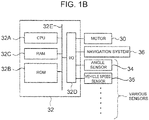
- the vehicle seat control apparatus 10 includes: the motor 30 that inclines the seat back 22; and an ECU 32 serving as a control unit that controls the motor 30.
- the motor 30 is a DC motor that rotates as energization for the motor 30 is controlled by the ECU 32.
- the motor 30 is provided with an angle sensor 34 for calculating a reclining angle ⁇ of the seat back 22 in the seat rearward direction based on the number of rotations (rotation angle) of a rotation shaft of the motor 30.
- the ECU 32 is configured to include a CPU (central processing unit) 32A, a ROM (read only memory) 32B, a RAM (random access memory) 32C, and an input-output interface unit (I/O) 32D that provides communication with an external device, and these components are mutually connected with one another via a bus 32E.
- the CPU 32A is a central processing unit, and executes various programs and controls the motor 30 and others. That is, the CPU 32A reads a control program from the ROM 32B, and executes this control program while using the RAM 32C as a working area so as to control the motor 30.
- a road divider divides the road into a lane where the vehicle 12 (own vehicle) is traveling and a lane where an oncoming vehicle is traveling.
- the road divider may be a shelf, a curb, a wall, a fence, or a ditch.
- this road divider may be referred to as a medial divider.
- the ECU 32 controls the motor 30 so as to set the reclining angle ⁇ to be small.
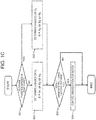
- step S02 an allowable reclining angle ⁇ based on a speed V 1 obtained by adding together a speed of the vehicle 12 (own vehicle speed) and a road limit speed (an oncoming lane limit speed defined as an estimated speed of an oncoming vehicle) recorded in advance in the navigation system 36.
- the "speed of the vehicle 12 (own vehicle speed)" is a setting speed or an actual speed of the vehicle 12 during the automatic driving.
- the actual speed is a speed of the vehicle 12 based on a speed signal, a speed of the vehicle 12 based on a GPS signal, and the like.
- the setting speed of the vehicle 12 during the automatic driving is set to a limit speed of the road (own lane limit speed) when the road conditions and the weather are fine. Further, the own lane limit speed and the oncoming lane limit speed often have the same limit speed.
- the ECU 32 determines the allowable reclining angle ⁇ as ⁇ 1 . Then, after determining the allowable reclining angle ⁇ as ⁇ 1 , the ECU 32 determines whether or not the reclining angle ⁇ of the seat back 22 is more than ⁇ 1 in step S03. When an affirmative determination is made in step S03, the ECU 32 controls energization for the motor 30 in step S04 so as to set the reclining angle ⁇ of the seat back 22 not to be more than ⁇ 1 .
- the ECU 32 determines the allowable reclining angle ⁇ as ⁇ 1 , the ECU 32 starts the energization for the motor 30 in the case in which the seat back 22 reclines to an angle more than ⁇ 1 . Hence, the seat back 22 is inclined until the reclining angle ⁇ becomes equal to or smaller than ⁇ 1 .
- the ECU 32 ends the processing.
- the ECU 32 may incline the seat back 22 rearward by the energization for the motor 30 and then stop the energization for the motor 30 when the reclining angle ⁇ of the seat back 22 reaches ⁇ 1
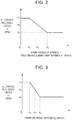
- v 1 is 30 km/h and ⁇ 1 is 60°.
- the ECU 32 determines the allowable reclining angle ⁇ as ⁇ 2 , and then performs the above-described processing in steps S03 and S04. Then, When the ECU 32 determines the allowable reclining angle ⁇ as ⁇ 2 , the ECU 32 starts the energization for the motor 30 if the seat back 22 reclines to an angle more than ⁇ 2 . As a result, the seat back 22 is inclined until the reclining angle ⁇ becomes equal to or smaller than ⁇ 2 . If the seat back 22 does not recline to an angle more than ⁇ 2 , the ECU 32 may end the processing.
- the ECU 32 may incline the seat back 22 rearward by the energization for the motor 30 and then stop the energization for the motor 30 when the reclining angle ⁇ of the seat back 22 reaches ⁇ 2 .
- v 2 is 110 km/h and ⁇ 2 is 30°.
- the ECU 32 determines the allowable reclining angle ⁇ as an angle ⁇ 3 corresponding to the speed v 3 obtained by adding together the own vehicle speed and the oncoming lane limit speed, and performs the processing in step S03 and step S04.
- ⁇ 3 is calculated through proportional interpolation between (v 1 , ⁇ 1 ) and (v 2 , ⁇ 2 ) as shown in the graph of FIG. 2 .
- the ECU 32 determines the allowable reclining angle ⁇ as ⁇ 3 , the ECU 32 starts the energization for the motor 30 if the seat back 22 reclines at an angle more than ⁇ 3 . Accordingly, the seat back 22 is inclined until the reclining angle ⁇ becomes equal to or smaller than ⁇ 3 . If the seat back 22 does not recline to an angle more than ⁇ 3 , the ECU 32 may end the processing. Or, the ECU 32 may incline the seat back 22 rearward by the energization for the motor 30 and then stop the energization for the motor 30 when the reclining angle ⁇ of the seat back 22 reaches ⁇ 3 .
- the ECU 32 determines that a road divider is provided on the road where the vehicle 12 is traveling, that is, when a negative determination is made in step S01, the ECU 32 determines the allowable reclining angle ⁇ based on the vehicle speed V 2 (own vehicle speed) of the vehicle 12 in step S05.
- the ECU 32 determines the allowable reclining angle ⁇ as ⁇ 4 . Then, after determining the allowable reclining angle ⁇ as ⁇ 4 , the ECU 32 determines whether or not the reclining angle ⁇ of the seat back 22 reclines at an angle more than ⁇ 4 in step S03. When an affirmative determination is made in step S03, the ECU 32 controls the energization for the motor 30 in step S04 so as to control the reclining angle ⁇ of the seat back 22 not to be more than ⁇ 4 .
- the ECU 32 determines the allowable reclining angle ⁇ as ⁇ 4 , the ECU 32 starts the energization for the motor 30 if the seat back 22 reclines at an angle more than ⁇ 4 . Accordingly, the seat back 22 is inclined until the reclining angle ⁇ becomes ⁇ 4 or less.
- the ECU 32 ends the processing. Or, when the negative determination is made in step S03, the ECU 32 may incline the seat back 22 rearward by the energization for the motor 30 and then stop the energization for the motor 30 when the reclining angle ⁇ of the seat back 22 reaches ⁇ 4 .
- v 4 is 20 km/h and ⁇ 4 is 60°.
- the ECU 32 determines the allowable reclining angle ⁇ as ⁇ 5 , and performs the above-described processing in step S03 and step S04. Then, When the ECU 32 determines the allowable reclining angle ⁇ as ⁇ 5 , the ECU 32 starts the energization for the motor 30 if the seat back 22 reclines at an angle more than ⁇ 5 . Accordingly, the seat back 22 is inclined until the reclining angle ⁇ becomes equal to ⁇ 5 or less. If the seat back 22 does not recline to an angle more than ⁇ 5 , the ECU 32 may end the processing.
- the ECU 32 may incline the seat back 22 rearward by the energization for the motor 30 and then stop the energization for the motor 30 when the reclining angle ⁇ of the seat back 22 reaches ⁇ 5
- v 5 is 50 km/h and ⁇ 5 is 30°.
- the ECU 32 determines the allowable reclining angle ⁇ as an angle ⁇ 6 corresponding to an own vehicle speed v 6 , and the above-described processing in the step S03 and step S04 is performed.
- ⁇ 6 is calculated through proportional interpolation between (v 4 , ⁇ 4 ) and (v 5 , ⁇ 5 ) shown in the graph of FIG. 3 . Then, When the ECU 32 determines the allowable reclining angle ⁇ as ⁇ 6 , the ECU 32 starts the energization for the motor 30 if the seat back 22 reclines at an angle more than ⁇ 6 .
- the seat back 22 is inclined until the reclining angle ⁇ becomes equal to ⁇ 6 or less. If the seat back 22 does not recline to an angle more than ⁇ 6 , the ECU 32 may end the processing. Or, the ECU 32 may incline the seat back 22 rearward by the energization for the motor 30 and then stop the energization for the motor 30 when the reclining angle ⁇ of the seat back 22 reaches ⁇ 6 .
- a threshold value of the allowable reclining angle ⁇ is set based on presence or absence of a road divider and the speed V 1 obtained by adding together the own vehicle speed and the oncoming lane limit speed or the own vehicle speed V 2 . That is, when it is assumed that the deceleration acceleration of the vehicle 12 becomes higher when the vehicle 12 has a frontal collision, the ECU 32 controls the motor 30 to set the reclining angle ⁇ to be smaller. With this configuration, the reclining angle ⁇ of the seat back 22 is restrained from becoming larger when the road divider is provided on the road where the vehicle is traveling and when a relative speed between the own vehicle and the oncoming vehicle is high.
- the injury value of the occupant P indicates a degree of an impact received by the occupant P when a collision with a vehicle traveling in the oncoming lane.
- the occupant P seated in the vehicle seat 14 can take a comfortable posture by inclining the seat back 22 rearwards automatically or through switching operation by the occupant. Even in this configuration, it is possible to reduce increase in injury value of the occupant P by limiting the reclining angle ⁇ of the seat back 22 as described above.
- the threshold value of the allowable reclining angle ⁇ is set based on presence or absence of a road divider, the speed V 1 obtained by adding together the own vehicle speed and the oncoming lane limit speed, and the own vehicle speed V 2 ; however, the present invention is not limited to this example.
- the threshold value of the allowable reclining angle ⁇ when no road divider is provided on the road where the vehicle 12 is traveling and the threshold value of the allowable reclining angle ⁇ when a road divider is provided on the road where the vehicle 12 is traveling may be fixed values.
- the threshold value of the allowable reclining angle ⁇ may be set based on at least one of presence-absence of a road divider, the own vehicle speed, and the limit speed.
- the ECU 32 may output a warning signal to emit a warning sound in the cabin 16.
- the ECU 32 may output a warning signal to allow a warning lamp to blink in the cabin 16. That is, the ECU 32 may alert the occupant that the high safety is not ensured by outputting a warning signal.
- a vehicle seat control apparatus 38 according to the second embodiment of the present invention will be described with reference to FIG. 4 to FIG. 6 .
- members and parts corresponding to those of the vehicle seat control apparatus 10 according to the first embodiment will be denoted by the same reference numerals as corresponding members and parts of the vehicle seat control apparatus 10, and the description thereof may be omitted.
- the vehicle seat control apparatus 38 taking into consideration the front-rear position of the vehicle seat 14 (seat cushion 20), the threshold value of the allowable reclining angle ⁇ of the seat back 22 is set.
- the front-rear position of the vehicle seat 14 (seat cushion 20) is detected by a seat position sensor 40, and the seat position sensor 40 is electrically connected to the ECU 32.
- the ECU 32 determines the allowable reclining angle ⁇ based on the speed V 1 obtained by adding together the speed of the vehicle 12 (own vehicle speed) and the limit speed of the road (oncoming lane limit speed) recorded in advance in the navigation system 36, and the front-rear position of the vehicle seat 14.
- the ECU 32 sets the threshold value of the allowable reclining angle ⁇ to be smaller than that in a state in which the front-rear position of the vehicle seat 14 is positioned in a front region 44 (see FIG. 4 ).
- the ECU 32 sets the threshold value ⁇ of the allowable reclining angle ⁇ to be smaller than that in the state in which the front-rear position of the vehicle seat 14 is positioned in the front region 44 (see FIG. 4 ).
- the ECU 32 determines the allowable reclining angle ⁇ as ⁇ 2 when the speed V 1 obtained by adding together the own vehicle speed and the oncoming lane limit speed is more than v 2 km/h.
- the ECU 32 sets the allowable reclining angle ⁇ as ⁇ 2 when the speed V 1 obtained by adding together the own vehicle speed and the oncoming lane limit speed is more than v 2 + 10 km/h. Further, in the state where the front-rear position of the vehicle seat 14 is positioned in the rear region 42, the ECU 32 determines the allowable reclining angle ⁇ as ⁇ 2 when the speed V 1 obtained by adding together the own vehicle speed and the oncoming lane limit speed is more than v 2 - 10 km/h.
- the rear region 42 is a region in which the vehicle seat 14 is positioned more rearward than a predetermined position (for an example, a position 200 mm behind from a position where the vehicle seat 14 is located on the most front side).
- the front region 44 is a region ranging from a position where the vehicle seat 14 is located on the most front side to 100 mm behind this position, as an example.
- the intermediate region 46 is a region located between the rear region 42 and the front region 44.
- the ECU 32 determines the allowable reclining angle ⁇ based on the speed of the vehicle 12 (own vehicle speed) and the front-rear position of the vehicle seat 14. Note that the processing by the ECU 32 in this case is the same as that of the first embodiment except for taking into consideration the front-rear position of the vehicle seat 14 in step S05 of FIG. 1C .
- the motor 30 is controlled through setting the allowable reclining angle ⁇ based on the presence or absence of a road divider, the front-rear position of the vehicle seat 14, the speed V 1 obtained by adding together the own vehicle speed and the oncoming lane limit speed, and the like. That is, when the vehicle seat 14 is positioned at a position where the submarine phenomenon is likely to occur and when it is assumed to have a high deceleration acceleration at the time of a frontal collision of the vehicle 12, the ECU 32 controls the motor 30 to set the reclining angle ⁇ to be smaller.
- the processing by the ECU 32 of the present embodiment is substantially the same as the processing shown in FIG. 1C except for taking into consideration the front-rear position of the vehicle seat 14.
- the occupant P seated in the vehicle seat 14 can take a comfortable posture by moving the vehicle seat 14 rearward automatically or through switching operation by the occupant. Even in this configuration, it is possible to reduce increase in injury value of the occupant P by restricting the rearward movement of the vehicle seat 14 as described above.
- a vehicle seat control apparatus 48 according to the third embodiment of the present invention will be described with reference to FIG. 7 to FIG. 9 .
- members and parts corresponding to those of the vehicle seat control apparatus 10 according to the first embodiment will be denoted by the same reference numerals as corresponding members and parts of the vehicle seat control apparatus 10, and the description thereof may be omitted.
- the vehicle seat control apparatus 48 taking into consideration the position (mostly, the front-rear, right-left, and up-down positions) of knees P4 of the occupant P seated in the vehicle seat 14, the threshold value of the allowable reclining angle ⁇ of the seat back 22 is set.
- the position of the knees P4 of the occupant P seated in the vehicle seat 14 is detected by a knee detection camera 50, and the knee detection camera 50 is electrically connected to the ECU 32.
- the ECU 32 determines the allowable reclining angle ⁇ based on the position of the knees P4 of the occupant P seated in the vehicle seat 14 as well as the speed V 1 obtained by adding together the speed of the vehicle 12 (own vehicle speed) and the limit speed of the road (oncoming lane limit speed) recorded in advance in the navigation system 36.
- the ECU 32 sets the threshold value of the allowable reclining angle ⁇ to be smaller than that in a state 54, where it is determined that the knees P4 of the occupant P seated in the vehicle seat 14 can be restrained by the instrument panel 39 or the like (state in which the occupant P is seated without crossing the legs as shown in FIG. 7 ).
- the ECU 32 determines the allowable reclining angle ⁇ as ⁇ 2 .
- the ECU 32 determines the allowable reclining angle ⁇ as ⁇ 2 .
- the ECU 32 sets the threshold value of the allowable reclining angle ⁇ to be smaller than that in the state 54 in which it is determined that the knees P4 of the occupant P seated in the vehicle seat 14 can be restrained by the instrument panel 39 or the like (the state in which the occupant P is seated without crossing the legs, as shown in FIG. 7 ).
- the processing by the ECU 32 of the present embodiment is substantially the same as the processing shown in FIG. 1C except for taking into consideration the front-rear position of the vehicle seat 14 and the knees P4 of the occupant P.
- the ECU 32 determines the allowable reclining angle ⁇ based on the speed of the vehicle 12 (own vehicle speed) and the position of the knees P4 of the occupant P seated in the vehicle seat 14. Note that the processing by the ECU 32 in this case is the same as that of the first embodiment except for taking into consideration the position of the knees P4 of the occupant P in step S05 of FIG. 1C .
- the motor 30 is controlled by setting the threshold value of the allowable reclining angle ⁇ based on the presence or absence of a road divider, the position of the knees P4 of the occupant P seated in the vehicle seat 14, the speed V 1 obtained by adding together the own vehicle speed and the oncoming lane limit speed, and the like. That is, the ECU 32 controls the motor 30 to set the reclining angle ⁇ to be small when it is assumed that the deceleration acceleration becomes higher at the time of a frontal collision of the vehicle 12 and when the occupant P is seated in the vehicle seat 14 in a state in which the submarine phenomenon is likely to occur.
- a vehicle seat control apparatus 56 according to the fourth embodiment of the present invention will be described with reference to FIG. 10 to FIG. 12 .
- members and parts corresponding to those of the vehicle seat control apparatus 10 according to the first embodiment will be denoted by the same reference numerals as corresponding members and parts of the vehicle seat control apparatus 10, and the description thereof may be omitted.
- the threshold value of the allowable reclining angle ⁇ of the seat back 22 is set.
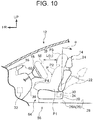
- the distance L between the head P3 of the occupant P seated in the vehicle seat 14 and the airbag 58 after being developed is assumed to be within l 1 (900 mm) to l 2 (1200 mm), for example.
- the position of the head P3 of the occupant P seated in the vehicle seat 14 is detected by a head detection camera 60, and the head detection camera 60 is electrically connected to the ECU 32.
- the ECU 32 determines the allowable reclining angle ⁇ based on the speed V 1 obtained by adding together the speed of the vehicle 12 (own vehicle speed) and the limit speed of the road (oncoming lane limit speed) recorded in advance in the navigation system 36, as well as the position of the head P3 of the occupant P seated in the vehicle seat 14.
- the ECU 32 sets the threshold value of the allowable reclining angle ⁇ to be smaller than that in a state 64 in which it is determined that the head P3 of the occupant P seated in the vehicle seat 14 can be restrained by the airbag 58 or the like (see FIG. 10 ).
- the ECU 32 determines the allowable reclining angle ⁇ based on the speed of the vehicle 12 (own vehicle speed) and the position of the head P3 of the occupant P seated in the vehicle seat 14. Note that the processing by the ECU 32 in this case is the same as that of the first embodiment except for taking into consideration the position of the head P3 of the occupant P in step S05 of FIG. 1C .
- the motor 30 is controlled by setting the threshold value of the allowable reclining angle ⁇ based on the presence or absence of a road divider, the position of the head P3 of the occupant P seated in the vehicle seat 14, the speed obtained by adding together the own vehicle speed and the oncoming lane limit speed, and the like. That is, the ECU 32 controls the motor 30 set the reclining angle ⁇ to be smaller when deceleration acceleration of the vehicle 12 is assumed to be higher at the time of a frontal collision of the vehicle 12 and when the restraint performance of the head P3 of the occupant P by the airbag 58 may become deteriorated.
- the processing by the ECU 32 of the present embodiment is substantially the same as the processing shown in FIG. 1C except for taking into consideration the front-rear position of the vehicle seat 14 and the head position P3 of the occupant P.
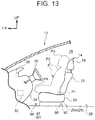
- a vehicle seat control apparatus 66 according to the fifth embodiment of the present invention will be described with reference to FIG. 13 and FIG. 14 .
- members and parts corresponding to those of the vehicle seat control apparatus 10 according to the first embodiment will be denoted by the same reference numerals as corresponding members and parts of the vehicle seat control apparatus 10, and the description thereof may be omitted.
- the allowable position in the rearward movement of the vehicle seat 14 is set depending on the presence or absence of a road divider.
- the front-rear position of the vehicle seat 14 (seat cushion 20) is detected by a seat position sensor 40, and the vehicle seat 14 is moved in the front-rear direction by operating a motor 68 for seat sliding as an actuator.
- the seat position sensor 40 and the motor 68 are electrically connected to the ECU 32.
- the ECU 32 determines that a road divider is provided on the road where the vehicle 12 is traveling, the ECU 32 sets an allowable position D in the rearward movement of the vehicle seat 14 at d2, as shown in FIG. 14 . Accordingly, in the case in which a road divider is provided on the road where the vehicle 12 is traveling, the vehicle seat 14 can be moved in the front-rear direction within a range between a position where the vehicle seat 14 is located on the most front side and the allowable position d2. As the motor 68 is operated, the vehicle seat 14 is moved rearward; and when the vehicle seat 14 reaches the position d2, the operation of the motor 68 is stopped.
- the ECU 32 determines that no road divider is provided on the road where the vehicle 12 is traveling, the ECU 32 sets the allowable position D in the rearward movement of the vehicle seat 14 at d1 shown in FIG. 13 , which is located more frontward than d2 (see FIG. 14 ).
- the ECU 32 sets the allowable position D in the rearward movement of the vehicle seat 14 at d1 shown in FIG. 13 , which is located more frontward than d2 (see FIG. 14 ).
- the motor 68 is controlled by setting the allowable position D (threshold value) in the rearward movement of the vehicle seat 14 based on the presence or absence of a road divider. That is, when it is assumed to have a high deceleration acceleration at the time of a frontal collision of the vehicle 12 and when the vehicle seat 14 is positioned at a position where the submarine phenomenon is likely to occur, the ECU 32 controls the motor 68 so as to prevent the distance in the front-rear direction between the knees P4 of the occupant P seated in the vehicle seat 14 and the instrument panel 39 or the like from becoming longer.
- the processing by the ECU 32 by the present embodiment is substantially the same as the processing shown in FIG. 1C except that, instead of the allowable reclining angle ⁇ , the allowable position in the rearward movement of the vehicle seat 14 is restricted.
- a vehicle seat control apparatus 70 according to the sixth embodiment of the present invention will be described with reference to FIG. 15 and FIG. 16 .
- members and parts corresponding to those of the vehicle seat control apparatus 10 according to the first embodiment will be denoted by the same reference numerals as those of the members and parts of the vehicle seat control apparatus 10, and the description thereof may be omitted.
- the vehicle seat control apparatus 70 of the present embodiment can acquire information on the road where the vehicle 12 is traveling by wireless communication, and set the threshold value of the allowable reclining angle ⁇ based on the information on the road obtained by the wireless communication.
- the ECU 32 can acquire information of a dynamic map 72 by the wireless communication.
- the dynamic map 72 is a high-accuracy three-dimensional map including various information on the road where the vehicle 12 is traveling, and is a map mainly including "static information 74", "quasi-static information 76", “quasi-dynamic information 78", and "dynamic information 80".
- the static information 74 is a map information as a base for a dynamic map regarding roads, road structures on the roads, lane information, road surface information, and permanent regulatory information, and this static information is updated every predetermined period.
- the quasi-static information 76 is information including: traffic regulation information about road works and events; wide-area weather information; and traffic jam prediction, and others, and is information that is updated more frequently than the static information 74.
- the quasi-dynamic information 78 is information including: actual traffic conditions and temporary travel restrictions, temporary travel failure conditions such as falling objects and disabled vehicles, actual accident conditions, and narrow-area weather information, etc., at a location or near a location where the vehicle 12 is traveling, and this information is updated more frequently than the quasi-static information 76.
- the dynamic information 80 includes: information transmitted and exchanged between vehicles; signal display information; information on pedestrians and bicycles at an intersection; and information on vehicles traveling straight at an intersection, and this information is updated more frequently than the quasi-dynamic information 78.
- the ECU 32 determines the allowable reclining angle ⁇ based on the speed V 3 obtained by adding together the speed of the vehicle 12 (own vehicle speed) and the estimated speed of an oncoming vehicle.
- the "speed of the vehicle 12 (own vehicle speed)" is a setting speed or an actual speed of the vehicle 12 during the automatic driving.
- the estimated speed of the oncoming vehicle is a traveling speed of the oncoming vehicle estimated from the information of the dynamic map 72, and denotes an average traveling speed, the oncoming lane limit speed, and the like of the oncoming vehicle traveling in the oncoming lane opposite to the lane where the vehicle 12 is traveling.
- the ECU 32 determines the allowable reclining angle ⁇ as ⁇ 1 .
- the ECU 32 determines the allowable reclining angle ⁇ as ⁇ 2 .
- the ECU 32 determines the allowable reclining angle ⁇ as the angle ⁇ 3 , which corresponds to the speed v 3 obtained by adding together the own vehicle speed and the oncoming lane limit speed.
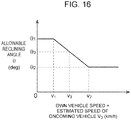
- ⁇ 3 is calculated through proportional interpolation between (v 1 , ⁇ 1 ) and (v 2 , ⁇ 2 ) shown in the graph of FIG. 16 .
- the above processing by the ECU 32 is the same as the aforementioned processing of the vehicle seat control apparatus 10 of the first embodiment except that the allowable reclining angle ⁇ is determined based on the speed V 3 .
- the allowable reclining angle ⁇ is set to be smaller when the average traveling speed of the oncoming vehicle traveling in the oncoming lane becomes higher or when the oncoming lane limit speed becomes higher.
- the ECU 32 starts energizing the motor 30.
- the seat back 22 is inclined to an angle equal to or smaller than the threshold value of the reclining angle ⁇ determined after the information of the dynamic map 72 is updated.
- the allowable reclining angle ⁇ may be rapidly smaller when the average traveling speed of the oncoming vehicle traveling in the oncoming lane rapidly becomes higher.
- the ECU 32 starts energization for the motor 30, the seat back 22 cannot be inclined quickly in some cases.
- the ECU 32 starts energizing the motor 30 and activates automatic braking to incline the seat back 22 forward as well as decelerate the vehicle 12.
- the ECU 32 may be configured to output a signal for lighting a lamp or displaying for noticing deceleration of the vehicle 12 to the following vehicle.
- the allowable reclining angle ⁇ can be set more preferably, as compared to the case in which the estimated speed of the oncoming vehicle is set by using the oncoming lane limit speed. For example, when the average traveling speed of the oncoming vehicle traveling in the oncoming lane is lower than the oncoming lane limit speed, the allowable reclining angle ⁇ can be larger than that in the case of setting the estimated speed of the oncoming vehicle by using the oncoming lane limiting speed.
- the ECU 32 determines the allowable reclining angle ⁇ based on the speed V 2 (own vehicle speed) of the vehicle 12, as shown in FIG. 3 . That is, when the ECU 32 determines that a road divider is provided on the road where the vehicle 12 is traveling based on the information of the dynamic map 72, the same processing as that in the first embodiment is performed.
- the allowable reclining angle ⁇ may be determined based on the estimated speed of the vehicle 12.
- the estimated speed of the vehicle 12 is the traveling speed of the vehicle 12 estimated from the information of the dynamic map 72, which includes an average traveling speed of vehicles traveling in the lane where which the vehicle 12 is traveling, a limit speed of the lane where the vehicle 12 is traveling, and others.
- the processing by the ECU 32 of the present embodiment is almost the same as the processing shown in FIG. 1C except for taking into consideration the information from the dynamic map 72.
- the ECU 32 determines that a road divider is provided on the road where the vehicle 12 is traveling based on the static information 74 of the dynamic map 72, when the ECU 32 determines that two-way traffic in in effect on the road where the vehicle 12 is traveling based on the quasi-static information 76 and the quasi-dynamic information 78 of the dynamic map 72, the ECU 32 determines the allowable reclining angle ⁇ , assuming that no road divider is provided, as shown in FIG. 16 . This means that the ECU 32, while switching the control from the control for the case in which the road divider is provided to the control for the case in which no road divider is provided, controls the vehicle seat 14.
- the threshold value of the allowable reclining angle ⁇ is set based on the information of the dynamic map 72; and similarly, the threshold value of the allowable position in rearward movement of the vehicle seat 14 may be set based on the information of the dynamic map 72.
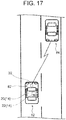
- a vehicle seat control apparatus 82 according to the seventh embodiment of the present invention will be described with reference to FIG. 16 and FIG. 17 .
- members and parts corresponding to those of the vehicle seat control apparatus 10 according to the first embodiment will be denoted by the same reference numerals as corresponding members and parts of the vehicle seat control apparatus 10, and the description thereof may be omitted.
- the vehicle seat control apparatus 82 can acquire information on an oncoming vehicle 84 by wireless communication as vehicle-to-vehicle communication, and sets the threshold value of the allowable reclining angle ⁇ based on the information on the oncoming vehicle 84 acquired through this wireless communication.
- the ECU 32 can acquire the above-described information from the navigation system 36 (see FIG. 1B ) and the above-described information of the dynamic map 72 (see FIG. 15 ).
- the ECU 32 determines the allowable reclining angle ⁇ based on the speed V 3 obtained by adding together the speed of the vehicle 12 (own vehicle speed) and the estimated speed of the oncoming vehicle 84.
- the "speed of the vehicle 12 (own vehicle speed)" is a setting speed or an actual speed of the vehicle 12 during the automatic driving.
- the estimated speed of the oncoming vehicle 84 is a traveling speed of the oncoming vehicle 84 estimated from the information if the information on the oncoming vehicle 84 is already acquired through the wireless communication.
- the estimated speed of the oncoming vehicle 84 is determined based on the information such as a travel route and a speed signal that are part of the information on the oncoming vehicle 84 acquired through the wireless communication.
- the processing by the ECU 32 after the ECU 32 determines the estimated speed of the oncoming vehicle 84 is the same as the above-described processing of the vehicle seat control apparatus 70 according to the sixth embodiment.
- ECU 32 determines the allowable reclining angle ⁇ based on the speed V 2 of the vehicle 12 (own vehicle speed). That is, when the ECU 32 determines that a road divider is provided on the road where the vehicle 12 is traveling based on the information from the navigation system 36 or the information of the dynamic map 72, the same processing as that in the first embodiment is performed.
- a vehicle seat control apparatus 86 according to the eighth embodiment of the present invention will be described with reference to FIG. 16 and FIG. 18 .
- members and parts corresponding to those of the vehicle seat control apparatus 10 according to the first embodiment will be denoted by the same reference numerals as corresponding members and parts of the vehicle seat control apparatus 10, and the description thereof may be omitted.
- the vehicle seat control apparatus 86 can acquire speed information on the oncoming vehicle 84 by a radar 88 as a sensor provided in the vehicle 12, and sets the threshold value of the allowable reclining angle ⁇ based on the speed information on the oncoming vehicle 84 acquired by this radar 88.
- the vehicle seat control apparatus 86 of the present embodiment can detect presence or absence of a road divider by the radar 88.
- the ECU 32 can acquire the above-described information from the navigation system 36 (see FIG. 1B ) and the above-described information of the dynamic map 72 (see FIG. 15 ).
- the ECU 32 determines the allowable reclining angle ⁇ based on the speed V 3 obtained by adding together the speed of the vehicle 12 (own vehicle speed) and the estimated speed of the oncoming vehicle 84.
- the "speed of the vehicle 12 (own vehicle speed)" is a setting speed or an actual speed of the vehicle 12 during the automatic driving.
- the estimated speed of the oncoming vehicle 84 is a traveling speed of the oncoming vehicle 84 estimated from the speed information if the speed information on the oncoming vehicle 84 is already acquired by the radar 88.
- the ECU 32 determines the traveling speed of the oncoming vehicle 84 corresponding to the speed information as the estimation speed of the oncoming vehicle 84.
- the processing by the ECU 32 after the ECU 32 determines the estimated speed of the oncoming vehicle 84 is the same as the above-described processing of the vehicle seat control apparatus 70 according to the sixth embodiment.
- the ECU 32 determines that a road divider is provided on the road where the vehicle 12 is traveling based on the information from the navigation system 36, the information of the dynamic map 72, or the information from the radar 88, as shown in FIG. 3 , the ECU 32 determines the allowable reclining angle ⁇ based on the speed V 2 of the vehicle 12 (own vehicle speed). That is, when the ECU 32 determines that a road divider is provided on the road where the vehicle 12 is traveling based on the information from the navigation system 36 and the information of the dynamic map 72, the same processing as that in the first embodiment is performed.
- a vehicle seat control apparatus 90 according to the ninth embodiment of the present invention will be described with reference to FIG. 16 and FIG. 19 .
- members and parts corresponding to those of the vehicle seat control apparatus 10 according to the first embodiment will be denoted by the same reference numerals as corresponding members and parts of the vehicle seat control apparatus 10, and the description thereof may be omitted.
- the vehicle seat control apparatus 90 of the present embodiment can acquire information on a lane where at least one of the vehicle 12 and the oncoming vehicle 84 is traveling by a pair of front and rear cameras 92 as sensors provided in the vehicle 12, and sets the threshold value of the allowable reclining angle ⁇ based on the lane information obtained by the cameras 92.
- the ECU 32 determines the allowable reclining angle ⁇ based on the speed V 3 obtained by adding together the speed of the vehicle 12 (own vehicle speed) and the estimated speed of the oncoming vehicle 84.
- the "speed of the vehicle 12 (own vehicle speed)" is a setting speed or an actual speed of the vehicle 12 during the automatic driving.
- the estimated speed of the oncoming vehicle 84 is an oncoming lane limit speed indicated by a road sign 94 when information on the road sign 94 that is part of the information on the oncoming lane where the oncoming vehicle 84 is traveling is already acquired by only the rear camera 92 of the vehicle 12.
- a limit speed indicated on the road sign 94 of the lane where the vehicle 12 is traveling may be defined as the estimated speed of the oncoming vehicle 84.
- the processing by the ECU 32 after the ECU 32 determines the estimated speed of the oncoming vehicle 84 is the same as the above-described processing of the vehicle seat control apparatus 70 according to the sixth embodiment.
- the allowable reclining angle ⁇ is determined based on the speed V 2 of the vehicle 12 (own vehicle speed) as shown in FIG. 3 . That is, when the ECU 32 determines that a road divider is provided on the road where the vehicle 12 is traveling based on the information from the cameras 92, the same processing as that in the first embodiment is performed.
- a vehicle seat control apparatus 96 according to the tenth embodiment of the present invention will be described with reference to FIG. 20 and FIG. 21 .
- members and parts corresponding to those of the vehicle seat control apparatus 10 according to the first embodiment will be denoted by the same reference numerals as corresponding members and parts of the vehicle seat control apparatus 10, and the description thereof may be omitted.
- the vehicle seat control apparatus 96 is provided in the vehicle 12 capable of traveling by the automatic driving. Therefore, deceleration by the automatic braking can be expected when a collision with the oncoming vehicle 84 is predicted based on the information from the radar 88, the cameras 92, or the like. Therefore, the vehicle seat control apparatus 96 of the present embodiment sets the threshold value of the reclining angle ⁇ , taking into consideration a deceleration amount ⁇ of the vehicle 12 that can be expected by the automatic braking.
- the vehicle seat control apparatus 96 according to the present embodiment can acquire the above-described information from the navigation system 36 (see FIG. 1B ) or the above-described information of the dynamic map 72 (see FIG. 15 ).
- the ECU 32 determines the allowable reclining angle ⁇ based on a speed V 4 obtained by adding together the estimated speed of the oncoming vehicle 84 and a speed obtained by subtracting the deceleration amount ⁇ expected by the automatic braking from the speed of the vehicle 12 (own vehicle speed) that is the estimated speed of the vehicle 12.
- the "speed of the vehicle 12 (own vehicle speed)" is a setting speed or an actual speed of the vehicle 12 during the automatic driving.
- the deceleration amount ⁇ that can be expected by the automatic braking is a variable that varies depending on the speed of the vehicle 12, the road surface conditions, and the like, and is determined from the information recorded in advance in the ECU 32.
- the estimated speed of the oncoming vehicle 84 is a traveling speed of the oncoming vehicle 84 estimated from the information of the dynamic map 72 and the like.
- the "speed obtained by subtracting the deceleration amount ⁇ expected by the automatic braking from the speed of the vehicle 12 (own vehicle speed)" is referred to as a "speed after the deceleration of the vehicle 12".
- the deceleration amount ⁇ that can be expected by the automatic braking may be determined based on the "international standards for Advanced Emergency Braking System (AEBS)", which is the international standards established at the 178th meeting of the World Forum for Harmonizing Automotive Standards (WP29) of the United Nations.
- AEBS Advanced Emergency Braking System
- the followings are specified: "while traveling at 40 km/h, there is no risk of a collision with a stationary vehicle ahead”; "while traveling at 60 km/h, there is no risk of a collision with a vehicle traveling ahead at 20 km/h”; and “while traveling at 30 km/h, there is no risk of a collision with a pedestrian walking and crossing the road at 5 km/h”.
- the ECU 32 determines the allowable reclining angle ⁇ as ⁇ 1 .
- the ECU 32 determines the allowable reclining angle ⁇ as ⁇ 2 .
- the ECU 32 sets the allowable reclining angle ⁇ as the angle ⁇ 3 corresponding to the speed V 3 obtained by adding together the own vehicle speed and the oncoming line limit speed of the oncoming vehicle 84.
- ⁇ 3 is calculated through proportional interpolation between (v 1 , ⁇ 1 ) and (v 2 , ⁇ 2 ) shown in the graph of FIG. 21 .
- the ECU 32 determines that a road divider is provided on the road where the vehicle 12 is traveling based on the information from the navigation system 36 or the information of the dynamic map 72. That is, when the ECU 32 determines that a road divider is provided on the road where the vehicle 12 is traveling based on information from the navigation system 36 or the information of the dynamic map 72, the same processing as that in the first embodiment is performed.
- the allowable reclining angle ⁇ can be set more appropriately by taking into consideration the deceleration amount ⁇ of the vehicle 12 that can be expected by the automatic braking. That is, in the present embodiment, the allowable reclining angle ⁇ can be set to be larger, as compared with the case without taking into consideration the deceleration amount ⁇ of the vehicle 12 that can be expected by the automatic braking.
- the vehicle seat control apparatus may be configured by mutually combining the configurations and threshold values of the respective embodiments described above. Further, the vehicle seat control apparatus of the present invention may be applied to a vehicle that can travel by only the automatic driving.
Landscapes
- Engineering & Computer Science (AREA)
- Mechanical Engineering (AREA)
- Transportation (AREA)
- Aviation & Aerospace Engineering (AREA)
- Automation & Control Theory (AREA)
- Human Computer Interaction (AREA)
- Chemical & Material Sciences (AREA)
- Combustion & Propulsion (AREA)
- Business, Economics & Management (AREA)
- Health & Medical Sciences (AREA)
- Artificial Intelligence (AREA)
- Evolutionary Computation (AREA)
- Game Theory and Decision Science (AREA)
- Medical Informatics (AREA)
- Radar, Positioning & Navigation (AREA)
- Remote Sensing (AREA)
- Physics & Mathematics (AREA)
- General Physics & Mathematics (AREA)
- Seats For Vehicles (AREA)
Abstract
Description
- The present invention relates to a control apparatus of a vehicle seat.
- The following International Publication No.
WO 2015/011866 discloses a vehicle driving assistance apparatus that controls a reclining angle of a seat back of a vehicle seat according to a driving mode of a vehicle. In the vehicle driving assistance apparatus described in the above document, control on the motor is performed so as to incline the seat back such that a reclining angle of the seat back in the automatic driving mode is larger than a reclining angle of the seat back in the manual driving mode. - Meanwhile, in the case in which the reclining angle of the seat back is set to be large in the automatic driving mode or in the case in which the position of the vehicle in the seat front-rear direction is shifted rearward, there is a room for improving a safety of the occupant.
- In light of the above circumstances, an object of the present invention is to provide a vehicle seat control apparatus having a high safety for an occupant seated in a vehicle seat at the time of a collision of the vehicle in the automatic driving mode.
- A vehicle seat control apparatus according to an aspect of the present invention includes: at least one actuator provided in a vehicle configured to travel by automatic driving, the actuator being configured to adjust at least one of a reclining angle or a position of the vehicle seat in a seat front-rear direction, and the reclining angle being an angle of a seat back of the vehicle seat in a seat rearward direction relative to a seat cushion of the vehicle seat; and a control unit configured to determine whether or not a road divider is provided on a road where the vehicle is traveling and perform, when determining that no road divider is provided, at least any one of 1) controlling the actuator not to incline the seat back rearward at an angle more than a predetermined angle, 2) controlling the actuator not to position the vehicle seat at a position more rearward than a predetermined position, 3) outputting a warning signal when the seat back is inclined rearward at an angle more than the predetermined angle, and 4) outputting a warning signal when the vehicle seat is positioned at a position more rearward than the predetermined position.
- According to the above aspect, by operating one or a plurality of actuators, at least one of the reclining angle of the seat back and the position of the vehicle seat in the seat front-rear direction is adjusted. Here, when no road divider is provided on the road on which the vehicle (hereinafter referred to as an "own vehicle") including the vehicle seat control apparatus of the present invention is traveling, it can be considered that the own vehicle and a vehicle traveling in the oncoming lane (hereinafter referred to as an "oncoming vehicle") may collide with each other, and thus deceleration acceleration of the own vehicle may become higher. For this reason, the control unit performs any one of the above (1) to (4) when the control unit determines that no road divider is provided on the road where the own vehicle is traveling. With this configuration it is possible to reduce occurrence of such an event that the seated occupant slips frontward along the seat cushion and impairment of the restraining performance of the upper body of the seated occupant at the time of a collision with the oncoming vehicle, to thereby reduce increase in injury value of the seated occupant.
- In the above aspect, the control unit may be configured to, when the control unit determines that the road divider is provided, set at least one of the predetermined angle and the predetermined position based on at least one of a traveling speed of the vehicle and an estimated speed of the vehicle.
- According to the above configuration, when a road divider is provided (when there is a low possibility of a collision with a vehicle traveling in the oncoming lane), it is possible to set the degree of the allowable reclining angle and the allowable position in the seat front-rear direction of the vehicle seat, depending on the traveling speed or the estimated speed of the own vehicle.
- In the above aspect, the control unit may be configured to, when the control unit determines that no road divider is provided, set at least one of the predetermined angle and the predetermined position based on at least an estimated speed of an oncoming vehicle that is traveling in an oncoming lane of the road where the vehicle is traveling.
- According to the above configuration, when no road divider is provided (when there is a possibility of a collision with the vehicle traveling in the oncoming lane), taking into consideration the speed of the oncoming vehicle traveling in the oncoming lane, the degree of the allowable reclining angle and the allowable position in the front-rear direction of the vehicle seat can be set.
- In the above aspect, the control unit may be configured to, when the control unit determines that no road divider is provided, set at least one of the predetermined angle and the predetermined position, based on a summed speed of a traveling speed of the vehicle and the estimated speed of the oncoming vehicle or a summed speed of the estimated speed of the vehicle and the estimated speed of the oncoming vehicle.
- According to the above configuration, when no road divider is provided (when there is a possibility of a collision with the vehicle traveling in the oncoming lane), it is possible to set the degree of the allowable reclining angle and the allowable position in the seat front-rear direction of the vehicle seat, while assuming that the collision speed with the oncoming vehicle traveling in the oncoming lane.
- In the above aspect, the control unit may be configured to: acquire information on the road where the vehicle is traveling by wireless communication; and determine the estimated speed of the oncoming vehicle based on the information on the road acquired by the wireless communication.
- According to the above configuration, based on the information on the road acquired by the wireless communication, it is possible to set the degree of the allowable reclining angle and the allowable position in the seat front-rear direction of the vehicle seat.
- In the above aspect, the control unit may be configured to: acquire information from the oncoming vehicle by the wireless communication; and determine the estimated speed of the oncoming vehicle based on the information acquired by the wireless communication.
- According to the above configuration, based on the information from the oncoming vehicle traveling in the oncoming lane acquired by the wireless communication, it is possible to set the degree of the allowable reclining angle and the allowable position in the front-rear direction of the vehicle seat.
- In the above aspect, the control unit may be configured to acquire speed information of the oncoming vehicle by a sensor provided in the vehicle, and the control unit may determine the estimated speed of the oncoming vehicle based on the speed information of the oncoming vehicle acquired from the sensor.
- According to the above configuration, based on the speed information of the oncoming vehicle traveling in the oncoming lane obtained by the sensor, it is possible to set the degree of the allowable reclining angle and the allowable position in the seat front-rear direction of the vehicle seat.
- In the above aspect, the control unit may be configured to acquire information on a lane where at least one of the vehicle and the oncoming vehicle is traveling by a sensor provided in the vehicle, and the control unit may determine the estimated speed of the oncoming vehicle based on the information on the lane acquired from the sensor.
- According to the above configuration, based on the lane information acquired by the sensor, it is possible to set the degree of the allowable reclining angle and the allowable position in the seat front-rear direction of the vehicle seat.
- In the above aspect, the control unit may be configured to define a speed obtained by subtracting a deceleration amount by automatic braking from the traveling speed of the vehicle as the estimated speed of the vehicle
- According to the above configuration, taking into consideration the deceleration amount by the automatic braking, it is possible to set the degree of the allowable reclining angle and the allowable position in the front-rear direction of the vehicle seat.
- In the above aspect, the vehicle seat may include the actuator for reclining that adjusts a reclining angle of the seat back in a seat rearward direction; the control unit may be configured to when the control unit determines that no road divider is provided on the road where the vehicle is traveling by the automatic driving, control the actuator for reclining such that the reclining angle becomes smaller than a reclining angle in a case in which the control unit determines that the road divider is provided, or when the control unit determines that no road divider is provided on the road where the vehicle is traveling, output the warning signal at the reclining angle smaller than a reclining angle in a case in which the control unit determines that the road divider is provided.
- According to the above configuration, the seat back is inclined in the seat front-rear direction relative to the seat cushion by operating the actuator for reclining. Here, in a state where it is determined that no road divider is provided on the road where the own vehicle is traveling, it can be considered that there is a high possibility that the deceleration acceleration of the own vehicle, in a case where the own vehicle and the vehicle traveling in the oncoming lane collide with each other, is large. For this reason, when the control unit determines that no road divider is provided on the road where the own vehicle is traveling by automatic driving, the control unit controls the actuator for reclining to set the reclining angle to be smaller than in the case in which the road divider is provided, or outputs a warning signal at a reclining angle smaller than in the case in which the control unit determines that the road divider is provided. Accordingly, it is possible to restrain the reclining angle of the seat back from being larger in the seat rearward direction in the case in which no road divider is provided on the road where the own vehicle is traveling. As a result, at the time of a collision with the vehicle traveling in the oncoming lane, such an event that the seated occupant slides frontward along the seat cushion and the restraint performance of the upper body of the seated occupant are suppressed from being impaired, to thus reduce increase in injury value of the seated occupant.
- In the above aspect, the control unit may be configured to set the predetermined angle based on a position in the seat front-rear direction of the seat cushion.
- According to the above configuration, the control unit controls the actuator for reclining or outputs the warning signal based on the position in the seat front-rear direction of the seat cushion. Thereby, the degree of the allowable reclining angle can be set based on the position in the seat front-rear direction of the seat cushion.
- In the above aspect, the control unit may be configured to set the predetermined angle based on a position of knees of an occupant seated in the seat cushion.
- According to the above configuration, the control unit controls the actuator for reclining or outputs the warning signal based on the position of the knees of the occupant seated in the seat cushion. Accordingly, the degree of the allowable reclining angle can be set depending on the position of the knees of the occupant seated in the seat cushion.
- In the above aspect, the control unit may be configured to set the predetermined angle based on a position of a head of an occupant seated in the seat cushion.
- According to the above configuration, based on the position of the head of the occupant seated in the seat cushion, the control unit controls the actuator for reclining or outputs the warning signal. Thereby, the degree of the allowable reclining angle can be set depending on the position of the head of the occupant seated in the seat cushion.
- In the above aspect, the control unit may be configured to stop an inclination of the seat back by stopping an operation of the actuator for reclining when the reclining angle reaches the predetermined angle.
- According to the above configuration, when the reclining angle reaches the allowable reclining angle, the control unit stops the operation of the actuator for reclining. Thereby, the inclination of the seat back is stopped, to thereby prevent or restrain the reclining angle of the seat back in the seat rearward direction from becoming larger than the allowable reclining angle.
- In the above aspect, the control unit may be configured to cause the seat back to incline frontward, by operating the actuator for reclining, so as to set the reclining angle to an angle equal to or smaller than the predetermined angle.
- According to the above configuration, the seat back is inclined such that the reclining angle reaches an angle corresponding to the allowable reclining angle. Thereby, the reclining angle of the seat back in the seat rearward direction is prevented and restrained from becoming larger than the allowable reclining angle.
- In the above aspect, the vehicle seat may include the actuator for seat sliding that adjusts the position of the vehicle seat in the seat front-rear direction, and the control unit may be configured to when the control unit determines that no road divider is provided on the road where the vehicle is traveling by automatic driving, control the actuator for seat sliding so as to position the vehicle seat more frontward than in a case in which the control unit determines that the road divider is provided, or when the control unit determines that no road divider is provided on the road where the vehicle is traveling, output a warning signal in a state in which the vehicle seat is positioned more frontward than in the case in which the control unit determines that the road divider is provided.
- According to the above configuration, the vehicle seat is moved in the seat front-rear direction by operating the actuator for seat sliding. Here, in the case in which no road divider is provided on the road where the own vehicle is traveling, it can be considered that there is a high possibility that deceleration acceleration of the own vehicle, when the own vehicle and the vehicle traveling in the oncoming lane collide with each other, is high. Therefore, when the control unit determines that no road divider is provided on the road where the own vehicle is traveling by automatic driving, the control unit controls the actuator for seat sliding to position the vehicle seat more frontward than in the case in which the road divider is provided, or outputs the warning signal in the state in which the vehicle seat is positioned more frontward than in the case in which the control unit determines that the road divider is provided. Accordingly, a distance in the seat front-rear direction between the occupant seated in the vehicle seat and a member configuring the vehicle in the case in which no road divider is provided on the road where the own vehicle is traveling is restrained from becoming longer. As a result, at the time of a collision with the vehicle traveling in the oncoming lane, occurrence of such an event that the seated occupant slides along the seat cushion in the seat frontward direction is suppressed, to thereby reduce increase in injury value of the seated occupant.
- In the above aspect, the vehicle seat may be configured to stop movement in the seat front-rear direction of the vehicle seat by the control unit stopping operation of the actuator for seat sliding when the position of the vehicle seat in the seat front-rear direction reaches the predetermined position.
- According to the above configuration, when the position of the vehicle seat in the seat front-rear direction reaches an allowable position, the control unit stops the operation of the actuator for seat sliding. Thereby, the movement of the vehicle seat in the seat front-rear direction is stopped, and thus it is prevented or suppressed that the position of the vehicle seat in the seat front-rear direction is positioned more rearward than the allowable position.
- In the above aspect, the vehicle seat may be configured to move frontward by the control unit operating the actuator for seat sliding such that the position of the vehicle seat is positioned at the predetermined position or at a position more frontward than the predetermined position in the seat front-rear direction.
- According to the above configuration, the vehicle seat is moved such that the position of the vehicle seat in the seat front-rear direction reaches the allowable position. Accordingly, the position of the vehicle seat in the seat front-rear direction is prevented or suppressed from being positioned more rearward than the allowable position.
- In the above aspect, the control unit may be configured to decelerate the vehicle at least either when the seat back is inclined rearward at an angle more than a predetermined angle or when the vehicle seat is positioned more rearward than the predetermined position.
- According to the above configuration, the collision speed between the own vehicle and the oncoming vehicle can be lower. Thereby, it is possible to reduce increase in injury value of the seated occupant at the time of a collision between the own vehicle and the oncoming vehicle.
- In the above aspect, the control unit may be configured to acquire information on the road where the vehicle is traveling by wireless communication, and a control unit may perform at least one of the control on the actuator and an output of the warning signal, assuming that no road divider is provided when the control unit determines that the road is a road for two-way traffic based on the information on the road acquired by the wireless communication.
- According to the above configuration, taking into consideration a case in which two-way traffic is in effect due to restrictions on the road, or the like, for example, it is possible to set the degree of the allowable reclining angle, etc., and provide a warning.
- In the above aspect, the vehicle may be configured to travel by manual driving or the automatic driving; the seat back may be configured to be inclined rearward by the control unit operating the actuator when driving of the vehicle is switched from the manual driving to the automatic driving; and the vehicle seat may be configured to be moved rearward by the control unit operating the actuator when the driving of the vehicle is switched from the manual driving to the automatic driving, or be moved rearward with the seat back being inclined rearward by the control unit operating the actuator when the driving of the vehicle is switched from the manual driving to the automatic driving.
- According to the above configuration, when the driving of the vehicle is switched from the manual driving to the automatic driving, the seated occupant can change the posture and the position of the vehicle seat that allows the seated occupant to take a comfortable posture.
- The vehicle seat control apparatus according to the present invention has an excellent effect to improve a safety for an occupant seated in the vehicle seat at the time of a collision of the vehicle in the automatic driving mode.
- Features, advantages, and technical and industrial significance of exemplary embodiments of the invention will be described below with reference to the accompanying drawings, in which like numerals denote like elements, and wherein:
-
FIG. 1A is a side view showing a cabin of a vehicle including a vehicle seat control apparatus according to a first embodiment; -
FIG. 1B is a block diagram showing a control system of the vehicle seat control apparatus; -
FIG. 1C is a flowchart showing a flow of processing by the vehicle seat control apparatus; -
FIG. 2 is a graph showing a relationship between an own vehicle setting speed and the like and an allowable reclining angle in the case in which no road divider is provided; -
FIG. 3 is a graph showing a relationship between the own vehicle setting speed and the like and the allowable reclining angle when a road divider is provided; -
FIG. 4 is a side view showing a vehicle cabin including a vehicle seat control apparatus according to a second embodiment, showing a state in which a position of the vehicle seat is located on the front side; -
FIG. 5 is a side view showing the vehicle cabin including the vehicle seat control apparatus according to the second embodiment, showing a state in which the position of the vehicle seat is located on the rear side; -
FIG. 6 is a graph showing a relationship between an own vehicle setting speed and the like and an allowable reclining angle when no road divider is provided in the second embodiment; -
FIG. 7 is a side view showing a vehicle cabin including a vehicle seat control apparatus according to a third embodiment, showing a state in which the position of the vehicle seat is located on the front side; -
FIG. 8 is a side view showing the vehicle cabin including the vehicle seat control apparatus of the third embodiment, showing a state in which the position of the vehicle seat is located on the rear side; -
FIG. 9 is a graph showing a relationship between an own vehicle setting speed and the like and an allowable reclining angle in the case in which no road divider is provided in the third embodiment; -
FIG. 10 is a side view showing a vehicle cabin including a vehicle seat control apparatus according to a fourth embodiment, showing a state in which the position of the vehicle seat is located on the front side; -
FIG. 11 is a side view showing the vehicle cabin including a vehicle seat control apparatus of a fourth embodiment, showing a state in which the position of the vehicle seat is located on the rear side; -
FIG. 12 is a graph showing a relationship between an own vehicle setting speed and an allowable reclining angle in the case in which no road divider is provided in the fourth embodiment; -
FIG. 13 is a side view showing a vehicle cabin including a vehicle seat control apparatus according to a fifth embodiment, showing a state in which the position of the vehicle seat is located on the front side; -
FIG. 14 is a side view showing the vehicle cabin including the vehicle seat control apparatus according to the fifth embodiment, showing a state in which the position of the vehicle seat is located on the rear side; -
FIG. 15 is a side view schematically showing a vehicle including a vehicle seat control apparatus according to a sixth embodiment and a dynamic map; -
FIG. 16 is a graph showing a relationship between the own vehicle setting speed and the like and the allowable reclining angle in the case in which no road divider is provided in the sixth embodiment; -
FIG. 17 is a plan view showing a traveling state of a vehicle including a vehicle seat control apparatus according to a seventh embodiment; -
FIG. 18 is a plan view showing a traveling state of a vehicle including a vehicle seat control apparatus of an eighth embodiment; -
FIG. 19 is a plan view showing a traveling state of a vehicle including a vehicle seat control apparatus according to a ninth embodiment; -
FIG. 20 is a plan view showing a traveling state of a vehicle including a vehicle seat control apparatus of a tenth embodiment; and -
FIG. 21 is a graph showing a relationship between an own vehicle setting speed and the like and an allowable reclining angle in the state in which no road divider is provided in the tenth embodiment. - A vehicle
seat control apparatus 10 according to the first embodiment of the present invention will be described with reference toFIG. 1A to FIG. 3 . Note that, as shown appropriately in each drawing, an arrow FR indicates a front side in the front-rear direction of avehicle 12, and an arrow UP indicates an upper side in the height direction of thevehicle 12. Further, the front side and the upper side of thevehicle 12 coincide with the front side and the upper side of thevehicle seat 14, respectively. In the following description, when simply using the front-rear, left-right, and height directions, unless otherwise specified, these directions respectively denote the front and rear in the front-rear direction of thevehicle 12 and thevehicle seat 14, the left and right in the left-right direction (vehicle width direction) of thevehicle 12 and thevehicle seat 14, and the up and down in the height direction of thevehicle 12 and thevehicle seat 14. -
FIG. 1A shows acabin 16 of thevehicle 12 including the vehicleseat control apparatus 10 of the present embodiment. As shown in the drawing, thecabin 16 is provided with thevehicle seat 14 in which an occupant P handling asteering wheel 18 and others is seated. Thevehicle seat 14 includes aseat cushion 20 that supports buttocks P1 of the occupant P, and a seat back 22 that supports an upper body P2 of the occupant P. Thevehicle seat 14 includes aheadrest 24 that supports a head P3 of the occupant P. - The
seat cushion 20 is configured by mounting a seat cushion pad covered with a skin material to a seat cushion frame or the like. Theseat cushion 20 is supported on afloor 28 of thecabin 16 via a seat rail 26 (anupper rail 26A and a not-shown lower rail) that allows theseat cushion 20 to slide in the front-rear direction. - Here, the
vehicle seat 14 of the present embodiment is provided in thecabin 16 of thevehicle 12 capable of performing automatic driving and manual driving. Therefore, thevehicle seat 14 is movable in the front-rear direction from a position where the occupant P seated in thevehicle seat 14 can handle thesteering wheel 18 and others to a position where the occupant P cannot handle this.FIG. 1A shows a state in which thevehicle seat 14 is moved frontward to the position where the occupant P seated in thevehicle seat 14 can handle thesteering wheel 18 and others. - As with the
seat cushion 20, the seat back 22 is configured by mounting a seat back pad covered with a skin material to the seat back frame or the like. The seat back 22 is mounted to a rear end of theseat cushion 20 so as to recline (tilt) in the seat front-rear direction. Further, in the present embodiment, the seat back 22 is configured to tilt by operating amotor 30 for reclining as an actuator. - The
headrest 24 is configured by mounting a headrest body including a headrest pad covered with a skin material to a headrest stay. As the headrest stay is inserted into a not-shown insertion portion provided in the seat back 22, theheadrest 24 is mounted to an upper end of the seat back 22. - As shown in
FIG. 1A andFIG. 1B , the vehicleseat control apparatus 10 includes: themotor 30 that inclines the seat back 22; and anECU 32 serving as a control unit that controls themotor 30. - The
motor 30 is a DC motor that rotates as energization for themotor 30 is controlled by theECU 32. Themotor 30 is provided with anangle sensor 34 for calculating a reclining angle θ of the seat back 22 in the seat rearward direction based on the number of rotations (rotation angle) of a rotation shaft of themotor 30. - The
ECU 32 is configured to include a CPU (central processing unit) 32A, a ROM (read only memory) 32B, a RAM (random access memory) 32C, and an input-output interface unit (I/O) 32D that provides communication with an external device, and these components are mutually connected with one another via abus 32E. Themotor 30 and various sensors provided in thevehicle 12, such as anavigation system 36, theangle sensor 34, and avehicle speed sensor 35 that detects a speed of thevehicle 12, are electrically connected to the input-output interface unit 32D. - The
CPU 32A is a central processing unit, and executes various programs and controls themotor 30 and others. That is, theCPU 32A reads a control program from theROM 32B, and executes this control program while using theRAM 32C as a working area so as to control themotor 30. - Then, the
ECU 32 determines whether or not a road divider is provided on the road where thevehicle 12 is traveling based on the information from thenavigation system 36 during the automatic driving of thevehicle 12, and controls energization for themotor 30. Here, a road divider divides the road into a lane where the vehicle 12 (own vehicle) is traveling and a lane where an oncoming vehicle is traveling. For example, the road divider may be a shelf, a curb, a wall, a fence, or a ditch. Furthermore, this road divider may be referred to as a medial divider. - Further, when deceleration acceleration of the
vehicle 12 is assumed to increase at the time of a frontal collision of thevehicle 12, theECU 32 controls themotor 30 so as to set the reclining angle θ to be small. - More specifically, as shown in
FIG. 1A ,FIG. 1B , andFIG. 1C , when theECU 32 determines that no road divider is provided on the road where thevehicle 12 is traveling, that is, when an affirmative determination is made in step S01 inFIG. 1C , theECU 32 determines, in step S02, an allowable reclining angle θ based on a speed V1 obtained by adding together a speed of the vehicle 12 (own vehicle speed) and a road limit speed (an oncoming lane limit speed defined as an estimated speed of an oncoming vehicle) recorded in advance in thenavigation system 36. Note that the "speed of the vehicle 12 (own vehicle speed)" is a setting speed or an actual speed of thevehicle 12 during the automatic driving. The actual speed is a speed of thevehicle 12 based on a speed signal, a speed of thevehicle 12 based on a GPS signal, and the like. The setting speed of thevehicle 12 during the automatic driving is set to a limit speed of the road (own lane limit speed) when the road conditions and the weather are fine. Further, the own lane limit speed and the oncoming lane limit speed often have the same limit speed. - As shown in
FIG. 2 , when the speed V1 obtained by adding together the own vehicle speed and the oncoming lane limit speed is 0 km/h or more and v1 km/h or less, theECU 32 determines the allowable reclining angle θ as θ1. Then, after determining the allowable reclining angle θ as θ1, theECU 32 determines whether or not the reclining angle θ of the seat back 22 is more than θ1 in step S03. When an affirmative determination is made in step S03, theECU 32 controls energization for themotor 30 in step S04 so as to set the reclining angle θ of the seat back 22 not to be more than θ1. That is, when theECU 32 determines the allowable reclining angle θ as θ1, theECU 32 starts the energization for themotor 30 in the case in which the seat back 22 reclines to an angle more than θ1. Hence, the seat back 22 is inclined until the reclining angle θ becomes equal to or smaller than θ1. When a negative determination is made in step S03, theECU 32 ends the processing. Or, when the negative determination is made in step S03, theECU 32 may incline the seat back 22 rearward by the energization for themotor 30 and then stop the energization for themotor 30 when the reclining angle θ of the seat back 22 reaches θ1 As an example, v1 is 30 km/h and θ1 is 60°. - Further, as shown in
FIG. 2 , when the speed V1 obtained by adding together the own vehicle speed and the oncoming lane limit speed is more than v2 km/h, theECU 32 determines the allowable reclining angle θ as θ2, and then performs the above-described processing in steps S03 and S04. Then, When theECU 32 determines the allowable reclining angle θ as θ2, theECU 32 starts the energization for themotor 30 if the seat back 22 reclines to an angle more than θ2. As a result, the seat back 22 is inclined until the reclining angle θ becomes equal to or smaller than θ2. If the seat back 22 does not recline to an angle more than θ2, theECU 32 may end the processing. Or, theECU 32 may incline the seat back 22 rearward by the energization for themotor 30 and then stop the energization for themotor 30 when the reclining angle θ of the seat back 22 reaches θ2. As an example, v2 is 110 km/h and θ2 is 30°. - Further, when the speed V1 obtained by adding together the own vehicle speed and the oncoming lane limit speed is a speed v3 that is more than v1 km/h and less than v2 km/h, the
ECU 32 determines the allowable reclining angle θ as an angle θ3 corresponding to the speed v3 obtained by adding together the own vehicle speed and the oncoming lane limit speed, and performs the processing in step S03 and step S04. In the present embodiment, θ3 is calculated through proportional interpolation between (v1, θ1) and (v2, θ2) as shown in the graph ofFIG. 2 . Then, When theECU 32 determines the allowable reclining angle θ as θ3, theECU 32 starts the energization for themotor 30 if the seat back 22 reclines at an angle more than θ3. Accordingly, the seat back 22 is inclined until the reclining angle θ becomes equal to or smaller than θ3. If the seat back 22 does not recline to an angle more than θ3, theECU 32 may end the processing. Or, theECU 32 may incline the seat back 22 rearward by the energization for themotor 30 and then stop the energization for themotor 30 when the reclining angle θ of the seat back 22 reaches θ3. - When the
ECU 32 determines that a road divider is provided on the road where thevehicle 12 is traveling, that is, when a negative determination is made in step S01, theECU 32 determines the allowable reclining angle θ based on the vehicle speed V2 (own vehicle speed) of thevehicle 12 in step S05. - As shown in
FIG. 3 , when the own vehicle speed V2 is 0 km/h or more and v4 km/h or less, theECU 32 determines the allowable reclining angle θ as θ4. Then, after determining the allowable reclining angle θ as θ4, theECU 32 determines whether or not the reclining angle θ of the seat back 22 reclines at an angle more than θ4 in step S03. When an affirmative determination is made in step S03, theECU 32 controls the energization for themotor 30 in step S04 so as to control the reclining angle θ of the seat back 22 not to be more than θ4. When theECU 32 determines the allowable reclining angle θ as θ4, theECU 32 starts the energization for themotor 30 if the seat back 22 reclines at an angle more than θ4. Accordingly, the seat back 22 is inclined until the reclining angle θ becomes θ4 or less. When a negative determination is made in step S03, theECU 32 ends the processing. Or, when the negative determination is made in step S03, theECU 32 may incline the seat back 22 rearward by the energization for themotor 30 and then stop the energization for themotor 30 when the reclining angle θ of the seat back 22 reaches θ4. As an example, v4 is 20 km/h and θ4 is 60°. - Further, when the own vehicle speed V2 becomes more than v5 km/h, the
ECU 32 determines the allowable reclining angle θ as θ5, and performs the above-described processing in step S03 and step S04. Then, When theECU 32 determines the allowable reclining angle θ as θ5, theECU 32 starts the energization for themotor 30 if the seat back 22 reclines at an angle more than θ5. Accordingly, the seat back 22 is inclined until the reclining angle θ becomes equal to θ5 or less. If the seat back 22 does not recline to an angle more than θ5, theECU 32 may end the processing. Or, theECU 32 may incline the seat back 22 rearward by the energization for themotor 30 and then stop the energization for themotor 30 when the reclining angle θ of the seat back 22 reaches θ5 As an example, v5 is 50 km/h and θ5 is 30°. - Further, when the own vehicle speed V2 is a speed v6 more than v4 km/h and less than v5 km/h, the
ECU 32 determines the allowable reclining angle θ as an angle θ6 corresponding to an own vehicle speed v6, and the above-described processing in the step S03 and step S04 is performed. In the present embodiment, θ6 is calculated through proportional interpolation between (v4, θ4) and (v5, θ5) shown in the graph ofFIG. 3 . Then, When theECU 32 determines the allowable reclining angle θ as θ6, theECU 32 starts the energization for themotor 30 if the seat back 22 reclines at an angle more than θ6. Accordingly, the seat back 22 is inclined until the reclining angle θ becomes equal to θ6 or less. If the seat back 22 does not recline to an angle more than θ6, theECU 32 may end the processing. Or, theECU 32 may incline the seat back 22 rearward by the energization for themotor 30 and then stop the energization for themotor 30 when the reclining angle θ of the seat back 22 reaches θ6. - As described above, in the present embodiment, a threshold value of the allowable reclining angle θ is set based on presence or absence of a road divider and the speed V1 obtained by adding together the own vehicle speed and the oncoming lane limit speed or the own vehicle speed V2. That is, when it is assumed that the deceleration acceleration of the
vehicle 12 becomes higher when thevehicle 12 has a frontal collision, theECU 32 controls themotor 30 to set the reclining angle θ to be smaller. With this configuration, the reclining angle θ of the seat back 22 is restrained from becoming larger when the road divider is provided on the road where the vehicle is traveling and when a relative speed between the own vehicle and the oncoming vehicle is high. As a result, at the time of a collision with a vehicle traveling in the oncoming lane, an event in which the seated occupant P slides along theseat cushion 20 in the seat frontward direction (a submarine phenomenon), and the restraint performance of the upper body of the seated occupant P (restraint performance by a three-point seat belt or an airbag) are restrained, to thus reduce increase in injury value of the seated occupant P. Here, the injury value of the occupant P indicates a degree of an impact received by the occupant P when a collision with a vehicle traveling in the oncoming lane. - In addition, it may be configured that, after the driving mode is switched from the manual driving to the automatic driving, the occupant P seated in the
vehicle seat 14 can take a comfortable posture by inclining the seat back 22 rearwards automatically or through switching operation by the occupant. Even in this configuration, it is possible to reduce increase in injury value of the occupant P by limiting the reclining angle θ of the seat back 22 as described above. - In the present embodiment, the description has been provided on the example in which the threshold value of the allowable reclining angle θ is set based on presence or absence of a road divider, the speed V1 obtained by adding together the own vehicle speed and the oncoming lane limit speed, and the own vehicle speed V2; however, the present invention is not limited to this example. For example, the threshold value of the allowable reclining angle θ when no road divider is provided on the road where the
vehicle 12 is traveling and the threshold value of the allowable reclining angle θ when a road divider is provided on the road where thevehicle 12 is traveling may be fixed values. In addition, the threshold value of the allowable reclining angle θ may be set based on at least one of presence-absence of a road divider, the own vehicle speed, and the limit speed. - In the present embodiment, the description has been provided on the example in which the
motor 30 is controlled so as to set the reclining angle θ of the seat back 22 not to be more than the above-described threshold value, but the present invention is not limited to this example. For example, when the reclining angle θ of the seat back 22 is more than the above-described threshold value, theECU 32 may output a warning signal to emit a warning sound in thecabin 16. Alternatively, theECU 32 may output a warning signal to allow a warning lamp to blink in thecabin 16. That is, theECU 32 may alert the occupant that the high safety is not ensured by outputting a warning signal. - A vehicle
seat control apparatus 38 according to the second embodiment of the present invention will be described with reference toFIG. 4 to FIG. 6 . Note that in the vehicleseat control apparatus 38 according to the second embodiment, members and parts corresponding to those of the vehicleseat control apparatus 10 according to the first embodiment will be denoted by the same reference numerals as corresponding members and parts of the vehicleseat control apparatus 10, and the description thereof may be omitted. - Meanwhile, depending on the front-rear position of the
vehicle seat 14, at the time of a frontal collision of thevehicle 12, the legs of the occupant P seated in thevehicle seat 14 can be restrained by an instrument panel (knee panel) 39, a knee airbag (not shown), or the like in some cases. In this case, the submarine phenomenon hardly occurs. Therefore, as shown inFIG. 4 andFIG. 5 , in the vehicleseat control apparatus 38 according to the present embodiment, taking into consideration the front-rear position of the vehicle seat 14 (seat cushion 20), the threshold value of the allowable reclining angle θ of the seat back 22 is set. The front-rear position of the vehicle seat 14 (seat cushion 20) is detected by aseat position sensor 40, and theseat position sensor 40 is electrically connected to theECU 32. - When the
ECU 32 determines that no road divider is provided on the road where thevehicle 12 is traveling, theECU 32 determines the allowable reclining angle θ based on the speed V1 obtained by adding together the speed of the vehicle 12 (own vehicle speed) and the limit speed of the road (oncoming lane limit speed) recorded in advance in thenavigation system 36, and the front-rear position of thevehicle seat 14. - As shown in
FIG. 5 andFIG. 6 , in a state in which the front-rear position of thevehicle seat 14 is positioned in arear region 42, theECU 32 sets the threshold value of the allowable reclining angle θ to be smaller than that in a state in which the front-rear position of thevehicle seat 14 is positioned in a front region 44 (seeFIG. 4 ). In a state in which the front-rear position of thevehicle seat 14 is positioned in anintermediate region 46, theECU 32 sets the threshold value θ of the allowable reclining angle θ to be smaller than that in the state in which the front-rear position of thevehicle seat 14 is positioned in the front region 44 (seeFIG. 4 ), and sets the threshold value θ of the allowable reclining angle θ to be larger than that in a state in which the front-rear position of thevehicle seat 14 is positioned in the rear region 42 (seeFIG. 5 ). In the present embodiment, as an example, in the state in which the front-rear position of thevehicle seat 14 is positioned in theintermediate region 46, theECU 32 determines the allowable reclining angle θ as θ2 when the speed V1 obtained by adding together the own vehicle speed and the oncoming lane limit speed is more than v2 km/h. Further, in the state in which the front-rear position of thevehicle seat 14 is positioned in thefront region 44, theECU 32 sets the allowable reclining angle θ as θ2 when the speed V1 obtained by adding together the own vehicle speed and the oncoming lane limit speed is more than v2 + 10 km/h. Further, in the state where the front-rear position of thevehicle seat 14 is positioned in therear region 42, theECU 32 determines the allowable reclining angle θ as θ2 when the speed V1 obtained by adding together the own vehicle speed and the oncoming lane limit speed is more than v2 - 10 km/h. - Here, the
rear region 42 is a region in which thevehicle seat 14 is positioned more rearward than a predetermined position (for an example, a position 200 mm behind from a position where thevehicle seat 14 is located on the most front side). Moreover, thefront region 44 is a region ranging from a position where thevehicle seat 14 is located on the most front side to 100 mm behind this position, as an example. Theintermediate region 46 is a region located between therear region 42 and thefront region 44. - When the
ECU 32 determines that a road divider is provided on the road where thevehicle 12 is traveling, theECU 32 determines the allowable reclining angle θ based on the speed of the vehicle 12 (own vehicle speed) and the front-rear position of thevehicle seat 14. Note that the processing by theECU 32 in this case is the same as that of the first embodiment except for taking into consideration the front-rear position of thevehicle seat 14 in step S05 ofFIG. 1C . - As described above, in the present embodiment, the
motor 30 is controlled through setting the allowable reclining angle θ based on the presence or absence of a road divider, the front-rear position of thevehicle seat 14, the speed V1 obtained by adding together the own vehicle speed and the oncoming lane limit speed, and the like. That is, when thevehicle seat 14 is positioned at a position where the submarine phenomenon is likely to occur and when it is assumed to have a high deceleration acceleration at the time of a frontal collision of thevehicle 12, theECU 32 controls themotor 30 to set the reclining angle θ to be smaller. Thereby, at the time of a collision with a vehicle traveling in the oncoming lane, occurrence of the submarine phenomenon and deterioration of the restraint performance of the upper body of the seated occupant P are reduced, and increase in injury value of the seated occupant P is also reduced. Note that the processing by theECU 32 of the present embodiment is substantially the same as the processing shown inFIG. 1C except for taking into consideration the front-rear position of thevehicle seat 14. - Further, it may be configured that, after the driving mode is switched from the manual driving to the automatic driving, the occupant P seated in the
vehicle seat 14 can take a comfortable posture by moving thevehicle seat 14 rearward automatically or through switching operation by the occupant. Even in this configuration, it is possible to reduce increase in injury value of the occupant P by restricting the rearward movement of thevehicle seat 14 as described above. - A vehicle
seat control apparatus 48 according to the third embodiment of the present invention will be described with reference toFIG. 7 to FIG. 9 . Note that in the vehicleseat control apparatus 48 according to the third embodiment, members and parts corresponding to those of the vehicleseat control apparatus 10 according to the first embodiment will be denoted by the same reference numerals as corresponding members and parts of the vehicleseat control apparatus 10, and the description thereof may be omitted. - As described above, depending on the front-rear position of the
vehicle seat 14, at the time of a frontal collision of thevehicle 12, the legs of the occupant P seated in thevehicle seat 14 can be restrained by theinstrument panel 39, the knee airbag, or the like in some cases. In this case, the submarine phenomenon hardly occurs. Therefore, as shown inFIG. 7 andFIG. 8 , in the vehicleseat control apparatus 48 according to the present embodiment, taking into consideration the position (mostly, the front-rear, right-left, and up-down positions) of knees P4 of the occupant P seated in thevehicle seat 14, the threshold value of the allowable reclining angle θ of the seat back 22 is set. The position of the knees P4 of the occupant P seated in thevehicle seat 14 is detected by aknee detection camera 50, and theknee detection camera 50 is electrically connected to theECU 32. - When the
ECU 32 determines that no road divider is provided on the road where thevehicle 12 is traveling, theECU 32 determines the allowable reclining angle θ based on the position of the knees P4 of the occupant P seated in thevehicle seat 14 as well as the speed V1 obtained by adding together the speed of the vehicle 12 (own vehicle speed) and the limit speed of the road (oncoming lane limit speed) recorded in advance in thenavigation system 36. - As shown in
FIG. 8 and FIG. 9 , because of the rearward arrangement of the front-rear position of thevehicle seat 14, etc., when astate 52, where it is difficult to restrain the knees P4 by theinstrument panel 39 or the like, is detected by theknee detection camera 50, theECU 32 sets the threshold value of the allowable reclining angle θ to be smaller than that in astate 54, where it is determined that the knees P4 of the occupant P seated in thevehicle seat 14 can be restrained by theinstrument panel 39 or the like (state in which the occupant P is seated without crossing the legs as shown inFIG. 7 ). In the present embodiment, as an example, in thestate 52 where it is difficult to restrain the knees P4 of the occupant P seated in thevehicle seat 14 by theinstrument panel 39 or the like at the time of a frontal collision, when the speed V1 obtained by adding together the own vehicle speed and the oncoming lane limit speed is more than v2 - 10 km/h, theECU 32 determines the allowable reclining angle θ as θ2. In thestate 54 where it is determined that the knees P4 of the occupant P seated in thevehicle seat 14 can be restrained by theinstrument panel 39 and the like, when the speed V1 obtained by adding together the own vehicle speed and the oncoming lane limit speed is more than v2 + 10 km/h, theECU 32 determines the allowable reclining angle θ as θ2. - Even in the case in which the front-rear position of the
vehicle seat 14 is located on the front side, when thestate 52 in which it is difficult to restrain the knees P4 by theinstrument panel 39 or the like is detected by theknee detection camera 50 because the occupant P seated in thevehicle seat 14 crosses the legs or the like, theECU 32 sets the threshold value of the allowable reclining angle θ to be smaller than that in thestate 54 in which it is determined that the knees P4 of the occupant P seated in thevehicle seat 14 can be restrained by theinstrument panel 39 or the like (the state in which the occupant P is seated without crossing the legs, as shown inFIG. 7 ). Note that the processing by theECU 32 of the present embodiment is substantially the same as the processing shown inFIG. 1C except for taking into consideration the front-rear position of thevehicle seat 14 and the knees P4 of the occupant P. - When the
ECU 32 determines that a road divider is provided on the road where thevehicle 12 is traveling, theECU 32 determines the allowable reclining angle θ based on the speed of the vehicle 12 (own vehicle speed) and the position of the knees P4 of the occupant P seated in thevehicle seat 14. Note that the processing by theECU 32 in this case is the same as that of the first embodiment except for taking into consideration the position of the knees P4 of the occupant P in step S05 ofFIG. 1C . - As described above, in the present embodiment, the
motor 30 is controlled by setting the threshold value of the allowable reclining angle θ based on the presence or absence of a road divider, the position of the knees P4 of the occupant P seated in thevehicle seat 14, the speed V1 obtained by adding together the own vehicle speed and the oncoming lane limit speed, and the like. That is, theECU 32 controls themotor 30 to set the reclining angle θ to be small when it is assumed that the deceleration acceleration becomes higher at the time of a frontal collision of thevehicle 12 and when the occupant P is seated in thevehicle seat 14 in a state in which the submarine phenomenon is likely to occur. Thereby, at the time of a collision with a vehicle traveling in the oncoming lane, it is possible to reduce occurrence of the submarine phenomenon and impairment of the restraint performance of the upper body of the seated occupant P, to thus reduce increase in injury value of the seated occupant P. - A vehicle
seat control apparatus 56 according to the fourth embodiment of the present invention will be described with reference toFIG. 10 to FIG. 12 . Note that in the vehicleseat control apparatus 56 according to the fourth embodiment, members and parts corresponding to those of the vehicleseat control apparatus 10 according to the first embodiment will be denoted by the same reference numerals as corresponding members and parts of the vehicleseat control apparatus 10, and the description thereof may be omitted. - Meanwhile, in the configuration in which the
airbag 58 is developed from thesteering wheel 18 at the time of a frontal collision of the vehicle, it is important to prevent the restraint performance of the head P3 of the occupant P seated in thevehicle seat 14 by theairbag 58 from being impaired at the time of a frontal collision of thevehicle 12. Therefore, as shown inFIG. 10 andFIG. 11 , in the vehicleseat control apparatus 56 of the present embodiment, considering the position (mainly the front-rear and height positions) of the head P3 of the occupant P seated in thevehicle seat 14, that is, considering a distance L between the head P3 of the occupant P seated in thevehicle seat 14 and theairbag 58 after being developed, the threshold value of the allowable reclining angle θ of the seat back 22 is set. In the present embodiment, during the automatic driving of thevehicle 12, the distance L between the head P3 of the occupant P seated in thevehicle seat 14 and theairbag 58 after being developed is assumed to be within l1 (900 mm) to l2 (1200 mm), for example. The position of the head P3 of the occupant P seated in thevehicle seat 14 is detected by ahead detection camera 60, and thehead detection camera 60 is electrically connected to theECU 32. - When the
ECU 32 determines that no road divider is provided on the road where thevehicle 12 is traveling, theECU 32 determines the allowable reclining angle θ based on the speed V1 obtained by adding together the speed of the vehicle 12 (own vehicle speed) and the limit speed of the road (oncoming lane limit speed) recorded in advance in thenavigation system 36, as well as the position of the head P3 of the occupant P seated in thevehicle seat 14. - As shown in
FIG. 11 and FIG. 12 , because of the rearward arrangement of the front-rear position of thevehicle seat 14, etc., when astate 62, in which the head P3 of the occupant P is difficult to be restrained by theairbag 58, is detected by ahead detection camera 60, theECU 32 sets the threshold value of the allowable reclining angle θ to be smaller than that in astate 64 in which it is determined that the head P3 of the occupant P seated in thevehicle seat 14 can be restrained by theairbag 58 or the like (seeFIG. 10 ). - When the
ECU 32 determines that a road divider is provided on the road where thevehicle 12 is traveling, theECU 32 determines the allowable reclining angle θ based on the speed of the vehicle 12 (own vehicle speed) and the position of the head P3 of the occupant P seated in thevehicle seat 14. Note that the processing by theECU 32 in this case is the same as that of the first embodiment except for taking into consideration the position of the head P3 of the occupant P in step S05 ofFIG. 1C . - As described above, in the present embodiment, the
motor 30 is controlled by setting the threshold value of the allowable reclining angle θ based on the presence or absence of a road divider, the position of the head P3 of the occupant P seated in thevehicle seat 14, the speed obtained by adding together the own vehicle speed and the oncoming lane limit speed, and the like. That is, theECU 32 controls themotor 30 set the reclining angle θ to be smaller when deceleration acceleration of thevehicle 12 is assumed to be higher at the time of a frontal collision of thevehicle 12 and when the restraint performance of the head P3 of the occupant P by theairbag 58 may become deteriorated. Thereby, at the time of a collision with a vehicle traveling in the oncoming lane, it is possible to reduce impairment of the restraint performance of the head P3 of the seated occupant P, and also reduce increase in injury value of the seated occupant P. Note that the processing by theECU 32 of the present embodiment is substantially the same as the processing shown inFIG. 1C except for taking into consideration the front-rear position of thevehicle seat 14 and the head position P3 of the occupant P. - A vehicle
seat control apparatus 66 according to the fifth embodiment of the present invention will be described with reference toFIG. 13 andFIG. 14 . Note that in the vehicleseat control apparatus 66 according to the fifth embodiment, members and parts corresponding to those of the vehicleseat control apparatus 10 according to the first embodiment will be denoted by the same reference numerals as corresponding members and parts of the vehicleseat control apparatus 10, and the description thereof may be omitted. - As described above, depending on the front-rear position of the
vehicle seat 14, the legs of the occupant P seated in thevehicle seat 14 can be restrained by theinstrument panel 39 or the knee airbag (not shown), or the like at the time of a frontal collision of thevehicle 12 in some cases. For this reason, as shown inFIG. 13 andFIG. 14 , in the vehicleseat control apparatus 66 of the present embodiment, the allowable position in the rearward movement of the vehicle seat 14 (seat cushion 20) is set depending on the presence or absence of a road divider. The front-rear position of the vehicle seat 14 (seat cushion 20) is detected by aseat position sensor 40, and thevehicle seat 14 is moved in the front-rear direction by operating amotor 68 for seat sliding as an actuator. Theseat position sensor 40 and themotor 68 are electrically connected to theECU 32. - When the
ECU 32 determines that a road divider is provided on the road where thevehicle 12 is traveling, theECU 32 sets an allowable position D in the rearward movement of thevehicle seat 14 at d2, as shown inFIG. 14 . Accordingly, in the case in which a road divider is provided on the road where thevehicle 12 is traveling, thevehicle seat 14 can be moved in the front-rear direction within a range between a position where thevehicle seat 14 is located on the most front side and the allowable position d2. As themotor 68 is operated, thevehicle seat 14 is moved rearward; and when thevehicle seat 14 reaches the position d2, the operation of themotor 68 is stopped. - On the other hand, when the
ECU 32 determines that no road divider is provided on the road where thevehicle 12 is traveling, theECU 32 sets the allowable position D in the rearward movement of thevehicle seat 14 at d1 shown inFIG. 13 , which is located more frontward than d2 (seeFIG. 14 ). Thereby, when no road divider is provided on the road where thevehicle 12 is traveling, it is possible to move thevehicle seat 14 in the front-rear direction within a range between the position where thevehicle seat 14 is located on the most front side and the allowable position d1. More specifically, as themotor 68 is operated, thevehicle seat 14 is moved rearward; and when thevehicle seat 14 reaches the position d1, the operation of themotor 68 is stopped. - As described above, in the present embodiment, the
motor 68 is controlled by setting the allowable position D (threshold value) in the rearward movement of thevehicle seat 14 based on the presence or absence of a road divider. That is, when it is assumed to have a high deceleration acceleration at the time of a frontal collision of thevehicle 12 and when thevehicle seat 14 is positioned at a position where the submarine phenomenon is likely to occur, theECU 32 controls themotor 68 so as to prevent the distance in the front-rear direction between the knees P4 of the occupant P seated in thevehicle seat 14 and theinstrument panel 39 or the like from becoming longer. Thereby, at the time of a collision with a vehicle traveling in the oncoming lane, it is possible to reduce occurrence of the submarine phenomenon and reduce increase in injury value of the seated occupant P. Note that the processing by theECU 32 by the present embodiment is substantially the same as the processing shown inFIG. 1C except that, instead of the allowable reclining angle θ, the allowable position in the rearward movement of thevehicle seat 14 is restricted. - A vehicle
seat control apparatus 70 according to the sixth embodiment of the present invention will be described with reference toFIG. 15 andFIG. 16 . Note that in the vehicleseat control apparatus 70 according to the sixth embodiment, members and parts corresponding to those of the vehicleseat control apparatus 10 according to the first embodiment will be denoted by the same reference numerals as those of the members and parts of the vehicleseat control apparatus 10, and the description thereof may be omitted. - As shown in
FIG. 15 , the vehicleseat control apparatus 70 of the present embodiment can acquire information on the road where thevehicle 12 is traveling by wireless communication, and set the threshold value of the allowable reclining angle θ based on the information on the road obtained by the wireless communication. Specifically, theECU 32 can acquire information of adynamic map 72 by the wireless communication. - Here, the
dynamic map 72 is a high-accuracy three-dimensional map including various information on the road where thevehicle 12 is traveling, and is a map mainly including "static information 74", "quasi-static information 76", "quasi-dynamic information 78", and "dynamic information 80". Thestatic information 74 is a map information as a base for a dynamic map regarding roads, road structures on the roads, lane information, road surface information, and permanent regulatory information, and this static information is updated every predetermined period. The quasi-static information 76 is information including: traffic regulation information about road works and events; wide-area weather information; and traffic jam prediction, and others, and is information that is updated more frequently than thestatic information 74. The quasi-dynamic information 78 is information including: actual traffic conditions and temporary travel restrictions, temporary travel failure conditions such as falling objects and disabled vehicles, actual accident conditions, and narrow-area weather information, etc., at a location or near a location where thevehicle 12 is traveling, and this information is updated more frequently than the quasi-static information 76. Thedynamic information 80 includes: information transmitted and exchanged between vehicles; signal display information; information on pedestrians and bicycles at an intersection; and information on vehicles traveling straight at an intersection, and this information is updated more frequently than the quasi-dynamic information 78. - As shown in
FIG. 15 andFIG. 16 , when theECU 32 determines that no road divider is provided on the road where thevehicle 12 is traveling based on the information of thedynamic map 72, theECU 32 determines the allowable reclining angle θ based on the speed V3 obtained by adding together the speed of the vehicle 12 (own vehicle speed) and the estimated speed of an oncoming vehicle. The "speed of the vehicle 12 (own vehicle speed)" is a setting speed or an actual speed of thevehicle 12 during the automatic driving. In addition, the estimated speed of the oncoming vehicle is a traveling speed of the oncoming vehicle estimated from the information of thedynamic map 72, and denotes an average traveling speed, the oncoming lane limit speed, and the like of the oncoming vehicle traveling in the oncoming lane opposite to the lane where thevehicle 12 is traveling. - When the speed V3 obtained by adding together the own vehicle speed and the estimated speed of the oncoming vehicle is 0 km/h or more and v1 km/h or less, the
ECU 32 determines the allowable reclining angle θ as θ1. When the speed V3 obtained by adding together the own vehicle speed and the estimated speed of the oncoming vehicle is more than v2 km/h, theECU 32 determines the allowable reclining angle θ as θ2. Further, when the speed V3 obtained by adding together the own vehicle speed and the estimated speed of the oncoming vehicle is more than v1 km/h and less than v2 km/h, theECU 32 determines the allowable reclining angle θ as the angle θ3, which corresponds to the speed v3 obtained by adding together the own vehicle speed and the oncoming lane limit speed. In the present embodiment, θ3 is calculated through proportional interpolation between (v1, θ1) and (v2, θ2) shown in the graph ofFIG. 16 . The above processing by theECU 32 is the same as the aforementioned processing of the vehicleseat control apparatus 10 of the first embodiment except that the allowable reclining angle θ is determined based on the speed V3. - Further, by updating the information of the
dynamic map 72, the allowable reclining angle θ is set to be smaller when the average traveling speed of the oncoming vehicle traveling in the oncoming lane becomes higher or when the oncoming lane limit speed becomes higher. In this case, theECU 32 starts energizing themotor 30. As a result, the seat back 22 is inclined to an angle equal to or smaller than the threshold value of the reclining angle θ determined after the information of thedynamic map 72 is updated. - In addition, when the information of the
dynamic map 72 is updated, the allowable reclining angle θ may be rapidly smaller when the average traveling speed of the oncoming vehicle traveling in the oncoming lane rapidly becomes higher. In this case, even when theECU 32 starts energization for themotor 30, the seat back 22 cannot be inclined quickly in some cases. In this case, theECU 32 starts energizing themotor 30 and activates automatic braking to incline the seat back 22 forward as well as decelerate thevehicle 12. In addition to this, theECU 32 may be configured to output a signal for lighting a lamp or displaying for noticing deceleration of thevehicle 12 to the following vehicle. - Here, when the estimated speed of the oncoming vehicle is set by sing an average traveling speed of the oncoming vehicle traveling in the oncoming lane, the allowable reclining angle θ can be set more preferably, as compared to the case in which the estimated speed of the oncoming vehicle is set by using the oncoming lane limit speed. For example, when the average traveling speed of the oncoming vehicle traveling in the oncoming lane is lower than the oncoming lane limit speed, the allowable reclining angle θ can be larger than that in the case of setting the estimated speed of the oncoming vehicle by using the oncoming lane limiting speed.
- When the
ECU 32 determines that a road divider is provided on the road where thevehicle 12 is traveling based on the information of thedynamic map 72, theECU 32 determines the allowable reclining angle θ based on the speed V2 (own vehicle speed) of thevehicle 12, as shown inFIG. 3 . That is, when theECU 32 determines that a road divider is provided on the road where thevehicle 12 is traveling based on the information of thedynamic map 72, the same processing as that in the first embodiment is performed. The allowable reclining angle θ may be determined based on the estimated speed of thevehicle 12. Here, the estimated speed of thevehicle 12 is the traveling speed of thevehicle 12 estimated from the information of thedynamic map 72, which includes an average traveling speed of vehicles traveling in the lane where which thevehicle 12 is traveling, a limit speed of the lane where thevehicle 12 is traveling, and others. Note that the processing by theECU 32 of the present embodiment is almost the same as the processing shown inFIG. 1C except for taking into consideration the information from thedynamic map 72. - Even in the case in which the
ECU 32 determines that a road divider is provided on the road where thevehicle 12 is traveling based on thestatic information 74 of thedynamic map 72, when theECU 32 determines that two-way traffic in in effect on the road where thevehicle 12 is traveling based on the quasi-static information 76 and the quasi-dynamic information 78 of thedynamic map 72, theECU 32 determines the allowable reclining angle θ, assuming that no road divider is provided, as shown inFIG. 16 . This means that theECU 32, while switching the control from the control for the case in which the road divider is provided to the control for the case in which no road divider is provided, controls thevehicle seat 14. - In the present embodiment, the threshold value of the allowable reclining angle θ is set based on the information of the
dynamic map 72; and similarly, the threshold value of the allowable position in rearward movement of thevehicle seat 14 may be set based on the information of thedynamic map 72. - A vehicle
seat control apparatus 82 according to the seventh embodiment of the present invention will be described with reference toFIG. 16 andFIG. 17 . Note that in the vehicleseat control apparatus 82 according to the seventh embodiment, members and parts corresponding to those of the vehicleseat control apparatus 10 according to the first embodiment will be denoted by the same reference numerals as corresponding members and parts of the vehicleseat control apparatus 10, and the description thereof may be omitted. - As shown in
FIG. 17 , the vehicleseat control apparatus 82 according to the present embodiment can acquire information on an oncomingvehicle 84 by wireless communication as vehicle-to-vehicle communication, and sets the threshold value of the allowable reclining angle θ based on the information on the oncomingvehicle 84 acquired through this wireless communication. In the vehicleseat control apparatus 82 of the present embodiment, theECU 32 can acquire the above-described information from the navigation system 36 (seeFIG. 1B ) and the above-described information of the dynamic map 72 (seeFIG. 15 ). - When the
ECU 32 determines that no road divider is provided on the road where thevehicle 12 is traveling based on the information from thenavigation system 36 or the information of thedynamic map 72, as shown inFIG. 16 andFIG. 17 , theECU 32 determines the allowable reclining angle θ based on the speed V3 obtained by adding together the speed of the vehicle 12 (own vehicle speed) and the estimated speed of the oncomingvehicle 84. The "speed of the vehicle 12 (own vehicle speed)" is a setting speed or an actual speed of thevehicle 12 during the automatic driving. Further, the estimated speed of the oncomingvehicle 84 is a traveling speed of the oncomingvehicle 84 estimated from the information if the information on the oncomingvehicle 84 is already acquired through the wireless communication. The estimated speed of the oncomingvehicle 84 is determined based on the information such as a travel route and a speed signal that are part of the information on the oncomingvehicle 84 acquired through the wireless communication. The processing by theECU 32 after theECU 32 determines the estimated speed of the oncomingvehicle 84 is the same as the above-described processing of the vehicleseat control apparatus 70 according to the sixth embodiment. - When the
ECU 32 determines that a road divider is provided on the road where thevehicle 12 is traveling based on the information from thenavigation system 36 or the information of thedynamic map 72, as shown inFIG. 3 ,ECU 32 determines the allowable reclining angle θ based on the speed V2 of the vehicle 12 (own vehicle speed). That is, when theECU 32 determines that a road divider is provided on the road where thevehicle 12 is traveling based on the information from thenavigation system 36 or the information of thedynamic map 72, the same processing as that in the first embodiment is performed. - A vehicle
seat control apparatus 86 according to the eighth embodiment of the present invention will be described with reference toFIG. 16 andFIG. 18 . Note that in the vehicleseat control apparatus 86 according to the eighth embodiment, members and parts corresponding to those of the vehicleseat control apparatus 10 according to the first embodiment will be denoted by the same reference numerals as corresponding members and parts of the vehicleseat control apparatus 10, and the description thereof may be omitted. - As shown in
FIG. 18 , the vehicleseat control apparatus 86 according to the present embodiment can acquire speed information on the oncomingvehicle 84 by aradar 88 as a sensor provided in thevehicle 12, and sets the threshold value of the allowable reclining angle θ based on the speed information on the oncomingvehicle 84 acquired by thisradar 88. The vehicleseat control apparatus 86 of the present embodiment can detect presence or absence of a road divider by theradar 88. In the vehicleseat control apparatus 86 of the present embodiment, theECU 32 can acquire the above-described information from the navigation system 36 (seeFIG. 1B ) and the above-described information of the dynamic map 72 (seeFIG. 15 ). - When the
ECU 32 determines that no road divider is provided on the road where thevehicle 12 is traveling based on the information from thenavigation system 36 or the information of thedynamic map 72, as shown inFIG. 16 andFIG. 18 , theECU 32 determines the allowable reclining angle θ based on the speed V3 obtained by adding together the speed of the vehicle 12 (own vehicle speed) and the estimated speed of the oncomingvehicle 84. The "speed of the vehicle 12 (own vehicle speed)" is a setting speed or an actual speed of thevehicle 12 during the automatic driving. Further, the estimated speed of the oncomingvehicle 84 is a traveling speed of the oncomingvehicle 84 estimated from the speed information if the speed information on the oncomingvehicle 84 is already acquired by theradar 88. After the speed information on the oncomingvehicle 84 is already acquired by theradar 88, theECU 32 determines the traveling speed of the oncomingvehicle 84 corresponding to the speed information as the estimation speed of the oncomingvehicle 84. The processing by theECU 32 after theECU 32 determines the estimated speed of the oncomingvehicle 84 is the same as the above-described processing of the vehicleseat control apparatus 70 according to the sixth embodiment. - When the
ECU 32 determines that a road divider is provided on the road where thevehicle 12 is traveling based on the information from thenavigation system 36, the information of thedynamic map 72, or the information from theradar 88, as shown inFIG. 3 , theECU 32 determines the allowable reclining angle θ based on the speed V2 of the vehicle 12 (own vehicle speed). That is, when theECU 32 determines that a road divider is provided on the road where thevehicle 12 is traveling based on the information from thenavigation system 36 and the information of thedynamic map 72, the same processing as that in the first embodiment is performed. - A vehicle
seat control apparatus 90 according to the ninth embodiment of the present invention will be described with reference toFIG. 16 andFIG. 19 . Note that in the vehicleseat control apparatus 90 according to the ninth embodiment, members and parts corresponding to those of the vehicleseat control apparatus 10 according to the first embodiment will be denoted by the same reference numerals as corresponding members and parts of the vehicleseat control apparatus 10, and the description thereof may be omitted. - As shown in
FIG. 19 , the vehicleseat control apparatus 90 of the present embodiment can acquire information on a lane where at least one of thevehicle 12 and the oncomingvehicle 84 is traveling by a pair of front andrear cameras 92 as sensors provided in thevehicle 12, and sets the threshold value of the allowable reclining angle θ based on the lane information obtained by thecameras 92. - When the
ECU 32 determines that no road divider is provided on the road where thevehicle 12 is traveling based on the information from thecameras 92, theECU 32 determines the allowable reclining angle θ based on the speed V3 obtained by adding together the speed of the vehicle 12 (own vehicle speed) and the estimated speed of the oncomingvehicle 84. The "speed of the vehicle 12 (own vehicle speed)" is a setting speed or an actual speed of thevehicle 12 during the automatic driving. Further, the estimated speed of the oncomingvehicle 84 is an oncoming lane limit speed indicated by aroad sign 94 when information on theroad sign 94 that is part of the information on the oncoming lane where the oncomingvehicle 84 is traveling is already acquired by only therear camera 92 of thevehicle 12. In thevehicle 12 having only thefront camera 92, a limit speed indicated on theroad sign 94 of the lane where thevehicle 12 is traveling may be defined as the estimated speed of the oncomingvehicle 84. The processing by theECU 32 after theECU 32 determines the estimated speed of the oncomingvehicle 84 is the same as the above-described processing of the vehicleseat control apparatus 70 according to the sixth embodiment. - In addition, when the
ECU 32 determines that a road divider is provided on the road where thevehicle 12 is traveling based on information from thecameras 92, the allowable reclining angle θ is determined based on the speed V2 of the vehicle 12 (own vehicle speed) as shown inFIG. 3 . That is, when theECU 32 determines that a road divider is provided on the road where thevehicle 12 is traveling based on the information from thecameras 92, the same processing as that in the first embodiment is performed. - A vehicle
seat control apparatus 96 according to the tenth embodiment of the present invention will be described with reference toFIG. 20 andFIG. 21 . Note that in the vehicleseat control apparatus 96 according to the tenth embodiment, members and parts corresponding to those of the vehicleseat control apparatus 10 according to the first embodiment will be denoted by the same reference numerals as corresponding members and parts of the vehicleseat control apparatus 10, and the description thereof may be omitted. - As shown in
FIG. 20 , the vehicleseat control apparatus 96 according to the present embodiment is provided in thevehicle 12 capable of traveling by the automatic driving. Therefore, deceleration by the automatic braking can be expected when a collision with the oncomingvehicle 84 is predicted based on the information from theradar 88, thecameras 92, or the like. Therefore, the vehicleseat control apparatus 96 of the present embodiment sets the threshold value of the reclining angle θ, taking into consideration a deceleration amount α of thevehicle 12 that can be expected by the automatic braking. The vehicleseat control apparatus 96 according to the present embodiment can acquire the above-described information from the navigation system 36 (seeFIG. 1B ) or the above-described information of the dynamic map 72 (seeFIG. 15 ). - As shown in
FIG. 20 andFIG. 21 , when theECU 32 determines that no road divider is provided on the road where thevehicle 12 is traveling based on the information from thenavigation system 36 or the information of thedynamic map 72, theECU 32 determines the allowable reclining angle θ based on a speed V4 obtained by adding together the estimated speed of the oncomingvehicle 84 and a speed obtained by subtracting the deceleration amount α expected by the automatic braking from the speed of the vehicle 12 (own vehicle speed) that is the estimated speed of thevehicle 12. The "speed of the vehicle 12 (own vehicle speed)" is a setting speed or an actual speed of thevehicle 12 during the automatic driving. In addition, the deceleration amount α that can be expected by the automatic braking is a variable that varies depending on the speed of thevehicle 12, the road surface conditions, and the like, and is determined from the information recorded in advance in theECU 32. Furthermore, the estimated speed of the oncomingvehicle 84 is a traveling speed of the oncomingvehicle 84 estimated from the information of thedynamic map 72 and the like. In the following description, the "speed obtained by subtracting the deceleration amount α expected by the automatic braking from the speed of the vehicle 12 (own vehicle speed)" is referred to as a "speed after the deceleration of thevehicle 12". The deceleration amount α that can be expected by the automatic braking may be determined based on the "international standards for Advanced Emergency Braking System (AEBS)", which is the international standards established at the 178th meeting of the World Forum for Harmonizing Automotive Standards (WP29) of the United Nations. According to the international standards for Advanced Emergency Braking System (AEBS), the followings are specified: "while traveling at 40 km/h, there is no risk of a collision with a stationary vehicle ahead"; "while traveling at 60 km/h, there is no risk of a collision with a vehicle traveling ahead at 20 km/h"; and "while traveling at 30 km/h, there is no risk of a collision with a pedestrian walking and crossing the road at 5 km/h". - When the speed V4 obtained by adding together the speed after the deceleration of the
vehicle 12 and the estimated speed of the oncomingvehicle 84 is 0 km/h or more and v1 km/h or less, theECU 32 determines the allowable reclining angle θ as θ1. When the speed V4 obtained by adding together the speed after the deceleration of thevehicle 12 and the estimated speed of the oncomingvehicle 84 is more than v2 km/h, theECU 32 determines the allowable reclining angle θ as θ2. Moreover, when the speed V4 obtained by adding together the speed after the deceleration of thevehicle 12 and the estimated speed of the oncomingvehicle 84 is the speed v3 that is more than v1 km/h and less than v2 km/h, theECU 32 sets the allowable reclining angle θ as the angle θ3 corresponding to the speed V3 obtained by adding together the own vehicle speed and the oncoming line limit speed of the oncomingvehicle 84. In the present embodiment, θ3 is calculated through proportional interpolation between (v1, θ1) and (v2, θ2) shown in the graph ofFIG. 21 . - When the
ECU 32 determines that a road divider is provided on the road where thevehicle 12 is traveling based on the information from thenavigation system 36 or the information of thedynamic map 72, theECU 32 determines the allowable reclining angle θ based on the speed V2 of the vehicle 12 (own vehicle speed), as shown inFIG. 3 . That is, when theECU 32 determines that a road divider is provided on the road where thevehicle 12 is traveling based on information from thenavigation system 36 or the information of thedynamic map 72, the same processing as that in the first embodiment is performed. - In the above-described present embodiment, the allowable reclining angle θ can be set more appropriately by taking into consideration the deceleration amount α of the
vehicle 12 that can be expected by the automatic braking. That is, in the present embodiment, the allowable reclining angle θ can be set to be larger, as compared with the case without taking into consideration the deceleration amount α of thevehicle 12 that can be expected by the automatic braking. - The vehicle seat control apparatus may be configured by mutually combining the configurations and threshold values of the respective embodiments described above. Further, the vehicle seat control apparatus of the present invention may be applied to a vehicle that can travel by only the automatic driving.
- Although one embodiment of the present invention has been described above, the present invention is not limited to the above embodiment, and various modifications other than the above-described embodiment can be implemented without departing from the spirit of the present invention.
Claims (21)
- A control apparatus (10) of a vehicle seat (14) comprising:at least one actuator (30; 68) provided in a vehicle (12) configured to travel by automatic driving, the actuator (30; 68) being configured to adjust at least one of a reclining angle or a position of the vehicle seat (14) in a seat front-rear direction, and the reclining angle being an angle of a seat back (22) of the vehicle seat (14) in a seat rearward direction relative to a seat cushion (20) of the vehicle seat (14); anda control unit (32) configured todetermine whether or not a road divider is provided on a road where the vehicle (12) is traveling andperform, when determining that no road divider is provided, at least any one of1) controlling the actuator (30; 68) not to incline the seat back (22) rearward at an angle more than a predetermined angle,2) controlling the actuator (30; 68) not to position the vehicle seat (14) at a position more rearward than a predetermined position,3) outputting a warning signal when the seat back (22) is inclined rearward at an angle more than the predetermined angle, and4) outputting a warning signal when the vehicle seat (14) is positioned at a position more rearward than the predetermined position.
- The control apparatus according to claim 1, wherein
the control unit (32) is configured to, when the control unit (32) determines that the road divider is provided, set at least one of the predetermined angle and the predetermined position based on at least one of a traveling speed of the vehicle (12) and an estimated speed of the vehicle (12). - The control apparatus according to claim 1, wherein
the control unit (32) is configured to, when the control unit (32) determines that no road divider is provided, set at least one of the predetermined angle and the predetermined position based on at least an estimated speed of an oncoming vehicle (84) that is traveling in an oncoming lane of the road where the vehicle (12) is traveling. - The control apparatus according to claim 3, wherein
the control unit (32) is configured to, when the control unit (32) determines that no road divider is provided, set at least one of the predetermined angle and the predetermined position, based on a summed speed of a traveling speed of the vehicle (12) and the estimated speed of the oncoming vehicle (84) or a summed speed of the estimated speed of the vehicle (12) and the estimated speed of the oncoming vehicle (84). - The control apparatus according to claim 3 or 4, wherein
the control unit (32) is configured to:acquire information on the road where the vehicle (12) is traveling by wireless communication; anddetermine the estimated speed of the oncoming vehicle (84) based on the information on the road acquired by the wireless communication. - The control apparatus according to claim 3 or 4, wherein
the control unit (32) is configured to:acquire information from the oncoming vehicle (84) by the wireless communication; anddetermine the estimated speed of the oncoming vehicle (84) based on the information acquired by the wireless communication. - The control apparatus according to claim 3 or 4, wherein
the control unit (32) is configured to:acquire speed information of the oncoming vehicle (84) by a sensor (88) provided in the vehicle; anddetermine the estimated speed of the oncoming vehicle (84) based on the speed information of the oncoming vehicle (84) acquired from the sensor (88). - The control apparatus according to claim 3 or 4, wherein
the control unit (32) is configured to:acquire information on a lane where at least one of the vehicle (12) and the oncoming vehicle (84) is traveling by a sensor (92) provided in the vehicle (12); anddetermine the estimated speed of the oncoming vehicle (84) based on the information on the lane acquired from the sensor (92). - The control apparatus according to claim 2, or any one of claims 5 to 8 when dependent from claim 4, wherein
the control unit (32) is configured to define a speed obtained by subtracting a deceleration amount by automatic braking from the traveling speed of the vehicle (12) as the estimated speed of the vehicle (12). - The control apparatus according to any one of claims 1 to 9, wherein:the vehicle seat (14) includes the actuator (30; 68) for reclining that adjusts a reclining angle of the seat back (22) in a seat rearward direction; andthe control unit (32) is configured towhen the control unit (32) determines that no road divider is provided on the road where the vehicle (12) is traveling by the automatic driving, control the actuator (30; 68) for reclining such that the reclining angle becomes smaller than a reclining angle in a case in which the control unit (32) determines that the road divider is provided, orwhen the control unit (32) determines that no road divider is provided on the road where the vehicle (12) is traveling, output the warning signal at the reclining angle smaller than a reclining angle in a case in which the control unit (32) determines that the road divider is provided.
- The control apparatus according to claim 10, wherein
the control unit (32) is configured to set the predetermined angle based on a position in the seat front-rear direction of the seat cushion (20). - The control apparatus according to claim 10 or 11, wherein
the control unit (32) is configured to set the predetermined angle based on a position of knees (P4) of an occupant (P) seated in the seat cushion (20). - The control apparatus according to any one of claims 10 to 12, wherein
the control unit (32) is configured to set the predetermined angle based on a position of a head (P3) of an occupant (P) seated in the seat cushion (20). - The control apparatus according to claim 10 when dependent from any one of claims 2 to 9, or any one of claims 11 to 13, wherein
the control unit (32) is configured to stop an inclination of the seat back (22) by stopping an operation of the actuator (30) for reclining when the reclining angle reaches the predetermined angle. - The control apparatus according to claim 10 when dependent from any one of claims 2 to 9, or any one of claims 11 to 14 wherein
the control unit (32) is configured to cause the seat back (22) to incline frontward, by operating the actuator (30) for reclining, so as to set the reclining angle to an angle equal to or smaller than the predetermined angle. - The control apparatus according to any one of claims 1 to 15, wherein:the vehicle seat (14) includes the actuator (68) for seat sliding that adjusts the position of the vehicle seat (14) in the seat front-rear direction; andthe control unit (32) is configured towhen the control unit (32) determines that no road divider is provided on the road where the vehicle (12) is traveling by automatic driving, control the actuator (68) for seat sliding so as to position the vehicle seat (14) more frontward than in a case in which the control unit (32) determines that the road divider is provided, orwhen the control unit (32) determines that no road divider is provided on the road where the vehicle (12) is traveling, output a warning signal in a state in which the vehicle seat (14) is positioned more frontward than in the case in which the control unit (32) determines that the road divider is provided.
- The control apparatus according to claim 16 when dependent from any one of claims 2 to 9, wherein
the vehicle seat (14) is configured to stop movement in the seat front-rear direction of the vehicle seat (14) by the control unit (32) stopping operation of the actuator (68) for seat sliding when the position of the vehicle seat (14) in the seat front-rear direction reaches the predetermined position. - The control apparatus according to claim 16 or 17, when dependent from any one of claims 2 to 9, wherein
the vehicle seat (14) is configured to move frontward by the control unit (32) operating the actuator (68) for seat sliding such that the position of the vehicle seat (14) is positioned at the predetermined position or at a position more frontward than the predetermined position in the seat front-rear direction. - The control apparatus according to any one of claims 1 to 18, wherein
the control unit (32) is configured to decelerate the vehicle (12) at least either when the seat back (22) is inclined rearward at an angle more than a predetermined angle or when the vehicle seat (14) is positioned more rearward than the predetermined position. - The control apparatus according to any one of claims 1 to 19, wherein
the control unit (32) is configured to:acquire information on the road where the vehicle (12) is traveling by wireless communication; andperform at least one of a control on the actuator (30; 68) and an output of the warning signal, assuming that no road divider is provided when the control unit (32) determines that the road is a road for two-way traffic based on the information on the road acquired by the wireless communication. - The control apparatus according to any one of claims 1 to 20, wherein:the vehicle (12) is configured to travel by manual driving or the automatic driving;the seat back (22) is configured to be inclined rearward by the control unit (32) operating the actuator (30) when driving of the vehicle is switched from the manual driving to the automatic driving; andthe vehicle seat (14) is configured tobe moved rearward by the control unit (32) operating the actuator (68) when the driving of the vehicle (12) is switched from the manual driving to the automatic driving, orbe moved rearward with the seat back being inclined rearward by the control unit (32) operating the actuator (30; 68) when the driving of the vehicle is switched from the manual driving to the automatic driving.
Applications Claiming Priority (2)
| Application Number | Priority Date | Filing Date | Title |
|---|---|---|---|
| JP2019035006 | 2019-02-27 | ||
| JP2019186414A JP7172942B2 (en) | 2019-02-27 | 2019-10-09 | Vehicle seat control device |
Publications (2)
| Publication Number | Publication Date |
|---|---|
| EP3702205A1 true EP3702205A1 (en) | 2020-09-02 |
| EP3702205B1 EP3702205B1 (en) | 2021-08-25 |
Family
ID=69845815
Family Applications (1)
| Application Number | Title | Priority Date | Filing Date |
|---|---|---|---|
| EP20159288.8A Active EP3702205B1 (en) | 2019-02-27 | 2020-02-25 | Control apparatus of vehicle seat |
Country Status (3)
| Country | Link |
|---|---|
| US (1) | US11370329B2 (en) |
| EP (1) | EP3702205B1 (en) |
| CN (1) | CN111619410B (en) |
Families Citing this family (6)
| Publication number | Priority date | Publication date | Assignee | Title |
|---|---|---|---|---|
| EP4112387A4 (en) * | 2020-02-28 | 2023-08-16 | Sony Group Corporation | IMAGE PROCESSING DEVICE, DISPLAY SYSTEM, IMAGE PROCESSING METHOD AND RECORDING MEDIA |
| US11648853B2 (en) * | 2020-06-09 | 2023-05-16 | Biologue Co., Ltd. | Seat adjustment and sensing system |
| JP7567857B2 (en) * | 2022-05-16 | 2024-10-16 | トヨタ自動車株式会社 | Occupant protection auxiliary device |
| US12606173B2 (en) * | 2022-07-29 | 2026-04-21 | Subaru Corporation | Vehicle |
| JP7812761B2 (en) * | 2022-08-29 | 2026-02-10 | トヨタ自動車株式会社 | Position displacement device, position displacement computer program, and position displacement method |
| CN119218063B (en) * | 2023-07-05 | 2026-04-17 | 延锋国际座椅系统有限公司 | Resetting method and system for zero-pressure seat of vehicle |
Citations (5)
| Publication number | Priority date | Publication date | Assignee | Title |
|---|---|---|---|---|
| WO2015011866A1 (en) | 2013-07-23 | 2015-01-29 | 日産自動車株式会社 | Vehicular drive assist device, and vehicular drive assist method |
| US20150165972A1 (en) * | 2012-06-19 | 2015-06-18 | Toyota Jidosha Kabushiki Kaisha | Roadside object detection apparatus |
| DE102016105284A1 (en) * | 2015-03-27 | 2016-09-29 | Ford Global Technologies, Llc | VEHICLE FRONT LOCK ADJUSTMENT BASED ON ANTHROPOMETRIC PROPERTIES OF A REAR VEHICLE |
| US20170313314A1 (en) * | 2016-04-27 | 2017-11-02 | Honda Motor Co., Ltd. | Vehicle control system, vehicle control method, and vehicle control program |
| US20180215286A1 (en) * | 2017-01-30 | 2018-08-02 | Honda Motor Co., Ltd. | Vehicle control system, vehicle control method, and vehicle control program |
Family Cites Families (25)
| Publication number | Priority date | Publication date | Assignee | Title |
|---|---|---|---|---|
| KR100461319B1 (en) * | 2002-04-04 | 2004-12-14 | 현대자동차주식회사 | Seat for protection flank impact of automobile |
| DE10321871A1 (en) * | 2003-05-15 | 2004-12-02 | Robert Bosch Gmbh | Vehicle occupant protection system and method for actuating a vehicle occupant protection system |
| JP2005119646A (en) * | 2003-09-25 | 2005-05-12 | Aisin Seiki Co Ltd | Vehicle seat device |
| JP4254501B2 (en) * | 2003-11-20 | 2009-04-15 | 日産自動車株式会社 | VEHICLE DRIVE OPERATION ASSISTANCE DEVICE AND VEHICLE HAVING VEHICLE DRIVE OPERATION ASSISTANCE DEVICE |
| US7493202B2 (en) * | 2004-11-12 | 2009-02-17 | Takata Corporation | Vehicle safety control system by image processing |
| DE102005048279A1 (en) * | 2005-10-08 | 2007-04-12 | Faurecia Autositze Gmbh | Vehicle seat assembly with an electrical adjustment |
| US7484786B2 (en) * | 2006-05-01 | 2009-02-03 | Toyota Motor Engineering & Manufacturing North America, Inc. | Adjustable rear seat |
| JP4420067B2 (en) * | 2007-05-23 | 2010-02-24 | トヨタ自動車株式会社 | Airbag device for vehicle |
| JP2009274673A (en) * | 2008-05-16 | 2009-11-26 | Nissan Motor Co Ltd | Operation guide device and operation guide method |
| US9081653B2 (en) * | 2011-11-16 | 2015-07-14 | Flextronics Ap, Llc | Duplicated processing in vehicles |
| JP5868218B2 (en) * | 2012-02-28 | 2016-02-24 | 株式会社日本自動車部品総合研究所 | Vehicle control device |
| US9376078B1 (en) * | 2015-01-20 | 2016-06-28 | Ford Global Technologies, Llc | Seat mechanism inertia locking system |
| KR102356656B1 (en) * | 2015-07-29 | 2022-01-28 | 주식회사 만도모빌리티솔루션즈 | Driving assistant device and driving assistant method |
| JP6629608B2 (en) | 2016-01-28 | 2020-01-15 | 株式会社Subaru | Vehicle seat control device |
| JP2017136898A (en) | 2016-02-02 | 2017-08-10 | 株式会社Subaru | Vehicle seat control device |
| CN108698525B (en) * | 2016-03-10 | 2021-04-27 | 德鱼塔工业股份有限公司 | seat structure |
| JP6654481B2 (en) | 2016-03-18 | 2020-02-26 | 株式会社Subaru | Vehicle seat device |
| US10245987B2 (en) * | 2016-12-22 | 2019-04-02 | GM Global Technology Operations LLC | Active vehicle seat architecture for inertial compensation in motor vehicles |
| US10274335B2 (en) * | 2017-01-03 | 2019-04-30 | Honda Motor Co., Ltd. | System for providing a notification of a presence of an occupant in a vehicle through historical patterns and method thereof |
| JP6421364B2 (en) * | 2017-02-07 | 2018-11-14 | 本田技研工業株式会社 | Vehicle seat control system, vehicle seat control method, and vehicle seat control program |
| JP7044964B2 (en) | 2017-03-29 | 2022-03-31 | テイ・エス テック株式会社 | Vehicle control system |
| JP6477816B1 (en) * | 2017-09-29 | 2019-03-06 | マツダ株式会社 | Airbag device |
| CN107901792B (en) * | 2017-10-31 | 2020-09-22 | 深圳创维汽车智能有限公司 | Automobile seat adjusting method and device and computer readable storage medium |
| US11110820B2 (en) * | 2018-04-03 | 2021-09-07 | Lear Corporation | Seat adjustment limiter and method of control |
| US11518279B2 (en) * | 2018-10-29 | 2022-12-06 | Sears Manufacturing Co. | Smart automatic seat height adjustment system |
-
2020
- 2020-02-18 US US16/793,363 patent/US11370329B2/en active Active
- 2020-02-25 EP EP20159288.8A patent/EP3702205B1/en active Active
- 2020-02-25 CN CN202010115640.2A patent/CN111619410B/en active Active
Patent Citations (6)
| Publication number | Priority date | Publication date | Assignee | Title |
|---|---|---|---|---|
| US20150165972A1 (en) * | 2012-06-19 | 2015-06-18 | Toyota Jidosha Kabushiki Kaisha | Roadside object detection apparatus |
| WO2015011866A1 (en) | 2013-07-23 | 2015-01-29 | 日産自動車株式会社 | Vehicular drive assist device, and vehicular drive assist method |
| US20160159251A1 (en) * | 2013-07-23 | 2016-06-09 | Nissan Motor Co., Ltd. | Vehicle driving support device and vehicle driving support method |
| DE102016105284A1 (en) * | 2015-03-27 | 2016-09-29 | Ford Global Technologies, Llc | VEHICLE FRONT LOCK ADJUSTMENT BASED ON ANTHROPOMETRIC PROPERTIES OF A REAR VEHICLE |
| US20170313314A1 (en) * | 2016-04-27 | 2017-11-02 | Honda Motor Co., Ltd. | Vehicle control system, vehicle control method, and vehicle control program |
| US20180215286A1 (en) * | 2017-01-30 | 2018-08-02 | Honda Motor Co., Ltd. | Vehicle control system, vehicle control method, and vehicle control program |
Also Published As
| Publication number | Publication date |
|---|---|
| CN111619410B (en) | 2022-07-19 |
| CN111619410A (en) | 2020-09-04 |
| US11370329B2 (en) | 2022-06-28 |
| US20200269726A1 (en) | 2020-08-27 |
| EP3702205B1 (en) | 2021-08-25 |
Similar Documents
| Publication | Publication Date | Title |
|---|---|---|
| EP3702205B1 (en) | Control apparatus of vehicle seat | |
| JP4891306B2 (en) | Crew protection device | |
| RU2729856C1 (en) | Vehicle seat control device | |
| US10391890B2 (en) | Vehicle seat control system, vehicle seat control method, and storage medium | |
| JP6298091B2 (en) | Vehicle seat device | |
| JP6521803B2 (en) | Automatic operation control device, footrest, automatic operation control method, and operation information output method | |
| CN108778885B (en) | Vehicle control system, vehicle control method, and storage medium | |
| JP6704087B2 (en) | Occupant protection device | |
| CN108202645B (en) | System and method for positioning vehicle seats | |
| US10787162B2 (en) | Driving force control apparatus | |
| CN108569170B (en) | System and method for positioning vehicle seats | |
| KR101956685B1 (en) | Apparatus and method for mitigating vehicle collision | |
| US20170267205A1 (en) | Airbag unit | |
| US20190111807A1 (en) | Method for controlling a vehicle seat | |
| JP2018135038A (en) | Occupant protection device | |
| JP2022120852A (en) | vehicle control system | |
| JP2014026332A (en) | Emergency evacuation support device | |
| JP2010018230A (en) | Occupant crash protection device and method for changing operating condition | |
| JP2015205648A (en) | Collision avoidance support device | |
| JP7345043B2 (en) | Vehicle control method and vehicle control device | |
| WO2013180089A1 (en) | Seat device, and control device of on-board seat device | |
| US11603015B2 (en) | Method and seat control system for automatic lateral repositioning of a child safety seat on a back seat of a motor vehicle | |
| BR102020002963B1 (en) | VEHICLE SEAT CONTROL DEVICE | |
| KR20240059809A (en) | Method and apparatus for voiding rear-danger driving vehicle | |
| JP2005306339A (en) | Vehicle occupant protection device |
Legal Events
| Date | Code | Title | Description |
|---|---|---|---|
| PUAI | Public reference made under article 153(3) epc to a published international application that has entered the european phase |
Free format text: ORIGINAL CODE: 0009012 |
|
| STAA | Information on the status of an ep patent application or granted ep patent |
Free format text: STATUS: REQUEST FOR EXAMINATION WAS MADE |
|
| 17P | Request for examination filed |
Effective date: 20200225 |
|
| AK | Designated contracting states |
Kind code of ref document: A1 Designated state(s): AL AT BE BG CH CY CZ DE DK EE ES FI FR GB GR HR HU IE IS IT LI LT LU LV MC MK MT NL NO PL PT RO RS SE SI SK SM TR |
|
| AX | Request for extension of the european patent |
Extension state: BA ME |
|
| GRAP | Despatch of communication of intention to grant a patent |
Free format text: ORIGINAL CODE: EPIDOSNIGR1 |
|
| STAA | Information on the status of an ep patent application or granted ep patent |
Free format text: STATUS: GRANT OF PATENT IS INTENDED |
|
| INTG | Intention to grant announced |
Effective date: 20210423 |
|
| RAP3 | Party data changed (applicant data changed or rights of an application transferred) |
Owner name: TOYOTA JIDOSHA KABUSHIKI KAISHA |
|
| GRAS | Grant fee paid |
Free format text: ORIGINAL CODE: EPIDOSNIGR3 |
|
| GRAA | (expected) grant |
Free format text: ORIGINAL CODE: 0009210 |
|
| STAA | Information on the status of an ep patent application or granted ep patent |
Free format text: STATUS: THE PATENT HAS BEEN GRANTED |
|
| AK | Designated contracting states |
Kind code of ref document: B1 Designated state(s): AL AT BE BG CH CY CZ DE DK EE ES FI FR GB GR HR HU IE IS IT LI LT LU LV MC MK MT NL NO PL PT RO RS SE SI SK SM TR |
|
| REG | Reference to a national code |
Ref country code: CH Ref legal event code: EP |
|
| REG | Reference to a national code |
Ref country code: IE Ref legal event code: FG4D Ref country code: AT Ref legal event code: REF Ref document number: 1423462 Country of ref document: AT Kind code of ref document: T Effective date: 20210915 |
|
| REG | Reference to a national code |
Ref country code: DE Ref legal event code: R096 Ref document number: 602020000421 Country of ref document: DE |
|
| REG | Reference to a national code |
Ref country code: SE Ref legal event code: TRGR |
|
| REG | Reference to a national code |
Ref country code: LT Ref legal event code: MG9D |
|
| REG | Reference to a national code |
Ref country code: NL Ref legal event code: MP Effective date: 20210825 |
|
| REG | Reference to a national code |
Ref country code: AT Ref legal event code: MK05 Ref document number: 1423462 Country of ref document: AT Kind code of ref document: T Effective date: 20210825 |
|
| PG25 | Lapsed in a contracting state [announced via postgrant information from national office to epo] |
Ref country code: BG Free format text: LAPSE BECAUSE OF FAILURE TO SUBMIT A TRANSLATION OF THE DESCRIPTION OR TO PAY THE FEE WITHIN THE PRESCRIBED TIME-LIMIT Effective date: 20211125 Ref country code: AT Free format text: LAPSE BECAUSE OF FAILURE TO SUBMIT A TRANSLATION OF THE DESCRIPTION OR TO PAY THE FEE WITHIN THE PRESCRIBED TIME-LIMIT Effective date: 20210825 Ref country code: LT Free format text: LAPSE BECAUSE OF FAILURE TO SUBMIT A TRANSLATION OF THE DESCRIPTION OR TO PAY THE FEE WITHIN THE PRESCRIBED TIME-LIMIT Effective date: 20210825 Ref country code: PT Free format text: LAPSE BECAUSE OF FAILURE TO SUBMIT A TRANSLATION OF THE DESCRIPTION OR TO PAY THE FEE WITHIN THE PRESCRIBED TIME-LIMIT Effective date: 20211227 Ref country code: NO Free format text: LAPSE BECAUSE OF FAILURE TO SUBMIT A TRANSLATION OF THE DESCRIPTION OR TO PAY THE FEE WITHIN THE PRESCRIBED TIME-LIMIT Effective date: 20211125 Ref country code: HR Free format text: LAPSE BECAUSE OF FAILURE TO SUBMIT A TRANSLATION OF THE DESCRIPTION OR TO PAY THE FEE WITHIN THE PRESCRIBED TIME-LIMIT Effective date: 20210825 Ref country code: FI Free format text: LAPSE BECAUSE OF FAILURE TO SUBMIT A TRANSLATION OF THE DESCRIPTION OR TO PAY THE FEE WITHIN THE PRESCRIBED TIME-LIMIT Effective date: 20210825 Ref country code: ES Free format text: LAPSE BECAUSE OF FAILURE TO SUBMIT A TRANSLATION OF THE DESCRIPTION OR TO PAY THE FEE WITHIN THE PRESCRIBED TIME-LIMIT Effective date: 20210825 Ref country code: RS Free format text: LAPSE BECAUSE OF FAILURE TO SUBMIT A TRANSLATION OF THE DESCRIPTION OR TO PAY THE FEE WITHIN THE PRESCRIBED TIME-LIMIT Effective date: 20210825 |
|
| PG25 | Lapsed in a contracting state [announced via postgrant information from national office to epo] |
Ref country code: PL Free format text: LAPSE BECAUSE OF FAILURE TO SUBMIT A TRANSLATION OF THE DESCRIPTION OR TO PAY THE FEE WITHIN THE PRESCRIBED TIME-LIMIT Effective date: 20210825 Ref country code: LV Free format text: LAPSE BECAUSE OF FAILURE TO SUBMIT A TRANSLATION OF THE DESCRIPTION OR TO PAY THE FEE WITHIN THE PRESCRIBED TIME-LIMIT Effective date: 20210825 Ref country code: GR Free format text: LAPSE BECAUSE OF FAILURE TO SUBMIT A TRANSLATION OF THE DESCRIPTION OR TO PAY THE FEE WITHIN THE PRESCRIBED TIME-LIMIT Effective date: 20211126 |
|
| PG25 | Lapsed in a contracting state [announced via postgrant information from national office to epo] |
Ref country code: NL Free format text: LAPSE BECAUSE OF FAILURE TO SUBMIT A TRANSLATION OF THE DESCRIPTION OR TO PAY THE FEE WITHIN THE PRESCRIBED TIME-LIMIT Effective date: 20210825 |
|
| PG25 | Lapsed in a contracting state [announced via postgrant information from national office to epo] |
Ref country code: DK Free format text: LAPSE BECAUSE OF FAILURE TO SUBMIT A TRANSLATION OF THE DESCRIPTION OR TO PAY THE FEE WITHIN THE PRESCRIBED TIME-LIMIT Effective date: 20210825 |
|
| REG | Reference to a national code |
Ref country code: DE Ref legal event code: R097 Ref document number: 602020000421 Country of ref document: DE |
|
| PG25 | Lapsed in a contracting state [announced via postgrant information from national office to epo] |
Ref country code: SM Free format text: LAPSE BECAUSE OF FAILURE TO SUBMIT A TRANSLATION OF THE DESCRIPTION OR TO PAY THE FEE WITHIN THE PRESCRIBED TIME-LIMIT Effective date: 20210825 Ref country code: SK Free format text: LAPSE BECAUSE OF FAILURE TO SUBMIT A TRANSLATION OF THE DESCRIPTION OR TO PAY THE FEE WITHIN THE PRESCRIBED TIME-LIMIT Effective date: 20210825 Ref country code: RO Free format text: LAPSE BECAUSE OF FAILURE TO SUBMIT A TRANSLATION OF THE DESCRIPTION OR TO PAY THE FEE WITHIN THE PRESCRIBED TIME-LIMIT Effective date: 20210825 Ref country code: EE Free format text: LAPSE BECAUSE OF FAILURE TO SUBMIT A TRANSLATION OF THE DESCRIPTION OR TO PAY THE FEE WITHIN THE PRESCRIBED TIME-LIMIT Effective date: 20210825 Ref country code: CZ Free format text: LAPSE BECAUSE OF FAILURE TO SUBMIT A TRANSLATION OF THE DESCRIPTION OR TO PAY THE FEE WITHIN THE PRESCRIBED TIME-LIMIT Effective date: 20210825 Ref country code: AL Free format text: LAPSE BECAUSE OF FAILURE TO SUBMIT A TRANSLATION OF THE DESCRIPTION OR TO PAY THE FEE WITHIN THE PRESCRIBED TIME-LIMIT Effective date: 20210825 |
|
| PLBE | No opposition filed within time limit |
Free format text: ORIGINAL CODE: 0009261 |
|
| STAA | Information on the status of an ep patent application or granted ep patent |
Free format text: STATUS: NO OPPOSITION FILED WITHIN TIME LIMIT |
|
| PG25 | Lapsed in a contracting state [announced via postgrant information from national office to epo] |
Ref country code: IT Free format text: LAPSE BECAUSE OF FAILURE TO SUBMIT A TRANSLATION OF THE DESCRIPTION OR TO PAY THE FEE WITHIN THE PRESCRIBED TIME-LIMIT Effective date: 20210825 |
|
| 26N | No opposition filed |
Effective date: 20220527 |
|
| PG25 | Lapsed in a contracting state [announced via postgrant information from national office to epo] |
Ref country code: SI Free format text: LAPSE BECAUSE OF FAILURE TO SUBMIT A TRANSLATION OF THE DESCRIPTION OR TO PAY THE FEE WITHIN THE PRESCRIBED TIME-LIMIT Effective date: 20210825 |
|
| PG25 | Lapsed in a contracting state [announced via postgrant information from national office to epo] |
Ref country code: MC Free format text: LAPSE BECAUSE OF FAILURE TO SUBMIT A TRANSLATION OF THE DESCRIPTION OR TO PAY THE FEE WITHIN THE PRESCRIBED TIME-LIMIT Effective date: 20210825 |
|
| REG | Reference to a national code |
Ref country code: BE Ref legal event code: MM Effective date: 20220228 |
|
| PG25 | Lapsed in a contracting state [announced via postgrant information from national office to epo] |
Ref country code: LU Free format text: LAPSE BECAUSE OF NON-PAYMENT OF DUE FEES Effective date: 20220225 |
|
| PG25 | Lapsed in a contracting state [announced via postgrant information from national office to epo] |
Ref country code: IE Free format text: LAPSE BECAUSE OF NON-PAYMENT OF DUE FEES Effective date: 20220225 |
|
| PG25 | Lapsed in a contracting state [announced via postgrant information from national office to epo] |
Ref country code: BE Free format text: LAPSE BECAUSE OF NON-PAYMENT OF DUE FEES Effective date: 20220228 |
|
| P01 | Opt-out of the competence of the unified patent court (upc) registered |
Effective date: 20230427 |
|
| REG | Reference to a national code |
Ref country code: DE Ref legal event code: R084 Ref document number: 602020000421 Country of ref document: DE |
|
| REG | Reference to a national code |
Ref country code: CH Ref legal event code: PL |
|
| REG | Reference to a national code |
Ref country code: GB Ref legal event code: 746 Effective date: 20230922 |
|
| PG25 | Lapsed in a contracting state [announced via postgrant information from national office to epo] |
Ref country code: LI Free format text: LAPSE BECAUSE OF NON-PAYMENT OF DUE FEES Effective date: 20230228 Ref country code: CH Free format text: LAPSE BECAUSE OF NON-PAYMENT OF DUE FEES Effective date: 20230228 |
|
| PG25 | Lapsed in a contracting state [announced via postgrant information from national office to epo] |
Ref country code: MK Free format text: LAPSE BECAUSE OF FAILURE TO SUBMIT A TRANSLATION OF THE DESCRIPTION OR TO PAY THE FEE WITHIN THE PRESCRIBED TIME-LIMIT Effective date: 20210825 Ref country code: CY Free format text: LAPSE BECAUSE OF FAILURE TO SUBMIT A TRANSLATION OF THE DESCRIPTION OR TO PAY THE FEE WITHIN THE PRESCRIBED TIME-LIMIT Effective date: 20210825 |
|
| PG25 | Lapsed in a contracting state [announced via postgrant information from national office to epo] |
Ref country code: HU Free format text: LAPSE BECAUSE OF FAILURE TO SUBMIT A TRANSLATION OF THE DESCRIPTION OR TO PAY THE FEE WITHIN THE PRESCRIBED TIME-LIMIT; INVALID AB INITIO Effective date: 20200225 |
|
| PG25 | Lapsed in a contracting state [announced via postgrant information from national office to epo] |
Ref country code: MT Free format text: LAPSE BECAUSE OF FAILURE TO SUBMIT A TRANSLATION OF THE DESCRIPTION OR TO PAY THE FEE WITHIN THE PRESCRIBED TIME-LIMIT Effective date: 20210825 |
|
| PG25 | Lapsed in a contracting state [announced via postgrant information from national office to epo] |
Ref country code: TR Free format text: LAPSE BECAUSE OF FAILURE TO SUBMIT A TRANSLATION OF THE DESCRIPTION OR TO PAY THE FEE WITHIN THE PRESCRIBED TIME-LIMIT Effective date: 20210825 |
|
| PGFP | Annual fee paid to national office [announced via postgrant information from national office to epo] |
Ref country code: FR Payment date: 20251231 Year of fee payment: 7 |
|
| PGFP | Annual fee paid to national office [announced via postgrant information from national office to epo] |
Ref country code: SE Payment date: 20260105 Year of fee payment: 7 |
|
| PGFP | Annual fee paid to national office [announced via postgrant information from national office to epo] |
Ref country code: GB Payment date: 20260106 Year of fee payment: 7 |
|
| PGFP | Annual fee paid to national office [announced via postgrant information from national office to epo] |
Ref country code: DE Payment date: 20260102 Year of fee payment: 7 |