EP3701702B1 - Data inspection for network charging and policy treatment - Google Patents
Data inspection for network charging and policy treatment Download PDFInfo
- Publication number
- EP3701702B1 EP3701702B1 EP18800402.2A EP18800402A EP3701702B1 EP 3701702 B1 EP3701702 B1 EP 3701702B1 EP 18800402 A EP18800402 A EP 18800402A EP 3701702 B1 EP3701702 B1 EP 3701702B1
- Authority
- EP
- European Patent Office
- Prior art keywords
- content
- user equipment
- data
- token
- content provider
- Prior art date
- Legal status (The legal status is an assumption and is not a legal conclusion. Google has not performed a legal analysis and makes no representation as to the accuracy of the status listed.)
- Active
Links
Images



Classifications
-
- G—PHYSICS
- G06—COMPUTING OR CALCULATING; COUNTING
- G06Q—INFORMATION AND COMMUNICATION TECHNOLOGY [ICT] SPECIALLY ADAPTED FOR ADMINISTRATIVE, COMMERCIAL, FINANCIAL, MANAGERIAL OR SUPERVISORY PURPOSES; SYSTEMS OR METHODS SPECIALLY ADAPTED FOR ADMINISTRATIVE, COMMERCIAL, FINANCIAL, MANAGERIAL OR SUPERVISORY PURPOSES, NOT OTHERWISE PROVIDED FOR
- G06Q30/00—Commerce
- G06Q30/02—Marketing; Price estimation or determination; Fundraising
- G06Q30/0201—Market modelling; Market analysis; Collecting market data
- G06Q30/0206—Price or cost determination based on market factors
-
- H—ELECTRICITY
- H04—ELECTRIC COMMUNICATION TECHNIQUE
- H04L—TRANSMISSION OF DIGITAL INFORMATION, e.g. TELEGRAPHIC COMMUNICATION
- H04L12/00—Data switching networks
- H04L12/02—Details
- H04L12/14—Charging, metering or billing arrangements specially adapted for data communications, e.g. authentication, authorisation and accounting [AAA] framework
- H04L12/1403—Architecture for metering, charging or billing
-
- H—ELECTRICITY
- H04—ELECTRIC COMMUNICATION TECHNIQUE
- H04L—TRANSMISSION OF DIGITAL INFORMATION, e.g. TELEGRAPHIC COMMUNICATION
- H04L63/00—Network architectures or network communication protocols for network security
- H04L63/16—Implementing security features at a particular protocol layer
- H04L63/166—Implementing security features at a particular protocol layer at the transport layer
-
- H—ELECTRICITY
- H04—ELECTRIC COMMUNICATION TECHNIQUE
- H04L—TRANSMISSION OF DIGITAL INFORMATION, e.g. TELEGRAPHIC COMMUNICATION
- H04L67/00—Network arrangements or protocols for supporting network services or applications
- H04L67/50—Network services
- H04L67/56—Provisioning of proxy services
- H04L67/561—Adding application-functional data or data for application control, e.g. adding metadata
-
- H—ELECTRICITY
- H04—ELECTRIC COMMUNICATION TECHNIQUE
- H04L—TRANSMISSION OF DIGITAL INFORMATION, e.g. TELEGRAPHIC COMMUNICATION
- H04L69/00—Network arrangements, protocols or services independent of the application payload and not provided for in the other groups of this subclass
- H04L69/22—Parsing or analysis of headers
-
- H—ELECTRICITY
- H04—ELECTRIC COMMUNICATION TECHNIQUE
- H04W—WIRELESS COMMUNICATION NETWORKS
- H04W4/00—Services specially adapted for wireless communication networks; Facilities therefor
- H04W4/24—Accounting or billing
-
- G—PHYSICS
- G06—COMPUTING OR CALCULATING; COUNTING
- G06Q—INFORMATION AND COMMUNICATION TECHNOLOGY [ICT] SPECIALLY ADAPTED FOR ADMINISTRATIVE, COMMERCIAL, FINANCIAL, MANAGERIAL OR SUPERVISORY PURPOSES; SYSTEMS OR METHODS SPECIALLY ADAPTED FOR ADMINISTRATIVE, COMMERCIAL, FINANCIAL, MANAGERIAL OR SUPERVISORY PURPOSES, NOT OTHERWISE PROVIDED FOR
- G06Q2220/00—Business processing using cryptography
-
- H—ELECTRICITY
- H04—ELECTRIC COMMUNICATION TECHNIQUE
- H04L—TRANSMISSION OF DIGITAL INFORMATION, e.g. TELEGRAPHIC COMMUNICATION
- H04L69/00—Network arrangements, protocols or services independent of the application payload and not provided for in the other groups of this subclass
- H04L69/16—Implementation or adaptation of Internet protocol [IP], of transmission control protocol [TCP] or of user datagram protocol [UDP]
Definitions
- the present disclosure relates generally to wireless networks, and in particular, inspecting data transferred over a wireless network to determine a charging and/or policy treatment.
- MNO mobile network operator
- US2016182244 relates to charging for multimedia content, such as Multimedia Broadcast Multicast Service, MBMS, content, that is provided for subscriber consumption through a communication network, such as a wireless communication network.
- multimedia content such as Multimedia Broadcast Multicast Service, MBMS, content
- MBMS Multimedia Broadcast Multicast Service
- One aspect of the teachings involves the advantageous inclusion of content location information in the context of generating or sending charging-related messages, in association with requested multimedia content.
- the content location information indicates, for example, whether the requested multimedia content is available for delivery to a subscriber device associated with the request from a data store that internal to the network.
- This functionality enables differentiated charging as a function of the content location indicated by the content location information included in the charging-related message.
- 2004/054629 A1 discloses methods for accessing content securely.
- MNOs can attempt to increase their revenue by methods other than obtaining new subscribers. For example, an MNO can attempt to increase revenue by increasing the subscription cost per subscriber. In various implementations, an MNO can attempt to increase subscription cost per subscriber by offering content (such as video, audio, entertainment, etc.) provided by a content provider over the MNO's network.
- content such as video, audio, entertainment, etc.
- the MNO provides the content to the subscriber (e.g., via an app) and charges the subscriber directly for content consumption (and network usage) while also reimbursing the content provider for use of their content.
- the content provider provides the content (e.g., via an app) and charges the subscriber directly for content consumption while also reimbursing the MNO for use of their network.
- the MNO transports the content free-of-charge (so-called "zero rating") while recovering costs through bit-rate control of the content.
- the app itself tracks the content consumed by the subscriber and reports back to the MNO (and/or the content provider) the bandwidth consumed.
- MNO mobile network operator
- various such embodiments are not reliable as MNOs charging functions, do not scale well, and are not easy to integrate with existing charging functions. Further, such embodiments do not provide security capabilities for revenue protection, as the app can be manipulated by a user intent on fraud.
- the core network 110 and the content provider system 120 are coupled via a network 101.
- the network 101 includes any public or private LAN (local area network) and/or WAN (wide area network), such as an intranet, an extranet, a virtual private network, and/or portions of the Internet.
- the core network 110 includes a network gateway 114 that serves as the interface for the core network 110 and the network 101.
- the network gateway 114 includes a PGW (PDN [packet data network] gateway).
- the network gateway 114 includes a GGSN (GPRS [general packet radio service] support node).
- the core network 110 includes additional components.
- the network gateway 114 includes a policy/charging module 115 that inspects data incoming from the network 101 and applies policy and charging rules to the data.
- the policy/charging module includes a PCEF (policy and charging enforcement function).
- the policy/charging module 115 is controlled by a PCRF (policy and charging rules function) of the core network 110, separate from the network gateway 114.
- the content provider system 120 includes a user plane 121 and a control plane 122.
- the control plane 122 communicates, via the network 101, with the user equipment 140, enabling the user equipment 140 to retrieve content.
- the control plane 122 provides a program guide (e.g., an EPG [electronic program guide] that lists video titles (live or VOD [video on demand]) that can be retrieved by the user equipment 140.
- the user equipment 140 authenticates with the control plane 122 and a subscriber profile stored by the content provider system 120 is used to provide an indication as to which content the user equipment 140 can retrieve.
- the user plane 121 receives requests for content from the user equipment 140 and, if properly authenticated, provides the content to the user equipment 140.
- the control plane 121 provides an authenticated token to the user equipment 140 to be used by the user equipment 140 in requesting the content from the user plane 122.
- FIG. 2 is a data diagram of a token 200 in accordance with some implementations.
- the token 200 includes a token identifier field 210 that includes a value identifying the token, a content identifier field 220 that includes a value identifying the selected content, and a user identifier field 230 that includes a value that identifies the user equipment 140 (or a user thereof).
- the user identifier field 230 includes a federated identity, establishing a joint identity context between the content provider system 120 and the core network 110.
- a federated identity mechanism is the GSMA (Global System for Mobile Communications Association) Mobile Connect framework, which itself relies on the GAA (generic authentication architecture) in 3GPP.
- GAA Generic authentication architecture
- the token 200 includes a charging field 240 that includes a value that indicates the charging treatment that the core network 110 is to apply to the flow including the selected content.
- the charging treatment can specify, for example, a cost to be charged a subscriber associated with the user equipment 140 and/or a cost to be charged to the content provider managing the content provider system 120.
- the charging treatment can specify a type of usage data to be stored, e.g., a time connected or a bandwidth used, that can be correlated to a cost by the core network 110, a component thereof (such as a the policy/ charging module 115), or a separate billing system of the MNO.
- the token 200 includes a policy field 250 that includes a value that indicates a policy treatment that the core network 110 is to apply to the flow including the selected content.
- the policy treatment can specify, for example, a QoS (quality of service) the core network 110 is to provide the flow.
- the charging field 240 (and/or policy field 250) is generated on a per subscriber basis, the charging and/or policy treatment being selected by the control plane 121 based on subscriber properties (e.g., a media plan associated with an account logged into by the user equipment 140) and metadata of the selected content (e.g., whether the selected content is included in the media plan).
- subscriber properties e.g., a media plan associated with an account logged into by the user equipment 140
- metadata of the selected content e.g., whether the selected content is included in the media plan.
- the token 200 can lack some of the illustrated fields or include additional fields, such as a time field indicating a time the token 200 is valid or a metadata field indicating parameters of the token 200.
- the token 200 is signed or otherwise encrypted.
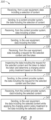
- Figure 3 is a flowchart representation of a method 300 of applying a charging and/or policy treatment to a flow including content in accordance with some implementations.
- the method 300 is performed by a core network, such as the core network 110 of Figure 1 , or a portion thereof, such as the network gateway 114 of Figure 1 .
- the method 300 is performed by processing logic, including hardware, firmware, software, or a combination thereof.
- the method 300 is performed by a processor executing code stored in a non-transitory computer-readable medium (e.g., a memory).
- the method 300 begins with a user equipment sending a selection of content to a content provider system (e.g., to the control plane 121 of the content provider system 120 of Figure 1 ). Accordingly, in block 310, the core network receives, from the user equipment, data including a selection of content and, in block 315, the core network sends, to the content provider system, the data including the selection of content.
- a content provider system e.g., to the control plane 121 of the content provider system 120 of Figure 1 .
- the core network receives, from the user equipment, data including a selection of content and, in block 315, the core network sends, to the content provider system, the data including the selection of content.
- the method 300 continues with the content provider system, in response to receiving the selection of content, sending a token to the user equipment.
- the token has the properties (including, but not limited to, the fields) of the token 200 of Figure 2 .
- the core network receives, from the content provider system, data including a token and, in block 325, the core network sends, to the user equipment, the data including the token.
- the content provider system generates the token based on subscriber properties and metadata of the selected content.
- the method 300 continues with the user equipment sending a request for the selected content, including the token, to the content provider system (e.g., the user plane 122 of the content provider system 120 of Figure 1 ).
- the core network receives, from the user equipment, data including the request for the selected content and the token and, in block 335 the core network sends, to the content provider system, the data including the request for the selected content and the token.
- the core network inspects the data including the request for the selected content and the token to detect the token and determine a charging and/or policy treatment based on the token.
- the token includes a charging field that indicates a charging treatment (e.g., has a value that maps to a charging treatment in a table stored by the core network).
- the token includes a policy field that indicates a policy treatment (e.g., has a value that maps to a policy treatment in a table stored by the core network).
- the token includes a charging and policy field that has a single value that indicates both a charging treatment and a policy treatment.
- the core network further determines a user identifier based on the token.
- the token includes a user identifier field that includes a value identifying the user equipment. If the core network determines that the user identifier based on the token fails to match a user identifier of the user equipment known to the core network, the core network does not send (in block 335) the data including the request for the selected content to the content provider system and/or does not send (in block 345, described below) the data including the selected content to the user equipment. Accordingly, the core network implements security technology to prevent a malicious user from having unauthorized access to services from the content provider system via tampering with the user equipment and impersonating a no-cost or low-cost token.
- the method 300 continues with the content provider system, in response to receiving the request for the selected content, sending the selected content (now also "the requested content") to the user equipment.
- the core network receives, from the content provider system, data including the selected content and, in block 345, the core network sends, to the user equipment, the data including the selected content.
- the core network applies the charging and/or policy treatment to the data including the selected content. For example, in applying a charging treatment, the core network can store information regarding a cost to be charged a subscriber associated with the user equipment and/or a cost to be charged to the content provider managing the content provider system for forwarding the selected content from the content provider system to the user equipment.
- the core network in applying a charging treatment, can store a specified type of usage data, e.g., a time connected or a bandwidth used, that can be correlated to a cost by the core network, a component thereof (such as a the policy/charging module), or a separate billing system of the MNO.
- a specified type of usage data e.g., a time connected or a bandwidth used
- the core network in applying a policy treatment, can send the data including the selected content with a QoS indicated by the policy treatment.
- the core network is unable to inspect data to detect the token (as in block 333 of Figure 3 ).
- the method 400 of Figure 4 may be used.
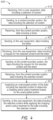
- Figure 4 is a flowchart representation of a method 400 of applying a charging and/or policy treatment to an encrypted flow including content in accordance with some implementations.
- the method 400 is performed by a core network, such as the core network 110 of Figure 1 , or a portion thereof, such as the network gateway 114 of Figure 1 .
- the method 400 is performed by processing logic, including hardware, firmware, software, or a combination thereof.
- the method 400 is performed by a processor executing code stored in a non-transitory computer-readable medium (e.g., a memory).
- the method 400 begins with a user equipment sending a selection of content to a content provider system (e.g., to the control plane 121 of the content provider system 120 of Figure 1 ). Accordingly, in block 410, the core network receives, from the user equipment, data including a selection of content and, in block 415, the core network sends, to the content provider system, the data including the selection of content.
- a content provider system e.g., to the control plane 121 of the content provider system 120 of Figure 1 .
- the core network receives, from the user equipment, data including a selection of content and, in block 415, the core network sends, to the content provider system, the data including the selection of content.
- the method 400 continues with the content provider system, in response to receiving the selection of content, sending a token to the user equipment.
- the token has the properties (including, but not limited to, the fields) of the token 200 of Figure 2 .
- the core network receives, from the content provider system, data including a token and, in block 425, the core network sends, to the user equipment, the data including the token.
- the content provider system generates the token based on subscriber properties and metadata of the selected content.
- the method 400 continues with the user equipment sending a request for the selected content, including the token, to the content provider system (e.g., the user plane 122 of the content provider system 120 of Figure 1 ).
- the core network receives, from the user equipment, data including the request for the selected content and the token and, in block 435 the core network sends, to the content provider system, the data including the request for the selected content and the token.
- the token is processed by the content provider system (e.g., the user plane 121 of the content provider system 120 of Figure 1 ) to perform security checks on the token and verify the binding between the token and the user equipment requesting the selected content.
- the content provider system e.g., the user plane 121 of the content provider system 120 of Figure 1
- the method 400 continues with the content provider system, in response to receiving the request for the selected content, sending the selected content (now also "the requested content") to the user equipment. Accordingly, in block 440, the core network receives, from the content provider system, data including the selected content and, in block 445, the core network sends, to the user equipment, the data including the selected content.
- the core network (e.g., the network gateway 114 of the core network 110 of Figure 1 ) inspects an unencrypted portion of the data including the selected content to determine a charging and/or policy treatment based on the unencrypted portion.
- the content provider system e.g., the user plane 121 of the content provider system 120 of Figure 1
- the label is included in an unencrypted portion of the data.
- the label is included in the "option" field of the TCP (transmission control protocol) header, which is not encrypted in TLS.
- the unencrypted portion of the data inspected by the core network includes at least a portion of a header.
- the label includes two bytes for the charging value and/or policy value (included in the charging field and/or policy field of the token and a four-byte HMAC (hash-based message authentication code) signature calculated by applying a cryptographic hash function to the charging value and/or policy value and the packet payload (in order to prevent policy forging by mechanical attachment of the option field to a different packet) and, then, truncating the result to the first four bytes.
- HMAC key-based message authentication code
- the core network applies the charging and/or policy treatment to the data including the selected content.
- the core network can store information regarding a cost to be charged a subscriber associated with the user equipment and/or a cost to be charged to the content provider managing the content provider system for forwarding the selected content from the content provider system to the user equipment.
- the core network can store a specified type of usage data, e.g., a time connected or a bandwidth used, that can be correlated to a cost by the core network, a component thereof (such as a the policy/charging module), or a separate billing system of the MNO.
- the core network can send the data including the selected content with a QoS indicated by the policy treatment.
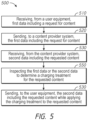
- Figure 5 is a flowchart representation of a method 500 of inspecting data to determine charging treatment in accordance with some implementations.
- the method 500 is performed by a core network, such as the core network 110 of Figure 1 , or a portion thereof, such as the network gateway 114 of Figure 1 .
- the method 500 is performed by processing logic, including hardware, firmware, software, or a combination thereof.
- the method 500 is performed by a processor executing code stored in a non-transitory computer-readable medium (e.g., a memory).
- the method 500 begins, in block 510, with the core network receiving, from a user equipment, first data including a request for content.
- the method 500 continues, in block 520, with the core network sending, to a content provider system, second data including the requested content.
- the method 500 continues, in block 530, with the core network receiving, from the content provider system, second data including the requested content.
- the method 500 continues, in block 540, with the core network inspecting the first data or the second data to determine a charging treatment for the requested content.
- the first data further includes a token indicating the charging treatment and inspecting the first data or the second data includes detecting the token in the first data and determining the charging treatment based on the token.
- the token further indicates a user identifier associated with the user equipment usable to validate the request for content.
- the core network validates the request for the content based on the user identifier.
- the content provider system validates the request for content based on the user identifier.
- inspecting the first data or the second data includes detecting a label indicating the charging treatment in an unencrypted portion of the second data and determining the charging treatment based on the label.
- the unencrypted portion of the second data includes a TCP header.
- the method 500 continues, at block 550, with the core network sending, to the user equipment, the second data including the requested content while applying the charging treatment to the requested content.
- applying the charging treatment comprises storing information regarding a cost to be charged a subscriber associated with the user equipment and/or a cost to be charged (or reimbursed) to the content provider managing the content provider system.
- applying the charging treatment comprises storing a type of usage data specified by the charging treatment, e.g., a time connected or a bandwidth used, that can be correlated to a cost by the core network, a component thereof (such as a the policy/charging module), or a separate billing system of the MNO.
- the charging treatment indicates a cost to be charged to the subscriber and a cost to be reimbursed to the content provider. In various implementations, the charging treatment indicates a cost to be charged to the content provider to reimburse the MNO for use of the core network. In various implementations, the charging treatment indicates a type of usage data to be stored, e.g., a time connected or a bandwidth used, that can be correlated to a cost by the core network, a component thereof (such as a the policy/charging module), or a separate billing system of the MNO.
- the core network inspects the first data or the second data to determine a policy treatment for the requested content and sends the second data to the user equipment according the policy treatment.
- sending the second data to the user equipment according the policy treatment includes sending the second data (e.g., content data) to the user equipment according to a specified quality-of-service.
- data indicative of the policy treatment is sent to an access node by way of a controller and the access node provides (or enforces) the specified quality-of-service.
- FIG. 6 is a block diagram of a computing device 600 in accordance with some implementations.
- the computing device 600 corresponds to the core network 110 of Figure 1 and/or the network gateway 114 of Figure 1 and performs one or more of the functionalities described above with respect to those systems. While certain specific features are illustrated, those skilled in the art will appreciate from the present disclosure that various other features have not been illustrated for the sake of brevity, and so as not to obscure more pertinent aspects of the embodiments disclosed herein.
- the computing device 600 includes one or more processing units (CPU's) 602 (e.g., processors), one or more output interfaces 603 (e.g., a network interface), a memory 606, a programming interface 608, and one or more communication buses 604 for interconnecting these and various other components.
- CPU's processing units
- output interfaces 603 e.g., a network interface
- memory 606 e.g., a flash memory
- programming interface 608 e.g., a programming interface
- communication buses 604 for interconnecting these and various other components.
- the communication buses 604 include circuitry that interconnects and controls communications between system components.
- the memory 606 includes high-speed random access memory, such as DRAM, SRAM, DDR RAM or other random access solid state memory devices; and, in some implementations, include non-volatile memory, such as one or more magnetic disk storage devices, optical disk storage devices, flash memory devices, or other non-volatile solid state storage devices.
- the memory 606 optionally includes one or more storage devices remotely located from the CPU(s) 602.
- the memory 606 comprises a non-transitory computer readable storage medium.
- the memory 606 or the non-transitory computer readable storage medium of the memory 606 stores the following programs, modules and data structures, or a subset thereof including an optional operating system 630 and a network gateway module 640.
- one or more instructions are included in a combination of logic and non-transitory memory.
- the operating system 630 includes procedures for handling various basic system services and for performing hardware dependent tasks.
- the network gateway module 640 is configured to connect user equipment to a network. To that end, the network gateway module 640 includes an interface module 641 and an inspection module 642.
- the interface module 641 is configured to receive, from a user equipment, first data including a request for content. To that end, the interface module 641 includes a set of instructions 641a and heuristics and metadata 641b. In some implementations, the interface module 641 is further configured to send, to a content provider system, the first data including the request for content. In some implementations, the interface module 641 is further configured to receive, from the content provider system, second data including the requested content. In some implementations, the inspection module 642 is configured to inspect the first data or the second data to determine a charging treatment for the requested content. To that end, the inspection module 642 includes a set of instructions 642a and heuristics and metadata 62b. In some implementations, the interface module 641 is further configured to send, to the user equipment, the second data including the requested content while applying the charging treatment to the requested content.
- network gateway module 640, the interface module 641, and the inspection module 642 are illustrated as residing on a single computing device 600, it should be understood that in other embodiments, any combination of the network gateway module 640, the interface module 641, and the inspection module 642 can reside in separate computing devices in various implementations. For example, in some implementations, each of the network gateway module 640, the interface module 641, and the inspection module 642 reside on a separate computing device.
- Figure 6 is intended more as functional description of the various features which are present in a particular implementation as opposed to a structural schematic of the embodiments described herein.
- items shown separately could be combined and some items could be separated.
- some functional modules shown separately in Figure 4 could be implemented in a single module and the various functions of single functional blocks could be implemented by one or more functional blocks in various embodiments.
- the actual number of modules and the division of particular functions and how features are allocated among them will vary from one embodiment to another, and may depend in part on the particular combination of hardware, software and/or firmware chosen for a particular embodiment.
- the order of the steps and/or phases can be rearranged and certain steps and/or phases may be omitted entirely.
- the methods described herein are to be understood to be open-ended, such that additional steps and/or phases to those shown and described herein can also be performed.
- the computer system may, in some cases, include multiple distinct computers or computing devices (e.g., physical servers, workstations, storage arrays, etc.) that communicate and interoperate over a network to perform the described functions.
- Each such computing device typically includes a processor (or multiple processors) that executes program instructions or modules stored in a memory or other non-transitory computer-readable storage medium or device.
- the various functions disclosed herein may be embodied in such program instructions, although some or all of the disclosed functions may alternatively be implemented in application-specific circuitry (e.g., ASICs or FPGAs) of the computer system. Where the computer system includes multiple computing devices, these devices may, but need not, be co-located.
- the results of the disclosed methods and tasks may be persistently stored by transforming physical storage devices, such as solid state memory chips and/or magnetic disks, into a different state.
Landscapes
- Engineering & Computer Science (AREA)
- Business, Economics & Management (AREA)
- Accounting & Taxation (AREA)
- Computer Networks & Wireless Communication (AREA)
- Signal Processing (AREA)
- Strategic Management (AREA)
- Finance (AREA)
- Development Economics (AREA)
- Entrepreneurship & Innovation (AREA)
- Computer Security & Cryptography (AREA)
- Data Mining & Analysis (AREA)
- Game Theory and Decision Science (AREA)
- Economics (AREA)
- Marketing (AREA)
- Physics & Mathematics (AREA)
- General Business, Economics & Management (AREA)
- General Physics & Mathematics (AREA)
- Theoretical Computer Science (AREA)
- Library & Information Science (AREA)
- General Engineering & Computer Science (AREA)
- Computing Systems (AREA)
- Computer Hardware Design (AREA)
- Telephonic Communication Services (AREA)
Description
- The present disclosure relates generally to wireless networks, and in particular, inspecting data transferred over a wireless network to determine a charging and/or policy treatment.
- In order to increase revenue, a mobile network operator (MNO) can attempt to increase the number of their subscribers. However, as population network connectivity reaches saturation, this may be difficult, resulting in competition from other MNOs that drives down prices and, ultimately, decreases revenue for the MNO.
-
US2016182244 relates to charging for multimedia content, such as Multimedia Broadcast Multicast Service, MBMS, content, that is provided for subscriber consumption through a communication network, such as a wireless communication network. One aspect of the teachings involves the advantageous inclusion of content location information in the context of generating or sending charging-related messages, in association with requested multimedia content. The content location information indicates, for example, whether the requested multimedia content is available for delivery to a subscriber device associated with the request from a data store that internal to the network. This functionality enables differentiated charging as a function of the content location indicated by the content location information included in the charging-related message.2004/054629 A1 discloses methods for accessing content securely. - For a better understanding of aspects of the various implementations described herein and to show more clearly how they may be carried into effect, reference is made, by way of example only, to the accompanying drawings.
-
Figure 1 is a functional block diagram of a wireless communications environment in accordance with various implementations. -
Figure 2 is a data diagram of a token in accordance with some implementations. -
Figure 3 is a flowchart representation of a method of applying a charging and/ or policy treatment to a flow including content in accordance with some implementations. -
Figure 4 is a flowchart representation of a method of applying a charging and/ or policy treatment to an encrypted flow including content in accordance with some implementations. -
Figure 5 is a flowchart representation of a method of inspecting data to determine a charging treatment in accordance with some implementations. - 9.
Figure 6 is a block diagram of an example of a device in accordance with some implementations. - 10. In accordance with common practice the various features illustrated in the drawings may not be drawn to scale. Accordingly, the dimensions of the various features may be arbitrarily expanded or reduced for clarity. In addition, some of the drawings may not depict all of the components of a given system, method or device. Finally, like reference numerals may be used to denote like features throughout the specification and figures.
- 11. Numerous details are described herein in order to provide a thorough understanding of illustrative implementations shown in the drawings. However, the drawings merely show some example aspects of the present disclosure and are therefore not to be considered limiting. Those of ordinary skill in the art will appreciate from the present disclosure that other effective aspects and/or variants do not include all of the specific details described herein. Moreover, well-known systems, methods, components, devices and circuits have not been described in exhaustive detail so as not to unnecessarily obscure more pertinent aspects of the implementations described herein.
- 12. The invention is defined by the independent claims. Further embodiments are defined by the dependent claims.
- 13. As network connectivity of the general population reaches saturation, MNOs can attempt to increase their revenue by methods other than obtaining new subscribers. For example, an MNO can attempt to increase revenue by increasing the subscription cost per subscriber. In various implementations, an MNO can attempt to increase subscription cost per subscriber by offering content (such as video, audio, entertainment, etc.) provided by a content provider over the MNO's network.
- 14. In various implementations, the MNO provides the content to the subscriber (e.g., via an app) and charges the subscriber directly for content consumption (and network usage) while also reimbursing the content provider for use of their content. In various implementations, the content provider provides the content (e.g., via an app) and charges the subscriber directly for content consumption while also reimbursing the MNO for use of their network. In various implementations, the MNO transports the content free-of-charge (so-called "zero rating") while recovering costs through bit-rate control of the content.
- 15. Tracking content consumption in order to implement these charging schemes (and others) can be difficult. In some embodiments, the app itself tracks the content consumed by the subscriber and reports back to the MNO (and/or the content provider) the bandwidth consumed. However, various such embodiments are not reliable as MNOs charging functions, do not scale well, and are not easy to integrate with existing charging functions. Further, such embodiments do not provide security capabilities for revenue protection, as the app can be manipulated by a user intent on fraud.
- 16. Accordingly, in various implementations, metadata associated with the content is passed in the form of a token from the content provider to the MNO. The MNO interprets the token as specifying a charging (and/or policy) treatment to be applied to the flow associated with the content.
- 17.
Figure 1 is a functional block diagram of awireless communications environment 100 in accordance with some implementations. Thewireless communications environment 100 includes acore network 110 which may be operated by a mobile network operator (MNO). Thewireless communications environment 100 also includes acontent provider system 120 which may be operated by a content provider. In various implementations, the content provider and the MNO are separate entities. In various implementations, the content provider and the MNO are the same entity. - 18. The
core network 110 and thecontent provider system 120 are coupled via anetwork 101. In various implementations, thenetwork 101 includes any public or private LAN (local area network) and/or WAN (wide area network), such as an intranet, an extranet, a virtual private network, and/or portions of the Internet. - 19. The
core network 110 is coupled to anaccess node 130 that provides wireless network access to a user equipment 140 (e.g., a smartphone, a tablet, a laptop, etc.). AlthoughFigure 1 only illustrates asingle access node 130 and asingle user equipment 140, it is to be appreciated that the wireless communications environment can include multiple access nodes and multiple user equipments. In various implementations, theaccess node 130 is an eNodeB. In various implementations, theaccess node 130 is a BSS (base station subsystem), including, among other things, a BST (base transceiver station), a BSC (base station controller), and a PCU (packet control unit). In various implementations, theaccess node 130 is a gNodeB. - 20. The
core network 110 includes anetwork gateway 114 that serves as the interface for thecore network 110 and thenetwork 101. In various implementations, thenetwork gateway 114 includes a PGW (PDN [packet data network] gateway). In various implementations, thenetwork gateway 114 includes a GGSN (GPRS [general packet radio service] support node). - 21. The
core network 110 includes anaccess node gateway 113 that serves as a router for data from thenetwork 101 to theaccess node 130. In various implementations, theaccess node gateway 113 includes an SGW (serving gateway). In various implementations, theaccess node gateway 113 includes an SGSN (serving GPRS support node). - 22. The
core network 110 includes a controller 111 andstorage 112. The controller 111 serves to control high-level operation of thecore network 110 through signaling messages (e.g., to theaccess node gateway 113 and/or the network gateway 114). In various implementations, the controller 111 includes an MME (mobile management entity). In various implementations, thestorage 112 includes an HSS (home subscriber server) that stores information about the core network's subscribers. - 23. Although certain components of the
core network 110 are illustrated inFigure 1 , it is to be appreciated that, in various implementations, thecore network 110 includes additional components. - 24. The
network gateway 114 includes a policy/chargingmodule 115 that inspects data incoming from thenetwork 101 and applies policy and charging rules to the data. In various implementations, the policy/charging module includes a PCEF (policy and charging enforcement function). In various implementations, the policy/charging module 115 is controlled by a PCRF (policy and charging rules function) of thecore network 110, separate from thenetwork gateway 114. - 25. The
content provider system 120 includes auser plane 121 and acontrol plane 122. Thecontrol plane 122 communicates, via thenetwork 101, with theuser equipment 140, enabling theuser equipment 140 to retrieve content. In various implementations, thecontrol plane 122 provides a program guide (e.g., an EPG [electronic program guide] that lists video titles (live or VOD [video on demand]) that can be retrieved by theuser equipment 140. In various implementations, theuser equipment 140 authenticates with thecontrol plane 122 and a subscriber profile stored by thecontent provider system 120 is used to provide an indication as to which content theuser equipment 140 can retrieve. Theuser plane 121 receives requests for content from theuser equipment 140 and, if properly authenticated, provides the content to theuser equipment 140. - 26. When the
content provider system 120 receives a selection of content (e.g., a video title) from theuser equipment 140, thecontrol plane 121 provides an authenticated token to theuser equipment 140 to be used by theuser equipment 140 in requesting the content from theuser plane 122. - 27.
Figure 2 is a data diagram of a token 200 in accordance with some implementations. In various implementations, the token 200 includes atoken identifier field 210 that includes a value identifying the token, acontent identifier field 220 that includes a value identifying the selected content, and auser identifier field 230 that includes a value that identifies the user equipment 140 (or a user thereof). In various implementations, theuser identifier field 230 includes a federated identity, establishing a joint identity context between thecontent provider system 120 and thecore network 110. Thus, both thecontent provider system 120 and thecore network 110 both have access to a common identity that is known to be authentic. One example of a federated identity mechanism is the GSMA (Global System for Mobile Communications Association) Mobile Connect framework, which itself relies on the GAA (generic authentication architecture) in 3GPP. - 28. In various implementations, the token 200 includes a charging
field 240 that includes a value that indicates the charging treatment that thecore network 110 is to apply to the flow including the selected content. The charging treatment can specify, for example, a cost to be charged a subscriber associated with theuser equipment 140 and/or a cost to be charged to the content provider managing thecontent provider system 120. In various implementations, the charging treatment can specify a type of usage data to be stored, e.g., a time connected or a bandwidth used, that can be correlated to a cost by thecore network 110, a component thereof (such as a the policy/ charging module 115), or a separate billing system of the MNO. - 29. In various implementations, the token 200 includes a
policy field 250 that includes a value that indicates a policy treatment that thecore network 110 is to apply to the flow including the selected content. The policy treatment can specify, for example, a QoS (quality of service) thecore network 110 is to provide the flow. - 30. In various implementations, the charging field 240 (and/or policy field 250) is generated on a per subscriber basis, the charging and/or policy treatment being selected by the
control plane 121 based on subscriber properties (e.g., a media plan associated with an account logged into by the user equipment 140) and metadata of the selected content (e.g., whether the selected content is included in the media plan). - 31. Although certain fields of the token 200 are illustrated in
Figure 2 , it is to be appreciated that, in various implementations, the token 200 can lack some of the illustrated fields or include additional fields, such as a time field indicating a time thetoken 200 is valid or a metadata field indicating parameters of the token 200. In various implementations, the token 200 is signed or otherwise encrypted. - 32.
Figure 3 is a flowchart representation of amethod 300 of applying a charging and/or policy treatment to a flow including content in accordance with some implementations. In some implementations (and as detailed below as an example), themethod 300 is performed by a core network, such as thecore network 110 ofFigure 1 , or a portion thereof, such as thenetwork gateway 114 ofFigure 1 . In some implementations, themethod 300 is performed by processing logic, including hardware, firmware, software, or a combination thereof. In some implementations, themethod 300 is performed by a processor executing code stored in a non-transitory computer-readable medium (e.g., a memory). - 33. The
method 300 begins with a user equipment sending a selection of content to a content provider system (e.g., to thecontrol plane 121 of thecontent provider system 120 ofFigure 1 ). Accordingly, inblock 310, the core network receives, from the user equipment, data including a selection of content and, inblock 315, the core network sends, to the content provider system, the data including the selection of content. - 34. The
method 300 continues with the content provider system, in response to receiving the selection of content, sending a token to the user equipment. In various implementations, the token has the properties (including, but not limited to, the fields) of thetoken 200 ofFigure 2 . Accordingly, inblock 320, the core network receives, from the content provider system, data including a token and, inblock 325, the core network sends, to the user equipment, the data including the token. As described above, in various implementations, the content provider system generates the token based on subscriber properties and metadata of the selected content. - 35. The
method 300 continues with the user equipment sending a request for the selected content, including the token, to the content provider system (e.g., theuser plane 122 of thecontent provider system 120 ofFigure 1 ). Accordingly, inblock 330, the core network receives, from the user equipment, data including the request for the selected content and the token and, inblock 335 the core network sends, to the content provider system, the data including the request for the selected content and the token. - 36. In
block 333, the core network (e.g., thenetwork gateway 114 of thecore network 110 ofFigure 1 ), inspects the data including the request for the selected content and the token to detect the token and determine a charging and/or policy treatment based on the token. In various implementations, the token includes a charging field that indicates a charging treatment (e.g., has a value that maps to a charging treatment in a table stored by the core network). In various implementations, the token includes a policy field that indicates a policy treatment (e.g., has a value that maps to a policy treatment in a table stored by the core network). In various implementations, the token includes a charging and policy field that has a single value that indicates both a charging treatment and a policy treatment. - 37. In various implementations, the core network further determines a user identifier based on the token. In various implementations, the token includes a user identifier field that includes a value identifying the user equipment. If the core network determines that the user identifier based on the token fails to match a user identifier of the user equipment known to the core network, the core network does not send (in block 335) the data including the request for the selected content to the content provider system and/or does not send (in
block 345, described below) the data including the selected content to the user equipment. Accordingly, the core network implements security technology to prevent a malicious user from having unauthorized access to services from the content provider system via tampering with the user equipment and impersonating a no-cost or low-cost token. - 38. The
method 300 continues with the content provider system, in response to receiving the request for the selected content, sending the selected content (now also "the requested content") to the user equipment. Accordingly, in block 340, the core network receives, from the content provider system, data including the selected content and, inblock 345, the core network sends, to the user equipment, the data including the selected content. In sending the selected content to the user equipment, the core network applies the charging and/or policy treatment to the data including the selected content. For example, in applying a charging treatment, the core network can store information regarding a cost to be charged a subscriber associated with the user equipment and/or a cost to be charged to the content provider managing the content provider system for forwarding the selected content from the content provider system to the user equipment. As another example, in applying a charging treatment, the core network can store a specified type of usage data, e.g., a time connected or a bandwidth used, that can be correlated to a cost by the core network, a component thereof (such as a the policy/charging module), or a separate billing system of the MNO. As another example, in applying a policy treatment, the core network can send the data including the selected content with a QoS indicated by the policy treatment. - 39. In various implementations, such as when traffic over the network is encrypted with TLS (transport layer security), the core network is unable to inspect data to detect the token (as in
block 333 ofFigure 3 ). In such implementations, themethod 400 ofFigure 4 may be used. - 40.
Figure 4 is a flowchart representation of amethod 400 of applying a charging and/or policy treatment to an encrypted flow including content in accordance with some implementations. In some implementations (and as detailed below as an example), themethod 400 is performed by a core network, such as thecore network 110 ofFigure 1 , or a portion thereof, such as thenetwork gateway 114 ofFigure 1 . In some implementations, themethod 400 is performed by processing logic, including hardware, firmware, software, or a combination thereof. In some implementations, themethod 400 is performed by a processor executing code stored in a non-transitory computer-readable medium (e.g., a memory). - 41. The
method 400 begins with a user equipment sending a selection of content to a content provider system (e.g., to thecontrol plane 121 of thecontent provider system 120 ofFigure 1 ). Accordingly, inblock 410, the core network receives, from the user equipment, data including a selection of content and, inblock 415, the core network sends, to the content provider system, the data including the selection of content. - 42. The
method 400 continues with the content provider system, in response to receiving the selection of content, sending a token to the user equipment. In various implementations, the token has the properties (including, but not limited to, the fields) of thetoken 200 ofFigure 2 . Accordingly, inblock 420, the core network receives, from the content provider system, data including a token and, inblock 425, the core network sends, to the user equipment, the data including the token. As described above, in various implementations, the content provider system generates the token based on subscriber properties and metadata of the selected content. - 43. The
method 400 continues with the user equipment sending a request for the selected content, including the token, to the content provider system (e.g., theuser plane 122 of thecontent provider system 120 ofFigure 1 ). Accordingly, inblock 430, the core network receives, from the user equipment, data including the request for the selected content and the token and, inblock 435 the core network sends, to the content provider system, the data including the request for the selected content and the token. - 44. In various implementations, the token is processed by the content provider system (e.g., the
user plane 121 of thecontent provider system 120 ofFigure 1 ) to perform security checks on the token and verify the binding between the token and the user equipment requesting the selected content. - 45. The
method 400 continues with the content provider system, in response to receiving the request for the selected content, sending the selected content (now also "the requested content") to the user equipment. Accordingly, inblock 440, the core network receives, from the content provider system, data including the selected content and, inblock 445, the core network sends, to the user equipment, the data including the selected content. - 46. In
block 443, the core network (e.g., thenetwork gateway 114 of thecore network 110 ofFigure 1 ) inspects an unencrypted portion of the data including the selected content to determine a charging and/or policy treatment based on the unencrypted portion. In various implementations, the content provider system (e.g., theuser plane 121 of thecontent provider system 120 ofFigure 1 ) labels each packet in the data flow sent to the user equipment according to the charging and/or policy treatment that is to be applied by the core network to the packet, as determined based on the token (e.g., the values in the charging field and/or policy field). The label is included in an unencrypted portion of the data. For example, in various implementations, the label is included in the "option" field of the TCP (transmission control protocol) header, which is not encrypted in TLS. Accordingly, in various implementations, the unencrypted portion of the data inspected by the core network includes at least a portion of a header. - 47. In various implementations, the label includes two bytes for the charging value and/or policy value (included in the charging field and/or policy field of the token and a four-byte HMAC (hash-based message authentication code) signature calculated by applying a cryptographic hash function to the charging value and/or policy value and the packet payload (in order to prevent policy forging by mechanical attachment of the option field to a different packet) and, then, truncating the result to the first four bytes.
- 48. In sending the selected content to the user equipment (in block 445), the core network applies the charging and/or policy treatment to the data including the selected content. For example, in applying a charging treatment, the core network can store information regarding a cost to be charged a subscriber associated with the user equipment and/or a cost to be charged to the content provider managing the content provider system for forwarding the selected content from the content provider system to the user equipment. As another example, in applying a charging treatment, the core network can store a specified type of usage data, e.g., a time connected or a bandwidth used, that can be correlated to a cost by the core network, a component thereof (such as a the policy/charging module), or a separate billing system of the MNO. As another example, in applying a policy treatment, the core network can send the data including the selected content with a QoS indicated by the policy treatment.
- 49.
Figure 5 is a flowchart representation of amethod 500 of inspecting data to determine charging treatment in accordance with some implementations. In some implementations (and as detailed below as an example), themethod 500 is performed by a core network, such as thecore network 110 ofFigure 1 , or a portion thereof, such as thenetwork gateway 114 ofFigure 1 . In some implementations, themethod 500 is performed by processing logic, including hardware, firmware, software, or a combination thereof. In some implementations, themethod 500 is performed by a processor executing code stored in a non-transitory computer-readable medium (e.g., a memory). - 50. The
method 500 begins, inblock 510, with the core network receiving, from a user equipment, first data including a request for content. Themethod 500 continues, inblock 520, with the core network sending, to a content provider system, second data including the requested content. - 51. The
method 500 continues, inblock 530, with the core network receiving, from the content provider system, second data including the requested content. - 52. The
method 500 continues, in block 540, with the core network inspecting the first data or the second data to determine a charging treatment for the requested content. In various implementations, the first data further includes a token indicating the charging treatment and inspecting the first data or the second data includes detecting the token in the first data and determining the charging treatment based on the token. In various implementations, the token further indicates a user identifier associated with the user equipment usable to validate the request for content. In various implementations, the core network validates the request for the content based on the user identifier. In various implementations, the content provider system validates the request for content based on the user identifier. - 53. In various implementations, inspecting the first data or the second data includes detecting a label indicating the charging treatment in an unencrypted portion of the second data and determining the charging treatment based on the label. In various implementations, the unencrypted portion of the second data includes a TCP header.
- 54. The
method 500 continues, atblock 550, with the core network sending, to the user equipment, the second data including the requested content while applying the charging treatment to the requested content. - 55. In various implementations, applying the charging treatment comprises storing information regarding a cost to be charged a subscriber associated with the user equipment and/or a cost to be charged (or reimbursed) to the content provider managing the content provider system. In various implementations, applying the charging treatment comprises storing a type of usage data specified by the charging treatment, e.g., a time connected or a bandwidth used, that can be correlated to a cost by the core network, a component thereof (such as a the policy/charging module), or a separate billing system of the MNO.
- 56. In various implementations, the charging treatment indicates a cost to be charged to the subscriber and a cost to be reimbursed to the content provider. In various implementations, the charging treatment indicates a cost to be charged to the content provider to reimburse the MNO for use of the core network. In various implementations, the charging treatment indicates a type of usage data to be stored, e.g., a time connected or a bandwidth used, that can be correlated to a cost by the core network, a component thereof (such as a the policy/charging module), or a separate billing system of the MNO.
- 57. In various implementations, in addition to inspecting the first data or the second data to determine the charging treatment, the core network inspects the first data or the second data to determine a policy treatment for the requested content and sends the second data to the user equipment according the policy treatment. In various implementations, sending the second data to the user equipment according the policy treatment includes sending the second data (e.g., content data) to the user equipment according to a specified quality-of-service. For example, in various implementations, data indicative of the policy treatment is sent to an access node by way of a controller and the access node provides (or enforces) the specified quality-of-service.
- 58.
Figure 6 is a block diagram of acomputing device 600 in accordance with some implementations. In some implementations, thecomputing device 600 corresponds to thecore network 110 ofFigure 1 and/or thenetwork gateway 114 ofFigure 1 and performs one or more of the functionalities described above with respect to those systems. While certain specific features are illustrated, those skilled in the art will appreciate from the present disclosure that various other features have not been illustrated for the sake of brevity, and so as not to obscure more pertinent aspects of the embodiments disclosed herein. To that end, as a non-limiting example, in some embodiments thecomputing device 600 includes one or more processing units (CPU's) 602 (e.g., processors), one or more output interfaces 603 (e.g., a network interface), amemory 606, aprogramming interface 608, and one ormore communication buses 604 for interconnecting these and various other components. - 59. In some implementations, the
communication buses 604 include circuitry that interconnects and controls communications between system components. Thememory 606 includes high-speed random access memory, such as DRAM, SRAM, DDR RAM or other random access solid state memory devices; and, in some implementations, include non-volatile memory, such as one or more magnetic disk storage devices, optical disk storage devices, flash memory devices, or other non-volatile solid state storage devices. Thememory 606 optionally includes one or more storage devices remotely located from the CPU(s) 602. Thememory 606 comprises a non-transitory computer readable storage medium. Moreover, in some implementations, thememory 606 or the non-transitory computer readable storage medium of thememory 606 stores the following programs, modules and data structures, or a subset thereof including anoptional operating system 630 and anetwork gateway module 640. In some implementations, one or more instructions are included in a combination of logic and non-transitory memory. Theoperating system 630 includes procedures for handling various basic system services and for performing hardware dependent tasks. In some implementations, thenetwork gateway module 640 is configured to connect user equipment to a network. To that end, thenetwork gateway module 640 includes aninterface module 641 and aninspection module 642. - 60. In some implementations, the
interface module 641 is configured to receive, from a user equipment, first data including a request for content. To that end, theinterface module 641 includes a set ofinstructions 641a and heuristics andmetadata 641b. In some implementations, theinterface module 641 is further configured to send, to a content provider system, the first data including the request for content. In some implementations, theinterface module 641 is further configured to receive, from the content provider system, second data including the requested content. In some implementations, theinspection module 642 is configured to inspect the first data or the second data to determine a charging treatment for the requested content. To that end, theinspection module 642 includes a set ofinstructions 642a and heuristics and metadata 62b. In some implementations, theinterface module 641 is further configured to send, to the user equipment, the second data including the requested content while applying the charging treatment to the requested content. - 61. Although the
network gateway module 640, theinterface module 641, and theinspection module 642 are illustrated as residing on asingle computing device 600, it should be understood that in other embodiments, any combination of thenetwork gateway module 640, theinterface module 641, and theinspection module 642 can reside in separate computing devices in various implementations. For example, in some implementations, each of thenetwork gateway module 640, theinterface module 641, and theinspection module 642 reside on a separate computing device. - 62. Moreover,
Figure 6 is intended more as functional description of the various features which are present in a particular implementation as opposed to a structural schematic of the embodiments described herein. As recognized by those of ordinary skill in the art, items shown separately could be combined and some items could be separated. For example, some functional modules shown separately inFigure 4 could be implemented in a single module and the various functions of single functional blocks could be implemented by one or more functional blocks in various embodiments. The actual number of modules and the division of particular functions and how features are allocated among them will vary from one embodiment to another, and may depend in part on the particular combination of hardware, software and/or firmware chosen for a particular embodiment. - 63. The present disclosure describes various features, no single one of which is solely responsible for the benefits described herein. It will be understood that various features described herein may be combined, modified, or omitted, as would be apparent to one of ordinary skill. Other combinations and subcombinations than those specifically described herein will be apparent to one of ordinary skill, and are intended to form a part of this disclosure. Various methods are described herein in connection with various flowchart steps and/ or phases. It will be understood that in many cases, certain steps and/or phases may be combined together such that multiple steps and/or phases shown in the flowcharts can be performed as a single step and/or phase. Also, certain steps and/or phases can be broken into additional sub-components to be performed separately. In some instances, the order of the steps and/or phases can be rearranged and certain steps and/or phases may be omitted entirely. Also, the methods described herein are to be understood to be open-ended, such that additional steps and/or phases to those shown and described herein can also be performed.
- 64. Some or all of the methods and tasks described herein may be performed and fully automated by a computer system. The computer system may, in some cases, include multiple distinct computers or computing devices (e.g., physical servers, workstations, storage arrays, etc.) that communicate and interoperate over a network to perform the described functions. Each such computing device typically includes a processor (or multiple processors) that executes program instructions or modules stored in a memory or other non-transitory computer-readable storage medium or device. The various functions disclosed herein may be embodied in such program instructions, although some or all of the disclosed functions may alternatively be implemented in application-specific circuitry (e.g., ASICs or FPGAs) of the computer system. Where the computer system includes multiple computing devices, these devices may, but need not, be co-located. The results of the disclosed methods and tasks may be persistently stored by transforming physical storage devices, such as solid state memory chips and/or magnetic disks, into a different state.
- 65. The disclosure is not intended to be limited to the implementations shown herein. Various modifications to the implementations described in this disclosure may be readily apparent to those skilled in the art, and the generic principles defined herein may be applied to other implementations without departing from the scope of this disclosure. The teachings of the invention provided herein can be applied to other methods and systems, and are not limited to the methods and systems described above, and elements and acts of the various embodiments described above can be combined to provide further embodiments. Accordingly, the novel methods and systems described herein may be embodied in a variety of other forms; furthermore, various omissions, substitutions and changes in the form of the methods and systems described herein may be made without departing from the scope of the disclosure.
Claims (9)
- A method comprising:following receipt by a content provider system of a selection of content from a user equipment, communicating (325), via a core network, a token to the user equipment based on the user equipment being authenticated by the content provider system to retrieve content from the content provider system;
receiving (330), from the user equipment by the core network, first data including a request for content and the token;sending (335), to the content provider system, the first data including the request for content and the token;subsequent to the content provider system performing security checks on the token and verifying a binding between the token and the user equipment, receiving (340), from the content provider system, second data including the requested content;inspecting the token in the first data to determine a charging treatment for the requested content; and
sending (345), to the user equipment, the second data including the requested content while applying the charging treatment to the requested content. - The method of claim 1, wherein applying the charging treatment comprises storing information regarding a cost to be charged a subscriber associated with the user equipment and/or a cost to be charged to the content provider managing the content provider system.
- The method of claim 1, wherein applying the charging treatment comprises storing a type of usage data indicated by the charging treatment that can be correlated to a cost to be charged a subscriber associated with the user equipment and/or a cost to be charged to the content provider managing the content provider system.
- The method of any preceding claim, wherein the token further indicates a user identifier associated with the user equipment usable to validate the request for content.
- The method of any preceding claim, further comprising inspecting the first data or the second data to determine a policy treatment for the requested content, wherein the second data is sent to the user equipment according to the policy treatment.
- The method of claim 5, wherein sending the second data to the user equipment according the policy treatment includes sending the second data to the user equipment according to a specified quality-of-service.
- The method of any preceding claim, wherein inspecting the first data to determine the charging treatment for the requested content includes operating a packet data network gateway that inspects the first data.
- A system arranged to perform the method of any preceding claim.
- A non-transitory computer-readable medium having instructions encoded thereon which, when executed by a processor, cause the processor to perform the method of any of claims 1 to 7.
Applications Claiming Priority (2)
| Application Number | Priority Date | Filing Date | Title |
|---|---|---|---|
| US15/792,421 US20190122238A1 (en) | 2017-10-24 | 2017-10-24 | Data Inspection for Network Charging and Policy Treatment |
| PCT/US2018/056811 WO2019083860A1 (en) | 2017-10-24 | 2018-10-20 | Data inspection for network charging and policy treatment |
Publications (2)
| Publication Number | Publication Date |
|---|---|
| EP3701702A1 EP3701702A1 (en) | 2020-09-02 |
| EP3701702B1 true EP3701702B1 (en) | 2024-06-26 |
Family
ID=64267936
Family Applications (1)
| Application Number | Title | Priority Date | Filing Date |
|---|---|---|---|
| EP18800402.2A Active EP3701702B1 (en) | 2017-10-24 | 2018-10-20 | Data inspection for network charging and policy treatment |
Country Status (3)
| Country | Link |
|---|---|
| US (1) | US20190122238A1 (en) |
| EP (1) | EP3701702B1 (en) |
| WO (1) | WO2019083860A1 (en) |
Families Citing this family (1)
| Publication number | Priority date | Publication date | Assignee | Title |
|---|---|---|---|---|
| CN116827915A (en) * | 2022-03-28 | 2023-09-29 | 华为技术有限公司 | Communication methods, devices and systems |
Citations (1)
| Publication number | Priority date | Publication date | Assignee | Title |
|---|---|---|---|---|
| US20040054629A1 (en) * | 2002-09-13 | 2004-03-18 | Sun Microsystems, Inc., A Delaware Corporation | Provisioning for digital content access control |
Family Cites Families (5)
| Publication number | Priority date | Publication date | Assignee | Title |
|---|---|---|---|---|
| US7512973B1 (en) * | 2004-09-08 | 2009-03-31 | Sprint Spectrum L.P. | Wireless-access-provider intermediation to facilliate digital rights management for third party hosted content |
| US7975003B1 (en) * | 2008-02-05 | 2011-07-05 | Sprint Spectrum L.P. | Method for tracking payable media content transactions |
| US20110202634A1 (en) * | 2010-02-12 | 2011-08-18 | Surya Kumar Kovvali | Charging-invariant and origin-server-friendly transit caching in mobile networks |
| US20160182244A1 (en) * | 2014-12-17 | 2016-06-23 | Telefonaktiebolaget L M Ericsson (Publ) | Method and System for Obtaining Content Location Information Enabling Differential Charging Algorithms in Multimedia Broadcast and Multicast Service (MBMS) |
| US10341239B2 (en) * | 2015-05-21 | 2019-07-02 | Qualcomm Incorporated | Efficient policy enforcement for downlink traffic using network access tokens—control-plane approach |
-
2017
- 2017-10-24 US US15/792,421 patent/US20190122238A1/en not_active Abandoned
-
2018
- 2018-10-20 WO PCT/US2018/056811 patent/WO2019083860A1/en not_active Ceased
- 2018-10-20 EP EP18800402.2A patent/EP3701702B1/en active Active
Patent Citations (1)
| Publication number | Priority date | Publication date | Assignee | Title |
|---|---|---|---|---|
| US20040054629A1 (en) * | 2002-09-13 | 2004-03-18 | Sun Microsystems, Inc., A Delaware Corporation | Provisioning for digital content access control |
Also Published As
| Publication number | Publication date |
|---|---|
| US20190122238A1 (en) | 2019-04-25 |
| EP3701702A1 (en) | 2020-09-02 |
| WO2019083860A1 (en) | 2019-05-02 |
Similar Documents
| Publication | Publication Date | Title |
|---|---|---|
| US8706085B2 (en) | Method and apparatus for authenticating communication device | |
| US9535762B2 (en) | Methods to improve overload protection for a home subscriber server (HSS) | |
| US10068227B1 (en) | Methods and apparatus for authenticating identity of web access from a network element | |
| US9590988B2 (en) | Service location based authentication | |
| US10911414B2 (en) | Method and apparatus for data connectivity sharing | |
| US9402002B1 (en) | Open API for toll free data on demand | |
| US20080294891A1 (en) | Method for Authenticating a Mobile Node in a Communication Network | |
| CN101695164A (en) | Verification method, device and system for controlling resource access | |
| US11356839B2 (en) | Location verification and enforcement for content access devices | |
| WO2016188224A1 (en) | Service authorization method, apparatus, system and router | |
| WO2016165505A1 (en) | Connection control method and apparatus | |
| CN106936600B (en) | Flow charging method and system and related equipment | |
| CN103650439B (en) | Network entities, systems including network entities, methods of operating network entities, and methods for policy control | |
| CN118056382A (en) | Billing functions and methods for updating billing resources | |
| EP3089427B1 (en) | Controlling data exchange between a mobile communication network and a data provider | |
| US20190122238A1 (en) | Data Inspection for Network Charging and Policy Treatment | |
| US20150270978A1 (en) | Method and apparatus for data repair in a data communication network | |
| CN108400967A (en) | A kind of method for authenticating and right discriminating system | |
| US20140359048A1 (en) | Caching in a Telecommunication Network | |
| CN106878099A (en) | A flow management method, terminal equipment, server and system | |
| CN106487776B (en) | A method, network entity and system for protecting machine type communication equipment | |
| CN105792200B (en) | A kind of authentication method, system and related device | |
| CN101272259A (en) | Media stream information access billing method and system | |
| CN101854334A (en) | Admission control system, device and method | |
| WO2026033560A1 (en) | System and method for managing communication sessions in a network |
Legal Events
| Date | Code | Title | Description |
|---|---|---|---|
| STAA | Information on the status of an ep patent application or granted ep patent |
Free format text: STATUS: UNKNOWN |
|
| STAA | Information on the status of an ep patent application or granted ep patent |
Free format text: STATUS: THE INTERNATIONAL PUBLICATION HAS BEEN MADE |
|
| PUAI | Public reference made under article 153(3) epc to a published international application that has entered the european phase |
Free format text: ORIGINAL CODE: 0009012 |
|
| STAA | Information on the status of an ep patent application or granted ep patent |
Free format text: STATUS: REQUEST FOR EXAMINATION WAS MADE |
|
| 17P | Request for examination filed |
Effective date: 20200519 |
|
| AK | Designated contracting states |
Kind code of ref document: A1 Designated state(s): AL AT BE BG CH CY CZ DE DK EE ES FI FR GB GR HR HU IE IS IT LI LT LU LV MC MK MT NL NO PL PT RO RS SE SI SK SM TR |
|
| AX | Request for extension of the european patent |
Extension state: BA ME |
|
| DAV | Request for validation of the european patent (deleted) | ||
| DAX | Request for extension of the european patent (deleted) | ||
| STAA | Information on the status of an ep patent application or granted ep patent |
Free format text: STATUS: EXAMINATION IS IN PROGRESS |
|
| 17Q | First examination report despatched |
Effective date: 20210506 |
|
| P01 | Opt-out of the competence of the unified patent court (upc) registered |
Effective date: 20230525 |
|
| REG | Reference to a national code |
Ref country code: DE Free format text: PREVIOUS MAIN CLASS: H04L0029080000 Ref country code: DE Ref legal event code: R079 Ref document number: 602018071059 Country of ref document: DE Free format text: PREVIOUS MAIN CLASS: H04L0029080000 Ipc: H04W0004240000 |
|
| RIC1 | Information provided on ipc code assigned before grant |
Ipc: G06Q 30/0201 20230101ALI20231219BHEP Ipc: H04L 67/561 20220101ALI20231219BHEP Ipc: H04L 12/14 20060101ALI20231219BHEP Ipc: H04W 4/24 20180101AFI20231219BHEP |
|
| GRAP | Despatch of communication of intention to grant a patent |
Free format text: ORIGINAL CODE: EPIDOSNIGR1 |
|
| STAA | Information on the status of an ep patent application or granted ep patent |
Free format text: STATUS: GRANT OF PATENT IS INTENDED |
|
| INTG | Intention to grant announced |
Effective date: 20240207 |
|
| GRAS | Grant fee paid |
Free format text: ORIGINAL CODE: EPIDOSNIGR3 |
|
| GRAA | (expected) grant |
Free format text: ORIGINAL CODE: 0009210 |
|
| STAA | Information on the status of an ep patent application or granted ep patent |
Free format text: STATUS: THE PATENT HAS BEEN GRANTED |
|
| AK | Designated contracting states |
Kind code of ref document: B1 Designated state(s): AL AT BE BG CH CY CZ DE DK EE ES FI FR GB GR HR HU IE IS IT LI LT LU LV MC MK MT NL NO PL PT RO RS SE SI SK SM TR |
|
| REG | Reference to a national code |
Ref country code: GB Ref legal event code: FG4D |
|
| REG | Reference to a national code |
Ref country code: CH Ref legal event code: EP |
|
| REG | Reference to a national code |
Ref country code: DE Ref legal event code: R096 Ref document number: 602018071059 Country of ref document: DE |
|
| PG25 | Lapsed in a contracting state [announced via postgrant information from national office to epo] |
Ref country code: BG Free format text: LAPSE BECAUSE OF FAILURE TO SUBMIT A TRANSLATION OF THE DESCRIPTION OR TO PAY THE FEE WITHIN THE PRESCRIBED TIME-LIMIT Effective date: 20240626 |
|
| PG25 | Lapsed in a contracting state [announced via postgrant information from national office to epo] |
Ref country code: FI Free format text: LAPSE BECAUSE OF FAILURE TO SUBMIT A TRANSLATION OF THE DESCRIPTION OR TO PAY THE FEE WITHIN THE PRESCRIBED TIME-LIMIT Effective date: 20240626 Ref country code: HR Free format text: LAPSE BECAUSE OF FAILURE TO SUBMIT A TRANSLATION OF THE DESCRIPTION OR TO PAY THE FEE WITHIN THE PRESCRIBED TIME-LIMIT Effective date: 20240626 |
|
| REG | Reference to a national code |
Ref country code: LT Ref legal event code: MG9D |
|
| PG25 | Lapsed in a contracting state [announced via postgrant information from national office to epo] |
Ref country code: GR Free format text: LAPSE BECAUSE OF FAILURE TO SUBMIT A TRANSLATION OF THE DESCRIPTION OR TO PAY THE FEE WITHIN THE PRESCRIBED TIME-LIMIT Effective date: 20240927 |
|
| PG25 | Lapsed in a contracting state [announced via postgrant information from national office to epo] |
Ref country code: LV Free format text: LAPSE BECAUSE OF FAILURE TO SUBMIT A TRANSLATION OF THE DESCRIPTION OR TO PAY THE FEE WITHIN THE PRESCRIBED TIME-LIMIT Effective date: 20240626 |
|
| REG | Reference to a national code |
Ref country code: NL Ref legal event code: MP Effective date: 20240626 |
|
| PG25 | Lapsed in a contracting state [announced via postgrant information from national office to epo] |
Ref country code: NO Free format text: LAPSE BECAUSE OF FAILURE TO SUBMIT A TRANSLATION OF THE DESCRIPTION OR TO PAY THE FEE WITHIN THE PRESCRIBED TIME-LIMIT Effective date: 20240926 Ref country code: LV Free format text: LAPSE BECAUSE OF FAILURE TO SUBMIT A TRANSLATION OF THE DESCRIPTION OR TO PAY THE FEE WITHIN THE PRESCRIBED TIME-LIMIT Effective date: 20240626 Ref country code: HR Free format text: LAPSE BECAUSE OF FAILURE TO SUBMIT A TRANSLATION OF THE DESCRIPTION OR TO PAY THE FEE WITHIN THE PRESCRIBED TIME-LIMIT Effective date: 20240626 Ref country code: GR Free format text: LAPSE BECAUSE OF FAILURE TO SUBMIT A TRANSLATION OF THE DESCRIPTION OR TO PAY THE FEE WITHIN THE PRESCRIBED TIME-LIMIT Effective date: 20240927 Ref country code: FI Free format text: LAPSE BECAUSE OF FAILURE TO SUBMIT A TRANSLATION OF THE DESCRIPTION OR TO PAY THE FEE WITHIN THE PRESCRIBED TIME-LIMIT Effective date: 20240626 Ref country code: BG Free format text: LAPSE BECAUSE OF FAILURE TO SUBMIT A TRANSLATION OF THE DESCRIPTION OR TO PAY THE FEE WITHIN THE PRESCRIBED TIME-LIMIT Effective date: 20240626 Ref country code: RS Free format text: LAPSE BECAUSE OF FAILURE TO SUBMIT A TRANSLATION OF THE DESCRIPTION OR TO PAY THE FEE WITHIN THE PRESCRIBED TIME-LIMIT Effective date: 20240926 |
|
| PG25 | Lapsed in a contracting state [announced via postgrant information from national office to epo] |
Ref country code: NL Free format text: LAPSE BECAUSE OF FAILURE TO SUBMIT A TRANSLATION OF THE DESCRIPTION OR TO PAY THE FEE WITHIN THE PRESCRIBED TIME-LIMIT Effective date: 20240626 |
|
| REG | Reference to a national code |
Ref country code: AT Ref legal event code: MK05 Ref document number: 1698672 Country of ref document: AT Kind code of ref document: T Effective date: 20240626 |
|
| PG25 | Lapsed in a contracting state [announced via postgrant information from national office to epo] |
Ref country code: NL Free format text: LAPSE BECAUSE OF FAILURE TO SUBMIT A TRANSLATION OF THE DESCRIPTION OR TO PAY THE FEE WITHIN THE PRESCRIBED TIME-LIMIT Effective date: 20240626 |
|
| PG25 | Lapsed in a contracting state [announced via postgrant information from national office to epo] |
Ref country code: PT Free format text: LAPSE BECAUSE OF FAILURE TO SUBMIT A TRANSLATION OF THE DESCRIPTION OR TO PAY THE FEE WITHIN THE PRESCRIBED TIME-LIMIT Effective date: 20241028 |
|
| PG25 | Lapsed in a contracting state [announced via postgrant information from national office to epo] |
Ref country code: PT Free format text: LAPSE BECAUSE OF FAILURE TO SUBMIT A TRANSLATION OF THE DESCRIPTION OR TO PAY THE FEE WITHIN THE PRESCRIBED TIME-LIMIT Effective date: 20241028 |
|
| PG25 | Lapsed in a contracting state [announced via postgrant information from national office to epo] |
Ref country code: PL Free format text: LAPSE BECAUSE OF FAILURE TO SUBMIT A TRANSLATION OF THE DESCRIPTION OR TO PAY THE FEE WITHIN THE PRESCRIBED TIME-LIMIT Effective date: 20240626 |
|
| PG25 | Lapsed in a contracting state [announced via postgrant information from national office to epo] |
Ref country code: EE Free format text: LAPSE BECAUSE OF FAILURE TO SUBMIT A TRANSLATION OF THE DESCRIPTION OR TO PAY THE FEE WITHIN THE PRESCRIBED TIME-LIMIT Effective date: 20240626 |
|
| PG25 | Lapsed in a contracting state [announced via postgrant information from national office to epo] |
Ref country code: AT Free format text: LAPSE BECAUSE OF FAILURE TO SUBMIT A TRANSLATION OF THE DESCRIPTION OR TO PAY THE FEE WITHIN THE PRESCRIBED TIME-LIMIT Effective date: 20240626 Ref country code: IS Free format text: LAPSE BECAUSE OF FAILURE TO SUBMIT A TRANSLATION OF THE DESCRIPTION OR TO PAY THE FEE WITHIN THE PRESCRIBED TIME-LIMIT Effective date: 20241026 |
|
| PG25 | Lapsed in a contracting state [announced via postgrant information from national office to epo] |
Ref country code: CZ Free format text: LAPSE BECAUSE OF FAILURE TO SUBMIT A TRANSLATION OF THE DESCRIPTION OR TO PAY THE FEE WITHIN THE PRESCRIBED TIME-LIMIT Effective date: 20240626 |
|
| PG25 | Lapsed in a contracting state [announced via postgrant information from national office to epo] |
Ref country code: RO Free format text: LAPSE BECAUSE OF FAILURE TO SUBMIT A TRANSLATION OF THE DESCRIPTION OR TO PAY THE FEE WITHIN THE PRESCRIBED TIME-LIMIT Effective date: 20240626 Ref country code: SK Free format text: LAPSE BECAUSE OF FAILURE TO SUBMIT A TRANSLATION OF THE DESCRIPTION OR TO PAY THE FEE WITHIN THE PRESCRIBED TIME-LIMIT Effective date: 20240626 |
|
| PG25 | Lapsed in a contracting state [announced via postgrant information from national office to epo] |
Ref country code: ES Free format text: LAPSE BECAUSE OF FAILURE TO SUBMIT A TRANSLATION OF THE DESCRIPTION OR TO PAY THE FEE WITHIN THE PRESCRIBED TIME-LIMIT Effective date: 20240626 Ref country code: SM Free format text: LAPSE BECAUSE OF FAILURE TO SUBMIT A TRANSLATION OF THE DESCRIPTION OR TO PAY THE FEE WITHIN THE PRESCRIBED TIME-LIMIT Effective date: 20240626 |
|
| PG25 | Lapsed in a contracting state [announced via postgrant information from national office to epo] |
Ref country code: SM Free format text: LAPSE BECAUSE OF FAILURE TO SUBMIT A TRANSLATION OF THE DESCRIPTION OR TO PAY THE FEE WITHIN THE PRESCRIBED TIME-LIMIT Effective date: 20240626 Ref country code: SK Free format text: LAPSE BECAUSE OF FAILURE TO SUBMIT A TRANSLATION OF THE DESCRIPTION OR TO PAY THE FEE WITHIN THE PRESCRIBED TIME-LIMIT Effective date: 20240626 Ref country code: RO Free format text: LAPSE BECAUSE OF FAILURE TO SUBMIT A TRANSLATION OF THE DESCRIPTION OR TO PAY THE FEE WITHIN THE PRESCRIBED TIME-LIMIT Effective date: 20240626 Ref country code: PL Free format text: LAPSE BECAUSE OF FAILURE TO SUBMIT A TRANSLATION OF THE DESCRIPTION OR TO PAY THE FEE WITHIN THE PRESCRIBED TIME-LIMIT Effective date: 20240626 Ref country code: IS Free format text: LAPSE BECAUSE OF FAILURE TO SUBMIT A TRANSLATION OF THE DESCRIPTION OR TO PAY THE FEE WITHIN THE PRESCRIBED TIME-LIMIT Effective date: 20241026 Ref country code: ES Free format text: LAPSE BECAUSE OF FAILURE TO SUBMIT A TRANSLATION OF THE DESCRIPTION OR TO PAY THE FEE WITHIN THE PRESCRIBED TIME-LIMIT Effective date: 20240626 Ref country code: EE Free format text: LAPSE BECAUSE OF FAILURE TO SUBMIT A TRANSLATION OF THE DESCRIPTION OR TO PAY THE FEE WITHIN THE PRESCRIBED TIME-LIMIT Effective date: 20240626 Ref country code: CZ Free format text: LAPSE BECAUSE OF FAILURE TO SUBMIT A TRANSLATION OF THE DESCRIPTION OR TO PAY THE FEE WITHIN THE PRESCRIBED TIME-LIMIT Effective date: 20240626 Ref country code: AT Free format text: LAPSE BECAUSE OF FAILURE TO SUBMIT A TRANSLATION OF THE DESCRIPTION OR TO PAY THE FEE WITHIN THE PRESCRIBED TIME-LIMIT Effective date: 20240626 |
|
| PG25 | Lapsed in a contracting state [announced via postgrant information from national office to epo] |
Ref country code: IT Free format text: LAPSE BECAUSE OF FAILURE TO SUBMIT A TRANSLATION OF THE DESCRIPTION OR TO PAY THE FEE WITHIN THE PRESCRIBED TIME-LIMIT Effective date: 20240626 |
|
| REG | Reference to a national code |
Ref country code: DE Ref legal event code: R097 Ref document number: 602018071059 Country of ref document: DE |
|
| PG25 | Lapsed in a contracting state [announced via postgrant information from national office to epo] |
Ref country code: DK Free format text: LAPSE BECAUSE OF FAILURE TO SUBMIT A TRANSLATION OF THE DESCRIPTION OR TO PAY THE FEE WITHIN THE PRESCRIBED TIME-LIMIT Effective date: 20240626 |
|
| PLBE | No opposition filed within time limit |
Free format text: ORIGINAL CODE: 0009261 |
|
| STAA | Information on the status of an ep patent application or granted ep patent |
Free format text: STATUS: NO OPPOSITION FILED WITHIN TIME LIMIT |
|
| REG | Reference to a national code |
Ref country code: CH Ref legal event code: PL |
|
| 26N | No opposition filed |
Effective date: 20250327 |
|
| PG25 | Lapsed in a contracting state [announced via postgrant information from national office to epo] |
Ref country code: MC Free format text: LAPSE BECAUSE OF FAILURE TO SUBMIT A TRANSLATION OF THE DESCRIPTION OR TO PAY THE FEE WITHIN THE PRESCRIBED TIME-LIMIT Effective date: 20240626 |
|
| PG25 | Lapsed in a contracting state [announced via postgrant information from national office to epo] |
Ref country code: LU Free format text: LAPSE BECAUSE OF NON-PAYMENT OF DUE FEES Effective date: 20241020 Ref country code: BE Free format text: LAPSE BECAUSE OF NON-PAYMENT OF DUE FEES Effective date: 20241031 |
|
| PG25 | Lapsed in a contracting state [announced via postgrant information from national office to epo] |
Ref country code: CH Free format text: LAPSE BECAUSE OF NON-PAYMENT OF DUE FEES Effective date: 20241031 |
|
| REG | Reference to a national code |
Ref country code: BE Ref legal event code: MM Effective date: 20241031 |
|
| PG25 | Lapsed in a contracting state [announced via postgrant information from national office to epo] |
Ref country code: SE Free format text: LAPSE BECAUSE OF FAILURE TO SUBMIT A TRANSLATION OF THE DESCRIPTION OR TO PAY THE FEE WITHIN THE PRESCRIBED TIME-LIMIT Effective date: 20240626 |
|
| PG25 | Lapsed in a contracting state [announced via postgrant information from national office to epo] |
Ref country code: IE Free format text: LAPSE BECAUSE OF NON-PAYMENT OF DUE FEES Effective date: 20241020 |
|
| PGFP | Annual fee paid to national office [announced via postgrant information from national office to epo] |
Ref country code: DE Payment date: 20250922 Year of fee payment: 8 |
|
| PGFP | Annual fee paid to national office [announced via postgrant information from national office to epo] |
Ref country code: GB Payment date: 20251009 Year of fee payment: 8 |
|
| PGFP | Annual fee paid to national office [announced via postgrant information from national office to epo] |
Ref country code: FR Payment date: 20251006 Year of fee payment: 8 |
|
| PG25 | Lapsed in a contracting state [announced via postgrant information from national office to epo] |
Ref country code: CY Free format text: LAPSE BECAUSE OF FAILURE TO SUBMIT A TRANSLATION OF THE DESCRIPTION OR TO PAY THE FEE WITHIN THE PRESCRIBED TIME-LIMIT; INVALID AB INITIO Effective date: 20181020 |
|
| PG25 | Lapsed in a contracting state [announced via postgrant information from national office to epo] |
Ref country code: HU Free format text: LAPSE BECAUSE OF FAILURE TO SUBMIT A TRANSLATION OF THE DESCRIPTION OR TO PAY THE FEE WITHIN THE PRESCRIBED TIME-LIMIT; INVALID AB INITIO Effective date: 20181020 |