EP3700910B1 - Photocatalytic system and applications thereof - Google Patents
Photocatalytic system and applications thereof Download PDFInfo
- Publication number
- EP3700910B1 EP3700910B1 EP17791669.9A EP17791669A EP3700910B1 EP 3700910 B1 EP3700910 B1 EP 3700910B1 EP 17791669 A EP17791669 A EP 17791669A EP 3700910 B1 EP3700910 B1 EP 3700910B1
- Authority
- EP
- European Patent Office
- Prior art keywords
- formula
- aryl
- compound
- poly
- heptazine
- Prior art date
- Legal status (The legal status is an assumption and is not a legal conclusion. Google has not performed a legal analysis and makes no representation as to the accuracy of the status listed.)
- Active
Links
Images


Classifications
-
- B—PERFORMING OPERATIONS; TRANSPORTING
- B01—PHYSICAL OR CHEMICAL PROCESSES OR APPARATUS IN GENERAL
- B01J—CHEMICAL OR PHYSICAL PROCESSES, e.g. CATALYSIS OR COLLOID CHEMISTRY; THEIR RELEVANT APPARATUS
- B01J31/00—Catalysts comprising hydrides, coordination complexes or organic compounds
- B01J31/02—Catalysts comprising hydrides, coordination complexes or organic compounds containing organic compounds or metal hydrides
- B01J31/06—Catalysts comprising hydrides, coordination complexes or organic compounds containing organic compounds or metal hydrides containing polymers
- B01J31/063—Polymers comprising a characteristic microstructure
- B01J31/064—Dendrimers
-
- B—PERFORMING OPERATIONS; TRANSPORTING
- B01—PHYSICAL OR CHEMICAL PROCESSES OR APPARATUS IN GENERAL
- B01J—CHEMICAL OR PHYSICAL PROCESSES, e.g. CATALYSIS OR COLLOID CHEMISTRY; THEIR RELEVANT APPARATUS
- B01J23/00—Catalysts comprising metals or metal oxides or hydroxides, not provided for in group B01J21/00
- B01J23/06—Catalysts comprising metals or metal oxides or hydroxides, not provided for in group B01J21/00 of zinc, cadmium or mercury
-
- B—PERFORMING OPERATIONS; TRANSPORTING
- B01—PHYSICAL OR CHEMICAL PROCESSES OR APPARATUS IN GENERAL
- B01J—CHEMICAL OR PHYSICAL PROCESSES, e.g. CATALYSIS OR COLLOID CHEMISTRY; THEIR RELEVANT APPARATUS
- B01J27/00—Catalysts comprising the elements or compounds of halogens, sulfur, selenium, tellurium, phosphorus or nitrogen; Catalysts comprising carbon compounds
- B01J27/02—Sulfur, selenium or tellurium; Compounds thereof
-
- B—PERFORMING OPERATIONS; TRANSPORTING
- B01—PHYSICAL OR CHEMICAL PROCESSES OR APPARATUS IN GENERAL
- B01J—CHEMICAL OR PHYSICAL PROCESSES, e.g. CATALYSIS OR COLLOID CHEMISTRY; THEIR RELEVANT APPARATUS
- B01J31/00—Catalysts comprising hydrides, coordination complexes or organic compounds
- B01J31/26—Catalysts comprising hydrides, coordination complexes or organic compounds containing in addition, inorganic metal compounds not provided for in groups B01J31/02 - B01J31/24
-
- B—PERFORMING OPERATIONS; TRANSPORTING
- B01—PHYSICAL OR CHEMICAL PROCESSES OR APPARATUS IN GENERAL
- B01J—CHEMICAL OR PHYSICAL PROCESSES, e.g. CATALYSIS OR COLLOID CHEMISTRY; THEIR RELEVANT APPARATUS
- B01J35/00—Catalysts, in general, characterised by their form or physical properties
- B01J35/30—Catalysts, in general, characterised by their form or physical properties characterised by their physical properties
- B01J35/39—Photocatalytic properties
-
- B—PERFORMING OPERATIONS; TRANSPORTING
- B01—PHYSICAL OR CHEMICAL PROCESSES OR APPARATUS IN GENERAL
- B01J—CHEMICAL OR PHYSICAL PROCESSES, e.g. CATALYSIS OR COLLOID CHEMISTRY; THEIR RELEVANT APPARATUS
- B01J35/00—Catalysts, in general, characterised by their form or physical properties
- B01J35/60—Catalysts, in general, characterised by their form or physical properties characterised by their surface properties or porosity
- B01J35/61—Surface area
- B01J35/613—10-100 m2/g
-
- B—PERFORMING OPERATIONS; TRANSPORTING
- B01—PHYSICAL OR CHEMICAL PROCESSES OR APPARATUS IN GENERAL
- B01J—CHEMICAL OR PHYSICAL PROCESSES, e.g. CATALYSIS OR COLLOID CHEMISTRY; THEIR RELEVANT APPARATUS
- B01J35/00—Catalysts, in general, characterised by their form or physical properties
- B01J35/60—Catalysts, in general, characterised by their form or physical properties characterised by their surface properties or porosity
- B01J35/61—Surface area
- B01J35/615—100-500 m2/g
-
- C—CHEMISTRY; METALLURGY
- C07—ORGANIC CHEMISTRY
- C07D—HETEROCYCLIC COMPOUNDS
- C07D487/00—Heterocyclic compounds containing nitrogen atoms as the only ring hetero atoms in the condensed system, not provided for by groups C07D451/00 - C07D477/00
- C07D487/12—Heterocyclic compounds containing nitrogen atoms as the only ring hetero atoms in the condensed system, not provided for by groups C07D451/00 - C07D477/00 in which the condensed system contains three hetero rings
- C07D487/16—Peri-condensed systems
-
- B—PERFORMING OPERATIONS; TRANSPORTING
- B01—PHYSICAL OR CHEMICAL PROCESSES OR APPARATUS IN GENERAL
- B01J—CHEMICAL OR PHYSICAL PROCESSES, e.g. CATALYSIS OR COLLOID CHEMISTRY; THEIR RELEVANT APPARATUS
- B01J2231/00—Catalytic reactions performed with catalysts classified in B01J31/00
- B01J2231/40—Substitution reactions at carbon centres, e.g. C-C or C-X, i.e. carbon-hetero atom, cross-coupling, C-H activation or ring-opening reactions
- B01J2231/44—Allylic alkylation, amination, alkoxylation or analogues
-
- B—PERFORMING OPERATIONS; TRANSPORTING
- B01—PHYSICAL OR CHEMICAL PROCESSES OR APPARATUS IN GENERAL
- B01J—CHEMICAL OR PHYSICAL PROCESSES, e.g. CATALYSIS OR COLLOID CHEMISTRY; THEIR RELEVANT APPARATUS
- B01J2231/00—Catalytic reactions performed with catalysts classified in B01J31/00
- B01J2231/70—Oxidation reactions, e.g. epoxidation, (di)hydroxylation, dehydrogenation and analogues
-
- B—PERFORMING OPERATIONS; TRANSPORTING
- B01—PHYSICAL OR CHEMICAL PROCESSES OR APPARATUS IN GENERAL
- B01J—CHEMICAL OR PHYSICAL PROCESSES, e.g. CATALYSIS OR COLLOID CHEMISTRY; THEIR RELEVANT APPARATUS
- B01J2531/00—Additional information regarding catalytic systems classified in B01J31/00
- B01J2531/001—General concepts, e.g. reviews, relating to catalyst systems and methods of making them, the concept being defined by a common material or method/theory
- B01J2531/002—Materials
-
- B—PERFORMING OPERATIONS; TRANSPORTING
- B01—PHYSICAL OR CHEMICAL PROCESSES OR APPARATUS IN GENERAL
- B01J—CHEMICAL OR PHYSICAL PROCESSES, e.g. CATALYSIS OR COLLOID CHEMISTRY; THEIR RELEVANT APPARATUS
- B01J2531/00—Additional information regarding catalytic systems classified in B01J31/00
- B01J2531/001—General concepts, e.g. reviews, relating to catalyst systems and methods of making them, the concept being defined by a common material or method/theory
- B01J2531/008—Methods or theories
Definitions
- the present invention relates to novel poly(heptazine imides), a photocatalytic system comprising such poly(heptazine imides) and a sulfur source as well as the application thereof in photocatalytic reactions.
- carbon nitride based photocatalysts could complement the toolbox of well-acknowledged homogeneous photocatalysts.
- Carbon nitrides are cheap, thermally and chemically stable, resistant to photobleaching, and environmentally friendly.
- carbon nitrides as photocatalysts can expand the spectrum of organic photoreactions and enable reaction conditions under which organic dyes or metal based photocatalysts are not stable at all.
- any type of photocatalyst in particular when involved in photooxidation reactions, requires an electron acceptor to accomplish the desired chemical transformation.
- the invention also encompasses all combinations of preferred embodiments, ranges parameters as disclosed hereinafter with either each other or the broadest disclosed range or parameter.
- the photocatalytic system according to the invention comprises at least one poly(heptazine imide) which serves as a photocatalyst when employed in photocatalytic processes.
- poly(heptazine imide) denotes compounds comprising repeating structural units of formula (I) wherein
- poly(heptazine imides) essentially consist of repeating structural units of formula (I), which in one embodiment means that at least 90 wt.-% of the poly(heptazine imide), preferably 95 wt.-% are repeating units of formula (I) and the imide groups linking them.
- poly(heptazine imides) comprise at least 6 repeating structural units of formula (I).
- M n+ represents, H + , Li+, Na + , K + , Rb + , Cs + , Ag + , NH 4 + , Zn(OH) + , Mg 2+ , Ca 2+ , Zn 2+ , Co 2+ or Ni 2+ or mixtures thereof, whereby Li+, Na + , K + , Zn(OH) + , Mg 2+ and Ca 2+ or mixtures thereof are preferred and K + is even more preferred.
- Fig 1 shows an exemplified and idealized structure of potassium poly(heptazine imide) which was identified by X-ray analysis. It can be seen that the bis-triangular structures of formula (I) are forming a two-dimensional crystalline network wherein the potassium cations have a distance of around 1.1 nm to each other and are surrounded by six heptazine moieties as shown in formula (I) and highlighted in grey in Fig. 1 .
- Fig 2 further shows how the two-dimensional crystalline networks of Fig. 1 are ideally arranged in the third dimension.
- potassium poly(heptazine imide) forms a layered structure wherein the layers have a distance of around 0.3 nm with each layer being depicted by different shades of grey.
- the cations are arranged in channel-like spaces pervading through the three-dimensional structure.
- the carbon content is between 33.0 and 40.0, preferably between 36.0 and 39.0 wt-%
- the nitrogen content is between 56.0 and 63.0 wt-%, preferably between 58.5 and 61.0 wt-%
- the hydrogen content between 0.2 and 4.0 wt-%, preferably between 0.5 and 3.0 wt-% whereby the aforementioned contents are selected to add up to 100.0 %.
- the content of M depends of its mol mass, for potassium poly(heptazine imides) the potassium content is typically 8.5 to 11.5 wt-% preferably 9.5 to 11.0 wt-% based on the sum of carbon, nitrogen and hydrogen present in the potassium poly(heptazine imide).
- the potassium content is from 6.0 to 12.0, preferably from 7.0 to 9.5 wt-% based on the total weight of the potassium poly(heptazine imide).
- the carbon to nitrogen wt.-ratio (C/N weight ratio) is from 0.55 to 0.70, preferably from 0.60 to 0.66.
- carbon nitrides in general and poly(heptazine imides) in particular may have different properties such as specific surface, band gap, fluorescence lifetime, crystallinity and defects in crystal structure, elemental composition, UV peak adsorption depending on the preparation conditions and precursors.
- the end groups may undergo oxidation or hydrolysis when in contact with air and/or humidity. Therefore the poly(heptazine imides) may also have a small content of oxygen e.g.stemming from hydroxyl or carbonyl groups.
- poly(heptazine imides) may additionally or alternatively also be specified by their preparation process.
- potassium poly(heptazine imide) is prepared by a process comprising at least the steps of
- step a lithium chloride and potassium chloride are employed.
- the rationale for this is that the combination of the two salts have a lower melting point than the single components (LiCl: 605°C, KCl: 770°C).
- the eutectic mixture of lithium chloride and potassium chloride (44,3 wt-% KCI and 55,7 wt-% LiCl) has a melting point of 357°C and thus molten mixtures of lithium chloride and potassium chloride were found to be a very good reaction medium to allow the synthesis of poly(heptazine imides) and in particular potassium poly(heptazine imide).
- lithium chloride and potassium chloride are therefore employed for example in a weight ratio of from 0.5:1.0 to 3.0:1.0, preferably of from 0.8:1.0 to 2.0:1.0 and even more preferably of from 1.0:1.0 to 1.5:1.0 such as 1.26:1.00 representing the above mentioned eutectic mixture.
- lithium chloride and potassium chloride are molten together first and then used as a preformed mixture e.g. after grinding or milling.
- the weight ratio of 5-aminotetrazole to the sum of lithium chloride and potassium chloride is for example 1.0 or less, preferably 0.5 or less such as from 0.05 to 0.50, even more preferably 0.25 or less such as from 0.05 to 0.25.
- the mixture comprising lithium chloride, potassium chloride and 5-aminotetrazole may comprise further nitrogen containing organic compounds such as for example melamine, melon and melam.
- nitrogen containing organic compounds such as for example melamine, melon and melam.
- the weight ratio of 5-aminotetrazole to said other nitrogen containing compounds is 2.0 or more, preferably 5.0 or more and even more preferably 10.0 or more.
- step a no further nitrogen containing organic compounds are added to the mixture in step a).
- lithium chloride, potassium chloride and 5-aminotetrazole are mixed and grinded to allow a good mixing of the solid components.
- step a) includes as a further step milling of the mixture comprising lithium chloride, potassium chloride and 5-aminotetrazole, e.g. using a ball mill, a rod mill a stirred mill or a vibrating mill, whereby a ball mill is preferred.
- a number average particle size of 5 to 150 micrometers preferably from 10 to 100 micrometers and even more preferably 30 to 80 micrometers is obtained.
- Particle sizes can be measured via dynamic light scattering (DLS).
- DLS dynamic light scattering
- the heating in step b) to the indicated temperatures is typically performed from ambient temperature to the given temperature or in general from -20°C to 100°C to the given temperature.
- the heating to the given temperature in step b) is performed at a rate of 0.5 to 40.0 °C/min, preferably at a rate of 0.5 to 35.0 °C/min.
- step b) is preferably carried out in an inert atmosphere e.g under nitrogen or argon gas.
- the pressure conditions are not specifically limited, and the pressure in step b) may be from 100 hPa to 50 MPa, preferably from 900 hPa to 1 MPa, even more preferred under ambient pressure.
- Step b) can further be carried out in any vessel suitable for that purpose.
- poly(heptazine imides) other than potassium poly(heptazine imide) may be prepared by exchanging the potassium cations fully or partially by other cations by simple ion exchange procedures e.g. those disclosed in Savateev, A.; Pronkin, S.; Willinger, M.; Antonietti, M.; Dontsova, D., Towards organic zeolites and inclusion catalysts: heptazine imide salts can exchange metal cations in the solid state, Chemistry-An Asian Journal 2017.
- this potassium poly(heptazine imide) is for example suspended in a solution of a salt of the desired metal, preferably taken in excess relative to the total potassium content in the solid potassium poly(heptazine imide).
- Quantitative replacement of ions can be achieved using a dialysis procedure.
- the solutions of the metal salts need to have a pH higher than 4 at 25°C in order to allow substantial replacement of potassium cations.
- acids can be used.
- Suitable acids include inorganic or organic acids.
- Suitable inorganic acids include sulfuric acid and hydrochloric acid.
- the poly(heptazine imides) exhibit a BET surface of 10 to 200 m 2 /g, preferably of 30 to 100 m 2 /g.
- the resulting poly(heptazine imides) exhibit a BET surface of more than 50 to 200 m 2 /g, preferably of 55 to 100 m 2 /g, and even more preferably from 70 to 100 m 2 /g while the with the larger particle size obtainable e.g. by grinding leads to poly(heptazine imides) having a BET surface of 10 to 50 m 2 /g, preferably of 30 to 50 m 2 /g, and even more preferably from 30 to 40 m 2 /g.
- the crystallinity of the poly(heptazine imides) may have an impact on their electronic properties.
- the poly(heptazine imides) exhibit a crystallinity index of 1,000 to 15,000 a.u. (arbitrary units).
- the resulting poly(heptazine imides) exhibit a crystallinity index of for example 10,000 to 15,000 a.u., preferably of 12,000 to 15,000 a.u., while the with the larger particle size obtainable e.g. by grinding the resulting poly(heptazine imides) have a crystallinity index of 1,000 to 4,000 a.u., preferably of 3,000 to 3,800 a.u..
- the poly(heptazine imides) show a fluorescence lifetime of 0.4 to 2 ns, preferably of 0.5 to 2.0 ns and even more preferably from 0.5 to 0.8 ns as measured in accordance with the experimental part.
- the resulting poly(heptazine imides) show a fluorescence lifetime of 0.5 to 2.0 ns, preferably 0.6 to 0.8 ns.
- the poly(heptazine imides) exhibit an optical band gap of 1.70 to 2.90 eV, preferably of 2.10 to 2.80 eV.
- the resulting poly(heptazine imides) exhibit an optical band gap of 2.65 to 2.90 eV, preferably of 2.68 to 2.80 eV, while with the larger particle size obtainable e.g. by grinding leads to poly(heptazine imides) having optical band gap of 2.10 to 2.64 eV, preferably of 2.20 to 2.64 eV.
- Optical band gaps are measured in accordance with the experimental part.
- the poly(heptazine imides) may be used in unsupported form or supported form.
- Suitable supporting materials may be selected from those commonly used for catalysts and include carbon, alumina, silica and silicates an their known modifications.
- the poly(heptazine imides) are used in unsupported form.
- the photocatalytic system according to the invention besides at least one poly(heptazine imide) also comprises at least one sulfur source which serves as an electron acceptor when employed in photocatalytic processes.
- the reduced sulfur species resulting therefrom may further act as a reagent depending on the type of reaction.
- Suitable sulfur sources include elemental sulfur in any occurence such as for example S 8 in alpha- beta and gamma-modification, polymeric sulfur and all other allotropes currently known, whereby S 8 is preferred.
- suitable sulfur sources include polysulfides such as for example alkaline metal polysulfides of the general formula M 2 S x with M being an alkaline metal such as lithium, sodium or potassium and x being from 2 to 9, preferably 4 to 8.
- M alkaline metal polysulfides of the general formula M 2 S x with M being an alkaline metal such as lithium, sodium or potassium and x being from 2 to 9, preferably 4 to 8.
- a most preferred sulfur source is alpha-S 8 or simply S 8 as most abundant form of elemental sulfur.
- the photocatalytic system according to the invention may further optionally comprise at least one hydrogen sulfide scavenger i.e. a compound capable of reacting with hydrogen sulfide to form sulfides which are hardly soluble in the reaction medium employed.
- "Hardly soluble" as defined herein means a solubility of 1.0 g/l or less at ambient temperature.
- Examples of hydrogen sulfide scavengers include zinc oxide, iron oxides and hydroxides and mixed oxides/hydroxides such as Goethit and other transition metals or hydroxides.
- a further component of the photocatalytic system is zinc oxide.
- a process for the photocatalytic oxidation or photocatalytic thiolation of organic compounds wherein the oxidation or thiolation is carried out in the presence of the photocatalytic system by irradiation with electromagnetic radiation having a wavelength sufficient to excite the at least one poly(heptazine imide).
- the invention also encompasses the use of the photocatalytic system according to the invention in photocatalytic reactions in particular in photocatalytic oxidations and photocatalytic thiolations.
- the oxidation of organic compounds includes all reactions wherein the formal oxidation state of at least one carbon atom is increased.
- the aforementioned thiolation reactions include the following reaction types.
- the aforementioned oxidation reactions include the following rection types.
- alkyl, alkenyl, alkynyl, alkanediyl and alkenediyl substituents as defined above are neither interrupted by functional groups nor substituted by any substituents selected from the group consisting of:
- aryl denotes carbocyclic aromatic substituents preferably having six to fifteen carbon atoms within the aromatic system as such, i.e.
- substituents are preferably phenyl (C 6 ), naphthyl (C 10 ), phenanthrenyl and anthracenyl (each C 14 ), whereby said carbocyclic, aromatic substituents are unsubstituted or substituted by up to five identical or different substituents per cycle.
- the substituents are selected from the group consisting of fluoro, bromo, chloro, iodo, nitro, cyano, formyl or protected formyl, hydroxyl or protected hydroxyl, C 1 -C 8 -alkyl, C 1 -C 8 -haloalkyl, C 1 -C 8 -alkoxy, C 1 -C 8 -haloalkoxy, C 6 -C 14 -aryl, in particular phenyl and naphthyl, di(C 1 -C 8 -alkyl)amino, (C 1 -C 8 -alkyl)amino, CO(C 1 -C 8 -alkyl), OCO(C 1 -C 8 -alkyl), NHCO(C 1 -C 8 -alkyl), N(C 1 -C 8 -alkyl)CO(C 1 -C 8 -alkyl), CO(C 6 -C 14 -aryl, in particular
- the carbocyclic, aromatic substituents are unsubstituted or substituted by up to three identical or different substituents per cycle selected from the group consisting of fluoro, chloro, cyano, C 1 -C 8 -alkyl, C 1 -C 8 -haloalkyl, C 1 -C 8 -alkoxy, C 1 -C 8 -haloalkoxy, C 6 -C 14 -aryl, in particular phenyl.
- the carbocyclic, aromatic substituents are unsubstituted or substituted by up to three identical or different substituents per cycle selected from the group consisting of fluorine, C 1 -C 8 -alkyl, C 1 -C 8 -perfluoroalkyl, C 1 -C 8 -alkoxy, C 1 -C 8 -perfluoroalkoxy, and phenyl.
- aryl denotes phenyl
- heterocyclyl denotes heterocyclic aliphatic, aromatic or mixed aliphatic and aromatic substituents in which no, one, two, three or four skeleton atoms per cycle, but at least one skeleton atom in the entire cyclic system is a heteroatom selected from the group consisting of nitrogen, sulphur and oxygen and whereby the entire cyclic system as such, i.e.
- Aromatic heterocyclyl is also referred to as heteroaryl.
- heterocyclyl denotes pyridinyl, oxazolyl, thiophen-yl, benzofuranyl, benzothiophen-yl, dibenzofuranyl, dibenzothiophenyl, furanyl, indolyl, pyridazinyl, pyrazinyl, imidazolyl, pyrimidinyl and quinolinyl, either unsubstituted or substituted with up to three substituents selected from the group consisting of fluorine, C 1 -C 8 -alkyl, C 1 -C 8 -perfluoroalkyl, C 1 -C 8 -alkoxy, C 1 -C 8 -perfluoroalkoxy, and phenyl.
- protected formyl is a formyl substituent which is protected by conversion to an aminal, acetal or a mixed aminal acetal, whereby the aminals, acetals and mixed aminal acetals are either acyclic or cyclic.
- protected formyl is 1,1-(2,4-dioxycyclopentanediyl).
- protected hydroxyl is a hydroxyl radical which is protected by conversion to a ketal, acetal or a mixed aminal acetal, whereby the aminals, acetals and mixed aminal acetals are either acyclic or cyclic.
- protected hydroxyl is tetrahydropyranyl (O-THP).
- alkyl, alkanediyl, alkoxy, alkylthio, alkenyl, alkynyl, alkenediyl and alkinediyl denote and include straight-chain, cyclic either in part or as a whole, branched or unbranched alkyl, alkanediyl, alkoxy, alkylthio, alkenyl, alkenediyl and alkinediyl substituents having, where indicated, the given number of carbon atoms in the substituent as such, i.e. without carbon atoms of further, optionally present substituents or carbon atoms or functions interrupting the aforementioned substituents.
- a benzyl substituent represents a C 1 -alkyl substituted by phenyl.
- alkyl, alkanediyl, alkoxy, alkylthio, alkenyl, alkynyl, alkenediyl and alkinediyl denotes C 1 -C 12 -alkyl, C 1 -C 12 -alkanediyl, C 1 -C 12 -alkoxy, C 1 -C 12 -alkylthio, C 2 -C 12 -alkenyl, C 2 -C 12 -alkenediyl and C 2 -C 12 -alkynediyl.
- Haloalkyl or haloalkoxy substituents denote alkyl or alkoxy substituents with the given number of carbon atoms which are once or more than once, preferably fully substituted by halogen.
- Fluoroalkyl or fluoroalkoxy substituents denote alkyl or alkoxy substituents with the given number of carbon atoms which are once or more than once, preferably fully substituted by fluorine.
- Perfluoroalkyl or perfluoroalkoxy substituents denote alkyl or alkoxy substituents with the given number of carbon atoms which are fully substituted by fluorine.
- alkyl examples include methyl, ethyl, n-propyl, isopropyl, n-butyl, tert-butyl, n-pentyl, cyclohexyl, n-hexyl, n-heptyl, n-octyl and isooctyl.
- Additional examples for C 1 -C 18 -alkyl are norbornyl, adamantyl, n-decyl, n-dodecyl alkyl, n-hexadecyl, n-octadecyl.
- alkanediyl examples include methylene, 1,1-ethylene, 1,2-ethylene, 1,1-propylene, 1,2-propylene, 1,3-propylene, 1,1-butylene, 1,2-butylene, 2,3-butylene, 1,4-butylene, 1,5-pentylene, 1,6-hexylene, 1,1-cyclohexylene, 1,4-cyclohexylene, 1,2-cyclohexylene and 1,8-octylene.
- alkoxy-substituents are methoxy, ethoxy, isopropoxy, n-propoxy, n-butoxy, tert-butoxy and cyclohexyloxy.
- alkenyl- substituents are allyl, 3-propenyl and buten-2-yl.
- alkynyl- substituents are ethinyl and 1,3-propinyl.
- the processes according to the invention described above comprise irradiating a reaction mixture comprising a photocatalytic according to the invention.
- excitation is typically induced by irradiation with electromagnetic radiation having a wavelength of 200 to 700 nm, preferably from 350 to 650 nm, more preferably in the range of 350 to 550 nm, even more preferably in the range of 450 to 500 nm such as for example 460 to 500 nm.
- Suitable sources of electromagnetic radiation having a wavelength sufficient to induce the generation of radicals include eximer lasers such as Argon fluoride-lasers; UV lamps like low-pressure, medium-pressure, high-pressure and super-high-pressure mercury lamps which can be undoped or doped e.g. with gallium iodide, thallium iodide or other metal halides; green, blue, violet or violet-blue LEDs; unconcentrated or concentrated, direct or indirect sunlight; microwave-excited metal vapour lamps; excimer lamps, fluorescent lamps; and noble gas incandescent lamps.
- eximer lasers such as Argon fluoride-lasers
- UV lamps like low-pressure, medium-pressure, high-pressure and super-high-pressure mercury lamps which can be undoped or doped e.g. with gallium iodide, thallium iodide or other metal halides; green, blue, violet or violet-blue LEDs; unconcentrated or concentrated, direct or indirect sunlight; microwave-
- Preferred sources are blue, violet or violet-blue LEDs, preferably those with a maximum emission at 461 nm; unconcentrated or concentrated, direct or indirect sunlight.
- multichromatic sources of electromagnetic radiation are used to generate radicals.
- a multichromatic sources of electromagnetic radiation denotes a source emitting electromagnetic radiation having more than one relative emission maxima (also known as emission bands) preferably more than one relative emission maxima within the wavelength ranges disclosed above.
- the reaction may for example be from 5s to two weeks, preferably from one minute to 168 hours, more preferably and typically from 30 minutes to 72 hours.
- the amount of poly(heptazine imides) employed in the photocatalytic reactions is not critical at all a may for example be from 0.1 wt-% to 1.000 wt-%, preferably from 1 wt-% to 100 wt-% based on the organic compound to be oxidized or thiolated.
- the amount of the sulfur source, in particular elemental sulfur employed in the photocatalytic reactions may for example be from 20 mol-% to 10.000 mol-% calculated on sulfur atoms and based on the organic substrate to be oxidized or thiolated, preferably from 50 to 1.000 mol-%. Higher amounts are possible but add no advantage.
- elemental sulfur employed in the photocatalytic reactions may for example be from 40 mol-% to 10.000 mol-% calculated on sulfur atoms and based on the organic substrate to be thiolated, preferably from 75 to 1.000 mol-%.
- a suitable reaction temperature range during the processes according to the invention inter alia depends on the organic compound to be oxidized or thiolated, the solvent and the reaction type. However, as a general guideline the oxidation reactions are typically carried out ata temperature of from -20°C to 100°C, preferably from 15 to 100°C and even more preferably from 25 to 75°C such as for example 50 to 80°C.
- the reaction pressure may vary from 100 hPa to 10 MPa, preferably from 900 hPa to 1 MPa and more preferably from 900 hPa to 0.2 MPa, e.g. under ambient pressure.
- reaction mixures comprising the compounds set forth above may occur in any manner known to those skilled in the art, in any order of addition and in any vessel known to skilled in the art to allow irradiation as defined above.
- the processes according to the invention may be carried out either with or, in particular where the organic compounds employed in the reation are liquid at the desired reaction temperature, without a solvent.
- Suitable solvents are those which do not or virtually not react under reaction conditions.
- Such solvents include aromatic hydrocarbons such as benzene, toluene and the isomeric xylenes; ethers such as diethylether, methyl tert.-butyl ether, tetrahydrofurane, dioxane, dimethoxyethane, diethoxyethan and higher glycolethers; amides such as dimethylformamide; sulfones such as tetraethylensulfone; esters such as ethylacetate; halogenated hydrocarbons such as chlorobenzene, dichloromethane and tetrachloroethane, nitriles such as acetonitrile and benzonitrile and mixtures of the aforementioned solvents.
- halogenated hydrocarbons such as dichloromethane
- nitriles such as acetonitrile and benzonitrile are the solvents of choice.
- a major advantage of the present invention is the possibility to perform a large variety of synthetic processes involving a thiolation or oxidation highly selective with high conversion and under smooth conditions using the inventive photocatalytic system comprising poly(heptazine imides) as a sulfur source as an electron acceptor and the latter optionally also as a reagent.
- the poly(heptazine imides) can be recycled numerous times without loss of activity.
- Lithium chloride ( ⁇ 99 %) was purchased from Carl Roth; 5-aminotetrazole was purchased from Santa Cruz biotechnology; potassium chloride ( ⁇ 99.5) was purchased from Sigma Aldrich. All the chemicals were used without further purification.
- Acetonitrile- d 3 ( ⁇ 99.8 atom % D), chloroform- d (99.8 atom % D), toluene (99.8%), 4-methylanisole (99%), 2-methylanisole (99%), p -tolunitrile (98%), ethylbenzene (99.8%), p -iodotoluene (99%), sulfur ( ⁇ 99.5%), , TiO 2 used for comparative examples (99.5%, a mixture of rutile and anatase) were purchased from Sigma-Aldrich. 1,2-dibenzyldisulfane (98+%), benzylthiol (99%) were purchased from Alfa Aesar.
- Acetonitrile (hypergrade for LC-MS) and N , N ,4-trimethylaniline (for syntehsis) were purchased from Merck.
- P -fluorotoluene (97%) and dibenzylsulfide (98%) were purchased from Acros Organics.
- tert -butyl p -tolylcarbamate was prepared according to Ishida, T.; Kikuchi, S.; Tsubo, T.; Yamada, T., "Silver-Catalyzed Incorporation of Carbon Dioxide into o-Alkynylaniline Derivatives", Org. Lett., 2015, 15, 848-851 .
- Mesoporous graphitic carbon nitride (mpg-CN) used for comparative examples was prepared according to Goettmann, F.; Fischer, A.; Antonietti, M.; Thomas, A., "Chemical Synthesis of Mesoporous Carbon Nitrides Using Hard Templates and Their Use as a Metal-Free Catalyst for Friedel-Crafts Reaction of Benzene", Angew. Chem., Int. Ed., 2006, 45, 4467-4471 .
- Nitrogen adsorption/desorption measurements to calculate the BET surface were performed after degassing the samples at 150°C for 20 hours using a Quantachrome Quadrasorb SI-MP porosimeter at 77.4 K.
- the specific surface areas were calculated by applying the Brunauer-Emmett-Teller (BET) model to adsorption isotherms for 0.05 ⁇ p/p0 ⁇ 0.3 using the QuadraWin 5.05 software package.
- BET Brunauer-Emmett-Teller
- Elemental analysis was accomplished as combustion analysis using a Vario Micro device. Scanning electron microscopy (SEM) images were obtained on a LEO 1550-Gemini microscope.
- TEM Transmission electron microscopy
- CM200FEG Philips
- Samples were prepared by depositing a drop of a suspension of particles in ethanol onto the amorphous carbon film.
- Optical absorbance spectra of powders were measured on a Shimadzu UV 2600 equipped with an integrating sphere. The emission spectra were recorded on LS-50B, Perkin Elmer instrument. The excitation wavelength was 350 nm. EDS investigations were conducted on a Link ISIS-300 system (Oxford Microanalysis Group) equipped with a Si(Li) detector and an energy resolution of 133 eV.
- Time-resolved fluorescence measurements were performed by using a single photon counting setup (TCSPC) with a Becker&Hickl PML-spectrometer (modified Oriel MS-125) with a laser repetition rate of 2 MHz.
- the detector comprises a Becker&Hickl PML-16-C-1 (modified Hamamatsu) multi-alkaline photomultiplier.
- the excitation wavelength was 405 nm.
- the excitation was carried out using a pulsed laser diode at ⁇ 30 nJ/cm 2 (LDH-P-C405, PicoQuant GmbH).
- the emission was recorded in the range of 460-600 nm, while blocking the secondary detection of the excitation pulses with a 450 nm cut-off-filter.
- Raw decay data presented as logarithm of photon counts versus time were analyzed with data analysis software of PicoQuant GmbH (Germany). The decay times were extracted by means of a reconvolution fit based on a double and triple exponential model.
- Milling was carried out with ball mill Retsch MM400, ball milling cup Retsch 1.4112 (50 mL) and a steel ball (diameter 25 mm, weight 63 g).
- Irradiance of the LED modules was measured using PM400 Optical Power and Energy Meter equipped with integrating sphere S142C that were purchased from THORLABS.
- Example 1 Preparation of LiCl/KCl eutectics.
- a steel ball mill cup (ca. 25mL) was charged with LiCl (2.25 g) and KCl (2.75 g). The steel ball was placed into the cup and mixture was homogenized using ball mill (20 s -1 , 2 min). The powder was transferred into a porcelain crucible, covered with a lid and placed into the oven. The temperature inside the oven was increased from 20°C to 580°C within 4 hours under flow of nitrogen, hold at 580°C for 4h and allowed to cool to room temperature. The solid was removed from the crucible and crushed into a fine powder using ball mill. The prepared eutectics is hygroscopic solid that should be used right after preparation. Yield: 4.97g, 99%.
- Example 2 Preparation of potassium poly(heptazine imide) with additional milling of precursors.
- a mixture of 5-aminotetrazole (0.99 g) and LiCl/KCl eutectics (4.97 g) prepared according to example 1 was brought together into a steel ball mill cup. The steel ball was placed and the cup was closed. The mixture of precursors has been grinded for 5 min at the shaking rate 25 s -1 resulting in a number average particle size of around 75 micrometers. Resultant flour-like white powder was transferred into a porcelain crucible, covered with a porcelain lid and placed into the oven. The temperature inside the oven was increased from 20°C to 600°C within 4 hours under flow of nitrogen (15 L ⁇ min -1 ) after which it was maintained at 600°C for another 4 hours. After that the oven was allowed to cool to room temperature.
- the melt from the crucible was transferred into a beaker, deionized water (50 mL) and stir bar were added into a beaker.
- the suspension was kept at stirring at room temperature for 4 hours until suspension became highly homogeneous and no agglomerated particles were seen.
- the solid was separated by centrifugation (6500 min -1 , 12 min), washed with water (3 ⁇ 2 mL) using centrifuge to separate particles of the material (13500 min -1 , 1 min) and dried in vacuum giving 256 mg of potassium poly(heptazine imide) as a dark-yellow material.
- Example 3 Preparation of potassium poly(heptazine imide) with manual grinding of precursors.
- a mixture of 5-aminotetrazole (0.99 g) and LiCl/KCl eutectics (4.97 g) prepared according to example 1 has been grinded manually in a mortar for 10 min resulting in a number average particle size of around 300 micrometer. Resultant white powder was transferred into a porcelain crucible, covered with a porcelain lid and placed into the oven. The temperature inside the oven was increased from 20°C to 600°C within 4 hours under flow of nitrogen (15 L ⁇ min -1 ) after which it was maintained at 600°C for another 4 hours. After that the oven was allowed to cool to room temperature. The melt from the crucible was transferred into a beaker, deionized water (50 mL) and stir bar were added into a beaker.
- the suspension was kept at stirring at room temperature for 4 hours until suspension became highly homogeneous and no agglomerated particles were seen.
- the solid was separated by centrifugation (6500 min -1 , 12 min), washed with water (3 ⁇ 2 mL) using centrifuge to separate particles of the material (13500 min -1 , 1 min) and dried in vacuum giving 267 mg of potassium poly(heptazine imide) as a dark-yellow material.
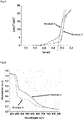
- Fig. 5 shows the tauc plot for calculating the optical band gap for potassium poly(heptazine imides) prepared according to examples 2 and 3.
- Fig. 6 shows the UV-VIS adsorption spectra for potassium poly(heptazine imides) prepared according to examples 2 and 3.
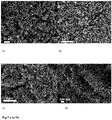
- Fig. 7a and 7b show TEM pictures for potassium poly(heptazine imides) prepared according to example 3.
- Fig. 7c and 7d show TEM pictures for potassium poly(heptazine imides) prepared according to example 2.
- a screw-capped tube was charged with potassium poly(heptazine imide) obtained according to example 2 (10 mg), methylarene (0.3 mL), elemental sulfur (alpha-S 8 , 0.96 g, 30 ⁇ mol) and acetonitrile (2.7 mL).
- the teflon coated stir bar was placed as well.
- the suspension was frozen in liquid nitrogen to solid state and evacuated till the residual pressure 0.1 mbar.
- the solid was warmed using the heating gun until the solid has molten.
- the procedure was repeated 3 times and the tube was refilled with argon.
- the suspension was vigorously stirred at +50°C under blue LED (461 nm, 0.0517 ⁇ 3 ⁇ 10 -5 W ⁇ cm -2 ) irradiation for 24 hours.
- Example 4 preparation of 1,2-dibenzyldisulfane from toluene.
- Example 5 preparation of 1,2-bis(4-methoxybenzyl)disulfane from 4-methylanisole.
- Example 6 preparation of 1,2-bis(2-methoxybenzyl)disulfane from 2-methylanisole.
- Example 7 preparation of 1,2-bis(1-phenylethyl)disulfane as a mixture of diastereomers from ethylbenzene.
- Example 8 preparation of 1,2-bis(4-fluorobenzyl)disulfane from p-fluorotoluene.
- Example 9 preparation of di-tert-butyl ((disulfanediylbis(methylene))bis(4,1-phenylene))dicarbamate from tert -butyl p -tolylcarbamate.
- Toluene was reacted following the general procedure given above but using different temperatures, different amounts of potassium poly(heptazine imide) obtained according to example 2 (K-PHI) and varying solvents (each 2.7 mL if not indicated otherwise).
- Toluene was reacted following the general procedure given above but using different temperatures, alternative photocatalysts for comparative purposes and varying excitation wavelengths.
- Thioamides prepared according to examples 28, 29, 30, 32, 33, 35 were obtained by recrystallization of crude residue after evaporation in mixture ethyl acetate/hexane (1:4) and thioamides 27, 31, 34, 36 and 37 were purified by flash silica gel column chromatography using mixture of diethyl ether/dichloromethane (1:2) as an eluent.
- Example 34 Preparation of N-(pyridin-4-ylmethyl)pyridine-4-carbothioamide from 4-aminomethyl-pyridine.
- a glass tube with rubber-lined cap was evacuated and filled with argon three times.
- benzylamine (0.5 mmol), a secondary amine (1.5 mmol), sulfur (3 mmol), potassium poly(heptazine imide) obtained according to example 2 (10 mg) and dioxane (4 mL) were added.
- the resulting mixture was stirred at 70 ° C under irradiation with Blue LED (461 nm, 79 mW ⁇ cm -2 ) for 20 hours. Then the reaction mixture was cooled to room temperature and centrifuged, clear solution was separated and solid residue was washed with dioxane (2 ⁇ 2 mL) and centrifuged again.
- Example 41 Preparation of 3-(aminomethyl)-N-(3-(aminomethyl)benzyl)-benzo-thioamide and 4-(aminomethyl)-N-(4-((4-(aminomethyl)benzyl)-carbamothioyl)-benzyl)benzothioamide
- a glass tube with rubber-lined cap was evacuated and filled with argon three times.
- p-xylylenediamine or m-xylylenediamine (68.1mg, 0.5mmol), sulphur (48mg, 1.5 mmol), potassium poly(heptazine imide) (10mg) and 4ml of N,N-dimethylformamide (DMF) were added.
- Resulting mixture was stirred at 70°C under irradiation of Blue LED (461 nm, 79 mW/cm 2 ) for 20 hours (or alternatively at room temperature for 90 hours). After that reaction mixture was cooled to room temperature and centrifuged (13,000 min -1 , 3 min).
- the catalyst used in example 45 was reused in experiments 46 to 48 to assess recyclability and stability.
- Example 54 Preparation of diethyl 2,4,6-trimethyl-1,4-dihydropyridine-3,5-dicarboxylate via intermediary oxidation of ethanol to acetaldehyde
- Example 55 Preparation of diethyl 2,4,6-trimethylpyridine-3,5-dicarboxylate via intermediary oxidations of ethanol to acetaldehyde and (!) diethyl 2,4,6-trimethyl-1,4-dihydropyridine-3,5-dicarboxylate
- Example 56 Preparation of diethyl 2,6-dimethylpyridine-3,5-dicarboxylate via intermediary oxidation of diethyl 2,6-dimethyl-1,4-dihydropyridine-3,5-dicarboxylate
- reaction mixture was cooled to room temperature and centrifuged (1 min at 2500 rpm), clear solution was separated and solid residue was washed with methanol (2 mL) and centrifuged again. Organic solutions were combined and evaporated to dryness. Residue after evaporation was purified by flash silica gel column chromatography using ethyl acetate/hexane (1:4) as an eluent.
Landscapes
- Chemical & Material Sciences (AREA)
- Organic Chemistry (AREA)
- Engineering & Computer Science (AREA)
- Materials Engineering (AREA)
- Chemical Kinetics & Catalysis (AREA)
- Inorganic Chemistry (AREA)
- Crystallography & Structural Chemistry (AREA)
- Catalysts (AREA)
Description
- The present invention relates to novel poly(heptazine imides), a photocatalytic system comprising such poly(heptazine imides) and a sulfur source as well as the application thereof in photocatalytic reactions.
- In recent years, usage of visible light energy as a driving force for organic synthesis gained significant attention. A large number of articles deals with various special organic dyes or metal complexes, such as Ruthenium and Iridium complexes as photocatalysts.
- However, a main drawback of these dyes and complexes is their high price and poor recyclability. Besides, the aforementioned photocatalysts partially decompose during the photoreaction and the organic products are then unavoidably contaminated with organic decomposition products or heavy metals. In order to remove such contaminants energy and material intensive methods such as liquid chromatography are required.
- The steadily increasing number of versatile applications of photocatalysis therefore requires enhanced photocatalytic systems with low price, high durability, efficiency and recyclability.
- In view thereof carbon nitride based photocatalysts could complement the toolbox of well-acknowledged homogeneous photocatalysts. Carbon nitrides are cheap, thermally and chemically stable, resistant to photobleaching, and environmentally friendly. In addition, carbon nitrides as photocatalysts can expand the spectrum of organic photoreactions and enable reaction conditions under which organic dyes or metal based photocatalysts are not stable at all.
- Just recently, the preparation and use of poly(heptazine imides), a sub-class of carbon nitride based photocatalysts was reported in Dontsova, D.; Pronkin, S.; Wehle, M.; Chen, Z.; Fettkenhauer, C.; Clavel, G.; Antonietti, M., "Triazoles: A New Class of Precursors for the Synthesis of Negatively Charged Carbon Nitride Derivatives", Chem. Mater., 2015, 27, 5170-5179. These photocatalysts demonstrated outstanding photocatalytic performance in model water splitting reactions.
- Further developments of this type of photocatalysts were disclosed in Savateev, A.; Pronkin, S.; Epping, J. D.; Willinger, M. G.; Wolft C.; Neher, D.; Antonietti, M.; Dontsova, D., Potassium Poly(heptazine imides) from Aminotetrazoles: Shifting Band Gaps of Carbon Nitride-like Materials for More Efficient Solar Hydrogen and Oxygen Evolution. ChemCatChem 2017, 9 (1), 167-174; and in Savateev, A.; Pronkin, S.; Willinger, M.; Antonietti, M.; Dontsova, D., Towards organic zeolites and inclusion catalysts: heptazine imide salts can exchange metal cations in the solid state, Chemistry - An Asian Journal 2017.
- In A. Savateev, D. Dontsova, B. Kurpil, M. Antonietti, "Highly crystalline poly(heptazine imides) by mechanochemical synthesis for photooxidation of various organic substrates using an intriguing electron acceptor - Elemental sulfur" the use of low-defect potassium poly(heptazine imide) in combination with elemental sulfur for photocatalytic oxidation of organic substrates is disclosed. In particular the photocatalytic activity of such specific poly(heptazine imides) was assessed in the oxidation of benzyl alcohol to benzaldehyde, the aliphatic alcohol oxidation coupled with multicomponent Hantzsch 1,4-dihydropyridine synthesis and oxidation of said 1,4-dihydropyridines to the corresponding pyridines. However, the document is silent about the use of a catalytic system comprising at least one poly(heptazine imide) and at least one sulfur source in photocatalytic thiolations or in the oxidative conversion of N-carboxylated hydrazones to oxadiazoles.
- Generally, any type of photocatalyst, in particular when involved in photooxidation reactions, requires an electron acceptor to accomplish the desired chemical transformation.
- Conventional systems typically use molecular oxygen as electron acceptor. However, the formation of hydrogen peroxide as byproduct of the photoreaction gives rise to undesired side-reactions and thus to lower selectivity, corrosion and safety issues, which are critical, especially where reactions shall be performed at commercial scale.
- Wang et al., Environmental Science and Technology, 2013, 47, p. 8724-8732 disclose wrapping reduced graphene oxide and graphitic carbon nitride (g-C3N4) sheets on crystals of cyclooctasulfur (α-S8). However, this composite material is just used to facilitate oxygen reduction in order to inactivate bacteria but not to catalyse organic synthesis.
- As a consequence there was still a need for an effective photocatalytic system allowing high selectivity of photoreactions under smooth conditions.
- According to one aspect of the invention, there is now provided a photocatalytic system comprising
- at least one poly(heptazine imide) and
- at least one sulfur source.
- There are further provided poly(heptazine imides) which are particularly advantageous if used in the aforementioned photocatalytic systems.
- In addition, there is provided a process for the photocatalytic oxidiaton or thiolation of organic compounds wherein the oxidation or thiolation is carried out in the presence of the photocatalytic system by irradiation with electromagnetic radiation having a wavelength sufficient to induce the excitation of the at least one poly(heptazine imide).
- The invention also encompasses all combinations of preferred embodiments, ranges parameters as disclosed hereinafter with either each other or the broadest disclosed range or parameter.
- Whenever used herein the terms "including", "for example", "e.g.", "such as" and "like" are meant in the sense of "including but without being limited to" or "for example without limitation", respectively.
- The photocatalytic system according to the invention comprises at least one poly(heptazine imide) which serves as a photocatalyst when employed in photocatalytic processes.
- In one embodiment the term poly(heptazine imide) denotes compounds comprising repeating structural units of formula (I)

- the arrows
- each denote a bond to a imide group (-NH-) through which two structural units of formula (I) are linked together or a bond to an end group.
- Mn+
- denotes an n-valent cation with n being 1, 2 or 3 preferably 1 or 2 and more preferably 1
- q
- is 1/n
- In one embodiment the poly(heptazine imides) essentially consist of repeating structural units of formula (I), which in one embodiment means that at least 90 wt.-% of the poly(heptazine imide), preferably 95 wt.-% are repeating units of formula (I) and the imide groups linking them.
- In another embodiment the poly(heptazine imides) comprise at least 6 repeating structural units of formula (I).
- In one embodiment Mn+ represents, H+, Li+, Na+, K+, Rb+, Cs+, Ag+, NH4 +, Zn(OH)+, Mg2+, Ca2+, Zn2+, Co2+ or Ni2+ or mixtures thereof, whereby Li+, Na+, K+, Zn(OH)+, Mg2+ and Ca2+ or mixtures thereof are preferred and K+ is even more preferred.
- Typical end groups of the poly(heptazine imide) include amino groups and cyanamino or -N=C=NH groups, the latter two in particular where 5-aminoetrazole was used as a starting material.
-
Fig 1 . shows an exemplified and idealized structure of potassium poly(heptazine imide) which was identified by X-ray analysis. It can be seen that the bis-triangular structures of formula (I) are forming a two-dimensional crystalline network wherein the potassium cations have a distance of around 1.1 nm to each other and are surrounded by six heptazine moieties as shown in formula (I) and highlighted in grey inFig. 1 . -
Fig 2 . further shows how the two-dimensional crystalline networks ofFig. 1 are ideally arranged in the third dimension. As can be seen in this idealized structure potassium poly(heptazine imide) forms a layered structure wherein the layers have a distance of around 0.3 nm with each layer being depicted by different shades of grey. The cations are arranged in channel-like spaces pervading through the three-dimensional structure. - The theoretical emprical formula of the poly(heptazine imides) is Mn+[C12N17H2 -]q However, it is apparent that the ideal structure can hardly be reached in real life synthesis. Typically, and based on the sum of carbon, nitrogen and hydrogen present in the poly(heptazine imides) the carbon content is between 33.0 and 40.0, preferably between 36.0 and 39.0 wt-%, the nitrogen content is between 56.0 and 63.0 wt-%, preferably between 58.5 and 61.0 wt-% and the hydrogen content between 0.2 and 4.0 wt-%, preferably between 0.5 and 3.0 wt-% whereby the aforementioned contents are selected to add up to 100.0 %.
- The content of M depends of its mol mass, for potassium poly(heptazine imides) the potassium content is typically 8.5 to 11.5 wt-% preferably 9.5 to 11.0 wt-% based on the sum of carbon, nitrogen and hydrogen present in the potassium poly(heptazine imide).
- In another embodiment the potassium content is from 6.0 to 12.0, preferably from 7.0 to 9.5 wt-% based on the total weight of the potassium poly(heptazine imide).
- In one embodiment the carbon to nitrogen wt.-ratio (C/N weight ratio) is from 0.55 to 0.70, preferably from 0.60 to 0.66.
- It is known to those skilled in art, that due to their insolubility in commonly used media and their preparation process which typically involves a high temperature thermolysis whereby organic precursors are condensed and/or decomposed and/or rearranged, carbon nitrides in general and poly(heptazine imides) in particular may have different properties such as specific surface, band gap, fluorescence lifetime, crystallinity and defects in crystal structure, elemental composition, UV peak adsorption depending on the preparation conditions and precursors.
- Further, in particular the end groups may undergo oxidation or hydrolysis when in contact with air and/or humidity. Therefore the poly(heptazine imides) may also have a small content of oxygen e.g.stemming from hydroxyl or carbonyl groups.
- Therefore, poly(heptazine imides) may additionally or alternatively also be specified by their preparation process.
- In a preferred embodiment potassium poly(heptazine imide) is prepared by a process comprising at least the steps of
- a) providing a mixture comprising lithium chloride, potassium chloride and 5-aminotetrazole (IUPAC: 1H-Tetrazol-5-ylamine, CAS-No. 4418-61-5
- b) heating the mixture provided in step a) to a temperature of 450°C to 700°C, preferably 500°C to 700°C, more preferably 500°C to 650°C and even more preferably 520 to 620°C preferably for a duration of at least 60 minutes, preferably at least 2 hours and even more preferably at least 3 hours, for example for 3 to 24 hours or 4 to 12 hours. Longer reaction times are possible but virtually don't add any advantage.
- In step a) lithium chloride and potassium chloride are employed. The rationale for this is that the combination of the two salts have a lower melting point than the single components (LiCl: 605°C, KCl: 770°C). The eutectic mixture of lithium chloride and potassium chloride (44,3 wt-% KCI and 55,7 wt-% LiCl) has a melting point of 357°C and thus molten mixtures of lithium chloride and potassium chloride were found to be a very good reaction medium to allow the synthesis of poly(heptazine imides) and in particular potassium poly(heptazine imide).
- In step a) lithium chloride and potassium chloride are therefore employed for example in a weight ratio of from 0.5:1.0 to 3.0:1.0, preferably of from 0.8:1.0 to 2.0:1.0 and even more preferably of from 1.0:1.0 to 1.5:1.0 such as 1.26:1.00 representing the above mentioned eutectic mixture.
- In one embodiment lithium chloride and potassium chloride are molten together first and then used as a preformed mixture e.g. after grinding or milling.
- The weight ratio of 5-aminotetrazole to the sum of lithium chloride and potassium chloride is for example 1.0 or less, preferably 0.5 or less such as from 0.05 to 0.50, even more preferably 0.25 or less such as from 0.05 to 0.25.
- The mixture comprising lithium chloride, potassium chloride and 5-aminotetrazole may comprise further nitrogen containing organic compounds such as for example melamine, melon and melam. In this case the weight ratio of 5-aminotetrazole to said other nitrogen containing compounds is 2.0 or more, preferably 5.0 or more and even more preferably 10.0 or more.
- Typically and most preferably, however, no further nitrogen containing organic compounds are added to the mixture in step a).
- In one embodiment lithium chloride, potassium chloride and 5-aminotetrazole are mixed and grinded to allow a good mixing of the solid components.
- As a major finding of this invention it was found that a very intense mixing leads to advantageous properties of the resulting potassium poly(heptazine imide). Therefore, in one embodiment step a) includes as a further step milling of the mixture comprising lithium chloride, potassium chloride and 5-aminotetrazole, e.g. using a ball mill, a rod mill a stirred mill or a vibrating mill, whereby a ball mill is preferred.
- By milling a number average particle size of 5 to 150 micrometers, preferably from 10 to 100 micrometers and even more preferably 30 to 80 micrometers is obtained.
- In contrast thereto manual grinding leads to a number average particle size of 200 to 500 micrometers.
- Particle sizes can be measured via dynamic light scattering (DLS).
- In one embodiment the heating in step b) to the indicated temperatures is typically performed from ambient temperature to the given temperature or in general from -20°C to 100°C to the given temperature.
- In one embodiment the heating to the given temperature in step b) is performed at a rate of 0.5 to 40.0 °C/min, preferably at a rate of 0.5 to 35.0 °C/min.
- To avoid oxidative degradation of the products step b) is preferably carried out in an inert atmosphere e.g under nitrogen or argon gas.
- The pressure conditions are not specifically limited, and the pressure in step b) may be from 100 hPa to 50 MPa, preferably from 900 hPa to 1 MPa, even more preferred under ambient pressure.
- Step b) can further be carried out in any vessel suitable for that purpose. This includes ceramic crucibles, glass or quartz ampoules as long as these vessels are sufficiently stable and inert under the reaction conditions employed.
- It was found that potassium poly(heptazine imide) presumably due to the ideal size of the potassium cation is thermodynamically more stable than other poly(heptazine imides).
- Nevertheless, poly(heptazine imides) other than potassium poly(heptazine imide) may be prepared by exchanging the potassium cations fully or partially by other cations by simple ion exchange procedures e.g. those disclosed in Savateev, A.; Pronkin, S.; Willinger, M.; Antonietti, M.; Dontsova, D., Towards organic zeolites and inclusion catalysts: heptazine imide salts can exchange metal cations in the solid state, Chemistry-An Asian Journal 2017.
- To do this potassium poly(heptazine imide) is for example suspended in a solution of a salt of the desired metal, preferably taken in excess relative to the total potassium content in the solid potassium poly(heptazine imide). Quantitative replacement of ions can be achieved using a dialysis procedure. Typically, the solutions of the metal salts need to have a pH higher than 4 at 25°C in order to allow substantial replacement of potassium cations.
- Where potassium shall be formally replaced by protons, which practically represents the protonation of the deprotonated imide group linking the heptazine moieties as depicted in formula (I), acids can be used. Suitable acids include inorganic or organic acids. Suitable inorganic acids include sulfuric acid and hydrochloric acid.
- Large surface areas are typically advantageous in heterogeneous catalysis. It was found that the poly(heptazine imides) according to the invention and prepared starting from 5-aminotetrazoles exhibit a high specific surface, in particular when the starting materials used have particle sizes as described above.
- In one embodiment of the invention the poly(heptazine imides) exhibit a BET surface of 10 to 200 m2/g, preferably of 30 to 100 m2/g.
- If was found that where the poly(heptazine imides) were prepared from 5-aminotetrazole, lithium and potassium chloride with the small particle sizes as defined above e.g. obtainable by milling, the resulting poly(heptazine imides) exhibit a BET surface of more than 50 to 200 m2/g, preferably of 55 to 100 m2/g, and even more preferably from 70 to 100 m2/g while the with the larger particle size obtainable e.g. by grinding leads to poly(heptazine imides) having a BET surface of 10 to 50 m2/g, preferably of 30 to 50 m2/g, and even more preferably from 30 to 40 m2/g.
- As mentioned above, the crystallinity of the poly(heptazine imides) may have an impact on their electronic properties. In one embodiment of the invention the poly(heptazine imides) exhibit a crystallinity index of 1,000 to 15,000 a.u. (arbitrary units).
- If was found that where the poly(heptazine imides) were prepared from 5-aminotetrazole, lithium and potassium chloride with the small particle size as defined above e.g. obtainable by milling, the resulting poly(heptazine imides) exhibit a crystallinity index of for example 10,000 to 15,000 a.u., preferably of 12,000 to 15,000 a.u., while the with the larger particle size obtainable e.g. by grinding the resulting poly(heptazine imides) have a crystallinity index of 1,000 to 4,000 a.u., preferably of 3,000 to 3,800 a.u..
- As used herein the "crystallinity index" CI is expressed as CI=IFWHM/I27, wherein IFWHM represents the full width at half of the maximum of the largest peak observed in the range of from 26.0 to 28.5° in the powder X-Ray spectrum as measured in accordance with the experimental part and I27 represents the height of the highest diffraction peak observed in the same range.
- In one embodiment of the invention the poly(heptazine imides) exhibit an "adsorption index" AI of 0 to 1, preferably 0.1 to 1.0 and even more preferably 0.3 to 0.4 whereby the "absorption index" AI is calculated by AI=IG/IB, wherein IB represents the maximum of absorbance in the blue region (400-480 nm) and Ig represents the maximum of absorbance in the green region (470-650 nm), each in arbitrary units, as measured by UV-VIS adsorption. UV-VIS adsorption is measured as described in the experimental part. An illustrative example is given in
Fig. 3 . - In one embodiment of the invention the poly(heptazine imides) show a fluorescence lifetime of 0.4 to 2 ns, preferably of 0.5 to 2.0 ns and even more preferably from 0.5 to 0.8 ns as measured in accordance with the experimental part.
- If was found that where the poly(heptazine imides) were prepared from 5-aminotetrazole, lithium and potassium chloride with the small particle size as defined above e.g. obtainable by milling, the resulting poly(heptazine imides) show a fluorescence lifetime of 0.5 to 2.0 ns, preferably 0.6 to 0.8 ns.
- In one embodiment of the invention the poly(heptazine imides) exhibit an optical band gap of 1.70 to 2.90 eV, preferably of 2.10 to 2.80 eV.
- If was found that where the poly(heptazine imides) were prepared from 5-aminotetrazole, lithium and potassium chloride with the small particle size as defined above e.g. obtainable after milling, the resulting poly(heptazine imides) exhibit an optical band gap of 2.65 to 2.90 eV, preferably of 2.68 to 2.80 eV, while with the larger particle size obtainable e.g. by grinding leads to poly(heptazine imides) having optical band gap of 2.10 to 2.64 eV, preferably of 2.20 to 2.64 eV. Optical band gaps are measured in accordance with the experimental part.
- The poly(heptazine imides) may be used in unsupported form or supported form. Suitable supporting materials may be selected from those commonly used for catalysts and include carbon, alumina, silica and silicates an their known modifications. Preferably, the poly(heptazine imides) are used in unsupported form.
- The photocatalytic system according to the invention besides at least one poly(heptazine imide) also comprises at least one sulfur source which serves as an electron acceptor when employed in photocatalytic processes. The reduced sulfur species resulting therefrom may further act as a reagent depending on the type of reaction.
- Suitable sulfur sources include elemental sulfur in any occurence such as for example S8 in alpha- beta and gamma-modification, polymeric sulfur and all other allotropes currently known, whereby S8 is preferred.
- Further suitable sulfur sources include polysulfides such as for example alkaline metal polysulfides of the general formula M2Sx with M being an alkaline metal such as lithium, sodium or potassium and x being from 2 to 9, preferably 4 to 8.
- A most preferred sulfur source is alpha-S8 or simply S8 as most abundant form of elemental sulfur.
- The photocatalytic system according to the invention may further optionally comprise at least one hydrogen sulfide scavenger i.e. a compound capable of reacting with hydrogen sulfide to form sulfides which are hardly soluble in the reaction medium employed. "Hardly soluble" as defined herein means a solubility of 1.0 g/l or less at ambient temperature. Examples of hydrogen sulfide scavengers include zinc oxide, iron oxides and hydroxides and mixed oxides/hydroxides such as Goethit and other transition metals or hydroxides. In one embodiment a further component of the photocatalytic system is zinc oxide.
- According to one aspect of the invention there is provided a process for the photocatalytic oxidation or photocatalytic thiolation of organic compounds wherein the oxidation or thiolation is carried out in the presence of the photocatalytic system by irradiation with electromagnetic radiation having a wavelength sufficient to excite the at least one poly(heptazine imide).
- Therefore, the invention also encompasses the use of the photocatalytic system according to the invention in photocatalytic reactions in particular in photocatalytic oxidations and photocatalytic thiolations.
- As used herein the oxidation of organic compounds includes all reactions wherein the formal oxidation state of at least one carbon atom is increased.
- As used herein thiolation of organic compounds includes all reactions wherein at least one C-H bond is converted into a C-S bond or two geminal C-H bonds are converted into a C=S bond.
- The aforementioned thiolation reactions include the following reaction types.
- A) Thiolation of benzylic C-H bonds to obtain diaryldisulfanes or poly(aryldisulfanes)
- B) Thiolation of amines to thioamides
- The aforementioned oxidation reactions include the following rection types.
- C) Oxidation of alcohols to aldehydes or ketones
- D) Oxidative conversion of dihydropyridines to pyridines
- E) Oxidative conversion of N-carboxylated hydrazones to oxadiazoles
- More specifically the aforementioned thiolation and oxidation reactions and thus the invention encompasses the following processes:
- A i): A process for the preparation of a compound of formula (IIc)
Aryl-(CHR1)-S-S-(CHR2)-Aryl (IIc)
wherein- R1 and R2
- are either different or identical and represent hydrogen or alkyl
- Aryl
- represents aryl or heteroaryl
- a compound of formula (IIa)
Aryl-(CH2R1) (IIa)
wherein R1 has the meaning set forth above
and if R2 differs from R1 additionally - a compound of formula (IIb)
Aryl-(CH2R2) (IIb)
wherein R2 has the meaning set forth above
and - a photocatalytic system according to the invention.
- A ii): A process for the preparation of a compound comprising a plurality of at least one of the structural units of formula (IIIc)
Aryl(CH2R3)m[(CHR3)-S]n- (IIIc)
wherein- n+m
- is an integer of 2, 3, 4, 5 or 6
- the n residues R3
- are either different or identical and represent hydrogen or alkyl
- and Aryl
- represents aryl oder heteroaryl which is substituted m-fold by residues (CH2R3) and n-fold by residues [(CHR3)-S]-
- at least one compound of formula (IIIa)
Aryl(CH2R3)m+n (IIIa)
wherein R3 has the meaning set forth above
and - a photocatalytic system according to the invention.
- B i) A process for the preparation of a compound of formula (IVb)

- the two R4 independently of each other, preferably identically represent hydrogen, alkyl, aryl, heterocyclyl, alkenyl or alkynyl
- comprising irradiating a reaction mixture comprising
- at least one, preferably one compound of formula (IVa)

and - a photocatalytic system according to the invention.
- at least one, preferably one compound of formula (IVa)
- B ii)
A process for the preparation of a compound of formula (Vc)
- R5
- represents hydrogen, alkyl, aryl, heterocyclyl, alkenyl or alkynyl and
- R6 and R7
- independently of each other, preferably identically represent alkyl, aryl, heterocyclyl, alkenyl or alkynyl or
- R6 and R7
- together represent alkanediyl or alkenediyl
- at least one, preferably one compound of formula (Va)

- at least one, preferably one compound of formula (Vb)
HNR6R7 (Vb)
wherein R6 and R7 have the meaning set forth above
and - a photocatalytic system according to the invention.
- B iii) A process for the preparation of compounds of formula (Vlb)

- n
- represents an integer of 2 or more, preferably from 2 to 6
- R8
- represents alkanediyl, aryldiyl or alkenediyl
- X
- represents either one sulfur atom or two hydrogen atoms bound to the carbon under the proviso that at maximum one C=S group is adjacent to each nitrogen atom and
- at least one, preferably one compound of formula (VIa)

and - a photocatalytic system according to the invention.
- C) A process for the preparation of a compound of formula (VIIb)

- R9 and R10 independently of each other represent hydrogen, alkyl, aryl, heterocyclyl, alkenyl or alkynyl or
- R9 and R10 together represent alkanediyl or alkenediyl
- comprising irradiating a reaction mixture comprising
- a compound of formula (VIIa)

and - a photocatalytic system according to the invention.
- a compound of formula (VIIa)
- D i). A process for the preparation of a compound of formula (VIIIc)

- R11 and R13 independently of each other represent hydrogen, alkyl, aryl, heterocyclyl, alkenyl or alkynyl
- R12 and represents hydrogen, alkyl, aryl, heterocyclyl, alkenyl or alkynyl
- comprising irradiating a reaction mixture comprising
- a compound of formula (VIIIa)

and - at least one, preferably one compound of formula (VIIIb)

- ammonia or a ammonium-salt, preferably an ammonium salt which is preferably ammonium hydrogencarbonate and
- a photocatalytic system according to the invention.
- a compound of formula (VIIIa)
- D ii) A process for the preparation of a compound of formula (IXb)

- R11, R12 and R13 have the same meaning as given for formula (VIIIc) above including their areas of preference
- comprising irradiating a reaction mixture comprising
- a compound of formula (VIIIc)

- a photocatalytic system according to the invention.
- a compound of formula (VIIIc)
- E) A process for the preparation of a compound of formula (Xb)

- R14 and R15 independently of each other represent hydrogen, alkyl, aryl, heterocyclyl, alkenyl or alkynyl or
- comprising irradiating a reaction mixture comprising
- a compound of formula (Xa)

and - a photocatalytic system according to the invention.
- either not, once, twice or more than twice interrupted by non-successive functional groups selected from the group consisting of:
-O-, -S-, -SO2-, -SO-, -SO2NR16-, NR16SO2-, -NR16-, -CO-, -O(CO)-, (CO)O-, -O(CO)O-, -NR16(CO)NR16-, NR16(CO)-, -(CO)NR16-, -NR16(CO)O-, -O(CO)NR16-, -Si(R17)2-, - OSi(R17)2-, -OSi(R17)2O-, -Si(R17)2O-,
and - either not, once, twice or more than twice interrupted by bivalent residues selected from the group consisting of heterocyclo-diyl, and aryldiyl,
and - either not, once, twice or more than twice substituted by substituents selected from the group consisting of:
oxo, hydroxy, halogen, nitro, cyano, C6-C14-aryl, C1-C8-alkoxy, C1-C8-alkylthio, - SO3H, -SO3M, -COOH, -PO3H2, -PO3HM, -COOM, PO3M2, -PO(N(R17)2)2, PO(OR17)2, -SO2N(R16)2, -N(R16)2, -CO2N(R17)2, -COR16, -OCOR16, - NR16(CO)R17, -(CO)OR16,-NR16(CO)N(R16)2, -Si(OR17)y(R17)3-y, - OSi(OR17)y(R17)3-y with y = 1, 2 or 3
- R16
- is independently selected from the group consisting of hydrogen, C1-C8-alkyl, C6-C14-aryl, and heterocyclyl or N(R16)2 as a whole is a N-containing heterocycle,
- R17
- is independently selected from the group consisting of C1-C8-alkyl, C6-C14-aryl, and heterocyclyl or N(R17)2 as a whole is a N-containing heterocycle
- M
- is hydrogen, or 1/q equivalent of an q-valent metal ion or is an ammonium ion or a guanidinium ion or a primary, secondary, tertiary or quarternary organic ammonium ion, in particular those of formula [N(C1-C18-alkyl)sHt]+ wherein s is 1, 2 or 3 and t is (4-s).
- either not or once interrupted by non-successive functional groups selected from the group consisting of:
-O-, -CO-, -O(CO)-, (CO)O-, -NR16(CO)-, -(CO)NR16-,
and - either not, once, twice or more than twice substituted by substituents selected from the group consisting of:
halogen, cyano, C6-C14-aryl
- a compound of formula (Xa)
- In another specific embodiment the alkyl, alkenyl, alkynyl, alkanediyl and alkenediyl substituents as defined above are neither interrupted by functional groups nor substituted by any substituents selected from the group consisting of:
As used herein for all processes listed above aryl denotes carbocyclic aromatic substituents preferably having six to fifteen carbon atoms within the aromatic system as such, i.e. without carbon atoms of optional substituents and are preferably phenyl (C6), naphthyl (C10), phenanthrenyl and anthracenyl (each C14), whereby said carbocyclic, aromatic substituents are unsubstituted or substituted by up to five identical or different substituents per cycle. For example and with preference, the substituents are selected from the group consisting of fluoro, bromo, chloro, iodo, nitro, cyano, formyl or protected formyl, hydroxyl or protected hydroxyl, C1-C8-alkyl, C1-C8-haloalkyl, C1-C8-alkoxy, C1-C8-haloalkoxy, C6-C14-aryl, in particular phenyl and naphthyl, di(C1-C8-alkyl)amino, (C1-C8-alkyl)amino, CO(C1-C8-alkyl), OCO(C1-C8-alkyl), NHCO(C1-C8-alkyl), N(C1-C8-alkyl)CO(C1-C8-alkyl), CO(C6-C14-aryl), OCO(C6-C14-aryl), NHCO(C6-C14-aryl), N(C1-C8-alkyl)CO(C6-C14-aryl), COO-(C1-C8-alkyl), COO-(C6-C14-aryl), CON(C1-C8-alkyl)2 or CONH(C1-C8-alkyl), CO2M, CONH2, SO2NH2, SO2N(C1-C8-alkyl)2, SO3M and PO3M2. - In another embodiment, the carbocyclic, aromatic substituents are unsubstituted or substituted by up to three identical or different substituents per cycle selected from the group consisting of fluoro, chloro, cyano, C1-C8-alkyl, C1-C8-haloalkyl, C1-C8-alkoxy, C1-C8-haloalkoxy, C6-C14-aryl, in particular phenyl.
- In another embodiment the carbocyclic, aromatic substituents are unsubstituted or substituted by up to three identical or different substituents per cycle selected from the group consisting of fluorine, C1-C8-alkyl, C1-C8-perfluoroalkyl, C1-C8-alkoxy, C1-C8-perfluoroalkoxy, and phenyl.
- In another embodiment aryl denotes phenyl.
- The definitions given above including their areas of preference also apply analogously to aryldiyl substituents.
- As used herein and unless specifically stated otherwise heterocyclyl denotes heterocyclic aliphatic, aromatic or mixed aliphatic and aromatic substituents in which no, one, two, three or four skeleton atoms per cycle, but at least one skeleton atom in the entire cyclic system is a heteroatom selected from the group consisting of nitrogen, sulphur and oxygen and whereby the entire cyclic system as such, i.e. without carbon atoms of substituents, comprises one to fifteen carbon atoms and whereby the heterocyclic aliphatic, aromatic or mixed aliphatic and aromatic substituents are unsubstituted or substituted if possible by up to five identical or different substituents per cycle, whereby the substituents are selected from the same group as given above for carbocyclic aromatic substituents including the areas of preference. Aromatic heterocyclyl is also referred to as heteroaryl.
- In one embodiment heterocyclyl denotes pyridinyl, oxazolyl, thiophen-yl, benzofuranyl, benzothiophen-yl, dibenzofuranyl, dibenzothiophenyl, furanyl, indolyl, pyridazinyl, pyrazinyl, imidazolyl, pyrimidinyl and quinolinyl, either unsubstituted or substituted with up to three substituents selected from the group consisting of fluorine, C1-C8-alkyl, C1-C8-perfluoroalkyl, C1-C8-alkoxy, C1-C8-perfluoroalkoxy, and phenyl.
- As used herein, and unless specifically stated otherwise, protected formyl is a formyl substituent which is protected by conversion to an aminal, acetal or a mixed aminal acetal, whereby the aminals, acetals and mixed aminal acetals are either acyclic or cyclic.
- For example, and with preference, protected formyl is 1,1-(2,4-dioxycyclopentanediyl).
- As used herein, and unless specifically stated otherwise, protected hydroxyl is a hydroxyl radical which is protected by conversion to a ketal, acetal or a mixed aminal acetal, whereby the aminals, acetals and mixed aminal acetals are either acyclic or cyclic. A specific example of protected hydroxyl is tetrahydropyranyl (O-THP).
- As used herein, and unless specifically stated otherwise, alkyl, alkanediyl, alkoxy, alkylthio, alkenyl, alkynyl, alkenediyl and alkinediyl denote and include straight-chain, cyclic either in part or as a whole, branched or unbranched alkyl, alkanediyl, alkoxy, alkylthio, alkenyl, alkenediyl and alkinediyl substituents having, where indicated, the given number of carbon atoms in the substituent as such, i.e. without carbon atoms of further, optionally present substituents or carbon atoms or functions interrupting the aforementioned substituents. As an example, a benzyl substituent represents a C1-alkyl substituted by phenyl.
- Preferred alkyl, alkanediyl, alkoxy, alkylthio, alkenyl, alkynyl, alkenediyl and alkinediyl denotes C1-C12-alkyl, C1-C12-alkanediyl, C1-C12-alkoxy, C1-C12-alkylthio, C2-C12-alkenyl, C2-C12-alkenediyl and C2-C12-alkynediyl.
- Haloalkyl or haloalkoxy substituents denote alkyl or alkoxy substituents with the given number of carbon atoms which are once or more than once, preferably fully substituted by halogen.
- Fluoroalkyl or fluoroalkoxy substituents denote alkyl or alkoxy substituents with the given number of carbon atoms which are once or more than once, preferably fully substituted by fluorine.
- Perfluoroalkyl or perfluoroalkoxy substituents denote alkyl or alkoxy substituents with the given number of carbon atoms which are fully substituted by fluorine.
- Specific examples of alkyl are methyl, ethyl, n-propyl, isopropyl, n-butyl, tert-butyl, n-pentyl, cyclohexyl, n-hexyl, n-heptyl, n-octyl and isooctyl. Additional examples for C1-C18-alkyl are norbornyl, adamantyl, n-decyl, n-dodecyl alkyl, n-hexadecyl, n-octadecyl.
- Specific examples of alkanediyl are methylene, 1,1-ethylene, 1,2-ethylene, 1,1-propylene, 1,2-propylene, 1,3-propylene, 1,1-butylene, 1,2-butylene, 2,3-butylene, 1,4-butylene, 1,5-pentylene, 1,6-hexylene, 1,1-cyclohexylene, 1,4-cyclohexylene, 1,2-cyclohexylene and 1,8-octylene.
- Specific examples of alkoxy-substituents are methoxy, ethoxy, isopropoxy, n-propoxy, n-butoxy, tert-butoxy and cyclohexyloxy.
- Specific examples of alkenyl- substituents are allyl, 3-propenyl and buten-2-yl.
- Specific examples of alkynyl- substituents are ethinyl and 1,3-propinyl.
- The processes according to the invention described above comprise irradiating a reaction mixture comprising a photocatalytic according to the invention.
- With the poly(heptazine imides) used herein excitation is typically induced by irradiation with electromagnetic radiation having a wavelength of 200 to 700 nm, preferably from 350 to 650 nm, more preferably in the range of 350 to 550 nm, even more preferably in the range of 450 to 500 nm such as for example 460 to 500 nm.
- Suitable sources of electromagnetic radiation having a wavelength sufficient to induce the generation of radicals include eximer lasers such as Argon fluoride-lasers; UV lamps like low-pressure, medium-pressure, high-pressure and super-high-pressure mercury lamps which can be undoped or doped e.g. with gallium iodide, thallium iodide or other metal halides; green, blue, violet or violet-blue LEDs; unconcentrated or concentrated, direct or indirect sunlight; microwave-excited metal vapour lamps; excimer lamps, fluorescent lamps; and noble gas incandescent lamps.
- Preferred sources are blue, violet or violet-blue LEDs, preferably those with a maximum emission at 461 nm; unconcentrated or concentrated, direct or indirect sunlight.
- In an embodiment, multichromatic sources of electromagnetic radiation are used to generate radicals.
- As used herein a multichromatic sources of electromagnetic radiation denotes a source emitting electromagnetic radiation having more than one relative emission maxima (also known as emission bands) preferably more than one relative emission maxima within the wavelength ranges disclosed above.
- It is apparent to those skilled in the art that excitation and thus the reaction depends on the intensity and/or the time of irradiance.
- The reaction may for example be from 5s to two weeks, preferably from one minute to 168 hours, more preferably and typically from 30 minutes to 72 hours.
- The amount of poly(heptazine imides) employed in the photocatalytic reactions is not critical at all a may for example be from 0.1 wt-% to 1.000 wt-%, preferably from 1 wt-% to 100 wt-% based on the organic compound to be oxidized or thiolated.
- The amount of the sulfur source, in particular elemental sulfur employed in the photocatalytic reactions may for example be from 20 mol-% to 10.000 mol-% calculated on sulfur atoms and based on the organic substrate to be oxidized or thiolated, preferably from 50 to 1.000 mol-%. Higher amounts are possible but add no advantage.
- Where thiolations are performed a preferred amount of sulfur source, in particular elemental sulfur employed in the photocatalytic reactions may for example be from 40 mol-% to 10.000 mol-% calculated on sulfur atoms and based on the organic substrate to be thiolated, preferably from 75 to 1.000 mol-%.
- The determination of a suitable reaction temperature range during the processes according to the invention inter alia depends on the organic compound to be oxidized or thiolated, the solvent and the reaction type. However, as a general guideline the oxidation reactions are typically carried out ata temperature of from -20°C to 100°C, preferably from 15 to 100°C and even more preferably from 25 to 75°C such as for example 50 to 80°C.
- The reaction pressure may vary from 100 hPa to 10 MPa, preferably from 900 hPa to 1 MPa and more preferably from 900 hPa to 0.2 MPa, e.g. under ambient pressure.
- Providing the reaction mixures comprising the compounds set forth above may occur in any manner known to those skilled in the art, in any order of addition and in any vessel known to skilled in the art to allow irradiation as defined above.
- The processes according to the invention may be carried out either with or, in particular where the organic compounds employed in the reation are liquid at the desired reaction temperature, without a solvent.
- Suitable solvents are those which do not or virtually not react under reaction conditions. Such solvents include aromatic hydrocarbons such as benzene, toluene and the isomeric xylenes; ethers such as diethylether, methyl tert.-butyl ether, tetrahydrofurane, dioxane, dimethoxyethane, diethoxyethan and higher glycolethers; amides such as dimethylformamide; sulfones such as tetraethylensulfone; esters such as ethylacetate; halogenated hydrocarbons such as chlorobenzene, dichloromethane and tetrachloroethane, nitriles such as acetonitrile and benzonitrile and mixtures of the aforementioned solvents.
- It was found that in many case halogenated hydrocarbons such as dichloromethane, or nitriles such as acetonitrile and benzonitrile are the solvents of choice.
- A major advantage of the present invention is the possibility to perform a large variety of synthetic processes involving a thiolation or oxidation highly selective with high conversion and under smooth conditions using the inventive photocatalytic system comprising poly(heptazine imides) as a sulfur source as an electron acceptor and the latter optionally also as a reagent. The poly(heptazine imides) can be recycled numerous times without loss of activity.
- In the following, the present invention is illustrated by examples which however not intended to limit the scope of invention.
- Materials. Lithium chloride (≥99 %) was purchased from Carl Roth; 5-aminotetrazole was purchased from Santa Cruz biotechnology; potassium chloride (≥99.5) was purchased from Sigma Aldrich. All the chemicals were used without further purification.
- Acetonitrile-d 3 (≥99.8 atom % D), chloroform-d (99.8 atom % D), toluene (99.8%), 4-methylanisole (99%), 2-methylanisole (99%), p-tolunitrile (98%), ethylbenzene (99.8%), p-iodotoluene (99%), sulfur (≥99.5%), , TiO2 used for comparative examples (99.5%, a mixture of rutile and anatase) were purchased from Sigma-Aldrich. 1,2-dibenzyldisulfane (98+%), benzylthiol (99%) were purchased from Alfa Aesar. Acetonitrile (hypergrade for LC-MS) and N,N,4-trimethylaniline (for syntehsis) were purchased from Merck. P-fluorotoluene (97%) and dibenzylsulfide (98%) were purchased from Acros Organics.
- tert-butyl p-tolylcarbamate was prepared according to Ishida, T.; Kikuchi, S.; Tsubo, T.; Yamada, T., "Silver-Catalyzed Incorporation of Carbon Dioxide into o-Alkynylaniline Derivatives", Org. Lett., 2015, 15, 848-851. Mesoporous graphitic carbon nitride (mpg-CN) used for comparative examples was prepared according to Goettmann, F.; Fischer, A.; Antonietti, M.; Thomas, A., "Chemical Synthesis of Mesoporous Carbon Nitrides Using Hard Templates and Their Use as a Metal-Free Catalyst for Friedel-Crafts Reaction of Benzene", Angew. Chem., Int. Ed., 2006, 45, 4467-4471.
- 1H and 13C NMR spectra were recorded on Varian or
Agilent 400 MHz (at 400 MHz for Protons and 101 MHz for Carbon-13). Chemical shifts are reported in ppm downfield from TMS (1H, 13C) as an internal standard. - High-resolution mass spectral data were obtained using Waters XEVO G2-XS QTOF with Aquity H-Class (HPLC).
- Powder X-Ray diffraction patterns were measured on a Bruker D8 Advance diffractometer equipped with a scintillation counter detector with CuKα radiation (λ = 0.15418 nm) applying 2θ step size of 0.05° and counting time of 3s per step.
- Nitrogen adsorption/desorption measurements to calculate the BET surface were performed after degassing the samples at 150°C for 20 hours using a Quantachrome Quadrasorb SI-MP porosimeter at 77.4 K. The specific surface areas were calculated by applying the Brunauer-Emmett-Teller (BET) model to adsorption isotherms for 0.05 < p/p0 < 0.3 using the QuadraWin 5.05 software package.
- Elemental analysis (EA) was accomplished as combustion analysis using a Vario Micro device. Scanning electron microscopy (SEM) images were obtained on a LEO 1550-Gemini microscope.
- Transmission electron microscopy (TEM) was performed on a CM200FEG (Philips) microscope, operated at 200 kV. Samples were prepared by depositing a drop of a suspension of particles in ethanol onto the amorphous carbon film.
- Optical absorbance spectra of powders were measured on a Shimadzu UV 2600 equipped with an integrating sphere. The emission spectra were recorded on LS-50B, Perkin Elmer instrument. The excitation wavelength was 350 nm. EDS investigations were conducted on a Link ISIS-300 system (Oxford Microanalysis Group) equipped with a Si(Li) detector and an energy resolution of 133 eV.
- Time-resolved fluorescence measurements were performed by using a single photon counting setup (TCSPC) with a Becker&Hickl PML-spectrometer (modified Oriel MS-125) with a laser repetition rate of 2 MHz. The detector comprises a Becker&Hickl PML-16-C-1 (modified Hamamatsu) multi-alkaline photomultiplier. The excitation wavelength was 405 nm. The excitation was carried out using a pulsed laser diode at ∼30 nJ/cm2 (LDH-P-C405, PicoQuant GmbH). The emission was recorded in the range of 460-600 nm, while blocking the secondary detection of the excitation pulses with a 450 nm cut-off-filter. Raw decay data presented as logarithm of photon counts versus time were analyzed with data analysis software of PicoQuant GmbH (Germany). The decay times were extracted by means of a reconvolution fit based on a double and triple exponential model.
- Considering that


- Milling was carried out with ball mill Retsch MM400, ball milling cup Retsch 1.4112 (50 mL) and a steel ball (
diameter 25 mm, weight 63 g). - Irradiance of the LED modules was measured using PM400 Optical Power and Energy Meter equipped with integrating sphere S142C that were purchased from THORLABS.
- A steel ball mill cup (ca. 25mL) was charged with LiCl (2.25 g) and KCl (2.75 g). The steel ball was placed into the cup and mixture was homogenized using ball mill (20 s-1, 2 min). The powder was transferred into a porcelain crucible, covered with a lid and placed into the oven. The temperature inside the oven was increased from 20°C to 580°C within 4 hours under flow of nitrogen, hold at 580°C for 4h and allowed to cool to room temperature. The solid was removed from the crucible and crushed into a fine powder using ball mill. The prepared eutectics is hygroscopic solid that should be used right after preparation. Yield: 4.97g, 99%.
- A mixture of 5-aminotetrazole (0.99 g) and LiCl/KCl eutectics (4.97 g) prepared according to example 1 was brought together into a steel ball mill cup. The steel ball was placed and the cup was closed. The mixture of precursors has been grinded for 5 min at the shaking rate 25 s-1 resulting in a number average particle size of around 75 micrometers. Resultant flour-like white powder was transferred into a porcelain crucible, covered with a porcelain lid and placed into the oven. The temperature inside the oven was increased from 20°C to 600°C within 4 hours under flow of nitrogen (15 L·min-1) after which it was maintained at 600°C for another 4 hours. After that the oven was allowed to cool to room temperature. The melt from the crucible was transferred into a beaker, deionized water (50 mL) and stir bar were added into a beaker. The suspension was kept at stirring at room temperature for 4 hours until suspension became highly homogeneous and no agglomerated particles were seen. The solid was separated by centrifugation (6500 min-1, 12 min), washed with water (3×2 mL) using centrifuge to separate particles of the material (13500 min-1, 1 min) and dried in vacuum giving 256 mg of potassium poly(heptazine imide) as a dark-yellow material.
- BET-Surface: 89 m2/g
- Optical bandgap: 2.73 eV
- Elemental composition (in wt-%): C: 34.2; N: 51.6; H: 2.3; O: 3.8; K: 7.8; Cl: 0.4
- C/N ratio: 0.663
- Fluorescence time: 0.62 ns
- Adsorption index: 0.327 a.u.
- Cristallinity Index: 12,316 a.u.
- A mixture of 5-aminotetrazole (0.99 g) and LiCl/KCl eutectics (4.97 g) prepared according to example 1 has been grinded manually in a mortar for 10 min resulting in a number average particle size of around 300 micrometer. Resultant white powder was transferred into a porcelain crucible, covered with a porcelain lid and placed into the oven. The temperature inside the oven was increased from 20°C to 600°C within 4 hours under flow of nitrogen (15 L·min-1) after which it was maintained at 600°C for another 4 hours. After that the oven was allowed to cool to room temperature. The melt from the crucible was transferred into a beaker, deionized water (50 mL) and stir bar were added into a beaker. The suspension was kept at stirring at room temperature for 4 hours until suspension became highly homogeneous and no agglomerated particles were seen. The solid was separated by centrifugation (6500 min-1, 12 min), washed with water (3×2 mL) using centrifuge to separate particles of the material (13500 min-1, 1 min) and dried in vacuum giving 267 mg of potassium poly(heptazine imide) as a dark-yellow material.
- BET-Surface: 40 m2/g
- Optical bandgap: 2.62 eV
- Elemental composition (in wt-%): C: 32.7; N: 52.6; H: 2.4; O: 2.6; K: 9.7, Cl: 0.0
- C/N ratio: 0.621
- Fluorescence time: 0.48 ns
- Adsorption index: 0.594 a.u.
- Cristallinity Index: 3,788 a.u.
-
Fig. 5 shows the tauc plot for calculating the optical band gap for potassium poly(heptazine imides) prepared according to examples 2 and 3. -
Fig. 6 shows the UV-VIS adsorption spectra for potassium poly(heptazine imides) prepared according to examples 2 and 3. -
Fig. 7a and 7b show TEM pictures for potassium poly(heptazine imides) prepared according to example 3. -
Fig. 7c and 7d show TEM pictures for potassium poly(heptazine imides) prepared according to example 2. - A screw-capped tube was charged with potassium poly(heptazine imide) obtained according to example 2 (10 mg), methylarene (0.3 mL), elemental sulfur (alpha-S8, 0.96 g, 30 µmol) and acetonitrile (2.7 mL). The teflon coated stir bar was placed as well. The suspension was frozen in liquid nitrogen to solid state and evacuated till the residual pressure 0.1 mbar. The solid was warmed using the heating gun until the solid has molten. The procedure was repeated 3 times and the tube was refilled with argon. The suspension was vigorously stirred at +50°C under blue LED (461 nm, 0.0517±3·10-5 W·cm-2) irradiation for 24 hours. The reaction mixture was allowed to cool to room temperature and the tube was opened. A distinct smell of H2S was detected. Catalyst was separated by centrifugation (13000 min-1) and washed with acetonitrile (3×1.5 mL). The washings were combined and acetonitrile evaporated under reduced pressure (+50°C, 80 mbar). The residue was washed with chloroform (3×2 mL) and undissolved particles were separated by centrifugation (13000 min-1). Evaporation of chloroform under reduced pressure furnished corresponding diaryldisulfanes.
-

- Yield: 56%. 1H, 13C NMR, FTIR spectra were identical to the authentic sample. 1H NMR (400 MHz, CDCl3): δ = 3.60 (s, 4H, CH2), 7.23-7.34 (m, 10H, CH). 13C NMR (400 MHz, CDCl3): δ = 43.2 (s, CH2), 127.4 (s, CH), 128.5 (s, CH), 129.4 (s, CH), 137.3 (s, CH). MS (EI): 246.1 (M+).
-

- Yield: 67 %. 1H NMR (400 MHz, CDCl3): δ = 3.59 (s, 4H, CH2), 3.80 (s, 6H, OCH3), 6.85 (d, JHH=8.8HZ, CH, 4H), 7.17 (JHH=8.8Hz, CH, 4H). 13C NMR (400 MHz, CDCl3): δ = 42.7 (s, CH2), 55.3 (s, OCH3), 113.9 (s, CH), 129.4 (s, C), 130.5 (s, CH). MS (EI): 306.1 (M+).
-

- Yield: 63 %. 1H NMR (400 MHz, CDCl3): δ = 3.76 (s, 4H, CH2), 3.86 (s, 6H, OCH3), 6.85-6.92 (m, 4H, CH), 7.16 (dd, JHH=7.2Hz, JHH=1.6Hz), 7.25 (dt, JHH=1.6Hz, JHH=8.0Hz). 13C NMR (400 MHz, CDCl3): δ = 38.3 (s, CH2), 55.5 (s, OCH3), 110.6 (s, CH), 120.2 (s, CH), 125.8 (s, C), 128.8 (s, CH), 131.0 (s, CH). MS (EI): 306.1 (M+).
-

- Yield: 47%. 1H NMR (400 MHz, CDCl3): δ = 3.52 (q, JHH=7.0Hz, 1H, CH), 3.60 (q, JHH=7.0Hz, 1H, CH), 1.54 (d, JHH=7.0Hz, 3H, CH), 1.55 (d, JHH=7.0Hz, 3H, CH), 7.21-7.34 (m, 10H, CH). 13C NMR (400 MHz, CDCl3): δ = 20.4 (s, CH3), 20.5 (s, CH3), 49.4 (s, CH), 49.5 (s, CH), 127.4 (s, CH), 127.5 (s, CH), 127.7 (s, CH), 127.8 (s, CH), 128.3 (s, CH), 128.4 (s, CH), 142.4 (s, C), 142.4 (s, C). MS (EI): 274.1 (M+).
-

- Yield: 41 %. 1H NMR (400 MHz, CDCl3): δ = 3.58 (s, 4H, CH2), 7.01 (dd, JHH=8.6Hz, JHH=8.6 Hz, 4H, CH), 7.20 (dd, JHH=5.4 Hz, JHH=8.6 Hz, 4H, CH). 13C NMR (400 MHz, CDCl3): δ = 42.4 (s, CH2), 115.4 (d, JCF=21.5 Hz, CH), 130.9 (d, JCF=8.1 Hz, CH), 162.2 (d, JCF=246.4 Hz, CF). MS (EI): 282.0 (M+).
-

- Yield: 51 %. 1H NMR (400 MHz, CDCl3): δ = 1.51 (s, 18H, CH3), 3.58 (s, 4H, CH2), 6.46 (br. s., 2H, NH), 7.15 (d, JHH=8.0 Hz, CH, 4H), 7.31 (d, JHH=8.0 Hz, 4H, CH). 13C NMR (400 MHz, CDCl3): δ = 28.3 (s, CH3), 42.8 (s, CH2), 118.4 (s, CH), 130.0 (s, CH), 131.8 (s, C), 137.6 (s, C), 152.6 (s, C).
- Toluene was reacted following the general procedure given above but using different temperatures, different amounts of potassium poly(heptazine imide) obtained according to example 2 (K-PHI) and varying solvents (each 2.7 mL if not indicated otherwise).
- The results are summarized in table 1.
Table 1. Example K-PHI, mg Solvent T, °C Dibenzyldisulfane yield,a µmol 10 5 MeCN 30 0.9293 11 5 PhCH 330 1.3588c 12 5 MeCN 50 5.855 13b 5 MeCN 50 4.45 14b 10 MeCN 50 5.105 15b 20 MeCN 50 3.940e 16 5 PhCH 350 1.486c 17 5 CH2Cl2 50 0.2195 18 5 MeCN 80 2.213 19 5 PhCH3 80 2.652c 20 5 pyridine 80 0.9164 a determined by GC-MS using naphthalene as internal standard;
b PhCH3 0.2 mL; S8 31 µmol; - Toluene was reacted following the general procedure given above but using different temperatures, alternative photocatalysts for comparative purposes and varying excitation wavelengths.
- The results are summarized in table 2.
Table 2. Example Photocatalyst T, °C Light Bn2S2 yield, a % 21 K- PHI 30 461 nm 9.3 22 K- PHI 50 461 nm 74.5 23 K-PHI 80 461 nm 22.1 24 K- PHI 50 372 nm 50.2 25 (for comparison) TiO 250 372 nm 0.0 26 (for comparison) mpg- CN 50 461 nm 2.4 - A glass tube with rubber-lined cap was evacuated and filled with argon three times. To this tube the respective amine (0.5 mmol), sulphur (1.5 mmol), potassium poly(heptazine imide) obtained according to example 2 (10 mg) and corresponding solvent (2 mL) were added. The resulting mixture was stirred at temperature listed at Scheme 4 under irradiation of Blue LED (461 nm, 79 mW·cm-2) for time listed at Scheme 4. Then reaction mixture was cooled to room temperature and centrifuged, clear solution was separated and solid residue was washed with dioxane (2 mL) and centrifuged again. Organic solutions were combined and evaporated to dryness. Thioamides prepared according to examples 28, 29, 30, 32, 33, 35 were obtained by recrystallization of crude residue after evaporation in mixture ethyl acetate/hexane (1:4) and thioamides 27, 31, 34, 36 and 37 were purified by flash silica gel column chromatography using mixture of diethyl ether/dichloromethane (1:2) as an eluent.
-

- 1H NMR (400 MHz, DMSO-d 6) δ 10.75 (s, 1H), 7.75 (d, J = 7.0 Hz, 2H), 7.46 (m, 1H), 7.40 (m, 2H), 7.36 - 7.28 (m, 4H), 7.24 (m, 1H), 4.95 (d, J = 5.9 Hz, 2H).
- 13C NMR (101 MHz, CDCl3) δ 199.1, 141.6, 136.2, 131.2, 129.0, 128.5, 128.4, 128.2, 126.7, 51.0.
- HRMS m/z (EI, [M+H]+): C14H14NS+ calcd 228.0847, found 228.0852.
-

- 1H NMR (400 MHz, CDCl3) δ 7.66 (br s, 1H), 7.59 (s, 1H), 7.50 (m, 1H), 7.30 - 7.12 (m, 6H), 4.93 (d, J = 5.0 Hz, 2H), 2.36 (br s, 6H).
- 13C NMR (101 MHz, CDCl3) δ 199.2, 141.6, 138.8, 138.4, 136.1, 131.9, 129.2, 128.9, 128.4, 127.7, 125.4, 123.4, 51.1, 21.4, 21.4.
- HRMS m/z (EI, [M+H]+): C16H18NS+ calcd 256.1160, found 256.1168.
-

- 1H NMR (400 MHz, DMSO-d 6) δ 10.60 (s, 1H), 7.67 (d, J = 8.2 Hz, 2H), 7.20 (m, 4H), 7.11 (d, J = 7.9 Hz, 2H), 4.89 (d, J = 5.9 Hz, 2H), 2.30 (s, 3H), 2.24 (s, 3H).
- 13C NMR (101 MHz, DMSO-d 6) δ 197.6, 141.2, 138.7, 136.6, 134.9, 129.3, 128.9, 128.0, 127.8, 49.1, 21.3, 21.1.
- HRMS m/z (EI, [M+H]+): C16H18NS+ calcd 256.1160, found 256.1154.
-

- 1H NMR (400 MHz, DMSO-d 6) δ 10.49 (s, 1H), 7.79 (d, J = 8.9 Hz, 2H), 7.27 (d, J = 8.6 Hz, 2H), 6.93 (d, J = 8.9 Hz, 2H), 6.87 (d, J = 8.7 Hz, 2H), 4.86 (d, J = 5.8 Hz, 2H), 3.77 (s, 3H), 3.69 (s, 3H).
- 13C NMR (101 MHz, DMSO-d 6) δ 196.5, 161.9, 158.8, 133.5, 130.0, 129.7, 129.5, 114.1, 113.6, 55.9, 55.5, 48.9.
- HRMS m/z (EI, [M+H]+): C16H18NO2S+ calcd 288.1058, found 288.1051.
-

- 1H NMR (400 MHz, CDCl3) δ 7.65 (d, J = 8.5 Hz, 2H), 7.39 (br s, 1H), 7.17 (d, J = 8.2 Hz, 2H), 6.67 (d, J = 8.2 Hz, 2H), 6.58 (d, J = 8.5 Hz, 2H), 4.82 (d, J = 4.7 Hz, 2H), 3.94 (br s, 2H), 3.71 (br s, 2H).
- 13C NMR (101 MHz, CDCl3) δ 197.1, 149.6, 146.4, 129.8, 128.6, 128.2, 126.2, 115.3, 113.9, 50.9.
- HRMS m/z (EI, [M+Na]+): C14H15N3SNa+ calcd 280.0884, found 280.0878.
-

- 1H NMR (400 MHz, DMSO-d 6) δ 11.38 (s, 1H), 8.64 (d, J = 5.5 Hz, 1H), 8.54 (d, J = 5.4 Hz, 1H), 8.50 (d, J = 7.9 Hz, 1H), 7.99 (t, J = 7.8 Hz, 1H), 7.75 (t, J = 7.7 Hz, 1H), 7.62 (dd, J = 7.4, 4.8 Hz, 1H), 7.32 (d, J = 7.8 Hz, 1H), 7.30 - 7.25 (m, 1H), 5.05 (d, J = 5.6 Hz, 2H).
- 13C NMR (101 MHz, CDCl3) δ 190.9, 155.0, 151.3, 149.4, 147.3, 137.1, 136.8, 126.0, 124.8, 122.6, 122.2, 50.5.
- HRMS m/z (EI, [M+H]+): C12H12N3S+ calcd 230.0752, found 230.0754.
-

- 1H NMR (400 MHz, DMSO-d 6) δ 11.00 (s, 1H), 8.93 - 8.81 (m, 1H), 8.66 - 8.52 (m, 2H), 8.46 (dd, J = 4.8, 1.6 Hz, 1H), 8.13 - 8.04 (m, 1H), 7.77 (dt, J = 7.8, 1.8 Hz, 1H), 7.44 (dd, J = 8.4, 4.4 Hz, 1H), 7.35 (dd, J = 7.5, 5.1 Hz, 1H), 4.94 (d, J = 5.6 Hz, 2H).
- 13C NMR (101 MHz, DMSO-d 6) δ 195.8, 151.8, 149.7, 148.9, 148.0, 136.9, 136.0, 135.4, 133.1, 124.0, 123.5, 47.3.
- HRMS m/z (EI, [M+H]+): C12H12N3S+ calcd 230.0752, found 230.0760.
-

- 1H NMR (400 MHz, CDCl3) δ 8.69 (d, J = 6.1 Hz, 2H), 8.61 (d, J = 6.0 Hz, 2H), 7.96 (s, 1H), 7.58 (d, J = 6.1 Hz, 2H), 7.28 (d, J = 5.9 Hz, 2H), 5.06 (d, J = 5.7 Hz, 2H).
- 13C NMR (101 MHz, CDCl3) δ 197.63, 150.34, 150.22, 147.77, 144.84, 122.65, 120.52, 49.02.
- MS (EI): 229 (M+). HRMS m/z (EI, [M-HS]+): C12H10N3 + calcd 196.0874, found 196.0862.
-

- 1H NMR (400 MHz, DMSO-d 6) δ 10.48 (s, 1H), 7.87 (m, 1H), 7.56 (m, 1H), 7.22 (d, J = 3.5 Hz, 1H), 6.60 (m, J = 3.5, 1.7 Hz, 1H), 6.39 - 6.36 (m, 1H), 6.30 (d, J = 3.1 Hz, 1H), 4.87 (d, J = 5.7 Hz, 2H).
- 13C NMR (101 MHz, DMSO-d 6) δ 182.1, 152.3, 150.7, 145.9, 142.7, 117.0, 113.3, 111.0, 108.5, 41.2.
- HRMS m/z (EI, [M+H]+): C10H10NO2S+ calcd 208.0432, found 208.0439.
-

- 1H NMR (400 MHz, CDCl3) δ 7.10 (s, 1H), 3.69 - 3.61 (m, 2H), 2.63 - 2.55 (m, 2H), 1.79 (m, 2H), 1.62 (m, 2H), 1.38 (m, 7.4 Hz, 2H), 0.94 (m, 6H).
- 13C NMR (101 MHz, CDCl3) δ 205.3, 49.3, 45.8, 30.1, 22.7, 20.2, 13.7, 13.3.
- HRMS m/z (EI, [M+H]+): C8H18NS+ calcd 160.1160, found 160.1172.
-

- 1H NMR (400 MHz, CDCl3) δ 7.12 (s, 1H), 3.70 - 3.57 (m, 2H), 2.67 - 2.56 (m, 2H), 1.75 (m, 2H), 1.63 (m, 2H), 1.30 (m, 10H), 0.87 (t, J = 6.8 Hz, 6H).
- 13C NMR (101 MHz, CDCl3) δ 205.5, 47.4, 46.1, 31.4, 31.1, 29.1, 28.0, 26.6, 22.5, 22.4, 14.0, 13.9.
- MS (EI): 215 (M+). HRMS m/z (EI, [M-HS]+): C12H24N+ calcd 182.1908, found 182.1890.
- A glass tube with rubber-lined cap was evacuated and filled with argon three times. To this tube benzylamine (0.5 mmol), a secondary amine (1.5 mmol), sulfur (3 mmol), potassium poly(heptazine imide) obtained according to example 2 (10 mg) and dioxane (4 mL) were added. The resulting mixture was stirred at 70 °C under irradiation with Blue LED (461 nm, 79 mW·cm-2) for 20 hours. Then the reaction mixture was cooled to room temperature and centrifuged, clear solution was separated and solid residue was washed with dioxane (2×2 mL) and centrifuged again. Organic solutions were combined, evaporated to dryness, dissolved in dichlormethane (3 mL) and washed with distilled water (2×2 mL). The organic layer was dried over Na2SO4 and evaporated to dryness. Thioamides were obtained after flash silica gel column chromatography by using mixtures of ethyl acetate/hexane (1:4) for thioamides according to examples 38 and 39 and diethyl ether/dichlormethan (1:2) for the thioamide according to example 40 as eluents.
-

- 1H NMR (400 MHz, CDCl3) δ 7.38 - 7.28 (m, 5H), 3.97 (t, J = 7.1 Hz, 2H), 3.45 (t, J = 6.7 Hz, 2H), 2.07 (p, J = 6.8 Hz, 2H), 1.95 (p, J = 6.8 Hz, 2H).
- 13C NMR (101 MHz, CDCl3) δ 197.3, 144.0, 128.7, 128.3., 125.6, 53.8, 53.4, 26.5, 24.6. HRMS m/z (EI, [M+H]+): C11H14NS+ calcd 192.0847, found 192.0859.
-

- 1H NMR (400 MHz, CDCl3) δ 7.35 - 7.29 (m, 3H), 7.26 - 7.23 (m, 2H), 4.43 - 4.26 (m, 2H), 3.54 - 3.45 (m, 2H), 1.81 (m, 2H), 1.73 (m, 2H), 1.55 (m, 2H).
- 13C NMR (101 MHz, CDCl3) δ 199.6, 143.4, 128.4, 128.3, 125.4, 53.1, 50.6, 26.9, 25.5, 24.2.
- HRMS m/z (EI, [M+H]+): C12H16NS+ calcd 206.1003, found 206.1015.
-

- 1H NMR (400 MHz, CDCl3) (two rotamers) δ 7.40 - 7.12 (m, 8H), 6.87 (d, J = 7.7 Hz, 1H), 5.38 (s, 1H), 4.67 (s, 1H), 4.49 (t, J = 6.2 Hz, 1H), 3.81 - 3.71 (m, 1H), 3.12 (t, J = 6.2 Hz, 1H), 2.89 (t, J = 5.8 Hz, 1H).
- 13C NMR (101 MHz, CDCl3) δ 200.7, 200.1, 143.2, 134.9, 133.4, 132.3, 128.8, 128.7, 128.5, 128.5, 128.4, 128.3, 127.5, 127.0, 126.9, 126.9, 126.6, 126.0, 125.7, 53.9, 52.1, 49.9, 48.4, 29.8, 28.0.
- HRMS m/z (EI, [M+H]+): C16H16NS + calcd 254.1003, found 254.1009.
- A glass tube with rubber-lined cap was evacuated and filled with argon three times. To this tube p-xylylenediamine or m-xylylenediamine (68.1mg, 0.5mmol), sulphur (48mg, 1.5 mmol), potassium poly(heptazine imide) (10mg) and 4ml of N,N-dimethylformamide (DMF) were added. Resulting mixture was stirred at 70°C under irradiation of Blue LED (461 nm, 79 mW/cm2) for 20 hours (or alternatively at room temperature for 90 hours). After that reaction mixture was cooled to room temperature and centrifuged (13,000 min-1, 3 min). A clear solution was separated and solid residue was washed with 1 ml of DMF and centrifuged again (13,000 min-1, 3 min). DMF solutions were combined and added dropwise into 20ml of diethyl ether. Obtained yellowish precipitate was separated by filtration and washed twice with 20ml of diethyl ether, then dried in vacuum at 50°C.
- A mixture of benzyl alcohol (0.5 mmol), varying amounts of potassium poly(heptazine imide) obtained according to example 2 (K-PHI) or other photocatalysts, elemental sulfur (alpha-S8 abbreviated as S8, 48 mg) as electron acceptor if not mentioned otherwise and ZnO where indicated in MeCN (6 mL) was stirred at +50°C under N2 and irradiation with a blue light (40W, 465nm) for 24h. The catalyst was separated by centrifugation (12000 min-1, 1 min) and washed with MeCN (2×1 mL). Solvent evaporation afforded the benzaldehyde a).
- The results of catalytic tests are summarized in Table 3.
Table 3. Example Catalyst Electron acceptor T, °C Conversion[b], % Selectivity[c], % 42 K-PHI (10 mol.-%)[d] S 820 81.3 95.5 43 K-PHI (10 mol. %) S 850 84.4 99.5 44 K-PHI (20 mol. %) S 850 90.7 99.8 45 K-PHI (10 mol. %) + ZnO (1 mmol) S 850 99.2 98.4 46 K-PHI (10 mol. %) + ZnO (1 mmol)[e] S 850 99.6 97.5 47 K-PHI (10 mol. %) + ZnO (1 mmol)[f] S 850 99.5 98.6 48 K-PHI (10 mol. %) + ZnO (1 mmol)[g] S 850 99.5 99.3 49 ZnO (1 mmol) S 850 1.6 100 50 none S 8 50 0.2 100 51 K-PHI (10 mol. %) O 2 [h]50 29.0 70.5 52 K-PHI i) (10 mol.%) + ZnO (1 mmol) S 850 50.8 99.5 53 mpg-CN (10 mol. %) + ZnO(1 mmol) S 850 37.9 99.6 - [a] Benzyl alcohol: 0.5 mmol; MeCN 6 mL; S8: 1.5 mmol.
- [b] Conversion of benzyl alcohol according to GC-MS data using ethylbenzene as an internal standard.
- [c] Selectivity with respect to benzaldehyde formation.
- [d] the molar weight of K-PHIK taken for calculation is 438 g·mol-1
- [e] second run.
- [f] third run.
- [g] fourth run.
- [h] O2 pressure 1 bar.
- [i] potassium poly(heptazine imide) obtained according to example 3
- A mixture of ethyl 3-oxobutanoate (0.23 g, 1.8 mmol), NH4HCO3 (70 mg, 0.9 mmol), potassium poly(heptazine imide) obtained according to example 2 (100 mg), S8 (240 mg, 7.5 mmol) and ZnO (405 mg, 5 mmol) in EtOH (40 mL) was stirred under N2 at +50°C under blue LED (40 W, 465nm) irradiation for 24h. Reaction progress was monitored by GC-MS. Catalyst was separated by centrifugation (12000 min-1, 2 min) and washed with ethanol (3×2mL). Ethanol washings were combined, solvent was evaporated under reduced pressure and residue was dried in vacuum. MeCN(40 mL) was added to the residue followed by the addition of PHIK-BM (100 mg), S8 (240 mg) and ZnO (405 mg). The suspension was stirred under blue LED (40W, 465nm) irradiation under N2 was continued for another 18h. Catalyst was separated by centrifugation (12000 min-1, 2 min) and washed with MeCN (3×2 mL). Washings were combined and concentrated in vacuum affording orange oil. Oil was washed with hexane (3×5mL), extracts were combined and concentrated in vacuum affording 200 mg of yellow oil. Yield: 85%. 1H NMR (400 MHz, CDCl3, δ): 4.41 (q, J = 5.3Hz, 4H, CH2), 2.52 (s, 6H, CH3), 2.27 (s, 3H, CH3), 1.39 (t, J = 5.3 Hz, 6H, CH3).
- A mixture of ethyl 3-oxobutanoate (0.23 g, 1.8 mmol), NH4HCO3 (70 mg, 0.9 mmol), potassium poly(heptazine imide) obtained according to example 2 (100 mg), S8 (240 mg, 7.5 mmol) and ZnO (405 mg, 5 mmol) in EtOH (40 mL) was stirred under N2 at +50°C under blue LED (40 W, 465nm) irradiation for 24h. Reaction progress was monitored by GC-MS. Catalyst was separated by centrifugation (12000 min-1, 2 min) and washed with ethanol (3×2mL). Ethanol washings were combined, solvent was evaporated under reduced pressure and residue was dried in vacuum. MeCN(40 mL) was added to the residue followed by the addition of PHIK-BM (100 mg), S8 (240 mg) and ZnO (405 mg). The suspension was stirred under blue LED (40W, 465nm) irradiation under N2 was continued for another 18h. Catalyst was separated by centrifugation (12000 min-1, 2 min) and washed with MeCN (3×2 mL). Washings were combined and concentrated in vacuum affording orange oil. Oil was washed with hexane (3x5mL), extracts were combined and concentrated in vacuum affording 200 mg of yellow oil. Yield: 85%. 1H NMR (400 MHz, CDCl3, δ): 4.41 (q, J = 5.3Hz, 4H, CH2), 2.52 (s, 6H, CH3), 2.27 (s, 3H, CH3), 1.39 (t, J = 5.3 Hz, 6H, CH3).
- A mixture of
diethyl 2,6-dimethyl-1,4-dihydropyridine-3,5-dicarboxylate (62.4 mg, 0.25 mmol), potassium poly(heptazine imide) obtained according to example 2 (20 mg), elemental sulfur (48 mg, 1.5 mmol), ZnO (81 mg, 1 mmol) in MeCN (6 mL) was stirred at +50°C under N2 and blue LED (40W, 465nm) irradiation for 24h. Catalyst was separated by centrifugation (12000 min-1, 1 min) and washed with MeCN (3×2 mL). Acetonitrile washings were combined and concentrated in vacuum affording white solid. Yield: 59 mg, 95%. 1H NMR (400 MHz, CDCl3, δ): 8.68 (s, 1H, CH), 4.40 (q, J = 5.4Hz, 4H, CH2), 2.85 (s, 6H, CH3), 1.42 (t, J = 5.4Hz, 6H, CH3). - A glass tube with rubber-lined cap was evacuated and filled with argon three times. To this tube (E)-N'-benzylidenebenzohydrazide (60 µmol), elemental sulphur (alpha-S8, 6 mg, 0.18 mmol), potassium poly(heptazine imide) prepared according to example 2 (5 mg) and acetonitrile (2 mL) were added. The resulting mixture was stirred at 80°C under irradiation of Blue LED (461 nm, 79 mW·cm-2) for 20 hours. Then reaction mixture was cooled to room temperature and centrifuged (1 min at 2500 rpm), clear solution was separated and solid residue was washed with methanol (2 mL) and centrifuged again. Organic solutions were combined and evaporated to dryness. Residue after evaporation was purified by flash silica gel column chromatography using ethyl acetate/hexane (1:4) as an eluent.
- Yield 76%. 1H NMR (400 MHz, Chloroform-d) δ 8.14 (dd, J = 7.5, 2.2 Hz, 1H), 7.57 - 7.48 (m, 2H). 13C NMR (101 MHz, CDCl3) δ 164.56, 131.71, 129.06, 126.92, 123.91.
Claims (15)
- Use of a photocatalytic system comprising at least one poly(heptazine imide) and at least one sulfur source in photocatalytic thiolations or in the oxidative conversion of N-carboxylated hydrazones to oxadiazoles.
- The use according to claim 1, wherein thiolations are selected from the group consisting of thiolation of benzylic C-H bonds to obtain diaryldisulfanes or poly(aryldisulfanes) and thiolation of amines to thioamides.
- A process for the photocatalytic thiolation of organic compounds or the oxidative conversion of N-carboxylated hydrazones to oxadiazoles wherein the thiolation is carried out in the presence of a photocatalytic system comprising• at least one poly(heptazine imide) and• at least one sulfur sourceby irradiation, preferably with electromagnetic radiation having a wavelength sufficient to excite the at least one poly(heptazine imide).
- The process according to claim 3, wherein thiolations are selected from the group consisting of thiolation of benzylic C-H bonds to obtain diaryldisulfanes or poly(aryldisulfanes) and thiolation of amines to thioamides.
- The process according to claim 3 or 4 comprising the preparation of a compound of formula (IIc)
Aryl-(CHR1)-S-S-(CHR2)-Aryl (IIc)
whereinR1 and R2 are either different or identical and represent hydrogen or alkyland Aryl represents aryl or heteroarylcomprising irradiating a reaction mixture comprising• a compound of formula (IIa)
Aryl-(CH2R1) (IIa)
wherein R1 has the meaning set forth above and if R2 differs from R1 additionally• a compound of formula (IIb)
Aryl-(CH2R2) (IIb)
wherein R2 has the meaning set forth above
and• a photocatalytic system as defined in claim 3. - The process according to claim 3 or 4 comprising the preparation of a compound comprising a plurality of at least one of the structural units of formula (IIIc)
Aryl(CH2R3)m[(CHR3)-S]n- (IIIc)
whereinn+m is an integer of 2, 3, 4, 5 or 6the n residues R3 are either different or identical and represent hydrogen or alkyl
andAryl represents aryl or heteroaryl which is substituted m-fold by residues (CH2R3) and n-fold by residues [(CHR3)-S]-whereby the structural units of formula (IIIc) are bound together via a S-S bond formed by two [(CHR3)-S]- residues of two structural units of formula (IIIc) comprising irradiating a reaction mixture comprising• at least one compound of formula (IIIa)
Aryl(CH2R3)m+n (IIIa)
wherein R3 has the meaning set forth above
and• a photocatalytic system as defined in claim 3. - The process according to claim 3 or 4 comprising the preparation of a compound of formula (IVb)
 the two R4 independently of each other, preferably identically represent hydrogen, alkyl, aryl, heterocyclyl, alkenyl or alkynylcomprising irradiating a reaction mixture comprising• at least one, preferably one compound of formula (IVa)
and• a photocatalytic system as defined in claim 3. - The process according to claim 3 or 4 comprising the preparation of a compound of formula (Vc)
 R8 represents hydrogen, alkyl, aryl, heterocyclyl, alkenyl or alkynyl andR6 and R7 independently of each other, preferably identically represent alkyl, aryl, heterocyclyl, alkenyl or alkynyl orR6 and R7 together represent alkanediyl or alkenediylcomprising irradiating a reaction mixture comprising• at least one, preferably one compound of formula (Va)
 • at least one, preferably one compound of formula (Vb)
HNR6R7 (Vb)
wherein R6 and R7 have the meaning set forth above
and• a photocatalytic system as defined in claim 3. - The process according to claim 3 or 4 comprising the preparation of a compound of formula (VIb)
 n represents an integer of 2 or more, preferably from 2 to 6R8 represents alkanediyl, aryldiyl or alkenediylX represents either one sulfur atom or two hydrogen atoms bound to the carbon under the proviso that at maximum one C=S group is adjacent to each nitrogen atom andwherein the end groups of the compounds of formula (Vlb) are hydrogen atoms comprising irradiating a reaction mixture comprising• at least one, preferably one compound of formula (VIa)
and• a photocatalytic system as defined in claim 3. - The process according to claim 3 comprising the preparation of a compound of formula (Xb)
 R14 and R15 independently of each other represent hydrogen, alkyl, aryl, heterocyclyl, alkenyl or alkynyl orcomprising irradiating a reaction mixture comprising• a compound of formula (Xa)
 • a photocatalytic system as defined in claim 3.
 - The process according to any one of claims 3 to 10, wherein irradiation is effected with electromagnetic radiation having a wavelength of 200 to 700 nm, preferably from 350 to 650 nm, more preferably in the range of 350 to 550 nm, even more preferably in the range of 450 to 500 nm such as for example 460 to 500 nm.
- The process according to any one of claims 3 to 11, wherein irradiation is effected using a source of electromagnetic radiation selected from the group consisting of Argon-fluoride lasers; UV lamps; green, blue, violet or violet-blue LEDs; unconcentrated or concentrated, direct or indirect sunlight; microwave-excited metal vapour lamps; excimer lamps, fluorescent lamps; and noble gas incandescent lamps.
- The process according to any one of claims 3 to 12, wherein the reaction temperature is from -20°C to 100°C, preferably from 15 to 100°C and even more preferably from 25 to 75°C such as for example 50 to 80°C.
- The process according to any one of claims 3 to 13, wherein the reaction pressure is from 100 hPa to 10 MPa, preferably from 900 hPa to 1 MPa and more preferably from 900 hPa to 0.2 MPa.
- The process according to any one of claims 3 to 14, wherein the reaction is carried out in the presence of a solvent.
Applications Claiming Priority (1)
| Application Number | Priority Date | Filing Date | Title |
|---|---|---|---|
| PCT/EP2017/077540 WO2019081036A1 (en) | 2017-10-27 | 2017-10-27 | Photocatalytic system and applications thereof |
Publications (2)
| Publication Number | Publication Date |
|---|---|
| EP3700910A1 EP3700910A1 (en) | 2020-09-02 |
| EP3700910B1 true EP3700910B1 (en) | 2022-08-03 |
Family
ID=60191382
Family Applications (1)
| Application Number | Title | Priority Date | Filing Date |
|---|---|---|---|
| EP17791669.9A Active EP3700910B1 (en) | 2017-10-27 | 2017-10-27 | Photocatalytic system and applications thereof |
Country Status (3)
| Country | Link |
|---|---|
| US (1) | US11813596B2 (en) |
| EP (1) | EP3700910B1 (en) |
| WO (1) | WO2019081036A1 (en) |
Families Citing this family (12)
| Publication number | Priority date | Publication date | Assignee | Title |
|---|---|---|---|---|
| US12407045B2 (en) | 2019-01-09 | 2025-09-02 | MAX-PLANCK-Gesellschaft zur Förderung der Wissenschaften e.V. | Electrochemical device, batteries, method for harvesting light and storing electrical energy, and detection methods |
| CN112371145B (en) * | 2020-10-13 | 2023-05-05 | 江苏大学 | Two-dimensional carbon nitride photocatalyst containing D-A structure, preparation method and application |
| CN112574237B (en) * | 2020-12-16 | 2022-06-17 | 河南盛鼎建设集团有限公司 | g-C3N4PTCDI-Br composite material and preparation method and application thereof |
| CN112973753B (en) * | 2021-03-01 | 2023-01-10 | 中国人民解放军火箭军工程大学 | Preparation method and application of Z-type heterojunction aerogel type photocatalytic material |
| CN113620372B (en) * | 2021-08-31 | 2023-05-02 | 江西万若环境工程有限公司 | Method for degrading MB industrial wastewater |
| CN113968806A (en) * | 2021-10-12 | 2022-01-25 | 北京科技大学 | A kind of asymmetric thioamide extractant and synthesis method thereof |
| CN114405520B (en) * | 2022-01-26 | 2023-01-24 | 中国矿业大学 | A kind of ternary composite photocatalyst containing heteropolyacid and its preparation method and application |
| CN115651170A (en) * | 2022-11-29 | 2023-01-31 | 福州大学 | Preparation of heptazine-based polymer and application of heptazine-based polymer in photocatalytic oxidation of thioether |
| CN117619447B (en) * | 2023-11-06 | 2025-11-21 | 大连理工大学 | PHI/zinc oxide heterojunction photocatalyst and low-temperature synthesis method and application thereof |
| CN118698580B (en) * | 2024-06-01 | 2025-12-26 | 青岛大学 | A composite material for photothermal synergistic catalysis of CO2 cycloaddition reaction, its preparation method and application |
| CN118558353B (en) * | 2024-06-07 | 2025-10-28 | 福州大学 | Preparation and application of a polyheptazinimidyl carbon nitride photocatalyst |
| CN118908157B (en) * | 2024-07-16 | 2025-04-01 | 深圳信息职业技术学院 | A high-crystalline carbon nitride nanomaterial and its preparation method and application |
Family Cites Families (2)
| Publication number | Priority date | Publication date | Assignee | Title |
|---|---|---|---|---|
| US20170240422A1 (en) * | 2014-08-21 | 2017-08-24 | The University Of Liverpool | Two-dimensional carbon nitride material and method of preparation |
| CN107051585B (en) * | 2017-05-19 | 2020-06-19 | 中南民族大学 | Composite catalyst with high-efficiency photocatalytic oxidation and application thereof |
-
2017
- 2017-10-27 WO PCT/EP2017/077540 patent/WO2019081036A1/en not_active Ceased
- 2017-10-27 US US16/759,412 patent/US11813596B2/en active Active
- 2017-10-27 EP EP17791669.9A patent/EP3700910B1/en active Active
Also Published As
| Publication number | Publication date |
|---|---|
| WO2019081036A1 (en) | 2019-05-02 |
| EP3700910A1 (en) | 2020-09-02 |
| US20200290029A1 (en) | 2020-09-17 |
| US11813596B2 (en) | 2023-11-14 |
Similar Documents
| Publication | Publication Date | Title |
|---|---|---|
| US11813596B2 (en) | Photocatalytic system and applications thereof | |
| Goli-Jolodar et al. | Introduction of a novel nanosized N-sulfonated Brönsted acidic catalyst for the promotion of the synthesis of polyhydroquinoline derivatives via Hantzsch condensation under solvent-free conditions | |
| Ghorbani-Choghamarani et al. | The first report on the eco-friendly synthesis of 5-substituted 1 H-tetrazoles in PEG catalyzed by Cu (ii) immobilized on Fe 3 O 4@ SiO 2@ l-arginine as a novel, recyclable and non-corrosive catalyst | |
| Wang et al. | Photodeposition of Pd nanoparticles on ZnIn2S4 for efficient alkylation of amines and ketones’ α-H with alcohols under visible light | |
| Savateev et al. | Highly crystalline poly (heptazine imides) by mechanochemical synthesis for photooxidation of various organic substrates using an intriguing electron acceptor–Elemental sulfur | |
| Nasrollahzadeh et al. | Fe 3 O 4@ SiO 2 nanoparticle supported ionic liquid for green synthesis of antibacterially active 1-carbamoyl-1-phenylureas in water | |
| Habibi et al. | Application of supported Mn (III), Fe (III) and Co (II) as heterogeneous, selective and highly reusable nano catalysts for synthesis of arylaminotetrazoles, and DFT studies of the products | |
| Nasseri et al. | Nickel oxide nanoparticles: a green and recyclable catalytic system for the synthesis of diindolyloxindole derivatives in aqueous medium | |
| Bai et al. | Oxygen-free water-promoted selective photocatalytic oxidative coupling of amines | |
| Mathuri et al. | Enhancing the photocatalytic efficiency and stability of CsPbBr 3 nanocrystals for visible-light driven aerobic diaryl thio/seleno etherification | |
| EP2479160B1 (en) | Process for production of oxidation reaction product of aromatic compound | |
| Hammouda et al. | Synthesis of novel benzopyrimido [4, 5-d] azoninone analogs catalyzed by biosynthesized Ag-TiO 2 core/shell magnetic nanocatalyst and assessment of their antioxidant activity | |
| Umamahesh et al. | A novel, facile, rapid, solvent free protocol for the one pot green synthesis of chromeno [2, 3-d] pyrimidines using reusable nano ZnAl 2 O 4–a NOSE approach and photophysical studies | |
| KR102096118B1 (en) | Metal powderdous catalyst for hydrogenation processes | |
| Safaei-Ghomi et al. | Co 3 O 4/NiO@ GQD@ SO 3 H nanocomposite as a superior catalyst for the synthesis of chromenpyrimidines | |
| Srinivasan et al. | Lewis acidic mesoporous Fe-TUD-1 as catalysts for synthesis of Hantzsch 1, 4-dihydropyridine derivatives | |
| CN115515900A (en) | Method for preparing zeolites | |
| Safaei-Ghomi et al. | ZrP2O7 NPs: A recyclable, efficient heterogeneous catalyst for the synthesis of 1, 6-diamino-2-oxo-4-phenyl-1, 2-dihydropyridine-3, 5-dicarbonitrile derivatives via a multi-component reaction | |
| Chiarella et al. | Syntheses of very soluble alkylated bicyclic guanidinate ligands and structural characterization of a dipalladium paddlewheel | |
| Parveen et al. | Silica Bonded N-(Propylcarbamoyl) sulfamic acid (SBPCSA) Mediated Expeditious Approach to C–C Bond Formation: An Innovative Pathway for Acrylonitrile Derivatives | |
| WO2023190472A1 (en) | Cyclohexylenediaminium salt, use thereof, and mse type zeolite obtained using same | |
| Atri et al. | Catalytic applications of mesoporous CaBi2O4 obtained from a single source precursor: S. Atri et al. | |
| Poor Heravi et al. | Nickel ferrite as a recyclable nanocatalyst for synthesis of novel highly substituted 1, 4-dihydropyrano [2, 3-c] pyrazole derivatives | |
| WO2018187507A1 (en) | Photo-redox titanium containing organic frameworks and methods of making and use thereof | |
| Gupta et al. | Microwave-induced expeditious synthesis of biologically active substituted imidazoles using CuO-TiO2-GO nanocomposite as a recyclable catalyst |
Legal Events
| Date | Code | Title | Description |
|---|---|---|---|
| STAA | Information on the status of an ep patent application or granted ep patent |
Free format text: STATUS: UNKNOWN |
|
| STAA | Information on the status of an ep patent application or granted ep patent |
Free format text: STATUS: THE INTERNATIONAL PUBLICATION HAS BEEN MADE |
|
| PUAI | Public reference made under article 153(3) epc to a published international application that has entered the european phase |
Free format text: ORIGINAL CODE: 0009012 |
|
| STAA | Information on the status of an ep patent application or granted ep patent |
Free format text: STATUS: REQUEST FOR EXAMINATION WAS MADE |
|
| 17P | Request for examination filed |
Effective date: 20200516 |
|
| AK | Designated contracting states |
Kind code of ref document: A1 Designated state(s): AL AT BE BG CH CY CZ DE DK EE ES FI FR GB GR HR HU IE IS IT LI LT LU LV MC MK MT NL NO PL PT RO RS SE SI SK SM TR |
|
| AX | Request for extension of the european patent |
Extension state: BA ME |
|
| DAV | Request for validation of the european patent (deleted) | ||
| DAX | Request for extension of the european patent (deleted) | ||
| STAA | Information on the status of an ep patent application or granted ep patent |
Free format text: STATUS: EXAMINATION IS IN PROGRESS |
|
| 17Q | First examination report despatched |
Effective date: 20210401 |
|
| GRAP | Despatch of communication of intention to grant a patent |
Free format text: ORIGINAL CODE: EPIDOSNIGR1 |
|
| STAA | Information on the status of an ep patent application or granted ep patent |
Free format text: STATUS: GRANT OF PATENT IS INTENDED |
|
| INTG | Intention to grant announced |
Effective date: 20220322 |
|
| GRAS | Grant fee paid |
Free format text: ORIGINAL CODE: EPIDOSNIGR3 |
|
| GRAA | (expected) grant |
Free format text: ORIGINAL CODE: 0009210 |
|
| STAA | Information on the status of an ep patent application or granted ep patent |
Free format text: STATUS: THE PATENT HAS BEEN GRANTED |
|
| AK | Designated contracting states |
Kind code of ref document: B1 Designated state(s): AL AT BE BG CH CY CZ DE DK EE ES FI FR GB GR HR HU IE IS IT LI LT LU LV MC MK MT NL NO PL PT RO RS SE SI SK SM TR |
|
| REG | Reference to a national code |
Ref country code: AT Ref legal event code: REF Ref document number: 1508671 Country of ref document: AT Kind code of ref document: T Effective date: 20220815 Ref country code: CH Ref legal event code: EP |
|
| REG | Reference to a national code |
Ref country code: DE Ref legal event code: R096 Ref document number: 602017060241 Country of ref document: DE |
|
| REG | Reference to a national code |
Ref country code: IE Ref legal event code: FG4D |
|
| REG | Reference to a national code |
Ref country code: LT Ref legal event code: MG9D |
|
| REG | Reference to a national code |
Ref country code: NL Ref legal event code: MP Effective date: 20220803 |
|
| PG25 | Lapsed in a contracting state [announced via postgrant information from national office to epo] |
Ref country code: SE Free format text: LAPSE BECAUSE OF FAILURE TO SUBMIT A TRANSLATION OF THE DESCRIPTION OR TO PAY THE FEE WITHIN THE PRESCRIBED TIME-LIMIT Effective date: 20220803 Ref country code: RS Free format text: LAPSE BECAUSE OF FAILURE TO SUBMIT A TRANSLATION OF THE DESCRIPTION OR TO PAY THE FEE WITHIN THE PRESCRIBED TIME-LIMIT Effective date: 20220803 Ref country code: PT Free format text: LAPSE BECAUSE OF FAILURE TO SUBMIT A TRANSLATION OF THE DESCRIPTION OR TO PAY THE FEE WITHIN THE PRESCRIBED TIME-LIMIT Effective date: 20221205 Ref country code: NO Free format text: LAPSE BECAUSE OF FAILURE TO SUBMIT A TRANSLATION OF THE DESCRIPTION OR TO PAY THE FEE WITHIN THE PRESCRIBED TIME-LIMIT Effective date: 20221103 Ref country code: NL Free format text: LAPSE BECAUSE OF FAILURE TO SUBMIT A TRANSLATION OF THE DESCRIPTION OR TO PAY THE FEE WITHIN THE PRESCRIBED TIME-LIMIT Effective date: 20220803 Ref country code: LV Free format text: LAPSE BECAUSE OF FAILURE TO SUBMIT A TRANSLATION OF THE DESCRIPTION OR TO PAY THE FEE WITHIN THE PRESCRIBED TIME-LIMIT Effective date: 20220803 Ref country code: LT Free format text: LAPSE BECAUSE OF FAILURE TO SUBMIT A TRANSLATION OF THE DESCRIPTION OR TO PAY THE FEE WITHIN THE PRESCRIBED TIME-LIMIT Effective date: 20220803 Ref country code: FI Free format text: LAPSE BECAUSE OF FAILURE TO SUBMIT A TRANSLATION OF THE DESCRIPTION OR TO PAY THE FEE WITHIN THE PRESCRIBED TIME-LIMIT Effective date: 20220803 Ref country code: ES Free format text: LAPSE BECAUSE OF FAILURE TO SUBMIT A TRANSLATION OF THE DESCRIPTION OR TO PAY THE FEE WITHIN THE PRESCRIBED TIME-LIMIT Effective date: 20220803 |
|
| REG | Reference to a national code |
Ref country code: AT Ref legal event code: MK05 Ref document number: 1508671 Country of ref document: AT Kind code of ref document: T Effective date: 20220803 |
|
| PG25 | Lapsed in a contracting state [announced via postgrant information from national office to epo] |
Ref country code: PL Free format text: LAPSE BECAUSE OF FAILURE TO SUBMIT A TRANSLATION OF THE DESCRIPTION OR TO PAY THE FEE WITHIN THE PRESCRIBED TIME-LIMIT Effective date: 20220803 Ref country code: IS Free format text: LAPSE BECAUSE OF FAILURE TO SUBMIT A TRANSLATION OF THE DESCRIPTION OR TO PAY THE FEE WITHIN THE PRESCRIBED TIME-LIMIT Effective date: 20221203 Ref country code: HR Free format text: LAPSE BECAUSE OF FAILURE TO SUBMIT A TRANSLATION OF THE DESCRIPTION OR TO PAY THE FEE WITHIN THE PRESCRIBED TIME-LIMIT Effective date: 20220803 Ref country code: GR Free format text: LAPSE BECAUSE OF FAILURE TO SUBMIT A TRANSLATION OF THE DESCRIPTION OR TO PAY THE FEE WITHIN THE PRESCRIBED TIME-LIMIT Effective date: 20221104 |
|
| PG25 | Lapsed in a contracting state [announced via postgrant information from national office to epo] |
Ref country code: SM Free format text: LAPSE BECAUSE OF FAILURE TO SUBMIT A TRANSLATION OF THE DESCRIPTION OR TO PAY THE FEE WITHIN THE PRESCRIBED TIME-LIMIT Effective date: 20220803 Ref country code: RO Free format text: LAPSE BECAUSE OF FAILURE TO SUBMIT A TRANSLATION OF THE DESCRIPTION OR TO PAY THE FEE WITHIN THE PRESCRIBED TIME-LIMIT Effective date: 20220803 Ref country code: DK Free format text: LAPSE BECAUSE OF FAILURE TO SUBMIT A TRANSLATION OF THE DESCRIPTION OR TO PAY THE FEE WITHIN THE PRESCRIBED TIME-LIMIT Effective date: 20220803 Ref country code: CZ Free format text: LAPSE BECAUSE OF FAILURE TO SUBMIT A TRANSLATION OF THE DESCRIPTION OR TO PAY THE FEE WITHIN THE PRESCRIBED TIME-LIMIT Effective date: 20220803 Ref country code: AT Free format text: LAPSE BECAUSE OF FAILURE TO SUBMIT A TRANSLATION OF THE DESCRIPTION OR TO PAY THE FEE WITHIN THE PRESCRIBED TIME-LIMIT Effective date: 20220803 |
|
| REG | Reference to a national code |
Ref country code: DE Ref legal event code: R097 Ref document number: 602017060241 Country of ref document: DE |
|
| PG25 | Lapsed in a contracting state [announced via postgrant information from national office to epo] |
Ref country code: SK Free format text: LAPSE BECAUSE OF FAILURE TO SUBMIT A TRANSLATION OF THE DESCRIPTION OR TO PAY THE FEE WITHIN THE PRESCRIBED TIME-LIMIT Effective date: 20220803 Ref country code: MC Free format text: LAPSE BECAUSE OF FAILURE TO SUBMIT A TRANSLATION OF THE DESCRIPTION OR TO PAY THE FEE WITHIN THE PRESCRIBED TIME-LIMIT Effective date: 20220803 Ref country code: EE Free format text: LAPSE BECAUSE OF FAILURE TO SUBMIT A TRANSLATION OF THE DESCRIPTION OR TO PAY THE FEE WITHIN THE PRESCRIBED TIME-LIMIT Effective date: 20220803 |
|
| PLBE | No opposition filed within time limit |
Free format text: ORIGINAL CODE: 0009261 |
|
| STAA | Information on the status of an ep patent application or granted ep patent |
Free format text: STATUS: NO OPPOSITION FILED WITHIN TIME LIMIT |
|
| REG | Reference to a national code |
Ref country code: BE Ref legal event code: MM Effective date: 20221031 |
|
| PG25 | Lapsed in a contracting state [announced via postgrant information from national office to epo] |
Ref country code: LU Free format text: LAPSE BECAUSE OF NON-PAYMENT OF DUE FEES Effective date: 20221027 Ref country code: AL Free format text: LAPSE BECAUSE OF FAILURE TO SUBMIT A TRANSLATION OF THE DESCRIPTION OR TO PAY THE FEE WITHIN THE PRESCRIBED TIME-LIMIT Effective date: 20220803 |
|
| 26N | No opposition filed |
Effective date: 20230504 |
|
| PG25 | Lapsed in a contracting state [announced via postgrant information from national office to epo] |
Ref country code: SI Free format text: LAPSE BECAUSE OF FAILURE TO SUBMIT A TRANSLATION OF THE DESCRIPTION OR TO PAY THE FEE WITHIN THE PRESCRIBED TIME-LIMIT Effective date: 20220803 |
|
| PG25 | Lapsed in a contracting state [announced via postgrant information from national office to epo] |
Ref country code: BE Free format text: LAPSE BECAUSE OF NON-PAYMENT OF DUE FEES Effective date: 20221031 |
|
| PG25 | Lapsed in a contracting state [announced via postgrant information from national office to epo] |
Ref country code: IE Free format text: LAPSE BECAUSE OF NON-PAYMENT OF DUE FEES Effective date: 20221027 |
|
| PG25 | Lapsed in a contracting state [announced via postgrant information from national office to epo] |
Ref country code: CY Free format text: LAPSE BECAUSE OF FAILURE TO SUBMIT A TRANSLATION OF THE DESCRIPTION OR TO PAY THE FEE WITHIN THE PRESCRIBED TIME-LIMIT Effective date: 20220803 |
|
| PG25 | Lapsed in a contracting state [announced via postgrant information from national office to epo] |
Ref country code: MK Free format text: LAPSE BECAUSE OF FAILURE TO SUBMIT A TRANSLATION OF THE DESCRIPTION OR TO PAY THE FEE WITHIN THE PRESCRIBED TIME-LIMIT Effective date: 20220803 Ref country code: IT Free format text: LAPSE BECAUSE OF FAILURE TO SUBMIT A TRANSLATION OF THE DESCRIPTION OR TO PAY THE FEE WITHIN THE PRESCRIBED TIME-LIMIT Effective date: 20220803 Ref country code: HU Free format text: LAPSE BECAUSE OF FAILURE TO SUBMIT A TRANSLATION OF THE DESCRIPTION OR TO PAY THE FEE WITHIN THE PRESCRIBED TIME-LIMIT; INVALID AB INITIO Effective date: 20171027 |
|
| PG25 | Lapsed in a contracting state [announced via postgrant information from national office to epo] |
Ref country code: BG Free format text: LAPSE BECAUSE OF FAILURE TO SUBMIT A TRANSLATION OF THE DESCRIPTION OR TO PAY THE FEE WITHIN THE PRESCRIBED TIME-LIMIT Effective date: 20220803 |
|
| PG25 | Lapsed in a contracting state [announced via postgrant information from national office to epo] |
Ref country code: MT Free format text: LAPSE BECAUSE OF FAILURE TO SUBMIT A TRANSLATION OF THE DESCRIPTION OR TO PAY THE FEE WITHIN THE PRESCRIBED TIME-LIMIT Effective date: 20220803 |
|
| REG | Reference to a national code |
Ref country code: CH Ref legal event code: U11 Free format text: ST27 STATUS EVENT CODE: U-0-0-U10-U11 (AS PROVIDED BY THE NATIONAL OFFICE) Effective date: 20251101 |
|
| PG25 | Lapsed in a contracting state [announced via postgrant information from national office to epo] |
Ref country code: TR Free format text: LAPSE BECAUSE OF FAILURE TO SUBMIT A TRANSLATION OF THE DESCRIPTION OR TO PAY THE FEE WITHIN THE PRESCRIBED TIME-LIMIT Effective date: 20220803 |
|
| PGFP | Annual fee paid to national office [announced via postgrant information from national office to epo] |
Ref country code: DE Payment date: 20251020 Year of fee payment: 9 |
|
| PGFP | Annual fee paid to national office [announced via postgrant information from national office to epo] |
Ref country code: GB Payment date: 20251024 Year of fee payment: 9 |
|
| PGFP | Annual fee paid to national office [announced via postgrant information from national office to epo] |
Ref country code: FR Payment date: 20251027 Year of fee payment: 9 |
|
| PGFP | Annual fee paid to national office [announced via postgrant information from national office to epo] |
Ref country code: CH Payment date: 20251101 Year of fee payment: 9 |