EP3699812B1 - Method and system supporting obtaining of body parameters of a person outside a vehicle - Google Patents
Method and system supporting obtaining of body parameters of a person outside a vehicle Download PDFInfo
- Publication number
- EP3699812B1 EP3699812B1 EP19158562.9A EP19158562A EP3699812B1 EP 3699812 B1 EP3699812 B1 EP 3699812B1 EP 19158562 A EP19158562 A EP 19158562A EP 3699812 B1 EP3699812 B1 EP 3699812B1
- Authority
- EP
- European Patent Office
- Prior art keywords
- body parameters
- person
- vehicle
- instruction
- parameters
- Prior art date
- Legal status (The legal status is an assumption and is not a legal conclusion. Google has not performed a legal analysis and makes no representation as to the accuracy of the status listed.)
- Active
Links
Images

Classifications
-
- B—PERFORMING OPERATIONS; TRANSPORTING
- B60—VEHICLES IN GENERAL
- B60W—CONJOINT CONTROL OF VEHICLE SUB-UNITS OF DIFFERENT TYPE OR DIFFERENT FUNCTION; CONTROL SYSTEMS SPECIALLY ADAPTED FOR HYBRID VEHICLES; ROAD VEHICLE DRIVE CONTROL SYSTEMS FOR PURPOSES NOT RELATED TO THE CONTROL OF A PARTICULAR SUB-UNIT
- B60W30/00—Purposes of road vehicle drive control systems not related to the control of a particular sub-unit, e.g. of systems using conjoint control of vehicle sub-units
- B60W30/08—Active safety systems predicting or avoiding probable or impending collision or attempting to minimise its consequences
-
- B—PERFORMING OPERATIONS; TRANSPORTING
- B60—VEHICLES IN GENERAL
- B60Q—ARRANGEMENT OF SIGNALLING OR LIGHTING DEVICES, THE MOUNTING OR SUPPORTING THEREOF OR CIRCUITS THEREFOR, FOR VEHICLES IN GENERAL
- B60Q1/00—Arrangement of optical signalling or lighting devices, the mounting or supporting thereof or circuits therefor
- B60Q1/26—Arrangement of optical signalling or lighting devices, the mounting or supporting thereof or circuits therefor the devices being primarily intended to indicate the vehicle, or parts thereof, or to give signals, to other traffic
- B60Q1/46—Arrangement of optical signalling or lighting devices, the mounting or supporting thereof or circuits therefor the devices being primarily intended to indicate the vehicle, or parts thereof, or to give signals, to other traffic for giving flashing caution signals during drive, other than signalling change of direction, e.g. flashing the headlights or hazard lights
-
- B—PERFORMING OPERATIONS; TRANSPORTING
- B60—VEHICLES IN GENERAL
- B60W—CONJOINT CONTROL OF VEHICLE SUB-UNITS OF DIFFERENT TYPE OR DIFFERENT FUNCTION; CONTROL SYSTEMS SPECIALLY ADAPTED FOR HYBRID VEHICLES; ROAD VEHICLE DRIVE CONTROL SYSTEMS FOR PURPOSES NOT RELATED TO THE CONTROL OF A PARTICULAR SUB-UNIT
- B60W10/00—Conjoint control of vehicle sub-units of different type or different function
- B60W10/30—Conjoint control of vehicle sub-units of different type or different function including control of auxiliary equipment, e.g. air-conditioning compressors or oil pumps
-
- G—PHYSICS
- G06—COMPUTING OR CALCULATING; COUNTING
- G06V—IMAGE OR VIDEO RECOGNITION OR UNDERSTANDING
- G06V20/00—Scenes; Scene-specific elements
- G06V20/50—Context or environment of the image
- G06V20/56—Context or environment of the image exterior to a vehicle by using sensors mounted on the vehicle
- G06V20/58—Recognition of moving objects or obstacles, e.g. vehicles or pedestrians; Recognition of traffic objects, e.g. traffic signs, traffic lights or roads
-
- G—PHYSICS
- G06—COMPUTING OR CALCULATING; COUNTING
- G06V—IMAGE OR VIDEO RECOGNITION OR UNDERSTANDING
- G06V40/00—Recognition of biometric, human-related or animal-related patterns in image or video data
- G06V40/10—Human or animal bodies, e.g. vehicle occupants or pedestrians; Body parts, e.g. hands
- G06V40/103—Static body considered as a whole, e.g. static pedestrian or occupant recognition
-
- G—PHYSICS
- G06—COMPUTING OR CALCULATING; COUNTING
- G06V—IMAGE OR VIDEO RECOGNITION OR UNDERSTANDING
- G06V40/00—Recognition of biometric, human-related or animal-related patterns in image or video data
- G06V40/20—Movements or behaviour, e.g. gesture recognition
-
- G—PHYSICS
- G06—COMPUTING OR CALCULATING; COUNTING
- G06V—IMAGE OR VIDEO RECOGNITION OR UNDERSTANDING
- G06V40/00—Recognition of biometric, human-related or animal-related patterns in image or video data
- G06V40/60—Static or dynamic means for assisting the user to position a body part for biometric acquisition
- G06V40/67—Static or dynamic means for assisting the user to position a body part for biometric acquisition by interactive indications to the user
Definitions
- the present disclosure relates to supporting obtaining of body parameters of a person outside a vehicle, e.g. of a potential vehicle occupant.
- Vehicle occupants come in many different shapes and sizes, and commonly, vehicles of today offer the ability to adjust adjustable vehicle components - such as e.g. seat position(s), seat belt position(s), mirror position(s), airbag position(s), steering wheel position(s), display position(s) etc. - to suit different body proportions.
- adjustable vehicle components such as e.g. seat position(s), seat belt position(s), mirror position(s), airbag position(s), steering wheel position(s), display position(s) etc. - to suit different body proportions.
- an internal and/or external e.g. camera may capture body parameters of a vehicle occupant or potential vehicle occupant, and said body parameters may then be utilized for adjusting adjustable vehicle components.
- EP 2 674 914 A1 for instance, relates to determining a body parameter of a person, e.g. a body height or leg length of a future occupant of a vehicle, and further discloses how said body parameter may be used for adjusting an adjustable component of the vehicle such as e.g. a position of a seat or steering wheel.
- an adjustable component of the vehicle such as e.g. a position of a seat or steering wheel.
- EP 2 674 914 A1 is set out to determine body parameters of a future vehicle occupant, even when the body of said vehicle occupant is obscured by clothes, there is still room for improvements and/or alternative solutions when it comes to obtaining body parameters of a person, for instance of a potential vehicle occupant.
- the object is achieved by a method according to claim 1.
- the object is achieved by a body parameters supporting system according to claim 5.
- the object is achieved by a vehicle comprising the discussed body parameters supporting system.
- a computer program product comprising a computer program containing computer program code means arranged to cause a computer or a processor to execute the steps of the discussed body parameters supporting system, stored on a computer-readable medium or a carrier wave.
- the body parameters capturing conditions for instance whether one or more body parameters are not possible to capture, obtain and/or determine, and/or whether one or more body parameters are not possible to capture, obtain and/or determine to an extent deemed sufficient.
- the body parameters supporting system may provide guidance prompting the person to perform body motion(s) and/or obstruction(s) removal as a measure to counteract, change and/or overcome prevailing circumstances, which circumstances for instance may be deemed unsatisfying and/or insufficient, for capturing body parameter(s).
- the person may be guided how to move, act and/or behave - and/or which potential obstruction(s) to remove - to improve the circumstances under which body parameters with support from the one or more surrounding detecting sensors may be obtained and/or determined.
- body parameter(s) which were previously not possible to obtain and/or determine - and/or not possible to obtain and/or determine sufficiently - may then potentially be obtainable and/or determinable.
- an approach is provided for in an improved and/or alternative manner support obtaining of body parameters of a person, such as of a potential vehicle occupant.
- the body parameters supporting system 1 is adapted for supporting obtaining of body parameters of a person 3.
- the exemplifying person 3 may refer to any arbitrary person, and for instance be represented by a potential driver and/or passenger of the vehicle 2.
- the person 3 may further be an authorized person, authorized to have access to the vehicle 2 for instance via an optional electronic user device 4 adapted to communicate with the vehicle 2 in a known manner such as via Bluetooth and/or via a commonly known remote automotive cloud, server and/or back-end system.
- the optional electronic user device 4 may refer to any arbitrary electronic user device supporting communication with the vehicle 2, and for instance be represented by a smartphone, tablet etc., or equivalents and/or successors thereof.
- the vehicle 2, on the other hand, may for instance be represented by a passenger car, whereas a body parameter for instance may be represented by an arm length, a leg length, a body height, an eye position, a torso length, etc.
- body parameters supporting system may refer to “body parameters obtaining system”, “body parameters determining system” and/or “body parameters assisting system”, whereas "of” a vehicle may refer to “comprised in” a vehicle.
- vehicle may be represented by any arbitrary vehicle, for instance an enginepropelled vehicle, such as e.g. a car, truck, lorry, van, tractor and/or bus.
- Vehicle may further refer to "autonomous and/or at least partly autonomous vehicle”.
- the expression “supporting” obtaining of body parameters may refer to “assisting in” and/or “enabling” obtaining of body parameters, whereas “for supporting” obtaining if body parameters according to an example may refer to “for guiding and/or instructing a person through” obtaining of body parameters.
- the expression “for supporting obtaining of body parameters of a person” may refer to “for supporting obtaining of and/or determination of body parameters of a person and adjustment of adjustable vehicle components based thereon”.
- the expression “obtaining of" body parameters may refer to “determination of” and/or “deriving” body parameters, and further to “obtaining of one or more" body parameters.
- Body parameters may refer to “human body” parameters, whereas body “parameters” may refer to body “proportions”, “dimensions” and/or “limb(s) lengths”.
- the expression body parameters of a “person” may refer to body parameters of a “potential and/or future vehicle occupant”, “vehicle occupant”, “driver”, “passenger”, “person associated with the vehicle”, “identified person”, “authorized person” and/or “person authorized via an electronic user device associated with the person”.
- the body parameters supporting system 1 is - by means of a conditions determining unit 105 (shown in Fig. 2 ) - with input from one or more surrounding detecting sensors 21 adapted to capture a surrounding exterior of the vehicle 2, adapted for determining one or more body parameters capturing conditions for a person 3 present outside the vehicle 2.
- a conditions determining unit 105 shown in Fig. 2
- input from one or more surrounding detecting sensors 21 adapted to capture a surrounding exterior of the vehicle 2, adapted for determining one or more body parameters capturing conditions for a person 3 present outside the vehicle 2.
- a first sensor 21 adapted to sense a surrounding outside the vehicle 2.
- a check is carried out of circumstances e.g. obstructions for obtaining body parameters of a person 3.
- the body parameters capturing conditions for instance whether one or more body parameters are not possible to capture, obtain and/or determine, and/or whether one or more body parameters are not possible to capture, obtain and/or determine to an extent deemed sufficient.
- the one or more body parameters capturing conditions comprise at least one of a body position, a body and/or limb posture, a body and/or limb obstruction, a disturbing obstacle, a weather condition, and a light condition.
- sufficient conditions which may affect obtaining and/or determination of body parameters may be determined and subsequently considered and/or analysed.
- a geographical position of the person 3 may be insufficient for obtaining and/or determining body parameters of said person 3, the person 3 may e.g. be standing too far away from or too close to the one or more surrounding detecting sensors 21, and/or at an insufficient angle relative thereto 21.
- a body posture and/or body limb posture of the person 3 may be insufficient for obtaining and/or determining body parameters of said person 3, said posture may e.g. disable certain body parameters from being obtainable and/or determinable such as e.g. a leg length should the person 3 bend his/her knee(s).
- a body obstruction and/or body limb obstruction such as e.g. a piece of clothing such as a coat, a bag, a hat etc., may disable sufficient obtaining and/or determining of body parameters of the person 3, whereas a disturbing obstacle such as e.g.
- an obstacle and/or another person in the background - and/or a piece of clothing of a disadvantaged colour and/or pattern worn by the person 3 - in a similar manner may disable sufficient obtaining and/or determining of body parameters of the person 3.
- a weather condition such as e.g. rain and/or snow may disable sufficient obtaining and/or determining of body parameters of the person 3
- a light condition such as e.g. glare and/or insufficient ambient light etc. in a similar manner may disable sufficient obtaining and/or determining of body parameters of the person 3.
- body position may refer to “geographical body position”, “insufficient body position”, “body position of the person” and/or “body position relative the vehicle and/or at least one of the one or more surrounding detecting sensors”, whereas “body and/or limb posture” may refer to “body and/or limb standing position”, “insufficient body and/or limb posture” and/or “body and/or limb posture of the person”.
- Body and/or limb obstruction may refer to “body and/or limb obstruction disturbing and/or interfering with obtaining and/or determining body parameters of the person” and/or “item, clothing, object and/or obstacle obstructing at least a portion of a limb and/or the body of the person", whereas “disturbing obstacle” may refer to “disturbing surrounding obstacle” and/or “surrounding obstacle and/or object disturbing and/or interfering with obtaining and/or determining body parameters of the person”.
- weather condition may refer to “weather obstruction”, “weather-related obstruction”, “obstructing weather condition” and/or “weather disturbing and/or interfering with obtaining and/or determining body parameters of the person”
- light condition may refer to "ambient light condition”, “insufficient light condition”, “light-related obstruction” and/or “light condition disturbing and/or interfering with obtaining and/or determining body parameters of the person”.
- Determining one or more body parameters capturing conditions with input from the surrounding detecting sensor(s) 21 may be accomplished for instance by analyzing captured data - e.g. image data - associated with the person, derived from data captured by the surrounding detecting sensor(s) 21.
- the one or more surrounding detecting sensors 21 adapted to capture a surrounding exterior of the vehicle 2 may refer to any arbitrary surrounding detecting sensors commonly known in the art, and accordingly, said sensor(s) 21 may refer to commonly known sensors adapted to capture a surrounding exterior of the vehicle 2, such as e.g. one or more cameras, radars, LIDARS, etc.
- the one or more surrounding detecting sensors 21 may be positioned in any arbitrary manner considered relevant to capture a surrounding - and/or at least a portion of a surrounding - exterior of the vehicle 2, and for instance be comprised in and/or be attached to the vehicle 2, such as e.g. the front thereof 2.
- determining with input from one or more surrounding detecting sensors may refer to “deriving”, “analyzing” and/or “calculating” with input from one or more surrounding detecting sensors, whereas "with input from” one or more surrounding detecting sensors may refer to “with support from” and/or “using” one or more surrounding detecting sensors.
- Input may refer to “data” and/or “captured data”
- surrounding detecting sensors may refer to “environment detecting sensors”, “surrounding capturing sensors” and/or “surrounding detecting subsystems”.
- surrounding detecting sensors adapted to "capture” a surrounding exterior of the vehicle may refer to surrounding detecting sensors adapted to "sense” a surrounding exterior of the vehicle, whereas “a surrounding” may refer to "at least a portion of a surrounding”.
- Surrounding "exterior of” the vehicle may refer to surrounding “outside” and/or “external” the vehicle.
- body parameters "capturing” conditions may refer to body parameters "prevailing capturing", “obtaining” and/or “determining” conditions, whereas body parameters capturing “conditions” may refer to body parameters capturing "obstructions", "circumstances” and/or “difficulties”.
- Form a person may refer to “in relation to” and/or “in view of” a person, whereas “present outside” the vehicle may refer to "present in vicinity of” and/or “present in a field of view of at least one of the one or more surrounding detecting sensors of” the vehicle.
- the body parameters supporting system 1 is - by means of a instructions communicating unit 106 (shown in Fig. 2 ) - adapted for communicating one or more instruction signals 5 indicating one or more body motion and/or obstruction removal instructions, wherein the one or more instruction signals 5 are determined in consideration of counteracting, changing and/or overcoming at least one of the one or more body parameters capturing conditions.
- a instructions communicating unit 106 shown in Fig. 2
- the body parameters supporting system 1 is - by means of a instructions communicating unit 106 (shown in Fig. 2 ) - adapted for communicating one or more instruction signals 5 indicating one or more body motion and/or obstruction removal instructions, wherein the one or more instruction signals 5 are determined in consideration of counteracting, changing and/or overcoming at least one of the one or more body parameters capturing conditions.
- guidance may be provided by the body parameters supporting system 1 indicating how the person 3 may move, act and/or behave to improve the circumstances for capturing body parameters of said person 3.
- the person 3 may be guided how to move, act and/or behave - and/or which potential obstruction(s) to remove - to improve the circumstances under which body parameters with support from the one or more surrounding detecting sensors 21 may be obtained and/or determined.
- the person 3 at least partly follows at least one of the one or more instructions, body parameter(s) which were previously not possible to obtain and/or determine - and/or not possible to obtain and/or determine sufficiently - may then potentially be obtainable and/or determinable.
- the one or more instructions signals comprise at least one of a geographical motion instruction, a body limb motion instruction, a body rotation instruction, and/or an obstruction removal instruction.
- a geographical motion instruction may comprise an instruction aimed at the person 3 to move to a specific and/or specified geographical position deemed suitable for capturing and/or determining body parameters, such as e.g. at a specific distance from - and/or angle towards - one or more of the one or more surrounding detecting sensors 21, to thereby enable improved obtaining and/or determining of body parameters of said person 3.
- a geographical motion instruction may comprise an instruction aimed at the person 3 to move out of rainy and/or snowy weather, and/or move away from a disturbing obstacle e.g. in the background, to thereby enable improved obtaining and/or determining of body parameters of said person 3.
- a body limb motion instruction may comprise an instruction aimed at the person 3 to reposition a limb, such as e.g. straightening and/or holding out a leg or arm, in a manner deemed suitable for capturing relevant body parameters, to thereby enable improved obtaining and/or determining of body parameters of said person 3.
- a body rotation instruction may comprise an instruction aimed at the person 3 to at least partially rotate his or her body, to thereby enable improved obtaining and/or determining of body parameters of said person 3.
- an obstruction removal instruction may comprise an instruction aimed at the person 3 to remove and/or reposition e.g. an obstacle, clothing, item, bag and/or object blocking and/or obstructing at least a portion of the person 3 and/or disturbing and/or interfering with obtaining body parameters of the person such as e.g. an object in the background.
- the one or more instruction signals 5 may be communicated in any arbitrary manner deemed suitable for the situation at hand.
- the expression “communicating” one or more instruction signals may refer to “providing”, “transmitting”, “emitting”, “signalling”, “initiating” and/or “performing” one or more instruction signals, whereas “instruction” signals may refer to “guidance” and/or “reposition” signals.
- “One or more instruction signals” may refer to “instruction data”, “instruction output” and/or “instruction information”.
- “instruction signals” may refer to “instruction signals relevant for the person” and/or “instructions signals to prompt the person to perform one or more body motions”.
- instruction signals "indicating" one more body motion and/or obstruction removal instructions may refer to instruction signals “indicative of", “corresponding to”, “comprising” and/or “signalling” one or more body motion and/or obstruction removal instructions, whereas instruction signals “indicating one or more body motion and/or obstruction removal instructions” may refer to instruction signals “prompting the person to perform one or more body motions and/or obstruction removals”.
- body motions may refer to body “motions and/or movements”
- body” motions may refer to “body and/or body limb(s)” motions.
- obstruction removal may refer to “item, clothing and/or obstacle” removal
- obstruction “removal” may refer to obstruction "removal, rearrangement and/or elimination”.
- Determined in consideration of counteracting, changing and/or overcoming may refer to "derived”, “selected” and/or “defined” in consideration of counteracting, changing and/or overcoming, whereas “in consideration of” counteracting, changing and/or overcoming may refer to “based on”, “with the attempt to”, “to correspond to the one or more instruction signals for" and/or “to instruct and/or prompt the person to perform one or more body motions and/or obstruction removals for" counteracting, changing and/or overcoming.
- Communicating the one or more instruction signals 5 comprises transmitting the one or more instruction signals 5 to an electronic user device 4 associated with the person 3.
- an electronic user device 4 associated with the person 3.
- guidance may be provided represented by one or more instructions indicating how the person 3 may move, act and/or behave to improve the circumstances for capturing body parameters of said person 3.
- representative guidance may be provided via the user device 4, derived from the transmitted one or more instruction signals 5, prompting the person 3 to perform body motion(s) and/or obstruction(s) removal as a measure to counteract, change and/or overcome prevailing circumstances, which for instance may be deemed unsatisfying and/or insufficient, for capturing body parameter(s).
- the person 3 may be guided via the user device 4 how to move, act and/or behave - and/or which potential obstruction(s) to remove - to improve the circumstances under which body parameters with support from the one or more surrounding detecting sensors 21 may be obtained and/or determined.
- the person 3 at least partly follows at least one of the one or more instructions provided via the user device 4, body parameter(s) which were previously not possible to obtain and/or determine - and/or not possible to obtain and/or determine sufficiently - may then potentially be obtainable and/or determinable.
- Transmitting the one or more instruction signals 5 to the user device 4 associated with the person 3 may be accomplished in any arbitrary manner known in the art, e.g. directly from the vehicle 2 to the user device 4 and/or via the remote automotive cloud, server and/or back-end system discussed above.
- the expression “transmitting” the one or more instruction signals may refer to “providing” and/or “transmitting wirelessly” the one or more instruction signals, and according to an example further to “authenticating the person and transmitting” the one or more instruction signals.
- Such an exemplifying "authenticating” may be accomplished in any arbitrary manner known in the art, for instance in a known manner via the user device and/or software and/or an application running thereon, and/or via the remote automotive cloud, server and/or back-end system discussed above.
- the expression user device "associated with the person”, on the other hand, may refer to user device “via which the person is authenticated” and/or user device “carried by and/or deemed to be carried by the person.
- Communicating the one or more instruction signals 5 comprise emitting - with support from one or more optional light emitting devices 22 and/or sound emitting devices 23 of the vehicle 2 - a light output and/or a sound output representing the one or more instruction signals 5.
- a first light emitting device 22 and/or sound emitting device 23 of the vehicle 2 guidance may be provided represented by a light output and/or sound output indicating how the person 3 may move, act and/or behave to improve the circumstances for capturing body parameters of said person 3.
- representative guidance may be provided from the vehicle 2 prompting the person 3 to perform body motion(s) and/or obstruction(s) removal as a measure to counteract, change and/or overcome prevailing circumstances, which for instance may be deemed unsatisfying and/or insufficient, for capturing body parameter(s).
- the person 3 may be guided by means of a light output and/or sound output from the vehicle 2 how to move, act and/or behave - and/or which potential obstruction(s) to remove - to improve the circumstances under which body parameters with support from the one or more surrounding detecting sensors 21 may be obtained and/or determined.
- the person 3 at least partly follows at least one of the one or more instructions emitted by the one or more light emitting devices 22 and/or sound emitting devices 23, body parameter(s) which were previously not possible to obtain and/or determine - and/or not possible to obtain and/or determine sufficiently - may then potentially be obtainable and/or determinable.
- the light emitting device(s) 22 may refer to any arbitrary light emitting device(s) mounted to and/or comprised in the vehicle 2, such as for instance commonly known light sources, head lamps and/or lights e.g. provided in the front of the vehicle 2.
- Said light emitting device(s) 22 may according to an example comprise one or more lasers, and moreover further together with e.g. DLP (digital light processing) technologies enabling for creating and/or projecting text, icons and/or moving animations.
- the light emitting device(s) 22 may comprise a plurality of commonly known LEDs (light emitting diodes) adapted for emitting light which may be seen outside the vehicle such as in front of said vehicle 2.
- the exemplifying optional referred to sound emitting device(s) 23 may refer to any arbitrary sound emitting device(s) mounted to and/or comprised in the vehicle 2, such as for instance commonly known loud speakers adapted for emitting sound(s) which may be heard outside the vehicle 2 such as in front of said vehicle 2.
- the referred to "a light output” may refer to "light indication(s)", “a light sequence” and/or “light symbol(s) corresponding to at least one of the one or more instruction signal(s)", such as for instance an arrow, animation and/or a light sequence formed e.g. by the exemplifying LEDs and/or lasers to guide the person 3 to perform body motion(s) and/or obstruction(s) removal in accordance therewith.
- a sound output may refer to "sound instruction(s)", “a sound sequence” and/or “voice and/or speech instruction(s) corresponding to at least one of the one or more instruction signal(s)", such as for instance a voice instruction to guide the person 3 to perform body motion(s) and/or obstruction(s) removal in accordance therewith.
- the body parameters supporting system 1 may - by means of an optional suitable position determining unit 102 (shown in Fig. 2 ) - be adapted for determining a geographical position 6 suitable for capturing body parameters of the person 3.
- the body parameters supporting system 1 may then further - by means of an optional movement instruction communicating unit 103 (shown in Fig. 2 ) - be adapted for communicating a movement instruction signal 7 indicating a movement instruction corresponding to the suitable position 6.
- the suitable position 6 may be any arbitrary position deemed suitable for capturing and/or determination of body parameters of the person 3, and may for instance refer to a position 6 a few metres in front of the vehicle 2 to suit capturing of body parameters by one or more surrounding detecting sensors 21 comprised in e.g. a grill of the vehicle 2.
- the movement instruction signal 7 may be communicated in any arbitrary manner deemed suitable for the situation at hand. For instance, communicating the movement instruction signal 7 may comprise transmitting the movement instruction signal 7 to the electronic user device 4 discussed above. Thereby, and as further shown in Fig.
- Communicating the movement instruction signal 7 comprise emitting - with support from the one or more optional light emitting devices 22 and/or the one or more sound emitting devices 23 of the vehicle discussed above - a light output and/or a sound output representing the movement instruction signal 7.
- a first light emitting device 22 and/or sound emitting device 23 of the vehicle 2 guidance may be provided represented by a light output and/or sound output indicating the position 6 - and/or how to get to the position 6 - deemed suitable for obtaining and/or determining body parameters.
- a light output may refer to "light indication(s)", “a light sequence” and/or “light symbol(s) corresponding to the movement instruction signal”, such as for instance an arrow, animation and/or a light sequence formed e.g. by the exemplifying LEDs and/or lasers to guide the person to the suitable position.
- a sound output may refer to "sound instruction(s)", “a sound sequence” and/or “voice and/or speech instruction(s) corresponding to the movement instruction signal”, such as for instance a voice instruction to guide the person 3 to the suitable position.
- determining a geographical position may refer to “determining with input from at least one of the one or more surrounding detecting sensors” a geographical position, whereas “geographical position” may refer to “geographical position in vicinity of the vehicle and/or in a field of view of at least one of the one or more surrounding detecting sensors”.
- Position suitable for capturing body parameters of the person, on the other hand, may refer to "position deemed suitable” and/or “position relevant for” capturing body parameters of the person, whereas “capturing” body parameters of the person may refer to “determining” and/or “obtaining” body parameters of the person.
- movement instruction signal may refer to “providing”, “transmitting”, “emitting”, “signalling”, “initiating” and/or “performing” a movement instruction signal
- movement instruction signal may refer to "movement guidance” and/or “suitable position guidance” signal
- movement instruction signal may refer to "movement instruction signal relevant for the person” and/or “instruction signal to prompt the person to move to the suitable position”.
- movement instruction signal "indicating" a movement instruction corresponding to the suitable position may refer to movement instruction signal “indicative of”, “corresponding to”, “comprising” and/or “signalling” a movement instruction corresponding to the suitable position, whereas movement instruction signal “indicating a movement instruction corresponding to the suitable position” may refer to movement instruction signal "prompting the person to move to the suitable position".
- the body parameters supporting system 1 is further - by means of an optional light indication communicating unit 104 (shown in Fig. 2 ) adapted for communicating with support from one or more light emitting devices 22 of the vehicle, a light indication 8 on the ground corresponding to the suitable position 6.
- a light indication 8 directed to the ground may indicate the determined position 6 suitable for the person 3 to be standing and/or be located for obtaining of and/or determination of body parameters, thus providing guidance thereto 6. That is, by means of at least a first light emitting device 22, guidance may be provided represented by a light indication 8 on the ground indicating said suitable position 6.
- a ground-directed light indication 8 emitted from at least one of the one or more light emitting devices 22 representative guidance may be provided - derived from the transmitted movement instruction signal 7 - by pointing out the suitable position 6.
- body parameter(s) may then potentially be obtainable and/or determinable.
- the ground-provided light indication 8 may be of any arbitrary shape and/or dimensions, for instance have the shape of a circle, oval, cross, square, rectangle, dot, pair of feet, etc.
- the expression “communicating" with support from one or more light emitting devices may refer to “emitting”, “projecting”, “providing”, “indicating” and/or “signalling” with support from one or more light emitting devices, whereas “light indication” may refer to "light marking(s) and/or projection(s)” and/or “lit up section and/or area”.
- the expression “corresponding to” the suitable position on the other hand, may refer to “reflecting", "marking out” and/or “pointing out” the suitable position.
- Determining one or more body parameters of the person 3 may be accomplished in any arbitrary manner commonly known in the art, for instance by analysing data, e.g. image data, associated with the person 3 captured by the one or more surrounding detecting sensors 21.
- potentially adjusting one or more adjustable components 24 of the vehicle 2 may be accomplished in any arbitrary known manner, for instance may one or more determined body parameters be communicated to one or more applicable adjustable components 24 and/or to electronic control unit(s) associated therewith 24 for utilization and/or implementation thereof.
- An adjustable component 24 may for instance be represented by and/or comprise one or more of: a seat cushion position, seat cushion length, neck rest position, seat belt position, back rest angle including optional side supports, back rest angle upper part, power lumbar support, pedal position, steering wheel position, interior mirror positon, exterior mirrors' position, gear shifter position, position of head-up display projection on windscreen, position of other displays, positon of controls for media, climate, navigation etc., position of control located on steering wheel, position of arm support, position of up holder, direction of AC (air conditioning) output, sunblind, settings for a deployable airbag and opening angle of tailgate.
- a seat cushion position seat cushion length, neck rest position, seat belt position, back rest angle including optional side supports, back rest angle upper part, power lumbar support, pedal position, steering wheel position, interior mirror positon, exterior mirrors' position, gear shifter position, position of head-up display projection on windscreen, position of other displays, positon of controls for media, climate, navigation etc.
- determining with input from one or more surrounding detecting sensors may refer to “deriving” with input from one or more surrounding detecting sensors, whereas "with input from” one or more surrounding detecting sensors may refer to “with support from” and/or “with input derived from” the one or more surrounding detecting sensors.
- the body parameters supporting system 1 may - by means of an optional session initiating unit 101 (shown in Fig. 2 ) - be adapted for receiving a session initiating signal 9 requesting the body parameters supporting system 1 to initiate a body parameters obtaining session.
- a session may be initiated for providing instructions and/or guidance aimed at the person 3 for - and/or for instructing and/or guiding a person 3 through a process of - obtaining of and/or determination of body parameters as described above, and as will be further described in conjunction with Actions 1002-1007 of Fig. 3 .
- the session initiating signal 9 may be received in any arbitrary known manner, for instance - and as shown in Fig. 4 - from the optional user device 4 described above, and/or from a manual initiation e.g. via a user interface such as a display and or button (not shown) of the vehicle 2.
- session initiating signal may refer to “deriving” a session initiating signal and/or “receiving from an electronic user device” a session initiating signal.
- Session initiating signal may refer to “guiding initiating” signal, “session initiating instruction” signal and/or “instruction(s) provision initiating” signal whereas session initiating “signal” may refer to session initiating "data" and/or "information”.
- requesting the body parameters supporting system to initiate may refer to “initiating” a body parameters obtaining session
- a body parameters obtaining session may refer to "body parameters obtaining session for a person”, “instruction(s) provision”, “communicating guiding instruction(s)” and/or “communicating instruction(s) relevant for the person for obtaining of and/or determining of body parameters”.
- the body parameters supporting system 1 may - by means of an optional session completed indicating unit 108 (shown in Fig. 2 ) - be adapted for communicating, upon a body parameters obtaining session being deemed completed - with support from one or more light emitting devices 22 and/or sound emitting devices 23 of the vehicle - a light output and/or sound output indicative of the body parameters obtaining session being deemed completed.
- an optional session completed indicating unit 108 shown in Fig. 2
- the body parameters supporting system 1 may - by means of an optional session completed indicating unit 108 (shown in Fig. 2 ) - be adapted for communicating, upon a body parameters obtaining session being deemed completed - with support from one or more light emitting devices 22 and/or sound emitting devices 23 of the vehicle - a light output and/or sound output indicative of the body parameters obtaining session being deemed completed.
- the referred to "light output” may refer to "light indication”, “light sequence” and/or “light symbol corresponding to the body parameters obtaining session being deemed completed”, such as for instance a light blinking a predetermined number of times.
- the referred to “sound output” may refer to "sound verification”, “sound sequence” and/or “sound corresponding to the body parameters obtaining session being deemed completed”, such as for instance a predetermined sound and/or sound sequence e.g. a predetermined number of honking sounds.
- the expression “communicating" a light output and/or sound output may refer to “emitting", “signalling” and/or “indicating” a light output and/or sound output, whereas "upon a body parameters obtaining session being deemed completed” may refer to "when a body parameters obtaining session is completed and/or has ended” and/or “upon completion of determining body parameters".
- “Indicative of” the body parameters obtaining session being deemed completed may refer to "corresponding to” and/or “representing” the body parameters obtaining session being deemed completed, whereas indicative of “the body parameters obtaining session being deemed completed” may refer to indicative of "determining of body parameters being deemed completed”.
- “Deemed completed” may refer to merely “completed”.
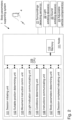
- the body parameters supporting system 1 comprises as indicated in conjunction with Fig. 1 an optional session initiating unit 101, an optional suitable position determining unit 102, an optional movement instruction communicating unit 103, an optional light indication communicating unit 104, a conditions determining unit 105, an instructions communicating unit 106, an optional body parameters determining unit 107, and an optional session completed indicating unit 108, all of which were described in greater detail in conjunction with Fig. 1 .
- the embodiments herein for supporting obtaining of body parameters of a person 3 may be implemented through one or more processors, such as a processor 109, here denoted CPU (central processing unit), together with computer program code for performing the functions and actions of the embodiments herein.
- Said program code may also be provided as a computer program product, for instance in the form of a data carrier carrying computer program code for performing the embodiments herein when being loaded into the body parameters supporting system 1.
- a data carrier may be in the form of a CD ROM disc and/or a hard drive. It is however feasible with other data carriers such as a memory stick.
- the computer program code may furthermore be provided as pure program code on a server and downloaded to the body parameters supporting system 1.
- the body parameters supporting system 1 may further comprise a memory 110 comprising one or more memory units.
- the memory 110 may be arranged to be used to store e.g. information, and further to store data, configurations, schedulings, and applications, to perform the methods herein when being executed in the body parameters supporting system 1.
- the computer program code may be implemented in the firmware, stored in FLASH memory 110 of an embedded processor 109, and/or downloaded from online.
- the optional session initiating unit 101, the optional suitable position determining unit 102, the optional movement instruction communicating unit 103, the optional light indication communicating unit 104, the conditions determining unit 105, the instructions communicating unit 106, the optional body parameters determining unit 107, the optional session completed indicating unit 108, the optional processor 109 and/or the optional memory 110 may at least partly be comprised in one or more nodes 111 e.g. ECUs (electronic control units) of the vehicle 2.
- nodes 111 e.g. ECUs (electronic control units) of the vehicle 2.
- said units 101, 102, 103, 104, 105, 106, 107, 108 described above may refer to a combination of analog and digital circuits, and/or one or more processors configured with software and/or firmware, e.g.
- processors such as the processor 109 perform as was described in conjunction with Fig. 1 and as will be described further in conjunction with Fig. 3 .
- processors may be included in a single ASIC (Application-Specific Integrated Circuitry), or several processors and various digital hardware may be distributed among several separate components, whether individually packaged or assembled into a SoC (System-on-a-Chip).
- SoC System-on-a-Chip
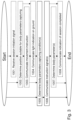
- Fig. 3 is a flowchart depicting an exemplifying method performed by a body parameters supporting system 1 according to embodiments of the disclosure. Said method is for supporting obtaining of body parameters of a person 3, e.g. of a potential vehicle occupant.
- the exemplifying method which may be continuously repeated, comprises the following actions discussed with support from Figs. 1-2 . Moreover, the actions may be taken in any suitable order and/or one or more actions may be performed simultaneously and/or in alternate order where applicable; for instance, Action 1004 may be performed simultaneously with and/or prior to Action 1003.
- the body parameters supporting system 1 receives - e.g. with support from the optional session initiating unit 101 - a session initiating signal 9 requesting the body parameters supporting system 1 to initiate a body parameters obtaining session.
- the body parameters supporting system 1 may determine - e.g. with support from the optional suitable position determining unit 102 - a geographical position 6 suitable for capturing body parameters of the person 3.
- the body parameters supporting system 1 may communicate - e.g. with support from the optional movement instruction communicating unit 103 - a movement instruction signal 7 indicating a movement instruction corresponding to the suitable position 6.
- the body parameters supporting system 1 may with support from one or more light emitting devices 22 of the vehicle 2 communicate - e.g. with support from the optional light indication communicating unit 104 - a light indication 8 on the ground corresponding to the suitable position 6.
- the body parameters supporting system 1 determines - e.g. with support from the conditions determining unit 105 - with input from one or more surrounding detecting sensors 21 adapted to capture a surrounding exterior of the vehicle 2, one or more body parameters capturing conditions for a person 3 present outside the vehicle 2.
- the one or more body parameters capturing conditions comprise at least one of a body position, a body and/or limb posture, a body and/or limb obstruction, a disturbing obstacle, a weather condition, and a light condition.
- the body parameters supporting system 1 communicates - e.g. with support from the instructions communicating unit 106 - one or more instruction signals 5 indicating one or more body motion and/or obstruction removal instructions, wherein the one or more instruction signals 5 are determined in consideration of counteracting, changing and/or overcoming at least one of the one or more body parameters capturing conditions.
- the one or more instructions signals 5 comprise at least one of a geographical motion instruction, a body limb motion instruction, a body rotation instruction, and an obstruction removal instruction
- Action 1006 of communicating one or more instruction signals 5 comprises transmitting the one or more instruction signals 5 to an electronic user device 4 associated with the person 3.
- Action 1006 of communicating one or more instruction signals 5 may comprise communicating with support from one or more light emitting devices 22 and/or sound emitting devices 23 of the vehicle 2, a light output and/or sound output indicative of the one or more instruction signals 5.
- the body parameters supporting system 1 may with input from the one or more surrounding detecting sensors 21 determine - e.g. with support from the optional body parameters determining unit 107 - one or more body parameters of the person 3.
- the body parameters supporting system 1 may upon a body parameters obtaining session being deemed completed, with support from one or more light emitting devices 22 and/or sound emitting devices 23 of the vehicle 2, communicate - e.g. with support from the optional session completed indicating unit 108 - a light output and/or sound output indicative of the body parameters obtaining session being deemed completed.
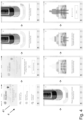
- Fig. 4 illustrates exemplifying guidance provided on a display 41 of a user device 4, which guidance is associated with an exemplifying session initiating signal 9 transmitted to the body parameters supporting system 1, further associated with an exemplifying movement instruction signal 7 received from the body parameters supporting system 1, and yet further associated with exemplifying instruction signals 5 received from the body parameters supporting system 1, according to embodiments of the disclosure.
Landscapes
- Engineering & Computer Science (AREA)
- Physics & Mathematics (AREA)
- Theoretical Computer Science (AREA)
- Multimedia (AREA)
- General Physics & Mathematics (AREA)
- Human Computer Interaction (AREA)
- Mechanical Engineering (AREA)
- Transportation (AREA)
- Automation & Control Theory (AREA)
- Chemical & Material Sciences (AREA)
- Combustion & Propulsion (AREA)
- Social Psychology (AREA)
- Psychiatry (AREA)
- General Health & Medical Sciences (AREA)
- Health & Medical Sciences (AREA)
- Computer Vision & Pattern Recognition (AREA)
- Traffic Control Systems (AREA)
Description
- The present disclosure relates to supporting obtaining of body parameters of a person outside a vehicle, e.g. of a potential vehicle occupant.
- Vehicle occupants come in many different shapes and sizes, and commonly, vehicles of today offer the ability to adjust adjustable vehicle components - such as e.g. seat position(s), seat belt position(s), mirror position(s), airbag position(s), steering wheel position(s), display position(s) etc. - to suit different body proportions.
- For instance, an internal and/or external e.g. camera may capture body parameters of a vehicle occupant or potential vehicle occupant, and said body parameters may then be utilized for adjusting adjustable vehicle components.
-
EP 2 674 914 A1EP 2 674 914 A1 - Document
US 2009/092284 A1 (BREED DAVID S [US] ET AL) 9 April 2009 discloses 1 a method for supporting obtaining of human body parameters of a person by determining capturing conditions. - It is therefore an object of embodiments herein to provide an approach for supporting obtaining of body parameters of a person, such as a potential vehicle occupant, in an improved and/or alternative manner.
- According to a first aspect of embodiments herein, the object is achieved by a method according to
claim 1. - According to a second aspect of embodiments herein, the object is achieved by a body parameters supporting system according to
claim 5. - According to a third aspect of embodiments herein, the object is achieved by a vehicle comprising the discussed body parameters supporting system.
- According to a fourth aspect of embodiments herein, the object is achieved by a computer program product comprising a computer program containing computer program code means arranged to cause a computer or a processor to execute the steps of the discussed body parameters supporting system, stored on a computer-readable medium or a carrier wave.
- Thereby, there is introduced an approach according to which measures are provided to assist in obtaining human body dimensions and/or proportions, e.g. of a potential vehicle occupant. That is, since there is determined with input from one or more surrounding detecting sensors adapted to capture a surrounding exterior of the vehicle, one or more body parameters capturing conditions for a person present outside the vehicle, there may be established prevailing conditions for capturing body parameters of a human in the field of view of at least a first sensor adapted to sense a surrounding outside the vehicle. In other words, a check is carried out of circumstances e.g. obstructions for obtaining body parameters of a person. Subsequently it may be derived from the body parameters capturing conditions for instance whether one or more body parameters are not possible to capture, obtain and/or determine, and/or whether one or more body parameters are not possible to capture, obtain and/or determine to an extent deemed sufficient. Moreover, that is, since there is communicated one or more instruction signals indicating one or more body motion and/or obstruction removal instructions, wherein the one or more instruction signals are determined in consideration of counteracting, changing and/or overcoming at least one of the one or more body parameters capturing conditions, the body parameters supporting system may provide guidance prompting the person to perform body motion(s) and/or obstruction(s) removal as a measure to counteract, change and/or overcome prevailing circumstances, which circumstances for instance may be deemed unsatisfying and/or insufficient, for capturing body parameter(s). Accordingly, the person may be guided how to move, act and/or behave - and/or which potential obstruction(s) to remove - to improve the circumstances under which body parameters with support from the one or more surrounding detecting sensors may be obtained and/or determined. Thus, provided that the person at least partly follows at least one of the one or more instructions, body parameter(s) which were previously not possible to obtain and/or determine - and/or not possible to obtain and/or determine sufficiently - may then potentially be obtainable and/or determinable.
- For that reason, an approach is provided for in an improved and/or alternative manner support obtaining of body parameters of a person, such as of a potential vehicle occupant.
- The technical features and corresponding advantages of the above mentioned method will be discussed in further detail in the following.
- The various aspects of the non-limiting embodiments, including particular features and advantages, will be readily understood from the following detailed description and the accompanying drawings, in which:
-
Fig. 1 illustrates a schematic view of an exemplifying body parameters supporting system of a vehicle according to embodiments of the disclosure; -
Fig. 2 is a schematic block diagram illustrating an exemplifying body parameters supporting system according to embodiments of the disclosure; -
Fig. 3 is a flowchart depicting an exemplifying method performed by a body parameters supporting system according to embodiments of the disclosure; and -
Fig. 4 illustrates exemplifying guidance provided on a display of an optional user device, associated with exemplifying signals transmitted from and/or received by the body parameters supporting system according to embodiments of the disclosure. - In the following, according to embodiments herein which relate to supporting obtaining of body parameters of a person, there will be disclosed an approach according to which measures are provided to assist in obtaining human body dimensions and/or proportions, for instance of a potential vehicle occupant.
- Referring now to the figures and
Fig. 1 in particular, there is depicted a schematic view of an exemplifying bodyparameters supporting system 1 of avehicle 2 according to embodiments of the disclosure. The bodyparameters supporting system 1 is adapted for supporting obtaining of body parameters of aperson 3. Theexemplifying person 3 may refer to any arbitrary person, and for instance be represented by a potential driver and/or passenger of thevehicle 2. Theperson 3 may further be an authorized person, authorized to have access to thevehicle 2 for instance via an optionalelectronic user device 4 adapted to communicate with thevehicle 2 in a known manner such as via Bluetooth and/or via a commonly known remote automotive cloud, server and/or back-end system. The optionalelectronic user device 4 may refer to any arbitrary electronic user device supporting communication with thevehicle 2, and for instance be represented by a smartphone, tablet etc., or equivalents and/or successors thereof. Thevehicle 2, on the other hand, may for instance be represented by a passenger car, whereas a body parameter for instance may be represented by an arm length, a leg length, a body height, an eye position, a torso length, etc. - The expression "body parameters supporting system" may refer to "body parameters obtaining system", "body parameters determining system" and/or "body parameters assisting system", whereas "of" a vehicle may refer to "comprised in" a vehicle. The referred to "vehicle" may be represented by any arbitrary vehicle, for instance an enginepropelled vehicle, such as e.g. a car, truck, lorry, van, tractor and/or bus. "Vehicle" may further refer to "autonomous and/or at least partly autonomous vehicle". The expression "supporting" obtaining of body parameters may refer to "assisting in" and/or "enabling" obtaining of body parameters, whereas "for supporting" obtaining if body parameters according to an example may refer to "for guiding and/or instructing a person through" obtaining of body parameters. According to another example, the expression "for supporting obtaining of body parameters of a person" may refer to "for supporting obtaining of and/or determination of body parameters of a person and adjustment of adjustable vehicle components based thereon". The expression "obtaining of" body parameters may refer to "determination of" and/or "deriving" body parameters, and further to "obtaining of one or more" body parameters. "Body" parameters, on the other hand, may refer to "human body" parameters, whereas body "parameters" may refer to body "proportions", "dimensions" and/or "limb(s) lengths". The expression body parameters of a "person" may refer to body parameters of a "potential and/or future vehicle occupant", "vehicle occupant", "driver", "passenger", "person associated with the vehicle", "identified person", "authorized person" and/or "person authorized via an electronic user device associated with the person".
- The body
parameters supporting system 1 is - by means of a conditions determining unit 105 (shown inFig. 2 ) - with input from one or more surroundingdetecting sensors 21 adapted to capture a surrounding exterior of thevehicle 2, adapted for determining one or more body parameters capturing conditions for aperson 3 present outside thevehicle 2. Thereby, there may be established prevailing conditions for capturing body parameters of a human in the field of view of at least afirst sensor 21 adapted to sense a surrounding outside thevehicle 2. In other words, a check is carried out of circumstances e.g. obstructions for obtaining body parameters of aperson 3. Subsequently it may be derived from the body parameters capturing conditions for instance whether one or more body parameters are not possible to capture, obtain and/or determine, and/or whether one or more body parameters are not possible to capture, obtain and/or determine to an extent deemed sufficient. - The one or more body parameters capturing conditions comprise at least one of a body position, a body and/or limb posture, a body and/or limb obstruction, a disturbing obstacle, a weather condition, and a light condition. Thereby, sufficient conditions which may affect obtaining and/or determination of body parameters may be determined and subsequently considered and/or analysed. For instance, a geographical position of the
person 3 may be insufficient for obtaining and/or determining body parameters of saidperson 3, theperson 3 may e.g. be standing too far away from or too close to the one or more surroundingdetecting sensors 21, and/or at an insufficient angle relative thereto 21. In a similar manner, a body posture and/or body limb posture of theperson 3 may be insufficient for obtaining and/or determining body parameters of saidperson 3, said posture may e.g. disable certain body parameters from being obtainable and/or determinable such as e.g. a leg length should theperson 3 bend his/her knee(s). Similarly, a body obstruction and/or body limb obstruction, such as e.g. a piece of clothing such as a coat, a bag, a hat etc., may disable sufficient obtaining and/or determining of body parameters of theperson 3, whereas a disturbing obstacle such as e.g. an obstacle and/or another person in the background - and/or a piece of clothing of a disadvantaged colour and/or pattern worn by the person 3 - in a similar manner may disable sufficient obtaining and/or determining of body parameters of theperson 3. Similarly, a weather condition such as e.g. rain and/or snow may disable sufficient obtaining and/or determining of body parameters of theperson 3, whereas a light condition such as e.g. glare and/or insufficient ambient light etc. in a similar manner may disable sufficient obtaining and/or determining of body parameters of theperson 3. The expression "body position" may refer to "geographical body position", "insufficient body position", "body position of the person" and/or "body position relative the vehicle and/or at least one of the one or more surrounding detecting sensors", whereas "body and/or limb posture" may refer to "body and/or limb standing position", "insufficient body and/or limb posture" and/or "body and/or limb posture of the person". "Body and/or limb obstruction", on the other hand, may refer to "body and/or limb obstruction disturbing and/or interfering with obtaining and/or determining body parameters of the person" and/or "item, clothing, object and/or obstacle obstructing at least a portion of a limb and/or the body of the person", whereas "disturbing obstacle" may refer to "disturbing surrounding obstacle" and/or "surrounding obstacle and/or object disturbing and/or interfering with obtaining and/or determining body parameters of the person". The expression "weather condition" may refer to "weather obstruction", "weather-related obstruction", "obstructing weather condition" and/or "weather disturbing and/or interfering with obtaining and/or determining body parameters of the person", whereas "light condition" may refer to "ambient light condition", "insufficient light condition", "light-related obstruction" and/or "light condition disturbing and/or interfering with obtaining and/or determining body parameters of the person". - Determining one or more body parameters capturing conditions with input from the surrounding detecting sensor(s) 21 may be accomplished for instance by analyzing captured data - e.g. image data - associated with the person, derived from data captured by the surrounding detecting sensor(s) 21. The one or more surrounding
detecting sensors 21 adapted to capture a surrounding exterior of thevehicle 2 may refer to any arbitrary surrounding detecting sensors commonly known in the art, and accordingly, said sensor(s) 21 may refer to commonly known sensors adapted to capture a surrounding exterior of thevehicle 2, such as e.g. one or more cameras, radars, LIDARS, etc. The one or more surroundingdetecting sensors 21 may be positioned in any arbitrary manner considered relevant to capture a surrounding - and/or at least a portion of a surrounding - exterior of thevehicle 2, and for instance be comprised in and/or be attached to thevehicle 2, such as e.g. the front thereof 2. - The expression "determining" with input from one or more surrounding detecting sensors may refer to "deriving", "analyzing" and/or "calculating" with input from one or more surrounding detecting sensors, whereas "with input from" one or more surrounding detecting sensors may refer to "with support from" and/or "using" one or more surrounding detecting sensors. "Input", on the other hand, may refer to "data" and/or "captured data", whereas "surrounding detecting sensors" may refer to "environment detecting sensors", "surrounding capturing sensors" and/or "surrounding detecting subsystems". The expression surrounding detecting sensors adapted to "capture" a surrounding exterior of the vehicle may refer to surrounding detecting sensors adapted to "sense" a surrounding exterior of the vehicle, whereas "a surrounding" may refer to "at least a portion of a surrounding". Surrounding "exterior of" the vehicle, on the other hand, may refer to surrounding "outside" and/or "external" the vehicle. The expression body parameters "capturing" conditions may refer to body parameters "prevailing capturing", "obtaining" and/or "determining" conditions, whereas body parameters capturing "conditions" may refer to body parameters capturing "obstructions", "circumstances" and/or "difficulties". "For" a person, on the other hand, may refer to "in relation to" and/or "in view of" a person, whereas "present outside" the vehicle may refer to "present in vicinity of" and/or "present in a field of view of at least one of the one or more surrounding detecting sensors of" the vehicle.
- The body
parameters supporting system 1 is - by means of a instructions communicating unit 106 (shown inFig. 2 ) - adapted for communicating one ormore instruction signals 5 indicating one or more body motion and/or obstruction removal instructions, wherein the one ormore instruction signals 5 are determined in consideration of counteracting, changing and/or overcoming at least one of the one or more body parameters capturing conditions. Thereby, by establishing instruction signal(s) 5 based on the previously established prevailing conditions for obtaining and/or determining body parameters of theperson 3, and subsequently providing the instruction signal(s) 5, guidance may be provided by the bodyparameters supporting system 1 indicating how theperson 3 may move, act and/or behave to improve the circumstances for capturing body parameters of saidperson 3. Subsequently, guidance is provided prompting theperson 3 to perform body motion(s) and/or obstruction(s) removal as a measure to counteract, change and/or overcome prevailing circumstances, which for instance may be deemed unsatisfying and/or insufficient, for capturing body parameter(s). Accordingly, theperson 3 may be guided how to move, act and/or behave - and/or which potential obstruction(s) to remove - to improve the circumstances under which body parameters with support from the one or more surrounding detectingsensors 21 may be obtained and/or determined. Thus, provided that theperson 3 at least partly follows at least one of the one or more instructions, body parameter(s) which were previously not possible to obtain and/or determine - and/or not possible to obtain and/or determine sufficiently - may then potentially be obtainable and/or determinable. - The one or more instructions signals comprise at least one of a geographical motion instruction, a body limb motion instruction, a body rotation instruction, and/or an obstruction removal instruction. Thereby, sufficient instructions may be communicated and subsequently potentially followed by the
person 3 to accomplish improved obtaining and/or determination of body parameters. For instance, a geographical motion instruction may comprise an instruction aimed at theperson 3 to move to a specific and/or specified geographical position deemed suitable for capturing and/or determining body parameters, such as e.g. at a specific distance from - and/or angle towards - one or more of the one or more surrounding detectingsensors 21, to thereby enable improved obtaining and/or determining of body parameters of saidperson 3. Additionally or alternatively, a geographical motion instruction may comprise an instruction aimed at theperson 3 to move out of rainy and/or snowy weather, and/or move away from a disturbing obstacle e.g. in the background, to thereby enable improved obtaining and/or determining of body parameters of saidperson 3. In a similar manner, a body limb motion instruction may comprise an instruction aimed at theperson 3 to reposition a limb, such as e.g. straightening and/or holding out a leg or arm, in a manner deemed suitable for capturing relevant body parameters, to thereby enable improved obtaining and/or determining of body parameters of saidperson 3. Similarly, a body rotation instruction may comprise an instruction aimed at theperson 3 to at least partially rotate his or her body, to thereby enable improved obtaining and/or determining of body parameters of saidperson 3. In a similar manner, an obstruction removal instruction may comprise an instruction aimed at theperson 3 to remove and/or reposition e.g. an obstacle, clothing, item, bag and/or object blocking and/or obstructing at least a portion of theperson 3 and/or disturbing and/or interfering with obtaining body parameters of the person such as e.g. an object in the background. - The one or
more instruction signals 5 may be communicated in any arbitrary manner deemed suitable for the situation at hand. The expression "communicating" one or more instruction signals may refer to "providing", "transmitting", "emitting", "signalling", "initiating" and/or "performing" one or more instruction signals, whereas "instruction" signals may refer to "guidance" and/or "reposition" signals. "One or more instruction signals", on the other hand, may refer to "instruction data", "instruction output" and/or "instruction information". Moreover, "instruction signals" may refer to "instruction signals relevant for the person" and/or "instructions signals to prompt the person to perform one or more body motions". The expression instruction signals "indicating" one more body motion and/or obstruction removal instructions, on the other hand, may refer to instruction signals "indicative of", "corresponding to", "comprising" and/or "signalling" one or more body motion and/or obstruction removal instructions, whereas instruction signals "indicating one or more body motion and/or obstruction removal instructions" may refer to instruction signals "prompting the person to perform one or more body motions and/or obstruction removals". The expression body "motions" may refer to body "motions and/or movements", whereas "body" motions may refer to "body and/or body limb(s)" motions. Similarly, the expression "obstruction" removal may refer to "item, clothing and/or obstacle" removal, whereas obstruction "removal" may refer to obstruction "removal, rearrangement and/or elimination". "Determined" in consideration of counteracting, changing and/or overcoming may refer to "derived", "selected" and/or "defined" in consideration of counteracting, changing and/or overcoming, whereas "in consideration of" counteracting, changing and/or overcoming may refer to "based on", "with the attempt to", "to correspond to the one or more instruction signals for" and/or "to instruct and/or prompt the person to perform one or more body motions and/or obstruction removals for" counteracting, changing and/or overcoming. - Communicating the one or
more instruction signals 5 comprises transmitting the one ormore instruction signals 5 to anelectronic user device 4 associated with theperson 3. Thereby, and as further shown inFig. 4 , via adisplay 41 and/or one or more loud speakers (not shown) of auser device 4, guidance may be provided represented by one or more instructions indicating how theperson 3 may move, act and/or behave to improve the circumstances for capturing body parameters of saidperson 3. Subsequently, represented by suggestive instructions provided via saiddisplay 41 and/or said one or more loud speakers, representative guidance may be provided via theuser device 4, derived from the transmitted one ormore instruction signals 5, prompting theperson 3 to perform body motion(s) and/or obstruction(s) removal as a measure to counteract, change and/or overcome prevailing circumstances, which for instance may be deemed unsatisfying and/or insufficient, for capturing body parameter(s). Accordingly, theperson 3 may be guided via theuser device 4 how to move, act and/or behave - and/or which potential obstruction(s) to remove - to improve the circumstances under which body parameters with support from the one or more surrounding detectingsensors 21 may be obtained and/or determined. Thus, provided that theperson 3 at least partly follows at least one of the one or more instructions provided via theuser device 4, body parameter(s) which were previously not possible to obtain and/or determine - and/or not possible to obtain and/or determine sufficiently - may then potentially be obtainable and/or determinable. - Transmitting the one or
more instruction signals 5 to theuser device 4 associated with theperson 3 may be accomplished in any arbitrary manner known in the art, e.g. directly from thevehicle 2 to theuser device 4 and/or via the remote automotive cloud, server and/or back-end system discussed above. - The expression "transmitting" the one or more instruction signals may refer to "providing" and/or "transmitting wirelessly" the one or more instruction signals, and according to an example further to "authenticating the person and transmitting" the one or more instruction signals. Such an exemplifying "authenticating" may be accomplished in any arbitrary manner known in the art, for instance in a known manner via the user device and/or software and/or an application running thereon, and/or via the remote automotive cloud, server and/or back-end system discussed above. The expression user device "associated with the person", on the other hand, may refer to user device "via which the person is authenticated" and/or user device "carried by and/or deemed to be carried by the person.
- Communicating the one or
more instruction signals 5 comprise emitting - with support from one or more optionallight emitting devices 22 and/or sound emitting devices 23 of the vehicle 2 - a light output and/or a sound output representing the one or more instruction signals 5. Thereby, by means of at least a firstlight emitting device 22 and/or sound emitting device 23 of thevehicle 2, guidance may be provided represented by a light output and/or sound output indicating how theperson 3 may move, act and/or behave to improve the circumstances for capturing body parameters of saidperson 3. Subsequently, represented by suggestive light output and/or sound output, representative guidance may be provided from thevehicle 2 prompting theperson 3 to perform body motion(s) and/or obstruction(s) removal as a measure to counteract, change and/or overcome prevailing circumstances, which for instance may be deemed unsatisfying and/or insufficient, for capturing body parameter(s). Accordingly, theperson 3 may be guided by means of a light output and/or sound output from thevehicle 2 how to move, act and/or behave - and/or which potential obstruction(s) to remove - to improve the circumstances under which body parameters with support from the one or more surrounding detectingsensors 21 may be obtained and/or determined. Thus, provided that theperson 3 at least partly follows at least one of the one or more instructions emitted by the one or more light emittingdevices 22 and/or sound emitting devices 23, body parameter(s) which were previously not possible to obtain and/or determine - and/or not possible to obtain and/or determine sufficiently - may then potentially be obtainable and/or determinable. - The light emitting device(s) 22 may refer to any arbitrary light emitting device(s) mounted to and/or comprised in the
vehicle 2, such as for instance commonly known light sources, head lamps and/or lights e.g. provided in the front of thevehicle 2. Said light emitting device(s) 22 may according to an example comprise one or more lasers, and moreover further together with e.g. DLP (digital light processing) technologies enabling for creating and/or projecting text, icons and/or moving animations. Additionally or alternatively, the light emitting device(s) 22 may comprise a plurality of commonly known LEDs (light emitting diodes) adapted for emitting light which may be seen outside the vehicle such as in front of saidvehicle 2. Similarly, the exemplifying optional referred to sound emitting device(s) 23 may refer to any arbitrary sound emitting device(s) mounted to and/or comprised in thevehicle 2, such as for instance commonly known loud speakers adapted for emitting sound(s) which may be heard outside thevehicle 2 such as in front of saidvehicle 2. The referred to "a light output" may refer to "light indication(s)", "a light sequence" and/or "light symbol(s) corresponding to at least one of the one or more instruction signal(s)", such as for instance an arrow, animation and/or a light sequence formed e.g. by the exemplifying LEDs and/or lasers to guide theperson 3 to perform body motion(s) and/or obstruction(s) removal in accordance therewith. Similarly, the referred to "a sound output" may refer to "sound instruction(s)", "a sound sequence" and/or "voice and/or speech instruction(s) corresponding to at least one of the one or more instruction signal(s)", such as for instance a voice instruction to guide theperson 3 to perform body motion(s) and/or obstruction(s) removal in accordance therewith. - The body
parameters supporting system 1 may - by means of an optional suitable position determining unit 102 (shown inFig. 2 ) - be adapted for determining a geographical position 6 suitable for capturing body parameters of theperson 3. The bodyparameters supporting system 1 may then further - by means of an optional movement instruction communicating unit 103 (shown inFig. 2 ) - be adapted for communicating amovement instruction signal 7 indicating a movement instruction corresponding to the suitable position 6. Thereby, by establishing an appropriate geographical position 6 deemed suitable for theperson 3 to be standing and/or be located for obtaining of and/or determination of body parameters, and providing aninstruction 7 corresponding to said position 6, theperson 3 may be guided thereto 6. - The suitable position 6 may be any arbitrary position deemed suitable for capturing and/or determination of body parameters of the
person 3, and may for instance refer to a position 6 a few metres in front of thevehicle 2 to suit capturing of body parameters by one or more surrounding detectingsensors 21 comprised in e.g. a grill of thevehicle 2. Themovement instruction signal 7 may be communicated in any arbitrary manner deemed suitable for the situation at hand. For instance, communicating themovement instruction signal 7 may comprise transmitting themovement instruction signal 7 to theelectronic user device 4 discussed above. Thereby, and as further shown inFig. 4 , via thedisplay 41 and/or the one or more loud speakers (not shown) of theuser device 4, guidance may be provided represented by a movement instruction indicating the position 6 - and/or how to get to the position 6 - deemed suitable for obtaining and/or determining body parameters. Subsequently, represented by one or more suggestive instructions provided via saiddisplay 41 and/or said one or more loud speakers, representative guidance may be provided via theuser device 4, derived from the transmittedmovement instruction signal 7, prompting theperson 3 to move to and/or how to get to the suitable position 6. Thus, provided that theperson 3 follows the movement instructions provided via theuser device 4, body parameter(s) may then potentially be obtainable and/or determinable. - Communicating the
movement instruction signal 7 comprise emitting - with support from the one or more optionallight emitting devices 22 and/or the one or more sound emitting devices 23 of the vehicle discussed above - a light output and/or a sound output representing themovement instruction signal 7. Thereby, by means of at least a firstlight emitting device 22 and/or sound emitting device 23 of thevehicle 2, guidance may be provided represented by a light output and/or sound output indicating the position 6 - and/or how to get to the position 6 - deemed suitable for obtaining and/or determining body parameters. Subsequently, represented by suggestive light output and/or sound output emitted from at least one of the one or more light emittingdevices 22 and/or at least one of the one or more sound emitting devices 23, representative guidance may be provided from thevehicle 2, derived from the transmittedmovement instruction signal 7, prompting theperson 3 to move to and/or guiding theperson 3 how to get to the suitable position 6. Thus, provided that theperson 3 follows the movement instructions provided via the one or more light emittingdevices 22 and/or the one or more sound emitting devices 23 of thevehicle 2, body parameter(s) may then potentially be obtainable and/or determinable. The referred to "a light output" may refer to "light indication(s)", "a light sequence" and/or "light symbol(s) corresponding to the movement instruction signal", such as for instance an arrow, animation and/or a light sequence formed e.g. by the exemplifying LEDs and/or lasers to guide the person to the suitable position. Similarly, the referred to "a sound output" may refer to "sound instruction(s)", "a sound sequence" and/or "voice and/or speech instruction(s) corresponding to the movement instruction signal", such as for instance a voice instruction to guide theperson 3 to the suitable position. - The expression "determining" a geographical position may refer to "determining with input from at least one of the one or more surrounding detecting sensors" a geographical position, whereas "geographical position" may refer to "geographical position in vicinity of the vehicle and/or in a field of view of at least one of the one or more surrounding detecting sensors". "Position suitable" for capturing body parameters of the person, on the other hand, may refer to "position deemed suitable" and/or "position relevant for" capturing body parameters of the person, whereas "capturing" body parameters of the person may refer to "determining" and/or "obtaining" body parameters of the person. The expression "communicating" a movement instruction signal may refer to "providing", "transmitting", "emitting", "signalling", "initiating" and/or "performing" a movement instruction signal, whereas "movement instruction" signal may refer to "movement guidance" and/or "suitable position guidance" signal. Moreover, "movement instruction signal" may refer to "movement instruction signal relevant for the person" and/or "instruction signal to prompt the person to move to the suitable position". The expression movement instruction signal "indicating" a movement instruction corresponding to the suitable position, on the other hand, may refer to movement instruction signal "indicative of", "corresponding to", "comprising" and/or "signalling" a movement instruction corresponding to the suitable position, whereas movement instruction signal "indicating a movement instruction corresponding to the suitable position" may refer to movement instruction signal "prompting the person to move to the suitable position".
- The body
parameters supporting system 1 is further - by means of an optional light indication communicating unit 104 (shown inFig. 2 ) adapted for communicating with support from one or more light emittingdevices 22 of the vehicle, a light indication 8 on the ground corresponding to the suitable position 6. Thereby, a light indication 8 directed to the ground may indicate the determined position 6 suitable for theperson 3 to be standing and/or be located for obtaining of and/or determination of body parameters, thus providing guidance thereto 6. That is, by means of at least a firstlight emitting device 22, guidance may be provided represented by a light indication 8 on the ground indicating said suitable position 6. Subsequently, represented by a ground-directed light indication 8 emitted from at least one of the one or more light emittingdevices 22, representative guidance may be provided - derived from the transmitted movement instruction signal 7 - by pointing out the suitable position 6. Thus, provided that theperson 3 moves to the light indication 8, body parameter(s) may then potentially be obtainable and/or determinable. - The ground-provided light indication 8 may be of any arbitrary shape and/or dimensions, for instance have the shape of a circle, oval, cross, square, rectangle, dot, pair of feet, etc. The expression "communicating" with support from one or more light emitting devices may refer to "emitting", "projecting", "providing", "indicating" and/or "signalling" with support from one or more light emitting devices, whereas "light indication" may refer to "light marking(s) and/or projection(s)" and/or "lit up section and/or area". The expression "corresponding to" the suitable position, on the other hand, may refer to "reflecting", "marking out" and/or "pointing out" the suitable position.
- The body
parameters supporting system 1 is by means of the body parameters determining unit 107 (shown inFig. 2 ) - adapted for determining with input from the one or more surrounding detectingsensors 21 one or more body parameters of theperson 3. Thereby, one or more body parameters of theperson 3 may be determined, and potentially subsequently be used for adjusting - and/or initiating adjustment of - one or moreadjustable components 24 of thevehicle 2, such as for instance an exemplifying exterior mirror position. - Determining one or more body parameters of the
person 3 may be accomplished in any arbitrary manner commonly known in the art, for instance by analysing data, e.g. image data, associated with theperson 3 captured by the one or more surrounding detectingsensors 21. Similarly, potentially adjusting one or moreadjustable components 24 of thevehicle 2 may be accomplished in any arbitrary known manner, for instance may one or more determined body parameters be communicated to one or more applicableadjustable components 24 and/or to electronic control unit(s) associated therewith 24 for utilization and/or implementation thereof. Anadjustable component 24 may for instance be represented by and/or comprise one or more of: a seat cushion position, seat cushion length, neck rest position, seat belt position, back rest angle including optional side supports, back rest angle upper part, power lumbar support, pedal position, steering wheel position, interior mirror positon, exterior mirrors' position, gear shifter position, position of head-up display projection on windscreen, position of other displays, positon of controls for media, climate, navigation etc., position of control located on steering wheel, position of arm support, position of up holder, direction of AC (air conditioning) output, sunblind, settings for a deployable airbag and opening angle of tailgate. - The expression "determining" with input from one or more surrounding detecting sensors may refer to "deriving" with input from one or more surrounding detecting sensors, whereas "with input from" one or more surrounding detecting sensors may refer to "with support from" and/or "with input derived from" the one or more surrounding detecting sensors.
- The body
parameters supporting system 1 may - by means of an optional session initiating unit 101 (shown inFig. 2 ) - be adapted for receiving asession initiating signal 9 requesting the bodyparameters supporting system 1 to initiate a body parameters obtaining session. Thereby, a session may be initiated for providing instructions and/or guidance aimed at theperson 3 for - and/or for instructing and/or guiding aperson 3 through a process of - obtaining of and/or determination of body parameters as described above, and as will be further described in conjunction with Actions 1002-1007 ofFig. 3 . - The
session initiating signal 9 may be received in any arbitrary known manner, for instance - and as shown inFig. 4 - from theoptional user device 4 described above, and/or from a manual initiation e.g. via a user interface such as a display and or button (not shown) of thevehicle 2. - The expression "receiving" a session initiating signal may refer to "deriving" a session initiating signal and/or "receiving from an electronic user device" a session initiating signal. "Session initiating" signal, on the other hand, may refer to "guiding initiating" signal, "session initiating instruction" signal and/or "instruction(s) provision initiating" signal whereas session initiating "signal" may refer to session initiating "data" and/or "information". The expression "requesting the body parameters supporting system to initiate" a body parameters obtaining session may refer to "initiating" a body parameters obtaining session, whereas "a body parameters obtaining session" may refer to "body parameters obtaining session for a person", "instruction(s) provision", "communicating guiding instruction(s)" and/or "communicating instruction(s) relevant for the person for obtaining of and/or determining of body parameters".
- The body
parameters supporting system 1 may - by means of an optional session completed indicating unit 108 (shown inFig. 2 ) - be adapted for communicating, upon a body parameters obtaining session being deemed completed - with support from one or more light emittingdevices 22 and/or sound emitting devices 23 of the vehicle - a light output and/or sound output indicative of the body parameters obtaining session being deemed completed. Thereby, it may be signalled by means of at least one of the one or more light emittingdevices 22 and/or at least a one of the one or more sound emitting devices 23 of thevehicle 2, that a session for providing instructions and/or guidance aimed at theperson 3 for - and/or for instructing and/or guiding aperson 3 through a process of - determination of body parameters as described above, and as will be further described in conjunction with Actions 1002-1007 ofFig. 3 , has been completed and/or has come to an end. - The referred to "light output" may refer to "light indication", "light sequence" and/or "light symbol corresponding to the body parameters obtaining session being deemed completed", such as for instance a light blinking a predetermined number of times. Similarly, the referred to "sound output" may refer to "sound verification", "sound sequence" and/or "sound corresponding to the body parameters obtaining session being deemed completed", such as for instance a predetermined sound and/or sound sequence e.g. a predetermined number of honking sounds.
- The expression "communicating" a light output and/or sound output may refer to "emitting", "signalling" and/or "indicating" a light output and/or sound output, whereas "upon a body parameters obtaining session being deemed completed" may refer to "when a body parameters obtaining session is completed and/or has ended" and/or "upon completion of determining body parameters". "Indicative of" the body parameters obtaining session being deemed completed, on the other hand, may refer to "corresponding to" and/or "representing" the body parameters obtaining session being deemed completed, whereas indicative of "the body parameters obtaining session being deemed completed" may refer to indicative of "determining of body parameters being deemed completed". "Deemed completed" may refer to merely "completed".
- As further shown in
Fig. 2 , which is a schematic block diagram illustrating an exemplifying bodyparameters supporting system 1 according to embodiments of the disclosure, the bodyparameters supporting system 1 comprises as indicated in conjunction withFig. 1 an optionalsession initiating unit 101, an optional suitableposition determining unit 102, an optional movementinstruction communicating unit 103, an optional lightindication communicating unit 104, aconditions determining unit 105, aninstructions communicating unit 106, an optional bodyparameters determining unit 107, and an optional session completed indicatingunit 108, all of which were described in greater detail in conjunction withFig. 1 . Furthermore, the embodiments herein for supporting obtaining of body parameters of aperson 3, may be implemented through one or more processors, such as aprocessor 109, here denoted CPU (central processing unit), together with computer program code for performing the functions and actions of the embodiments herein. Said program code may also be provided as a computer program product, for instance in the form of a data carrier carrying computer program code for performing the embodiments herein when being loaded into the bodyparameters supporting system 1. One such carrier may be in the form of a CD ROM disc and/or a hard drive. It is however feasible with other data carriers such as a memory stick. The computer program code may furthermore be provided as pure program code on a server and downloaded to the bodyparameters supporting system 1. The bodyparameters supporting system 1 may further comprise amemory 110 comprising one or more memory units. Thememory 110 may be arranged to be used to store e.g. information, and further to store data, configurations, schedulings, and applications, to perform the methods herein when being executed in the bodyparameters supporting system 1. For instance, the computer program code may be implemented in the firmware, stored inFLASH memory 110 of an embeddedprocessor 109, and/or downloaded from online. - Furthermore, the optional
session initiating unit 101, the optional suitableposition determining unit 102, the optional movementinstruction communicating unit 103, the optional lightindication communicating unit 104, theconditions determining unit 105, theinstructions communicating unit 106, the optional bodyparameters determining unit 107, the optional session completed indicatingunit 108, theoptional processor 109 and/or theoptional memory 110, may at least partly be comprised in one ormore nodes 111 e.g. ECUs (electronic control units) of thevehicle 2. Those skilled in the art will also appreciate that saidunits memory 110, that when executed by the one or more processors such as theprocessor 109 perform as was described in conjunction withFig. 1 and as will be described further in conjunction withFig. 3 . One or more of these processors, as well as the other digital hardware, may be included in a single ASIC (Application-Specific Integrated Circuitry), or several processors and various digital hardware may be distributed among several separate components, whether individually packaged or assembled into a SoC (System-on-a-Chip). - Further shown in
Fig. 2 is theuser device 4, the one or more surrounding detectingsensors 21, the one or more light emittingdevices 22, the optional one or more sound emitting devices 23 and the optional adjustable vehicle component(s) 24.Fig. 3 is a flowchart depicting an exemplifying method performed by a bodyparameters supporting system 1 according to embodiments of the disclosure. Said method is for supporting obtaining of body parameters of aperson 3, e.g. of a potential vehicle occupant. The exemplifying method, which may be continuously repeated, comprises the following actions discussed with support fromFigs. 1-2 . Moreover, the actions may be taken in any suitable order and/or one or more actions may be performed simultaneously and/or in alternate order where applicable; for instance,Action 1004 may be performed simultaneously with and/or prior toAction 1003. - In
optional Action 1001, the bodyparameters supporting system 1 receives - e.g. with support from the optional session initiating unit 101 - asession initiating signal 9 requesting the bodyparameters supporting system 1 to initiate a body parameters obtaining session. - In
optional Action 1002, the bodyparameters supporting system 1 may determine - e.g. with support from the optional suitable position determining unit 102 - a geographical position 6 suitable for capturing body parameters of theperson 3. - In
Action 1003, optionally following uponoptional Action 1002 of determining a geographical position 6 suitable for capturing body parameters of theperson 3, the bodyparameters supporting system 1 may communicate - e.g. with support from the optional movement instruction communicating unit 103 - amovement instruction signal 7 indicating a movement instruction corresponding to the suitable position 6. - In
optional Action 1004, optionally following uponoptional Action 1002 of determining a geographical position 6 suitable for capturing body parameters of theperson 3 and/or following uponoptional Action 1003 of communicating amovement instruction signal 7 indicating a movement instruction corresponding to the suitable position 6, the bodyparameters supporting system 1 may with support from one or more light emittingdevices 22 of thevehicle 2 communicate - e.g. with support from the optional light indication communicating unit 104 - a light indication 8 on the ground corresponding to the suitable position 6. - In
Action 1005, the bodyparameters supporting system 1 determines - e.g. with support from the conditions determining unit 105 - with input from one or more surrounding detectingsensors 21 adapted to capture a surrounding exterior of thevehicle 2, one or more body parameters capturing conditions for aperson 3 present outside thevehicle 2. - The one or more body parameters capturing conditions comprise at least one of a body position, a body and/or limb posture, a body and/or limb obstruction, a disturbing obstacle, a weather condition, and a light condition.
- In
Action 1006, the bodyparameters supporting system 1 communicates - e.g. with support from the instructions communicating unit 106 - one ormore instruction signals 5 indicating one or more body motion and/or obstruction removal instructions, wherein the one ormore instruction signals 5 are determined in consideration of counteracting, changing and/or overcoming at least one of the one or more body parameters capturing conditions. - The one or more instructions signals 5 comprise at least one of a geographical motion instruction, a body limb motion instruction, a body rotation instruction, and an obstruction removal instruction
- Furthermore,
Action 1006 of communicating one ormore instruction signals 5 comprises transmitting the one ormore instruction signals 5 to anelectronic user device 4 associated with theperson 3. - Additionally or alternatively, optionally,
Action 1006 of communicating one ormore instruction signals 5 may comprise communicating with support from one or more light emittingdevices 22 and/or sound emitting devices 23 of thevehicle 2, a light output and/or sound output indicative of the one or more instruction signals 5. - In
Action 1007, the bodyparameters supporting system 1 may with input from the one or more surrounding detectingsensors 21 determine - e.g. with support from the optional body parameters determining unit 107 - one or more body parameters of theperson 3. - In
optional Action 1008, the bodyparameters supporting system 1 may upon a body parameters obtaining session being deemed completed, with support from one or more light emittingdevices 22 and/or sound emitting devices 23 of thevehicle 2, communicate - e.g. with support from the optional session completed indicating unit 108 - a light output and/or sound output indicative of the body parameters obtaining session being deemed completed. -
Fig. 4 illustrates exemplifying guidance provided on adisplay 41 of auser device 4, which guidance is associated with an exemplifyingsession initiating signal 9 transmitted to the bodyparameters supporting system 1, further associated with an exemplifyingmovement instruction signal 7 received from the bodyparameters supporting system 1, and yet further associated with exemplifyinginstruction signals 5 received from the bodyparameters supporting system 1, according to embodiments of the disclosure.
Claims (9)
- A computer-implemented method performed by a body parameters supporting system (1) of a vehicle (2) for supporting obtaining of human body parameters of a person (3), the method comprising:determining (1005) with input from one or more surrounding detecting sensors (21) adapted to capture a surrounding exterior of the vehicle (2), one or more body parameters capturing conditions for a person (3) present outside the vehicle (2), wherein the one or more body parameters capturing conditions comprises one or more of a body position, a body and/or limb posture, a body and/or limb obstruction and a disturbing obstacle;deriving from the body parameters capturing conditions whether one or more body parameters are not possible to capture, obtain or determine to an extent deemed sufficient,characterized in that:communicating (1006), if derived that said one or more body parameters are not possible to capture, obtain or determine to said extent deemedsufficient, one or more instruction signals (5) indicating one or more body motion and/or obstruction removal instructions, the communicating (1006) one or more instruction signals (5) comprising:transmitting the one or more instruction signals (5) to an electronic user device (4) associated with the person (3); and/orcommunicating by means of one or more light emitting devices (22) and/or sound emitting devices (23) of the vehicle (2), a light output and/orsound output indicative of the one or more instruction signals (5), wherein the one or more instruction signals (5) are based on at least one of the determined one or more body parameters capturing conditions, wherein the one or more instruction signals (5) represent guidance indicating the person (3) to perform body motions or obstructions removal as a measure to overcome prevailing circumstances deemed insufficient for capturing body parameters, the one or more instructions signals comprising at least one of a geographical motion instruction, a body limb motion instruction, a body rotation instruction, and an obstruction removal instruction; andafter the step of communicating (1006), determining (1007), provided that said person at least partly has followed said guidance, with input from the one or more surrounding detecting sensors (21) one or more body parameters of the person (3)wherein the body parameters comprises one or more of body proportions, body dimensions and limb lengths.
- The method according to claim 1, further comprising:
determining (1002) a geographical position (6) suitable for capturing body parameters of the person (3); andcommunicating (1003) a movement instruction signal (7) indicating a movement instruction corresponding to the suitable position (6); and/orcommunicating (1004) with support from one or more light emitting devices (22) of the vehicle (2), a light indication (8) on the ground corresponding to the suitable position (6). - The method according to claim 1 or 2, further comprising:
receiving (1001) a session initiating signal (9) requesting the body parameters supporting system (1) to initiate a body parameters obtaining session. - The method according to any one of claims 1-3, further comprising:
communicating (1008) upon a body parameters obtaining session being deemed completed, with support from one or more light emitting devices (22) and/or sound emitting devices (23) of the vehicle (2), a light output and/or sound output indicative of the body parameters obtaining session being deemed completed. - A body parameters supporting system (1) of a vehicle (2) for supporting obtaining of human body parameters of a person (3), the body parameters supporting system (1) comprising:a conditions determining unit (105) for determining (1005) with input from one or more surrounding detecting sensors (21) adapted to capture a surrounding exterior of the vehicle (2), one or more body parameters capturing conditions for a person (3) present outside the vehicle (2), wherein the one or more body parameters capturing conditions comprises one or more of a body position, a body and/or limb posture, a body and/or limb obstruction and a disturbing obstacle, wherein the conditions determining unit (105) is configured to derive from the body parameters capturing conditions whether one or more body parameters are not possible to capture, obtain or determine to an extent deemed sufficient;characterized in that:wherein the body parameters comprises one or more of body proportions, body dimensions and limb lengths.
an instructions communicating unit (106) for communicating (1006), if derived that said one or more body parameters are not possible to capture, obtain or determine to said extent deemed sufficient, one or more instruction signals (5) indicating one or more body motion and/or obstruction removal instructions, the instructions communicating unit (106) being adapted for:transmitting the one or more instruction signals (5) to an electronic user device (4) associated with the person (3); and/orcommunicating by means of one or more light emitting devices (22) and/or sound emitting devices (23) of the vehicle (2), a light output and/or sound output indicative of the one or more instruction signals (5),
wherein the one or more instruction signals (5) are determined based on at least one of the determined one or more body parameters capturing conditions, wherein the one or more instruction signals (5) represent guidance indicating the person (3) to perform body motions or obstructions removal as a measure to overcome prevailing circumstances deemed insufficient for capturing body parameters, the one or more instructions signals comprising at least one of a geographical motion instruction, a body limb motion instruction, a body rotation instruction, and an obstruction removal instruction; anda body parameters determining unit (107) for determining (1007), after communicating (1006) said one or more instruction signals (5), with input from the one or more surrounding detecting sensors (21) one or more body parameters of the person (3), provided that said person at least partly has followed said guidance, - The body parameters supporting system (1) according claim 5, further comprising:
a suitable position determining unit (102) for determining (1002) a geographical position (6) suitable for capturing body parameters of the person (3); anda movement instruction communicating unit (103) for communicating (1003) a movement instruction signal (7) indicating a movement instruction corresponding to the suitable position (6); and/ora light indication communicating unit (104) for communicating (1004) with support from one or more light emitting devices (22) of the vehicle (2), a light indication (8) on the ground corresponding to the suitable position (6). - The body parameters supporting system (1) according to claim 5 or 6, further comprising:
a session initiating unit (101) for receiving (1001) a session initiating signal (9) requesting the body parameters supporting system (1) to initiate a body parameters obtaining session. - The body parameters supporting system (1) according to any one of claims 5-7, further comprising:
a session completed indicating unit (108) for communicating (1008) upon a body parameters obtaining session being deemed completed, with support from one or more light emitting devices (22) and/or sound emitting devices (23) of the vehicle (2), a light output and/or sound output indicative of the body parameters obtaining session being deemed completed. - A vehicle (2) comprising a body parameters supporting system (1) according to any one of claims 5-8.
Priority Applications (2)
| Application Number | Priority Date | Filing Date | Title |
|---|---|---|---|
| EP19158562.9A EP3699812B1 (en) | 2019-02-21 | 2019-02-21 | Method and system supporting obtaining of body parameters of a person outside a vehicle |
| US16/791,999 US11518371B2 (en) | 2019-02-21 | 2020-02-14 | Method and system supporting obtaining of body parameters of a person outside a vehicle |
Applications Claiming Priority (1)
| Application Number | Priority Date | Filing Date | Title |
|---|---|---|---|
| EP19158562.9A EP3699812B1 (en) | 2019-02-21 | 2019-02-21 | Method and system supporting obtaining of body parameters of a person outside a vehicle |
Publications (3)
| Publication Number | Publication Date |
|---|---|
| EP3699812A1 EP3699812A1 (en) | 2020-08-26 |
| EP3699812C0 EP3699812C0 (en) | 2025-03-05 |
| EP3699812B1 true EP3699812B1 (en) | 2025-03-05 |
Family
ID=65520148
Family Applications (1)
| Application Number | Title | Priority Date | Filing Date |
|---|---|---|---|
| EP19158562.9A Active EP3699812B1 (en) | 2019-02-21 | 2019-02-21 | Method and system supporting obtaining of body parameters of a person outside a vehicle |
Country Status (2)
| Country | Link |
|---|---|
| US (1) | US11518371B2 (en) |
| EP (1) | EP3699812B1 (en) |
Families Citing this family (1)
| Publication number | Priority date | Publication date | Assignee | Title |
|---|---|---|---|---|
| JP2024055137A (en) * | 2022-10-06 | 2024-04-18 | 株式会社Subaru | Exterior environment detection system and vehicle |
Family Cites Families (31)
| Publication number | Priority date | Publication date | Assignee | Title |
|---|---|---|---|---|
| US7738678B2 (en) * | 1995-06-07 | 2010-06-15 | Automotive Technologies International, Inc. | Light modulation techniques for imaging objects in or around a vehicle |
| US7983450B2 (en) * | 2009-03-16 | 2011-07-19 | The Boeing Company | Method, apparatus and computer program product for recognizing a gesture |
| JP5978582B2 (en) * | 2011-09-28 | 2016-08-24 | 住友電気工業株式会社 | Vehicle detection device, abnormality detection method, and abnormality detection program |
| US9349234B2 (en) * | 2012-03-14 | 2016-05-24 | Autoconnect Holdings Llc | Vehicle to vehicle social and business communications |
| EP2674914B1 (en) | 2012-06-11 | 2018-08-08 | Volvo Car Corporation | Method for determining a body parameter of a person |
| US9688199B2 (en) * | 2014-03-04 | 2017-06-27 | Magna Electronics Inc. | Vehicle alert system utilizing communication system |
| US9586585B2 (en) * | 2014-11-20 | 2017-03-07 | Toyota Motor Engineering & Manufacturing North America, Inc. | Autonomous vehicle detection of and response to traffic officer presence |
| JP6477529B2 (en) * | 2016-02-02 | 2019-03-06 | 株式会社デンソー | Driving support device |
| US10088846B2 (en) * | 2016-03-03 | 2018-10-02 | GM Global Technology Operations LLC | System and method for intended passenger detection |
| US9731645B1 (en) * | 2016-04-07 | 2017-08-15 | Valeo North America, Inc. | Cooperative adaptive lighting system using vehicle to target or object communication |
| US20170305335A1 (en) * | 2016-04-22 | 2017-10-26 | Delphi Technologies, Inc. | Indent-Indication System For An Automated Vehicle |
| JP6922919B2 (en) * | 2016-08-22 | 2021-08-18 | ソニーグループ株式会社 | Driving assistance devices and methods, moving objects, and programs |
| DE102016216680A1 (en) * | 2016-09-02 | 2018-03-08 | Bayerische Motoren Werke Aktiengesellschaft | Communication of the intention of a vehicle to another road user |
| US10139818B2 (en) * | 2016-11-16 | 2018-11-27 | Baidu Usa Llc | Visual communication system for autonomous driving vehicles (ADV) |
| WO2018096970A1 (en) * | 2016-11-22 | 2018-05-31 | 京セラ株式会社 | Electronic device, vehicle, control device, control program, and operation method of electronic device |
| EP3545376A4 (en) * | 2016-11-22 | 2020-07-01 | Amazon Technologies Inc. | METHOD FOR AUTONOMOUS NAVIGATION THROUGH UNCONTROLLED AND CONTROLLED INtersections |
| US10196058B2 (en) * | 2016-11-28 | 2019-02-05 | drive.ai Inc. | Method for influencing entities at a roadway intersection |
| KR102648812B1 (en) * | 2016-12-15 | 2024-03-19 | 현대자동차주식회사 | A vehicle and method for notifying pedesrian sensing |
| US10571285B2 (en) * | 2017-04-17 | 2020-02-25 | Ford Global Technologies, Llc | Vehicle route control |
| US10373501B2 (en) * | 2017-05-10 | 2019-08-06 | Aptiv Technologies Limited | Automated vehicle control strategy for pedestrian crowds |
| KR101989995B1 (en) * | 2017-09-25 | 2019-06-17 | 엘지전자 주식회사 | method for aquiring information for pedestrian and communication device for vehicle |
| US20190106052A1 (en) * | 2017-10-10 | 2019-04-11 | Jose Delgado | Pedestrian Warning System |
| WO2019089591A1 (en) * | 2017-10-30 | 2019-05-09 | Mobileye Vision Technologies Ltd. | Vehicle navigation based on human activity |
| CN110126720A (en) * | 2018-02-08 | 2019-08-16 | 株式会社小糸制作所 | Communications system for vehicle |
| WO2020049721A1 (en) * | 2018-09-07 | 2020-03-12 | 日産自動車株式会社 | Travel control method and travel control device for vehicle |
| US11027648B2 (en) * | 2018-11-16 | 2021-06-08 | Zoox, Inc. | Dynamic sound emission for vehicles |
| US11520331B2 (en) * | 2018-12-28 | 2022-12-06 | Intel Corporation | Methods and apparatus to update autonomous vehicle perspectives |
| JP7180436B2 (en) * | 2019-02-15 | 2022-11-30 | 株式会社デンソー | Behavior control method and behavior control device |
| US11961394B2 (en) * | 2020-04-01 | 2024-04-16 | Denso International America, Inc. | Methods and systems for guiding road users |
| US20210380137A1 (en) * | 2020-06-05 | 2021-12-09 | Toyota Motor Engineering & Manufacturing North America, Inc. | Multi-stage external communication of vehicle motion and external lighting |
| US11688184B2 (en) * | 2020-06-17 | 2023-06-27 | Toyota Motor Engineering & Manufacturing North America, Inc. | Driving automation external communication location change |
-
2019
- 2019-02-21 EP EP19158562.9A patent/EP3699812B1/en active Active
-
2020
- 2020-02-14 US US16/791,999 patent/US11518371B2/en active Active
Also Published As
| Publication number | Publication date |
|---|---|
| US20200269836A1 (en) | 2020-08-27 |
| EP3699812C0 (en) | 2025-03-05 |
| EP3699812A1 (en) | 2020-08-26 |
| US11518371B2 (en) | 2022-12-06 |
Similar Documents
| Publication | Publication Date | Title |
|---|---|---|
| JP4252938B2 (en) | Vehicle cabin lighting system | |
| US20250100562A1 (en) | Systems and methods for adjustment of vehicle sub-systems based on monitoring of vehicle occupant(s) | |
| US11318961B2 (en) | Robot for vehicle and control method thereof | |
| US10960760B2 (en) | Vehicle control device mounted in vehicle and control method thereof | |
| US10296083B2 (en) | Driver assistance apparatus and method for controlling the same | |
| US10889232B2 (en) | Vehicle control method that compares a light distribution pattern extracted from an image captured by a camera with a reference light distribution pattern | |
| US10029639B2 (en) | Driver assistance apparatus for vehicle and vehicle | |
| KR101732983B1 (en) | Rear combination lamp for vehicle and Vehicle including the same | |
| JP5151452B2 (en) | Information display device | |
| EP3190030B1 (en) | Steering input apparatus and vehicle | |
| US20180194365A1 (en) | Vehicle driving assistance method and vehicle | |
| US20170101110A1 (en) | Convenience Apparatus For Vehicle And Vehicle | |
| KR102135379B1 (en) | Robot for vehicle and control method of the robot | |
| JP6930383B2 (en) | Vehicle control device | |
| EP3453589B1 (en) | Vehicle control device mounted on vehicle and method for controlling vehicle | |
| US20210331709A1 (en) | Vehicle control device and control method for the same | |
| US20200346546A1 (en) | In-vehicle display device | |
| JP6011395B2 (en) | Vehicle driving support device | |
| EP3699812B1 (en) | Method and system supporting obtaining of body parameters of a person outside a vehicle | |
| JP2009200718A (en) | Imaging device | |
| JP5949509B2 (en) | Mutual recognition notification system and mutual recognition notification device | |
| CN117002387A (en) | A display method and device for vehicle streaming media rearview mirror | |
| KR20160146280A (en) | Driver Assistance Apparatus and Vehicle Having The Same | |
| JP6914730B2 (en) | Driving support device and driving support method | |
| JP2016071666A (en) | Gaze guidance device for vehicle |
Legal Events
| Date | Code | Title | Description |
|---|---|---|---|
| PUAI | Public reference made under article 153(3) epc to a published international application that has entered the european phase |
Free format text: ORIGINAL CODE: 0009012 |
|
| STAA | Information on the status of an ep patent application or granted ep patent |
Free format text: STATUS: THE APPLICATION HAS BEEN PUBLISHED |
|
| AK | Designated contracting states |
Kind code of ref document: A1 Designated state(s): AL AT BE BG CH CY CZ DE DK EE ES FI FR GB GR HR HU IE IS IT LI LT LU LV MC MK MT NL NO PL PT RO RS SE SI SK SM TR |
|
| AX | Request for extension of the european patent |
Extension state: BA ME |
|
| STAA | Information on the status of an ep patent application or granted ep patent |
Free format text: STATUS: REQUEST FOR EXAMINATION WAS MADE |
|
| 17P | Request for examination filed |
Effective date: 20210226 |
|
| RBV | Designated contracting states (corrected) |
Designated state(s): AL AT BE BG CH CY CZ DE DK EE ES FI FR GB GR HR HU IE IS IT LI LT LU LV MC MK MT NL NO PL PT RO RS SE SI SK SM TR |
|
| STAA | Information on the status of an ep patent application or granted ep patent |
Free format text: STATUS: EXAMINATION IS IN PROGRESS |
|
| 17Q | First examination report despatched |
Effective date: 20220922 |
|
| RAP1 | Party data changed (applicant data changed or rights of an application transferred) |
Owner name: POLESTAR PERFORMANCE AB |
|
| REG | Reference to a national code |
Ref legal event code: R079 Free format text: PREVIOUS MAIN CLASS: G06K0009000000 Ref country code: DE Ref document number: 602019066747 Country of ref document: DE Ipc: G06V0020580000 |
|
| GRAP | Despatch of communication of intention to grant a patent |
Free format text: ORIGINAL CODE: EPIDOSNIGR1 |
|
| STAA | Information on the status of an ep patent application or granted ep patent |
Free format text: STATUS: GRANT OF PATENT IS INTENDED |
|
| RIC1 | Information provided on ipc code assigned before grant |
Ipc: G06V 40/60 20220101ALI20240919BHEP Ipc: G06V 40/10 20220101ALI20240919BHEP Ipc: G06V 20/58 20220101AFI20240919BHEP |
|
| INTG | Intention to grant announced |
Effective date: 20240930 |
|
| GRAS | Grant fee paid |
Free format text: ORIGINAL CODE: EPIDOSNIGR3 |
|
| GRAA | (expected) grant |
Free format text: ORIGINAL CODE: 0009210 |
|
| STAA | Information on the status of an ep patent application or granted ep patent |
Free format text: STATUS: THE PATENT HAS BEEN GRANTED |
|
| AK | Designated contracting states |
Kind code of ref document: B1 Designated state(s): AL AT BE BG CH CY CZ DE DK EE ES FI FR GB GR HR HU IE IS IT LI LT LU LV MC MK MT NL NO PL PT RO RS SE SI SK SM TR |
|
| REG | Reference to a national code |
Ref country code: GB Ref legal event code: FG4D |
|
| REG | Reference to a national code |
Ref country code: CH Ref legal event code: EP |
|
| REG | Reference to a national code |
Ref country code: IE Ref legal event code: FG4D |
|
| REG | Reference to a national code |
Ref country code: DE Ref legal event code: R096 Ref document number: 602019066747 Country of ref document: DE |
|
| U01 | Request for unitary effect filed |
Effective date: 20250404 |
|
| U07 | Unitary effect registered |
Designated state(s): AT BE BG DE DK EE FI FR IT LT LU LV MT NL PT RO SE SI Effective date: 20250411 |
|
| PG25 | Lapsed in a contracting state [announced via postgrant information from national office to epo] |
Ref country code: RS Free format text: LAPSE BECAUSE OF FAILURE TO SUBMIT A TRANSLATION OF THE DESCRIPTION OR TO PAY THE FEE WITHIN THE PRESCRIBED TIME-LIMIT Effective date: 20250605 |
|
| PG25 | Lapsed in a contracting state [announced via postgrant information from national office to epo] |
Ref country code: ES Free format text: LAPSE BECAUSE OF FAILURE TO SUBMIT A TRANSLATION OF THE DESCRIPTION OR TO PAY THE FEE WITHIN THE PRESCRIBED TIME-LIMIT Effective date: 20250305 |
|
| PG25 | Lapsed in a contracting state [announced via postgrant information from national office to epo] |
Ref country code: NO Free format text: LAPSE BECAUSE OF FAILURE TO SUBMIT A TRANSLATION OF THE DESCRIPTION OR TO PAY THE FEE WITHIN THE PRESCRIBED TIME-LIMIT Effective date: 20250605 |
|
| PG25 | Lapsed in a contracting state [announced via postgrant information from national office to epo] |
Ref country code: HR Free format text: LAPSE BECAUSE OF FAILURE TO SUBMIT A TRANSLATION OF THE DESCRIPTION OR TO PAY THE FEE WITHIN THE PRESCRIBED TIME-LIMIT Effective date: 20250305 |
|
| PG25 | Lapsed in a contracting state [announced via postgrant information from national office to epo] |
Ref country code: GR Free format text: LAPSE BECAUSE OF FAILURE TO SUBMIT A TRANSLATION OF THE DESCRIPTION OR TO PAY THE FEE WITHIN THE PRESCRIBED TIME-LIMIT Effective date: 20250606 |
|
| PG25 | Lapsed in a contracting state [announced via postgrant information from national office to epo] |
Ref country code: SM Free format text: LAPSE BECAUSE OF FAILURE TO SUBMIT A TRANSLATION OF THE DESCRIPTION OR TO PAY THE FEE WITHIN THE PRESCRIBED TIME-LIMIT Effective date: 20250305 |
|
| PG25 | Lapsed in a contracting state [announced via postgrant information from national office to epo] |
Ref country code: PL Free format text: LAPSE BECAUSE OF FAILURE TO SUBMIT A TRANSLATION OF THE DESCRIPTION OR TO PAY THE FEE WITHIN THE PRESCRIBED TIME-LIMIT Effective date: 20250305 |
|
| PG25 | Lapsed in a contracting state [announced via postgrant information from national office to epo] |
Ref country code: CZ Free format text: LAPSE BECAUSE OF FAILURE TO SUBMIT A TRANSLATION OF THE DESCRIPTION OR TO PAY THE FEE WITHIN THE PRESCRIBED TIME-LIMIT Effective date: 20250305 |
|
| PG25 | Lapsed in a contracting state [announced via postgrant information from national office to epo] |
Ref country code: SK Free format text: LAPSE BECAUSE OF FAILURE TO SUBMIT A TRANSLATION OF THE DESCRIPTION OR TO PAY THE FEE WITHIN THE PRESCRIBED TIME-LIMIT Effective date: 20250305 |
|
| PG25 | Lapsed in a contracting state [announced via postgrant information from national office to epo] |
Ref country code: IS Free format text: LAPSE BECAUSE OF FAILURE TO SUBMIT A TRANSLATION OF THE DESCRIPTION OR TO PAY THE FEE WITHIN THE PRESCRIBED TIME-LIMIT Effective date: 20250705 |
|
| PGFP | Annual fee paid to national office [announced via postgrant information from national office to epo] |
Ref country code: GB Payment date: 20251212 Year of fee payment: 8 |
|
| PLBE | No opposition filed within time limit |
Free format text: ORIGINAL CODE: 0009261 |
|
| STAA | Information on the status of an ep patent application or granted ep patent |
Free format text: STATUS: NO OPPOSITION FILED WITHIN TIME LIMIT |
|
| REG | Reference to a national code |
Ref country code: CH Ref legal event code: L10 Free format text: ST27 STATUS EVENT CODE: U-0-0-L10-L00 (AS PROVIDED BY THE NATIONAL OFFICE) Effective date: 20260114 |
|
| 26N | No opposition filed |
Effective date: 20251208 |
|
| U20 | Renewal fee for the european patent with unitary effect paid |
Year of fee payment: 8 Effective date: 20260225 |