EP3696795A1 - Confidential sort system and method - Google Patents
Confidential sort system and method Download PDFInfo
- Publication number
- EP3696795A1 EP3696795A1 EP18865539.3A EP18865539A EP3696795A1 EP 3696795 A1 EP3696795 A1 EP 3696795A1 EP 18865539 A EP18865539 A EP 18865539A EP 3696795 A1 EP3696795 A1 EP 3696795A1
- Authority
- EP
- European Patent Office
- Prior art keywords
- substitution
- apparatuses
- calculating
- bit
- sort
- Prior art date
- Legal status (The legal status is an assumption and is not a legal conclusion. Google has not performed a legal analysis and makes no representation as to the accuracy of the status listed.)
- Granted
Links
Images








Classifications
-
- G—PHYSICS
- G06—COMPUTING OR CALCULATING; COUNTING
- G06F—ELECTRIC DIGITAL DATA PROCESSING
- G06F16/00—Information retrieval; Database structures therefor; File system structures therefor
- G06F16/90—Details of database functions independent of the retrieved data types
- G06F16/901—Indexing; Data structures therefor; Storage structures
-
- G—PHYSICS
- G06—COMPUTING OR CALCULATING; COUNTING
- G06F—ELECTRIC DIGITAL DATA PROCESSING
- G06F7/00—Methods or arrangements for processing data by operating upon the order or content of the data handled
- G06F7/22—Arrangements for sorting or merging computer data on continuous record carriers, e.g. tape, drum, disc
- G06F7/24—Sorting, i.e. extracting data from one or more carriers, rearranging the data in numerical or other ordered sequence, and rerecording the sorted data on the original carrier or on a different carrier or set of carriers sorting methods in general
-
- H—ELECTRICITY
- H04—ELECTRIC COMMUNICATION TECHNIQUE
- H04L—TRANSMISSION OF DIGITAL INFORMATION, e.g. TELEGRAPHIC COMMUNICATION
- H04L9/00—Cryptographic mechanisms or cryptographic arrangements for secret or secure communications; Network security protocols
- H04L9/08—Key distribution or management, e.g. generation, sharing or updating, of cryptographic keys or passwords
- H04L9/0816—Key establishment, i.e. cryptographic processes or cryptographic protocols whereby a shared secret becomes available to two or more parties, for subsequent use
- H04L9/085—Secret sharing or secret splitting, e.g. threshold schemes
-
- H—ELECTRICITY
- H04—ELECTRIC COMMUNICATION TECHNIQUE
- H04L—TRANSMISSION OF DIGITAL INFORMATION, e.g. TELEGRAPHIC COMMUNICATION
- H04L2209/00—Additional information or applications relating to cryptographic mechanisms or cryptographic arrangements for secret or secure communication H04L9/00
- H04L2209/46—Secure multiparty computation, e.g. millionaire problem
Definitions
- the present invention relates to an information security technique.
- Non-patent literature 1 As a conventional confidential sort technique, a technique described in Non-patent literature 1 is known.
- Non-patent literature 1 Dai Ikarashi, Ryo Kikuchi, Koki Hamada, Koji Chida, "An Unconditionally Private and Correct MPC Construction against the Active Adversary on Multiple Fields and an Application to Fast Secure Sorting," In SCIS2015, 2015 .
- Non-patent literature 1 had a large communication amount associated with sort processing, and so sort processing could be slowed down with communication becoming a bottleneck.
- sort targets include a key and a value.
- the key is a tag to determine order after a sort and the value is the body of data to be sorted.
- the key and the value may be identical.
- a secret variance refers to a set of virtually collected secretly distributed shares of all parties.
- substitution ⁇ is multiplicatively written as ⁇ ⁇ x.
- the integer vector is also handled as substitution and multiplicative notation ⁇ y ⁇ x of a vector represents substitution of ⁇ x by ⁇ y. Note that for simplification of description, " ⁇ " that means a vector may be omitted.
- substitution is also used as a secret variance to be kept confidential.
- a sort is a kind of substitution.
- a theory of substitution in secret calculation will be configured and an efficient and simple cardinal number sort will be configured based on the theory.
- substitution has never been handled systematically in secret calculation. Here, substitution will be systematically adjusted so that substitution may be handled more freely. First of all, substitution itself and substitution in existing secret calculation will be reviewed and the theory of substitution will be developed based thereon.
- substitution is a mathematical structure that expresses rearrangement. For example, substitution (0,2,1) rearranges vector (10,5,2) to (10,2,5).
- Substitution is known to form a non-exchangeable group. That is, a unit element exists (identical substitution, substitution without changing arrangement), an inverse element exists (after substitution, substitution with inverse element returns to the original arrangement) and an associative law holds.
- a replicated secret variance of substitution is called "native substitution" in the present invention.
- the native substitution alone can only express random substitution but cannot handle a wider variety of substitution. Therefore, the present specification will introduce two types of substitution: index substitution and hybrid substitution.
- index substitution A vector with an integer variance having length m and including different values of 0 to m-1 as elements is called "index substitution.”
- index substitution cannot be directly applied as substitution, it is possible to synthesize substitution with native substitution by applying native substitution.
- native substitution For example, application of ⁇ to [[ ⁇ ]] results in [[ ⁇ ]], and this gives synthesized index substitution.
- index substitution [[I]] of identical substitution I it is also possible to convert native substitution ⁇ to index substitution [[ ⁇ ]].
- Hybrid substitution is a set of native substitution and substitution of plain text. It is assumed that ( ⁇ , ⁇ -1 ⁇ ) is written as ⁇ , and this is called "hybrid substitution.” Since conversion from hybrid substitution to native substitution is an off-line process, ⁇ may be written as ⁇ . Since the hybrid substitution is a set of native substitution and substitution of plain text, when hybrid substitution is applied in order, application and inverse application are made possible. Furthermore, since application is possible, it is possible to synthesize index substitution with substitution and perform conversion to index substitution.
- index substitution can handle any substitution other than random substitution
- hybrid substitution can also keep confidential non-random substitutions.
- Hybrid substitution is necessary to apply non-random substitution with confidentiality.
- Hybrid substitution can also be converted to native substitution.
- ⁇ is written as ⁇ 01,12,20
- ⁇ -1 ⁇ may be synthesized with ⁇ 20 01,12,20 . Since ⁇ -1 ⁇ is a public value, this process is off line.
- a confidential sort system is provided with, for example, a first apparatus 1, a second apparatus 2, ..., and an Mth apparatus M.
- M is a predetermined positive integer of 2 or more.
- there are M parties and the M parties are the first apparatus 1, the second apparatus 2, ..., and the Mth apparatus M.
- a confidential sort method of the first embodiment is implemented, for example, by the first apparatus 1, the second apparatus 2, ..., and the Mth apparatus M executing processes under Scheme 4-1 in Fig. 2 and Scheme 4-2 in Fig. 3 .
- the first apparatus 1, the second apparatus 2, ..., and the Mth apparatus M perform ⁇
- the first apparatus 1, the second apparatus 2, ..., and the Mth apparatus M need not perform secret calculation.
- the first apparatus 1, the second apparatus 2, ..., and the Mth apparatus M perform a process under Scheme 4-1 shown in Fig. 2 and thereby perform a confidential sort process on a key first.
- Reference character m denotes the number of elements of a vector to be sorted and substituted as described above. More specifically, m in Fig. 4 is the number of elements of k j and m in Fig. 5 is the number of elements of f j .
- mod 2 ⁇ mod q conversion can be performed, for example, under Scheme 3-3 in Fig. 13 .
- "reveal()" in Fig. 13 represents reconstructing and publicly disclosing a secret variance in parentheses of reveal.
- the first apparatus 1, the second apparatus 2, ..., and the Mth apparatus M perform a process under Scheme 4-2 shown in Fig. 3 and thereby perform a confidential sort process on a value.
- the first apparatus 1, the second apparatus 2, ..., and the Mth apparatus M inversely substitute [[ ⁇ v]] with ⁇ N-1 -1 ⁇ in “1:” under Scheme 4-2 shown in Fig. 3 and output [[ ⁇ N-1 ⁇ v]] ("1:” under Scheme 4-2).
- ⁇ v is the value which is the body of data to be sorted.
- the method described in Reference Document 4 may be used to perform random substitution and inverse substitution.
- the method described in Reference Document 5 may be used to perform public disclosure.
- Public value output random substitution may be publicly disclosed using the method described in Reference Document 5 after performing random substitution using the method described in Reference Document 4.
- Addition, multiplication and product sum operations may be performed using the method described in Reference Document 6 (e.g., The Computation Stage).
- An L-bit stable sort may be performed using the method described in Reference Document 2 (e.g., Schemes 6+7).
- Random substitution and inverse substitution may be performed using the method described in Reference Document 4 (e.g., 2.5, Shuffling Protocol).
- Public disclosure may be performed using the method described in Reference Document 7 (e.g., cramer2005, 2. Preliminaries, 2. Replicated Secret-sharing).
- Public value output random substitution may be publicly disclosed using the method described in Reference Document 7 after performing random substitution using the method described in Reference Document 4.
- Addition, multiplication and product sum operations may be performed using the method described in Reference Document 8 (e.g., protocols 1 and 7).
- An L-bit stable sort may be performed using the method described in Reference Document 2 (e.g., Schemes 6+7).
- a Shamir secret variance can be used.
- Random substitution and inverse substitution may be performed using the method described in Reference Document 9 (e.g., Scheme 6).
- Public disclosure may be performed using the method described in Reference Document 10 (e.g., Scheme 12).
- Public value output random substitution may be publicly disclosed using the method described in Reference Document 10 after performing random substitution using the method described in Reference Document 9.
- Addition, multiplication and product sum operations may be performed using the method described in Reference Document 9 (e.g., Schemes 3 to 5).
- An L-bit stable sort may be performed using the method described in Reference Document 2 (e.g., Schemes 6+7).
- a second embodiment is provided with, for example, a first apparatus 1, a second apparatus 2 and a third apparatus 3.
- a first apparatus 1 a second apparatus 2
- a third apparatus 3 a third apparatus 3.
- the three parties are the first apparatus 1, the second apparatus 2 and the third apparatus M respectively.
- a confidential sort method is implemented, for example, by the first apparatus 1, the second apparatus 2 and the third apparatus 3 performing respective processes under Scheme 5 in Fig. 7 and Scheme 5-3 in Fig. 8 .
- the first apparatus 1, the second apparatus 2 and the third apparatus 3 perform ⁇
- the process of ⁇ does not require secret calculation, the first apparatus 1, the second apparatus 2 and the third apparatus 3 need not perform secret calculation.
- the first apparatus 1, the second apparatus 2 and the third apparatus 3 perform a process under Scheme 5 shown in Fig. 7 and thereby perform a confidential sort process on a key first.
- the first apparatus 1, the second apparatus 2 and the third apparatus 3 perform a process under Scheme 5-3 shown in Fig. 8 and thereby perform a confidential sort process on a value.
- the first apparatus 1, the second apparatus 2 and the third apparatus 3 inversely substitute [[ ⁇ v]] with ⁇ N-1 -1 ⁇ in “1:” under Scheme 5-3 shown in Fig. 8 and output [[ ⁇ N-1 ⁇ v]] ("1:” under Scheme 5-3).
- ⁇ v is the value which is the body of data to be sorted.
- the first apparatus, the second apparatus and the third apparatus 3 convert ⁇ ⁇ k 0,0 ⁇ Z_2 , ⁇ ⁇ k 0,1 ⁇ Z_2 ,..., ⁇ ⁇ k 0, L-1 ⁇ Z_2 to [[ ⁇ k 0,0 ]] Z_q , [[ ⁇ k 0,1 ]] Z_q ,..., [[ ⁇ k 0 , L-1 ]] Z_q through mod 2 ⁇ mod q conversion ("1:" under Scheme 5).
- q is assumed to be a predetermined positive integer.
- a mod 2 ⁇ mod q conversion can be performed under Scheme 3-3 in Fig. 13 .
- a wth bit of bit expression of j is j w
- the (2,2) output product sum can be calculated under Scheme 5-4 in Fig. 14 , for example.
- the (2,2) output product sum is a product sum process to obtain an output in a (2,2)-additive secret variance format.
- the first, second and third apparatuses perform a process of converting ⁇ ⁇ k i,0 ⁇ Z_2 , ⁇ ⁇ k i,1 ⁇ Z_2 ,..., ⁇ k i , L-1 ⁇ Z_2 to (2,2) additive secret variance [ ⁇ k i,0 ] Z_2,01 , [ ⁇ k i,1 ] Z_2,01 ,..., [ ⁇ k i , L-1 ] Z_2,01 ("1:" under Scheme 5-2).
- the first, second and third apparatuses perform a process of converting, [ ⁇ b 0 ] Z_2,20 , [ ⁇ b 1 ] Z_2,20 ,..., [ ⁇ b L-1 ] Z_2,20 to [[ ⁇ b 0 ]] Z_q , [[ ⁇ b 1 ]] Z_q ,..., [ ⁇ b L-1] Z_q through mod 2 ⁇ mod q conversion ("3:" under Scheme 5-2).
- the communication channels may be effectively used so that there are as few empty communication channels as possible.
- the process of mod 2 to mod q in "3:,” the process of multiplication in “4:” and the process of (2,2) output product sum in “7:” under Scheme 5-1 and Scheme 5-2 in Fig. 16 , Fig. 17 and Fig. 18 have a degree of freedom in communication directions. These processes may be performed by effectively using the communication channels so that there are as few empty communication channels as possible.
- the program in which the process contents are written can be recorded in a computer-readable recording medium.
- a computer-readable recording medium any magnetic recording apparatus, optical disk, magnetooptical recording medium, semiconductor memory or the like may be used.
- Processes of the respective parts may be configured by causing a predetermined program to be executed on a computer or at least some of the processes may be implemented by hardware.
Landscapes
- Engineering & Computer Science (AREA)
- Theoretical Computer Science (AREA)
- General Engineering & Computer Science (AREA)
- Physics & Mathematics (AREA)
- General Physics & Mathematics (AREA)
- Databases & Information Systems (AREA)
- Signal Processing (AREA)
- Computer Networks & Wireless Communication (AREA)
- Computer Security & Cryptography (AREA)
- Computer Hardware Design (AREA)
- Software Systems (AREA)
- Data Mining & Analysis (AREA)
- Storage Device Security (AREA)
- Information Retrieval, Db Structures And Fs Structures Therefor (AREA)
- Complex Calculations (AREA)
Abstract
Description
- The present invention relates to an information security technique.
- As a conventional confidential sort technique, a technique described in Non-patent
literature 1 is known. - Non-patent literature 1: Dai Ikarashi, Ryo Kikuchi, Koki Hamada, Koji Chida, "An Unconditionally Private and Correct MPC Construction against the Active Adversary on Multiple Fields and an Application to Fast Secure Sorting," In SCIS2015, 2015.
- The technique described in Non-patent
literature 1 above had a large communication amount associated with sort processing, and so sort processing could be slowed down with communication becoming a bottleneck. - It is an object of the present invention to provide a confidential sort system and method capable of performing a confidential sort at a speed faster than in the prior art.
- A confidential sort system according to an aspect of the present invention comprises first, second, ..., and Mth apparatuses. Assuming that a body of data to be sorted is a value →v, a tag that determines order after the sort is a key, a bit length of the key is L', N is a predetermined positive integer, an (n+1)th (n=0,...,N-1) bit string when the key is divided into N bit strings is →kn, an arbitrary value or substitution is xA, {xA} is a replicated secret variance of xA, an arbitrary value is xA, [[xA]] is a secret variance having homomorphism of xA and M is a predetermined positive integer of 2 or more, the first, second, ..., and Mth apparatuses obtain inverse substitution [[σ0 -1]] of L-bit stable sort of {→k0}. The first, second, ..., and Mth apparatuses perform, on i=1,...,N-1, a process of obtaining {σi-1 -1} by converting [[σ1-1 -1]] to hybrid substitution, a process of obtaining {σi-1→ki} by inversely substituting {→ki} using {σi-1 -1}, a process of obtaining inverse substitution [[σi '-1]] of L-bit stable sort of [[σi-1 →ki]], a process of obtaining [[σi -1]]:=[[σi-1 -1σi '-1]] by synthesizing {σi-1 -1} with [[σi '-1]], and a process of obtaining {σN-1 -1} by converting [[σN-1 -1]] to hybrid substitution. The first, second, ..., and Mth apparatuses output [[σN-1 →v] by inversely substituting [[→v]] using {σN-1 -1}.
- A confidential sort system according to an aspect of the present invention comprises first, second, ..., and Mth apparatuses. Assuming that a body of data to be sorted is value →v, a tag that determines order after the sort is a key, a bit length of the key is L', N is a predetermined positive integer, an (n+1)th (n=0,...,N-1) bit string when the key is divided into N bit strings is →kn, an arbitrary value or substitution is xA, {xA} is a replicated secret variance of xA, an arbitrary value is xA, [[xA]] is a secret variance having homomorphism of xA, <xA> is a semi-public value, [xA] is a (2,2) additive secret variance, {→ki}(Z-2)^L=({→ki,0}Z_2, {→ki,1}Z_2,..., {→ki, L-1}Z_2) (i=0,...,N-1), q is a predetermined positive integer, an arbitrary vector is →fA, (→fA)u is a uth element of vector →fA, so:=0, Sj:=∑0≤u<m(→fj-1)u+Sj-1 for j=1,...,3, the number of elements of vector →fj-1 is m, 01 represents a set of the first and second apparatuses, 12 represents a set of the second and third apparatuses, 20 represents a set of the third and first apparatuses, G is an arbitrary group, ring or body, P is a set of apparatuses, [xA]G,P represents a share of [xA] represented on G of P, π is predetermined substitution, {π}P means a sub-share of {π} shared by P, {π}01,12 represents a replicated secret variance in which π={π}12{π}01, <πσi -1>20 represents that πσi -1 is shared by the third and first apparatuses, the first, second and third apparatuses perform a process of converting, through
mod 2 → mod q conversion, {→k0,0}Z_2, {→k0,1}Z_2,..., {→k0, L-1}Z_2 to [[→k0,0]]Z_q, [[→k0,1]]Z_q,..., [[→k0, L-1]]Z_q, a process of calculating [[KD]]:=[[Πw∈D →k0,w]]Z_q for each set of a positive integer η satisfying η <┌log L┐ and D satisfying D⊆ZL and 2η+1≤|D|≤min(2η+1, L), a process of calculating [[→fj]]Z_q:=Πj<L[[→k'0,w]] for each j where j<2L assuming the wth bit of bit expression of j as jw, and assuming →k'0,w to be →k'0,w=1-→k0,w when jw=0 and →k'0,w=k0,w when jw=1, a process of calculating [[(→f'j)u]]Z_q:=∑0≤t<u[[(→fj)Z_q+[[Sj]]Z_q, a process of calculating [σ0 -1]Z_q,01:=∑0≤j<2^L[→f'j →fj]Z_q,01 through a (2,2) output product sum operation, and a process of calculating <πσ0 -1>20:={π}01,12[σ0 -1]Z_q,01. The first, second and third apparatuses perform a process of converting {→ki,0}Z_2, {→ki,1}Z_2 {→ki, L-1}Z_2 to (2,2) additive secret variance [→ki,0]Z_2,01, [→ki,1]Z_2,01,..., [→ki, L-1]Z_2,01 assuming i=1,...,N-1, a process of inversely applying {σi-1 -1} to [→ki,0] Z_2,01, [→ki,1]Z_2,01.., [→ki, L-1] Z_2,01 to obtain [→b0]Z_2,20:=[σi-1ki,0]Z_2,20, [→b1]Z_2,20:=[σi-1ki,1] Z_2,20,..., [→bL-1]Z_2,20:=[σi-1ki, L-1]Z_2,20 , a process of converting [→b0]Z_2,20, [→b1]Z_2,20,..., [→bL-1]Z_2,20 to [[→b0]]Z_q, [[→b1]]Z_q,..., [→bL-1]Z_q throughmod 2 → mod q conversion, a process of calculating [[KD]]:=[[Πw∈D →k0,w]]Z_q for each set of a positive integer η satisfying η<┌log L┐ and D⊆ZL and D satisfying 2η+1≤|D|≤min(2η+1, L), a process of calculating [[→fj]]Z_q:=Πj<L[[→k'i,w]] for each j where j<2L assuming the wth bit of bit expression of j as jw, and assuming →k'i,w as →k'i,w=1-→ki,w, when jw=0 and →k'i,w=→ki,w whenj w=1, a process of calculating [[(→f'j)u]]Z_q:=∑0≤t<u[[(→fj)t]]Z_q+[[Sj]]Z_q, a process of calculating [σ'-1]Z_q,20:=∑0≤j<2^L[→f'j →fj]Z_q,20 through a (2,2) output product sum operation and a process of calculating [σ-1]Z_q,01:=[σi-1 -1σ'-1]Z_q,01 by applying {σi-1 -1}to [σ-3 1]Z_q,20 and a process of calculating <πσi -1>20:={π}01,12[σ-1]Z_q,01 on i=1,...,N-1. The first, second, ..., and Mth apparatuses inversely substitute [[→v]] as {σ-1}=(<πσN-1 -1>20, {π}01,12) with {σ-1} and output [[σ→v]]. - It is possible to perform a confidential sort at a speed faster than in the prior art.
-
-
Fig. 1 is a block diagram illustrating an example of a confidential sort system of a first embodiment; -
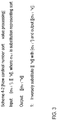
Fig. 2 is a diagram for describing the first embodiment; -
Fig. 3 is a diagram for describing the first embodiment; -
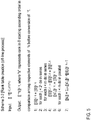
Fig. 4 is a diagram for describing the first embodiment; -
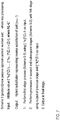
Fig. 5 is a diagram for describing the first embodiment; -
Fig. 6 is a block diagram illustrating an example of a confidential sort system according to a second embodiment; -
Fig. 7 is a diagram for describing the second embodiment; -
Fig. 8 is a diagram for describing the second embodiment; -
Fig. 9 is a diagram for describing the second embodiment; -
Fig. 10 is a diagram for describing the second embodiment; -
Fig. 11 is a diagram for describing the second embodiment; -
Fig. 12 is a diagram for describing the second embodiment; -
Fig. 13 is a diagram for describing the second embodiment; -
Fig. 14 is a diagram for describing the second embodiment; -
Fig. 15 is a diagram for describing the second embodiment; -
Fig. 16 is a diagram for describing the second embodiment; -
Fig. 17 is a diagram for describing the second embodiment; and -
Fig. 18 is a diagram for describing the second embodiment. - Hereinafter, an embodiment of the present invention will be described with reference to the accompanying drawings. Note that in mathematical expressions or the like, when the base of a log is omitted, the base is assumed to be 2.
- Examples of sort targets include a key and a value. The key is a tag to determine order after a sort and the value is the body of data to be sorted. The key and the value may be identical.
- A secret variance refers to a set of virtually collected secretly distributed shares of all parties.
- A result of applying substitution π to vector →x is multiplicatively written as π→x. Furthermore, the integer vector is also handled as substitution and multiplicative notation →y→x of a vector represents substitution of →x by →y. Note that for simplification of description, "→" that means a vector may be omitted.
- Symbols are defined as follows.
- m: The number of elements of a vector to be sorted and substituted.
- L': Bit length of key.
- p, q: Prime number.
- |p|, |q|: Bit length of prime number.
- [[x]]: Secret variance having homomorphism. That is, when an arbitrary value is assumed as xA, [[xA]] is a secret variance having homomorphism of xA .
- {x}: Notation explicitly showing that this is a replicated secret variance. That is, when an arbitrary value or substitution is assumed as xA, {xA} is a replicated secret variance of xA.
- [x]: (2,2) additive secret variance.
- <x>: Semi-public value. That is, plain text shared by k parties.
- [[X]]: Set of secret variances on X.
- [x]X,P: First subscript on the shoulder of the above-described variance represents a group /ring/body and the second subscript represents a party set having shares. That is, assuming that G is an arbitrary group, ring or body and P is a set of apparatuses, [x]G,P represents a share of [x] owned by P and represented on G.
- →x, [[→x]]X: Vector having a length of m and a secret variance thereof.
- P': Set of whole party.
- 01,12,20: When used as subscripts, these numbers represent a party set of
parties parties parties - [[x]]P: Share of party P.
- {π}: Replicated secret variance of substitution π.
- {π}P: Fraction (subshare) of {π} shared by P∈P'.
Replicated secret variance of substitution with subscript such as {π}01,12,20: Replicated secret variance which becomes π={π}20{π}12{π}01. That is, notation when even the application order of substitution is taken into consideration. Replicated secret variance of substitution with fewer than three subscripts such as {π}01,12: Replicated secret variance which becomes π={π}12{π}01. - Here, the replicated secret variance is a secret variance sharing the same value within a party set for each of a plurality of party sets. For example, assuming that (2,3)-replicated secret variance is a=a01+a12+a20, shares of the respective parties are (a20,a01), (a01,a12) and (a12,a20). Each aoi, a12 or a20 is called "subshare." Here, using the fact that the substitution is a group, the substitution is also used as a secret variance to be kept confidential.
- A sort is a kind of substitution. Here, a theory of substitution in secret calculation will be configured and an efficient and simple cardinal number sort will be configured based on the theory.
- Substitution has never been handled systematically in secret calculation. Here, substitution will be systematically adjusted so that substitution may be handled more freely. First of all, substitution itself and substitution in existing secret calculation will be reviewed and the theory of substitution will be developed based thereon.
- "Substitution" is a mathematical structure that expresses rearrangement. For example, substitution (0,2,1) rearranges vector (10,5,2) to (10,2,5).
- Substitution is known to form a non-exchangeable group. That is, a unit element exists (identical substitution, substitution without changing arrangement), an inverse element exists (after substitution, substitution with inverse element returns to the original arrangement) and an associative law holds.
- Random substitution in secret calculation has been proposed and improved independently by the author et al. and Laur (e.g., see
Reference Documents 1 and 2). Since the replicated secret variance can be configured of a group, it is possible to consider a replicated secret variance of substitution, and in the case of, for example, (2,3)-replicated secret variance, when π=π20π12π01, respective variances are (π20,π01), (π01,π12) and (π12,π20). All the above random substitutions can be regarded as protocols that apply this substitution. - Koki Hamada, Dai Ikarashi, Koji Chida, Katsumi Takahashi, "A Random Permutation Protocol on Three-Party Secure Function Evaluation," CSS2010 (2010).
- Laur, S., Willemson, J. and Zhang, B., "Round-Efficient Oblivious Database Manipulation", ISC (Lai, X., Zhou, J. and Li, H., eds.), Lecture Notes in Computer Science, Vol. 7001, Springer, pp. 262-277 (2011).
- When inverse elements ({π}01)-1, ({π}12)-1, ({π}20)-1 of the respective subshares {π}01, {π}12, {π}20 of substitution {π} are executed so as to be applied in reverse order according to a random substitution protocol, the same effect as that when substitution is performed with inverse matrix {π}-1 (e.g., see Reference Document 3). This can be used for processing such as performing random substitution once and returning to the original arrangement.
- Naoto Kiribuchi, Dai Ikarashi, Gembu Morohashi, Koki Hamada, "An Efficient Equi-join Algorithm for Secure Computation and Its Implementation toward Secure Comprehensive Analyses of Users' Attribute and History Information," CSS2016 (2016).
- A replicated secret variance of substitution is called "native substitution" in the present invention. The native substitution alone can only express random substitution but cannot handle a wider variety of substitution. Therefore, the present specification will introduce two types of substitution: index substitution and hybrid substitution.
- A vector with an integer variance having length m and including different values of 0 to m-1 as elements is called "index substitution." Although index substitution cannot be directly applied as substitution, it is possible to synthesize substitution with native substitution by applying native substitution. When, for example, application of {ρ} to [[π]] results in [[ρπ]], and this gives synthesized index substitution. When synthesis is applied to index substitution [[I]] of identical substitution I, it is also possible to convert native substitution {π} to index substitution [[π]].
- Hybrid substitution is a set of native substitution and substitution of plain text. It is assumed that ({ρ},ρ-1π) is written as {{π}}, and this is called "hybrid substitution." Since conversion from hybrid substitution to native substitution is an off-line process, {{π}} may be written as {π}. Since the hybrid substitution is a set of native substitution and substitution of plain text, when hybrid substitution is applied in order, application and inverse application are made possible. Furthermore, since application is possible, it is possible to synthesize index substitution with substitution and perform conversion to index substitution.
- With hybrid substitution, conversion from index substitution is further possible. Applying {ρ-1} to [[π]] results in [[ρ-1π]] and obtains ρ-1π by public disclosure. ({ρ},ρ-1π) constitutes hybrid substitution.
- Since index substitution can handle any substitution other than random substitution, hybrid substitution can also keep confidential non-random substitutions. Hybrid substitution is necessary to apply non-random substitution with confidentiality.
- Hybrid substitution can also be converted to native substitution. When {ρ} is written as {ρ}01,12,20, ρ-1π may be synthesized with {ρ}2001,12,20. Since ρ-1π is a public value, this process is off line.
- Note that since conversion from hybrid substitution to native substitution is an off-line process, according to a protocol with abstract granularity, hybrid substitution is identified with native substitution and written as {π}.
- The following summarizes the above-described simply configurable substitution operations. It is possible to freely perform four operations of substitution, inverse substitution, conversion and synthesis not only via native substitution but also via index substitution and hybrid substitution. It should be noted that synthesis requires index substitution and substitution/inverse substitution after the synthesis requires hybrid substitution.
-
- 1. Native substitution: {π}[[x]]=[[x]] (random substitution protocol)
- 2. Index substitution: performed not directly but via hybrid substitution.
- 3. Hybrid substitution: ({ρ}ρ-1π[[x]])
-
- 1. Native substitution: {π}[[x]]
- 2. Index substitution: performed not directly but via hybrid substitution.
- 3. Hybrid substitution: (ρ-1)-1{ρ}-1[[x]]
-
- 1. Native substitution →index substitution: {π} [[I]]=[[π]]
- 2. Index substitution →native substitution: via hybrid substitution.
- 3. Native substitution →hybrid substitution: ({π},I)
- 4. Hybrid substitution →native substitution: synthesize ρ-1π with {ρ}2001,12,20 of {ρ}01,12,20.
- 5. Index substitution →hybrid substitution: {{π}}[[I]]={{π}}
- 6. Hybrid substitution →index substitution: {{π}}[[I]]=[[π]]
-
- 1. Index substitution and native substitution: {ρ}[[π]]=[[ρπ]]
- 2. Index substitution and hybrid substitution: {{ρ}}[[π]]
- 3. Other combinations are performed via index substitution.
- As shown in
Fig. 1 , a confidential sort system according to a first embodiment is provided with, for example, afirst apparatus 1, asecond apparatus 2, ..., and an Mth apparatus M. M is a predetermined positive integer of 2 or more. In this example, there are M parties and the M parties are thefirst apparatus 1, thesecond apparatus 2, ..., and the Mth apparatus M. - A confidential sort method of the first embodiment is implemented, for example, by the
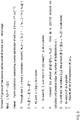
first apparatus 1, thesecond apparatus 2, ..., and the Mth apparatus M executing processes under Scheme 4-1 inFig. 2 and Scheme 4-2 inFig. 3 . Hereinafter, when there is a mention "thefirst apparatus 1, thesecond apparatus 2, ..., and the Mth apparatus M perform ○○," this means that thefirst apparatus 1, thesecond apparatus 2, ..., and the Mth apparatus M jointly perform ○○ through secret calculation. Of course, when a process of ○○ does not require secret calculation, thefirst apparatus 1, thesecond apparatus 2, ..., and the Mth apparatus M need not perform secret calculation. - The
first apparatus 1, thesecond apparatus 2, ..., and the Mth apparatus M perform a process under Scheme 4-1 shown inFig. 2 and thereby perform a confidential sort process on a key first. - In "1:" under Scheme 4-1, the first, second, ..., and Mth apparatuses obtain inverse substitution [[σ0 -1]] of L-bit stable sort of {→k0} ("1:" under Scheme 4-1). Here, it is assumed that a bit length of a key is L', L is a predetermined positive integer, N is a positive integer satisfying NL=L' and an (n+1)th (n=0,...,N-1) bit string when the key is divided into bit strings having a bit length L is →kn. Inverse substitution of the L-bit stable sort can be performed under Scheme 3-1 in
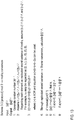
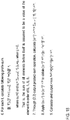
Fig. 4 and Scheme 3-2 inFig. 5 . InFig. 4 andFig. 5 , [[k]](Z_2)^L=([[k0]]Z_2, [[k1]]Z_2,..., [[kL-1]]Z_2) and [[f](Z_q)^(2^L)=([[f0]]Z_q, [[f1]]Z_q,..., [[f(2^L)-1)]]Z_q "(fj)i" represents an ith element of a vector j. Reference character m denotes the number of elements of a vector to be sorted and substituted as described above. More specifically, m inFig. 4 is the number of elements of kj and m inFig. 5 is the number of elements of fj. - In
Fig. 4 ,mod 2 → mod q conversion can be performed, for example, under Scheme 3-3 inFig. 13 . "reveal()" inFig. 13 represents reconstructing and publicly disclosing a secret variance in parentheses of reveal. - In "2:" to [6:] under Scheme 4-1, the first, second, ..., and Mth apparatuses perform processes from "3:" to "6:" under Scheme 4-1 on each i=1,...,N.
- That is, the first, second, ..., and Mth apparatuses convert [[σi-1 -1]] to hybrid substitution to obtain {σi-1 -1} assuming i=1,...,N-1 ("3:" under Scheme 4-1).
- The first, second, ..., and Mth apparatuses inversely substitute {→ki} with {σi-1 -1} to obtain {σi-1→ki} assuming i=1,...,N-1 ("4:" under Scheme 4-1).
- The first, second, ..., and Mth apparatuses obtain inverse substitution [[σi '-1]] of the L-bit stable sort of [[σi-1 →ki]] assuming i=1,...,N-1 ("5:" under Scheme 4-1).
- The
first apparatus 1, thesecond apparatus 2, ..., and the Mth apparatus M synthesize {σi-1 -1} with [[σi '-1]] to obtain [[σi -1]]:=[[σi-1 -1σi '-1]] assuming i=1,...,N-1 ("6:" under Scheme 4-1). - In "7:" under Scheme 4-1, the first, second, ..., and Mth apparatuses convert [[σN-1 -1]] to hybrid substitution to obtain {σN-1 -1} ("7:" under Scheme 4-1).
- Next, the
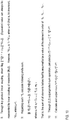
first apparatus 1, thesecond apparatus 2, ..., and the Mth apparatus M perform a process under Scheme 4-2 shown inFig. 3 and thereby perform a confidential sort process on a value. - That is, the
first apparatus 1, thesecond apparatus 2, ..., and the Mth apparatus M inversely substitute [[→v]] with {σN-1 -1} in "1:" under Scheme 4-2 shown inFig. 3 and output [[σN-1 →v]] ("1:" under Scheme 4-2). "→v" is the value which is the body of data to be sorted. - In this way, using inverse substitution, it is possible to simplify the algorithm of confidential sort compared to the prior art. This allows a confidential sort to be performed faster than in the prior art.
- Note that when the secret calculation of the first embodiment is performed in a so-called passive (security at which an attacker may peep but not perform any illegal process) version, it is possible to use a Shamir secret variance or replicated secret variance.
- When a Shamir secret variance is used, the method described in Reference Document 4 (e.g., 2.5, Shuffling Protocol) may be used to perform random substitution and inverse substitution. The method described in
Reference Document 5 may be used to perform public disclosure. Public value output random substitution may be publicly disclosed using the method described inReference Document 5 after performing random substitution using the method described inReference Document 4. Addition, multiplication and product sum operations may be performed using the method described in Reference Document 6 (e.g., The Computation Stage). An L-bit stable sort may be performed using the method described in Reference Document 2 (e.g.,Schemes 6+7). - When a replicated secret variance is used, random substitution and inverse substitution may be performed using the method described in Reference Document 4 (e.g., 2.5, Shuffling Protocol). Public disclosure may be performed using the method described in Reference Document 7 (e.g., cramer2005, 2. Preliminaries, 2. Replicated Secret-sharing). Public value output random substitution may be publicly disclosed using the method described in
Reference Document 7 after performing random substitution using the method described inReference Document 4. Addition, multiplication and product sum operations may be performed using the method described in Reference Document 8 (e.g.,protocols 1 and 7). An L-bit stable sort may be performed using the method described in Reference Document 2 (e.g.,Schemes 6+7). - When performing secret calculation of the first embodiment using a so-called active (safe even when an attacker performs an illegal process) version, a Shamir secret variance can be used.
- In the case of performing secret calculation of the first embodiment in the active version, if a Shamir secret variance is used, random substitution and inverse substitution may be performed using the method described in Reference Document 9 (e.g., Scheme 6). Public disclosure may be performed using the method described in Reference Document 10 (e.g., Scheme 12). Public value output random substitution may be publicly disclosed using the method described in
Reference Document 10 after performing random substitution using the method described inReference Document 9. Addition, multiplication and product sum operations may be performed using the method described in Reference Document 9 (e.g.,Schemes 3 to 5). An L-bit stable sort may be performed using the method described in Reference Document 2 (e.g.,Schemes 6+7). - [Reference Document 4] Koki Hamada, Ryo Kikuchi, Dai Ikarashi, Koji Chida, Katsumi Takahashi, "Practically Efficient Multi-party Sorting Protocols from Comparison Sort Algorithms", ICISC 2012: 202-216
- [Reference Document 5] Adi Shamir, "How to Share a Secret", Commun. ACM 22(11): 612-613 (1979)
- [Reference Document 6] Michael Ben-Or, Shafi Goldwasser, Avi Wigderson, "Completeness Theorems for Non-Cryptographic Fault-Tolerant Distributed Computation (Extended Abstract)", STOC 1988: 1-10
- [Reference Document 7] Ronald Cramer, Ivan Damgard, Yuval Ishai, "Share Conversion, Pseudorandom Secret-Sharing and Applications to Secure Computation", TCC 2005: 342-362
- [Reference Document 8] Dai Ikarashi, Koji Chida, Koki Hamada, Katsumi Takahashi, "Secure Database Operations Using An Improved 3-party Verifiable Secure Function Evaluation."
- [Reference Document 9] Dai Ikarashi, Ryo Kikuchi, Koki Hamada, Koji Chida, "An Unconditionally Private and Correct MPC Construction against the Active Adversary on Multiple Fields and an Application to Fast Secure Sorting", In SCIS2015, 2015.
- [Reference Document 10] D. Ikarashi, R. Kikuchi, K. Hamada, and K. Chida, "Actively private and correct MPC scheme in t<n/2 from passively secure schemes with small overhead", IACR Cryptology ePrint Archive, 2014: 304, 2014.
- As shown in
Fig. 6 , a second embodiment is provided with, for example, afirst apparatus 1, asecond apparatus 2 and athird apparatus 3. In this example, there are three parties, and the three parties are thefirst apparatus 1, thesecond apparatus 2 and the third apparatus M respectively. - A confidential sort method according to the second embodiment is implemented, for example, by the
first apparatus 1, thesecond apparatus 2 and thethird apparatus 3 performing respective processes underScheme 5 inFig. 7 and Scheme 5-3 inFig. 8 . Hereinafter, when there is a mention "thefirst apparatus 1, thesecond apparatus 2 and thethird apparatus 3 perform ○○," this means that thefirst apparatus 1, thesecond apparatus 2 and thethird apparatus 3 jointly perform ○○ through secret calculation. Of course, when the process of ○○ does not require secret calculation, thefirst apparatus 1, thesecond apparatus 2 and thethird apparatus 3 need not perform secret calculation. - First, the
first apparatus 1, thesecond apparatus 2 and thethird apparatus 3 perform a process underScheme 5 shown inFig. 7 and thereby perform a confidential sort process on a key first. - In "1:" under
Scheme 5, the first apparatus, the second apparatus and thethird apparatus 3 perform the process under Scheme 5-1 on {→k0}(Z_2)^L and thereby obtain {σ0 -1}=(<πσ0 -1>20, {π}01,12) ("1:" under Scheme 5). - Here, assuming that i=0,...,N-1, {→ki}(Z_2)^L=({→ki,0}Z_2, {→ki,1}Z_2,..., {→ki, L-1}Z_2). It is also assumed that a bit length of a key is L', L is a predetermined positive integer, N is a positive integer satisfying NL=L', and an (n+1)th (n=0,...,N-1) bit string when the key is divided into bit strings having a bit length L is →kn.
- In "2:" and "3:" under
Scheme 5, the first apparatus, the second apparatus and thethird apparatus 3 perform a process under Scheme 5-2 on {→ki}(Z_2)^L for i=0,...,N-1 to finally obtain {σN-1 -1}=(<πσN-1 -1>20, {π}01,12) ("2:" and "3:" under Scheme 5). - Next, the
first apparatus 1, thesecond apparatus 2 and thethird apparatus 3 perform a process under Scheme 5-3 shown inFig. 8 and thereby perform a confidential sort process on a value. - That is, the
first apparatus 1, thesecond apparatus 2 and thethird apparatus 3 inversely substitute [[→v]] with {σN-1 -1} in "1:" under Scheme 5-3 shown inFig. 8 and output [[σN-1 →v]] ("1:" under Scheme 5-3). "→v" is the value which is the body of data to be sorted. - Hereinafter, Scheme 5-1 in
Fig. 9 andFig. 10 will be described. - In "1:" under Scheme 5-1, the first apparatus, the second apparatus and the
third apparatus 3 convert {→k0,0}Z_2, {→k0,1}Z_2,..., {→k0, L-1}Z_2 to [[→k0,0]]Z_q, [[→k0,1]]Z_q,..., [[→k0, L-1]]Z_q throughmod 2 → mod q conversion ("1:" under Scheme 5). Here, q is assumed to be a predetermined positive integer. Amod 2 → mod q conversion can be performed under Scheme 3-3 inFig. 13 . - In "2:" to "5:" under Scheme 5-1, the first apparatus, the second apparatus and the
third apparatus 3 calculate [[KD]]:=[[Πw∈D →k0,w]]Z_q for each set of a positive integer η satisfying η<┌log L┐ and D satisfying D⊆ZL and 2η+1≤|D|≤min(2η+1, L) ("2:" to "5:" under Scheme 5). Here, assuming that xA is an arbitrary real number, ┌xA┐ is a ceiling function. That is, ┌xA┐ represents a minimum integer of xA or more for the real number xA. Here, ":=" has the same meaning as "=". - In "6:" to "8:" under Scheme 5-1, the first apparatus, the second apparatus and the
third apparatus 3 perform a process of calculating [[→fj]]Z_q:=Πj<L[[→k'0,w]] for each j where j<2L ("6:" to "8:" under Scheme 5-1). Here, assuming that a wth bit of bit expression of j is jw,→k'0,w is →k'0,w=1-→k0,w when jw=0 and →k'0,w=→k0,w when jw=1. - In "9:" under Scheme 5-1, the first apparatus, the second apparatus and the
third apparatus 3 perform a process of calculating [[(→f'j)u]]Z_q:=∑0≤t<u[[(→fj)t]]Z_q+[[Sj]]Z_q ("9:" under Scheme 5-1). Here, it is assumed that an arbitrary vector is →fA, (→fA)u is a uth element of the vector →fA, so:=0, Sj:=∑0≤u<m(→fj-1)u+Sj-1 for j=1,...,3, and the number of elements of vector →fj-1 is m. - In "10:" under Scheme 5-1, the first apparatus, the second apparatus and the
third apparatus 3 perform a process of calculating [σ0 -1]Z_q,01:=∑0≤j<2^L[→f'j →fj]Z_q,01 using (2,2) output product sum ("10:" under Scheme 5-1). The (2,2) output product sum can be calculated under Scheme 5-4 inFig. 14 , for example. The (2,2) output product sum is a product sum process to obtain an output in a (2,2)-additive secret variance format. - In "11:" under Scheme 5-1, a process of calculating <πσ0 -1>20:={π}01,12[σ0 -1]Z_q,01 is performed ("11:"under Scheme 5-1). Here,<πσi -1>20 represents that πσi -1 is shared by the third apparatus and the first apparatus. The process in "11:" under Scheme 5-1 can be implemented by performing a process under Scheme 5-5 in
Fig. 15 . - Hereinafter, Scheme 5-2 in
Fig. 11 andFig. 12 will be described. - In "1:" under Scheme 5-2, the first, second and third apparatuses perform a process of converting {→ki,0}Z_2, {→ki,1}Z_2,..., {→ki, L-1}Z_2 to (2,2) additive secret variance [→ki,0]Z_2,01, [→ki,1]Z_2,01,..., [→ki, L-1]Z_2,01 ("1:" under Scheme 5-2).
- In "2:" under Scheme 5-2, the first, second and third apparatuses perform a process of obtaining [→b0]Z_2,20:=[σi-1ki,0]Z_2,20, [→b1]Z_2,20:=[σi-1ki,1]Z_2,20,..., [→bL-1]Z_2,20:=[σi-1ki, L-1]Z_2,20 by inversely applying {σi-1 -1} to [→ki,0] Z_2,01, [→ki,1]Z_2,01..., [→ki, L-1]Z_2,01 ("2:" under Scheme 5-2).
- In "3:" under Scheme 5-2, the first, second and third apparatuses perform a process of converting, [→b0]Z_2,20, [→b1]Z_2,20,..., [→bL-1]Z_2,20 to [[→b0]]Z_q, [[→b1]]Z_q,..., [→bL-1] Z_q through
mod 2 → mod q conversion ("3:" under Scheme 5-2). - In "4:" to "7:" under Scheme 5-2, the first, second and third apparatuses perform a process of calculating [[KD]]:=[[Πw∈D →k0,w]]Z_q on each set of a positive integer η satisfying η<┌log L┐ and D satisfying D⊆ZL and 2η+1≤|D|≤min(2η+1, L) ("4:" to "7:" under Scheme 5-2).
- In "8:" to "10:" under Scheme 5-2, the first, second and third apparatuses perform a process of calculating [[→fj]]Z_q:=Πj<L[[→k'i,w]] for each j where j<2L("8:" to "10:" under Scheme 5-2). Here, it is assumed that the wth bit of bit expression of j is jw, →k'i,w is →k'i,w=1-→ki,w when
j w=0 and →k'i,w=→ki,w when jw=1. - In "11:" under Scheme 5-2, the first, second and third apparatuses perform a process of calculating [[(→f'j)u]]Z_q:=∑0≤t<u[[(→fj)t]]Z_q+[[Sj]]Z_q ("11:" under Scheme 5-2).
- In "12:" under Scheme 5-2, the first, second and third apparatuses perform a process of calculating [σ'-1]Z_q,20:=∑0≤j<2^L[→f'j →fj]Z_q,20 through (2,2) output product sum ("11:" under Scheme 5-2).
- In "13:" under Scheme 5-2, the first, second and third apparatuses perform a process of obtaining [σ-1]Z_q,01:=[σi-1 -1σ'-1]Z_q,01 by applying {σi-1 -1} to [σ-1]Z_q,20 ("13:" under Scheme 5-2).
- In "14:" under Scheme 5-2, the first, second and third apparatuses perform a process of calculating <πσi -1>20:={π}01,12[σ-1]Z_q,01 ("14:" under Scheme 5-2). Note that the process in "14:" under Scheme 5-2 can be implemented by performing a process under Scheme 5-5 in
Fig. 15 . - Note that in the case of L=2, Scheme 5-1 and Scheme 5-2 become Scheme 5-1 and Scheme 5-2 described in
Fig. 16 ,Fig. 17 andFig. 18 respectively. - Using inverse substitution in this way, it is possible to make the algorithm of confidential sort simpler than in the prior art. This allows confidential sort to be performed faster than in the prior art.
- As will be described below, optimization using communication channels may be used. In other words, the communication channels may be effectively used so that there are as few empty communication channels as possible.
- For example, the process of
mod 2 to mod q in "3:," the process of multiplication in "4:" and the process of (2,2) output product sum in "7:" under Scheme 5-1 and Scheme 5-2 inFig. 16 ,Fig. 17 andFig. 18 have a degree of freedom in communication directions. These processes may be performed by effectively using the communication channels so that there are as few empty communication channels as possible. - When L' is not a multiple of L, the key having length L' may be divided so that NL+L"=L'. The key having length L' may be divided so that Σi=0 N-1Li=L'. In this case, for example, →kn becomes a vector constructed of an (n+1)th (n=0,...,N-1) bit string when the key having length L' is divided so that Σi=0 N-1Li=L'. In this way, N may be assumed to be a predetermined positive integer and the (n+1) th (n=0,...,N-1) bit string when the key is divided into N bit strings may be assumed to be →kn.
- In addition, it goes without saying that changes can be made as appropriate without departing from the spirit and scope of the present invention.
- When, for example, a process in each apparatus is implemented by a computer, process contents of a function that should be possessed by each part of each apparatus are written by a program. By causing a computer to execute this program, processes of the respective apparatus are implemented on the computer.
- The program in which the process contents are written can be recorded in a computer-readable recording medium. As the computer-readable recording medium, any magnetic recording apparatus, optical disk, magnetooptical recording medium, semiconductor memory or the like may be used.
- Processes of the respective parts may be configured by causing a predetermined program to be executed on a computer or at least some of the processes may be implemented by hardware.
Claims (4)
- A confidential sort system comprising first, second, ..., and Mth apparatuses, wherein
assuming that a body of data to be sorted is a value →v, a tag that determines order after the sort is a key, a bit length of the key is L', N is a predetermined positive integer, an (n+1)th (n=0,..., N-1) bit string when the key is divided into N bit strings is →kn, an arbitrary value or substitution is xA, {xA} is a replicated secret variance of xA, an arbitrary value is xA, [[xA]] is a secret variance having homomorphism of xA, and M is a predetermined positive integer of 2 or more,
the first, second, ..., and Mth apparatuses obtain inverse substitution [[σ0 -1]] of L-bit stable sort of {→k0},
the first, second, ..., and Mth apparatuses perform, on i=1,..., N-1:a process of obtaining {σi-1 -1} by converting [[σi-1 -1]] to hybrid substitution;a process of obtaining {σi-1 →ki} by inversely substituting {→ki} using {σi-1 -1};a process of obtaining inverse substitution [[σi '-1]] of L-bit stable sort of [[σi-1 →ki]];a process of obtaining [[σi -1]]:=[[σi-1 -1σi '-1]] by synthesizing {σi-1 -1} with [[σi '-1]]; anda process of obtaining {σN-1 -1} by converting [[σN-1 -1]] to hybrid substitution, andthe first, second, ..., and Mth apparatuses output [[σN-1 →v]] by inversely substituting [[→v]] using {σN-1 -1}. - A confidential sort system comprising first, second, ..., and Mth apparatuses, wherein
assuming that a body of data to be sorted is a value →v, a tag that determines order after the sort is a key, a bit length of the key is L', N is a predetermined positive integer, an (n+1)th (n=0,...,N-1) bit string when the key is divided into N bit strings is →kn, an arbitrary value or substitution is xA, {xA} is a replicated secret variance of xA, an arbitrary value is xA, [[xA]] is a secret variance having homomorphism of xA, <xA> is a semi-public value, [xA] is a (2,2) additive secret variance, {→ki}(Z_2)^L=({→ki,0}Z_2, {→ki,1}Z_2,..., {→ki, L-1}Z_2) (i=0,...,N-1), q is a predetermined positive integer, (→fA)u is a uth element of vector →fA where →fA is an arbitrary vector, s0:=0, sj:=∑0≤u<m(→fj-1)u+Sj-1 for j=1,...,3, the number of elements of vector →fj-1 is m, 01 represents a set of the first and second apparatuses, 12 represents a set of the second and third apparatuses, 20 represents a set of the third and first apparatuses, G is an arbitrary group, ring or body, P is a set of apparatuses, [xA]G,P represents a share of [xA] represented on G of P, π is predetermined substitution, {π}P means a sub-share of {π} shared by P, {π}01,12 represents a replicated secret variance in which π={π}12{π}01, and <πσi -1>20 shows that πσi -1 is shared by the third and first apparatuses,
the first, second and third apparatuses perform:a process of converting, through mod 2 → mod q conversion, {→k0,0}Z_2, {→k0,1}Z_2,..., {→k0, L-1}Z_2 to [[→k0,0]]Z_q , [[→k0,1]]Z_q,..., [[→k0, L-1]]Z_q;a process of calculating [[KD]]:=[[Πw∈D →k0,w]]Z_q for each set of a positive integer η satisfying η<┌log L┐ and D satisfying D⊆ZL and 2η+1≤|D|≤min(2η+1, L);a process of calculating [[→fj]]Z_q:=Πj<L[[→k'0,w]] for each j where j<2L assuming the wth bit of bit expression of j as jw and →k'0,w is →k'0,w=1-→k0,w when jw=0 and →k'0,w=→k0,w when jw=1;a process of calculating [[(→f'j)u]]Z_q:=∑0≤t<u[[(→+fj)t]]Z_q+[[Sj]]Z_q;a process of calculating [σ0 -1]Z_q,01:=∑0≤j<2^L[→f'j →fj]Z_q,01 through (2,2) output product sum operation; anda process of calculating <πσ0 -1>20:={π}01,12[σ0 -1]Z_q,01,the first, second and third apparatuses perform:a process of converting {→ki,0}Z_2,{→ki,1}Z_2,..., {→ki, L-1}Z_2 to (2,2) additive secret variance [→ki,0]Z_2,01, [→ki,1]Z_2,01,..., [→ki, L-1] Z_2,01 assuming i=1,...,N-1;a process of inversely applying {σi-1 -1} to [→ki,0]Z_2,01, [→ki,1] Z_2,01..., [→ki, L-1] Z_2,01 to obtain [→b0]Z_2,20:=[σi-1ki,0]Z_2,20, [→b1] Z_2,20:=[σi-1ki,1]Z_2,20,..., [→bL-1] Z_2,20:=[σi-1ki, L-1] Z_2,20;a process of converting [→b0]Z_2,20, [→b1]Z_2,20,..., [→bL-1]Z-2,20 to [[→b0]]Z_q, [[→b1]]Z_q,..., [→bL-1] Z_q through mod 2 → mod q conversion;a process of calculating [[KD]]:=[[Πw∈D →k0,w]]Z_q for each set of a positive integer η satisfying η<┌log L┐and D satisfying D⊆ZL and 2η+1≤|D|≤min(2η+1, L);a process of calculating [[→fj]]Z_q:=Πj<L[[→k'i,w for each j where j<2L assuming the wth bit of bit expression of j is jw, →k'i,w is →k'i,w=1-→ki,w when jw=0 and →k'i,w=→ki,w when jw=1;a process of calculating [[(→f'j)u]]Z_q:=∑0≤t<u[[(→fj)t]]Z_q+[[Sj]]Z_q;a process of calculating [σ'-1]Z_q,20:=∑0≤j<2^L[→f'j →fj]Z_q,20 through (2,2) output product-sum operation;a process of applying {σi-1 -1} to [σ-1]Z_q,20 to obtain [σ-1]Z_q,01:= [σi-1 -1σ'-1]Z_q,01; anda process of calculating <πσi -1>20:={π}01,12[σ-1]Z_q,01 on i=1,...,N-1, andthe first, second, ..., and Mth apparatuses inversely substitute [[→v]] with {σ-1} assuming that {σ-1}=(<πσN-1 -1>20, {π}01,12) and output [[σ→v]]. - A confidential sort method based on assumption that a body of data to be sorted is a value →v, a tag that determines order after the sort is a key, a bit length of the key is L', N is a predetermined positive integer, an (n+1)th (n=0,...,N-1) bit string when the key is divided into N bit strings is →kn, an arbitrary value or substitution is xA, {xA} is a replicated secret variance of xA, an arbitrary value is xA, [[xA]] is a secret variance having homomorphism of xA, and M is a predetermined positive integer of 2 or more, the method comprising:a step in which first, second, ..., and Mth apparatuses obtain inverse substitution [[σ0 -1]] of L-bit stable sort of {→k0},a step in which the first, second, ..., and Mth apparatuses perform, on i=1,...,N-1:a process of obtaining {σi-1 -1} by converting [[σ1-1 -1]] to hybrid substitution;a process of obtaining {σi-1 →ki} by inversely substituting {→ki} using {σi-1 -1};a process of obtaining inverse substitution [[σi '-1]] of L-bit stable sort of [[σi-1 →ki]];a process of obtaining [[σi -1]]:=[[σi-1 -1σi '-1]] by synthesizing {σi-1 -1} with [[σi '-1]]; anda process of obtaining {σN-1 -1} by converting [[σN-1 -1]] to hybrid substitution, anda step in which the first, second, ..., and Mth apparatuses output [[σN-1 →v]] by inversely substituting [[→v]] using {σN-1 -1}.
- A confidential sort method based on assumption that a body of data to be sorted is a value →v, a tag that determines order after the sort is a key, a bit length of the key is L', N is a predetermined positive integer, an (n+1)th (n=0,...,N-1) bit string when the key is divided into N bit strings is →kn, an arbitrary value or substitution is xA, {xA} is a replicated secret variance of xA, an arbitrary value is xA, [[xA]] is a secret variance having homomorphism of xA, <xA> is a semi-public value, [xA] is a (2,2) additive secret variance, {→ki}(Z_2)^L=({→ki,0}Z_2, {→ki,1}Z_2,..., {→ki, L-1}Z_2)(i=0,...,N-1), q is a predetermined positive integer, (→fA)u is a uth element of vector →fA where →fA is an arbitrary vector, s0:=0, sj:=∑0≤u<m(→fj-1)u+sj-1 for j=1,...,3, the number of elements of vector →fj-1 is m, 01 represents a set of the first and second apparatuses, 12 represents a set of the second and third apparatuses, 20 represents a set of the third and first apparatuses, G is an arbitrary group, ring or body, P is a set of apparatuses, [xA]G,P represents a share of [xA] represented on G of P, π is predetermined substitution, {π}P means a sub-share of {π} shared by P, {π}01,12 represents a replicated secret variance in which π={π}12{π}01, and <πσi -1>20 shows that πσ i -1 is shared by the third and first apparatuses, the method comprising:a step in which the first, second and third apparatuses perform:a process of converting, through mod 2 → mod q conversion, {→k0,0}Z_2, {→k0,1}Z_2,..., {→k0, L-1}Z_2 to [[→k0,0]]Z_q, [[→k0,1]]Z_q,..., [[→k0, L-1]]Z_q;a process of calculating [[KD]] :=[[Πw∈D →k0,w]]Z_q for each set of a positive integer η satisfying η<┌log L┐ and D satisfying D⊆ZL and 2η+1≤|D|≤min(2η+1, L);a process of calculating [[→fj]]Z_q:=Πj<L[[→k'0,w]] for each j where j<2L assuming the wth bit of bit expression of j as jw and →k'0,w is →k'0,w=1-→k0,w when jw=0 and →k'0,w=→k0,w when jw=1;a process of calculating [[(→f'j)u]]Z_q:=∑0≤t<u[[(→fj)t]]Z_q+[[Sj]]Z_q;a process of calculating [σ0 -1]Z_q,01:=∑0≤j<2^L[→f'j →fj]Z_q,01 through (2,2) output product sum operation; anda process of calculating <πσ0 -1>20:{π}01,12[σ0 -1]Z_q,01,the first, second and third apparatuses perform:a process of converting {→ki,0}Z_2, {→ki,1}Z_2,..., {→ki, L-1}Z_2 to (2,2) additive secret variance [→ki,0]Z_2,01, [→ki,1]Z_2,01,..., [→ki, L-1] Z_2,01 assuming i=1,...,N-1;a process of inversely applying {σi-1 -1} to [→ki,0]Z_2,01, [→ki,1] Z_2,01..., [→ki, L-1]Z_2,01 to obtain [→b0]Z_2,20:=[σi-1ki,0]Z_2,20, [→b1] Z_2,20:=[σi-1ki,1]Z_2,20,..., [→bL-1]Z_2,20:=[σi-1ki, L-1]Z_2,20;a process of converting [→b0]Z_2,20, [→b1]Z_2,20,..., [→bL-1]Z-2,20 to [[→b0]]Z_q, [[→b1]]Z_q,..., [→bL-1] Z_q through mod 2 → mod q conversion;a process of calculating [[KD]]:=[[Πw∈D→k0,w]]Z_q for each set of a positive integer η satisfying η<┌log L┐ and D satisfying D⊆ZL and 2η+11≤|D|min(2η+1, L);a process of calculating [[→fj]]Z_q:=Πj<L[[→k'i,w]] for each j where j<2L assuming the wth bit of bit expression of j is jw, →k'i,w is →k'i,w=1-→ki,w when jw=0 and →k'i,w= →ki,w when jw=1;a process of calculating [[(→f'j)u]]Z_q:=∑0≤t<u[[(→fj)t]]Z_q+[[Sj]]Z_q;a process of calculating [σ'-1]Z_q,20:=∑0≤j<2^L[→f'j →fj]Z_q,20 through (2,2) output product-sum operation;a process of applying {σi-1 -1} to [σ-1]Z_q,20 to obtain [σ-1]Z_q,01:= [σi-1 -1σ'-1]Z_q,01; anda process of calculating <πσi -1>20:={π}01,12[σ-1]Z_q,01 on i=1,...,N-1, anda step in which the first, second, ..., and Mth apparatuses inversely substitute [[→v]] with {σ-1} assuming that {σ-1}=(<7πσN-1 -1>20, {π}01,12) and output [[σ→v]].
Applications Claiming Priority (2)
| Application Number | Priority Date | Filing Date | Title |
|---|---|---|---|
| JP2017199210 | 2017-10-13 | ||
| PCT/JP2018/037897 WO2019074044A1 (en) | 2017-10-13 | 2018-10-11 | Confidential sort system and method |
Publications (3)
| Publication Number | Publication Date |
|---|---|
| EP3696795A1 true EP3696795A1 (en) | 2020-08-19 |
| EP3696795A4 EP3696795A4 (en) | 2021-11-17 |
| EP3696795B1 EP3696795B1 (en) | 2022-12-28 |
Family
ID=66101497
Family Applications (1)
| Application Number | Title | Priority Date | Filing Date |
|---|---|---|---|
| EP18865539.3A Active EP3696795B1 (en) | 2017-10-13 | 2018-10-11 | Confidential sort system and method |
Country Status (6)
| Country | Link |
|---|---|
| US (1) | US11461395B2 (en) |
| EP (1) | EP3696795B1 (en) |
| JP (1) | JP6911929B2 (en) |
| CN (1) | CN111183469B (en) |
| AU (1) | AU2018349997B2 (en) |
| WO (1) | WO2019074044A1 (en) |
Family Cites Families (5)
| Publication number | Priority date | Publication date | Assignee | Title |
|---|---|---|---|---|
| WO2012046692A1 (en) * | 2010-10-06 | 2012-04-12 | 日本電信電話株式会社 | Secret distribution system, secret distribution device, secret distribution method, secret sorting method, secret distribution program |
| WO2015053184A1 (en) * | 2013-10-10 | 2015-04-16 | 日本電信電話株式会社 | Secret parallel processing device, secret parallel processing method, and program |
| EP3096309B1 (en) * | 2014-01-17 | 2018-10-31 | Nippon Telegraph And Telephone Corporation | Secret calculation method, secret calculation system, sorting device, and program |
| CN105900165B (en) * | 2014-01-17 | 2019-03-08 | 日本电信电话株式会社 | Secret computing method, secret computing system, random permutation device, and recording medium |
| US10068097B2 (en) * | 2015-08-12 | 2018-09-04 | Microsoft Technology Licensing, Llc | Data center privacy |
-
2018
- 2018-10-11 EP EP18865539.3A patent/EP3696795B1/en active Active
- 2018-10-11 US US16/652,895 patent/US11461395B2/en active Active
- 2018-10-11 WO PCT/JP2018/037897 patent/WO2019074044A1/en not_active Ceased
- 2018-10-11 AU AU2018349997A patent/AU2018349997B2/en active Active
- 2018-10-11 JP JP2019548230A patent/JP6911929B2/en active Active
- 2018-10-11 CN CN201880065256.7A patent/CN111183469B/en active Active
Also Published As
| Publication number | Publication date |
|---|---|
| US11461395B2 (en) | 2022-10-04 |
| CN111183469B (en) | 2023-02-28 |
| EP3696795A4 (en) | 2021-11-17 |
| EP3696795B1 (en) | 2022-12-28 |
| AU2018349997A1 (en) | 2020-04-23 |
| CN111183469A (en) | 2020-05-19 |
| JP6911929B2 (en) | 2021-07-28 |
| US20200250228A1 (en) | 2020-08-06 |
| WO2019074044A1 (en) | 2019-04-18 |
| JPWO2019074044A1 (en) | 2020-11-05 |
| AU2018349997B2 (en) | 2021-07-22 |
Similar Documents
| Publication | Publication Date | Title |
|---|---|---|
| Cong et al. | Sortinghat: Efficient private decision tree evaluation via homomorphic encryption and transciphering | |
| Xie et al. | Crypto-nets: Neural networks over encrypted data | |
| Wang et al. | Cryptanalysis of a symmetric fully homomorphic encryption scheme | |
| Chatterjee et al. | Sorting of fully homomorphic encrypted cloud data: Can partitioning be effective? | |
| US12333039B2 (en) | Secret hash table construction system, reference system, methods for the same | |
| Jayapandian et al. | Secure and efficient online data storage and sharing over cloud environment using probabilistic with homomorphic encryption | |
| Erkin et al. | Privacy-preserving distributed clustering | |
| US11599681B2 (en) | Bit decomposition secure computation apparatus, bit combining secure computation apparatus, method and program | |
| Abram et al. | Low-communication multiparty triple generation for SPDZ from ring-LPN | |
| Wang et al. | Reducing garbled circuit size while preserving circuit gate privacy | |
| Yarter et al. | Implementation and analysis of quantum homomorphic encryption | |
| Holz et al. | Linear-complexity private function evaluation is practical | |
| Dong et al. | Laconic function evaluation and ABE for RAMs from (ring-) LWE | |
| Liu et al. | Quantum all-subkeys-recovery attacks on 6-round Feistel-2* structure based on multi-equations quantum claw finding: W. Liu et al. | |
| Sun et al. | Efficient secure CNN inference: A multi-server framework based on conditional separable and homomorphic encryption | |
| Guo et al. | A new revocable attribute based encryption on lattice | |
| JP6775231B2 (en) | Calculation system, calculation method and calculation program | |
| US11461395B2 (en) | Confidential sort system and method | |
| Geihs | Great-LaKeys: an improved threshold-PRF and a novel exponent-VRF from LWR | |
| Theodouli et al. | Implementing private k-means clustering using a LWE-based cryptosystem | |
| CN115865302B (en) | A privacy-preserving multi-matrix multiplication method | |
| Gao et al. | STP‐LWE: A Variant of Learning with Error for a Flexible Encryption | |
| JP6693503B2 (en) | Secret search system, server device, secret search method, search method, and program | |
| Lu et al. | Efficient Two-Party Exponentiation from Quotient Transfer | |
| Shah et al. | Secure featurization and applications to secure phishing detection |
Legal Events
| Date | Code | Title | Description |
|---|---|---|---|
| STAA | Information on the status of an ep patent application or granted ep patent |
Free format text: STATUS: THE INTERNATIONAL PUBLICATION HAS BEEN MADE |
|
| PUAI | Public reference made under article 153(3) epc to a published international application that has entered the european phase |
Free format text: ORIGINAL CODE: 0009012 |
|
| STAA | Information on the status of an ep patent application or granted ep patent |
Free format text: STATUS: REQUEST FOR EXAMINATION WAS MADE |
|
| 17P | Request for examination filed |
Effective date: 20200330 |
|
| AK | Designated contracting states |
Kind code of ref document: A1 Designated state(s): AL AT BE BG CH CY CZ DE DK EE ES FI FR GB GR HR HU IE IS IT LI LT LU LV MC MK MT NL NO PL PT RO RS SE SI SK SM TR |
|
| AX | Request for extension of the european patent |
Extension state: BA ME |
|
| DAV | Request for validation of the european patent (deleted) | ||
| DAX | Request for extension of the european patent (deleted) | ||
| A4 | Supplementary search report drawn up and despatched |
Effective date: 20211018 |
|
| RIC1 | Information provided on ipc code assigned before grant |
Ipc: G06F 7/24 20060101ALI20211012BHEP Ipc: H04L 9/28 20060101ALI20211012BHEP Ipc: G09C 1/00 20060101AFI20211012BHEP |
|
| GRAP | Despatch of communication of intention to grant a patent |
Free format text: ORIGINAL CODE: EPIDOSNIGR1 |
|
| STAA | Information on the status of an ep patent application or granted ep patent |
Free format text: STATUS: GRANT OF PATENT IS INTENDED |
|
| RIC1 | Information provided on ipc code assigned before grant |
Ipc: H04L 9/08 20060101ALN20220719BHEP Ipc: G06F 7/24 20060101ALI20220719BHEP Ipc: H04L 9/28 20060101ALI20220719BHEP Ipc: G09C 1/00 20060101AFI20220719BHEP |
|
| INTG | Intention to grant announced |
Effective date: 20220818 |
|
| GRAS | Grant fee paid |
Free format text: ORIGINAL CODE: EPIDOSNIGR3 |
|
| GRAA | (expected) grant |
Free format text: ORIGINAL CODE: 0009210 |
|
| STAA | Information on the status of an ep patent application or granted ep patent |
Free format text: STATUS: THE PATENT HAS BEEN GRANTED |
|
| AK | Designated contracting states |
Kind code of ref document: B1 Designated state(s): AL AT BE BG CH CY CZ DE DK EE ES FI FR GB GR HR HU IE IS IT LI LT LU LV MC MK MT NL NO PL PT RO RS SE SI SK SM TR |
|
| REG | Reference to a national code |
Ref country code: GB Ref legal event code: FG4D |
|
| REG | Reference to a national code |
Ref country code: CH Ref legal event code: EP |
|
| REG | Reference to a national code |
Ref country code: DE Ref legal event code: R096 Ref document number: 602018044875 Country of ref document: DE |
|
| REG | Reference to a national code |
Ref country code: AT Ref legal event code: REF Ref document number: 1540968 Country of ref document: AT Kind code of ref document: T Effective date: 20230115 |
|
| REG | Reference to a national code |
Ref country code: IE Ref legal event code: FG4D |
|
| REG | Reference to a national code |
Ref country code: LT Ref legal event code: MG9D |
|
| PG25 | Lapsed in a contracting state [announced via postgrant information from national office to epo] |
Ref country code: SE Free format text: LAPSE BECAUSE OF FAILURE TO SUBMIT A TRANSLATION OF THE DESCRIPTION OR TO PAY THE FEE WITHIN THE PRESCRIBED TIME-LIMIT Effective date: 20221228 Ref country code: NO Free format text: LAPSE BECAUSE OF FAILURE TO SUBMIT A TRANSLATION OF THE DESCRIPTION OR TO PAY THE FEE WITHIN THE PRESCRIBED TIME-LIMIT Effective date: 20230328 Ref country code: LT Free format text: LAPSE BECAUSE OF FAILURE TO SUBMIT A TRANSLATION OF THE DESCRIPTION OR TO PAY THE FEE WITHIN THE PRESCRIBED TIME-LIMIT Effective date: 20221228 Ref country code: FI Free format text: LAPSE BECAUSE OF FAILURE TO SUBMIT A TRANSLATION OF THE DESCRIPTION OR TO PAY THE FEE WITHIN THE PRESCRIBED TIME-LIMIT Effective date: 20221228 |
|
| REG | Reference to a national code |
Ref country code: NL Ref legal event code: MP Effective date: 20221228 |
|
| REG | Reference to a national code |
Ref country code: AT Ref legal event code: MK05 Ref document number: 1540968 Country of ref document: AT Kind code of ref document: T Effective date: 20221228 |
|
| PG25 | Lapsed in a contracting state [announced via postgrant information from national office to epo] |
Ref country code: RS Free format text: LAPSE BECAUSE OF FAILURE TO SUBMIT A TRANSLATION OF THE DESCRIPTION OR TO PAY THE FEE WITHIN THE PRESCRIBED TIME-LIMIT Effective date: 20221228 Ref country code: LV Free format text: LAPSE BECAUSE OF FAILURE TO SUBMIT A TRANSLATION OF THE DESCRIPTION OR TO PAY THE FEE WITHIN THE PRESCRIBED TIME-LIMIT Effective date: 20221228 Ref country code: HR Free format text: LAPSE BECAUSE OF FAILURE TO SUBMIT A TRANSLATION OF THE DESCRIPTION OR TO PAY THE FEE WITHIN THE PRESCRIBED TIME-LIMIT Effective date: 20221228 Ref country code: GR Free format text: LAPSE BECAUSE OF FAILURE TO SUBMIT A TRANSLATION OF THE DESCRIPTION OR TO PAY THE FEE WITHIN THE PRESCRIBED TIME-LIMIT Effective date: 20230329 |
|
| PG25 | Lapsed in a contracting state [announced via postgrant information from national office to epo] |
Ref country code: NL Free format text: LAPSE BECAUSE OF FAILURE TO SUBMIT A TRANSLATION OF THE DESCRIPTION OR TO PAY THE FEE WITHIN THE PRESCRIBED TIME-LIMIT Effective date: 20221228 |
|
| PG25 | Lapsed in a contracting state [announced via postgrant information from national office to epo] |
Ref country code: SM Free format text: LAPSE BECAUSE OF FAILURE TO SUBMIT A TRANSLATION OF THE DESCRIPTION OR TO PAY THE FEE WITHIN THE PRESCRIBED TIME-LIMIT Effective date: 20221228 Ref country code: RO Free format text: LAPSE BECAUSE OF FAILURE TO SUBMIT A TRANSLATION OF THE DESCRIPTION OR TO PAY THE FEE WITHIN THE PRESCRIBED TIME-LIMIT Effective date: 20221228 Ref country code: PT Free format text: LAPSE BECAUSE OF FAILURE TO SUBMIT A TRANSLATION OF THE DESCRIPTION OR TO PAY THE FEE WITHIN THE PRESCRIBED TIME-LIMIT Effective date: 20230428 Ref country code: ES Free format text: LAPSE BECAUSE OF FAILURE TO SUBMIT A TRANSLATION OF THE DESCRIPTION OR TO PAY THE FEE WITHIN THE PRESCRIBED TIME-LIMIT Effective date: 20221228 Ref country code: EE Free format text: LAPSE BECAUSE OF FAILURE TO SUBMIT A TRANSLATION OF THE DESCRIPTION OR TO PAY THE FEE WITHIN THE PRESCRIBED TIME-LIMIT Effective date: 20221228 Ref country code: CZ Free format text: LAPSE BECAUSE OF FAILURE TO SUBMIT A TRANSLATION OF THE DESCRIPTION OR TO PAY THE FEE WITHIN THE PRESCRIBED TIME-LIMIT Effective date: 20221228 Ref country code: AT Free format text: LAPSE BECAUSE OF FAILURE TO SUBMIT A TRANSLATION OF THE DESCRIPTION OR TO PAY THE FEE WITHIN THE PRESCRIBED TIME-LIMIT Effective date: 20221228 |
|
| PG25 | Lapsed in a contracting state [announced via postgrant information from national office to epo] |
Ref country code: SK Free format text: LAPSE BECAUSE OF FAILURE TO SUBMIT A TRANSLATION OF THE DESCRIPTION OR TO PAY THE FEE WITHIN THE PRESCRIBED TIME-LIMIT Effective date: 20221228 Ref country code: PL Free format text: LAPSE BECAUSE OF FAILURE TO SUBMIT A TRANSLATION OF THE DESCRIPTION OR TO PAY THE FEE WITHIN THE PRESCRIBED TIME-LIMIT Effective date: 20221228 Ref country code: IS Free format text: LAPSE BECAUSE OF FAILURE TO SUBMIT A TRANSLATION OF THE DESCRIPTION OR TO PAY THE FEE WITHIN THE PRESCRIBED TIME-LIMIT Effective date: 20230428 Ref country code: AL Free format text: LAPSE BECAUSE OF FAILURE TO SUBMIT A TRANSLATION OF THE DESCRIPTION OR TO PAY THE FEE WITHIN THE PRESCRIBED TIME-LIMIT Effective date: 20221228 |
|
| REG | Reference to a national code |
Ref country code: DE Ref legal event code: R097 Ref document number: 602018044875 Country of ref document: DE |
|
| PG25 | Lapsed in a contracting state [announced via postgrant information from national office to epo] |
Ref country code: DK Free format text: LAPSE BECAUSE OF FAILURE TO SUBMIT A TRANSLATION OF THE DESCRIPTION OR TO PAY THE FEE WITHIN THE PRESCRIBED TIME-LIMIT Effective date: 20221228 |
|
| PLBE | No opposition filed within time limit |
Free format text: ORIGINAL CODE: 0009261 |
|
| STAA | Information on the status of an ep patent application or granted ep patent |
Free format text: STATUS: NO OPPOSITION FILED WITHIN TIME LIMIT |
|
| 26N | No opposition filed |
Effective date: 20230929 |
|
| PG25 | Lapsed in a contracting state [announced via postgrant information from national office to epo] |
Ref country code: SI Free format text: LAPSE BECAUSE OF FAILURE TO SUBMIT A TRANSLATION OF THE DESCRIPTION OR TO PAY THE FEE WITHIN THE PRESCRIBED TIME-LIMIT Effective date: 20221228 |
|
| PG25 | Lapsed in a contracting state [announced via postgrant information from national office to epo] |
Ref country code: MC Free format text: LAPSE BECAUSE OF FAILURE TO SUBMIT A TRANSLATION OF THE DESCRIPTION OR TO PAY THE FEE WITHIN THE PRESCRIBED TIME-LIMIT Effective date: 20221228 |
|
| REG | Reference to a national code |
Ref country code: CH Ref legal event code: PL |
|
| REG | Reference to a national code |
Ref country code: BE Ref legal event code: MM Effective date: 20231031 |
|
| PG25 | Lapsed in a contracting state [announced via postgrant information from national office to epo] |
Ref country code: LU Free format text: LAPSE BECAUSE OF NON-PAYMENT OF DUE FEES Effective date: 20231011 |
|
| PG25 | Lapsed in a contracting state [announced via postgrant information from national office to epo] |
Ref country code: LU Free format text: LAPSE BECAUSE OF NON-PAYMENT OF DUE FEES Effective date: 20231011 |
|
| PG25 | Lapsed in a contracting state [announced via postgrant information from national office to epo] |
Ref country code: CH Free format text: LAPSE BECAUSE OF NON-PAYMENT OF DUE FEES Effective date: 20231031 |
|
| PG25 | Lapsed in a contracting state [announced via postgrant information from national office to epo] |
Ref country code: CH Free format text: LAPSE BECAUSE OF NON-PAYMENT OF DUE FEES Effective date: 20231031 |
|
| PG25 | Lapsed in a contracting state [announced via postgrant information from national office to epo] |
Ref country code: BE Free format text: LAPSE BECAUSE OF NON-PAYMENT OF DUE FEES Effective date: 20231031 |
|
| PG25 | Lapsed in a contracting state [announced via postgrant information from national office to epo] |
Ref country code: IE Free format text: LAPSE BECAUSE OF NON-PAYMENT OF DUE FEES Effective date: 20231011 |
|
| PG25 | Lapsed in a contracting state [announced via postgrant information from national office to epo] |
Ref country code: IE Free format text: LAPSE BECAUSE OF NON-PAYMENT OF DUE FEES Effective date: 20231011 |
|
| PG25 | Lapsed in a contracting state [announced via postgrant information from national office to epo] |
Ref country code: BG Free format text: LAPSE BECAUSE OF FAILURE TO SUBMIT A TRANSLATION OF THE DESCRIPTION OR TO PAY THE FEE WITHIN THE PRESCRIBED TIME-LIMIT Effective date: 20221228 |
|
| PG25 | Lapsed in a contracting state [announced via postgrant information from national office to epo] |
Ref country code: BG Free format text: LAPSE BECAUSE OF FAILURE TO SUBMIT A TRANSLATION OF THE DESCRIPTION OR TO PAY THE FEE WITHIN THE PRESCRIBED TIME-LIMIT Effective date: 20221228 |
|
| PG25 | Lapsed in a contracting state [announced via postgrant information from national office to epo] |
Ref country code: CY Free format text: LAPSE BECAUSE OF FAILURE TO SUBMIT A TRANSLATION OF THE DESCRIPTION OR TO PAY THE FEE WITHIN THE PRESCRIBED TIME-LIMIT; INVALID AB INITIO Effective date: 20181011 |
|
| PG25 | Lapsed in a contracting state [announced via postgrant information from national office to epo] |
Ref country code: HU Free format text: LAPSE BECAUSE OF FAILURE TO SUBMIT A TRANSLATION OF THE DESCRIPTION OR TO PAY THE FEE WITHIN THE PRESCRIBED TIME-LIMIT; INVALID AB INITIO Effective date: 20181011 |
|
| PG25 | Lapsed in a contracting state [announced via postgrant information from national office to epo] |
Ref country code: TR Free format text: LAPSE BECAUSE OF FAILURE TO SUBMIT A TRANSLATION OF THE DESCRIPTION OR TO PAY THE FEE WITHIN THE PRESCRIBED TIME-LIMIT Effective date: 20221228 |
|
| PGFP | Annual fee paid to national office [announced via postgrant information from national office to epo] |
Ref country code: DE Payment date: 20251021 Year of fee payment: 8 |
|
| PGFP | Annual fee paid to national office [announced via postgrant information from national office to epo] |
Ref country code: GB Payment date: 20251022 Year of fee payment: 8 |
|
| PGFP | Annual fee paid to national office [announced via postgrant information from national office to epo] |
Ref country code: IT Payment date: 20251024 Year of fee payment: 8 |
|
| PGFP | Annual fee paid to national office [announced via postgrant information from national office to epo] |
Ref country code: FR Payment date: 20251030 Year of fee payment: 8 |
|
| REG | Reference to a national code |
Ref country code: DE Ref legal event code: R081 Ref document number: 602018044875 Country of ref document: DE Owner name: NTT, INC., JP Free format text: FORMER OWNER: NIPPON TELEGRAPH AND TELEPHONE CORPORATION, TOKYO, JP Ref country code: DE Ref legal event code: R082 Ref document number: 602018044875 Country of ref document: DE Representative=s name: DENNEMEYER & ASSOCIATES RECHTSANWALTSGESELLSCH, DE |