EP3696786A1 - System, vehicle, network component, apparatuses, methods, and computer programs for a vehicle and a network component - Google Patents
System, vehicle, network component, apparatuses, methods, and computer programs for a vehicle and a network component Download PDFInfo
- Publication number
- EP3696786A1 EP3696786A1 EP19156822.9A EP19156822A EP3696786A1 EP 3696786 A1 EP3696786 A1 EP 3696786A1 EP 19156822 A EP19156822 A EP 19156822A EP 3696786 A1 EP3696786 A1 EP 3696786A1
- Authority
- EP
- European Patent Office
- Prior art keywords
- vehicle
- environmental model
- route
- information related
- network component
- Prior art date
- Legal status (The legal status is an assumption and is not a legal conclusion. Google has not performed a legal analysis and makes no representation as to the accuracy of the status listed.)
- Granted
Links
Images



Classifications
-
- G—PHYSICS
- G01—MEASURING; TESTING
- G01C—MEASURING DISTANCES, LEVELS OR BEARINGS; SURVEYING; NAVIGATION; GYROSCOPIC INSTRUMENTS; PHOTOGRAMMETRY OR VIDEOGRAMMETRY
- G01C21/00—Navigation; Navigational instruments not provided for in groups G01C1/00 - G01C19/00
- G01C21/26—Navigation; Navigational instruments not provided for in groups G01C1/00 - G01C19/00 specially adapted for navigation in a road network
- G01C21/34—Route searching; Route guidance
- G01C21/36—Input/output arrangements for on-board computers
- G01C21/3691—Retrieval, searching and output of information related to real-time traffic, weather, or environmental conditions
-
- G—PHYSICS
- G08—SIGNALLING
- G08G—TRAFFIC CONTROL SYSTEMS
- G08G1/00—Traffic control systems for road vehicles
- G08G1/09—Arrangements for giving variable traffic instructions
- G08G1/0962—Arrangements for giving variable traffic instructions having an indicator mounted inside the vehicle, e.g. giving voice messages
- G08G1/0968—Systems involving transmission of navigation instructions to the vehicle
- G08G1/096833—Systems involving transmission of navigation instructions to the vehicle where different aspects are considered when computing the route
-
- G—PHYSICS
- G08—SIGNALLING
- G08G—TRAFFIC CONTROL SYSTEMS
- G08G1/00—Traffic control systems for road vehicles
- G08G1/09—Arrangements for giving variable traffic instructions
- G08G1/0962—Arrangements for giving variable traffic instructions having an indicator mounted inside the vehicle, e.g. giving voice messages
- G08G1/0968—Systems involving transmission of navigation instructions to the vehicle
- G08G1/096833—Systems involving transmission of navigation instructions to the vehicle where different aspects are considered when computing the route
- G08G1/096844—Systems involving transmission of navigation instructions to the vehicle where different aspects are considered when computing the route where the complete route is dynamically recomputed based on new data
-
- G—PHYSICS
- G08—SIGNALLING
- G08G—TRAFFIC CONTROL SYSTEMS
- G08G1/00—Traffic control systems for road vehicles
- G08G1/09—Arrangements for giving variable traffic instructions
- G08G1/0962—Arrangements for giving variable traffic instructions having an indicator mounted inside the vehicle, e.g. giving voice messages
- G08G1/0968—Systems involving transmission of navigation instructions to the vehicle
-
- B—PERFORMING OPERATIONS; TRANSPORTING
- B60—VEHICLES IN GENERAL
- B60W—CONJOINT CONTROL OF VEHICLE SUB-UNITS OF DIFFERENT TYPE OR DIFFERENT FUNCTION; CONTROL SYSTEMS SPECIALLY ADAPTED FOR HYBRID VEHICLES; ROAD VEHICLE DRIVE CONTROL SYSTEMS FOR PURPOSES NOT RELATED TO THE CONTROL OF A PARTICULAR SUB-UNIT
- B60W30/00—Purposes of road vehicle drive control systems not related to the control of a particular sub-unit, e.g. of systems using conjoint control of vehicle sub-units
- B60W30/08—Active safety systems predicting or avoiding probable or impending collision or attempting to minimise its consequences
- B60W30/095—Predicting travel path or likelihood of collision
- B60W30/0956—Predicting travel path or likelihood of collision the prediction being responsive to traffic or environmental parameters
-
- G—PHYSICS
- G05—CONTROLLING; REGULATING
- G05D—SYSTEMS FOR CONTROLLING OR REGULATING NON-ELECTRIC VARIABLES
- G05D1/00—Control of position, course, altitude or attitude of land, water, air or space vehicles, e.g. using automatic pilots
- G05D1/0055—Control of position, course, altitude or attitude of land, water, air or space vehicles, e.g. using automatic pilots with safety arrangements
-
- G—PHYSICS
- G05—CONTROLLING; REGULATING
- G05D—SYSTEMS FOR CONTROLLING OR REGULATING NON-ELECTRIC VARIABLES
- G05D1/00—Control of position, course, altitude or attitude of land, water, air or space vehicles, e.g. using automatic pilots
- G05D1/02—Control of position or course in two dimensions
- G05D1/021—Control of position or course in two dimensions specially adapted to land vehicles
- G05D1/0212—Control of position or course in two dimensions specially adapted to land vehicles with means for defining a desired trajectory
-
- G—PHYSICS
- G06—COMPUTING OR CALCULATING; COUNTING
- G06Q—INFORMATION AND COMMUNICATION TECHNOLOGY [ICT] SPECIALLY ADAPTED FOR ADMINISTRATIVE, COMMERCIAL, FINANCIAL, MANAGERIAL OR SUPERVISORY PURPOSES; SYSTEMS OR METHODS SPECIALLY ADAPTED FOR ADMINISTRATIVE, COMMERCIAL, FINANCIAL, MANAGERIAL OR SUPERVISORY PURPOSES, NOT OTHERWISE PROVIDED FOR
- G06Q50/00—Information and communication technology [ICT] specially adapted for implementation of business processes of specific business sectors, e.g. utilities or tourism
- G06Q50/40—Business processes related to the transportation industry
-
- G—PHYSICS
- G08—SIGNALLING
- G08G—TRAFFIC CONTROL SYSTEMS
- G08G1/00—Traffic control systems for road vehicles
- G08G1/01—Detecting movement of traffic to be counted or controlled
- G08G1/0104—Measuring and analyzing of parameters relative to traffic conditions
- G08G1/0125—Traffic data processing
- G08G1/0133—Traffic data processing for classifying traffic situation
-
- G—PHYSICS
- G08—SIGNALLING
- G08G—TRAFFIC CONTROL SYSTEMS
- G08G1/00—Traffic control systems for road vehicles
- G08G1/09—Arrangements for giving variable traffic instructions
- G08G1/0962—Arrangements for giving variable traffic instructions having an indicator mounted inside the vehicle, e.g. giving voice messages
- G08G1/0967—Systems involving transmission of highway information, e.g. weather, speed limits
- G08G1/096708—Systems involving transmission of highway information, e.g. weather, speed limits where the received information might be used to generate an automatic action on the vehicle control
- G08G1/096725—Systems involving transmission of highway information, e.g. weather, speed limits where the received information might be used to generate an automatic action on the vehicle control where the received information generates an automatic action on the vehicle control
-
- G—PHYSICS
- G08—SIGNALLING
- G08G—TRAFFIC CONTROL SYSTEMS
- G08G1/00—Traffic control systems for road vehicles
- G08G1/09—Arrangements for giving variable traffic instructions
- G08G1/0962—Arrangements for giving variable traffic instructions having an indicator mounted inside the vehicle, e.g. giving voice messages
- G08G1/0968—Systems involving transmission of navigation instructions to the vehicle
- G08G1/096805—Systems involving transmission of navigation instructions to the vehicle where the transmitted instructions are used to compute a route
-
- G—PHYSICS
- G08—SIGNALLING
- G08G—TRAFFIC CONTROL SYSTEMS
- G08G1/00—Traffic control systems for road vehicles
- G08G1/09—Arrangements for giving variable traffic instructions
- G08G1/0962—Arrangements for giving variable traffic instructions having an indicator mounted inside the vehicle, e.g. giving voice messages
- G08G1/0968—Systems involving transmission of navigation instructions to the vehicle
- G08G1/096805—Systems involving transmission of navigation instructions to the vehicle where the transmitted instructions are used to compute a route
- G08G1/096811—Systems involving transmission of navigation instructions to the vehicle where the transmitted instructions are used to compute a route where the route is computed offboard
-
- G—PHYSICS
- G08—SIGNALLING
- G08G—TRAFFIC CONTROL SYSTEMS
- G08G1/00—Traffic control systems for road vehicles
- G08G1/09—Arrangements for giving variable traffic instructions
- G08G1/0962—Arrangements for giving variable traffic instructions having an indicator mounted inside the vehicle, e.g. giving voice messages
- G08G1/0968—Systems involving transmission of navigation instructions to the vehicle
- G08G1/096805—Systems involving transmission of navigation instructions to the vehicle where the transmitted instructions are used to compute a route
- G08G1/096827—Systems involving transmission of navigation instructions to the vehicle where the transmitted instructions are used to compute a route where the route is computed onboard
-
- G—PHYSICS
- G08—SIGNALLING
- G08G—TRAFFIC CONTROL SYSTEMS
- G08G1/00—Traffic control systems for road vehicles
- G08G1/16—Anti-collision systems
- G08G1/161—Decentralised systems, e.g. inter-vehicle communication
- G08G1/162—Decentralised systems, e.g. inter-vehicle communication event-triggered
-
- G—PHYSICS
- G08—SIGNALLING
- G08G—TRAFFIC CONTROL SYSTEMS
- G08G1/00—Traffic control systems for road vehicles
- G08G1/16—Anti-collision systems
- G08G1/164—Centralised systems, e.g. external to vehicles
-
- H—ELECTRICITY
- H04—ELECTRIC COMMUNICATION TECHNIQUE
- H04W—WIRELESS COMMUNICATION NETWORKS
- H04W4/00—Services specially adapted for wireless communication networks; Facilities therefor
- H04W4/30—Services specially adapted for particular environments, situations or purposes
- H04W4/40—Services specially adapted for particular environments, situations or purposes for vehicles, e.g. vehicle-to-pedestrians [V2P]
- H04W4/44—Services specially adapted for particular environments, situations or purposes for vehicles, e.g. vehicle-to-pedestrians [V2P] for communication between vehicles and infrastructures, e.g. vehicle-to-cloud [V2C] or vehicle-to-home [V2H]
-
- G—PHYSICS
- G08—SIGNALLING
- G08G—TRAFFIC CONTROL SYSTEMS
- G08G1/00—Traffic control systems for road vehicles
- G08G1/01—Detecting movement of traffic to be counted or controlled
- G08G1/0104—Measuring and analyzing of parameters relative to traffic conditions
- G08G1/0108—Measuring and analyzing of parameters relative to traffic conditions based on the source of data
- G08G1/0112—Measuring and analyzing of parameters relative to traffic conditions based on the source of data from the vehicle, e.g. floating car data [FCD]
Definitions
- the present invention relates to a system, a vehicle, a network component, apparatuses, methods, and computer programs for a vehicle and a network component, more particularly, but not exclusively, to a concept for verifying or consistency checking of an external route proposal in a vehicle.
- Document US 2014/0214259 A1 describes a concept for recognizing a driver impairment in a vehicle. The concept checks if a driven path diverts from a predetermined path and then checks whether certain activities a of driver have taken place. The concept solves the problem of consistency checking own sensor data in order to enable autonomous driving.
- Document US 2017/0123419A1 discloses using artificial intelligence and machine learning mechanisms to predict a course of action for a vehicle in an autonomous driving scenario. Telemetric data is obtained from a tele-operator with instruction and policy data to operate an automated vehicle.
- Document US 2018/0188031 A1 discloses a concept for calibrating vehicle dynamics expectations.
- Embodiments are based on the finding that there are traffic situations, e.g. if an obstacle is in the regular way, which cannot be resolved by means of automated driving mechanisms.
- external information may be used, e.g. as provided by a control center for tele-operated driving. However, such information may be manipulated. It is communicated through multiple networks, network components and mobile communication systems.
- Embodiments are based on the finding that a verification can be carried out in a vehicle and a consistency check for such external information can be enabled. Vehicles with their growing number of sensors may determine an environmental model, which can serve as a basis for the verification of external data.
- Embodiments provide a method for a vehicle and for verifying a proposed route.
- the method comprises determining an exceptional traffic situation based on an environmental model for the vehicle, and transmitting information related to the exceptional traffic situation to a network component using a mobile communication system.
- the method further comprises receiving information related to a proposed route from a network component, and verifying the proposed route based on the environmental model of the vehicle.
- Embodiments may provide enhanced security by verifying external route proposals in exceptional traffic situations. For example, sensor data may be used to determine data on which the environmental model is based. Consequently, details of the environmental model may be based on estimations. The presence of an object might not be certain, but the object may be present with a certain probability only.
- the proposed route can be evaluated with the environmental model. For example, the probability that objects are in the way of the proposed route can be determined and verification of the proposed route can be enabled.
- the verifying may comprise carrying out a consistency check on the proposed route based on the environmental model.
- the environmental model determined in a vehicle may provide an efficient basis for determining routes out of a specific traffic situation. A proposed route can therefore be checked for consistency in view of the environmental model. Since the environmental model is determined internally, an independent means for consistency checks can be provided in embodiments.
- the receiving may further comprise receiving information related to a network generated environmental model of the vehicle from the network component.
- the verifying may comprise carrying out a consistency check on the network generated network environmental model and the environmental model of the vehicle.
- Embodiments may enable consistency checks between environmental models in the network and in the vehicle. The quality of the environmental model in the vehicle may be improved. At the same time, routes out of the exceptional traffic situation can be evaluated based on the improved environmental model.
- the method may further comprise determining one or more route versions resolving the exceptional traffic situation based on the environmental model.
- a route version can be related to a confidence level, which indicates a confidence on whether the route version solves the exceptional traffic situation.
- route versions may be based on whether certain objects (obstacles, other road participants, trees, traffic signs/lights, etc.) in the environmental model are present or not.
- the verifying may comprise comparing the information related to the proposed route to the one or more route versions.
- Embodiments may therewith enable an efficient way of evaluating a proposed route against several locally determined route versions.
- the verifying may, for example, be considered successful if a confidence level for a route version corresponding to the proposed route is above a predefined threshold.
- Embodiments may enable a threshold comparison to verify a proposed route.
- the method may comprise determining a manipulated environmental model for the vehicle, the manipulated environmental model may comprise hypothetical amendments of the environmental model with a certain confidence level.
- the verifying may then be based on the manipulated environmental model.
- Embodiments may enable to determine multiple (manipulated) versions of the environmental model based on different hypothesis, for example, presence or absence of objects.
- the proposed route may then be verified based on the manipulated models, e.g. based on a confidence of the respective manipulations.
- the manipulated environmental model comprises a manipulated environmental model list of manipulated objects and a corresponding confidence level of the manipulation. If the proposed route would be suitable for one of the manipulated environmental models, i.e. if the exceptional traffic situation could be resolved by the proposed route in the manipulated model, the confidence of manipulated model may serve as a confidence of the proposed route.
- the transmitting may comprise transmitting information related to the environmental model to the network component in some embodiments.
- the receiving may then comprise receiving information related to a modification of the environmental model from the network component.
- the method may further comprise adapting the environmental model based on the information related to the modification.
- Embodiments may enable improvements of the environmental model of a vehicle by providing a network perspective of the environmental model, for example, confidence levels in the environmental model may be amended based on the network perspective, objects may be added or removed.
- the method may comprise determining a route version resolving the exceptional traffic situation based on the adapted environmental model.
- the verifying may comprise comparing the information related to the proposed route to the route version, which is based on the adapted model.
- the proposed route may therewith be evaluated by the manipulated/improved environmental model leading to further security enhancements in some embodiments.
- the verifying may further comprise carrying out a plausibility check on the modifications/adaptations of the environmental model.
- Embodiments may enable a first plausibility/consistency check on model adaptation and then a second consistency check of the proposed route based on the adapted environmental model.
- Embodiments also provide a method for a network component of a mobile communication system.
- the method comprises receiving information related to an exceptional traffic situation from a vehicle using the mobile communication system and determining an environmental model for the vehicle.
- the method further comprises determining a proposed route resolving the exceptional traffic situation for the vehicle and transmitting information related to the environmental model and information related to the proposed route to the vehicle.
- An apparatus for a vehicle is another embodiment.
- the apparatus comprises one or more interfaces, which are configured to communicate in a mobile communication system.
- the apparatus further comprises a control module, which is configured to control the one or more interfaces.
- the control module is further configured to perform one of the methods described herein.
- Yet another embodiment is an apparatus for a network component.
- the apparatus comprises one or more interfaces, which are configured to communicate in a mobile communication system.
- the apparatus further comprises a control module, which is configured to control the one or more interfaces.
- the control module is further configured to perform one of the methods described herein.
- Embodiments are a vehicle or a network component comprising one of the apparatuses described herein.
- Embodiments further provide a computer program having a program code for performing one or more of the above described methods, when the computer program is executed on a computer, processor, or programmable hardware component.
- a further embodiment is a computer readable storage medium storing instructions which, when executed by a computer, processor, or programmable hardware component, cause the computer to implement one of the methods described herein.
- the term “or” refers to a non-exclusive or, unless otherwise indicated (e.g., “or else” or “or in the alternative”).
- words used to describe a relationship between elements should be broadly construed to include a direct relationship or the presence of intervening elements unless otherwise indicated. For example, when an element is referred to as being “connected” or “coupled” to another element, the element may be directly connected or coupled to the other element or intervening elements may be present. In contrast, when an element is referred to as being “directly connected” or “directly coupled” to another element, there are no intervening elements present. Similarly, words such as “between”, “adjacent”, and the like should be interpreted in a like fashion.
- a challenge in teleoperated driving is to specify interfaces between the autonomous vehicle and the command center.
- Embodiments may provide such a specification using a definition of the information exchanged between them, which may imply defining a level of immersion of a tele operated driver in a driving situation as well as the level of command.
- a command center may take over full control of a vehicle. The vehicle may then send all its information to the CC, which remotely drives the vehicle with commands directly input to the vehicle's controller. This may involve exchanging large amounts of information and any consistency and/or safety checks are done manually by a human driver who is not in the vehicle. Tele-operated driving has not been implemented in an uncontrolled environment.
- a communication with a network component can resolve the situation, for example, by switching to tele-operated driving or by receiving instructions on a route section that resolves the traffic situation.
- Embodiments are based on the finding that such a proposed route section can be automatically verified based on an environmental model determined by the vehicle.
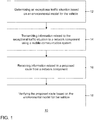
- Fig. 1 illustrates a block diagram of an embodiment of a method 10 for a vehicle 100 and for verifying a proposed route.
- the method 10 comprises determining 12 an exceptional traffic situation based on an environmental model for the vehicle 100.
- the method further comprises transmitting 14 information related to the exceptional traffic situation to a network component using a mobile communication system.
- the method 10 further comprises receiving 16 information related to a proposed route from a network component 200, and verifying 18 the proposed route based on the environmental model of the vehicle 100.
- Embodiments may enable automated consistency checks on external route proposals in a vehicle.
- the verifying 18 may comprise carrying out a consistency check on the proposed route based on the environmental model.
- the environmental model of the vehicle there may be another environmental model determined by the network, network component, respectively.
- the environmental model of the vehicle may hence be improved, verified or checked based on the network model.
- the network component may hence provide information related to the network generated environmental model to the vehicle.
- Fig. 2 illustrates a block diagram of an embodiment of a method 20 for a network component of a mobile communication system.
- the method 20 comprises receiving 22 information related to an exceptional traffic situation from a vehicle using the mobile communication system.
- the method further comprises determining 24 an environmental model for a vehicle, and determining a proposed route resolving the exceptional traffic situation for the vehicle.
- the method further comprises transmitting information related to the environmental model and information related to the proposed route to the vehicle.
- consistency checks of the environmental model of the vehicle may be enabled based on information on a network generated environmental model.
- the receiving 16 may further comprise receiving information related to a network generated environmental model of the vehicle from the network component.
- the verifying 18 may comprise carrying out a consistency check on the network generated environmental model and the environmental model of the vehicle.
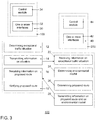
- Fig. 3 shows embodiments of an apparatus 30 for a vehicle 100 and a vehicle 100, embodiments of an apparatus 40 for a network component 200 and a network component 200, and an embodiment of a system 400.
- the vehicle 100 and the network component 200 may communicate through the mobile communication system 400.
- the mobile communication system 400 as shown in Fig. 3 , may, for example, correspond to one of the Third Generation Partnership Project (3GPP)-standardized mobile communication networks, where the term mobile communication system is used synonymously to mobile communication network.
- 3GPP Third Generation Partnership Project
- the mobile or wireless communication system 400 may correspond to a mobile communication system of the 5th Generation (5G, or New Radio) and may use mm-Wave technology.
- the mobile communication system may correspond to or comprise, for example, a Long-Term Evolution (LTE), an LTE-Advanced (LTE-A), High Speed Packet Access (HSPA), a Universal Mobile Telecommunication System (UMTS) or a UMTS Terrestrial Radio Access Network (UTRAN), an evolved-UTRAN (e-UTRAN), a Global System for Mobile communication (GSM) or Enhanced Data rates for GSM Evolution (EDGE) network, a GSM/EDGE Radio Access Network (GERAN), or mobile communication networks with different standards, for example, a Worldwide Inter-operability for Microwave Access (WIMAX) network IEEE 802.16 or Wireless Local Area Network (WLAN) IEEE 802.11, generally an Orthogonal Frequency Division Multiple Access (OFDMA) network, a Time Division Multiple Access (TDMA) network, a Code Division Multiple Access (CDMA) network, a
- Service provision may be carried out by a network component 200, such as a base station transceiver, a relay station or a UE, e.g. coordinating service provision in a cluster or group of multiple UEs.
- the network component 200 may be a Control Center (CC), which controls remotely operated or tele-operated vehicles.
- CC Control Center
- the network component 200 may correspond to a computer system displaying data (e.g. video streams) obtained from a vehicle to an operator or remote driver of the vehicle.
- data e.g. video streams
- such a CC may be located as close to a controlled vehicle as possible in order to keep a latency of the video data in an uplink and the control or steering data in the downlink as short as possible.
- communication may be carried out via a base station, which may be collocated with the CC or located close to base station. Signaling may be routed directly from the CC to the vehicle, i.e. on a shortest path to keep the latency and delay as short as possible.
- a base station transceiver can be operable or configured to communicate with one or more active mobile transceivers/vehicles 100 and a base station transceiver can be located in or adjacent to a coverage area of another base station transceiver, e.g. a macro cell base station transceiver or small cell base station transceiver.
- a mobile communication system 400 comprising two or more mobile transceivers/vehicles 100 and one or more base station transceivers, wherein the base station transceivers may establish macro cells or small cells, as e.g. pico-, metro-, or femto cells.
- a mobile transceiver or UE may correspond to a smartphone, a cell phone, a laptop, a notebook, a personal computer, a Personal Digital Assistant (PDA), a Universal Serial Bus (USB) -stick, a car, a vehicle etc.
- PDA Personal Digital Assistant
- USB Universal Serial Bus
- a mobile transceiver may also be referred to as User Equipment (UE) or mobile in line with the 3GPP terminology.
- UE User Equipment
- a vehicle may correspond to any conceivable means for transportation, e.g. a car, a bike, a motorbike, a van, a truck, a bus, a ship, a boat, a plane, a train, a tram, etc.
- a base station transceiver can be located in the fixed or stationary part of the network or system.
- a base station transceiver may be or correspond to a remote radio head, a transmission point, an access point, a macro cell, a small cell, a micro cell, a femto cell, a metro cell etc.
- a base station transceiver can be a wireless interface of a wired network, which enables transmission of radio signals to a UE or mobile transceiver.
- Such a radio signal may comply with radio signals as, for example, standardized by 3GPP or, generally, in line with one or more of the above listed systems.
- a base station transceiver may correspond to a NodeB, an eNodeB, a Base Transceiver Station (BTS), an access point, a remote radio head, a relay station, a transmission point etc., which may be further subdivided in a remote unit and a central unit.
- BTS Base Transceiver Station
- a mobile transceiver or vehicle 100 can be associated with a base station transceiver or cell.
- the term cell refers to a coverage area of radio services provided by a base station transceiver, e.g. a NodeB (NB), an eNodeB (eNB), a remote radio head, a transmission point, etc.
- NB NodeB
- eNB eNodeB
- a base station transceiver may operate one or more cells on one or more frequency layers, in some embodiments a cell may correspond to a sector. For example, sectors can be achieved using sector antennas, which provide a characteristic for covering an angular section around a remote unit or base station transceiver.
- a base station transceiver may, for example, operate three or six cells covering sectors of 120° (in case of three cells), 60° (in case of six cells) respectively.
- a base station transceiver may operate multiple sectorized antennas.
- a cell may represent an according base station transceiver generating the cell or, likewise, a base station transceiver may represent a cell the base station transceiver generates.
- Fig. 3 shows an embodiment of an apparatus 30 for a UE or vehicle 100, an embodiment of an apparatus 40 for a network component, and an embodiment of a system 400.
- the apparatus 30 for the UE/vehicle 100 comprises one or more interfaces 32 configured to communicate in the mobile communication system 400.
- the apparatus 30 further comprises a control module 34, which is coupled to the one or more interfaces 32 and which is configured to control the one or more interfaces 32.
- the control module 34 is further configured to perform one of the methods 10 as described herein.
- the apparatus 40 for the network component 200 comprises one or more interfaces 42, which are configured to communicate in the mobile communication system 400.
- the apparatus 40 further comprises a control module 44, which is coupled to the one or more interfaces 42 and which is configured to control the one or more interfaces 42.
- the control module 44 is further configured to perform one of the methods 20 as described herein.
- the apparatus 40 may be comprised in a CC, a base station, a NodeB, a UE, a relay station, or any service coordinating network entity in embodiments.
- the term network component may comprise multiple sub-components, such as a base station, a server, a CC, etc.
- a further embodiment is a vehicle 100 comprising the apparatus 30 and/or a network component 200 comprising the apparatus 40.
- the one or more interfaces 32, 42 may correspond to any means for obtaining, receiving, transmitting or providing analog or digital signals or information, e.g. any connector, contact, pin, register, input port, output port, conductor, lane, etc. which allows providing or obtaining a signal or information.
- An interface may be wireless or wireline and it may be configured to communicate, i.e. transmit or receive signals, information with further internal or external components.
- the one or more interfaces 32, 42 may comprise further components to enable according communication in the mobile communication system 400, such components may include transceiver (transmitter and/or receiver) components, such as one or more Low-Noise Amplifiers (LNAs), one or more Power-Amplifiers (PAs), one or more duplexers, one or more diplexers, one or more filters or filter circuitry, one or more converters, one or more mixers, accordingly adapted radio frequency components, etc.
- the one or more interfaces 32, 42 may be coupled to one or more antennas, which may correspond to any transmit and/or receive antennas, such as horn antennas, dipole antennas, patch antennas, sector antennas etc.
- the antennas may be arranged in a defined geometrical setting, such as a uniform array, a linear array, a circular array, a triangular array, a uniform field antenna, a field array, combinations thereof, etc.
- the one or more interfaces 32, 42 may serve the purpose of transmitting or receiving or both, transmitting and receiving, information, such as information related to capabilities, application requirements, trigger indications, requests, message interface configurations, feedback, information related to control commands, QoS requirements, QoS time courses, QoS maps, etc.
- control modules 34, 44 may be implemented using one or more processing units, one or more processing devices, any means for processing, such as a processor, a computer or a programmable hardware component being operable with accordingly adapted software.
- the described functions of the control modules 34, 44 may as well be implemented in software, which is then executed on one or more programmable hardware components.
- Such hardware components may comprise a general purpose processor, a Digital Signal Processor (DSP), a microcontroller, etc.
- Fig. 3 also shows an embodiment of a system 400 comprising embodiments of UE/vehicle 100, and a network component/base station 200 comprising the apparatus 40.
- communication i.e. transmission, reception or both, may take place among mobile transceivers/vehicles 100 directly and/or between mobile transceivers/vehicles 100 and a network component 200 (infrastructure or mobile transceiver, e.g. a base station, a network server, a backend server, etc.).
- a network component 200 infrastructure or mobile transceiver, e.g. a base station, a network server, a backend server, etc.
- Such communication may make use of a mobile communication system 400.
- Such communication may be carried out directly, e.g.
- D2D Device-to-Device
- V2V Vehicle-to-Vehicle
- car-to-car communication in case of vehicles 100.
- D2D Device-to-Device
- V2V Vehicle-to-Vehicle
- Such communication may be carried out using the specifications of a mobile communication system 400.
- the one or more interfaces 32, 42 can be configured to wirelessly communicate in the mobile communication system 400.
- radio resources e.g. frequency, time, code, and/or spatial resources, which may be used for wireless communication with a base station transceiver as well as for direct communication.
- the assignment of the radio resources may be controlled by a base station transceiver, i.e. the determination which resources are used for D2D and which are not.
- radio resources of the respective components may correspond to any radio resources conceivable on radio carriers and they may use the same or different granularities on the respective carriers.
- the radio resources may correspond to a Resource Block (RB as in LTE/LTE-A/LTE-unlicensed (LTE-U)), one or more carriers, sub-carriers, one or more radio frames, radio sub-frames, radio slots, one or more code sequences potentially with a respective spreading factor, one or more spatial resources, such as spatial sub-channels, spatial precoding vectors, any combination thereof, etc.
- RB Resource Block
- LTE-U LTE/LTE-A/LTE-unlicensed
- spatial resources such as spatial sub-channels, spatial precoding vectors, any combination thereof, etc.
- C-V2X direct Cellular Vehicle-to-Anything
- V2X includes at least V2V, V2-Infrastructure (V2I), etc.
- transmission according to 3GPP Release 14 onward can be managed by infrastructure (so-called mode 3) or run in a UE.
- the method 10 may be carried out at the apparatus 30 in the vehicle 100.
- the vehicle 100 may determine the exceptional traffic situation 12 and transmit according information to the network component 200.
- the vehicle 100 receives information on the proposed route 16 from the network component 200 and verifies the proposed route 18.
- the network component 200 might not send any information on its own environmental model for the vehicle 100.
- the method 20 is carried out at the network component 200.
- the information on the exceptional traffic situation is received 22 at the network component 200, which also determines 24 an environmental model of the vehicle 100.
- the proposed route can be determined 26 and can be provided together with information on the network generated environmental model for the vehicle 100 to the vehicle 100.
- the control module 34 may hence form a consistency check module for the vehicle 100, which carries out consistency checks on proposed paths or routes for tele-operated driving.
- a variety of exceptional traffic situations are conceivable.
- the road may be blocked by another vehicle, a construction side, an accident, flooding etc.
- Other exceptions may be a closed road, a closed tunnel, unexpected road conditions etc.
- the vehicle 100 itself may operate multiple sensor systems capturing data of the vehicle's environment. Such data may comprise video data, imaging data, radar data, lidar data (light detection and ranging), temperature data, air pressure data, radio environment data, information received from other vehicles, etc. This data serves as a basis for the environmental model of the vehicle 100.
- This model may be a digital representation of the environment of the vehicle 100 possibly including other vehicles, objects, roadside infrastructure, traffic signs, pedestrians, etc. Based on this model the unexpected situation can be detected, e.g. an obstacle is detected in the way and passing the obstacle would require passing through a forbidden area, e.g. sidewalk, opposite lane, etc. In some embodiments the exceptional situation may as well be determined by receiving a traffic message, e.g. a broadcast message from another vehicle.
- a traffic message e.g. a broadcast message from another vehicle.
- Tele-operated driving might become a key technology in order to solve issues with L4/L5 (high automation/full automation) driven vehicles, such as interpretation issues or deadlocks.
- the main concept of TD is a vehicle remotely driven by a control center (CC). Between the CC 200 and the vehicle 100 there may be a large distance. They are connected via a radio communication system (e.g. 5G, 4G...) and their backhaul.
- a fully automatically driving vehicle gets stopped (also referred to as SAE (Society of Automotive Engineers) level 5 (L5) vehicle). For example, the automated vehicle is not able to continue its planned route because it is not able to interpret the situation.
- SAE Society of Automotive Engineers
- TD vehicles may be driven remotely from the CC.
- a vehicle remotely driven receives control data (route or steering data) from the CC. Either it will get a proposed path or it might be controlled directly by the CC, in which case it receives commands that are directly fed to a controller. This implies that the vehicle does not just need to trust the CC but also the transmission in between (security). Embodiments enable a verification on such a proposed path or route.
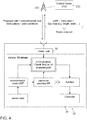
- Fig. 4 illustrates a generic overview of logical modules in an embodiment.
- Fig. 4 shows an implementation of a control module 34 in an embodiment of an apparatus 30 in a vehicle 100.
- the control module 34 comprises multiple further modules, such as a sensor data processing module, an environmental model generation module (UMF from German "Umfeldmodell"), a maneuver planning module (MP), a consistency check module for the proposed path, an autobox, which is in charge for automated driving and which controls a steering controller of the vehicle.
- the different modules shown in Fig. 4 may be different software modules running on the same processor or hardware. In other embodiments they may be fully or partly implemented on different processors/controllers or on multiple processors/controllers, which are coupled to each other via respective interfaces.
- the control module 34 is coupled to a communication unit 32, which is an interface to communicate with a CC 200 via mobile communications, e.g. a 4G/5G base station 202.
- the control module 34 uses the consistency check module to verify whether the received proposed path is consistent.
- a consistency check may increase the trust level in the proposed path as the vehicle 100 performs additional internal tests.
- Fig. 4 is a generic overview of the logical modules at the remotely driven vehicle 100 (left), the radio interference (middle), and the control center 200 (CC) located somewhere else (right).
- the crossed arrow from the MP module to autobox indicates that for the exceptional traffic situation the MP cannot provide a resolving route. Therefore, the CC 200 is contacted, and the received proposed route is verified/consistency checked.
- the vehicle apparatus 30 communicates information related to the environmental model, video data, and ego data (e.g. geometrics of the vehicle, length, width, etc.) to the network component 200.
- the apparatus 30 receives information related to the proposed path, the environmental view from the outside (network perspective of the environment of the vehicle 100) and path conditions (for example road condition (such road ice, aqua planning, height limitation, width limitations), traffic situation, etc.).
- road condition such road ice, aqua planning, height limitation, width limitations
- traffic situation etc.
- Fig. 5 illustrates internal and external inputs of an embodiment of a control module 34 of an apparatus, which is configured to carry out the above method 10.
- Fig. 5 shows internal and external inputs for the module 34 for consistency checking of a proposed path coming from the CC 200. From the CC 200 the control module 34 receives information related to a proposed path (route), information related to an environmental view/model from the outside, and information related to path conditions (if known e.g. from before remotely driven car or vehicles).
- control module 34 may receive information related to the issue/problem with interpretation (exceptional traffic situation), information related to the manipulated environmental model list (MEML), information related to the environmental model itself (UMF), and information related to vehicle conditions (width and height of the vehicle 100, distance between car underfloor and ground, path conditions, max width and height of path, curbstone height (e.g. minimal distance between ground and car underfloor, etc.).
- information related to the issue/problem with interpretation (exceptional traffic situation)
- MEML manipulated environmental model list
- UMF environmental model itself
- vehicle conditions width and height of the vehicle 100, distance between car underfloor and ground, path conditions, max width and height of path, curbstone height (e.g. minimal distance between ground and car underfloor, etc.).
- the vehicle 100 compares the proposed path from the CC 200 with its own Manipulated Environmental Model List (MEML) in the above step 3.
- MEML Manipulated Environmental Model List
- the concept of MEML and possible further steps are explained subsequently.
- the manipulated environmental model may comprise a manipulated environmental model list of manipulated objects and a corresponding confidence level of the manipulation.
- the vehicle 100 is blocked in a situation where it cannot find an appropriate path due to scene misinterpretation or multiple (sensed) temporary obstacles.
- the vehicle 100 may carry out the following steps:
- vehicle 100 may follow the following steps:
- the verifying 18 may further comprise carrying out a plausibility check on the modifications of the environmental model.
- the apparatus 30/method 10 may conduct a plausibility check on the modifications provided by the network component 200. Such a plausibility check may again be based on confidence levels for the respective details of the environmental model determined by the vehicle 100.
- the MEML may be generated by a vehicle 100 that is not able to interpret the situation and is therefore calling the CC 200.
- the vehicle 100 may first order all objects from its environmental model (UMF) with its misinterpretation probability. Then it manipulates each object so that the vehicle 100 is able to calculate a path.
- UMF environmental model
- the vehicle 100 gets a proposed path from the CC 200 and can check if this proposed path already exist in its MEML list. For instance, the vehicle 100 may introduce a threshold for just trusting proposed paths, which exist in the MEML list with a misinterpretation probability of the manipulated object for less than 20%.
- the respective methods may be implemented as computer programs or codes, which can be executed on a respective hardware.
- another embodiment is a computer program having a program code for performing at least one of the above methods, when the computer program is executed on a computer, a processor, or a programmable hardware component.
- a further embodiment is a (non-transitory) computer readable storage medium storing instructions which, when executed by a computer, processor, or programmable hardware component, cause the computer to implement one of the methods described herein.
- program storage devices e.g., digital data storage media, which are machine or computer readable and encode machine-executable or computer-executable programs of instructions where said instructions perform some or all of the steps of methods described herein.
- the program storage devices may be, e.g., digital memories, magnetic storage media such as magnetic disks and magnetic tapes, hard drives, or optically readable digital data storage media.
- the embodiments are also intended to cover computers programmed to perform said steps of methods described herein or (field) programmable logic arrays ((F)PLAs) or (field) programmable gate arrays ((F)PGAs), programmed to perform said steps of the above-described methods.
- processor When provided by a processor, the functions may be provided by a single dedicated processor, by a single shared processor, or by a plurality of individual processors, some of which may be shared.
- explicit use of the term "processor” or “controller” should not be construed to refer exclusively to hardware capable of executing software, and may implicitly include, without limitation, Digital Signal Processor (DSP) hardware, network processor, application specific integrated circuit (ASIC), field programmable gate array (FPGA), read only memory (ROM) for storing software, random access memory (RAM), and non-volatile storage. Other hardware, conventional or custom, may also be included. Their function may be carried out through the operation of program logic, through dedicated logic, through the interaction of program control and dedicated logic, or even manually, the particular technique being selectable by the implementer as more specifically understood from the context.
- DSP Digital Signal Processor
- ASIC application specific integrated circuit
- FPGA field programmable gate array
- ROM read only memory
- RAM random access memory
- non-volatile storage Other hardware
- any block diagrams herein represent conceptual views of illustrative circuitry embodying the principles of the invention.
- any flow charts, flow diagrams, state transition diagrams, pseudo code, and the like represent various processes which may be substantially represented in computer readable medium and so executed by a computer or processor, whether or not such computer or processor is explicitly shown.
- each claim may stand on its own as a separate embodiment. While each claim may stand on its own as a separate embodiment, it is to be noted that - although a dependent claim may refer in the claims to a specific combination with one or more other claims - other embodiments may also include a combination of the dependent claim with the subject matter of each other dependent claim. Such combinations are proposed herein unless it is stated that a specific combination is not intended. Furthermore, it is intended to include also features of a claim to any other independent claim even if this claim is not directly made dependent to the independent claim.
Landscapes
- Engineering & Computer Science (AREA)
- Physics & Mathematics (AREA)
- General Physics & Mathematics (AREA)
- Remote Sensing (AREA)
- Radar, Positioning & Navigation (AREA)
- Automation & Control Theory (AREA)
- Mathematical Physics (AREA)
- Aviation & Aerospace Engineering (AREA)
- Signal Processing (AREA)
- Computer Networks & Wireless Communication (AREA)
- Life Sciences & Earth Sciences (AREA)
- Atmospheric Sciences (AREA)
- Business, Economics & Management (AREA)
- Environmental Sciences (AREA)
- Chemical & Material Sciences (AREA)
- Analytical Chemistry (AREA)
- Environmental & Geological Engineering (AREA)
- Ecology (AREA)
- Biodiversity & Conservation Biology (AREA)
- Economics (AREA)
- Human Resources & Organizations (AREA)
- Primary Health Care (AREA)
- Strategic Management (AREA)
- Tourism & Hospitality (AREA)
- General Health & Medical Sciences (AREA)
- Marketing (AREA)
- Theoretical Computer Science (AREA)
- General Business, Economics & Management (AREA)
- Transportation (AREA)
- Mechanical Engineering (AREA)
- Health & Medical Sciences (AREA)
- Traffic Control Systems (AREA)
Abstract
Description
- The present invention relates to a system, a vehicle, a network component, apparatuses, methods, and computer programs for a vehicle and a network component, more particularly, but not exclusively, to a concept for verifying or consistency checking of an external route proposal in a vehicle.
- Document
US 2014/0214259 A1 describes a concept for recognizing a driver impairment in a vehicle. The concept checks if a driven path diverts from a predetermined path and then checks whether certain activities a of driver have taken place. The concept solves the problem of consistency checking own sensor data in order to enable autonomous driving. DocumentUS 2017/0123419A1 discloses using artificial intelligence and machine learning mechanisms to predict a course of action for a vehicle in an autonomous driving scenario. Telemetric data is obtained from a tele-operator with instruction and policy data to operate an automated vehicle. DocumentUS 2018/0188031 A1 discloses a concept for calibrating vehicle dynamics expectations. - Conventional concepts consider management and tracing of a vehicle's trajectory. Certain precautionary measures are used to determine a driver impairment or miscalibration of components, resolving anomaly events, respectively. These concepts do not deal with handling of false information. There is a demand for an improved concept for handling information in exceptional traffic situations for automated driving.
- Embodiments are based on the finding that there are traffic situations, e.g. if an obstacle is in the regular way, which cannot be resolved by means of automated driving mechanisms. In such an exceptional traffic situation external information may be used, e.g. as provided by a control center for tele-operated driving. However, such information may be manipulated. It is communicated through multiple networks, network components and mobile communication systems. Embodiments are based on the finding that a verification can be carried out in a vehicle and a consistency check for such external information can be enabled. Vehicles with their growing number of sensors may determine an environmental model, which can serve as a basis for the verification of external data.
- Embodiments provide a method for a vehicle and for verifying a proposed route. The method comprises determining an exceptional traffic situation based on an environmental model for the vehicle, and transmitting information related to the exceptional traffic situation to a network component using a mobile communication system. The method further comprises receiving information related to a proposed route from a network component, and verifying the proposed route based on the environmental model of the vehicle. Embodiments may provide enhanced security by verifying external route proposals in exceptional traffic situations. For example, sensor data may be used to determine data on which the environmental model is based. Consequently, details of the environmental model may be based on estimations. The presence of an object might not be certain, but the object may be present with a certain probability only. The proposed route can be evaluated with the environmental model. For example, the probability that objects are in the way of the proposed route can be determined and verification of the proposed route can be enabled.
- The verifying may comprise carrying out a consistency check on the proposed route based on the environmental model. The environmental model determined in a vehicle may provide an efficient basis for determining routes out of a specific traffic situation. A proposed route can therefore be checked for consistency in view of the environmental model. Since the environmental model is determined internally, an independent means for consistency checks can be provided in embodiments.
- At least in some embodiments the receiving may further comprise receiving information related to a network generated environmental model of the vehicle from the network component. The verifying may comprise carrying out a consistency check on the network generated network environmental model and the environmental model of the vehicle. Embodiments may enable consistency checks between environmental models in the network and in the vehicle. The quality of the environmental model in the vehicle may be improved. At the same time, routes out of the exceptional traffic situation can be evaluated based on the improved environmental model.
- The method may further comprise determining one or more route versions resolving the exceptional traffic situation based on the environmental model. A route version can be related to a confidence level, which indicates a confidence on whether the route version solves the exceptional traffic situation. For example, route versions may be based on whether certain objects (obstacles, other road participants, trees, traffic signs/lights, etc.) in the environmental model are present or not. The verifying may comprise comparing the information related to the proposed route to the one or more route versions. Embodiments may therewith enable an efficient way of evaluating a proposed route against several locally determined route versions. The verifying may, for example, be considered successful if a confidence level for a route version corresponding to the proposed route is above a predefined threshold. Embodiments may enable a threshold comparison to verify a proposed route.
- In further embodiments the method may comprise determining a manipulated environmental model for the vehicle, the manipulated environmental model may comprise hypothetical amendments of the environmental model with a certain confidence level. The verifying may then be based on the manipulated environmental model. Embodiments may enable to determine multiple (manipulated) versions of the environmental model based on different hypothesis, for example, presence or absence of objects. The proposed route may then be verified based on the manipulated models, e.g. based on a confidence of the respective manipulations.
- For example, the manipulated environmental model comprises a manipulated environmental model list of manipulated objects and a corresponding confidence level of the manipulation. If the proposed route would be suitable for one of the manipulated environmental models, i.e. if the exceptional traffic situation could be resolved by the proposed route in the manipulated model, the confidence of manipulated model may serve as a confidence of the proposed route.
- The transmitting may comprise transmitting information related to the environmental model to the network component in some embodiments. The receiving may then comprise receiving information related to a modification of the environmental model from the network component. The method may further comprise adapting the environmental model based on the information related to the modification. Embodiments may enable improvements of the environmental model of a vehicle by providing a network perspective of the environmental model, for example, confidence levels in the environmental model may be amended based on the network perspective, objects may be added or removed.
- In some embodiments the method may comprise determining a route version resolving the exceptional traffic situation based on the adapted environmental model. The verifying may comprise comparing the information related to the proposed route to the route version, which is based on the adapted model. The proposed route may therewith be evaluated by the manipulated/improved environmental model leading to further security enhancements in some embodiments. The verifying may further comprise carrying out a plausibility check on the modifications/adaptations of the environmental model. Embodiments may enable a first plausibility/consistency check on model adaptation and then a second consistency check of the proposed route based on the adapted environmental model.
- Embodiments also provide a method for a network component of a mobile communication system. The method comprises receiving information related to an exceptional traffic situation from a vehicle using the mobile communication system and determining an environmental model for the vehicle. The method further comprises determining a proposed route resolving the exceptional traffic situation for the vehicle and transmitting information related to the environmental model and information related to the proposed route to the vehicle.
- An apparatus for a vehicle is another embodiment. The apparatus comprises one or more interfaces, which are configured to communicate in a mobile communication system. The apparatus further comprises a control module, which is configured to control the one or more interfaces. The control module is further configured to perform one of the methods described herein. Yet another embodiment is an apparatus for a network component. The apparatus comprises one or more interfaces, which are configured to communicate in a mobile communication system. The apparatus further comprises a control module, which is configured to control the one or more interfaces. The control module is further configured to perform one of the methods described herein.
- Further embodiments are a vehicle or a network component comprising one of the apparatuses described herein. Embodiments further provide a computer program having a program code for performing one or more of the above described methods, when the computer program is executed on a computer, processor, or programmable hardware component. A further embodiment is a computer readable storage medium storing instructions which, when executed by a computer, processor, or programmable hardware component, cause the computer to implement one of the methods described herein.
- Some other features or aspects will be described using the following non-limiting embodiments of apparatuses or methods or computer programs or computer program products by way of example only, and with reference to the accompanying figures, in which:
-
Fig. 1 illustrates a block diagram of an embodiment of a method for a vehicle; -
Fig. 2 illustrates a block diagram of an embodiment of a method for a network component; -
Fig. 3 shows embodiments of an apparatus for a vehicle and a vehicle, embodiments of an apparatus for a network component and a network component, and an embodiment of a system; -
Fig. 4 illustrates a generic overview of logical modules in an embodiment; and -
Fig. 5 illustrates internal and external inputs of an embodiment of an apparatus. - Various example embodiments will now be described more fully with reference to the accompanying drawings in which some example embodiments are illustrated. In the figures, the thicknesses of lines, layers or regions may be exaggerated for clarity. Optional components may be illustrated using broken, dashed or dotted lines.
- Accordingly, while example embodiments are capable of various modifications and alternative forms, embodiments thereof are shown by way of example in the figures and will herein be described in detail. It should be understood, however, that there is no intent to limit example embodiments to the particular forms disclosed, but on the contrary, example embodiments are to cover all modifications, equivalents, and alternatives falling within the scope of the invention. Like numbers refer to like or similar elements throughout the description of the figures.
- As used herein, the term "or" refers to a non-exclusive or, unless otherwise indicated (e.g., "or else" or "or in the alternative"). Furthermore, as used herein, words used to describe a relationship between elements should be broadly construed to include a direct relationship or the presence of intervening elements unless otherwise indicated. For example, when an element is referred to as being "connected" or "coupled" to another element, the element may be directly connected or coupled to the other element or intervening elements may be present. In contrast, when an element is referred to as being "directly connected" or "directly coupled" to another element, there are no intervening elements present. Similarly, words such as "between", "adjacent", and the like should be interpreted in a like fashion.
- The terminology used herein is for the purpose of describing particular embodiments only and is not intended to be limiting of example embodiments. As used herein, the singular forms "a", "an" and "the" are intended to include the plural forms as well, unless the context clearly indicates otherwise. It will be further understood that the terms "comprises", "comprising", "includes" or "including", when used herein, specify the presence of stated features, integers, steps, operations, elements or components, but do not preclude the presence or addition of one or more other features, integers, steps, operations, elements, components or groups thereof.
- Unless otherwise defined, all terms (including technical and scientific terms) used herein have the same meaning as commonly understood by one of ordinary skill in the art to which example embodiments belong. It will be further understood that terms, e.g., those defined in commonly used dictionaries, should be interpreted as having a meaning that is consistent with their meaning in the context of the relevant art and will not be interpreted in an idealized or overly formal sense unless expressly so defined herein.
- A challenge in teleoperated driving is to specify interfaces between the autonomous vehicle and the command center. Embodiments may provide such a specification using a definition of the information exchanged between them, which may imply defining a level of immersion of a tele operated driver in a driving situation as well as the level of command. In some tele-operated scenarios, a command center (CC) may take over full control of a vehicle. The vehicle may then send all its information to the CC, which remotely drives the vehicle with commands directly input to the vehicle's controller. This may involve exchanging large amounts of information and any consistency and/or safety checks are done manually by a human driver who is not in the vehicle. Tele-operated driving has not been implemented in an uncontrolled environment.
- For example, if an object (parking/unloading vehicle) blocks a one-way street, a way passing said vehicle may require driving a short section on the sidewalk. Driving on a side walk may, however, not be allowed in normal automated driving mode. Once such an exceptional traffic situation is detected, a communication with a network component can resolve the situation, for example, by switching to tele-operated driving or by receiving instructions on a route section that resolves the traffic situation. Embodiments are based on the finding that such a proposed route section can be automatically verified based on an environmental model determined by the vehicle.
-
Fig. 1 illustrates a block diagram of an embodiment of amethod 10 for avehicle 100 and for verifying a proposed route. Themethod 10 comprises determining 12 an exceptional traffic situation based on an environmental model for thevehicle 100. The method further comprises transmitting 14 information related to the exceptional traffic situation to a network component using a mobile communication system. Themethod 10 further comprises receiving 16 information related to a proposed route from anetwork component 200, and verifying 18 the proposed route based on the environmental model of thevehicle 100. Embodiments may enable automated consistency checks on external route proposals in a vehicle. The verifying 18 may comprise carrying out a consistency check on the proposed route based on the environmental model. - As will be detailed subsequently, in addition to the environmental model of the vehicle there may be another environmental model determined by the network, network component, respectively. The environmental model of the vehicle may hence be improved, verified or checked based on the network model. In some embodiments the network component may hence provide information related to the network generated environmental model to the vehicle.
-
Fig. 2 illustrates a block diagram of an embodiment of amethod 20 for a network component of a mobile communication system. Themethod 20 comprises receiving 22 information related to an exceptional traffic situation from a vehicle using the mobile communication system. The method further comprises determining 24 an environmental model for a vehicle, and determining a proposed route resolving the exceptional traffic situation for the vehicle. The method further comprises transmitting information related to the environmental model and information related to the proposed route to the vehicle. In embodiments consistency checks of the environmental model of the vehicle may be enabled based on information on a network generated environmental model. - On the vehicle side the receiving 16 may further comprise receiving information related to a network generated environmental model of the vehicle from the network component. The verifying 18 may comprise carrying out a consistency check on the network generated environmental model and the environmental model of the vehicle.
-
Fig. 3 shows embodiments of anapparatus 30 for avehicle 100 and avehicle 100, embodiments of anapparatus 40 for anetwork component 200 and anetwork component 200, and an embodiment of asystem 400. Thevehicle 100 and thenetwork component 200 may communicate through themobile communication system 400. Themobile communication system 400, as shown inFig. 3 , may, for example, correspond to one of the Third Generation Partnership Project (3GPP)-standardized mobile communication networks, where the term mobile communication system is used synonymously to mobile communication network. - The mobile or
wireless communication system 400 may correspond to a mobile communication system of the 5th Generation (5G, or New Radio) and may use mm-Wave technology. The mobile communication system may correspond to or comprise, for example, a Long-Term Evolution (LTE), an LTE-Advanced (LTE-A), High Speed Packet Access (HSPA), a Universal Mobile Telecommunication System (UMTS) or a UMTS Terrestrial Radio Access Network (UTRAN), an evolved-UTRAN (e-UTRAN), a Global System for Mobile communication (GSM) or Enhanced Data rates for GSM Evolution (EDGE) network, a GSM/EDGE Radio Access Network (GERAN), or mobile communication networks with different standards, for example, a Worldwide Inter-operability for Microwave Access (WIMAX) network IEEE 802.16 or Wireless Local Area Network (WLAN) IEEE 802.11, generally an Orthogonal Frequency Division Multiple Access (OFDMA) network, a Time Division Multiple Access (TDMA) network, a Code Division Multiple Access (CDMA) network, a Wideband-CDMA (WCDMA) network, a Frequency Division Multiple Access (FDMA) network, a Spatial Division Multiple Access (SDMA) network, etc. - Service provision may be carried out by a
network component 200, such as a base station transceiver, a relay station or a UE, e.g. coordinating service provision in a cluster or group of multiple UEs. Here and in the following thenetwork component 200 may be a Control Center (CC), which controls remotely operated or tele-operated vehicles. For example, it may correspond to a computer system displaying data (e.g. video streams) obtained from a vehicle to an operator or remote driver of the vehicle. Generally, such a CC may be located as close to a controlled vehicle as possible in order to keep a latency of the video data in an uplink and the control or steering data in the downlink as short as possible. In some embodiments communication may be carried out via a base station, which may be collocated with the CC or located close to base station. Signaling may be routed directly from the CC to the vehicle, i.e. on a shortest path to keep the latency and delay as short as possible. - A base station transceiver can be operable or configured to communicate with one or more active mobile transceivers/
vehicles 100 and a base station transceiver can be located in or adjacent to a coverage area of another base station transceiver, e.g. a macro cell base station transceiver or small cell base station transceiver. Hence, embodiments may provide amobile communication system 400 comprising two or more mobile transceivers/vehicles 100 and one or more base station transceivers, wherein the base station transceivers may establish macro cells or small cells, as e.g. pico-, metro-, or femto cells. A mobile transceiver or UE may correspond to a smartphone, a cell phone, a laptop, a notebook, a personal computer, a Personal Digital Assistant (PDA), a Universal Serial Bus (USB) -stick, a car, a vehicle etc. A mobile transceiver may also be referred to as User Equipment (UE) or mobile in line with the 3GPP terminology. A vehicle may correspond to any conceivable means for transportation, e.g. a car, a bike, a motorbike, a van, a truck, a bus, a ship, a boat, a plane, a train, a tram, etc. - A base station transceiver can be located in the fixed or stationary part of the network or system. A base station transceiver may be or correspond to a remote radio head, a transmission point, an access point, a macro cell, a small cell, a micro cell, a femto cell, a metro cell etc. A base station transceiver can be a wireless interface of a wired network, which enables transmission of radio signals to a UE or mobile transceiver. Such a radio signal may comply with radio signals as, for example, standardized by 3GPP or, generally, in line with one or more of the above listed systems. Thus, a base station transceiver may correspond to a NodeB, an eNodeB, a Base Transceiver Station (BTS), an access point, a remote radio head, a relay station, a transmission point etc., which may be further subdivided in a remote unit and a central unit.
- A mobile transceiver or
vehicle 100 can be associated with a base station transceiver or cell. The term cell refers to a coverage area of radio services provided by a base station transceiver, e.g. a NodeB (NB), an eNodeB (eNB), a remote radio head, a transmission point, etc. A base station transceiver may operate one or more cells on one or more frequency layers, in some embodiments a cell may correspond to a sector. For example, sectors can be achieved using sector antennas, which provide a characteristic for covering an angular section around a remote unit or base station transceiver. In some embodiments, a base station transceiver may, for example, operate three or six cells covering sectors of 120° (in case of three cells), 60° (in case of six cells) respectively. A base station transceiver may operate multiple sectorized antennas. In the following a cell may represent an according base station transceiver generating the cell or, likewise, a base station transceiver may represent a cell the base station transceiver generates. -
Fig. 3 shows an embodiment of anapparatus 30 for a UE orvehicle 100, an embodiment of anapparatus 40 for a network component, and an embodiment of asystem 400. Theapparatus 30 for the UE/vehicle 100 comprises one ormore interfaces 32 configured to communicate in themobile communication system 400. Theapparatus 30 further comprises acontrol module 34, which is coupled to the one ormore interfaces 32 and which is configured to control the one ormore interfaces 32. Thecontrol module 34 is further configured to perform one of themethods 10 as described herein. - The
apparatus 40 for thenetwork component 200 comprises one ormore interfaces 42, which are configured to communicate in themobile communication system 400. Theapparatus 40 further comprises acontrol module 44, which is coupled to the one ormore interfaces 42 and which is configured to control the one ormore interfaces 42. Thecontrol module 44 is further configured to perform one of themethods 20 as described herein. Theapparatus 40 may be comprised in a CC, a base station, a NodeB, a UE, a relay station, or any service coordinating network entity in embodiments. It is to be noted that the term network component may comprise multiple sub-components, such as a base station, a server, a CC, etc. A further embodiment is avehicle 100 comprising theapparatus 30 and/or anetwork component 200 comprising theapparatus 40. - In embodiments the one or
more interfaces more interfaces mobile communication system 400, such components may include transceiver (transmitter and/or receiver) components, such as one or more Low-Noise Amplifiers (LNAs), one or more Power-Amplifiers (PAs), one or more duplexers, one or more diplexers, one or more filters or filter circuitry, one or more converters, one or more mixers, accordingly adapted radio frequency components, etc. The one ormore interfaces more interfaces - As shown in
Fig. 3 the respective one ormore interfaces respective control modules apparatuses control modules control modules -
Fig. 3 also shows an embodiment of asystem 400 comprising embodiments of UE/vehicle 100, and a network component/base station 200 comprising theapparatus 40. In embodiments, communication, i.e. transmission, reception or both, may take place among mobile transceivers/vehicles 100 directly and/or between mobile transceivers/vehicles 100 and a network component 200 (infrastructure or mobile transceiver, e.g. a base station, a network server, a backend server, etc.). Such communication may make use of amobile communication system 400. Such communication may be carried out directly, e.g. by means of Device-to-Device (D2D) communication, which may also comprise Vehicle-to-Vehicle (V2V) or car-to-car communication in case ofvehicles 100. Such communication may be carried out using the specifications of amobile communication system 400. - In embodiments the one or
more interfaces mobile communication system 400. In order to do so radio resources are used, e.g. frequency, time, code, and/or spatial resources, which may be used for wireless communication with a base station transceiver as well as for direct communication. The assignment of the radio resources may be controlled by a base station transceiver, i.e. the determination which resources are used for D2D and which are not. Here and in the following radio resources of the respective components may correspond to any radio resources conceivable on radio carriers and they may use the same or different granularities on the respective carriers. The radio resources may correspond to a Resource Block (RB as in LTE/LTE-A/LTE-unlicensed (LTE-U)), one or more carriers, sub-carriers, one or more radio frames, radio sub-frames, radio slots, one or more code sequences potentially with a respective spreading factor, one or more spatial resources, such as spatial sub-channels, spatial precoding vectors, any combination thereof, etc. For example, in direct Cellular Vehicle-to-Anything (C-V2X), where V2X includes at least V2V, V2-Infrastructure (V2I), etc., transmission according to3GPP Release 14 onward can be managed by infrastructure (so-called mode 3) or run in a UE. - As further illustrated in
Fig. 3 themethod 10 may be carried out at theapparatus 30 in thevehicle 100. Thevehicle 100 may determine theexceptional traffic situation 12 and transmit according information to thenetwork component 200. In turn, thevehicle 100 receives information on the proposedroute 16 from thenetwork component 200 and verifies the proposedroute 18. In such an embodiment thenetwork component 200 might not send any information on its own environmental model for thevehicle 100. In a further embodiment, themethod 20 is carried out at thenetwork component 200. In this embodiment the information on the exceptional traffic situation is received 22 at thenetwork component 200, which also determines 24 an environmental model of thevehicle 100. The proposed route can be determined 26 and can be provided together with information on the network generated environmental model for thevehicle 100 to thevehicle 100. Thecontrol module 34 may hence form a consistency check module for thevehicle 100, which carries out consistency checks on proposed paths or routes for tele-operated driving.
A variety of exceptional traffic situations are conceivable. For example, the road may be blocked by another vehicle, a construction side, an accident, flooding etc. Other exceptions may be a closed road, a closed tunnel, unexpected road conditions etc. Thevehicle 100 itself may operate multiple sensor systems capturing data of the vehicle's environment. Such data may comprise video data, imaging data, radar data, lidar data (light detection and ranging), temperature data, air pressure data, radio environment data, information received from other vehicles, etc. This data serves as a basis for the environmental model of thevehicle 100. This model may be a digital representation of the environment of thevehicle 100 possibly including other vehicles, objects, roadside infrastructure, traffic signs, pedestrians, etc. Based on this model the unexpected situation can be detected, e.g. an obstacle is detected in the way and passing the obstacle would require passing through a forbidden area, e.g. sidewalk, opposite lane, etc. In some embodiments the exceptional situation may as well be determined by receiving a traffic message, e.g. a broadcast message from another vehicle. - Tele-operated driving (TD) might become a key technology in order to solve issues with L4/L5 (high automation/full automation) driven vehicles, such as interpretation issues or deadlocks. The main concept of TD is a vehicle remotely driven by a control center (CC). Between the
CC 200 and thevehicle 100 there may be a large distance. They are connected via a radio communication system (e.g. 5G, 4G...) and their backhaul. In an embodiment a fully automatically driving vehicle gets stopped (also referred to as SAE (Society of Automotive Engineers) level 5 (L5) vehicle). For example, the automated vehicle is not able to continue its planned route because it is not able to interpret the situation. - These issues may occur when automatic driven vehicles are not able to interpret and to solve a situation due to unclear traffic conditions, e.g. an accident, a construction site, unknown obstacle, etc. These vehicles may need external instruction from someone else to solve the situation, which will be the so-called control center (CC). TD vehicles may be driven remotely from the CC.
- A vehicle remotely driven receives control data (route or steering data) from the CC. Either it will get a proposed path or it might be controlled directly by the CC, in which case it receives commands that are directly fed to a controller. This implies that the vehicle does not just need to trust the CC but also the transmission in between (security). Embodiments enable a verification on such a proposed path or route.
-
Fig. 4 illustrates a generic overview of logical modules in an embodiment.Fig. 4 shows an implementation of acontrol module 34 in an embodiment of anapparatus 30 in avehicle 100. In this embodiment thecontrol module 34 comprises multiple further modules, such as a sensor data processing module, an environmental model generation module (UMF from German "Umfeldmodell"), a maneuver planning module (MP), a consistency check module for the proposed path, an autobox, which is in charge for automated driving and which controls a steering controller of the vehicle. The different modules shown inFig. 4 may be different software modules running on the same processor or hardware. In other embodiments they may be fully or partly implemented on different processors/controllers or on multiple processors/controllers, which are coupled to each other via respective interfaces. - As shown in
Fig 4 thecontrol module 34 is coupled to acommunication unit 32, which is an interface to communicate with aCC 200 via mobile communications, e.g. a 4G/5G base station 202. Thecontrol module 34 uses the consistency check module to verify whether the received proposed path is consistent. A consistency check may increase the trust level in the proposed path as thevehicle 100 performs additional internal tests.Fig. 4 is a generic overview of the logical modules at the remotely driven vehicle 100 (left), the radio interference (middle), and the control center 200 (CC) located somewhere else (right). The crossed arrow from the MP module to autobox indicates that for the exceptional traffic situation the MP cannot provide a resolving route. Therefore, theCC 200 is contacted, and the received proposed route is verified/consistency checked. - As shown in
Fig. 4 thevehicle apparatus 30 communicates information related to the environmental model, video data, and ego data (e.g. geometrics of the vehicle, length, width, etc.) to thenetwork component 200. In return theapparatus 30 receives information related to the proposed path, the environmental view from the outside (network perspective of the environment of the vehicle 100) and path conditions (for example road condition (such road ice, aqua planning, height limitation, width limitations), traffic situation, etc.). -
Fig. 5 illustrates internal and external inputs of an embodiment of acontrol module 34 of an apparatus, which is configured to carry out theabove method 10.Fig. 5 shows internal and external inputs for themodule 34 for consistency checking of a proposed path coming from theCC 200. From theCC 200 thecontrol module 34 receives information related to a proposed path (route), information related to an environmental view/model from the outside, and information related to path conditions (if known e.g. from before remotely driven car or vehicles). From the other vehicle components, thecontrol module 34 may receive information related to the issue/problem with interpretation (exceptional traffic situation), information related to the manipulated environmental model list (MEML), information related to the environmental model itself (UMF), and information related to vehicle conditions (width and height of thevehicle 100, distance between car underfloor and ground, path conditions, max width and height of path, curbstone height (e.g. minimal distance between ground and car underfloor, etc.). - A possible implementation of an embodiment of the
method 10 in themodule 34 is described in the following steps: - 1. Compare vehicle conditions with path conditions, determine whether they are consistent. In this step the vehicle may verify whether it can use the path, e.g. if the road conditions are suitable. If not the proposed path or route is rejected.
- 2. Compare vehicle UMF with external environmental view (they should see the same from different perspectives, i.e. should be consistent after the appropriate reference frame transformation), determine whether they are consistent.
This step applies in conjunction withmethod 20, i.e. thenetwork component 200 provides information related to the network generated environmental model and information related to the proposed path. If the models are found to be inconsistent, the proposed path or route is rejected. - 3. The vehicle checks 18 the proposed path from the
CC 200 with a consistency check algorithm. In some embodiments this step may comprise determining one or more route versions resolving the exceptional traffic situation based on the environmental model. Such a route version may be related to a confidence level, which indicates a confidence on whether the route version solves the exceptional traffic situation. For example, according to the environmental model there is a 2% probability that an obstacle is in the way of a first route version. The confidence level of the first route version may then be 98%. A second route version may have a confidence level of 97% and so on. The verifying 18 comprises comparing the information related to the proposed route to the one or more route versions and confidence level may then be used to make a threshold decision. For example, the verifying 18 is considered successful if a confidence level for a route version corresponding to the proposed route is above a predefined threshold. In a further embodiment themethod 10 comprises determining a manipulated environmental model for the vehicle. The manipulated environmental model may comprise hypothetical amendments (presence/absence of objects) of the environmental model with a certain confidence level. The verifying 18 can then be based on the manipulated environmental model. Hence, the consistency check may be based on checking whether the proposed path can be found in the manipulated environmental model of thevehicle 100. Otherwise, it may be deemed not trustworthy/rejected. - 4. The
vehicle 100 uses the path proposed by theCC 200 after successfully going through steps 1 to 3. - In some embodiments, the
vehicle 100 compares the proposed path from theCC 200 with its own Manipulated Environmental Model List (MEML) in the above step 3. The concept of MEML and possible further steps are explained subsequently. The manipulated environmental model may comprise a manipulated environmental model list of manipulated objects and a corresponding confidence level of the manipulation. - For example, the
vehicle 100 is blocked in a situation where it cannot find an appropriate path due to scene misinterpretation or multiple (sensed) temporary obstacles. - In an embodiment, the
vehicle 100 may carry out the following steps: - Step 0: The
vehicle 100 senses its own environmental model (UMF) with objects and corresponding significance level (misinterpretation level, error of type I, false positive, "I see something that does not exist") of all obstacles. For example, a type I error rate or significance level may be the probability of rejecting a hypothesis (presence of an abject) given that it is true. For example, the significance level for objects detected at the road side is set to 0.05 (5%), implying that it is acceptable to have a 5% probability of incorrectly rejecting the object. - Step 1: The
vehicle 100 calculates possible paths or route versions by manipulating (e.g. taking out) objects with higher significance level. The goal is to manipulate the UMF slightly based on a probability of false positive detection of objects. - Step 2: The
vehicle 100 obtains a list of paths (one or more route versions) with a corresponding probability of type I error (of the manipulated objects) - Step 3: The
vehicle 100 obtains a path proposed by an external source, e.g. CC 200 (steps step 18. - Step 4: If the
vehicle 100 can find the proposed path (with a possible threshold for misinterpretation probability) it trusts this proposed path. - In another embodiment the
vehicle 100 may follow the following steps: - Step 0: The
vehicle 100 senses its own environmental model (UMF).Vehicle 100 is unsure about the presence of some objects. Regarding this,vehicle 100 is not able to find a path. - Step 1: The
vehicle 100 sends UMF data, video data, and ego data toCC 200. In this embodiment the transmitting 14 comprises transmitting information related to the environmental model to thenetwork component 200. TheCC 200 takes decision of presence of some objects. Additionally, theCC 200 calculates a path for the vehicle. TheCC 200 sends new UMF list and calculated path to the vehicle 200 (method 20, step 28). The receiving 16 ofmethod 10 on thevehicle 100 side then comprises receiving information related to a modification of the environmental model from thenetwork component 200. - Step 2: The
vehicle 100 adapts its own UMF regarding received data from theCC 200. Themethod 10 comprises adapting the environmental model based on the information related to the modification from thenetwork component 200. - Step 3: The
vehicle 100 is now able to calculate an own path (route version) through an alleged/potential obstacle. Themethod 10 comprises determining a route version resolving the exceptional traffic situation based on the adapted environmental model. - Step 4: The verifying 18 comprises comparing the information related to the proposed route to the route version. The received path (proposed route) and object data from the
CC 200 may now be similar to the vehicle path (route version based on manipulated UMF) and UMF data (manipulated UMF). If the verification determines that this is the case thevehicle 100 is able to drive along the verified proposed route. - Step 5: The
vehicle 100 continuously senses for new sudden objects. If thevehicle 100 is not able to find a solution, the procedure in this embodiment jumps to the above step 0. - In a further embodiment the verifying 18 may further comprise carrying out a plausibility check on the modifications of the environmental model. In other words, before taking the modification into account the
apparatus 30/method 10 may conduct a plausibility check on the modifications provided by thenetwork component 200. Such a plausibility check may again be based on confidence levels for the respective details of the environmental model determined by thevehicle 100. - The MEML may be generated by a
vehicle 100 that is not able to interpret the situation and is therefore calling theCC 200. Thevehicle 100 may first order all objects from its environmental model (UMF) with its misinterpretation probability. Then it manipulates each object so that thevehicle 100 is able to calculate a path. The following table gives an example:Path index Description of object which was manipulated Coordinates of path through this manipulated object Misinterpretation probability of the considered object 1 Vehicle at position (x,y,z) [(x,y,z), (x,y,z),( x,y,z),...] 0.01% 2 Pedestrian at (x,y,z) [(x,y,z), (x,y,z),(x,y,z),...] 15% 3 Traffic light at (x,y,z) [(x,y,z), (x,y,z),(x,y,z),...] 5% ... ... ... ... - The
vehicle 100 gets a proposed path from theCC 200 and can check if this proposed path already exist in its MEML list. For instance, thevehicle 100 may introduce a threshold for just trusting proposed paths, which exist in the MEML list with a misinterpretation probability of the manipulated object for less than 20%. - As already mentioned, in embodiments the respective methods may be implemented as computer programs or codes, which can be executed on a respective hardware. Hence, another embodiment is a computer program having a program code for performing at least one of the above methods, when the computer program is executed on a computer, a processor, or a programmable hardware component. A further embodiment is a (non-transitory) computer readable storage medium storing instructions which, when executed by a computer, processor, or programmable hardware component, cause the computer to implement one of the methods described herein.
- A person of skill in the art would readily recognize that steps of various above-described methods can be performed by programmed computers, for example, positions of slots may be determined or calculated. Herein, some embodiments are also intended to cover program storage devices, e.g., digital data storage media, which are machine or computer readable and encode machine-executable or computer-executable programs of instructions where said instructions perform some or all of the steps of methods described herein. The program storage devices may be, e.g., digital memories, magnetic storage media such as magnetic disks and magnetic tapes, hard drives, or optically readable digital data storage media. The embodiments are also intended to cover computers programmed to perform said steps of methods described herein or (field) programmable logic arrays ((F)PLAs) or (field) programmable gate arrays ((F)PGAs), programmed to perform said steps of the above-described methods.
- The description and drawings merely illustrate the principles of the invention. It will thus be appreciated that those skilled in the art will be able to devise various arrangements that, although not explicitly described or shown herein, embody the principles of the invention and are included within its spirit and scope. Furthermore, all examples recited herein are principally intended expressly to be only for pedagogical purposes to aid the reader in understanding the principles of the invention and the concepts contributed by the inventor(s) to furthering the art, and are to be construed as being without limitation to such specifically recited examples and conditions. Moreover, all statements herein reciting principles, aspects, and embodiments of the invention, as well as specific examples thereof, are intended to encompass equivalents thereof. When provided by a processor, the functions may be provided by a single dedicated processor, by a single shared processor, or by a plurality of individual processors, some of which may be shared. Moreover, explicit use of the term "processor" or "controller" should not be construed to refer exclusively to hardware capable of executing software, and may implicitly include, without limitation, Digital Signal Processor (DSP) hardware, network processor, application specific integrated circuit (ASIC), field programmable gate array (FPGA), read only memory (ROM) for storing software, random access memory (RAM), and non-volatile storage. Other hardware, conventional or custom, may also be included. Their function may be carried out through the operation of program logic, through dedicated logic, through the interaction of program control and dedicated logic, or even manually, the particular technique being selectable by the implementer as more specifically understood from the context.
- It should be appreciated by those skilled in the art that any block diagrams herein represent conceptual views of illustrative circuitry embodying the principles of the invention. Similarly, it will be appreciated that any flow charts, flow diagrams, state transition diagrams, pseudo code, and the like represent various processes which may be substantially represented in computer readable medium and so executed by a computer or processor, whether or not such computer or processor is explicitly shown.
- Furthermore, the following claims are hereby incorporated into the detailed description, where each claim may stand on its own as a separate embodiment. While each claim may stand on its own as a separate embodiment, it is to be noted that - although a dependent claim may refer in the claims to a specific combination with one or more other claims - other embodiments may also include a combination of the dependent claim with the subject matter of each other dependent claim. Such combinations are proposed herein unless it is stated that a specific combination is not intended. Furthermore, it is intended to include also features of a claim to any other independent claim even if this claim is not directly made dependent to the independent claim.
- It is further to be noted that methods disclosed in the specification or in the claims may be implemented by a device having means for performing each of the respective steps of these methods.
-
- 10
- method for a vehicle
- 12
- determining an exceptional traffic situation based on an environmental model for the vehicle
- 14
- transmitting information related to the exceptional traffic situation to a network component using a mobile communication system
- 16
- receiving information related to a proposed route from a network component
- 18
- verifying the proposed route based on the environmental model of the vehicle
- 20
- method for a network component
- 22
- receiving information related to an exceptional traffic situation from a vehicle using the mobile communication system
- 24
- determining an environmental model for a vehicle
- 26
- determining a proposed route resolving the exceptional traffic situation for the vehicle
- 28
- transmitting information related to the environmental model and information related to the proposed route to the vehicle
- 30
- apparatus for vehicle
- 32
- one or more interfaces
- 34
- control module
- 40
- apparatus for network component
- 42
- one or more interfaces
- 44
- control module
- 100
- vehicle
- 200
- network component
- 400
- mobile communication system
Claims (15)
- A method (10) for a vehicle (100) and for verifying a proposed route, the method (10) comprising
determining (12) an exceptional traffic situation based on an environmental model for the vehicle (100);
transmitting (14) information related to the exceptional traffic situation to a network component (200) using a mobile communication system (400);
receiving (16) information related to a proposed route from a network component (200); and verifying (18) the proposed route based on the environmental model of the vehicle (100). - The method (10) of claim 1, wherein the verifying (18) comprises carrying out a consistency check on the proposed route based on the environmental model.
- The method (10) of one of the claims 1 or 2, wherein the receiving (16) further comprises receiving information related to a network generated environmental model of the vehicle (100) from the network component (200), and wherein the verifying (18) comprises carrying out a consistency check on the network generated network environmental model and the environmental model of the vehicle (100).
- The method (10) of one of the claims 1 to 3,further comprising determining one or more route versions resolving the exceptional traffic situation based on the environmental model, wherein a route version is related to a confidence level, which indicates a confidence on whether the route version solves the exceptional traffic situation, wherein the verifying (18) comprises comparing the information related to the proposed route to the one or more route versions.
- The method (10) of claim 4, wherein the verifying is considered successful if a confidence level for a route version corresponding to the proposed route is above a predefined threshold.
- The method (10) of one of the claims 1 to 5, comprising determining a manipulated environmental model for the vehicle (100), the manipulated environmental model comprising hypothetical amendments of the environmental model with a certain confidence level, wherein the verifying is based on the manipulated environmental model.
- The method of claim 6, wherein the manipulated environmental model comprises a manipulated environmental model list of manipulated objects and a corresponding confidence level of the manipulation.
- The method (10) of one of the claims 1 to 7, wherein the transmitting (14) comprises transmitting information related to the environmental model to the network component 200, wherein the receiving (16) comprises receiving information related to a modification of the environmental model from the network component (200), and wherein the method (10) further comprises adapting the environmental model based on the information related to the modification.
- The method (10) of claim 8, further comprising determining a route version resolving the exceptional traffic situation based on the adapted environmental model, wherein the verifying (18) comprises comparing the information related to the proposed route to the route version, and/or wherein the verifying (18) further comprises carrying out a plausibility check on the modifications of the environmental model.
- A method (20) for a network component (200) of a mobile communication system (400), the method comprising
receiving (22) information related to an exceptional traffic situation from a vehicle (100) using the mobile communication system (400);
determining (24) an environmental model for the vehicle (100);
determining (26) a proposed route resolving the exceptional traffic situation for the vehicle (100);
transmitting (28) information related to the environmental model and information related to the proposed route to the vehicle. - An apparatus (30) for a vehicle (100), the apparatus (30) comprising
one or more interfaces (32) configured to communicate in a mobile communication system (400); and
a control module (34) configured to control the one or more interfaces (32), wherein the control module (34) is further configured to perform one of the methods (10) of claims 1 to 9. - An apparatus (40) for a network component, the apparatus (40) comprising
one or more interfaces (42) configured to communicate in a mobile communication system (400); and
a control module (44) configured to control the one or more interfaces (42), wherein the control module is further configured to perform the method (20) of claim 10. - A vehicle (100) comprising the apparatus (30) of claim 11.
- A network (200) component comprising the apparatus (40) of claim 12.
- A computer program having a program code for performing at least one of the methods (10; 20) of claims 1 to 10, when the computer program is executed on a computer, a processor, or a programmable hardware component.
Priority Applications (4)
| Application Number | Priority Date | Filing Date | Title |
|---|---|---|---|
| EP19156822.9A EP3696786B1 (en) | 2019-02-13 | 2019-02-13 | System, vehicle, network component, apparatuses, methods, and computer programs for a vehicle and a network component |
| KR1020200011835A KR102303164B1 (en) | 2019-02-13 | 2020-01-31 | System, vehicle, network component, apparatuses, methods, and computer programs for a vehicle and a network component |
| US16/784,499 US11454512B2 (en) | 2019-02-13 | 2020-02-07 | System, transportation vehicle, network component, apparatuses, methods, and computer programs for a transportation vehicle and a network component |
| CN202010090398.8A CN111564052B (en) | 2019-02-13 | 2020-02-13 | System, vehicle, network component, device, method, and computer program for vehicle and network component |
Applications Claiming Priority (1)
| Application Number | Priority Date | Filing Date | Title |
|---|---|---|---|
| EP19156822.9A EP3696786B1 (en) | 2019-02-13 | 2019-02-13 | System, vehicle, network component, apparatuses, methods, and computer programs for a vehicle and a network component |
Publications (2)
| Publication Number | Publication Date |
|---|---|
| EP3696786A1 true EP3696786A1 (en) | 2020-08-19 |
| EP3696786B1 EP3696786B1 (en) | 2023-12-13 |
Family
ID=65433533
Family Applications (1)
| Application Number | Title | Priority Date | Filing Date |
|---|---|---|---|
| EP19156822.9A Active EP3696786B1 (en) | 2019-02-13 | 2019-02-13 | System, vehicle, network component, apparatuses, methods, and computer programs for a vehicle and a network component |
Country Status (4)
| Country | Link |
|---|---|
| US (1) | US11454512B2 (en) |
| EP (1) | EP3696786B1 (en) |
| KR (1) | KR102303164B1 (en) |
| CN (1) | CN111564052B (en) |
Families Citing this family (6)
| Publication number | Priority date | Publication date | Assignee | Title |
|---|---|---|---|---|
| EP3965442B1 (en) * | 2020-09-08 | 2025-12-31 | Volkswagen Ag | METHOD, COMPUTER PROGRAMS, DEVICES, VEHICLE AND CONTROL CENTER FOR RESOLVING A VEHICLE TRAFFIC STOP SITUATION |
| EP3965395B1 (en) * | 2020-09-08 | 2025-07-30 | Volkswagen Ag | Apparatus, method, and computer program for a first vehicle and for estimating a position of a second vehicle at the first vehicle, vehicle |
| WO2022205104A1 (en) * | 2021-03-31 | 2022-10-06 | 浙江吉利控股集团有限公司 | Vehicle early warning method, system, and apparatus, device, and storage medium |
| JP7838738B2 (en) * | 2022-03-31 | 2026-04-01 | 日本信号株式会社 | Air traffic control system |
| CN117641278A (en) * | 2022-08-12 | 2024-03-01 | 通用汽车环球科技运作有限责任公司 | Systems and methods for traffic situation insights |
| DE102024201842A1 (en) | 2024-02-28 | 2025-08-28 | Robert Bosch Gesellschaft mit beschränkter Haftung | Procedure for maneuvering a vehicle in a formally incorrectly resolvable situation |
Citations (9)
| Publication number | Priority date | Publication date | Assignee | Title |
|---|---|---|---|---|
| US20140214259A1 (en) | 2008-10-24 | 2014-07-31 | Gray & Company, Inc. | Control and systems for autonomously driven vehicles |
| US20160139594A1 (en) * | 2014-11-13 | 2016-05-19 | Toyota Motor Engineering & Manufacturing North America, Inc. | Remote operation of autonomous vehicle in unexpected environment |
| US20170123419A1 (en) | 2015-11-04 | 2017-05-04 | Zoox, Inc. | Machine-learning systems and techniques to optimize teleoperation and/or planner decisions |
| US20170192423A1 (en) * | 2016-01-04 | 2017-07-06 | Cruise Automation, Inc. | System and method for remotely assisting autonomous vehicle operation |
| DE102016225606A1 (en) * | 2016-12-20 | 2018-06-21 | Audi Ag | Method for operating a driver assistance device of a motor vehicle |
| US20180188031A1 (en) | 2016-08-31 | 2018-07-05 | Faraday&Future Inc. | System and method for calibrating vehicle dynamics expectations for autonomous vehicle navigation and localization |
| WO2018232032A1 (en) * | 2017-06-16 | 2018-12-20 | nuTonomy Inc. | Intervention in operation of a vehicle having autonomous driving capabilities |
| US20190011910A1 (en) * | 2017-07-07 | 2019-01-10 | Zoox, Inc. | Interactions between vehicle and teleoperations system |
| DE102017213204A1 (en) * | 2017-08-01 | 2019-02-07 | Continental Automotive Gmbh | Method and system for remotely controlling a vehicle |
Family Cites Families (10)
| Publication number | Priority date | Publication date | Assignee | Title |
|---|---|---|---|---|
| US10684350B2 (en) * | 2000-06-02 | 2020-06-16 | Tracbeam Llc | Services and applications for a communications network |
| US10354333B1 (en) * | 2015-01-20 | 2019-07-16 | State Farm Mutual Automobile Insurance Company | Providing insurance discounts based upon usage of telematics data-based risk mitigation and prevention functionality |
| US11049391B2 (en) * | 2016-01-03 | 2021-06-29 | Yosef Mintz | System and methods to apply robust predictive traffic load balancing control and robust cooperative safe driving for smart cities |
| DE102016203395A1 (en) | 2016-03-02 | 2017-09-07 | Bayerische Motoren Werke Aktiengesellschaft | Pedal system for a trained at least partially automated driving vehicle |
| CN106153352B (en) | 2016-07-04 | 2018-08-10 | 江苏大学 | Unmanned vehicle test verification platform and test method thereof |
| US10712746B2 (en) * | 2016-08-29 | 2020-07-14 | Baidu Usa Llc | Method and system to construct surrounding environment for autonomous vehicles to make driving decisions |
| US10571285B2 (en) | 2017-04-17 | 2020-02-25 | Ford Global Technologies, Llc | Vehicle route control |
| CN109429518B (en) * | 2017-06-22 | 2022-10-28 | 百度时代网络技术(北京)有限公司 | Map image based autonomous traffic prediction |
| EP3418844B1 (en) * | 2017-06-23 | 2021-05-19 | Volkswagen Aktiengesellschaft | Apparatus, method and computer program for a local platooning controller |
| CN108811022B (en) | 2018-03-20 | 2021-05-25 | 天津理工大学 | Dynamic high-efficiency routing method for vehicle network application environment |
-
2019
- 2019-02-13 EP EP19156822.9A patent/EP3696786B1/en active Active
-
2020
- 2020-01-31 KR KR1020200011835A patent/KR102303164B1/en active Active
- 2020-02-07 US US16/784,499 patent/US11454512B2/en active Active
- 2020-02-13 CN CN202010090398.8A patent/CN111564052B/en active Active
Patent Citations (9)
| Publication number | Priority date | Publication date | Assignee | Title |
|---|---|---|---|---|
| US20140214259A1 (en) | 2008-10-24 | 2014-07-31 | Gray & Company, Inc. | Control and systems for autonomously driven vehicles |
| US20160139594A1 (en) * | 2014-11-13 | 2016-05-19 | Toyota Motor Engineering & Manufacturing North America, Inc. | Remote operation of autonomous vehicle in unexpected environment |
| US20170123419A1 (en) | 2015-11-04 | 2017-05-04 | Zoox, Inc. | Machine-learning systems and techniques to optimize teleoperation and/or planner decisions |
| US20170192423A1 (en) * | 2016-01-04 | 2017-07-06 | Cruise Automation, Inc. | System and method for remotely assisting autonomous vehicle operation |
| US20180188031A1 (en) | 2016-08-31 | 2018-07-05 | Faraday&Future Inc. | System and method for calibrating vehicle dynamics expectations for autonomous vehicle navigation and localization |
| DE102016225606A1 (en) * | 2016-12-20 | 2018-06-21 | Audi Ag | Method for operating a driver assistance device of a motor vehicle |
| WO2018232032A1 (en) * | 2017-06-16 | 2018-12-20 | nuTonomy Inc. | Intervention in operation of a vehicle having autonomous driving capabilities |
| US20190011910A1 (en) * | 2017-07-07 | 2019-01-10 | Zoox, Inc. | Interactions between vehicle and teleoperations system |
| DE102017213204A1 (en) * | 2017-08-01 | 2019-02-07 | Continental Automotive Gmbh | Method and system for remotely controlling a vehicle |
Also Published As
| Publication number | Publication date |
|---|---|
| CN111564052A (en) | 2020-08-21 |
| CN111564052B (en) | 2022-12-06 |
| KR20200099081A (en) | 2020-08-21 |
| KR102303164B1 (en) | 2021-09-17 |
| US11454512B2 (en) | 2022-09-27 |
| EP3696786B1 (en) | 2023-12-13 |
| US20200256697A1 (en) | 2020-08-13 |
Similar Documents
| Publication | Publication Date | Title |
|---|---|---|
| EP3696786B1 (en) | System, vehicle, network component, apparatuses, methods, and computer programs for a vehicle and a network component | |
| JP7078654B2 (en) | Computer programs for systems, vehicles, network components, equipment, methods and vehicles and network components | |
| CN112311846B (en) | Method, computer program product, device, vehicle and traffic entity for updating an environment model of a vehicle | |
| US11749118B2 (en) | Vehicles, network component, apparatuses, methods and computer programs for a vehicle, for a platooning vehicle, and for a network component | |
| US11702109B2 (en) | Method, computer program, apparatus, vehicle, and traffic entity for updating an environmental model of a vehicle | |
| EP3964909B1 (en) | Methods, computer programs, apparatuses for a vehicle and a control center for resolving a deadlock traffic situation of an automatically operated vehicle | |
| EP3614356A1 (en) | Apparatus, platooning vehicle, platoon of vehicles, method and computer program for a platooning vehicle | |
| US12008897B2 (en) | Methods, computer programs, apparatuses, vehicle and control center for resolving a deadlock traffic situation of a vehicle |
Legal Events
| Date | Code | Title | Description |
|---|---|---|---|
| PUAI | Public reference made under article 153(3) epc to a published international application that has entered the european phase |
Free format text: ORIGINAL CODE: 0009012 |
|
| STAA | Information on the status of an ep patent application or granted ep patent |
Free format text: STATUS: THE APPLICATION HAS BEEN PUBLISHED |
|
| AK | Designated contracting states |
Kind code of ref document: A1 Designated state(s): AL AT BE BG CH CY CZ DE DK EE ES FI FR GB GR HR HU IE IS IT LI LT LU LV MC MK MT NL NO PL PT RO RS SE SI SK SM TR |
|
| AX | Request for extension of the european patent |
Extension state: BA ME |
|
| STAA | Information on the status of an ep patent application or granted ep patent |
Free format text: STATUS: REQUEST FOR EXAMINATION WAS MADE |
|
| 17P | Request for examination filed |
Effective date: 20210219 |
|
| RBV | Designated contracting states (corrected) |
Designated state(s): AL AT BE BG CH CY CZ DE DK EE ES FI FR GB GR HR HU IE IS IT LI LT LU LV MC MK MT NL NO PL PT RO RS SE SI SK SM TR |
|
| STAA | Information on the status of an ep patent application or granted ep patent |
Free format text: STATUS: EXAMINATION IS IN PROGRESS |
|
| 17Q | First examination report despatched |
Effective date: 20221104 |
|
| GRAP | Despatch of communication of intention to grant a patent |
Free format text: ORIGINAL CODE: EPIDOSNIGR1 |
|
| STAA | Information on the status of an ep patent application or granted ep patent |
Free format text: STATUS: GRANT OF PATENT IS INTENDED |
|
| INTG | Intention to grant announced |
Effective date: 20230922 |
|
| GRAS | Grant fee paid |
Free format text: ORIGINAL CODE: EPIDOSNIGR3 |
|
| GRAA | (expected) grant |
Free format text: ORIGINAL CODE: 0009210 |
|
| STAA | Information on the status of an ep patent application or granted ep patent |
Free format text: STATUS: THE PATENT HAS BEEN GRANTED |
|
| P01 | Opt-out of the competence of the unified patent court (upc) registered |
Effective date: 20231018 |
|
| AK | Designated contracting states |
Kind code of ref document: B1 Designated state(s): AL AT BE BG CH CY CZ DE DK EE ES FI FR GB GR HR HU IE IS IT LI LT LU LV MC MK MT NL NO PL PT RO RS SE SI SK SM TR |
|
| REG | Reference to a national code |
Ref country code: GB Ref legal event code: FG4D |
|
| REG | Reference to a national code |
Ref country code: CH Ref legal event code: EP |
|
| REG | Reference to a national code |
Ref country code: DE Ref legal event code: R096 Ref document number: 602019043088 Country of ref document: DE |
|
| REG | Reference to a national code |
Ref country code: IE Ref legal event code: FG4D |
|
| PG25 | Lapsed in a contracting state [announced via postgrant information from national office to epo] |
Ref country code: GR Free format text: LAPSE BECAUSE OF FAILURE TO SUBMIT A TRANSLATION OF THE DESCRIPTION OR TO PAY THE FEE WITHIN THE PRESCRIBED TIME-LIMIT Effective date: 20240314 |
|
| REG | Reference to a national code |
Ref country code: LT Ref legal event code: MG9D |
|
| PG25 | Lapsed in a contracting state [announced via postgrant information from national office to epo] |
Ref country code: LT Free format text: LAPSE BECAUSE OF FAILURE TO SUBMIT A TRANSLATION OF THE DESCRIPTION OR TO PAY THE FEE WITHIN THE PRESCRIBED TIME-LIMIT Effective date: 20231213 |
|
| REG | Reference to a national code |
Ref country code: NL Ref legal event code: MP Effective date: 20231213 |
|
| PG25 | Lapsed in a contracting state [announced via postgrant information from national office to epo] |
Ref country code: ES Free format text: LAPSE BECAUSE OF FAILURE TO SUBMIT A TRANSLATION OF THE DESCRIPTION OR TO PAY THE FEE WITHIN THE PRESCRIBED TIME-LIMIT Effective date: 20231213 |
|
| PG25 | Lapsed in a contracting state [announced via postgrant information from national office to epo] |
Ref country code: LT Free format text: LAPSE BECAUSE OF FAILURE TO SUBMIT A TRANSLATION OF THE DESCRIPTION OR TO PAY THE FEE WITHIN THE PRESCRIBED TIME-LIMIT Effective date: 20231213 Ref country code: GR Free format text: LAPSE BECAUSE OF FAILURE TO SUBMIT A TRANSLATION OF THE DESCRIPTION OR TO PAY THE FEE WITHIN THE PRESCRIBED TIME-LIMIT Effective date: 20240314 Ref country code: ES Free format text: LAPSE BECAUSE OF FAILURE TO SUBMIT A TRANSLATION OF THE DESCRIPTION OR TO PAY THE FEE WITHIN THE PRESCRIBED TIME-LIMIT Effective date: 20231213 Ref country code: BG Free format text: LAPSE BECAUSE OF FAILURE TO SUBMIT A TRANSLATION OF THE DESCRIPTION OR TO PAY THE FEE WITHIN THE PRESCRIBED TIME-LIMIT Effective date: 20240313 |
|
| REG | Reference to a national code |
Ref country code: AT Ref legal event code: MK05 Ref document number: 1641138 Country of ref document: AT Kind code of ref document: T Effective date: 20231213 |
|
| PG25 | Lapsed in a contracting state [announced via postgrant information from national office to epo] |
Ref country code: NL Free format text: LAPSE BECAUSE OF FAILURE TO SUBMIT A TRANSLATION OF THE DESCRIPTION OR TO PAY THE FEE WITHIN THE PRESCRIBED TIME-LIMIT Effective date: 20231213 |
|
| PG25 | Lapsed in a contracting state [announced via postgrant information from national office to epo] |
Ref country code: SE Free format text: LAPSE BECAUSE OF FAILURE TO SUBMIT A TRANSLATION OF THE DESCRIPTION OR TO PAY THE FEE WITHIN THE PRESCRIBED TIME-LIMIT Effective date: 20231213 Ref country code: RS Free format text: LAPSE BECAUSE OF FAILURE TO SUBMIT A TRANSLATION OF THE DESCRIPTION OR TO PAY THE FEE WITHIN THE PRESCRIBED TIME-LIMIT Effective date: 20231213 Ref country code: NO Free format text: LAPSE BECAUSE OF FAILURE TO SUBMIT A TRANSLATION OF THE DESCRIPTION OR TO PAY THE FEE WITHIN THE PRESCRIBED TIME-LIMIT Effective date: 20240313 Ref country code: NL Free format text: LAPSE BECAUSE OF FAILURE TO SUBMIT A TRANSLATION OF THE DESCRIPTION OR TO PAY THE FEE WITHIN THE PRESCRIBED TIME-LIMIT Effective date: 20231213 Ref country code: LV Free format text: LAPSE BECAUSE OF FAILURE TO SUBMIT A TRANSLATION OF THE DESCRIPTION OR TO PAY THE FEE WITHIN THE PRESCRIBED TIME-LIMIT Effective date: 20231213 Ref country code: HR Free format text: LAPSE BECAUSE OF FAILURE TO SUBMIT A TRANSLATION OF THE DESCRIPTION OR TO PAY THE FEE WITHIN THE PRESCRIBED TIME-LIMIT Effective date: 20231213 |
|
| PG25 | Lapsed in a contracting state [announced via postgrant information from national office to epo] |
Ref country code: IS Free format text: LAPSE BECAUSE OF FAILURE TO SUBMIT A TRANSLATION OF THE DESCRIPTION OR TO PAY THE FEE WITHIN THE PRESCRIBED TIME-LIMIT Effective date: 20240413 |
|
| PG25 | Lapsed in a contracting state [announced via postgrant information from national office to epo] |
Ref country code: AT Free format text: LAPSE BECAUSE OF FAILURE TO SUBMIT A TRANSLATION OF THE DESCRIPTION OR TO PAY THE FEE WITHIN THE PRESCRIBED TIME-LIMIT Effective date: 20231213 Ref country code: CZ Free format text: LAPSE BECAUSE OF FAILURE TO SUBMIT A TRANSLATION OF THE DESCRIPTION OR TO PAY THE FEE WITHIN THE PRESCRIBED TIME-LIMIT Effective date: 20231213 |
|
| PG25 | Lapsed in a contracting state [announced via postgrant information from national office to epo] |
Ref country code: SK Free format text: LAPSE BECAUSE OF FAILURE TO SUBMIT A TRANSLATION OF THE DESCRIPTION OR TO PAY THE FEE WITHIN THE PRESCRIBED TIME-LIMIT Effective date: 20231213 |
|
| PG25 | Lapsed in a contracting state [announced via postgrant information from national office to epo] |
Ref country code: SM Free format text: LAPSE BECAUSE OF FAILURE TO SUBMIT A TRANSLATION OF THE DESCRIPTION OR TO PAY THE FEE WITHIN THE PRESCRIBED TIME-LIMIT Effective date: 20231213 Ref country code: SK Free format text: LAPSE BECAUSE OF FAILURE TO SUBMIT A TRANSLATION OF THE DESCRIPTION OR TO PAY THE FEE WITHIN THE PRESCRIBED TIME-LIMIT Effective date: 20231213 Ref country code: RO Free format text: LAPSE BECAUSE OF FAILURE TO SUBMIT A TRANSLATION OF THE DESCRIPTION OR TO PAY THE FEE WITHIN THE PRESCRIBED TIME-LIMIT Effective date: 20231213 Ref country code: IT Free format text: LAPSE BECAUSE OF FAILURE TO SUBMIT A TRANSLATION OF THE DESCRIPTION OR TO PAY THE FEE WITHIN THE PRESCRIBED TIME-LIMIT Effective date: 20231213 Ref country code: IS Free format text: LAPSE BECAUSE OF FAILURE TO SUBMIT A TRANSLATION OF THE DESCRIPTION OR TO PAY THE FEE WITHIN THE PRESCRIBED TIME-LIMIT Effective date: 20240413 Ref country code: EE Free format text: LAPSE BECAUSE OF FAILURE TO SUBMIT A TRANSLATION OF THE DESCRIPTION OR TO PAY THE FEE WITHIN THE PRESCRIBED TIME-LIMIT Effective date: 20231213 Ref country code: CZ Free format text: LAPSE BECAUSE OF FAILURE TO SUBMIT A TRANSLATION OF THE DESCRIPTION OR TO PAY THE FEE WITHIN THE PRESCRIBED TIME-LIMIT Effective date: 20231213 Ref country code: AT Free format text: LAPSE BECAUSE OF FAILURE TO SUBMIT A TRANSLATION OF THE DESCRIPTION OR TO PAY THE FEE WITHIN THE PRESCRIBED TIME-LIMIT Effective date: 20231213 |
|
| PG25 | Lapsed in a contracting state [announced via postgrant information from national office to epo] |
Ref country code: PL Free format text: LAPSE BECAUSE OF FAILURE TO SUBMIT A TRANSLATION OF THE DESCRIPTION OR TO PAY THE FEE WITHIN THE PRESCRIBED TIME-LIMIT Effective date: 20231213 Ref country code: PT Free format text: LAPSE BECAUSE OF FAILURE TO SUBMIT A TRANSLATION OF THE DESCRIPTION OR TO PAY THE FEE WITHIN THE PRESCRIBED TIME-LIMIT Effective date: 20240415 |
|
| PG25 | Lapsed in a contracting state [announced via postgrant information from national office to epo] |
Ref country code: PT Free format text: LAPSE BECAUSE OF FAILURE TO SUBMIT A TRANSLATION OF THE DESCRIPTION OR TO PAY THE FEE WITHIN THE PRESCRIBED TIME-LIMIT Effective date: 20240415 Ref country code: PL Free format text: LAPSE BECAUSE OF FAILURE TO SUBMIT A TRANSLATION OF THE DESCRIPTION OR TO PAY THE FEE WITHIN THE PRESCRIBED TIME-LIMIT Effective date: 20231213 |
|
| REG | Reference to a national code |
Ref country code: DE Ref legal event code: R097 Ref document number: 602019043088 Country of ref document: DE |
|
| PG25 | Lapsed in a contracting state [announced via postgrant information from national office to epo] |
Ref country code: MC Free format text: LAPSE BECAUSE OF FAILURE TO SUBMIT A TRANSLATION OF THE DESCRIPTION OR TO PAY THE FEE WITHIN THE PRESCRIBED TIME-LIMIT Effective date: 20231213 |
|
| REG | Reference to a national code |
Ref country code: CH Ref legal event code: PL |
|
| PG25 | Lapsed in a contracting state [announced via postgrant information from national office to epo] |
Ref country code: DK Free format text: LAPSE BECAUSE OF FAILURE TO SUBMIT A TRANSLATION OF THE DESCRIPTION OR TO PAY THE FEE WITHIN THE PRESCRIBED TIME-LIMIT Effective date: 20231213 |
|
| PG25 | Lapsed in a contracting state [announced via postgrant information from national office to epo] |
Ref country code: LU Free format text: LAPSE BECAUSE OF NON-PAYMENT OF DUE FEES Effective date: 20240213 |
|
| PLBE | No opposition filed within time limit |
Free format text: ORIGINAL CODE: 0009261 |
|
| STAA | Information on the status of an ep patent application or granted ep patent |
Free format text: STATUS: NO OPPOSITION FILED WITHIN TIME LIMIT |
|
| PG25 | Lapsed in a contracting state [announced via postgrant information from national office to epo] |
Ref country code: CH Free format text: LAPSE BECAUSE OF NON-PAYMENT OF DUE FEES Effective date: 20240229 |
|
| PG25 | Lapsed in a contracting state [announced via postgrant information from national office to epo] |
Ref country code: SI Free format text: LAPSE BECAUSE OF FAILURE TO SUBMIT A TRANSLATION OF THE DESCRIPTION OR TO PAY THE FEE WITHIN THE PRESCRIBED TIME-LIMIT Effective date: 20231213 |
|
| PG25 | Lapsed in a contracting state [announced via postgrant information from national office to epo] |
Ref country code: SI Free format text: LAPSE BECAUSE OF FAILURE TO SUBMIT A TRANSLATION OF THE DESCRIPTION OR TO PAY THE FEE WITHIN THE PRESCRIBED TIME-LIMIT Effective date: 20231213 Ref country code: LU Free format text: LAPSE BECAUSE OF NON-PAYMENT OF DUE FEES Effective date: 20240213 Ref country code: DK Free format text: LAPSE BECAUSE OF FAILURE TO SUBMIT A TRANSLATION OF THE DESCRIPTION OR TO PAY THE FEE WITHIN THE PRESCRIBED TIME-LIMIT Effective date: 20231213 Ref country code: CH Free format text: LAPSE BECAUSE OF NON-PAYMENT OF DUE FEES Effective date: 20240229 |
|
| 26N | No opposition filed |
Effective date: 20240916 |
|
| REG | Reference to a national code |
Ref country code: BE Ref legal event code: MM Effective date: 20240229 |
|
| PG25 | Lapsed in a contracting state [announced via postgrant information from national office to epo] |
Ref country code: BE Free format text: LAPSE BECAUSE OF NON-PAYMENT OF DUE FEES Effective date: 20240229 |
|
| PG25 | Lapsed in a contracting state [announced via postgrant information from national office to epo] |
Ref country code: IE Free format text: LAPSE BECAUSE OF NON-PAYMENT OF DUE FEES Effective date: 20240213 |
|
| PG25 | Lapsed in a contracting state [announced via postgrant information from national office to epo] |
Ref country code: IE Free format text: LAPSE BECAUSE OF NON-PAYMENT OF DUE FEES Effective date: 20240213 Ref country code: BE Free format text: LAPSE BECAUSE OF NON-PAYMENT OF DUE FEES Effective date: 20240229 |
|
| PG25 | Lapsed in a contracting state [announced via postgrant information from national office to epo] |
Ref country code: CY Free format text: LAPSE BECAUSE OF FAILURE TO SUBMIT A TRANSLATION OF THE DESCRIPTION OR TO PAY THE FEE WITHIN THE PRESCRIBED TIME-LIMIT; INVALID AB INITIO Effective date: 20190213 |
|
| PG25 | Lapsed in a contracting state [announced via postgrant information from national office to epo] |
Ref country code: HU Free format text: LAPSE BECAUSE OF FAILURE TO SUBMIT A TRANSLATION OF THE DESCRIPTION OR TO PAY THE FEE WITHIN THE PRESCRIBED TIME-LIMIT; INVALID AB INITIO Effective date: 20190213 |
|
| PG25 | Lapsed in a contracting state [announced via postgrant information from national office to epo] |
Ref country code: FI Free format text: LAPSE BECAUSE OF FAILURE TO SUBMIT A TRANSLATION OF THE DESCRIPTION OR TO PAY THE FEE WITHIN THE PRESCRIBED TIME-LIMIT Effective date: 20231213 |
|
| PG25 | Lapsed in a contracting state [announced via postgrant information from national office to epo] |
Ref country code: TR Free format text: LAPSE BECAUSE OF FAILURE TO SUBMIT A TRANSLATION OF THE DESCRIPTION OR TO PAY THE FEE WITHIN THE PRESCRIBED TIME-LIMIT Effective date: 20231213 |
|
| PGFP | Annual fee paid to national office [announced via postgrant information from national office to epo] |
Ref country code: GB Payment date: 20260223 Year of fee payment: 8 |
|
| PGFP | Annual fee paid to national office [announced via postgrant information from national office to epo] |
Ref country code: DE Payment date: 20260228 Year of fee payment: 8 |
|
| PGFP | Annual fee paid to national office [announced via postgrant information from national office to epo] |
Ref country code: FR Payment date: 20260224 Year of fee payment: 8 |