EP3696405A1 - Operating state evaluation method and operating state evaluation device - Google Patents
Operating state evaluation method and operating state evaluation device Download PDFInfo
- Publication number
- EP3696405A1 EP3696405A1 EP19211881.8A EP19211881A EP3696405A1 EP 3696405 A1 EP3696405 A1 EP 3696405A1 EP 19211881 A EP19211881 A EP 19211881A EP 3696405 A1 EP3696405 A1 EP 3696405A1
- Authority
- EP
- European Patent Office
- Prior art keywords
- abnormality
- wind turbine
- wind turbines
- wind
- determination
- Prior art date
- Legal status (The legal status is an assumption and is not a legal conclusion. Google has not performed a legal analysis and makes no representation as to the accuracy of the status listed.)
- Granted
Links
Images


Classifications
-
- F—MECHANICAL ENGINEERING; LIGHTING; HEATING; WEAPONS; BLASTING
- F03—MACHINES OR ENGINES FOR LIQUIDS; WIND, SPRING, OR WEIGHT MOTORS; PRODUCING MECHANICAL POWER OR A REACTIVE PROPULSIVE THRUST, NOT OTHERWISE PROVIDED FOR
- F03D—WIND MOTORS
- F03D7/00—Controlling wind motors
- F03D7/02—Controlling wind motors the wind motors having rotation axis substantially parallel to the air flow entering the rotor
- F03D7/04—Automatic control; Regulation
- F03D7/042—Automatic control; Regulation by means of an electrical or electronic controller
- F03D7/048—Automatic control; Regulation by means of an electrical or electronic controller controlling wind farms
-
- F—MECHANICAL ENGINEERING; LIGHTING; HEATING; WEAPONS; BLASTING
- F03—MACHINES OR ENGINES FOR LIQUIDS; WIND, SPRING, OR WEIGHT MOTORS; PRODUCING MECHANICAL POWER OR A REACTIVE PROPULSIVE THRUST, NOT OTHERWISE PROVIDED FOR
- F03D—WIND MOTORS
- F03D17/00—Monitoring or testing of wind motors, e.g. diagnostics
-
- F—MECHANICAL ENGINEERING; LIGHTING; HEATING; WEAPONS; BLASTING
- F03—MACHINES OR ENGINES FOR LIQUIDS; WIND, SPRING, OR WEIGHT MOTORS; PRODUCING MECHANICAL POWER OR A REACTIVE PROPULSIVE THRUST, NOT OTHERWISE PROVIDED FOR
- F03D—WIND MOTORS
- F03D7/00—Controlling wind motors
- F03D7/02—Controlling wind motors the wind motors having rotation axis substantially parallel to the air flow entering the rotor
- F03D7/04—Automatic control; Regulation
- F03D7/042—Automatic control; Regulation by means of an electrical or electronic controller
-
- F—MECHANICAL ENGINEERING; LIGHTING; HEATING; WEAPONS; BLASTING
- F03—MACHINES OR ENGINES FOR LIQUIDS; WIND, SPRING, OR WEIGHT MOTORS; PRODUCING MECHANICAL POWER OR A REACTIVE PROPULSIVE THRUST, NOT OTHERWISE PROVIDED FOR
- F03D—WIND MOTORS
- F03D80/00—Details, components or accessories not provided for in groups F03D1/00 - F03D17/00
- F03D80/50—Maintenance or repair
-
- G—PHYSICS
- G01—MEASURING; TESTING
- G01M—TESTING STATIC OR DYNAMIC BALANCE OF MACHINES OR STRUCTURES; TESTING OF STRUCTURES OR APPARATUS, NOT OTHERWISE PROVIDED FOR
- G01M99/00—Subject matter not provided for in other groups of this subclass
- G01M99/005—Testing of complete machines, e.g. washing-machines or mobile phones
-
- Y—GENERAL TAGGING OF NEW TECHNOLOGICAL DEVELOPMENTS; GENERAL TAGGING OF CROSS-SECTIONAL TECHNOLOGIES SPANNING OVER SEVERAL SECTIONS OF THE IPC; TECHNICAL SUBJECTS COVERED BY FORMER USPC CROSS-REFERENCE ART COLLECTIONS [XRACs] AND DIGESTS
- Y02—TECHNOLOGIES OR APPLICATIONS FOR MITIGATION OR ADAPTATION AGAINST CLIMATE CHANGE
- Y02E—REDUCTION OF GREENHOUSE GAS [GHG] EMISSIONS, RELATED TO ENERGY GENERATION, TRANSMISSION OR DISTRIBUTION
- Y02E10/00—Energy generation through renewable energy sources
- Y02E10/70—Wind energy
- Y02E10/72—Wind turbines with rotation axis in wind direction
Definitions
- This disclosure relates to a method and a device for evaluating an operating state of a wind turbine facility.
- the operating state of a facility can be monitored by acquiring an actual value of a parameter to be monitored from the operating facility and comparing the actual value with a predetermined criterion threshold. In this case, if the acquired actual value exceeds the threshold, the operating state is judged to be abnormal.
- Patent Document 1 provides an example of monitoring the operating state of a facility.
- the monitoring target is a main shaft bearing which supports a main shaft provided with blades in a wind power generating apparatus.
- a load acting on the main shaft bearing is detected, and the state of the main shaft bearing is evaluated based on the magnitude of the load and is used for predicting the timing of maintenance, for instance.
- Patent Document 1 JP2010-159710A
- the threshold used for monitoring the operating state is set with some margin, assuming various operating states that may occur in the facility. For instance, in a case where a bearing is monitored as in Patent Document 1, since the temperature of cooling oil supplied to the bearing changes according to the on/off state of a cooler disposed in a supply channel of the cooling oil, it is difficult to detect an increase in temperature depending on the operating state of the cooler even when the temperature is assumed to rise due to an abnormality in the bearing. Taking into consideration such characteristics, a threshold has to be set with a large margin in order to accurately detect the abnormality. On the other hand, if the threshold has a large margin, it is difficult to detect an abnormality at the moment when the temperature of the bearing starts to rise, and it is difficult to determine the abnormality at an early stage.
- the wind power generating apparatus as disclosed in Patent Document 1 is installed outside and thus is easily affected by an external environment.
- the threshold used for monitoring the operating state of the wind power generating apparatus has to take a large margin in consideration of the influence of such an external environment. Therefore, it is difficult to detect the abnormality at an early stage.
- At least one embodiment of the present invention was made in view of the above circumstances, and an object thereof is to provide an operating state evaluation method and an operating state evaluation device that can accurately and early detect an abnormality by criteria in accordance with the operating state of a facility.
- At least one embodiment of the present invention provides an operating state evaluation method and an operating state evaluation device that can accurately and early detect an abnormality by criteria in accordance with the operating state of the facility.
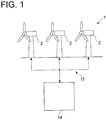
- FIG. 1 is an overall configuration diagram of a wind turbine facility 1.
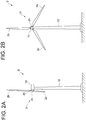
- FIGs. 2 are a schematic diagram of a wind turbine 2 of FIG. 1 .
- FIG. 2A is a side view of the wind turbine 2
- FIG. 2B is a front view of the wind turbine 2.
- the wind turbine facility 1 includes at least one wind turbine 2.
- the wind turbine 2 includes a rotor 2r having at least one wind turbine blade 2b and a hub 2h with the wind turbine blade 2b mounted thereto, a nacelle 10, and a tower 12 supporting the nacelle 10.
- the wind turbine 2 has three wind turbine blades 2b mounted to the hub 2h, and is configured such that as wind acts on the wind turbine blades 2b, the rotor 2r including the wind turbine blades 2b and the hub 2h rotates about the rotational axis of the rotor 2r.
- the wind turbine 2 may be a wind power generating apparatus.
- the nacelle 10 may accommodate a generator and a power transmission mechanism for transmitting rotation of the rotor 2r to the generator and may be configured such that rotational energy transmitted to the generator via the power transmission mechanism from the rotor 2r is converted into electric energy by the generator.
- the wind turbine facility 1 forms a so-called wind farm composed of at least one wind turbine 2 disposed in a predetermined area.
- the wind turbine facility 1 includes a plurality of wind turbines 2 disposed in a predetermined area.
- the plurality of wind turbines 2 has the same specification (same type) and is managed by a control unit 14.
- the control unit 14 includes an electronic arithmetic device such as a computer and is connected to each of the wind turbines 2 via a communication line 15 for transmitting and receiving various data to control the operating state of the wind turbine facility 1.
- the parameter related to the operating state includes various physical quantities indicating the operating state of the wind turbine facility 1 or the wind turbine 2.
- the parameter may be a physical parameter defining the operating state (e.g., output power of the wind turbine 2, ambient temperature, temperature in a specific location, pressure (oil pressure), current) or may be an electrical signal or an instruction (e.g., operating information) transmitted to and/or from the wind turbine facility 1 or the wind turbine 2 for control.
- the parameter may be acquired from the entire wind turbine facility 1, or may be acquired from each wind turbine 2 constituting the wind turbine facility 1, or may be acquired from a part of the wind turbines 2.
- the program may be installed on the electronic arithmetic device by reading a storage medium previously storing the program by a predetermined reader.
- the storage medium storing the program and the program itself are also included in the present invention.
- FIG. 3 is a block diagram showing an interior configuration and a surrounding configuration of the control unit 14.
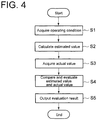
- FIG. 4 is a flowchart showing steps of the operating state evaluation method according to at least one embodiment of the present invention.
- the control unit 14 includes an operating condition acquisition part 16, an estimated value calculation part 18, an actual value acquisition part 20, a determination part 22, and an output part 24.
- components related to the operating state evaluation method according to at least one embodiment of the present invention are representatively shown as functional blocks.
- the control unit 14 may have other functional blocks.
- the functional blocks shown in FIG. 3 may be integrated or further divided.
- the operating condition acquisition part 16 acquires an operating condition of the wind turbine facility 1 or the at least one wind turbine 2 (step S1). That is, the operating condition acquisition target may be the wind turbine facility 1 or may be the wind turbine 2 constituting the wind turbine facility 1. In the latter case, if the wind turbine facility 1 includes a plurality of wind turbines 2, the operating condition acquisition target may be all of the wind turbines 2 or may be a part of the wind turbines 2.
- the operating state acquired by the operating condition acquisition part 16 includes any parameter related to the operating state of the wind turbine facility 1 or the at least one wind turbine 2. That is, as described above, parameters that can be acquired by the control unit 14 from the wind turbine facility 1 or the at least one wind turbine 2 are used as the operating condition.
- the parameters constituting the operating condition may be acquired by various sensors disposed on the wind turbine facility 1 or the wind turbine 2, or may be various electrical signals transmitted between the wind turbine facility 1, the wind turbine 2, and the control unit 14.
- the parameters constituting the operating condition include, for instance, the output power of the wind turbine 2, the ambient temperature, the temperature in a specific location, and operating information as parameters necessary for calculating an estimated value of the temperature of the bearing 32.
- the operating condition acquisition part 16 may acquire the operating condition from a single wind turbine 2, or may acquire the operating conditions from a plurality of wind turbines 2. Since the same type of wind turbines 2 are disposed in a predetermined area in the wind turbine facility 1, the operating conditions acquired from the respective wind turbines 2 are likely to have the same or similar values. Accordingly, by acquiring the operating conditions from the plurality of wind turbines 2, even if an improper operating condition is acquired from a specific wind turbine, the reliability of the operating condition acquired from each wind turbine 2 can be evaluated by comparison with a proper operating condition acquired from the other wind turbines 2. In this case, only operating conditions having enough reliability may be selected, or the operating conditions may be statistically treated (for instance, the operating conditions acquired from the wind turbines 2 may be averaged) regardless of reliability to reduce the influence of the improper operating condition.
- the operating condition acquisition part 16 may obtain a final operating condition by acquiring individual operating conditions from the wind turbines 2 and averaging parameters included in these operating conditions. In this case, since an average of the parameters of the wind turbines 2 is used as the operating condition, it is possible to acquire the operating condition with a reduced influence of a random disturbance factor that may be input to a specific wind turbine.
- the operating condition acquisition part 16 may acquire the operating condition time-sequentially and apply statistical processing such as averaging to the acquired data to obtain an operating condition with higher reliability than an operating condition that is instantaneously acquired.
- the estimated value calculation part 18 calculates an estimated value of a physical quantity to be evaluated (step S2).
- a physical quantity that can be measured on the wind turbine facility 1 or the at least one wind turbine 2 (physical quantity that can be compared with an actual value acquired by the actual value acquisition part 20) is selected.
- the estimated value calculation part 18 acquires the operating condition from the operating condition acquisition part 16 and calculates an estimated value corresponding to the operating condition.
- the calculation of the estimated value is performed based on estimation logic that associates the operating condition with the estimated value (i.e., estimation logic where the operating condition is an input parameter, and the estimated value is an output parameter).
- the estimation logic may include at least one of a physical model of the estimation target (wind turbine facility 1 or at least one wind turbine 2), a machine learning model, or a statistical processing logic, for instance.
- the estimation logic may be stored in a storage device 26 such as a memory or a hard disc in advance, and may be readable by the estimated value calculation part 18.
- the physical model is a model constructed by simulating the estimation target based on its physical characteristics such that the estimated value is output as the output parameter when the operating condition is input as the input parameter.
- the operating condition input in the physical model may be one operating condition or may be multiple operating conditions. That is, in a case where the wind turbine facility 1 includes a plurality of wind turbines 2, and the operating condition acquisition part 16 acquires the operating condition from each of the plurality of wind turbines 2, the estimated value may be calculated by inputting each operating condition acquired from the plurality of wind turbines 2 to the physical model.
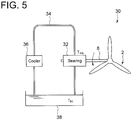
- FIG. 5 is a schematic diagram of a physical model 30 used in the estimated value calculation part 18.
- the physical model 30 is a thermal equilibrium model related to a cooling oil supply structure for the bearing 32 that rotatably supports the rotor 2r of the wind turbine 2.
- the physical model 30 includes the bearing 32 rotatably supporting the rotor 2r of the wind turbine 2, and a circulation channel 34 through which cooling oil supplied to the bearing 32 circulates.
- a cooler 36 comprising a heat exchanger for cooling the cooling oil and a reservoir 38 for storing the cooling oil are disposed.
- J in K 1 ⁇ M ⁇ n ⁇ t run
- J out C cool ⁇ T bt ⁇ T a ⁇ t cool
- the remaining parameter i.e., the temperature T bt of the bearing 32 is calculated as the estimated value.
- the estimated value calculation part 18 may use a machine learning model instead of the physical model.
- the machine learning model can calculate an estimated value corresponding to any operating condition by repeatedly learning a relationship between the operating condition and the estimated value using a predetermined algorithm.
- the machine learning model applicable to the estimated value calculation part 18 may be any known model and is not described in detail herein.
- the estimated value calculation part 18 may calculate the estimated value using a statistical processing logic instead of the physical model and the machine learning model.
- the statistical processing model calculates the estimated value by applying statistical processing to the plurality of actual values.
- the simplest statistical processing is, for instance, averaging or calculation of the median or mode. For instance, in a case where the wind turbine facility 1 includes a plurality of wind turbines 2, to calculate the estimated value of the wind turbine output power under a certain operating condition, an actual value of the output power of each wind turbine 2 is acquired, and an average of the actual values is calculated as the estimated value.
- the actual value acquisition part 20 acquires an actual value corresponding to the estimated value calculated by the estimated value calculation part 18 (step S3).
- a temperature sensor (not shown) is provided to the bearing 32 to be estimated, and the actual value acquisition part 20 acquires the actual value by obtaining a detection signal from the temperature sensor.
- the method of acquiring the actual value may be any method, and any method according to the form of the actual value can be used.
- the determination part 22 determines whether an abnormality is present in the estimation target by comparison between the estimated value calculated by the estimated value calculation part 18 and the actual value acquired by the actual value acquisition part 20 (step S4). Thus, by comparing the estimated value calculated according to the operating condition with the actual value, the determination part 22 can determine the presence of an abnormality based on a criterion corresponding to the operating condition. Therefore, compared with determination using a criterion set uniformly regardless of the operating condition, a detailed abnormality determination can be performed, and the operating state can be accurately and early evaluated.
- the determination part 22 may calculate a difference between the estimated value and the actual value and determine whether an abnormality is present based on whether the difference exceeds a threshold.
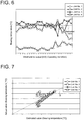
- FIG. 6 is verification result showing estimated values calculated based on the operating condition and actual values regarding the temperature of the bearing 32, plotted against the output power of the wind turbine 2 (output power of the generator accommodated in the nacelle 10).
- the wind turbine facility 1 includes four wind turbines 2 (unit No. 1 to unit No. 4) of the same type disposed in a predetermined area, and the change in temperature of the bearing 32 against the output power of the wind turbine 2 is shown for each wind turbine 2.
- the estimated value of the temperature of the bearing 32 is a value calculated based on any of the physical model, the machine learning model, or the statistical processing logic, as described above. Accordingly, the actual value of a normal wind turbine 2 having no abnormality exhibits a similar tendency to the estimated value. Thus, the determination part 22 determines whether an abnormality is present by comparison between the actual value and the estimated value of each wind turbine 2.
- the determination part 22 may identify a wind turbine having an abnormality by comparison in behavior of the actual value among a plurality of wind turbines.
- the behaviors of the actual values of normal wind turbines 2 must be similar to each other.
- the behavior indicates, for instance, comparison with the actual values of the other wind turbines.
- the unit No. 4 exhibits a different behavior from the units No. 1 to 3, the unit No. 4 is determined to have an abnormality.
- this method can identify a wind turbine 2 having an abnormality by relatively comparing behaviors of the actual values.
- the determination part 22 may obtain a correlation coefficient between the estimated value and the actual value for each of the plurality of wind turbines 2 and determine that a wind turbine 2 whose correlation coefficient exceeds a predetermined has an abnormality.
- the correlation coefficient is a value between -1 and +1. If an abnormality is present, the correlation coefficient approaches 0 since the estimated value deviates from the actual value.
- the threshold of the correlation coefficient may be obtained by calculating an average value of the correlation coefficient and the standard deviation of the plurality of wind turbines 2 and applying the following expression: average value ⁇ constant ⁇ standard deviation (constant may be 3), for instance.
- FIG. 7 is verification result in which estimated values calculated by the estimated value calculation part 18 and actual values acquired by the actual value acquisition part 20 regarding the temperature of the bearing 32 are plotted for each operating condition. In a normal wind turbine 2 having no abnormality, since the estimated value coincides with the actual value, the correlation coefficient is high, and the data approximates the reference line R shown by the dotted line in FIG. 7 .
- the determination result of the determination part 22 may be output to the outside by the output part 24 (step S5).
- the output part 24 may output the determination result to an external device by an electrical signal or may output the determination result in a form that appeals to an operator's sense.
- the output part 24 may be a display device.
- the display device may display an indicator of abnormality to notify the operator.
- comparing the estimated value calculated according to the operating condition with the actual value enables determination based on a criterion corresponding to the operating condition. Therefore, compared with determination using a criterion set uniformly regardless of the operating condition, a detailed abnormality determination can be performed, and the operating state can be accurately and early evaluated. Further, in case of the wind turbine facility 1 including a plurality of wind turbines 2 of the same type, by relatively comparing behaviors of the wind turbines 2, a more sensitive and precise evaluation can be performed than conventional evaluation using a criterion set uniformly regardless of the operating condition.
- FIG. 8 is a block diagram showing an interior configuration and a surrounding configuration of the control unit 14 according to an embodiment of the present invention, in which the control unit 14 includes a first verification part 6 and a second verification part 7.
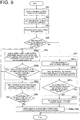
- FIG. 9 is a flowchart showing the operating state evaluation method according to another embodiment of the present invention.
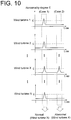
- FIG. 10 is a diagram for describing an example of determination by a first verification step (S95) according to an embodiment of the present invention.
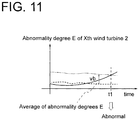
- FIG. 11 is a diagram for describing an example of determination by a second verification step (S97) according to an embodiment of the present invention.
- MT method Mahalanobis Taguchi method
- OCSVM class support vector machine
- kNN k-neighbor method
- auto encoder a normal group is defined as a unit space based on multivariate data stored as operating history, a distance (Mahalanobis distance) from the unit space to target data is measured, and the distance is compared with a threshold (abnormality determination threshold C) to determine an abnormality.
- a threshold abnormality determination threshold
- the MT method can detect an abnormality early before damage to devices progresses. By detecting such a sign of an abnormality, it is possible to prevent or minimize damage to devices in advance.
- the operating condition acquired from each wind turbine 2 may include detection values (sensor values) of multiple sensors (not shown). Accordingly, an abnormality degree E such as Mahalanobis distance may be calculated based on a group of sensor values (operating condition) detected at substantially the same timing from multiple sensors disposed on each wind turbine 2, and it may be determined whether an abnormality is present in each wind turbine 2 based on comparison between the abnormality degree E and the abnormality determination threshold C.
- an abnormality degree E such as Mahalanobis distance
- control unit 14 may have a configuration to prevent false detection when abnormality detection for each of a plurality of wind turbines 2 is performed based on the abnormality degree E. More specifically, as shown in FIG. 8 , the control unit 14 may further include an abnormality degree calculation part 4, an abnormality determination part 5, and a first verification part 6. Each functional part will now be described.
- the abnormality degree calculation part 4 calculates the abnormality degree E of each of a plurality of wind turbines 2 based on the operating condition of each wind turbine 2.
- the plurality of wind turbines 2 may be a part of all wind turbines 2 included in the wind turbine facility 1. Further, the plurality of wind turbines 2 may be two or more wind turbines 2 that are under or assumed to be under the same environmental conditions (e.g., wind conditions, temperature conditions), for instance, which are disposed close to each other geographically.
- the operating condition of each wind turbine 2 includes multiple parameters. Further, each parameter value is measured at a predetermined timing, for instance periodically, by a corresponding sensor (not shown) and is transmitted to the control unit 14 as the operating condition. In the embodiment shown in FIG. 8 , the operating condition acquisition part 16 acquires the operating condition of each wind turbine 2 transmitted from the wind turbine facility 1.
- the abnormality determination part 5 determines whether an abnormality is present in each of the plurality of wind turbines 2, based on the abnormality degree E of each of the wind turbines 2 calculated by the abnormality degree calculation part 4. More specifically, for each of the plurality of wind turbines 2, the abnormality degree E of the wind turbine 2 may be compared with the predetermined abnormality determination threshold C, and if the abnormality degree E is not less than the abnormality determination threshold C (E ⁇ C), it may be determined that an abnormality is present, and if the abnormality degree E is less than the abnormality determination threshold C (E ⁇ C), it may be determined that an abnormality is not present (normal).
- the first verification part 6 verifies that abnormality positive determination Ja. If there are two or more wind turbines 2 that are determined to have an abnormality (abnormality positive determination Ja), the first verification part 6 verifies the abnormality positive determination Ja of each of the two or more wind turbines 2 individually as the verification target. For the verification, as shown in FIG. 8 , the first verification part 6 includes an other-result acquisition part 61 and a first validity determination part 62. The first verification part 6 sequentially or parallel verifies each abnormality positive determination Ja as follows.
- the other-result acquisition part 61 acquires a determination result regarding one or more other of the plurality of wind turbines 2 based on the abnormality degree E, in a predetermined period T including a timing of acquiring the operating condition used for calculating the abnormality degree E based on which the abnormality positive determination Ja to be verified is made. That is, the acquiring timing is between the start and end of the predetermined period T.
- the acquiring timing may be a timing of measuring (detecting) sensor values of the sensors (not shown). For instance, the acquiring timing may be given by storing each sensor value with a time stamp indicating the measurement time or the time series of the sensor values.
- the predetermined period T may be any period, preferably a period that can be evaluated that the environmental condition at the acquiring timing of the wind turbine 2 with the abnormality positive determination Ja to be currently verified is the same as the environmental condition of the other wind turbines 2.
- the wind condition such as wind speed acting on the wind turbine blades 2b of the wind turbine 2 may have a time lag between upstream and downstream sides along the wind direction. Further, when the temperature around the wind turbine 2 changes according to the wind condition, a time lag may occur in each wind turbine 2.
- the first validity determination part 62 determines whether the abnormality positive determination Ja being verified is valid (first validity determination), based on the number of wind turbines 2 that is determined to have an abnormality as a result of determination based on the abnormality degree E regarding the one or more other wind turbines 2 as acquired by the other-result acquisition part 61 (hereinafter, the number of abnormal wind turbines Na).
- the number of abnormal wind turbines Na is any number equal to or more than two.
- the number of abnormal wind turbines Na may be determined based on the probability that abnormalities occur in a plurality of wind turbines 2 at the same time as obtained from previous results. In other words, the validity of each abnormality positive determination Ja made by the abnormality determination part 5 is judged based on a determination result regarding the other wind turbines 2 made by the abnormality determination part 5.
- the first validity determination part 62 may determine that the abnormality positive determination Ja currently being verified is invalid if the number of abnormal wind turbines Na is less than a first verification threshold Va (Na ⁇ Va), and determines that the abnormality positive determination Ja currently being verified is valid if the number of abnormal wind turbines Na is not less than the first verification threshold Va (Na ⁇ Va).
- N being the number of the plurality of wind turbines 2
- the abnormality positive determination Ja of the Xth wind turbine 2 is the verification target, and all of the other N-1 wind turbines 2 are determined to have an abnormality (i.e., abnormality positive determination Ja is made) at a timing in the predetermined period T. Accordingly, in this case, the first validity determination part 62 determines that the abnormality positive determination Ja of the Xth wind turbine 2 is invalid (the Xth wind turbine 2 is determined to be normal). Conversely, in Case 2 shown in FIG.
- the abnormality positive determination Ja of the Xth wind turbine 2 is the verification target, and all of the other N-1 wind turbines 2 are determined not to have an abnormality (i.e., not abnormality positive determination Ja but abnormality negative determination Jn is made) at a timing in the predetermined period T. Accordingly, in this case, the first validity determination part 62 determines that the abnormality positive determination Ja of the Xth wind turbine 2 is valid (the Xth wind turbine 2 is determined to be abnormal).
- the first validity determination part 62 may determine that the abnormality positive determination Ja of the verification target is invalid if the abnormality positive determination Ja is made on a predetermined proportion, for instance, half ( ⁇ N-1 ⁇ /2) or more of the other wind turbines 2, or if the abnormality positive determination Ja is made on a predetermined number or more (e.g., two or more) of the other wind turbines 2.
- the control unit 14 further includes a first notification part 64 that notifies that an abnormality is detected if the first validity determination part 62 determines that the abnormality positive determination Ja of the verification target is valid.
- the first notification part 64 notifies that an abnormality is detected only if there is the abnormality positive determination Ja that is determined to be valid, and does not issue notification if none of the abnormality positive determinations Ja is determined to be valid as all of the wind turbines 2 are normal.
- the operating state evaluation method may include an abnormality degree calculation step (S92) of calculating the abnormality degree E of each of the plurality of wind turbines 2 based on the operating condition of each of the wind turbines 2, an abnormality determination step (S93) of determining whether an abnormality is present in each of the plurality of wind turbines 2 based on the abnormality degree E of each of the wind turbines 2 calculated in the abnormality degree calculation step, and a first verification step (S95) of verifying, if at least one of the plurality of wind turbines 2 is determined to have an abnormality (abnormality positive determination Ja) in the abnormality determination step (S93), verifying that abnormality positive determination Ja.
- S92 abnormality degree calculation step
- S93 abnormality determination step
- S95 first verification step
- the first verification step (S95) includes an other-result acquisition step (S95a) of acquiring a determination result regarding one or more other of the plurality of wind turbines 2 based on the abnormality degree E, in a predetermined period T including a timing of acquiring the operating condition used for calculating the abnormality degree E based on which the abnormality positive determination Ja to be verified is made, and a first validity determination step (S95b) of making the first validity determination, based on the number of wind turbines 2 that are determined to be abnormal based on the abnormality degree E among the one or more other wind turbines 2.
- the abnormality degree calculation step (S92), the abnormality determination step (S93), the first verification step (S95) are same as the process executed by the abnormality degree calculation part 4, the abnormality determination part 5, and the first verification part 6 (other-result acquisition part 62 and first validity determination part 62) described above, so that the details will not be described again.
- the operating state evaluation method further includes a first notification step (S96b) of notifying that an abnormality is detected if the abnormality positive determination Ja is determined to be valid in the first validity determination step (S95b).
- the first notification step (S96b) is the same as the process executed by the first notification part 64, so that the details will not be described again.
- step S91 the operating condition of each of the plurality of wind turbines 2 is acquired at a predetermined timing, for instance, periodically. Then, the following steps (S91 to S98) are performed as appropriated each time step S91 is performed.
- step S92 the abnormality degree calculation step is performed to calculate the abnormality degree E of each wind turbine 2.
- step S93 the abnormality determination step is performed. More specifically, in the embodiment shown in FIG. 9 , the abnormality degree E of each wind turbine 2 is compared with the abnormality determination threshold C, and if E ⁇ C, the wind turbine 2 is determined to be abnormal (abnormality positive determination Ja), and if E ⁇ C, the wind turbine 2 is determined not to be abnormal (abnormality negative determination Jn).
- step S94 it is determined whether there is the wind turbine 2 of E ⁇ C. In step S94, if it is determined that there is the wind turbine 2 of E ⁇ C, in step 95, the first verification step described above is performed for each abnormality positive determination Ja made in step S93.
- step S95a the other-result acquisition step is performed to acquire a determination result regarding the one or more other wind turbines 2 based on the abnormality degree E.
- step S95b the first validity determination step is performed, and if the number of abnormal wind turbines Na is less than the first verification threshold Va (Na ⁇ Va), the abnormality positive determination Ja currently being verified is determined to be valid (the corresponding wind turbine is determined to be abnormal). Then, in step S95c, identification information of the wind turbine 2 corresponding to the valid abnormality positive determination Ja is stored, followed by step S96.
- step S95b if the number of abnormal wind turbines Na is not less than the first verification threshold Va (Na ⁇ Va), the abnormality positive determination Ja currently being verified is determined to be invalid (the corresponding wind turbine is determined to be normal), and the method proceeds to step S96 without performing step S95c.
- step S96 if there is a plurality of abnormality positive determinations Ja made in step S93, the other abnormality positive determination Ja that has not been verified is selected as the next verification target, and steps S95a to S95c are repeated. Conversely, in step S96, if verification of all abnormality positive determinations Ja is complete, in step S96b, the first notification step is performed to notify that an abnormality is detected in the wind turbine 2 corresponding to the identification information stored in the step S95c.
- the validity (accuracy) of that abnormality positive determination Ja is verified based on the number of abnormality positive determinations Ja in the determination result regarding the other wind turbines 2 based on the abnormality degree E at the same timing.
- control unit 14 may further include, in addition to the abnormality degree calculation part 4 and the abnormality determination part 5, a second verification part 7 configured to, if at least one of the wind turbines 2 is determined not to have an abnormality (abnormality negative determination Jn), verify that abnormality negative determination Jn.
- a second verification part 7 configured to, if at least one of the wind turbines 2 is determined not to have an abnormality (abnormality negative determination Jn), verify that abnormality negative determination Jn.
- the second verification part 7 may perform verification if the abnormality determination part 5 determines that none of the plurality of wind turbines 2 has an abnormality. If there are two or more wind turbines 2 that are determined not to have an abnormality (abnormality negative determination Jn) by the abnormality determination part 5, the second verification part 7 may verify the abnormality negative determination Jn of each of the two or more wind turbines 2 individually as the verification target.
- the second verification part 7 includes a statistic calculation part 71, a relationship calculation part 72, and a second validity determination part 73.
- the statistic calculation part 71 calculates a statistic S of the abnormality degree E of each of the plurality of wind turbines 2.
- the statistic S is an average of a plurality of abnormality degrees E.
- the relationship calculation part 72 calculates a relationship Sr between the abnormality degree E of each of the plurality of wind turbines 2 and the statistic S calculated by the statistic calculation part 71.
- the relationship Sr is a deviation between the abnormality degree E of each of the plurality of wind turbines 2 and the average of the plurality of abnormality degrees E.
- the second validity determination part 73 determines whether the abnormality negative determination Jn of each of the plurality of wind turbines 2 is valid (second validity determination) based on the relationship Sr calculated by the relationship calculation part 72. More specifically, if the relationship Sr is not less than a second verification threshold Vb (Sr ⁇ Vb), the wind turbine 2 may be determined to be abnormal, and if the relationship Sr is less than the second verification threshold Vb (Sr ⁇ Vb), the wind turbine 2 may be determined to be normal.
- the second verification threshold Vb may be set for each of the plurality of wind turbines 2, and may be set based on previous operating conditions (normal operating data) of the plurality of wind turbines 2 in a normal state. Further, the second verification threshold Vb may be set relatively low at an early stage, and the second verification threshold Vb may be changed after some normal operating data are collected. More specifically, the second verification threshold Vb may be obtained from an average and a maximum of the abnormality degrees E of the plurality of wind turbines 2 in a normal state, using a function defining a relationship of the average of the abnormality degrees E in a normal state, the maximum of the abnormality degrees E in a normal state, and the second verification threshold Vb.
- the second validity determination part 73 determines that the abnormality negative determination Jn of the Xth wind turbine 2 is invalid (the Xth wind turbine 2 is determined to be abnormal) on the verification after time t1.
- the control unit 14 further includes a second notification part 74 that issues notification if the second validity determination part 73 determines that the abnormality negative determination Jn is invalid.
- the second notification part 74 notifies that an abnormality is detected only if the abnormality negative determination Jn made by the abnormality determination part 5 is determined to be invalid by the second validity determination part 73, and does not issue notification if all of the abnormality negative determinations Jn made by the abnormality determination part 5 are determined to be valid as all of the wind turbines 2 corresponding to the verified abnormality negative determinations Jn are normal.
- the second notification part 74 notifies that an abnormality is detected only if the abnormality negative determination Jn made by the abnormality determination part 5 is determined to be invalid by the second validity determination part 73, and does not issue notification if all of the abnormality negative determinations Jn made by the abnormality determination part 5 are determined to be valid as all of the wind turbines 2 corresponding to the verified abnormality negative determinations Jn are normal.
- the operating state evaluation method may include the abnormality degree calculation step (S92), the abnormality determination step (S93), and a second verification step (S97) of, if at least one of the wind turbines 2 is determined not to have an abnormality (abnormality negative determination Jn), verifying that abnormality negative determination Jn.
- the second verification step includes a statistic calculation step (S97a) of calculating the statistic S of the abnormality degree E of each of the plurality of wind turbines 2, a relationship calculation step (S97b) of calculating the relationship Sr between the statistic calculated in the statistic calculation step (S97a) and each of the abnormality degrees E of the plurality of wind turbines 2, and a second validity determination step (S97c) of making the second validity determination, based on the relationship Sr calculated in the relationship calculation step (S97b).
- a statistic calculation step (S97a) of calculating the statistic S of the abnormality degree E of each of the plurality of wind turbines 2 a relationship calculation step (S97b) of calculating the relationship Sr between the statistic calculated in the statistic calculation step (S97a) and each of the abnormality degrees E of the plurality of wind turbines 2
- a second validity determination step (S97c) of making the second validity determination, based on the relationship Sr calculated in the relationship calculation step (S97b).
- the abnormality degree calculation step (S92), the abnormality determination step (S93), and the second verification step (S97) are same as the process executed by the abnormality degree calculation part 4, the abnormality determination part 5, and the second verification part 7 (statistic calculation part 71, relationship calculation part 72, and second validity determination part 73) described above, so that the details will not be described again.
- the operating state evaluation method further includes a second notification step (S98) of issuing notification if the abnormality negative determination Jn is determined to be invalid in the second validity determination step (S97c).
- the second notification step (S98) is the same as the process executed by the second notification part 74, so that the details will not be described again.
- Steps S91 to S94 have already been described, so that description thereof will be omitted.
- step S94 if there is no wind turbine 2 that is determined to have an abnormality (abnormality positive determination Ja), the method proceeds to step S97.
- step S97 the second verification step is performed.
- step S97a the statistic calculation step is performed to calculate the statistic S of the abnormality degree E.
- the statistic S is an average of the abnormality degrees E of the plurality of wind turbines 2.
- step S97b the relationship calculation step (S97b) is performed to calculate the relationship Sr between the abnormality degree E of each of the plurality of wind turbines 2 and the statistic S of the abnormality degree E.
- the relationship Sr is a deviation between the abnormality degree E of each of the plurality of wind turbines 2 and the average of the plurality of abnormality degrees E.
- step S97c it is determined whether the relationship Sr (deviation in FIG. 9 ) of each abnormality degree E is not less than the second verification threshold Vb.
- step S97 if Sr ⁇ Vb, the abnormality negative determination Jn made in step S92 is determined to be invalid (the corresponding wind turbine is determined to be abnormal).
- step S97d identification information of the wind turbine 2 corresponding to the abnormality degree E of Sr ⁇ Vb is stored, followed by step S98.
- step S98 the second notification step is performed to notify that an abnormality is detected in the wind turbine 2 corresponding to the identification information stored in the step S97d.
- the present invention is not limited to the above described embodiments.
- the abnormality determination part 5 may not be provided, and abnormality detection (notification) of the wind turbine 2 on which the abnormality positive determination Ja is made may be performed based on the relationship between the abnormality degree E of each of the plurality of wind turbines 2 and the statistic S of the abnormality degree E, without determination based on comparison between the abnormality degree E calculated by the abnormality degree calculation part 4 and the abnormality determination threshold C.
- step S94 the method proceeds to the first verification step (S95) if there is the abnormality positive determination Ja, while the method proceeds to the second verification step (S97) if there is no abnormality positive determination Ja, in some embodiments, if there are both the abnormality positive determination Ja and the abnormality negative determination Jn, both the second verification step (S95) and the second verification step (S97) may be performed sequentially or parallel.
- At least one embodiment of the present invention can be applied to a method and a device for evaluating an operating state of a wind turbine facility.
Landscapes
- Engineering & Computer Science (AREA)
- Life Sciences & Earth Sciences (AREA)
- Sustainable Development (AREA)
- Sustainable Energy (AREA)
- Chemical & Material Sciences (AREA)
- Combustion & Propulsion (AREA)
- Mechanical Engineering (AREA)
- General Engineering & Computer Science (AREA)
- Physics & Mathematics (AREA)
- General Physics & Mathematics (AREA)
- Wind Motors (AREA)
Abstract
Description
- This disclosure relates to a method and a device for evaluating an operating state of a wind turbine facility.
- The operating state of a facility can be monitored by acquiring an actual value of a parameter to be monitored from the operating facility and comparing the actual value with a predetermined criterion threshold. In this case, if the acquired actual value exceeds the threshold, the operating state is judged to be abnormal.
-
Patent Document 1 provides an example of monitoring the operating state of a facility. InPatent Document 1, the monitoring target is a main shaft bearing which supports a main shaft provided with blades in a wind power generating apparatus. A load acting on the main shaft bearing is detected, and the state of the main shaft bearing is evaluated based on the magnitude of the load and is used for predicting the timing of maintenance, for instance. - Patent Document 1:
JP2010-159710A - The threshold used for monitoring the operating state is set with some margin, assuming various operating states that may occur in the facility. For instance, in a case where a bearing is monitored as in
Patent Document 1, since the temperature of cooling oil supplied to the bearing changes according to the on/off state of a cooler disposed in a supply channel of the cooling oil, it is difficult to detect an increase in temperature depending on the operating state of the cooler even when the temperature is assumed to rise due to an abnormality in the bearing. Taking into consideration such characteristics, a threshold has to be set with a large margin in order to accurately detect the abnormality. On the other hand, if the threshold has a large margin, it is difficult to detect an abnormality at the moment when the temperature of the bearing starts to rise, and it is difficult to determine the abnormality at an early stage. - Further, the wind power generating apparatus as disclosed in
Patent Document 1 is installed outside and thus is easily affected by an external environment. In particular, since the ambient temperature changes due to seasonal fluctuations, the threshold used for monitoring the operating state of the wind power generating apparatus has to take a large margin in consideration of the influence of such an external environment. Therefore, it is difficult to detect the abnormality at an early stage. - At least one embodiment of the present invention was made in view of the above circumstances, and an object thereof is to provide an operating state evaluation method and an operating state evaluation device that can accurately and early detect an abnormality by criteria in accordance with the operating state of a facility.
- (1) To solve the above problem, an operating state evaluation method according to at least one embodiment of the present invention for evaluating an operating state of a wind turbine facility including at least one wind turbine comprises: a step of acquiring an operating condition of the wind turbine facility or the at least one wind turbine; a step of calculating an estimated value of a physical quantity measurable on the at least one wind turbine and corresponding to the operating condition; a step of acquiring an actual value corresponding to the physical quantity; and a step of determining whether an abnormality is present in the at least one wind turbine by comparing the estimated value and the actual value.
With the above method (1), by comparing the estimated value calculated according to the operating condition with the actual value, it is possible to determine the presence of abnormality based on a criterion corresponding to the operating condition. Therefore, compared with determination using a criterion set uniformly regardless of the operating condition, a detailed abnormality determination can be performed, and the operating state can be accurately and early evaluated. - (2) In some embodiments, in the above method (1), the estimated value is calculated by inputting the operating condition as an input parameter to a physical model of the wind turbine facility or the at least one wind turbine.
With the above method (2), the estimated value corresponding to the operating condition can be calculated using a physical model. - (3) In some embodiments, in the above method (1), the estimated value is calculated by inputting the operating condition as an input parameter to a machine learning model of the wind turbine facility or the at least one wind turbine.
With the above method (3), the estimated value corresponding to the operating condition can be calculated using a machine learning model. - (4) In some embodiments, in any one of the above methods (1) to (3), the at least one wind turbine includes a plurality of wind turbines, and the operating condition is obtained by averaging parameters acquired from each of the plurality of wind turbines.
With the above method (4), by averaging parameters acquired from each of the plurality of wind turbines and using the average as the operating condition, it is possible to reduce the influence of a random disturbance factor that may be input to a specific wind turbine, and it is possible to achieve more reliable evaluation. - (5) In some embodiments, in the above method (1), the at least one wind turbine includes a plurality of wind turbines, and the estimated value is obtained by applying statistical processing to the actual value acquired from each of the plurality of wind turbines.
With the above method (5), the estimated value corresponding to the operating condition can be calculated by applying statistical processing to the actual value acquired from each of the plurality of wind turbines. - (6) In some embodiments, in the above method (5), the estimated value is an average of the actual value acquired from each of the plurality of wind turbines.
With the above method (6), by using the average of the actual values of the plurality of wind turbines as the estimated value corresponding to the operating condition, it is possible to achieve simple and reliable evaluation. - (7) In some embodiments, in any one of the above methods (1) to (6), a difference between the estimated value and the actual value is calculated, and it is determined whether an abnormality is present based on whether the difference exceeds a threshold.
With the above method (7), by using the difference between the estimated value and the actual value as the evaluation parameter, it is possible to quantitatively evaluate deviation of the actual value due to an abnormality, and it is possible to accurately identify a wind turbine having an abnormality. - (8) In some embodiments, in any one of the above methods (1) to (7), the at least one wind turbine includes a plurality of wind turbines, and the method includes a step of identifying a wind turbine having an abnormality by comparison in behavior of the actual value with respect to the operating condition among the plurality of wind turbines.
With the above method (8), since a wind turbine having an abnormality exhibits different behavior of the actual value against the estimated value, by comparing behaviors of the actual value of each wind turbine against the estimated value, it is possible to accurately identify a wind turbine having an abnormality. - (9) In some embodiments, in the above method (8), a correlation coefficient between the estimated value and the actual value is obtained for each of the plurality of wind turbines, and a wind turbine whose correlation coefficient exceeds a threshold is determined to have an abnormality.
With the above method (9), by using the correlation coefficient between the estimated value and the actual value as the evaluation parameter, it is possible to quantitatively evaluate deviation of the actual value due to an abnormality, and it is possible to accurately identify a wind turbine having an abnormality. - (10) In some embodiments, in any one of the above methods (1) to (9), the at least one wind turbine includes a plurality of wind turbines, and the method further includes: a step of calculating an abnormality degree of each of the plurality of wind turbines, based on the operating condition of each of the wind turbines; a step of determining whether an abnormality is present in each of the plurality of wind turbines, based on the abnormality degree of each of the wind turbines, and a step of, if at least one of the plurality of wind turbines is determined to have an abnormality, verifying an abnormality positive determination that the at least one of the plurality of wind turbines has the abnormality. The step of verifying the abnormality positive determination includes: a step of acquiring a determination result regarding one or more other of the plurality of wind turbines based on the abnormality degree, in a predetermined period including a timing of acquiring the operating condition used for calculating the abnormality degree based on which the abnormality positive determination is made, and a step of making a first validity determination whether the abnormality positive determination is valid, based on the number of wind turbines that are determined to be abnormal based on the abnormality degree among the one or more other of the plurality of wind turbines.
For instance, there is a technique of detecting an abnormality of each of a plurality of wind turbines by calculating an abnormality degree based on multiple sensor values (operating condition) detected from multiple sensors disposed on each wind turbine and comparing the abnormality degree with a threshold (abnormality determination threshold). In such a technique, if detection sensitivity is increased by, for instance, setting the threshold low in order to detect an abnormality at an early stage before the wind turbine fails, although the occurrence of failure of the wind turbine can be more reliably prevented, false detection may occur, such as false abnormality detection when the abnormality degree temporarily exceeds the threshold due to an external environmental factor. If the wind turbine in which an abnormality is detected is stopped for inspection, the operating rate of the wind turbine decreases as the number of false detections increases.
With the above method (10), if at least one of the plurality of wind turbines is determined to have an abnormality based on the abnormality degree calculated based on the operating condition (multiple parameter values), the validity (accuracy) of that abnormality positive determination is verified based on the number of abnormality positive determinations in the determination result regarding the other wind turbines based on the abnormality degree at the same timing. By ignoring the abnormality positive determination that is determined to be false on the verification, it is possible to early detect a sign of an abnormality occurring in each wind turbine with an increased detection sensitivity while avoiding false detection based on the abnormality degree of each wind turbine. Accordingly, it is possible to prevent a reduction in operating rate due to false detection and an increase in cost. - (11) In some embodiments, in the above method (10), the step of making the first validity determination includes determining that the abnormality positive determination is invalid if the number is less than a first verification threshold, and determining that the abnormality positive determination is valid if the number is not less than the first verification threshold.
With the above method (11), it is possible to appropriately judge the validity of the abnormality positive determination. - (12) In some embodiments, the above method (10) or (11) further comprises a step of notifying that the abnormality is detected if the abnormality positive determination is determined to be valid.
With the above method (12), if the abnormality positive determination of each wind turbine is determined to be invalid (false detection), the abnormality positive determination is not adopted. Conversely, if the abnormality positive determination is determined to be valid, a monitor is notified, for instance. Thus, it is possible to avoid the notification of false detection and the need for response to this notification such as inspection. - (13) In some embodiments, in any one of the above methods (1) to (12), the at least one wind turbine includes a plurality of wind turbines, and the method further includes: a step of calculating an abnormality degree of each of the plurality of wind turbines, based on the operating condition of each of the wind turbines; a step of determining whether an abnormality is present in each of the plurality of wind turbines, based on the abnormality degree of each of the wind turbines, and a step of, if at least one of the plurality of wind turbines is determined not to have an abnormality, verifying an abnormality negative determination that the at least one of the plurality of wind turbines does not have an abnormality. The step of verifying the abnormality negative determination includes: a step of calculating a statistic of the abnormality degree of each of the plurality of wind turbines; a step of calculating a relationship between the abnormality degree of each of the plurality of wind turbines and the statistic; and a step of a making a second validity determination whether the abnormality negative determination is valid for each of the wind turbines, based on the relationship.
For instance, as described above, if detection sensitivity is decreased by, for instance, increasing the threshold to detect an abnormality of each of the plurality of wind turbines based on comparison between the abnormality degree and the threshold (abnormality determination threshold), although false detection can be reduced, it is difficult to early detect an abnormality (sign of abnormality) before each wind turbine fails. For instance, even if the abnormality degree gradually increases due to an abnormality occurring in the wind turbine, if the value of the abnormality degree is not more than the threshold, an abnormality cannot be detected, and a sign of abnormality cannot be accurately obtained. Further, as abnormality detection is delayed, a risk of failure of the wind turbine increases, and the operating rate of the wind turbine may decrease due to the failure.
With the above method (13), if at least one of the plurality of wind turbines is determined not to have an abnormality based on the abnormality degree calculated based on the operating condition (multiple parameter values), the validity (accuracy) of that abnormality negative determination is verified based on the statistic calculated from the plurality of abnormality degrees at the same timing. Thus, even if the abnormality degree is not more than the threshold, it is possible to early detect an abnormality, and it is possible to prevent a reduction in operating rate due to failure of the wind turbine and an increase in cost. - (14) In some embodiments, the above method (13) further comprises a step of issuing notification if the abnormality negative determination is determined to be invalid.
With the above method (14), if the abnormality negative determination of each wind turbine is determined to be invalid, for instance, a monitor is notified of abnormality positive determination. Thus, it is possible to more appropriately detect an abnormality. - (15) In some embodiments, in the above method (13) or (14), the statistic is an average of the abnormality degree of the plurality of wind turbines.
With the above method (15), it is possible to appropriately judge the validity of the abnormality negative determination. - (16) In some embodiments, in any one of the above methods (13) to (15), the relationship is a deviation between the abnormality degree of each wind turbine and the statistic.
With the above method (16), it is possible to appropriately judge the validity of the abnormality negative determination, based on the deviation between the abnormality degree and the statistic (e.g., average). - (17) In some embodiments, in any one of the above methods (13) to (16), the step of making the second validity determination includes determining that each wind turbine is abnormal if the relationship is not less than a second verification threshold, and determining that each wind turbine is normal if the relationship is less than the second verification threshold.
With the above method (17), it is possible to appropriately judge the validity of the abnormality negative determination. - (18) In some embodiments, in any one of the above methods (13) to (17), the step of verifying the abnormality negative determination includes verifying the abnormality negative determination if none of the plurality of wind turbines is determined to have an abnormality.
With the above method (18), the abnormality negative determination is verified if none of the plurality of wind turbines is determined to have an abnormality. Thus, the same effect is achieved as in the above (13) to (17). - (19) In some embodiments, in any one of the above methods (1) to (9), the at least one wind turbine includes a plurality of wind turbines, and the method further includes: a step of calculating an abnormality degree of each of the plurality of wind turbines, based on the operating condition of each of the wind turbines; a step of, if at least one of the plurality of wind turbines is determined to have an abnormality based on the abnormality degree, verifying the determination based on the abnormality degree of the other of the plurality of wind turbines at a timing of acquiring the operating condition, and a step of, if at least one of the plurality of wind turbines is determined not to have an abnormality based on the abnormality degree, verifying the determination based on a strength of relevance between a statistic calculated from the abnormality degree of each of the plurality of wind turbines at a timing of acquiring the operating condition and the abnormality degree of the at least one of the plurality of wind turbines that is determined not to have an abnormality.
With the above method (19), the determination result regarding the presence or absence of abnormality in each wind turbine based on the abnormality degree is verified for both cases where the wind turbine is determined to have an abnormality and not to have an abnormality. Thus, the same effect is achieved as in the above (10) and (13). - (20) To solve the above problem, an operating state evaluation device according to at least one embodiment of the present invention for evaluating an operating state of a wind turbine facility including at least one wind turbine comprises: an operating condition acquisition part configured to acquire an operating condition of the wind turbine facility or the at least one wind turbine; an estimated value calculation part configured to calculate an estimated value of a physical quantity measurable on the at least one wind turbine and corresponding to the operating condition; an actual value acquisition part configured to acquire an actual value corresponding to the physical quantity; and a determination part configured to determine whether an abnormality is present in the at least one wind turbine by comparison between the estimated value and the actual value.
With the above configuration (20), by comparing the estimated value calculated according to the operating condition with the actual value, it is possible to determine the presence of abnormality based on a criterion corresponding to the operating condition. Therefore, compared with determination using a criterion set uniformly regardless of the operating condition, a detailed abnormality determination can be performed, and the operating state can be accurately and early evaluated. - (21) In some embodiments, in the above configuration (20), the at least one wind turbine includes a plurality of wind turbines, and the device further includes: a calculation part configured to calculate an abnormality degree of each of the plurality of wind turbines, based on the operating condition of each of the wind turbines; and a verification part configured to, if at least one of the plurality of wind turbines is determined to have an abnormality based on the abnormality degree, verify the determination based on the abnormality degree of the other of the plurality of wind turbines at a timing of acquiring the operating condition and further configured to, if at least one of the plurality of wind turbines is determined not to have an abnormality based on the abnormality degree, verify the determination based on a strength of relevance between a statistic calculated from the abnormality degree of each of the plurality of wind turbines at a timing of acquiring the operating condition and the abnormality degree of the at least one of the plurality of wind turbines that is determined not to have an abnormality.
With the above configuration (21), the same effect is achieved as in the above (19). - At least one embodiment of the present invention provides an operating state evaluation method and an operating state evaluation device that can accurately and early detect an abnormality by criteria in accordance with the operating state of the facility.
-
-
FIG. 1 is an overall configuration diagram of a wind turbine facility. -
FIGs. 2 are a schematic diagram of a wind turbine ofFIG. 1 . -
FIG. 3 is a block diagram showing an interior configuration and a surrounding configuration of a control unit. -
FIG. 4 is a flowchart showing steps of an operating state evaluation method according to at least one embodiment of the present invention. -
FIG. 5 is a schematic diagram of a physical model used in an estimated value calculation part. -
FIG. 6 is verification result showing estimated values calculated based on an operating condition and actual values regarding the temperature of a bearing, plotted against the output power of a wind turbine. -
FIG. 7 is verification result in which estimated values calculated by an estimated value calculation part and actual values acquired by an actual value acquisition part regarding the temperature of a bearing are plotted for each operating condition. -
FIG. 8 is a block diagram showing an interior configuration and a surrounding configuration of a control unit that includes a first verification part and a second verification part. -
FIG. 9 is a flowchart showing an operating state evaluation method according to another embodiment of the present invention. -
FIG. 10 is a diagram for describing an example of determination by a first verification step according to an embodiment of the present invention. -
FIG. 11 is a diagram for describing an example of determination by a second verification step according to an embodiment of the present invention. - Embodiments of the present invention will now be described with reference to the accompanying drawings. It is intended, however, that unless particularly specified, dimensions, materials, shapes, relative positions and the like of components described in the embodiments shall be interpreted as illustrative only and not intended to limit the scope of the present invention.
-
FIG. 1 is an overall configuration diagram of awind turbine facility 1.FIGs. 2 are a schematic diagram of awind turbine 2 ofFIG. 1 .FIG. 2A is a side view of thewind turbine 2, andFIG. 2B is a front view of thewind turbine 2. - The
wind turbine facility 1 includes at least onewind turbine 2. As shown inFIG. 2 , thewind turbine 2 includes arotor 2r having at least onewind turbine blade 2b and ahub 2h with thewind turbine blade 2b mounted thereto, anacelle 10, and atower 12 supporting thenacelle 10. In this example, thewind turbine 2 has threewind turbine blades 2b mounted to thehub 2h, and is configured such that as wind acts on thewind turbine blades 2b, therotor 2r including thewind turbine blades 2b and thehub 2h rotates about the rotational axis of therotor 2r. - The
wind turbine 2 may be a wind power generating apparatus. In this case, thenacelle 10 may accommodate a generator and a power transmission mechanism for transmitting rotation of therotor 2r to the generator and may be configured such that rotational energy transmitted to the generator via the power transmission mechanism from therotor 2r is converted into electric energy by the generator. - The
wind turbine facility 1 forms a so-called wind farm composed of at least onewind turbine 2 disposed in a predetermined area. In the example ofFIG. 1 , thewind turbine facility 1 includes a plurality ofwind turbines 2 disposed in a predetermined area. The plurality ofwind turbines 2 has the same specification (same type) and is managed by acontrol unit 14. Thecontrol unit 14 includes an electronic arithmetic device such as a computer and is connected to each of thewind turbines 2 via acommunication line 15 for transmitting and receiving various data to control the operating state of thewind turbine facility 1. - One of the primary functions of the
control unit 14 is to acquire a parameter related to the operating state of thewind turbine facility 1 and the at least onewind turbine 2 and monitor the operating state. The parameter related to the operating state includes various physical quantities indicating the operating state of thewind turbine facility 1 or thewind turbine 2. For instance, the parameter may be a physical parameter defining the operating state (e.g., output power of thewind turbine 2, ambient temperature, temperature in a specific location, pressure (oil pressure), current) or may be an electrical signal or an instruction (e.g., operating information) transmitted to and/or from thewind turbine facility 1 or thewind turbine 2 for control. Further, the parameter may be acquired from the entirewind turbine facility 1, or may be acquired from eachwind turbine 2 constituting thewind turbine facility 1, or may be acquired from a part of thewind turbines 2. - Evaluation of the operating state of the
wind turbine facility 1 having the above configuration will be described. In the following, a case where an operating state evaluation method according to at least one embodiment of the present invention is performed by an operating state evaluation device configured by installing a predetermined program on thecontrol unit 14 will be described. Such an operating state evaluation device may be configured by installing a program for executing an operating state evaluation method described later on thecontrol unit 14. - The program may be installed on the electronic arithmetic device by reading a storage medium previously storing the program by a predetermined reader. The storage medium storing the program and the program itself are also included in the present invention.
-
FIG. 3 is a block diagram showing an interior configuration and a surrounding configuration of thecontrol unit 14.FIG. 4 is a flowchart showing steps of the operating state evaluation method according to at least one embodiment of the present invention. - As shown in
FIG. 3 , thecontrol unit 14 includes an operatingcondition acquisition part 16, an estimatedvalue calculation part 18, an actualvalue acquisition part 20, adetermination part 22, and anoutput part 24. InFIG. 3 , among the interior configuration of thecontrol unit 14, components related to the operating state evaluation method according to at least one embodiment of the present invention are representatively shown as functional blocks. Thecontrol unit 14 may have other functional blocks. The functional blocks shown inFIG. 3 may be integrated or further divided. - When the
wind turbine facility 1 is operating, the operatingcondition acquisition part 16 acquires an operating condition of thewind turbine facility 1 or the at least one wind turbine 2 (step S1). That is, the operating condition acquisition target may be thewind turbine facility 1 or may be thewind turbine 2 constituting thewind turbine facility 1. In the latter case, if thewind turbine facility 1 includes a plurality ofwind turbines 2, the operating condition acquisition target may be all of thewind turbines 2 or may be a part of thewind turbines 2. - The operating state acquired by the operating
condition acquisition part 16 includes any parameter related to the operating state of thewind turbine facility 1 or the at least onewind turbine 2. That is, as described above, parameters that can be acquired by thecontrol unit 14 from thewind turbine facility 1 or the at least onewind turbine 2 are used as the operating condition. The parameters constituting the operating condition may be acquired by various sensors disposed on thewind turbine facility 1 or thewind turbine 2, or may be various electrical signals transmitted between thewind turbine facility 1, thewind turbine 2, and thecontrol unit 14. - In the present embodiment, a case where the operating state of each
wind turbine 2 is evaluated based on the temperature of a bearing 32 (seeFIG. 5 ) will be described. Accordingly, the parameters constituting the operating condition include, for instance, the output power of thewind turbine 2, the ambient temperature, the temperature in a specific location, and operating information as parameters necessary for calculating an estimated value of the temperature of thebearing 32. - When the operating condition acquisition target is the
wind turbine 2, the operatingcondition acquisition part 16 may acquire the operating condition from asingle wind turbine 2, or may acquire the operating conditions from a plurality ofwind turbines 2. Since the same type ofwind turbines 2 are disposed in a predetermined area in thewind turbine facility 1, the operating conditions acquired from therespective wind turbines 2 are likely to have the same or similar values. Accordingly, by acquiring the operating conditions from the plurality ofwind turbines 2, even if an improper operating condition is acquired from a specific wind turbine, the reliability of the operating condition acquired from eachwind turbine 2 can be evaluated by comparison with a proper operating condition acquired from theother wind turbines 2. In this case, only operating conditions having enough reliability may be selected, or the operating conditions may be statistically treated (for instance, the operating conditions acquired from thewind turbines 2 may be averaged) regardless of reliability to reduce the influence of the improper operating condition. - In this case, the operating
condition acquisition part 16 may obtain a final operating condition by acquiring individual operating conditions from thewind turbines 2 and averaging parameters included in these operating conditions. In this case, since an average of the parameters of thewind turbines 2 is used as the operating condition, it is possible to acquire the operating condition with a reduced influence of a random disturbance factor that may be input to a specific wind turbine. - Further, even when the operating condition is acquired from a
single wind turbine 2, the operatingcondition acquisition part 16 may acquire the operating condition time-sequentially and apply statistical processing such as averaging to the acquired data to obtain an operating condition with higher reliability than an operating condition that is instantaneously acquired. - Then, the estimated
value calculation part 18 calculates an estimated value of a physical quantity to be evaluated (step S2). As the physical quantity, a physical quantity that can be measured on thewind turbine facility 1 or the at least one wind turbine 2 (physical quantity that can be compared with an actual value acquired by the actual value acquisition part 20) is selected. The estimatedvalue calculation part 18 acquires the operating condition from the operatingcondition acquisition part 16 and calculates an estimated value corresponding to the operating condition. The calculation of the estimated value is performed based on estimation logic that associates the operating condition with the estimated value (i.e., estimation logic where the operating condition is an input parameter, and the estimated value is an output parameter). - The estimation logic may include at least one of a physical model of the estimation target (
wind turbine facility 1 or at least one wind turbine 2), a machine learning model, or a statistical processing logic, for instance. The estimation logic may be stored in a storage device 26 such as a memory or a hard disc in advance, and may be readable by the estimatedvalue calculation part 18. - The physical model is a model constructed by simulating the estimation target based on its physical characteristics such that the estimated value is output as the output parameter when the operating condition is input as the input parameter.
- The operating condition input in the physical model may be one operating condition or may be multiple operating conditions. That is, in a case where the
wind turbine facility 1 includes a plurality ofwind turbines 2, and the operatingcondition acquisition part 16 acquires the operating condition from each of the plurality ofwind turbines 2, the estimated value may be calculated by inputting each operating condition acquired from the plurality ofwind turbines 2 to the physical model. - Here, an example of the physical model used in the estimated
value calculation part 18 will be specifically described with reference toFIG. 5. FIG. 5 is a schematic diagram of aphysical model 30 used in the estimatedvalue calculation part 18. Thephysical model 30 is a thermal equilibrium model related to a cooling oil supply structure for thebearing 32 that rotatably supports therotor 2r of thewind turbine 2. Thephysical model 30 includes the bearing 32 rotatably supporting therotor 2r of thewind turbine 2, and acirculation channel 34 through which cooling oil supplied to thebearing 32 circulates. On thecirculation channel 34, a cooler 36 comprising a heat exchanger for cooling the cooling oil and areservoir 38 for storing the cooling oil are disposed. - In the
physical model 30, the heat balance of thebearing 32 is represented by the following expression, using the amount of heat Jin [kJ] generated in thebearing 32 and the amount of heat Jout [kJ] cooled by the cooler 36:
- The parameters used in the expression (1) are as follows:
- Htotal: heat capacity [kJ/C°] of entire system
- Tbt: temperature [C°] of
bearing 32 - Ta: ambient temperature [C°]
- The amount of heat Jin [kJ] generated by rotation of the
wind turbine 2 and the amount of heat Jout [kJ] cooled by the cooler 36 are represented by the following expressions, respectively:

- The parameter used in the expressions (2-1) and (2-2) are as follows:
- K1: proportionality constant of amount of generated heat to friction in bearing 32 [-]
- M: friction moment of bearing 32 [Nmm]
- n: rotational speed of bearing 32 [rpm]
- trun: running time of wind turbine 2 [sec]
- Ccool: cooling performance of cooler 36 [kW/C°]
- tcool: running time of cooler 36 [sec]
- In the
physical model 30 defined by the expressions (1), (2-1), and (2-2), by inputting the input parameters (heat capacity Htotal of entire system, ambient temperature Ta, proportionality constant K1, friction moment M, rotational speed n, wind turbine running time trun, cooling performance Ccool of cooler, cooler running time tcool) acquired as the operating condition, the remaining parameter, i.e., the temperature Tbt of thebearing 32 is calculated as the estimated value. - The estimated
value calculation part 18 may use a machine learning model instead of the physical model. In this case, the machine learning model can calculate an estimated value corresponding to any operating condition by repeatedly learning a relationship between the operating condition and the estimated value using a predetermined algorithm. The machine learning model applicable to the estimatedvalue calculation part 18 may be any known model and is not described in detail herein. - Alternatively, the estimated
value calculation part 18 may calculate the estimated value using a statistical processing logic instead of the physical model and the machine learning model. In a case where a plurality of actual values of the physical quantity corresponding the estimated value can be acquired, the statistical processing model calculates the estimated value by applying statistical processing to the plurality of actual values. The simplest statistical processing is, for instance, averaging or calculation of the median or mode. For instance, in a case where thewind turbine facility 1 includes a plurality ofwind turbines 2, to calculate the estimated value of the wind turbine output power under a certain operating condition, an actual value of the output power of eachwind turbine 2 is acquired, and an average of the actual values is calculated as the estimated value. - Then, the actual
value acquisition part 20 acquires an actual value corresponding to the estimated value calculated by the estimated value calculation part 18 (step S3). For instance, in a case where the estimated value of the temperature of thebearing 32 is calculated using thephysical model 30 shown inFIG. 5 , a temperature sensor (not shown) is provided to thebearing 32 to be estimated, and the actualvalue acquisition part 20 acquires the actual value by obtaining a detection signal from the temperature sensor. The method of acquiring the actual value may be any method, and any method according to the form of the actual value can be used. - The
determination part 22 determines whether an abnormality is present in the estimation target by comparison between the estimated value calculated by the estimatedvalue calculation part 18 and the actual value acquired by the actual value acquisition part 20 (step S4). Thus, by comparing the estimated value calculated according to the operating condition with the actual value, thedetermination part 22 can determine the presence of an abnormality based on a criterion corresponding to the operating condition. Therefore, compared with determination using a criterion set uniformly regardless of the operating condition, a detailed abnormality determination can be performed, and the operating state can be accurately and early evaluated. - The
determination part 22 may calculate a difference between the estimated value and the actual value and determine whether an abnormality is present based on whether the difference exceeds a threshold.FIG. 6 is verification result showing estimated values calculated based on the operating condition and actual values regarding the temperature of thebearing 32, plotted against the output power of the wind turbine 2 (output power of the generator accommodated in the nacelle 10). In this example, thewind turbine facility 1 includes four wind turbines 2 (unit No. 1 to unit No. 4) of the same type disposed in a predetermined area, and the change in temperature of thebearing 32 against the output power of thewind turbine 2 is shown for eachwind turbine 2. - The estimated value of the temperature of the
bearing 32 is a value calculated based on any of the physical model, the machine learning model, or the statistical processing logic, as described above. Accordingly, the actual value of anormal wind turbine 2 having no abnormality exhibits a similar tendency to the estimated value. Thus, thedetermination part 22 determines whether an abnormality is present by comparison between the actual value and the estimated value of eachwind turbine 2. - For the abnormality determination, the
determination part 22 may calculate a difference (difference of absolute values) between the estimated value and the actual value and determine whether an abnormality is present based on whether the difference exceeds a predetermined threshold. More specifically, the difference may be calculated by subtraction between the absolute value of the estimated value and the absolute value of the actual value (for example, difference = |estimated value| - |actual value|). In this case, in the example ofFIG. 6 , the differences of the units No. 1 to 3 are not more than the threshold while the difference of the unit No. 4 is more than the threshold. Thus, it is quantitatively determined that the unit No. 4 of the fourwind turbines 2 has an abnormality. - Further, in the abnormality determination, the
determination part 22 may identify a wind turbine having an abnormality by comparison in behavior of the actual value among a plurality of wind turbines. In a case where there is a plurality ofwind turbines 2 that are equivalent to each other, the behaviors of the actual values ofnormal wind turbines 2 must be similar to each other. Herein, the behavior indicates, for instance, comparison with the actual values of the other wind turbines. On the other hand, if there arewind turbines 2 that are equivalent to each other but exhibit different behaviors in terms of the actual value, it is highly possible that an abnormality is present in thewind turbines 2. In the example ofFIG. 6 , since the unit No. 4 exhibits a different behavior from the units No. 1 to 3, the unit No. 4 is determined to have an abnormality. Thus, this method can identify awind turbine 2 having an abnormality by relatively comparing behaviors of the actual values. - For the abnormality determination, the
determination part 22 may obtain a correlation coefficient between the estimated value and the actual value for each of the plurality ofwind turbines 2 and determine that awind turbine 2 whose correlation coefficient exceeds a predetermined has an abnormality. The correlation coefficient γ is calculated from the following expression, using the covariance σxy 2 of the estimated value and the actual value, the standard deviation σx of the estimated value, and the standard deviation σy of the actual value: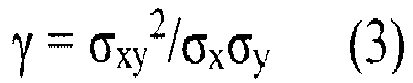
- The correlation coefficient is a value between -1 and +1. If an abnormality is present, the correlation coefficient approaches 0 since the estimated value deviates from the actual value. The threshold of the correlation coefficient may be obtained by calculating an average value of the correlation coefficient and the standard deviation of the plurality of
wind turbines 2 and applying the following expression: average value ± constant × standard deviation (constant may be 3), for instance.FIG. 7 is verification result in which estimated values calculated by the estimatedvalue calculation part 18 and actual values acquired by the actualvalue acquisition part 20 regarding the temperature of thebearing 32 are plotted for each operating condition. In anormal wind turbine 2 having no abnormality, since the estimated value coincides with the actual value, the correlation coefficient is high, and the data approximates the reference line R shown by the dotted line inFIG. 7 . In contrast, in anabnormal wind turbine 2, the behavior fluctuates due to failure of the machine, and the estimated value is deviated from the actual value. As a result, the correlation coefficient is low, and the data is deviated from the reference line R shown by the dotted line inFIG. 7 . In the present embodiment, by calculating the correlation coefficient and quantitatively evaluating the difference in tendency depending on the presence or absence of an abnormality, it is possible to accurately determine the presence or absence of an abnormality. - The determination result of the
determination part 22 may be output to the outside by the output part 24 (step S5). Theoutput part 24 may output the determination result to an external device by an electrical signal or may output the determination result in a form that appeals to an operator's sense. In the latter case, theoutput part 24 may be a display device. In this case, the display device may display an indicator of abnormality to notify the operator. - As described above, according to the present embodiment, comparing the estimated value calculated according to the operating condition with the actual value enables determination based on a criterion corresponding to the operating condition. Therefore, compared with determination using a criterion set uniformly regardless of the operating condition, a detailed abnormality determination can be performed, and the operating state can be accurately and early evaluated. Further, in case of the
wind turbine facility 1 including a plurality ofwind turbines 2 of the same type, by relatively comparing behaviors of thewind turbines 2, a more sensitive and precise evaluation can be performed than conventional evaluation using a criterion set uniformly regardless of the operating condition. - Embodiments for detecting an abnormality in each of a plurality of
wind turbines 2 based on abnormality degree E of each wind turbine will be described with reference toFIGs. 8 to 11 .FIG. 8 is a block diagram showing an interior configuration and a surrounding configuration of thecontrol unit 14 according to an embodiment of the present invention, in which thecontrol unit 14 includes afirst verification part 6 and asecond verification part 7.FIG. 9 is a flowchart showing the operating state evaluation method according to another embodiment of the present invention.FIG. 10 is a diagram for describing an example of determination by a first verification step (S95) according to an embodiment of the present invention.FIG. 11 is a diagram for describing an example of determination by a second verification step (S97) according to an embodiment of the present invention. - There are known techniques for detecting an abnormality based on abnormality degree E that can be calculated from multiple parameters (state quantities) such as sensor values of multiple sensors, for instance, Mahalanobis Taguchi method (MT method), one class support vector machine (OCSVM), k-neighbor method (kNN), and auto encoder. For instance, in the MT method, a normal group is defined as a unit space based on multivariate data stored as operating history, a distance (Mahalanobis distance) from the unit space to target data is measured, and the distance is compared with a threshold (abnormality determination threshold C) to determine an abnormality. With this method, it is possible to comprehensively diagnose each
wind turbine 2 only with a single index, namely, the Mahalanobis distance. Further, compared with a technique which performs diagnosis based on whether each state quantity is below a control value, the MT method can detect an abnormality early before damage to devices progresses. By detecting such a sign of an abnormality, it is possible to prevent or minimize damage to devices in advance. - By applying such a technique to detect an abnormality of each
wind turbine 2, it is possible to relatively easily monitor the operating state of eachwind turbine 2 even with a number of parameters to be monitored. As previously described, the operating condition acquired from eachwind turbine 2 may include detection values (sensor values) of multiple sensors (not shown). Accordingly, an abnormality degree E such as Mahalanobis distance may be calculated based on a group of sensor values (operating condition) detected at substantially the same timing from multiple sensors disposed on eachwind turbine 2, and it may be determined whether an abnormality is present in eachwind turbine 2 based on comparison between the abnormality degree E and the abnormality determination threshold C. - At this time, if detection sensitivity is increased by, for instance, setting the abnormality determination threshold C low in order to detect an abnormality at an early stage before the
wind turbine 2 fails, although the occurrence of failure of thewind turbine 2 can be more reliably prevented, false detection may occur, such as false abnormality detection when the abnormality degree E temporarily exceeds the abnormality determination threshold C due to an external environmental factor. If thewind turbine 2 in which an abnormality is detected is stopped for inspection, the operating rate of thewind turbine 2 decreases as the number of false detections increases. - In view of this, in some embodiments, the
control unit 14 may have a configuration to prevent false detection when abnormality detection for each of a plurality ofwind turbines 2 is performed based on the abnormality degree E. More specifically, as shown inFIG. 8 , thecontrol unit 14 may further include an abnormalitydegree calculation part 4, anabnormality determination part 5, and afirst verification part 6.
Each functional part will now be described. - The abnormality
degree calculation part 4 calculates the abnormality degree E of each of a plurality ofwind turbines 2 based on the operating condition of eachwind turbine 2. The plurality ofwind turbines 2 may be a part of allwind turbines 2 included in thewind turbine facility 1. Further, the plurality ofwind turbines 2 may be two ormore wind turbines 2 that are under or assumed to be under the same environmental conditions (e.g., wind conditions, temperature conditions), for instance, which are disposed close to each other geographically. The operating condition of eachwind turbine 2 includes multiple parameters. Further, each parameter value is measured at a predetermined timing, for instance periodically, by a corresponding sensor (not shown) and is transmitted to thecontrol unit 14 as the operating condition. In the embodiment shown inFIG. 8 , the operatingcondition acquisition part 16 acquires the operating condition of eachwind turbine 2 transmitted from thewind turbine facility 1. - The
abnormality determination part 5 determines whether an abnormality is present in each of the plurality ofwind turbines 2, based on the abnormality degree E of each of thewind turbines 2 calculated by the abnormalitydegree calculation part 4. More specifically, for each of the plurality ofwind turbines 2, the abnormality degree E of thewind turbine 2 may be compared with the predetermined abnormality determination threshold C, and if the abnormality degree E is not less than the abnormality determination threshold C (E≥C), it may be determined that an abnormality is present, and if the abnormality degree E is less than the abnormality determination threshold C (E<C), it may be determined that an abnormality is not present (normal). - If the
abnormality determination part 5 determines that at least one of the plurality ofwind turbines 2 has an abnormality (abnormality positive determination Ja), thefirst verification part 6 verifies that abnormality positive determination Ja. If there are two ormore wind turbines 2 that are determined to have an abnormality (abnormality positive determination Ja), thefirst verification part 6 verifies the abnormality positive determination Ja of each of the two ormore wind turbines 2 individually as the verification target. For the verification, as shown inFIG. 8 , thefirst verification part 6 includes an other-result acquisition part 61 and a firstvalidity determination part 62. Thefirst verification part 6 sequentially or parallel verifies each abnormality positive determination Ja as follows. - The other-
result acquisition part 61 acquires a determination result regarding one or more other of the plurality ofwind turbines 2 based on the abnormality degree E, in a predetermined period T including a timing of acquiring the operating condition used for calculating the abnormality degree E based on which the abnormality positive determination Ja to be verified is made. That is, the acquiring timing is between the start and end of the predetermined period T. The acquiring timing may be a timing of measuring (detecting) sensor values of the sensors (not shown). For instance, the acquiring timing may be given by storing each sensor value with a time stamp indicating the measurement time or the time series of the sensor values. - The predetermined period T may be any period, preferably a period that can be evaluated that the environmental condition at the acquiring timing of the
wind turbine 2 with the abnormality positive determination Ja to be currently verified is the same as the environmental condition of theother wind turbines 2. For instance, the wind condition such as wind speed acting on thewind turbine blades 2b of thewind turbine 2 may have a time lag between upstream and downstream sides along the wind direction. Further, when the temperature around thewind turbine 2 changes according to the wind condition, a time lag may occur in eachwind turbine 2. By determining the predetermined period T in consideration of such a time lag, it is possible to match the acquiring timing of the abnormality degree E of thewind turbine 2 to be verified and the abnormality degree E of theother wind turbines 2. - The first
validity determination part 62 determines whether the abnormality positive determination Ja being verified is valid (first validity determination), based on the number ofwind turbines 2 that is determined to have an abnormality as a result of determination based on the abnormality degree E regarding the one or moreother wind turbines 2 as acquired by the other-result acquisition part 61 (hereinafter, the number of abnormal wind turbines Na). The number of abnormal wind turbines Na is any number equal to or more than two. The number of abnormal wind turbines Na may be determined based on the probability that abnormalities occur in a plurality ofwind turbines 2 at the same time as obtained from previous results. In other words, the validity of each abnormality positive determination Ja made by theabnormality determination part 5 is judged based on a determination result regarding theother wind turbines 2 made by theabnormality determination part 5. - Specifically, the first
validity determination part 62 may determine that the abnormality positive determination Ja currently being verified is invalid if the number of abnormal wind turbines Na is less than a first verification threshold Va (Na<Va), and determines that the abnormality positive determination Ja currently being verified is valid if the number of abnormal wind turbines Na is not less than the first verification threshold Va (Na≥Va). In the embodiment shown inFIG. 8 , with N being the number of the plurality ofwind turbines 2, if all of the other wind turbines (N-1) are determined to have an abnormality (Va =N-1), the abnormality positive determination Ja being verified is regarded as due to an environmental factor and is determined to be invalid. It is very unlikely that all thewind turbine 2 have an abnormality at the same time. Therefore, when the validity of the abnormality positive determination Ja being verified is denied and thecorresponding wind turbine 2 is determined to be normal, it is unlikely that thewind turbine 2 that is determined to be normal have an abnormality. - More specifically, in
Case 1 shown inFIG. 10 , the abnormality positive determination Ja of theXth wind turbine 2 is the verification target, and all of the other N-1wind turbines 2 are determined to have an abnormality (i.e., abnormality positive determination Ja is made) at a timing in the predetermined period T. Accordingly, in this case, the firstvalidity determination part 62 determines that the abnormality positive determination Ja of theXth wind turbine 2 is invalid (theXth wind turbine 2 is determined to be normal). Conversely, inCase 2 shown inFIG. 10 , the abnormality positive determination Ja of theXth wind turbine 2 is the verification target, and all of the other N-1wind turbines 2 are determined not to have an abnormality (i.e., not abnormality positive determination Ja but abnormality negative determination Jn is made) at a timing in the predetermined period T. Accordingly, in this case, the firstvalidity determination part 62 determines that the abnormality positive determination Ja of theXth wind turbine 2 is valid (theXth wind turbine 2 is determined to be abnormal). - However, the present invention is not limited to the present embodiment. For instance, the first
validity determination part 62 may determine that the abnormality positive determination Ja of the verification target is invalid if the abnormality positive determination Ja is made on a predetermined proportion, for instance, half ({N-1}/2) or more of theother wind turbines 2, or if the abnormality positive determination Ja is made on a predetermined number or more (e.g., two or more) of theother wind turbines 2. - Further, in the embodiment shown in
FIG. 8 , thecontrol unit 14 further includes afirst notification part 64 that notifies that an abnormality is detected if the firstvalidity determination part 62 determines that the abnormality positive determination Ja of the verification target is valid. In other words, thefirst notification part 64 notifies that an abnormality is detected only if there is the abnormality positive determination Ja that is determined to be valid, and does not issue notification if none of the abnormality positive determinations Ja is determined to be valid as all of thewind turbines 2 are normal. Thus, it is possible to avoid the notification of false detection and the need for response to this notification such as inspection. - The operating state evaluation method corresponding to the process executed by the
control unit 14 having the above configuration will now be described. In some embodiments, as shown inFIG. 9 , the operating state evaluation method may include an abnormality degree calculation step (S92) of calculating the abnormality degree E of each of the plurality ofwind turbines 2 based on the operating condition of each of thewind turbines 2, an abnormality determination step (S93) of determining whether an abnormality is present in each of the plurality ofwind turbines 2 based on the abnormality degree E of each of thewind turbines 2 calculated in the abnormality degree calculation step, and a first verification step (S95) of verifying, if at least one of the plurality ofwind turbines 2 is determined to have an abnormality (abnormality positive determination Ja) in the abnormality determination step (S93), verifying that abnormality positive determination Ja. - The first verification step (S95) includes an other-result acquisition step (S95a) of acquiring a determination result regarding one or more other of the plurality of
wind turbines 2 based on the abnormality degree E, in a predetermined period T including a timing of acquiring the operating condition used for calculating the abnormality degree E based on which the abnormality positive determination Ja to be verified is made, and a first validity determination step (S95b) of making the first validity determination, based on the number ofwind turbines 2 that are determined to be abnormal based on the abnormality degree E among the one or moreother wind turbines 2. - The abnormality degree calculation step (S92), the abnormality determination step (S93), the first verification step (S95) are same as the process executed by the abnormality
degree calculation part 4, theabnormality determination part 5, and the first verification part 6 (other-result acquisition part 62 and first validity determination part 62) described above, so that the details will not be described again. - In the embodiment shown in
FIG. 9 , the operating state evaluation method further includes a first notification step (S96b) of notifying that an abnormality is detected if the abnormality positive determination Ja is determined to be valid in the first validity determination step (S95b). The first notification step (S96b) is the same as the process executed by thefirst notification part 64, so that the details will not be described again. - The operating state evaluation method according to the present embodiment will be described with reference to the flowchart of
FIG. 9 . - In step S91, the operating condition of each of the plurality of
wind turbines 2 is acquired at a predetermined timing, for instance, periodically. Then, the following steps (S91 to S98) are performed as appropriated each time step S91 is performed. In step S92, the abnormality degree calculation step is performed to calculate the abnormality degree E of eachwind turbine 2. In step S93, the abnormality determination step is performed. More specifically, in the embodiment shown inFIG. 9 , the abnormality degree E of eachwind turbine 2 is compared with the abnormality determination threshold C, and if E≥C, thewind turbine 2 is determined to be abnormal (abnormality positive determination Ja), and if E<C, thewind turbine 2 is determined not to be abnormal (abnormality negative determination Jn). In step S94, it is determined whether there is thewind turbine 2 of E≥C. In step S94, if it is determined that there is thewind turbine 2 of E≥C, in step 95, the first verification step described above is performed for each abnormality positive determination Ja made in step S93. - More specifically, in the embodiment shown in
FIG. 9 , in step S95a, the other-result acquisition step is performed to acquire a determination result regarding the one or moreother wind turbines 2 based on the abnormality degree E. In step S95b, the first validity determination step is performed, and if the number of abnormal wind turbines Na is less than the first verification threshold Va (Na<Va), the abnormality positive determination Ja currently being verified is determined to be valid (the corresponding wind turbine is determined to be abnormal). Then, in step S95c, identification information of thewind turbine 2 corresponding to the valid abnormality positive determination Ja is stored, followed by step S96. Conversely, in step S95b, if the number of abnormal wind turbines Na is not less than the first verification threshold Va (Na≥Va), the abnormality positive determination Ja currently being verified is determined to be invalid (the corresponding wind turbine is determined to be normal), and the method proceeds to step S96 without performing step S95c. - Then, in step S96, if there is a plurality of abnormality positive determinations Ja made in step S93, the other abnormality positive determination Ja that has not been verified is selected as the next verification target, and steps S95a to S95c are repeated. Conversely, in step S96, if verification of all abnormality positive determinations Ja is complete, in step S96b, the first notification step is performed to notify that an abnormality is detected in the
wind turbine 2 corresponding to the identification information stored in the step S95c. - With the above configuration, if at least one of the plurality of
wind turbines 2 is determined to have an abnormality based on the abnormality degree E calculated based on the operating condition (multiple parameter values), the validity (accuracy) of that abnormality positive determination Ja is verified based on the number of abnormality positive determinations Ja in the determination result regarding theother wind turbines 2 based on the abnormality degree E at the same timing. By ignoring the abnormality positive determination Ja that is determined to be false on the verification, it is possible to early detect a sign of an abnormality occurring in eachwind turbine 2 with an increased detection sensitivity while avoiding false detection based on the abnormality degree E of eachwind turbine 2. Accordingly, it is possible to prevent a reduction in operating rate due to false detection and an increase in cost. - On the other hand, as described above, if detection sensitivity is decreased by, for instance, increasing the abnormality determination threshold C to detect an abnormality of each of the plurality of
wind turbines 2 based on comparison between the abnormality degree E and the abnormality determination threshold C, although false detection can be reduced, it is difficult to early detect an abnormality (sign of abnormality) before eachwind turbine 2 fails. For instance, even if the abnormality degree E gradually increases due to an abnormality occurring in thewind turbine 2, if the value of the abnormality degree E is not more than the abnormality determination threshold C, an abnormality cannot be detected, and a sign of abnormality cannot be accurately obtained. Further, as abnormality detection is delayed, a risk of failure of thewind turbine 2 increases, and the operating rate of thewind turbine 2 may decrease due to the failure. - In view of this, in some embodiments, as shown in
FIG. 8 , thecontrol unit 14 may further include, in addition to the abnormalitydegree calculation part 4 and theabnormality determination part 5, asecond verification part 7 configured to, if at least one of thewind turbines 2 is determined not to have an abnormality (abnormality negative determination Jn), verify that abnormality negative determination Jn. - At this time, as shown in
FIG. 8 , thesecond verification part 7 may perform verification if theabnormality determination part 5 determines that none of the plurality ofwind turbines 2 has an abnormality. If there are two ormore wind turbines 2 that are determined not to have an abnormality (abnormality negative determination Jn) by theabnormality determination part 5, thesecond verification part 7 may verify the abnormality negative determination Jn of each of the two ormore wind turbines 2 individually as the verification target. For the verification, as shown inFIG. 8 , thesecond verification part 7 includes astatistic calculation part 71, arelationship calculation part 72, and a secondvalidity determination part 73. - The
statistic calculation part 71 calculates a statistic S of the abnormality degree E of each of the plurality ofwind turbines 2. In the embodiment shown inFIG. 8 , the statistic S is an average of a plurality of abnormality degrees E. - The
relationship calculation part 72 calculates a relationship Sr between the abnormality degree E of each of the plurality ofwind turbines 2 and the statistic S calculated by thestatistic calculation part 71. In the embodiment shown inFIG. 8 , the relationship Sr is a deviation between the abnormality degree E of each of the plurality ofwind turbines 2 and the average of the plurality of abnormality degrees E. - The second
validity determination part 73 determines whether the abnormality negative determination Jn of each of the plurality ofwind turbines 2 is valid (second validity determination) based on the relationship Sr calculated by therelationship calculation part 72. More specifically, if the relationship Sr is not less than a second verification threshold Vb (Sr≥Vb), thewind turbine 2 may be determined to be abnormal, and if the relationship Sr is less than the second verification threshold Vb (Sr<Vb), thewind turbine 2 may be determined to be normal. - The second verification threshold Vb may be set for each of the plurality of
wind turbines 2, and may be set based on previous operating conditions (normal operating data) of the plurality ofwind turbines 2 in a normal state. Further, the second verification threshold Vb may be set relatively low at an early stage, and the second verification threshold Vb may be changed after some normal operating data are collected. More specifically, the second verification threshold Vb may be obtained from an average and a maximum of the abnormality degrees E of the plurality ofwind turbines 2 in a normal state, using a function defining a relationship of the average of the abnormality degrees E in a normal state, the maximum of the abnormality degrees E in a normal state, and the second verification threshold Vb. - In the example shown in
FIG. 11 , with respect to theXth wind turbine 2, after time t1, the deviation (relationship Sr) between the abnormality degree E of theXth wind turbine 2 and the average is not less than the second verification threshold Vb, and a relationship of Sr≥Vb is established. Accordingly, the secondvalidity determination part 73 determines that the abnormality negative determination Jn of theXth wind turbine 2 is invalid (theXth wind turbine 2 is determined to be abnormal) on the verification after time t1. - In the embodiment shown in
FIG. 8 , thecontrol unit 14 further includes asecond notification part 74 that issues notification if the secondvalidity determination part 73 determines that the abnormality negative determination Jn is invalid. In other words, thesecond notification part 74 notifies that an abnormality is detected only if the abnormality negative determination Jn made by theabnormality determination part 5 is determined to be invalid by the secondvalidity determination part 73, and does not issue notification if all of the abnormality negative determinations Jn made by theabnormality determination part 5 are determined to be valid as all of thewind turbines 2 corresponding to the verified abnormality negative determinations Jn are normal. Thus, it is possible to more appropriately detect an abnormality. - The operating state evaluation method corresponding to the process executed by the
control unit 14 having the above configuration will now be described. In some embodiments, as shown inFIG. 9 , the operating state evaluation method may include the abnormality degree calculation step (S92), the abnormality determination step (S93), and a second verification step (S97) of, if at least one of thewind turbines 2 is determined not to have an abnormality (abnormality negative determination Jn), verifying that abnormality negative determination Jn. - Further, the second verification step includes a statistic calculation step (S97a) of calculating the statistic S of the abnormality degree E of each of the plurality of
wind turbines 2, a relationship calculation step (S97b) of calculating the relationship Sr between the statistic calculated in the statistic calculation step (S97a) and each of the abnormality degrees E of the plurality ofwind turbines 2, and a second validity determination step (S97c) of making the second validity determination, based on the relationship Sr calculated in the relationship calculation step (S97b). - The abnormality degree calculation step (S92), the abnormality determination step (S93), and the second verification step (S97) are same as the process executed by the abnormality
degree calculation part 4, theabnormality determination part 5, and the second verification part 7 (statistic calculation part 71,relationship calculation part 72, and second validity determination part 73) described above, so that the details will not be described again. - In the embodiment shown in
FIG. 9 , the operating state evaluation method further includes a second notification step (S98) of issuing notification if the abnormality negative determination Jn is determined to be invalid in the second validity determination step (S97c). The second notification step (S98) is the same as the process executed by thesecond notification part 74, so that the details will not be described again. - The operating state evaluation method according to the present embodiment will be described with reference to the flowchart of
FIG. 9 . - Steps S91 to S94 have already been described, so that description thereof will be omitted. In step S94, if there is no
wind turbine 2 that is determined to have an abnormality (abnormality positive determination Ja), the method proceeds to step S97. In other words, in the embodiment shown inFIG. 9 , if all of the plurality ofwind turbines 2 are determined not to have an abnormality (abnormality negative determination Jn), the method proceeds to step S97. In step S97, the second verification step is performed. - More specifically, in step S97a, the statistic calculation step is performed to calculate the statistic S of the abnormality degree E. In the embodiment shown in
FIG. 9 , the statistic S is an average of the abnormality degrees E of the plurality ofwind turbines 2. In step S97b, the relationship calculation step (S97b) is performed to calculate the relationship Sr between the abnormality degree E of each of the plurality ofwind turbines 2 and the statistic S of the abnormality degree E. In the embodiment shown inFIG. 9 , the relationship Sr is a deviation between the abnormality degree E of each of the plurality ofwind turbines 2 and the average of the plurality of abnormality degrees E. - Then, in step S97c, it is determined whether the relationship Sr (deviation in
FIG. 9 ) of each abnormality degree E is not less than the second verification threshold Vb. In step S97, if Sr≥Vb, the abnormality negative determination Jn made in step S92 is determined to be invalid (the corresponding wind turbine is determined to be abnormal). Then, in step S97d, identification information of thewind turbine 2 corresponding to the abnormality degree E of Sr≥Vb is stored, followed by step S98. Conversely, if Sr<Vb, the abnormality negative determination Jn made in step S93 is determined to be valid, and the method proceeds to step S98 without performing step S97d. Then, in step S98, the second notification step is performed to notify that an abnormality is detected in thewind turbine 2 corresponding to the identification information stored in the step S97d. - With the above configuration, if at least one of the plurality of
wind turbines 2 is determined not to have an abnormality based on the abnormality degree E calculated based on the operating condition (multiple parameter values), the validity (accuracy) of that abnormality negative determination Jn is verified based on the statistic S calculated from the plurality of abnormality degrees E at the same timing. Thus, even if the abnormality degree E is not more than the abnormality determination threshold C, it is possible to early detect an abnormality, and it is possible to prevent a reduction in operating rate due to failure of thewind turbine 2 and an increase in cost. - However, the present invention is not limited to the above described embodiments. In some embodiments, the
abnormality determination part 5 may not be provided, and abnormality detection (notification) of thewind turbine 2 on which the abnormality positive determination Ja is made may be performed based on the relationship between the abnormality degree E of each of the plurality ofwind turbines 2 and the statistic S of the abnormality degree E, without determination based on comparison between the abnormality degree E calculated by the abnormalitydegree calculation part 4 and the abnormality determination threshold C. - Moreover, although in the embodiment shown in
FIG. 9 , in step S94, the method proceeds to the first verification step (S95) if there is the abnormality positive determination Ja, while the method proceeds to the second verification step (S97) if there is no abnormality positive determination Ja, in some embodiments, if there are both the abnormality positive determination Ja and the abnormality negative determination Jn, both the second verification step (S95) and the second verification step (S97) may be performed sequentially or parallel. - At least one embodiment of the present invention can be applied to a method and a device for evaluating an operating state of a wind turbine facility.
Claims (15)
- A method for evaluating an operating state of a wind turbine facility including at least one wind turbine, comprising:a step of acquiring an operating condition of the wind turbine facility or the at least one wind turbine;a step of calculating an estimated value of a physical quantity measurable on the at least one wind turbine and corresponding to the operating condition;a step of acquiring an actual value corresponding to the physical quantity; anda step of determining whether an abnormality is present in the at least one wind turbine by comparing the estimated value and the actual value.
- The method according to claim 1,
wherein the estimated value is calculated by inputting the operating condition as an input parameter to a physical model of the wind turbine facility or the at least one wind turbine. - The method according to claim 1,
wherein the estimated value is calculated by inputting the operating condition as an input parameter to a machine learning model of the wind turbine facility or the at least one wind turbine. - The method according to any one of claims 1 to 3,
wherein the at least one wind turbine includes a plurality of wind turbines, and
wherein the operating condition is obtained by averaging parameters acquired from each of the plurality of wind turbines. - The method according to claim 1,
wherein the at least one wind turbine includes a plurality of wind turbines, and
wherein the estimated value is obtained by applying statistical processing to the actual value acquired from each of the plurality of wind turbines. - The method according to claim 5,
wherein the estimated value is an average of the actual value acquired from each of the plurality of wind turbines. - The method according to any one of claims 1 to 6,
wherein a difference between the estimated value and the actual value is calculated, and it is determined whether an abnormality is present based on whether the difference exceeds a threshold. - The method according to any one of claims 1 to 7,
wherein the at least one wind turbine includes a plurality of wind turbines, and
wherein the method includes a step of identifying a wind turbine having an abnormality by comparison in behavior of the actual value with respect to the operating condition among the plurality of wind turbines. - The method according to claim 8,
wherein a correlation coefficient between the estimated value and the actual value is obtained for each of the plurality of wind turbines, and a wind turbine whose correlation coefficient exceeds a threshold is determined to have an abnormality. - The method according to any one of claims 1 to 9,
wherein the at least one wind turbine includes a plurality of wind turbines,
wherein the method further includes:a step of calculating an abnormality degree of each of the plurality of wind turbines, based on the operating condition of each of the wind turbines;a step of determining whether an abnormality is present in each of the plurality of wind turbines, based on the abnormality degree of each of the wind turbines, anda step of, if at least one of the plurality of wind turbines is determined to have an abnormality, verifying an abnormality positive determination that the at least one of the plurality of wind turbines has the abnormality, andwherein the step of verifying the abnormality positive determination includes:a step of acquiring a determination result regarding one or more other of the plurality of wind turbines based on the abnormality degree, in a predetermined period including a timing of acquiring the operating condition used for calculating the abnormality degree based on which the abnormality positive determination is made, anda step of making a first validity determination whether the abnormality positive determination is valid, based on the number of wind turbines that are determined to be abnormal based on the abnormality degree among the one or more other of the plurality of wind turbines. - The method according to claim 10,
wherein the step of making the first validity determination includes determining that the abnormality positive determination is invalid if the number is less than a first verification threshold, and determining that the abnormality positive determination is valid if the number is not less than the first verification threshold. - The method according to claim 10 or 11, further comprising a step of notifying that the abnormality is detected if the abnormality positive determination is determined to be valid.
- The method according to any one of claims 1 to 12,
wherein the at least one wind turbine includes a plurality of wind turbines,
wherein the method further includes:a step of calculating an abnormality degree of each of the plurality of wind turbines, based on the operating condition of each of the wind turbines;a step of determining whether an abnormality is present in each of the plurality of wind turbines, based on the abnormality degree of each of the wind turbines, anda step of, if at least one of the plurality of wind turbines is determined not to have an abnormality, verifying an abnormality negative determination that the at least one of the plurality of wind turbines does not have an abnormality, andwherein the step of verifying the abnormality negative determination includes:a step of calculating a statistic of the abnormality degree of each of the plurality of wind turbines;a step of calculating a relationship between the abnormality degree of each of the plurality of wind turbines and the statistic; anda step of a making a second validity determination whether the abnormality negative determination is valid for each of the wind turbines, based on the relationship. - The method according to claim 13, further comprising a step of issuing notification if the abnormality negative determination is determined to be invalid.
- A device for evaluating an operating state of a wind turbine facility including at least one wind turbine, comprising:an operating condition acquisition part configured to acquire an operating condition of the wind turbine facility or the at least one wind turbine;an estimated value calculation part configured to calculate an estimated value of a physical quantity measurable on the at least one wind turbine and corresponding to the operating condition;an actual value acquisition part configured to acquire an actual value corresponding to the physical quantity; anda determination part configured to determine whether an abnormality is present in the at least one wind turbine by comparison between the estimated value and the actual value.
Applications Claiming Priority (2)
| Application Number | Priority Date | Filing Date | Title |
|---|---|---|---|
| JP2019024353 | 2019-02-14 | ||
| JP2019089031A JP7288794B2 (en) | 2019-02-14 | 2019-05-09 | Operating state evaluation method and operating state evaluation device |
Publications (2)
| Publication Number | Publication Date |
|---|---|
| EP3696405A1 true EP3696405A1 (en) | 2020-08-19 |
| EP3696405B1 EP3696405B1 (en) | 2023-03-22 |
Family
ID=68731693
Family Applications (1)
| Application Number | Title | Priority Date | Filing Date |
|---|---|---|---|
| EP19211881.8A Active EP3696405B1 (en) | 2019-02-14 | 2019-11-27 | Operating state evaluation method and operating state evaluation device |
Country Status (2)
| Country | Link |
|---|---|
| US (1) | US20200263669A1 (en) |
| EP (1) | EP3696405B1 (en) |
Cited By (1)
| Publication number | Priority date | Publication date | Assignee | Title |
|---|---|---|---|---|
| US20230407849A1 (en) * | 2022-06-16 | 2023-12-21 | Vestas Wind Systems A/S | Method for operating a cluster of wind turbines |
Families Citing this family (5)
| Publication number | Priority date | Publication date | Assignee | Title |
|---|---|---|---|---|
| DE102020211196A1 (en) * | 2020-09-07 | 2022-03-10 | Aktiebolaget Skf | Method and system for detecting machine defects |
| DE102022113608A1 (en) * | 2022-05-30 | 2023-11-30 | E.ON Digital Technology GmbH | Control and monitoring method and/device for an industrial plant |
| JP7847482B2 (en) * | 2022-06-16 | 2026-04-17 | Ntn株式会社 | Control device, terminal device, management system, and management method |
| CN115434878B (en) * | 2022-11-09 | 2023-02-03 | 东方电气风电股份有限公司 | Method, device, equipment and medium for temperature cluster control of wind power generating units |
| CN119860324A (en) * | 2025-03-22 | 2025-04-22 | 太原科技大学 | Fan power generation operation and maintenance system based on intelligent construction of station |
Citations (5)
| Publication number | Priority date | Publication date | Assignee | Title |
|---|---|---|---|---|
| WO2009016020A1 (en) * | 2007-07-31 | 2009-02-05 | Vestas Wind Systems A/S | Wind turbine monitoring system |
| US20100138182A1 (en) * | 2009-08-28 | 2010-06-03 | General Electric Company | System and method for managing wind turbines and enhanced diagnostics |
| US20100179773A1 (en) * | 2009-01-12 | 2010-07-15 | REpower System AG | Method and system for monitoring a wind energy installation |
| JP2010159710A (en) | 2009-01-09 | 2010-07-22 | Ntn Corp | Monitoring device for main shaft bearing of wind power generator |
| EP3252556A2 (en) * | 2016-06-02 | 2017-12-06 | Doosan Heavy Industries & Construction Co., Ltd. | Wind farm supervision monitoring system |
Family Cites Families (6)
| Publication number | Priority date | Publication date | Assignee | Title |
|---|---|---|---|---|
| WO2014114295A1 (en) * | 2013-01-25 | 2014-07-31 | Vestas Wind Systems A/S | Control of wind turbines |
| CN103234753A (en) | 2013-04-11 | 2013-08-07 | 华北电力大学 | Gaussian process modeling based wind turbine shafting state monitoring method |
| CN107977508A (en) | 2017-11-29 | 2018-05-01 | 北京优利康达科技股份有限公司 | A kind of dynamo bearing failure prediction method |
| CN108051211B (en) | 2017-12-29 | 2019-10-18 | 湖南优利泰克自动化系统有限公司 | A method for early warning and diagnosis of wind turbine main bearing temperature |
| CN108376298B (en) | 2018-02-12 | 2023-11-10 | 湘潭大学 | A wind turbine engine temperature fault early warning diagnosis method |
| CN108680358A (en) | 2018-03-23 | 2018-10-19 | 河海大学 | A kind of Wind turbines failure prediction method based on bearing temperature model |
-
2019
- 2019-11-22 US US16/692,160 patent/US20200263669A1/en not_active Abandoned
- 2019-11-27 EP EP19211881.8A patent/EP3696405B1/en active Active
Patent Citations (5)
| Publication number | Priority date | Publication date | Assignee | Title |
|---|---|---|---|---|
| WO2009016020A1 (en) * | 2007-07-31 | 2009-02-05 | Vestas Wind Systems A/S | Wind turbine monitoring system |
| JP2010159710A (en) | 2009-01-09 | 2010-07-22 | Ntn Corp | Monitoring device for main shaft bearing of wind power generator |
| US20100179773A1 (en) * | 2009-01-12 | 2010-07-15 | REpower System AG | Method and system for monitoring a wind energy installation |
| US20100138182A1 (en) * | 2009-08-28 | 2010-06-03 | General Electric Company | System and method for managing wind turbines and enhanced diagnostics |
| EP3252556A2 (en) * | 2016-06-02 | 2017-12-06 | Doosan Heavy Industries & Construction Co., Ltd. | Wind farm supervision monitoring system |
Cited By (2)
| Publication number | Priority date | Publication date | Assignee | Title |
|---|---|---|---|---|
| US20230407849A1 (en) * | 2022-06-16 | 2023-12-21 | Vestas Wind Systems A/S | Method for operating a cluster of wind turbines |
| US11952985B2 (en) * | 2022-06-16 | 2024-04-09 | Vestas Wind Systems A/S | Method for operating a cluster of wind turbines |
Also Published As
| Publication number | Publication date |
|---|---|
| US20200263669A1 (en) | 2020-08-20 |
| EP3696405B1 (en) | 2023-03-22 |
Similar Documents
| Publication | Publication Date | Title |
|---|---|---|
| EP3696405B1 (en) | Operating state evaluation method and operating state evaluation device | |
| JP7288794B2 (en) | Operating state evaluation method and operating state evaluation device | |
| US9086337B2 (en) | Detecting a wake situation in a wind farm | |
| US20230081892A1 (en) | Abnormality diagnosis method, abnormality diagnosis device and non-transitory computer readable storage medium | |
| KR101978569B1 (en) | Apparatus and Method for Predicting Plant Data | |
| JP6610987B2 (en) | Abnormality diagnosis method and abnormality diagnosis system | |
| US8417432B2 (en) | Method for calculating confidence on prediction in fault diagnosis systems | |
| US11960271B2 (en) | Power plant early warning device and method employing multiple prediction model | |
| US20110264310A1 (en) | Method Of Determining A Maneuver Performed By An Aircraft | |
| US20200182684A1 (en) | Systems and methods for monitoring of mechanical and electrical machines | |
| EP2746885A1 (en) | Method of monitoring the condition of a wind turbine | |
| JP6523815B2 (en) | Plant diagnostic device and plant diagnostic method | |
| EP3506229B1 (en) | Method for pre-detecting abnormality sign of nuclear power plant device including processor for determining device importance and warning validity, and system therefor | |
| EP2801880A2 (en) | Equipment monitoring system | |
| KR101734289B1 (en) | Apparatus and method for validity evaluation of nuclear power plant | |
| US20200057690A1 (en) | Abnormality detection device, abnormality detection method, and program | |
| US12253407B2 (en) | Vibration detection through correlation of nodal measurements of a physical quantity | |
| WO2015026166A1 (en) | Unusual data predicting method and computer-readable storage medium in which program for executing said method is stored | |
| US20190332102A1 (en) | Machine health monitoring of rotating machinery | |
| EP2135144B1 (en) | Machine condition monitoring using pattern rules | |
| WO2021049061A1 (en) | Diagnosis device, diagnosis method, and diagnosis program | |
| CN114281173A (en) | Reliable heat dissipation control method and device for server | |
| TWI700431B (en) | Wind power system | |
| CN118779742A (en) | A temperature vibration detection device and fault feature identification system for axial flow fans in pipe gallery | |
| EP3385804B1 (en) | Failure diagnosis apparatus, failure diagnosis method and recording medium |
Legal Events
| Date | Code | Title | Description |
|---|---|---|---|
| PUAI | Public reference made under article 153(3) epc to a published international application that has entered the european phase |
Free format text: ORIGINAL CODE: 0009012 |
|
| STAA | Information on the status of an ep patent application or granted ep patent |
Free format text: STATUS: THE APPLICATION HAS BEEN PUBLISHED |
|
| AK | Designated contracting states |
Kind code of ref document: A1 Designated state(s): AL AT BE BG CH CY CZ DE DK EE ES FI FR GB GR HR HU IE IS IT LI LT LU LV MC MK MT NL NO PL PT RO RS SE SI SK SM TR |
|
| AX | Request for extension of the european patent |
Extension state: BA ME |
|
| STAA | Information on the status of an ep patent application or granted ep patent |
Free format text: STATUS: REQUEST FOR EXAMINATION WAS MADE |
|
| 17P | Request for examination filed |
Effective date: 20201002 |
|
| RBV | Designated contracting states (corrected) |
Designated state(s): AL AT BE BG CH CY CZ DE DK EE ES FI FR GB GR HR HU IE IS IT LI LT LU LV MC MK MT NL NO PL PT RO RS SE SI SK SM TR |
|
| STAA | Information on the status of an ep patent application or granted ep patent |
Free format text: STATUS: EXAMINATION IS IN PROGRESS |
|
| 17Q | First examination report despatched |
Effective date: 20210818 |
|
| GRAP | Despatch of communication of intention to grant a patent |
Free format text: ORIGINAL CODE: EPIDOSNIGR1 |
|
| STAA | Information on the status of an ep patent application or granted ep patent |
Free format text: STATUS: GRANT OF PATENT IS INTENDED |
|
| RIC1 | Information provided on ipc code assigned before grant |
Ipc: F03D 17/00 20160101ALI20221028BHEP Ipc: F03D 80/50 20160101ALI20221028BHEP Ipc: F03D 7/04 20060101AFI20221028BHEP |
|
| INTG | Intention to grant announced |
Effective date: 20221201 |
|
| GRAS | Grant fee paid |
Free format text: ORIGINAL CODE: EPIDOSNIGR3 |
|
| GRAA | (expected) grant |
Free format text: ORIGINAL CODE: 0009210 |
|
| STAA | Information on the status of an ep patent application or granted ep patent |
Free format text: STATUS: THE PATENT HAS BEEN GRANTED |
|
| AK | Designated contracting states |
Kind code of ref document: B1 Designated state(s): AL AT BE BG CH CY CZ DE DK EE ES FI FR GB GR HR HU IE IS IT LI LT LU LV MC MK MT NL NO PL PT RO RS SE SI SK SM TR |
|
| REG | Reference to a national code |
Ref country code: GB Ref legal event code: FG4D |
|
| REG | Reference to a national code |
Ref country code: CH Ref legal event code: EP |
|
| REG | Reference to a national code |
Ref country code: IE Ref legal event code: FG4D |
|
| REG | Reference to a national code |
Ref country code: DE Ref legal event code: R096 Ref document number: 602019026605 Country of ref document: DE |
|
| REG | Reference to a national code |
Ref country code: AT Ref legal event code: REF Ref document number: 1555437 Country of ref document: AT Kind code of ref document: T Effective date: 20230415 |
|
| REG | Reference to a national code |
Ref country code: LT Ref legal event code: MG9D |
|
| REG | Reference to a national code |
Ref country code: NL Ref legal event code: MP Effective date: 20230322 |
|
| PG25 | Lapsed in a contracting state [announced via postgrant information from national office to epo] |
Ref country code: RS Free format text: LAPSE BECAUSE OF FAILURE TO SUBMIT A TRANSLATION OF THE DESCRIPTION OR TO PAY THE FEE WITHIN THE PRESCRIBED TIME-LIMIT Effective date: 20230322 Ref country code: NO Free format text: LAPSE BECAUSE OF FAILURE TO SUBMIT A TRANSLATION OF THE DESCRIPTION OR TO PAY THE FEE WITHIN THE PRESCRIBED TIME-LIMIT Effective date: 20230622 Ref country code: LV Free format text: LAPSE BECAUSE OF FAILURE TO SUBMIT A TRANSLATION OF THE DESCRIPTION OR TO PAY THE FEE WITHIN THE PRESCRIBED TIME-LIMIT Effective date: 20230322 Ref country code: LT Free format text: LAPSE BECAUSE OF FAILURE TO SUBMIT A TRANSLATION OF THE DESCRIPTION OR TO PAY THE FEE WITHIN THE PRESCRIBED TIME-LIMIT Effective date: 20230322 Ref country code: HR Free format text: LAPSE BECAUSE OF FAILURE TO SUBMIT A TRANSLATION OF THE DESCRIPTION OR TO PAY THE FEE WITHIN THE PRESCRIBED TIME-LIMIT Effective date: 20230322 |
|
| REG | Reference to a national code |
Ref country code: AT Ref legal event code: MK05 Ref document number: 1555437 Country of ref document: AT Kind code of ref document: T Effective date: 20230322 |
|
| PG25 | Lapsed in a contracting state [announced via postgrant information from national office to epo] |
Ref country code: SE Free format text: LAPSE BECAUSE OF FAILURE TO SUBMIT A TRANSLATION OF THE DESCRIPTION OR TO PAY THE FEE WITHIN THE PRESCRIBED TIME-LIMIT Effective date: 20230322 Ref country code: NL Free format text: LAPSE BECAUSE OF FAILURE TO SUBMIT A TRANSLATION OF THE DESCRIPTION OR TO PAY THE FEE WITHIN THE PRESCRIBED TIME-LIMIT Effective date: 20230322 Ref country code: GR Free format text: LAPSE BECAUSE OF FAILURE TO SUBMIT A TRANSLATION OF THE DESCRIPTION OR TO PAY THE FEE WITHIN THE PRESCRIBED TIME-LIMIT Effective date: 20230623 Ref country code: FI Free format text: LAPSE BECAUSE OF FAILURE TO SUBMIT A TRANSLATION OF THE DESCRIPTION OR TO PAY THE FEE WITHIN THE PRESCRIBED TIME-LIMIT Effective date: 20230322 |
|
| PG25 | Lapsed in a contracting state [announced via postgrant information from national office to epo] |
Ref country code: SM Free format text: LAPSE BECAUSE OF FAILURE TO SUBMIT A TRANSLATION OF THE DESCRIPTION OR TO PAY THE FEE WITHIN THE PRESCRIBED TIME-LIMIT Effective date: 20230322 Ref country code: RO Free format text: LAPSE BECAUSE OF FAILURE TO SUBMIT A TRANSLATION OF THE DESCRIPTION OR TO PAY THE FEE WITHIN THE PRESCRIBED TIME-LIMIT Effective date: 20230322 Ref country code: PT Free format text: LAPSE BECAUSE OF FAILURE TO SUBMIT A TRANSLATION OF THE DESCRIPTION OR TO PAY THE FEE WITHIN THE PRESCRIBED TIME-LIMIT Effective date: 20230724 Ref country code: ES Free format text: LAPSE BECAUSE OF FAILURE TO SUBMIT A TRANSLATION OF THE DESCRIPTION OR TO PAY THE FEE WITHIN THE PRESCRIBED TIME-LIMIT Effective date: 20230322 Ref country code: EE Free format text: LAPSE BECAUSE OF FAILURE TO SUBMIT A TRANSLATION OF THE DESCRIPTION OR TO PAY THE FEE WITHIN THE PRESCRIBED TIME-LIMIT Effective date: 20230322 Ref country code: AT Free format text: LAPSE BECAUSE OF FAILURE TO SUBMIT A TRANSLATION OF THE DESCRIPTION OR TO PAY THE FEE WITHIN THE PRESCRIBED TIME-LIMIT Effective date: 20230322 |
|
| PG25 | Lapsed in a contracting state [announced via postgrant information from national office to epo] |
Ref country code: SK Free format text: LAPSE BECAUSE OF FAILURE TO SUBMIT A TRANSLATION OF THE DESCRIPTION OR TO PAY THE FEE WITHIN THE PRESCRIBED TIME-LIMIT Effective date: 20230322 Ref country code: PL Free format text: LAPSE BECAUSE OF FAILURE TO SUBMIT A TRANSLATION OF THE DESCRIPTION OR TO PAY THE FEE WITHIN THE PRESCRIBED TIME-LIMIT Effective date: 20230322 Ref country code: IS Free format text: LAPSE BECAUSE OF FAILURE TO SUBMIT A TRANSLATION OF THE DESCRIPTION OR TO PAY THE FEE WITHIN THE PRESCRIBED TIME-LIMIT Effective date: 20230722 |
|
| REG | Reference to a national code |
Ref country code: DE Ref legal event code: R026 Ref document number: 602019026605 Country of ref document: DE |
|
| PLBI | Opposition filed |
Free format text: ORIGINAL CODE: 0009260 |
|
| PLAX | Notice of opposition and request to file observation + time limit sent |
Free format text: ORIGINAL CODE: EPIDOSNOBS2 |
|
| 26 | Opposition filed |
Opponent name: SIEMENS GAMESA RENEWABLE ENERGY GMBH & CO. KG Effective date: 20231220 |
|
| PG25 | Lapsed in a contracting state [announced via postgrant information from national office to epo] |
Ref country code: SI Free format text: LAPSE BECAUSE OF FAILURE TO SUBMIT A TRANSLATION OF THE DESCRIPTION OR TO PAY THE FEE WITHIN THE PRESCRIBED TIME-LIMIT Effective date: 20230322 Ref country code: DK Free format text: LAPSE BECAUSE OF FAILURE TO SUBMIT A TRANSLATION OF THE DESCRIPTION OR TO PAY THE FEE WITHIN THE PRESCRIBED TIME-LIMIT Effective date: 20230322 Ref country code: CZ Free format text: LAPSE BECAUSE OF FAILURE TO SUBMIT A TRANSLATION OF THE DESCRIPTION OR TO PAY THE FEE WITHIN THE PRESCRIBED TIME-LIMIT Effective date: 20230322 |
|
| PLBB | Reply of patent proprietor to notice(s) of opposition received |
Free format text: ORIGINAL CODE: EPIDOSNOBS3 |
|
| PG25 | Lapsed in a contracting state [announced via postgrant information from national office to epo] |
Ref country code: IT Free format text: LAPSE BECAUSE OF FAILURE TO SUBMIT A TRANSLATION OF THE DESCRIPTION OR TO PAY THE FEE WITHIN THE PRESCRIBED TIME-LIMIT Effective date: 20230322 |
|
| REG | Reference to a national code |
Ref country code: DE Ref legal event code: R119 Ref document number: 602019026605 Country of ref document: DE |
|
| REG | Reference to a national code |
Ref country code: CH Ref legal event code: PL |
|
| PG25 | Lapsed in a contracting state [announced via postgrant information from national office to epo] |
Ref country code: MC Free format text: LAPSE BECAUSE OF FAILURE TO SUBMIT A TRANSLATION OF THE DESCRIPTION OR TO PAY THE FEE WITHIN THE PRESCRIBED TIME-LIMIT Effective date: 20230322 |
|
| PG25 | Lapsed in a contracting state [announced via postgrant information from national office to epo] |
Ref country code: LU Free format text: LAPSE BECAUSE OF NON-PAYMENT OF DUE FEES Effective date: 20231127 |
|
| PG25 | Lapsed in a contracting state [announced via postgrant information from national office to epo] |
Ref country code: CH Free format text: LAPSE BECAUSE OF NON-PAYMENT OF DUE FEES Effective date: 20231130 |
|
| PG25 | Lapsed in a contracting state [announced via postgrant information from national office to epo] |
Ref country code: MC Free format text: LAPSE BECAUSE OF FAILURE TO SUBMIT A TRANSLATION OF THE DESCRIPTION OR TO PAY THE FEE WITHIN THE PRESCRIBED TIME-LIMIT Effective date: 20230322 Ref country code: LU Free format text: LAPSE BECAUSE OF NON-PAYMENT OF DUE FEES Effective date: 20231127 Ref country code: CH Free format text: LAPSE BECAUSE OF NON-PAYMENT OF DUE FEES Effective date: 20231130 |
|
| REG | Reference to a national code |
Ref country code: BE Ref legal event code: MM Effective date: 20231130 |
|
| REG | Reference to a national code |
Ref country code: IE Ref legal event code: MM4A |
|
| PG25 | Lapsed in a contracting state [announced via postgrant information from national office to epo] |
Ref country code: DE Free format text: LAPSE BECAUSE OF NON-PAYMENT OF DUE FEES Effective date: 20240601 Ref country code: IE Free format text: LAPSE BECAUSE OF NON-PAYMENT OF DUE FEES Effective date: 20231127 |
|
| PG25 | Lapsed in a contracting state [announced via postgrant information from national office to epo] |
Ref country code: BE Free format text: LAPSE BECAUSE OF NON-PAYMENT OF DUE FEES Effective date: 20231130 |
|
| PG25 | Lapsed in a contracting state [announced via postgrant information from national office to epo] |
Ref country code: FR Free format text: LAPSE BECAUSE OF NON-PAYMENT OF DUE FEES Effective date: 20231130 |
|
| PG25 | Lapsed in a contracting state [announced via postgrant information from national office to epo] |
Ref country code: IE Free format text: LAPSE BECAUSE OF NON-PAYMENT OF DUE FEES Effective date: 20231127 Ref country code: FR Free format text: LAPSE BECAUSE OF NON-PAYMENT OF DUE FEES Effective date: 20231130 Ref country code: DE Free format text: LAPSE BECAUSE OF NON-PAYMENT OF DUE FEES Effective date: 20240601 Ref country code: BE Free format text: LAPSE BECAUSE OF NON-PAYMENT OF DUE FEES Effective date: 20231130 |
|
| PG25 | Lapsed in a contracting state [announced via postgrant information from national office to epo] |
Ref country code: BG Free format text: LAPSE BECAUSE OF FAILURE TO SUBMIT A TRANSLATION OF THE DESCRIPTION OR TO PAY THE FEE WITHIN THE PRESCRIBED TIME-LIMIT Effective date: 20230322 |
|
| PG25 | Lapsed in a contracting state [announced via postgrant information from national office to epo] |
Ref country code: BG Free format text: LAPSE BECAUSE OF FAILURE TO SUBMIT A TRANSLATION OF THE DESCRIPTION OR TO PAY THE FEE WITHIN THE PRESCRIBED TIME-LIMIT Effective date: 20230322 |
|
| APAH | Appeal reference modified |
Free format text: ORIGINAL CODE: EPIDOSCREFNO |
|
| APAW | Appeal reference deleted |
Free format text: ORIGINAL CODE: EPIDOSDREFNO |
|
| APBP | Date of receipt of notice of appeal recorded |
Free format text: ORIGINAL CODE: EPIDOSNNOA2O |
|
| APBQ | Date of receipt of statement of grounds of appeal recorded |
Free format text: ORIGINAL CODE: EPIDOSNNOA3O |
|
| PG25 | Lapsed in a contracting state [announced via postgrant information from national office to epo] |
Ref country code: CY Free format text: LAPSE BECAUSE OF FAILURE TO SUBMIT A TRANSLATION OF THE DESCRIPTION OR TO PAY THE FEE WITHIN THE PRESCRIBED TIME-LIMIT; INVALID AB INITIO Effective date: 20191127 |
|
| PLAB | Opposition data, opponent's data or that of the opponent's representative modified |
Free format text: ORIGINAL CODE: 0009299OPPO |
|
| APBQ | Date of receipt of statement of grounds of appeal recorded |
Free format text: ORIGINAL CODE: EPIDOSNNOA3O |
|
| PG25 | Lapsed in a contracting state [announced via postgrant information from national office to epo] |
Ref country code: HU Free format text: LAPSE BECAUSE OF FAILURE TO SUBMIT A TRANSLATION OF THE DESCRIPTION OR TO PAY THE FEE WITHIN THE PRESCRIBED TIME-LIMIT; INVALID AB INITIO Effective date: 20191127 |
|
| R26 | Opposition filed (corrected) |
Opponent name: SIEMENS GAMESA RENEWABLE ENERGY DEUTSCHLAND GMBH Effective date: 20231220 |
|
| PG25 | Lapsed in a contracting state [announced via postgrant information from national office to epo] |
Ref country code: TR Free format text: LAPSE BECAUSE OF FAILURE TO SUBMIT A TRANSLATION OF THE DESCRIPTION OR TO PAY THE FEE WITHIN THE PRESCRIBED TIME-LIMIT Effective date: 20230322 |
|
| PGFP | Annual fee paid to national office [announced via postgrant information from national office to epo] |
Ref country code: GB Payment date: 20251001 Year of fee payment: 7 |