EP3696253A1 - Process for improving structural integrity of hardwood black pellets - Google Patents
Process for improving structural integrity of hardwood black pellets Download PDFInfo
- Publication number
- EP3696253A1 EP3696253A1 EP19156587.8A EP19156587A EP3696253A1 EP 3696253 A1 EP3696253 A1 EP 3696253A1 EP 19156587 A EP19156587 A EP 19156587A EP 3696253 A1 EP3696253 A1 EP 3696253A1
- Authority
- EP
- European Patent Office
- Prior art keywords
- hardwood
- glue
- source
- species
- process according
- Prior art date
- Legal status (The legal status is an assumption and is not a legal conclusion. Google has not performed a legal analysis and makes no representation as to the accuracy of the status listed.)
- Granted
Links
Images


Classifications
-
- C—CHEMISTRY; METALLURGY
- C10—PETROLEUM, GAS OR COKE INDUSTRIES; TECHNICAL GASES CONTAINING CARBON MONOXIDE; FUELS; LUBRICANTS; PEAT
- C10L—FUELS NOT OTHERWISE PROVIDED FOR; NATURAL GAS; SYNTHETIC NATURAL GAS OBTAINED BY PROCESSES NOT COVERED BY SUBCLASSES C10G OR C10K; LIQUIFIED PETROLEUM GAS; USE OF ADDITIVES TO FUELS OR FIRES; FIRE-LIGHTERS
- C10L5/00—Solid fuels
- C10L5/02—Solid fuels such as briquettes consisting mainly of carbonaceous materials of mineral or non-mineral origin
- C10L5/06—Methods of shaping, e.g. pelletizing or briquetting
- C10L5/10—Methods of shaping, e.g. pelletizing or briquetting with the aid of binders, e.g. pretreated binders
- C10L5/14—Methods of shaping, e.g. pelletizing or briquetting with the aid of binders, e.g. pretreated binders with organic binders
- C10L5/143—Methods of shaping, e.g. pelletizing or briquetting with the aid of binders, e.g. pretreated binders with organic binders with lignin-containing products
-
- C—CHEMISTRY; METALLURGY
- C10—PETROLEUM, GAS OR COKE INDUSTRIES; TECHNICAL GASES CONTAINING CARBON MONOXIDE; FUELS; LUBRICANTS; PEAT
- C10L—FUELS NOT OTHERWISE PROVIDED FOR; NATURAL GAS; SYNTHETIC NATURAL GAS OBTAINED BY PROCESSES NOT COVERED BY SUBCLASSES C10G OR C10K; LIQUIFIED PETROLEUM GAS; USE OF ADDITIVES TO FUELS OR FIRES; FIRE-LIGHTERS
- C10L5/00—Solid fuels
- C10L5/02—Solid fuels such as briquettes consisting mainly of carbonaceous materials of mineral or non-mineral origin
- C10L5/34—Other details of the shaped fuels, e.g. briquettes
- C10L5/36—Shape
- C10L5/363—Pellets or granulates
-
- C—CHEMISTRY; METALLURGY
- C10—PETROLEUM, GAS OR COKE INDUSTRIES; TECHNICAL GASES CONTAINING CARBON MONOXIDE; FUELS; LUBRICANTS; PEAT
- C10L—FUELS NOT OTHERWISE PROVIDED FOR; NATURAL GAS; SYNTHETIC NATURAL GAS OBTAINED BY PROCESSES NOT COVERED BY SUBCLASSES C10G OR C10K; LIQUIFIED PETROLEUM GAS; USE OF ADDITIVES TO FUELS OR FIRES; FIRE-LIGHTERS
- C10L5/00—Solid fuels
- C10L5/40—Solid fuels essentially based on materials of non-mineral origin
- C10L5/44—Solid fuels essentially based on materials of non-mineral origin on vegetable substances
- C10L5/442—Wood or forestry waste
-
- C—CHEMISTRY; METALLURGY
- C10—PETROLEUM, GAS OR COKE INDUSTRIES; TECHNICAL GASES CONTAINING CARBON MONOXIDE; FUELS; LUBRICANTS; PEAT
- C10L—FUELS NOT OTHERWISE PROVIDED FOR; NATURAL GAS; SYNTHETIC NATURAL GAS OBTAINED BY PROCESSES NOT COVERED BY SUBCLASSES C10G OR C10K; LIQUIFIED PETROLEUM GAS; USE OF ADDITIVES TO FUELS OR FIRES; FIRE-LIGHTERS
- C10L2290/00—Fuel preparation or upgrading, processes or apparatus therefore, comprising specific process steps or apparatus units
- C10L2290/14—Injection, e.g. in a reactor or a fuel stream during fuel production
- C10L2290/148—Injection, e.g. in a reactor or a fuel stream during fuel production of steam
-
- Y—GENERAL TAGGING OF NEW TECHNOLOGICAL DEVELOPMENTS; GENERAL TAGGING OF CROSS-SECTIONAL TECHNOLOGIES SPANNING OVER SEVERAL SECTIONS OF THE IPC; TECHNICAL SUBJECTS COVERED BY FORMER USPC CROSS-REFERENCE ART COLLECTIONS [XRACs] AND DIGESTS
- Y02—TECHNOLOGIES OR APPLICATIONS FOR MITIGATION OR ADAPTATION AGAINST CLIMATE CHANGE
- Y02E—REDUCTION OF GREENHOUSE GAS [GHG] EMISSIONS, RELATED TO ENERGY GENERATION, TRANSMISSION OR DISTRIBUTION
- Y02E50/00—Technologies for the production of fuel of non-fossil origin
- Y02E50/10—Biofuels, e.g. bio-diesel
-
- Y—GENERAL TAGGING OF NEW TECHNOLOGICAL DEVELOPMENTS; GENERAL TAGGING OF CROSS-SECTIONAL TECHNOLOGIES SPANNING OVER SEVERAL SECTIONS OF THE IPC; TECHNICAL SUBJECTS COVERED BY FORMER USPC CROSS-REFERENCE ART COLLECTIONS [XRACs] AND DIGESTS
- Y02—TECHNOLOGIES OR APPLICATIONS FOR MITIGATION OR ADAPTATION AGAINST CLIMATE CHANGE
- Y02E—REDUCTION OF GREENHOUSE GAS [GHG] EMISSIONS, RELATED TO ENERGY GENERATION, TRANSMISSION OR DISTRIBUTION
- Y02E50/00—Technologies for the production of fuel of non-fossil origin
- Y02E50/30—Fuel from waste, e.g. synthetic alcohol or diesel
Definitions
- the present invention relates to a process for producing steam exploded hardwood black pellets by combining hardwood material and a source of glue of wood origin, subjecting the combined material to heat pretreatment and steam explosion whereby glue is formed from the source of glue, and the use of said glue for reducing energy consumption during pelleting of the combined heat pretreated steam exploded material and for increasing the structural integrity of the finished steam exploded hardwood black pellets.
- Black pellets which solve some of the problems associated with white pellets.
- Black pellets feature higher water resistance and thus can be stored, loaded and unloaded in wet weather conditions. They are also cheaper to ship than white pellets because less protection is needed. Further, black pellets have a higher energy density, which can lead to savings of as much as 30 % on transport and logistics.
- Black pellets are produced in processes such as torrefaction or steam explosion as described e.g. in WO 2013/191897 A1 , WO 2015/185751 A1 , WO 2017/089648 A1 and EP 3 205 707 A1 .
- the present invention relates to a process for producing hardwood black pellets comprising the steps of
- the present invention relates to the use of a source of glue of wood origin for reducing energy consumption during pelleting of steam exploded hardwood material to black pellets.
- the present invention relates to the use of a source of glue of wood origin for increasing the structural integrity of steam exploded hardwood black pellets.
- Hardwood is wood from dicot trees which are angiosperm trees that reproduce by flowers. Hardwoods have a more complex structure than softwoods. Hardwoods contain several cell types, specialized for different functions. The supporting tissue consists mainly of libriform cells, the conducting tissue of vessels with large cavities, and the storage tissue of ray parenchyma cells. In addition, hardwoods contain hybrids of the above-mentioned cells which are classified as fiber tracheids. The dominant feature separating hardwoods from softwoods is the presence of vessels. The vessels may show considerable variation in size, shape of perforation plates (simple, scalariform, reticulate, foraminate), and structure of cell wall, such as spiral thickenings.
- Softwood is wood from gymnosperm trees such as conifers. Softwood reproduces using cones and occasionally nuts.
- the wood substance in softwoods is composed mainly of tracheids (fibers) which constitute 90-95% of the wood volume. The remainder is made up of ray cells.
- the term "pellet” herein refers to a solid piece of material having a shape of a profile extending in a longitudinal direction. A pellet is typically pressed from finely grained solid material.
- the size of a single pellet in a direction perpendicular to the longitudinal direction e.g. the diameter of a circular pellet
- the length of a pellet is typically e.g. from 5 mm to 30 mm.
- Black pellets are biomass pellets which are produced through processes like steam explosion or torrefaction.
- Torrefaction of biomass e.g. wood or grain
- Torrefaction changes biomass properties to provide a better fuel quality for combustion and gasification applications.
- Torrefaction produces a dry product with no biological activity like rotting.
- Torrefaction combined with densification creates an energy-dense fuel.
- the wood raw material is preheated with steam under pressure followed by the step of rapid pressure release during the discharge of the material from the pressurized pretreatment reactor.
- the lignocellulosic material is softened and weakened.
- the polysaccharides - mainly of hemicellulose origin - are hydrolyzed and the lignin is partially depolymerized.
- the wood material is broken up into smaller particles, fiber bundles, and even defibrated into separate fibers.
- the steam exploded material is then compressed together into a stable, solid biofuel in the pelleting process.
- Black pellets can be transported and stored safely, ground and burned together with fossil coal, or even fully replace fossil coal, in coal-fired power plants.
- the main differences between black pellets and standard white wood pellets are that black pellets have a 30% higher volumetric energy density, are more resistant to biological degradation, are safer to transport and are hydrophobic.
- Hardwood black pellets means that more than 50 wt% of the composition of the black pellets results from sources of hardwood.
- Lignin is a complex three-dimensional network natural polymer that serves as a continuous matrix component in plant cell walls.
- Ultraviolet microscopy and SEM-EDXA (scanning electron microscopy energy dispersive X-ray) analyses have shown that the distribution of lignin across the wood cells walls are different between softwoods and hardwoods.
- Softwoods have a high concentration of lignin in the middle lamella, the tissue between individual wood cells, whereas the lignin concentration in hardwood middle lamella is lower.
- For black spruce and Douglas fir the lignin concentration in the middle lamella is 50-60%, whereas it is 36-40% in white birch ( Biosynthesis and Biodegradation of Wood Components, Ed. Higuchi, T., Elsevier, 2012, p. 51-60 ).
- Pseudo-lignin is defined as an aromatic material, a lignin-like polymer made from carbohydrate degradation products that yields a positive Klason lignin value although it is not derived from native lignin.
- Pseudo-lignin is formed through condensation and polymerization of hydrolysis reaction products of polysaccharide origin with furfural and hydroxymethylfurfural. Through liberation of acetyl groups from the wood hemicelluloses during the steam heating, further autocatalyzed hydrolysis of the carbohydrates takes place which yields precursors for formation of pseudo-lignin.
- pseudo-lignin seems to be a humin-like compound ( Aarum, I. et al., ACS Omega 2018, 3, p. 4924-4931 ).
- the present invention relates to a process for producing hardwood black pellets comprising the steps of
- the process of the invention is suitable for producing hardwood black pellets with high integral stability and good mechanical properties made from various kinds of hardwood.
- the hardwood is selected from Salix species, Alnus species, Carpinus species, Populus species, Acer species, Quercus species, Fraxinus species, Betula species, Fagus species, Ulmus species, Catanea species, Robinia species, or mixtures thereof.
- the process is especially suitable for sources of hardwood which contain hardwood selected from Quercus species, such as European oak.
- the source of hardwood can be selected from fresh hardwood or processed hardwood, e.g. residual wood from pulp wood, landscaping, logging or sawmills.
- the hardwood Before being combined with the source of glue and subjected to heat pretreatment, the hardwood can be in a fresh state, with a moisture content about 50%, or dried to a moisture content of between about 7% to 13%.
- the source of hardwood is preferably selected from chips of hardwood, but also pieces of hardwood having smaller particle sizes than chips of hardwood, e.g. so-called microchips of hardwood can also be used.
- the chips of hardwood preferably have a size in the range of from 30 mm to 125 mm in their largest dimension, preferably from 50 to 100 mm in their largest dimension.
- the microchips of hardwood preferably have a size in the range of from 1 mm to 50 mm in their largest dimension, preferably from 5 to 30 mm in their largest dimension.
- the smallest dimension, typically the thickness of chips or particles of hardwood may range from 1 mm or less to 25 mm.
- the chips or microchips of hardwood are preferably formed by cutting, chipping or hammermilling of larger pieces of hardwood such as trees, branches, logging residues, stumps, roots, and wood waste.
- the hardwood material is combined with a source of glue of wood origin. It has been found that the integral stability and mechanical properties of the finished hardwood steam exploded black pellets can be significantly increased when the hardwood particles are "glued” together at the same time as the pelleting process runs more smoothly.
- the glue is preferably generated in situ during heat pretreatment of the hardwood black material and the source of glue.
- the glue is selected from pseudo-lignin and/or lignin.
- Pseudo-lignin is preferably generated during the heat pretreatment of the source of glue by the condensation and polymerization reactions of carbohydrate and possibly lignin degradation products formed during the heat pretreatment before steam explosion.
- Pseudo-lignin is formed through condensation and polymerization of hydrolysis reactions products with furfural and hydroxymethylfurfural. More specifically, by condensation and polymerization reactions, carbohydrate and possibly lignin degradation moieties form so-called pseudo-lignin which is a tacky compound.
- the pseudo-lignin and lignin degradation products may be redistributed over all the wood particles, including the hardwood material, during the steam explosion step.
- Lignin mainly in the form of lignin fragments liberated during the heat pretreatment is preferably obtained from the source of glue during the heat pretreatment before the steam explosion step.
- the wood particles from the source of glue are further disintegrated.
- the wood cells break and part mainly in the middle lamella, which, in the case of the source of glue selected from softwoods, results in particles that to a high extent are covered with middle lamella lignin with the ability to function as a glue between the bulk hardwood particles when the steam exploded material is pelleted.
- the source of glue is preferably selected from sawdust of softwood, chips or microchips of softwood, prehydrolysed softwood, sawdust of hardwood, an organic material comprising at least 20 wt% lignin, lignin or mixtures thereof.
- prehydrolyzed softwood softwood that has undergone autocatalyzed or acid-catalyzed prehydrolysis with a severity factor log Ro in the range of 3.0 - 5.5.
- Lignin can also be obtained from spent cooking liquor from chemical pulping processes, such as the kraft pulping processes as known in the art, e.g. according to the LignoBoost process for separation and extraction of kraft lignin.
- the weight ratio (oven-dry basis) of the hardwood material and the source of glue combined in process step b) is from 99:1 to 75:25, more preferably from 98:2 to 85:15 and most preferably from 95:5 to 90:10.
- the hardwood material is combined with the source of glue in a means for feeding the biomass to the heat pretreatment.
- the hardwood material and the source of glue are combined by feeding them into a plug screw feeder that feeds the combined material into a pressurized pretreament reactor.
- Other means of feeding can also be used, e.g. rotating pocket feeders, to feed the hardwood material and the source of glue into a pressurized pretreatment reactor.
- the plug screw feeder (7 in Figure 3 ), or any other means for feeding the combined material into the pressurized pretreatment reactor can in turn be fed by metering screw conveyors (4 and 5 in Figure 3 ) to achieve the desired proportion between hardwood material and source of glue.
- the combined hardwood material and source of glue are heated and thermally softened by contact with direct steam.
- the temperature during the heat pretreatment is preferably in the range of from 150°C to 250°C, more preferably of from 180°C to 230°C.
- the pressure during the thermal treatment is preferably in the range of from 4 bar(g) to 33 bar(g), more preferably from 5 bar(g) to 30 bar(g) and most preferably from 10 bar(g) to 25 bar(g).
- the combined hardwood material and source of glue are subjected to the heat pretreatment for at least 2 min, such as a time span of from 2 min to 1 hour, preferably for a time span of from 2 min to 30 min, still more preferably for a time span of from 3 min to 15 min.
- the lignin in the hardwood material and the source of glue is softened.
- Acetyl groups in the hemicellulose fraction are split off, which lowers the pH of the wood moisture and any liquid phase.
- the hemicelluloses are hydrolyzed and liberated oligosaccharides and monosaccharides undergo further hydrolysis and degradation to various reaction products.
- the hydrolysis reaction products then undergo condensation and polymerization reactions resulting in formation of pseudo-lignin.
- Furfural and methylfurfural that take part in the formation of pseudo-lignin, are formed from degraded saccharides. Combination of the pseudo-lignin with lignin fragments may also take place.
- the source of glue in the form of e.g. sawdust has a smaller particle size than the main hardwood pellet material
- heating to reaction temperature is more rapid in the source of glue than in the bulk of the biomass in the pretreatment reactor.
- a certain severity factor i.e. a combination of time and temperature for biomass pretreatment reactions, is achieved faster in biomass material that has a small particle size, i.e. in the source of glue, which results in faster and more extensive formation of pseudo-lignin and release of lignin fragments than what do occur in the bulk hardwood material of larger particle sizes.
- small particles of softwood in the form of sawdust or microchips have a large surface area which in the subsequent disintegration during the steam explosion discharge, where separation mainly occurs in the middle lamellae, will to a high extent be covered by lignin, which contributes to the binding of the hardwood particles in the pellets in the pelleting process.
- the combined hardwood material, source of glue and formed glue are subjected to steam explosion.
- the hardwood material, source of glue and formed glue are exposed to an environment of lower pressure such as atmospheric pressure.
- the decrease of pressure is preferably done rapidly.
- the heat pretreated hardwood material, source of glue, formed glue and steam are let out of the pretreatment reactor, whereby the pressure rapidly drops to a lower level, i.e. in less than 5 seconds, more preferably in less than 1 second.
- the heat pretreated hardwood material, source of glue, formed glue and steam are let out of the pretreatment reactor through a blow-valve or orifice suitably into a blow line. Steam can be separated and recovered from the heat pretreated biomass material in a cyclone connected to the blow-line.
- the hardwood material and source of glue disintegrate into smaller particles due to the forces of expanding steam and impact and shear forces when the material passes through the blow valve and blow line. As a consequence, the wood is disintegrated into fiber bundles and even separate fibers.
- the process of the invention further comprises the step of grinding the steam exploded hardwood material and source of glue before pelleting.
- the heat treated and steam exploded material is preferably cooled to a temperature of below 120°C, or preferably below 100°C before pelleting.
- additives can be added to the steam exploded material.
- Suitable additives are e.g. fouling-reducing additives that reduce fouling of boiler heat-transfer surfaces during combustion of steam exploded pellets, and/or additives that reduce the corrosion potential of the hardwood material.
- Fouling-reducing additives can be selected from kaolin, lime stone, dolomite, magnesium carbonate, clay and coal fly ash.
- the fouling-reducing additives can be added e.g. during heat pretreatment, after steam explosion or in connection with pelleting. Suitable additives are disclosed in WO 2017/089648 .
- the steam exploded hardwood material and formed glue are pelleted into hardwood black pellets.
- the steam exploded hardwood material and glue are preferably fed into a pelleting device such as a pellet press or pellet mill.
- the pelleting device preferably comprises means for pressing the steam exploded hardwood material and formed glue towards an orifice.
- Said means can comprise a pressure plate and a piston or a screw.
- the orifice may be arranged in a plate having multiple orifices.
- the steam exploded hardwood material and glue pass through the orifice to form pellets.
- the orifice or multiple orifices preferably have a circular shape so that the pellets also have a circular shape in the direction perpendicular to the longitudinal direction.
- the pellets are cut in longitudinal direction.
- the resulting hardwood black pellets preferably have a size in the direction perpendicular to the longitudinal direction (e.g. the diameter of a circular pellet) of from 5 mm to 15 mm, such as from 6 mm to 12 mm.
- the length of a pellet is typically e.g. from 5 mm to 30 mm.
- the hardwood black pellets preferably have a density of from 700 kg/m 3 to 1200 kg/m 3 , more preferably from 800 kg/m 3 to 1000 kg/m 3 .
- Figure 1 shows steam exploded oak black pellets produced with additional source of glue. During pelleting, uniform pellets with cylindrical cross section and high integral stability and mechanical properties are produced. Sticking and plugging in the pellet press are significantly reduced so that also the energy consumption is reduced.
- Figure 2 shows steam exploded oak black pellets produced without additional glue or source of glue.
- the steam exploded oak material sticks to the surface of the pellet press and the pellet surface is peeled off leading to pellets with a non-cylindrical cross section.
- the die of the pellet press becomes plugged leading to higher energy consumption.
- the non-uniform black pellets show poor mechanical properties, break easily and produce dust.
- the process according to the present invention is suitable for producing hardwood black pellets, which due to their composition, including formed glue, show a high durability, wet durability, and hardness which facilitates handling, transport and storage from production to combustion as a biofuel.
- the addition of a source of glue improves the structural integrity and mechanical properties of the hardwood black pellets so that various kinds of hardwoods, including e.g. European oak, can be used as sources of hardwood in the process of the present invention.
- the present invention relates to the use of a source of glue of wood origin for reducing energy consumption during pelleting of steam exploded hardwood black pellets.
- the present invention relates to the use of a source of glue of wood origin for increasing the structural integrity of steam exploded hardwood black pellets.
- the sources of glue of wood origin and hardwood as well as the hardwood black pellets of the above uses of the present invention are preferably defined as described above or below.
- FIG. 3 shows a block diagram of the process for producing steam exploded black pellets from hardwood using a source of glue of wood origin for reduced energy consumption during pelleting and improved mechanical properties of the finished pellets.
- a hardwood material 1 is provided and is chipped or hammermilled etc. to produce pieces of hardwood material 2 of suitable sizes for heat pre-treatment in a pressurized reactor 9 together with a source of glue 3 of wood origin.
- the hardwood material 2 and source of glue 3 are fed by metering screw conveyors 4 and 5 which control the feed rates of the hardwood material and source of glue plug screw into the inlet 6 of a plug screw feeder 7.
- the plug screw feeder 7 feeds the hardwood material and source of glue into the pretreatment reactor 9 through the inlet 8.
- the plug screw feeder 7 creates a steam-tight plug of the hardwood material 2 and source of glue 3 which seals against the pretreatment reactor pressure.
- An internal conveyor screw 10 transports the material 2 and 3 though the pretreatment reactor 9.
- the content of the pre-treatment reactor is heated by direct steam supplied through a flow-controlled steam piping 11 whereby the wood material in the pretreatment reactor is softened and a glue consisting of tacky compound is formed from the source of glue through chemical and physical reactions, i.e. hydrolysis and condensation reactions and release and redistribution of native lignin respectively.
- the steam pretreated material is subjected to steam explosion upon discharge though a blow line 12 provided with a blow valve 13 (the "explosion" point) for flow control. Steam is separated from the steam exploded material 15, i.e. hardwood material and formed glue, in a cyclone 14.
- the heat pre-treated and steam exploded material 15 is sent to a pelleting plant 16 to produce steam exploded black hardwood pellets 17.
Landscapes
- Chemical & Material Sciences (AREA)
- Life Sciences & Earth Sciences (AREA)
- Organic Chemistry (AREA)
- Oil, Petroleum & Natural Gas (AREA)
- Environmental & Geological Engineering (AREA)
- General Life Sciences & Earth Sciences (AREA)
- Geochemistry & Mineralogy (AREA)
- Geology (AREA)
- Wood Science & Technology (AREA)
- Forests & Forestry (AREA)
- Ecology (AREA)
- Biodiversity & Conservation Biology (AREA)
- Engineering & Computer Science (AREA)
- Processing Of Solid Wastes (AREA)
Abstract
Description
- The present invention relates to a process for producing steam exploded hardwood black pellets by combining hardwood material and a source of glue of wood origin, subjecting the combined material to heat pretreatment and steam explosion whereby glue is formed from the source of glue, and the use of said glue for reducing energy consumption during pelleting of the combined heat pretreated steam exploded material and for increasing the structural integrity of the finished steam exploded hardwood black pellets.
- Coal is commonly burned in power plants to produce heat and electricity. Renewable energy and carbon emissions reduction policies in Japan, South Korea, Canada, Western Europe, and other nations support the use of pelletized biomass fuel as a substitute for coal in power plants. Traditionally produced so-called "white" biomass pellets, made from e.g. sawdust or ground wood compressed in a pellet mill, are available and abundant and therefore could be readily used as partial substitute for coal in power stations. However, transport of white pellets still raises challenges due to their risk of self-heating and risk of dust explosions, significant release of off-gases and poor water resistance and the tendency to rot which complicates handling, transport and storage.
- An alternative is "black pellets", which solve some of the problems associated with white pellets. Black pellets feature higher water resistance and thus can be stored, loaded and unloaded in wet weather conditions. They are also cheaper to ship than white pellets because less protection is needed. Further, black pellets have a higher energy density, which can lead to savings of as much as 30 % on transport and logistics. Black pellets are produced in processes such as torrefaction or steam explosion as described e.g. in
WO 2013/191897 A1 ,WO 2015/185751 A1 ,WO 2017/089648 A1 andEP 3 205 707 A1 . - Today, commercial steam exploded black pellet plants use softwood as main source for black pellets. Steam exploded pellets made of softwood are strong and durable, have a high wet durability and have a low tendency to form dust. The production of black pellets of softwood by the steam explosion process resembles the Mason process for the production of wood-based board (
US 1,578,609 ) in that no addition of glue is required for binding the wood particles together. - Pilot plant trials have shown that steam exploded black pellets produced from hardwood, such as European oak, show poor mechanical properties, break easily and produce dust so that the utilization of certain types of hardwood as sources for steam exploded black pellets is limited. One reason for these problems is that the steam exploded oak material sticks to the surface of the pellet press and rips off the pellet surface leading to pellets with a non-cylindrical cross section. Poor mechanical integrity of the hardwood pellets contributes to the problem. Eventually the die of the pellet press is plugged leading to higher energy consumption. The non-uniform steam exploded black pellets of hardwood show poor mechanical properties, break easily and produce dust.
- Thus, there is a need in the art for a process for producing steam exploded hardwood black pellets with improved integral stability, which show good mechanical properties. Thereby, the energy consumption during pelleting should be decreased.
- It has surprisingly been found that when combining the hardwood raw material with a source of glue of wood origin before steam explosion, hardwood black pellets can be produced with high integral stability and good mechanical properties. The glue is formed as a reaction product catalyzed by the prevailing reaction conditions in the steam explosion reactor. Sticking and plugging of the combined material in the pellet mill is significantly reduced so that also the energy consumption is reduced.
- The present invention relates to a process for producing hardwood black pellets comprising the steps of
- a) Providing hardwood material;
- b) Combining the hardwood material with a source of glue of wood origin;
- c) Subjecting the combined hardwood material and source of glue to heat pretreatment to form a glue;
- d) Subjecting the heat pretreated hardwood material and formed glue to steam explosion;
- e) Pelleting the steam exploded hardwood material and formed glue to hardwood black pellets.
- Further, the present invention relates to the use of a source of glue of wood origin for reducing energy consumption during pelleting of steam exploded hardwood material to black pellets.
- Still further, the present invention relates to the use of a source of glue of wood origin for increasing the structural integrity of steam exploded hardwood black pellets.
- Hardwood is wood from dicot trees which are angiosperm trees that reproduce by flowers. Hardwoods have a more complex structure than softwoods. Hardwoods contain several cell types, specialized for different functions. The supporting tissue consists mainly of libriform cells, the conducting tissue of vessels with large cavities, and the storage tissue of ray parenchyma cells. In addition, hardwoods contain hybrids of the above-mentioned cells which are classified as fiber tracheids. The dominant feature separating hardwoods from softwoods is the presence of vessels. The vessels may show considerable variation in size, shape of perforation plates (simple, scalariform, reticulate, foraminate), and structure of cell wall, such as spiral thickenings.
- Softwood is wood from gymnosperm trees such as conifers. Softwood reproduces using cones and occasionally nuts. The wood substance in softwoods is composed mainly of tracheids (fibers) which constitute 90-95% of the wood volume. The remainder is made up of ray cells. The term "pellet" herein refers to a solid piece of material having a shape of a profile extending in a longitudinal direction. A pellet is typically pressed from finely grained solid material. The size of a single pellet in a direction perpendicular to the longitudinal direction (e.g. the diameter of a circular pellet) may be e.g. from 5 mm to 15 mm, such as from 6 mm to 12 mm. The length of a pellet is typically e.g. from 5 mm to 30 mm.
- Black pellets are biomass pellets which are produced through processes like steam explosion or torrefaction. Torrefaction of biomass, e.g. wood or grain, is a mild form of pyrolysis at temperatures typically between 200 °C and 320 °C. Torrefaction changes biomass properties to provide a better fuel quality for combustion and gasification applications. Torrefaction produces a dry product with no biological activity like rotting. Torrefaction combined with densification creates an energy-dense fuel.
- In the steam explosion process, the wood raw material is preheated with steam under pressure followed by the step of rapid pressure release during the discharge of the material from the pressurized pretreatment reactor. During the heat pretreatment in the steam atmosphere, the lignocellulosic material is softened and weakened. The polysaccharides - mainly of hemicellulose origin - are hydrolyzed and the lignin is partially depolymerized. Upon the steam explosion discharge, the wood material is broken up into smaller particles, fiber bundles, and even defibrated into separate fibers. The steam exploded material is then compressed together into a stable, solid biofuel in the pelleting process. Steam exploded black pellets can be transported and stored safely, ground and burned together with fossil coal, or even fully replace fossil coal, in coal-fired power plants. The main differences between black pellets and standard white wood pellets are that black pellets have a 30% higher volumetric energy density, are more resistant to biological degradation, are safer to transport and are hydrophobic. Hardwood black pellets means that more than 50 wt% of the composition of the black pellets results from sources of hardwood.
- Lignin is a complex three-dimensional network natural polymer that serves as a continuous matrix component in plant cell walls. Ultraviolet microscopy and SEM-EDXA (scanning electron microscopy energy dispersive X-ray) analyses have shown that the distribution of lignin across the wood cells walls are different between softwoods and hardwoods. Softwoods have a high concentration of lignin in the middle lamella, the tissue between individual wood cells, whereas the lignin concentration in hardwood middle lamella is lower. For black spruce and Douglas fir the lignin concentration in the middle lamella is 50-60%, whereas it is 36-40% in white birch (Biosynthesis and Biodegradation of Wood Components, Ed. Higuchi, T., Elsevier, 2012, p. 51-60).
- Pseudo-lignin is defined as an aromatic material, a lignin-like polymer made from carbohydrate degradation products that yields a positive Klason lignin value although it is not derived from native lignin. Pseudo-lignin is formed through condensation and polymerization of hydrolysis reaction products of polysaccharide origin with furfural and hydroxymethylfurfural. Through liberation of acetyl groups from the wood hemicelluloses during the steam heating, further autocatalyzed hydrolysis of the carbohydrates takes place which yields precursors for formation of pseudo-lignin. Recent research concludes that pseudo-lignin seems to be a humin-like compound (Aarum, I. et al., ).
-
-
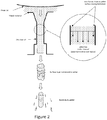
Figure 1 shows steam exploded oak black pellets produced with an additional source of glue. During pelleting uniform pellets with cylindrical cross section and high integral stability and mechanical properties are produced. Sticking and plugging in the pellet press is significantly reduced so that also the energy consumption is reduced. -
Figure 2 shows steam exploded oak black pellets produced without additional glue. During pelleting, the steam exploded oak material sticks to the surface of the pellet press and causes ripping off of the pellet surface leading to pellets with a non-cylindrical cross section. Eventually, the die of the pellet press is plugged leading to higher energy consumption. The non-uniform black pellets show poor mechanical properties, break easily and produce dust. -
Figure 3 shows a block diagram of the process for producing steam exploded black pellets from hardwood using a source of glue of wood origin for reduced energy consumption during pelleting and improved mechanical properties of the finished pellets. - The present invention relates to a process for producing hardwood black pellets comprising the steps of
- a) Providing hardwood material;
- b) Combining the hardwood material with a source of glue of wood origin;
- c) Subjecting the combined hardwood material and source of and glue to heat pretreatment to form a glue;
- d) Subjecting the pretreated hardwood material and formed glue to steam explosion;
- e) Pelleting the steam exploded hardwood material formed glue to hardwood black pellets.
- The process of the invention is suitable for producing hardwood black pellets with high integral stability and good mechanical properties made from various kinds of hardwood. Preferably, the hardwood is selected from Salix species, Alnus species, Carpinus species, Populus species, Acer species, Quercus species, Fraxinus species, Betula species, Fagus species, Ulmus species, Catanea species, Robinia species, or mixtures thereof. The process is especially suitable for sources of hardwood which contain hardwood selected from Quercus species, such as European oak.
- The source of hardwood can be selected from fresh hardwood or processed hardwood, e.g. residual wood from pulp wood, landscaping, logging or sawmills. Before being combined with the source of glue and subjected to heat pretreatment, the hardwood can be in a fresh state, with a moisture content about 50%, or dried to a moisture content of between about 7% to 13%.
- The source of hardwood is preferably selected from chips of hardwood, but also pieces of hardwood having smaller particle sizes than chips of hardwood, e.g. so-called microchips of hardwood can also be used. The chips of hardwood preferably have a size in the range of from 30 mm to 125 mm in their largest dimension, preferably from 50 to 100 mm in their largest dimension. The microchips of hardwood preferably have a size in the range of from 1 mm to 50 mm in their largest dimension, preferably from 5 to 30 mm in their largest dimension. The smallest dimension, typically the thickness of chips or particles of hardwood, may range from 1 mm or less to 25 mm. The chips or microchips of hardwood are preferably formed by cutting, chipping or hammermilling of larger pieces of hardwood such as trees, branches, logging residues, stumps, roots, and wood waste.
- The hardwood material is combined with a source of glue of wood origin. It has been found that the integral stability and mechanical properties of the finished hardwood steam exploded black pellets can be significantly increased when the hardwood particles are "glued" together at the same time as the pelleting process runs more smoothly. The glue is preferably generated in situ during heat pretreatment of the hardwood black material and the source of glue.
- It is preferred that the glue is selected from pseudo-lignin and/or lignin. Pseudo-lignin is preferably generated during the heat pretreatment of the source of glue by the condensation and polymerization reactions of carbohydrate and possibly lignin degradation products formed during the heat pretreatment before steam explosion. Pseudo-lignin is formed through condensation and polymerization of hydrolysis reactions products with furfural and hydroxymethylfurfural. More specifically, by condensation and polymerization reactions, carbohydrate and possibly lignin degradation moieties form so-called pseudo-lignin which is a tacky compound. The pseudo-lignin and lignin degradation products may be redistributed over all the wood particles, including the hardwood material, during the steam explosion step.
- Lignin, mainly in the form of lignin fragments liberated during the heat pretreatment is preferably obtained from the source of glue during the heat pretreatment before the steam explosion step. During the steam explosion step the wood particles from the source of glue are further disintegrated. The wood cells break and part mainly in the middle lamella, which, in the case of the source of glue selected from softwoods, results in particles that to a high extent are covered with middle lamella lignin with the ability to function as a glue between the bulk hardwood particles when the steam exploded material is pelleted.
- The source of glue is preferably selected from sawdust of softwood, chips or microchips of softwood, prehydrolysed softwood, sawdust of hardwood, an organic material comprising at least 20 wt% lignin, lignin or mixtures thereof. By prehydrolyzed softwood is understood softwood that has undergone autocatalyzed or acid-catalyzed prehydrolysis with a severity factor log Ro in the range of 3.0 - 5.5. The severity factor Ro is defined as the integral of the factor over time t (min) at the process temperature T (°C) according to the equation:

- Lignin can also be obtained from spent cooking liquor from chemical pulping processes, such as the kraft pulping processes as known in the art, e.g. according to the LignoBoost process for separation and extraction of kraft lignin.
- It has been found that already low amounts of source of glue are sufficient to significantly increase the integral stability and mechanical properties of the resultant hardwood black pellets. It is preferred that the weight ratio (oven-dry basis) of the hardwood material and the source of glue combined in process step b) is from 99:1 to 75:25, more preferably from 98:2 to 85:15 and most preferably from 95:5 to 90:10.
- Preferably, the hardwood material is combined with the source of glue in a means for feeding the biomass to the heat pretreatment. Suitably, the hardwood material and the source of glue are combined by feeding them into a plug screw feeder that feeds the combined material into a pressurized pretreament reactor. Other means of feeding can also be used, e.g. rotating pocket feeders, to feed the hardwood material and the source of glue into a pressurized pretreatment reactor. The plug screw feeder (7 in
Figure 3 ), or any other means for feeding the combined material into the pressurized pretreatment reactor, can in turn be fed by metering screw conveyors (4 and 5 inFigure 3 ) to achieve the desired proportion between hardwood material and source of glue. - In the pretreatment reactor, the combined hardwood material and source of glue are heated and thermally softened by contact with direct steam. The temperature during the heat pretreatment is preferably in the range of from 150°C to 250°C, more preferably of from 180°C to 230°C. The pressure during the thermal treatment is preferably in the range of from 4 bar(g) to 33 bar(g), more preferably from 5 bar(g) to 30 bar(g) and most preferably from 10 bar(g) to 25 bar(g). Preferably, the combined hardwood material and source of glue are subjected to the heat pretreatment for at least 2 min, such as a time span of from 2 min to 1 hour, preferably for a time span of from 2 min to 30 min, still more preferably for a time span of from 3 min to 15 min.
- It has been found in the present invention that due to the high temperature and presence of moisture in the pretreatment reactor, the lignin in the hardwood material and the source of glue is softened. Acetyl groups in the hemicellulose fraction are split off, which lowers the pH of the wood moisture and any liquid phase. Thereby, the hemicelluloses are hydrolyzed and liberated oligosaccharides and monosaccharides undergo further hydrolysis and degradation to various reaction products. The hydrolysis reaction products then undergo condensation and polymerization reactions resulting in formation of pseudo-lignin. Furfural and methylfurfural, that take part in the formation of pseudo-lignin, are formed from degraded saccharides. Combination of the pseudo-lignin with lignin fragments may also take place. Since the source of glue in the form of e.g. sawdust has a smaller particle size than the main hardwood pellet material, heating to reaction temperature is more rapid in the source of glue than in the bulk of the biomass in the pretreatment reactor. A certain severity factor, i.e. a combination of time and temperature for biomass pretreatment reactions, is achieved faster in biomass material that has a small particle size, i.e. in the source of glue, which results in faster and more extensive formation of pseudo-lignin and release of lignin fragments than what do occur in the bulk hardwood material of larger particle sizes. Further, small particles of softwood in the form of sawdust or microchips have a large surface area which in the subsequent disintegration during the steam explosion discharge, where separation mainly occurs in the middle lamellae, will to a high extent be covered by lignin, which contributes to the binding of the hardwood particles in the pellets in the pelleting process.
- Preferably after heat pretreatment, the combined hardwood material, source of glue and formed glue are subjected to steam explosion. During the steam explosion step, the hardwood material, source of glue and formed glue are exposed to an environment of lower pressure such as atmospheric pressure. To obtain a suitable degree of steam explosion effect, the decrease of pressure is preferably done rapidly. Typically, the heat pretreated hardwood material, source of glue, formed glue and steam are let out of the pretreatment reactor, whereby the pressure rapidly drops to a lower level, i.e. in less than 5 seconds, more preferably in less than 1 second. Preferably, the heat pretreated hardwood material, source of glue, formed glue and steam are let out of the pretreatment reactor through a blow-valve or orifice suitably into a blow line. Steam can be separated and recovered from the heat pretreated biomass material in a cyclone connected to the blow-line.
- Because of the steam explosion, the hardwood material and source of glue disintegrate into smaller particles due to the forces of expanding steam and impact and shear forces when the material passes through the blow valve and blow line. As a consequence, the wood is disintegrated into fiber bundles and even separate fibers.
- Usually, upon discharge from the pretreatment reactor, the steam exploded hardwood material and source of glue are disintegrated or defibrated to such an extent that no further grinding is necessary before pelleting. However, in certain embodiments, the process of the invention further comprises the step of grinding the steam exploded hardwood material and source of glue before pelleting.
- The heat treated and steam exploded material is preferably cooled to a temperature of below 120°C, or preferably below 100°C before pelleting.
- Before pelleting to hardwood black pellets, additives can be added to the steam exploded material. Suitable additives are e.g. fouling-reducing additives that reduce fouling of boiler heat-transfer surfaces during combustion of steam exploded pellets, and/or additives that reduce the corrosion potential of the hardwood material. Fouling-reducing additives can be selected from kaolin, lime stone, dolomite, magnesium carbonate, clay and coal fly ash. The fouling-reducing additives can be added e.g. during heat pretreatment, after steam explosion or in connection with pelleting. Suitable additives are disclosed in
WO 2017/089648 . - As a final step of the process of the invention, the steam exploded hardwood material and formed glue are pelleted into hardwood black pellets. For pelleting, the steam exploded hardwood material and glue are preferably fed into a pelleting device such as a pellet press or pellet mill. The pelleting device preferably comprises means for pressing the steam exploded hardwood material and formed glue towards an orifice. Said means can comprise a pressure plate and a piston or a screw. The orifice may be arranged in a plate having multiple orifices. When compressed, the steam exploded hardwood material and glue pass through the orifice to form pellets. The orifice or multiple orifices preferably have a circular shape so that the pellets also have a circular shape in the direction perpendicular to the longitudinal direction. Suitably, the pellets are cut in longitudinal direction.
- The resulting hardwood black pellets preferably have a size in the direction perpendicular to the longitudinal direction (e.g. the diameter of a circular pellet) of from 5 mm to 15 mm, such as from 6 mm to 12 mm. The length of a pellet is typically e.g. from 5 mm to 30 mm. The hardwood black pellets preferably have a density of from 700 kg/m3 to 1200 kg/m3, more preferably from 800 kg/m3 to 1000 kg/m3.
-
Figure 1 shows steam exploded oak black pellets produced with additional source of glue. During pelleting, uniform pellets with cylindrical cross section and high integral stability and mechanical properties are produced. Sticking and plugging in the pellet press are significantly reduced so that also the energy consumption is reduced. - In contrast to that,
Figure 2 shows steam exploded oak black pellets produced without additional glue or source of glue. During pelleting, the steam exploded oak material sticks to the surface of the pellet press and the pellet surface is peeled off leading to pellets with a non-cylindrical cross section. Eventually, the die of the pellet press becomes plugged leading to higher energy consumption. The non-uniform black pellets show poor mechanical properties, break easily and produce dust. - Thus, it has been surprisingly found that the process according to the present invention is suitable for producing hardwood black pellets, which due to their composition, including formed glue, show a high durability, wet durability, and hardness which facilitates handling, transport and storage from production to combustion as a biofuel. The addition of a source of glue improves the structural integrity and mechanical properties of the hardwood black pellets so that various kinds of hardwoods, including e.g. European oak, can be used as sources of hardwood in the process of the present invention.
- Further, the present invention relates to the use of a source of glue of wood origin for reducing energy consumption during pelleting of steam exploded hardwood black pellets.
- Still further, the present invention relates to the use of a source of glue of wood origin for increasing the structural integrity of steam exploded hardwood black pellets.
- The sources of glue of wood origin and hardwood as well as the hardwood black pellets of the above uses of the present invention are preferably defined as described above or below.
-
- 1
- hardwood material
- 2
- pieces of hardwood material
- 3
- source of glue of wood origin
- 4
- screw conveyor
- 5
- screw conveyor
- 6
- inlet
- 7
- plug screw feeder
- 8
- inlet
- 9
- pretreatment reactor
- 10
- internal conveyor screw
- 11
- flow-controlled steam piping
- 12
- blow line
- 13
- blow valve
- 14
- cyclone
- 15
- steam exploded hardwood material
- 16
- pelleting plant
- 17
- steam exploded black hardwood pellets
-
Figure 3 shows a block diagram of the process for producing steam exploded black pellets from hardwood using a source of glue of wood origin for reduced energy consumption during pelleting and improved mechanical properties of the finished pellets. Ahardwood material 1 is provided and is chipped or hammermilled etc. to produce pieces ofhardwood material 2 of suitable sizes for heat pre-treatment in apressurized reactor 9 together with a source ofglue 3 of wood origin. Thehardwood material 2 and source ofglue 3 are fed bymetering screw conveyors inlet 6 of aplug screw feeder 7. Theplug screw feeder 7 feeds the hardwood material and source of glue into thepretreatment reactor 9 through theinlet 8. Theplug screw feeder 7 creates a steam-tight plug of thehardwood material 2 and source ofglue 3 which seals against the pretreatment reactor pressure. Aninternal conveyor screw 10 transports thematerial pretreatment reactor 9. The content of the pre-treatment reactor is heated by direct steam supplied through a flow-controlled steam piping 11 whereby the wood material in the pretreatment reactor is softened and a glue consisting of tacky compound is formed from the source of glue through chemical and physical reactions, i.e. hydrolysis and condensation reactions and release and redistribution of native lignin respectively. The steam pretreated material is subjected to steam explosion upon discharge though ablow line 12 provided with a blow valve 13 (the "explosion" point) for flow control. Steam is separated from the steam explodedmaterial 15, i.e. hardwood material and formed glue, in acyclone 14. The heat pre-treated and steam explodedmaterial 15 is sent to apelleting plant 16 to produce steam explodedblack hardwood pellets 17.
Claims (15)
- A process for producing hardwood black pellets comprising the steps ofa) Providing hardwood material;b) Combining the hardwood material with a source of glue of wood origin;c) Subjecting the combined hardwood material and source of glue to heat pretreatment to form a glue;d) Subjecting the heat pretreated hardwood material and formed glue to steam explosion;e) Pelleting the steam exploded hardwood material and formed glue to hardwood black pellets.
- The process according to claim 1, wherein the hardwood material is selected from chips of hardwood, microchips of hardwood, hammermilled hardwood or pieces of hardwood produced by other means of disintegration.
- The process according to claims 1 or 2, wherein the hardwood material is selected from Salix species, Alnus species, Carpinus species, Populus species, Acer species, Quercus species, Fraxinus species, Betula species, Fagus species, Ulmus species, Catanea species, Robinia species, or mixtures thereof.
- The process according to any one of the preceding claims, wherein the glue is formed in situ and is mainly composed of pseudo-lignin and/or lignin.
- The process according to any one of the preceding claims, wherein the source of glue is selected from chips of softwood, microchips of softwood, sawdust of softwood, prehydrolysed softwood, sawdust of hardwood, an organic material comprising at least 20 wt% lignin, lignin e.g. separated from spent cooking liquor from chemical pulping processes, or mixtures thereof.
- The process according to any one of the preceding claims, wherein the weight ratio of the hardwood material and the source of glue combined in process step b) is from 99:1 to 75:25 calculated on oven-dry basis.
- The process according to any one of the preceding claims, wherein the hardwood material has a moisture content about 50% before it is combined with the source of glue.
- The process according to any one of the preceding claims 1 to 6, wherein the hardwood material is dried to a moisture content of 7 wt% to 13 wt% before it is combined with the source of glue.
- The process according to any one of the preceding claims, wherein the hardwood material is combined with the source of glue in process step b) in a means for feeding the hardwood material to the heat pretreatment.
- The process according to any one of the preceding claims, wherein the heat pretreatment in process step c) is conducted at a temperature of 150°C to 250°C and a pressure of 4 to 33 bar(g).
- The process according to any one of the preceding claims, wherein after steam explosion, the steam exploded hardwood material and formed glue are cooled to a temperature below 120°C before pelleting.
- The process according to any one of the preceding claims, wherein the hardwood black pellets have a size in the direction perpendicular to the longitudinal direction of from 5 mm to 15 mm.
- The process according to any one of the preceding claims, wherein the hardwood black pellets have a density of from 700 kg/m3 to 1200 kg/m3.
- Use of a source of glue of wood origin for reducing energy consumption during pelleting of steam exploded hardwood material to black pellets.
- Use of a source of glue of wood origin for increasing the structural integrity of steam exploded hardwood material to black pellets.
Priority Applications (2)
| Application Number | Priority Date | Filing Date | Title |
|---|---|---|---|
| EP19156587.8A EP3696253B1 (en) | 2019-02-12 | 2019-02-12 | Process for improving structural integrity of hardwood black pellets |
| PL19156587T PL3696253T3 (en) | 2019-02-12 | 2019-02-12 | Process for improving structural integrity of hardwood black pellets |
Applications Claiming Priority (1)
| Application Number | Priority Date | Filing Date | Title |
|---|---|---|---|
| EP19156587.8A EP3696253B1 (en) | 2019-02-12 | 2019-02-12 | Process for improving structural integrity of hardwood black pellets |
Publications (2)
| Publication Number | Publication Date |
|---|---|
| EP3696253A1 true EP3696253A1 (en) | 2020-08-19 |
| EP3696253B1 EP3696253B1 (en) | 2021-04-21 |
Family
ID=65411780
Family Applications (1)
| Application Number | Title | Priority Date | Filing Date |
|---|---|---|---|
| EP19156587.8A Active EP3696253B1 (en) | 2019-02-12 | 2019-02-12 | Process for improving structural integrity of hardwood black pellets |
Country Status (2)
| Country | Link |
|---|---|
| EP (1) | EP3696253B1 (en) |
| PL (1) | PL3696253T3 (en) |
Cited By (2)
| Publication number | Priority date | Publication date | Assignee | Title |
|---|---|---|---|---|
| FR3131320A1 (en) * | 2021-12-28 | 2023-06-30 | Europeenne De Biomasse | Integration of lignin-rich material into biomass before steam cracking for the production of fuel pellets |
| NL2035157B1 (en) | 2023-06-22 | 2025-01-07 | Torrgas Tech B V | Process to prepare syngas from a biomass feedstock |
Citations (6)
| Publication number | Priority date | Publication date | Assignee | Title |
|---|---|---|---|---|
| US1578609A (en) | 1924-09-24 | 1926-03-30 | William H Mason | Process and apparatus for disintegration of wood and the like |
| WO2013191897A1 (en) | 2012-06-22 | 2013-12-27 | Sundrop Fuels, Inc. | Pretreating biomass using steam explosion before gasification |
| WO2014204519A1 (en) * | 2013-05-14 | 2014-12-24 | Sundrop Fuels, Inc. | Steam explosion methods before gasification |
| WO2015185751A1 (en) | 2014-06-06 | 2015-12-10 | Glommen Skog Sa | Wood processing method |
| WO2017089648A1 (en) | 2015-11-26 | 2017-06-01 | Valmet Technologies Oy | Biomass based fuel configured to reduce a chemical and/or mechanical effect of flue gas on heat transfer surfaces and a method for making the same |
| EP3205707A1 (en) | 2016-02-12 | 2017-08-16 | Biochemtex S.p.A. | Combustible article comprising lignin |
-
2019
- 2019-02-12 PL PL19156587T patent/PL3696253T3/en unknown
- 2019-02-12 EP EP19156587.8A patent/EP3696253B1/en active Active
Patent Citations (6)
| Publication number | Priority date | Publication date | Assignee | Title |
|---|---|---|---|---|
| US1578609A (en) | 1924-09-24 | 1926-03-30 | William H Mason | Process and apparatus for disintegration of wood and the like |
| WO2013191897A1 (en) | 2012-06-22 | 2013-12-27 | Sundrop Fuels, Inc. | Pretreating biomass using steam explosion before gasification |
| WO2014204519A1 (en) * | 2013-05-14 | 2014-12-24 | Sundrop Fuels, Inc. | Steam explosion methods before gasification |
| WO2015185751A1 (en) | 2014-06-06 | 2015-12-10 | Glommen Skog Sa | Wood processing method |
| WO2017089648A1 (en) | 2015-11-26 | 2017-06-01 | Valmet Technologies Oy | Biomass based fuel configured to reduce a chemical and/or mechanical effect of flue gas on heat transfer surfaces and a method for making the same |
| EP3205707A1 (en) | 2016-02-12 | 2017-08-16 | Biochemtex S.p.A. | Combustible article comprising lignin |
Non-Patent Citations (4)
| Title |
|---|
| "Biosynthesis and Biodegradation of Wood Components", 2012, ELSEVIER, pages: 51 - 60 |
| AARUM, I. ET AL., ACS OMEGA, vol. 3, 2018, pages 4924 - 4931 |
| AMIT KUMAR BISWAS ET AL: "Steam pretreatment ofto upgrade biomass fuel for wood pellet production", FUEL PROCESSING TECHNOLOGY, ELSEVIER BV, NL, vol. 92, no. 9, 11 April 2011 (2011-04-11), pages 1711 - 1717, XP028225676, ISSN: 0378-3820, [retrieved on 20110415], DOI: 10.1016/J.FUPROC.2011.04.017 * |
| CHORNET, E.; OVEREND, R.: "Phenomenological kinetics and reaction engineering aspects of steam/aqueous treatments", STEAM EXPLOSION TECHNIQUES: FUNDAMENTALS AND INDUSTRIAL APPLICATIONS, 1991, pages 21 - 58 |
Cited By (3)
| Publication number | Priority date | Publication date | Assignee | Title |
|---|---|---|---|---|
| FR3131320A1 (en) * | 2021-12-28 | 2023-06-30 | Europeenne De Biomasse | Integration of lignin-rich material into biomass before steam cracking for the production of fuel pellets |
| WO2023126394A1 (en) | 2021-12-28 | 2023-07-06 | Europeenne De Biomasse | Exploiting a contaminated lignin-rich material by incorporating same into a biomass before the step of steam cracking in the production of fuel pellets |
| NL2035157B1 (en) | 2023-06-22 | 2025-01-07 | Torrgas Tech B V | Process to prepare syngas from a biomass feedstock |
Also Published As
| Publication number | Publication date |
|---|---|
| PL3696253T3 (en) | 2021-12-13 |
| EP3696253B1 (en) | 2021-04-21 |
Similar Documents
| Publication | Publication Date | Title |
|---|---|---|
| Shankar Tumuluru et al. | A review on biomass torrefaction process and product properties for energy applications | |
| Tabil et al. | Biomass feedstock pre-processing–Part 1: pre-treatment | |
| Ravindran et al. | A comprehensive review on pre-treatment strategy for lignocellulosic food industry waste: challenges and opportunities | |
| Stelte | Steam explosion for biomass pre-treatment | |
| Sun et al. | The role of pretreatment in improving the enzymatic hydrolysis of lignocellulosic materials | |
| EP2411492B1 (en) | Pretreated densified biomass products and methods of making and using same | |
| Schmidt et al. | Optimization of wet oxidation pretreatment of wheat straw | |
| EP3380590B1 (en) | A method for manufacturing biomass based fuel configured to reduce a chemical and/or mechanical effect of flue gas on heat transfer surfaces | |
| Peral | Biomass pretreatment strategies (technologies, environmental performance, economic considerations, industrial implementation) | |
| Irmak | Challenges of Biomass Utilization | |
| EP1450994B1 (en) | Processing of ligno-cellulose materials | |
| AU2016231546A1 (en) | Methods for producing biomass-based fuel with pulp processing equipment | |
| Singh et al. | Conversion of lignocellulosic biomass to bioethanol: an overview with a focus on pretreatment | |
| JP2011523349A (en) | Biomass processing method | |
| Paredes et al. | Influence of hot water extraction on the physical and mechanical behavior of OSB | |
| Ewanick et al. | Hydrothermal pretreatment of lignocellulosic biomass | |
| Lam | Steam explosion of biomass to produce durable wood pellets | |
| AU2002337519A1 (en) | Processing of ligno-cellulose materials | |
| EP3696253B1 (en) | Process for improving structural integrity of hardwood black pellets | |
| Pažitný et al. | Effect of steam explosion on enzymatic hydrolysis of various parts of poplar tree | |
| Tooyserkani | Hydrothermal pretreatment of softwood biomass and bark for pelletization | |
| US12049598B2 (en) | Mixture of steam-cracked biomass and lignin for granule production | |
| Laxman et al. | Bioethanol lignocellulosic biomass | |
| Yue et al. | The impacts of biomass Pretreatment methods on bio-oil production | |
| Banga et al. | Torrefaction of Biomass |
Legal Events
| Date | Code | Title | Description |
|---|---|---|---|
| PUAI | Public reference made under article 153(3) epc to a published international application that has entered the european phase |
Free format text: ORIGINAL CODE: 0009012 |
|
| STAA | Information on the status of an ep patent application or granted ep patent |
Free format text: STATUS: THE APPLICATION HAS BEEN PUBLISHED |
|
| AK | Designated contracting states |
Kind code of ref document: A1 Designated state(s): AL AT BE BG CH CY CZ DE DK EE ES FI FR GB GR HR HU IE IS IT LI LT LU LV MC MK MT NL NO PL PT RO RS SE SI SK SM TR |
|
| AX | Request for extension of the european patent |
Extension state: BA ME |
|
| STAA | Information on the status of an ep patent application or granted ep patent |
Free format text: STATUS: REQUEST FOR EXAMINATION WAS MADE |
|
| 17P | Request for examination filed |
Effective date: 20201124 |
|
| RBV | Designated contracting states (corrected) |
Designated state(s): AL AT BE BG CH CY CZ DE DK EE ES FI FR GB GR HR HU IE IS IT LI LT LU LV MC MK MT NL NO PL PT RO RS SE SI SK SM TR |
|
| GRAP | Despatch of communication of intention to grant a patent |
Free format text: ORIGINAL CODE: EPIDOSNIGR1 |
|
| STAA | Information on the status of an ep patent application or granted ep patent |
Free format text: STATUS: GRANT OF PATENT IS INTENDED |
|
| INTG | Intention to grant announced |
Effective date: 20210112 |
|
| GRAS | Grant fee paid |
Free format text: ORIGINAL CODE: EPIDOSNIGR3 |
|
| GRAA | (expected) grant |
Free format text: ORIGINAL CODE: 0009210 |
|
| STAA | Information on the status of an ep patent application or granted ep patent |
Free format text: STATUS: THE PATENT HAS BEEN GRANTED |
|
| AK | Designated contracting states |
Kind code of ref document: B1 Designated state(s): AL AT BE BG CH CY CZ DE DK EE ES FI FR GB GR HR HU IE IS IT LI LT LU LV MC MK MT NL NO PL PT RO RS SE SI SK SM TR |
|
| REG | Reference to a national code |
Ref country code: GB Ref legal event code: FG4D |
|
| REG | Reference to a national code |
Ref country code: CH Ref legal event code: EP |
|
| REG | Reference to a national code |
Ref country code: DE Ref legal event code: R096 Ref document number: 602019003952 Country of ref document: DE |
|
| REG | Reference to a national code |
Ref country code: IE Ref legal event code: FG4D |
|
| REG | Reference to a national code |
Ref country code: AT Ref legal event code: REF Ref document number: 1384650 Country of ref document: AT Kind code of ref document: T Effective date: 20210515 |
|
| REG | Reference to a national code |
Ref country code: FI Ref legal event code: FGE |
|
| REG | Reference to a national code |
Ref country code: NL Ref legal event code: FP |
|
| REG | Reference to a national code |
Ref country code: SE Ref legal event code: TRGR |
|
| REG | Reference to a national code |
Ref country code: LT Ref legal event code: MG9D |
|
| REG | Reference to a national code |
Ref country code: NO Ref legal event code: T2 Effective date: 20210421 |
|
| PG25 | Lapsed in a contracting state [announced via postgrant information from national office to epo] |
Ref country code: BG Free format text: LAPSE BECAUSE OF FAILURE TO SUBMIT A TRANSLATION OF THE DESCRIPTION OR TO PAY THE FEE WITHIN THE PRESCRIBED TIME-LIMIT Effective date: 20210721 Ref country code: HR Free format text: LAPSE BECAUSE OF FAILURE TO SUBMIT A TRANSLATION OF THE DESCRIPTION OR TO PAY THE FEE WITHIN THE PRESCRIBED TIME-LIMIT Effective date: 20210421 Ref country code: LT Free format text: LAPSE BECAUSE OF FAILURE TO SUBMIT A TRANSLATION OF THE DESCRIPTION OR TO PAY THE FEE WITHIN THE PRESCRIBED TIME-LIMIT Effective date: 20210421 |
|
| PG25 | Lapsed in a contracting state [announced via postgrant information from national office to epo] |
Ref country code: LV Free format text: LAPSE BECAUSE OF FAILURE TO SUBMIT A TRANSLATION OF THE DESCRIPTION OR TO PAY THE FEE WITHIN THE PRESCRIBED TIME-LIMIT Effective date: 20210421 Ref country code: PT Free format text: LAPSE BECAUSE OF FAILURE TO SUBMIT A TRANSLATION OF THE DESCRIPTION OR TO PAY THE FEE WITHIN THE PRESCRIBED TIME-LIMIT Effective date: 20210823 Ref country code: RS Free format text: LAPSE BECAUSE OF FAILURE TO SUBMIT A TRANSLATION OF THE DESCRIPTION OR TO PAY THE FEE WITHIN THE PRESCRIBED TIME-LIMIT Effective date: 20210421 Ref country code: GR Free format text: LAPSE BECAUSE OF FAILURE TO SUBMIT A TRANSLATION OF THE DESCRIPTION OR TO PAY THE FEE WITHIN THE PRESCRIBED TIME-LIMIT Effective date: 20210722 Ref country code: IS Free format text: LAPSE BECAUSE OF FAILURE TO SUBMIT A TRANSLATION OF THE DESCRIPTION OR TO PAY THE FEE WITHIN THE PRESCRIBED TIME-LIMIT Effective date: 20210821 |
|
| REG | Reference to a national code |
Ref country code: DE Ref legal event code: R097 Ref document number: 602019003952 Country of ref document: DE |
|
| PG25 | Lapsed in a contracting state [announced via postgrant information from national office to epo] |
Ref country code: SK Free format text: LAPSE BECAUSE OF FAILURE TO SUBMIT A TRANSLATION OF THE DESCRIPTION OR TO PAY THE FEE WITHIN THE PRESCRIBED TIME-LIMIT Effective date: 20210421 Ref country code: EE Free format text: LAPSE BECAUSE OF FAILURE TO SUBMIT A TRANSLATION OF THE DESCRIPTION OR TO PAY THE FEE WITHIN THE PRESCRIBED TIME-LIMIT Effective date: 20210421 Ref country code: ES Free format text: LAPSE BECAUSE OF FAILURE TO SUBMIT A TRANSLATION OF THE DESCRIPTION OR TO PAY THE FEE WITHIN THE PRESCRIBED TIME-LIMIT Effective date: 20210421 Ref country code: SM Free format text: LAPSE BECAUSE OF FAILURE TO SUBMIT A TRANSLATION OF THE DESCRIPTION OR TO PAY THE FEE WITHIN THE PRESCRIBED TIME-LIMIT Effective date: 20210421 Ref country code: RO Free format text: LAPSE BECAUSE OF FAILURE TO SUBMIT A TRANSLATION OF THE DESCRIPTION OR TO PAY THE FEE WITHIN THE PRESCRIBED TIME-LIMIT Effective date: 20210421 Ref country code: CZ Free format text: LAPSE BECAUSE OF FAILURE TO SUBMIT A TRANSLATION OF THE DESCRIPTION OR TO PAY THE FEE WITHIN THE PRESCRIBED TIME-LIMIT Effective date: 20210421 Ref country code: DK Free format text: LAPSE BECAUSE OF FAILURE TO SUBMIT A TRANSLATION OF THE DESCRIPTION OR TO PAY THE FEE WITHIN THE PRESCRIBED TIME-LIMIT Effective date: 20210421 |
|
| PLBE | No opposition filed within time limit |
Free format text: ORIGINAL CODE: 0009261 |
|
| STAA | Information on the status of an ep patent application or granted ep patent |
Free format text: STATUS: NO OPPOSITION FILED WITHIN TIME LIMIT |
|
| 26N | No opposition filed |
Effective date: 20220124 |
|
| PG25 | Lapsed in a contracting state [announced via postgrant information from national office to epo] |
Ref country code: IS Free format text: LAPSE BECAUSE OF FAILURE TO SUBMIT A TRANSLATION OF THE DESCRIPTION OR TO PAY THE FEE WITHIN THE PRESCRIBED TIME-LIMIT Effective date: 20210821 Ref country code: AL Free format text: LAPSE BECAUSE OF FAILURE TO SUBMIT A TRANSLATION OF THE DESCRIPTION OR TO PAY THE FEE WITHIN THE PRESCRIBED TIME-LIMIT Effective date: 20210421 |
|
| PG25 | Lapsed in a contracting state [announced via postgrant information from national office to epo] |
Ref country code: IT Free format text: LAPSE BECAUSE OF FAILURE TO SUBMIT A TRANSLATION OF THE DESCRIPTION OR TO PAY THE FEE WITHIN THE PRESCRIBED TIME-LIMIT Effective date: 20210421 |
|
| REG | Reference to a national code |
Ref country code: AT Ref legal event code: UEP Ref document number: 1384650 Country of ref document: AT Kind code of ref document: T Effective date: 20210421 |
|
| PG25 | Lapsed in a contracting state [announced via postgrant information from national office to epo] |
Ref country code: MC Free format text: LAPSE BECAUSE OF FAILURE TO SUBMIT A TRANSLATION OF THE DESCRIPTION OR TO PAY THE FEE WITHIN THE PRESCRIBED TIME-LIMIT Effective date: 20210421 |
|
| REG | Reference to a national code |
Ref country code: CH Ref legal event code: PL |
|
| REG | Reference to a national code |
Ref country code: BE Ref legal event code: MM Effective date: 20220228 |
|
| PG25 | Lapsed in a contracting state [announced via postgrant information from national office to epo] |
Ref country code: LU Free format text: LAPSE BECAUSE OF NON-PAYMENT OF DUE FEES Effective date: 20220212 |
|
| PG25 | Lapsed in a contracting state [announced via postgrant information from national office to epo] |
Ref country code: LI Free format text: LAPSE BECAUSE OF NON-PAYMENT OF DUE FEES Effective date: 20220228 Ref country code: IE Free format text: LAPSE BECAUSE OF NON-PAYMENT OF DUE FEES Effective date: 20220212 Ref country code: CH Free format text: LAPSE BECAUSE OF NON-PAYMENT OF DUE FEES Effective date: 20220228 |
|
| PG25 | Lapsed in a contracting state [announced via postgrant information from national office to epo] |
Ref country code: BE Free format text: LAPSE BECAUSE OF NON-PAYMENT OF DUE FEES Effective date: 20220228 |
|
| P01 | Opt-out of the competence of the unified patent court (upc) registered |
Effective date: 20230505 |
|
| PG25 | Lapsed in a contracting state [announced via postgrant information from national office to epo] |
Ref country code: MK Free format text: LAPSE BECAUSE OF FAILURE TO SUBMIT A TRANSLATION OF THE DESCRIPTION OR TO PAY THE FEE WITHIN THE PRESCRIBED TIME-LIMIT Effective date: 20210421 Ref country code: CY Free format text: LAPSE BECAUSE OF FAILURE TO SUBMIT A TRANSLATION OF THE DESCRIPTION OR TO PAY THE FEE WITHIN THE PRESCRIBED TIME-LIMIT Effective date: 20210421 |
|
| PG25 | Lapsed in a contracting state [announced via postgrant information from national office to epo] |
Ref country code: HU Free format text: LAPSE BECAUSE OF FAILURE TO SUBMIT A TRANSLATION OF THE DESCRIPTION OR TO PAY THE FEE WITHIN THE PRESCRIBED TIME-LIMIT; INVALID AB INITIO Effective date: 20190212 |
|
| PG25 | Lapsed in a contracting state [announced via postgrant information from national office to epo] |
Ref country code: TR Free format text: LAPSE BECAUSE OF FAILURE TO SUBMIT A TRANSLATION OF THE DESCRIPTION OR TO PAY THE FEE WITHIN THE PRESCRIBED TIME-LIMIT Effective date: 20210421 |
|
| PG25 | Lapsed in a contracting state [announced via postgrant information from national office to epo] |
Ref country code: MT Free format text: LAPSE BECAUSE OF FAILURE TO SUBMIT A TRANSLATION OF THE DESCRIPTION OR TO PAY THE FEE WITHIN THE PRESCRIBED TIME-LIMIT Effective date: 20210421 |
|
| PGFP | Annual fee paid to national office [announced via postgrant information from national office to epo] |
Ref country code: NL Payment date: 20260217 Year of fee payment: 8 |
|
| PGFP | Annual fee paid to national office [announced via postgrant information from national office to epo] |
Ref country code: SE Payment date: 20260219 Year of fee payment: 8 |
|
| PGFP | Annual fee paid to national office [announced via postgrant information from national office to epo] |
Ref country code: GB Payment date: 20260217 Year of fee payment: 8 |
|
| PGFP | Annual fee paid to national office [announced via postgrant information from national office to epo] |
Ref country code: DE Payment date: 20260217 Year of fee payment: 8 Ref country code: NO Payment date: 20260219 Year of fee payment: 8 |
|
| PGFP | Annual fee paid to national office [announced via postgrant information from national office to epo] |
Ref country code: AT Payment date: 20260217 Year of fee payment: 8 |
|
| PGFP | Annual fee paid to national office [announced via postgrant information from national office to epo] |
Ref country code: FI Payment date: 20260217 Year of fee payment: 8 |
|
| PGFP | Annual fee paid to national office [announced via postgrant information from national office to epo] |
Ref country code: FR Payment date: 20260217 Year of fee payment: 8 |
|
| PGFP | Annual fee paid to national office [announced via postgrant information from national office to epo] |
Ref country code: PL Payment date: 20260113 Year of fee payment: 8 |