EP3694124A1 - Polarized coding method and apparatus, electronic device, and storage medium - Google Patents
Polarized coding method and apparatus, electronic device, and storage medium Download PDFInfo
- Publication number
- EP3694124A1 EP3694124A1 EP18862044.7A EP18862044A EP3694124A1 EP 3694124 A1 EP3694124 A1 EP 3694124A1 EP 18862044 A EP18862044 A EP 18862044A EP 3694124 A1 EP3694124 A1 EP 3694124A1
- Authority
- EP
- European Patent Office
- Prior art keywords
- preset
- sequence
- code rate
- encoded
- length
- Prior art date
- Legal status (The legal status is an assumption and is not a legal conclusion. Google has not performed a legal analysis and makes no representation as to the accuracy of the status listed.)
- Pending
Links
- 238000000034 method Methods 0.000 title claims abstract description 99
- 230000005540 biological transmission Effects 0.000 claims abstract description 276
- 230000011218 segmentation Effects 0.000 claims abstract description 144
- 230000006870 function Effects 0.000 claims description 76
- 238000012886 linear function Methods 0.000 claims description 56
- 230000008569 process Effects 0.000 claims description 17
- 230000015654 memory Effects 0.000 claims description 12
- 238000004590 computer program Methods 0.000 claims description 10
- 238000013467 fragmentation Methods 0.000 abstract 2
- 238000006062 fragmentation reaction Methods 0.000 abstract 2
- 238000010586 diagram Methods 0.000 description 19
- 238000004088 simulation Methods 0.000 description 8
- 241000169170 Boreogadus saida Species 0.000 description 6
- 238000005516 engineering process Methods 0.000 description 6
- 238000012986 modification Methods 0.000 description 5
- 230000004048 modification Effects 0.000 description 5
- 230000004075 alteration Effects 0.000 description 2
- 238000004458 analytical method Methods 0.000 description 2
- 238000004891 communication Methods 0.000 description 2
- 239000000969 carrier Substances 0.000 description 1
- 125000004122 cyclic group Chemical group 0.000 description 1
- 230000000694 effects Effects 0.000 description 1
- 230000007774 longterm Effects 0.000 description 1
- 238000004519 manufacturing process Methods 0.000 description 1
- 238000010295 mobile communication Methods 0.000 description 1
- 230000003287 optical effect Effects 0.000 description 1
- 230000000737 periodic effect Effects 0.000 description 1
- 230000002093 peripheral effect Effects 0.000 description 1
- 230000001360 synchronised effect Effects 0.000 description 1
Images



Classifications
-
- H—ELECTRICITY
- H04—ELECTRIC COMMUNICATION TECHNIQUE
- H04L—TRANSMISSION OF DIGITAL INFORMATION, e.g. TELEGRAPHIC COMMUNICATION
- H04L1/00—Arrangements for detecting or preventing errors in the information received
- H04L1/004—Arrangements for detecting or preventing errors in the information received by using forward error control
- H04L1/0056—Systems characterized by the type of code used
- H04L1/0057—Block codes
-
- H—ELECTRICITY
- H03—ELECTRONIC CIRCUITRY
- H03M—CODING; DECODING; CODE CONVERSION IN GENERAL
- H03M13/00—Coding, decoding or code conversion, for error detection or error correction; Coding theory basic assumptions; Coding bounds; Error probability evaluation methods; Channel models; Simulation or testing of codes
- H03M13/03—Error detection or forward error correction by redundancy in data representation, i.e. code words containing more digits than the source words
- H03M13/05—Error detection or forward error correction by redundancy in data representation, i.e. code words containing more digits than the source words using block codes, i.e. a predetermined number of check bits joined to a predetermined number of information bits
- H03M13/09—Error detection only, e.g. using cyclic redundancy check [CRC] codes or single parity bit
-
- H—ELECTRICITY
- H03—ELECTRONIC CIRCUITRY
- H03M—CODING; DECODING; CODE CONVERSION IN GENERAL
- H03M13/00—Coding, decoding or code conversion, for error detection or error correction; Coding theory basic assumptions; Coding bounds; Error probability evaluation methods; Channel models; Simulation or testing of codes
- H03M13/03—Error detection or forward error correction by redundancy in data representation, i.e. code words containing more digits than the source words
- H03M13/05—Error detection or forward error correction by redundancy in data representation, i.e. code words containing more digits than the source words using block codes, i.e. a predetermined number of check bits joined to a predetermined number of information bits
- H03M13/13—Linear codes
-
- H—ELECTRICITY
- H03—ELECTRONIC CIRCUITRY
- H03M—CODING; DECODING; CODE CONVERSION IN GENERAL
- H03M13/00—Coding, decoding or code conversion, for error detection or error correction; Coding theory basic assumptions; Coding bounds; Error probability evaluation methods; Channel models; Simulation or testing of codes
- H03M13/37—Decoding methods or techniques, not specific to the particular type of coding provided for in groups H03M13/03 - H03M13/35
- H03M13/43—Majority logic or threshold decoding
-
- H—ELECTRICITY
- H04—ELECTRIC COMMUNICATION TECHNIQUE
- H04L—TRANSMISSION OF DIGITAL INFORMATION, e.g. TELEGRAPHIC COMMUNICATION
- H04L1/00—Arrangements for detecting or preventing errors in the information received
-
- H—ELECTRICITY
- H04—ELECTRIC COMMUNICATION TECHNIQUE
- H04L—TRANSMISSION OF DIGITAL INFORMATION, e.g. TELEGRAPHIC COMMUNICATION
- H04L1/00—Arrangements for detecting or preventing errors in the information received
- H04L1/0001—Systems modifying transmission characteristics according to link quality, e.g. power backoff
- H04L1/0009—Systems modifying transmission characteristics according to link quality, e.g. power backoff by adapting the channel coding
- H04L1/0013—Rate matching, e.g. puncturing or repetition of code symbols
-
- H—ELECTRICITY
- H04—ELECTRIC COMMUNICATION TECHNIQUE
- H04L—TRANSMISSION OF DIGITAL INFORMATION, e.g. TELEGRAPHIC COMMUNICATION
- H04L1/00—Arrangements for detecting or preventing errors in the information received
- H04L1/0001—Systems modifying transmission characteristics according to link quality, e.g. power backoff
- H04L1/0015—Systems modifying transmission characteristics according to link quality, e.g. power backoff characterised by the adaptation strategy
-
- H—ELECTRICITY
- H04—ELECTRIC COMMUNICATION TECHNIQUE
- H04L—TRANSMISSION OF DIGITAL INFORMATION, e.g. TELEGRAPHIC COMMUNICATION
- H04L1/00—Arrangements for detecting or preventing errors in the information received
- H04L1/004—Arrangements for detecting or preventing errors in the information received by using forward error control
- H04L1/0056—Systems characterized by the type of code used
- H04L1/0061—Error detection codes
-
- H—ELECTRICITY
- H04—ELECTRIC COMMUNICATION TECHNIQUE
- H04L—TRANSMISSION OF DIGITAL INFORMATION, e.g. TELEGRAPHIC COMMUNICATION
- H04L1/00—Arrangements for detecting or preventing errors in the information received
- H04L1/004—Arrangements for detecting or preventing errors in the information received by using forward error control
- H04L1/0056—Systems characterized by the type of code used
- H04L1/0067—Rate matching
Definitions
- the invention relates to the field of communication technologies, and in particular, to a polar coding method and apparatus, an electronic device, and a storage medium.
- Polar codes in the control channel coding scheme of the Enhanced Mobile Broadband (eMBB) scene of 5th-Generation (5G) mobile communication technology is a coding technology that may achieve the binary symmetrical channel capacity and have the excellent decoding performance.
- the mother code length of the polar code is at most 512 bits in the downlink and at most 1024 bits in the uplink.
- the length of the information sequence of the Uplink Control Information increases dramatically, and thus the length of the corresponding sequence to be encoded also increases dramatically during the polar coding of the UCI, where the sequence to be encoded is the Uplink Control Information payload (UCI payload) obtained by adding a Cyclic Redundancy Check (CRC) sequence behind the information sequence of the UCI.
- UCI payload obtained by adding a Cyclic Redundancy Check (CRC) sequence behind the information sequence of the UCI.
- CRC Cyclic Redundancy Check
- the low-bit-rate transmission is sometimes required.
- the direct polar coding of the sequence to be encoded may significantly reduce the performance of the uplink control channel.
- the larger sequence to be encoded is segmented in the prior art, i.e., divide the sequence to be encoded into two segments for the polar coding, to ensure the performance of the uplink control channel.
- Embodiments of the invention provide a polar coding method and apparatus, an electronic device, and a storage medium, so as to provide a polar coding scheme for determining the segmentation strategy corresponding to the sequence to be encoded flexibly to ensure the performance of the uplink control channel.
- An embodiment of the invention discloses a polar coding method, which includes:
- the determining a segmentation strategy corresponding to a sequence to be encoded according to a length of the sequence to be encoded and a transmission code rate includes:
- the determining a segmentation strategy corresponding to a sequence to be encoded according to a length of the sequence to be encoded and a transmission code rate includes:
- the preset first code rate threshold is 0.4.
- the method further includes: determining the first length threshold according to the transmission code rate and a preset first function.
- c is not greater than 1200 and not less than 800, and b is not greater than 161 and not less than 119.
- c is 1000 and b is 140.
- the determining a segmentation strategy corresponding to a sequence to be encoded according to a length of the sequence to be encoded and a transmission code rate includes:
- the preset second length threshold is not less than 290 and not greater than 390.
- the preset second length threshold is 340.
- the preset second code rate threshold is 0.2.
- the determining a segmentation strategy corresponding to a sequence to be encoded according to a length of the sequence to be encoded and a transmission code rate includes:
- the third code rate threshold is 6/25.
- the preset third length threshold is not less than 348 and not greater than 472.
- the preset third length threshold is 410.
- the determining a segmentation strategy corresponding to a sequence to be encoded according to a length of the sequence to be encoded and a transmission code rate includes:
- the method further includes: determining the fourth length threshold according to the transmission code rate and a preset second function.
- a is not greater than 1200 and not less than 800, and e is not greater than 196 and not less than 144.
- a is 1000 and e is 170.
- the determining a segmentation strategy corresponding to a sequence to be encoded according to a length of the sequence to be encoded and a transmission code rate includes:
- the method further includes:
- the preset fifth code rate threshold is not less than 0.2 and not greater than 0.9.
- the preset fifth code rate threshold is 0.75, or 2/3, or 1/2, or 2/5, or 0.38, or 0.36, or 1/3, or 0.3, or 0.28, or 0.26, or 0.24, or 1/4, or 1/5.
- the preset fifth length threshold is not less than 300 and not greater than 450.
- the preset fifth length threshold is 340, or 350, or 360, or 370, or 380, or 390, or 400, or 410, or 420, or 430, or 440, or 450.
- the determining a segmentation strategy corresponding to a sequence to be encoded according to a length of the sequence to be encoded and a transmission code rate includes:
- f is a numerical value in the range of 500-1200 and g is a numerical value in the range of 60-300.
- f 832 and g is 200.
- the preset sixth code rate threshold is 0.2.
- h is a numerical value in the range of 500-1200 and i is a numerical value in the range of 60-300.
- the method further includes:
- the fifth code rate threshold is between x times the maximum bit length to be encoded and N times the maximum bit length to be encoded, wherein x is a numerical value greater than 0 and less than N.
- x is a numerical value greater than or equal to 0.3 and less than 2, and N is 2.
- the processing the sequence to be encoded according to the segmentation strategy includes:
- An embodiment of the invention discloses a polar coding apparatus, which includes:
- An embodiment of the invention discloses an electronic device including: a memory and a processor; the processor is configured to read programs in the memory and perform the process of: determining a segmentation strategy corresponding to a sequence to be encoded according to a length of the sequence to be encoded and a transmission code rate; and processing the sequence to be encoded according to the segmentation strategy, and performing polar coding on the processed sequence to be encoded.
- the processor is specifically configured to: judge whether the transmission code rate is greater than or greater than/equal to a preset first code rate threshold; if it is determined that the transmission code rate is greater than or greater than/equal to the preset first code rate threshold, determine not to segment the sequence to be encoded.
- the processor is specifically configured to: if the transmission code rate is not greater than or less than a preset first code rate threshold and not less than or greater than a preset second code rate threshold, judge whether the length of the sequence to be encoded is greater than or greater than/equal to a preset first length threshold, wherein the first code rate threshold is greater than the second code rate threshold; if it is determined that the length of the sequence to be encoded is greater than or greater than/equal to a preset first length threshold, determine to segment the sequence to be encoded; and if it is determined that the length of the sequence to be encoded is not greater than or greater than/equal to a preset first length threshold, determine not to segment the sequence to be encoded.
- the preset first code rate threshold is 0.4.
- the processor is further configured to: determine the first length threshold according to the transmission code rate and a preset first function.
- c is not greater than 1200 and not less than 800, and b is not greater than 161 and not less than 119.
- c is 1000 and b is 140.
- the processor is specifically configured to: if the transmission code rate is less than or less than/equal to a preset second code rate threshold, judge whether the length of the sequence to be encoded is greater than or greater than/equal to a preset second length threshold; if it is determined that the length of the sequence to be encoded is greater than or greater than/equal to the preset second length threshold, determine to segment the sequence to be encoded; if it is determined that the length of the sequence to be encoded is not greater than or greater than/equal to the preset second length threshold, determine not to segment the sequence to be encoded.
- the preset second length threshold is not less than 290 and not greater than 390.
- the preset second length threshold is 340.
- the preset second code rate threshold is 0.2.
- the processor is specifically configured to: if the transmission code rate is less than or less than/equal to a preset third code rate threshold, judge whether the length of the sequence to be encoded is greater than or greater than/equal to a preset third length threshold; if it is determined that the length of the sequence to be encoded is greater than or greater than/equal to the preset third length threshold, determine to segment the sequence to be encoded; and if it is determined that the length of the sequence to be encoded is not greater than or greater than/equal to the preset third length threshold, determine not to segment the sequence to be encoded.
- the third code rate threshold is 6/25.
- the preset third length threshold is not less than 348 and not greater than 472.
- the preset third length threshold is 410.
- the processor is specifically configured to: if the transmission code rate is not less than or greater than a preset third code rate threshold and not greater than or less than a preset fourth code rate threshold, judge whether the length of the sequence to be encoded is greater than or greater than/equal to a preset fourth length threshold, wherein the fourth code rate threshold is greater than the third code rate threshold; if it is determined that the length of the sequence to be encoded is greater than or greater than/equal to the preset fourth length threshold, determine to segment the sequence to be encoded; and if it is determined that the length of the sequence to be encoded is not greater than or greater than/equal to the preset fourth length threshold, determine not to segment the sequence to be encoded.
- the processor is further configured to: determine the fourth length threshold according to the transmission code rate and a preset second function before judging whether the length of the sequence to be encoded is greater than or greater than/equal to a preset fourth length threshold.
- a is not greater than 1200 and not less than 800, and e is not greater than 196 and not less than 144.
- a is 1000 and e is 170.
- the processor is specifically configured to: judge whether the transmission code rate is greater than or greater than/equal to a preset fourth code rate threshold; if it is determined that the transmission code rate is greater than or greater than/equal to a preset fourth code rate threshold, determine not to segment the sequence to be encoded.
- the preset fourth code rate threshold is 9/25.
- the processor is specifically configured to: judge whether the length of the sequence to be encoded is greater than or greater than/equal to a preset fifth length threshold; if it is determined that the length of the sequence to be encoded is greater than or greater than/equal to a preset fifth length threshold, determine to segment the sequence to be encoded.
- the processor is specifically configured to: judge whether the transmission code rate is less than or less than/equal to a preset fifth code rate threshold; if it is determined that the transmission code rate is less than or less than/equal to a preset fifth code rate threshold, determine to segment the sequence to be encoded.
- the preset fifth code rate threshold is not less than 0.2 and not greater than 0.9.
- the preset fifth code rate threshold is 0.75, or 2/3, or 1/2, or 2/5, or 0.38, or 0.36, or 1/3, or 0.3, or 0.28, or 0.26, or 0.24, or 1/4, or 1/5.
- the preset fifth length threshold is not less than 300 and not greater than 450.
- the preset fifth length threshold is 340, or 350, or 360, or 370, or 380, or 390, or 400, or 410, or 420, or 430, or 440, or 450.
- f is a numerical value in the range of 500-1200 and g is a numerical value in the range of 60-300.
- f 832 and g is 200.
- the preset sixth code rate threshold is 0.2.
- h is a numerical value in the range of 500-1200 and i is a numerical value in the range of 60-300.
- the processor is further configured to: judge whether the length of the sequence to be encoded is less than or equal to a preset fifth length threshold; if it is determined that the length of the sequence to be encoded is less than or equal to the preset fifth length threshold, proceed to the step of determining to segment the sequence to be encoded.
- the fifth code rate threshold is between x times the maximum bit length to be encoded and N times the maximum bit length to be encoded, wherein x is a numerical value greater than 0 and less than N.
- x is a numerical value greater than or equal to 0.3 and less than 2, and N is 2.
- the processor is specifically configured to: segment an information sequence in the sequence to be encoded or segment the sequence to be encoded containing an information sequence and a CRC sequence when the segmentation strategy is to segment the sequence to be encoded.
- An embodiment of the invention discloses a computer readable storage medium storing computer programs executable by an electronic device, where the programs cause the electronic device to perform steps of any method described above when running on the electronic device.
- the embodiments of the invention disclose a polar coding method and apparatus, an electronic device, and a storage medium.
- the solution includes: determining the segmentation strategy corresponding to the sequence to be encoded according to the length of the sequence to be encoded and the transmission code rate; and processing the sequence to be encoded according to the segmentation strategy, and performing the polar coding on the processed sequence to be encoded.
- the segmentation strategy corresponding to the sequence to be encoded may be determined according to the length of the sequence to be encoded and the transmission code rate, so the corresponding segmentation strategies are determined for the sequences to be encoded of different lengths and different transmission code rates, ensuring the performance of the uplink control channel.
- the embodiments are numbered, for example, first, second, third, ... fifteenth embodiments, etc., but this does not mean that all the embodiments are completely independent and cannot be combined.
- each numbered embodiment is used to explain how a certain solution is implemented, and various embodiments may be used in combination as needed to obtain the desired effect.
- Fig.1 is a schematic diagram of a polar coding process provided by the embodiment of the invention. This method includes the following steps.
- S101 determining a segmentation strategy corresponding to a sequence to be encoded according to the length of the sequence to be encoded and the transmission code rate.
- the polar coding method provided in the embodiment of the invention is applied to a transmitting end, and specifically, the transmitting end may be a base station or a User Equipment (UE).
- the transmitting end may be a base station or a User Equipment (UE).
- UE User Equipment
- the Physical Uplink Control Channel (PUCCH) is used to transmit the synchronized UCI, and the UCI transmitted on the PUCCH includes the uplink Scheduling Request (SR), the downlink Hybrid Automatic Repeat Request Acknowledgment (HARQ-ACK) information, and the periodic Channel Quality Indicator (CQI) information of the UE.
- the transmitting end may add a CRC sequence for checking behind the UCI information sequence before encoding the UCI.
- the sequence to be encoded includes the UCI information sequence and the CRC sequence for checking, that is, the sequence to be encoded is the obtained UCI payload.
- At least one length threshold and/or at least one code rate threshold are set respectively for the length of the sequence to be encoded and the transmission code rate
- the corresponding segmentation strategy is set for the at least one length threshold and/or at least one code rate threshold, where the segmentation strategy is to segment the sequence to be encoded or not to segment the sequence to be encoded.
- the segmentation strategy corresponding to the sequence to be encoded may be determined according to the length of the sequence to be encoded and transmission code rate as well as at least one length threshold and/or at least one code rate threshold.
- S102 processing the sequence to be encoded according to the segmentation strategy, and performing the polar coding on the processed sequence to be encoded.
- the segmentation is performed, for example, the sequence to be encoded is divided into two segments, and the polar coding is performed on the sequence to be encoded after the segmentation; if it is determined that the sequence to be encoded is not to be segmented, the polar coding is performed directly on the sequence to be encoded.
- the information sequence in the sequence to be encoded may be segmented, and each segment of information sequence after the segmentation is added with the CRC, or partial segmented information sequences are added with the CRC.
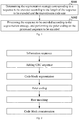
- Fig.2 is a schematic diagram of a polar coding process provided by an embodiment of the invention. Specifically, the UCI information sequence (information bits) is firstly subjected to CRC encoding, and a CRC sequence (CRC attachment) is added behind the UCI information sequence to obtain the sequence to be encoded, i.e., UCI payload; the code block segmentation is performed on the sequence to be encoded to segment the sequence to be encoded.
- CRC sequence CRC attachment
- the sequence to be encoded is divided into two segments equally, the polar coding is performed respectively on the two segments into which the sequence to be encoded is divided, and the rate matching is performed on two encoded segments of the sequence to be encoded, and finally, after the rate matching is completed, the code block concatenation output is performed on two encoded segments of the sequence to be encoded. Furthermore, in the above-mentioned process of performing the polar coding on the sequence to be encoded, it is also possible to perform the code block segmentation on the UCI information sequence at first, then add a bit sequence of set length to the UCI information sequence after the code block segmentation, and then perform the subsequent polar coding process.
- each segmented UCI information sequence contains the CRC sequence, so it is simpler and easy to operate during the decoding.
- the segmentation strategy corresponding to the sequence to be encoded may be determined according to the length of the sequence to be encoded and the transmission code rate, so the corresponding segmentation strategies are determined for the sequences to be encoded of different lengths and different transmission code rates, ensuring the performance of the uplink control channel.
- the determining the segmentation strategy corresponding to a sequence to be encoded according to the length of the sequence to be encoded and the transmission code rate includes:
- the transmitting end may judge whether the transmission code rate is greater than the preset first code rate threshold, and if so, determine not to segment the sequence to be encoded, or judge whether the transmission code rate is greater than/equal to the preset first code rate threshold, and if so, determine not to segment the sequence to be encoded.
- the preset first code rate threshold is 0.4.
- a transmission code rate greater than 0.4 is used as the first code rate threshold, and the segmented polar coding is not adopted when transmission code rate is higher than this first code rate threshold.
- determining the segmentation strategy corresponding to a sequence to be encoded according to the length of the sequence to be encoded and the transmission code rate includes:
- the preset fourth code rate threshold is 9/25.
- a transmission code rate greater than 9/25 is used as the fourth code rate threshold, and the segmented polar coding is not adopted when the transmission code rate is higher than this fourth code rate threshold.
- the determining the segmentation strategy corresponding to a sequence to be encoded according to the length of the sequence to be encoded and the transmission code rate includes:
- the transmitting end judges whether the length of the sequence to be encoded is greater than or greater than/equal to a preset first length threshold, and if so, determines to segment the sequence to be encoded; otherwise, determines not to segment the sequence to be encoded.
- the preset first code rate threshold is 0.4 and the preset second code rate threshold is 0.2.
- the determining the segmentation strategy corresponding to a sequence to be encoded according to the length of the sequence to be encoded and the transmission code rate includes:
- the preset third code rate threshold is 6/25 and the preset fourth code rate threshold is 9/25.
- the CRC sequence added behind the UCI information sequence is 11 bits, that is, the CRC sequence contained in the sequence to be encoded is 11 bits.
- list size (list size L) used in polar coding is 8
- the corresponding nFAR is 8 in the case of polar decoding (SCL decoding)
- SCL decoding polar decoding
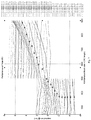
- the polar coding where the sequence to be encoded is segmented or not segmented is adopted, and the corresponding SNR value curve when the BLock Error Rate (BLER) is 0.01 is as shown in Fig.3 .
- Non-seg represents non-segmentation
- seg represents segmentation
- R represents the transmission code rate
- the horizontal axis of the coordinate system represents the length (K) of the sequence to be encoded
- the vertical axis represents the SNR value (S).
- Fig.3 when the sequence to be encoded is segmented, the information sequence in the sequence to be encoded is segmented, and a segmented information sequence is added with a CRC.
- the transmission code rate is between 0.2 and 0.4, it can be clearly observed that when the transmission code rate is greater than or equal to 0.4, the performance of the polar coding with segmentation is not as good as that of the polar coding without segmentation, so a feasible implementation may be to not use the polar coding with segmentation when the transmission code rate is greater than or equal to 0.4; after the size K of the sequence to be encoded is greater than a certain length threshold, the performance of the polar coding with segmentation will be obviously better than that of the polar coding without segmentation, but the length threshold changes with the transmission code rate. If the appropriate demarcation point cannot be found, the segmented polar coding technology has no practical value in reality.
- the above analysis is aimed at the performance comparison between segmentation and non-segmentation when the transmission code rate is between 0.2 and 0.4.
- the transmission code rate is between 6/25 and 9/25
- the performance comparison between segmentation and non-segmentation is similar to that in Fig.3 and will not be described here.
- the length threshold is very close to an oblique line on the plan with K being x axis and SNR being y axis. This inspires the use of linear approximation to estimate this threshold in an implementation.
- Any transmission code rate is R ⁇ [0.2,0.4]
- the method before judging whether the length of the sequence to be encoded is greater than the preset first length threshold, the method further includes: determining the first length threshold according to the transmission code rate and a preset first function.
- the rounding function may be, for example, int function or floor function or the like.
- the rounding mode of the rounding function int may be set to rounding up, or rounding down, or rounding off, etc.
- c is not greater than 1200 and not less than 800, and b is not greater than 161 and not less than 119. In an implementation, c is 1000 and b is 140.
- the method before judging whether the length of the sequence to be encoded is greater than or greater than/equal to the preset fourth length threshold, the method further includes: determining the fourth length threshold according to the transmission code rate and a preset second function.
- a is not greater than 1200 and not less than 800, and e is not greater than 196 and not less than 144. In an implementation, a is 1000 and e is 170.
- Table 1 is an example of the gain values of the uplink control channel corresponding to different transmission code rates (R) when the length of the sequence to be encoded is the first length threshold provided by the embodiment of the invention.
- the first length threshold corresponding to the transmission code rate of 0.2 is 350, and the corresponding gain value is 0.128112; the first length threshold corresponding to the transmission code rate of 0.22 is 370, and the corresponding gain value is 0.127483; the first length threshold corresponding to the transmission code rate of 0.24 is 390, and the corresponding gain value is 0.10674; the first length threshold corresponding to the transmission code rate of 0.26 is 410, and the corresponding gain value is 0.149014; the first length threshold corresponding to the transmission code rate of 0.28 is 430, and the corresponding gain value is 0.115676; the first length threshold corresponding to the transmission code rate of 0.3 is 450, and the corresponding gain value is 0.0837032; the first length threshold corresponding to the transmission code rate of 0.32 is 470, and the corresponding gain value is 0.0356907; the first length threshold corresponding to the transmission code rate of 0.34 is 490, and the corresponding gain value is 0.08450445; the first length threshold corresponding to the transmission code
- the gain values are not very large from the above Table 1, so it is very appropriate to use the corresponding first length threshold as the threshold for judgment.
- the sequence to be encoded includes an information sequence and a CRC sequence
- the corresponding segmentation strategy may be determined according to the length of the sequence to be encoded.
- the corresponding appropriate length threshold may be determined according to the correspondence between the length of the sequence to be encoded and the length of the information sequence when determining the corresponding length threshold if the corresponding segmentation strategy is determined according to the length of the information sequence.
- the determining the segmentation strategy corresponding to a sequence to be encoded according to the length of the sequence to be encoded and the transmission code rate includes:
- the transmitting end judges whether the length of the sequence to be encoded is greater than or greater than/equal to the preset second length threshold; if so, determines to segment the sequence to be encoded; otherwise, determines not to segment the sequence to be encoded.
- the preset second code rate threshold is 0.2.
- the CRC sequence added behind the UCI information sequence is 11 bits, that is, the CRC sequence contained in the sequence to be encoded is 11 bits.
- the list size L used in polar coding is 8, and the corresponding nFAR is 8 in the case of SCL decoding, for different transmission code rates and different lengths of the sequences to be encoded, the polar coding where the sequence to be encoded is segmented or not segmented is adopted, and the corresponding SNR value curve when the BLER is 0.01 is as shown in Fig.4 .
- Non-seg represents non-segmentation
- seg represents segmentation
- R represents the transmission code rate
- the horizontal axis of the coordinate system represents the length (K) of the sequence to be encoded
- the vertical axis represents the SNR value (S).
- the fixed length threshold Kth is fixed for each transmission code rate (rate) when R ⁇ 0.2, and different values between 290 and 390 may also be adopted for each transmission code rate.
- the preset second length threshold is not less than 290 and not greater than 390. Specifically, when the code rate is less than 0.2, the preset second length threshold may be determined in this range.
- the preset second length threshold is 340, that is, the preset second length threshold is set to 340 during the judgment, and the fixed numerical value is used for the judgment.
- the above analysis is aimed at the performance comparison between segmentation and non-segmentation when the transmission code rate is between 0.2 and 0.4.
- the transmission code rate is between 6/25 and 9/25
- the performance comparison between segmentation and non-segmentation is similar to that in Fig.4 and will not be described here.
- the determining the segmentation strategy corresponding to a sequence to be encoded according to the length of the sequence to be encoded and the transmission code rate includes:
- the preset third code rate threshold may be 6/25.
- the preset third length threshold is not less than 348 and not greater than 472.
- the preset third length threshold may be 410.
- Table 2 is an example of the gain values of the uplink control channel corresponding to different transmission code rates (R) when the length of the sequence to be encoded is the second length threshold provided by the embodiment of the invention.
- the gain value is the difference between the SNR in case of segmentation and the SNR in case of non-segmentation.
- the second length threshold corresponding to the transmission code rate of 0.12 is 340, and the corresponding gain value is 0.032309;
- the second length threshold corresponding to the transmission code rate of 0.14 is 340, and the corresponding gain value is 0.069684;
- the second length threshold corresponding to the transmission code rate of 0.16 is 340, and the corresponding gain value is 0.10115;
- the second length threshold corresponding to the transmission code rate of 0.18 is 340, and the corresponding gain value is 0.071813.
- the gain values are not very large from the above Table 2, so it is very appropriate to use the corresponding second length threshold as the threshold for judgment.
- the determining the segmentation strategy corresponding to a sequence to be encoded according to the length of the sequence to be encoded and the transmission code rate includes:
- the transmitting end may judge whether the length of the sequence to be encoded is greater than or greater than/equal to the preset fifth length threshold, and if so, determine to segment the sequence to be encoded.
- the fifth code rate threshold is between x times the maximum bit length to be encoded and N times the maximum bit length to be encoded, where x is a numerical value greater than 0 and less than N, and N is a numerical value greater than 0. In an implementation, x is a numerical value greater than or equal to 0.3 and less than 2, and N is 2.
- the maximum mother code length of the 5G polar codes is specified as 1024, so the allowed length of the sequence to be encoded must be less than 1024. If the length of the sequence to be encoded is 1060 (greater than or equal to 1024 and less than 2048), the sequence to be encoded is directly segmented for polar coding (for example, divided into two segments for polar coding) regardless of the transmission code rate. The simulation result is as shown in Fig.5 .
- the direct segmentation may achieve the performance better than that in case of non-segmentation regardless of the transmission code rate, and the processing is simple, where the preset value may be above 500 and under 1200.
- a feasible scheme of segmenting the sequence to be coded is to adopt the equal division or approximately equal division mode.
- the sequence to be coded may be divided into only two segments, and then the polar coding is performed on each segment.
- the method further includes:
- the transmitting end judges whether the transmission code rate is less than or less than/equal to the preset fifth code rate threshold, and if so, determines to segment the sequence to be encoded.
- the preset fifth code rate threshold is not less than 0.2 and not greater than 0.9. In an implementation, the preset fifth code rate threshold is 0.75, or 2/3, or 1/2, or 2/5, or 0.38, or 0.36, or 1/3, or 0.3, or 0.28, or 0.26, or 0.24, or 1/4, or 1/5.
- the preset fifth length threshold is not less than 300 and not greater than 450. In an implementation, the preset fifth length threshold is 340, or 350, or 360, or 370, or 380, or 390, or 400, or 410, or 420, or 430, or 440, or 450.
- the feasible value combinations ⁇ Rth5, Kth5 ⁇ of the preset fifth code rate threshold (Rth5) and the preset fifth length threshold (Kth5) in implementations include: ⁇ 0.4, 350 ⁇ , ⁇ 0.4, 370 ⁇ , ⁇ 0.4,380 ⁇ , ⁇ 0.4, 390 ⁇ , ⁇ 0.4,400 ⁇ , ⁇ 0.4,410 ⁇ , ⁇ 0.4,420 ⁇ , ⁇ 0.28,370 ⁇ , ⁇ 0.28,380 ⁇ , ⁇ 0.28, 390 ⁇ , ⁇ 0.28,400 ⁇ , ⁇ 0.28,410 ⁇ , ⁇ 0.28,420 ⁇ , ⁇ 0.26,370 ⁇ , ⁇ 0.26,380 ⁇ , ⁇ 0.26,390 ⁇ , ⁇ 0.26,400 ⁇ , ⁇ 0.26,410 ⁇ , and ⁇ 0.26, 420 ⁇ .
- a feasible implementation mode of segmenting the sequence to be coded is to adopt the equal division or approximately equal division method.
- the sequence to be coded may be divided into only two segments, and then the polar coding is performed on each segment.
- the maximum feedback amount of 5G Uplink Control Information has greatly increased.
- the maximum feedback amount of UCI reaches 543 bits without including the 11-bit CRC.
- the 5G supports each single carrier to feed back the UCI, but also supports multiple carriers to feed back the UCI.
- the segmentation condition will be met at the higher transmission code rate.
- the determining the segmentation strategy corresponding to a sequence to be encoded according to the length of the sequence to be encoded and the transmission code rate includes:
- f is a numerical value in the range of 500-1200 and g is a numerical value in the range of 60-300.
- the sequence to be coded is segmented directly according to the preset linear function.
- the preset sixth code rate threshold is 0.2.
- Fig.6 is a schematic diagram illustrating the corresponding simulation result, and as shown in Fig.6 , the corresponding segmentation method may adopt the following rule:
- the linear function K_th1 1024 ⁇ R + 150 may be used for segmentation.
- Fig.7 is a schematic diagram illustrating another simulation result, and as shown in Fig.7 , the corresponding segmentation method may adopt the following rule:
- the linear function K_th1 832 ⁇ R + 200 may also be used for segmentation.
- the use of this linear function for segmentation may also achieve the better performance.
- a feasible implementation mode of segmenting the sequence to be coded is to adopt the equal division or approximately equal division method.
- the sequence to be coded may be divided into only two segments, and then the polar coding is performed on each segment.
- the preset sixth code rate threshold is 0.2
- two preset code rate intervals are greater than 0.2 and less than 0.4, and greater than or equal to 0.4, respectively.
- the transmitting end determines the target code rate interval corresponding to the transmission code rate according to the transmission code rate, and segments the sequence to be encoded according to the target linear function corresponding to the target code rate interval.
- each code rate interval corresponds to a different linear function.
- the preset sixth code rate threshold is 0.2.
- Fig.8 is a schematic diagram illustrating the simulation result provided by the embodiment of the invention, and as shown in Fig.8 , the corresponding segmentation method adopts the following rule:
- the transmission code rate may be considered so as to determine whether to segment the sequence to be encoded. Furthermore, the difference in lengths of the sequences to be encoded will also affect the performance of the uplink control channel. In order to further ensure the performance of the uplink control channel, based on the seventh and eighth embodiments described above, before determining to segment the sequence to be encoded, the method further includes:
- the fifth code rate threshold is between x times the maximum bit length to be encoded and N times the maximum bit length to be encoded, where x is a numerical value greater than 0 and less than N, and N is a numerical value greater than 0. In an implementation, x is a numerical value greater than or equal to 0.3 and less than 2, and N is 2.
- the segmentation may be performed directly regardless of the code rate.
- the maximum length of the sequence to be encoded is just a specific example, and of course, other lengths are also possible.
- h 500-1200 and i is 60-300.
- the linear function may be used for segmentation regardless of the transmission code rate. Furthermore, the difference in lengths of the sequences to be encoded will also affect the performance of the uplink control channel. In order to further ensure the performance of the uplink control channel, based on the above embodiments, before determining to segment the sequence to be encoded, the method further includes:
- the fifth code rate threshold is between x times the maximum bit length to be encoded and N times the maximum bit length to be encoded, where x is a numerical value greater than 0 and less than N, and N is a numerical value greater than 0. In an implementation, x is a numerical value greater than or equal to 0.3 and less than 2, and N is 2.
- a preset value such as 0.9
- the segmentation threshold (Kth) is described according to the length of the sequence to be encoded.
- the segmentation threshold may also be described in accordance with the length (M) of the encoded data in the case when the code rate is known.
- M K/R.
- the segmentation threshold Kth is described according to the length of the information bits to be encoded.
- the segmentation threshold may also be described in accordance with the length M of the encoded data in the case when the code rate is known.
- M K/R.
- the processing the sequence to be encoded according to the segmentation strategy includes:
- the sequence to be encoded includes the information sequence and the CRC sequence.
- the sequence to be encoded is segmented, only the sequence to be encoded may be segmented. This is because the CRC sequence is added behind the information sequence to obtain the sequence to be encoded when the polar codes are used for encoding, and then the sequence to be encoded is segmented.
- a feasible implementation may be to divide into two segments equally and encode two segments of sequence to be encoded respectively by using the polar codes, so only one of the sequences to be encoded obtained after the segmentation may have the CRC.
- the information sequence in the sequence is firstly divided into two segments, and the L-bit (e.g., 11-bit) CRC sequence is added to each segment.
- the lengths of the information sequences are different or nFAR values are different, and the lengths of the added CRC sequences are different, which may specifically set flexibly according to the requirements.
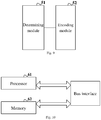
- Fig.9 is a structural schematic diagram of a polar coding apparatus provided by the embodiment of the invention, where the apparatus includes:
- the determining module 51 is specifically configured to: judge whether the transmission code rate is greater than or greater than/equal to a preset first code rate threshold; if it is determined that the transmission code rate is greater than or greater than/equal to a preset first code rate threshold, determine not to segment the sequence to be encoded.
- the determining module 51 is specifically configured to: if the transmission code rate is not greater than or less than a preset first code rate threshold and not less than or greater than a preset second code rate threshold, judge whether the length of the sequence to be encoded is greater than or greater than/equal to a preset first length threshold, wherein the first code rate threshold is greater than the second code rate threshold; if it is determined that the length of the sequence to be encoded is greater than or greater than/equal to a preset first length threshold, determine to segment the sequence to be encoded; otherwise, determine not to segment the sequence to be encoded.
- the preset first code rate threshold is 0.4.
- the determining module 51 is further configured to: determine the first length threshold according to the transmission code rate and a preset first function.
- c is not greater than 1200 and not less than 800, and b is not greater than 161 and not less than 119.
- c is 1000 and b is 140.
- the determining module 51 is specifically configured to: if the transmission code rate is less than or less than/equal to a preset second code rate threshold, judge whether the length of the sequence to be encoded is greater than or greater than/equal to a preset second length threshold; if it is determined that the length of the sequence to be encoded is greater than or greater than/equal to a preset second length threshold, determine to segment the sequence to be encoded; otherwise, determine not to segment the sequence to be encoded.
- the preset second length threshold is not less than 290 and not greater than 390.
- the preset second length threshold is 340.
- the preset second code rate threshold is 0.2.
- the determining module 51 is specifically configured to: if the transmission code rate is less than or less than/equal to a preset third code rate threshold, judge whether the length of the sequence to be encoded is greater than or greater than/equal to a preset third length threshold; if it is determined that the length of the sequence to be encoded is greater than or greater than/equal to a preset third length threshold, determine to segment the sequence to be encoded; otherwise, determine not to segment the sequence to be encoded.
- the third code rate threshold is 6/25.
- the preset third length threshold is not less than 348 and not greater than 472.
- the preset third length threshold is 410.
- the determining module 51 is specifically configured to: if the transmission code rate is not less than or greater than a preset third code rate threshold and not greater than or less than a preset fourth code rate threshold, judge whether the length of the sequence to be encoded is greater than or greater than/equal to a preset fourth length threshold, where the fourth code rate threshold is greater than the third code rate threshold; if it is determined that the length of the sequence to be encoded is greater than or greater than/equal to a preset fourth length threshold, determine to segment the sequence to be encoded; otherwise, determine not to segment the sequence to be encoded.
- the determining module 51 is further configured to: determine the fourth length threshold according to the transmission code rate and a preset second function before judging whether the length of the sequence to be encoded is greater than or greater than/equal to a preset fourth length threshold.
- a is not greater than 1200 and not less than 800, and e is not greater than 196 and not less than 144.
- a is 1000 and e is 170.
- the determining module 51 is specifically configured to: judge whether the transmission code rate is greater than or greater than/equal to a preset fourth code rate threshold; if it is determined that the transmission code rate is greater than or greater than/equal to a preset fourth code rate threshold, determine not to segment the sequence to be encoded.
- the preset fourth code rate threshold is 9/25.
- the determining module 51 is specifically configured to: judge whether the length of the sequence to be encoded is greater than or greater than/equal to a preset fifth length threshold; if it is determined that the length of the sequence to be encoded is greater than or greater than/equal to a preset fifth length threshold, determine to segment the sequence to be encoded.
- the determining module 51 is specifically configured to: judge whether the transmission code rate is less than or less than/equal to a preset fifth code rate threshold; if it is determined that the transmission code rate is less than or less than/equal to a preset fifth code rate threshold, determine to segment the sequence to be encoded.
- the preset fifth code rate threshold is not less than 0.2 and not greater than 0.9.
- the preset fifth code rate threshold is 0.75, or 2/3, or 1/2, or 2/5, or 0.38, or 0.36, or 1/3, or 0.3, or 0.28, or 0.26, or 0.24, or 1/4, or 1/5.
- the preset fifth length threshold is not less than 300 and not greater than 450.
- the preset fifth length threshold is 340, or 350, or 360, or 370, or 380, or 390, or 400, or 410, or 420, or 430, or 440, or 450.
- f is a numerical value in the range of 500-1200 and g is a numerical value in the range of 60-300.
- f is 832 and g is 200.
- the preset sixth code rate threshold is 0.2.
- h is a numerical value in the range of 500-1200 and i is a numerical value in the range of 60-300.
- the determining module 51 is further configured to: judge whether the length of the sequence to be encoded is less than or equal to a preset fifth length threshold; if it is determined that the length of the sequence to be encoded is less than or equal to a preset fifth length threshold, proceed to the step of determining to segment the sequence to be encoded.
- the fifth code rate threshold is between x times the maximum bit length to be encoded and N times the maximum bit length to be encoded, where x is a numerical value greater than 0 and less than N.
- x is a numerical value greater than or equal to 0.3 and less than 2, and N is 2.
- the encoding module 52 is specifically configured to: segment the information sequence in the sequence to be encoded or segment the sequence to be encoded containing an information sequence and a CRC sequence when the segmentation strategy is to segment the sequence to be encoded.
- the embodiment of the invention further provides an electronic device. Since the principle solving the problem of the above-mentioned electronic device is similar to the polar coding method, the implementations of the above-mentioned electronic device may refer to the implementations of the method, and the repeated description thereof will be omitted here.
- FIG.10 it is a structural schematic diagram of the electronic device provided by the embodiment of the invention, where the bus architecture in Fig.10 may include any numbers of interconnected buses and bridges, and specifically link various circuits of one or more processors represented by the processor 61 and the memory represented by the memory 62.
- the bus architecture may further link various other circuits such as peripheral device, voltage regulator and power management circuit, which are all well known in the art and thus will not be further described again herein.
- the bus interface provides an interface.
- the processor 61 is responsible for managing the bus architecture and general processing, and the memory 62 may store the data used by the processor 61 when performing the operations.
- the processor 61 is configured to read the programs in the memory 62 and perform the process of: determining the segmentation strategy corresponding to a sequence to be encoded according to the length of the sequence to be encoded and the transmission code rate; and processing the sequence to be encoded according to the segmentation strategy, and performing the polar coding on the processed sequence to be encoded.
- the processor 61 is specifically configured to: judge whether the transmission code rate is greater than or greater than/equal to a preset first code rate threshold; if it is determined that the transmission code rate is greater than or greater than/equal to a preset first code rate threshold, determine not to segment the sequence to be encoded.
- the processor 61 is specifically configured to: if the transmission code rate is not greater than or less than a preset first code rate threshold and not less than or greater than a preset second code rate threshold, judge whether the length of the sequence to be encoded is greater than or greater than/equal to a preset first length threshold, where the first code rate threshold is greater than the second code rate threshold; if it is determined that the length of the sequence to be encoded is greater than or greater than/equal to a preset first length threshold, determine to segment the sequence to be encoded; otherwise, determine not to segment the sequence to be encoded.
- the preset first code rate threshold is 0.4.
- the processor 61 is further configured to: determine the first length threshold according to the transmission code rate and a preset function.
- c is not greater than 1200 and not less than 800, and b is not greater than 161 and not less than 119.
- c is 1000 and b is 140.
- the processor 61 is specifically configured to: if the transmission code rate is less than or less than/equal to a preset second code rate threshold, judge whether the length of the sequence to be encoded is greater than or greater than/equal to a preset second length threshold; if it is determined that the length of the sequence to be encoded is greater than or greater than/equal to a preset second length threshold, determine to segment the sequence to be encoded; otherwise, determine not to segment the sequence to be encoded.
- the preset second length threshold is not less than 290 and not greater than 390.
- the preset second length threshold is 340.
- the preset second code rate threshold is 0.2.
- the processor 61 is specifically configured to: if the transmission code rate is less than or less than/equal to a preset third code rate threshold, judge whether the length of the sequence to be encoded is greater than or greater than/equal to a preset third length threshold; if it is determined that the length of the sequence to be encoded is greater than or greater than/equal to a preset third length threshold, determine to segment the sequence to be encoded; otherwise, determine not to segment the sequence to be encoded.
- the third code rate threshold is 6/25.
- the preset third length threshold is not less than 348 and not greater than 472.
- the preset third length threshold is 410.
- the processor 61 is specifically configured to: if the transmission code rate is not less than or greater than a preset third code rate threshold and not greater than or less than a preset fourth code rate threshold, judge whether the length of the sequence to be encoded is greater than or greater than/equal to a preset fourth length threshold, where the fourth code rate threshold is greater than the third code rate threshold; if it is determined that the length of the sequence to be encoded is greater than or greater than/equal to a preset fourth length threshold, determine to segment the sequence to be encoded; otherwise, determine not to segment the sequence to be encoded.
- the processor 61 is further configured to: determine the fourth length threshold according to the transmission code rate and a preset second function before judging whether the length of the sequence to be encoded is greater than or greater than/equal to a preset fourth length threshold.
- a is not greater than 1200 and not less than 800, and e is not greater than 196 and not less than 144.
- a is 1000 and e is 170.
- the processor 61 is specifically configured to: judge whether the transmission code rate is greater than or greater than/equal to a preset fourth code rate threshold; if it is determined that the transmission code rate is greater than or greater than/equal to a preset fourth code rate threshold, determine not to segment the sequence to be encoded.
- the preset fourth code rate threshold is 9/25.
- the processor 61 is specifically configured to: judge whether the length of the sequence to be encoded is greater than or greater than/equal to a preset fifth length threshold; if it is determined that the length of the sequence to be encoded is greater than or greater than/equal to a preset fifth length threshold, determine to segment the sequence to be encoded.
- the processor 61 is specifically configured to: judge whether the transmission code rate is less than or less than/equal to a preset fifth code rate threshold; if it is determined that the transmission code rate is less than or less than/equal to a preset fifth code rate threshold, determine to segment the sequence to be encoded.
- the preset fifth code rate threshold is not less than 0.2 and not greater than 0.9.
- the preset fifth code rate threshold is 0.75, or 2/3, or 1/2, or 2/5, or 0.38, or 0.36, or 1/3, or 0.3, or 0.28, or 0.26, or 0.24, or 1/4, or 1/5.
- the preset fifth length threshold is not less than 300 and not greater than 450.
- the preset fifth length threshold is 340, or 350, or 360, or 370, or 380, or 390, or 400, or 410, or 420, or 430, or 440, or 450.
- f is a numerical value in the range of 500-1200 and g is a numerical value in the range of 60-300.
- f is 832 and g is 200.
- the preset sixth code rate threshold is 0.2.
- h is a numerical value in the range of 500-1200 and i is a numerical value in the range of 60-300.
- the processor 61 is further configured to: judge whether the length of the sequence to be encoded is less than or equal to a preset fifth length threshold; if it is determined that the length of the sequence to be encoded is less than or equal to a preset fifth length threshold, proceed to the step of determining to segment the sequence to be encoded.
- the fifth code rate threshold is between x times the maximum bit length to be encoded and N times the maximum bit length to be encoded, where x is a numerical value greater than 0 and less than N.
- x is a numerical value greater than or equal to 0.3 and less than 2, and N is 2.
- the processor 61 is specifically configured to: segment the information sequence in the sequence to be encoded or segment the sequence to be encoded containing an information sequence and a CRC sequence when the segmentation strategy is to segment the sequence to be encoded.
- the embodiment of the invention further provides a computer readable storage medium storing the computer programs executable by an electronic device, where the programs, when running on the electronic device, cause the electronic device to perform the steps of:
- the determining the segmentation strategy corresponding to a sequence to be encoded according to the length of the sequence to be encoded and the transmission code rate includes:
- the determining the segmentation strategy corresponding to a sequence to be encoded according to the length of the sequence to be encoded and the transmission code rate includes:
- the preset first code rate threshold is 0.4.
- the method before judging whether the length of the sequence to be encoded is greater than the preset first length threshold, the method further includes: determining the first length threshold according to the transmission code rate and a preset first function.
- c is not greater than 1200 and not less than 800, and b is not greater than 161 and not less than 119.
- c is 1000 and b is 140.
- the determining the segmentation strategy corresponding to a sequence to be encoded according to the length of the sequence to be encoded and the transmission code rate includes:
- the preset second length threshold is not less than 290 and not greater than 390.
- the preset second length threshold is 340.
- the preset second code rate threshold is 0.2.
- the determining the segmentation strategy corresponding to a sequence to be encoded according to the length of the sequence to be encoded and the transmission code rate includes:
- the third code rate threshold is 6/25.
- the preset third length threshold is not less than 348 and not greater than 472.
- the preset third length threshold is 410.
- the determining the segmentation strategy corresponding to a sequence to be encoded according to the length of the sequence to be encoded and the transmission code rate includes:
- the method before judging whether the length of the sequence to be encoded is greater than or greater than/equal to the preset fourth length threshold, the method further includes: determining the fourth length threshold according to the transmission code rate and a preset second function.
- a is not greater than 1200 and not less than 800, and e is not greater than 196 and not less than 144.
- a is 1000 and e is 170.
- the determining the segmentation strategy corresponding to a sequence to be encoded according to the length of the sequence to be encoded and the transmission code rate includes:
- the preset fourth code rate threshold is 9/25.
- the determining the segmentation strategy corresponding to a sequence to be encoded according to the length of the sequence to be encoded and the transmission code rate includes:
- the method before determining to segment the sequence to be encoded, the method further includes:
- the preset fifth code rate threshold is not less than 0.2 and not greater than 0.9.
- the preset fifth code rate threshold is 0.75, or 2/3, or 1/2, or 2/5, or 0.38, or 0.36, or 1/3, or 0.3, or 0.28, or 0.26, or 0.24, or 1/4, or 1/5.
- the preset fifth length threshold is not less than 300 and not greater than 450.
- the preset fifth length threshold is 340, or 350, or 360, or 370, or 380, or 390, or 400, or 410, or 420, or 430, or 440, or 450.
- the determining the segmentation strategy corresponding to a sequence to be encoded according to the length of the sequence to be encoded and the transmission code rate includes:
- f is a numerical value in the range of 500-1200 and g is a numerical value in the range of 60-300.
- f is 832 and g is 200.
- the preset sixth code rate threshold is 0.2.
- h is a numerical value in the range of 500-1200 and i is a numerical value in the range of 60-300.
- the method before determining to segment the sequence to be encoded, the method further includes:
- the fifth code rate threshold is between x times the maximum bit length to be encoded and N times the maximum bit length to be encoded, where x is a numerical value greater than 0 and less than N.
- x is a numerical value greater than or equal to 0.3 and less than 2, and N is 2.
- the processing the sequence to be encoded according to the segmentation strategy includes:
- system/device embodiments they are basically similar to the method embodiments, so the description is relatively simple, and the related parts refer to the description of the parts of the method embodiments.
- the embodiments of the present application may be provided as methods, systems and computer program products.
- the present application may take the form of hardware embodiments alone, software embodiments alone, or embodiments combining the software and hardware aspects.
- the present application may take the form of computer program products implemented on one or more computer usable storage mediums (including but not limited to magnetic disk memories, CD-ROMs, optical memories and the like) containing computer usable program codes therein.
- These computer program instructions can also be stored in a computer readable memory which is capable of guiding the computer or another programmable data processing device to operate in a particular way, so that the instructions stored in the computer readable memory produce a manufacture including the instruction apparatus which implements the functions specified in one or more processes of the flow charts and/or one or more blocks of the block diagrams.
- These computer program instructions may also be loaded onto the computer or another programmable data processing device, so that a series of operation steps are performed on the computer or another programmable device to produce the computer-implemented processing.
- the instructions executed on the computer or another programmable device provide steps for implementing the functions specified in one or more processes of the flow charts and/or one or more blocks of the block diagrams.
Landscapes
- Engineering & Computer Science (AREA)
- Computer Networks & Wireless Communication (AREA)
- Signal Processing (AREA)
- Physics & Mathematics (AREA)
- Probability & Statistics with Applications (AREA)
- Theoretical Computer Science (AREA)
- Quality & Reliability (AREA)
- Compression Or Coding Systems Of Tv Signals (AREA)
- Compression, Expansion, Code Conversion, And Decoders (AREA)
- Error Detection And Correction (AREA)
Abstract
Description
- The present application claims the priorities from Chinese Patent Application No.
201710924773.2 201711149116.1 - The invention relates to the field of communication technologies, and in particular, to a polar coding method and apparatus, an electronic device, and a storage medium.
- Polar codes in the control channel coding scheme of the Enhanced Mobile Broadband (eMBB) scene of 5th-Generation (5G) mobile communication technology is a coding technology that may achieve the binary symmetrical channel capacity and have the excellent decoding performance. However, when the mother code length is larger, the polar code requires a larger storage capacity and latency, so in the 5G technology, the mother code length of the polar code is at most 512 bits in the downlink and at most 1024 bits in the uplink. However, due to the Massive Multiple-Input Multiple-Output (Massive MIMO) technology, the length of the information sequence of the Uplink Control Information (UCI) increases dramatically, and thus the length of the corresponding sequence to be encoded also increases dramatically during the polar coding of the UCI, where the sequence to be encoded is the Uplink Control Information payload (UCI payload) obtained by adding a Cyclic Redundancy Check (CRC) sequence behind the information sequence of the UCI.
- In order to ensure the coverage rate during communication, the low-bit-rate transmission is sometimes required. However, during the low-bit-rate transmission, when the length of the corresponding sequence to be encoded is larger, the direct polar coding of the sequence to be encoded may significantly reduce the performance of the uplink control channel. In order to solve the problem that the larger sequence to be encoded affects the performance of the uplink control channel at a low bit rate, the larger sequence to be encoded is segmented in the prior art, i.e., divide the sequence to be encoded into two segments for the polar coding, to ensure the performance of the uplink control channel.
- However, in the prior art, only one fixed segmentation strategy is adopted when performing the polar coding, that is, all the sequences to be encoded are segmented, or none of the sequences to be encoded is segmented, which may reduce the performance of the uplink control channel. Therefore, there is an urgent need for a polar coding scheme which can determine the segmentation strategy corresponding to the sequence to be encoded flexibly to ensure the performance of the uplink control channel.
- Embodiments of the invention provide a polar coding method and apparatus, an electronic device, and a storage medium, so as to provide a polar coding scheme for determining the segmentation strategy corresponding to the sequence to be encoded flexibly to ensure the performance of the uplink control channel.
- An embodiment of the invention discloses a polar coding method, which includes:
- determining a segmentation strategy corresponding to a sequence to be encoded according to a length of the sequence to be encoded and a transmission code rate;
- processing the sequence to be encoded according to the segmentation strategy, and performing polar coding on the processed sequence to be encoded.
- Further, the determining a segmentation strategy corresponding to a sequence to be encoded according to a length of the sequence to be encoded and a transmission code rate, includes:
- judging whether the transmission code rate is greater than or greater than/equal to a preset first code rate threshold;
- if it is determined that the transmission code rate is greater than or greater than/equal to the preset first code rate threshold, determining not to segment the sequence to be encoded.
- Further, the determining a segmentation strategy corresponding to a sequence to be encoded according to a length of the sequence to be encoded and a transmission code rate, includes:
- if the transmission code rate is not greater than or less than a preset first code rate threshold and not less than or greater than a preset second code rate threshold, judging whether the length of the sequence to be encoded is greater than or greater than/equal to a preset first length threshold, wherein the first code rate threshold is greater than the second code rate threshold;
- if it is determined that the length of the sequence to be encoded is greater than or greater than/equal to the preset first length threshold, determining to segment the sequence to be encoded; and if it is determined that the length of the sequence to be encoded is greater than or greater than/equal to the preset first length threshold, determining not to segment the sequence to be encoded.
- Further, the preset first code rate threshold is 0.4.
- Further, before judging whether the length of the sequence to be encoded is greater than or greater than/equal to a preset first length threshold, the method further includes:
determining the first length threshold according to the transmission code rate and a preset first function. - Further, the preset first function is Kth1 = int (c ∗ R + b) or Kth1 = c ∗ R + b, wherein kth1 is the first length threshold, int is the rounding function, c is a preset first parameter, b is a preset second parameter, and R is the transmission code rate.
- Further, c is not greater than 1200 and not less than 800, and b is not greater than 161 and not less than 119.
- Further, c is 1000 and b is 140.
- Further, the determining a segmentation strategy corresponding to a sequence to be encoded according to a length of the sequence to be encoded and a transmission code rate, includes:
- if the transmission code rate is less than or less than/equal to a preset second code rate threshold, judging whether the length of the sequence to be encoded is greater than or greater than/equal to a preset second length threshold;
- if it is determined that the length of the sequence to be encoded is greater than or greater than/equal to the preset second length threshold, determining to segment the sequence to be encoded; and if it is determined that the length of the sequence to be encoded is not greater than or greater than/equal to a preset second length threshold, determining not to segment the sequence to be encoded.
- Further, the preset second length threshold is not less than 290 and not greater than 390.
- Further, the preset second length threshold is 340.
- Further, the preset second code rate threshold is 0.2.
- Further, the determining a segmentation strategy corresponding to a sequence to be encoded according to a length of the sequence to be encoded and a transmission code rate, includes:
- if the transmission code rate is less than or less than/equal to a preset third code rate threshold, judging whether the length of the sequence to be encoded is greater than or greater than/equal to a preset third length threshold;
- if it is determined that the length of the sequence to be encoded is greater than or greater than/equal to the preset third length threshold, determining to segment the sequence to be encoded; and if it is determined that the length of the sequence to be encoded is not greater than or greater than/equal to the preset third length threshold, determining not to segment the sequence to be encoded.
- Further, the third code rate threshold is 6/25.
- Further, the preset third length threshold is not less than 348 and not greater than 472.
- Further, the preset third length threshold is 410.
- Further, the determining a segmentation strategy corresponding to a sequence to be encoded according to a length of the sequence to be encoded and a transmission code rate, includes:
- if the transmission code rate is not less than or greater than a preset third code rate threshold and not greater than or less than a preset fourth code rate threshold, judging whether the length of the sequence to be encoded is greater than or greater than/equal to a preset fourth length threshold, wherein the fourth code rate threshold is greater than the third code rate threshold;
- if it is determined that the length of the sequence to be encoded is greater than or greater than/equal to the preset fourth length threshold, determining to segment the sequence to be encoded; and if it is determined that the length of the sequence to be encoded is not greater than or greater than/equal to the preset fourth length threshold, determining not to segment the sequence to be encoded.
- Further, before judging whether the length of the sequence to be encoded is greater than or greater than/equal to a preset fourth length threshold, the method further includes:
determining the fourth length threshold according to the transmission code rate and a preset second function. - Further, the preset second function is Kth2 = int (a ∗ R + e) or Kth2 = a ∗ R + e, wherein kth2 is the fourth length threshold, int is the rounding function, a is a preset third parameter, e is a preset fourth parameter, and R is the transmission code rate.
- Further, a is not greater than 1200 and not less than 800, and e is not greater than 196 and not less than 144.
- Further, a is 1000 and e is 170.
- Further, the determining a segmentation strategy corresponding to a sequence to be encoded according to a length of the sequence to be encoded and a transmission code rate, includes:
- judging whether the length of the sequence to be encoded is greater than or greater than/equal to a preset fifth length threshold;
- if it is determined that the length of the sequence to be encoded is greater than or greater than/equal to the preset fifth length threshold, determining to segment the sequence to be encoded.
- Further, before determining to segment the sequence to be encoded, the method further includes:
- judging whether the transmission code rate is less than or less than/equal to a preset fifth code rate threshold;
- if it is determined that the transmission code rate is less than or less than/equal to the preset fifth code rate threshold, proceeding to the next step.
- Further, the preset fifth code rate threshold is not less than 0.2 and not greater than 0.9.
- Further, the preset fifth code rate threshold is 0.75, or 2/3, or 1/2, or 2/5, or 0.38, or 0.36, or 1/3, or 0.3, or 0.28, or 0.26, or 0.24, or 1/4, or 1/5.
- Further, the preset fifth length threshold is not less than 300 and not greater than 450.
- Further, the preset fifth length threshold is 340, or 350, or 360, or 370, or 380, or 390, or 400, or 410, or 420, or 430, or 440, or 450.
- Further, the determining a segmentation strategy corresponding to a sequence to be encoded according to a length of the sequence to be encoded and a transmission code rate, includes:
- judging whether the transmission code rate is greater than a preset sixth code rate threshold;
- if it is determined that the transmission code rate is greater than the preset sixth code rate threshold, determining to segment the sequence to be encoded according to a preset linear function K_th1 = f ∗ R + g or K_th1 = int (f ∗ R + g), wherein K_th1 is a first length value, f is a preset fifth parameter value, g is a preset sixth parameter value, R is the transmission code rate, and int is the rounding function.
- Further, f is a numerical value in the range of 500-1200 and g is a numerical value in the range of 60-300.
- Further, f is 832 and g is 200.
- Further, the determining to segment the sequence to be encoded according to a preset linear function K_th1 = f ∗ R + g or K_th1 = int (f ∗ R + g), includes:
determining to determine a target code rate interval corresponding to the transmission code rate according to at least two preset code rate intervals and a preset linear function K_th1 = fn ∗ R + gn or K_th1 = int (fn ∗ R + gn) corresponding to each code rate interval, and segment the sequence to be encoded according to a target linear function corresponding to the target code rate interval, wherein the minimum code rate value in the code rate interval is not less than the preset sixth code rate threshold. - Further, the preset sixth code rate threshold is 0.2.
- Further, the determining a segmentation strategy corresponding to a sequence to be encoded according to a length of the sequence to be encoded and a transmission code rate, includes:
determining to segment the sequence to be encoded according to a preset linear function K_th2 = h ∗ R + i or K_th2 = int (h ∗ R + i), wherein K_th2 is a second length value, h is a preset seventh parameter value, i is a preset eighth parameter value, R is the transmission code rate, and int is the rounding function. - Further, h is a numerical value in the range of 500-1200 and i is a numerical value in the range of 60-300.
- Further, before determining to segment the sequence to be encoded, the method further includes:
- judging whether the length of the sequence to be encoded is less than or equal to a preset fifth length threshold;
- if it is determined that the length of the sequence to be encoded is less than or equal to a preset fifth length threshold, proceeding to the next step.
- Further, the fifth code rate threshold is between x times the maximum bit length to be encoded and N times the maximum bit length to be encoded, wherein x is a numerical value greater than 0 and less than N.
- Further, x is a numerical value greater than or equal to 0.3 and less than 2, and N is 2.
- Further, when the segmentation strategy is to segment the sequence to be encoded, the processing the sequence to be encoded according to the segmentation strategy includes:
- segmenting an information sequence in the sequence to be encoded; or
- segmenting the sequence to be encoded containing an information sequence and a CRC sequence.
- An embodiment of the invention discloses a polar coding apparatus, which includes:
- a determining module configured to determine a segmentation strategy corresponding to a sequence to be encoded according to a length of the sequence to be encoded and a transmission code rate;
- an encoding module configured to process the sequence to be encoded according to the segmentation strategy, and perform polar coding on the processed sequence to be encoded.
- An embodiment of the invention discloses an electronic device including: a memory and a processor;
the processor is configured to read programs in the memory and perform the process of: determining a segmentation strategy corresponding to a sequence to be encoded according to a length of the sequence to be encoded and a transmission code rate; and processing the sequence to be encoded according to the segmentation strategy, and performing polar coding on the processed sequence to be encoded. - Further, the processor is specifically configured to: judge whether the transmission code rate is greater than or greater than/equal to a preset first code rate threshold; if it is determined that the transmission code rate is greater than or greater than/equal to the preset first code rate threshold, determine not to segment the sequence to be encoded.
- Further, the processor is specifically configured to: if the transmission code rate is not greater than or less than a preset first code rate threshold and not less than or greater than a preset second code rate threshold, judge whether the length of the sequence to be encoded is greater than or greater than/equal to a preset first length threshold, wherein the first code rate threshold is greater than the second code rate threshold; if it is determined that the length of the sequence to be encoded is greater than or greater than/equal to a preset first length threshold, determine to segment the sequence to be encoded; and if it is determined that the length of the sequence to be encoded is not greater than or greater than/equal to a preset first length threshold, determine not to segment the sequence to be encoded.
- Further, the preset first code rate threshold is 0.4.
- Further, the processor is further configured to: determine the first length threshold according to the transmission code rate and a preset first function.
- Further, the preset first function is Kth1 = int (c ∗ R + b) or Kth1 = c ∗ R + b, wherein kth1 is the first length threshold, int is the rounding function, c is a preset first parameter, b is a preset second parameter, and R is the transmission code rate.
- Further, c is not greater than 1200 and not less than 800, and b is not greater than 161 and not less than 119.
- Further, c is 1000 and b is 140.
- Further, the processor is specifically configured to: if the transmission code rate is less than or less than/equal to a preset second code rate threshold, judge whether the length of the sequence to be encoded is greater than or greater than/equal to a preset second length threshold; if it is determined that the length of the sequence to be encoded is greater than or greater than/equal to the preset second length threshold, determine to segment the sequence to be encoded; if it is determined that the length of the sequence to be encoded is not greater than or greater than/equal to the preset second length threshold, determine not to segment the sequence to be encoded.
- Further, the preset second length threshold is not less than 290 and not greater than 390.
- Further, the preset second length threshold is 340.
- Further, the preset second code rate threshold is 0.2.
- Further, the processor is specifically configured to: if the transmission code rate is less than or less than/equal to a preset third code rate threshold, judge whether the length of the sequence to be encoded is greater than or greater than/equal to a preset third length threshold; if it is determined that the length of the sequence to be encoded is greater than or greater than/equal to the preset third length threshold, determine to segment the sequence to be encoded; and if it is determined that the length of the sequence to be encoded is not greater than or greater than/equal to the preset third length threshold, determine not to segment the sequence to be encoded.
- Further, the third code rate threshold is 6/25.
- Further, the preset third length threshold is not less than 348 and not greater than 472.
- Further, the preset third length threshold is 410.
- Further, the processor is specifically configured to: if the transmission code rate is not less than or greater than a preset third code rate threshold and not greater than or less than a preset fourth code rate threshold, judge whether the length of the sequence to be encoded is greater than or greater than/equal to a preset fourth length threshold, wherein the fourth code rate threshold is greater than the third code rate threshold; if it is determined that the length of the sequence to be encoded is greater than or greater than/equal to the preset fourth length threshold, determine to segment the sequence to be encoded; and if it is determined that the length of the sequence to be encoded is not greater than or greater than/equal to the preset fourth length threshold, determine not to segment the sequence to be encoded.
- Further, the processor is further configured to: determine the fourth length threshold according to the transmission code rate and a preset second function before judging whether the length of the sequence to be encoded is greater than or greater than/equal to a preset fourth length threshold.
- Further, the preset second function is Kth2 = int (a ∗ R + e) or Kth2 = a ∗ R + e, wherein kth2 is the fourth length threshold, int is the rounding function, a is a preset third parameter, e is a preset fourth parameter, and R is the transmission code rate.
- Further, a is not greater than 1200 and not less than 800, and e is not greater than 196 and not less than 144.
- Further, a is 1000 and e is 170.
- Further, the processor is specifically configured to: judge whether the transmission code rate is greater than or greater than/equal to a preset fourth code rate threshold; if it is determined that the transmission code rate is greater than or greater than/equal to a preset fourth code rate threshold, determine not to segment the sequence to be encoded.
- Further, the preset fourth code rate threshold is 9/25.
- Further, the processor is specifically configured to: judge whether the length of the sequence to be encoded is greater than or greater than/equal to a preset fifth length threshold; if it is determined that the length of the sequence to be encoded is greater than or greater than/equal to a preset fifth length threshold, determine to segment the sequence to be encoded.
- Further, the processor is specifically configured to: judge whether the transmission code rate is less than or less than/equal to a preset fifth code rate threshold; if it is determined that the transmission code rate is less than or less than/equal to a preset fifth code rate threshold, determine to segment the sequence to be encoded.
- Further, the preset fifth code rate threshold is not less than 0.2 and not greater than 0.9.
- Further, the preset fifth code rate threshold is 0.75, or 2/3, or 1/2, or 2/5, or 0.38, or 0.36, or 1/3, or 0.3, or 0.28, or 0.26, or 0.24, or 1/4, or 1/5.
- Further, the preset fifth length threshold is not less than 300 and not greater than 450.
- Further, the preset fifth length threshold is 340, or 350, or 360, or 370, or 380, or 390, or 400, or 410, or 420, or 430, or 440, or 450.
- Further, the processor is specifically configured to: judge whether the transmission code rate is greater than a preset sixth code rate threshold; if it is determined that the transmission code rate is greater than the preset sixth code rate threshold, determine to segment the sequence to be encoded according to a preset linear function K_th1 = f ∗ R + g or K_th1 = int (f ∗ R + g), wherein K_th1 is a first length value, f is a preset fifth parameter value, g is a preset sixth parameter value, R is the transmission code rate, and int is the rounding function.
- Further, f is a numerical value in the range of 500-1200 and g is a numerical value in the range of 60-300.
- Further, f is 832 and g is 200.
- Further, the processor is specifically configured to: determine to determine a target code rate interval corresponding to the transmission code rate according to at least two preset code rate intervals and a preset linear function K_th1 = fn ∗ R + gn or K_th1 = int (fn ∗ R + gn) corresponding to each code rate interval, and segment the sequence to be encoded according to a target linear function corresponding to the target code rate interval, wherein the minimum code rate value in the code rate interval is not less than the preset sixth code rate threshold.
- Further, the preset sixth code rate threshold is 0.2.
- Further, the processor is specifically configured to: determine to segment the sequence to be encoded according to a preset linear function K_th2 = h ∗ R + i or K_th2 = int (h ∗ R + i), wherein K_th2 is a second length value, h is a preset seventh parameter value, i is a preset eighth parameter value, R is the transmission code rate, and int is the rounding function.
- Further, h is a numerical value in the range of 500-1200 and i is a numerical value in the range of 60-300.
- Further, the processor is further configured to: judge whether the length of the sequence to be encoded is less than or equal to a preset fifth length threshold; if it is determined that the length of the sequence to be encoded is less than or equal to the preset fifth length threshold, proceed to the step of determining to segment the sequence to be encoded.
- Further, the fifth code rate threshold is between x times the maximum bit length to be encoded and N times the maximum bit length to be encoded, wherein x is a numerical value greater than 0 and less than N.
- Further, x is a numerical value greater than or equal to 0.3 and less than 2, and N is 2.
- Further, the processor is specifically configured to: segment an information sequence in the sequence to be encoded or segment the sequence to be encoded containing an information sequence and a CRC sequence when the segmentation strategy is to segment the sequence to be encoded.
- An embodiment of the invention discloses a computer readable storage medium storing computer programs executable by an electronic device, where the programs cause the electronic device to perform steps of any method described above when running on the electronic device.
- The embodiments of the invention disclose a polar coding method and apparatus, an electronic device, and a storage medium. The solution includes: determining the segmentation strategy corresponding to the sequence to be encoded according to the length of the sequence to be encoded and the transmission code rate; and processing the sequence to be encoded according to the segmentation strategy, and performing the polar coding on the processed sequence to be encoded. In the embodiments of the invention, the segmentation strategy corresponding to the sequence to be encoded may be determined according to the length of the sequence to be encoded and the transmission code rate, so the corresponding segmentation strategies are determined for the sequences to be encoded of different lengths and different transmission code rates, ensuring the performance of the uplink control channel.
- In order to illustrate the embodiments of the invention or the technical solutions in the prior art more clearly, the accompanying figures which need to be used in describing the embodiments or the prior art will be introduced below briefly. Obviously the accompanying figures described below are merely some embodiments of the invention, and other accompanying figures can also be obtained by those ordinary skilled in the art according to these accompanying figures without creative labor.
-
Fig.1 is a schematic diagram of a polar coding process provided by a first embodiment of the invention; -
Fig.2 is a schematic diagram of a polar coding flow provided by the first embodiment of the invention; -
Fig.3 is a schematic diagram illustrating performance comparison of the uplink control channel provided by a third embodiment of the invention; -
Fig.4 is a schematic diagram illustrating performance comparison of the uplink control channel provided by a fourth embodiment of the invention; -
Fig.5 illustrates a simulation result provided by a fifth embodiment of the invention; -
Fig.6 illustrates a simulation result provided by a seventh embodiment of the invention; -
Fig.7 illustrates a simulation result provided by the seventh embodiment of the invention; -
Fig.8 illustrates a simulation result provided by an eighth embodiment of the invention; -
Fig.9 is a structural schematic diagram of a polar coding apparatus provided by a thirteenth embodiment of the invention; -
Fig.10 is a structural schematic diagram of an electronic device provided by a fourteenth embodiment of the invention. - In order to make the objects, technical solutions and advantages of the invention clearer, the invention will be further illustrated below in details with reference to the accompanying drawings. Obviously the described embodiments are a part of the embodiments of the invention but not all the embodiments. Based upon the embodiments of the invention, all of other embodiments obtained by those ordinary skilled in the art without creative work pertain to the protection scope of the invention.
- In the embodiments of the invention, for ease of reading, the embodiments are numbered, for example, first, second, third, ... fifteenth embodiments, etc., but this does not mean that all the embodiments are completely independent and cannot be combined. In fact, each numbered embodiment is used to explain how a certain solution is implemented, and various embodiments may be used in combination as needed to obtain the desired effect.
-
Fig.1 is a schematic diagram of a polar coding process provided by the embodiment of the invention. This method includes the following steps. - S101: determining a segmentation strategy corresponding to a sequence to be encoded according to the length of the sequence to be encoded and the transmission code rate.
- The polar coding method provided in the embodiment of the invention is applied to a transmitting end, and specifically, the transmitting end may be a base station or a User Equipment (UE).
- In a Long Term Evolution (LTE) system, the Physical Uplink Control Channel (PUCCH) is used to transmit the synchronized UCI, and the UCI transmitted on the PUCCH includes the uplink Scheduling Request (SR), the downlink Hybrid Automatic Repeat Request Acknowledgment (HARQ-ACK) information, and the periodic Channel Quality Indicator (CQI) information of the UE. In order to ensure that the receiving end can verify the received UCI accurately, the transmitting end may add a CRC sequence for checking behind the UCI information sequence before encoding the UCI. In an embodiment of the invention, the sequence to be encoded includes the UCI information sequence and the CRC sequence for checking, that is, the sequence to be encoded is the obtained UCI payload. The transmission code rate (R) is the ratio of the length (K) of the sequence to be encoded to the length (M) of the sequence obtained after performing the polar coding and rate matching on the sequence to be encoded, that is, R = K/M
- Furthermore, in an embodiment of the invention, at least one length threshold and/or at least one code rate threshold are set respectively for the length of the sequence to be encoded and the transmission code rate, and the corresponding segmentation strategy is set for the at least one length threshold and/or at least one code rate threshold, where the segmentation strategy is to segment the sequence to be encoded or not to segment the sequence to be encoded. The segmentation strategy corresponding to the sequence to be encoded may be determined according to the length of the sequence to be encoded and transmission code rate as well as at least one length threshold and/or at least one code rate threshold.
- S102: processing the sequence to be encoded according to the segmentation strategy, and performing the polar coding on the processed sequence to be encoded.
- Specifically, if it is determined that the sequence to be encoded is to be segmented, the segmentation is performed, for example, the sequence to be encoded is divided into two segments, and the polar coding is performed on the sequence to be encoded after the segmentation; if it is determined that the sequence to be encoded is not to be segmented, the polar coding is performed directly on the sequence to be encoded. In an embodiment of the invention, if it is determined that the sequence to be encoded is to be segmented, the information sequence in the sequence to be encoded may be segmented, and each segment of information sequence after the segmentation is added with the CRC, or partial segmented information sequences are added with the CRC.
-
Fig.2 is a schematic diagram of a polar coding process provided by an embodiment of the invention. Specifically, the UCI information sequence (information bits) is firstly subjected to CRC encoding, and a CRC sequence (CRC attachment) is added behind the UCI information sequence to obtain the sequence to be encoded, i.e., UCI payload; the code block segmentation is performed on the sequence to be encoded to segment the sequence to be encoded. In an implementation, the sequence to be encoded is divided into two segments equally, the polar coding is performed respectively on the two segments into which the sequence to be encoded is divided, and the rate matching is performed on two encoded segments of the sequence to be encoded, and finally, after the rate matching is completed, the code block concatenation output is performed on two encoded segments of the sequence to be encoded. Furthermore, in the above-mentioned process of performing the polar coding on the sequence to be encoded, it is also possible to perform the code block segmentation on the UCI information sequence at first, then add a bit sequence of set length to the UCI information sequence after the code block segmentation, and then perform the subsequent polar coding process. Compared with the mode of directly adding the CRC sequence to the UCI information sequence, in this way, the length of the CRC sequence increases, which may obviously reduce the performance of the system, but each segmented UCI information sequence contains the CRC sequence, so it is simpler and easy to operate during the decoding. - In the embodiments of the invention, the segmentation strategy corresponding to the sequence to be encoded may be determined according to the length of the sequence to be encoded and the transmission code rate, so the corresponding segmentation strategies are determined for the sequences to be encoded of different lengths and different transmission code rates, ensuring the performance of the uplink control channel.
- When the transmission code rate belongs to the high code rate, if the sequence to be encoded is not segmented, the Signal-to-Noise Ratio (SNR) may be affected. In order to ensure the performance of the uplink control channel, based on the above embodiments, in the embodiment of the invention, the determining the segmentation strategy corresponding to a sequence to be encoded according to the length of the sequence to be encoded and the transmission code rate, includes:
- judging whether the transmission code rate is greater than or greater than/equal to a preset first code rate threshold; and
- if it is determined that the transmission code rate is greater than or greater than/equal to a preset first code rate threshold, determining not to segment the sequence to be encoded.
- Specifically, the transmitting end may judge whether the transmission code rate is greater than the preset first code rate threshold, and if so, determine not to segment the sequence to be encoded, or judge whether the transmission code rate is greater than/equal to the preset first code rate threshold, and if so, determine not to segment the sequence to be encoded.
- In an implementation and in an embodiment of the invention, the preset first code rate threshold is 0.4.
- Of course, it is not excluded that a transmission code rate greater than 0.4 is used as the first code rate threshold, and the segmented polar coding is not adopted when transmission code rate is higher than this first code rate threshold.
- Alternatively, determining the segmentation strategy corresponding to a sequence to be encoded according to the length of the sequence to be encoded and the transmission code rate, includes:
- judging whether the transmission code rate is greater than or greater than/equal to a preset fourth code rate threshold; and
- if it is determined that the transmission code rate is greater than or greater than/equal to a preset fourth code rate threshold, determining not to segment the sequence to be encoded.
- In an implementation and in an embodiment of the invention, the preset fourth code rate threshold is 9/25. Of course, it is not excluded that a transmission code rate greater than 9/25 is used as the fourth code rate threshold, and the segmented polar coding is not adopted when the transmission code rate is higher than this fourth code rate threshold.
- When the transmission code rate belongs to the medium code rate, the lengths of the sequences to be encoded are different, and whether or not to segment the sequence to be encoded may affect the SNR. In order to ensure the performance of the uplink control channel, based on the above embodiments, in the embodiment of the invention, the determining the segmentation strategy corresponding to a sequence to be encoded according to the length of the sequence to be encoded and the transmission code rate, includes:
- if the transmission code rate is not greater than or less than a preset first code rate threshold and not less than or greater than a preset second code rate threshold, judging whether the length of the sequence to be encoded is greater than or greater than/equal to a preset first length threshold, where the first code rate threshold is greater than the second code rate threshold; and
- if it is determined that the length of the sequence to be encoded is greater than or greater than/equal to a preset first length threshold, determining to segment the sequence to be encoded; if it is determined that the length of the sequence to be encoded is not greater than or greater than/equal to a preset first length threshold, determining not to segment the sequence to be encoded.
- Specifically, if the transmission code rate is not greater than or less than a preset first code rate threshold and not less than or greater than a preset second code rate threshold, here the first code rate threshold is greater than the second code rate threshold, the transmitting end judges whether the length of the sequence to be encoded is greater than or greater than/equal to a preset first length threshold, and if so, determines to segment the sequence to be encoded; otherwise, determines not to segment the sequence to be encoded.
- In an implementation and in an embodiment of the invention, the preset first code rate threshold is 0.4 and the preset second code rate threshold is 0.2.
- Alternatively, in an embodiment of the invention, the determining the segmentation strategy corresponding to a sequence to be encoded according to the length of the sequence to be encoded and the transmission code rate, includes:
- if the transmission code rate is not less than or greater than a preset third code rate threshold and not greater than or less than a preset fourth code rate threshold, judging whether the length of the sequence to be encoded is greater than or greater than/equal to a preset fourth length threshold, where the fourth code rate threshold is greater than the third code rate threshold;
- if it is determined that the length of the sequence to be encoded is greater than or greater than/equal to a preset fourth length threshold, determining to segment the sequence to be encoded; if it is determined that the length of the sequence to be encoded is not greater than or greater than/equal to a preset fourth length threshold, determining not to segment the sequence to be encoded.
- In an implementation and in an embodiment of the invention, the preset third code rate threshold is 6/25 and the preset fourth code rate threshold is 9/25.
- The CRC sequence added behind the UCI information sequence is 11 bits, that is, the CRC sequence contained in the sequence to be encoded is 11 bits. When the list size (list size L) used in polar coding is 8, and the corresponding nFAR is 8 in the case of polar decoding (SCL decoding), for different transmission code rates and different lengths of the sequences to be encoded, the polar coding where the sequence to be encoded is segmented or not segmented is adopted, and the corresponding SNR value curve when the BLock Error Rate (BLER) is 0.01 is as shown in
Fig.3 . Here, when the 11-bit CRC sequence is used, if the list size L = 8 is used for decoding, nFAR = 11-log2(8) = 8, and the corresponding False Alarm Probability (FAR) = 1/(2^nFAR); that is, when N-bit CRC sequence is used, if the list size L = t is used for decoding, nFAR = N-log2(t), and the corresponding FAR = 1/(2^nFAR). - In
Fig.3 , Non-seg represents non-segmentation, seg represents segmentation, R represents the transmission code rate, the horizontal axis of the coordinate system represents the length (K) of the sequence to be encoded, and the vertical axis represents the SNR value (S). When the length of the sequence to be encoded is 550, the curves in the figure from the bottom to the top successively correspond to: Seg, R = 0.2; Seg, R = 0.22; Non-seg, R = 0.2; Seg, R = 0.24; R = 0.22; Seg, R = 0.26; Non-seg, R = 0.24; Seg, R = 0.28; Non-seg, R = 0.26; Seg, R = 0.3; Non-seg, R = 0.28; 0.32; Non-seg, R = 0.3; Seg, R = 0.34; Non-seg, R = 0.32; Seg, R = 0.36; Non-seg, R = 0.34; Non-seg, R = 0.36; Seg, R = 0.38; Non-seg, R = 0.38; Seg, R = 0.4; Non-seg, R = 0.4. Furthermore, inFig.3 , when the sequence to be encoded is segmented, the information sequence in the sequence to be encoded is segmented, and a segmented information sequence is added with a CRC. As can be seen fromFig.3 , when the transmission code rate is between 0.2 and 0.4, it can be clearly observed that when the transmission code rate is greater than or equal to 0.4, the performance of the polar coding with segmentation is not as good as that of the polar coding without segmentation, so a feasible implementation may be to not use the polar coding with segmentation when the transmission code rate is greater than or equal to 0.4; after the size K of the sequence to be encoded is greater than a certain length threshold, the performance of the polar coding with segmentation will be obviously better than that of the polar coding without segmentation, but the length threshold changes with the transmission code rate. If the appropriate demarcation point cannot be found, the segmented polar coding technology has no practical value in reality. - The above analysis is aimed at the performance comparison between segmentation and non-segmentation when the transmission code rate is between 0.2 and 0.4. When the transmission code rate is between 6/25 and 9/25, when the sequence to be encoded is segmented, and when each segmented information sequence is added with a CRC, the performance comparison between segmentation and non-segmentation is similar to that in
Fig.3 and will not be described here. - In an implementation, it can be observed that as the transmission code rate increases, the length threshold is very close to an oblique line on the plan with K being x axis and SNR being y axis. This inspires the use of linear approximation to estimate this threshold in an implementation. A specific example is as follows: assume that the range of the transmission code rate is [0.2, 0.4], and the linear equation of the threshold in
Fig.3 is y = tx + b, where t and b are constant values. The problem is that the ordinate inFig.3 is not the transmission code rate. In order to find the length threshold corresponding to any transmission code rate, the linear interpolation processing is needed. A feasible example may be: when R = [0.2, 0.4], the corresponding K = [350, 550], and since the linear relationship is satisfied, the corresponding ordinate is: [y1 = 350t + b, y2 = 550t + b]. Any transmission code rate is R ∈ [0.2,0.4], and the corresponding ordinate is yR = y1 + (y2-y1) ∗ (R-0.2)/(0.4-0.2) = (1000R + 150) ∗ t + b, so with the transmission code rate being in the range of [0.2, 0.4], the length threshold satisfies Kth1 = int (1000R + 150), where R ∈ [0.2, 0.4], and int represents rounding, not excluding a variety of forms such as rounding off, rounding up, rounding down. - Another feasible embodiment is: when R = [0.2, 0.4], the corresponding K = [340, 540], and since the linear relationship is satisfied, the corresponding ordinate is: [y1 = 340t + b, y2 = 540t + b]. Any transmission code rate is R ∈ [0.2, 0.4], and the corresponding ordinate is yR = y1 + (y2-y1) ∗ (R-0.2)/(0.4-0.2) = (1000R + 140) ∗ t + b, so when the code rate is in the range of [0.2, 0.4], the length threshold satisfies Kth1 = int (1000R + 140), where R ∈ [0.2, 0.4]. The threshold is only related to the transmission code rate, and the relationship with the transmission code rate is linear.
- Therefore, in an embodiment of the invention, before judging whether the length of the sequence to be encoded is greater than the preset first length threshold, the method further includes:
determining the first length threshold according to the transmission code rate and a preset first function. - Here, the preset first function is Kth1 = int (c ∗ R + b) or Kth1 = c ∗ R + b, where kth1 is the first length threshold, int is the rounding function, c is a preset first parameter, b is a preset second parameter, and R is the transmission code rate. Here, the rounding function may be, for example, int function or floor function or the like. The rounding mode of the rounding function int may be set to rounding up, or rounding down, or rounding off, etc.
- In the first function described above, c is not greater than 1200 and not less than 800, and b is not greater than 161 and not less than 119. In an implementation, c is 1000 and b is 140.
- Alternatively, in an embodiment of the invention, before judging whether the length of the sequence to be encoded is greater than or greater than/equal to the preset fourth length threshold, the method further includes:
determining the fourth length threshold according to the transmission code rate and a preset second function. - Here, the preset second function is Kth2 = int (a ∗ R + e) or Kth2 = a ∗ R + e, where kth2 is the fourth length threshold, int is the rounding function, a is a preset third parameter, e is a preset fourth parameter, and R is the transmission code rate. In the second function described above, a is not greater than 1200 and not less than 800, and e is not greater than 196 and not less than 144. In an implementation, a is 1000 and e is 170.
- Table 1 is an example of the gain values of the uplink control channel corresponding to different transmission code rates (R) when the length of the sequence to be encoded is the first length threshold provided by the embodiment of the invention. Here, the gain value is the difference between the SNR in case of segmentation and the SNR in case of non-segmentation, and the determining function corresponding to the first length threshold is Kth = int (1000 ∗ R) + 150.
Table 1: R First length threshold Gain value 0.2 350 0.128112 0.22 370 0.127483 0.24 390 0.10674 0.26 410 0.149014 0.28 430 0.115676 0.3 450 0.0837032 0.32 470 0.0356907 0.34 490 0.08450445 0.36 510 0.180271 0.38 530 0.2199536 0.4 550 0.1574885 - As shown in Table 1, the first length threshold corresponding to the transmission code rate of 0.2 is 350, and the corresponding gain value is 0.128112; the first length threshold corresponding to the transmission code rate of 0.22 is 370, and the corresponding gain value is 0.127483; the first length threshold corresponding to the transmission code rate of 0.24 is 390, and the corresponding gain value is 0.10674; the first length threshold corresponding to the transmission code rate of 0.26 is 410, and the corresponding gain value is 0.149014; the first length threshold corresponding to the transmission code rate of 0.28 is 430, and the corresponding gain value is 0.115676; the first length threshold corresponding to the transmission code rate of 0.3 is 450, and the corresponding gain value is 0.0837032; the first length threshold corresponding to the transmission code rate of 0.32 is 470, and the corresponding gain value is 0.0356907; the first length threshold corresponding to the transmission code rate of 0.34 is 490, and the corresponding gain value is 0.08450445; the first length threshold corresponding to the transmission code rate of 0.36 is 510, and the corresponding gain value is 0.180271; the first length threshold corresponding to the transmission code rate of 0.38 is 530, and the corresponding gain value is 0.2199536; the first length threshold corresponding to the transmission code rate of 0.4 is 550, and the corresponding gain value is 0.1574885. Therefore, as can be seen, in a case that when the transmission code rate is between 0.2 and 0.4, whether to segment the sequence to be encoded to thereby encode the polar codes is determined according to the first length threshold determined by the first function described above, the gain values are not very large from the above Table 1, so it is very appropriate to use the corresponding first length threshold as the threshold for judgment.
- In the embodiment of the invention, the sequence to be encoded includes an information sequence and a CRC sequence, and the corresponding segmentation strategy may be determined according to the length of the sequence to be encoded. Of course, if the corresponding segmentation strategy is determined according to the length of the information sequence, since there is a correspondence between the length of the sequence to be encoded and the length of the information sequence, the corresponding appropriate length threshold may be determined according to the correspondence between the length of the sequence to be encoded and the length of the information sequence when determining the corresponding length threshold if the corresponding segmentation strategy is determined according to the length of the information sequence. The same applies to the following solutions, and the detailed description thereof will be omitted here.
- When the transmission code rate belongs to the low code rate, the lengths of the sequences to be encoded are different, and whether or not to segment the sequence to be encoded may affect the SNR. In order to ensure the performance of the uplink control channel, based on the above embodiments, in the embodiment of the invention, the determining the segmentation strategy corresponding to a sequence to be encoded according to the length of the sequence to be encoded and the transmission code rate, includes:
- if the transmission code rate is less than or less than/equal to a preset second code rate threshold, judging whether the length of the sequence to be encoded is greater than or greater than/equal to a preset second length threshold;
- if it is determined that the length of the sequence to be encoded is greater than or greater than/equal to a preset second length threshold, determining to segment the sequence to be encoded; if it is determined that the length of the sequence to be encoded is not greater than or greater than/equal to a preset second length threshold, determining not to segment the sequence to be encoded.
- Specifically, if the transmission code rate is less than or less than/equal to the preset second code rate threshold, the transmitting end judges whether the length of the sequence to be encoded is greater than or greater than/equal to the preset second length threshold; if so, determines to segment the sequence to be encoded; otherwise, determines not to segment the sequence to be encoded.
- In an implementation and in an embodiment of the invention, the preset second code rate threshold is 0.2.
- The CRC sequence added behind the UCI information sequence is 11 bits, that is, the CRC sequence contained in the sequence to be encoded is 11 bits. When the list size L used in polar coding is 8, and the corresponding nFAR is 8 in the case of SCL decoding, for different transmission code rates and different lengths of the sequences to be encoded, the polar coding where the sequence to be encoded is segmented or not segmented is adopted, and the corresponding SNR value curve when the BLER is 0.01 is as shown in
Fig.4 . Here, when the 11-bit CRC sequence is used, if the list size L = 8 is used for decoding, nFAR = 11-log2(8) = 8, and at this time, the corresponding FAR = 1/(2^nFAR); that is, when N-bit CRC sequence is used, if the list size L = t is used for decoding, nFAR = N-log2(t), and the corresponding FAR = 1/(2^nFAR). - In
Fig.4 , Non-seg represents non-segmentation, seg represents segmentation, R represents the transmission code rate, the horizontal axis of the coordinate system represents the length (K) of the sequence to be encoded, and the vertical axis represents the SNR value (S). When the lengths of the sequences to be encoded are different, the orders of the curves from the bottom to the top in the figure are different, here: when the length of the sequence to be encoded is 400, the curves in the figure from the bottom to the top successively correspond to: Seg, R = 0.12; Non-seg, R = 0.12; Seg, R = 0.14; Non-seg, R = 0.14; Seg, R = 0.16; Non-seg, R = 0.16; Seg, R = 0.18; Non-seg, R = 0.18. Furthermore, inFig.4 , when the sequence to be encoded is segmented, the information sequence in the sequence to be encoded is segmented, and a segmented information sequence is added with a CRC. As can be seen fromFig.4 , when the transmission code rate is not greater than 0.2 and the length of the sequence to be encoded is greater than or equal to 290, it can be clearly observed that the polar coding of the segments of sequence to be encoded has the performance gain. In an implementation, a fixed length threshold Kth may be selected when R < 0.2, and the segmented polar coding is adopted when K > Kth, where Kth may be selected, such as K = 340 or K = 310, 320, 330, 350, etc. The fixed length threshold Kth is fixed for each transmission code rate (rate) when R < 0.2, and different values between 290 and 390 may also be adopted for each transmission code rate. - Therefore, in an embodiment of the invention, the preset second length threshold is not less than 290 and not greater than 390. Specifically, when the code rate is less than 0.2, the preset second length threshold may be determined in this range. In an implementation, the preset second length threshold is 340, that is, the preset second length threshold is set to 340 during the judgment, and the fixed numerical value is used for the judgment.
- The above analysis is aimed at the performance comparison between segmentation and non-segmentation when the transmission code rate is between 0.2 and 0.4. When the transmission code rate is between 6/25 and 9/25, when the sequence to be encoded is segmented, and when each segmented information sequence is added with a CRC, the performance comparison between segmentation and non-segmentation is similar to that in
Fig.4 and will not be described here. - Alternatively, in an embodiment of the invention, the determining the segmentation strategy corresponding to a sequence to be encoded according to the length of the sequence to be encoded and the transmission code rate, includes:
- if the transmission code rate is less than or less than/equal to a preset third code rate threshold, judging whether the length of the sequence to be encoded is greater than or greater than/equal to a preset third length threshold;
- if it is determined that the length of the sequence to be encoded is greater than or greater than/equal to a preset third length threshold, determining to segment the sequence to be encoded; it is determined that the length of the sequence to be encoded is not greater than or greater than/equal to a preset third length threshold, determining not to segment the sequence to be encoded.
- In an embodiment of the invention, the preset third code rate threshold may be 6/25.
- The preset third length threshold is not less than 348 and not greater than 472.
- The preset third length threshold may be 410.
- Table 2 is an example of the gain values of the uplink control channel corresponding to different transmission code rates (R) when the length of the sequence to be encoded is the second length threshold provided by the embodiment of the invention. Here, the gain value is the difference between the SNR in case of segmentation and the SNR in case of non-segmentation.
Table 2: R Second length threshold Gain value 0.12 340 0.032309 0.14 340 0.069684 0.16 340 0.10115 0.18 340 0.071813 - As shown in Table 2, the second length threshold corresponding to the transmission code rate of 0.12 is 340, and the corresponding gain value is 0.032309; the second length threshold corresponding to the transmission code rate of 0.14 is 340, and the corresponding gain value is 0.069684; the second length threshold corresponding to the transmission code rate of 0.16 is 340, and the corresponding gain value is 0.10115; the second length threshold corresponding to the transmission code rate of 0.18 is 340, and the corresponding gain value is 0.071813. Therefore, as can be seen, in a case that when the transmission code rate is not higher than 0.2, whether to segment the sequence to be encoded to thereby encode the polar codes is determined according to the second length threshold described above, the gain values are not very large from the above Table 2, so it is very appropriate to use the corresponding second length threshold as the threshold for judgment.
- The lengths of the sequences to be encoded are different, and whether or not to segment the sequence to be encoded may affect the SNR. In order to ensure the performance of the uplink control channel, based on the above embodiments, in the embodiment of the invention, the determining the segmentation strategy corresponding to a sequence to be encoded according to the length of the sequence to be encoded and the transmission code rate, includes:
- judging whether the length of the sequence to be encoded is greater than or greater than/equal to a preset fifth length threshold;
- if it is determined that the length of the sequence to be encoded is greater than or greater than/equal to a preset fifth length threshold, determining to segment the sequence to be encoded.
- Specifically, the transmitting end may judge whether the length of the sequence to be encoded is greater than or greater than/equal to the preset fifth length threshold, and if so, determine to segment the sequence to be encoded.
- Here, the fifth code rate threshold is between x times the maximum bit length to be encoded and N times the maximum bit length to be encoded, where x is a numerical value greater than 0 and less than N, and N is a numerical value greater than 0. In an implementation, x is a numerical value greater than or equal to 0.3 and less than 2, and N is 2.
- For example, the maximum mother code length of the 5G polar codes is specified as 1024, so the allowed length of the sequence to be encoded must be less than 1024. If the length of the sequence to be encoded is 1060 (greater than or equal to 1024 and less than 2048), the sequence to be encoded is directly segmented for polar coding (for example, divided into two segments for polar coding) regardless of the transmission code rate. The simulation result is as shown in
Fig.5 . When the length of the sequence to be encoded is less than the maximum length (1024) of the bits to be encoded and greater than a certain preset value, the direct segmentation may achieve the performance better than that in case of non-segmentation regardless of the transmission code rate, and the processing is simple, where the preset value may be above 500 and under 1200. - Of course, from the implementation perspective, when x >= 0.3, that is, the length of the corresponding sequence to be encoded is greater than or equal to 0.3 ∗ 1024 = 307, the segmentation is performed directly regardless of the transmission code rate. In this way, the performance loss occurs when the length of the sequence to be encoded is shorter, but the segmentation mode is simple and is also feasible.
- A feasible scheme of segmenting the sequence to be coded is to adopt the equal division or approximately equal division mode. In an implementation, the sequence to be coded may be divided into only two segments, and then the polar coding is performed on each segment.
- In the fifth embodiment described above, only the length of the sequence to be encoded may be considered, so as to determine whether to perform the segmentation. Furthermore, the difference in the transmission code rates will also affect the performance of the uplink control channel. In order to further ensure the performance of the uplink control channel, based on the fifth embodiment described above, if the length of the sequence to be encoded is greater than or greater than/equal to the preset fifth length threshold, then before determining to segment the sequence to be encoded, the method further includes:
- judging whether the transmission code rate is less than or less than/equal to a preset fifth code rate threshold;
- if it is determined that the transmission code rate is less than or less than/equal to a preset fifth code rate threshold, proceeding to the next step.
- Specifically, if the length of the sequence to be encoded is greater than or greater than/equal to the preset fifth length threshold, the transmitting end judges whether the transmission code rate is less than or less than/equal to the preset fifth code rate threshold, and if so, determines to segment the sequence to be encoded.
- In an implementation, the preset fifth code rate threshold is not less than 0.2 and not greater than 0.9. In an implementation, the preset fifth code rate threshold is 0.75, or 2/3, or 1/2, or 2/5, or 0.38, or 0.36, or 1/3, or 0.3, or 0.28, or 0.26, or 0.24, or 1/4, or 1/5.
- In an implementation, the preset fifth length threshold is not less than 300 and not greater than 450. In an implementation, the preset fifth length threshold is 340, or 350, or 360, or 370, or 380, or 390, or 400, or 410, or 420, or 430, or 440, or 450.
- Here, the feasible value combinations {Rth5, Kth5} of the preset fifth code rate threshold (Rth5) and the preset fifth length threshold (Kth5) in implementations include: {0.4, 350}, {0.4, 370}, {0.4,380}, {0.4, 390}, {0.4,400}, {0.4,410}, {0.4,420}, {0.28,370}, {0.28,380}, {0.28, 390} , {0.28,400}, {0.28,410}, {0.28,420}, {0.26,370}, {0.26,380}, {0.26,390}, {0.26,400}, {0.26,410}, and {0.26, 420}.
- A feasible implementation mode of segmenting the sequence to be coded is to adopt the equal division or approximately equal division method. In an implementation, the sequence to be coded may be divided into only two segments, and then the polar coding is performed on each segment.
- Due to the massive MIMO and other reasons, the maximum feedback amount of 5G Uplink Control Information (UCI) has greatly increased. In the case of single carrier, the maximum feedback amount of UCI reaches 543 bits without including the 11-bit CRC. The 5G supports each single carrier to feed back the UCI, but also supports multiple carriers to feed back the UCI. Thus, the length of the sequence to be coded will be greater than 543 + 11 = 554. As the length of the UCI increases, the segmentation condition will be met at the higher transmission code rate.
- In order to ensure the performance of the uplink control channel, based on the above embodiments, in the embodiment of the invention, the determining the segmentation strategy corresponding to a sequence to be encoded according to the length of the sequence to be encoded and the transmission code rate, includes:
- judging whether the transmission code rate is greater than a preset sixth code rate threshold;
- if it is determined that the transmission code rate is greater than a preset sixth code rate threshold, determining to segment the sequence to be encoded according to a preset linear function K_th1 = f ∗ R + g or K_th1 = int (f ∗ R + g), where K_th1 is a first length value, f is a preset fifth parameter value, g is a preset sixth parameter value, R is the transmission code rate, and int is the rounding function.
- In an implementation, f is a numerical value in the range of 500-1200 and g is a numerical value in the range of 60-300.
- In an embodiment of the invention, when the transmission code rate is greater than the preset sixth code rate threshold, the sequence to be coded is segmented directly according to the preset linear function.
- In an implementation, the preset sixth code rate threshold is 0.2.
-
Fig.6 is a schematic diagram illustrating the corresponding simulation result, and as shown inFig.6 , the corresponding segmentation method may adopt the following rule:
        if R <=1/5
        K_th = 370;
        Else if R>1/5
        K_th = 1024∗R+150;
        End
        if K(i)/M(i) <=1/5
        K_th = 350;
        elseif K(i)/M(i)> 1/5
        K_th = 832∗R+200;
        End
determining the target code rate interval corresponding to the transmission code rate according to at least two preset code rate intervals and a preset linear function K_th1 = fn ∗ R + gn or K_th1 = int (fn ∗ R + gn) corresponding to each code rate interval, and segmenting the sequence to be encoded according to the target linear function corresponding to the target code rate interval, where the minimum code rate value in the code rate interval is not less than the preset sixth code rate threshold.
        if R<=1/5
        K_th = 340;
        elseif R>1/5 && R <2/5
        K_th = 1024∗R+140;
        Else if R>=2/5
        K_th = 832∗R+200;
        End
- judging whether the length of the sequence to be encoded is less than or equal to a preset fifth length threshold;
- if it is determined that the length of the sequence to be encoded is less than or equal to a preset fifth length threshold, proceeding to the next step.
segmenting the sequence to be encoded according to a preset linear function K_th2 = h ∗ R + i or K_th2 = int (h ∗ R + i), where K_th2 is a second length value, h is a preset seventh parameter value, i is a preset eighth parameter value, R is the transmission code rate, and int is the rounding function.
- judging whether the length of the sequence to be encoded is less than or equal to a preset fifth length threshold;
- if it is determined that the length of the sequence to be encoded is less than or equal to a preset fifth length threshold, proceeding to the next step.
- segmenting the information sequence in the sequence to be encoded; or
- segmenting the sequence to be encoded containing an information sequence and a CRC sequence.
- a determining
module 51 configured to determine the segmentation strategy corresponding to a sequence to be encoded according to the length of the sequence to be encoded and the transmission code rate; - an
encoding module 52 configured to process the sequence to be encoded according to the segmentation strategy, and perform the polar coding on the processed sequence to be encoded.
the
- determining the segmentation strategy corresponding to a sequence to be encoded according to the length of the sequence to be encoded and the transmission code rate;
- processing the sequence to be encoded according to the segmentation strategy, and performing the polar coding on the processed sequence to be encoded.
- judging whether the transmission code rate is greater than or greater than/equal to a preset first code rate threshold;
- if it is determined that the transmission code rate is greater than or greater than/equal to a preset first code rate threshold, determining not to segment the sequence to be encoded.
- if the transmission code rate is not greater than or less than a preset first code rate threshold and not less than or greater than a preset second code rate threshold, judging whether the length of the sequence to be encoded is greater than or greater than/equal to a preset first length threshold, where the first code rate threshold is greater than the second code rate threshold;
- if it is determined that the length of the sequence to be encoded is greater than or greater than/equal to a preset first length threshold, determining to segment the sequence to be encoded; otherwise, determining not to segment the sequence to be encoded.
determining the first length threshold according to the transmission code rate and a preset first function.
- if the transmission code rate is less than or less than/equal to a preset second code rate threshold, judging whether the length of the sequence to be encoded is greater than or greater than/equal to a preset second length threshold;
- if it is determined that the length of the sequence to be encoded is greater than or greater than/equal to a preset second length threshold, determining to segment the sequence to be encoded; otherwise, determining not to segment the sequence to be encoded.
- if the transmission code rate is less than or less than/equal to a preset third code rate threshold, judging whether the length of the sequence to be encoded is greater than or greater than/equal to a preset third length threshold;
- if it is determined that the length of the sequence to be encoded is greater than or greater than/equal to a preset third length threshold, determining to segment the sequence to be encoded; otherwise, determining not to segment the sequence to be encoded.
- if the transmission code rate is not less than or greater than a preset third code rate threshold and not greater than or less than a preset fourth code rate threshold, judging whether the length of the sequence to be encoded is greater than or greater than/equal to a preset fourth length threshold, where the fourth code rate threshold is greater than the third code rate threshold;
- if it is determined that the length of the sequence to be encoded is greater than or greater than/equal to a preset fourth length threshold, determining to segment the sequence to be encoded; otherwise, determining not to segment the sequence to be encoded.
determining the fourth length threshold according to the transmission code rate and a preset second function.
- judging whether the transmission code rate is greater than or greater than/equal to a preset fourth code rate threshold;
- if it is determined that the transmission code rate is greater than or greater than/equal to a preset fourth code rate threshold, determining not to segment the sequence to be encoded.
- judging whether the length of the sequence to be encoded is greater than or greater than/equal to a preset fifth length threshold;
- if it is determined that the length of the sequence to be encoded is greater than or greater than/equal to a preset fifth length threshold, determining to segment the sequence to be encoded.
- judging whether the transmission code rate is less than or less than/equal to a preset fifth code rate threshold;
- if it is determined that the transmission code rate is less than or less than/equal to a preset fifth code rate threshold, proceeding to the next step.
- judging whether the transmission code rate is greater than a preset sixth code rate threshold;
- if it is determined that the transmission code rate is greater than a preset sixth code rate threshold, determining to segment the sequence to be encoded according to a preset linear function K_th1 = f ∗ R + g or K_th1 = int (f ∗ R + g), where K_th1 is a first length value, f is a preset fifth parameter value, g is a preset sixth parameter value, R is the transmission code rate, and int is the rounding function.
determining to determine the target code rate interval corresponding to the transmission code rate according to at least two preset code rate intervals and a preset linear function K_th1 = fn ∗ R + gn or K_th1 = int (fn ∗ R + gn) corresponding to each code rate interval, and segment the sequence to be encoded according to the target linear function corresponding to the target code rate interval, where the minimum code rate value in the code rate interval is not less than the preset sixth code rate threshold.
determining to segment the sequence to be encoded according to a preset linear function K_th2 = h ∗ R + i or K_th2 = int (h ∗ R + i), where K_th2 is a second length value, h is a preset seventh parameter value, i is a preset eighth parameter value, R is the transmission code rate, and int is the rounding function.
- judging whether the length of the sequence to be encoded is less than or equal to a preset fifth length threshold;
- if it is determined that the length of the sequence to be encoded is less than or equal to a preset fifth length threshold, proceeding to the next step.
- segmenting the information sequence in the sequence to be encoded; or
- segmenting the sequence to be encoded containing an information sequence and a CRC sequence.
Claims (82)
- A polar coding method, comprising:determining a segmentation strategy corresponding to a sequence to be encoded according to a length of the sequence to be encoded and a transmission code rate;processing the sequence to be encoded according to the segmentation strategy, and performing polar coding on the processed sequence to be encoded.
- The method according to claim 1, wherein, the determining a segmentation strategy corresponding to a sequence to be encoded according to a length of the sequence to be encoded and a transmission code rate, comprises:judging whether the transmission code rate is greater than or greater than/equal to a preset first code rate threshold;if it is determined that the transmission code rate is greater than or greater than/equal to the preset first code rate threshold, determining not to segment the sequence to be encoded.
- The method according to claim 1, wherein, determining a segmentation strategy corresponding to a sequence to be encoded according to a length of the sequence to be encoded and a transmission code rate, comprises:if the transmission code rate is not greater than or less than a preset first code rate threshold and not less than or greater than a preset second code rate threshold, judging whether the length of the sequence to be encoded is greater than or greater than/equal to a preset first length threshold, wherein the first code rate threshold is greater than the second code rate threshold;if it is determined that the length of the sequence to be encoded is greater than or greater than/equal to the preset first length threshold, determining to segment the sequence to be encoded; and if it is determined that the length of the sequence to be encoded is not greater than or greater than/equal to the preset first length threshold, determining not to segment the sequence to be encoded.
- The method according to claim 2 or 3, wherein, the preset first code rate threshold is 0.4.
- The method according to claim 3, wherein, before judging whether the length of the sequence to be encoded is greater than or greater than/equal to a preset first length threshold, the method further comprises:
determining the first length threshold according to the transmission code rate and a preset first function. - The method according to claim 5, wherein, the preset first function is Kth1 = int (c ∗ R + b) or Kth1 = c ∗ R + b, wherein kth1 is the first length threshold, int is a rounding function, c is a preset first parameter, b is a preset second parameter, and R is the transmission code rate.
- The method according to claim 6, wherein, c is not greater than 1200 and not less than 800, and b is not greater than 161 and not less than 119.
- The method according to claim 7, wherein, c is 1000 and b is 140.
- The method according to claim 1, wherein, the determining a segmentation strategy corresponding to a sequence to be encoded according to a length of the sequence to be encoded and a transmission code rate, comprises:if the transmission code rate is less than or less than/equal to a preset second code rate threshold, judging whether the length of the sequence to be encoded is greater than or greater than/equal to a preset second length threshold;if it is determined that the length of the sequence to be encoded is greater than or greater than/equal to the preset second length threshold, determining to segment the sequence to be encoded; and if it is determined that the length of the sequence to be encoded is not greater than or greater than/equal to the preset second length threshold, determining not to segment the sequence to be encoded.
- The method according to claim 9, wherein, the preset second length threshold is not less than 290 and not greater than 390.
- The method according to claim 10, wherein, the preset second length threshold is 340.
- The method according to claim 3 or 9, wherein, the preset second code rate threshold is 0.2.
- The method according to claim 1, wherein, the determining a segmentation strategy corresponding to a sequence to be encoded according to a length of the sequence to be encoded and a transmission code rate, comprises:if the transmission code rate is less than or less than/equal to a preset third code rate threshold, judging whether the length of the sequence to be encoded is greater than or greater than/equal to a preset third length threshold;if it is determined that the length of the sequence to be encoded is greater than or greater than/equal to the preset third length threshold, determining to segment the sequence to be encoded; and if it is determined that the length of the sequence to be encoded is not greater than or greater than/equal to the preset third length threshold, determining not to segment the sequence to be encoded.
- The method according to claim 13, wherein, the third code rate threshold is 6/25.
- The method according to claim 13, wherein, the preset third length threshold is not less than 348 and not greater than 472.
- The method according to claim 15, wherein, the preset third length threshold is 410.
- The method according to claim 1, wherein, the determining a segmentation strategy corresponding to a sequence to be encoded according to a length of the sequence to be encoded and a transmission code rate, comprises:if the transmission code rate is not less than or greater than a preset third code rate threshold and not greater than or less than a preset fourth code rate threshold, judging whether the length of the sequence to be encoded is greater than or greater than/equal to a preset fourth length threshold, wherein the fourth code rate threshold is greater than the third code rate threshold;if it is determined that the length of the sequence to be encoded is greater than or greater than/equal to the preset fourth length threshold, determining to segment the sequence to be encoded; and if it is determined that the length of the sequence to be encoded is not greater than or greater than/equal to the preset fourth length threshold, determining not to segment the sequence to be encoded.
- The method according to claim 17, wherein, before judging whether the length of the sequence to be encoded is greater than or greater than/equal to a preset fourth length threshold, the method further comprises:
determining the fourth length threshold according to the transmission code rate and a preset second function. - The method according to claim 18, wherein, the preset second function is Kth2 = int (a ∗ R + e) or Kth2 = a ∗ R + e, wherein kth2 is the fourth length threshold, int is a rounding function, a is a preset third parameter, e is a preset fourth parameter, and R is the transmission code rate.
- The method according to claim 19, wherein, a is not greater than 1200 and not less than 800, and e is not greater than 196 and not less than 144.
- The method according to claim 20, wherein, a is 1000 and e is 170.
- The method according to claim 1, wherein, determining a segmentation strategy corresponding to a sequence to be encoded according to a length of the sequence to be encoded and a transmission code rate, comprises:judging whether the transmission code rate is greater than or greater than/equal to a preset fourth code rate threshold;if it is determined that the transmission code rate is greater than or greater than/equal to the preset fourth code rate threshold, determining not to segment the sequence to be encoded.
- The method according to claim 17 or 22, wherein, the preset fourth code rate threshold is 9/25.
- The method according to claim 1, wherein, the determining a segmentation strategy corresponding to a sequence to be encoded according to a length of the sequence to be encoded and a transmission code rate, comprises:judging whether the length of the sequence to be encoded is greater than or greater than/equal to a preset fifth length threshold;if it is determined that the length of the sequence to be encoded is greater than or greater than/equal to the preset fifth length threshold, determining to segment the sequence to be encoded.
- The method according to claim 24, wherein, before determining to segment the sequence to be encoded, the method further comprises:judging whether the transmission code rate is less than or less than/equal to a preset fifth code rate threshold;if it is determined that the transmission code rate is less than or less than/equal to the preset fifth code rate threshold, proceeding to a next step.
- The method according to claim 25, wherein, the preset fifth code rate threshold is not less than 0.2 and not greater than 0.9.
- The method according to claim 26, wherein, the preset fifth code rate threshold is 0.75, or 2/3, or 1/2, or 2/5, or 0.38, or 0.36, or 1/3, or 0.3, or 0.28, or 0.26, or 0.24, or 1/4, or 1/5.
- The method according to claim 26, wherein, the preset fifth length threshold is not less than 300 and not greater than 450.
- The method according to claim 28, wherein, the preset fifth length threshold is 340, or 350, or 360, or 370, or 380, or 390, or 400, or 410, or 420, or 430, or 440, or 450.
- The method according to claim 1, wherein, the determining a segmentation strategy corresponding to a sequence to be encoded according to a length of the sequence to be encoded and a transmission code rate, comprises:judging whether the transmission code rate is greater than a preset sixth code rate threshold;if it is determined that the transmission code rate is greater than the preset sixth code rate threshold, determining to segment the sequence to be encoded according to a preset linear function K_th1 = f ∗ R + g or K_th1 = int (f ∗ R + g), wherein K_th1 is a first length value, f is a preset fifth parameter value, g is a preset sixth parameter value, R is the transmission code rate, and int is a rounding function.
- The method according to claim 30, wherein, f is a numerical value in a range of 500-1200 and g is a numerical value in a range of 60-300.
- The method according to claim 31, wherein, f is 832 and g is 200.
- The method according to claim 30, wherein, the determining to segment the sequence to be encoded according to a preset linear function K_th1 = f ∗ R + g or K_th1 = int (f ∗ R + g), comprises:
determining, according to at least two preset code rate intervals and a preset linear function K_th1 = fn ∗ R + gn or K_th1 = int (fn ∗ R + gn) corresponding to each code rate interval, to determine a target code rate interval corresponding to the transmission code rate, and segment the sequence to be encoded according to a target linear function corresponding to the target code rate interval, wherein a minimum code rate value in the code rate interval is not less than the preset sixth code rate threshold. - The method according to claim 30 or 33, wherein, the preset sixth code rate threshold is 0.2.
- The method according to claim 1, wherein, the determining a segmentation strategy corresponding to a sequence to be encoded according to a length of the sequence to be encoded and a transmission code rate, comprises:
determining to segment the sequence to be encoded according to a preset linear function K_th2 = h ∗ R + i or K_th2 = int (h ∗ R + i), wherein K_th2 is a second length value, h is a preset seventh parameter value, i is a preset eighth parameter value, R is the transmission code rate, and int is a rounding function. - The method according to claim 35, wherein, h is a numerical value in a range of 500-1200 and i is a numerical value in a range of 60-300.
- The method according to claim 30 or 33 or 35, wherein, before determining to segment the sequence to be encoded, the method further comprises:judging whether the length of the sequence to be encoded is less than or equal to a preset fifth length threshold;if it is determined that the length of the sequence to be encoded is less than or equal to the preset fifth length threshold, proceeding to a next step.
- The method according to claim 24 or 37, wherein, the fifth code rate threshold is between x times a maximum bit length to be encoded and N times the maximum bit length to be encoded, wherein x is a numerical value greater than 0 and less than N.
- The method according to claim 38, wherein, x is a numerical value greater than or equal to 0.3 and less than 2, and N is 2.
- The method according to claim 1 or 3 or 9 or 13 or 17 or 24 or 30 or 33 or 35, wherein, when the segmentation strategy is to segment the sequence to be encoded, the processing the sequence to be encoded according to the segmentation strategy comprises:segmenting an information sequence in the sequence to be encoded; orsegmenting the sequence to be encoded containing an information sequence and a CRC sequence.
- A polar coding apparatus, comprising:a determining module configured to determine a segmentation strategy corresponding to a sequence to be encoded according to a length of the sequence to be encoded and a transmission code rate;an encoding module configured to process the sequence to be encoded according to the segmentation strategy, and perform polar coding on the processed sequence to be encoded.
- An electronic device, comprising a memory and a processor;
wherein the processor is configured to read programs in the memory and perform a process of: determining a segmentation strategy corresponding to a sequence to be encoded according to a length of the sequence to be encoded and a transmission code rate; and processing the sequence to be encoded according to the segmentation strategy, and performing polar coding on the processed sequence to be encoded. - The electronic device according to claim 42, wherein, the processor is specifically configured to: judge whether the transmission code rate is greater than or greater than/equal to a preset first code rate threshold; if it is determined that the transmission code rate is greater than or greater than/equal to the preset first code rate threshold, determine not to segment the sequence to be encoded.
- The electronic device according to claim 42, wherein, the processor is specifically configured to: if the transmission code rate is not greater than or less than a preset first code rate threshold and not less than or greater than a preset second code rate threshold, judge whether the length of the sequence to be encoded is greater than or greater than/equal to a preset first length threshold, wherein the first code rate threshold is greater than the second code rate threshold; if it is determined that the length of the sequence to be encoded is greater than or greater than/equal to the preset first length threshold, determine to segment the sequence to be encoded; and if it is determined that the length of the sequence to be encoded is not greater than or greater than/equal to the preset first length threshold, determine not to segment the sequence to be encoded.
- The electronic device according to claim 43 or 44, wherein, the preset first code rate threshold is 0.4.
- The electronic device according to claim 44, wherein, the processor is further configured to: determine the first length threshold according to the transmission code rate and a preset first function.
- The electronic device according to claim 46, wherein, the preset first function is Kth1 = int (c ∗ R + b) or Kth1 = c ∗ R + b, wherein kth1 is the first length threshold, int is a rounding function, c is a preset first parameter, b is a preset second parameter, and R is the transmission code rate.
- The electronic device according to claim 47, wherein, c is not greater than 1200 and not less than 800, and b is not greater than 161 and not less than 119.
- The electronic device according to claim 48, wherein, c is 1000 and b is 140.
- The electronic device according to claim 42, wherein, the processor is specifically configured to: if the transmission code rate is less than or less than/equal to a preset second code rate threshold, judge whether the length of the sequence to be encoded is greater than or greater than/equal to a preset second length threshold; if it is determined that the length of the sequence to be encoded is greater than or greater than/equal to the preset second length threshold, determine to segment the sequence to be encoded; and if it is determined that the length of the sequence to be encoded is not greater than or greater than/equal to the preset second length threshold, determine not to segment the sequence to be encoded.
- The electronic device according to claim 50, wherein, the preset second length threshold is not less than 290 and not greater than 390.
- The electronic device according to claim 51, wherein, the preset second length threshold is 340.
- The electronic device according to claim 44 or 50, wherein, the preset second code rate threshold is 0.2.
- The electronic device according to claim 52, wherein, the processor is specifically configured to: if the transmission code rate is less than or less than/equal to a preset third code rate threshold, judge whether the length of the sequence to be encoded is greater than or greater than/equal to a preset third length threshold; if it is determined that the length of the sequence to be encoded is greater than or greater than/equal to the preset third length threshold, determine to segment the sequence to be encoded; and if it is determined that the length of the sequence to be encoded is not greater than or greater than/equal to the preset third length threshold, determine not to segment the sequence to be encoded.
- The electronic device according to claim 54, wherein, the third code rate threshold is 6/25.
- The electronic device according to claim 54, wherein, the preset third length threshold is not less than 348 and not greater than 472.
- The electronic device according to claim 56, wherein, the preset third length threshold is 410.
- The electronic device according to claim 42, wherein, the processor is specifically configured to: if the transmission code rate is not less than or greater than a preset third code rate threshold and not greater than or less than a preset fourth code rate threshold, judge whether the length of the sequence to be encoded is greater than or greater than/equal to a preset fourth length threshold, wherein the fourth code rate threshold is greater than the third code rate threshold; if it is determined that the length of the sequence to be encoded is greater than or greater than/equal to the preset fourth length threshold, determine to segment the sequence to be encoded; and if it is determined that the length of the sequence to be encoded is not greater than or greater than/equal to the preset fourth length threshold, determine not to segment the sequence to be encoded.
- The electronic device according to claim 58, wherein, the processor is further configured to: determine the fourth length threshold according to the transmission code rate and a preset second function before judging whether the length of the sequence to be encoded is greater than or greater than/equal to the preset fourth length threshold.
- The electronic device according to claim 59, wherein, the preset second function is Kth2 = int (a ∗ R + e) or Kth2 = a ∗ R + e, wherein kth2 is the fourth length threshold, int is a rounding function, a is a preset third parameter, e is a preset fourth parameter, and R is the transmission code rate.
- The electronic device according to claim 60, wherein, a is not greater than 1200 and not less than 800, and e is not greater than 196 and not less than 144.
- The electronic device according to claim 61, wherein, a is 1000 and e is 170.
- The electronic device according to claim 42, wherein, the processor is specifically configured to: judge whether the transmission code rate is greater than or greater than/equal to a preset fourth code rate threshold; if it is determined that the transmission code rate is greater than or greater than/equal to the preset fourth code rate threshold, determine not to segment the sequence to be encoded.
- The electronic device according to claim 58 or 63, wherein, the preset fourth code rate threshold is 9/25.
- The electronic device according to claim 42, wherein, the processor is specifically configured to: judge whether the length of the sequence to be encoded is greater than or greater than/equal to a preset fifth length threshold; if it is determined that the length of the sequence to be encoded is greater than or greater than/equal to the preset fifth length threshold, determine to segment the sequence to be encoded.
- The electronic device according to claim 65, wherein, the processor is specifically configured to: judge whether the transmission code rate is less than or less than/equal to a preset fifth code rate threshold; if it is determined that the transmission code rate is less than or less than/equal to a preset fifth code rate threshold, determine to segment the sequence to be encoded.
- The electronic device according to claim 66, wherein, the preset fifth code rate threshold is not less than 0.2 and not greater than 0.9.
- The electronic device according to claim 67, wherein, the preset fifth code rate threshold is 0.75, or 2/3, or 1/2, or 2/5, or 0.38, or 0.36, or 1/3, or 0.3, or 0.28, or 0.26, or 0.24, or 1/4, or 1/5.
- The electronic device according to claim 67, wherein, the preset fifth length threshold is not less than 300 and not greater than 450.
- The electronic device according to claim 69, wherein, the preset fifth length threshold is 340, or 350, or 360, or 370, or 380, or 390, or 400, or 410, or 420, or 430, or 440, or 450.
- The electronic device according to claim 42, wherein, the processor is specifically configured to: judge whether the transmission code rate is greater than a preset sixth code rate threshold; if it is determined that the transmission code rate is greater than the preset sixth code rate threshold, determine to segment the sequence to be encoded according to a preset linear function K_th1 = f ∗ R + g or K_th1 = int (f ∗ R + g), wherein K_th1 is a first length value, f is a preset fifth parameter value, g is a preset sixth parameter value, R is the transmission code rate, and int is a rounding function.
- The electronic device according to claim 71, wherein, f is a numerical value in a range of 500-1200 and g is a numerical value in a range of 60-300.
- The electronic device according to claim 72, wherein, f is 832 and g is 200.
- The electronic device according to claim 71, wherein, the processor is specifically configured to: determine, according to at least two preset code rate intervals and a preset linear function K_th1 = fn ∗ R + gn or K_th1 = int (fn ∗ R + gn) corresponding to each code rate interval, to determine a target code rate interval corresponding to the transmission code rate, and segment the sequence to be encoded according to a target linear function corresponding to the target code rate interval, wherein a minimum code rate value in the code rate interval is not less than the preset sixth code rate threshold.
- The electronic device according to claim 71 or 74, wherein, the preset sixth code rate threshold is 0.2.
- The electronic device according to claim 42, wherein, the processor is specifically configured to: determine to segment the sequence to be encoded according to a preset linear function K_th2 = h ∗ R + i or K_th2 = int (h ∗ R + i), wherein K_th2 is a second length value, h is a preset seventh parameter value, i is a preset eighth parameter value, R is the transmission code rate, and int is a rounding function.
- The electronic device according to claim 76, wherein, h is a numerical value in a range of 500-1200 and i is a numerical value in a range of 60-300.
- The electronic device according to claim 71 or 74 or 76, wherein, the processor is further configured to: judge whether the length of the sequence to be encoded is less than or equal to a preset fifth length threshold; if it is determined that the length of the sequence to be encoded is less than or equal to the preset fifth length threshold, proceed to the step of determining to segment the sequence to be encoded.
- The electronic device according to claim 65 or 78, wherein, the fifth code rate threshold is between x times a maximum bit length to be encoded and N times a maximum bit length to be encoded, wherein x is a numerical value greater than 0 and less than N.
- The electronic device according to claim 79, wherein, x is a numerical value greater than or equal to 0.3 and less than 2, and N is 2.
- The electronic device according to claim 42 or 44 or 50 or 54 or 58 or 65 or 71 or 74 or 76, wherein, the processor is specifically configured to: segment an information sequence in the sequence to be encoded or segment the sequence to be encoded containing an information sequence and a CRC sequence when the segmentation strategy is to segment the sequence to be encoded.
- A computer readable storage medium, wherein, the computer readable storage medium stores computer programs executable by an electronic device, wherein the programs cause the electronic device to perform steps of the method of any one of claims 1-40 when running on the electronic device.
Applications Claiming Priority (3)
| Application Number | Priority Date | Filing Date | Title |
|---|---|---|---|
| CN201710924773 | 2017-10-01 | ||
| CN201711149116.1A CN109600201B (en) | 2017-10-01 | 2017-11-17 | Polarization coding method, device, electronic equipment and storage medium |
| PCT/CN2018/104629 WO2019062521A1 (en) | 2017-10-01 | 2018-09-07 | Polarized coding method and apparatus, electronic device, and storage medium |
Publications (2)
| Publication Number | Publication Date |
|---|---|
| EP3694124A1 true EP3694124A1 (en) | 2020-08-12 |
| EP3694124A4 EP3694124A4 (en) | 2020-12-02 |
Family
ID=65956404
Family Applications (1)
| Application Number | Title | Priority Date | Filing Date |
|---|---|---|---|
| EP18862044.7A Pending EP3694124A4 (en) | 2017-10-01 | 2018-09-07 | Polarized coding method and apparatus, electronic device, and storage medium |
Country Status (6)
| Country | Link |
|---|---|
| US (1) | US11394488B2 (en) |
| EP (1) | EP3694124A4 (en) |
| JP (1) | JP7035177B2 (en) |
| KR (1) | KR102325782B1 (en) |
| CN (2) | CN109600201B (en) |
| TW (1) | TWI713906B (en) |
Families Citing this family (12)
| Publication number | Priority date | Publication date | Assignee | Title |
|---|---|---|---|---|
| CN109842458B (en) * | 2017-11-24 | 2020-10-20 | 电信科学技术研究院 | Encoding method, encoding device, electronic equipment and storage medium |
| KR102428522B1 (en) | 2018-04-05 | 2022-08-03 | 삼성전자 주식회사 | Apparatus and method for encoding and decoding unsing polar code in wireless communication system |
| CN112583522B (en) * | 2019-09-27 | 2022-09-23 | 华为技术有限公司 | Method for sectional coding of polarization code and communication equipment |
| CN110768680B (en) * | 2019-11-04 | 2024-03-29 | 重庆邮电大学 | Method and device for decoding spherical list by combining SCL pruning technology |
| CN113381838A (en) * | 2020-03-09 | 2021-09-10 | 华为技术有限公司 | Data transmission method and communication device |
| CN115149964B (en) * | 2021-03-31 | 2026-03-24 | 华为技术有限公司 | A Polar Code Segmentation Encoding Method and Related Apparatus |
| CN115189839A (en) * | 2021-04-02 | 2022-10-14 | 华为技术有限公司 | Communication method and device |
| US11546111B2 (en) | 2021-06-24 | 2023-01-03 | Ultralogic 6G, Llc | Demarking the start and end of 5G/6G downlink messages |
| US11387960B2 (en) * | 2021-06-14 | 2022-07-12 | Ultralogic 6G, Llc | Downlink demarcations for rapid, reliable 5G/6G messaging |
| WO2023240804A1 (en) * | 2022-06-14 | 2023-12-21 | 华为技术有限公司 | Data processing method and apparatus |
| CN115833847B (en) * | 2023-02-15 | 2023-06-13 | 南京创芯慧联技术有限公司 | Polar code decoding method, device, communication device and storage medium |
| CN120834883A (en) * | 2024-04-16 | 2025-10-24 | 华为技术有限公司 | A coding and decoding method and device |
Family Cites Families (15)
| Publication number | Priority date | Publication date | Assignee | Title |
|---|---|---|---|---|
| KR20150136548A (en) * | 2007-08-20 | 2015-12-07 | 리어덴 엘엘씨 | System and method for distributed input distributed output wireless communications |
| DE102011006851B4 (en) * | 2011-04-06 | 2012-12-06 | Siemens Aktiengesellschaft | Grouping of diffusion-weighted MR images according to the diffusion gradient used to generate diffusion information |
| CN102122966B (en) * | 2011-04-15 | 2012-11-14 | 北京邮电大学 | Channel-polarization-based encoder for staggered structure duplication code, and encoding and decoding methods thereof |
| CN103516476B (en) * | 2012-06-29 | 2016-12-21 | 华为技术有限公司 | Coded method and equipment |
| CN103825669B (en) | 2012-11-16 | 2017-10-24 | 华为技术有限公司 | Method and device for data processing |
| CN103294792B (en) * | 2013-05-13 | 2016-02-10 | 西安电子科技大学 | Polarized SAR terrain classification method based on semantic information and polarization decomposition |
| JP6184603B2 (en) | 2013-12-24 | 2017-08-23 | 華為技術有限公司Huawei Technologies Co.,Ltd. | POLAR code decoding method and decoding apparatus |
| CN105306165B (en) * | 2014-06-23 | 2019-10-11 | 中兴通讯股份有限公司 | Data sending method and device |
| WO2017127973A1 (en) | 2016-01-25 | 2017-08-03 | Qualcomm Incorporated | Generation of polar codes with a variable block length utilizing puncturing |
| CN106230555B (en) | 2016-07-29 | 2019-02-19 | 西安电子科技大学 | Segmented Cyclic Redundancy Check Method for Polar Codes |
| US10484130B2 (en) * | 2016-09-30 | 2019-11-19 | Huawei Technologies Co., Ltd. | Method and device for parallel polar code encoding/decoding |
| CN108289010B (en) * | 2017-01-09 | 2022-04-15 | 中兴通讯股份有限公司 | Data processing method and device |
| CN106888026B (en) * | 2017-01-22 | 2020-05-12 | 深圳大学 | Segmented polarization code coding and decoding method and system based on LSC-CRC (least significant likelihood-Cyclic redundancy check) decoding |
| CN108631930B (en) * | 2017-03-24 | 2023-08-22 | 华为技术有限公司 | Polar encoding method and encoding device, decoding method and decoding device |
| WO2018201404A1 (en) * | 2017-05-04 | 2018-11-08 | Qualcomm Incorporated | Polar codes for uplink control information |
-
2017
- 2017-11-17 CN CN201711149116.1A patent/CN109600201B/en active Active
- 2017-11-17 CN CN202410412858.2A patent/CN118353576A/en active Pending
-
2018
- 2018-09-07 JP JP2020518805A patent/JP7035177B2/en active Active
- 2018-09-07 US US16/652,431 patent/US11394488B2/en active Active
- 2018-09-07 EP EP18862044.7A patent/EP3694124A4/en active Pending
- 2018-09-07 KR KR1020207011979A patent/KR102325782B1/en active Active
- 2018-10-01 TW TW107134595A patent/TWI713906B/en active
Also Published As
| Publication number | Publication date |
|---|---|
| CN118353576A (en) | 2024-07-16 |
| KR20200060455A (en) | 2020-05-29 |
| US20200235847A1 (en) | 2020-07-23 |
| EP3694124A4 (en) | 2020-12-02 |
| TW201916601A (en) | 2019-04-16 |
| CN109600201B (en) | 2024-04-26 |
| TWI713906B (en) | 2020-12-21 |
| US11394488B2 (en) | 2022-07-19 |
| JP2020536445A (en) | 2020-12-10 |
| KR102325782B1 (en) | 2021-11-12 |
| CN109600201A (en) | 2019-04-09 |
| JP7035177B2 (en) | 2022-03-14 |
Similar Documents
| Publication | Publication Date | Title |
|---|---|---|
| US11394488B2 (en) | Polarized coding method and apparatus, electronic device, and storage medium | |
| EP3716509B1 (en) | Encoding method and apparatus, electronic device and storage medium | |
| CN103518398B (en) | Data transmission method, base station and user equipment | |
| US11005602B2 (en) | HARQ buffer size design for communication systems | |
| EP2858443A1 (en) | Data transmission method, base station, and user equipment | |
| US10341070B2 (en) | Method and apparatus of data transmission by setting segmentation threshold based on transmission time interval | |
| JP2015008529A (en) | Method and device for transmitting uplink control information | |
| EP4012959A1 (en) | Scheduling indication method and device, and storage medium | |
| CN102594492B (en) | A kind of code block dividing method and device | |
| EP3591846B1 (en) | Polar code encoding method and device and polar code decoding method and device | |
| RU2313908C2 (en) | Method and device for controlling power using controlling information in mobile communication system | |
| US8543880B2 (en) | Techniques for successive refinement of metrics stored for HARQ combining | |
| EP4195843A1 (en) | Control signaling transmission method, control signaling acquisition method, device and storage medium | |
| US9281920B2 (en) | Mobile station and control information decoding method | |
| CN111757485B (en) | Method, device and system for allocating uplink control information resources | |
| CN108964833B (en) | Decoding processing method, device and computer readable medium | |
| CN113347667B (en) | Bit compression method and system for reporting UCI (uplink control information) | |
| WO2018201903A1 (en) | Data transmission method, terminal, and base station | |
| WO2019062521A1 (en) | Polarized coding method and apparatus, electronic device, and storage medium | |
| CN113541866A (en) | Method, device, network equipment and storage medium for determining DCI length | |
| CN114257348B (en) | Method and device for obtaining scheduling delay | |
| CN121923766A (en) | Signal transmission method, device and equipment |
Legal Events
| Date | Code | Title | Description |
|---|---|---|---|
| STAA | Information on the status of an ep patent application or granted ep patent |
Free format text: STATUS: THE INTERNATIONAL PUBLICATION HAS BEEN MADE |
|
| PUAI | Public reference made under article 153(3) epc to a published international application that has entered the european phase |
Free format text: ORIGINAL CODE: 0009012 |
|
| STAA | Information on the status of an ep patent application or granted ep patent |
Free format text: STATUS: REQUEST FOR EXAMINATION WAS MADE |
|
| 17P | Request for examination filed |
Effective date: 20200410 |
|
| AK | Designated contracting states |
Kind code of ref document: A1 Designated state(s): AL AT BE BG CH CY CZ DE DK EE ES FI FR GB GR HR HU IE IS IT LI LT LU LV MC MK MT NL NO PL PT RO RS SE SI SK SM TR |
|
| AX | Request for extension of the european patent |
Extension state: BA ME |
|
| A4 | Supplementary search report drawn up and despatched |
Effective date: 20201103 |
|
| RIC1 | Information provided on ipc code assigned before grant |
Ipc: H03M 13/13 20060101ALI20201028BHEP Ipc: H04L 1/00 20060101AFI20201028BHEP |
|
| DAV | Request for validation of the european patent (deleted) | ||
| DAX | Request for extension of the european patent (deleted) | ||
| RAP1 | Party data changed (applicant data changed or rights of an application transferred) |
Owner name: DATANG MOBILE COMMUNICATIONS EQUIPMENT CO., LTD. |
|
| STAA | Information on the status of an ep patent application or granted ep patent |
Free format text: STATUS: EXAMINATION IS IN PROGRESS |
|
| 17Q | First examination report despatched |
Effective date: 20220608 |