EP3693530A1 - Handling of remotely triggered operation of a vehicle door - Google Patents
Handling of remotely triggered operation of a vehicle door Download PDFInfo
- Publication number
- EP3693530A1 EP3693530A1 EP19155584.6A EP19155584A EP3693530A1 EP 3693530 A1 EP3693530 A1 EP 3693530A1 EP 19155584 A EP19155584 A EP 19155584A EP 3693530 A1 EP3693530 A1 EP 3693530A1
- Authority
- EP
- European Patent Office
- Prior art keywords
- door
- vehicle
- closing
- obstacle
- power door
- Prior art date
- Legal status (The legal status is an assumption and is not a legal conclusion. Google has not performed a legal analysis and makes no representation as to the accuracy of the status listed.)
- Pending
Links
Images

Classifications
-
- E—FIXED CONSTRUCTIONS
- E05—LOCKS; KEYS; WINDOW OR DOOR FITTINGS; SAFES
- E05F—DEVICES FOR MOVING WINGS INTO OPEN OR CLOSED POSITION; CHECKS FOR WINGS; WING FITTINGS NOT OTHERWISE PROVIDED FOR, CONCERNED WITH THE FUNCTIONING OF THE WING
- E05F15/00—Power-operated mechanisms for wings
- E05F15/40—Safety devices, e.g. detection of obstructions or end positions
-
- E—FIXED CONSTRUCTIONS
- E05—LOCKS; KEYS; WINDOW OR DOOR FITTINGS; SAFES
- E05F—DEVICES FOR MOVING WINGS INTO OPEN OR CLOSED POSITION; CHECKS FOR WINGS; WING FITTINGS NOT OTHERWISE PROVIDED FOR, CONCERNED WITH THE FUNCTIONING OF THE WING
- E05F15/00—Power-operated mechanisms for wings
- E05F15/70—Power-operated mechanisms for wings with automatic actuation
- E05F15/77—Power-operated mechanisms for wings with automatic actuation using wireless control
-
- E—FIXED CONSTRUCTIONS
- E05—LOCKS; KEYS; WINDOW OR DOOR FITTINGS; SAFES
- E05F—DEVICES FOR MOVING WINGS INTO OPEN OR CLOSED POSITION; CHECKS FOR WINGS; WING FITTINGS NOT OTHERWISE PROVIDED FOR, CONCERNED WITH THE FUNCTIONING OF THE WING
- E05F15/00—Power-operated mechanisms for wings
- E05F15/40—Safety devices, e.g. detection of obstructions or end positions
- E05F15/42—Detection using safety edges
- E05F15/43—Detection using safety edges responsive to disruption of energy beams, e.g. light or sound
-
- E—FIXED CONSTRUCTIONS
- E05—LOCKS; KEYS; WINDOW OR DOOR FITTINGS; SAFES
- E05F—DEVICES FOR MOVING WINGS INTO OPEN OR CLOSED POSITION; CHECKS FOR WINGS; WING FITTINGS NOT OTHERWISE PROVIDED FOR, CONCERNED WITH THE FUNCTIONING OF THE WING
- E05F15/00—Power-operated mechanisms for wings
- E05F15/70—Power-operated mechanisms for wings with automatic actuation
- E05F15/73—Power-operated mechanisms for wings with automatic actuation responsive to movement or presence of persons or objects
-
- E—FIXED CONSTRUCTIONS
- E05—LOCKS; KEYS; WINDOW OR DOOR FITTINGS; SAFES
- E05Y—INDEXING SCHEME ASSOCIATED WITH SUBCLASSES E05D AND E05F, RELATING TO CONSTRUCTION ELEMENTS, ELECTRIC CONTROL, POWER SUPPLY, POWER SIGNAL OR TRANSMISSION, USER INTERFACES, MOUNTING OR COUPLING, DETAILS, ACCESSORIES, AUXILIARY OPERATIONS NOT OTHERWISE PROVIDED FOR, APPLICATION THEREOF
- E05Y2400/00—Electronic control; Electrical power; Power supply; Power or signal transmission; User interfaces
- E05Y2400/10—Electronic control
- E05Y2400/32—Position control, detection or monitoring
-
- E—FIXED CONSTRUCTIONS
- E05—LOCKS; KEYS; WINDOW OR DOOR FITTINGS; SAFES
- E05Y—INDEXING SCHEME ASSOCIATED WITH SUBCLASSES E05D AND E05F, RELATING TO CONSTRUCTION ELEMENTS, ELECTRIC CONTROL, POWER SUPPLY, POWER SIGNAL OR TRANSMISSION, USER INTERFACES, MOUNTING OR COUPLING, DETAILS, ACCESSORIES, AUXILIARY OPERATIONS NOT OTHERWISE PROVIDED FOR, APPLICATION THEREOF
- E05Y2400/00—Electronic control; Electrical power; Power supply; Power or signal transmission; User interfaces
- E05Y2400/10—Electronic control
- E05Y2400/44—Sensors not directly associated with the wing movement
-
- E—FIXED CONSTRUCTIONS
- E05—LOCKS; KEYS; WINDOW OR DOOR FITTINGS; SAFES
- E05Y—INDEXING SCHEME ASSOCIATED WITH SUBCLASSES E05D AND E05F, RELATING TO CONSTRUCTION ELEMENTS, ELECTRIC CONTROL, POWER SUPPLY, POWER SIGNAL OR TRANSMISSION, USER INTERFACES, MOUNTING OR COUPLING, DETAILS, ACCESSORIES, AUXILIARY OPERATIONS NOT OTHERWISE PROVIDED FOR, APPLICATION THEREOF
- E05Y2400/00—Electronic control; Electrical power; Power supply; Power or signal transmission; User interfaces
- E05Y2400/10—Electronic control
- E05Y2400/52—Safety arrangements associated with the wing motor
- E05Y2400/53—Wing impact prevention or reduction
-
- E—FIXED CONSTRUCTIONS
- E05—LOCKS; KEYS; WINDOW OR DOOR FITTINGS; SAFES
- E05Y—INDEXING SCHEME ASSOCIATED WITH SUBCLASSES E05D AND E05F, RELATING TO CONSTRUCTION ELEMENTS, ELECTRIC CONTROL, POWER SUPPLY, POWER SIGNAL OR TRANSMISSION, USER INTERFACES, MOUNTING OR COUPLING, DETAILS, ACCESSORIES, AUXILIARY OPERATIONS NOT OTHERWISE PROVIDED FOR, APPLICATION THEREOF
- E05Y2400/00—Electronic control; Electrical power; Power supply; Power or signal transmission; User interfaces
- E05Y2400/65—Power or signal transmission
- E05Y2400/66—Wireless transmission
-
- E—FIXED CONSTRUCTIONS
- E05—LOCKS; KEYS; WINDOW OR DOOR FITTINGS; SAFES
- E05Y—INDEXING SCHEME ASSOCIATED WITH SUBCLASSES E05D AND E05F, RELATING TO CONSTRUCTION ELEMENTS, ELECTRIC CONTROL, POWER SUPPLY, POWER SIGNAL OR TRANSMISSION, USER INTERFACES, MOUNTING OR COUPLING, DETAILS, ACCESSORIES, AUXILIARY OPERATIONS NOT OTHERWISE PROVIDED FOR, APPLICATION THEREOF
- E05Y2400/00—Electronic control; Electrical power; Power supply; Power or signal transmission; User interfaces
- E05Y2400/80—User interfaces
- E05Y2400/81—Feedback to user, e.g. tactile
- E05Y2400/83—Travel information display
-
- E—FIXED CONSTRUCTIONS
- E05—LOCKS; KEYS; WINDOW OR DOOR FITTINGS; SAFES
- E05Y—INDEXING SCHEME ASSOCIATED WITH SUBCLASSES E05D AND E05F, RELATING TO CONSTRUCTION ELEMENTS, ELECTRIC CONTROL, POWER SUPPLY, POWER SIGNAL OR TRANSMISSION, USER INTERFACES, MOUNTING OR COUPLING, DETAILS, ACCESSORIES, AUXILIARY OPERATIONS NOT OTHERWISE PROVIDED FOR, APPLICATION THEREOF
- E05Y2900/00—Application of doors, windows, wings or fittings thereof
- E05Y2900/50—Application of doors, windows, wings or fittings thereof for vehicles
- E05Y2900/53—Type of wing
- E05Y2900/531—Doors
Definitions
- the present disclosure relates to handling of remotely triggered operation of a power door of a vehicle.
- driverless taxis however, challenges arise which are non-present for conventional chauffeur-driven taxis.
- One such challenge is the potential scenario of a customer i.e. passenger after departing the driverless taxi, leaving a vehicle door left open.
- the driverless taxi may e.g. be unable to take off and/or the taxi service for said customer may be prevented from being deemed completed.
- US20170292313 A1 discloses how an autonomous vehicle may transport users without a human operator in exchange for a fare.
- US20170292313 A1 suggests improvements when it comes to closing of a vehicle power door and subsequently determining that a ride is completed, there is still room for improvements and/or alternative solutions when it comes to handling of a vehicle power door.
- the object is achieved by a method performed by a door assist system of a vehicle for handling of remotely triggered operation of a power door of the vehicle.
- the door assist system receives from an off-board system a door closure signal requesting the door assist system to activate closing of a power door of the vehicle.
- the door assist system further determines with input from one or more surroundings detecting sensors adapted to capture a surrounding proximate the vehicle, that an obstacle is in vicinity of the vehicle.
- the door assist system refrains from activating closing of the power door when the obstacle is determined to interfere and/or potentially interfere with a projected closing path of the power door.
- the object is achieved by a door assist system of a vehicle for - and/or adapted for - handling of remotely triggered operation of a power door of the vehicle.
- the door assist system comprises a closing request receiving unit for - and/or adapted for - receiving from an off-board system a door closure signal requesting the door assist system to activate closing of a power door of the vehicle.
- the door assist system further comprises an obstacle determining unit for - and/or adapted for - determining with input from one or more surroundings detecting sensors adapted to capture a surrounding proximate the vehicle, that an obstacle is in vicinity of the vehicle.
- the door assist system comprises a closing refraining unit for - and/or adapted for - refraining from activating closing of the power door when the obstacle is determined to interfere and/or potentially interfere with a projected closing path of the power door.
- the object is achieved by a vehicle comprising the discussed door assist system.
- a computer program product comprising a computer program containing computer program code means arranged to cause a computer or a processor to execute the steps of the discussed door assist system, stored on a computer-readable medium or a carrier wave.
- the door assist system may refrain from activating closing of the power door when the obstacle is determined to interfere and/or potentially interfere with a projected closing path of the power door, upon determining that an obstacle is or is about to become in the way for the intended closing of the power door, the door assist system may refrain from actuating the requested closing of said power door.
- a check may be carried out of whether a detected obstacle is deemed to interfere and/or potentially interfere with a projected closing path, and when that is the case, the - by the off-board system requested - closing of the power door is not actuated and/or alternatively held e.g. until it is determined that the obstacle no longer interferes and/or potentially interferes with the projected closing path of the power door.
- the risk of the power door upon the requested closing colliding with and/or hitting an obstacle, and/or the risk of pinching said obstacle between the power door and the vehicle is thereby eliminated and/or at least reduced.
- an approach is provided for in an improved and/or alternative manner handle remotely triggered operation of a vehicle power door.
- FIG. 1 there is depicted a schematic view of an exemplifying door assist system 1 of a vehicle 2 according to embodiments of the disclosure.
- the door assist system 1 is adapted for handling of remotely triggered operation of a power door 21 of the vehicle 2.
- the exemplifying vehicle 2 may for instance be represented by a driverless taxi.
- the exemplifying power door 21, on the other hand, may refer to any one power door of said vehicle 2, such as a passenger door.
- door assist system may refer to “vehicle power door assist system” and/or “door closing refraining system”, whereas "of" a vehicle may refer to “comprised” in a vehicle.
- vehicle may be represented by any arbitrary vehicle, for instance an engine-propelled vehicle, such as e.g. a car, truck, lorry, van, tractor and/or bus.
- Vehicle may further refer to "autonomous and/or at least partly autonomous vehicle", “driverless and/or at least partly driverless vehicle”, “self-driving and/or at least partly self-driving vehicle”, and according to an example further to "taxi” and/or “robo(t)-taxi”.
- "For” handling of remotely triggered operation may refer to “adapted for” handling of remotely triggered operation, whereas “for handling of” remotely triggered operation may refer to “for managing of” and/or “to take measure to meet a" remotely triggered operation.
- "Remotely” triggered operation may refer to “off-board”, “wirelessly” and/or “a reservation centre and/or service centre” triggered operation, and according to an example further to “a handheld electronic device, user electronic device, smart watch, smartphone and/or key fob” triggered operation.
- "'Triggered” may refer to "initiated”.
- operation of a power door may refer to “closing” of a power door
- power door may refer to “power operated door”, “motorized door” and/or merely “door”.
- the referred to “power door” may refer to any arbitrary power door commonly known in the art, which may be opened and/or closed in a known manner by means of e.g. one or more actuators and/or one or more motors.
- the referred to “power door” may according to an example further refer to "passenger power door", “outwardly swinging power door” and/or “side power door”.
- the expression “for handling of remotely triggered operation of a power door of the vehicle” may refer to "for handling of remotely triggered operation of a power door of the vehicle, the door assist system being adapted for activating closing of the power door”.
- the door assist system 1 is - by means of a closing request receiving unit 105 (shown in Fig. 2 ) - adapted for receiving from an off-board system 3 a door closure signal 4 requesting the door assist system 1 to activate closing of a power door 21 of the vehicle 2.
- the door assist system 1 may be instructed by a source 3 located remotely from the vehicle 2, to actuate closing of a power door 21 of said vehicle 2. Accordingly, closing of a vehicle power door 21 may be initiated from a system 3 not comprised in the vehicle 2 itself.
- the exemplifying off-board system 3 may for instance be part of a service centre for managing self-driving taxis, for instance distributed among one or more servers. Communication between the door assist system 1 and the off-board system 3 may be accomplished as commonly known in the art, for instance by communicating wirelessly in a known manner. Potential closing of the power door 21, on the other hand, may for instance be accomplished with support from an exemplifying power door subsystem 211 , for instance comprising one or more e.g. commonly known actuators 2111 (shown in Fig. 2 ) and/or one or more e.g. commonly known motors 2112 (shown in Fig. 2 ) enabling closing of the power door 21 in a known manner.
- an exemplifying power door subsystem 211 for instance comprising one or more e.g. commonly known actuators 2111 (shown in Fig. 2 ) and/or one or more e.g. commonly known motors 2112 (shown in Fig. 2 ) enabling closing of the power
- off-board system may refer to "remote system", "system not comprised in the vehicle” and/or “wirelessly connected system”.
- off-board system may refer to "off-board system supporting communication with one or more vehicles", and according to another example, to "handheld electronic device, user electronic device, smart watch and/or key fob adapted to communicate with the vehicle".
- system may refer to "vehicles management system”, “control system”, “back-end system”, “one or more automotive clouds and/or cloud networks adapted for cloud-based storage” and/or “at least a first server”.
- the referred to "off-board system” may be adapted to wirelessly communicate with, and/or adapted to be wirelessly in connection with, the door assist system.
- door closure “signal” may refer to door closure “message”, “request” and/or “instruction”, whereas "requesting” the door assist system may refer to “prompting” and/or “instructing” the door assist system.
- Activate” closing may refer to “actuate”, “initiate” and/or “enable” closing, whereas “closing” may refer to "bringing the power door to a pre-latched, semi-latched, secondary latched, fully latched and/or fully closed state and/or position”.
- the expression “to activate closing of a power door of the vehicle” may refer to “to activate closing of a power door of the vehicle with support from a power door subsystem comprising one or more actuators and/or one or more motors enabling closing of the power door”.
- the door assist system 1 is - by means of an obstacle determining unit 106 (shown in Fig. 2 ) - adapted for determining with input from one or more surroundings detecting sensors 22 adapted to capture a surrounding proximate the vehicle 2, that an obstacle 5 is in vicinity of the vehicle 2. Thereby, it may be established with support from at least a first sensor 22 sensing a surrounding outside the vehicle 2 that an obstacle 5 is proximate the vehicle 2. In other words, a check may be carried out of whether there is an obstacle near the vehicle 2.
- an obstacle determining unit 106 shown in Fig. 2
- a check may be carried out of whether there is an obstacle near the vehicle 2.
- the one or more surroundings detecting sensors 22 may refer to commonly known sensors adapted to capture a surrounding proximate the vehicle 2, such as e.g. one or more cameras, radars, LIDARs etc.
- the one or more surrounding detecting sensors 22 may be positioned in any arbitrary manner considered relevant to capture a surrounding - and/or at least a portion of a surrounding - proximate the vehicle 2, and for instance be comprised in and/or be attached to the vehicle 2.
- the exemplifying obstacle 5 may for instance be represented by a road user, pedestrian and/or passenger, e.g. standing next to, moving towards and/or moving around the vehicle 2.
- the expression “with input” from one or more surrounding detecting sensors may refer to “with support” from one or more surrounding detecting sensors, whereas “surroundings” detecting sensors may refer to “environment” detecting sensors. Adapted to "capture” a surrounding may refer to adapted to "sense” a surrounding.
- the expression “surrounding” proximate the vehicle may refer to “at least a portion of a surrounding” and/or “external environment” proximate the vehicle, whereas “proximate” the vehicle may refer to “proximate one or more power doors of” the vehicle.
- proximate the vehicle may refer to “proximate and external” the vehicle, and according to an example further to “in vicinity of”, “nearby” and/or “at least within a predetermined and/or predeterminable distance from” the vehicle, such as for instance “at least within 1 metre, more preferred at least within 5 metres, and most preferred at least within 10 metres from” the vehicle.
- “Obstacle”, on the other hand, may refer to "object” and/or "human being”, and may for instance refer to a passenger, pedestrian, cyclist, motorcyclist, road user, etc.
- the expression “in vicinity of” the vehicle may refer to “near”, “proximate” and/or “within a predetermined and/or predeterminable distance from” the vehicle, such as for instance “within 1, 5 and/or 10 metres from” the vehicle.
- the expression “that an obstacle is in vicinity of the vehicle” may refer to "whether an obstacle is in vicinity of the vehicle”
- the door assist system 1 is - by means of a closing refraining unit 109 (shown in Fig. 2 ) - adapted for refraining from activating closing of the power door 21 when the obstacle 5 is determined to interfere and/or potentially interfere with a projected closing path 6 of the power door 21. Thereby, upon determining that an obstacle 5 is or is about to become in the way for the intended closing of the power door 21, the door assist system 1 may refrain from actuating the requested closing of said power door 21.
- a check may be carried out of whether a detected obstacle 5 is deemed to interfere and/or potentially interfere with a projected closing path 6, and when that is the case, the - by the off-board system 3 requested - closing of the power door 21 is not actuated or alternatively held e.g. until it is determined that the obstacle 5 no longer interferes and/or potentially interferes with the projected closing path 6 of the power door 21.
- the risk of the power door 21 upon the requested closing colliding with and/or hitting an obstacle 5, and/or the risk of pinching said obstacle 5 between the power door 21 and the vehicle 2 may thereby be eliminated and/or at least reduced.
- Determining that the obstacle 5 interferes and/or potentially may interfere with the projected closing path 6 may be accomplished e.g. by analysing a position and/or an expected position of the obstacle, and comparing with the projected closing path 6.
- activating closing may refer to “holding” activating closing
- activating closing may refer to “actuating” and/or “enabling” closing.
- Activating closing of the power door may refer to “activating closing of the power door by sending a closing signal and/or message to the power door and/or a control unit associated therewith”.
- "When” may refer to “if”
- "determined” to interfere may refer to “predicted”, “analysed” and/or “calculated” to interfere.
- interfere and/or potentially interfere with a projected closing path may refer to "be in the way of or potentially be in the way of” a projected closing path and/or “have a position and/or a predicted position within” a projected closing path, whereas “potentially” interfere may refer to "is predicted to” interfere.
- Projected closing path may refer to “expected”, “determined” and/or “calculated” closing path, whereas “closing path” may refer to “inner swing path” and/or “closing path area and/or space between an open position of the power door and a closed positon of the power door”.
- the expression “refraining from activating closing of the power door when the obstacle is determined to interfere and/or potentially interfere with a projected closing path of the power door” may refer to “refraining from activating closing of the power door when the obstacle is determined to interfere and/or potentially interfere with a projected closing path of the power door as the power door moves from an open position to a closed position”.
- the expression “refraining from activating closing of the power door when the obstacle is determined to interfere and/or potentially interfere with a projected closing path of the power door” may refer to “refraining from activating closing of the power door when the obstacle is determined to interfere and/or potentially interfere with a projected closing path of the power door, and otherwise activating closing of the power door”.
- the expression “refraining from activating closing of the power door when the obstacle is determined to interfere and/or potentially interfere with a projected closing path of the power door” may refer to “refraining from activating closing of the power door when the obstacle is determined to interfere and/or potentially interfere with a projected closing path of the power door, until it is determined that the obstacle no longer interferes and/or potentially interferes with the projected closing path of the power door”.
- the door assist system 1 may - by means of an optional open position determining unit 101 (shown in Fig. 2 ) - be adapted for determining with input from one or more door position sensors 23 that a power door 21 of the vehicle 2 is in an open position 7 .
- an optional open position determining unit 101 shown in Fig. 2
- the door assist system 1 may be established with support from at least a first sensor 23 adapted for sensing and/or determining a door position status, that the power door 21 is deemed to be in an unclosed position 7.
- it may be determined whether the power door 21 is in an open position 7, rather than in a closed and/or semi-closed position.
- the vehicle 2 e.g. the driverless taxi, for instance may be unable to take off and/or a taxi service for a potential previous customer may be prevented from being deemed completed.
- the open position 7 may be associated with and/or refer to an opening angle 70 , for instance represented by an angle from a few degrees up to maximum angle at which the power door has reached its opening limit. Determining that the power door 21 is in an open position 7 may be accomplished as commonly known in the art, and accordingly, the one or more door position sensors 23 may refer to commonly known sensors adapted to determine and/or sense door position status and/or open door angle status. The one or more door status sensors 23 may be positioned in any arbitrary manner considered relevant to determine a door position status and/or open door angle status, and for instance be comprised in and/or be attached to the vehicle 2 and/or power door 21.
- the expression “with input” from one or more door position sensors may refer to “with support” from one or more door position sensors, whereas "open” position may refer to “open angular” position, “unclosed” position and/or “unlatched” position. According to an example, “open position” may further refer to “open position with an opening angle exceeding a predetermined and/or predeterminable angle threshold e.g. represented by 5, 15 or 25 degrees". According to another example, the expression “that a power door of the vehicle is in an open position” may refer to "whether a power door of the vehicle is in an open position".
- the door assist system 1 may - by means of an optional open position transmitting unit 102 (shown in Fig. 2 ) - be adapted for transmitting to the off-board system 3 a door status signal 8 indicative of the open position 7 of the power door 21.
- the door assist system 1 may inform the off-board system 3, which for instance may be part of a service centre for managing self-driving taxis, of that a power door 21 of the vehicle 2 is in an open state 7.
- the service centre may directly and/or indirectly be informed of that the vehicle 2, e.g. the driverless taxi, for instance may be unable to take off and/or a taxi service for a potential previous customer may be prevented from being deemed completed.
- Communication between the door assist system 1 and the off-board system 3 may as previously indicated be accomplished as commonly known in the art, for instance by communicating wirelessly in a known manner.
- the expression “transmitting” may refer to “transmitting wirelessly”, “sending” and/or “pushing”, and according to an example further to “subsequent a request from the off-board system transmitting".
- the expression door status “signal”, on the other hand, may refer to door status "message", “information” and/or “warning”, whereas “indicative of” the open position may refer to “comprising information of” the open position.
- the expression “transmitting to the off-board system a door status signal indicative of the open position of the power door” may refer to “transmitting to the off-board system a door status signal indicative of the open position of the power door, when it is determined that the power door is in an open position”.
- the door assist system 1 may - by means of an optional no occupants determining unit 103 (shown in Fig. 2 ) - be adapted for determining with input from one or more occupant presence sensors 24 that no occupants are on-board the vehicle 2. Thereby, it may be established with support from at least a first sensor 24 adapted for determining and/or sensing vehicle occupants presence within the vehicle 2, that it is deemed that the vehicle 2 is empty of occupants. In other words, it may be determined whether no passengers are on-board the vehicle 2. Subsequently, it may be derived that no one remains in the vehicle 2, e.g. the driverless taxi, to potentially manually close the open vehicle door 21.
- an optional no occupants determining unit 103 shown in Fig. 2
- the door assist system 1 may - by means of an optional no occupants determining unit 103 (shown in Fig. 2 ) - be adapted for determining with input from one or more occupant presence sensors 24 that no occupants are on-board the
- the one or more occupant presence sensors 24 may refer to commonly known sensors adapted to determine and/or sense occupant presence, such as e.g. commonly known cameras and/or weight sensors.
- the one or more occupant presence sensors 24 may be positioned in any arbitrary manner considered relevant to determine and/or sense occupant presence within the vehicle 2, and for instance be comprised in and/or be attached to the vehicle 2 and/or e.g. vehicle seat(s).
- occupant presence sensors may refer to “with support” from one or more occupant presence sensors, whereas "no" occupants may refer to “zero” occupants.
- occupancy on the other hand, may refer to "passengers” and/or “humans”, whereas “on-board” the vehicle may refer to “within” the vehicle.
- the expression “that no occupants are on-board the vehicle” may refer to "whether no occupants are on-board the vehicle”.
- the door assist system 1 may - by means of an optional no occupants transmitting unit 104 (shown in Fig. 2 ) - be adapted for transmitting to the off-board system 3 an occupant status signal 9 indicative of that no occupants are on-board the vehicle 2.
- the door assist system 1 may inform the off-board system 3, which for instance may be part of a service centre for managing self-driving taxis, of that no passengers are on-board the vehicle 2.
- the service centre may directly and/or indirectly be informed of that no one remains in the vehicle 2, e.g. the driverless taxi, to potentially manually close the open vehicle door 21.
- Communication between the door assist system 1 and the off-board system 3 may as previously indicated be accomplished as commonly known in the art, for instance by communicating wirelessly in a known manner.
- the expression “transmitting” may as previously indicated refer to “transmitting wirelessly”, “sending” and/or “pushing”, and according to an example further to “subsequent a request from the off-board system transmitting".
- occupant status "signal" may refer to occupant status "message", “information” and/or “warning”, whereas "indicative of” that no occupants are on-board may refer to “comprising information of" that no occupants are on-board.
- the expression "transmitting to the off-board system an occupant status signal indicative of that no occupants are on-board the vehicle” may refer to “transmitting to the off-board system an occupant status signal indicative of that no occupants are on-board the vehicle, when it is determined that no occupants are on-board the vehicle”.
- the door assist system 1 may - by means of an optional moving obstacle determining unit 107 (shown in Fig. 2 ) - be adapted for determining that the obstacle 5 is moving, and further - by means of an optional movement determining unit 108 (shown in Fig. 2 ) - be adapted for determining a predicted movement 50 of the obstacle 5.
- the closing refraining unit 109 of the door assist system 1 may then be adapted for refraining from activating closing of the power door 21 when the predicted movement 50 of the obstacle 5 is determined to potentially interfere with a projected closing path 6 of the power door 21.
- the door assist system 1 may refrain from actuating the requested closing of said power door 21.
- a check may be carried out of whether a movement 50 of a detected moving obstacle 5 is predicted to potentially interfere with a projected closing path 6, and when that is the case, the - by the off-board system 3 requested - closing of the power door 21 is not actuated or alternatively held e.g. until it is determined that the predicted movement 50 of the moving obstacle 5 no longer is deemed to interfere with the projected closing path 6 of the power door 21.
- the risk of the power door 21 upon the requested closing potentially colliding with and/or hitting an obstacle 5 e.g. moving towards, near and/or around the vehicle 2, and/or the risk of pinching said moving obstacle 5 between the power door 21 and the vehicle 2 is thereby eliminated and/or at least reduced.
- Determining that the obstacle 5 is moving may be accomplished as commonly known in the art, e.g. with support from the one or more surroundings detecting sensors 22. Determining a predicted movement 50 of the obstacle 5 may in a similar manner be accomplished as known in the art, e.g. by analysing how the obstacle 5 moves with input from the one or more surrounding detecting sensors 22 and therefrom derive a predicted movement 50. Determining that the predicted movement 50 of the obstacle 5 is deemed to interfere with the projected closing path 6, on the other hand, may be accomplished e.g. by comparing the predicted movement 50 with the projected closing path 6.
- the expression that the obstacle is "moving” may refer to that the obstacle is “moving in a horizontal plane and/or in a plane parallel to the ground” and/or to that the obstacle is “moving at least partly towards, near and/or around the vehicle”.
- Determining a predicted” movement of the obstacle may refer to “predicting an expected” movement of the obstacle, whereas “a predicted movement” may refer to “an expected movement”.
- a predicted movement” of the obstacle may further refer to "at least a first predicted upcoming position” of the obstacle, whereas the expression “determined to potentially interfere” with a projected closing path of the power door may refer to “predicted to interfere” with a projected closing path of the power door.
- the expression “determining that the obstacle is moving” may refer to “determining whether the obstacle is moving”.
- the expression “when the predicted movement of the obstacle is determined to potentially interfere with a projected closing path of the power door” may refer to "when it is determined that the object is moving and the predicted movement of the obstacle is determined to potentially interfere with a projected closing path of the power door”.
- the expression “refraining from activating closing of the power door when predicted movement of the obstacle is determined to potentially interfere with a projected closing path of the power door” may refer to “refraining from activating closing of the power door when predicted movement of the obstacle is determined to potentially interfere with a projected closing path of the power door as the power door moves from an open position to a closed position”.
- the expression “refraining from activating closing of the power door when predicted movement of the obstacle is determined to potentially interfere with a projected closing path of the power door” may refer to “refraining from activating closing of the power door when predicted movement of the obstacle is determined to potentially interfere with a projected closing path of the power door, and otherwise activating closing of the power door”.
- the expression "refraining from activating closing of the power door when predicted movement of the obstacle is determined to potentially interfere with a projected closing path of the power door” may refer to “refraining from activating closing of the power door when predicted movement of the obstacle is determined to potentially interfere with a projected closing path of the power door, until it is determined that the predicted movement of the obstacle no longer potentially interferes with the projected closing path of the power door”.
- the closing refraining unit 109 may further be adapted for refraining from activating closing of the power door 21 when the predicted movement 50 of the obstacle 5 is determined to potentially interfere with a projected closing path 6 of the power door 21 during a predeterminable time interval.
- the door assist system 1 may refrain from actuating the requested closing of said power door 21 upon determining that a predicted movement 50 of moving obstacle 5 is expected to come in the way for the intended closing of the power door 21 during a specific period of time, e.g. during the actual closing of the door 21.
- a check may be carried out of whether a movement 50 of a detected moving obstacle 5 is predicted to potentially interfere with a projected closing path 6 during the specific time interval, and only when the potential interference occurs within said time interval is the - by the off-board system 3 requested - closing of the power door 21 not actuated, and/or alternatively held e.g. until it is determined that the moving obstacle's 5 predicted movement 50 no longer is deemed to interfere with the power door's 21 projected closing path 6 during said time interval.
- the conditions under which the activation of closing the power door 21 is refrained may be less strict, and not apply when potential interference of the obstacle's 5 predicted movement 50 with the power door's 21 projected closing path 6 is determined and/or predicted to occur outside of the predetermined time interval, such as for instance outside the actual closing of the power door 21. According to an example, the conditions under which the activation of closing the power door 21 is refrained would then not apply for instance when the moving object 5 is predicted to not have yet reached the predicted closing path 6 before closing of the power door 21 is estimated to be finalized.
- the predeterminable time interval may be arbitrarily selected, and may for instance represent the expected time interval for closing the power door 21 and/or until said closing is finalized, further for instance with arbitrarily selected extra time added e.g. to provide safety margins.
- the duration of, the start of and/or the end of the time interval may accordingly be arbitrarily selected, e.g. in consideration of when closing of the power door 21 is determined and/or expected to be actuated and/or finalized.
- the time interval may further vary with how widely open the power door 21 is determined to be, thus for instance vary with the opening angle 70 thereof 21.
- the time interval may for instance range from less than a second up to several seconds or even tens of seconds.
- predeterminable time interval may refer to “at least partly coinciding” with a predeterminable time interval, whereas “predeterminable” may refer to “predetermined”, “selectable” and/or “specific” time interval.
- a predeterminable time interval may according to an example refer to "the expected closing of the vehicle door”.
- the expression "refraining from activating closing of the power door when predicted movement of the obstacle is determined to potentially interfere with a projected closing path of the power door during a predeterminable time interval” may refer to “refraining from activating closing of the power door when predicted movement of the obstacle is determined to during a predeterminable time interval potentially interfere with a projected closing path of the power door as the power door moves from an open position to a closed position”.
- the expression "refraining from activating closing of the power door when predicted movement of the obstacle is determined to potentially interfere with a projected closing path of the power door during a predeterminable time interval” may refer to “refraining from activating closing of the power door when predicted movement of the obstacle is determined to potentially interfere with a projected closing path of the power door during a predeterminable time interval, and otherwise activating closing of the power door”.
- the expression "refraining from activating closing of the power door when predicted movement of the obstacle is determined to potentially interfere with a projected closing path of the power door during a predeterminable time interval” may refer to “refraining from activating closing of the power door when predicted movement of the obstacle is determined to potentially interfere with a projected closing path of the power door during a predeterminable time interval, until it is determined that the predicted movement of the obstacle no longer potentially interferes with the projected closing path of the power door".
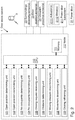
- the door assist system 1 comprises as indicating in conjunction with Fig. 1 an optional open position determining unit 101, an optional open position transmitting unit 102, an optional no occupants determining unit 103, an optional no occupants transmitting unit 104, a closing request receiving unit 105, an obstacle determining unit 106, an optional moving obstacle determining unit 107, an optional movement determining unit 108, and a closing refraining unit 109, all of which were described in greater detail in conjunction with Fig. 1 .
- the embodiments herein for handling of remotely triggered operation of a power door 21 of a vehicle 2 may be implemented through one or more processors, such as a processor 110 , here denoted CPU, together with computer program code for performing the functions and actions of the embodiments herein.
- Said program code may also be provided as a computer program product, for instance in the form of a data carrier carrying computer program code for performing the embodiments herein when being loaded into the door assist system 1.
- One such carrier may be in the form of a CD ROM disc and/or a hard drive. It is however feasible with other data carriers such as a memory stick.
- the computer program code may furthermore be provided as pure program code on a server and downloaded to the door assist system 1.
- the door assist system 1 may further comprise a memory 111 comprising one or more memory units.
- the memory 111 may be arranged to be used to store e.g. information, and further to store data, configurations, schedulings, and applications, to perform the methods herein when being executed in the door assist system 1.
- the computer program code may be implemented in the firmware, stored in FLASH memory 111, of an embedded processor 110, and/or downloaded from online.
- the optional open position determining unit 101, the optional open position transmitting unit 102, the optional no occupants determining unit 103, the optional no occupants transmitting unit 104, the closing request receiving unit 105, the obstacle determining unit 106, the optional moving obstacle determining unit 107, the optional movement determining unit 108, the closing refraining unit 109, the optional processor 110 and/or the optional memory 111 may at least partly be comprised in one or more nodes 112 e.g. ECUs of the vehicle 2.
- said units 101, 102, 103, 104, 105, 106, 107, 108, 109 described above may refer to a combination of analog and digital circuits, and/or one or more processors configured with software and/or firmware, e.g. stored in a memory such as the memory 111, that when executed by the one or more processors such as the processor 110 perform as was described in conjunction with Fig. 1 and as will be described in more detail in conjunction with Fig. 3 .
- processors may be included in a single ASIC (Application-Specific Integrated Circuitry), or several processors and various digital hardware may be distributed among several separate components, whether individually packaged or assembled into a SoC (System-on-a-Chip).
- ASIC Application-Specific Integrated Circuitry
- SoC System-on-a-Chip
- Fig. 2 Further shown in Fig. 2 is optional off-board system 3, optional one or more surroundings detecting sensors 22, optional one or more door position sensors 23, optional one or more occupant presence sensors 24, optional power door 21, optional power door subsystem 211 comprising optional one or more actuators 2111 and/or comprising optional one or more motors 2112, all of which were described in greater detail in conjunction with Fig. 1 .
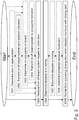
- Fig. 3 is a flowchart depicting an exemplifying method performed by a door assist system 1 according to embodiments of the disclosure. Said method is for handling of remotely triggered operation of a power door 21 of a vehicle 2.
- the exemplifying method which may be continuously repeated, comprises the following actions discussed with support from Figs. 1-2 . Moreover, the actions may be taken in any suitable order and/or one or more actions may be performed simultaneously and/or in alternate order where applicable; for instance, Action 1003 may be performed simultaneously with and/or prior to Action 1001, and/or Action 1005 may be performed simultaneously with and/or prior to Action 1001 or Action 1003. Moreover, according to an example, Actions 1006 and 1009 may be repeatedly iterated.
- the door assist system 1 may determine with input from one or more door position sensors 23 - e.g. with support from the open position determining unit 101 - that a power door 21 of the vehicle is in an open position 7.
- the door assist system 1 may transmit to the off-board system 3 - e.g. with support from the open position transmitting unit 102 - a door status signal 8 indicative of the open position 7 of the power door 21.
- the door assist system 1 may determine with input from one or more occupant presence sensors 24 - e.g. with support from the no occupants determining unit 103 - that no occupants are on-board the vehicle 2.
- the door assist system 1 may transmit to the off-board system 3 - e.g. with support from the no occupants transmitting unit 104 - an occupant status signal 9 indicative of that no occupants are on-board the vehicle 2.
- the door assist system 1 receives from the off-board system 3 - e.g. with support from the closing request receiving unit 105 - a door closure signal 4 requesting the door assist system 1 to activate closing of a power door 21 of the vehicle 2.
- the door assist system 1 determines with input from one or more surroundings detecting sensors 22 adapted to capture a surrounding proximate the vehicle 2, that an obstacle 5 is in vicinity of the vehicle 2.
- the door assist system 1 may determine - e.g. with support from the moving obstacle determining unit 107 - that the obstacle 5 is moving.
- the door assist system 1 may determine - e.g. with support from the movement determining unit 108 - a predicted movement 50 of the obstacle 5.
- the door assist system 1 refrains from activating closing of the power door 21 when the obstacle 5 is determined to interfere and/or potentially interfere with a projected closing path 6 of the power door 21.
- Action 1009 may comprise refraining from activating closing of the power door 21 when the predicted movement 50 of the obstacle 5 is determined to potentially interfere with a projected closing path 6 of the power door 21.
- Action 1009 may comprise refraining from activating closing of the power door 21 when the predicted movement 50 of the obstacle is determined to potentially interfere with a projected closing path 6 of the power door 21 during a predeterminable time interval.
Landscapes
- Engineering & Computer Science (AREA)
- Computer Networks & Wireless Communication (AREA)
- Power-Operated Mechanisms For Wings (AREA)
Abstract
Description
- The present disclosure relates to handling of remotely triggered operation of a power door of a vehicle.
- In a not too distant future, driverless taxis may be a reality. Eliminating the need for a human chauffeur, which represents a significant part of the operating cost for taxi services, could make it an affordable solution for the customers, and further accelerate the spreading of e.g. Transportation-as-a-Service (TaaS) solutions as opposed to individual car ownership.
- With driverless taxis, however, challenges arise which are non-present for conventional chauffeur-driven taxis. One such challenge is the potential scenario of a customer i.e. passenger after departing the driverless taxi, leaving a vehicle door left open. With an unclosed vehicle door, the driverless taxi may e.g. be unable to take off and/or the taxi service for said customer may be prevented from being deemed completed.
-
US20170292313 A1 , for instance, discloses how an autonomous vehicle may transport users without a human operator in exchange for a fare. However, althoughUS20170292313 A1 suggests improvements when it comes to closing of a vehicle power door and subsequently determining that a ride is completed, there is still room for improvements and/or alternative solutions when it comes to handling of a vehicle power door. - It is therefore an object of embodiments herein to provide an approach for handling remotely triggered operation of a vehicle power door in an improved and/or alternative manner.
- According to a first aspect of embodiments herein, the object is achieved by a method performed by a door assist system of a vehicle for handling of remotely triggered operation of a power door of the vehicle. The door assist system receives from an off-board system a door closure signal requesting the door assist system to activate closing of a power door of the vehicle. The door assist system further determines with input from one or more surroundings detecting sensors adapted to capture a surrounding proximate the vehicle, that an obstacle is in vicinity of the vehicle. Moreover, the door assist system refrains from activating closing of the power door when the obstacle is determined to interfere and/or potentially interfere with a projected closing path of the power door.
- According to a second aspect of embodiments herein, the object is achieved by a door assist system of a vehicle for - and/or adapted for - handling of remotely triggered operation of a power door of the vehicle. The door assist system comprises a closing request receiving unit for - and/or adapted for - receiving from an off-board system a door closure signal requesting the door assist system to activate closing of a power door of the vehicle. The door assist system further comprises an obstacle determining unit for - and/or adapted for - determining with input from one or more surroundings detecting sensors adapted to capture a surrounding proximate the vehicle, that an obstacle is in vicinity of the vehicle. Moreover, the door assist system comprises a closing refraining unit for - and/or adapted for - refraining from activating closing of the power door when the obstacle is determined to interfere and/or potentially interfere with a projected closing path of the power door.
- According to a third aspect of embodiments herein, the object is achieved by a vehicle comprising the discussed door assist system.
- According to a fourth aspect of embodiments herein, the object is achieved by a computer program product comprising a computer program containing computer program code means arranged to cause a computer or a processor to execute the steps of the discussed door assist system, stored on a computer-readable medium or a carrier wave.
- Thereby, there is introduced an approach according to which measures are provided to meet off-board triggered operation of a vehicle power door, for instance of a passenger door of a driverless taxi. That is, since there may be received from an off-board system a door closure signal requesting the door assist system to activate closing of a power door of the vehicle, the door assist system may be instructed by a source located remotely from the vehicle, to actuate closing of a power door of said vehicle. Accordingly, closing of a vehicle power door may be initiated from a system not comprised in the vehicle, such as for instance from a service centre for managing driverless taxis. Moreover, that is, since it may be determined with input from one or more surroundings detecting sensors adapted to capture a surrounding proximate the vehicle that an obstacle is in vicinity of the vehicle, it may be established with support from at least a first sensor capturing a surrounding outside the vehicle that an obstacle is proximate the vehicle. Accordingly, a check may be carried out of whether there is an obstacle nearby the vehicle. Furthermore, since the door assist system may refrain from activating closing of the power door when the obstacle is determined to interfere and/or potentially interfere with a projected closing path of the power door, upon determining that an obstacle is or is about to become in the way for the intended closing of the power door, the door assist system may refrain from actuating the requested closing of said power door. Accordingly, a check may be carried out of whether a detected obstacle is deemed to interfere and/or potentially interfere with a projected closing path, and when that is the case, the - by the off-board system requested - closing of the power door is not actuated and/or alternatively held e.g. until it is determined that the obstacle no longer interferes and/or potentially interferes with the projected closing path of the power door. Thus, the risk of the power door upon the requested closing colliding with and/or hitting an obstacle, and/or the risk of pinching said obstacle between the power door and the vehicle, is thereby eliminated and/or at least reduced.
- For that reason, an approach is provided for in an improved and/or alternative manner handle remotely triggered operation of a vehicle power door.
- The technical features and corresponding advantages of the above mentioned method will be discussed in further detail in the following.
- The various aspects of the non-limiting embodiments, including particular features and advantages, will be readily understood from the following detailed description and the accompanying drawings, in which:
-
Fig. 1 illustrates a schematic view of an exemplifying door assist system of a vehicle according to embodiments of the disclosure; -
Fig. 2 is a schematic block diagram illustrating an exemplifying door assist system according to embodiments of the disclosure; and -
Fig. 3 is a flowchart depicting an exemplifying method performed by a door assist system according to embodiments of the disclosure. - Non-limiting embodiments of the present disclosure will now be described more fully hereinafter with reference to the accompanying drawings, in which currently preferred embodiments of the disclosure are shown. This disclosure may, however, be embodied in many different forms and should not be construed as limited to the embodiments set forth herein. Like reference characters refer to like elements throughout. Dashed lines of some boxes in the figures indicate that these units or actions are optional and not mandatory.
- In the following, according to embodiments herein which relate to handling of remotely triggered operation of a power door of a vehicle, there will be disclosed an approach according to which measures are provided to meet off-board triggered operation of a vehicle power door.
- Referring now to the figures and
Fig. 1 in particular, there is depicted a schematic view of an exemplifyingdoor assist system 1 of avehicle 2 according to embodiments of the disclosure. Thedoor assist system 1 is adapted for handling of remotely triggered operation of apower door 21 of thevehicle 2. The exemplifyingvehicle 2 may for instance be represented by a driverless taxi. The exemplifyingpower door 21, on the other hand, may refer to any one power door of saidvehicle 2, such as a passenger door. - The expression "door assist system" may refer to "vehicle power door assist system" and/or "door closing refraining system", whereas "of" a vehicle may refer to "comprised" in a vehicle. The referred to "vehicle" may be represented by any arbitrary vehicle, for instance an engine-propelled vehicle, such as e.g. a car, truck, lorry, van, tractor and/or bus. "Vehicle" may further refer to "autonomous and/or at least partly autonomous vehicle", "driverless and/or at least partly driverless vehicle", "self-driving and/or at least partly self-driving vehicle", and according to an example further to "taxi" and/or "robo(t)-taxi". "For" handling of remotely triggered operation may refer to "adapted for" handling of remotely triggered operation, whereas "for handling of" remotely triggered operation may refer to "for managing of" and/or "to take measure to meet a" remotely triggered operation. "Remotely" triggered operation, on the other hand, may refer to "off-board", "wirelessly" and/or "a reservation centre and/or service centre" triggered operation, and according to an example further to "a handheld electronic device, user electronic device, smart watch, smartphone and/or key fob" triggered operation. "'Triggered" may refer to "initiated". The expression "operation" of a power door may refer to "closing" of a power door, whereas "power door" may refer to "power operated door", "motorized door" and/or merely "door". The referred to "power door" may refer to any arbitrary power door commonly known in the art, which may be opened and/or closed in a known manner by means of e.g. one or more actuators and/or one or more motors. The referred to "power door" may according to an example further refer to "passenger power door", "outwardly swinging power door" and/or "side power door". According to an example, the expression "for handling of remotely triggered operation of a power door of the vehicle" may refer to "for handling of remotely triggered operation of a power door of the vehicle, the door assist system being adapted for activating closing of the power door".
- The
door assist system 1 is - by means of a closing request receiving unit 105 (shown inFig. 2 ) - adapted for receiving from an off-board system 3 adoor closure signal 4 requesting thedoor assist system 1 to activate closing of apower door 21 of thevehicle 2. Thereby, thedoor assist system 1 may be instructed by asource 3 located remotely from thevehicle 2, to actuate closing of apower door 21 of saidvehicle 2. Accordingly, closing of avehicle power door 21 may be initiated from asystem 3 not comprised in thevehicle 2 itself. - The exemplifying off-
board system 3 may for instance be part of a service centre for managing self-driving taxis, for instance distributed among one or more servers. Communication between thedoor assist system 1 and the off-board system 3 may be accomplished as commonly known in the art, for instance by communicating wirelessly in a known manner. Potential closing of thepower door 21, on the other hand, may for instance be accomplished with support from an exemplifyingpower door subsystem 211, for instance comprising one or more e.g. commonly known actuators 2111 (shown inFig. 2 ) and/or one or more e.g. commonly known motors 2112 (shown inFig. 2 ) enabling closing of thepower door 21 in a known manner. - The expression "off-board system" may refer to "remote system", "system not comprised in the vehicle" and/or "wirelessly connected system". According to an example, "off-board system" may refer to "off-board system supporting communication with one or more vehicles", and according to another example, to "handheld electronic device, user electronic device, smart watch and/or key fob adapted to communicate with the vehicle". Moreover, "system" may refer to "vehicles management system", "control system", "back-end system", "one or more automotive clouds and/or cloud networks adapted for cloud-based storage" and/or "at least a first server". The referred to "off-board system" may be adapted to wirelessly communicate with, and/or adapted to be wirelessly in connection with, the door assist system. The expression door closure "signal" may refer to door closure "message", "request" and/or "instruction", whereas "requesting" the door assist system may refer to "prompting" and/or "instructing" the door assist system. "Activate" closing, on the other hand, may refer to "actuate", "initiate" and/or "enable" closing, whereas "closing" may refer to "bringing the power door to a pre-latched, semi-latched, secondary latched, fully latched and/or fully closed state and/or position". According to an example, the expression "to activate closing of a power door of the vehicle" may refer to "to activate closing of a power door of the vehicle with support from a power door subsystem comprising one or more actuators and/or one or more motors enabling closing of the power door".
- The
door assist system 1 is - by means of an obstacle determining unit 106 (shown inFig. 2 ) - adapted for determining with input from one or moresurroundings detecting sensors 22 adapted to capture a surrounding proximate thevehicle 2, that anobstacle 5 is in vicinity of thevehicle 2. Thereby, it may be established with support from at least afirst sensor 22 sensing a surrounding outside thevehicle 2 that anobstacle 5 is proximate thevehicle 2. In other words, a check may be carried out of whether there is an obstacle near thevehicle 2. - Determining that an
obstacle 5 is in vicinity of thevehicle 2 may be accomplished as commonly known in the art, and accordingly, the one or moresurroundings detecting sensors 22 may refer to commonly known sensors adapted to capture a surrounding proximate thevehicle 2, such as e.g. one or more cameras, radars, LIDARs etc. The one or more surrounding detectingsensors 22 may be positioned in any arbitrary manner considered relevant to capture a surrounding - and/or at least a portion of a surrounding - proximate thevehicle 2, and for instance be comprised in and/or be attached to thevehicle 2. The exemplifyingobstacle 5 may for instance be represented by a road user, pedestrian and/or passenger, e.g. standing next to, moving towards and/or moving around thevehicle 2. - The expression "with input" from one or more surrounding detecting sensors may refer to "with support" from one or more surrounding detecting sensors, whereas "surroundings" detecting sensors may refer to "environment" detecting sensors. Adapted to "capture" a surrounding may refer to adapted to "sense" a surrounding. The expression "surrounding" proximate the vehicle, on the other hand, may refer to "at least a portion of a surrounding" and/or "external environment" proximate the vehicle, whereas "proximate" the vehicle may refer to "proximate one or more power doors of" the vehicle. Moreover, "proximate" the vehicle may refer to "proximate and external" the vehicle, and according to an example further to "in vicinity of", "nearby" and/or "at least within a predetermined and/or predeterminable distance from" the vehicle, such as for instance "at least within 1 metre, more preferred at least within 5 metres, and most preferred at least within 10 metres from" the vehicle. "Obstacle", on the other hand, may refer to "object" and/or "human being", and may for instance refer to a passenger, pedestrian, cyclist, motorcyclist, road user, etc. The expression "in vicinity of" the vehicle may refer to "near", "proximate" and/or "within a predetermined and/or predeterminable distance from" the vehicle, such as for instance "within 1, 5 and/or 10 metres from" the vehicle. According to an example, the expression "that an obstacle is in vicinity of the vehicle" may refer to "whether an obstacle is in vicinity of the vehicle"
- The
door assist system 1 is - by means of a closing refraining unit 109 (shown inFig. 2 ) - adapted for refraining from activating closing of thepower door 21 when theobstacle 5 is determined to interfere and/or potentially interfere with a projected closing path 6 of thepower door 21. Thereby, upon determining that anobstacle 5 is or is about to become in the way for the intended closing of thepower door 21, the door assistsystem 1 may refrain from actuating the requested closing of saidpower door 21. In other words, a check may be carried out of whether a detectedobstacle 5 is deemed to interfere and/or potentially interfere with a projected closing path 6, and when that is the case, the - by the off-board system 3 requested - closing of thepower door 21 is not actuated or alternatively held e.g. until it is determined that theobstacle 5 no longer interferes and/or potentially interferes with the projected closing path 6 of thepower door 21. Thus, the risk of thepower door 21 upon the requested closing colliding with and/or hitting anobstacle 5, and/or the risk of pinching saidobstacle 5 between thepower door 21 and thevehicle 2, may thereby be eliminated and/or at least reduced. - Determining that the
obstacle 5 interferes and/or potentially may interfere with the projected closing path 6 may be accomplished e.g. by analysing a position and/or an expected position of the obstacle, and comparing with the projected closing path 6. - The expression "refraining from" activating closing may refer to "holding" activating closing, whereas "activating" closing may refer to "actuating" and/or "enabling" closing. "Activating closing of the power door", on the other hand, may refer to "activating closing of the power door by sending a closing signal and/or message to the power door and/or a control unit associated therewith". "When" may refer to "if", whereas "determined" to interfere may refer to "predicted", "analysed" and/or "calculated" to interfere. The expression "interfere and/or potentially interfere with" a projected closing path may refer to "be in the way of or potentially be in the way of" a projected closing path and/or "have a position and/or a predicted position within" a projected closing path, whereas "potentially" interfere may refer to "is predicted to" interfere. "Projected" closing path, on the other hand, may refer to "expected", "determined" and/or "calculated" closing path, whereas "closing path" may refer to "inner swing path" and/or "closing path area and/or space between an open position of the power door and a closed positon of the power door". According to an example, the expression "refraining from activating closing of the power door when the obstacle is determined to interfere and/or potentially interfere with a projected closing path of the power door" may refer to "refraining from activating closing of the power door when the obstacle is determined to interfere and/or potentially interfere with a projected closing path of the power door as the power door moves from an open position to a closed position". According to another example, the expression "refraining from activating closing of the power door when the obstacle is determined to interfere and/or potentially interfere with a projected closing path of the power door" may refer to "refraining from activating closing of the power door when the obstacle is determined to interfere and/or potentially interfere with a projected closing path of the power door, and otherwise activating closing of the power door". According to yet another example, the expression "refraining from activating closing of the power door when the obstacle is determined to interfere and/or potentially interfere with a projected closing path of the power door" may refer to "refraining from activating closing of the power door when the obstacle is determined to interfere and/or potentially interfere with a projected closing path of the power door, until it is determined that the obstacle no longer interferes and/or potentially interferes with the projected closing path of the power door".
- Optionally, the door assist
system 1 may - by means of an optional open position determining unit 101 (shown inFig. 2 ) - be adapted for determining with input from one or moredoor position sensors 23 that apower door 21 of thevehicle 2 is in an open position 7. Thereby, it may be established with support from at least afirst sensor 23 adapted for sensing and/or determining a door position status, that thepower door 21 is deemed to be in an unclosed position 7. In other words, it may be determined whether thepower door 21 is in an open position 7, rather than in a closed and/or semi-closed position. Subsequently, as a consequence of the unclosed 7vehicle door 21, it may be derived that thevehicle 2, e.g. the driverless taxi, for instance may be unable to take off and/or a taxi service for a potential previous customer may be prevented from being deemed completed. - The open position 7 may be associated with and/or refer to an opening angle 70, for instance represented by an angle from a few degrees up to maximum angle at which the power door has reached its opening limit. Determining that the
power door 21 is in an open position 7 may be accomplished as commonly known in the art, and accordingly, the one or moredoor position sensors 23 may refer to commonly known sensors adapted to determine and/or sense door position status and/or open door angle status. The one or moredoor status sensors 23 may be positioned in any arbitrary manner considered relevant to determine a door position status and/or open door angle status, and for instance be comprised in and/or be attached to thevehicle 2 and/orpower door 21. - The expression "with input" from one or more door position sensors may refer to "with support" from one or more door position sensors, whereas "open" position may refer to "open angular" position, "unclosed" position and/or "unlatched" position. According to an example, "open position" may further refer to "open position with an opening angle exceeding a predetermined and/or predeterminable angle threshold e.g. represented by 5, 15 or 25 degrees". According to another example, the expression "that a power door of the vehicle is in an open position" may refer to "whether a power door of the vehicle is in an open position".
- Optionally, the door assist
system 1 may - by means of an optional open position transmitting unit 102 (shown inFig. 2 ) - be adapted for transmitting to the off-board system 3 adoor status signal 8 indicative of the open position 7 of thepower door 21. Thereby, the door assistsystem 1 may inform the off-board system 3, which for instance may be part of a service centre for managing self-driving taxis, of that apower door 21 of thevehicle 2 is in an open state 7. Subsequently, the service centre may directly and/or indirectly be informed of that thevehicle 2, e.g. the driverless taxi, for instance may be unable to take off and/or a taxi service for a potential previous customer may be prevented from being deemed completed. - Communication between the door assist
system 1 and the off-board system 3 may as previously indicated be accomplished as commonly known in the art, for instance by communicating wirelessly in a known manner. - The expression "transmitting" may refer to "transmitting wirelessly", "sending" and/or "pushing", and according to an example further to "subsequent a request from the off-board system transmitting". The expression door status "signal", on the other hand, may refer to door status "message", "information" and/or "warning", whereas "indicative of" the open position may refer to "comprising information of" the open position. According to an example, the expression "transmitting to the off-board system a door status signal indicative of the open position of the power door" may refer to "transmitting to the off-board system a door status signal indicative of the open position of the power door, when it is determined that the power door is in an open position".
- Optionally, the door assist
system 1 may - by means of an optional no occupants determining unit 103 (shown inFig. 2 ) - be adapted for determining with input from one or moreoccupant presence sensors 24 that no occupants are on-board thevehicle 2. Thereby, it may be established with support from at least afirst sensor 24 adapted for determining and/or sensing vehicle occupants presence within thevehicle 2, that it is deemed that thevehicle 2 is empty of occupants. In other words, it may be determined whether no passengers are on-board thevehicle 2. Subsequently, it may be derived that no one remains in thevehicle 2, e.g. the driverless taxi, to potentially manually close theopen vehicle door 21. - Determining that there are no occupants on-board the
vehicle 2 may be accomplished as commonly known in the art, and accordingly, the one or moreoccupant presence sensors 24 may refer to commonly known sensors adapted to determine and/or sense occupant presence, such as e.g. commonly known cameras and/or weight sensors. The one or moreoccupant presence sensors 24 may be positioned in any arbitrary manner considered relevant to determine and/or sense occupant presence within thevehicle 2, and for instance be comprised in and/or be attached to thevehicle 2 and/or e.g. vehicle seat(s). - The expression "with input" from one or more occupant presence sensors may refer to "with support" from one or more occupant presence sensors, whereas "no" occupants may refer to "zero" occupants. "Occupants", on the other hand, may refer to "passengers" and/or "humans", whereas "on-board" the vehicle may refer to "within" the vehicle. According to an example, the expression "that no occupants are on-board the vehicle" may refer to "whether no occupants are on-board the vehicle".
- Optionally, the door assist
system 1 may - by means of an optional no occupants transmitting unit 104 (shown inFig. 2 ) - be adapted for transmitting to the off-board system 3 anoccupant status signal 9 indicative of that no occupants are on-board thevehicle 2. Thereby, the door assistsystem 1 may inform the off-board system 3, which for instance may be part of a service centre for managing self-driving taxis, of that no passengers are on-board thevehicle 2. Subsequently, the service centre may directly and/or indirectly be informed of that no one remains in thevehicle 2, e.g. the driverless taxi, to potentially manually close theopen vehicle door 21. - Communication between the door assist
system 1 and the off-board system 3 may as previously indicated be accomplished as commonly known in the art, for instance by communicating wirelessly in a known manner. - The expression "transmitting" may as previously indicated refer to "transmitting wirelessly", "sending" and/or "pushing", and according to an example further to "subsequent a request from the off-board system transmitting". The expression occupant status "signal", on the other hand, may refer to occupant status "message", "information" and/or "warning", whereas "indicative of" that no occupants are on-board may refer to "comprising information of" that no occupants are on-board. According to an example, the expression "transmitting to the off-board system an occupant status signal indicative of that no occupants are on-board the vehicle" may refer to "transmitting to the off-board system an occupant status signal indicative of that no occupants are on-board the vehicle, when it is determined that no occupants are on-board the vehicle".
- Optionally, the door assist
system 1 may - by means of an optional moving obstacle determining unit 107 (shown inFig. 2 ) - be adapted for determining that theobstacle 5 is moving, and further - by means of an optional movement determining unit 108 (shown inFig. 2 ) - be adapted for determining a predictedmovement 50 of theobstacle 5. Theclosing refraining unit 109 of the door assistsystem 1 may then be adapted for refraining from activating closing of thepower door 21 when the predictedmovement 50 of theobstacle 5 is determined to potentially interfere with a projected closing path 6 of thepower door 21. Thereby, upon determining that a predictedmovement 50 of movingobstacle 5 is expected to come in the way for the intended closing of thepower door 21, the door assistsystem 1 may refrain from actuating the requested closing of saidpower door 21. In other words, a check may be carried out of whether amovement 50 of a detected movingobstacle 5 is predicted to potentially interfere with a projected closing path 6, and when that is the case, the - by the off-board system 3 requested - closing of thepower door 21 is not actuated or alternatively held e.g. until it is determined that the predictedmovement 50 of the movingobstacle 5 no longer is deemed to interfere with the projected closing path 6 of thepower door 21. Thus, the risk of thepower door 21 upon the requested closing potentially colliding with and/or hitting anobstacle 5 e.g. moving towards, near and/or around thevehicle 2, and/or the risk of pinching said movingobstacle 5 between thepower door 21 and thevehicle 2, is thereby eliminated and/or at least reduced. - Determining that the
obstacle 5 is moving may be accomplished as commonly known in the art, e.g. with support from the one or moresurroundings detecting sensors 22. Determining a predictedmovement 50 of theobstacle 5 may in a similar manner be accomplished as known in the art, e.g. by analysing how theobstacle 5 moves with input from the one or more surrounding detectingsensors 22 and therefrom derive a predictedmovement 50. Determining that the predictedmovement 50 of theobstacle 5 is deemed to interfere with the projected closing path 6, on the other hand, may be accomplished e.g. by comparing the predictedmovement 50 with the projected closing path 6. - The expression that the obstacle is "moving" may refer to that the obstacle is "moving in a horizontal plane and/or in a plane parallel to the ground" and/or to that the obstacle is "moving at least partly towards, near and/or around the vehicle". "Determining a predicted" movement of the obstacle, on the other hand, may refer to "predicting an expected" movement of the obstacle, whereas "a predicted movement" may refer to "an expected movement". "A predicted movement" of the obstacle may further refer to "at least a first predicted upcoming position" of the obstacle, whereas the expression "determined to potentially interfere" with a projected closing path of the power door may refer to "predicted to interfere" with a projected closing path of the power door. According to an example, the expression "determining that the obstacle is moving" may refer to "determining whether the obstacle is moving". In a similar manner, according to another example, the expression "when the predicted movement of the obstacle is determined to potentially interfere with a projected closing path of the power door" may refer to "when it is determined that the object is moving and the predicted movement of the obstacle is determined to potentially interfere with a projected closing path of the power door".
- According to one example, the expression "refraining from activating closing of the power door when predicted movement of the obstacle is determined to potentially interfere with a projected closing path of the power door" may refer to "refraining from activating closing of the power door when predicted movement of the obstacle is determined to potentially interfere with a projected closing path of the power door as the power door moves from an open position to a closed position". According to another example, the expression "refraining from activating closing of the power door when predicted movement of the obstacle is determined to potentially interfere with a projected closing path of the power door" may refer to "refraining from activating closing of the power door when predicted movement of the obstacle is determined to potentially interfere with a projected closing path of the power door, and otherwise activating closing of the power door". According to yet another example, the expression "refraining from activating closing of the power door when predicted movement of the obstacle is determined to potentially interfere with a projected closing path of the power door" may refer to "refraining from activating closing of the power door when predicted movement of the obstacle is determined to potentially interfere with a projected closing path of the power door, until it is determined that the predicted movement of the obstacle no longer potentially interferes with the projected closing path of the power door".
- Optionally, the
closing refraining unit 109 may further be adapted for refraining from activating closing of thepower door 21 when the predictedmovement 50 of theobstacle 5 is determined to potentially interfere with a projected closing path 6 of thepower door 21 during a predeterminable time interval. Thereby, the door assistsystem 1 may refrain from actuating the requested closing of saidpower door 21 upon determining that a predictedmovement 50 of movingobstacle 5 is expected to come in the way for the intended closing of thepower door 21 during a specific period of time, e.g. during the actual closing of thedoor 21. In other words, a check may be carried out of whether amovement 50 of a detected movingobstacle 5 is predicted to potentially interfere with a projected closing path 6 during the specific time interval, and only when the potential interference occurs within said time interval is the - by the off-board system 3 requested - closing of thepower door 21 not actuated, and/or alternatively held e.g. until it is determined that the moving obstacle's 5 predictedmovement 50 no longer is deemed to interfere with the power door's 21 projected closing path 6 during said time interval. Thus, the conditions under which the activation of closing thepower door 21 is refrained may be less strict, and not apply when potential interference of the obstacle's 5 predictedmovement 50 with the power door's 21 projected closing path 6 is determined and/or predicted to occur outside of the predetermined time interval, such as for instance outside the actual closing of thepower door 21. According to an example, the conditions under which the activation of closing thepower door 21 is refrained would then not apply for instance when the movingobject 5 is predicted to not have yet reached the predicted closing path 6 before closing of thepower door 21 is estimated to be finalized. - The predeterminable time interval may be arbitrarily selected, and may for instance represent the expected time interval for closing the
power door 21 and/or until said closing is finalized, further for instance with arbitrarily selected extra time added e.g. to provide safety margins. The duration of, the start of and/or the end of the time interval may accordingly be arbitrarily selected, e.g. in consideration of when closing of thepower door 21 is determined and/or expected to be actuated and/or finalized. The time interval may further vary with how widely open thepower door 21 is determined to be, thus for instance vary with the opening angle 70thereof 21. Moreover, the time interval may for instance range from less than a second up to several seconds or even tens of seconds. - The expression "during" a predeterminable time interval may refer to "at least partly coinciding" with a predeterminable time interval, whereas "predeterminable" may refer to "predetermined", "selectable" and/or "specific" time interval. "A predeterminable time interval", on the other hand, may according to an example refer to "the expected closing of the vehicle door".
- According to an example, the expression "refraining from activating closing of the power door when predicted movement of the obstacle is determined to potentially interfere with a projected closing path of the power door during a predeterminable time interval" may refer to "refraining from activating closing of the power door when predicted movement of the obstacle is determined to during a predeterminable time interval potentially interfere with a projected closing path of the power door as the power door moves from an open position to a closed position". According to another example, the expression "refraining from activating closing of the power door when predicted movement of the obstacle is determined to potentially interfere with a projected closing path of the power door during a predeterminable time interval" may refer to "refraining from activating closing of the power door when predicted movement of the obstacle is determined to potentially interfere with a projected closing path of the power door during a predeterminable time interval, and otherwise activating closing of the power door". According to yet another example, the expression "refraining from activating closing of the power door when predicted movement of the obstacle is determined to potentially interfere with a projected closing path of the power door during a predeterminable time interval" may refer to "refraining from activating closing of the power door when predicted movement of the obstacle is determined to potentially interfere with a projected closing path of the power door during a predeterminable time interval, until it is determined that the predicted movement of the obstacle no longer potentially interferes with the projected closing path of the power door".
- As further shown in
Fig. 2 , which is a schematic block diagram illustrating an exemplifying door assistsystem 1 according to embodiments of the disclosure, the door assistsystem 1 comprises as indicating in conjunction withFig. 1 an optional openposition determining unit 101, an optional openposition transmitting unit 102, an optional nooccupants determining unit 103, an optional nooccupants transmitting unit 104, a closingrequest receiving unit 105, anobstacle determining unit 106, an optional movingobstacle determining unit 107, an optionalmovement determining unit 108, and aclosing refraining unit 109, all of which were described in greater detail in conjunction withFig. 1 . Furthermore, the embodiments herein for handling of remotely triggered operation of apower door 21 of avehicle 2, may be implemented through one or more processors, such as aprocessor 110, here denoted CPU, together with computer program code for performing the functions and actions of the embodiments herein. Said program code may also be provided as a computer program product, for instance in the form of a data carrier carrying computer program code for performing the embodiments herein when being loaded into the door assistsystem 1. One such carrier may be in the form of a CD ROM disc and/or a hard drive. It is however feasible with other data carriers such as a memory stick. The computer program code may furthermore be provided as pure program code on a server and downloaded to the door assistsystem 1. Thedoor assist system 1 may further comprise amemory 111 comprising one or more memory units. Thememory 111 may be arranged to be used to store e.g. information, and further to store data, configurations, schedulings, and applications, to perform the methods herein when being executed in the door assistsystem 1. For instance, the computer program code may be implemented in the firmware, stored inFLASH memory 111, of an embeddedprocessor 110, and/or downloaded from online. - Furthermore, the optional open
position determining unit 101, the optional openposition transmitting unit 102, the optional nooccupants determining unit 103, the optional nooccupants transmitting unit 104, the closingrequest receiving unit 105, theobstacle determining unit 106, the optional movingobstacle determining unit 107, the optionalmovement determining unit 108, theclosing refraining unit 109, theoptional processor 110 and/or theoptional memory 111, may at least partly be comprised in one ormore nodes 112 e.g. ECUs of thevehicle 2. Those skilled in the art will also appreciate that saidunits memory 111, that when executed by the one or more processors such as theprocessor 110 perform as was described in conjunction withFig. 1 and as will be described in more detail in conjunction withFig. 3 . One or more of these processors, as well as the other digital hardware, may be included in a single ASIC (Application-Specific Integrated Circuitry), or several processors and various digital hardware may be distributed among several separate components, whether individually packaged or assembled into a SoC (System-on-a-Chip). - Further shown in
Fig. 2 is optional off-board system 3, optional one or moresurroundings detecting sensors 22, optional one or moredoor position sensors 23, optional one or moreoccupant presence sensors 24,optional power door 21, optionalpower door subsystem 211 comprising optional one ormore actuators 2111 and/or comprising optional one ormore motors 2112, all of which were described in greater detail in conjunction withFig. 1 . -
Fig. 3 is a flowchart depicting an exemplifying method performed by adoor assist system 1 according to embodiments of the disclosure. Said method is for handling of remotely triggered operation of apower door 21 of avehicle 2. The exemplifying method, which may be continuously repeated, comprises the following actions discussed with support fromFigs. 1-2 . Moreover, the actions may be taken in any suitable order and/or one or more actions may be performed simultaneously and/or in alternate order where applicable; for instance,Action 1003 may be performed simultaneously with and/or prior toAction 1001, and/orAction 1005 may be performed simultaneously with and/or prior toAction 1001 orAction 1003. Moreover, according to an example,Actions - In
optional Action 1001, the door assistsystem 1 may determine with input from one or more door position sensors 23 - e.g. with support from the open position determining unit 101 - that apower door 21 of the vehicle is in an open position 7. - In
optional Action 1002, which may follow uponoptional Action 1001, the door assistsystem 1 may transmit to the off-board system 3 - e.g. with support from the open position transmitting unit 102 - adoor status signal 8 indicative of the open position 7 of thepower door 21. - In
optional Action 1003, the door assistsystem 1 may determine with input from one or more occupant presence sensors 24 - e.g. with support from the no occupants determining unit 103 - that no occupants are on-board thevehicle 2. - In
optional Action 1004, which may follow uponoptional Action 1003, the door assistsystem 1 may transmit to the off-board system 3 - e.g. with support from the no occupants transmitting unit 104 - anoccupant status signal 9 indicative of that no occupants are on-board thevehicle 2. - In
Action 1005, the door assistsystem 1 receives from the off-board system 3 - e.g. with support from the closing request receiving unit 105 - adoor closure signal 4 requesting the door assistsystem 1 to activate closing of apower door 21 of thevehicle 2. - In
Action 1006, e.g. with support from theobstacle determining unit 106, the door assistsystem 1 determines with input from one or moresurroundings detecting sensors 22 adapted to capture a surrounding proximate thevehicle 2, that anobstacle 5 is in vicinity of thevehicle 2. - In
optional Action 1007, the door assistsystem 1 may determine - e.g. with support from the moving obstacle determining unit 107 - that theobstacle 5 is moving. - In
optional Action 1008, which may follow uponoptional Action 1007, the door assistsystem 1 may determine - e.g. with support from the movement determining unit 108 - a predictedmovement 50 of theobstacle 5. - In
Action 1009, e.g. with support from theclosing refraining unit 109, the door assistsystem 1 refrains from activating closing of thepower door 21 when theobstacle 5 is determined to interfere and/or potentially interfere with a projected closing path 6 of thepower door 21. - Optionally, following upon
optional Actions Action 1009 may comprise refraining from activating closing of thepower door 21 when the predictedmovement 50 of theobstacle 5 is determined to potentially interfere with a projected closing path 6 of thepower door 21. - Furthermore, optionally, following upon
optional Actions Action 1009 may comprise refraining from activating closing of thepower door 21 when the predictedmovement 50 of the obstacle is determined to potentially interfere with a projected closing path 6 of thepower door 21 during a predeterminable time interval. - The person skilled in the art realizes that the present disclosure by no means is limited to the preferred embodiments described above. On the contrary, many modifications and variations are possible within the scope of the appended claims. It should furthermore be noted that the drawings not necessarily are to scale and the dimensions of certain features may have been exaggerated for the sake of clarity. Emphasis is instead placed upon illustrating the principle of the embodiments herein. Additionally, in the claims, the word "comprising" does not exclude other elements or steps, and the indefinite article "a" or "an" does not exclude a plurality.
Claims (15)
- A method performed by a door assist system (1) of a vehicle (2) for handling of remotely triggered operation of a power door (21) of the vehicle (2), the method comprising:receiving (1005) from an off-board system (3) a door closure signal (4) requesting the door assist system (1) to activate closing of a power door (21) of the vehicle (2);determining (1006) with input from one or more surroundings detecting sensors (22) adapted to capture a surrounding proximate the vehicle (2), that an obstacle (5) is in vicinity of the vehicle (2); andrefraining (1009) from activating closing of the power door (21) when the obstacle (5) is determined to interfere and/or potentially interfere with a projected closing path (6) of the power door (21).
- The method according to claim 1, further comprising:
determining (1001) with input from one or more door position sensors (23) that a power door (21) of the vehicle (2) is in an open position (7). - The method according to claim 2, further comprising:
transmitting (1002) to the off-board system (3) a door status signal (8) indicative of the open position (7) of the power door (21). - The method according to any one of claims 1-3, further comprising:
determining (1003) with input from one or more occupant presence sensors (24) that no occupants are on-board the vehicle (2). - The method according to claim 4, further comprising:
transmitting (1004) to the off-board system (3) an occupant status signal (9) indicative of that no occupants are on-board the vehicle (2). - The method according to any one of claims 1-5, further comprising:determining (1007) that the obstacle (5) is moving; anddetermining (1008) a predicted movement (50) of the obstacle (5);wherein the refraining (1009) from activating closing of the power door (21) then comprises refraining from activating closing of the power door (21) when the predicted movement (50) of the obstacle (5) is determined to potentially interfere with a projected closing path (6) of the power door (21).
- The method according to claim 6, wherein the refraining (1009) from activating closing of the power door (21) comprises refraining from activating closing of the power door (21) when the predicted movement (50) of the obstacle (5) is determined to potentially interfere with a projected closing path (6) of the power door (21) during a predeterminable time interval.
- A door assist system (1) of a vehicle (2) for handling of remotely triggered operation of a power door (21) of the vehicle (2), the door assist system (1) comprising:a closing request receiving unit (105) for receiving (1005) from an off-board system (3) a door closure signal (4) requesting the door assist system (1) to activate closing of a power door (21) of the vehicle (2);an obstacle determining unit (106) for determining (1006) with input from one or more surroundings detecting sensors (22) adapted to capture a surrounding proximate the vehicle (2), that an obstacle (5) is in vicinity of the vehicle (2); anda closing refraining unit (109) for refraining (1009) from activating closing of the power door (21) when the obstacle (5) is determined to interfere and/or potentially interfere with a projected closing path (6) of the power door (21).
- The door assist system (1) according to claim 8, further comprising:
an open position determining unit (101) for determining (1001) with input from one or more door position sensors (23) that a power door (21) of the vehicle (2) is in an open position (7). - The door assist system (1) according to claim 9, further comprising:
an open position transmitting unit (102) for transmitting (1002) to the off-board system (3) a door status signal (8) indicative of the open position (7) of the power door (21). - The door assist system (1) according to any one of claims 8-10, further comprising:
a no occupants determining unit (103) for determining (1003) with input from one or more occupant presence sensors (24) that no occupants are on-board the vehicle (2). - The door assist system (1) according to claim 11, further comprising:
a no occupants transmitting unit (104) for transmitting (1004) to the off-board system (3) an occupant status signal (9) indicative of that no occupants are on-board the vehicle (2). - The door assist system (1) according to any one of claims 8-12, further comprising:a moving obstacle determining unit (107) for determining (1007) that the obstacle (5) is moving; anda movement determining unit (108) for determining (1008) a predicted movement (50) of the obstacle (5);wherein the closing refraining unit (109) further is adapted for refraining from activating closing of the power door (21) when the predicted movement (50) of the obstacle (5) is determined to potentially interfere with a projected closing path (6) of the power door (21).
- The door assist system (1) according to claim 13, wherein the closing refraining unit (109) further is adapted for refraining from activating closing of the power door (21) when the predicted movement (50) of the obstacle (5) is determined to potentially interfere with a projected closing path (6) of the power door (21) during a predeterminable time interval.
- A vehicle (2) comprising a door assist system (1) according to any one of claims 8-14.
Priority Applications (3)
| Application Number | Priority Date | Filing Date | Title |
|---|---|---|---|
| EP19155584.6A EP3693530A1 (en) | 2019-02-05 | 2019-02-05 | Handling of remotely triggered operation of a vehicle door |
| US16/778,138 US11661785B2 (en) | 2019-02-05 | 2020-01-31 | Handling of remotely triggered operation of a vehicle door |
| CN202010080336.9A CN111520026A (en) | 2019-02-05 | 2020-02-05 | Processing of remotely triggered operation of a vehicle door |
Applications Claiming Priority (1)
| Application Number | Priority Date | Filing Date | Title |
|---|---|---|---|
| EP19155584.6A EP3693530A1 (en) | 2019-02-05 | 2019-02-05 | Handling of remotely triggered operation of a vehicle door |
Publications (1)
| Publication Number | Publication Date |
|---|---|
| EP3693530A1 true EP3693530A1 (en) | 2020-08-12 |
Family
ID=65324276
Family Applications (1)
| Application Number | Title | Priority Date | Filing Date |
|---|---|---|---|
| EP19155584.6A Pending EP3693530A1 (en) | 2019-02-05 | 2019-02-05 | Handling of remotely triggered operation of a vehicle door |
Country Status (3)
| Country | Link |
|---|---|
| US (1) | US11661785B2 (en) |
| EP (1) | EP3693530A1 (en) |
| CN (1) | CN111520026A (en) |
Families Citing this family (4)
| Publication number | Priority date | Publication date | Assignee | Title |
|---|---|---|---|---|
| WO2021247725A1 (en) * | 2020-06-02 | 2021-12-09 | Ofinno, Llc | Network slice specific authentication and authorization |
| CN114517618B (en) * | 2022-02-18 | 2024-03-08 | 广州小鹏自动驾驶科技有限公司 | An obstacle information processing method, electronic equipment, media and a vehicle |
| CN114856352B (en) * | 2022-04-24 | 2023-10-20 | 华人运通(江苏)技术有限公司 | Vehicle door obstacle avoidance control method, device and equipment |
| WO2024263568A1 (en) * | 2023-06-21 | 2024-12-26 | Aehra, Inc | Power actuation of doors or tailgate on automobile |
Citations (4)
| Publication number | Priority date | Publication date | Assignee | Title |
|---|---|---|---|---|
| US20170030135A1 (en) * | 2015-07-29 | 2017-02-02 | Ford Global Technologies, Llc | Object detection and method for vehicle door assist system |
| WO2017132143A1 (en) * | 2016-01-29 | 2017-08-03 | Faraday&Future Inc. | System and method for tracking moving objects to avoid interference with vehicular door operations |
| US20170249797A1 (en) * | 2016-02-26 | 2017-08-31 | Ford Global Technologies, Llc | Multi-passenger door detection for a passenger transport |
| US20170292313A1 (en) | 2016-04-07 | 2017-10-12 | Ford Global Technologies, Llc | Enhanced service |
Family Cites Families (17)
| Publication number | Priority date | Publication date | Assignee | Title |
|---|---|---|---|---|
| JP4908868B2 (en) * | 2006-02-16 | 2012-04-04 | 本田技研工業株式会社 | Vehicle remote control apparatus and method |
| US7688013B2 (en) * | 2006-06-21 | 2010-03-30 | Flextronics Automotive Inc. | System and method for controlling speed of a closure member |
| US8032285B2 (en) * | 2007-11-30 | 2011-10-04 | Shih-Hsiung Li | Device with memory function for controlling closure of vehicle and method thereof |
| US8511738B2 (en) * | 2011-10-19 | 2013-08-20 | Tesla Motors, Inc. | Dual hinged vehicle door |
| DE102012017393A1 (en) | 2012-09-01 | 2014-03-06 | Volkswagen Ag | Method for automatically actuating closing element of motor car, involves selectively operating closure elements in response to verified presence and identification of identification transmitter |
| DE102013009673A1 (en) | 2013-06-08 | 2014-12-11 | Brose Fahrzeugteile Gmbh & Co. Kommanditgesellschaft, Hallstadt | Collision protection method and collision protection device for an adjustable vehicle part |
| US9834978B2 (en) | 2014-04-04 | 2017-12-05 | Ford Global Technologies, Llc | Power door system for a motor vehicle |
| JP6347762B2 (en) * | 2015-04-15 | 2018-06-27 | オムロンオートモーティブエレクトロニクス株式会社 | Vehicle control device |
| DE102015106817A1 (en) | 2015-04-30 | 2016-11-03 | Kiekert Aktiengesellschaft | Device and method for safely opening a flap of a motor vehicle |
| JP6693327B2 (en) * | 2016-08-02 | 2020-05-13 | トヨタ自動車株式会社 | Vehicle control device |
| US10344519B2 (en) * | 2017-04-11 | 2019-07-09 | Ford Global Technologies Llc | Vehicle power door system |
| US10386937B2 (en) * | 2017-05-08 | 2019-08-20 | GM Global Technology Operations LLC | Foreign object detection systems and control logic for vehicle compartment closure assemblies |
| US10852751B2 (en) * | 2017-07-07 | 2020-12-01 | Sensormatic Electronics, LLC | Building bots interfacing with security systems |
| US11285915B2 (en) * | 2017-08-09 | 2022-03-29 | M2MD Technologies, Inc. | Method and system for using a wireless mobile device as a smart key |
| US10760308B2 (en) * | 2017-10-03 | 2020-09-01 | International Business Machines Corporation | Automatic car door swing limiter |
| US20190112849A1 (en) * | 2017-10-16 | 2019-04-18 | Magna Closures Inc. | Power-operated variable force door check mechanism for a vehicular closure system |
| US11008797B2 (en) * | 2017-11-22 | 2021-05-18 | Magna Closures Inc. | Power door presenter |
-
2019
- 2019-02-05 EP EP19155584.6A patent/EP3693530A1/en active Pending
-
2020
- 2020-01-31 US US16/778,138 patent/US11661785B2/en active Active
- 2020-02-05 CN CN202010080336.9A patent/CN111520026A/en active Pending
Patent Citations (4)
| Publication number | Priority date | Publication date | Assignee | Title |
|---|---|---|---|---|
| US20170030135A1 (en) * | 2015-07-29 | 2017-02-02 | Ford Global Technologies, Llc | Object detection and method for vehicle door assist system |
| WO2017132143A1 (en) * | 2016-01-29 | 2017-08-03 | Faraday&Future Inc. | System and method for tracking moving objects to avoid interference with vehicular door operations |
| US20170249797A1 (en) * | 2016-02-26 | 2017-08-31 | Ford Global Technologies, Llc | Multi-passenger door detection for a passenger transport |
| US20170292313A1 (en) | 2016-04-07 | 2017-10-12 | Ford Global Technologies, Llc | Enhanced service |
Also Published As
| Publication number | Publication date |
|---|---|
| US11661785B2 (en) | 2023-05-30 |
| US20200248497A1 (en) | 2020-08-06 |
| CN111520026A (en) | 2020-08-11 |
Similar Documents
| Publication | Publication Date | Title |
|---|---|---|
| US11661785B2 (en) | Handling of remotely triggered operation of a vehicle door | |
| US20180304887A1 (en) | Method and device for reducing a risk of a collision of a motor vehicle with an object | |
| US10308243B2 (en) | Vehicle remote park assist with occupant detection | |
| EP4011731B1 (en) | Vehicle safety response control hierarchies and corresponding methods of automated vehicle safety control | |
| CN109890682B (en) | Using unmanned aerial vehicles to inspect autonomous vehicles | |
| US20190048647A1 (en) | System and method for remotely controlling and determining a status of a barrier | |
| CN107743457B (en) | Method and device for releasing access to an interior of a motor vehicle, in particular for the transfer of goods flows | |
| US10713954B2 (en) | Method and apparatus for operating a vehicle | |
| US20150198951A1 (en) | Vehicle adapted for autonomous driving and a method for detecting obstructing objects | |
| US20170213164A1 (en) | Systems and methods for autonomous vehicle ride release confirmation | |
| CN108137042A (en) | For reducing motor vehicle and the method and apparatus of the risk of collision of object collision | |
| CN107249969B (en) | method for operating a vehicle | |
| US20180164809A1 (en) | Autonomous School Bus | |
| JP6530501B2 (en) | Method and apparatus for forming accessibility to in-vehicle space | |
| US10557299B2 (en) | System and method for automatically controlling movement of a barrier | |
| CN112542055A (en) | Method for assisting a motor vehicle | |
| EP3963550B1 (en) | Vehicle recording system utilizing event detection | |
| US20200387852A1 (en) | Vehicle management apparatus and vehicle management method | |
| US11568509B2 (en) | Transport request processing device, method and storage medium | |
| US10927590B2 (en) | Enhanced service | |
| CN110168463B (en) | Method for operating a safety system for a motor vehicle and safety system | |
| CN108027614A (en) | Method and apparatus for operating in the motor vehicle travelled in parking lot non-driver | |
| CN109552285A (en) | A kind of vehicle auxiliary control method, device and server | |
| CN118049115A (en) | Method, device, apparatus, medium and product for controlling vehicle door | |
| JP6295743B2 (en) | Driving support system, method and program |
Legal Events
| Date | Code | Title | Description |
|---|---|---|---|
| PUAI | Public reference made under article 153(3) epc to a published international application that has entered the european phase |
Free format text: ORIGINAL CODE: 0009012 |
|
| STAA | Information on the status of an ep patent application or granted ep patent |
Free format text: STATUS: THE APPLICATION HAS BEEN PUBLISHED |
|
| AK | Designated contracting states |
Kind code of ref document: A1 Designated state(s): AL AT BE BG CH CY CZ DE DK EE ES FI FR GB GR HR HU IE IS IT LI LT LU LV MC MK MT NL NO PL PT RO RS SE SI SK SM TR |
|
| AX | Request for extension of the european patent |
Extension state: BA ME |
|
| STAA | Information on the status of an ep patent application or granted ep patent |
Free format text: STATUS: REQUEST FOR EXAMINATION WAS MADE |
|
| 17P | Request for examination filed |
Effective date: 20210212 |
|
| RBV | Designated contracting states (corrected) |
Designated state(s): AL AT BE BG CH CY CZ DE DK EE ES FI FR GB GR HR HU IE IS IT LI LT LU LV MC MK MT NL NO PL PT RO RS SE SI SK SM TR |
|
| RAP1 | Party data changed (applicant data changed or rights of an application transferred) |
Owner name: POLESTAR PERFORMANCE AB |
|
| STAA | Information on the status of an ep patent application or granted ep patent |
Free format text: STATUS: EXAMINATION IS IN PROGRESS |
|
| 17Q | First examination report despatched |
Effective date: 20250321 |