EP3693283A1 - Synthetic resin multilayer bottle - Google Patents
Synthetic resin multilayer bottle Download PDFInfo
- Publication number
- EP3693283A1 EP3693283A1 EP18864734.1A EP18864734A EP3693283A1 EP 3693283 A1 EP3693283 A1 EP 3693283A1 EP 18864734 A EP18864734 A EP 18864734A EP 3693283 A1 EP3693283 A1 EP 3693283A1
- Authority
- EP
- European Patent Office
- Prior art keywords
- inner container
- container body
- synthetic resin
- bottle
- outer shell
- Prior art date
- Legal status (The legal status is an assumption and is not a legal conclusion. Google has not performed a legal analysis and makes no representation as to the accuracy of the status listed.)
- Granted
Links
Images

Classifications
-
- B—PERFORMING OPERATIONS; TRANSPORTING
- B65—CONVEYING; PACKING; STORING; HANDLING THIN OR FILAMENTARY MATERIAL
- B65D—CONTAINERS FOR STORAGE OR TRANSPORT OF ARTICLES OR MATERIALS, e.g. BAGS, BARRELS, BOTTLES, BOXES, CANS, CARTONS, CRATES, DRUMS, JARS, TANKS, HOPPERS, FORWARDING CONTAINERS; ACCESSORIES, CLOSURES, OR FITTINGS THEREFOR; PACKAGING ELEMENTS; PACKAGES
- B65D1/00—Rigid or semi-rigid containers having bodies formed in one piece, e.g. by casting metallic material, by moulding plastics, by blowing vitreous material, by throwing ceramic material, by moulding pulped fibrous material or by deep-drawing operations performed on sheet material
- B65D1/02—Bottles or similar containers with necks or like restricted apertures, designed for pouring contents
- B65D1/0207—Bottles or similar containers with necks or like restricted apertures, designed for pouring contents characterised by material, e.g. composition, physical features
-
- B—PERFORMING OPERATIONS; TRANSPORTING
- B65—CONVEYING; PACKING; STORING; HANDLING THIN OR FILAMENTARY MATERIAL
- B65D—CONTAINERS FOR STORAGE OR TRANSPORT OF ARTICLES OR MATERIALS, e.g. BAGS, BARRELS, BOTTLES, BOXES, CANS, CARTONS, CRATES, DRUMS, JARS, TANKS, HOPPERS, FORWARDING CONTAINERS; ACCESSORIES, CLOSURES, OR FITTINGS THEREFOR; PACKAGING ELEMENTS; PACKAGES
- B65D1/00—Rigid or semi-rigid containers having bodies formed in one piece, e.g. by casting metallic material, by moulding plastics, by blowing vitreous material, by throwing ceramic material, by moulding pulped fibrous material or by deep-drawing operations performed on sheet material
- B65D1/32—Containers adapted to be temporarily deformed by external pressure to expel contents
-
- B—PERFORMING OPERATIONS; TRANSPORTING
- B65—CONVEYING; PACKING; STORING; HANDLING THIN OR FILAMENTARY MATERIAL
- B65D—CONTAINERS FOR STORAGE OR TRANSPORT OF ARTICLES OR MATERIALS, e.g. BAGS, BARRELS, BOTTLES, BOXES, CANS, CARTONS, CRATES, DRUMS, JARS, TANKS, HOPPERS, FORWARDING CONTAINERS; ACCESSORIES, CLOSURES, OR FITTINGS THEREFOR; PACKAGING ELEMENTS; PACKAGES
- B65D1/00—Rigid or semi-rigid containers having bodies formed in one piece, e.g. by casting metallic material, by moulding plastics, by blowing vitreous material, by throwing ceramic material, by moulding pulped fibrous material or by deep-drawing operations performed on sheet material
- B65D1/02—Bottles or similar containers with necks or like restricted apertures, designed for pouring contents
- B65D1/0207—Bottles or similar containers with necks or like restricted apertures, designed for pouring contents characterised by material, e.g. composition, physical features
- B65D1/0215—Bottles or similar containers with necks or like restricted apertures, designed for pouring contents characterised by material, e.g. composition, physical features multilayered
-
- B—PERFORMING OPERATIONS; TRANSPORTING
- B65—CONVEYING; PACKING; STORING; HANDLING THIN OR FILAMENTARY MATERIAL
- B65D—CONTAINERS FOR STORAGE OR TRANSPORT OF ARTICLES OR MATERIALS, e.g. BAGS, BARRELS, BOTTLES, BOXES, CANS, CARTONS, CRATES, DRUMS, JARS, TANKS, HOPPERS, FORWARDING CONTAINERS; ACCESSORIES, CLOSURES, OR FITTINGS THEREFOR; PACKAGING ELEMENTS; PACKAGES
- B65D83/00—Containers or packages with special means for dispensing contents
- B65D83/771—Containers or packages with special means for dispensing contents for dispensing fluent contents by means of a flexible bag or a deformable membrane or diaphragm
-
- B—PERFORMING OPERATIONS; TRANSPORTING
- B65—CONVEYING; PACKING; STORING; HANDLING THIN OR FILAMENTARY MATERIAL
- B65D—CONTAINERS FOR STORAGE OR TRANSPORT OF ARTICLES OR MATERIALS, e.g. BAGS, BARRELS, BOTTLES, BOXES, CANS, CARTONS, CRATES, DRUMS, JARS, TANKS, HOPPERS, FORWARDING CONTAINERS; ACCESSORIES, CLOSURES, OR FITTINGS THEREFOR; PACKAGING ELEMENTS; PACKAGES
- B65D85/00—Containers, packaging elements or packages, specially adapted for particular articles or materials
- B65D85/70—Containers, packaging elements or packages, specially adapted for particular articles or materials for materials not otherwise provided for
- B65D85/72—Containers, packaging elements or packages, specially adapted for particular articles or materials for materials not otherwise provided for for edible or potable liquids, semiliquids, or plastic or pasty materials
-
- A—HUMAN NECESSITIES
- A23—FOODS OR FOODSTUFFS; TREATMENT THEREOF, NOT COVERED BY OTHER CLASSES
- A23L—FOODS, FOODSTUFFS OR NON-ALCOHOLIC BEVERAGES, NOT OTHERWISE PROVIDED FOR; PREPARATION OR TREATMENT THEREOF
- A23L27/00—Spices; Flavouring agents or condiments; Artificial sweetening agents; Table salts; Dietetic salt substitutes; Preparation or treatment thereof
- A23L27/50—Soya sauce
-
- A—HUMAN NECESSITIES
- A23—FOODS OR FOODSTUFFS; TREATMENT THEREOF, NOT COVERED BY OTHER CLASSES
- A23V—INDEXING SCHEME RELATING TO FOODS, FOODSTUFFS OR NON-ALCOHOLIC BEVERAGES AND LACTIC OR PROPIONIC ACID BACTERIA USED IN FOODSTUFFS OR FOOD PREPARATION
- A23V2002/00—Food compositions, function of food ingredients or processes for food or foodstuffs
-
- B—PERFORMING OPERATIONS; TRANSPORTING
- B65—CONVEYING; PACKING; STORING; HANDLING THIN OR FILAMENTARY MATERIAL
- B65D—CONTAINERS FOR STORAGE OR TRANSPORT OF ARTICLES OR MATERIALS, e.g. BAGS, BARRELS, BOTTLES, BOXES, CANS, CARTONS, CRATES, DRUMS, JARS, TANKS, HOPPERS, FORWARDING CONTAINERS; ACCESSORIES, CLOSURES, OR FITTINGS THEREFOR; PACKAGING ELEMENTS; PACKAGES
- B65D2501/00—Containers having bodies formed in one piece
- B65D2501/0009—Bottles or similar containers with necks or like restricted apertures designed for pouring contents
- B65D2501/0018—Ribs
- B65D2501/0027—Hollow longitudinal ribs
Definitions
- the present invention relates to a synthetic resin multilayer bottle.
- the inner container body is deformed due to a volume reduction so as to pour out a content, which is held in the inner container body, through an opening part.
- the pressing pressure is released, outside air is introduced between the outer shell bottle and the inner container body by the action of a check valve or the like that is separately provided.
- the external air pressure causes the outer shell bottle to restore the original shape thereof, while the inner container body is maintained in the state of the volume reduction deformation.
- the outside air does not enter into the inner container body through the opening part, so that it is considered possible to prevent the content held in the inner container body from deteriorating due to oxygen or the like in the outside air.
- Patent Literature 1 Japanese Patent Application Laid-Open No. 2017-065712
- the synthetic resin multilayer bottle described in Patent Literature 1 has inconvenience that the oxygen or the like in the outside air introduced between the outer shell bottle and the inner container body enters inside, passing through the inner container body, when the pressing pressure is released, thus leading to a possibility of the content being deteriorated.
- the synthetic resin multilayer bottle described above a synthetic resin multilayer bottle using an outer shell bottle and an inner container body that are made of polyethylene as a multilayer container is in practical use.
- the polyethylene multilayer container poses a problem of poor transparency that causes difficulty in seeing a content.
- further improved oxygen barrier property of the multilayer container to suppress the deterioration of color, flavor and the like of soy sauce, a liquid seasoning that contains soy sauce, or the like caused by the penetration of oxygen during long-term storage.
- an object of the present invention is to provide a synthetic resin multilayer bottle which eliminates the inconvenience described above and which is capable of reliably preventing a content from deteriorating mainly due to the penetration of oxygen in outside air in a multilayer container that holds soy sauce or a content composed of a liquid seasoning that contains soy sauce held in an inner container body.
- a synthetic resin multilayer bottle in accordance with the present invention includes: an outer shell bottle which has a cylindrical outer opening part, a shoulder part connected to the outer opening part, a trunk part connected to the shoulder part, a bottom part connected to the trunk part, and a ground contact part connected to the bottom part, and which is capable of restoring an original shape thereof from deformation caused by pressing; an inner container body which has a cylindrical inner opening part provided on an inner circumferential side of the outer opening part of the outer shell bottle, and an inner container main body connected to the inner opening part and shaped along an inner surface shape of the outer shell bottle, and which deforms in response to pressing; and an air channel which is formed between the outer opening part and the inner opening part and through which outside air is introduced between the outer shell bottle and the inner container body, a content composed of a liquid seasoning that contains soy sauce being held in the inner container body, wherein the synthetic resin multilayer bottle has oxygen permeability such that, after the inner container body is fully filled with distilled water from which dissolved oxygen has been removed
- the inner container body is deformed by volume reduction by deforming, by pressing, the trunk part of the outer shell bottle thereby to pour out the content, which is held in the inner container body, through the inner opening part. Thereafter, when the pressing pressure on the outer shell bottle is released, outside air is introduced between the outer shell bottle and the inner container body through the air channel, causing the outer shell bottle to restore the original shape thereof due to external air pressure, while keeping the inner container body in the volume reduction deformation state. Therefore, the synthetic resin multilayer bottle in accordance with the present invention can prevent the penetration of outside air into the inner container body through the inner opening part.
- an active barrier agent or an oxygen barrier agent publicly known as a passive barrier material can be used as an oxygen barrier agent which can be blended with a polyester resin and can block and capture oxygen.
- a polyamide-based resin and an oxygen scavenger are suitably used in combination in a polyester resin constituting the inner container body holding a content, and the amount used needs to be appropriately set according to the required quality of the content.
- the synthetic resin multilayer bottle in accordance with the present invention to hold a content composed of a liquid seasoning that contains soy sauce, it is suited to properly blend an oxygen barrier agent in a resin for forming the inner container body so as to provide the synthetic resin multilayer bottle with oxygen permeability such that, after the inner container body is fully filled with distilled water from which dissolved oxygen has been removed, the inner opening part is sealed, and the distilled water is allowed to stand for 60 days at a temperature of 20°C while keeping the air channel between the outer shell bottle and the inner container body open, the amount of dissolved oxygen in the distilled water is 3 ppm or less.
- the synthetic resin multilayer bottle in accordance with the present invention has the oxygen permeability such that, after the inner container body is fully filled with distilled water from which dissolved oxygen has been removed, the inner opening part is sealed, and the distilled water is allowed to stand for 60 days at a temperature of 20°C while keeping the air channel between the outer shell bottle and the inner container body open, the amount of dissolved oxygen in the distilled water is 3 ppm or less. Therefore, even if outside air is introduced between the outer shell bottle and the inner container body through the air channel when the pressing pressure on the outer shell bottle is released, the possibility of the penetration of oxygen or the like in the outside air into the inner container body of the synthetic resin multilayer bottle can be reduced.
- the comparison result indicates that the concentration of the dissolved oxygen can be maintained low for a long time in the use state of the multilayer bottle.
- the use of the multilayer bottle further reliably prevents a content composed of a liquid seasoning that contains soy sauce held in the inner container body from deteriorating due to oxygen or the like in outside air.
- the synthetic resin multilayer bottle in accordance with the present invention cannot satisfactorily reduce or prevent the deterioration, including a color change, of a liquid seasoning held in the inner container body due to oxygen.
- the resin constituting the inner container body contains an oxygen barrier agent equal to or more than 3 percent by mass or preferably in the range of 3 to 10 percent by mass.
- the oxygen barrier agent contained in the resin constituting the inner container body is below 3 percent by mass, then the penetration of oxygen in outside air into the inner container body of the synthetic resin multilayer bottle cannot be satisfactorily reduced. Further, even if the content of the oxygen barrier agent contained in the resin constituting the inner container body exceeds 10 percent by mass, the oxygen barrier property exhibits little further change.
- the oxygen barrier agent preferably contains a polyamide-based resin and a deoxidizer.
- the polyamide-based resin of the oxygen barrier agent blocks the penetration and passage of oxygen, or the deoxidizer binds to entered oxygen, thus making it possible to prevent the penetration of oxygen in outside air into the inner container body.
- the oxygen barrier agent is easily dispersed uniformly in the polyester resin constituting the inner container body, and in combination with the oxygen barrier property of the polyester resin, excellent oxygen barrier effect is exhibited.
- a synthetic resin multilayer bottle 1 of the present embodiment is composed of an outer shell bottle 2 capable of restoring its original shape in response to deformation caused by pressing, and an inner container body 3 which is housed inside the outer shell bottle 2 and which deforms when pressed.
- the synthetic resin multilayer bottle 1 is used as a container that holds a content of, for example, 300 to 1000 milliliters.
- Examples of the synthetic resin forming the synthetic resin multilayer bottle 1 include a synthetic resin mainly composed of a polyester made of an aromatic polycarboxylic acid and an aliphatic polyhydric alcohol, and a polyethylene terephthalate resin mainly composed of an ethylene terephthalate chain is particularly suitable, but the synthetic resin for the synthetic resin multilayer bottle 1 is not limited thereto.
- the synthetic resin mainly composed of the polyester exhibits higher toughness as the molecular weight increases, so that a resin having an intrinsic viscosity of at least 0.7 or more is suitable as the synthetic resin forming the synthetic resin multilayer bottle 1.
- a synthetic resin recycled from the resin used for the synthetic resin bottle for beverage or food can be used for the outer shell bottle 2 that does not come in in direct contact with a content, thus enabling the synthetic resin multilayer bottle 1 to be a further reduced environmental load.
- the outer shell bottle 2 has a cylindrical outer opening part 4, a shoulder part 5 gradually increasing in diameter from a lower end of the outer opening part 4, a trunk part 6 connected to the shoulder part 5, and a bottom part 7 which is connected to the trunk part 6 and the diameter of which is gradually reduced.
- the outer shell bottle 2 is provided with, on the inner peripheral side of the bottom part 7, a bottom recess part 8 which bulges toward the inner side of the outer shell bottle 2 to impart independence to the synthetic resin multilayer bottle 1.
- a ground contact part 9 is located between the bottom part 7 and the bottom recess part 8.
- the outer opening part 4 is provided with an external thread part 10 and a support ring 11 on the outer circumferential surface, and the portion of the shoulder part 5 that is in contact with the outer opening part 4 has a first quadrangular pyramid-shaped part 12.
- a trunk upper part 13 Provided at the bottom of the first quadrangular pyramid-shaped part 12 is a trunk upper part 13, the diameter of which gradually increases from the first quadrangular pyramid-shaped part 12 toward the trunk part 6 and in which the corners of the quadrangular pyramid become smoother.
- the trunk part 6 includes a first portion 6a which is connected to the trunk upper part 13 and the diameter of which changes from increasing to non-increasing, a first straight trunk portion 6b which is connected to the bottom of the first portion 6a and the diameter of which remains the same over a predetermined length, a cylindrical trunk portion 6c connected to the first straight trunk portion 6b, a second straight trunk portion 6d which is connected to the cylindrical trunk portion 6c and the diameter of which remains the same for a predetermined diameter, and a non-decreasing diameter portion 6e in which the second straight trunk portion 6d is connected to the bottom part 7 and before the diameter of the second straight trunk portion 6d changes to decreasing.
- the section that is orthogonal to an axis is circular.
- the cylindrical trunk portion 6c is connected to the first straight trunk portion 6b via a stepped portion 6f and also connected to the second straight trunk portion 6d via a stepped portion 6g.
- the diameter of the stepped portion 6f gradually decreases from the first straight trunk portion 6b toward the cylindrical trunk portion 6c, and the diameter of the stepped portion 6g gradually decreases from the second straight trunk portion 6d toward the cylindrical trunk portion 6c.
- cylindrical trunk portion 6c is shaped like a Japanese hand drum, in which the diameter gradually decreases from the lower end of the stepped portion 6f toward the central portion, and gradually increases from the central portion toward the upper end of the stepped portion 6g.
- the cylindrical trunk portion 6c is provided with a plurality of ribs 14 along an axial direction.
- the portion thereof in contact with the ground contact part 9 is formed of a second quadrangular pyramid-shaped part 15, and a trunk lower part 16 is provided on the upper side of the second quadrangular pyramid-shaped part 15. From the second quadrangular pyramid-shaped part 15 toward the second straight trunk portion 6d, the diameter of the trunk lower part 16 gradually increases and the corners of the quadrangular pyramid become smoother.
- each of the first and the second quadrangular pyramid-shaped parts 12 and 15, which section is orthogonal to the axis, is quadrangular, and the vertices of the quadrangle are radiused and provided with ridge lines 12a and 15a.
- the ridge lines 15a are connected to the extensions of the ridge lines 12a.
- the inner container body 3 has a cylindrical inner opening part 17 provided on the inner circumferential side of the outer opening part 4, and an inner container main body 18 which is connected to the inner opening part 17 and which is shaped along the inner surface shapes of the shoulder part 5, the trunk part 6, the bottom part 7, the bottom recess part 8, and the ground contact part 9 of the outer shell bottle 2.
- the inner opening part 17 has thereon an extension part 19, which is extended upward beyond the upper end of the outer opening part 4, and a flange part 20 extended outward in the radial direction from the extension part 19.
- the inner opening part 17 is locked to the upper rim of the outer opening part 4 by the flange part 20.
- the inner opening part 17 has a vertical groove 21 on the outer circumferential surface thereof.
- the vertical groove 21 is connected to a horizontal groove 22 formed on the lower surface of the flange part 20, and the horizontal groove 22 is opened to outside at the outer circumferential edge of the flange part 20.
- the vertical groove 21 and the horizontal groove 22 form an air channel 23 through which outside air is introduced between the outer shell bottle 2 and the inner container body 3.
- a content which is not illustrated, is put in the inner container body 3.
- a pour-out cap provided with a check valve which is not illustrated, is attached to a container opening part composed of the outer opening part 4 and the inner opening part 17.
- the outer opening part 4 and the inner opening part 17 are tilted downward, and the cylindrical trunk portion 6c of the outer shell bottle 2 is held and pressed. This causes the inner container main body 18 to be collapsed without reducing the surface area thereof, thus deforming by volume reduction thereby to pour out the content from the inner opening part 17 through the check valve.
- the resin constituting the inner container body 3 contains an oxygen barrier agent in an amount of 3 to 8 percent by mass to provide the inner container body 3 with oxygen permeability such that, after the inner container body 3 is fully filled with distilled water from which dissolved oxygen has been removed, the inner opening part 17 is sealed, and the distilled water is allowed to stand for 60 days at a temperature of 20°C while keeping the air channel between the outer shell bottle and the inner container body open, the amount of the dissolved oxygen in the distilled water is 3 ppm or less.
- the synthetic resin multilayer bottle 1 can reduce the oxygen in outside air that penetrates inside through the inner container main body 18, thus making it possible to reliably prevent a content, which is composed of a liquid seasoning that contains soy sauce and which is stored in the inner container main body 18, from deteriorating due to the oxygen or the like in the outside air.
- the oxygen barrier agent preferably contains a polyamide-based resin and a deoxidizer.
- the polyimide-based resin include a resin that contains a polymer containing an m-xylylenediamine monomer unit, a p-xylylenediamine monomer unit, or a mixture thereof.
- the deoxidizer include at least one compound selected from a group consisting of cobalt, iron, nickel, copper, manganese, and mixtures thereof, or salts or complexes thereof.
- the oxygen barrier agent include ValOR (trade name) manufactured by Valspar Sourcing, Incorporated.
- the synthetic resin multilayer bottle 1 of the present embodiment can be manufactured by placing an inner preform, which is obtained by injection molding of a synthetic resin composition mainly composed of a polyester containing the oxygen barrier agent in an amount of 3 percent by mass or more, preferably in the range of 3 to 10 percent by mass, on the inner peripheral side of an outer preform, which is obtained by injection molding of a synthetic resin composition having, as a main constituent, a polyester composed of, for example, an aromatic polycarboxylic acid and an aliphatic polyhydric alcohol, and then by blow molding the outer preform and the inner preform at the same time.
- a synthetic resin multilayer bottle 1 which was shaped as illustrated in FIG. 1 and FIG. 2 and which had an amount of content of 500 milliliters, was manufactured by placing an inner preform, which was obtained by injection molding of a polyethylene terephthalate resin composition containing an oxygen barrier agent manufactured by Valspar Sourcing, Incorporated (trade name: ValOR A115J) in an amount of 3 percent by mass, on the inner peripheral side of an outer preform, which was obtained by injection molding of a polyethylene terephthalate resin composition, and then by blow molding the outer preform and the inner preform at the same time.
- the resin constituting the inner container body 3 contains the oxygen barrier agent in an amount of 3 percent by mass.
- an air channel 23 of the synthetic resin multilayer bottle 1 obtained in the present example was set in an open state, an oxygen concentration measurement sensor chip was attached to the inner surface of an inner container main body 18, and the inner container body 3 was fully filled with distilled water. Then, the oxygen dissolved in the distilled water was removed by replacing the oxygen by an inert gas, and the distilled water was allowed to stand for 60 days at a temperature of 20°C, with an inner opening part 17 sealed by heat sealing aluminum foil. Thereafter, the concentration of the dissolved oxygen of the distilled water was measured by the sensor chip attached in advance to determine the amount of the dissolved oxygen, which is an indicator of the oxygen permeability. The measurement was performed using an oxygen concentration measurement device (trade name: Fibox3-Trace) manufactured by PreSens Corporation.
- the air channel 23 of the synthetic resin multilayer bottle 1 obtained in the present example was set in an open state, and the inner container body 3 was fully filled with soy sauce (manufactured by KIKKOMAN CORPORATION), and the soy sauce was allowed to stand for 60 days at a temperature of 20°C, with the inner opening part 17 sealed by heat sealing aluminum foil. Thereafter, the color stability of the content was visually evaluated. The result is also illustrated in Table 1.
- a synthetic resin multilayer bottle 1 which was shaped as illustrated in FIG. 1 and FIG. 2 and which had an amount of content of 500 milliliters was manufactured using exactly the same method as that of Example 1 except that an inner preform which was obtained by injection molding of a polyethylene terephthalate resin composition containing an amount of 5 percent by mass of the oxygen barrier agent used in Example 1 was used.
- An inner container body 3 of the synthetic resin multilayer bottle 1 obtained in the present example contains the oxygen barrier agent in an amount of 5 percent by mass.
- Example 1 the concentration of dissolved oxygen in distilled water, which is an indicator of oxygen permeability, was measured using exactly the same method as that of Example 1 except that the synthetic resin multilayer bottle 1 obtained in the present example was used, and the color stability of a content was visually evaluated using exactly the same method as that of Example 1. The results are illustrated in Table 1.
- a synthetic resin multilayer bottle 1 which was shaped as illustrated in FIG. 1 and FIG. 2 and which had an amount of content of 500 milliliters was manufactured using exactly the same method as that of Example 1 except that an inner preform which was obtained by injection molding of a polyethylene terephthalate resin composition containing an amount of 7 percent by mass of the oxygen barrier agent used in Example 1 was used.
- An inner container body 3 of the synthetic resin multilayer bottle 1 obtained in the present example contains the oxygen barrier agent in an amount of 7 percent by mass.
- Example 1 the concentration of dissolved oxygen in distilled water, which is an indicator of oxygen permeability, was measured using exactly the same method as that of Example 1 except that the synthetic resin multilayer bottle 1 obtained in the present example was used, and the color stability of a content was visually evaluated using exactly the same method as that of Example 1. The results are illustrated in Table 1.
- a synthetic resin multilayer bottle 1 which was shaped as illustrated in FIG. 1 and FIG. 2 and which had an amount of content of 500 milliliters was manufactured using exactly the same method as that of Example 1 except that an inner preform which was obtained by injection molding of a polyethylene terephthalate resin composition containing an amount of 8 percent by mass of the oxygen barrier agent used in Example 1 was used.
- An inner container body 3 of the synthetic resin multilayer bottle 1 obtained in the present example contains the oxygen barrier agent in an amount of 8 percent by mass.
- Example 1 the concentration of dissolved oxygen in distilled water, which is an indicator of oxygen permeability, was measured in exactly the same method as that of Example 1 except that the synthetic resin multilayer bottle 1 obtained in the present example was used, and the color stability of the content was visually evaluated using exactly the same method as that of Example 1. The results are illustrated in Table 1.
- a synthetic resin multilayer bottle 1 which was shaped as illustrated in FIG. 1 and FIG. 2 and which had an amount of content of 500 milliliters was manufactured using exactly the same method as that of Example 1 except that an inner preform which was obtained by injection molding of a polyethylene terephthalate resin composition containing the oxygen barrier agent in an amount of 10 percent by mass used in Example 1 was used.
- An inner container body 3 of the synthetic resin multilayer bottle 1 obtained in the present example contains the oxygen barrier agent in an amount of 10 percent by mass.
- the synthetic resin multilayer bottle 1 obtained in the present example showed a tendency of slight deterioration in the transparency of the inner container body 3.
- Example 1 the concentration of dissolved oxygen in distilled water, which is an indicator of oxygen permeability, was measured using exactly the same method as that of Example 1 except that the synthetic resin multilayer bottle 1 obtained in the present example was used, and the color stability of a content was visually evaluated using exactly the same method as that of Example 1. The results are illustrated in Table 1.
- a synthetic resin multilayer bottle 1 which was shaped as illustrated in FIG. 1 and FIG. 2 and which had an amount of content of 500 milliliters was manufactured using exactly the same method as that of Example 1 except that an inner preform that was obtained by injection molding of a polyethylene terephthalate resin composition containing no oxygen barrier agent used in Example 1 was used.
- An inner container body 3 of the synthetic resin multilayer bottle 1 obtained in the present comparative example contains no oxygen barrier agent mentioned above.
- Example 1 Comparative Example Examples 1 2 3 4 5 Concentration of dissolved oxygen in distilled water (ppm) 7.0 or more 2.3 1.3 0.3 0.24 0.24 or less Color stability of content ⁇ ⁇ ⁇ ⁇ ⁇ ⁇ Color stability of content : ⁇ ...discolored; ⁇ ...slightly discolored; ⁇ ...Not discolored
- Table 1 obviously indicates that the synthetic resin multilayer bottles 1 of Examples 1 to 4, which are provided with the oxygen permeability such that, after distilled water from which dissolved oxygen has been removed is fully filled, the inner opening part 17 is sealed, and the distilled water is allowed to stand for 60 days at a temperature of 20°C, the amount of dissolved oxygen in the distilled water is 3 ppm or less, are capable of exhibiting higher color stability of a content and therefore providing high effect for preventing the content from deteriorating, as compared with the synthetic resin multilayer bottle 1 of Comparative Example having oxygen permeability that causes the amount of dissolved oxygen in the distilled water to exceed 3 ppm and become 7.0 ppm or more.
- 1 synthetic resin multilayer bottle; 2 ... outer shell bottle; 3 ... inner container body; 4 ... outer opening part; 5 ... shoulder part; 6 ... trunk part; 7 ... bottom part; 17 ... inner opening part; 18 ... inner container main body; and 23 ... air channel.
Landscapes
- Engineering & Computer Science (AREA)
- Mechanical Engineering (AREA)
- Ceramic Engineering (AREA)
- Containers Having Bodies Formed In One Piece (AREA)
- Packages (AREA)
- Laminated Bodies (AREA)
Abstract
Description
- The present invention relates to a synthetic resin multilayer bottle.
- Hitherto, there has been known a synthetic resin multilayer bottle in which an inner container body that deforms due to a volume reduction caused by pressing (hereinafter referred to as "the volume reduction deformation" in some cases) is placed inside an outer shell bottle capable of restoring the original shape thereof in response to deformation attributable to pressing, and outside air is introduced between the outer shell bottle and the inner container body (refer to, for example, Patent Literature 1).
- In the synthetic resin multilayer bottle, when the trunk part of the outer shell bottle is pressed, the inner container body is deformed due to a volume reduction so as to pour out a content, which is held in the inner container body, through an opening part. When the pressing pressure is released, outside air is introduced between the outer shell bottle and the inner container body by the action of a check valve or the like that is separately provided. As a result, the external air pressure causes the outer shell bottle to restore the original shape thereof, while the inner container body is maintained in the state of the volume reduction deformation. At this time, the outside air does not enter into the inner container body through the opening part, so that it is considered possible to prevent the content held in the inner container body from deteriorating due to oxygen or the like in the outside air.
- Patent Literature 1: Japanese Patent Application Laid-Open No.
2017-065712 - However, the synthetic resin multilayer bottle described in
Patent Literature 1 has inconvenience that the oxygen or the like in the outside air introduced between the outer shell bottle and the inner container body enters inside, passing through the inner container body, when the pressing pressure is released, thus leading to a possibility of the content being deteriorated. - As the synthetic resin multilayer bottle described above, a synthetic resin multilayer bottle using an outer shell bottle and an inner container body that are made of polyethylene as a multilayer container is in practical use. However, the polyethylene multilayer container poses a problem of poor transparency that causes difficulty in seeing a content. Further, there has been a demand for further improved oxygen barrier property of the multilayer container to suppress the deterioration of color, flavor and the like of soy sauce, a liquid seasoning that contains soy sauce, or the like caused by the penetration of oxygen during long-term storage. For this reason, studies have been conducted to replace a polyethylene resin multilayer bottle by a polyester resin multilayer bottle that uses, for the outer shell bottle and the inner container body thereof, a PET resin exhibiting higher oxygen barrier property and higher transparency of resin than those of a polyethylene resin.
- However, even if the outside air entering through the opening part of the inner container body is shut off to prevent the entry of oxygen through the opening part, inadequate preventive measures would not eliminate the inconvenient possibility of the oxygen or the like in the outside air, which is introduced between the outer shell bottle and the inner container body entering inside when a pressing pressure is released, passing through the inner container body and entering inside, and causing the content to deteriorate. This would give rise to the problem described above. Hence, even the polyester resin multilayer bottle is required to have a multilayer container that has further enhanced oxygen barrier property in order to maintain the flavor and the like of a content, suppress discoloration, and obtain excellent storage stability during long-term storage.
- Accordingly, an object of the present invention is to provide a synthetic resin multilayer bottle which eliminates the inconvenience described above and which is capable of reliably preventing a content from deteriorating mainly due to the penetration of oxygen in outside air in a multilayer container that holds soy sauce or a content composed of a liquid seasoning that contains soy sauce held in an inner container body.
- To this end, a synthetic resin multilayer bottle in accordance with the present invention includes: an outer shell bottle which has a cylindrical outer opening part, a shoulder part connected to the outer opening part, a trunk part connected to the shoulder part, a bottom part connected to the trunk part, and a ground contact part connected to the bottom part, and which is capable of restoring an original shape thereof from deformation caused by pressing; an inner container body which has a cylindrical inner opening part provided on an inner circumferential side of the outer opening part of the outer shell bottle, and an inner container main body connected to the inner opening part and shaped along an inner surface shape of the outer shell bottle, and which deforms in response to pressing; and an air channel which is formed between the outer opening part and the inner opening part and through which outside air is introduced between the outer shell bottle and the inner container body, a content composed of a liquid seasoning that contains soy sauce being held in the inner container body, wherein the synthetic resin multilayer bottle has oxygen permeability such that, after the inner container body is fully filled with distilled water from which dissolved oxygen has been removed, the inner opening part is sealed, and the distilled water is allowed to stand for 60 days at a temperature of 20°C while keeping the air channel between the outer shell bottle and the inner container body open, the amount of dissolved oxygen in the distilled water is 3 ppm or less.
- In the synthetic resin multilayer bottle in accordance with the present invention, the inner container body is deformed by volume reduction by deforming, by pressing, the trunk part of the outer shell bottle thereby to pour out the content, which is held in the inner container body, through the inner opening part. Thereafter, when the pressing pressure on the outer shell bottle is released, outside air is introduced between the outer shell bottle and the inner container body through the air channel, causing the outer shell bottle to restore the original shape thereof due to external air pressure, while keeping the inner container body in the volume reduction deformation state. Therefore, the synthetic resin multilayer bottle in accordance with the present invention can prevent the penetration of outside air into the inner container body through the inner opening part.
- For composing the outer shell bottle and the inner container body in accordance with the present invention, an active barrier agent or an oxygen barrier agent publicly known as a passive barrier material can be used as an oxygen barrier agent which can be blended with a polyester resin and can block and capture oxygen. Especially, in the present invention, a polyamide-based resin and an oxygen scavenger are suitably used in combination in a polyester resin constituting the inner container body holding a content, and the amount used needs to be appropriately set according to the required quality of the content. For the synthetic resin multilayer bottle in accordance with the present invention to hold a content composed of a liquid seasoning that contains soy sauce, it is suited to properly blend an oxygen barrier agent in a resin for forming the inner container body so as to provide the synthetic resin multilayer bottle with oxygen permeability such that, after the inner container body is fully filled with distilled water from which dissolved oxygen has been removed, the inner opening part is sealed, and the distilled water is allowed to stand for 60 days at a temperature of 20°C while keeping the air channel between the outer shell bottle and the inner container body open, the amount of dissolved oxygen in the distilled water is 3 ppm or less.
- Further, the synthetic resin multilayer bottle in accordance with the present invention has the oxygen permeability such that, after the inner container body is fully filled with distilled water from which dissolved oxygen has been removed, the inner opening part is sealed, and the distilled water is allowed to stand for 60 days at a temperature of 20°C while keeping the air channel between the outer shell bottle and the inner container body open, the amount of dissolved oxygen in the distilled water is 3 ppm or less. Therefore, even if outside air is introduced between the outer shell bottle and the inner container body through the air channel when the pressing pressure on the outer shell bottle is released, the possibility of the penetration of oxygen or the like in the outside air into the inner container body of the synthetic resin multilayer bottle can be reduced.
- In the synthetic resin multilayer bottle in accordance with the present invention, when the concentration of dissolved oxygen in the inner container body is compared between a normal use state in which the air channel between the outer shell bottle and the inner container body is open and a use state in which there is no outer shell bottle and only the inner container body is used, the comparison result indicates that the concentration of the dissolved oxygen can be maintained low for a long time in the use state of the multilayer bottle.
- As a result, according to the synthetic resin multilayer bottle in accordance with the present invention, the use of the multilayer bottle further reliably prevents a content composed of a liquid seasoning that contains soy sauce held in the inner container body from deteriorating due to oxygen or the like in outside air.
- If the oxygen permeability is such that the amount of dissolved oxygen in the distilled water exceeds 3 ppm, then the synthetic resin multilayer bottle in accordance with the present invention cannot satisfactorily reduce or prevent the deterioration, including a color change, of a liquid seasoning held in the inner container body due to oxygen.
- In order to provide the synthetic resin multilayer bottle according to the present invention with the foregoing oxygen permeability, it is suitable that the resin constituting the inner container body contains an oxygen barrier agent equal to or more than 3 percent by mass or preferably in the range of 3 to 10 percent by mass.
- If the oxygen barrier agent contained in the resin constituting the inner container body is below 3 percent by mass, then the penetration of oxygen in outside air into the inner container body of the synthetic resin multilayer bottle cannot be satisfactorily reduced. Further, even if the content of the oxygen barrier agent contained in the resin constituting the inner container body exceeds 10 percent by mass, the oxygen barrier property exhibits little further change.
- Further, in the synthetic resin multilayer bottle in accordance with the present invention, the oxygen barrier agent preferably contains a polyamide-based resin and a deoxidizer. The polyamide-based resin of the oxygen barrier agent blocks the penetration and passage of oxygen, or the deoxidizer binds to entered oxygen, thus making it possible to prevent the penetration of oxygen in outside air into the inner container body.
- According to the present invention, by using a polyester resin for making the synthetic resin multilayer bottle, the oxygen barrier agent is easily dispersed uniformly in the polyester resin constituting the inner container body, and in combination with the oxygen barrier property of the polyester resin, excellent oxygen barrier effect is exhibited.
-
-
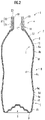
FIG. 1 is a perspective view illustrating the configuration of a synthetic resin multilayer bottle in accordance with the present invention; and -
FIG. 2 is a sectional view taken along line II-II ofFIG. 1 . - An embodiment of the present invention will now be described in further detail with reference to the accompanying drawings.
- As illustrated in
FIG. 1 andFIG. 2 , a syntheticresin multilayer bottle 1 of the present embodiment is composed of anouter shell bottle 2 capable of restoring its original shape in response to deformation caused by pressing, and aninner container body 3 which is housed inside theouter shell bottle 2 and which deforms when pressed. The syntheticresin multilayer bottle 1 is used as a container that holds a content of, for example, 300 to 1000 milliliters. - Examples of the synthetic resin forming the synthetic
resin multilayer bottle 1 include a synthetic resin mainly composed of a polyester made of an aromatic polycarboxylic acid and an aliphatic polyhydric alcohol, and a polyethylene terephthalate resin mainly composed of an ethylene terephthalate chain is particularly suitable, but the synthetic resin for the syntheticresin multilayer bottle 1 is not limited thereto. In addition, the synthetic resin mainly composed of the polyester exhibits higher toughness as the molecular weight increases, so that a resin having an intrinsic viscosity of at least 0.7 or more is suitable as the synthetic resin forming the syntheticresin multilayer bottle 1. Further, a synthetic resin recycled from the resin used for the synthetic resin bottle for beverage or food can be used for theouter shell bottle 2 that does not come in in direct contact with a content, thus enabling the syntheticresin multilayer bottle 1 to be a further reduced environmental load. - The
outer shell bottle 2 has a cylindrical outer opening part 4, ashoulder part 5 gradually increasing in diameter from a lower end of the outer opening part 4, atrunk part 6 connected to theshoulder part 5, and abottom part 7 which is connected to thetrunk part 6 and the diameter of which is gradually reduced. Theouter shell bottle 2 is provided with, on the inner peripheral side of thebottom part 7, abottom recess part 8 which bulges toward the inner side of theouter shell bottle 2 to impart independence to the syntheticresin multilayer bottle 1. Aground contact part 9 is located between thebottom part 7 and thebottom recess part 8. - The outer opening part 4 is provided with an
external thread part 10 and asupport ring 11 on the outer circumferential surface, and the portion of theshoulder part 5 that is in contact with the outer opening part 4 has a first quadrangular pyramid-shaped part 12. Provided at the bottom of the first quadrangular pyramid-shaped part 12 is a trunkupper part 13, the diameter of which gradually increases from the first quadrangular pyramid-shaped part 12 toward thetrunk part 6 and in which the corners of the quadrangular pyramid become smoother. - The
trunk part 6 includes afirst portion 6a which is connected to the trunkupper part 13 and the diameter of which changes from increasing to non-increasing, a firststraight trunk portion 6b which is connected to the bottom of thefirst portion 6a and the diameter of which remains the same over a predetermined length, acylindrical trunk portion 6c connected to the firststraight trunk portion 6b, a secondstraight trunk portion 6d which is connected to thecylindrical trunk portion 6c and the diameter of which remains the same for a predetermined diameter, and anon-decreasing diameter portion 6e in which the secondstraight trunk portion 6d is connected to thebottom part 7 and before the diameter of the secondstraight trunk portion 6d changes to decreasing. - In the
cylindrical trunk portion 6c, the section that is orthogonal to an axis is circular. Thecylindrical trunk portion 6c is connected to the firststraight trunk portion 6b via astepped portion 6f and also connected to the secondstraight trunk portion 6d via astepped portion 6g. The diameter of thestepped portion 6f gradually decreases from the firststraight trunk portion 6b toward thecylindrical trunk portion 6c, and the diameter of thestepped portion 6g gradually decreases from the secondstraight trunk portion 6d toward thecylindrical trunk portion 6c. - Further, the
cylindrical trunk portion 6c is shaped like a Japanese hand drum, in which the diameter gradually decreases from the lower end of thestepped portion 6f toward the central portion, and gradually increases from the central portion toward the upper end of thestepped portion 6g. In addition, thecylindrical trunk portion 6c is provided with a plurality ofribs 14 along an axial direction. - In the
bottom part 7, the portion thereof in contact with theground contact part 9 is formed of a second quadrangular pyramid-shaped part 15, and a trunklower part 16 is provided on the upper side of the second quadrangular pyramid-shaped part 15. From the second quadrangular pyramid-shapedpart 15 toward the secondstraight trunk portion 6d, the diameter of the trunklower part 16 gradually increases and the corners of the quadrangular pyramid become smoother. - Further, the section of each of the first and the second quadrangular pyramid-
shaped parts ridge lines ridge lines 15a are connected to the extensions of theridge lines 12a. - Meanwhile, the
inner container body 3 has a cylindricalinner opening part 17 provided on the inner circumferential side of the outer opening part 4, and an inner containermain body 18 which is connected to theinner opening part 17 and which is shaped along the inner surface shapes of theshoulder part 5, thetrunk part 6, thebottom part 7, the bottom recesspart 8, and theground contact part 9 of theouter shell bottle 2. Theinner opening part 17 has thereon anextension part 19, which is extended upward beyond the upper end of the outer opening part 4, and aflange part 20 extended outward in the radial direction from theextension part 19. Theinner opening part 17 is locked to the upper rim of the outer opening part 4 by theflange part 20. - Further, the
inner opening part 17 has avertical groove 21 on the outer circumferential surface thereof. Thevertical groove 21 is connected to ahorizontal groove 22 formed on the lower surface of theflange part 20, and thehorizontal groove 22 is opened to outside at the outer circumferential edge of theflange part 20. As a result, thevertical groove 21 and thehorizontal groove 22 form anair channel 23 through which outside air is introduced between theouter shell bottle 2 and theinner container body 3. - When the synthetic
resin multilayer bottle 1 of the present embodiment is used, a content, which is not illustrated, is put in theinner container body 3. A pour-out cap provided with a check valve, which is not illustrated, is attached to a container opening part composed of the outer opening part 4 and theinner opening part 17. To pour out the content from the syntheticresin multilayer bottle 1, the outer opening part 4 and theinner opening part 17 are tilted downward, and thecylindrical trunk portion 6c of theouter shell bottle 2 is held and pressed. This causes the inner containermain body 18 to be collapsed without reducing the surface area thereof, thus deforming by volume reduction thereby to pour out the content from theinner opening part 17 through the check valve. - Next, when the pressing pressure on the
cylindrical trunk portion 6c of theouter shell bottle 2 is released, outside air is introduced through theair channel 23 between theouter shell bottle 2 and the inner containermain body 18, and theouter shell bottle 2 restores the original shape thereof by the external air pressure, while the inner containermain body 18 is maintained in the state of the volume reduction deformation due to the action of the check valve. As a result, outside air is prevented from entering into the inner containermain body 18 through theinner opening part 17. - Meanwhile, there is concern that the oxygen or the like in outside air may pass through and enter into the inner container
main body 18, since the outside air is introduced between theouter shell bottle 2 and the inner containermain body 18. - Hence, in the case of the
inner container body 3 of the syntheticresin multilayer bottle 1 of the present embodiment, the resin constituting theinner container body 3 contains an oxygen barrier agent in an amount of 3 to 8 percent by mass to provide theinner container body 3 with oxygen permeability such that, after theinner container body 3 is fully filled with distilled water from which dissolved oxygen has been removed, theinner opening part 17 is sealed, and the distilled water is allowed to stand for 60 days at a temperature of 20°C while keeping the air channel between the outer shell bottle and the inner container body open, the amount of the dissolved oxygen in the distilled water is 3 ppm or less. - As a result, the synthetic
resin multilayer bottle 1 can reduce the oxygen in outside air that penetrates inside through the inner containermain body 18, thus making it possible to reliably prevent a content, which is composed of a liquid seasoning that contains soy sauce and which is stored in the inner containermain body 18, from deteriorating due to the oxygen or the like in the outside air. - The oxygen barrier agent preferably contains a polyamide-based resin and a deoxidizer. Examples of the polyimide-based resin include a resin that contains a polymer containing an m-xylylenediamine monomer unit, a p-xylylenediamine monomer unit, or a mixture thereof. Further, examples of the deoxidizer include at least one compound selected from a group consisting of cobalt, iron, nickel, copper, manganese, and mixtures thereof, or salts or complexes thereof. Examples of the oxygen barrier agent include ValOR (trade name) manufactured by Valspar Sourcing, Incorporated.
- The synthetic
resin multilayer bottle 1 of the present embodiment can be manufactured by placing an inner preform, which is obtained by injection molding of a synthetic resin composition mainly composed of a polyester containing the oxygen barrier agent in an amount of 3 percent by mass or more, preferably in the range of 3 to 10 percent by mass, on the inner peripheral side of an outer preform, which is obtained by injection molding of a synthetic resin composition having, as a main constituent, a polyester composed of, for example, an aromatic polycarboxylic acid and an aliphatic polyhydric alcohol, and then by blow molding the outer preform and the inner preform at the same time. - Examples of the present invention and a comparative example will now be described.
- In this example, a synthetic
resin multilayer bottle 1, which was shaped as illustrated inFIG. 1 andFIG. 2 and which had an amount of content of 500 milliliters, was manufactured by placing an inner preform, which was obtained by injection molding of a polyethylene terephthalate resin composition containing an oxygen barrier agent manufactured by Valspar Sourcing, Incorporated (trade name: ValOR A115J) in an amount of 3 percent by mass, on the inner peripheral side of an outer preform, which was obtained by injection molding of a polyethylene terephthalate resin composition, and then by blow molding the outer preform and the inner preform at the same time. In aninner container body 3 of the syntheticresin multilayer bottle 1 obtained in the present example, the resin constituting theinner container body 3 contains the oxygen barrier agent in an amount of 3 percent by mass. - Next, an
air channel 23 of the syntheticresin multilayer bottle 1 obtained in the present example was set in an open state, an oxygen concentration measurement sensor chip was attached to the inner surface of an inner containermain body 18, and theinner container body 3 was fully filled with distilled water. Then, the oxygen dissolved in the distilled water was removed by replacing the oxygen by an inert gas, and the distilled water was allowed to stand for 60 days at a temperature of 20°C, with aninner opening part 17 sealed by heat sealing aluminum foil. Thereafter, the concentration of the dissolved oxygen of the distilled water was measured by the sensor chip attached in advance to determine the amount of the dissolved oxygen, which is an indicator of the oxygen permeability. The measurement was performed using an oxygen concentration measurement device (trade name: Fibox3-Trace) manufactured by PreSens Corporation. - Table 1 shows the result.
- Subsequently, the
air channel 23 of the syntheticresin multilayer bottle 1 obtained in the present example was set in an open state, and theinner container body 3 was fully filled with soy sauce (manufactured by KIKKOMAN CORPORATION), and the soy sauce was allowed to stand for 60 days at a temperature of 20°C, with theinner opening part 17 sealed by heat sealing aluminum foil. Thereafter, the color stability of the content was visually evaluated. The result is also illustrated in Table 1. - In the present example, a synthetic
resin multilayer bottle 1 which was shaped as illustrated inFIG. 1 andFIG. 2 and which had an amount of content of 500 milliliters was manufactured using exactly the same method as that of Example 1 except that an inner preform which was obtained by injection molding of a polyethylene terephthalate resin composition containing an amount of 5 percent by mass of the oxygen barrier agent used in Example 1 was used. Aninner container body 3 of the syntheticresin multilayer bottle 1 obtained in the present example contains the oxygen barrier agent in an amount of 5 percent by mass. - Subsequently, the concentration of dissolved oxygen in distilled water, which is an indicator of oxygen permeability, was measured using exactly the same method as that of Example 1 except that the synthetic
resin multilayer bottle 1 obtained in the present example was used, and the color stability of a content was visually evaluated using exactly the same method as that of Example 1. The results are illustrated in Table 1. - In the present example, a synthetic
resin multilayer bottle 1 which was shaped as illustrated inFIG. 1 andFIG. 2 and which had an amount of content of 500 milliliters was manufactured using exactly the same method as that of Example 1 except that an inner preform which was obtained by injection molding of a polyethylene terephthalate resin composition containing an amount of 7 percent by mass of the oxygen barrier agent used in Example 1 was used. Aninner container body 3 of the syntheticresin multilayer bottle 1 obtained in the present example contains the oxygen barrier agent in an amount of 7 percent by mass. - Subsequently, the concentration of dissolved oxygen in distilled water, which is an indicator of oxygen permeability, was measured using exactly the same method as that of Example 1 except that the synthetic
resin multilayer bottle 1 obtained in the present example was used, and the color stability of a content was visually evaluated using exactly the same method as that of Example 1. The results are illustrated in Table 1. - In the present example, a synthetic
resin multilayer bottle 1 which was shaped as illustrated inFIG. 1 andFIG. 2 and which had an amount of content of 500 milliliters was manufactured using exactly the same method as that of Example 1 except that an inner preform which was obtained by injection molding of a polyethylene terephthalate resin composition containing an amount of 8 percent by mass of the oxygen barrier agent used in Example 1 was used. Aninner container body 3 of the syntheticresin multilayer bottle 1 obtained in the present example contains the oxygen barrier agent in an amount of 8 percent by mass. - Subsequently, the concentration of dissolved oxygen in distilled water, which is an indicator of oxygen permeability, was measured in exactly the same method as that of Example 1 except that the synthetic
resin multilayer bottle 1 obtained in the present example was used, and the color stability of the content was visually evaluated using exactly the same method as that of Example 1. The results are illustrated in Table 1. - In the present example, a synthetic
resin multilayer bottle 1 which was shaped as illustrated inFIG. 1 andFIG. 2 and which had an amount of content of 500 milliliters was manufactured using exactly the same method as that of Example 1 except that an inner preform which was obtained by injection molding of a polyethylene terephthalate resin composition containing the oxygen barrier agent in an amount of 10 percent by mass used in Example 1 was used. Aninner container body 3 of the syntheticresin multilayer bottle 1 obtained in the present example contains the oxygen barrier agent in an amount of 10 percent by mass. The syntheticresin multilayer bottle 1 obtained in the present example showed a tendency of slight deterioration in the transparency of theinner container body 3. - Subsequently, the concentration of dissolved oxygen in distilled water, which is an indicator of oxygen permeability, was measured using exactly the same method as that of Example 1 except that the synthetic
resin multilayer bottle 1 obtained in the present example was used, and the color stability of a content was visually evaluated using exactly the same method as that of Example 1. The results are illustrated in Table 1. - In the present comparative example, a synthetic
resin multilayer bottle 1 which was shaped as illustrated inFIG. 1 andFIG. 2 and which had an amount of content of 500 milliliters was manufactured using exactly the same method as that of Example 1 except that an inner preform that was obtained by injection molding of a polyethylene terephthalate resin composition containing no oxygen barrier agent used in Example 1 was used. Aninner container body 3 of the syntheticresin multilayer bottle 1 obtained in the present comparative example contains no oxygen barrier agent mentioned above. - Subsequently, the concentration of dissolved oxygen in distilled water, which is an indicator of oxygen permeability, was measured using exactly the same method as that of Example 1 except that the synthetic
resin multilayer bottle 1 obtained in the present comparative example was used, and the color stability of a content was visually evaluated using exactly the same method as that of Example 1. The results are illustrated in Table 1.[Table 1] Comparative Example Examples 1 2 3 4 5 Concentration of dissolved oxygen in distilled water (ppm) 7.0 or more 2.3 1.3 0.3 0.24 0.24 or less Color stability of content ×∼Δ Δ∼○ ○ ○ ○ ○ Color stability of content : ×∼Δ...discolored; Δ∼○...slightly discolored; ○...Not discolored - Table 1 obviously indicates that the synthetic
resin multilayer bottles 1 of Examples 1 to 4, which are provided with the oxygen permeability such that, after distilled water from which dissolved oxygen has been removed is fully filled, theinner opening part 17 is sealed, and the distilled water is allowed to stand for 60 days at a temperature of 20°C, the amount of dissolved oxygen in the distilled water is 3 ppm or less, are capable of exhibiting higher color stability of a content and therefore providing high effect for preventing the content from deteriorating, as compared with the syntheticresin multilayer bottle 1 of Comparative Example having oxygen permeability that causes the amount of dissolved oxygen in the distilled water to exceed 3 ppm and become 7.0 ppm or more. - 1 ... synthetic resin multilayer bottle; 2 ... outer shell bottle; 3 ... inner container body; 4 ... outer opening part; 5 ... shoulder part; 6 ... trunk part; 7 ... bottom part; 17 ... inner opening part; 18 ... inner container main body; and 23 ... air channel.
Claims (4)
- A synthetic resin multilayer bottle comprising:an outer shell bottle which has a cylindrical outer opening part, a shoulder part connected to the outer opening part, a trunk part connected to the shoulder part, a bottom part connected to the trunk part, and a ground contact part connected to the bottom part, and which is capable of restoring an original shape thereof from deformation caused by pressing;an inner container body which has a cylindrical inner opening part provided on an inner circumferential side of the outer opening part of the outer shell bottle, and an inner container main body connected to the inner opening part and shaped along an inner surface shape of the outer shell bottle, and which deforms in response to pressing; andan air channel which is formed between the outer opening part and the inner opening part and through which outside air is introduced between the outer shell bottle and the inner container body, a content composed of a liquid seasoning that contains soy sauce being held in the inner container body,wherein the synthetic resin multilayer bottle has oxygen permeability such that, after the inner container body is fully filled with distilled water from which dissolved oxygen has been removed, the inner opening part is sealed, and the distilled water is allowed to stand for 60 days at a temperature of 20°C while keeping the air channel between the outer shell bottle and the inner container body open, the amount of dissolved oxygen in the distilled water is 3 ppm or less.
- The synthetic resin multilayer bottle according to claim 1, wherein the outer shell bottle and the inner container body are composed of a polyester resin.
- The synthetic resin multilayer bottle according to claim 1, wherein the inner container body contains an oxygen barrier agent in a range of 3 to 10 percent by mass of a resin constituting the inner container body.
- The synthetic resin multilayer bottle according to claim 3, wherein the oxygen barrier agent contains a polyamide-based resin and a deoxidizer.
Applications Claiming Priority (2)
| Application Number | Priority Date | Filing Date | Title |
|---|---|---|---|
| JP2017195645 | 2017-10-06 | ||
| PCT/JP2018/036032 WO2019069794A1 (en) | 2017-10-06 | 2018-09-27 | Synthetic resin multilayer bottle |
Publications (4)
| Publication Number | Publication Date |
|---|---|
| EP3693283A1 true EP3693283A1 (en) | 2020-08-12 |
| EP3693283A4 EP3693283A4 (en) | 2021-10-20 |
| EP3693283B1 EP3693283B1 (en) | 2025-02-19 |
| EP3693283C0 EP3693283C0 (en) | 2025-02-19 |
Family
ID=65994388
Family Applications (1)
| Application Number | Title | Priority Date | Filing Date |
|---|---|---|---|
| EP18864734.1A Active EP3693283B1 (en) | 2017-10-06 | 2018-09-27 | Synthetic resin multilayer bottle |
Country Status (9)
| Country | Link |
|---|---|
| US (1) | US20200239174A1 (en) |
| EP (1) | EP3693283B1 (en) |
| JP (1) | JPWO2019069794A1 (en) |
| KR (1) | KR102612381B1 (en) |
| CN (1) | CN111164017B (en) |
| CA (1) | CA3076881A1 (en) |
| ES (1) | ES3014045T3 (en) |
| TW (1) | TWI756477B (en) |
| WO (1) | WO2019069794A1 (en) |
Family Cites Families (62)
| Publication number | Priority date | Publication date | Assignee | Title |
|---|---|---|---|---|
| GB1489635A (en) * | 1975-03-03 | 1977-10-26 | Toyo Seikan Kaisha Ltd | Packaging materials |
| JPS5677143A (en) * | 1979-11-30 | 1981-06-25 | Yoshino Kogyosho Co Ltd | Polyethylene terephthalate resin product |
| JPS59158232A (en) * | 1983-02-28 | 1984-09-07 | Toyo Seikan Kaisha Ltd | Preparaton of multi-layered stretched polyester bottle |
| US4567069A (en) * | 1984-06-18 | 1986-01-28 | Owens-Illinois, Inc. | Multilayer containers with improved stress crack properties |
| CA1288912C (en) * | 1987-02-06 | 1991-09-17 | Senzo Shimizu | Parison and blow-molded containers and processes for production thereof |
| JPH01167041A (en) * | 1987-12-22 | 1989-06-30 | Mitsubishi Gas Chem Co Inc | Multiple layer container |
| US5281360A (en) * | 1990-01-31 | 1994-01-25 | American National Can Company | Barrier composition and articles made therefrom |
| JPH0639906A (en) * | 1991-05-27 | 1994-02-15 | Keisuke Ito | Multi-layer molded container and its manufacture |
| EP0700837B1 (en) * | 1994-09-06 | 2000-01-12 | Toppan Printing Co., Ltd. | A compound container |
| US5759653A (en) * | 1994-12-14 | 1998-06-02 | Continental Pet Technologies, Inc. | Oxygen scavenging composition for multilayer preform and container |
| US6022913A (en) * | 1996-09-06 | 2000-02-08 | Kureha Chemical Industry Co. Ltd. | Container for retort packaging, resin composition, and gas-barrier film prepared therefrom |
| JP3562723B2 (en) * | 1996-09-23 | 2004-09-08 | ビーピー・コーポレーション・ノース・アメリカ・インコーポレーテッド | Zero oxygen permeable plastic bottles for beer and other uses |
| US6112925A (en) * | 1997-02-21 | 2000-09-05 | Continental Pet Technologies, Inc. | Enhanced shelf-life pressurized container with ribbed appearance |
| TWI250934B (en) * | 1997-10-17 | 2006-03-11 | Advancsd Plastics Technologies | Barrier-coated polyester articles and the fabrication method thereof |
| EP1155807B1 (en) * | 1999-11-30 | 2005-02-09 | Yoshino Kogyosho Co., Ltd. | Method for molding a multilayered polyester container |
| JP2002103428A (en) * | 2000-09-29 | 2002-04-09 | Toyo Seikan Kaisha Ltd | Multilayered preform and multilayered bottle manufactured using the same |
| JP3978012B2 (en) * | 2001-11-01 | 2007-09-19 | 株式会社クレハ | Multilayer container and manufacturing method thereof |
| US8110260B2 (en) * | 2007-02-02 | 2012-02-07 | Rick Merical | Containers intended for moisture-sensitive products |
| US20040000533A1 (en) * | 2002-07-01 | 2004-01-01 | Satya Kamineni | Pressurizable container |
| US20080251487A1 (en) * | 2002-10-30 | 2008-10-16 | Semersky Frank E | Overmolded container having a foam layer |
| US8192676B2 (en) * | 2004-02-12 | 2012-06-05 | Valspar Sourcing, Inc. | Container having barrier properties and method of manufacturing the same |
| ATE424288T1 (en) * | 2004-04-16 | 2009-03-15 | Advanced Plastics Technologies | PREFORM AND METHOD FOR PRODUCING THE PREFORM AND A BOTTLE |
| US7416766B2 (en) * | 2005-08-16 | 2008-08-26 | S.C. Johnson & Son, Inc. | Bottles made from metallocene polypropylene for delivery of fragrances |
| DE602006020069D1 (en) * | 2005-12-22 | 2011-03-24 | Mitsubishi Gas Chemical Co | MULTILAYER BOTTLE |
| UA96437C2 (en) * | 2006-01-18 | 2011-11-10 | Мицубиси Гес Кемикал Компани, Инк. | Multi-layer bottle and container |
| US8171705B2 (en) * | 2006-01-24 | 2012-05-08 | Mitsubishi Gas Chemical Company, Inc. | Method for filling into multilayer bottle |
| US20070178266A1 (en) * | 2006-01-27 | 2007-08-02 | Sonoco Development, Inc. | Multilayer blow-molded, crosslinked container and method of making same |
| CN101172525B (en) * | 2006-11-01 | 2011-05-04 | 徐跃 | High-performance double-layer polyester bottle |
| JP2009024159A (en) * | 2007-04-09 | 2009-02-05 | Futura Polyesters Ltd | Polyester-based gas barrier resin and process thereof |
| US20080255280A1 (en) * | 2007-04-11 | 2008-10-16 | Susan Sims | Oxygen-scavenging polymer blends suitable for use in packaging |
| US20150266620A1 (en) * | 2007-04-19 | 2015-09-24 | Anheuser-Busch Inbev S.A. | Integrally blow-moulded bag-in-container having a bag anchoring point; process for production thereof; and tool thereof |
| CN101246095B (en) * | 2008-01-07 | 2011-03-30 | 电子科技大学 | Measuring device for gas permeability of barrier materials |
| KR20130103634A (en) * | 2011-02-23 | 2013-09-23 | 듀폰-미츠이 폴리케미칼 가부시키가이샤 | Resin container and method for producing resin container |
| CN103384703B (en) * | 2011-11-15 | 2015-04-01 | 三菱瓦斯化学株式会社 | Oxygen-absorbing resin composition, oxygen-absorbing multilayer laminate, and oxygen-absorbing hollow container |
| WO2013149157A1 (en) * | 2012-03-30 | 2013-10-03 | E. I. Du Pont De Nemours And Company | Polyesters and fibers made therefrom |
| NL2009236C2 (en) * | 2012-07-26 | 2014-02-06 | Heineken Supply Chain Bv | Container and set of preforms for forming a container. |
| WO2014126110A1 (en) * | 2013-02-13 | 2014-08-21 | 三菱瓦斯化学株式会社 | Multi-layer bottle and method for producing same |
| ES2737105T3 (en) * | 2013-11-27 | 2020-01-10 | Kyoraku Co Ltd | Delaminable container |
| CN105793162B (en) * | 2013-11-27 | 2019-07-02 | 京洛株式会社 | Laminated peel container and method for producing the same |
| EP3078604B1 (en) * | 2013-12-05 | 2018-10-24 | Mitsubishi Gas Chemical Company, Inc. | Multi-layered container |
| JP2015137295A (en) * | 2014-01-21 | 2015-07-30 | 三菱瓦斯化学株式会社 | Injection molded body |
| AU2015329264B2 (en) * | 2014-10-07 | 2018-08-30 | Kyoraku Co., Ltd. | Delaminated container manufacturing method and air leak inspection method for delaminated container |
| CN104777090B (en) * | 2015-05-08 | 2018-01-16 | 广州标际包装设备有限公司 | Oxygen flow analysis tester |
| JP6730794B2 (en) * | 2015-09-29 | 2020-07-29 | 北海製罐株式会社 | Multiple plastic bottles |
| EP3357690B1 (en) * | 2015-10-02 | 2022-08-10 | Mitsubishi Gas Chemical Company, Inc. | Multi-layer container and production method therefor, single-layer container production method, and recycled polyester resin production method |
| DE102016201498B4 (en) * | 2016-02-01 | 2017-08-17 | Norbert Kuhl | OXYGEN-CONTAINED FOOD CONTAINER |
| JP6730824B2 (en) * | 2016-03-22 | 2020-07-29 | 北海製罐株式会社 | Polyester resin blow molding multiplex bottle |
| TWI714742B (en) * | 2016-03-22 | 2021-01-01 | 日商北海製罐股份有限公司 | Synthetic resin multilayer bottle |
| US20190099738A1 (en) * | 2016-03-30 | 2019-04-04 | Mitsubishi Gas Chemical Company, Inc. | Oxygen absorber composition, oxygen-absorbing multilayer body, oxygen-absorbing packet, and method for storing article |
| JP6653967B2 (en) * | 2016-05-27 | 2020-02-26 | 株式会社吉野工業所 | Humidity control container |
| US20190256240A1 (en) * | 2016-08-16 | 2019-08-22 | Witoplast Kisielinscy Spolka Jawna | Method for producing a multi-layered container |
| SG10202106927RA (en) * | 2016-12-26 | 2021-07-29 | Suntory Holdings Ltd | Resin made container |
| JP7497975B2 (en) * | 2017-04-05 | 2024-06-11 | キッコーマン株式会社 | Discharge Container |
| KR102501132B1 (en) * | 2017-10-26 | 2023-02-16 | 어드밴식스 레진즈 앤드 케미컬즈 엘엘씨 | Multi-layer package structure for ozone scavenging |
| JP7098229B2 (en) * | 2017-10-31 | 2022-07-11 | 株式会社吉野工業所 | Double container |
| EP3708517B1 (en) * | 2017-11-08 | 2023-06-07 | Kikkoman Corporation | Synthetic resin-made multilayer container |
| CN111511648B (en) * | 2017-12-28 | 2022-07-05 | 株式会社吉野工业所 | Synthetic resin container |
| JP7365758B2 (en) * | 2018-01-30 | 2023-10-20 | 株式会社吉野工業所 | laminated peel container |
| JP6879226B2 (en) * | 2018-02-23 | 2021-06-02 | 東洋製罐グループホールディングス株式会社 | Preform for inner bag containers used in the manufacture of airless bottles |
| JP7268682B2 (en) * | 2018-08-24 | 2023-05-08 | 三菱瓦斯化学株式会社 | Multilayer container and its manufacturing method |
| EP3898154B1 (en) * | 2018-12-19 | 2024-10-16 | The Procter & Gamble Company | Mono-layer blow molded article with functional, visual, and/or tactile effects and method of making such articles |
| US20210015776A1 (en) * | 2019-07-15 | 2021-01-21 | Ascent Pharmaceuticals, Inc. | Methods of stabilization of levothyroxine sodium tablets |
-
2018
- 2018-09-27 EP EP18864734.1A patent/EP3693283B1/en active Active
- 2018-09-27 JP JP2019546666A patent/JPWO2019069794A1/en active Pending
- 2018-09-27 US US16/652,783 patent/US20200239174A1/en not_active Abandoned
- 2018-09-27 CA CA3076881A patent/CA3076881A1/en active Pending
- 2018-09-27 WO PCT/JP2018/036032 patent/WO2019069794A1/en not_active Ceased
- 2018-09-27 ES ES18864734T patent/ES3014045T3/en active Active
- 2018-09-27 CN CN201880064277.7A patent/CN111164017B/en active Active
- 2018-09-27 KR KR1020207009419A patent/KR102612381B1/en active Active
- 2018-10-04 TW TW107135053A patent/TWI756477B/en active
Also Published As
| Publication number | Publication date |
|---|---|
| KR102612381B1 (en) | 2023-12-12 |
| US20200239174A1 (en) | 2020-07-30 |
| TW201927636A (en) | 2019-07-16 |
| ES3014045T3 (en) | 2025-04-16 |
| CN111164017A (en) | 2020-05-15 |
| WO2019069794A1 (en) | 2019-04-11 |
| CN111164017B (en) | 2022-02-08 |
| JPWO2019069794A1 (en) | 2020-10-22 |
| KR20200062211A (en) | 2020-06-03 |
| TWI756477B (en) | 2022-03-01 |
| EP3693283A4 (en) | 2021-10-20 |
| CA3076881A1 (en) | 2019-04-11 |
| EP3693283B1 (en) | 2025-02-19 |
| EP3693283C0 (en) | 2025-02-19 |
Similar Documents
| Publication | Publication Date | Title |
|---|---|---|
| EP3608240A1 (en) | Discharge container | |
| KR101186074B1 (en) | Plastic cap featuring excellent sealing and venting | |
| EP1616549B1 (en) | Drug solution filling plastic ampoule and process for producing the same | |
| EP3290345B1 (en) | Synthetic resin container | |
| TWI268895B (en) | Mouth tube portion of synthetic resin bottle body | |
| US10112750B2 (en) | Beverage container sealing system | |
| EP3693283B1 (en) | Synthetic resin multilayer bottle | |
| US9289938B2 (en) | Container having oxygen scavenging system | |
| EP3527502B1 (en) | Lamination separation container | |
| EP3088317A1 (en) | Bottle container | |
| ES2634548T3 (en) | Container that has an oxygen extraction indication system | |
| JP6238295B2 (en) | Method for producing single-layer resin bottles with excellent gas barrier properties | |
| HK40025621B (en) | Synthetic resin multilayer bottle | |
| HK40025621A (en) | Synthetic resin multilayer bottle | |
| US12012253B1 (en) | Lightweight polymer wine bottle suitable for use with natural cork or synthetic stoppers | |
| HK40016081A (en) | Discharge container | |
| HK40016081B (en) | Discharge container | |
| JP2011105359A (en) | Polyester resin container for carbonated drink | |
| JP6894085B2 (en) | Nitrogen-filled polyester resin bottle for hot pack and nitrogen-filled filling method for hot pack contents | |
| JP2005132452A (en) | Bottle of polyethylene terephthalate resin | |
| EP3009365A1 (en) | Laminated bottle |
Legal Events
| Date | Code | Title | Description |
|---|---|---|---|
| STAA | Information on the status of an ep patent application or granted ep patent |
Free format text: STATUS: THE INTERNATIONAL PUBLICATION HAS BEEN MADE |
|
| PUAI | Public reference made under article 153(3) epc to a published international application that has entered the european phase |
Free format text: ORIGINAL CODE: 0009012 |
|
| STAA | Information on the status of an ep patent application or granted ep patent |
Free format text: STATUS: REQUEST FOR EXAMINATION WAS MADE |
|
| 17P | Request for examination filed |
Effective date: 20200416 |
|
| AK | Designated contracting states |
Kind code of ref document: A1 Designated state(s): AL AT BE BG CH CY CZ DE DK EE ES FI FR GB GR HR HU IE IS IT LI LT LU LV MC MK MT NL NO PL PT RO RS SE SI SK SM TR |
|
| AX | Request for extension of the european patent |
Extension state: BA ME |
|
| DAV | Request for validation of the european patent (deleted) | ||
| DAX | Request for extension of the european patent (deleted) | ||
| A4 | Supplementary search report drawn up and despatched |
Effective date: 20210916 |
|
| RIC1 | Information provided on ipc code assigned before grant |
Ipc: B65D 85/72 20060101ALI20210910BHEP Ipc: B65D 83/00 20060101ALI20210910BHEP Ipc: B65D 1/32 20060101ALI20210910BHEP Ipc: B65D 1/02 20060101AFI20210910BHEP |
|
| STAA | Information on the status of an ep patent application or granted ep patent |
Free format text: STATUS: EXAMINATION IS IN PROGRESS |
|
| RIC1 | Information provided on ipc code assigned before grant |
Ipc: B65D 85/72 20060101ALI20230120BHEP Ipc: B65D 83/00 20060101ALI20230120BHEP Ipc: B65D 1/32 20060101ALI20230120BHEP Ipc: B65D 1/02 20060101AFI20230120BHEP |
|
| 17Q | First examination report despatched |
Effective date: 20230227 |
|
| GRAP | Despatch of communication of intention to grant a patent |
Free format text: ORIGINAL CODE: EPIDOSNIGR1 |
|
| STAA | Information on the status of an ep patent application or granted ep patent |
Free format text: STATUS: GRANT OF PATENT IS INTENDED |
|
| GRAJ | Information related to disapproval of communication of intention to grant by the applicant or resumption of examination proceedings by the epo deleted |
Free format text: ORIGINAL CODE: EPIDOSDIGR1 |
|
| STAA | Information on the status of an ep patent application or granted ep patent |
Free format text: STATUS: EXAMINATION IS IN PROGRESS |
|
| GRAP | Despatch of communication of intention to grant a patent |
Free format text: ORIGINAL CODE: EPIDOSNIGR1 |
|
| STAA | Information on the status of an ep patent application or granted ep patent |
Free format text: STATUS: GRANT OF PATENT IS INTENDED |
|
| INTG | Intention to grant announced |
Effective date: 20240909 |
|
| INTC | Intention to grant announced (deleted) | ||
| INTG | Intention to grant announced |
Effective date: 20241002 |
|
| GRAS | Grant fee paid |
Free format text: ORIGINAL CODE: EPIDOSNIGR3 |
|
| GRAA | (expected) grant |
Free format text: ORIGINAL CODE: 0009210 |
|
| STAA | Information on the status of an ep patent application or granted ep patent |
Free format text: STATUS: THE PATENT HAS BEEN GRANTED |
|
| AK | Designated contracting states |
Kind code of ref document: B1 Designated state(s): AL AT BE BG CH CY CZ DE DK EE ES FI FR GB GR HR HU IE IS IT LI LT LU LV MC MK MT NL NO PL PT RO RS SE SI SK SM TR |
|
| REG | Reference to a national code |
Ref country code: GB Ref legal event code: FG4D |
|
| REG | Reference to a national code |
Ref country code: CH Ref legal event code: EP |
|
| REG | Reference to a national code |
Ref country code: DE Ref legal event code: R096 Ref document number: 602018079421 Country of ref document: DE |
|
| REG | Reference to a national code |
Ref country code: IE Ref legal event code: FG4D |
|
| REG | Reference to a national code |
Ref country code: ES Ref legal event code: FG2A Ref document number: 3014045 Country of ref document: ES Kind code of ref document: T3 Effective date: 20250416 |
|
| U01 | Request for unitary effect filed |
Effective date: 20250313 |
|
| U07 | Unitary effect registered |
Designated state(s): AT BE BG DE DK EE FI FR IT LT LU LV MT NL PT RO SE SI Effective date: 20250319 |
|
| PG25 | Lapsed in a contracting state [announced via postgrant information from national office to epo] |
Ref country code: RS Free format text: LAPSE BECAUSE OF FAILURE TO SUBMIT A TRANSLATION OF THE DESCRIPTION OR TO PAY THE FEE WITHIN THE PRESCRIBED TIME-LIMIT Effective date: 20250519 |
|
| PG25 | Lapsed in a contracting state [announced via postgrant information from national office to epo] |
Ref country code: PL Free format text: LAPSE BECAUSE OF FAILURE TO SUBMIT A TRANSLATION OF THE DESCRIPTION OR TO PAY THE FEE WITHIN THE PRESCRIBED TIME-LIMIT Effective date: 20250219 |
|
| PG25 | Lapsed in a contracting state [announced via postgrant information from national office to epo] |
Ref country code: IS Free format text: LAPSE BECAUSE OF FAILURE TO SUBMIT A TRANSLATION OF THE DESCRIPTION OR TO PAY THE FEE WITHIN THE PRESCRIBED TIME-LIMIT Effective date: 20250619 Ref country code: NO Free format text: LAPSE BECAUSE OF FAILURE TO SUBMIT A TRANSLATION OF THE DESCRIPTION OR TO PAY THE FEE WITHIN THE PRESCRIBED TIME-LIMIT Effective date: 20250519 |
|
| PG25 | Lapsed in a contracting state [announced via postgrant information from national office to epo] |
Ref country code: HR Free format text: LAPSE BECAUSE OF FAILURE TO SUBMIT A TRANSLATION OF THE DESCRIPTION OR TO PAY THE FEE WITHIN THE PRESCRIBED TIME-LIMIT Effective date: 20250219 |
|
| PG25 | Lapsed in a contracting state [announced via postgrant information from national office to epo] |
Ref country code: GR Free format text: LAPSE BECAUSE OF FAILURE TO SUBMIT A TRANSLATION OF THE DESCRIPTION OR TO PAY THE FEE WITHIN THE PRESCRIBED TIME-LIMIT Effective date: 20250520 |
|
| U20 | Renewal fee for the european patent with unitary effect paid |
Year of fee payment: 8 Effective date: 20250807 |
|
| PG25 | Lapsed in a contracting state [announced via postgrant information from national office to epo] |
Ref country code: SM Free format text: LAPSE BECAUSE OF FAILURE TO SUBMIT A TRANSLATION OF THE DESCRIPTION OR TO PAY THE FEE WITHIN THE PRESCRIBED TIME-LIMIT Effective date: 20250219 |
|
| PGFP | Annual fee paid to national office [announced via postgrant information from national office to epo] |
Ref country code: GB Payment date: 20250807 Year of fee payment: 8 |
|
| PG25 | Lapsed in a contracting state [announced via postgrant information from national office to epo] |
Ref country code: CZ Free format text: LAPSE BECAUSE OF FAILURE TO SUBMIT A TRANSLATION OF THE DESCRIPTION OR TO PAY THE FEE WITHIN THE PRESCRIBED TIME-LIMIT Effective date: 20250219 |
|
| PG25 | Lapsed in a contracting state [announced via postgrant information from national office to epo] |
Ref country code: SK Free format text: LAPSE BECAUSE OF FAILURE TO SUBMIT A TRANSLATION OF THE DESCRIPTION OR TO PAY THE FEE WITHIN THE PRESCRIBED TIME-LIMIT Effective date: 20250219 |
|
| PLBE | No opposition filed within time limit |
Free format text: ORIGINAL CODE: 0009261 |
|
| STAA | Information on the status of an ep patent application or granted ep patent |
Free format text: STATUS: NO OPPOSITION FILED WITHIN TIME LIMIT |
|
| REG | Reference to a national code |
Ref country code: CH Ref legal event code: L10 Free format text: ST27 STATUS EVENT CODE: U-0-0-L10-L00 (AS PROVIDED BY THE NATIONAL OFFICE) Effective date: 20251231 |
|
| 26N | No opposition filed |
Effective date: 20251120 |
|
| PGFP | Annual fee paid to national office [announced via postgrant information from national office to epo] |
Ref country code: ES Payment date: 20251013 Year of fee payment: 8 |
|
| REG | Reference to a national code |
Ref country code: CH Ref legal event code: H13 Free format text: ST27 STATUS EVENT CODE: U-0-0-H10-H13 (AS PROVIDED BY THE NATIONAL OFFICE) Effective date: 20260504 |