EP3691263A1 - Intra-frame prediction method and apparatus, video encoding device and storage medium - Google Patents
Intra-frame prediction method and apparatus, video encoding device and storage medium Download PDFInfo
- Publication number
- EP3691263A1 EP3691263A1 EP18862030.6A EP18862030A EP3691263A1 EP 3691263 A1 EP3691263 A1 EP 3691263A1 EP 18862030 A EP18862030 A EP 18862030A EP 3691263 A1 EP3691263 A1 EP 3691263A1
- Authority
- EP
- European Patent Office
- Prior art keywords
- frame prediction
- intra
- directions
- target
- prediction direction
- Prior art date
- Legal status (The legal status is an assumption and is not a legal conclusion. Google has not performed a legal analysis and makes no representation as to the accuracy of the status listed.)
- Granted
Links
Images





Classifications
-
- H—ELECTRICITY
- H04—ELECTRIC COMMUNICATION TECHNIQUE
- H04N—PICTORIAL COMMUNICATION, e.g. TELEVISION
- H04N19/00—Methods or arrangements for coding, decoding, compressing or decompressing digital video signals
- H04N19/10—Methods or arrangements for coding, decoding, compressing or decompressing digital video signals using adaptive coding
- H04N19/134—Methods or arrangements for coding, decoding, compressing or decompressing digital video signals using adaptive coding characterised by the element, parameter or criterion affecting or controlling the adaptive coding
- H04N19/157—Assigned coding mode, i.e. the coding mode being predefined or preselected to be further used for selection of another element or parameter
- H04N19/159—Prediction type, e.g. intra-frame, inter-frame or bidirectional frame prediction
-
- H—ELECTRICITY
- H04—ELECTRIC COMMUNICATION TECHNIQUE
- H04N—PICTORIAL COMMUNICATION, e.g. TELEVISION
- H04N19/00—Methods or arrangements for coding, decoding, compressing or decompressing digital video signals
- H04N19/10—Methods or arrangements for coding, decoding, compressing or decompressing digital video signals using adaptive coding
- H04N19/102—Methods or arrangements for coding, decoding, compressing or decompressing digital video signals using adaptive coding characterised by the element, parameter or selection affected or controlled by the adaptive coding
- H04N19/103—Selection of coding mode or of prediction mode
- H04N19/11—Selection of coding mode or of prediction mode among a plurality of spatial predictive coding modes
-
- H—ELECTRICITY
- H04—ELECTRIC COMMUNICATION TECHNIQUE
- H04N—PICTORIAL COMMUNICATION, e.g. TELEVISION
- H04N19/00—Methods or arrangements for coding, decoding, compressing or decompressing digital video signals
- H04N19/10—Methods or arrangements for coding, decoding, compressing or decompressing digital video signals using adaptive coding
- H04N19/102—Methods or arrangements for coding, decoding, compressing or decompressing digital video signals using adaptive coding characterised by the element, parameter or selection affected or controlled by the adaptive coding
- H04N19/103—Selection of coding mode or of prediction mode
- H04N19/105—Selection of the reference unit for prediction within a chosen coding or prediction mode, e.g. adaptive choice of position and number of pixels used for prediction
-
- H—ELECTRICITY
- H04—ELECTRIC COMMUNICATION TECHNIQUE
- H04N—PICTORIAL COMMUNICATION, e.g. TELEVISION
- H04N19/00—Methods or arrangements for coding, decoding, compressing or decompressing digital video signals
- H04N19/10—Methods or arrangements for coding, decoding, compressing or decompressing digital video signals using adaptive coding
- H04N19/102—Methods or arrangements for coding, decoding, compressing or decompressing digital video signals using adaptive coding characterised by the element, parameter or selection affected or controlled by the adaptive coding
- H04N19/124—Quantisation
-
- H—ELECTRICITY
- H04—ELECTRIC COMMUNICATION TECHNIQUE
- H04N—PICTORIAL COMMUNICATION, e.g. TELEVISION
- H04N19/00—Methods or arrangements for coding, decoding, compressing or decompressing digital video signals
- H04N19/10—Methods or arrangements for coding, decoding, compressing or decompressing digital video signals using adaptive coding
- H04N19/134—Methods or arrangements for coding, decoding, compressing or decompressing digital video signals using adaptive coding characterised by the element, parameter or criterion affecting or controlling the adaptive coding
- H04N19/146—Data rate or code amount at the encoder output
- H04N19/147—Data rate or code amount at the encoder output according to rate distortion criteria
-
- H—ELECTRICITY
- H04—ELECTRIC COMMUNICATION TECHNIQUE
- H04N—PICTORIAL COMMUNICATION, e.g. TELEVISION
- H04N19/00—Methods or arrangements for coding, decoding, compressing or decompressing digital video signals
- H04N19/10—Methods or arrangements for coding, decoding, compressing or decompressing digital video signals using adaptive coding
- H04N19/169—Methods or arrangements for coding, decoding, compressing or decompressing digital video signals using adaptive coding characterised by the coding unit, i.e. the structural portion or semantic portion of the video signal being the object or the subject of the adaptive coding
- H04N19/17—Methods or arrangements for coding, decoding, compressing or decompressing digital video signals using adaptive coding characterised by the coding unit, i.e. the structural portion or semantic portion of the video signal being the object or the subject of the adaptive coding the unit being an image region, e.g. an object
- H04N19/176—Methods or arrangements for coding, decoding, compressing or decompressing digital video signals using adaptive coding characterised by the coding unit, i.e. the structural portion or semantic portion of the video signal being the object or the subject of the adaptive coding the unit being an image region, e.g. an object the region being a block, e.g. a macroblock
-
- H—ELECTRICITY
- H04—ELECTRIC COMMUNICATION TECHNIQUE
- H04N—PICTORIAL COMMUNICATION, e.g. TELEVISION
- H04N19/00—Methods or arrangements for coding, decoding, compressing or decompressing digital video signals
- H04N19/10—Methods or arrangements for coding, decoding, compressing or decompressing digital video signals using adaptive coding
- H04N19/169—Methods or arrangements for coding, decoding, compressing or decompressing digital video signals using adaptive coding characterised by the coding unit, i.e. the structural portion or semantic portion of the video signal being the object or the subject of the adaptive coding
- H04N19/182—Methods or arrangements for coding, decoding, compressing or decompressing digital video signals using adaptive coding characterised by the coding unit, i.e. the structural portion or semantic portion of the video signal being the object or the subject of the adaptive coding the unit being a pixel
-
- H—ELECTRICITY
- H04—ELECTRIC COMMUNICATION TECHNIQUE
- H04N—PICTORIAL COMMUNICATION, e.g. TELEVISION
- H04N19/00—Methods or arrangements for coding, decoding, compressing or decompressing digital video signals
- H04N19/50—Methods or arrangements for coding, decoding, compressing or decompressing digital video signals using predictive coding
- H04N19/593—Methods or arrangements for coding, decoding, compressing or decompressing digital video signals using predictive coding involving spatial prediction techniques
-
- H—ELECTRICITY
- H04—ELECTRIC COMMUNICATION TECHNIQUE
- H04N—PICTORIAL COMMUNICATION, e.g. TELEVISION
- H04N19/00—Methods or arrangements for coding, decoding, compressing or decompressing digital video signals
- H04N19/60—Methods or arrangements for coding, decoding, compressing or decompressing digital video signals using transform coding
- H04N19/61—Methods or arrangements for coding, decoding, compressing or decompressing digital video signals using transform coding in combination with predictive coding
Definitions
- the present disclosure relates to the field of video processing technologies, and in particular, to an intra-frame prediction technology.
- Intra-frame prediction is a link of video coding. Through intra-frame prediction, spatial redundancy information during video coding may be eliminated, and a video coding effect may be improved. Intra-frame prediction is especially applied in video coding of a mixed coding framework such as H.264/AVC, H.265/HEVC, and AVS.
- a mixed coding framework such as H.264/AVC, H.265/HEVC, and AVS.
- Intra-frame prediction is a process of performing predictive coding on a target to-be-coded block by using a target intra-frame prediction direction of the target to-be-coded block.
- An important content of performing intra-frame prediction on the target to-be-coded block is: selecting an optimal intra-frame prediction direction from multiple intra-frame prediction directions of the target to-be-coded block as the target intra-frame prediction direction, and performing predictive coding on the target to-be-coded block by using the target intra-frame prediction direction. That is, the target intra-frame prediction direction is the optimal intra-frame prediction direction among the multiple intra-frame prediction directions for the target to-be-coded block.
- the selected target intra-frame prediction direction may also be written in a bitstream, to be transferred to a decoder to decode the target to-be-coded block.
- the target intra-frame prediction direction is selected in the following manner: roughly selecting an intra-frame prediction direction from all intra-frame prediction directions and using the roughly selected intra-frame prediction direction and a target intra-frame prediction direction of a coded block adjacent to the determined target to-be-coded block as candidate intra-frame prediction directions, and finely selecting a target intra-frame prediction direction of the target to-be-coded block from the candidate intra-frame prediction directions.
- a problem existing in this manner is: selection of the target intra-frame prediction direction is complex, causing a high complexity of video coding, such that a real-time requirement of video coding cannot be met.
- an intra-frame prediction method and apparatus and a storage medium are provided according to the embodiments of the present disclosure, to lower selection complexity of a target intra-frame prediction direction, so that complexity of video coding is lowered, and a real-time requirement of video coding is met.
- the intra-frame prediction method is applied to a video coding device and includes:
- An intra-frame prediction apparatus is further provided according to an embodiment of the present disclosure.
- the intra-frame prediction apparatus is applied to a video coding device and includes: a pixel main direction determining module, a prediction direction searching module, a candidate prediction direction determining module, and a target intra-frame prediction direction determining module.
- the pixel main direction determining module is configured to determine pixel main directions of reference coded blocks spatially neighboring to a target to-be-coded block.
- the prediction direction searching module is configured to search, for each of the pixel main directions, for an intra-frame prediction direction, with a distance between the intra-frame prediction direction and the pixel main direction being within a set value, to obtain the intra-frame prediction direction correspondingly found for the pixel main direction.
- the candidate prediction direction determining module is configured to form candidate intra-frame prediction directions based on at least intra-frame prediction directions correspondingly found for the pixel main directions and the pixel main directions.
- the target intra-frame prediction direction determining module is configured to perform predictive coding on the target to-be-coded block based on the candidate intra-frame prediction directions, and determine a target intra-frame prediction direction among the candidate intra-frame prediction directions based on predictive coding results respectively corresponding to the candidate intra-frame prediction directions.
- a video coding device is further provided according to an embodiment of the present disclosure.
- the video coding device includes a memory and a processor.
- the memory is configured to store information.
- the processor is connected to the memory and configured to execute a computer program stored in the memory to perform:
- a storage medium is further provided according to an embodiment of the present disclosure.
- the storage medium stores a program that is executed by a central processing unit or a graphic processing unit for performing the intra-frame prediction method.
- a computer program product is further provided according to an embodiment of the present disclosure.
- the computer program product includes an instruction. When being run on a computer, the instruction causing the computer to perform the intra-frame prediction method.
- an intra-frame prediction direction with a distance between the intra-frame prediction direction and the pixel main direction being within a set value is searched for, and candidate intra-frame prediction directions are formed based on at least the intra-frame prediction directions correspondingly found for the pixel main directions and the pixel main directions, to perform predictive coding on the target to-be-coded block based on the candidate intra-frame prediction directions, and a target intra-frame prediction direction is determined among the candidate intra-frame prediction directions based on predictive coding results respectively corresponding to the candidate intra-frame prediction directions.
- the candidate intra-frame prediction directions may be formed based on at least the intra-frame prediction directions correspondingly found for the pixel main directions and the pixel main directions, the number of the candidate intra-frame prediction directions is reduced, and the target intra-frame prediction direction is controlled to be selected directly based on the determined candidate intra-frame prediction directions, thereby eliminating the rough selection based on all the intra-frame prediction directions, such that processing complexity of selection of the target intra-frame prediction direction is reduced, and complexity of the entire video coding is reduced, and real-time video coding can be ensured.
- HEVC High Efficiency Video Coding
- current HEVC has 35 intra-frame prediction directions in total.
- numerals in FIG. 1 represent intra-frame prediction directions.
- N N is an integer less than 35 and may be pre-defined
- intra-frame prediction directions with smallest video residuals may be roughly selected from the 35 intra-frame prediction directions, and the N intra-frame prediction directions are used as candidate intra-frame prediction directions.
- a target intra-frame prediction direction selected for a coded block adjacent to the target to-be-coded block is also added into the candidate intra-frame prediction directions, then predictive coding is performed on the target to-be-coded block by using the candidate intra-frame prediction directions, and an intra-frame prediction direction with a smallest rate distortion cost is selected from the candidate intra-frame prediction directions as a target intra-frame prediction direction of the target to-be-coded block.
- This manner requires sequentially performing intra-frame prediction of two stages (that is, a first stage of performing intra-frame prediction on the target to-be-coded block by using all the intra-frame prediction directions, and a second stage of performing intra-frame prediction on the target to-be-coded block by using the candidate intra-frame prediction directions) on the target to-be-coded block. It may be learned that complexity of the current process of selecting the target intra-frame prediction direction of the target to-be-coded block is high, resulting in high complexity of the entire video coding process and affecting real-time performance of video coding.
- the intra-frame prediction direction is optimized, the number of the candidate intra-frame prediction directions is reduced, and selection of the target intra-frame prediction direction of the target to-be-coded block is controlled to be intra-frame prediction of one stage, to lower complexity in selection of the target intra-frame prediction direction, lower complexity of the entire video coding process, thereby ensuring a real-time requirement of video coding.
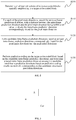
- FIG. 2 is a flowchart of an intra-frame prediction method according to an embodiment of the present disclosure.
- the intra-frame prediction method may be applied to a video coding device.
- the video coding device may be a central processing unit (CPU) or a graphic processing unit (GPU) having a video coding capacity.
- the video coding device may be implemented as a terminal such as a mobile phone or a notebook computer, or may be implemented as a server.
- the intra-frame prediction method provided in this embodiment of the present disclosure may include the following steps S100 to S130.
- step S100 pixel main directions of reference coded blocks spatially neighboring to a target to-be-coded block.
- the target to-be-coded block is a to-be-coded block on which predictive coding currently need to be performed
- the coded block may be regarded as a code block on which predictive coding is performed by using the target intra-frame prediction direction determined by using the intra-frame prediction method provided according to the embodiment of the present disclosure.
- the coded block is also referred to a re-established to-be-coded block.
- a to-be-coded block becomes a coded block after predictive coding is performed on the to-be-coded block through the determined target intra-frame prediction direction, and pixels in the coded block are processed and re-established.
- predictive coding is performed on the to-be-coded block by using the target intra-frame prediction direction for the to-be-coded block determined by using the intra-frame prediction method provided according to the embodiment of the present disclosure to obtain an intra-frame prediction residual of the to-be-coded block, transform and quantization are performed on the intra-frame prediction residual, and then inverse quantization and inverse transform are performed on the intra-frame prediction residual, to obtain a pixel re-establishment value of the to-be-coded block, so that pixels of the to-be-coded block are established after predictive coding is performed on the to-be-coded block based on the target intra-frame prediction direction.
- the selected reference coded block spatially neighboring to the target to-be-coded block may be: a coded block spatially neighboring to the target to-be-coded block and immediately adjacent to a corner of the target to-be-coded block. Based on information provided after the reference coded block is coded, in the embodiment of the present disclosure, a candidate intra-frame prediction direction of the target to-be-coded block can be determined.
- a first coded block that is on a left side of and is immediately adjacent to an upper corner of the target to-be-coded block and a second coded block that is on an upper side of and is immediately adjacent to a left corner of the target to-be-coded block may be selected as the reference coded blocks.
- a first coded block A immediately adjacent to a left side of an upper corner of a target to-be-coded block cur and a second coded block B immediately adjacent to an upper side of a left corner of the target to-be-coded block cur may be selected as the selected reference coded blocks spatially neighboring to the target to-be-coded block.
- FIG. 3 shows only an optional example.
- the number of the reference coded blocks may be one or at least two. Certainly, it is not limited to the selected reference coded blocks shown in FIG. 3 .
- the reference coded blocks shown in FIG. 3 and coded blocks immediately adjacent to other corners of the target to-be-coded block may be used as the selected reference coded blocks. A specific manner may be determined according to an actual requirement.
- the pixel main directions of the reference coded blocks may be determined.
- directions of pixels of the reference coded block may be determined, and a direction with a greatest number of pixels in the reference coded block is used as a pixel main direction of the reference coded block.
- the reference coded blocks are processed in this manner, to obtain the pixel main directions of the reference coded blocks.
- a Sobel operator (a Sobel algorithm is referred to as a Sobel operator and is one of the most important operators in pixel image edge detection) may be used to determine directions of pixels of the reference coded block.
- step S110 for each of the pixel main directions, search for an intra-frame prediction direction, with a distance between the intra-frame prediction direction and the pixel main direction being within a set value, to obtain the intra-frame prediction direction correspondingly found for the pixel main direction.
- the intra-frame prediction direction with a distance between the intra-frame prediction direction and the pixel main direction being within the set value is searched for, to obtain the intra-frame prediction direction correspondingly found for the pixel main direction. That is, the intra-frame prediction direction correspondingly found for the pixel main direction is: an intra-frame prediction direction that is found with the pixel main direction being used as a center and the distance between the intra-frame prediction direction and the pixel main direction being within the set value.
- the pixel main direction of the reference coded block may correspond to an intra-frame prediction direction, to search for an intra-frame prediction direction corresponding to the pixel main direction (for example, searching is performed based on the intra-frame prediction directions indicated by the numerals shown in FIG. 1 ), the distance between the intra-frame prediction direction and the pixel main direction being within the set value, to obtain the intra-frame prediction direction correspondingly found for the pixel main direction.
- searching for the intra-frame prediction direction with the pixel main direction being used as a center, and the distance between the intra-frame prediction direction and the pixel main direction being within the set value may be: for a pixel main direction, searching for an intra-frame prediction direction which is less than the pixel main direction by a value less than a set value, and an intra-frame prediction direction which is greater than the pixel main direction by a value less than the set value, to obtain the intra-frame prediction direction correspondingly found for the pixel main direction.
- intra-frame prediction directions that are found with modA being used as a center and distances between the intra-frame prediction directions and modA being within the set value are: modA-2, modA-1, modA+1, and modA+2. That is, the intra-frame prediction directions correspondingly found for the pixel main direction modA are intra-frame prediction directions with distances between the intra-frame prediction directions and modA being 2.
- step S120 candidate intra-frame prediction directions are formed based on at least intra-frame prediction directions correspondingly found for the pixel main directions in combination with the pixel main directions.
- intra-frame prediction directions correspondingly found for the pixel main directions are determined, in an embodiment of the present disclosure, at least the intra-frame prediction directions correspondingly found for the pixel main directions and the pixel main directions may be combined to form the candidate intra-frame prediction directions.
- the candidate intra-frame prediction directions may be formed by combining the intra-frame prediction directions correspondingly found for the pixel main directions and the pixel main directions. That is, the number of the candidate intra-frame prediction directions may be: the number of the intra-frame prediction directions correspondingly found for the pixel main directions plus the number of the pixel main directions.
- the candidate intra-frame prediction directions may be formed by combining the intra-frame prediction directions correspondingly found for the pixel main directions, the pixel main directions, a first set intra-frame prediction direction, and a second set intra-frame prediction direction. That is, the number of the candidate intra-frame prediction directions may be: the number of the intra-frame prediction directions correspondingly found for the pixel main directions plus the number of the pixel main directions and plus 2.
- the first set intra-frame prediction direction is, for example, a direct current (DC) component prediction intra-frame prediction direction
- the second set intra-frame prediction direction is, for example, a planar (planar prediction) intra-frame prediction direction.
- the number of the candidate intra-frame prediction directions is required to be less than the number of all the intra-frame prediction directions. That is, in an embodiment of the present disclosure, regardless of the manner for forming the candidate intra-frame prediction directions, the number of the candidate intra-frame prediction directions is required to be less than the number of all the intra-frame prediction directions. Using HEVC video coding as an example, the number of the candidate intra-frame prediction directions is required to be less than 35. In an embodiment of the present disclosure, the number of the candidate intra-frame prediction directions may be controlled by setting the set value or controlled by setting the number of the reference coded blocks.
- a candidate list may be set, and the candidate intra-frame prediction directions formed based on at least the intra-frame prediction directions correspondingly found for the pixel main directions and the pixel main directions in step S130 are recorded in the candidate list.
- step S130 predictive coding is performed on the target to-be-coded block based on the candidate intra-frame prediction directions, and a target intra-frame prediction direction is determined among the candidate intra-frame prediction directions based on predictive coding results respectively corresponding to the candidate intra-frame prediction directions.
- predictive coding may be performed on the target to-be-coded block based on the candidate intra-frame prediction directions, to obtain predictive coding results respectively corresponding to the candidate intra-frame prediction directions, and the target intra-frame prediction direction is determined among the candidate intra-frame prediction directions based on the predictive coding results respectively corresponding to the candidate intra-frame prediction directions, to select the target intra-frame prediction direction of the target to-be-coded block in an intra-frame prediction process.
- rate distortion costs corresponding to the candidate intra-frame prediction directions may be determined based on the predictive coding results respectively corresponding to the candidate intra-frame prediction directions, and a candidate intra-frame prediction direction with a smallest rate distortion cost is selected as the target intra-frame prediction direction.
- final predictive coding may be performed on the target to-be-coded block by using the target intra-frame prediction direction, and the target intra-frame prediction direction of the target to-be-coded block may be written into a bitstream, to be transferred to a decoder to decode the coded target to-be-coded block.
- the intra-frame prediction method includes: determining pixel main directions of reference coded blocks spatially neighboring to a target to-be-coded block; for each of the pixel main directions, searching for an intra-frame prediction direction, a distance between the intra-frame prediction direction and the pixel main direction being within a set value, to obtain the intra-frame prediction direction correspondingly found for the pixel main direction; forming candidate intra-frame prediction directions based on at least the pixel main directions in combination with intra-frame prediction directions correspondingly found for the pixel main directions; and performing predictive coding on the target to-be-coded block based on the candidate intra-frame prediction directions, and determining a target intra-frame prediction direction among the candidate intra-frame prediction directions based on predictive coding results respectively corresponding to the candidate intra-frame prediction directions.
- an intra-frame prediction direction with a distance between the intra-frame prediction direction and the pixel main direction being within a set value is searched for, and candidate intra-frame prediction directions are formed based on at least the intra-frame prediction directions correspondingly found for the pixel main directions and the pixel main directions, to perform predictive coding on the target to-be-coded block based on the candidate intra-frame prediction directions, and a target intra-frame prediction direction is determined among the candidate intra-frame prediction directions based on predictive coding results respectively corresponding to the candidate intra-frame prediction directions.
- the candidate intra-frame prediction directions may be formed based on at least the intra-frame prediction directions correspondingly found for the pixel main directions and the pixel main directions, the number of the candidate intra-frame prediction directions is reduced, and the target intra-frame prediction direction is controlled to be selected directly based on the determined candidate intra-frame prediction directions, thereby eliminating the rough selection based on all the intra-frame prediction directions, such that processing complexity of selection of the target intra-frame prediction direction is reduced, and complexity of the entire video coding is reduced, and real-time video coding can be ensured.
- the first coded block immediately adjacent to the left side of the upper corner of the target to-be-coded block and the second coded block immediately adjacent to the upper side of the left corner of the target to-be-coded block may be selected as the selected reference coded blocks.
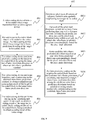
- FIG. 4 is a flowchart of an intra-frame prediction method according to another embodiment of the present disclosure.
- the method may include the following steps S200 to S230.
- step S200 a first pixel main direction of a first coded block immediately adjacent to a left side of an upper corner of a target to-be-coded block and a second pixel main direction of a second coded block immediately adjacent to an upper side of a left corner of the target to-be-coded block are determined.
- a coded block immediately adjacent to the left side of the upper corner of the target to-be-coded block may be referred to as the first coded block.
- a coded block A is the first coded block.
- a coded block immediately adjacent to the upper side of the left corner of the target to-be-coded block may be referred to as the second coded block.
- a coded block B is the second coded block.
- a Sobel operator may be used to determine directions of pixels of the first coded block, and a direction with a greatest number of pixels in the first coded block is used as a pixel main direction (referred to as the first pixel main direction) of the first coded block.
- the Sobel operator may be used to determine directions of pixels of the second coded block, and a direction with a greatest number of pixels in the second coded block is used as a pixel main direction (referred to as the second pixel main direction) of the second coded block.
- Step S210 an intra-frame prediction direction which is less than the first pixel main direction by a value less than a set value, and an intra-frame prediction direction which is greater than the first pixel main direction by a value less than the set value are searched for, and an intra-frame prediction direction which is less than the second pixel main direction by a value less than a set value and an intra-frame prediction direction which is greater than the second pixel main direction by a value less than the set value are searched for.
- an intra-frame prediction direction within a range from the first pixel main direction minus a set value to the first pixel main direction plus the set value may be searched for, to obtain the intra-frame prediction directions correspondingly found for the first pixel main direction.
- the set value is 2
- the first pixel main direction is modA
- intra-frame prediction directions of modA-2, modA-1, modA+1, and modA+2 may be found for modA.
- an intra-frame prediction direction within a range from the second pixel main direction minus the set value and to the second pixel main direction plus the set value may be searched for, to obtain the intra-frame prediction directions correspondingly found for the second pixel main direction.
- the set value is 2
- the second pixel main direction is modB
- intra-frame prediction directions of modB-2, modB-1, modB+1, and modB+2 may be found for modB.
- the set value is selected as 2 is only an optional example or may be selected as 3, 4, or the like. This is determined according to an actual requirement.
- step S220 candidate intra-frame prediction directions are formed based on at least the intra-frame prediction direction which is less than the first pixel main direction by a value less than a set value, the intra-frame prediction direction which is greater than the first pixel main direction by a value less than the set value, the first pixel main direction, the intra-frame prediction direction which is less than the second pixel main direction by a value less than a set value, the intra-frame prediction direction which is greater than the pixel main direction by a value less than the set value, and the second pixel main direction.
- the candidate intra-frame prediction directions may be formed at least based on modA-2, modA-1, modA, modA+1, modA+2, modB-2, modB-1, modB, modB+1, and modB+2.
- a range for the candidate intra-frame prediction directions may be ⁇ modA-2, modA-1, modA, modA+1, modA+2, modB-2, modB-1, modB, modB+1, modB+2 ⁇ .
- the candidate intra-frame prediction directions may further combine the first set intra-frame prediction direction (such as a DC intra-frame prediction direction) and the second set intra-frame prediction direction (such as a planar intra-frame prediction direction).
- the range for the candidate intra-frame prediction directions may be: ⁇ DC, planar, modA-2, modA-1, modA, modA+1, modA+2, modB-2, modB-1, modB, modB+1, modB+2 ⁇ .
- the number of the candidate intra-frame prediction directions is less than the number of all the intra-frame prediction directions. Compared with all the intra-frame prediction directions (such as 35 intra-frame prediction directions in an HEVC situation), with the intra-frame prediction method according to the embodiments of the present disclosure, the number of the determined candidate intra-frame prediction directions is greatly reduced.
- step S230 predictive coding is performed on the target to-be-coded block based on the candidate intra-frame prediction directions, and a target intra-frame prediction direction among the candidate intra-frame prediction directions is determined based on predictive coding results respectively corresponding to the candidate intra-frame prediction directions.
- the manner for selecting the reference coded blocks in the method of FIG. 4 is only an example.
- the form of the reference coded blocks may be determined according to a specific situation.
- the target intra-frame prediction direction of the target to-be-coded block may be determined among the candidate intra-frame prediction directions in a rate distortion optimization (RDO) manner.
- RDO rate distortion optimization
- FIG. 5 shows a process of a method for determining the target intra-frame prediction direction among the candidate intra-frame prediction directions.
- the method may include the following steps S300 to S340.
- step S300 intra-frame prediction residuals obtained by performing predictive coding on the target to-be-coded block based on the candidate intra-frame prediction directions are determined, to obtain the intra-frame prediction residuals corresponding to the candidate intra-frame prediction directions.
- intra-frame prediction residuals under the candidate intra-frame prediction directions (that is, intra-frame prediction residuals corresponding to the candidate intra-frame prediction directions) may be obtained.
- step S310 transform and quantization are performed on the intra-frame prediction residuals corresponding to the candidate intra-frame prediction directions, to obtain transform and quantization results corresponding to the candidate intra-frame prediction directions.
- transform and quantization may be performed on the intra-frame prediction residuals corresponding to the candidate intra-frame prediction directions, to obtain transform and quantization results corresponding to the candidate intra-frame prediction directions.
- step S320 inverse quantization and inverse transform are performed on the transform and quantization results corresponding to the candidate intra-frame prediction directions, to obtain a pixel re-establishment value of the target to-be-coded block corresponding to each of the candidate intra-frame prediction directions.
- inverse quantization and inverse transform may be performed on the transform and quantization results corresponding to the candidate intra-frame prediction directions, to obtain a pixel re-establishment value of the target to-be-coded block in each of the candidate intra-frame prediction directions.
- step S330 rate distortion costs corresponding to the candidate intra-frame prediction directions are determined based on the pixel re-establishment value of the target to-be-coded block corresponding to each of the candidate intra-frame prediction directions and a pixel original value of the target to-be-coded block.
- step S300 to step S330 may be regarded as an optional implementation of determining the rate distortion costs of the candidate intra-frame prediction directions based on the predictive coding results corresponding to the candidate intra-frame prediction directions.
- step S340 a candidate intra-frame prediction direction with a smallest rate distortion cost is determined as the target intra-frame prediction direction of the target to-be-coded block.
- a RD cost (Rate Distortion cost) based on SSE (a Sum of Square Error) may be determined based on the pixel re-establishment value of a corresponding target to-be-coded block and a pixel original value of the target to-be-coded block, to obtain an RD cost corresponding to the candidate intra-frame prediction direction.
- SSE Sum of Square Error
- the foregoing manner of determining the target intra-frame prediction direction of the target to-be-coded block in an RDO manner is only optional.
- costs in other forms for example, directly using the intra-frame prediction residuals as costs
- a candidate intra-frame prediction direction with a smallest cost is selected as the target intra-frame prediction direction of the target to-be-coded block.
- intra-frame prediction may be directly performed on the to-be-coded block by using the method shown in FIG. 2 and FIG. 4 .
- whether the first set intra-frame prediction direction and the second set intra-frame prediction direction are added into the candidate intra-frame prediction directions may be randomly selected.
- the method shown in FIG. 2 and FIG. 4 may be performed when a limitation condition is met. That is, a limitation condition is set, and the intra-frame prediction method according to the embodiments of the present disclosure is implemented through the method shown in FIG. 2 and FIG. 4 only in a case that the limitation condition is met. In a case that the limitation condition is not met, another intra-frame prediction process, which is different from the above method, may be used for implementing the intra-frame prediction method.
- FIG. 6 is another flowchart of an intra-frame prediction method according to an embodiment of the present disclosure.
- the method may include the following steps S400 to S460.
- step S400 a first average value of a set row of re-established pixels which is on an upper side of and is immediately adjacent to the target to-be-coded block and a second average value of a set row of re-established pixels which is on a left side of and is immediately adjacent to the target to-be-coded block are determined.
- the set row of re-established pixels which is on an upper side of and is immediately adjacent to the target to-be-coded block may be: a set row of re-established pixels of an upper coded block of the target to-be-coded block, the set row of re-established pixels being immediately adjacent to the target to-be-coded block. That is, an upper coded block of the target to-be-coded block is determined, and the average value of a set row of re-established pixels of the upper coded block which is immediately adjacent to the target to-be-coded block may be determined, to obtain the first average value.
- the set row of re-established pixels which is on a left side of and is immediately adjacent to the target to-be-coded block may be: a set row of re-established pixels of a left coded block of the target to-be-coded block, the set row of re-established pixels being immediately adjacent to the target to-be-coded block. That is, a left coded block of the target to-be-coded block is determined, and the average value of a set row of re-established pixels of the left coded block which is immediately adjacent to the target to-be-coded block may be determined, to obtain the second average value.
- an average value of re-established pixels in two undermost rows of the upper coded block of the target to-be-coded block may be determined, to obtain the first average value (which may be referred as avg_up).
- an average value of re-established pixels in two right-most rows of the left coded block of the target to-be-coded block may be determined, to obtain the second average value (which may be referred to as avg_left).
- the re-established pixels in two undermost rows of the upper coded block of the target to-be-coded block may be regarded as the set row of re-established pixels which is on a left side of and is immediately adjacent to the target to-be-coded block
- the re-established pixels in two right-most lines of the left coded block of the target to-be-coded block may be regarded as the set row of re-established pixels which is on a left side of and is immediately adjacent to the target to-be-coded block.
- the number of rows and columns of a to-be-coded block may be 16 ⁇ 16.
- Each line has 16 pixels.
- the number of rows and columns of the to-be-coded block and the number of pixels in each row may be determined according to an actual situation. Only exemplary descriptions are provided herein.
- step S410 it is determined whether an absolute error between the first average value and the second average value is less than a first threshold and whether the target intra-frame prediction direction of each of the reference coded blocks spatially neighboring to the target to-be-coded block is a first set intra-frame prediction direction. If either determining result is negative, step S420 is performed, and if determining results are both positive, step S460 is performed.
- step S420 pixel main directions of the reference coded blocks are determined.
- step S410 If either determining result is negative in step S410, it indicates that the absolute error between the first average value and the second average value is not less than the first threshold, and/or none of the target intra-frame prediction directions of the reference coded blocks is the first set intra-frame prediction direction.
- the process shown in FIG. 2 and FIG. 4 may be performed. That is, the pixel main directions of the reference coded blocks may be first determined, and then the method is performed according to the process shown in FIG. 2 and FIG. 4 .
- the first threshold may be set according to an actual situation. Because the absolute error between the first average value and the second average value is not less than the first threshold, and none of the target intra-frame prediction directions of the reference coded blocks is the first set intra-frame prediction direction (neither of the target intra-frame prediction directions of the first coded block and second coded blocks shown in FIG. 4 is the DC intra-frame prediction direction, and the DC intra-frame prediction direction may be used as the first set intra-frame prediction direction), a difference between re-established pixels of coded blocks spatially neighboring to the target to-be-coded block may be considered to be large. For the target to-be-coded block, a selection range of the intra-frame prediction directions needs to be expanded.
- the pixel main directions of the reference coded blocks are creatively first determined, and then an intra-frame prediction direction that may be added into the candidate intra-frame prediction directions is searched for by using the pixel main directions, so that the number of the candidate intra-frame prediction directions can be controlled.
- step S430 for each of the pixel main directions, an intra-frame prediction direction with a distance between the intra-frame prediction direction and the pixel main direction being within a set value is searched for, to obtain the intra-frame prediction direction correspondingly found for the pixel main direction.
- step S440 candidate intra-frame prediction directions are formed based on at least intra-frame prediction directions correspondingly found for the pixel main directions and the pixel main directions.
- step S450 predictive coding is performed on the target to-be-coded block based on the candidate intra-frame prediction directions, and a target intra-frame prediction direction among the candidate intra-frame prediction directions is determined based on predictive coding results respectively corresponding to the candidate intra-frame prediction directions.
- step S460 the first set intra-frame prediction direction is used as the target intra-frame prediction direction of the target to-be-coded block.
- step S410 If the determining results are both positive in step S410, it indicates that the absolute error between the first average value and the second average value is less than the first threshold, and the target intra-frame prediction directions of the reference coded blocks are all the first set intra-frame prediction direction, the difference between the re-established pixels of the coded blocks spatially neighboring to the target to-be-coded block may be considered to be small, and there is a large probability for the target intra-frame prediction direction of the target to-be-coded block to be consistent with the target intra-frame prediction direction of the reference coded block.
- the target intra-frame prediction direction of the target to-be-coded block may be considered as the first set intra-frame prediction direction used by the spatially neighboring reference coded blocks (for example, the target intra-frame prediction direction of the target to-be-coded block is the DC intra-frame prediction direction). Therefore, the first set intra-frame prediction direction may be used as the target intra-frame prediction direction of the target to-be-coded block, thereby eliminating a process of determining the target intra-frame prediction direction by performing predictive coding on the target to-be-coded blocks based on each of the candidate intra-frame prediction directions, such that processing complexity can be greatly reduced.
- the method shown in FIG. 1 and FIG. 4 is performed.
- the target intra-frame prediction directions of the reference coded blocks are the first set intra-frame prediction direction
- a parallel process different from the method shown in FIG. 1 and FIG. 4 that is, the first set intra-frame prediction direction is directly used as the target intra-frame prediction direction of the target to-be-coded block.
- intra-frame prediction may be performed on the target to-be-coded block cur through the following process.
- a first average value (defined as avg_up) of re-established pixels in two upper rows immediately adjacent to the target to-be-coded block cur and a second average value (defined as avg_left) of re-established pixels in two left rows immediately adjacent the target to-be-coded block cur are determined.
- the target intra-frame prediction direction of the target to-be-coded block cur is the DC intra-frame prediction direction.
- the target intra-frame prediction directions of the first coded block A and the second coded block B are both the planar intra-frame prediction directions, it may be determined that the target intra-frame prediction direction of the target to-be-coded block cur is the planar intra-frame prediction direction.
- a first pixel main direction modA of the first reference coded block A and a second pixel main direction modB of the second reference coded block B may be determined.
- Intra-frame prediction directions with distances between the intra-frame prediction directions and modA being less than 2 are searched for, which include: modA-2, modA-1, modA+1, and modA+2.
- Intra-frame prediction directions with distances between the intra-frame prediction directions and modB being less than 2 are searched for, which include: modB-2, modB-1, modB+1, and modB+2.
- the candidate intra-frame prediction directions are formed based on at least modA-2, modA-1, modA, modA+1, modA+2, modB-2, modB-1, modB, modB+1, and modB+2. Further, a target intra-frame prediction direction of the target to-be-coded block is determined among the candidate intra-frame prediction directions in a manner such as RDO.
- whether the first set intra-frame prediction direction and the second set intra-frame prediction direction (such as the DC and planar intra-frame prediction directions) are added into the candidate intra-frame prediction directions of the target to-be-coded block may also be selected.
- FIG. 8 is another flowchart of an intra-frame prediction method according to an embodiment of the present disclosure.
- the method may include the following steps S500 to S570.
- step S500 a first average value of a set row of re-established pixels which is on an upper side of and is immediately adjacent to the target to-be-coded block and a second average value of a set row of re-established pixels which is on a left side of and is immediately adjacent to the target to-be-coded block are determined.
- step S510 it is determined whether an absolute error between the first average value and the second average value is less than a first threshold and whether the target intra-frame prediction direction of each of the reference coded blocks spatially neighboring to the target to-be-coded block is a first set intra-frame prediction direction. If any one of the determining results is negative, step S520 is performed. If determining results are both positive, step S570 is performed.
- step S520 pixel main directions of the reference coded blocks are determined, and for each of the pixel main direction, an intra-frame prediction direction with a distance between the intra-frame prediction direction and the pixel main direction being within a set value is searched for, to obtain the intra-frame prediction direction correspondingly found for the pixel main direction.
- step S530 it is determined whether the absolute error between the first average value and the second average value is greater than a second threshold and whether none of the target intra-frame prediction directions of the reference coded blocks is the first set intra-frame prediction direction or a second set intra-frame prediction direction. If either determining result is negative, step S540 is performed. If determining results are both positive, step S550 is performed.
- step S540 the first set intra-frame prediction direction, the second set intra-frame prediction direction, intra-frame prediction directions correspondingly found for the pixel main directions, and the pixel main directions are determined as candidate intra-frame prediction directions.
- the first set intra-frame prediction direction, the second set intra-frame prediction direction, the intra-frame prediction directions correspondingly found for the pixel main directions, and the pixel main directions may be determined as the candidate intra-frame prediction directions in a case that the absolute error between the first average value and the second average value is not greater than a second threshold, and/or the target intra-frame prediction directions of the reference coded blocks are all the first set intra-frame prediction direction or the second set intra-frame prediction direction.
- the first set intra-frame prediction direction and the second set intra-frame prediction direction may be added into the candidate intra-frame prediction directions.
- the first set intra-frame prediction direction and the second set intra-frame prediction direction may be added into the candidate intra-frame prediction directions.
- the target intra-frame prediction directions of the reference coded blocks are all the second set intra-frame prediction direction
- the first set intra-frame prediction direction and the second set intra-frame prediction direction may be added into the candidate intra-frame prediction directions.
- step S550 the intra-frame prediction directions correspondingly found for the pixel main directions and the pixel main directions are determined as candidate intra-frame prediction directions.
- the first set intra-frame prediction direction or the second set intra-frame prediction direction may be considered as not possibly the target intra-frame prediction direction of the target to-be-coded block.
- the intra-frame prediction directions correspondingly found for the pixel main directions are directly determined as the candidate intra-frame prediction directions.
- step S560 predictive coding is performed on the target to-be-coded block based on the candidate intra-frame prediction directions, and a target intra-frame prediction direction among the candidate intra-frame prediction directions is determined based on predictive coding results respectively corresponding to the candidate intra-frame prediction directions.
- step S570 the first set intra-frame prediction direction is used as the target intra-frame prediction direction of the target to-be-coded block.
- a parallel process of using the first set intra-frame prediction direction as the target intra-frame prediction direction of the target to-be-coded block may be eliminated, and determining of whether the absolute error between the first average value and the second average value is less than the first threshold, and whether the target intra-frame prediction directions of the reference coded blocks are all the first set intra-frame prediction direction is not first performed.
- the candidate intra-frame prediction directions are determined in the following manner.
- the first set intra-frame prediction direction, the second set intra-frame prediction direction, the intra-frame prediction directions correspondingly found for the pixel main directions, and the pixel main directions are determined as the candidate intra-frame prediction directions in a case that the absolute error between the first average value and the second average value is not greater than a second threshold, and/or the target intra-frame prediction directions of the reference coded blocks are all the first set intra-frame prediction direction or the second set intra-frame prediction direction.
- the intra-frame prediction directions correspondingly found for the pixel main directions and the pixel main directions are determined as the candidate intra-frame prediction directions in a case that the absolute error between the first average value and the second average value is greater than the second threshold, and none of the target intra-frame prediction directions of the reference coded blocks is the first set intra-frame prediction direction or the second set intra-frame prediction direction.
- determining of the foregoing conditions may not be performed. Instead, whether the first set intra-frame prediction direction and the second set intra-frame prediction direction are added into the candidate intra-frame prediction directions is randomly selected.
- the method shown in FIG. 6 and FIG. 8 is optional.
- the method shown in FIG. 2 may be performed to determine the target intra-frame prediction direction of the target to-be-coded block.
- the intra-frame prediction method according to the embodiments of the present disclosure may be applied to a video coding device.
- the video coding device performs video coding on a video image
- any target to-be-coded block of the video image is coded by using an intra-frame prediction coding manner, and in this process, the intra-frame prediction method according to the embodiments of the present disclosure is used to determine the target intra-frame prediction direction of the target to-be-coded block.
- a video coding process to which the intra-frame prediction method provided according to the embodiments of the present disclosure is applied may be as shown in FIG. 9 and include the following steps S01 to S05.
- a video coding device obtains a to-be-coded video image transmitted from a video capture device.
- the video capture device may transmit the captured video image to the video coding device, and the video coding device performs video coding in an intra-frame prediction coding manner.
- the video capture device may be a terminal device having an image capture apparatus such as a camera and may be, for example, a video capture terminal in video live scene.
- a source for the video coding device to obtain a to-be-coded video image is not limited to the video capture device.
- the video coding device may re-code a saved video image.
- the video coding device may be implemented as a terminal such as a mobile phone or a notebook computer or may be a server disposed at a network side.
- step S02 for any target to-be-coded block that is to be coded in the video image, the video coding device determines a target intra-frame prediction direction of the target to-be-coded block.
- the video image may be coded by using a to-be-coded block as a unit. For example, after the video coding device obtains the video image, image segmentation may be performed on the video image, to obtain multiple to-be-coded blocks by division.
- the above-described intra-frame prediction method may be used to determine the target intra-frame prediction direction of the target to-be-coded block.
- a process of determining the target intra-frame prediction direction of the target to-be-coded block may be shown in refinement of step S02 in FIG. 9 and includes the following steps S021 to S024.
- step S021 pixel main directions of reference coded blocks spatially neighboring to a target to-be-coded block are determined.
- step S022 for each of the pixel main directions, an intra-frame prediction direction with a distance between the intra-frame prediction direction and the pixel main direction being within a set value is searched for, to obtain the intra-frame prediction direction correspondingly found for the pixel main direction.
- step S023 candidate intra-frame prediction directions are formed based on at least intra-frame prediction directions correspondingly found for the pixel main directions and the pixel main directions.
- step S024 predictive coding is performed on the target to-be-coded block based on the candidate intra-frame prediction directions, and a target intra-frame prediction direction among the candidate intra-frame prediction directions is determined based on predictive coding results respectively corresponding to the candidate intra-frame prediction directions.
- step S024 For refinement descriptions S021 to step S024, refer to descriptions of corresponding parts above.
- step S03 the video coding device performs predictive coding on the target to-be-coded block by using the target intra-frame prediction direction, to obtain an intra-frame prediction residual.
- predictive coding may be performed on the target to-be-coded block by using re-established pixels of coded blocks spatially neighboring to the target to-be-coded block based on the target intra-frame prediction direction, to obtain the intra-frame prediction residual of the target to-be-coded block in the target intra-frame prediction direction.
- step S04 the video coding device performs transform and quantization on the obtained intra-frame prediction residual, to obtain a transform and quantization result of the target to-be-coded block in the target intra-frame prediction direction.
- the video coding device may perform transform (such as orthogonal transform) on the intra-frame prediction residual and then perform quantization (such as coefficient quantization), to obtain a transform and quantization result of the target to-be-coded block in the target intra-frame prediction direction.
- transform such as orthogonal transform
- quantization such as coefficient quantization
- step S05 the video coding device performs coding on the transform and quantization result, to obtain a coding result of the target to-be-coded block.
- the transform and quantization result of the target to-be-coded block in the target intra-frame prediction direction may be coded in an entropy coding manner, to obtain the coding result of the target to-be-coded block.
- coding results of the multiple to-be-coded blocks is combined, to obtain a coding result of the video image.
- the target intra-frame prediction direction of each to-be-coded block in the video image may be written into a bitstream, to facilitate subsequent decoding of the coded video image.
- a process of decoding the coded video image may be reverse to the foregoing coding process. That is, processing reverse to the foregoing coding process may be performed on the coding result of each to-be-coded block in the coded video image.
- the following uses an example in which the reference coded blocks are the first coded block A and the second coded block B, the first pixel main direction is modA, the second pixel main direction is modB, and the set value is 2 (obviously, the specific set value may be adjusted according to an actual situation), to describe a further detailed process of performing video coding by using the intra-frame prediction method according to the embodiments of the present disclosure.
- the reference coded blocks are the first coded block A and the second coded block B
- the first pixel main direction is modA
- the second pixel main direction is modB
- the set value is 2
- the video coding device may perform image segmentation on the video image, to obtain multiple to-be-coded blocks by division.
- a first coded block A immediately adjacent to a left side of an upper corner of the target to-be-coded block and a second coded block B immediately adjacent to an upper side of a left corner of the target to-be-coded block are determined.
- a first average value (defined as avg_up) of re-established pixels in two upper rows immediately adjacent to the target to-be-coded block and a second average value (defined as avg_left) of re-established pixels in two left rows immediately adjacent to the target to-be-coded block are determined.
- a target intra-frame prediction direction of the target to-be-coded block is the DC intra-frame prediction direction.
- a direction with a greatest number of pixels in the first coded block A may be used as a pixel main direction modA of the first coded block
- a direction with a greatest number of pixels in the second coded block B may be used as a pixel main direction modB of the second coded block
- intra-frame prediction directions with a distance between the intra-frame prediction directions and modA being less than 2 are searched for, which include: modA-2, modA-1, modA+1, and modA+2
- Intra-frame prediction directions with a distance between the intra-frame prediction directions and modB being less than 2 are searched for, which include: modB-2, modB-1, modB+1, and modB+2.
- candidate intra-frame prediction directions ⁇ DC planar, modA-2, modA-1, modA, modA+1, modA+2, modB-2, modB-1, modB, modB+1, modB+2 ⁇ are formed.
- candidate intra-frame prediction directions ⁇ DC, planar, modA-2, modA-1, modA, modA+1, modA+2, modB-2, modB-1, modB, modB+1, modB+2 ⁇ are formed.
- candidate intra-frame prediction directions ⁇ DC planar, modA-2, modA-1, modA, modA+1, modA+2, modB-2, modB-1, modB, modB+1, modB+2 ⁇ are formed.
- candidate intra-frame prediction directions ⁇ modA-2, modA-1, modA, modA+1, modA+2, modB-2, modB-1, modB, modB+1, modB+2 ⁇ are formed.
- a candidate intra-frame prediction direction with a smallest rate distortion cost may be determined among the candidate intra-frame prediction directions in a manner such as RDO and may be used as a target intra-frame prediction direction of the target to-be-coded block.
- final predictive coding may be performed on the target to-be-coded block based on the target intra-frame prediction direction, to obtain an intra-frame prediction residual, and the target intra-frame prediction direction may be written into a bitstream.
- transform, quantization, and entropy coding are performed on the intra-frame prediction residual of the target to-be-coded block, to code the target to-be-coded block, to obtain a coding result of the target to-be-coded block.
- Coding results of to-be-coded blocks are combined, to obtain a coding result of the video image.
- the candidate intra-frame prediction directions may be formed based on at least the intra-frame prediction directions correspondingly found for the pixel main directions of the reference coded blocks spatially neighboring to the target to-be-coded block, and the pixel main directions, to greatly reduce the number of the candidate intra-frame prediction directions and control the target intra-frame prediction direction to be selected directly based on the determined candidate intra-frame prediction directions, thereby eliminating a process of rough selection based on all the intra-frame prediction directions, lowering processing complexity of selection of the target intra-frame prediction direction, and lowering complexity of entire video coding, such that real-time video coding can be ensured.
- the target intra-frame prediction direction of the target to-be-coded block may be directly determined as the first intra-frame prediction direction, thereby greatly reducing processing complexity.
- the intra-frame prediction apparatus described in the following may be regarded as a video coding device or program modules configured to implement the intra-frame prediction method according to the embodiments of the present disclosure.
- the intra-frame prediction apparatus described in the following reference may be made to the content of the intra-frame prediction method described above.
- FIG. 11 is a block diagram showing a structure of an intra-frame prediction apparatus according to an embodiment of the present disclosure.
- the intra-frame prediction apparatus may be applied to a video coding device.
- the intra-frame prediction apparatus may include a pixel main direction determining module 100, a prediction direction searching module 200, a candidate prediction direction determining module 300, and a target intra-frame prediction direction determining module 400.
- the pixel main direction determining module 100 is configured to determine pixel main directions of reference coded blocks spatially neighboring to a target to-be-coded block.
- the prediction direction searching module 200 is configured to search, for each of the pixel main directions, for an intra-frame prediction direction with a distance between the intra-frame prediction direction and the pixel main direction being within a set value, to obtain the intra-frame prediction direction correspondingly found for the pixel main direction.
- the candidate prediction direction determining module 300 is configured to form candidate intra-frame prediction directions based on at least intra-frame prediction directions correspondingly found for the pixel main directions and the pixel main directions.
- the target intra-frame prediction direction determining module 400 is configured to perform predictive coding on the target to-be-coded block based on the candidate intra-frame prediction directions, and determine a target intra-frame prediction direction among the candidate intra-frame prediction directions based on predictive coding results respectively corresponding to the candidate intra-frame prediction directions.
- the prediction direction searching module 200 being configured to search, for each of the pixel main directions, for an intra-frame prediction direction with a distance between the intra-frame prediction direction and the pixel main direction being within a set value, to obtain the intra-frame prediction direction correspondingly found for the pixel main direction includes the prediction direction searching module 200 being configured to: for each of the pixel main directions, search for, by using the pixel main direction as a center, the intra-frame prediction direction with a distance between the intra-frame prediction direction and the pixel main direction being within the set value, to obtain the intra-frame prediction direction correspondingly found for the pixel main direction.
- the prediction direction searching module 200 may be configured to: for any one of the pixel main directions, search for an intra-frame prediction direction which is less than the pixel main direction by a value less than a set value and an intra-frame prediction direction which is greater than the pixel main direction by a value less than a set value, to obtain an intra-frame prediction direction correspondingly found for the pixel main direction.
- the pixel main direction determining module 100 being configured to determine pixel main directions of reference coded blocks spatially neighboring to a target to-be-coded blocks includes: for any one of the reference coded blocks, determine directions of pixels of the reference coded block and use a direction with a greatest number of pixels in the reference coded block as a pixel main direction of the reference coded block.
- FIG. 12 is a block diagram showing a structure of an intra-frame prediction apparatus according to another embodiment of the present disclosure.
- the intra-frame prediction apparatus may further include a pixel average value determining module 500, a determining module 600, and a first determining result execution module 700.
- the pixel average value determining module 500 is configured to determine a first average value of a set row of re-established pixels which is on an upper side of and is immediately adjacent to the target to-be-coded block and a second average value of a set row of re-established pixels which is on a left side of and is immediately adjacent the target to-be-coded block.
- the determining module 600 is configured to determine whether an absolute error between the first average value and the second average value is less than a first threshold and whether the target intra-frame prediction direction of each of the reference coded blocks is a first set intra-frame prediction direction.
- the first determining result execution module 700 is configured to trigger the pixel main direction determining module to perform the operation of determining pixel main directions of reference coded blocks spatially neighboring to a target to-be-coded block in a case that the determining module determines that the absolute error between the first average value and the second average value is not less than the first threshold, and/or the target intra-frame prediction direction of each of the reference coded blocks is not the first set intra-frame prediction direction.
- the intra-frame prediction apparatus shown in FIG. 12 may further include a second determining result execution module 800.
- the second determining result execution module 800 is configured to use the first set intra-frame prediction direction as the target intra-frame prediction direction of the target to-be-coded block in a case that the determining module determines that the absolute error between the first average value and the second average value is less than the first threshold, and the target intra-frame prediction direction of each of the reference coded blocks is the first set intra-frame prediction direction.
- the candidate prediction direction determining module 300 is configured to:
- the candidate prediction direction determining module 300 determining the candidate intra-frame prediction directions may be independently implemented.
- the candidate prediction direction determining module 300 may also randomly select whether the first set intra-frame prediction direction and the second set intra-frame prediction direction are added in the candidate intra-frame prediction directions. This may be determined according to an actual requirement.
- the reference coded blocks may include a first coded block immediately adjacent to a left side of an upper corner of the target to-be-coded block and a second coded block immediately adjacent to an upper side of a left corner of the target to-be-coded block.
- the target intra-frame prediction direction determining module 400 being configured to determining a target intra-frame prediction direction among the candidate intra-frame prediction directions based on predictive coding results respectively corresponding to the candidate intra-frame prediction directions includes the target intra-frame prediction direction determining module 400 being configured to:
- the target intra-frame prediction direction determining module 400 being configured to determine rate distortion costs corresponding to the candidate intra-frame prediction directions based on predictive coding results respectively corresponding to the candidate intra-frame prediction directions includes the target intra-frame prediction direction determining module 400 being configured to:
- the intra-frame prediction apparatus can lower selection complexity of the target intra-frame prediction direction, so that complexity of video coding is reduced, thereby meeting a real-time requirement of video coding.
- a video coding device may perform the intra-frame prediction method according to the embodiments of the present disclosure by loading a program for implementing the foregoing program module functions.
- the video coding device may be implemented as a terminal such as a mobile phone a notebook computer or may be a server.
- FIG. 13 is a block diagram showing a hardware structure of a video coding device.
- the video coding device may include at least one central processing unit 1, at least one communications interface 2, at least one memory 3, at least one communications bus 4, and at least one graphic processing unit 5.
- the number of each of the processor 1, the communications interface 2, the memory 3, the communications bus 4, and the graphic processing unit 5 may be at least one.
- the processor 1, the communications interface 2, and the memory 3 communicate with each other through the communications bus 4.
- the memory stores a program to be executed by a central processing unit or a graphic processing unit to perform:
- a storage medium is further provided according to an embodiment of the present disclosure, the storage medium stores a program to be executed by a central processing unit or a graphic processing unit, for performing any implementation of the intra-frame prediction method in the foregoing embodiments.
- a computer program product is further provided according to an embodiment of the present disclosure, the computer program product includes an instruction, when being run on a computer, causing the computer to perform any implementation of the intra-frame prediction method in the foregoing embodiments.
- steps of the method or algorithm described may be directly implemented using hardware, a software module executed by a processor, or the combination thereof.
- the software module may be placed in a random access memory (RAM), a memory, a read-only memory (ROM), an electrically programmable ROM (EPROM), an electrically erasable programmable ROM (EEPROM), a register, a hard disk, a removable magnetic disk, a CD-ROM, or any storage medium of other forms well-known in the technical field.
Landscapes
- Engineering & Computer Science (AREA)
- Multimedia (AREA)
- Signal Processing (AREA)
- Compression Or Coding Systems Of Tv Signals (AREA)
Abstract
Description
- This application claims priority to Chinese Patent Application No.
201710901193.1 - The present disclosure relates to the field of video processing technologies, and in particular, to an intra-frame prediction technology.
- Intra-frame prediction is a link of video coding. Through intra-frame prediction, spatial redundancy information during video coding may be eliminated, and a video coding effect may be improved. Intra-frame prediction is especially applied in video coding of a mixed coding framework such as H.264/AVC, H.265/HEVC, and AVS.
- Intra-frame prediction is a process of performing predictive coding on a target to-be-coded block by using a target intra-frame prediction direction of the target to-be-coded block. An important content of performing intra-frame prediction on the target to-be-coded block is: selecting an optimal intra-frame prediction direction from multiple intra-frame prediction directions of the target to-be-coded block as the target intra-frame prediction direction, and performing predictive coding on the target to-be-coded block by using the target intra-frame prediction direction. That is, the target intra-frame prediction direction is the optimal intra-frame prediction direction among the multiple intra-frame prediction directions for the target to-be-coded block. In addition to performing predictive coding on the target to-be-coded block by using the selected target intra-frame prediction direction, the selected target intra-frame prediction direction may also be written in a bitstream, to be transferred to a decoder to decode the target to-be-coded block.
- In a current intra-frame prediction implementation process, the target intra-frame prediction direction is selected in the following manner: roughly selecting an intra-frame prediction direction from all intra-frame prediction directions and using the roughly selected intra-frame prediction direction and a target intra-frame prediction direction of a coded block adjacent to the determined target to-be-coded block as candidate intra-frame prediction directions, and finely selecting a target intra-frame prediction direction of the target to-be-coded block from the candidate intra-frame prediction directions. A problem existing in this manner is: selection of the target intra-frame prediction direction is complex, causing a high complexity of video coding, such that a real-time requirement of video coding cannot be met.
- In view of the above, an intra-frame prediction method and apparatus, and a storage medium are provided according to the embodiments of the present disclosure, to lower selection complexity of a target intra-frame prediction direction, so that complexity of video coding is lowered, and a real-time requirement of video coding is met.
- To achieve the foregoing objective, the following technical solutions are provided according to the embodiments of the present disclosure.
- An intra-frame prediction method is provided. The intra-frame prediction method is applied to a video coding device and includes:
- determining pixel main directions of reference coded blocks spatially neighboring to a target to-be-coded block, the target to-be-coded block being a to-be-coded block on which predictive coding is to be performed;
- searching, for each of the pixel main directions, for an intra-frame prediction direction, with a distance between the intra-frame prediction direction and the pixel main direction being within a set value, to obtain the intra-frame prediction direction correspondingly found for the pixel main direction;
- forming candidate intra-frame prediction directions based on at least intra-frame prediction directions correspondingly found for the pixel main directions and the pixel main directions; and
- performing predictive coding on the target to-be-coded block based on the candidate intra-frame prediction directions, and determining a target intra-frame prediction direction among the candidate intra-frame prediction directions based on predictive coding results respectively corresponding to the candidate intra-frame prediction directions.
- An intra-frame prediction apparatus is further provided according to an embodiment of the present disclosure. The intra-frame prediction apparatus is applied to a video coding device and includes: a pixel main direction determining module, a prediction direction searching module, a candidate prediction direction determining module, and a target intra-frame prediction direction determining module.
- The pixel main direction determining module is configured to determine pixel main directions of reference coded blocks spatially neighboring to a target to-be-coded block.
- The prediction direction searching module is configured to search, for each of the pixel main directions, for an intra-frame prediction direction, with a distance between the intra-frame prediction direction and the pixel main direction being within a set value, to obtain the intra-frame prediction direction correspondingly found for the pixel main direction.
- The candidate prediction direction determining module is configured to form candidate intra-frame prediction directions based on at least intra-frame prediction directions correspondingly found for the pixel main directions and the pixel main directions.
- The target intra-frame prediction direction determining module is configured to perform predictive coding on the target to-be-coded block based on the candidate intra-frame prediction directions, and determine a target intra-frame prediction direction among the candidate intra-frame prediction directions based on predictive coding results respectively corresponding to the candidate intra-frame prediction directions.
- A video coding device is further provided according to an embodiment of the present disclosure. The video coding device includes a memory and a processor.
- The memory is configured to store information.
- The processor is connected to the memory and configured to execute a computer program stored in the memory to perform:
- determining pixel main directions of reference coded blocks spatially neighboring to a target to-be-coded block, the target to-be-coded block being a to-be-coded block on which predictive coding is to be performed;
- for each of the pixel main directions, searching for an intra-frame prediction direction, with a distance between the intra-frame prediction direction and the pixel main direction being within a set value, to obtain the intra-frame prediction direction correspondingly found for the pixel main direction;
- forming candidate intra-frame prediction directions based on at least intra-frame prediction directions correspondingly found for the pixel main directions and the pixel main directions; and
- performing predictive coding on the target to-be-coded block based on the candidate intra-frame prediction directions, and determining a target intra-frame prediction direction among the candidate intra-frame prediction directions based on predictive coding results respectively corresponding to the candidate intra-frame prediction directions.
- A storage medium is further provided according to an embodiment of the present disclosure. The storage medium stores a program that is executed by a central processing unit or a graphic processing unit for performing the intra-frame prediction method.
- A computer program product is further provided according to an embodiment of the present disclosure. The computer program product includes an instruction. When being run on a computer, the instruction causing the computer to perform the intra-frame prediction method.
- Based on the foregoing technical solutions, in the embodiments of the present disclosure, based on pixel main directions of reference coded blocks spatially neighboring to a target to-be-coded block, for each of the pixel main directions, an intra-frame prediction direction with a distance between the intra-frame prediction direction and the pixel main direction being within a set value is searched for, and candidate intra-frame prediction directions are formed based on at least the intra-frame prediction directions correspondingly found for the pixel main directions and the pixel main directions, to perform predictive coding on the target to-be-coded block based on the candidate intra-frame prediction directions, and a target intra-frame prediction direction is determined among the candidate intra-frame prediction directions based on predictive coding results respectively corresponding to the candidate intra-frame prediction directions. In the embodiments of the present disclosure, the candidate intra-frame prediction directions may be formed based on at least the intra-frame prediction directions correspondingly found for the pixel main directions and the pixel main directions, the number of the candidate intra-frame prediction directions is reduced, and the target intra-frame prediction direction is controlled to be selected directly based on the determined candidate intra-frame prediction directions, thereby eliminating the rough selection based on all the intra-frame prediction directions, such that processing complexity of selection of the target intra-frame prediction direction is reduced, and complexity of the entire video coding is reduced, and real-time video coding can be ensured.
- To describe the technical solutions in the embodiments of the present disclosure or in the related technology more clearly, the following briefly describes the accompanying drawings required for describing the embodiments or the existing technology. Apparently, the accompanying drawings in the following description show merely some embodiments of the present disclosure, and a person of ordinary skill in the art may still derive other drawings from these provided accompanying drawings without creative efforts.
-
FIG. 1 is an example diagram of all intra-frame prediction directions; -
FIG. 2 is a flowchart of an intra-frame prediction method according to an embodiment of the present disclosure; -
FIG. 3 is an example diagram of a reference coded block; -
FIG. 4 is a flowchart of an intra-frame prediction method according to another embodiment of the present disclosure; -
FIG. 5 is a flowchart of a method for determining a target intra-frame prediction direction among candidate intra-frame prediction directions; -
FIG. 6 is a flowchart of an intra-frame prediction method according to another embodiment of the present disclosure; -
FIG. 7 is an example diagram of average values of re-established pixels in two upper rows and two left rows of a target to-be-coded block; -
FIG. 8 is a flowchart of an intra-frame prediction method according to another embodiment of the present disclosure; -
FIG. 9 is a schematic flowchart of an application example according to an embodiment of the present disclosure; -
FIG. 10 is a schematic flowchart of an application example according to another embodiment of the present disclosure; -
FIG. 11 is a block diagram showing a structure of an intra-frame prediction apparatus according to an embodiment of the present disclosure; -
FIG. 12 is a block diagram showing a structure of an intra-frame prediction apparatus according to another embodiment of the present disclosure. -
FIG. 13 is a block diagram showing a hardware structure of a video coding device. - Using video coding in a High Efficiency Video Coding (HEVC) manner as an example, current HEVC has 35 intra-frame prediction directions in total. As shown in
FIG. 1 , numerals inFIG. 1 represent intra-frame prediction directions. In the conventional technology, when intra-frame prediction is performed on a target to-be-coded block, predictive coding is performed on the target to-be-coded block by using the 35 intra-frame prediction directions, N (N is an integer less than 35 and may be pre-defined) intra-frame prediction directions with smallest video residuals may be roughly selected from the 35 intra-frame prediction directions, and the N intra-frame prediction directions are used as candidate intra-frame prediction directions. In addition, a target intra-frame prediction direction selected for a coded block adjacent to the target to-be-coded block is also added into the candidate intra-frame prediction directions, then predictive coding is performed on the target to-be-coded block by using the candidate intra-frame prediction directions, and an intra-frame prediction direction with a smallest rate distortion cost is selected from the candidate intra-frame prediction directions as a target intra-frame prediction direction of the target to-be-coded block. - It may be learned that in the example of the existing intra-frame prediction process using HEVC, first, all the 35 intra-frame prediction directions need to be roughly selected by calculating video residuals, then the roughly selected intra-frame prediction directions and the target intra-frame prediction direction selected for the adjacent coded block are used as the candidate intra-frame prediction directions, and the target intra-frame prediction direction of the target to-be-coded block is finely selected from the candidate intra-frame prediction directions by calculating rate distortion costs. This manner requires sequentially performing intra-frame prediction of two stages (that is, a first stage of performing intra-frame prediction on the target to-be-coded block by using all the intra-frame prediction directions, and a second stage of performing intra-frame prediction on the target to-be-coded block by using the candidate intra-frame prediction directions) on the target to-be-coded block. It may be learned that complexity of the current process of selecting the target intra-frame prediction direction of the target to-be-coded block is high, resulting in high complexity of the entire video coding process and affecting real-time performance of video coding.
- Therefore, the intra-frame prediction direction is optimized, the number of the candidate intra-frame prediction directions is reduced, and selection of the target intra-frame prediction direction of the target to-be-coded block is controlled to be intra-frame prediction of one stage, to lower complexity in selection of the target intra-frame prediction direction, lower complexity of the entire video coding process, thereby ensuring a real-time requirement of video coding.
- Based on the above, the following clearly and completely describes the technical solutions in the embodiments of the present disclosure with reference to the accompanying drawings in the embodiments of the present disclosure. Apparently, the described embodiments are some embodiments of the present disclosure rather than all of the embodiments. All other embodiments obtained by a person of ordinary skill in the art based on the embodiments of the present disclosure without creative efforts shall fall within the protection scope of the present disclosure.
-
FIG. 2 is a flowchart of an intra-frame prediction method according to an embodiment of the present disclosure. The intra-frame prediction method may be applied to a video coding device. The video coding device may be a central processing unit (CPU) or a graphic processing unit (GPU) having a video coding capacity. Optionally, the video coding device may be implemented as a terminal such as a mobile phone or a notebook computer, or may be implemented as a server. - Referring to
FIG. 2 , the intra-frame prediction method provided in this embodiment of the present disclosure may include the following steps S100 to S130. - In step S100, pixel main directions of reference coded blocks spatially neighboring to a target to-be-coded block.
- It should be understood that, the target to-be-coded block is a to-be-coded block on which predictive coding currently need to be performed, and the coded block may be regarded as a code block on which predictive coding is performed by using the target intra-frame prediction direction determined by using the intra-frame prediction method provided according to the embodiment of the present disclosure.
- Optionally, the coded block is also referred to a re-established to-be-coded block. A to-be-coded block becomes a coded block after predictive coding is performed on the to-be-coded block through the determined target intra-frame prediction direction, and pixels in the coded block are processed and re-established. For example, for any to-be-coded block, predictive coding is performed on the to-be-coded block by using the target intra-frame prediction direction for the to-be-coded block determined by using the intra-frame prediction method provided according to the embodiment of the present disclosure to obtain an intra-frame prediction residual of the to-be-coded block, transform and quantization are performed on the intra-frame prediction residual, and then inverse quantization and inverse transform are performed on the intra-frame prediction residual, to obtain a pixel re-establishment value of the to-be-coded block, so that pixels of the to-be-coded block are established after predictive coding is performed on the to-be-coded block based on the target intra-frame prediction direction.
- Optionally, the selected reference coded block spatially neighboring to the target to-be-coded block may be: a coded block spatially neighboring to the target to-be-coded block and immediately adjacent to a corner of the target to-be-coded block. Based on information provided after the reference coded block is coded, in the embodiment of the present disclosure, a candidate intra-frame prediction direction of the target to-be-coded block can be determined.
- Optionally, in an embodiment of the present disclosure, a first coded block that is on a left side of and is immediately adjacent to an upper corner of the target to-be-coded block and a second coded block that is on an upper side of and is immediately adjacent to a left corner of the target to-be-coded block may be selected as the reference coded blocks. As shown in
FIG. 3 , a first coded block A immediately adjacent to a left side of an upper corner of a target to-be-coded block cur and a second coded block B immediately adjacent to an upper side of a left corner of the target to-be-coded block cur may be selected as the selected reference coded blocks spatially neighboring to the target to-be-coded block. -
FIG. 3 shows only an optional example. During specific application, the number of the reference coded blocks may be one or at least two. Certainly, it is not limited to the selected reference coded blocks shown inFIG. 3 . The reference coded blocks shown inFIG. 3 and coded blocks immediately adjacent to other corners of the target to-be-coded block may be used as the selected reference coded blocks. A specific manner may be determined according to an actual requirement. - After the reference coded blocks spatially neighboring to the target to-be-coded block are selected, the pixel main directions of the reference coded blocks may be determined.
- Optionally, for a reference coded block, in an embodiment of the present disclosure, directions of pixels of the reference coded block may be determined, and a direction with a greatest number of pixels in the reference coded block is used as a pixel main direction of the reference coded block. The reference coded blocks are processed in this manner, to obtain the pixel main directions of the reference coded blocks.
- Optionally, for a reference coded block, in an embodiment of the present disclosure, a Sobel operator (a Sobel algorithm is referred to as a Sobel operator and is one of the most important operators in pixel image edge detection) may be used to determine directions of pixels of the reference coded block.
- In step S110, for each of the pixel main directions, search for an intra-frame prediction direction, with a distance between the intra-frame prediction direction and the pixel main direction being within a set value, to obtain the intra-frame prediction direction correspondingly found for the pixel main direction.
- Optionally, after the pixel main directions of the reference coded blocks are determined, for each of the pixel main directions of the reference coded blocks (that is, for each of the pixel main directions), in an embodiment of the present disclosure, by using each of the pixel main directions as a center, the intra-frame prediction direction with a distance between the intra-frame prediction direction and the pixel main direction being within the set value is searched for, to obtain the intra-frame prediction direction correspondingly found for the pixel main direction. That is, the intra-frame prediction direction correspondingly found for the pixel main direction is: an intra-frame prediction direction that is found with the pixel main direction being used as a center and the distance between the intra-frame prediction direction and the pixel main direction being within the set value.
- It should be understood that for a reference coded block, the pixel main direction of the reference coded block may correspond to an intra-frame prediction direction, to search for an intra-frame prediction direction corresponding to the pixel main direction (for example, searching is performed based on the intra-frame prediction directions indicated by the numerals shown in
FIG. 1 ), the distance between the intra-frame prediction direction and the pixel main direction being within the set value, to obtain the intra-frame prediction direction correspondingly found for the pixel main direction. - Optionally, searching for the intra-frame prediction direction with the pixel main direction being used as a center, and the distance between the intra-frame prediction direction and the pixel main direction being within the set value may be: for a pixel main direction, searching for an intra-frame prediction direction which is less than the pixel main direction by a value less than a set value, and an intra-frame prediction direction which is greater than the pixel main direction by a value less than the set value, to obtain the intra-frame prediction direction correspondingly found for the pixel main direction.
- Using an example in which the set value is 2, for a pixel main direction modA, intra-frame prediction directions that are found with modA being used as a center and distances between the intra-frame prediction directions and modA being within the set value are: modA-2, modA-1, modA+1, and modA+2. That is, the intra-frame prediction directions correspondingly found for the pixel main direction modA are intra-frame prediction directions with distances between the intra-frame prediction directions and modA being 2.
- In step S120, candidate intra-frame prediction directions are formed based on at least intra-frame prediction directions correspondingly found for the pixel main directions in combination with the pixel main directions.
- After intra-frame prediction directions correspondingly found for the pixel main directions are determined, in an embodiment of the present disclosure, at least the intra-frame prediction directions correspondingly found for the pixel main directions and the pixel main directions may be combined to form the candidate intra-frame prediction directions.
- Optionally, in an implementation, the candidate intra-frame prediction directions may be formed by combining the intra-frame prediction directions correspondingly found for the pixel main directions and the pixel main directions. That is, the number of the candidate intra-frame prediction directions may be: the number of the intra-frame prediction directions correspondingly found for the pixel main directions plus the number of the pixel main directions.
- Optionally, in another implementation, the candidate intra-frame prediction directions may be formed by combining the intra-frame prediction directions correspondingly found for the pixel main directions, the pixel main directions, a first set intra-frame prediction direction, and a second set intra-frame prediction direction. That is, the number of the candidate intra-frame prediction directions may be: the number of the intra-frame prediction directions correspondingly found for the pixel main directions plus the number of the pixel main directions and
plus 2. Optionally, the first set intra-frame prediction direction is, for example, a direct current (DC) component prediction intra-frame prediction direction, and the second set intra-frame prediction direction is, for example, a planar (planar prediction) intra-frame prediction direction. - Optionally, the number of the candidate intra-frame prediction directions is required to be less than the number of all the intra-frame prediction directions. That is, in an embodiment of the present disclosure, regardless of the manner for forming the candidate intra-frame prediction directions, the number of the candidate intra-frame prediction directions is required to be less than the number of all the intra-frame prediction directions. Using HEVC video coding as an example, the number of the candidate intra-frame prediction directions is required to be less than 35. In an embodiment of the present disclosure, the number of the candidate intra-frame prediction directions may be controlled by setting the set value or controlled by setting the number of the reference coded blocks.
- Optionally, in an embodiment of the present disclosure, a candidate list may be set, and the candidate intra-frame prediction directions formed based on at least the intra-frame prediction directions correspondingly found for the pixel main directions and the pixel main directions in step S130 are recorded in the candidate list.
- In step S130, predictive coding is performed on the target to-be-coded block based on the candidate intra-frame prediction directions, and a target intra-frame prediction direction is determined among the candidate intra-frame prediction directions based on predictive coding results respectively corresponding to the candidate intra-frame prediction directions.
- After the candidate intra-frame prediction directions are determined, in an embodiment of the present disclosure, predictive coding may be performed on the target to-be-coded block based on the candidate intra-frame prediction directions, to obtain predictive coding results respectively corresponding to the candidate intra-frame prediction directions, and the target intra-frame prediction direction is determined among the candidate intra-frame prediction directions based on the predictive coding results respectively corresponding to the candidate intra-frame prediction directions, to select the target intra-frame prediction direction of the target to-be-coded block in an intra-frame prediction process.
- Optionally, in this embodiment of the present disclosure, rate distortion costs corresponding to the candidate intra-frame prediction directions may be determined based on the predictive coding results respectively corresponding to the candidate intra-frame prediction directions, and a candidate intra-frame prediction direction with a smallest rate distortion cost is selected as the target intra-frame prediction direction.
- After the target intra-frame prediction direction of the target to-be-coded block is determined, final predictive coding may be performed on the target to-be-coded block by using the target intra-frame prediction direction, and the target intra-frame prediction direction of the target to-be-coded block may be written into a bitstream, to be transferred to a decoder to decode the coded target to-be-coded block.
- The intra-frame prediction method according to the embodiments of the present disclosure includes: determining pixel main directions of reference coded blocks spatially neighboring to a target to-be-coded block; for each of the pixel main directions, searching for an intra-frame prediction direction, a distance between the intra-frame prediction direction and the pixel main direction being within a set value, to obtain the intra-frame prediction direction correspondingly found for the pixel main direction; forming candidate intra-frame prediction directions based on at least the pixel main directions in combination with intra-frame prediction directions correspondingly found for the pixel main directions; and performing predictive coding on the target to-be-coded block based on the candidate intra-frame prediction directions, and determining a target intra-frame prediction direction among the candidate intra-frame prediction directions based on predictive coding results respectively corresponding to the candidate intra-frame prediction directions.
- It may be learned that in the embodiments of the present disclosure, based on pixel main directions of reference coded blocks spatially neighboring to a target to-be-coded block, for each of the pixel main directions, an intra-frame prediction direction with a distance between the intra-frame prediction direction and the pixel main direction being within a set value is searched for, and candidate intra-frame prediction directions are formed based on at least the intra-frame prediction directions correspondingly found for the pixel main directions and the pixel main directions, to perform predictive coding on the target to-be-coded block based on the candidate intra-frame prediction directions, and a target intra-frame prediction direction is determined among the candidate intra-frame prediction directions based on predictive coding results respectively corresponding to the candidate intra-frame prediction directions. In the embodiments of the present disclosure, the candidate intra-frame prediction directions may be formed based on at least the intra-frame prediction directions correspondingly found for the pixel main directions and the pixel main directions, the number of the candidate intra-frame prediction directions is reduced, and the target intra-frame prediction direction is controlled to be selected directly based on the determined candidate intra-frame prediction directions, thereby eliminating the rough selection based on all the intra-frame prediction directions, such that processing complexity of selection of the target intra-frame prediction direction is reduced, and complexity of the entire video coding is reduced, and real-time video coding can be ensured.
- It is to be noted that, the inventor finds that the target intra-frame prediction direction of the target to-be-coded block has a correlation with intra-frame prediction directions near the pixel main directions of the reference coded blocks spatially neighboring to the target to-be-coded block. Therefore, the intra-frame prediction directions that the distances between the intra-frame prediction directions and the pixel main directions are within the set value and that meet the correlation are searched for, and the candidate intra-frame prediction directions are formed based on at least the found intra-frame prediction directions and the pixel main directions, so that the candidate intra-frame prediction directions include the target intra-frame prediction direction of the target to-be-coded block. Therefore, accuracy of the target intra-frame prediction direction determined by using the intra-frame prediction method according to the embodiments of the present disclosure can be ensured.
- Optionally, in an optional example, in an embodiment of the present disclosure, the first coded block immediately adjacent to the left side of the upper corner of the target to-be-coded block and the second coded block immediately adjacent to the upper side of the left corner of the target to-be-coded block may be selected as the selected reference coded blocks.
- Optionally,
FIG. 4 is a flowchart of an intra-frame prediction method according to another embodiment of the present disclosure. Referring toFIG. 4 , the method may include the following steps S200 to S230. - In step S200, a first pixel main direction of a first coded block immediately adjacent to a left side of an upper corner of a target to-be-coded block and a second pixel main direction of a second coded block immediately adjacent to an upper side of a left corner of the target to-be-coded block are determined.
- To facilitate description, in an embodiment of the present disclosure, a coded block immediately adjacent to the left side of the upper corner of the target to-be-coded block may be referred to as the first coded block. As shown in
FIG. 3 , a coded block A is the first coded block. A coded block immediately adjacent to the upper side of the left corner of the target to-be-coded block may be referred to as the second coded block. As shown inFIG. 3 , a coded block B is the second coded block. - Optionally, in an embodiment of the present disclosure, a Sobel operator may be used to determine directions of pixels of the first coded block, and a direction with a greatest number of pixels in the first coded block is used as a pixel main direction (referred to as the first pixel main direction) of the first coded block. In addition, the Sobel operator may be used to determine directions of pixels of the second coded block, and a direction with a greatest number of pixels in the second coded block is used as a pixel main direction (referred to as the second pixel main direction) of the second coded block.
- In Step S210, an intra-frame prediction direction which is less than the first pixel main direction by a value less than a set value, and an intra-frame prediction direction which is greater than the first pixel main direction by a value less than the set value are searched for, and an intra-frame prediction direction which is less than the second pixel main direction by a value less than a set value and an intra-frame prediction direction which is greater than the second pixel main direction by a value less than the set value are searched for.
- Optionally, for the first pixel main direction, in an embodiment of the present disclosure, an intra-frame prediction direction within a range from the first pixel main direction minus a set value to the first pixel main direction plus the set value may be searched for, to obtain the intra-frame prediction directions correspondingly found for the first pixel main direction. For example, using an example in which the set value is 2, and the first pixel main direction is modA, intra-frame prediction directions of modA-2, modA-1, modA+1, and modA+2 may be found for modA.
- For the second pixel main direction, in an embodiment of the present disclosure, an intra-frame prediction direction within a range from the second pixel main direction minus the set value and to the second pixel main direction plus the set value may be searched for, to obtain the intra-frame prediction directions correspondingly found for the second pixel main direction. For example, using an example in which the set value is 2, and the second pixel main direction is modB, intra-frame prediction directions of modB-2, modB-1, modB+1, and modB+2 may be found for modB.
- Obviously, that the the set value is selected as 2 is only an optional example or may be selected as 3, 4, or the like. This is determined according to an actual requirement.
- In step S220, candidate intra-frame prediction directions are formed based on at least the intra-frame prediction direction which is less than the first pixel main direction by a value less than a set value, the intra-frame prediction direction which is greater than the first pixel main direction by a value less than the set value, the first pixel main direction, the intra-frame prediction direction which is less than the second pixel main direction by a value less than a set value, the intra-frame prediction direction which is greater than the pixel main direction by a value less than the set value, and the second pixel main direction.
- Optionally, using an example in which the set values are 2, the first pixel main direction is modA, and the second pixel main direction is modB, in an embodiment of the present disclosure, the candidate intra-frame prediction directions may be formed at least based on modA-2, modA-1, modA, modA+1, modA+2, modB-2, modB-1, modB, modB+1, and modB+2.
- In an optional example, a range for the candidate intra-frame prediction directions may be {modA-2, modA-1, modA, modA+1, modA+2, modB-2, modB-1, modB, modB+1, modB+2}.
- In another optional example, the candidate intra-frame prediction directions may further combine the first set intra-frame prediction direction (such as a DC intra-frame prediction direction) and the second set intra-frame prediction direction (such as a planar intra-frame prediction direction). Correspondingly, the range for the candidate intra-frame prediction directions may be: {DC, planar, modA-2, modA-1, modA, modA+1, modA+2, modB-2, modB-1, modB, modB+1, modB+2}.
- Therefore, the number of the candidate intra-frame prediction directions is less than the number of all the intra-frame prediction directions. Compared with all the intra-frame prediction directions (such as 35 intra-frame prediction directions in an HEVC situation), with the intra-frame prediction method according to the embodiments of the present disclosure, the number of the determined candidate intra-frame prediction directions is greatly reduced.
- In step S230, predictive coding is performed on the target to-be-coded block based on the candidate intra-frame prediction directions, and a target intra-frame prediction direction among the candidate intra-frame prediction directions is determined based on predictive coding results respectively corresponding to the candidate intra-frame prediction directions.
- The manner for selecting the reference coded blocks in the method of
FIG. 4 is only an example. The form of the reference coded blocks may be determined according to a specific situation. - Optionally, in an embodiment of the present disclosure, after predictive coding is performed on the target to-be-coded block based on the candidate intra-frame prediction directions, the target intra-frame prediction direction of the target to-be-coded block may be determined among the candidate intra-frame prediction directions in a rate distortion optimization (RDO) manner.
- Optionally,
FIG. 5 shows a process of a method for determining the target intra-frame prediction direction among the candidate intra-frame prediction directions. Referring toFIG. 5 , the method may include the following steps S300 to S340. - In step S300, intra-frame prediction residuals obtained by performing predictive coding on the target to-be-coded block based on the candidate intra-frame prediction directions are determined, to obtain the intra-frame prediction residuals corresponding to the candidate intra-frame prediction directions.
- In an embodiment of the present disclosure, after predictive coding is performed on the target to-be-coded block based on the candidate intra-frame prediction directions, intra-frame prediction residuals under the candidate intra-frame prediction directions (that is, intra-frame prediction residuals corresponding to the candidate intra-frame prediction directions) may be obtained.
- In step S310, transform and quantization are performed on the intra-frame prediction residuals corresponding to the candidate intra-frame prediction directions, to obtain transform and quantization results corresponding to the candidate intra-frame prediction directions.
- When the intra-frame prediction residuals corresponding to the candidate intra-frame prediction directions are determined, in an embodiment of the present disclosure, transform and quantization may be performed on the intra-frame prediction residuals corresponding to the candidate intra-frame prediction directions, to obtain transform and quantization results corresponding to the candidate intra-frame prediction directions.
- In step S320, inverse quantization and inverse transform are performed on the transform and quantization results corresponding to the candidate intra-frame prediction directions, to obtain a pixel re-establishment value of the target to-be-coded block corresponding to each of the candidate intra-frame prediction directions.
- After the transform and quantization results corresponding to the candidate intra-frame prediction directions are determined, in an embodiment of the present disclosure, inverse quantization and inverse transform may be performed on the transform and quantization results corresponding to the candidate intra-frame prediction directions, to obtain a pixel re-establishment value of the target to-be-coded block in each of the candidate intra-frame prediction directions.
- In step S330, rate distortion costs corresponding to the candidate intra-frame prediction directions are determined based on the pixel re-establishment value of the target to-be-coded block corresponding to each of the candidate intra-frame prediction directions and a pixel original value of the target to-be-coded block.
- Optionally, step S300 to step S330 may be regarded as an optional implementation of determining the rate distortion costs of the candidate intra-frame prediction directions based on the predictive coding results corresponding to the candidate intra-frame prediction directions.
- In step S340, a candidate intra-frame prediction direction with a smallest rate distortion cost is determined as the target intra-frame prediction direction of the target to-be-coded block.
- After pixel re-establishment values of the target to-be-coded block corresponding to the candidate intra-frame prediction directions are determined, for any one of the candidate intra-frame prediction directions, in an embodiment of the present disclosure, a RD cost (Rate Distortion cost) based on SSE (a Sum of Square Error) may be determined based on the pixel re-establishment value of a corresponding target to-be-coded block and a pixel original value of the target to-be-coded block, to obtain an RD cost corresponding to the candidate intra-frame prediction direction. In this way, RD costs corresponding to the candidate intra-frame prediction directions are determined, and a candidate intra-frame prediction direction with a smallest RD cost is determined as the target intra-frame prediction direction of the target to-be-coded block.
- Obviously, the foregoing manner of determining the target intra-frame prediction direction of the target to-be-coded block in an RDO manner is only optional. In an embodiment of the present disclosure, after predictive coding is performed on the target to-be-coded block based on the candidate intra-frame prediction directions, costs in other forms (for example, directly using the intra-frame prediction residuals as costs) corresponding to the candidate intra-frame prediction directions may be determined, and a candidate intra-frame prediction direction with a smallest cost is selected as the target intra-frame prediction direction of the target to-be-coded block.
- Optionally, the method shown in
FIG. 2 andFIG. 4 may be performed in no limitation condition. When intra-frame prediction is to be performed on a to-be-coded block, intra-frame prediction may be directly performed on the to-be-coded block by using the method shown inFIG. 2 andFIG. 4 . In this process, whether the first set intra-frame prediction direction and the second set intra-frame prediction direction are added into the candidate intra-frame prediction directions may be randomly selected. - In another implementation, the method shown in
FIG. 2 andFIG. 4 may be performed when a limitation condition is met. That is, a limitation condition is set, and the intra-frame prediction method according to the embodiments of the present disclosure is implemented through the method shown inFIG. 2 andFIG. 4 only in a case that the limitation condition is met. In a case that the limitation condition is not met, another intra-frame prediction process, which is different from the above method, may be used for implementing the intra-frame prediction method. - Optionally,
FIG. 6 is another flowchart of an intra-frame prediction method according to an embodiment of the present disclosure. Referring toFIG. 6 , the method may include the following steps S400 to S460. - In step S400, a first average value of a set row of re-established pixels which is on an upper side of and is immediately adjacent to the target to-be-coded block and a second average value of a set row of re-established pixels which is on a left side of and is immediately adjacent to the target to-be-coded block are determined.
- Optionally, the set row of re-established pixels which is on an upper side of and is immediately adjacent to the target to-be-coded block may be: a set row of re-established pixels of an upper coded block of the target to-be-coded block, the set row of re-established pixels being immediately adjacent to the target to-be-coded block. That is, an upper coded block of the target to-be-coded block is determined, and the average value of a set row of re-established pixels of the upper coded block which is immediately adjacent to the target to-be-coded block may be determined, to obtain the first average value.
- The set row of re-established pixels which is on a left side of and is immediately adjacent to the target to-be-coded block may be: a set row of re-established pixels of a left coded block of the target to-be-coded block, the set row of re-established pixels being immediately adjacent to the target to-be-coded block. That is, a left coded block of the target to-be-coded block is determined, and the average value of a set row of re-established pixels of the left coded block which is immediately adjacent to the target to-be-coded block may be determined, to obtain the second average value.
- In an optional example, as shown in
FIG. 7 , in an embodiment of the present disclosure, an average value of re-established pixels in two undermost rows of the upper coded block of the target to-be-coded block may be determined, to obtain the first average value (which may be referred as avg_up). In an embodiment of the present disclosure, an average value of re-established pixels in two right-most rows of the left coded block of the target to-be-coded block may be determined, to obtain the second average value (which may be referred to as avg_left). - That is, the re-established pixels in two undermost rows of the upper coded block of the target to-be-coded block may be regarded as the set row of re-established pixels which is on a left side of and is immediately adjacent to the target to-be-coded block, and the re-established pixels in two right-most lines of the left coded block of the target to-be-coded block may be regarded as the set row of re-established pixels which is on a left side of and is immediately adjacent to the target to-be-coded block.
- In an example, the number of rows and columns of a to-be-coded block may be 16∗16. Each line has 16 pixels. Obviously, the number of rows and columns of the to-be-coded block and the number of pixels in each row may be determined according to an actual situation. Only exemplary descriptions are provided herein.
- In step S410, it is determined whether an absolute error between the first average value and the second average value is less than a first threshold and whether the target intra-frame prediction direction of each of the reference coded blocks spatially neighboring to the target to-be-coded block is a first set intra-frame prediction direction. If either determining result is negative, step S420 is performed, and if determining results are both positive, step S460 is performed.
- In step S420, pixel main directions of the reference coded blocks are determined.
- If either determining result is negative in step S410, it indicates that the absolute error between the first average value and the second average value is not less than the first threshold, and/or none of the target intra-frame prediction directions of the reference coded blocks is the first set intra-frame prediction direction. In this case, the process shown in
FIG. 2 andFIG. 4 may be performed. That is, the pixel main directions of the reference coded blocks may be first determined, and then the method is performed according to the process shown inFIG. 2 andFIG. 4 . - Optionally, the first threshold may be set according to an actual situation. Because the absolute error between the first average value and the second average value is not less than the first threshold, and none of the target intra-frame prediction directions of the reference coded blocks is the first set intra-frame prediction direction (neither of the target intra-frame prediction directions of the first coded block and second coded blocks shown in
FIG. 4 is the DC intra-frame prediction direction, and the DC intra-frame prediction direction may be used as the first set intra-frame prediction direction), a difference between re-established pixels of coded blocks spatially neighboring to the target to-be-coded block may be considered to be large. For the target to-be-coded block, a selection range of the intra-frame prediction directions needs to be expanded. - However, in an embodiment of the present disclosure, to reduce processing complexity of selection of the target intra-frame prediction direction of the target to-be-coded block, the pixel main directions of the reference coded blocks are creatively first determined, and then an intra-frame prediction direction that may be added into the candidate intra-frame prediction directions is searched for by using the pixel main directions, so that the number of the candidate intra-frame prediction directions can be controlled.
- In step S430, for each of the pixel main directions, an intra-frame prediction direction with a distance between the intra-frame prediction direction and the pixel main direction being within a set value is searched for, to obtain the intra-frame prediction direction correspondingly found for the pixel main direction.
- In step S440, candidate intra-frame prediction directions are formed based on at least intra-frame prediction directions correspondingly found for the pixel main directions and the pixel main directions.
- In step S450, predictive coding is performed on the target to-be-coded block based on the candidate intra-frame prediction directions, and a target intra-frame prediction direction among the candidate intra-frame prediction directions is determined based on predictive coding results respectively corresponding to the candidate intra-frame prediction directions.
- In step S460, the first set intra-frame prediction direction is used as the target intra-frame prediction direction of the target to-be-coded block.
- If the determining results are both positive in step S410, it indicates that the absolute error between the first average value and the second average value is less than the first threshold, and the target intra-frame prediction directions of the reference coded blocks are all the first set intra-frame prediction direction, the difference between the re-established pixels of the coded blocks spatially neighboring to the target to-be-coded block may be considered to be small, and there is a large probability for the target intra-frame prediction direction of the target to-be-coded block to be consistent with the target intra-frame prediction direction of the reference coded block. Therefore, the target intra-frame prediction direction of the target to-be-coded block may be considered as the first set intra-frame prediction direction used by the spatially neighboring reference coded blocks (for example, the target intra-frame prediction direction of the target to-be-coded block is the DC intra-frame prediction direction). Therefore, the first set intra-frame prediction direction may be used as the target intra-frame prediction direction of the target to-be-coded block, thereby eliminating a process of determining the target intra-frame prediction direction by performing predictive coding on the target to-be-coded blocks based on each of the candidate intra-frame prediction directions, such that processing complexity can be greatly reduced.
- Therefore, in the embodiments of the present disclosure, in a case that the absolute error between the first average value and the second average value is not less than the first threshold, and/or none of the target intra-frame prediction directions of the reference coded blocks is the first set intra-frame prediction direction, the method shown in
FIG. 1 andFIG. 4 is performed. - In a case that the absolute error between the first average value and the second average value is less than the first threshold, and the target intra-frame prediction directions of the reference coded blocks are the first set intra-frame prediction direction, a parallel process different from the method shown in
FIG. 1 andFIG. 4 is provided, that is, the first set intra-frame prediction direction is directly used as the target intra-frame prediction direction of the target to-be-coded block. - In an optional example of
FIG. 6 , using an example in which the at least one reference coded block is a first coded block A and a second coded block B, the first pixel main direction is modA, the second pixel main direction is modB, and the set value is 2, in an embodiment of the present disclosure, intra-frame prediction may be performed on the target to-be-coded block cur through the following process. - A first average value (defined as avg_up) of re-established pixels in two upper rows immediately adjacent to the target to-be-coded block cur and a second average value (defined as avg_left) of re-established pixels in two left rows immediately adjacent the target to-be-coded block cur are determined.
- If the absolute error between avg up and avg_left is less than the first threshold (defined as Thd1), and each of the target intra-frame prediction directions of the first coded block A and the second coded block B are both the DC intra-frame prediction directions, it may be determined that the target intra-frame prediction direction of the target to-be-coded block cur is the DC intra-frame prediction direction. Obviously, it may also be set that if the absolute error between avg_up and avg_left is less than Thdl, and the target intra-frame prediction directions of the first coded block A and the second coded block B are both the planar intra-frame prediction directions, it may be determined that the target intra-frame prediction direction of the target to-be-coded block cur is the planar intra-frame prediction direction.
- If the absolute error between avg_up and avg_left is not less than Thdl, and/or neither of the target intra-frame prediction directions of the first coded block A and the second coded block B is the DC intra-frame prediction direction, a first pixel main direction modA of the first reference coded block A and a second pixel main direction modB of the second reference coded block B may be determined. Intra-frame prediction directions with distances between the intra-frame prediction directions and modA being less than 2 are searched for, which include: modA-2, modA-1, modA+1, and modA+2. Intra-frame prediction directions with distances between the intra-frame prediction directions and modB being less than 2 are searched for, which include: modB-2, modB-1, modB+1, and modB+2. The candidate intra-frame prediction directions are formed based on at least modA-2, modA-1, modA, modA+1, modA+2, modB-2, modB-1, modB, modB+1, and modB+2. Further, a target intra-frame prediction direction of the target to-be-coded block is determined among the candidate intra-frame prediction directions in a manner such as RDO.
- In some cases, based on that it is determined that the absolute error between the first average value and the second average value is not less than the first threshold, and/or none of the target intra-frame prediction directions of the reference coded blocks is the first set intra-frame prediction direction, in an embodiment of the present disclosure, whether the first set intra-frame prediction direction and the second set intra-frame prediction direction (such as the DC and planar intra-frame prediction directions) are added into the candidate intra-frame prediction directions of the target to-be-coded block may also be selected.
- Optionally,
FIG. 8 is another flowchart of an intra-frame prediction method according to an embodiment of the present disclosure. Referring toFIG. 8 , the method may include the following steps S500 to S570. - In step S500, a first average value of a set row of re-established pixels which is on an upper side of and is immediately adjacent to the target to-be-coded block and a second average value of a set row of re-established pixels which is on a left side of and is immediately adjacent to the target to-be-coded block are determined.
- In step S510, it is determined whether an absolute error between the first average value and the second average value is less than a first threshold and whether the target intra-frame prediction direction of each of the reference coded blocks spatially neighboring to the target to-be-coded block is a first set intra-frame prediction direction. If any one of the determining results is negative, step S520 is performed. If determining results are both positive, step S570 is performed.
- In step S520, pixel main directions of the reference coded blocks are determined, and for each of the pixel main direction, an intra-frame prediction direction with a distance between the intra-frame prediction direction and the pixel main direction being within a set value is searched for, to obtain the intra-frame prediction direction correspondingly found for the pixel main direction.
- In step S530, it is determined whether the absolute error between the first average value and the second average value is greater than a second threshold and whether none of the target intra-frame prediction directions of the reference coded blocks is the first set intra-frame prediction direction or a second set intra-frame prediction direction. If either determining result is negative, step S540 is performed. If determining results are both positive, step S550 is performed.
- In step S540, the first set intra-frame prediction direction, the second set intra-frame prediction direction, intra-frame prediction directions correspondingly found for the pixel main directions, and the pixel main directions are determined as candidate intra-frame prediction directions.
- Optionally, the first set intra-frame prediction direction, the second set intra-frame prediction direction, the intra-frame prediction directions correspondingly found for the pixel main directions, and the pixel main directions may be determined as the candidate intra-frame prediction directions in a case that the absolute error between the first average value and the second average value is not greater than a second threshold, and/or the target intra-frame prediction directions of the reference coded blocks are all the first set intra-frame prediction direction or the second set intra-frame prediction direction.
- For example, in an embodiment of the present disclosure, if it is determined that the absolute error between the first average value and the second average value is not less than the first threshold and not greater than a second threshold, regardless of whether the target intra-frame prediction directions of the reference coded blocks are all the first set intra-frame prediction direction or the second set intra-frame prediction direction, the first set intra-frame prediction direction and the second set intra-frame prediction direction may be added into the candidate intra-frame prediction directions.
- For another example, in an embodiment of the present disclosure, if it is determined that the absolute error between the first average value and the second average value is not less than the first threshold and is greater than the second threshold, and the target intra-frame prediction directions of the reference coded blocks are all the first set intra-frame prediction direction or the second set intra-frame prediction direction, the first set intra-frame prediction direction and the second set intra-frame prediction direction may be added into the candidate intra-frame prediction directions.
- For still another example, in an embodiment of the present disclosure, is it is determined that the target intra-frame prediction directions of the reference coded blocks are all the second set intra-frame prediction direction, the first set intra-frame prediction direction and the second set intra-frame prediction direction may be added into the candidate intra-frame prediction directions.
- In step S550, the intra-frame prediction directions correspondingly found for the pixel main directions and the pixel main directions are determined as candidate intra-frame prediction directions.
- Optionally, if the absolute error between the first average value and the second average value is greater than the second threshold, and none of the target intra-frame prediction directions of the reference coded blocks is the first set intra-frame prediction direction or the second set intra-frame prediction direction, the first set intra-frame prediction direction or the second set intra-frame prediction direction may be considered as not possibly the target intra-frame prediction direction of the target to-be-coded block. In this case, the intra-frame prediction directions correspondingly found for the pixel main directions are directly determined as the candidate intra-frame prediction directions.
- In step S560, predictive coding is performed on the target to-be-coded block based on the candidate intra-frame prediction directions, and a target intra-frame prediction direction among the candidate intra-frame prediction directions is determined based on predictive coding results respectively corresponding to the candidate intra-frame prediction directions.
- In step S570, the first set intra-frame prediction direction is used as the target intra-frame prediction direction of the target to-be-coded block.
- Optionally, in an embodiment of the present disclosure, a parallel process of using the first set intra-frame prediction direction as the target intra-frame prediction direction of the target to-be-coded block may be eliminated, and determining of whether the absolute error between the first average value and the second average value is less than the first threshold, and whether the target intra-frame prediction directions of the reference coded blocks are all the first set intra-frame prediction direction is not first performed. Instead, the candidate intra-frame prediction directions are determined in the following manner.
- The first set intra-frame prediction direction, the second set intra-frame prediction direction, the intra-frame prediction directions correspondingly found for the pixel main directions, and the pixel main directions are determined as the candidate intra-frame prediction directions in a case that the absolute error between the first average value and the second average value is not greater than a second threshold, and/or the target intra-frame prediction directions of the reference coded blocks are all the first set intra-frame prediction direction or the second set intra-frame prediction direction.
- The intra-frame prediction directions correspondingly found for the pixel main directions and the pixel main directions are determined as the candidate intra-frame prediction directions in a case that the absolute error between the first average value and the second average value is greater than the second threshold, and none of the target intra-frame prediction directions of the reference coded blocks is the first set intra-frame prediction direction or the second set intra-frame prediction direction.
- Obviously, in an embodiment of the present disclosure, determining of the foregoing conditions may not be performed. Instead, whether the first set intra-frame prediction direction and the second set intra-frame prediction direction are added into the candidate intra-frame prediction directions is randomly selected.
- The method shown in
FIG. 6 andFIG. 8 is optional. In an embodiment of the present disclosure, when the intra-frame prediction method is implemented, the method shown inFIG. 2 may be performed to determine the target intra-frame prediction direction of the target to-be-coded block. - In an application example, the intra-frame prediction method according to the embodiments of the present disclosure may be applied to a video coding device. When the video coding device performs video coding on a video image, any target to-be-coded block of the video image is coded by using an intra-frame prediction coding manner, and in this process, the intra-frame prediction method according to the embodiments of the present disclosure is used to determine the target intra-frame prediction direction of the target to-be-coded block.
- Optionally, in an application example, a video coding process to which the intra-frame prediction method provided according to the embodiments of the present disclosure is applied may be as shown in
FIG. 9 and include the following steps S01 to S05. - In step S01, a video coding device obtains a to-be-coded video image transmitted from a video capture device.
- Optionally, after capturing the video image, the video capture device may transmit the captured video image to the video coding device, and the video coding device performs video coding in an intra-frame prediction coding manner.
- Optionally, the video capture device may be a terminal device having an image capture apparatus such as a camera and may be, for example, a video capture terminal in video live scene. Obviously, a source for the video coding device to obtain a to-be-coded video image is not limited to the video capture device. For example, the video coding device may re-code a saved video image.
- Optionally, the video coding device may be implemented as a terminal such as a mobile phone or a notebook computer or may be a server disposed at a network side.
- In step S02, for any target to-be-coded block that is to be coded in the video image, the video coding device determines a target intra-frame prediction direction of the target to-be-coded block.
- After the video coding device obtains the video image that is to be coded, the video image may be coded by using a to-be-coded block as a unit. For example, after the video coding device obtains the video image, image segmentation may be performed on the video image, to obtain multiple to-be-coded blocks by division.
- For any target to-be-coded block in the video image that is to be coded, the above-described intra-frame prediction method according to the embodiments of the present disclosure may be used to determine the target intra-frame prediction direction of the target to-be-coded block.
- Optionally, a process of determining the target intra-frame prediction direction of the target to-be-coded block may be shown in refinement of step S02 in
FIG. 9 and includes the following steps S021 to S024. - In step S021, pixel main directions of reference coded blocks spatially neighboring to a target to-be-coded block are determined.
- In step S022, for each of the pixel main directions, an intra-frame prediction direction with a distance between the intra-frame prediction direction and the pixel main direction being within a set value is searched for, to obtain the intra-frame prediction direction correspondingly found for the pixel main direction.
- In step S023, candidate intra-frame prediction directions are formed based on at least intra-frame prediction directions correspondingly found for the pixel main directions and the pixel main directions.
- In step S024, predictive coding is performed on the target to-be-coded block based on the candidate intra-frame prediction directions, and a target intra-frame prediction direction among the candidate intra-frame prediction directions is determined based on predictive coding results respectively corresponding to the candidate intra-frame prediction directions.
- Optionally, for refinement descriptions S021 to step S024, refer to descriptions of corresponding parts above.
- In step S03, the video coding device performs predictive coding on the target to-be-coded block by using the target intra-frame prediction direction, to obtain an intra-frame prediction residual.
- After the video coding device determines the target intra-frame prediction direction of the target to-be-coded block, predictive coding may be performed on the target to-be-coded block by using re-established pixels of coded blocks spatially neighboring to the target to-be-coded block based on the target intra-frame prediction direction, to obtain the intra-frame prediction residual of the target to-be-coded block in the target intra-frame prediction direction.
- In step S04, the video coding device performs transform and quantization on the obtained intra-frame prediction residual, to obtain a transform and quantization result of the target to-be-coded block in the target intra-frame prediction direction.
- After the intra-frame prediction residual of the target to-be-coded block in the target intra-frame prediction direction is obtained, the video coding device may perform transform (such as orthogonal transform) on the intra-frame prediction residual and then perform quantization (such as coefficient quantization), to obtain a transform and quantization result of the target to-be-coded block in the target intra-frame prediction direction.
- In step S05, the video coding device performs coding on the transform and quantization result, to obtain a coding result of the target to-be-coded block.
- Optionally, in an embodiment of the present disclosure, the transform and quantization result of the target to-be-coded block in the target intra-frame prediction direction may be coded in an entropy coding manner, to obtain the coding result of the target to-be-coded block.
- Correspondingly, coding results of the multiple to-be-coded blocks is combined, to obtain a coding result of the video image.
- Optionally, the target intra-frame prediction direction of each to-be-coded block in the video image may be written into a bitstream, to facilitate subsequent decoding of the coded video image. A process of decoding the coded video image may be reverse to the foregoing coding process. That is, processing reverse to the foregoing coding process may be performed on the coding result of each to-be-coded block in the coded video image.
- Based on the foregoing application example, the following uses an example in which the reference coded blocks are the first coded block A and the second coded block B, the first pixel main direction is modA, the second pixel main direction is modB, and the set value is 2 (obviously, the specific set value may be adjusted according to an actual situation), to describe a further detailed process of performing video coding by using the intra-frame prediction method according to the embodiments of the present disclosure. For a process of the application example, refer to
FIG. 10 . The process is as follows. - After the video capture device inputs the video image into the video coding device, the video coding device may perform image segmentation on the video image, to obtain multiple to-be-coded blocks by division.
- For any target to-be-coded block, a first coded block A immediately adjacent to a left side of an upper corner of the target to-be-coded block and a second coded block B immediately adjacent to an upper side of a left corner of the target to-be-coded block are determined.
- A first average value (defined as avg_up) of re-established pixels in two upper rows immediately adjacent to the target to-be-coded block and a second average value (defined as avg_left) of re-established pixels in two left rows immediately adjacent to the target to-be-coded block are determined.
- If an absolute error between avg_up and avg_left is less than a first threshold (defined as Thd1), and target intra-frame prediction directions of the first coded block A and the second coded block B are both DC intra-frame prediction directions, it may be determined that a target intra-frame prediction direction of the target to-be-coded block is the DC intra-frame prediction direction.
- If the absolute error between avg_up and avg_left is not less than Thdl, and/or neither of the target intra-frame prediction directions of the first coded block A and the second coded block B is the DC intra-frame prediction direction, in an embodiment of the present disclosure, a direction with a greatest number of pixels in the first coded block A may be used as a pixel main direction modA of the first coded block, a direction with a greatest number of pixels in the second coded block B may be used as a pixel main direction modB of the second coded block, and intra-frame prediction directions with a distance between the intra-frame prediction directions and modA being less than 2 are searched for, which include: modA-2, modA-1, modA+1, and modA+2, Intra-frame prediction directions with a distance between the intra-frame prediction directions and modB being less than 2 are searched for, which include: modB-2, modB-1, modB+1, and modB+2. Subsequently, whether the DC intra-frame prediction direction and the planar intra-frame prediction direction are added into the candidate intra-frame prediction directions is determined according to a specific refinement situation as follows.
- In a first situation, if the absolute error between avg_up and avg_left is not less than Thd1 and is not greater than the second threshold (defined as Thd2), candidate intra-frame prediction directions {DC, planar, modA-2, modA-1, modA, modA+1, modA+2, modB-2, modB-1, modB, modB+1, modB+2} are formed.
- In a second situation, if the absolute error between avg_up and avg_left is not less than Thd1 and is greater than Thd2, and target intra-frame prediction directions of the first coded block A and the second coded block B are both DC intra-frame prediction directions or planar intra-frame prediction directions, candidate intra-frame prediction directions {DC, planar, modA-2, modA-1, modA, modA+1, modA+2, modB-2, modB-1, modB, modB+1, modB+2} are formed.
- In a third situation, if the target intra-frame prediction directions of the first coded block A and the second coded block B are both planar intra-frame prediction directions, candidate intra-frame prediction directions {DC, planar, modA-2, modA-1, modA, modA+1, modA+2, modB-2, modB-1, modB, modB+1, modB+2} are formed.
- In a fourth situation, if the absolute error between avg_up and avg_left is greater than Thd2, and neither of the target intra-frame prediction directions of the first coded block A and the second coded block B is the DC intra-frame prediction direction or the planar intra-frame prediction direction, candidate intra-frame prediction directions {modA-2, modA-1, modA, modA+1, modA+2, modB-2, modB-1, modB, modB+1, modB+2} are formed.
- Based on the candidate intra-frame prediction directions formed in the foregoing situations, a candidate intra-frame prediction direction with a smallest rate distortion cost may be determined among the candidate intra-frame prediction directions in a manner such as RDO and may be used as a target intra-frame prediction direction of the target to-be-coded block.
- After the target intra-frame prediction direction of the target to-be-coded block is determined, final predictive coding may be performed on the target to-be-coded block based on the target intra-frame prediction direction, to obtain an intra-frame prediction residual, and the target intra-frame prediction direction may be written into a bitstream.
- Then, transform, quantization, and entropy coding are performed on the intra-frame prediction residual of the target to-be-coded block, to code the target to-be-coded block, to obtain a coding result of the target to-be-coded block.
- Coding results of to-be-coded blocks are combined, to obtain a coding result of the video image.
- In the intra-frame prediction method according to the embodiments of the present disclosure, the candidate intra-frame prediction directions may be formed based on at least the intra-frame prediction directions correspondingly found for the pixel main directions of the reference coded blocks spatially neighboring to the target to-be-coded block, and the pixel main directions, to greatly reduce the number of the candidate intra-frame prediction directions and control the target intra-frame prediction direction to be selected directly based on the determined candidate intra-frame prediction directions, thereby eliminating a process of rough selection based on all the intra-frame prediction directions, lowering processing complexity of selection of the target intra-frame prediction direction, and lowering complexity of entire video coding, such that real-time video coding can be ensured.
- In some cases, in a case that the absolute error between the first average value and the second average value is less than the first threshold, and the target intra-frame prediction directions of the reference coded blocks are all the first set intra-frame prediction direction, the target intra-frame prediction direction of the target to-be-coded block may be directly determined as the first intra-frame prediction direction, thereby greatly reducing processing complexity.
- The following describes an intra-frame prediction apparatus according to an embodiment of the present disclosure. The intra-frame prediction apparatus described in the following may be regarded as a video coding device or program modules configured to implement the intra-frame prediction method according to the embodiments of the present disclosure. For content of the intra-frame prediction apparatus described in the following, reference may be made to the content of the intra-frame prediction method described above.
-
FIG. 11 is a block diagram showing a structure of an intra-frame prediction apparatus according to an embodiment of the present disclosure. The intra-frame prediction apparatus may be applied to a video coding device. Referring toFIG. 11 , the intra-frame prediction apparatus may include a pixel maindirection determining module 100, a predictiondirection searching module 200, a candidate predictiondirection determining module 300, and a target intra-frame predictiondirection determining module 400. - The pixel main
direction determining module 100 is configured to determine pixel main directions of reference coded blocks spatially neighboring to a target to-be-coded block. - The prediction
direction searching module 200 is configured to search, for each of the pixel main directions, for an intra-frame prediction direction with a distance between the intra-frame prediction direction and the pixel main direction being within a set value, to obtain the intra-frame prediction direction correspondingly found for the pixel main direction. - The candidate prediction
direction determining module 300 is configured to form candidate intra-frame prediction directions based on at least intra-frame prediction directions correspondingly found for the pixel main directions and the pixel main directions. - The target intra-frame prediction
direction determining module 400 is configured to perform predictive coding on the target to-be-coded block based on the candidate intra-frame prediction directions, and determine a target intra-frame prediction direction among the candidate intra-frame prediction directions based on predictive coding results respectively corresponding to the candidate intra-frame prediction directions. - Optionally, the prediction
direction searching module 200 being configured to search, for each of the pixel main directions, for an intra-frame prediction direction with a distance between the intra-frame prediction direction and the pixel main direction being within a set value, to obtain the intra-frame prediction direction correspondingly found for the pixel main direction includes the predictiondirection searching module 200 being configured to:
for each of the pixel main directions, search for, by using the pixel main direction as a center, the intra-frame prediction direction with a distance between the intra-frame prediction direction and the pixel main direction being within the set value, to obtain the intra-frame prediction direction correspondingly found for the pixel main direction. - Specifically, the prediction
direction searching module 200 may be configured to:
for any one of the pixel main directions, search for an intra-frame prediction direction which is less than the pixel main direction by a value less than a set value and an intra-frame prediction direction which is greater than the pixel main direction by a value less than a set value, to obtain an intra-frame prediction direction correspondingly found for the pixel main direction. - Optionally, the pixel main
direction determining module 100 being configured to determine pixel main directions of reference coded blocks spatially neighboring to a target to-be-coded blocks includes:
for any one of the reference coded blocks, determine directions of pixels of the reference coded block and use a direction with a greatest number of pixels in the reference coded block as a pixel main direction of the reference coded block. - Optionally,
FIG. 12 is a block diagram showing a structure of an intra-frame prediction apparatus according to another embodiment of the present disclosure. With reference toFIG. 11 and FIG. 12 , the intra-frame prediction apparatus may further include a pixel averagevalue determining module 500, a determiningmodule 600, and a first determiningresult execution module 700. - The pixel average
value determining module 500 is configured to determine a first average value of a set row of re-established pixels which is on an upper side of and is immediately adjacent to the target to-be-coded block and a second average value of a set row of re-established pixels which is on a left side of and is immediately adjacent the target to-be-coded block. - The determining
module 600 is configured to determine whether an absolute error between the first average value and the second average value is less than a first threshold and whether the target intra-frame prediction direction of each of the reference coded blocks is a first set intra-frame prediction direction. - The first determining
result execution module 700 is configured to trigger the pixel main direction determining module to perform the operation of determining pixel main directions of reference coded blocks spatially neighboring to a target to-be-coded block in a case that the determining module determines that the absolute error between the first average value and the second average value is not less than the first threshold, and/or the target intra-frame prediction direction of each of the reference coded blocks is not the first set intra-frame prediction direction. - Optionally, with reference to
FIG. 12 , the intra-frame prediction apparatus shown inFIG. 12 may further include a second determiningresult execution module 800. - The second determining
result execution module 800 is configured to use the first set intra-frame prediction direction as the target intra-frame prediction direction of the target to-be-coded block in a case that the determining module determines that the absolute error between the first average value and the second average value is less than the first threshold, and the target intra-frame prediction direction of each of the reference coded blocks is the first set intra-frame prediction direction. - Optionally, based on
FIG. 12 , the candidate predictiondirection determining module 300 is configured to: - in a case that the absolute error between the first average value and the second average value is not greater than a second threshold, and/or the target intra-frame prediction direction of each of the reference coded blocks is the first set intra-frame prediction direction or a second set intra-frame prediction direction, determine the first set intra-frame prediction direction, the second set intra-frame prediction direction, the intra-frame prediction directions correspondingly found for the pixel main directions, and the pixel main directions as the candidate intra-frame prediction directions; and
- in a case that the absolute error between the first average value and the second average value is greater than the second threshold, and the target intra-frame prediction direction of each of the reference coded blocks is not the first set intra-frame prediction direction and a second set intra-frame prediction direction, determine the intra-frame prediction directions correspondingly found for the pixel main directions and the pixel main directions as the candidate intra-frame prediction directions.
- Optionally, the candidate prediction
direction determining module 300 determining the candidate intra-frame prediction directions may be independently implemented. - Optionally, the candidate prediction
direction determining module 300 may also randomly select whether the first set intra-frame prediction direction and the second set intra-frame prediction direction are added in the candidate intra-frame prediction directions. This may be determined according to an actual requirement. - Optionally, the reference coded blocks may include a first coded block immediately adjacent to a left side of an upper corner of the target to-be-coded block and a second coded block immediately adjacent to an upper side of a left corner of the target to-be-coded block.
- Optionally, the target intra-frame prediction
direction determining module 400 being configured to determining a target intra-frame prediction direction among the candidate intra-frame prediction directions based on predictive coding results respectively corresponding to the candidate intra-frame prediction directions includes the target intra-frame predictiondirection determining module 400 being configured to: - determine rate distortion costs corresponding to the candidate intra-frame prediction directions based on predictive coding results respectively corresponding to the candidate intra-frame prediction directions; and
- select a candidate intra-frame prediction direction with a smallest rate distortion cost as the target intra-frame prediction direction.
- Optionally, the target intra-frame prediction
direction determining module 400 being configured to determine rate distortion costs corresponding to the candidate intra-frame prediction directions based on predictive coding results respectively corresponding to the candidate intra-frame prediction directions includes the target intra-frame predictiondirection determining module 400 being configured to: - determining intra-frame prediction residuals obtained after the predictive coding is performed on the target to-be-coded block based on the candidate intra-frame prediction directions, to obtain the intra-frame prediction residuals corresponding to the candidate intra-frame prediction directions;
- performing transform and quantization on the intra-frame prediction residuals corresponding to the candidate intra-frame prediction directions, to obtain transform and quantization results corresponding to the candidate intra-frame prediction directions; and
- performing inverse quantization and inverse transform on the transform and quantization results corresponding to the candidate intra-frame prediction directions, to obtain a pixel re-establishment value of the target to-be-coded block corresponding to each of the candidate intra-frame prediction directions; and
- determining rate distortion cost corresponding to the candidate intra-frame prediction directions based on the pixel re-establishment value of the target to-be-coded block corresponding to each of the candidate intra-frame prediction directions and a pixel original value of the target to-be-coded block.
- The intra-frame prediction apparatus according to the embodiments of the present disclosure can lower selection complexity of the target intra-frame prediction direction, so that complexity of video coding is reduced, thereby meeting a real-time requirement of video coding.
- According to an embodiment of the present disclosure, a video coding device is further provided. The video coding device may perform the intra-frame prediction method according to the embodiments of the present disclosure by loading a program for implementing the foregoing program module functions. The video coding device may be implemented as a terminal such as a mobile phone a notebook computer or may be a server.
-
FIG. 13 is a block diagram showing a hardware structure of a video coding device. Referring toFIG. 13 , the video coding device may include at least onecentral processing unit 1, at least onecommunications interface 2, at least onememory 3, at least onecommunications bus 4, and at least onegraphic processing unit 5. - In an embodiment of the present disclosure, the number of each of the
processor 1, thecommunications interface 2, thememory 3, thecommunications bus 4, and thegraphic processing unit 5 may be at least one. Theprocessor 1, thecommunications interface 2, and thememory 3 communicate with each other through thecommunications bus 4. - The memory stores a program to be executed by a central processing unit or a graphic processing unit to perform:
- determining pixel main directions of reference coded blocks spatially neighboring to a target to-be-coded block, the target to-be-coded block being a to-be-coded block on which predictive coding is to be performed;
- searching, for each of the pixel main directions, for an intra-frame prediction direction, with a distance between the intra-frame prediction direction and the pixel main direction being within a set value, to obtain the intra-frame prediction direction correspondingly found for the pixel main direction;
- forming candidate intra-frame prediction directions based on at least the pixel main directions in combination with intra-frame prediction directions correspondingly found for the pixel main directions; and
- performing predictive coding on the target to-be-coded block based on the candidate intra-frame prediction directions, and determining a target intra-frame prediction direction among the candidate intra-frame prediction directions based on predictive coding results respectively corresponding to the candidate intra-frame prediction directions.
- Optionally, for fining functions and expansion functions of the program, refer to descriptions of corresponding parts above.
- A storage medium is further provided according to an embodiment of the present disclosure, the storage medium stores a program to be executed by a central processing unit or a graphic processing unit, for performing any implementation of the intra-frame prediction method in the foregoing embodiments.
- A computer program product is further provided according to an embodiment of the present disclosure, the computer program product includes an instruction, when being run on a computer, causing the computer to perform any implementation of the intra-frame prediction method in the foregoing embodiments.
- Optionally, for fining functions and expansion functions of the program, refer to descriptions of corresponding parts above.
- The embodiments in this specification are all described in a progressive manner. Description of each of the embodiments focuses on differences from other embodiments, and reference may be made to each other for the same or similar parts among respective embodiments. The apparatus embodiments are substantially similar to the method embodiments and therefore are only briefly described, and reference may be made to the method embodiments for the associated part.
- A person skilled in the art may further realize that, in combination with the embodiments herein, units and algorithm, steps of each example described can be implemented with electronic hardware, computer software, or the combination thereof. In order to clearly describe the interchangeability between the hardware and the software, compositions and steps of each example have been generally described according to functions in the foregoing descriptions. Whether the functions are executed in a mode of hardware or software depends on particular applications and design constraint conditions of the technical solutions. A Person skilled in the art can use different methods to implement the described functions for each particular application, but it is not to be considered that the implementation goes beyond the scope of the embodiments of the present disclosure.
- In combination with the embodiments herein, steps of the method or algorithm described may be directly implemented using hardware, a software module executed by a processor, or the combination thereof. The software module may be placed in a random access memory (RAM), a memory, a read-only memory (ROM), an electrically programmable ROM (EPROM), an electrically erasable programmable ROM (EEPROM), a register, a hard disk, a removable magnetic disk, a CD-ROM, or any storage medium of other forms well-known in the technical field.
- The above descriptions of the disclosed embodiments make a person skilled in the art implement or use the present disclosure. Various modifications to these embodiments are obvious to a person skilled in the art, and the general principles defined in this specification may be implemented in other embodiments without departing from the core idea and scope of the present disclosure. Therefore, the present disclosure is not limited to these embodiments illustrated in the present disclosure, but needs to conform to the broadest scope consistent with the principles and novel features disclosed in the present disclosure.
Claims (17)
- An intra-frame prediction method, applied to a video coding device, comprising:determining pixel main directions of reference coded blocks spatially neighboring to a target to-be-coded block, the target to-be-coded block being a to-be-coded block on which predictive coding is to be performed;searching, for each of the pixel main directions, for an intra-frame prediction direction, with a distance between the intra-frame prediction direction and the pixel main direction being within a set value, to obtain the intra-frame prediction direction correspondingly found for the pixel main direction;forming candidate intra-frame prediction directions based on at least intra-frame prediction directions correspondingly found for the pixel main directions and the pixel main directions; andperforming predictive coding on the target to-be-coded block based on the candidate intra-frame prediction directions, and determining a target intra-frame prediction direction among the candidate intra-frame prediction directions based on predictive coding results respectively corresponding to the candidate intra-frame prediction directions.
- The intra-frame prediction method according to claim 1, wherein the searching, for each of the pixel main directions, for an intra-frame prediction direction, with a distance between the intra-frame prediction direction and the pixel main direction being within a set value, to obtain the intra-frame prediction direction correspondingly found for the pixel main direction comprises:
for any one of the pixel main directions, searching for an intra-frame prediction direction which is less than the pixel main direction by a value less than a set value, and an intra-frame prediction direction which is greater than the pixel main direction by a value less than the set value, to obtain the intra-frame prediction direction correspondingly found for the pixel main direction. - The intra-frame prediction method according to claim 1, wherein the determining pixel main directions of reference coded blocks spatially neighboring to a target to-be-coded block comprises:
for any one of the reference coded blocks, determining directions of pixels of the reference coded block and using a direction with a greatest number of pixels in the reference coded block as a pixel main direction of the reference coded block. - The intra-frame prediction method according to any one of claims 1 to 3, further comprising:determining a first average value of a set row of re-established pixels which is on an upper side of and is immediately adjacent to the target to-be-coded block and a second average value of a set row of re-established pixels which is on a left side of and is immediately adjacent to the target to-be-coded block;determining whether an absolute error between the first average value and the second average value is less than a first threshold and whether a target intra-frame prediction direction of each of the reference coded blocks is a first set intra-frame prediction direction; andtriggering performing the operation of determining pixel main directions of reference coded blocks spatially neighboring to a target to-be-coded block in a case that the absolute error between the first average value and the second average value is not less than the first threshold, and/or the target intra-frame prediction direction of each of the reference coded blocks is not the first set intra-frame prediction direction.
- The intra-frame prediction method according to claim 4, further comprising:
using the first set intra-frame prediction direction as the target intra-frame prediction direction of the target to-be-coded block in a case that the absolute error between the first average value and the second average value is less than the first threshold, and the target intra-frame prediction direction of each of the reference coded blocks is the first set intra-frame prediction direction. - The intra-frame prediction method according to claim 4, wherein the forming candidate intra-frame prediction directions based on at least intra-frame prediction directions correspondingly found for the pixel main directions and the pixel main directions comprises:in a case that the absolute error between the first average value and the second average value is not greater than a second threshold, and/or the target intra-frame prediction direction of each of the reference coded blocks is the first set intra-frame prediction direction or a second set intra-frame prediction direction, determining the first set intra-frame prediction direction, the second set intra-frame prediction direction, the intra-frame prediction directions correspondingly found for the pixel main directions, and the pixel main directions as the candidate intra-frame prediction directions; andin a case that the absolute error between the first average value and the second average value is greater than the second threshold, and the target intra-frame prediction direction of each of the reference coded blocks is not the first set intra-frame prediction direction and a second set intra-frame prediction direction, determining the intra-frame prediction directions correspondingly found for the pixel main directions and the pixel main directions as the candidate intra-frame prediction directions.
- The intra-frame prediction method according to claim 1, wherein the reference coded blocks comprise a first coded block immediately adjacent to a left side of an upper corner of the target to-be-coded block and a second coded block immediately adjacent to an upper side of a left corner of the target to-be-coded block.
- The intra-frame prediction method according to claim 1, wherein the performing predictive coding on the target to-be-coded block based on the candidate intra-frame prediction directions, and determining a target intra-frame prediction direction among the candidate intra-frame prediction directions based on predictive coding results respectively corresponding to the candidate intra-frame prediction directions comprises:determining rate distortion costs corresponding to the candidate intra-frame prediction directions based on predictive coding results respectively corresponding to the candidate intra-frame prediction directions; andselecting a candidate intra-frame prediction direction with a smallest rate distortion cost as the target intra-frame prediction direction.
- The intra-frame prediction method according to claim 8, wherein the determining rate distortion costs corresponding to the candidate intra-frame prediction directions based on predictive coding results respectively corresponding to the candidate intra-frame prediction directions comprises:determining intra-frame prediction residuals obtained after the predictive coding is performed on the target to-be-coded block based on the candidate intra-frame prediction directions, to obtain the intra-frame prediction residuals corresponding to the candidate intra-frame prediction directions;performing transform and quantization on the intra-frame prediction residuals corresponding to the candidate intra-frame prediction directions, to obtain transform and quantization results corresponding to the candidate intra-frame prediction directions; andperforming inverse quantization and inverse transform on the transform and quantization results corresponding to the candidate intra-frame prediction directions, to obtain a pixel re-establishment value of the target to-be-coded block corresponding to each of the candidate intra-frame prediction directions; anddetermining rate distortion costs corresponding to the candidate intra-frame prediction directions based on the pixel re-establishment value of the target to-be-coded block corresponding to each of the candidate intra-frame prediction directions and a pixel original value of the target to-be-coded block.
- An intra-frame prediction apparatus, applied to a video coding device, comprising:a pixel main direction determining module, configured to determine pixel main directions of reference coded blocks spatially neighboring to a target to-be-coded block, the target to-be-coded block being a to-be-coded block on which predictive coding is to be performed;a prediction direction searching module, configured to search, for each of the pixel main directions, for an intra-frame prediction direction, with a distance between the intra-frame prediction direction and the pixel main direction being within a set value, to obtain the intra-frame prediction direction correspondingly found for the pixel main direction;a candidate prediction direction determining module, configured to form candidate intra-frame prediction directions based on at least intra-frame prediction directions correspondingly found for the pixel main directions and the pixel main directions; anda target intra-frame prediction direction determining module, configured to perform predictive coding on the target to-be-coded block based on the candidate intra-frame prediction directions, and determine a target intra-frame prediction direction among the candidate intra-frame prediction directions based on predictive coding results respectively corresponding to the candidate intra-frame prediction directions.
- The intra-frame prediction apparatus according to claim 10, wherein the prediction direction searching module being configured to search, for each of the pixel main directions, for an intra-frame prediction direction, with a distance between the intra-frame prediction direction and the pixel main direction being within a set value, to obtain the intra-frame prediction direction correspondingly found for the pixel main direction comprises the prediction direction searching module being configured to:
search, for any one of the pixel main directions, for an intra-frame prediction direction which is less than the pixel main direction by a value less than a set value, and an intra-frame prediction direction which is greater than the pixel main direction by a value less than the set value, to obtain the intra-frame prediction direction correspondingly found for the pixel main direction. - The intra-frame prediction apparatus according to claim 10 or 11, further comprising:a pixel average value determining module, configured to determine a first average value of a set row of re-established pixels which is on an upper side of and is immediately adjacent to the target to-be-coded block and a second average value of a set row of re-established pixels which is on a left side of and is immediately adjacent to the target to-be-coded block;a determining module, configured to determine whether an absolute error between the first average value and the second average value is less than a first threshold and whether a target intra-frame prediction direction of each of the reference coded blocks is a first set intra-frame prediction direction; anda first determining result execution module, configured to trigger the pixel main direction determining module to perform the operation of determining pixel main directions of reference coded blocks spatially neighboring to a target to-be-coded block in a case that the determining module determines that the absolute error between the first average value and the second average value is not less than the first threshold, and/or the target intra-frame prediction direction of each of the reference coded blocks is not the first set intra-frame prediction direction.
- The intra-frame prediction apparatus according to claim 12, further comprising:
a second determining result execution module, configured to use the first set intra-frame prediction direction as the target intra-frame prediction direction of the target to-be-coded block in a case that the determining module determines that the absolute error between the first average value and the second average value is less than the first threshold, and the target intra-frame prediction direction of each of the reference coded blocks is the first set intra-frame prediction direction. - The intra-frame prediction apparatus according to claim 12, wherein the candidate prediction direction determining module being configured to form candidate intra-frame prediction directions based on at least intra-frame prediction directions correspondingly found for the pixel main directions and the pixel main directions comprises the candidate prediction direction determining module being configured to:in a case that the absolute error between the first average value and the second average value is not greater than a second threshold, and/or the target intra-frame prediction direction of each of the reference coded blocks is the first set intra-frame prediction direction or a second set intra-frame prediction direction, determine the first set intra-frame prediction direction, the second set intra-frame prediction direction, the intra-frame prediction directions correspondingly found for the pixel main directions, and the pixel main directions as the candidate intra-frame prediction directions; andin a case that the absolute error between the first average value and the second average value is greater than the second threshold, and the target intra-frame prediction direction of each of the reference coded blocks is not the first set intra-frame prediction direction and a second set intra-frame prediction direction, determine the intra-frame prediction directions correspondingly found for the pixel main directions and the pixel main directions as the candidate intra-frame prediction directions.
- A video coding device, comprising:a memory, configured to store information; anda processor, connected to the memory and configured to perform, by executing a computer program stored in the memory:determining pixel main directions of reference coded blocks spatially neighboring to a target to-be-coded block;searching, for each of the pixel main directions, for an intra-frame prediction direction, with a distance between the intra-frame prediction direction and the pixel main direction being within a set value, to obtain the intra-frame prediction direction correspondingly found for the pixel main directions;forming candidate intra-frame prediction directions based on at least intra-frame prediction directions correspondingly found for the pixel main directions and the pixel main directions; andperforming predictive coding on the target to-be-coded block based on the candidate intra-frame prediction directions, and determining a target intra-frame prediction direction among the candidate intra-frame prediction directions based on predictive coding results respectively corresponding to the candidate intra-frame prediction directions.
- A storage medium, storing a program configured to be executed by a central processing unit or a graphic processing unit, for performing the method according to any one of claims 1 to 9.
- A computer program product, comprising instructions, when being run on a computer, the instructions causing the computer to perform the method according to any one of claims 1 to 9.
Applications Claiming Priority (2)
| Application Number | Priority Date | Filing Date | Title |
|---|---|---|---|
| CN201710901193.1A CN109587491B (en) | 2017-09-28 | 2017-09-28 | Intra-frame prediction method, device and storage medium |
| PCT/CN2018/103636 WO2019062475A1 (en) | 2017-09-28 | 2018-08-31 | Intra-frame prediction method and apparatus, video encoding device and storage medium |
Publications (3)
| Publication Number | Publication Date |
|---|---|
| EP3691263A1 true EP3691263A1 (en) | 2020-08-05 |
| EP3691263A4 EP3691263A4 (en) | 2021-08-04 |
| EP3691263B1 EP3691263B1 (en) | 2026-04-22 |
Family
ID=65900634
Family Applications (1)
| Application Number | Title | Priority Date | Filing Date |
|---|---|---|---|
| EP18862030.6A Active EP3691263B1 (en) | 2017-09-28 | 2018-08-31 | Intra-frame prediction method and apparatus, video encoding device and storage medium |
Country Status (6)
| Country | Link |
|---|---|
| US (1) | US11363276B2 (en) |
| EP (1) | EP3691263B1 (en) |
| JP (1) | JP6943482B2 (en) |
| KR (1) | KR102271765B1 (en) |
| CN (1) | CN109587491B (en) |
| WO (1) | WO2019062475A1 (en) |
Families Citing this family (8)
| Publication number | Priority date | Publication date | Assignee | Title |
|---|---|---|---|---|
| CN111586415B (en) * | 2020-05-29 | 2022-01-04 | 浙江大华技术股份有限公司 | Video coding method, video coding device, video coder and storage device |
| CN111757105B (en) * | 2020-06-30 | 2023-07-04 | 北京百度网讯科技有限公司 | Image coding processing method, device, equipment and medium |
| CN111988627B (en) * | 2020-08-19 | 2024-01-23 | 北京达佳互联信息技术有限公司 | Video encoding and decoding method and device |
| CN112565773B (en) * | 2020-12-06 | 2022-09-06 | 浙江大华技术股份有限公司 | Intra-frame prediction method, intra-frame prediction device, and storage medium |
| CN113347417B (en) * | 2021-07-20 | 2022-01-04 | 杭州博雅鸿图视频技术有限公司 | Method, device, equipment and storage medium for improving rate distortion optimization calculation efficiency |
| US20250392704A1 (en) * | 2022-03-15 | 2025-12-25 | Kt Corporation | Image encoding/decoding method and apparatus |
| CN116156180B (en) * | 2023-04-19 | 2023-06-23 | 北京中星微人工智能芯片技术有限公司 | Intra prediction method, image encoding method, image decoding method, and device |
| KR102711067B1 (en) * | 2023-10-12 | 2024-09-26 | 주식회사 티빙 | Method and apparatus for encoded contents in contents streaming system |
Family Cites Families (26)
| Publication number | Priority date | Publication date | Assignee | Title |
|---|---|---|---|---|
| CN1795680B (en) * | 2003-03-03 | 2010-06-16 | 新加坡科技研究局 | Method and apparatus for encoding digital video using AVC intra prediction |
| CA2676709C (en) | 2007-02-23 | 2013-06-25 | Nippon Telegraph And Telephone Corporation | Video encoding method and decoding method, apparatuses therefor, programs therefor, and storage media which store the programs |
| JP4921240B2 (en) * | 2007-05-10 | 2012-04-25 | キヤノン株式会社 | Image processing apparatus and method |
| US8208558B2 (en) * | 2007-06-11 | 2012-06-26 | Texas Instruments Incorporated | Transform domain fast mode search for spatial prediction in advanced video coding |
| KR20090095316A (en) * | 2008-03-05 | 2009-09-09 | 삼성전자주식회사 | Image intra prediction method and apparatus |
| CN101494792A (en) * | 2009-01-15 | 2009-07-29 | 北京航空航天大学 | H.264/AVC frame inner prediction method based on edge characteristics |
| WO2010087157A1 (en) * | 2009-01-29 | 2010-08-05 | パナソニック株式会社 | Image coding method and image decoding method |
| AU2011279139B2 (en) * | 2010-07-14 | 2016-02-04 | Ntt Docomo, Inc. | Low-complexity intra prediction for video coding |
| US8787444B2 (en) * | 2010-07-16 | 2014-07-22 | Sony Corporation | Differential coding of intra directions (DCIC) |
| CN102006481B (en) * | 2010-12-17 | 2012-10-10 | 武汉大学 | Fast intra prediction mode selection method based on block features |
| CN107623857B (en) * | 2011-04-12 | 2021-01-05 | 韩国电子通信研究院 | Video encoding/decoding method, apparatus and method of generating and storing bitstream |
| WO2013067435A1 (en) * | 2011-11-04 | 2013-05-10 | Huawei Technologies Co., Ltd. | Differential pulse code modulation intra prediction for high efficiency video coding |
| JP2013115583A (en) * | 2011-11-28 | 2013-06-10 | Canon Inc | Moving image encoder, control method of the same, and program |
| CN102438148B (en) * | 2011-12-23 | 2014-08-20 | 上海交通大学 | Fast mode selection method based on DVS for H.264 intra prediction coding |
| KR101654446B1 (en) * | 2012-01-13 | 2016-09-05 | 샤프 가부시키가이샤 | Image decoding device, image encoding device, and data structure of encoded data |
| CN102665078A (en) * | 2012-05-08 | 2012-09-12 | 北方工业大学 | Intra prediction mode decision based on direction vector for HEVC (High Efficiency Video Coding) |
| CN102843559B (en) * | 2012-09-12 | 2014-12-31 | 清华大学 | Method and device for quickly selecting HEVC intra prediction mode on basis of texture characteristics |
| CN102917226B (en) * | 2012-10-29 | 2015-07-15 | 电子科技大学 | Intra-frame video coding method based on self-adaption downsampling and interpolation |
| US9426473B2 (en) * | 2013-02-01 | 2016-08-23 | Qualcomm Incorporated | Mode decision simplification for intra prediction |
| JP6033725B2 (en) * | 2013-03-28 | 2016-11-30 | Kddi株式会社 | Moving picture encoding apparatus, moving picture decoding apparatus, moving picture encoding method, moving picture decoding method, and program |
| JP5856583B2 (en) * | 2013-05-16 | 2016-02-10 | 日本電信電話株式会社 | Intra prediction direction narrowing down method, intra prediction direction narrowing down apparatus, and intra prediction direction narrowing down program |
| WO2014190468A1 (en) * | 2013-05-27 | 2014-12-04 | Microsoft Corporation | Video encoder for images |
| CN103517069B (en) * | 2013-09-25 | 2016-10-26 | 北京航空航天大学 | A kind of HEVC intra-frame prediction quick mode selection method based on texture analysis |
| CN103686183B (en) * | 2013-12-27 | 2017-01-11 | 南京讯思雅信息科技有限公司 | Intra-frame video coding method with controllable power consumption |
| US10390021B2 (en) * | 2016-03-18 | 2019-08-20 | Mediatek Inc. | Method and apparatus of video coding |
| WO2019007490A1 (en) * | 2017-07-04 | 2019-01-10 | Huawei Technologies Co., Ltd. | Decoder side intra mode derivation (dimd) tool computational complexity reduction |
-
2017
- 2017-09-28 CN CN201710901193.1A patent/CN109587491B/en active Active
-
2018
- 2018-08-31 KR KR1020197035772A patent/KR102271765B1/en active Active
- 2018-08-31 JP JP2019560675A patent/JP6943482B2/en active Active
- 2018-08-31 EP EP18862030.6A patent/EP3691263B1/en active Active
- 2018-08-31 WO PCT/CN2018/103636 patent/WO2019062475A1/en not_active Ceased
-
2019
- 2019-10-02 US US16/590,424 patent/US11363276B2/en active Active
Also Published As
| Publication number | Publication date |
|---|---|
| CN109587491A (en) | 2019-04-05 |
| CN109587491B (en) | 2022-09-23 |
| US20200036984A1 (en) | 2020-01-30 |
| KR102271765B1 (en) | 2021-06-30 |
| US11363276B2 (en) | 2022-06-14 |
| KR20200002037A (en) | 2020-01-07 |
| EP3691263B1 (en) | 2026-04-22 |
| WO2019062475A1 (en) | 2019-04-04 |
| JP6943482B2 (en) | 2021-09-29 |
| EP3691263A4 (en) | 2021-08-04 |
| JP2020519186A (en) | 2020-06-25 |
Similar Documents
| Publication | Publication Date | Title |
|---|---|---|
| EP3691263B1 (en) | Intra-frame prediction method and apparatus, video encoding device and storage medium | |
| US12407833B2 (en) | Video encoding and decoding method | |
| Kim et al. | Fast CU partitioning algorithm for HEVC using an online-learning-based Bayesian decision rule | |
| US8018994B2 (en) | Selecting encoding types and predictive modes for encoding video data | |
| US9332271B2 (en) | Utilizing a search scheme for screen content video coding | |
| US11076168B2 (en) | Inter-prediction method and apparatus, and storage medium | |
| US20240031576A1 (en) | Method and apparatus for video predictive coding | |
| US9936204B1 (en) | Method and apparatus for encoding/decoding video by using padding in video codec | |
| US12587658B2 (en) | Multimedia data processing method, apparatus, device, computer-readable storage medium, and computer program product | |
| US20190191158A1 (en) | Method and device for transmitting block division information in image codec for security camera | |
| CN110519597B (en) | HEVC-based encoding method and device, computing equipment and medium | |
| US20190394491A1 (en) | Multi-stage coding block partition search | |
| CN110267047B (en) | Video inter-frame motion estimation method, apparatus, device, and readable storage medium | |
| EP2367357A2 (en) | Adaptive search area in motion estimation processes | |
| KR101378434B1 (en) | Method for fast intra prediction mode decision | |
| CN113068050A (en) | Method and device for determining sample point adaptive compensation mode of tree-shaped coding block | |
| Hwang | Enhanced Coding Tools and Algorithms for Screen Content Video: A Review: A Review |
Legal Events
| Date | Code | Title | Description |
|---|---|---|---|
| STAA | Information on the status of an ep patent application or granted ep patent |
Free format text: STATUS: THE INTERNATIONAL PUBLICATION HAS BEEN MADE |
|
| PUAI | Public reference made under article 153(3) epc to a published international application that has entered the european phase |
Free format text: ORIGINAL CODE: 0009012 |
|
| STAA | Information on the status of an ep patent application or granted ep patent |
Free format text: STATUS: REQUEST FOR EXAMINATION WAS MADE |
|
| 17P | Request for examination filed |
Effective date: 20200303 |
|
| AK | Designated contracting states |
Kind code of ref document: A1 Designated state(s): AL AT BE BG CH CY CZ DE DK EE ES FI FR GB GR HR HU IE IS IT LI LT LU LV MC MK MT NL NO PL PT RO RS SE SI SK SM TR |
|
| AX | Request for extension of the european patent |
Extension state: BA ME |
|
| REG | Reference to a national code |
Ref country code: DE Ref legal event code: R079 Free format text: PREVIOUS MAIN CLASS: H04N0019105000 Ipc: H04N0019110000 |
|
| A4 | Supplementary search report drawn up and despatched |
Effective date: 20210702 |
|
| RIC1 | Information provided on ipc code assigned before grant |
Ipc: H04N 19/11 20140101AFI20210629BHEP Ipc: H04N 19/159 20140101ALI20210629BHEP Ipc: H04N 19/176 20140101ALI20210629BHEP Ipc: H04N 19/147 20140101ALI20210629BHEP Ipc: H04N 19/593 20140101ALI20210629BHEP |
|
| RAP3 | Party data changed (applicant data changed or rights of an application transferred) |
Owner name: TENCENT TECHNOLOGY (SHENZHEN) COMPANY LIMITED |
|
| STAA | Information on the status of an ep patent application or granted ep patent |
Free format text: STATUS: EXAMINATION IS IN PROGRESS |
|
| 17Q | First examination report despatched |
Effective date: 20230127 |
|
| GRAP | Despatch of communication of intention to grant a patent |
Free format text: ORIGINAL CODE: EPIDOSNIGR1 |
|
| STAA | Information on the status of an ep patent application or granted ep patent |
Free format text: STATUS: GRANT OF PATENT IS INTENDED |
|
| GRAS | Grant fee paid |
Free format text: ORIGINAL CODE: EPIDOSNIGR3 |
|
| INTG | Intention to grant announced |
Effective date: 20260204 |
|
| GRAA | (expected) grant |
Free format text: ORIGINAL CODE: 0009210 |
|
| STAA | Information on the status of an ep patent application or granted ep patent |
Free format text: STATUS: THE PATENT HAS BEEN GRANTED |
|
| AK | Designated contracting states |
Kind code of ref document: B1 Designated state(s): AL AT BE BG CH CY CZ DE DK EE ES FI FR GB GR HR HU IE IS IT LI LT LU LV MC MK MT NL NO PL PT RO RS SE SI SK SM TR |
|
| REG | Reference to a national code |
Ref country code: CH Ref legal event code: F10 Free format text: ST27 STATUS EVENT CODE: U-0-0-F10-F00 (AS PROVIDED BY THE NATIONAL OFFICE) Effective date: 20260422 Ref country code: GB Ref legal event code: FG4D |