EP3691082A1 - Uninterruptible power supply with dc output - Google Patents
Uninterruptible power supply with dc output Download PDFInfo
- Publication number
- EP3691082A1 EP3691082A1 EP19177812.5A EP19177812A EP3691082A1 EP 3691082 A1 EP3691082 A1 EP 3691082A1 EP 19177812 A EP19177812 A EP 19177812A EP 3691082 A1 EP3691082 A1 EP 3691082A1
- Authority
- EP
- European Patent Office
- Prior art keywords
- power
- output
- power source
- swn
- coupled
- Prior art date
- Legal status (The legal status is an assumption and is not a legal conclusion. Google has not performed a legal analysis and makes no representation as to the accuracy of the status listed.)
- Pending
Links
Images






Classifications
-
- H—ELECTRICITY
- H02—GENERATION; CONVERSION OR DISTRIBUTION OF ELECTRIC POWER
- H02J—ELECTRIC POWER NETWORKS; CIRCUIT ARRANGEMENTS OR SYSTEMS FOR SUPPLYING OR DISTRIBUTING ELECTRIC POWER; SYSTEMS FOR STORING ELECTRIC ENERGY
- H02J9/00—Circuit arrangements for emergency or stand-by power supply, e.g. for emergency lighting
- H02J9/04—Circuit arrangements for emergency or stand-by power supply, e.g. for emergency lighting in which the distribution system is disconnected from the normal source and connected to a standby source
- H02J9/06—Circuit arrangements for emergency or stand-by power supply, e.g. for emergency lighting in which the distribution system is disconnected from the normal source and connected to a standby source with automatic change-over, e.g. UPS systems
- H02J9/062—Circuit arrangements for emergency or stand-by power supply, e.g. for emergency lighting in which the distribution system is disconnected from the normal source and connected to a standby source with automatic change-over, e.g. UPS systems for AC powered loads
-
- H—ELECTRICITY
- H02—GENERATION; CONVERSION OR DISTRIBUTION OF ELECTRIC POWER
- H02J—ELECTRIC POWER NETWORKS; CIRCUIT ARRANGEMENTS OR SYSTEMS FOR SUPPLYING OR DISTRIBUTING ELECTRIC POWER; SYSTEMS FOR STORING ELECTRIC ENERGY
- H02J1/00—Circuit arrangements for DC mains or DC distribution networks
- H02J1/10—Parallel operation of DC sources
- H02J1/102—Parallel operation of DC sources being switching converters
-
- H—ELECTRICITY
- H02—GENERATION; CONVERSION OR DISTRIBUTION OF ELECTRIC POWER
- H02J—ELECTRIC POWER NETWORKS; CIRCUIT ARRANGEMENTS OR SYSTEMS FOR SUPPLYING OR DISTRIBUTING ELECTRIC POWER; SYSTEMS FOR STORING ELECTRIC ENERGY
- H02J7/00—Circuit arrangements for charging or discharging batteries or for supplying loads from batteries
- H02J7/02—Circuit arrangements for charging or discharging batteries or for supplying loads from batteries for charging batteries from AC mains by converters
-
- H—ELECTRICITY
- H02—GENERATION; CONVERSION OR DISTRIBUTION OF ELECTRIC POWER
- H02J—ELECTRIC POWER NETWORKS; CIRCUIT ARRANGEMENTS OR SYSTEMS FOR SUPPLYING OR DISTRIBUTING ELECTRIC POWER; SYSTEMS FOR STORING ELECTRIC ENERGY
- H02J7/00—Circuit arrangements for charging or discharging batteries or for supplying loads from batteries
- H02J7/02—Circuit arrangements for charging or discharging batteries or for supplying loads from batteries for charging batteries from AC mains by converters
- H02J7/04—Regulation of charging current or voltage
- H02J7/06—Regulation of charging current or voltage using discharge tubes or semiconductor devices
-
- H—ELECTRICITY
- H02—GENERATION; CONVERSION OR DISTRIBUTION OF ELECTRIC POWER
- H02J—ELECTRIC POWER NETWORKS; CIRCUIT ARRANGEMENTS OR SYSTEMS FOR SUPPLYING OR DISTRIBUTING ELECTRIC POWER; SYSTEMS FOR STORING ELECTRIC ENERGY
- H02J9/00—Circuit arrangements for emergency or stand-by power supply, e.g. for emergency lighting
- H02J9/04—Circuit arrangements for emergency or stand-by power supply, e.g. for emergency lighting in which the distribution system is disconnected from the normal source and connected to a standby source
- H02J9/06—Circuit arrangements for emergency or stand-by power supply, e.g. for emergency lighting in which the distribution system is disconnected from the normal source and connected to a standby source with automatic change-over, e.g. UPS systems
- H02J9/061—Circuit arrangements for emergency or stand-by power supply, e.g. for emergency lighting in which the distribution system is disconnected from the normal source and connected to a standby source with automatic change-over, e.g. UPS systems for DC powered loads
-
- H—ELECTRICITY
- H02—GENERATION; CONVERSION OR DISTRIBUTION OF ELECTRIC POWER
- H02J—ELECTRIC POWER NETWORKS; CIRCUIT ARRANGEMENTS OR SYSTEMS FOR SUPPLYING OR DISTRIBUTING ELECTRIC POWER; SYSTEMS FOR STORING ELECTRIC ENERGY
- H02J1/00—Circuit arrangements for DC mains or DC distribution networks
- H02J1/08—Three-wire DC power distribution systems; Systems having more than three wires
- H02J1/082—DC supplies with two or more different DC voltage levels
-
- H—ELECTRICITY
- H02—GENERATION; CONVERSION OR DISTRIBUTION OF ELECTRIC POWER
- H02M—APPARATUS FOR CONVERSION BETWEEN AC AND AC, BETWEEN AC AND DC, OR BETWEEN DC AND DC, AND FOR USE WITH MAINS OR SIMILAR POWER SUPPLY SYSTEMS; CONVERSION OF DC OR AC INPUT POWER INTO SURGE OUTPUT POWER; CONTROL OR REGULATION THEREOF
- H02M1/00—Details of apparatus for conversion
- H02M1/42—Circuits or arrangements for compensating for or adjusting power factor in converters or inverters
- H02M1/4208—Arrangements for improving power factor of AC input
-
- H—ELECTRICITY
- H02—GENERATION; CONVERSION OR DISTRIBUTION OF ELECTRIC POWER
- H02M—APPARATUS FOR CONVERSION BETWEEN AC AND AC, BETWEEN AC AND DC, OR BETWEEN DC AND DC, AND FOR USE WITH MAINS OR SIMILAR POWER SUPPLY SYSTEMS; CONVERSION OF DC OR AC INPUT POWER INTO SURGE OUTPUT POWER; CONTROL OR REGULATION THEREOF
- H02M1/00—Details of apparatus for conversion
- H02M1/44—Circuits or arrangements for compensating for electromagnetic interference in converters or inverters
-
- H—ELECTRICITY
- H02—GENERATION; CONVERSION OR DISTRIBUTION OF ELECTRIC POWER
- H02M—APPARATUS FOR CONVERSION BETWEEN AC AND AC, BETWEEN AC AND DC, OR BETWEEN DC AND DC, AND FOR USE WITH MAINS OR SIMILAR POWER SUPPLY SYSTEMS; CONVERSION OF DC OR AC INPUT POWER INTO SURGE OUTPUT POWER; CONTROL OR REGULATION THEREOF
- H02M3/00—Conversion of DC power input into DC power output
- H02M3/22—Conversion of DC power input into DC power output with intermediate conversion into AC
- H02M3/24—Conversion of DC power input into DC power output with intermediate conversion into AC by static converters
Definitions
- the present disclosure relates to a power supply with DC output, and more particularly in particular to an uninterruptible power supply with DC output that each output thereof may be arbitrarily adjusted and has an uninterruptible power supply function.
- the conventional power supplies are typically configured to correspond to the power (or voltage, current) required by each electronic device. Due to the increasing variety of electronic products used by modern people, related companies have developed power supplies with multiple output ports, allowing users to use multiple types and multiple numbers of the electronic devices simultaneously through only one mains input port, thereby achieving a one-input-to-multiple-output power supply architecture.
- the conventional power supply cannot protect the safety of the plurality of loads connected to it in the event of sudden abnormal supply situation of the mains, especially for electronic devices such as computer hosts, monitoring systems, precision electronic instruments, and medical instruments, etc. When the mains supply is interrupted, the electronic devices are likely to cause internal parts damage or data loss due to sudden power interruption, which may cause serious and irreversible consequences.
- An objective of the present disclosure is to provide an uninterruptible power supply with DC output, it may solve the technical problem with each of the output ports cannot arbitrarily adjust the output-related electrical value according to the use's requirement, and solve the technical problem with cannot protect the safety of the plurality of loads connected to the uninterruptible power supply with DC output in the event of sudden abnormal supply situation of the mains. Achieving the objective of reducing the size, reducing the production cost, and avoiding hardware damage and data loss due to sudden power interruption.
- an uninterruptible power supply with DC output includes an AC-to-DC conversion circuit coupled to an AC power source for outputting a first DC power source, a charging and discharging module for outputting a second DC power source, at least one power module coupled to the AC-to-DC conversion circuit and the charging and discharging module, and to receive one of the first DC power source and the second DC power source, and a user operation interface disposed between the at least one power module and at least one load, and the user operation interface includes at least one operation unit, wherein the power required for each load is selected by each operation unit so that at least one power module uninterruptedly supplies power to each load.
- another uninterruptible power supply with DC output includes a power factor correction stage circuit coupled to an AC power source for outputting a first DC power source, a charging and discharging module for outputting a second DC power source, at least one power module coupled to the power factor correction stage circuit to receive one of the first DC power source and the second DC power source, and a user operation interface disposed between the at least one power module and at least one load, and the user operation interface includes at least one operation unit, wherein the power required for each load is selected by each operation unit so that at least one power module uninterruptedly supplies power to each load.
- At least one power module receives the first DC power source, as the AC power source is abnormal, at least one power module receives the second DC power source, in addition, since the user may select the power required for each load through at least one operation unit (which may be a dip switch, a knob, etc.), so the at least one power module converts one of the first DC power source and the second DC power source, and uninterruptedly supplies power to at least one load.
- at least one operation unit which may be a dip switch, a knob, etc.
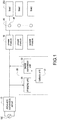
- FIG. 1 is a structural diagram of an uninterruptible power supply with DC output according to a first embodiment of the present disclosure.
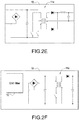
- FIG. 2A to FIG. 2F are circuit diagrams of an AC-to-DC conversion circuit of the uninterruptible power supply with DC output according to the present disclosure.
- the uninterruptible power supply with DC output includes an AC-to-DC conversion circuit 10, a charging and discharging module 20, at least one power module 30, and a user operation interface 40.
- the AC-to-DC conversion circuit 10 is coupled to an AC power source 100, and converts the AC power source 100 to output a first DC power source (not shown).
- the charging and discharging module 20 is coupled to the AC-to-DC conversion circuit 10 and outputs a second DC power source (not shown).
- the charging and discharging module 20 includes a battery unit 21, a boost conversion unit 22, and a charging unit 23.
- the battery unit 21 may be a rechargeable battery storage device such as a lithium battery, a nickel-hydrogen battery, a hydrogen-oxygen battery, or a lead-acid battery, but the present disclosure is not limited thereto.
- the boost conversion unit 22 is coupled to the battery unit 21 and the at least one power module 30.
- the charging unit 23 is coupled to the battery unit 21 and a DC output side of the AC-to-DC conversion circuit 10 (as shown in FIG. 1 ). When the battery unit 21 is charged, the charging unit 23 receives the first DC power source outputted from the AC-to-DC conversion circuit 10 and converts it into a voltage that is suitable for charging the battery unit 21.
- At least one power module 30 is coupled to the AC-to-DC conversion circuit 10 and the charging and discharging module 20, and receives one of the first DC power source and the second DC power source. Further, when the AC power source 100 is normal, each power module 30 receives the first DC power source, and converts the first DC power source to provide power required for each load 200. When the AC power source 100 is abnormal, the battery unit 21 outputs electric energy, and a output voltage of the battery unit 21 is boosted by the boost conversion unit 22 to provide the second DC power source, so that each power module 30 receives the second DC power source and converts the second DC power source to provide the power required for each load 200 to uninterruptedly supply power to each load 200.
- the user operation interface 40 is coupled to the at least one power module 30 and the at least one load 200.
- the user operation interface 40 provides at least one operation unit 41 to control the coupling (ON) or decoupling (OFF) between the power modules 30 and the loads 200, and select the power required for each load 200.
- the operation unit 41 may be an adjustable structure such as a dial switch, a knob, etc., but the present disclosure is not limited thereto. Therefore, the user may arbitrarily match different numbers of loads, adjust the power value required for each load 200, or according to the user's requirement or each load 200 to arbitrarily adjust at least one relevant electrical value (such as at least one of a voltage value and a current value), then output it by the power module 30.
- each operation unit 41 may correspondingly control one power module 30, or each operation unit 41 may simultaneously control two or more than two power modules 30 to meet high power demand of the loads 200.
- Each power module 30 converts one of the first DC power source and the second DC power source to uninterruptedly supply power to each load 200.
- the AC-to-DC conversion circuit 10 may include an isolated topology structure coupled to the AC power source 100.
- the isolated topology structure may be one of a flyback circuit 11a (as shown in FIG. 2A ), a half-bridge circuit 11b (as shown in FIG. 2B ), a full-bridge circuit 11c (shown in FIG. 2C ), a forward circuit 11d (shown in FIG. 2D ), and a push-pull circuit 11e (shown in FIG. 2E ).
- the AC-to-DC conversion circuit 10 may further include an electro-magnetic interference (EMI) filter 12 (shown in FIG. 2F ), which may be combined with any of the above-mentioned isolated topology structures to form the AC-to-DC conversion circuit 10.
- EMI electro-magnetic interference
- FIG. 3A is a circuit block diagram showing a configuration of an AC-to-DC conversion circuit 10 and a charging and discharging module 20 of the uninterruptible power supply with DC output according to a second embodiment of the present disclosure.
- FIG. 3B is a circuit block diagram showing a configuration of the AC-to-DC conversion circuit 10 and the charging and discharging module 20 of the uninterruptible power supply with DC output according to a third embodiment of the present disclosure.
- the second embodiment of the uninterruptible power supply with DC output of the present disclosure is substantially the same as the first embodiment except that a configuration relationship between the AC-to-DC conversion circuit 10 and the charging and discharging module 20 is different.
- the charging unit 23 is coupled to the battery unit 21 and an AC input side of the AC-to-DC conversion circuit 10 (as shown in FIG. 3A , the charging unit 23 is coupled to the AC power source 100).
- the charging unit 23 receives the AC power source 100 and converts it into a voltage that is suitable for charging the battery unit 21.
- each power module 30 receives the second DC power source, and converts the second DC power source to provide the power required for each load 200 to uninterruptedly supply power to each load 200.
- the third embodiment of the uninterruptible power supply with DC output of the present disclosure is substantially the same as the first embodiment, except that a configuration relationship between the AC-to-DC conversion circuit 10 and the charging and discharging module 20 is different.
- the charging unit 23 is coupled to the battery unit 21 and an internal DC side of the AC-to-DC conversion circuit 10 (as shown in FIG. 3B , the charging unit 23 is coupled to a position between an AC input side and a DC output side of the AC-to-DC conversion circuit 10).
- the charging unit 23 may be coupled to an output side of the full-wave rectifying circuit (i.e., an input side of the flyback circuit 11a) to implement that the charging unit 23 is coupled to the internal DC side of the AC-to-DC conversion circuit 10.
- each power module 30 includes a buck circuit with a power switch (SW1, SW2, ..., SWn as shown in FIG. 4A ).
- the buck circuit receives one of the first DC power source and the second DC power source, and converts it to control the output voltage of each power module 30 to provide the power required for each load 200.
- each operation unit 41 may correspondingly control one power module 30, or each operation unit 41 may simultaneously control two or more than two power modules 30.
- each operation unit 41 may control each power switch (SW1, SW2, ..., SWn) through one sub-controller 300, and further each operation unit 41 may simultaneously control two or more than two power switches (SW1, SW2 ..., SWn) through two or more than two sub-controllers 300.
- each operation unit 41 controls at least one power switch (SW1, SW2, ..., SWn) through one sub-controller 300 included in at least one power module 30.
- one sub-controller 300 outputs a control signal Sc1 to control the power switch SW1
- another sub-controller 300 outputs a control signal Sc2 to control the power switch SW2
- further another sub-controller 300 outputs a control signal Scn to control the power switch SWn.
- the control signals Sc1-Scn may be pulse width modulation (PWM) control signals, and a duty cycle of each power switch (SW1, SW2, ..., SWn) is controlled to control the output voltage of each power module 30.
- PWM pulse width modulation
- Each of the power switches (SW1, SW2, ..., SWn) is correspondingly coupled to each of the sub-controllers 300, and each of the sub-controllers 300 is communicatively coupled to each other to provide a control communication between the power switches (SW1, SW2, ..., SWn).
- the control communication may control the communication mode of power distribution between the power modules 30 according to the power required for each load 200.
- each operation unit 41 controls at least one power switch (SW1, SW2, ..., SWn) through a main controller 400.
- the main controller 400 outputs the control signal Sc1 to control the power switch SW1, outputs the control signal Sc2 to control the power switch SW2, and outputs the control signal Scn to control the power switch SWn.
- the control signals Sc1-Scn may be pulse width modulation (PWM) control signals, and the duty cycle of each power switch (SW1, SW2, ..., SWn) is controlled to control the output voltage of each power module 30.
- PWM pulse width modulation
- the power switches (SW1, SW2, ..., SWn) are respectively coupled to the main controller 400, and the main controller 400 provides a control communication between the power switches (SW1, SW2, ..., SWn).
- the control communication may control the communication mode of power distribution between the power modules 30 according to the power required for each load 200.
- each operation unit 41 controls at least one power switch (SW1, SW2, ..., SWn) through the main controller 400 and the sub-controllers 300 included in at least one power module 30.
- at least one sub-controller 300 receives information of the power required selected by each operation unit 41 to each load 200, and then transmits the information of the required power of each load 200 to the main controller 400.
- the main controller 400 outputs control signal Sc1 to control the power switch SW1, outputs the control signal Sc2 to control the power switch SW2, and outputs the control signal Scn to control the power switch SWn according to the received information of the required power.
- control signals Sc1-Scn may be pulse width modulation (PWM) control signals, and the duty cycle of each power switch (SW1, SW2, ..., SWn) is controlled to control the output voltage of each power module 30.
- the main controller 400 is coupled to each sub-controller 300 and each of the power switches (SW1, SW2, ..., SWn), and the main controller 400 provides a control communication between the power switches (SW1, SW2, ..., SWn).
- the control communication may control the communication mode of power distribution between the power modules 30 according to the power required for each load 200.
- the AC-to-DC conversion circuit 10 converts the voltage of the AC power source 100 (for example, 110 volts), and boosts it to 400 DCV as the first DC power source, so that each power module 30 may receive the first DC power source to supply the power required for each load 200.
- the charging unit 23 converts the voltage of the first DC power source (400 DCV, and the available rated power is 2400 W) into a charging voltage of the battery unit 21 (for example, 48 DCV) for charging the battery unit 21.
- the output voltage of the battery unit 21 is converted by the boost conversion unit 22 and boosted to 400 DCV as a second DC power source. Therefore, each power module 30 may receive the second DC power source to supply power required for each load 200 to uninterruptedly supply power to each load 200.
- the main controller 400 and/or the sub-controller 300 receives the information of the power required for the first load 200 (i.e., a DC supply voltage is 60 V and/or a supply power is 300 W).
- the duty cycle of the power switch SW1 of a first power module 30 is controlled such that the voltage output of the first power module 30 is 60 V and/or the output current thereof is 5 amps to supply the power required for the first load 200. Further, it is assumed that the maximum output power of the first power module 30 is only 150 W.
- the main controller 400 and/or the sub-controller 300 may simultaneously control the first power module 30 (150 W) and the second power module 30 (150 W) to supply power required for the first load 200 at the same time according to the required power selected by the operation unit 41.
- the power required for the first load 200 (300 W) is met.
- the quantity relationship among the operation units 41, the power modules 30, and the loads 200 is not limited thereto.
- the main controller 400 and/or the sub-controller 300 receive the information of the power required for each load 200, afterward controlling the duty cycle of the power switches (SW1, SW2, ..., SWn) of the power modules 30, thereby supplying the voltage and/or power required for each of the selected loads 200.
- the main controller 400 may be known that the information of the supply power required for each load 200 through the communication between the sub-controllers 300 (as shown in FIG. 4A ), integrated by the main controller 400
- the duty cycle of the power switches (SW1, SW2, ..., SWn) of the corresponding power modules 30 may be controlled to proportionally reduce the supply power so as to continuously supply power to each load 200.
- the duty cycle of the power switches (SW1, SW2, ..., SWn) of the corresponding power modules 30 may be controlled according to the priority (the high and low) of supplying power. It may ensure the load 200 with higher priority of supplying power can obtain the required power supply, afterward, the remaining loads 200 with lower priority of supplying power can obtain part of the required power supply according to the high or low power required to continuously supply power to each load 200.
- FIG. 5 is a structural diagram of the uninterruptible power supply with DC output according to a fourth embodiment of the present disclosure
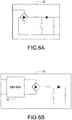
- FIG. 6A to FIG. 6B are circuit diagrams of a power factor correction stage circuit of the uninterruptible power supply with DC output according to the present disclosure.
- the fourth embodiment of the uninterruptible power supply with DC output of the present disclosure is substantially the same as the foregoing first embodiment except that the AC-to-DC conversion circuit 10 with the isolated topology structure 31 in the first embodiment is replaced by a power factor correction stage circuit 10' with a non-isolated topology structure.
- Each power module 30' in the fourth embodiment further includes an isolated topology structure 31 (see FIG. 8A to FIG. 8C in comparison with each power module 30 in the first embodiment).
- the charging unit 23 of the charging and discharging module 20 is coupled to the battery unit 21 and an internal DC side of the power factor correction stage circuit 10' (as shown in FIG. 5 , the charging unit 23 is coupled between the AC input side and the DC output side of the power factor correction stage circuit 10').
- the power factor correction stage circuit 10' shown in FIG. 6A is a boost power factor correction stage circuit
- the charging unit 23 may be coupled to an output side of the full-wave rectifying circuit (i.e., the input side of a boost converter).
- the solution that the charging unit 23 is coupled to the internal DC side of the power factor correction stage circuit 10' is implemented.
- FIG. 6A to FIG. 6B are circuit diagrams of a power factor correction stage circuit of the uninterruptible power supply with DC output according to the present disclosure.
- the power factor correction stage circuit 10' may be a boost power factor correction stage circuit comprising a full-wave rectifying circuit and a boost converter (as shown in FIG. 6A ).
- the power factor correction stage circuit 10' may also be a boost power factor correction stage circuit further comprising the EMI filter 12 (as shown in FIG. 6B ).
- FIG. 7 is a circuit block diagram showing the configuration of the power factor correction stage circuit and the charging and discharging module of the uninterruptible power supply with DC output according to a fifth embodiment of the present disclosure.
- the fifth embodiment of the present disclosure is substantially the same as the foregoing fourth embodiment except that the charging unit 23 of the charging and discharging module 20 is coupled to the battery unit 21 and the AC input side of the power factor correction stage circuit 10' (as shown in the FIG. 7 , the charging unit 23 is coupled to the AC power source 100).
- the charging unit 23 receives the AC power source 100 and converts it into a voltage that is suitable for charging the battery unit 21.
- each power module 30 receives the second DC power source and converts the second DC power source to provide the power required for each load 200 to uninterruptedly supply power to each load 200.
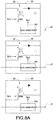
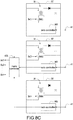
- FIG. 8A to FIG. 8C are circuit block diagrams showing the configuration of the power modules and the operation units of the uninterruptible power supply with DC output according to the fourth embodiment of the present disclosure.
- the control manners between the operation unit 41 and the power module 30 is similar to that in the first embodiment described above, and the difference is that each power module 30' in the fourth embodiment further includes an isolated topology structure 31 compared to each power module 30 in the first embodiment.
- each power module 30' in the fourth embodiment further includes an isolated topology structure 31 compared to each power module 30 in the first embodiment.
- At least one power module 30 receives the first DC power source, and converts the first DC power source to provide power required for at least one load 200; as the AC power source 100 is abnormal, at least one power module 30 receives the second DC power source, and converts the second DC power source to provide the power required for at least one load 200.
- at least one operation unit 41 which may be a dip switch, a knob, etc.
- the at least one power module 30, 30' converts one of the first DC power source and the second DC power source, and provides uninterrupted power to at least one load 200.
- the user can arbitrarily match the different number of loads 200, adjust the power value required for each load 200, arbitrarily adjust the relevant electrical values (for example, at least one of a voltage value and a current value) outputted by the at least one power module 30 according to the user's needs or the requirements of each load 200, and it is possible to protect the safety of the plurality of loads 200 connected to it in the event of sudden abnormal supply situation of the mains, thereby achieving the objectives of reducing the size, reducing the production cost, and avoiding hardware damage and data loss due to sudden power interruption.
- the relevant electrical values for example, at least one of a voltage value and a current value
Landscapes
- Engineering & Computer Science (AREA)
- Power Engineering (AREA)
- Business, Economics & Management (AREA)
- Emergency Management (AREA)
- Charge And Discharge Circuits For Batteries Or The Like (AREA)
- Stand-By Power Supply Arrangements (AREA)
Abstract
Description
- The present disclosure relates to a power supply with DC output, and more particularly in particular to an uninterruptible power supply with DC output that each output thereof may be arbitrarily adjusted and has an uninterruptible power supply function.
- The statements in this section merely provide background information related to the present disclosure and do not necessarily constitute prior art.
- In general, the conventional power supplies are typically configured to correspond to the power (or voltage, current) required by each electronic device. Due to the increasing variety of electronic products used by modern people, related companies have developed power supplies with multiple output ports, allowing users to use multiple types and multiple numbers of the electronic devices simultaneously through only one mains input port, thereby achieving a one-input-to-multiple-output power supply architecture.
- However, in the actual use of the power supply with multiple output ports, since it is necessary to adapt to various needs, if each of the output ports cannot arbitrarily adjust the output-related electrical values according to the use's requirement, the number of output ports would be difficult to reduce, not only it is bulky so it is not easy to carry, but also the production cost is higher. In addition, the conventional power supply cannot protect the safety of the plurality of loads connected to it in the event of sudden abnormal supply situation of the mains, especially for electronic devices such as computer hosts, monitoring systems, precision electronic instruments, and medical instruments, etc. When the mains supply is interrupted, the electronic devices are likely to cause internal parts damage or data loss due to sudden power interruption, which may cause serious and irreversible consequences.
- Therefore, how to design an uninterruptible power supply with DC output to solve the technical problems above is an important subject studied by the inventors and proposed in the present disclosure.
- An objective of the present disclosure is to provide an uninterruptible power supply with DC output, it may solve the technical problem with each of the output ports cannot arbitrarily adjust the output-related electrical value according to the use's requirement, and solve the technical problem with cannot protect the safety of the plurality of loads connected to the uninterruptible power supply with DC output in the event of sudden abnormal supply situation of the mains. Achieving the objective of reducing the size, reducing the production cost, and avoiding hardware damage and data loss due to sudden power interruption.
- In order to achieve the objective, an uninterruptible power supply with DC output includes an AC-to-DC conversion circuit coupled to an AC power source for outputting a first DC power source, a charging and discharging module for outputting a second DC power source, at least one power module coupled to the AC-to-DC conversion circuit and the charging and discharging module, and to receive one of the first DC power source and the second DC power source, and a user operation interface disposed between the at least one power module and at least one load, and the user operation interface includes at least one operation unit, wherein the power required for each load is selected by each operation unit so that at least one power module uninterruptedly supplies power to each load.
- In order to achieve the objective, another uninterruptible power supply with DC output includes a power factor correction stage circuit coupled to an AC power source for outputting a first DC power source, a charging and discharging module for outputting a second DC power source, at least one power module coupled to the power factor correction stage circuit to receive one of the first DC power source and the second DC power source, and a user operation interface disposed between the at least one power module and at least one load, and the user operation interface includes at least one operation unit, wherein the power required for each load is selected by each operation unit so that at least one power module uninterruptedly supplies power to each load.
- During use of any one of the uninterruptible power supply with DC output of the present disclosure, as the AC power source is normal, at least one power module receives the first DC power source, as the AC power source is abnormal, at least one power module receives the second DC power source, in addition, since the user may select the power required for each load through at least one operation unit (which may be a dip switch, a knob, etc.), so the at least one power module converts one of the first DC power source and the second DC power source, and uninterruptedly supplies power to at least one load.
-
-
FIG. 1 is a structural diagram of an uninterruptible power supply with DC output according to a first embodiment of the present disclosure, -
FIG. 2A to FIG. 2F are circuit diagrams of an AC-to-DC conversion circuit of the uninterruptible power supply with DC output according to the present disclosure, -
FIG. 3A is a circuit block diagram showing a configuration of the AC-to-DC conversion circuit and a charging and discharging module of the uninterruptible power supply with DC output according to a second embodiment of the present disclosure, -
FIG. 3B is a circuit block diagram showing a configuration of the AC-to-DC conversion circuit and the charging and discharging module of the uninterruptible power supply with DC output according to a third embodiment of the present disclosure, -
FIG. 4A to FIG. 4C are circuit block diagrams showing the configuration of power modules and operation units of the uninterruptible power supply with DC output according to the first embodiment of the present disclosure, -
FIG. 5 is a structural diagram of the uninterruptible power supply with DC output according to a fourth embodiment of the present disclosure, -
FIG. 6A to FIG. 6B are circuit diagrams of a power factor correction stage circuit of the uninterruptible power supply with DC output according to the present disclosure, -
FIG. 7 is a circuit block diagram showing the configuration of the power factor correction stage circuit and the charging and discharging module of the uninterruptible power supply with DC output according to a fifth embodiment of the present disclosure, and -
FIG. 8A to FIG. 8C are circuit block diagrams showing the configuration of the power modules and the operation units of the uninterruptible power supply with DC output according to the fourth embodiment of the present disclosure. - The embodiments of the present disclosure are described by way of specific examples, and those skilled in the art may readily appreciate the other advantages and functions of the present disclosure. The present disclosure may be embodied or applied in various other specific embodiments, and various modifications and changes may be made without departing from the spirit and scope of the present disclosure.
- It should be understood that the structures, the proportions, the sizes, the number of components, and the like in the drawings are only used to cope with the contents disclosed in the specification for understanding and reading by those skilled in the art, and it is not intended to limit the conditions that may be implemented in the present disclosure, and thus is not technically significant. Any modification of the structure, the change of the proportional relationship, or the adjustment of the size, should be within the scope of the technical contents disclosed by the present disclosure without affecting the effects and the achievable effects of the present disclosure.
- The technical content and detailed description of the present disclosure will be described below in conjunction with the drawings.
- Referring to
FIG. 1 to FIG. 2F .FIG. 1 is a structural diagram of an uninterruptible power supply with DC output according to a first embodiment of the present disclosure.FIG. 2A to FIG. 2F are circuit diagrams of an AC-to-DC conversion circuit of the uninterruptible power supply with DC output according to the present disclosure. - As shown in
FIG. 1 , the uninterruptible power supply with DC output according to the first embodiment of the present disclosure includes an AC-to-DC conversion circuit 10, a charging anddischarging module 20, at least onepower module 30, and auser operation interface 40. - The AC-to-
DC conversion circuit 10 is coupled to anAC power source 100, and converts theAC power source 100 to output a first DC power source (not shown). The charging anddischarging module 20 is coupled to the AC-to-DC conversion circuit 10 and outputs a second DC power source (not shown). - The charging and
discharging module 20 includes abattery unit 21, aboost conversion unit 22, and acharging unit 23. Thebattery unit 21 may be a rechargeable battery storage device such as a lithium battery, a nickel-hydrogen battery, a hydrogen-oxygen battery, or a lead-acid battery, but the present disclosure is not limited thereto. Theboost conversion unit 22 is coupled to thebattery unit 21 and the at least onepower module 30. In the first embodiment of the present disclosure, thecharging unit 23 is coupled to thebattery unit 21 and a DC output side of the AC-to-DC conversion circuit 10 (as shown inFIG. 1 ). When thebattery unit 21 is charged, thecharging unit 23 receives the first DC power source outputted from the AC-to-DC conversion circuit 10 and converts it into a voltage that is suitable for charging thebattery unit 21. - At least one
power module 30 is coupled to the AC-to-DC conversion circuit 10 and the charging anddischarging module 20, and receives one of the first DC power source and the second DC power source. Further, when theAC power source 100 is normal, eachpower module 30 receives the first DC power source, and converts the first DC power source to provide power required for eachload 200. When theAC power source 100 is abnormal, thebattery unit 21 outputs electric energy, and a output voltage of thebattery unit 21 is boosted by theboost conversion unit 22 to provide the second DC power source, so that eachpower module 30 receives the second DC power source and converts the second DC power source to provide the power required for eachload 200 to uninterruptedly supply power to eachload 200. - The
user operation interface 40 is coupled to the at least onepower module 30 and the at least oneload 200. Theuser operation interface 40 provides at least oneoperation unit 41 to control the coupling (ON) or decoupling (OFF) between thepower modules 30 and theloads 200, and select the power required for eachload 200. Theoperation unit 41 may be an adjustable structure such as a dial switch, a knob, etc., but the present disclosure is not limited thereto. Therefore, the user may arbitrarily match different numbers of loads, adjust the power value required for eachload 200, or according to the user's requirement or eachload 200 to arbitrarily adjust at least one relevant electrical value (such as at least one of a voltage value and a current value), then output it by thepower module 30. In the first embodiment of the present disclosure, eachoperation unit 41 may correspondingly control onepower module 30, or eachoperation unit 41 may simultaneously control two or more than twopower modules 30 to meet high power demand of theloads 200. Eachpower module 30 converts one of the first DC power source and the second DC power source to uninterruptedly supply power to eachload 200. - As shown in
FIG. 2A to FIG. 2F , in the uninterruptible power supply with DC output according to the first embodiment of the present disclosure, the AC-to-DC conversion circuit 10 may include an isolated topology structure coupled to theAC power source 100. In the first embodiment of the present disclosure, the isolated topology structure may be one of aflyback circuit 11a (as shown inFIG. 2A ), a half-bridge circuit 11b (as shown inFIG. 2B ), a full-bridge circuit 11c (shown inFIG. 2C ), aforward circuit 11d (shown inFIG. 2D ), and a push-pull circuit 11e (shown inFIG. 2E ). Further, the AC-to-DC conversion circuit 10 may further include an electro-magnetic interference (EMI) filter 12 (shown inFIG. 2F ), which may be combined with any of the above-mentioned isolated topology structures to form the AC-to-DC conversion circuit 10. - Referring to
FIG. 3A and FIG. 3B. FIG. 3A is a circuit block diagram showing a configuration of an AC-to-DC conversion circuit 10 and a charging and dischargingmodule 20 of the uninterruptible power supply with DC output according to a second embodiment of the present disclosure.FIG. 3B is a circuit block diagram showing a configuration of the AC-to-DC conversion circuit 10 and the charging and dischargingmodule 20 of the uninterruptible power supply with DC output according to a third embodiment of the present disclosure. - As shown in
FIG. 3A , the second embodiment of the uninterruptible power supply with DC output of the present disclosure is substantially the same as the first embodiment except that a configuration relationship between the AC-to-DC conversion circuit 10 and the charging and dischargingmodule 20 is different. In the second embodiment, the chargingunit 23 is coupled to thebattery unit 21 and an AC input side of the AC-to-DC conversion circuit 10 (as shown inFIG. 3A , the chargingunit 23 is coupled to the AC power source 100). When thebattery unit 21 is charged, the chargingunit 23 receives theAC power source 100 and converts it into a voltage that is suitable for charging thebattery unit 21. Moreover, when theAC power source 100 is abnormal, thebattery unit 21 outputs electric energy, and the output voltage of thebattery unit 21 is boosted by theboost conversion unit 22 to provide the second DC power source. Therefore, eachpower module 30 receives the second DC power source, and converts the second DC power source to provide the power required for eachload 200 to uninterruptedly supply power to eachload 200. - As shown in
FIG. 3B , the third embodiment of the uninterruptible power supply with DC output of the present disclosure is substantially the same as the first embodiment, except that a configuration relationship between the AC-to-DC conversion circuit 10 and the charging and dischargingmodule 20 is different. In the third embodiment, the chargingunit 23 is coupled to thebattery unit 21 and an internal DC side of the AC-to-DC conversion circuit 10 (as shown inFIG. 3B , the chargingunit 23 is coupled to a position between an AC input side and a DC output side of the AC-to-DC conversion circuit 10). For example, the AC-to-DC conversion circuit 10 shown inFIG. 2A is aflyback circuit 11a, the chargingunit 23 may be coupled to an output side of the full-wave rectifying circuit (i.e., an input side of theflyback circuit 11a) to implement that the chargingunit 23 is coupled to the internal DC side of the AC-to-DC conversion circuit 10. - Please refer to
FIG. 4A to FIG. 4C , which are circuit block diagrams showing the configuration of thepower modules 30 and theoperation units 41 of the uninterruptible power supply with DC output according to the first embodiment of the present disclosure. In the first embodiment of the present disclosure, eachpower module 30 includes a buck circuit with a power switch (SW1, SW2, ..., SWn as shown inFIG. 4A ). The buck circuit receives one of the first DC power source and the second DC power source, and converts it to control the output voltage of eachpower module 30 to provide the power required for eachload 200. InFIG. 4A to FIG. 4C , eachoperation unit 41 may correspondingly control onepower module 30, or eachoperation unit 41 may simultaneously control two or more than twopower modules 30. Further, eachoperation unit 41 may control each power switch (SW1, SW2, ..., SWn) through onesub-controller 300, and further eachoperation unit 41 may simultaneously control two or more than two power switches (SW1, SW2 ..., SWn) through two or more than two sub-controllers 300. - As shown in
FIG. 4A , in the first embodiment of the present disclosure, the first configuration relationship between thepower modules 30 and theoperation units 41 is: eachoperation unit 41 controls at least one power switch (SW1, SW2, ..., SWn) through onesub-controller 300 included in at least onepower module 30. For example, one sub-controller 300 outputs a control signal Sc1 to control the power switch SW1, another sub-controller 300 outputs a control signal Sc2 to control the power switch SW2, and further another sub-controller 300 outputs a control signal Scn to control the power switch SWn. The control signals Sc1-Scn may be pulse width modulation (PWM) control signals, and a duty cycle of each power switch (SW1, SW2, ..., SWn) is controlled to control the output voltage of eachpower module 30. Each of the power switches (SW1, SW2, ..., SWn) is correspondingly coupled to each of thesub-controllers 300, and each of the sub-controllers 300 is communicatively coupled to each other to provide a control communication between the power switches (SW1, SW2, ..., SWn). The control communication may control the communication mode of power distribution between thepower modules 30 according to the power required for eachload 200. - As shown in
FIG. 4B , in the first embodiment of the present disclosure, the second configuration relationship between thepower modules 30 and theoperation units 41 is: eachoperation unit 41 controls at least one power switch (SW1, SW2, ..., SWn) through amain controller 400. For example, themain controller 400 outputs the control signal Sc1 to control the power switch SW1, outputs the control signal Sc2 to control the power switch SW2, and outputs the control signal Scn to control the power switch SWn. Similarly, the control signals Sc1-Scn may be pulse width modulation (PWM) control signals, and the duty cycle of each power switch (SW1, SW2, ..., SWn) is controlled to control the output voltage of eachpower module 30. The power switches (SW1, SW2, ..., SWn) are respectively coupled to themain controller 400, and themain controller 400 provides a control communication between the power switches (SW1, SW2, ..., SWn). The control communication may control the communication mode of power distribution between thepower modules 30 according to the power required for eachload 200. - As shown in
FIG. 4C , in the first embodiment of the present disclosure, the third configuration relationship between thepower modules 30 and theoperation units 41 is: eachoperation unit 41 controls at least one power switch (SW1, SW2, ..., SWn) through themain controller 400 and thesub-controllers 300 included in at least onepower module 30. For example, at least onesub-controller 300 receives information of the power required selected by eachoperation unit 41 to eachload 200, and then transmits the information of the required power of eachload 200 to themain controller 400. Themain controller 400 outputs control signal Sc1 to control the power switch SW1, outputs the control signal Sc2 to control the power switch SW2, and outputs the control signal Scn to control the power switch SWn according to the received information of the required power. Similarly, the control signals Sc1-Scn may be pulse width modulation (PWM) control signals, and the duty cycle of each power switch (SW1, SW2, ..., SWn) is controlled to control the output voltage of eachpower module 30. Themain controller 400 is coupled to each sub-controller 300 and each of the power switches (SW1, SW2, ..., SWn), and themain controller 400 provides a control communication between the power switches (SW1, SW2, ..., SWn). The control communication may control the communication mode of power distribution between thepower modules 30 according to the power required for eachload 200. - In order to facilitate the description of the operation principle of the uninterruptible power supply with DC output according to the first embodiment of the present disclosure, the following description will be made by exemplified numerical values, but the present disclosure is not limited thereto. Taking
FIG. 1 as an example, when theAC power source 100 is normal, the AC-to-DC conversion circuit 10 converts the voltage of the AC power source 100 (for example, 110 volts), and boosts it to 400 DCV as the first DC power source, so that eachpower module 30 may receive the first DC power source to supply the power required for eachload 200. When thebattery unit 21 is charged, the chargingunit 23 converts the voltage of the first DC power source (400 DCV, and the available rated power is 2400 W) into a charging voltage of the battery unit 21 (for example, 48 DCV) for charging thebattery unit 21. When theAC power source 100 is abnormal, the output voltage of thebattery unit 21 is converted by theboost conversion unit 22 and boosted to 400 DCV as a second DC power source. Therefore, eachpower module 30 may receive the second DC power source to supply power required for eachload 200 to uninterruptedly supply power to eachload 200. - Furthermore, when the user selects the power required for a
first load 200 through the operation unit 41 (which may be a dip switch, a knob, etc.). For example, the supply voltage of the first load 200 (for example, 60 DCV) and/or the supply power (for example, 300 W) are selected. At this time, with reference to one ofFIG. 4A to FIG. 4C , themain controller 400 and/or the sub-controller 300 receives the information of the power required for the first load 200 (i.e., a DC supply voltage is 60 V and/or a supply power is 300 W). Therefore, the duty cycle of the power switch SW1 of afirst power module 30 is controlled such that the voltage output of thefirst power module 30 is 60 V and/or the output current thereof is 5 amps to supply the power required for thefirst load 200. Further, it is assumed that the maximum output power of thefirst power module 30 is only 150 W. When oneoperation unit 41 is adjusted to the required 300 W value corresponding to thefirst load 200, themain controller 400 and/or the sub-controller 300 may simultaneously control the first power module 30 (150 W) and the second power module 30 (150 W) to supply power required for thefirst load 200 at the same time according to the required power selected by theoperation unit 41. Thus, the power required for the first load 200 (300 W) is met. However, the quantity relationship among theoperation units 41, thepower modules 30, and theloads 200 is not limited thereto. - Furthermore, when the number of the
loads 200 is plural, themain controller 400 and/or the sub-controller 300 receive the information of the power required for eachload 200, afterward controlling the duty cycle of the power switches (SW1, SW2, ..., SWn) of thepower modules 30, thereby supplying the voltage and/or power required for each of the selected loads 200. - Further, if the sum of the power supplies required for each selected
load 200 exceeds the rated power supplied by the AC-to-DC conversion circuit 10, it may be known that the information of the supply power required for eachload 200 through the communication between the sub-controllers 300 (as shown inFIG. 4A ), integrated by themain controller 400 - (as shown in
FIG. 4B ), or integrated by thesub-controllers 300 with the main controller 400 (as shown inFIG. 4C ). Thereby, the duty cycle of the power switches (SW1, SW2, ..., SWn) of thecorresponding power modules 30 may be controlled to proportionally reduce the supply power so as to continuously supply power to eachload 200. Alternatively, the duty cycle of the power switches (SW1, SW2, ..., SWn) of thecorresponding power modules 30 may be controlled according to the priority (the high and low) of supplying power. It may ensure theload 200 with higher priority of supplying power can obtain the required power supply, afterward, the remainingloads 200 with lower priority of supplying power can obtain part of the required power supply according to the high or low power required to continuously supply power to eachload 200. - Please refer to
FIG. 5 to FIG. 6B .FIG. 5 is a structural diagram of the uninterruptible power supply with DC output according to a fourth embodiment of the present disclosure, andFIG. 6A to FIG. 6B are circuit diagrams of a power factor correction stage circuit of the uninterruptible power supply with DC output according to the present disclosure. - As shown in
FIG. 5 , the fourth embodiment of the uninterruptible power supply with DC output of the present disclosure is substantially the same as the foregoing first embodiment except that the AC-to-DC conversion circuit 10 with theisolated topology structure 31 in the first embodiment is replaced by a power factor correction stage circuit 10' with a non-isolated topology structure. Each power module 30' in the fourth embodiment further includes an isolated topology structure 31 (seeFIG. 8A to FIG. 8C in comparison with eachpower module 30 in the first embodiment). - In the fourth embodiment of the present disclosure, the charging
unit 23 of the charging and dischargingmodule 20 is coupled to thebattery unit 21 and an internal DC side of the power factor correction stage circuit 10' (as shown inFIG. 5 , the chargingunit 23 is coupled between the AC input side and the DC output side of the power factor correction stage circuit 10'). For example, the power factor correction stage circuit 10' shown inFIG. 6A is a boost power factor correction stage circuit, and the chargingunit 23 may be coupled to an output side of the full-wave rectifying circuit (i.e., the input side of a boost converter). The solution that the chargingunit 23 is coupled to the internal DC side of the power factor correction stage circuit 10' is implemented. - Please refer to
FIG. 6A to FIG. 6B , which are circuit diagrams of a power factor correction stage circuit of the uninterruptible power supply with DC output according to the present disclosure. In the fourth embodiment of the uninterruptible power supply with DC output of the present disclosure, the power factor correction stage circuit 10' may be a boost power factor correction stage circuit comprising a full-wave rectifying circuit and a boost converter (as shown inFIG. 6A ). Alternatively, the power factor correction stage circuit 10' may also be a boost power factor correction stage circuit further comprising the EMI filter 12 (as shown inFIG. 6B ). - Referring to
FIG. 7 , which is a circuit block diagram showing the configuration of the power factor correction stage circuit and the charging and discharging module of the uninterruptible power supply with DC output according to a fifth embodiment of the present disclosure. The fifth embodiment of the present disclosure is substantially the same as the foregoing fourth embodiment except that the chargingunit 23 of the charging and dischargingmodule 20 is coupled to thebattery unit 21 and the AC input side of the power factor correction stage circuit 10' (as shown in theFIG. 7 , the chargingunit 23 is coupled to the AC power source 100). When thebattery unit 21 is charged, the chargingunit 23 receives theAC power source 100 and converts it into a voltage that is suitable for charging thebattery unit 21. When theAC power source 100 is abnormal, thebattery unit 21 outputs electric energy, and the output voltage of thebattery unit 21 is boosted by theboost conversion unit 22 to provide the second DC power source. Therefore, eachpower module 30 receives the second DC power source and converts the second DC power source to provide the power required for eachload 200 to uninterruptedly supply power to eachload 200. - Please refer to
FIG. 8A to FIG. 8C , which are circuit block diagrams showing the configuration of the power modules and the operation units of the uninterruptible power supply with DC output according to the fourth embodiment of the present disclosure. The control manners between theoperation unit 41 and thepower module 30 is similar to that in the first embodiment described above, and the difference is that each power module 30' in the fourth embodiment further includes anisolated topology structure 31 compared to eachpower module 30 in the first embodiment. For other parts, refer to the corresponding description of the first embodiment, and details are not described herein again. - During use of any one of the uninterruptible power supply with DC output of the present disclosure, as the
AC power source 100 is normal, at least onepower module 30 receives the first DC power source, and converts the first DC power source to provide power required for at least oneload 200; as theAC power source 100 is abnormal, at least onepower module 30 receives the second DC power source, and converts the second DC power source to provide the power required for at least oneload 200. In addition, since the user may select the power required for eachload 200 through at least one operation unit 41 (which may be a dip switch, a knob, etc.), so the at least onepower module 30, 30' converts one of the first DC power source and the second DC power source, and provides uninterrupted power to at least oneload 200. - To this end, the user can arbitrarily match the different number of
loads 200, adjust the power value required for eachload 200, arbitrarily adjust the relevant electrical values (for example, at least one of a voltage value and a current value) outputted by the at least onepower module 30 according to the user's needs or the requirements of eachload 200, and it is possible to protect the safety of the plurality ofloads 200 connected to it in the event of sudden abnormal supply situation of the mains, thereby achieving the objectives of reducing the size, reducing the production cost, and avoiding hardware damage and data loss due to sudden power interruption.
Claims (15)
- An uninterruptible power supply with DC output comprising:an AC-to-DC conversion circuit (10) coupled to an AC power source (100) and configured for outputting a first DC power source,a charging and discharging module (20) configured for outputting a second DC power source,at least one power module (30) coupled to the AC-to-DC conversion circuit (10) and the charging and discharging module (20), and configured to receive one of the first DC power source and the second DC power source, anda user operation interface (40) disposed between the at least one power module (30) and at least one load (200), and the user operation interface (40) comprising at least one operation unit (41),wherein the power required for each load (200) is selected by each operation unit (41) so that at least one power module (30) uninterruptedly supplies power to each load (200).
- The uninterruptible power supply with DC output in claim 1, wherein as the AC power source (100) is normal, each of the power modules (30) receives the first DC power source, and as the AC power source (100) is abnormal, each of the power modules (30) receives the second DC power source.
- The uninterruptible power supply with DC output in claim 1, wherein the AC-to-DC conversion circuit (10) comprises an isolated topology structure (31) coupled to the AC power source (100).
- The uninterruptible power supply with DC output in claim 1, wherein the charging and discharging module (20) comprises:a battery unit (21),a boost conversion unit (22) coupled to the battery unit (21) and the at least one power module (30), anda charging unit (23) is coupled to the battery unit (21) and one of an AC input side, a DC output side, and an internal DC side of the AC-to-DC conversion circuit (10).
- The uninterruptible power supply with DC output in claim 1, wherein each of the power modules (30) includes a buck circuit with a power switch (SW1, SW2∼SWn), the buck circuit receives one of the first DC power source and the second DC power source, and controls an output voltage of each power module (30).
- The uninterruptible power supply with DC output in claim 5, wherein each of the operation units (41) controls each of the power switches (SW1, SW2∼SWn) through a main controller (400) or a sub-controller (300) included in each of the power modules (30), each of the power switches (SW1, SW2∼SWn) is coupled to the main controller (400) or each of the sub-controllers (300), and the main controller (400) or each of the sub-controllers (300) provides a control communication between each of the power switches (SW1, SW2∼SWn).
- The uninterruptible power supply with DC output in claim 5, wherein each of the operation units (41) controls each of the power switches (SW1, SW2∼SWn) through a main controller (400) or a sub-controller (300) included in each of the power modules (30), the main controller (400) is coupled to each of the sub-controllers (300) and each of the power switches (SW1, SW2∼SWn), and the main controller (400) provides a control communication between each of the power switches (SW1, SW2∼SWn).
- The uninterruptible power supply with DC output in claim 6 or claim 7, wherein the main controller (400) or each of the sub-controllers (300) controls a duty cycle of each of the power switches (SW1, SW2∼SWn) with a pulse width modulation manner, thereby controlling the output voltage of each power module (30).
- An uninterruptible power supply with DC output comprising:a power factor correction stage circuit (10') coupled to an AC power source (100) and configured for outputting a first DC power source,a charging and discharging module (20) configured for outputting a second DC power source,at least one power module (30') coupled to the power factor correction stage circuit (10') and configured to receive one of the first DC power source and the second DC power source, anda user operation interface (40) disposed between the at least one power module (30') and at least one load (200), and the user operation interface (40) comprising at least one operation unit (41),wherein the power required for each load (200) is selected by each operation unit (41) so that at least one power module (30') uninterruptedly supplies power to each load (200).
- The uninterruptible power supply with DC output in claim 9, wherein as the AC power source (100) is normal, each of the power modules (30') receives the first DC power source, and as the AC power source (100) is abnormal, each of the power modules (30') receives the second DC power source.
- The uninterruptible power supply with DC output in claim 9, wherein the charging and discharging module (30') comprises:a battery unit (21),a boost conversion unit (22) coupled to the battery unit (21) and the at least one power module (30'), anda charging unit (23) is coupled to the battery unit (21) and one of an AC input side and an internal DC side of the power factor correction stage circuit (10').
- The uninterruptible power supply with DC output in claim 9, wherein each of the power modules (30') comprises an isolated topology structure (31) coupled to each of the loads (200), and each isolated topology structure (31) has a power switch (SW1, SW2∼SWn) coupled to the power factor correction stage circuit (10').
- The uninterruptible power supply with DC output in claim 12, wherein each of the operation units (41) controls each of the power switches (SW1, SW2∼SWn) through a main controller (400) or a sub-controller (300) included in each of the power modules (30'), each of the power switches (SW1, SW2∼SWn) is coupled to the main controller (400) or each of the sub-controllers (300), and the main controller (400) or each of the sub-controllers (300) provides a control communication between each of the power switches (SW1, SW2∼SWn).
- The uninterruptible power supply with DC output in claim 12, wherein each of the operation units (41) controls each of the power switches (SW1, SW2∼SWn) through a main controller (400) or a sub-controller (300) included in each of the power modules (30'), the main controller (400) is coupled to each of the sub-controllers (300) and each of the power switches (SW1, SW2∼SWn), and the main controller (400) provides a control communication between each of the power switches (SW1, SW2∼SWn).
- The uninterruptible power supply with DC output in claim 13 or claim 14, wherein the main controller (400) or each of the sub-controllers (300) controls a duty cycle of each of the power switches (SW1, SW2∼SWn) with a pulse width modulation manner, thereby controlling the output voltage of each power module (30').
Applications Claiming Priority (1)
| Application Number | Priority Date | Filing Date | Title |
|---|---|---|---|
| CN201910101871.5A CN111525676B (en) | 2019-02-01 | 2019-02-01 | DC output uninterrupted power supply |
Publications (1)
| Publication Number | Publication Date |
|---|---|
| EP3691082A1 true EP3691082A1 (en) | 2020-08-05 |
Family
ID=66690203
Family Applications (1)
| Application Number | Title | Priority Date | Filing Date |
|---|---|---|---|
| EP19177812.5A Pending EP3691082A1 (en) | 2019-02-01 | 2019-06-03 | Uninterruptible power supply with dc output |
Country Status (4)
| Country | Link |
|---|---|
| US (1) | US10998759B2 (en) |
| EP (1) | EP3691082A1 (en) |
| JP (1) | JP2020127350A (en) |
| CN (1) | CN111525676B (en) |
Families Citing this family (3)
| Publication number | Priority date | Publication date | Assignee | Title |
|---|---|---|---|---|
| KR102801403B1 (en) * | 2019-11-18 | 2025-04-30 | 삼성전자주식회사 | Electronic device for performing power management and method for operating thereof |
| BR112023000846A2 (en) | 2020-07-28 | 2023-02-07 | Nitto Denko Corp | CONSTRUCTION |
| TWI891117B (en) * | 2022-12-30 | 2025-07-21 | 英屬開曼群島商睿能創意公司 | Battery swapping system, battery swapping network system, and method of providing ancillary electric power by a battery swapping system |
Citations (4)
| Publication number | Priority date | Publication date | Assignee | Title |
|---|---|---|---|---|
| EP0696831A2 (en) * | 1994-08-10 | 1996-02-14 | York Technologies, Inc | Modular power supply system |
| US20020071292A1 (en) * | 1998-12-25 | 2002-06-13 | Nobuyuki Aihara | Power Supply With Uninterrupted Function |
| WO2008086340A2 (en) * | 2007-01-08 | 2008-07-17 | Max Vision Corporation | Uninterruptable power supply |
| US20080179956A1 (en) * | 2007-01-28 | 2008-07-31 | Ming Jiang | Uninterruptible Power Supply For Home/Office Networking And Communication System |
Family Cites Families (24)
| Publication number | Priority date | Publication date | Assignee | Title |
|---|---|---|---|---|
| JP3145442B2 (en) * | 1991-10-25 | 2001-03-12 | キヤノン株式会社 | Switching type DC power supply |
| US5982652A (en) * | 1998-07-14 | 1999-11-09 | American Power Conversion | Method and apparatus for providing uninterruptible power using a power controller and a redundant power controller |
| US6751109B2 (en) * | 2001-10-31 | 2004-06-15 | Mobility Electronics, Inc. | Dual input AC/DC/ battery operated power supply |
| CN1309142C (en) | 2002-07-24 | 2007-04-04 | 冉茂鑫 | Self-coupling mutual inductance uninterrupted voltage conversion method and uninterrupted switching power supply |
| JP3917099B2 (en) | 2003-03-31 | 2007-05-23 | 株式会社ユタカ電機製作所 | AC adapter power supply |
| US7446433B2 (en) | 2004-01-23 | 2008-11-04 | American Power Conversion Corporation | Methods and apparatus for providing uninterruptible power |
| US8450980B2 (en) | 2004-06-29 | 2013-05-28 | Intel Corporation | Providing resilient power to a system |
| JP2006246637A (en) * | 2005-03-04 | 2006-09-14 | Fuji Electric Device Technology Co Ltd | Switching power supply |
| US8519566B2 (en) * | 2006-03-28 | 2013-08-27 | Wireless Environment, Llc | Remote switch sensing in lighting devices |
| JP4333777B2 (en) * | 2007-05-22 | 2009-09-16 | ソニー株式会社 | Charger |
| JP5687498B2 (en) * | 2011-01-05 | 2015-03-18 | 株式会社Nttファシリティーズ | Power conversion system |
| JP2012175801A (en) * | 2011-02-21 | 2012-09-10 | Sanyo Electric Co Ltd | Power storage system |
| US8896152B2 (en) * | 2011-06-30 | 2014-11-25 | Schneider Electric It Corporation | Systems and methods for operating an uninterruptible power supply |
| JP6091088B2 (en) * | 2012-05-31 | 2017-03-08 | 日本無線株式会社 | DC stabilized power supply |
| US9407154B2 (en) * | 2013-06-14 | 2016-08-02 | Advanced Charging Technologies, LLC | Electrical circuit for delivering power to consumer electronic devices |
| CN103904918B (en) * | 2014-03-05 | 2017-02-08 | 象山元明光电科技有限公司 | Multi-channel self-adaptive power balance output 50 V direct current power source and power control method thereof |
| JP6540128B2 (en) * | 2014-06-04 | 2019-07-10 | 株式会社リコー | Image forming device |
| JP6299860B2 (en) * | 2014-10-23 | 2018-03-28 | 日本電気株式会社 | Distributed power storage system, power control method, and program |
| CN205141819U (en) * | 2015-10-21 | 2016-04-06 | 亿泰兴电子股份有限公司 | Electric power backup system |
| US10243376B2 (en) * | 2016-06-15 | 2019-03-26 | Schneider Electric It Corporation | Stack DC power supply battery charger |
| DE202017007360U1 (en) * | 2016-11-07 | 2020-12-08 | Abb Schweiz Ag | Rack-mounted UPS device for data centers |
| TWI602382B (en) | 2017-03-31 | 2017-10-11 | 台達電子工業股份有限公司 | Uninterrupted electric intelligent charging device and operating method thereof |
| US10998746B2 (en) | 2017-04-03 | 2021-05-04 | Smart Charging Technologies Llc | Direct current uninterruptible power supply with AC power supply and related methods |
| CN207150246U (en) * | 2017-08-22 | 2018-03-27 | 厦门玛司特电子工业有限公司 | A kind of ups power device |
-
2019
- 2019-02-01 CN CN201910101871.5A patent/CN111525676B/en active Active
- 2019-05-29 JP JP2019100038A patent/JP2020127350A/en active Pending
- 2019-06-03 EP EP19177812.5A patent/EP3691082A1/en active Pending
- 2019-06-04 US US16/431,069 patent/US10998759B2/en active Active
Patent Citations (4)
| Publication number | Priority date | Publication date | Assignee | Title |
|---|---|---|---|---|
| EP0696831A2 (en) * | 1994-08-10 | 1996-02-14 | York Technologies, Inc | Modular power supply system |
| US20020071292A1 (en) * | 1998-12-25 | 2002-06-13 | Nobuyuki Aihara | Power Supply With Uninterrupted Function |
| WO2008086340A2 (en) * | 2007-01-08 | 2008-07-17 | Max Vision Corporation | Uninterruptable power supply |
| US20080179956A1 (en) * | 2007-01-28 | 2008-07-31 | Ming Jiang | Uninterruptible Power Supply For Home/Office Networking And Communication System |
Also Published As
| Publication number | Publication date |
|---|---|
| CN111525676B (en) | 2022-09-30 |
| US20200251925A1 (en) | 2020-08-06 |
| US10998759B2 (en) | 2021-05-04 |
| JP2020127350A (en) | 2020-08-20 |
| CN111525676A (en) | 2020-08-11 |
Similar Documents
| Publication | Publication Date | Title |
|---|---|---|
| US7679943B2 (en) | Uninterruptable power supply | |
| US10404071B2 (en) | Power system for multiple power sources | |
| EP3382845B1 (en) | Intelligent uninterruptible power charging apparatus and method of operating the same | |
| US20230139157A1 (en) | Charging/Discharging Equalization Control Method, Battery Component, and Electricity Consumption System | |
| TW201815019A (en) | Mobile terminal | |
| CN103154851A (en) | Supplying power to an electronic device using multiple power sources | |
| US11594952B2 (en) | Auxiliary power supply device for inverter, inverter, and method for starting the same | |
| CN116247778A (en) | Power supply circuit control method and energy storage device | |
| US12062943B2 (en) | AC switch PFC with integrated charger and DC-DC for online UPS systems | |
| US10998759B2 (en) | Uninterruptible power supply with DC output | |
| JP2023177345A (en) | Power supply equipment including cascaded inverters | |
| US20230198280A1 (en) | Charging circuit, terminal device, adapter, and charging system and method | |
| US20050225304A1 (en) | Methods and systems for controlling an AC adapter and battery charger in a closed loop configuration | |
| TWI739064B (en) | Uninterruptible power supply with dc output | |
| EP3316467A2 (en) | Power system for multiple power sources | |
| CN115441740A (en) | Power supply module and electronic equipment | |
| US10992152B2 (en) | Uninterruptible power supply and method of operating the same | |
| JP2004127907A (en) | Lighting system | |
| EP4657710A1 (en) | Power supply device, system, and method | |
| US20240178766A1 (en) | Power conversion system and auxiliary power supplying method thereof | |
| CN213093920U (en) | Intelligent power supply system for elevator | |
| JP2004064979A (en) | Power converter | |
| CN120474344A (en) | Power supply devices and photovoltaic energy storage systems | |
| CN120222445A (en) | Energy storage cabinet and microgrid energy storage system | |
| KR20250039228A (en) | A charging device for improving power efficiency of single port and multi port |
Legal Events
| Date | Code | Title | Description |
|---|---|---|---|
| PUAI | Public reference made under article 153(3) epc to a published international application that has entered the european phase |
Free format text: ORIGINAL CODE: 0009012 |
|
| STAA | Information on the status of an ep patent application or granted ep patent |
Free format text: STATUS: THE APPLICATION HAS BEEN PUBLISHED |
|
| AK | Designated contracting states |
Kind code of ref document: A1 Designated state(s): AL AT BE BG CH CY CZ DE DK EE ES FI FR GB GR HR HU IE IS IT LI LT LU LV MC MK MT NL NO PL PT RO RS SE SI SK SM TR |
|
| AX | Request for extension of the european patent |
Extension state: BA ME |
|
| STAA | Information on the status of an ep patent application or granted ep patent |
Free format text: STATUS: REQUEST FOR EXAMINATION WAS MADE |
|
| 17P | Request for examination filed |
Effective date: 20210205 |
|
| RBV | Designated contracting states (corrected) |
Designated state(s): AL AT BE BG CH CY CZ DE DK EE ES FI FR GB GR HR HU IE IS IT LI LT LU LV MC MK MT NL NO PL PT RO RS SE SI SK SM TR |
|
| STAA | Information on the status of an ep patent application or granted ep patent |
Free format text: STATUS: EXAMINATION IS IN PROGRESS |
|
| 17Q | First examination report despatched |
Effective date: 20230214 |