EP3690337A1 - Air conditioner and control method thereof, and computer readable storage medium - Google Patents
Air conditioner and control method thereof, and computer readable storage medium Download PDFInfo
- Publication number
- EP3690337A1 EP3690337A1 EP17934058.3A EP17934058A EP3690337A1 EP 3690337 A1 EP3690337 A1 EP 3690337A1 EP 17934058 A EP17934058 A EP 17934058A EP 3690337 A1 EP3690337 A1 EP 3690337A1
- Authority
- EP
- European Patent Office
- Prior art keywords
- concentration
- refrigerant
- concentration threshold
- air conditioner
- threshold
- Prior art date
- Legal status (The legal status is an assumption and is not a legal conclusion. Google has not performed a legal analysis and makes no representation as to the accuracy of the status listed.)
- Granted
Links
Images


Classifications
-
- F—MECHANICAL ENGINEERING; LIGHTING; HEATING; WEAPONS; BLASTING
- F25—REFRIGERATION OR COOLING; COMBINED HEATING AND REFRIGERATION SYSTEMS; HEAT PUMP SYSTEMS; MANUFACTURE OR STORAGE OF ICE; LIQUEFACTION SOLIDIFICATION OF GASES
- F25B—REFRIGERATION MACHINES, PLANTS OR SYSTEMS; COMBINED HEATING AND REFRIGERATION SYSTEMS; HEAT PUMP SYSTEMS
- F25B49/00—Arrangement or mounting of control or safety devices
- F25B49/02—Arrangement or mounting of control or safety devices for compression type machines, plants or systems
- F25B49/022—Compressor control arrangements
-
- F—MECHANICAL ENGINEERING; LIGHTING; HEATING; WEAPONS; BLASTING
- F24—HEATING; RANGES; VENTILATING
- F24F—AIR-CONDITIONING; AIR-HUMIDIFICATION; VENTILATION; USE OF AIR CURRENTS FOR SCREENING
- F24F11/00—Control or safety arrangements
- F24F11/70—Control systems characterised by their outputs; Constructional details thereof
- F24F11/80—Control systems characterised by their outputs; Constructional details thereof for controlling the temperature of the supplied air
- F24F11/86—Control systems characterised by their outputs; Constructional details thereof for controlling the temperature of the supplied air by controlling compressors within refrigeration or heat pump circuits
-
- F—MECHANICAL ENGINEERING; LIGHTING; HEATING; WEAPONS; BLASTING
- F25—REFRIGERATION OR COOLING; COMBINED HEATING AND REFRIGERATION SYSTEMS; HEAT PUMP SYSTEMS; MANUFACTURE OR STORAGE OF ICE; LIQUEFACTION SOLIDIFICATION OF GASES
- F25B—REFRIGERATION MACHINES, PLANTS OR SYSTEMS; COMBINED HEATING AND REFRIGERATION SYSTEMS; HEAT PUMP SYSTEMS
- F25B2400/00—Component parts or details not otherwise provided for in this subclass
- F25B2400/12—Inflammable refrigerants
-
- F—MECHANICAL ENGINEERING; LIGHTING; HEATING; WEAPONS; BLASTING
- F25—REFRIGERATION OR COOLING; COMBINED HEATING AND REFRIGERATION SYSTEMS; HEAT PUMP SYSTEMS; MANUFACTURE OR STORAGE OF ICE; LIQUEFACTION SOLIDIFICATION OF GASES
- F25B—REFRIGERATION MACHINES, PLANTS OR SYSTEMS; COMBINED HEATING AND REFRIGERATION SYSTEMS; HEAT PUMP SYSTEMS
- F25B2500/00—Problems to be solved
- F25B2500/22—Preventing, detecting or repairing leaks of refrigeration fluids
- F25B2500/222—Detecting refrigerant leaks
-
- F—MECHANICAL ENGINEERING; LIGHTING; HEATING; WEAPONS; BLASTING
- F25—REFRIGERATION OR COOLING; COMBINED HEATING AND REFRIGERATION SYSTEMS; HEAT PUMP SYSTEMS; MANUFACTURE OR STORAGE OF ICE; LIQUEFACTION SOLIDIFICATION OF GASES
- F25B—REFRIGERATION MACHINES, PLANTS OR SYSTEMS; COMBINED HEATING AND REFRIGERATION SYSTEMS; HEAT PUMP SYSTEMS
- F25B2600/00—Control issues
- F25B2600/02—Compressor control
- F25B2600/025—Compressor control by controlling speed
- F25B2600/0251—Compressor control by controlling speed with on-off operation
-
- F—MECHANICAL ENGINEERING; LIGHTING; HEATING; WEAPONS; BLASTING
- F25—REFRIGERATION OR COOLING; COMBINED HEATING AND REFRIGERATION SYSTEMS; HEAT PUMP SYSTEMS; MANUFACTURE OR STORAGE OF ICE; LIQUEFACTION SOLIDIFICATION OF GASES
- F25B—REFRIGERATION MACHINES, PLANTS OR SYSTEMS; COMBINED HEATING AND REFRIGERATION SYSTEMS; HEAT PUMP SYSTEMS
- F25B2600/00—Control issues
- F25B2600/11—Fan speed control
- F25B2600/111—Fan speed control of condenser fans
-
- F—MECHANICAL ENGINEERING; LIGHTING; HEATING; WEAPONS; BLASTING
- F25—REFRIGERATION OR COOLING; COMBINED HEATING AND REFRIGERATION SYSTEMS; HEAT PUMP SYSTEMS; MANUFACTURE OR STORAGE OF ICE; LIQUEFACTION SOLIDIFICATION OF GASES
- F25B—REFRIGERATION MACHINES, PLANTS OR SYSTEMS; COMBINED HEATING AND REFRIGERATION SYSTEMS; HEAT PUMP SYSTEMS
- F25B2600/00—Control issues
- F25B2600/11—Fan speed control
- F25B2600/112—Fan speed control of evaporator fans
-
- Y—GENERAL TAGGING OF NEW TECHNOLOGICAL DEVELOPMENTS; GENERAL TAGGING OF CROSS-SECTIONAL TECHNOLOGIES SPANNING OVER SEVERAL SECTIONS OF THE IPC; TECHNICAL SUBJECTS COVERED BY FORMER USPC CROSS-REFERENCE ART COLLECTIONS [XRACs] AND DIGESTS
- Y02—TECHNOLOGIES OR APPLICATIONS FOR MITIGATION OR ADAPTATION AGAINST CLIMATE CHANGE
- Y02B—CLIMATE CHANGE MITIGATION TECHNOLOGIES RELATED TO BUILDINGS, e.g. HOUSING, HOUSE APPLIANCES OR RELATED END-USER APPLICATIONS
- Y02B30/00—Energy efficient heating, ventilation or air conditioning [HVAC]
- Y02B30/70—Efficient control or regulation technologies, e.g. for control of refrigerant flow, motor or heating
Definitions
- the present disclosure relates to the technical field of home appliances, and in particular, to an air conditioner, a method for controlling the air conditioner, and a computer readable storage medium.
- the refrigerant is normally circulated in a refrigerant circulation circuit composed of a compressor, a four-way valve, an indoor heat exchanger, and an outdoor heat exchanger.
- a refrigerant circulation circuit composed of a compressor, a four-way valve, an indoor heat exchanger, and an outdoor heat exchanger.
- the main objective of the present disclosure is to provide an air conditioner, a method for controlling the air conditioner, and a computer-readable storage medium, aiming at solving the technical problem that the existing air conditioner is not safe enough to operate.
- an air conditioner including a refrigerant circulation circuit including a compressor, a four-way valve, an indoor heat exchanger, and an outdoor heat exchanger; a refrigerant concentration sensor; and a controller connected to the compressor and the refrigerant concentration sensor, and the controller being configured to control an operation of the compressor according to a refrigerant concentration detected by the refrigerant concentration sensor.
- the refrigerant concentration sensor includes a first refrigerant concentration sensor located inside of the air conditioner, and configured to detect an indoor refrigerant concentration; and a second refrigerant concentration sensor located outside of the air conditioner, and configured to detect an outdoor refrigerant concentration; and the controller is configured to control the compressor to stop after the indoor refrigerant concentration is greater than a first concentration threshold or the outdoor refrigerant concentration is greater than the first concentration threshold.
- the air conditioner further includes an inert gas storage container connected to the controller; and the controller is further configured to control the inert gas storage container to release an inert gas.
- the air conditioner further includes a fire extinguishing agent storage container connected to the controller; and the controller is further configured to control the fire extinguishing agent storage container to spray a fire extinguishing agent after igniting a refrigerant.
- the fire extinguishing agent storage container is a dry powder storage container.
- the air conditioner further includes a smoke and fire detection device connected to the controller for detecting whether the refrigerant is ignited.
- the smoke and fire detection device is a smoke detector.
- the smoke and fire detection device includes a first smoke and fire detection device located inside of the air conditioner, and configured to detect whether an indoor refrigerant is ignited; and a second smoke and fire detection device located outside of the air conditioner, and configured to detect whether an outdoor refrigerant is ignited; and the controller is configured to control the fire extinguishing agent storage container to spray the fire extinguishing agent after the indoor refrigerant is ignited or the outdoor refrigerant is ignited.
- the air conditioner further includes an indoor fan connected to the controller; and an outdoor fan connected to the controller; the controller is further configured to: control the indoor fan to start after the indoor refrigerant concentration is greater than the first concentration threshold and no greater than a second concentration threshold, and the outdoor refrigerant concentration is less than or equal to the first concentration threshold; and control the outdoor fan to start after the outdoor refrigerant concentration is greater than the first concentration threshold and no greater than the second concentration threshold, and the indoor refrigerant concentration is less than or equal to the first concentration threshold, the second concentration threshold being greater than the first concentration threshold.
- the present disclosure further provides a method for controlling an air conditioner described above, including the following operations:
- the method further includes:
- the method further includes: controlling an inert gas storage container to release an inert gas after the indoor refrigerant concentration is greater than a second concentration threshold, and the outdoor refrigerant concentration is less than or equal to the first concentration threshold, wherein the second concentration threshold is greater than the first concentration threshold; or controlling an inert gas storage container to release an inert gas after the outdoor refrigerant concentration is greater than a second concentration threshold, and the indoor refrigerant concentration is less than or equal to the first concentration threshold, the second concentration threshold is greater than the first concentration threshold.
- the method further includes:
- the present disclosure further provides a computer readable storage medium.
- the computer readable storage medium stores a program for controlling an air conditioner, and the program, when executed by a processor, implements operations of a method for controlling the air conditioner described above.
- the air conditioner includes a refrigerant circulation circuit including a compressor, a four-way valve, an indoor heat exchanger, and an outdoor heat exchanger; a refrigerant concentration sensor; and a controller connected to the compressor and the refrigerant concentration sensor, and the controller being configured to control an operation of the compressor according to a refrigerant concentration detected by the refrigerant concentration sensor.
- the controller is configured to control the compressor to stop, that is, control the air conditioner to stop the cooling/heating operation, thereby improving the safety of the air conditioner operation.
- the present disclosure provides an air conditioner.
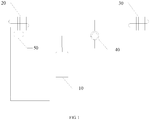
- FIG. 1 is a schematic structural diagram of an air conditioner according to a first embodiment of the present disclosure.
- the air conditioner includes a compressor 10, an indoor heat exchanger 20, an outdoor heat exchanger 30, a four-way valve 40, a refrigerant concentration sensor 50 and a controller (not shown).
- the controller is connected to the compressor 10 and the refrigerant concentration sensor 50.
- a refrigerant circulation circuit is composed of the compressor 10, the indoor heat exchanger 20, the outdoor heat exchanger 30, and the four-way valve 40.
- the refrigerant concentration sensor 50 may be configured to detect the refrigerant concentration in the air conditioner and transmit the detected refrigerant concentration to the controller.
- the controller is configured to control an operation of the compressor 10 according to the refrigerant concentration transmitted by the refrigerant concentration sensor 50.
- the refrigerant concentration sensor 50 is provided in the air conditioner duct.
- the controller when the air conditioner is cooling/heating, the controller is configured to start refrigerant concentration detection, control the refrigerant concentration sensor 50 to be powered on, and detect the refrigerant concentration in the air conditioner through the refrigerant concentration sensor 50 in real time or at regular intervals.
- the refrigerant concentration sensor 50 detects the refrigerant concentration, it transmits the detected refrigerant concentration to the controller.
- the controller receives the refrigerant concentration transmitted by the refrigerant concentration sensor 50, it controls the operation of the compressor 10 according to the refrigerant concentration.
- the controller when the detected refrigerant concentration is low, e.g., the refrigerant concentration is lower than a certain concentration value, it means that the refrigerant has not leaked, and at this time, the controller is configured to control the compressor 10 to continue to maintain the current operating state.
- the controller is configured to control the compressor 10 to stop, that is, the controller is configured to control the air conditioner to stop the cooling/heating operation.
- the refrigerant concentration sensor 50 includes: a first refrigerant concentration sensor located inside of the air conditioner, and configured to detect an indoor refrigerant concentration, and a second refrigerant concentration sensor located outside of the air conditioner, and configured to detect an outdoor refrigerant concentration. Both the first refrigerant concentration sensor and the second refrigerant concentration sensor are connected to the controller.
- the controller is configured to start refrigerant concentration detection, control the first refrigerant concentration sensor and the second refrigerant concentration sensor to be powered on, detect the indoor refrigerant concentration through the first refrigerant concentration sensor, and detect the outdoor refrigerant concentration through the second refrigerant concentration sensor.
- the indoor refrigerant concentration is transmitted to the controller.
- the controller receives the indoor refrigerant concentration transmitted by the first refrigerant concentration sensor, the controller compares the indoor refrigerant concentration with the first concentration threshold.
- the value range of the first concentration threshold is preset to be [5%, 25%].
- the air conditioner is controlled to continue to operate normally.
- the first refrigerant concentration sensor is controlled to continue to detect the indoor refrigerant concentration again. For example, a corresponding detection period is set in advance, and the first refrigerant concentration sensor is controlled to periodically detect the indoor refrigerant concentration according to the detection period.
- the controller is configured to control the compressor 10 to stop.
- the outdoor refrigerant concentration is transmitted to the controller.
- the controller receives the outdoor refrigerant concentration transmitted by the second refrigerant concentration sensor, the controller compares the outdoor refrigerant concentration with the first concentration threshold.
- the air conditioner is controlled to continue to operate normally.
- the second refrigerant concentration sensor is controlled to continue to detect the outdoor refrigerant concentration again.
- the second refrigerant concentration sensor is controlled to periodically detect the outdoor refrigerant concentration according to the detection period.
- the controller is configured to control the compressor 10 to stop.
- the air conditioner includes a refrigerant circulation circuit including a compressor 10, an indoor heat exchanger 20, an outdoor heat exchanger 30, and a four-way valve 40; a refrigerant concentration sensor 50 being configured to detect a refrigerant concentration; and a controller connected to the compressor 10 and the refrigerant concentration sensor 50, and the controller being configured to control an operation of the compressor 10 according to the detected refrigerant concentration.
- the controller is configured to control the compressor 10 to stop, that is, control the air conditioner to stop the cooling/heating operation, thereby improving the safety of the air conditioner operation.
- the air conditioner further includes an indoor fan 60 and an outdoor fan 70, and both the indoor fan 60 and the outdoor fan 70 are connected to the controller.
- a second concentration threshold is also set in advance, and the second concentration threshold corresponds to the lower limit value of the flammable concentration of the refrigerant, and the second concentration threshold is greater than the first concentration threshold.
- a preset value range of the second concentration threshold is [15%, 65%].
- the indoor refrigerant concentration is further compared with the second concentration threshold. If the indoor refrigerant concentration is less than or equal to the second concentration threshold, it means that the indoor refrigerant concentration is high, but the lower limit value of the flammable concentration of the refrigerant has not been reached.
- the controller is configured to control the indoor fan 60 to start. That is, when the indoor refrigerant concentration is greater than the first concentration threshold and less than or equal to the second concentration threshold, and the outdoor refrigerant concentration is less than or equal to the first concentration threshold, the controller is configured to control the indoor fan 60 to start. The indoor refrigerant concentration is reduced through operating the indoor fan 60, thereby preventing the refrigerant from being ignited and improving safety.
- the outdoor refrigerant concentration is further compared with the second concentration threshold. If the outdoor refrigerant concentration is less than or equal to the second concentration threshold, it means that the outdoor refrigerant concentration is high, but the lower limit value of the flammable concentration of the refrigerant has not been reached.
- the controller is configured to control the outdoor fan 70 to start. That is, when the outdoor refrigerant concentration is greater than the first concentration threshold and no greater than the second concentration threshold, and the indoor refrigerant concentration is less than or equal to the first concentration threshold, the controller is configured to control the outdoor fan 70 to start. The outdoor refrigerant concentration is reduced through operating the outdoor fan 70, thereby preventing the refrigerant from being ignited and improving safety.
- the air conditioner includes an indoor fan 60 and an outdoor fan 70, and both the indoor fan 60 and the outdoor fan 70 are connected to the controller.
- the controller is configured to control the indoor fan 60 to start after the indoor refrigerant concentration is greater than the first concentration threshold and no greater than a second concentration threshold, and the outdoor refrigerant concentration is less than or equal to the first concentration threshold.
- the controller is configured to control the outdoor fan 70 to start after the outdoor refrigerant concentration is greater than the first concentration threshold and no greater than the second concentration threshold, and the indoor refrigerant concentration is less than or equal to the first concentration threshold.
- the indoor fan 60 is operated to reduce the indoor refrigerant concentration
- the outdoor fan 70 is operated to reduce the outdoor refrigerant concentration, thereby preventing the refrigerant from being ignited and improving safety.
- the air conditioner further includes an inert gas storage container connected to the controller, and the controller being further configured to control the inert gas storage container to release an inert gas.
- the indoor refrigerant concentration is further compared with the second concentration threshold. If the indoor refrigerant concentration is greater than the second concentration threshold, it means that the indoor refrigerant concentration is very high and has reached the lower limit of the flammable concentration of the refrigerant.
- the controller is configured to control to start the inert gas storage container, so that the inert gas storage container releases the inert gas, thereby further preventing the refrigerant from being ignited and improving safety.
- the outdoor refrigerant concentration is further compared with the second concentration threshold. If the outdoor refrigerant concentration is greater than the second concentration threshold, it means that the outdoor refrigerant concentration is very high, and the lower limit value of the flammable concentration of the refrigerant is reached.
- the controller is configured to control to start the inert gas storage container, so that the inert gas storage container releases the inert gas, thereby further preventing the refrigerant from being ignited and improving safety.
- the air conditioner further includes an inert gas storage container connected to the controller.
- the controller is further configured to control the inert gas storage container to release an inert gas after the indoor refrigerant concentration is greater than the second concentration threshold and the outdoor refrigerant concentration is less than or equal to the first concentration threshold, or after the outdoor refrigerant concentration is greater than the second concentration threshold and the indoor refrigerant concentration is less than or equal to the first concentration threshold, thereby further preventing the refrigerant from being ignited and improving safety.
- the air conditioner further includes a fire extinguishing agent storage container connected to the controller.
- the fire extinguishing agent storage container is a dry powder storage container.
- the controller is configured to control to start the fire extinguishing agent storage container, and cause the fire extinguishing agent storage container to spray the fire extinguishing agent, so as to extinguish the refrigerant and improve safety.
- the air conditioner further includes a smoke and fire detection device connected to the controller.
- the smoke and fire detection device is a smoke detector, a flame detector, or the like.
- the controller is configured to control to power on the smoke and fire detection device, detect whether the refrigerant is ignited by the smoke and fire detection device, and transmit the detection result to the controller.
- the controller does not perform response processing.
- the controller when detecting that the refrigerant is not ignited, is configured to control the first refrigerant concentration sensor to detect the indoor refrigerant concentration again, and the second refrigerant concentration sensor to detect the outdoor refrigerant concentration again.
- the controller is configured to control the fire extinguishing agent storage container to start and cause the fire extinguishing agent storage container to spray the fire extinguishing agent.
- the smoke and fire detection device includes: a first smoke and fire detection device located inside of the air conditioner, and configured to detect whether the indoor refrigerant is ignited, a second smoke and fire detection device located outside of the air conditioner, and configured to detect whether the outdoor refrigerant is ignited. Both the first smoke and fire detection device and the second smoke and fire detection device are connected to the controller.
- the controller is configured to control to power on the first smoke and fire detection device and the second smoke and fire detection device.
- the first smoke and fire detection device detects whether the indoor refrigerant is ignited
- the second smoke and fire detection device detects whether the outdoor refrigerant is ignited, and transmits the detection result to the controller.
- the controller is configured to control the fire extinguishing agent storage container to spray the fire extinguishing agent to extinguish the refrigerant, thereby further improving safety.
- the air conditioner further includes the fire extinguishing agent storage container connected to the controller.
- the controller is configured to control the fire extinguishing agent storage container to spray the fire extinguishing agent to extinguish the refrigerant, thereby further improving safety.
- the present disclosure further provides a method for controlling the air conditioner.
- FIG. 3 is a schematic flowchart of a method for controlling the air conditioner according to a first embodiment of the present disclosure.
- the method includes the following operations:
- Operation S10 detecting an indoor refrigerant concentration and an outdoor refrigerant concentration
- Operation S20 controlling a compressor to stop after the indoor refrigerant concentration or the outdoor refrigerant concentration is greater than a first concentration threshold.
- the air conditioner is the air conditioner as described above.
- the air conditioner performs cooling/heating operation
- the indoor refrigerant concentration and the outdoor refrigerant concentration are detected.
- the controller of the air conditioner starts the refrigerant concentration detection, and controls the first refrigerant concentration sensor and the second refrigerant concentration sensor to be powered on.
- the first refrigerant concentration sensor detects an indoor refrigerant concentration
- the second refrigerant concentration sensor detects an outdoor refrigerant concentration.
- the indoor refrigerant concentration is transmitted to the controller.
- the controller receives the indoor refrigerant concentration transmitted by the first refrigerant concentration sensor, the controller compares the indoor refrigerant concentration with the first concentration threshold.
- the value range of the first concentration threshold is preset to be [5%, 25%].
- the air conditioner is controlled to continue to operate normally.
- the first refrigerant concentration sensor is controlled to continue to detect the indoor refrigerant concentration again. For example, a corresponding detection period is set in advance, and the first refrigerant concentration sensor is controlled to periodically detect the indoor refrigerant concentration according to the detection period.
- the controller is configured to control the compressor 10 to stop.
- the outdoor refrigerant concentration is transmitted to the controller.
- the controller receives the outdoor refrigerant concentration transmitted by the second refrigerant concentration sensor, the controller compares the outdoor refrigerant concentration with the first concentration threshold.
- the air conditioner is controlled to continue to operate normally.
- the second refrigerant concentration sensor is controlled to continue to detect the outdoor refrigerant concentration again.
- the second refrigerant concentration sensor is controlled to periodically detect the outdoor refrigerant concentration according to the detection period.
- the controller is configured to control the compressor 10 to stop.
- the controller when the air conditioner is running, the indoor refrigerant concentration and the outdoor refrigerant concentration are detected.
- the controller is configured to control the compressor 10 to stop, that is, control the air conditioner to stop the cooling/heating operation, thereby improving the safety of the air conditioner operation.
- the present disclosure provides a second embodiment of the method for controlling the air conditioner based on the first embodiment of the method for controlling the air conditioner.
- the method further including:
- Operation a controlling the indoor fan to start after the indoor refrigerant concentration is greater than the first concentration threshold and no greater than a second concentration threshold, and the outdoor refrigerant concentration is less than or equal to the first concentration threshold;
- Operation b controlling the outdoor fan to start after the outdoor refrigerant concentration is greater than the first concentration threshold and no greater than the second concentration threshold, and the indoor refrigerant concentration is less than or equal to the first concentration threshold;
- the second concentration threshold being greater than the first concentration threshold
- a second concentration threshold is also set in advance, and the second concentration threshold corresponds to the lower limit value of the flammable concentration of the refrigerant, and the second concentration threshold is greater than the first concentration threshold.
- a preset value range of the second concentration threshold is [15%, 65%].
- the indoor refrigerant concentration is further compared with the second concentration threshold. If the indoor refrigerant concentration is less than or equal to the second concentration threshold, it means that the indoor refrigerant concentration is high, but the lower limit value of the flammable concentration of the refrigerant has not been reached.
- the controller is configured to control the indoor fan 60 to start. That is, when the indoor refrigerant concentration is greater than the first concentration threshold and less than or equal to the second concentration threshold, and the outdoor refrigerant concentration is less than or equal to the first concentration threshold, the controller is configured to control the indoor fan 60 to start. The indoor refrigerant concentration is reduced through operating the indoor fan 60, thereby preventing the refrigerant from being ignited and improving safety.
- the outdoor refrigerant concentration is further compared with the second concentration threshold. If the outdoor refrigerant concentration is less than or equal to the second concentration threshold, it means that the outdoor refrigerant concentration is high, but the lower limit value of the flammable concentration of the refrigerant has not been reached.
- the controller is configured to control the outdoor fan 70 to start. That is, when the outdoor refrigerant concentration is greater than the first concentration threshold and no greater than the second concentration threshold, and the indoor refrigerant concentration is less than or equal to the first concentration threshold, the controller is configured to control the outdoor fan 70 to start. The outdoor refrigerant concentration is reduced through operating the outdoor fan 70, thereby preventing the refrigerant from being ignited and improving safety.
- the controller is configured to control the indoor fan 60 to start after the indoor refrigerant concentration is greater than the first concentration threshold and no greater than a second concentration threshold, and the outdoor refrigerant concentration is less than or equal to the first concentration threshold.
- the controller is configured to control the outdoor fan 70 to start after the outdoor refrigerant concentration is greater than the first concentration threshold and no greater than the second concentration threshold, and the indoor refrigerant concentration is less than or equal to the first concentration threshold.
- the indoor fan 60 is operated to reduce the indoor refrigerant concentration
- the outdoor fan 70 is operated to reduce the outdoor refrigerant concentration, thereby preventing the refrigerant from being ignited and improving safety.
- the present disclosure provides a third embodiment of the method for controlling the air conditioner based on the first embodiment or the second embodiment of the method for controlling the air conditioner.
- the method further including:
- Operation c controlling the inert gas storage container to release the inert gas after the indoor refrigerant concentration is greater than the second concentration threshold, and the outdoor refrigerant concentration is less than or equal to the first concentration threshold; or after the outdoor refrigerant concentration is greater than the second concentration threshold, and the indoor refrigerant concentration is less than or equal to the first concentration threshold; and the second concentration threshold being greater than the first concentration threshold.
- the indoor refrigerant concentration is further compared with the second concentration threshold.
- the second concentration threshold is the threshold described in the second embodiment, and optionally, the value range of the second concentration threshold is [15%, 65%]. If the indoor refrigerant concentration is greater than the second concentration threshold, it means that the indoor refrigerant concentration is very high and has reached the lower limit of the flammable concentration of the refrigerant.
- the controller is configured to control to start the inert gas storage container, so that the inert gas storage container releases the inert gas, thereby further preventing the refrigerant from being ignited and improving safety.
- the outdoor refrigerant concentration is further compared with the second concentration threshold. If the outdoor refrigerant concentration is greater than the second concentration threshold, it means that the outdoor refrigerant concentration is very high, and the lower limit value of the flammable concentration of the refrigerant is reached.
- the controller is configured to control to start the inert gas storage container, so that the inert gas storage container releases the inert gas, thereby further preventing the refrigerant from being ignited and improving safety.
- the controller is configured to control the inert gas storage container to release an inert gas after the indoor refrigerant concentration is greater than the second concentration threshold and the outdoor refrigerant concentration is less than or equal to the first concentration threshold, or after the outdoor refrigerant concentration is greater than the second concentration threshold and the indoor refrigerant concentration is less than or equal to the first concentration threshold, thereby further preventing the refrigerant from being ignited and improving safety.
- the present disclosure provides a fourth embodiment of the method for controlling the air conditioner based on any embodiment of the method for controlling the air conditioner.
- the method further including:
- Operation d detecting whether the refrigerant is ignited
- Operation e controlling the fire extinguishing agent storage container to spray the fire extinguishing agent, if the refrigerant is ignited.
- the controller when the air conditioner performs cooling/heating operation, the controller is configured to control to power on the smoke and fire detection device, detect whether the refrigerant is ignited by the smoke and fire detection device, and transmit the detection result to the controller.
- the controller does not perform response processing.
- the controller is configured to control the first refrigerant concentration sensor to detect the indoor refrigerant concentration again, and the second refrigerant concentration sensor to detect the outdoor refrigerant concentration again.
- the controller is configured to control the fire extinguishing agent storage container to start and cause the fire extinguishing agent storage container to spray the fire extinguishing agent.
- the smoke and fire detection device includes a first smoke and fire detection device located inside of the air conditioner, and a second smoke and fire detection device located outside of the air conditioner.
- the controller is configured to control to power on the first smoke and fire detection device and the second smoke and fire detection device.
- the first smoke and fire detection device detects whether the indoor refrigerant is ignited, and the second smoke and fire detection device detects whether the outdoor refrigerant is ignited, and transmits the detection result to the controller.
- the controller is configured to control the fire extinguishing agent storage container to spray the fire extinguishing agent to extinguish the refrigerant, thereby further improving safety.
- the controller when the air conditioner performs cooling/heating operation, detecting whether the refrigerant is ignited, and when the refrigerant is ignited, the controller is configured to control the fire extinguishing agent storage container to spray the fire extinguishing agent to extinguish the refrigerant, thereby further improving safety.
- the present disclosure further provides a computer readable storage medium.
- the computer readable storage medium stores a program for controlling an air conditioner, the program, when executed by a processor, implements the following operations:
- the program when executed by the processor, implements the following operations: controlling the inert gas storage container to release the inert gas after the indoor refrigerant concentration is greater than the second concentration threshold, and the outdoor refrigerant concentration is less than or equal to the first concentration threshold; or after the outdoor refrigerant concentration is greater than the second concentration threshold, and the indoor refrigerant concentration is less than or equal to the first concentration threshold; and the second concentration threshold being greater than the first concentration threshold.
- the controller when the air conditioner is running, the indoor refrigerant concentration and the outdoor refrigerant concentration are detected.
- the controller is configured to control the compressor to stop, that is, control the air conditioner to stop the cooling/heating operation, thereby improving the safety of the air conditioner operation.
- the technical solution of the present disclosure can be embodied in the form of a software product.
- the computer software product is stored on a storage medium (such as a ROM/RAM, a magnetic disk, and an optical disc) as described above, and includes several instructions for causing a terminal device (such as a mobile phone, a TV, a computer, etc.) to execute the methods of the embodiments of the present disclosure.
Landscapes
- Engineering & Computer Science (AREA)
- Physics & Mathematics (AREA)
- Mechanical Engineering (AREA)
- Thermal Sciences (AREA)
- General Engineering & Computer Science (AREA)
- Air Conditioning Control Device (AREA)
Abstract
Description
- The present disclosure relates to the technical field of home appliances, and in particular, to an air conditioner, a method for controlling the air conditioner, and a computer readable storage medium.
- With the development of technology, air conditioners have become a necessity of people's daily life and provide users with a comfortable environment. During the operation of the air conditioner, the refrigerant is normally circulated in a refrigerant circulation circuit composed of a compressor, a four-way valve, an indoor heat exchanger, and an outdoor heat exchanger. Once the refrigerant leaks, it will bring safety risks. However, nowadays, the air conditioner generally does not have a function of detecting the refrigerant leak. When the refrigerant leaks, the air conditioner cannot effectively process in time, so the air conditioner is not safe enough to operate.
- The main objective of the present disclosure is to provide an air conditioner, a method for controlling the air conditioner, and a computer-readable storage medium, aiming at solving the technical problem that the existing air conditioner is not safe enough to operate.
- In order to achieve the above objective, the present disclosure provides an air conditioner, including a refrigerant circulation circuit including a compressor, a four-way valve, an indoor heat exchanger, and an outdoor heat exchanger; a refrigerant concentration sensor; and a controller connected to the compressor and the refrigerant concentration sensor, and the controller being configured to control an operation of the compressor according to a refrigerant concentration detected by the refrigerant concentration sensor.
- In some embodiments, the refrigerant concentration sensor includes a first refrigerant concentration sensor located inside of the air conditioner, and configured to detect an indoor refrigerant concentration; and a second refrigerant concentration sensor located outside of the air conditioner, and configured to detect an outdoor refrigerant concentration; and the controller is configured to control the compressor to stop after the indoor refrigerant concentration is greater than a first concentration threshold or the outdoor refrigerant concentration is greater than the first concentration threshold.
- In some embodiments, the air conditioner further includes an inert gas storage container connected to the controller; and the controller is further configured to control the inert gas storage container to release an inert gas.
- In some embodiments, the air conditioner further includes a fire extinguishing agent storage container connected to the controller; and the controller is further configured to control the fire extinguishing agent storage container to spray a fire extinguishing agent after igniting a refrigerant.
- In some embodiments, the fire extinguishing agent storage container is a dry powder storage container.
- In some embodiments, the air conditioner further includes a smoke and fire detection device connected to the controller for detecting whether the refrigerant is ignited.
- In some embodiments, the smoke and fire detection device is a smoke detector.
- In some embodiments, the smoke and fire detection device includes a first smoke and fire detection device located inside of the air conditioner, and configured to detect whether an indoor refrigerant is ignited; and a second smoke and fire detection device located outside of the air conditioner, and configured to detect whether an outdoor refrigerant is ignited; and the controller is configured to control the fire extinguishing agent storage container to spray the fire extinguishing agent after the indoor refrigerant is ignited or the outdoor refrigerant is ignited.
- In some embodiments, the air conditioner further includes an indoor fan connected to the controller; and an outdoor fan connected to the controller; the controller is further configured to: control the indoor fan to start after the indoor refrigerant concentration is greater than the first concentration threshold and no greater than a second concentration threshold, and the outdoor refrigerant concentration is less than or equal to the first concentration threshold; and control the outdoor fan to start after the outdoor refrigerant concentration is greater than the first concentration threshold and no greater than the second concentration threshold, and the indoor refrigerant concentration is less than or equal to the first concentration threshold, the second concentration threshold being greater than the first concentration threshold.
- In order to achieve the above objective, the present disclosure further provides a method for controlling an air conditioner described above, including the following operations:
- detecting an indoor refrigerant concentration and an outdoor refrigerant concentration; and
- controlling a compressor to stop after the indoor refrigerant concentration or the outdoor refrigerant concentration is greater than a first concentration threshold.
- In some embodiments, the method further includes:
- controlling an indoor fan to start after the indoor refrigerant concentration is greater than the first concentration threshold and no greater than a second concentration threshold, and the outdoor refrigerant concentration is less than or equal to the first concentration threshold; and
- controlling an outdoor fan to start after the outdoor refrigerant concentration is greater than the first concentration threshold and no greater than the second concentration threshold, and the indoor refrigerant concentration is less than or equal to the first concentration threshold,
- the second concentration threshold being greater than the first concentration threshold.
- In some embodiments, the method further includes:
controlling an inert gas storage container to release an inert gas after the indoor refrigerant concentration is greater than a second concentration threshold, and the outdoor refrigerant concentration is less than or equal to the first concentration threshold, wherein the second concentration threshold is greater than the first concentration threshold; or controlling an inert gas storage container to release an inert gas after the outdoor refrigerant concentration is greater than a second concentration threshold, and the indoor refrigerant concentration is less than or equal to the first concentration threshold, the second concentration threshold is greater than the first concentration threshold. - In some embodiments, the method further includes:
- detecting whether the refrigerant is ignited; and
- controlling the fire extinguishing agent storage container to spray the fire extinguishing agent, after the refrigerant is ignited.
- Besides, in order to achieve the above objective, the present disclosure further provides a computer readable storage medium. The computer readable storage medium stores a program for controlling an air conditioner, and the program, when executed by a processor, implements operations of a method for controlling the air conditioner described above.
- In the technical solutions of the present disclosure, the air conditioner includes a refrigerant circulation circuit including a compressor, a four-way valve, an indoor heat exchanger, and an outdoor heat exchanger; a refrigerant concentration sensor; and a controller connected to the compressor and the refrigerant concentration sensor, and the controller being configured to control an operation of the compressor according to a refrigerant concentration detected by the refrigerant concentration sensor. When the refrigerant concentration is high, the controller is configured to control the compressor to stop, that is, control the air conditioner to stop the cooling/heating operation, thereby improving the safety of the air conditioner operation.
-
-
FIG. 1 is a schematic structural diagram of an air conditioner according to a first embodiment of the present disclosure; -
FIG. 2 is a schematic structural diagram of the air conditioner according to a second embodiment of the present disclosure; and -
FIG. 3 is a schematic flowchart of a method for controlling the air conditioner according to a first embodiment of the present disclosure. - The realization of the objective, functional characteristics, advantages of the present disclosure are further described with reference to the accompanying drawings.
- It should be understood that the specific embodiments described herein are only used to explain the present disclosure and are not intended to limit the present disclosure.
- The present disclosure provides an air conditioner.
- Referring to
FIG. 1, FIG. 1 is a schematic structural diagram of an air conditioner according to a first embodiment of the present disclosure. - In the present embodiment, the air conditioner includes a
compressor 10, anindoor heat exchanger 20, anoutdoor heat exchanger 30, a four-way valve 40, arefrigerant concentration sensor 50 and a controller (not shown). The controller is connected to thecompressor 10 and therefrigerant concentration sensor 50. A refrigerant circulation circuit is composed of thecompressor 10, theindoor heat exchanger 20, theoutdoor heat exchanger 30, and the four-way valve 40. - The
refrigerant concentration sensor 50 may be configured to detect the refrigerant concentration in the air conditioner and transmit the detected refrigerant concentration to the controller. The controller is configured to control an operation of thecompressor 10 according to the refrigerant concentration transmitted by therefrigerant concentration sensor 50. - In some embodiments, the
refrigerant concentration sensor 50 is provided in the air conditioner duct. - In the present embodiment, when the air conditioner is cooling/heating, the controller is configured to start refrigerant concentration detection, control the
refrigerant concentration sensor 50 to be powered on, and detect the refrigerant concentration in the air conditioner through therefrigerant concentration sensor 50 in real time or at regular intervals. When therefrigerant concentration sensor 50 detects the refrigerant concentration, it transmits the detected refrigerant concentration to the controller. When the controller receives the refrigerant concentration transmitted by therefrigerant concentration sensor 50, it controls the operation of thecompressor 10 according to the refrigerant concentration. For example, when the detected refrigerant concentration is low, e.g., the refrigerant concentration is lower than a certain concentration value, it means that the refrigerant has not leaked, and at this time, the controller is configured to control thecompressor 10 to continue to maintain the current operating state. When the detected refrigerant concentration is high, e.g., the refrigerant concentration is higher than a certain concentration value, the refrigerant may leak, and at this time, the controller is configured to control thecompressor 10 to stop, that is, the controller is configured to control the air conditioner to stop the cooling/heating operation. - In some embodiments, the
refrigerant concentration sensor 50 includes: a first refrigerant concentration sensor located inside of the air conditioner, and configured to detect an indoor refrigerant concentration, and a second refrigerant concentration sensor located outside of the air conditioner, and configured to detect an outdoor refrigerant concentration. Both the first refrigerant concentration sensor and the second refrigerant concentration sensor are connected to the controller. - When the air conditioner is cooling/heating, the controller is configured to start refrigerant concentration detection, control the first refrigerant concentration sensor and the second refrigerant concentration sensor to be powered on, detect the indoor refrigerant concentration through the first refrigerant concentration sensor, and detect the outdoor refrigerant concentration through the second refrigerant concentration sensor.
- After the first refrigerant concentration sensor detects the indoor refrigerant concentration, the indoor refrigerant concentration is transmitted to the controller. When the controller receives the indoor refrigerant concentration transmitted by the first refrigerant concentration sensor, the controller compares the indoor refrigerant concentration with the first concentration threshold. Optionally, the value range of the first concentration threshold is preset to be [5%, 25%].
- If the indoor refrigerant concentration is less than or equal to the first concentration threshold, it means that the indoor refrigerant concentration is not high. At this time, the air conditioner is controlled to continue to operate normally. Optionally, when the indoor refrigerant concentration is less than or equal to the first concentration threshold, the first refrigerant concentration sensor is controlled to continue to detect the indoor refrigerant concentration again. For example, a corresponding detection period is set in advance, and the first refrigerant concentration sensor is controlled to periodically detect the indoor refrigerant concentration according to the detection period.
- If the indoor refrigerant concentration is greater than the first concentration threshold, it means that the indoor refrigerant concentration is high. At this time, the controller is configured to control the
compressor 10 to stop. - Similarly, after the second refrigerant concentration sensor detects the outdoor refrigerant concentration, the outdoor refrigerant concentration is transmitted to the controller. When the controller receives the outdoor refrigerant concentration transmitted by the second refrigerant concentration sensor, the controller compares the outdoor refrigerant concentration with the first concentration threshold.
- If the outdoor refrigerant concentration is less than or equal to the first concentration threshold, it means that the outdoor refrigerant concentration is not high. At this time, the air conditioner is controlled to continue to operate normally. Optionally, when the outdoor refrigerant concentration is less than or equal to the first concentration threshold, the second refrigerant concentration sensor is controlled to continue to detect the outdoor refrigerant concentration again. For example, the second refrigerant concentration sensor is controlled to periodically detect the outdoor refrigerant concentration according to the detection period.
- If the outdoor refrigerant concentration is greater than the first concentration threshold, it means that the outdoor refrigerant concentration is high. At this time, the controller is configured to control the
compressor 10 to stop. - In the technical solutions of the present disclosure, the air conditioner includes a refrigerant circulation circuit including a
compressor 10, anindoor heat exchanger 20, anoutdoor heat exchanger 30, and a four-way valve 40; arefrigerant concentration sensor 50 being configured to detect a refrigerant concentration; and a controller connected to thecompressor 10 and therefrigerant concentration sensor 50, and the controller being configured to control an operation of thecompressor 10 according to the detected refrigerant concentration. When the refrigerant concentration is high, the controller is configured to control thecompressor 10 to stop, that is, control the air conditioner to stop the cooling/heating operation, thereby improving the safety of the air conditioner operation. - Further, as shown in
FIG. 2 , based on the first embodiment, a second embodiment of the air conditioner of the present disclosure is proposed. In this embodiment, the air conditioner further includes anindoor fan 60 and anoutdoor fan 70, and both theindoor fan 60 and theoutdoor fan 70 are connected to the controller. - Besides, in the present embodiment, a second concentration threshold is also set in advance, and the second concentration threshold corresponds to the lower limit value of the flammable concentration of the refrigerant, and the second concentration threshold is greater than the first concentration threshold. Optionally, a preset value range of the second concentration threshold is [15%, 65%].
- If the indoor refrigerant concentration is greater than the first concentration threshold and the outdoor refrigerant concentration is less than or equal to the first concentration threshold, the indoor refrigerant concentration is further compared with the second concentration threshold. If the indoor refrigerant concentration is less than or equal to the second concentration threshold, it means that the indoor refrigerant concentration is high, but the lower limit value of the flammable concentration of the refrigerant has not been reached. At this time, the controller is configured to control the
indoor fan 60 to start. That is, when the indoor refrigerant concentration is greater than the first concentration threshold and less than or equal to the second concentration threshold, and the outdoor refrigerant concentration is less than or equal to the first concentration threshold, the controller is configured to control theindoor fan 60 to start. The indoor refrigerant concentration is reduced through operating theindoor fan 60, thereby preventing the refrigerant from being ignited and improving safety. - Similarly, if the outdoor refrigerant concentration is greater than the first concentration threshold and the indoor refrigerant concentration is less than or equal to the first concentration threshold, the outdoor refrigerant concentration is further compared with the second concentration threshold. If the outdoor refrigerant concentration is less than or equal to the second concentration threshold, it means that the outdoor refrigerant concentration is high, but the lower limit value of the flammable concentration of the refrigerant has not been reached. At this time, the controller is configured to control the
outdoor fan 70 to start. That is, when the outdoor refrigerant concentration is greater than the first concentration threshold and no greater than the second concentration threshold, and the indoor refrigerant concentration is less than or equal to the first concentration threshold, the controller is configured to control theoutdoor fan 70 to start. The outdoor refrigerant concentration is reduced through operating theoutdoor fan 70, thereby preventing the refrigerant from being ignited and improving safety. - In the technical solutions of the present embodiment, the air conditioner includes an
indoor fan 60 and anoutdoor fan 70, and both theindoor fan 60 and theoutdoor fan 70 are connected to the controller. The controller is configured to control theindoor fan 60 to start after the indoor refrigerant concentration is greater than the first concentration threshold and no greater than a second concentration threshold, and the outdoor refrigerant concentration is less than or equal to the first concentration threshold. And, the controller is configured to control theoutdoor fan 70 to start after the outdoor refrigerant concentration is greater than the first concentration threshold and no greater than the second concentration threshold, and the indoor refrigerant concentration is less than or equal to the first concentration threshold. Theindoor fan 60 is operated to reduce the indoor refrigerant concentration, and theoutdoor fan 70 is operated to reduce the outdoor refrigerant concentration, thereby preventing the refrigerant from being ignited and improving safety. - Further, based on the first embodiment or the second embodiment, a third embodiment of the air conditioner of the present disclosure is proposed. The air conditioner further includes an inert gas storage container connected to the controller, and the controller being further configured to control the inert gas storage container to release an inert gas.
- In the present embodiment, if the indoor refrigerant concentration is greater than the first concentration threshold and the outdoor refrigerant concentration is less than or equal to the first concentration threshold, the indoor refrigerant concentration is further compared with the second concentration threshold. If the indoor refrigerant concentration is greater than the second concentration threshold, it means that the indoor refrigerant concentration is very high and has reached the lower limit of the flammable concentration of the refrigerant. At this time, in order to prevent the refrigerant from being ignited, the controller is configured to control to start the inert gas storage container, so that the inert gas storage container releases the inert gas, thereby further preventing the refrigerant from being ignited and improving safety.
- Similarly, if the outdoor refrigerant concentration is greater than the first concentration threshold and the indoor refrigerant concentration is less than or equal to the first concentration threshold, the outdoor refrigerant concentration is further compared with the second concentration threshold. If the outdoor refrigerant concentration is greater than the second concentration threshold, it means that the outdoor refrigerant concentration is very high, and the lower limit value of the flammable concentration of the refrigerant is reached. At this time, in order to prevent the refrigerant from being ignited, the controller is configured to control to start the inert gas storage container, so that the inert gas storage container releases the inert gas, thereby further preventing the refrigerant from being ignited and improving safety.
- In the technical solutions of the present embodiment, the air conditioner further includes an inert gas storage container connected to the controller. The controller is further configured to control the inert gas storage container to release an inert gas after the indoor refrigerant concentration is greater than the second concentration threshold and the outdoor refrigerant concentration is less than or equal to the first concentration threshold, or after the outdoor refrigerant concentration is greater than the second concentration threshold and the indoor refrigerant concentration is less than or equal to the first concentration threshold, thereby further preventing the refrigerant from being ignited and improving safety.
- Further, based on any one of the above embodiments, a fourth embodiment of the air conditioner of the present disclosure is proposed. The air conditioner further includes a fire extinguishing agent storage container connected to the controller.
- In some embodiments, the fire extinguishing agent storage container is a dry powder storage container.
- When a refrigerant is ignited in the air conditioner, the controller is configured to control to start the fire extinguishing agent storage container, and cause the fire extinguishing agent storage container to spray the fire extinguishing agent, so as to extinguish the refrigerant and improve safety.
- In some embodiments, the air conditioner further includes a smoke and fire detection device connected to the controller.
- In some embodiments, the smoke and fire detection device is a smoke detector, a flame detector, or the like.
- When the air conditioner performs cooling/heating operation, the controller is configured to control to power on the smoke and fire detection device, detect whether the refrigerant is ignited by the smoke and fire detection device, and transmit the detection result to the controller.
- If the detection result is that the refrigerant is not ignited, the controller does not perform response processing. In some embodiments, when detecting that the refrigerant is not ignited, the controller is configured to control the first refrigerant concentration sensor to detect the indoor refrigerant concentration again, and the second refrigerant concentration sensor to detect the outdoor refrigerant concentration again. The operations in the foregoing embodiments are executed cyclically, and details are not described herein again.
- If the detection result is that the refrigerant is ignited, the controller is configured to control the fire extinguishing agent storage container to start and cause the fire extinguishing agent storage container to spray the fire extinguishing agent.
- In some embodiments, the smoke and fire detection device includes: a first smoke and fire detection device located inside of the air conditioner, and configured to detect whether the indoor refrigerant is ignited, a second smoke and fire detection device located outside of the air conditioner, and configured to detect whether the outdoor refrigerant is ignited. Both the first smoke and fire detection device and the second smoke and fire detection device are connected to the controller.
- When the air conditioner performs cooling/heating operation, the controller is configured to control to power on the first smoke and fire detection device and the second smoke and fire detection device. The first smoke and fire detection device detects whether the indoor refrigerant is ignited, and the second smoke and fire detection device detects whether the outdoor refrigerant is ignited, and transmits the detection result to the controller.
- When it is detected that the indoor refrigerant is ignited or the outdoor refrigerant is ignited, the controller is configured to control the fire extinguishing agent storage container to spray the fire extinguishing agent to extinguish the refrigerant, thereby further improving safety.
- In the technical solutions of the present embodiment, the air conditioner further includes the fire extinguishing agent storage container connected to the controller. When the refrigerant is ignited, the controller is configured to control the fire extinguishing agent storage container to spray the fire extinguishing agent to extinguish the refrigerant, thereby further improving safety.
- Correspondingly, based on the air conditioner in any one of the above embodiments, the present disclosure further provides a method for controlling the air conditioner.
- Referring to
FIG. 3, FIG. 3 is a schematic flowchart of a method for controlling the air conditioner according to a first embodiment of the present disclosure. In the present embodiment, the method includes the following operations: - Operation S10, detecting an indoor refrigerant concentration and an outdoor refrigerant concentration; and
- Operation S20, controlling a compressor to stop after the indoor refrigerant concentration or the outdoor refrigerant concentration is greater than a first concentration threshold.
- In the present embodiment, the air conditioner is the air conditioner as described above. When the air conditioner performs cooling/heating operation, the indoor refrigerant concentration and the outdoor refrigerant concentration are detected. Specially, the controller of the air conditioner starts the refrigerant concentration detection, and controls the first refrigerant concentration sensor and the second refrigerant concentration sensor to be powered on. The first refrigerant concentration sensor detects an indoor refrigerant concentration, and the second refrigerant concentration sensor detects an outdoor refrigerant concentration.
- After the first refrigerant concentration sensor detects the indoor refrigerant concentration, the indoor refrigerant concentration is transmitted to the controller. When the controller receives the indoor refrigerant concentration transmitted by the first refrigerant concentration sensor, the controller compares the indoor refrigerant concentration with the first concentration threshold. Optionally, the value range of the first concentration threshold is preset to be [5%, 25%].
- If the indoor refrigerant concentration is less than or equal to the first concentration threshold, it means that the indoor refrigerant concentration is not high. At this time, the air conditioner is controlled to continue to operate normally. Optionally, when the indoor refrigerant concentration is less than or equal to the first concentration threshold, the first refrigerant concentration sensor is controlled to continue to detect the indoor refrigerant concentration again. For example, a corresponding detection period is set in advance, and the first refrigerant concentration sensor is controlled to periodically detect the indoor refrigerant concentration according to the detection period.
- If the indoor refrigerant concentration is greater than the first concentration threshold, it means that the indoor refrigerant concentration is high. At this time, the controller is configured to control the
compressor 10 to stop. - Similarly, after the second refrigerant concentration sensor detects the outdoor refrigerant concentration, the outdoor refrigerant concentration is transmitted to the controller. When the controller receives the outdoor refrigerant concentration transmitted by the second refrigerant concentration sensor, the controller compares the outdoor refrigerant concentration with the first concentration threshold.
- If the outdoor refrigerant concentration is less than or equal to the first concentration threshold, it means that the outdoor refrigerant concentration is not high. At this time, the air conditioner is controlled to continue to operate normally. Optionally, when the outdoor refrigerant concentration is less than or equal to the first concentration threshold, the second refrigerant concentration sensor is controlled to continue to detect the outdoor refrigerant concentration again. For example, the second refrigerant concentration sensor is controlled to periodically detect the outdoor refrigerant concentration according to the detection period.
- If the outdoor refrigerant concentration is greater than the first concentration threshold, it means that the outdoor refrigerant concentration is high. At this time, the controller is configured to control the
compressor 10 to stop. - In the technical solutions of the present embodiment, when the air conditioner is running, the indoor refrigerant concentration and the outdoor refrigerant concentration are detected. When the indoor refrigerant concentration or the outdoor refrigerant concentration is greater than the first concentration threshold, the controller is configured to control the
compressor 10 to stop, that is, control the air conditioner to stop the cooling/heating operation, thereby improving the safety of the air conditioner operation. - Further, the present disclosure provides a second embodiment of the method for controlling the air conditioner based on the first embodiment of the method for controlling the air conditioner. In the present embodiment, the method further including:
- Operation a, controlling the indoor fan to start after the indoor refrigerant concentration is greater than the first concentration threshold and no greater than a second concentration threshold, and the outdoor refrigerant concentration is less than or equal to the first concentration threshold;
- Operation b, controlling the outdoor fan to start after the outdoor refrigerant concentration is greater than the first concentration threshold and no greater than the second concentration threshold, and the indoor refrigerant concentration is less than or equal to the first concentration threshold; and
- the second concentration threshold being greater than the first concentration threshold.
- In the present embodiment, a second concentration threshold is also set in advance, and the second concentration threshold corresponds to the lower limit value of the flammable concentration of the refrigerant, and the second concentration threshold is greater than the first concentration threshold. Optionally, a preset value range of the second concentration threshold is [15%, 65%].
- If the indoor refrigerant concentration is greater than the first concentration threshold and the outdoor refrigerant concentration is less than or equal to the first concentration threshold, the indoor refrigerant concentration is further compared with the second concentration threshold. If the indoor refrigerant concentration is less than or equal to the second concentration threshold, it means that the indoor refrigerant concentration is high, but the lower limit value of the flammable concentration of the refrigerant has not been reached. At this time, the controller is configured to control the
indoor fan 60 to start. That is, when the indoor refrigerant concentration is greater than the first concentration threshold and less than or equal to the second concentration threshold, and the outdoor refrigerant concentration is less than or equal to the first concentration threshold, the controller is configured to control theindoor fan 60 to start. The indoor refrigerant concentration is reduced through operating theindoor fan 60, thereby preventing the refrigerant from being ignited and improving safety. - Similarly, if the outdoor refrigerant concentration is greater than the first concentration threshold and the indoor refrigerant concentration is less than or equal to the first concentration threshold, the outdoor refrigerant concentration is further compared with the second concentration threshold. If the outdoor refrigerant concentration is less than or equal to the second concentration threshold, it means that the outdoor refrigerant concentration is high, but the lower limit value of the flammable concentration of the refrigerant has not been reached. At this time, the controller is configured to control the
outdoor fan 70 to start. That is, when the outdoor refrigerant concentration is greater than the first concentration threshold and no greater than the second concentration threshold, and the indoor refrigerant concentration is less than or equal to the first concentration threshold, the controller is configured to control theoutdoor fan 70 to start. The outdoor refrigerant concentration is reduced through operating theoutdoor fan 70, thereby preventing the refrigerant from being ignited and improving safety. - In the technical solutions of the present embodiment, the controller is configured to control the
indoor fan 60 to start after the indoor refrigerant concentration is greater than the first concentration threshold and no greater than a second concentration threshold, and the outdoor refrigerant concentration is less than or equal to the first concentration threshold. And, the controller is configured to control theoutdoor fan 70 to start after the outdoor refrigerant concentration is greater than the first concentration threshold and no greater than the second concentration threshold, and the indoor refrigerant concentration is less than or equal to the first concentration threshold. Theindoor fan 60 is operated to reduce the indoor refrigerant concentration, and theoutdoor fan 70 is operated to reduce the outdoor refrigerant concentration, thereby preventing the refrigerant from being ignited and improving safety. - Further, the present disclosure provides a third embodiment of the method for controlling the air conditioner based on the first embodiment or the second embodiment of the method for controlling the air conditioner. In the present embodiment, the method further including:
- Operation c, controlling the inert gas storage container to release the inert gas after the indoor refrigerant concentration is greater than the second concentration threshold, and the outdoor refrigerant concentration is less than or equal to the first concentration threshold; or after the outdoor refrigerant concentration is greater than the second concentration threshold, and the indoor refrigerant concentration is less than or equal to the first concentration threshold; and the second concentration threshold being greater than the first concentration threshold.
- In the present embodiment, if the indoor refrigerant concentration is greater than the first concentration threshold and the outdoor refrigerant concentration is less than or equal to the first concentration threshold, the indoor refrigerant concentration is further compared with the second concentration threshold. The second concentration threshold is the threshold described in the second embodiment, and optionally, the value range of the second concentration threshold is [15%, 65%]. If the indoor refrigerant concentration is greater than the second concentration threshold, it means that the indoor refrigerant concentration is very high and has reached the lower limit of the flammable concentration of the refrigerant. At this time, in order to prevent the refrigerant from being ignited, the controller is configured to control to start the inert gas storage container, so that the inert gas storage container releases the inert gas, thereby further preventing the refrigerant from being ignited and improving safety.
- Similarly, if the outdoor refrigerant concentration is greater than the first concentration threshold and the indoor refrigerant concentration is less than or equal to the first concentration threshold, the outdoor refrigerant concentration is further compared with the second concentration threshold. If the outdoor refrigerant concentration is greater than the second concentration threshold, it means that the outdoor refrigerant concentration is very high, and the lower limit value of the flammable concentration of the refrigerant is reached. At this time, in order to prevent the refrigerant from being ignited, the controller is configured to control to start the inert gas storage container, so that the inert gas storage container releases the inert gas, thereby further preventing the refrigerant from being ignited and improving safety.
- In the technical solutions of the present embodiment, the controller is configured to control the inert gas storage container to release an inert gas after the indoor refrigerant concentration is greater than the second concentration threshold and the outdoor refrigerant concentration is less than or equal to the first concentration threshold, or after the outdoor refrigerant concentration is greater than the second concentration threshold and the indoor refrigerant concentration is less than or equal to the first concentration threshold, thereby further preventing the refrigerant from being ignited and improving safety.
- Further, the present disclosure provides a fourth embodiment of the method for controlling the air conditioner based on any embodiment of the method for controlling the air conditioner. In the present embodiment, the method further including:
- Operation d, detecting whether the refrigerant is ignited;
- Operation e, controlling the fire extinguishing agent storage container to spray the fire extinguishing agent, if the refrigerant is ignited.
- In the present embodiment, when the air conditioner performs cooling/heating operation, the controller is configured to control to power on the smoke and fire detection device, detect whether the refrigerant is ignited by the smoke and fire detection device, and transmit the detection result to the controller.
- If the detection result is that the refrigerant is not ignited, the controller does not perform response processing. Optionally, when detecting that the refrigerant is not ignited, the controller is configured to control the first refrigerant concentration sensor to detect the indoor refrigerant concentration again, and the second refrigerant concentration sensor to detect the outdoor refrigerant concentration again. The operations in the foregoing embodiments are executed cyclically, and details are not described herein again.
- If the detection result is that the refrigerant is ignited, the controller is configured to control the fire extinguishing agent storage container to start and cause the fire extinguishing agent storage container to spray the fire extinguishing agent.
- Optionally, the smoke and fire detection device includes a first smoke and fire detection device located inside of the air conditioner, and a second smoke and fire detection device located outside of the air conditioner. When the air conditioner performs cooling/heating operation, the controller is configured to control to power on the first smoke and fire detection device and the second smoke and fire detection device. The first smoke and fire detection device detects whether the indoor refrigerant is ignited, and the second smoke and fire detection device detects whether the outdoor refrigerant is ignited, and transmits the detection result to the controller.
- When it is detected that the indoor refrigerant is ignited or the outdoor refrigerant is ignited, the controller is configured to control the fire extinguishing agent storage container to spray the fire extinguishing agent to extinguish the refrigerant, thereby further improving safety.
- In the technical solutions of the present embodiment, when the air conditioner performs cooling/heating operation, detecting whether the refrigerant is ignited, and when the refrigerant is ignited, the controller is configured to control the fire extinguishing agent storage container to spray the fire extinguishing agent to extinguish the refrigerant, thereby further improving safety.
- In addition, the present disclosure further provides a computer readable storage medium. The computer readable storage medium stores a program for controlling an air conditioner, the program, when executed by a processor, implements the following operations:
- detecting an indoor refrigerant concentration and an outdoor refrigerant concentration; and
- controlling a compressor to stop after the indoor refrigerant concentration or the outdoor refrigerant concentration is greater than a first concentration threshold.
- Further, the program, when executed by the processor, implements the following operations:
- controlling the indoor fan to start after the indoor refrigerant concentration is greater than the first concentration threshold and no greater than a second concentration threshold, and the outdoor refrigerant concentration is less than or equal to the first concentration threshold;
- controlling the outdoor fan to start after the outdoor refrigerant concentration is greater than the first concentration threshold and no greater than the second concentration threshold, and the indoor refrigerant concentration is less than or equal to the first concentration threshold; and
- the second concentration threshold being greater than the first concentration threshold.
- Further, the program, when executed by the processor, implements the following operations:
controlling the inert gas storage container to release the inert gas after the indoor refrigerant concentration is greater than the second concentration threshold, and the outdoor refrigerant concentration is less than or equal to the first concentration threshold; or after the outdoor refrigerant concentration is greater than the second concentration threshold, and the indoor refrigerant concentration is less than or equal to the first concentration threshold; and the second concentration threshold being greater than the first concentration threshold. - Further, the program, when executed by the processor, implements the following operations:
- detecting whether the refrigerant is ignited;
- controlling the fire extinguishing agent storage container to spray the fire extinguishing agent, if the refrigerant is ignited.
- In the technical solutions of the present embodiment, when the air conditioner is running, the indoor refrigerant concentration and the outdoor refrigerant concentration are detected. When the indoor refrigerant concentration or the outdoor refrigerant concentration is greater than the first concentration threshold, the controller is configured to control the compressor to stop, that is, control the air conditioner to stop the cooling/heating operation, thereby improving the safety of the air conditioner operation.
- It should be noted that, in the document, the terms "comprising", "including" or any other variants thereof are intended to cover non-exclusive inclusion, such that a process, method, article or device including a series of elements includes not only those elements, but also includes other elements not explicitly listed, or elements inherent to such a process, method, article, or device. Without more restrictions, an element limited by the sentence "including a ..." does not exclude that there are other identical elements in the process, method, article, or device that includes the element.
- The serial numbers of the foregoing embodiments of the present disclosure are only for description, and do not represent the superiority or inferiority of the embodiments.
- Through the description of the above embodiments, those skilled in the art can clearly understand that the method in the foregoing embodiment can be implemented by means of software plus a necessary universal hardware platform, and of course, also by hardware, but in many cases the former is a better implementation. Based on this understanding, the technical solution of the present disclosure, or the part that contributes to the existing technology, can be embodied in the form of a software product. The computer software product is stored on a storage medium (such as a ROM/RAM, a magnetic disk, and an optical disc) as described above, and includes several instructions for causing a terminal device (such as a mobile phone, a TV, a computer, etc.) to execute the methods of the embodiments of the present disclosure.
- The above are only alternative embodiments of the present disclosure, and thus do not limit the scope of the present disclosure. The equivalent structure or equivalent process transformations made by the present specification and the drawings are directly or indirectly applied to other related technical fields, and are included in the scope of the present disclosure.
Claims (18)
- An air conditioner, comprising:a refrigerant circulation circuit comprising:a compressor,a four-way valve,an indoor heat exchanger, andan outdoor heat exchanger;a refrigerant concentration sensor; anda controller connected to the compressor and the refrigerant concentration sensor, and the controller being configured to control an operation of the compressor according to a refrigerant concentration detected by the refrigerant concentration sensor.
- The air conditioner of claim 1, wherein:the refrigerant concentration sensor comprises:a first refrigerant concentration sensor located inside of the air conditioner, and configured to detect an indoor refrigerant concentration; anda second refrigerant concentration sensor located outside of the air conditioner, and configured to detect an outdoor refrigerant concentration; andthe controller is configured to control the compressor to stop when the indoor refrigerant concentration is greater than a first concentration threshold or the outdoor refrigerant concentration is greater than the first concentration threshold.
- The air conditioner of claim 2, wherein:the air conditioner further comprises:an indoor fan connected to the controller; andan outdoor fan connected to the controller;the controller is further configured to:control the indoor fan to start when the indoor refrigerant concentration is greater than the first concentration threshold and not greater than a second concentration threshold, and when the outdoor refrigerant concentration is less than or equal to the first concentration threshold; andcontrol the outdoor fan to start when the outdoor refrigerant concentration is greater than the first concentration threshold and no greater than the second concentration threshold, and the indoor refrigerant concentration is less than or equal to the first concentration threshold, wherein the second concentration threshold is greater than the first concentration threshold.
- The air conditioner of claim 1, wherein:the air conditioner further comprises: an inert gas storage container connected to the controller; andthe controller is further configured to control the inert gas storage container to release an inert gas.
- The air conditioner of claim 4, wherein:the air conditioner further comprises:an indoor fan connected to the controller; andan outdoor fan connected to the controller;the controller is further configured to:control the indoor fan to start after the indoor refrigerant concentration is greater than the first concentration threshold and no greater than a second concentration threshold, and the outdoor refrigerant concentration is less than or equal to the first concentration threshold; andcontrol the outdoor fan to start after the outdoor refrigerant concentration is greater than the first concentration threshold and no greater than the second concentration threshold, and the indoor refrigerant concentration is less than or equal to the first concentration threshold, the second concentration threshold being greater than the first concentration threshold.
- The air conditioner of claim 1, wherein:the air conditioner further comprises: a fire-extinguishing agent storage container connected to the controller; andthe controller is further configured to control the fire-extinguishing agent storage container to spray a fire extinguishing agent when a refrigerant is ignited.
- The air conditioner of claim 6, wherein the fire extinguishing agent storage container is a dry powder storage container.
- The air conditioner of claim 6, wherein:the air conditioner further comprises:an indoor fan connected to the controller; andan outdoor fan connected to the controller;the controller is further configured to:control the indoor fan to start after the indoor refrigerant concentration is greater than the first concentration threshold and no greater than a second concentration threshold, and the outdoor refrigerant concentration is less than or equal to the first concentration threshold; andcontrol the outdoor fan to start after the outdoor refrigerant concentration is greater than the first concentration threshold and no greater than the second concentration threshold, and the indoor refrigerant concentration is less than or equal to the first concentration threshold, the second concentration threshold being greater than the first concentration threshold.
- The air conditioner of claim 6, further comprising:
a smoke and fire detection device connected to the controller for detecting whether the refrigerant is ignited. - The air conditioner of claim 9, wherein the smoke and fire detection device is a smoke detector.
- The air conditioner of claim 9, wherein:the air conditioner further comprises:an indoor fan connected to the controller; andan outdoor fan connected to the controller;the controller is further configured to:control the indoor fan to start after the indoor refrigerant concentration is greater than the first concentration threshold and no greater than a second concentration threshold, and the outdoor refrigerant concentration is less than or equal to the first concentration threshold; andcontrol the outdoor fan to start after the outdoor refrigerant concentration is greater than the first concentration threshold and no greater than the second concentration threshold, and the indoor refrigerant concentration is less than or equal to the first concentration threshold, the second concentration threshold being greater than the first concentration threshold.
- The air conditioner of claim 9, wherein:the smoke and fire detection device comprises:a first smoke and fire detection device located inside of the air conditioner, and configured to detect whether an indoor refrigerant is ignited; anda second smoke and fire detection device located outside of the air conditioner, and configured to detect whether an outdoor refrigerant is ignited; andthe controller is configured to control the fire-extinguishing agent storage container to spray the fire extinguishing agent when the indoor refrigerant is ignited or the outdoor refrigerant is ignited.
- The air conditioner of claim 12, wherein:the air conditioner further comprises:an indoor fan connected to the controller; andan outdoor fan connected to the controller;the controller is further configured to:control the indoor fan to start after the indoor refrigerant concentration is greater than the first concentration threshold and no greater than a second concentration threshold, and the outdoor refrigerant concentration is less than or equal to the first concentration threshold;control the outdoor fan to start after the outdoor refrigerant concentration is greater than the first concentration threshold and no greater than the second concentration threshold, and the indoor refrigerant concentration is less than or equal to the first concentration threshold, the second concentration threshold being greater than the first concentration threshold.
- A method for controlling an air conditioner of claim 13, comprising:detecting an indoor refrigerant concentration and an outdoor refrigerant concentration; andcontrolling a compressor to stop when the indoor refrigerant concentration or the outdoor refrigerant concentration is greater than a first concentration threshold.
- The method of claim 14, further comprising:controlling an indoor fan to start when the indoor refrigerant concentration is greater than the first concentration threshold and no greater than a second concentration threshold, and when the outdoor refrigerant concentration is less than or equal to the first concentration threshold; andcontrolling an outdoor fan to start when the outdoor refrigerant concentration is greater than the first concentration threshold and no greater than the second concentration threshold, and when the indoor refrigerant concentration is less than or equal to the first concentration threshold, wherein the second concentration threshold is greater than the first concentration threshold.
- The method of claim 14, further comprising:controlling an inert gas storage container to release an inert gas when the indoor refrigerant concentration is greater than a second concentration threshold, and when the outdoor refrigerant concentration is less than or equal to the first concentration threshold, wherein the second concentration threshold is greater than the first concentration threshold; orcontrolling an inert gas storage container to release an inert gas when the outdoor refrigerant concentration is greater than the second concentration threshold, and the indoor refrigerant concentration is less than or equal to the first concentration threshold, wherein the second concentration threshold is greater than the first concentration threshold.
- The method of claim 16, further comprising:detecting whether the refrigerant is ignited; andcontrolling the fire-extinguishing agent storage container to spray the fire extinguishing agent, when the refrigerant is ignited.
- A computer readable storage medium, wherein the computer readable storage medium stores a program for controlling an air conditioner, and the program, when executed by a processor, implements operations of a method for controlling the air conditioner of claim 14.
Applications Claiming Priority (3)
| Application Number | Priority Date | Filing Date | Title |
|---|---|---|---|
| CN201721722219.8U CN207688450U (en) | 2017-12-08 | 2017-12-08 | Air conditioner |
| CN201711317779.XA CN108088042A (en) | 2017-12-08 | 2017-12-08 | Air conditioner and its control method, computer readable storage medium |
| PCT/CN2017/117754 WO2019109399A1 (en) | 2017-12-08 | 2017-12-21 | Air conditioner and control method thereof, and computer readable storage medium |
Publications (3)
| Publication Number | Publication Date |
|---|---|
| EP3690337A1 true EP3690337A1 (en) | 2020-08-05 |
| EP3690337A4 EP3690337A4 (en) | 2020-12-09 |
| EP3690337B1 EP3690337B1 (en) | 2025-07-02 |
Family
ID=66750024
Family Applications (1)
| Application Number | Title | Priority Date | Filing Date |
|---|---|---|---|
| EP17934058.3A Active EP3690337B1 (en) | 2017-12-08 | 2017-12-21 | Air conditioner and control method thereof, and computer readable storage medium |
Country Status (3)
| Country | Link |
|---|---|
| EP (1) | EP3690337B1 (en) |
| ES (1) | ES3039484T3 (en) |
| WO (1) | WO2019109399A1 (en) |
Family Cites Families (6)
| Publication number | Priority date | Publication date | Assignee | Title |
|---|---|---|---|---|
| JPH08327195A (en) * | 1995-05-29 | 1996-12-13 | Sanyo Electric Co Ltd | Refrigeration equipment |
| JP6484950B2 (en) * | 2014-08-01 | 2019-03-20 | ダイキン工業株式会社 | Refrigeration equipment |
| CN105805845A (en) * | 2014-12-31 | 2016-07-27 | 广东美的制冷设备有限公司 | Window type room air conditioner and control method of window type room air conditioner |
| CN104833053B (en) * | 2015-04-30 | 2017-12-05 | 广东美的制冷设备有限公司 | The safety protecting method and system of air conditioner |
| CN206291417U (en) * | 2016-11-09 | 2017-06-30 | 广东美的暖通设备有限公司 | The refrigerant recovering control system and air-conditioner of air-conditioner |
| CN107328022A (en) * | 2017-07-05 | 2017-11-07 | Tcl德龙家用电器(中山)有限公司 | The control method and mobile air-conditioner of mobile air-conditioner |
-
2017
- 2017-12-21 ES ES17934058T patent/ES3039484T3/en active Active
- 2017-12-21 EP EP17934058.3A patent/EP3690337B1/en active Active
- 2017-12-21 WO PCT/CN2017/117754 patent/WO2019109399A1/en not_active Ceased
Also Published As
| Publication number | Publication date |
|---|---|
| WO2019109399A1 (en) | 2019-06-13 |
| EP3690337B1 (en) | 2025-07-02 |
| ES3039484T3 (en) | 2025-10-21 |
| EP3690337A4 (en) | 2020-12-09 |
Similar Documents
| Publication | Publication Date | Title |
|---|---|---|
| CN104833053B (en) | The safety protecting method and system of air conditioner | |
| US11125457B1 (en) | Refrigerant leak sensor and mitigation device and methods | |
| CN204648467U (en) | Use the air-conditioner of combustible refrigerant | |
| CN106352632B (en) | Air conditioning system and heating control method thereof | |
| CN110486885B (en) | Air conditioner control method and system and air conditioner | |
| CA2805504A1 (en) | Safe operation of space conditioning systems using flammable refrigerants | |
| US20160223198A1 (en) | Furnace, a method for operating a furnace and a furnace controller configured for the same | |
| CN110044033A (en) | Refrigerant leakage detection method, system and the air-conditioning of air-conditioning | |
| CN104101066B (en) | Air conditioner protection system, control method thereof and air conditioner | |
| WO2015072313A1 (en) | Air conditioner | |
| CN106369741A (en) | Control method and device and air conditioner | |
| WO2022257466A1 (en) | Safety control method for air conditioner, electronic device, and storage medium | |
| CN103940157A (en) | Air conditioner outdoor unit, air conditioner system and shutdown method of air conditioner system | |
| CN104990173A (en) | Air conditioner, and fireproof control method, controller and air conditioner system thereof | |
| CN106871373A (en) | The processing method and processing device of air-conditioner coolant leakage | |
| EP3690337B1 (en) | Air conditioner and control method thereof, and computer readable storage medium | |
| CN106839334A (en) | A kind of air-conditioner self-protecting device and the air-conditioner with the self-protecting device | |
| WO2024005202A1 (en) | Air-conditioning device, management device, and program | |
| CN204227634U (en) | Flammable refrigerant air conditioner fire protection system and air conditioner | |
| CN207688450U (en) | Air conditioner | |
| CN108088042A (en) | Air conditioner and its control method, computer readable storage medium | |
| CN119532937B (en) | Method and device for controlling intelligent air conditioner, intelligent air conditioner and storage medium | |
| CN204117342U (en) | The telechirics of domestic appliance | |
| KR101727973B1 (en) | Automatic fire extinguishing apparatus for induction heater | |
| US12117206B2 (en) | System and method for discharging carbon monoxide by using carbon monoxide leakage alarm device |
Legal Events
| Date | Code | Title | Description |
|---|---|---|---|
| STAA | Information on the status of an ep patent application or granted ep patent |
Free format text: STATUS: THE INTERNATIONAL PUBLICATION HAS BEEN MADE |
|
| PUAI | Public reference made under article 153(3) epc to a published international application that has entered the european phase |
Free format text: ORIGINAL CODE: 0009012 |
|
| STAA | Information on the status of an ep patent application or granted ep patent |
Free format text: STATUS: REQUEST FOR EXAMINATION WAS MADE |
|
| 17P | Request for examination filed |
Effective date: 20200427 |
|
| AK | Designated contracting states |
Kind code of ref document: A1 Designated state(s): AL AT BE BG CH CY CZ DE DK EE ES FI FR GB GR HR HU IE IS IT LI LT LU LV MC MK MT NL NO PL PT RO RS SE SI SK SM TR |
|
| AX | Request for extension of the european patent |
Extension state: BA ME |
|
| A4 | Supplementary search report drawn up and despatched |
Effective date: 20201105 |
|
| RIC1 | Information provided on ipc code assigned before grant |
Ipc: F24F 11/30 20180101ALI20201030BHEP Ipc: F25B 49/02 20060101ALI20201030BHEP Ipc: F24F 11/00 20180101AFI20201030BHEP |
|
| DAV | Request for validation of the european patent (deleted) | ||
| DAX | Request for extension of the european patent (deleted) | ||
| STAA | Information on the status of an ep patent application or granted ep patent |
Free format text: STATUS: EXAMINATION IS IN PROGRESS |
|
| 17Q | First examination report despatched |
Effective date: 20220701 |
|
| GRAP | Despatch of communication of intention to grant a patent |
Free format text: ORIGINAL CODE: EPIDOSNIGR1 |
|
| STAA | Information on the status of an ep patent application or granted ep patent |
Free format text: STATUS: GRANT OF PATENT IS INTENDED |
|
| INTG | Intention to grant announced |
Effective date: 20250305 |
|
| GRAJ | Information related to disapproval of communication of intention to grant by the applicant or resumption of examination proceedings by the epo deleted |
Free format text: ORIGINAL CODE: EPIDOSDIGR1 |
|
| STAA | Information on the status of an ep patent application or granted ep patent |
Free format text: STATUS: EXAMINATION IS IN PROGRESS |
|
| GRAS | Grant fee paid |
Free format text: ORIGINAL CODE: EPIDOSNIGR3 |
|
| STAA | Information on the status of an ep patent application or granted ep patent |
Free format text: STATUS: GRANT OF PATENT IS INTENDED |
|
| GRAP | Despatch of communication of intention to grant a patent |
Free format text: ORIGINAL CODE: EPIDOSNIGR1 |
|
| INTC | Intention to grant announced (deleted) | ||
| GRAA | (expected) grant |
Free format text: ORIGINAL CODE: 0009210 |
|
| STAA | Information on the status of an ep patent application or granted ep patent |
Free format text: STATUS: THE PATENT HAS BEEN GRANTED |
|
| INTG | Intention to grant announced |
Effective date: 20250522 |
|
| AK | Designated contracting states |
Kind code of ref document: B1 Designated state(s): AL AT BE BG CH CY CZ DE DK EE ES FI FR GB GR HR HU IE IS IT LI LT LU LV MC MK MT NL NO PL PT RO RS SE SI SK SM TR |
|
| REG | Reference to a national code |
Ref country code: GB Ref legal event code: FG4D |
|
| REG | Reference to a national code |
Ref country code: CH Ref legal event code: EP |
|
| REG | Reference to a national code |
Ref country code: DE Ref legal event code: R096 Ref document number: 602017090372 Country of ref document: DE |
|
| REG | Reference to a national code |
Ref country code: IE Ref legal event code: FG4D |
|
| REG | Reference to a national code |
Ref country code: ES Ref legal event code: FG2A Ref document number: 3039484 Country of ref document: ES Kind code of ref document: T3 Effective date: 20251021 |
|
| REG | Reference to a national code |
Ref country code: NL Ref legal event code: MP Effective date: 20250702 |
|
| PG25 | Lapsed in a contracting state [announced via postgrant information from national office to epo] |
Ref country code: PT Free format text: LAPSE BECAUSE OF FAILURE TO SUBMIT A TRANSLATION OF THE DESCRIPTION OR TO PAY THE FEE WITHIN THE PRESCRIBED TIME-LIMIT Effective date: 20251103 |
|
| PG25 | Lapsed in a contracting state [announced via postgrant information from national office to epo] |
Ref country code: NL Free format text: LAPSE BECAUSE OF FAILURE TO SUBMIT A TRANSLATION OF THE DESCRIPTION OR TO PAY THE FEE WITHIN THE PRESCRIBED TIME-LIMIT Effective date: 20250702 |
|
| REG | Reference to a national code |
Ref country code: AT Ref legal event code: MK05 Ref document number: 1809608 Country of ref document: AT Kind code of ref document: T Effective date: 20250702 |
|
| PG25 | Lapsed in a contracting state [announced via postgrant information from national office to epo] |
Ref country code: IS Free format text: LAPSE BECAUSE OF FAILURE TO SUBMIT A TRANSLATION OF THE DESCRIPTION OR TO PAY THE FEE WITHIN THE PRESCRIBED TIME-LIMIT Effective date: 20251102 |
|
| PGFP | Annual fee paid to national office [announced via postgrant information from national office to epo] |
Ref country code: DE Payment date: 20251212 Year of fee payment: 9 |
|
| PG25 | Lapsed in a contracting state [announced via postgrant information from national office to epo] |
Ref country code: NO Free format text: LAPSE BECAUSE OF FAILURE TO SUBMIT A TRANSLATION OF THE DESCRIPTION OR TO PAY THE FEE WITHIN THE PRESCRIBED TIME-LIMIT Effective date: 20251002 |
|
| REG | Reference to a national code |
Ref country code: LT Ref legal event code: MG9D |
|
| PG25 | Lapsed in a contracting state [announced via postgrant information from national office to epo] |
Ref country code: AT Free format text: LAPSE BECAUSE OF FAILURE TO SUBMIT A TRANSLATION OF THE DESCRIPTION OR TO PAY THE FEE WITHIN THE PRESCRIBED TIME-LIMIT Effective date: 20250702 |
|
| PG25 | Lapsed in a contracting state [announced via postgrant information from national office to epo] |
Ref country code: FI Free format text: LAPSE BECAUSE OF FAILURE TO SUBMIT A TRANSLATION OF THE DESCRIPTION OR TO PAY THE FEE WITHIN THE PRESCRIBED TIME-LIMIT Effective date: 20250702 |
|
| PGFP | Annual fee paid to national office [announced via postgrant information from national office to epo] |
Ref country code: IT Payment date: 20251212 Year of fee payment: 9 |
|
| PG25 | Lapsed in a contracting state [announced via postgrant information from national office to epo] |
Ref country code: HR Free format text: LAPSE BECAUSE OF FAILURE TO SUBMIT A TRANSLATION OF THE DESCRIPTION OR TO PAY THE FEE WITHIN THE PRESCRIBED TIME-LIMIT Effective date: 20250702 |
|
| PG25 | Lapsed in a contracting state [announced via postgrant information from national office to epo] |
Ref country code: GR Free format text: LAPSE BECAUSE OF FAILURE TO SUBMIT A TRANSLATION OF THE DESCRIPTION OR TO PAY THE FEE WITHIN THE PRESCRIBED TIME-LIMIT Effective date: 20251003 |
|
| PG25 | Lapsed in a contracting state [announced via postgrant information from national office to epo] |
Ref country code: SE Free format text: LAPSE BECAUSE OF FAILURE TO SUBMIT A TRANSLATION OF THE DESCRIPTION OR TO PAY THE FEE WITHIN THE PRESCRIBED TIME-LIMIT Effective date: 20250702 Ref country code: CZ Free format text: LAPSE BECAUSE OF FAILURE TO SUBMIT A TRANSLATION OF THE DESCRIPTION OR TO PAY THE FEE WITHIN THE PRESCRIBED TIME-LIMIT Effective date: 20250702 |
|
| PG25 | Lapsed in a contracting state [announced via postgrant information from national office to epo] |
Ref country code: LV Free format text: LAPSE BECAUSE OF FAILURE TO SUBMIT A TRANSLATION OF THE DESCRIPTION OR TO PAY THE FEE WITHIN THE PRESCRIBED TIME-LIMIT Effective date: 20250702 |
|
| PG25 | Lapsed in a contracting state [announced via postgrant information from national office to epo] |
Ref country code: PL Free format text: LAPSE BECAUSE OF FAILURE TO SUBMIT A TRANSLATION OF THE DESCRIPTION OR TO PAY THE FEE WITHIN THE PRESCRIBED TIME-LIMIT Effective date: 20250702 Ref country code: BG Free format text: LAPSE BECAUSE OF FAILURE TO SUBMIT A TRANSLATION OF THE DESCRIPTION OR TO PAY THE FEE WITHIN THE PRESCRIBED TIME-LIMIT Effective date: 20250702 |
|
| PG25 | Lapsed in a contracting state [announced via postgrant information from national office to epo] |
Ref country code: RS Free format text: LAPSE BECAUSE OF FAILURE TO SUBMIT A TRANSLATION OF THE DESCRIPTION OR TO PAY THE FEE WITHIN THE PRESCRIBED TIME-LIMIT Effective date: 20251002 |
|
| PG25 | Lapsed in a contracting state [announced via postgrant information from national office to epo] |
Ref country code: RO Free format text: LAPSE BECAUSE OF FAILURE TO SUBMIT A TRANSLATION OF THE DESCRIPTION OR TO PAY THE FEE WITHIN THE PRESCRIBED TIME-LIMIT Effective date: 20250702 |
|
| PG25 | Lapsed in a contracting state [announced via postgrant information from national office to epo] |
Ref country code: SM Free format text: LAPSE BECAUSE OF FAILURE TO SUBMIT A TRANSLATION OF THE DESCRIPTION OR TO PAY THE FEE WITHIN THE PRESCRIBED TIME-LIMIT Effective date: 20250702 |
|
| REG | Reference to a national code |
Ref country code: DE Ref legal event code: R097 Ref document number: 602017090372 Country of ref document: DE |
|
| PGFP | Annual fee paid to national office [announced via postgrant information from national office to epo] |
Ref country code: ES Payment date: 20260105 Year of fee payment: 9 |
|
| PG25 | Lapsed in a contracting state [announced via postgrant information from national office to epo] |
Ref country code: DK Free format text: LAPSE BECAUSE OF FAILURE TO SUBMIT A TRANSLATION OF THE DESCRIPTION OR TO PAY THE FEE WITHIN THE PRESCRIBED TIME-LIMIT Effective date: 20250702 |
|
| PG25 | Lapsed in a contracting state [announced via postgrant information from national office to epo] |
Ref country code: EE Free format text: LAPSE BECAUSE OF FAILURE TO SUBMIT A TRANSLATION OF THE DESCRIPTION OR TO PAY THE FEE WITHIN THE PRESCRIBED TIME-LIMIT Effective date: 20250702 Ref country code: SK Free format text: LAPSE BECAUSE OF FAILURE TO SUBMIT A TRANSLATION OF THE DESCRIPTION OR TO PAY THE FEE WITHIN THE PRESCRIBED TIME-LIMIT Effective date: 20250702 |
|
| PLBE | No opposition filed within time limit |
Free format text: ORIGINAL CODE: 0009261 |
|
| STAA | Information on the status of an ep patent application or granted ep patent |
Free format text: STATUS: NO OPPOSITION FILED WITHIN TIME LIMIT |
|
| REG | Reference to a national code |
Ref country code: CH Ref legal event code: L10 Free format text: ST27 STATUS EVENT CODE: U-0-0-L10-L00 (AS PROVIDED BY THE NATIONAL OFFICE) Effective date: 20260518 |
|
| 26N | No opposition filed |
Effective date: 20260407 |
|
| PG25 | Lapsed in a contracting state [announced via postgrant information from national office to epo] |
Ref country code: LT Free format text: LAPSE BECAUSE OF FAILURE TO SUBMIT A TRANSLATION OF THE DESCRIPTION OR TO PAY THE FEE WITHIN THE PRESCRIBED TIME-LIMIT Effective date: 20250702 |
|
| PG25 | Lapsed in a contracting state [announced via postgrant information from national office to epo] |
Ref country code: MC Free format text: LAPSE BECAUSE OF FAILURE TO SUBMIT A TRANSLATION OF THE DESCRIPTION OR TO PAY THE FEE WITHIN THE PRESCRIBED TIME-LIMIT Effective date: 20250702 |
|
| REG | Reference to a national code |
Ref country code: CH Ref legal event code: H13 Free format text: ST27 STATUS EVENT CODE: U-0-0-H10-H13 (AS PROVIDED BY THE NATIONAL OFFICE) Effective date: 20260723 |
|
| PG25 | Lapsed in a contracting state [announced via postgrant information from national office to epo] |
Ref country code: LU Free format text: LAPSE BECAUSE OF NON-PAYMENT OF DUE FEES Effective date: 20251221 |
|
| REG | Reference to a national code |
Ref country code: BE Ref legal event code: MM Effective date: 20251231 |
|
| GBPC | Gb: european patent ceased through non-payment of renewal fee |
Effective date: 20251221 |
|
| PG25 | Lapsed in a contracting state [announced via postgrant information from national office to epo] |
Ref country code: TR Free format text: LAPSE BECAUSE OF FAILURE TO SUBMIT A TRANSLATION OF THE DESCRIPTION OR TO PAY THE FEE WITHIN THE PRESCRIBED TIME-LIMIT Effective date: 20250702 |