EP3689875A1 - Use of triazolopyrimidine, triazolopyridine compounds and composition thereof for treating prc2-mediated diseases - Google Patents
Use of triazolopyrimidine, triazolopyridine compounds and composition thereof for treating prc2-mediated diseases Download PDFInfo
- Publication number
- EP3689875A1 EP3689875A1 EP18860160.3A EP18860160A EP3689875A1 EP 3689875 A1 EP3689875 A1 EP 3689875A1 EP 18860160 A EP18860160 A EP 18860160A EP 3689875 A1 EP3689875 A1 EP 3689875A1
- Authority
- EP
- European Patent Office
- Prior art keywords
- alkyl
- independently selected
- compound
- carbon atoms
- zye
- Prior art date
- Legal status (The legal status is an assumption and is not a legal conclusion. Google has not performed a legal analysis and makes no representation as to the accuracy of the status listed.)
- Granted
Links
- 0 *N(CC1)CC=C1c1cnc(NCc(c2c(cc3)OCC2)c3F)[n]2c1nnc2 Chemical compound *N(CC1)CC=C1c1cnc(NCc(c2c(cc3)OCC2)c3F)[n]2c1nnc2 0.000 description 21
- PTSYCVCHYDBIBI-UHFFFAOYSA-N Brc1cnc(NCc2ccc[o]2)[n]2c1nnc2 Chemical compound Brc1cnc(NCc2ccc[o]2)[n]2c1nnc2 PTSYCVCHYDBIBI-UHFFFAOYSA-N 0.000 description 3
- OGEBOVMXBNQJQD-UHFFFAOYSA-N Fc(cc1)c(CNc([n]2c3nnc2)ncc3Br)c2c1OCC2 Chemical compound Fc(cc1)c(CNc([n]2c3nnc2)ncc3Br)c2c1OCC2 OGEBOVMXBNQJQD-UHFFFAOYSA-N 0.000 description 3
- ZCUYYIMCULIJSZ-UHFFFAOYSA-N C(c1ccc[o]1)Nc([n]1c2nnc1)ncc2C1=CCCCC1 Chemical compound C(c1ccc[o]1)Nc([n]1c2nnc1)ncc2C1=CCCCC1 ZCUYYIMCULIJSZ-UHFFFAOYSA-N 0.000 description 2
- IHPVMYOGNXSUKI-UHFFFAOYSA-N CC(C)(C)NC(N(CC1)CC=C1c1cnc(NCc2ccc[o]2)[n]2c1nnc2)=O Chemical compound CC(C)(C)NC(N(CC1)CC=C1c1cnc(NCc2ccc[o]2)[n]2c1nnc2)=O IHPVMYOGNXSUKI-UHFFFAOYSA-N 0.000 description 2
- ADMVIJGJTMTYSJ-UHFFFAOYSA-N CC(NC(CC1)CC=C1c1cnc(NCc2ccc[o]2)[n]2c1nnc2)=O Chemical compound CC(NC(CC1)CC=C1c1cnc(NCc2ccc[o]2)[n]2c1nnc2)=O ADMVIJGJTMTYSJ-UHFFFAOYSA-N 0.000 description 2
- KOKTZBNKJIMQLR-UHFFFAOYSA-N CCN(CC)CC(N1CCC(c2cnc(NCc3c(CCO4)c4ccc3F)[n]3c2nnc3)=CCC1)=O Chemical compound CCN(CC)CC(N1CCC(c2cnc(NCc3c(CCO4)c4ccc3F)[n]3c2nnc3)=CCC1)=O KOKTZBNKJIMQLR-UHFFFAOYSA-N 0.000 description 2
- AWFUDKRHSVVXNQ-UHFFFAOYSA-N CN(CC1)CC=C1c1cnc(NCc2c(CCO3)c3ccc2F)[n]2c1nnc2 Chemical compound CN(CC1)CC=C1c1cnc(NCc2c(CCO3)c3ccc2F)[n]2c1nnc2 AWFUDKRHSVVXNQ-UHFFFAOYSA-N 0.000 description 2
- KDYLMJROLWJNNS-UHFFFAOYSA-N Fc(cc1)c(CNc([n]2c3nnc2)ncc3C2=CCNCC2)c2c1OCC2 Chemical compound Fc(cc1)c(CNc([n]2c3nnc2)ncc3C2=CCNCC2)c2c1OCC2 KDYLMJROLWJNNS-UHFFFAOYSA-N 0.000 description 2
- PPONVVPFTUWVON-UHFFFAOYSA-N Fc(cc1)c(CNc([n]2c3nnc2)ncc3C2=CCOCC2)c2c1OCC2 Chemical compound Fc(cc1)c(CNc([n]2c3nnc2)ncc3C2=CCOCC2)c2c1OCC2 PPONVVPFTUWVON-UHFFFAOYSA-N 0.000 description 2
- AAMTZISHVXYYHH-UHFFFAOYSA-N Fc1ccc2OCCc2c1CNc1ncc(C2CCOCCC2)c2nnc[n]12 Chemical compound Fc1ccc2OCCc2c1CNc1ncc(C2CCOCCC2)c2nnc[n]12 AAMTZISHVXYYHH-UHFFFAOYSA-N 0.000 description 2
- PGHXHERVUQFEHT-UHFFFAOYSA-N O=C(C1CC1)N(CC1)CC=C1c1cnc(NCc(c2c(cc3)OCC2)c3F)[n]2c1nnc2 Chemical compound O=C(C1CC1)N(CC1)CC=C1c1cnc(NCc(c2c(cc3)OCC2)c3F)[n]2c1nnc2 PGHXHERVUQFEHT-UHFFFAOYSA-N 0.000 description 2
- MOOFLHPDPGZGPD-UHFFFAOYSA-N O=C(c1cnc[o]1)N(CC1)CC=C1c1cnc(NCc2c(CCO3)c3ccc2F)[n]2c1nnc2 Chemical compound O=C(c1cnc[o]1)N(CC1)CC=C1c1cnc(NCc2c(CCO3)c3ccc2F)[n]2c1nnc2 MOOFLHPDPGZGPD-UHFFFAOYSA-N 0.000 description 2
- SUCAOJQWQCUZOE-UHFFFAOYSA-N C(c1ccc[o]1)Nc([n]1c2nnc1)ncc2C1=CCSCC1 Chemical compound C(c1ccc[o]1)Nc([n]1c2nnc1)ncc2C1=CCSCC1 SUCAOJQWQCUZOE-UHFFFAOYSA-N 0.000 description 1
- LBJGVLNLESNMCI-ARJAWSKDSA-N C=C(/C=C\C(F)=C)O Chemical compound C=C(/C=C\C(F)=C)O LBJGVLNLESNMCI-ARJAWSKDSA-N 0.000 description 1
- SMFXHNXJTMDNIG-UHFFFAOYSA-N C=CC(N(CC1)CC=C1c1cnc(NCc2c(CCO3)c3ccc2F)[n]2c1nnc2)=O Chemical compound C=CC(N(CC1)CC=C1c1cnc(NCc2c(CCO3)c3ccc2F)[n]2c1nnc2)=O SMFXHNXJTMDNIG-UHFFFAOYSA-N 0.000 description 1
- MGOLNIXAPIAKFM-UHFFFAOYSA-N CC(C)(C)N=C=O Chemical compound CC(C)(C)N=C=O MGOLNIXAPIAKFM-UHFFFAOYSA-N 0.000 description 1
- QUCCBUUUAXXXKV-UHFFFAOYSA-N CC(C)S(N(CC1)CC=C1c1cnc(NCc(c2c(cc3)OCC2)c3F)[n]2c1nnc2)(=O)=O Chemical compound CC(C)S(N(CC1)CC=C1c1cnc(NCc(c2c(cc3)OCC2)c3F)[n]2c1nnc2)(=O)=O QUCCBUUUAXXXKV-UHFFFAOYSA-N 0.000 description 1
- DBGJHRRBVXYSJK-UHFFFAOYSA-N CC(C1)OC(C)C=C1c1cnc(NCc(c2c(cc3)OCC2)c3F)[n]2c1nnc2 Chemical compound CC(C1)OC(C)C=C1c1cnc(NCc(c2c(cc3)OCC2)c3F)[n]2c1nnc2 DBGJHRRBVXYSJK-UHFFFAOYSA-N 0.000 description 1
- GYXUFRNFFVEZAF-UHFFFAOYSA-N CC(N(CC1)CCC1c1cnc(NCc(c2c(cc3)OCC2)c3F)[n]2c1nnc2)=O Chemical compound CC(N(CC1)CCC1c1cnc(NCc(c2c(cc3)OCC2)c3F)[n]2c1nnc2)=O GYXUFRNFFVEZAF-UHFFFAOYSA-N 0.000 description 1
- AYACPZPJHLRMPN-UHFFFAOYSA-N CC1(C)OB(C2=CC(C)(C)OCC2)OC1(C)C Chemical compound CC1(C)OB(C2=CC(C)(C)OCC2)OC1(C)C AYACPZPJHLRMPN-UHFFFAOYSA-N 0.000 description 1
- QNZFUMVTUFOLRT-UHFFFAOYSA-N CC1(C)OB(C2=CCCCC2)OC1(C)C Chemical compound CC1(C)OB(C2=CCCCC2)OC1(C)C QNZFUMVTUFOLRT-UHFFFAOYSA-N 0.000 description 1
- DOSGEBYQRMBTGS-UHFFFAOYSA-N CC1(C)OB(C2=CCOCC2)OC1(C)C Chemical compound CC1(C)OB(C2=CCOCC2)OC1(C)C DOSGEBYQRMBTGS-UHFFFAOYSA-N 0.000 description 1
- QZVRTORVCKGPPY-UHFFFAOYSA-N CC1(C)OB(C2=CCSCC2)OC1(C)C Chemical compound CC1(C)OB(C2=CCSCC2)OC1(C)C QZVRTORVCKGPPY-UHFFFAOYSA-N 0.000 description 1
- SUDKBMFBFAGOBI-UHFFFAOYSA-N CC1(C)OCCC(c2cnc(NCc3c(CCO4)c4ccc3F)[n]3c2nnc3)=C1 Chemical compound CC1(C)OCCC(c2cnc(NCc3c(CCO4)c4ccc3F)[n]3c2nnc3)=C1 SUDKBMFBFAGOBI-UHFFFAOYSA-N 0.000 description 1
- DBRPBBDCXSNINM-UHFFFAOYSA-N CC1OC(C)C=C(B2OC(C)(C)C(C)(C)O2)C1 Chemical compound CC1OC(C)C=C(B2OC(C)(C)C(C)(C)O2)C1 DBRPBBDCXSNINM-UHFFFAOYSA-N 0.000 description 1
- RGQZNTCYCQYFPL-UHFFFAOYSA-N CC1OCCC(C2=CNC(C)(NCc3c(CCO4)c4ccc3F)N3C=NNC23)=C1 Chemical compound CC1OCCC(C2=CNC(C)(NCc3c(CCO4)c4ccc3F)N3C=NNC23)=C1 RGQZNTCYCQYFPL-UHFFFAOYSA-N 0.000 description 1
- VZFJNWQDKPOWIK-SFHVURJKSA-N CCN(CC)CC(N(CCC1)CC[C@H]1c1cnc(NCc2c(CCO3)c3ccc2F)[n]2c1nnc2)=O Chemical compound CCN(CC)CC(N(CCC1)CC[C@H]1c1cnc(NCc2c(CCO3)c3ccc2F)[n]2c1nnc2)=O VZFJNWQDKPOWIK-SFHVURJKSA-N 0.000 description 1
- SGXDXUYKISDCAZ-UHFFFAOYSA-N CCN(CC)CC(O)=O Chemical compound CCN(CC)CC(O)=O SGXDXUYKISDCAZ-UHFFFAOYSA-N 0.000 description 1
- TUSVIZNAFRIHBH-ZETCQYMHSA-N CCNC(N[C@@H](C)C(C)C)=O Chemical compound CCNC(N[C@@H](C)C(C)C)=O TUSVIZNAFRIHBH-ZETCQYMHSA-N 0.000 description 1
- COZZQLDZHGRLSF-UHFFFAOYSA-N CN(C)CC(N(CC1)CC=C1c1cnc(NCc2ccc[o]2)[n]2c1nnc2)=O Chemical compound CN(C)CC(N(CC1)CC=C1c1cnc(NCc2ccc[o]2)[n]2c1nnc2)=O COZZQLDZHGRLSF-UHFFFAOYSA-N 0.000 description 1
- QYXPKQJUKMUHIH-UHFFFAOYSA-N CN(C)CC(N(CCC1)CCC1c1cnc(NCc(c2c(cc3)OCC2)c3F)[n]2c1nnc2)=O Chemical compound CN(C)CC(N(CCC1)CCC1c1cnc(NCc(c2c(cc3)OCC2)c3F)[n]2c1nnc2)=O QYXPKQJUKMUHIH-UHFFFAOYSA-N 0.000 description 1
- ODEUIBBXZBQRIC-UHFFFAOYSA-N CN(CC1)CCC1C(N(CC1)CCC1c1cnc(NCc(c2c(cc3)OCC2)c3F)[n]2c1nnc2)=O Chemical compound CN(CC1)CCC1C(N(CC1)CCC1c1cnc(NCc(c2c(cc3)OCC2)c3F)[n]2c1nnc2)=O ODEUIBBXZBQRIC-UHFFFAOYSA-N 0.000 description 1
- PCTHPQISJZRLGB-SFHVURJKSA-N CN(CC1)CCC1C(N(CCC1)CC[C@H]1c1cnc(NCc2c(CCO3)c3ccc2F)[n]2c1nnc2)=O Chemical compound CN(CC1)CCC1C(N(CCC1)CC[C@H]1c1cnc(NCc2c(CCO3)c3ccc2F)[n]2c1nnc2)=O PCTHPQISJZRLGB-SFHVURJKSA-N 0.000 description 1
- MWRIGGWWHYYWPL-UHFFFAOYSA-N CN(CC1)CCC1c1cnc(NCc2c(CCO3)c3ccc2F)[n]2c1nnc2 Chemical compound CN(CC1)CCC1c1cnc(NCc2c(CCO3)c3ccc2F)[n]2c1nnc2 MWRIGGWWHYYWPL-UHFFFAOYSA-N 0.000 description 1
- KIRCKTNYAUIENF-UHFFFAOYSA-N CN(CCC(c1cnc(NCc(c2c(cc3)OCC2)c3F)[n]2c1nnc2)=C1)C1=O Chemical compound CN(CCC(c1cnc(NCc(c2c(cc3)OCC2)c3F)[n]2c1nnc2)=C1)C1=O KIRCKTNYAUIENF-UHFFFAOYSA-N 0.000 description 1
- RFBMWZCYZYGLNB-UHFFFAOYSA-N CN/N=C\N/C(/NCc1ccc[o]1)=N\C=C Chemical compound CN/N=C\N/C(/NCc1ccc[o]1)=N\C=C RFBMWZCYZYGLNB-UHFFFAOYSA-N 0.000 description 1
- ZWEWABWYSZKHQS-UHFFFAOYSA-N COCC(N(CC1)CC=C1c1cnc(NCc(c2c(cc3)OCC2)c3F)[n]2c1nnc2)=O Chemical compound COCC(N(CC1)CC=C1c1cnc(NCc(c2c(cc3)OCC2)c3F)[n]2c1nnc2)=O ZWEWABWYSZKHQS-UHFFFAOYSA-N 0.000 description 1
- ADHIOXIYIARIOR-OAHLLOKOSA-N COCC(N(CCC1)CC[C@@H]1c1cnc(NCc(c2c(cc3)OCC2)c3F)[n]2c1nnc2)=O Chemical compound COCC(N(CCC1)CC[C@@H]1c1cnc(NCc(c2c(cc3)OCC2)c3F)[n]2c1nnc2)=O ADHIOXIYIARIOR-OAHLLOKOSA-N 0.000 description 1
- DMVFYQIOVMSVCZ-UHFFFAOYSA-N COCCOCC(N(CCC1)CCC1c1cnc(NCc2c(CCO3)c3ccc2F)[n]2c1nnc2)=O Chemical compound COCCOCC(N(CCC1)CCC1c1cnc(NCc2c(CCO3)c3ccc2F)[n]2c1nnc2)=O DMVFYQIOVMSVCZ-UHFFFAOYSA-N 0.000 description 1
- HIHGQEFNUAJUMC-UHFFFAOYSA-N Fc(cc1)c(CNc([n]2c3nnc2)ncc3C2=CCCNCC2)c2c1OCC2 Chemical compound Fc(cc1)c(CNc([n]2c3nnc2)ncc3C2=CCCNCC2)c2c1OCC2 HIHGQEFNUAJUMC-UHFFFAOYSA-N 0.000 description 1
- YIFZTYMYYDQEER-UHFFFAOYSA-N Fc(cc1)c(CNc([n]2c3nnc2)ncc3C2=CCCOCC2)c2c1OCC2 Chemical compound Fc(cc1)c(CNc([n]2c3nnc2)ncc3C2=CCCOCC2)c2c1OCC2 YIFZTYMYYDQEER-UHFFFAOYSA-N 0.000 description 1
- QQZPDOLPTCRTTD-UHFFFAOYSA-N Fc1ccc2OCCc2c1CNc([n]1c2nnc1)ncc2C1=CCOc2c1cccc2 Chemical compound Fc1ccc2OCCc2c1CNc([n]1c2nnc1)ncc2C1=CCOc2c1cccc2 QQZPDOLPTCRTTD-UHFFFAOYSA-N 0.000 description 1
- MCLOYHSXGSUSLW-UHFFFAOYSA-N Fc1ccc2OCCc2c1CNc([n]1c2nnc1)ncc2C1=CCSCC1 Chemical compound Fc1ccc2OCCc2c1CNc([n]1c2nnc1)ncc2C1=CCSCC1 MCLOYHSXGSUSLW-UHFFFAOYSA-N 0.000 description 1
- JNGULCGOGGIHKC-UHFFFAOYSA-N Fc1ccc2OCCc2c1CNc1ncc(C2CCOCC2)c2nnc[n]12 Chemical compound Fc1ccc2OCCc2c1CNc1ncc(C2CCOCC2)c2nnc[n]12 JNGULCGOGGIHKC-UHFFFAOYSA-N 0.000 description 1
- BIFCUVPEKTXNEE-UHFFFAOYSA-N O=C(C1COC1)N(CCC1)CCC1c1cnc(NCc2c(CCO3)c3ccc2F)[n]2c1nnc2 Chemical compound O=C(C1COC1)N(CCC1)CCC1c1cnc(NCc2c(CCO3)c3ccc2F)[n]2c1nnc2 BIFCUVPEKTXNEE-UHFFFAOYSA-N 0.000 description 1
- RFLOHLBFKJWRIN-UHFFFAOYSA-N O=C(C1COC1)N1CCC(c2cnc(NCc3c(CCO4)c4ccc3F)[n]3c2nnc3)=CCC1 Chemical compound O=C(C1COC1)N1CCC(c2cnc(NCc3c(CCO4)c4ccc3F)[n]3c2nnc3)=CCC1 RFLOHLBFKJWRIN-UHFFFAOYSA-N 0.000 description 1
- DOCONWDVCZWOLR-UHFFFAOYSA-N O=C(Nc(cc1)ccc1Cl)N(CC1)CC=C1c1cnc(NCc2ccc[o]2)[n]2c1nnc2 Chemical compound O=C(Nc(cc1)ccc1Cl)N(CC1)CC=C1c1cnc(NCc2ccc[o]2)[n]2c1nnc2 DOCONWDVCZWOLR-UHFFFAOYSA-N 0.000 description 1
- BOLVCFKVQHKPDZ-UHFFFAOYSA-N O=C(c1ccccc1)NC(CC1)CC=C1c1cnc(NCc2ccc[o]2)[n]2c1nnc2 Chemical compound O=C(c1ccccc1)NC(CC1)CC=C1c1cnc(NCc2ccc[o]2)[n]2c1nnc2 BOLVCFKVQHKPDZ-UHFFFAOYSA-N 0.000 description 1
- WECHVOOMMFZEJW-UHFFFAOYSA-N O=S(CC1)(CC=C1c1cnc(NCc2c(CCO3)c3ccc2F)[n]2c1nnc2)=O Chemical compound O=S(CC1)(CC=C1c1cnc(NCc2c(CCO3)c3ccc2F)[n]2c1nnc2)=O WECHVOOMMFZEJW-UHFFFAOYSA-N 0.000 description 1
- HHQOGQLUQXSQJL-UHFFFAOYSA-N O=S(CC1)(CCC1c1cnc(NCc(c(CCC2)c2cc2)c2F)[n]2c1nnc2)=O Chemical compound O=S(CC1)(CCC1c1cnc(NCc(c(CCC2)c2cc2)c2F)[n]2c1nnc2)=O HHQOGQLUQXSQJL-UHFFFAOYSA-N 0.000 description 1
- AVPKHOTUOHDTLW-UHFFFAOYSA-N OC(C1CCOCC1)=O Chemical compound OC(C1CCOCC1)=O AVPKHOTUOHDTLW-UHFFFAOYSA-N 0.000 description 1
- QCGMEWVZBGQOFN-UHFFFAOYSA-N OC(c1cnc[o]1)=O Chemical compound OC(c1cnc[o]1)=O QCGMEWVZBGQOFN-UHFFFAOYSA-N 0.000 description 1
Classifications
-
- A—HUMAN NECESSITIES
- A61—MEDICAL OR VETERINARY SCIENCE; HYGIENE
- A61P—SPECIFIC THERAPEUTIC ACTIVITY OF CHEMICAL COMPOUNDS OR MEDICINAL PREPARATIONS
- A61P11/00—Drugs for disorders of the respiratory system
-
- C—CHEMISTRY; METALLURGY
- C07—ORGANIC CHEMISTRY
- C07D—HETEROCYCLIC COMPOUNDS
- C07D471/00—Heterocyclic compounds containing nitrogen atoms as the only ring hetero atoms in the condensed system, at least one ring being a six-membered ring with one nitrogen atom, not provided for by groups C07D451/00 - C07D463/00
- C07D471/02—Heterocyclic compounds containing nitrogen atoms as the only ring hetero atoms in the condensed system, at least one ring being a six-membered ring with one nitrogen atom, not provided for by groups C07D451/00 - C07D463/00 in which the condensed system contains two hetero rings
- C07D471/04—Ortho-condensed systems
-
- A—HUMAN NECESSITIES
- A61—MEDICAL OR VETERINARY SCIENCE; HYGIENE
- A61K—PREPARATIONS FOR MEDICAL, DENTAL OR TOILETRY PURPOSES
- A61K31/00—Medicinal preparations containing organic active ingredients
- A61K31/33—Heterocyclic compounds
- A61K31/395—Heterocyclic compounds having nitrogen as a ring hetero atom, e.g. guanethidine or rifamycins
- A61K31/495—Heterocyclic compounds having nitrogen as a ring hetero atom, e.g. guanethidine or rifamycins having six-membered rings with two or more nitrogen atoms as the only ring heteroatoms, e.g. piperazine or tetrazines
- A61K31/505—Pyrimidines; Hydrogenated pyrimidines, e.g. trimethoprim
- A61K31/519—Pyrimidines; Hydrogenated pyrimidines, e.g. trimethoprim ortho- or peri-condensed with heterocyclic rings
-
- A—HUMAN NECESSITIES
- A61—MEDICAL OR VETERINARY SCIENCE; HYGIENE
- A61K—PREPARATIONS FOR MEDICAL, DENTAL OR TOILETRY PURPOSES
- A61K31/00—Medicinal preparations containing organic active ingredients
- A61K31/33—Heterocyclic compounds
- A61K31/395—Heterocyclic compounds having nitrogen as a ring hetero atom, e.g. guanethidine or rifamycins
- A61K31/535—Heterocyclic compounds having nitrogen as a ring hetero atom, e.g. guanethidine or rifamycins having six-membered rings with at least one nitrogen and one oxygen as the ring hetero atoms, e.g. 1,2-oxazines
- A61K31/5375—1,4-Oxazines, e.g. morpholine
- A61K31/5377—1,4-Oxazines, e.g. morpholine not condensed and containing further heterocyclic rings, e.g. timolol
-
- A—HUMAN NECESSITIES
- A61—MEDICAL OR VETERINARY SCIENCE; HYGIENE
- A61K—PREPARATIONS FOR MEDICAL, DENTAL OR TOILETRY PURPOSES
- A61K31/00—Medicinal preparations containing organic active ingredients
- A61K31/33—Heterocyclic compounds
- A61K31/395—Heterocyclic compounds having nitrogen as a ring hetero atom, e.g. guanethidine or rifamycins
- A61K31/54—Heterocyclic compounds having nitrogen as a ring hetero atom, e.g. guanethidine or rifamycins having six-membered rings with at least one nitrogen and one sulfur as the ring hetero atoms, e.g. sulthiame
- A61K31/541—Non-condensed thiazines containing further heterocyclic rings
-
- A—HUMAN NECESSITIES
- A61—MEDICAL OR VETERINARY SCIENCE; HYGIENE
- A61K—PREPARATIONS FOR MEDICAL, DENTAL OR TOILETRY PURPOSES
- A61K31/00—Medicinal preparations containing organic active ingredients
- A61K31/33—Heterocyclic compounds
- A61K31/395—Heterocyclic compounds having nitrogen as a ring hetero atom, e.g. guanethidine or rifamycins
- A61K31/55—Heterocyclic compounds having nitrogen as a ring hetero atom, e.g. guanethidine or rifamycins having seven-membered rings, e.g. azelastine, pentylenetetrazole
- A61K31/551—Heterocyclic compounds having nitrogen as a ring hetero atom, e.g. guanethidine or rifamycins having seven-membered rings, e.g. azelastine, pentylenetetrazole having two nitrogen atoms, e.g. dilazep
-
- A—HUMAN NECESSITIES
- A61—MEDICAL OR VETERINARY SCIENCE; HYGIENE
- A61P—SPECIFIC THERAPEUTIC ACTIVITY OF CHEMICAL COMPOUNDS OR MEDICINAL PREPARATIONS
- A61P35/00—Antineoplastic agents
-
- A—HUMAN NECESSITIES
- A61—MEDICAL OR VETERINARY SCIENCE; HYGIENE
- A61P—SPECIFIC THERAPEUTIC ACTIVITY OF CHEMICAL COMPOUNDS OR MEDICINAL PREPARATIONS
- A61P35/00—Antineoplastic agents
- A61P35/02—Antineoplastic agents specific for leukemia
-
- C—CHEMISTRY; METALLURGY
- C07—ORGANIC CHEMISTRY
- C07D—HETEROCYCLIC COMPOUNDS
- C07D487/00—Heterocyclic compounds containing nitrogen atoms as the only ring hetero atoms in the condensed system, not provided for by groups C07D451/00 - C07D477/00
- C07D487/02—Heterocyclic compounds containing nitrogen atoms as the only ring hetero atoms in the condensed system, not provided for by groups C07D451/00 - C07D477/00 in which the condensed system contains two hetero rings
- C07D487/04—Ortho-condensed systems
Definitions
- the present invention relates to pharmaceutical chemistry and pharmaceutical therapeutics, and generally relates to a triazolopyrimidine, triazolopyridine compounds, and pharmaceutical compositions, and their use in the treatment of tumor diseases.
- such compounds can be prepared for medicine of the treatment of PRC2-mediated diseases or conditions.
- Polycomb Repressive Complex 2 is a core member of the Polycomb Group. It has histone methyltransferase activity, and can specifically catalyze the trimethylation modification (H3K27me3) of lysine at position 27 of histone H3 to suppress the expression of specific genes.
- the methyltransferase activity of PRC2 is derived from its catalytic member EZH2. However, EZH2 has no catalytic activity when it is alone. It needs to form a complex with at least two other members of PRC2, i.e., EED and SUZ12, to catalyze the methylation modification. Therefore, EZH2, EED and SUZ12 are considered as the core components of the PRC2 complex.
- PRC2 is a very promising target for the development of anticancer drugs, and the discovery of inhibitors that target PRC2 is currently a hot topic in the pharmaceutical industry.
- Novartis and AbbVie two major pharmaceutical companies, Novartis and AbbVie, have invented a small molecules that inhibit PRC2 activity by targeting EED (Reference: Novartis EED226, US 2016/0176682 , J. Med. Chem. 2017, 60, 2215 - 2226 , J. Med. Chem. 2017, 60, 415 - 427 , Nat. Chem. Biol. 2017, 13, 381-388 ; AbbVie's A-395, Nat. Chem. Biol.
- this kind of compound shows very strong inhibitory activity at the molecular level, cell level and animal experiments.
- the PRC2 complex is considered to be a key driver for the occurrence and development of a variety of malignant tumors, and the development of inhibitors that target EED to inhibit PRC2 activity is currently very hot in the industry and is conducive to the use in the related new drug development.
- the present invention relates to a triazolopyrimidine, triazolopyridine compounds as shown in Formula I, and pharmaceutical compositions thereof, by combining the evaluation of binding activity and related biological experiments, it can be used for the preparation for the drugs for the treatment of EED and/or PRC2-mediated diseases or conditions.
- It is a further object of the present invention to provide a pharmaceutical composition comprising a therapeutically effective amount of one or more of the above compounds or a pharmaceutically acceptable salt thereof.
- X 1 is the same definition as defined in the part 1) of Formula I;
- X 1 is the same definition as defined in the part 1) of Formula I;
- X 1 is the same definition as defined in the part 1) of Formula I;
- X 1 is the same definition as defined in the part 1) of Formula I;
- the compound also includes the stereoisomers, tautomers, atropisomers, isotopically labeled compounds (including deuterium substitution), medically acceptable salts, polymorphs, solvates thereof, which can be used to treat diseases or conditions mediated by EED and/or PRC2.
- stereoisomers, tautomers, atropisomers, isotopically labeled compounds (including deuterium substitution), medically acceptable salts, polymorphs, solvates thereof which can be used to treat diseases or conditions mediated by EED and/or PRC2.
- Reducing for example, but not limited to, under the conditions of hydrogenation reduction
- a reagent or compound having an R g group in the presence of a base to obtain
- said reagent or compound is, for example, but not limited to acid anhydrides, sulfonic anhydride, isocyanate, thioisocyanate, acyl chloride, sulfonyl chloride, carbonate, chloroformate, urethane
- the base is, for example, but not limited to, triethylamine, diisopropylethylamine, DMAP, potassium carbonate, sodium hydroxide, potassium hydroxide, potassium tert-butoxide, NaH
- the reaction can be performed in an organic solvent is, for example, but not limited to, methylene chloride, tetrahydrofuran, acetonitrile, 1,4-dioxane; or conducting a condensation reaction of 24 with various carboxylic acids in the presence of
- the method comprises the following steps:
- an optically active form of a compound of the invention when required, it can be obtained by using optically active starting materials, or can be obtained by resolving the mixture of stereoisomers of the compound or intermediate by using standard procedures known to those skilled in the art, such as separation by a chiral chromatography column.
- pure geometric isomers of the compounds of the present invention when required, they can be obtained by using pure geometric isomers as starting materials, or can be obtained by resolving the mixture of geometric isomers of compounds or intermediates by using standard procedures, such as chromatographic separation.
- a pharmaceutical composition which comprises one or more of triazolopyrimidine, triazolopyridine compounds, pharmaceutically acceptable salts, enantiomers, diastereomers or racemates.
- the pharmaceutical composition further comprises at least one other therapeutic agent.
- At least one other therapeutic agent included in the pharmaceutical composition is selected from other anticancer agents, immunomodulators, antiallergic agents, antiemetics, pain relief agents, cytoprotective agents, and combinations thereof.
- the pharmaceutical composition comprises at least one compound of the present invention and at least one pharmaceutically acceptable carrier, diluent or excipient,
- the use of the above compound or the pharmaceutical composition in the preparation of a medicament for treating a disease or condition mediated by EED and/or PRC2 is provided.
- the disease or condition includes diffuse large B-cell lymphoma, follicular lymphoma, other lymphoma, leukemia, multiple myeloma, mesothelioma, gastric cancer, malignant rhabdoid tumor, hepatocellular carcinoma, prostate Cancer, breast cancer, bile duct and gallbladder cancer, bladder cancer; brain tumors, including neuroblastoma, schwannoma, glioma, glioblastoma and astrocytoma; cervical cancer, colon cancer, melanin tumor, endometrial cancer, esophageal cancer, head and neck cancer, lung cancer, nasopharyngeal cancer, ovarian cancer, pancreatic cancer, renal cell cancer, rectal cancer, thyroid cancer, parathyroid tumor, uterine tumor and soft tissue sarcoma.
- brain tumors including neuroblastoma, schwannoma, glioma, glioblastoma and astrocytoma
- a method of treating a disease or condition mediated by EED and/or PRC2 comprising
- the disease or condition is selected from diffuse large B-cell lymphoma, follicular lymphoma, other lymphoma, leukemia, multiple myeloma, mesothelioma, gastric cancer, malignant rhabdoid tumor, hepatocellular carcinoma, prostate Cancer, breast cancer, bile duct and gallbladder cancer, bladder cancer; brain tumors, including neuroblastoma, schwannoma, glioma, glioblastoma and astrocytoma; cervical cancer, colon cancer, melanin tumor, endometrial cancer, esophageal cancer, head and neck cancer, lung cancer, nasopharyngeal cancer, ovarian cancer, pancreatic cancer, renal cell cancer, rectal cancer, thyroid cancer, parathyroid tumor, uterine tumor and soft tissue sarcoma.
- Bromide 4-1 (72 mg, 0.2 mmol) was dissolved in 6 mL of 1,4-dioxane and 2 mL of a 2 M Na 2 CO 3 aqueous solution, and borate B-1 (84 mg, 0.4 mmol) ) was added thereto and the reaction system was stirred at room temperature for 10 min under Ar atmosphere protection.
- Bromide 4-1 (72 mg, 0.2 mmol) was dissolved in 6 mL of 1,4-dioxane and 2 mL of a 2 M Na 2 CO 3 aqueous solution, and borate B-2 (90 mg, 0.4 mmol) was added thereto and the reaction system was stirred at room temperature for 10 min under Ar atmosphere protection.
- 10% of allyl palladium (II) chloride dimer (7.3 mg, 0.02 mmol)
- 20% of sodium 2'-dicyclohexylphosphino-2,6-dimethoxy-1,1'-biphenyl-3-sulfonate hydrate (21.2 mg, 0.04 mmol) were added, and the reaction was performed at 90 °C for 40 min under Ar atmosphere protection.
- Bromide 4-1 (72 mg, 0.2 mmol) was dissolved in 6 mL of 1,4-dioxane and 2 mL of a 2 M Na 2 CO 3 aqueous solution, and borate B-3 (123 mg, 0.4 mmol) was added thereto and the reaction system was stirred at room temperature for 10 min under Ar atmosphere protection.
- 10% of allyl palladium (II) chloride dimer (7.3 mg, 0.02 mmol)
- 20% of sodium 2'-dicyclohexylphosphino-2,6-dimethoxy-1,1'-biphenyl-3-sulfonate hydrate (21.2 mg, 0.04 mmol) were added, and the reaction was performed at 90 °C for 40 min under Ar atmosphere protection.
- Bromide 4-2 (58 mg, 0.2 mmol) was dissolved in 6 mL of 1,4-dioxane and 2 mL of a 2 M Na 2 CO 3 aqueous solution, and borate B-1 (84 mg, 0.4 mmol) was added thereto and the reaction system was stirred at room temperature for 10 min under Ar atmosphere protection.
- 10% of allyl palladium (II) chloride dimer (7.3 mg, 0.02 mmol)
- 20% of sodium 2'-dicyclohexylphosphino-2,6-dimethoxy-1,1'-biphenyl-3-sulfonate hydrate (21.2 mg, 0.04 mmol) were added, and the reaction was performed at 90 °C for 40 min under Ar atmosphere protection.
- Bromide 4-2 (58 mg, 0.2 mmol) was dissolved in 6 mL of 1,4-dioxane and 2 mL of a 2 M Na 2 CO 3 aqueous solution, and borate B-2 (90 mg, 0.4 mmol) was added thereto and the reaction system was stirred at room temperature for 10 min under Ar atmosphere protection.
- 10% of allyl palladium (II) chloride dimer (7.3 mg, 0.02 mmol)
- 20% of sodium 2'-dicyclohexylphosphino-2,6-dimethoxy-1,1'-biphenyl-3-sulfonate hydrate (21.2 mg, 0.04 mmol) were added, and the reaction was performed at 90 °C for 40 min under Ar atmosphere protection.
- Bromide 4-2 (58 mg, 0.2 mmol) was dissolved in 6 mL of 1,4-dioxane and 2 mL of a 2 M Na 2 CO 3 aqueous solution, and borate B-3 (123 mg, 0.4 mmol) was added thereto and the reaction system was stirred at room temperature for 10 min under Ar atmosphere protection.
- 10% of allyl palladium (II) chloride dimer (7.3 mg, 0.02 mmol)
- 20% of sodium 2'-dicyclohexylphosphino-2,6-dimethoxy-1,1'-biphenyl-3-sulfonate hydrate (21.2 mg, 0.04 mmol) were added, and the reaction was performed at 90 °C for 40 min under Ar atmosphere protection.
- Bromide 4-2 (58 mg, 0.2 mmol) was dissolved in 6 mL of 1,4-dioxane and 2 mL of a 2 M Na 2 CO 3 aqueous solution, and borate B-4 (83 mg, 0.4 mmol) was added thereto and the reaction system was stirred at room temperature for 10 min under Ar atmosphere protection.
- 10% of allyl palladium (II) chloride dimer (7.3 mg, 0.02 mmol)
- 20% of sodium 2'-dicyclohexylphosphino-2,6-dimethoxy-1,1'-biphenyl-3-sulfonate hydrate (21.2 mg, 0.04 mmol) were added, and the reaction was performed at 90 °C for 40 min under Ar atmosphere protection.
- Bromide 4-2 (58 mg, 0.2 mmol) was dissolved in 6 mL of 1,4-dioxane and 2 mL of a 2 M Na 2 CO 3 aqueous solution, and borate B-5 (102 mg, 0.4 mmol) was added thereto and the reaction system was stirred at room temperature for 10 min under Ar atmosphere protection.
- 10% of allyl palladium (II) chloride dimer (7.3 mg, 0.02 mmol)
- 20% of sodium 2'-dicyclohexylphosphino-2,6-dimethoxy-1,1'-biphenyl-3-sulfonate hydrate (21.2 mg, 0.04 mmol) were added, and the reaction was performed at 90 °C for 40 min under Ar atmosphere protection.
- Bromide 4-2 (58 mg, 0.2 mmol) was dissolved in 6 mL of 1,4-dioxane and 2 mL of a 2 M Na 2 CO 3 aqueous solution, and borate B-6 (129 mg, 0.4 mmol) was added thereto and the reaction system was stirred at room temperature for 10 min under Ar atmosphere protection.
- 10% of allyl palladium (II) chloride dimer (7.3 mg, 0.02 mmol)
- 20% of sodium 2'-dicyclohexylphosphino-2,6-dimethoxy-1,1'-biphenyl-3-sulfonate hydrate (21.2 mg, 0.04 mmol) were added, and the reaction was performed at 90 °C for 40 min under Ar atmosphere protection.
- Bromide 4-1 (72 mg, 0.2 mmol) was dissolved in 6 mL of 1,4-dioxane and 2 mL of a 2 M Na 2 CO 3 aqueous solution, and borate B-7 (137 mg, 0.4 mmol)) was added thereto and the reaction system was stirred at room temperature for 10 min under Ar atmosphere protection.
- 10% of allyl palladium (II) chloride dimer (7.3 mg, 0.02 mmol)
- 20% of sodium 2'-dicyclohexylphosphino-2,6-dimethoxy-1,1'-biphenyl-3-sulfonate hydrate (21.2 mg, 0.04 mmol) were added, and the reaction was performed at 90 °C for 40 min under Ar atmosphere protection.
- Bromide 4-3 (62 mg, 0.2 mmol) was dissolved in 6 mL of 1,4-dioxane and 2 mL of a 2 M Na 2 CO 3 aqueous solution, and borate B-3 (123 mg, 0.4 mmol)) was added thereto and the reaction system was stirred at room temperature for 10 min under Ar atmosphere protection.
- 10% of allyl palladium (II) chloride dimer (7.3 mg, 0.02 mmol)
- 20% of sodium 2'-dicyclohexylphosphino-2,6-dimethoxy-1,1'-biphenyl-3-sulfonate hydrate (21.2 mg, 0.04 mmol) were added, and the reaction was performed at 90 °C for 40 min under Ar atmosphere protection.
- Bromide 13-2 (63 mg, 0.2 mmol) was dissolved in 6 mL of 1,4-dioxane and 2 mL of a 2 M Na 2 CO 3 aqueous solution, and borate B-3 (123 mg, 0.4 mmol)) was added thereto and the reaction system was stirred at room temperature for 10 min under Ar atmosphere protection.
- 10% of allyl palladium (II) chloride dimer (7.3 mg, 0.02 mmol)
- 20% of sodium 2'-dicyclohexylphosphino-2,6-dimethoxy-1,1'-biphenyl-3-sulfonate hydrate (21.2 mg, 0.04 mmol) were added, and the reaction was performed at 90 °C for 40 min under Ar atmosphere protection.
- Bromide 13-1 (77 mg, 0.2 mmol) was dissolved in 6 mL of 1,4-dioxane and 2 mL of a 2 M Na 2 CO 3 aqueous solution, and borate B-1 (84 mg, 0.4 mmol)) was added thereto and the reaction system was stirred at room temperature for 10 min under Ar atmosphere protection. 10% of allyl palladium (II) chloride dimer (7.3 mg, 0.02 mmol), 20% of sodium 2'-dicyclohexylphosphino-2,6-dimethoxy-1,1'-biphenyl-3-sulfonate hydrate (21.2 mg, 0.04 mmol) were added, and the reaction was performed at 90 °C for 40 min under Ar atmosphere protection.
- Bromide 13-1 (77 mg, 0.2 mmol) was dissolved in 6 mL of 1,4-dioxane and 2 mL of a 2 M Na 2 CO 3 aqueous solution, and borate B-3 (123 mg, 0.4 mmol)) was added thereto and the reaction system was stirred at room temperature for 10 min under Ar atmosphere protection.
- 10% of allyl palladium (II) chloride dimer (7.3 mg, 0.02 mmol)
- 20% of sodium 2'-dicyclohexylphosphino-2,6-dimethoxy-1,1'-biphenyl-3-sulfonate hydrate (21.2 mg, 0.04 mmol) were added, and the reaction was performed at 90 °C for 40 min under Ar atmosphere protection.
- Bromide 4-1 (72 mg, 0.2 mmol) was dissolved in 6 mL of 1,4-dioxane and 2 mL of a 2 M Na 2 CO 3 aqueous solution, and borate B-8 (89 mg, 0.4 mmol)) was added thereto and the reaction system was stirred at room temperature for 10 min under Ar atmosphere protection.
- 10% of allyl palladium (II) chloride dimer (7.3 mg, 0.02 mmol)
- 20% of sodium 2'-dicyclohexylphosphino-2,6-dimethoxy-1,1'-biphenyl-3-sulfonate hydrate (21.2 mg, 0.04 mmol) were added, and the reaction was performed at 90 °C for 40 min under Ar atmosphere protection.
- Example 56 Synthesis of Compounds SL-ZYE-08, SL-ZYE-08-S and SL-ZYE-08-R
- SL-ZYE-08 was further separated by chiral chromatography to obtain a pair of optically pure compounds SL-ZYE-08-S and SL-ZYE-08-R.
- the chiral chromatography separation method was a conventional method known to those skilled in the art.
- Bromide 4-4 (69 mg, 0.2 mmol) was dissolved in 6 mL of 1,4-dioxane and 2 mL of a 2 M Na 2 CO 3 aqueous solution, and borate B-1 (84 mg, 0.4 mmol)) was added thereto and the reaction system was stirred at room temperature for 10 min under Ar atmosphere protection.
- 10% of allyl palladium (II) chloride dimer (7.3 mg, 0.02 mmol)
- 20% of sodium 2'-dicyclohexylphosphino-2,6-dimethoxy-1,1'-biphenyl-3-sulfonate hydrate (21.2 mg, 0.04 mmol) were added, and the reaction was performed at 90 °C for 40 min under Ar atmosphere protection.
- Bromide 4-5 (68 mg, 0.2 mmol) was dissolved in 6 mL of 1,4-dioxane and 2 mL of a 2 M Na 2 CO 3 aqueous solution, and borate B-1 (84 mg, 0.4 mmol)) was added thereto and the reaction system was stirred at room temperature for 10 min under Ar atmosphere protection.
- 10% of allyl palladium (II) chloride dimer (7.3 mg, 0.02 mmol)
- 20% of sodium 2'-dicyclohexylphosphino-2,6-dimethoxy-1,1'-biphenyl-3-sulfonate hydrate (21.2 mg, 0.04 mmol) were added, and the reaction was performed at 90 °C for 40 min under Ar atmosphere protection.
- Bromide 4-5 (68 mg, 0.2 mmol) was dissolved in 6 mL of 1,4-dioxane and 2 mL of a 2 M Na 2 CO 3 aqueous solution, and borate B-3 (123 mg, 0.4 mmol)) was added thereto and the reaction system was stirred at room temperature for 10 min under Ar atmosphere protection.
- 10% of allyl palladium (II) chloride dimer (7.3 mg, 0.02 mmol)
- 20% of sodium 2'-dicyclohexylphosphino-2,6-dimethoxy-1,1'-biphenyl-3-sulfonate hydrate (21.2 mg, 0.04 mmol) were added, and the reaction was performed at 90 °C for 40 min under Ar atmosphere protection.
- Bromide 4-1 (72 mg, 0.2 mmol) was dissolved in 6 mL of 1,4-dioxane and 2 mL of a 2 M Na 2 CO 3 aqueous solution, and borate B-10 (101 mg, 0.4 mmol)) was added thereto and the reaction system was stirred at room temperature for 10 min under Ar atmosphere protection.
- 10% of allyl palladium (II) chloride dimer (7.3 mg, 0.02 mmol)
- 20% of sodium 2'-dicyclohexylphosphino-2,6-dimethoxy-1,1'-biphenyl-3-sulfonate hydrate (21.2 mg, 0.04 mmol) were added, and the reaction was performed at 90 °C for 40 min under Ar atmosphere protection.
- Bromide 4-1 (72 mg, 0.2 mmol) was dissolved in 6 mL of 1,4-dioxane and 2 mL of a 2 M Na 2 CO 3 aqueous solution, and borate B-11 (95 mg, 0.4 mmol)) was added thereto and the reaction system was stirred at room temperature for 10 min under Ar atmosphere protection.
- 10% of allyl palladium (II) chloride dimer (7.3 mg, 0.02 mmol)
- 20% of sodium 2'-dicyclohexylphosphino-2,6-dimethoxy-1,1'-biphenyl-3-sulfonate hydrate (21.2 mg, 0.04 mmol) were added, and the reaction was performed at 90 °C for 40 min under Ar atmosphere protection.
- Bromide 4-1 (72 mg, 0.2 mmol) was dissolved in 6 mL of 1,4-dioxane and 2 mL of a 2 M Na 2 CO 3 aqueous solution, and borate B-12 (103 mg, 0.4 mmol)) was added thereto and the reaction system was stirred at room temperature for 10 min under Ar atmosphere protection.
- 10% of allyl palladium (II) chloride dimer (7.3 mg, 0.02 mmol)
- 20% of sodium 2'-dicyclohexylphosphino-2,6-dimethoxy-1,1'-biphenyl-3-sulfonate hydrate (21.2 mg, 0.04 mmol) were added, and the reaction was performed at 90 °C for 40 min under Ar atmosphere protection.
- SL-E2 was separated by a chiral chromatography column to obtain optically pure compounds SL-E2-S and SL-E2-R.
- SL-E12 25 mg was dissolved in 1 mL of dichloromethane and 0.1 mL of triethylamine (TEA) by stirring. Acetic anhydride (Ac 2 O, 15 mg) was added at room temperature, and the reaction was performed for 1 hour. After the reaction was completed as indicated by TLC, the resultant was separated by column chromatography to obtain the target compound SL-E13 (6 mg).
- LC-MS: [M+H] + 423.2.
- SL-E12 (10 mg) was dissolved in 1 mL of dichloromethane and 0.1 mL of triethylamine (TEA) by stirring. Methanesulfonic anhydride (Ms 2 O, 8 mg) was added at room temperature, and the reaction was performed for 1 hour. After the reaction was completed as indicated by TLC, the resultant was separated by column chromatography to obtain the target compound SL-E14 (3 mg).
- TAA triethylamine
- Bromide 4-1 (36 mg, 0.1 mmol) was dissolved in 6 mL of 1,4-dioxane and 2 mL of a 2 M Na 2 CO 3 aqueous solution, and borate B-14 (44 mg, 0.2 mmol)) was added thereto and the reaction system was stirred at room temperature for 10 min under Ar atmosphere protection.
- 10% of allyl palladium (II) chloride dimer (3.5 mg, 0.01 mmol)
- 20% of sodium 2'-dicyclohexylphosphino-2,6-dimethoxy-1,1'-biphenyl-3-sulfonate hydrate 11 mg, 0.02 mmol
- Bromide 4-1 (36 mg, 0.1 mmol) was dissolved in 6 mL of 1,4-dioxane and 2 mL of a 2 M Na 2 CO 3 aqueous solution, and borate B-15 (47 mg, 0.2 mmol)) was added thereto and the reaction system was stirred at room temperature for 10 min under Ar atmosphere protection.
- 10% of allyl palladium (II) chloride dimer (3.5 mg, 0.01 mmol)
- 20% of sodium 2'-dicyclohexylphosphino-2,6-dimethoxy-1,1'-biphenyl-3-sulfonate hydrate (11 mg, 0.02 mmol) were added, and the reaction was performed at 90 °C for 40 min under Ar atmosphere protection.
- SL-E29 (10 mg) was dissolved in 1 mL of dichloromethane and 0.1 mL of triethylamine (TEA) by stirring. Acetic anhydride (Ac 2 O, 8 mg) was added at room temperature, and the reaction was performed for 1 hour. After the reaction was completed as indicated by TLC, the resultant was separated by column chromatography to obtain the target compound SL-E30 (4 mg) .
- LC-MS: [M+H] + 437.2.
- Example 109 Synthesis of Compounds SL-E43, SL-E43-S, SL-E43-R
- SL-E43 was separated by chiral chromatography to obtain optically pure compounds SL-E43-S and SL-E43-R.
- Example 110 Synthesis of Compounds SL-E44, SL-E44-S, SL-E44-R
- SL-E44 was separated by chiral chromatography to obtain optically pure compounds SL-E44-S and SL-E44-R.
- Example 111 Synthesis of Compounds SL-E45, SL-E45-S, SL-E45-R
- SL-E45 was separated by chiral chromatography to obtain optically pure compounds SL-E45-S and SL-E45-R.
- Example 112 Synthesis of Compounds SL-E46, SL-E46-S, SL-E46-R
- SL-E46 was separated by chiral chromatography to obtain optically pure compounds SL-E46-S and SL-E46-R.
- SL-E47 was separated by chiral chromatography to obtain optically pure compounds SL-E47-S and SL-E47-R.
- SL-E48 was separated by chiral chromatography to obtain optically pure compounds SL-E48-S and SL-E48-R.
- SL-E49 was separated by chiral chromatography to obtain optically pure compounds SL-E49-S and SL-E49-R.
- SL-E50 was separated by chiral chromatography to obtain optically pure compounds SL-E50-S and SL-E50-R.
- SL-E51 was separated by chiral chromatography to obtain optically pure compounds SL-E51-S and SL-E51-R.
- SL-E52 was separated by chiral chromatography to obtain optically pure compounds SL-E52-S and SL-E52-R.
- Bromide 4-1 (36 mg, 0.1 mmol) was dissolved in 6 mL of 1,4-dioxane and 2 mL of a 2 M Na 2 CO 3 solution, and borate SL-B3 (48 mg, 0.2 mmol) was added thereto.
- the reaction solution was stirred at room temperature for 10 min under Ar atmosphere protection.
- 10% of allyl palladium (II) chloride dimer (3.5 mg, 0.01 mmol)
- 20% of sodium 2'-dicyclohexylphosphino-2,6-dimethoxy-1,1'-biphenyl-3-sulfonate hydrate 11 mg, 0.02 mmol
- Bromide 4-1 (36 mg, 0.1 mmol) was dissolved in 6 mL of 1,4-dioxane and 2 mL of a 2 M Na 2 CO 3 solution, and borate SL-B4 (48 mg, 0.2 mmol) was added thereto.
- the reaction solution was stirred at room temperature for 10 min under Ar atmosphere protection.
- 10% of allyl palladium (II) chloride dimer (3.5 mg, 0.01 mmol)
- 20% of sodium 2'-dicyclohexylphosphino-2,6-dimethoxy-1,1'-biphenyl-3-sulfonate hydrate 11 mg, 0.02 mmol
- SL-ZYE-119 (10 mg) was dissolved in 2 mL of methanol, and 10% Pd/C (4 mg) was added and the reaction was performed at room temperature for 6 hours. The resultant was filtered and separated by column chromatography to obtain the target compound SL-ZYE-121 (4 mg).
- 1 H NMR 400 MHz, DMSO-d 6 ) ⁇ 9.32 (s, 1H), 8.32 (s, 1H), 7.38 (m, 1H), 6.85 (m, 1H), 6.62 (m, 1H), 4.56-4.47 (m, 4H), 3.68 (m, 2H), 3.20 (m, 3H), 1.70 (m, 4H), 1.09 (m, 6H).
- LC-MS: [M+H] + 398.2.
- Bromide 4-1 (36 mg, 0.1 mmol) was dissolved in 6 mL of 1,4-dioxane and 2 mL of a 2 M Na 2 CO 3 solution, and borate SL-B5 (50 mg, 0.2 mmol) was added thereto.
- the reaction solution was stirred at room temperature for 10 min under Ar atmosphere protection.
- 10% of allyl palladium (II) chloride dimer (3.5 mg, 0.01 mmol)
- 20% of sodium 2'-dicyclohexylphosphino-2,6-dimethoxy-1,1'-biphenyl-3-sulfonate hydrate 11 mg, 0.02 mmol
- Bromide 4-1 (36 mg, 0.1 mmol) was dissolved in 6 mL of 1,4-dioxane and 2 mL of a 2 M Na 2 CO 3 solution, and borate SL-B6 (49 mg, 0.2 mmol) was added thereto.
- the reaction solution was stirred at room temperature for 10 min under Ar atmosphere protection.
- 10% of allyl palladium (II) chloride dimer (3.5 mg, 0.01 mmol)
- 20% of sodium 2'-dicyclohexylphosphino-2,6-dimethoxy-1,1'-biphenyl-3-sulfonate hydrate 11 mg, 0.02 mmol
- Bromide 4-1 (36 mg, 0.1 mmol) was dissolved in 6 mL of 1,4-dioxane and 2 mL of a 2 M Na 2 CO 3 solution, and borate SL-B7 (49 mg, 0.2 mmol) was added thereto.
- the reaction solution was stirred at room temperature for 10 min under Ar atmosphere protection.
- 10% of allyl palladium (II) chloride dimer (3.5 mg, 0.01 mmol)
- 20% of sodium 2'-dicyclohexylphosphino-2,6-dimethoxy-1,1'-biphenyl-3-sulfonate hydrate 11 mg, 0.02 mmol
- SL-E12 (30 mg) was dissolved in 3 mL of dichloromethane and 0.1 mL of triethylamine (TEA) by stirring. Methyl chloroformate (15 mg) was added at room temperature, and the reaction was continued. When the reaction was completed as indicated by TLC, the resultant was directly separated by column chromatography to obtain the target compound SL-ZYE-183 (5 mg).
- TAA triethylamine
- the TR-FRET method was used to measure the PRC2 enzyme activity.
- the enzyme was mixed with compounds at different concentrations and incubated for 30 min at room temperature.
- the biotin-labeled histone H3 peptide substrate and the cofactor S-adenosylmethionine (SAM) were added to initiate the enzymatic reaction. After reaction was performed at room temperature for 4 hour, Acceptor and Donor were added and incubated for half an hour.
- SAM cofactor S-adenosylmethionine
- the multifunctional microplate reader EnVision Perkin Elmer Inc. was used to detect the fluorescence signal. Data were analyzed using GraphPad Prism 5.0 software, and IC 50 values were obtained.
- EED226 is the positive compound ( Nat. Chem. Biol. 2017, 13, 381-388 ), and N / A represents unanalyzed.
- Compound No. Structure of compound Enzyme Activity IC 50 ( ⁇ M) E-Y1 0.018 Exact Mass: 367.1445 E-Y2 0.008 Exact Mass: 383.12 E-Y3 0.037 Exact Mass: 466.21
- E-Y4 0.511 Exact Mass: 297.12
- E-Y5 0.611 Exact Mass: 313.10
- E-Y6 0.307 Exact Mass: 396.1910 E-Y10 0.218 Exact Mass: 366.16 E-Y13 0.019 Exact Mass: 444.14 E-Y14 0.1006 Exact Mass: 520.17 E-Y15 0.0056 Exact Mass: 408.17 E-Y16 0.0177 Exact Mass: 470.19 E-Y17 0.0061 Exact Mass: 437.20 E-Y18 0.021 Exact
- Example 135 Experiment on cell growth inhibition in a long term (11 days)
- Pfeiffer cells in exponential growth phase were seeded in a 24-well plate with a cell density of 1 ⁇ 10E5 cells / mL. Cells were treated on the same day with the compounds at different concentrations. At day 4 and day 7 of compound treatment, fresh media and compounds were changed. After treated with the compounds for 11 days, cell viability was measured using CellTiter-Glo reagent (Promega Corporation). The data was analyzed using GraphPad Prism 5.0 software and GI 50 values were obtained.
- Example 136 Experiment on growth inhibition of pfeiffer cells in a long term (14 days)
- DLBCL Human diffuse large B-cell lymphoma
- pfeiffer obtained from ATCC, CRL-2632
- RPMI 1640 medium Gibco, purchased from Life Technologies, 22400-089
- fetal bovine serum Gibco, purchased from Life Technologies, 10099-141
- antibiotics penicillin and streptomycin, purchased from Life Technologies, 10378016
- pfeiffer cells in exponential growth phase were seeded in 24-well plates (purchased from Corning Corporation, 3524) with a volume of 1 mL / well and a cell density of 2 ⁇ 10E5 cells / mL. After seeding the cells, they were placed in a CO 2 incubator and allowed to stand for 1 hour. In a 24-well plate containing cells, 2 ⁇ L of three-fold gradient of the compounds at 9 different concentrations or DMSO were added to each well, such that the final concentration of the compounds was 0.003-20 ⁇ M or 0.3 - 2000 nM, and the final concentration of DMSO was 0.2%.
- EED226 is the positive compound ( Nat. Chem. Biol. 2017, 13, 381-388 ).
- Compound No. Structure of compound Pfeiffer (14 days) IC 50 ( ⁇ M) E-Y1 0.004 E-Y13 0.001 E-Y15 0.0007 E-Y42 0.0015 E-Y47 0.006 SL-ZYE-07 0.001 SL-ZYE-09 0.0032 SL-ZYE-24 0.006 SL-ZYE-28 0.010 SL-E23 0.002 SL-ZYE-119 0.004 SL-ZYE-144 0.0008 SL-ZYE-146 0.003 SL-ZYE-162 0.0012 SL-ZYE-145 0.0010 SL-E24 0.003 SL-ZYE-196 0.004 SL-ZYE-197 0.005 EED226 0.044 Exact Mass: 369.09
- Example 137 Experiment on growth inhibition of Cell Karpas-422, SU-DHL-4 in a long term (11 days)
- EED226 is the positive compound ( Nat. Chem. Biol. 2017, 13, 381-388 ).
- Compound No. Structure of compound Karpas-422 (11 days) IC 50 ( ⁇ M) SU-DHL-4 (11 days) IC 50 ( ⁇ M) E-Y1 0.019 0.004 E-Y13 0.013 / E-Y15 0.007 0.003 E-Y42 0.010 / E-Y47 0.018 / SL-ZYE-07 0.025 0.005 SL-E23 0.0028 / SL-ZYE-144 0.004 0.003 SL-ZYE-146 0.004 0.004 SL-ZYE-162 0.0028 0.0031 SL-ZYE-145 0.0032 0.001 SL-E24 0.0031 0.003 SL-ZYE-196 0.0199 0.009-0.05 SL-ZYE-197 0.0160 0.0560 EED226 0.167
- the IC 50 value of some compounds of the present invention on PRC2 enzyme can be up to a nM level, which is significantly higher than that of the positive control compound EED226; similarly, in the experiments on growth inhibition of Pfeiffer, Karpas-422, and SU -DHL-4 cells in a long term, the IC 50 values of several compounds of the present invention also is up to a nM level in single digit, which are significantly higher than the positive control EED226 compound.
- the pharmacokinetic parameters of the compounds of the present invention are as follows: Pharmacokinetic experiment (3 mg/kg) No. Half life T 1/2 (h) Peak concentration C max (ng/mL) AUC last (h ⁇ ng/mL) AUC INF_ obs (h ⁇ ng/mL) Average residence time MRT INF_obs (h) EED226 1.63 ⁇ 0.411 464 ⁇ 429 886 ⁇ 336 915 ⁇ 316 2.55 ⁇ 1.08 E-Y1 2.32 ⁇ 0.268 302 ⁇ 6.4 2198 ⁇ 237 2201 ⁇ 239 5.46 ⁇ 0.342 E-Y13 1.37 ⁇ 0.212 376 ⁇ 273 529 ⁇ 150 539 ⁇ 150 2.06 ⁇ 0.484 E-Y47 2.56 ⁇ 0.302 1305 ⁇ 628 7886 ⁇ 2432 7905 ⁇ 2444 4.92 ⁇ 0.369 SL-ZYE-07 3.77 ⁇ 1.69 155 ⁇ 34.8 891 ⁇ 164 910 ⁇ 174 4.71 ⁇ 0.896 AUC last : AUC from the time of beginning the administration to the last time point AUC
- Example 139 Experiment on liver microsomal stability (mouse, rat, human): Reagents and materials:
- Tris pH 7.4 buffer (0.1 M): 12.12 g of Tris was dissolved in 1000 mL of H 2 O, the resulting solution was adjusted to pH 7.4 with 2N HCl, aliquoted at 50 mL per tube, and stored at -20°C.
- VIVID stock solution 1 mg of VIVID was dissolved in 1 mL of acetonitrile, aliquoted at 50 ⁇ L per tube, and stored at -20°C.
- MgCl 2 solution 100 mM: 1.016 g of MgCl 2 was dissolved in 50 mL Tris pH 7.4 buffer, and aliquoted at 1 mL per tube, and stored at -20°C.
- NADPH solution (10 mM): 355 mg of NADPH was dissolved in 42.6 mL of Tris pH 7.4 buffer, aliquoted at 1.8 mL per tube, and stored at -20°C.
- Blank control 7.937 mL of Tris, 163 ⁇ L of RLM, 450 ⁇ L of MgCl 2 solution, 450 ⁇ L of NADPH solution and 9 mL of methanol were mixed uniformly, aliquoted at 1 mL per tube, and stored at -20°C.
- Dilution step 3 245 ⁇ L of the working solution was added to a 96-well compound plate and added with 5 ⁇ L of VIVID stock solution.
- the 96-well compound plate was shaken on a shaker for 5 min.
- the plate (420nm-465nm) was read on a microplate reader to determine the VIVID fluorescence intensity.
Landscapes
- Health & Medical Sciences (AREA)
- Chemical & Material Sciences (AREA)
- Organic Chemistry (AREA)
- Veterinary Medicine (AREA)
- Medicinal Chemistry (AREA)
- Pharmacology & Pharmacy (AREA)
- Life Sciences & Earth Sciences (AREA)
- Animal Behavior & Ethology (AREA)
- General Health & Medical Sciences (AREA)
- Public Health (AREA)
- Epidemiology (AREA)
- Chemical Kinetics & Catalysis (AREA)
- General Chemical & Material Sciences (AREA)
- Nuclear Medicine, Radiotherapy & Molecular Imaging (AREA)
- Hematology (AREA)
- Oncology (AREA)
- Engineering & Computer Science (AREA)
- Bioinformatics & Cheminformatics (AREA)
- Pulmonology (AREA)
- Pharmaceuticals Containing Other Organic And Inorganic Compounds (AREA)
- Nitrogen Condensed Heterocyclic Rings (AREA)
- Medicines That Contain Protein Lipid Enzymes And Other Medicines (AREA)
Abstract
Description
- The present invention relates to pharmaceutical chemistry and pharmaceutical therapeutics, and generally relates to a triazolopyrimidine, triazolopyridine compounds, and pharmaceutical compositions, and their use in the treatment of tumor diseases. In particular, such compounds can be prepared for medicine of the treatment of PRC2-mediated diseases or conditions.
- Polycomb Repressive Complex 2 (PRC2) is a core member of the Polycomb Group. It has histone methyltransferase activity, and can specifically catalyze the trimethylation modification (H3K27me3) of lysine at position 27 of histone H3 to suppress the expression of specific genes. The methyltransferase activity of PRC2 is derived from its catalytic member EZH2. However, EZH2 has no catalytic activity when it is alone. It needs to form a complex with at least two other members of PRC2, i.e., EED and SUZ12, to catalyze the methylation modification. Therefore, EZH2, EED and SUZ12 are considered as the core components of the PRC2 complex. Recent studies have found that the core components of PRC2 are overexpressed in a variety of tumor cells, and their abnormal activity is the direct reason of the onset and deterioration of various malignant tumors. At the same time, recent gene sequencing results of lymphoma patients showed that EZH2 exhibits activating mutation in patients with germinal center B cell lymphoma (GCB-DLBCL). The mutated EZH2 alters the substrate specificity of PRC2, thereby increases the level of H3K27me3 in cells. Down-regulating the expression of EZH2 or other core components by the siRNA method will significantly inhibit the proliferation of lymphoma cells, which indicates that the occurrence and development of GCB-DLBCL is closely related to the excessive activation of PRC2. Therefore, PRC2 is a very promising target for the development of anticancer drugs, and the discovery of inhibitors that target PRC2 is currently a hot topic in the pharmaceutical industry. Recently, two major pharmaceutical companies, Novartis and AbbVie, have invented a small molecules that inhibit PRC2 activity by targeting EED (Reference: Novartis EED226,
US 2016/0176682 , J. Med. Chem. 2017, 60, 2215 - 2226, J. Med. Chem. 2017, 60, 415 - 427, Nat. Chem. Biol. 2017, 13, 381-388; AbbVie's A-395, Nat. Chem. Biol. 2017, 13, 389-395), this kind of compound shows very strong inhibitory activity at the molecular level, cell level and animal experiments. In summary, the PRC2 complex is considered to be a key driver for the occurrence and development of a variety of malignant tumors, and the development of inhibitors that target EED to inhibit PRC2 activity is currently very hot in the industry and is conducive to the use in the related new drug development. - The present invention relates to a triazolopyrimidine, triazolopyridine compounds as shown in Formula I, and pharmaceutical compositions thereof, by combining the evaluation of binding activity and related biological experiments, it can be used for the preparation for the drugs for the treatment of EED and/or PRC2-mediated diseases or conditions.
- It is an object of the present invention to provide a triazolopyrimidine, triazolopyridine compounds, pharmaceutically acceptable salts, enantiomers, diastereomers or racemates.
- It is another object of the present invention to provide a method for preparing the compound.
- It is a further object of the present invention to provide a pharmaceutical composition comprising a therapeutically effective amount of one or more of the above compounds or a pharmaceutically acceptable salt thereof.
- It is yet another object of the present invention to provide the use of the above compound in the preparation of a medicament for treating a disease or condition mediated by EED and/or PRC2.
- It is yet another object of the present invention to provide a method for treating a disease or condition mediated by EED and/or PRC2, characterized in that a therapeutically effective amount of one or more of the above-mentioned compounds or a pharmacological salt thereof is administered to a subject.
- Specifically, according to one aspect of the invention, it provides a compound of formula I:

- 1) X1 is independently selected from N and C-CN;
- 2) R2 is independently selected from H, halogen, C1-C4 haloalkyl and C1-C4 alkyl;
- 3) A is independently selected from the following structures:

- ----- is a single bond or double bond;
- R3, R4 and R5 are independently selected from H, halogen, C1-C4 alkyl, C1-C4 haloalkyl, -O-(C1-C4 alkyl), C1-C4 haloalkoxy, C3-C6 cycloalkyl;
- R6 is independently selected from H, OH, =O and C1-C4 alkyl;
- R7 is independently selected from H, OH, halogen, CN and C1-C4 alkyl;
- n is each independently selected from 0, 1 and 2;
- X2 is independently selected from O, NRa and S(O)p heteroatoms;
- Each Ra is independently selected from H, O, C1-C10 alkyl substituted by 0-2 Rb, C1-C6 haloalkyl, -O-(C1-C6 alkyl), C1-C6 haloalkoxy, C3-C6 cycloalkyl, -C(=O)(C1-C4 alkyl), - CO2 (C1-C4 alkyl), heteroalkyl and heterocycloalkyl comprising carbon atoms and 1-4 heteroatoms selected from O, N, S(O)p, -C(=O)H, aryl, 5- to 6- membered heteroaryl comprising carbon atoms and 1 to 2 heteroatoms selected from N, O and S;
- Rb is independently selected from halogen, OH, NH2, NHC(=O)(C1-C4 alkyl), NHS(=O)2(C1-C4 alkyl), =O, CN, C1-C4 alkyl and C1-C4 alkoxy;
- p is each independently selected from 0, 1 and 2;
- 4) R1 is independently selected from the following structures:


- 4a) R1A is independently selected from H, hydroxy, halogen, CN, -(O)z-(C1-C10 alkyl comprising 0-2 of substituent Rc), C1-C6 alkyl group, C1-C6 alkoxy , C1-C6 haloalkyl, C1-C6 haloalkoxy, SCF3, C3-C8 cycloalkyl, -C(=O)(C1-C4 alkyl), -C(=O)NH(C1-C4 alkyl), amino, C1-C6 linear, branched and cyclic alkylamino, heteroalkyl and heterocycloalkyl comprising carbon atoms and 1-4 heteroatoms selected from O, N, S(O)p, -C(=O)H, aryl, 5- to 6- membered heteroaryl comprising carbon atoms and 1 to 2 heteroatoms selected from N, O and S; wherein the aryl and heteroaryl may be substituted by 0-2 of R1X;
- p is each independently selected from 0, 1 and 2;
- Rc is independently selected from OH, halogen, CN, C1-C6 alkyl, C1-C6 haloalkyl, C1-C6 alkoxy, C1-C6 haloalkoxy, C3-C8 cycloalkyl, -(OCH2CH2)mORd, NHC(=O)NRdRe, NHC(=S)NRdRe, -NHC(=NH)NRdRe, (OCH2CH2)mNRdRe, -C(=O)Rd, -S(=O)Rd, -C(=O)NRdRe, -S(=O)2Rd, -NHC(=O)Rd, -NHC(=S)Rd, -NHS(=O)2Rd, -S(=O)2NHRd, heteroalkyl and heterocycloalkyl comprising carbon atoms and 1 to 2 heteroatoms selected from N, NRa, O and S(O)p, aryl, and heteroaryl comprising carbon atoms and 1 to 2 heteroatoms selected from N, NRa, O and S(O)p, wherein the aryl and heteroaryl may be substituted by 0-2 of R1X;
- Rd and Re are independently selected from H, C1-C6 alkyl comprising 0-2 of Rb, C1-C6 haloalkyl, C3-C6 cycloalkyl, -C(=O)(C1-C4 alkyl), -CO2(C1-C4 alkyl), -C(=O)NH(C1-C4 alkyl), C1-C6 branched or cyclic heteroalkyl comprising 0-2 of heteroatoms selected from O, N, and S(O)p, -C(=O)H, aryl and heteroaryl comprising carbon atoms and 1 to 2 heteroatoms selected from N, NRa, O and S(O)p, wherein the aryl and heteroaryl may be substituted by 0-2 of R1X;
- Each Ra is independently selected from H, O, C1-C10 alkyl substituted by 0-2 of Rb, C1-C6 haloalkyl, -O-(C1-C6 alkyl), C1-C6 haloalkoxy, C3-C6 cycloalkyl, -C(=O)(C1-C4 alkyl), -CO2(C1-C4 alkyl), heteroalkyl and heterocycloalkyl comprising carbon atoms and 1-4 heteroatoms selected from O, N, S(O)p, -C(=O)H, aryl, 5- to 6-membered heteroaryl comprising carbon atoms and 1 to 2 heteroatoms selected from N, O and S;
- Rb is independently selected from halogen, OH, NH2, NHC(=O)(C1-C4 alkyl), NHS(=O)2(C1-C4 alkyl), =O, CN, C1-C4 alkyl and C1-C4 alkoxy;
- p is each independently selected from 0, 1 and 2;
- Rd and Re can be connected in the form of Rd-Re or

- R1X is independently selected from halogen, OH, CN, C1-C4 alkyl, C1-C4 haloalkyl, C1-C4 alkoxy, C1-C4 haloalkoxy, C3-C8 cycloalkyl and cyclic heteroalkyl;
- R1B and R1C are independently selected from H, OH, halogen, CN, -(O)z-(C1-C10 alkyl comprising 0-2 of substituent Rc), C1-C6 alkyl group, C1-C6 alkoxy, C1-C6 haloalkyl, C1-C6 haloalkoxy, SCF3, C3-C8 cycloalkyl, -C(=O)(C1-C4 alkyl), -C(=O)NH(C1-C4 alkyl), heteroalkyl and heterocycloalkyl comprising carbon atoms and 1-4 heteroatoms selected from O, N, S(O)p, -C(=O)H, aryl, 5- to 6- membered heteroaryl comprising carbon atoms and 1 to 2 heteroatoms selected from N, O and S; wherein the aryl and heteroaryl may be substituted by 0-2 of R1X; p is each independently 0, 1 and 2;
- R2B and R2C are independently selected from H, OH, halogen, CN, -(O)z-(C1-C10 alkyl comprising 0-2 of substituent Rc), C1-C6 alkyl group, C1-C6 alkoxy, C1-C6 haloalkyl, C1-C6 haloalkoxy, SCF3, C3-C8 cycloalkyl, -C(=O)(C1-C4 alkyl), -C(=O)NH(C1-C4 alkyl), heteroalkyl and heterocycloalkyl comprising carbon atoms and 1-4 heteroatoms selected from O, N, S(O)p, -C(=O)H, aryl, 5- to 6- membered heteroaryl comprising carbon atoms and 1 to 2 heteroatoms selected from N, O and S; wherein the aryl and heteroaryl may be substituted by 0-2 of R1X; p is each independently 0, 1 and 2;
- R3B and R3C are independently selected from H, OH, halogen, CN, -(O)z-(C1-C10 alkyl comprising 0-2 of substituent Rc), C1-C6 alkyl group, C1-C6 alkoxy, C1-C6 haloalkyl, C1-C6 haloalkoxy, SCF3, C3-C8 cycloalkyl, -C(=O)(C1-C4 alkyl), -C(=O)NH(C1-C4 alkyl), heteroalkyl and heterocycloalkyl comprising carbon atoms and 1-4 heteroatoms selected from O, N, S(O)p, -C(=O)H, aryl, 5- to 6- membered heteroaryl comprising carbon atoms and 1 to 2 heteroatoms selected from N, O and S; wherein the aryl and heteroaryl may be substituted by 0-2 of R1X; p is each independently 0, 1 and 2;
- Alternatively, R1B and R1C, R2B and R2C, R3B and R3C may form a carbonyl group (=O) or a thiocarbonyl group (=S) with a carbon atom to which they are attached;
- R1D is independently selected from H, -OH, halogen, CN, -C(=O)H, -(O)z-(C1-C6 alkyl comprising 0-2 of substituent Rc), C1-C6 haloalkyl, C1-C6 haloalkoxy, SCF3, Rf, -ORf, -C(=O)Rc, NRdRe, -C(=O) NRdRe, -NHC(=O)Rc, -S(=O)2Rc, -S(=O)2 NRdRe, -NHS(=O)2Rd, -(OCH2CH2)mORd, -(OCH2CH2)mNRdRe;
- Rf is independently selected from C3-C8 cycloalkyl, heteroalkyl and heterocycloalkyl comprising carbon atoms and 1-4 heteroatoms selected from O, N, S(O)p, aryl, heteroaryl comprising carbon atoms and 1 to 2 heteroatoms selected from N, NRa, O and S(O)p; wherein the aryl and heteroaryl are substituted by 0-2 of R1X;
- M is independently selected from a 3 to 7 membered saturated or unsaturated cycloalkyl, a heterocycloalkyl comprising carbon atoms and 1-4 heteroatoms selected from O, N, S(O)p, an aryl, 5- to 6- membered heteroaryl comprising carbon atoms and 1 to 2 heteroatoms selected from N, O and S;
- In the definition of R1B and R1C, R2B and R2C, R3B and R3C, R1D and Rf, the definitions of Ra, Rc, Rd, Re, p, z, m amd R1X are the same as those of R1A in the part 4a);
- n is each independently selected from 0, 1 and 2;
- m is each independently selected from 0-4;
- p is each independently selected from 0-2;
- q is each independently selected from 0-3;
- z is each independently selected from 0 and 1;
- 4a') Preferably, R1 is independently selected from the following structures:

- ----- is a single bond or double bond;
- R1A is independently selected from H, hydroxy, halogen, CN, -(O)z(C1-C10 alkyl comprising 0-2 of substituent Rc), C1-C6 alkyl, C1-C6 alkoxy, C1-C6 haloalkyl, C1-C6 haloalkoxy, SCF3, C3-C8 cycloalkyl, -C(=O)(C1-C4 alkyl), -C(=O)NH(C1-C4 alkyl), -C(=O)H;
- Rc is independently selected from OH, halogen, CN, C1-C6 alkyl, carboxyl, C1-C6 haloalkyl, C1-C6 alkoxy, C1-C6 haloalkoxy, C3-C8 cycloalkyl;
- R1B and R1C, R2B and R2C, and R3B and R3C are independently selected from H, OH, halogen, CN, -(O)z-(C1-C10 alkyl comprising 0-2 of substituent Rc), C1-C6 alkyl group, C1-C6 alkoxy , C1-C6 haloalkyl, C1-C6 haloalkoxy, SCF3, C3-C8 cycloalkyl, -C(=O)(C1-C4 alkyl), -C(=O)NH(C1-C4 alkyl);
- Alternatively, R1B and R1C, R2B and R2C, R3B and R3C may form a carbonyl group (=O) or a thiocarbonyl group (=S) with a carbon atom to which they are attached;
- R1D is independently selected from H, -OH, halogen, CN, -C(=O)H, -(O)z-(C1-C6 alkyl comprising 0-2 of substituent Rc), C1-C6 haloalkyl, C1-C6 haloalkoxy, SCF3, C3-C8 cycloalkyl;
- Rc is independently selected from OH, halogen, CN, C1-C6 alkyl, carboxyl, C1-C6 haloalkyl, C1-C6 alkoxy, C1-C6 haloalkoxy, C3-C8 cycloalkyl;
- M is independently selected from a 3 to 7 membered saturated or unsaturated cycloalkyl, a heterocycloalkyl comprising carbon atoms and 1-4 heteroatoms selected from O, N, S(O)p, an aryl, 5- to 6- membered heteroaryl comprising carbon atoms and 1 to 2 heteroatoms selected from N, O and S;
- n is each independently selected from 0, 1 and 2;
- m is each independently selected from 0-4;
- p is each independently selected from 0-2;
- q is each independently selected from 0-3;
- z is each independently selected from 0 and 1;
- 4a") more preferably, in R1,
- R1A is independently selected from H, hydroxyl, halogen, C1-C6 alkyl, C1-C6 alkoxy, C1-C6 haloalkyl, C1-C6 haloalkoxy, C3-C8 cycloalkyl;
- R1B and R1C, R2B and R2C, and R3B and R3C are independently selected from H, OH, halogen, C1-C6 alkyl group, C1-C6 alkoxy, C1-C6 haloalkyl, C1-C6 haloalkoxy, C3-C8 cycloalkyl;
- Alternatively, R1B and R1C, R2B and R2C, R3B and R3C may form a carbonyl group (=O) or a thiocarbonyl group (=S) with a carbon atom to which they are attached;
- R1D is independently selected from H, -OH, halogen, C1-C6 alkyl, C1-C6 alkoxy, C1-C6 haloalkyl, C1-C6 haloalkoxy, C3-C8 cycloalkyl;
- M is independently selected from a 5 to 6 membered saturated or unsaturated cycloalkyl, a heterocycloalkyl comprising carbon atoms and 1-4 heteroatoms selected from O, N, S(O)p, an aryl, 5- to 6- membered heteroaryl comprising carbon atoms and 1 to 2 heteroatoms selected from N, O and S;
- n is each independently selected from 0, 1 and 2;
- m is each independently selected from 0-4;
- p is each independently selected from 0-2;
- q is each independently selected from 0-3;
- z is each independently selected from 0 and 1;
- 4b) Y is independently selected from heteroatoms of O, NRg, S(O)p, etc., and CH2, C=O, -CRi(CH2)mNRgRh and -CRi(CH2)mORg;
- Rg and Rh are independently selected from H, O, C1-C10 alkyl comprising 0-3 of substituent Rs, C1-C6 haloalkyl, C3-C6 cycloalkyl,


- Rs is independently selected from OH, CN, halogen, C1-C6 alkyl, C1-C6 haloalkyl, C1-C6 alkoxy, C1-C6 haloalkoxy, C3-C8 cycloalkyl, -(OCH2CH2)mORd, NHC(=O)NRdRe, NHC(=S)NRdRe, -NHC(=NH)NRdRe, (OCH2CH2)mNRdRe, -C(=O)Rd, -C(=S)Rd, -S(=O) Rd, -C(=O)NRdRe, -S(=O)2Rd, -NHC(=O)Rd, -NHC(=S)Rd, -NHS(=O)2Rd, -S(=O)2NRdRe, -NHS(=O)2NRdRe, -C(=S)NRdRe, NHC(=O)ORd, NHC(=S)ORd, -NHS(=O)2ORd, NHC(=O)SRd, NHC(=S)SRd, -NHC(=NH)ORd, -C(=O)ORd, -C(=O)SRd, -S(=O)2ORd, heteroalkyl and heterocycloalkyl comprising carbon atoms and 1 to 2 heteroatoms selected from N, NRa, O and S(O)p, aryl, heteroaryl comprising carbon atoms and 1 to 2 heteroatoms selected from N, NRa, O and S(O)p; wherein the aryl and heteroaryl may be substituted by 0-2 of R1Y;
- Rd and Re are independently selected from H, C1-C6 alkyl comprising 0-2 of Rb, C1-C6 haloalkyl, C3-C6 cycloalkyl, -C(=O)(C1-C4 alkyl), - CO2(C1-C4 alkyl), -C(=O)NH(C1-C4 alkyl), C1-C6 branched or cyclic heteroalkyl comprising 0-2 of heteroatoms selected from O, N, and S(O)p, -C(=O)H, aryl, and heteroaryl comprising carbon atoms and 1 to 2 heteroatoms selected from N, NRa, O and S(O)p, wherein the aryl and heteroaryl may be substituted by 0-2 of R1X;
- Rd and Re may be connected by the following manner Rd-Re or

- Each Ra is independently selected from H; O; C1-C10 alkyl substituted by 0-2 of Rb; C1-C6 haloalkyl; -O-(C1-C6 alkyl); C1-C6 haloalkoxy; C3-C6 cycloalkyl; -C(=O)(C1-C4 alkyl); -CO2(C1-C4 alkyl); heteroalkyl and heterocycloalkyl comprising carbon atoms and 1-4 heteroatoms selected from O, N, S(O)p; -C(=O)H; aryl; 5- to 6-membered heteroaryl comprising carbon atoms and 1 to 2 heteroatoms selected from N, O and S;
- Rb is independently selected from halogen, OH, NH2, NHC(=O)(C1-C4 alkyl), NHS(=O)2(C1-C4 alkyl), =O, CN, C1-C4 alkyl and C1-C4 alkoxy; p is independently selected from 0, 1 and 2;
- R1X is independently selected from halogen, OH, CN, C1-C4 alkyl, C1-C4 haloalkyl, C1-C4 alkoxy, C1-C4 haloalkoxy, C3-C8 cycloalkyl and cyclic heteroalkyl;
- R1Y is independently selected from C1-C10 alkyl; halogen; CN; -(O)z-(C1-C10 alkyl comprising 0-2 of the substituent Rc); C1-C6 haloalkyl; C1-C6 haloalkoxy; SCF3; C3-C8 cycloalkyl; -C(=O)(C1-C4 alkyl); -CO2(C1-C4 alkyl); NRdRe; -C(=O)NRdRe; -S(=O)2Rd; -NHC(=O)Rd; -NHC(=S)Rd; -NHS(=O)2Rd; -NHC(=O)NRdRe; -NHC(=S)NRdRe; -NHS(=O)2NRdRe; -C(=S)NRdRe; -S(=O)2NHRd; heteroalkyl and heterocycloalkyl comprising carbon atoms and 1-4 heteroatoms selected from O, N, S(O)p; -C(=O)H; p is each independently 0, 1 and 2;
- wherein, Rc is the same definition of Rc as defined in the above part 4a);
- wherein, Rd and Re may be connected by the manner of Rd-Re or

- Rb is independently selected from halogen, OH, NH2, NHC(=O)(C1-C4 alkyl), NHS(=O)2(C1-C4 alkyl), =O, CN, C1-C4 alkyl and C1-C4 alkoxy; p is independently selected from 0, 1 and 2;
- Rj and Rk are independently selected from H, CN, C1-C10 alkyl comprising 0-3 of substituent Rs, C1-C6 haloalkyl, C3-C10 cycloalkyl, heteroalkyl and heterocycloalkyl comprising carbon atoms and 1-4 heteroatoms selected from O, N, S(O)p, alkenyl or alkynyl group substituted by Ry

- wherein, R1Y is the same definition of R1Y as defined in the above Rs in the part 4b);
- Ry is independently selected from H; C1-C10 alkyl comprising 0-3 of substituent Rc; C1-C6 haloalkyl; C3-C10 cycloalkyl; heteroalkyl and heterocycloalkyl comprising carbon atoms and 1-4 heteroatoms selected from O, N, S(O)p; NRdRe; ORd; aryl; 5- to 6- membered heteroaryl comprising carbon atoms and 1 to 2 heteroatoms selected from N, O and S; wherein the aryl and heteroaryl may be substituted by 0-2 of R1X; R1X is independently selected from halogen, OH, CN, C1-C4 alkyl, C1-C4 haloalkyl, C1-C4 alkoxy, C1-C4 haloalkoxy, C3-C8 cycloalkyl and cyclic heteroalkyl;
- wherein, Rc is the same definition of Rc as defined in the above part 4a); Rd and Re are the same definition of Rd and Re as defined in the above Rs in the part 4b);
- In particular, Rg and Rh, as well as Rj and Rk may be connected by the following manner Rg-Rh,
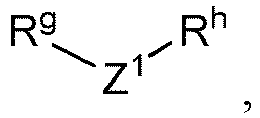

- wherein, Rc is the same definition of Rc as defined in the above part 4a);
- Ri is independently selected from H, CN, C1-C4 alkyl;
- m is each independently selected from 0-4;
- 4b') Preferably, Y is independently selected from O, NRg, S(O)p, -CRi(CH2) mNRgRh and -CRi(CH2)mORg;
- Rg and Rh are independently selected from H; C1-C6 haloalkyl;


- Rj and Rk are independently selected from H; CN; C1-C10 alkyl comprising 0-3 of substituent Rs; C1-C6 haloalkyl; C3-C10 cycloalkyl; heteroalkyl and heterocycloalkyl comprising carbon atoms and 1-4 heteroatoms selected from O, N, S(O)p; C2-C10 alkenyl or alkynyl; 6 to 10 membered aryl; 5 to 10 membered heteroaryl comprising carbon atoms and 1 to 2 heteroatoms selected from N, O, and S; wherein the aryl and heteroaryl may be substituted by 0-2 of R1Y;
- wherein, the definition of Rs is the same definition of Rs in the above part 4b);
- p is each independently selected from 0, 1 and 2;
- R1X is independently selected from halogen, OH, CN, C1-C4 alkyl, C1-C4 haloalkyl, C1-C4 alkoxy, C1-C4 haloalkoxy, C3-C8 cycloalkyl and cyclic heteroalkyl;
- R1Y is independently selected from C1-C10 alkyl, halogen, CN, C1-C6 haloalkyl, C1-C6 haloalkoxy, C3-C8 cycloalkyl;
- p is each independently 0, 1 and 2;
- In particular, Rg and Rh, as well as Rj and Rk may be connected by the following manner Rg-Rh,


- wherein, Rc is the same definition of Rc as defined in the above part 4a);
- p is each independently selected from 0, 1 and 2;
- Ri is independently selected from H, CN and C1-C4 alkyl;
- m is each independently selected from 0-4;
- Rg and Rh are independently selected from H; C1-C6 haloalkyl;
- 4b") More preferably, the Y is independently selected from O, NRg, S, -CRiNRgRh and -CRiORg;
- Rg and Rh are independently selected from H; C1-C6 haloalkyl;


- Rj and Rk are independently selected from H; CN; C1-C10 alkyl comprising 0-3 of substituent Rs; C1-C6 haloalkyl; C3-C10 cycloalkyl; heteroalkyl and heterocycloalkyl comprising carbon atoms and 1-4 heteroatoms selected from O, N, S; C2-C10 alkenyl or alkynyl; 6 to 10 membered aryl; 5 to 10 membered heteroaryl comprising carbon atoms and 1 to 2 heteroatoms selected from N, O, and S; wherein the aryl and heteroaryl may be substituted by 0-2 of R1Y;
- Rs is independently selected from OH; CN; halogen; C1-C6 alkyl; C1-C6 haloalkyl; C1-C6 alkoxy; C1-C6 haloalkoxy; C3-C8 cycloalkyl, -(OCH2CH2)mORd, (OCH2CH2)mNRdRe, heteroalkyl and heterocycloalkyl comprising carbon atoms and 1 to 2 heteroatoms selected from N, O, S; aryl; and heteroaryl comprising carbon atoms and 1 to 2 heteroatoms selected from N, O, and S; wherein the aryl and heteroaryl may be substituted by 0-2 of R1Y;
- wherein, Rd, Re are the same definition of Rd, Re as defined in the above part 4b);
- R1Y is independently selected from C1-C10 alkyl, halogen, CN, C1-C6 haloalkyl, C1-C6 haloalkoxy, C3-C8 cycloalkyl;
- In particular, Rg and Rh, as well as Rj and Rk may be connected by the following manner Rg-Rh,


- wherein, Rc is the same definition of Rc as defined in the above part 4a);
- p is each independently selected from 0, 1 and 2;
- Ri is independently selected from H, CN and C1-C4 alkyl;
- m is each independently selected from 0-4;
- Preferably, the compound of formula I has formula Ia-1 or Ia-2:

- Rg and Rh are independently selected from H; C1-C6 haloalkyl;
- Wherein, X1 is the same definition as defined in the part 1) of Formula I;
- ------ is a single bond or double bond;
- X2, R3-R5, R6 and n are the same definition as defined in the part 3) of Formula I;
- R1A, R1B and R1C, R2B and R2C, R3B and R3C, R1D, n, m, q, Y, M are the same definition as defined in the part 4) of Formula I;
- Wherein, X1 is the same definition as defined in the part 1) of Formula I;
- ------ is a single bond or double bond;
- X2, R7 and n are the same definition as defined in the part 3) of Formula I;
- R1A, R1B and R1C, R2B and R2C, R3B and R3C, R1D, n, m, q, Y, M are the same definition as defined in the part 4) of Formula I;
- Wherein, X1 is the same definition as defined in the part 1) of Formula I;
- ------ is a single bond or double bond;
- Y is the same definition as defined in the part 4) of Formula I;
- Wherein, X1 is the same definition as defined in the part 1) of Formula I;
- ------ is a single bond or double bond;
- The definition of Rg is the same definition as defined in the part 4b) of part 4) of Formula I;
- ------ is a single bond or double bond;
- The definition of Rg is the same definition as defined in the part 4b) of part 4) of Formula I;
- M is the same definition as defined in the part 4) of Formula I;
- The definition of Rg is the same definition as defined in the part 4b) of part 4) of Formula I;
- Preferably, the compound also includes the stereoisomers, tautomers, atropisomers, isotopically labeled compounds (including deuterium substitution), medically acceptable salts, polymorphs, solvates thereof, which can be used to treat diseases or conditions mediated by EED and/or PRC2.
- According to another aspect of the invention, methods and intermediates for preparing the compounds of the invention are provided.
- Wherein the method comprises the following steps:
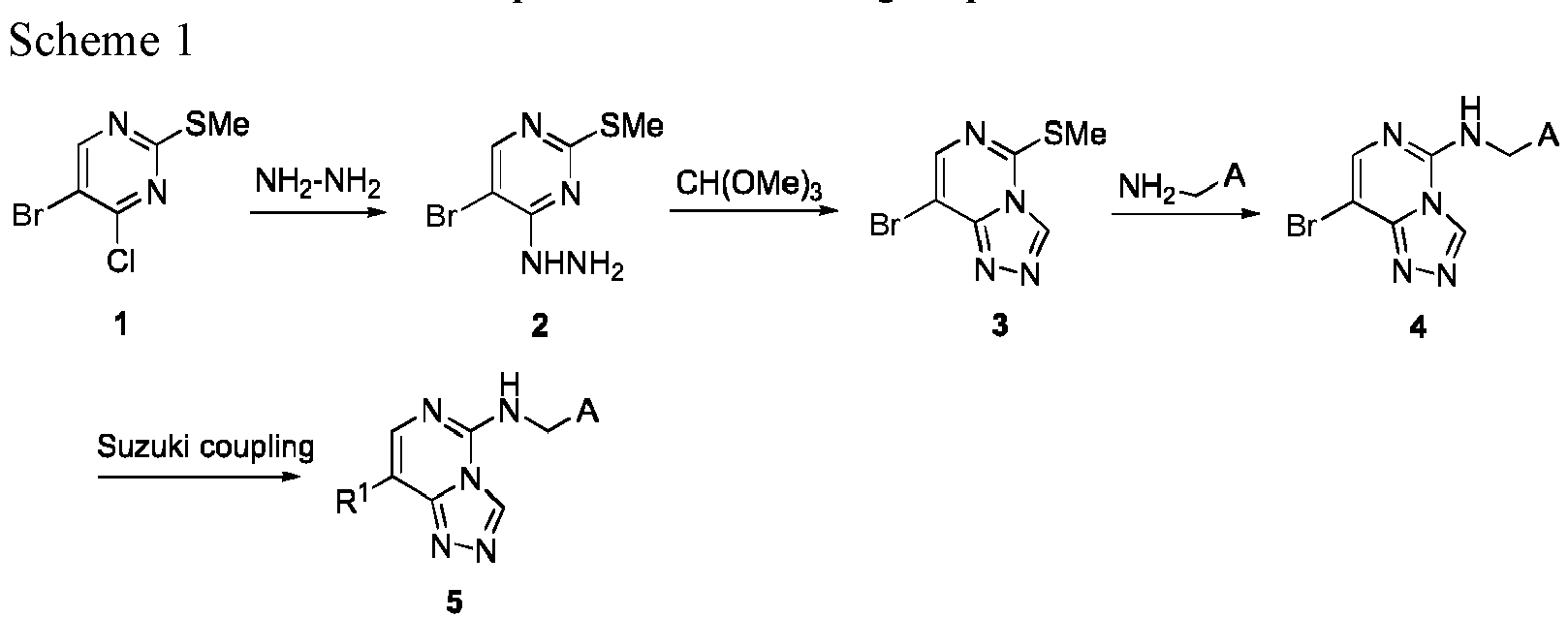
- (1a) treating 5-bromo-4-chloro -2- (methylthio) pyrimidine 1 with hydrated hydrazine to produce 5- bromo -4- hydrazinyl -2- (methylthio) pyrimidine 2,
- (1b) converting 5- bromo- 4- hydrazinyl-2- (methylthio) pyrimidine 2 with trimethyl orthoformate to triazole product 3,
- (1c) conducting a substitution reaction of triazole product 3 with an amine NH2CH2A to produce compound 4,
- (1d) conducting a suzuki coupling reaction of compound 4 with various of boric acid having R1 group or its equivalent under the action of palladium catalyst to obtain product 5. wherein, the definitions of A, R1 are the same as defined above.

- (2a) reacting the cyanoethyl amide 6 with ethyl propiolate to produce intermediate 7,
- (2b) treating intermediate 7 with bromine to conduct a bromation reaction to obtain bromide 8,
- (2c) reacting bromide 8 with phosphorus oxychloride to obtain intermediate 9,
- (2d) treating intermediate 9 with hydrated hydrazine to produce intermediate 10,
- (2e) converting intermediate 10 with trimethyl orthoformate to triazole intermediate 11,
- (2f) conducting a substitution reaction of triazole intermediate 11 with various amines to produce compound 12,
- (2g) conducting a suzuki coupling reaction of compound 12 with various of boric acid having R1 group or its equivalent under the action of palladium catalyst to obtain product 13.
wherein, the definitions of A, R1 are the same as defined above.
The amines described in Scheme 1 and Scheme 2 can be prepared according to the patentUS2016/0176682A1 (such as the preparation of A1 in the following reaction formula), or can be purchased from a reagent company (the following reaction formula, furfurylamine A2, purchased from Bellingway Technology Co., Ltd.), the boric acid or its equivalent B may be purchased from a reagent company or may be prepared according to conventional literature.


- (3a) removing the Boc protecting group in 14 using dichloromethane as a solvent and under the action of trifluoroacetic acid to obtain an amine compound 15,
- (3b) reacting the amine compound 15 with a reagent or compound having Rg under basic conditions to give a compound 16, the agent or compound is, for example, but not limited to acid anhydrides, sulfonic anhydride, isocyanate, thioisocyanate, acyl chloride, sulfonyl chloride, carbonate, chloroformate, urethane, etc., the base is, for example, but not limited to, triethylamine, diisopropylethylamine, DMAP, potassium carbonate, sodium hydroxide, potassium hydroxide, potassium tert-butoxide, NaH, the organic solvents is, for example, but not limited to, methylene chloride, tetrahydrofuran, acetonitrile, 1,4-dioxanene,
wherein, the definitions of A, X1, Rg, R1A , R1B, R1C, R2B, R2C, R3B, R3C, q, m are the same as defined above.
- (4a) conducting a condensation reaction of product 15 obtained by removing the protective group in step (3a) of Scheme 3 with a carboxylic acid having an Rj group under the action of a condensing agent to obtain an amide compound 17, the condensing agent is, for example, but not limited to carbonyldiimidazole, dicyclohexylcarbodiimide, diisopropylcarbodiimide, 1-(-3-dimethylaminopropyl) -3-ethylcarbodiimide, 1-hydroxybenzotriazole, 2-(7-azobenzotriazole) -N,N,N' ,N' -tetramethylurea hexafluorophosphate, benzotriazole-N,N,N',N'-tetramethylurea hexafluorophosphate, 6-chlorobenzotriazole-1,1,3,3-tetramethylurea hexafluorophosphate, o-benzotriazole-N,N,N',N'-tetramethylurea tetrafluoroborate, 6-chlorobenzotriazole-1,1,3,3-tetramethylurea tetrafluoroborate, 2-succinimidyl-1,1,3,3-tetramethylurea tetrafluoroborate and 2- (5-norbornene-2,3- dicarboximido) -1,1,3,3-tetramethylurea quaternary ammonium tetrafluoroborate, the condensation reaction can be performed in an organic solvent in the presence of a base, the base is, for example, but not limited to, triethylamine, diisopropylethylamine, 1,5-diazabicyclo[5.4.0]undec-5-ene, the organic solvent is, for example, but not limited to dichloromethane, chloroform, N, N-dimethylformamide, tetrahydrofuran,
wherein, the definitions of A, X1, Rj, R1A, R1B, R1C, R2B, R2C, R3B, R3C, q, m are the same as defined above.
- (5a) dissolving 18 in a solvent, the solvent is, for example, but not limited to, methanol, ethanol, ethyl acetate, and tetrahydrofuran, adding a metal catalyst, the metal catalyst is, for example, but not limited to 10% palladium carbon, Pd(OH)2, Raney nickel, RhCl(PPh3)3, introducing hydrogen gas, and reacting at room temperature to obtain compound 19 with double bond reduction,
wherein, the definitions of A, X1, Y, R1A, R1B, R1C, R2B, R2C, R3B, R3C, q, m are the same as defined above.
- (6a) obtaining the compound 21 by reduction reaction of 20, and then conducting an oxidation reaction with mCPBA (m-chloroperoxybenzoic acid) or hydrogen peroxide to obtain compound 22.
wherein, the definitions of A, X1, R1A, R1B, R1C, R2B, R2C, R3B, R3C, q, m are the same as defined above.

- (7a) conducting an oxidation reaction of 20 with mCPBA or hydrogen peroxide to obtain compound 23.
wherein, the definitions of A, X1, R1A, R1B, R1C, R2B, R2C, R3B, R3C, q, m are the same as defined above. - Reducing (for example, but not limited to, under the conditions of hydrogenation reduction) the double bond of 15 to obtain 24, and then reacting with a reagent or compound having an Rg group in the presence of a base to obtain 25, said reagent or compound is, for example, but not limited to acid anhydrides, sulfonic anhydride, isocyanate, thioisocyanate, acyl chloride, sulfonyl chloride, carbonate, chloroformate, urethane, the base is, for example, but not limited to, triethylamine, diisopropylethylamine, DMAP, potassium carbonate, sodium hydroxide, potassium hydroxide, potassium tert-butoxide, NaH, the reaction can be performed in an organic solvent is, for example, but not limited to, methylene chloride, tetrahydrofuran, acetonitrile, 1,4-dioxane; or conducting a condensation reaction of 24 with various carboxylic acids in the presence of a condensing agent to obtain an amide compound 25, the condensing agent is, for example, but not limited to carbonyldiimidazole, dicyclohexylcarbodiimide, diisopropylcarbodiimide, 1-(-3-dimethylaminopropyl) -3-ethylcarbodiimide, 1-hydroxybenzotriazole, 2-(7-azobenzotriazole) -N,N,N' ,N' -tetramethylurea hexafluorophosphate, benzotriazole-N,N,N',N'-tetramethylurea hexafluorophosphate, 6-chlorobenzotriazole-1,1,3,3-tetramethylurea hexafluorophosphate, o-benzotriazole-N,N,N',N' -tetramethylurea tetrafluoroborate, 6-chlorobenzotriazole-1,1,3,3-tetramethylurea tetrafluoroborate, 2-succinimidyl-1,1,3,3-tetramethylurea tetrafluoroborate and 2-(5-norbornene-2,3-dicarboximido) -1,1,3,3-tetramethylurea quaternary ammonium tetrafluoroborate, the condensation reaction can be performed in an organic solvent in the presence of a base, the base is triethylamine, diisopropylethylamine, 1,5-diazabicyclo[5.4.0]undec-5-ene, the organic solvent is dichloromethane, chloroform, N, N-dimethylformamide, tetrahydrofuran,
wherein, the definitions of A, X1, R1A, R1B, R1C, R2B, R2C, R3B, R3C, q, m are the same as defined above. - Preferably, the method comprises the following steps:

- (1a) treating 5-bromo-4-chloro -2- (methylthio) pyrimidine 1 with hydrated hydrazine to produce 5-bromo-4-hydrazinyl -2- (methylthio) pyrimidine 2,
- (1b) converting 5-bromo-4-hydrazinyl-2-(methylthio) pyrimidine 2 with trimethyl orthoformate to triazole product 3,
- (1c) conducting a substitution reaction of triazole product 3 with an amine NH2CH2A to produce compound 4,
- (1d) conducting a suzuki coupling reaction of compound 4 with various of boric acid having R1 group or its equivalent under the action of palladium catalyst to obtain product 5, wherein, the definitions of A, R1 are the same as defined above;

- (2a) reacting the cyanoethyl amide 6 with ethyl propiolate to produce intermediate 7,
- (2b) treating intermediate 7 with bromine to conduct a bromation reaction to obtain bromide 8,
- (2c) reacting bromide 8 with phosphorus oxychloride to obtain intermediate 9,
- (2d) treating intermediate 9 with hydrated hydrazine to produce intermediate 10,
- (2e) converting intermediate 10 with trimethyl orthoformate to triazole product 11,
- (2f) conducting a substitution reaction of triazole product 11 with various amines to produce compound 12,
- (2g) conducting a suzuki coupling reaction of compound 12 with various of boric acid having R1 group or its equivalent under the action of palladium catalyst to obtain product 13,
wherein, the definitions of A, R1 are the same as defined above;
- (3a) removing the Boc protecting group in 14' using dichloromethane as a solvent and under the action of trifluoroacetic acid to obtain an amine compound 15',
- (3b) further reacting the amine compound 15' with an acid anhydride, a sulfonic anhydride, an isocyanate, and a thioisocyanate with an Rg group under basic conditions to obtain a compound 16', the base is triethylamine, diisopropylethylamine, the reaction may be performed in an organic solvent, the organic solvent is dichloromethane, tetrahydrofuran, acetonitrile, 1,4-dioxane,
wherein, the definitions of A, X1, Rg are the same as defined above;
- (4a) conducting a condensation reaction of product 15' obtained by removing the protective group in step (3b) of Scheme 3 with a carboxylic acid having an Rj group under the action of a condensing agent to obtain an amide compound 17', the condensing agent is selected from carbonyldiimidazole, dicyclohexylcarbodiimide, diisopropylcarbodiimide, 1-(-3-dimethylaminopropyl) -3-ethylcarbodiimide, 1-hydroxybenzotriazole, 2-(7-azobenzotriazole) -N,N,N' ,N' -tetramethylurea hexafluorophosphate, benzotriazole-N,N,N',N'- tetramethylurea hexafluorophosphate, 6-chlorobenzotriazole-1, 1,3,3-tetramethylurea hexafluorophosphate, o-benzotriazole-N,N,N',N'-tetramethylurea tetrafluoroborate, 6-chlorobenzotriazole-1,1,3,3-tetramethylurea tetrafluoroborate, 2-succinimidyl-1,1,3,3 -tetramethylurea tetrafluoroborate and 2- (5-norbornene-2,3-dicarboximido)-1,1,3,3-tetramethylurea quaternary ammonium tetrafluoroborate, the condensation reaction can be performed in an organic solvent in the presence of a base, the base is triethylamine, diisopropylethylamine, 1,5-diazabicyclo[5.4.0]undec-5-ene, the organic solvent is dichloromethane, chloroform, N, N-dimethylformamide, tetrahydrofuran,
wherein, the definitions of A, X1, Rj are the same as defined above;
- (5a) using methanol as a solvent, and catalyzed by 10% palladium on carbon, introducing hydrogen gas, reacting 18' at room temperature for 6 hours to obtain a compound 19' with the double bond reduced.
- When an optically active form of a compound of the invention is required, it can be obtained by using optically active starting materials, or can be obtained by resolving the mixture of stereoisomers of the compound or intermediate by using standard procedures known to those skilled in the art, such as separation by a chiral chromatography column.
- Similarly, when pure geometric isomers of the compounds of the present invention are required, they can be obtained by using pure geometric isomers as starting materials, or can be obtained by resolving the mixture of geometric isomers of compounds or intermediates by using standard procedures, such as chromatographic separation.
- According to another aspect of the present invention, a pharmaceutical composition is provided, which comprises one or more of triazolopyrimidine, triazolopyridine compounds, pharmaceutically acceptable salts, enantiomers, diastereomers or racemates.
- Preferably, the pharmaceutical composition further comprises at least one other therapeutic agent.
- Preferably, at least one other therapeutic agent included in the pharmaceutical composition is selected from other anticancer agents, immunomodulators, antiallergic agents, antiemetics, pain relief agents, cytoprotective agents, and combinations thereof.
- Preferably, the pharmaceutical composition comprises at least one compound of the present invention and at least one pharmaceutically acceptable carrier, diluent or excipient,
- According to another aspect of the present invention, the use of the above compound or the pharmaceutical composition in the preparation of a medicament for treating a disease or condition mediated by EED and/or PRC2 is provided.
- Preferably, the disease or condition includes diffuse large B-cell lymphoma, follicular lymphoma, other lymphoma, leukemia, multiple myeloma, mesothelioma, gastric cancer, malignant rhabdoid tumor, hepatocellular carcinoma, prostate Cancer, breast cancer, bile duct and gallbladder cancer, bladder cancer; brain tumors, including neuroblastoma, schwannoma, glioma, glioblastoma and astrocytoma; cervical cancer, colon cancer, melanin tumor, endometrial cancer, esophageal cancer, head and neck cancer, lung cancer, nasopharyngeal cancer, ovarian cancer, pancreatic cancer, renal cell cancer, rectal cancer, thyroid cancer, parathyroid tumor, uterine tumor and soft tissue sarcoma.
- According to another aspect of the invention, a method of treating a disease or condition mediated by EED and/or PRC2 is provided, the method comprising
- Providing a subject in need with a therapeutically effective amount of a compound of formula I or a pharmaceutical composition thereof.
- Preferably, the disease or condition is selected from diffuse large B-cell lymphoma, follicular lymphoma, other lymphoma, leukemia, multiple myeloma, mesothelioma, gastric cancer, malignant rhabdoid tumor, hepatocellular carcinoma, prostate Cancer, breast cancer, bile duct and gallbladder cancer, bladder cancer; brain tumors, including neuroblastoma, schwannoma, glioma, glioblastoma and astrocytoma; cervical cancer, colon cancer, melanin tumor, endometrial cancer, esophageal cancer, head and neck cancer, lung cancer, nasopharyngeal cancer, ovarian cancer, pancreatic cancer, renal cell cancer, rectal cancer, thyroid cancer, parathyroid tumor, uterine tumor and soft tissue sarcoma.
- All features disclosed in this specification, or the disclosed methods or steps can be combined in any way unless that the features and/or steps are mutually exclusive. The following examples are only used to explain partial scope of the present invention and are not intended to limit the protection scope of the present invention.
-

- Bromide 4-1 (72 mg, 0.2 mmol) was dissolved in 6 mL of 1,4-dioxane and 2 mL of a 2 M Na2CO3 aqueous solution, and borate B-1 (84 mg, 0.4 mmol) ) was added thereto and the reaction system was stirred at room temperature for 10 min under Ar atmosphere protection. 10% of allyl palladium (II) chloride dimer (7.3 mg, 0.02 mmol), 20% of sodium 2'-dicyclohexylphosphino-2,6-dimethoxy-1,1'-biphenyl-3-sulfonate hydrate (21.2 mg, 0.04 mmol) were added, and the reaction was performed at 90 °C for 40 min under Ar atmosphere protection. After being cooled and concentrated under reduced pressure, the resultant was separated by column chromatography (DCM : MeOH = 20 : 1), to obtain the target compound E-Y1 as a white solid (41 mg, 57%).
1H NMR (400 MHz, MeOD-d4) δ 9.33 (s, 1H), 7.83 (s, 1H), 6.96 (s, 1H), 6.90 - 6.84 (m, 1H), 6.69 - 6.63 (m, 1H), 4.81 (s, 2H), 4.59 (t, J = 8.7 Hz, 2H), 4.39 (m, 2H), 3.99 (t, J= 5.5 Hz, 2H), 3.38 (m, 2H), 2.62 (m, 2H). LC-MS: [M+H]+ = 368.1. -
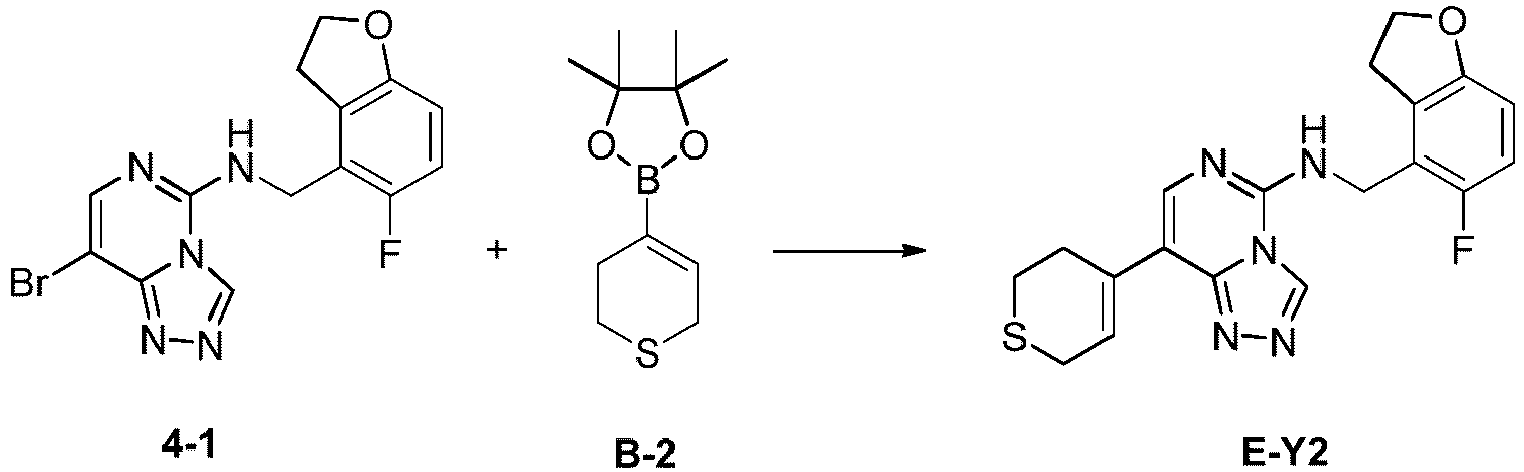
- Bromide 4-1 (72 mg, 0.2 mmol) was dissolved in 6 mL of 1,4-dioxane and 2 mL of a 2 M Na2CO3 aqueous solution, and borate B-2 (90 mg, 0.4 mmol) was added thereto and the reaction system was stirred at room temperature for 10 min under Ar atmosphere protection. 10% of allyl palladium (II) chloride dimer (7.3 mg, 0.02 mmol), 20% of sodium 2'-dicyclohexylphosphino-2,6-dimethoxy-1,1'-biphenyl-3-sulfonate hydrate (21.2 mg, 0.04 mmol) were added, and the reaction was performed at 90 °C for 40 min under Ar atmosphere protection. After being cooled and concentrated under reduced pressure, the resultant was separated by column chromatography (DCM: MeOH = 20: 1), to obtain the target compound E-Y2 as a white solid (34 mg, 45%).
1H NMR (400 MHz, DMSO-d6) δ 9.49 (s, 1H), 8.70 (t, J = 4.7 Hz, 1H), 7.67 (s, 1H), 7.26 (s, 1H), 6.94 (t, J= 9.5 Hz, 1H), 6.70 (dd, J = 8.6, 3.9 Hz, 1H), 4.68 (d, J = 4.6 Hz, 2H), 4.53 (t, J= 8.7 Hz, 2H), 3.36 (m, 2H), 3.29 (t, J= 8.6 Hz, 2H), 2.86 (t, J = 5.6 Hz, 2H), 2.74 (m, 2H). LC-MS: [M+H]+ = 384.1. -

- Bromide 4-1 (72 mg, 0.2 mmol) was dissolved in 6 mL of 1,4-dioxane and 2 mL of a 2 M Na2CO3 aqueous solution, and borate B-3 (123 mg, 0.4 mmol) was added thereto and the reaction system was stirred at room temperature for 10 min under Ar atmosphere protection. 10% of allyl palladium (II) chloride dimer (7.3 mg, 0.02 mmol), 20% of sodium 2'-dicyclohexylphosphino-2,6-dimethoxy-1,1'-biphenyl-3-sulfonate hydrate (21.2 mg, 0.04 mmol) were added, and the reaction was performed at 90 °C for 40 min under Ar atmosphere protection. After being cooled and concentrated under reduced pressure, the resultant was separated by column chromatography (DCM: MeOH = 20: 1), to obtain the target compound E-Y3 as a white solid (67 mg, 72%).
1H NMR (400 MHz, MeOD-d4) δ 9.36 (s, 1H), 7.88 (s, 1H), 6.91 - 6.82 (m, 1H), 6.73 (s, 1H), 6.66 (dd, J = 8.7, 3.9 Hz, 1H), 4.81 (s, 2H), 4.59 (t, J = 8.7 Hz, 2H), 4.16 (s, 2H), 3.76 - 3.66 (m, 2H), 3.38 (t, J = 8.7 Hz, 2H), 2.62 (s, 2H), 1.52 (s, 9H). LC-MS: [M+H]+ = 467.2. -

- Bromide 4-2 (58 mg, 0.2 mmol) was dissolved in 6 mL of 1,4-dioxane and 2 mL of a 2 M Na2CO3 aqueous solution, and borate B-1 (84 mg, 0.4 mmol) was added thereto and the reaction system was stirred at room temperature for 10 min under Ar atmosphere protection. 10% of allyl palladium (II) chloride dimer (7.3 mg, 0.02 mmol), 20% of sodium 2'-dicyclohexylphosphino-2,6-dimethoxy-1,1'-biphenyl-3-sulfonate hydrate (21.2 mg, 0.04 mmol) were added, and the reaction was performed at 90 °C for 40 min under Ar atmosphere protection. After being cooled and concentrated under reduced pressure, the resultant was separated by column chromatography (DCM: MeOH = 20: 1), to obtain the target compound E-Y4 as a white solid (37 mg, 64%).
1H NMR (400 MHz, MeOD-d4) δ 9.24 (s, 1H), 7.70 (s, 1H), 7.46 (d, J = 0.9 Hz, 1H), 7.06 (s, 1H), 6.44 - 6.31 (m, 2H), 4.77 (s, 2H), 4.37 (m, 2H), 3.96 (t, J= 5.5 Hz, 2H), 2.60 (m, 2H). LC-MS: [M+H]+ = 298.1. -

- Bromide 4-2 (58 mg, 0.2 mmol) was dissolved in 6 mL of 1,4-dioxane and 2 mL of a 2 M Na2CO3 aqueous solution, and borate B-2 (90 mg, 0.4 mmol) was added thereto and the reaction system was stirred at room temperature for 10 min under Ar atmosphere protection. 10% of allyl palladium (II) chloride dimer (7.3 mg, 0.02 mmol), 20% of sodium 2'-dicyclohexylphosphino-2,6-dimethoxy-1,1'-biphenyl-3-sulfonate hydrate (21.2 mg, 0.04 mmol) were added, and the reaction was performed at 90 °C for 40 min under Ar atmosphere protection. After being cooled and concentrated under reduced pressure, the resultant was separated by column chromatography (DCM: MeOH = 20: 1), to obtain the target compound E-Y5 as a white solid (37 mg, 60%).
1H NMR (400 MHz, MeOD-d4) δ 9.25 (s, 1H), 7.68 (s, 1H), 7.48 (d, J = 0.9 Hz, 1H), 6.85 - 6.81 (m, 1H), 6.42 - 6.36 (m, 2H), 4.79 (s, 2H), 3.43 - 3.37 (m, 2H), 2.93 (t, J= 5.7 Hz, 2H), 2.81 (dd, J= 5.7, 2.0 Hz, 2H). LC-MS: [M+H]+ = 314.1. -

- Bromide 4-2 (58 mg, 0.2 mmol) was dissolved in 6 mL of 1,4-dioxane and 2 mL of a 2 M Na2CO3 aqueous solution, and borate B-3 (123 mg, 0.4 mmol) was added thereto and the reaction system was stirred at room temperature for 10 min under Ar atmosphere protection. 10% of allyl palladium (II) chloride dimer (7.3 mg, 0.02 mmol), 20% of sodium 2'-dicyclohexylphosphino-2,6-dimethoxy-1,1'-biphenyl-3-sulfonate hydrate (21.2 mg, 0.04 mmol) were added, and the reaction was performed at 90 °C for 40 min under Ar atmosphere protection. After being cooled and concentrated under reduced pressure, the resultant was separated by column chromatography (DCM: MeOH = 20: 1), to obtain the target compound E-Y6 as a white solid (55 mg, 70%).
1H NMR (400 MHz, MeOD-d4) δ 9.24 (s, 1H), 7.68 (s, 1H), 7.47 (dd, J = 1.8, 0.8 Hz, 1H), 6.94 (s, 1H), 6.40 (ddd, J = 5.1, 3.2, 2.2 Hz, 2H), 4.78 (s, 2H), 4.15 (m, 2H), 3.69 (m, 2H), 2.62 (m, 2H), 1.51 (s, 9H). LC-MS: [M+H]+ = 397.1. -
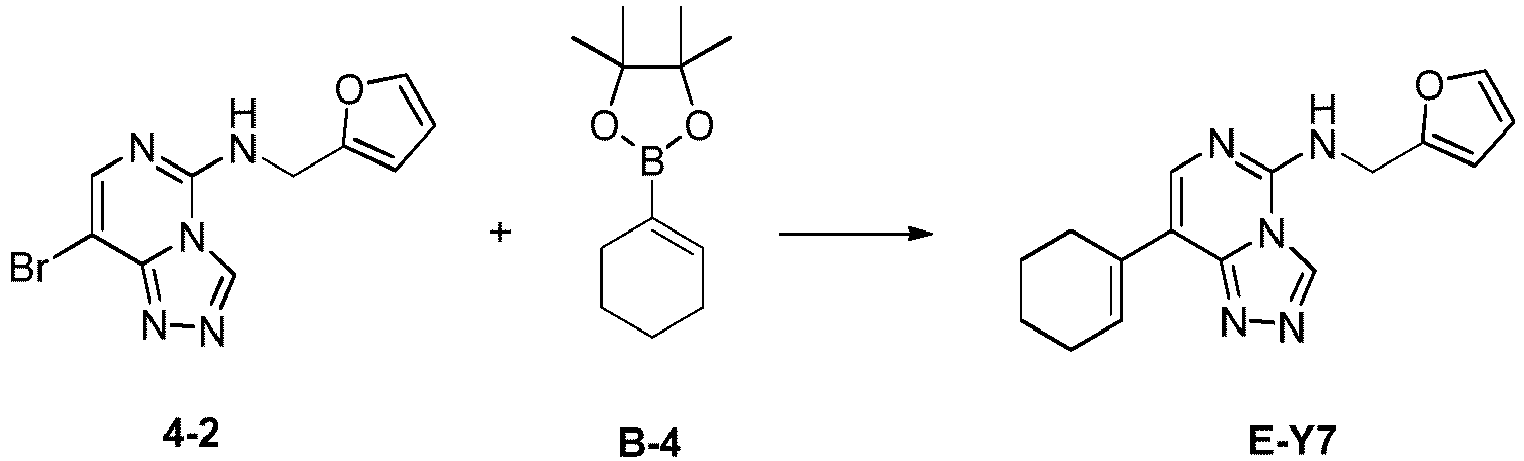
- Bromide 4-2 (58 mg, 0.2 mmol) was dissolved in 6 mL of 1,4-dioxane and 2 mL of a 2 M Na2CO3 aqueous solution, and borate B-4 (83 mg, 0.4 mmol) was added thereto and the reaction system was stirred at room temperature for 10 min under Ar atmosphere protection. 10% of allyl palladium (II) chloride dimer (7.3 mg, 0.02 mmol), 20% of sodium 2'-dicyclohexylphosphino-2,6-dimethoxy-1,1'-biphenyl-3-sulfonate hydrate (21.2 mg, 0.04 mmol) were added, and the reaction was performed at 90 °C for 40 min under Ar atmosphere protection. After being cooled and concentrated under reduced pressure, the resultant was separated by column chromatography (DCM: MeOH = 20: 1), to obtain the target compound E-Y7 as a white solid (38 mg, 64%).
1H NMR (400 MHz, MeOD-d4) δ 9.24 (s, 1H), 7.66 (s, 1H), 7.49 (s, 1H), 6.83 (s, 1H), 6.44 - 6.36 (m, 2H), 4.79 (s, 2H), 2.52 (s, 2H), 2.31 (s, 2H), 1.87 (dd, J = 11.7, 6.1 Hz, 2H), 1.79 - 1.70 (m, 2H). LC-MS: [M+H]+ = 296.1. -

- Bromide 4-2 (58 mg, 0.2 mmol) was dissolved in 6 mL of 1,4-dioxane and 2 mL of a 2 M Na2CO3 aqueous solution, and borate B-5 (102 mg, 0.4 mmol) was added thereto and the reaction system was stirred at room temperature for 10 min under Ar atmosphere protection. 10% of allyl palladium (II) chloride dimer (7.3 mg, 0.02 mmol), 20% of sodium 2'-dicyclohexylphosphino-2,6-dimethoxy-1,1'-biphenyl-3-sulfonate hydrate (21.2 mg, 0.04 mmol) were added, and the reaction was performed at 90 °C for 40 min under Ar atmosphere protection. After being cooled and concentrated under reduced pressure, the resultant was separated by column chromatography (DCM: MeOH = 20: 1), to obtain the target compound E-Y8 as a white solid (39 mg, 57%).
1H NMR (400 MHz, MeOD-d4) δ 9.24 (s, 1H), 7.65 (s, 1H), 7.48 (d, J = 1.0 Hz, 1H), 7.20 (d, J = 6.9 Hz, 1H), 7.12 (t, J = 6.9 Hz, 1H), 7.03 (t, J = 7.0 Hz, 1H), 6.80 (d, J = 7.3 Hz, 1H), 6.46 - 6.38 (m, 2H), 6.34 (t, J = 4.6 Hz, 1H), 4.81 (s, 2H), 2.91 (t, J = 8.0 Hz, 2H), 2.46 (td, J = 8.0, 4.7 Hz, 2H). LC-MS: [M+H]+ = 344.1. -

- Bromide 4-2 (58 mg, 0.2 mmol) was dissolved in 6 mL of 1,4-dioxane and 2 mL of a 2 M Na2CO3 aqueous solution, and borate B-6 (129 mg, 0.4 mmol) was added thereto and the reaction system was stirred at room temperature for 10 min under Ar atmosphere protection. 10% of allyl palladium (II) chloride dimer (7.3 mg, 0.02 mmol), 20% of sodium 2'-dicyclohexylphosphino-2,6-dimethoxy-1,1'-biphenyl-3-sulfonate hydrate (21.2 mg, 0.04 mmol) were added, and the reaction was performed at 90 °C for 40 min under Ar atmosphere protection. After being cooled and concentrated under reduced pressure, the resultant was separated by column chromatography (DCM: MeOH = 20: 1), to obtain the target compound E-Y9 as a white solid (42 mg, 51%).
1H NMR (400 MHz, MeOD-d4) δ 9.23 (s, 1H), 7.62 (s, 1H), 7.47 (dd, J = 1.8, 0.9 Hz, 1H), 6.76 (s, 1H), 6.39 (ddd, J = 5.1, 3.2, 1.3 Hz, 2H), 4.77 (s, 2H), 3.75 (m, 1H), 2.68 - 2.51 (m, 3H), 2.25 - 2.14 (m, 1H), 2.04 (m, 1H), 1.80 - 1.68 (m, 1H), 1.46 (s, 9H). LC-MS: [M+H]+ = 411.2. -

- Compound E-Y3 (46 mg, 0.1 mmol) was dissolved in 3 mL of dichloromethane (DCM) and 1 mL of trifluoroacetic acid (TFA), and the mixture was stirred at room temperature for 30 min. After being concentrated, the resultant was directly separated by HPLC. Mobile phase: 40% acetonitrile / 60% water (containing 0.1% TFA), retention time 4.7 min, yield 70%.
LC-MS: [M+H]+ = 367.1. -

- Compound E-Y6 (46 mg, 0.1 mmol) was dissolved in 3 mL of dichloromethane (DCM) and 1 mL of trifluoroacetic acid (TFA), and the mixture was stirred at room temperature for 30 min. After being concentrated, the resultant was directly separated by HPLC. Mobile phase: 40% acetonitrile / 60% water (containing 0.1% TFA), retention time 5.4 min, yield 82%.
1H NMR (400 MHz, MeOD-d4) δ 9.27 (s, 1H), 7.77 (s, 1H), 7.45 (dd, J = 1.8, 0.8 Hz, 1H), 7.02 (s, 1H), 6.38 (dt, J = 3.2, 2.2 Hz, 2H), 4.79 (s, 2H), 3.92 (m, 2H), 3.50 (t, J = 6.1 Hz, 2H), 2.95 - 2.85 (m, 2H). LC-MS: [M+H]+ = 297.1. -

- Compound E-Y9 (41 mg, 0.1 mmol) was dissolved in 3 mL of dichloromethane (DCM) and 1 mL of trifluoroacetic acid (TFA), and the mixture was stirred at room temperature for 30 min. After being concentrated, the resultant was directly separated by HPLC. Mobile phase: 40% acetonitrile / 60% water (containing 0.1% TFA), retention time 5.4 min, yield 69%.
1H NMR (400 MHz, MeOD-d4) δ 9.29 (s, 1H), 7.79 (s, 1H), 7.46 (s, 1H), 6.61 (s, 1H), 6.45 - 6.34 (m, 2H), 4.79 (s, 2H), 3.51 (m, 1H), 2.70 (m, 2H), 2.41 - 2.32 (m, 1H), 2.20 (m, 1H), 1.91 (m, 2H). LC-MS: [M+H]+ = 311.1. -

- Compound E-Y3 (46 mg, 0.1 mmol) was dissolved in 3 mL of dichloromethane (DCM) and 1 mL of trifluoroacetic acid (TFA), and the mixture was stirred at room temperature for 30 min. After the solvent was concentrated, 3 mL of dichloromethane and 0.1 mL of triethylamine (TEA) were added and dissolved by stirring. methanesulfonic anhydride (Ms2O, 26 mg, 0.15 mmol) was added at room temperature, and the reaction was further performed for 1 hour. When the reaction was completed as indicated by TLC (DCM: MeOH = 10: 1, Rf = 0.5), the resultant was directly separated by column chromatography (DCM: MeOH = 30: 1) to obtain the target compound E-Y13 as a white solid (24 mg, yield in two steps 51%).
1H NMR (400 MHz, DMSO-d6) δ 9.46 (s, 1H), 8.67 (t, J = 4.9 Hz, 1H), 7.71 (s, 1H), 7.32 (s, 1H), 7.01 - 6.88 (m, 1H), 6.70 (dd, J = 8.6, 4.0 Hz, 1H), 4.69 (d, J = 4.8 Hz, 2H), 4.54 (t, J = 8.8 Hz, 2H), 3.94 (m, 2H), 3.40 (m, 2H), 3.29 (m, 2H), 2.95 (s, 3H), 2.70 (m, 2H). LC-MS: [M+H]+ = 445.1 -

- Compound E-Y3 (46 mg, 0.1 mmol) was dissolved in 3 mL of dichloromethane (DCM) and 1 mL of trifluoroacetic acid (TFA), and the mixture was stirred at room temperature for 30 min. After the solvent was concentrated, 3 mL of dichloromethane and 0.1 mL of triethylamine (TEA) were added and dissolved by stirring. p-toluenesulfonic acid anhydride (Ts2O, 48 mg, 0.15 mmol) was added at room temperature, and the reaction was further performed for 1 hour. When the reaction was completed as indicated by TLC (DCM: MeOH = 10: 1, Rf = 0.5), the resultant was directly separated by column chromatography (DCM: MeOH = 30: 1) to obtain the target compound E-Y14 as a white solid (16 mg, yield in two steps 32%).
1H NMR (400 MHz, MeOD-d4) δ 9.45 (s, 1H), 7.89 - 7.64 (m, 3H), 7.44 (d, J = 7.9 Hz, 2H), 6.85 (t, J = 9.4 Hz, 1H), 6.76 (s, 1H), 6.64 (dd, J = 8.5, 3.6 Hz, 1H), 4.77 (s, 2H), 4.57 (t, J= 8.6 Hz, 2H), 3.79 (s, 2H), 3.44 - 3.33 (m, 4H), 2.67 (s, 2H), 2.45 (s, 3H). LC-MS: [M+H]+ = 521.2. -

- Compound E-Y3 (46 mg, 0.1 mmol) was dissolved in 3 mL of dichloromethane (DCM) and 1 mL of trifluoroacetic acid (TFA), and the mixture was stirred at room temperature for 30 min. After the solvent was concentrated, 3 mL of dichloromethane and 0.1 mL of triethylamine (TEA) were added and dissolved by stirring. Acetic anhydride (Ac2O, 15mg, 0.15 mmol) was added at room temperature, and the reaction was further performed for 1 hour. When the reaction was completed as indicated by TLC (DCM: MeOH = 10: 1, Rf = 0.5), the resultant was directly separated by column chromatography (DCM: MeOH = 30: 1) to obtain the target compound E-Y15 as a white solid (14 mg, yield in two steps 35%).
1H NMR (400 MHz, DMSO-d6 ) δ 9.46 (d, J = 1.1 Hz, 1H), 8.65 (s, 1H), 7.70 (d, J = 8.3 Hz, 1H), 7.27 (d, J = 21.1 Hz, 1H), 6.97 - 6.89 (m, 1H), 6.71 (dd, J = 8.7, 3.8 Hz, 1H), 4.69 (d, J = 4.2 Hz, 2H), 4.54 (t, J = 8.7 Hz, 2H), 4.19 (d, J = 25.2 Hz, 2H), 3.67 (dt, J = 11.2, 5.7 Hz, 2H), 3.28 (t, J = 8.7 Hz, 2H), 2.64 (s, 1H), 2.52 (s, 1H), 2.06 (d, J = 15.7 Hz, 3H). LC-MS: [M+H]+ = 409.1. -

- Compound E-Y3 (46 mg, 0.1 mmol) was dissolved in 3 mL of dichloromethane (DCM) and 1 mL of trifluoroacetic acid (TFA), and the mixture was stirred at room temperature for 30 min. After the solvent was concentrated, 3 mL of dichloromethane and 0.1 mL of triethylamine (TEA) were added and dissolved by stirring. Benzoic anhydride ((PhCO)2O, 34 mg, 0.15 mmol) was added at room temperature, and the reaction was further performed for 1 hour. When the reaction was completed as indicated by TLC (DCM: MeOH = 10: 1, Rf = 0.5), the resultant was directly separated by column chromatography (DCM: MeOH = 30: 1) to obtain the target compound E-Y16 as a white solid (14 mg, yield in two steps 30%).
1H NMR (400 MHz, DMSO-d6 ) δ 9.46 (s, 1H), 8.66 (s, 1H), 7.70 (s, 1H), 7.47 (d, J = 3.9 Hz, 5H), 7.01 - 6.90 (m, 1H), 6.71 (dd, J = 8.7, 3.9 Hz, 1H), 4.69 (d, J = 4.9 Hz, 2H), 4.54 (t, J = 8.8 Hz, 2H), 4.35 (s, 1H), 4.15 (s, 1H), 3.87 (s, 1H), 3.56 (s, 1H), 3.28 (t, J = 8.6 Hz, 2H), 2.64 (s, 2H). LC-MS: [M+H]+ = 471.1. -

- Compound E-Y3 (46 mg, 0.1 mmol) was dissolved in 3 mL of dichloromethane (DCM) and 1 mL of trifluoroacetic acid (TFA), and the mixture was stirred at room temperature for 30 min. After the solvent was concentrated, 3 mL of dichloromethane and 0.1 mL of triethylamine (TEA) were added and dissolved by stirring. Ethyl isocyanate (11 mg, 0.15 mmol) was added at room temperature, and the reaction was further performed for 1 hour. When the reaction was completed as indicated by TLC (DCM: MeOH = 10: 1, Rf = 0.5), the resultant was directly separated by column chromatography (DCM: MeOH = 30: 1) to obtain the target compound E-Y17 as a white solid (17 mg, yield in two steps 40%).
1H NMR (400 MHz, DMSO-d6) δ 9.45 (s, 1H), 8.64 (s, 1H), 7.69 (s, 1H), 7.27 (s, 1H), 6.95 (t, J = 9.2 Hz, 1H), 6.78 - 6.64 (m, 1H), 6.51 (s, 1H), 4.69 (s, 2H), 4.54 (t, J = 8.8 Hz, 2H), 4.03 (s, 2H), 3.54 (s, 2H), 3.27 (m, 2H), 3.15 - 2.98 (m, 2H), 1.03 (t, J = 7.1 Hz, 3H). LC-MS: [M+H]+ = 438.2. -

- Compound E-Y3 (46 mg, 0.1 mmol) was dissolved in 3 mL of dichloromethane (DCM) and 1 mL of trifluoroacetic acid (TFA), and the mixture was stirred at room temperature for 30 min. After the solvent was concentrated, 3 mL of dichloromethane and 0.1 mL of triethylamine (TEA) were added and dissolved by stirring. t-butyl isocyanate (11 mg, 0.15 mmol) was added at room temperature, and the reaction was further performed for 1 hour. When the reaction was completed as indicated by TLC (DCM: MeOH = 10: 1, Rf = 0.5), the resultant was directly separated by column chromatography (DCM: MeOH = 30: 1) to obtain the target compound E-Y18 as a white solid (15 mg, yield in two steps 33%).
1H NMR (400 MHz, MeOD-d4) δ 9.38 (s, 1H), 7.93 (s, 1H), 6.93 - 6.83 (m, 1H), 6.69 (s, 1H), 6.66 (dd, J = 8.7, 3.9 Hz, 1H), 4.82 (s, 2H), 4.59 (t, J = 8.7 Hz, 2H), 4.10 (d, J = 2.9 Hz, 2H), 3.66 (t, J = 5.6 Hz, 2H), 3.39 (t, J = 7.7 Hz, 2H), 2.62 (s, 2H), 1.38 (s, 9H). LC-MS: [M+H]+ = 466.2. -

- Compound E-Y3 (46 mg, 0.1 mmol) was dissolved in 3 mL of dichloromethane (DCM) and 1 mL of trifluoroacetic acid (TFA), and the mixture was stirred at room temperature for 30 min. After the solvent was concentrated, 3 mL of dichloromethane and 0.1 mL of triethylamine (TEA) were added and dissolved by stirring. Ethyl isothiocyanate (13 mg, 0.15 mmol) was added at room temperature, and the reaction was further performed for 1 hour. When the reaction was completed as indicated by TLC (DCM: MeOH = 10: 1, Rf = 0.5), the resultant was directly separated by column chromatography (DCM: MeOH = 30: 1) to obtain the target compound E-Y19 as a white solid (14 mg, yield in two steps 31%).
1H NMR (400 MHz, DMSO-d6) δ 9.46 (s, 1H), 8.66 (d, J = 5.0 Hz, 1H), 7.71 (d, J = 9.9 Hz, 2H), 7.27 (s, 1H), 7.02 - 6.90 (m, 1H), 6.71 (dd, J = 8.5, 3.8 Hz, 1H), 4.70 (d, J = 4.7 Hz, 2H), 4.54 (t, J = 8.7 Hz, 2H), 4.41 (s, 2H), 4.07 (t, J = 5.4 Hz, 2H), 3.55 (dd, J = 12.3, 6.8 Hz, 2H), 3.27 (d, J = 8.7 Hz, 2H), 2.61 (s, 2H), 1.12 (t, J = 7.1 Hz, 3H). LC-MS: [M+H]+ = 454.1. -

- Compound E-Y6 (39 mg, 0.1 mmol) was dissolved in 3 mL of dichloromethane (DCM) and 1 mL of trifluoroacetic acid (TFA), and the mixture was stirred at room temperature for 30 min. After the solvent was concentrated, 3 mL of dichloromethane and 0.1 mL of triethylamine (TEA) were added and dissolved by stirring. Acetic anhydride (Ac2O, 15 mg, 0.15 mmol) was added at room temperature, and the reaction was performed for 1 hour. When the reaction was completed as indicated by TLC (DCM: MeOH = 10: 1, Rf = 0.5), the resultant was directly separated by column chromatography (DCM: MeOH = 30: 1) to obtain the target compound E-Y20 as a white solid (14 mg, yield in two steps 42%).
1H NMR (400 MHz, MeOD-d4) δ 9.33 (s, 1H), 7.91 (s, 1H), 7.49 (s, 1H), 6.73 (brs, 1H), 6.48 - 6.36 (m, 2H), 4.83 (s, 2H), 4.30 (m, 2H), 3.84 (m, 2H), 2.67 (m, 2H), 2.20 (s, 3H). LC-MS: [M+H]+ = 339.1. -

- Compound E-Y6 (39 mg, 0.1 mmol) was dissolved in 3 mL of dichloromethane (DCM) and 1 mL of trifluoroacetic acid (TFA), and the mixture was stirred at room temperature for 30 min. After the solvent was concentrated, 3 mL of dichloromethane and 0.1 mL of triethylamine (TEA) were added and dissolved by stirring. Benzoic anhydride ((PhCO)2O, 15 mg, 0.15 mmol) was added at room temperature, and the reaction was further performed for 1 hour. When the reaction was completed as indicated by TLC (DCM: MeOH = 10: 1, Rf = 0.5), the resultant was directly separated by column chromatography (DCM: MeOH = 30: 1) to obtain the target compound E-Y21 as a white solid (13 mg, yield in two steps 32%).
1H NMR (400 MHz, MeOD-d4) δ 9.30 (s, 1H), 7.82 (s, 1H), 7.51 (m, 5H), 7.48 (s, 1H), 6.92 (s, 1H), 6.47 - 6.36 (m, 2H), 4.82 (s, 2H), 4.46 (m, 1H), 4.24 (m, 1H), 4.06 (m, 1H), 3.71 (m, 1H), 2.74 (m, 2H). LC-MS: [M+H]+ = 401.1 -

- Compound E-Y6 (39 mg, 0.1 mmol) was dissolved in 3 mL of dichloromethane (DCM) and 1 mL of trifluoroacetic acid (TFA), and the mixture was stirred at room temperature for 30 min. After the solvent was concentrated, 3 mL of dichloromethane and 0.1 mL of triethylamine (TEA) were added and dissolved by stirring. Methanesulfonic anhydride (Ms2O, 26 mg, 0.15 mmol) was added at room temperature, and the reaction was further performed for 1 hour. When the reaction was completed as indicated by TLC (DCM: MeOH = 10: 1, Rf = 0.5), the resultant was directly separated by column chromatography (DCM: MeOH = 30: 1) to obtain the target compound E-Y22 as a white solid (18 mg, yield in two steps 47%).
1H NMR (400 MHz, DMSO-d6) δ 9.43 (s, 1H), 8.86 (s, 1H), 7.71 (s, 1H), 7.63 (s, 1H), 7.30 (s, 1H), 6.43 (m, 2H), 4.73 (s, 2H), 3.94 (m, 2H), 3.40 (m, 2H), 2.95 (s, 3H), 2.69 (m, 2H). LC-MS: [M+H]+ = 375.1. -

- Compound E-Y6 (39 mg, 0.1 mmol) was dissolved in 3 mL of dichloromethane (DCM) and 1 mL of trifluoroacetic acid (TFA), and the mixture was stirred at room temperature for 30 min. After the solvent was concentrated, 3 mL of dichloromethane and 0.1 mL of triethylamine (TEA) were added and dissolved by stirring. p-toluenesulfonic acid anhydride (Ts2O, 48mg, 0.15 mmol) was added at room temperature, and the reaction was further performed for 1 hour. When the reaction was completed as indicated by TLC (DCM: MeOH = 10: 1, Rf = 0.5), the resultant was directly separated by column chromatography (DCM: MeOH = 30: 1) to obtain the target compound E-Y23 as a white solid (16 mg, yield in two steps 35%).
1H NMR (400 MHz, MeOD-d4) δ 9.24 (s, 1H), 7.76 (d, J = 7.9 Hz, 2H), 7.67 (s, 1H), 7.47 (s, 1H), 7.46 (d, J = 8.4 Hz, 2H), 6.93 (s, 1H), 6.40 (m, 2H), 4.78 (s, 2H), 3.82 (m, 2H), 3.36 (m, 2H), 2.71 (m, 2H), 2.46 (s, 3H). LC-MS: [M+H]+ = 451.1. -

- Compound E-Y6 (39 mg, 0.1 mmol) was dissolved in 3 mL of dichloromethane (DCM) and 1 mL of trifluoroacetic acid (TFA), and the mixture was stirred at room temperature for 30 min. After the solvent was concentrated, 3 mL of dichloromethane and 0.1 mL of triethylamine (TEA) were added and dissolved by stirring. Ethyl isocyanate (11 mg, 0.15 mmol) was added at room temperature, and the reaction was further performed for 1 hour. When the reaction was completed as indicated by TLC (DCM: MeOH = 10: 1, Rf = 0.5), the resultant was directly separated by column chromatography (DCM: MeOH = 30: 1) to obtain the target compound E-Y24 as a white solid (20 mg, yield in two steps 55%).
1H NMR (400 MHz, MeOD-d4) δ 9.25 (s, 1H), 7.70 (s, 1H), 7.47 (d, J = 1.0 Hz, 1H), 6.98 (m, 1H), 6.44 - 6.36 (m, 2H), 4.79 (s, 2H), 4.11 (d, J = 2.8 Hz, 2H), 3.69 (t, J = 5.6 Hz, 2H), 3.25 (q, J = 7.2 Hz, 2H), 2.66 (d, J = 16.7 Hz, 2H), 1.16 (t, J = 7.2 Hz, 3H). LC-MS: [M+H]+ = 368.1. -

- Compound E-Y6 (39 mg, 0.1 mmol) was dissolved in 3 mL of dichloromethane (DCM) and 1 mL of trifluoroacetic acid (TFA), and the mixture was stirred at room temperature for 30 min. After the solvent was concentrated, 3 mL of dichloromethane and 0.1 mL of triethylamine (TEA) were added and dissolved by stirring. t-butyl isocyanate (11 mg, 0.15 mmol) was added at room temperature, and the reaction was further performed for 1 hour. When the reaction was completed as indicated by TLC (DCM: MeOH = 10: 1, Rf = 0.5), the resultant was directly separated by column chromatography (DCM: MeOH = 30: 1) to obtain the target compound E-Y25 as a white solid (14 mg, yield in two steps 37%).
1H NMR (400 MHz, MeOD-d4) δ 9.28 (s, 1H), 7.76 (s, 1H), 7.48 (m, 1H), 6.90 (s, 1H), 6.45 - 6.34 (m, 2H), 4.80 (s, 2H), 4.10 (d, J = 2.5 Hz, 2H), 3.65 (t, J = 5.6 Hz, 2H), 2.63 (m, 2H), 1.38 (s, 9H). LC-MS: [M+H]+ = 396.1. -

- Compound E-Y6 (39 mg, 0.1 mmol) was dissolved in 3 mL of dichloromethane (DCM) and 1 mL of trifluoroacetic acid (TFA), and the mixture was stirred at room temperature for 30 min. After the solvent was concentrated, 3 mL of dichloromethane and 0.1 mL of triethylamine (TEA) were added and dissolved by stirring. p-toluene isocyanate (20 mg, 0.15 mmol) was added at room temperature, and the reaction was further performed for 1 hour. When the reaction was completed as indicated by TLC (DCM: MeOH = 10: 1, Rf = 0.5), the resultant was directly separated by column chromatography (DCM: MeOH = 30: 1) to obtain the target compound E-Y26 as a white solid (20 mg, yield in two steps 46%).
1H NMR (400 MHz, DMSO-d6) δ 9.44 (s, 1H), 8.81 (m, 1H), 8.46 (s, 1H), 7.72 (s, 1H), 7.63 (s, 1H), 7.37 (d, J = 8.4 Hz, 2H), 7.32 (s, 1H), 7.05 (d, J = 8.2 Hz, 2H), 6.43 (s, 2H), 4.74 (d, J = 4.8 Hz, 2H), 4.22 (s, 2H), 3.69 (t, J = 5.4 Hz, 2H), 2.62 (s, 2H), 2.24 (s, 3H). LC-MS: [M+H]+ = 430.1. -

- Compound E-Y6 (39 mg, 0.1 mmol) was dissolved in 3 mL of dichloromethane (DCM) and 1 mL of trifluoroacetic acid (TFA), and the mixture was stirred at room temperature for 30 min. After the solvent was concentrated, 3 mL of dichloromethane and 0.1 mL of triethylamine (TEA) were added and dissolved by stirring. p-chlorobenzene isocyanate (23 mg, 0.15 mmol) was added at room temperature, and the reaction was further performed for 1 hour. When the reaction was completed as indicated by TLC (DCM: MeOH = 10: 1, Rf = 0.5), the resultant was directly separated by column chromatography (DCM: MeOH = 30: 1) to obtain the target compound E-Y27 as a white solid (23 mg, yield in two steps 51%).
1H NMR (400 MHz, DMSO-d6) δ 9.44 (s, 1H), 8.81 (s, 1H), 8.70 (s, 1H), 7.72 (s, 1H), 7.63 (s, 1H), 7.54 (d, J = 8.9 Hz, 2H), 7.32 (s, 1H), 7.29 (d, J = 8.9 Hz, 2H), 6.43 (s, 2H), 4.74 (s, 2H), 4.23 (s, 2H), 3.71 (t, J = 5.6 Hz, 2H), 2.63 (s, 2H). LC-MS: [M+H]+ = 450.1. -
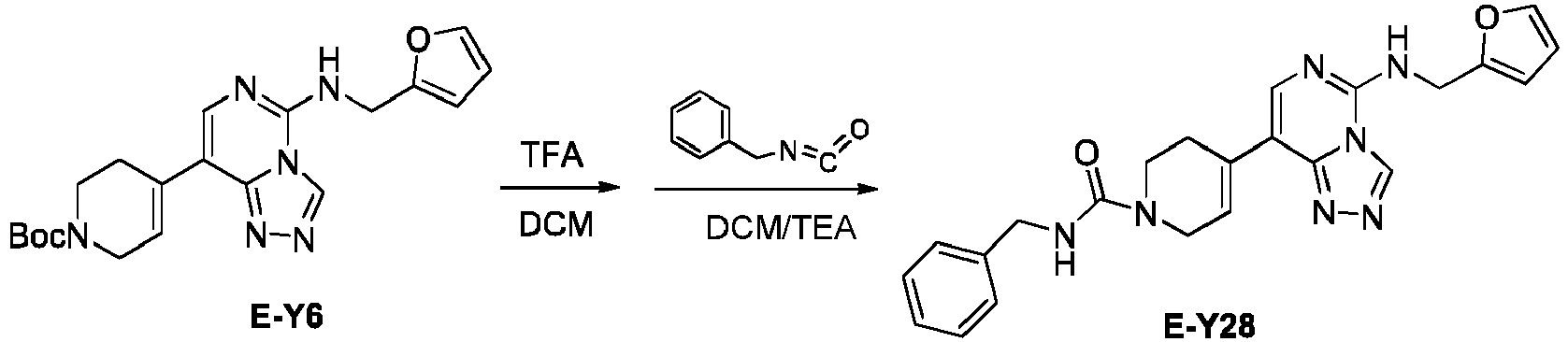
- Compound E-Y6 (39 mg, 0.1 mmol) was dissolved in 3 mL of dichloromethane (DCM) and 1 mL of trifluoroacetic acid (TFA), and the mixture was stirred at room temperature for 30 min. After the solvent was concentrated, 3 mL of dichloromethane and 0.1 mL of triethylamine (TEA) were added and dissolved by stirring. Benzyl isocyanate (20 mg, 0.15 mmol) was added at room temperature, and the reaction was further performed for 1 hour. When the reaction was completed as indicated by TLC (DCM: MeOH = 10: 1, Rf = 0.5), the resultant was directly separated by column chromatography (DCM: MeOH = 30: 1) to obtain the target compound E-Y28 as a white solid (20 mg, yield in two steps 47%).
1H NMR (400 MHz, DMSO-d6) δ 9.43 (s, 1H), 8.79 (s, 1H), 7.69 (s, 1H), 7.63 (s, 1H), 7.37 - 7.25 (m, 5H), 7.21 (t, J = 6.6 Hz, 1H), 7.16 (dd, J = 14.8, 9.1 Hz, 1H), 6.43 (d, J = 1.7 Hz, 2H), 4.74 (s, 2H), 4.29 (d, J = 5.8 Hz, 2H), 4.11 (s, 2H), 3.60 (t, J = 5.6 Hz, 2H), 2.55 (s, 2H). LC-MS: [M+H]+ = 430.1. -

- Compound E-Y6 (39 mg, 0.1 mmol) was dissolved in 3 mL of dichloromethane (DCM) and 1 mL of trifluoroacetic acid (TFA), and the mixture was stirred at room temperature for 30 min. After the solvent was concentrated, 3 mL of dichloromethane and 0.1 mL of triethylamine (TEA) were added and dissolved by stirring. Glutaric anhydride (17 mg, 0.15 mmol) was added at room temperature, and the reaction was further performed for 1 hour. When the reaction was completed as indicated by TLC (DCM: MeOH = 10: 1, Rf = 0.5), the resultant was directly separated by column chromatography (DCM: MeOH = 30: 1) to obtain the target compound E-Y29 as a white solid (20 mg, yield in two steps 47%).
1H NMR (400 MHz, MeOD-d4) δ 9.32 (s, 1H), 7.89 (d, J = 4.5 Hz, 1H), 7.49 (s, 1H), 6.76 (d, J = 26.4 Hz, 1H), 6.46 - 6.34 (m, 2H), 4.83 (s, 2H), 4.31 (m, 2H), 3.92 - 3.79 (m, 2H), 2.67 (m, 2H), 2.60 - 2.49 (m, 2H), 2.46 - 2.36 (m, 2H), 1.95 (m, 2H). LC-MS: [M+H]+ = 411.1. -

- Compound E-Y9 (41 mg, 0.1 mmol) was dissolved in 3 mL of dichloromethane (DCM) and 1 mL of trifluoroacetic acid (TFA), and the mixture was stirred at room temperature for 30 min. After the solvent was concentrated, 3 mL of dichloromethane and 0.1 mL of triethylamine (TEA) were added and dissolved by stirring. Acetic anhydride (Ac2O, 15 mg, 0.15 mmol) was added at room temperature, and the reaction was further performed for 1 hour. When the reaction was completed as indicated by TLC (DCM: MeOH = 10: 1, Rf = 0.5), the resultant was directly separated by column chromatography (DCM: MeOH = 30: 1) to obtain the target compound E-Y30 as a white solid (12 mg, yield in two steps 33%).
1H NMR (400 MHz, MeOD-d4) δ 9.33 (s, 1H), 7.94 (s, 1H), 7.49 (dd, J = 1.8, 0.8 Hz, 1H), 6.49 (s, 1H), 6.47 - 6.37 (m, 2H), 4.84 (s, 2H), 4.06 (m, 1H), 2.62 (m, 3H), 2.32 - 2.15 (m, 1H), 2.07 (m, 1H), 1.99 (s, 3H), 1.80 (m, 1H). LC-MS: [M+H]+ = 353.1. -

- Compound E-Y9 (41 mg, 0.1 mmol) was dissolved in 3 mL of dichloromethane (DCM) and 1 mL of trifluoroacetic acid (TFA), and the mixture was stirred at room temperature for 30 min. After the solvent was concentrated, 3 mL of dichloromethane and 0.1 mL of triethylamine (TEA) were added and dissolved by stirring. Benzoic anhydride ((PhCO)2O, 15 mg, 0.15 mmol) was added at room temperature, and the reaction was further performed for 1 hour. When the reaction was completed as indicated by TLC (DCM: MeOH = 10: 1, Rf = 0.5), the resultant was directly separated by column chromatography (DCM: MeOH = 30: 1) to obtain the target compound E-Y31 as a white solid (12 mg, yield in two steps 27%).
1H NMR (400 MHz, MeOD-d4) δ 9.29 (s, 1H), 7.90 - 7.83 (m, 2H), 7.81 (s, 1H), 7.56 (m, 1H), 7.51 - 7.44 (m, 3H), 6.73 (m, 1H), 6.47 - 6.37 (m, 2H), 4.81 (s, 2H), 4.30 (m, 1H), 2.73 (m, 3H), 2.21 (m, 1H), 2.05 (m, 1H), 1.97 (m, 1H). LC-MS: [M+H]+ = 415.1. -

- Compound E-Y9 (41 mg, 0.1 mmol) was dissolved in 3 mL of dichloromethane (DCM) and 1 mL of trifluoroacetic acid (TFA), and the mixture was stirred at room temperature for 30 min. After the solvent was concentrated, 3 mL of dichloromethane and 0.1 mL of triethylamine (TEA) were added and dissolved by stirring. Methanesulfonic anhydride (Ms2O, 26 mg, 0.15 mmol) was added at room temperature, and the reaction was further performed for 1 hour. When the reaction was completed as indicated by TLC (DCM: MeOH = 10: 1, Rf = 0.5), the resultant was directly separated by column chromatography (DCM: MeOH = 30: 1) to obtain the target compound E-Y32 as a white solid (11 mg, yield in two steps 29%).
1H NMR (400 MHz, MeOD-d4) δ 9.32 (s, 1H), 7.89 (s, 1H), 7.49 (dd, J = 1.8, 0.8 Hz, 1H), 6.51 (m, 1H), 6.45 - 6.38 (m, 2H), 4.83 (s, 2H), 3.66 (m, 1H), 3.03 (s, 3H), 2.67 (m, 3H), 2.38 - 2.25 (m, 1H), 2.23 - 2.14 (m, 1H), 1.94 - 1.79 (m, 1H). LC-MS: [M+H]+ = 389.1. -

- Compound E-Y9 (41 mg, 0.1 mmol) was dissolved in 3 mL of dichloromethane (DCM) and 1 mL of trifluoroacetic acid (TFA), and the mixture was stirred at room temperature for 30 min. After the solvent was concentrated, 3 mL of dichloromethane and 0.1 mL of triethylamine (TEA) were added and dissolved by stirring. Glutaric anhydride (17 mg, 0.15 mmol) was added at room temperature, and the reaction was further performed for 1 hour. When the reaction was completed as indicated by TLC (DCM: MeOH = 10: 1, Rf = 0.5), the resultant was directly separated by column chromatography (DCM: MeOH = 30: 1) to obtain the target compound E-Y33 as a white solid (16 mg, yield in two steps 38%).
1H NMR (400 MHz, DMSO-d6) δ 12.21 (brs, 1H), 9.41 (s, 1H), 8.75 (s, 1H), 7.85 (d, J = 6.9 Hz, 1H), 7.64 (d, J = 4.0 Hz, 2H), 7.19 (s, 1H), 6.42 (s, 2H), 4.72 (s, 2H), 3.85 (m, 1H), 2.60 (m, 2H), 2.48 - 2.33 (m, 2H), 2.21 (m, 2H), 2.11 (m, 2H), 1.91 (m, 1H), 1.73 (m, 2H), 1.61 (m, 1H). LC-MS: [M+H]+ = 425.1. -

- Compound E-Y6 (39 mg, 0.1 mmol) was dissolved in 3 mL of dichloromethane (DCM) and 1 mL of trifluoroacetic acid (TFA), and the mixture was stirred at room temperature for 30 min. After the solvent was concentrated, 1 mL of DMF and 0.1 mL of diisopropylethylamine (DIEPA) were added and dissolved by stirring. HATU (76 mg, 0.2 mmol), 2,2-difluoropropionic acid (18 mg, 0.16 mmol) were added at room temperature, and the reaction was performed for 6 hours. When the reaction was completed as indicated by TLC (DCM: MeOH = 10: 1, Rf = 0.5), the reaction solution was poured into water, and extracted with a large amount of ethyl acetate. After being dried and concentrated, the resultant was separated by column chromatography (DCM: MeOH = 30: 1) to obtain the target compound E-Y34 as a white solid (10 mg, yield in two steps 25%).
1H NMR (400 MHz, MeOD-d4) δ 9.29 (s, 1H), 7.82 (m, 1H), 7.49 (dd, J = 1.8, 0.8 Hz, 1H), 6.91 (m, 1H), 6.50 - 6.35 (m, 2H), 4.81 (s, 2H), 4.51 (m, 1H), 4.34 (m, 1H), 4.03 (t, J = 5.6 Hz, 1H), 3.93 (t, J = 5.6 Hz, 1H), 2.76 (m, 2H), 1.87 (td, J = 19.9, 6.4 Hz, 3H). LC-MS: [M+H]+ = 389.1. -

- Compound E-Y6 (39 mg, 0.1 mmol) was dissolved in 3 mL of dichloromethane (DCM) and 1 mL of trifluoroacetic acid (TFA), and the mixture was stirred at room temperature for 30 min. After the solvent was concentrated, 1 mL of DMF and 0.1 mL of diisopropylethylamine (DIEPA) were added and dissolved by stirring. HATU (76 mg, 0.2 mmol) and N, N-dimethylglycine (17 mg, 0.16 mmol) were added at room temperature, and the reaction was performed for 6 hours. When the reaction was completed as indicated by TLC (DCM: MeOH = 10: 1, Rf = 0.5), the reaction solution was poured into water, and extracted with a large amount of ethyl acetate. After being dried and concentrated, the resultant was separated by column chromatography (DCM: MeOH = 30: 1) to obtain the target compound E-Y35 as a white solid (11 mg, yield in two steps 28%).
1H NMR (400 MHz, MeOD-d4) δ 9.29 (s, 1H), 7.77 (d, J = 8.5 Hz, 1H), 7.48 (m, 1H), 6.92 (d, J = 30.7 Hz, 1H), 6.47 - 6.32 (m, 2H), 4.81 (s, 2H), 4.38 (s, 1H), 4.35 (m, 1H), 4.32 (s, 1H), 4.20 (m, 1H), 3.93 (t, J = 5.8 Hz, 1H), 3.70 (t, J = 5.7 Hz, 1H), 3.00 (d, J = 3.4 Hz, 6H). LC-MS: [M+H]+ = 382.1. -

- Compound E-Y6 (39 mg, 0.1 mmol) was dissolved in 3 mL of dichloromethane (DCM) and 1 mL of trifluoroacetic acid (TFA), and the mixture was stirred at room temperature for 30 min. After the solvent was concentrated, 1 mL of DMF and 0.1 mL of diisopropylethylamine (DIEPA) were added and dissolved by stirring. HATU (76 mg, 0.2 mmol) and morpholin-4-ylacetic acid (23 mg, 0.16 mmol) were added at room temperature, and the reaction was performed for 6 hours. When the reaction was completed as indicated by TLC (DCM: MeOH = 10: 1, Rf = 0.5), the reaction solution was poured into water, and extracted with a large amount of ethyl acetate. After being dried and concentrated, the resultant was separated by column chromatography (DCM: MeOH = 30: 1) to obtain the target compound E-Y36 as a white solid (9 mg, yield in two steps 21%).
LC-MS: [M+H]+ = 424.2. -

- Compound E-Y3 (46 mg, 0.1 mmol) was dissolved in 3 mL of dichloromethane (DCM) and 1 mL of trifluoroacetic acid (TFA), and the mixture was stirred at room temperature for 30 min. After the solvent was concentrated, 3 mL of dichloromethane and 0.1 mL of triethylamine (TEA) were added and dissolved by stirring. Benzyl isocyanate (20 mg, 0.15 mmol) was added at room temperature, and the reaction was further performed for 1 hour. When the reaction was completed as indicated by TLC (DCM: MeOH = 10: 1, Rf = 0.5), the resultant was directly separated by column chromatography (DCM: MeOH = 30: 1) to obtain the target compound E-Y37 as a white solid (12 mg, yield in two steps 23%).
1H NMR (400 MHz, DMSO-d6) δ 9.45 (s, 1H), 8.64 (t, J = 4.9 Hz, 1H), 7.69 (s, 1H), 7.30 (dd, J = 12.0, 5.0 Hz, 6H), 7.25 - 7.12 (m, 2H), 7.00 - 6.91 (m, 1H), 6.70 (dd, J = 8.6, 3.8 Hz, 1H), 4.69 (d, J = 4.9 Hz, 2H), 4.54 (t, J = 8.7 Hz, 2H), 4.28 (d, J = 5.6 Hz, 2H), 4.10 (s, 2H), 3.28 (t, J= 8.8 Hz, 3H), 2.55 (s, 2H). LC-MS: [M+H]+ = 500.1. -

- Compound E-Y3 (46 mg, 0.1 mmol) was dissolved in 3 mL of dichloromethane (DCM) and 1 mL of trifluoroacetic acid (TFA), and the mixture was stirred at room temperature for 30 min. After the solvent was concentrated, 3 mL of dichloromethane and 0.1 mL of triethylamine (TEA) were added and dissolved by stirring. p-chlorobenzene isocyanate (23 mg, 0.15 mmol) was added at room temperature, and the reaction was further performed for 1 hour. When the reaction was completed as indicated by TLC (DCM: MeOH = 10: 1, Rf = 0.5), the resultant was directly separated by column chromatography (DCM: MeOH = 30: 1) to obtain the target compound E-Y38 as a white solid (18 mg, yield in two steps 34%).
1H NMR (400 MHz, DMSO-d6) δ 9.46 (s, 1H), 8.67 (d, J = 21.7 Hz, 2H), 7.72 (s, 1H), 7.54 (d, J = 8.1 Hz, 2H), 7.29 (d, J = 8.4 Hz, 3H), 6.95 (s, 1H), 6.72 (s, 1H), 4.70 (s, 2H), 4.53 (d, J = 8.2 Hz, 2H), 4.23 (s, 2H), 3.70 (s, 2H), 3.29 (s, 2H), 2.63 (s, 2H). LC-MS: [M+H]+ = 520.1. -

- Compound E-Y3 (46 mg, 0.1 mmol) was dissolved in 3 mL of dichloromethane (DCM) and 1 mL of trifluoroacetic acid (TFA), and the mixture was stirred at room temperature for 30 min. After the solvent was concentrated, 3 mL of dichloromethane and 0.1 mL of triethylamine (TEA) were added and dissolved by stirring. Benzoyl isothiocyanate (24 mg, 0.15 mmol) was added at room temperature, and the reaction was further performed for 1 hour. When the reaction was completed as indicated by TLC (DCM: MeOH = 10: 1, Rf = 0.5), the resultant was directly separated by column chromatography (DCM: MeOH = 30: 1) to obtain the target compound E-Y39 as a white solid (10 mg, yield in two steps 19%).
1H NMR (400 MHz, DMSO-d6) δ 10.89 (d, J = 17.5 Hz, 1H), 9.47 (d, J = 5.7 Hz, 1H), 8.69 (s, 1H), 7.98 (t, J = 8.1 Hz, 2H), 7.75 (d, J = 25.1 Hz, 1H), 7.63 (s, 1H), 7.53 (d, J = 8.1 Hz, 2H), 7.21 (s, 1H), 7.01 - 6.91 (m, 1H), 6.79 - 6.63 (m, 1H), 4.76 (s, 1H), 4.70 (d, J = 5.0 Hz, 2H), 4.54 (t, J = 8.6 Hz, 2H), 4.36 (s, 2H), 3.82 (s, 1H), 3.29 (t, J = 8.7 Hz, 3H), 2.79 (s, 2H). LC-MS: [M+H]+ = 530.1. -
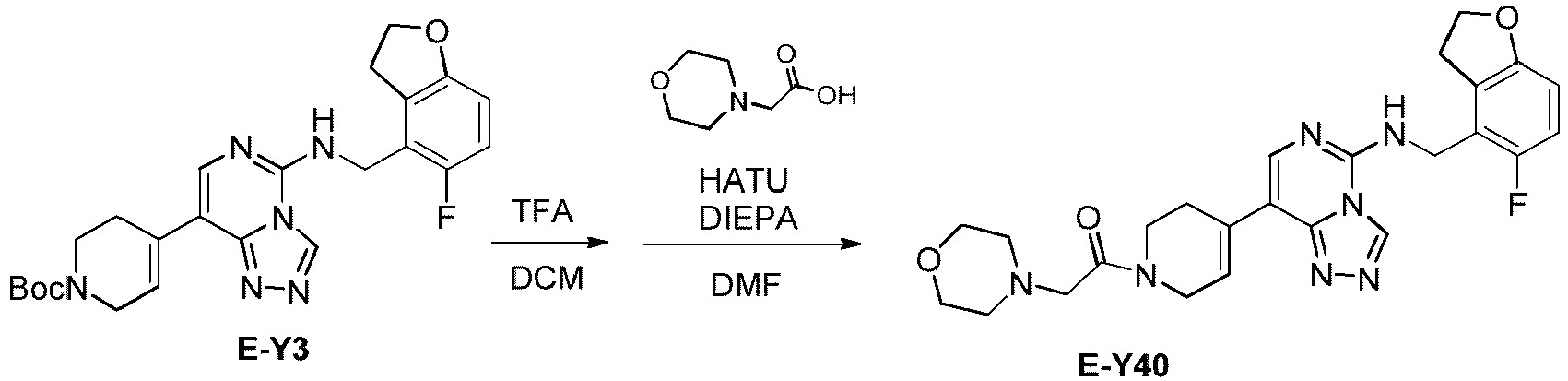
- Compound E-Y3 (46 mg, 0.1 mmol) was dissolved in 3 mL of dichloromethane (DCM) and 1 mL of trifluoroacetic acid (TFA), and the mixture was stirred at room temperature for 30 min. After the solvent was concentrated, 1 mL of DMF and 0.1 mL of diisopropylethylamine (DIEPA) were added and dissolved by stirring. HATU (CAS No.: 148893-10-1) (76 mg, 0.2 mmol) and morpholin-4-ylacetic acid (23 mg, 0.16 mmol) were added at room temperature, and the reaction was performed for 6 hours. When the reaction was completed as indicated by TLC (DCM: MeOH = 10: 1, Rf = 0.5), the reaction solution was poured into water, and extracted with a large amount of ethyl acetate. After being dried and concentrated, the resultant was separated by column chromatography (DCM: MeOH = 30: 1) to obtain the target compound E-Y40 as a white solid (5 mg, yield in two steps 10%).
1H NMR (400 MHz, DMSO-d6) δ 9.48 (d, J = 2.5 Hz, 1H), 8.72 (s, 1H), 7.73 (d, J = 9.0 Hz, 1H), 7.31 (d, J = 17.2 Hz, 1H), 6.95 (t, J = 9.4 Hz, 1H), 6.71 (dd, J = 8.6, 3.7 Hz, 1H), 4.70 (m, 2H), 4.54 (t, J = 8.4 Hz, 2H), 4.44 (d, J = 25.8 Hz, 2H), 4.23 (d, J = 30.0 Hz, 2H), 3.96 (m, 2H), 3.78 (m, 2H), 3.61 (m, 2H), 3.44 (m, 2H), 3.29 (m, 2H), 3.17 (m, 2H), 2.67 (m, 2H). LC-MS: [M+H]+ = 494.2. -

- Compound E-Y3 (46 mg, 0.1 mmol) was dissolved in 3 mL of dichloromethane (DCM) and 1 mL of trifluoroacetic acid (TFA), and the mixture was stirred at room temperature for 30 min. After the solvent was concentrated, 1 mL of DMF and 0.1 mL of diisopropylethylamine (DIEPA) were added and dissolved by stirring. HATU (76 mg, 0.2 mmol) and oxazole-5-carboxylic acid (18 mg, 0.16 mmol) were added at room temperature, and the reaction was performed for 6 hours. When the reaction was completed as indicated by TLC (DCM: MeOH = 10: 1, Rf = 0.5), the reaction solution was poured into water, and extracted with a large amount of ethyl acetate. After being dried and concentrated, the resultant was separated by column chromatography (DCM: MeOH = 30: 1) to obtain the target compound E-Y41 as a white solid (10 mg, yield in two steps 22%).
1H NMR (400 MHz, MeOD-d4) δ 9.32 (s, 1H), 8.41 (s, 1H), 7.81 (s, 1H), 7.77 (s, 1H), 6.95 (s, 1H), 6.91 - 6.81 (m, 1H), 6.66 (dd, J = 8.6, 3.9 Hz, 1H), 4.80 (s, 2H), 4.59 (t, J = 8.7 Hz, 3H), 4.43 (m, 1H), 4.05 (m, 2H), 3.38 (t, J = 8.7 Hz, 2H), 2.93 - 2.65 (m, 2H). LC-MS: [M+H]+ = 462.2. -

- Compound E-Y3 (46 mg, 0.1 mmol) was dissolved in 3 mL of dichloromethane (DCM) and 1 mL of trifluoroacetic acid (TFA), and the mixture was stirred at room temperature for 30 min. After the solvent was concentrated, 1 mL of DMF and 0.1 mL of diisopropylethylamine (DIEPA) were added and dissolved by stirring. HATU (76 mg, 0.2 mmol) and 1,3-dimethyl-1H-pyrazole-5-carboxylic acid (22 mg, 0.16 mmol) were added at room temperature, and the reaction was performed for 6 hours. When the reaction was completed as indicated by TLC (DCM: MeOH = 10: 1, Rf = 0.5), the reaction solution was poured into water, and extracted with a large amount of ethyl acetate. After being dried and concentrated, the resultant was separated by column chromatography (DCM: MeOH = 30: 1) to obtain the target compound E-Y42 as a white solid (10 mg, yield in two steps 19%).
1H NMR (400 MHz, MeOD-d4) δ 9.40 (s, 1H), 7.98 (s, 1H), 6.95 - 6.80 (m, 1H), 6.76 - 6.52 (m, 2H), 6.37 (s, 1H), 4.82 (s, 2H), 4.59 (t, J = 8.7 Hz, 2H), 4.40 (d, J = 24.2 Hz, 2H), 4.01 (d, J = 10.7 Hz, 1H), 3.87 (s, 4H), 3.39 (t, J = 8.5 Hz, 2H), 2.72 (s, 2H), 2.28 (s, 3H). LC-MS: [M+H]+ = 489.2. -

- Compound E-Y3 (46 mg, 0.1 mmol) was dissolved in 3 mL of dichloromethane (DCM) and 1 mL of trifluoroacetic acid (TFA), and the mixture was stirred at room temperature for 30 min. After the solvent was concentrated, 1 mL of DMF and 0.1 mL of diisopropylethylamine (DIEPA) were added and dissolved by stirring. HATU (76 mg, 0.2 mmol) and tetrahydropyran-4-carboxylic acid (21 mg, 0.16 mmol) were added at room temperature, and the reaction was performed for 6 hours. When the reaction was completed as indicated by TLC (DCM: MeOH = 10: 1, Rf = 0.5), the reaction solution was poured into water, and extracted with a large amount of ethyl acetate. After being dried and concentrated, the resultant was separated by column chromatography (DCM: MeOH = 30: 1) to obtain the target compound E-Y43 as a white solid (10 mg, yield in two steps 21%).
1H NMR (400 MHz, MeOD-d4) δ 9.36 (s, 1H), 7.86 (d, J = 5.7 Hz, 1H), 6.91 - 6.58 (m, 3H), 4.79 m, 2H), 4.58 (m, 2H), 4.38 (s, 1H), 4.27 (s, 1H), 3.99 (m, 2H), 3.87 (m, 2H), 3.55 (m, 2H), 3.37 (m, 2H), 3.04 (m, 1H), 2.65 (m, 2H), 1.83 (m, 2H), 1.68 (m, 2H). LC-MS: [M+H]+ = 479.2. -

- Bromide 4-1 (72 mg, 0.2 mmol) was dissolved in 6 mL of 1,4-dioxane and 2 mL of a 2 M Na2CO3 aqueous solution, and borate B-7 (137 mg, 0.4 mmol)) was added thereto and the reaction system was stirred at room temperature for 10 min under Ar atmosphere protection. 10% of allyl palladium (II) chloride dimer (7.3 mg, 0.02 mmol), 20% of sodium 2'-dicyclohexylphosphino-2,6-dimethoxy-1,1'-biphenyl-3-sulfonate hydrate (21.2 mg, 0.04 mmol) were added, and the reaction was performed at 90 °C for 40 min under Ar atmosphere protection. After being cooled and concentrated under reduced pressure, the resultant was separated by column chromatography (DCM: MeOH = 20: 1), to obtain the target compound E-Y44 as a white solid (18 mg, 36%).
1H NMR (400 MHz, DMSO-d6) δ 9.46 (s, 1H), 8.67 (s, 1H), 7.69 (s, 1H), 7.38 (dd, J = 7.5, 4.3 Hz, 6H), 7.24 (s, 1H), 7.03 - 6.88 (m, 1H), 6.70 (dd, J = 8.7, 3.9 Hz, 1H), 5.12 (d, J = 12.1 Hz, 2H), 4.68 (s, 2H), 4.61 - 4.46 (m, 2H), 4.17 (m, 2H), 3.65 (m, 2H), 3.28 (t, J = 8.7 Hz, 2H), 2.58 (m, 2H). LC-MS: [M+H]+ = 501.1. -

- Compound E-Y3 (46 mg, 0.1 mmol) was dissolved in 3 mL of dichloromethane (DCM) and 1 mL of trifluoroacetic acid (TFA), and the mixture was stirred at room temperature for 30 min. After the solvent was concentrated, 3 mL of dichloromethane and 0.1 mL of triethylamine (TEA) were added and dissolved by stirring. Acrylic anhydride (20 mg, 0.15 mmol) was added at room temperature, and the reaction was further performed for 1 hour. When the reaction was completed as indicated by TLC (DCM: MeOH = 10: 1, Rf = 0.5), the resultant was directly separated by column chromatography (DCM: MeOH = 30: 1) to obtain the target compound E-Y45 as a white solid (14 mg, yield in two steps 35%).
1H NMR (400 MHz, MeOH-d4) δ 9.38 (s, 1H), 7.92 (s, 1H), 6.94 - 6.80 (m, 2H), 6.79 - 6.68 (m, 1H), 6.65 (dd, J = 8.6, 3.9 Hz, 1H), 6.27 (d, J = 16.7 Hz, 1H), 5.81 (d, J = 10.6 Hz, 1H), 4.81 (s, 2H), 4.59 (t, J = 8.7 Hz, 2H), 4.37 (m, 2H), 3.92 (m, 2H), 3.38 (m, 2H), 2.68 (m, 2H). LC-MS: [M+H]+ = 421.1. -

- Bromide 4-3 (62 mg, 0.2 mmol) was dissolved in 6 mL of 1,4-dioxane and 2 mL of a 2 M Na2CO3 aqueous solution, and borate B-3 (123 mg, 0.4 mmol)) was added thereto and the reaction system was stirred at room temperature for 10 min under Ar atmosphere protection. 10% of allyl palladium (II) chloride dimer (7.3 mg, 0.02 mmol), 20% of sodium 2'-dicyclohexylphosphino-2,6-dimethoxy-1,1'-biphenyl-3-sulfonate hydrate (21.2 mg, 0.04 mmol) were added, and the reaction was performed at 90 °C for 40 min under Ar atmosphere protection. After being cooled and concentrated under reduced pressure, the resultant was separated by column chromatography (DCM: MeOH = 20: 1), to obtain the target compound E-Y46 as a white solid (32 mg, 40%).
1H NMR (400 MHz, MeOD-d4) δ 9.43 (s, 1H), 7.71 (s, 1H), 7.47 (m, 1H), 7.16 (m, 1H), 6.99 (m, 2H), 4.91 (s, 2H), 4.08 (m, 2H), 3.57 (m, 2H), 2.78 (m, 2H), 1.44 (s, 9H). LC-MS: [M+H]+ = 412.1. -

- Compound E-Y1 (10 mg) was dissolved in 2 mL of methanol, and 10% Pd/C (5 mg) was added, and the reaction was performed at room temperature for 6 hours. The resultant was filtered and separated by column chromatography (DCM: MeOH = 20: 1) to obtain the target compound E-Y47 as a white solid (8 mg, 80%).
1H NMR (400 MHz, MeOD-d4) δ 9.33 (s, 1H), 7.74 (s, 1H), 6.93 - 6.80 (m, 1H), 6.66 (dd, J = 8.7, 3.8 Hz, 1H), 4.78 (s, 2H), 4.59 (t, J = 8.7 Hz, 2H), 4.09 (d, J = 11.2 Hz, 2H), 3.71 - 3.57 (m, 2H), 3.38 (t, J = 8.7 Hz, 2H), 3.21 (m, 1H), 1.96 (m, 4H). LC-MS: [M+H]+ = 370.1.
-

- Compound E-Y17 (10 mg) was dissolved in 2 mL of methanol, and 10% Pd/C (5 mg) was added, and the reaction was performed at room temperature for 6 hours. The resultant was filtered and separated by column chromatography (DCM: MeOH = 20: 1) to obtain the target compound E-Y48 as a white solid (5 mg, 50%).
1H NMR (400 MHz, MeOD-d4) δ 9.27 (s, 1H), 7.58 (s, 1H), 6.99 - 6.77 (m, 1H), 6.66 (dd, J = 8.5, 3.7 Hz, 1H), 4.76 (s, 2H), 4.59 (t, J = 8.7 Hz, 2H), 4.20 (m, 2H), 3.37 (m, 2H), 3.23 (dd, J = 14.2, 7.1 Hz, 2H), 2.96 (t, J = 11.7 Hz, 2H), 2.04 (m, 4H), 1.15 (t, J= 7.2 Hz, 3H). LC-MS: [M+H]+ = 440.2. -

- Compound E-Y18 (10 mg) was dissolved in 2 mL of methanol, and 10% Pd/C (5 mg) was added, and the reaction was performed at room temperature for 6 hours. The resultant was filtered and separated by column chromatography (DCM: MeOH = 20: 1) to obtain the target compound E-Y49 as a white solid (6 mg, 60%).
1H NMR (400 MHz, DMSO-d6) δ 9.40 (s, 1H), 8.44 (s, 1H), 7.49 (s, 1H), 7.02 - 6.87 (m, 1H), 6.70 (dd, J = 8.6, 3.9 Hz, 1H), 4.64 (d, J = 4.8 Hz, 2H), 4.54 (t, J = 8.8 Hz, 2H), 4.10 (d, J = 12.9 Hz, 2H), 3.29 (t, J = 8.7 Hz, 2H), 2.96 (s, 1H), 2.77 - 2.64 (m, 2H), 1.90 - 1.68 (m, 4H), 1.27 (s, 9H). LC-MS: [M+H]+ = 468.2. -

- Compound E-Y15 (10 mg) was dissolved in 2 mL of methanol, and 10% Pd/C (5 mg) was added, and the reaction was performed at room temperature for 6 hours. The resultant was filtered and separated by column chromatography (DCM: MeOH = 20: 1) to obtain the target compound E-Y50 as a white solid (7 mg, 72%).
1H NMR (400 MHz, MeOD) δ 9.28 (s, 1H), 7.63 (s, 1H), 6.92 - 6.78 (m, 1H), 6.66 (dd, J = 8.7, 3.9 Hz, 1H), 4.77 (s, 2H), 4.71 (m, 1H), 4.59 (t, J = 8.7 Hz, 2H), 4.09 (m, 1H), 3.37 (t, J = 8.6 Hz, 2H), 3.30 - 3.14 (m, 1H), 2.80 (m, 1H), 2.25 - 2.18 (m, 1H), 2.17 (s, 3H), 2.06 (m, 2H), 1.91 (m, 1H), 1.81 (m, 1H). LC-MS: [M+H]+ = 411.2. -

- Bromide 13-2 (63 mg, 0.2 mmol) was dissolved in 6 mL of 1,4-dioxane and 2 mL of a 2 M Na2CO3 aqueous solution, and borate B-3 (123 mg, 0.4 mmol)) was added thereto and the reaction system was stirred at room temperature for 10 min under Ar atmosphere protection. 10% of allyl palladium (II) chloride dimer (7.3 mg, 0.02 mmol), 20% of sodium 2'-dicyclohexylphosphino-2,6-dimethoxy-1,1'-biphenyl-3-sulfonate hydrate (21.2 mg, 0.04 mmol) were added, and the reaction was performed at 90 °C for 40 min under Ar atmosphere protection. After being cooled and concentrated under reduced pressure, the resultant was separated by column chromatography (DCM: MeOH = 20: 1), to obtain the target compound E-Y51 as a white solid (17 mg, 20%).
1H NMR (400 MHz, MeOD-d4) δ 9.48 (s, 1H), 7.50 (s, 1H), 7.34 (s, 1H), 6.95 (s, 1H), 6.47 (m, 2H), 5.08 (s, 2H), 4.18 (m, 2H), 3.72 (m, 2H), 2.62 (m, 2H), 1.48 (s, 9H). LC-MS: [M+H]+ = 421.2. -
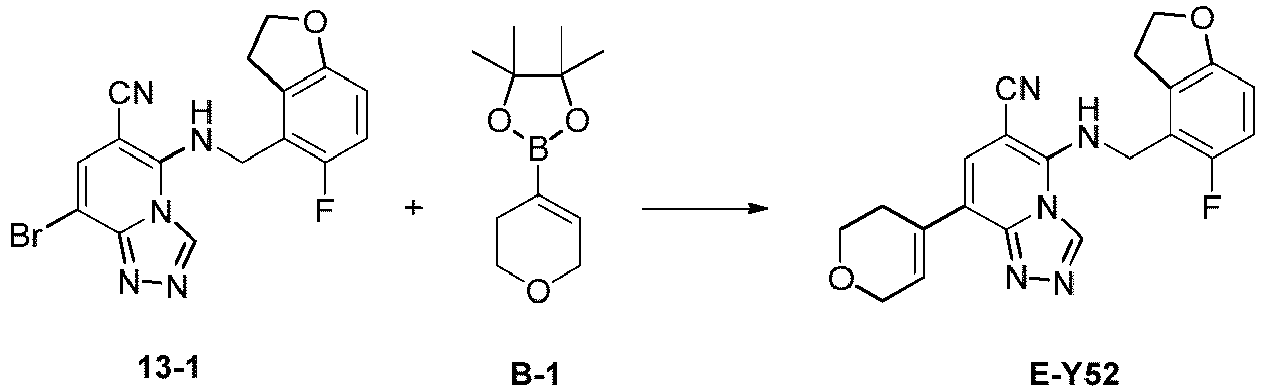
- Bromide 13-1 (77 mg, 0.2 mmol) was dissolved in 6 mL of 1,4-dioxane and 2 mL of a 2 M Na2CO3 aqueous solution, and borate B-1 (84 mg, 0.4 mmol)) was added thereto and the reaction system was stirred at room temperature for 10 min under Ar atmosphere protection. 10% of allyl palladium (II) chloride dimer (7.3 mg, 0.02 mmol), 20% of sodium 2'-dicyclohexylphosphino-2,6-dimethoxy-1,1'-biphenyl-3-sulfonate hydrate (21.2 mg, 0.04 mmol) were added, and the reaction was performed at 90 °C for 40 min under Ar atmosphere protection. After being cooled and concentrated under reduced pressure, the resultant was separated by column chromatography (DCM: MeOH = 20: 1), to obtain the target compound E-Y52 as a white solid (20 mg, 21%). LC-MS: [M+H]+ = 392.2.
-

- Bromide 13-1 (77 mg, 0.2 mmol) was dissolved in 6 mL of 1,4-dioxane and 2 mL of a 2 M Na2CO3 aqueous solution, and borate B-3 (123 mg, 0.4 mmol)) was added thereto and the reaction system was stirred at room temperature for 10 min under Ar atmosphere protection. 10% of allyl palladium (II) chloride dimer (7.3 mg, 0.02 mmol), 20% of sodium 2'-dicyclohexylphosphino-2,6-dimethoxy-1,1'-biphenyl-3-sulfonate hydrate (21.2 mg, 0.04 mmol) were added, and the reaction was performed at 90 °C for 40 min under Ar atmosphere protection. After being cooled and concentrated under reduced pressure, the resultant was separated by column chromatography (DCM: MeOH = 20: 1), to obtain the target compound E-Y53 as a white solid (13 mg, 14%). LC-MS: [M+H]+ = 491.2.
-

- Compound E-Y3 (46 mg, 0.1 mmol) was dissolved in 3 mL of dichloromethane (DCM) and 1 mL of trifluoroacetic acid (TFA), and the mixture was stirred at room temperature for 30 min. After the solvent was concentrated, 1 mL of DMF and 0.1 mL of diisopropylethylamine (DIEPA) were added and dissolved by stirring. HATU (76 mg, 0.2 mmol) and N, N-dimethylglycine (17 mg, 0.16 mmol) were added at room temperature, and the reaction was performed for 1 hour. When the reaction was completed as indicated by TLC, the reaction solution was poured into water, and extracted with a large amount of ethyl acetate. After being dried and concentrated, the resultant was separated by column chromatography to obtain the target compound E-Y54 (6 mg).
1H NMR (400 MHz, DMSO-d6) δ 9.54 (d, J= 3.3 Hz, 1H), 8.79 (s, 1H), 7.70 (d, J = 6.1 Hz, 1H), 7.30 (s, 1H), 6.95 (t, J = 9.4 Hz, 1H), 6.70 (dd, J = 8.5, 3.7 Hz, 1H), 4.69 (d, J = 4.6 Hz, 2H), 4.53 (t, J = 8.7 Hz, 2H), 4.24 (d, J = 41.1 Hz, 2H), 3.71 (s, 2H), 3.48 (s, 2H), 3.29 (t, J = 8.7 Hz, 2H), 2.60 (d, J = 38.4 Hz, 2H), 2.37 (s, 6H). LC-MS: [M+H]+ = 452.2. -

- Bromide 4-1 (72 mg, 0.2 mmol) was dissolved in 6 mL of 1,4-dioxane and 2 mL of a 2 M Na2CO3 aqueous solution, and borate B-8 (89 mg, 0.4 mmol)) was added thereto and the reaction system was stirred at room temperature for 10 min under Ar atmosphere protection. 10% of allyl palladium (II) chloride dimer (7.3 mg, 0.02 mmol), 20% of sodium 2'-dicyclohexylphosphino-2,6-dimethoxy-1,1'-biphenyl-3-sulfonate hydrate (21.2 mg, 0.04 mmol) were added, and the reaction was performed at 90 °C for 40 min under Ar atmosphere protection. After being cooled and concentrated under reduced pressure, the resultant was separated by column chromatography (DCM: MeOH = 20: 1), to obtain the target compound SL-ZYE-07 (47 mg, 62%). 1H NMR (400 MHz, DMSO-d6) δ 9.39 (s, 1H), 8.51 (s, 1H), 7.56 (s, 1H), 6.91 (t, J = 9.3 Hz, 1H), 6.69 (m, 2H), 4.65 (d, J = 3.8 Hz, 2H), 4.51 (t, J = 8.5 Hz, 2H), 3.71 (m, 2H), 3.62 (m, 2H), 3.26 (m, 2H), 2.79 (m, 2H), 2.45 (m, 2H). LC-MS: [M+H]+ = 382.2.
-

- Compound SL-ZYE-07 (10 mg) was dissolved in 2 mL of methanol, and 10% Pd/C (5 mg) was added, and the reaction was performed at room temperature for 6 hours. The resultant was filtered and separated by column chromatography (DCM: MeOH = 20: 1) to obtain the target compound SL-ZYE-08 (8 mg, 82%).
1H NMR (400 MHz, CDCl3+MeOD-d4) δ 9.05 (s, 1H), 7.41 (s, 1H), 6.82 - 6.64 (m, 1H), 6.56 (dd, J = 8.6, 3.9 Hz, 1H), 4.60 (s, 2H), 4.52 (t, J = 8.7 Hz, 2H), 3.91 - 3.77 (m, 2H), 3.69 (ddd, J = 19.0, 10.7, 6.3 Hz, 2H), 3.27 (t, J = 8.7 Hz, 2H), 3.16 (d, J = 7.8 Hz, 1H), 2.05 - 1.91 (m, 4H), 1.84 (dd, J = 9.0, 5.1 Hz, 2H). LC-MS: [M+H]+ = 384.2. - SL-ZYE-08 was further separated by chiral chromatography to obtain a pair of optically pure compounds SL-ZYE-08-S and SL-ZYE-08-R. The separation conditions were: (chiral column: Chiralcel OD-3, 4.6mm x 250mm, particle size: 3 µm, mobile phase: n-hexane: isopropanol = 50:50, flow rate = 1ml / min, two fractions were obtained, fraction 1 (Rt = 17.085 min); fraction 2 (Rt = 18.627 min). The chiral chromatography separation method was a conventional method known to those skilled in the art.
-

- E-Y2 (5 mg) was dissolved in 1 mL of dichloromethane, mCPBA (m-chloroperoxybenzoic acid) (2 mg) was added thereto and the reaction system was stirred at room temperature for 120 min under Ar atmosphere protection. After being concentrated under reduced pressure, the resultant was separated by column chromatography to obtain the target compound SL-ZYE-09 (2 mg).
1H NMR (400 MHz, DMSO-d6) δ 9.46 (s, 1H), 8.70 (t, J = 5.1 Hz, 1H), 7.76 (s, 1H), 7.12 (t, J = 4.6 Hz, 1H), 7.01 - 6.85 (m, 1H), 6.70 (dd, J= 8.7, 3.9 Hz, 1H), 4.69 (d, J = 4.9 Hz, 2H), 4.54 (t, J = 8.7 Hz, 2H), 3.99 (s, 2H), 3.37 (t, J = 6.2 Hz, 2H), 3.28 (t, J = 8.7 Hz, 2H), 3.17 (d, J = 5.3 Hz, 2H). LC-MS: [M+H]+ = 416.1. -

- Bromide 4-4 (69 mg, 0.2 mmol) was dissolved in 6 mL of 1,4-dioxane and 2 mL of a 2 M Na2CO3 aqueous solution, and borate B-1 (84 mg, 0.4 mmol)) was added thereto and the reaction system was stirred at room temperature for 10 min under Ar atmosphere protection. 10% of allyl palladium (II) chloride dimer (7.3 mg, 0.02 mmol), 20% of sodium 2'-dicyclohexylphosphino-2,6-dimethoxy-1,1'-biphenyl-3-sulfonate hydrate (21.2 mg, 0.04 mmol) were added, and the reaction was performed at 90 °C for 40 min under Ar atmosphere protection. After being cooled and concentrated under reduced pressure, the resultant was separated by column chromatography (DCM: MeOH = 20: 1), to obtain the target compound SL-ZYE-11 (17 mg).
1H NMR (400 MHz, CDCl3+MeOD-d4) δ 9.08 (s, 1H), 7.56 (s, 1H), 7.14 (s, 1H), 7.02 (d, J = 7.4 Hz, 1H), 6.79 (d, J = 8.0 Hz, 1H), 6.66 (d, J = 7.9 Hz, 1H), 4.53 (t, J = 8.7 Hz, 2H), 4.35 (s, 2H), 3.92 (t, J = 5.3 Hz, 2H), 3.30 (s, 2H), 3.19 (t, J = 8.4 Hz, 2H), 2.53 (s, 2H). LC-MS: [M+H]+ = 350.2. -

- Compound SL-ZYE-11 (10 mg) was dissolved in 2 mL of methanol, and 10% Pd/C (5 mg) was added, and the reaction was performed at room temperature for 6 hours. The resultant was filtered and separated by column chromatography (DCM: MeOH = 20: 1) to obtain the target compound SL-ZYE-14 (5 mg).
1H NMR (400 MHz, DMSO-d6) δ 9.41 (s, 1H), 8.55 (t, J = 5.4 Hz, 1H), 7.45 (s, 1H), 7.06 (t, J = 7.8 Hz, 1H), 6.85 (d, J = 7.5 Hz, 1H), 6.69 (d, J = 7.9 Hz, 1H), 4.63 (d, J = 5.3 Hz, 2H), 4.54 (t, J = 8.7 Hz, 2H), 3.96 (dd, J = 10.8, 3.6 Hz, 2H), 3.51 - 3.44 (m, 2H), 3.22 (t, J = 8.7 Hz, 2H), 3.09 (ddd, J = 15.4, 7.9, 3.7 Hz, 1H), 2.01 - 1.87 (m, 2H), 1.82 (d, J = 12.5 Hz, 2H). LC-MS: [M+H]+ = 352.2. -

1H NMR (400 MHz, MeOD-d4) δ 9.26 (s, 1H), 7.78 (d, J = 2.3 Hz, 1H), 7.74 (s, 1H), 7.47 (d, J = 7.9 Hz, 1H), 7.30 (d, J = 7.6 Hz, 2H), 7.08 (s, 1H), 7.03 (s, 1H), 5.07 (s, 2H), 4.39 (d, J = 2.6 Hz, 2H), 3.98 (t, J = 5.5 Hz, 2H), 2.63 (s, 2H). LC-MS: [M+H]+ = 348.1. -

- Bromide 4-5 (68 mg, 0.2 mmol) was dissolved in 6 mL of 1,4-dioxane and 2 mL of a 2 M Na2CO3 aqueous solution, and borate B-3 (123 mg, 0.4 mmol)) was added thereto and the reaction system was stirred at room temperature for 10 min under Ar atmosphere protection. 10% of allyl palladium (II) chloride dimer (7.3 mg, 0.02 mmol), 20% of sodium 2'-dicyclohexylphosphino-2,6-dimethoxy-1,1'-biphenyl-3-sulfonate hydrate (21.2 mg, 0.04 mmol) were added, and the reaction was performed at 90 °C for 40 min under Ar atmosphere protection. After being cooled and concentrated under reduced pressure, the resultant was separated by column chromatography (DCM: MeOH = 20: 1), to obtain the target compound SL-ZYE-18 (15 mg).
1H NMR (400 MHz, CDCl3) δ 8.77 (s, 1H), 7.71 (s, 1H), 7.67 (d, J = 2.3 Hz, 1H), 7.51 (s, 1H), 7.31 - 7.29 (m, 4H), 6.90 (s, 1H), 5.08 (d, J = 5.3 Hz, 2H), 4.18 (s, 2H), 3.70 (s, 2H), 2.64 (s, 2H), 1.51 (s, 9H). LC-MS: [M+H]+ = 447.1. -

- Compound E-Y20 (10 mg) was dissolved in 2 mL of methanol, and 10% Pd/C (3 mg) was added, and the reaction was performed at room temperature for 6 hours. The resultant was filtered and separated by column chromatography (DCM: MeOH = 20: 1) to obtain the target compound E-Y20-H (4 mg, 40%).
1H NMR (400 MHz, MeOD-d4) δ 9.23 (s, 1H), 7.57 (d, J = 0.7 Hz, 1H), 7.47 (dd, J = 1.8, 0.9 Hz, 1H), 6.42 - 6.36 (m, 2H), 4.77 (s, 2H), 4.73 (m, 1H), 4.09 (m, 1H), 3.35 - 3.17 (m, 2H), 2.80 (dd, J = 12.9, 10.2 Hz, 1H), 2.24 - 2.18 (m, 1H), 2.17 (s, 3H), 2.07 (m, 1H), 1.87 (m, 2H). LC-MS: [M+H]+ = 341.1. -

- Compound E-Y13 (10 mg) was dissolved in 2 mL of methanol, and 10% Pd/C (3 mg) was added, and the reaction was performed at room temperature for 6 hours. The resultant was filtered and separated by column chromatography (DCM: MeOH = 20: 1) to obtain the target compound E-Y13-H (7 mg, 71%).
1H NMR (400 MHz, DMSO-d6) δ 9.41 (s, 1H), 8.48 (t, J = 5.2 Hz, 1H), 7.50 (s, 1H), 6.98 - 6.90 (m, 1H), 6.70 (dd, J = 8.6, 3.9 Hz, 1H), 4.64 (d, J = 5.0 Hz, 2H), 4.54 (t, J = 8.7 Hz, 2H), 3.69 (d, J = 11.6 Hz, 2H), 3.29 (t, J = 8.7 Hz, 2H), 3.01 (m, 1H), 2.91 (s, 3H), 2.85 (dd, J = 8.7, 6.0 Hz, 2H), 2.07 - 1.85 (m, 4H). LC-MS: [M+H]+ = 447.2. -

- Compound E-Y (10 mg) was dissolved in 2 mL of methanol, and 10% Pd/C (3 mg) was added, and the reaction was performed at room temperature for 6 hours. The resultant was filtered and the solvent was dried by rotatory evaporator to obtain the target compound E-Y2-H LC-MS: [M+H]+ = 386.1.
- 5 mg of E-Y2-H was dissolved in 1 mL of dichloromethane solution, mCPBA (5 mg) was added to the solution, and the reaction was performed at room temperature for 3 h, and the resultant was separated by column chromatography to obtain the target compound SL-ZYE-34 (1.5 mg)
1H NMR (400 MHz, MeOD-d4) δ 9.27 (s, 1H), 7.63 (s, 1H), 6.92 - 6.78 (m, 1H), 6.65 (dd, J = 8.6, 3.7 Hz, 1H), 4.76 (s, 2H), 4.59 (t, J = 8.7 Hz, 2H), 3.45 - 3.33 (m, 5H), 3.17 (d, J = 11.8 Hz, 2H), 2.55 - 2.33 (m, 4H). LC-MS: [M+H]+ = 418.2. -

- Bromide 4-1 (72 mg, 0.2 mmol) was dissolved in 6 mL of 1,4-dioxane and 2 mL of a 2 M Na2CO3 aqueous solution, and borate B-10 (101 mg, 0.4 mmol)) was added thereto and the reaction system was stirred at room temperature for 10 min under Ar atmosphere protection. 10% of allyl palladium (II) chloride dimer (7.3 mg, 0.02 mmol), 20% of sodium 2'-dicyclohexylphosphino-2,6-dimethoxy-1,1'-biphenyl-3-sulfonate hydrate (21.2 mg, 0.04 mmol) were added, and the reaction was performed at 90 °C for 40 min under Ar atmosphere protection. After being cooled and concentrated under reduced pressure, the resultant was separated by column chromatography (DCM: MeOH = 20: 1), to obtain the target compound SL-ZYE-23 (14 mg).
1H NMR (400 MHz, DMSO-d6) δ 9.46 (s, 1H), 8.67 (s, 1H), 7.72 (s, 1H), 7.27 (s, 1H), 7.00 - 6.87 (m, 1H), 6.70 (dd, J = 8.7, 3.8 Hz, 2H), 4.70 (d, J = 4.8 Hz, 2H), 4.54 (t, J = 8.6 Hz, 2H), 4.30 (d, J = 5.7 Hz, 2H), 3.27 (t, J = 8.7 Hz, 2H), 2.68 (s, 2H), 1.45 (s, 9H), 1.29 (d, J = 6.4 Hz, 3H), 1.09 (d, J = 6.4 Hz, 3H). LC-MS: [M+H]+ = 495.3. -

- Bromide 4-1 (72 mg, 0.2 mmol) was dissolved in 6 mL of 1,4-dioxane and 2 mL of a 2 M Na2CO3 aqueous solution, and borate B-11 (95 mg, 0.4 mmol)) was added thereto and the reaction system was stirred at room temperature for 10 min under Ar atmosphere protection. 10% of allyl palladium (II) chloride dimer (7.3 mg, 0.02 mmol), 20% of sodium 2'-dicyclohexylphosphino-2,6-dimethoxy-1,1'-biphenyl-3-sulfonate hydrate (21.2 mg, 0.04 mmol) were added, and the reaction was performed at 90 °C for 40 min under Ar atmosphere protection. After being cooled and concentrated under reduced pressure, the resultant was separated by column chromatography (DCM: MeOH = 20: 1), to obtain the target compound SL-ZYE-24 (21 mg).
1H NMR (400 MHz, CDCl3) δ 8.93 (s, 1H), 7.66 (s, 1H), 7.24 (s, 1H), 6.88 - 6.70 (m, 1H), 6.61 (dd, J = 8.7, 4.0 Hz, 1H), 6.35 (s, 1H), 4.79 (d, J = 5.5 Hz, 2H), 4.61 (t, J = 8.7 Hz, 2H), 4.51 (s, 1H), 3.94 - 3.82 (m, 1H), 3.50 (m, 1H), 3.38 (t, J = 8.8 Hz, 2H), 2.45 (t, J = 16.4 Hz, 2H), 1.38 (d, J = 6.2 Hz, 3H), 1.35 (d, J = 6.8 Hz, 3H). LC-MS: [M+H]+ = 396.2. -

- Bromide 4-1 (72 mg, 0.2 mmol) was dissolved in 6 mL of 1,4-dioxane and 2 mL of a 2 M Na2CO3 aqueous solution, and borate B-12 (103 mg, 0.4 mmol)) was added thereto and the reaction system was stirred at room temperature for 10 min under Ar atmosphere protection. 10% of allyl palladium (II) chloride dimer (7.3 mg, 0.02 mmol), 20% of sodium 2'-dicyclohexylphosphino-2,6-dimethoxy-1,1'-biphenyl-3-sulfonate hydrate (21.2 mg, 0.04 mmol) were added, and the reaction was performed at 90 °C for 40 min under Ar atmosphere protection. After being cooled and concentrated under reduced pressure, the resultant was separated by column chromatography (DCM: MeOH = 20: 1), to obtain the target compound SL-ZYE-28 (27 mg, 32%).
1H NMR (400 MHz, MeOD-d4) δ 9.44 (s, 1H), 8.07 (s, 1H), 7.23 - 7.14 (m, 1H), 6.94 - 6.79 (m, 4H), 6.68 (dd, J = 8.6, 3.9 Hz, 1H), 6.17 (t, J = 3.9 Hz, 1H), 4.92 (d, J = 3.9 Hz, 2H), 4.88 (s, 2H), 4.61 (t, J= 8.7 Hz, 2H), 3.43 (t, J= 8.7 Hz, 2H). LC-MS: [M+H]+ = 416.2. -

- Compound E-Y54 (10 mg) was dissolved in 2 mL of methanol, and 10% Pd/C (5 mg) was added, and the reaction was performed at room temperature for 6 hours. The resultant was filtered and separated by column chromatography (DCM: MeOH = 20: 1) to obtain the target compound E-Y54-H (5 mg).
1H NMR (400 MHz, MeOD-d4) δ 9.27 (s, 1H), 7.57 (s, 1H), 6.91 - 6.81 (m, 1H), 6.65 (dd, J = 8.6, 3.9 Hz, 1H), 4.76 (s, 2H), 4.70 (d, J= 13.5 Hz, 1H), 4.58 (t, J = 8.7 Hz, 2H), 4.10 (d, J= 13.9 Hz, 1H), 3.60 (dd, J= 16.9, 6.6 Hz, 2H), 3.36 (dd, J= 10.0, 7.6 Hz, 2H), 3.25 (d, J= 16.0 Hz, 2H), 2.84 (m, 1H), 2.52 (s, 6H), 2.07 (m, 2H), 1.91 (m, 2H). LC-MS: [M+H]+ = 454.2. -

- Bromide 4-1 (36 mg, 0.1 mmol) was dissolved in 6 mL of 1,4-dioxane and 2 mL of a 2 M Na2CO3 aqueous solution, and borate B-13 (64 mg, 0.2 mmol)) was added thereto and the reaction system was stirred at room temperature for 10 min under Ar atmosphere protection. 10% of allyl palladium (II) chloride dimer (3.5 mg, 0.01 mmol), 20% of sodium 2'-dicyclohexylphosphino-2,6-dimethoxy-1,1'-biphenyl-3-sulfonate hydrate (11 mg, 0.02 mmol) were added, and the reaction was performed at 90 °C for 40 min under Ar atmosphere protection. After being cooled and concentrated under reduced pressure, the resultant was separated by column chromatography to obtain the target compound SL-E1 (11 mg).LC-MS: [M+H]+ =481.2.
-

- Compound SL-E1 (10 mg) was dissolved in 2 mL of methanol, and 10% Pd/C (5 mg) was added, and the reaction was performed at room temperature for 6 hours. The resultant was filtered and separated by column chromatography to obtain the target compound SL-E2 (7mg). LC-MS: [M+H]+ =483.2.
- Referring to Example 56, SL-E2 was separated by a chiral chromatography column to obtain optically pure compounds SL-E2-S and SL-E2-R.
-

- Compound SL-E3 (9 mg) was dissolved in 2 mL of methanol, and 10% Pd/C (4 mg) was added, and the reaction was performed at room temperature for 6 hours. The resultant was filtered and separated by column chromatography to obtain the target compound SL-E3 (5mg). LC-MS: [M+H]+ =497.2.
-

- Compound SL-E3 (9 mg) was dissolved in 2 mL of methanol, and 10% Pd/C (4 mg) was added, and the reaction was performed at room temperature for 6 hours. The resultant was filtered and separated by column chromatography to obtain the target compound SL-E4 (5mg). LC-MS: [M+H]+ =398.1.
-

- Compound E-Y10 (20 mg) was dissolved in 1 mL of DMF and 0.1 mL of diisopropylethylamine (DIEPA) by stirring. HATU (38 mg) and 2- (1-pyrrolidinyl) acetic acid (CAS: 37386-15-5) (13 mg) were added at room temperature, and the reaction was performed for 1 hour. When the reaction was completed as indicated by TLC, the reaction solution was poured into water, and extracted with a large amount of ethyl acetate. After being dried and concentrated, the resultant was separated by column chromatography to obtain the target compound SL-E5 (3 mg). LC-MS: [M+H]+ =478.2.
-

- Compound E-Y10 (20 mg) was dissolved in 1 mL of DMF and 0.1 mL of diisopropylethylamine (DIEPA) by stirring. HATU (38 mg, 0.1 mmol) and N, N-diethylglycine (13 mg, 0.1 mmol) were added at room temperature, and the reaction was performed for 1 hour. When the reaction was completed as indicated by TLC, the reaction solution was poured into water, and extracted with a large amount of ethyl acetate. After being dried and concentrated, the resultant was separated by column chromatography to obtain the target compound SL-E6 (6 mg).LC-MS: [M+H]+ =480.2.
-

- Compound E-Y10 (20 mg) was dissolved in 1 mL of DMF and 0.1 mL of diisopropylethylamine (DIEPA) by stirring. HATU (38 mg) and methoxyacetic acid (CAS: 625-45-6) (9 mg) were added at room temperature, and the reaction was performed for 1 hour. When the reaction was completed as indicated by TLC, the reaction solution was poured into water, and extracted with a large amount of ethyl acetate. After being dried and concentrated, the resultant was separated by column chromatography to obtain the target compound SL-E7 (2 mg). LC-MS: [M+H]+ =439.2.
-

- Compound E-Y10 (20 mg) was dissolved in 1 mL of DMF and 0.1 mL of diisopropylethylamine (DIEPA) by stirring. HATU (38 mg, 0.1 mmol) and acid (oxetane-3-carboxylic acid) (10 mg, 0.1 mmol) were added at room temperature, and the reaction was performed for 1 hour. When the reaction was completed as indicated by TLC, the reaction solution was poured into water, and extracted with a large amount of ethyl acetate. After being dried and concentrated, the resultant was separated by column chromatography to obtain the target compound SL-E8 (2.5 mg). LC-MS: [M+H]+ =451.2.
-

- Compound E-Y10 (20 mg) was dissolved in 1 mL of DMF and 0.1 mL of diisopropylethylamine (DIEPA) by stirring. HATU (38 mg) and 2- (2-methoxyethoxy) acetic acid (CAS No.: 16024-56-9) (14 mg) were added at room temperature, and the reaction was performed for 1 hour. When the reaction was completed as indicated by TLC, the reaction solution was poured into water, and extracted with a large amount of ethyl acetate. After being dried and concentrated, the resultant was separated by column chromatography to obtain the target compound SL-E9 (5 mg).LC-MS: [M+H]+ =483.2.
-

- Compound E-Y10 (20 mg) was dissolved in 1 mL of DMF and 0.1 mL of diisopropylethylamine (DIEPA) by stirring. HATU (38 mg, 0.1 mmol) and 1-methylpiperidine-4-carboxylic acid (15 mg, 0.1 mmol) were added at room temperature, and the reaction was performed for 1 hour. When the reaction was completed as indicated by TLC, the reaction solution was poured into water, and extracted with a large amount of ethyl acetate. After being dried and concentrated, the resultant was separated by column chromatography to obtain the target compound SL-E10 (6 mg). MS: [M+H]+ =492.2.
-

- Compound E-Y10 (20 mg) was dissolved in 1 mL of DMF and 0.1 mL of diisopropylethylamine (DIEPA) by stirring. HATU (38 mg, 0.1 mmol) and acid (CAS No.: 1158712-36-7) (22 mg, 0.1 mmol) were added at room temperature, and the reaction was performed for 1 hour. When the reaction was completed as indicated by TLC, the reaction solution was poured into water, and extracted with a large amount of ethyl acetate. After being dried and concentrated, the resultant was separated by column chromatography to obtain the target compound SL-E11 (7 mg).LC-MS: [M+H]+ =562.2.
-

- The compound SL-E1 (96 mg, 0.2 mmol) was dissolved in 3 mL of dichloromethane (DCM) and 1 mL of trifluoroacetic acid (TFA), and the mixture was stirred at room temperature for 30 min. After being concentrated, the resultant was directly separated by HPLC to obtain the product SL-E12 (50 mg), LC-MS: [M+H]+ =381.2.
-

- SL-E12 (25 mg) was dissolved in 1 mL of dichloromethane and 0.1 mL of triethylamine (TEA) by stirring. Acetic anhydride (Ac2O, 15 mg) was added at room temperature, and the reaction was performed for 1 hour. After the reaction was completed as indicated by TLC, the resultant was separated by column chromatography to obtain the target compound SL-E13 (6 mg).LC-MS: [M+H]+ =423.2.
-

- SL-E12 (10 mg) was dissolved in 1 mL of dichloromethane and 0.1 mL of triethylamine (TEA) by stirring. Methanesulfonic anhydride (Ms2O, 8 mg) was added at room temperature, and the reaction was performed for 1 hour. After the reaction was completed as indicated by TLC, the resultant was separated by column chromatography to obtain the target compound SL-E14 (3 mg). 1H NMR (400 MHz, DMSO-d6) δ 9.44 (s, 1H), 8.63 (m, 1H), 7.67 (s, 1H), 6.99 - 6.90 (m, 1H), 6.82 (t, J = 5.9 Hz, 1H), 6.70 (dd, J = 8.7, 3.8 Hz, 1H), 4.68 (d, J = 4.9 Hz, 2H), 4.54 (t, J = 8.7 Hz, 2H), 4.03 (d, J = 6.0 Hz, 2H), 3.57 - 3.48 (m, 2H), 3.31 - 3.24 (m, 2H), 2.91 (s, 3H), 2.83 (m, 2H), 1.91 (m, 2H). LC-MS: [M+H]+ =459.2.
-

- Compound SL-E12 (19 mg, 0.05 mmol) was dissolved in 1 mL of DCM and 0.1 mL of diisopropylethylamine (DIEPA) by stirring. HATU (38 mg, 0.1 mmol) and N, N-dimethylglycine (11 mg, 0.1 mmol) were added at room temperature, and the reaction was performed for 1 hour. When the reaction was completed as indicated by TLC, the reaction solution was poured into water, and extracted with a large amount of ethyl acetate. After being dried and concentrated, the resultant was separated by column chromatography to obtain the target compound SL-E15 (2 mg). LC-MS: [M+H]+ =466.3.
-
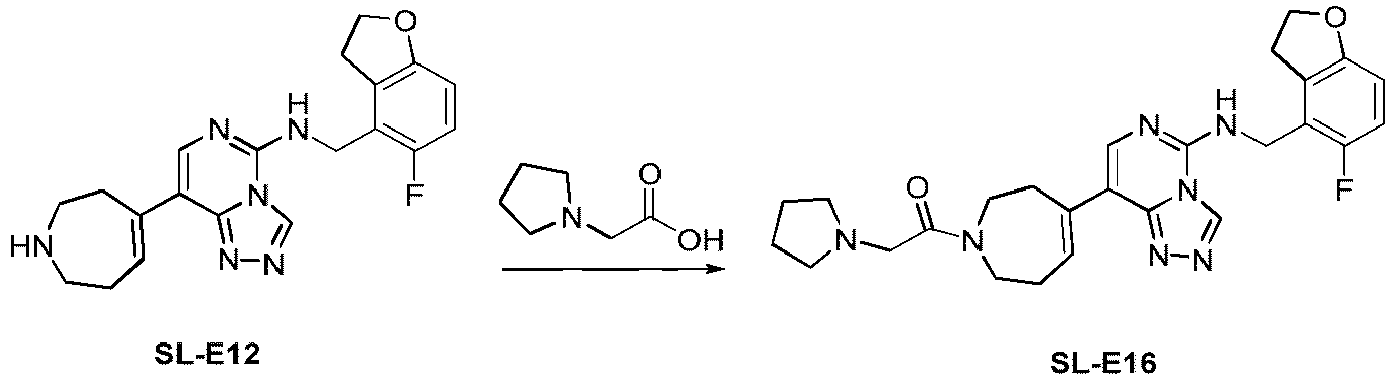
- Compound SL-E12 (19 mg, 0.05 mmol) was dissolved in 1 mL of DCM and 0.1 mL of diisopropylethylamine (DIEPA) by stirring. HATU (38 mg, 0.1 mmol) and 2-(1-pyrrolidinyl) acetic acid (CAS: 37386-15-5) (14 mg) were added at room temperature, and the reaction was performed for 1 hour. When the reaction was completed as indicated by TLC, the reaction solution was poured into water, and extracted with a large amount of ethyl acetate. After being dried and concentrated, the resultant was separated by column chromatography to obtain the target compound SL-E16 (2 mg). LC-MS: [M+H]+ =492.2.
-

- Compound SL-E12 (19 mg, 0.05 mmol) was dissolved in 1 mL of DCM and 0.1 mL of diisopropylethylamine (DIEPA) by stirring. HATU (38 mg, 0.1 mmol) and N, N-diethylglycine (13 mg) were added at room temperature, and the reaction was performed for 1 hour. When the reaction was completed as indicated by TLC, the reaction solution was poured into water, and extracted with a large amount of ethyl acetate. After being dried and concentrated, the resultant was separated by column chromatography to obtain the target compound SL-E17 (2 mg). LC-MS: [M+H]+ =494.4.
-

- Compound SL-E12 (19 mg, 0.05 mmol) was dissolved in 1 mL of DCM and 0.1 mL of diisopropylethylamine (DIEPA) by stirring. HATU (38 mg) and methoxyacetic acid (CAS: 625-45-6) (11 mg) were added at room temperature, and the reaction was performed for 1 hour. When the reaction was completed as indicated by TLC, the reaction solution was poured into water, and extracted with a large amount of ethyl acetate. After being dried and concentrated, the resultant was separated by column chromatography to obtain the target compound SL-E18 (3 mg).LC-MS: [M+H]+ =453.2.
-

- Compound SL-E12 (19 mg, 0.05 mmol) was dissolved in 1 mL of DCM and 0.1 mL of diisopropylethylamine (DIEPA) by stirring. HATU (38 mg, 0.1 mmol) and acid (oxetane-3-carboxylic acid) (10 mg, 0.1 mmol) were added at room temperature, and the reaction was performed for 1 hour. When the reaction was completed as indicated by TLC, the reaction solution was poured into water, and extracted with a large amount of ethyl acetate. After being dried and concentrated, the resultant was separated by column chromatography to obtain the target compound SL-E19 (1.5 mg).LC-MS: [M+H]+ =465.2.
-

- Compound SL-E12 (19 mg, 0.05 mmol) was dissolved in 1 mL of DCM and 0.1 mL of diisopropylethylamine (DIEPA) by stirring. HATU (38 mg) and 2-(2-methoxyethoxy) acetic acid (CAS No.: 16024-56-9) (15 mg) were added at room temperature, and the reaction was performed for 1 hour. When the reaction was completed as indicated by TLC, the reaction solution was poured into water, and extracted with a large amount of ethyl acetate. After being dried and concentrated, the resultant was separated by column chromatography to obtain the target compound SL-E20 (2 mg). LC-MS: [M+H]+ =497.2.
-

- Compound SL-E12 (19 mg, 0.05 mmol) was dissolved in 1 mL of DCM and 0.1 mL of diisopropylethylamine (DIEPA) by stirring. HATU (38 mg, 0.1 mmol) and 1-methylpiperidine-4-carboxylic acid (15 mg, 0.1 mmol) were added at room temperature, and the reaction was performed for 1 hour. When the reaction was completed as indicated by TLC, the reaction solution was poured into water, and extracted with a large amount of ethyl acetate. After being dried and concentrated, the resultant was separated by column chromatography to obtain the target compound SL-E21 (3 mg). LC-MS: [M+H]+ =506.2.
-

- Compound SL-E12 (19 mg, 0.05 mmol) was dissolved in 1 mL of DCM and 0.1 mL of diisopropylethylamine (DIEPA) by stirring. HATU (38 mg, 0.1 mmol) and acid (CAS No.: 1158712-36-7) (22 mg, 0.1 mmol) were added at room temperature, and the reaction was performed for 1 hour. When the reaction was completed as indicated by TLC, the reaction solution was poured into water, and extracted with a large amount of ethyl acetate. After being dried and concentrated, the resultant was separated by column chromatography to obtain the target compound SL-E22 (0.8 mg).LC-MS: [M+H]+ =576.2.
-
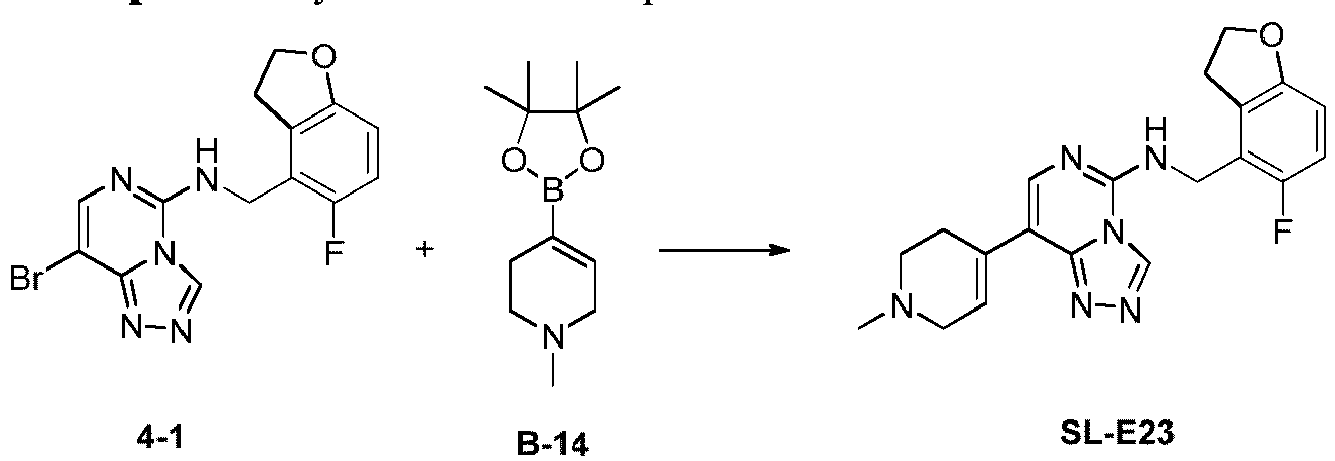
- Bromide 4-1 (36 mg, 0.1 mmol) was dissolved in 6 mL of 1,4-dioxane and 2 mL of a 2 M Na2CO3 aqueous solution, and borate B-14 (44 mg, 0.2 mmol)) was added thereto and the reaction system was stirred at room temperature for 10 min under Ar atmosphere protection. 10% of allyl palladium (II) chloride dimer (3.5 mg, 0.01 mmol), 20% of sodium 2'-dicyclohexylphosphino-2,6-dimethoxy-1,1'-biphenyl-3-sulfonate hydrate (11 mg, 0.02 mmol) were added, and the reaction was performed at 90 °C for 40 min under Ar atmosphere protection. After being cooled and concentrated under reduced pressure, the resultant was separated by column chromatography, to obtain the target compound SL-E23 as a white solid (6 mg). 1H NMR (400 MHz, DMSO-d6) δ 9.47 (d, J = 6.2 Hz, 1H), 8.67 (d, J = 4.9 Hz, 1H), 7.71 (d, J = 8.4 Hz, 1H), 7.30 (m, 1H), 6.94 (t, J = 9.4 Hz, 1H), 6.70 (dd, J = 8.5, 3.8 Hz, 1H), 4.69 (d, J = 4.8 Hz, 2H), 4.57 (m, 2H), 3.47 (m, 2H), 3.28 (t, J = 8.8 Hz, 2H), 2.97 (m, 2H), 2.69 (m, 2H), 2.56 (m, 3H). LC-MS: [M+H]+ =381.2.
-

- Bromide 4-1 (36 mg, 0.1 mmol) was dissolved in 6 mL of 1,4-dioxane and 2 mL of a 2 M Na2CO3 aqueous solution, and borate B-15 (47 mg, 0.2 mmol)) was added thereto and the reaction system was stirred at room temperature for 10 min under Ar atmosphere protection. 10% of allyl palladium (II) chloride dimer (3.5 mg, 0.01 mmol), 20% of sodium 2'-dicyclohexylphosphino-2,6-dimethoxy-1,1'-biphenyl-3-sulfonate hydrate (11 mg, 0.02 mmol) were added, and the reaction was performed at 90 °C for 40 min under Ar atmosphere protection. After being cooled and concentrated under reduced pressure, the resultant was separated by column chromatography, to obtain the target compound SL-E24 (3.5 mg). 1H NMR (400 MHz, CD3OD+CDCl3) δ 9.31 (s, 1H), 7.94 (s, 1H), 7.18 (s, 1H), 6.83 (m, 1H), 6.65 (m, 1H), 4.79 (s, 2H), 4.60 (t, J = 8.8 Hz, 2H), 3.64 (t, J = 7.3 Hz, 2H), 3.37 (m, 2H), 3.06 (s, 3H), 2.99 (m, 2H). LC-MS: [M+H]+ =395.1.
-

- Compound SL-E23 (10 mg) was dissolved in 2 mL of methanol, and 10% Pd/C (4 mg) was added, and the reaction was performed at room temperature for 6 hours. The resultant was filtered and separated by column chromatography to obtain the target compound SL-E25 (5 mg). 1H NMR (400 MHz, CD3OD) δ 9.29 (s, 1H), 7.61 (s, 1H), 6.90 - 6.80 (m, 1H), 6.63 (m, 1H), 4.76 (s, 2H), 4.66 - 4.51 (m, 2H), 3.58 - 3.44 (m, 2H), 3.40 - 3.34 (m, 2H), 3.23 - 3.11 (m, 1H), 3.09 - 2.95 (m, 2H), 2.83 (s, 3H), 2.27 - 2.17 (m, 4H). LC-MS: [M+H]+ =383.2.
-

- Compound SL-E24 (10 mg) was dissolved in 2 mL of methanol, and 10% Pd/C (4 mg) was added, and the reaction was performed at room temperature for 6 hours. The resultant was filtered and separated by column chromatography to obtain the target compound SL-E26 (2 mg). 1H NMR (400 MHz, CDCl3) δ 8.94 (s, 1H), 7.45 (s, 1H), 6.84 (t, J = 9.4 Hz, 1H), 6.66 (dd, J = 8.6, 3.9 Hz, 1H), 6.37 (m, 1H), 4.77 (d, J = 5.3 Hz, 2H), 4.63 (t, J = 8.7 Hz, 2H), 3.49 (m, 2H), 3.39 (m, 3H), 2.99 (s, 3H), 2.75 (m, 2H), 2.33 (m, 2H). LC-MS: [M+H]+ =397.2.
-

- Compound SL-ZYE-23 (50 mg, 0.1 mmol) was dissolved in 3 mL of dichloromethane (DCM) and 1 mL of trifluoroacetic acid (TFA), and the mixture was stirred at room temperature for 30 min. After being concentrated, the resultant was directly separated by HPLC to obtain the product SL-E29 (38 mg), LC-MS: [M+H]+ =395.2.
-

- SL-E29 (10 mg) was dissolved in 1 mL of dichloromethane and 0.1 mL of triethylamine (TEA) by stirring. Acetic anhydride (Ac2O, 8 mg) was added at room temperature, and the reaction was performed for 1 hour. After the reaction was completed as indicated by TLC, the resultant was separated by column chromatography to obtain the target compound SL-E30 (4 mg) .LC-MS: [M+H]+ =437.2.
-

- SL-E29 (10 mg) was dissolved in 1 mL of dichloromethane and 0.1 mL of triethylamine (TEA) by stirring. Methanesulfonic anhydride (Ms2O, 7 mg) was added at room temperature, and the reaction was performed for 1 hour. After the reaction was completed as indicated by TLC, the resultant was separated by column chromatography to obtain the target compound SL-E31(3 mg). LC-MS: [M+H]+ =473.2.
-

- SL-E29 (12 mg) was dissolved in 1 mL of dichloromethane and 0.1 mL of triethylamine (TEA) by stirring. HATU (30 mg) and N,N-dimethylglycine (9 mg) were added at room temperature, and the reaction was performed for 1 hour. After the reaction was completed as indicated by TLC, the reaction solution was poured into water, and extracted with a large amount of ethyl acetate. After being dried and concentrated, the resultant was separated by column chromatography to obtain the target compound SL-E32 (4 mg). LC-MS: [M+H]+ =480.2.
-

- Compound SL-E30 (10 mg) was dissolved in 2 mL of methanol, and 10% Pd/C (4 mg) was added, and the reaction was performed at room temperature for 6 hours. The resultant was filtered and separated by column chromatography to obtain the target compound SL-E33 (4 mg). LC-MS: [M+H]+ =439.2.
-

- Compound SL-E31 (10 mg) was dissolved in 2 mL of methanol, and 10% Pd/C (4 mg) was added, and the reaction was performed at room temperature for 6 hours. The resultant was filtered and separated by column chromatography to obtain the target compound SL-E34 (4 mg).LC-MS: [M+H]+ =475.2.
-
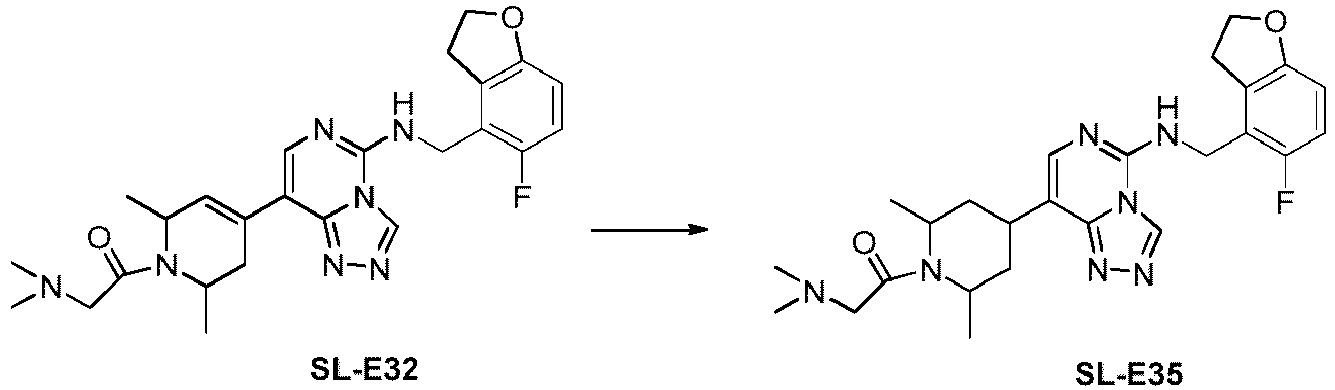
- Compound SL-E32 (10 mg) was dissolved in 2 mL of methanol, and 10% Pd/C (4 mg) was added and the reaction was performed at room temperature for 6 hours. The resultant was filtered and separated by column chromatography to obtain the target compound SL-E35 (4 mg). LC-MS: [M + H]+ = 482.2.
-

- Compound SL-E5 (10 mg) was dissolved in 2 mL of methanol, and 10% Pd/C (4 mg) was added and the reaction was performed at room temperature for 6 hours. The resultant was filtered and separated by column chromatography to obtain the target compound SL-E36 (5 mg). LC-MS: [M + H]+ = 480.2.
-

- Compound SL-E6 (10 mg) was dissolved in 2 mL of methanol, and 10% Pd/C (4 mg) was added and the reaction was performed at room temperature for 6 hours. The resultant was filtered and separated by column chromatography to obtain the target compound SL-E37 (5 mg). LC-MS: [M + H]+ = 482.2.
-

- Compound SL-E7 (10 mg) was dissolved in 2 mL of methanol, and 10% Pd/C (4 mg) was added and the reaction was performed at room temperature for 6 hours. The resultant was filtered and separated by column chromatography to obtain the target compound SL-E38 (5 mg). LC-MS: [M + H]+ = 441.2.
-

- Compound E-Y3 (10 mg) was dissolved in 2 mL of methanol, and 10% Pd/C (4 mg) was added and the reaction was performed at room temperature for 3 hour. The solution was filtered through celite. After the filtrate was dried by rotatory evaporation, the resultant was dissolved in 3 mL of dichloromethane (DCM) and 1 mL of trifluoroacetic acid (TFA), and the reaction system was stirred at room temperature for 30 min. After the solvent was concentrated, the residue was further dissolved in 1 mL of DMF and 0.1 mL of diisopropylethylamine (DIEPA), and HATU (15 mg) and acid (oxetane-3-carboxylic acid) (9 mg) were added at room temperature and the reaction was performed for 1 hour. The reaction solution was poured into water, and extracted with a large amount of ethyl acetate. After being dried and concentrated, the resultant was separated by column chromatography to obtain the target compound SL -E39 (0.7 mg). LC-MS: [M + H]+ = 453.4.
-

- Compound SL-E9 (10 mg) was dissolved in 2 mL of methanol, and 10% Pd/C (4 mg) was added and the reaction was performed at room temperature for 6 hours. The resultant was filtered and separated by column chromatography to obtain the target compound SL-E40 (5 mg). LC-MS: [M + H]+ = 485.2.
-

- SL-E10 (10 mg) was dissolved in 2 mL of methanol, and 10% Pd/C (4 mg) was added and the reaction was performed at room temperature for 6 hours. The resultant was filtered and separated by column chromatography to obtain the target compound SL-E41 (5 mg). LC-MS: [M + H]+ = 494.3.
-

- SL-E11 (10 mg) was dissolved in 2 mL of methanol, and 10% Pd/C (4 mg) was added and the reaction was performed at room temperature for 6 hours. The resultant was filtered and separated by column chromatography to obtain the target compound SL-E42 (5 mg). LC-MS: [M + H]+ = 564.2.
-

- SL-E13 (10 mg) was dissolved in 2 mL of methanol, and 10% Pd/C (4 mg) was added and the reaction was performed at room temperature for 6 hours. The resultant was filtered and separated by column chromatography to obtain the target compound SL-E43 (5 mg). LC-MS: [M + H]+ = 425.2.
- Referring to example 56, SL-E43 was separated by chiral chromatography to obtain optically pure compounds SL-E43-S and SL-E43-R.
-

- SL-E14 (10 mg) was dissolved in 2 mL of methanol, and 10% Pd/C (4 mg) was added and the reaction was performed at room temperature for 6 hours. The resultant was filtered and separated by column chromatography to obtain the target compound SL-E44 (5 mg). LC-MS: [M + H]+ = 461.2.
- Referring to example 56, SL-E44 was separated by chiral chromatography to obtain optically pure compounds SL-E44-S and SL-E44-R.
-

- SL-E15 (10 mg) was dissolved in 2 mL of methanol, and 10% Pd/C (4 mg) was added and the reaction was performed at room temperature for 6 hours. The resultant was filtered and separated by column chromatography to obtain the target compound SL-E45 (5 mg). LC-MS: [M + H]+ = 468.2.
- Referring to example 56, SL-E45 was separated by chiral chromatography to obtain optically pure compounds SL-E45-S and SL-E45-R.
-

- SL-E16 (10 mg) was dissolved in 2 mL of methanol, and 10% Pd/C (4 mg) was added and the reaction was performed at room temperature for 6 hours. The resultant was filtered and separated by column chromatography to obtain the target compound SL-E46 (5 mg). LC-MS: [M + H]+ = 494.2.
- Referring to example 56, SL-E46 was separated by chiral chromatography to obtain optically pure compounds SL-E46-S and SL-E46-R.
-

- SL-E17 (10 mg) was dissolved in 2 mL of methanol, and 10% Pd/C (4 mg) was added and the reaction was performed at room temperature for 6 hours. The resultant was filtered and separated by column chromatography to obtain the target compound SL-E47 (4 mg). LC-MS: [M + H]+ = 496.2.
- Referring to example 56, SL-E47 was separated by chiral chromatography to obtain optically pure compounds SL-E47-S and SL-E47-R.
-

- SL-E18 (10 mg) was dissolved in 2 mL of methanol, and 10% Pd/C (4 mg) was added and the reaction was performed at room temperature for 6 hours. The resultant was filtered and separated by column chromatography to obtain the target compound SL-E48 (4 mg). LC-MS: [M + H]+ = 455.2.
- Referring to example 56, SL-E48 was separated by chiral chromatography to obtain optically pure compounds SL-E48-S and SL-E48-R.
-

- Compound SL-E2 (10 mg) was dissolved in 3 mL of dichloromethane (DCM) and 1 mL of trifluoroacetic acid (TFA), and the mixture was stirred at room temperature for 30 min. After the solvent was concentrated, the residue was dissolved in 1 mL of DMF and 0.1 mL of isopropylethylamine (DIEPA), and HATU (30 mg) and acid (oxetane-3-carboxylic acid) (9 mg) were added at room temperature and the reaction was performed for 1 hour. When the reaction was completed as indicated by TLC, the reaction solution was poured into water and extracted with a large amount of ethyl acetate. After being dried and concentrated, the resultant was separated by column chromatography to obtain the target compound SL-E49 (1.2 mg). LC-MS: [M + H]+ = 467.2.
- Referring to example 56, SL-E49 was separated by chiral chromatography to obtain optically pure compounds SL-E49-S and SL-E49-R.
-

- SL-E20 (10 mg) was dissolved in 2 mL of methanol, and 10% Pd/C (4 mg) was added and the reaction was performed at room temperature for 6 hours. The resultant was filtered and separated by column chromatography to obtain the target compound SL-E50 (4 mg). LC-MS: [M + H]+ = 499.2.
- Referring to example 56, SL-E50 was separated by chiral chromatography to obtain optically pure compounds SL-E50-S and SL-E50-R.
-

- SL-E21 (10 mg) was dissolved in 2 mL of methanol, and 10% Pd/C (4 mg) was added and the reaction was performed at room temperature for 6 hours. The resultant was filtered and separated by column chromatography to obtain the target compound SL-E51 (4 mg). LC-MS: [M + H]+ = 508.3.
- Referring to example 56, SL-E51 was separated by chiral chromatography to obtain optically pure compounds SL-E51-S and SL-E51-R.
-

- SL-E22 (10 mg) was dissolved in 2 mL of methanol, and 10% Pd/C (4 mg) was added and the reaction was performed at room temperature for 6 hours. The resultant was filtered and separated by column chromatography to obtain the target compound SL-E52 (4 mg). LC-MS: [M + H]+ = 578.2.
- Referring to example 56, SL-E52 was separated by chiral chromatography to obtain optically pure compounds SL-E52-S and SL-E52-R.
-

- SL-ZYE-28 (10 mg) was dissolved in 2 mL of methanol, and 10% Pd/C (4 mg) was added and the reaction was performed at room temperature for 6 hours. The resultant was filtered and separated by column chromatography to obtain the target compound SL-E53 (4 mg). LC-MS: [M + H]+ = 418.2.
-

- Bromide 4-1 (36 mg, 0.1 mmol) was dissolved in 6 mL of 1,4-dioxane and 2 mL of a 2 M Na2CO3 solution, and borate SL-B3 (48 mg, 0.2 mmol) was added thereto. The reaction solution was stirred at room temperature for 10 min under Ar atmosphere protection. 10% of allyl palladium (II) chloride dimer (3.5 mg, 0.01 mmol) and 20% of sodium 2'-dicyclohexylphosphino-2,6-dimethoxy-1,1'-biphenyl-3-sulfonate hydrate (11 mg, 0.02 mmol) were added and the reaction was performed at 90 °C for 40 min under Ar atmosphere protection. After being cooled and concentrated under reduced pressure, the resultant was separated by column chromatography to obtain the target compound SL-ZYE-119. (4.1 mg). 1H NMR (400 MHz, DMSO-d6) δ 9.44 (s, 1H), 8.61 (m, 1H), 7.66 (s, 1H), 7.30 (m, 1H), 6.94 (m, 1H), 6.70 (m, 1H), 4.69 (m, 2H), 4.54 (m, 2H), 4.30 (m, 2H), 3.29 (m, 2H), 2.40 (m, 2H), 1.23 (s, 6H). LC-MS: [M+H]+ =396.2.
-

- Bromide 4-1 (36 mg, 0.1 mmol) was dissolved in 6 mL of 1,4-dioxane and 2 mL of a 2 M Na2CO3 solution, and borate SL-B4 (48 mg, 0.2 mmol) was added thereto. The reaction solution was stirred at room temperature for 10 min under Ar atmosphere protection. 10% of allyl palladium (II) chloride dimer (3.5 mg, 0.01 mmol) and 20% of sodium 2'-dicyclohexylphosphino-2,6-dimethoxy-1,1'-biphenyl-3-sulfonate hydrate (11 mg, 0.02 mmol) were added and the reaction was performed at 90 °C for 40 min under Ar atmosphere protection. After being cooled and concentrated under reduced pressure, the resultant was separated by column chromatography to obtain the target compound SL-ZYE-120. (4.1 mg). 1H NMR (400 MHz, DMSO-d6) δ 9.44 (s, 1H), 8.62 (m, 1H), 7.67 (m, 1H), 7.27 (m, 1H), 6.93 (m, 1H), 6.70 (m, 1H), 4.69 (m, 2H), 4.52 (m, 2H), 3.84 (m, 2H), 3.26 (m, 2H), 2.42 (m, 2H), 1.28 (s, 6H). LC-MS: [M+H]+ =396.2.
-

- SL-ZYE-119 (10 mg) was dissolved in 2 mL of methanol, and 10% Pd/C (4 mg) was added and the reaction was performed at room temperature for 6 hours. The resultant was filtered and separated by column chromatography to obtain the target compound SL-ZYE-121 (4 mg). 1H NMR (400 MHz, DMSO-d6) δ 9.32 (s, 1H), 8.32 (s, 1H), 7.38 (m, 1H), 6.85 (m, 1H), 6.62 (m, 1H), 4.56-4.47 (m, 4H), 3.68 (m, 2H), 3.20 (m, 3H), 1.70 (m, 4H), 1.09 (m, 6H). LC-MS: [M+H]+ =398.2.
-
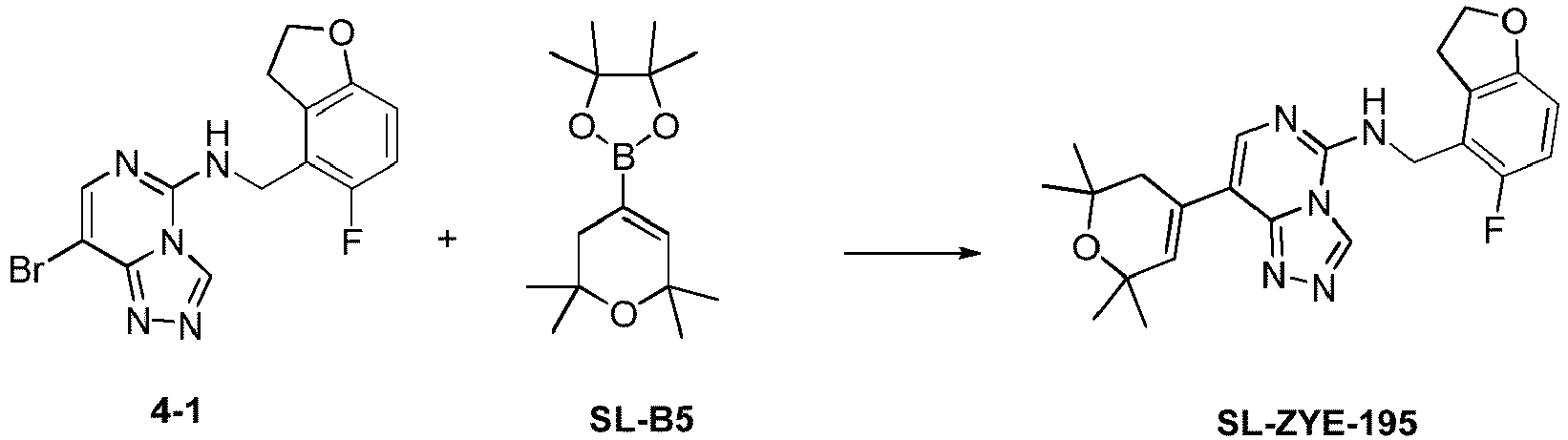
- Bromide 4-1 (36 mg, 0.1 mmol) was dissolved in 6 mL of 1,4-dioxane and 2 mL of a 2 M Na2CO3 solution, and borate SL-B5 (50 mg, 0.2 mmol) was added thereto. The reaction solution was stirred at room temperature for 10 min under Ar atmosphere protection. 10% of allyl palladium (II) chloride dimer (3.5 mg, 0.01 mmol) and 20% of sodium 2'-dicyclohexylphosphino-2,6-dimethoxy-1,1'-biphenyl-3-sulfonate hydrate (11 mg, 0.02 mmol) were added and the reaction was performed at 90 °C for 40 min under Ar atmosphere protection. After being cooled and concentrated under reduced pressure, the resultant was separated by column chromatography to obtain the target compound SL-ZYE-195 (4.1 mg). 1H NMR (400 MHz, DMSO-d6) δ 9.45 (s, 1H), 8.63 (m, 1H), 7.68 (m, 1H), 7.28 (m, 1H), 6.93 (m, 1H), 6.71 (m, 1H), 4.68 (d, J = 4.0 Hz, 2H), 4.54 (J = 8.0 Hz, 2H), 3.27 (J = 8.0 Hz, 2H), 2.38 (m, 2H), 1.29 (s, 6H), 1.24 (s, 6H). LC-MS: [M+H]+ =424.2.
-

- Bromide 4-1 (36 mg, 0.1 mmol) was dissolved in 6 mL of 1,4-dioxane and 2 mL of a 2 M Na2CO3 solution, and borate SL-B6 (49 mg, 0.2 mmol) was added thereto. The reaction solution was stirred at room temperature for 10 min under Ar atmosphere protection. 10% of allyl palladium (II) chloride dimer (3.5 mg, 0.01 mmol) and 20% of sodium 2'-dicyclohexylphosphino-2,6-dimethoxy-1,1'-biphenyl-3-sulfonate hydrate (11 mg, 0.02 mmol) were added and the reaction was performed at 90 °C for 40 min under Ar atmosphere protection. After being cooled and concentrated under reduced pressure, the resultant was separated by column chromatography to obtain the target compound SL-ZYE-196 (4.1 mg). 1H NMR (400 MHz, DMSO-d6) δ 9.44 (s, 1H), 8.61 (m, 1H), 7.66 (m, 1H), 7.32 (m, 1H), 6.94 (m, 1H), 6.70 (m, 1H), 4.68 (d, J = 4.0 Hz, 2H), 4.54 (t, J = 8.0 Hz, 2H), 4.34 (m, 2H), 3.70 (m, 1H), 3.29 (J = 8.0 Hz, 2H), 2.56-2.21 (m, 2H), 1.25 (d, J= 4.0 Hz, 3H). LC-MS: [M+H]+ =382.2.
-
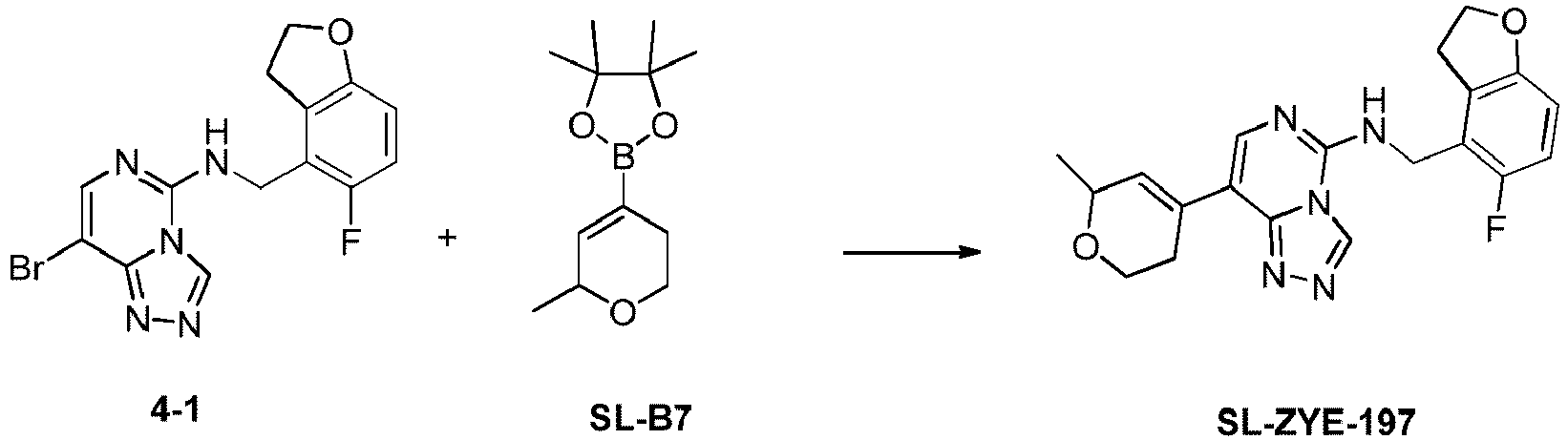
- Bromide 4-1 (36 mg, 0.1 mmol) was dissolved in 6 mL of 1,4-dioxane and 2 mL of a 2 M Na2CO3 solution, and borate SL-B7 (49 mg, 0.2 mmol) was added thereto. The reaction solution was stirred at room temperature for 10 min under Ar atmosphere protection. 10% of allyl palladium (II) chloride dimer (3.5 mg, 0.01 mmol) and 20% of sodium 2'-dicyclohexylphosphino-2,6-dimethoxy-1,1'-biphenyl-3-sulfonate hydrate (11 mg, 0.02 mmol) were added and the reaction was performed at 90 °C for 40 min under Ar atmosphere protection. After being cooled and concentrated under reduced pressure, the resultant was separated by column chromatography to obtain the target compound SL-ZYE-197 (4.1 mg). 1H NMR (400 MHz, DMSO-d6) δ 9.44 (s, 1H), 8.63 (m, 1H), 7.67 (m, 1H), 7.28 (m, 1H), 6.94 (m, 1H), 6.71 (m, 1H), 4.69 (d, J = 4.0 Hz, 2H), 4.53 (t, J = 8.0 Hz, 2H), 4.37 (m, 1H), 4.06 (m, 1H), 3.68 (m, 1H), 3.28 (J = 8.0 Hz, 2H), 2.60-2.32 (m, 2H), 1.26 (d, J = 4.0 Hz, 3H). LC-MS: [M+H]+ =382.2.
-

- Compound E-Y3 (46 mg) was dissolved in 5 mL of dichloromethane (DCM) and 1 mL of trifluoroacetic acid (TFA), and the mixture was stirred at room temperature. After the solvent was concentrated, 3 mL of dichloromethane and 0.1 mL of triethylamine (TEA) were added and dissolved by stirring. Ethylsulfonyl chloride (20 mg) was added at room temperature, and the reaction was continued. When the reaction was completed as indicated by TLC, the resultant was directly separated by column chromatography to obtain the target compound SL-ZYE-144 (7 mg).
1H NMR (400 MHz, CDCl3) δ 9.00 (s, 1H), 7.64 (s, 1H), 7.24 (m, 1H), 6.78 (m, 1H), 6.61 (m, 2H), 4.80 (s, 2H), 4.61 (t, J = 8.7 Hz, 2H), 4.06 (m, 2H), 3.61 (t, J = 5.6 Hz, 2H), 3.38 (t, J = 8.7 Hz, 2H), 3.04 (q, J = 7.4 Hz, 2H), 2.72 (m, 2H), 1.40 (t, J = 7.4 Hz, 3H). LC-MS: [M+H]+ = 459.1. -

- Compound E-Y3 (46 mg) was dissolved in 5 mL of dichloromethane (DCM) and 1 mL of trifluoroacetic acid (TFA), and the mixture was stirred at room temperature. After the solvent was concentrated, 3 mL of dichloromethane and 0.1 mL of triethylamine (TEA) were added and dissolved by stirring. Cyclopropylsulfonyl chloride (20 mg) was added at room temperature, and the reaction was continued. When the reaction was completed as indicated by TLC, the resultant was directly separated by column chromatography to obtain the target compound SL-ZYE-146 (6 mg).
1H NMR (400 MHz, CDCl3) δ 9.03 (s, 1H), 7.64 (s, 1H), 7.23 (m, 1H), 6.77 (m, 2H), 6.58 (dd, J = 8.7, 3.9 Hz, 1H), 4.78 (d, J = 5.3 Hz, 2H), 4.60 (t, J = 8.7 Hz, 2H), 4.08 (m, 2H), 3.60 (t, J = 5.7 Hz, 2H), 3.37 (t, J = 8.7 Hz, 2H), 2.74 (m, 2H), 2.42 - 2.27 (m, 1H), 1.32 - 1.14 (m, 2H), 1.11 - 0.88 (m, 2H). LC-MS: [M-H]+ = 469.2. -

- Compound E-Y3 (46 mg) was dissolved in 5 mL of dichloromethane (DCM) and 1 mL of trifluoroacetic acid (TFA), and the mixture was stirred at room temperature. After the solvent was concentrated, 3 mL of dichloromethane and 0.1 mL of triethylamine (TEA) were added and dissolved by stirring. Methyl chloroformate (15 mg) was added at room temperature, and the reaction was continued. When the reaction was completed as indicated by TLC, the resultant was directly separated by column chromatography to obtain the target compound SL-ZYE-147 (5 mg).
1H NMR (400 MHz, DMSO-d6) δ 9.45 (s, 1H), 8.64 (m, 1H), 7.69 (s, 1H), 7.26 (s, 1H), 6.93 (m, 1H), 6.71 (m, 1H), 4.69 (m, 2H), 4.54 (m, 2H), 4.12 (m, 2H), 3.64 (s, 3H), 3.61 (m, 2H), 3.28 (m, 2H), 2.57 (m, 2H). LC-MS: [M+H]+ = 425.2. -

- Compound E-Y3 (46 mg) was dissolved in 5 mL of dichloromethane (DCM) and 1 mL of trifluoroacetic acid (TFA), and the mixture was stirred at room temperature. After the solvent was concentrated, 3 mL of dichloromethane and 0.1 mL of triethylamine (TEA) were added and dissolved by stirring. Ethyl chloroformate (15 mg) was added at room temperature, and the reaction was continued. When the reaction was completed as indicated by TLC, the resultant was directly separated by column chromatography to obtain the target compound SL-ZYE-148 (4 mg).
1H NMR (400 MHz, CDCl3) δ 9.12 (s, 1H), 7.64 (s, 1H), 7.26 - 7.09 (m, 1H), 7.00 (m, 1H), 6.74 (t, J= 9.2 Hz, 1H), 6.57 (dd, J= 8.6, 3.9 Hz, 1H), 4.78 (d, J= 4.9 Hz, 2H), 4.58 (t, J = 8.8 Hz, 2H), 4.23 - 4.10 (m, 4H), 3.72 (d, J = 5.3 Hz, 2H), 3.35 (t, J= 9.0 Hz, 2H), 2.63 (m, 2H), 1.29 (t, J= 7.0 Hz, 3H). LC-MS: [M+H]+ = 439.2. -

- Compound E-Y3 (46 mg) was dissolved in 5 mL of dichloromethane (DCM) and 1 mL of trifluoroacetic acid (TFA), and the mixture was stirred at room temperature. After the solvent was concentrated, 3 mL of dichloromethane and 0.1 mL of triethylamine (TEA) were added and dissolved by stirring. Propionyl chloride (10 mg) was added at room temperature, and the reaction was continued. When the reaction was completed as indicated by TLC, the resultant was directly separated by column chromatography to obtain the target compound SL-ZYE-161 (4 mg). 1H NMR (400 MHz, CDCl3) δ 9.76 (m, 1H), 8.19 (m, 1H), 7.62 (m, 1H), 7.34-7.13 (m, 1H), 6.82 - 6.67 (m, 1H), 6.58 (m, 1H), 4.79 (m, 2H), 4.57 (m, 2H), 4.26 (m, 2H), 3.82 (m, 2H), 3.39 (m, 2H), 2.65 (m, 2H), 2.50 - 2.29 (m, 2H), 1.17 (m, 3H). LC-MS: [M+H]+ =423.2.
-

- Compound E-Y3 (46 mg) was dissolved in 5 mL of dichloromethane (DCM) and 1 mL of trifluoroacetic acid (TFA), and the mixture was stirred at room temperature. After the solvent was concentrated, 3 mL of dichloromethane and 0.1 mL of triethylamine (TEA) were added and dissolved by stirring. Cyclopropionyl chloride (10 mg) was added at room temperature, and the reaction was continued. When the reaction was completed as indicated by TLC, the resultant was directly separated by column chromatography to obtain the target compound SL-ZYE-162 (4 mg). 1H NMR (400 MHz, CDCl3) δ 9.35 (m, 1H), 7.81 (m, 1H), 7.64 (m, 1H), 7.33-7.10 (m, 1H), 6.74 (m, 1H), 6.57 (m, 1H), 4.77 (m, 2H), 4.57 (m, 2H), 4.29 (m, 2H), 3.85 (m, 2H), 3.34 (m, 2H), 2.77-2.60 (m, 2H), 1.84 (m, 1H), 0.85 (m, 4H). LC-MS: [M+H]+ =435.2.
-

- Compound E-Y3 (46 mg) was dissolved in 5 mL of dichloromethane (DCM) and 1 mL of trifluoroacetic acid (TFA), and the mixture was stirred at room temperature. After the solvent was concentrated, 3 mL of dichloromethane and 0.1 mL of triethylamine (TEA) were added and dissolved by stirring. Isopropylsulfonyl chloride (20 mg) was added at room temperature, and the reaction was continued. When the reaction was completed as indicated by TLC, the resultant was directly separated by column chromatography to obtain the target compound SL-ZYE-145 (7 mg).
1H NMR (400 MHz, DMSO-d6) δ 9.46 (s, 1H), 8.69 (m, 1H), 7.70 (s, 1H), 7.33 (m, 1H), 6.96 (d, J = 8.7 Hz, 1H), 6.71 (d, J = 3.9 Hz, 1H), 4.69 (m, 2H), 4.55 (d, J = 8.7 Hz, 2H), 4.04 (m, 2H), 3.53 (d, J= 5.7 Hz, 2H), 3.47 - 3.37 (m, 1H), 3.32 - 3.24 (m, 2H), 2.66 (m, 2H), 1.25 (s, 3H), 1.23 (s, 3H). LC-MS: [M+H]+ = 473.2. -

- SL-E12 (30 mg) was dissolved in 3 mL of dichloromethane and 0.1 mL of triethylamine (TEA) by stirring. Methyl chloroformate (15 mg) was added at room temperature, and the reaction was continued. When the reaction was completed as indicated by TLC, the resultant was directly separated by column chromatography to obtain the target compound SL-ZYE-183 (5 mg). 1H NMR (400 MHz, DMSO-d6) δ 9.43 (s, 1H), 8.60 (m, 1H), 7.62 (s, 1H), 6.98 - 6.90 (m, 1H), 6.82 (m, 1H), 6.69 (m, 1H), 4.67 (d, J = 5.0 Hz, 2H), 4.53 (t, J = 8.7 Hz, 2H), 4.07 (m, 2H), 3.59 (m, 5H), 3.28 (t, J= 8.7 Hz, 2H), 2.72 (m, 2H), 1.86 (m, 2H). LC-MS: [M+H]+ = 439.2.
- The TR-FRET method was used to measure the PRC2 enzyme activity. First, the enzyme was mixed with compounds at different concentrations and incubated for 30 min at room temperature. The biotin-labeled histone H3 peptide substrate and the cofactor S-adenosylmethionine (SAM) were added to initiate the enzymatic reaction. After reaction was performed at room temperature for 4 hour, Acceptor and Donor were added and incubated for half an hour. The multifunctional microplate reader EnVision (Perkin Elmer Inc.) was used to detect the fluorescence signal. Data were analyzed using GraphPad Prism 5.0 software, and IC50 values were obtained.
- The compounds in Table 1 can be prepared by the methods described in the above examples. EED226 is the positive compound (Nat. Chem. Biol. 2017, 13, 381-388), and N / A represents unanalyzed.
Compound No. Structure of compound Enzyme Activity IC50 (µM) E-Y1 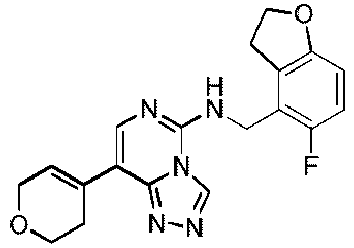
0.018 Exact Mass: 367.1445 E-Y2 
0.008 Exact Mass: 383.12 E-Y3 
0.037 Exact Mass: 466.21 E-Y4 
0.511 Exact Mass: 297.12 E-Y5 
0.611 Exact Mass: 313.10 E-Y6 
0.307 Exact Mass: 396.1910 E-Y10 
0.218 Exact Mass: 366.16 E-Y13 
0.019 Exact Mass: 444.14 E-Y14 
0.1006 Exact Mass: 520.17 E-Y15 
0.0056 Exact Mass: 408.17 E-Y16 
0.0177 Exact Mass: 470.19 E-Y17 
0.0061 Exact Mass: 437.20 E-Y18 
0.021 Exact Mass: 465.23 E-Y19 
0.0093 Exact Mass: 453.17 E-Y20 
0.166 Exact Mass: 338.1491 E-Y21 
0.351 Exact Mass: 400.1648 E-Y22 
0.334 Exact Mass: 374.1161 E-Y23 
0.350 Exact Mass: 450.1474 E-Y24 
0.204 Exact Mass: 367.18 E-Y25 
0.373 Exact Mass: 395.21 E-Y26 
0.091 Exact Mass: 429.19 E-Y27 
0.092 Exact Mass: 449.14 E-Y28 
0.107 Exact Mass: 429.19 E-Y30 
0.793 Exact Mass: 352.1648 E-Y31 
0.758 Exact Mass: 414.1804 E-Y32 
0.342 Exact Mass: 388.1318 E-Y34 
0.907 Exact Mass: 388.1459 E-Y35 
0.318 Exact Mass: 381.1913 E-Y36 
0.543 Exact Mass: 423.2019 E-Y37 
0.0328 Exact Mass: 499.21 E-Y38 
0.0585 Exact Mass: 519.16 E-Y39 
0.0545 Exact Mass: 529.17 E-Y40 
0.0161 Exact Mass: 493.22 E-Y41 
< 0.02 Exact Mass: 461.16 E-Y42 
0.0048 Exact Mass: 488.21 E-Y43 
0.0085 Exact Mass: 478.21 E-Y44 
0.0858 Exact Mass: 500.20 E-Y45 
0.0034 Exact Mass: 420.17 E-Y46 
0.2957 Exact Mass: 412.17 E-Y47 
0.013 Exact Mass: 369.16 E-Y48 
0.0054 Exact Mass: 439.21 E-Y49 
0.0066 Exact Mass: 467.24 E-Y50 
0.0053 Exact Mass: 410.19 E-Y51 
0.2 Exact Mass: 420.19 E-Y54 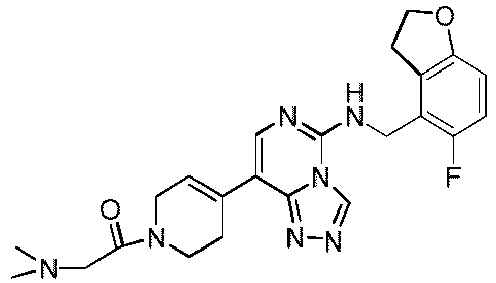
0.0041 Exact Mass: 451.21 SL-ZYE-07 
0.0073 Exact Mass: 381.16 SL-ZYE-08 
0.01193 Exact Mass: 383.18 SL-ZYE-09 
0.0045 Exact Mass: 415.11 SL-ZYE-11 
0.0179 Exact Mass: 349.15 SL-ZYE-14 
0.0840 Exact Mass: 351.17 SL-ZYE-17 
0.0560 Exact Mass: 347.14 SL-ZYE-18 
0.1153 Exact Mass: 446.21 E-Y20-H 
0.0939 Exact Mass: 340.16 E-Y13-H 
0.0107 Exact Mass: 446.15 SL-ZYE-23 
0.0476 Exact Mass: 494.24 SL-ZYE-24 
0.0083 Exact Mass: 395.18 SL-ZYE-28 
0.0225 Exact Mass: 415.14 SL-ZYE-34 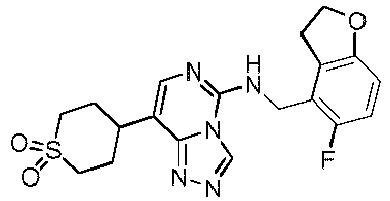
0.0032 Exact Mass: 417.13 E-Y54-H 
0.005 Exact Mass: 453.23 SL-E23 
0.0047 Exact Mass: 380.1761 SL-E25 
0.015 Exact Mass: 382.1917 SL-ZYE-119 
0.0233 Exact Mass: 395.18 SL-ZYE-144 
0.0035 Exact Mass: 458.15 SL-ZYE-146 
0.0029 Exact Mass: 470.15 SL-ZYE-147 
0.0025 Exact Mass: 424.17 SL-ZYE-148 
0.0047 Exact Mass: 438.18 SL-ZYE-161 
0.0408 Exact Mass: 422.19 SL-ZYE-162 
0.0052 Exact Mass: 434.19 SL-ZYE-145 
0.0089 Exact Mass: 472.17 SL-E24 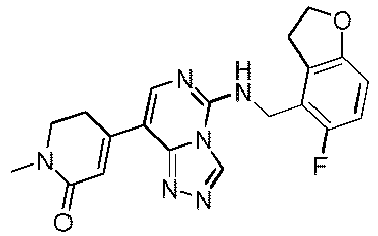
0.0039 Exact Mass: 394.16 SL-E26 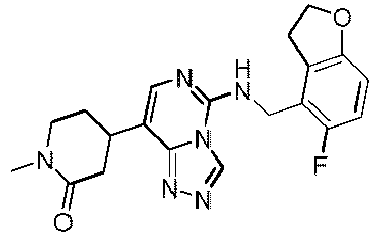
0.0084 Exact Mass: 396.17 SL-E13 
0.0033 Exact Mass: 422.19 SL-ZYE-183 
0.0022 Exact Mass: 438.18 SL-E14 
0.0017 Exact Mass: 458.15 SL-ZYE-195 
0.0223 Exact Mass: 423.21 SL-ZYE-196 
0.0141 Exact Mass: 381.16 SL-ZYE-197 
0.0078 Exact Mass: 381.16 SL-ZYE-120 
0.0036 Exact Mass: 395.18 SL-ZYE-121 
0.0042 EED226 
0.104 Exact Mass: 369.09 - Pfeiffer cells in exponential growth phase were seeded in a 24-well plate with a cell density of 1 ∗ 10E5 cells / mL. Cells were treated on the same day with the compounds at different concentrations. At day 4 and day 7 of compound treatment, fresh media and compounds were changed. After treated with the compounds for 11 days, cell viability was measured using CellTiter-Glo reagent (Promega Corporation). The data was analyzed using GraphPad Prism 5.0 software and GI50 values were obtained.
- The compounds in Table 2 can be prepared by the methods described in the above examples, and EED226 is the positive compound (Nat. Chem. Biol. 2017, 13, 381-388).
Compound No. Structure of compound Experiment on Pfeiffer cell growth inhibition in a long term (11 days) IC50 (µM) E-Y1 
0.008 Exact Mass: 367.1445 E-Y6 
0.083 E-Y9 
0.32 Exact Mass: 410.2066 E-Y13 
0.0032 Exact Mass: 444.14 E-Y15 
0.0019 Exact Mass: 408.17 E-Y16 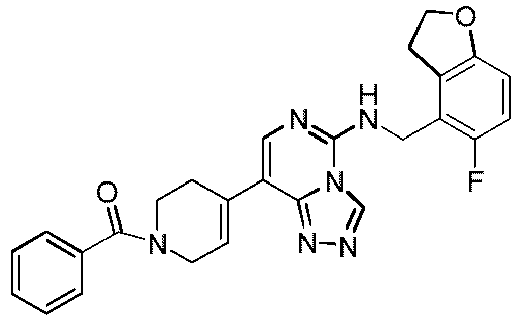
0.0048 Exact Mass: 470.19 E-Y17 
0.0027 Exact Mass: 437.20 E-Y18 
0.0027 Exact Mass: 465.23 E-Y19 
0.003 Exact Mass: 453.17 E-Y20 
0.158 Exact Mass: 338.1491 E-Y21 
0.185 Exact Mass: 400.1648 E-Y23 
0.107 Exact Mass: 450.1474 E-Y24 
0.204 Exact Mass: 367.18 E-Y36 
0.289 Exact Mass: 423.2019 E-Y40 
0.0054 Exact Mass: 493.22 E-Y43 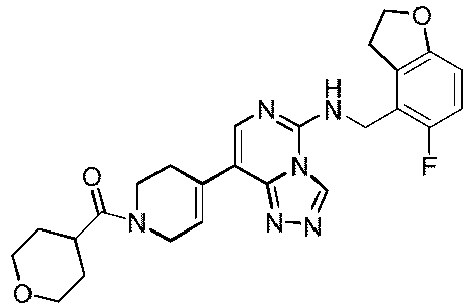
0.0033 Exact Mass: 478.21 E-Y44 
0.0023 Exact Mass: 500.20 E-Y41 
0.0045 Exact Mass: 461.16 E-Y42 
0.0036 Exact Mass: 488.21 E-Y45 
0.0018 Exact Mass: 420.17 E-Y48 
0.0159 Exact Mass: 439.21 E-Y49 
0.01 Exact Mass: 467.24 E-Y50 
0.0038 Exact Mass: 410.19 SL-E23 
0.0077 SL-ZYE-119 
0.0081 SL-ZYE-144 
0.0018 SL-ZYE-146 
0.0045 SL-ZYE-147 
0.001-0.003 SL-ZYE-148 
0.001-0.003 SL-ZYE-161 
0.009-0.027 SL-ZYE-162 
0.0027 SL-ZYE-145 
0.0017 SL-E24 
0.0051 SL-E13 
0.006 SL-ZYE-196 
0.007 SL-ZYE-197 
0.010 EED226 
0.052 Exact Mass: 369.09 - In a CO2 cell incubator (37 ° C, 5% CO2), Human diffuse large B-cell lymphoma (DLBCL) cell line, pfeiffer (obtained from ATCC, CRL-2632) were incubated with RPMI 1640 medium (Gibco, purchased from Life Technologies, 22400-089) containing 10% fetal bovine serum (Gibco, purchased from Life Technologies, 10099-141) and 1% antibiotics (penicillin and streptomycin, purchased from Life Technologies, 10378016). In the Experiment on growth inhibition of cells in a long term, pfeiffer cells in exponential growth phase were seeded in 24-well plates (purchased from Corning Corporation, 3524) with a volume of 1 mL / well and a cell density of 2 ∗ 10E5 cells / mL. After seeding the cells, they were placed in a CO2 incubator and allowed to stand for 1 hour. In a 24-well plate containing cells, 2 µL of three-fold gradient of the compounds at 9 different concentrations or DMSO were added to each well, such that the final concentration of the compounds was 0.003-20 µM or 0.3 - 2000 nM, and the final concentration of DMSO was 0.2%. At day 4, day 7, and day 11 of compound treatment, the fresh medium and compounds were changed, and the cell density of the DMSO control well was diluted to 2 ∗ 10E5 cells / mL. The cell dilution ratio for other compound wells was the same as that of the DMSO control well. Cell viability was determined by using CellTiter-Glo reagent (purchased from Promega Inc., G7572): cells treated with the compounds for 14 days were transferred to a white 384-well plate (OptiPlate-384, purchased from PerkinElmer, 6007299) at 40 µL / well, an equal volume of CellTiter-Glo reagent was further added. After incubating at room temperature for 10 min, the cold luminescence signal was detected with a multifunctional microplate reader EnVision (PerkinElmer) at a wavelength of 400 to 700 nm. Data were analyzed using GraphPad Prism 5.0 software, and IC50 values were obtained.
- The compounds in Table 3 can be prepared by the methods described in the above examples, and EED226 is the positive compound (Nat. Chem. Biol. 2017, 13, 381-388).
Compound No. Structure of compound Pfeiffer (14 days) IC50 (µM) E-Y1 
0.004 E-Y13 
0.001 E-Y15 
0.0007 E-Y42 
0.0015 E-Y47 
0.006 SL-ZYE-07 
0.001 SL-ZYE-09 
0.0032 SL-ZYE-24 
0.006 SL-ZYE-28 
0.010 SL-E23 
0.002 SL-ZYE-119 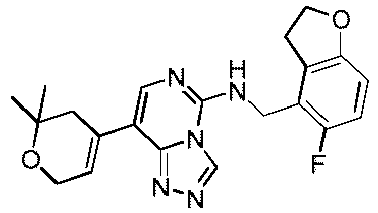
0.004 SL-ZYE-144 
0.0008 SL-ZYE-146 
0.003 SL-ZYE-162 
0.0012 SL-ZYE-145 
0.0010 SL-E24 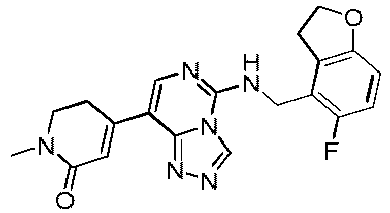
0.003 SL-ZYE-196 
0.004 SL-ZYE-197 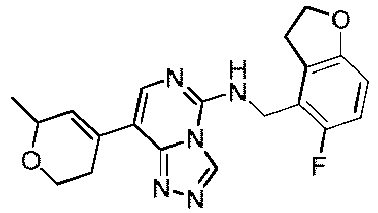
0.005 EED226 
0.044 Exact Mass: 369.09 - In a CO2 cell incubator (37 ° C, 5% CO2), Human diffuse large B-cell lymphoma (DLBCL) cell line, Karpas-422, SU-DHL-4 (obtained from ATCC, CRL-2957) were incubated with RPMI 1640 medium (Gibco, purchased from Life Technologies, 22400-089) containing 10% fetal bovine serum (Gibco, purchased from Life Technologies, 10099-141) and 1% antibiotics (penicillin and streptomycin, purchased from Life Technologies, 10378016). In the Experiment on growth inhibition of cells in a long term, Karpas-422, SU-DHL-4cells in exponential growth phase were seeded in 24-well plates (purchased from Corning Corporation, 3524) with a cell density of 1 ∗ 10E5 / mL and a cell medium volume of 1 mL. After incubating in a 24-well plate for 1 hour, 2 µL of the compounds or DMSO were added to each well. For each compound, there were 9 different concentrations, such that the final concentration in the cell medium was 0.003-20 µM or 0.3 - 2000 nM, and the final concentration of DMSO was 0.2%. At day 4, day 7 of compound treatment, the fresh cell medium and compounds were changed, and the cell density of the DMSO control well was diluted to 1 ∗ 10E5 / mL. The cell dilution ratio for compound wells was the same as that of the DMSO control well. Cell viability was determined by using CellTiter-Glo reagent (purchased from Promega Inc., G7572): cells treated with the compounds for 11 days were transferred to a white 384-well plate (OptiPlate-384, purchased from PerkinElmer, 6007299) at 40 µL / well, an equal volume of CellTiter-Glo reagent was further added. After incubating at room temperature for 10 min, the cold luminescence signal was detected with a multifunctional microplate reader EnVision (purchased from PerkinElmer) at a wavelength of 400 to 700 nm. Data were analyzed using GraphPad Prism 5.0 software, and IC50 values were obtained.
- The compounds in Table 4 can be prepared by the methods described in the above examples, and EED226 is the positive compound (Nat. Chem. Biol. 2017, 13, 381-388).
Compound No. Structure of compound Karpas-422 (11 days) IC50 (µM) SU-DHL-4 (11 days) IC50 (µM) E-Y1 
0.019 0.004 E-Y13 
0.013 / E-Y15 
0.007 0.003 E-Y42 
0.010 / E-Y47 
0.018 / SL-ZYE-07 
0.025 0.005 SL-E23 
0.0028 / SL-ZYE-144 
0.004 0.003 SL-ZYE-146 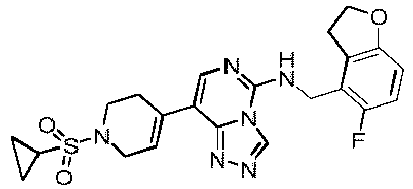
0.004 0.004 SL-ZYE-162 
0.0028 0.0031 SL-ZYE-145 
0.0032 0.001 SL-E24 
0.0031 0.003 SL-ZYE-196 
0.0199 0.009-0.05 SL-ZYE-197 
0.0160 0.0560 EED226 
0.167 0.095 Exact Mass: 369.09 - From the data in the above Tables 1 to 4, it can be seen that the IC50 value of some compounds of the present invention on PRC2 enzyme can be up to a nM level, which is significantly higher than that of the positive control compound EED226; similarly, in the experiments on growth inhibition of Pfeiffer, Karpas-422, and SU -DHL-4 cells in a long term, the IC50 values of several compounds of the present invention also is up to a nM level in single digit, which are significantly higher than the positive control EED226 compound.
-
- 1. Healthy male SD rats were used as test animals, EED226, E-Y1, E-Y13, E-Y47, SL-ZYE-07 (3mg / kg) were administered intragastrically, and the drug concentrations in rat plasma were determined by LC / MS / MS method at different time points after drug administration. The pharmacokinetic behavior of the compounds of the present invention in rats was studied, and the pharmacokinetic properties were evaluated.
- 2. The test animals were healthy adult male SD rats, with 3 rats in each group, purchased from Shanghai Xipuer-Bikai Laboratory Animal Limited Company.
- 3. Drug preparation: Compounds EED226, E-Y1, E-Y13, E-Y47 were dissolved in DMSO / 0.5% HPMC (5/95, v / v) for preparation. The compound SL-ZYE-07 was dissolved in 0.5% HPMC (containing 0.5% Tween 80), vortexed, and sonicated to disperse the solid matter uniformly to obtain a pale white suspension.
- 4. Operation: EED226, E-Y1, E-Y13, E-Y47, SL-ZYE-07 were administered to rats by intragastric administration (3 mg / kg), 45 µL of blood was taken through the femoral vein at 0.25, 0.5, 1, 2, 4, 8, 24 hour after administration, and centrifuged in a heparinized centrifuge tube for 5 min, and the plasma samples were separated for analysis. The contents of test compounds in rat plasma after intragastric administration of different compounds were determined by Liquid chromatography - mass spectrometry (LC-MS / MS).
- The pharmacokinetic parameters of the compounds of the present invention are as follows:
Pharmacokinetic experiment (3 mg/kg) No. Half life T1/2(h) Peak concentration Cmax(ng/mL) AUClast (h∗ng/mL) AUCINF_ obs (h∗ng/mL) Average residence time MRTINF_obs (h) EED226 1.63±0.411 464±429 886±336 915±316 2.55±1.08 E-Y1 2.32±0.268 302±6.4 2198±237 2201±239 5.46±0.342 E-Y13 1.37±0.212 376±273 529±150 539±150 2.06±0.484 E-Y47 2.56±0.302 1305±628 7886±2432 7905±2444 4.92±0.369 SL-ZYE-07 3.77±1.69 155±34.8 891±164 910±174 4.71±0.896 AUClast: AUC from the time of beginning the administration to the last time point
AUCINF_obs: AUC from the time of beginning the administration to the time point that is theoretical extrapolated to infinity
Conclusion: The compounds of the present invention show good pharmacokinetic absorption and have prominent advantages in pharmacokinetic. -
Name Supplier Code/Lot Number Liver microsomes of human BD H34 Liver microsomes of mouse Rild M11 Liver microsomes of rat BD R40/R42 NADPH Roche N8100-1000 VIVID BOMCC Life P2980 384-well black plate Greiner 781209 96-well incubating plate Corning 3957 96-well compound plate Apricotdesigns DWP-16-96-SQ-C MgCl2 Sigma M9272-100G TRIZMA BASE Sigma T1503-1KG BSA Roche pack A8020-100 DMSO Merck K42958652 225 methanol Merck 1622207203 - Stock Solutions of Compounds E-Y1, E-Y13, E-Y15, E-Y40, E-Y43, E-Y47, E-Y50, E-Y54, E-Y54-H, SL-E23 (10 mM in DMSO)
- 1. JANUS and temperature control device was turned on. After being initialized, the pipes were flushed until there was no air bubble in the pipes.
- 2. Preparation of buffers used for the experiment
- Preparation of Tris pH 7.4 buffer (0.1 M): 12.12 g of Tris was dissolved in 1000 mL of H2O, the resulting solution was adjusted to pH 7.4 with 2N HCl, aliquoted at 50 mL per tube, and stored at -20°C.
- Preparation of H2O / 0.1% BSA buffer: 200 µL of 25% BSA was added to 50 mL of H2O.
- Preparation of VIVID stock solution: 1 mg of VIVID was dissolved in 1 mL of acetonitrile, aliquoted at 50 µL per tube, and stored at -20°C.
- Preparation of MgCl2 solution (100 mM): 1.016 g of MgCl2 was dissolved in 50 mL Tris pH 7.4 buffer, and aliquoted at 1 mL per tube, and stored at -20°C.
- Preparation of NADPH solution (10 mM): 355 mg of NADPH was dissolved in 42.6 mL of Tris pH 7.4 buffer, aliquoted at 1.8 mL per tube, and stored at -20°C.
- Preparation of Blank control: 7.937 mL of Tris, 163 µL of RLM, 450 µL of MgCl2 solution, 450 µL of NADPH solution and 9 mL of methanol were mixed uniformly, aliquoted at 1 mL per tube, and stored at -20°C.
- Dilution step 1: 10 µL of compound stock solution was added to 90 µL of DMSO = 1 mM stock solution.
- Dilution step 2: 2 µL of 1 mM stock solution was added to 1 mL of H2O / 0.1% BSA buffer = 0.2 µM working solution.
- Dilution step 3: 245 µL of the working solution was added to a 96-well compound plate and added with 5 µL of VIVID stock solution.
- The 96-well compound plate was shaken on a shaker for 5 min.
- 4. The STM in the JANUS in the computer was open to run the EXCEL file, and the JANUS program was operated and run by following the instructions in the EXCEL file.
- 5. After the JANUS program was finished, acetonitrile / water 50:50 (V / V) was added to column 20 of the 384-well black plate, and blank control was added to column 21 of the 384-well black plate.
- 6. the plate (420nm-465nm) was read on a microplate reader to determine the VIVID fluorescence intensity.
- 7. After the plate was sealed, shaken and centrifuged, the sample plate was subjected to the LC / MS instrument for sample analysis.
- A profile of the logarithmic value of the remaining rate of the drug in the incubation system versus the incubation time was plotted, and the slope k was obtained by linear regression. The intrinsic clearance rate in vivo (Clint, mL / min / g) value, the clearance rate in vivo (Cl, mL) / min), liver clearance (Clhep, mL / min) and metabolic bioavailability (% MF) were predicted according to the following equations:


-
Compound Species Half life T-half (min) Intrinsic clearance rate in vivo Clint In Vitro (mL/min/gprot) Clearance rate in vivo Clint In Vivo Extpl (ml/min) Liver clearance rate Clint Hep In Vivo Extpl (ml/min) Metabolic bioavailability MF % E-Y1 human 99.6 21.1 1613 777 48.2 rat 59.6 35.2 15.9 8.85 55.8 mouse 71.5 29.4 1.98 1.19 60.2 E-Y13 human 92.8 22.6 1732 804 46.4 rat 55.2 35.2 15.9 8.85 53.9 mouse 94.6 22.2 1.50 1.00 66.7 E-Y15 human 126 16.7 1280 691 54.0 rat 14.6 144 64.7 15.3 23.6 mouse 25.7 81.6 5.51 1.94 35.3 E-Y40 human 63.7 33.0 2522 941 37.3 rat 15.9 133 59.6 15.0 25.1 mouse 6.11 344 23.2 2.66 11.4 E-Y43 human 110 19.1 1464 741 50.6 rat 21.1 99.6 44.8 13.8 30.9 mouse 13.0 161 10.9 2.35 21.6 E-Y47 human 309 6.79 519 386 74.3 rat 139 15.1 6.79 5.07 74.7 mouse 121 17.3 1.17 0.841 72.0 E-Y50 human 922 2.28 174 156 89.6 rat 86.9 24.2 10.9 7.05 64.8 mouse 154 13.6 0.921 0.705 76.5 E-Y54 human 853 2.46 188 167 88.8 rat 94.4 22.3 10.0 6.67 66.6 mouse 36.8 57.1 3.86 1.69 43.7 E-Y54-H human 479 4.39 336 274 81.7 rat 222 9.47 4.26 3.51 82.4 mouse 117 17.9 1.21 0.862 71.3 SL-E23 human 199 10.5 807 525 65.0 rat 60.0 35.0 15.8 8.81 55.9 mouse 38.6 54.4 3.67 1.65 45.0 Conclusion: The compounds of the present invention have good liver microsomal stability in human, rat, and mouse, and thus having prominent advantages.


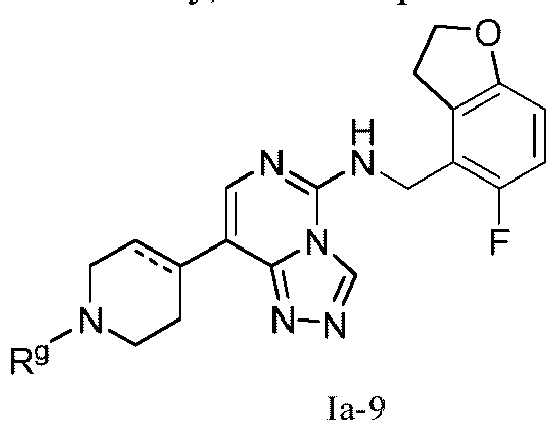


| E-Y1 | E-Y2 | E-Y3 |
 |  |  |
| E-Y4 | E-Y5 | E-Y6 |
 |  | 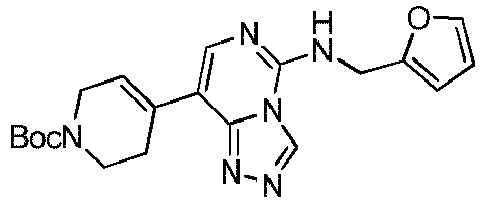 |
| E-Y7 | E-Y8 | E-Y9 |
 |  |  |
| E-Y10 | E-Y11 | E-Y12 |
 |  |  |
| E-Y13 | E-Y14 | E-Y15 |
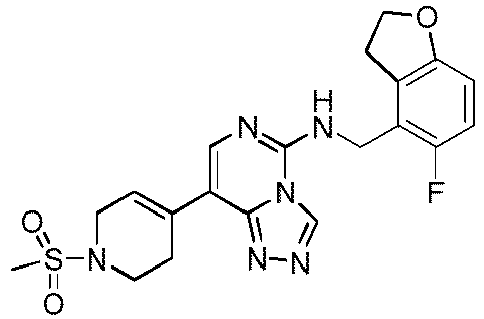 | 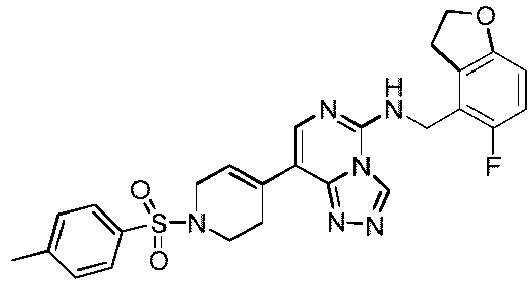 |  |
| E-Y16 | E-Y17 | E- Y18 |
 |  |  |
| E-Y19 | E-Y20 | E-Y21 |
 |  |  |
| E-Y22 | E-Y23 | E-Y24 |
 |  |  |
| E-Y25 | E-Y26 | E-Y27 |
 |  |  |
| E-Y28 | E-Y29 | E-Y30 |
 |  |  |
| E-Y31 | E-Y32 | E-Y33 |
 |  |  |
| E-Y34 | E-Y35 | E-Y36 |
 |  |  |
| E-Y37 | E-Y38 | E-Y39 |
 |  |  |
| E-Y40 | E-Y41 | E-Y42 |
 |  |  |
| E-Y43 | E-Y44 | E-Y45 |
 |  |  |
| E-Y46 | E-Y47 | E-Y48 |
 |  | 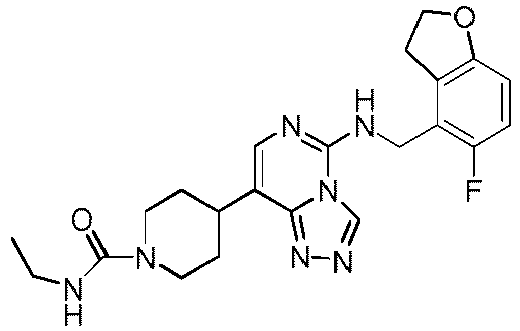 |
| E-Y49 | E-Y50 | E-Y51 |
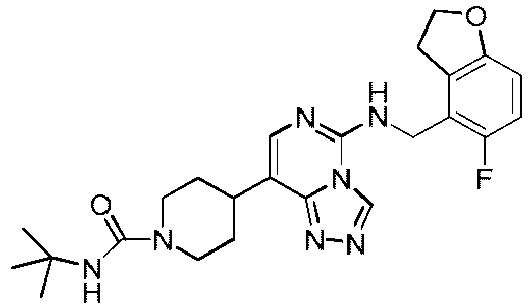 |  |  |
| E-Y52 | E-Y53 | E-Y54 |
 |  |  |
| SL-ZYE-07 | SL-ZYE-08 | SL-ZYE-09 |
 |  | 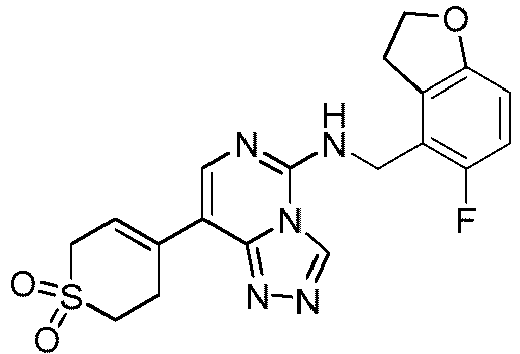 |
| SL-ZYE-11 | SL-ZYE-14 | SL-ZYE-17 |
 |  |  |
| SL-ZYE-18 | E-Y20-H | E-Y13-H |
 |  |  |
| SL-ZYE-34 | SL-ZYE-23 | SL-ZYE-24 |
 |  |  |
| SL-ZYE-28 | E-Y54-H | SL-E1 |
 |  |  |
| SL-E2 | SL-E3 | SL-E4 |
 |  |  |
| SL-E5 | SL-E6 | SL-E7 |
 |  |  |
| SL-E8 | SL-E9 | SL-E10 |
 |  |  |
| SL-E11 | SL-E12 | SL-E13 |
 |  |  |
| SL-E14 | SL-E15 | SL-E16 |
 |  |  |
| SL-E17 | SL-E18 | SL-E19 |
 |  |  |
| SL-E20 | SL-E21 | SL-E22 |
 |  |  |
| SL-E23 | SL-E24 | SL-E25 |
 |  |  |
| SL-E26 | SL-E29 | SL-E30 |
 |  |  |
| SL-E31 | SL-E32 | SL-E33 |
 |  |  |
| SL-E34 | SL-E35 | SL-E36 |
 |  |  |
| SL-E37 | SL-E38 | SL-E39 |
 |  |  |
| SL-E40 | SL-E41 | SL-E42 |
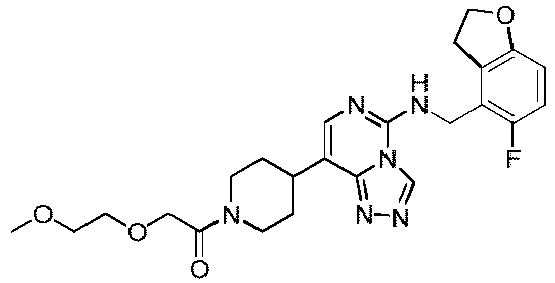 |  |  |
| SL-E43 | SL-E44 | SL-E45 |
 |  |  |
| SL-E46 | SL-E47 | SL-E48 |
 |  |  |
| SL-E49 | SL-E50 | SL-E51 |
 |  |  |
| SL-E52 | SL-E53 | E-Y2-H |
 |  |  |
| SL-ZYE-08-S | SL-ZYE-08-R | SL-E43-S |
 |  |  |
| SL-E43-R | SL-E44-S | SL-E44-R |
 |  |  |
| SL-E45-S | SL-E45-R | SL-E46-S |
 |  |  |
| SL-E46-R | SL-E47-S | SL-E47-R |
 |  |  |
| SL-E48-S | SL-E48-R | SL-E49-S |
 | 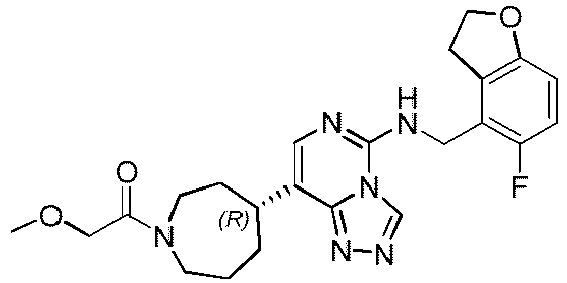 |  |
| SL-E49-R | SL-E50-S | SL-E50-R |
 |  |  |
| SL-E51-S | SL-E51-R | SL-E52-S |
 |  |  |
| SL-E52-R | SL-E2-S | SL-E2-R |
 |  |  |
| SL-ZYE-120 | SL-ZYE-119 | SL-ZYE-144 |
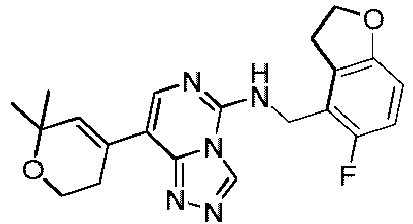 |  |  |
| SL-ZYE-146 | SL-ZYE-147 | SL-ZYE-148 |
 |  |  |
| SL-ZYE-161 | SL-ZYE-162 | SL-ZYE-145 |
 |  |  |
| SL-ZYE-121 | SL-ZYE-183 | SL-ZYE-195 |
 |  |  |
| SL-ZYE-196 | SL-ZYE-197 | |
 |  |

Claims (13)
- A compound represented by the formula I, pharmaceutically acceptable salts, enantiomers, diastereomers or racemates thereof:
 1) X1 is independently selected from N and C-CN;2) R2 is independently selected from H, halogen, C1-C4 haloalkyl and C1-C4 alkyl;3) A is independently selected from the following structures:
 ------ is a single bond or double bond;R3, R4 and R5 are independently selected from H, halogen, C1-C4 alkyl, C1-C4 haloalkyl, -O-(C1-C4 alkyl), C1-C4 haloalkoxy, C3-C6 cycloalkyl;R6 is independently selected from H, OH, =O and C1-C4 alkyl;R7 is independently selected from H, OH, halogen, CN and C1-C4 alkyl;n is each independently selected from 0, 1 and 2;X2 is independently selected from O, NRa and S(O)p heteroatoms;Each Ra is independently selected from H, O, C1-C10 alkyl substituted by 0-2 Rb, C1-C6 haloalkyl, -O-(C1-C6 alkyl), C1-C6 haloalkoxy, C3-C6 cycloalkyl, -C(=O)(C1-C4 alkyl), -CO2(C1-C4 alkyl), heteroalkyl and heterocycloalkyl comprising carbon atoms and 1-4 heteroatoms selected from O, N, S(O)p, -C(=O)H, aryl, 5- to 6- membered heteroaryl comprising carbon atoms and 1 to 2 heteroatoms selected from N, O and S;Rb is independently selected from halogen, OH, NH2, NHC(=O)(C1-C4 alkyl), NHS(=O)2(C1-C4 alkyl), =O, CN, C1-C4 alkyl and C1-C4 alkoxy;p is each independently selected from 0, 1 and 2;4) R1 is independently selected from the following structures:
 ------ is a single bond or double bond;4a) R1A is independently selected from H, hydroxy, halogen, CN, -(O)2-(C1-C10 alkyl comprising 0-2 of substituent R°), C1-C6 alkyl group, C1-C6 alkoxy , C1-C6 haloalkyl, C1-C6 haloalkoxy, SCF3, C3-C8 cycloalkyl, -C(=O)(C1-C4 alkyl), -C(=O)NH(C1-C4 alkyl), amino, C1-C6 linear, branched and cyclic alkylamino, heteroalkyl and heterocycloalkyl comprising carbon atoms and 1-4 heteroatoms selected from O, N, S(O)p, -C(=O)H, aryl, 5- to 6- membered heteroaryl comprising carbon atoms and 1 to 2 heteroatoms selected from N, O and S; wherein the aryl and heteroaryl may be substituted by 0-2 of R1X;p is each independently selected from 0, 1 and 2;Rc is independently selected from OH, halogen, CN, C1-C6 alkyl, C1-C6 haloalkyl, C1-C6 alkoxy, C1-C6 haloalkoxy, C3-C8 cycloalkyl, -(OCH2CH2)mORd, NHC(=O)NRdRe, NHC(=S)NRdRe, -NHC(=NH)NRdRe, (OCH2CH2)mNRdRe, -C(=O)Rd, -S(=O) Rd, -C(=O)NRdRe, -S(=O)2Rd, -NHC(=O)Rd, -NHC(=S)Rd, -NHS(=O)2Rd, -S(=O)2NHRd, heteroalkyl and heterocycloalkyl comprising carbon atoms and 1 to 2 heteroatoms selected from N, NRa, O and S(O)p, aryl, and heteroaryl comprising carbon atoms and 1 to 2 heteroatoms selected from N, NRa, O and S(O)p, wherein the aryl and heteroaryl may be substituted by 0-2 of R1X;Rd and Re are independently selected from H, C1-C6 alkyl comprising 0-2 of Rb, C1-C6 haloalkyl, C3-C6 cycloalkyl, -C(=O)(C1-C4 alkyl), -CO2(C1-C4 alkyl), -C(=O)NH(C1-C4 alkyl), C1-C6 branched or cyclic heteroalkyl comprising 0-2 of heteroatoms selected from O, N, and S(O)p, -C(=O)H, aryl, and heteroaryl comprising carbon atoms and 1 to 2 heteroatoms selected from N, NRa, O and S(O)p, wherein the aryl and heteroaryl may be substituted by 0-2 of R1X;Each Ra is independently selected from H; O; C1-C10 alkyl substituted by 0-2 of Rb; C1-C6 haloalkyl; -O-(C1-C6 alkyl); C1-C6 haloalkoxy; C3-C6 cycloalkyl; -C(=O)(C1-C4 alkyl); -CO2(C1-C4 alkyl); heteroalkyl and heterocycloalkyl comprising carbon atoms and 1-4 heteroatoms selected from O, N, S(O)p; -C(=O)H; aryl; 5- to 6-membered heteroaryl comprising carbon atoms and 1 to 2 heteroatoms selected from N, O and S;Rb is independently selected from halogen, OH, NH2, NHC(=O)(C1-C4 alkyl), NHS(=O)2(C1-C4 alkyl), =O, CN, C1-C4 alkyl and C1-C4 alkoxy;p is each independently selected from 0, 1 and 2Rd and Re can be connected in the form of Rd-Re or
 R1X is independently selected from halogen, OH, CN, C1-C4 alkyl, C1-C4 haloalkyl, C1-C4 alkoxy, C1-C4 haloalkoxy, C3-C8 cycloalkyl and cyclic heteroalkyl;R1B and R1C are independently selected from H, OH, halogen, CN, -(O)z-(C1-C10 alkyl comprising 0-2 of substituent Rc), C1-C6 alkyl group, C1-C6 alkoxy , C1-C6 haloalkyl, C1-C6 haloalkoxy, SCF3, C3-C8 cycloalkyl, -C(=O)(C1-C4 alkyl), -C(=O)NH(C1-C4 alkyl), heteroalkyl and heterocycloalkyl comprising carbon atoms and 1-4 heteroatoms selected from O, N, S(O)p, -C(=O)H, aryl, 5- to 6- membered heteroaryl comprising carbon atoms and 1 to 2 heteroatoms selected from N, O and S; wherein the aryl and heteroaryl may be substituted by 0-2 of R1X; p is each independently 0, 1 and 2;R2B and R2C are independently selected from H, OH, halogen, CN, -(O)z-(C1-C10 alkyl comprising 0-2 of substituent Rc), C1-C6 alkyl group, C1-C6 alkoxy , C1-C6 haloalkyl, C1-C6 haloalkoxy, SCF3, C3-C8 cycloalkyl, -C(=O)(C1-C4 alkyl), -C(=O)NH(C1-C4 alkyl), heteroalkyl and heterocycloalkyl comprising carbon atoms and 1-4 heteroatoms selected from O, N, S(O)p, -C(=O)H, aryl, 5- to 6- membered heteroaryl comprising carbon atoms and 1 to 2 heteroatoms selected from N, O and S; wherein the aryl and heteroaryl may be substituted by 0-2 of R1X; p is each independently 0, 1 and 2;R3B and R3C are independently selected from H, OH, halogen, CN, -(O)z-(C1-C10 alkyl comprising 0-2 of substituent Rc), C1-C6 alkyl group, C1-C6 alkoxy , C1-C6 haloalkyl, C1-C6 haloalkoxy, SCF3, C3-C8 cycloalkyl, -C(=O)(C1-C4 alkyl), -C(=O)NH(C1-C4 alkyl), heteroalkyl and heterocycloalkyl comprising carbon atoms and 1-4 heteroatoms selected from O, N, S(O)p, -C(=O)H, aryl, 5- to 6- membered heteroaryl comprising carbon atoms and 1 to 2 heteroatoms selected from N, O and S; wherein the aryl and heteroaryl may be substituted by 0-2 of R1X; p is each independently 0, 1 and 2;Alternatively, R1B and R1C, R2B and R2C, R3B and R3C may form a carbonyl group (=O) with a carbon atom to which they are attached or a thiocarbonyl group (=S);R1D is independently selected from H, -OH, halogen, CN, -C(=O)H, -(O)z-(C1-C6 alkyl comprising 0-2 of substituent Rc), C1-C6 haloalkyl, C1-C6 haloalkoxy, SCF3, Rf, -ORf, -C(=O)Rc, NRdRe, -C(=O) NRdRe, -NHC(=O)Rc, -S(=O)2Rc, -S(=O)2 NRdRe, -NHS(=O)2Rd, -(OCH2CH2)mORd, -(OCH2CH2)mNRdRe;Rf is independently selected from C3-C8 cycloalkyl, heteroalkyl and heterocycloalkyl comprising carbon atoms and 1-4 heteroatoms selected from O, N, S(O)p, aryl, heteroaryl comprising carbon atoms and 1 to 2 heteroatoms selected from N, NRa, O and S(O)p; wherein the aryl and heteroaryl are substituted by 0-2 of R1X;M is independently selected from a 3 to 7 membered saturated or unsaturated cycloalkyl, a heterocycloalkyl comprising carbon atoms and 1-4 heteroatoms selected from O, N, S(O)p, an aryl, 5- to 6- membered heteroaryl comprising carbon atoms and 1 to 2 heteroatoms selected from N, O and S;In the definitions of R1B and R1C, R2B and R2C, R3B and R3C, R1D and Rf, the definitions of Ra, Rc, Rd, Re, p, z, m amd R1X are the same as those of R1A in the part 4a);n is each independently selected from 0, 1 and 2;m is each independently selected from 0-4;p is each independently selected from 0-2;q is each independently selected from 0-3;z is each independently selected from 0 and 1;4a') Preferably, R1 is independently selected from the following structures:
 ------ is a single bond or double bond;R1A is independently selected from H, hydroxy, halogen, CN, -(O)z(C1-C10 alkyl comprising 0-2 of substituent Rc), C1-C6 alkyl, C1-C6 alkoxy, C1-C6 haloalkyl, C1-C6 haloalkoxy, SCF3, C3-C8 cycloalkyl, -C(=O)(C1-C4 alkyl), -C(=O)NH(C1-C4 alkyl), -C(=O)H;Rc is independently selected from OH, halogen, CN, C1-C6 alkyl, carboxyl, C1-C6 haloalkyl, C1-C6 alkoxy, C1-C6 haloalkoxy, C3-C8 cycloalkyl;R1B and R1C, R2B and R2C, and R3B and R3C are independently selected from H, OH, halogen, CN, -(O)z-(C1-C10 alkyl comprising 0-2 of substituent Rc), C1-C6 alkyl group, C1-C6 alkoxy, C1-C6 haloalkyl, C1-C6 haloalkoxy, SCF3, C3-C8 cycloalkyl, -C(=O)(C1-C4 alkyl), -C(=O)NH(C1-C4 alkyl);Alternatively, R1B and R1C, R2B and R2C, R3B and R3C may form a carbonyl group (=O) or a thiocarbonyl group (=S) with a carbon atom to which they are attached;R1D is independently selected from H, -OH, halogen, CN, -C(=O)H, -(O)z-(C1-C6 alkyl comprising 0-2 of substituent Rc), C1-C6 haloalkyl, C1-C6 haloalkoxy, SCF3, C3-C8 cycloalkyl;Rc is independently selected from OH, halogen, CN, C1-C6 alkyl, carboxyl, C1-C6 haloalkyl, C1-C6 alkoxy, C1-C6 haloalkoxy, C3-C8 cycloalkyl;M is independently selected from a 3 to 7 membered saturated or unsaturated cycloalkyl, a heterocycloalkyl comprising carbon atoms and 1-4 heteroatoms selected from O, N, S(O)p, an aryl, 5- to 6- membered heteroaryl comprising carbon atoms and 1 to 2 heteroatoms selected from N, O and S;n is each independently selected from 0, 1 and 2;m is each independently selected from 0-4;p is each independently selected from 0-2;q is each independently selected from 0-3;z is each independently selected from 0 and 1;4a") more preferably, in R1,R1A is independently selected from H, hydroxyl, halogen, C1-C6 alkyl, C1-C6 alkoxy, C1-C6 haloalkyl, C1-C6 haloalkoxy, C3-C8 cycloalkyl;R1B and R1C, R2B and R2C, and R3B and R3C are independently selected from H, OH, halogen, C1-C6 alkyl group, C1-C6 alkoxy, C1-C6 haloalkyl, C1-C6 haloalkoxy, C3-C8 cycloalkyl;Alternatively, R1B and R1C, R2B and R2C, R3B and R3C may form a carbonyl group (=O) or a thiocarbonyl group (=S) with a carbon atom to which they are attached;R1D is independently selected from H, -OH, halogen, C1-C6 alkyl, C1-C6 alkoxy, C1-C6 haloalkyl, C1-C6 haloalkoxy, C3-C8 cycloalkyl;M is independently selected from a 5 to 6 membered saturated or unsaturated cycloalkyl, a heterocycloalkyl comprising carbon atoms and 1-4 heteroatoms selected from O, N, S(O)p, an aryl, 5- to 6- membered heteroaryl comprising carbon atoms and 1 to 2 heteroatoms selected from N, O and S;n is each independently selected from 0, 1 and 2;m is each independently selected from 0-4;p is each independently selected from 0-2;q is each independently selected from 0-3;z is each independently selected from 0 and 1;4b) Y is independently selected from heteroatoms of O, NRg, S(O)p, etc., and CH2, C=O, -CRi(CH2)mNRgRh and -CRi(CH2)mORg;Rg and Rh are independently selected from H, O, C1-C10 alkyl comprising 0-3 of substituent Rs, C1-C6 haloalkyl, C3-C6 cycloalkyl,

 Rs is independently selected from OH, CN, halogen, C1-C6 alkyl, C1-C6 haloalkyl, C1-C6 alkoxy , C1-C6 haloalkoxy, C3-C8 cycloalkyl, -(OCH2CH2)mORd, NHC(=O)NRdRe, NHC(=S)NRdRe, -NHC(=NH)NRdRe, (OCH2CH2)mNRdRe, -C(=O)Rd, -C(=S)Rd, -S(=O) Rd, -C(=O)NRdRe, -S(=O)2Rd, -NHC(=O)Rd, -NHC(=S)Rd, -NHS(=O)2Rd, -S(=O)2NRdRe, -NHS(=O)2NRdRe, -C(=S)NRdRe, NHC(=O)ORd, NHC(=S)ORd, -NHS(=O)2ORd, NHC(=O)SRd, NHC(=S)SRd, -NHC(=NH)ORd, -C(=O)ORd, -C(=O)SRd, -S(=O)2ORd, heteroalkyl and heterocycloalkyl comprising carbon atoms and 1 to 2 heteroatoms selected from N, NRa, O and S(O)p, aryl, heteroaryl comprising carbon atoms and 1 to 2 heteroatoms selected from N, NRa, O and S(O)p; wherein the aryl and heteroaryl may be substituted by 0-2 of R1Y;Rd and Re are independently selected from H, C1-C6 alkyl comprising 0-2 of Rb, C1-C6 haloalkyl, C3-C6 cycloalkyl, -C(=O)(C1-C4 alkyl), -CO2(C1-C4 alkyl), -C(=O)NH(C1-C4 alkyl), C1-C6 branched or cyclic heteroalkyl comprising 0-2 of heteroatoms selected from O, N, and S(O)p, -C(=O)H, aryl, and heteroaryl comprising carbon atoms and 1 to 2 heteroatoms selected from N, NRa, O and S(O)p, wherein the aryl and heteroaryl may be substituted by 0-2 of R1X;Rd and Re may be connected by the following manner Rd-Re or
 Each Ra is independently selected from H; O; C1-C10 alkyl substituted by 0-2 of Rb; C1-C6 haloalkyl; -O-(C1-C6 alkyl); C1-C6 haloalkoxy; C3-C6 cycloalkyl; -C(=O)(C1-C4 alkyl); -CO2(C1-C4 alkyl); heteroalkyl and heterocycloalkyl comprising carbon atoms and 1-4 heteroatoms selected from O, N, S(O)p; -C(=O)H; aryl; 5- to 6-membered heteroaryl comprising carbon atoms and 1 to 2 heteroatoms selected from N, O and S; Rb is independently selected from halogen, OH, NH2, NHC(=O)(C1-C4 alkyl), NHS(=O)2(C1-C4 alkyl), =O, CN, C1-C4 alkyl and C1-C4 alkoxy; p is independently selected from 0, 1 and 2;R1X is independently selected from halogen, OH, CN, C1-C4 alkyl, C1-C4 haloalkyl, C1-C4 alkoxy, C1-C4 haloalkoxy, C3-C8 cycloalkyl and cyclic heteroalkyl;R1Y is independently selected from C1-C10 alkyl; halogen; CN; -(O)z-(C1-C10 alkyl comprising 0-2 of the substituent Rc); C1-C6 haloalkyl; C1-C6 haloalkoxy; SCF3; C3-C8 cycloalkyl; -C(=O)(C1-C4 alkyl); -CO2(C1-C4 alkyl); NRdRe; -C(=O)NRdRe; -S(=O)2Rd; -NHC(=O)Rd; -NHC(=S)Rd; -NHS(=O)2Rd; -NHC(=O)NRdRe; -NHC(=S)NRdRe; -NHS(=O)2NRdRe; -C(=S)NRdRe; -S(=O)2NHRd; heteroalkyl and heterocycloalkyl comprising carbon atoms and 1-4 heteroatoms selected from O, N, S(O)p; -C(=O)H; p is each independently 0, 1 and 2;wherein, Rc is the same definition of Rc as defined in the above part 4a);wherein, Rd and Re may be connected by the manner of Rd-Re or
 Rb is independently selected from halogen, OH, NH2, NHC(=O)(C1-C4 alkyl), NHS(=O)2(C1-C4 alkyl), =O, CN, C1-C4 alkyl and C1-C4 alkoxy; p is independently selected from 0, 1 and 2;Rj and Rk are independently selected from H, CN, C1-C10 alkyl comprising 0-3 of substituent Rs, C1-C6 haloalkyl, C3-C10 cycloalkyl, heteroalkyl and heterocycloalkyl comprising carbon atoms and 1-4 heteroatoms selected from O, N, S(O)p, alkenyl oralkynyl group substituted by Ry
 wherein, R1Y is the same definition of R1Y as defined in the above Rs in the part 4b);Ry is independently selected from H; C1-C10 alkyl comprising 0-3 of substituent Rc; C1-C6 haloalkyl; C3-C10 cycloalkyl; heteroalkyl and heterocycloalkyl comprising carbon atoms and 1-4 heteroatoms selected from O, N, S(O)p; NRdRe; ORd; aryl; 5- to 6- membered heteroaryl comprising carbon atoms and 1 to 2 heteroatoms selected from N, O and S; wherein the aryl and heteroaryl may be substituted by 0-2 of R1X; R1X is independently selected from halogen, OH, CN, C1-C4 alkyl, C1-C4 haloalkyl, C1-C4 alkoxy, C1-C4 haloalkoxy, C3-C8 cycloalkyl and cyclic heteroalkyl;wherein, Rc is the same definition of Rc as defined in the above part 4a); Rd and Re are the same definition of Rd and Re as defined in the above Rs in the part 4b);In particular, Rg and Rh, as well as Rj and Rk may be connected by the following manner Rg-Rh,
 wherein, Rc is the same definition of Rc as defined in the above part 4a);R1 is independently selected from H, CN, C1-C4 alkyl;m is each independently selected from 0-4;4b') Preferably, Y is independently selected from O, NRg, S(O)p, -CRi(CH2) mNRgRh and -CRi(CH2)mORg;Rg and Rh are independently selected from H; C1-C6 haloalkyl;

 Rj and Rk are independently selected from H; CN; C1-C10 alkyl comprising 0-3 of substituent Rs; C1-C6 haloalkyl; C3-C10 cycloalkyl; heteroalkyl and heterocycloalkyl comprising carbon atoms and 1-4 heteroatoms selected from O, N, S(O)p; C2-C10 alkenyl or alkynyl; 6 to 10 membered aryl; 5 to 10 membered heteroaryl comprising carbon atoms and 1 to 2 heteroatoms selected from N, O, and S; wherein the aryl and heteroaryl may be substituted by 0-2 of R1Y;wherein, the definition of Rs is the same definition of Rs in the above part 4b);p is each independently selected from 0, 1 and 2;R1X is independently selected from halogen, OH, CN, C1-C4 alkyl, C1-C4 haloalkyl, C1-C4 alkoxy, C1-C4 haloalkoxy, C3-C8 cycloalkyl and cyclic heteroalkyl;R1Y is independently selected from C1-C10 alkyl, halogen, CN, C1-C6 haloalkyl, C1-C6 haloalkoxy, C3-C8 cycloalkyl;p is each independently 0, 1 and 2;In particular, Rg and Rh, as well as Rj and Rk may be connected by the following manner Rg-Rh,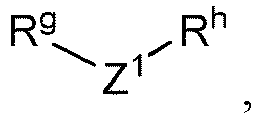
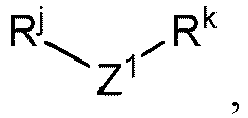 wherein, Rc is the same definition of Rc as defined in the above part 4a);p is each independently selected from 0, 1 and 2;Ri is independently selected from H, CN and C1-C4 alkyl;m is each independently selected from 0-4;4b") More preferably, the Y is independently selected from O, NRg, S, -CRiNRgRh and -CRiORg;Rg and Rh are independently selected from H; C1-C6 haloalkyl;

 Rj and Rk are independently selected from H; CN; C1-C10 alkyl comprising 0-3 of substituent Rs; C1-C6 haloalkyl; C3-C10 cycloalkyl; heteroalkyl and heterocycloalkyl comprising carbon atoms and 1-4 heteroatoms selected from O, N, S; C2-C10 alkenyl or alkynyl; 6 to 10 membered aryl; 5 to 10 membered heteroaryl comprising carbon atoms and 1 to 2 heteroatoms selected from N, O, and S; wherein the aryl and heteroaryl may be substituted by 0-2 of R1Y;Rs is independently selected from OH; CN; halogen; C1-C6 alkyl; C1-C6 haloalkyl; C1-C6 alkoxy; C1-C6 haloalkoxy; C3-C8 cycloalkyl, -(OCH2CH2)mORd, (OCH2CH2)mNRdRe, heteroalkyl and heterocycloalkyl comprising carbon atoms and 1 to 2 heteroatoms selected from N, O, S; aryl; and heteroaryl comprising carbon atoms and 1 to 2 heteroatoms selected from N, O, and S; wherein the aryl and heteroaryl may be substituted by 0-2 of R1Y;wherein, Rd, Re are the same definition of Rd, Re as defined in the above part 4b);R1Y is independently selected from C1-C10 alkyl, halogen, CN, C1-C6 haloalkyl, C1-C6 haloalkoxy, C3-C8 cycloalkyl;In particular, Rg and Rh, as well as Rj and Rk may be connected by the following manner Rg-Rh,
 wherein, Rc is the same definition of Rc as defined in the above part 4a);p is each independently selected from 0, 1 and 2;Ri is independently selected from H, CN and C1-C4 alkyl;m is each independently selected from 0-4.
 - The compound, pharmaceutically acceptable salts, enantiomers, diastereomers or racemates thereof according to claim 1, wherein,
the compound of formula I has formula Ia-1 or Ia-2: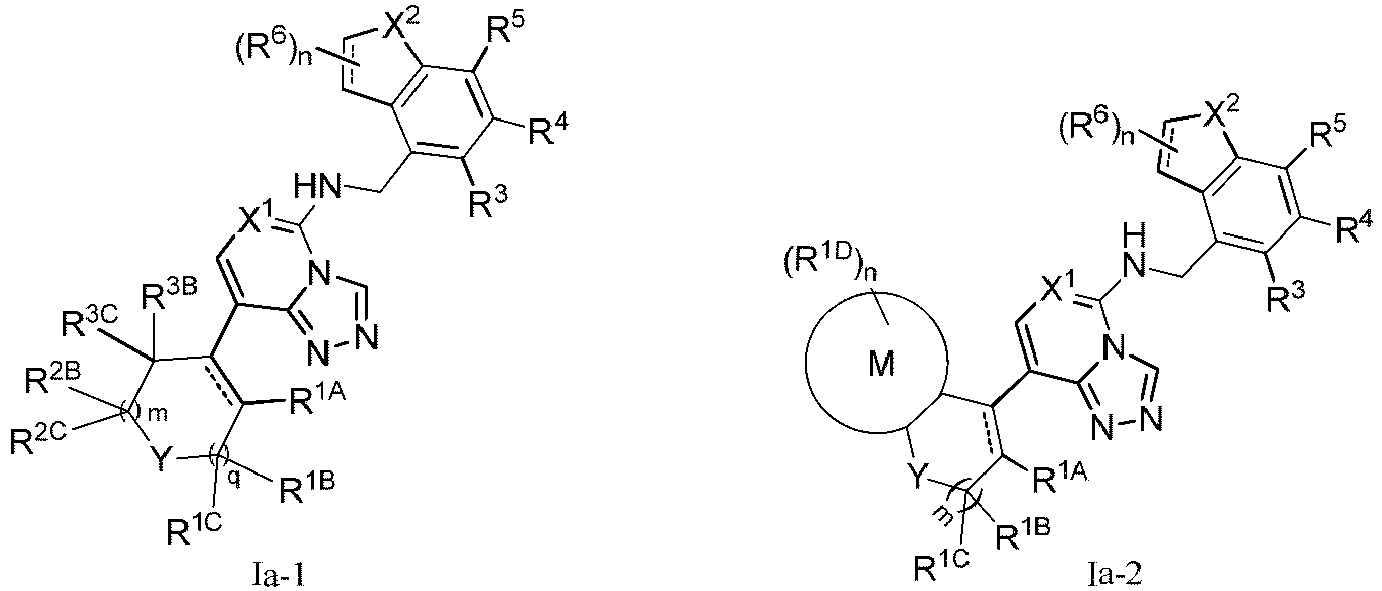 wherein, X1 is the same definition as defined in the part 1) of Formula I of claim 1;------ is a single bond or double bond;X2, R3-R5, R6 and n are the same definition as defined in the part 3) of Formula I of claim 1;R1A, R1B and R1C, R2B and R2C, R3B and R3C, R1D, n, m, q, Y, M are the same definition as defined in the part 4) of Formula I of claim 1.
 - The compound, pharmaceutically acceptable salts, enantiomers, diastereomers or racemates thereof according to claim 1, wherein,
the compound of formula I has formula Ia-3 or Ia-4: X1 is the same definition as defined in the part 1) of Formula I of claim 1;------ is a single bond or double bond;X2, R7 and n are the same definition as defined in the part 3) of Formula I of claim 1;R1A, R1B and R1C, R2B and R2C, R3B and R3C, R1D, n, m, q, Y, M are the same definition as defined in the part 4) of Formula I of claim 1.
 - The compound, pharmaceutically acceptable salts, enantiomers, diastereomers or racemates thereof according to claim 1, wherein,
the compound of formula I has formula Ia-5 or Ia-6: X1 is the same definition as defined in the part 1) of Formula I of claim 1;------ is a single bond or double bond;The definition of Y is the same definition as defined in the part 4) of Formula I of claim 1.
 - The compound, pharmaceutically acceptable salts, enantiomers, diastereomers or racemates thereof according to claim 1, wherein,
the compound of formula I has formula Ia-7 or Ia-8: X1 is the same definition as defined in the part 1) of Formula I of claim 1;------ is a single bond or double bond;The definition of Rg is the same definition as defined in the part 4b) of part 4) of Formula I of claim 1.
 - The compound, pharmaceutically acceptable salts, enantiomers, diastereomers or racemates thereof according to claim 1, wherein,
the compound of formula I has formula Ia-9: ------ is a single bond or double bond;The definition of Rg is the same definition as defined in the part 4b) of part 4) of Formula I of claim 1.
 - The compound, pharmaceutically acceptable salts, enantiomers, diastereomers or racemates thereof according to claim 1, wherein,
the compound of formula I has one of the following formulae:
 The definition of M is the same definition as defined in the part 4) of Formula I of claim 1;The definition of Rg is the same definition as defined in the part 4b) of part 4) of Formula I of claim 1.
 - The compound, pharmaceutically acceptable salts, enantiomers, diastereomers or racemates thereof according to claim 1, wherein,
the compound of formula I is selected from the following compounds:E-Y1 E-Y2 E-Y3 


E-Y4 E-Y5 E-Y6 


E-Y7 E-Y8 E-Y9 


E-Y10 E-Y11 E-Y12 


E-Y13 E-Y14 E-Y15 


E-Y16 E-Y17 E-Y18 
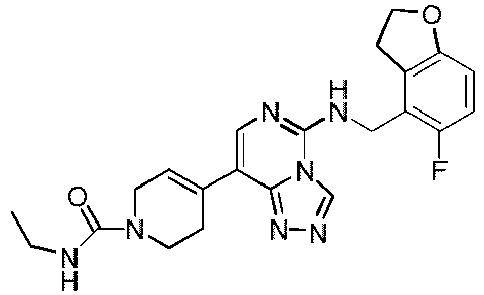

E-Y19 E-Y20 E-Y21 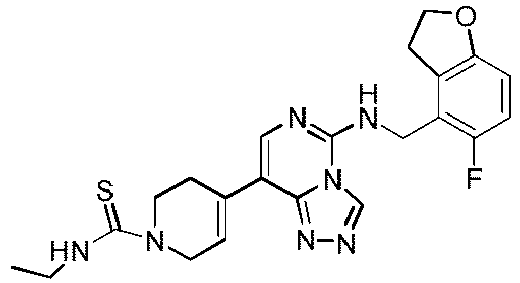

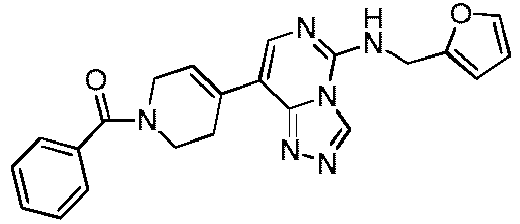
E-Y22 E-Y23 E-Y24 
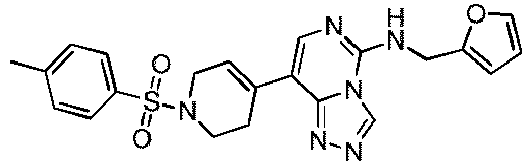

E-Y25 E-Y26 E-Y27 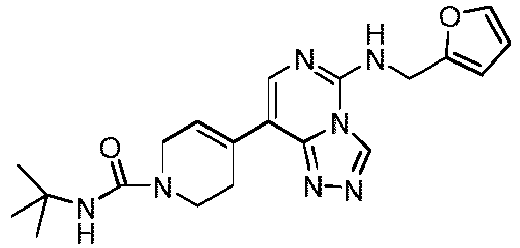


E-Y28 E-Y29 E-Y30 
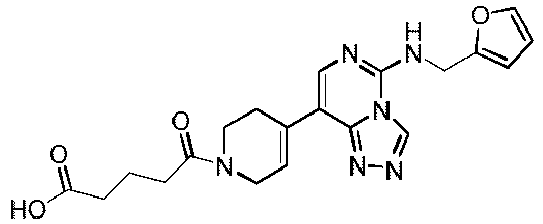

E-Y31 E-Y32 E-Y33 


E-Y34 E-Y35 E-Y36 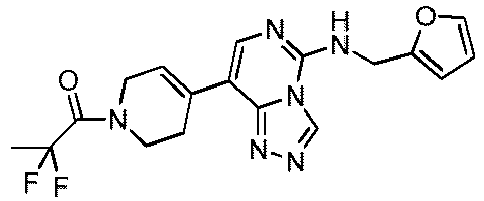


E-Y37 E-Y38 E-Y39 


E-Y40 E-Y41 E-Y42 

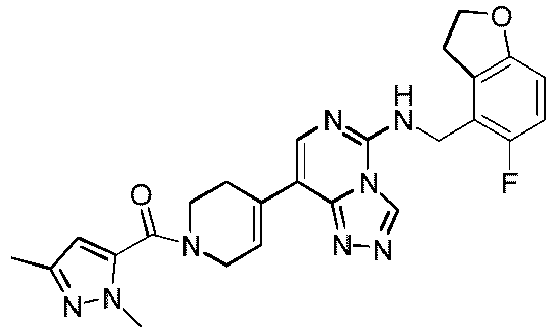
E-Y43 E-Y44 E-Y45 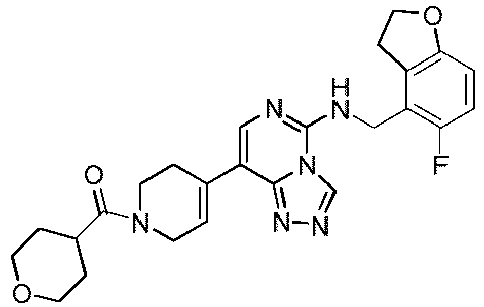


E-Y46 E-Y47 E-Y48 
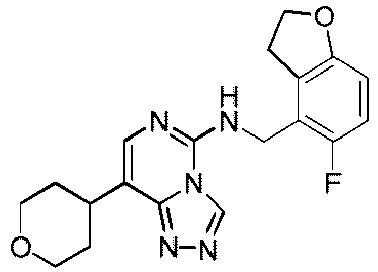

E-Y49 E-Y50 E-Y51 


E-Y52 E-Y53 E-Y54 


SL-ZYE-07 SL-ZYE-08 SL-ZYE-09 


SL-ZYE-11 SL-ZYE-14 SL-ZYE-17 

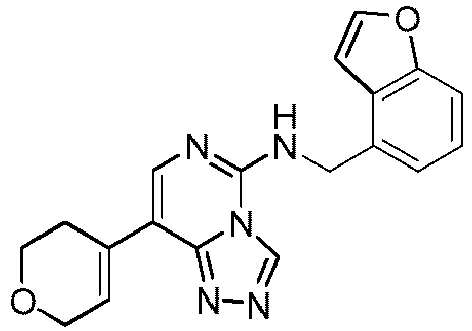
SL-ZYE-18 E-Y20-H E-Y13-H 


SL-ZYE-34 SL-ZYE-23 SL-ZYE-24 


SL-ZYE-28 E-Y54-H SL-E1 


SL-E2 SL-E3 SL-E4 


SL-E5 SL-E6 SL-E7 


SL-E8 SL-E9 SL-E10 


SL-E11 SL-E12 SL-E13 


SL-E14 SL-E15 SL-E16 


SL-E17 SL-E18 SL-E19 


SL-E20 SL-E21 SL-E22 


SL-E23 SL-E24 SL-E25 


SL-E26 SL-E29 SL-E30 


SL-E31 SL-E32 SL-E33 


SL-E34 SL-E3 5 SL-E36 


SL-E37 SL-E3 8 SL-E39 


SL-E40 SL-E41 SL-E42 


SL-E43 SL-E44 SL-E45 


SL-E46 SL-E47 SL-E48 


SL-E49 SL-E50 SL-E51 


SL-E52 SL-E53 E-Y2-H 


SL-ZYE-08-S SL-ZYE-08-R SL-E43-S 


SL-E43-R SL-E44-S SL-E44-R 


SL-E45-S SL-E45-R SL-E46-S 


SL-E46-R SL-E47-S SL-E47-R 


SL-E48-S SL-E48-R SL-E49-S 


SL-E49-R SL-E50-S SL-E50-R 
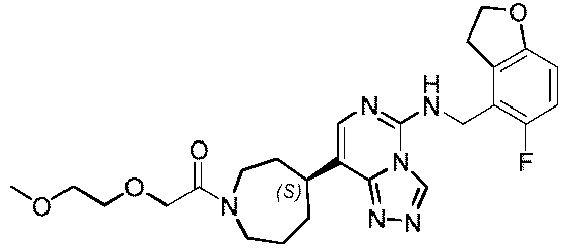

SL-E51-S SL-E51-R SL-E52-S 


SL-E52-R SL-E2-S SL-E2-R 


SL-ZYE-120 SL-ZYE-119 SL-ZYE-144 


SL-ZYE-146 SL-ZYE-147 SL-ZYE-148 


SL-ZYE-161 SL-ZYE-162 SL-ZYE-145 


SL-ZYE-121 SL-ZYE-183 SL-ZYE-195 
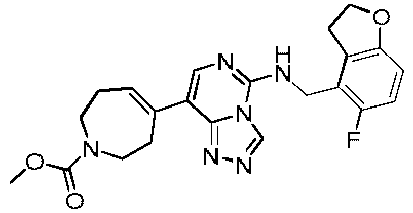

SL-ZYE-196 SL-ZYE-197 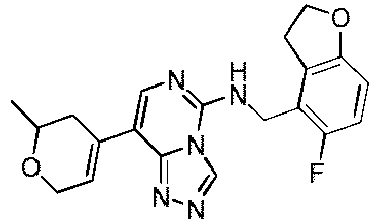

- A method for preparing a compound represented by formula I according to claim 1, the method comprising the following steps:
 (1a) treating 5-bromo-4-chloro-2-(methylthio) pyrimidine 1 with hydrated hydrazine to produce 5-bromo-4-hydrazinyl-2-(methylthio) pyrimidine 2,(1b) converting 5-bromo-4-hydrazinyl-2-(methylthio) pyrimidine 2 with trimethyl orthoformate to triazole product 3,(1c) conducting a substitution reaction of triazole product 3 with an amine NH2CH2A to produce compound 4,(1d) conducting a suzuki coupling reaction of compound 4 with various of boric acid having R1 group or its equivalent under the action of palladium catalyst to obtain product 5,
wherein, the definitions of A, R1 are the same as defined in claim 1;
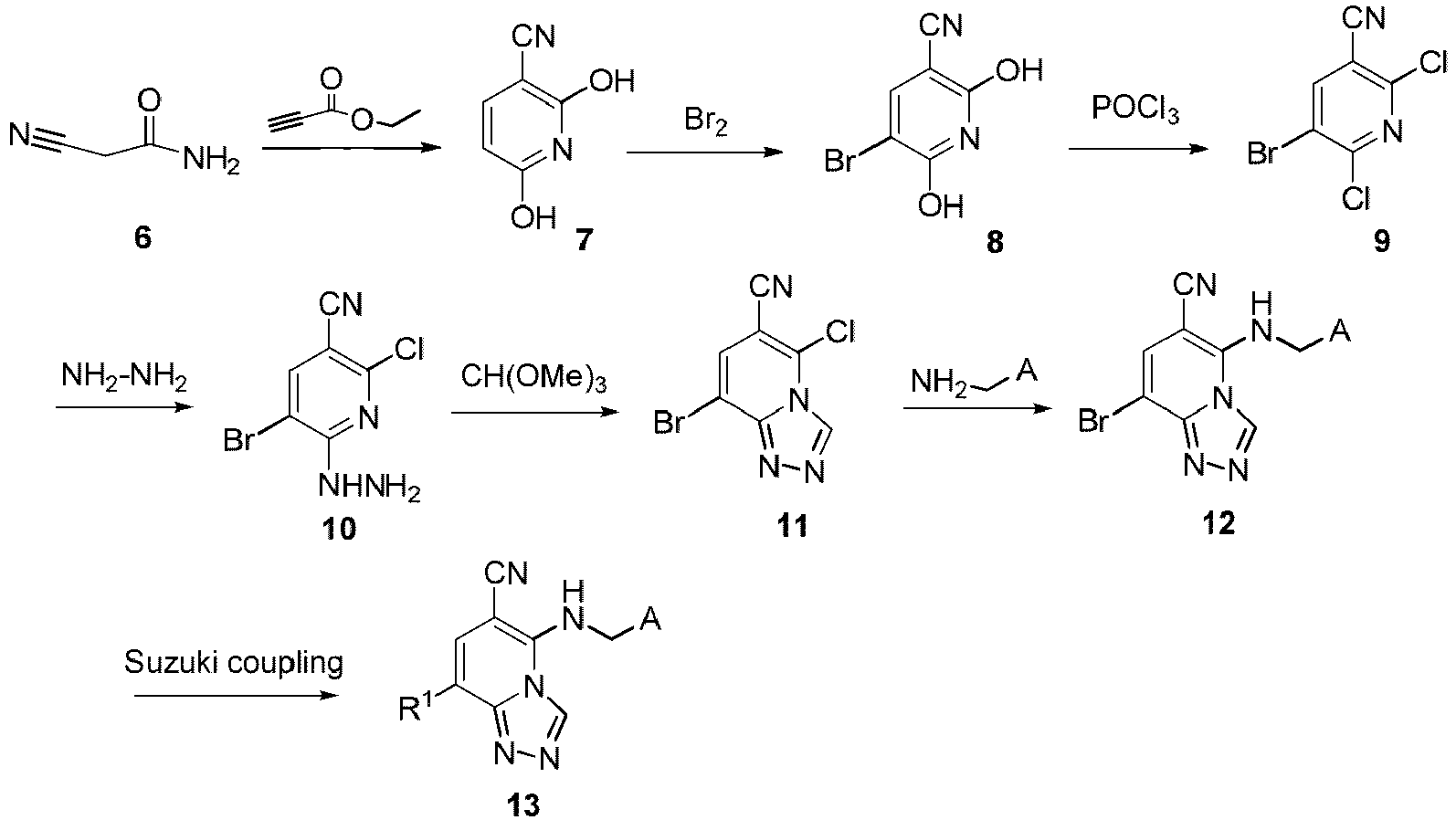 (2a) reacting the cyanoethyl amide 6 with ethyl propiolate to produce intermediate 7,(2b) treating intermediate 7 with bromine to conduct a bromation reaction to obtain bromide 8,(2c) reacting bromide 8 with phosphorus oxychloride to obtain intermediate 9,(2d) treating intermediate 9 with hydrated hydrazine to produce intermediate 10,(2e) converting intermediate 10 with trimethyl orthoformate to triazole product 11,(2f) conducting a substitution reaction of triazole product 11 with various amines to produce compound 12,(2g) conducting a suzuki coupling reaction of compound 12 with various of boric acid having R1 group or its equivalent under the action of palladium catalyst to obtain product 13,
wherein, the definitions of A, R1 are the same as defined in claim 1; (3a) removing the Boc protecting group in 14 using dichloromethane as a solvent and under the action of trifluoroacetic acid to obtain an amine compound 15,(3b) further reacting the amine compound 15 with a reagent or compound having Rg under basic conditions to give a compound 16, the agent or compound is, for example, but not limited to acid anhydrides, sulfonic anhydride, isocyanate, thioisocyanate, acyl chloride, sulfonyl chloride, carbonate, chloroformate, urethane,
wherein, the definitions of A, X1, Rg, R1A, R1B, R1C, R2B, R2C, R3B, R3C, q, m are the same as defined in claim 1; (4a) conducting a condensation reaction of product 15 obtained by removing the protective group in step (3a) of Scheme 3 with a carboxylic acid having an Rj group under the action of a condensing agent to obtain an amide compound 17,
wherein, the definitions of A, X1, Rj, R1A R1B, R1C, R2B, R2C, R3B, R3C, q, m are the same as defined in claim 1; (5a) dissolving 18 in a solvent, the solvent is, for example, but not limited to, methanol, ethanol, ethyl acetate, and tetrahydrofuran, adding a metal catalyst, the metal catalyst is, for example, but not limited to 10% palladium carbon, Pd(OH)2, Raney nickel, RhCl(PPh3)3, introducing hydrogen gas, and reacting at room temperature to obtain compound 19 with double bond reduction,
wherein, the definitions of A, X1, Y, R1A, R1B, R1C, R2B, R2C, R3B, R3C, q, m are the same as defined in claim 1;
 (6a) obtaining the compound 21 by reduction reaction of 20, and then conducting an oxidation reaction with mCPBA (m-chloroperoxybenzoic acid) or hydrogen peroxide to obtain compound 22,
wherein, the definitions of A, X1, R1A, R1B, R1C, R2B, R2C, R3B, R3C, q, m are the same as defined in claim 1. (7a) conducting an oxidation reaction of 20 with mCPBA or hydrogen peroxide to obtain compound 23,
wherein, the definitions of A, X1, R1A, R1B, R1C, R2B, R2C, R3B, R3C, q, m are the same as defined in claim 1;

wherein, the definitions of A, X1, R1A, R1B, R1C, R2B, R2C, R3B, R3C, q, m are the same as defined in claim 1. - A pharmaceutical composition, comprising one or more of the compound, pharmaceutically acceptable salts, enantiomers, diastereomers or racemates thereof according to any one of claims 1-8, and at least one pharmaceutically acceptable carrier, diluent, or excipient.
- The pharmaceutical composition according to claim 10, wherein
the pharmaceutical composition further comprises at least one other therapeutic agent,
Preferably, the at least one other therapeutic agent included in the pharmaceutical composition is selected from other anticancer agents, immunomodulators, antiallergic agents, antiemetics, pain relief agents, cytoprotective agents, and combinations thereof. - Use of the compound, pharmaceutically acceptable salts, enantiomers, diastereomers or racemates thereof according to any one of claims 1-8, or the pharmaceutical composition according to claim 10 in the preparation of a medicament for treating a disease or condition mediated by EED and/or PRC2.
- The Use according to claim 12, wherein
the disease or condition mediated by EED and/or PRC2 includes diffuse large B-cell lymphoma, follicular lymphoma, other lymphoma, leukemia, multiple myeloma, mesothelioma, gastric cancer, malignant rhabdoid tumor, hepatocellular carcinoma, prostate Cancer, breast cancer, bile duct and gallbladder cancer, bladder cancer; brain tumors, including neuroblastoma, schwannoma, glioma, glioblastoma and astrocytoma; cervical cancer, colon cancer, melanin tumor, endometrial cancer, esophageal cancer, head and neck cancer, lung cancer, nasopharyngeal cancer, ovarian cancer, pancreatic cancer, renal cell cancer, rectal cancer, thyroid cancer, parathyroid tumor, uterine tumor and soft tissue sarcoma.
Applications Claiming Priority (3)
| Application Number | Priority Date | Filing Date | Title |
|---|---|---|---|
| CN201710898099 | 2017-09-28 | ||
| CN201711408714.6A CN109575013A (en) | 2017-09-28 | 2017-12-22 | Triazole and pyrimidine, triazole and pyridine compounds and combinations thereof are for treating the disease of PRC2 mediation |
| PCT/CN2018/102833 WO2019062435A1 (en) | 2017-09-28 | 2018-08-29 | Use of triazolopyrimidine, triazolopyridine compounds and composition thereof for treating prc2-mediated diseases |
Publications (3)
| Publication Number | Publication Date |
|---|---|
| EP3689875A1 true EP3689875A1 (en) | 2020-08-05 |
| EP3689875A4 EP3689875A4 (en) | 2020-08-05 |
| EP3689875B1 EP3689875B1 (en) | 2021-10-13 |
Family
ID=65919369
Family Applications (1)
| Application Number | Title | Priority Date | Filing Date |
|---|---|---|---|
| EP18860160.3A Not-in-force EP3689875B1 (en) | 2017-09-28 | 2018-08-29 | Use of triazolopyrimidine, triazolopyridine compounds and composition thereof for treating prc2-mediated diseases |
Country Status (4)
| Country | Link |
|---|---|
| US (1) | US11013745B2 (en) |
| EP (1) | EP3689875B1 (en) |
| JP (1) | JP6876875B2 (en) |
| CN (2) | CN109575013A (en) |
Families Citing this family (7)
| Publication number | Priority date | Publication date | Assignee | Title |
|---|---|---|---|---|
| WO2021032004A1 (en) | 2019-08-22 | 2021-02-25 | 上海青煜医药科技有限公司 | Azaheteroaryl compound and application thereof |
| CN112225761B (en) * | 2020-12-16 | 2021-03-12 | 南京颐媛生物医学研究院有限公司 | Pyrimidotriazole and synthetic method thereof |
| CN114907385A (en) * | 2021-02-10 | 2022-08-16 | 上海青煜医药科技有限公司 | Nitrogen heteroaryl compound, preparation method and application thereof |
| CN115028631A (en) * | 2021-03-05 | 2022-09-09 | 中国科学院上海药物研究所 | Triazole pyrimidine derivative, and pharmaceutical composition and application thereof |
| CN115703799B (en) * | 2021-08-11 | 2024-11-08 | 上海青煜医药科技有限公司 | Nitrogen heteroaryl compound, preparation method and application thereof |
| CN115368368A (en) * | 2022-08-24 | 2022-11-22 | 郑州大学 | 8-indole [4,3-c ] pyrimido [1,2,4] triazole derivative, and preparation method and application thereof |
| WO2024215699A1 (en) * | 2023-04-11 | 2024-10-17 | Oric Pharmaceuticals, Inc. | Treatment of t-cell lymphoma |
Family Cites Families (1)
| Publication number | Priority date | Publication date | Assignee | Title |
|---|---|---|---|---|
| CN107108637B (en) * | 2014-12-23 | 2019-10-29 | 诺华股份有限公司 | Triazolopyrimidine compound and application thereof |
-
2017
- 2017-12-22 CN CN201711408714.6A patent/CN109575013A/en active Pending
-
2018
- 2018-08-29 JP JP2020529171A patent/JP6876875B2/en not_active Expired - Fee Related
- 2018-08-29 EP EP18860160.3A patent/EP3689875B1/en not_active Not-in-force
- 2018-08-29 US US16/651,510 patent/US11013745B2/en not_active Expired - Fee Related
- 2018-08-29 CN CN201880002779.7A patent/CN109843890B/en active Active
Also Published As
| Publication number | Publication date |
|---|---|
| CN109575013A (en) | 2019-04-05 |
| US11013745B2 (en) | 2021-05-25 |
| JP6876875B2 (en) | 2021-05-26 |
| EP3689875B1 (en) | 2021-10-13 |
| JP2020535215A (en) | 2020-12-03 |
| CN109843890A (en) | 2019-06-04 |
| EP3689875A4 (en) | 2020-08-05 |
| US20200261459A1 (en) | 2020-08-20 |
| CN109843890B (en) | 2022-03-29 |
Similar Documents
| Publication | Publication Date | Title |
|---|---|---|
| EP3689875B1 (en) | Use of triazolopyrimidine, triazolopyridine compounds and composition thereof for treating prc2-mediated diseases | |
| CN110156787B (en) | A kind of triazolopyrimidine derivative compound, pharmaceutical composition comprising same and use thereof | |
| CA3128062A1 (en) | Benzopyridone heterocyclic compound and use thereof | |
| CN119490431A (en) | Novel small molecule inhibitors of TEAD transcription factors | |
| KR101892575B1 (en) | Novel compound of a reverse-turn mimetic and a production method and use therefor | |
| CA2875877A1 (en) | Syk inhibitors | |
| EP3613737A1 (en) | Novel inhibitor of cyclin-dependent kinase cdk9 | |
| WO2019062435A1 (en) | Use of triazolopyrimidine, triazolopyridine compounds and composition thereof for treating prc2-mediated diseases | |
| EP3287463A1 (en) | Condensed-ring pyrimidylamino derivative, preparation method therefor, and intermediate, pharmaceutical composition and applications thereof | |
| EP4692088A1 (en) | Compound acting as wrn helicase inhibitor | |
| EP4074699A1 (en) | Compound as cyclin-dependent kinase 9 inhibitor and use thereof | |
| AU2020255702A1 (en) | Quinolyl-containing compound and pharmaceutical composition, and use thereof | |
| CN111205291A (en) | Triazolo ring compounds, their preparation methods, intermediates and applications | |
| EP3560928B1 (en) | Fused imidazole compound having indoleamine 2,3-dioxygenase inhibitory activity | |
| Filichev et al. | Synthesis of 1′-aza-C-nucleosides from (3R, 4R)-4-(hydroxymethyl) pyrrolidin-3-ol | |
| CN103833756A (en) | Pyridazinone compound as well as preparation method and application thereof | |
| JP2022531780A (en) | Compounds that inhibit TDG activity | |
| JP7338896B2 (en) | MDM2 inhibitor, its preparation method, pharmaceutical composition and application | |
| AU2024336256A1 (en) | Compound or salt thereof and method for producing the same, pharmaceutical composition comprising the compound or salt thereof and method for producing the same | |
| CN114044768B (en) | Pyrrole BET degradation agent and its application | |
| CN111808100B (en) | Indole alkaloid compound and preparation method and application thereof | |
| WO2022257047A1 (en) | Diazaspirobicylic compounds as protein-protein interaction inhibitors and applications thereof | |
| CN111606888B (en) | Pyrrole derivative and preparation method and application thereof | |
| CN116768881B (en) | 4- (3-Indolyl) -1, 3-thiazole compound and preparation method and application thereof | |
| EP4194454A1 (en) | Heterocyclic compound as bcl-2 inhibitor |
Legal Events
| Date | Code | Title | Description |
|---|---|---|---|
| STAA | Information on the status of an ep patent application or granted ep patent |
Free format text: STATUS: THE INTERNATIONAL PUBLICATION HAS BEEN MADE |
|
| PUAI | Public reference made under article 153(3) epc to a published international application that has entered the european phase |
Free format text: ORIGINAL CODE: 0009012 |
|
| STAA | Information on the status of an ep patent application or granted ep patent |
Free format text: STATUS: REQUEST FOR EXAMINATION WAS MADE |
|
| 17P | Request for examination filed |
Effective date: 20200417 |
|
| A4 | Supplementary search report drawn up and despatched |
Effective date: 20200529 |
|
| AK | Designated contracting states |
Kind code of ref document: A1 Designated state(s): AL AT BE BG CH CY CZ DE DK EE ES FI FR GB GR HR HU IE IS IT LI LT LU LV MC MK MT NL NO PL PT RO RS SE SI SK SM TR |
|
| AX | Request for extension of the european patent |
Extension state: BA ME |
|
| DAV | Request for validation of the european patent (deleted) | ||
| DAX | Request for extension of the european patent (deleted) | ||
| GRAP | Despatch of communication of intention to grant a patent |
Free format text: ORIGINAL CODE: EPIDOSNIGR1 |
|
| STAA | Information on the status of an ep patent application or granted ep patent |
Free format text: STATUS: GRANT OF PATENT IS INTENDED |
|
| INTG | Intention to grant announced |
Effective date: 20210429 |
|
| GRAS | Grant fee paid |
Free format text: ORIGINAL CODE: EPIDOSNIGR3 |
|
| GRAA | (expected) grant |
Free format text: ORIGINAL CODE: 0009210 |
|
| STAA | Information on the status of an ep patent application or granted ep patent |
Free format text: STATUS: THE PATENT HAS BEEN GRANTED |
|
| AK | Designated contracting states |
Kind code of ref document: B1 Designated state(s): AL AT BE BG CH CY CZ DE DK EE ES FI FR GB GR HR HU IE IS IT LI LT LU LV MC MK MT NL NO PL PT RO RS SE SI SK SM TR |
|
| REG | Reference to a national code |
Ref country code: GB Ref legal event code: FG4D |
|
| REG | Reference to a national code |
Ref country code: CH Ref legal event code: EP |
|
| REG | Reference to a national code |
Ref country code: DE Ref legal event code: R096 Ref document number: 602018025156 Country of ref document: DE |
|
| REG | Reference to a national code |
Ref country code: IE Ref legal event code: FG4D |
|
| REG | Reference to a national code |
Ref country code: AT Ref legal event code: REF Ref document number: 1438132 Country of ref document: AT Kind code of ref document: T Effective date: 20211115 |
|
| REG | Reference to a national code |
Ref country code: LT Ref legal event code: MG9D |
|
| REG | Reference to a national code |
Ref country code: NL Ref legal event code: MP Effective date: 20211013 |
|
| REG | Reference to a national code |
Ref country code: AT Ref legal event code: MK05 Ref document number: 1438132 Country of ref document: AT Kind code of ref document: T Effective date: 20211013 |
|
| PG25 | Lapsed in a contracting state [announced via postgrant information from national office to epo] |
Ref country code: RS Free format text: LAPSE BECAUSE OF FAILURE TO SUBMIT A TRANSLATION OF THE DESCRIPTION OR TO PAY THE FEE WITHIN THE PRESCRIBED TIME-LIMIT Effective date: 20211013 Ref country code: LT Free format text: LAPSE BECAUSE OF FAILURE TO SUBMIT A TRANSLATION OF THE DESCRIPTION OR TO PAY THE FEE WITHIN THE PRESCRIBED TIME-LIMIT Effective date: 20211013 Ref country code: FI Free format text: LAPSE BECAUSE OF FAILURE TO SUBMIT A TRANSLATION OF THE DESCRIPTION OR TO PAY THE FEE WITHIN THE PRESCRIBED TIME-LIMIT Effective date: 20211013 Ref country code: BG Free format text: LAPSE BECAUSE OF FAILURE TO SUBMIT A TRANSLATION OF THE DESCRIPTION OR TO PAY THE FEE WITHIN THE PRESCRIBED TIME-LIMIT Effective date: 20220113 Ref country code: AT Free format text: LAPSE BECAUSE OF FAILURE TO SUBMIT A TRANSLATION OF THE DESCRIPTION OR TO PAY THE FEE WITHIN THE PRESCRIBED TIME-LIMIT Effective date: 20211013 |
|
| PG25 | Lapsed in a contracting state [announced via postgrant information from national office to epo] |
Ref country code: IS Free format text: LAPSE BECAUSE OF FAILURE TO SUBMIT A TRANSLATION OF THE DESCRIPTION OR TO PAY THE FEE WITHIN THE PRESCRIBED TIME-LIMIT Effective date: 20220213 Ref country code: SE Free format text: LAPSE BECAUSE OF FAILURE TO SUBMIT A TRANSLATION OF THE DESCRIPTION OR TO PAY THE FEE WITHIN THE PRESCRIBED TIME-LIMIT Effective date: 20211013 Ref country code: PT Free format text: LAPSE BECAUSE OF FAILURE TO SUBMIT A TRANSLATION OF THE DESCRIPTION OR TO PAY THE FEE WITHIN THE PRESCRIBED TIME-LIMIT Effective date: 20220214 Ref country code: PL Free format text: LAPSE BECAUSE OF FAILURE TO SUBMIT A TRANSLATION OF THE DESCRIPTION OR TO PAY THE FEE WITHIN THE PRESCRIBED TIME-LIMIT Effective date: 20211013 Ref country code: NO Free format text: LAPSE BECAUSE OF FAILURE TO SUBMIT A TRANSLATION OF THE DESCRIPTION OR TO PAY THE FEE WITHIN THE PRESCRIBED TIME-LIMIT Effective date: 20220113 Ref country code: NL Free format text: LAPSE BECAUSE OF FAILURE TO SUBMIT A TRANSLATION OF THE DESCRIPTION OR TO PAY THE FEE WITHIN THE PRESCRIBED TIME-LIMIT Effective date: 20211013 Ref country code: LV Free format text: LAPSE BECAUSE OF FAILURE TO SUBMIT A TRANSLATION OF THE DESCRIPTION OR TO PAY THE FEE WITHIN THE PRESCRIBED TIME-LIMIT Effective date: 20211013 Ref country code: HR Free format text: LAPSE BECAUSE OF FAILURE TO SUBMIT A TRANSLATION OF THE DESCRIPTION OR TO PAY THE FEE WITHIN THE PRESCRIBED TIME-LIMIT Effective date: 20211013 Ref country code: GR Free format text: LAPSE BECAUSE OF FAILURE TO SUBMIT A TRANSLATION OF THE DESCRIPTION OR TO PAY THE FEE WITHIN THE PRESCRIBED TIME-LIMIT Effective date: 20220114 Ref country code: ES Free format text: LAPSE BECAUSE OF FAILURE TO SUBMIT A TRANSLATION OF THE DESCRIPTION OR TO PAY THE FEE WITHIN THE PRESCRIBED TIME-LIMIT Effective date: 20211013 |
|
| REG | Reference to a national code |
Ref country code: DE Ref legal event code: R097 Ref document number: 602018025156 Country of ref document: DE |
|
| PG25 | Lapsed in a contracting state [announced via postgrant information from national office to epo] |
Ref country code: SM Free format text: LAPSE BECAUSE OF FAILURE TO SUBMIT A TRANSLATION OF THE DESCRIPTION OR TO PAY THE FEE WITHIN THE PRESCRIBED TIME-LIMIT Effective date: 20211013 Ref country code: SK Free format text: LAPSE BECAUSE OF FAILURE TO SUBMIT A TRANSLATION OF THE DESCRIPTION OR TO PAY THE FEE WITHIN THE PRESCRIBED TIME-LIMIT Effective date: 20211013 Ref country code: RO Free format text: LAPSE BECAUSE OF FAILURE TO SUBMIT A TRANSLATION OF THE DESCRIPTION OR TO PAY THE FEE WITHIN THE PRESCRIBED TIME-LIMIT Effective date: 20211013 Ref country code: EE Free format text: LAPSE BECAUSE OF FAILURE TO SUBMIT A TRANSLATION OF THE DESCRIPTION OR TO PAY THE FEE WITHIN THE PRESCRIBED TIME-LIMIT Effective date: 20211013 Ref country code: DK Free format text: LAPSE BECAUSE OF FAILURE TO SUBMIT A TRANSLATION OF THE DESCRIPTION OR TO PAY THE FEE WITHIN THE PRESCRIBED TIME-LIMIT Effective date: 20211013 Ref country code: CZ Free format text: LAPSE BECAUSE OF FAILURE TO SUBMIT A TRANSLATION OF THE DESCRIPTION OR TO PAY THE FEE WITHIN THE PRESCRIBED TIME-LIMIT Effective date: 20211013 |
|
| PLBE | No opposition filed within time limit |
Free format text: ORIGINAL CODE: 0009261 |
|
| STAA | Information on the status of an ep patent application or granted ep patent |
Free format text: STATUS: NO OPPOSITION FILED WITHIN TIME LIMIT |
|
| 26N | No opposition filed |
Effective date: 20220714 |
|
| PG25 | Lapsed in a contracting state [announced via postgrant information from national office to epo] |
Ref country code: AL Free format text: LAPSE BECAUSE OF FAILURE TO SUBMIT A TRANSLATION OF THE DESCRIPTION OR TO PAY THE FEE WITHIN THE PRESCRIBED TIME-LIMIT Effective date: 20211013 |
|
| PGFP | Annual fee paid to national office [announced via postgrant information from national office to epo] |
Ref country code: GB Payment date: 20220823 Year of fee payment: 5 Ref country code: DE Payment date: 20220825 Year of fee payment: 5 |
|
| PG25 | Lapsed in a contracting state [announced via postgrant information from national office to epo] |
Ref country code: SI Free format text: LAPSE BECAUSE OF FAILURE TO SUBMIT A TRANSLATION OF THE DESCRIPTION OR TO PAY THE FEE WITHIN THE PRESCRIBED TIME-LIMIT Effective date: 20211013 |
|
| PGFP | Annual fee paid to national office [announced via postgrant information from national office to epo] |
Ref country code: FR Payment date: 20220831 Year of fee payment: 5 |
|
| PG25 | Lapsed in a contracting state [announced via postgrant information from national office to epo] |
Ref country code: MC Free format text: LAPSE BECAUSE OF FAILURE TO SUBMIT A TRANSLATION OF THE DESCRIPTION OR TO PAY THE FEE WITHIN THE PRESCRIBED TIME-LIMIT Effective date: 20211013 |
|
| REG | Reference to a national code |
Ref country code: CH Ref legal event code: PL |
|
| PG25 | Lapsed in a contracting state [announced via postgrant information from national office to epo] |
Ref country code: LU Free format text: LAPSE BECAUSE OF NON-PAYMENT OF DUE FEES Effective date: 20220829 Ref country code: LI Free format text: LAPSE BECAUSE OF NON-PAYMENT OF DUE FEES Effective date: 20220831 Ref country code: CH Free format text: LAPSE BECAUSE OF NON-PAYMENT OF DUE FEES Effective date: 20220831 |
|
| REG | Reference to a national code |
Ref country code: BE Ref legal event code: MM Effective date: 20220831 |
|
| PG25 | Lapsed in a contracting state [announced via postgrant information from national office to epo] |
Ref country code: IT Free format text: LAPSE BECAUSE OF FAILURE TO SUBMIT A TRANSLATION OF THE DESCRIPTION OR TO PAY THE FEE WITHIN THE PRESCRIBED TIME-LIMIT Effective date: 20211013 |
|
| P01 | Opt-out of the competence of the unified patent court (upc) registered |
Effective date: 20230503 |
|
| PG25 | Lapsed in a contracting state [announced via postgrant information from national office to epo] |
Ref country code: IE Free format text: LAPSE BECAUSE OF NON-PAYMENT OF DUE FEES Effective date: 20220829 |
|
| PG25 | Lapsed in a contracting state [announced via postgrant information from national office to epo] |
Ref country code: BE Free format text: LAPSE BECAUSE OF NON-PAYMENT OF DUE FEES Effective date: 20220831 |
|
| REG | Reference to a national code |
Ref country code: DE Ref legal event code: R119 Ref document number: 602018025156 Country of ref document: DE |
|
| GBPC | Gb: european patent ceased through non-payment of renewal fee |
Effective date: 20230829 |
|
| PG25 | Lapsed in a contracting state [announced via postgrant information from national office to epo] |
Ref country code: CY Free format text: LAPSE BECAUSE OF FAILURE TO SUBMIT A TRANSLATION OF THE DESCRIPTION OR TO PAY THE FEE WITHIN THE PRESCRIBED TIME-LIMIT Effective date: 20211013 |
|
| PG25 | Lapsed in a contracting state [announced via postgrant information from national office to epo] |
Ref country code: MK Free format text: LAPSE BECAUSE OF FAILURE TO SUBMIT A TRANSLATION OF THE DESCRIPTION OR TO PAY THE FEE WITHIN THE PRESCRIBED TIME-LIMIT Effective date: 20211013 Ref country code: HU Free format text: LAPSE BECAUSE OF FAILURE TO SUBMIT A TRANSLATION OF THE DESCRIPTION OR TO PAY THE FEE WITHIN THE PRESCRIBED TIME-LIMIT; INVALID AB INITIO Effective date: 20180829 |
|
| PG25 | Lapsed in a contracting state [announced via postgrant information from national office to epo] |
Ref country code: GB Free format text: LAPSE BECAUSE OF NON-PAYMENT OF DUE FEES Effective date: 20230829 |
|
| PG25 | Lapsed in a contracting state [announced via postgrant information from national office to epo] |
Ref country code: GB Free format text: LAPSE BECAUSE OF NON-PAYMENT OF DUE FEES Effective date: 20230829 Ref country code: FR Free format text: LAPSE BECAUSE OF NON-PAYMENT OF DUE FEES Effective date: 20230831 Ref country code: DE Free format text: LAPSE BECAUSE OF NON-PAYMENT OF DUE FEES Effective date: 20240301 |
|
| PG25 | Lapsed in a contracting state [announced via postgrant information from national office to epo] |
Ref country code: MT Free format text: LAPSE BECAUSE OF FAILURE TO SUBMIT A TRANSLATION OF THE DESCRIPTION OR TO PAY THE FEE WITHIN THE PRESCRIBED TIME-LIMIT Effective date: 20211013 |
|
| PG25 | Lapsed in a contracting state [announced via postgrant information from national office to epo] |
Ref country code: TR Free format text: LAPSE BECAUSE OF FAILURE TO SUBMIT A TRANSLATION OF THE DESCRIPTION OR TO PAY THE FEE WITHIN THE PRESCRIBED TIME-LIMIT Effective date: 20211013 |